William Mason’s T-Charging Semi-Auto Rifle

Earlier this year I had the pleasure of visiting my friends at the Cody Firearms Museum and while having a look through their collection we came across a really interesting rifle. The rifle isn’t currently on display and was safely tucked away in one of the museum’s vaults. When we began looking through the vault’s racks we came across what we initially thought were a number of John Browning prototypes from his work with the Winchester Repeating Arms Company. One of the prototypes immediately caught our eye as it had a T-shaped charging handle, something today which is synonymous with the AR-15/M16 platform.
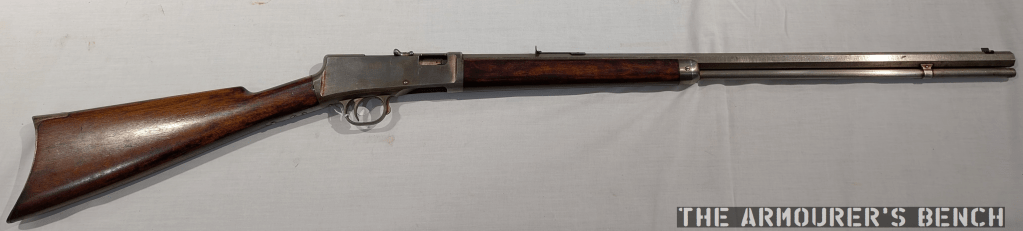
Right side profile of the prototype (Matthew Moss)

In the past I’ve had the pleasure of examining over a dozen of John Browning’s prototypes (some videos are already published on the channel others will be published in the future – stay tuned), this rifle, however, isn’t a Browning. It’s a Mason.

William Mason is probably best known as the man behind the Colt Single Action Army, the Model 1877 and what would become the Model 1889. In 1882, Mason left Colt and joined Winchester. While originally he has been recruited to work on revolvers for Winchester, a topic for another day, he became Winchester’s Master Mechanic and was responsible for bringing many of John Browning’s designs to production. Following the Brownings’ schism with Winchester in 1903, the company continued to develop their own designs and a number of these came from Mason.
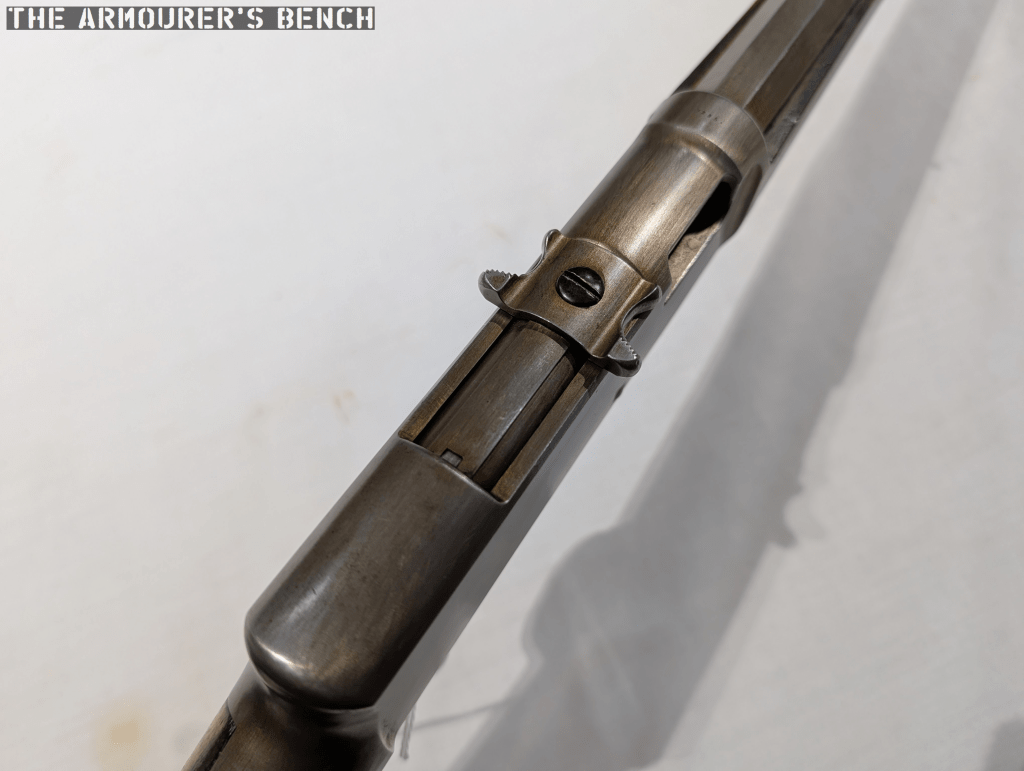
Rear right quarter view of the prototype’s receiver and charging handle (Matthew Moss)

This rifle’s patent was filed in March 1905, and granted on 12 March, 1907 as No.846,591. It is a .22 calibre, semi-automatic rifle which feeds from a conventional tube magazine but has a number of interesting features.
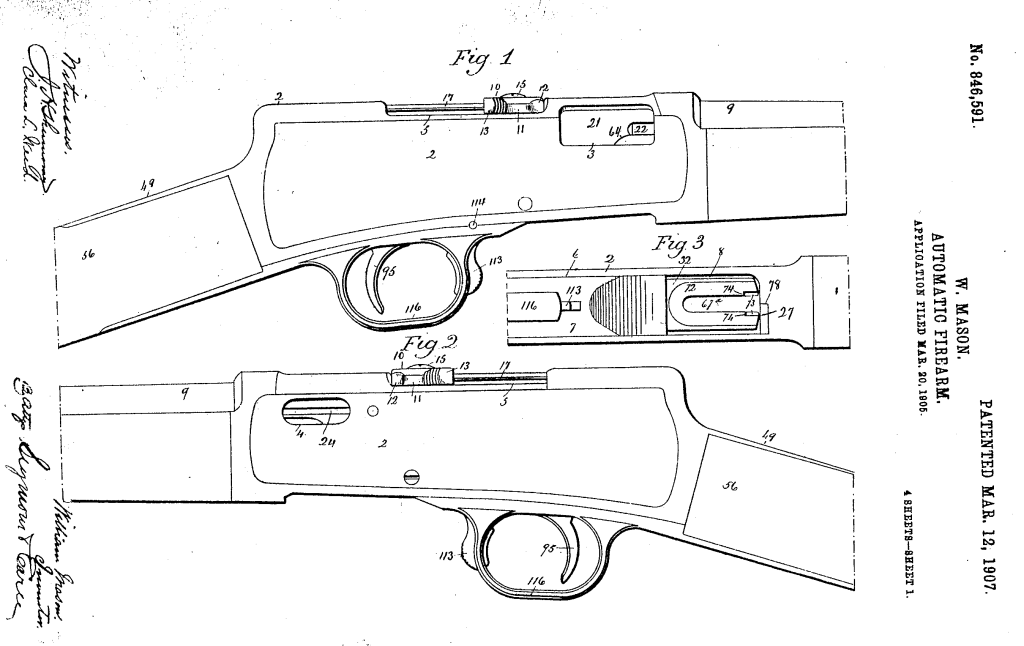
US Patent No.846,591

The Action

Mason, in his patent for the rifle, describes the weapon’s action as a ‘automatic balanced breech-block gun’, by which he means what we now know as a blowback. He describes this as: “a breech-block which is not positively locked in its closed and recoil-taking position but weighted with reference to the energy developed by the explosion of the cartridge to be used in the gun, so that its inertia takes the initial shock of recoil.”

The only marking visible on the firearm is on the top of the receiver, a number marking: ‘7295’.
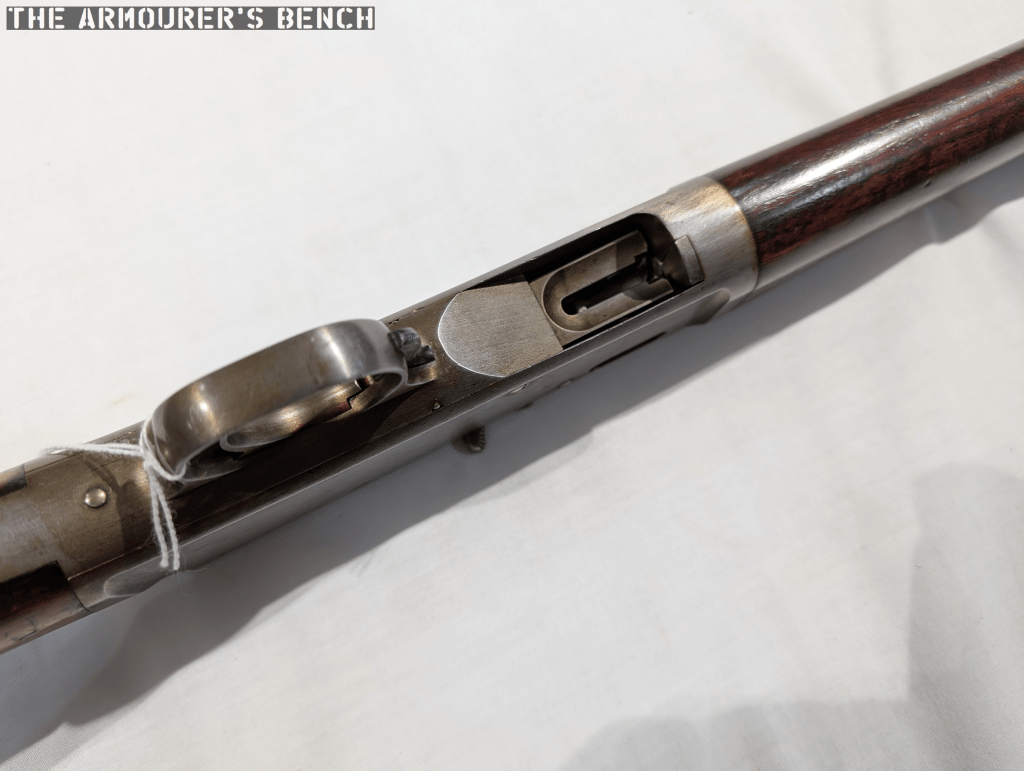
View of the underside of the prototype’s receiver and loading port (Matthew Moss)

Safety

The rifle also has a trigger locking safety located at the front of the trigger guard. The patent describes this:

“provide the gun with a ‘safety’ in the form of a lever, suspended by its upper end from a pivot in the lower tang and having its lower end entered into a slot in the forward reach of the trigger-guard, which is a part of the said lower tang. The said lever is formed with a stop-shoulder, co-acting with a stop-finger at the forward end of the trigger. When the safety is pushed rearwardly, its shoulder is moved under the finger, whereby the trigger is locked against operation under any circumstances.”
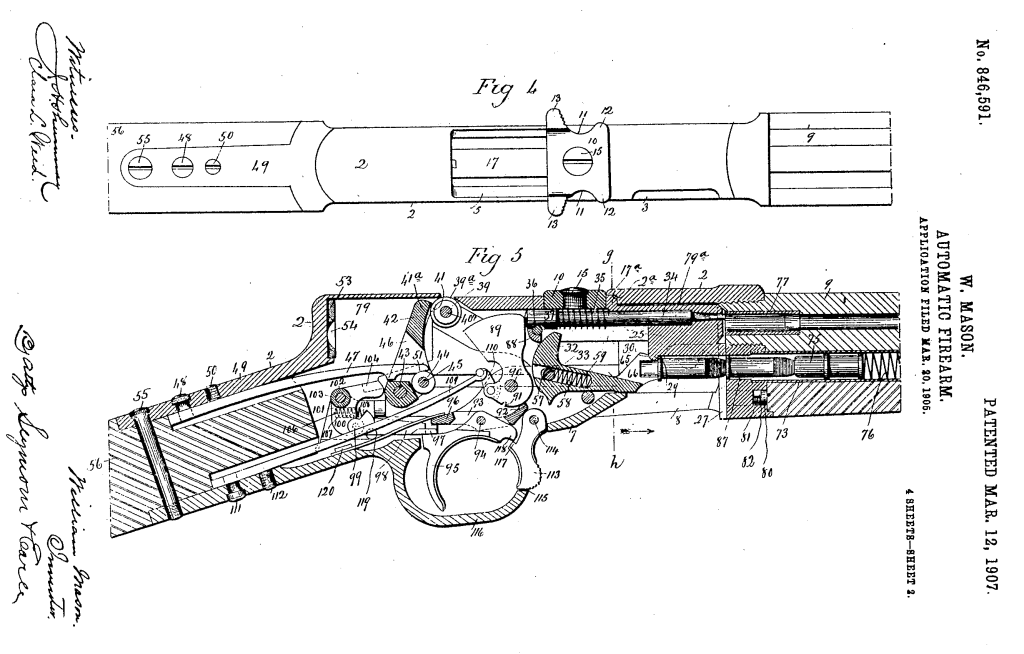
US Patent No.846,591

Loading

The rifle has a swinging carrier which when the breech block cycles it acts on what Mason calls the ‘carrier arm’ via a cam which moves the arm up and down allowing a round to move into the action from the tube magazine when the bolt had moved sufficiently to the rear. The rifle’s tube magazine is loaded by pushing the carrier up and thumbing cartridges into the magazine.

Anti-friction Rollers

Another intriguing feature of the rifle’s action is the set of rollers located in the top of the breech block which prevent friction from the block against the receiver. The rollers also act on a lever which is under spring tension which returns the breech block forward – Mason used this in the place of a more conventional return spring assembly. Instead the lever is acted on by a flat spring which Mason felt allowed him to “secure a marked economy of space” in the receiver, not requiring a coil spring and the space needed to compress it. Additionally, at the rear of the receiver there is also a buffer made from ‘vulcanised fiber’, vulcanisation is a process which strengthens and improves the durability of a material. As we didn’t fully disassemble the rifle we can’t confirm the buffers presence in the prototype.
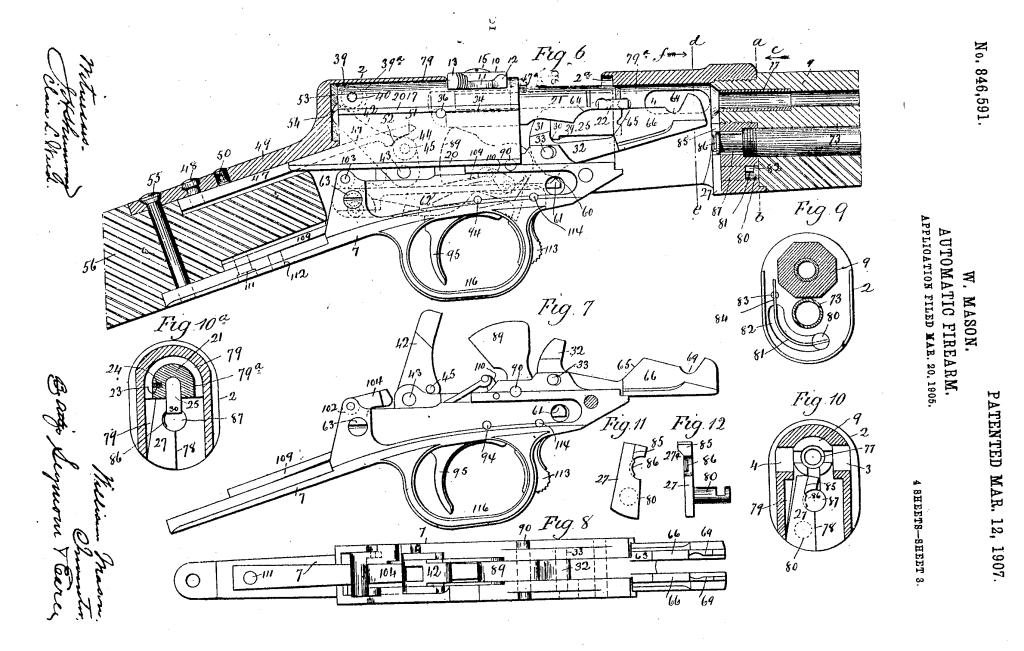
US Patent No.846,591

Mystery Hole

On examining the rifle I was a bit perplexed by what the purpose for a smaller hole opposite the ejection port was. It is too small to be an ejection port and on the same side as the ejector{?} On reading Mason’s patent it became clear that this was an emergency gas port to allow gas to escape the receiver in the event of a major failure. Mason explains this:

“gas-escape opening is so constructed and arranged with reference to the construction and arrangement of the breech-block that it permits the escape of gas through it when the breech-block is in its closed position, so that in case there should be a leakage of gas due, for instance, to the splitting of the head of a cartridge the gas will work back and escape through the said opening without damage to the gun, whereas in the absence of such a gas-escape opening, the breech-block might be broken or deformed by the force of the gas bending it from left to right toward the ejection-opening.”
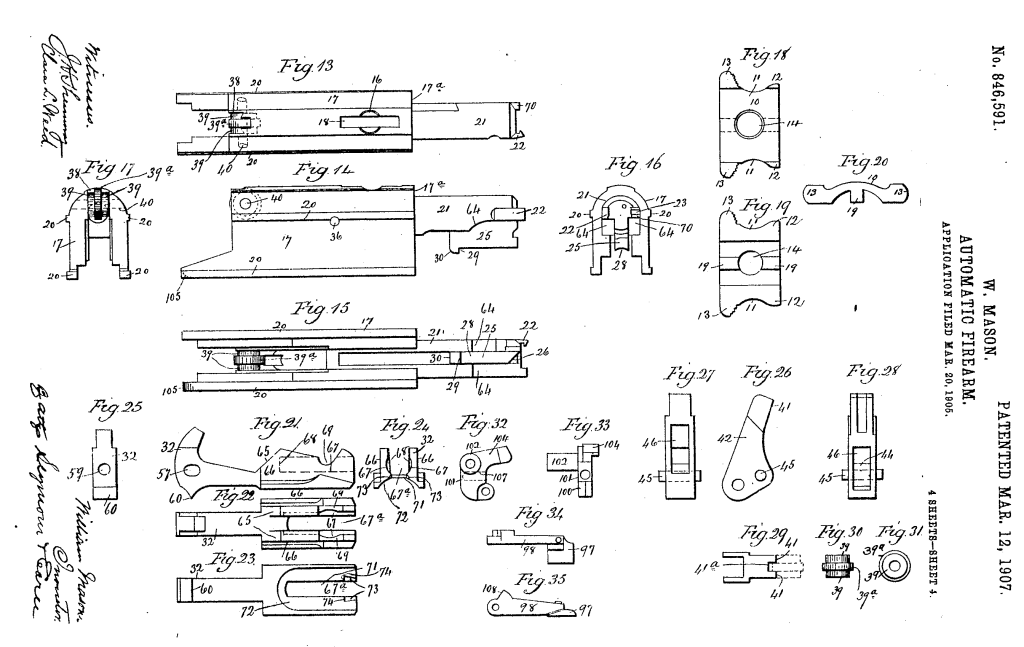
US Patent No.846,591

Charging Handle

Perhaps the most intriguing external feature is the charging handle. Is it the first rifle with a T-shaped charging handle? Here’s how Mason’s patent describes it:

“breech-block handle arranged transversely with respect to the top of the gun-frame and in length exceeding the width thereof. The ends of this handle are formed with finger-cuts, flanked at their forward ends by ears and at their rear ends by knurled, or roughened fingers, extending outwardly beyond the planes of the side walls of the frame, so as to be readily engaged by the finger and thumb, respectively. The said handle is also formed with a centrally-arranged screw-hole, receiving a screw, entering a screw-hole in the forward end of a longitudinally-reciprocating non-rotatable balanced breech-block.”
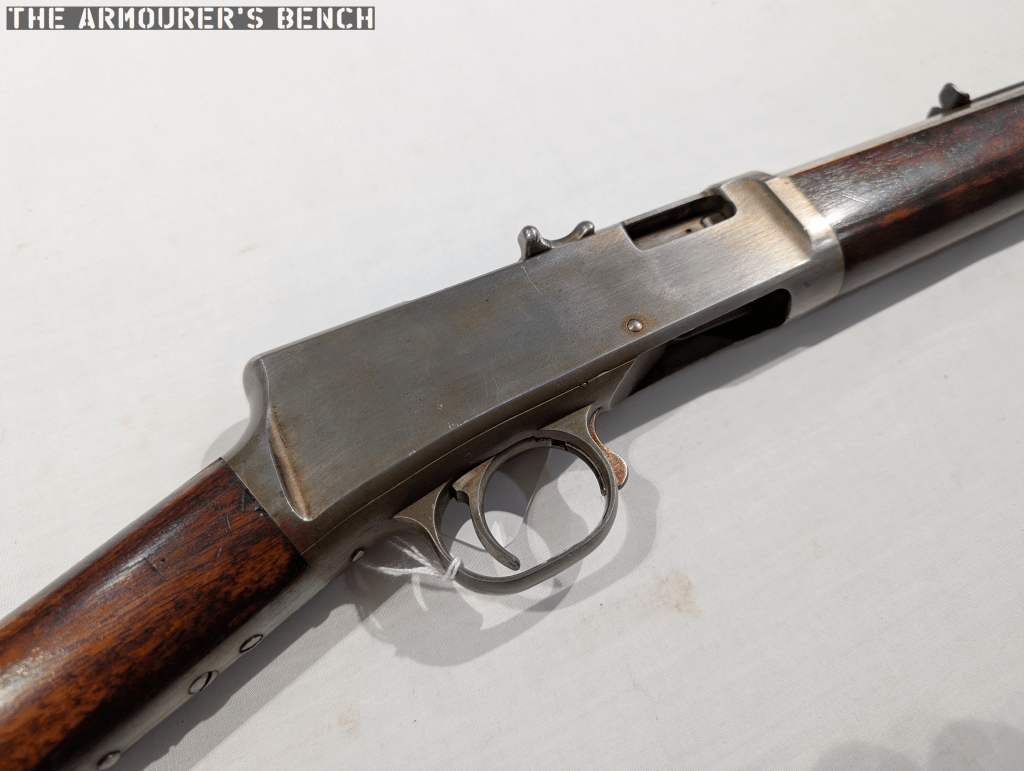
View of the prototype’s receiver (Matthew Moss)

All-in-all it’s a really interesting patent and well worth a read to understand some of the nuances I don’t have time to cover here.

Despite the prototype’s interesting design it never made it into production. In 1903, Winchester had introduced the Model 1903, a tube magazine-fed, blowback rifle, chambered in .22 Winchester Automatic. The Model 1903 was designed by another of Winchester’s engineers, T.C. Johnson, and instead of a T-shaped charger used a plunger, which I think is a little less elegant but the Model 1903 was a success, remaining in production for decades, so it seems that Mason’s design wasn’t needed. As a result it would be another 60 years before a rifle using a T-shaped charging handle became popular in the US. Mason continued to work for Winchester until his death in July 1913, aged 76.

Massive thanks to my good friends at the Cody Firearms Museum for allowing me to examine this rifle and thank you to my friend Tyler Berger for his help filming this video. Please do check out the museum online at centerofthewest.org/our-museums/firearms/ and if you can head out there this summer to visit one of the best publicly displayed collections of firearms in the world.


Support Us: If you enjoyed this video and article please consider supporting our work here. We have some great perks available for Patreon Supporters – including early access to custom stickers and early access to videos! You can also find us on the History of Weapons & War app. Thank you for your support!
The Mysterious Burton Machine Rifle

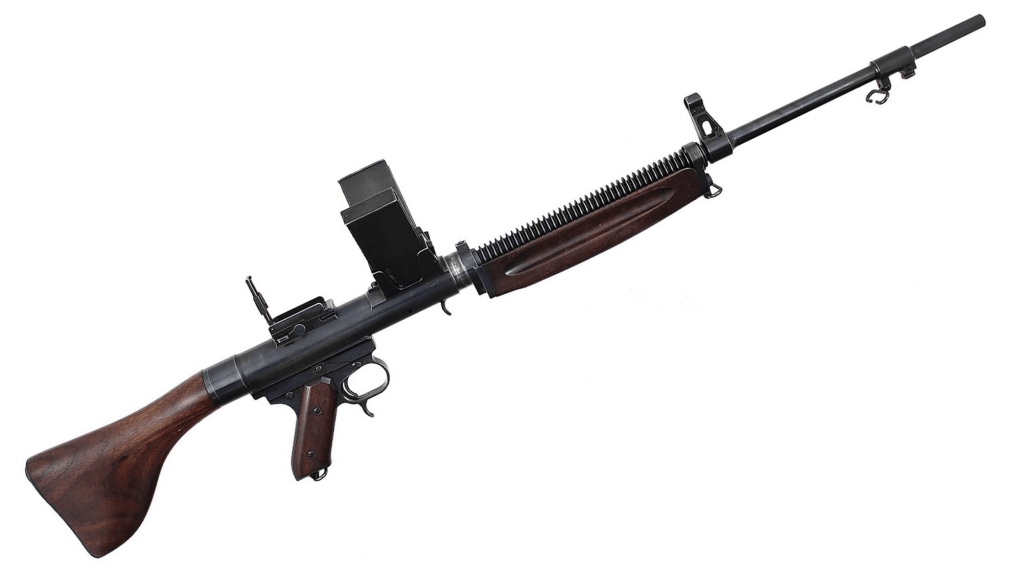
In a change of pace to our usual videos Matt is joined by Danny Michael, curator of the Cody Firearms Museum, to discuss a mysterious rifle which has fascinated us for years. The Burton Machine Rifle, in my opinion, is one of the most interesting rifles in the Cody Firearms Museum’s incredible collection. Developed in 1916-17 at Winchester, likely by engineer Frank Burton, the rifle incorporates a plethora of advanced features which have led it to often be christened the first American assault rifle.

Burton Machine Rifle (Cody Firearms Museum)

In 2018, Danny and I examined the rifle and attempted to disassemble it. While we learnt a great deal from our examination we were unable to disassemble the rifle fully. The prototype is exquisitely made with fine machining and deep blueing – far from an in-the-white prototype we often see. Sadly, we were unable to remove what we believe to be the spring assembly housing, to remove the rifle’s bolt.

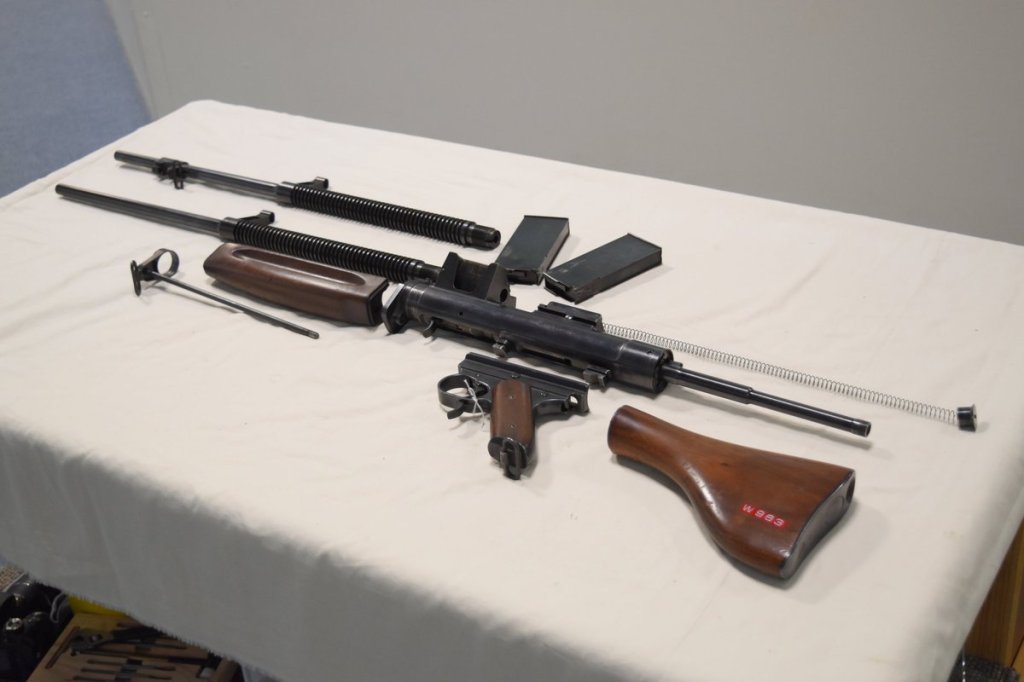
The Burton Machine Rifle disassembled, c.2018 (Danny Michael)

It is not just the weapon’s design which is mysterious. With little to no primary source paper trail it is difficult to trace the rifle’s history beyond the date of its manufacture, its technical features and some tantalising potential references to the rifle.

We discus the rifle, our own history with it and the importance of historiography and how we can trace what we know about the rifle back through secondary sources written about it. The Cody Firearms Museum is currently raising funds to reprint early editions of the ARMAX journal – which contains the very first article published about the Burton Machine Rifle. In our conversation Danny eloquently explains the importance of this project and how you can support it.

Comparison: left – original edition of ARMAX rifle – planned layout of the reprint (Helios Publishing/ARMAX)

Here’s some information on the planned reprint from ARMAX:

“Armax was launched by former CFM Curator Herbert G. Houze in 1987, and comprised nine issues spread across six volumes, published from 1987 to 1996.  These first six volumes contained a lot of important original research, but, unfortunately, these original issues are hard to find today, and often expensive. We only know of a few complete sets that are available to researchers. To remedy this state of affairs, the Cody Firearms Museum and Helios House Press plan to ‘remaster’ and reprint the original six volumes of Armax. The layout, illustrations, and design have been updated to make the legacy material more accessible to modern researchers and enthusiasts. These will be beautiful, functional publications printed on high-quality paper in full color.”

Find out more and pre-order the reprinted editions here.

British Use of the AR-15/M16

Last year I had the pleasure of giving a talk at the Cody Firearms Museum’s Arsenals of History Symposium. I’ve been working with my friend Jonathan Ferguson of the Royal Armouries on a research paper looking at British use of the AR-15 platform. My focus for the project has been the user experience, I’ve spoken to over 25 veterans from across the British military who have experience using the AR-15/M16 platform on operations. Chronologically their experiences span nearly 60 years and this somewhat informal presentation gives a brief overview of some of the operations where the rifles have been used from the Indonesian Confrontation right through to the present day.

If you’re a member or former member of the British armed forces with experience with the AR-15/M16 platform I would love to hear from you, please reach out via armourersbench@gmail.com. Your help and insights would be invaluable.

Once the project is completed I’ll put together a more in-depth video discussing the history of the UK’s use of AR-15/M16-pattern rifles.


2022 Arsenal of History Symposium

Very much looking forward to attending the 2022 Arsenal of History Symposium and co-presenting with Jonathan Ferguson (of the Royal Armouries). Our paper is on the British Army’s use of the AR-15 from the early 1960s to the present day!
SAS patrol in Borneo (Sean Flynn)

As part of the project I am also looking to speak to UK armed forces veterans who have experience using the AR-15/M16 platform from 1964 to the present. If you or someone you know would like to share their experiences and impressions of the rifle please drop me an email at armourersbench@gmail.com!

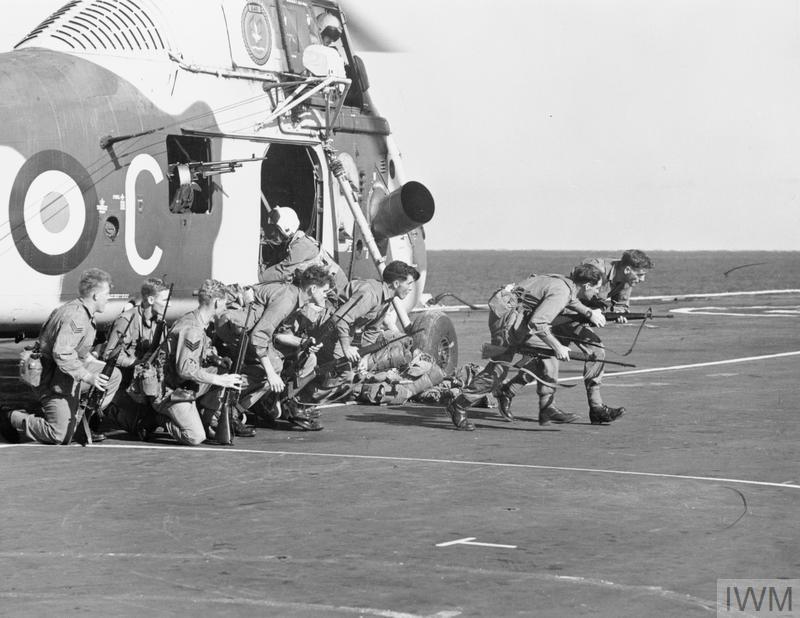
Royal Marine in the Falklands with AR-15

There are lots of other great speakers during the Symposium, check out full details here.

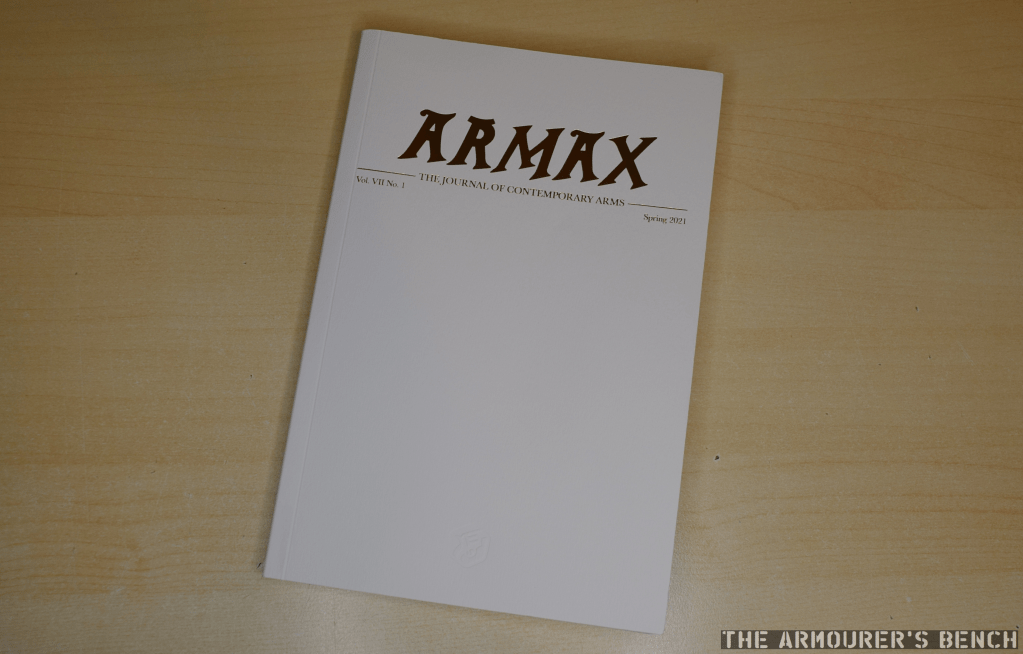
First Look: The Newly Relaunched ARMAX Journal of Contemporary Arms

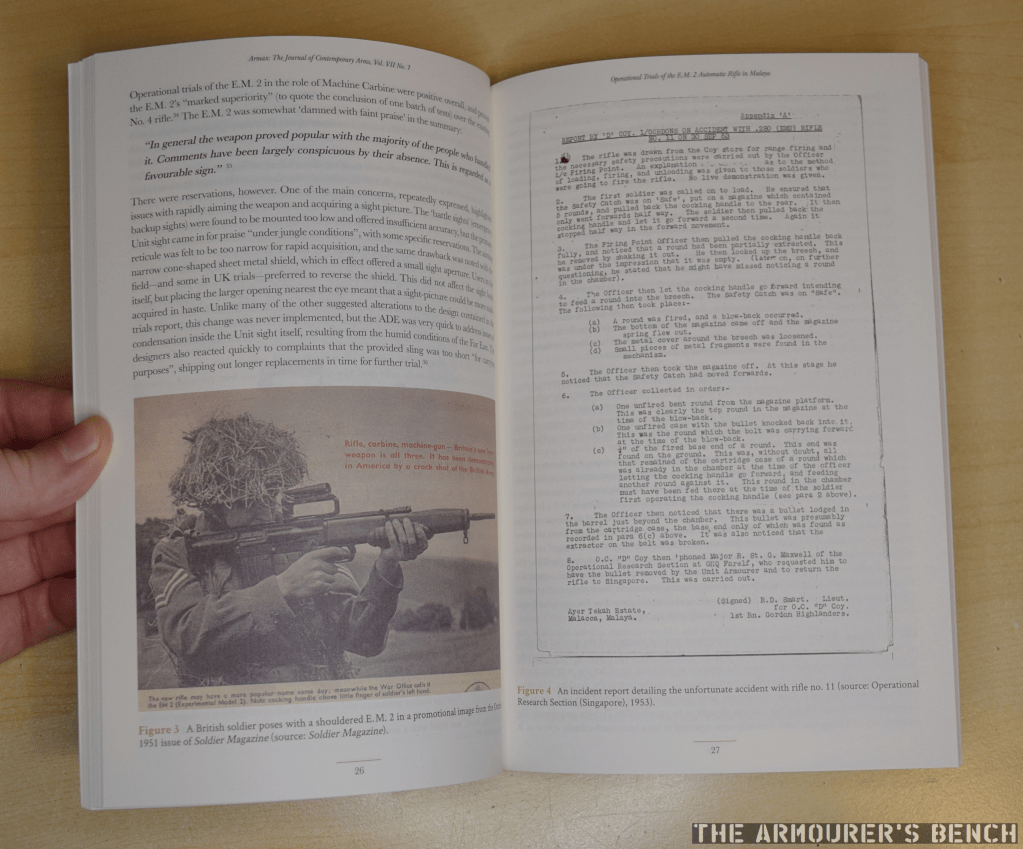
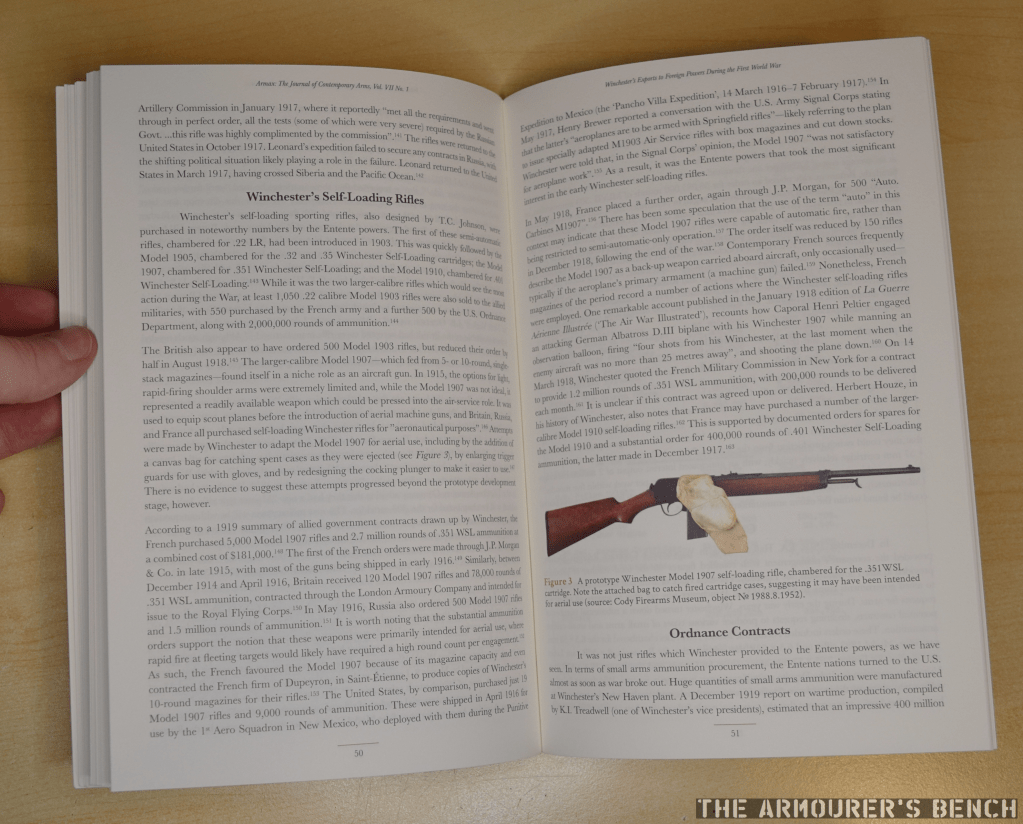
This month sees the relaunch of the ARMAX: The Journal of Contemporary Arms, the academic journal of the Cody Firearms Museum. The first edition of the new ARMAX covers everything from Dutch Uzis to the EM2 in Malaya, from East German AK-74s to a CIA assassination pistol.

I’m especially excited about the new journal as it contains one of my first published journal articles, it’s titled ‘The Winchester Repeating Arms Company’s Exports to Foreign Powers During the First World War’. The article leverages the research I undertook while a research fellow at the Cody Firearms Museum a couple of years ago. It examines the work of the Winchester Repeating Arms Company during the First World War. Specifically this article explore the breadth and variety of the work done for the Entente powers. I cover everything from the Russian contract Model 1895 lever-action rifles to the air-service self-loading rifles and of course the British Pattern 1914 rifle.

My advanced copy arrived just a day or two ago and I’m so pleased to see my research in print alongside some fantastically interesting work from friends and colleagues. Below are some photos of the journal and above is a first look video.

If you’re interested in up-to-the-minute small arms research then I highly recommend checking out the relaunched ARMAX journal, I’m very excited to see the next edition. Find out more about the journal and read the abstract for my article here.


If you enjoyed the video and this article please consider supporting our work here. We have some great perks available for Patreon Supporters. You can also support us via one-time donations here.

John Browning’s 1895 Slide-Action Prototype

By 1895 Winchester had been considering a slide-action rifle for some time, in 1882 William Mason had begun work on one (US Patent #278987) to counter Colt’s slide-action Lightning only to drop it. Finally in 1890, Winchester introduced a slide-action .22 calibre rifle developed by John Browning. The Model 1890 became extremely popular.

Between 1887 and 1895 Browning patented four slide-action rifle designs. The first of these, US patent #367336, was granted in July 1887, this was followed in 1888 by US patent #385238. In September 1890, the Browning brothers were granted US patent #436965, which along with the previous 1888 patent protected what became the Model 1890. Three years later Winchester introduced the Model 1893 pump action shotgun, that would eventually evolve into the famous Winchester Model 1897.

Right-side close up of the rifle with its action open (Matthew Moss)

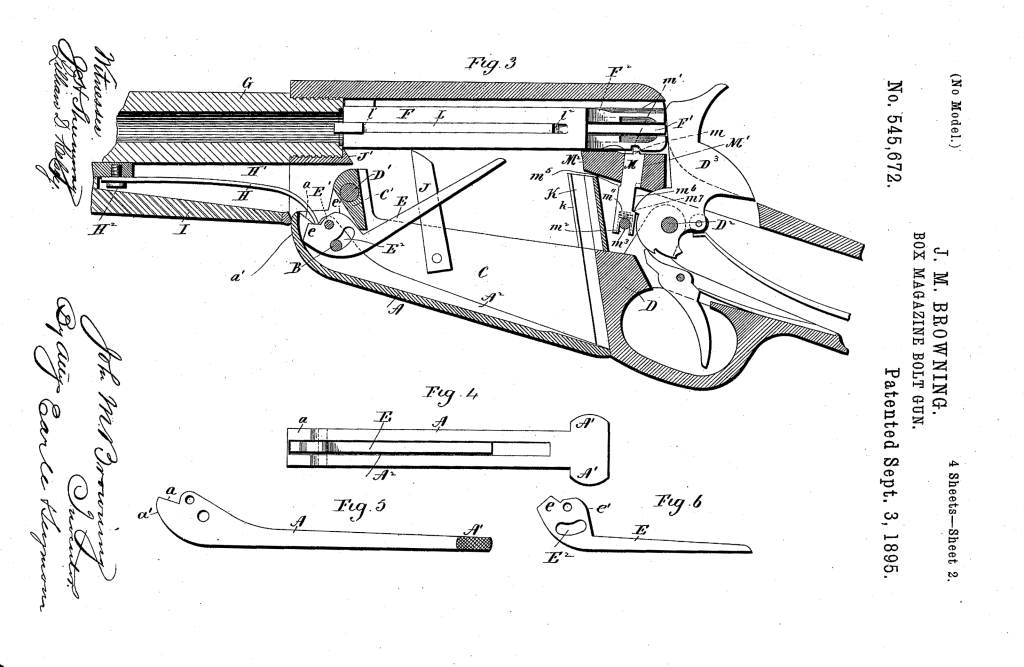
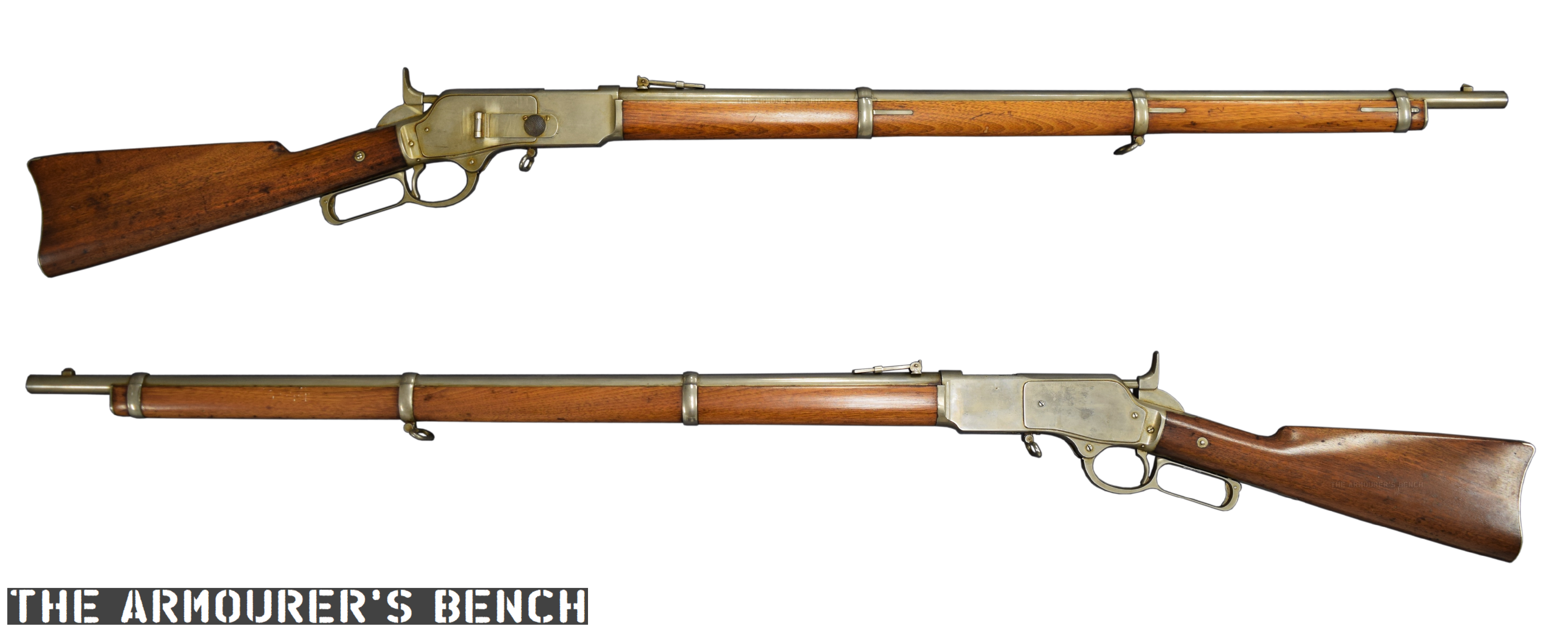
Finally, April 1895, Browning filed a patent for a design for a .30 calibre rifle which was granted in September 1895 (US patent #545672) This patent covers the rifle we’re examining here. The rifle itself is a slide or pump action in long barrelled configuration which Winchester described as a ‘Musket’.

The September 1895 slide-action design was purchased by Winchester but like so many other Browning designs, it never entered production and Winchester purchased the design purely to secure it and prevent other rival manufacturers picking it up. Winchester instead went with a lever-action design, patented in November 1895 (US #549345), which became the famous Winchester Model 1895.

A left-side view of the rifle’s receiver with Browning’s patent overlaid (Matthew Moss)

The September 1895 slide or pump-action rifle design had a laterally camming locking breechblock. As we can see, externally Browning’s toolroom prototype looks somewhat similar to the contemporary Winchester Model 1895, with a single-stack integrated box magazine but with a pump sleeve rather than a lever. 

An action-bar connects the slide/pump to the front of the breechblock/bolt carrieron the right-hand side of the rifle. The slide handle itself is made of a U-shaped piece of metal which wraps around the rifle’s forend. The slide has been roughly cross hatched to improve grip. There is a channel cut into the furniture for the action arm’s attachment point to travel. The slide is attached to the arm by a pair of screws.

A close up of the rifle’s slide/pump handle (Matthew Moss)

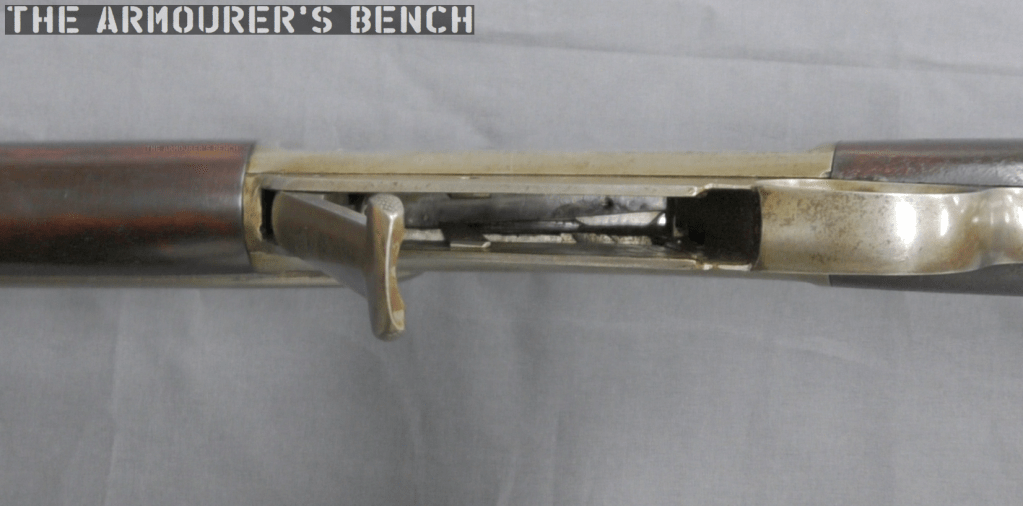
However, Browning developed this prototype to allow loading of the magazine from below rather than through the top of the receiver. He added a hinged floor plate, with a spring loaded follower, that allowed loose rounds to be dropped into the magazine and then closed.

As we open the magazine, hinging the cover plate down, we see the carrier flip down against the plate to allow loading. The rifle was designed to be loaded from below with the bolt forward.

Browning’s September 1895 patent (US Patent Office)

In the patent description Browning explained that his aim was to improve breech-loading box-magazine firearms by designing:  

“…a simple, compact, strong, highly effective, and safe gun, containing comparatively few parts and constructed with particular reference to provision for charging the box-magazine with cartridges from the bottom of the frame of the arm while the breech-bolt is in its closed position, so that the arm may be charged without operating its action mechanism or disturbing the cartridge in the gun-barrel, if one is there.”

Browning’s September 1895 patent (US Patent Office)

From the original patent drawings we can see the flat spring which acted on the carrier running below the barrel, ahead of the magazine. Inside the magazine are a pair of what Browning refers to as ‘spring fingers’ these act on the cartridges inside the magazine and keep them properly aligned, seen here in Fig.7 of the patent. In Fig.8 we can see what Browning calls a ‘box-like guideway’ which guide the rims of the cartridges, “preventing the cartridges from being displaced while being fed upwards.”

The rifle’s breechblock locked into a recess in the left side of the receiver, tilting at an angle with the rear of the breechblock canting to the left. When the pump handle was pulled rearwards the breechblock cammed laterally to unlock the action, extracted and ejected any spent casing and when the slide/pump was returned forward a new cartridge was picked up from the magazine, chambered the breechblock locked again ready to fire. The rifle’s hammer was cocked by the rearward movement of the breechblock.

A left-side view of the rifle with its action open, note the complex machining on the rear of the breech bolt (Matthew Moss)

Externally, the slide-action’s receiver looks similar to that of the production Model 1895 but internally they are very different. The action is certainly less open than the Model 1895’s but the lateral locking mechanism is less robust. Additionally, with no lever, as in the Model 1895, the slide-action rifle lacks the safety mechanism which prevents the action from opening accidentally.

A view inside the open magazine with the floorplate hinged open (Matthew Moss)

The model is in the white and while externally the machining and tool work is very neat, inside the action we can see where the cuts in the receiver wall have been more crudely made. In terms of design, the slide-action prototype was certainly simpler and had fewer working parts than the Model 1895 lever-action.

Winchester purchased the .30 calibre slide-action design but never produced it, it is believed that only Browning’s prototype was built to prove the concept. The prototype was part of Winchester’s collection and may now be found at the Cody Firearms Museum.

Check out our earlier videos on Browning’s lever-action box magazine-fed prototype and his en bloc clip-fed prototype.


If you enjoyed the video and this article please consider supporting our work here. We have some great perks available for Patreon Supporters. You can also support us via one-time donations here.


Bibliography:

‘Box Magazine Bolt Gun’ J.M. Browning, US Patent #545672, 3 Sept. 1895 (source)

‘Box Magazine Firearm’, J.M. Browning, US Patent #549345, 5 Nov. 1895 (source)

John M Browning: American Gunmaker, J. Browning & C. Gentry (1964)

Winchester Repeating Arms Company, H. Houze, (2004)

Winchester 1866 Prototype Musket

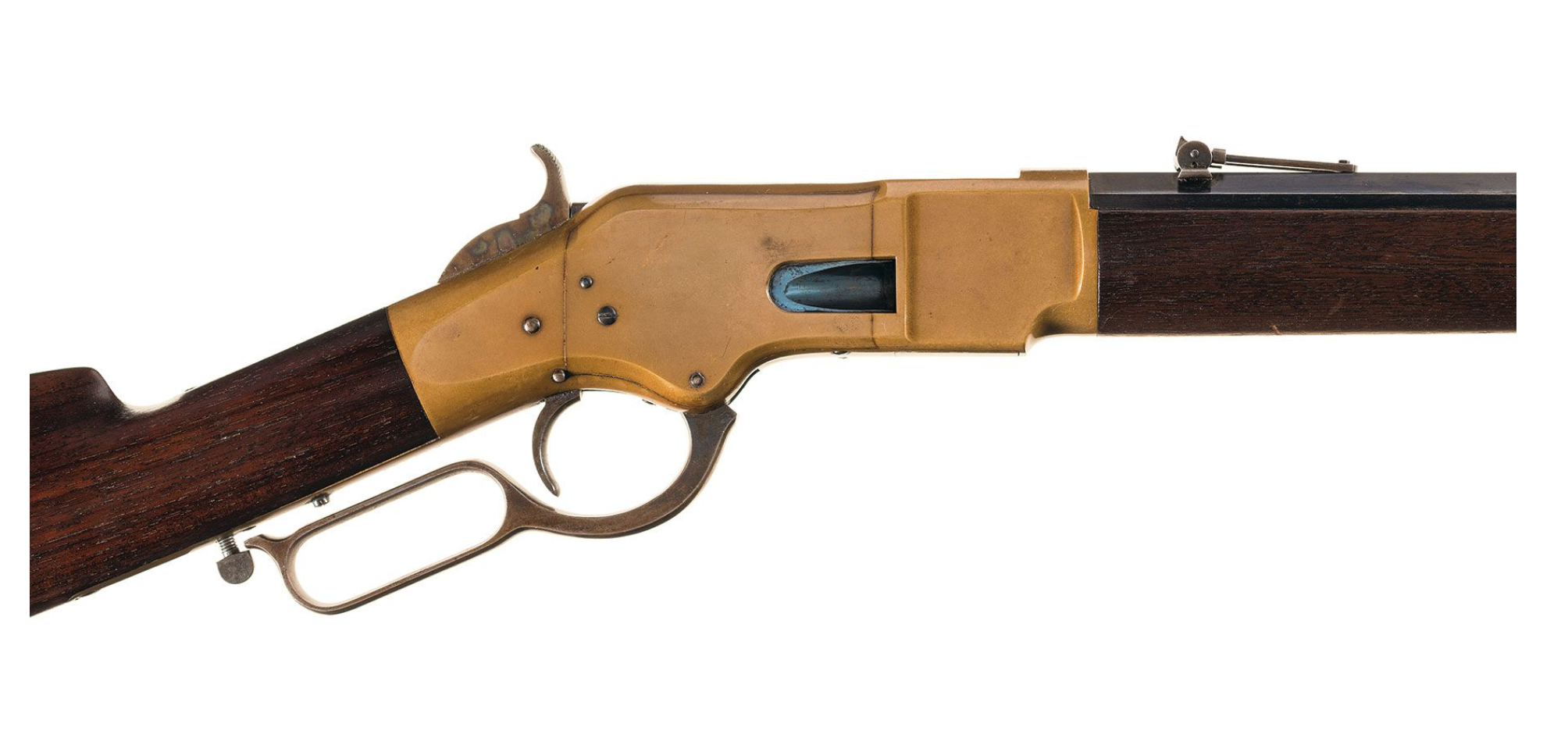
Today, were taking a look at a Winchester prototype developed in the mid-1860s, a period when Winchester was seeking to build on the success of the 1860 Henry Rifle and place the company on a firm financial footing. Oliver Winchester had taken control of the New Haven Arms company before the Civil War and while for a time it had been known as the Henry Repeating Arms Company he eventually sought to put his stamp on the company, renaming it Winchester Arms Company in 1866. At the same time he decided to focus the company’s energies on winning military contracts around the world.

winchester_prototype_left - Copy
Left & right profiles of King’s prototype musket (Matthew Moss)

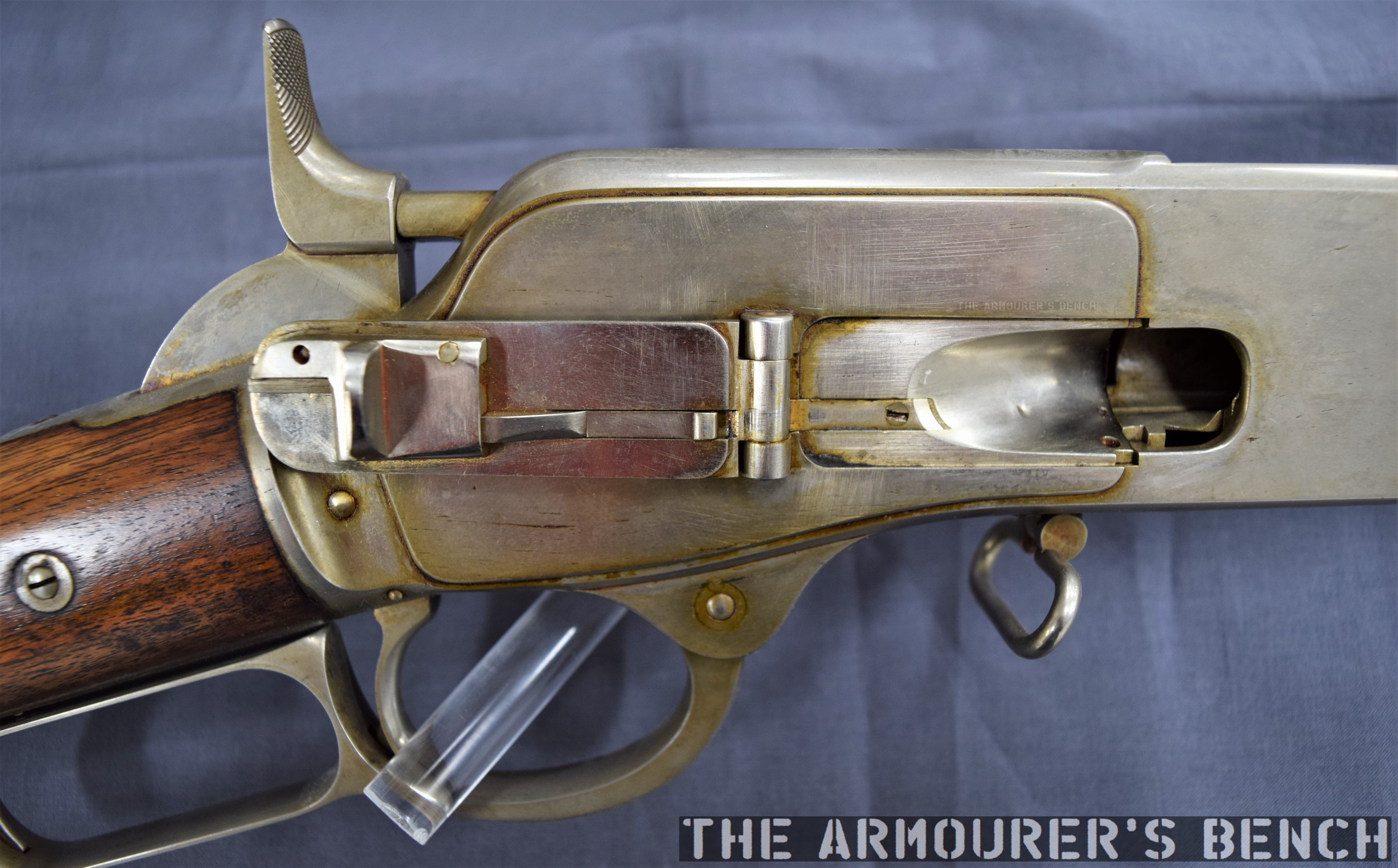
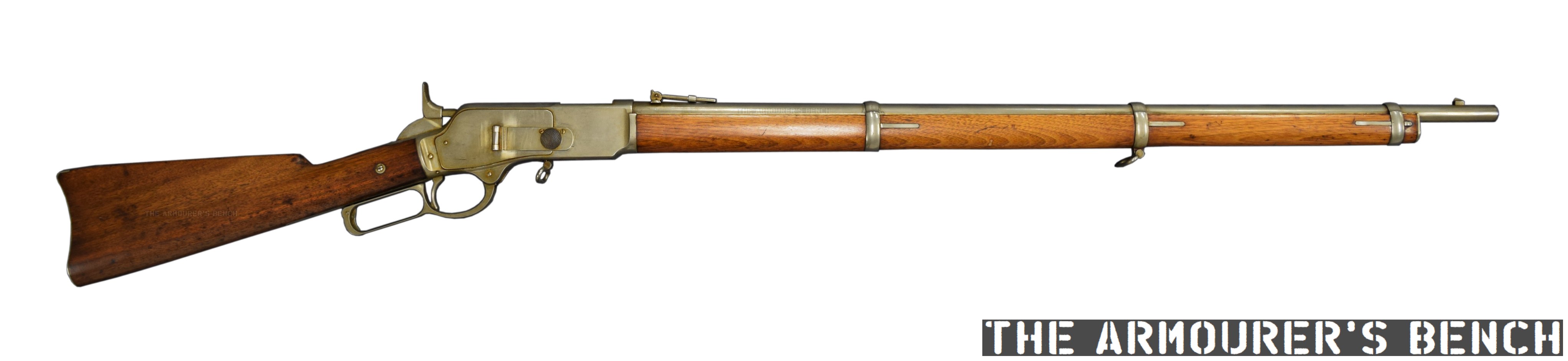
This developmental prototype is in the ‘musket’ configuration: with a longer barrel, a bayonet lug and a wooden forend. The prototype represents one of the many developmental steps towards what would become the Model 1866. It has a number of interesting features – a steel, rather than brass, receiver and a hinged loading port developed by Nelson King, Winchester’s superintendent between 1866 and 1875.

The rifle itself was built by Luke Wheelock, Winchester’s model room mechanic and a designer in his own right who would go onto develop his own rifle designs for Winchester.

US55012-drawings-page-1.png
King’s 1866 patent (US Patent Office)

The rifle is 54.5 inches long, with a 33.75 inch barrel. Believed to have been built in 1866, it is chambered for a .45 calibre rimfire round. King patented his loading port in May 1866. He described how the port worked:

“Through one of the plates S (preferring that one upon the right-hand side) I form an opening, 0, as denoted by broken lines, Fig. 1, and also seen in section, Fig. 7. This opening is formed so as to communicate through the frame directly to the chamber E in the carrier block, as seen in Fig. 3. Through this opening, and while the carrier-block is down and all parts of the arm in a state of rest, insert the cartridges, point first, through the said opening in the plate S into the chamber E the second cartridge pressing the first into the magazine, and so on with each successive cartridge until the magazine is filled, or until the requisite number has been inserted therein, the follower G being pressed up before the entering cartridges. In the rear of the chamber E2 the frame forms a shoulder to prevent the cartridges from being forced out through the opening in the plate S3 is a cover for closing the opening in the plate S3 and is hinged thereto, as seen in Figs. 1 and 7, the hinge being provided with a spring,a1, the tendency of which is to open the cover C. A spring-catch, d, (see Fig. 1,) secures the cover when closed, so that by pressing upon the said catch the cover will fly open. After the requisite number of cartridges have been placed within the magazine, close the cover, as seen in Figs. 1 and 2.”

DSC_0666
A close up of the hinged loading gate (Matthew Moss)

To paraphrase: ammunition can be loaded through the opening in one of the receiver side plate when the carrier block is down, insert the cartridges through the opening, pressing the first into the magazine and so on until the magazine is filled… a cover for closing the opening is hinged to the receiver side plate. A spring catch secures the cover when closed.

According to Herbert Houze, King developed the covered loading port design in early January 1866, with a design drawing dating to the 14th January, confirming this.

Nelson loading gate cover prototype 1866 - CFM.jpg
Nelson’s loading gate cover prototype c.1866 (Cody Firearms Museum)

King altered the design of the rifle’s cartridge carrier so that a cartridge could pass through its lower section straight into the magazine when the action was closed. In theory the aperture could be placed on either side of the receiver, in practice is was placed on the right. Prior to this Winchester had experimented with systems where the tube could slide forward (G.W. Briggs US #58937), a port in the base of the receiver (J.D. Smith US #52934) or a sliding forearm covering a loading port at the rear of the magazine tube (O.F. Winchester UK #3284 [19/12/1865]).

DSC_0686
A look inside the hinged loading gate (Matthew Moss)

King’s system had the benefit of allowing the rifle to be quickly loaded or topped off without rendering the rifle unusable while loading. Positioning the port in the receiver allowed the magazine tube to be enclosed by a wooden forend.

A cartridge guide was fitted inside the receiver which guided rounds through the cartridge carrier and into the tube magazine. The rounds were prevented from popping out of the magazine, when the carrier was aligned and the cover open, by a shallow shoulder which projected in line with the carrier’s channel to hold cartridges in the tube by their rim.

DSC_0685
The musket with its action open, bolt to the rear and loading gate open (Matthew Moss)

The hinged cover is held shut by a spring catch mounted on the rear of the cover. When the knurled section on its front is pressed rearwards the cover pops open. The spring catch is actuated when it tensions against the cover’s hinge as it is closed. On the back of the cover there is also a cartridge stop for when the cover is closed.

Another small but interesting feature of the prototype is the catch at the rear of the lever loop, this differs from the manually turned catch seen on the Henry and production 1866. This design appears to be a much better safety feature, simply requiring the user’s hand to depress the catch to unlock it from the stock. It also appears to be a much simpler mechanism than that seen in later models like the Model 1895. The trigger also had an extension protruding from its rear which appears to prevent the trigger from being pulled when the lever isn’t full closed. Neither of these features appear in King’s May 1866 patent.

It appears that the idea of the port with a hinged cover was superseded by what we now recognise as the classic Winchester loading gate in the summer of 1866. King’s new system replaced the hinged cover with a piece of stamped spring steel attached to the inside of the receiver side plate by a screw. The spring steel gate could be pushed in, with the nose of a cartridge, to allow rapid loading. The front face of the gate formed a cartridge guide removing the need for the separate machined guide used in King’s earlier iteration of the system.

1866 close up ria
(Rock Island Auction Company)

King’s revised loading port system required just five, rather than twelve, components: King’s altered cartridge carrier, receiver side plate, spring metal loading gate plate and retaining screws. This simple but elegant design continued to be used for decades on various models of rifle. The company were so pleased with the refinement of the rifle that, according to R.L. Wilson, King was awarded a payment of a $5,000 reward by the company’s board of directors.

Winchester introduced the rifle in 1866, with the first deliveries being made early in 1867, the new rifle was offered in various barrel lengths and patterns including carbine, rifle and ‘musket’. Winchester found some success selling 1866 rifles to the militaries of France and the Ottoman Empire, while many other countries purchased rifles for testing including Britain and Switzerland (whom came close to adopting the Winchester.) The rifles also found success on the civilian market with around 4,500 sold in the first five months.

winchester_prototype_right
Right side profile of the rifle showing the hinged loading gate (Matthew Moss)

The Scientific American described the new rifles as “elegant in appearance, compact, strong, and of excellent workmanship. On examination we find its working parts very simple, and not apparently liable to derangement.”

King incrementally developed his loading system before radically simplifying it and this prototype rifle represents an important developmental step in the design of what would become the Model 1866 – one of Winchester’s most important rifles.


Special thanks to the Cody Firearms Museum for allowing us to take a look at this fascinating prototype rifle.


If you enjoyed this article and video please consider supporting our work here. We have some great perks available for Patreon Supporters. You can also support us via one-time donations here.


Bibliography:

Winchester Repeating Arms Company, H. Houze (1994)

Winchester: An American Legend, R. L. Wilson (1991)

Patents:

https://patents.google.com/patent/US57808

https://patents.google.com/patent/US57636

https://patents.google.com/patent/US58937

https://patents.google.com/patent/US52934

Remington’s Hybrid .303 M1903

In 1940, following the evacuation from Dunkirk the British Army was in desperate need of small arms, with over 100,000 rifles left behind in France. In dire need of rifles Britain turned to the US and its huge industrial base and approached a number of companies about tooling up to produce Lee-Enfield Rifle No.4s. Savage Arms took on one contract and projected production of 1,000 per day but establishing production of a rifle US companies didn’t have the tooling and gauges for would take time.

remington_1903_303_rightwm
Right side of the Remington (Matthew Moss)

Remington was also approached by the British Purchasing Commission and asked if they could manufacture up to 400,000 rifles. Remington estimated it would take up to 30 months to tool up for No.4 production. However, Remington believed that if they could lease the old tooling previously used at the Rock Island Arsenal to produce M1903s, from the US Government, they could tool up to produce the M1903 in just 12 months. It was suggested that the tooling be adapted to produce rifles chambered in the British .303 cartridge. Some ergonomic changes could also be made so the rifles mimicked the British No.4.

remington_1903_303_leftwm
Left side of the Remington (Matthew Moss)


On 12th December 1940, the British government issued a Letter of Intent to Remington for the manufacture of 500,000 rifles in .303 British. Some sources suggest the British agreed to an advanced payment of $4,000,000. Much of this covered the lease, transport and refurbishment of the M1903 tooling. The rest went on the purchase of raw materials and the necessary accessories for half a million rifles.

The tooling lease was agreed in March 1941, and the US Government also supplied 600,000 stock blanks which had been in storage in exchange for ammunition produced by Remington. With the passage of the Lend-Lease act, on 11th March, the Remington contract came under the control of the US Government, rather than a private order. Remington received the last tooling shipments from Rock Island Arsenal on 22nd April, and by the end of May had the production line up and running.

DSC_0535wm
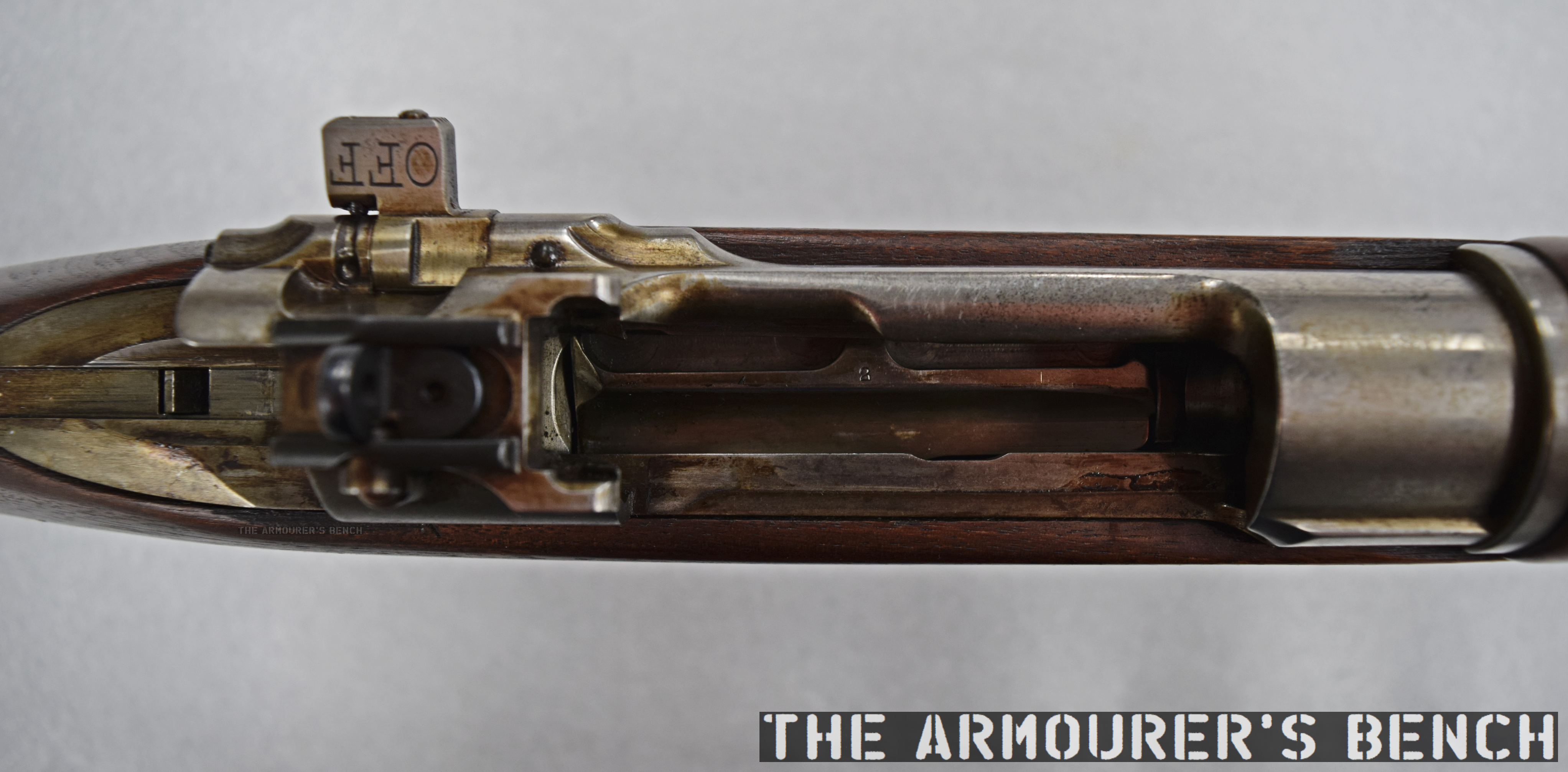
A detail view of the rifle’s action and follower note the ‘2’ stamped on the follower (Matthew Moss)

A contract to produce the hybrid rifles at a cost of $5 per rifle was agreed in late June. Remington’s engineers began setting up the equipment and working out an ad hoc production layout that would allow 1,000+ rifles per day to be built. At least four pilot models were built, with some of these guns being sent to Britain. The rifles were reportedly received in September 1941, and following preliminary examination were described as “very successful”. Four of the rifles were distributed for further testing but by the end of 1941 the project had been abandoned.

remington_1903_303_nosecap_leftwm
A close up of the adapted muzzle and foresight so the rifle could fit a No.4 bayonet (Matthew Moss)

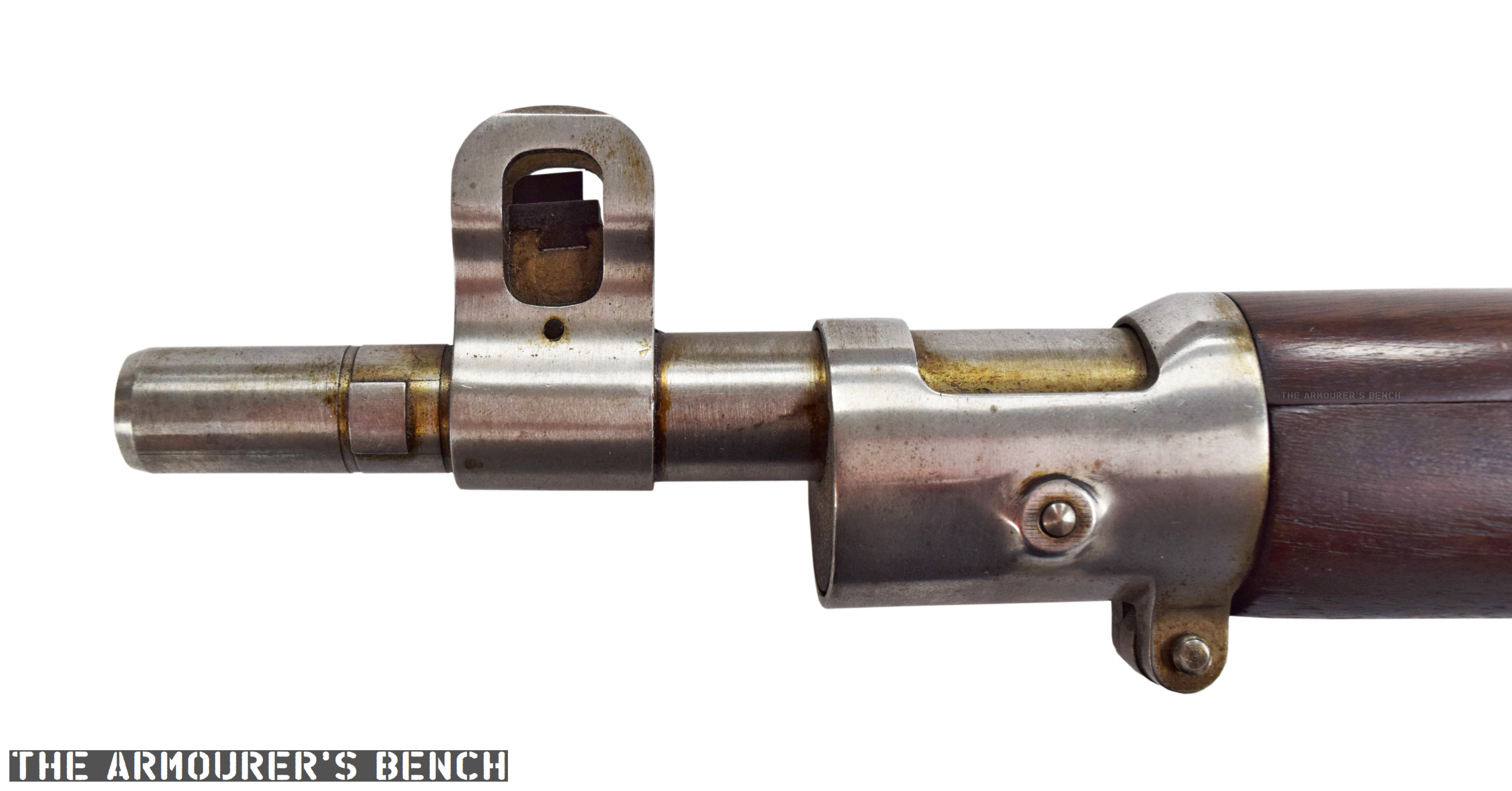
Remington made a number of external and internal changes to approximate the British No.4. They fitted a front sight post with sight protectors which was moved further back from the muzzle to enable the rifle to mount a Rifle No.4 spike bayonet. As such the upper barrel band does not have a bayonet lug.

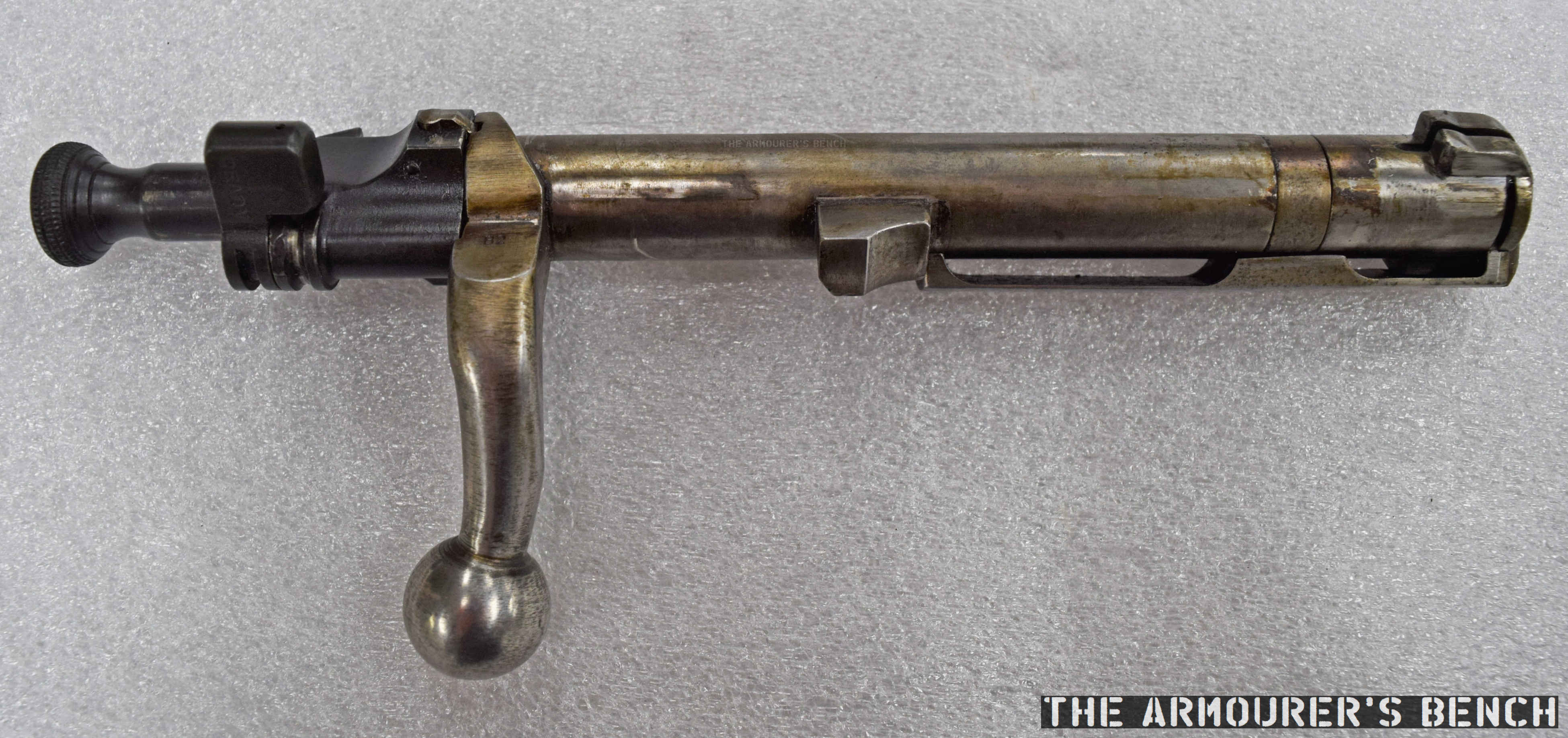
Many of these parts are still in-the-white, unfinished, including the barrel, barrel bands, floor plate, front sight assembly, rear sight assembly and the bolt itself. The bolt does, however, have a parkerized cocking piece.

DSC_0524wm
The rifle’s bolt (Matthew Moss)

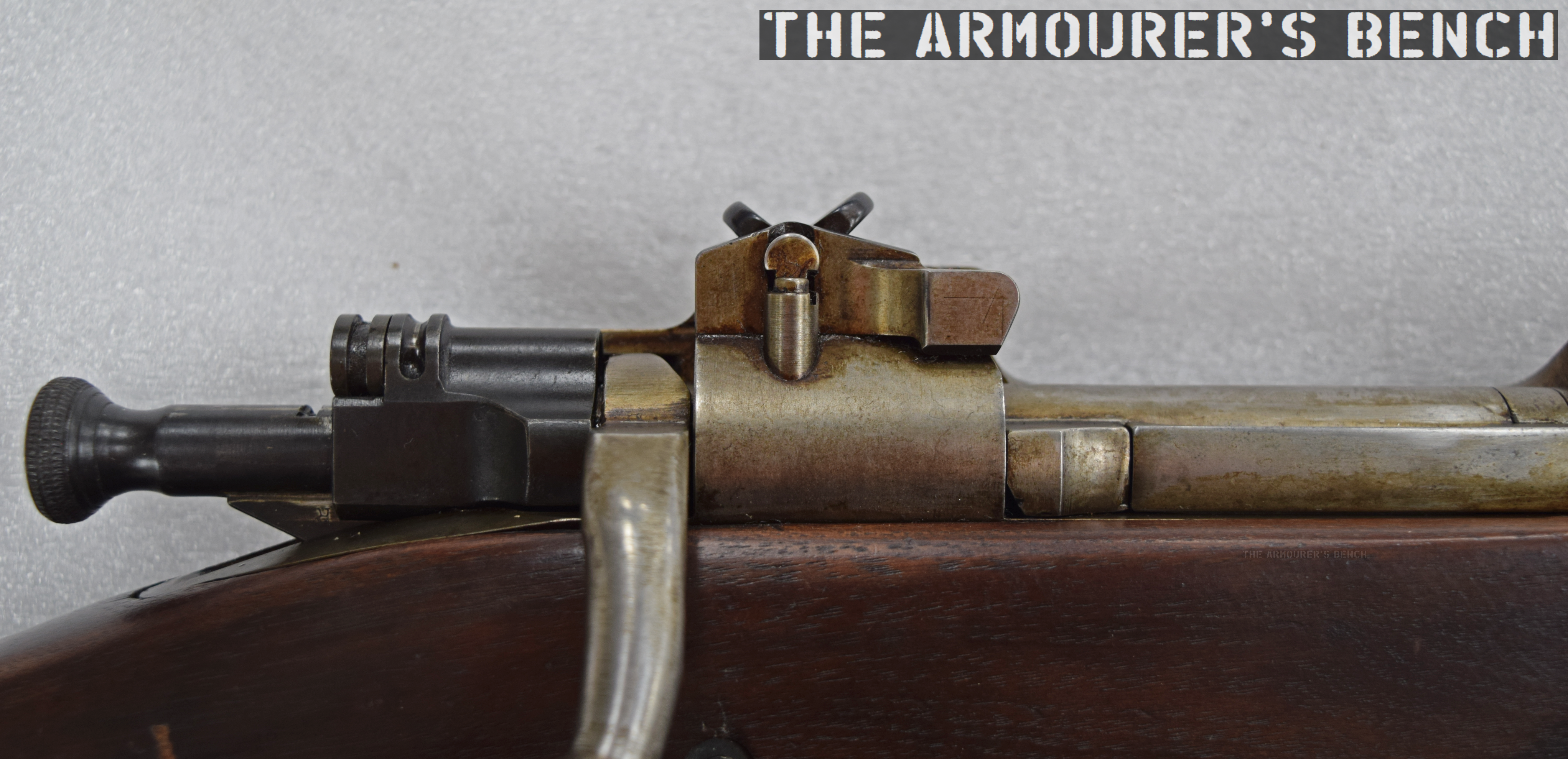
The hybrid also moves the rear sight back onto the receiver, which necessitates a longer piece of wooden furniture covering where the M1903’s ladder sight would normally be. The style of rear sight was also changed to a two-position flip sight with apertures for 300 and 600 yards mimicking those seen on the No.4 Mk2.

DSC_0541wm
A close up of the rifle’s bolt, cocking piece (which wasn’t properly inserted) and rear sight (Matthew Moss)


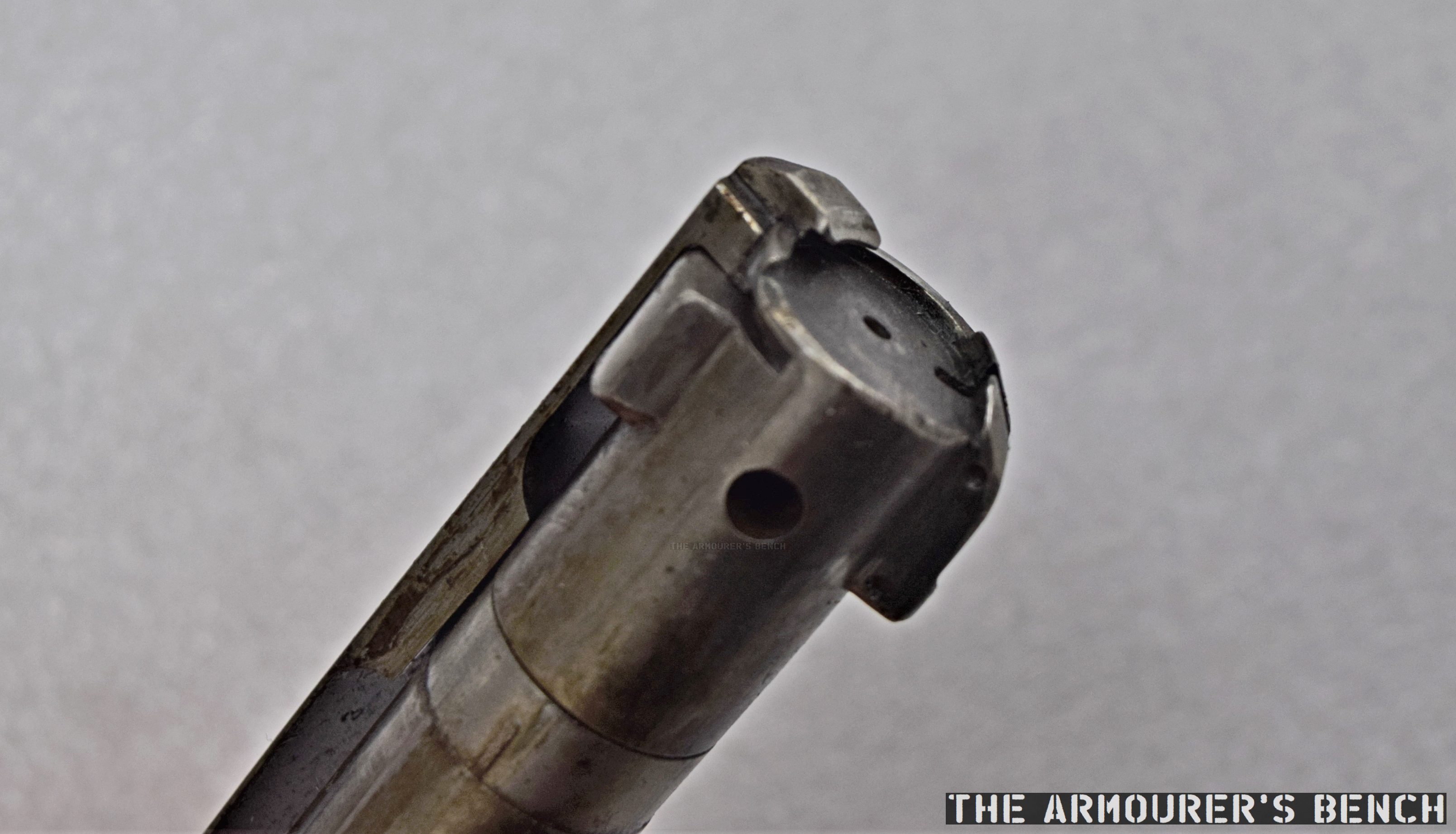
They also redesigned the charger guide to support the Lee-Enfield-type chargers rather than the M1903 stripper clips. The bolt was adapted to work with Britain’s rimmed .303 round, with the extractor modified for the British cartridges wider, thicker rim.

DSC_0527wm (1)
A close up of the bolt head (Matthew Moss)

The rifle did not have the Lee-Enfield’s detatchable box-magazine, instead retaining the M1903’s 5-round internal magazine. The magazine follower does not appear to have been altered either. Markings on the rifle are minimal and include a ‘7’ on the front sight post, a ‘B2’ on the bolt handle and a ‘2’ stamped on the magazine follower. No roll marks or serial numbers appear to be present.

DSC_0533wm
The faux Lee-Enfield stock with spliced in semi-pistol grip (Matthew Moss)

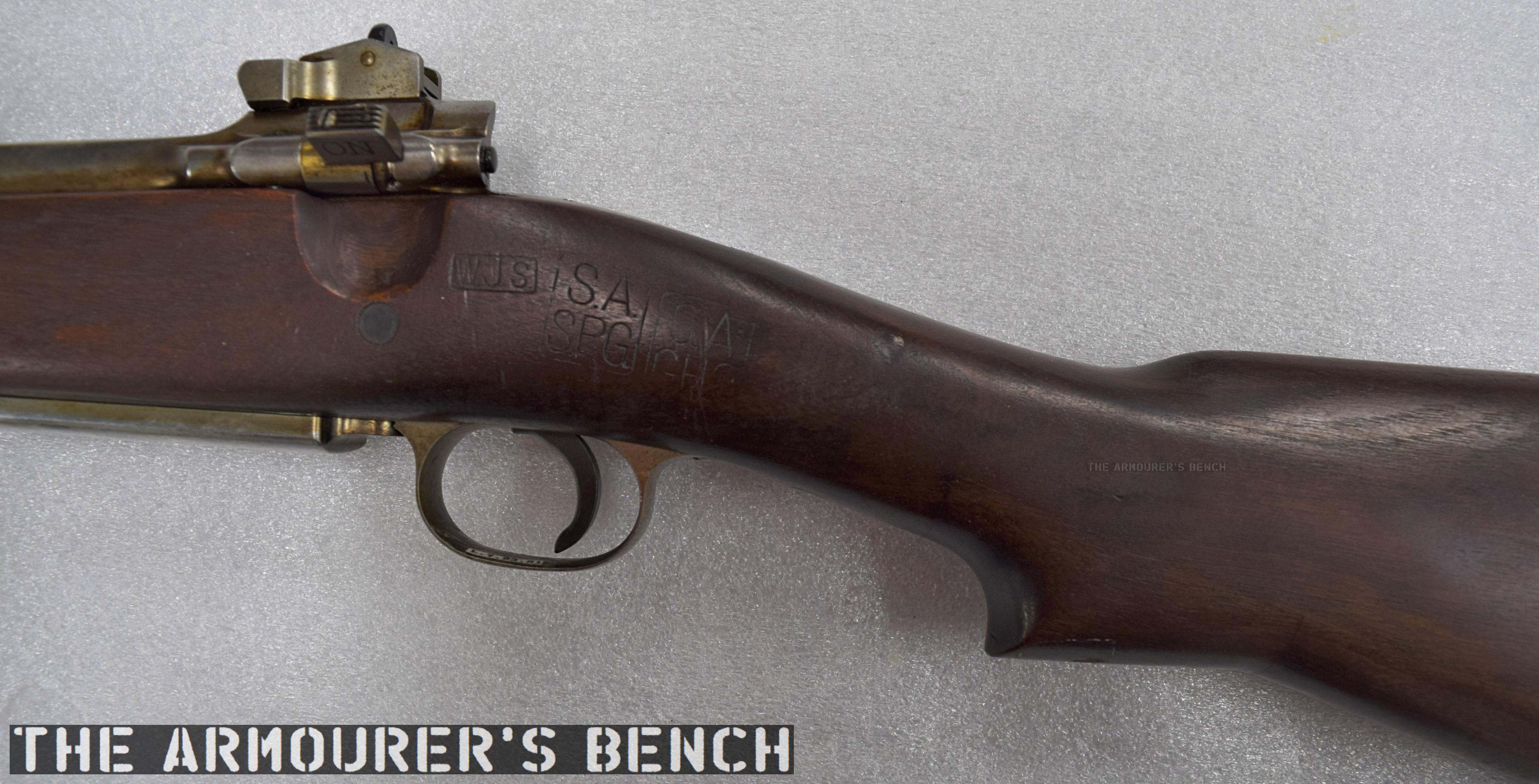
The rifle’s stock has also been adapted, so instead of a straight wristed-stock a piece of wood has been spliced in to create a Lee-Enfield style contour, forming a semi-pistol grip. The stock is marked with the inspector marks ‘WJS’, which indicate the stock was originally inspected by W.J. Strong and accepted between 1918 and 1921, as well as a pair of later Springfield Armory inspection cartouches: ‘SPG’ – the initials of Stanley P. Gibbs, who was an inspector at Springfield Armory between 1936-1942 and ‘GHS’ – the initials of Brigadier General Gilbert H. Stewart (GHS), Springfield’s commander in the late 1930s- early 1940s. This would suggest that the stock was refurbished at Springfield Armory before being transferred to Remington where it was subsequently adapted.

DSC_0531wm
A detail shot of the stock’s Ordnance stampings (Matthew Moss)

In August 1941, the US began its re-armament programme and in September the British contract with Remington was cancelled. At the same time production in Canada and at Savage’s J. Stevens Arms division in the US had gotten underway and it was decided that the adapted hybrid .303 M1903s developed at Remington was no longer needed. The hybrid contract was formally cancelled in December 1941, and additional .30-06 M1903s and M1917s were taken under the Lend-Lease Agreement to fulfil the needs of the Home Guard. Savage believed that they could significantly increase the number of rifles they could build per day, they managed to enter full production by the end of 1941 and by 1944 had produced well over 1 million No.4s.

1903A3

Remington went on to produce M1903s for the US military, overcoming issues with the original engineering drawings and the tooling dimensions to eventual produce 365,000 M1903s by mid-1943, before switching to production of the M1903A3 pattern and producing 707,629 rifles. In total Remington produced 1,084,079 M1903-pattern rifles during World War Two.

The Remington .303 M1903 hybrids are perhaps the rarest M1903 variant, with only a handful built. They would likely have been perfectly serviceable rifles and helped plug the desperate gap in Britain’s arsenal. Rapidly moving events ensured that these rifles became a footnote in both the Lee-Enfield and Springfield 1903’s histories.

Special thanks to both Remington and the Cody Firearms Museum for allowing us to take a look at this extremely rare rifle.


If you enjoyed the video and this article please consider supporting our work here. We have some great perks available for Patreon Supporters. You can also support us via one-time donations here.


Bibliography:

‘Production of Military Rifles by Remington Arms Company in Ilion, New York During World War II’, American Society of Arms Collectors Bulletin 92:14-24, R. Marcot

The Lee-Enfield Story, I. Skennerton, (1993)

The M1903 Springfield Rifle, L. Thompson, (2013)

‘The 1903 Springfield’, HBSA UK, (source)

The Model 1903 Springfield Rife, J. Poyer, (2013)


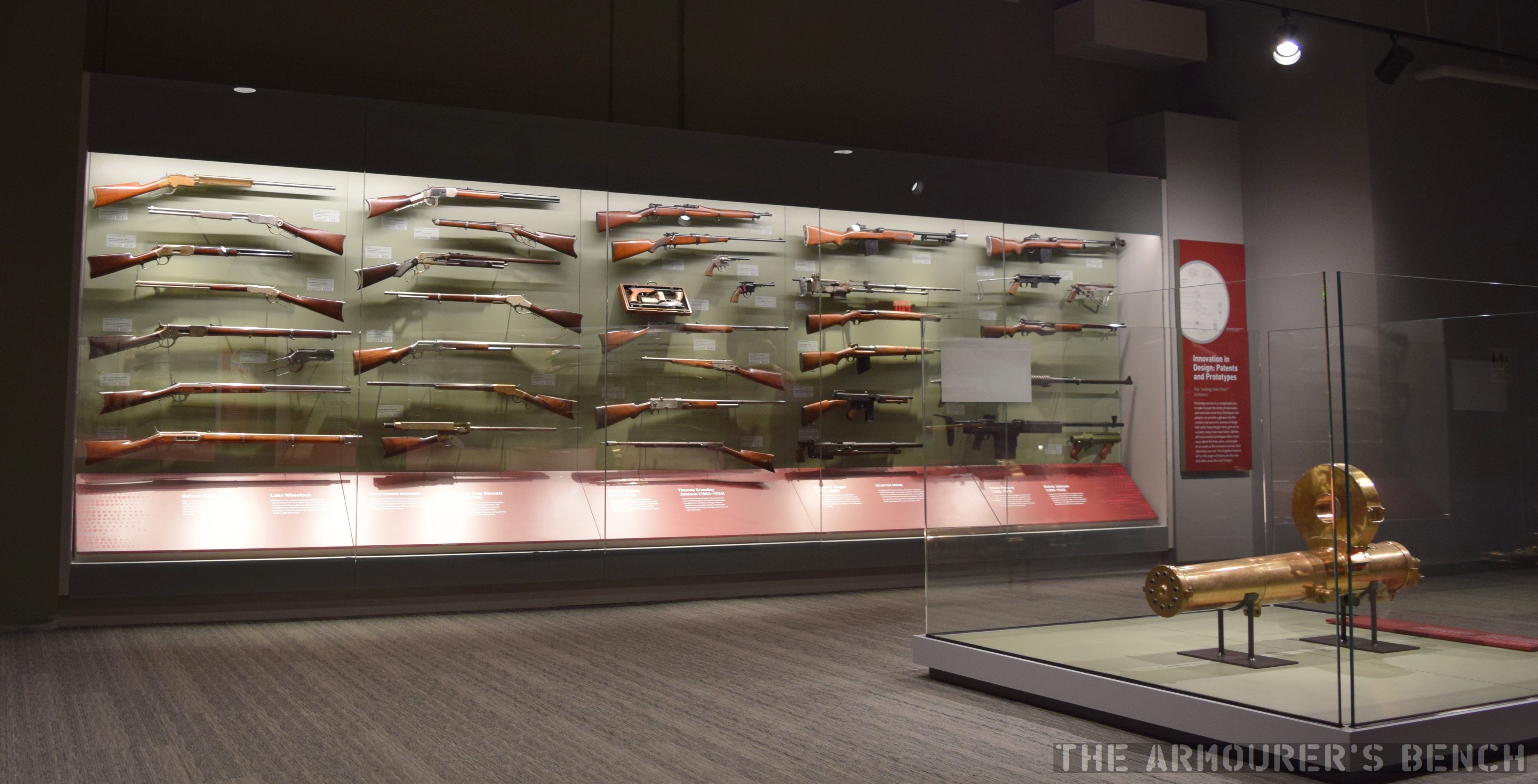
A Walk Around the Cody Firearms Museum

Last summer I had the chance to visit the newly renovated Cody Firearms Museum. With the ongoing Coronavirus Pandemic I thought now was a good time to finish my walk-around video taking a look at the new museum.

The museum has always had an extremely impressive collection of firearms and gun related artefacts, some of which we’ve been lucky enough to feature in videos, but the new museum puts more of these amazing firearms on display than ever before.

DSC_0498a
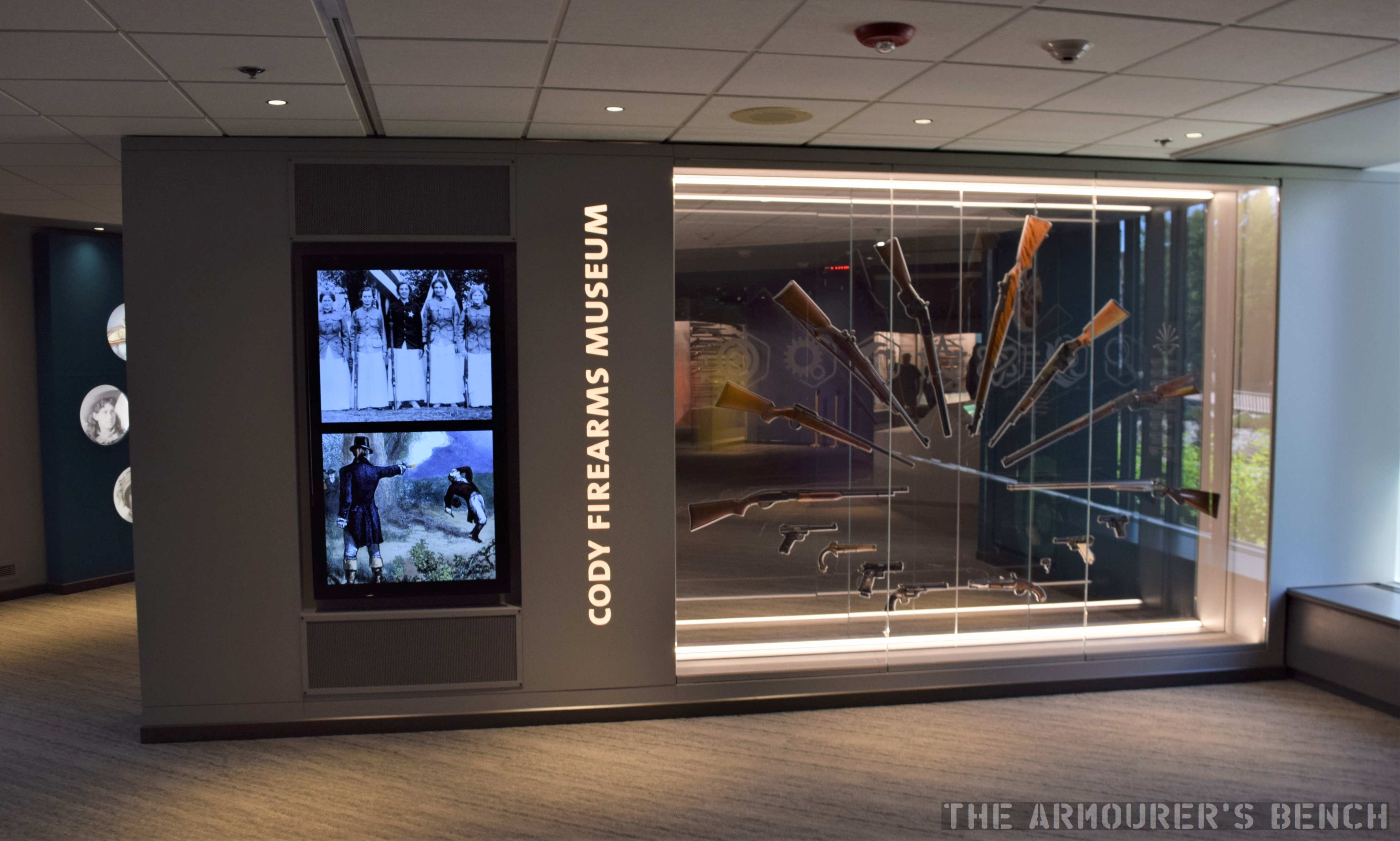
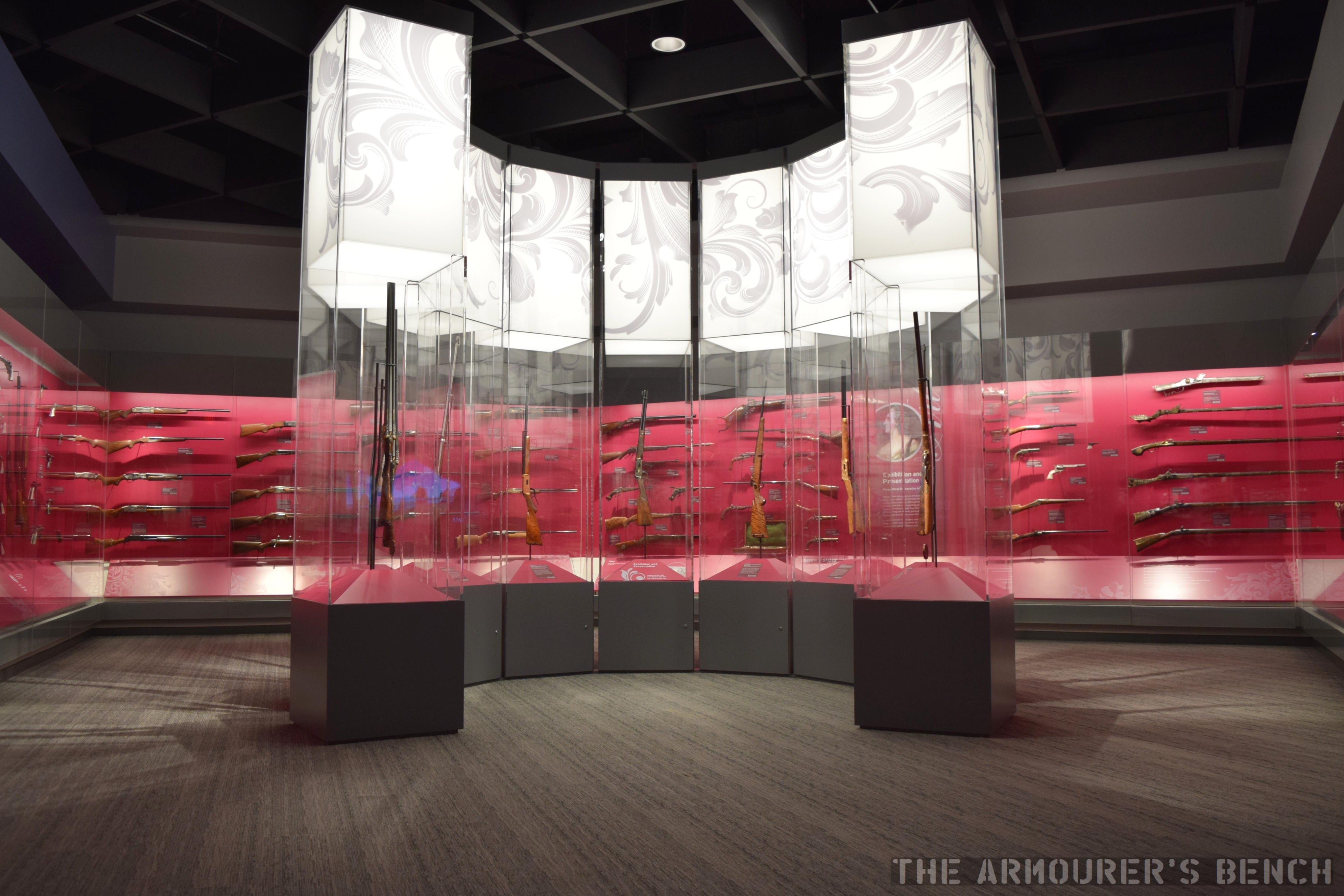
The CFM’s new and improved ‘gun fan’ (Matthew Moss)

The $12 million renovation has also allowed the museum to become much more interactive too with working models, touch screens and shooting simulators.

DSC_0495
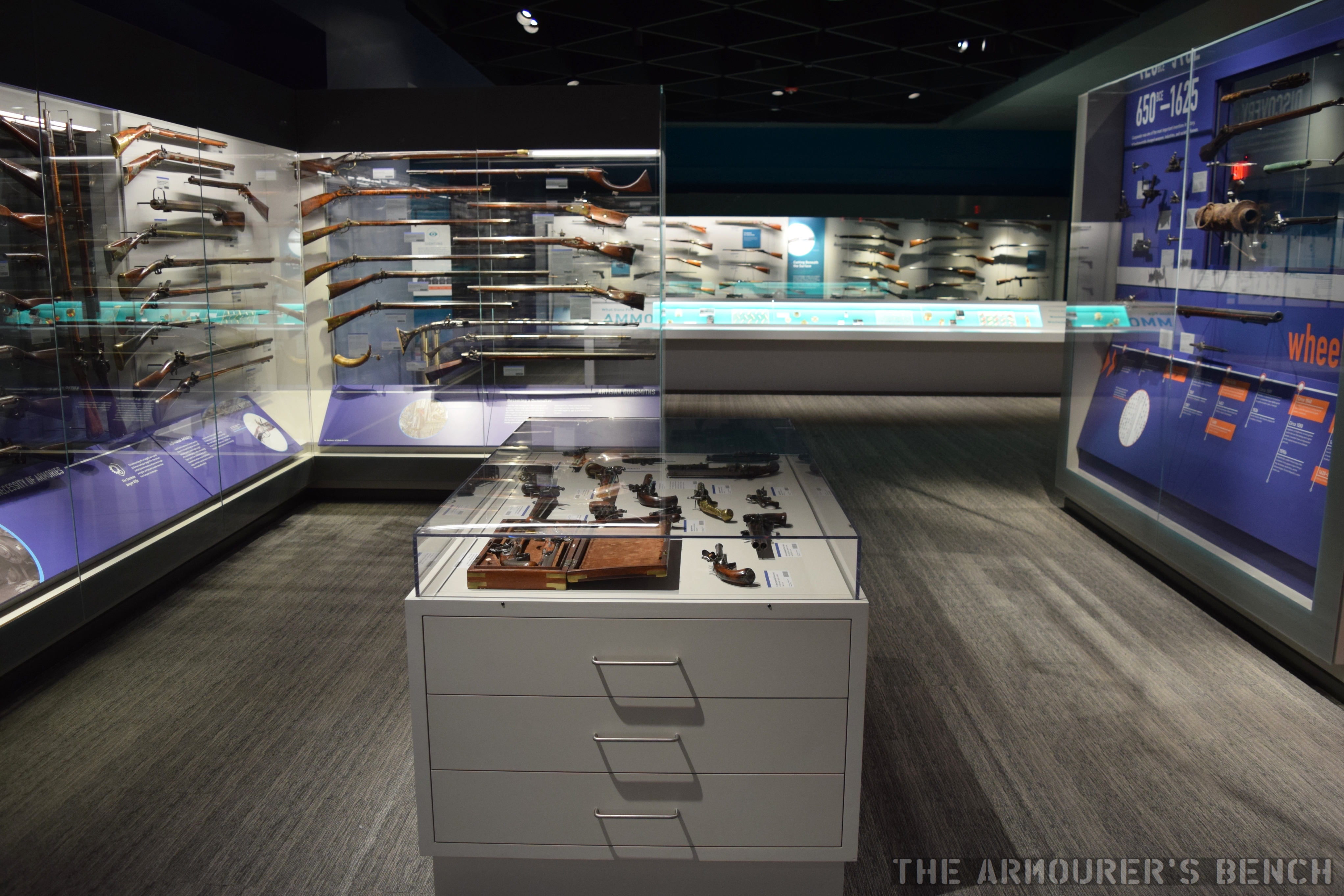
A view back through the first main gallery (Matthew Moss)

A new intuitive layout lets you explore firearm history either by chronology or by theme. In the photo above we can see some of the displays in the chronological gallery that shows the evolution of civilian and military firearms from their invention to the present.

DSC_0493
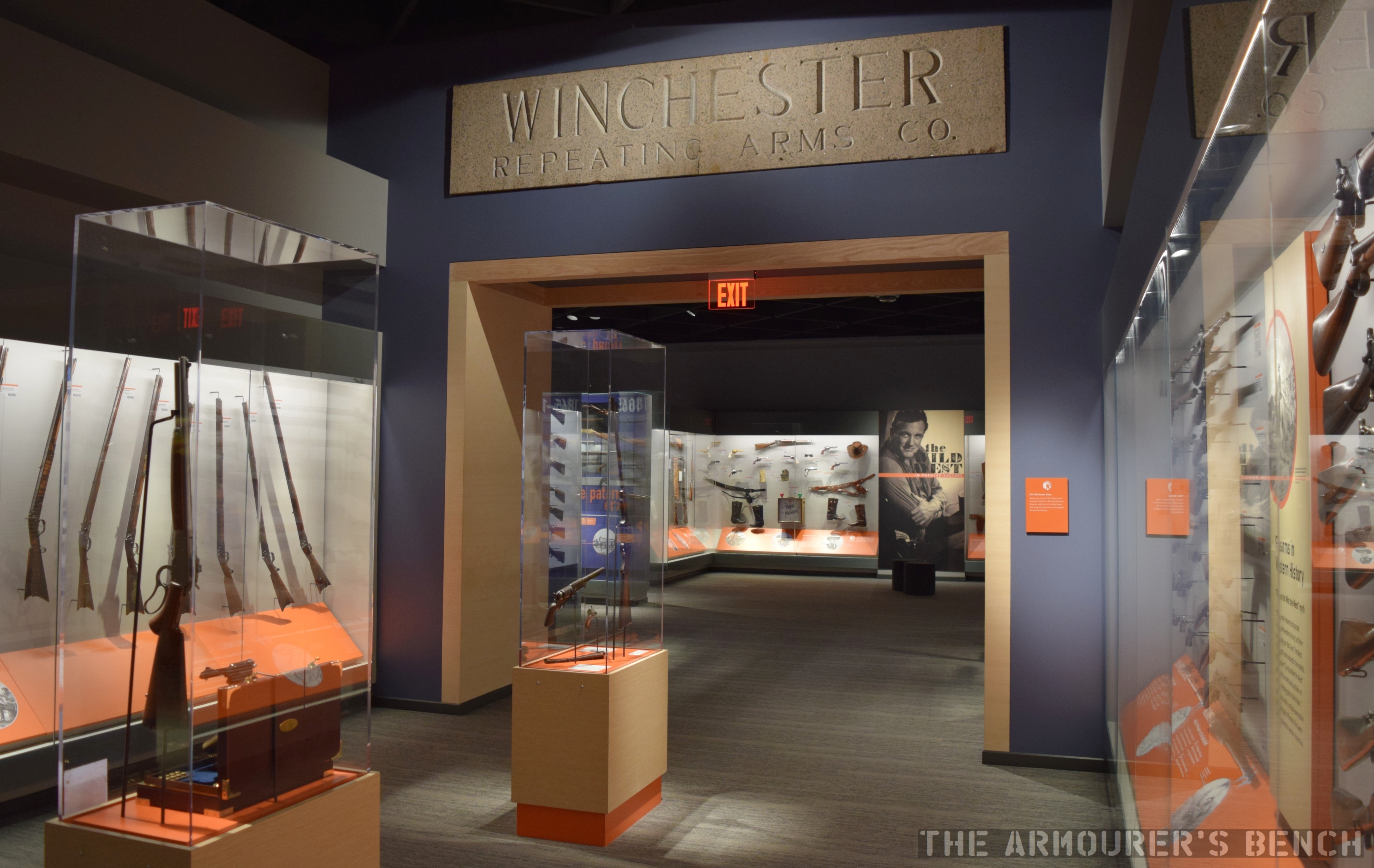
Some of the weapons of the West on display along with the original Winchester factory name stone (Matthew Moss)

One of the features I really liked was that many of the cases can be viewed on both sides allowing you to see all around the firearms.

Around the exhibits are touch screens where you can call up more information, first hand war stories and even animations of how various firearms work.

DSC_0482
A gallery full of beautifully engraved firearms including some presidential presentation pistols (Matthew Moss)

There is also a gallery of ornately decorated firearms which includes some incredible pieces.

DSC_0458
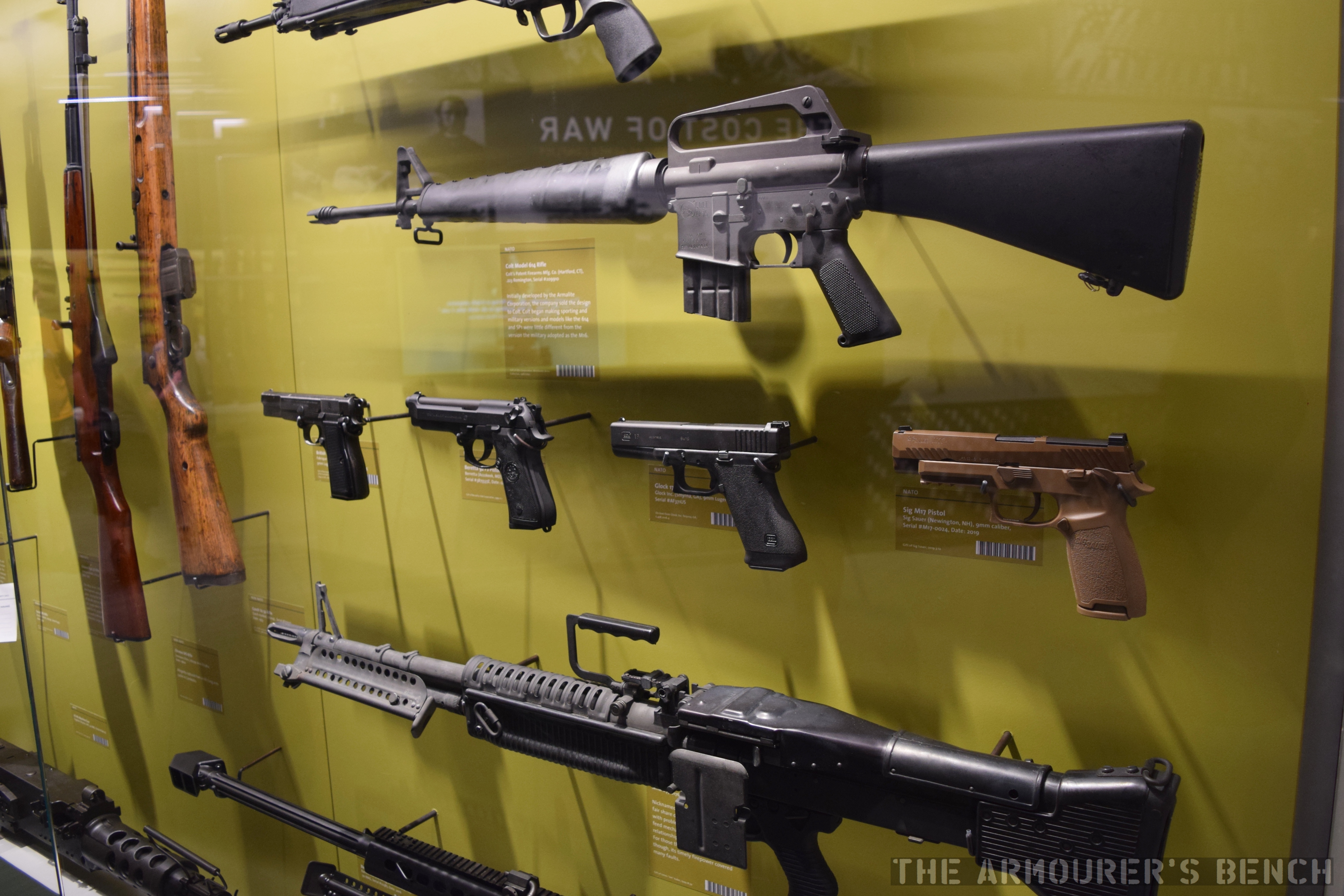
A detail shot from the military gallery (Matthew Moss)

Unsurprisingly, the military gallery was one of my favourite parts of the museum with dozens of guns organised by conflict and period.

DSC_0455
One of the cases in the military gallery (Matthew Moss)

DSC_0447
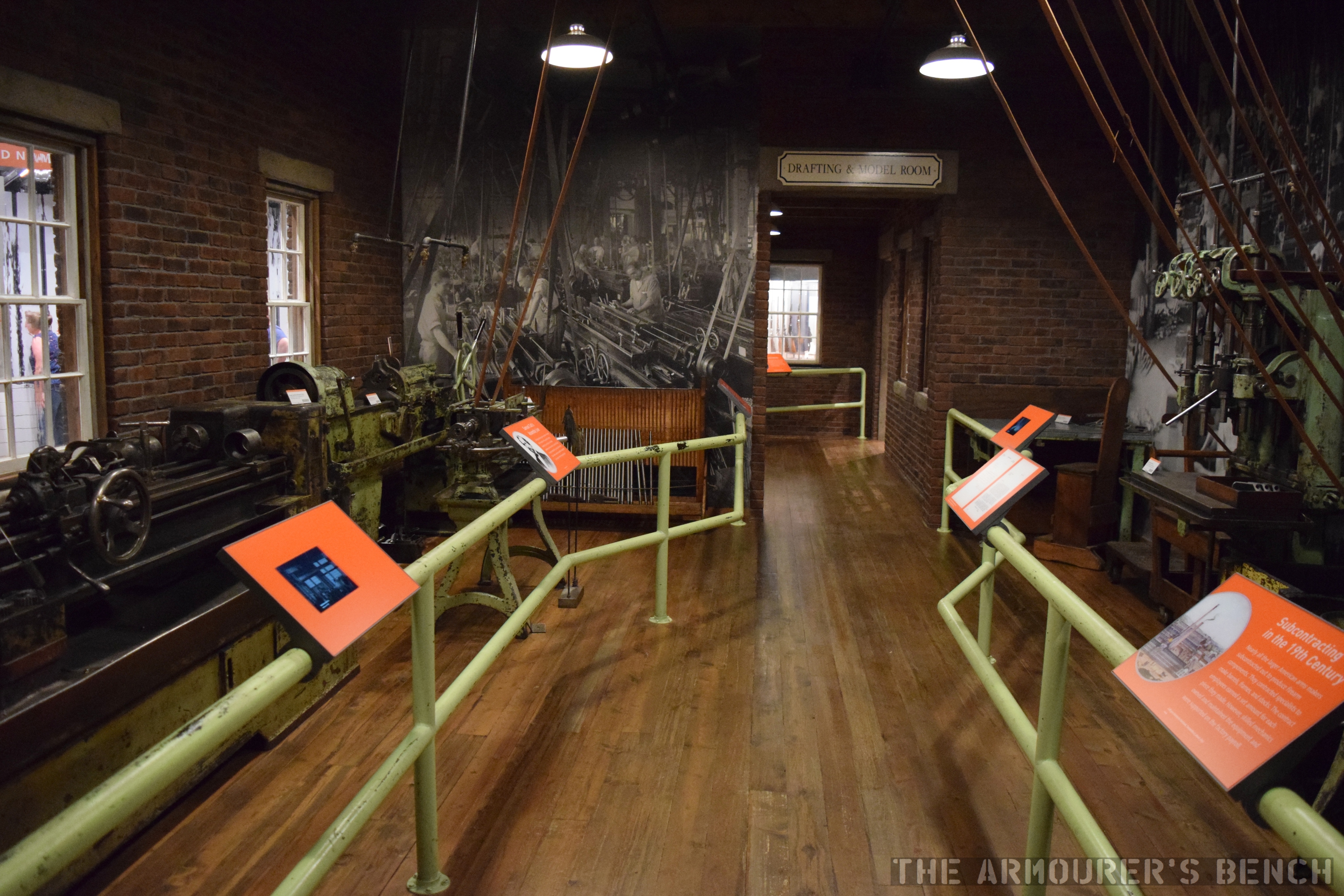
A look back through the recreated machine shop (Matthew Moss)

One of the best features of the original museum has also been retained, a recreation of a gun factory’s drafting room and machine shop.

DSC_0445
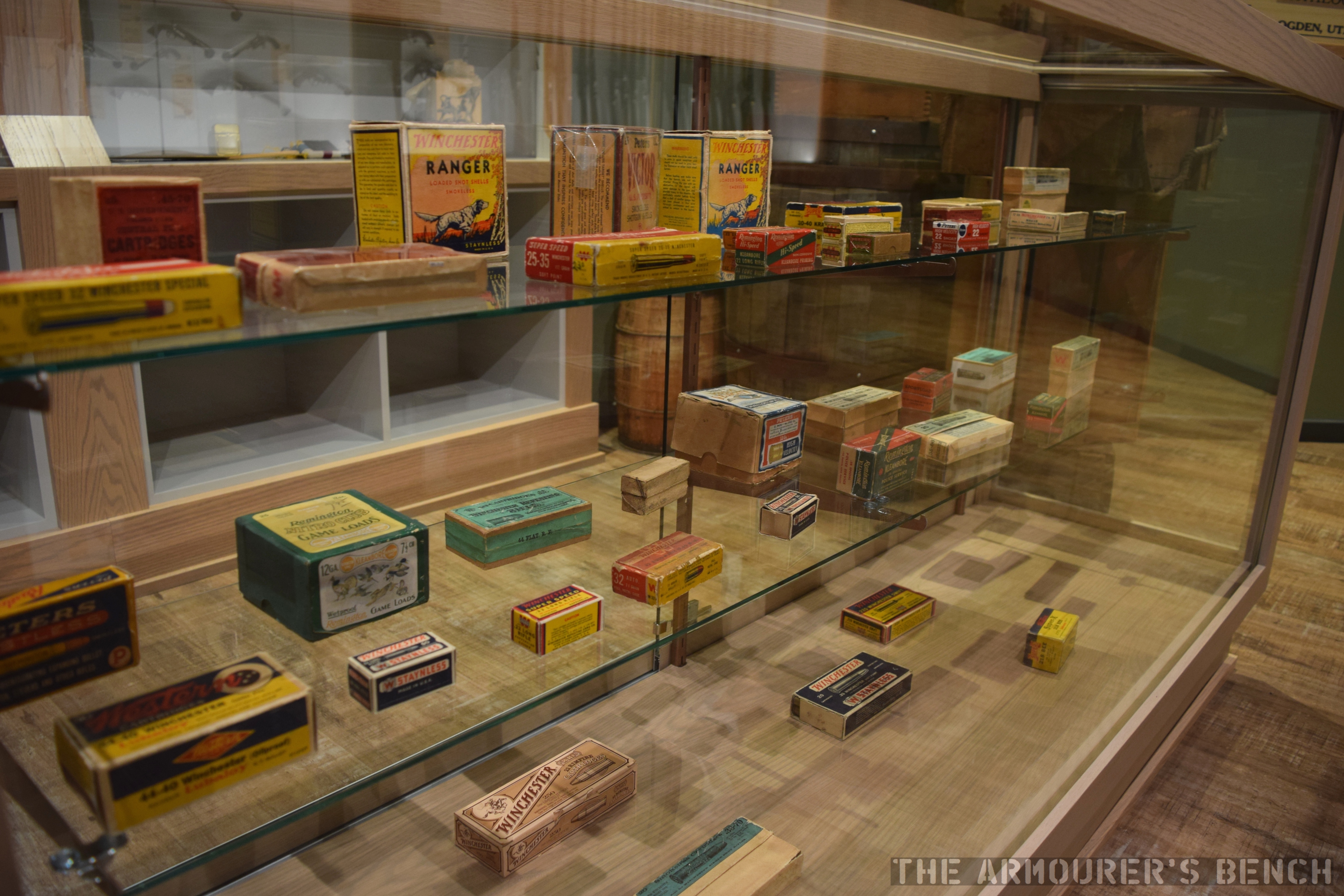
A detail shot of some of the ammunition packaging on display in the ‘general store’ (Matthew Moss)

One of the most interesting little sections is a recreation of a general store showing off some of the items that companies like Winchester made alongside their well known firearms.

DSC_0432
A case dedicated to experimental prototypes with the Gatling used in the initial development of the Vulcan in the foreground (Matthew Moss)

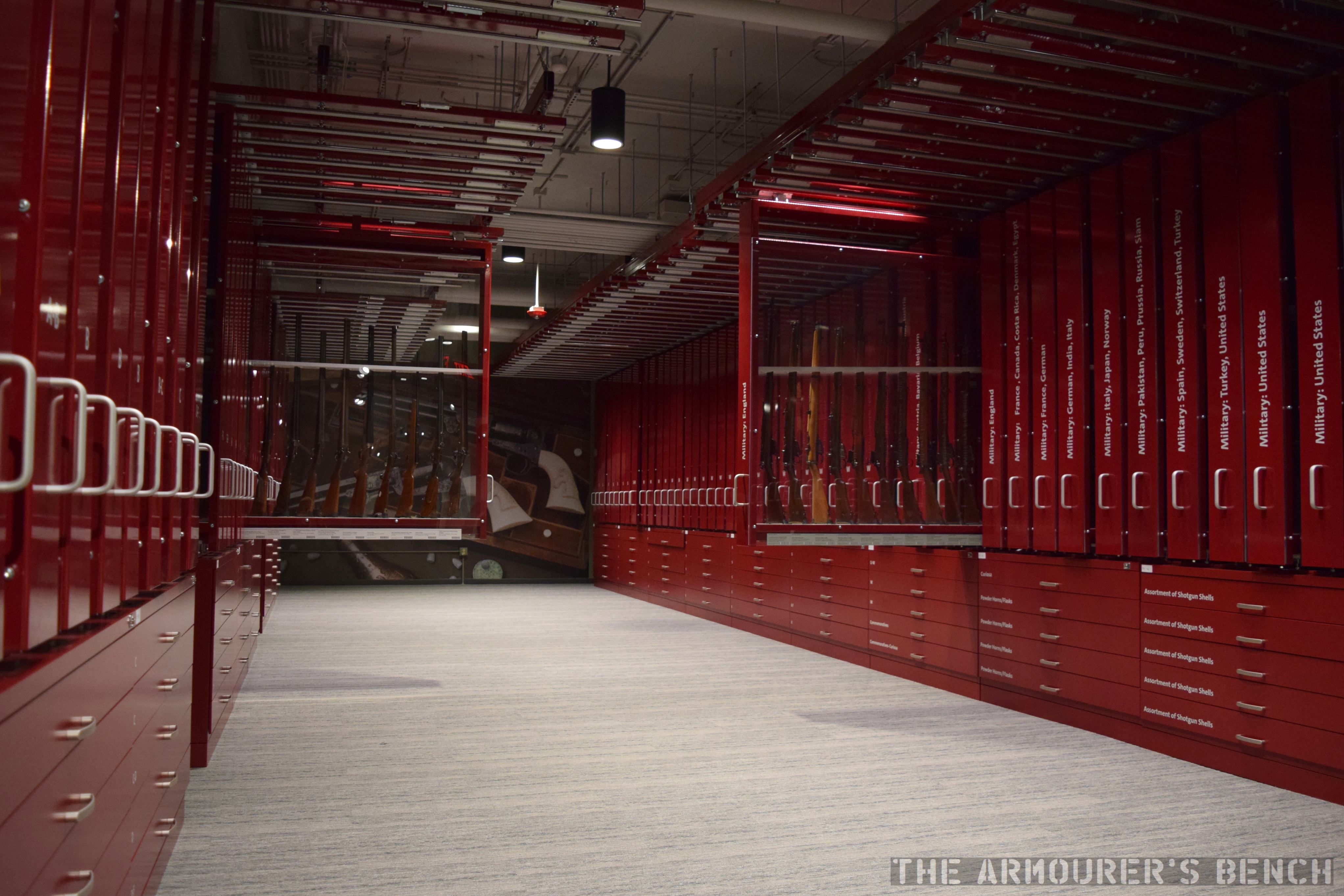
Downstairs is a space dedicated to experimental prototypes and a rolling wall of cases that include examples of hundreds of types of firearms and ammunition.

DSC_0434
Some of the rolling cases open in the hall dedicated to showing off as many firearms as possible (Matthew Moss)

The newly refurbished museum puts the collection front and centre in a way that will enthral the average museum-goer and satisfy any avid gun enthusiast.

You can find out more about the museum here and check out some of the firearms we have had the privilege of examining from the CFM’s collection here.


If you enjoyed the video and this article please consider supporting our work here. We have some great new perks available for Patreon Supporters.

Winchester Select-Fire Garand Prototype


The Cody Firearms Museum, at the Buffalo Bill Centre of the West, holds a number of interesting select-fire M1 Garand rifles, adapted by Winchester during the 1940s. In this article we’re going to examine one of the prototypes, the rifle is believed to date to the late 1940s, and appears to be chambered in one of the earlier iterations of the T65 .30 Light Rifle round, which would eventually be adopted as 7.62x51mm.

Very little information is available about the rifle and little has been written about it previously. It is believed to have been developed by Winchester engineer Harry H. Sefried II with former Cody Firearms Museum curator Herbert Houze crediting Sefried with the rifle, which he described as adaptation of the M1 into a ‘squad automatic rifle’. After some archival research and combing Winchester’s patents from the period we can now attempt to shed light on a little more of the rifle’s history.

CFM photo
Winchester M1 Select-Fire prototype (Danny Michael/Cody Firearms Museum)

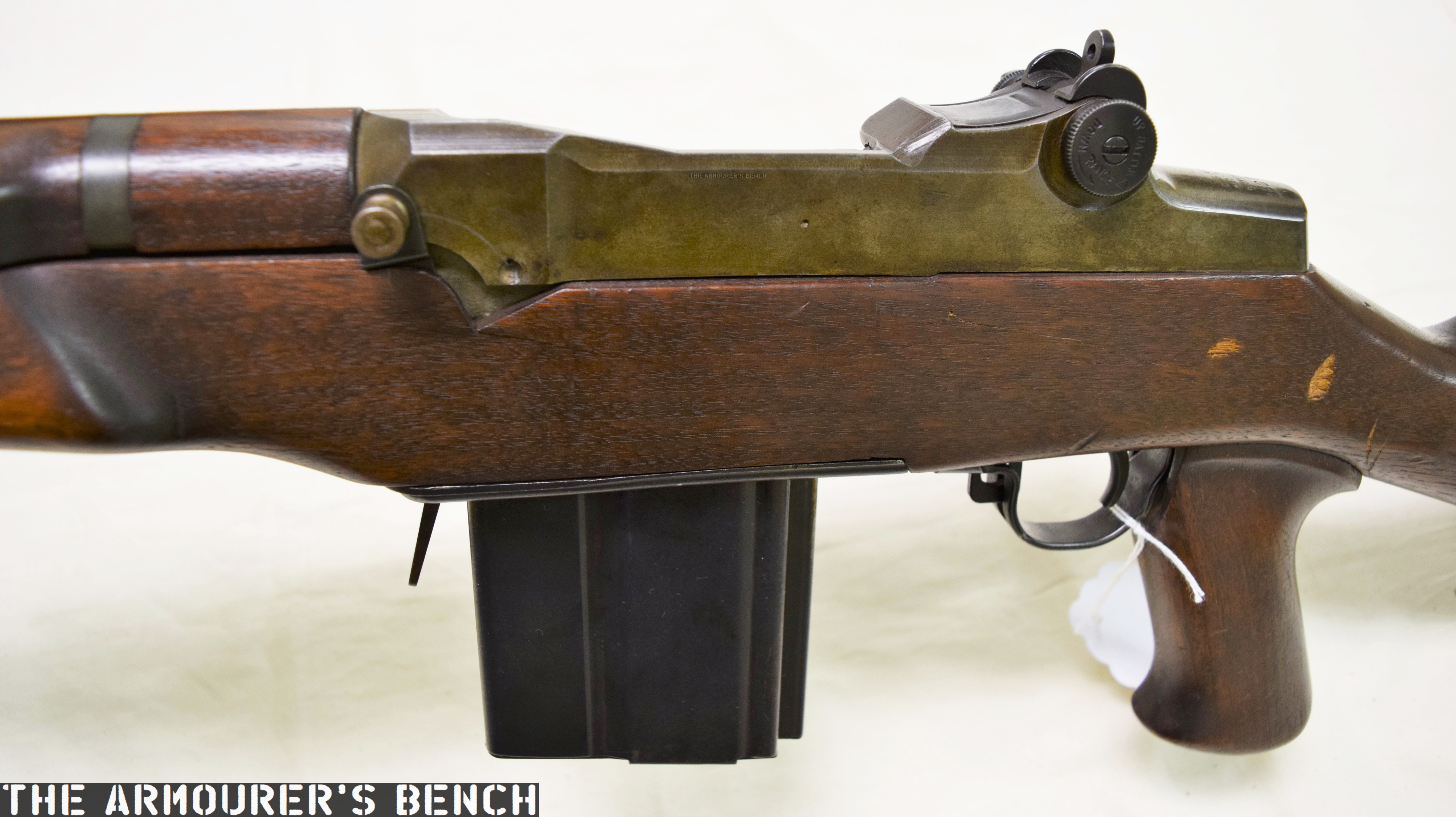
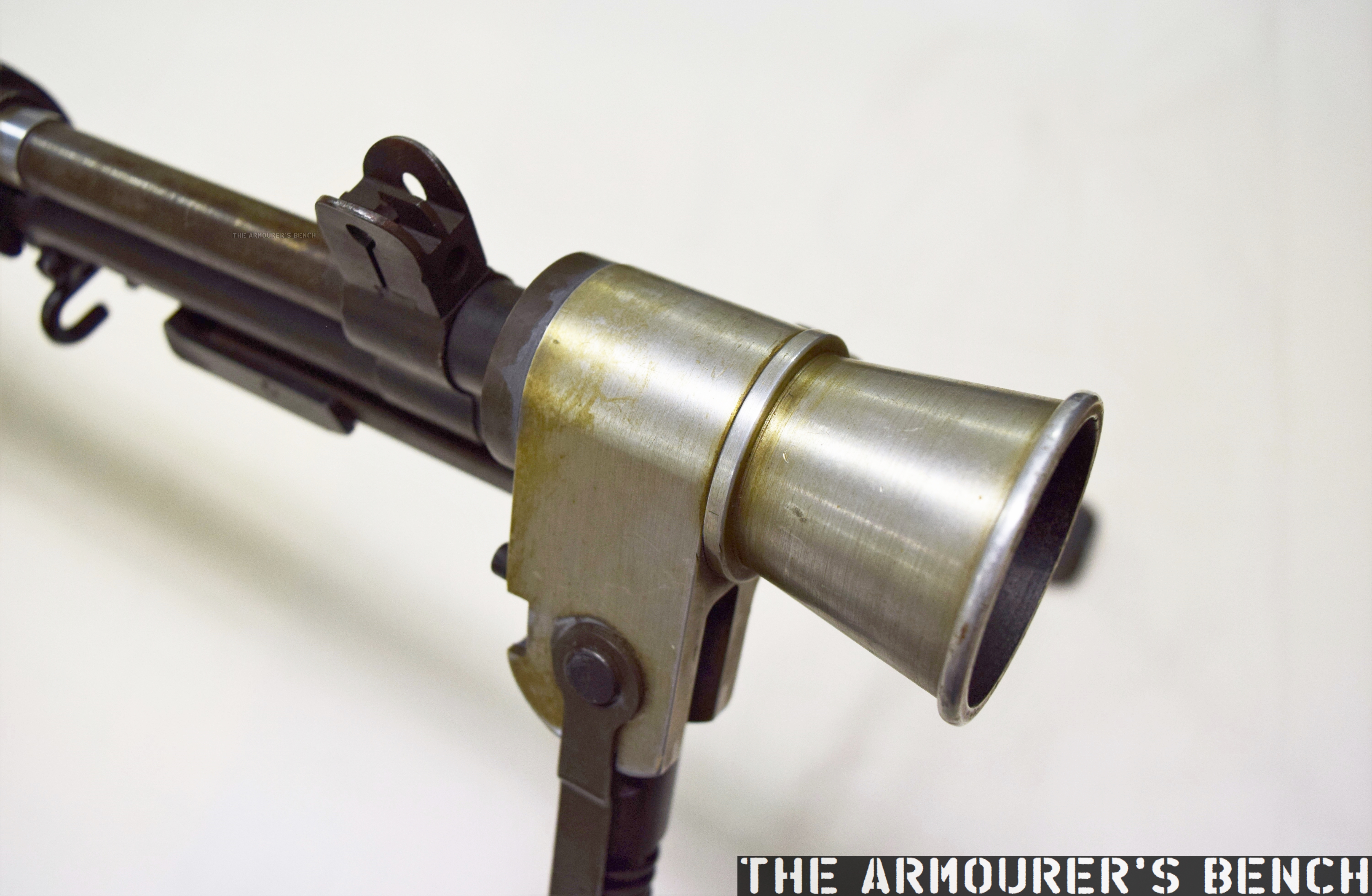
Externally, the rifle has a number of instantly recognisable distinctions from the standard M1 Garand. It has a reshaped stock with an added pistol grip, a proprietary box magazine and a combined bipod and conical flash hider. If we look closer we’ll notice that the stock has a swell just ahead of the breech, flaring out in an almost triangular bulge. These changes to the stock also distinguish this rifle from Winchester’s other select-fire M1 adaptations, which retain the standard Garand stock profile.

From the patents available combined with an examination of the rifle we can learn a lot. We cannot rely on patents to tell the whole story of the rifle, however, as many of the elements that make up the weapon appear to have gone unpatented. The substantial external and internal changes made to the rifle suggest that this was not an attempt to adapt the M1 with a minimal number of component parts changes but rather an effort to generally improve the rifle, making it conducive to fully automatic fire.

DSC_0231
Detail photo showing the rifle’s pistol grip, altered stock and magazine (Matthew Moss)

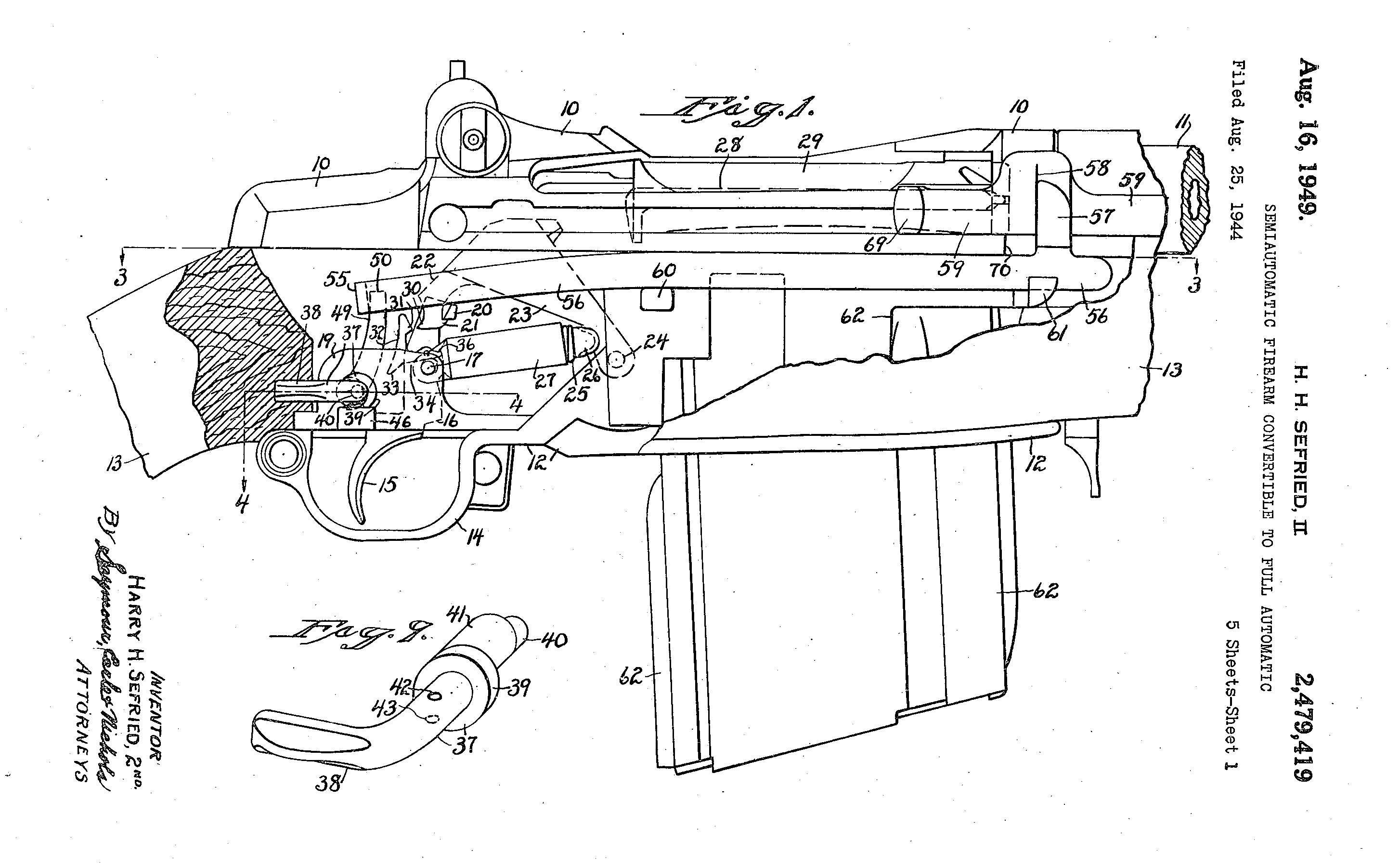
In summer 1944, Winchester’s CEO Edwin Pugsley directed Sefried to begin work on a select-fire conversion for the M1, to rival those being developed at Springfield Armory and Remington. Winchester’s select-fire Garand went though a number of iterations which resulted in two patents from Sefried. The first, filed in August 1944 (US #2479419), incorporated an elongated sear actuating lever and a selector on the lower, right side of the receiver. Winchester’s first attempts at a select-fire M1 conversion resulted in rifles with extremely high, uncontrollable rates of fire of over 900 rounds per minute. Sefried filed a second patent later in January 1948 (US #2464418) which used a catch to hook the sear. The rifle we are examining appears to have yet another select-fire system, one for which I have so far been unable to find a corresponding patent for. Winchester’s work on the select-fire adaptation came to a halt with the end of the war. It appears, however, that Winchester again began to work on adapting the M1 in the late 1940s, with Sefried again working on the project, filing his second select-fire mechanism patent in 1948 (US #2464418).

US2479419 sefrieds 1st patent
Sefried’s 1949 patent for another select-fire M1 conversion (US Patent Office)

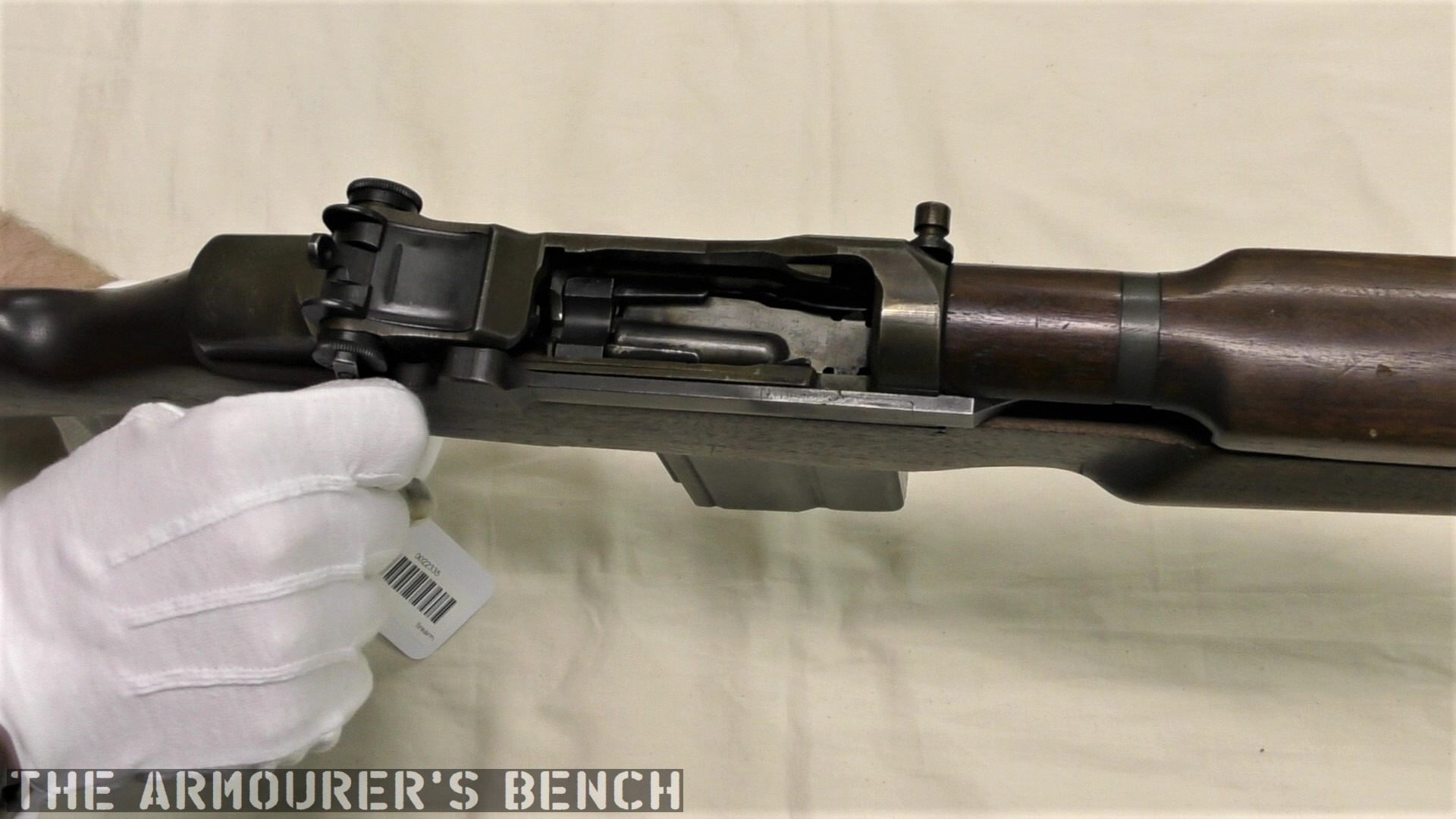
The rifle’s receiver was originally a standard Winchester-made .30-06 M1 with a serial number of 1,627,456. This means its wartime production gun, dating from May 1945. It would appear that rather than the rifle being lifted from the rack finished, it seems that it was earmarked for prototype development because the receiver forging lacks the cuts/forgings needed for the en bloc clip release lever. This makes sense if it was known that the receiver was destined for use in a prototype which fed from a box magazine. However, the timeline of the rifle gets more complex when we consider that it was a late-war production rifle. There are a number of possibilities. The rifle may have been simply set aside for internal prototype work in May 1945 and not used until a T65 chambered rifle was developed later. Alternatively, it is possible that the rifle was converted during the initial attempts to create a select-fire M1 but was later rechambered from .30-06 to the new developmental T65 round.

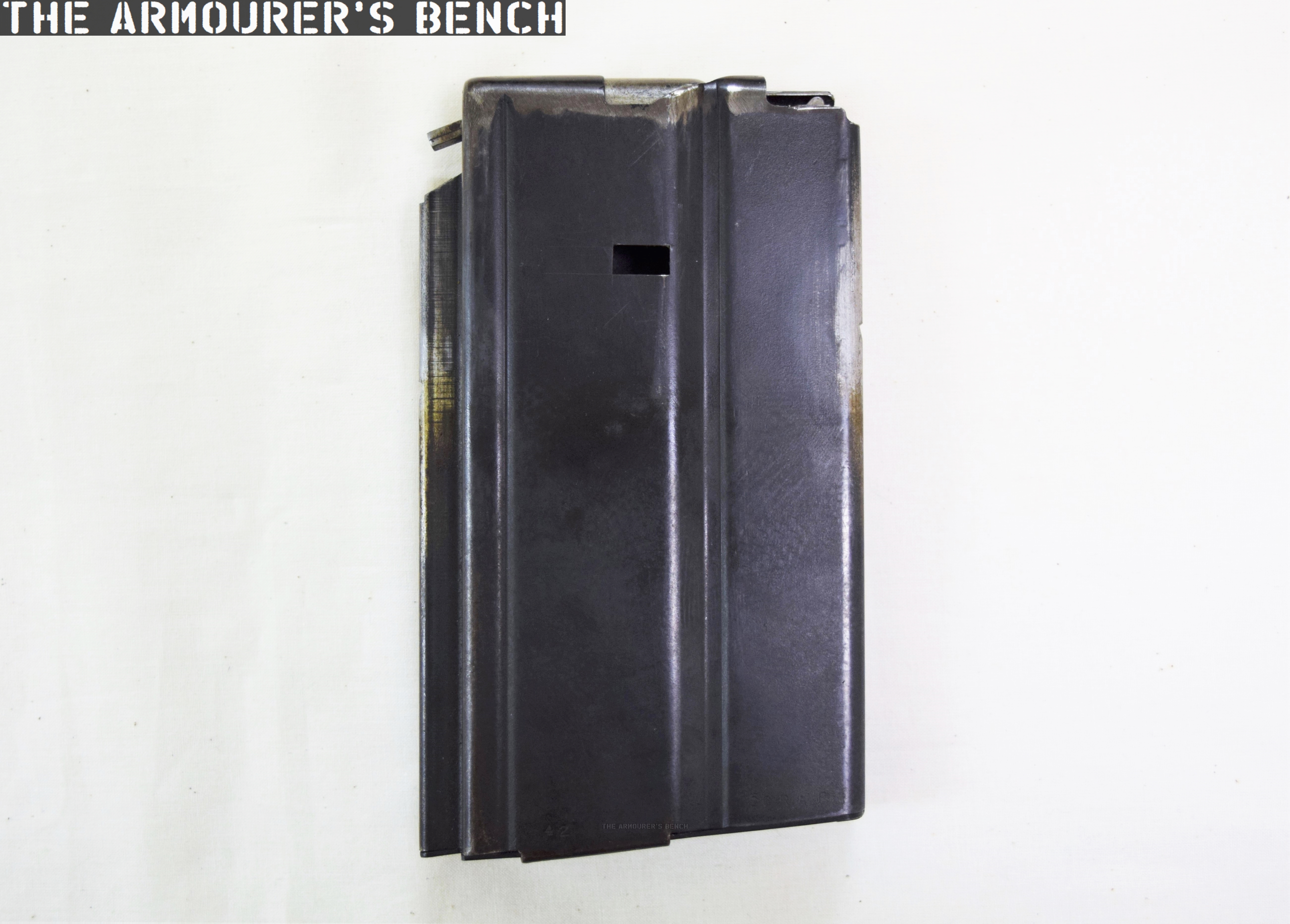
This prototype’s trigger guard assembly, which also comprises the magazine well floorplate, is a self-contained assembly and does not interact with the weapon’s trigger mechanism or action. While Sefried had a patent for his own magazine system (US #2386722) this rifle uses a slightly different magazine release and floorplate, which is similar to one seen in Stefan Janson’s 1956 patent for a stripper clip-loading box magazine for the M1 (US #2894350). The magazine used in this prototype, however, is not the same as Janson’s. It has fixed feed-lips and a projection at its rear which appears to house an anti-tilt tab for the follower.

DSC_0234
The rifle’s magazine (Matthew Moss)

The rifle does not to appear to use the full-automatic system seen in either of Sefried’s patents.  Similarly, the safety selector is located on the left side of the receiver, forward, in line with the breech. It has two positions with an arc of about 90 degrees. This position does not match Sefried’s patents for select-fire conversion, however, it does match the position patented by David Marshall Williams but not Williams’ selector’s orientation of travel. I have been unable to find a patent which matches this rifle’s selector or method fully-automatic conversion.

DSC_0224
Left-side view of the rifle’s receiver showing the fire-selector (Matthew Moss)

The pistol grip is an interesting addition as neither of the other Winchester select-fire prototypes nor the original select-fire Springfield prototypes incorporated one. Visually it is very similar to that seen on the later Italian Beretta BM 59 Mark II.  In an effort to lighten the rifle the prototype also has an aluminium buttplate. One of ingenious internal changes is the milling of the bottom of the barrel flat, this not only has the effect of lightening the rifle but also allows a new, straight operating rod to travel rearwards under the barrel. How this impacted on the barrel’s harmonics is unclear. The rifle certainly feels lighter and handier (when unloaded) than you would expect, weight is estimated to be around 7 or 8 lbs.


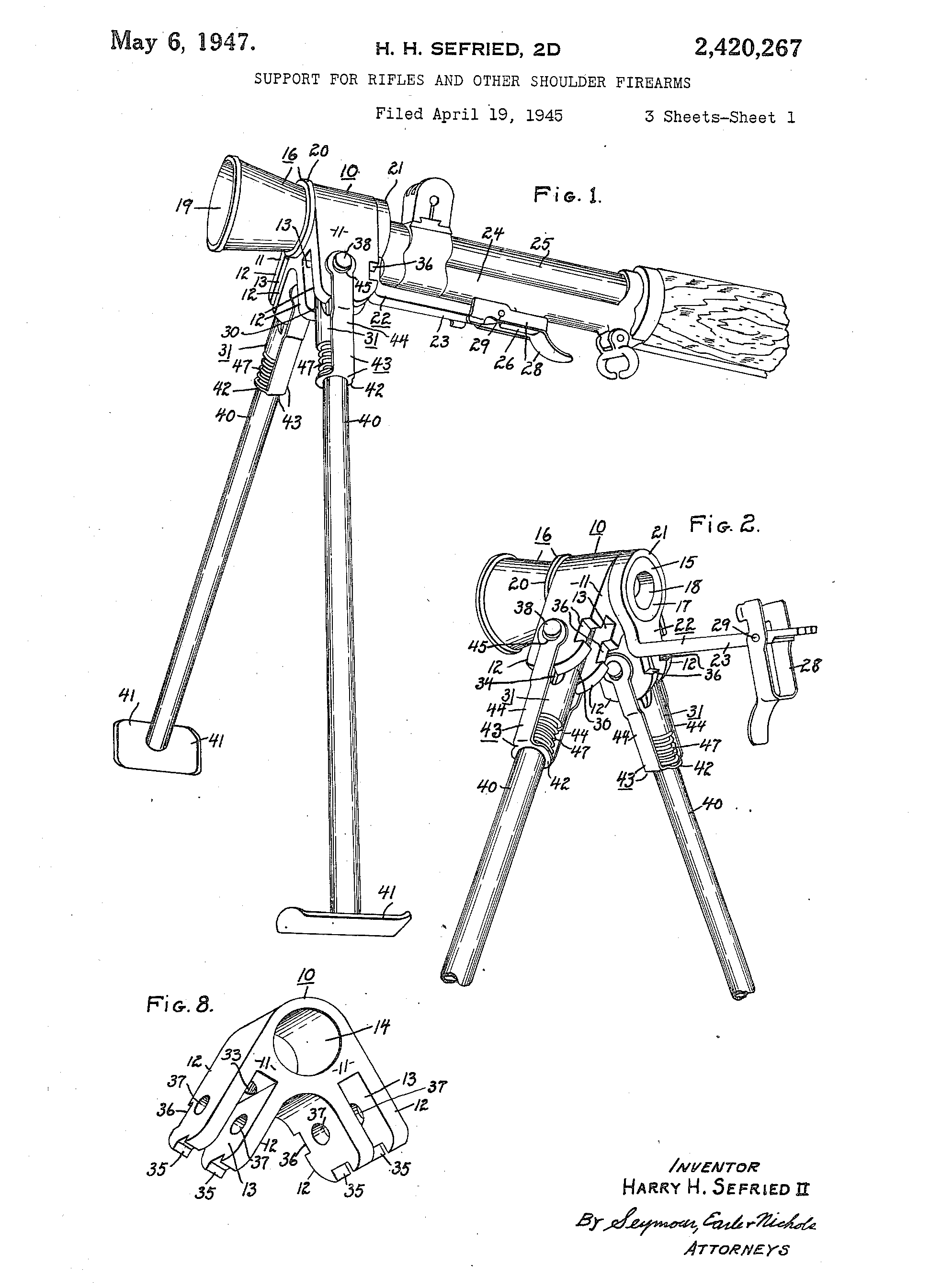
The bipod, patented by Sefried in April 1945, (US #2420267) comprises a pair of tube steel legs, which have a set height, and a conical aluminium flash hider. The legs are spring-loaded and the entire assembly attaches via a latch which seats over the rifle’s bayonet lug. The bipod is the only element of this rifle that can be attributed to Sefried directly. And by the bipod’s very nature of attachment may simply have been attached later.

Sefried's April 1945 bipod and flash hider patent (US Patent Office)
Sefried’s 1947 patent for the bipod-flash hider (US Patent Office)

The best documentary source available for the prototype is the entry in the Winchester Factory Museum’s collection inventory offers some tantalising clues but no definitive answers:

#1504    U.S. Model M-1 rifle (Garand)
Cal. 30-06; experimental semi or full auto.
3rd type 20 shot box mag.
Special butt plate for shoulder rest
Bipod and aluminum flash hider attached
From H. Sefried 10-26-45

The suggestion that the rifle is chambered in .30-06 is seemingly an error given the internal changes made to the rifle. ‘3rd type’ suggests an iterative development of the rifle’s magazine while “special butt plate for shoulder rest” may allude to the aluminium butt plate but the prototype’s plate has nothing resembling a ‘shoulder rest’, instead it is a simple chequered aluminium plate about 5mm thick. While ‘From H. Sefried 10-26-45’ may refer to the whole rifle, I believe it more likely refers simply to his bipod.

DSC_0221
A close up of Sefried’s bipod-flash hider (Matthew Moss)

The prototype appears to be chambered in an iteration of the .30 Light Rifle round, which later became known as the T65. The rechambering was achieved by installing a metal block which shortened the magazine well. Unlike earlier Winchester select-fire conversions this rifle feeds from a proprietary magazine designed to feed the T65 round. This magazine does not appear to closely follow the pattern used by Winchester on several other designs during the period. The projection from the rear of the magazine slides along a channel cut in the metal magazine well block. It has font and rear locking shelves, with the front shelf acted on by the magazine release lever.

DSC_0229
A look at the rifle’s receiver and serial number markings from above (Matthew Moss)

S1230030_Moment
With the action open. Note the magazine insert at the rear of the magazine well (Matthew Moss)

Development of the .30 Light Rifle round, which would eventually become 7.62x51mm, began in 1944, with the round first being referred to as the T65 in 1946. It appears that the rifle is chambered in a version of the T65 cartridge, but which iteration exactly is unknown. However, its chambering does support the theory that the prototype may date from 1947-48. The T65 didn’t take on the now standard 7.62x51mm dimensions until 1949 in the form of the T65E3 round but without a chamber casting it is impossible to know the rifle’s exact chambering.

yn4QSZC
A photo representing the evolution of the .30 light rifle round (Courtesy of DrakeGmbH)

While Winchester continued to work on adapting the M1 Garand into a select-fire rifle none of their rifles were seriously considered by US Ordnance. At the same time John Garand was working on his own series of select-fire, magazine-fed prototypes (the T20 series) at Springfield while Remington had also been awarded a contract to develop a similar rifle, tested under the designation T22. These projects subsequently gave way to a number of other designs, all chambered in the T65 round, including the T25/47, T44 and T48. These were all tested before the Garand-influenced T44 was eventually selected in 1957, becoming the M14.

Addendum:

Harry Sefried II served in the US Army Air Corps during World War Two before joining Winchester as a firearms designer in 1944. In the 1950s he left Winchester to become Ruger’s chief engineer until he retired in 1979. He died in 2005, aged 84.


If you enjoyed the video and this article please consider supporting our work here. We have some great new perks available for Patreon Supporters.


Bibliography:

Patents:

‘Semiautomatic Firearm Convertible to Full Automatic’, H.H, Sefried, US Patent #2479419, 25/08/1944, (source)

‘Box Magazine Latch Mechanism for Repeating Firearms’, H.H, Sefried, US Patent #2386722, 29/09/1944, (source)

‘Support for Rifles and Other Shoulder Firearms’, H.H. Sefried, US Patent #2420267, 19/04/1945, (source)

‘Fire Control Mechanism for Automatic and Semiautomatic Firearms’, H.H, Sefried, US Patent #2464418, 02/01/1948, (source)

‘Strip Clip for Loading Box Magazines’, S.K. Janson, US Patent #2894350, 11/04/1956, (source)

Secondary Sources:

‘The Select-Fire M1 Garand’, F. Iannamico, Small Arms Review, (source)

Harry H. Sefried II Obituary, Hartford Courant, June 2005, (source)

‘Light Rifle, Part IV: The M1 Garand Learns To Rock And Roll’, TFB, Nathaniel F., (source)

Cartridge History for the Day – .30 Light Rifle, (source)

‘Winchester Proto-M14 Rifle’, Forgotten Weapons, (source)