Every AK the UK Procured To Train Ukrainian Troops

The UK began a training initiative with Ukraine in early 2015 with the launch of Operation Orbital. Orbital provided training in Ukraine to more than 20,000 Ukrainian personnel over eight years. Op Orbital ended in February 2022 with Russia’s full-scale invasion. In July 2022 a successor programme, Operation Interflex was launched. Interflex involves a larger, British-led multinational training programme, with training provided in the UK. It was established with the aim of training up to 10,000 Ukrainians every 120 days.

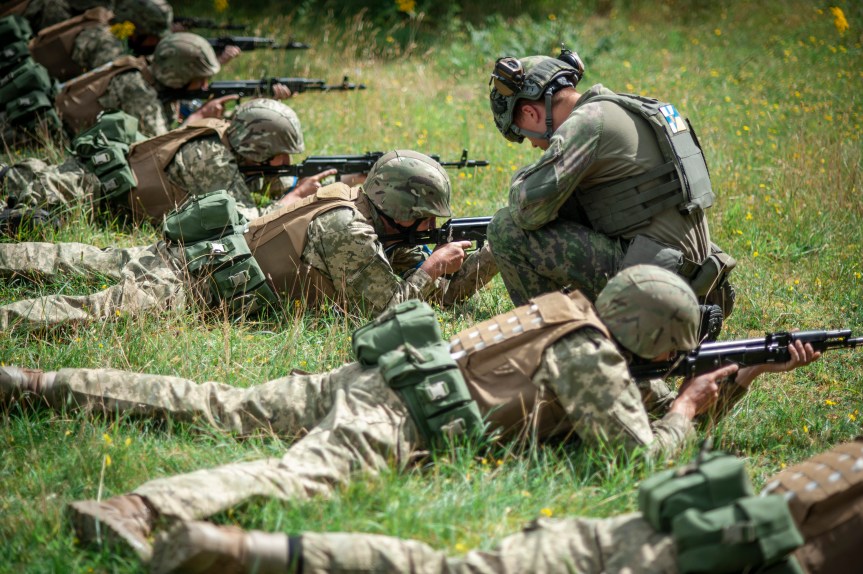
Interflex provides a variety of different specialist training elements but the primary focus is on providing Ukrainian infantry with essential soldier skills. By the summer of 2025, more than 56,000 Ukrainian soldiers had been trained by the UK and partner nations. To carry out basic infantry courses a large number of rifles which were similar to those that Ukrainian troops would be using operationally were needed.

Ukrainian troops training with Arsenal AR-M9Fs (UK MoD / Crown Copyright)

International partners from Australia and New Zealand are working with the British Army, in training scenarios with Ukrainian Forces, including Medical (involving simulated casualties) and patrolling.

Operation INTERFLEX is the UK led training programme for Ukrainian recruits. The training is for new volunteer recruits who have joined the Armed Forces of Ukraine (AFU) with little to no previous military experience to teach them the skills required to survive and be effective in frontline combat.

The UK-led programme trains and drills the Armed Forces of Ukraine using battle-proven British Army expertise, allowing them to accelerate their deployment, rebuild their forces, and scale-up their resistance as they continue to defend their nation’s sovereignty against Russian invaders.

The previous Operation Orbital saw the UK train more than 22,000 Ukrainian personnel from 2015 until the full-scale invasion of Ukraine. The new programme would train forces outside of the country.

This led to a major procurement of AK-pattern rifles. The number of rifles procured and the sources they were procured from remains unclear. We have some clue as to the number of rifles initially acquired from a 9 July 2022 press release, in which the UK government confirmed:

“The Government has rapidly procured AK variant assault rifles for the training programme, meaning Ukrainian soldiers can train on the weapons they will be using on the front line. This effort was supported by the Welsh Guards, who tested more than 2,400 such rifles in 17 days to ensure they were ready for the Ukrainians to commence their training.”

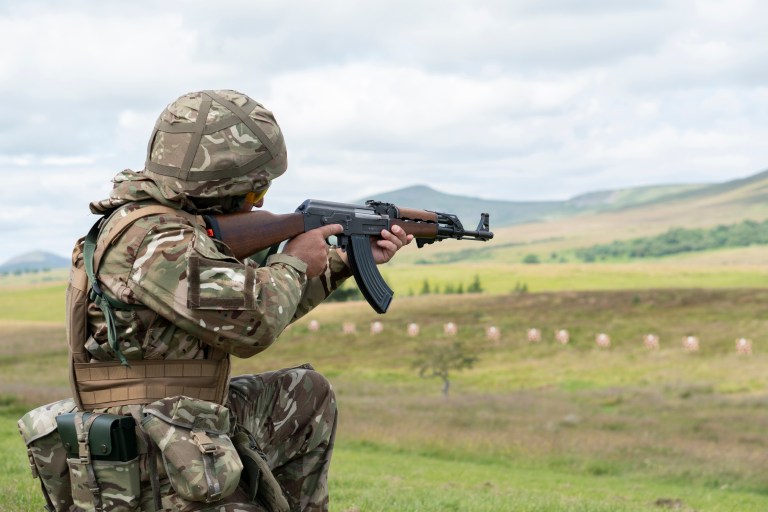
Ukrainian soldier at the range July 2022 (UK MoD / Crown Copyright)

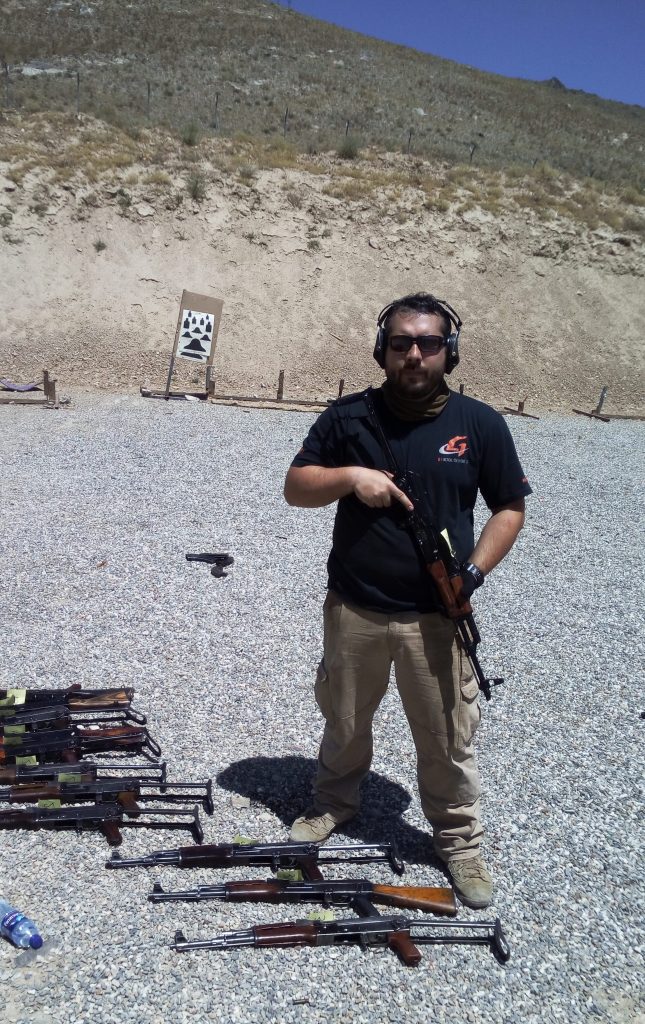
The types of AK-pattern rifles procured was not announced but from the photographs released it is clear that they include:

  • Serbian-produced Zastava M70, M70B, M70A and M70AB2
  • East German-produced MPi KMS-72
  • Hungarian-produced FEG AK63D

All of the above rifles are chambered in 7.62x39mm. The reasoning behind the procurement of rifles chambered in 7.62x39mm rather than the more regularly issued 5.45x39mm AK-74 pattern rifles is also unclear. Perhaps this was due to weapon availability and regardless of calibre the manuals of arms remains the same.

At the time when approached for comment on the sources and types of AK rifles procured, the Ministry of Defence told The Armourer’s Bench:

“The Government has rapidly procured AK variant assault rifles through a combination of international donations and private purchase, meaning Ukrainian soldiers can train on the type of weapons they will be using on the front line. All weapons were tested in accordance with UK legislative and safe working practices.”

In September 2022, Chinese-manufactured Type 56-1 rifles were seen in Op Interflex imagery for the first time. The Type 56-1 has an under-folding stock, stamped receiver, and enclosed front sights.

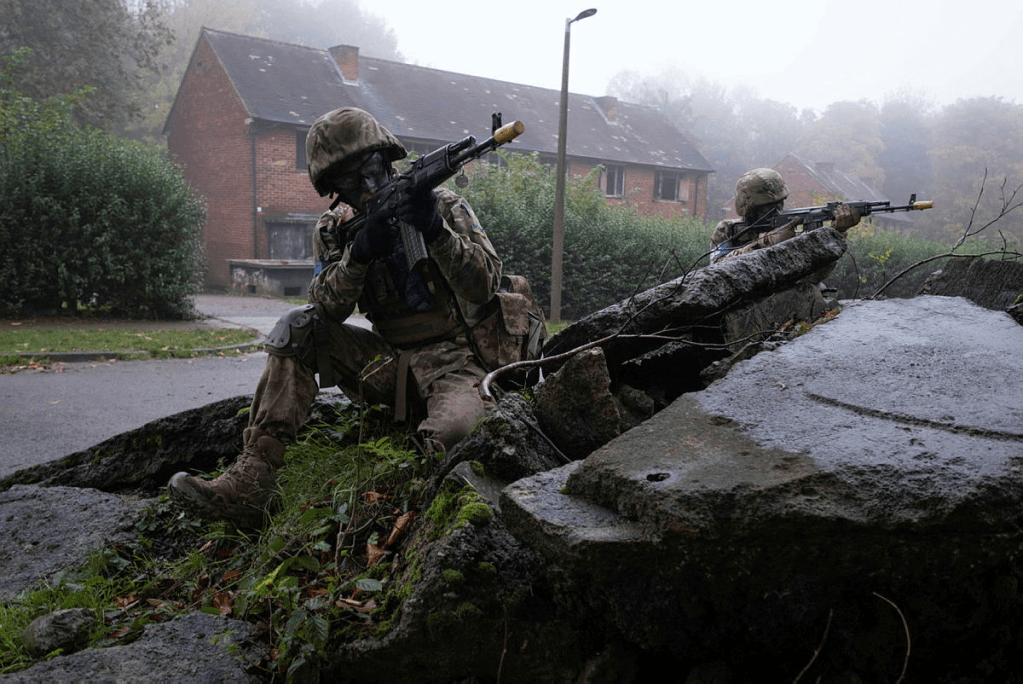
By early February 2023, the assorted various types of 7.62x39mm-chambered AK-pattern rifles were either replaced or supplemented with Bulgarian Arsenal AKs. The rifles seen in all of the available photographs appear to be basic model rifles, none of the weapons have railed handguards or Picatinny on the receiver cover for mounting optics. This suggests that they are either AR-M9Fs or AR-M14Fs (at least according to Arsenal’s website). The ‘F’ refers to the folding tube metal stock which helps identify the rifles as Arsenal-made AKs. The characteristic flash hider and furniture also identify them as Arsenal rifles.

Ukrainian soldiers during FIBUA training, c.2024 (UK MoD / Crown Copyright)

From the rifles’ handguard design it appears that the rifles are AR-M9Fs, chambered in 5.56x45mm. This chambering in theory simplified logistics, removing the need to procure 7.62x39mm ammunition. The AR-M9Fs also have a blank firing adaptor which allowed Ukrainian troops to train with AK-pattern rifles rather than SA80-series rifles when blank firing was needed. The UK has the capability to manufacture 5.56x45mm ball and blank making training simpler and cheaper. According to information shared with TAB by the UK MoD approximately 7,500 AR-M9Fs were acquired for Op Interflex.

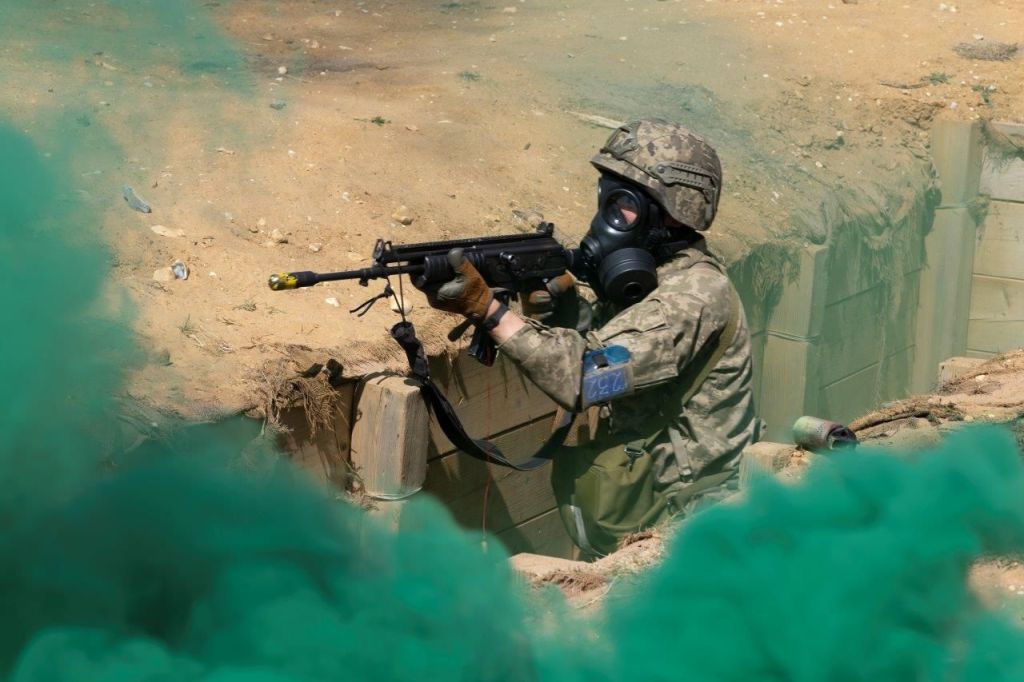
Finally, in May 2025, the UK appears to have procured Israeli-manufactured IWI Galil ACE rifles in 5.56x45mm. When approached for comment on the procurement of the rifles the UK MoD told TAB that approximately 4,500 ACE-23 rifles had been procured. They also noted that the transition to the IWI Galil ACE 23 began in around mid-2024 and that the switch to Galil ACE rifles was made to ‘better align the weapon system used during UK-based training with equipment Ukrainian troops were using in theatre.’ This, however, seems unlikely as the Arsenal is more analogous with the AK-74 than the ACE 23. While the Galil ACE shares very few handling characteristics with AK-pattern rifles, with the exception of the magazine release location, its updated safety lever is also less akin to the AK’s. It’s action and disassembly procedure are functionally the same as an AK, however, the Galil, at 3.6kg unloaded, is somewhat heavier than an AK-74.

Ukrainian soldier with a IWI Galil ACE 23 (Danish Ministry of Defense)

Perhaps the Galil ACE 23s function better when using blank, perhaps extensive use during numerous training cycles led to issues with the AR-M9Fs. No further comment was provided on why the Galil ACE replaced the Arsenal rifles or why fewer rifles were procured. This may be explained by recent changes to the aims of Interflex as in June it was reported that the programme’s focus would shifting away from basic infantry training to more leadership and specialised training.

A Ministry of Defence spokesperson concluded by telling TAB that: “We are proud that Interflex has grown to be one of the biggest training programmes of its kind, equipping Ukrainian recruits with the basic combat skills they need to defend their country against Putin’s illegal invasion.”

I thought it was worth collating all of the information available on the various rifles used to train Ukrainian troops in the UK into one place. For more detail on each of the different types of rifle used, check out my earlier article/videos on each rifle.


Support Us: If you enjoyed this video and article please consider supporting our work here. We have some great perks available for Patreon Supporters – including early access to custom stickers and early access to videos! Thank you for your support!
Digging into the History of Zastava & Iraqi Tabuk AKs with Author Vlad Onokoy

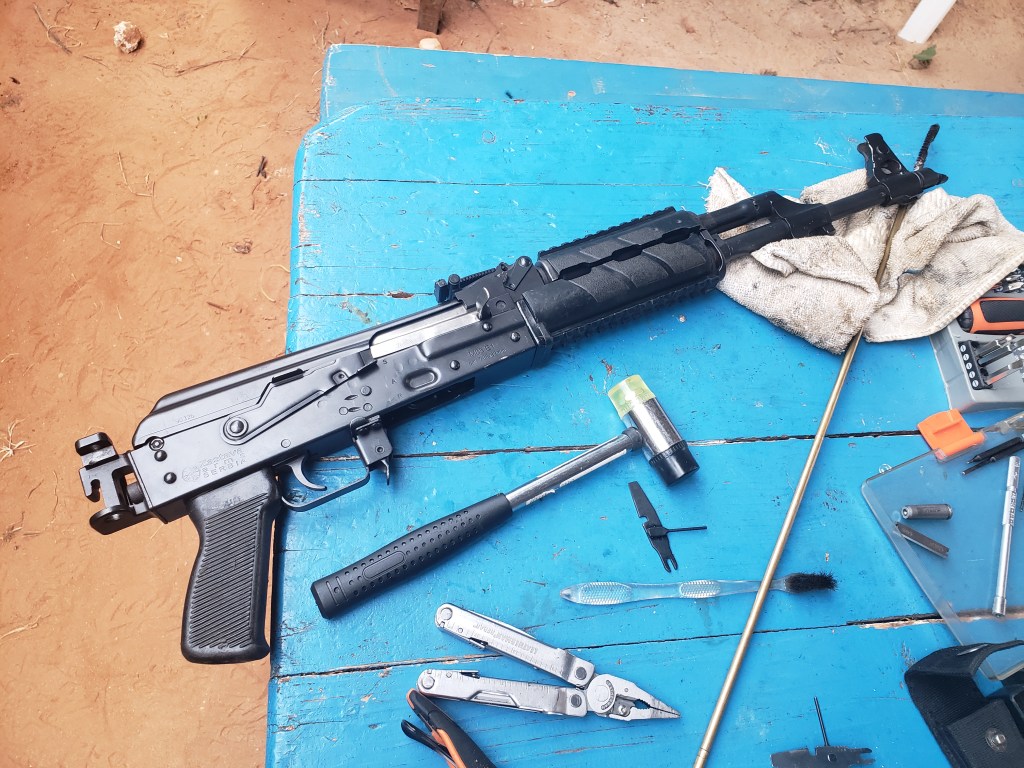
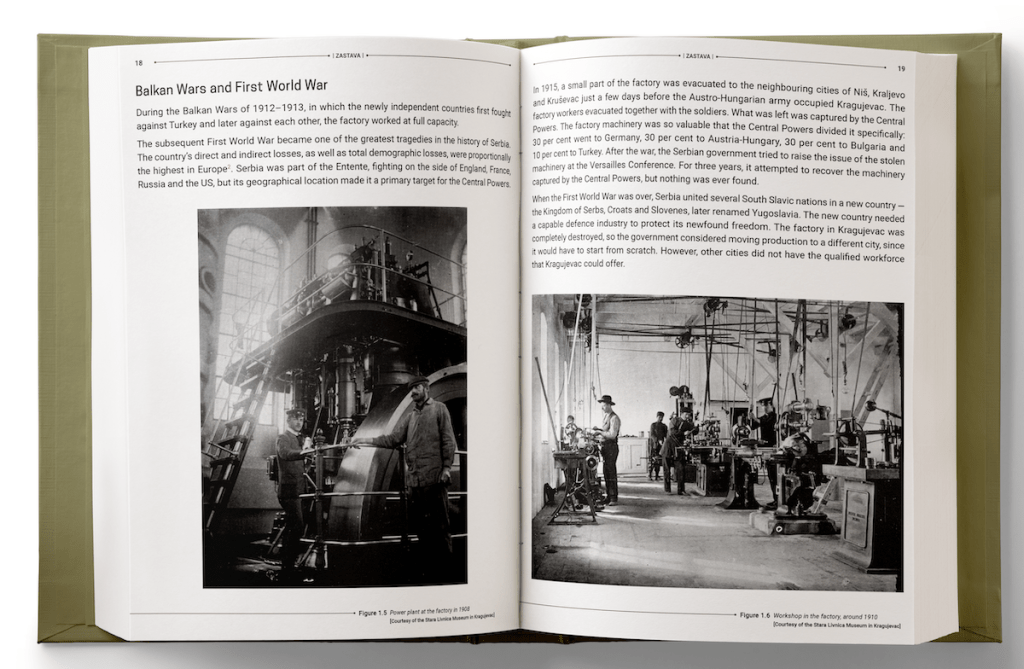
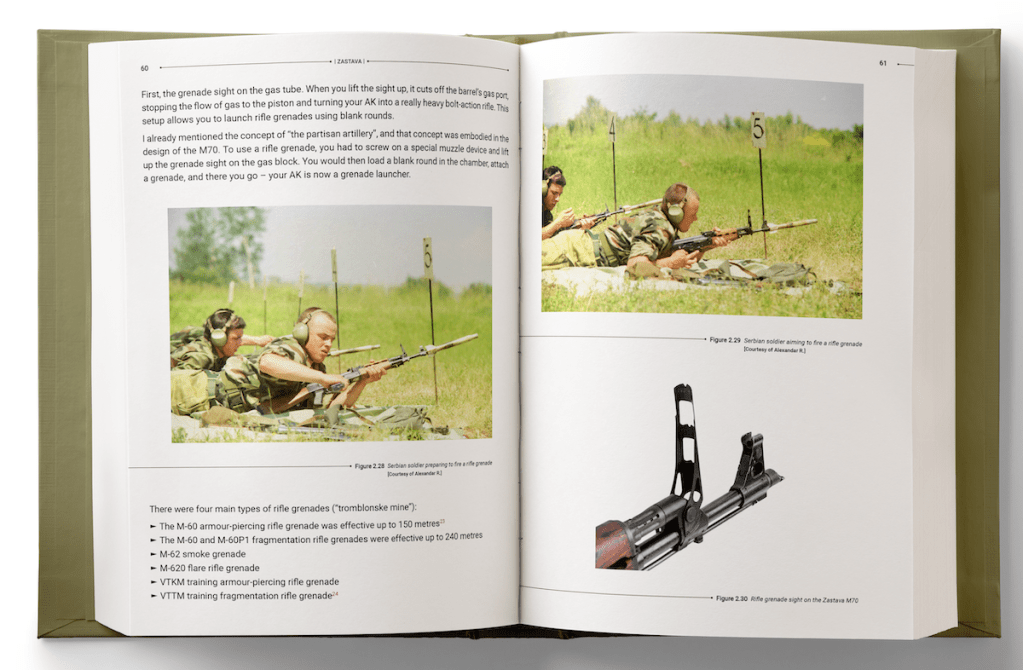
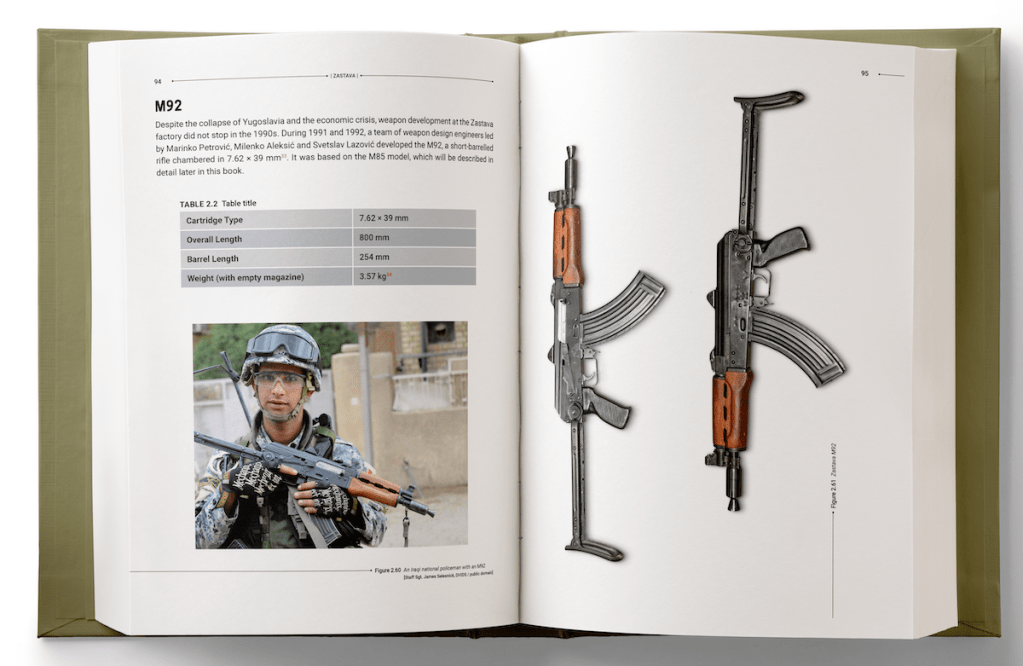
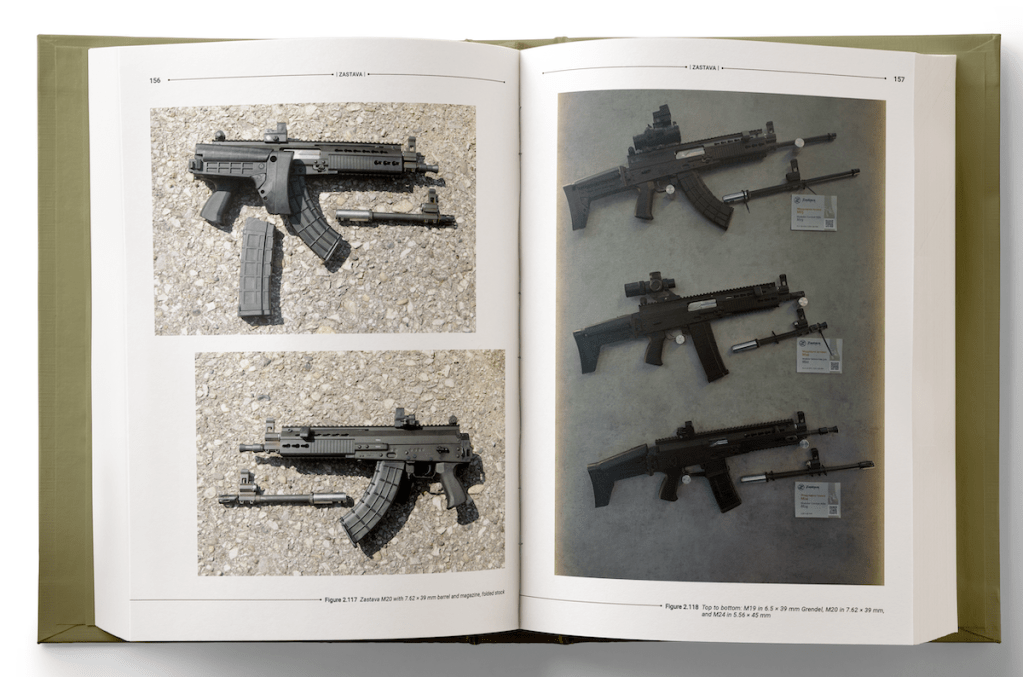
Historian, researcher and armourer Vlad Onokoy joins me to talk about his exciting new book about Zastava AK-pattern rifles! Vlad explains how he came to write his new book and talks us through the process, combining in-depth research, first hand accounts and hands on experience. The new book sheds new light on Zastava’s history, busts some long-held myths and highlights interesting variants and little-know prototypes.

You can pick up a copy of Vlad’s book From Balkans to Babylon: Zastava AKs of Yugoslavia, Serbia, and Iraq’ , published by Safar Publishing, here!

Check out some preview pages from the book, courtesy of Safar Publishing:

Vlad brings decades of experience with Zastava AKs through his work.

Pick up a copy of Vlad’s book From Balkans to Babylon: Zastava AKs of Yugoslavia, Serbia, and Iraq’ here!

Colt Canada Eagle Grenade Launchers in Ukraine

A myriad of 40mm grenade launchers are in use in Ukraine, we’ve already covered some but today we’re going to touch on another that is rarely seen. The Colt Canada Eagle (Enhanced Ambidextrous Grenade LaunchEr) is a low velocity 40mm grenade launcher which can be used as a standalone or mounted as an under-barrel launcher. Introduced in the early 2010s it weighs 1.25kg and has a 254mm barrel as standard. It is single shot with a side-opening breech (which can be switched to open left or right). It has a ladder sight, ambidextrous safety catches and an effective range out to 400m. The latest iteration of the launcher is the MkIII.

The first sighting of one of these in Ukraine came in September 2022, in a photo of a combatant on a quadbike armed with an M4A1 carbine with the Eagle grenade launcher mounted under the barrel. The second appearance of an Eagle came in August 2025 when a GUR team posted a photograph of a combatant holding one in the stand alone configuration. The most recent image of one of the launchers shows the weapon again in the standalone configuration and notably with what appears to be shrapnel damage to its stock and buffer tube.

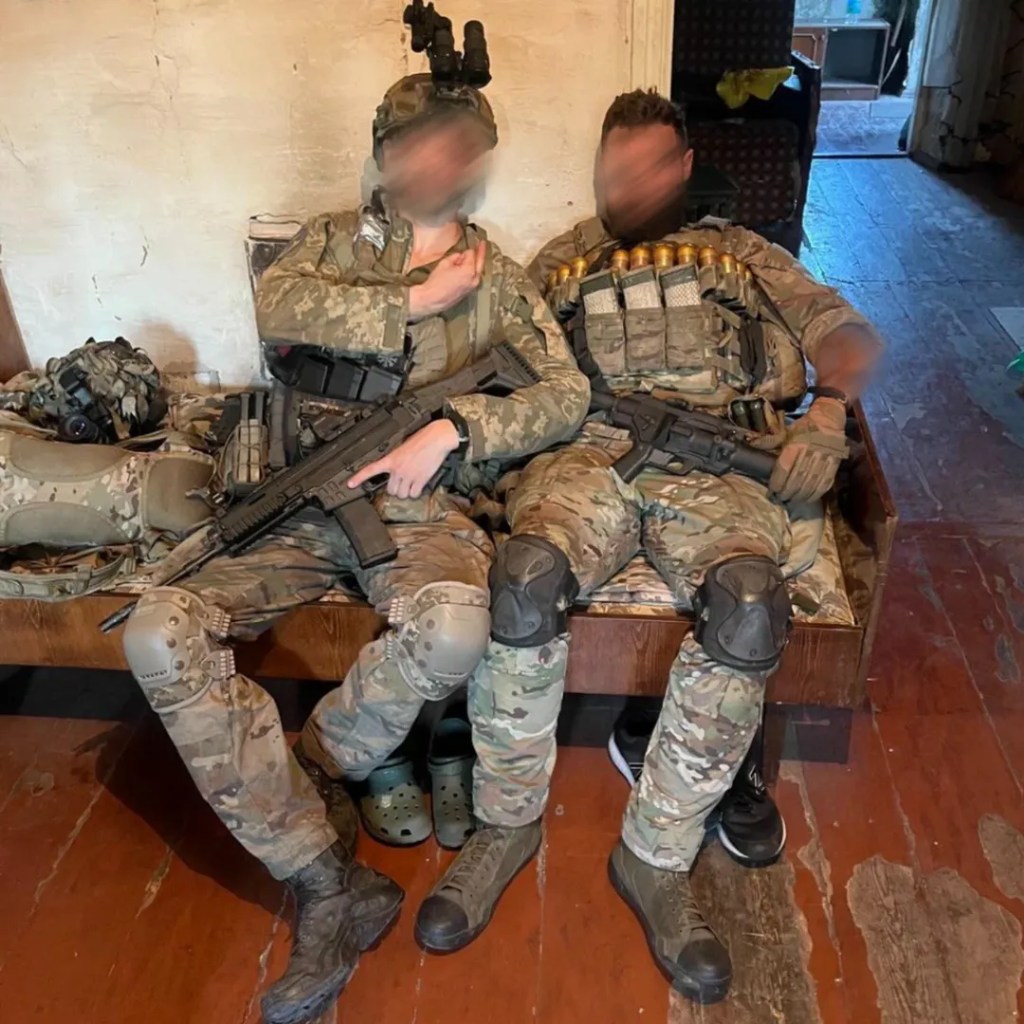
Members of Ukraine’s GUR, one combatant equipped as a grenadier, 2025 (via Social Media)

Intriguingly, the Eagle grenade launchers were accepted for Ukrainian service in 2022 and appear in a Ukrainian Ministry of Defence document called “Examples of Weaponry and Military Hardware accepted into Ukrainian Armed Forces between 2014-2023 years”. The document gives the in-service acceptance date as 24/12/22, a couple of months after the first sighting of one of the launchers. The Colt Canada Eagle remains a relatively rare sight in imagery from Ukraine as a result its unclear how many have been delivered to Ukraine.

The Eagle grenade launchers were likely first provided by Canada in the summer of 2022, likely alongside C8 carbines. The first sightings of Colt Canada C8 carbines, believed to have been provided Canada, were also first seen in Ukraine in September 2022. Read more about Colt Canada C7s and C8s in Ukraine.


Support Us: If you enjoyed this video and article please consider supporting our work here. We have some great perks available for Patreon Supporters – including early access to custom stickers and early access to videos! Thank you for your support!
British Army Training Grenades

A few weeks ago I visited my friends at the Vickers Machine Gun Collection & Research Association and had a look at a variety of items you might not immediately expect to be part of their collection. The VMGCRA, however, has an extensive collection of all sorts of items and an incredible archive which they’re digitising at the moment.

Practice Mills Bombs (No.36)

Drill Grenade (Rich Fisher)

Some of the smaller items in the collection are inert training grenades. First up we have a pair of practice No.36 grenades (commonly known as Mills Bombs). Also known as Drill Grenades, these were painted entirely white and, as we can see laid out in this 1942 British Army grenade training pamphlet, they were used for throwing practice and grenade discharger cup training. They don’t have any filling but are weighted to mimic actual Mills Bombs to aid in training. Photographs of the Drill Grenades don’t appear until the post-war manuals, like this 1951-dated pamphlet which shows the white mills bombs being used in training. They were also used for general familization in classroom training and getting to grips with how the safety mechanisms worked and how fuzes were inserted. we can see an L2 grenade being used in house clearance drills in the 1979 training film Fighting In Villages

L3A1

L3A1 (Matthew Moss)

Next we have the British Army L3A1 inert practice grenade. The L3A1 practice grenade used to train troops on how to use the L2 series of live grenades. These were known as the M26 in US service and entered service in the early 1950s to replace the classic Mk2.

The grenades entered UK service in the 1970s, replacing the No.36 Mills Bomb. They were used by British troops in every major operation from the 1960s through to the 2000s. The L2 and L3 series were replaced by the L109A1 grenade during the early 2000s. The L3 was largely out of use by the mid-1990s, replaced by the L28 and L56 training grenades.

These training grenades would have been used in the classroom portion of soldiers’ training giving them hands on experience in the feel of the grenade and how the pin and spoon work and interact and where a live grenade’s fuze would be fitted. The blue painted grenades have “GREN PRAC L3A1′ and ‘HE SUB’ (high expolosive substitute) printed on them.

L111A1

L111A1 (Matthew Moss)

The UK adopted RUAG’s HG-85 in the early 2000s as the L109A1, the L110A1 is an inert drill grenade for handling practice while the L111A1, as seen here, is a practice grenade which can incorporate a small simulation charge which can be used safely in training environments. Initially called the ‘Enhanced Performance Grenade’ but once it was introduced and classified in 2002, it became the L109A1. The body of the practice L111A1 is made of steel, and is covered in a blue textured plastic material and has the words ‘PRACTICE GRENADE’ embossed near the top of the body. Like the earlier L3A1, the L111A1 approximate the weight, feel and operation of a live grenade for training purposes. The HG-85 remains the UK’s standard fragmentation grenade, here’s a video from 2021 showing the Irish Guards training with the L111A1.

So there we have it, a couple of small items from the VMGCRA but ones that illustrate the depth and breadth of the collection. Thanks for watching, don’t forget to check out and subscribe to VMGCRA! 


Support Us: If you enjoyed this video and article please consider supporting our work here. We have some great perks available for Patreon Supporters – including early access to custom stickers and early access to videos! Thank you for your support!
Chinese MANPADS In Ukraine

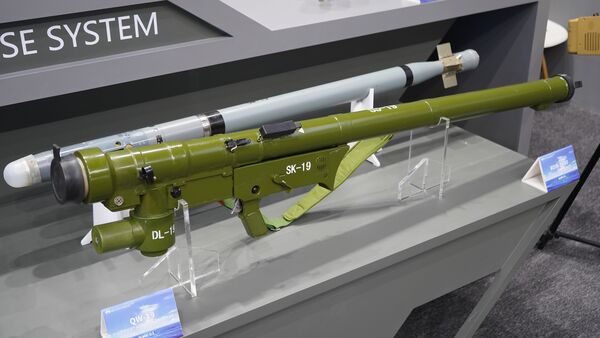
While officially China has no involvement in the ongoing war in Ukraine a substantial number of their weapon systems have been seen in theatre. Setting aside the tens of thousands of Chinese manufacturer commercial drones which have been used during the conflict we’ve also seen Chinese RPGs, rifles and heavy machine guns. In the past six months, however, there have been a number of sightings of much more complex Chinese weapons; FN-series man portable air defence systems (MANPADS).

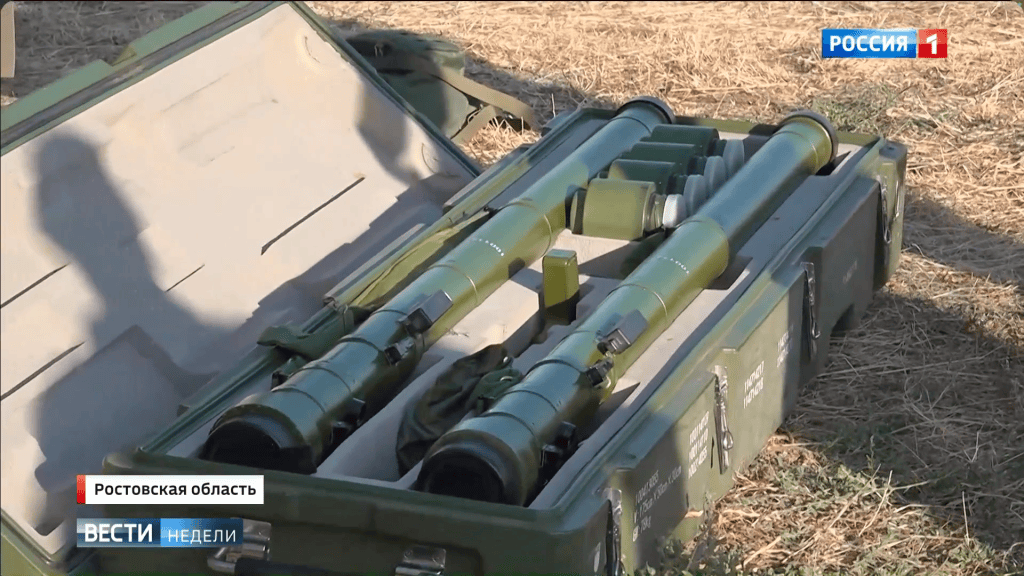
The first sighting of a Chinese-manufactured MANPADS came in mid-November 2025. On 19 November, the 143rd United Educational and Training Center shared a post, including photographs and video, of an engagement of a Russian Kalibr missile by an air defence team armed with a Chinese FN-6. The Kalibr cruise missile was engaged by a four-man mobile air defence team, in a video of the engagement the FN-6’s transit case can be seen next to the operator.

Air defence team of the 143rd United Educational and Training Center with an FN-6 (Ukrainian Armed Forces)

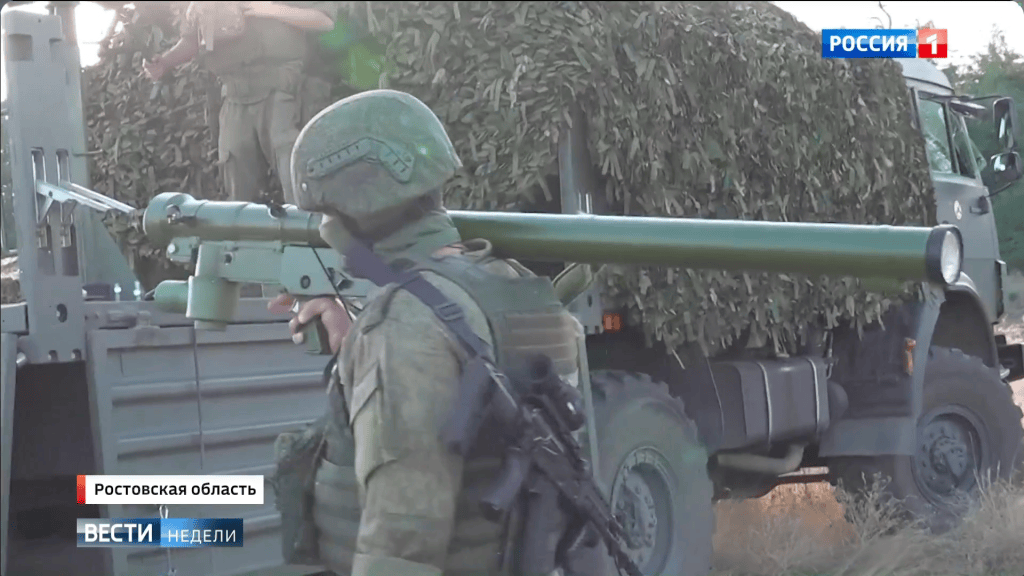
Operation of the Chinese MANPADS is not dissimilar to that of Russian-manufactured MANPADS, like the 9K32 Strela-2 , that Ukrainian personnel would be familiar with. To ready the FN-6 for action the rear exhaust cover and the front sensor cover must be removed. A gas coolant cartridge must also be inserted, this is needed for the IR seeker. Finally, iron sights must be flipped up for aiming, the battery is activated as the operator depresses the trigger and once the weapon is on target it can be fired.

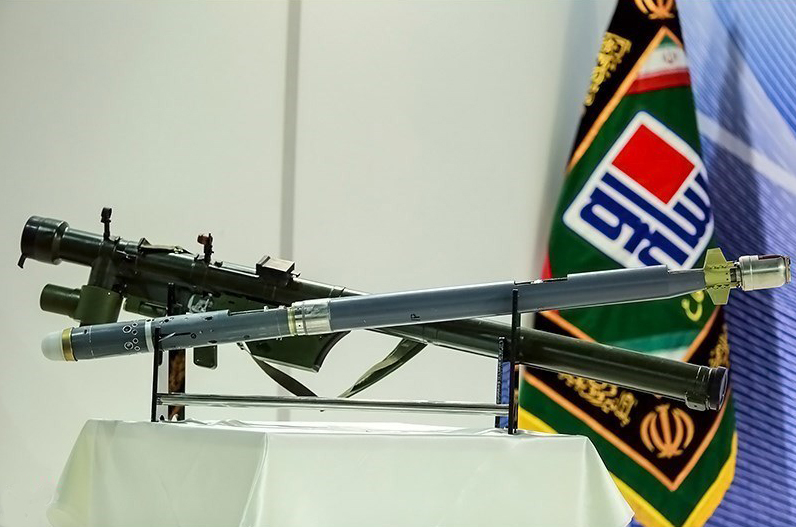
The HY-6 was developed in the early 1990s and has since seen service with elements of the Chinese armed forces. It is a passive infrared homing (IR) MANPADS and has been exported to around a dozen countries as the FN-6 (飞弩-6) including Cambodia, Malaysia, Sudan and Pakistan.

The FN-6 is a fire-and-forget system as it utilises a passive infrared pyramidal nose-mounted seeker. Once fired the missile is guided by proportional navigation to an optimal point of impact. It has a maximum range of 5.5km with an maximum altitude of 3.8km. The FN-6 utilises a high explosive-fragmentation warhead with either an impact or laser-proximity fuze.

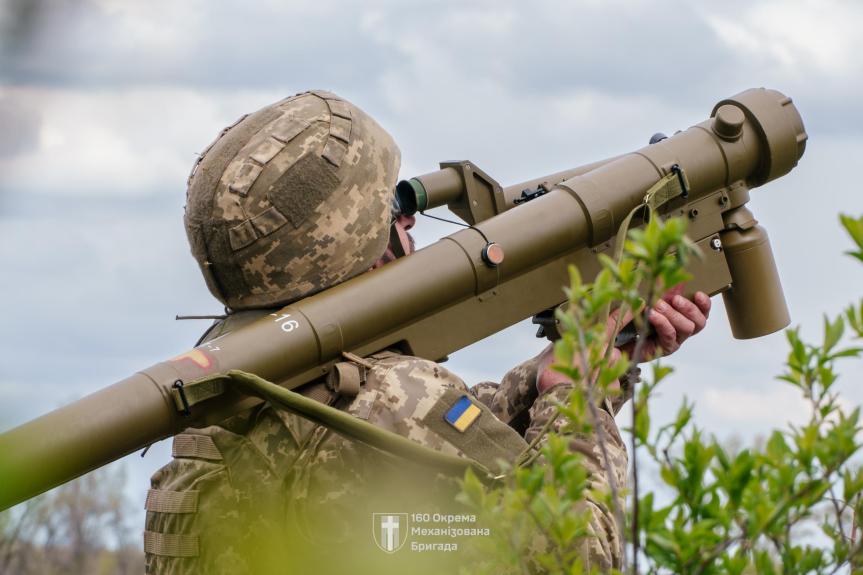
On 13 May 2026, the 160th Separate Mechanized Brigade shared a post highlighting the work of its air defence units which included an number of photographs including two which showed a different kind of Chinese MANPADS, an FN-16.

The FN-16 is an evolution of the FN-6. It is believed to primarily be an export weapon and is reportedly in service with Cambodia, Cameroon and Pakistan. The more advanced FN-16 uses an infrared (IR) and ultraviolet (UV) [two-colour rosette-scan quasi-imaging] seeker which scans for its target’s outline using multi-spectral sensing. It has a maximum engagement range of 6km and a maximum altitude of 4km. Like the FN-6 it uses a high explosive-fragmentation warhead with either an impact or proximity fuse.

Member of 160th Separate Mechanized Brigade with an FN-16 (Ukrainian Armed Forces)

Also in May, the 123rd Territorial Defense Brigade shared photographs of a member of one of the brigade’s air defence units holding an FN-6 missile [17 May / 19 May]. The seeker cover is in place and the gripstock is not fitted.

So how did these Chinese MANPADS come to be in Ukraine? The most likely potential answers to that question include: the transfer of seized weapons – we’ve already seen other Chinese smalls arms procured by Iran for the Houthis which were seized an subsequently supplied to Ukraine. Another possibility is that they are third-party purchases; with the MANPADS bought from countries that have already procured (and use) them. Similarly, they could have been procured via non-state intermediaries though its unclear how interested in this China would be given its public position on involvement in the conflict.

From the available imagery it appears that a variety of units have been issued Chinese MANPADS with units from both the Ukrainian regular Army and Territorial Defence Force both seen with the weapons. It remains unclear just how many of the MANPADS Ukraine might have.

Update 19/06/26:


Support Us: If you enjoyed this video and article please consider supporting our work here. We have some great perks available for Patreon Supporters – including early access to custom stickers and early access to videos! Thank you for your support!
Kalashnikov Concerns Folding Single-shot Anti-Drone Shotgun

Kalashnikov Concern’s press office announced that specialists from the Central Research Institute of Precision Engineering (JSC TsNIITochMash) Research Center for Small Arms Systems and Combat Equipment were awarded gold medals at the 2026 N. G. Slavyanov International Exhibition of Inventions and Innovations for a number of counter-drone designs. JSC TsNIITochMash is a part of Russia’s Rostec State Corporation, and which is managed by JSC Kalashnikov Concern.

One of the designs was described as a “compact, single-shot shotgun chambered for 12x70mm [12 gauge] cartridges is designed to engage small, low-flying UAVs. The weapon’s main advantage is its compact size and light weight, weighing only 1.8 kg.” The weapon essentially appears to be a linear tube capable of being folding in two for transport. The ergonomics are limited and the barrel is relatively short.

Folding 12ga C-UAS shotgun (Kalashnikov Concern)

From the limited information available and the single image which has been shared of the shotguns it appears that the weapon may break just behind the trigger guard and hinges back so the two halves run perpendicular. The muzzle appears to clip into the buttstock. The trigger guard incorporates a trigger block safety but the hypothesised folding design would mean the trigger and trigger guard would have to recess into the body of the weapon or to the side of the tube. The shotgun has a pair of folding iron sights.

The weapon perhaps loads when the two halves are broken but this would mean there is either a method of retaining the cartridge in the weapon or it has to be carried unloaded which would defeat the purpose of a compact anti-drone personal defence shotgun. Until additional imagery of the weapon appears these characteristics remain hypothetical and largely unconfirmed.

Duplex C-UAS ammunition (Kalashnikov Concern)

Also said to have won the award is a triplex-style rifle round with a three projectiles. These have been developed to match the form factors of conventional 5.45x39mm and 7.62x54mmR ammunition. The press release stated that the “multi-bullet cartridges are designed for individual small arms and contain a multi-element projectile that significantly increases the probability of engaging UAVs. This design solution ensures that the cartridge’s components separate orderly upon exiting the barrel, improving the stability of external ballistic characteristics while maintaining the weapon’s reliable operation.” This ammunition development revisits a concept which has been explored in the past. Through industrial manufacture, with proper quality control and materials, it may offer some benefits over the ad-hoc AK-buckshot rounds which have evolved.

It’s unclear if Kalashnikov have plans to put the new shotgun into production or if it simply represents the latest experimental efforts to provide individual soldiers with a weapon which can provide some counter to the pervasive threat of FPV drones. Full details on the design are not yet available and its utility remains debatable as while the shotgun is said to be relatively light it still represents 1.8 kg or 4lbs of extra kit a soldier would have to carry. The weapon has to be deployed and only offers one chance to engage the drone threat before having to be reloaded.


Support Us: If you enjoyed this video and article please consider supporting our work here. We have some great perks available for Patreon Supporters – including early access to custom stickers and early access to videos! Thank you for your support!
Examining a Gustloff Volkssturmgewehr

By early 1945 Nazi Germany’s situation was desperate, with no real hope of victory left desperate holding actions became the order of the day. In order to try and stem the advance of the Red Army in the East and the Allies in the West (and south), the German government raised a new militia, the Volkssturm (or in English: ‘people’s storm’).  This optimistically named force made up of all men aged between 13 and 70, they were expected to defend their local areas, much like the British Home Guard formed in 1940.

In order to arm the Volkssturm and the remnants of the rest of Germany’s armed forces, stores of older weapons, such as Gewehr 98s and 88s and MG08s were re-issued and a broad variety of captured foreign weapons.

Left-side profile Volkssturmgewehr (Matthew Moss)

Even so there was still not enough weapons to equip the newly improvised ‘volunteer’ force. As such, in Autumn 1944, German industry was directed to create prototypes of simpler, cheaper weapons that might be mass produced quickly with minimal tooling. This project was dubbed the Volksgewehr-Programm, which evolved from the earlier Primitiv-Waffen-Programm which began in 1943 and saw the development of the EMP44. . These primitive weapons had to be made quickly with the materials at hand. The Volksgewehr-Programm spawned a number of prototypes with varying degrees of sophistication, the so-called VolksGewehr or ‘people’s guns’.

The best known these ‘people’s guns’ is perhaps the Gustloff Volkssturmgewehr – often referred to as the VG 1-5. Such was the chaos and rapid development of the weapon we’re examining today it was known by a plethora of names in various wartime documents, including: Selbstladegewehr [self-loading rifle], Selbstladekarabiner [self-loading carbine] and Volks-Selbstladekarabiner 45 [self-loading carbine 45]. As W. Darrin Weaver points out in his book ‘Desperate Measures‘ these carbines were never officially referred to as the VG 1-5. Weaver’s suggests instead that the proper name would the ‘Volkssturmgewehr‘ while Wolfgang Peter-Michel suggested in his 2017 book ‘Volksgewehre: Die Langwaffen des Deutschen Volkssturms‘ that ‘Volksmaschinenpistole’ was the term officially used.

Volkssturmgewehr receiver close up (Matthew Moss)

The Gustloff Volkssturmgewehr was undeniably the most complicated of the Volksgewehr-Programm guns. A semi-automatic, gas delayed blowback operated carbine chambered in Germany’s new intermediate 7.92x33mm Kurz cartridge. Developed by Karl Barnitzke, Gustloff Werke’s chief designer, initial versions of the weapon were select-fire and designated the MP 507. Gustloff submitted a semi-automatic variant of the carbine to the Volksgewehr-Programm trials but was rejected in November 1944, ostensibly due to cost, comparative complexity and ammunition consumption.

Field stripping the Gustloff Volkssturmgewehr:

First check the weapon is in a safe condition. Then unscrew the knurled nose cap by lifting the retaining flat spring. Then slide out the weapon’s mainspring. Remove the single retaining pin [which does not fit into any of the slots in the stock, despite looking like it will]. Remove the safety catch, this is retained by a raised flat that sits under one of the stamped receiver’s folds. Lift trigger assembly up, out of the rear of the receiver, then slide the bolt and barrel shroud assembly forward and off the barrel.

Volkssturmgewehr disassembled (Matthew Moss)

Looking over the disassembled weapon we can see the two coarse interupted threads which retain the nose cap. We can see one of the four gas ports and gas expansion chamber rings. The trigger and firing mechanism are one complete assembly. the breach block is pinned into the barrel shroud (which also acts as the body of the gas expansion chamber). Note the rough welds on the lower guide piece. Not the extremely rudimentary charging handle and front and rear sights.

How It Works:

The Volkssturmgewehr‘s design uses a gas-delayed blowback action. On firing, once the projectile leaves the muzzle, the propellant gases expand and push the spent case and the unlocked breech rearwards, the case is ejected and the barrel shroud/gas cylinder/bolt assembly recoils. As the weapon fires and the projectile passes through the barrel the weapon vents gas from the barrel through four small holes, the gas expands into the cylinder/chamber, which is formed around the barrel by the shroud, this is intended to slow the rearward movement of the bolt assembly. The mass of the barrel shroud/gas chamber/bolt assembly also aids in slowing the opening of the breech.

As the situation continued to deteriorate, Gauleiters (or regional leaders) were given carte blanche to direct local weapon production and procurement and the Gustloff Volkssturmgewehr was resurrected and put into production Thuringia’s Gauleiter Fritz Sauckel. As such the weapons do not have the typical Waffenamt acceptance markings. The first guns were completed in late 1944, with the production line ramping in January 1945. This particular example, with the serial Th. 9307 stamped into the stock, was assembled near the end of production.

Well-equipped Volkssturm battalion members with Volkssturmgewehrs (United States Holocaust Memorial Museum)

Barnitzke claimed that the weapons took only 3 hours to manufacture and that approximately 10,000 were built. The Volkssturmgewehr has fewer than 40 metal components and is built around a two piece riveted stamped receiver. It has a roughly machined barrel, a stamped receiver cover and simple wooden furniture. The characteristic sling often seen with the were permanently attached to the weapons furniture and are believed to be derived from a gas mask canister straps with extra reinforcement.

Unlike the other Volkssturm weapons there is contemporary imagery in the form of photos and newsreel footage which show that Volkssturmgewehr reached the front and was used. It is believed that the weapons predominantly saw use with Volksturm units on the Oder Front, to the east of Berlin.

Right-side profile Volkssturmgewehr (Matthew Moss)

As the war ended the US Army captured a number of examples of the weapon and one was sent to the US Army’s Aberdeen Proving Ground for evaluations in July 1945. The report, which is likely the first document to refer to the weapon as the VG 1-5, found the Volkssturmgewehr ‘crudely made’ concluding that “accuracy was poor, general functioning was fair with the exception of recurrent feed failures… in general, the weapon appeared capable of fulfilling the mission for which it was designed” [Report No. 06-64-TM-OC, July 1945]

Special thanks to the Vickers Machine Gun Collection for allowing me to film this item from their incredible collection, I can’t encourage you enough to check out their videos, website and amazing collection.


Bibliography:

Desperate Measures : The last-Ditch Weapons of the Nazi Volkssturm, W.D. Weaver (2005)

Deutsche Sturmgewehre bis 1945, P. Senich (1998)

Volksgewehre: Die Langwaffen des Deutschen Volkssturms, W. Peter-Michel (2017)

German Submachine guns & Assault Rifles of World War II, Aberdeen Proving Grounds Series (1968)


Support Us: If you enjoyed this video and article please consider supporting our work here. We have some great perks available for Patreon Supporters – including early access to custom stickers and early access to videos! Thank you for your support!
Australian F1 Grenades in Ukraine

We recently looked at a pair of extremely rare hand grenades which have been seen in use in Ukraine – the Nammo Scalable Offensive Hand Grenade and Mk 14 Mod 0 Anti-Structural Munition Hand Grenade. Today, we’ll take a look at another rare grenade that has been seen in the Ukrainian armed forces – the Australian F1.

Developed by Australian Defence Industries (now Thales Australia), the F1 is a fragmentation grenade. Introduced in the late 1990s, the F1 has a filling of 30g of RDX and approximately 4,000 2.4mm steel balls. It has an aluminium body and a total weight of 375g. The F1 uses a 5 second delay fuze and has a stated lethal radius of 6 metres.

The first sighting of one of the grenades I’ve come across dates to late April 2023 but their presence in-country likely dates back further. An F1 was seen alongside a collection of NATO and Russian designs in a short video posted by a Ukrainian combatant.

Member of 47th Mechanised Brigade with F1 grenade, 2023 (via social media)

In early November 2023, a photograph of a member of 47th Mechanised Brigade featured an Australian F1 on his vest. Several weeks later a photo of various patterns of grenade was posted by the 108th Territorial Defence Forces brigade on 17 November. The photo was taken during a familiarisation training session and features various types of grenade including an Australian F1. A short video from a Ukrainian combatant showing an F1 was shared online in early December, it is marked ‘0135 ADI 18’. This is the typical marking for all of the F1s seen in Ukraine.

The next sighting I’ve come across is a captured example featuring in a video from the Russian Крупнокалиберный Переполох youtube channel. The video, posted on 10 May 2024, features several captured F1s and shows the grenade being tested. He likens it to a Christmas tree decoration in shape and after testing a grenade on a collection of steel barrels he found the lethality of the grenade unimpressive with limited penetration shown on barrels within 4 metres of the detonation.

Until early 2025, sightings were sparse, on 14 March, personnel with the 14th Regiment of Unmanned Systems Forces shared a photo of kit and equipment, one of the grenades visible is an F1. On 25 March, a Russian sapper telegram page shared photographs of a captured F1. Additional images of a captured F1 were posted on another, now defunct Russian sapper telegram page, along with comments hypothesising that the grenade’s small fragmentation balls wouldn’t retain kinetic energy over distance.

Various Western and Combloc grenades, including an Australian F1 (Ukrainian Armed Forces)

In August a combatant with Ukraines airborne forces shared a photograph of an impressive collection of grenades, collected for familisation purposes. Tucked in on the left of the collection is an Australian F1. In mid-October, combatant with Ukraine’s special operations forces shared a photograph of an F1 alongside some UDZ-pattern fuzes.

At the end of 2025 a number of F1 grenades appeared on the auction site Reibert.info. The earliest listing, however, dates to late January 2025 when a demiled example was sold for 3900 UAH ($88). From December 2025 to February 2026, a number of other grenades (with their explosive elements removed) were sold for between 4000 UAH ($90) and 8201 UAH ($185).

Demiled F1 grenade disassembled (via social media)

In January 2026, another Russian sapper telgeram shared a photo of a captured F1, showing the grenade disassembled. Most recently, on 20 February, Russian journalist Dmitry Kulko shared a series of photos from the Russian 810th Brigade’s collection of captured Ukrainian weapons and kit. The post included an example of an Australian F1.

While its unclear when the grenades arrived in Ukraine, the Australian National Audit Office confirmed that grenades were part of lethal aid provided before February 2023. It’s also unknown how many of the grenades have been provided but from the available imagery they have been seen with units across Ukraine’s armed forces.

Special thanks to ReconUAV, AbraxasSpa, Weapon Illustrated, Ukraine Weapons Warfare.


Support Us: If you enjoyed this video and article please consider supporting our work here. We have some great perks available for Patreon Supporters – including early access to custom stickers and early access to videos! Thank you for your support!
HK MP7s in Ukraine

We’ve seen a number of submachine guns appear in Ukraine over the last 3 years, MP5s, B&T APC-9s, Ukraine’s own Fort 320 and classics like the Carl Gustaf M/45 but one of the rarer to appear is Heckler & Koch’s MP7. Sightings of these began in early 2025. In this article/video we’ll survey some of the sightings, examine how the guns have been set up and I’ll share some opinions and insights shared by Ukrainian soldiers who have experience with the MP7.

If you’re unfamiliar with the HK MP7, its a personal defence weapon chambered in the proprietary 4.6x30mm round. It uses a gas-operated, short stroke piston action and weighs around 1.8kg (4lbs) unloaded and without accessories. It was introduced in the early 2000s and is in use with a number of militaries and law enforcement agencies around the world. It is typically used as a PDW for personnel who don’t need a full-size rifle, for close quarter tasks by special forces and as a concealable carbine for personal protection details.

The earliest photograph of an MP7 I have come across dates to February 2025 when a member of Ukraine’s Main Directorate of Intelligence (the GUR/HUR)’s Kraken Regiment posted an image of a black MP7A2 with an Aimpoint Micro T-1 red dot and a Finnish Ase Utra S Series SL4i SMG-MP7 suppressor. Colleagues at StreakingDelilah report that the individual noted that Kraken had received a small number of the weapons (between 5-7) and that they were brought out for some training sessions but have not yet seen action “in the field”.

The next sighting came in August 2025, when a member of the HUR Tymur Special Unit shared a photo posing with an MP7A2 in HK’s favoured RAL 8000 colour. It appears to have been fitted with an Aimpoint Acro red dot on an Eratac mount and an Ase Utra S Series SL4i SMG-MP7 suppressor.

At the beginning of Septmber a member of the Special Operations Center “South” (formerly the 73rd Naval Special Operations Center) posted a short clip showing an operator equipped with what appears to be an MP7 but is in fact a licensed airsoft copy from Umarex. We can identify this from the white license markings on the right side of the receiver. It’s complete with an Umarex H&K QD Suppressor  and a PEQ-15. Its unclear if an airsoft clone is being use for training because the actual weapons are in the SSO’s inventory.

Potential Airsoft – On 11 September 2025 an Instagram account affiliated with the Ukrainian Army’s Air Assault forces shared a photo of an individual posing with a black MP7A2, The MP7 has a 30 round magazine, an Ase Utra suppressor and an Aimpoint Micro T-2 red dot optic. It’s unclear if elements of Ukraine’s Air Assault forces have also received MP7, this is the only photograph of a combatant from that formation holding one of the weapons I’ve come across so far.

In November and December two additional images of black MP7A2s were shared by combatants with HUR units. The gun is seen with an Ase Utra suppressor and an Aimpoint Micro T-2 red dot optic.

The first sighting of the MP7s in 2026 came in February, with several posts about the weapons on Telegram. On 6 February, a telegram channel affiliated from individuals from Ukraine SOF community posted a series of photographs of a brand new RAL 8000 MP7A2, with Ase Utra suppressor and Acro red dot on an Eratac USL mount. The caption praised the weapons “compactness, low weight, and practically no recoil” but noted that it has a short effective range, unique ergonomics and uncommon ammunition. The post went on to suggest that its best use would be as a PDW for snipers.

Another Telegram post, on 9 February, by Про Зброю, which has been described as a shooting instructor serving in the Ukrainian Army, described the MP7 as “extremely convenient, very compact and lightweight, a highly maneuverable weapon that allows for surprisingly controlled automatic fire against a “silhouette” target at distances of up to 100 meters and beyond. There’s practically no recoil or barrel flip when firing. A long burst can be completely placed in the target! The accuracy, thanks to the collimator sight, is excellent! And the sound of the shot is well muffled by the compact sound moderator.” The author’s primary complaint, however, was that 4.6x30mm ammunition is exotic and rarely available in Ukraine. It’s unclear how much ammunition has been supplied for the weapons. The earlier post included a photo of Fiocchi 4.6mm copper plated steel black tip ammunition.

At the beginning of April a combatant with an HUR team shared a photo posing with an MP7A2 during a range trip. The individual shared some thoughts on the MP7 with me, he noted that it’s a “weapon more for bodyguards” and that while “the weapon is very cool” its best suited to specific roles. He noted that .300BLK is preferred for operational roles that require a quiet weapon. He also noted that the accuracy of the MP7 wasn’t as good as he’d expected. It’s unknown what sort of ammunition he used while testing the MP7. Again the weapon has the standard Ase Utra suppressor and an Aimpoint Acro red dot sight on an Eratac USL mount.

Most recently on 24 April 2026, ‘Explosive Department’ an instagram account affiliated with an element of the HUR’s Kraken Regiment shared a photograph of a RAL 8000 MP7A2 with an FDE Aimpoint Acro and an Ase Utra S Series suppressor.

From discussions with sources its possible to confirm that these weapons, along with HK416A8s and MG4 and MG5s, have been provided to Ukraine by Heckler & Koch as part of German aid to Ukraine. They appear to have common accessory configurations including Ase Utra S Series suppressors and Acros on Eratac USL mounts. Imagery shows a mixture of 20- and 30- round magazines.

Thank you to colleagues at StreakingDelilah, MilitaryLand and to Mathias for their help with various elements of this article/video.


Support Us: If you enjoyed this video and article please consider supporting our work here. We have some great perks available for Patreon Supporters – including exclusive videos, custom stickers and early access to videos! Thank you for your support!
Rare Mk14 Anti-Structure Grenades & Scalable Offensive Hand Grenade In Ukraine

One of the rarer hand grenades to surface in Ukraine is the US Mk14 Anti-Structure grenade. These were developed by the Naval Surface Warfare Center’s Indian Head Explosive Ordnance Disposal Technology Division, back in the 2000s.

The Mk 14 Mod 0 Anti-Structural Munition Hand Grenade has been primarily used by USSOCOM. It is reportedly a Thermobaric Fuel-Air-Explosive Blast (FAE-Blast), hand grenade with a longer duration HE-Blast pressure curve.

The ASM has a thin-walled aluminium body with a main charge filler of PBXN-109 and a PBXN-114 booster. The grenade body is black with three knurled bands with a yellow band at the top and two sticker labels which read: “HE Overpressure Grenade, NEW 0.88 lbs. Fuze 4.5 sec”.

Mk 14 Mod 0 Anti-Structural Munition Hand Grenade (via Social Media)

Using the principle of overpressure the ASM, much like the US Army’s new M111 grenade, reduces the risk of friendly casualties due to fragmentation during close combat. In enclosed areas the grenade creates concussion effects and can be used for for blast or demolition tasks. It has a M213-type fuze with a 3-5 second delay, though the stickers seen on the grenades state 4.5 seconds

The available evidence of Mk14 ASM presence in Ukraine is extremely slim. To date, I have only come across a handful of images of the grenades, which were reportedly taken in Ukraine. The individuals who have shared imagery of the grenades have predominantly been associated with Ukrainian special operations units.

Another extremely rare offensive hand grenade seen in Ukraine is the Nammo Scalable Offensive Hand Grenade (SOHG – HGO115M-3.5). The SOHG is a modular grenade with a plastic body packed with either Comp B filling (115g) or PBXN-11 filling (130g). It has a male-female screw interface moulded into the body that allows up to three modules (which can all be used individually) to be screwed together. This allows the system to be scaled to the target its engaging or the space its being used in – Nammo say one equals a concussion grenade, two creates enough overpressure to kill anyone in a average space and the cumulative effect of three modules provides a small scale anti-structure capability. According to Nammo the SOHG modules with a fuze weigh 230g while the modules without fuze weight 190g.

Nammo Scalable Offensive Hand Grenade (via Social Media)

Designated the MK21 Mod 0 in US service, SOCOM have been using them since 2010 and the US Marine Corps purchased some in 2024. Unlike the Mk 14 Mod 0 it is not a thermobaric grenade. The first sighting of them in Ukraine came in July 2024, when a Russian telegram channel posted a short video showing some of the weapons captured from Ukrainian units by a reconnaissance unit with Russia’s Tsentr (Center) battlegroup.

In November 2024, when a Russian telegram channel focused on Sapper and EOD activities shared photos of a base unit and an additional module. It’s unclear if these are captured examples or they are images pulled from the internet to illustrate the post.

Most recently, in May 2025, a pair of SOHGs were captured by Russian forces, each was captured with its own fuze, configured for individual use. All of the grenades seen in the imagery have the lot number VR123L001-002 and an NSN which denotes they are filled with Composition B. Given the presence of the Finnish National Codification Bureau number, ’58’, in the NSN, the grenades were likely provided by Finland.

Thanks to AbraxasSpa and Helvegen29 for thier help collecting imagery.


Support Us: If you enjoyed this video and article please consider supporting our work here. We have some great perks available for Patreon Supporters – including exclusive videos, custom stickers and early access to videos! Thank you for your support!