Following on from our recent video on the John Browning prototype, which used en bloc clips, we have a video from our friend Jack Dutschke. Jack is an Australian cartridge collector, historian and author.
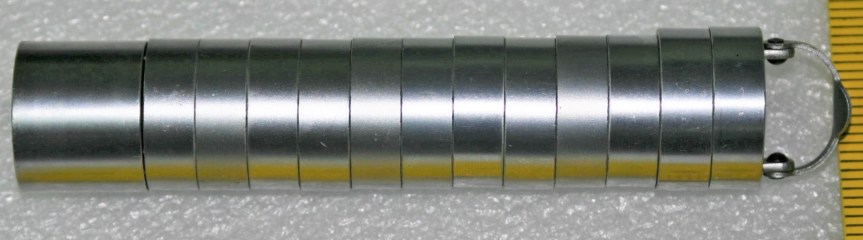
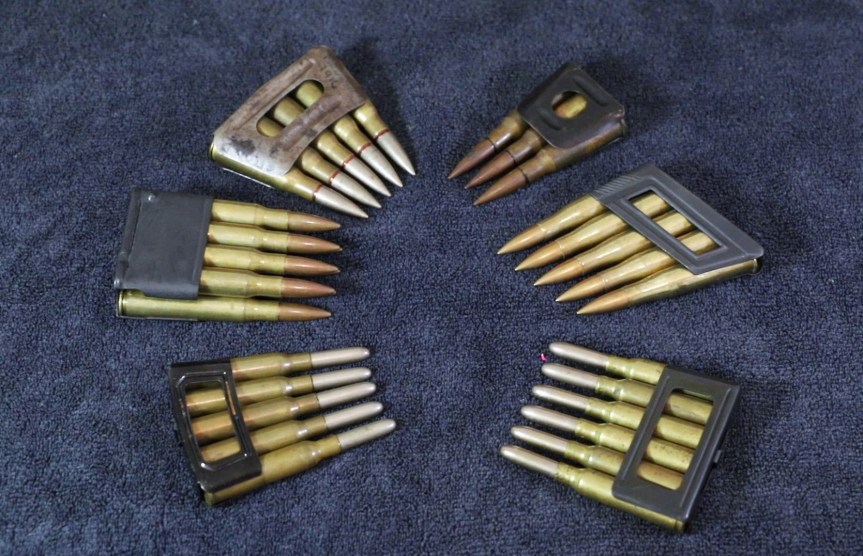
Some en bloc clips from Jack’s collection (Jack Dutschke)
In his first video with TAB Jack takes a look at en bloc clips, specifically double stack en blocs. Using examples from his impressive collection he discusses how en bloc clips work and takes us through their pros and cons.
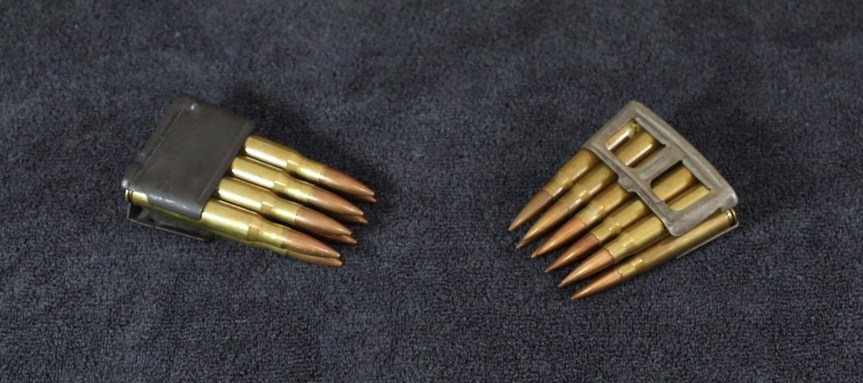
Garand & Pedersen en bloc clips (Jack Dutschke)
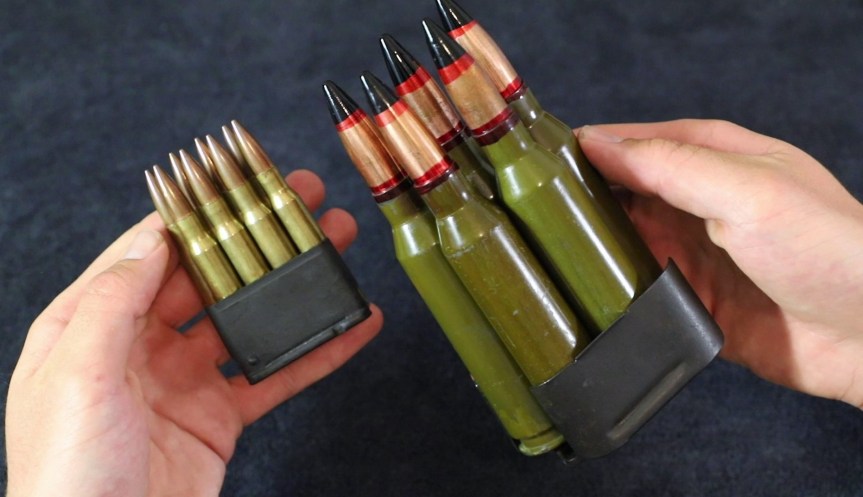
He examines the ubiquitous 8-round en bloc used by the M1 Garand as well as the much rarer 10-round clip for John Pedersen’s PA rifle which was chambered in his .276 round. Finally, Jack treats us to a look at a PTRS-41 anti-tank rifle en bloc clip which holds five massive rounds of 14.5x115mm.
The big bastard – a Garand en bloc next to a PTRS-41 clip (Jack Dutschke)
Huge thanks to Jack for putting this video together for us, we’re really excited to have videos from him and we’re looking forward to more from him in the future! In the mean time you can find Jack’s project Cartridge Gram over on Instagram and on Facebook. He has a wealth of great photos and information on ammunition.
The 1890s were one of John Browning’s most prolific periods, during which he developed a host of firearms which would never actually see production. Here, we’re lucky enough to be able to examine one of those prototypes that were never produced. Dating from 1892, this rifle departs from Browning’s earlier lever-action rifle designs in a number of interesting ways. Perhaps the most interesting aspect of the design is its use of en bloc clips, instead of the tube magazine traditionally used by Winchester’s repeating rifles. John Browning, and his brother Matthew, filed the patent covering the design in June 1892.
Right side of the rifle, note its ‘musket’ configuration (Matthew Moss)
The rifle is in what is typically referred to at the time as a ‘Musket’ configuration, signifying that it is a military long-arm. It has a long 32.5 inch barrel, which is held in place by two barrel bands. Overall the rifle is around 50 inches in length and weighs just over 9lbs. The rifle is chambered in a .30 calibre cartridge, likely the then new .30-40 Krag round given its proposed market. It has a ladder-style rear sight with range graduations from 100 to 1,000 yards.
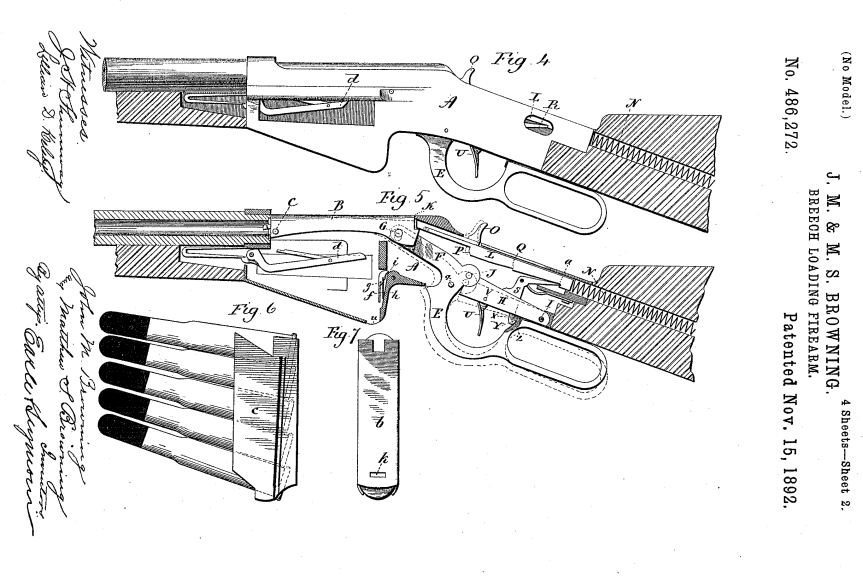
Browning’s patent drawing showing the rifle’s action (US Patent Office)
Okay, let’s take a closer look at the prototype. During the 1890s Browning experimented with a series of magazine systems including an en-bloc clip system. This rifle uses a 5-round magazine which is fed from an en-bloc clip. The idea of an en-bloc clip was relatively new with Ferdinand Mannlicher patenting the idea in the 1880s and using it in his Model 1886 and 1888 rifles. It is unclear if Browning was familiar with Mannlicher’s system but the two are very similar. If you’re unfamiliar with en bloc clips it means that the cartridges are loaded into the weapon in the clip rather than stripped from the clip.
A look at the ejection port for the en-bloc clip (Matthew Moss)
Browning’s prototype holds five rounds in its clip, which from patent drawings we can see was not reversible. Sadly, we don’t have an example of Browning’s clip to examine but his 1892 patent (see above) gives us a good idea of what it would have looked like. It clearly has a cut at the top of the clip which appears to have been used to help guide the round up into the chamber.
Rounds were pushed up into the action by a follower arm which was actuated by a v-spring located at the front of the magazine housing. The bottom of the fixed magazine housing has a cut-out corresponding to the clip to allow it to fall or be pushed clear by a new clip once it was empty.
The rifle’s lever fully-forward with its action open and striker cocked (Matthew Moss)
The rifle also departs from the traditional hammer system and uses a striker-fired action. From the patent drawings we can see how the rifle’s striker worked, with a coil spring extending into the stock and a sear holding the striker to the rear. The striker is made up of two pieces with the striker hitting a long firing pin inside the bolt.
The striker has, what the patent refers to as, a ‘thumb piece’ to enable re-cocking and to indicate if its cocked or not. The striker was cocked by the cycling of the lever and held in place by the trigger sear.
A view inside the action with the bolt partially retracted before it moves down and back into the rifle’s wrist (Matthew Moss)
The lever was held in the close position, preventing out of battery discharges, by what Browning’s patent calls a downward-projecting dog, which projected through a small hole in the trigger assembly link and locked into a catch in the front of the lever loop.
The use of a striker, rather than an exposed hammer, allows the rifle bolt’s travel to be enclosed rather than have the bolt project out of the rear of the receiver, as in previous Winchester lever-actions, we can see that this rifle’s bolt slides back at an angle partially down into the wrist of the stock. This is arguably more ergonomic and potentially helps to prevent ingress of dirt.
The first half of the lever’s travel pulls the bolt to the rear, while the second part cocks the striker. An arm extending from the lever pushed the bolt rearward until the trigger sear was engaged. In order to give the lever enough throw to open the action far enough to allow a round to be loaded the trigger mechanism has to be pivoted out of the action, much like the earlier Winchester 1886.
The bolt has a pair of trunnions which project from the sides of the bolt, these run inside longitudinal grooves either side of the receiver, while the rear of the bolt is free to angle up and down as it cycles. The action is locked by the rear of the bolt secured against the rear of the receiver, rather than with a rising locking bolt.
Left side of the rifle (Matthew Moss)
During the period Browning was also working on other lever action and, even more unusual, so-called pull-apart actions as well as various magazine types including a revolving magazine, stripper-clip box magazines and of course as we’ve already seen a detachable box magazine-fed rifle. The 1890s were a truly prolific period for Browning.
The design was purchased by Winchester and the Brownings’ patent was granted in November 1892. The gun, like many of Browning’s other designs of the period, never saw production. Making this rifle a rare one-of-a-kind prototype. It’s an elegant design and the action is smooth. When Winchester did finally seek to produce a military lever-action they chose another of Browning’s designs which retained his traditional rear-locking bolt, which became the Model 1895.
This rifle is a unique prototype and it was an honour to examine it. It’s now on display at the newly refurbished Cody Firearms Museum at the Buffalo Bill Centre of the West. Our thanks to the museum for allowing us to film items, like this one, from the museum’s collection.
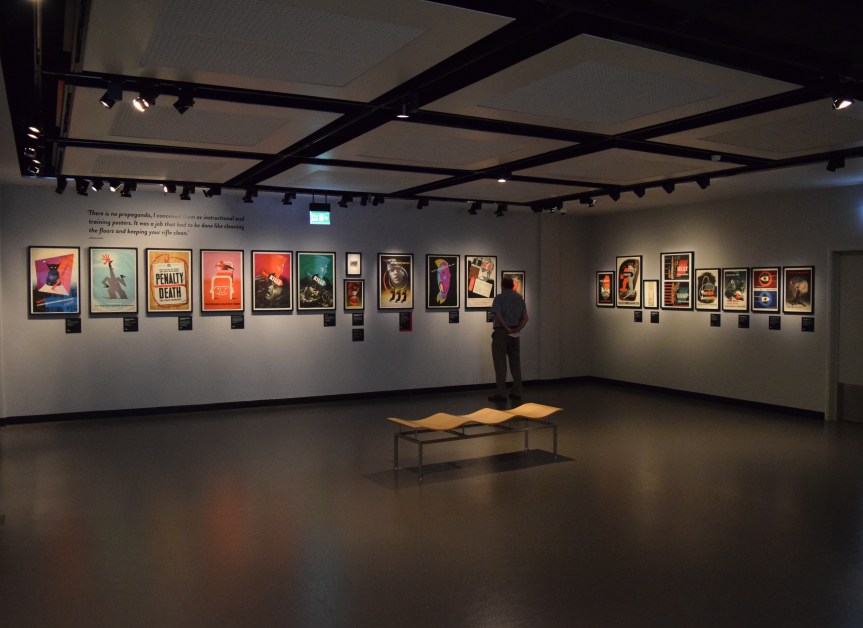
I recently had the opportunity to visit the National Army Museum in London and check out their current exhibition, The Art of Persuasion, a look at the wartime work of graphic designer Abram Games. While you may not recognise the name you will probably recognise some of his impressive and striking posters.
Games’ work is instantly arresting with an eye-catching starkness which underlines the messages he sought to convey. In the video above I aim to give a feel for the exhibition and, if you are unfamiliar with him, a feel for Games’ work.
He joined the army in 1940 and began designing posters for both military and civilian audiences in 1941. Over the next 5 years he designed over 100 posters, some of which have become iconic.
Some of Games’ posters designed to dissuade loose talk (Matthew Moss)
Describing himself as a ‘graphic thinker’ Games used silhouettes and contrasting colour and vivid subjects. Largely self-taught Games was extremely passionate about his work and by November 1942 had been made ‘Official War Poster Artist’.
A shot of the exhibition space showing some of the posters on display (Matthew Moss)
The exhibition not only displays his work but also explains how Games created his posters, often working from models or taking photographs of soldiers training. Some posters have his original sketches displayed next to them to show how the concepts evolved.
His posters encouraged young women to join the ATS, soldiers to volunteer for the Commandos and civilians to support the war effort. In addition to posters for the War Office, some of his most recognisable work, including the ‘Your Britain, Fight For It Now’ posters were designed for the Army Bureau of Current Affairs in an effort to raise morale and promote the idea of post war reform and progress. He also designed a series of powerful, striking posters for appeals to aid Europe’s Jews, a cause he was deeply connected to as a Jew. Games was demobilised in 1945 and enjoyed a long, successful civilian career, he died in 1996.
Appeal posters to aid Europe’s Jews (Matthew Moss)
The National Army Museum’s exhibition works hard to give a feel for not just the work but also the man and his motivations. Games’ wartime posters are extremely rare, unsurprising when most were covered or torn down after a few months, so it was a treat to see them in person. Up close you get a sense of what it would have been like to see one on a barrack wall or a billboard 75 years ago. The exhibition also had some interesting interactive elements with a touch screen allowing visitors to create their own Games-style posters as well as another screen with video interviews with Games’ daughter and people who knew him talking about his work.
Games’ work are not just pieces of art but also important historical objects that can help us understand what the war was like and what motivated people to fight.
Find out more about the exhibition on the National Army Museum’s website, here.
We’re proud to present our very first bayonet-centric episode. Vic takes a look at a bayonet for a Sudanese contract AR-10 as part of his ongoing Surplus Zone series. While a rather rare bayonet this example has some interesting features.
In 1958 the Sudanese Military contracted with Samuel Cummings company Interarmco, to supply 2,508 AR-10 Battle Rifles. 2,500 standard rifles and 8 adapted to mount optical sights as sniper rifles.
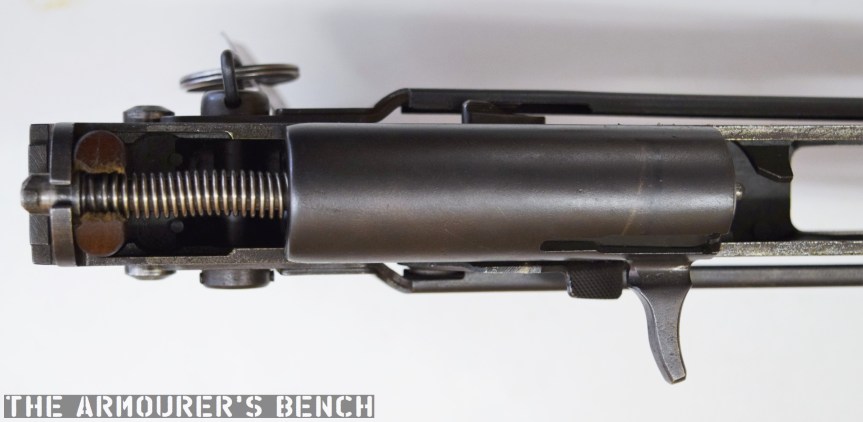
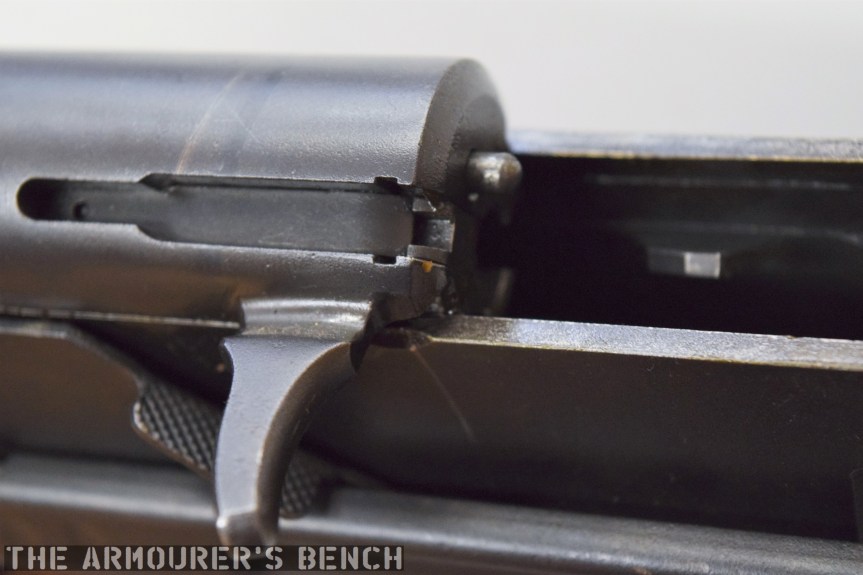
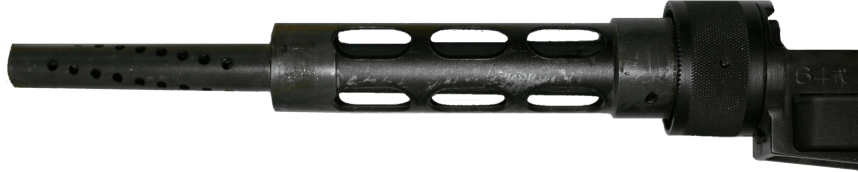
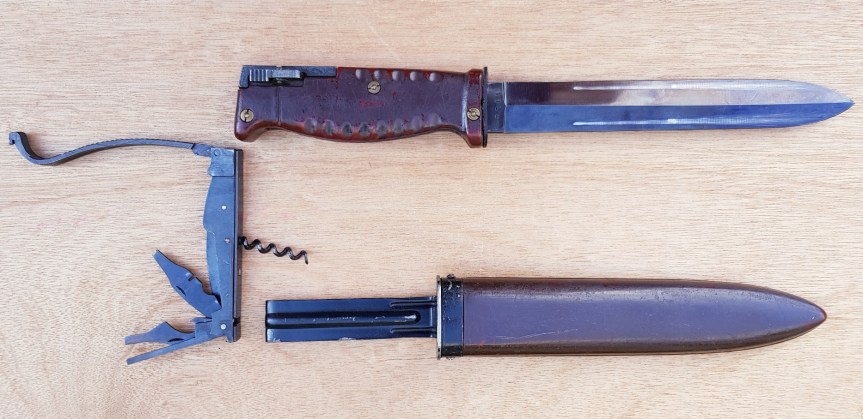
One of the requirements for the Sudanese rifles were that they were to be able to mount bayonets, something the AR-10 did not have a capability to do in its then current form. This inability to mount a bayonet was overcome by a rather simple and ingenious addition to the rifle. A cast and machined sleeve was fitted over the barrel between front sight base/gas block and the flash hider. This was pinned to the barrel just forward of the front sight base/gas block. It had machined into the underside of the bayonet adaptor a longitudinal rail to which the bayonet could be attached. This is the same interface as seen on WWII German issued Kar98K rifles, the significance of which will become clear!
It is uncertain why Interarmco chose the design of bayonet which they did. It would have been quite an expensive and complex one to manufacture but it is obvious that it is based upon the late WWII SG-42 bayonet come utility/fighting knife. The Sudanese contract AR-10 bayonet has a more symmetrical blade than that of the SG-42 and has no ‘blood groove’ (properly known as a fuller) which hints at the fact that it is seen more of a utility knife than as a ‘cut and thrust’ fighting knife/bayonet.
Sudanese contract AR-10 bayonet
It has been established that the SG-42 was manufactured by Waffenfabrik Carl Eickhorn in Solingen, Germany (determined by its cof marking / WaA19 inspection code), whereas the toolkit was made by Robert Klaas of Solingen (inspection code: ltk). Inside the bayonet’s grip are a number of tools which detach from the grip and can be used for rifle maintenance. The tools also include a bottle opener and a corkscrew. Inside the toolkit stored in the bayonet’s grip are a number of tools which detach from the grip and can be used for rifle maintenance. The tools also include a bottle opener and a corkscrew.
In regard to the AR-10 Sudanese bayonet, the Eickhorn company does not deny being the manufacturer of the Sudanese contract bayonet, they simply cannot confirm that they were the maker, since all relevant factory records have been lost!
In the Dutch AR-10 archives, Interarmco (i.e. Samuel Cummings) does not disclose the name of the manufacturer, but refers only (in the pertinent correspondence with A.I.) to “the Solingen manufacturer” of this knife-bayonet for the Sudanese contract.
Check out Vic’s earlier Surplus Zone videos hereand his special series on the AR-10 here.
Matt recently had the pleasure of attending the Autumn 2019 Soviet Threat event at the Hack Green Nuclear Bunker in Cheshire. One of the people Matt had the chance to speak to was Allen from the MECo group of collectors and reenactors.
Allen portraying a member of the Royal Army Service Corps, c.1964 (Matthew Moss)
Allen was portraying a member of the Royal Army Service Corps, with uniform representing that of 1964, the year before the corps became the the Royal Corps of Transport. Allen was kind enough to explain his uniform and kit on camera.
Check out our earlier video with Rifleman Moore discussing his 60s PARA portrayal here.
Matt had the pleasure of attending the Autumn 2019 Soviet Threat event at Hack Green Nuclear Bunker in Cheshire at the weekend and spoke to many of the reenactors and collectors attending the event. Check out our earlier video about the event here.
One of the people Matt had the chance to speak to was Simon of the Rifleman Moore YouTube channel. Simon is a collector of uniforms and kit and part of the MECo group of collectors and reenactors. Simon was kind enough to film a quick video with Matt and discus his kit.
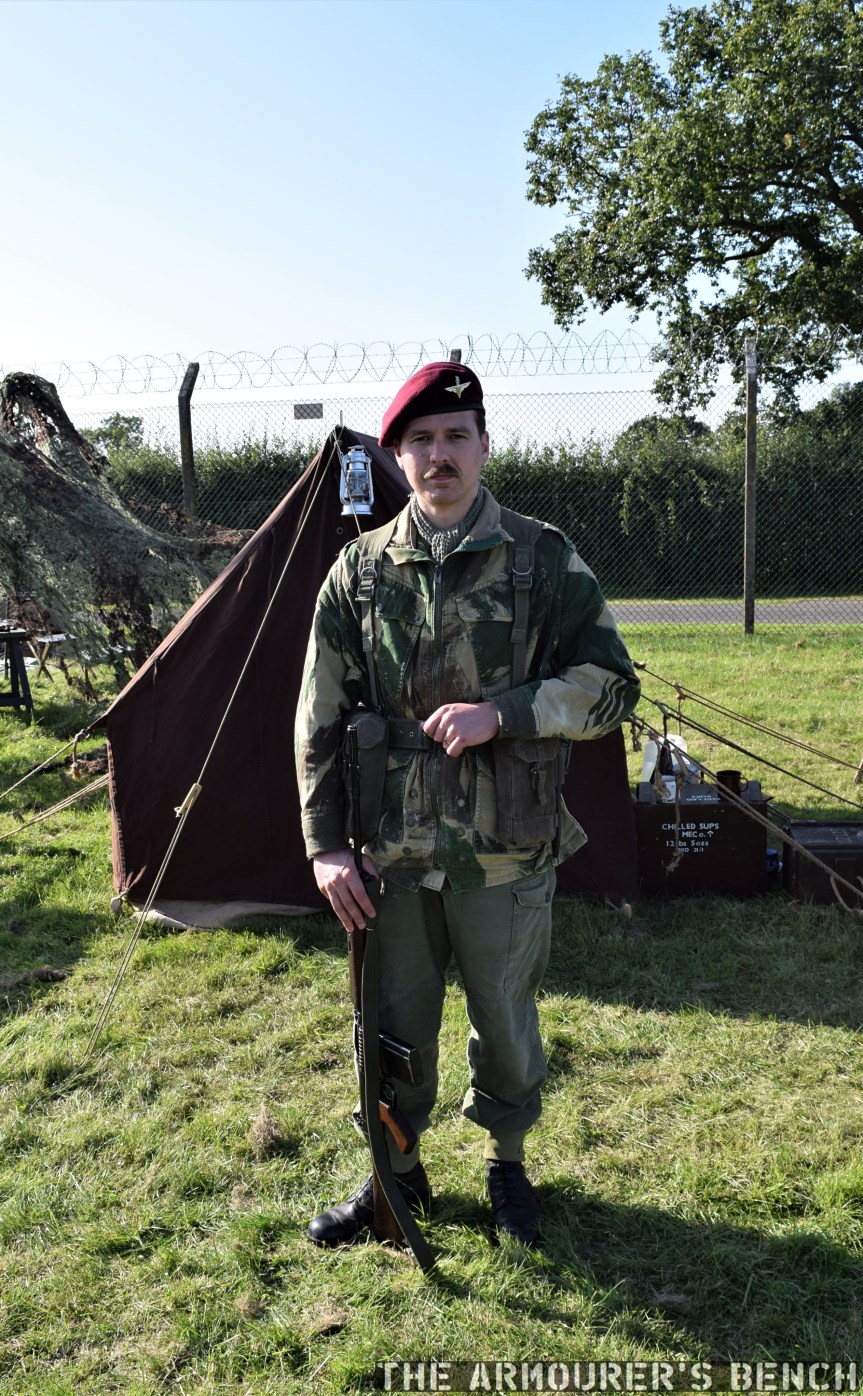
At Soviet Threat he was portraying a member of the British Army’s PARA’s as they would have been dressed and equipped circa 1964 – twenty years on from Operation Market Garden, which took place 75 years ago this year.
A full-length photo showing Simon’s portrayal of a 1960s PARA, complete with SLR (Matthew Moss)
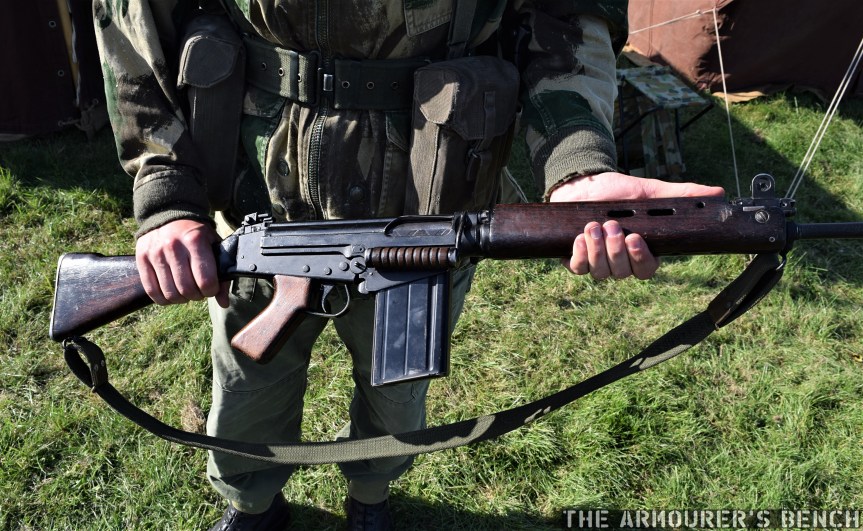
Here’s a closer look at the deactivated L1A1 Self-loading Rifle Simon completed his portrayal of a period PARA with.
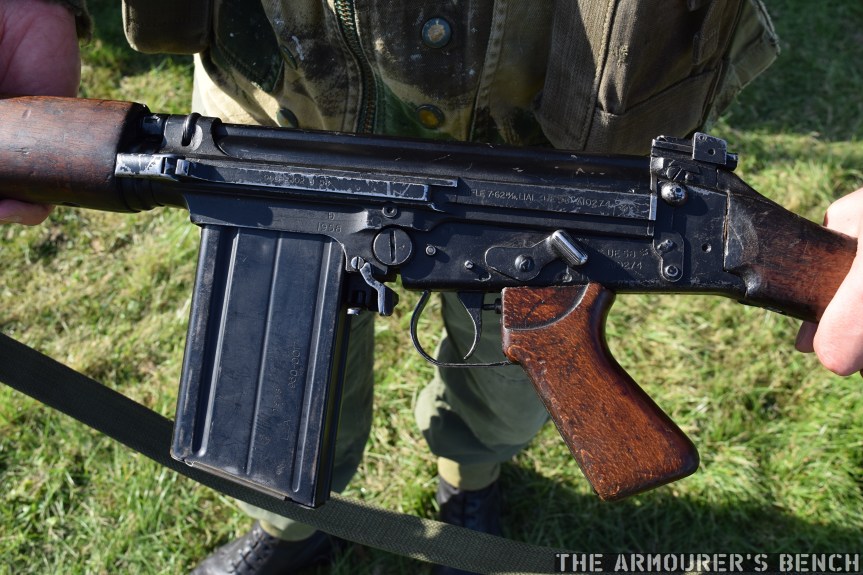
A nice example with period-correct wooden furniture and rifle sling (Matthew Moss)A closer look at the rifle’s markings (Matthew Moss)
The rifle was an Royal Small Arms Factory Enfield-production L1A1, inch pattern semi-automatic adaptation of the FN FAL, manufactured in 1958, as attested to by it’s UE58 prefixed serial number.
Many thanks to Simon for taking the time to speak to us and run through his uniform and kit. Check out his channel here.
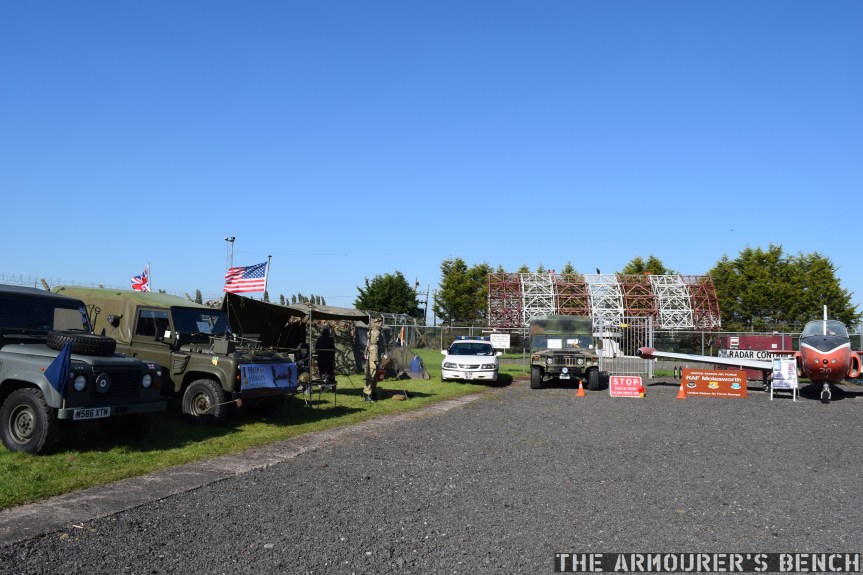
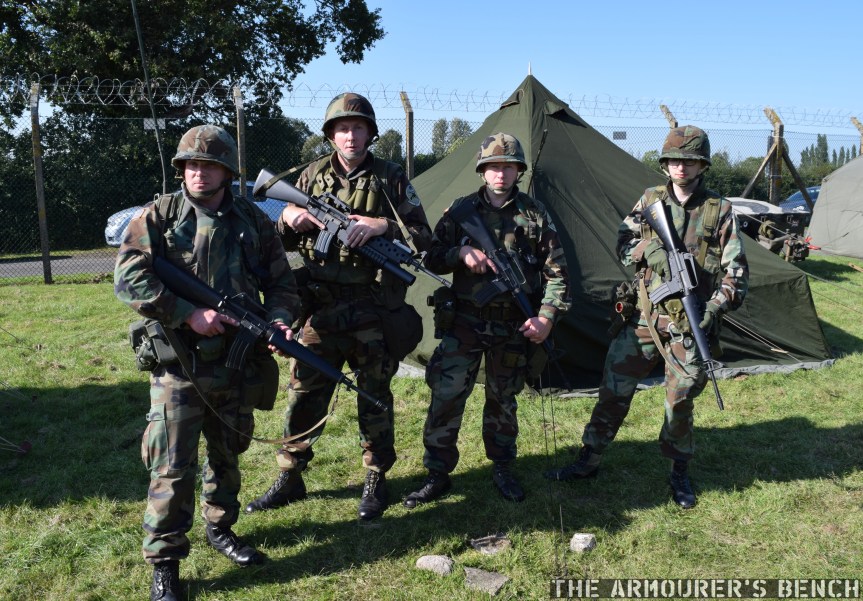
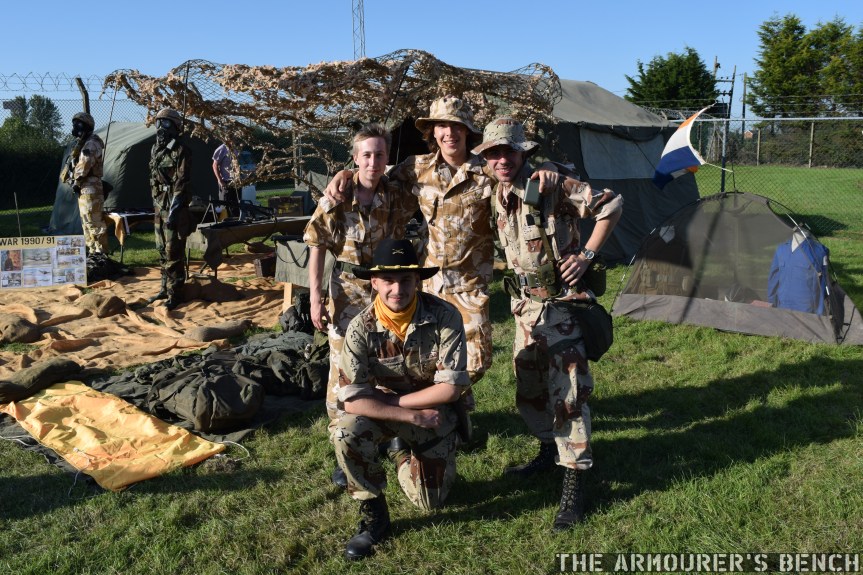
This weekend I visited the Hack Green nuclear bunker in Cheshire, UK. They have a bi-annual Cold War history event called Soviet Threat where reenactors and collectors are invited down to display their kit. I had the pleasure of meeting to some really interesting people and seeing some cool vehicles and kit.
I spoke to Lucy, the Hack Green Bunker museum’s curator but sadly had some sound problems. Hopefully, we’ll get to speak to Lucy about the museum in more depth in the future! I also spoke to a number of the groups and individuals attending and we’ll have a couple more videos coming up.
Here’s some photos from the event:
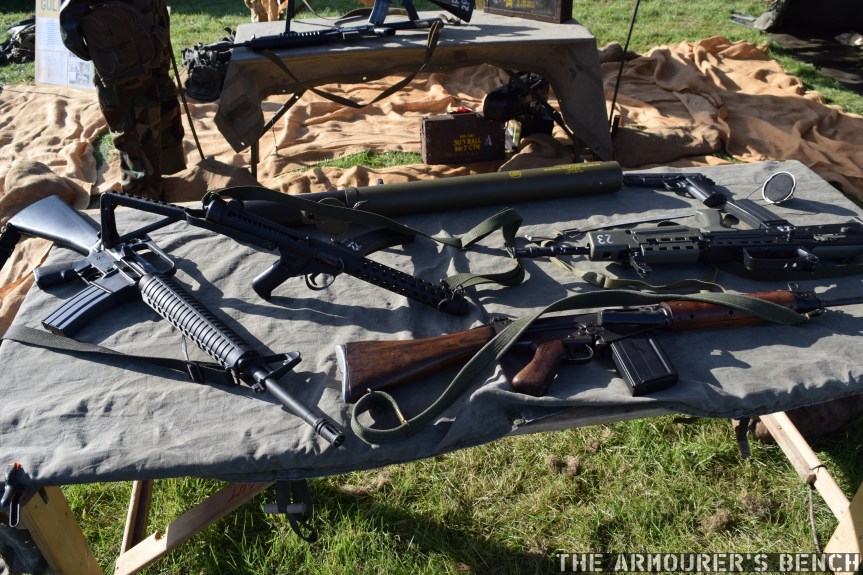
Some of the vehicles on display at Soviet Threat, including a HMMWV and a jet trainer (Matthew Moss)Members of Lazy Company prepare for guard duty (Matthew Moss)A Soviet camp display (Matthew Moss)A pair of East German Trabants (Matthew Moss)Some of the local lads from a Gulf War reenactment group (Matthew Moss)Some deactivated weapons from the Gulf War display (Matthew Moss)
The Boeing Bomarc was the world’s first long-range surface to air missile and despite its shortcomings remain in service for a decade. It was an extremely ambitious project and is a Cold War weapon that few today are familiar with.
In the late 1940s, Boeing began work on a surface to air missile – then described as a ‘pilotless interceptor’. The project was code-named MX-1599 and the Michigan Aerospace Research Center (MARC) joined Boeing to work on the programme.
Boeing BOMARC at Hill Aerospace Museum (Matthew Moss)
The MX-1599 was to be a long-range supersonic nuclear-tipped surface to air missile (or SAM), detonated by a proximity fuse. The missile went through a number of official designations as it was developed during the 1950s – finally becoming known as the Bomarc – an acronym of Boeing and Michigan Aerospace Research Center.
The Bomarc was launched vertically using rocket boosters, before its main ramjet engines took over, enabling it to cruise at Mach 2.5 (approx. 1,920 mph). The initial Bomarc A had a range of 200 miles with an operational ceiling of 60,000 feet.
It was ground controlled using NORAD’s Semi-Automatic Ground Environment (SAGE) system until it neared its target, when an onboard radar, a Westinghouse AN/DPN-34 radar, took over.
The Bomarc could be tipped with either a 1,000 lb conventional high explosive or low yield W40 nuclear warhead. These were detonated by a radar proximity fuse. The W40 had a yield of up to 10 kilotons, able to destroy entire formations of aircraft.
BOMARC Site No. 1 at McGuire Air Force Base (USAF)
The missile had a wingspan of just over 18 feet or 5.5metres, it was 45 feet or 13.7 metres in length and weighed approximately 16,000 lbs (7257 kg) on launch. The Bomarc’s first flight took place on 24th February, 1955.
The USAF intended to use the missile to engage incoming Soviet bomber formations and ICBMs. Originally planning for over 50 Bomarc launch sites, but only one was operational by 1959 and only eight were operational by the early 1960s. The upgraded Bomarc B was developed in the early 1960s, with an improved radar, a Westinghouse AN/DPN-53, and a greater maximum range of 430 miles, as well as a higher operational ceiling of 100,000 feet.
The Bomarc was stored horizontally in specially built semi-hardened bunkers and kept fuelled and ready to launch at a moment’s notice. When targets were detected the missile would be raised and launched vertically.
One of the dangers of keeping the missiles fuelled became clear in June 1960, when a nuclear-armed Bomarc A caught fire exploding the onboard tank and contaminated part of McGuire Air Force Base with melted plutonium. Despite this the missiles remained operational for over a decade with the first sites being deactivated in 1969 with the last stood down in 1972.
BOMARC launching (USAF)
While the Bomarc missiles were the world’s first operational long-range anti-aircraft missile they were too slow to achieve operational readiness to keep pace with the rapidly changing nuclear threat – as both superpowers transitioned from bomber to ICBM-focused strategies. They were expensive to manufacture and difficult to maintain at readiness. In the late 1950s the Bomarc also embroiled in a war of words with the US Army arguing their short range Nike Hercules (SAM-A-25/MIM-14) missile was more effective. The Hercules remained in service through to the 1980s, albeit as a air defence missile – rather than targeting soviet ICBMs or bomber aircraft.
The Bomarc was an ambitious project when it began in the late 40s, but with technology and cold war nuclear strategy rapidly evolving the Bomarc was almost obsolete before it became operational. A total of 570 Bomarc missiles were built between 1957 and 1964 with the US and Canada (which led to considerable political controversy) being the only countries to deploy them.
I hope you guys enjoyed this look at the Bomarc, we’ll have a few more videos on missiles in the future.
IM-99A/B BOMARC Missile, Boeing, (source) Nuclear Weapons of the United States: An Illustrated History, J.N. Gibson, (1996) Nike Historical Society (source)
Supersonic Guardian, Boeing film, c.1960 (source)
Vic continues his Surplus Zone series with a look at the British SUSAT sight, principle by Britain on the SA80 and by Spain with the CETME Model LV and AMELI. In this episode Vic shows us how to refit a SUSAT with new elements.
The Sight Unit Small Arms, Trilux was developed in the late 1970s by the Royal Armaments Research Development Establishment. It is a 4x optic which uses a radioactive tritium light source, for use in low light conditions, which due to radioactive decay has to be replaced every 8-10 years.
The rifle we’re examining is one of dozens of designs sold by the Brownings to the Winchesters Repeating Arms Company during their long relationship. This design dates from the early 1890s and represents one of Browning’s numerous attempts to move away from the tube magazine-fed designs favoured by Winchester.
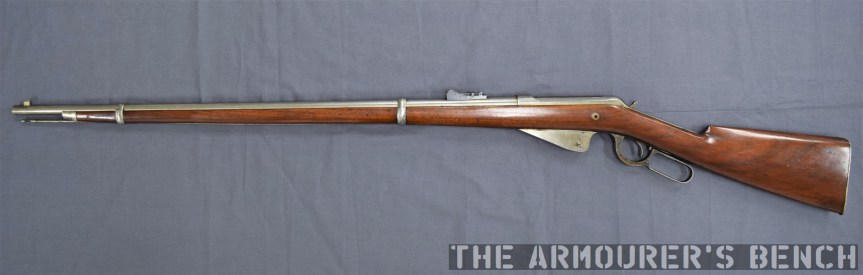
The prototype is based around the lever-actuated vertically sliding locking block patented by Browning in May 1884 and first used by Winchester in the Model 1886. The rifle itself is in the ‘military musket’ configuration with full-length handguards, military sights, a cleaning rod and able to mount a bayonet.
Right side of the rifle (Matthew Moss)
The rifle is chambered in a .45 calibre cartridge, likely .45-70, and weighs just over 9lbs. Browning patented the design of the rifle and magazine in August 1891, with the patent being granted in December (US #465339). It is attributed to John Moses Browning and his younger brother Matthew S. Browning.
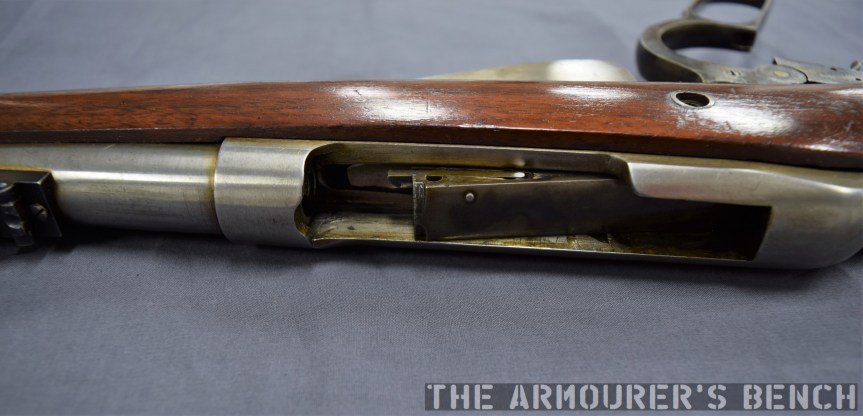
The most interesting feature of the rifle is its detachable box magazine. The magazine is held in place by a spring-loaded catch at the front of the magazine which locks against a tab in the magazine’s wall.
A close up of the magazine well, note the added metal lip of the front of the well, not a part of the receiver (Matthew Moss)
It differs from the box magazines previously developed by James Paris Lee, which Lee begun developing in the mid-1870s (see examples listed below). It’s a simple design with a follower powered by a coil spring. The prototype mag itself is made from pressed metal and is held together with some rough welds. Unlike the magazines we’re familiar with today, the top of the Browning’s magazine is almost entirely enclosed with only a small opening at the rear. The rounds would be loaded nose-first with their rims sliding into the channel at the rear of the magazine.
Close up of the magazine removed from the rifle – right side (Matthew Moss)A view of the top of the magazine with the small opening and notch for the cartridge rime visible (Matthew Moss)
The single-stack magazine appears to hold around five rounds, with Browning’s patent supporting this. The position of the magazine, in front of the action – not below it, is a hint at how it worked. An almost fully enclosed magazine does have its advantages – it would have prevented dirt from entering the mag and it also overcame the need for feed lips which were susceptible to damage, one of the elements which took Lee some time to perfect.
A close up of the front wall of the magazine, note the locking notch (Matthew Moss)
So How Did The Magazine Work?
There is a shoulder on the underside of the bolt which caught the rim of the cartridge which was protruding from the magazine. The bolt pulled the cartridge backwards, out of the magazine and onto a cartridge lifter. As the lever reached its full forward travel the lifter then elevated the round up into line with the breech. When the lever was cycled back again the round was pushed off the lifter and chambered, just as in a normal tube-fed Winchester. As the lever reached the end of its return travel the locking block rose to locked the action.
The Browning’s 1891 patent for the magazine, note ‘h‘ is the shoulder which pulled rounds out of the magazine (US Patent Office)

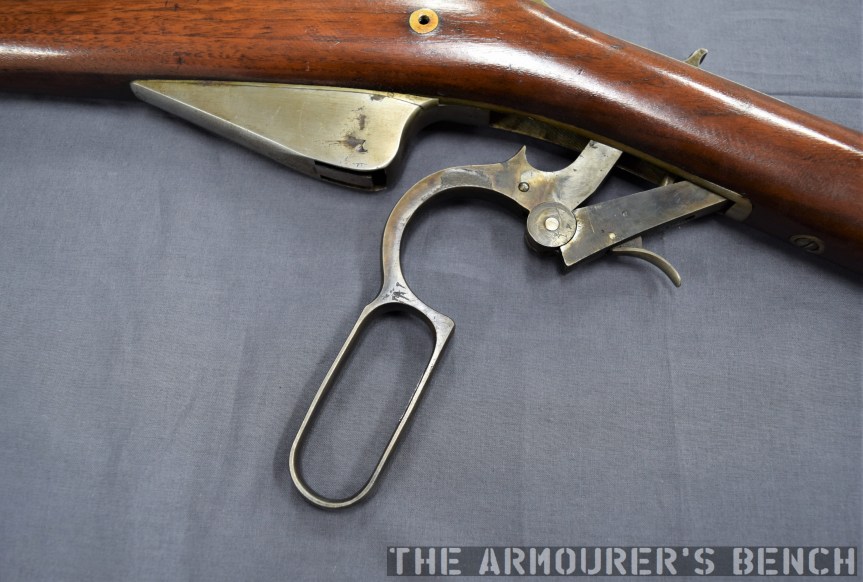
The prototype has a sliding safety bar that locks the lever and blocks the trigger. The trigger differs from the Model 1886 as it is integrated with the lever. In the photograph below we can see the locking block descended, with the lever forward, and the breech block to the rear with the action open. We can also see the striker assembly at the rear of the bolt. The striker cocks on closing when the lever is returned rearward.
The rifle with its action open, bolt o the rear and lever forward. Note the striker assembly at the rear of the bolt (Matthew Moss)
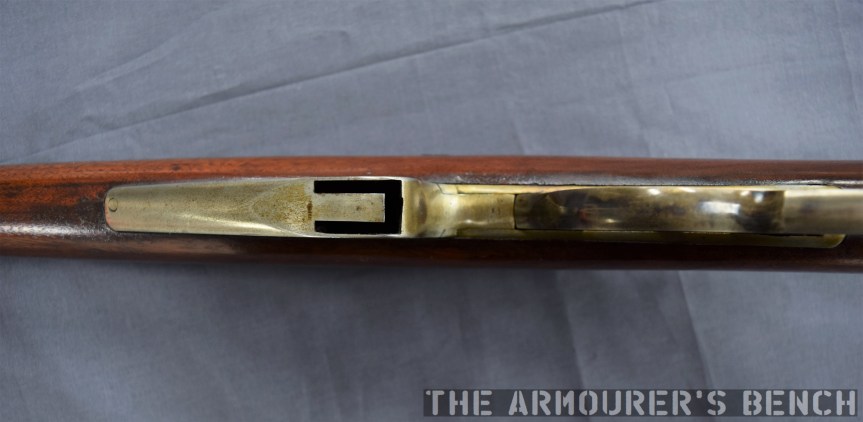
It’s quite an exposed action, with the entire top of the action open. With the action closed in the photograph below we can see the extractor running along the right side of the bolt.
A close up of the rifle’s receiver which is still ‘in the white’ (Matthew Moss)
It’s clear from the design of the magazine that Browning didn’t intend the rifle to be reloaded with stripper clips, although single loading of the rifle itself (not the magazine) would have been possible. When compared to other contemporary system this would have been somewhat of a disadvantage compared to Lee’s magazine’s later loading with chargers and stripper clips. However, from examination of Browning’s 1891 patent his intention becomes clear, the patent explains that he intended for the magazine itself to be replaced:
“One magazine may be readily removed from the gun and another introduced in its place, so that the person, using the arm may have at hand several magazines to be interchanged as the cartridges from one magazine are exhausted.”
This is a concept that wouldn’t be accepted by militaries for decades. Winchester purchased the rights to the design but this was one of many designs Browning sold the company which never saw production. The design and prototype are fascinating and represent one of Browning’s lesser-known concepts.
Left side profile of the rifle (Matthew Moss)
This rifle is a unique prototype and it was a true honour to examine it. It’s now on display at the newly refurbished Cody Firearms Museum, at the Buffalo Bill Centre of the West. The new museum is phenomenal and well worth a visit. Our thanks to the museum for allowing us to film items, like this one, from the museum’s collection.