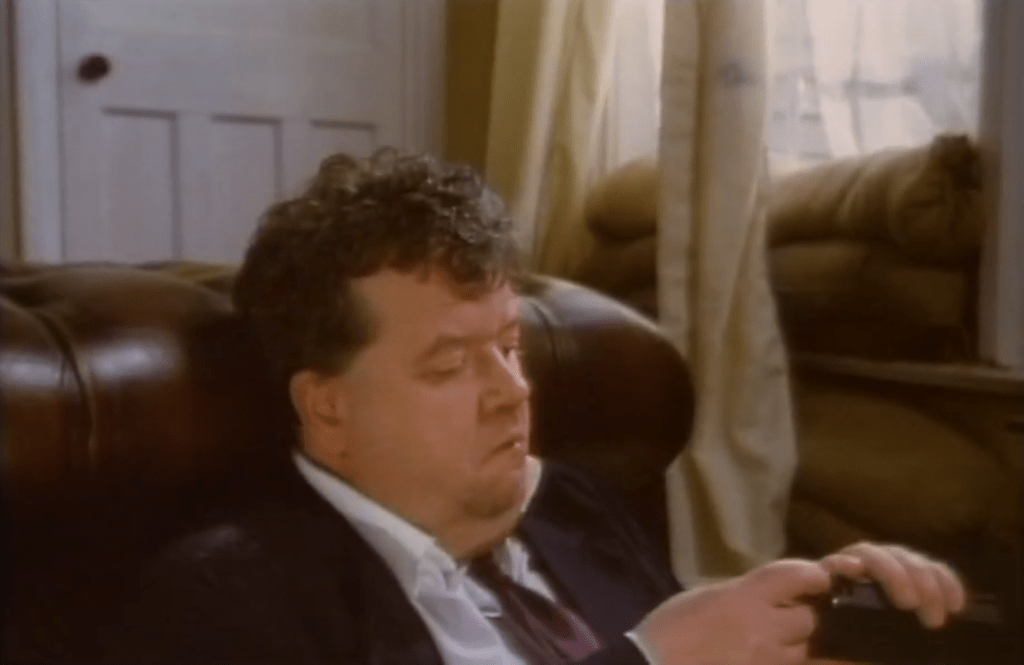
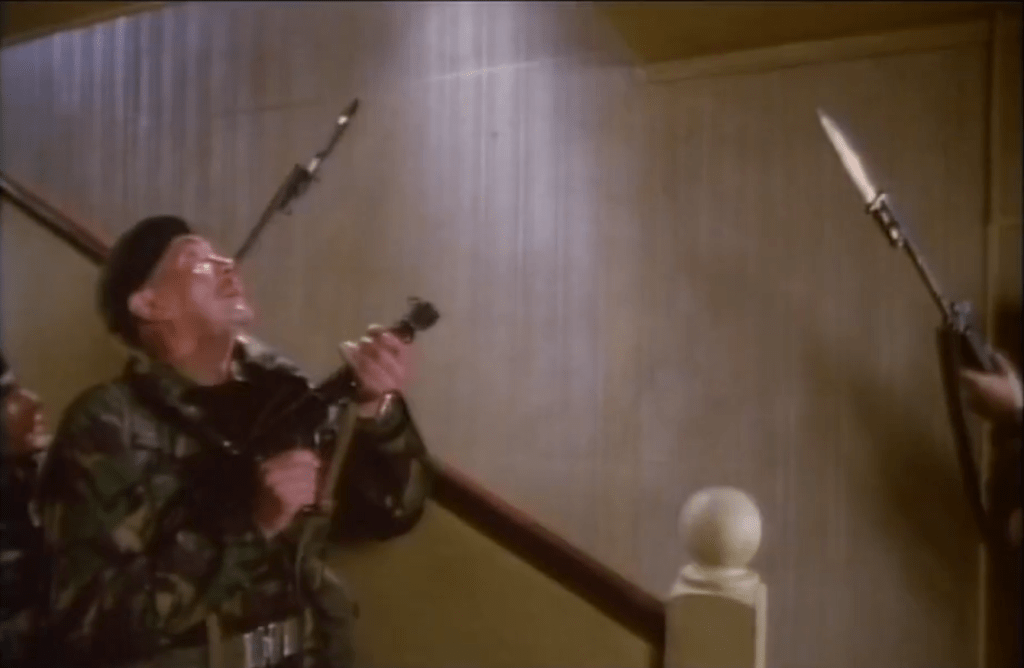
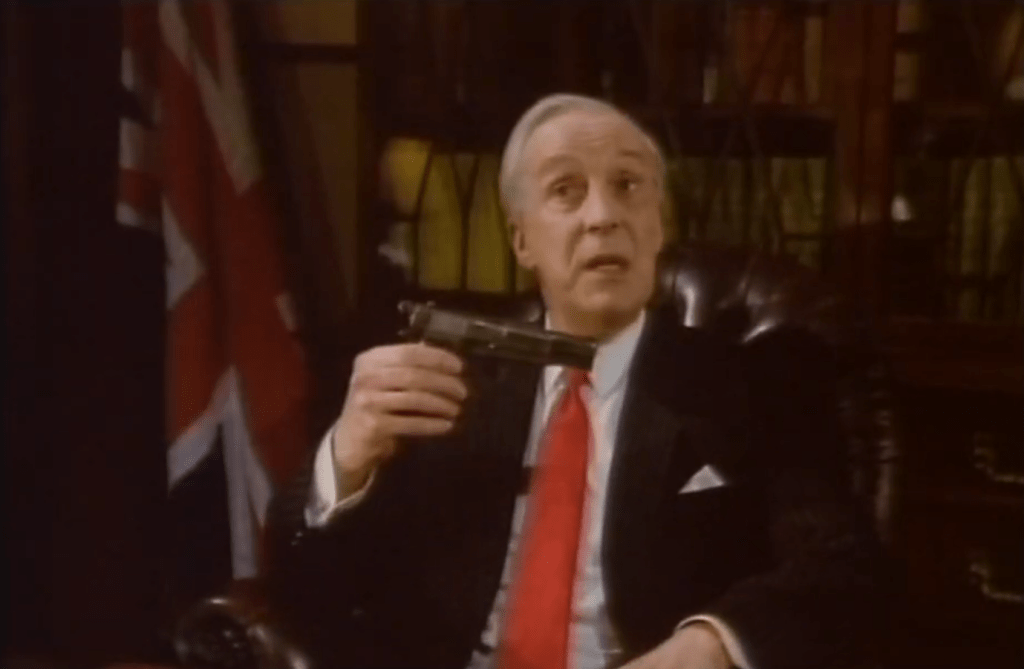
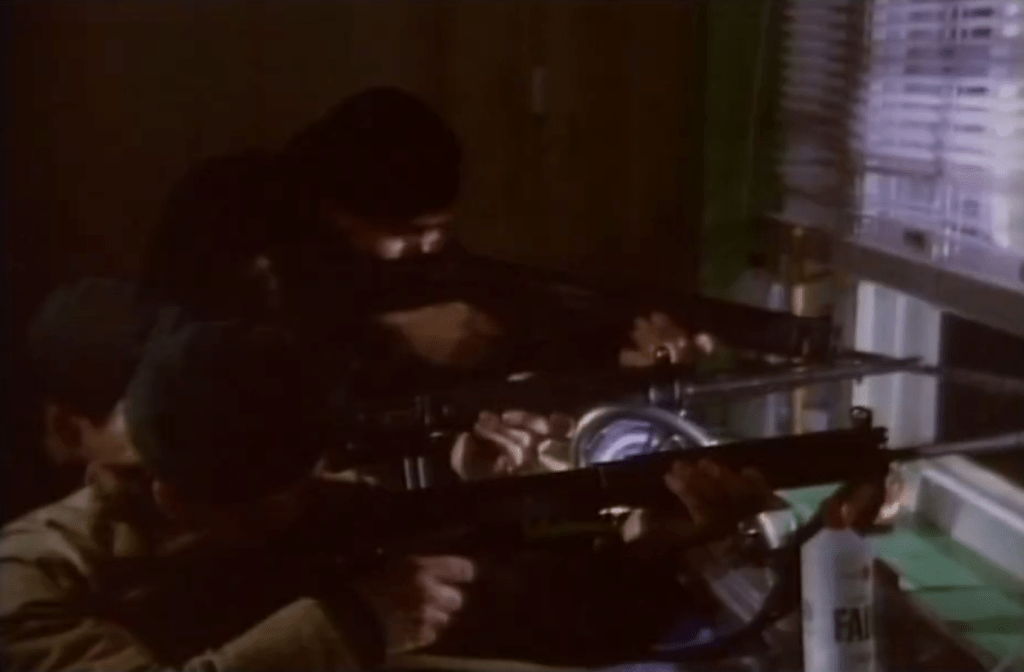
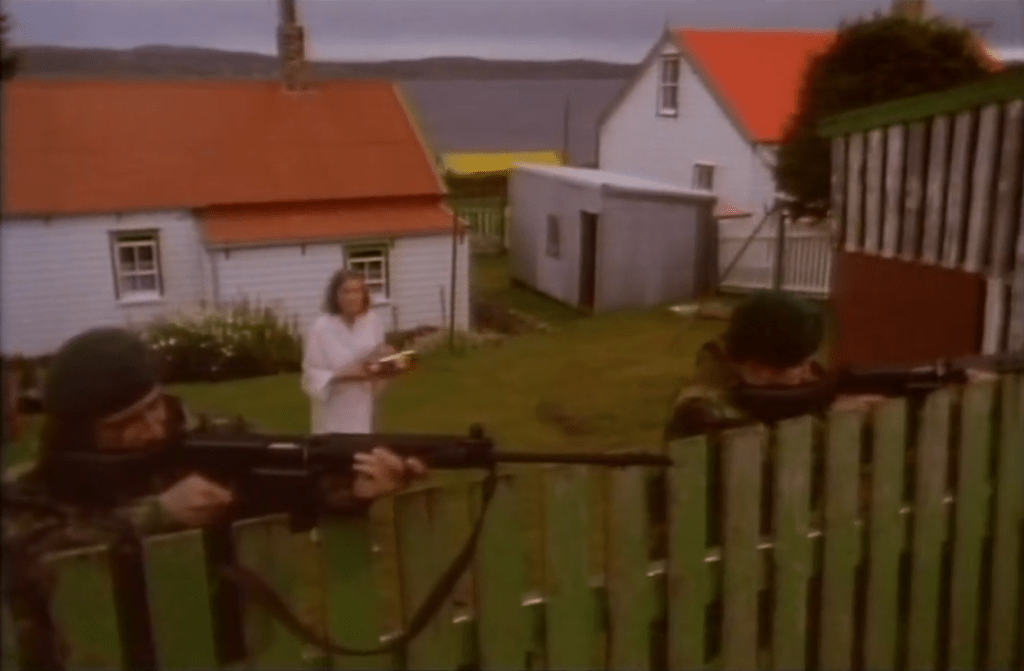
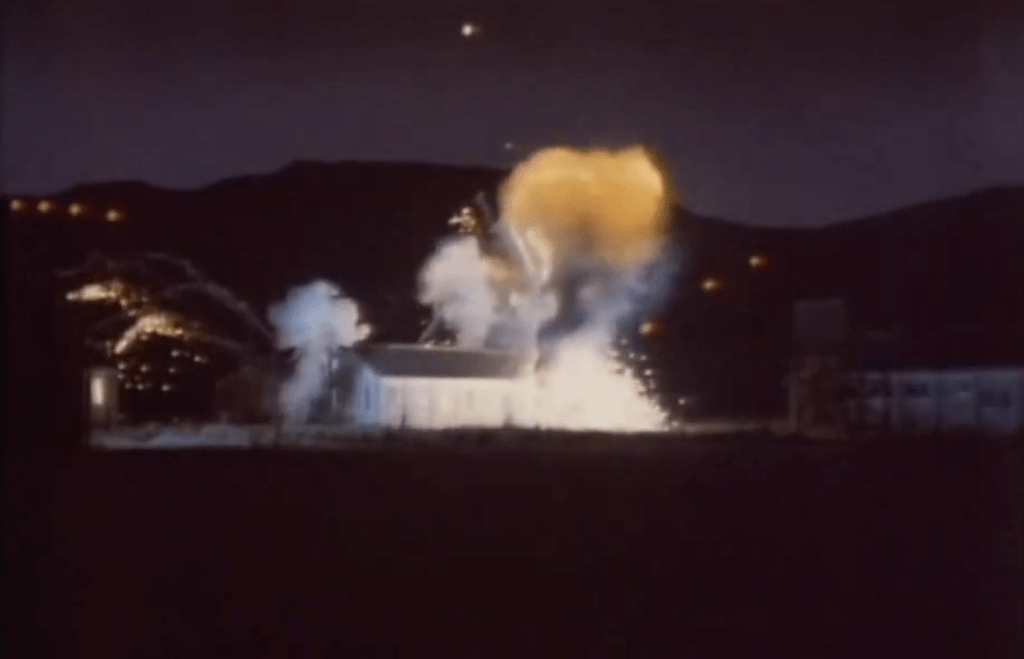
In another special episode of Fighting On Film we chat with director Stuart Urban and some of the cast (Hugh Ross & Ian McNeice) of the 1992 BAFTA-winning film ‘An Ungentlemanly Act‘. A unique war movie which looks at the first 36 hours of the Falklands War and the battle to defend the island from Argentine invasion.
With so few war movies made about the Falklands War by both sides this film is especially interesting. It was fascinating to hear about the writer/director’s first hand research and about what it was like to film on location in the Falklands just a decade after the war.
In the UK we’ve gone into another COVID-19 induced lockdown, so why not put out another episode of the Fighting On Film! In this first episode of a new additional format ‘Show & Tell’ we talk about a couple of war movies we watched recently and see if you guys think we should cover them in a full episode. We discuss a new Latvian film ‘The Rifleman’ and a British 50’s movie featuring a young Richard Attenborough – ‘Sea of Sand/Desert Patrol’.
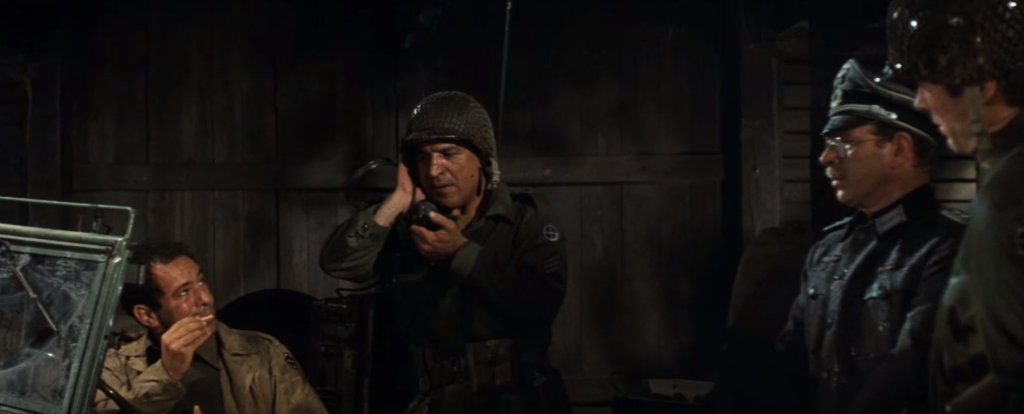
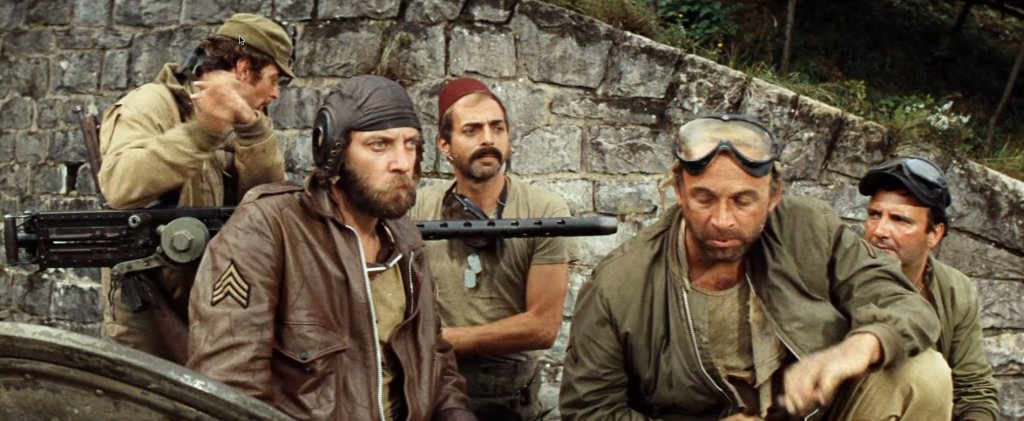
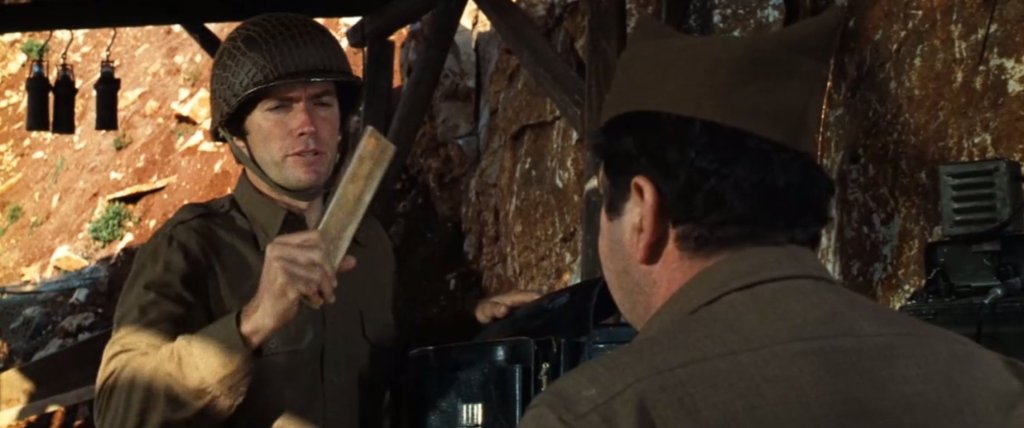
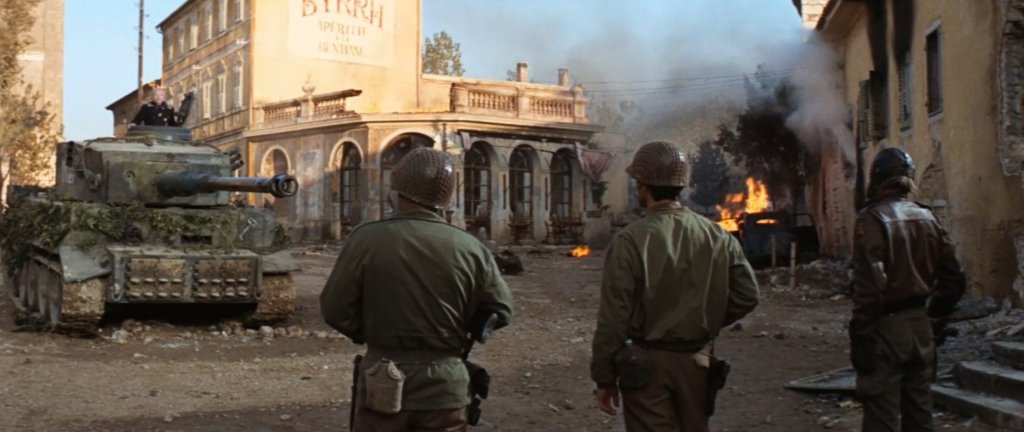
In this special New Year episode of the Fighting On Film war movie podcast we are joined by historian Peter Caddick-Adams to discuss the cult-classic ‘Kelly’s Heroes’. The film follows a platoon of US soldiers who penetrate deep behind enemy lines to steel enemy gold! Directed by Brian G. Hutton and staring Clint Eastwood, Telly Savalas and Donald Sutherland.
Over the past year we’ve looked at a number of John Moses Browning’s lesser known rifle prototypes. Each offers something innovative, a detachable box magazine, a slide action and an en bloc loading system. These prototype rifles are unique and likely the only ones of their type in existence. The prototypes were originally sold to the Winchester Repeating Arms Company, but like many of the arms Browning sold to the company they never went into production.
Winchester bought the designs from Browning simply to prevent their competitors from getting their hands on them – as a result they are largely forgotten. The rifles became part of the Winchester factory collection and today they are all held at the Cody Firearms Museum at the Buffalo Bill Center of the West – we appreciate their assistance and kindness in allowing us to examine them.
In 1891, Browning designed a new rifle that fed not from a tube magazine but from a detachable box magazine. Box magazines were a relatively new concept with James Paris Lee leading the field. This one-of-a-kind Browning toolroom prototype uses the same locking mechanism as the Winchester 1886 and is in ‘musket’ configuration.
This fascinating rare prototype uses a conventional lever-action but departs from Browning’s earlier designs for Winchester. Instead it feeds from a 5-round en bloc clip rather than a tube magazine. The rifle is in a military – ‘musket’ configuration suggesting it was designed for the military market.
This final design was patented in 1895, it uses a slide action and like the other designs was purchased by Winchester but never manufactured. Instead, Winchester went with the iconic lever-action Model 1895. This rifle has an integral box magazine which was loaded from below.
If you enjoyed these videos and this article please consider supporting our work here. We have some great perks available for Patreon Supporters. You can also support us via one-time donations here.Thank you for your support!
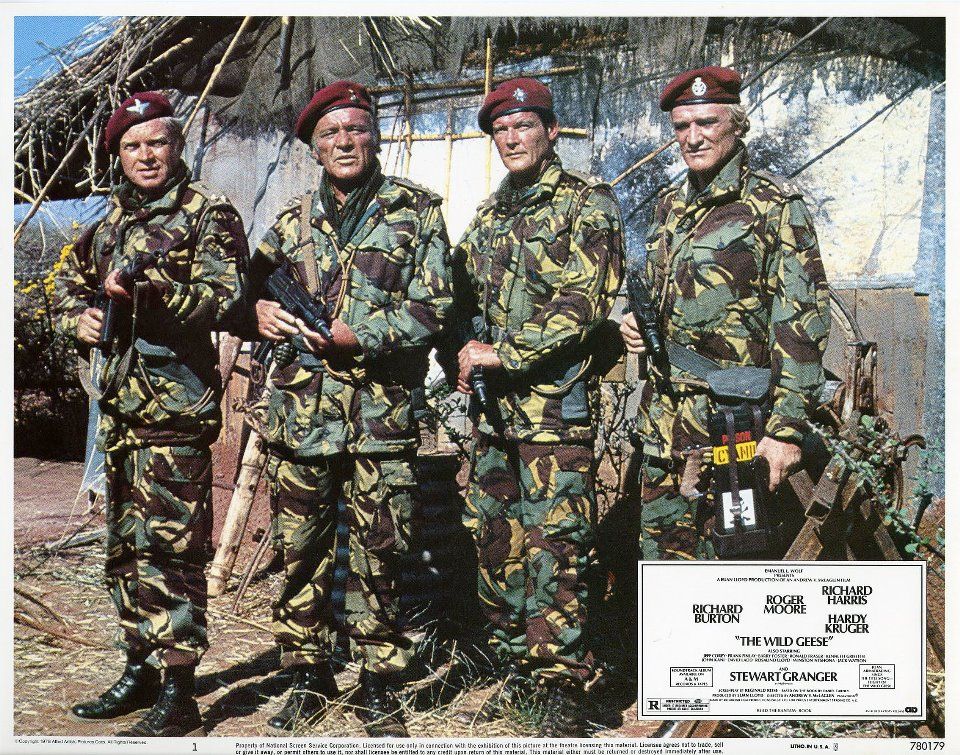
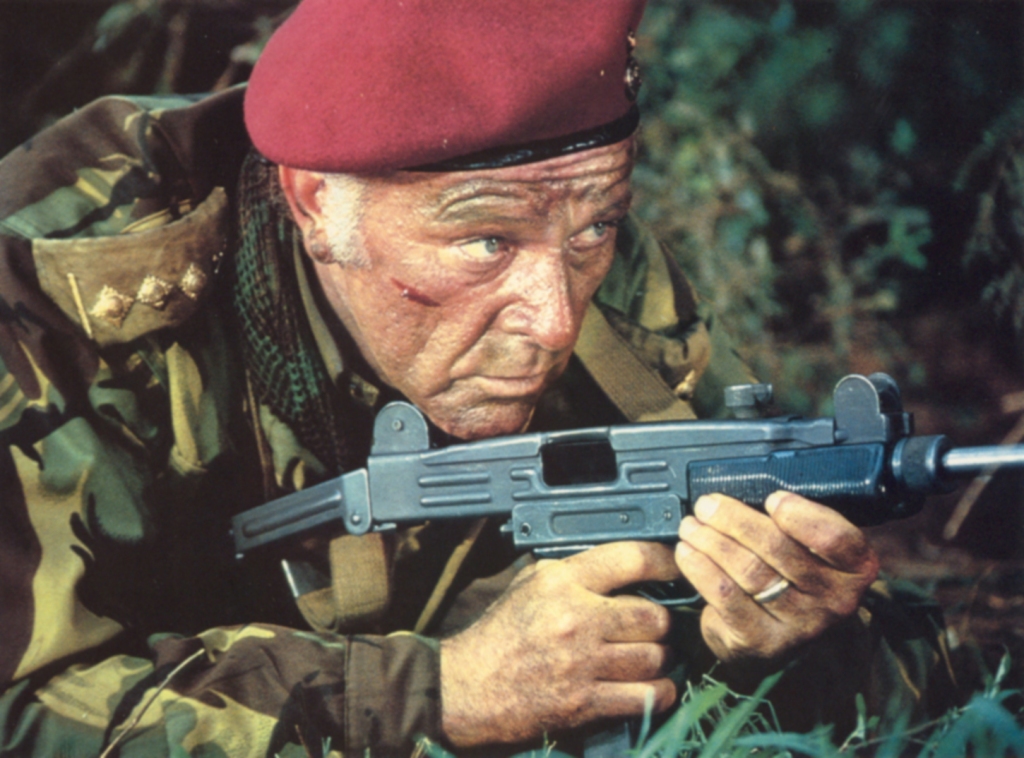
In this special episode of the Fighting On Film war movie podcast we are joined by Paul Woodadge of @WW2TV to discuss the cult-classic ‘The Wild Geese’. A film which follows a group of double-crossed mercenaries trying to escape after their mission is compromised. Directed by Andrew V. McLaglen, it has a stellar cast including Richard Burton, Richard Harris, Hardy Kruger, Roger Moore and Stewart Granger. As well as Jack Watson, Winston Ntshona, Kenneth Griffith and John Kani.
By 1895 Winchester had been considering a slide-action rifle for some time, in 1882 William Mason had begun work on one (US Patent #278987) to counter Colt’s slide-action Lightning only to drop it. Finally in 1890, Winchester introduced a slide-action .22 calibre rifle developed by John Browning. The Model 1890 became extremely popular.
Between 1887 and 1895 Browning patented four slide-action rifle designs. The first of these, US patent #367336, was granted in July 1887, this was followed in 1888 by US patent #385238. In September 1890, the Browning brothers were granted US patent #436965, which along with the previous 1888 patent protected what became the Model 1890. Three years later Winchester introduced the Model 1893 pump action shotgun, that would eventually evolve into the famous Winchester Model 1897.
Right-side close up of the rifle with its action open (Matthew Moss)
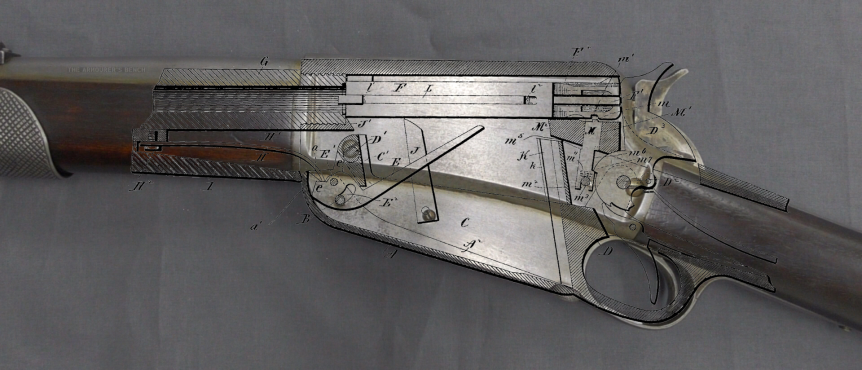
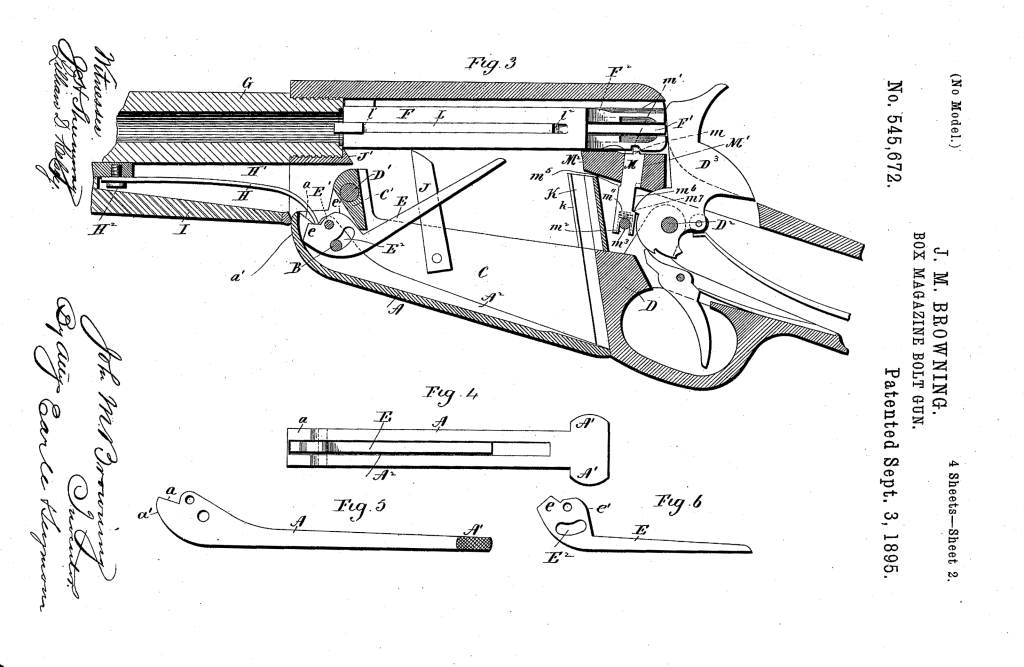
Finally, April 1895, Browning filed a patent for a design for a .30 calibre rifle which was granted in September 1895 (US patent #545672) This patent covers the rifle we’re examining here. The rifle itself is a slide or pump action in long barrelled configuration which Winchester described as a ‘Musket’.
The September 1895 slide-action design was purchased by Winchester but like so many other Browning designs, it never entered production and Winchester purchased the design purely to secure it and prevent other rival manufacturers picking it up. Winchester instead went with a lever-action design, patented in November 1895 (US #549345), which became the famous Winchester Model 1895.
A left-side view of the rifle’s receiver with Browning’s patent overlaid (Matthew Moss)
The September 1895 slide or pump-action rifle design had a laterally camming locking breechblock. As we can see, externally Browning’s toolroom prototype looks somewhat similar to the contemporary Winchester Model 1895, with a single-stack integrated box magazine but with a pump sleeve rather than a lever.
An action-bar connects the slide/pump to the front of the breechblock/bolt carrieron the right-hand side of the rifle. The slide handle itself is made of a U-shaped piece of metal which wraps around the rifle’s forend. The slide has been roughly cross hatched to improve grip. There is a channel cut into the furniture for the action arm’s attachment point to travel. The slide is attached to the arm by a pair of screws.
A close up of the rifle’s slide/pump handle (Matthew Moss)
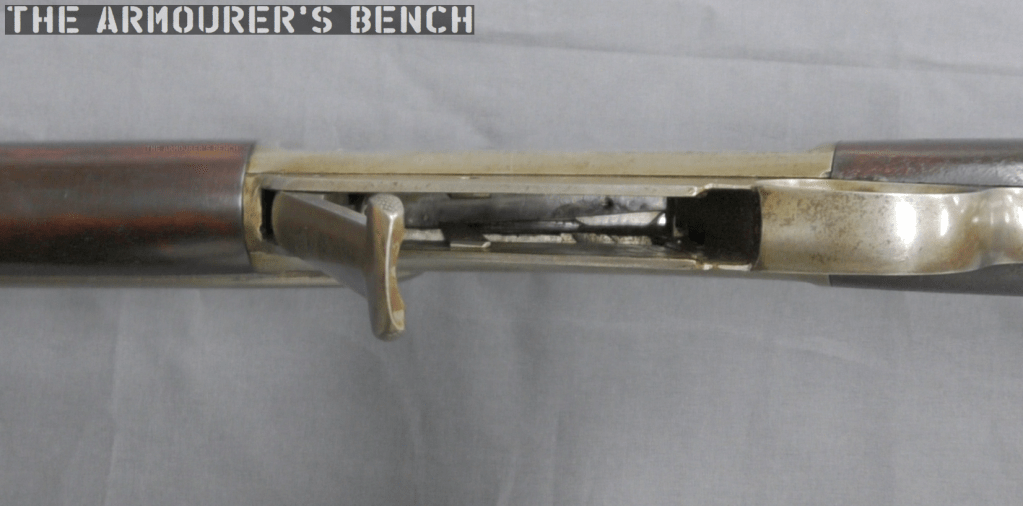
However, Browning developed this prototype to allow loading of the magazine from below rather than through the top of the receiver. He added a hinged floor plate, with a spring loaded follower, that allowed loose rounds to be dropped into the magazine and then closed.
As we open the magazine, hinging the cover plate down, we see the carrier flip down against the plate to allow loading. The rifle was designed to be loaded from below with the bolt forward.
Browning’s September 1895 patent (US Patent Office)
In the patent description Browning explained that his aim was to improve breech-loading box-magazine firearms by designing:
“…a simple, compact, strong, highly effective, and safe gun, containing comparatively few parts and constructed with particular reference to provision for charging the box-magazine with cartridges from the bottom of the frame of the arm while the breech-bolt is in its closed position, so that the arm may be charged without operating its action mechanism or disturbing the cartridge in the gun-barrel, if one is there.”
Browning’s September 1895 patent (US Patent Office)
From the original patent drawings we can see the flat spring which acted on the carrier running below the barrel, ahead of the magazine. Inside the magazine are a pair of what Browning refers to as ‘spring fingers’ these act on the cartridges inside the magazine and keep them properly aligned, seen here in Fig.7 of the patent. In Fig.8 we can see what Browning calls a ‘box-like guideway’ which guide the rims of the cartridges, “preventing the cartridges from being displaced while being fed upwards.”
The rifle’s breechblock locked into a recess in the left side of the receiver, tilting at an angle with the rear of the breechblock canting to the left. When the pump handle was pulled rearwards the breechblock cammed laterally to unlock the action, extracted and ejected any spent casing and when the slide/pump was returned forward a new cartridge was picked up from the magazine, chambered the breechblock locked again ready to fire. The rifle’s hammer was cocked by the rearward movement of the breechblock.
A left-side view of the rifle with its action open, note the complex machining on the rear of the breech bolt (Matthew Moss)
Externally, the slide-action’s receiver looks similar to that of the production Model 1895 but internally they are very different. The action is certainly less open than the Model 1895’s but the lateral locking mechanism is less robust. Additionally, with no lever, as in the Model 1895, the slide-action rifle lacks the safety mechanism which prevents the action from opening accidentally.
A view inside the open magazine with the floorplate hinged open (Matthew Moss)
The model is in the white and while externally the machining and tool work is very neat, inside the action we can see where the cuts in the receiver wall have been more crudely made. In terms of design, the slide-action prototype was certainly simpler and had fewer working parts than the Model 1895 lever-action.
Winchester purchased the .30 calibre slide-action design but never produced it, it is believed that only Browning’s prototype was built to prove the concept. The prototype was part of Winchester’s collection and may now be found at the Cody Firearms Museum.
In this episode of the Fighting On Film war movie podcast we discuss the Oscar-winning 1949 classic ‘Battleground’. It follows a platoon of the 101st Airborne besieged within Bastogne. Directed by William A. Wellman and staring Van Johnson, Ricardo Montalban, James Whitmore and George Murphy. It cleverly captures the cold confines of the Ardennes and the hardships the men at Bastogne faced.
Following on from our earlier look at the PIAT scenes from A Bridge Too Far and Theirs Is The Glory in this video we’ll take a look at ‘The Unbroken Line’, a short British Army film, made in 1985. It tells the story of the British Army’s 300 year history with depictions of the battles of Blenheim, Waterloo and Operation Overlord – as well as a depiction of what fighting against a Soviet invasion in 1985 might have looked like.
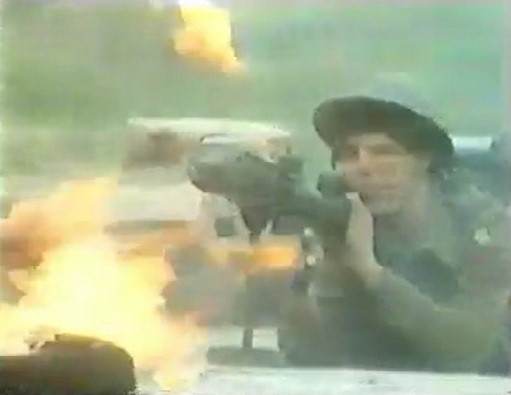
The PIAT No.1 takes aim (Still from The Unbroken Line)
In this short video we’ll look at one of the interesting scenes that features a PIAT in action! The PIAT goes up against a Jagdpanzer 38 tank destroyer. Set in Normandy after the D-Day Landings we see a section from the Dorset Regiment. When the German Jagdpanzer crashes through the wall the section commander shouts ‘PIAT’, calling on the PIAT team to move up and engage the tank destroyer. The PIAT No.1 take up position and manages to knock out the Jagdpanzer but sadly he’s then the victim of a German grenade. The Dorsets then storm the ruins and capture the defenders and the tank destroyer crew.
For more about ‘The Unbroken Line’ check out RM Military History’s special video where myself and Robbie chat with David Carson, the historical advisor on the film!
In this episode of the Fighting On Film war movie podcast we discuss that questionable classic from 1965 – ‘The Battle of the Bulge’. We unpack why this epic 3-hour war movie fails to do the story of the actual battle justice despite a decent cast that includes Henry Fonda, Robert Shaw, Telly Savalas, Charles Bronson & Robert Ryan.
In this video and article we’ll examine a somewhat mysterious screw breech percussion rifle – if you, like me ever wondered what a Ferguson with a percussion lock might look like then you’ll find this one fascinating. If you haven’t seen our earlier video on Patrick Ferguson’s 18th century breechloading rifle, check that out!
Right profile of the rifle (Matthew Moss)
This rifle likely dates to the mid-1860s and from some research is believed to be based on a design patented by Lewis Wells Broadwell, an American inventor. Broadwell was granted his first patent in 1861, protecting a sliding breech design for artillery. During the 1860s & 70s Broadwell was employed as the European Sales Agent for the Gatling Gun Company. He held a number of firearms and ordnance related patents, granted between 1861 and 1876. With several relating to artillery carriages, ammunition and magazine systems. His screw breech (US #33876) and a gas check (US #167981) designs for artillery were used by Krupp in some of their guns including the popular 68mm breechloading Mountain Gun.
The rifle with its trigger guard rotated forward and its breech open (Matthew Moss)
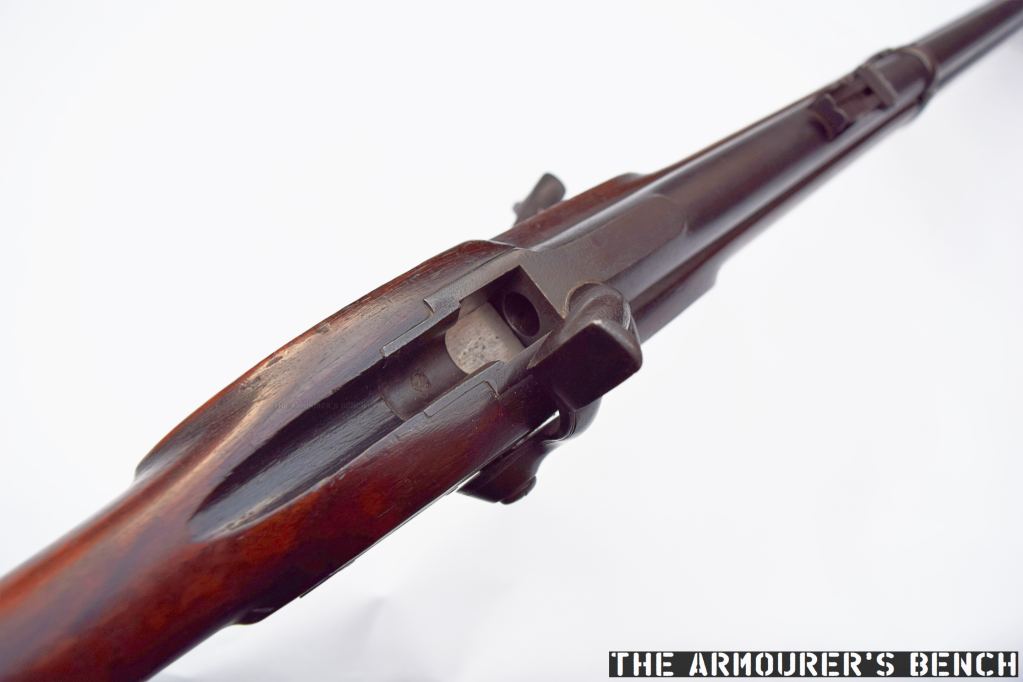
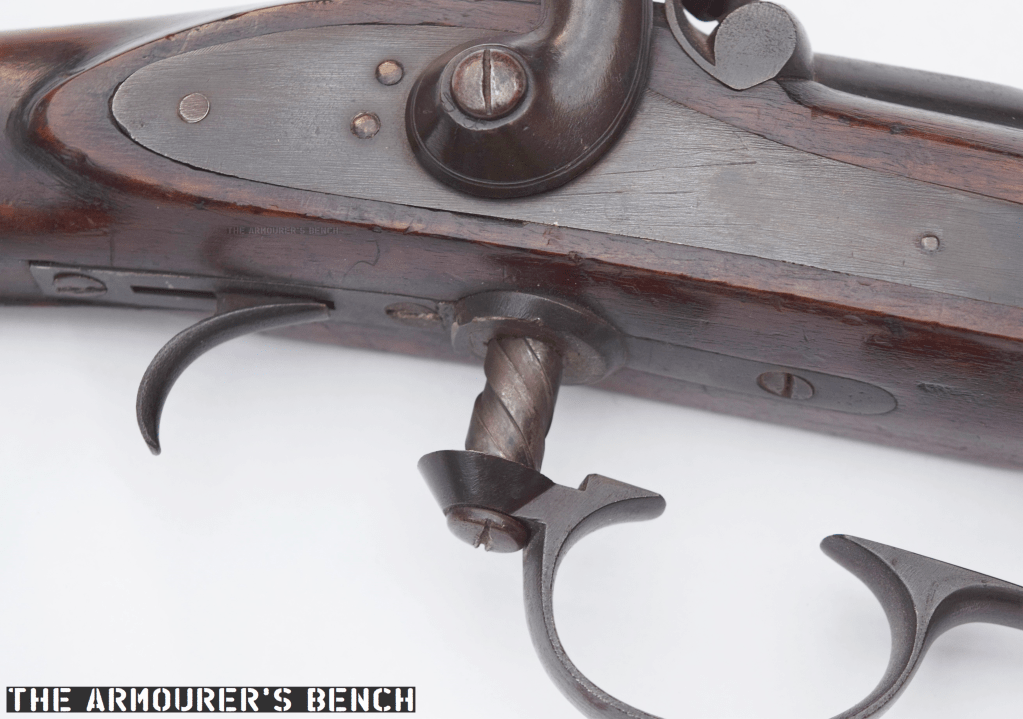
Like the earlier Ferguson rifle, which drew heavily on earlier screw breech designs, this rifle has a rotating trigger guard which acts as a lever to unscrew the breech. Rotating the trigger guard drops a rectangular breechblock and opens the action. Unlike the Ferguson the threaded piece does not act as the breech plug itself, instead the separate breech block takes the brunt of the cartridge ignition.
The rifle with its breech open (Matthew Moss)
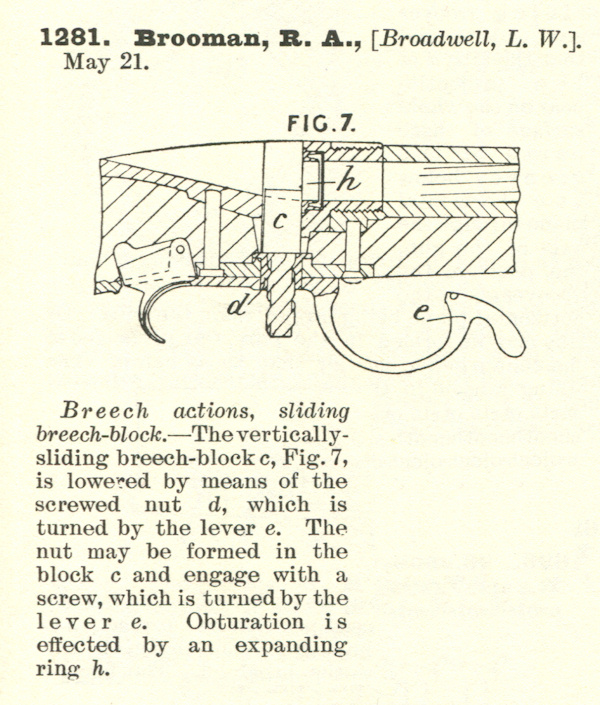
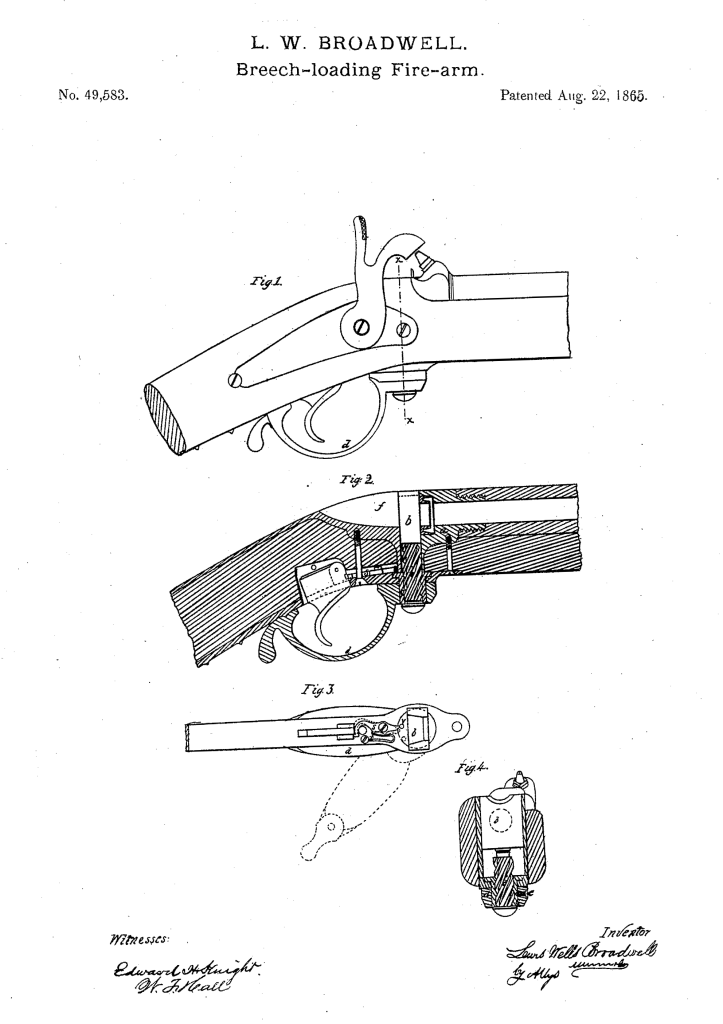
Broadwell filed the patent believed to correspond to this rifle first in Britain, in May 1863, and subsequently in the US in August 1865 (US #49583). The patent protected the breech action and depicts what Broadwell described as a ‘screwed nut’ below a rectangular vertically sliding breech block. This idea of a sliding breech-block builds on his earlier patent for a sliding cannon breech.
Broadwell’s UK patent, dated 1863 (UK Patent courtesy of Research Press)
In Britain, Broadwell used Richard Brooman, of Robertson, Brooman and Company, as a patent agent. At the time Brooman’s company offered a service by which he acted as the inventor’s deputy and was listed as the patent holder, while the inventor was listed as the ‘communicator’. The service cost the not insignificant sum of £45 (at the time a labourer could earn just 3 shillings 9 pence per week – or 15% of £1 – that’s just under a year’s average wages). This initial sum covered the patent for three years. It is likely Broadwell employed an agent because at the time he was living in St Petersburg in Russia, undertaking negotiations with the Russian Government to establish Gatling Gun production. Brooman was also the editor of The Mechanics’ Magazine, a Victorian science and industry journal.
Broadwell’s slightly different 1865 US patent which is also similar to the rifle we are examining (US Patent Office)
The breech plug has a screw thread with a very wide pitch with flat crests. Broadwell’s US patent describes the breech plug as having a ‘three to six threaded screw’. The breech blog falls enough to allow loading after turning the lever around 200-degrees – ensuring a rapid action. Interestingly the British patent shows the lever not attached to the base of the screw plug but instead shows it at the mid-point of the screw. This may be an error in the drawing. It seems that if the rifle we are examining is a Broadwell prototype it was decided to simplify the action by attaching the lever at the base of the plug.
A close up of the rifle’s trigger guard and screw (Matthew Moss)
This rifle itself, has no markings whatsoever, not even range markings on the rear sight. Typically rifles of this period would at least have a marker’s or patent holder’s mark on the barrel or lock plate. This suggests that the rifle is either unfinished or more likely a prototype which did not require extensive markings.
The rifle’s unmarked rear sight (Matthew Moss)
The breechblock is not blued and is possibly case hardened. Much like the Ferguson, and other earlier screw-breech rifles the trigger guard also acts as the breech lever. Which with a rotation of approximately 200 degrees, descends enough to open the breech and allow access to the chamber. The threaded screw is around 0.5 in (1.2cm) thick and acts on a rectangular breechblock which sits above it. This basic layout matches Broadwell’s 1863 UK patent.
The rifle with its breech partially closes, there is no method of extraction indicating it used a combustible cartridge (Matthew Moss)
The rectangular shape of the breechblock ensures a strong action as it butts up against a pair of narrow shoulders (about 1mm in width) at the rear of the receiver. The rifle has a two band stock and a cleaning/ramrod which indicates a military-style rifle but interestingly, there is no obvious provision for fixing a bayonet.
The rifle is believed to be chambered in a cartridge using a .451 Westley Richards projectile. There is no method for extraction so we can safely assume the rifle used a combustible cartridge, ignited by a percussion cap rather than a self-contained metallic cartridge. Interestingly, the UK patent also suggests the use of a “tubular magazine… formed in the hammer, containing self-acting feeding apparatus for supplying ignition wafers or patches to the nipple.” This is not mentioned in the later US patent and the rifle we’re examining has a conventional capped percussion lock.
A close up of the Note rectangular breech with the action closed (Matthew Moss)
The US patent describes a ‘mechanism to prevent the gun from being fired when the breech is open’, this is formed by a lever which disengages with the trigger when the breech lever is rotated. There is a small leather flange in the base of the stock where the screw ascends and descends, this prevents the ingress of dirt and also acts to keep the screw clean.
Left profile of the rifle (Matthew Moss)
Compared to Patrick Ferguson’s action Broadwell’s design simplifies the breech plug using a simpler to manufacture rectangular breechblock and a thinner screw plug. The use of a self-contained cartridge would have sped up loading but the need to cap the rifle’s nipple was still a limiting factor. The screw breech concept became increasingly obsolete with the introduction of self-contained metallic cartridges with integral primers as well as the introduction of faster actions including bolt actions, falling block actions and toggle-locked lever actions.
Lewis Broadwell was born in Cincinnati, Ohio, on 18th July 1820. He is perhaps best known for his drum magazine design for the Gatling Gun. The Broadwell Drum consisted of a series of single stack, gravity assisted magazine columns arrayed around a central pivot point. These columns held between 15 and 20 rounds depending on calibre and typically there were 16 columns of ammunition. Broadwell patented the drum’s design in December 1870. It was used extensively during the 1870s by a number of militaries around the world, including by the British Army. Broadwell was granted his last patent in 1876 and died, aged 86, in May 1906.
Special thanks to the Hayes collection for letting us take a look at this very interesting rifle. Thanks to David over at the Research Press for help finding the patent and to John Walter for his help finding information on Broadwell himself.