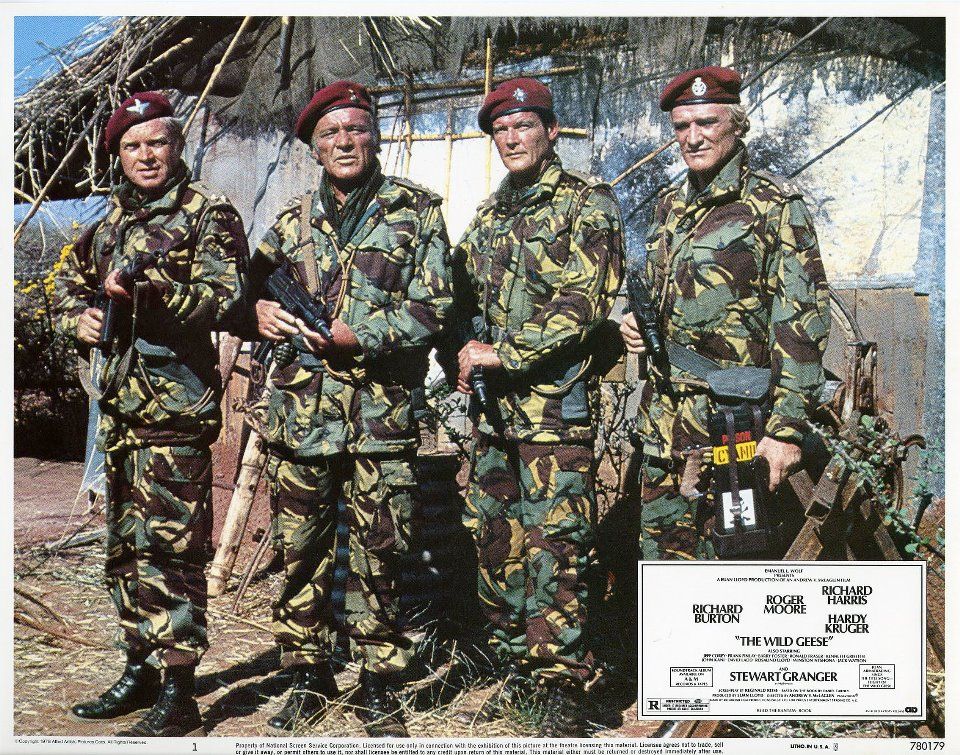
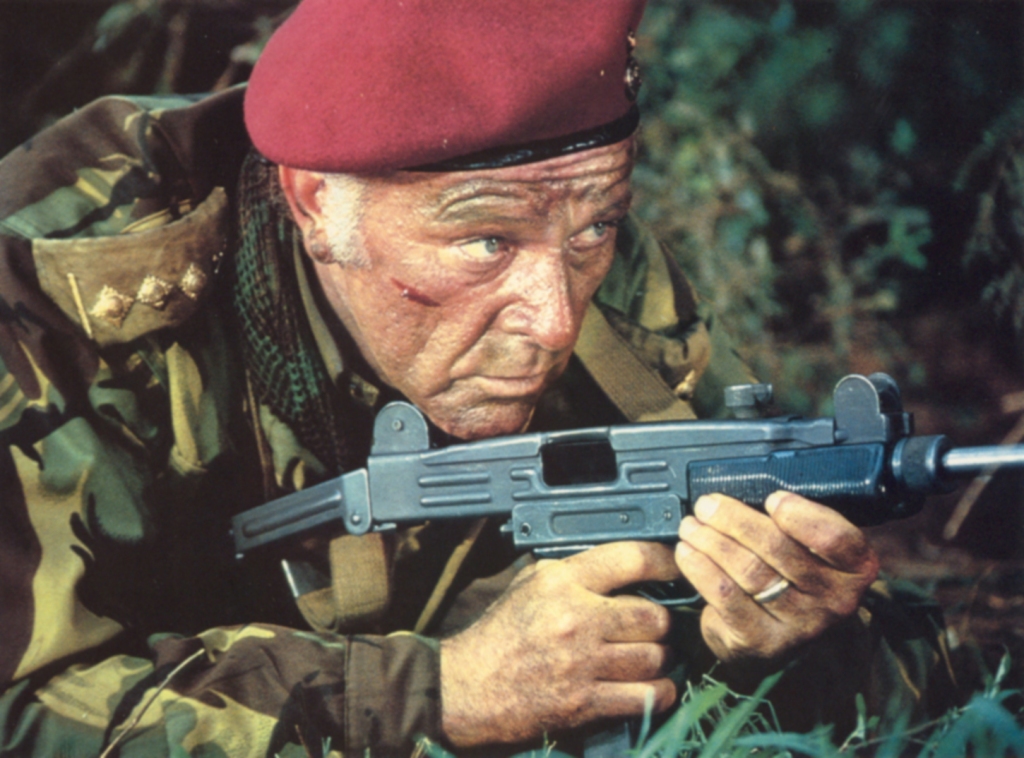
In this special episode of the Fighting On Film war movie podcast we are joined by Paul Woodadge of @WW2TV to discuss the cult-classic ‘The Wild Geese’. A film which follows a group of double-crossed mercenaries trying to escape after their mission is compromised. Directed by Andrew V. McLaglen, it has a stellar cast including Richard Burton, Richard Harris, Hardy Kruger, Roger Moore and Stewart Granger. As well as Jack Watson, Winston Ntshona, Kenneth Griffith and John Kani.
In this episode of the Fighting On Film war movie podcast we discuss the Oscar-winning 1949 classic ‘Battleground’. It follows a platoon of the 101st Airborne besieged within Bastogne. Directed by William A. Wellman and staring Van Johnson, Ricardo Montalban, James Whitmore and George Murphy. It cleverly captures the cold confines of the Ardennes and the hardships the men at Bastogne faced.
In this episode of the Fighting On Film war movie podcast we discuss that questionable classic from 1965 – ‘The Battle of the Bulge’. We unpack why this epic 3-hour war movie fails to do the story of the actual battle justice despite a decent cast that includes Henry Fonda, Robert Shaw, Telly Savalas, Charles Bronson & Robert Ryan.
While the ongoing Coronavirus pandemic has prevented some archival research I had planned which would have informed much of the STEN series, our good friend Richard at the Vickers Machine Gun Collection and Research Association, has come to our aid and we’re able to cover some of the loading accessories developed for the Sten’s magazines.
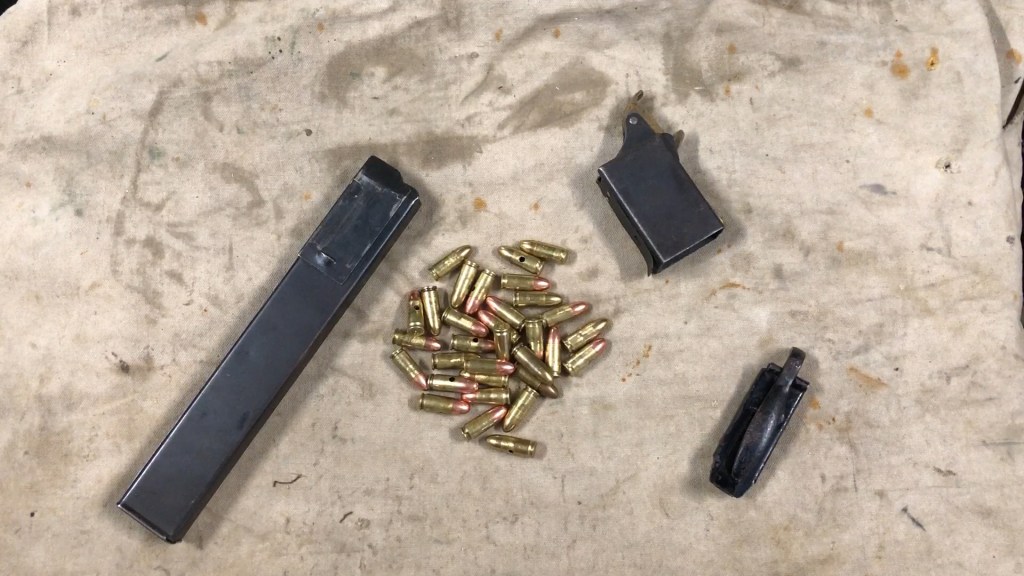
As we know the Sten uses a 32-round double stack, single feed magazine which can trace its origins back through the Lanchester Machine Carbine to the Haenel MP28,II’s magazine designed by Hugo Schmeisser [patented in 1931].
Sten Magazine, inert 9x19mm rounds and MkII and MkIV magazine fillers
The nature of the single feed makes the magazine difficult to load by hand with the last few rounds very hard to insert. So a series of four marks of ‘magazine fillers’ were developed. These are described in the British Army’s official List of Changes in February 1943.
The MkI is described as consisting of “a lever mounted on a short case which conforms to the shape of the magazine. It is hand operated, the loading lever being given a rocking motion during filling. The MKI slipped over the top of a magazine with a rivetted spring tab which indexed into a notch in the front of the Sten mag.
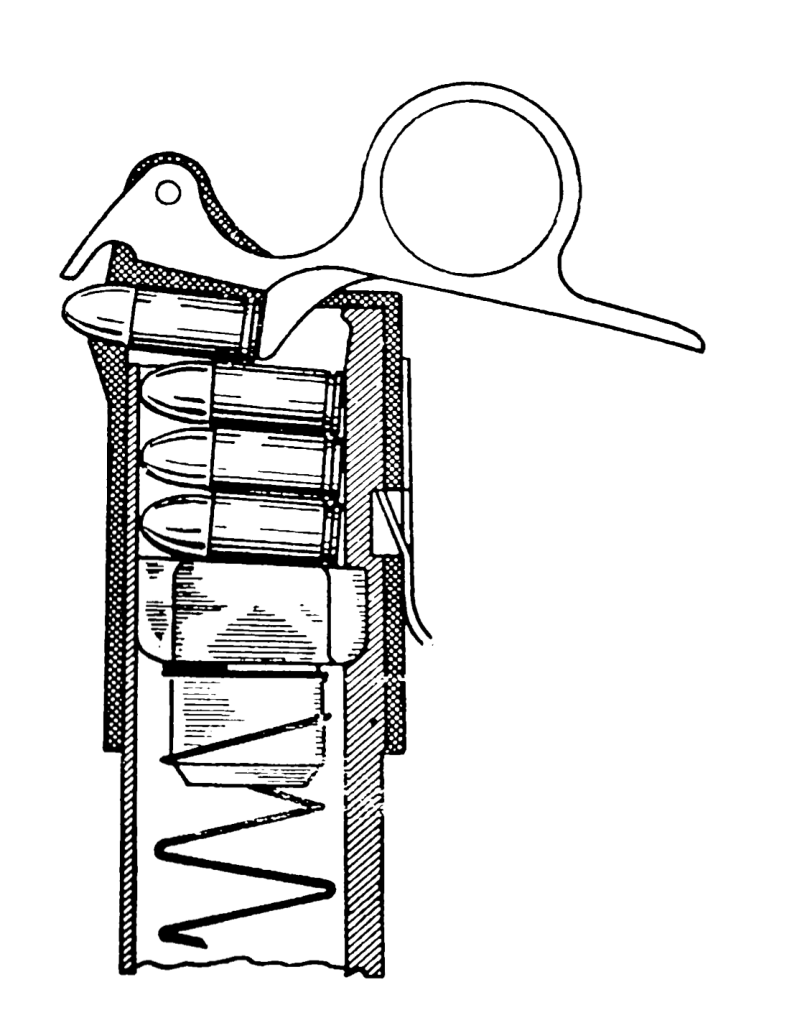
A cutaway showing the MkII filler
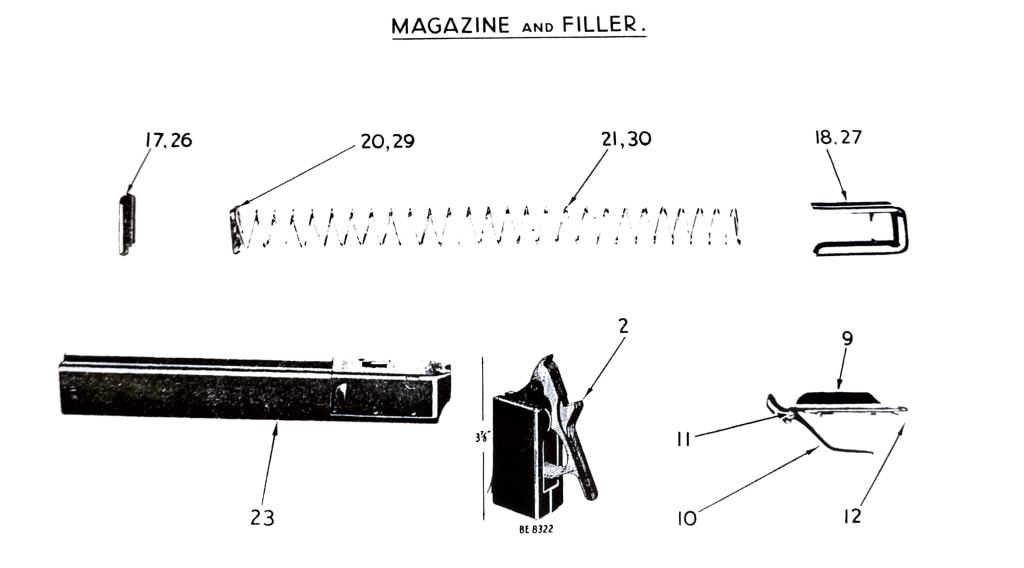
The MkII is very similar but simplified by having the spring catch mounted on the rear instead of the side and engaged a “small rectangular slot on the magazine”. The rear of the spring is turned up slightly to allow the user to remove its from the magazine.
The MkIII, which is possibly the rarest of the fillers, is described as:
“hand operated but of different design from the MkI and MkII. It consists essentially of a spring loaded vertical plunger which is attached externally to a case, the latter to assemble on the magazine. There is no retaining catch. It comprises the following parts:
Case. Is a rectangular shaped steel pressing with a tube of rectangular section welded thereto. The latter, which houses the plunger and spring, has a hole trilled at the lower end to accommodate a pin which restricts the amount of movement of the plunger and acts as a stop for the compressing spring.
Plunger, loading. Is made of two laminated steel strips welded together the top part of which is set to form a handle. The body of the plunger is slotted to accommodate the compression spring. The top part is splayed to form a suitable contact with the cartridge.”
List of Changes, Feb. 1943
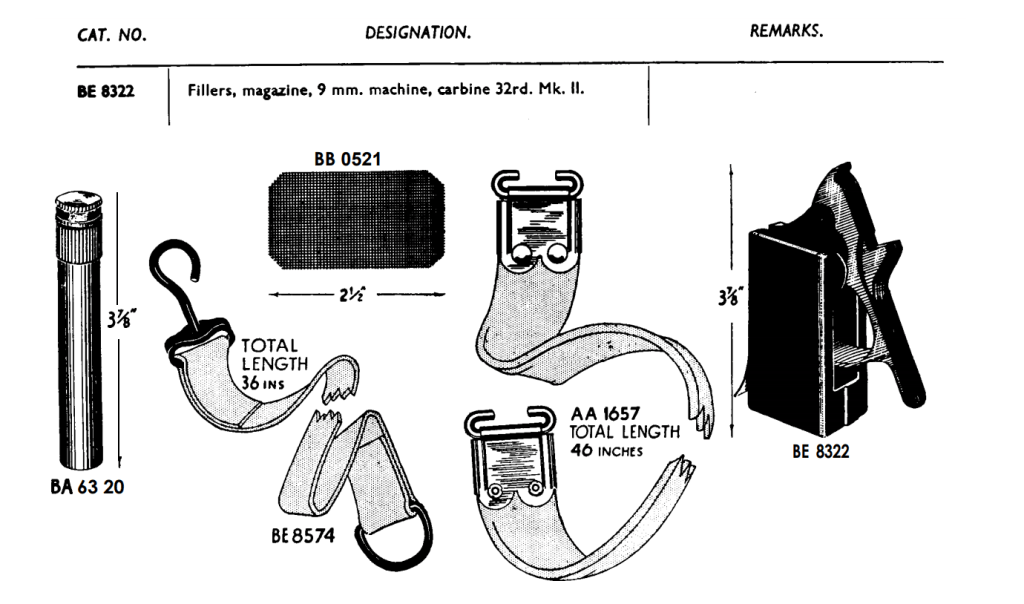
Sten accessories including a sling and a MkII magazine filler
The other more common filler is the MkIV. Which is a much simpler design with a loading lever mounted on top of a clip which is attached to the rear of the magazine body and retained by a spring similar to that of the MkII.
Rich has very kindly demonstrated the use of the two most common fillers – the MkII and the simpler MkIV. It takes Rich just under 2 minutes to load that magazine, but he was doing his best to show various angles and unlike a British soldier during the war he hasn’t regularly loaded magazines with one of these fillers either. Despite that the clip gives a good idea of how fast you could load a mag once you’re in the groove.
With the MkIV filler Rich was able to load the mag in about 1 minute 15 seconds, the stability of resting the base of the mag on the table helped with the MkIV’s simpler design.
Manual diagram showing both the MkII and MkVI
Also, as a follow on to our previous episode looking at the Sterling Submachine Gun’s magazine Rich has also demonstrated the loading of a Sterling mag to its 34 round capacity. No magazine filler needed with George Patchett’s double-stack, double feed magazine.
Massive thanks to Richard for taking the time to film the clips used in the video. please do go and check out Richard’s channel and www.vickersmg.org.uk.
The Battle of Palmdale is one of those historic events that could easily spawn clickbait titles: US Navy vs US Air Force, Drone vs Manned Fighter, Runaway WW2 fighter vs Rocket-armed Jet Interceptor. None of these would be a lie!
Artists impression of the ‘battle’ (Pageant magazine, 1957)
On 16th August, 1956 a US Navy Grumman F6F-5K Hellcat a target drone went rouge over California and the USAF scrambled a pair of Northrop F-89 Scorpions to shoot it down. The F-89s failed to down the Hellcat but did manage to start a serious wildfire.
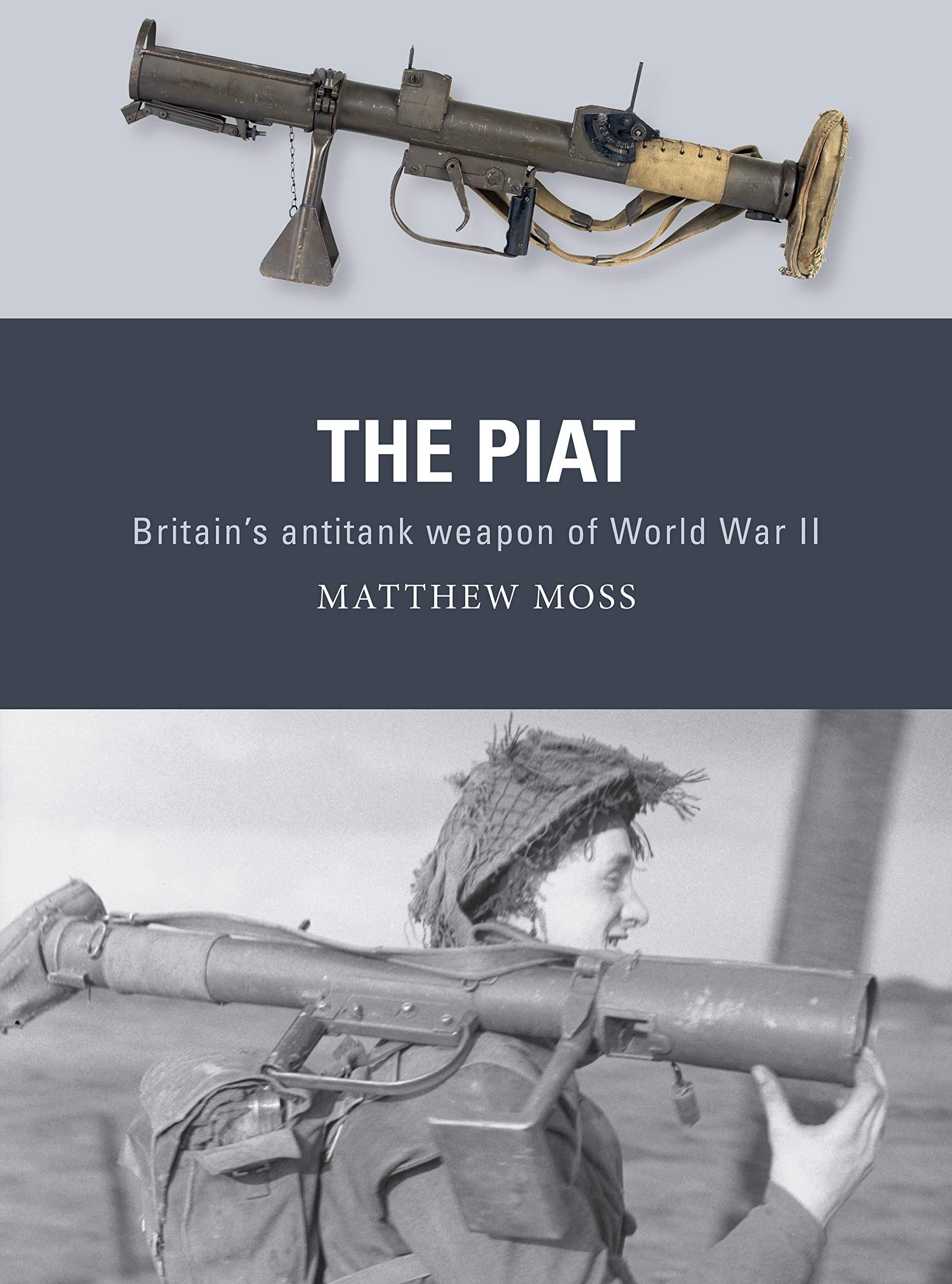
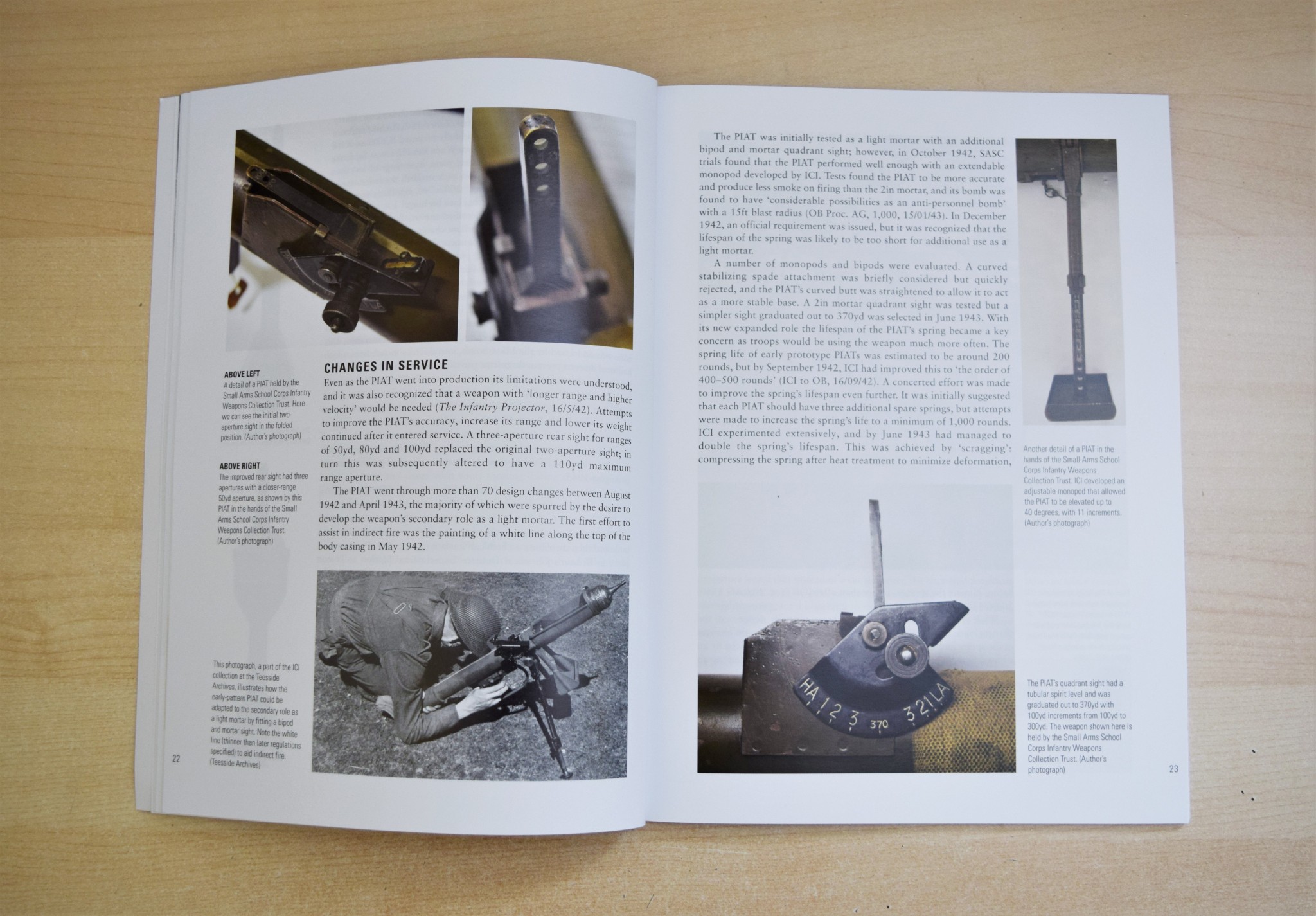
I’m very excited to say that my second book has been published! It looks at the much maligned and much misunderstood PIAT – Projector, Infantry, Anti-Tank.
The book is available from retailers from the 20th August in the UK/Europe and the 22nd September in the US – but you can order a copy from me now regardless of location. I filmed a short video to show you the book and talk a bit about the process of writing it, check that out above.
The PIAT was the British infantry’s primary anti-tank weapon of the second half of the Second World War. Unlike the better known US Bazooka the PIAT wasn’t a rocket launcher – it was a spigot mortar. Throwing a 2.5lb bomb, containing a shaped charge capable of penetrating up to 4 inches of armour. Thrown from the spigot by a propellant charge in the base of the bomb, it used a powerful spring to soak up the weapon’s heavy recoil and power its action.
With a limited range the PIAT’s users had to be incredibly brave. This becomes immediately obvious when we see just how many Victoria Crosses, Military Medals and Distinguished Conduct Medals were awarded to men who used the PIAT in action.
The book includes numerous accounts of how the PIAT was used and how explores just how effective it was. I have spent the past 18 months researching and writing the book and it is great to finally see a copy in person and know it’s now available.
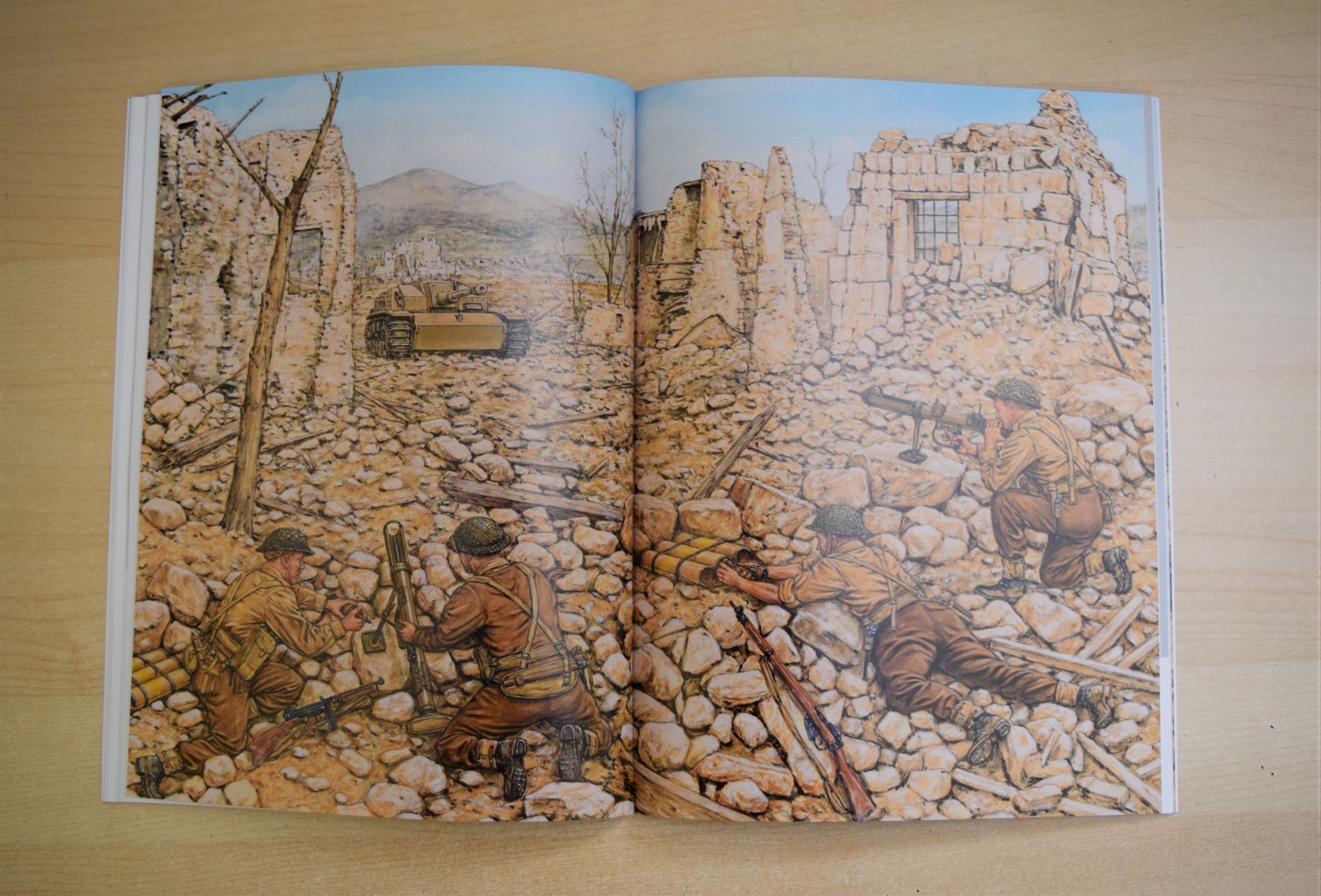
The book includes brand new information dug up from in-depth archival research, never before seen photographs of the PIAT in development and in-service history and it also includes some gorgeous illustrations by Adam Hook and an informative cutaway graphic by Alan Gilliland.
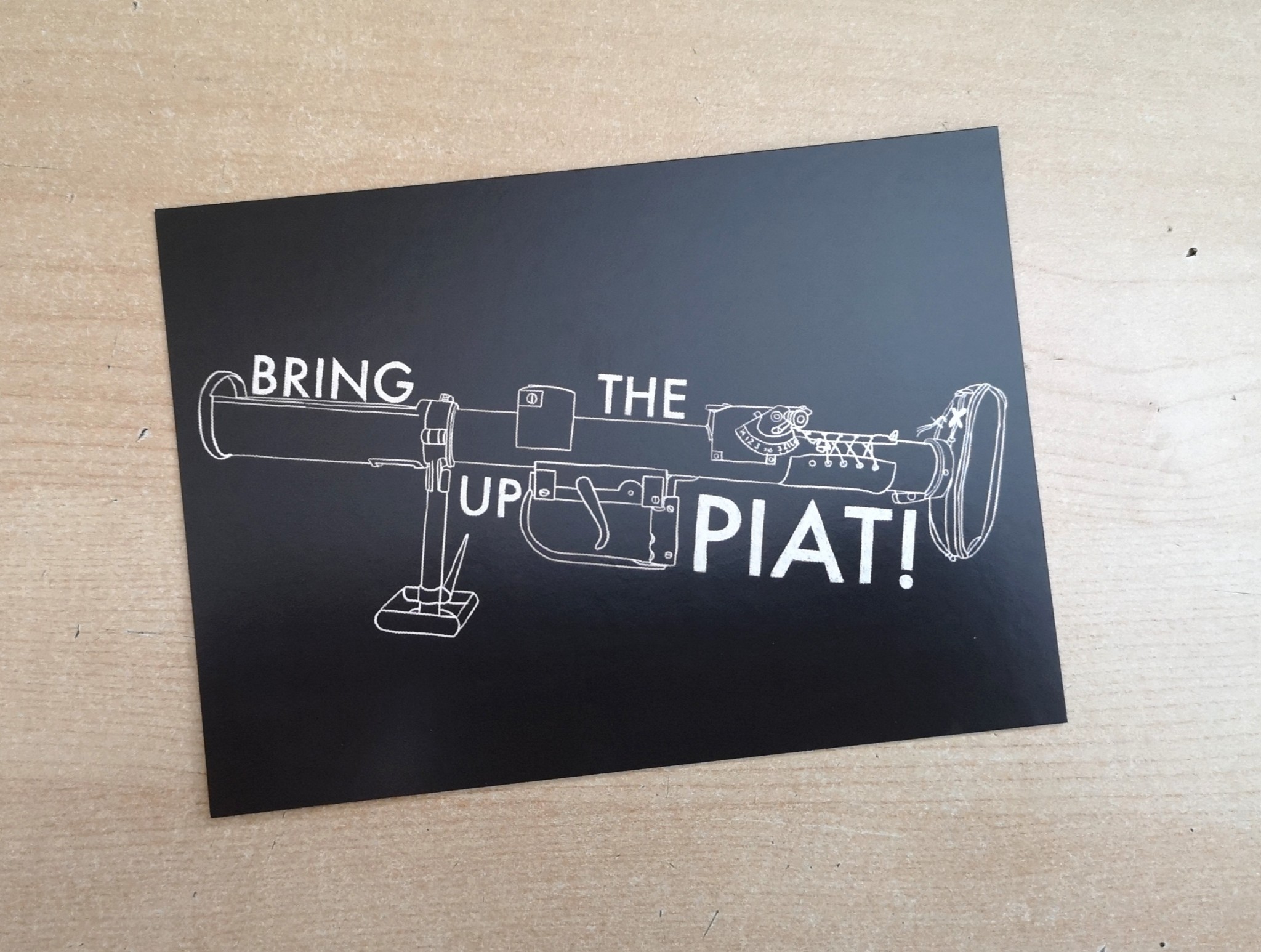
If you order a book directly from me I’ll also include this custom illustrated postcard with a design featuring a PIAT and the famous line from A Bridge Too Far.
It’s immensely exciting to know the book is out in the world for all too enjoy. If you’d like a copy of my new book looking at the PIAT’s design, development and operational history you can order one directly from me here!
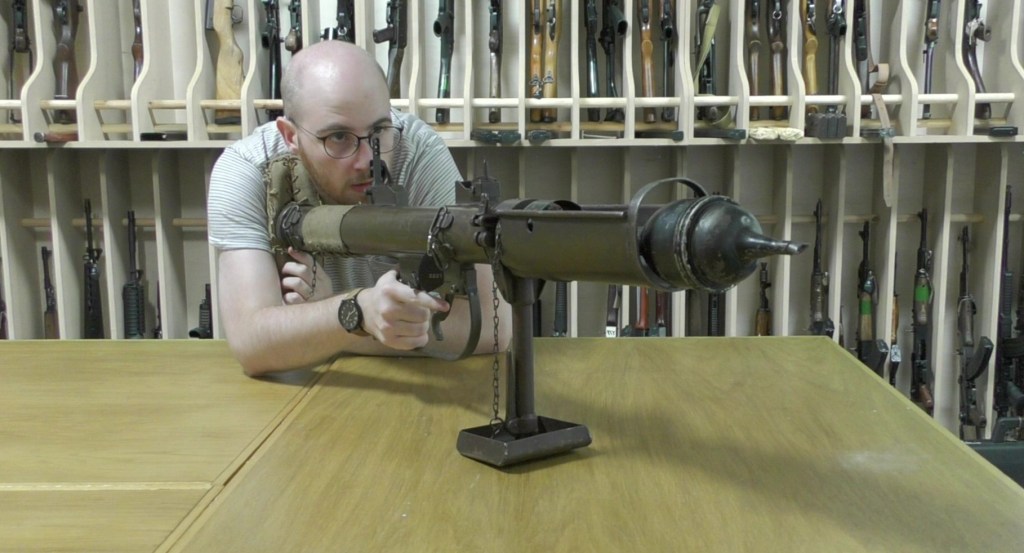
Me, bringing up the PIAT…
Thanks for your support and if you pick up a copy of the book I really hope you enjoy it!
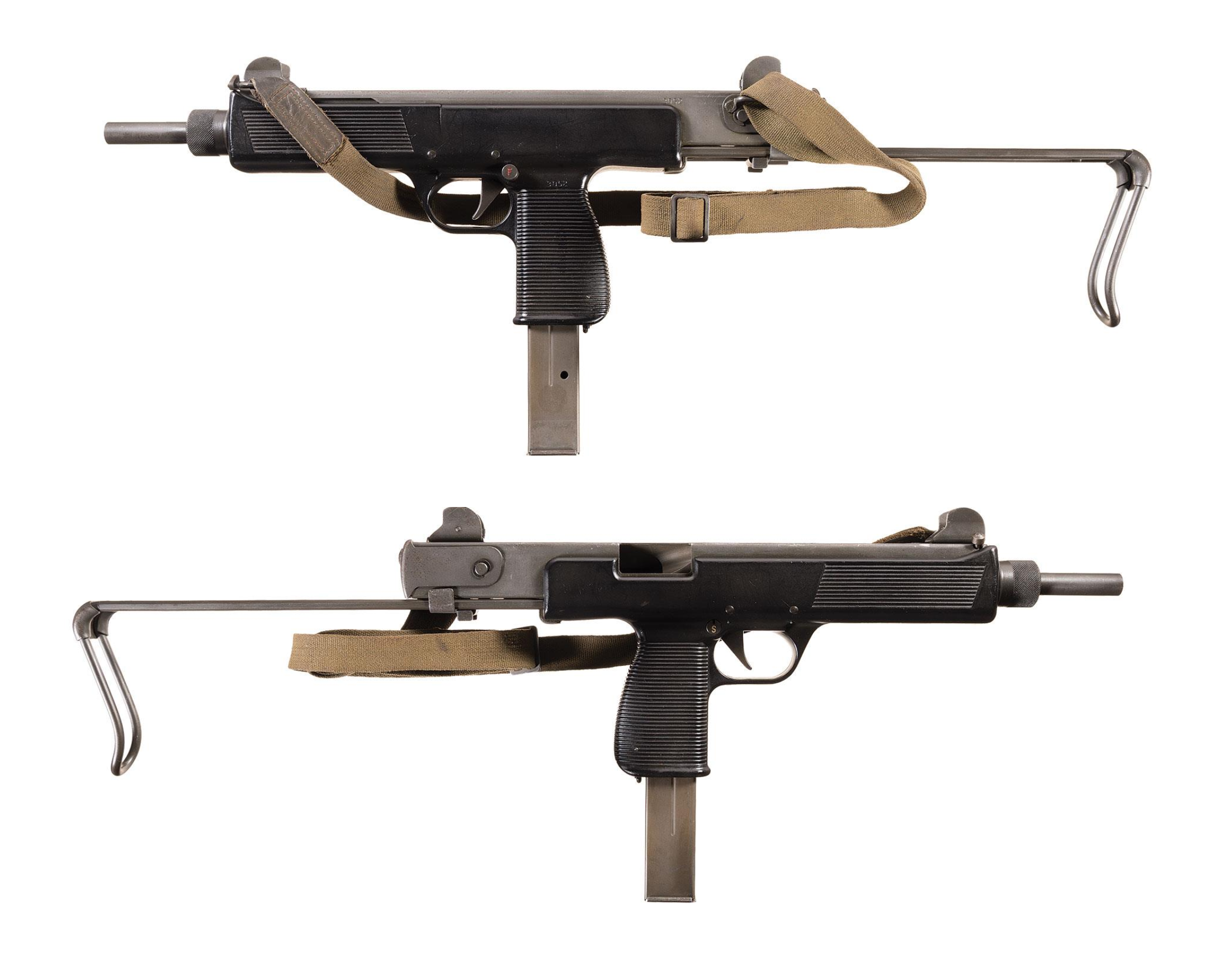
Developed in the late 1960s and introduced in 1969/70 the MPi 69 was Steyr’s entry into an already crowded European submachine gun market. Heavily influenced by the Israeli Uzi it had a bolt which telescoped over the barrel and fed from a box magazine that was inserted through a magazine well-come-pistol grip.
The MPi 69 weighed 6.5lbs (2.93kg) unloaded and had a polymer lower receiver into which a stamped metal upper inserted. Unlike the Uzi it had a collapsing, rather than folding stock, similar to the M3 submachine gun’s, and was cocked not by a handle but by pulling the sling (which was acted on the bolt) to the rear.
Steyr MPi 69 (Rock Island Auction Company)
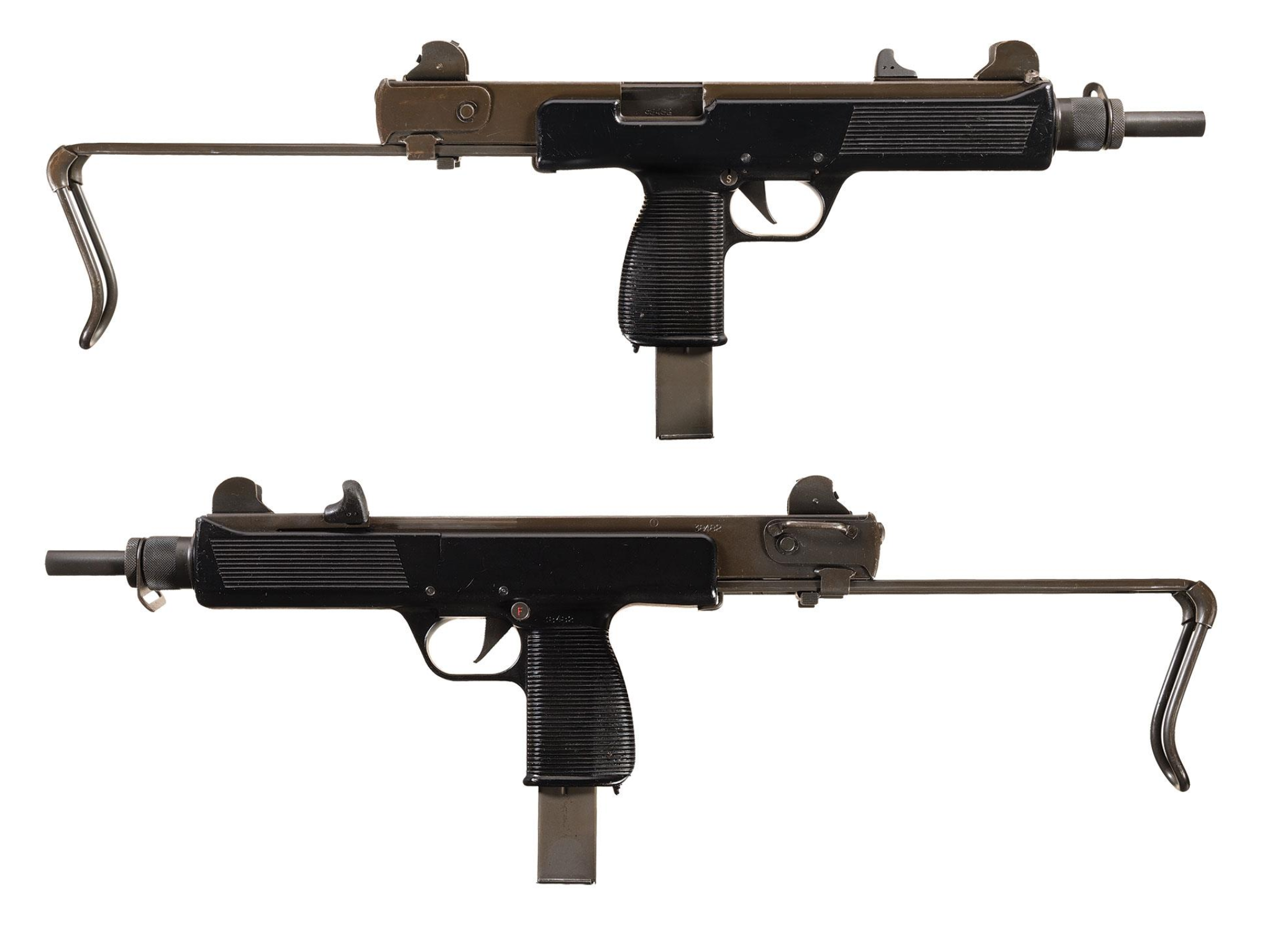
The MPi 69 remained in production into the early 1980s when it was replaced by the improved MPi 81. Moving away from the slick-cocking ‘gimmick’ the MPi 81 had a conventional, non-reciprocating, charging handle on the left side of the receiver. The MPi’s polymer lower allows it to be a pound lighter despite being slightly longer as a result it also balances better than the standard Uzi carbine.
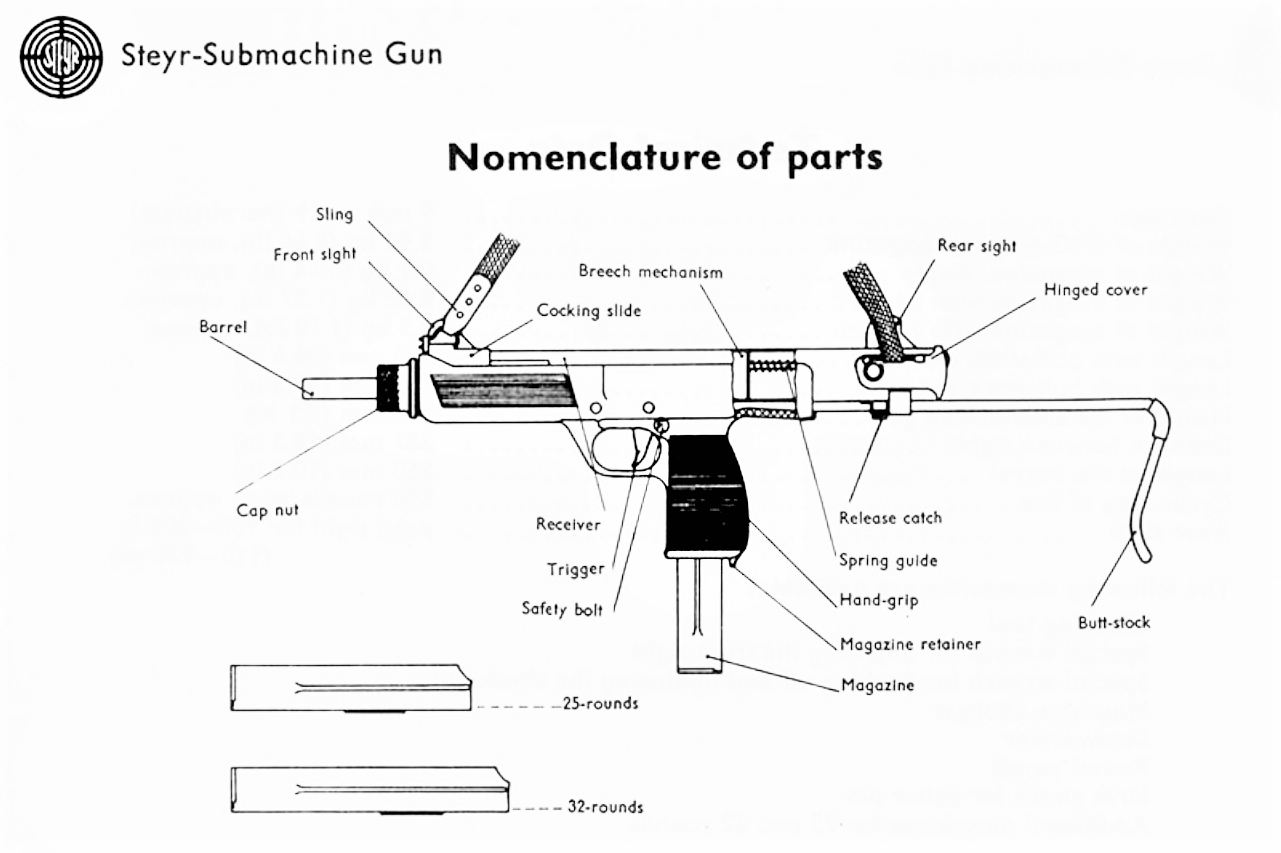
Steyr MPi 69 diagram (Steyr Manual)
The MPi submachine guns fed from 25 or 32 round box magazines and both guns had a heel-type magazine release paddle in the base of the pistol grip. They also shared their magazines with the AUG 9x19mm submachine gun conversion. Check out our earlier video on the Steyr AUG conversion here.
Steyr MPi 81 (Rock Island Auction Company)
The MPi submachine guns fire from an open bolt and had a 10in barrel and has a push through safety with settings for safe, semi and full auto and unlike the Uzi it does not have a grip safety – simplifying manufacture.
The MPi also has a progressive trigger which when set to full-auto will allow the user to fire semi when pulled to the first stage and full when pulled fully to the rear. While the MPi 69 had a cyclic rate of around 500 per minute, the MPi 81 increased this rate to ~750rpm.
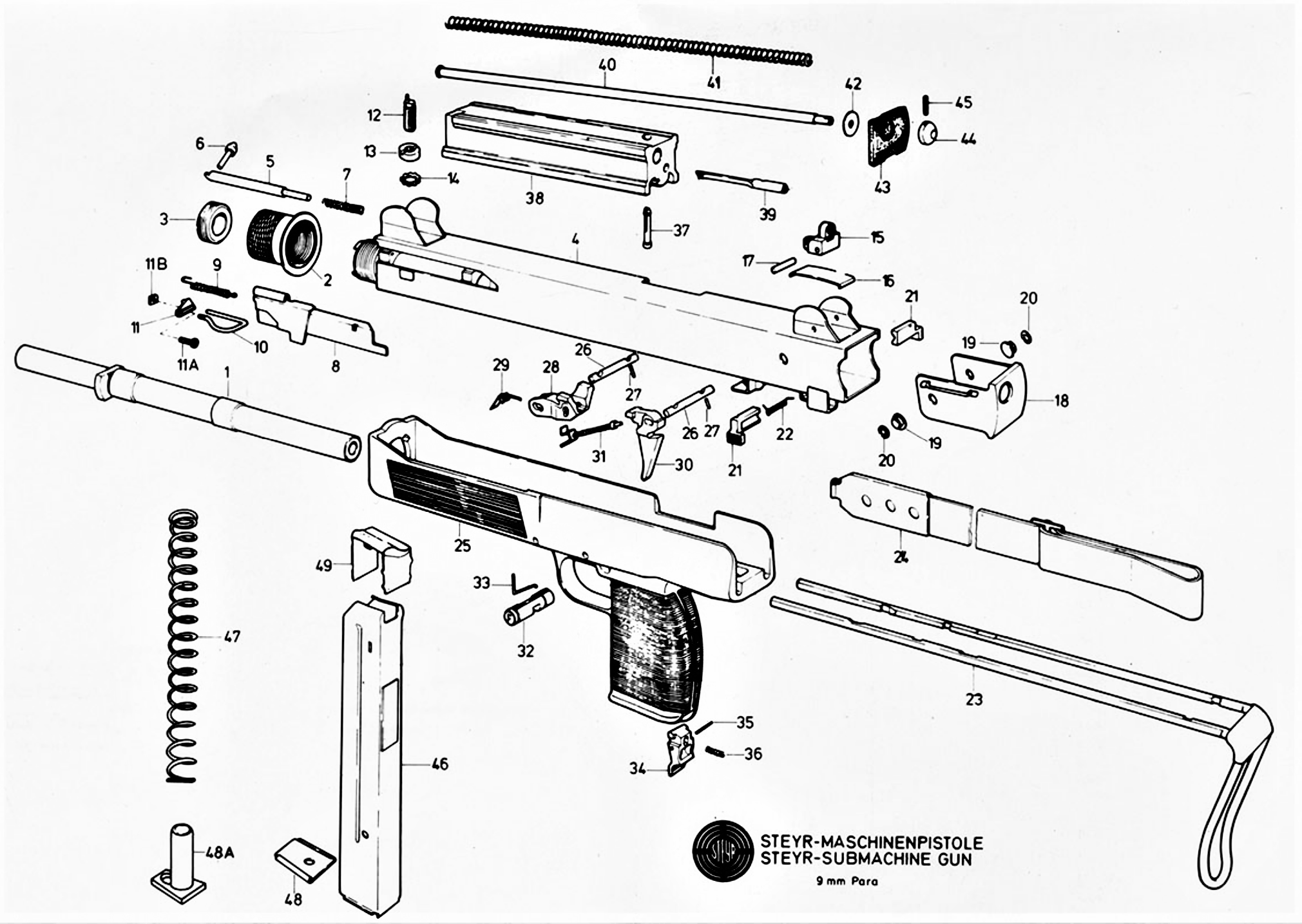
Steyr MPi 69 disassembly diagram (Steyr Manual)
The MPi can be field stripped by simply rotating the receiver end cap up 90-degrees and pulling the bolt out the rear. The gun can be further stripped but the moulded polymer lower receiver can be difficult to remove from the upper. Like the Uzi the barrel nut is unscrewed to remove the barrel.
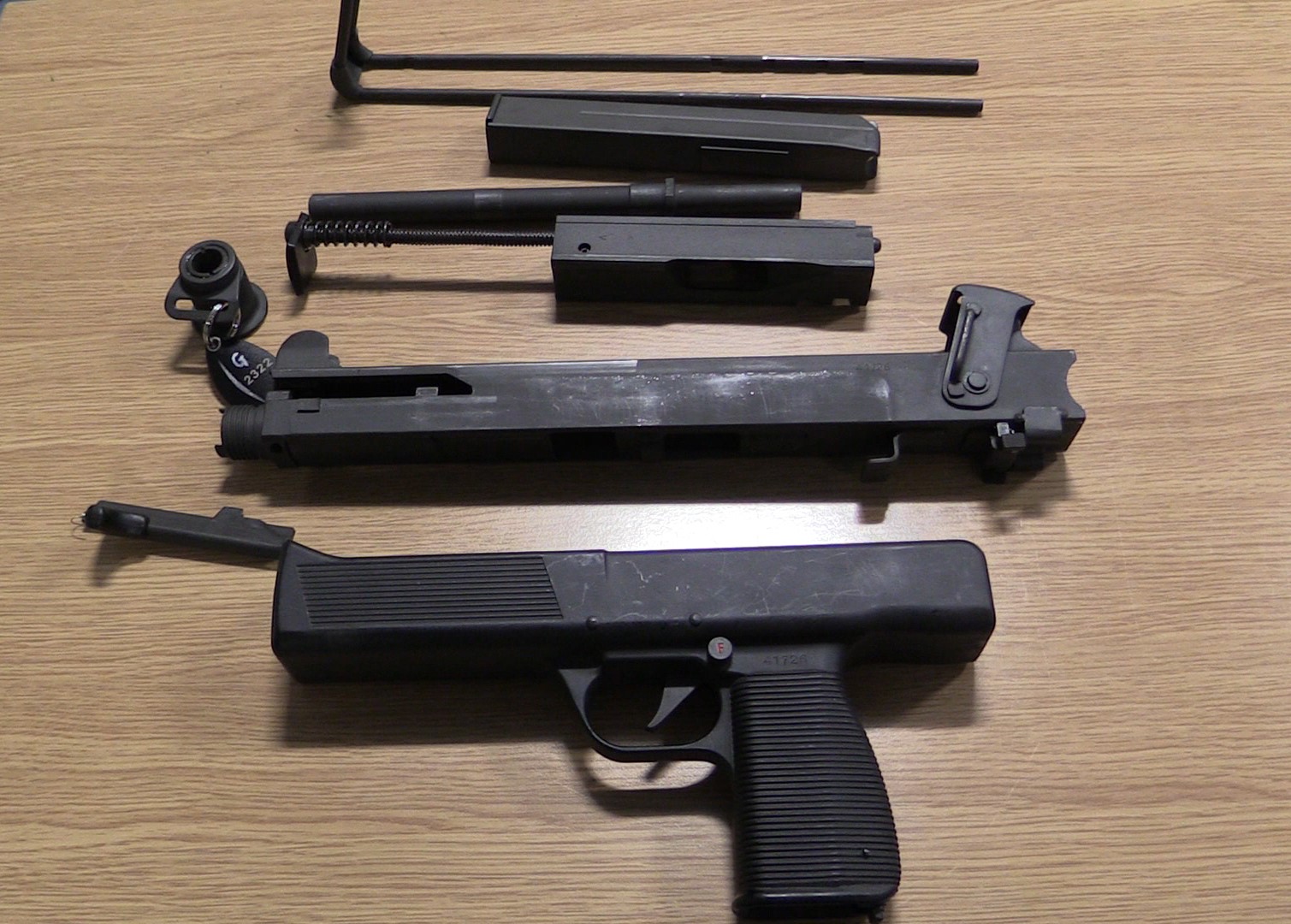
The MPi 81 fully disassembled (Vic Tuff)
It is unclear just how many MPi submachine guns were produced but they didn’t see any significant contracts beyond a few small sales to police forces and militaries.
The MPi 81 remained in production into the early 1990s when it was replaced by the smaller and more compact Steyr TMP in 1992. In turn the TMP design was sold to B&T a decade later.
Our thanks to the collection that let us take a look at this MPi 81 and to our friend Miles Vining for sharing some of his shooting footage of the MPi 81 with us, check out his video here and more of his work at www.silahreport.com.
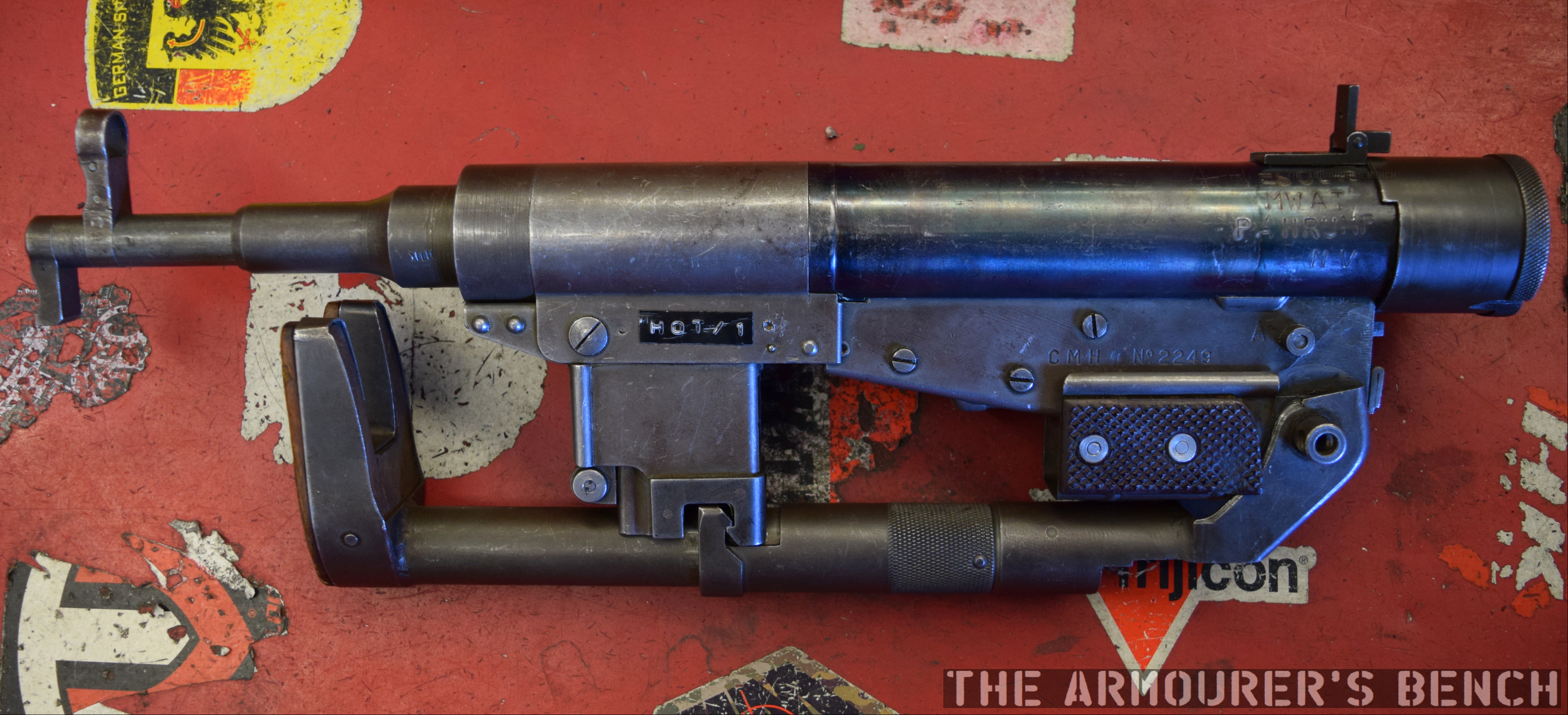
The need for compact weapons capable of being carried with ease by troops who would be getting in and out of vehicles, jumping from planes and fighting in close quarters had been proven during World War Two. While it may look unusual the Hotchkiss ‘Type Universel’ was an extraordinary attempt at creating an extremely compact submachine gun.
Right-side Hotchkiss Type Universel (Matthew Moss)
Submachine guns had proven themselves to be an useful weapon during the war, their small size and high rate of fire made them invaluable, especially in close-quarter situations. The post-war French army found itself armed with a plethora of surplus submachine guns, which included: the German MP40, the British STEN and the American Thompson as well as their own pre-war MAS-38s, in 7.65x20mm Longue, which had been designed before the war. By 1946 they had already begun the process of selecting a new, more compact submachine gun. Seeking to standardise on a single weapon and calibre they selected 9x19mm and launched a programme to find a new submachine gun or Pistolet Mitrailleur.
MAS-38 (Rock Island Auction Company)
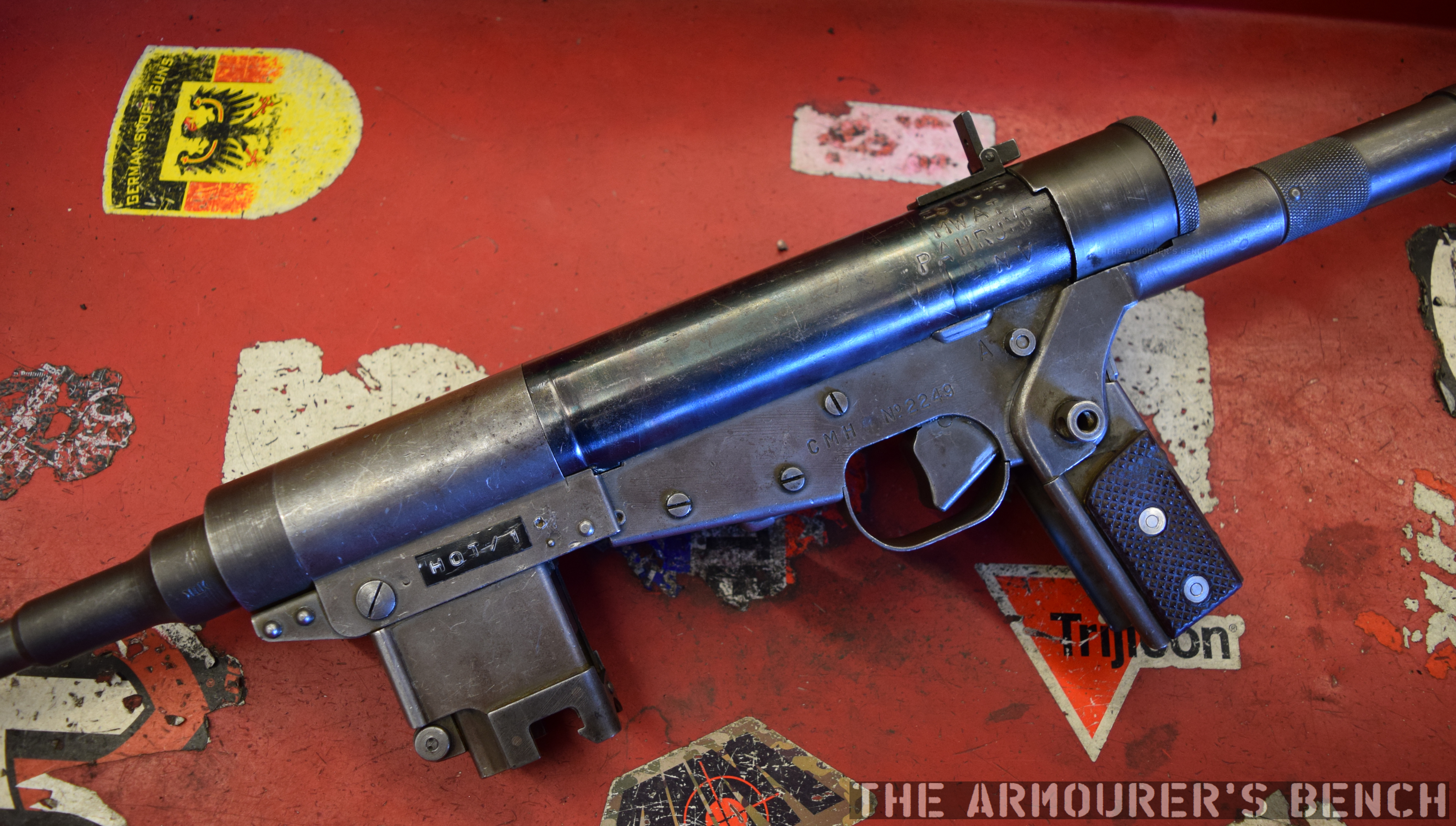
The French War Ministry launched a call for state arsenals and civilian manufacturers, such a Hotchkiss and Gevelot/Gevarm, to submit submachine guns for trials. Hotchkiss submitted the Type 010 or Type Universel, often anglicised as Universal, despite this the guns are typically marked ‘CMH2’ – ‘Carabine Mitrailleuse Hotchkiss’.
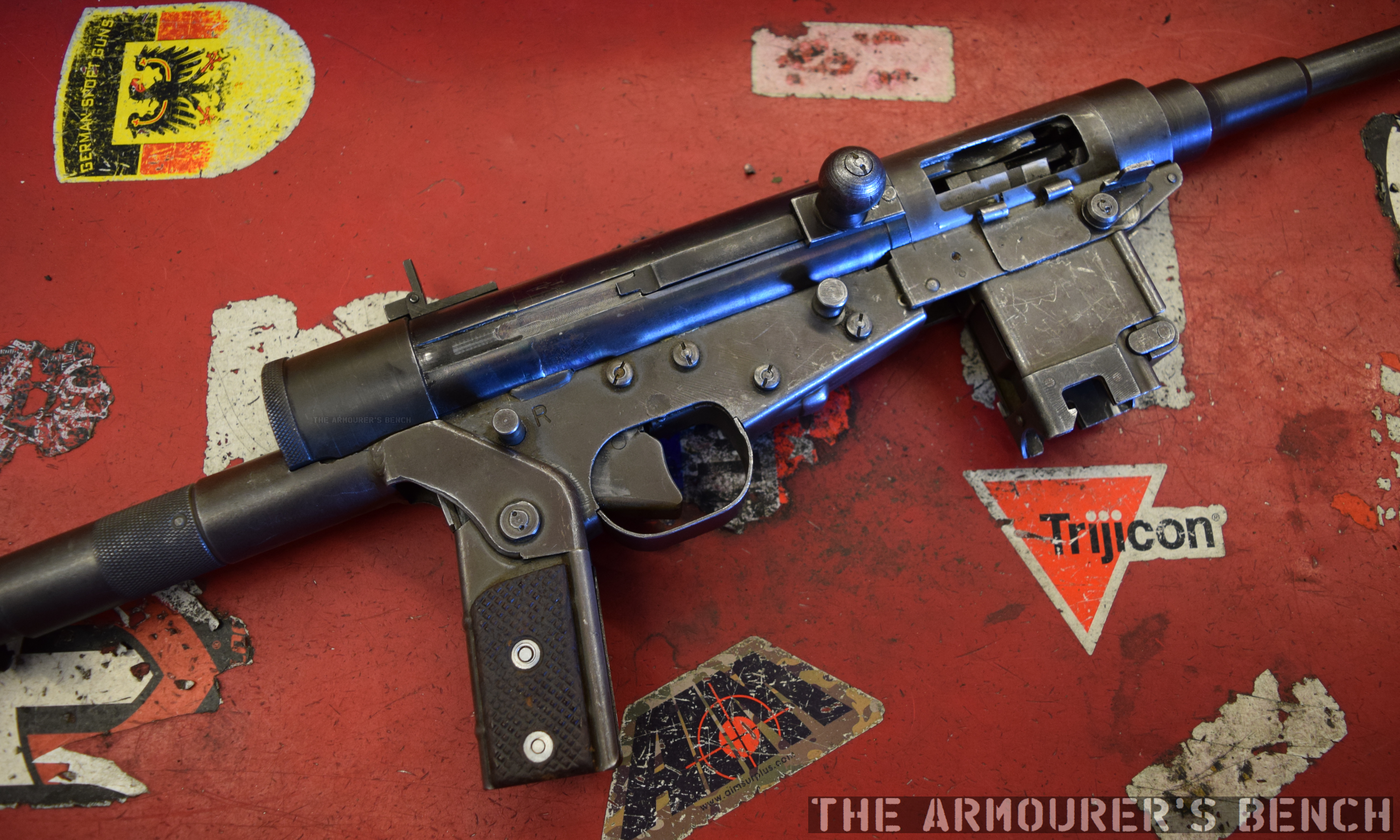
Chambered in 9x19mm, the Hotchkiss fed from MP40-pattern magazines, used the ubiquitous blowback action, it fired from a closed bolt and had a cyclic rate of approximately 650-rounds per minute. The Hotchkiss is select fire with a push through selector that allows for semi and full-auto fire. It appears that the weapon’s only safety mechanism is to close the ejection port cover and lock the bolt in place – much like a US M3 Grease Gun.
Right side collapsed Hotchkiss Type Universel (Matthew Moss)
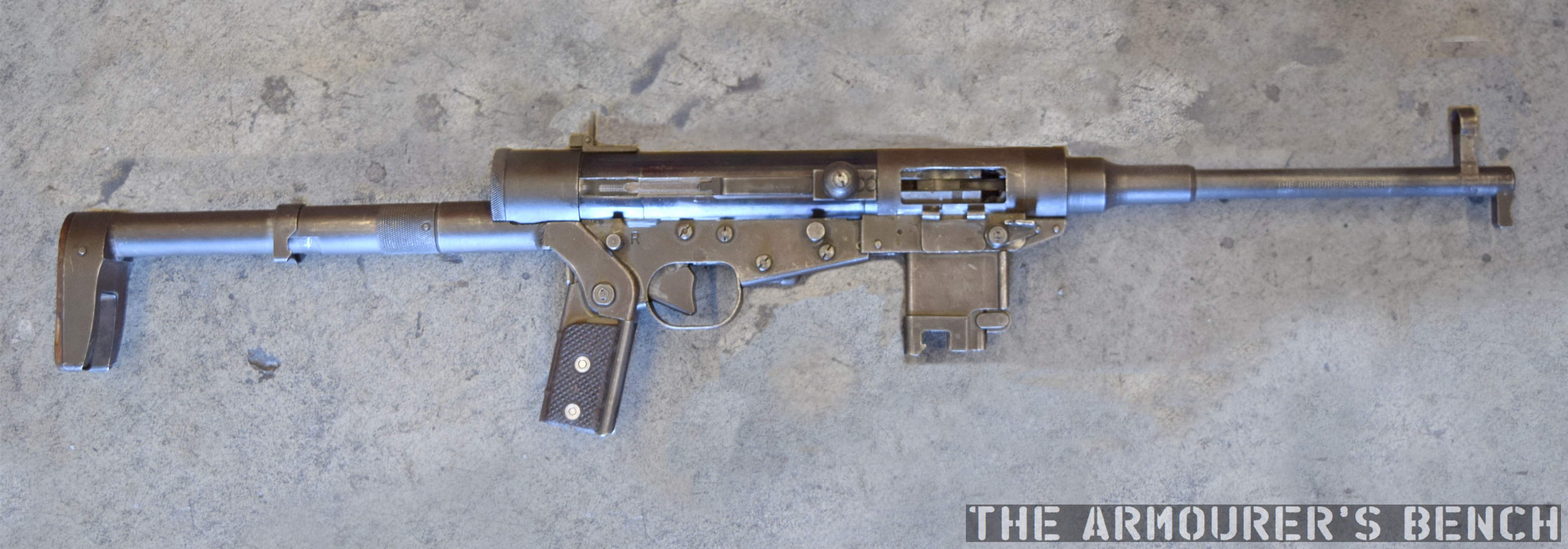
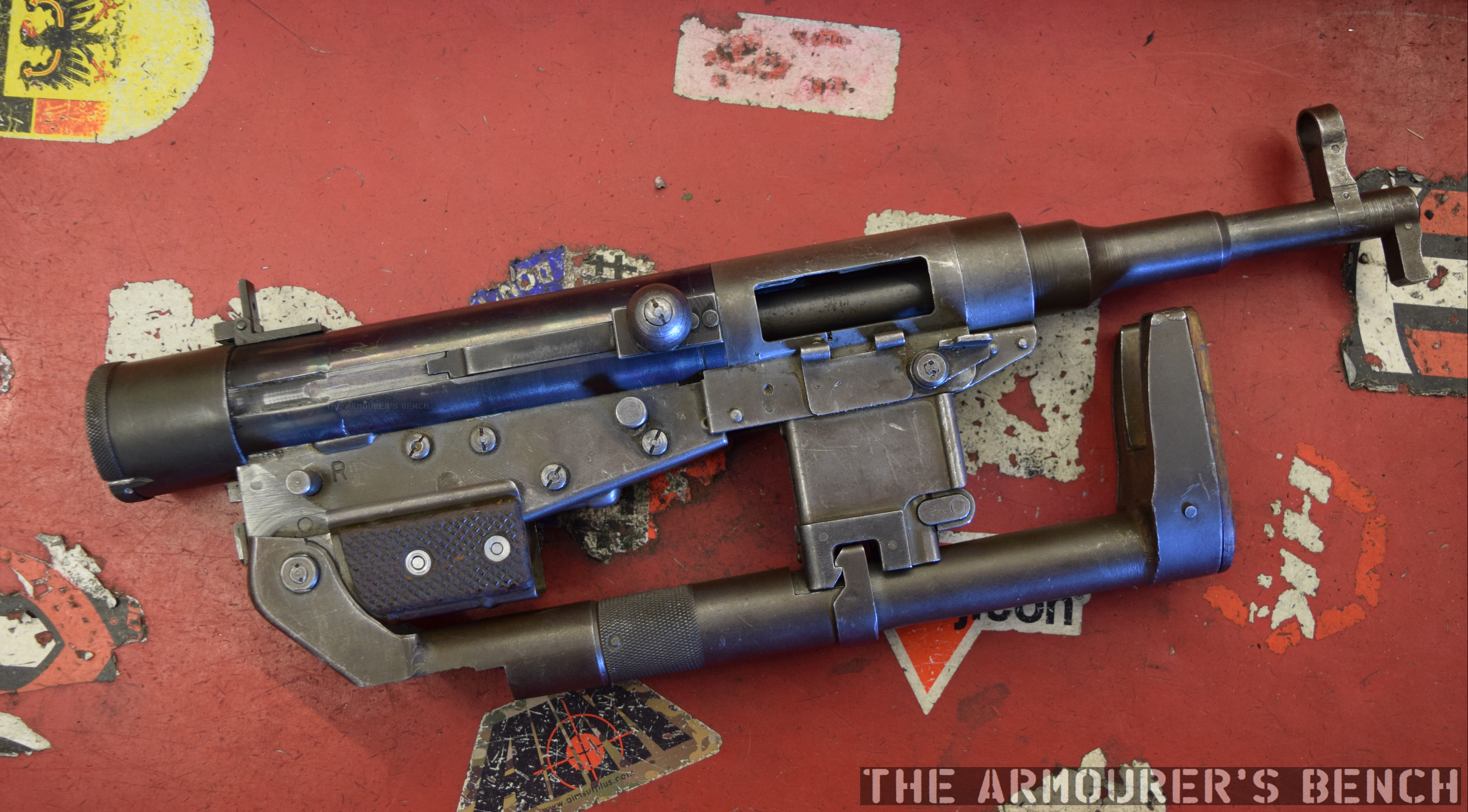
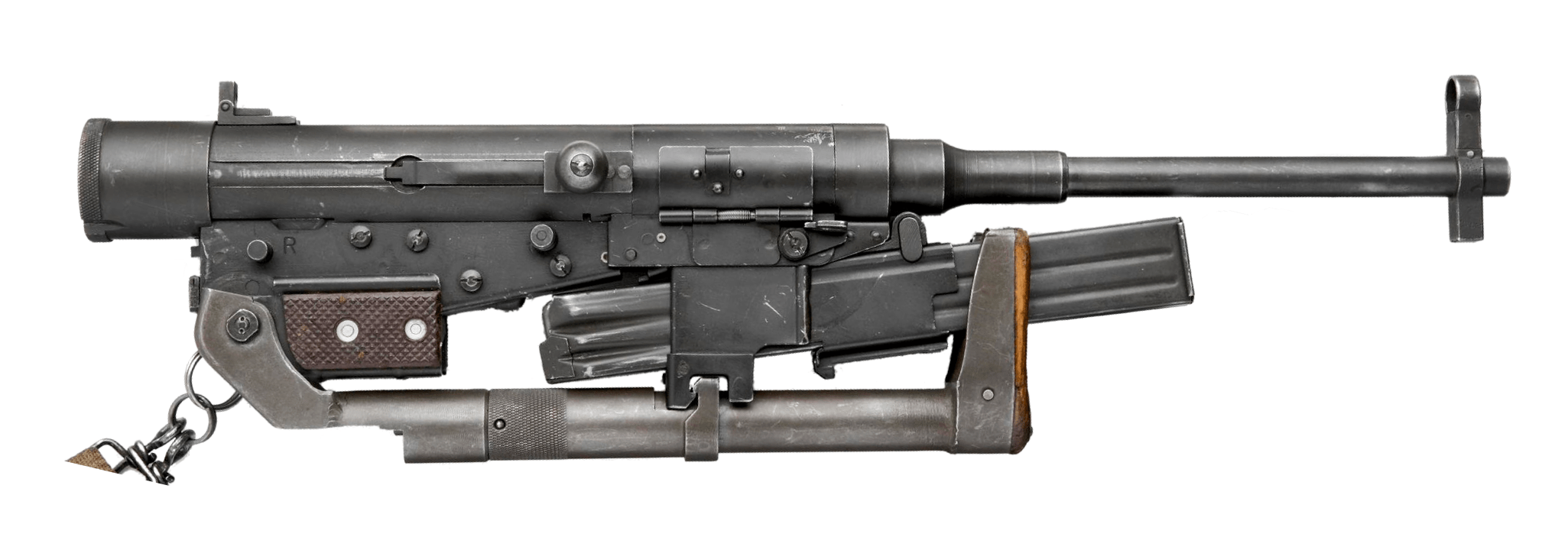
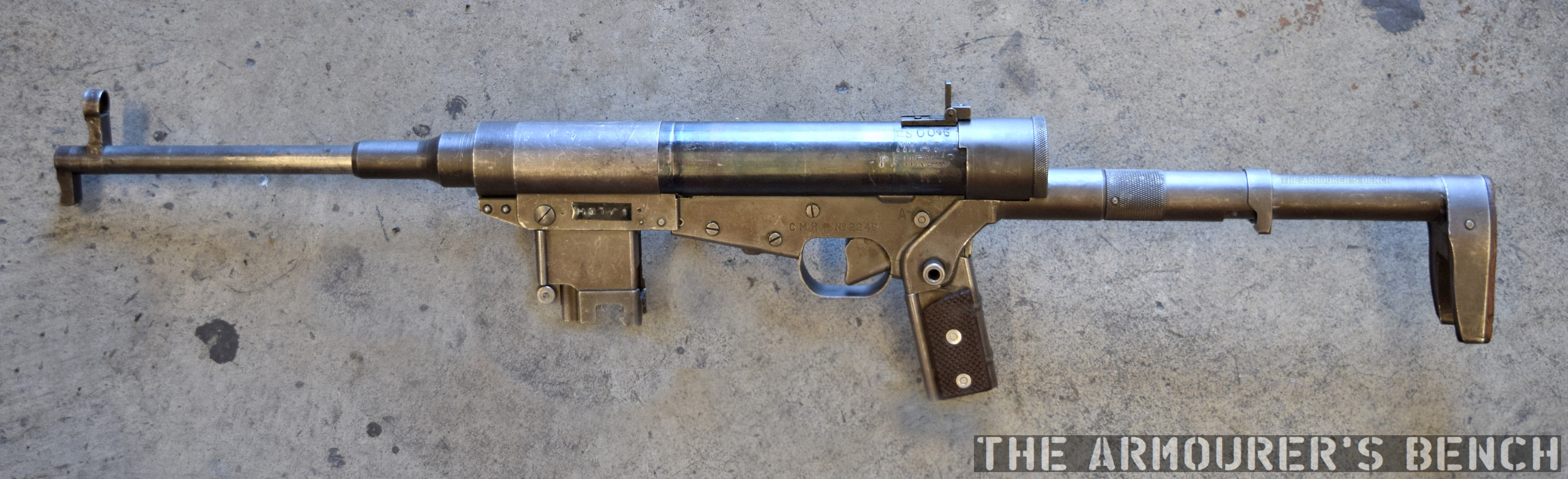
Designers went to extraordinary lengths to minimise the size of the Universel. Not only did the stock fold beneath the barrel but the magazine well and magazine could be rotated forward to sit beneath the barrel with the magazine fitting between a U-shaped cut-out in the butt stock. The weapon is a curious mix of stamped metal and complex machining with a difficult to machine bolt and barrel contrasting with a stamped sheet metal lower receiver and wide stamped trigger.
Left side collapsed Hotchkiss Type Universel (Matthew Moss)
In 1950 Hotchkiss sales material described their weapon as “the individual defense weapon meeting the requirements of the most modern Armies and Police. Folded up, it is very compact, easy to transport, conceal and parachute. It is quick to set up and comes unfolded in the form of a carabiner…”
The weapon’s pistol grip was hollow and when folding up the stock, the grip folds forward to cover the trigger. The Universel’s most interesting feature is its telescoping barrel which retracts several inches inside the receiver. These features brought the Hotchkiss’ length down from 30.6 inches (77.6cm) when the stock was extended, to 22 inches (54cm) with the stock folded, and an impressive 17.25 inches (43.5cm) when fully collapsed. The nature of how the pistol grip folded with the stock meant the weapon could not be fired with its stock collapsed. When fully collapsed the weapons’ depth was just 6 inches or 15.3cm.
A partially collapsed Hotchkiss, with magazine in folded position and barrel extended (Royal Armouries)
To Deploy:
First we unfold the stock by pushing the knurled collar forward to unhook it from the base of the magazine well. When fully unfolded a spring detent locks into the rear of the receiver.
At the same time the pistol grip also unfolds. If we had a magazine loaded into the weapon we would deploy the barrel first – in order to allow the magazine to slide back through the magazine well and fold down to lock into position. The bolt follows the barrel forward so once the magazine is locked into position the weapon has to he be charged to chamber a round.
The collapse the weapon again, first fold the stock, then depress the lever just behind the trunnion to unlock the barrel, push the barrel assembly and bolt to the rear until it locks.
Left side Hotchkiss Type Universel (Matthew Moss)
The Universel’s extreme compactness was both its best and worst feature, the complexity of having every protruding part fold or retract made the weapon expensive to produce. It also gave the weapon poor ergonomics with a narrow butt, an uncomfortable pistol grip and narrow sights which weren’t ideal for quick target acquisition.
The Hotchkiss was one of a whole host of compact folding submachine guns developed after World War Two. These included the MAS MLE 1948, the MAC Mle 1947 and of course the MAT-49 from French state-arsenals. The French guns were by no means the first to have folding magazines, that concept dates back to submachine guns like the SIG MKMO. Incidentally, SIG’s last developmental iteration of their submachine guns, the MP48, was also developed in the late 1940s and retained the MKMO’s folding magazine housing.
Close up of the Hotchkiss Type Universel’s receiver (Matthew Moss)
A 2001 article from the Gazette des Armes, by Michel Malberbe, includes an account from a Legionnaire sergeant who describes using the Hotchkiss in Indochina:
“I saw for the first time the submachine gun Hotchkiss in ‘Indo’. We were responsible for the security of the RC4 [Route Coloniale 4], and the staff sent us wooden cases containing these famous submachine guns. As the documents were not very complete, our company commander… had trouble explaining how it worked. It was quite funny, because folded, this submachine gun did not look very serious. It was like a rectangular scrap metal package… We used it for the first time on the Lang Son side, during a serious collision between the Viets and a convoy… I remember that this machine worked very well. But it lacked a little precision. Anyway, it was much better than the small MAS-38 submachine gun, whose magazine always blocked [jammed] at the wrong time! On the other hand, I think I remember that the Hotchkiss did not stand up to mud and that it was misery to clean it. In addition it was quite difficult to unfold because of the buttons found everywhere. We never knew which one to press. We, in any case, always transported them in the firing position…”
While the Type Universel definitely wouldn’t win any prizes for its aesthetics, it was a ambitiously-engineered and well-built submachine gun. Despite this the design was simply too complex, as we have heard troops in the field rarely took advantage of its compact features preferring to carry the weapon at the ready. The Universel sacrificed a lot to achieve its compactness and the ergonomics of the weapon leave a lot to be desired with an extremely small butt and a hollow pistol grip that just feels wrong.
It is believed that in total just 7,000 Hotchkiss Universels were produced between 1948 and 1952. The French military rejected the Hotchkiss feeling the weapons was too complex and too expensive to manufacture. Instead, the MAT-49 submachine gun, designed by Tulle, was eventually adopted. The MAT-49 also had a folding magazine housing making it almost as compact as the Universel but without its complexities.
Close up of right side of the Hotchkiss Type Universel’s receiver (Matthew Moss)
While it underwent some field testing with the French in Indochina no major military contracts were won but small numbers were purchased by the French police, the colonial police in Morocco and some were sold to the military of Venezuela. The Universel would be one of the last firearms produced by Hotchkiss et Cie, who had built numerous armaments for the French army during the 19th and 20th centuries, before it closed its weapons manufacturing arm in the early 1950s refocusing on automobile manufacture.
Special thanks to Battlefield Vegas for allowing us to take a look at their Hotchkiss.
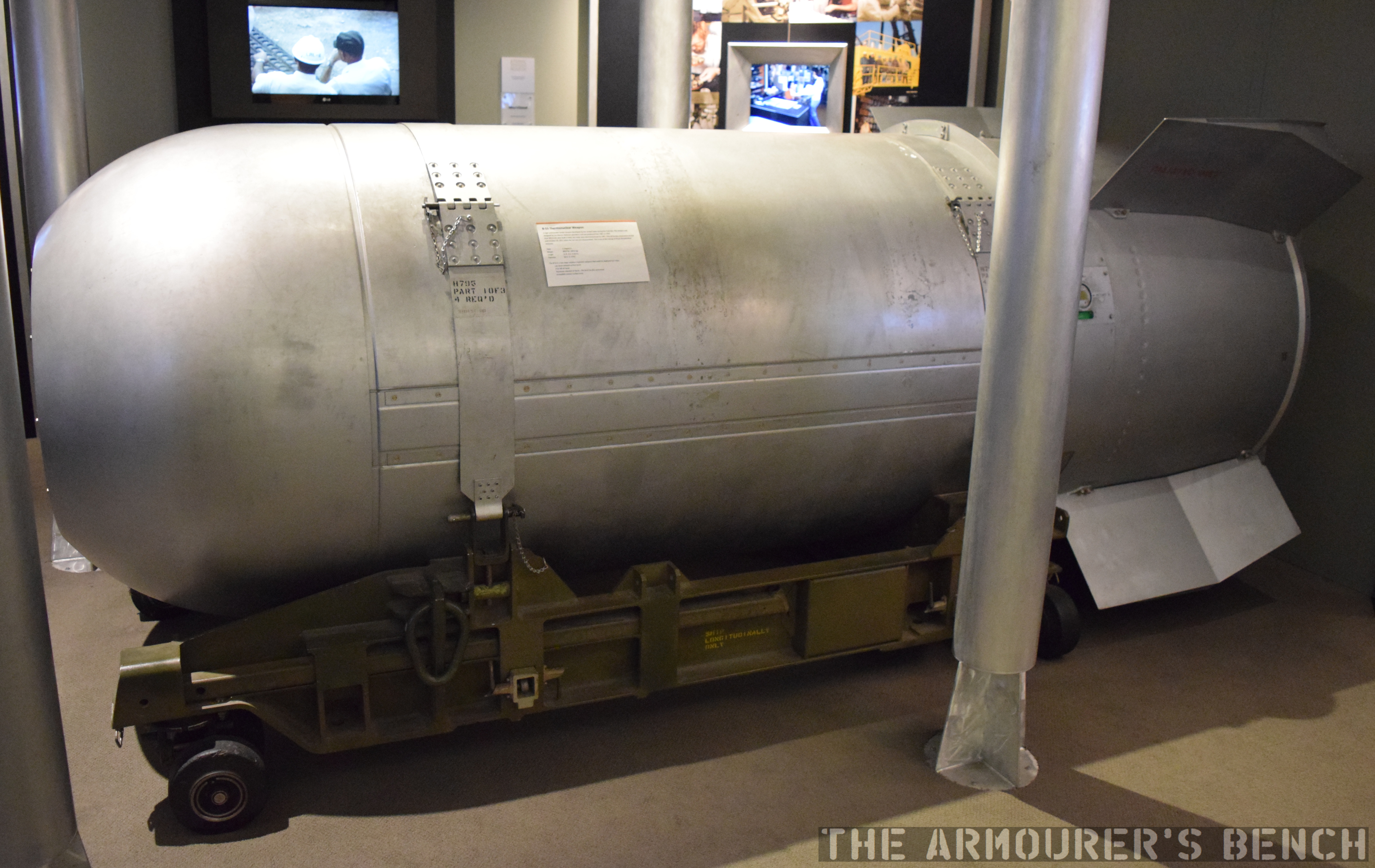
In the late 1950s the US military began development of a bomb capable of destroying deeply buried bunkers. The result was a bunker busting unguided thermonuclear bomb. Durng a visit to the Atomic Testing Museum, in Las Vegas, Matt had the chance to take a look at a decommissioned B53 up close.
B53 on display at the Atomic Testing Museum (Matthew Moss)
The B53 is a two-stage high-yield thermonuclear weapon, designed as a bunker buster, that could deliver a massive shockwave deep underground to the deepest Soviet command and control bunkers. Developed between 1958 and 1961, the B53 was intended to combat deeply emplaced Soviet bunkers with a yield of 9 megatons. It used a highly enriched uranium core as its primary fission stage with Lithium-6 deuteride as its second stage fusion element. The warhead itself was developed from the earlier Mk46 warhead, the experimental TX-53 was tested at the Pacific Proving Grounds as part of Operation HARDTACK I, which saw no less than 35 nuclear test detonations. Codenamed HARDTAK OAK, the TX-53 was detonated aboard a floating barge on 28th June 1958, with a yield of 8.9 megatons. The detonation created a cloud 78,000 feet (23.8 km) tall.
Cloud produced by HARDTACK OAK (Los Alamos National Laboratory Archive)
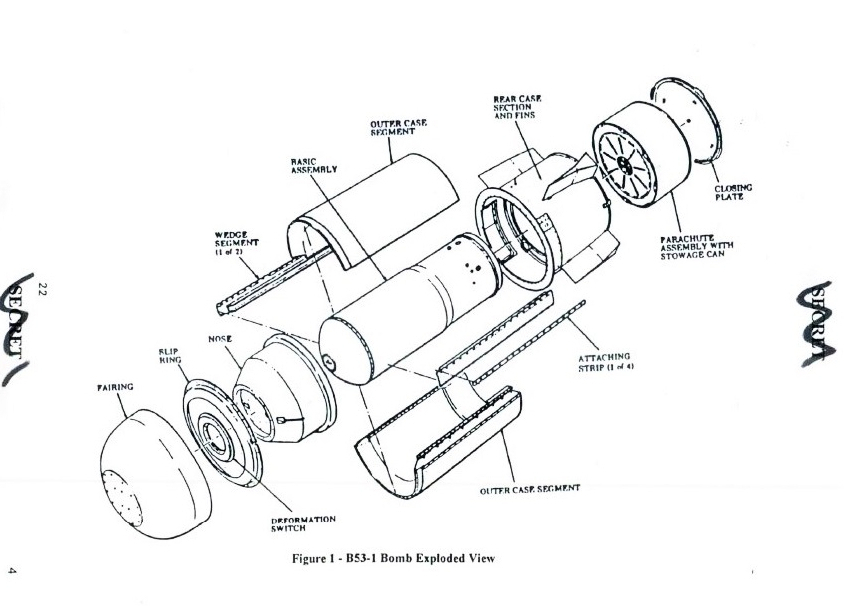
Designed to be dropped from the Strategic Air Command’s B-47, B-52 or B-58 bombers, the B53 is a gravity bomb which free fell to its target and could be air or surface detonated. The bomb itself weighed 8850 lbs or 4014kg and the casing is 12.5 feet long (3.8m) and just about 50in (1.27m) in diameter. The bomb’s outer-casing is split into a nose section, a two-piece central casing and the rear assembly with four fins which housed the parachute assembly. They were built by the Atomic Energy Commission between 1962 and 1965, over 340 bombs were built. Initially designated the Mk53 it was re-designated the B53 in 1968, when the US Air Force updated its ordnance nomenclature.
The bomb itself could be deployed in four ways: a delayed surface burst, a free fall air burst, a parachute retarded air burst (the B53 had five parachutes at the rear which can be deployed) or an immediate contact surface burst. Here we can see the panel to control the parachute deployment, with markings for safe, free fall and retard.
Declassified general diagram showing the assemblies of the B53 (US DoD)
The B53 was obsolete in terms of its safety by the early 1980s with none of the more modern safety features such as an Enhanced Nuclear Detonation Safety (ENDS) additionally its explosive lens, consisting of a mix of RDX and TNT was not an insensitive munition – meaning it wasn’t designed to resist detonation from external stimuli or damage. The B53 also had no Fire-Resistant Pit (which prevents the spread of radioactive material in the event of a far), Permissive Action Link (which prevent unauthorised arming) or Command Disable safety measures.
B53 at the Pantex Plant in Texas about to begin the dismantling process (National Nuclear Security Administration)
Many of the B53s in US inventory were decommissioned in the mid-1980s, and by 1987 just 50 were retained in inventory. The last of these were disassembled and decommissioned by October 2011 – after being in service for 50 years. The B53 was replaced in its bunker busting role by the smaller B61 Mod 11.
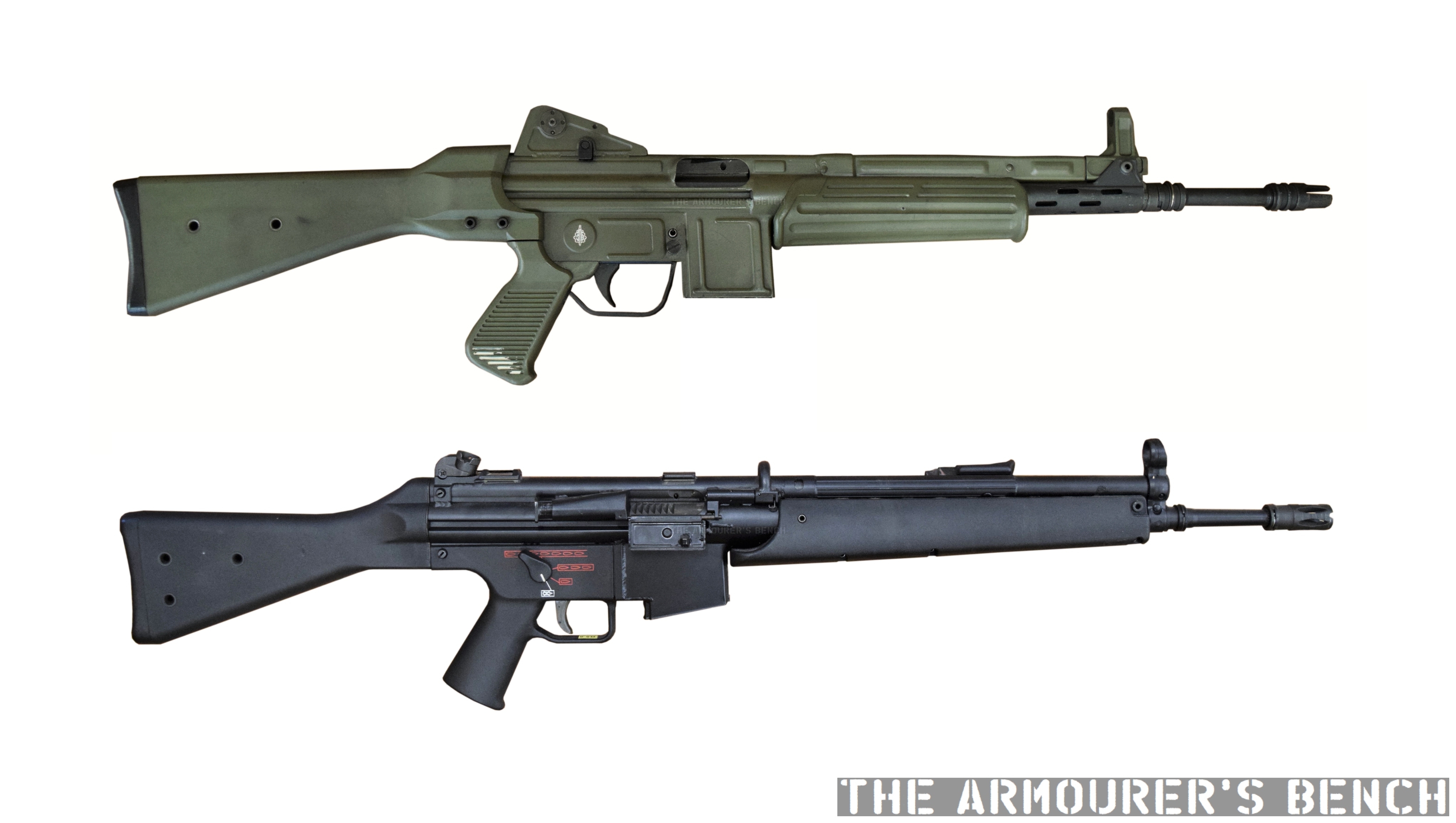
In this week’s video we compare two of the last roller-delayed production rifles: the Spanish CETME Modelo L and the Heckler & Koch G41. These rifles represent the last evolutions of two strands of the roller-delayed development tree – the Spanish and the German.
The CETME L & HK G41 (Matthew Moss)
Both rifles use the roller-delayed blowback action and are both chambered in NATO SS109 5.56x45mm ball round, have have 1:7 twist barrels and feed from STANAG magazines. Both were developed during the 1980s and both are also capable of firing rifle grenades.
The CETME L
Left-side profile of the CETME L (Matthew Moss)
The CETME has a bit of a reputation for being cheap but this relatively unbattered example feels solid enough. Both of the rifles disassemble in much the same way with the butt assembly being removed to allow the bolt to be pulled out of the rear.
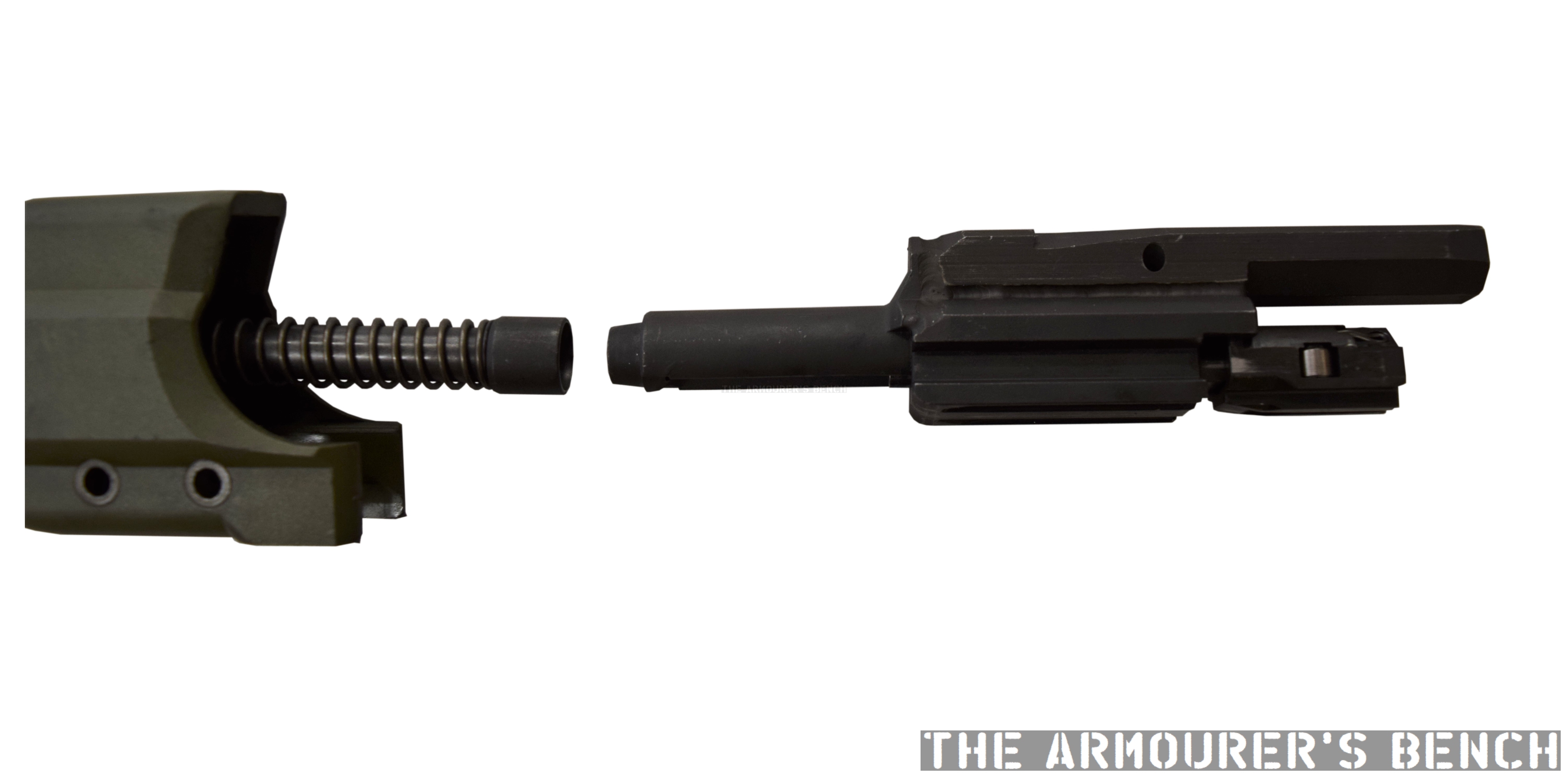
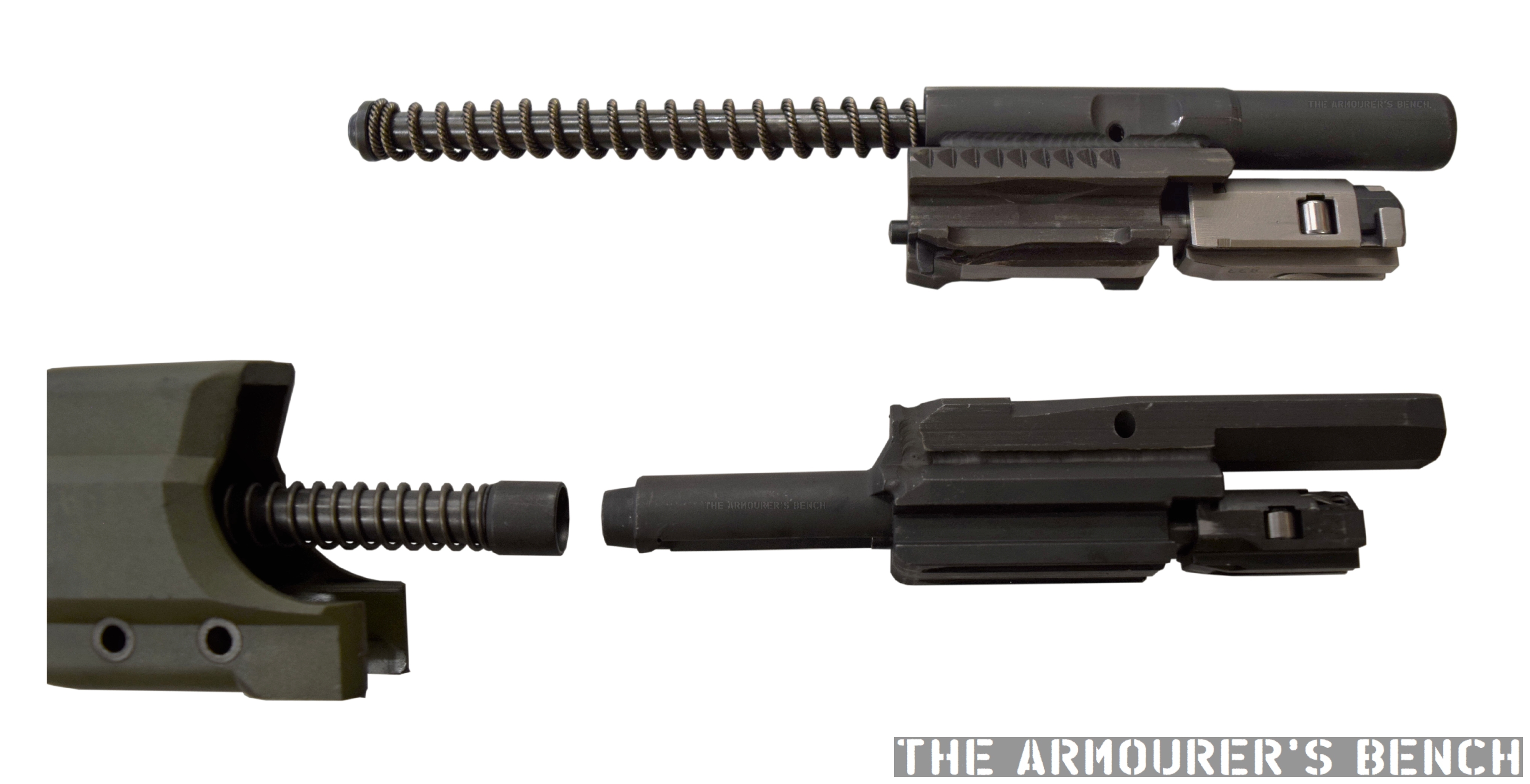
Most notable about the CETME’s bolt is the long rod protruding out the back of the bolt assembly. This acts on the recoil spring housed inside the butt. The L’s recoil spring, unlike the G41s, is captive inside the butt rather than nested inside the rear of the bolt carrier. The CETME’s bolt is also much squarer than the G41’s which probably simplified the machining of the bolt and designing the receiver stamping.
The L’s bolt and butt assembly (Matthew Moss)
The L does not have a provision to lock its bolt back in a slot like the HK (no CETME slap for Spanish soldiers), however, it does have a bolt hold open, with the release located in the rear sight base.
The CETME has simpler folding aperture sights with 200–400m adjustments. It weighs in a 3.72kg or 8.2lbs unloaded and is 92.5cm or around 36in in length. The CETME has a simpler fire control group, with safe, semi and full-auto settings. It is not ambidextrous and only has a selector on the left side of the receiver. The CETME L has largely been replaced by the weapon that superseded the G41 – the gas-operated HK G36.
Heckler & Koch G41
The left-side profile of the G41 (Matthew Moss)
We have full article and video examining the G41 in detailhere.
HK finalised the G41’s design in 1979, a refinement of the 5.56x45mm HK33, it sought to modernise the platform and borrowed features from the M16 family of rifles including a bolt release catch, dust cover and forward assist.
The G41 has a butt assembly that fits into the receiver rather than around it. So its cross pins are at the top and bottom of the receiver rather than both at the bottom. This spreads the stresses on the receiver vertically rather than laterally.
Comparison of the G41 and Model L’s bolts (Matthew Moss)
The G41 has both the classic HK hold open notch and a AR-style paddle bolt release. HK’s dioptre drum sights have adjustments from 100 to 400m, and can mount a scope using an HK claw mount. G41 is the heavier of the two rifles, weighing in at 4.31kg or 9.5lbs. The G41 is also slightly longer than the L at nearly 100cm or 39in in length.
The HK has an ambidextrous selector with positions for safe, semi, 3-round burst and finally full-auto. The G41, unlike the L, also has a folding carrying handle near its point of balance.
The G41 represents the last evolution of HK’s infantry rifles using the roller-delayed blowback action. It comes from a period when HK were developing what they hoped would be the next generation of small arms technology and with the collapse of the G11 programme and the lack of sales of the G41 saw it superseded in the 1990s by the gas-operated G36.













 The Armourers Bench