British Army Training Grenades

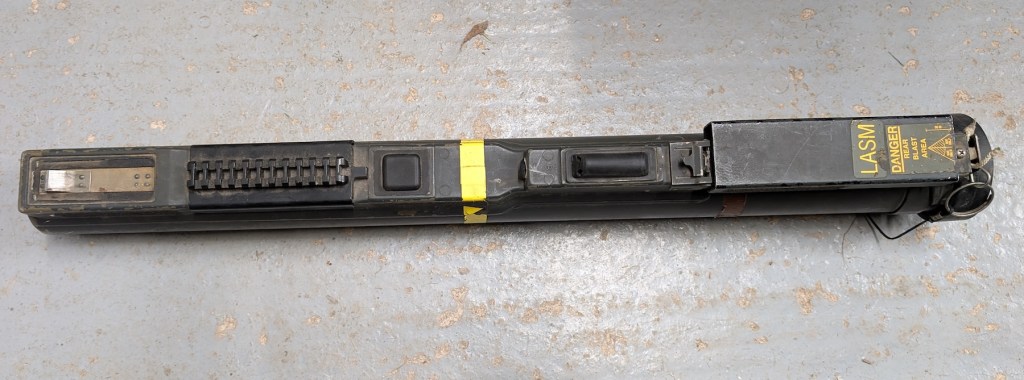
A few weeks ago I visited my friends at the Vickers Machine Gun Collection & Research Association and had a look at a variety of items you might not immediately expect to be part of their collection. The VMGCRA, however, has an extensive collection of all sorts of items and an incredible archive which they’re digitising at the moment.

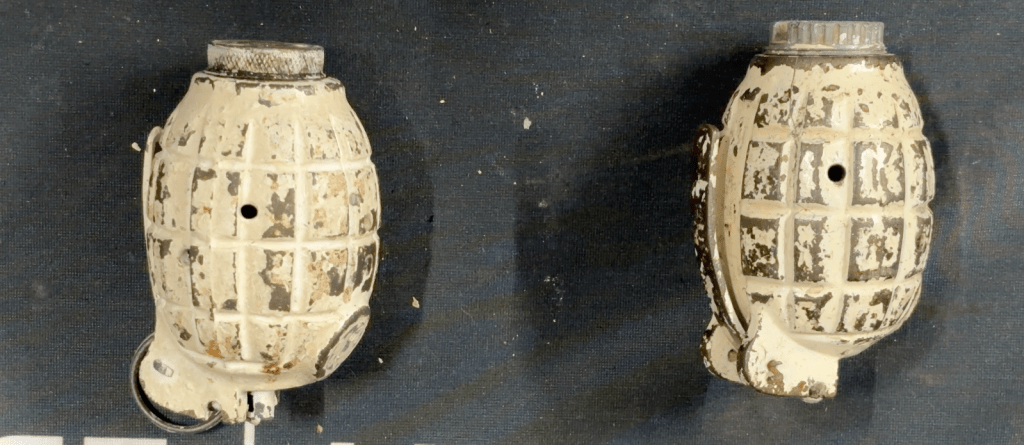
Practice Mills Bombs (No.36)

Drill Grenade (Rich Fisher)

Some of the smaller items in the collection are inert training grenades. First up we have a pair of practice No.36 grenades (commonly known as Mills Bombs). Also known as Drill Grenades, these were painted entirely white and, as we can see laid out in this 1942 British Army grenade training pamphlet, they were used for throwing practice and grenade discharger cup training. They don’t have any filling but are weighted to mimic actual Mills Bombs to aid in training. Photographs of the Drill Grenades don’t appear until the post-war manuals, like this 1951-dated pamphlet which shows the white mills bombs being used in training. They were also used for general familization in classroom training and getting to grips with how the safety mechanisms worked and how fuzes were inserted. we can see an L2 grenade being used in house clearance drills in the 1979 training film Fighting In Villages

L3A1

L3A1 (Matthew Moss)

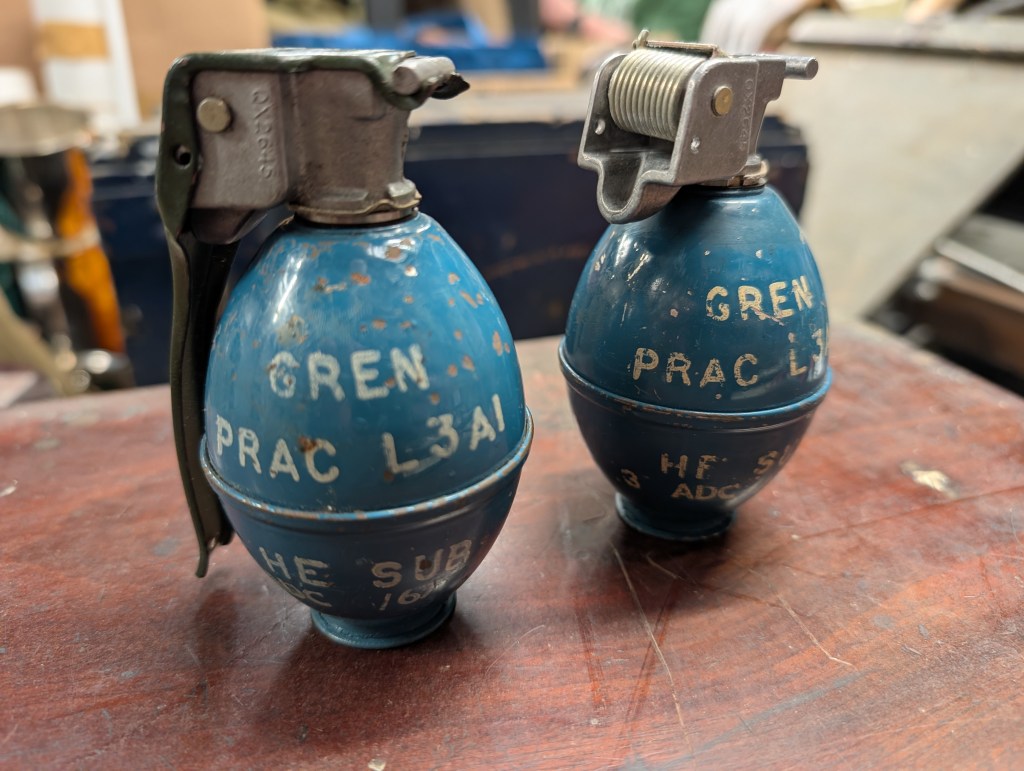
Next we have the British Army L3A1 inert practice grenade. The L3A1 practice grenade used to train troops on how to use the L2 series of live grenades. These were known as the M26 in US service and entered service in the early 1950s to replace the classic Mk2.

The grenades entered UK service in the 1970s, replacing the No.36 Mills Bomb. They were used by British troops in every major operation from the 1960s through to the 2000s. The L2 and L3 series were replaced by the L109A1 grenade during the early 2000s. The L3 was largely out of use by the mid-1990s, replaced by the L28 and L56 training grenades.

These training grenades would have been used in the classroom portion of soldiers’ training giving them hands on experience in the feel of the grenade and how the pin and spoon work and interact and where a live grenade’s fuze would be fitted. The blue painted grenades have “GREN PRAC L3A1′ and ‘HE SUB’ (high expolosive substitute) printed on them.

L111A1

L111A1 (Matthew Moss)

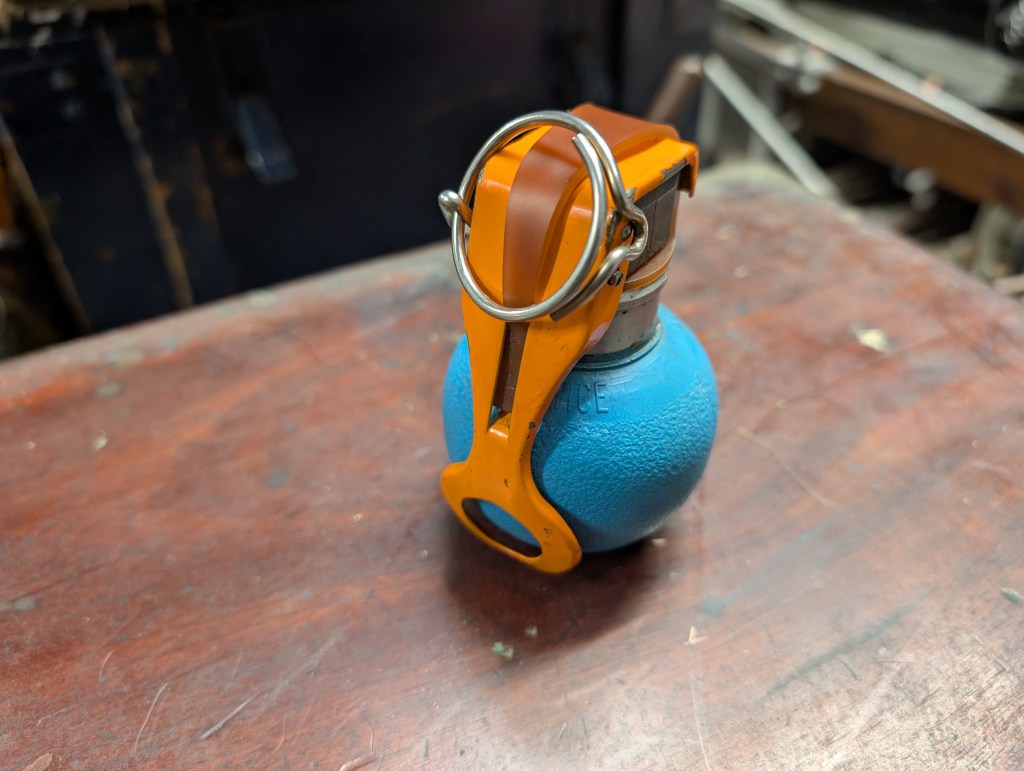
The UK adopted RUAG’s HG-85 in the early 2000s as the L109A1, the L110A1 is an inert drill grenade for handling practice while the L111A1, as seen here, is a practice grenade which can incorporate a small simulation charge which can be used safely in training environments. Initially called the ‘Enhanced Performance Grenade’ but once it was introduced and classified in 2002, it became the L109A1. The body of the practice L111A1 is made of steel, and is covered in a blue textured plastic material and has the words ‘PRACTICE GRENADE’ embossed near the top of the body. Like the earlier L3A1, the L111A1 approximate the weight, feel and operation of a live grenade for training purposes. The HG-85 remains the UK’s standard fragmentation grenade, here’s a video from 2021 showing the Irish Guards training with the L111A1.

So there we have it, a couple of small items from the VMGCRA but ones that illustrate the depth and breadth of the collection. Thanks for watching, don’t forget to check out and subscribe to VMGCRA! 


Support Us: If you enjoyed this video and article please consider supporting our work here. We have some great perks available for Patreon Supporters – including early access to custom stickers and early access to videos! Thank you for your support!
STEN Magazine Loaders

While the ongoing Coronavirus pandemic has prevented some archival research I had planned which would have informed much of the STEN series, our good friend Richard at the Vickers Machine Gun Collection and Research Association, has come to our aid and we’re able to cover some of the loading accessories developed for the Sten’s magazines.

As we know the Sten uses a 32-round double stack, single feed magazine which can trace its origins back through the Lanchester Machine Carbine to the Haenel MP28,II’s magazine designed by Hugo Schmeisser [patented in 1931].

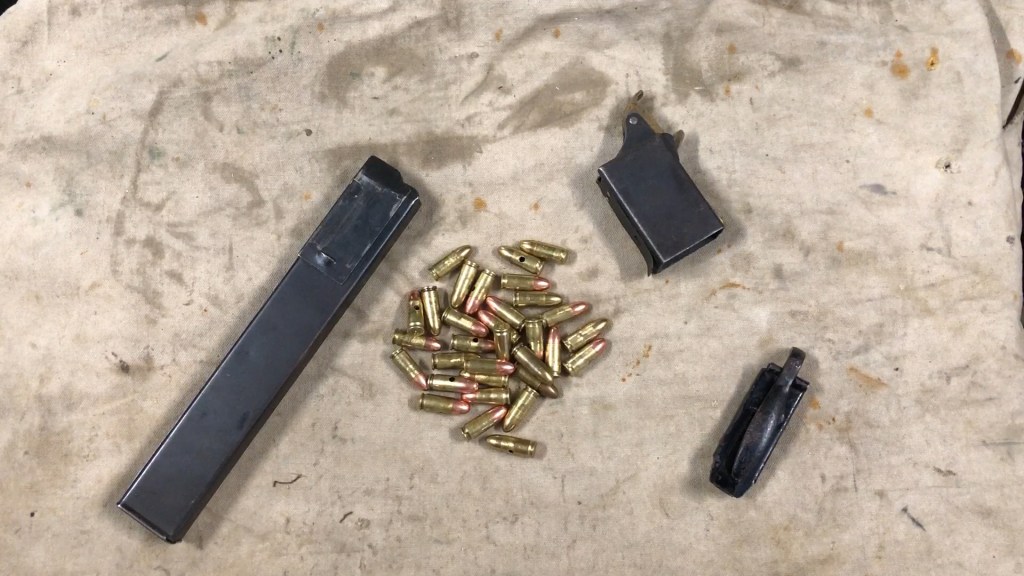
Sten Magazine, inert 9x19mm rounds and MkII and MkIV magazine fillers

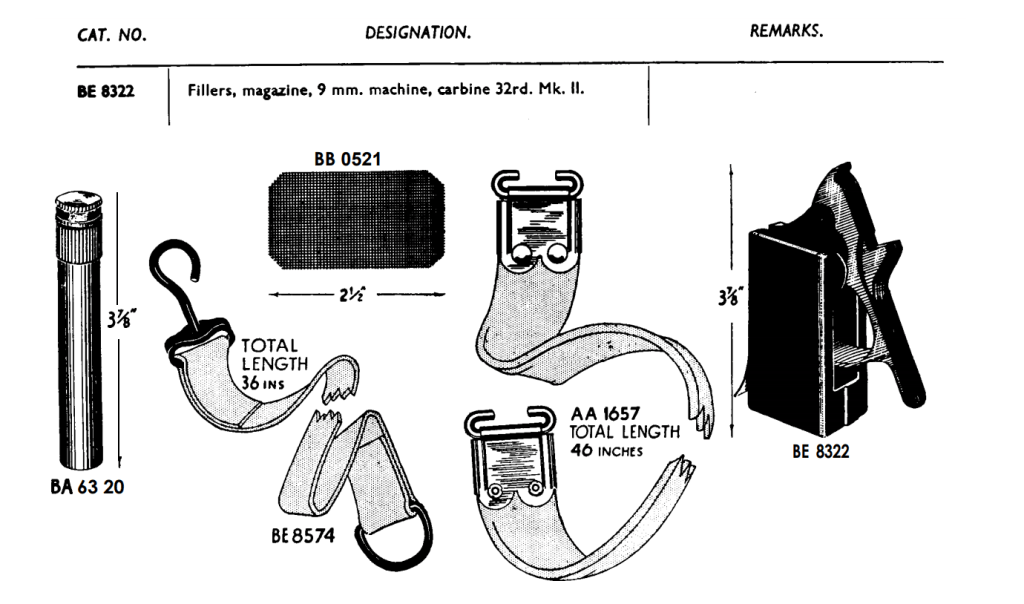
The nature of the single feed makes the magazine difficult to load by hand with the last few rounds very hard to insert. So a series of four marks of ‘magazine fillers’ were developed. These are described in the British Army’s official List of Changes in February 1943.

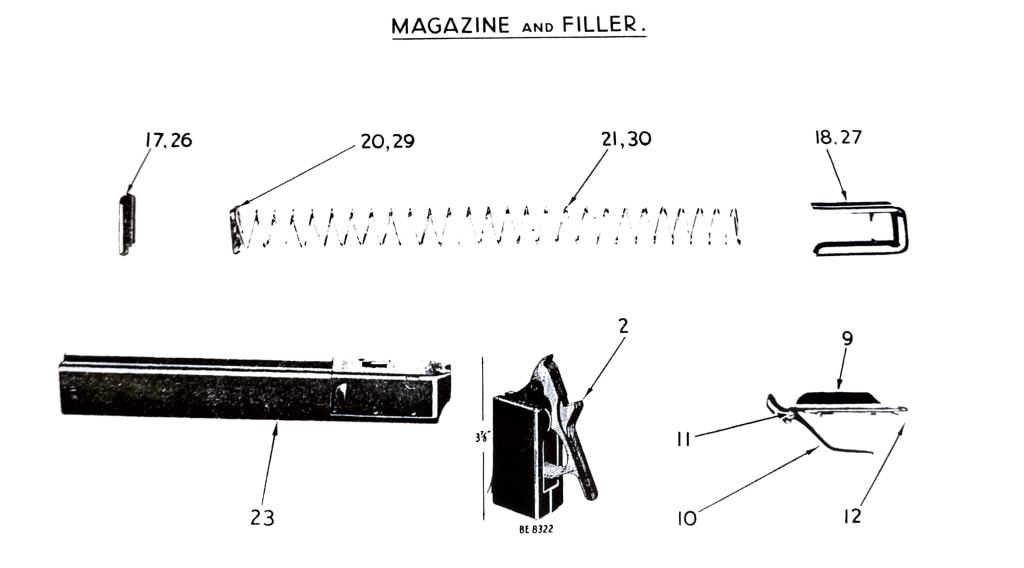
The MkI is described as consisting of “a lever mounted on a short case which conforms to the shape of the magazine. It is hand operated, the loading lever being given a rocking motion during filling. The MKI slipped over the top of a magazine with a rivetted spring tab which indexed into a notch in the front of the Sten mag.

A cutaway showing the MkII filler

The MkII is very similar but simplified by having the spring catch mounted on the rear instead of the side and engaged a “small rectangular slot on the magazine”. The rear of the spring is turned up slightly to allow the user to remove its from the magazine.

The MkIII, which is possibly the rarest of the fillers, is described as:

“hand operated but of different design from the MkI and MkII. It consists essentially of a spring loaded vertical plunger which is attached externally to a case, the latter to assemble on the magazine. There is no retaining catch. It comprises the following parts:

Case. Is a rectangular shaped steel pressing with a tube of rectangular section welded thereto. The latter, which houses the plunger and spring, has a hole trilled at the lower end to accommodate a pin which restricts the amount of movement of the plunger and acts as a stop for the compressing spring.

Plunger, loading. Is made of two laminated steel strips welded together the top part of which is set to form a handle. The body of the plunger is slotted to accommodate the compression spring. The top part is splayed to form a suitable contact with the cartridge.”

List of Changes, Feb. 1943
Sten accessories including a sling and a MkII magazine filler

The other more common filler is the MkIV. Which is a much simpler design with a loading lever mounted on top of a clip which is attached to the rear of the magazine body and retained by a spring similar to that of the MkII.

Rich has very kindly demonstrated the use of the two most common fillers – the MkII and the simpler MkIV. It takes Rich just under 2 minutes to load that magazine, but he was doing his best to show various angles and unlike a British soldier during the war he hasn’t regularly loaded magazines with one of these fillers either. Despite that the clip gives a good idea of how fast you could load a mag once you’re in the groove.

With the MkIV filler Rich was able to load the mag in about 1 minute 15 seconds, the stability of resting the base of the mag on the table helped with the MkIV’s simpler design.

Manual diagram showing both the MkII and MkVI

Also, as a follow on to our previous episode looking at the Sterling Submachine Gun’s magazine Rich has also demonstrated the loading of a Sterling mag to its 34 round capacity. No magazine filler needed with George Patchett’s double-stack, double feed magazine.

Massive thanks to Richard for taking the time to film the clips used in the video. please do go and check out Richard’s channel and www.vickersmg.org.uk.


If you enjoyed the video and this article please consider supporting our work here. We have some great perks available for Patreon Supporters. You can also support us via one-time donations here.

Vickers Gun Disassembly

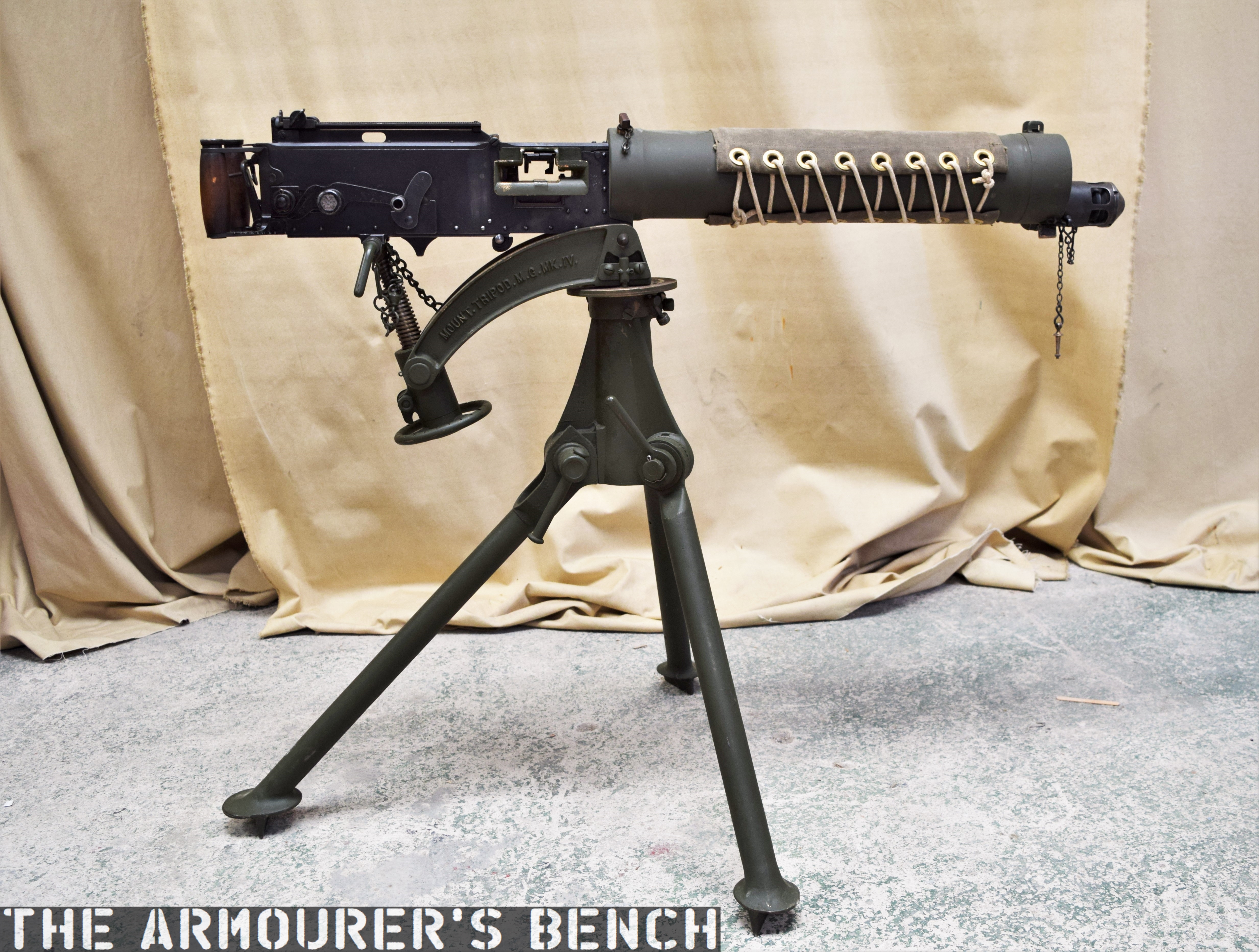
The Vickers Gun is an iconic weapon, developed from the Maxim and adopted by the British in 1912. It served for over 50 years in conflicts all around the world. In this video, we’re lucky enough to have Richard Fisher of the Vickers Machine Gun Collection and Research Association shows us how to disassemble a the gun and talk us through its internals.

Big thank you to Rich for taking the time to help with this video and provide the voice over explaining the process! We’ll have more videos on the Vickers Gun in the future! Check out Richard’s work over on the Vickers Machine Gun Collection and Research Association’s site here.

I’ll let Rich explain the disassembly process in real time in the video but here are a couple of photographs of the gun disassembled:

DSC_0371
The Vickers gun field stripped (Matthew Moss)

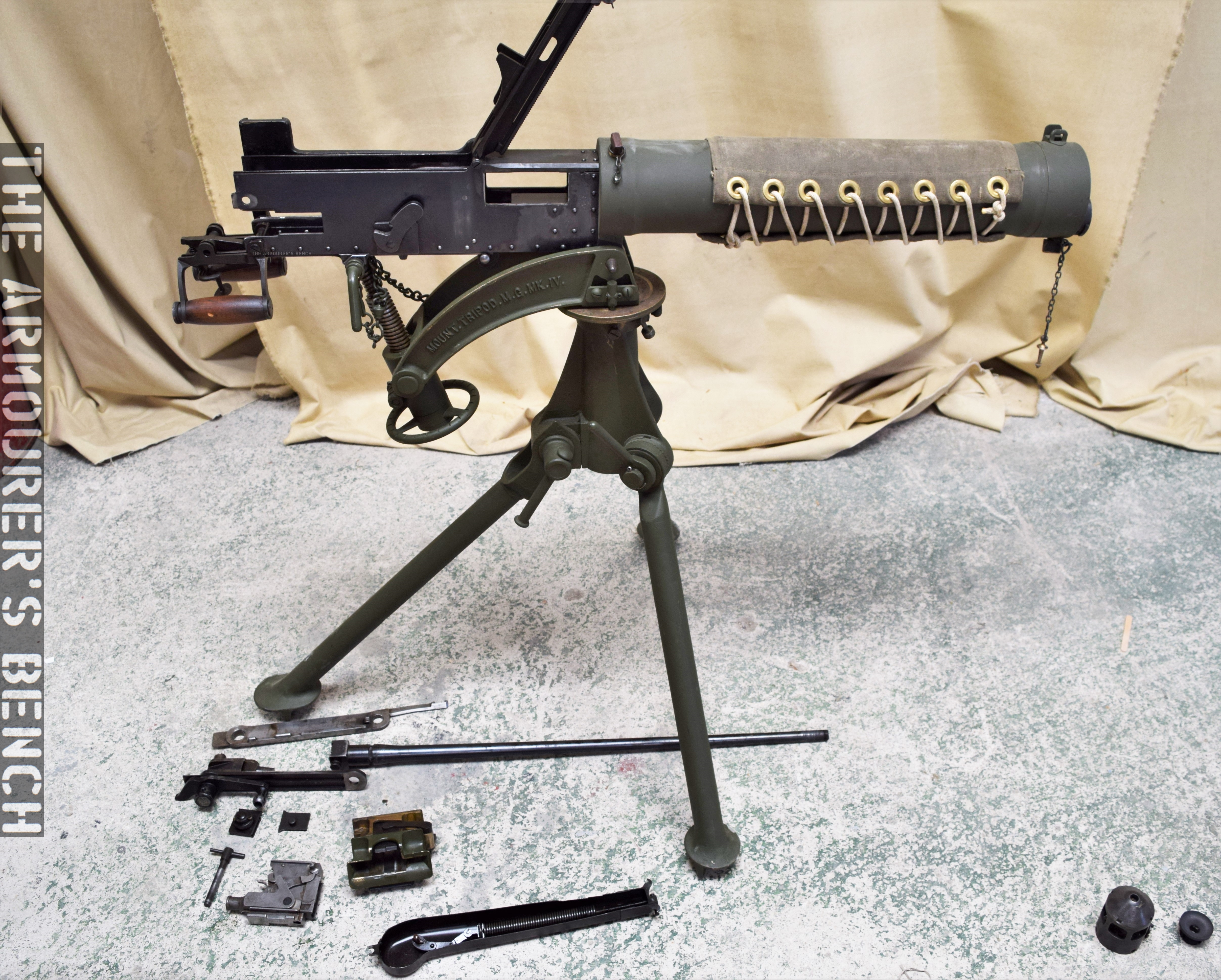
This is the gun in its fully field stripped condition, with lock still assembled, but with its fusee spring and cover off and its barrel and action removed. Just below the barrel is the feed block.

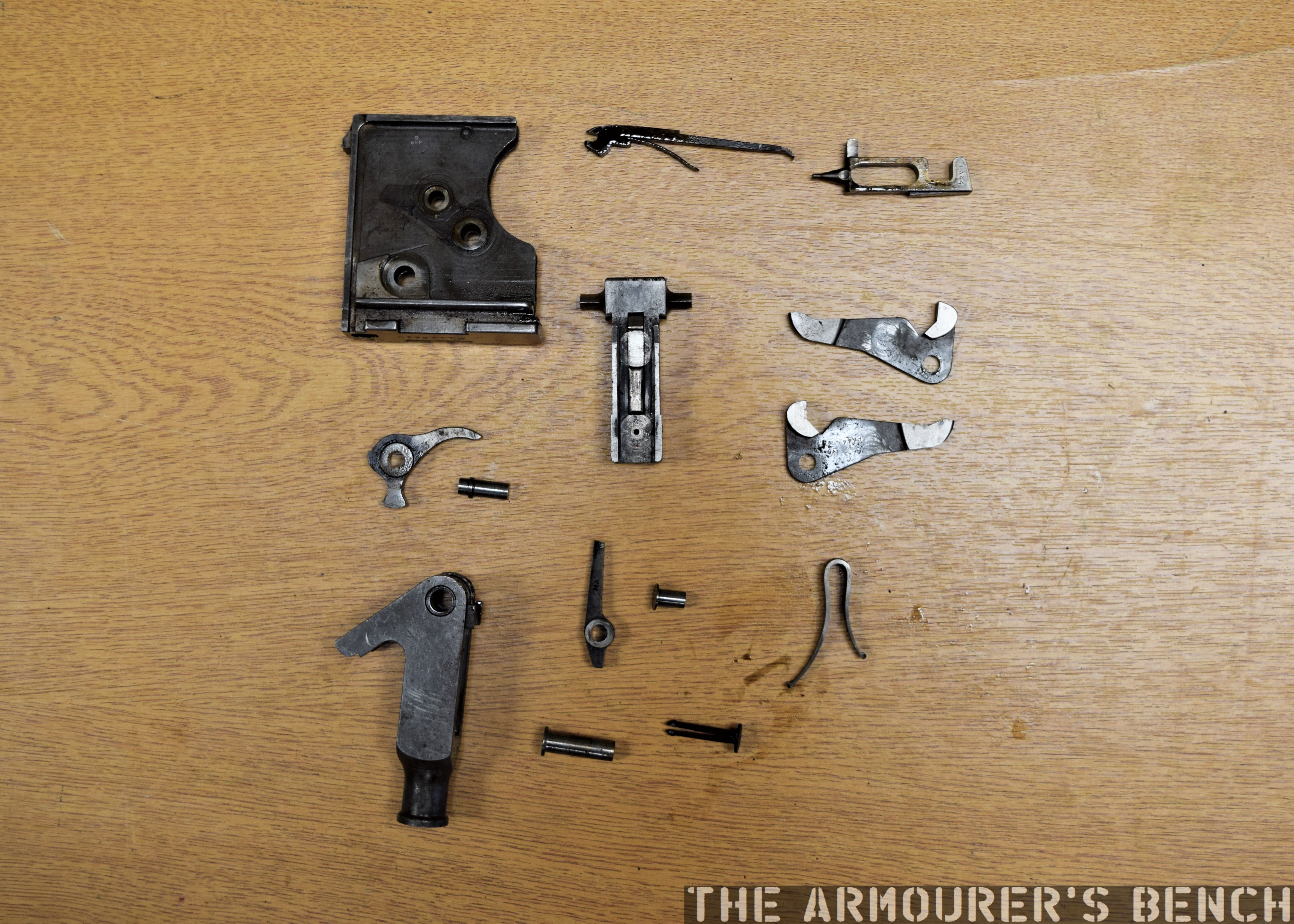
Here’s the Vickers Gun’s lock disassembled into its 14 component parts:

DSC_0363
The gun’s disassembled lock (Matthew Moss)

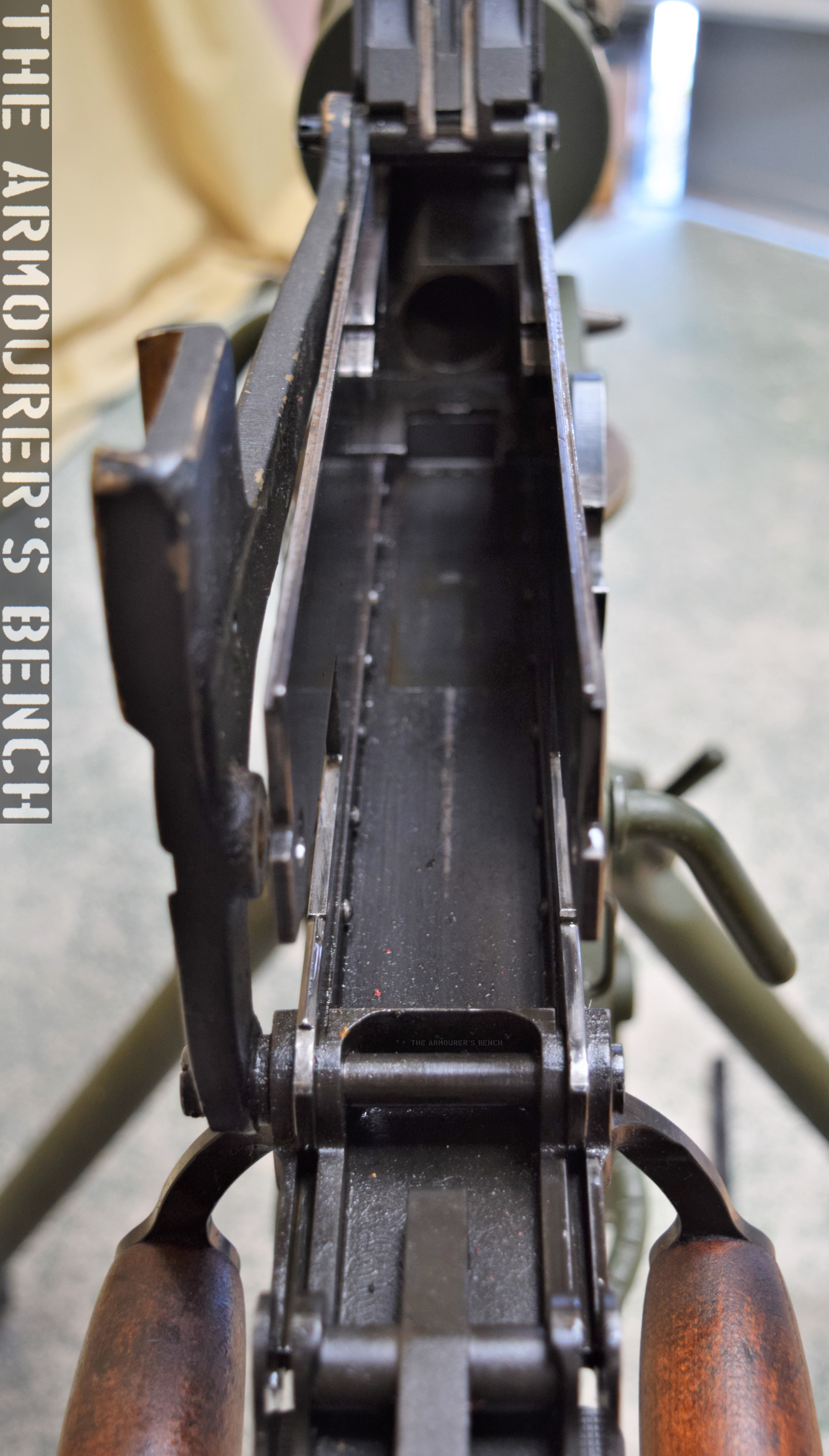
This photo gives us a good look inside the receiver with the barrel, action and side plates removed, The spade grip assembly simply folds down to allow the action and barrel to be slide out of the gun.

DSC_0366
Once the action and barrel is removed you can look straight through the receiver and down through the water jacket (Matthew Moss)

Finally, here’s the gun reassembled and ready for action.

DSC_0353
The gun fully reassembled (Matthew Moss)

Thanks again to Richard for his help with this video, it was great to collaborate and hopefully we’ll have more videos with Rich in the future.  Please check out the Vickers Machine Gun Collection & Research Association’s site to find out more about what they do. They have some wonderful resources, including a comprehensive collection of manuals, for not just the Vickers but also the wider British Army from the past 100 years. You can also order copies of the brilliant instructional posters which were featured in the video over on the the associations website too!

If you enjoyed the video and this article please consider supporting our work here. We have some great new perks available for Patreon Supporters.