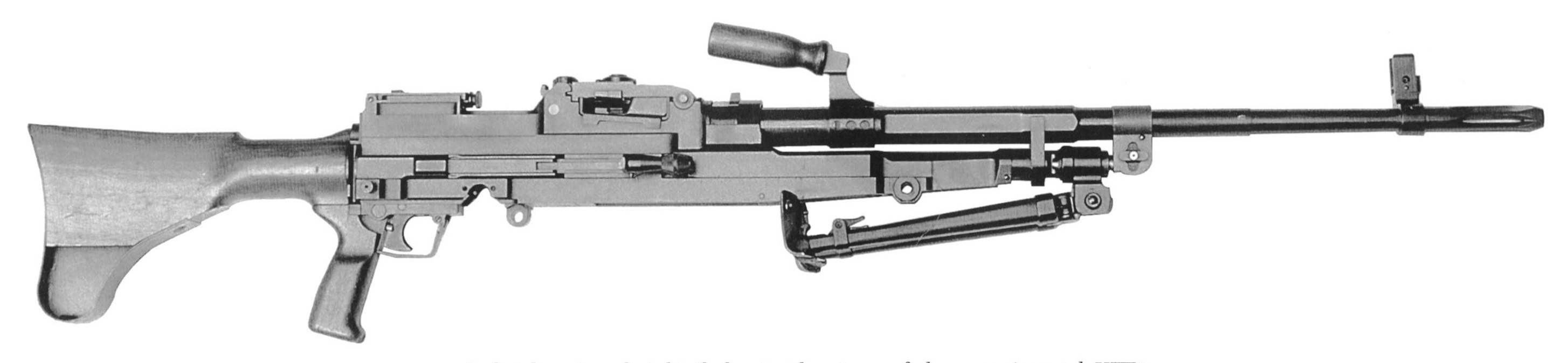
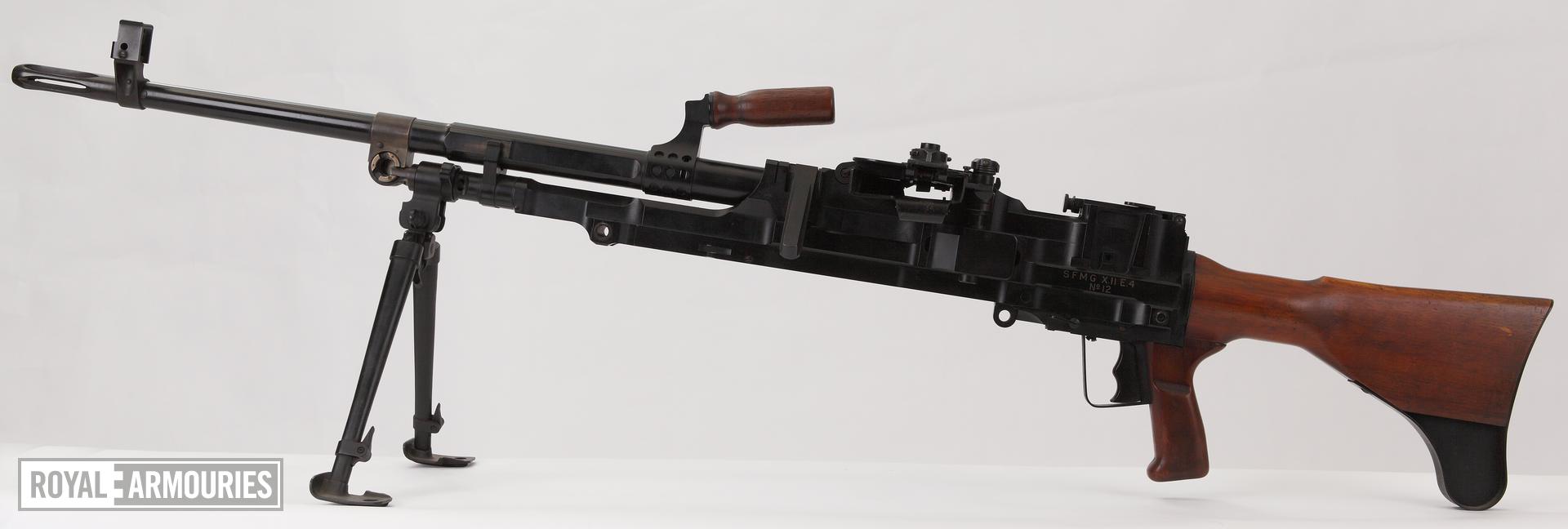
Is Russia Using North Korean Type 73s?

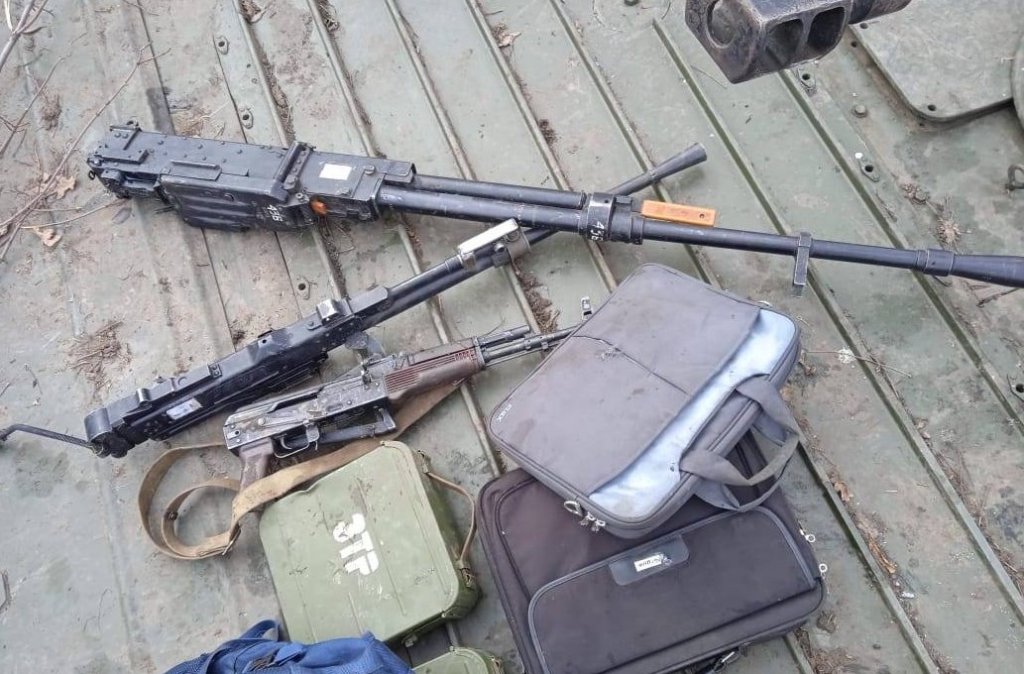
On 7 November, photographs began circulating on Russian telegram channels of North Korean Type 73 general purpose machine guns said to be in Russia. The appearance of the photographs led to suggestions the weapons are now in Russia service. This claim is somewhat supported by the appearance of Russian E.M.R. camouflage in the top right corner of one of the photographs.
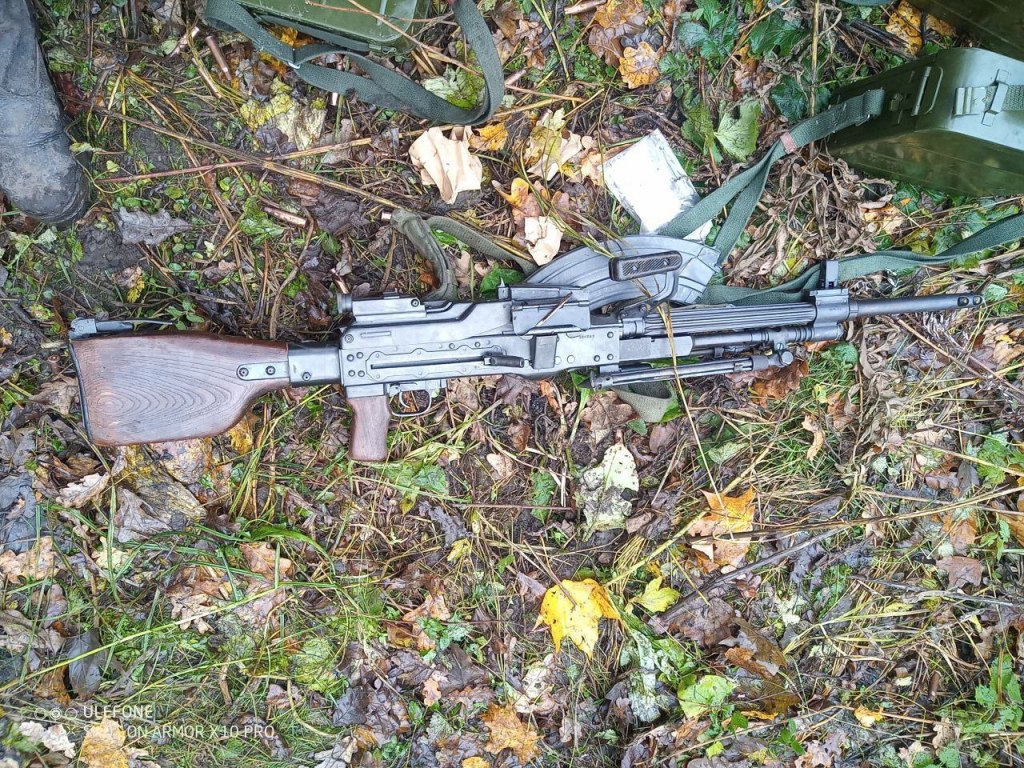
A North Korean Type 73 complete with magazine (via Russian social media)

The Type 73 is a fairly rare weapon though it has surfaced in conflicts areas such as Yemen, Iraq, Syria and Lebanon over the years. Thought to have entered service in the early 1970s, it is a somewhat unusual machine gun, it is gas-operated, using a long-stroke gas system, it fires from an open-bolt and is chambered in the long serving 7.62x54mmR cartridge. It is derived from the PK-pattern machine gun and as such feeds from standard Russian metal non-disintegrating belts but also is able to feed from proprietary box-magazines (which look a little like over-sized AK magazines). The magazine is dual stack, single feed which is designed to allow the Type 73’s bolt to pull cartridges out of its rear. Check out Forgotten Weapons’ video on the weapon for a better look at the action. The dual-feed design appears to have been influenced by the Czech vz.52/57. The Type 73 has a longitudinal fluted barrel with its front portion, ahead of the gas block, machined as a spigot to enable it to fire rifle grenades, it comes with a removable barrel shroud which acts as a muzzle device. Also visible in the photographs are the segments of cleaning rod which sit in channels in the weapons’ bipod.
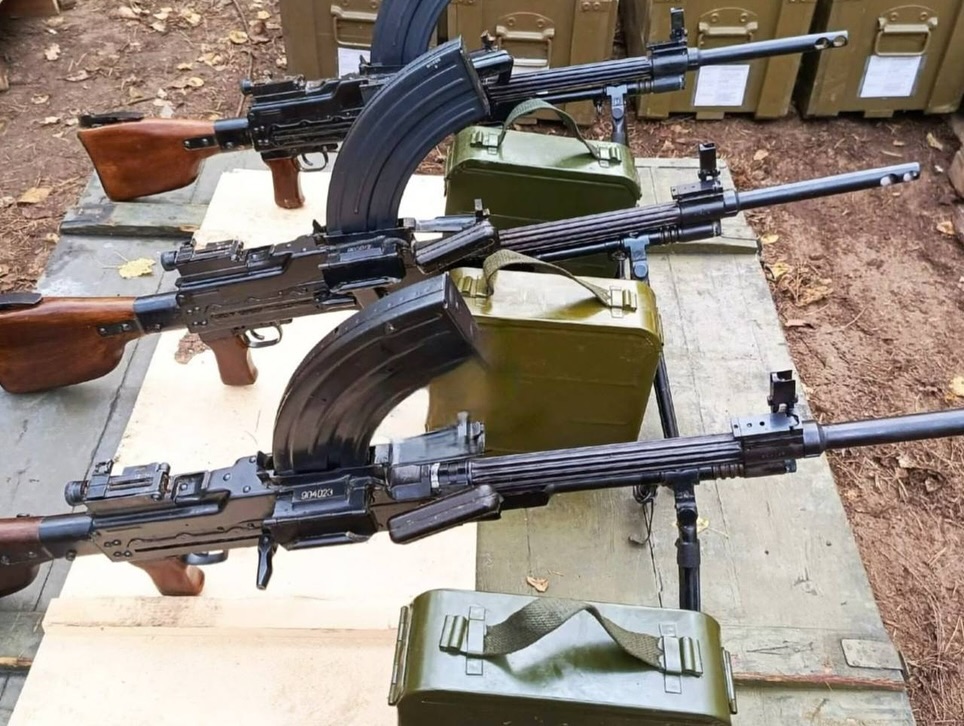
Three North Korean Type 73s complete with magazines and belt boxes (via Russian social media)

The dates and locations of when the photographs were taken is unclear and various Russian telegram channels are claiming a range of explanations varying from – the weapons were brought along with the North Korean troops who have reportedly arrived in Russia in recent weeks, to – they were provided to Russia as part of the military aid being provided by the DPRK. However, the photographs may also have been taken during a past exercise involving Russian and North Korean troops. The environmental conditions in the photographs do, however, correlate with the photographs being taken recently.

The photographs of the Type 73 emerged as a series of, as yet unverified, videos and photographs of North Korean troops in Russia have surfaced in recent days. Intriguingly, it was reported that the Ukrainian GUR had claimed that North Korean troops in Russia would be equipped with Russian small arms and light weapons including: AK-12s, RPK and PKM pattern machine guns, and RPG-7 shoulder-launched anti-tank rocket launchers.
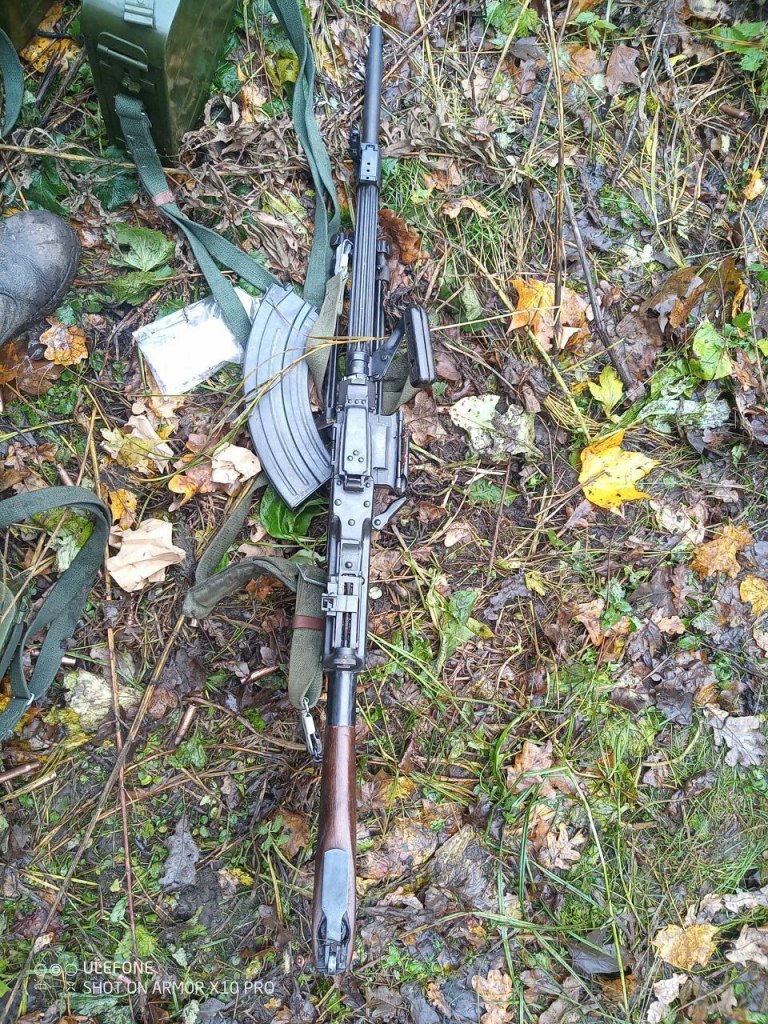
Top view of a Type 73 (via Russian social media)

The available imagery shows three Type 73s together in one photograph and then three detail photographs of another weapon on its own. The visible serial numbers on the guns include ‘904023’, ‘905012’ and a partially visible serial number which appears to read ’904032′ is seen in another photograph. Which places these three weapons relatively close to each other in the serial number range. Intriguingly, the typical star and model number aren’t visible in the above photograph.

If these images are verified and we see more evidence of their use it is extremely intriguing to see these weapons appear in Russia. It raises questions as to why Russia needs North Korean GPMGs – is Russia suffering from a shortage? The presence of some RPD light machine guns appearing in imagery of Russian forces training may also support this.
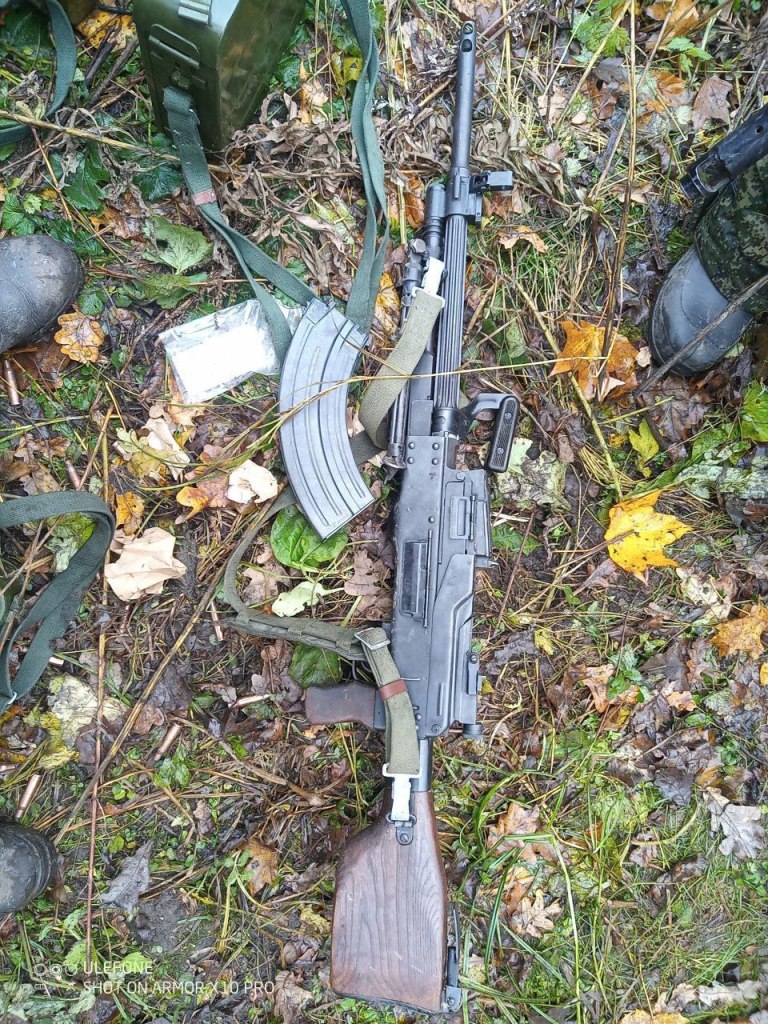
Left-side view of a Type 73 (via Russian social media)

The origins of the guns is also unclear, while the obvious source would be North Korea themselves, if so it is interesting that they would choose to supply Type 73s rather than their own straight copy of the PKM, the Type 82. If these guns are to be used for training purposes, or indeed in the field, then it would make more logistical and operational sense to acquire Type 82s so troops have commonality and familiarity with Russian PK-pattern machine guns. An another alternative potential origin for the guns is Russia’s other ally -Iran. Iran is reported to have acquired large numbers of Type 73s during the Iran-Iraq War (1980-88) and has since provided them to their proxies and allies. It may be that Iran has provided a shipment of these machine guns as part of their aid to Russia.

It remains to be seen if the Type 73 will enter service with Russian troops or indeed if we will see evidence of any other North Korean small arms.

Update 22/12/24: A short video appeared Russian telegrams of a Russian combatant examining a North Korean Type 73.

Update – 15/1/25:

A North Korean Type 73 GPMG mounted on a Russian motorbike & sidecar. No North Korean's in view. Interesting.More on the Type 73 in #Ukraine here: armourersbench.com/2024/11/17/i…#UkraineRussiaWar #SALW

Matthew Moss – Armourer's Bench (@matthewmoss.bsky.social) 2025-01-15T12:32:48.413Z

Support Us: If you enjoyed this video and article please consider supporting our work here. We have some great perks available for Patreon Supporters – including early access to custom stickers and early access to videos! You can also find us on the History of Weapons & War app. Thank you for your support!


Bibliography:

North Korean Small Arms, SADR, H. Hong, D. Shea, (source)

North Korean Small Arms and Light Weapons, Small Arms Survey, M. Schroeder (source)

North Korean Type 73, Forgotten Weapons, (source)

North Korean Type 73 GPMGs in Iraq, Syria & Yemen, ARES, A. Richter, (source)

Ohio Ordnance Works – REAPR

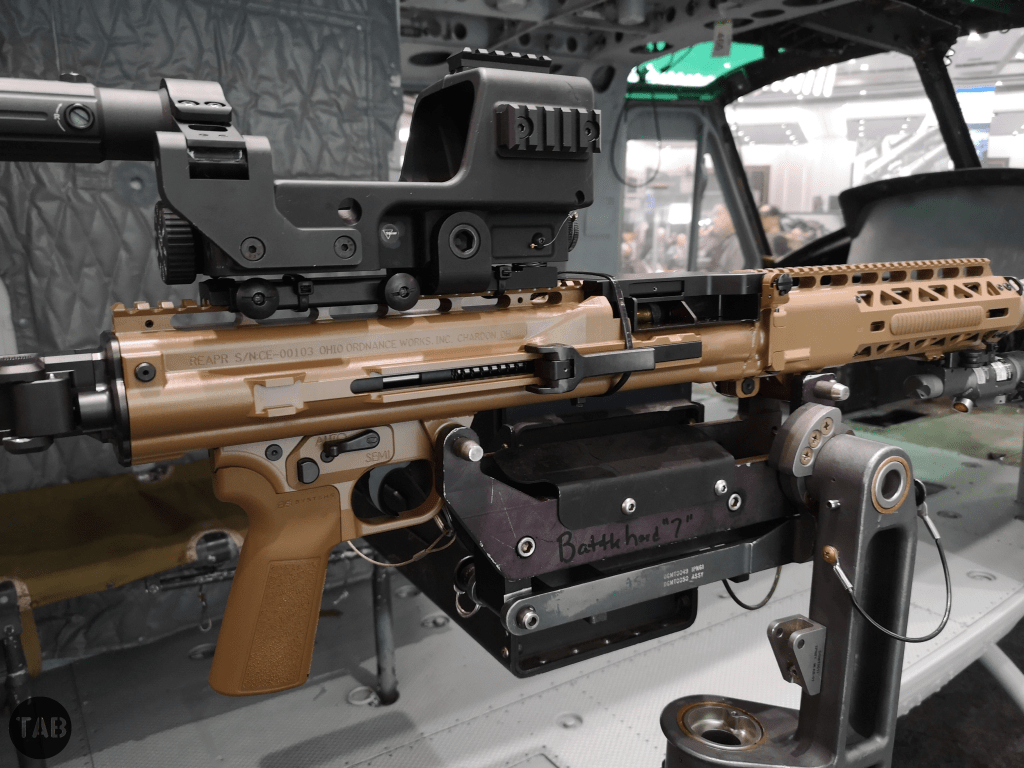
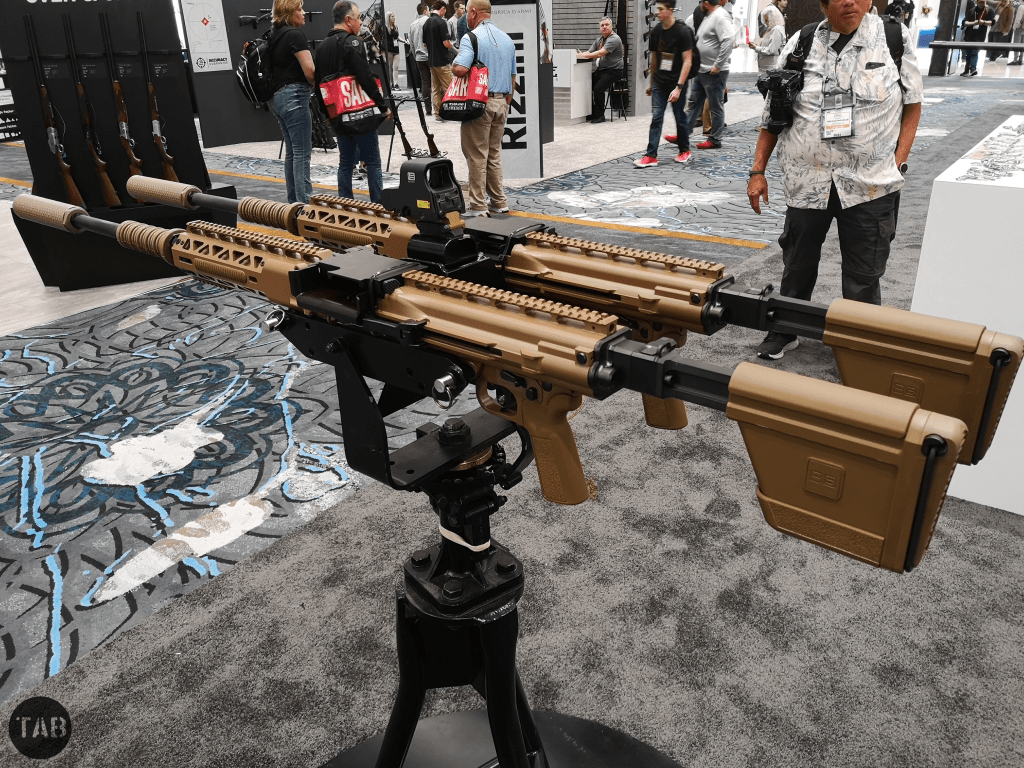
At SHOT Show in 2022, Ohio Ordnance Works teased their new .338 light weight medium machine gun, keeping the gun’s key features hidden under strategically placed scrim. This year the REAPR was unveiled for all to see. The REAPR or Recoil Enhanced Automatic Rifle is chambered in .338 Norma Magnum and can also be calibre converted to 7.62x51mm.

The gun was developed by Ohio Ordnance Works (OOW) in response to solicitations from the US SOCOM and US Marine Corps for a Lightweight Medium Machine Gun in .338NM. The niche requirement for a .338 gun dates back to at least 2012 with the first Sources Sought Solicitation being launched in May 2017. The solicitation requested:

The LWMMG should fire the belted .338NM round of ammunition with a polymer case. The LWMMG should weigh less than 24 pounds unloaded with a barrel length of 24in. The LWMMG should have a rate of fire of between 500-600 rounds per minute. Weapon shall be compatible with current rail mounted aiming systems with the ability to incorporate more advanced fire control technology. The system should include both a suppressed barrel and an unsuppressed barrel that can be rapidly changed. The LWMMG should include a tripod that is lightweight and provides the stability and accuracy required to engage targets at extreme ranges. The LWMMG should be able to mount in current machine gun mounts designed for the M240B/C. The weapon should have sufficient accuracy to engage area targets and vehicles at 2,000m.

General Dynamics led the field developing their .338 machine gun but this design was later divested to True Velocity and since then SIG Sauer have also developed their MG338/SL MAG. The 2017 solicitation is now inactive, however, in 2021 SOCOM (via PEO SOF Warrior, PM Lethality) began seeking an ‘LMG-M’. LMG-M project seeks a gun that can engage targets out to 2,500m and has a similar weight and form factor to an M240B. A contract had been hoped to be awarded by the end of 2022, however, this slipped back to 2025 and now likely 2026.

The aim of .338 machine guns is to fill the gap between the 7.62mm GPMG and the .50 HMG while providing a dismounted, lighter weight platform that can give the performance of a .50 calibre machine gun.

OOW began work on their gun in 2020 with numerous patents granted on its features. The REAPR is a select-fire weapon with ambidextrous controls on either side of the pistol grip assembly as well as a traditional cross-bolt safety. The pistol grip itself can be swapped out for any AR-15/M16 compatible grip. Robert W. Landies, OOW’s president and one of the designers of the gun, told me that with REAPR they addressed a lot of the pet peeves they had with legacy machine guns designs and that they “took a lot of features and amalgamated the best of them” when designing the weapon. Intriguingly, the gun uses a roller delayed operating system, similar to that of the MG45, this means the opening of the action is slowed by rollers but does not fully lock. Post-Second World War Two this system had some influence on a range of designs including the SIG MG 710-3 and a host of Heckler & Koch weapons. The gun uses a pair of springs on dual guide rods and has a 600 rpm rate of fire. The weapon can be field stripped without tools. To remove the action a pin at the rear is removed which allows the butt stock and rear of the receiver to be removed with the springs, guide rods and bolt sliding out of the receiver.

It has a side folding stock, designed in house with B5, with a shoulder rest and an adjustable cheek riser. B5 also provided the REAPR’s P23 Grip and MLOK rail covers. According to OOW the REAPR weighs in a 26.8lbs and has an overall length of 51.7in (131cm) when the stock is collapsed, 54.5in (138cm) when deployed and 44in (112cm) when folded (it can fold either to the left or right). For use when mounted on vehicles or aircraft the stock can be removed and a spade grip kit can be fitted. There is also a rail mounted removeable carrying handle.

A key feature is the gun’s barrel quick change system, this can be done with one hand by the operator. The change can also be done with the bolt either in the forward or rear position. The patented system uses 2 opposing groups of 5 interrupted threads, this allows the barrel to be released with just a 90-degree turn. To remove the barrel the operator grasps the barrel cover, pushes the barrel rearward, towards the receiver, and then turns the barrel 90-degrees to disengage it. The REAPR can be mounted with a suppressor, it has been seen paired with cans from a number of different manufacturers.

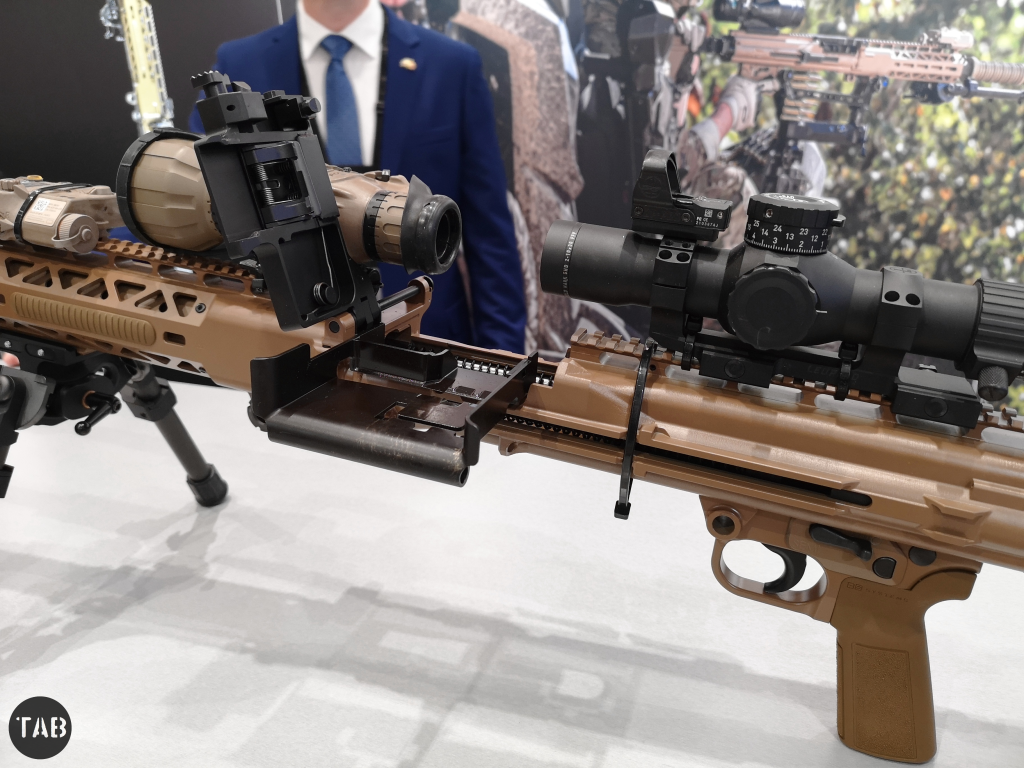
Another feature is that the entire system can be broken down into 3 pieces within 10-20 seconds. It can be packed away with the barrel at 24.5in (61cm) being the longest component. The REAPR has a one-piece steel receiver and an aluminium hand guard with MLOK slots, which can be removed via a pair of catches. The gun also has MIL-standard mounting points for either tripod or pintle mounting. Another key, patented, feature is the gun’s feed tray which can slide out to the side of the gun for loading and clearing, this allows the operator to use optics with a larger continuous footprint. SIG Sauer addressed this issue by having a cover which hinges to the side. The REAPR’s direction of feed can be flipped either left or right and ejection is through the bottom of the receiver. OOW note that the gun has a mounting interface for an ammunition pouch on the left side of the receiver but are considering adding one to the right side but are waiting on feedback from users.

OOW say that the REAPR is currently available for ordering in test quantities but full volume production is set to begin in April 2024. The REAPR seems to be a very competent, well thought out design with a lot of promise. It will be interesting to see how the LMG-M programme progresses.


Support Us: If you enjoyed this video and article please consider supporting our work here. We have some great perks available for Patreon Supporters – including early access to custom stickers and early access to videos! Thank you for your support!


Bibliography:

‘Firearm top cover with multiple degrees of freedom of motion’, US Patent #11268774B1, (source)

‘Quick-change barrel for a firearm’, US Patent #11598600B2, (source)
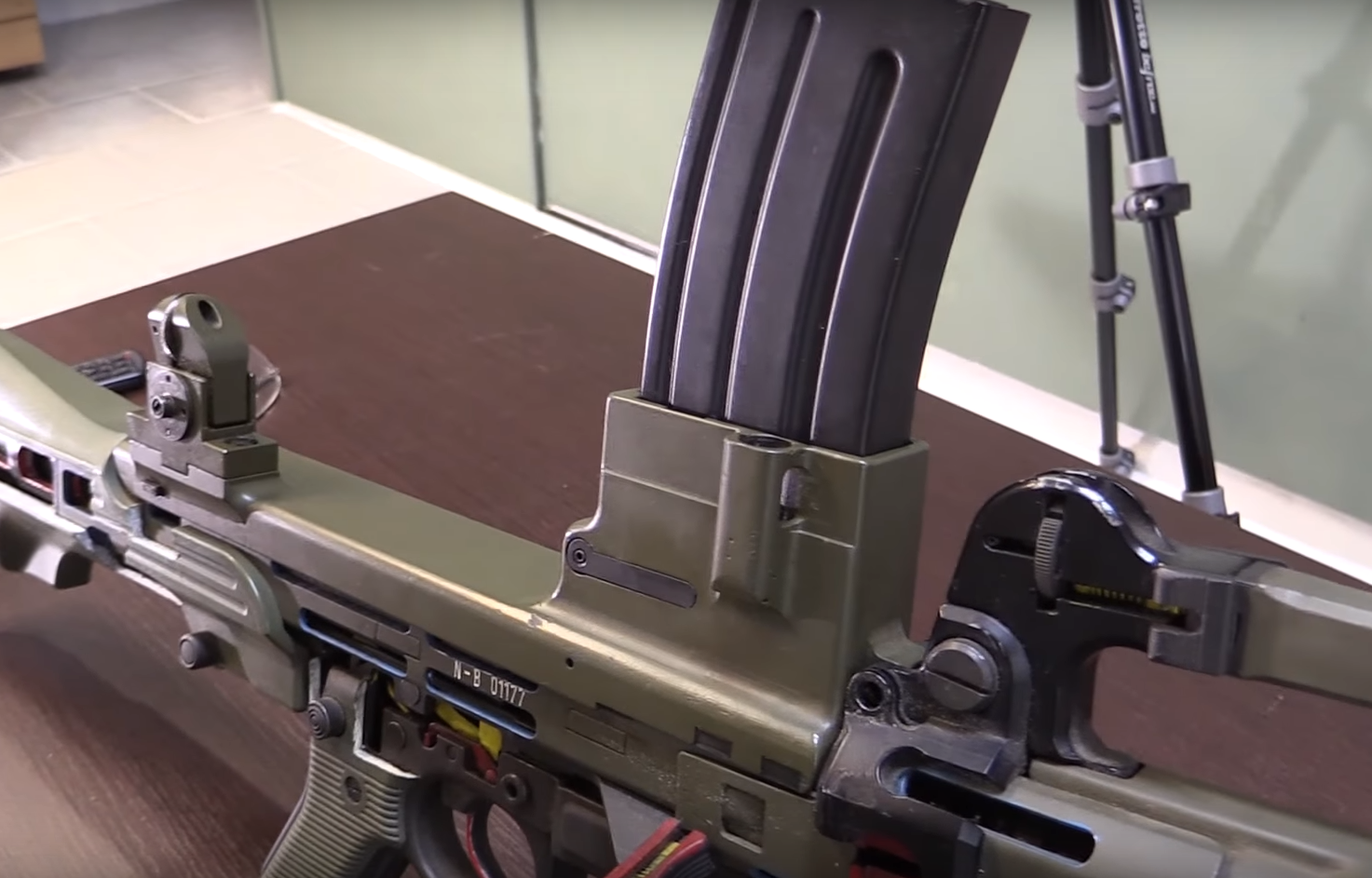
[FULL BREAKDOWN] Ohio Ordnance REAPR .338 NM Belt-Fed Machine Gun, OOW, (source)
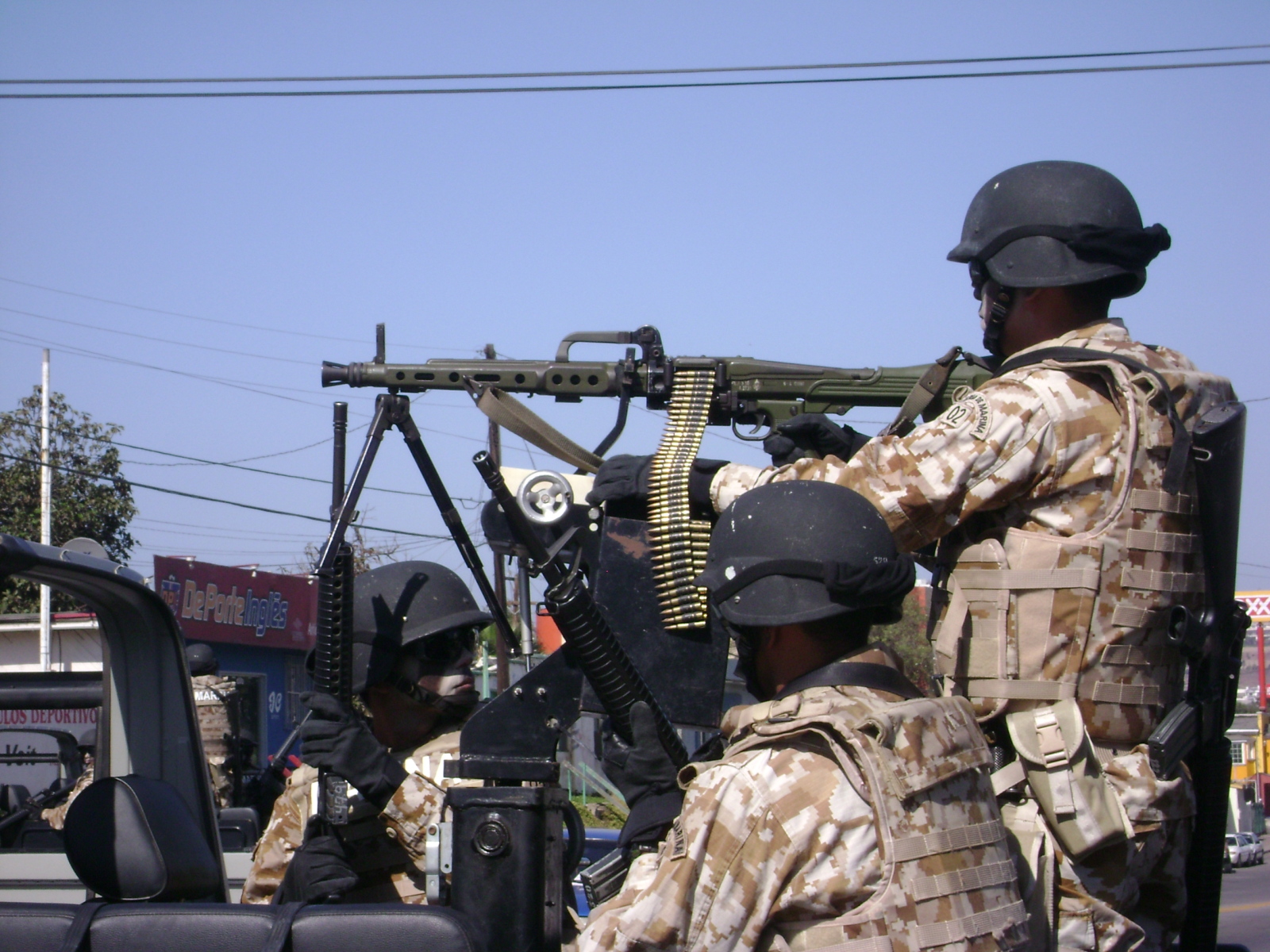
Lightweight Medium Machinegun (LWMMG), SAM.gov, (source)
USSOCOM Small Arms Update 2021, SSD, (source)

SOFIC 22 – USSOCOM Weapons Update, SSD, (source)

SOF Week 23 – USSOCOM Weapons Update, SSD, (source)

Full Circle: A Treatise on Roller Locking, R. Blake Stevens (2006)

Making Belt Boxes For Ukraine’s Machine Guns

Earlier this month Popular Mechanics published an article I wrote about GRaft, a Ukrainian company which has manufactured belt boxes for almost every type of machine gun being used by the Ukrainian armed forces.

While belt boxes might not seem like the most exciting pieces of military equipment, they’re no less vital than the guns they’re paired with; the boxes are essential for storing and carrying ready-to-use belts of linked ammunition, and they allow machine gunners to move around unencumbered by hanging belts that can become tangled.

M240 GPMG with GRaft 100-round belt box (GRaft)

GRaft initially designed and manufactured furniture including benches and tables but with the full-scale Russian invasion in February 2022, they have since turned their attention and skills to belt boxes. With machine guns being transferred to Ukraine by a plethora of different countries this has led to a wide variety of machine guns entering service with the Ukrainian armed forces. In many cases the machine guns transferred to Ukraine are often without enough belt boxes.

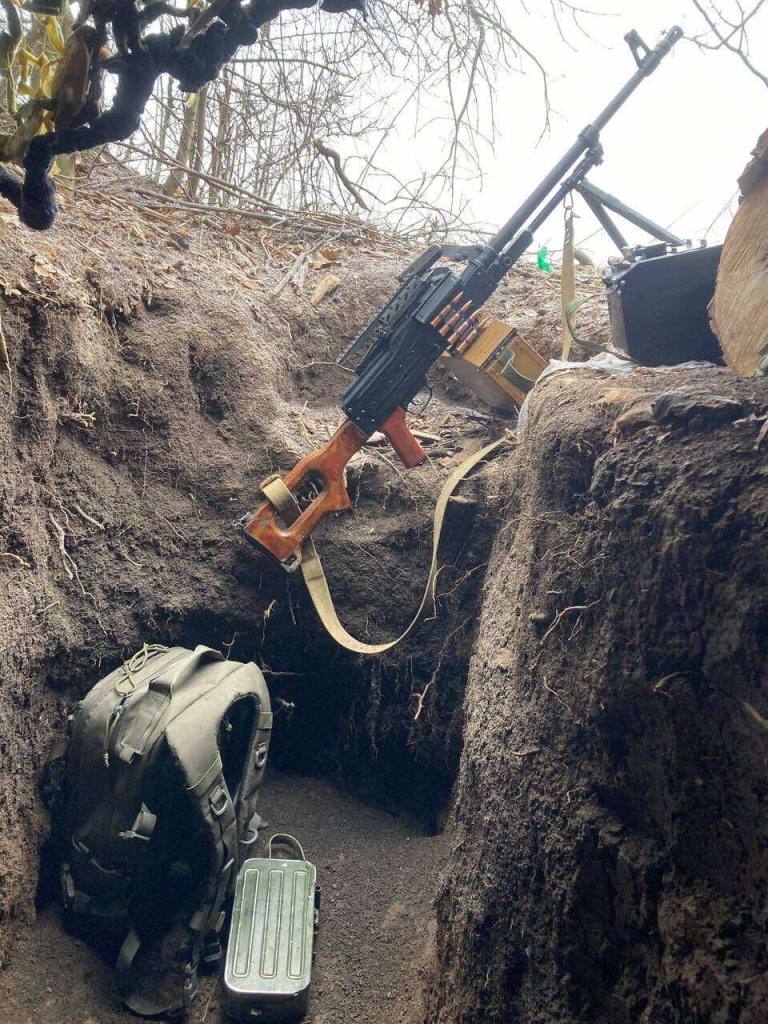
I spoke to one of GRaft’s engineers who explained that their impetus to begin designing and manufacturing belt boxes came from friends’ experience with old boxes for PK-pattern machine guns. He explained that the old aluminium PK boxes had seen decades of service and there was a general shortage of them.

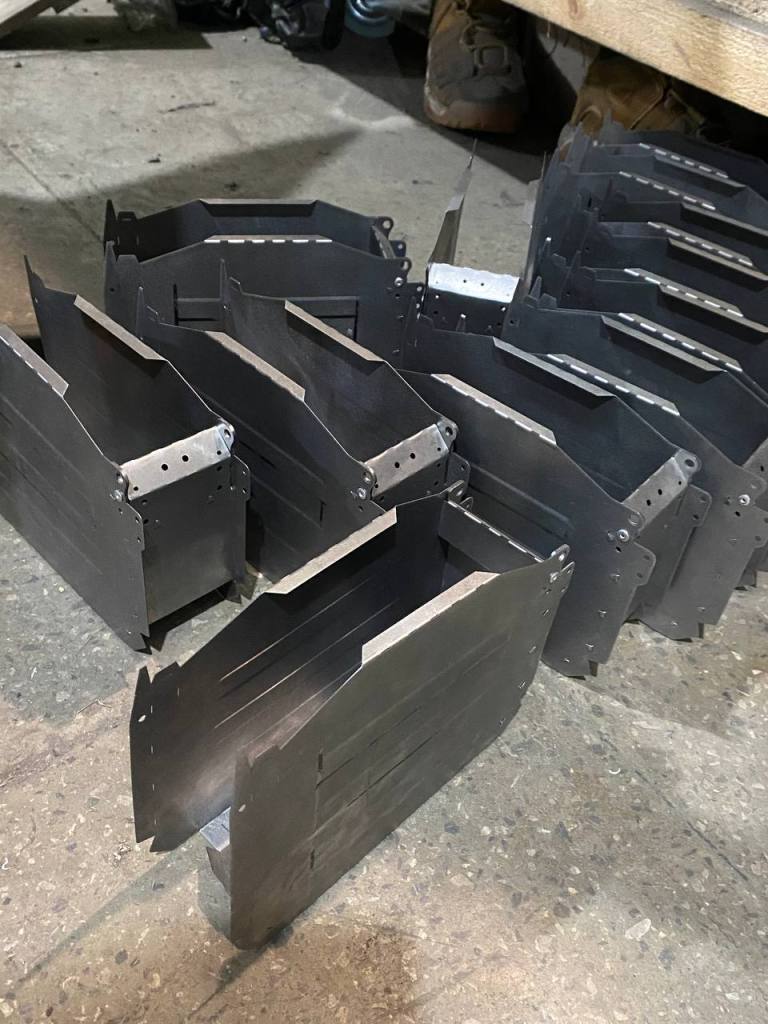
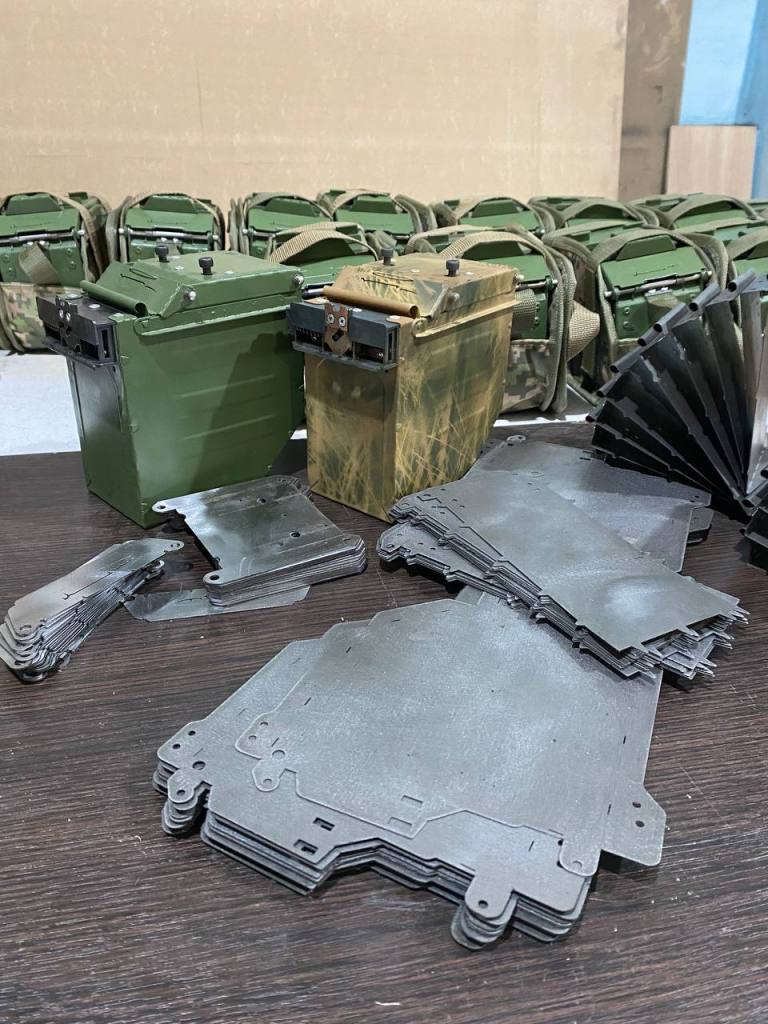
GRaft belt boxes at various stages of fabrication (GRaft)

GRaft began work on their PK box in April 2022 and within a month had a design ready for manufacture. GRaft refined its designs based on direct user feedback and soon began working on belt boxes for other weapons ranging from 14.5mm KPVs to 5.56x45mm and 7.62x51mm FN Minimis.

GRaft kindly shared some videos from their workshop showing how the belt boxes are fabricated. They use laser cutting to cut sheet metal into blanks which are then shaped and riveted and spot welded into their final form. They work with a small paint shop that then powder coat the boxes.

PK GPMG with GRaft belt box (GRaft)

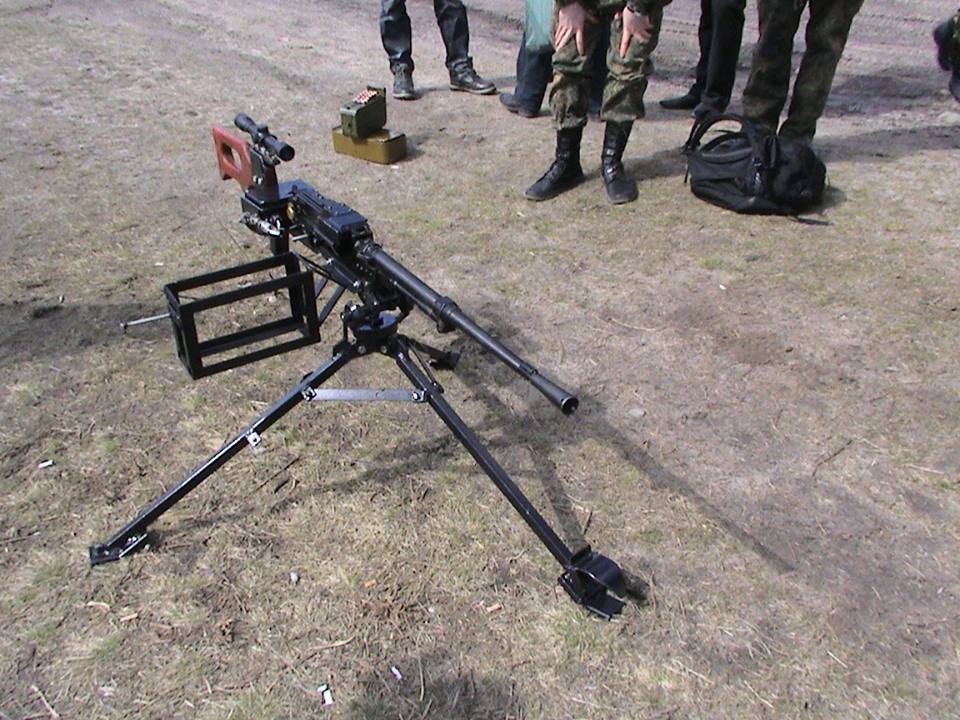
The company also developed 75 and 100-round boxes for the FN MAG/M240, the 100 round box was designed with an angled wall so the mass of the belt sits closer to the weapon’s center of balance, improving the weapon’s handling. Similarly they have also begun producing boxes for 7.62x51mm MG42-pattern machine guns. Their goal, the engineer told me, is “satisfied machine gunners” but really they’d like to get back to producing furniture.

Check out my full article on GRaft’s work over at Popular Mechanics.


Support Us: If you enjoyed this video and article please consider supporting our work here. We have some great perks available for Patreon Supporters – including early access to custom stickers and early access to videos! Thank you for your support!


Ukraine Is Converting Salvaged Russian PKTs

The Kalashnikov designed PK machine gun is one of the most ubiquitous general purpose machine guns in the world. Designed by Mikhail Kalashnikov and his team in the late 1950s. We’ve seen a number of PKMs in Ukraine already but another variant, the PKT, has popped up in a couple of interesting pieces of press footage. 

It appears that there is a car repair shop in Kyiv which is taking in captured and salvaged Russian machine guns and adapting them for ground use with an ad-hoc stock and pistol grip assembly. Fantastic ingenuity and the team is reported to be made up of welders, engineers and mechanics. 

What may be an early version of the adaptation (via France24)

The first piece of footage of the workshop surfaced on the 9 March and a France24 report was published on the 16 March. We’ve yet to see any of the adapted PKTs in the field.

The PKT itself was developed in 1968 to replace the SG-43-derived SGMT. The PKT is primarily used as a coaxial gun on armoured vehicles including the MT-LB, BTR-4, BTR-60, BTR-80, BTR-90, the BMD and BMP series and Russia’s T-72, T-89 and T-90 series of tanks. One thing the Ukrainians have not been short of is captured and abandoned Russian armoured vehicles. The adapted PKTs will probably be used to help equip the Territorial Defence Force battalions which have been raised across Ukraine.

Offering up an aftermarket optics rail, this option appears to have been abandoned in favour if a side-mounted optics mount (via UAWeaponsTracker)

The PKT is solenoid fired, with the gunner pushing a button to fire the gun. This means that it obviously has no pistol grip or trigger assembly but it also lacks sights and a bipod. So when the Ukrainian’s are salvaging these gun they are essentially useless for immediate ground use. The footage from the workshops shows that they have developed a simple stock and pistol grip assembly. The stock slides into the trunnion at the rear of the receiver, where the solenoid firing unit normally fits. The pistol grip and trigger mechanism assembly is then pivoted up and secured by a cross pin. There appears to be a simple hook projecting up from the trigger mechanism assembly which trips the sear inside the PKT.  

Diagram showing the PKT with its solenoid firing mechanism in place
In this diagram we can see how the PKT is mounted in an armoured vehicle (PKT Manual)

The stock appears to be from a standard PK and the pistol grip is a widely available aftermarket AK-pattern grip which seems to be held in place by a large nut and bolt. To get around the PKT’s lack of sights the workshop have fitted a scope mount, welded to the left side of the stock assembly. The gun is seen here with what appears to be a thermal optic.

In the second piece of footage we see some adapted PKTs with classic AK pistol grips attached to stock assemblies. The pistol grip no longer hangs free but is attached to the stock. The trigger mechanism also appears to have been redesigned. Now when the trigger is pulled an arm protrudes from the stock, it pivots from the top – rather than from the bottom as in the example we saw in the first video. This might suggest that the gun featured in the 9 March footage is the workshop’s initial prototype. If so they have moved from a relatively crude design to a more sophisticated on in about a week. From the France24 report it seems the engineers and mechanics had the benefit of some military experience and some technical drawings. 

Detaching the stock and firing mechanism assembly from a PKT (via France24)

In terms of historical precedent – there is plenty. As long as tanks have had machine guns infantry have been salvaging their guns for ground use. Seen during both world wars and in conflicts around the world. In terms of ad-hoc weapons for home defence forces like the Ukrainian Territorial Defense Force the British Home Guard during the Second World War were partially equipped with aerial Lewis Guns which were retrofitted with bipods and stocks.

Below are some examples of PKTs adapted in Ukraine since the conflict in Donbas began in 2014.

The adaptation of PKTs specifically was seen during the Chechen Wars and in 1992 the Nagorno-Karabakh War. Further adaptation have even been seen in Ukraine since 2014.

PKT (Rosobronexport)

A kit was reportedly designed by Tula which allowed a PK stock with rear sight and a pivoting pistol grip to slot into the rear trunnion of the gun. This provided a mechanism to fire the gun and a bipod with a front sight could be fitted. It is unclear if this has ever been fielded. 

A captured Kord (Tank) heavy machine gun and a PKT

From the footage it appears the workshop are also working on adapting NSVTs, the vehicle mounted variant of the 12.7×109mm NSV heavy machine gun. The mechanic lifts an NSVT without its barrel to show a workshop-made pistol grip assembly with some box steel projecting out the rear, perhaps for a stock to be fixed to.

The PKT has a slightly longer barrel at 722mm or 28.4in (compared to the PKM’s 645mm or 25.3in), a slightly redesigned gas system and is also 1kg heavier at 10.5kg (23lbs). The PKT has a thicker barrel profile. The PKTM has a slightly reinforced receiver but few other differences compared to the PKT.


If you enjoyed this video and article please consider supporting our work here. We have some great perks available for Patreon Supporters – including custom stickers and early access to videos! Thank you for your support!


PKTM Specifications (from Rosoboronexport):

Caliber:7.62x54mmR
Weight: 10.5kg / 23lbs
Overall Length: 1098mm / 43in
Barrel Length: 722mm / 28.4in
Rate of fire: 700-800RPM
Belt capacity: 250rds
Muzzle velocity: 850m/s / 2788ft/s
Sighting range of fire: 1500m / 1640yds

Bibliography:

Operator’s Manual PKM Machine Gun, US Army, (source)
PKT Coaxial Machine Gun Modified for Infantry Use, Silah Report, (source)
Differential Identification of NSV and Kord Heavy Machine Guns, ARES, (source)
PKTM, Rosoboronexport, (source)
PKT (PKMT) Machine Gun, Tankograd, (source)

Thank you to Amael Kotlarski for a copy of the PKM manual

Vickers Gun Disassembly

The Vickers Gun is an iconic weapon, developed from the Maxim and adopted by the British in 1912. It served for over 50 years in conflicts all around the world. In this video, we’re lucky enough to have Richard Fisher of the Vickers Machine Gun Collection and Research Association shows us how to disassemble a the gun and talk us through its internals.

Big thank you to Rich for taking the time to help with this video and provide the voice over explaining the process! We’ll have more videos on the Vickers Gun in the future! Check out Richard’s work over on the Vickers Machine Gun Collection and Research Association’s site here.

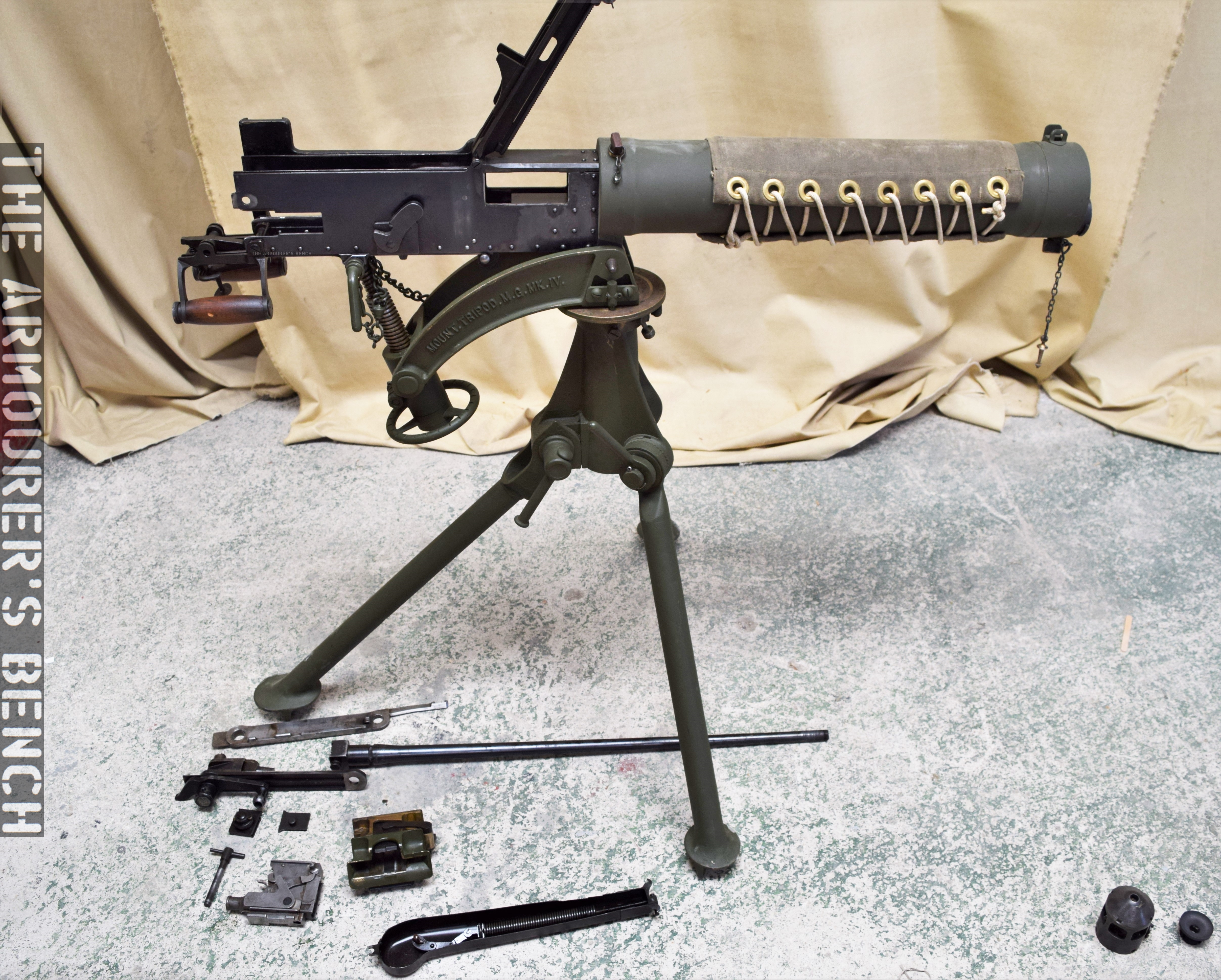
I’ll let Rich explain the disassembly process in real time in the video but here are a couple of photographs of the gun disassembled:

DSC_0371
The Vickers gun field stripped (Matthew Moss)

This is the gun in its fully field stripped condition, with lock still assembled, but with its fusee spring and cover off and its barrel and action removed. Just below the barrel is the feed block.

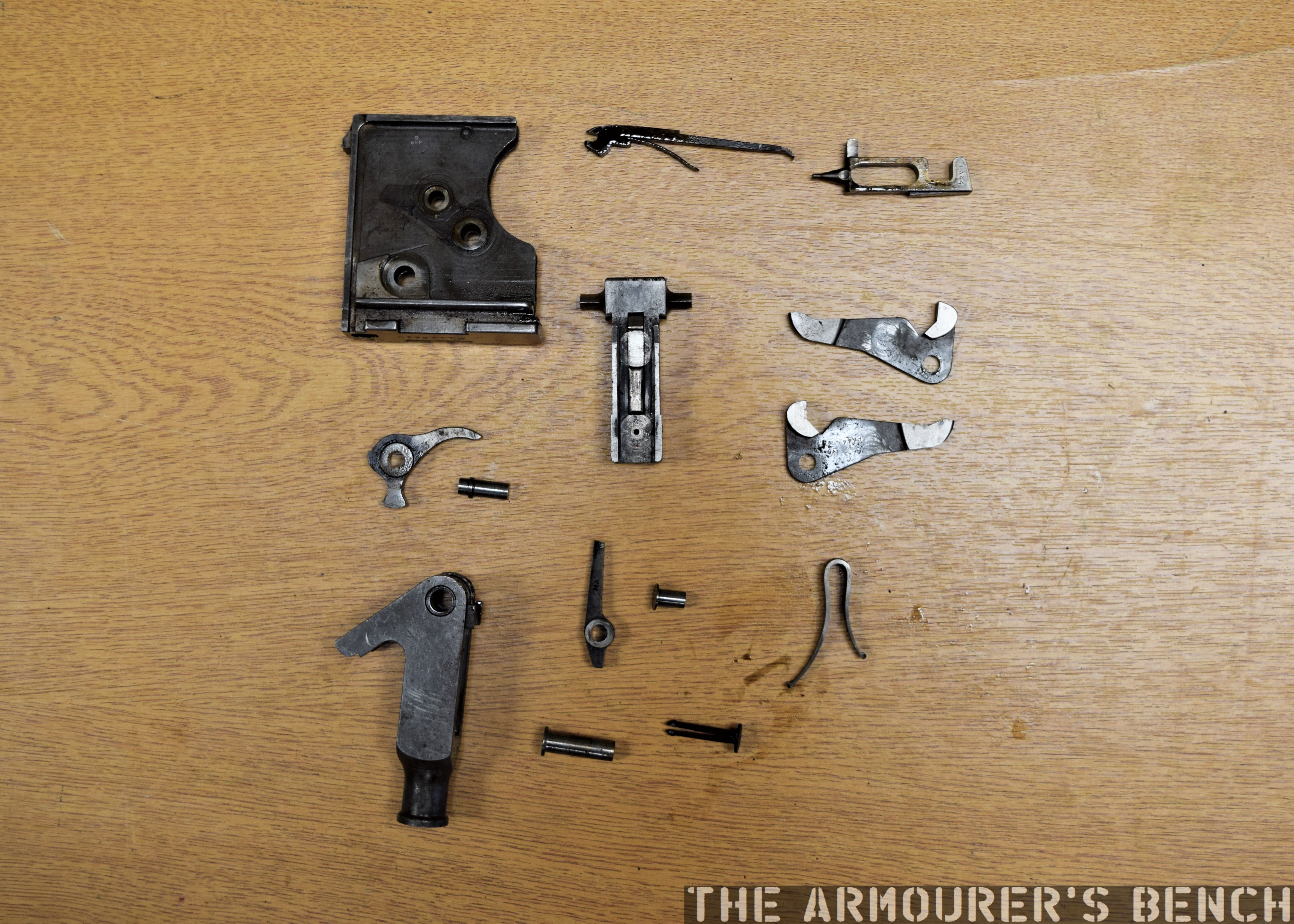
Here’s the Vickers Gun’s lock disassembled into its 14 component parts:

DSC_0363
The gun’s disassembled lock (Matthew Moss)

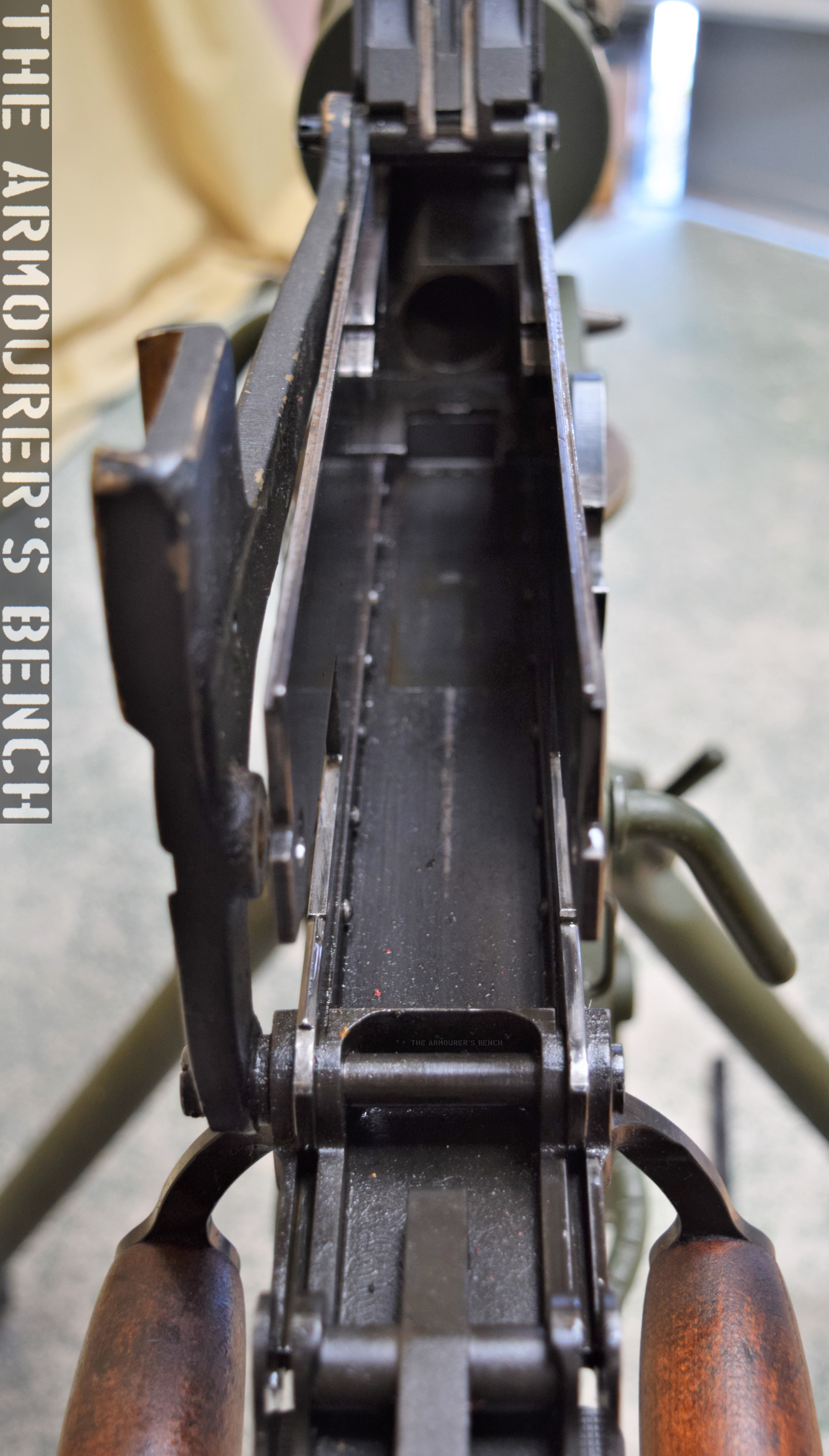
This photo gives us a good look inside the receiver with the barrel, action and side plates removed, The spade grip assembly simply folds down to allow the action and barrel to be slide out of the gun.

DSC_0366
Once the action and barrel is removed you can look straight through the receiver and down through the water jacket (Matthew Moss)

Finally, here’s the gun reassembled and ready for action.

DSC_0353
The gun fully reassembled (Matthew Moss)

Thanks again to Richard for his help with this video, it was great to collaborate and hopefully we’ll have more videos with Rich in the future.  Please check out the Vickers Machine Gun Collection & Research Association’s site to find out more about what they do. They have some wonderful resources, including a comprehensive collection of manuals, for not just the Vickers but also the wider British Army from the past 100 years. You can also order copies of the brilliant instructional posters which were featured in the video over on the the associations website too!

If you enjoyed the video and this article please consider supporting our work here. We have some great new perks available for Patreon Supporters.


Live Fire: Browning M1919A4

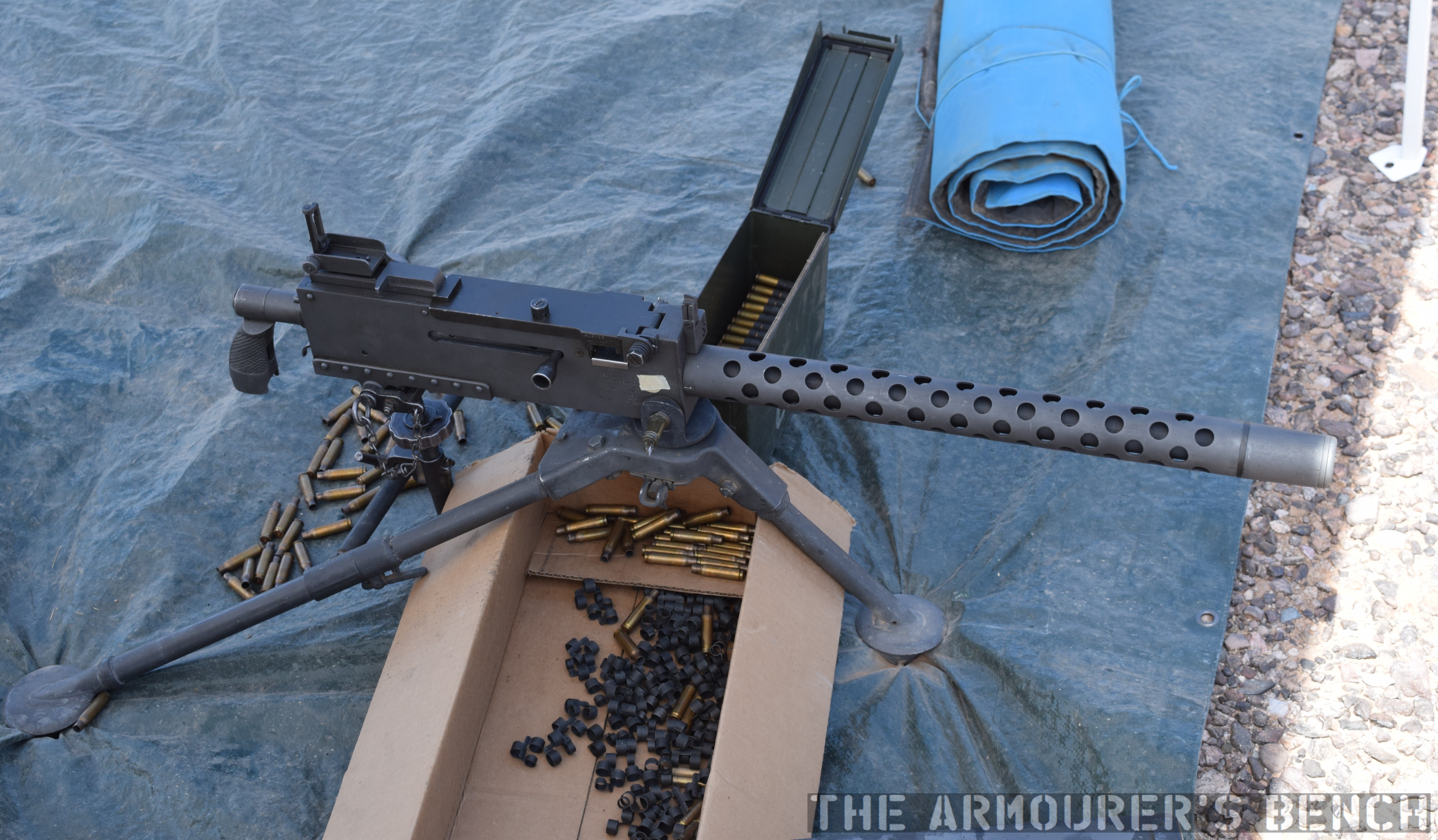
Today’s episode is the last video of 2018, so we thought we’d end the year with a bang, literally. Earlier this year Matt had the chance to get behind an original Browning M1919A4 so we’ve put together a video showing the classic belt-fed machine gun in action with some slow motion footage thrown in!

DSC_0450
Browning M1919A4 (Matthew Moss)

This M1919A4 was built in 1944 at GM’s Saginaw Steering Division plant, in Saginaw Michigan. It was one of nearly half a million M1919A4s built during World War Two. In the video Matt explains a little of the gun’s history and how it worked.

S1270015_Moment
M1919A4 with its feed cover open (Matthew Moss)

This M1919 has been rechambered from the original .30-06 to 7.62x51mm NATO and uses M13 disintegrating links rather than a cloth belt or M1 disintegrating links. My thanks to Chuck and his buddy over at GunLab for letting me put several belts through his gun, it was a lot of fun.

We’ll have a full, in-depth, episode on the Browning M1919 in the future.


Thanks to everyone for watching, liking, subscribing and commenting on our videos this year, we can’t tell you how much we appreciate all the support we have received. I’m very pleased to say we reached 3,000 subscribers before the end of the year, very pleased that our community is growing! We have much more to come in 2019, and we’ll be back with regular videos in January.

The CETME AMELI Light Machine Gun

The CETME AMELI was developed by Spain’s state-owned small arms institute, Centro de Estudios Técnicos de Materiales Especiales or CETME. It was an attempt to develop a light machine gun chambered in 5.56x45mm. Its name, AMELI, is an acronym for ‘Ametralladora ligera’ – simply Spanish for light machine gun.

Development of the AMELI began in 1974 under the supervision of Colonel José María Jiménez Alfaro (who would later become the director of CETME). The Ameli was officially unveiled in 1981 and after undergoing exhaustive military trials was adopted into service in 1982 as the standard squad-level support weapon of the Spanish Army under the designation MG 82. It was manufactured by the Santa Bárbara National Company (now General Dynamics Santa Bárbara Sistemas) at the La Coruña factory.

Centrefire automatic machine gun - CETME Ameli (about 1982) (1)
Early NA or standard model AMELI (Royal Armouries)

The initial model was the NA variant, or Standard Model. This is the model that closely resembles the MG-42 with its conical flash hider. The Spanish military, however, wanted a lighter gun and the NB variant was designed, this is easily identified by the straight flash hider that is now integral with the barrel and not part of the barrel shroud.  The NB model reduced the unloaded weight from the original 7.24 Kg (16 lbs) to 5.4 Kg (12 lbs). However, this weight reduction and the use of materials of lower cost than the original trialled guns caused reliability issues with the AMELI in service. Both variants had a rotating rear disk sight, graduated from 300 to 1,000 metres, and a folding front sight. A mounting block for a British SUSAT optic was later added to the top cover.

Ameli with Winter Trigger Group
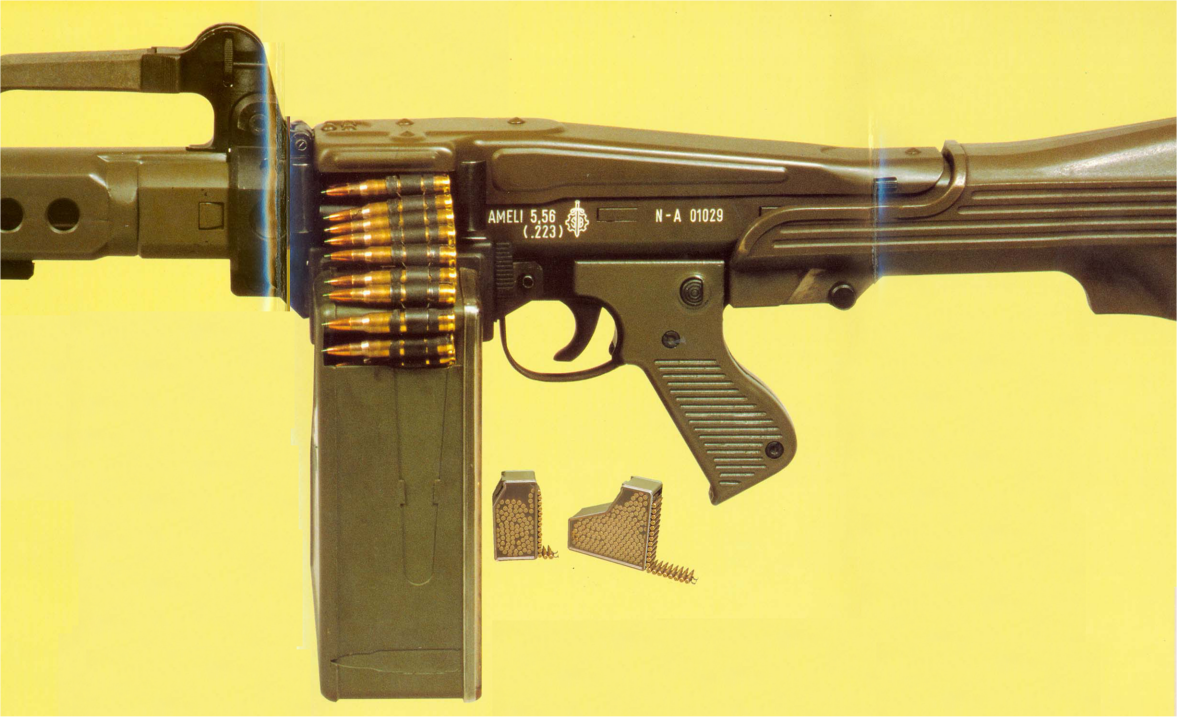
Detail view of the AMELI’s receiver from a factory brochure, also featuring the transparent belt boxes which did not go into service (source)

Parts breakages and stoppages plagued the AMELI in service and gunners had to take great care of their weapons to keep them serviceable. One issue was that the stamped forward barrel shroud was a press fit over the receiver and held in place by steel ‘barbs’. Rough handling and downward pressure on the bipod during manoeuvres and firing caused the shroud to deflect, this caused accuracy and functionality issues. To alleviate these problems the Spanish Marines went so far as to TIG weld the forward barrel shroud to the receiver, this fixed most of those issues.

The AMELI’s shape resembles the MG42 machine gun but the similarities are external only. While the MG42 uses the short recoil, roller locked system (where the barrel and bolt recoil together a short distance before separating), the AMELI employs a roller-delayed blowback action with a fixed barrel and a fluted chamber. This system was also used in the CETME Model A, B, C and L rifles, as well as in the HK G3 rifle, the HK 33 rifle and the HK MP5 submachine guns. Similarities with the CETME Model C and Model L rifles are limited to the commonality of the takedown pins and no other parts contrary to popular myth!

Centrefire automatic machine gun - CETME Ameli (about 1982)
Later NB variant of the AMELI – note also the different pistol grip profile, more similar to a CETME L rifle’s (Royal Armouries)

Both AMELI models have similar rates of firing of around 1,000 rounds per minute. The AMELI used the same feeding system used in the MG42, it had a cross bolt safety located at the rear of the top of the pistol grip and a quick change barrel system. To remove the barrel you pull the two sides of the barrel latch, which is built into the rear sight assembly, rotate the handle clockwise until the gate in the side of the barrel shroud opens and then pull the barrel back out of the gun. The front of the barrel is secured by a round ball detent which clicks into the front of the barrel shroud.

CETME also developed a top feeding magazine adaptor system, perhaps inspired by the contemporary FN Minimi’s ability to feed from magazines as well as a bolt. The Bren-like adaptor allows a STANAG magazine to be loaded in upside down into the action. To fit the adaptor the gun’s top cover and feed tray had to be removed. To deal with the magazine housing now obscuring the front sight the adaptor had a new set of sights – one at the rear and a new ‘front’ sight built into the side of the magazine housing, a little like the Australian F1 submachine gun. This short sight radius isn’t too practical for a light machine gun.

1111111111111111111111111111111111111111
A still from the video showing the top feed magazine adaptor’s sights, note they’re offset to the right and the protected front sight is built into the magazine housing (Vic Tuff)

The AMELI was sold to only a few operators apart from the Spanish Military, the Mexican Army and the Malaysian PASKAL Naval Special Forces have used the AMELI but the current status with those operators is unknown. In Spanish service the Ameli has almost entirely been withdrawn from service, being replaced with the Heckler & Koch MG4 5.56x45mm LMG. This is partly due to reliability issues and the original guns being worn out and with spares and new guns no longer available as the original manufacturer ceased manufacture in 2013 and went out of business.

Mexican Army Ameli
Mexican Marines with an NA model AMELI (source)

The AMELI is an interesting machine gun that should have had more success than it did. It was sadly a victim of government cost cutting which much like the British SA80 undermined the quality of the finished product. The story of the AMELI also reminds me of the ArmaLite AR10 produced by Artilleries Inrichtingen in the Netherlands, in so much as the AMELI was produced in very limited numbers (around 3-4,000 guns), in various models and variants with no clear defined history as to why aspects of the design were changed. Evidence of this was seen when a very good contact of mine bought up all remaining inventory from the CETME factory some years ago including around 30 Ameli’s. Apparently there were variations between every one they bought!

If you enjoyed the video and this article please consider supporting our work here.


Specifications (from CETME brochure):

Length: 97cm (38.2 inches)
Weight (unloaded):  NG: 6.7kg (14.8 lbs) NB: 5.2kg (11.5 lbs)
Barrel Length: 40cm (15.8 inches)
Action: Roller-delayed blowback
Calibre: 5.56x45mm
Feed: 100 or 200 round belts
Cyclic Rate: 900-1,250 rpm


Bibliography:

CETME AMELI Operator’s Manual, Small Arms Review Archive, (source)

CETME AMELI Early Factory Brochure (Spanish), Small Arms Review Archive, (source)

CETME AMELI Factory Brochure – including both models (English), Small Arms Review Archive, (source)

CETME AMELI Factory Flyer (Spanish), Small Arms Review Archive, (source)


Interview with Richard Fisher of the Vickers Machine Gun Collection

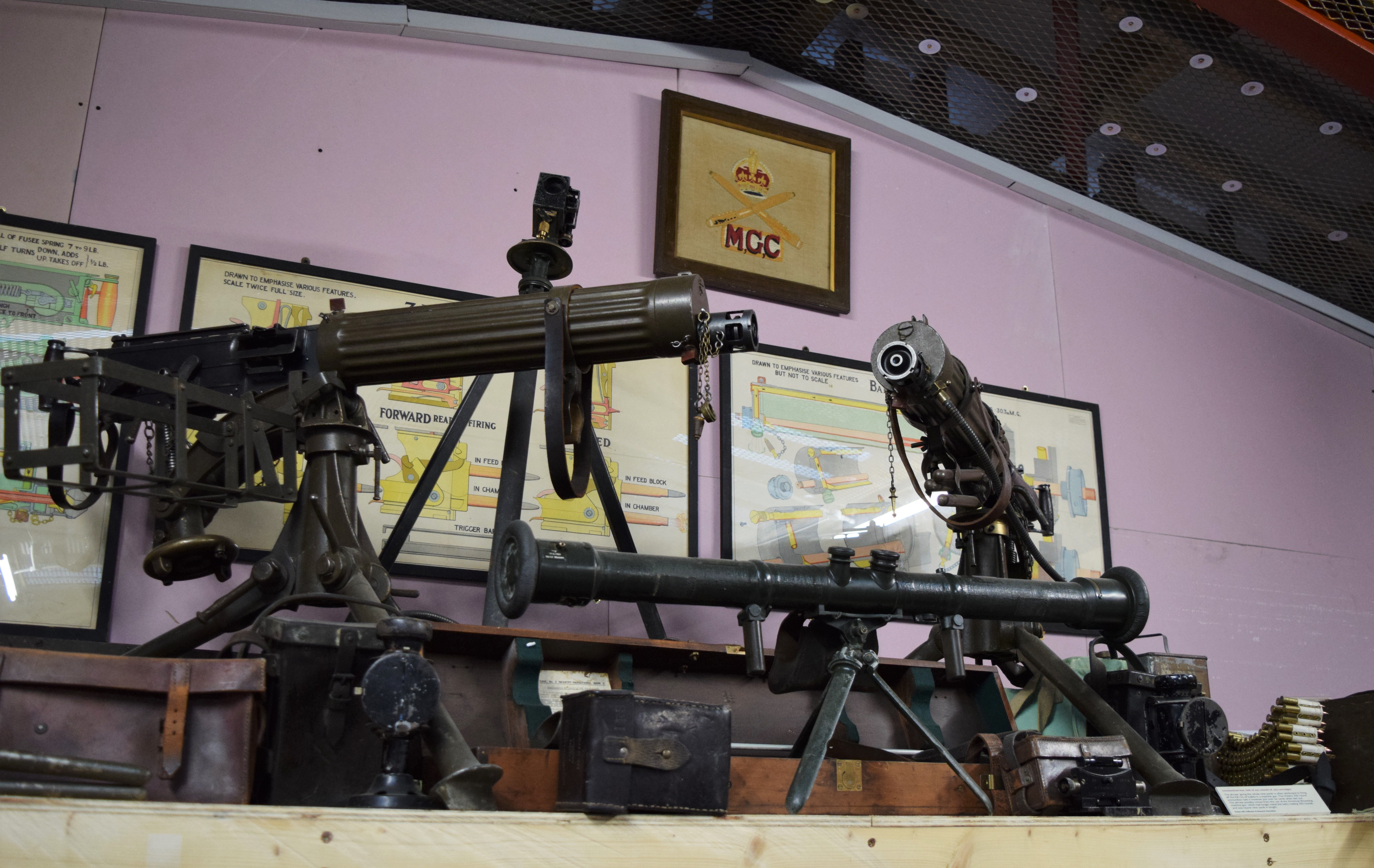
Richard Fisher, the director of the Vickers Machine Gun Collection and Research Association, was kind enough to invite us down to take a look at his collection of Vickers guns. Richard is a fantastic source of information on the Vickers, and British small arms more generally, and I’ve picked his brains on numerous occasions in the past so it was a real pleasure to meet him in person and discuss the collection.

I thought the best way to explain what the collection and research association does is to discuss it on camera with Richard, so as a result we have TAB’s first ever interview. Incidentally, it’s also the first on-camera interview I’ve ever conducted!

Vickers guns
A pair of Vickers Guns dating from 1915 at the Vickers Machine Gun Collection (Matthew Moss)

Richard’s impressive collection spans much of the Vickers’ history with representative examples of not just the many different types of Vickers that were produced but also the accoutrements and equipment that went along with the guns. The collection endeavours to bring together all the weapons, kit and equipment that a British Army section that operated the Vickers would have carried – during both World Wars.

The collection is open to visits from interested individuals and parties and is often shown at history events around the UK. Richard’s website is one of the best sources of information, manuals and documents on the Vickers available and is well worth checking out.

You can find the Vickers MG Collection on twitterfacebook and online at their website: www.vickersmg.org.uk

We’d like to thank Richard for inviting us down and for speaking to us about the collection. In the future we will hopefully have more videos featuring the collection.


M45 Quadmount

Matt recently had the opportunity to visit the excellent Menorcan Military Museum at Es Castell, on the Spanish Balearic Island of Menorca. The museum is well worth a visit with some very rare and extremely interesting weapons on display. 

M16
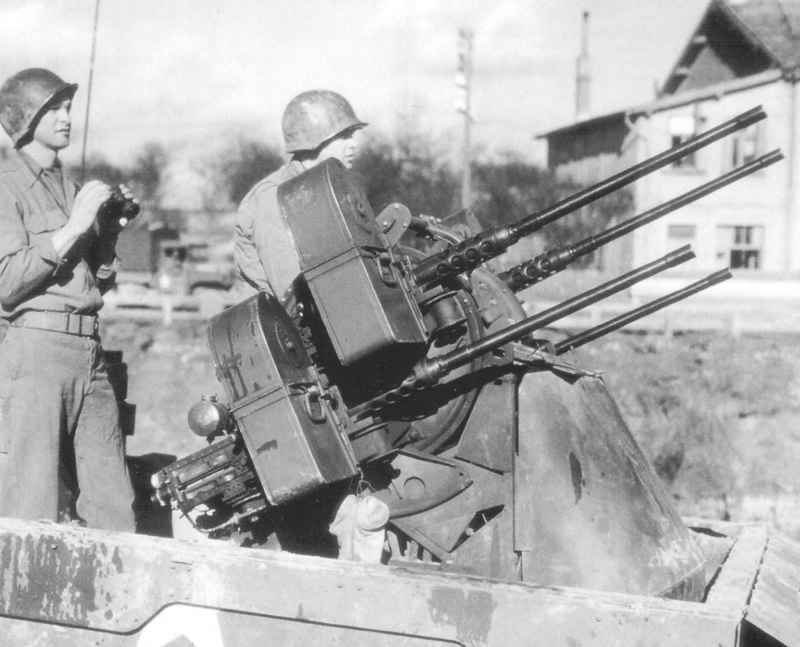
An M45 mounted on a M16 half-track during World War Two (source)

The M45 Quadmount was developed by the W.L. Maxson Corporation for the US Army. It mounted four .50 calibre M2 Browning Heavy Machine Guns on a lightweight, rotating powered mount.  I recently had the opportunity to take a closer look at an M45 while visiting the Menorcan Military Museum.

Introduced in 1943, the M45 was capable of 360 degrees of rotation and 90 degrees of elevation. It was manned by a three man crew: two loaders, who loaded the M2 Browning’s 200-round belt drums, and a gunner.

The M45 was extremely versatile and could be mounted on a number of trailers and vehicles including the M20 and M17 trailers and the M16, M17 and M51 half-tracks.

M45 TM
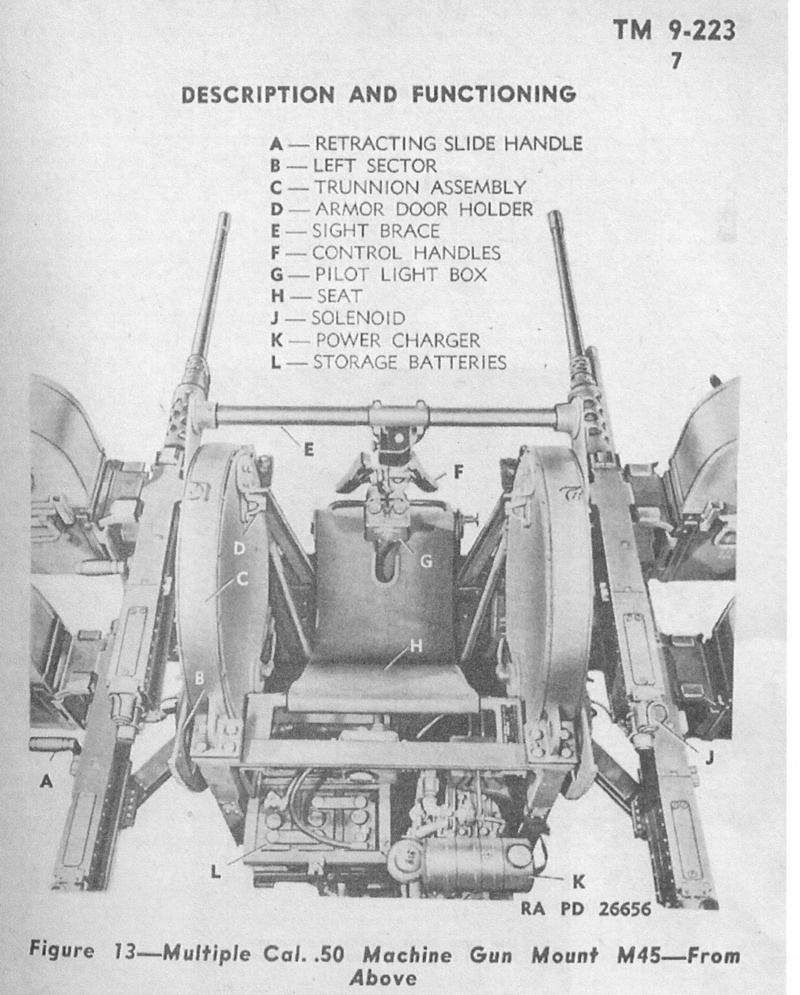
Diagram from the M45’s manual showing the layout and some of the Quadmount’s parts (source)

The gunner sat on a canvas seat inside the M45, between the two pairs of guns. He controlled the aiming of the guns with two control handles and aimed the M45 through a reflex sight which was mounted to a sight bar.

The M45 was powered by two 6-volt batteries and weighed approximately 2,400lb (1,090kg). The gunner was protected by an armoured plate at the front with two hinged armour plates either side of the M1X reflex sight. The M45 mounted four M2 TT (Turret Type) varriant machine guns – these were fired by solenoids. All four of the guns could be fired at once but gunners normally alternated between the upper and lower pairs in order to allow the guns to cool and loaders to replenish the drums.

US_Army_M16_MGMC_AA_Half-track
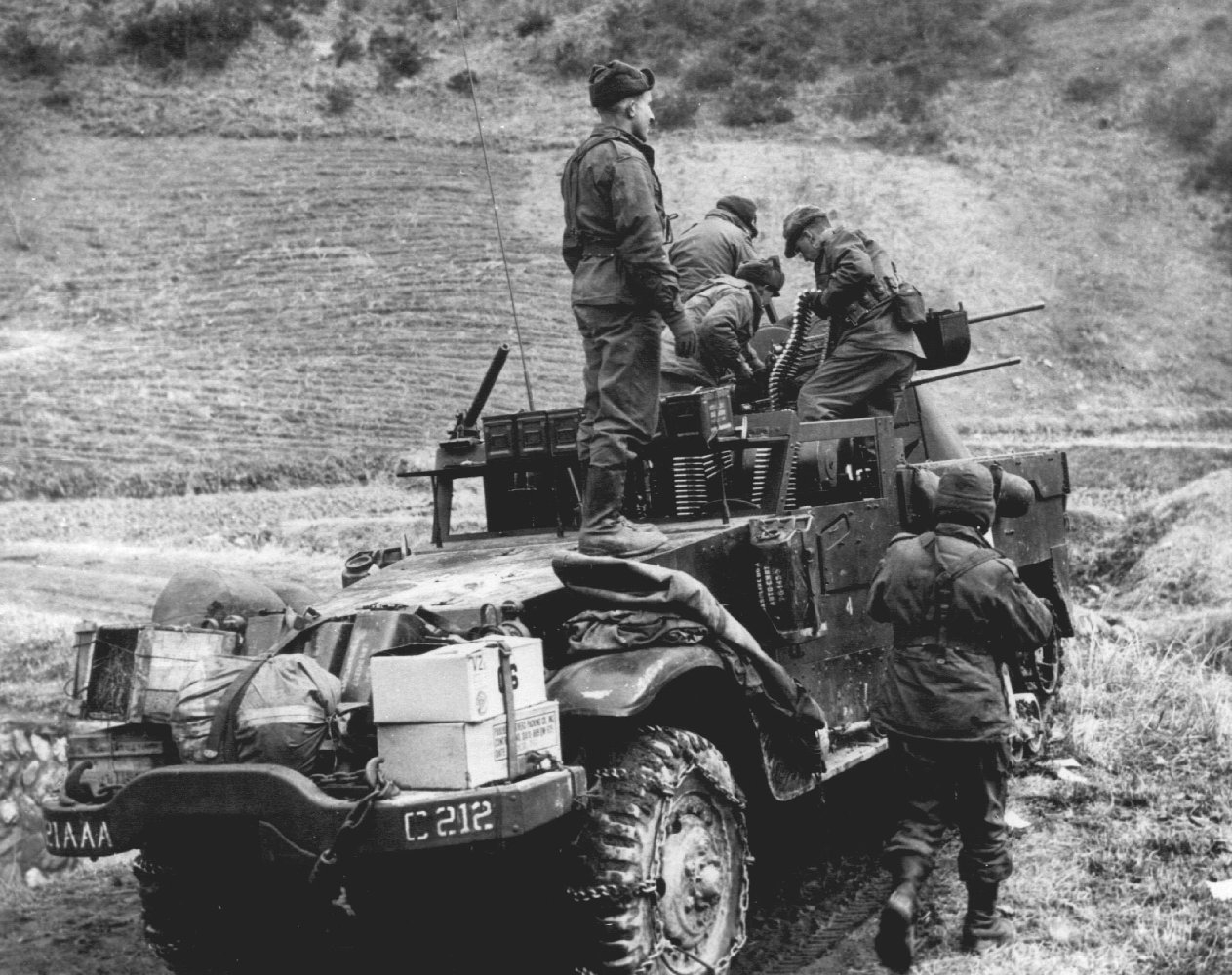
An M45 mounted on an M17 half-track during the Korean War (source)

When all the guns were fired together the M45 had an impressive rate of fire of approximately 2,300 rounds per minute. The Quadmount saw action throughout World War Two, the Korean War and in Vietnam. However, with the beginning of the jet age the M45 became increasingly obsolete in the anti-aircraft role. It continued to be used against ground targets with many mounted on vehicles to create ‘gun trucks’.

If you enjoyed the video and this article please consider supporting our work here.


X11 Belt-Fed Bren Derivative

At the end of the Second World War the British Army had two primary infantry machine guns: the Bren light machine gun and the Vickers medium machine gun. These weapons had proved their worth, the Bren was especially well liked and the venerable Vickers continued to be a reliable workhorse.

In the late 1940s, the British Army recognised the Soviet threat to Western Europe. In 1947, Field Marshal Bernard Montgomery, the newly appointed Chief of the Imperial General Staff wrote a paper outlining rearmament plans based on intelligence estimates of how quickly the Soviet Union was likely to be ready for another full-scale war. Montgomery believed that Britain had just 10 years to develop new weapons and begin rearmament before the Soviet Union had recovered enough to launch an invasion of Western Europe. As such the British Army felt that rearmament needed to be complete by the late 1950s.

large_000000
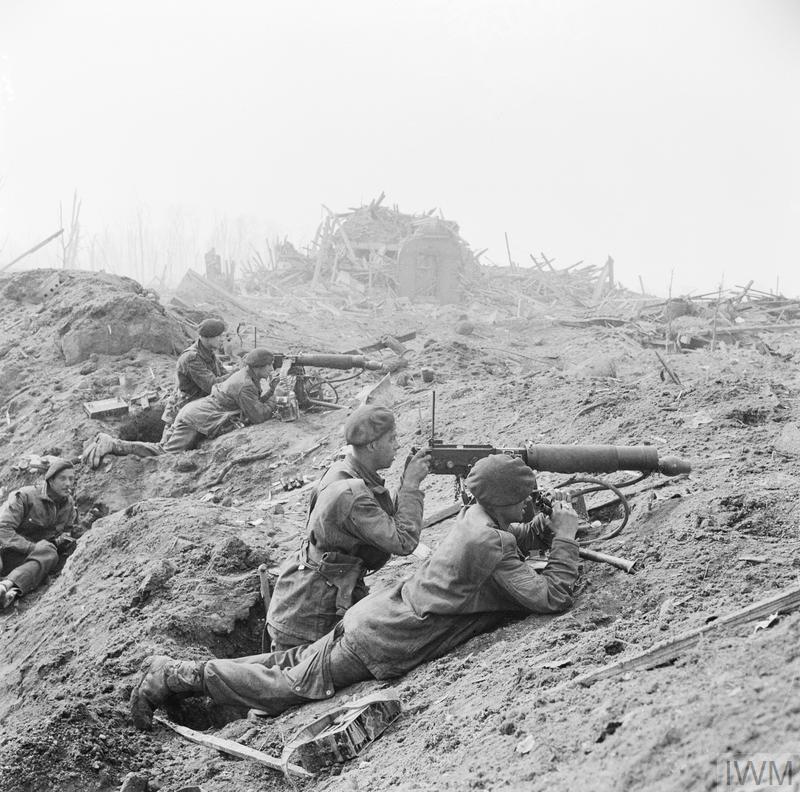
Two Vickers medium machine guns in action in Wesel, 1945 (IWM)

A number of large budget programmes were launched while small arms projects were also undertaken. These included the Infantry Personal Weapon programme which sought to develop a new intermediate calibre infantry rifle – the IPW programme later yielded Stefan Janson’s EM-2, a bullpup chambered in .280, which was briefly adopted as the Rifle No.9. The FN FAL was later adopted due to changes in political circumstances – a long, fascinating story for another article. The companion to the IPW programme was the development of a Sustained Fire Machine Gun also chambered in .280.  The TADEN, a belt-fed derivative of the Bren firing the new .280 round, was designed by Harold Turpin (‘T’), the Armament Design Establishment (‘AD’) and Enfield (‘EN’). With the abandonment of the IPW the TADEN was also abandoned but its design greatly influenced the later X11 developments.

Centrefire automatic machine gun - Experimental SFMG
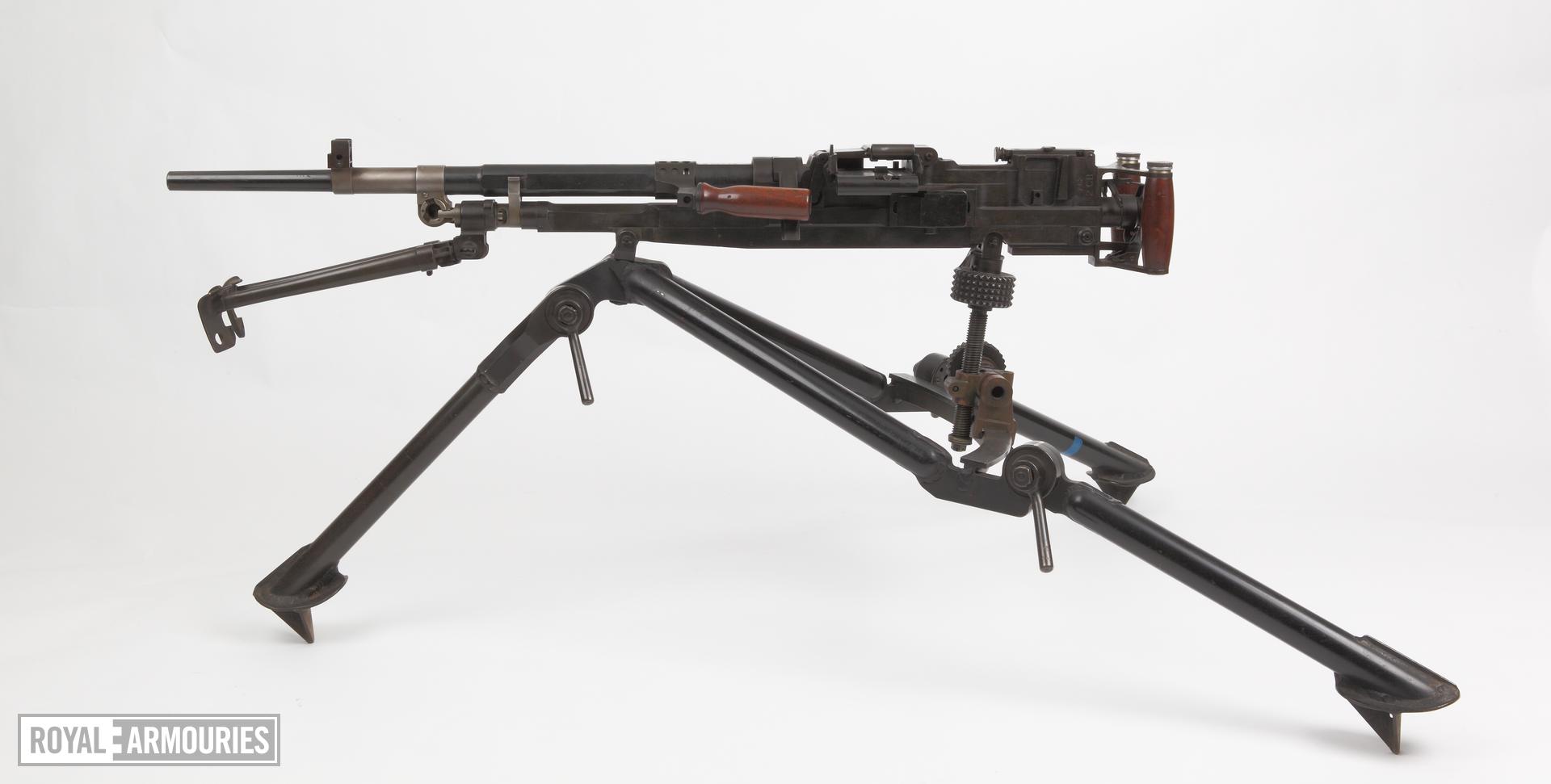
.280 TADEN SFMG mounted on a tripod (Royal Armouries)

Another major small arms programme at the time was the search for a new machine carbine (or submachine gun). This saw the testing of designs from Sterling, BSA and Madsen – with the Sterling finally adopted as the L2.

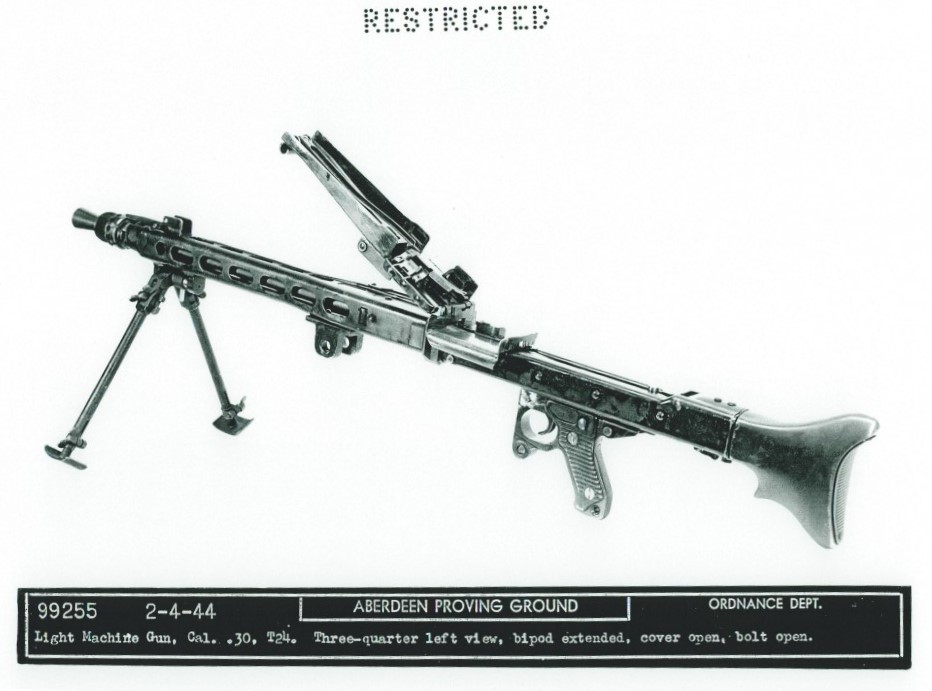
The other major small arms project was the programme to find a new section level machine gun. The German MG34 and MG42 had impressed the Allies during the war, so much so the US went as far as to clone it with the T24. After the abandonment of the EM-2 and TADEN machine gun the British issued a new specification for a lightweight sustained fire machine gun, chambered in the 7.62x51mm round recently adopted by NATO, in the mid-1950s.

t24mg5-794x1024
US T24, MG42 clone, complete with US-pattern bipod (Springfield Armory)

The design team at the Royal Small Arms Factory at Enfield developed a belt-fed derivative of the Bren light machine gun. The X11 series of prototypes sought to convert the Bren’s proven design into a weapon capable of sustained fire. The X11 made a number of changes to the Bren included the addition of a detachable butt/grip/trigger assembly which could be swapped for a pair of spade grips and a paddle trigger for static sustained fire from a tripod. This resulted in the pistol grip being located much further back than the traditional Bren’s.

Centrefire automatic machine gun - Experimental SFMG (about 1956)
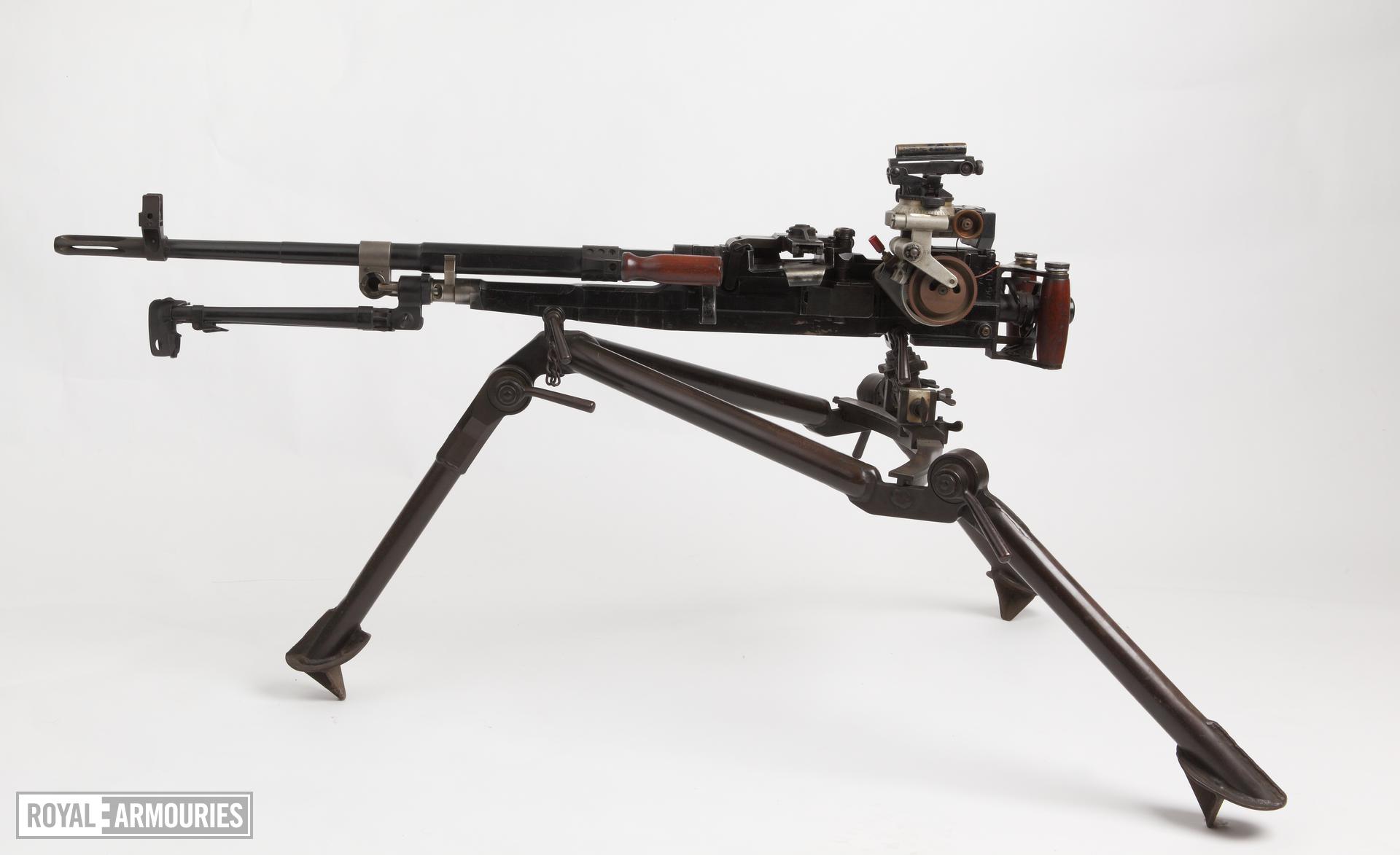
The X11E2 set up for the sustained fire role on a tripod with the spade grips and an optical sight similar to the UNIT sight. (Royal Armouries)

It appears that during the mid-1950s British military parlance described the General Purpose Machine Gun as a Sustained Fire Machine Gun (SFMG). From the available photographs it appears that the L4 and X11 use the same barrel with its distinct flash hider. The receivers of all the prototypes appear to be milled to attach the optical long range sight seen above.

The main drawback with the X11 was its feed mechanism. The feed slide was indexed by a rotating vertical feed shaft which was driven by the gas piston’s recoil. This created a considerable amount of friction within the action. It had the effect of causing failures to feed during adverse conditions testing and elevated firing tests. A series of four X11 prototypes were developed with Harold Turpin (co-designer of the STEN gun and later TADEN) working on the new gun. Each prototype appears to have a sightly different trigger configuration. The most interesting of these is a two-finger double-crescent trigger reminiscent of the MG-34’s – from the photographs it appears that the conventional selector lever, used in the X11E2, was replaced with a fire-selector system similar to the MG-34’s (upper crescent – semi-auto, lower crescent – full-auto). However, the trigger of the example of the X11E4 examined by Vic (serial number #11) was fully automatic only, despite its crescent shape.

Below are photographs of examples of the three types held at the Royal Armouries:

1
X11E2, note the large cutout in the receiver in front of the trigger group (Royal Armouries)

Belt fed Bren 1
X11E3 (Bren Gun Saga, Dugelby)

Centrefire automatic machine gun - SFMG Experimental Turpin X11E4
X11E4, note double-crescent trigger (Royal Armouries)

The X11 was tested against the M60, French AA-52, Swiss MG51, Danish Madsen-Saetter, German MG-3, and the Belgian FN MAG. The FN MAG, designated the X15E1 by the British, fared best in the trials with the X11 coming second due to its feeding issues. In January 1958, the British abandoned the X11 and moved to adopt the X15E1 general purpose machine gun, negotiating a license for its manufacture. The weapon was finally adopted as the L7A1 in 1961, with production at Enfield beginning in 1963. It seems that the Birmingham Small Arms Company were a latecomer to the competition having developed the another belt-fed Bren gun derivative known as the X16.

The Bren did continue in service after the switch to 7.62x51mm. In 1954, before beginning work on the X11, Enfield had developed the X10E1. Taking a Canadian manufactured 7.92x57mm Bren breech block and converting it to cycle the new round. The X10E1 was formally adopted as the L4. The L4 remained in service, alongside the L7, into the early 1990s. The L7 GPMG continues to be used by the British Army.

If you enjoyed the video and this article please consider supporting our work here.


Bibliography:

The Bren Gun Saga, T. B. Dugelby (1999)