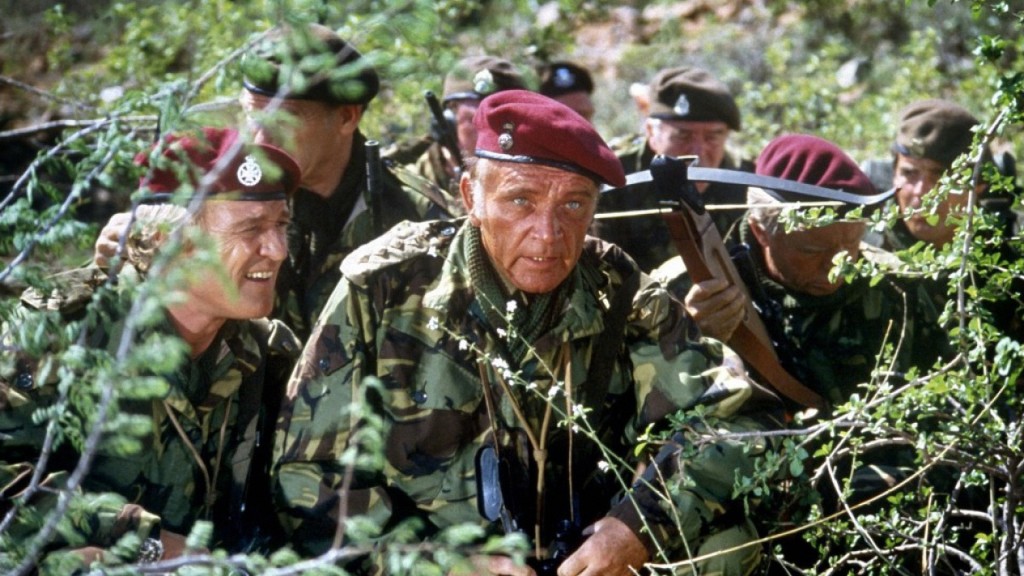
Fighting On Film: Bataan (1943)

Join us as we look at 1943’s ‘Bataan’ starring Robert Taylor, Robert Walker, Lloyd Nolan, Kenneth Spencer and Desi Arnaz. Directed by Tay Garnett, it’s one of the few films to look at the brutal Battle of Bataan. It’s a classic last stand movie and incorporates elements from the battle which saw some of its hardest fighting 79 years ago this month.

The episode is also available on all other podcast platforms, you can find them here.

Here’s some stills from the film:

Be sure to follow us on Twitter @FightingOnFilm

British Cold War Missiles – Malkara & Thunderbird

While doing some archival digging I found some interested newsreel footage of early Cold War British missiles. The footage features the Malkara anti-tank missile and the Thunderbird surface-to-air missile.

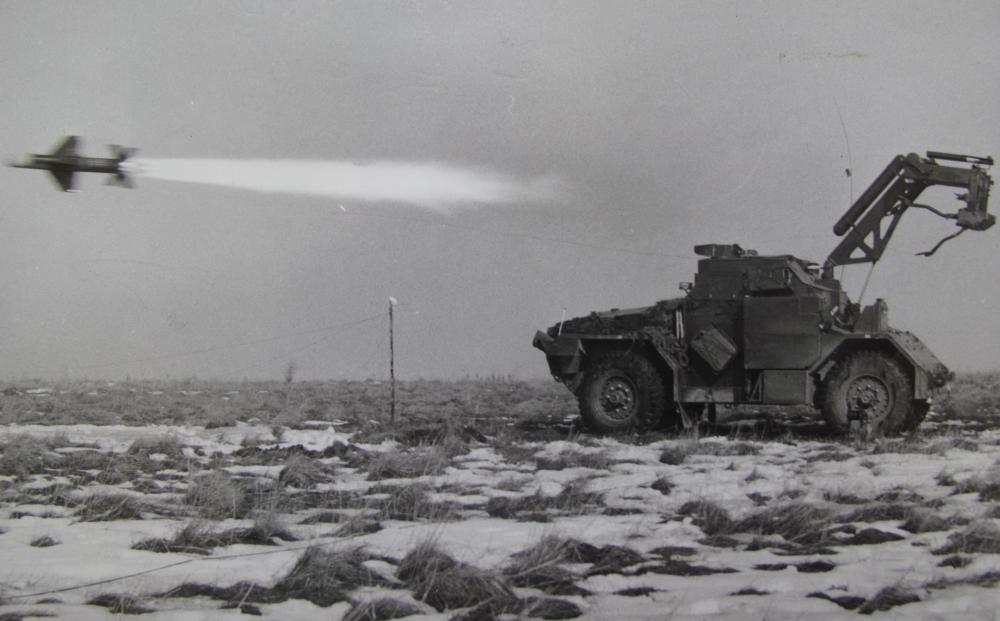
The Malkara was developed in the early 1950s. It was a wire-guided anti-tank weapon with a 57lb HESH warhead. It had a range of up to 2.5 miles. In the footage we see it guided through a hole in a target net.

FV1620 Humber Hornet launching a Malkara (ParaData)

The Malkara was mounted on a number of platforms and vehicles and remained in service into the mid-1960s. It’s bulk and weight saw it eventually replaced by the smaller Vickers Vigilant and the Swingfire.

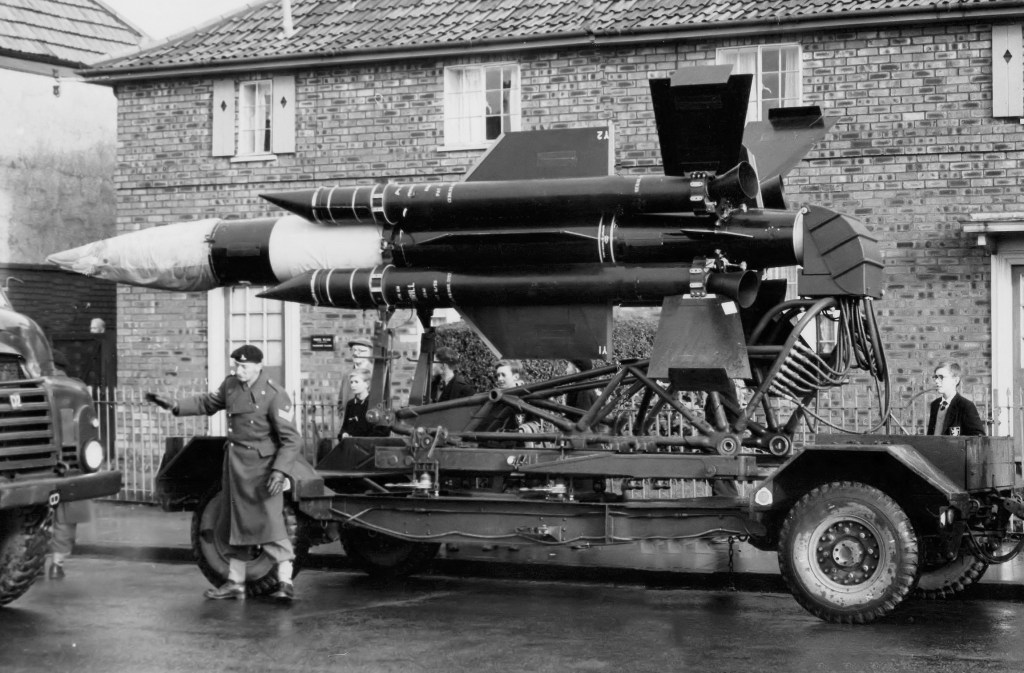
Thunderbird, c.1960 (Adrian Pingstone)

The second missile featured in the newsreel is the English Electric Thunderbird, a British Army SAM with a 75km range and a speed of Mach 2.7. The Thunderbird was replaced by the Rapier in the 70s, which is still in service today.

Hope you enjoyed seeing some of these British cold war missiles in action, it’s amazing what you find in archives when you aren’t looking for it!

Bibliography:

Footage Source: Universal Newsreel Volume 30, 1957, via US National Archives, (source)
Anti-Tank Weapons, T. Gander, (2000)


If you enjoyed these videos and this article please consider supporting our work here. We have some great perks available for Patreon Supporters. You can also support us via one-time donations here. Thank you for your support!


Fighting On Film: Go For Broke! (1951)

In this episode of Fighting On Film we examine 1951’s ‘Go For Broke!‘, written & directed by Robert Pirosh and starring Van Johnson – who had worked together on ‘Battleground‘ (FoF Episode 6). The film tells the unique story of the 442nd Infantry Regiment, a US Army unit made up of Japanese-Americans who became the most decorated unit of its size of World War Two! 

The episode is also available on all other podcast platforms, you can find them here.

Here’s some stills from the film:

Be sure to follow us on Twitter @FightingOnFilm

Cold War British Vehicles – Anglesey Transport Museum

Late last summer we visited the Anglesey Transport Museum in North Wales. They had a great collection of classic and vintage cars and bikes and most interestingly they had a little collection of British military vehicles.

They had a number of trucks and special purpose vehicles from the Royal Engineers, REME and RLC and even a Green Goddess Fire Engine. They also had a couple of pretty cool Cold War British Army armoured personnel carriers.

Alvis Saracen

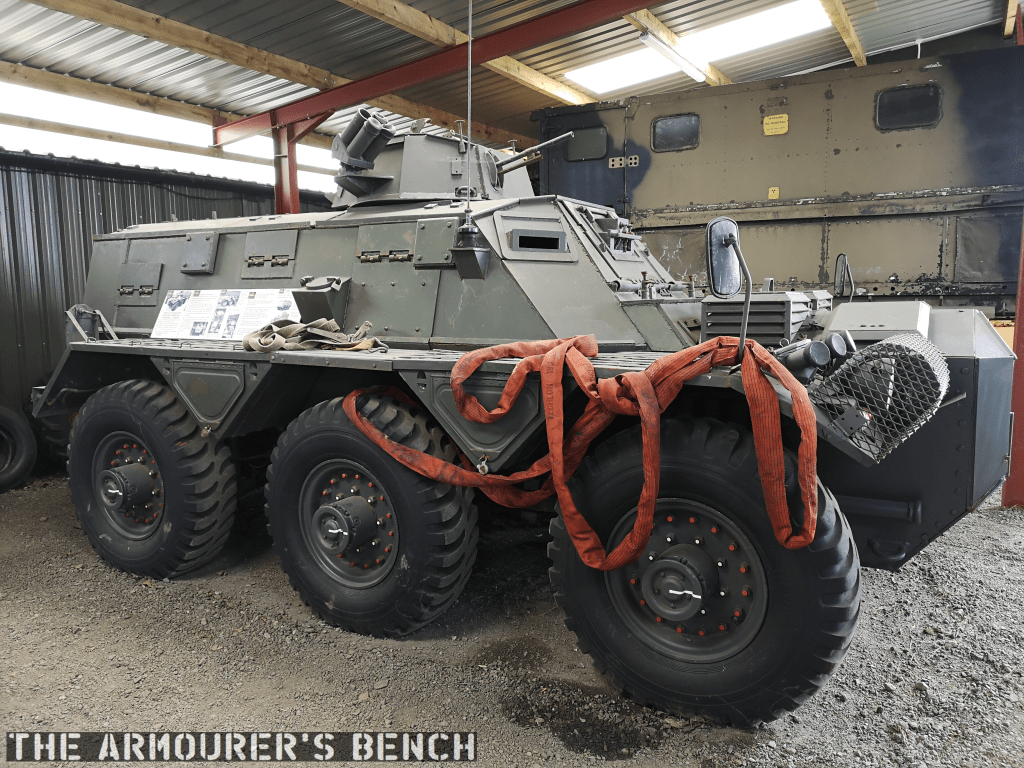
Alvis Saracen (Matthew Moss)

The Saracen was a six-wheeled armoured personnel carrier (APC) built by Alvis. It entered service in 1952 and was used extensively in Malaya and Northern Ireland. The Saracen could carry an 8 man section along with its 2 man crew. It had a 160HP Rolls Royce engine and depending on when during its service life its turret could be mounted with a .30 calibre M1919A4 or an L37 vehicle-mounted general purpose machine gun.

Humber Pig

Humber Pig (Matthew Moss)

Another APC which was in service alongside the Saracen, the ‘Truck, Armoured, 1 Ton, 4×4’, better known as the Humber Pig. Based on a truck chassis, it had a 120HP 6 cylinder engine and room for 6 men on the benches in the back. It could be mounted with an L4 Bren gun. It saw extensive use in Northern Ireland during operation Banner and was in service from 1956 through to the early 90s.

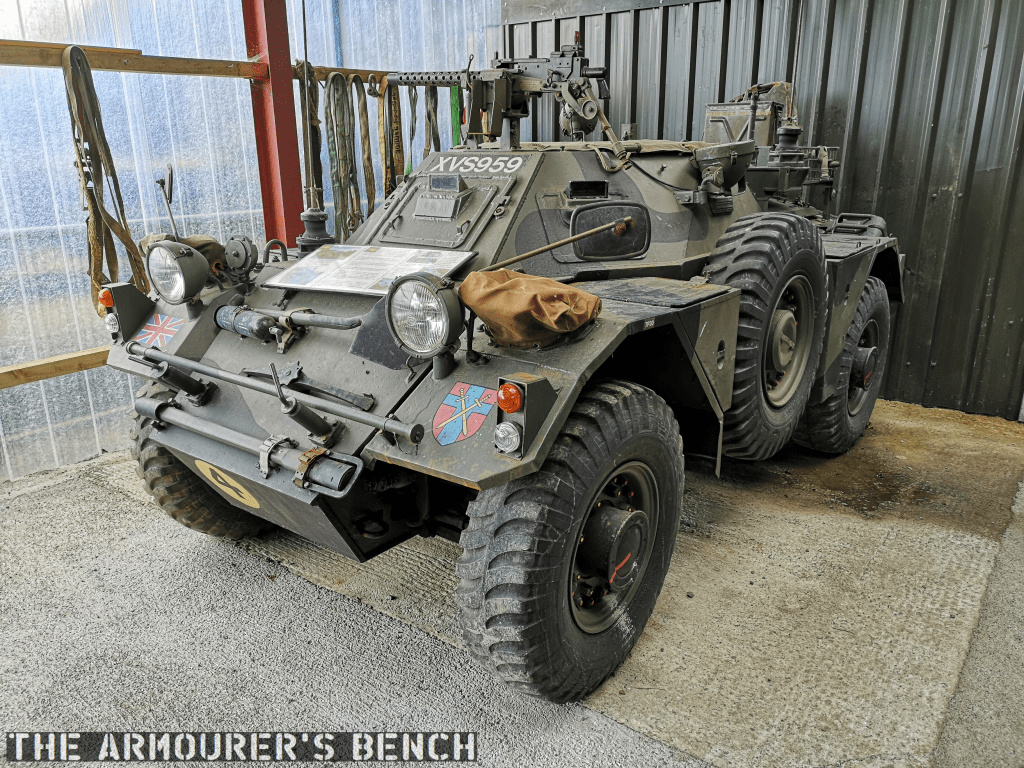
Daimler Ferret Mk1 Scout Car

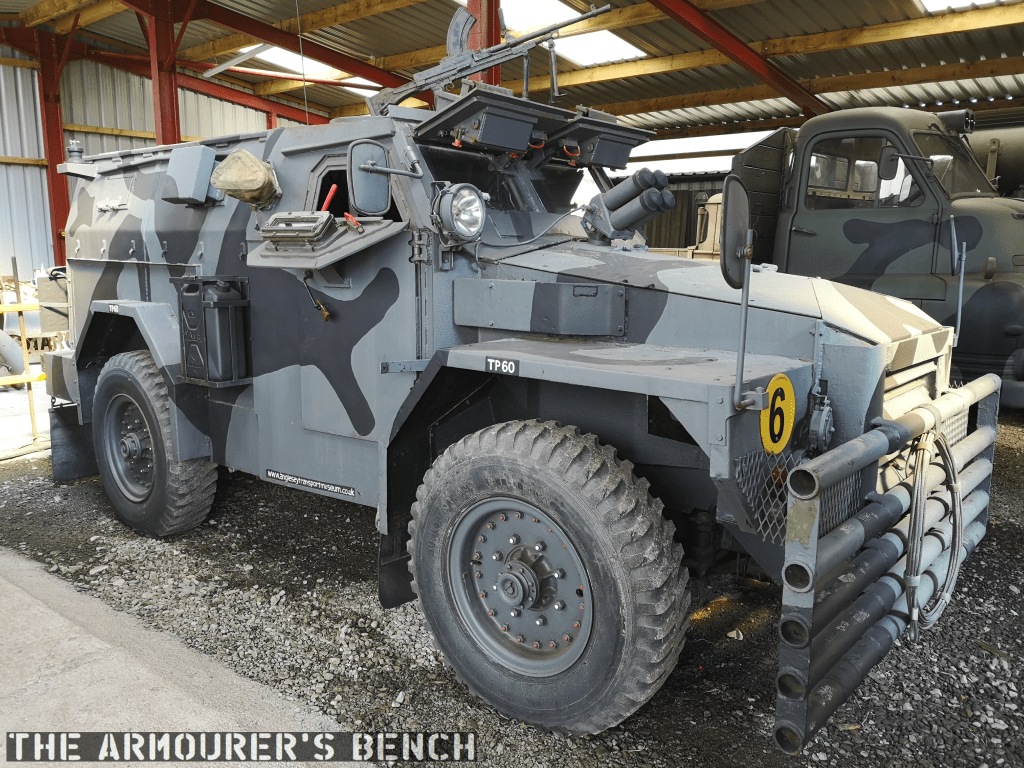
Daimler Ferret (Matthew Moss)

Next to the Pig in the collection was a Mk1 Daimler Ferret scout car. Fitted out with an M1919A4 and six forward-firing grenade launchers – for smoke grenades. The later Mk2 had a turret but the Mk1 made use of its low profile. This one has its canvas cover over the fighting compartment. The 4×4 Ferret was powered by a 130HP Rolls Royce B60 straight six. Perfect little run-around to do the shopping in.

On the top of the hull is the pintle mounted Browning M1919A4 machine gun. This would have been operated by the Ferret’s commander. We can see the mount allows it to be aimed and fired from somewhat inside the hull. The Ferret entered service in the early 1950s and remained in use into the late 1980s/early 1990s. Just short of 4,500 Ferrets were manufactured.

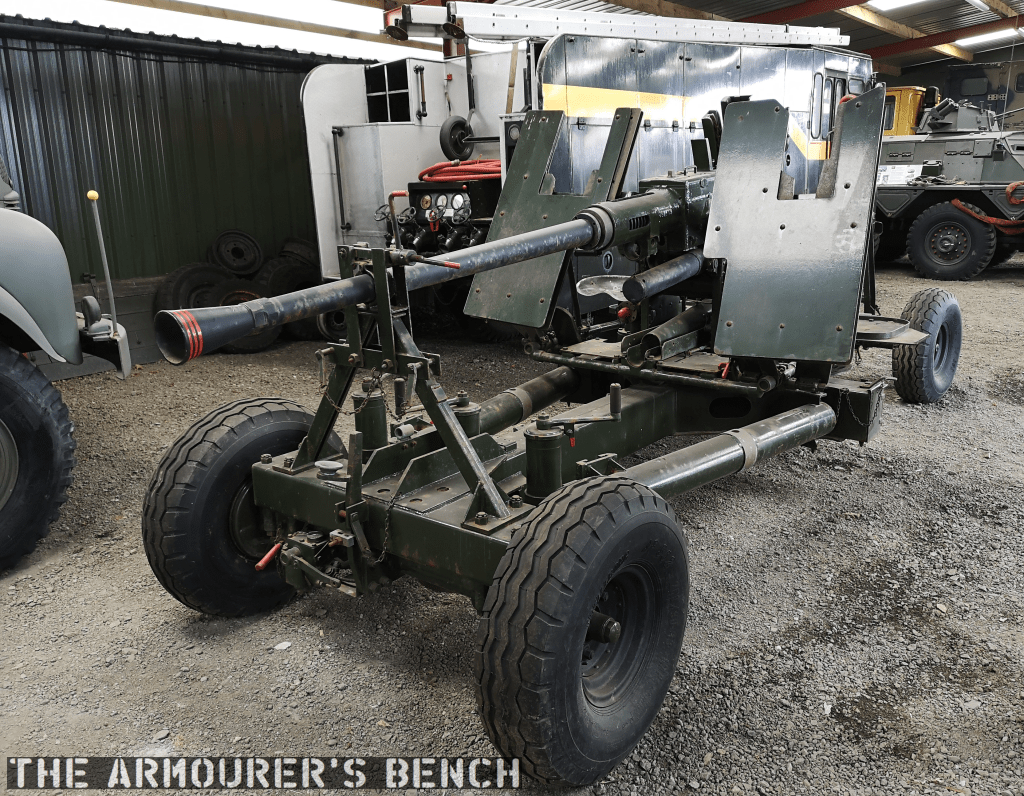
Bofors QF 40mm Mk1

QF 40mm Mk1 (Matthew Moss)

At the centre of the military vehicle collection was a QF 40mm Mk1, better known as a Bofors. Both land and naval versions of the Bofors were used during the Second World War and after. Capable of firing 120 40mm shells per minute, it was normally manned by a four man crew. It filled the British army’s light Anti-Aircraft gun role and remained in service well into the 1980s.

We can see the gun’s huge recoil spring and to the rear of the gun is a case deflector which connected with a trough which channels the spent cases down below the gun. The gun still has most of its controls and traverse and elevation crank handles in place. On top of the gun are the huge guides for the four-round clips of 40mm shells.

Find out more about the museum here.


If you enjoyed these videos and this article please consider supporting our work here. We have some great perks available for Patreon Supporters. You can also support us via one-time donations here. Thank you for your support!


Fighting On Film Special: An Ungentlemanly Act (1992)

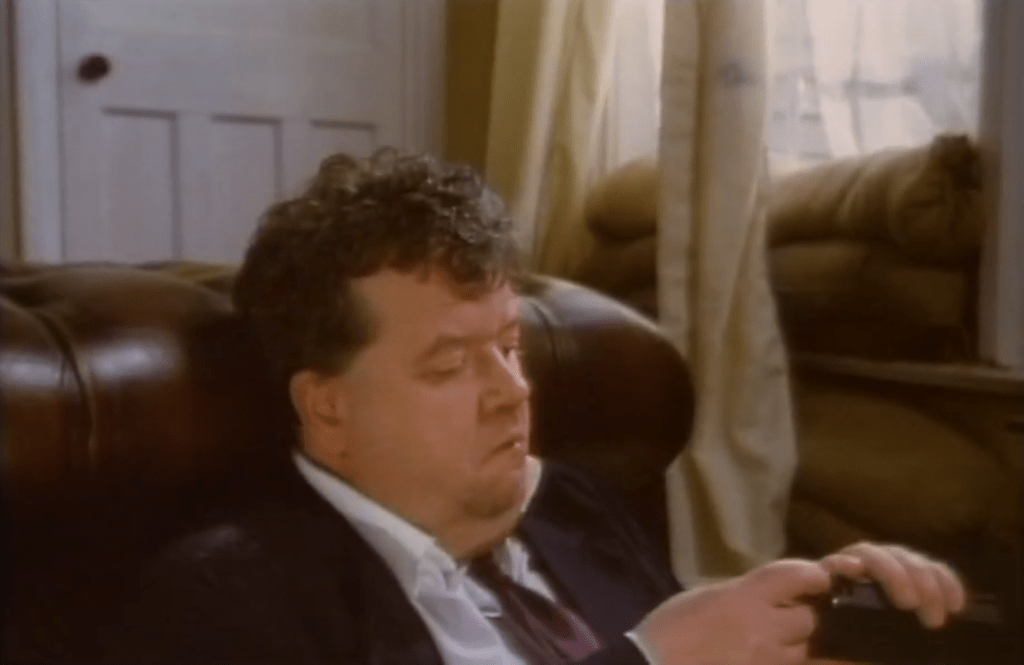
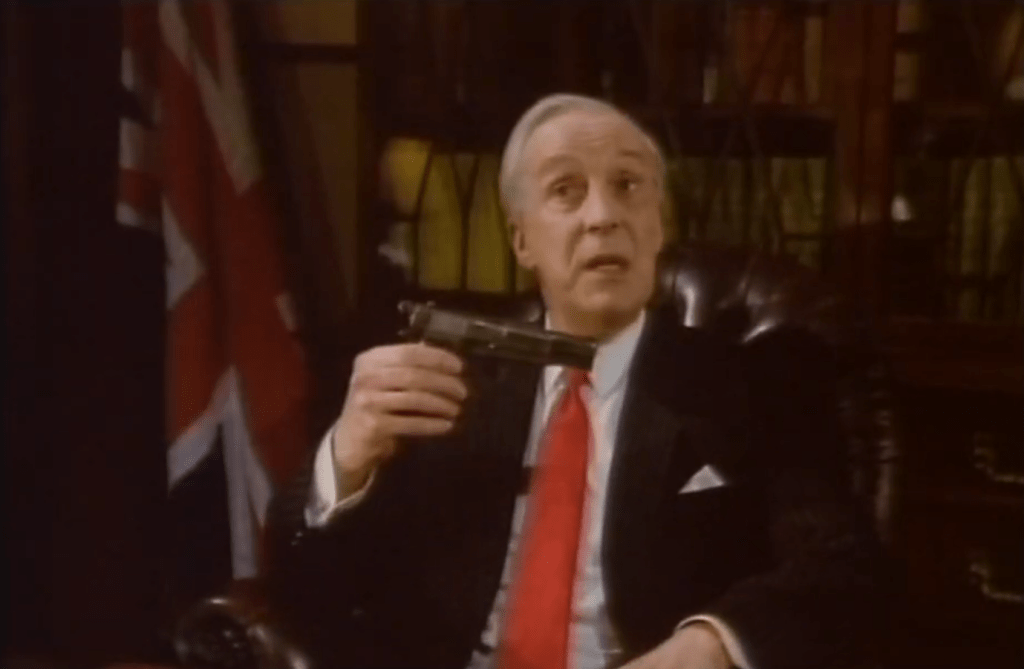
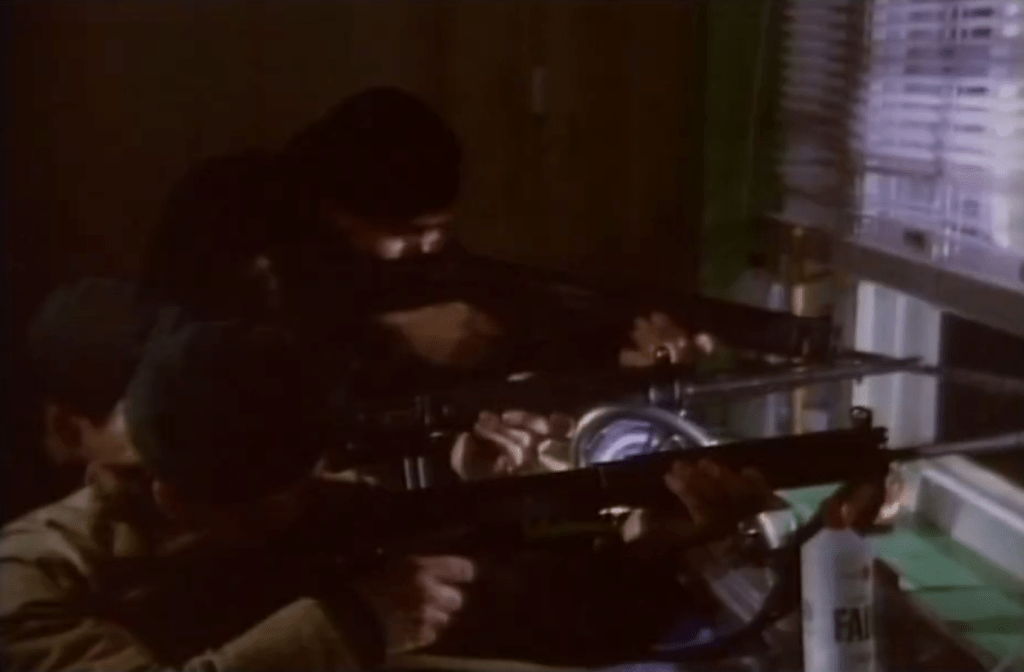
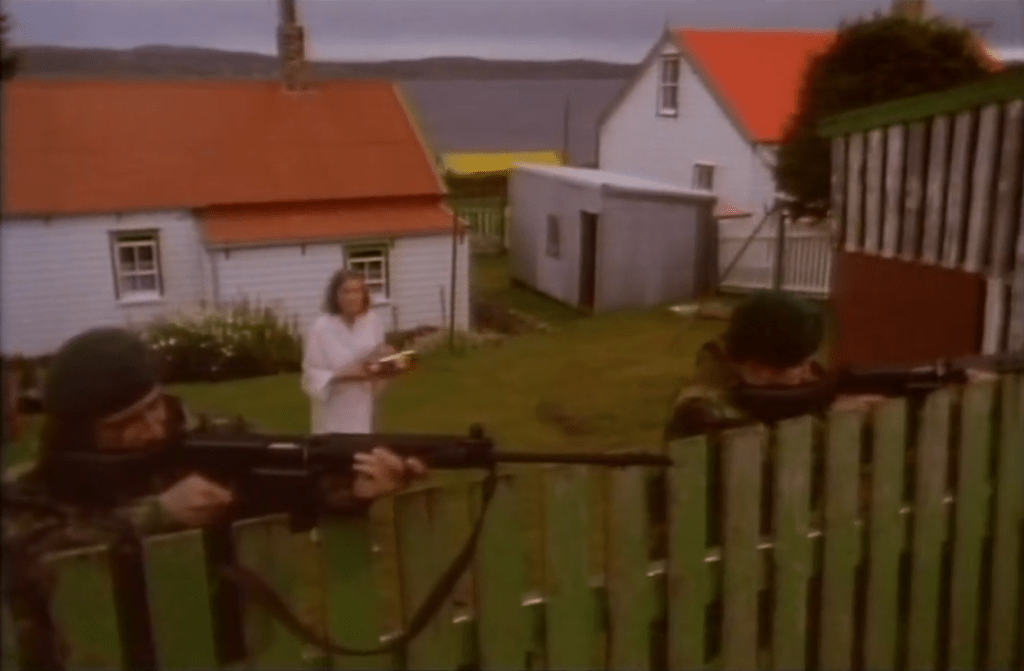
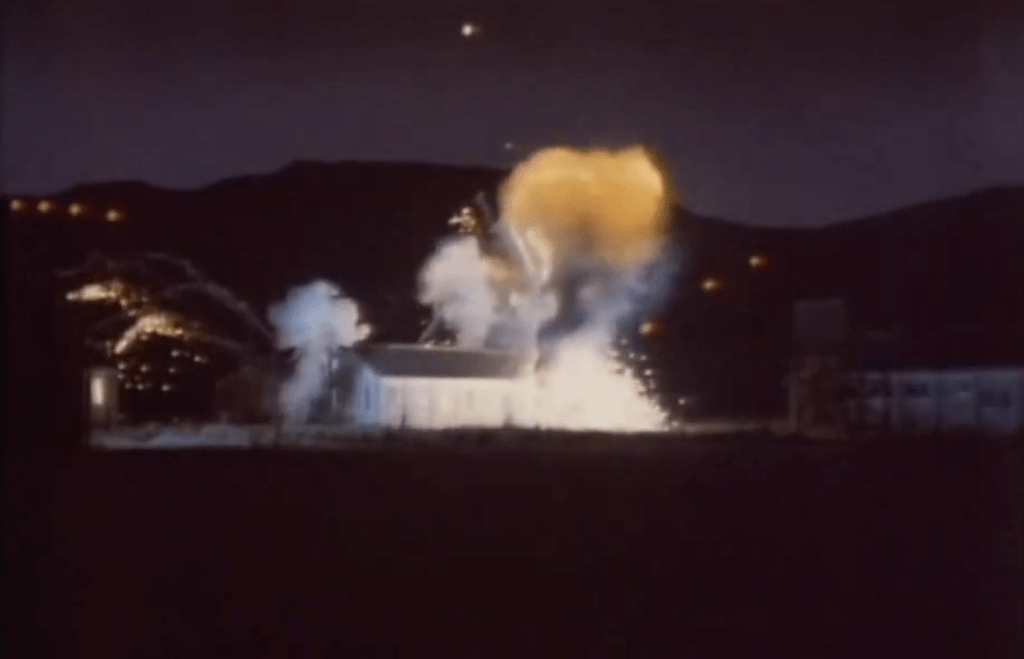
In another special episode of Fighting On Film we chat with director Stuart Urban and some of the cast (Hugh Ross & Ian McNeice) of the 1992 BAFTA-winning film ‘An Ungentlemanly Act‘. A unique war movie which looks at the first 36 hours of the Falklands War and the battle to defend the island from Argentine invasion.

With so few war movies made about the Falklands War by both sides this film is especially interesting. It was fascinating to hear about the writer/director’s first hand research and about what it was like to film on location in the Falklands just a decade after the war.

The episode is also available on all other podcast platforms, you can find them here.

Here’s some stills from the film:

Be sure to follow us on Twitter @FightingOnFilm

Fighting On Film: Show & Tell #1 – The Rifleman (2019) & Sea of Sand (1958)

In the UK we’ve gone into another COVID-19 induced lockdown, so why not put out another episode of the Fighting On Film! In this first episode of a new additional format ‘Show & Tell’ we talk about a couple of war movies we watched recently and see if you guys think we should cover them in a full episode. We discuss a new Latvian film ‘The Rifleman’ and a British 50’s movie featuring a young Richard Attenborough – ‘Sea of Sand/Desert Patrol’.

The episode is also available on all other podcast platforms, you can find them here.

Be sure to follow us on Twitter @FightingOnFilm

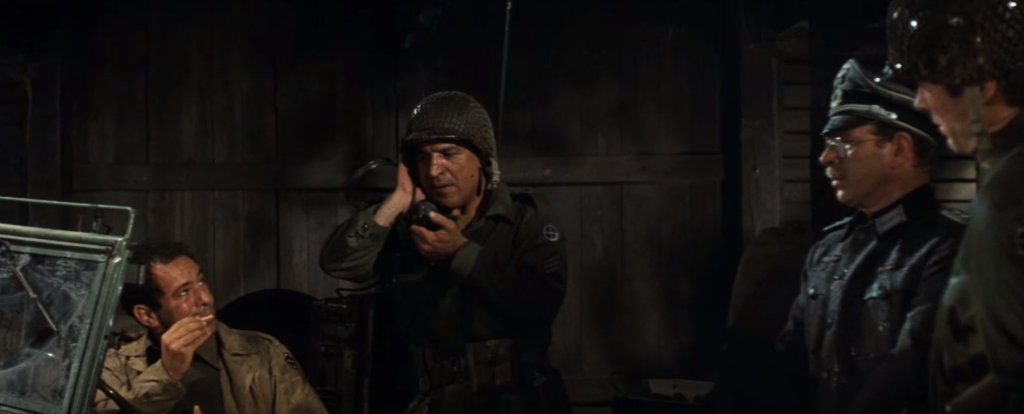
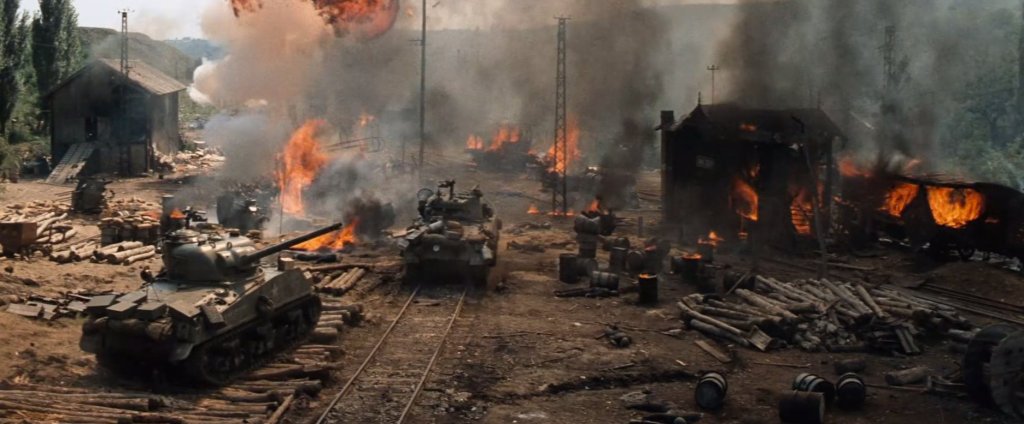
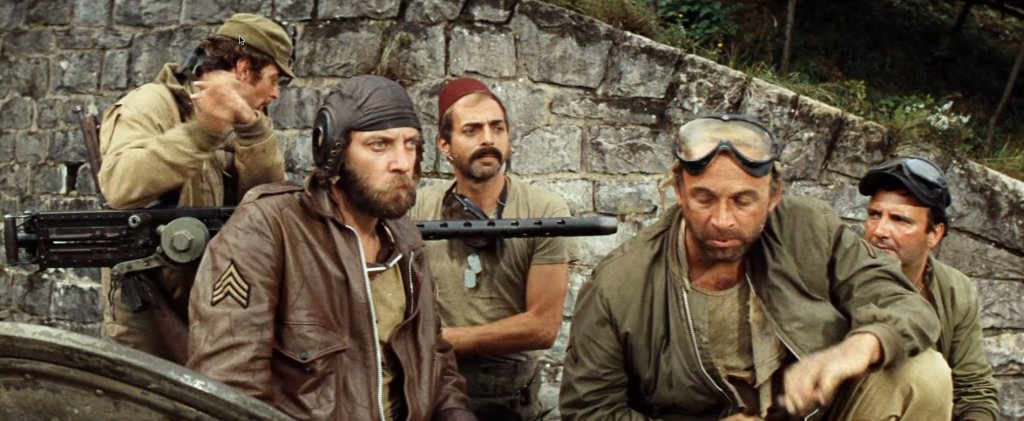
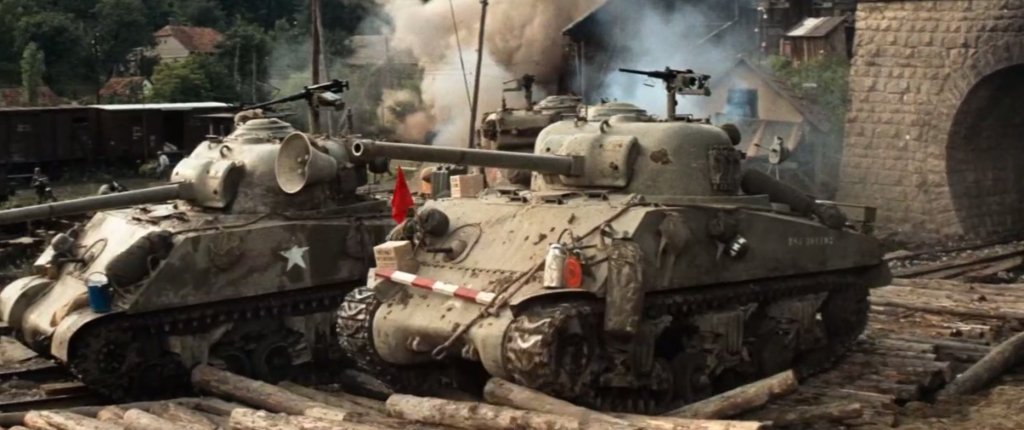
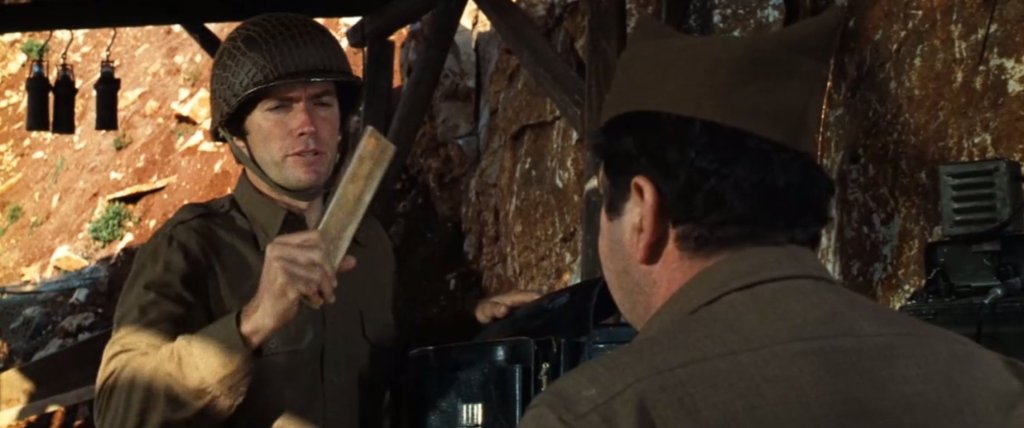
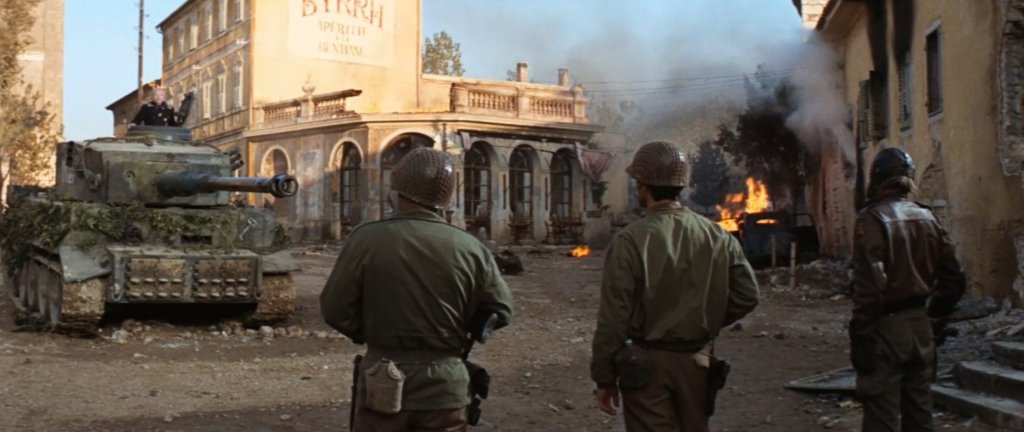
Fighting On Film New Year Special: Kelly’s Heroes (1970) featuring Peter Caddick-Adams

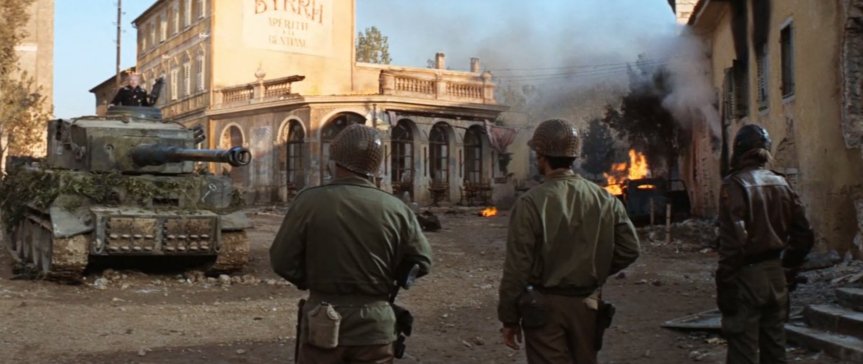
In this special New Year episode of the Fighting On Film war movie podcast we are joined by historian Peter Caddick-Adams to discuss the cult-classic ‘Kelly’s Heroes’. The film follows a platoon of US soldiers who penetrate deep behind enemy lines to steel enemy gold! Directed by Brian G. Hutton and staring Clint Eastwood, Telly Savalas and Donald Sutherland.

The episode is also available on all other podcast platforms, you can find them here.

Here’s some stills from the film:

Be sure to follow us on Twitter @FightingOnFilm

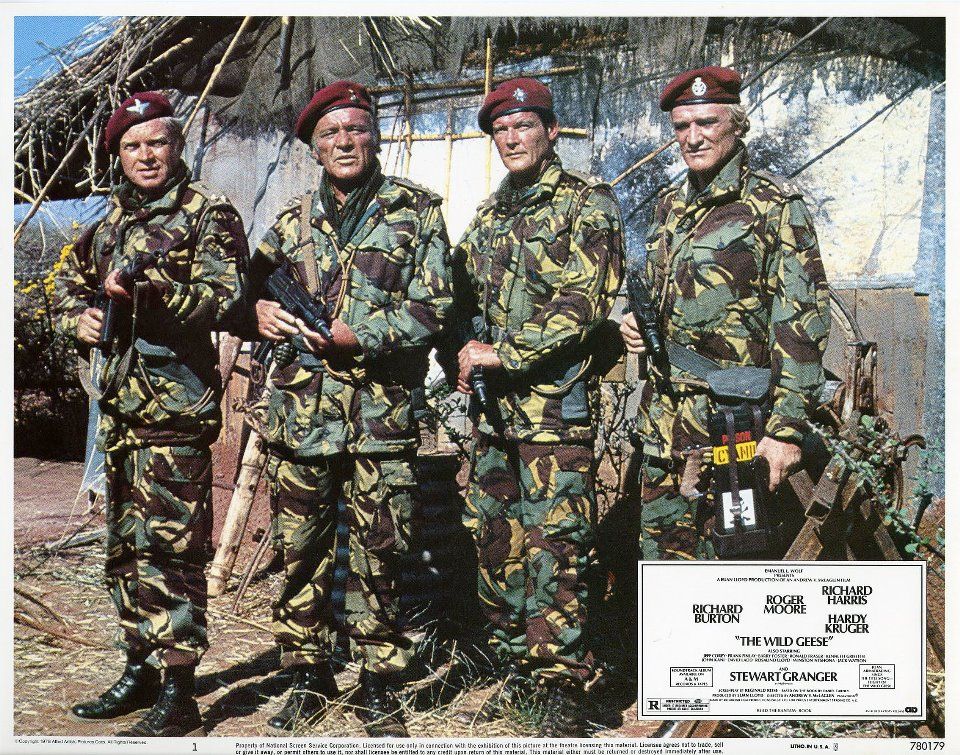
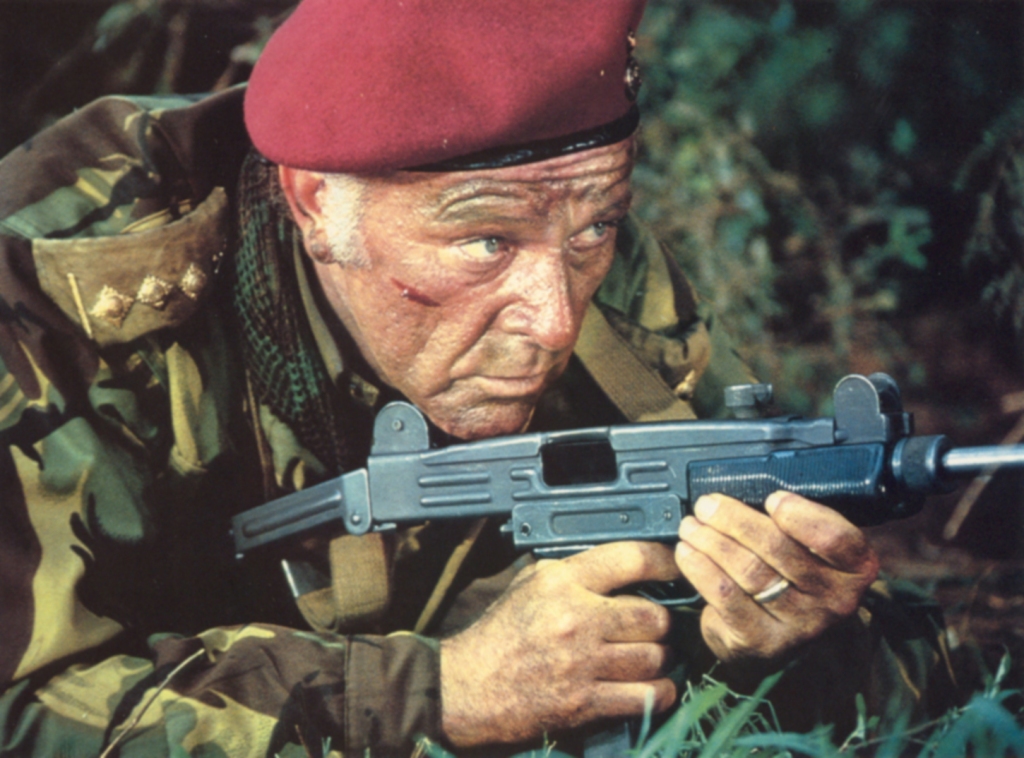
Fighting On Film Christmas Special: The Wild Geese (1978)

In this special episode of the Fighting On Film war movie podcast we are joined by Paul Woodadge of  @WW2TV  to discuss the cult-classic ‘The Wild Geese’. A film which follows a group of double-crossed mercenaries trying to escape after their mission is compromised. Directed by Andrew V. McLaglen, it has a stellar cast including Richard Burton, Richard Harris, Hardy Kruger, Roger Moore and Stewart Granger. As well as Jack Watson, Winston Ntshona, Kenneth Griffith and John Kani.

The episode is also available on all other podcast platforms, you can find them here.
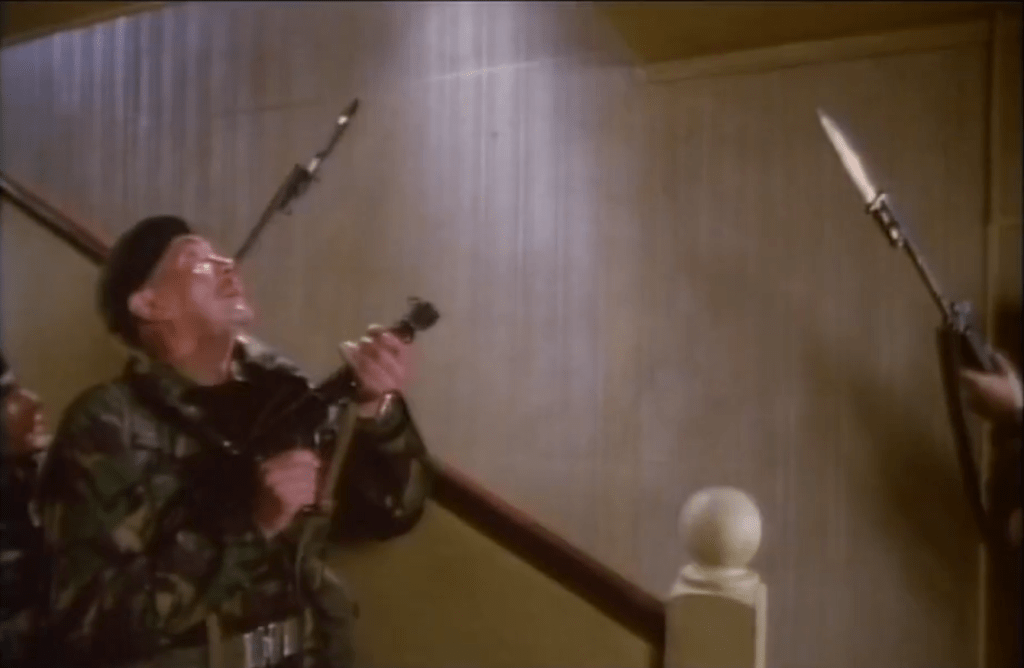
Here’s some stills from the film:

Be sure to follow us on Twitter @FightingOnFilm

John Browning’s 1895 Slide-Action Prototype

By 1895 Winchester had been considering a slide-action rifle for some time, in 1882 William Mason had begun work on one (US Patent #278987) to counter Colt’s slide-action Lightning only to drop it. Finally in 1890, Winchester introduced a slide-action .22 calibre rifle developed by John Browning. The Model 1890 became extremely popular.

Between 1887 and 1895 Browning patented four slide-action rifle designs. The first of these, US patent #367336, was granted in July 1887, this was followed in 1888 by US patent #385238. In September 1890, the Browning brothers were granted US patent #436965, which along with the previous 1888 patent protected what became the Model 1890. Three years later Winchester introduced the Model 1893 pump action shotgun, that would eventually evolve into the famous Winchester Model 1897.

Right-side close up of the rifle with its action open (Matthew Moss)

Finally, April 1895, Browning filed a patent for a design for a .30 calibre rifle which was granted in September 1895 (US patent #545672) This patent covers the rifle we’re examining here. The rifle itself is a slide or pump action in long barrelled configuration which Winchester described as a ‘Musket’.

The September 1895 slide-action design was purchased by Winchester but like so many other Browning designs, it never entered production and Winchester purchased the design purely to secure it and prevent other rival manufacturers picking it up. Winchester instead went with a lever-action design, patented in November 1895 (US #549345), which became the famous Winchester Model 1895.

A left-side view of the rifle’s receiver with Browning’s patent overlaid (Matthew Moss)

The September 1895 slide or pump-action rifle design had a laterally camming locking breechblock. As we can see, externally Browning’s toolroom prototype looks somewhat similar to the contemporary Winchester Model 1895, with a single-stack integrated box magazine but with a pump sleeve rather than a lever. 

An action-bar connects the slide/pump to the front of the breechblock/bolt carrieron the right-hand side of the rifle. The slide handle itself is made of a U-shaped piece of metal which wraps around the rifle’s forend. The slide has been roughly cross hatched to improve grip. There is a channel cut into the furniture for the action arm’s attachment point to travel. The slide is attached to the arm by a pair of screws.

A close up of the rifle’s slide/pump handle (Matthew Moss)

However, Browning developed this prototype to allow loading of the magazine from below rather than through the top of the receiver. He added a hinged floor plate, with a spring loaded follower, that allowed loose rounds to be dropped into the magazine and then closed.

As we open the magazine, hinging the cover plate down, we see the carrier flip down against the plate to allow loading. The rifle was designed to be loaded from below with the bolt forward.

Browning’s September 1895 patent (US Patent Office)

In the patent description Browning explained that his aim was to improve breech-loading box-magazine firearms by designing:  

“…a simple, compact, strong, highly effective, and safe gun, containing comparatively few parts and constructed with particular reference to provision for charging the box-magazine with cartridges from the bottom of the frame of the arm while the breech-bolt is in its closed position, so that the arm may be charged without operating its action mechanism or disturbing the cartridge in the gun-barrel, if one is there.”

Browning’s September 1895 patent (US Patent Office)

From the original patent drawings we can see the flat spring which acted on the carrier running below the barrel, ahead of the magazine. Inside the magazine are a pair of what Browning refers to as ‘spring fingers’ these act on the cartridges inside the magazine and keep them properly aligned, seen here in Fig.7 of the patent. In Fig.8 we can see what Browning calls a ‘box-like guideway’ which guide the rims of the cartridges, “preventing the cartridges from being displaced while being fed upwards.”

The rifle’s breechblock locked into a recess in the left side of the receiver, tilting at an angle with the rear of the breechblock canting to the left. When the pump handle was pulled rearwards the breechblock cammed laterally to unlock the action, extracted and ejected any spent casing and when the slide/pump was returned forward a new cartridge was picked up from the magazine, chambered the breechblock locked again ready to fire. The rifle’s hammer was cocked by the rearward movement of the breechblock.

A left-side view of the rifle with its action open, note the complex machining on the rear of the breech bolt (Matthew Moss)

Externally, the slide-action’s receiver looks similar to that of the production Model 1895 but internally they are very different. The action is certainly less open than the Model 1895’s but the lateral locking mechanism is less robust. Additionally, with no lever, as in the Model 1895, the slide-action rifle lacks the safety mechanism which prevents the action from opening accidentally.

A view inside the open magazine with the floorplate hinged open (Matthew Moss)

The model is in the white and while externally the machining and tool work is very neat, inside the action we can see where the cuts in the receiver wall have been more crudely made. In terms of design, the slide-action prototype was certainly simpler and had fewer working parts than the Model 1895 lever-action.

Winchester purchased the .30 calibre slide-action design but never produced it, it is believed that only Browning’s prototype was built to prove the concept. The prototype was part of Winchester’s collection and may now be found at the Cody Firearms Museum.

Check out our earlier videos on Browning’s lever-action box magazine-fed prototype and his en bloc clip-fed prototype.


If you enjoyed the video and this article please consider supporting our work here. We have some great perks available for Patreon Supporters. You can also support us via one-time donations here.


Bibliography:

‘Box Magazine Bolt Gun’ J.M. Browning, US Patent #545672, 3 Sept. 1895 (source)

‘Box Magazine Firearm’, J.M. Browning, US Patent #549345, 5 Nov. 1895 (source)

John M Browning: American Gunmaker, J. Browning & C. Gentry (1964)

Winchester Repeating Arms Company, H. Houze, (2004)

Fighting On Film: Battleground (1949)

In this episode of the Fighting On Film war movie podcast we discuss the Oscar-winning 1949 classic ‘Battleground’. It follows a platoon of the 101st Airborne besieged within Bastogne. Directed by William A. Wellman and staring Van Johnson, Ricardo Montalban, James Whitmore and George Murphy. It cleverly captures the cold confines of the Ardennes and the hardships the men at Bastogne faced.

The episode is also available on all other podcast platforms, you can find them here.

Here’s some stills from the film:

Be sure to follow us on Twitter @FightingOnFilm