Advanced Combat Rifle Prototypes

4 ACR program Rifle (Matthew Moss)
The four rifles tested during the final phases of the ACR program, AAI, Colt, H&K, Steyr (Matthew Moss)

With so few primary or secondary sources on the ACR program available, this article relies heavily on the 1990 program summary report written by the US Army Armament Research, Development and Engineering Center (ARDEC). Over the next three articles we will examine the AAI, Colt, and Steyr ACR entries. The H&K entry was covered earlier – here.

In the early 1980s the US Army began looking into what form a replacement for the M16A1 might take. The Joint Service Small Arms Program undertook a study and found that in the long term a “technology base should be developed to support a significant improvement in capability.” This meant the US infantryman’s next rifle would move away from conventional ammunition and actions.

The Advanced Combat Rifle program began in January 1985, to foster the development and select a rifle that would give troops a distinct advantage on the battlefield. The project’s ambitious aim was to address the human shortcomings of the average soldier in the field. It was found that combat stress, fear and fatigue negatively impacted on a rifleman’s ability to hit a target once engaged in combat.

US Army Future Sldier 1959
US Army’s 1959 Future Soldier Concept, with M14 (LIFE )

The ACR program sought to compensate for this by maximising hit probability when engaging fleeting targets in battlefield conditions. The program called for:

“an enhancement in hit probability of at least 100 percent at combat ranges over the baseline performance of the M16A2 rifle… at extended ranges, the improvement required will be considerably greater than 100 percent. The weapon will be expected to enable the rifleman to detect rargets at ranges greater than 400m in offensive action and at least 1000m during the conduct of the defense.”

This was a tall order, calling for a weapon with an optic and the ability to engage long range targets, which were envisaged to be wearing body armour, but also engage fleeting targets. But the ACR program was far from the US military’ first ambitious small arms project.

The ACR program built on the Special Purpose Individual Weapon (SPIW) program that had been established in the 1950s to produce the next generation of infantry weapon capable of firing busts of flechettes at extremely high rates of fire to improve hit probability. This task proved technologically insurmountable during the 1950s and 60s. The SPIW program ended in the late 1960s, but was followed in the early 1970s by the Future Rifle Program which also proved a failure. Despite these failures the programs helped to push small arms technological boundaries.

In the video below, produced by ARDEC for the US Department of Defence, we see the ACR program briefly explained and the various rifles introduced with some firing footage:

The approaches used by the companies that entered the ACR competition varied greatly. Ranging from rifles with complex buffer systems to weapons that fired duplex and flechette rounds.

The first Request for Proposals was released in September 1985, with six companies successfully submitting proposals. These companies, which were awarded a Phase I contract, were: AAI Corporation, Ares Incorporated, Colt’s Manufacturing Company, Heckler & Koch (H&K), McDonnell Douglas Helicopter Systems (MDHS), and Steyr Mannlicher. In 1987, following Phase I of the program the entries from Ares and MDHS were dropped due to ‘hardware immaturity’ – the concepts were not developed enough. Both companies appealed and were allowed to enter designs to Phase II but neither was sufficiently developed to compete in the later trials and testing.

Each company approached the program’s aims in a different way. Two utilised flechette technology, which had been developed during the SPIW program, with the AAI using a brass cased round while the Steyr ACR used a polymer case. Colt’s entry used a duplex round with two projectiles stacked in the cartridge case. Heckler & Koch’s G11 used a complex buffer system to reduce felt recoil after firing a ‘hyper burst’ of three rounds at ~2,000 rounds per minute.

Lets take a look at the individual weapon systems:

AAI Corporation
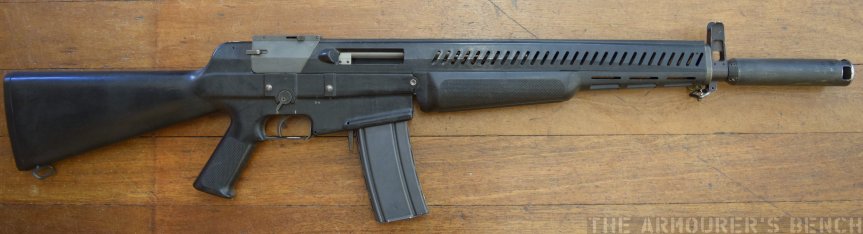
AAI Corp ACR rifle
AAI Corporation’s ACR entry (Matthew Moss)

Check out Vic’s video on the AAI ACR and an article with further detail here

AAI Corporation had long been involved in advanced firearms design, taking part in the US military’s previous programs. The AAI ACR was an evolution of the earlier SFR/XM19 rifle. AAI’s ACR was gas-operated, feeding from a 30 round box magazine and fired a brass cased flechette round in either single shot or a high cyclic rate three round bust.

It fired from a closed bolt and used a muzzle device to reduce muzzle climb during burst fire. AAI developed a polymer saboted steel 10.2 gr flechette which fitted within a standard M855 brass case. As a result the rifle uses a proprietary magazine to avoid the accidental chambering of conventional 5.56x45mm rounds. These rounds had a muzzle velocity of 4,600 ft/s.
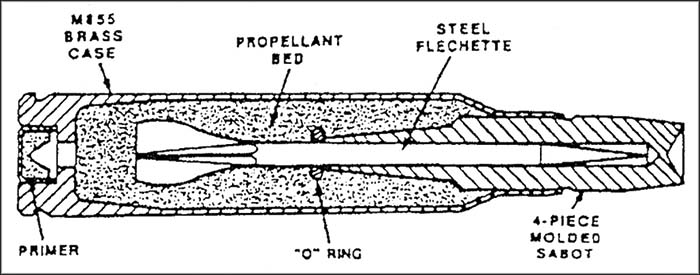
Diagram showing AAI's saboted flechette round inside a 5.56x45mm M855 case (US Army)
Diagram showing AAI’s saboted flechette round inside a 5.56x45mm M855 case (US Army)

The rifle was designed to mount a quick detachable 4x optic and had a white-highlighted shotgun-style rib sight along the barrel to aid in snap shooting. The rifle was one of the longest entries with an overall length of 40 inches or 101.6cm.

According to the ACR program summary the AAI entry proved to be a “mature design which performed in a reliable fashion” during the field trials.

Specifications (From ACR Program Summary):

Length: 40 inches / 101.6cm
Weight: 9.39 lbs / 4.26kg
Sights: Iron or 4x optic
Action: Gas operated
Calibre: 5.56mm brass cased flechette
Feed: 30-round box magazine

Colt’s Manufacturing Company
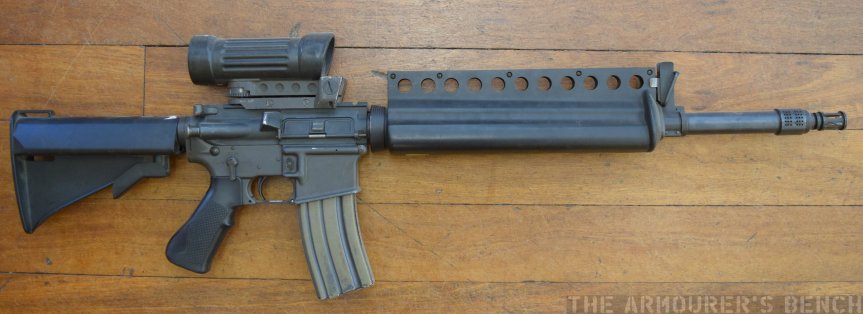
Colt ACR rifle submission
Colt’s ACR entry (Matthew Moss)

Check out Vic’s video on the Colt ACR and an article with further detail here

Colt’s entry was perhaps the most conventional of the designs submitted. Based on the rifle the program sought to replace. Colt’s ACR was essentially an improved M16, which fired both conventional 5.56x45mm ammunition as well as a new 5.56mm duplex round. While the duplex round increase hit probability at shorter ranges, it impacted long range accuracy requiring the additional use of conventional M855 rounds.

It incorporated a variety of improvements including a new oil/spring hydraulic buffer to mitigate recoil. A reshaped pistol grip and a hand guard which mounted a sighting rib for snap shooting. The weapon had a flat-top upper receiver which was railed so a 3.5x optic (an early ECLAN) or a more conventional sight/carrying handle could be fitted.
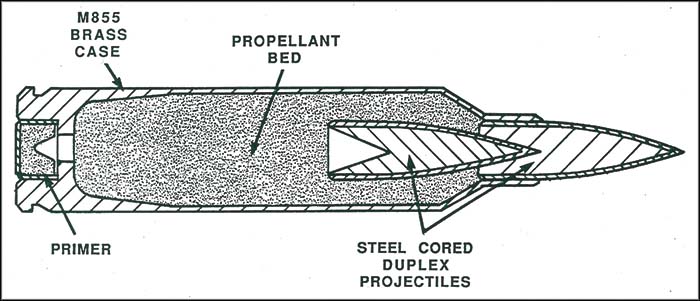
Colt's 5.56mm Duplex round (US Army)
Colt’s 5.56mm Duplex round (US Army)

The rifle’s collapsible six position telescopic butt stock was an improved version of that offered with Colt’s carbines. When at full extension the Colt ACR was the longest rifle tested, at 40.6 inch or 103 cm long. A distinctive proprietary muzzle brake compensator designed by Knight’s Armament was also added.

During testing one of the duplex rounds was not properly seated inside the cartridge case and when fired became lodged in the barrel and during the course of fire and the weapon’s barrel blew when another round was fired. This was addressed by a slightly larger propellant charge. Some of the features developed for the ACR entry were later employed in the M16A3 and later A4.

Specifications (from ACR Program Summary):

Length: 40.6 inches / 103cm (extended) and 36.7 inches / 93.2cm (collapsed)
Weight: 10.3 lbs / 4.67kg
Sights: iron or 3.5x optic
Action: Direct gas impingement
Calibre: 5.56mm duplex round & M855 ball
Feed: 30-round box magazine

Heckler & Koch
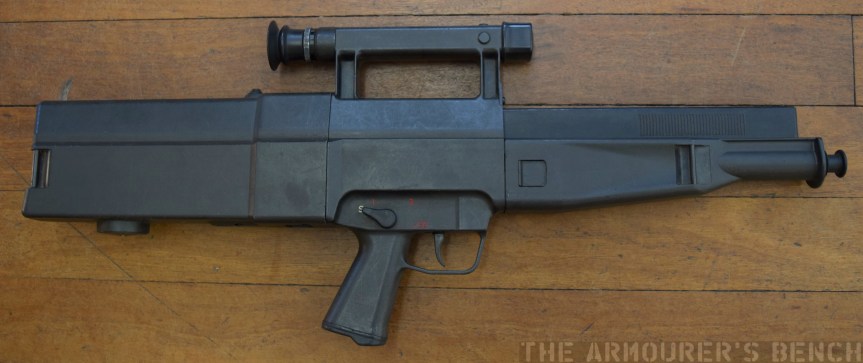
Heckler & Koch's G11K2, ACR entry
Heckler & Koch’s G11K2, ACR submission (Matthew Moss)

Check out our full article on the G11 and our introductory video showing two examples of the weapon partially disassembled here

Heckler & Koch had been involved in the West German Bundeswher’s attempts to create a next generation infantry weapon. The result was the G11, the G11 had been in development since the late 1960s and by the time it was entered into the ACR program it had evolved into a complex weapon unlike any other. Utilising a gas-operated, rotary breech to fire self-contained caseless 4.73×33mm projectiles. The rotary breech chamber was introduced as a means of clearing misfired, broken or defective cartridges from the enclosed system. Simplicity was sacrificed to achieve reliability.

The US had awarded H&K a contract to develop caseless ammunition, optics and the salvo concept in 1982. With the G11 in development they then entered the ACR program. The bullpup H&K was the shortest of the weapons entered into the trial at 29.5 inches / 74.9cm. It was equipped by a variable 1-3.5x optic designed by Swarovski.

g11round5
Diagram showing the composition of the G11’s telescoped caseless ammunition (source)

The revolutionary ammunition was developed by Dynamit-Nobel AG.
The 4.73x33mm, 51gr round which was finalised comprised of a solid propellant material body which encased a primer, booster, projectile and a plastic nose cap. Dynamit-Nobel developed the High Ignition Temperature Propellant (HITP) in an effort to prevent accidental ignition (cook-off) of the ammunition’s outer propellant body. The ACR program summary notes that “the majority of the malfunctions/stoppages experience in the field experiment were ammunition related.”

The H&K ACR fed from a single stack, horizontally orientated 45-round magazine which sat above the barrel.

The G11 used a counter-recoil buffer mechanism to allow high rates of burst fire – hyper burst. When firing three round bursts the weapon could send the rounds downrange at a rate of ~2,000 rounds per minute, only when the last round has left the barrel does the barrel and action begin to recoil inside the stock along a central guide. The recoil impulse was then quite strong. When in sustained fire the rate of fire is closer to ~460 per minute. A more detailed explanation of the G11’s action can be found here.

Specifications (from ACR Program Summary):

Length: 29.5 inches / 74.9cm
Weight: 9.15 lbs / 4.15kg
Sights: Variable 1-3.5x optic
Action: gas-operated, rotary breech
Calibre: 4.92mm caseless
Feed: 45-round single stack magazine

Steyr-Mannlicher

Steyr ACR Rifle
Steyr ACR entry (Matthew Moss)

Check out Vic’s video on the Steyr ACR and an article with further detail here

Steyr-Mannlicher’s bullpup entry uses a gas piston driven rising chamber mechanism which rises and falls to chamber rounds as the action cycles. The Steyr ACR, like AAI’s entry, fires flechettes but Steyr’s are housed inside a cylindrical polymer case. The bullpup Steyr was the second shortest at 30 inches (76cm) and the lightest of the rifles submitted weighing 8.5 lbs (3.86kg).

The Steyr ACR borrows its ergonomics from its conventional forebearer, the AUG. With a moulded green plastic stock and a similar pistol grip, trigger and safety layout. Unlike the AUG, however, the ACR uses an AR-15 style charging handle located at the rear of the sight mounting block. The rifle could be fitted with a variable 1-3.5x optic.

The rifle does not use a conventional bolt, instead it has a rising chamber, as a result the rifle fired from an open bolt. A live round only entered the chamber after the trigger had been pulled, thus reducing the potential for cook-offs. Spent polymer cases were pushed out of the chamber and ejected from an opening just in front of the magazine well.
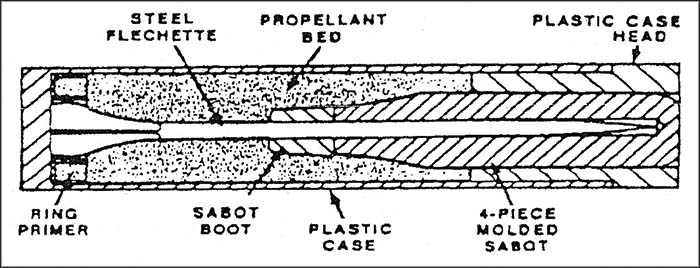
Steyr's Polymer Cased Flechette round (US Army)
Steyr’s Polymer Cased Flechette round (US Army)

Feeding from a 24-round box magazine, made from the same translucent material used in conventional AUG magazines. The magazine goes from double stack to single stack, to allow it to feed reliably, as a result the capacity had to be shortened. A high capacity drum magazine was planned but not provided for the trials. The polymer case held a fin stabilised 9.85 gr flechette with a moulded four piece sabot which broke up soon after exiting the muzzle. This was identified as a shortcoming as it risked hitting nearby troops.

Specifications (from ACR Program Summary):

Length: 30 inches / 76cm
Weight: 8.5 lbs / 3.86kg
Sights: Iron or variable 1-3.5x optic
Action: gas-operated, rising chamber
Calibre: 5.56mm plastic cased flechette
Feed: 24-round magazine


After several years of development, while the Army organised testing, the four firms delivered their prototypes in 1990. During Phase III the rifles were tested on the specially built Buckner Range – designed to recreate field conditions and create fleeting targets at various ranges. The M16A2 was used as a baseline weapon throughout all of the tests which included safety and engineering testing, lethality tests and testing in field conditions.

Initially planned as an all-services test both the US Navy and Marine Corps pulled out of the ACR program in 1987, leaving the Army and Air Force. With the testing complete it was found that none of the rifles proved to be significantly more lethal or effective than the M16A2 they were pitted against. The program summary put a rather positive spin on the program’s failings, concluding that despite the increased hit probabilities not being attained as a technology base program, the ACR program was a success. The soldiers taking part in the field tests performed better than expected and “the baseline performance of the M16A2 rifle was better than anticipated in terms of hit probability.”

The report concluded that the program had helped push small arms technology forward, noting that while flechettes proved to be too inaccurate for an individual weapon,

“The feasibility of caseless and lightweight plastic-cased ammunition has more than been demonstrated in this program. Few problems were experienced with the [H&K] caseless rifles in the test. The past technical barriers of cook-off and vulnerability have now been overcome. …plastic cases cannot be used in conventional weapons like the M16A2, but with weapons specifically designed for it, complete plastic cases are feasible.”

This last observation is something that is again now being developed in the Lightweight Small Arms Technologies (LSAT) program, which has now been linked with the US Army’s current Next Generation Squad Weapon program.

With the end of the ACR program the school of thought moved towards the use of high explosive and airburst munitions by individual soldiers. The Objective Individual Combat Weapon program ran throughout the early 1990s and while it lead to the adoption of some new weapons, such as the M320 grenade launcher, it also failed in its goal to create an integrated individual weapon system.

If you enjoyed the video and this article please consider supporting our work here.


Bibliography:

Advanced Combat Rifle, Program Summary, Vol.1, ARDEC, 1992 (source)

‘Revisiting the SPIW Pt.3’, Small Arms Review, R. Blake Stevens, (source)

Our thanks to the collection that holds these wonderful examples of the ACR rifles


Please do not reproduce photographs taken by Matthew Moss without permission or credit. ©The Armourer’s Bench 2018

15-Inch Vickers Battery at Fortalesa Isabel II


Last summer I was lucky enough to visit the vast Fortalesa Isabel II which defended the port of Mahon, in Menorca. One of the fort’s most impressive sights is its huge 15 inch gun battery.

The Spanish island of Menorca, in the Balearic Islands, has a long and storied military history. The strategically important harbour of Mahon was historically the envy of the British, Spanish and French and was the reason for Fortalesa Isabel II’s construction. The for was the last major fortification built on the island, with the Spanish military beginning construction in 1850. A second phase of major improvements was made during 1853-1864. Work to improve and modernise the fort continued into the 20th century.

Fortalesa Isabel II main gate (Matthew Moss)
The ornate main gate of the fort, defended by a counterguard and rifle slits either side of the gate (Matthew Moss)

The Fortress is built on a beautiful rocky headland of La Mola at the mouth of the harbour and covers about a square kilometre. Construction was a massive undertaking and took over twenty years to complete, costing over nine million pesetas. The fortifications are some of the Mediterranean’s most impressive of the period.

The fort is a maze of tunnels, galleries, casements and buildings surrounded by a deep, dry moat. The fort’s first line of defence consisted of a moat 9 metres (30 feet) deep covered by rifle loop holes for infantrymen and embrasures for artillery. Interlocking fields of fire defend the landward approach to the fort’s main entrance, the Queen’s Gate.

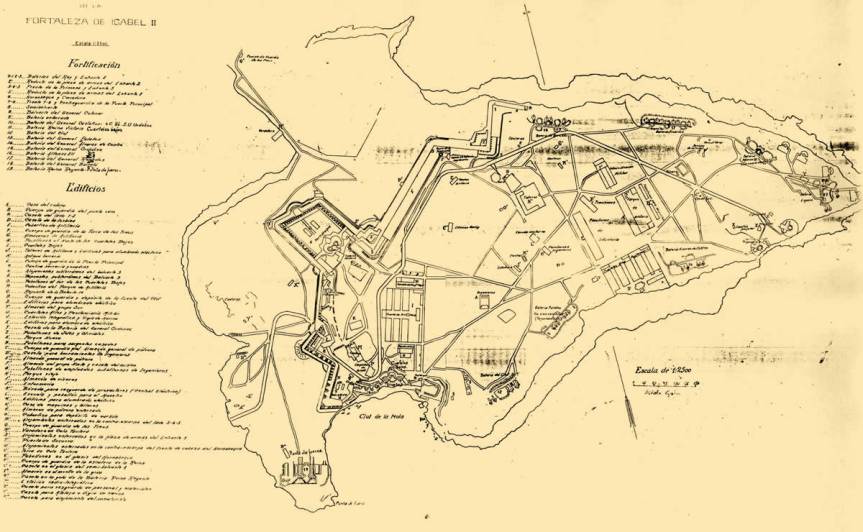
Map of the La Mola peninsular and fort
Map showing the layout of the fort during the 19th century before the 15 inch guns were added (source)

Designed to dominate the entrance to the harbour the fortress was intended to hold 160 artillery pieces of various sizes, including Krupp guns and howitzers, many of these protected by strong stone casements. The fort’s armaments evolved overtime from muzzle-loaders to faster firing breech-loaders.

The Spanish continued to upgrade the fort’s guns over the decades mounting rifled guns and howitzers of various calibres ranging from 15cm to 30.5cm. In addition to the fort’s guns the defences also included mines in the harbour mouth and later a battery of shore launched torpedoes.

By the early 20th century the fort’s guns were increasingly obsolete against the backdrop of the naval revolution that saw Dreadnoughts come to dominate maritime warfare. With advances in naval architecture, armour and guns the Spanish government decided to purchase a number of massive 15 inch naval guns that could fire a 1,895 lb (860kg) shell up to 22 miles.

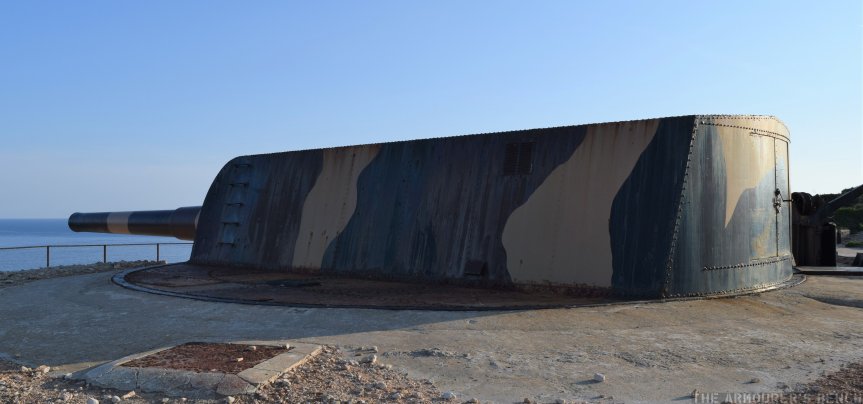
One of La Mola's 15 inch guns in position
One of the fort’s two 15 inch Vickers guns in position on Cape Espero (Matthew Moss)

Spain purchased 18 of these massive guns made by the British Vickers company, they had originally been designed for the cancelled Brazilian battleship Riachuelo. In Spanish service the guns were officially designated the Costa de 38.1cm Modelo 1926. During the 1930s the new coastal guns were installed on both the Spanish mainland and Menorca. Two guns placed in the Castillitos Battery, defending Cartagena, opened fire on a Spanish Nationalist fleet, during the dying days of the Spanish Civil War. While Menorca’s guns never fired a shot in anger, they acted as a deterrent.

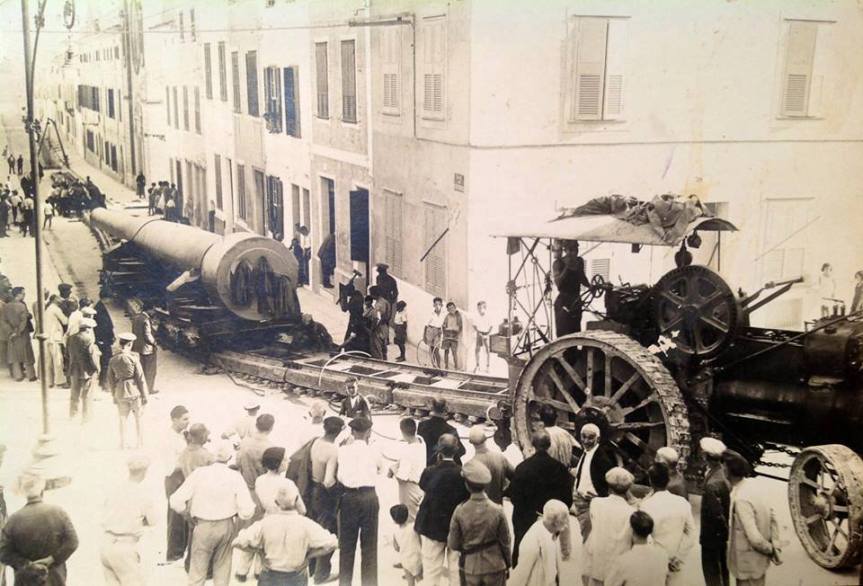
The first guns reached Mahon in 1932, with a second arriving in 1936, these were mounted on the cliffs of Cape Espero on the La Mola peninsular. The guns were so huge they had to be transported to the fort on a specially built railway pulled by hand and traction engine. These formidable new guns brought Fortalesa Isabel II’s armament up to date, enabling it to protect Mahon from any modern warship.

15 inch gun being dragged by a traction engine through mahon
One of the massive 15 inch guns being pulled along its special track by a traction engine through the streets of Mahon (source)

The 15 inch (or 381mm) Vickers battery at the fort was positioned 70m above sea level and commanded the entrance to the harbour. Six guns were eventually sent to Menorca with two  placed on La Mola, two more installed in a battery at Favaritx (the remains of which can be seen here) in the north of the island and a pair at a battery near Llucalari in the south of the island.

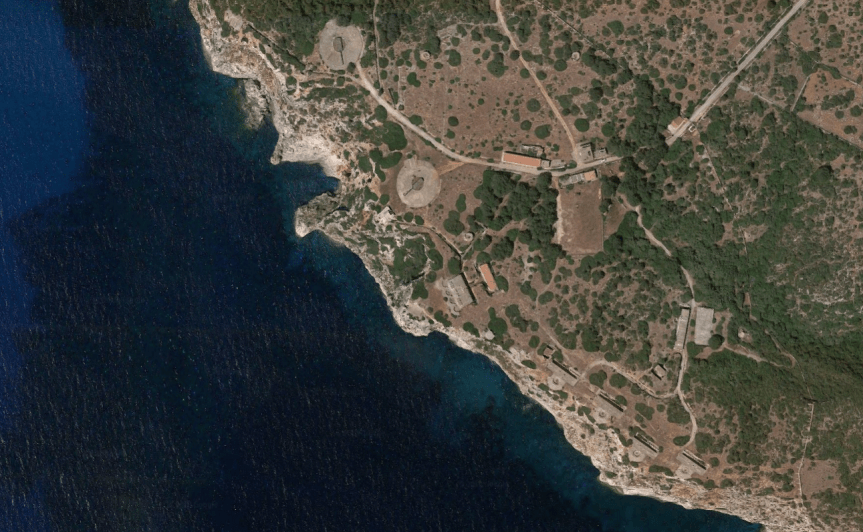
While the guns at Favaritx were later removed, the guns at Llucalari remain. The fact that six of these massive and expensive naval guns were placed on Menorca shows its strategic value during the period.

Satellite photo of the 15 inch battery at Llucalari
Satellite photo showing Menorca’s other 15 inch battery at Llucalari (google maps)

The guns were mounted in barbettes which allowed the guns to traverse up to 300 degrees. The gun housing of the turret was armoured but while it would not protect the crew from a direct hit, it would protect against shrapnel. Below the guns were magazine stores for both cordite charge bags and projectiles, the machinery needed to rotate and move the gun and the motors to power it. Inside the turret were controls to open and close the breech, lift and lower the loading tray and aim the gun. The guns had a potential maximum range of 35km or 22 miles, however, the guns at La Mola lacked the necessary range-finding equipment to achieve this range.

Inside the 15 inch gun turret
A contemporary photograph showing the interior of the gun turret. A shell is sat on the loading try ready to be pushed into the breech. (source)

The ancillary buildings for the battery on La Mola are built just behind the two gun emplacements with offices, stores and barracks built in an old quarry. As well as the two main guns the battery was supported by four faster firing 6 inch Vickers guns.

15 inch Vickers gun firing in the 1980s
One of Menorca’s 15 inch guns firing c.1980s (source)

With the eruption of the Spanish Civil War in 1936, Menorca was initially held by the Republicans. But in 1939, the island fell to General Franco’s Nationalists and the fort’s military prison was used to house a number of prominent Republican prisoners. Throughout the Cold War the fort continued to be used by the Spanish Army as a training centre but the rise of air power, the invention of the cruise missile and nuclear weapons rendered the fort and its guns increasingly obsolete.

The last of Spain’s 15 inch guns were finally decommissioned in the mid-2000s, after nearly 80 years in service. Fortalesa Isabel II and her two massive guns never saw action, and today the site is maintained as an impressive museum which is well worth a visit.

If you enjoyed the video and this article please consider supporting our work here.


Specifications:

Length: 18m or 59 feet
Weight: 86.9 tons
Action: breech-loading
Calibre: 15 inch or 381mm
Elevation -5 / +40 degrees
Traverse: 300 degrees
Rate of fire: 2 rounds per minute


Bibliography:

The Fortress of Isabel II on La Mola in Mahon Harbour (19th 7 20th Century), F. Fornals (2007)

The Conquests and Reconquests of Menorca, M. Mata (1984)

Guns of Cartagena, espele.net, (source)

‘Yo hice la Mili en La Mola de Menorca’, Facebook group with excellent contemporary photos (source)

www.fortalesalamola.com


Please do not reproduce photographs taken by Matthew Moss without permission or credit. ©The Armourer’s Bench 2018.

Ultimax 100 Light Machine Gun


In the late 1970s James Sullivan, one of ArmaLite’s former chief designers and one of the men responsible for the M16, began developing a new light machine gun for a company in Singapore. The Ultimax 100 is a 5.56x45mm, gas-operated magazine-fed light machine gun. It uses a short stroke gas piston system that acts on a continuously recoiling bolt.

Sullivan was originally approached to develop a new select-fire intermediate cartridge rifle for the Singaporean military. Working with Chartered Industries he developed a very lightweight light machine gun. Sullivan was especially interested in recoil mitigation and developed the Ultimax’s bolt to travel rearward without ever hitting a buffer or the receiver. This greatly lowers perceived recoil and makes the weapon much flatter shooting.

Ultimax MKII
A MkII Ultimax which featured a fixed barrel (source)

The Ultimax fires from an open bolt (which uses a multi-lug rotating bolt head) and has a non-reciprocating charging handle. It’s buttstock can be removed to make the weapon even more compact. The absence of a buffer in the butt allows the weapon length to be reduced to just 81cm (32 inches), making it an excellent weapon for jungle or urban combat. The Ultimax is also extremely light for a squad automatic weapon, weighing approximately 4.7kg unloaded, and around 6.5kg when loaded with a 100-round drum.

Ultimax_100_cutaway
Diagram from an early marketing brochure showing the MkII and MkIII models of the Ultimax (source)

While the MkII Ultimax has a fixed barrel, the MkIII has a quick change barrel which releases by pulling a catch the the rear and simply twisting the barrel and pulling it forward. Unlike other machine guns the bolt can remain forward when the barrel is being removed.

The Ultimax feeds from either an adapted STANAG magazine or a 100 round drum magazine, which has a controlled internal feed rather than a belt. The drum was co-developed by Sullivan and Bob Waterfield. The weapon’s rear pistol grip is similar to the Stoner 63 weapon system’s (which Sullivan had also worked on) while the smaller, grooved front pistol grip is reminiscent of the classic Thompson submachine gun’s.

Ultimax 100 Sales Brochure cover
Cover of Chartered Industries sales brochure for the Ultimax 100, featuring a MkIII, note the bayonet lug (source)

It is said that Singapore’s government would not allow the Ultimax to be entered in the US’ Squad Automatic Weapon trials as the US government had refused them the technical package for the M16. Other sources suggest there was a commercial disagreement between Colt and Chartered Industries Over region sales of the M16. As a result the FN Minimi won the trials and was adopted as the M249. Those who have fired both claim that the Ultimax would have given the Minimi more than a run for its money.  Despite this the Ultimax has seen action around the world and has been in service with the Singapore Army since 1982.

An updated version was offered in the US Marine Corps’ Infantry Automatic Rifle trial but was beaten by Heckler & Koch’s HK416, now the M27. ST Kinetics, formerly Chartered Industries, continues to improve and produce the Ultimax with the Mk8 introduced in 2012.

If you enjoyed the video and this article please consider supporting our work here.


Technical Specifications (from 1982 Sales Brochure):

Length: 103cm (40 in)
Weight (unloaded): 4.7kg (10.4 lbs)
Barrel Length: 50.8cm (20.0 in)
Action: Gas operated
Calibre: 5.56x45mm
Feed: 100-round drum or 30-round STANAG magazines
Cyclic Rate: ~400-600 rpm


Bibliography:

The Interview: L. James Sullivan, Part II, 28th February 2007, Small Arms Review, (source)

1982 Ultimax 100 Sales Brochure, Chartered Industries of Singapore, (source)

The Past is Another Country: Ultimax 100, WeaponsMan, (source)

Military Small Arms of the 20th Century, I. V. Hogg, (1985)

F1 Submachine Gun

The Australian military adopted the F1 submachine gun in 1962, with the first guns reaching troops in April 1963, it replaced the venerable Owen gun. Like the earlier Owen the F1 had a top-mounted magazine – a position that lent itself to prone firing and more comfortable carrying when slung. But it also shared some similarities with the British L2A3 Sterling.

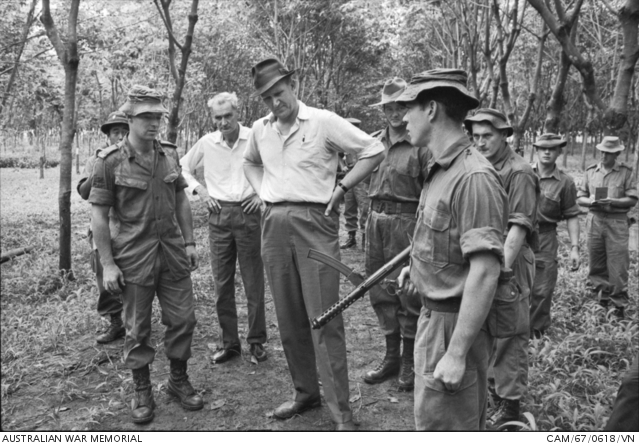
NUI DAT, VIETNAM, 7TH BATTALION, THE ROYAL AUSTRALIAN REGIMENT (7RAR) with F1 SMG
Men of the 7th Battalion, The Royal Australian Regiment demonstrate the F1 to the Australian Army Minister, Malcolm Fraser, in Vietnam in 1967 (Australian War Memorial)

The F1 entered service alongside the Australian L1A1 (self-loading rifle/FN FAL), it shared the rifles butt plate and pistol grip – slightly minimising additional unique parts needed by the submachine gun. Australian Ordnance had begun searching for a replacement for the ageing Owen gun after the Korean War. The Owen had been made quickly and cheaply during the Second World War and while it was well liked by Australian troops it was felt it could be improved upon. Maintenance of the older Owen guns proved difficult as each weapon had been hand fitted to speed up production and some parts proved not to be interchangeable.

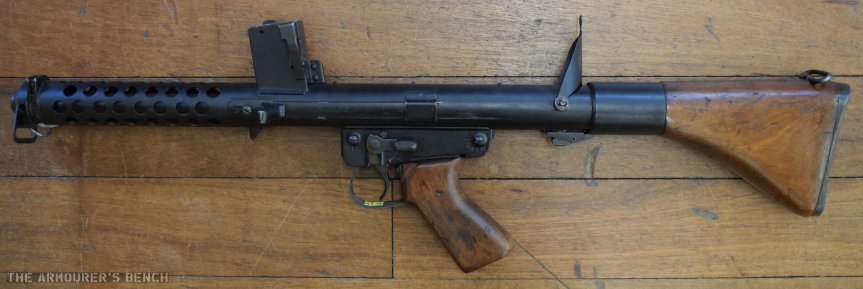
F1 SMG (Matthew Moss)
Left side view of an Australian F1 submachine gun, from the 1970 production run (Matthew Moss)

A number of designs were developed including one designated the Kokoda (presumably after the Kokoda Trail campaign fought by Australian troops in 1942). This design was lighter than the Owen but suffered from overheating problems. A series of designs from the Australian Design Establishment, designated the ‘X’ series, were then developed. These weapons incorporated elements from both the Owen and the British Sterling. Including the Sterling’s perforated barrel jacket and magazine and the Owen’s bolt, magazine orientation and forward pistol grip – a feature many troops with experience with both the Owen and F1 lamented to loss of with the adoption of the F1. The first two ‘X’ series weapons developed into the X3 which in 1962, after successful trials, became the F1.

8RAR with F1 SMG (AWM)
Member of 8th Royal Australian Regiment stood too with his F1 SMG (Australian War Memorial)

The F1 used a standard blowback action with a non-reciprocating charging handle. The charging/cocking handle was positioned on the left side of the receiver with its slot protected from the ingress of dirt by a dust cover. The F1 has a two-position fire selector with up for ‘safe’ and down for ‘fire’. The trigger mechanism allowed for firing single shots by pulling the trigger to the half-way point, this allowed the sear to trip into the semi-automatic position (see the diagram below).

Semi-Auto sear position in F1 SMG
Diagram from Australian Army Parts List showing how the F1’s semi-automatic mode works (source)

Chambered in 9x19mm, the F1 fed from a 34-round curved magazine, although it could use straight, single-feed, Sten or Owen magazines. In the 1960s, in order to achieve commonality with Britain and other Commonwealth nations, that used the Sterling Submachine Gun, the Australian government contacted the Sterling Armaments Company to enquire how much a license to produce Sterling’s magazines would cost, only to be quoted an exorbitant fee. The Australian government were unwilling to pay for the license and produced them anyway. And as Sterling could not afford to take legal action were able to continue to do so – with the understanding they would not sell any commercially. The Australian government would later purchase a number of suppressed Mark 5 Sterling-Patchetts, also adopted by the British army as the L34A1.

The weapon’s ejection port was located on the bottom of the receiver ahead of the trigger guard. A small piece of metal was added in front of the ejection port, as a hand stop, to prevent the operator from inadvertently moving their hand over the port. The F1 had an in-line stock fitting into the rear of the tube receiver. The sights were offset to the right, the rear peep sight folded against the receiver when not in use while the front sight, rather than over the muzzle, projected from the right side of the magazine housing.  The F1 could also mount the L1A1 self-loading rifle’s standard L1A2 sword bayonet.

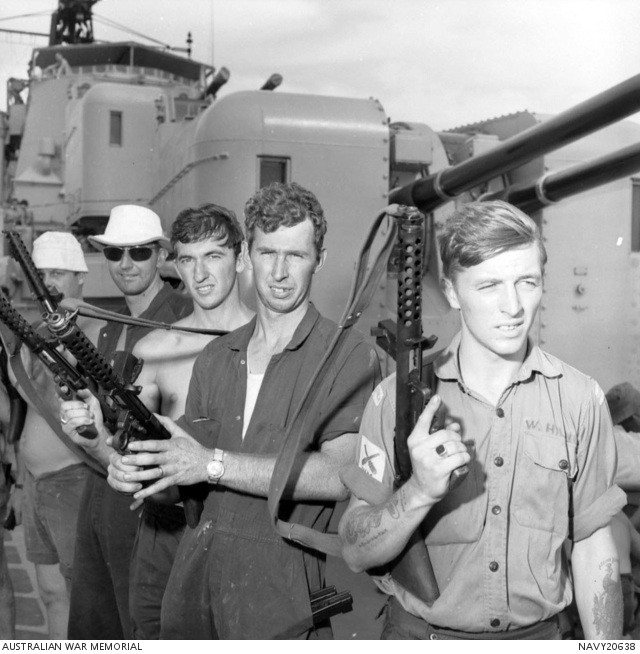
Australian Sailors with F1 SMG
Australian sailors aboard the destroyer HMAS Duchess wait to take part in a live firing exercise with their unloaded F1 submachine guns, c.1969. (Australian War Memorial)

The F1 weighed just over 7lbs (3.2kg), was 28 inches long and had a cyclic rate of approximately 600 rounds per minute. It had a solid butt stock, unlike the Sterling which had a folding stock. The F1 was produced solely by the Lithgow Small Arms Factory with most sources suggesting 25,000 were produced for the Australian military between 1963 and 1973. The Lithgow Small Arms Factory Museum were kind enough to look into the exact number made for us, and reported that there is some uncertainty surrounding the exact number produced with production report totals varying, giving a total of either 21,916 or 24,828.

The F1s saw extensive service in Vietnam and later with Australian peacekeeping troops through to the 1990s. It was issued to rear echelon troops, ACP and aircraft crews and to infantry sections. While the F1 was appreciated for its reliability, for those troops who had experience with the venerable Owen Gun, the F1 lacked a certain something.  Colonel Warren Feakes noted that “every time I picked up an F1 I had the feeling that something was missing.” Another Australian veteran, Warrant Officer Kevin Konemann, who served in Vietnam in 1966-67, recalled: “It was awkward to fire from the shoulder and more awkward to fire from the hip” and that “the F1 wasn’t popular. Soldiers found it more difficult to point and bring on target than the OMC [Owen Gun] and firing from the shoulder… was decidedly more difficult without the front hand grip.”

Despite the shortcomings identified by some troops the F1 remained in service alongside the L1A1 self-loading rifle into the early 1990s, when both were phased out of use as the 5.56x45mm F88 (Steyr AUG) was adopted.

If you enjoyed the video and this article please consider supporting our work here.


Technical Specifications:

Length: 28 inches (71cm)
Weight (unloaded): 7lbs (3.2kg)
Barrel Length: 8.35 inches (19.8cm)
Action: Blowback
Calibre: 9x19mm
Feed: 34 round box magazine
Cyclic Rate: ~600 rpm


Bibliography:


1966 Infantry Training Pamphlet, Platoon Weapons, Sub-machine Gun 9mm, F1, Australian Army, (source)

Repair Parts Scale, 9mm, F1 SMG, Australian Army, (source)

Vietnam ANZACs Australian & New Zealand Troops in Vietnam 1962-1972, K. Lyles (2004)

Military Small Arms of the 20th Century, I. Hogg & J. Weeks (1985)

‘Another Australian Native: The 9mm F1 Submachine Gun’, Arms & Militaria Collector No.21, pp. 53-56, I. Skennerton, (source)

Modern Small Arms, F. Myatt (1979)

The Owen Gun, W. Wardman, (1991)

F1 Sub-machine Carbine, Lithgow Museum, (source)


Please do not reproduce photographs taken by Matthew Moss without permission or credit. ©The Armourer’s Bench 2018.

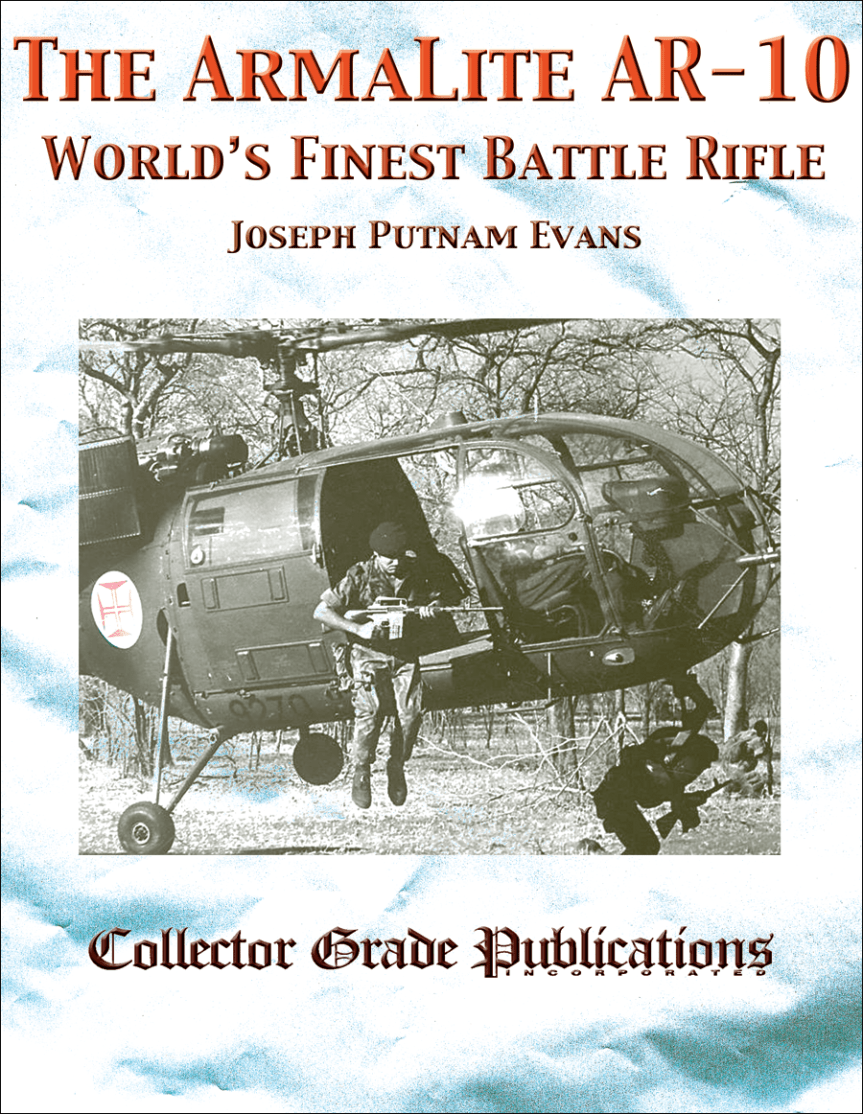
TAB: Recommended Reading – The ArmaLite AR-10 by Joseph Putnam Evans

This is the first instalment of what will hopefully become a regular feature where we discuss some of the books we use when researching the guns we feature in our videos. We’ll give an overview of what the books cover, how they approach subjects and how good a resource they are.

With Vic’s recent special episode on the AR-10, I’ve been using Joseph Putnam Evans’ book ‘The ArmaLite AR-10: The World’s Best Battle Rifle‘ to help write the accompanying blog posts. While not without its flaws Evans’ book is without doubt the best published source on the AR-10 currently available.

tumblr_o74fv6is1w1s57vgxo1_1280

For many years the published material on the AR-10 was confined to both contemporary gun magazine articles on the ‘new’ rifle and a handful of retrospective articles published later. Very little was written about their surprisingly extensive combat use or even the nuances of the design changes. Even the Black Rifle books, also published by Collector Grade, lacked the context of where the AR-15 evolved from. ArmaLite AR-10 is well worth reading, and a great base for further research.

Special Episode: The ArmaLite AR-10 (Pt.2)


If you missed the first part of our special episode on the AR-10 you can find it here!

Vic brings us the second part of his special episode looking at the story of the AR-10, with a very unique run down of various variants of Eugene Stoner’s weapon. Vic runs us through every production model made by Artillerie Inrichtingen as well as several special prototypes and transitional models.

After a recap look at an example of a Hollywood-made rifle Vic shows us how the AR-10 worked using an instructional cutaway model. Throughout the video Vic examines all of the major production guns, beginning with an early A.I. production gun that incorporates the same ‘beer can’ muzzle device as the original American-made rifles. Vic then takes us through a series of rifles that represent the evolution of the design.

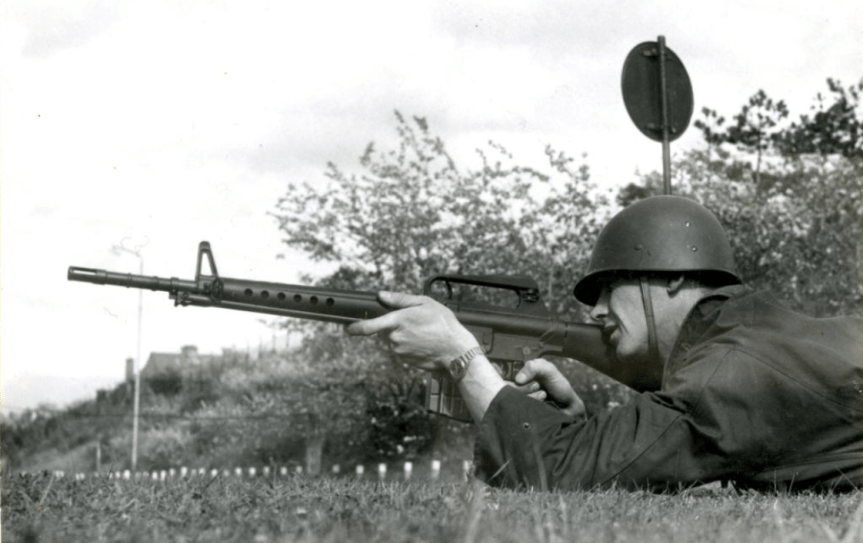
Photograph from the Bundeswehr rifle trials of a German soldier firing an AR-10B in 1957, the German’s classified the AR-10 as the G4 during the trials (source)

Beginning with the Cuban model, with its pencil profile barrel and top mounted gas tube. This model was also trailed by both the Dutch Army and the German Bundeswehr. Later in the video Vic gives us a quick look at the various German trials rifles the FAL (G1), the SIG 510-1 (G2), the H&K/CETME (G3) and the AR-10 (G4).

22222222
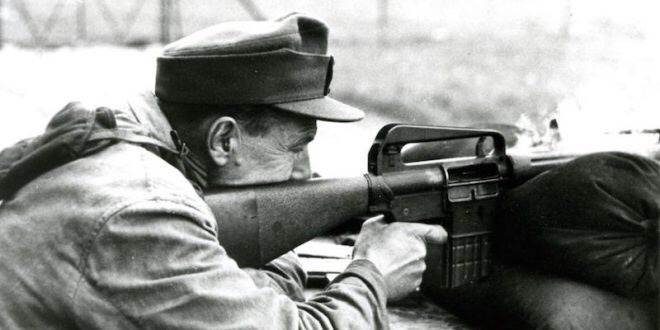
Soldier firing an AR-10 during the Dutch Army trials (source)

Vic follows the Cuban model with a look at the Sudanese Model, with its bayonet lug sleeve, and the Guatemalan variant which swaps out the bayonet lug for rifle grenade launching capability. The Sudanese military ordered 2,508 rifles from A.I.

tumblr_nqmmbtj7FT1s57vgxo5_1280
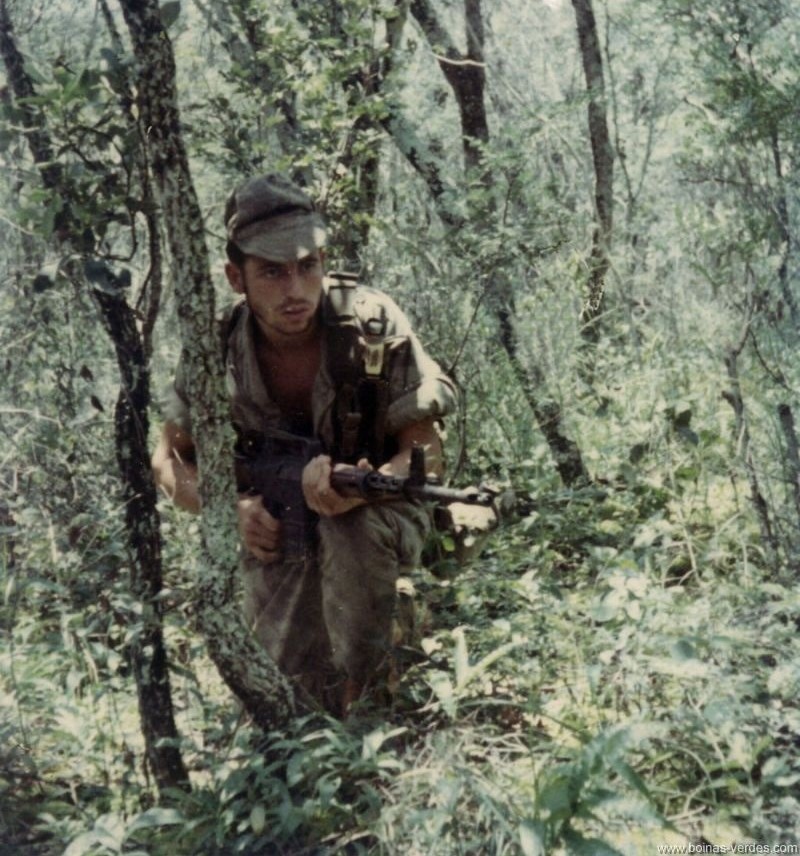
Caçadores Paraquedista with an AR-10 (source)

In addition to these Vic also gives us a look at an extremely rare prototype carbine, a sporter model (the AR-102) and a prototype squad automatic weapon with a heavier profile barrel.  Vic then takes us through the features of the final A.I.-made variant, the Portuguese or NATO model. The rifle was officially adopted by the Portuguese army’s Caçadores Páraquedistas (paratroops) and saw action in Angola, Portuguese Guinea and Mozambique.

Vic then takes a look at a series of rare variants and one-offs, including a rifle with green furniture made for Prince Bernhard, the Royal consort to Queen Juliana of the Netherlands, and a heavy barrelled magazine-fed squad automatic rifle with a rubber butt-pad and additional folding carrying handle.

14554764_3
‘Transitional’ model AR-10 (source)

To round out the story of Artillerie Inrichtingen’s involvement with the AR-10, Vic is lucky enough to take a close look at an M1 Garand adapted to feed from surplus AR-10 aluminium waffle magazines. This concept was developed to equip the NATRES, the Dutch Army Reserve, and was based somewhat on the Italian Beretta BM-59. Vic shows us both a very early prototype BM-59 and one of only two A.I. Garand adaptation prototypes.

In the next part of the series Vic will examine several examples of the belt-fed AR-10. If you missed the first part of the series, which featured the early history of the ArmaLite AR-10 and a very rare original promotional film featuring Eugene Stoner himself, you can find that here!

If you enjoyed the video and this article please consider supporting our work here.


Bibliography:

The Armalite AR-10: World’s Finest Battle Rifle, J. Putnam Evans (2016)

Hybrid Sten

During our first research trip last spring I had the opportunity to examine an unusual ‘hybrid’ Sten submachine gun. The weapon combined a MkII Sten’s receiver with a MkIII’s magazine housing. Added to this was a proprietary folding stock and a new fire control group and pistol grip.

Very little is known about the hybrid Sten with Peter Laidler’s book The Sten Machine Carbine mentioning it and the later Osprey book by Leroy Thompson sharing a photograph and brief caption which calls it an “experimental version of the Mk III.” It is also unclear exactly when it was built.

Below are some photographs I took of the Sten, lets look at some of the interesting features of the Hybrid Sten.

DSC_0807
left side of the Sten with the stock folded flush under the receiver (Matthew Moss)

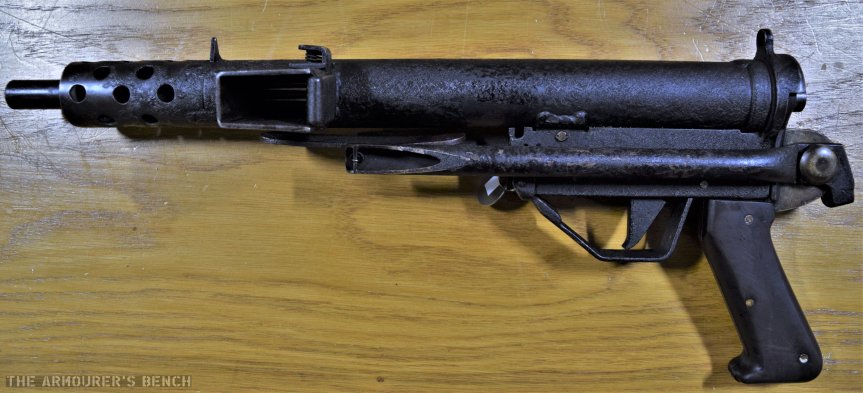
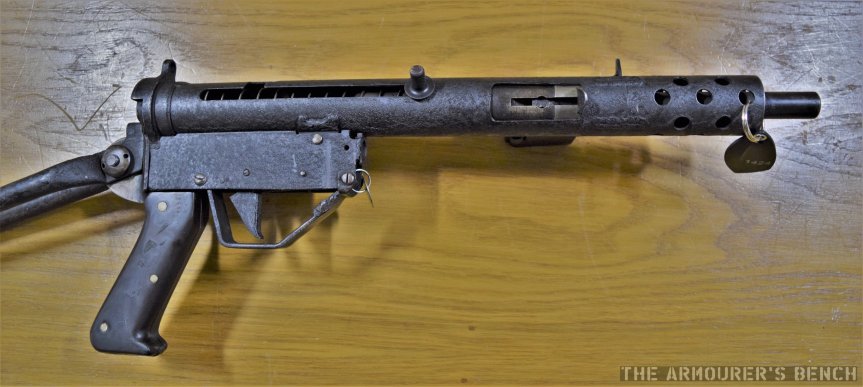
No production Variant of the Sten was fitted with an under-folding stock, the Australian Austen, however, directly copied the MP38/40. The entire weapon is covered by a layer of textured, crackle paint finish, this was commonly used on commercial Sterling Mk4 submachine guns. The weapon has a short, 3.5 inch, perforated fore-end welded onto the front of the tube receiver that appears to be from a Lanchester.

DSC_0803
Rear right of the weapon close up of its pistol grip, stock and trigger housing (Matthew Moss)

The under folding stock is rudimentary but effective, the butt plate swivels free but the lock up is quite secure. It uses the receiver main spring-loaded return-spring cap. The folding stock attaches to the pistol grip assembly (which can be seen detached below).

The proprietary rectangular trigger group housing brazed onto the tub receiver is unlike any other Sten and lacks a fire-selector.

DSC_0811
Left side of the Sten with its pistol grip and stock assembly detached (Matthew Moss)

The pistol grip itself is made from paxoline, a form of early resin plastic. The shape shape of the pistol grip does not resemble any production or prototype Sten grip. A simple hand-stop, made from a bent piece of sheet metal, has also been added in front of the weapon’s ejection port to prevent the user’s hand moving back and fingers being caught if gripped by the forend.

DSC_0802
Right side of the Sten with its stock unfolded (Matthew Moss)

While the origins of the hybrid Sten remain unclear I don’t believe it was an officially made prototype. While impressive it is relatively crudely assembled and does not match the Sten prototypes made by Enfield, such as the VI. Intriguingly, the magazine housing of the weapon has been stamped ‘PILOT’ below the usual ‘STEN MkIII’ stamp. I suspect that the weapon may have been put together by a unit armourer, perhaps authorised by a superior officer to suggest improvements or as an unofficial project gun.

UPDATE:  Their is some evidence emerging that this Hybrid Sten may be related to the T42 Sten prototype, part of the Sten MkIV development program. Where this hybrid fits into the story is not yet clear but the similarities are striking, when we have more information we will revisit this weapon.

If you enjoyed the video and this article please consider supporting our work here.


Technical Specifications:

Length (with stock folded): approx. 40cm (30in)
Weight: approx. 3kg (7lb)
Barrel Length: 16cm (6.5in)
Action: Blowback
Calibre: 9x19mm
Feed: 32 round box magazine
Cyclic Rate: approx. 500 rpm


Bibliography:

The Sten Machine Carbine, P. Laidler (2000)

The Sten Gun, L. Thompson (2012)


Please do not reproduce photographs taken by Matthew Moss without permission or credit. ©The Armourer’s Bench 2018.

Special Episode: The ArmaLite AR-10 (Pt.1)


In this first part of a TAB special episode examining the history of the ArmaLite AR-10 Vic discusses the early origins, history and development of the now legendary 7.62x51mm rifle. At the heart of this episode is a remastered version (certainly the best currently available online) of the c.1958 ArmaLite/Fairchild promotional film that features Eugene Stoner and shows many of the early ‘Hollywood’ Armalites in action! The first part of this special documentary concludes with Vic examining a Hollywood-made AR-10B (the last iteration of the US-made AR-10s).

Part two of the episode can be found here and includes an overview of almost every Artillerie Inrichtingen (A.I.)-made model of AR-10, including the Cuban, Sudanese and Portuguese variants. 


Armalite & the AR-10’s Early History

Much has been written about the AR-10, Eugene Stoner and the genesis of the AR-15’s parent rifle. It’s a design which owes much to many: Stoner, George Sullivan, Melvin Johnson and later the engineers at Artillerie Inrichtingen.

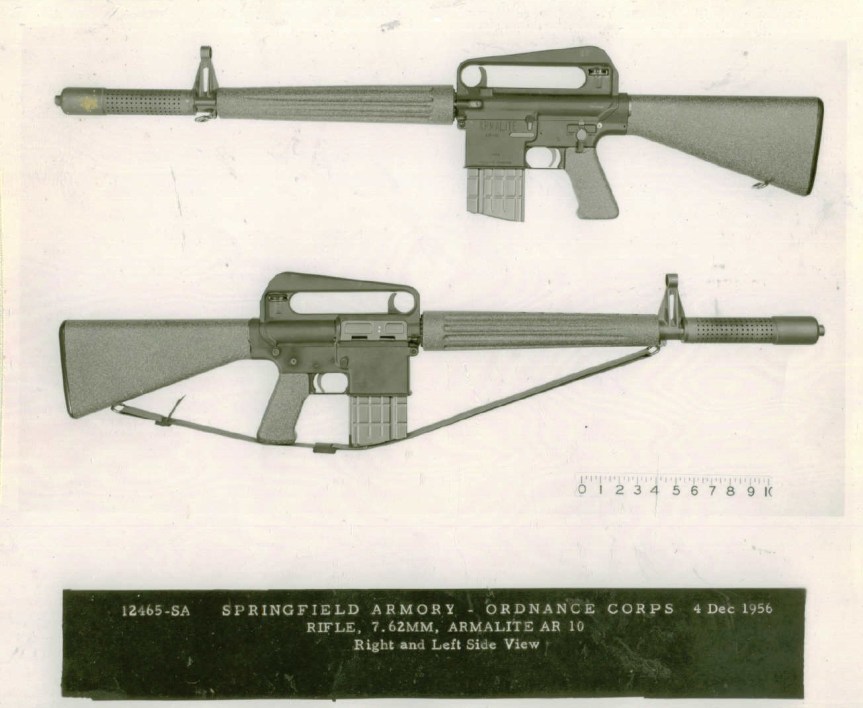
12465-SA.A.1
Photographs taken during Springfield Armory’s evaluation of the AR-10B (source)

ArmaLite, formed by George Sullivan with the help of Richard Boutelle, President of the Fairchild Engine and Aircraft Corporation, began work on the first AR-10 prototypes in 1955. Designed by Eugene Stoner, using his patented direct gas impingement system. Stoner patented this system in 1956, with the patent being granted in September 1960 (US #2,951,424).

tumblr_nhoqdrHlUE1s57vgxo1_500
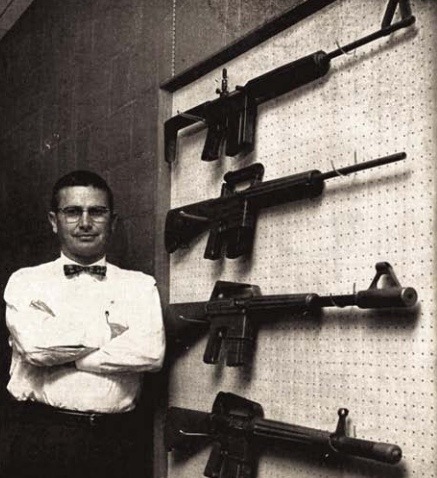
Stoner pictured with some of the Hollywood AR-10 prototypes for a 1958 article in Guns magazine (source)

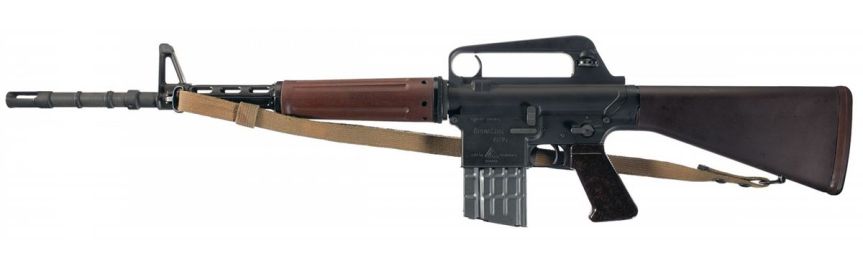
The AR-10 had an aluminium-alloy forged receiver, an in-line stock, polymer furniture and chrome-lined steel parts. While conventional steel barrels were the norm an ill-fated attempt to use an aluminium/steel composite barrel during US Army evaluations proved disastrous when the steel inner parted from the aluminium outer and caused the barrel to burst. As a result of these weight saving efforts the rifle weighed just ~3.4kgs/7.5lbs unloaded. The Armalite AR-10 had a side mounted gas tube, a top mounted charging handle and fed from 20-round box magazines. One of the most interesting features was the large aluminium muzzle device, fitted to some ArmaLite-made Rifles, which reduced sound and flash.

In 1957, ArmaLite sold the AR-10 manufacturing rights to the Dutch small arms manufacturer Artillerie Inrichtingen, while US manufacture was licensed by Colt in February 1959. With minimal financial returns Fairchild sold their interests in ArmaLite in 1962.

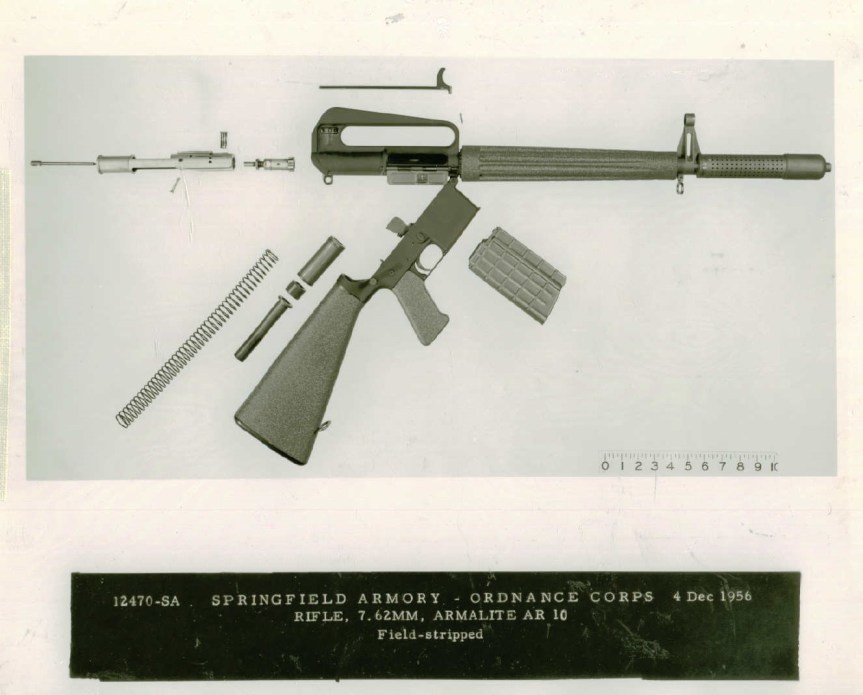
12470-SA.A.1
A Springfield Armory file photograph of the AR-10B disassembled, taken during evaluations in 1956 (source)

Featured in the first part of Vic’s special episode on the AR-10 is an original Armalite/Fairchild promotional film, originally filmed in 16mm, that dates from around 1958. While a version of this film has been shared online for a number of years it is grainy, washed out and of relatively low audio quality. Vic reproduced the very rare promotional sales film in the 1990s onto VHS (a process he explains in the video). He has managed to take an original VHS copy and digitally remaster it to regain some of the original’s clarity and detail.

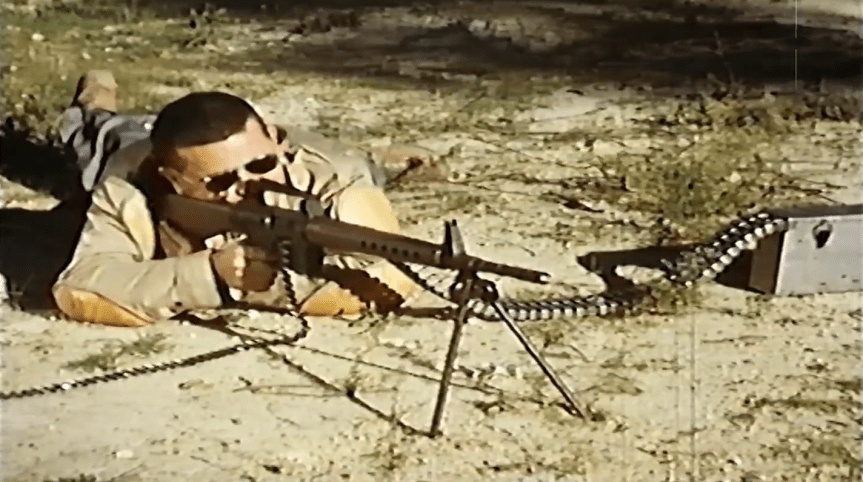
1111111
A still from Vic’s remastered 1958 promo film showing Stoner firing the belt-fed variant of the AR-10 (source)

The promotional film was originally used by salesmen to showcase the AR-10 to potential clients and features Hollywood-produced guns. Both Stoner and Charles Dorchester (ArmaLite’s production manager) are seen in the film demonstrating the AR-10. The rifle’s action, function and controls are explained and various variants, including rifle and light machine gun, are demonstrated. The demonstration segment included a sub-zero test, covering in sand and much and Stoner himself dumping 5 magazine’s through the rifle in quick succession. The promotional film concluded with demonstrations of firing rifle grenades and a belt-fed AR-10.

Vic concludes the first part of the AR-10 overview episode with an examination of an AR-10B rifle held by the Netherlands’ Nationaal Militair Museum. In the second part of the episode Vic will look at nearly a dozen AR-10 variants made by Artillerie Inrichtingen (A.I.) between 1957 and 1961.

Part 2 of the AR-10 special can be found here!

If you enjoyed the video and this article please consider supporting our work here.


Bibliography:

The Armalite AR-10: World’s Finest Battle Rifle, J. Putnam Evans (2016)

ArmaLite AR-10 Promotional Video (courtesy of Vic Tuff)

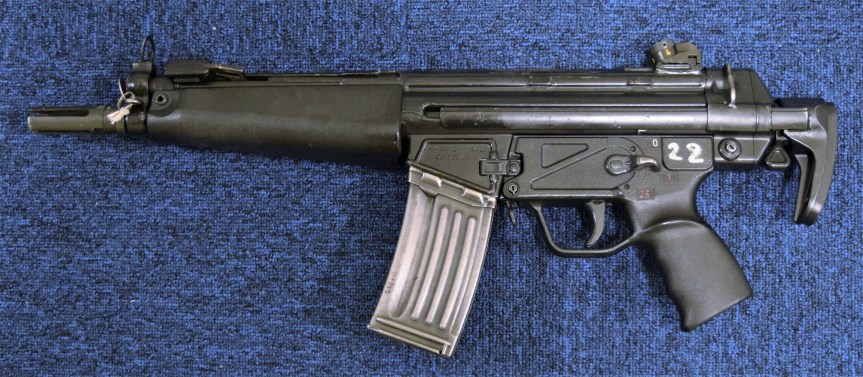
Heckler & Koch HK53

In 1968 Heckler & Koch launched the HK33, chambered in 5.56x45mm, to compete with Colt’s AR-15/M16. The HK33, and later HK53, used the same roller-delayed blowback action developed for the G3 in the mid 1950s. However, few major contracts were forthcoming with the German military opting to continue using the 7.62x51mm G3.

11111111111
Heckler & Koch HK53 (with ‘navy’ lower reciever) brochure c.1987 (source)

Due to the modularity of the HK33′s design users could replace the butt of the standard rifle with a collapsible telescopic metal stock. H&K also subsequently designed a carbine version of the full-length HK33, the HK33K with a telescopic metal stock and 12.7 inch barrel. In the mid-1970s H&K began development an even shorter version. The result was essentially an intermediate calibre submachine gun similar to the Colt Commando and the Soviet AKS-74U. H&K designated this new weapon the HK53, it used the same telescopic stock as the HK33K and MP5 and a cut down 11 inch barrel, the HK53 also utilised a polymer forearm similar to the MP5s.

1
Contemporary promotional photos dating from 1985 (source)

Like the HK33, the HK53 fed from 25, 30 or 40 round box magazines. The weapon weighed just over 3kg (7lb), almost a 1 kg less than its parent rifle the HK33. Unlike the HK33, the HK53 has a four prong flash hider. A number of police forces and militaries adopted the HK53 for a variety of roles. Special forces units around the world including the British SAS, Royal Military Police Close Protection Unit and Royal Marines, designated the L101A1 in British service, who typically used it during close protection duties and operations involving close quarter battle.

2
Contemporary promotional photo dating from 1985 (source)

As shown in various MoD Equipment Failure Reports dating from the early 1990s the HK53’s in British service suffered from repeated damage and failure of the carbines’ locking rollers. This issue arose when using a number of different ammunition types including brass cased blank ammunition (H&K recommend the use of their proprietary blank cartridges). Following a meeting between the Army Technical Support Agency’s Directorate of Engineering and H&K a new design for the locking pieces were developed. These changes “increased the roll of blowback force during the unlocking phase… in turn this will reduce the mean energy of the recoiling mass of breech block and carrier” this was intended to reduce bolt bounce. The Royal Military Police Close Protection Unit’s L101A1’s were also fitted with a new two stage buffer within a fixed stock. In British service the L101 was replaced by the L22A2 carbine and the L119A1 (C8 Carbine).

DSC_0843
HK53, stock collapsed, (Matthew Moss)

Due to its short length the HK53 also found itself pressed into the port-firing weapon role. Designated the HK53 MICV in this role the foregrip and stock was removed and a specially designed endcap and a spent case bag could be attachment. During its service life the HK53 went through a series of changes to furniture mouldings, buttstock types and fire selector options. It remained in production into the early 2000s, when Heckler & Koch replaced the HK33 and HK53 with the G36 and G36K.

If you enjoyed the video and this article please consider supporting our work here.


Technical Specifications (from 1987 H&K brochure):

Length (with stock extended): 76.5cm (30in)
Weight (collapsible stock, unloaded): 3.35kg (7.4lb)
Barrel Length: 22.5cm (8.5in)
Action: Roller delayed blowback
Calibre: 5.56x45mm
Feed: 25, 30, or 40-round box magazine
Cyclic Rate: approx. 700 rpm


Bibliography:

The World’s Assault Rifles, G.P. Johnston & T.B. Nelson, (2010)

Heckler & Koch HK33 & HK53 manual (source)

HK53 factory colour brochure, 1987, (via Small Arms Review Reference Library)

Itemised list of L101A1’s which suffered damaged locking rollers, MoD Equipment Failure Report, 15 Nov. 1994, (via Small Arms Review Reference Library)

Army Technical Support Agency report on receiver damage to HK53 and G3 rifles, 1996,(via Small Arms Review Reference Library)


Please do not reproduce photographs taken by Matthew Moss without permission or credit. ©The Armourer’s Bench 2018.

FAMAE PAF Submachine Gun

The 1960s and 70s saw Chile was racked by political turmoil with a military junta, led by General Augusto Pinochet, taking control in September 1973. Pinochet’s Junta took control of the country via a bloody coup, overthrowing President Salvador Allende, and as a result all export of small arms from Britain to Chile ceased. In the early 1970s, before the coup d’etat, The records of the Sterling Armaments Company show Chile purchased an example of the company’s Mk4 submachine guns and no less than 101 suppressed Mk5 Sterling-Patchetts.

With the import of small arms from the UK and other countries banned by an embargo Chile’s government were eager to increase their self-sufficiency.  As a result in the mid-1970s the state-owned firearms manufacturer Fábricas y Maestranzas del Ejército (FAMAE) experimented with copying the Sterling Mk4 in an effort to minimise development costs.

DSC_0162
Left-side view of the PAF with its stock extented (Matthew Moss)

The resulting 9x19mm submachine gun was dubbed the PAF or ‘Pistola Ametralladora FAMAE’. It took the basic Sterling design and simplified it. The PAF lacks the Mk4’s perforated barrel jacket and instead has an exposed barrel, tipped with a rudimentary spoon-shaped compensator. It also lacked the Sterling’s folding stock, instead it had a simple collapsing stock. As a result, the disassembly catch has been moved 90-degrees to the left side of the receiver.

DSC_0163
Right-side view of the PAF (Matthew Moss)

Like the original, the Chilean copy retained the dirt-clearing grooves cut into the weapon’s breech block. The PAF’s plastic charging handle and butt stock shape are reminiscent of the Heckler & Koch MP5 – although much cheaper feeling in quality. The profile of the PAF’s pistol grip is slightly different but the weapon still fed from standard 34-round Sterling magazines. Interestingly, unlike the Sterling’s screwed-in-place barrel, the PAF’s was held in place by a machined barrel nut – in terms of production this is a much simpler system, no doubt borrowed from the Uzi.


The Chilean copy weighs significantly less than the British original, 2.5kg (5.5 lbs) and reportedly has a much higher 800 rounds-per-minute rate of fire. In general the PAF looks much like Sterling’s own later Para Pistol model, the Mk7.

Some sources suggest that only a small number of toolroom prototypes were made, although the relatively high serial number, #00748, of the example we looked at may indicate a limited production run may have been produced. It is clear, however, that the PAF did not go into general production. Instead, FAMAE later focused on weapons derived from Swiss small arms including the SIG SG 510 and SIG SG 540, and the SAF submachine gun introduced in the 1990s.

Note: The PAF was the last weapon we filmed during this particular research trip and we did not have time to film or photograph the PAF’s internals (we filmed a lot of videos that day and were pressed for time). Rest assured if and when we get the opportunity we will update this article with photographs of the weapon disassembled!  

If you enjoyed the video and this article please consider supporting our work here.


Technical Specifications:

Length (with stock collapsed): approximately 44cm (17in)
Weight (unloaded): 2.5kg (5.5lb)
Barrel Length: 17.5cm (6.9in)
Action: blowback, open bolt
Calibre: 9x19mm
Feed: 34-round box magazine
Cyclic Rate: suggested ~800 rpm


Bibliography:

The Guns of Dagenham, P. Laidler & D. Howroyd, (1995)

‘The PAF: Chile’s First Indigenous Submachine Gun’, TFB, R. Olive (source)


Please do not reproduce photographs taken by Matthew Moss without permission or credit. ©The Armourer’s Bench 2018.