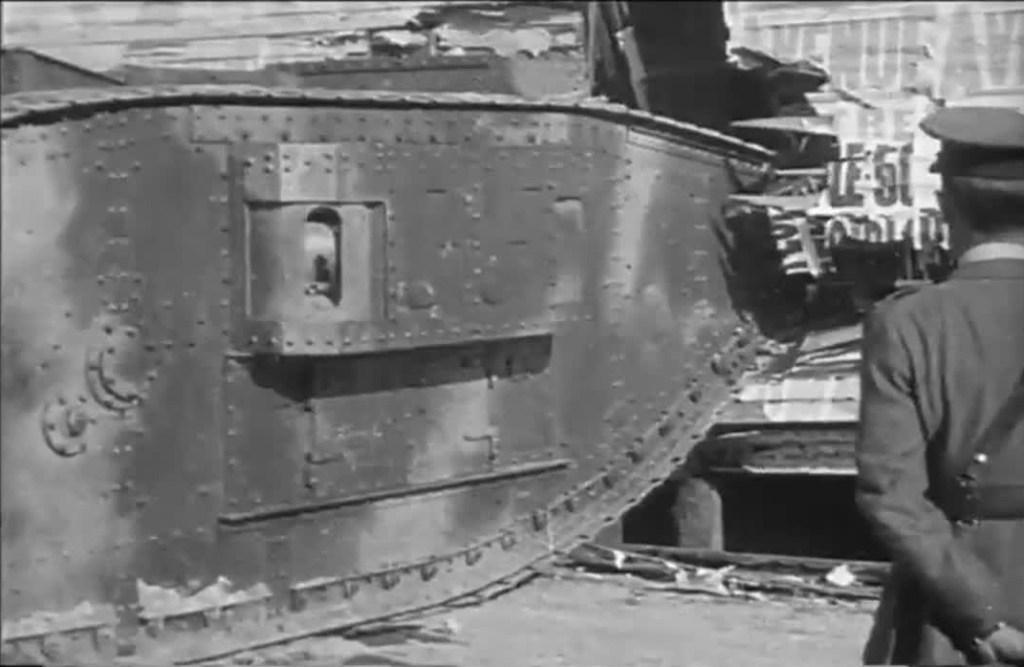
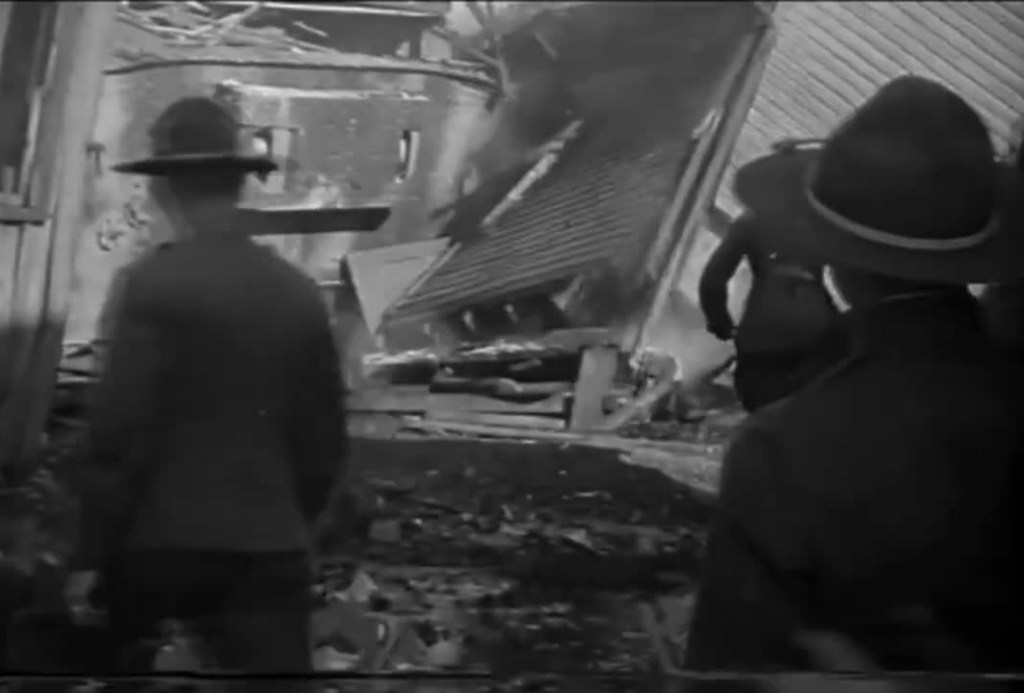
I’m this short video a British MkIV heavy tank ploughs through a series of wooden buildings during a 1917 demonstration.
The tank crashes into the first building
The MkIV was a ‘female’, machine gun-armed, tank that weighed in at around 27 tons. Designed to support infantry, it had a top speed of just 4mph.
The tank pushes over and crushes another wooden-framed building
In this footage the tank does not have its guns mounted as it runs through a succession of wooden framed builds, as British and American officers and men look on.
Don’t forget to check out our series on World War One tanks here.
Last summer I had the chance to visit the newly renovated Cody Firearms Museum. With the ongoing Coronavirus Pandemic I thought now was a good time to finish my walk-around video taking a look at the new museum.
The museum has always had an extremely impressive collection of firearms and gun related artefacts, some of which we’ve been lucky enough to feature in videos, but the new museum puts more of these amazing firearms on display than ever before.
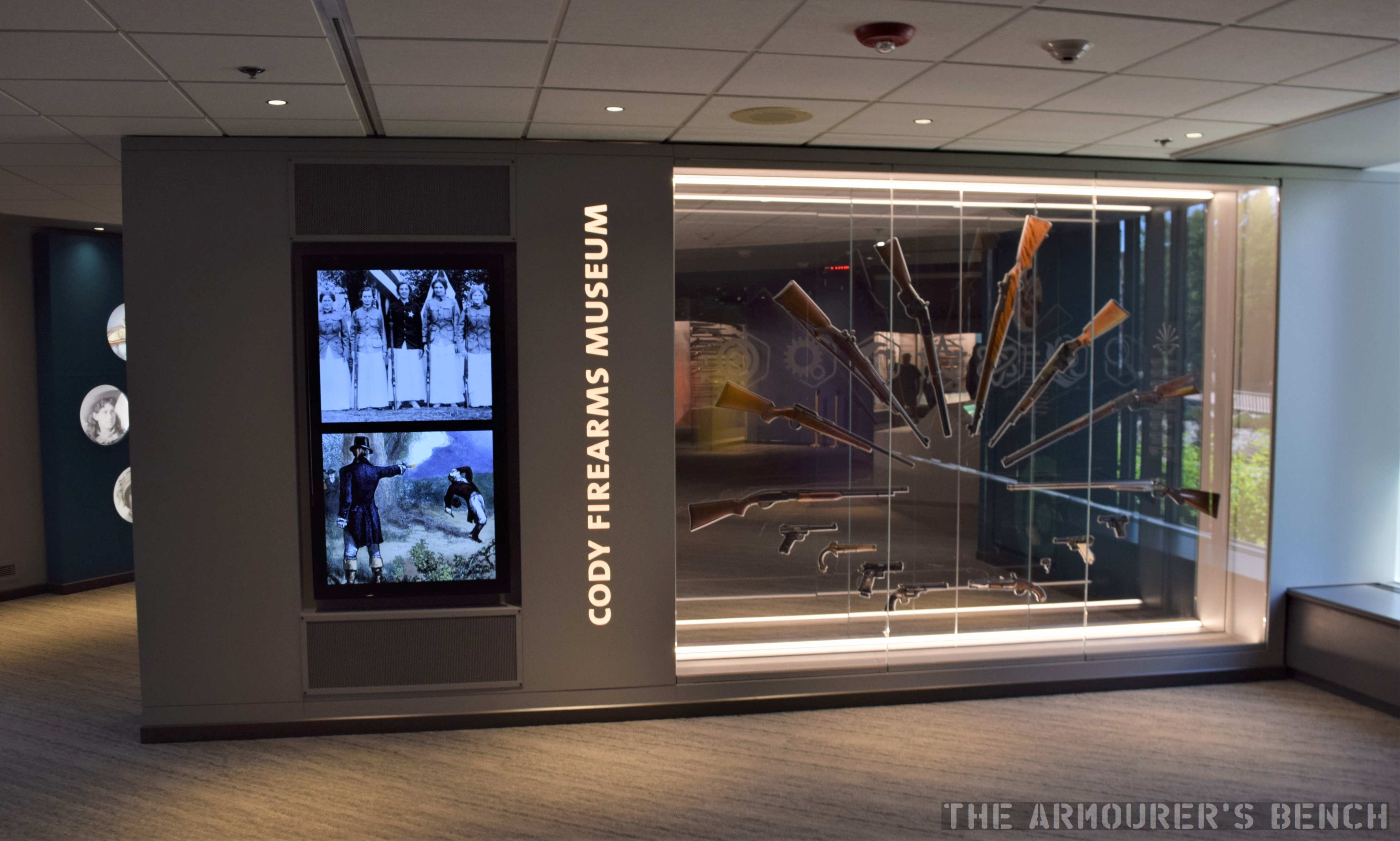
The CFM’s new and improved ‘gun fan’ (Matthew Moss)
The $12 million renovation has also allowed the museum to become much more interactive too with working models, touch screens and shooting simulators.
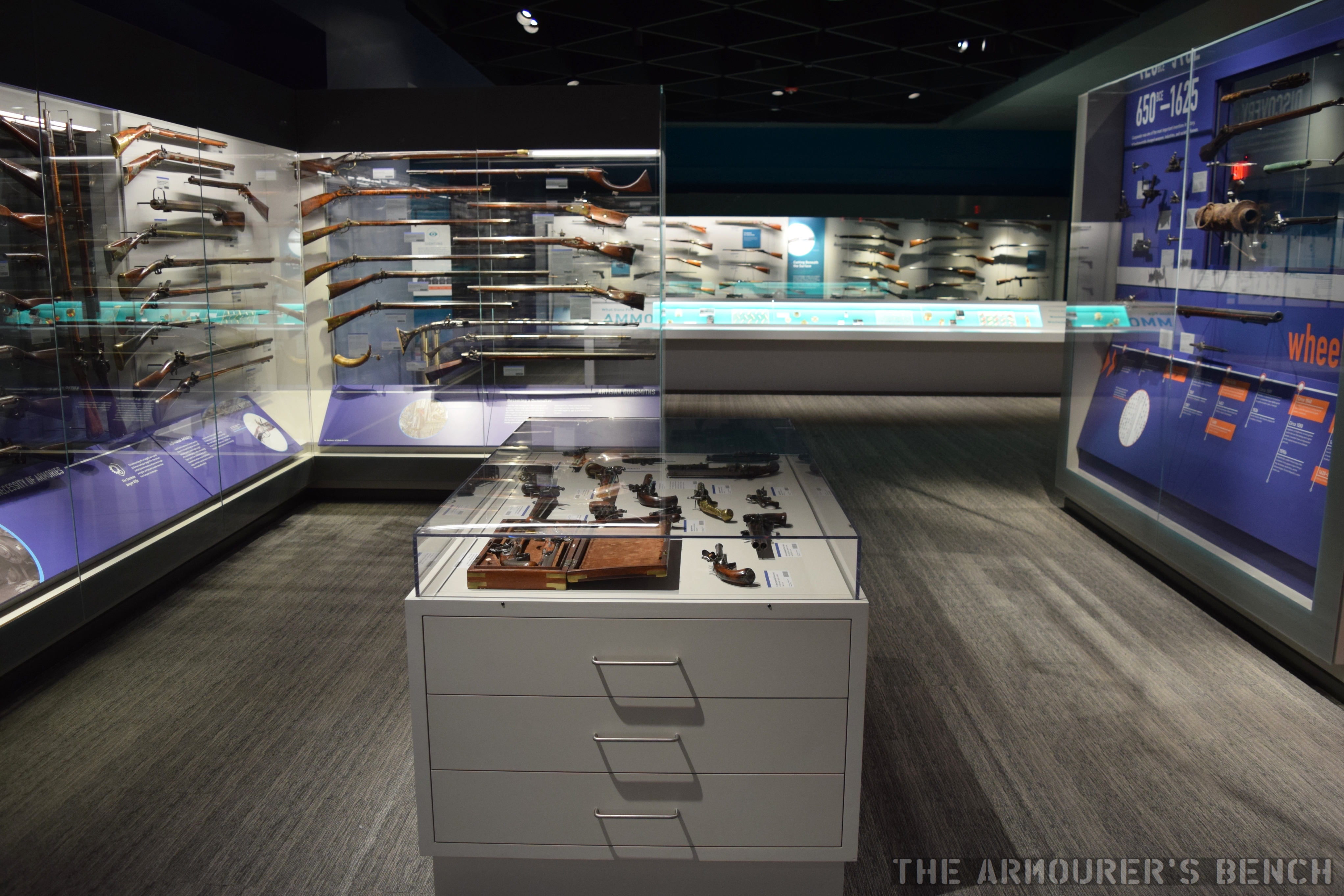
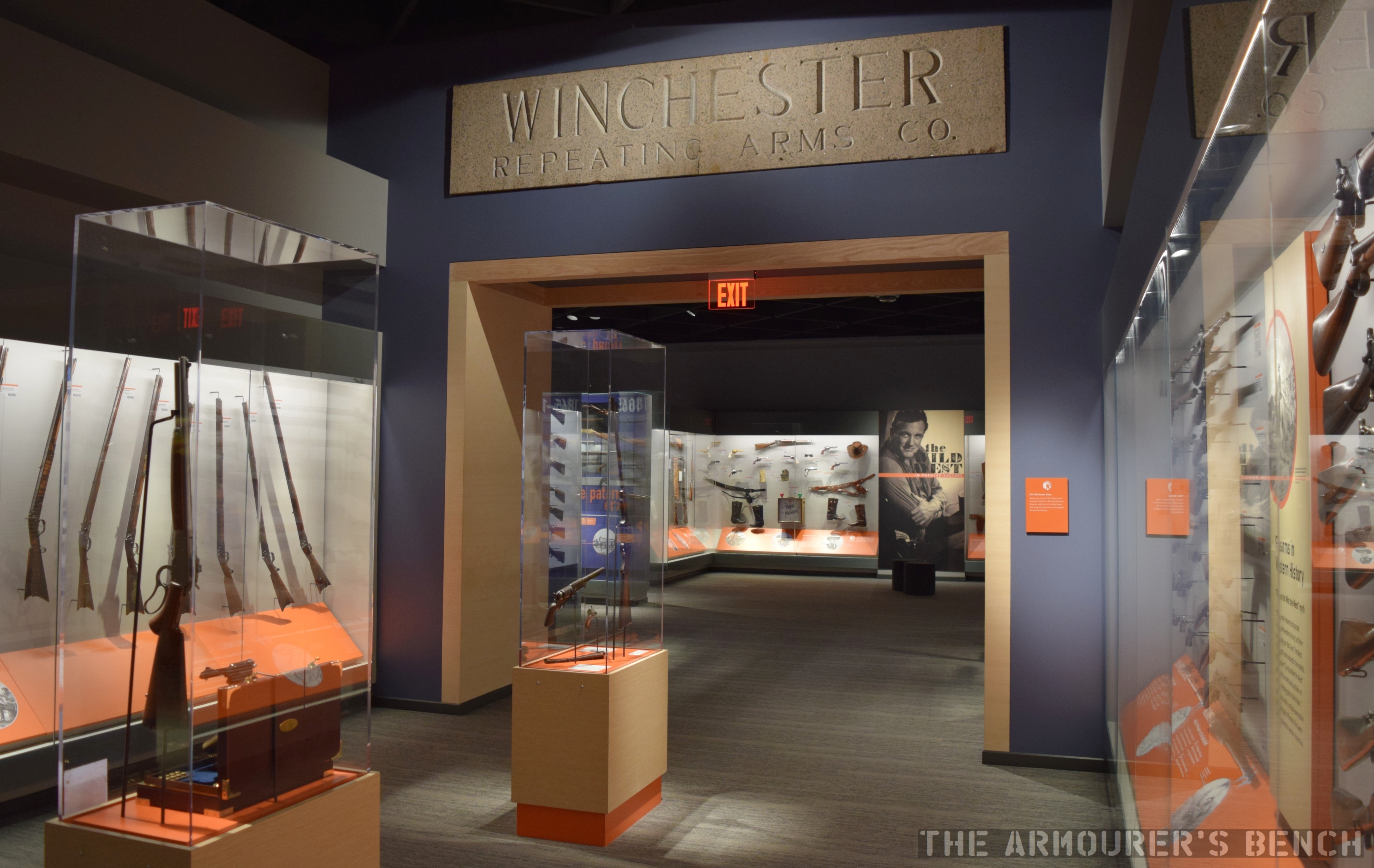
A view back through the first main gallery (Matthew Moss)
A new intuitive layout lets you explore firearm history either by chronology or by theme. In the photo above we can see some of the displays in the chronological gallery that shows the evolution of civilian and military firearms from their invention to the present.
Some of the weapons of the West on display along with the original Winchester factory name stone (Matthew Moss)
One of the features I really liked was that many of the cases can be viewed on both sides allowing you to see all around the firearms.
Around the exhibits are touch screens where you can call up more information, first hand war stories and even animations of how various firearms work.
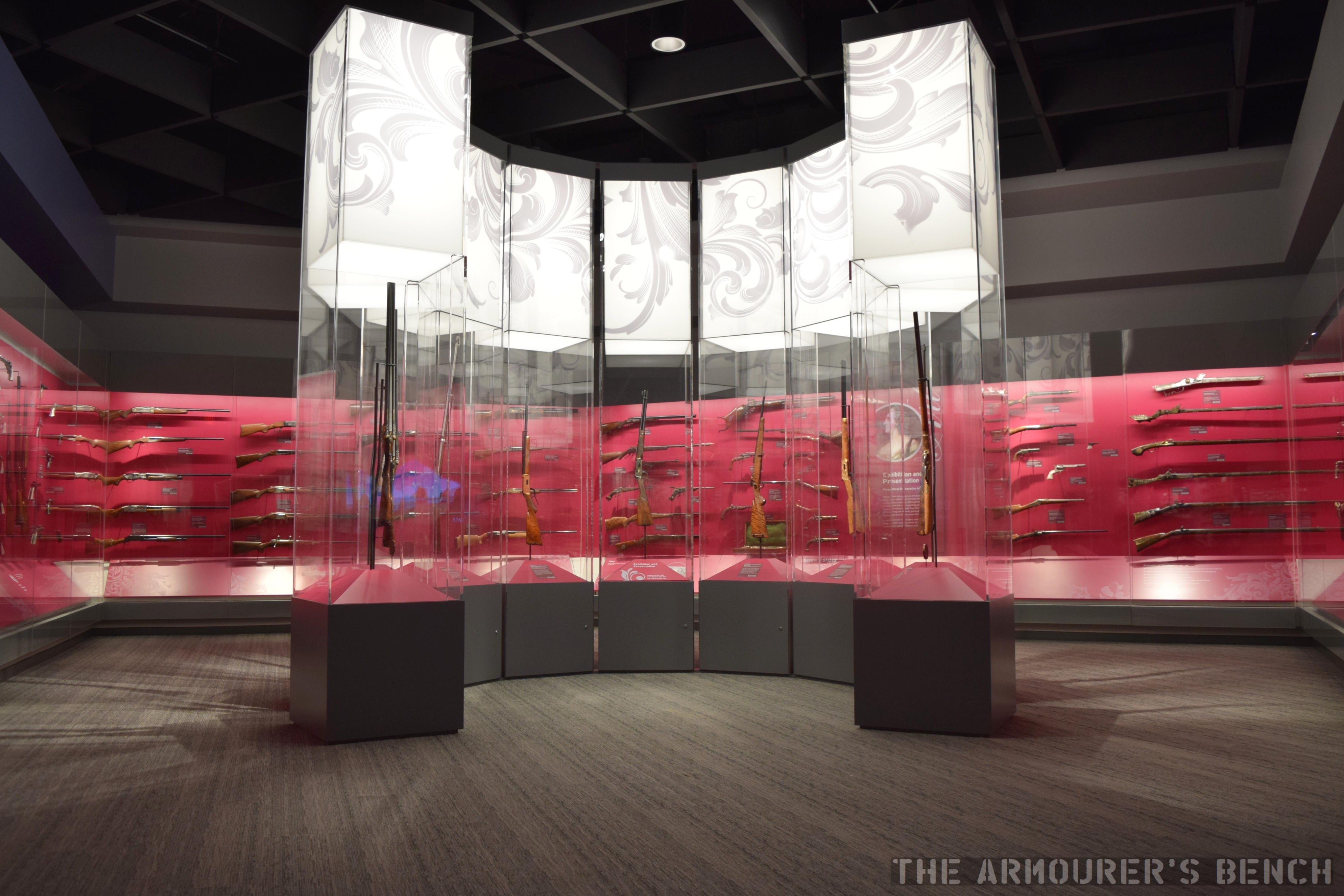
A gallery full of beautifully engraved firearms including some presidential presentation pistols (Matthew Moss)
There is also a gallery of ornately decorated firearms which includes some incredible pieces.
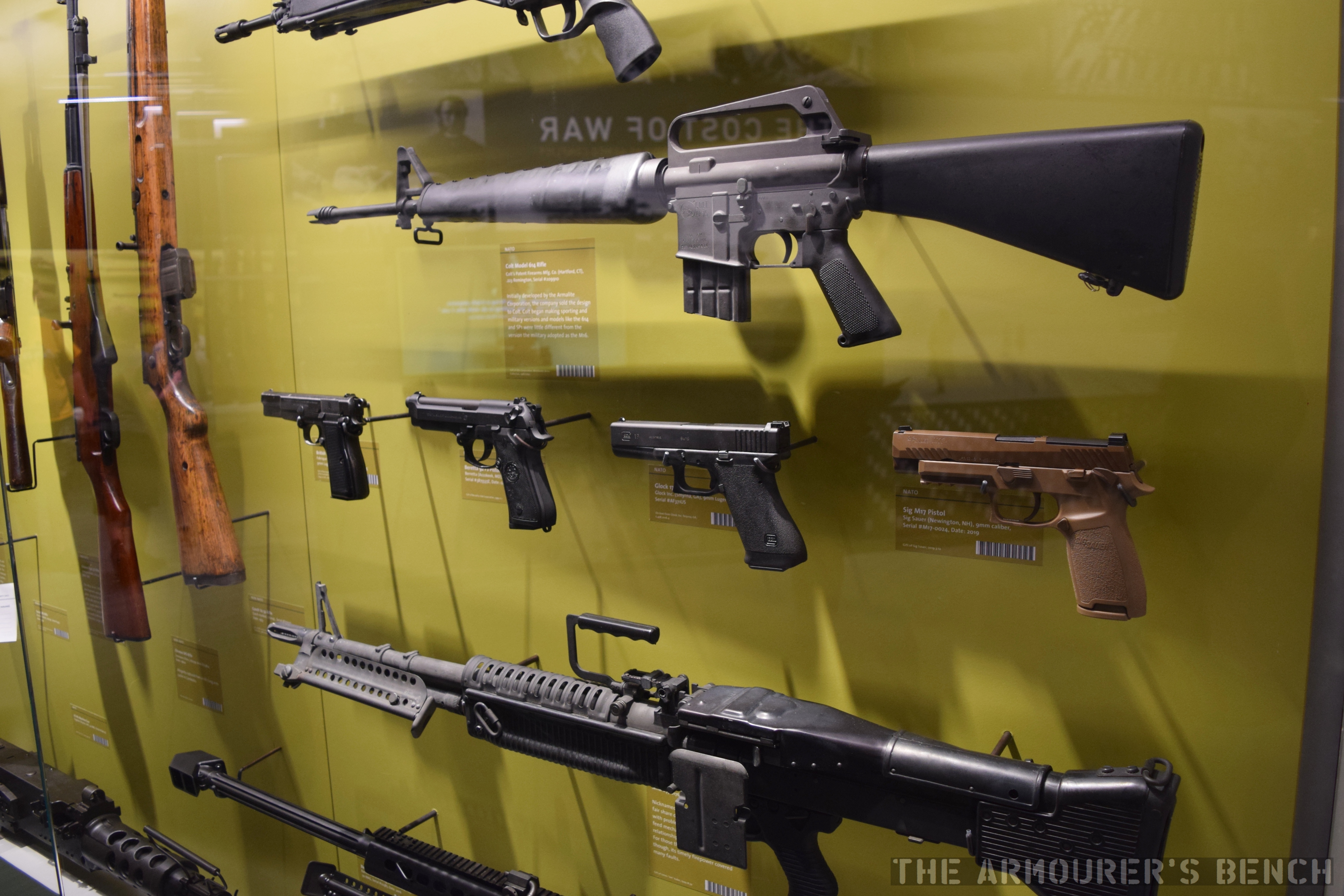
A detail shot from the military gallery (Matthew Moss)
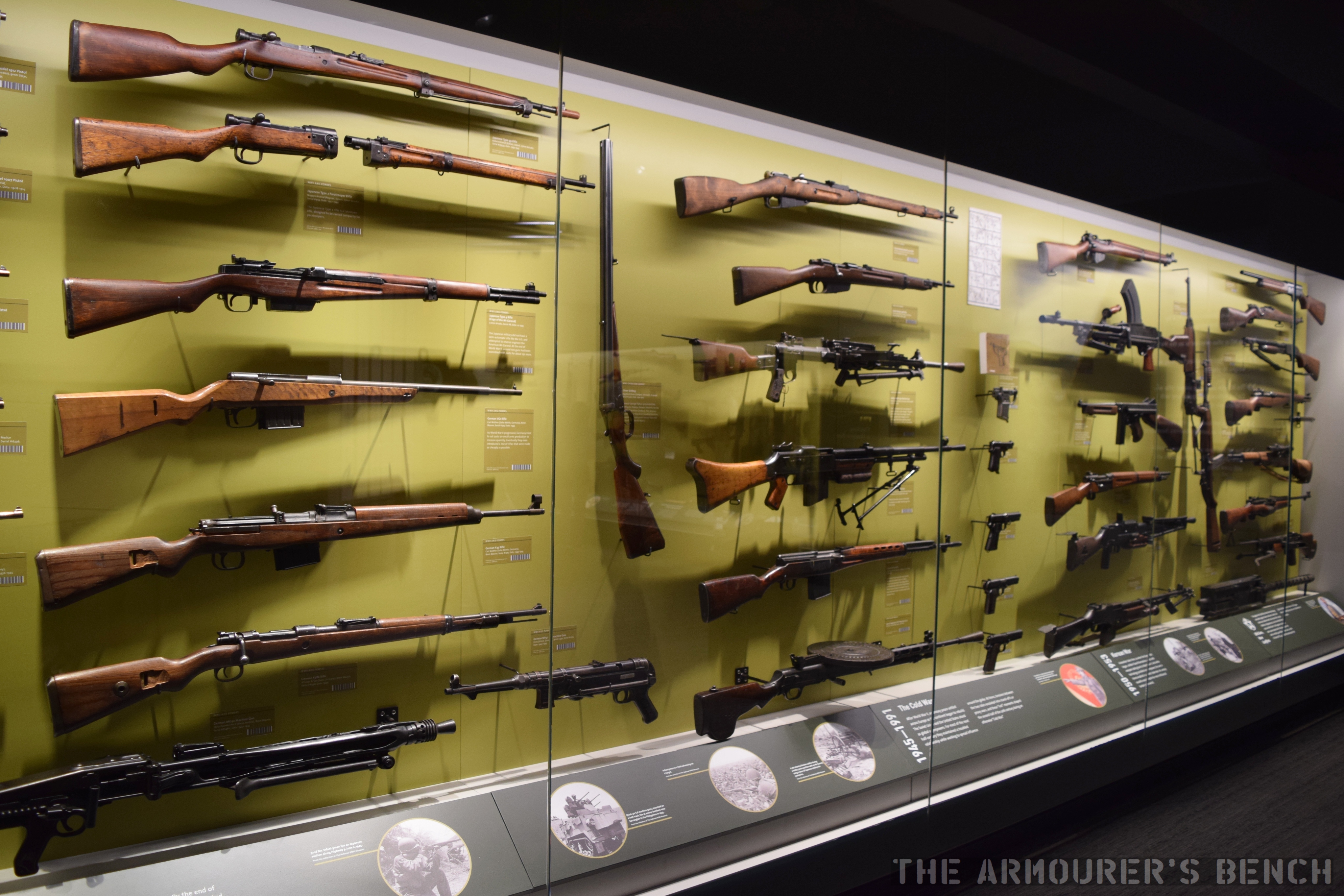
Unsurprisingly, the military gallery was one of my favourite parts of the museum with dozens of guns organised by conflict and period.
One of the cases in the military gallery (Matthew Moss)
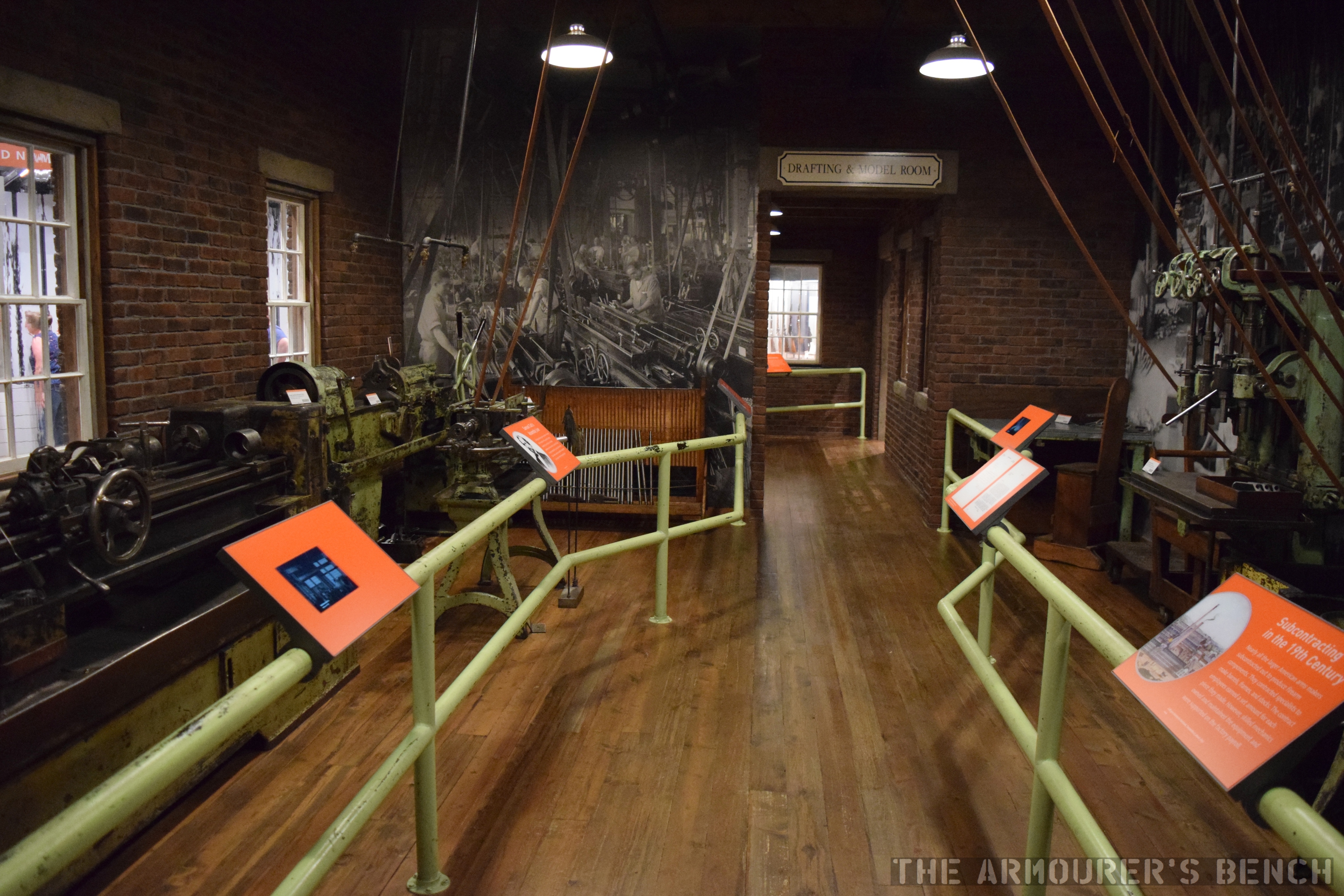
A look back through the recreated machine shop (Matthew Moss)
One of the best features of the original museum has also been retained, a recreation of a gun factory’s drafting room and machine shop.
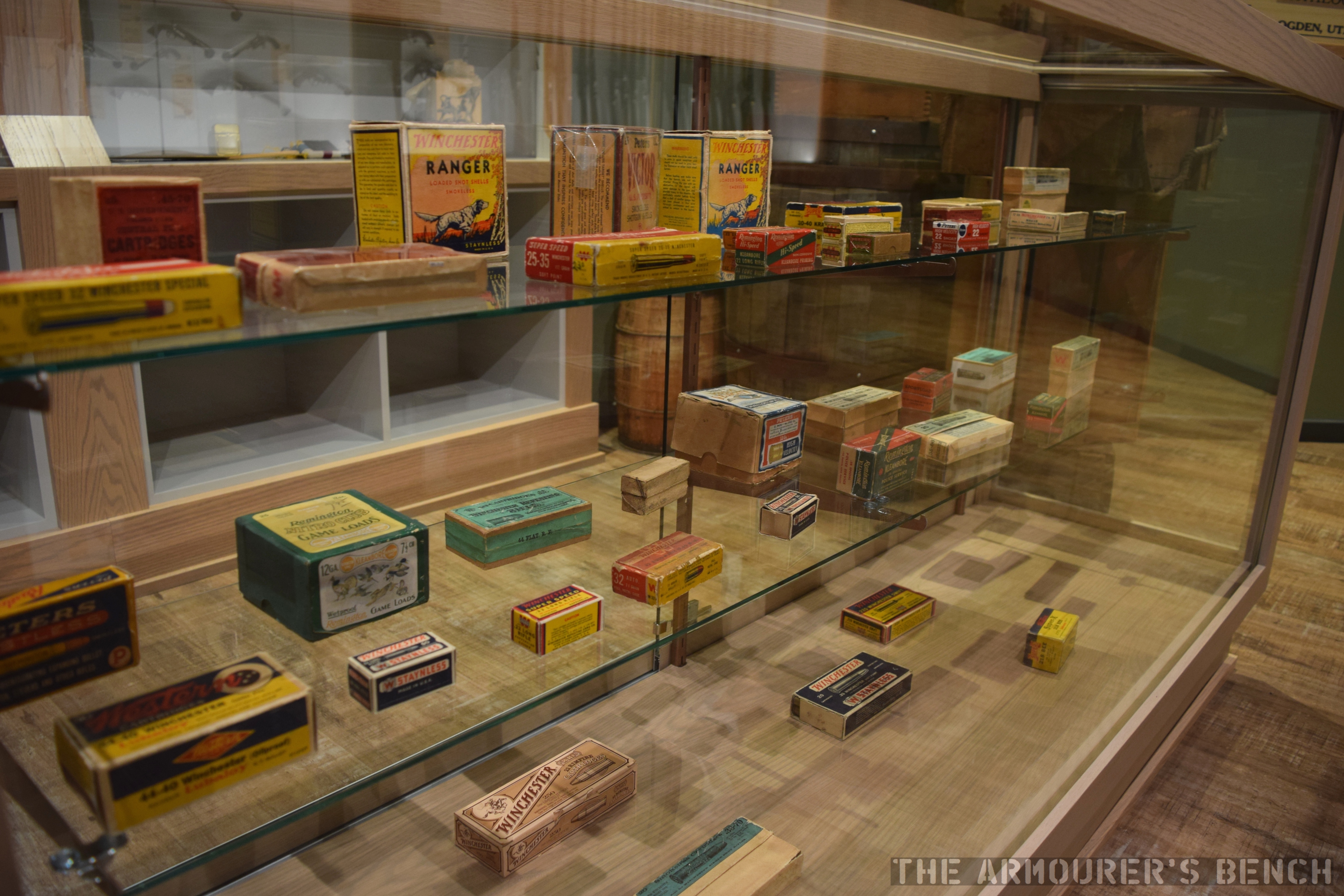
A detail shot of some of the ammunition packaging on display in the ‘general store’ (Matthew Moss)
One of the most interesting little sections is a recreation of a general store showing off some of the items that companies like Winchester made alongside their well known firearms.
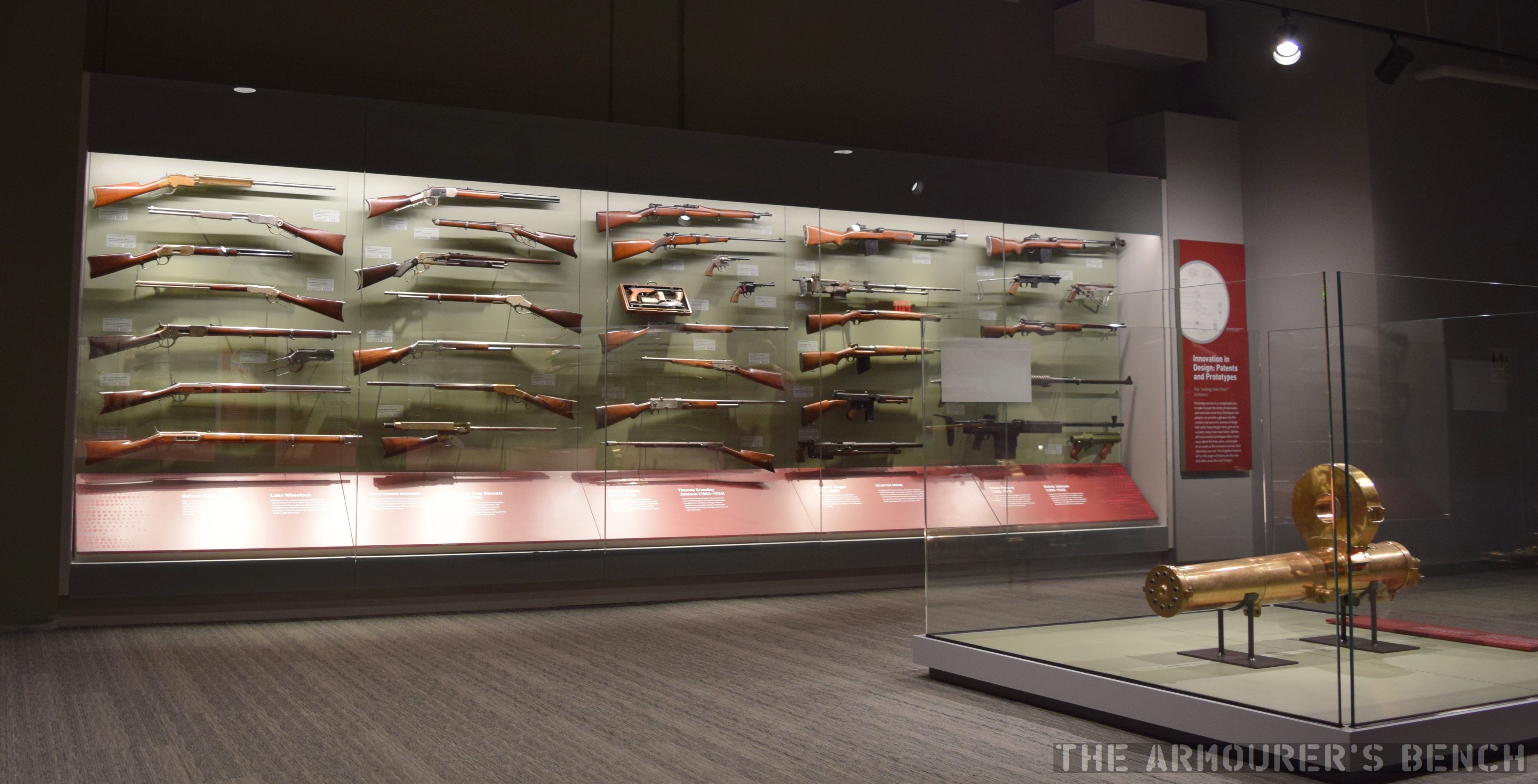
A case dedicated to experimental prototypes with the Gatling used in the initial development of the Vulcan in the foreground (Matthew Moss)
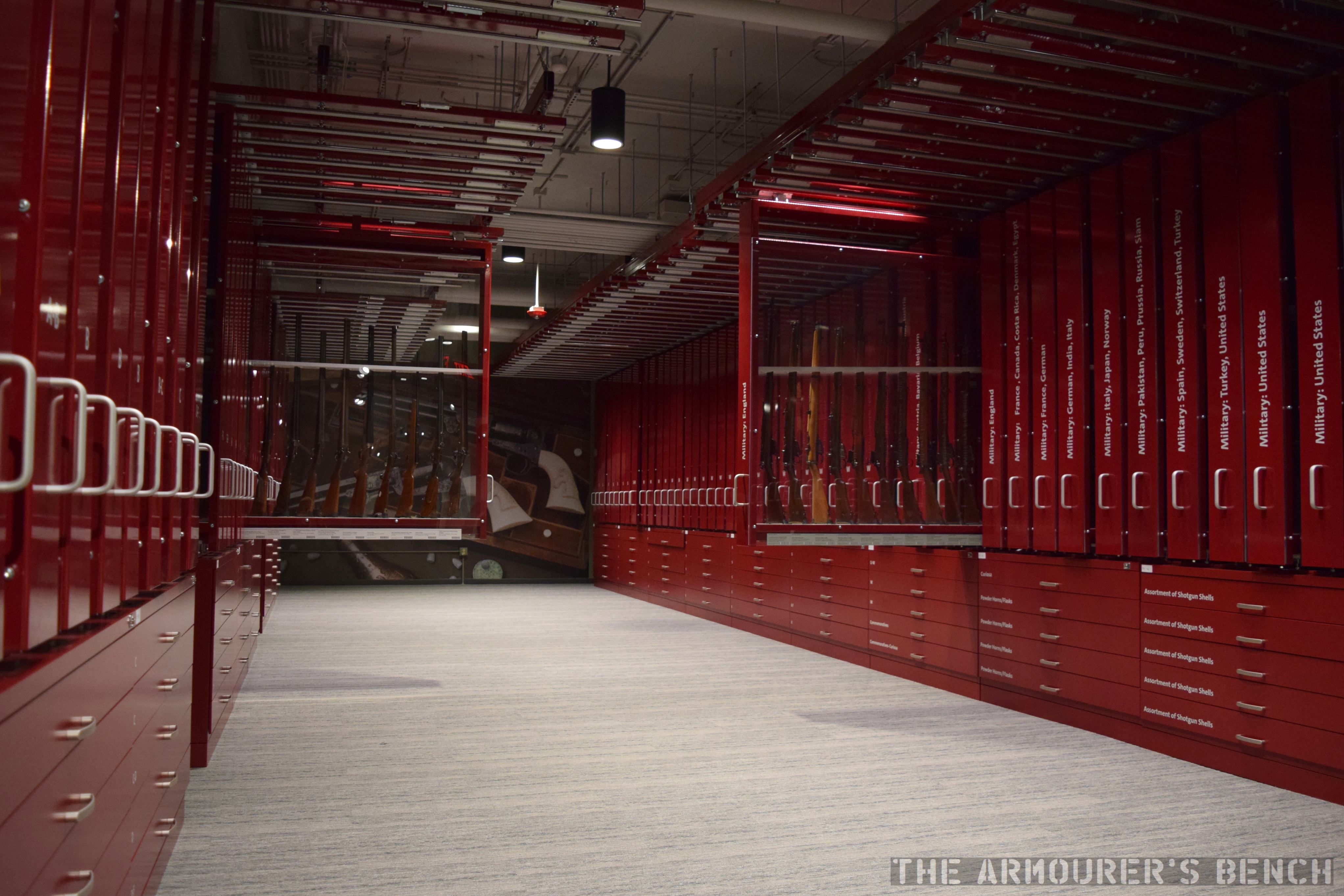
Downstairs is a space dedicated to experimental prototypes and a rolling wall of cases that include examples of hundreds of types of firearms and ammunition.
Some of the rolling cases open in the hall dedicated to showing off as many firearms as possible (Matthew Moss)
The newly refurbished museum puts the collection front and centre in a way that will enthral the average museum-goer and satisfy any avid gun enthusiast.
You can find out more about the museum here and check out some of the firearms we have had the privilege of examining from the CFM’s collection here.
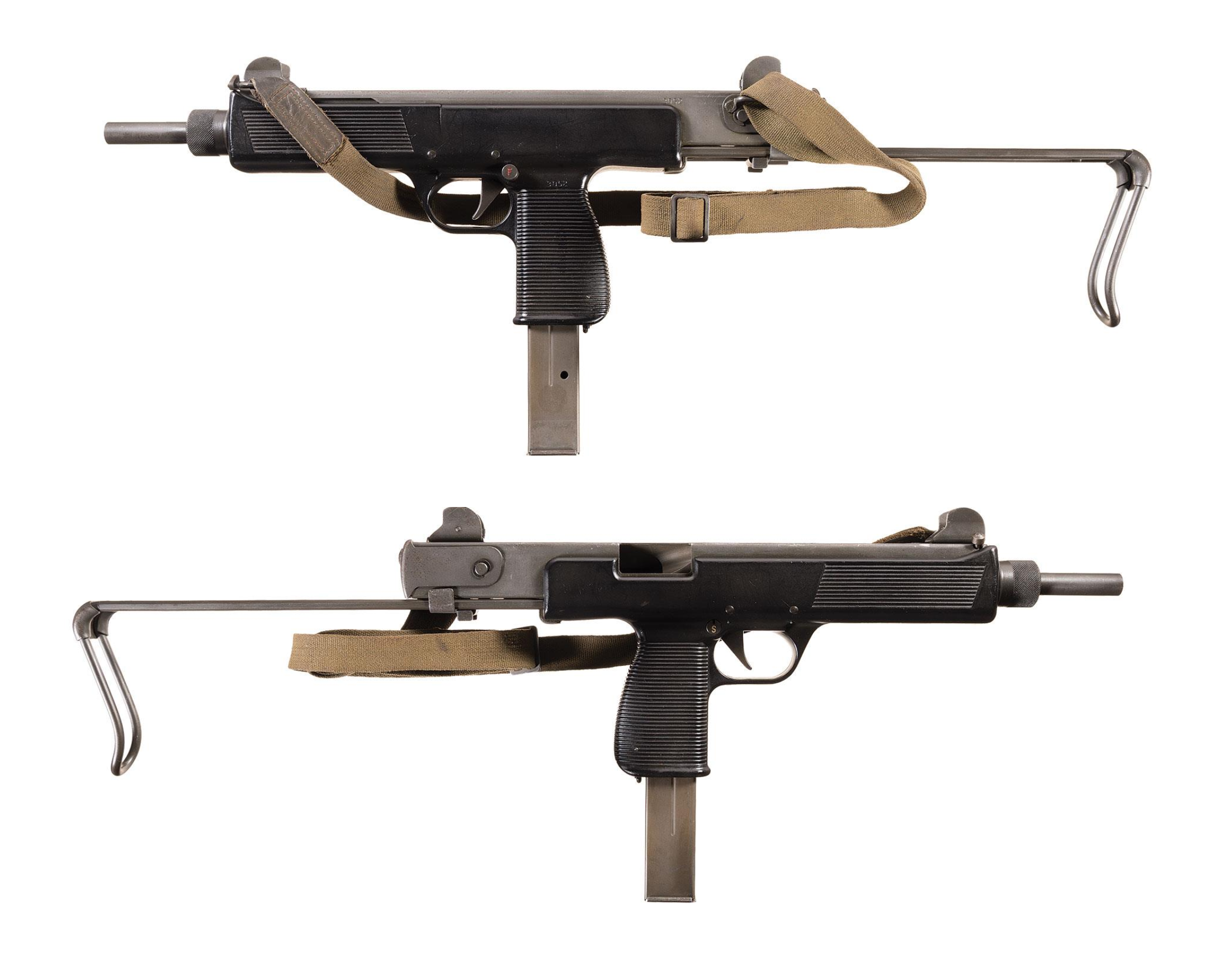
Developed in the late 1960s and introduced in 1969/70 the MPi 69 was Steyr’s entry into an already crowded European submachine gun market. Heavily influenced by the Israeli Uzi it had a bolt which telescoped over the barrel and fed from a box magazine that was inserted through a magazine well-come-pistol grip.
The MPi 69 weighed 6.5lbs (2.93kg) unloaded and had a polymer lower receiver into which a stamped metal upper inserted. Unlike the Uzi it had a collapsing, rather than folding stock, similar to the M3 submachine gun’s, and was cocked not by a handle but by pulling the sling (which was acted on the bolt) to the rear.
Steyr MPi 69 (Rock Island Auction Company)
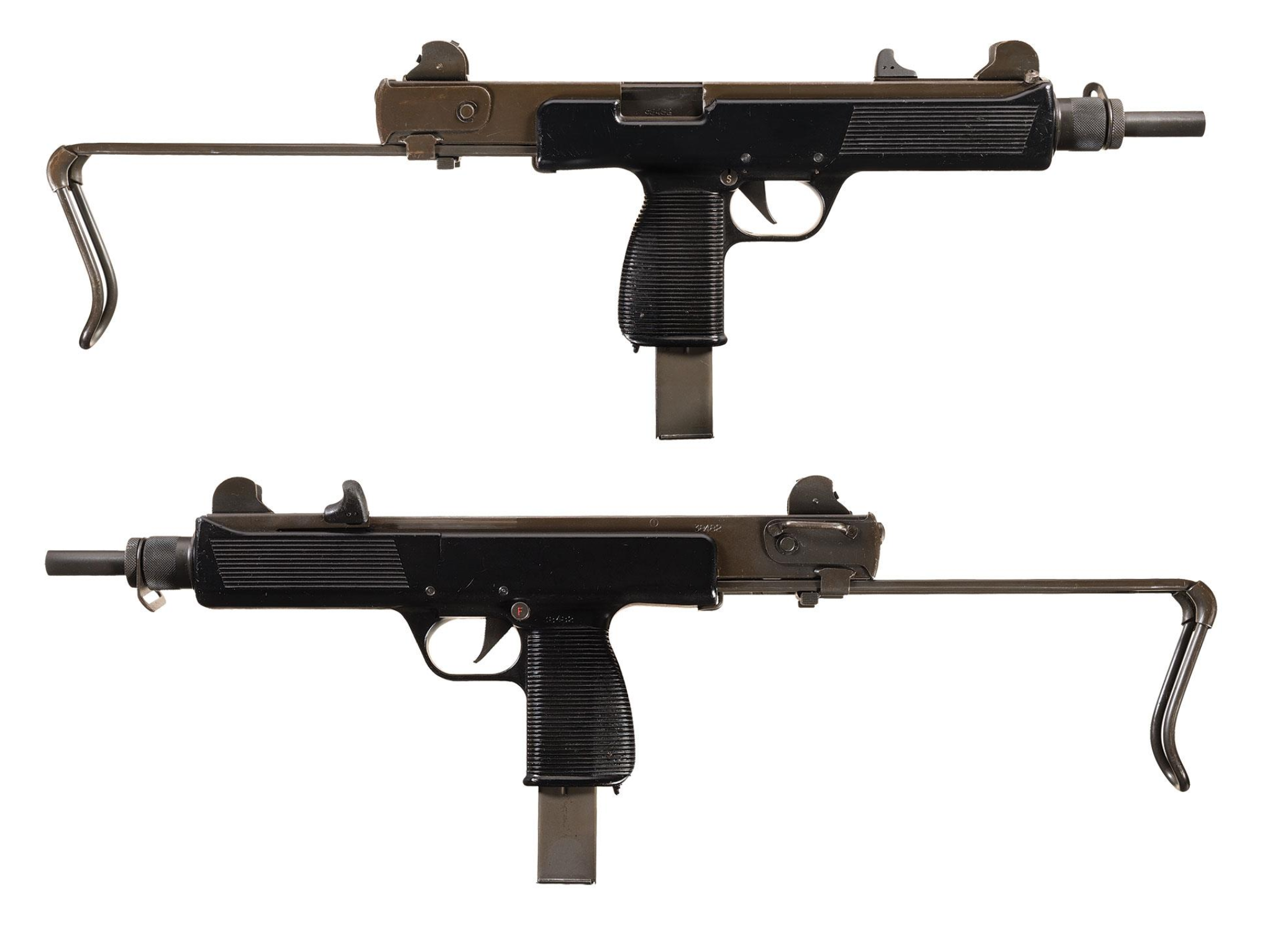
The MPi 69 remained in production into the early 1980s when it was replaced by the improved MPi 81. Moving away from the slick-cocking ‘gimmick’ the MPi 81 had a conventional, non-reciprocating, charging handle on the left side of the receiver. The MPi’s polymer lower allows it to be a pound lighter despite being slightly longer as a result it also balances better than the standard Uzi carbine.
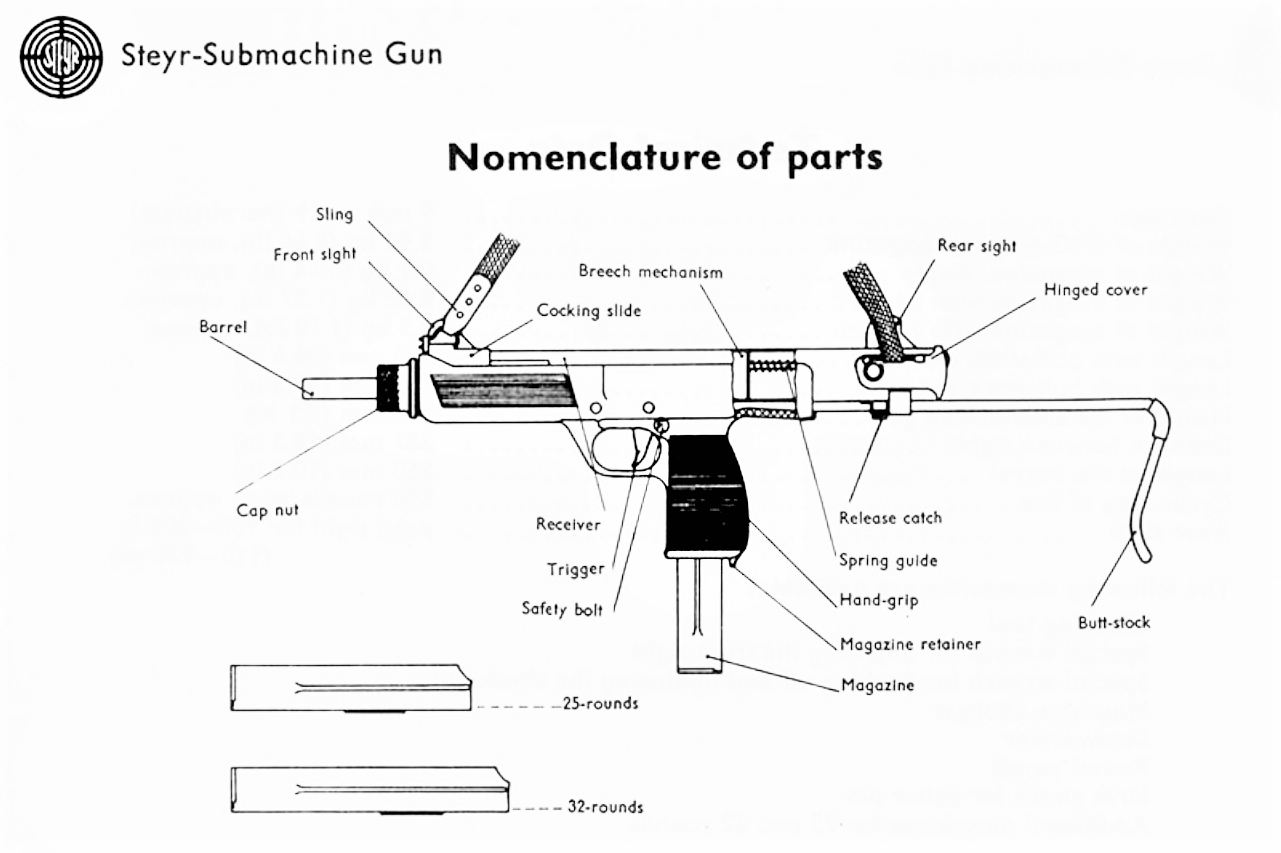
Steyr MPi 69 diagram (Steyr Manual)
The MPi submachine guns fed from 25 or 32 round box magazines and both guns had a heel-type magazine release paddle in the base of the pistol grip. They also shared their magazines with the AUG 9x19mm submachine gun conversion. Check out our earlier video on the Steyr AUG conversion here.
Steyr MPi 81 (Rock Island Auction Company)
The MPi submachine guns fire from an open bolt and had a 10in barrel and has a push through safety with settings for safe, semi and full auto and unlike the Uzi it does not have a grip safety – simplifying manufacture.
The MPi also has a progressive trigger which when set to full-auto will allow the user to fire semi when pulled to the first stage and full when pulled fully to the rear. While the MPi 69 had a cyclic rate of around 500 per minute, the MPi 81 increased this rate to ~750rpm.
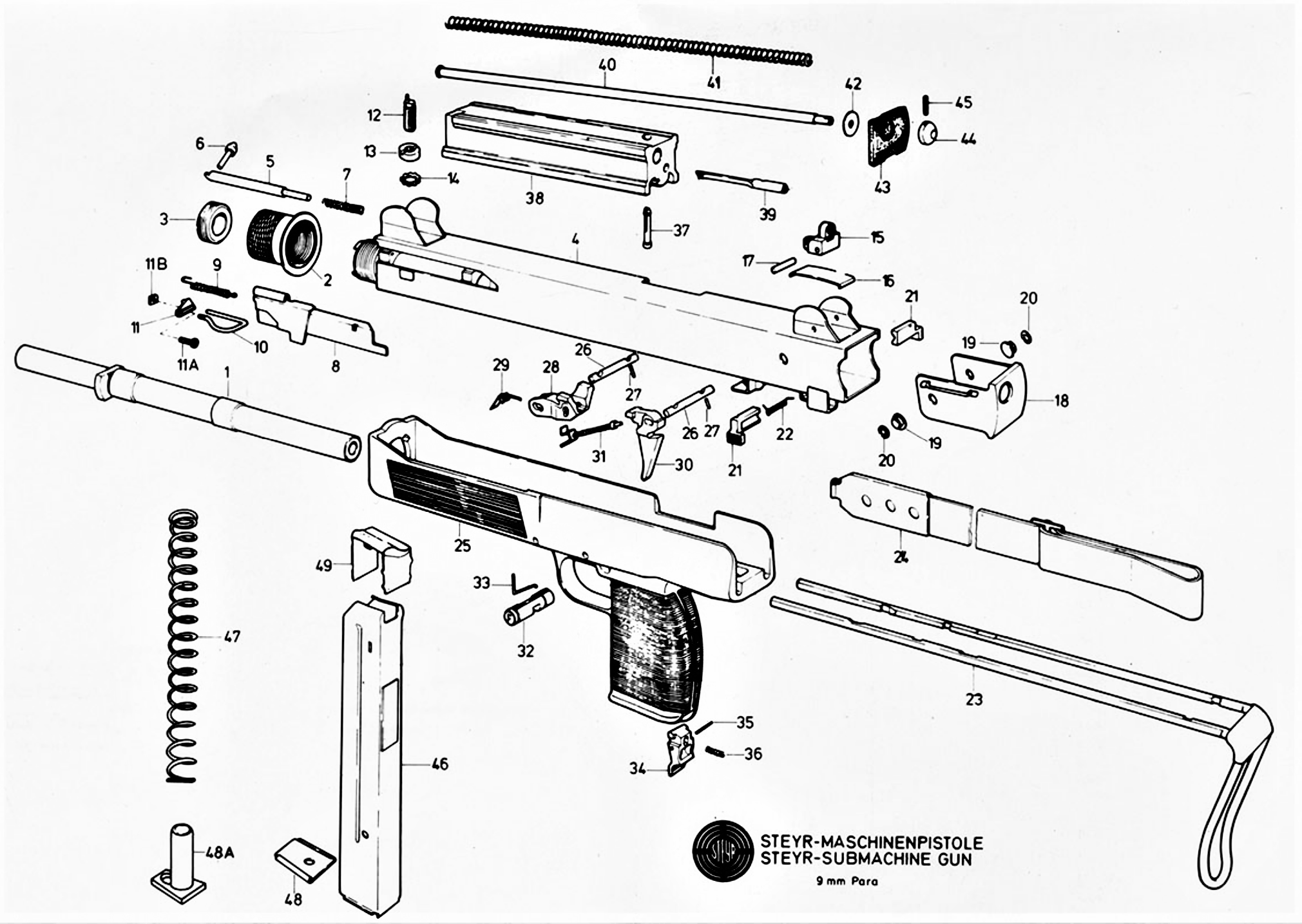
Steyr MPi 69 disassembly diagram (Steyr Manual)
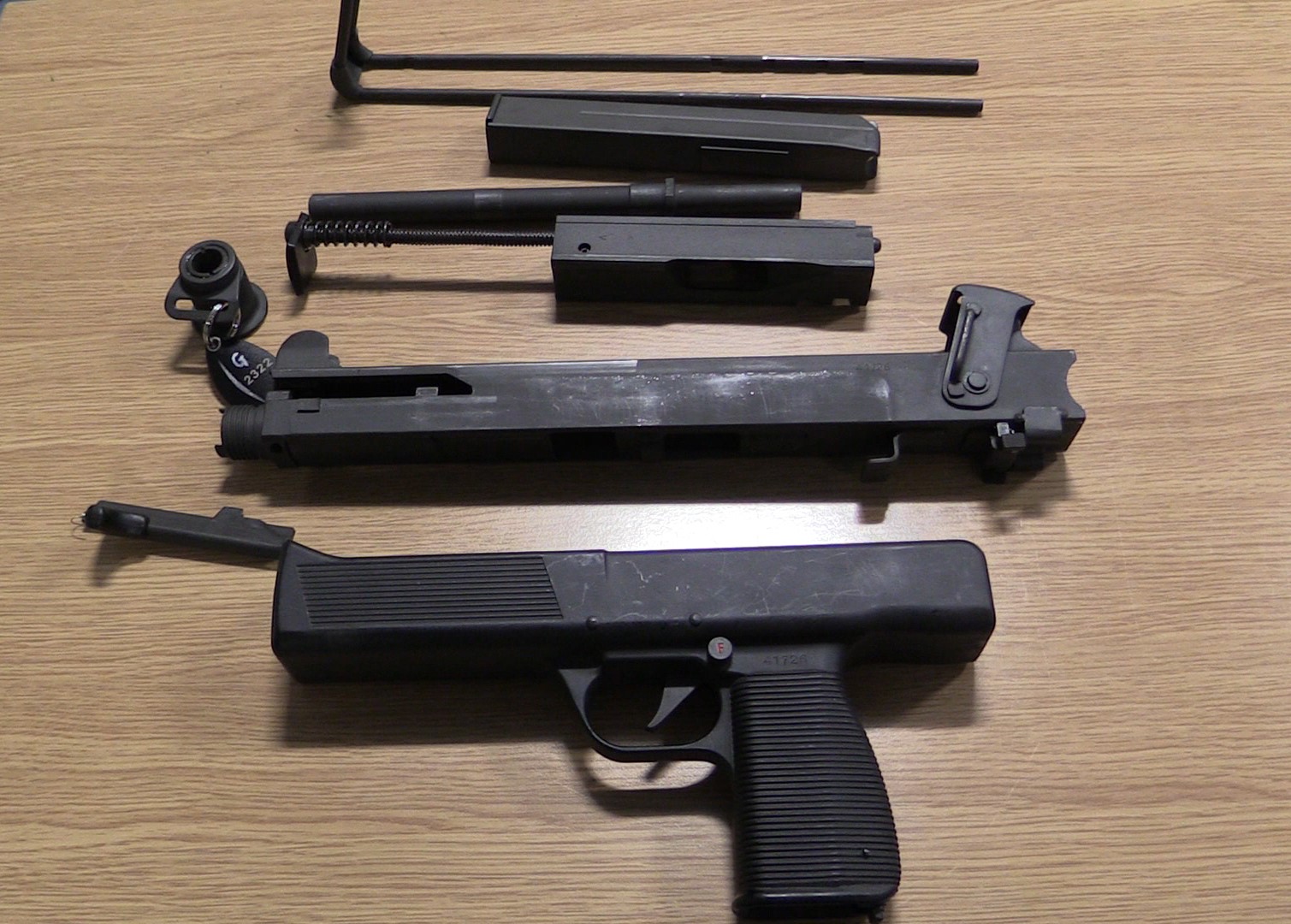
The MPi can be field stripped by simply rotating the receiver end cap up 90-degrees and pulling the bolt out the rear. The gun can be further stripped but the moulded polymer lower receiver can be difficult to remove from the upper. Like the Uzi the barrel nut is unscrewed to remove the barrel.
The MPi 81 fully disassembled (Vic Tuff)
It is unclear just how many MPi submachine guns were produced but they didn’t see any significant contracts beyond a few small sales to police forces and militaries.
The MPi 81 remained in production into the early 1990s when it was replaced by the smaller and more compact Steyr TMP in 1992. In turn the TMP design was sold to B&T a decade later.
Our thanks to the collection that let us take a look at this MPi 81 and to our friend Miles Vining for sharing some of his shooting footage of the MPi 81 with us, check out his video here and more of his work at www.silahreport.com.
Here’s a short video looking at how the unusual Hotchkiss Universel deploys from its compact, folded position. The whole process takes just seconds. Impressive engineering but within a couple of years the Universel would be surpassed by far more compact, ergonomic and serviceable designs like the Uzi and PM-63.
The need for compact weapons capable of being carried with ease by troops who would be getting in and out of vehicles, jumping from planes and fighting in close quarters had been proven during World War Two. While it may look unusual the Hotchkiss ‘Type Universel’ was an extraordinary attempt at creating an extremely compact submachine gun.
Right-side Hotchkiss Type Universel (Matthew Moss)
Submachine guns had proven themselves to be an useful weapon during the war, their small size and high rate of fire made them invaluable, especially in close-quarter situations. The post-war French army found itself armed with a plethora of surplus submachine guns, which included: the German MP40, the British STEN and the American Thompson as well as their own pre-war MAS-38s, in 7.65x20mm Longue, which had been designed before the war. By 1946 they had already begun the process of selecting a new, more compact submachine gun. Seeking to standardise on a single weapon and calibre they selected 9x19mm and launched a programme to find a new submachine gun or Pistolet Mitrailleur.
MAS-38 (Rock Island Auction Company)
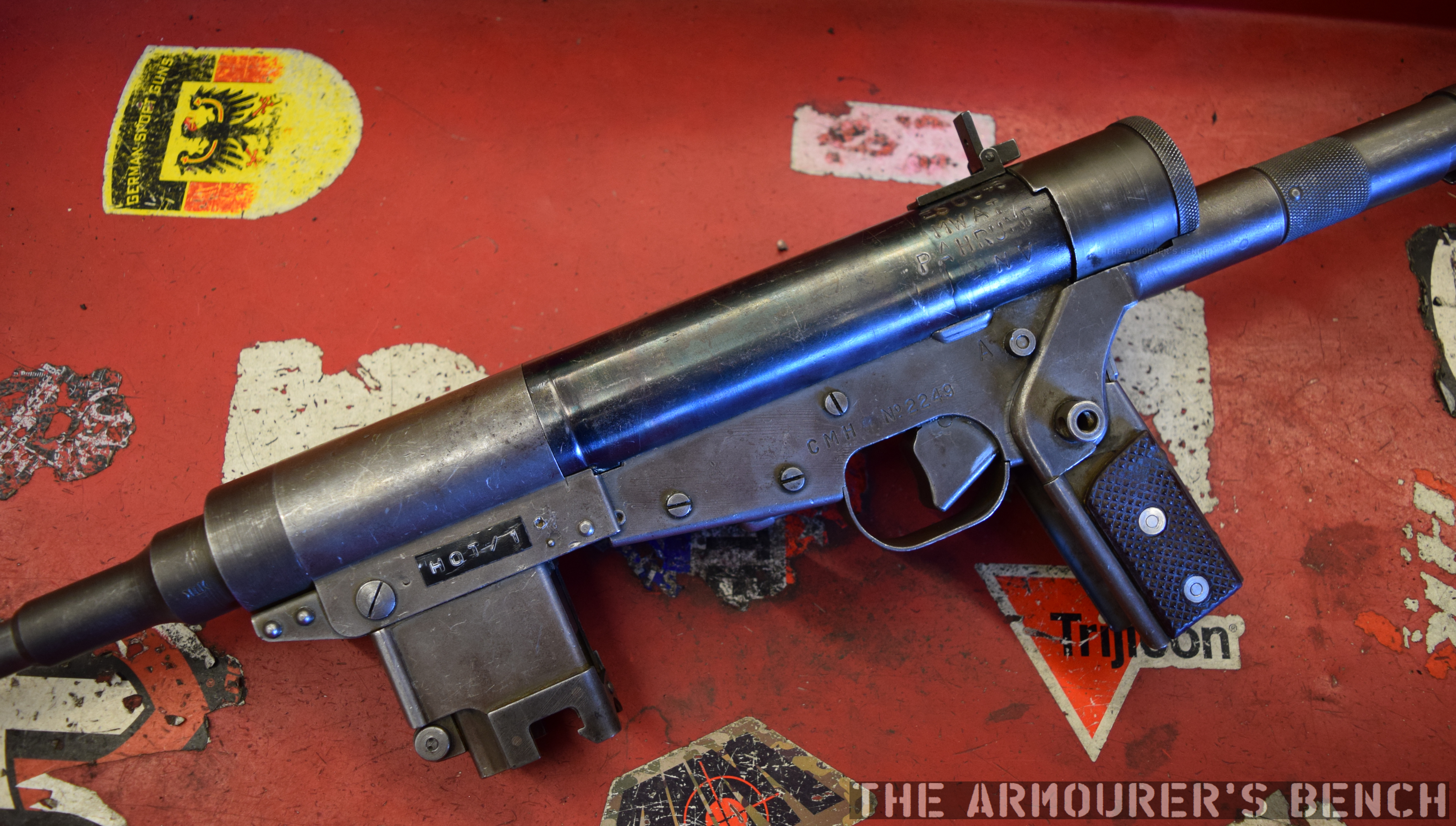
The French War Ministry launched a call for state arsenals and civilian manufacturers, such a Hotchkiss and Gevelot/Gevarm, to submit submachine guns for trials. Hotchkiss submitted the Type 010 or Type Universel, often anglicised as Universal, despite this the guns are typically marked ‘CMH2’ – ‘Carabine Mitrailleuse Hotchkiss’.
Chambered in 9x19mm, the Hotchkiss fed from MP40-pattern magazines, used the ubiquitous blowback action, it fired from a closed bolt and had a cyclic rate of approximately 650-rounds per minute. The Hotchkiss is select fire with a push through selector that allows for semi and full-auto fire. It appears that the weapon’s only safety mechanism is to close the ejection port cover and lock the bolt in place – much like a US M3 Grease Gun.
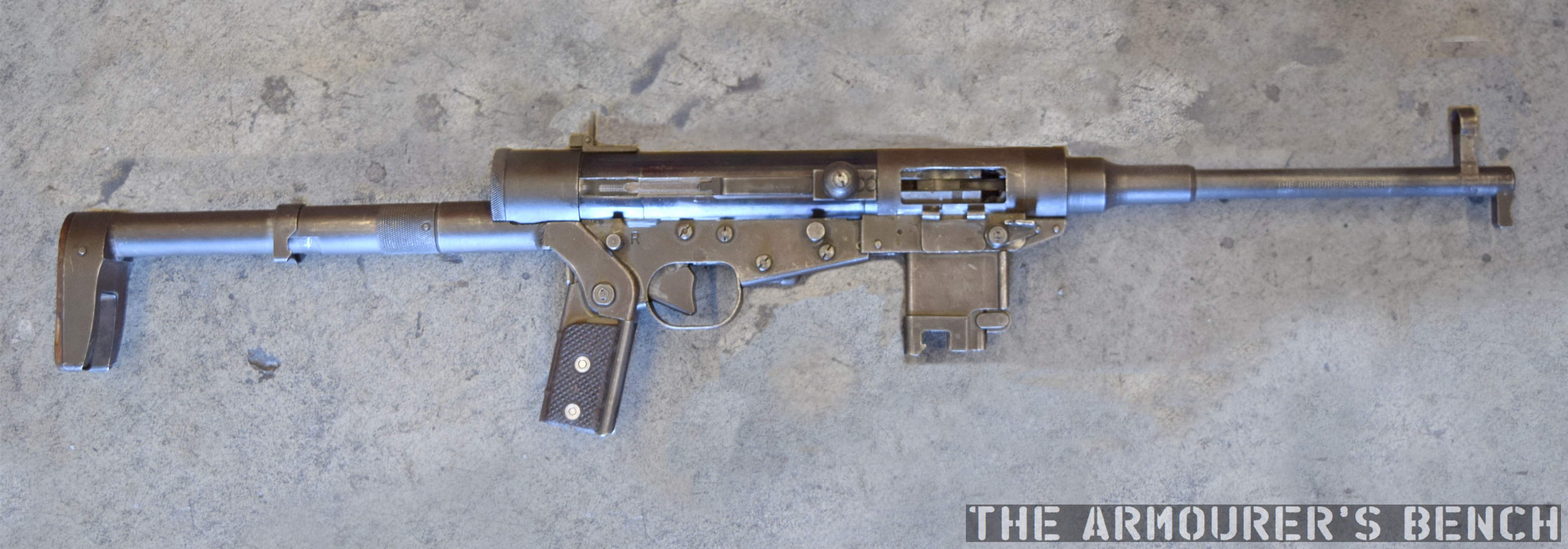
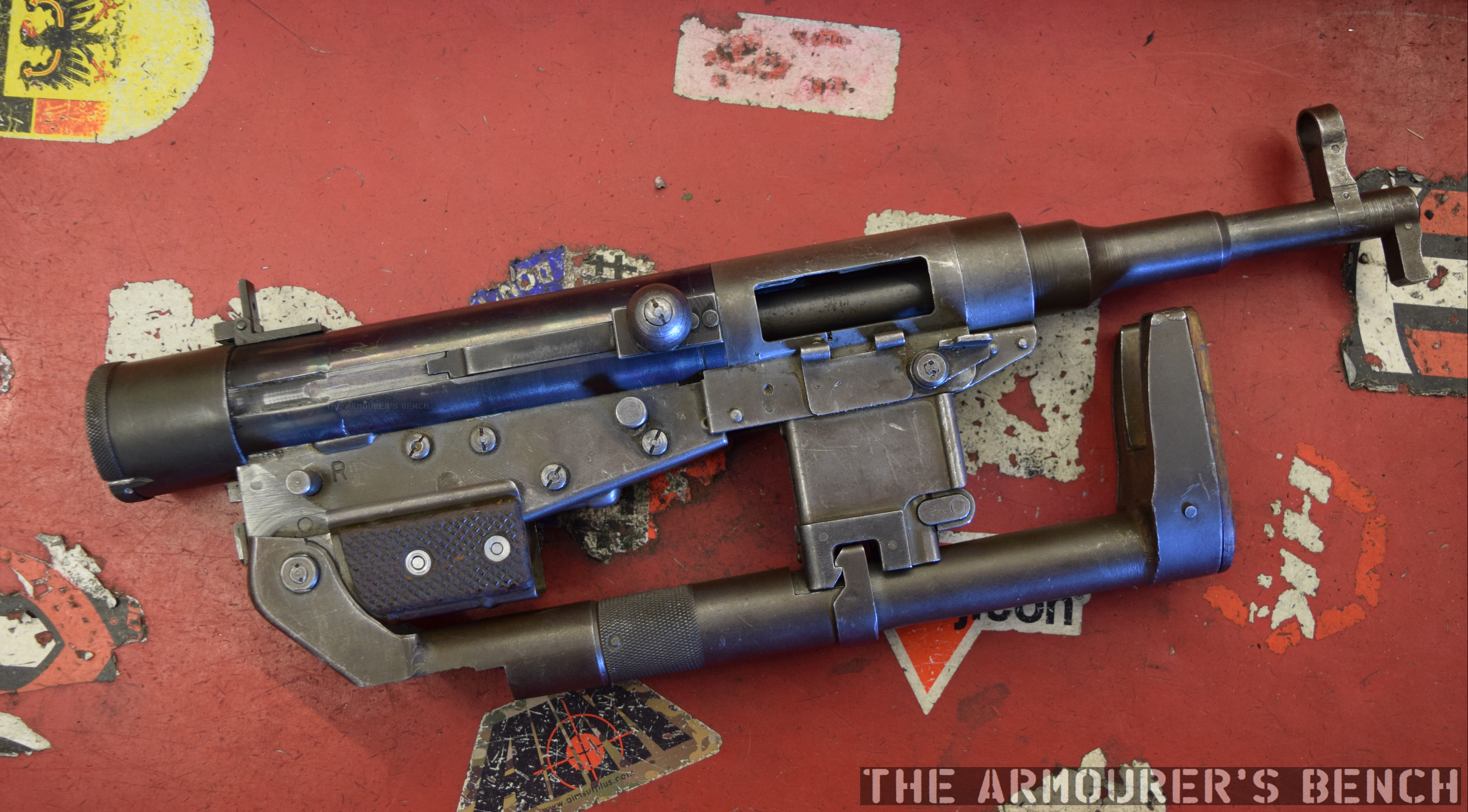
Right side collapsed Hotchkiss Type Universel (Matthew Moss)
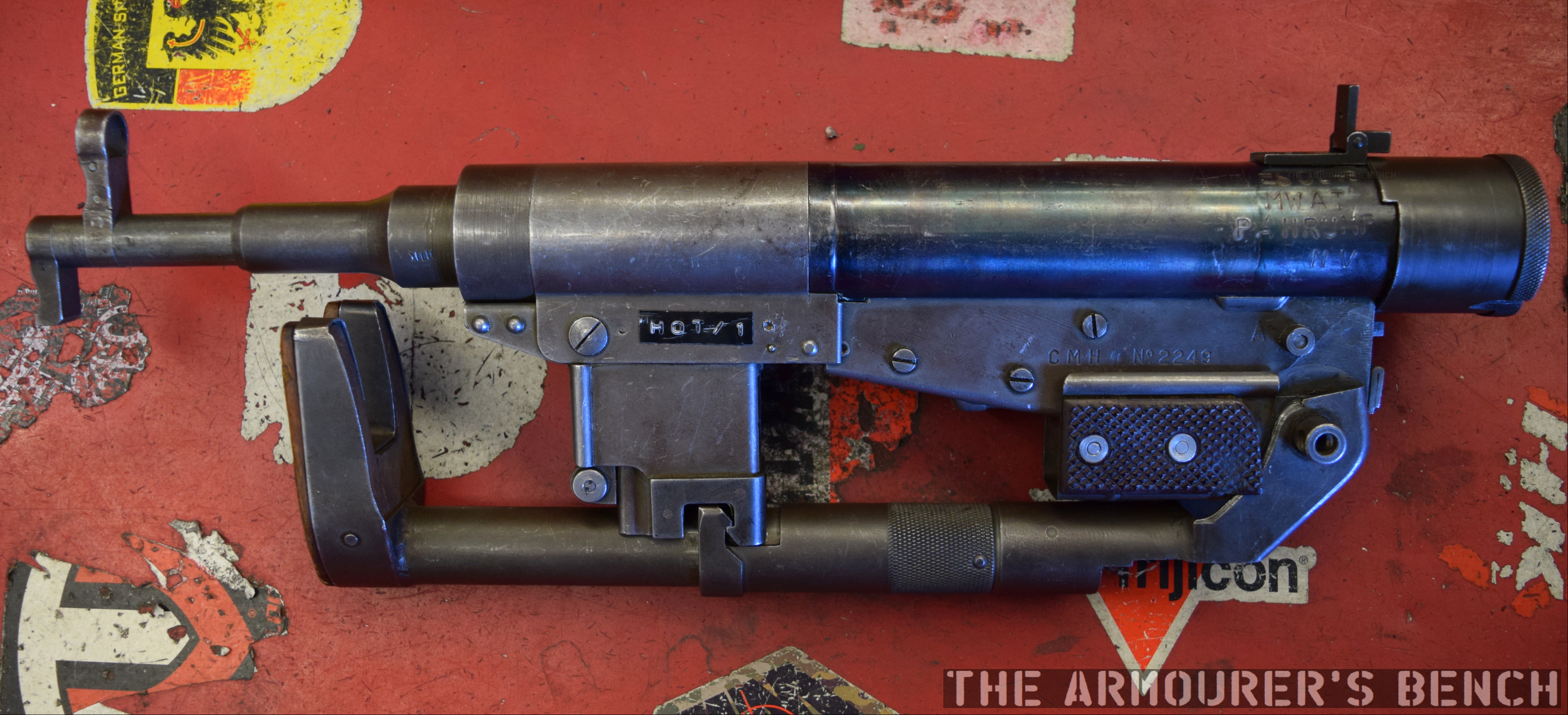
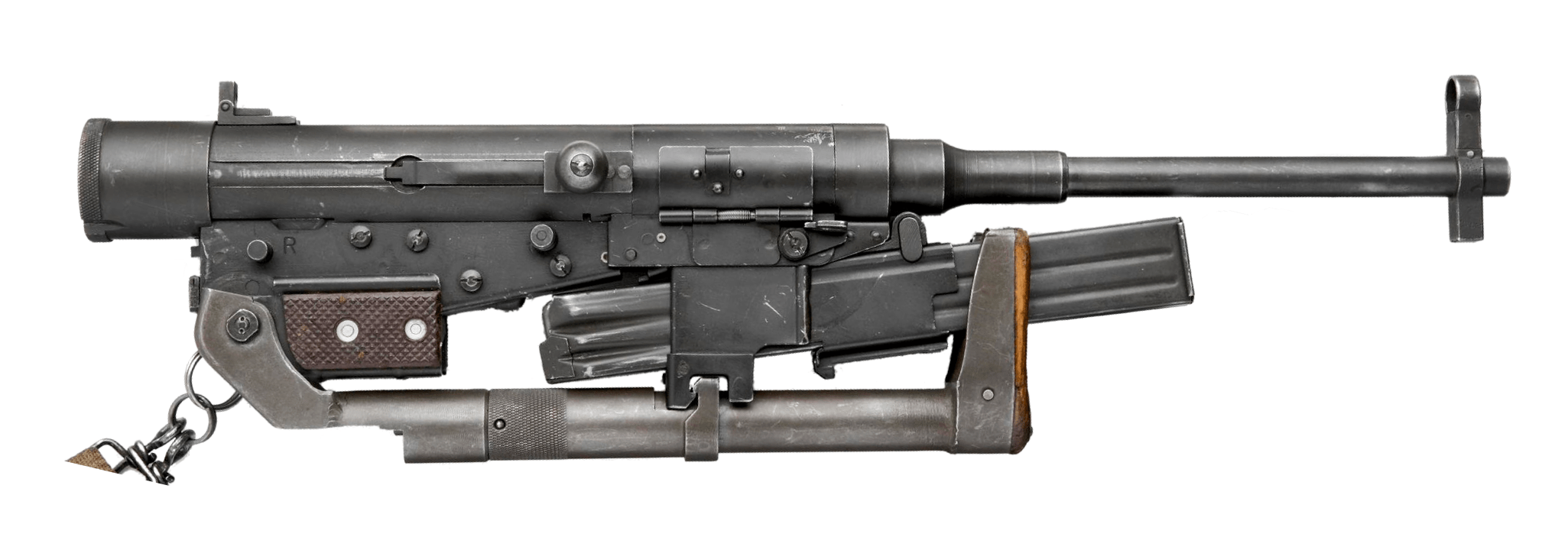
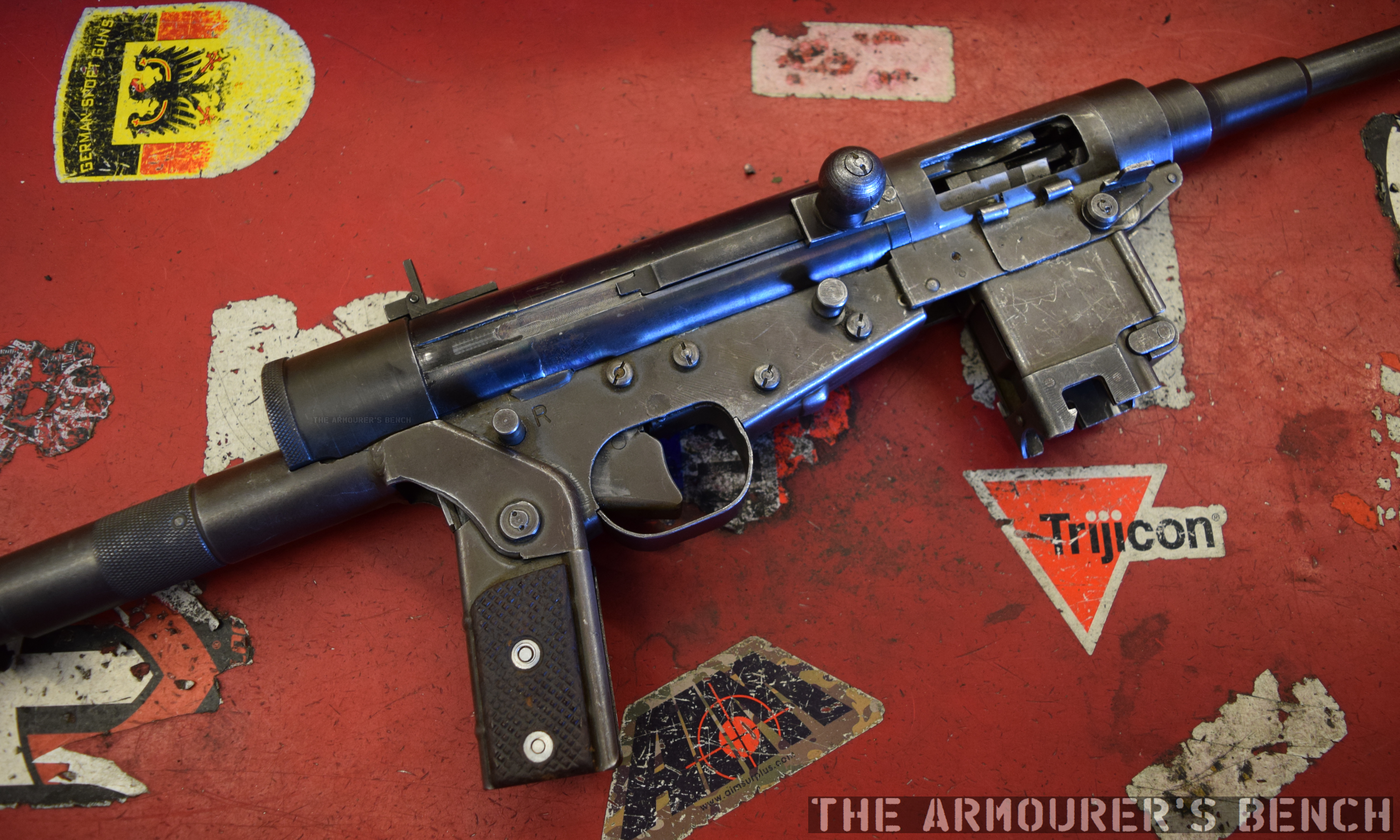
Designers went to extraordinary lengths to minimise the size of the Universel. Not only did the stock fold beneath the barrel but the magazine well and magazine could be rotated forward to sit beneath the barrel with the magazine fitting between a U-shaped cut-out in the butt stock. The weapon is a curious mix of stamped metal and complex machining with a difficult to machine bolt and barrel contrasting with a stamped sheet metal lower receiver and wide stamped trigger.
Left side collapsed Hotchkiss Type Universel (Matthew Moss)
In 1950 Hotchkiss sales material described their weapon as “the individual defense weapon meeting the requirements of the most modern Armies and Police. Folded up, it is very compact, easy to transport, conceal and parachute. It is quick to set up and comes unfolded in the form of a carabiner…”
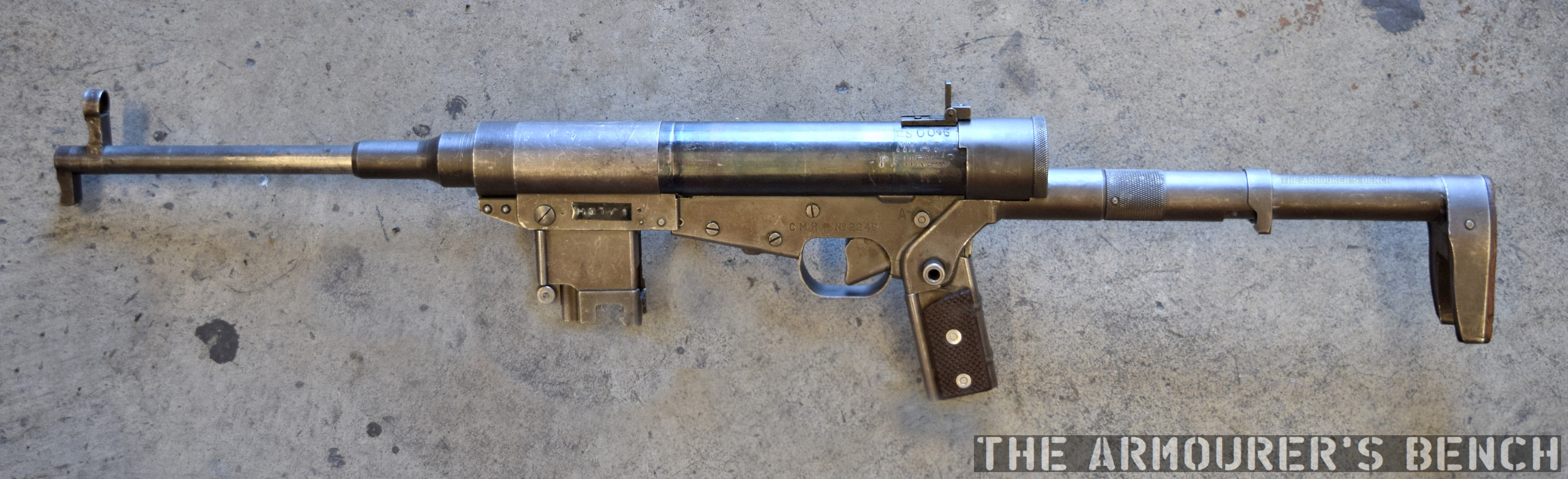
The weapon’s pistol grip was hollow and when folding up the stock, the grip folds forward to cover the trigger. The Universel’s most interesting feature is its telescoping barrel which retracts several inches inside the receiver. These features brought the Hotchkiss’ length down from 30.6 inches (77.6cm) when the stock was extended, to 22 inches (54cm) with the stock folded, and an impressive 17.25 inches (43.5cm) when fully collapsed. The nature of how the pistol grip folded with the stock meant the weapon could not be fired with its stock collapsed. When fully collapsed the weapons’ depth was just 6 inches or 15.3cm.
A partially collapsed Hotchkiss, with magazine in folded position and barrel extended (Royal Armouries)
To Deploy:
First we unfold the stock by pushing the knurled collar forward to unhook it from the base of the magazine well. When fully unfolded a spring detent locks into the rear of the receiver.
At the same time the pistol grip also unfolds. If we had a magazine loaded into the weapon we would deploy the barrel first – in order to allow the magazine to slide back through the magazine well and fold down to lock into position. The bolt follows the barrel forward so once the magazine is locked into position the weapon has to he be charged to chamber a round.
The collapse the weapon again, first fold the stock, then depress the lever just behind the trunnion to unlock the barrel, push the barrel assembly and bolt to the rear until it locks.
Left side Hotchkiss Type Universel (Matthew Moss)
The Universel’s extreme compactness was both its best and worst feature, the complexity of having every protruding part fold or retract made the weapon expensive to produce. It also gave the weapon poor ergonomics with a narrow butt, an uncomfortable pistol grip and narrow sights which weren’t ideal for quick target acquisition.
The Hotchkiss was one of a whole host of compact folding submachine guns developed after World War Two. These included the MAS MLE 1948, the MAC Mle 1947 and of course the MAT-49 from French state-arsenals. The French guns were by no means the first to have folding magazines, that concept dates back to submachine guns like the SIG MKMO. Incidentally, SIG’s last developmental iteration of their submachine guns, the MP48, was also developed in the late 1940s and retained the MKMO’s folding magazine housing.
Close up of the Hotchkiss Type Universel’s receiver (Matthew Moss)
A 2001 article from the Gazette des Armes, by Michel Malberbe, includes an account from a Legionnaire sergeant who describes using the Hotchkiss in Indochina:
“I saw for the first time the submachine gun Hotchkiss in ‘Indo’. We were responsible for the security of the RC4 [Route Coloniale 4], and the staff sent us wooden cases containing these famous submachine guns. As the documents were not very complete, our company commander… had trouble explaining how it worked. It was quite funny, because folded, this submachine gun did not look very serious. It was like a rectangular scrap metal package… We used it for the first time on the Lang Son side, during a serious collision between the Viets and a convoy… I remember that this machine worked very well. But it lacked a little precision. Anyway, it was much better than the small MAS-38 submachine gun, whose magazine always blocked [jammed] at the wrong time! On the other hand, I think I remember that the Hotchkiss did not stand up to mud and that it was misery to clean it. In addition it was quite difficult to unfold because of the buttons found everywhere. We never knew which one to press. We, in any case, always transported them in the firing position…”
While the Type Universel definitely wouldn’t win any prizes for its aesthetics, it was a ambitiously-engineered and well-built submachine gun. Despite this the design was simply too complex, as we have heard troops in the field rarely took advantage of its compact features preferring to carry the weapon at the ready. The Universel sacrificed a lot to achieve its compactness and the ergonomics of the weapon leave a lot to be desired with an extremely small butt and a hollow pistol grip that just feels wrong.
It is believed that in total just 7,000 Hotchkiss Universels were produced between 1948 and 1952. The French military rejected the Hotchkiss feeling the weapons was too complex and too expensive to manufacture. Instead, the MAT-49 submachine gun, designed by Tulle, was eventually adopted. The MAT-49 also had a folding magazine housing making it almost as compact as the Universel but without its complexities.
Close up of right side of the Hotchkiss Type Universel’s receiver (Matthew Moss)
While it underwent some field testing with the French in Indochina no major military contracts were won but small numbers were purchased by the French police, the colonial police in Morocco and some were sold to the military of Venezuela. The Universel would be one of the last firearms produced by Hotchkiss et Cie, who had built numerous armaments for the French army during the 19th and 20th centuries, before it closed its weapons manufacturing arm in the early 1950s refocusing on automobile manufacture.
Special thanks to Battlefield Vegas for allowing us to take a look at their Hotchkiss.
2x Winners – TAB Colouring book, TAB logo sticker, 2x TAB G11 stickers & a TAB badge
3x Runners up – A TAB G11 sticker
Thanks to everyone who entered the draw, I’ll be contacting winners shortly, but also thank you to EVERYONE who has supported the TAB project. Please continue to share the channel and videos with friends – we massively appreciate our community and everyone who supports us. – Matt & Vic
In 1976, the West German Police issued a specification for a new small, lightweight service pistol to replace their stocks of Walther P38/P1′s and various 7.65×17mm (.32 ACP) pistols.
The police specification limited the new pistols weight to 2.2lb/35oz/1kg, it was to be no larger than 18x13x3.4cm and was to be quick to draw and safe to carry with a round in the chamber.
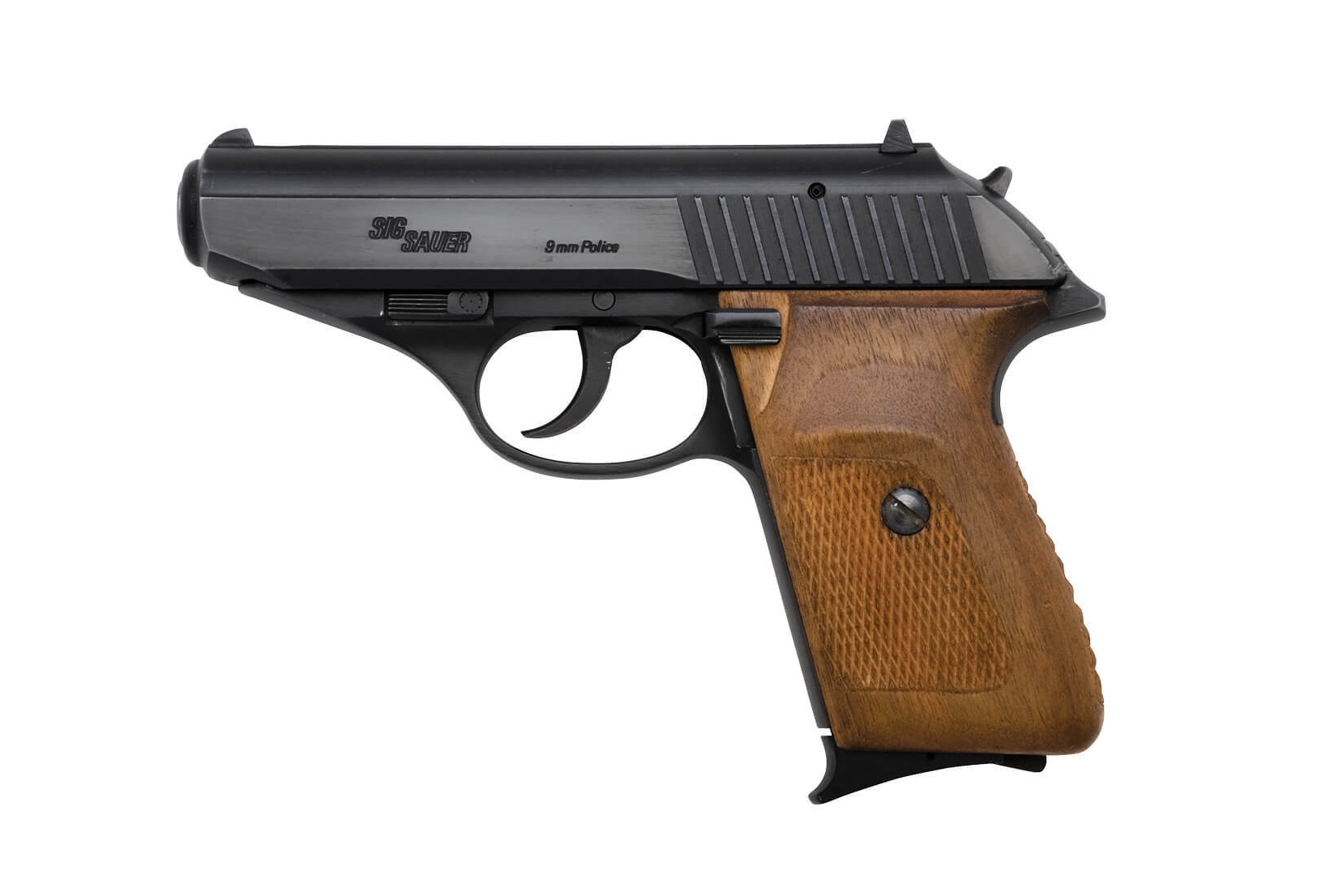
SIG Sauer P230 (Edelweiss Arms)
Earlier trials had taken place in 1974 examining pistols chambered in the 9×18mm Ultra round. Walther had submitted the PP Super and SIG-Sauer had entered the P230 for testing but with increasing criminal and terrorist activity in West Germany during the 1970s it was decided to adopt a pistol chambered in the more powerful 9×19mm round.
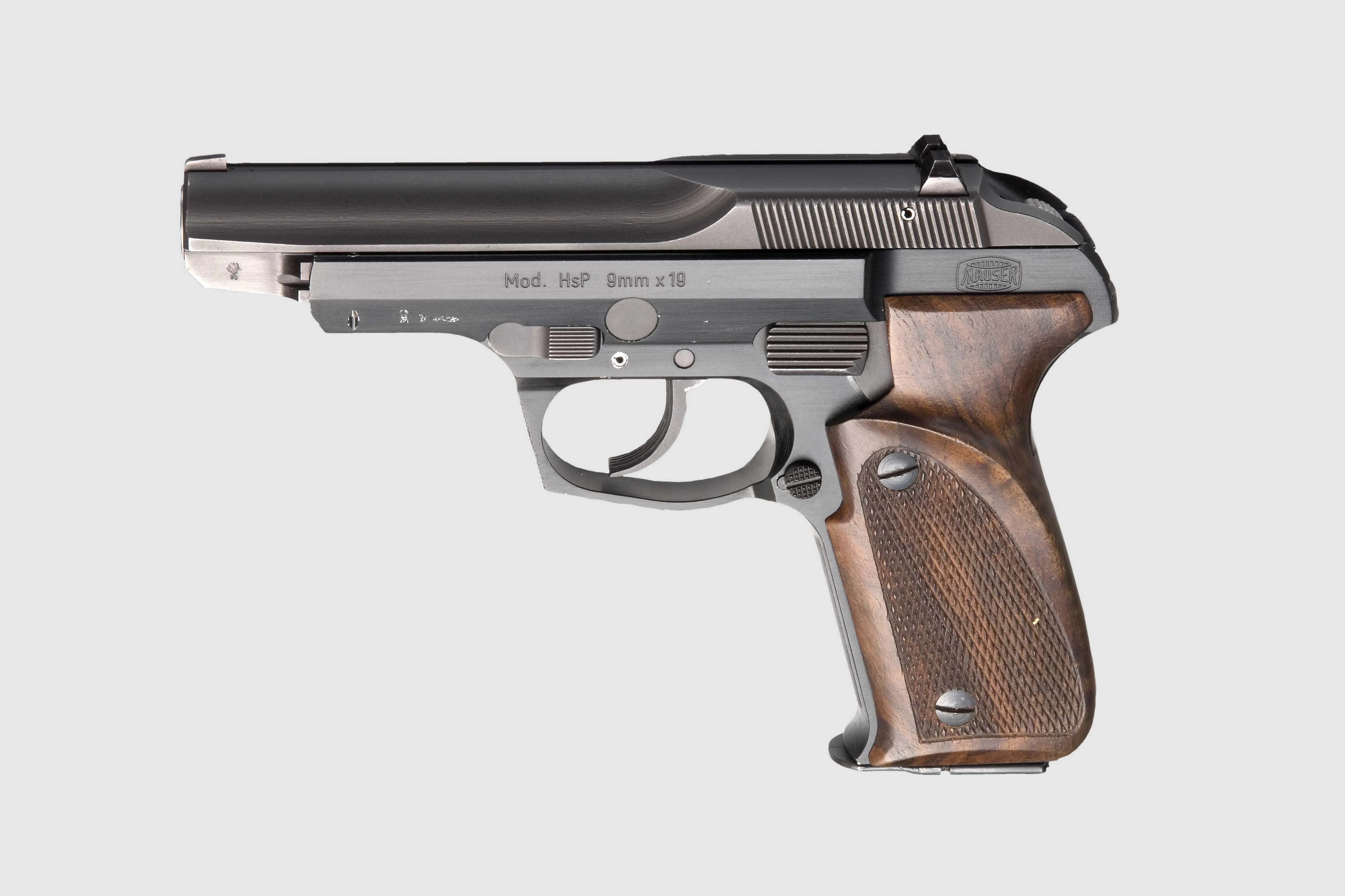
As a result a new round of trials with the new specifications was arranged. Mauser, Walther, SIG-Sauer and Heckler & Koch all submitted designs. Mauser offered the HsP,Walther offered the P5, SIG-Sauer entered the P225 (which became the P6) and Heckler & Koch submitted the PSP, later known as the P7.
The trials involved a gruelling 10,000 round endurance test (with cleaning after every 1,000 rounds), a rapid-rifle 500 round test and accuracy testing at 25 metres. One of the main problems of producing the desired sub-compact sized pistol in 9×19mm was that after approximately 1,000 rounds the pistol’s recoil spring may become prone to failure.
The police specification called for a 10,000 round lifespan. Each had their own approach; Walther’s P5 tackled the problem by using the dual-spring system used in the P38/P1 while Heckler & Koch used a gas-delayed blowback system in the P7. SIG-Sauer, however, employed the simplest solution – a heavy gauge braided spring to give increased strength combined with the Short Recoil action. This was also substantially cheaper to manufacture.
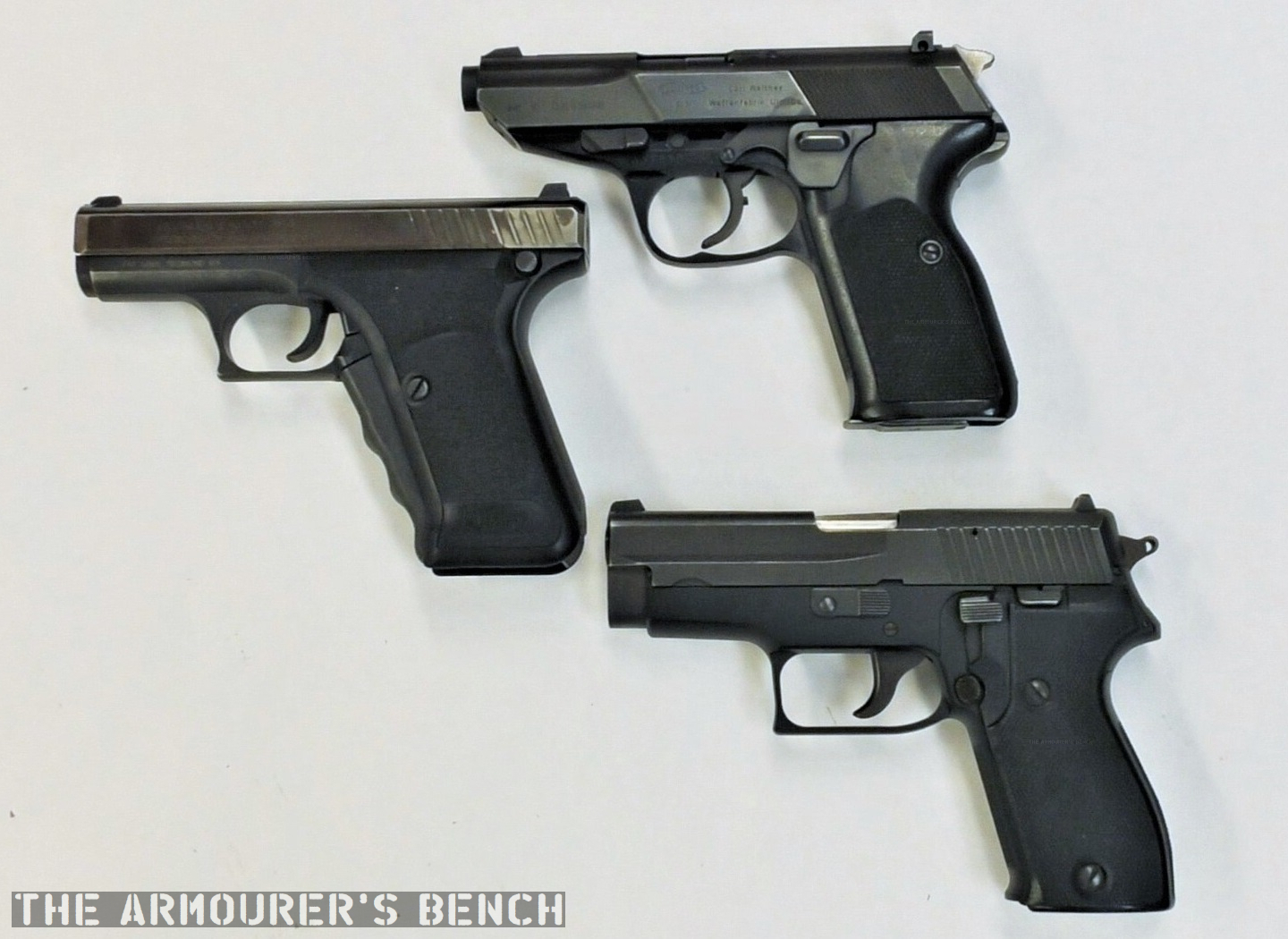
Clockwise: Walther P5, SIG Sauer P6, HK P7 (Matthew Moss)
The short-recoil, lever-locked Mauser HsP was eventually dropped due to durability issues, while the Walther P5, SIG-Sauer’s P6, and Heckler & Koch’s P7 were successful and deemed fit for service and adopted by various German police departments.
The P5 was adopted by Baden-Württemberg and Rhineland-Palatinate’s State Police as well as the Dutch national police. TheP6 was the most widely adopted as it was the cheapest option available, with a total of seven German state police forces adopting it along with orders from the border police, railway police and the Federal Criminal Police Office. The most expensive of the pistols, the P7 was favoured by more specialist units like GSG9.
Our thanks to our friends at Gunlab for allowing us to take a look at these pistols.
This week’s bonus video features some contemporary footage of a MkVIII Heavy Tank showing off what it can do during a demonstration outside Bridgeport, Connecticut, in October 1918.
This is the last of our series of videos/articles on the US Tanks of WWI, you can find all episodes here.
The MkVIII Heavy Tank holds the distinction of being the result of the first successful international co-operative tank project. Developed with input from British and American designers and engineers, intended to be equipped with British weapons and an American engine, with parts made in the US and Britain and to be assembled in France – a truly international undertaking. The MkVIII, sometimes referred to as ‘The International’ or ‘Liberty Tank’, owed its basic design to earlier British heavy tanks but a number of important changes were made.
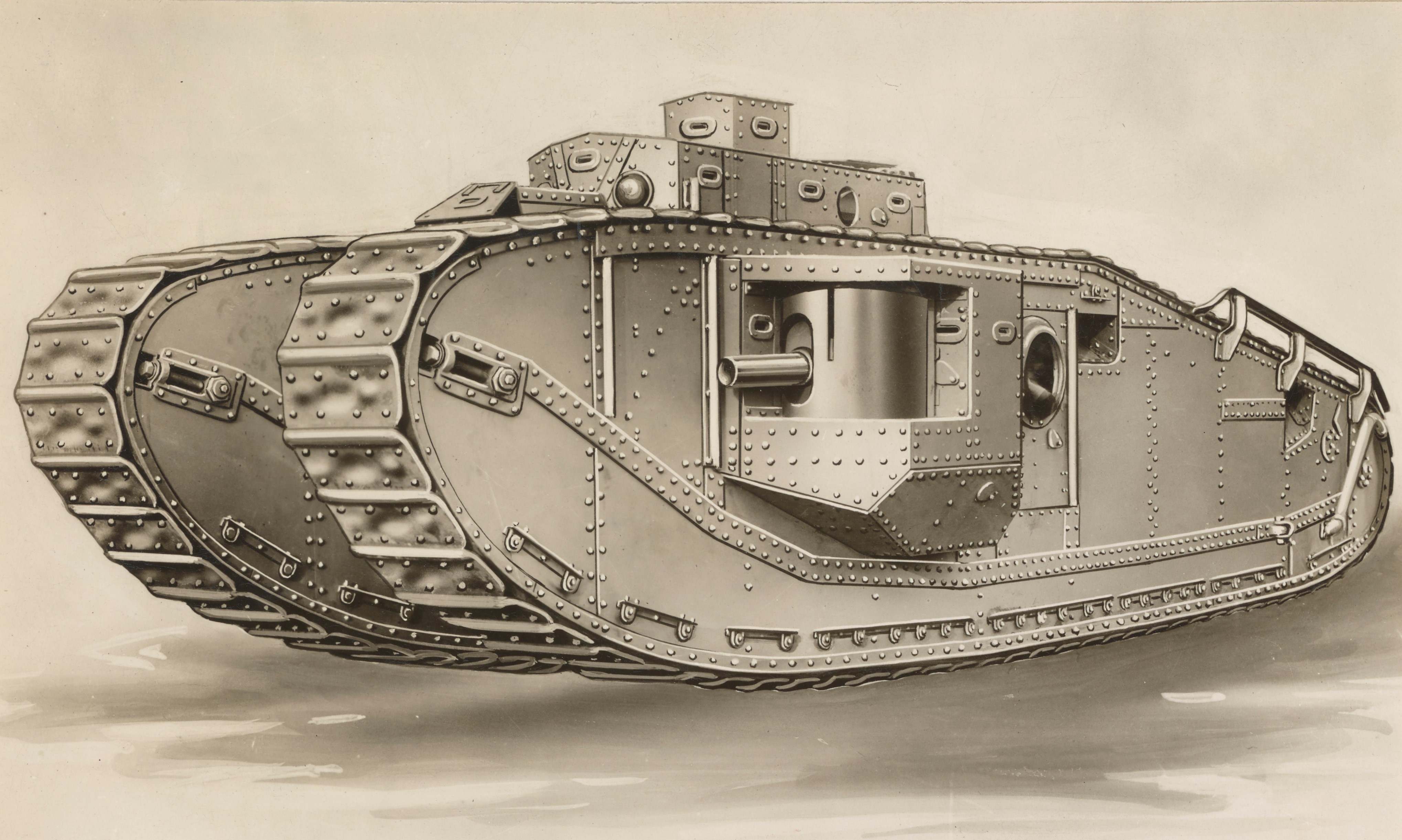
Port side of a MK VIII heavy tank (US National Archives)
Intended for introduction in 1919, the war ended before the MkVIII could enter service and even before its French factory had been completed. It did, however, see some production and inter-war service providing the heavy tank backbone of the US’ tank force for many years.
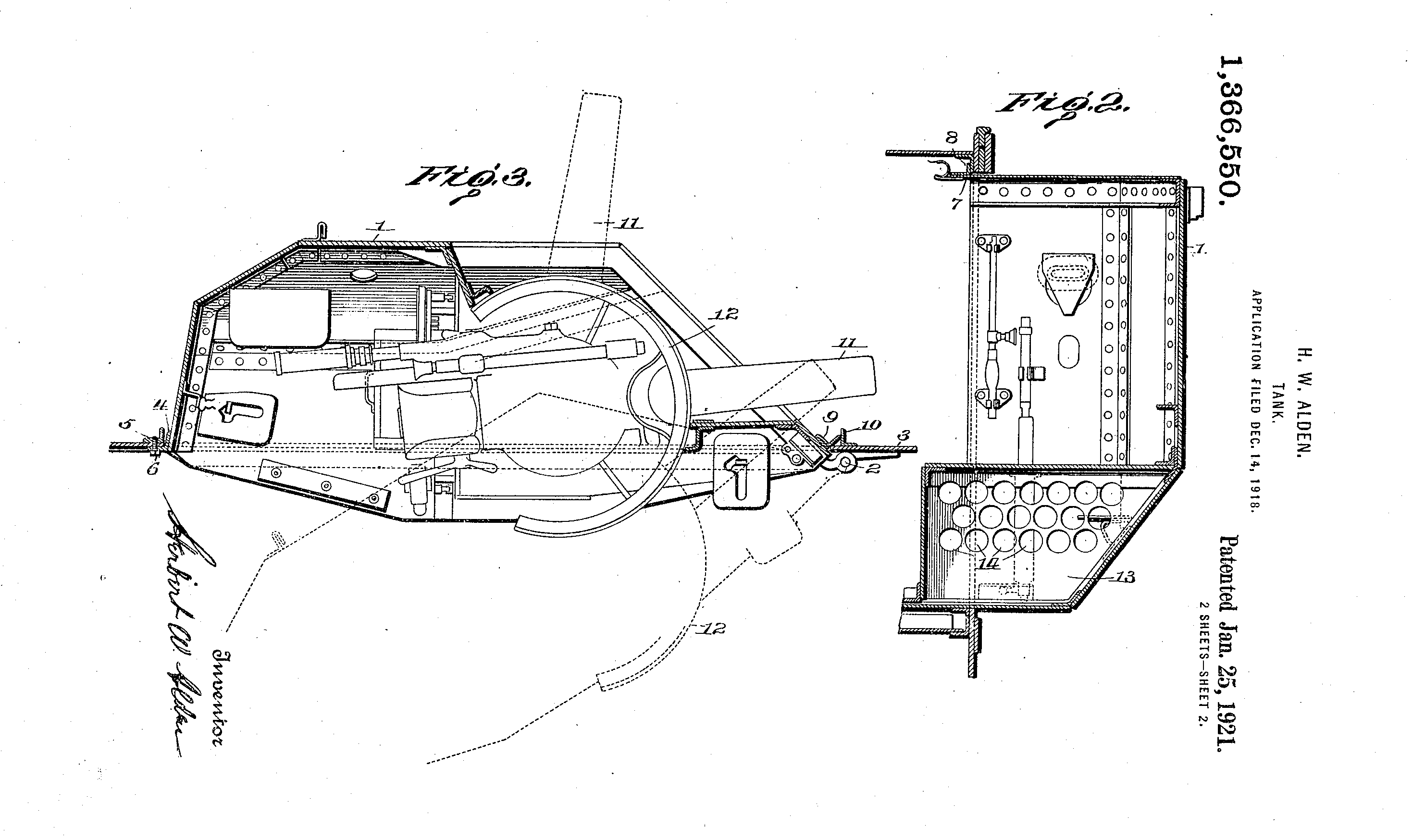
The design evolved from work by British Lieutenant G.J Rackham with later input from American engineer Major Herbert Alden. The MkVIII heavy was very much an evolution of the earlier British rhomboid heavy tanks but Rackham and Alden made some important improvements. Chiefly the redesigning of the tank’s sponsons which housed a pair of British 6pdr guns. While the tank was a foot narrower than its predecessors, the new folding sponsons could enabled the tank to be transported more easily by rail and to also, in theory, navigate narrow spaces. Alden patented this feature in December 1918 (US #1366550). Additionally, the commander’s ‘outlook turret’ positioned on top of the tank’s turret, which had vision slits on all four sides, was also retractable. Alden’s sponsons were hinged at the front and mounted on rolling bearings so they could pivot inwards.
Alden’s patent for his pivoting sponson (US Patent Office)
The MkVIII directly addressed several shortcomings of earlier British heavy tanks, firstly the engine was insulated in its own compartment to prevent exhaust fumes overwhelming the crew. A new ventilation system was also added with a fan keeping fumes out of the fighting compartment. Secondly, overall visibility was improved with protected vision and revolver slits and the addition of the tank’s commander’s turret.
Another important design change was the move to longer tracks, about 5 inches in length, which required a dozen less links than the MkV. Each of the links was shallowly stamped to increase its strength. In terms of armament the MkVIII was designed as solely ‘male’ – with guns in its sponsons, not machine guns – however, with a raised tower on the tanks roof this provided positions for five machine guns in hemispherical ball mounts. Two more machine guns could be mounted in the tank’s hull doors located behind the sponsons. The ammunition for the 6pdr guns was held in a central ammunition storage box but the sponsons also had shell storage space surrounding the guns themselves.
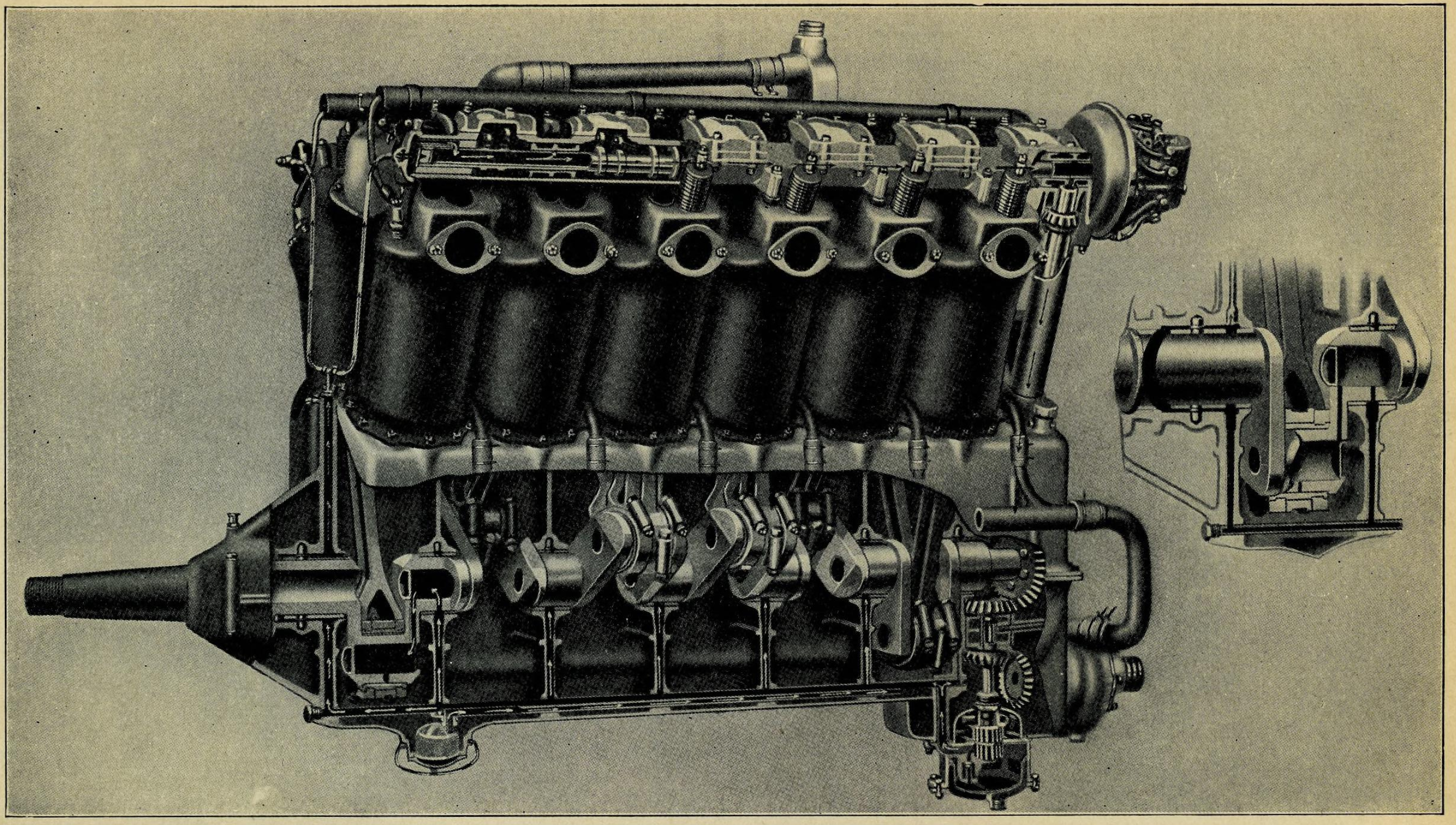
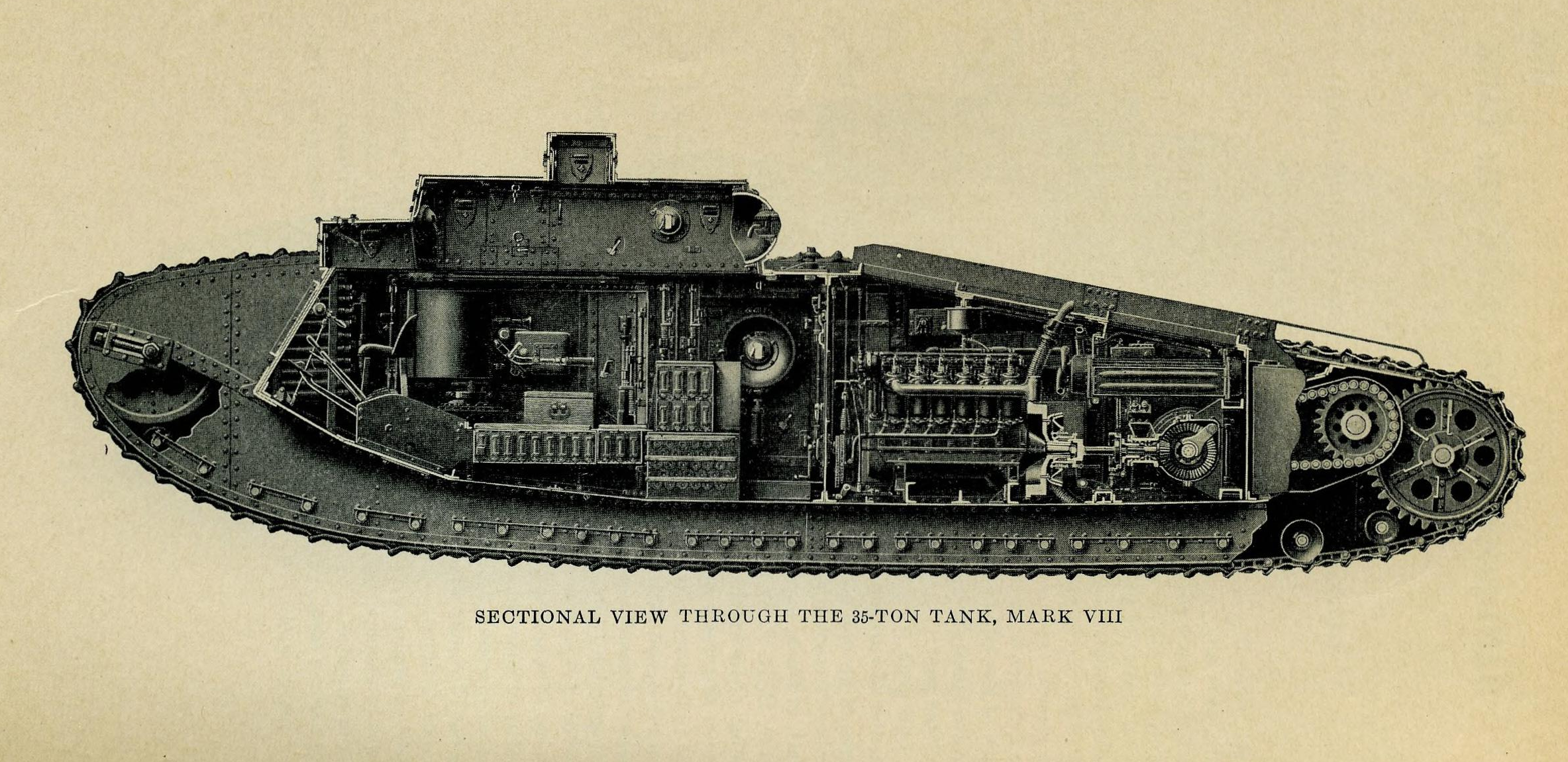
The MkVIII’s V12 engine (US Army Preliminary Handbook for the MkVIII)
The 37 ton tank was to be powered by an American V12 aircraft petrol engine manufactured by the Liberty company. Although a cheaper, water-cooled Liberty was eventually used in the American tanks. The British developed a similar 12 cylinder engine from Ricardo. This, in theory, produced 300 horsepower with a top speed of just over 6mph and a range of just under 40 miles. The MkVIII’s engine was moved from the centre of the tank to a separate engine compartment at the rear of the tank. This not only reduced engine heat and fumes in the fighting compartment but also made communication easier. Some sources also suggest that the MkVIII was the first tank to have an electronic intercom system.
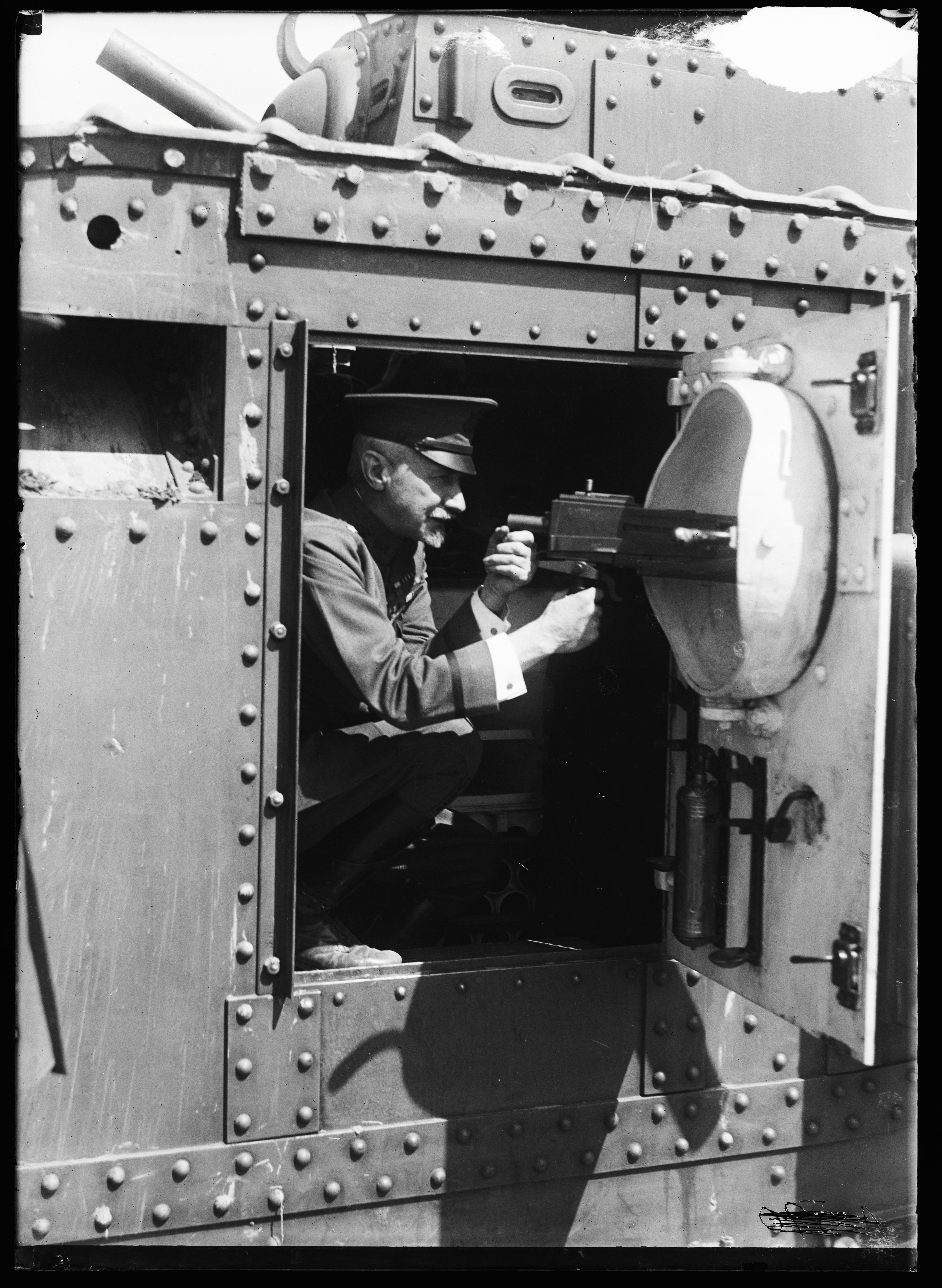
An officer illustrates how one of the tank’s ball mounted machine guns worked – the gun itself is an M1919 tank machine gun (US Library of Congress)
The American Preliminary Handbook for the MkVIII listed the tanks as being equipped with 7 ‘Hotchkiss .303-inch machine guns’, these are likely to be Hotchkiss Portative MkI*s popular in British service. In US service, however, the tanks were likely later equipped with the new Browning M1919 Tank Machine Guns. The tank carried 182 rounds of 6pdr ammunition and an additional 26 smoke rounds as well as 21,000 rounds of machine gun ammunition to keep the 7 machine guns fed.The tank’s armour was also increased lightly from the previous MkV, with 16mm of frontal armour and between 10 and 12mm at the sides. Less vulnerable areas had armour 6mm thick.
A partial cutaway view of the tank (US Army Preliminary Handbook for the MkVIII)
The American MkVIIIs were initially planned to be manned by an eleven-man crew made up of a driver, commander, two gunners and two loaders to man 6pdrs, four machine gunners and a mechanic. Later crew complements probably dispensed with two of the machine gunners as the US MkVIIIs operated during the inter-war period dispensed with two of the midships machine guns. The British crew was planned to be smaller with 8-men fighting the tank, made up of a driver, commander a pair of gunners and loaders for the main guns and two machine gunners who were tasked with manning the tank’s various machine guns. Impressively the 34 feet long tank also had room for as many as 22 infantry to be transported.
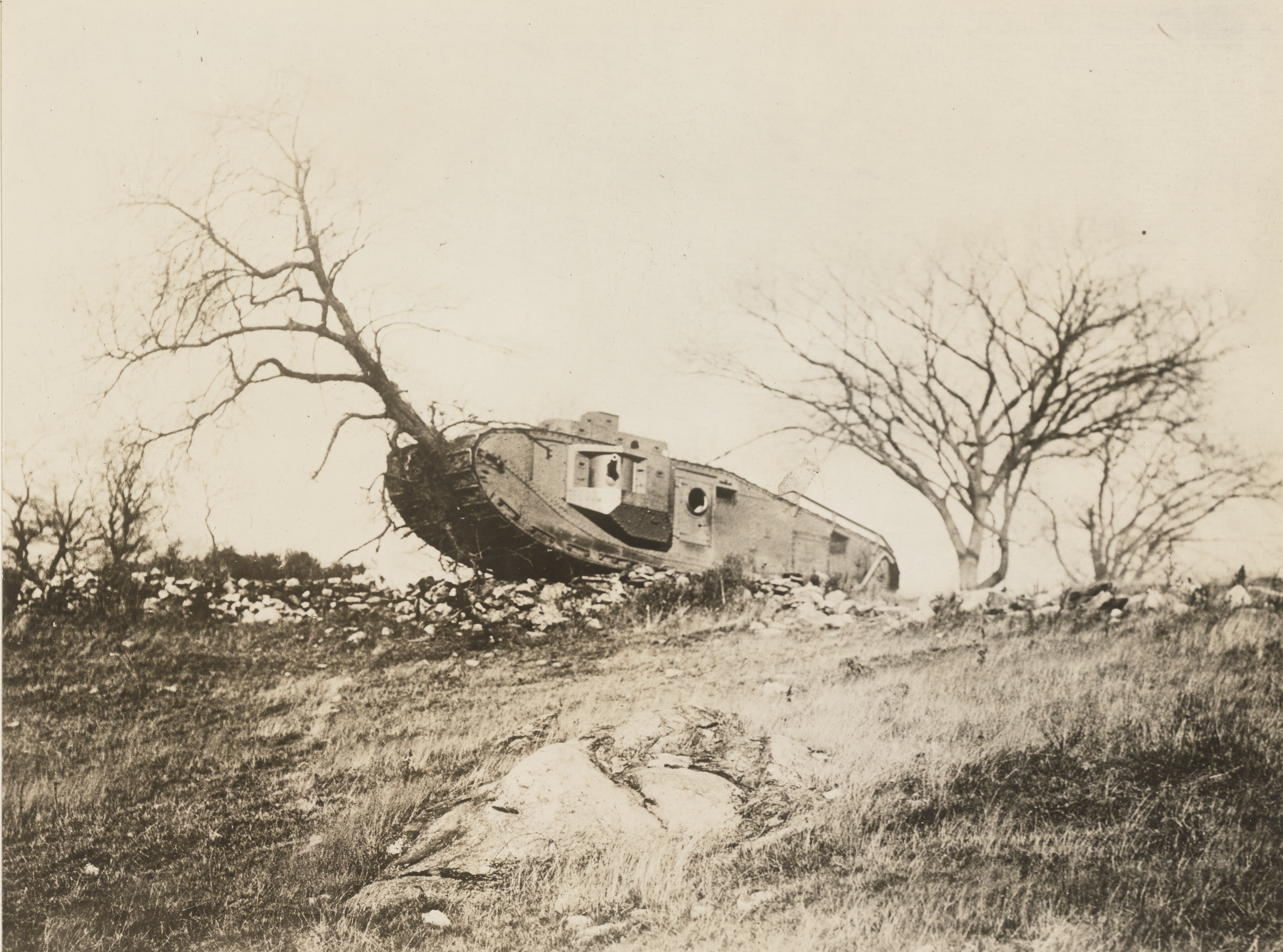
A MkVIII demonstrating its power by destroying a tree during testing (US National Archives)
As an allied collaborative project the production of parts was to be a collaborative effort. Britain was to contribute armour plate, structural frame work and armament. The American contribution was to include the automotive parts including the engine, brakes, drive sprockets, gears and transmission.
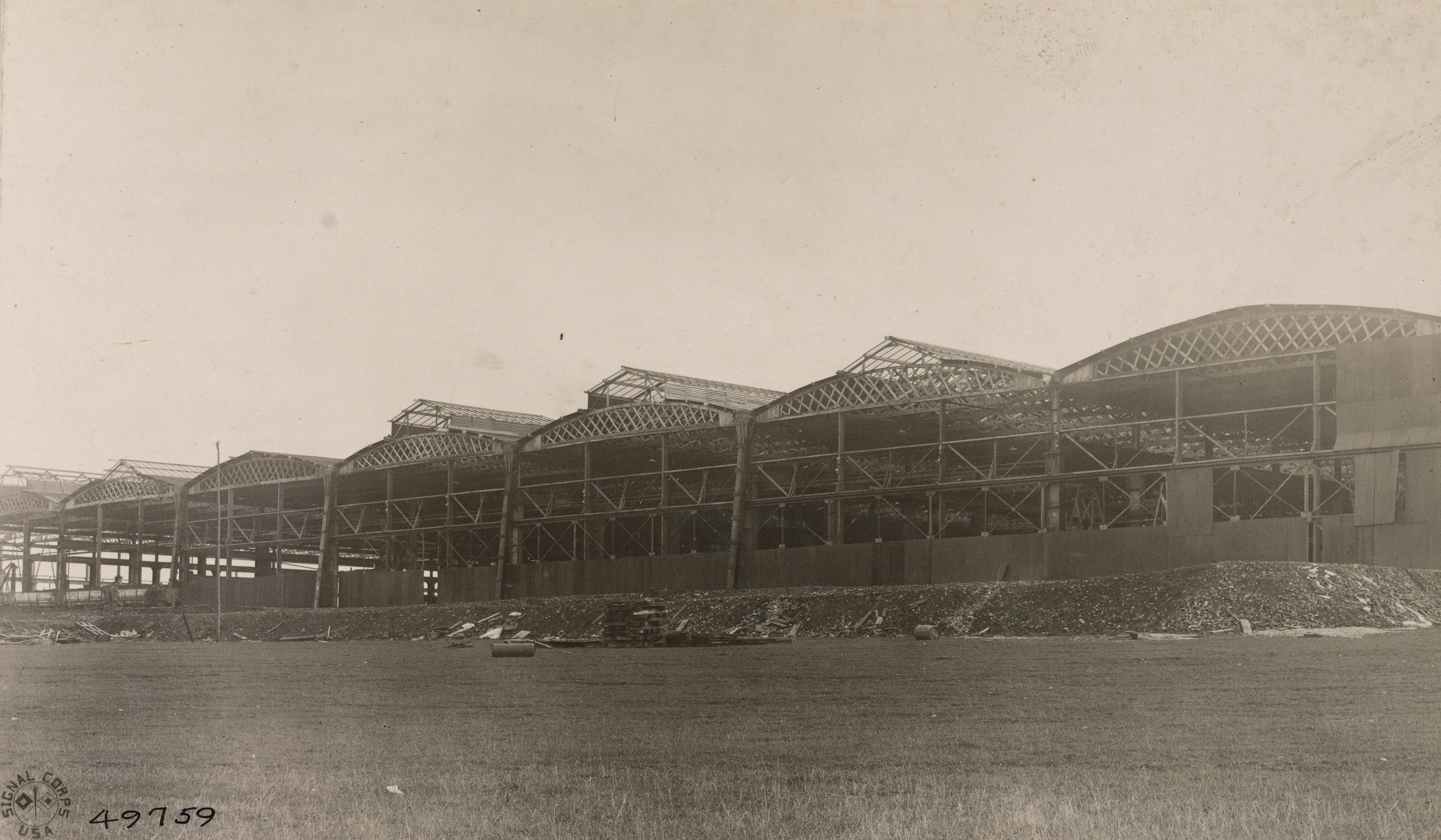
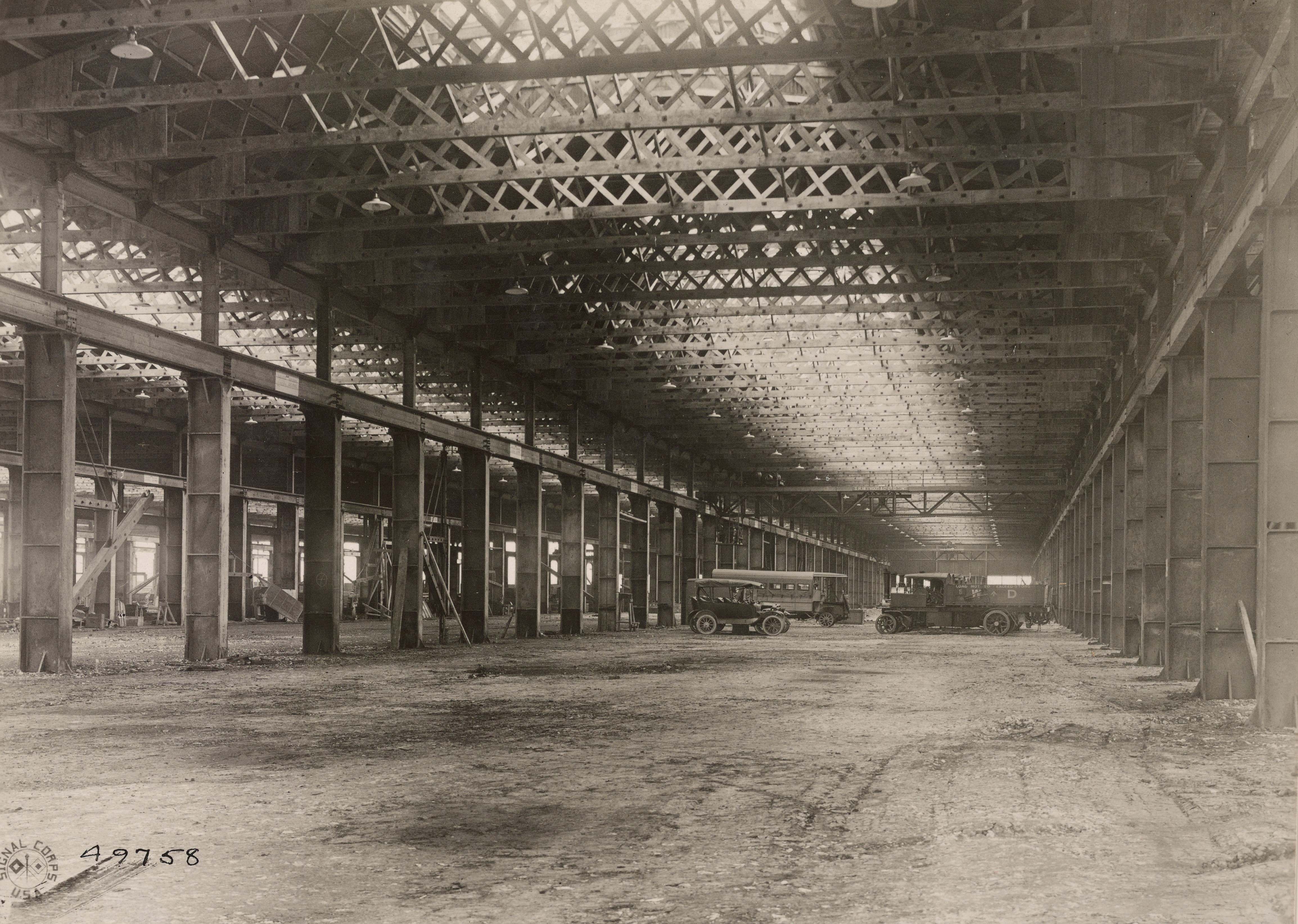
The French were largely uninterested in British heavy tanks and their primary contribution to the MkVIII project was a factory site near the village of Neuvy-Pailloux, 165 miles south of Paris, in central France. Critically located well away from the fighting on a main rail route north, through Issoudun. Construction of the impressive factory appears to have begun in early 1918, with the framework of seven long production halls and the installation of a powerplant and generators and the building of railway sidings completed before the armistice in November 1918. Production barely got underway in Britain, let alone in France. Contemporary photographs taken in January 1919, by the US Army Signal Corps show the factory with its roof in various stages of completion, its shop floors unfinished and empty and open to the elements. The factory would eventually be completed and used by the French army as an artillery park and later a maintenance depot.
The incomplete Neuvy-Pailloux factory c.1919 (US National Archives)
The oringal plan was for the tank parts to be shipped across the channel and the atlantic through France’s western coastal ports to be shipped by rail to Neuvy-Pailloux where they would be assembled into working tanks. It was envisaged that the workforce would be made up of Chinese labourers with British and American foremen and managers.
Inside the incomplete factory (US National Archives)
As many as 3,000 tanks were planned for 1919. The British intended to build 1,450 MkVIIIs of their own use in addition to the 1,550 to be produced for general allied use. The British tank parts were to be manufactured in Manchester, by the various workshops of the Manchester Tanks Association, and in Glasgow, by the North British Locomotive Company. Mass production in Manchester never got underway and the initial British MkVIIIs were built in Glasgow – just 24 are believed to have been built, all but six of these were scrapped almost immediately. The first American tanks were assembled by the Locomobile Company of Bridgeport, Connecticut. The American-assembled MkVIII completed acceptance trials in the spring of 1919. With the end of the war the US order was reduced from 1,500 to 100. 100 sets of hull components were bought from Britain and assembled with corresponding American parts at the Rock Island Arsenal.
A US MkVIII at Camp Meade, c.1921 (US National Archives)
The MkVIII was the last of the British rhomboid heavy tanks. The handful of British MkVIIIs built never entered service but the 100 American tanks along with American built M1917s, MkV Heavies and Renault FTs brought back from France, formed the backbone of the US Tank Corps throughout the early inter-war period. The US MkVIIIs remained in use as training tanks until 1932. Today, just three are believed to survive; two in the US and one in Britain.
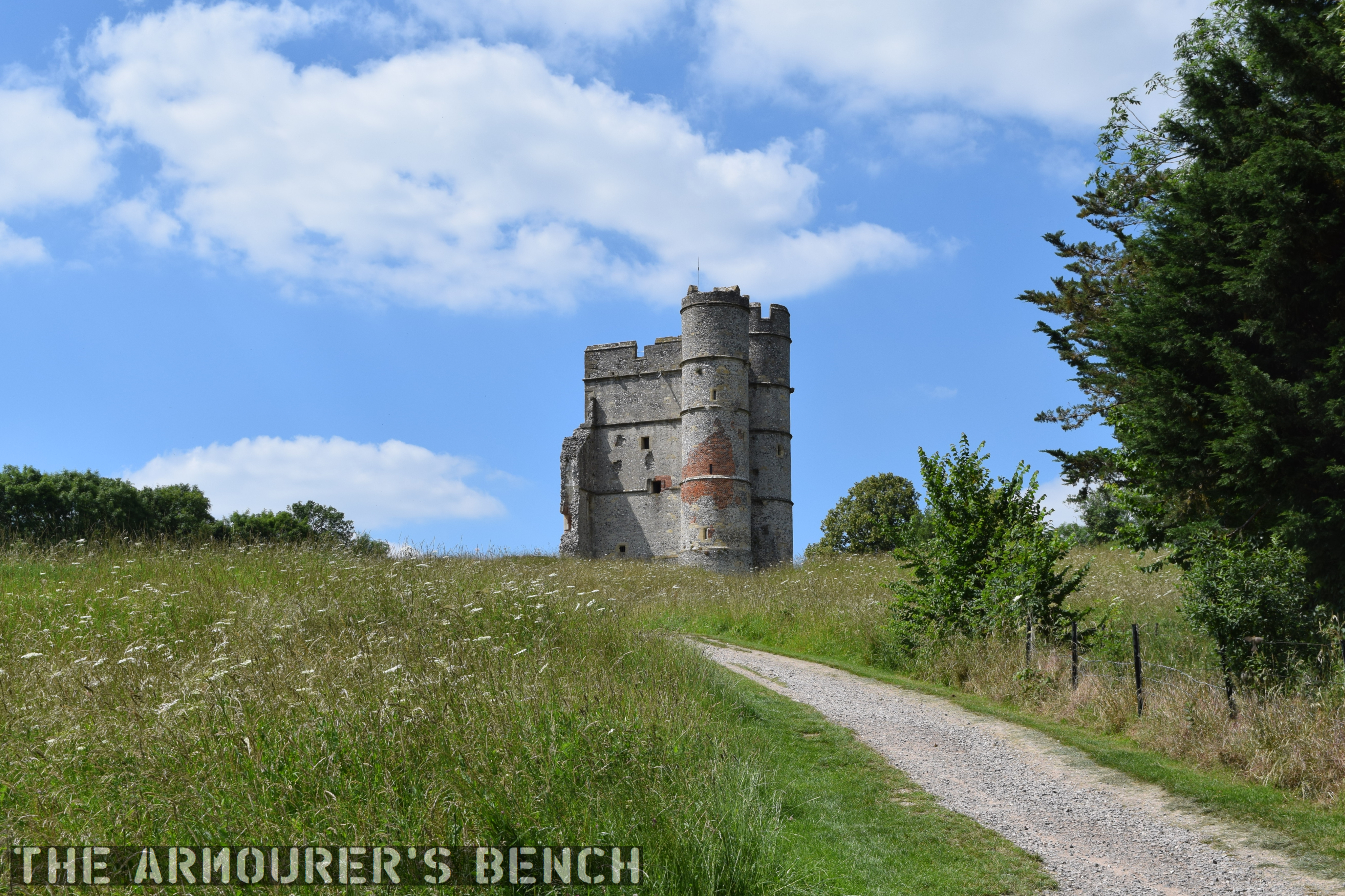
With many of us being stuck in COVID-19 imposed lockdowns I thought now would be a good time for a video-walk around Donnington Castle. Think of it as a virtual stroll. The 14th century castle found itself embroiled in a long siege during the English Civil War (1642–1651) with extensive earthworks built to defend the old castle.
The approach to Donnington Castle (Matthew Moss)
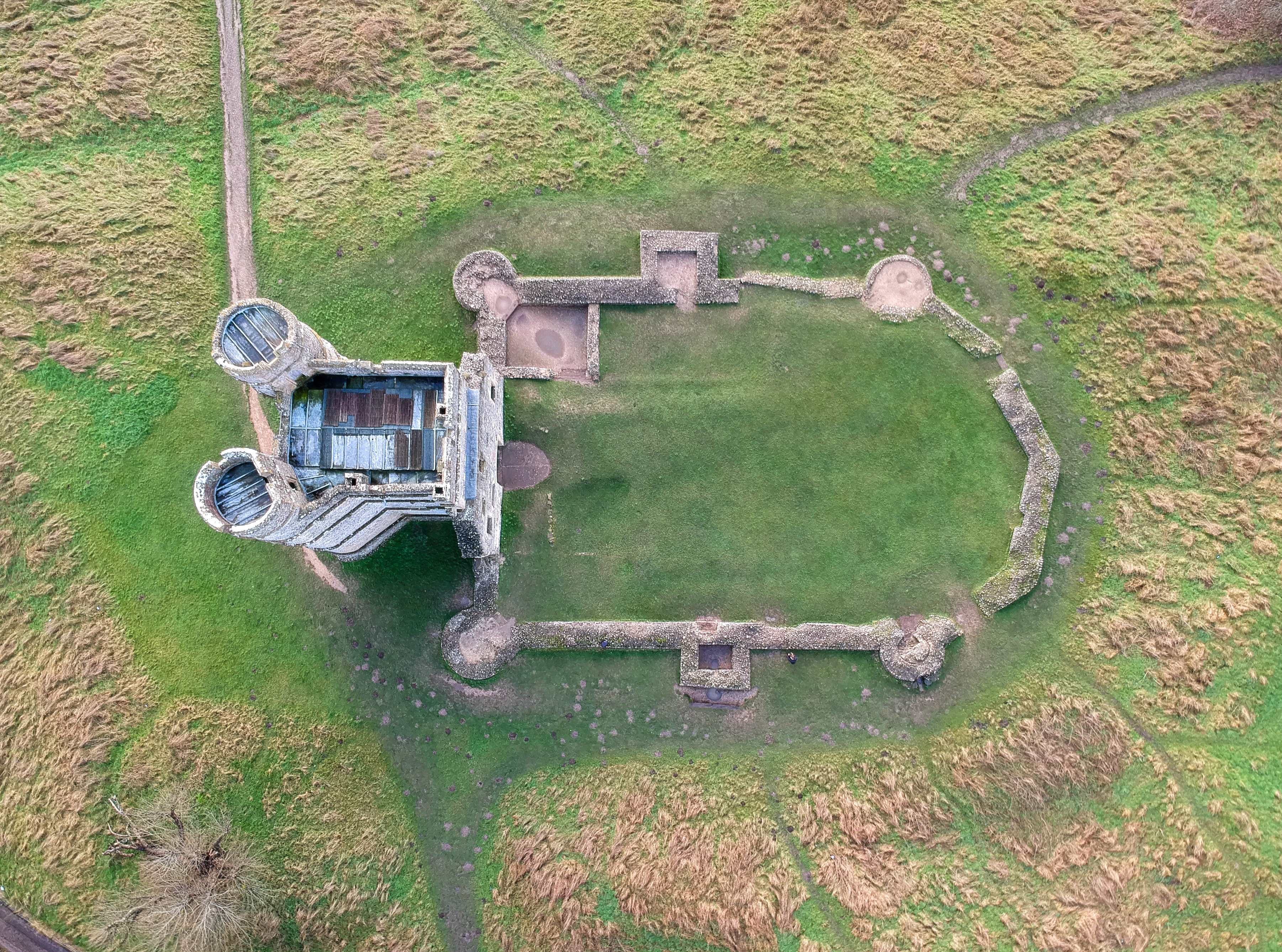
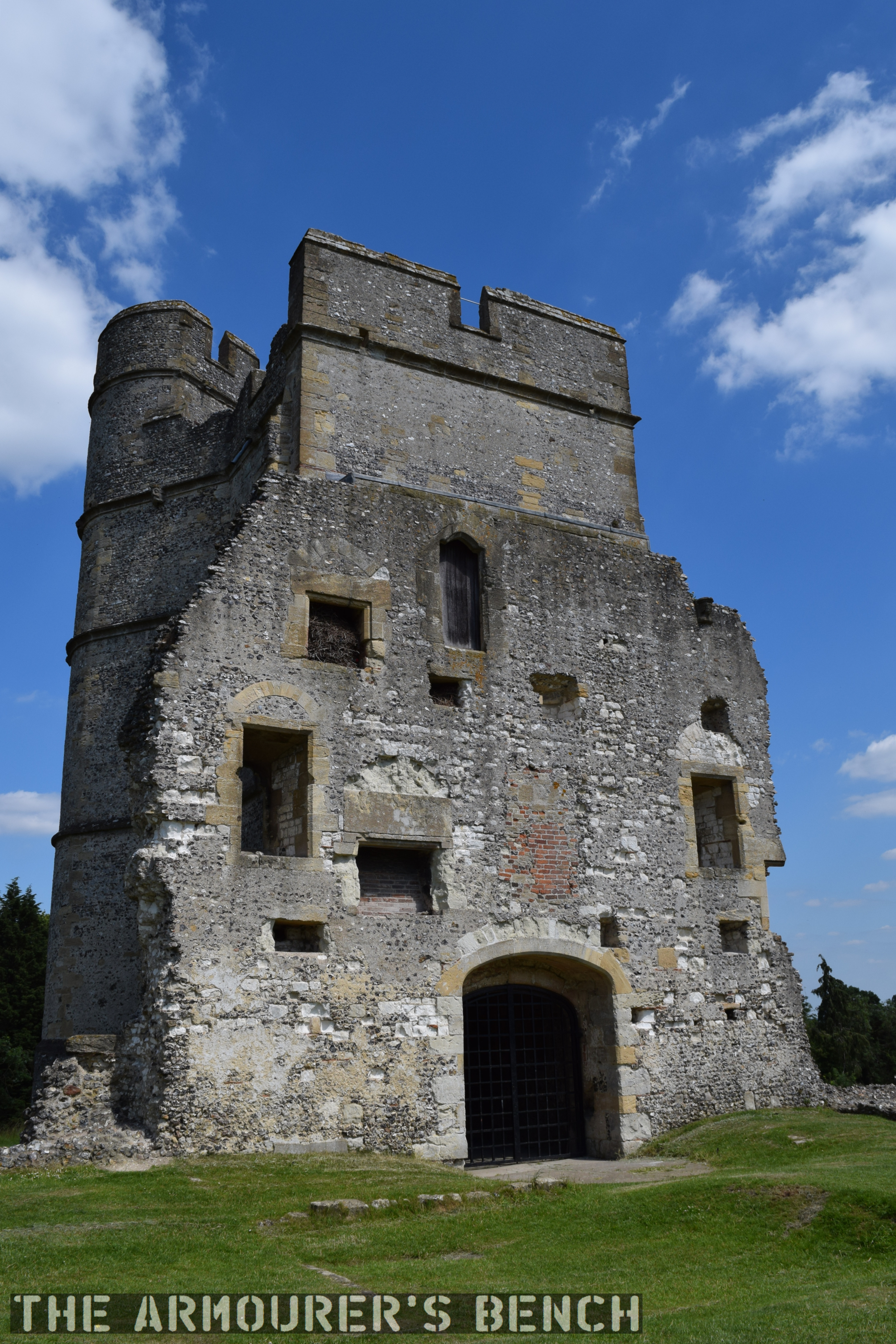
Donnington Castle in Berkshire is sited at the top of a hill overlooking the River Lambourne, a mile north of Newbury. It was built by its original owner, Richard Abberbury the Elder, under a license granted by King Richard II in 1386. The castle was designed as a fortified residence with a rectangular enclosure with a three-storey round tower at each corner and two square towers midway along the longest sides. The gatehouse, the only remaining part of the castle is a three-storey rectangular building with two, four-storey, round towers flanking the entrance. The wall opposite the gatehouse bows outwards.
Aerial view showing the outline of the castle’s walls (Matthew Prior)
The castles walls probably enclosed a hall, kitchens, storerooms and accommodation for guests with the main quarters being in the gatehouse keep. While not an elaborate, larger or militarily complex as some other castles it still imposing sight.
The rear of the gatehouse shows the outline of former rooms which were damaged and demolished. Note the later brick used to repair some damage (Matthew Moss)
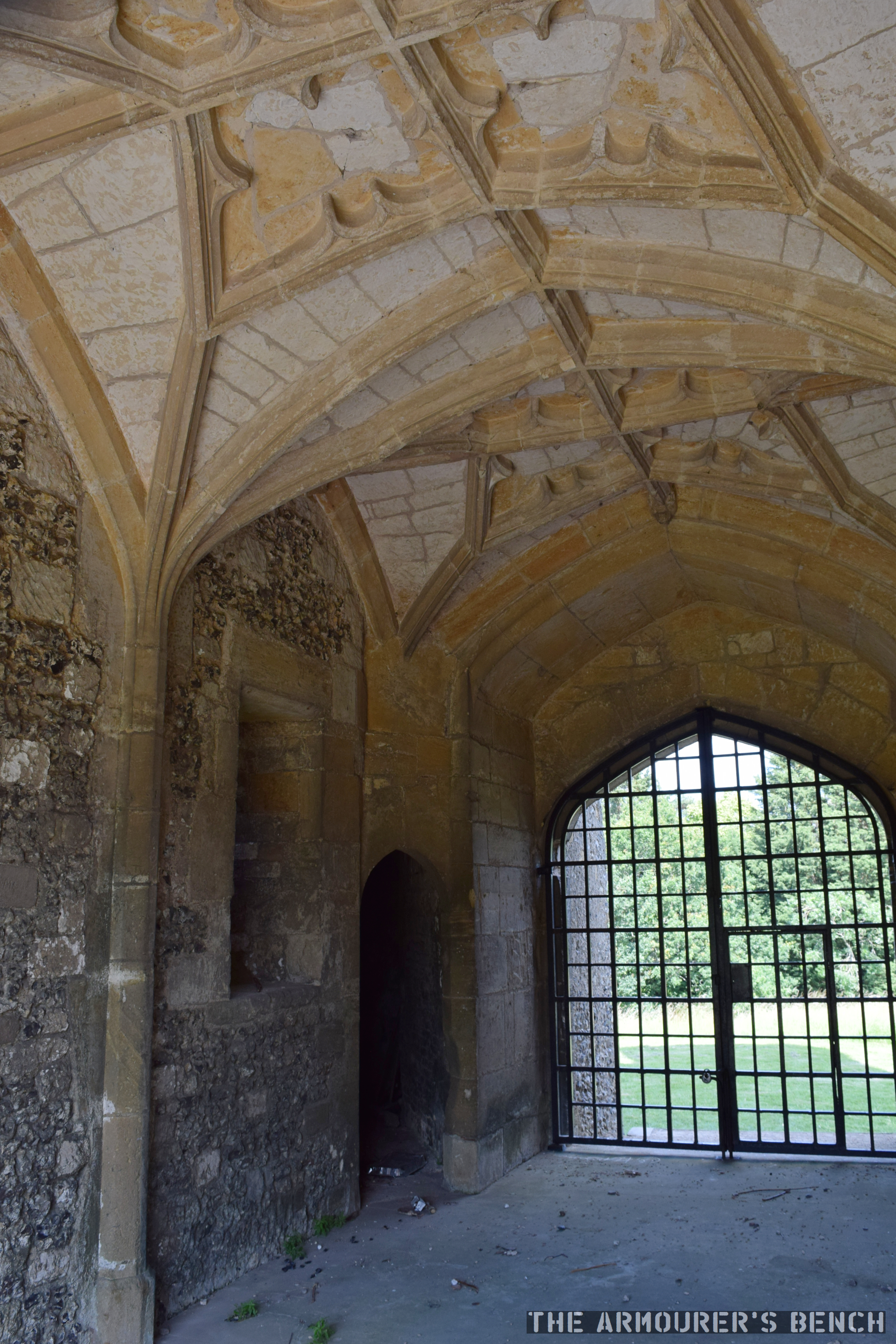
The vaulted and corniced ceiling inside the gatehouse entrance, hinting at the castle’s role as a home more than a military position (Matthew Moss)
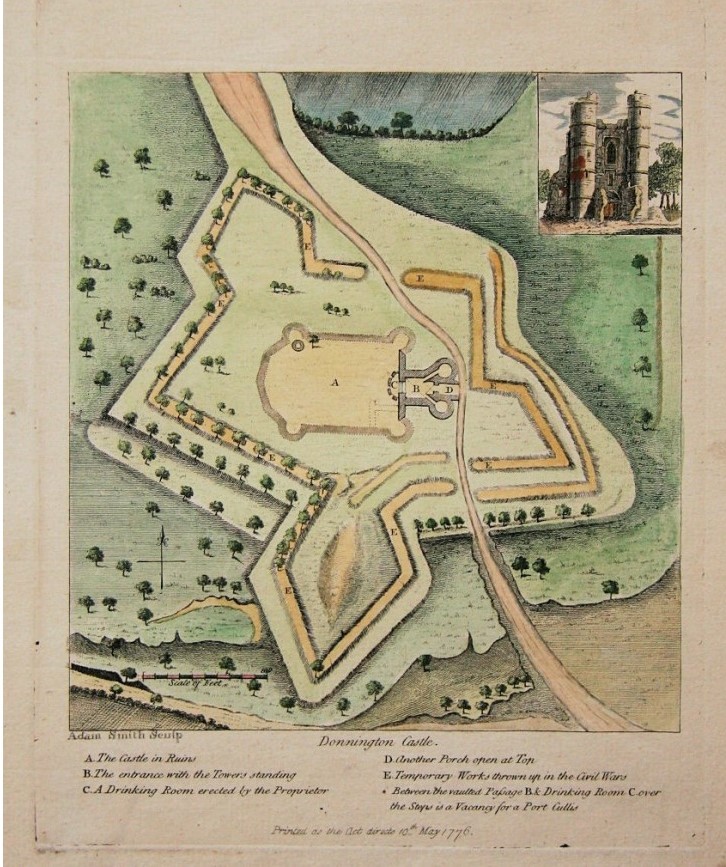
Both Henry VIII and Queen Elizabeth I visited the castle during the Tudor period. The castle didn’t see action until the 1640s and the outbreak of the English Civil Wars (1642-1651). While the castle has been owned by a Parliamentarian family, the Royalists took control of the caste in 1643 and began fortifying it. Sir John Boys set about building elaborate star-fort defences around the original medieval castle. Boys built a set of angular trace Italienne at the considerable cost of around £1,000. Donnington Castle was one of many medieval castles that saw new life during the Civil Wars. Old castles along with churches and country houses were re-purposed and hastily defended by new earthworks.
18th Century map showing outline of the castle’s Civil War defences
The castle’s new defences included four new bastions, with emplacements for cannon, ditches and a palisade wall. Royalist forces at the fort initially numbered just over 200 men and four cannon. The Second Battle of Newbury was fought within sight of the castle in October 1644 and after the battle the castle’s defences were reinforced by a number of large guns left behind by King Charles’ retreating forces.
The castle itself was attacked numerous times during the war, during the second attack on the castle part of the wall was damaged. The castle had to be and had to be relieved by Royalist forces twice the final siege in March 1646 began. The castle was badly damaged after the siege with its walls and outer towers hardest hit but remained defensible. With no hope of relief the garrison surrendered and were allowed to march out with their colours.
As with so many other castles after the war Parliament voted to demolish it and only the gatehouse was left standing. It is now a scheduled monument.


 The Armourers Bench