Improvised Bazooka Mine

I recently came across an interesting segment in a January 1945 US Army Combat Bulletin newsreel. It showed men of B Company of the 238th Combat Engineers setting up improvised anti-tank mines in Belgium. The mines were fashioned from Bazooka rockets!
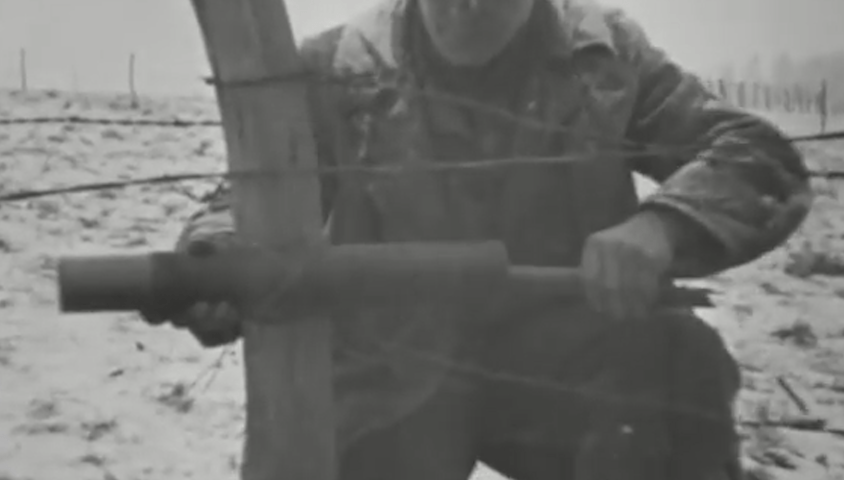
A still from Combat Bulletin #39 showing an engineer from the 238th Combat Engineer Battalion setting up an improvised off route rocket mine on a fence post (US Army)

This is a relatively little-known application for the Bazooka’s rockets but a really interesting field expediency. The footage shows engineers cutting the cardboard tubes the Bazooka’s rockets were carried in, down and attaching them to a fence post. Essentially setting up an off-route mine or IED. The engineers run a wire back to cover for remote detonation with some batteries. 

Diagram showing how the rocket could be buried (1944 US Army field manual)

While these seems quite ad hoc it was a secondary use for the Rocket Launcher’s ammunition which was laid down in the Bazooka’s 1944 basic field manual. It doesn’t appear in the 1943 technical manual for the M1A1 launcher at all but the 1944 manual explains that 

“In addition to its use as a projectile when fired from the launcher, the rocket may be prepared for firing electrically and used as an improvised anti-tank mine.”
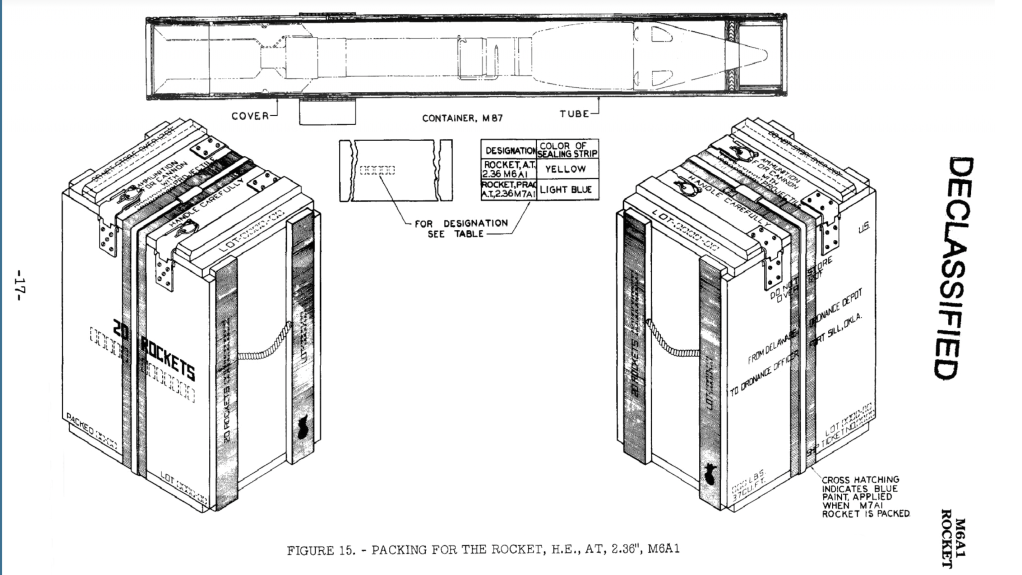
Diagram showing the transport packing and transit cannister tube for the M6 Rocket, the tube could be used as a makeshift launch tube (US Army)

This improvised method of use was also demonstrated in a training film for the Rocket Launcher, a Bazooka team are seen digging a pit in a road and burying a rocket in its makeshift launcher just as laid down in the manual. The training film explains it best…
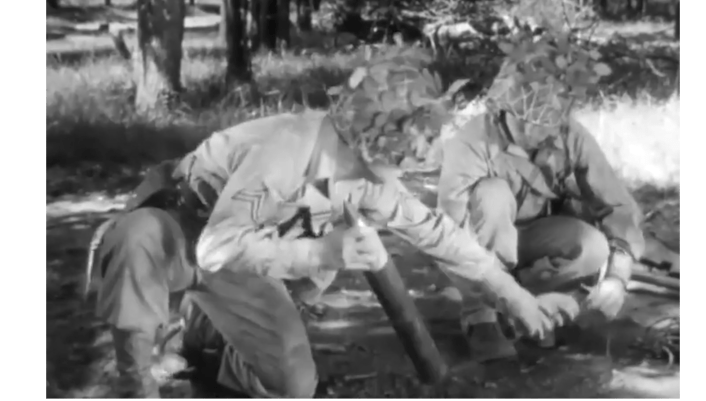
A still from the 1943 US Army training film for the Bazooka, demonstrating the setting up of an improvised rocket mine (US Army)

The 238th Combat Engineer battalion fought in the Battle of the Bulge and received a commendation from Major General Matthew B. Ridgeway, commander of XVIII Corps, for helping to establish a line of defence against the German offensive. The commendation read: 

“The work of the 238th Engineer Combat Battalion in the construction of the initial barrier in the vicinity of Manhay was outstanding and materially assisted the Corps in holding off the attack of the enemy in that area.”
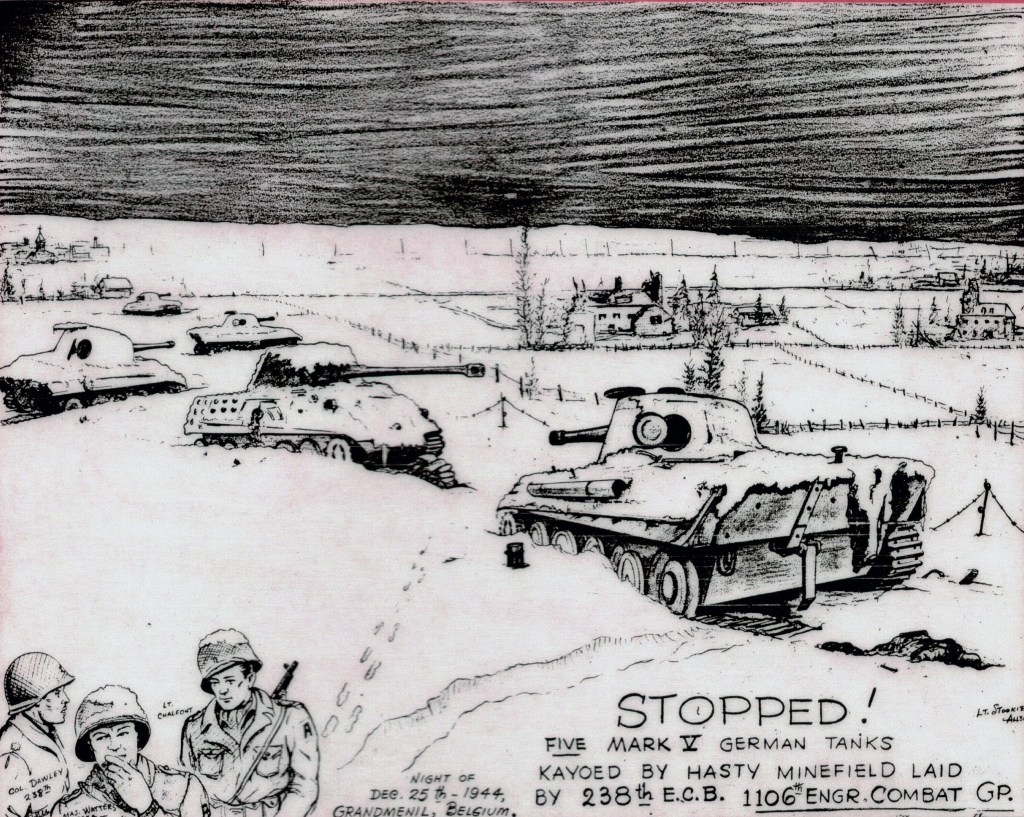
Illustration from a 238th Combat Engineer Battalion Association book showing knocked out German tanks around Grandmenil (238th Combat Engineer Battalion Association)

Whether this technique of improvising a mine from the rockets was used during the battle is unclear but I found the footage of the engineers demonstrating the set up fascinating. Its always interesting to see suggestions from manuals and training films put into action in the field so I was excited to come across this footage. 


If you enjoyed this video and article please consider supporting our work here. We have some great perks available for Patreon Supporters – including custom stickers and early access to videos! Thank you for your support!


Bibliography:

238th Combat Engineer Battalion Association (source)

The Ardennes: Battle of the Bulge, H.C. Cole, 1965, (source)

Footage:

The Anti-Tank Rocket M6” 1943 US Army Training Film; M1 & M1A1 Bazookas, War Department

Combat Bulletin No.39, War Department

Fighting On Film: When Trumpets Fade (1998)

Join us as we look at ‘When Trumpets Fade‘, John Irvin’s HBO TV movie which follows a battle-weary squad leader torn between simply staying alive and leading his new recruits into action during the Battle of the Hürtgen Forest. Starring Ron Eldrad, Zak Orth, Frank Whaley, Timothy Olyphant and Bobby Cannavale the film shines a light on a largely forgotten battle and premiered just a few months before Saving Private Ryan.

The episode is also available on all other podcast platforms, you can find them here.

Here’s some stills from the film:

If you enjoy the podcast then please check out our Patreon here. Be sure to follow Fighting On Film on Twitter @FightingOnFilm, on Facebook and don’t forget to check out www.fightingonfilm.com.

Thanks for listening!

Fighting On Film: The Way Ahead (1944)

Join us for as we examine the Carol Reed-directed 1944 British classic ‘The Way Ahead’ starring David Niven, Stanley Holloway, William Hartnell, Peter Ustinov and John Laurie. We’re joined by special guest Richard Fisher, of the Vickers MG Collection and Research Association, who picked the film partly due to it’s iconic scene featuring a Vickers Gun! The film follows a platoon of men through their call up, training and up to their first experience of battle!

You can watch ‘The New Lot’ (1943) on the IWM’s site here.

The episode is also available on all other podcast platforms, you can find them here.

Here’s some stills from the film:

Be sure to follow us on Twitter @FightingOnFilm

Thanks for listening!

Fighting On Film: The Siege of Firebase Gloria (1989)

Join us, on the 53rd anniversary of the week the Tet Offensive began, as we take a look at 1989’s ‘The Siege of Firebase Gloria’ starring R. Lee Ermey, Wings Hauser & Albert Popwell. Directed Brian Trenchard-Smith its a Vietnam last stand movie that riffs on its predecessors.

The episode is also available on all other podcast platforms, you can find them here.

Here’s some stills from the film:

Be sure to follow us on Twitter @FightingOnFilm

Fighting On Film: Bataan (1943)

Join us as we look at 1943’s ‘Bataan’ starring Robert Taylor, Robert Walker, Lloyd Nolan, Kenneth Spencer and Desi Arnaz. Directed by Tay Garnett, it’s one of the few films to look at the brutal Battle of Bataan. It’s a classic last stand movie and incorporates elements from the battle which saw some of its hardest fighting 79 years ago this month.

The episode is also available on all other podcast platforms, you can find them here.

Here’s some stills from the film:

Be sure to follow us on Twitter @FightingOnFilm

Fighting On Film: Go For Broke! (1951)

In this episode of Fighting On Film we examine 1951’s ‘Go For Broke!‘, written & directed by Robert Pirosh and starring Van Johnson – who had worked together on ‘Battleground‘ (FoF Episode 6). The film tells the unique story of the 442nd Infantry Regiment, a US Army unit made up of Japanese-Americans who became the most decorated unit of its size of World War Two! 

The episode is also available on all other podcast platforms, you can find them here.

Here’s some stills from the film:

Be sure to follow us on Twitter @FightingOnFilm

US Medium Tanks of the 1920s

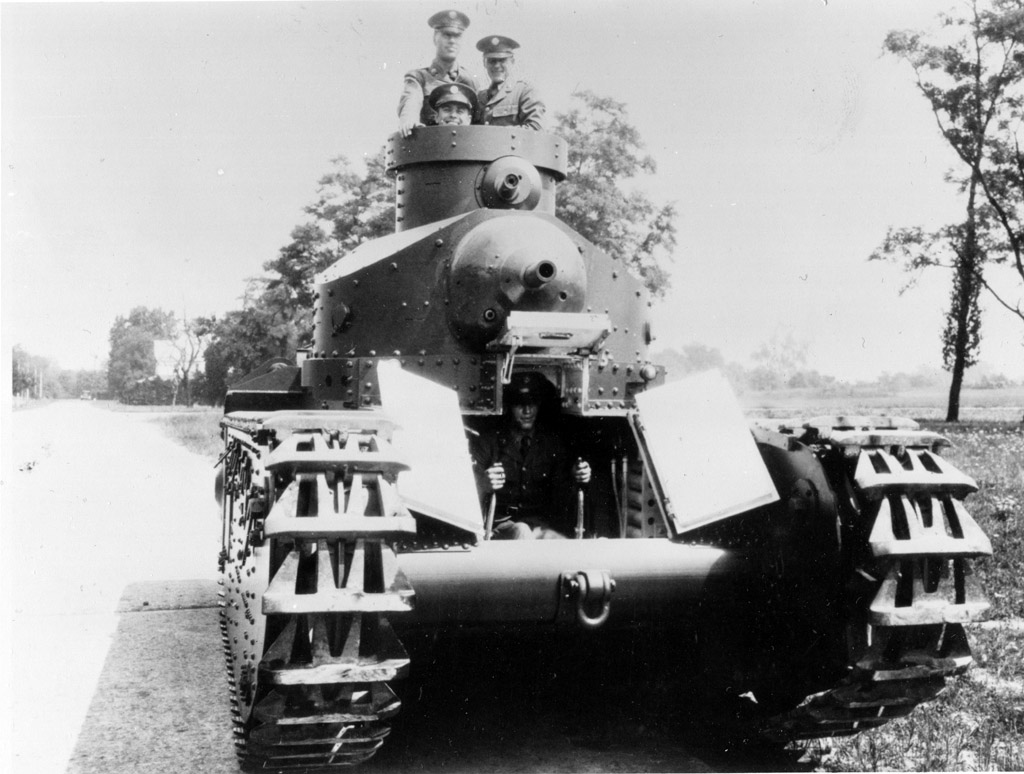
I recently came across some archival footage which gives some glimpses of some quite rare US medium tanks developed in the 1920s. The footage features the M1921, the T2 Medium Tank and a Christie Tank.

An M1921 Medium Tank (US National Archives)

The US tank arm subsequently abandoned the various medium tank designs they’d been working on and shifted towards cheaper light tanks. Always special finding archival footage, hope you enjoy the video.

Check out our other videos on early tank here


If you enjoyed the video and this article please consider supporting our work here. We have some great perks available for Patreon Supporters. You can also support us via one-time donations here.

M56 Scorpion – Lightweight Self-Propelled Gun

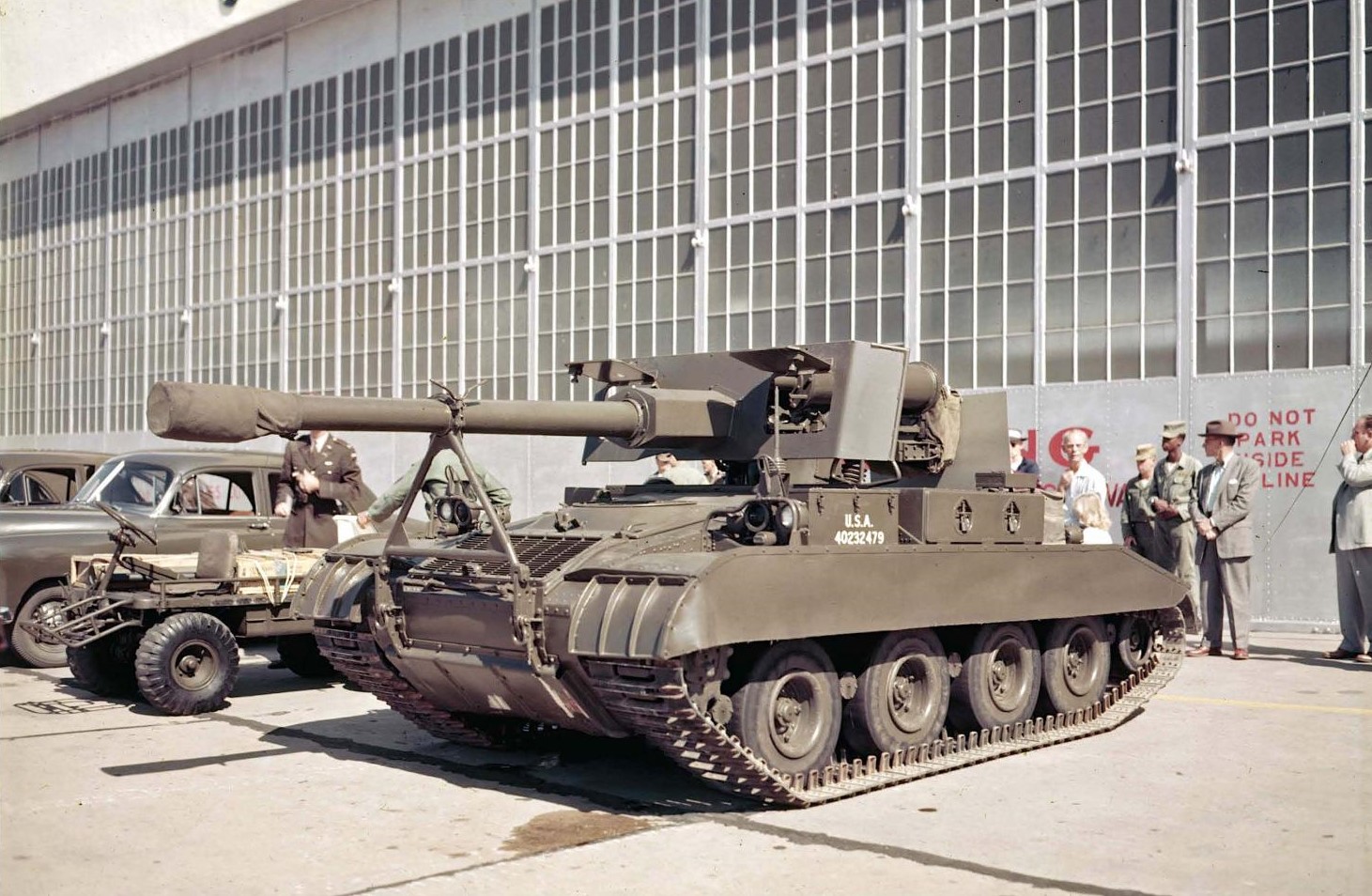
The need for a lightweight self-propelled anti-tank gun was identified in the late 1940s. The T101 development program took just over 5 years and $2.5 million dollars to develop what became the M56.
DSC_0554wm
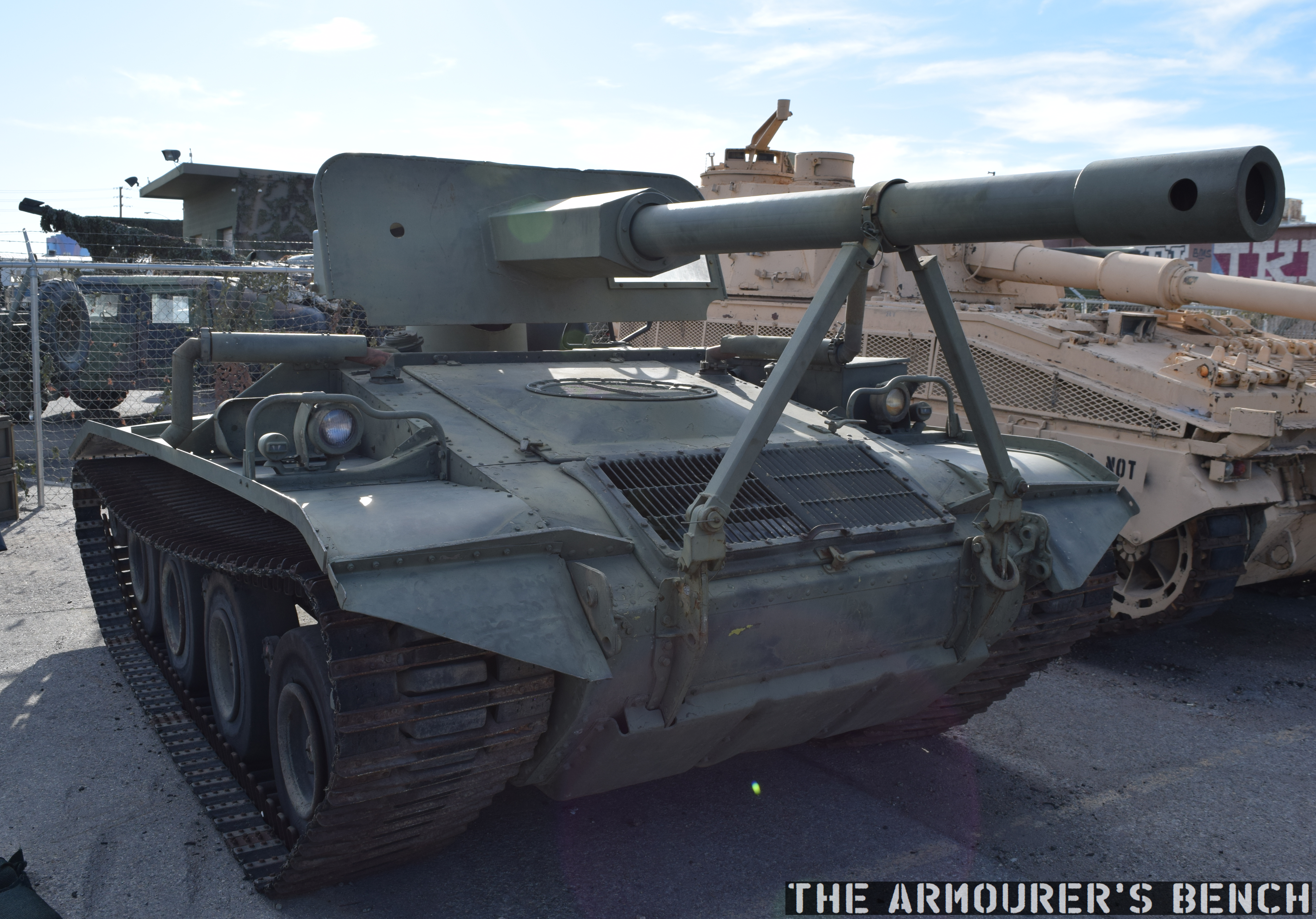
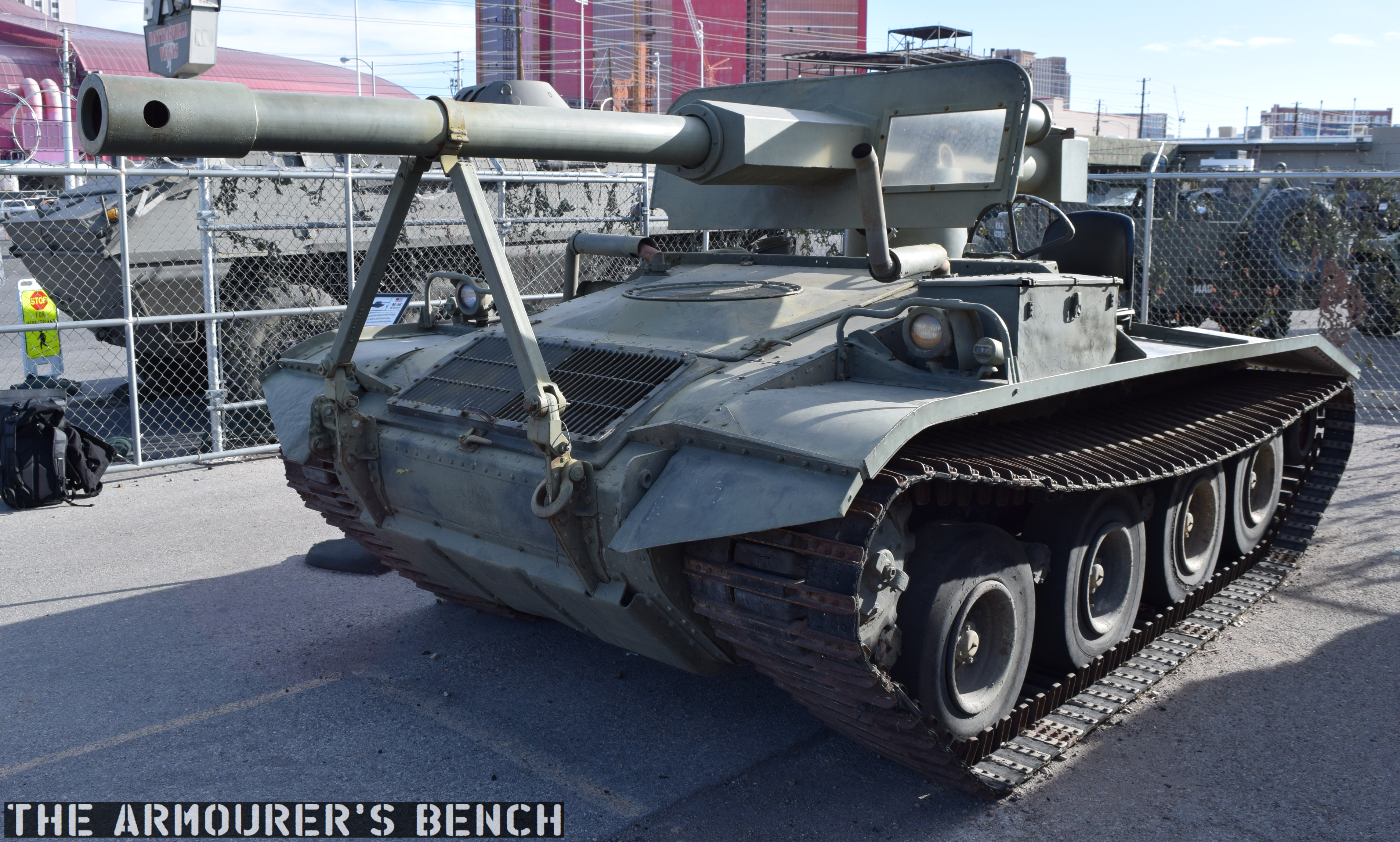
Front, right view of the M56 Scorpion (Matthew Moss)

The M56 was intended to act as an airmobile support weapon for the US Army’s airborne forces that was capable of traversing muddy, marshy, sandy and snowy terrain. Airborne infantry have historically been lightly armed and sometimes struggled against enemy forces equipped with armour. Attempts to level the playing field with glider transported anti-tank guns or even super light tanks could only do so much. Airborne operations during world war two proved light tanks, like the M22 Locust, were out-gunned, under-armoured and largely useless. While light artillery proved effective it lacked mobility and while infantry anti-tank weapons like the Bazooka were extremely useful they were close quarter weapons.

T101 US Nat Arc
The T101 – Prototype M56 (US National Archive)

In response the US Army decided to abandon one of the points of the classic ‘iron triangle’ of armoured vehicle design all together, sacrificing protection for firepower and mobility. The unarmoured 16,000 lb (7 tonne) vehicle could be dropped from a transport plane to support paratroops and later heliborne air cav units.

1518188238_2
An M56 (US Army)

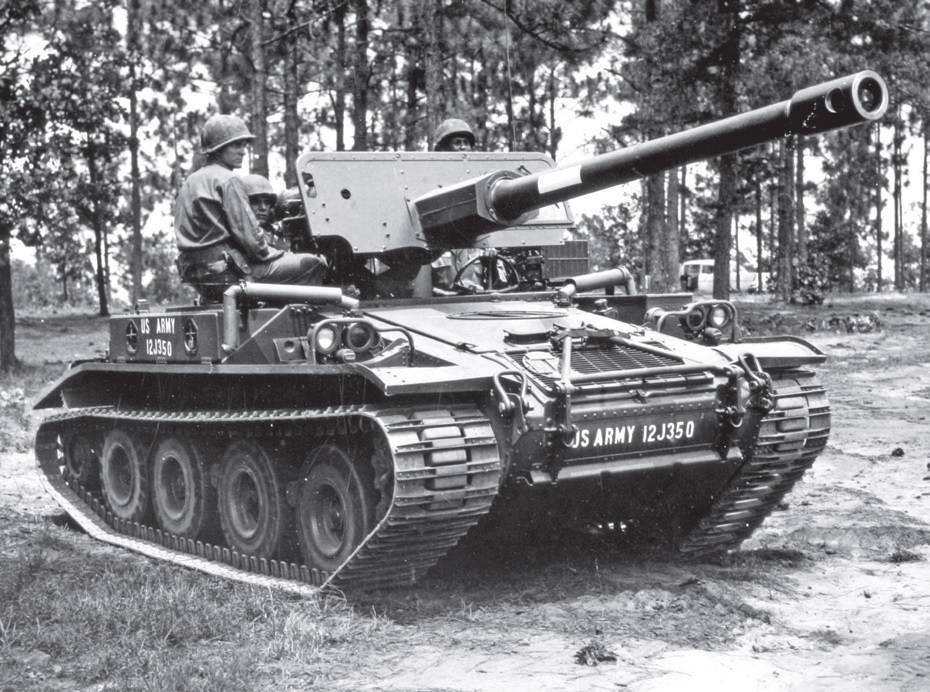
The M56 was developed and manufactured by the Cadillac Motor Car Division of General Motors, a pilot version was completed by 1955. The pilot model, designated the Full-Tracked Self-Proppelled Gun T101 is seen in this photograph from October 1955. When the vehicle finally entered production in 1957 it was largely identical to the T101 except for changes to the location of the radio, the design of the gun’s muzzle device, the hinged flaps on the gun shield were abandoned and the sand skirts were also abandoned. The Scorpion had no secondary armament and no armour. Protection for its 4-man crew amounted to nothing more than a gun shield, which also has a window for the driver.
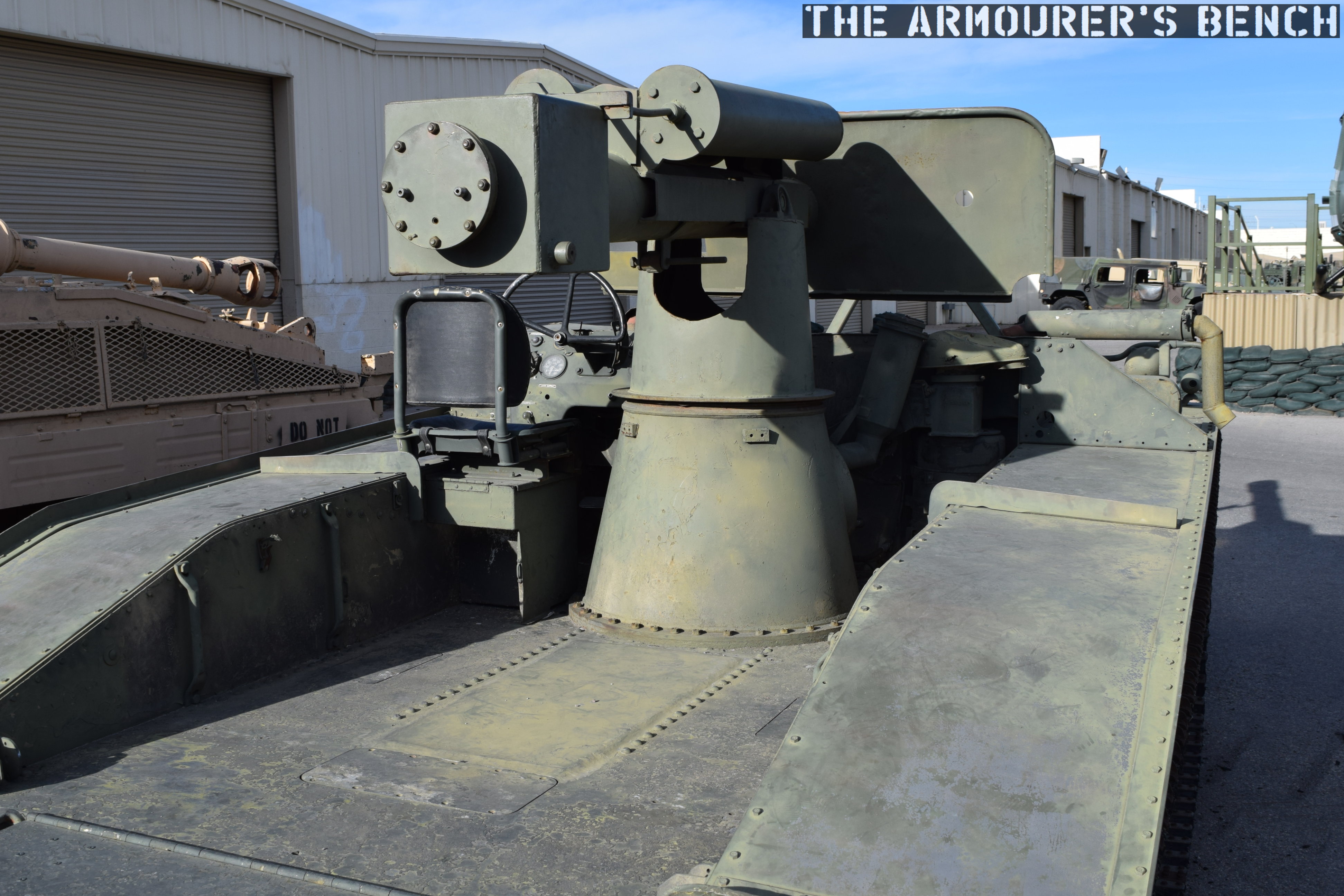
DSC_0549wm
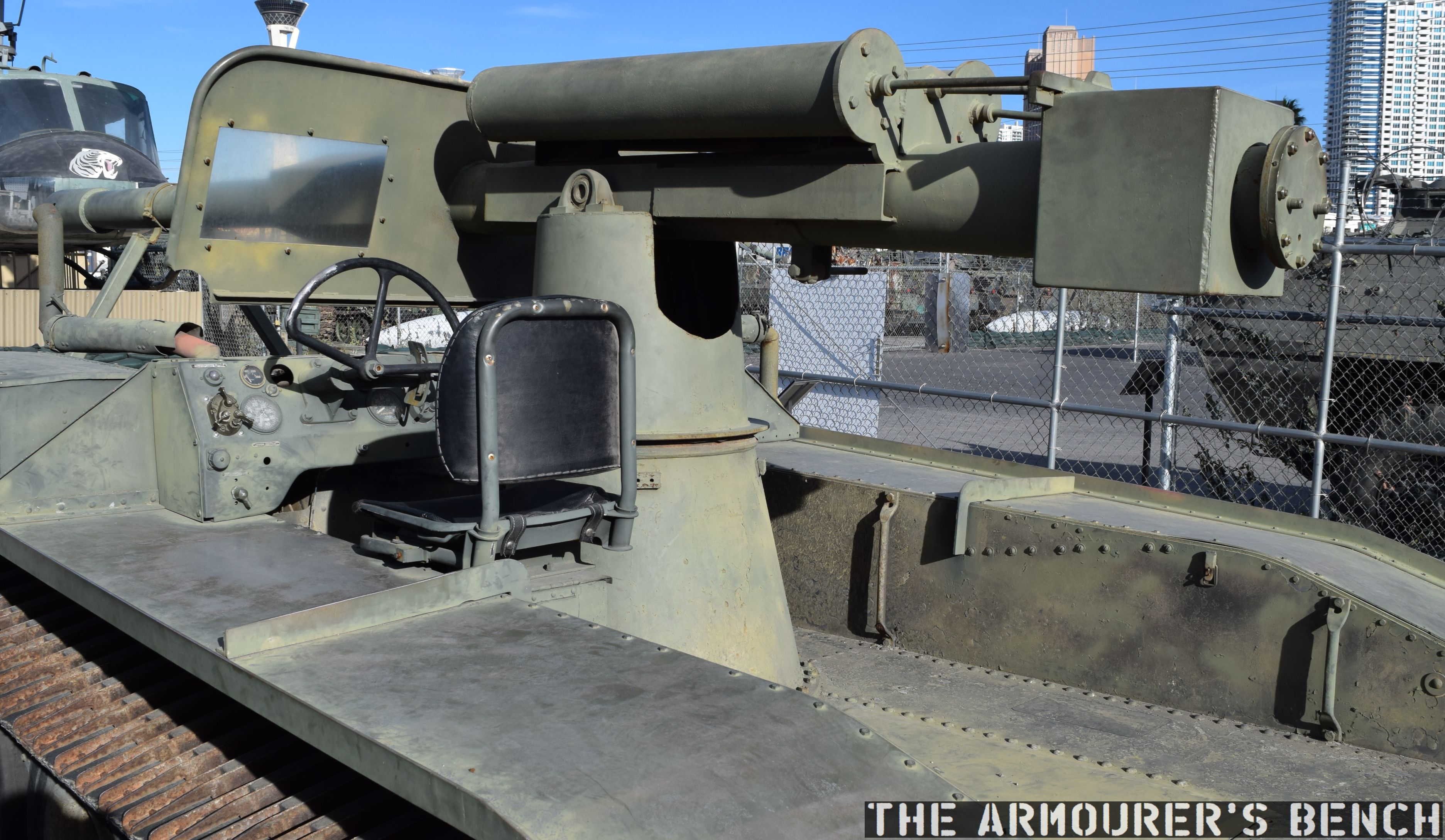
A view of the ‘fighting compartment’ of the M56, the ammunition storage rack is missing(Matthew Moss)

DSC_0551wm
View of the driver’s position (Matthew Moss)

The 90mm M54 high velocity gun was mounted on a pintle in the centre of the vehicle with the driver on the left and the vehicle commander, loader and gunner sat around the gun. The gun could be traversed 30-degrees left and right and had 10-degrees depression and up to 15-degrees  elevation. At the rear of the vehicle was an ammunition store that held 29 90mm rounds. The main ammunition used with the M54 would have been the M318 armour piercing round but it could chamber any of the other 90mm ammunition then in US service. Sadly the ammunition store and breech of the gun aren’t present on this example.
1518188279_7
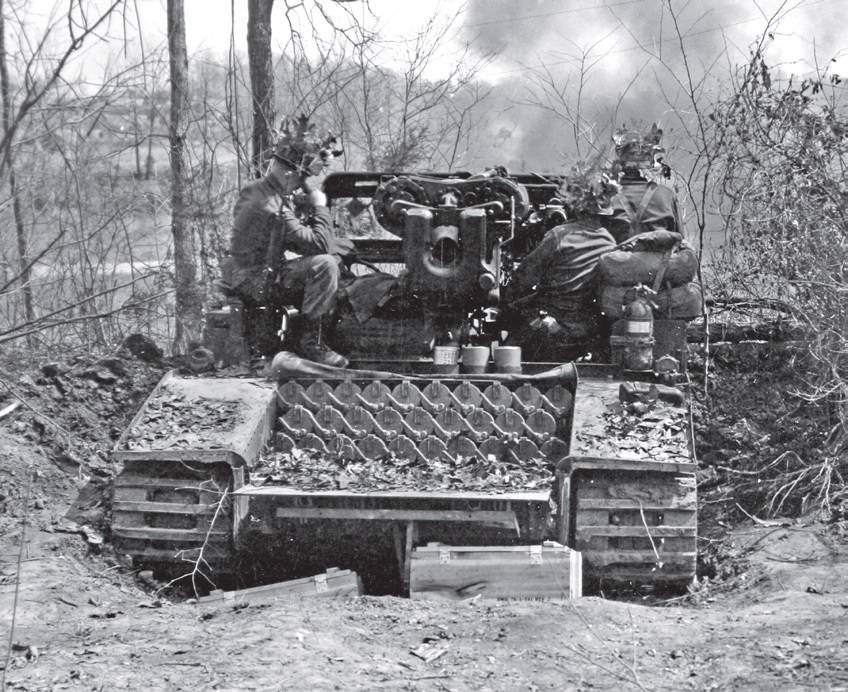
An M56 in action, note the ammunition storage racks (US Army)

The gun’s impressive recoil, even with a pair of recuperators, hit the Scorpion and the crew manning it hard, the footage shows just how powerful the recoil was. In this contemporary footage we can see that the front wheel almost bounces off the ground. Note also the semi-automatic action that opens the breech and ejects the spent shell casing after the gun is fired.
The vehicle was powered by an air-cooled petrol engine that produced 200hp. Capable of a maximum speed of just over 28mph.

DSC_0548wm
Front, left view of the M56 (Matthew Moss)

Perhaps its most interesting feature is that it runs on four pneumatic road tyres, rather than metal road wheels, enclosed in a 20in wide track. The track was made up of two bands of rubber and steel cross pieces. There’s a sprocket at the front and an idler at the rear for tensioning the track. This configuration was chosen to reduce weight and it also minimised the ground pressure of the vehicle.

Production of the M56 ended in 1959, after around 325 had been produced. While most of these entered US service, 87 were purchased by Morocco in 1966 while a further 5 were used by the Spanish Marine Corps.

1518188259_9
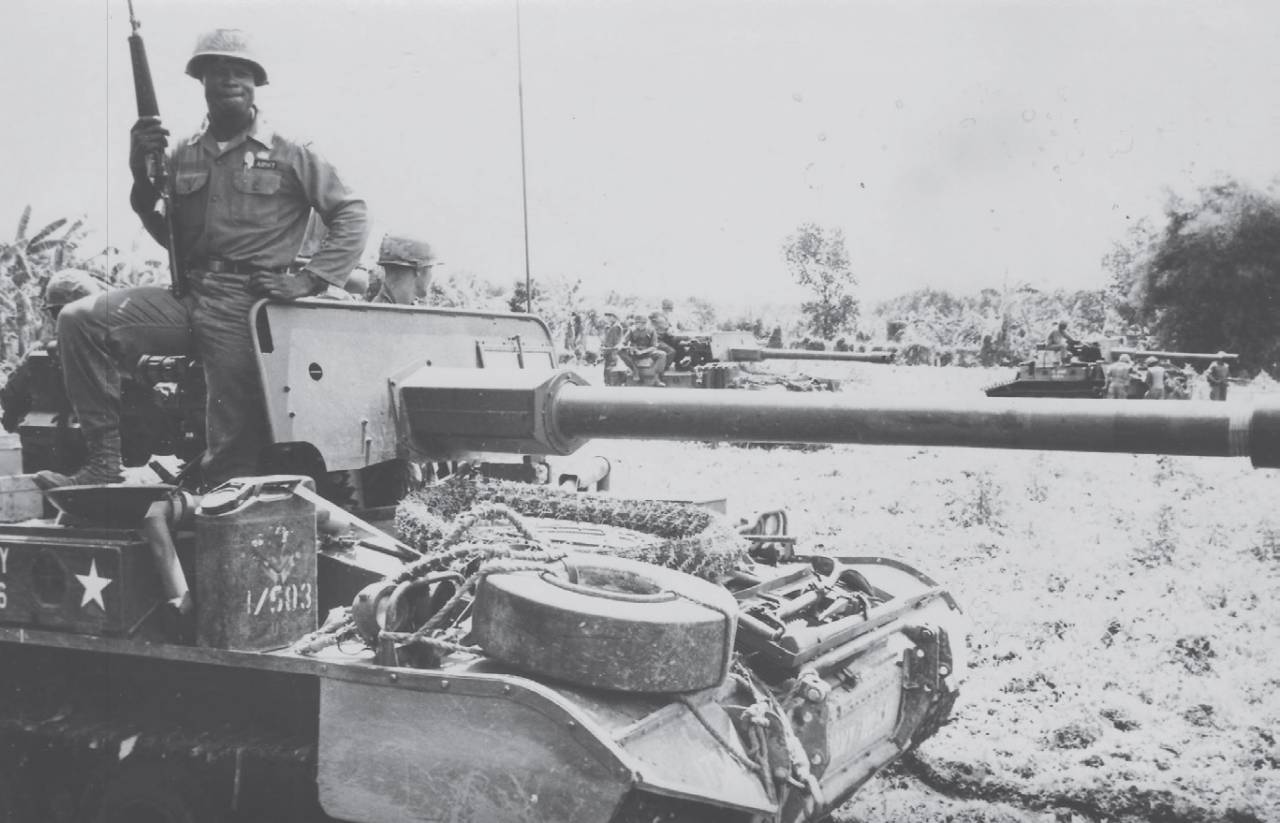
M56s in Vietnam (US Army)

While the M56 was slightly more mobile across country, in reality it wasn’t much better than a standard jeep equipped with a M40 recoilless rifle. Despite the Scorpion’s shortcomings it remained in service into the early 1970s and saw action during the Vietnam War with the 173 Airborne Brigade, which had a company of 16 M56s. In Vietnam the more capable and better protected M551 Sheridan saw wider use and what action the Scorpions did see was largely acting in direct fire support.

Special thanks to Battlefield Vegas for allowing us to film and feature their M56.


If you enjoyed the video and this article please consider supporting our work here. We have some great perks available for Patreon Supporters. You can also support us via one-time donations here.


Specifications:

Length: 19ft 2in / 5.8m

Height: 6ft 9in / 2m

Width: 8ft 4in / 2.5m

Weight: 7 tons

Powerplant: Continental A01-403-5 gasoline engine

Speed: ~28mph / 45km

Armour: Unarmoured

Armament: 90mm M54 Gun


Bibliography:

TM 9-1300-203, Artillery Ammunition (1967)

M50 Ontos and M56 Scorpion 1956–70: US Tank Destroyers of the Vietnam War, K.W. Estes (2016)

Airborne “Scorpion”, A. Haruk, (source)

US Tanks of WW1

The US entered the Great War with no tanks of their own – by the end of the war they had designed and built their first tank, collaborated on a leviathan heavy tank with Britain and built their own copy of the French FT. In this video we look at how the US Army hit the ground running and formed two tank corps and built their first tanks.

In recent videos we’ve looked at all of the US Army’s early tanks, here’s a round up:

Ford M1918 3-Ton Tank

165-WW-313A-020 - Copy

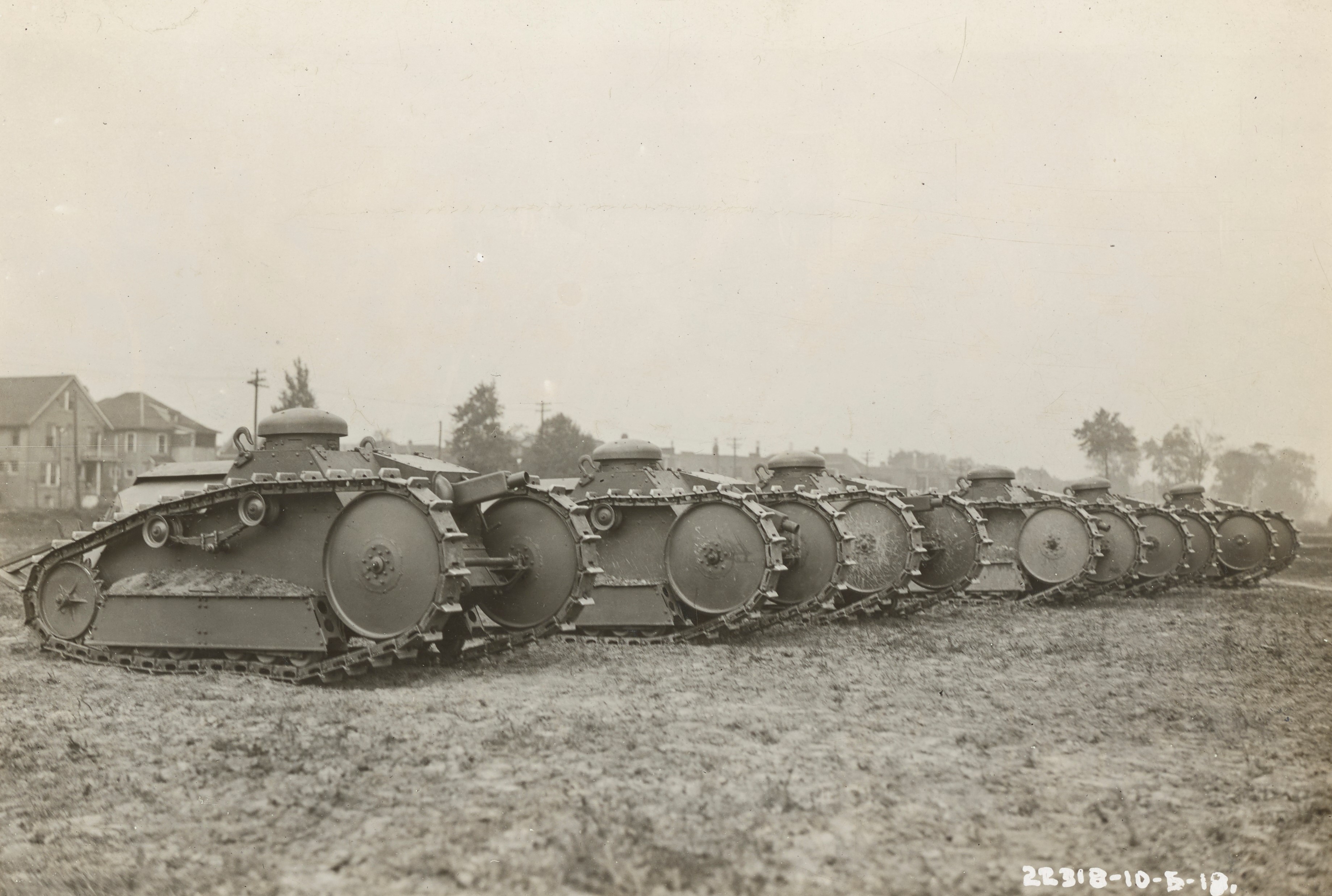
The tinny 3-ton Ford was the first American designed and built tank. Aiming to use readily available parts and materials it took inspiration from the French Renault FT but was smaller and lacked the FT’s revolutionary turret. The Ford was only lightly armoured and did have the best cross country handling. Check out our full article on the Ford here.

MkVIII ‘International’ Heavy Tank

111-SC-68498 - Copy

The MkVIII was a truly ‘international’ effort with the US, UK and France all working on the project. The US and UK provided the mechanical components while France provided a factory to assemble the formidable vehicles. The MkVIII wasn’t ready in time to see action during the war but remained in US service into the 1930s. Check out our full article on the MkVIII here.

The M1917 Light Tank

111-SC-53605 - Copy

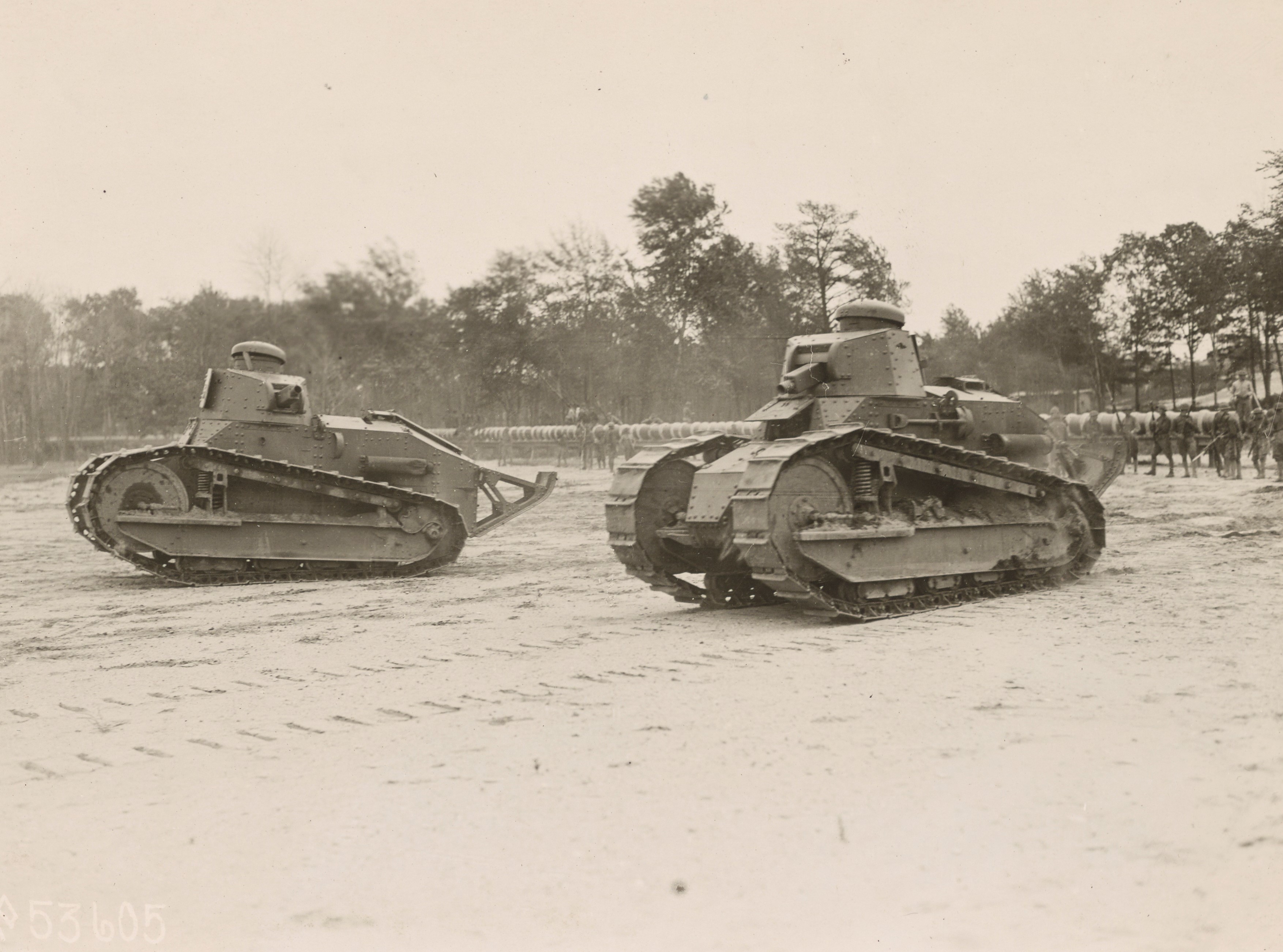
The US also sought to produce their own licensed version of the French Renault FT, making some slight changes the tank was adopted as the M1917 but despite production being well underway by late 1918, none of the M1917s reached the front. Instead they became the backbone of the US Army’s interwar tank force. One even climbed a mountain!  Check out our full article on the M1917 here.

You can find a playlist of all our videos looking at the US Tanks of WW1 here.


If you enjoyed the video and this article please consider supporting our work here. We have some great perks available for Patreon Supporters. You can also support us via one-time donations here.

MkVIII Heavy Tank In Action

This week’s bonus video features some contemporary footage of a MkVIII Heavy Tank showing off what it can do during a demonstration outside Bridgeport, Connecticut, in October 1918.

We have a full episode on the MkVIII detailing its history and development here