FAMAE PAF Submachine Gun

The 1960s and 70s saw Chile was racked by political turmoil with a military junta, led by General Augusto Pinochet, taking control in September 1973. Pinochet’s Junta took control of the country via a bloody coup, overthrowing President Salvador Allende, and as a result all export of small arms from Britain to Chile ceased. In the early 1970s, before the coup d’etat, The records of the Sterling Armaments Company show Chile purchased an example of the company’s Mk4 submachine guns and no less than 101 suppressed Mk5 Sterling-Patchetts.

With the import of small arms from the UK and other countries banned by an embargo Chile’s government were eager to increase their self-sufficiency.  As a result in the mid-1970s the state-owned firearms manufacturer Fábricas y Maestranzas del Ejército (FAMAE) experimented with copying the Sterling Mk4 in an effort to minimise development costs.

DSC_0162
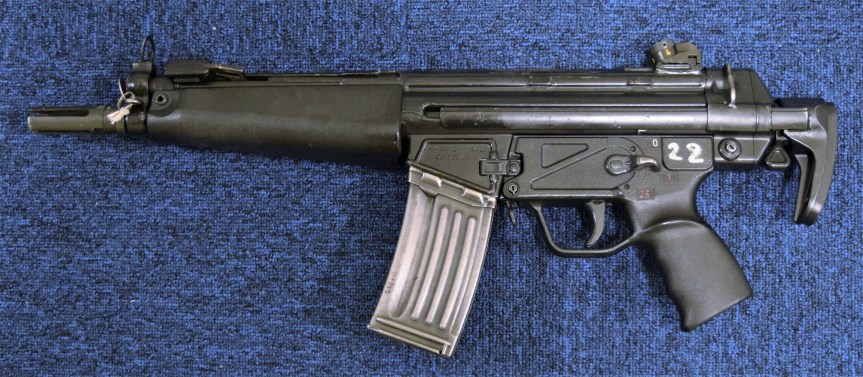
Left-side view of the PAF with its stock extented (Matthew Moss)

The resulting 9x19mm submachine gun was dubbed the PAF or ‘Pistola Ametralladora FAMAE’. It took the basic Sterling design and simplified it. The PAF lacks the Mk4’s perforated barrel jacket and instead has an exposed barrel, tipped with a rudimentary spoon-shaped compensator. It also lacked the Sterling’s folding stock, instead it had a simple collapsing stock. As a result, the disassembly catch has been moved 90-degrees to the left side of the receiver.

DSC_0163
Right-side view of the PAF (Matthew Moss)

Like the original, the Chilean copy retained the dirt-clearing grooves cut into the weapon’s breech block. The PAF’s plastic charging handle and butt stock shape are reminiscent of the Heckler & Koch MP5 – although much cheaper feeling in quality. The profile of the PAF’s pistol grip is slightly different but the weapon still fed from standard 34-round Sterling magazines. Interestingly, unlike the Sterling’s screwed-in-place barrel, the PAF’s was held in place by a machined barrel nut – in terms of production this is a much simpler system, no doubt borrowed from the Uzi.


The Chilean copy weighs significantly less than the British original, 2.5kg (5.5 lbs) and reportedly has a much higher 800 rounds-per-minute rate of fire. In general the PAF looks much like Sterling’s own later Para Pistol model, the Mk7.

Some sources suggest that only a small number of toolroom prototypes were made, although the relatively high serial number, #00748, of the example we looked at may indicate a limited production run may have been produced. It is clear, however, that the PAF did not go into general production. Instead, FAMAE later focused on weapons derived from Swiss small arms including the SIG SG 510 and SIG SG 540, and the SAF submachine gun introduced in the 1990s.

Note: The PAF was the last weapon we filmed during this particular research trip and we did not have time to film or photograph the PAF’s internals (we filmed a lot of videos that day and were pressed for time). Rest assured if and when we get the opportunity we will update this article with photographs of the weapon disassembled!  

If you enjoyed the video and this article please consider supporting our work here.


Technical Specifications:

Length (with stock collapsed): approximately 44cm (17in)
Weight (unloaded): 2.5kg (5.5lb)
Barrel Length: 17.5cm (6.9in)
Action: blowback, open bolt
Calibre: 9x19mm
Feed: 34-round box magazine
Cyclic Rate: suggested ~800 rpm


Bibliography:

The Guns of Dagenham, P. Laidler & D. Howroyd, (1995)

‘The PAF: Chile’s First Indigenous Submachine Gun’, TFB, R. Olive (source)


Please do not reproduce photographs taken by Matthew Moss without permission or credit. ©The Armourer’s Bench 2018.

M45 Quadmount

Matt recently had the opportunity to visit the excellent Menorcan Military Museum at Es Castell, on the Spanish Balearic Island of Menorca. The museum is well worth a visit with some very rare and extremely interesting weapons on display. 

M16
An M45 mounted on a M16 half-track during World War Two (source)

The M45 Quadmount was developed by the W.L. Maxson Corporation for the US Army. It mounted four .50 calibre M2 Browning Heavy Machine Guns on a lightweight, rotating powered mount.  I recently had the opportunity to take a closer look at an M45 while visiting the Menorcan Military Museum.

Introduced in 1943, the M45 was capable of 360 degrees of rotation and 90 degrees of elevation. It was manned by a three man crew: two loaders, who loaded the M2 Browning’s 200-round belt drums, and a gunner.

The M45 was extremely versatile and could be mounted on a number of trailers and vehicles including the M20 and M17 trailers and the M16, M17 and M51 half-tracks.

M45 TM
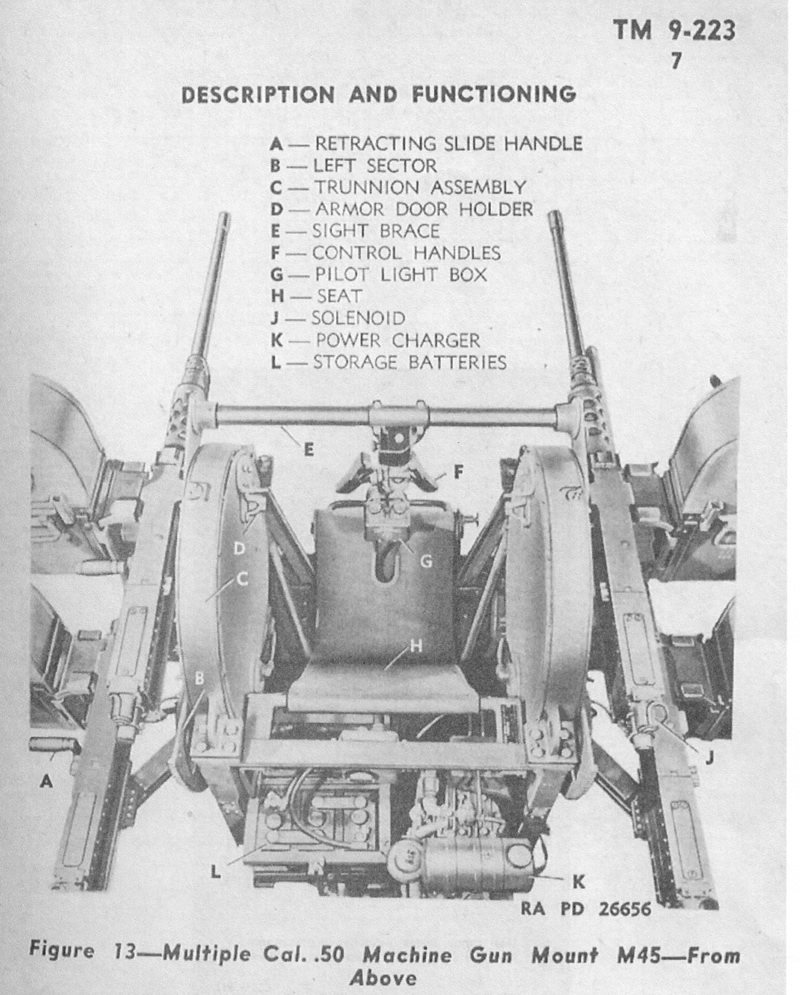
Diagram from the M45’s manual showing the layout and some of the Quadmount’s parts (source)

The gunner sat on a canvas seat inside the M45, between the two pairs of guns. He controlled the aiming of the guns with two control handles and aimed the M45 through a reflex sight which was mounted to a sight bar.

The M45 was powered by two 6-volt batteries and weighed approximately 2,400lb (1,090kg). The gunner was protected by an armoured plate at the front with two hinged armour plates either side of the M1X reflex sight. The M45 mounted four M2 TT (Turret Type) varriant machine guns – these were fired by solenoids. All four of the guns could be fired at once but gunners normally alternated between the upper and lower pairs in order to allow the guns to cool and loaders to replenish the drums.

US_Army_M16_MGMC_AA_Half-track
An M45 mounted on an M17 half-track during the Korean War (source)

When all the guns were fired together the M45 had an impressive rate of fire of approximately 2,300 rounds per minute. The Quadmount saw action throughout World War Two, the Korean War and in Vietnam. However, with the beginning of the jet age the M45 became increasingly obsolete in the anti-aircraft role. It continued to be used against ground targets with many mounted on vehicles to create ‘gun trucks’.

If you enjoyed the video and this article please consider supporting our work here.


AUSTEN Submachine Gun

At the beginning of the Second World War the Australian Army, much like Britain, lacked a standard issue submachine gun. Following Britain’s lead a small number of Thompson submachine guns were ordered for trials purposes in early 1941. The Australian military eventually purchased 18,382 Thompson M1928A1s, however, it was realised that an indigenously produced weapon was needed.

1941 saw extensive testing and development of Evelyn Owen’s submachine gun, at the same time technical drawings for the Sten arrived from Britain. The Australian engineers that examined the Sten believed that it was too rudimentary for Australian needs. In September 1941, the Melbourne-based Die Casters Ltd. were contracted by the Ordnance Production Directorate to investigate improving the Sten. W.T. Carmichael & Sons Ltd were also interested in producing submachine guns and both Carmichael and Die Casters were contracted to produce the improved Australian Sten gun.

6534523
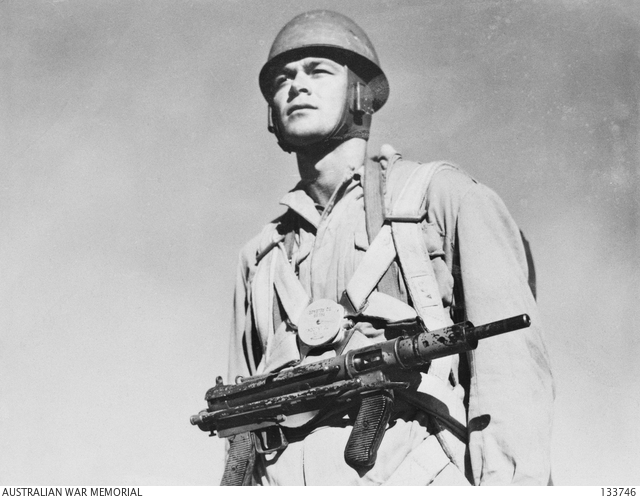
Austen-armed Paratrooper from the Australian parachute battalion training centre, c.1945. The Austen’s folding stock made issue to paratroops one of the few roles that the Austen was better suited to than the Owen gun (AWM)

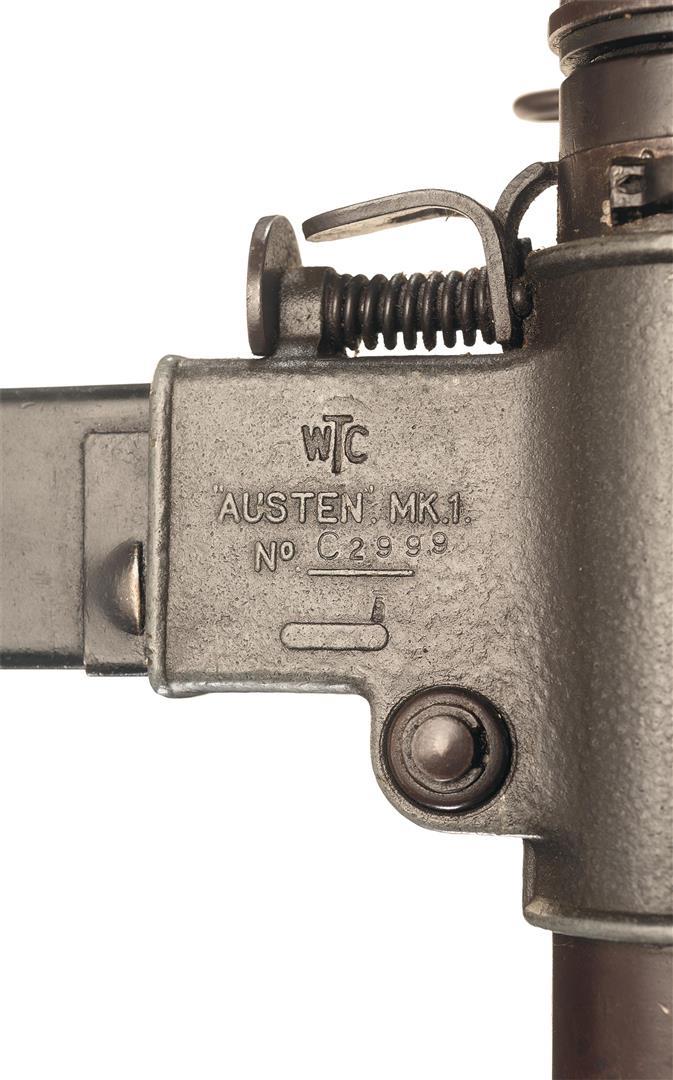
The Austen was based upon the MkII Sten, however, substantial changes to the design were made. These included a new folding stock based upon the German MP38/40 stock, an added forward pistol grip and a cocking handle slot which ran almost the full length of the tub receiver. This longer slot opened allowed greater ingress of mud and dirt. The most significant internal change was the use of the MP40’s bolt and telescoping return spring. The magazine housing was die cast while the rest of the weapon’s parts were stamped steel. Some aborted attempts by Die Casters Ltd to incorporate die casting production methods lead to early failures but by early 1942 the weapon was ready for production.

307-1
A close up of the Austen’s Diecast magazine housing (RIA)

Like the Sten, the Austen was a simple blowback submachine gun, chambered in 9x19mm and feeding from a 32-round magazine which fed horizontally from the left. With its stock folded it was 52cm long and weighed 3.9kg (8.8lb) unloaded. By contrast the heavier but more reliable Owen weighed 4.2kg (9.3lb). The Austen’s fixed rear aperture sight was fixed at 100 yards.

The new folding stock increased the weight of the Austen, it was also slightly longer than ideal in order for the butt plate to clear the forward handgrip. Some troops complained that this made the weapon’s length of pull too long. In general the Austen required more parts and was more expensive and complex to manufacture. Some Sten parts were interchangeable with the Austen, as were Sten magazines. Like the Owen it appears that at least some Austens were fitted with suppressors similar to that of the Sten MkII(S) and MkVI.

4122849
The photograph above shows Lt.Colonel Tucker, commanding officer of the 2/23 Infantry Battalion, testing a suppressed Austen in Borneo in September 1945. Note also the suppressed Owen Gun in the background (AWM)

As Australia was in desperate need of submachine guns both the Owen and Austen were ordered into production. The Austen, however, suffered from a series of delays and quality control issues. As a result only 2,100 Austens had been issued, out of over 16,000 made, to troops by early 1943. In total 19,914 Austens are thought to have been built, most of these were factory spray painted with a camouflage pattern (see image #3)  In contrast 45,400 Owen guns were produced by June 1945. The Owen was certainly favoured by troops in the field. A report written following troop trials with 300 Austens noted that the weapon’s working parts were exposed, it didn’t function as well as the Owen after submersion in mud and water, it lacked a flash-hider, its stock was too long and was less accurate than the Owen. The Owen, while heavier, was appreciated for its reliability, ergonomics and balance.

4091565
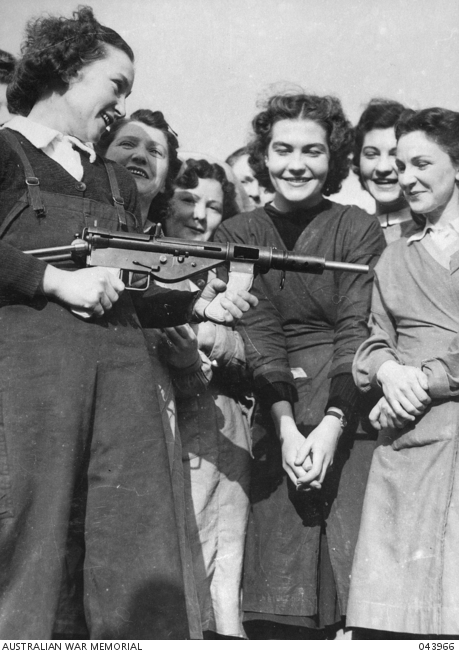
Australian women war workers pose with an Austen (AWM)

Attempts were made to produce an improved MkII Austen, which used more die cast parts, however, this was not adopted and only 200 were made. By the end of the war the Austen had been removed from frontline service and placed in reserve. Dutch troops in the Dutch East Indies (present day Indonesia) also used a number of Austens during the Netherlands’ period of decolonisation in the region between 1945-1949. The Owen Gun continued to be used into the 1960s, seeing action in Korea, Malaya and Vietnam before it was replaced by the F1 submachine gun.

If you enjoyed the video and this article please consider supporting our work here.


Technical Specifications:

Length (stock unfolded): 73cm (29in)
Weight (unloaded): 4kg (8.8lb)
Barrel Length: 20cm (7.8in)
Action: Blowback, open bolt
Calibre: 9x19mm
Feed: 32-round box magazine
Cyclic Rate: ~500rpm


Bibliography:

‘Australian SMGs During WWII’, The Armourer, K. Driscoll

The Sten Gun, L. Thompson (2012)

Owen and Austen – The WW 2 ‘Aussie’ Machine Carbine Story, G. Barber, (source)

The Owen Gun, W. Wardman, (1991)

Maxim-Tokarev Light Machine Gun

Matt recently had the opportunity to visit the excellent Menorcan Military Museum at Es Castell, on the Spanish Balearic Island of Menorca. The museum is well worth a visit and the Maxim-Tokarev was one of the very rare and extremely interesting weapons they have on display. 

maxim_tokarev_3
Soviet troops disassembling an MT light machine gun, note the hinged stock pivoted down to allow access to the action (source)

The Maxim-Tokarev (MT) Light Machine Gun was developed at the request of the Soviet military high command in the early 1920s, following the end of the Russian Civil War. Influenced by the German MG08/15, Tokarev set out to lighten the Maxim M1910. The MT was one of two designs submitted for testing. Designed by Fedor Tokarev, at the Tula Arms Factory, the MT was tested along side Ivan Kolesnikov’s similar Maxim-Kolesnikov light machine gun. Development ended in 1924 and the MT went into initial production in 1925 with the first weapons successfully tested against the Maxim-Kolesnikov.

Maxim Koleshnikov
The MT’s principle rival the Maxim-Kolesnikov, note the unconventional butt stock (from Chinn’s The Machine Gun Vol.2)

Production continued until at least 1928, while many sources suggest 1927, the example featured in the video dates from 1928. Sources suggest Tula produced 3,500, however, this number does not match with the suggested export numbers and the featured example is serial number 5283.

Tokarev-s-synom
Tokarev, and his son, posing with several MT light machine guns, c.1925 (source)

The MT is based upon the Russian M1910 Maxim gun, using the same short recoil, toggle locked action. It was hoped that established tooling would be able to make some of the new light machine gun’s parts. The weapon weighed 12.9kg unloaded and Tokarev made extensive efforts to lighten the weapon with the the water-cooled barrel jacket replaced by a perforated shroud to allow air cooling. The receiver also has a large number of lightening cuts to shave off weight.

In his 1952 book ‘The Machine Gun Vol.2, Pt. VII’, George Chinn suggested that the Tokarev may have been influenced by an earlier design patented in 1909, by Vickers Sons & Maxim Ltd. designers Arthur Dawson and George Buckham. The patent shows a Maxim-derived light machine gun with a very similar layout to the MT.

US942167-0
Dawson & Buckham’s patent for a Maxim light machine gun (Patent)

The M1910’s spade grips were replaced by a wooden butt stock and a new trigger mechanism and a non-adjustable bi-pod was added at the muzzle. The butt-plate was hinged to offer additional stability and the weapon’s barrel could be changed in the field.

The MT fed from a 100-round canvas belt and chambered the standard Russian 7.62x54mmR cartridge. The belt was held in a drum suspended beneath the weapon and when loaded weighed approximately 15kg. Following troop trials a number of changes were suggested, some improvements were made but the decision was made to move away from the MT.

Teruel-Aragon-front-Rut-Abale
Spanish Republican troops defend a barricade with an MT (source)

The MT was eventually replaced in Russian service in the late 1920s by the Degtyaryov-designed DP-28 light machine gun. The remaining MTs were sold to Spain and China during the 1930s. These guns saw extensive use during the Spanish and Chinese Civil Wars.

If you enjoyed the video and this article please consider supporting our work here.


Technical Specifications:

Length: 130cm (51in)
Weight (unloaded): 12.9kg (28lb 4oz)
Barrel Length: 65cm (25.5in)
Action: Short recoil, toggle locked
Calibre: 7.62x54mmR
Feed: 100-round belt
Cyclic Rate: ~600rpm


Bibliography:

The Machine Gun Volume 2, Part VII, G.M. Chinn (1952)

Kangzhan: Guide to Chinese Ground Forces 1937–45, L. Ness & B. Shih (2016)

Hammer and Rifle: The Militarization of the Soviet Union, 1926-1933, D.R. Stone (2000)

‘Automatic Gun’, US Patent #942167, A.T. Dawson & G.T. Buckham, 7 Dec. 1909, (source)


Photographs: Durs Egg Breech-Loading Carbine

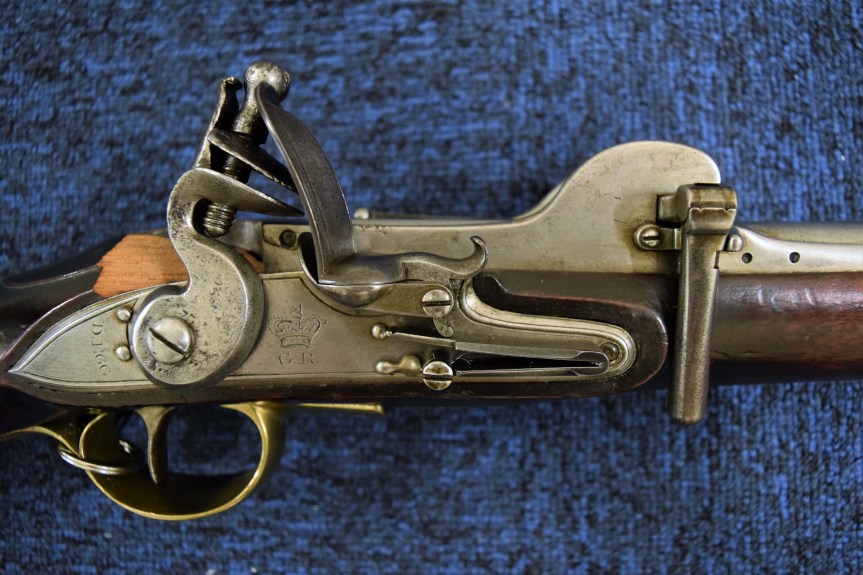
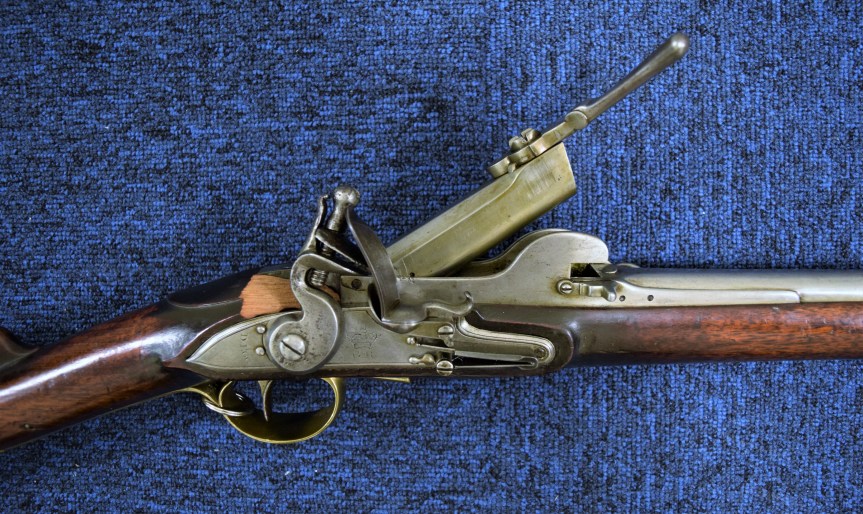
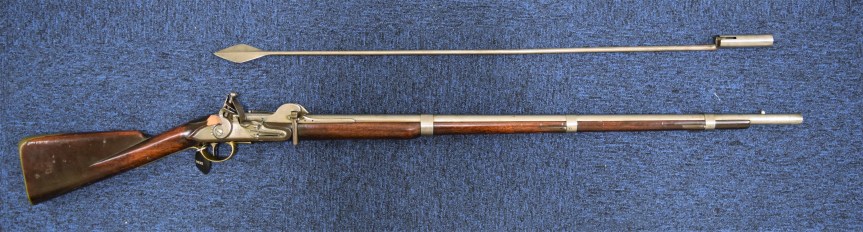
Matt was recently lucky enough to examine a 1785 Pattern Durs Egg Breech-loading cavalry carbine. Based upon Giuseppe Crespi’s breech-loading system, the Egg carbines were tested by British cavalry regiments in the late 1780s. You can check out our full-length article on the weapon here and our video here.

Below are a some photographs I took of the carbine showing some of the details of its design:

DSC_0844
A right-side view of the length of the carbine
DSC_0857
The carbine with its breech fully open from the right-hand, lock side
DSC_0853
Detail photo of the carbine’s lock and breech handle
DSC_0848
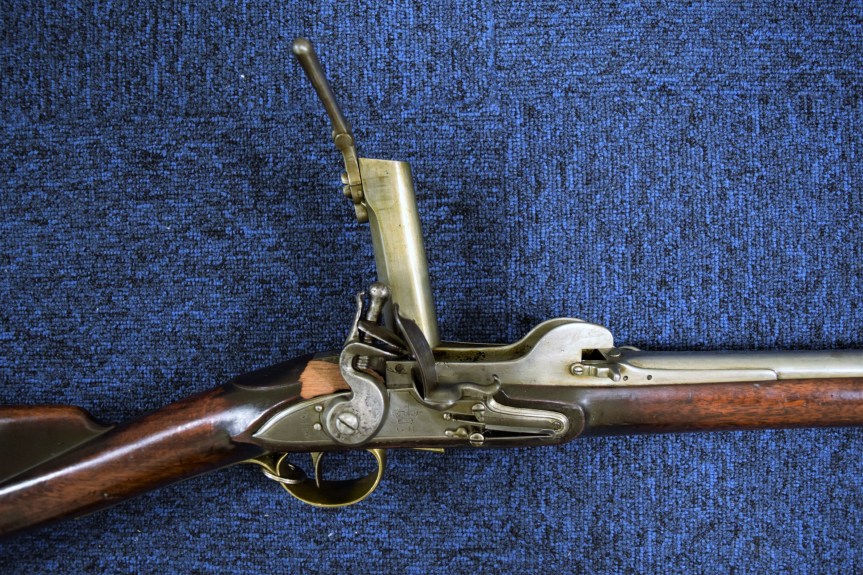
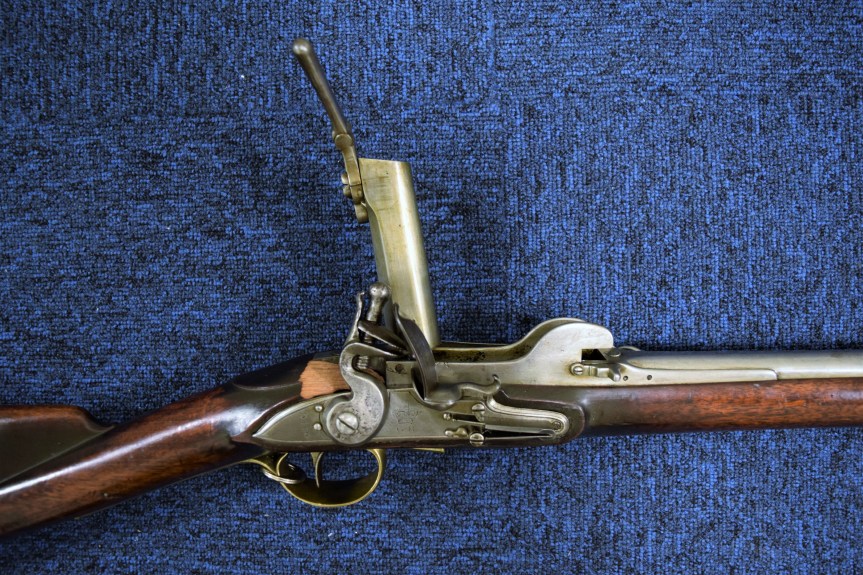
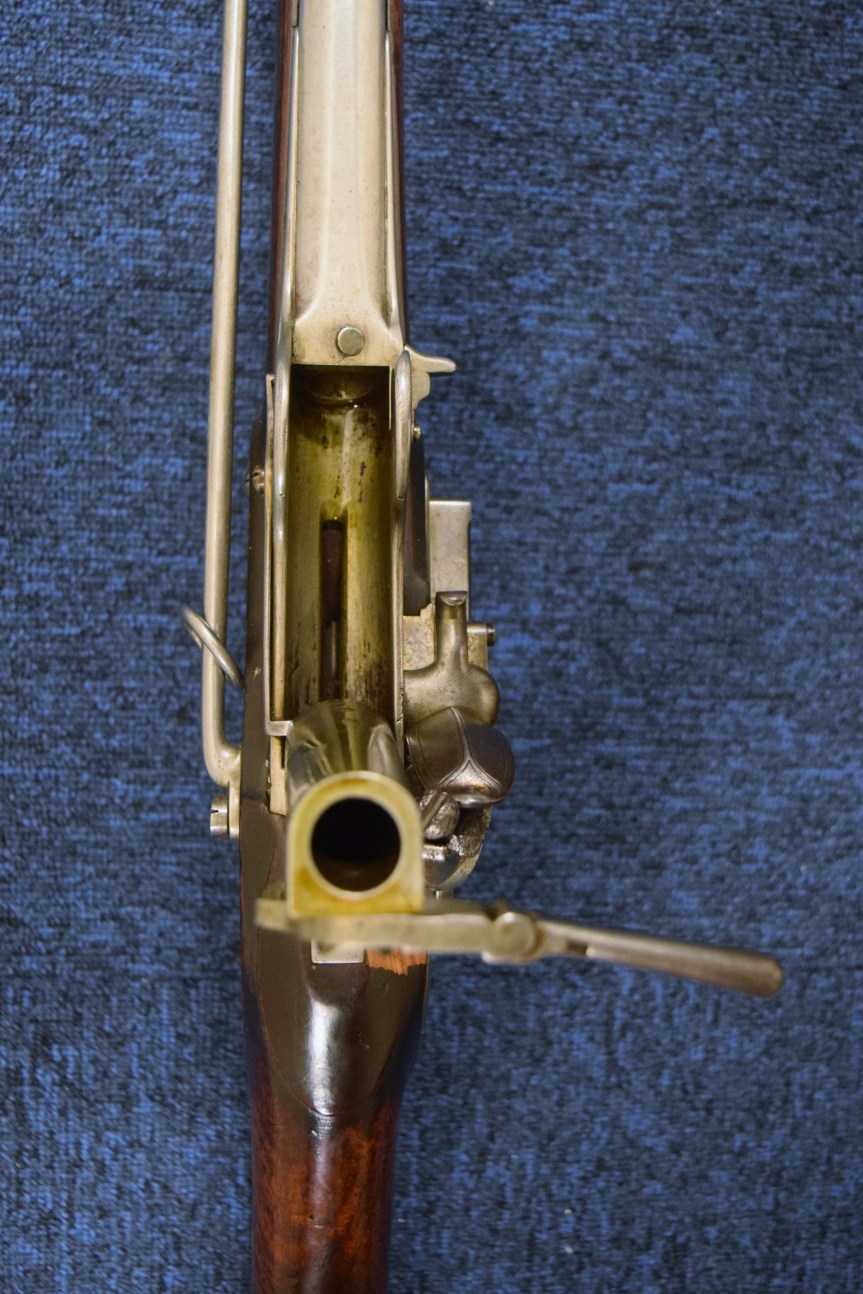
An overhead view of the Egg Carbine’s open breech showing the chamber into which powder and ball were placed
DSC_0849
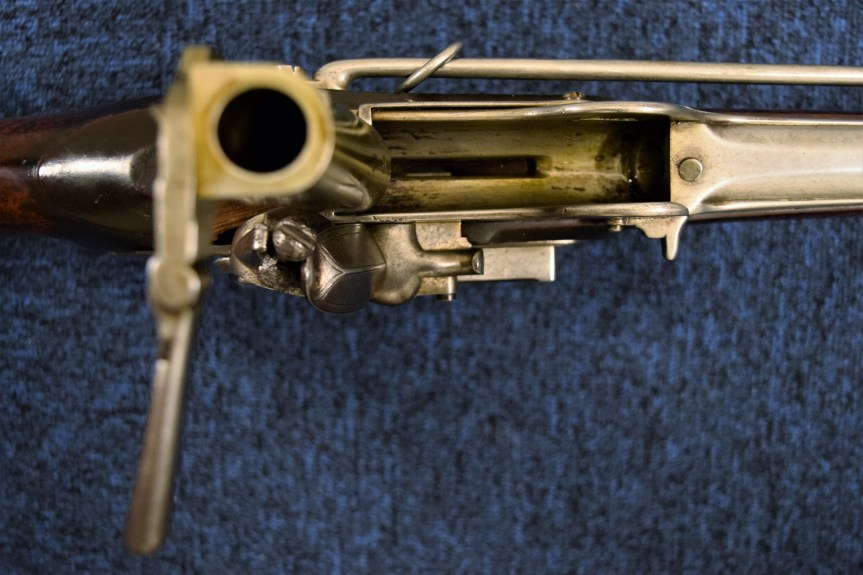
A closer overhead view of the carbine’s breech
DSC_0850
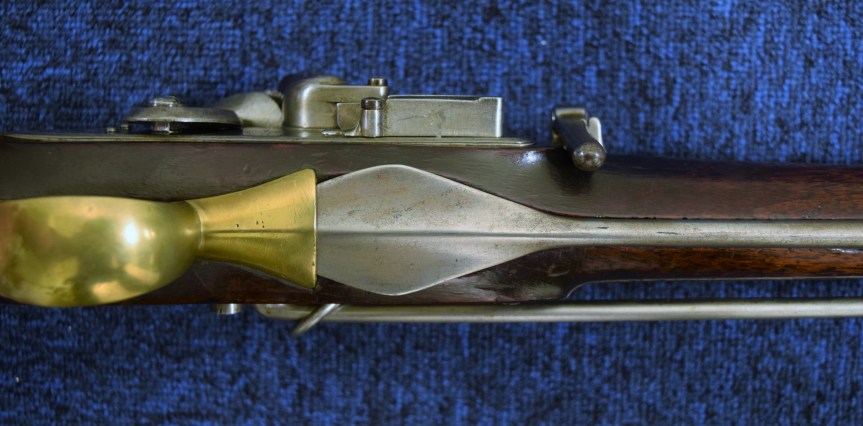
A close up of the carbine’s spear point bayonet showing the extension of the brass trigger guard into which the bayonet point sits
DSC_0856
With the carbine’s breech partially open its possible to see the small touch hole into the breech block, just above the frizzen and pan, which allows the flash from the fan to ignite the powder charge
DSC_0851
The carbine and its bayonet

Our thanks to the collection that holds this example of the Durs Egg Carbine, whom wish to remain anonymous, which was kind enough to allow us access to their impressive array of small arms.

If you enjoyed the video and this article please consider supporting our work here.


All photographs taken by Matthew Moss. Please do not reproduce these images without permission or credit. © The Armourer’s Bench 2018.

Crespi Breech-loading Carbine

In the late 1760s a Milanese machinist/clockmaker Giuseppe Crespi developed a breech-loading system for the Austrian Empire. Working with Ambroglia Gorla Crespi built a practical breech loader which was eventually adopted and fielded by the Austrian army during the 1770s. Crespi’s system is a lesser known contemporary of the Girandoni air rifle.

Crespi and Gorla’s system was designed to be a conversion of standard Austria’s muzzle-loading carbines. It used a hinged breech which tipped up to allow powder and then a ball to be loaded into the chamber. The breech was then closed and the handle locked into a pair of lugs mounted to the barrel. Austrian Emperor Josef II ordered testing of the design and over 350 were initially ordered and delivered by June 1771.

download
A later Crespi System Breech-Loading Flintlock Volunteer Carbine dating from 1810 – note the different orientation of the locking handle (source)

Despite some wrangling over payment a further order for 2,000 guns using Crespi’s system was made in 1772. These were to be made by the Ferlach gunmakers association in southern Austria and Crespi was paid a lump sum settlement for his design. Gorla’s role in the development of the system is unclear and he did not receive a settlement from the government. In 1771, he sued Crespi for his share but the courts threw out his claim in 1778.

Flintlock breech-loading military carbine - Model 1770 (1775)
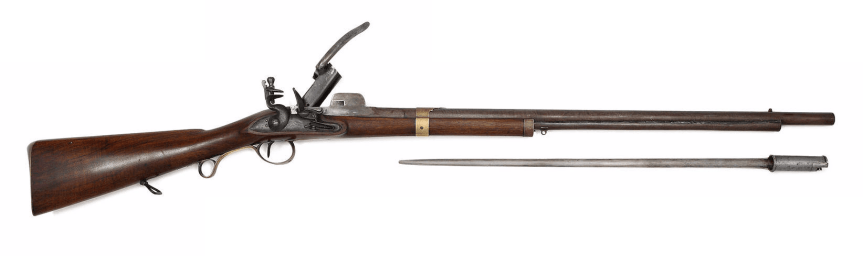
A 1770 Austrian Crespi breech-loading carbine with a hooked breech arm, held by the Royal Armouries (Courtesy of the Royal Armouries)

The principle problem with Crespi’s system was that it was not gas tight, a problem which plagued many early breech-loading systems. As can be seen in the images above the breech block is flat where it meets the breech. This allowed gas to escape and troops complained the chamber was susceptible to wear. The Crespi carbines were issued to Austrian cavalry with a long bayonet, some sources also suggest a spear point bayonet. The bayonet was carried reversed suspended in the carbine stock.  The Austrian carbines were removed from service in 1779, following numerous reports of men being badly burned by escaping gases and opening breeches during the War of Bavarian Succession.

In 1768, Crespi was also allegedly hired by the Portuguese crown to establish a factory at Coimbra to manufacture guns using his system. By 1776, Crespi no longer had any interests in the factory and it was taken over by Companhia de Armamento who continued to manufacture conventional muzzleloading muskets.

image
An Egg breechloading Carbine which borrowed heavily from Crespi’s design (source)

In the early 1780s, the Duke of Richmond became the Master General of Ordnance and ordered a selection of breech loaders for trials. Two of these came from Swiss-born London Gunmaker Durs Egg. Egg’s carbine was a copy of Crespi’s system. The carbines were tested by a board of general officers in July 1784 and it was recommended that the carbine be issued to the Light Dragoon regiments. Egg was paid £31 10s for two carbines with one being presented to King George III and the other retained by the Ordnance office. Sources suggest a further 36 breech-loading carbines were ordered from Egg. In 1786, these were issued to the 7th, 10th, 11th, 15, and 16th Light Dragoons for field trials. These are often reffered to as the Pattern 1785 Egg/Crespi carbines, some of these trials guns were rifled for testing.

DSC_0856
The carbine with its breech partially open. Egg’s carbine was loaded by placing either loose power and ball or a paper cartridge containing power and ball into the breech block (Author’s photograph) 

The Egg carbines were almost as long as a standard issue Short Land Pattern (Brown Bess) musket which was 58 inches or 150cm in overall length. Based on surviving examples it seems the smoothbore Egg carbine was 48.1 inches or 122cm overall while the rifled version was slightly longer at 53 inches or 135cm in length. This combined with the long reach of the spear bayonet, an estimated 35 inches (88cm) long, made for an extremely long weapon – certainly capable of reaching any mounted assailant a dragoon might face while dismounted. Unlike the Brown Bess’ the rifle fired a .60 calibre ball while the smoothbore fired a .68 calibre ball.

A standard dedicated carbine was not introduced for Britain’s light dragoon regiments until 1796. Until then the Short Land Pattern musket had been issued to dragoon regiments. The trials report was returned in 1788, recommending that more experimentation with the rifled carbines should be carried out and that a folding bayonet may be better suited to cavalry use.

Flintlock breech-loading military carbine - Pattern 1785 Egg-Crespi (1785)
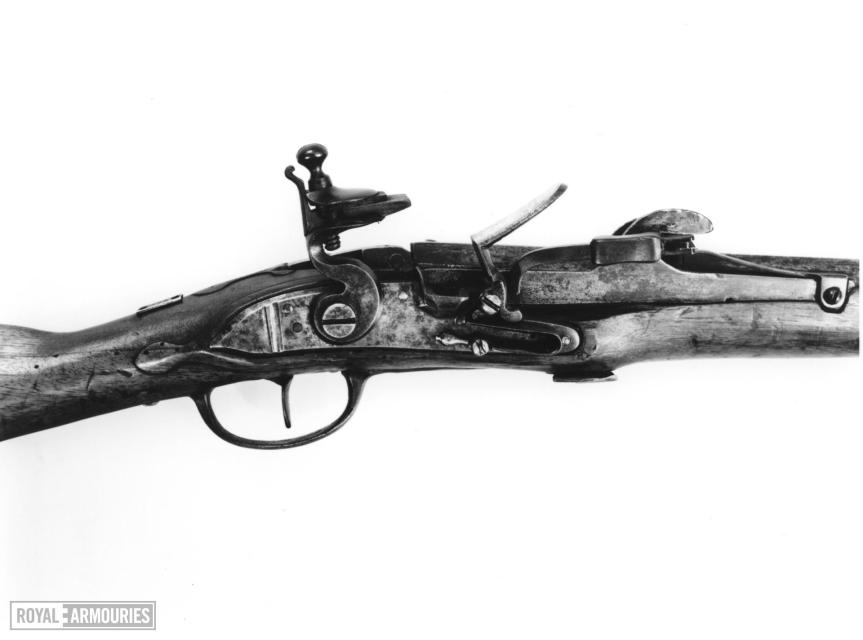
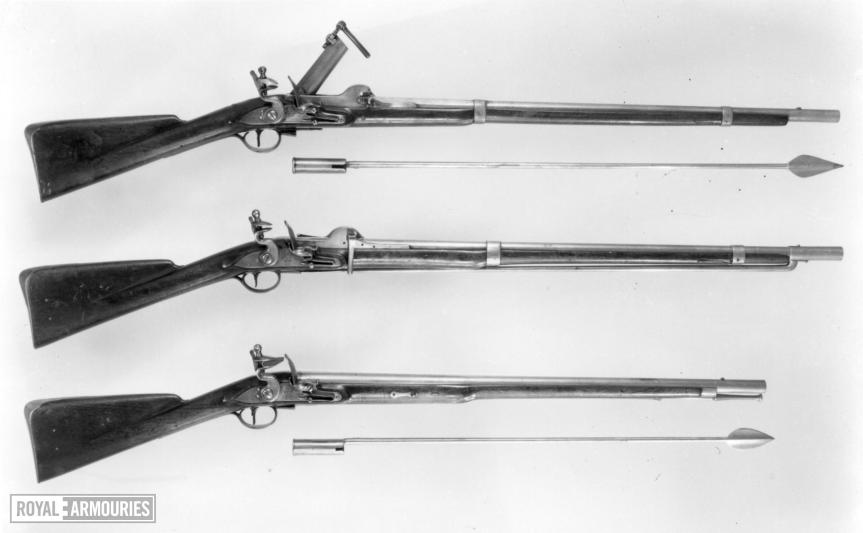
Pattern 1785 Crespi-system Egg breechloaders, the second has Hennem’s screwless lock. The carbine at the bottom is a muzzle-loader, all three have the unusual spear bayonet (Courtesy of the Royal Armouries)

The lack of a gas seal at the breech was also criticised and the Duke of Richmond began to explore other designs including those by Henry Nock. Tatham & Egg (Egg’s nephew) continued to manufacture weapons using the Crespi system until at least 1810, when some were made for volunteer yeoman cavalry (with serial numbers ranging up to at least #134). Crespi’s system would be improved by Urbanus Sartoris in 1817, with the addition of an interrupted screw and a moving barrel. Giuseppe Crespi reportedly died in poverty and his breech-loading system became another footnote in the early history of breech loading firearms.

If you enjoyed the video and this article please consider supporting our work here.


Bibliography:

John H. Hall and the Origin of the Breechloader, D.B. Demeritt Jr., (source)

British Military Firearms 1650-1850, H.L. Blackmore, (1961)

The Austrian Army 1740-80: Cavalry, P.J. Haythornthwaite, (1994)

BESAL Light Machine Gun

By the Autumn of 1940, Nazi Germany controlled most of mainland Europe, France had surrendered, and the British Army had been forced to evacuate the continent and in the process had lost much of its arms and equipment.

Arms production in Britain was ramped up in order to arm the returning troops and the new units being formed to defend against the imminently expected German invasion. Existing designs like the Bren light machine gun and the Lee-Enfield Rifle were simplified to increase production however new options were also examined. The cheap, quickly manufactured STEN submachine gun was introduced and calls were made for a simplified light machine gun which could be made in any machine or workshop with simple tooling. Even before the fall of France the British Ordnance Board sent out a memo in June 1940, requesting a light machine gun which could be produced in garages and smaller workshops throughout Britain in the event that the Royal Small Arms Factory at Enfield was bombed.

In December 1940, the Chief Superintendent of Design outlined a light machine gun based on the Lewis Gun’s rotating bolt, which fed from Bren gun magazines.

The Birmingham Small Arms company (BSA) were approached to develop a design. BSA tasked their chief designer, Henry Faulkner, with the project. Members of the British Army’s Ordnance Board, however, began to question the decision to have an established manufacturer build a prototype for a gun that was supposed to be assembled in small ad-hoc workshops. As a result the contract was cancelled, however, BSA and Faulkner persisted anyway.

Faulkner, with the help of Roger Wackrow, came up with a weapon which later became known as the BESAL. The design was developed to be simple, cheap and quick to manufacture. The standards of finish were significantly lower than those of the standard Bren then in production. The plan was to issue the BESAL in the event Britain’s armed forces found themselves engaged in a last ditch defence with German invasion either imminent or already underway.

Faulkner’s design was chambered in .303 and fed feeding from standard Bren gun curved box magazines. It used a basic trigger mechanism, a simple pressed gas cylinder and a body held together by pinning and spot welding. The first prototype had a folding but non-adjustable bipod and a skeleton butt stock with a wooden insert. With the manufacture of barrels expected to be a bottleneck to the weapon’s production it was suggested that the spare barrel issued with each Bren gun be recalled for use in the new BESAL. This clearly illustrates just how desperate the situation was expected to be. The first prototype BESAL was ready by late 1941, and testing began in March 1942. The BESAL proved to be reliable and effective during trials.

Faulkner’s design went through a number of iterations but the gneral design had been finalised by May 1942 when BSA, Faulkner and Wackrow filed three patents protecting the design. The principle feature of the later BESAL patterns was the use of a cocking system which saw the operator push the pistol grip forward to catch the bolt, and then pull it to the rear to cock the weapon. This is a system that was later seen in the Czechoslovakian Vz 52/57, 59 series and the Finnish KVKK-62 general purpose machine gun.

Iterations of the BESAL:

1st Pattern: 

Besal 2 001

(Artists impression of 1st BESAL prototype – from Dugelby’s Bren Gun Saga)

  • Right side cocking handle
  • Skeleton butt
  • Simple fixed peep sight
  • Non-adjustable bipod mounted on the receiver

2nd Pattern:

Besal 3 001

(Photograph of a 2nd Pattern BESAL with a pan magazine, note the right-side cocking handle – from Dugelby’s Bren Gun Saga)

  • Bipod moved to front of the gas tube
  • Universal magazine adaptor fitted for Bren and Motley Pan magazines
  • Full wooden stock – similar in profile to the Lewis Gun’s
  • 2-position sight
  • Disassembly knob introduced

3rd Pattern:

besal1
A 3rd Pattern BESAL (Matthew Moss)


  • Pistol grip cocking mechanism replacing the conventional cocking handle

4th Pattern:

Besal 4 001

(Photograph of a 4th Pattern BESAL, note the selector on the pistol grip – from Dugelby’s Bren Gun Saga)

  • Introduction of a selector switch on the left side of the weapon’s pistol grip

In August 1942, BSA submitted the 3rd Pattern Prototype for trials. It was extensively tested between September and November 1942. On 6th January, 1943, BSA renamed the BESAL the ‘Light Machine Gun, Faulkner, 0.303-In Mk1’ in order to prevent confusion with the 7.92x57mm BESA machine gun used in some British tanks. The BESA, also produced by BSA, used a similar pistol grip cocking mechanism. We hypothesise that the the BESAL’s name might come from the BESA, meaning BESA-Light. This, however, is unconfirmed.

It seems that over time as BSA and Faulkner improved and refined the design the BESAL ceased to be a cheap, simple, quickly-made alternative to the Bren. Instead it appears that BSA hoped the weapon might be adopted as a somewhat cheaper substitute standard to the Bren. Final testing of the BESAL were held in March 1943, but by now the weapon’s original purpose had been made defunct by the huge increase in Bren manufacturing capacity. By 1943 the Bren was in production on four continents: at Enfield in the UK, at John Inglis in Canada, at Ishapore in India and Lithgow in Australia. Inglis alone was producing 10,000 Brens a month by 1943.

With the need for a new light machine gun gone the BESAL project was cancelled in June 1943. BSA produced an estimated 20 guns, of various patterns, during the BESAL development project. Today, it is believed that only a handful remain.

If you enjoyed the video and this article please consider supporting our work here.


Technical Specifications:

Length: 118.5cm (46.6in)
Weight: 9.7kg (21lb 8oz)
Barrel Length: 56cm (22in)
Action: Gas operated, short recoil
Calibre: .303
Feed: 30-round Bren box magazine or 100-round Motley pan magazine
Cyclic Rate: 600rpm


Bibliography:

The Bren Gun Saga, T. B. Dugelby (1999)
Bren Gun, N. Grant, (2013)
Military Small Arms, I. Hogg & J. Weeks (1985)
Modern Small Arms, F. Myatt (1979)

Patents: 

‘Improvements in or relating to gas-operated automatic firearms’, GB572925, BSA, H. A. Faulkner & R.D. Wackrow, 30/10/1945, (source)

‘Improvements in or relating to automatic firearms’, GB572926, BSA, H. A. Faulkner & R.D. Wackrow, 30/10/1945, (source)

‘Improvements in or relating to automatic firearms’, GB572924, BSA, H. A. Faulkner & R.D. Wackrow, 30/10/1945, (source)