The .22 Semi-Automatic is arguably one of John Browning’s most elegant designs, its balance and handiness is immediately apparent to anyone who has handled or shot one. In our latest video we examined the history behind the design and looked at its features in-depth. You can check out the video and full blog here.
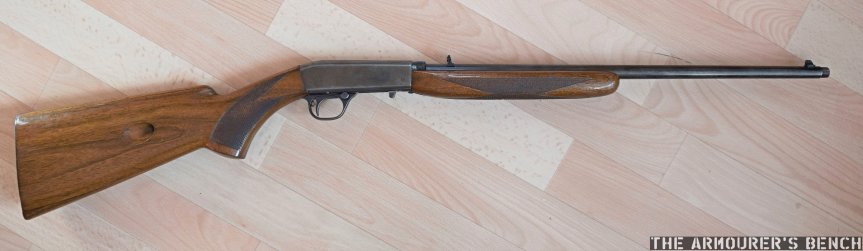
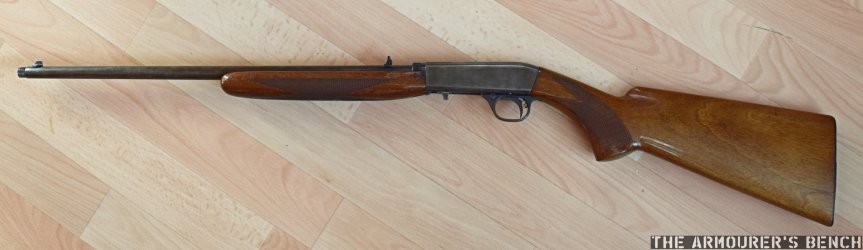
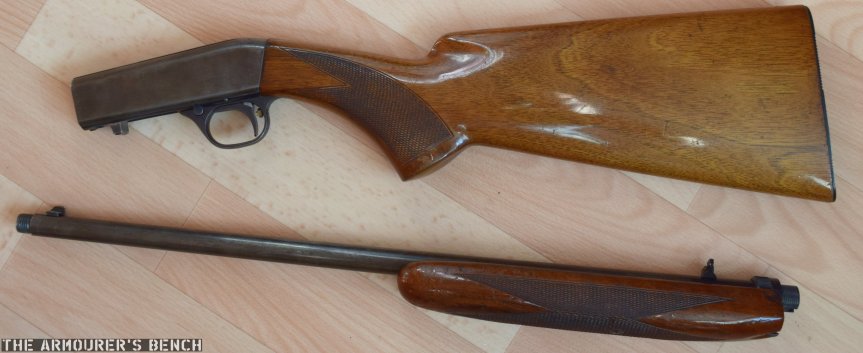
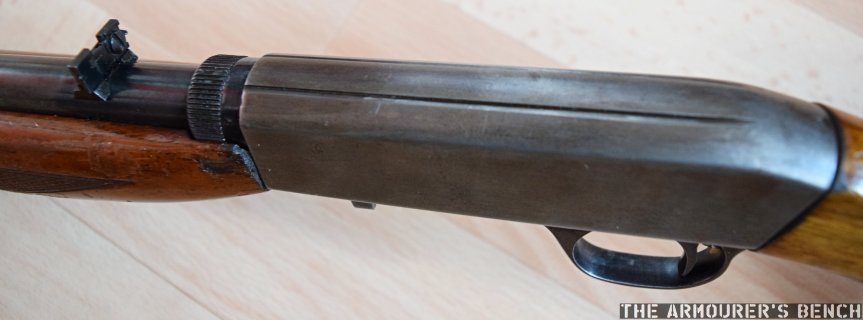
Here are some additional photographs of the rifle:
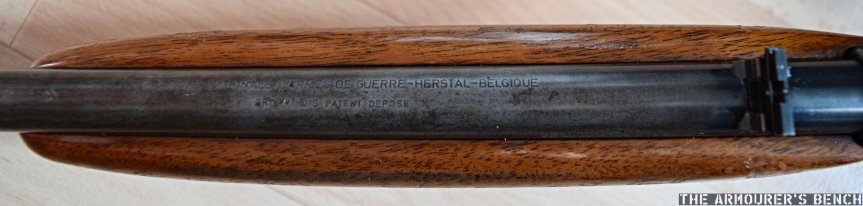
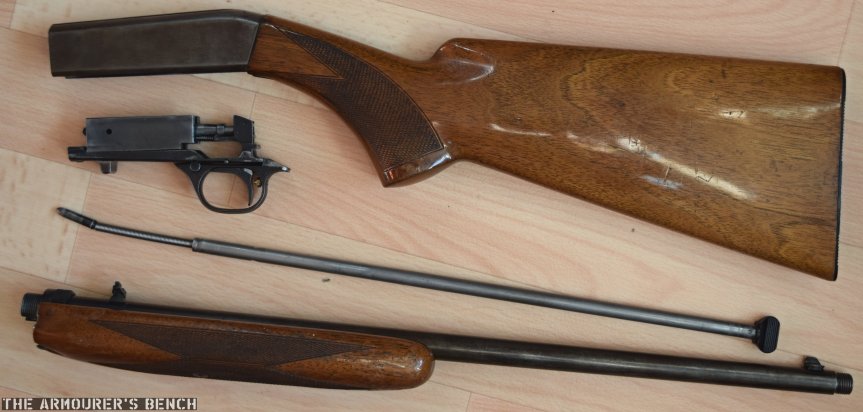
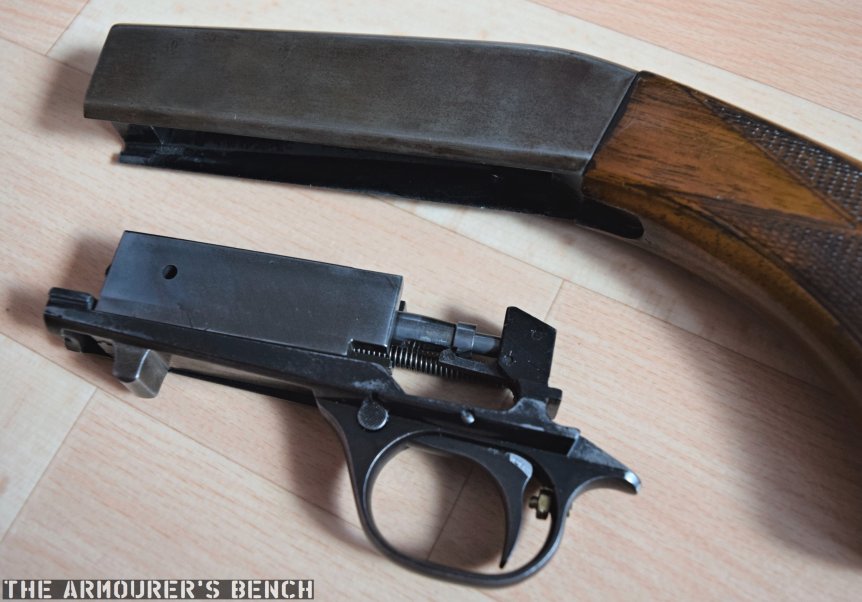
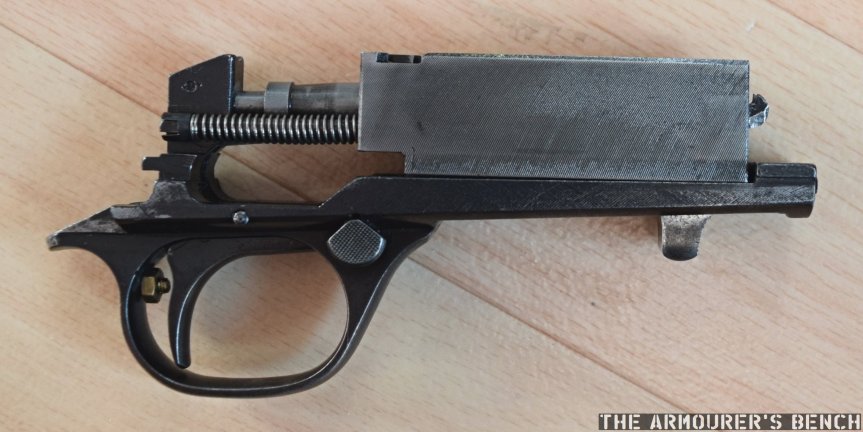
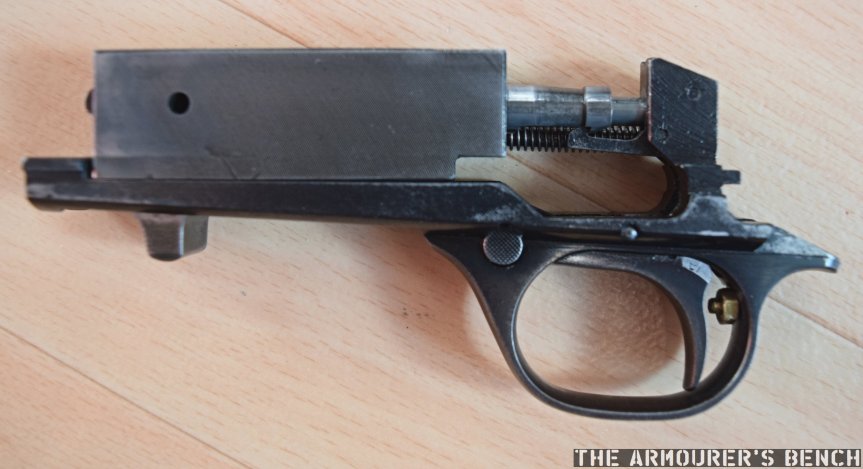
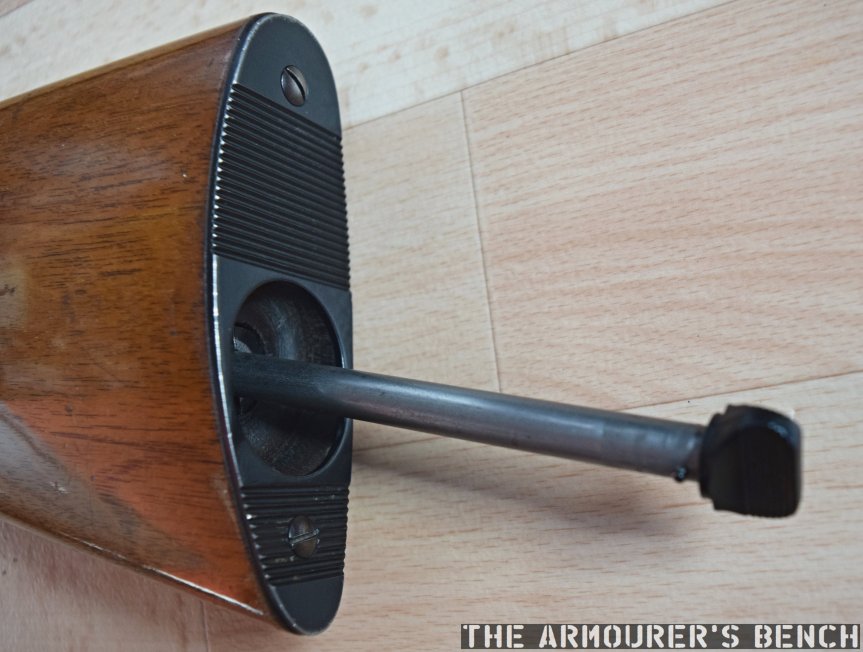
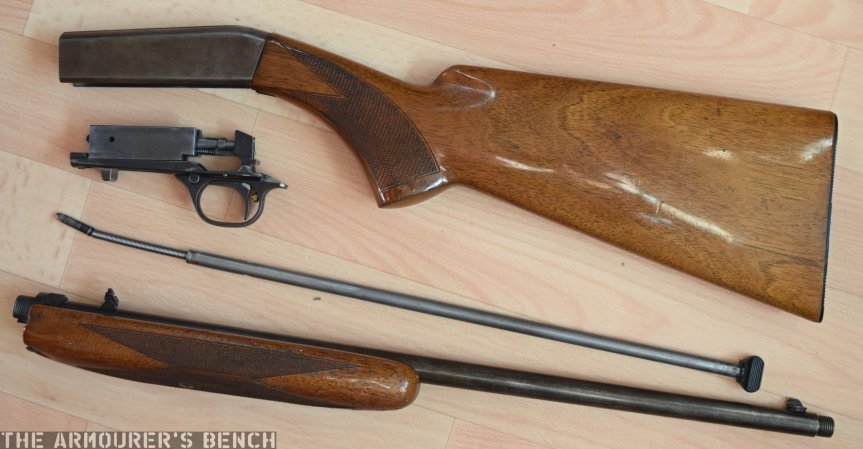
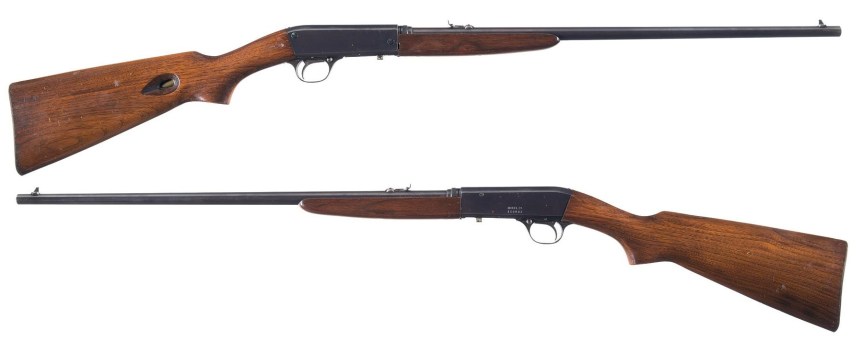
Right side view of the SA .22 (Matthew Moss)Left side view of the SA .22 (Matthew Moss)The .SA .22 is a takedown rifle and splits into two pieces making it more compact for transport (Matthew Moss)Here we can see the rifle’s sight, barrel takedown tension ring and notches cut into the top of the receiver for mounting a scope (Matthew Moss)The rifle’s FN Herstal markings (Matthew Moss)The rifle disassembled with the magazine tube removed and bolt and trigger assembly removed from the receiver (Matthew Moss)The trigger group and bolt slide into the receiver on a pair of internal rails (Matthew Moss)Close up of the right side o the bolt and trigger group (Matthew Moss)Close up of the left side o the bolt and trigger group(Matthew Moss)The butt plate and magazine follower (Matthew Moss)
The .22 Semi-Automatic was John Browning’s third .22 calibre rifle to enter production following the extremely popular pump-action Winchester Model 1890 and the beautifully simple Winchester Model 1900 single shot bolt action rifle. Since its first appearance 100 years ago the .22 Semi-Automatic has been sold by three manufacturers; Remington, FN Herstal and Browning themselves.
Right-side view of a FN .22 Semi-Automatic (Matthew Moss)
The .22 Semi-Automatic (SA22/.22 SA) is radically different from Browning’s earlier .22, whereas the Model 1900 had been simple and inexpensive the .22 SA is a masterclass in balance, ergonomics and operation. It feeds from a tube magazine located in the rifle’s butt and is blowback operated.
One of the patent drawings for Browning’s .22 SA (US Patent Office)
The most interesting aspect of the SA .22’s action is that the bolt is at the base of the receiver with the cocking handle protruding downwards. This makes the rifle truly ambidextrous as the spent cartridge casings are ejected straight down rather than up or to the right of the receiver as in most contemporary rifles.
John Browning poses with what appears to be a Remington Model 24 (source)
The rifle is one of the most balanced of Browning’s designs and it can be balanced on a single finger placed just in front of the trigger guard behind the bolt handle. Ergonomically the rifle is extremely pointable with an easily acquirable sight picture. Another interesting feature is the rifle’s takedown mechanism. Once the bolt is retracted a small catch in the base of the forestock can be pushed forward allowing the rifle’s barrel to be unscrewed from the receiver. This makes the rifle extremely handy and easily portable weighing just 4.75 lbs or 2.15kg.
Browning originally designed the rifle in 1912 with the patents being filed in March 1913 and granted in January 1914. At which time the production rights were immediately taken up by Browning’s European partners FN Herstal of Belgium who sold the rifle throughout Europe. Production was interrupted by the outbreak of World War One and the subsequent German occupation of Belgium. However, production began again in 1919 and continued until it was again interrupted by World War Two. Initial FN models had a small loading port located on the wrist of the stock in contrast to later models which located the loading port on the right side of the butt-stock.
Production rights in the US were taken up by Remington who began production of what they designated the Model 24 in 1922, four years before Browning’s death. The Model 24 initially was only chambered in .22 Short but was modified to chamber .22LR as well. Up until this point the T.C. Johnson-designed Winchester Model 1903 had dominated the .22 semi-automatic market.
The Model 24 remained in production until 1935 when it was replaced by a the Model 241 ‘Speedmaster’ which built on the original design but introduced a longer 23.5-inch barrel and was heavier, weighing 6 lbs or 2.7kg. Developed by Crawford C. Loomis, the Model 241, had a tilting cartridge guide and a slightly different take down system – moving the take-down catch from the bottom to the left side of the receiver.
Around 100,000 Model 241s were made before Remington ended production in 1949 and sales of the rifle ended in 1951. At which point the Browning Firearms company moved to reintroduce the rifle in the US, marketing it as the Browning .22 Semi-Automatic in 1956. Initially the rifles were produced by FN in Belgium however, all Browning production shifted to Japan in 1976. China’s Norinco have also produced the JW-20/ATD22, a direct copy of the SA .22.
John Browning’s .22 Semi-Automatic has been in almost continuous production for 100 years, another fine example of Browning’s enduring legacy of timeless firearms designs.
If you enjoyed the video and this article please consider supporting our work here.
The second in our series of short live fire and slow motion videos looks a reproduction of a Rheinmetall Volkssturm Carbine. Matt had the opportunity to fire a replica of the little known bolt action and captured some great video.
Rheinmetall developed the carbine at the very end of the war for the Primitive Waffen program which was intended to arm the Volkssturm (a militia unit). Chambered in 7.92×33 Kurz the carbine has a simple two-lug rotating bolt.
It’s a handy little rifle and quite pleasant to shoot, the 7.92 Kurz chambering would have made it ideal for poorly trained Volkssturm members thrust into the fighting on the Eastern Front. The carbine, however, was never fielded and only a handful were built.
We’ll discuss the development, design and history of the rifle in an upcoming full-length video, so stay tuned for that!
My thanks to Chuck Kramer of Gun Lab for helping make this video happen, check out his blog here.
Correction:
The carbine was originally described as a replica of an ErmaWerke Volkssturm Carbine when in fact it is largely based on a Volkssturm carbine prototype captured at Rheinmetall’s factory at the end of the war. While both the Ermawerke and Rheinmetall carbines are chambered in 7.92mm Kurz and share a number of similarities they are distinct designs.
This is explained in our full video and blog on the Rheinmetall Volkssturm carbine here.
This weekend I finally had the time to organise all of my photographs and video from my recent research trip to the US. The new 4TB back-up drive I ordered arrived so I could get copies of everything into one place and see what I have. In total it adds up for about 270gb of video and photos! I’m pleased to say tonight I started work on the first video that will come from the trip. I set about editing the photos of the weapon, these will be used in the video and the accompanying blog.
I’m excited to start editing video tomorrow but in the meantime I thought I’d share a few photos with you guys. I’m not going to give the game away and tell you just what this one is – but feel free to throw out some guesses. It’s a very interesting one!
If you follow our facebook page you’ll know that I (Matt) have been over in the US for the last few weeks on a research trip. Well, I’ve returned home and finally had a chance to review some of the footage I filmed during the trip. While the core purpose for the trip wasn’t to film I made special efforts to get as much footage as I could. The opportunity was too good to pass up.
I’m happy to report that I have around 80gb of raw footage and over 500 photographs! This covers around a dozen individual firearms – everything ranging from pistols to rifles to light and medium machine guns to anti-tank rifles! Thanks to the generosity of both the Cody Firearms Museum and my friend Chuck Kramer, of the GunLab blog, I have been able to film videos on some truly fascinating and rarely seen guns. Special thanks to both for access to their wonderful collections!
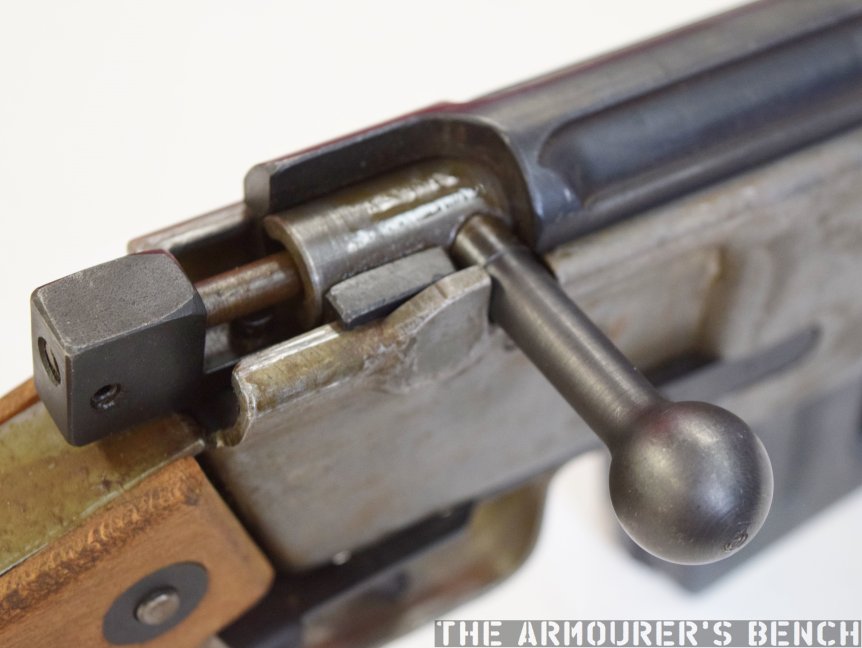
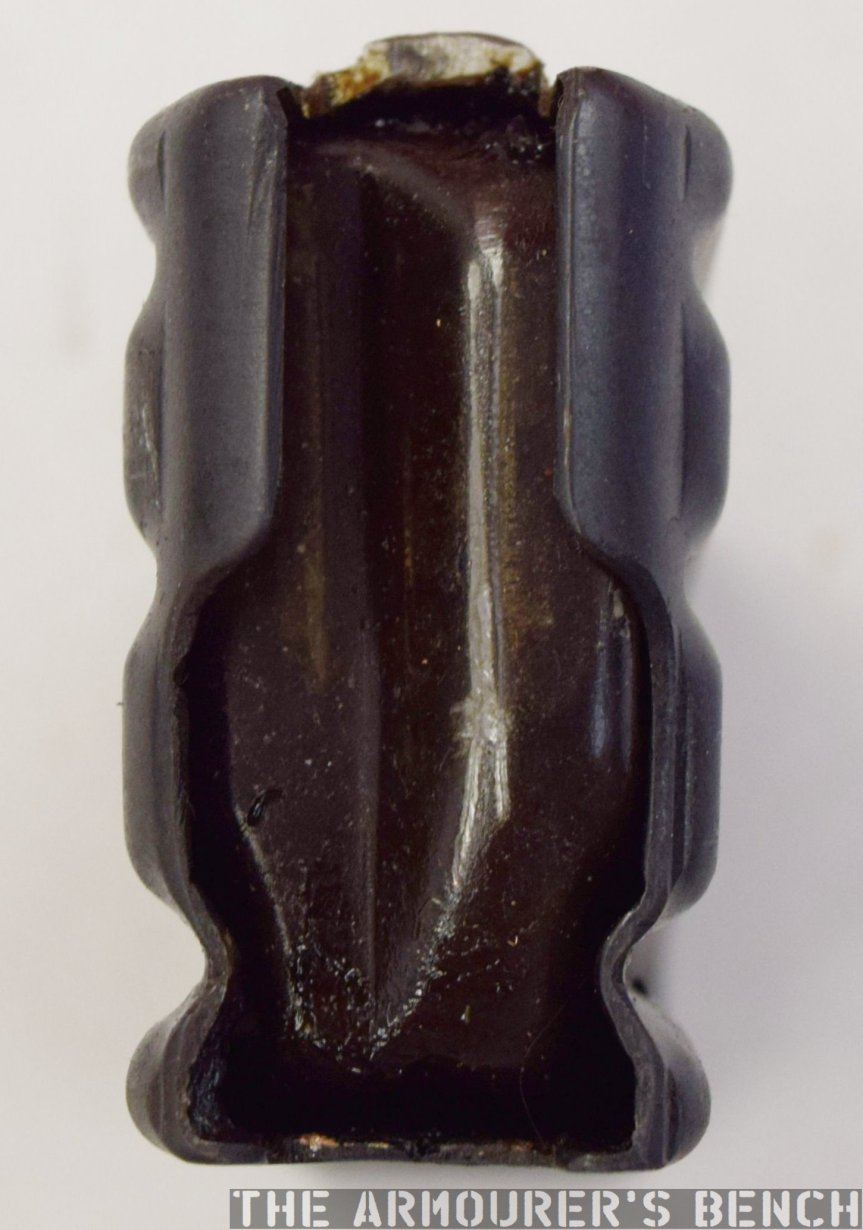
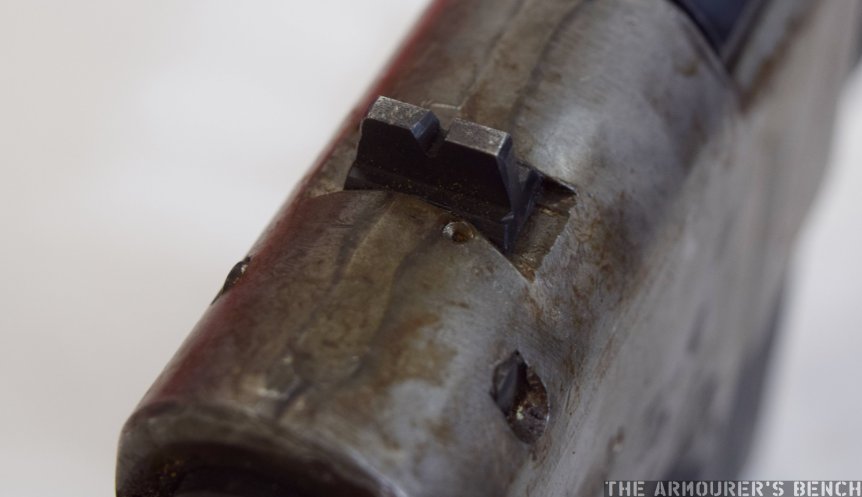
Here’s a few photos of what’s to come:
So over the next few weeks and months you can expect a stream of new content which I am very pleased to say will include more live fire footage! You can check out some more behind the scenes photos and video I’ve posted over on the TAB facebook page.
Special thanks again to Chuck and the CFM for their hospitality, patience and invaluable assistance in the filming.
In this episode we bring you our first live fire and slow motion footage! Matt had the opportunity to fire a British L2A3 Sterling submachine gun and Vic captured some great video. The Sterling was adopted by the British military in 1954 and standardised as the L2A3 in 1956.
Designed by George Patchett, at the Sterling Armaments Company, development began towards the end of the Second World War. After a decade of development and testing the British Army adopted the Sterling. It remained in service into the 1990s and Sterling produced and sold the gun overseas until the company closed in the late 1980s. Licensed versions of the Sterling were made in Canada and production continues today in India.
While the Sterling Armaments Company, the original developers and manufacturer of the gun, produced L2A3s for the government and the commercial market most of the British Army’s Sterlings were made by the government owned Royal Ordnance Factory in Fazakerly near Liverpool.
The gun featured in the video is a Fazakerly-made British Army L2A3, the magazine is also of the slightly simplified government pattern.
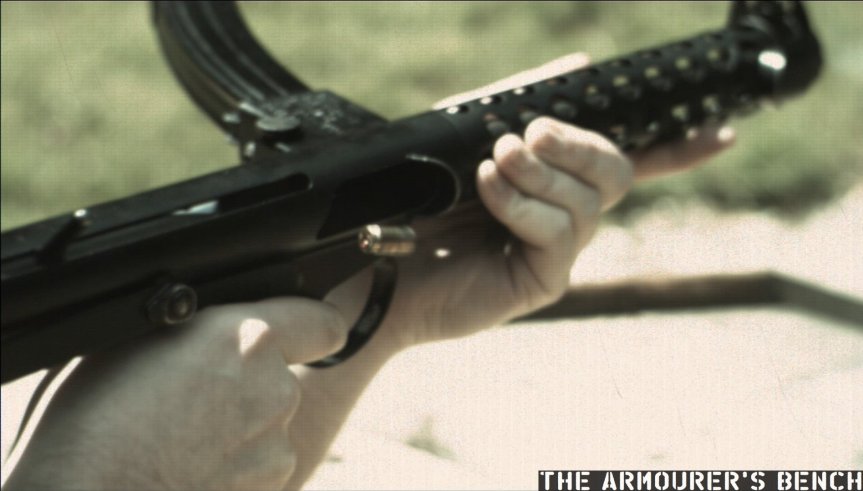
Frame from the slow motion footage showing a spent 9x19mm case being ejected from the L2A3 (TAB)
In this episode we look at the firing cycle of the L2A3 and how the weapon works. The Sterling uses a standard blowback action and this footage shows it firing in semi-automatic. We can see the breech block travel forward, strip a round from the magazine and chamber it. The round is fired and the breech block then travels rearward again before repeating the cycle.
In future videos we will discuss in-depth the design, development and history of the Sterling.
We would like to thank Graham over at www.slomocamco.com for the loan of the brilliant slow motion camera which captured this great footage!
If you enjoyed the video and this article please consider supporting our work here.
Last summer I was lucky enough to visit the vast Fortalesa Isabel II which defended the port of Mahon, in Menorca. One of the fort’s most impressive sights is its huge 15 inch gun battery.
The Spanish island of Menorca, in the Balearic Islands, has a long and storied military history. The strategically important harbour of Mahon was historically the envy of the British, Spanish and French and was the reason for Fortalesa Isabel II’s construction. The for was the last major fortification built on the island, with the Spanish military beginning construction in 1850. A second phase of major improvements was made during 1853-1864. Work to improve and modernise the fort continued into the 20th century.
The ornate main gate of the fort, defended by a counterguard and rifle slits either side of the gate (Matthew Moss)
The Fortress is built on a beautiful rocky headland of La Mola at the mouth of the harbour and covers about a square kilometre. Construction was a massive undertaking and took over twenty years to complete, costing over nine million pesetas. The fortifications are some of the Mediterranean’s most impressive of the period.
The fort is a maze of tunnels, galleries, casements and buildings surrounded by a deep, dry moat. The fort’s first line of defence consisted of a moat 9 metres (30 feet) deep covered by rifle loop holes for infantrymen and embrasures for artillery. Interlocking fields of fire defend the landward approach to the fort’s main entrance, the Queen’s Gate.
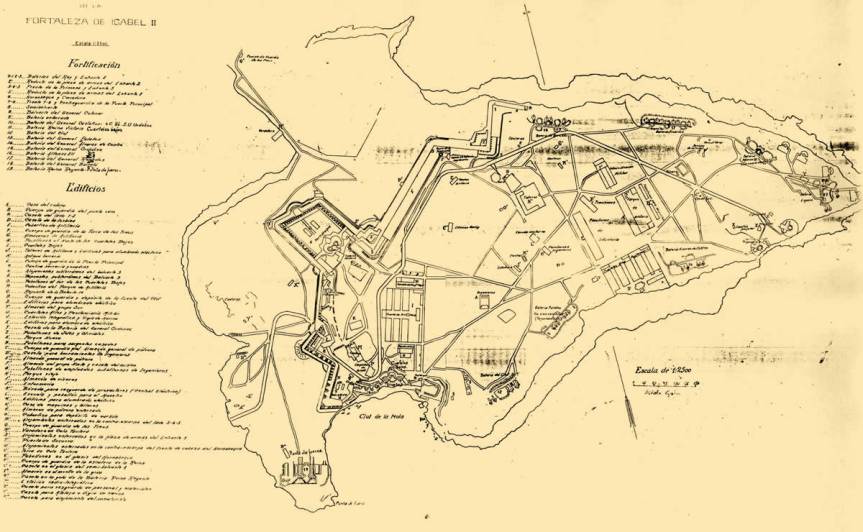
Map showing the layout of the fort during the 19th century before the 15 inch guns were added (source)
Designed to dominate the entrance to the harbour the fortress was intended to hold 160 artillery pieces of various sizes, including Krupp guns and howitzers, many of these protected by strong stone casements. The fort’s armaments evolved overtime from muzzle-loaders to faster firing breech-loaders.
The Spanish continued to upgrade the fort’s guns over the decades mounting rifled guns and howitzers of various calibres ranging from 15cm to 30.5cm. In addition to the fort’s guns the defences also included mines in the harbour mouth and later a battery of shore launched torpedoes.
By the early 20th century the fort’s guns were increasingly obsolete against the backdrop of the naval revolution that saw Dreadnoughts come to dominate maritime warfare. With advances in naval architecture, armour and guns the Spanish government decided to purchase a number of massive 15 inch naval guns that could fire a 1,895 lb (860kg) shell up to 22 miles.
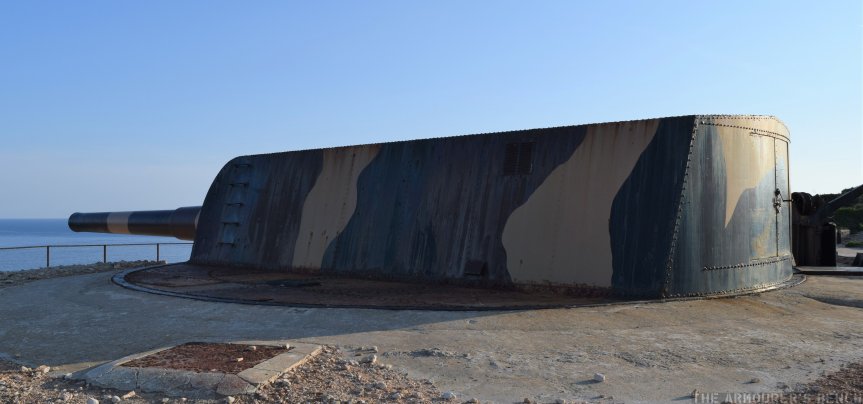
One of the fort’s two 15 inch Vickers guns in position on Cape Espero (Matthew Moss)
Spain purchased 18 of these massive guns made by the British Vickers company, they had originally been designed for the cancelled Brazilian battleship Riachuelo. In Spanish service the guns were officially designated the Costa de 38.1cm Modelo 1926. During the 1930s the new coastal guns were installed on both the Spanish mainland and Menorca. Two guns placed in the Castillitos Battery, defending Cartagena, opened fire on a Spanish Nationalist fleet, during the dying days of the Spanish Civil War. While Menorca’s guns never fired a shot in anger, they acted as a deterrent.
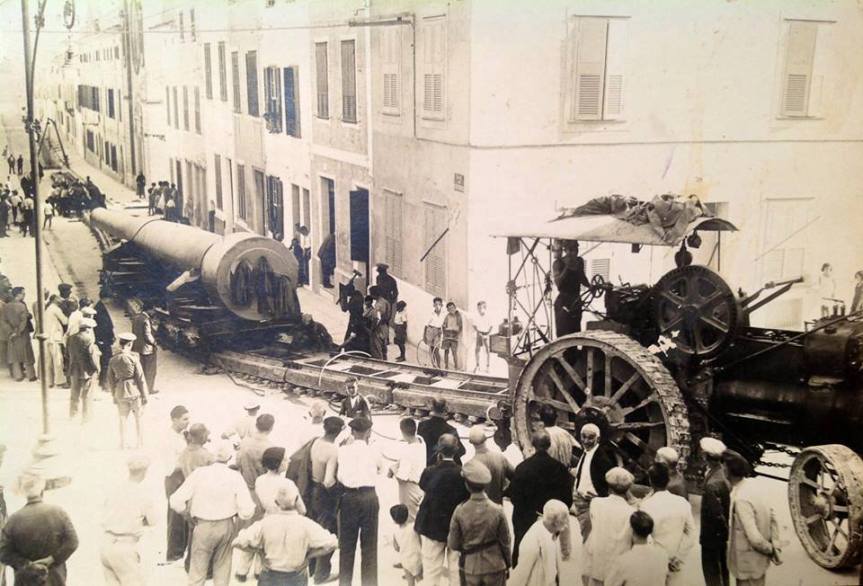
The first guns reached Mahon in 1932, with a second arriving in 1936, these were mounted on the cliffs of Cape Espero on the La Mola peninsular. The guns were so huge they had to be transported to the fort on a specially built railway pulled by hand and traction engine. These formidable new guns brought Fortalesa Isabel II’s armament up to date, enabling it to protect Mahon from any modern warship.
One of the massive 15 inch guns being pulled along its special track by a traction engine through the streets of Mahon (source)
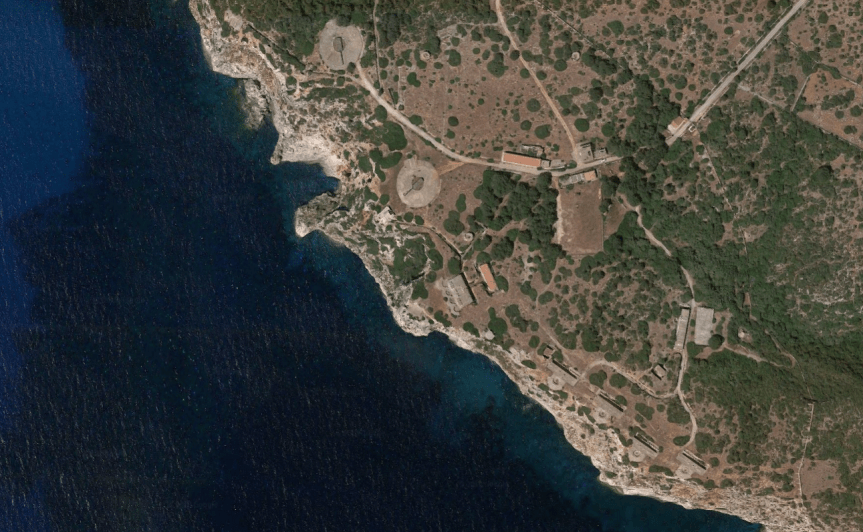
The 15 inch (or 381mm) Vickers battery at the fort was positioned 70m above sea level and commanded the entrance to the harbour. Six guns were eventually sent to Menorca with two placed on La Mola, two more installed in a battery at Favaritx (the remains of which can be seen here) in the north of the island and a pair at a battery near Llucalari in the south of the island.
While the guns at Favaritx were later removed, the guns at Llucalari remain. The fact that six of these massive and expensive naval guns were placed on Menorca shows its strategic value during the period.
Satellite photo showing Menorca’s other 15 inch battery at Llucalari (google maps)
The guns were mounted in barbettes which allowed the guns to traverse up to 300 degrees. The gun housing of the turret was armoured but while it would not protect the crew from a direct hit, it would protect against shrapnel. Below the guns were magazine stores for both cordite charge bags and projectiles, the machinery needed to rotate and move the gun and the motors to power it. Inside the turret were controls to open and close the breech, lift and lower the loading tray and aim the gun. The guns had a potential maximum range of 35km or 22 miles, however, the guns at La Mola lacked the necessary range-finding equipment to achieve this range.
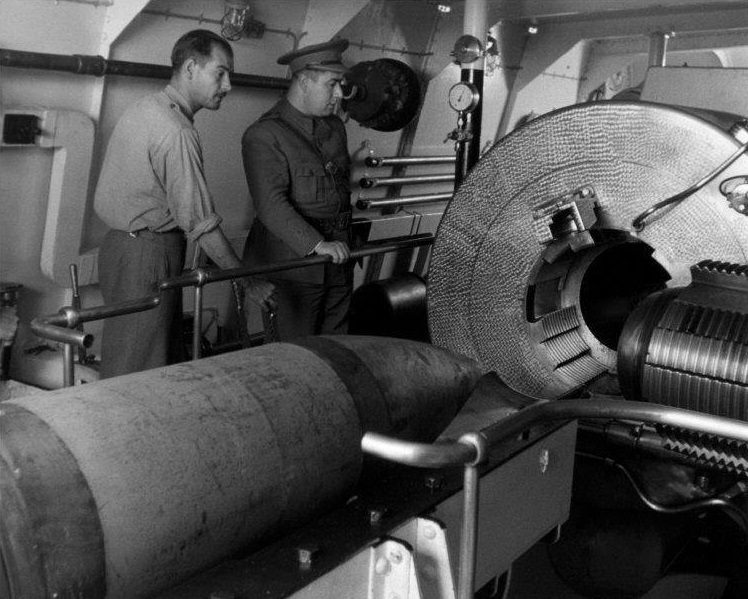
A contemporary photograph showing the interior of the gun turret. A shell is sat on the loading try ready to be pushed into the breech. (source)
The ancillary buildings for the battery on La Mola are built just behind the two gun emplacements with offices, stores and barracks built in an old quarry. As well as the two main guns the battery was supported by four faster firing 6 inch Vickers guns.
One of Menorca’s 15 inch guns firing c.1980s (source)
With the eruption of the Spanish Civil War in 1936, Menorca was initially held by the Republicans. But in 1939, the island fell to General Franco’s Nationalists and the fort’s military prison was used to house a number of prominent Republican prisoners. Throughout the Cold War the fort continued to be used by the Spanish Army as a training centre but the rise of air power, the invention of the cruise missile and nuclear weapons rendered the fort and its guns increasingly obsolete.
The last of Spain’s 15 inch guns were finally decommissioned in the mid-2000s, after nearly 80 years in service. Fortalesa Isabel II and her two massive guns never saw action, and today the site is maintained as an impressive museum which is well worth a visit.
If you enjoyed the video and this article please consider supporting our work here.
Specifications:
Length: 18m or 59 feet
Weight: 86.9 tons
Action: breech-loading
Calibre: 15 inch or 381mm
Elevation -5 / +40 degrees
Traverse: 300 degrees
Rate of fire: 2 rounds per minute
Bibliography:
The Fortress of Isabel II on La Mola in Mahon Harbour (19th 7 20th Century), F. Fornals (2007)
The Conquests and Reconquests of Menorca, M. Mata (1984)
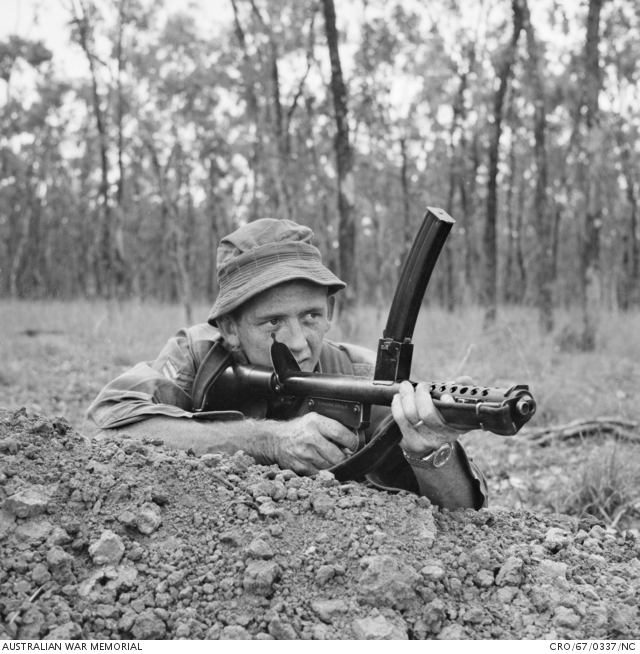
The Australian military adopted the F1 submachine gun in 1962, with the first guns reaching troops in April 1963, it replaced the venerable Owen gun. Like the earlier Owen the F1 had a top-mounted magazine – a position that lent itself to prone firing and more comfortable carrying when slung. But it also shared some similarities with the British L2A3 Sterling.
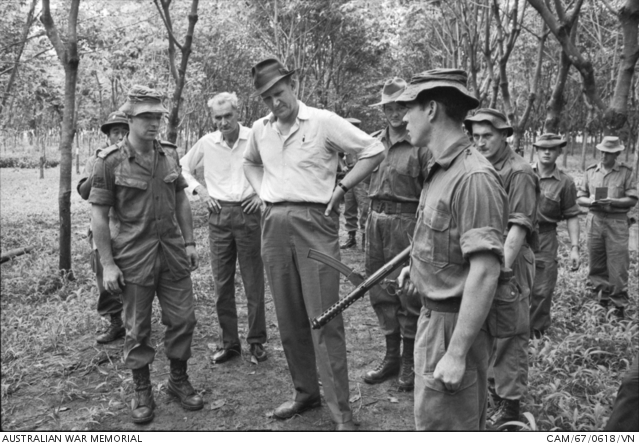
Men of the 7th Battalion, The Royal Australian Regiment demonstrate the F1 to the Australian Army Minister, Malcolm Fraser, in Vietnam in 1967 (Australian War Memorial)
The F1 entered service alongside the Australian L1A1 (self-loading rifle/FN FAL), it shared the rifles butt plate and pistol grip – slightly minimising additional unique parts needed by the submachine gun. Australian Ordnance had begun searching for a replacement for the ageing Owen gun after the Korean War. The Owen had been made quickly and cheaply during the Second World War and while it was well liked by Australian troops it was felt it could be improved upon. Maintenance of the older Owen guns proved difficult as each weapon had been hand fitted to speed up production and some parts proved not to be interchangeable.
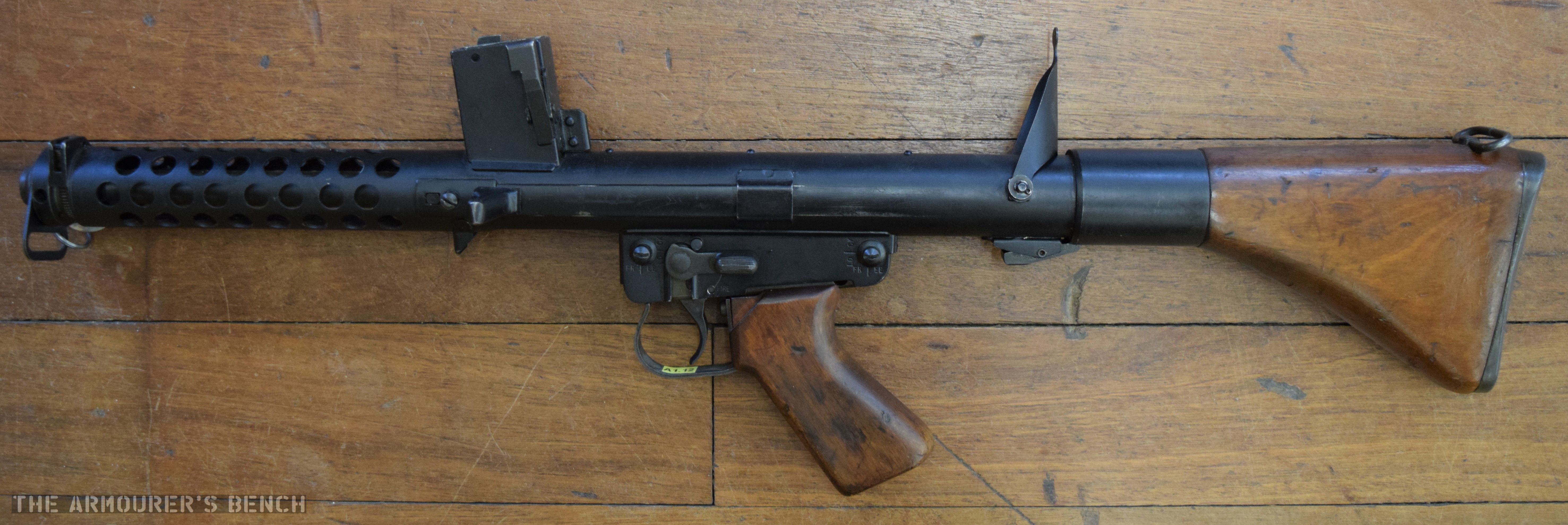
Left side view of an Australian F1 submachine gun, from the 1970 production run (Matthew Moss)
A number of designs were developed including one designated the ‘Kokoda’ (presumably after the Kokoda Trail campaign fought by Australian troops in 1942). This design was lighter than the Owen but suffered from overheating problems. A series of designs from the Australian Design Establishment, designated the ‘X’ series, were then developed. These weapons incorporated elements from both the Owen and the British Sterling. Including the Sterling’s perforated barrel jacket and magazine and the Owen’s bolt, magazine orientation and forward pistol grip – a feature many troops with experience with both the Owen and F1 lamented to loss of with the adoption of the F1. The first two ‘X’ series weapons developed into the X3 which in 1962, after successful trials, became the F1.
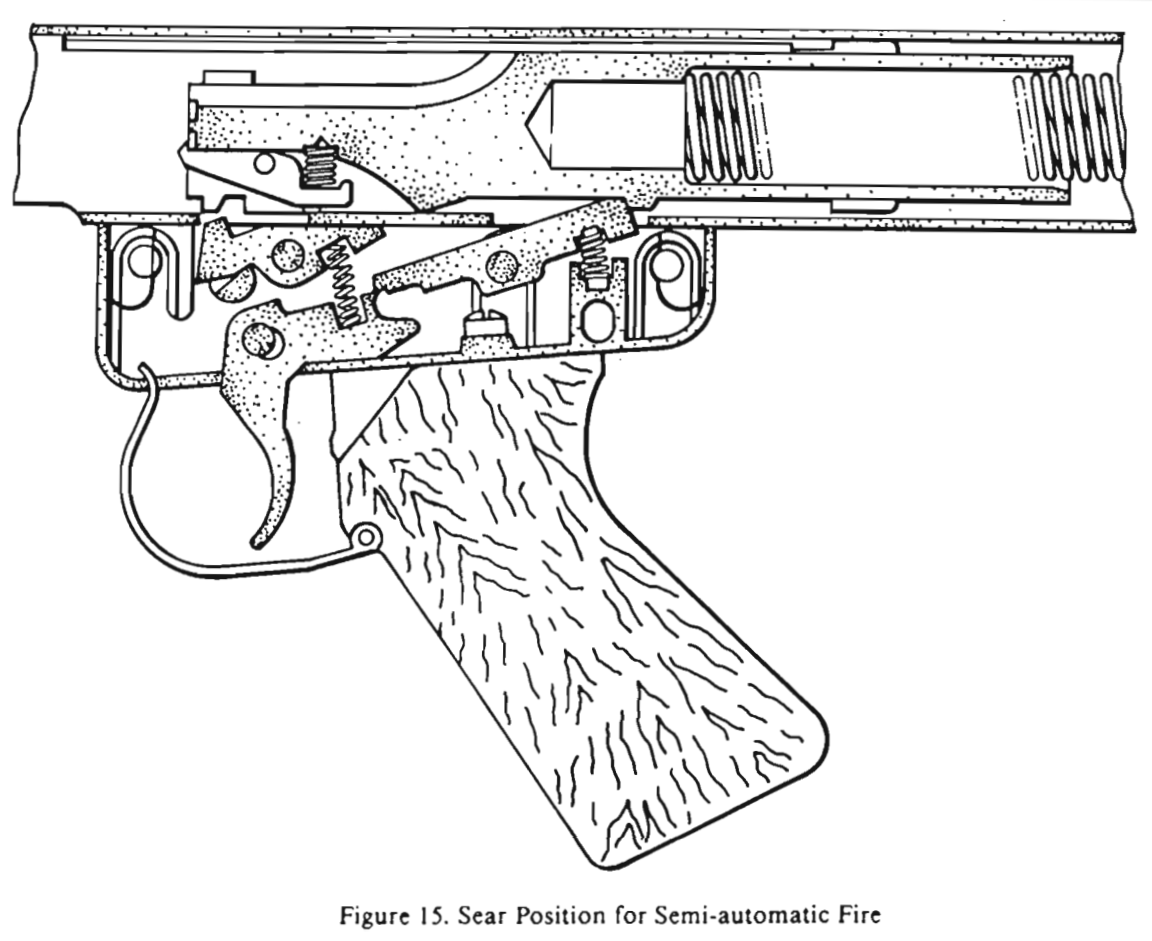
The F1 used a standard blowback action with a non-reciprocating charging handle. The charging/cocking handle was positioned on the left side of the receiver with its slot protected from the ingress of dirt by a dust cover. The F1 has a two-position fire selector with up for ‘safe’ and down for ‘fire’. The trigger mechanism allowed for firing single shots by pulling the trigger to the half-way point, this allowed the sear to trip into the semi-automatic position (see the diagram below).
Diagram from Australian Army Parts List showing how the F1’s semi-automatic mode works (source)
Chambered in 9x19mm, the F1 fed from a 34-round curved magazine, although it could use straight, single-feed, Sten or Owen magazines. In the 1960s, in order to achieve commonality with Britain and other Commonwealth nations, that used the Sterling Submachine Gun, the Australian government contacted the Sterling Armaments Company to enquire how much a license to produce Sterling’s magazines would cost, only to be quoted an exorbitant fee. The Australian government were unwilling to pay for the license and produced them anyway. And as Sterling could not afford to take legal action were able to continue to do so – with the understanding they would not sell any commercially. The Australian government would later purchase a number of suppressed Mark 5 Sterling-Patchetts, also adopted by the British army as the L34A1.
The weapon’s ejection port was located on the bottom of the receiver ahead of the trigger guard. A small piece of metal was added in front of the ejection port, as a hand stop, to prevent the operator from inadvertently moving their hand over the port. The F1 had an in-line stock fitting into the rear of the tube receiver. The sights were offset to the right, the rear peep sight folded against the receiver when not in use while the front sight, rather than over the muzzle, projected from the right side of the magazine housing. The F1 could also mount the L1A1 self-loading rifle’s standard L1A2 sword bayonet.
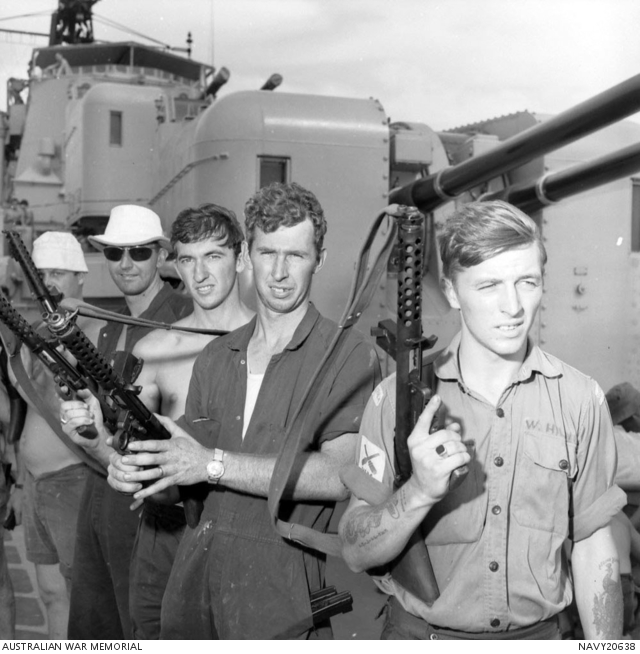
Australian sailors aboard the destroyer HMAS Duchess wait to take part in a live firing exercise with their unloaded F1 submachine guns, c.1969. (Australian War Memorial)
The F1 weighed just over 7lbs (3.2kg), was 28 inches long and had a cyclic rate of approximately 600 rounds per minute. It had a solid butt stock, unlike the Sterling which had a folding stock. The F1 was produced solely by the Lithgow Small Arms Factory with most sources suggesting 25,000 were produced for the Australian military between 1963 and 1973. The Lithgow Small Arms Factory Museum were kind enough to look into the exact number made for us, and reported that there is some uncertainty surrounding the exact number produced with production report totals varying, giving a total of either 21,916 or 24,828.
The F1s saw extensive service in Vietnam and later with Australian peacekeeping troops through to the 1990s. It was issued to rear echelon troops, ACP and aircraft crews and to infantry sections. While the F1 was appreciated for its reliability, for those troops who had experience with the venerable Owen Gun, the F1 lacked a certain something. Colonel Warren Feakes noted that “every time I picked up an F1 I had the feeling that something was missing.” Another Australian veteran, Warrant Officer Kevin Konemann, who served in Vietnam in 1966-67, recalled: “It was awkward to fire from the shoulder and more awkward to fire from the hip” and that “the F1 wasn’t popular. Soldiers found it more difficult to point and bring on target than the OMC [Owen Gun] and firing from the shoulder… was decidedly more difficult without the front hand grip.”
Despite the shortcomings identified by some troops the F1 remained in service alongside the L1A1 self-loading rifle into the early 1990s, when both were phased out of use as the 5.56x45mm F88 (Steyr AUG) was adopted.
If you enjoyed the video and this article please consider supporting our work here.
This is the first instalment of what will hopefully become a regular feature where we discuss some of the books we use when researching the guns we feature in our videos. We’ll give an overview of what the books cover, how they approach subjects and how good a resource they are.
With Vic’s recent special episode on the AR-10, I’ve been using Joseph Putnam Evans’ book ‘The ArmaLite AR-10: The World’s Best Battle Rifle‘ to help write the accompanying blog posts. While not without its flaws Evans’ book is without doubt the best published source on the AR-10 currently available.
For many years the published material on the AR-10 was confined to both contemporary gun magazine articles on the ‘new’ rifle and a handful of retrospective articles published later. Very little was written about their surprisingly extensive combat use or even the nuances of the design changes. Even the Black Rifle books, also published by Collector Grade, lacked the context of where the AR-15 evolved from. ArmaLite AR-10 is well worth reading, and a great base for further research.
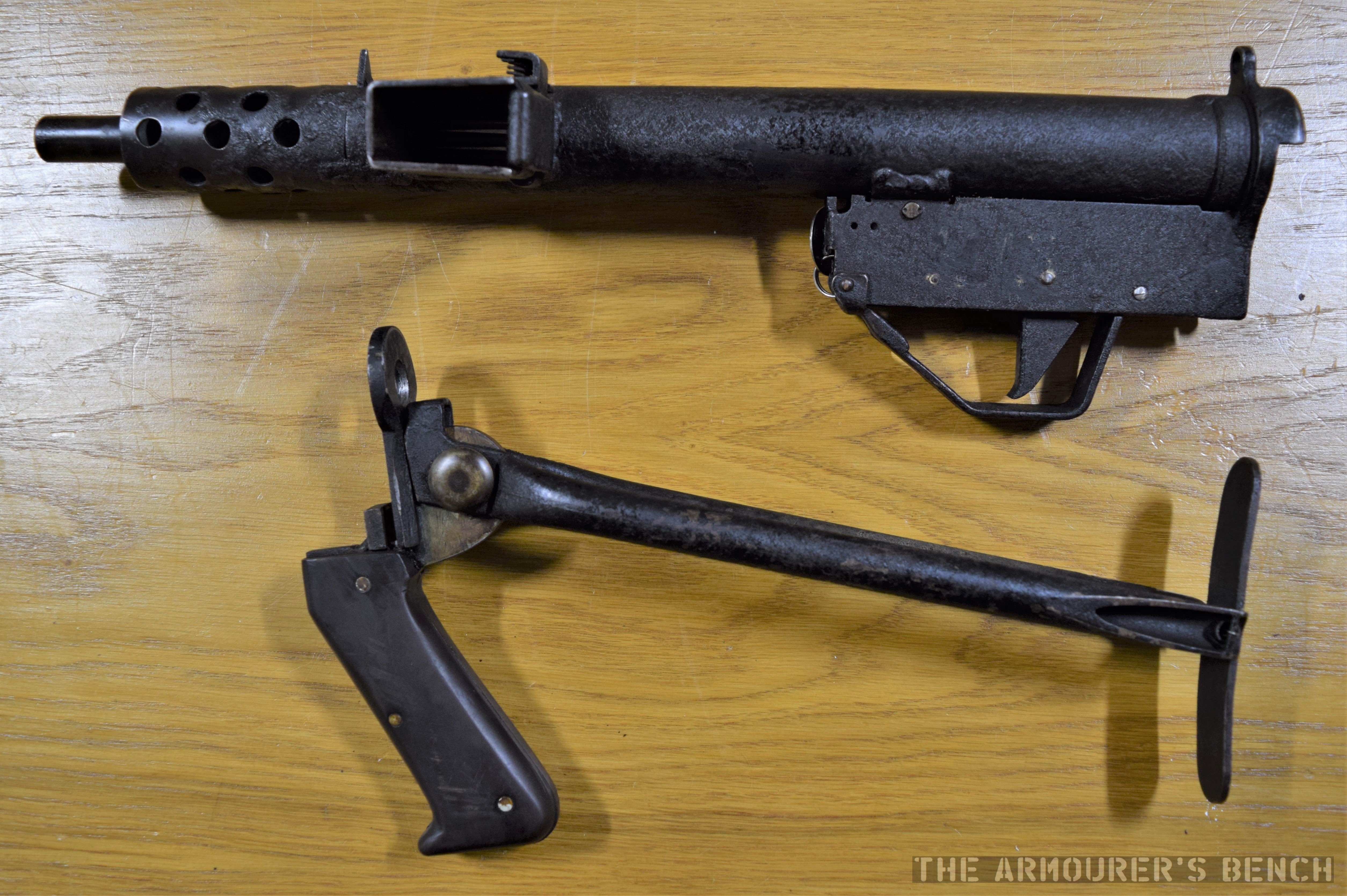
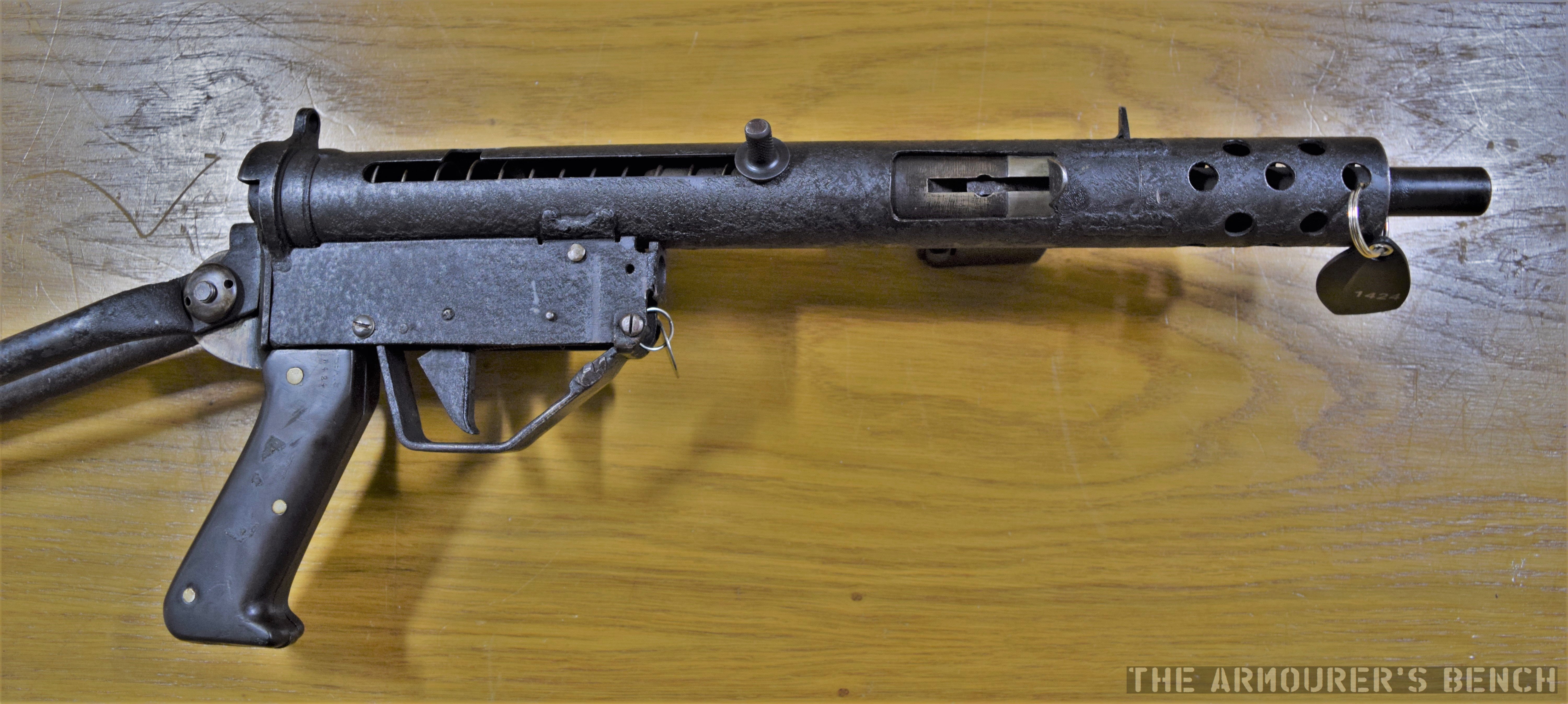
During our first research trip last spring I had the opportunity to examine an unusual ‘hybrid’ Sten submachine gun. The weapon combined a MkII Sten’s receiver with a MkIII’s magazine housing. Added to this was a proprietary folding stock and a new fire control group and pistol grip.
Very little is known about the hybrid Sten with Peter Laidler’s book The Sten Machine Carbine mentioning it and the later Osprey book by Leroy Thompson sharing a photograph and brief caption which calls it an “experimental version of the Mk III.” It is also unclear exactly when it was built.
Below are some photographs I took of the Sten, lets look at some of the interesting features of the Hybrid Sten.
left side of the Sten with the stock folded flush under the receiver (Matthew Moss)
No production Variant of the Sten was fitted with an under-folding stock, the Australian Austen, however, directly copied the MP38/40. The entire weapon is covered by a layer of textured, crackle paint finish, this was commonly used on commercial Sterling Mk4 submachine guns. The weapon has a short, 3.5 inch, perforated fore-end welded onto the front of the tube receiver that appears to be from a Lanchester.
Rear right of the weapon close up of its pistol grip, stock and trigger housing (Matthew Moss)
The under folding stock is rudimentary but effective, the butt plate swivels free but the lock up is quite secure. It uses the receiver main spring-loaded return-spring cap. The folding stock attaches to the pistol grip assembly (which can be seen detached below).
The proprietary rectangular trigger group housing brazed onto the tub receiver is unlike any other Sten and lacks a fire-selector.
Left side of the Sten with its pistol grip and stock assembly detached (Matthew Moss)
The pistol grip itself is made from paxoline, a form of early resin plastic. The shape shape of the pistol grip does not resemble any production or prototype Sten grip. A simple hand-stop, made from a bent piece of sheet metal, has also been added in front of the weapon’s ejection port to prevent the user’s hand moving back and fingers being caught if gripped by the forend.
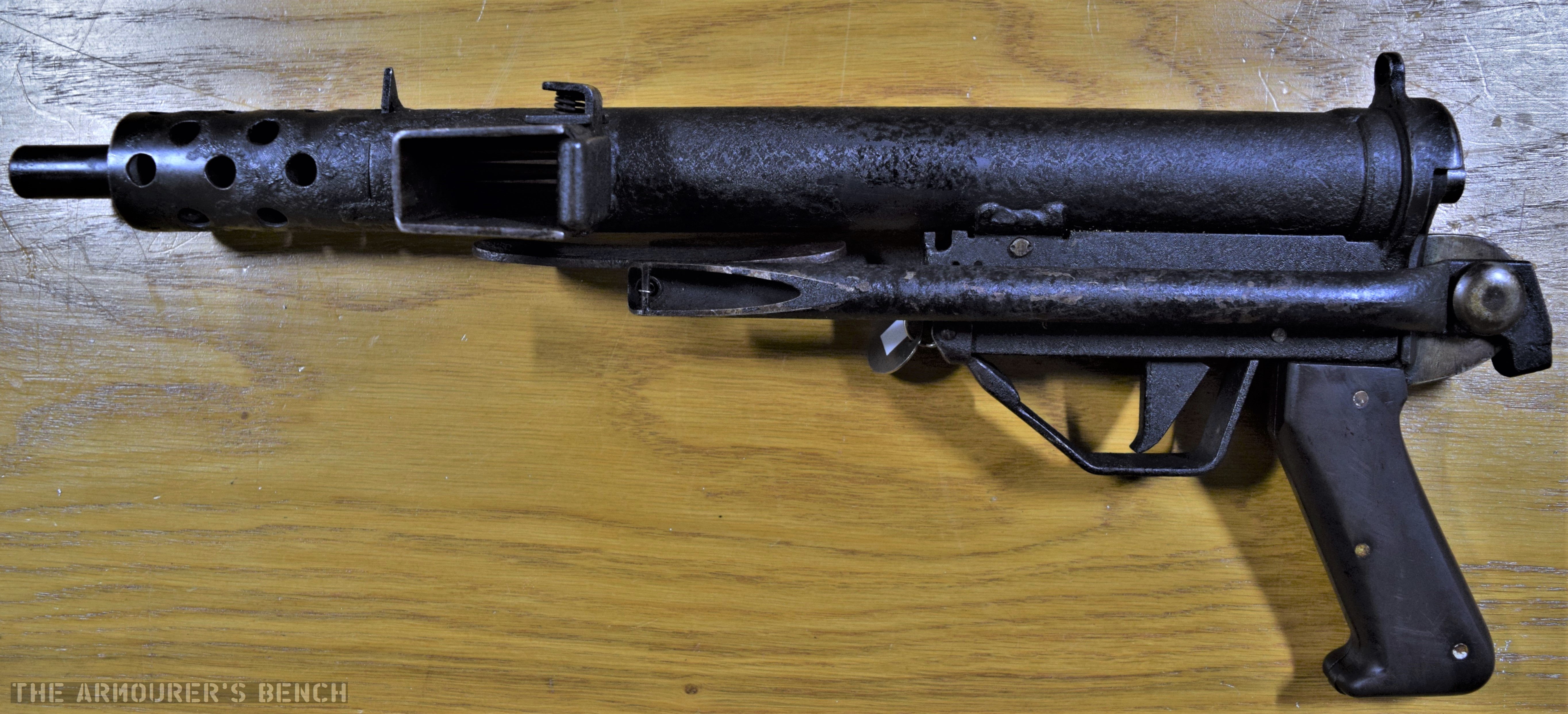
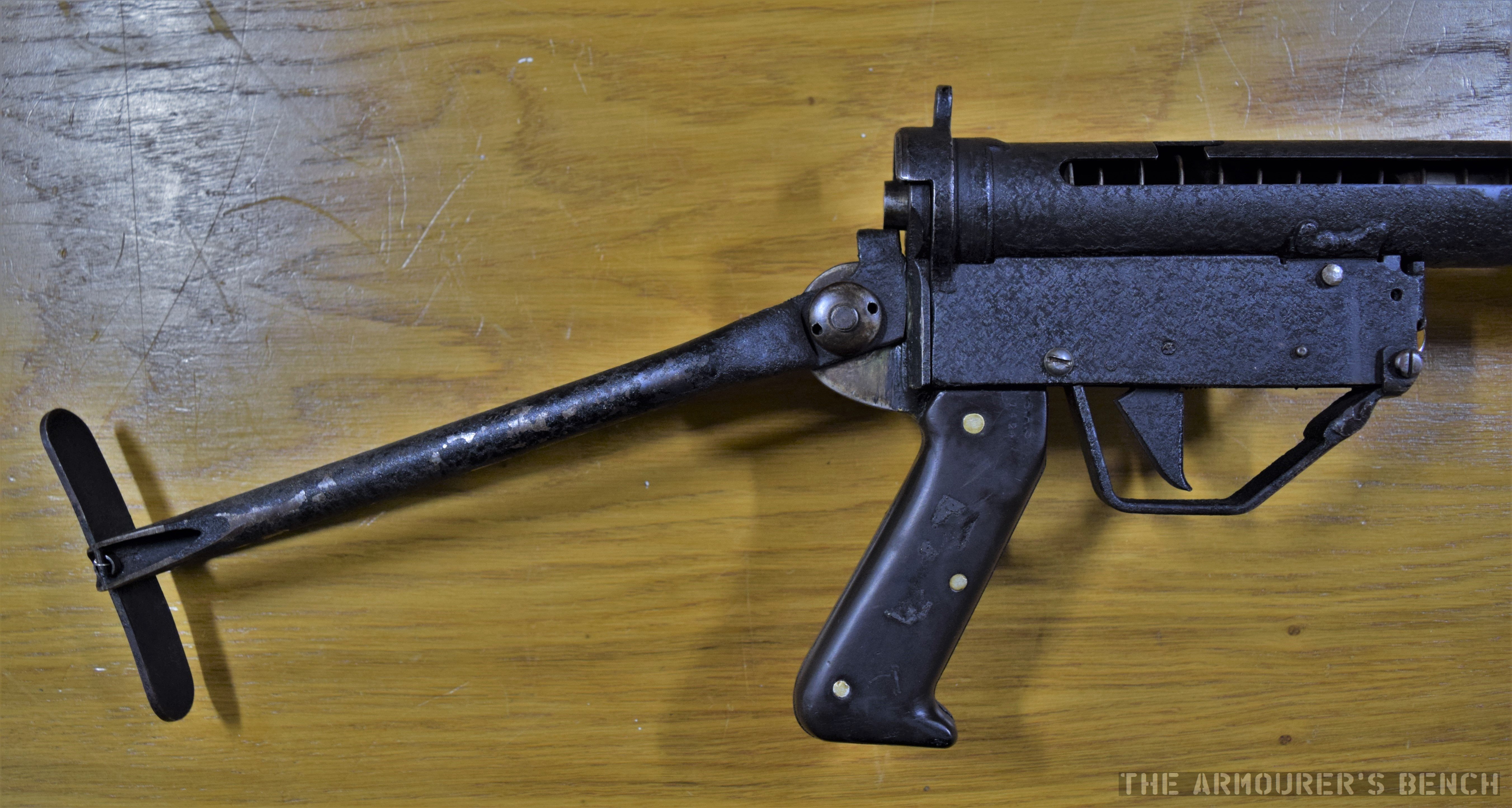
Right side of the Sten with its stock unfolded (Matthew Moss)
While the origins of the hybrid Sten remain unclear I don’t believe it was an officially made prototype. While impressive it is relatively crudely assembled and does not match the Sten prototypes made by Enfield, such as the VI. Intriguingly, the magazine housing of the weapon has been stamped ‘PILOT’ below the usual ‘STEN MkIII’ stamp. I suspect that the weapon may have been put together by a unit armourer, perhaps authorised by a superior officer to suggest improvements or as an unofficial project gun.
UPDATE: Their is some evidence emerging that this Hybrid Sten may be related to the T42 Sten prototype, part of the Sten MkIV development program. Where this hybrid fits into the story is not yet clear but the similarities are striking, when we have more information we will revisit this weapon.
If you enjoyed the video and this article please consider supporting our work here.