HK SFP9 Pistols In Ukraine

While pistols may not feature heavily on combat footage from the ongoing war in Ukraine, sidearms continue to be a key piece of equipment for many combatants. Many different types of pistol are in use in Ukraine, everything from the venerable TT-33 and Makarov to Glock 19s and Ukrainian-made Forts. Many nations supporting Ukraine have provided pistols as aid, one of these is Germany, in this article/video we’ll look at the supply and issuing of the Heckler & Koch SFP9.

Introduced in 2014, the SFP9, or VP9 as its known in the US, is a 9x19mm striker-fired polymer-framed pistol. It uses the ubiquitous short recoil, tilting barrel action and feeds from 15, 17 or 20 round magazines and is in service with numerous law enforcement agencies and the Lithuanian armed forces. Before we examine some of the sighting of the pistols in Ukraine it’s also worth noting that HK pistols, though rare, have been commercially available in Ukraine for some time and some of the SFP9s we’ll discuss in this article/video may have been procured privately by combatants.
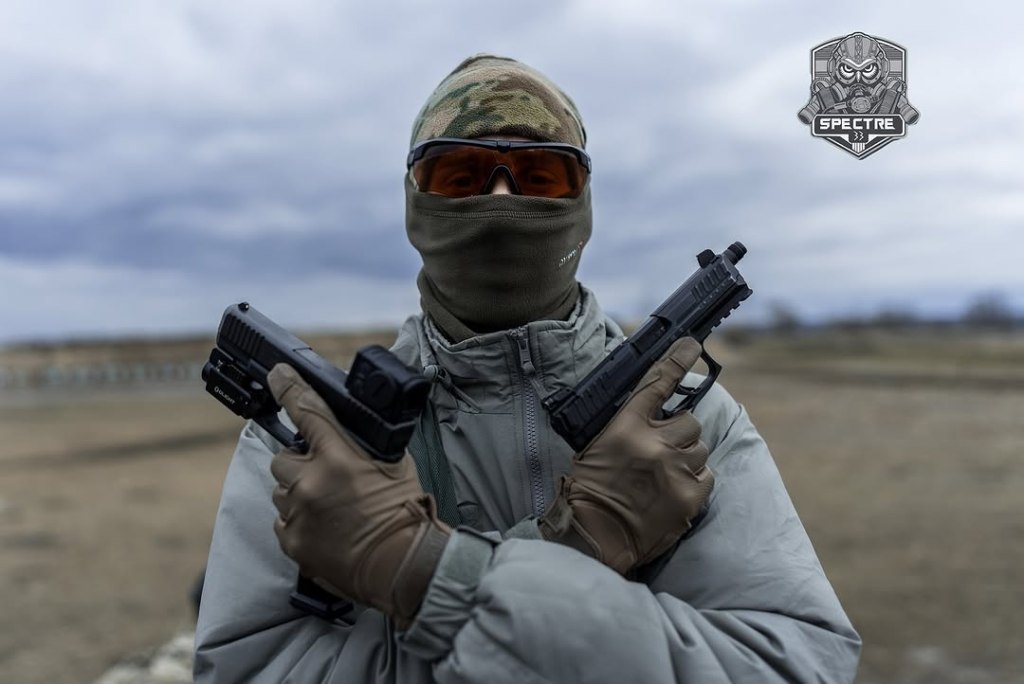
As early as March 2023, the German government announced its intentions to provide Ukraine with 500 HK SFP9 pistols. The delivery of this first batch of pistols was announced on 16 March. Despite this I haven’t been able to find visual evidence of the pistols presence in Ukraine until February 2024, when a photo of a SFP9 OR – or ‘optics ready’ pistol was shared by a combatant. The pistol has an Olight weapon light and a red dot.

In July 2024, a Ukrainian combatant, believed to be attached to the SSO’s 73rd Naval Special Operations Center, shared a photograph showing him carrying a SFP9 as well as a Daniel Defense carbine.

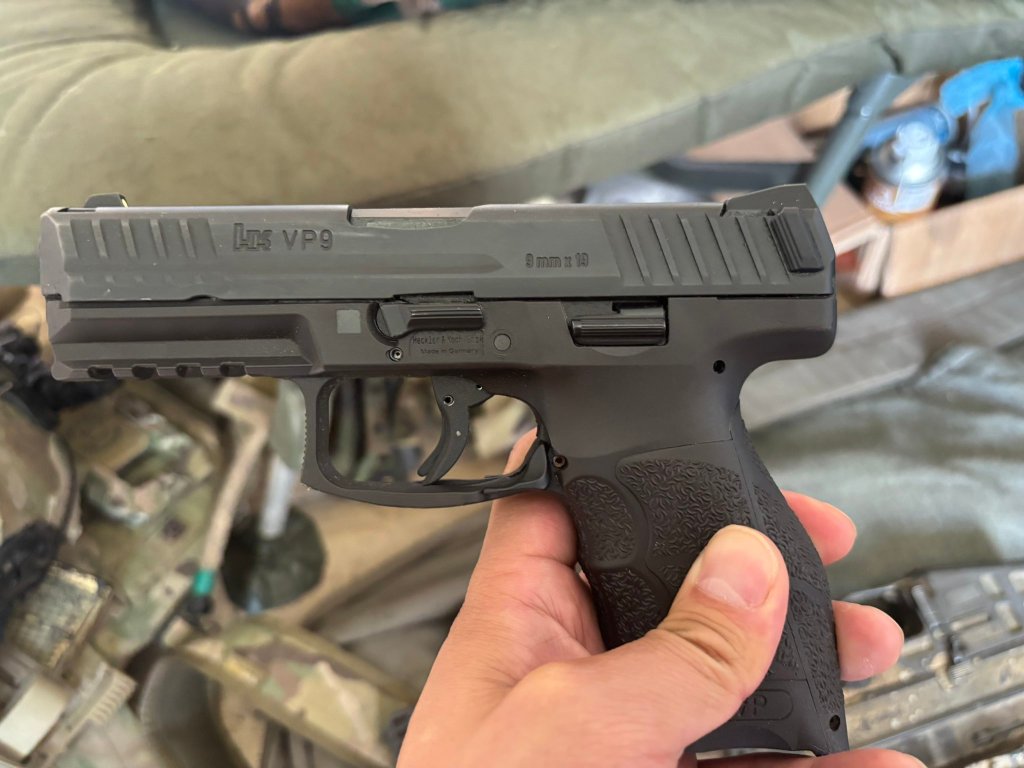
In October 2024, the confirmed number of pistols provided to Ukraine jumped significantly to 3,500, indicating significant transfers of SFP9s to Ukraine. Following this the Main Directorate of Intelligence of Ukraine (HUR MO)’s Revanche International unit, subordinate to Revanche Tactical Group shared an instagram story on 9 November, showing one of the pistols at a range. The pistol, however, is marked VP9 rather than SFP9. VP9 is the US commercial name for the pistol.
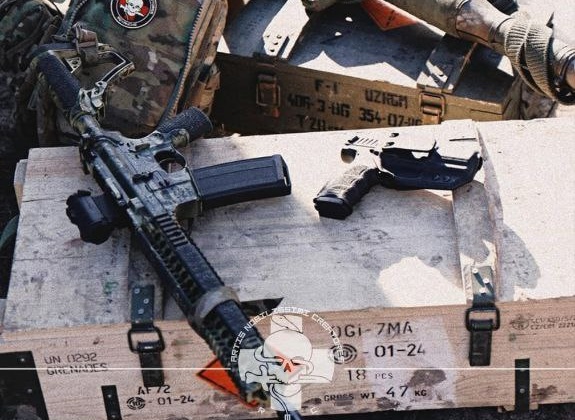
On 11 November a member of the HUR’s Kraken Regiment shared a photo of another VP9 mounted with a Veridian X5L weapon light. A month later on 19 December, another Ukrainian combatant shared a range photo of a trio of pistols including a Russian MP-443 ‘Grach’, a Glock 17 Gen 4 and a new SFP9.

On 25 January 2025, ORKOVNET, the YouTube channel of the Ukrainian Orkov gunstore, shared a short range video of a VP9 marked pistol noting that the pistols were now in Ukrainian service.

An Instagram page affiliated with the HUR’s Special Purpose Unit “Timur” shared a series of photos from a range session on 3 February. One of the photos included an SFP9 SD with a threaded suppressor-ready barrel.
On 19 March a combatant with a reconnaissance and UAV team within the Special Operations Forces of the HUR MO shared a photo of a holstered SFP9 alongside a SIG P320.

A member of HUR MO Timur’s Spectre 33 unit posted several photos in early Spring 2025 featuring an SFP9 OR, with one photo showing mounted with a A-Tec PMM6 suppressor.
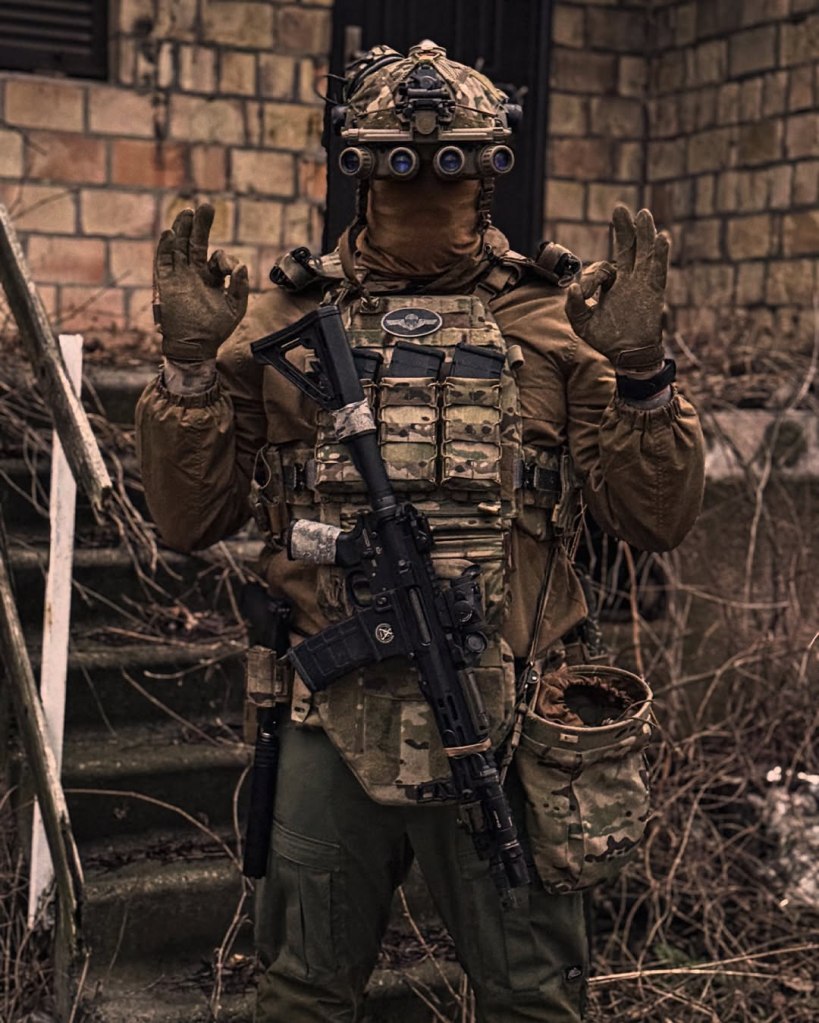
In April, a Japanese volunteer with one of the HUR International Legion teams shared photos of a new VP9-marked pistol. He noted that while he liked the pistol he preferred Glock triggers and he confirmed that his pistol was shipped with 17 round magazines.

On 6 April, a member of the GUR’s Revanche Tactical Group / Advanced Combat Group shared a photo showcasing a host of small arms from their armoury including new HK433s, HK416s, a UAR-10, CZ and Glock pistols and a pair of HK SFP9s.

A week later DW News shared a report on a Ukrainian camp where adolescents can receive training. From the small arms seen in the short report, including an HK416A8 and an SFP9 indicate the camp may have been run by HUR personnel.

Later in April an Instagram page affiliated with the Revanche Tactical Group shared a photo of a holstered SFP9 and another photo of one of the pistols at the range alongside a Daniel Defense carbine was shared on 23 April by the unit’s medical team.
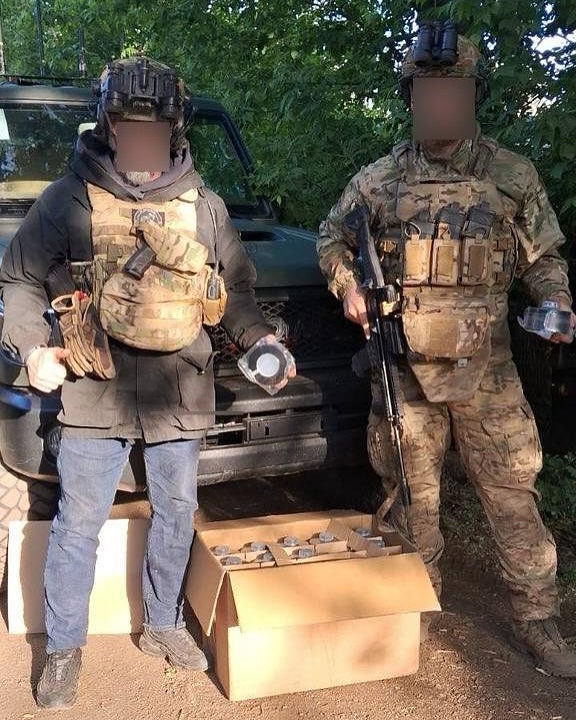
Another probable SFP9 can be seen in a photo, posted on 6 May, by a volunteer aid organisation, in the photo members of a HUR MO International Legion unit receive gas masks somewhere in the
Zaporizhzhia region. Most recently, the pistols featured in a HUR MO International Legion training video posted on 10 May. The video shows a pair of combatants firing SFP9s at the range.

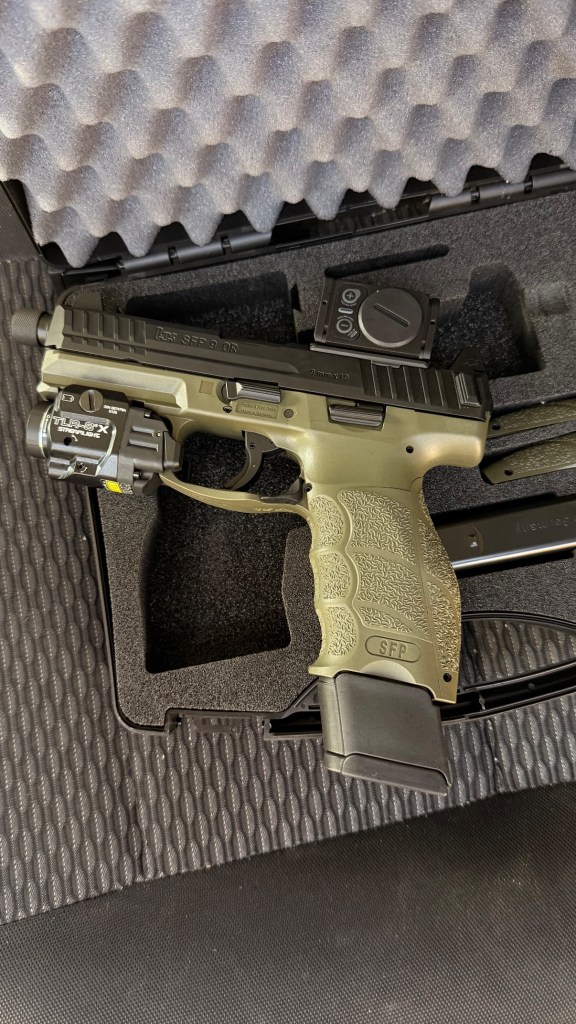
Iin mid-July, members of the 6th Separate SSO Ranger Regiment were photographed training with what appear to be SFP9s. At the end of July, a member of the 73rd Naval Special Operations Center shared a video and several photos of a brand new 2025-production SFP9 OR with a threaded barrel and suppressor-height sights. Unlike the other pistols seen so far, this SFP9 appears to have an OD green frame. From the video, it seems the pistol shipped with a 17 and a 20-round magazine as well as an Aimpoint ACRO P2 and a Streamlight TLR-8X. Several days later this was followed by a photo from another member of the 73rd Naval Special Operations Center who shared a photo of a pair of OD Green SFP9 ORs both with Aimpoint ACROs and one with a Streamlight (possibly the pistol seen earlier).

The pistols were not taken from German military stores, instead the deliveries were drawn from industry stocks and financed by German government funds. This is supported by the presence of VP9-marked pistols which indicate some of the pistols shipped were pulled from HK production that was planned for the US market. On the 17 April, the German government announce it would no longer be publicly updating its list of aid to Ukraine. As of April 2025, Germany has provided 3,500 HK SFP9s to Ukraine.
It appears from the available visual evidence that at least a portion of the 3,500 HK pistols have been provided to Ukraine’s HUR MO direct action teams with some also appearing in the hands of elements of the SSO. Both VP9 and SFP9-marked guns have been seen in-country with at least a portion of them being SFP9 ORs, with slides cut for mounting optics. Given the very infrequent imagery of operational pistol use it is difficult to confirm uses of the SFP9s in the field with the majority of imagery available stemming from training sessions.

Special thanks to Mathias, Hao, deaidua.org, & Dikobraz for their help with this video.


Support Us: If you enjoyed this video and article please consider supporting our work here. We have some great perks available for Patreon Supporters – including early access to custom stickers and early access to videos! You can also find us on the History of Weapons & War app. Thank you for your support!
Heckler & Koch GMG in Ukraine

While the Mk19 40×53 mm automatic grenade launcher has become increasingly ubiquitous in Ukraine, alongside familiar Soviet-era AGLs like the AGS-17, but there are other automatic grenade launchers in use. In this video we’ll look at the use of the comparatively rare Heckler & Koch GMG.

Developed in the early 1990s the GMG (grenade machine gun) or Granatmaschinenwaffe (GMW) uses an advanced primer ignition blowback action. Gun, mount and tripod combined weighs in at around 47.5kgs and has a maximum range of 2,500m. It feeds from 32-round disintegrating belts and is used by over twenty countries.

On 23 May 2023, the German government confirmed that 100 GMGs were to be transferred to Ukraine. The first back of 30 GMGs were confirmed to have reached Ukraine by the German government on 8 December. A subsequent batch of 70 guns were reportedly delivered in March 2024. On 23 December 2024, the German government announced that an additional 120 GMGs had be transferred to Ukraine bringing the total number provided by Germany to 220.

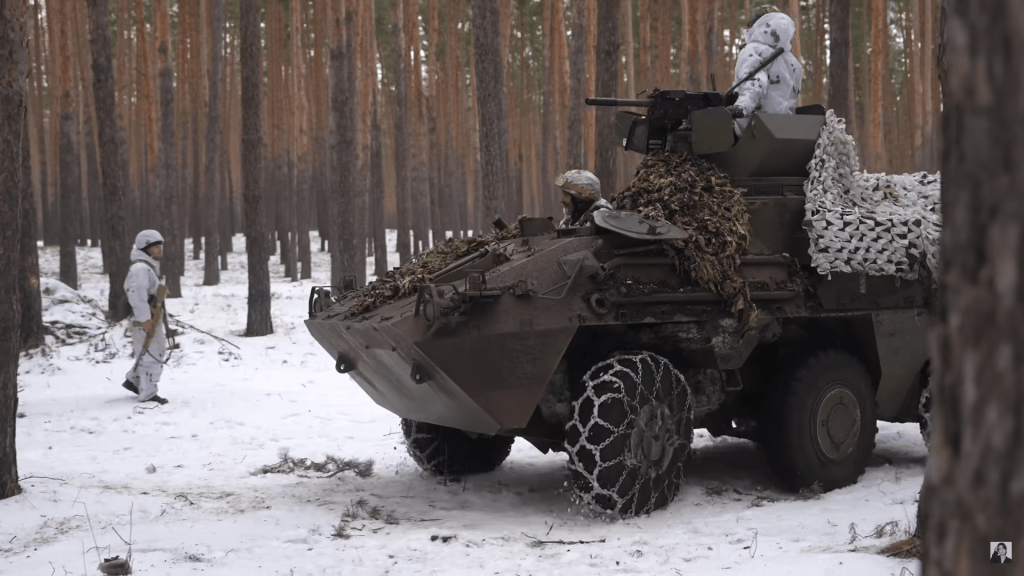
Additionally, it is likely that a small number of HK GMGs may have been provided along with vehicles provided by various countries including the Netherlands and Slovenia. While it is difficult to confirm if a vehicle has simply been mounted with a GMG, rather than being delivered with it, some of the vehicles appeared in Ukraine before Germany pledged the GMGs as aid.

The first HK GMG’s appeared in Ukraine long before the German government began providing them as aid. The first gun was seen in October 2022, appearing in a short clip of a KNDS Fennek reconnaissance vehicle. It should be noted that while confirming if this video was filmed in Ukraine is difficult, the delivery of the vehicles has been confirmed by the Dutch government. Fenneks can either mount a GMG, an M2 Browning or a GPMG. An unknown number of Fenneks are confirmed to have been provided by the Netherlands.

It’s worth noting the Ukrainian troops who have been trained in the UK as part of Operation Interflex may also have been familiarised with the HK GMG which is in UK service as the L134A1, the UK is not known to have provided any of the guns to Ukraine. Ukrainian troops training in the UK in November 2022 were seen familiarising with the GMG, but this may simply have been to familiarise with Western 40mm grenade launchers rather than with the GMG specifically.

There is a considerable gap between sightings with the next appearance coming in February 2024, when a Slovenian Valuk 6×6 armoured personnel carrier equipped with one appeared in a video from Ukrainian journalist Ramina Eshakza. The vehicles gunner discusses using the GMG and close ups show that it is loaded with a belt of M430A1 High Explosive Dual Purpose. The gunner notes that he liked the assistance in aiming that the GMG’s shoulder rest provides.

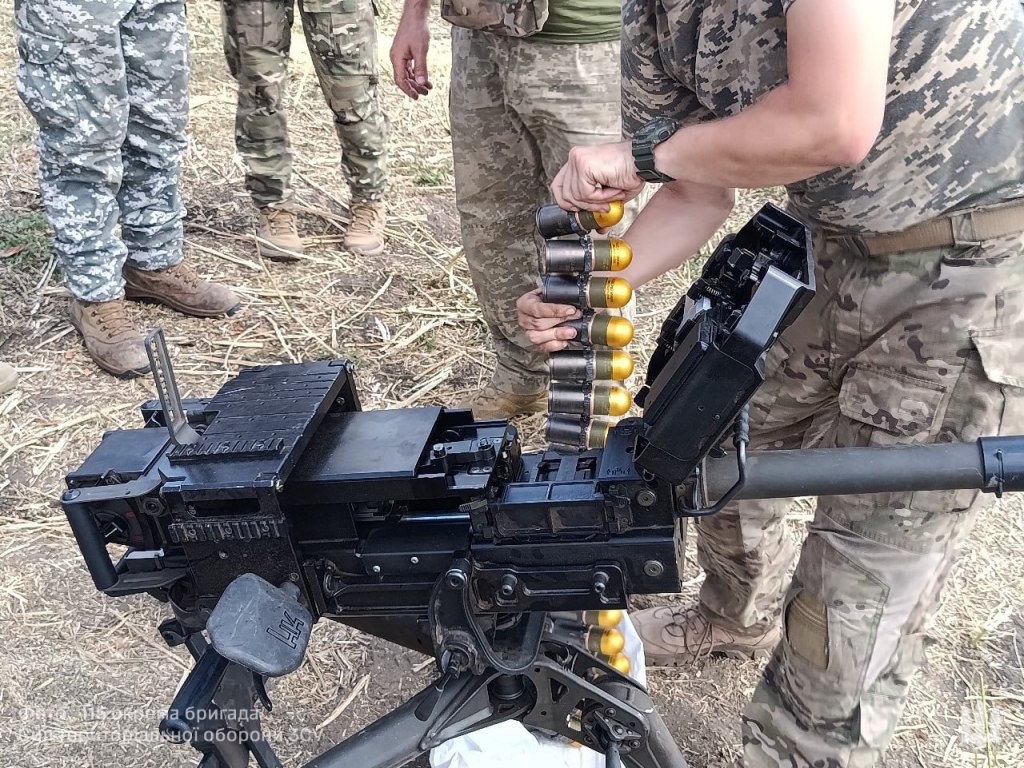
Following the arrival of the first batches of GMGs donated by Germany in the first half of 2024, the weapons began to appear more regularly throughout the second half of 2024. On 12 July, the 115th Territorial Defense Brigade shared a series of photographs of troops training. In two of the photos men can be seen training with an HK GMG, noteably the gun has an interesting set of markings on its feed tray cover – which read: “Not like Mk19! Male link first!” in English and accompanied by pictograms indicating the link orientation. These markings were added in December 2023, ostensibly to avoid confusion for operators who might be more familiar with the Mk19 and assume the loading procedure is the same. Given HK’s production workflow it is possible that these markings were added specifically for the Ukraine contract, why the text wasn’t rendered in Ukrainian is unclear.

Two months later, on 10 September, a Russian drone team claimed to have have suppressed a Ukrainian position, specifically naming the weapon as a GMG. The footage’s low resolution makes this difficult to confirm. Later in September a photo was shared of a Ukrainian combatant sat next to a GMG, the date, location and the combatant’s unit is unknown.

On 8 October, a team from the GUR’s 2nd Special Operations Detachment KORD, which is a part of the Tymur Special Unit, shared a photograph of a GMG in the rear pedestal mount of a ridged inflatable boat. The mount features an armoured shield to protect the gunner.

A week later the 44th Mechanised Brigade shared several photos of a Valuk APC mounted with a GMG. In one of the photographs the gun’s serial number is visible, ‘57000483’ which would place it’s manufacture in the early 2000s. This confirms that the GMGs seen mounted on the Valuks came with the vehicles and not from German aid.

In early November the Kalinoŭski Regiment shared a video, said to show an engagement
 near Liptsi in the Kharkiv region. An HK GMG engages Russian infantry in the open and uses a drone feed to correct the fall of shot. This is the only footage we have of a GMG actually operating in Ukraine.

Several weeks later, on 19 November, the 44th Mechanised Brigade shared another image of one of their GMG-armed Valuk APCs in a post commemorating the 1,000th day since Russia’s invasion in February 2022.

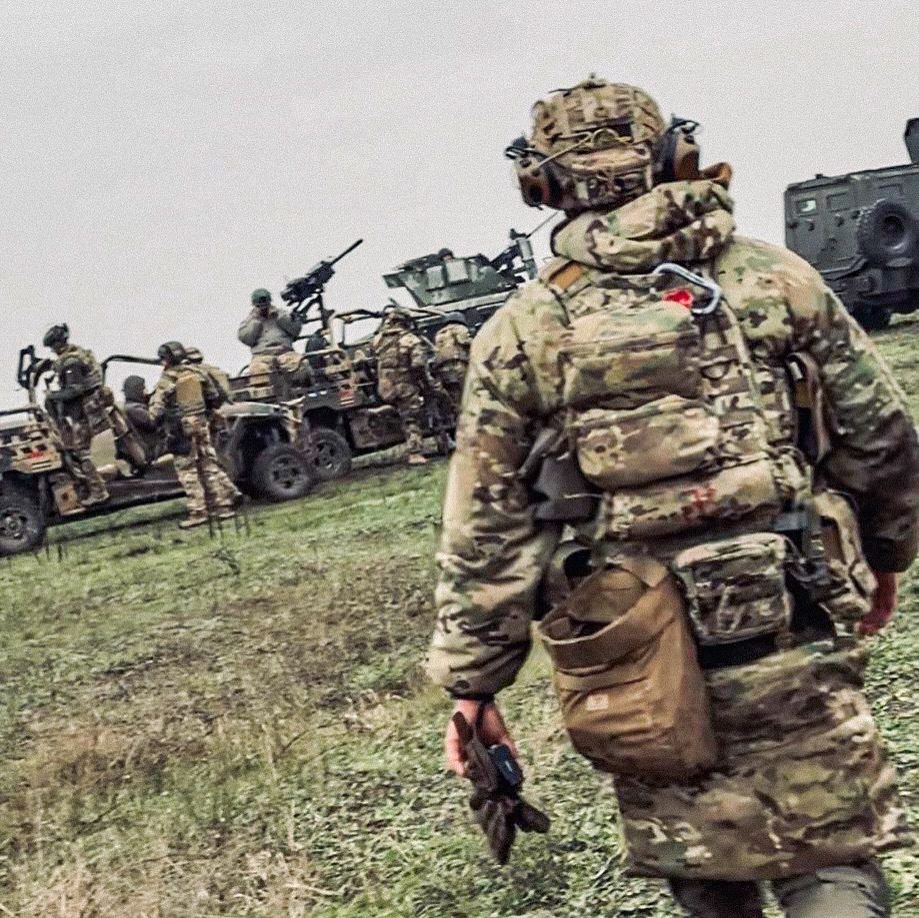
On 27 November, the GUR’s Aratta Battalion used a photo of an HK GMG mounted on a Polaris MRZR all-terrain vehicle on the thumbnail of a social media video. The vehicle and GMG, however, don’t appear in the video. A member Med Team Alpha, an element of the GUR’s International Legion, posted a photograph on 21 December, with a tripod-mounted GMG in the background.

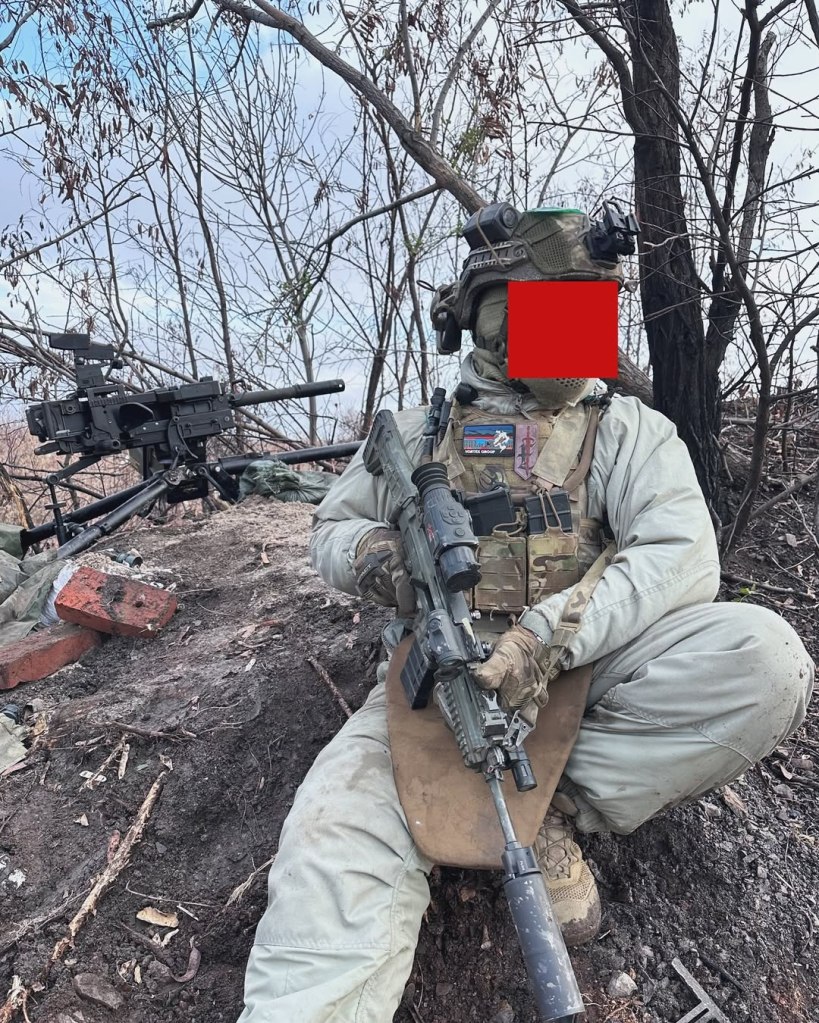
On the 22 December a member of another GUR International Legion team, the Delta Knights, posted a series of photos with an HK GMG in a fighting position. The location of the position is unknown, notably he’s also holding an HK MG4, keep an eye out for our article/video on those.

The Aratta Battalion’s GMG mounted on an Polaris ATV does appear in the background of a photo posted on 1 January 2025. On the 9 January 2025, another photograph, possibly from a member of the Aratta Battalion, also showed an HK GMG mounted on the back of a Polaris ATV.

On 10 January, MTAC, a Ukrainian military clothing and gear manufacturer, shared a photograph of a combatant posing with a pintle mounted GMG on a Polaris. Notably the GMG’s reflex sight is not fitted. This Polaris may be one of those previously seen with Aratta Battalion.

Thank you to Matthias, Dikobraz and DEaidUA for their invaluable help with this article/video.


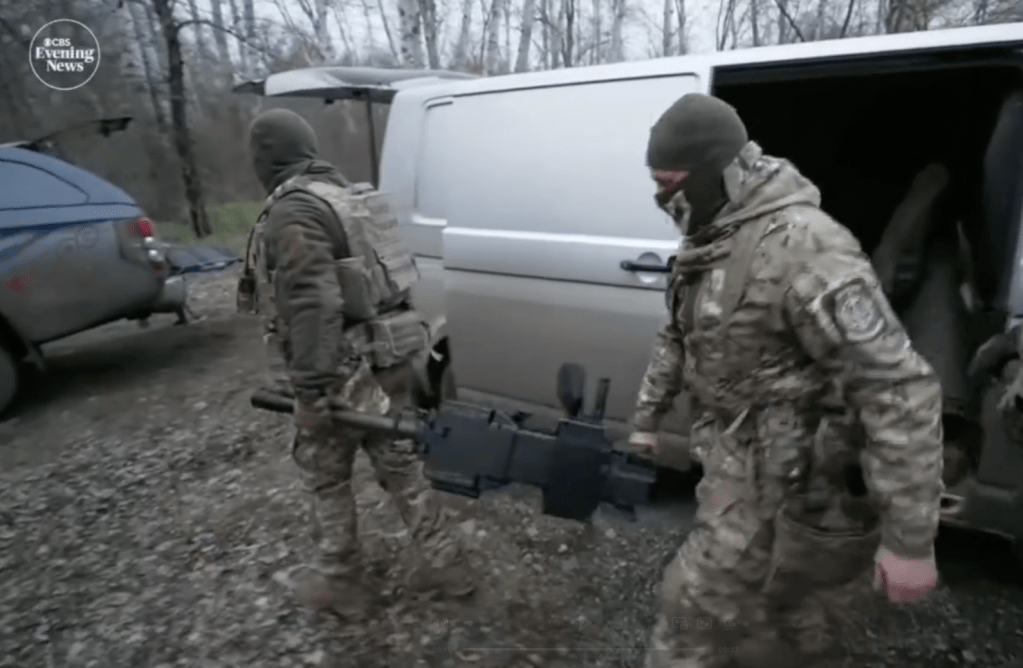
Update: 1/2/25: The GUR’s Artan Unit were featured in a CBS report which showed them setting up an HK GMG during training. Artan shared this on Telegram on 31/1/25.

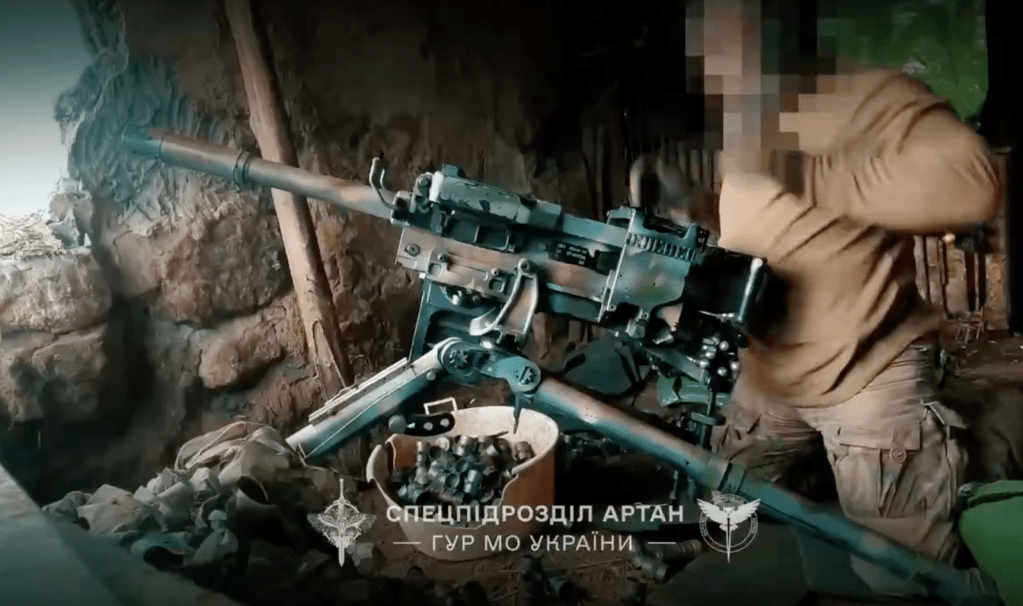
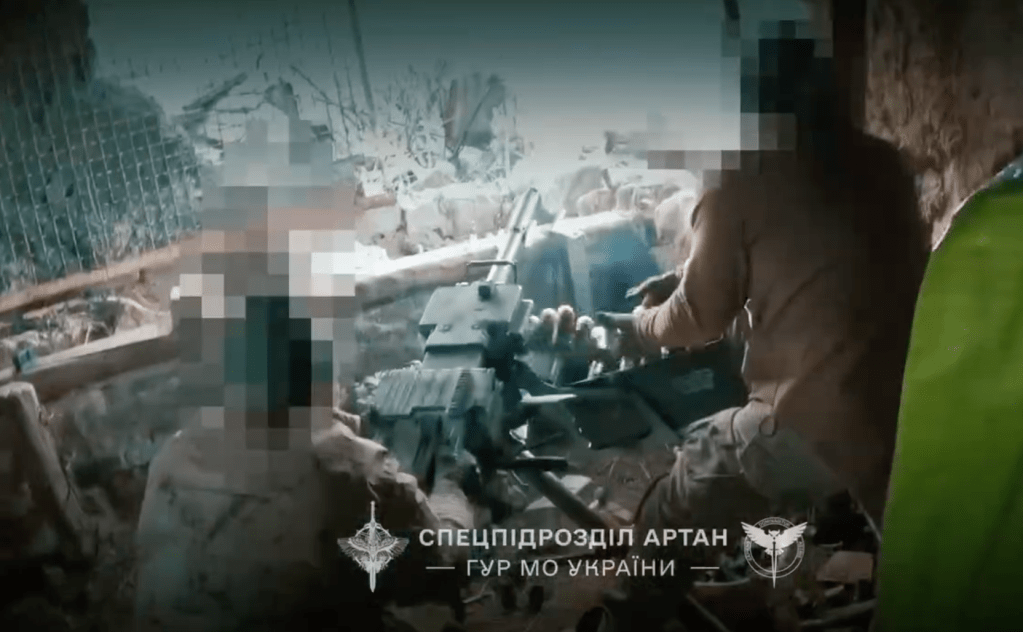
Update 11/2/25: An automatic grenade launcher team from the GUR’s Artan Unit were seen in action with an HK GMG in a video shared on 5/2/25. The team do not appear to be using the weapon’s sights suggesting they are correcting fall of shot by observation and are firing on pre-ordained coordinates.

Update 11/2/25: A support team from the Belarussian Volunteer Corps operating an HK GMG during an operation near Vovchansk. No reflex sight or other optic is used, instead the team utilises the ladder sight. This also appears to be the first occasion we have seen a GMG painted. (Source)

Update – 18/11/25:

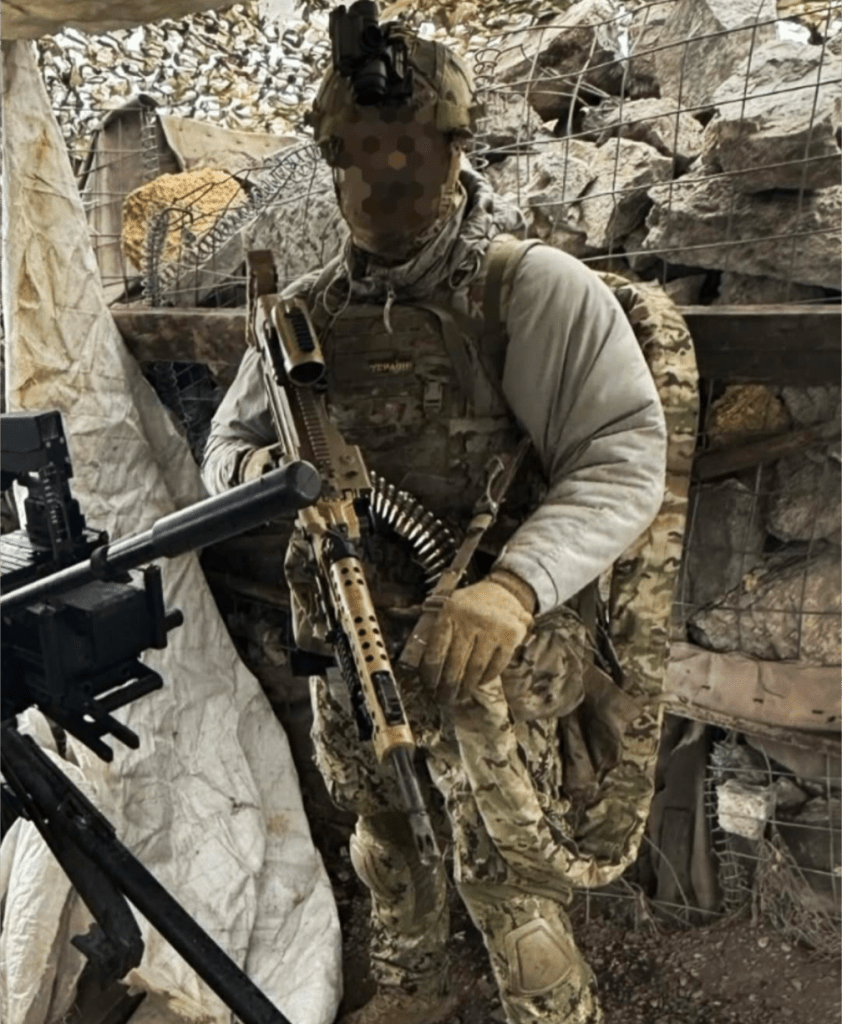
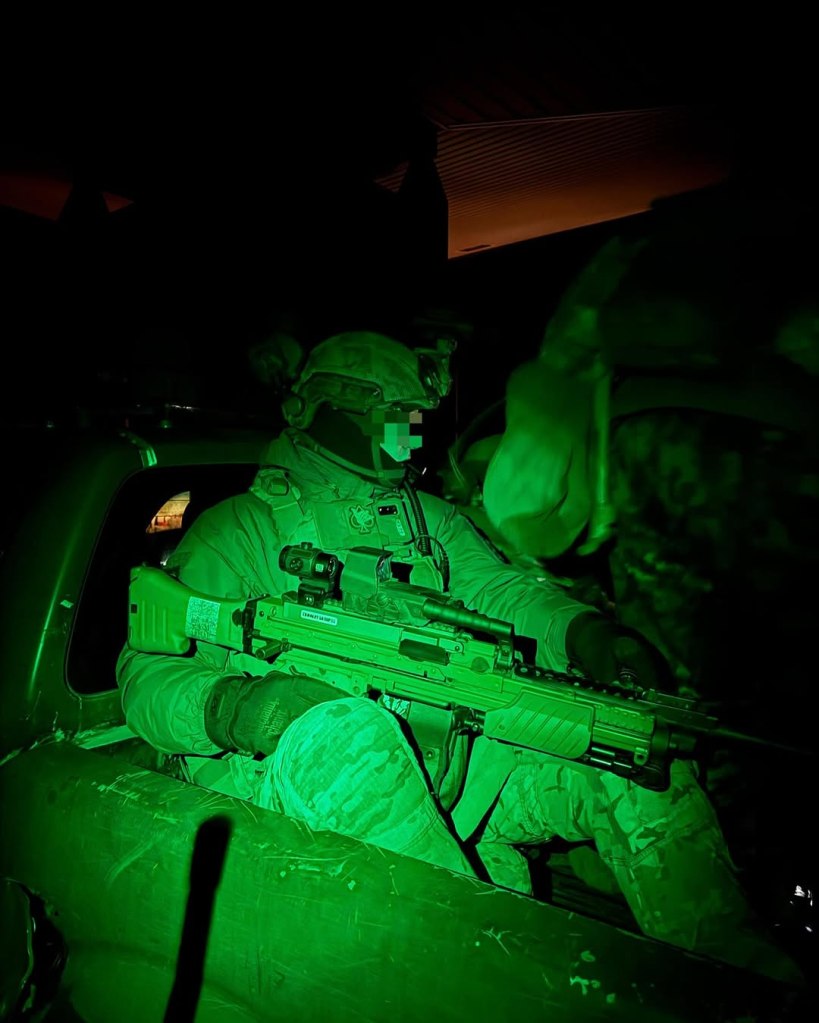
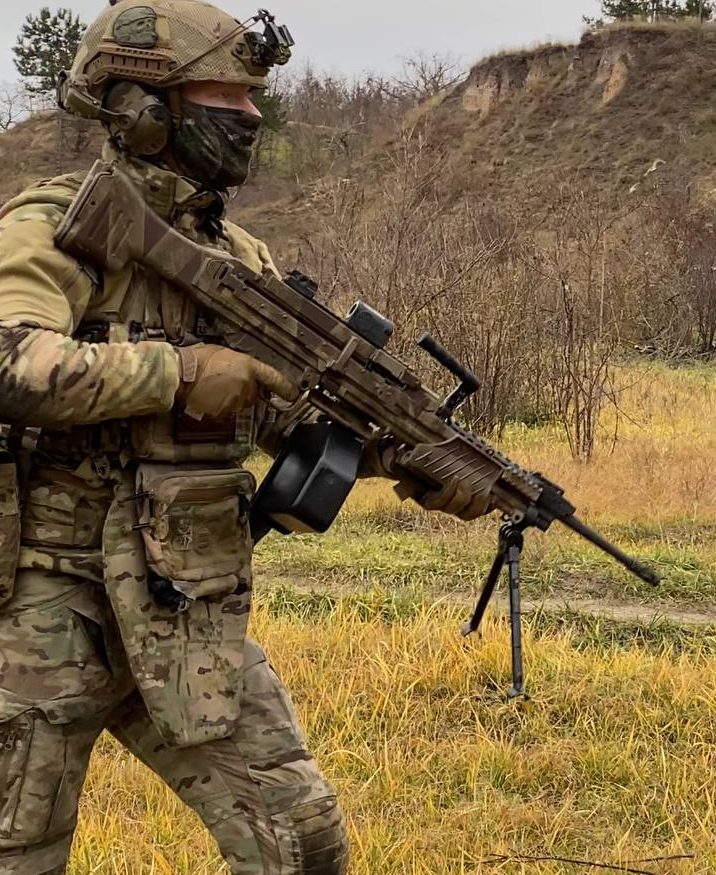
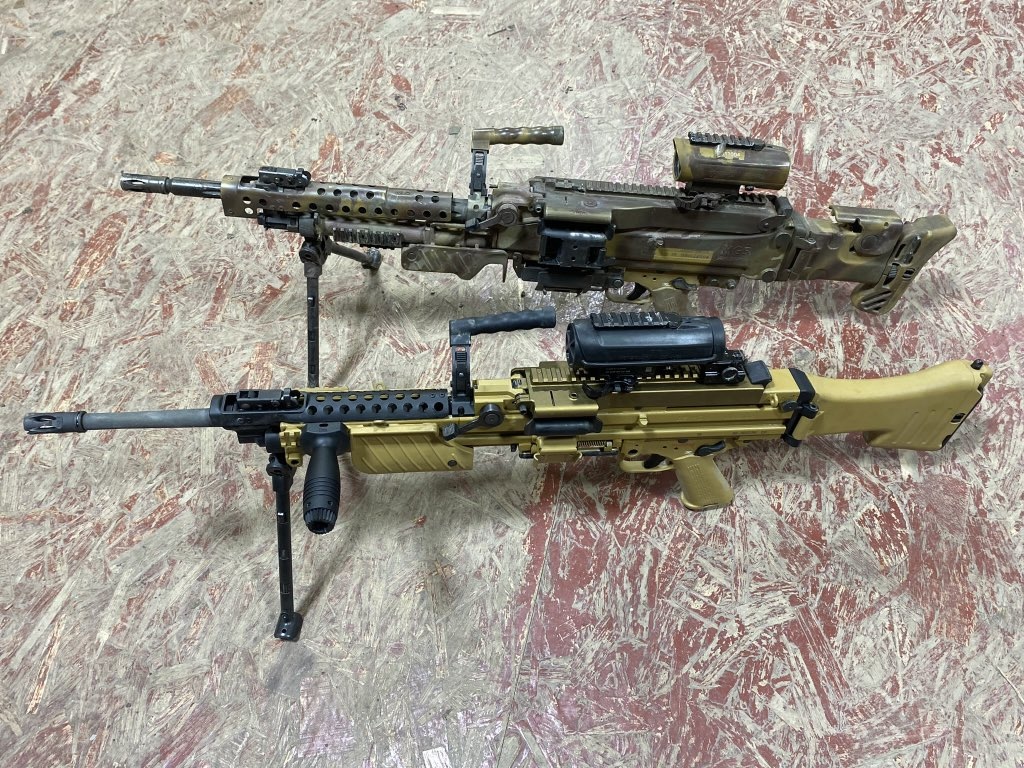
Recent image of a HK GMG with collimator sight, as well as an HK MG5.


Support Us: If you enjoyed this video and article please consider supporting our work here. We have some great perks available for Patreon Supporters – including early access to custom stickers and early access to videos! You can also find us on the History of Weapons & War app. Thank you for your support!
HK MG4 In Ukraine

On 23 December 2024 the German government confirmed that 200 Heckler & Koch MG4 5.56x45mm machine guns had been delivered as aid to Ukraine. The MG4s join the 7.62x51mm MG5s which have already been provided, along with a plethora of other HK small arms and light weapons including HK GMGs and a significant number of SFP9 pistols.

The MG4 was developed in the mid-1990s and adopted by the Germany Army in 2005. It is a gas operated light machine gun with an effective range of 600m. It weighs 8.7 kg (19.8lbs) unloaded, has an overall length of 1085mm (42.7in) and feeds from NATO standard disintegrating metal belts.

MG4 with Thales Xtraim and magnifier (shybenyk.squad)

While the delivery of MG4s was only confirmed in late December the guns appear to have arrived in country earlier with the first sighting of one coming on 3 December 2024. The initial sighting of the weapon was posted on Instagram by a Ukrainian combatant, likely a member of the GUR’s special operations teams. The initial photograph appears to have been taken indoors at a range and the flat dark earth colour across all parts of the weapon – rather than black or RAL8000, appears to indicate a base coat for a custom paint job. The weapon also has an FN Minimi belt box, while an adapter isn’t needed to use a Minimi box or bag, HK offers an adapter which enables more ergonomic mounting on the MG4.

A day later the same combatant posted a video showing him firing the MG4 on the move. From both the video and earlier photograph we can see that the weapon has the Gen 1 pattern fixed length, folding stock and a 17.7″ (450 mm) barrel. The gun is mounted with a Hensoldt RSA-S Reflex Sight on top of a Hensoldt 4x30i magnified optic.

On the 8 December the combatant shared another video, the MG4 is seen with the camouflage paint job completed and equipped with just the Hensoldt RSA-S, conducting training drills at a range. 

On the 14 December, Shybenyk.Squad, another GUR team – associated with the Kraken Regiment, shared a photograph of a combatant with an MG4 notably fitted with a rare Thales Xtraim thermal fusion holographic sight and a magnifier. The MG4 is loaded with HK’s proprietary fabric soft ammo pouch. Several days later on 19 December, they shared a group photo taken in Orikhiv in Zaporizhzhia. Speaking to a member of Shybenyk.Squad they shared some thoughts on the MG4 stating:

“the weapon is very reliable and highly accurate, it can withstand the heavy load of endless enemy assaults, requiring only periodic lubrication. The disadvantages include insufficient ergonomics and weight, with which it is difficult to control during assault actions.”

They went on to explain that they received spare barrels and spare parts for the weapon.

A painted MG4 (via social media)

On the 20 December, MTAC, a Ukrainian military clothing and gear manufacturer, shared a photograph of the combatant with the MG4 – showcasing some MTAC products. The Hensoldt RSA-S reflex sight can again be seen.

On the 22 December, a member of the Delta Knights, an element of the GUR’s International Legion, posted a series of photos featuring an MG4. In the first he poses with a recently donated axe and in the second he showed his unit’s MG5 alongside the new MG4. In these photographs the gun is clearly unpainted and has a factory RAL8000 finish but has a black heat shield – this is seen on other examples too. It also has the same Gen 1 pattern fixed length, folding stock as seen on the earlier seen MG4. When asked what they thought of it Delta Knights simply replied “we love it so far”.

A 7.62x51mm HK MG5 and 5.56x45mm HK MG4 (Kevin Vinje/Delta Knights)

The most recent MG4 sightings, at the time of writing , appeared on 10 January 2025, when the Artan Special Unit, also affiliated with the GUR, shared a photograph of a combatant holding one of the machine guns, again with a RAL8000 finnish and mounted with a 4x30i Hensoldt optic with which it is likely the guns shipped with.

From the limited number of sightings of the weapons so far it appears that the MG4s have been predominantly issued to GUR teams including Delta Knights and Artan. With 200 guns delivered we will likely see MG4s appearing in imagery more often over the coming months.

Thank you to Matthias and DEaidUA for their invaluable help with this article/video. Thank you also to shybenyk.squad for sharing their thoughts on the MG4.


Update – 11/2/25: The GUR’s Artan Unit shared a team photo featuring an MG4 on 6 February.


Support Us: If you enjoyed this video and article please consider supporting our work here. We have some great perks available for Patreon Supporters – including early access to custom stickers and early access to videos! You can also find us on the History of Weapons & War app. Thank you for your support!
A Pair of Interesting Heckler & Koch Marksman Rifles Appear in Ukraine

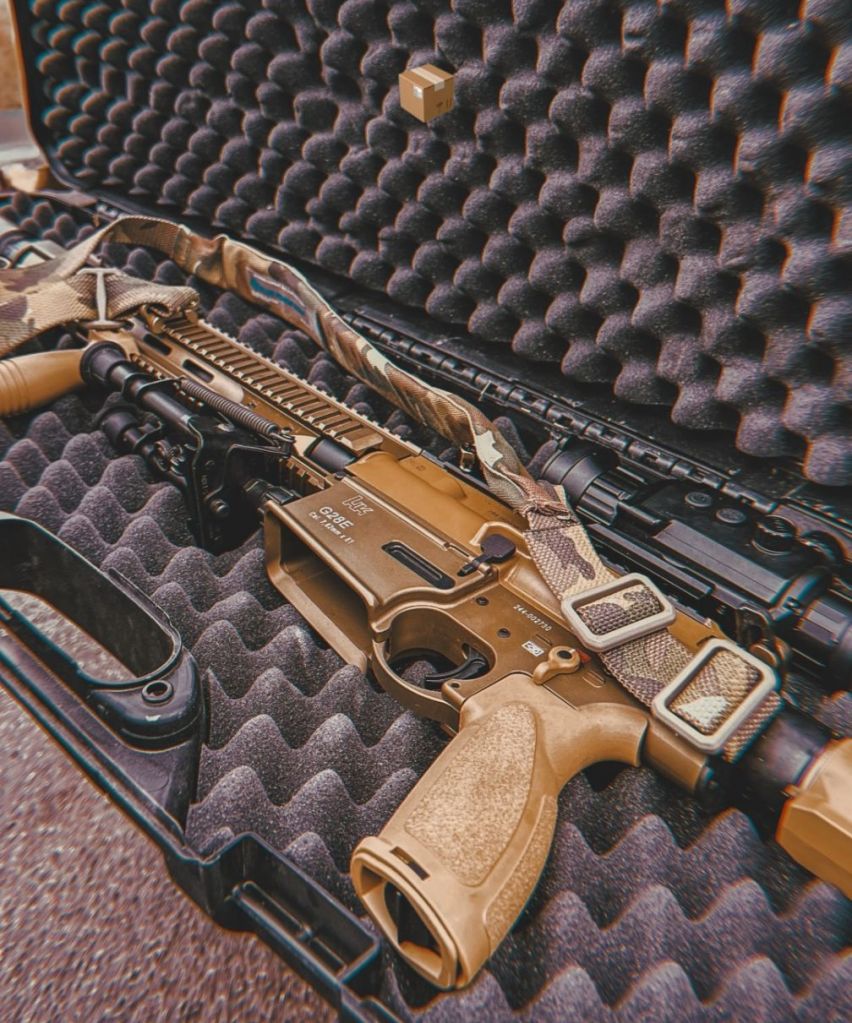
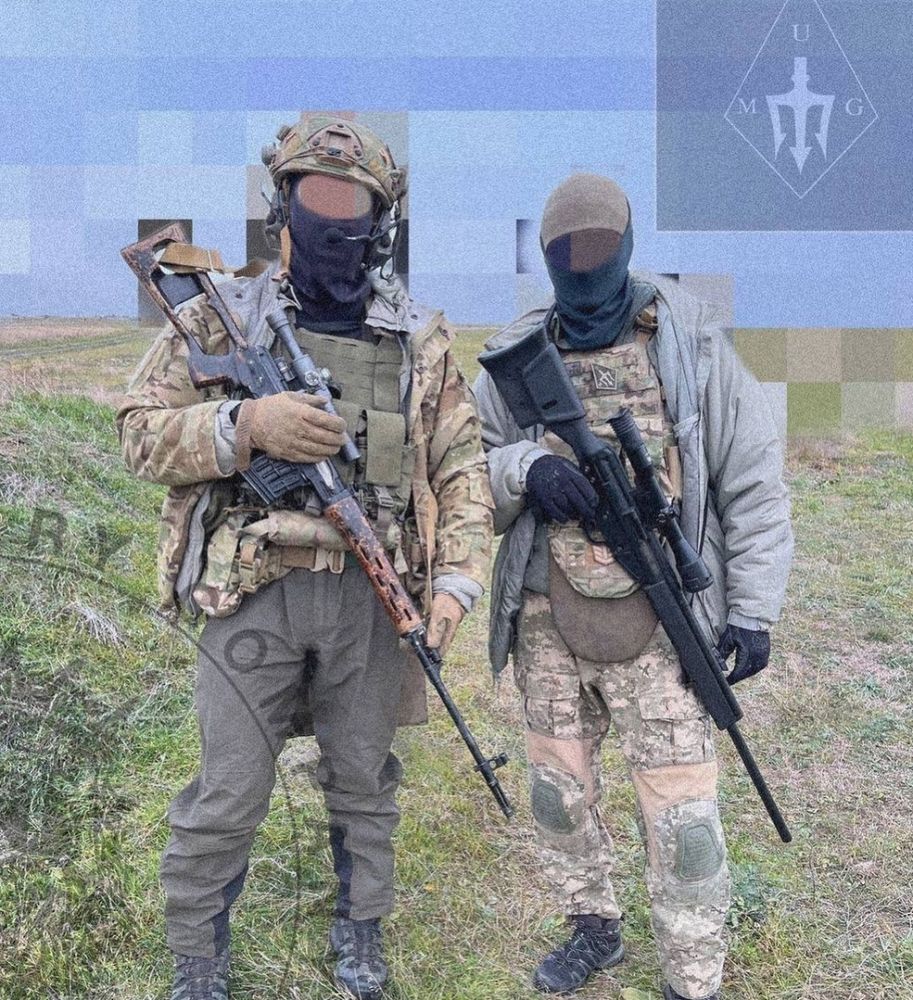
This week has seen photographs of two intriguing 7.62x51mm Heckler & Koch rifles appear, they feature what appears to be an iconic, and extremely rare, PSG1 and an HK G28E. The first photograph was shared by pmc_ua and universal_mobility_group on Instagram on 14 November. In the photograph a pair of two Ukrainian marksmen pose with an SVD and a PSG1, no further images of the rifle have been shared.

What appears to be a PGS1 at a Ukrainian range session (via social media)

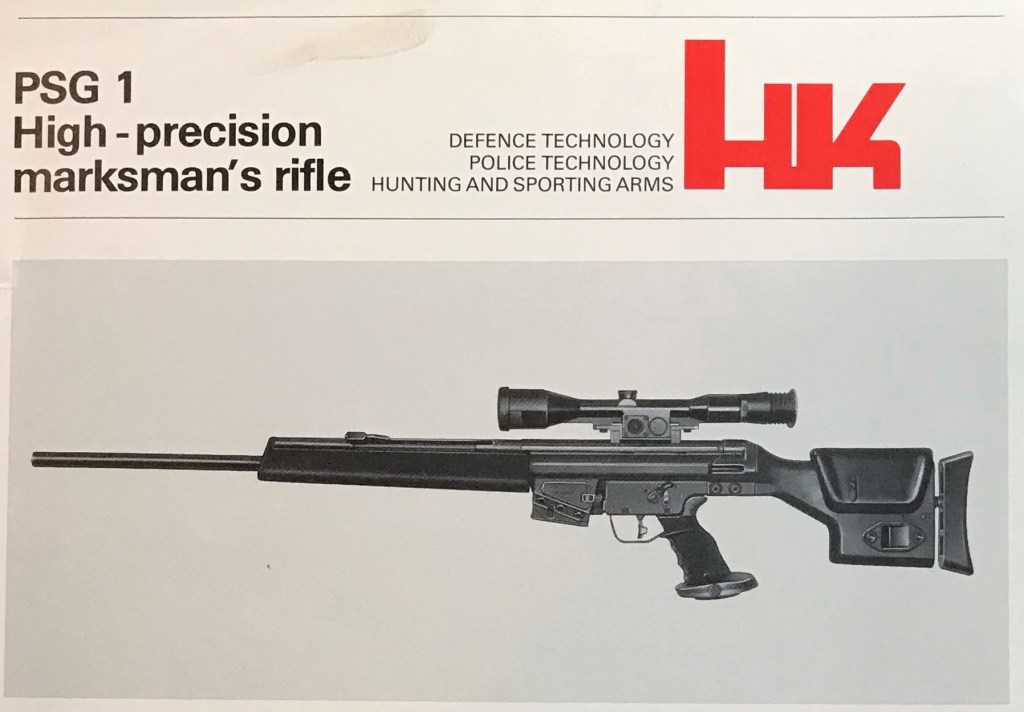
The PSG1 was introduced by HK in the early 1970s as a semi-automatic precision rifle. It is unclear where the PSG1 was acquired from but this is the first time I’ve seen one of the rifles appear in Ukraine. The PSG1 is based on the G3, and as such uses a roller-delayed blowback operating system. Its accuracy is reputed to be better than 1 MOA, the rifle appears to have an original  Hensoldt ZF 6×42 PSG1 scope.

Illustration from an H&K catalogue page for the PSG1

PMC_ua, who shared the photograph, confirmed that the rifle is “used where there is an opportunity, fighting and training” but gave no further details. The PSG1 may have been acquired via civilian channels or may have been transferred to Ukraine as aid by one of the many countries who acquired the PSG1 in small numbers over the years. While the PSG1 is of Cold War vintage, the rifle continued to be offered into the 2010s by HK and it is still a very accurate, capable rifle.

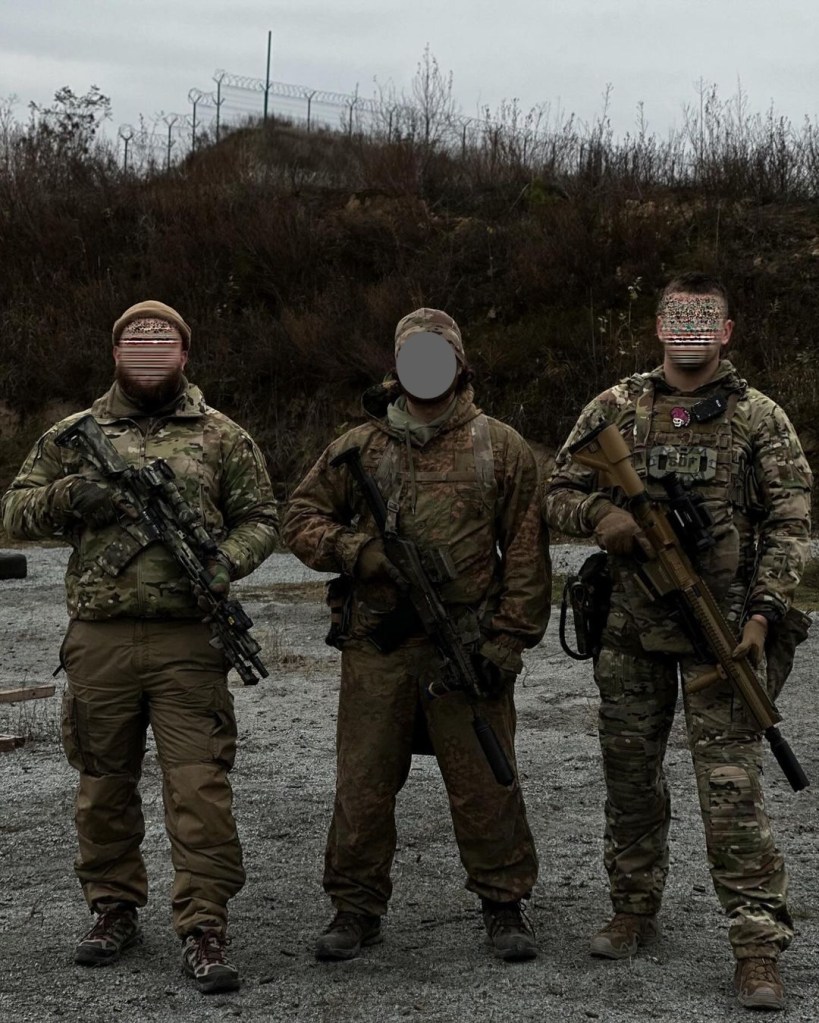
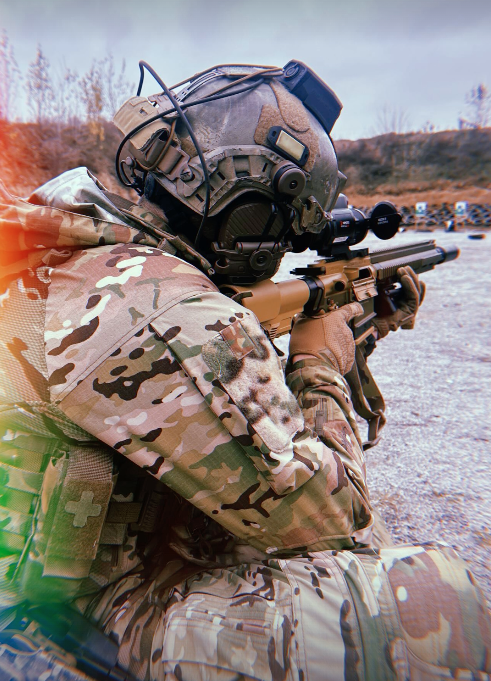
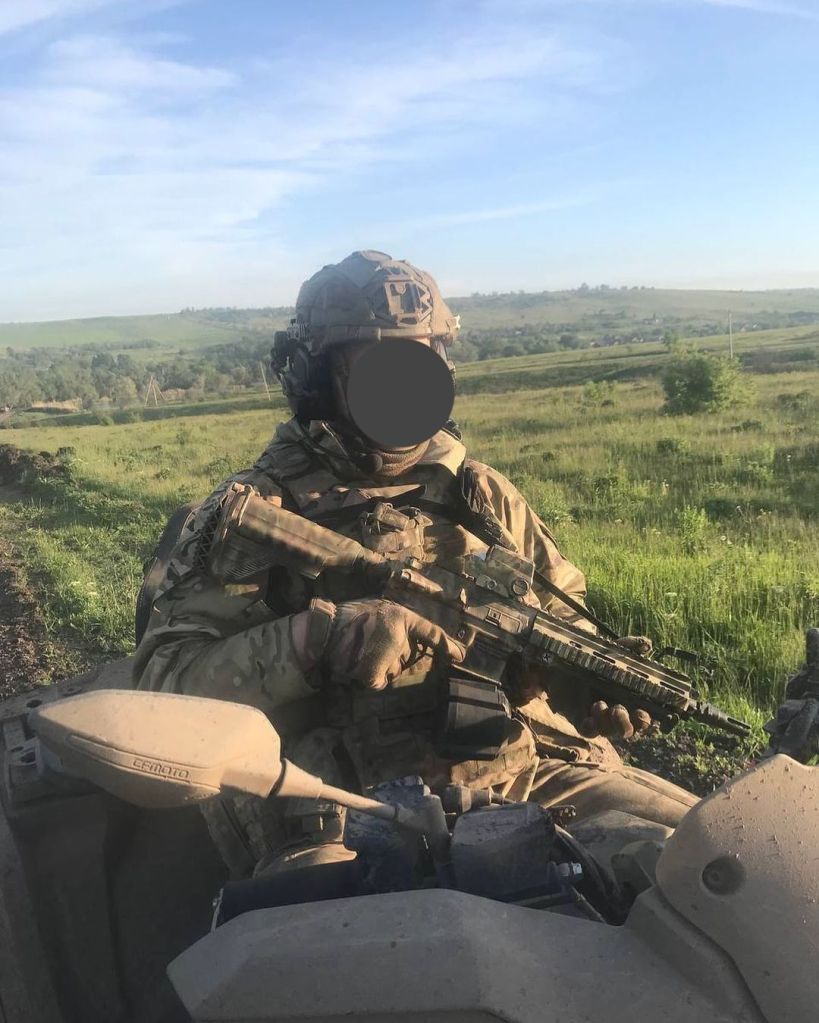
The second image was shared on Instagram, on the 17 November, and features what at first glance appeared to be an HK G28 but may also be the civilian-available HK G28Z. The rifle is held by a member of the 3rd Separate Assault Brigade and is equipped with a thermal weapon sight.

A probable HK MR308 A3-28 at a Ukrainian range (via social media)

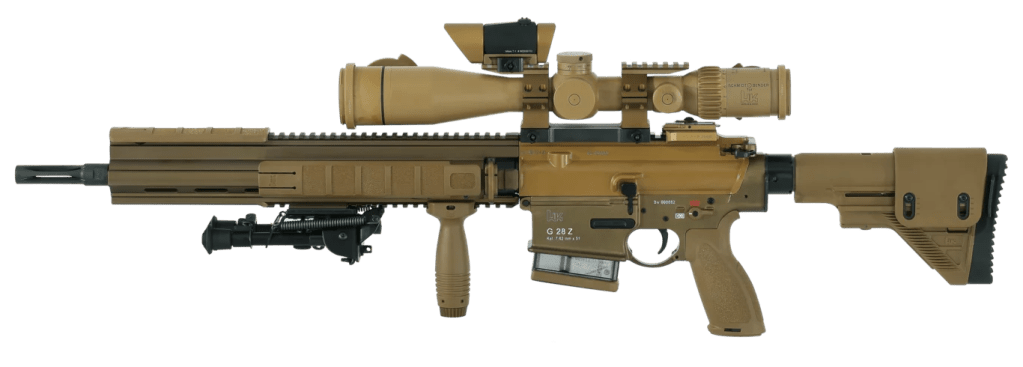
The rifle has free-floated 16.5 inch barrel, a bi-pod and a vertical front grip mounted on its forend. It is loaded with a 10-round magazine and is fitted with what appears to be an Ase Utra DUAL762-S-BL suppressor. A small number of the RAL 8000-coloured MR308 A3-28s have recently appeared on the civilian market in Ukraine, with one private listing one of the rifles for 29,5000 UAH or $7,145.

HK G28Z (Heckler & Koch)
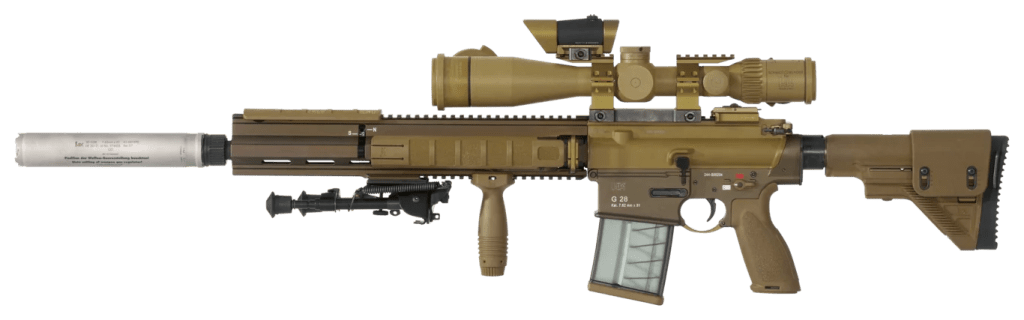
HK G28 (Heckler & Koch)

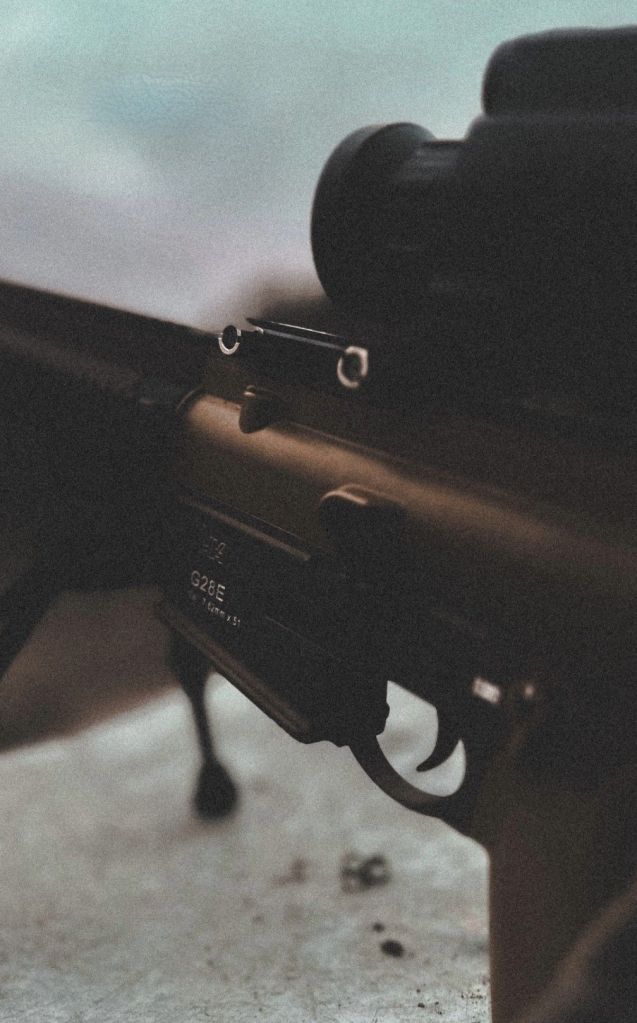
An additional photograph showing the rifle being fired was shared in an Instagram story by one of the individuals in the first photograph. This photograph gives us a better look at the receiver of the rifle and shows that the upper is painted/coated rather than treated. This indicates that the rifle is either a G28 or the civilian G28Z variant. [Thank you to CaliFlori for pointing out this detail].

It’s not uncommon to see civilian, semi-automatic, firearms used by Ukrainian personnel. This is more common in terms of precision platforms but various semi-automatic 5.56x45mm platforms are also regularly seen, including HK MR223s and patrol variants of the MR308.

A second photograph of the MR308 A3-28 at the range (via social media)

Two subsequent photographs shared by one of the individuals in the initial photograph clearly show the rifle’s lower receiver markings, confirming that the rifle is an HK G28E, not a commercial G28Z. The ‘E’ suffix indicates ‘export’.

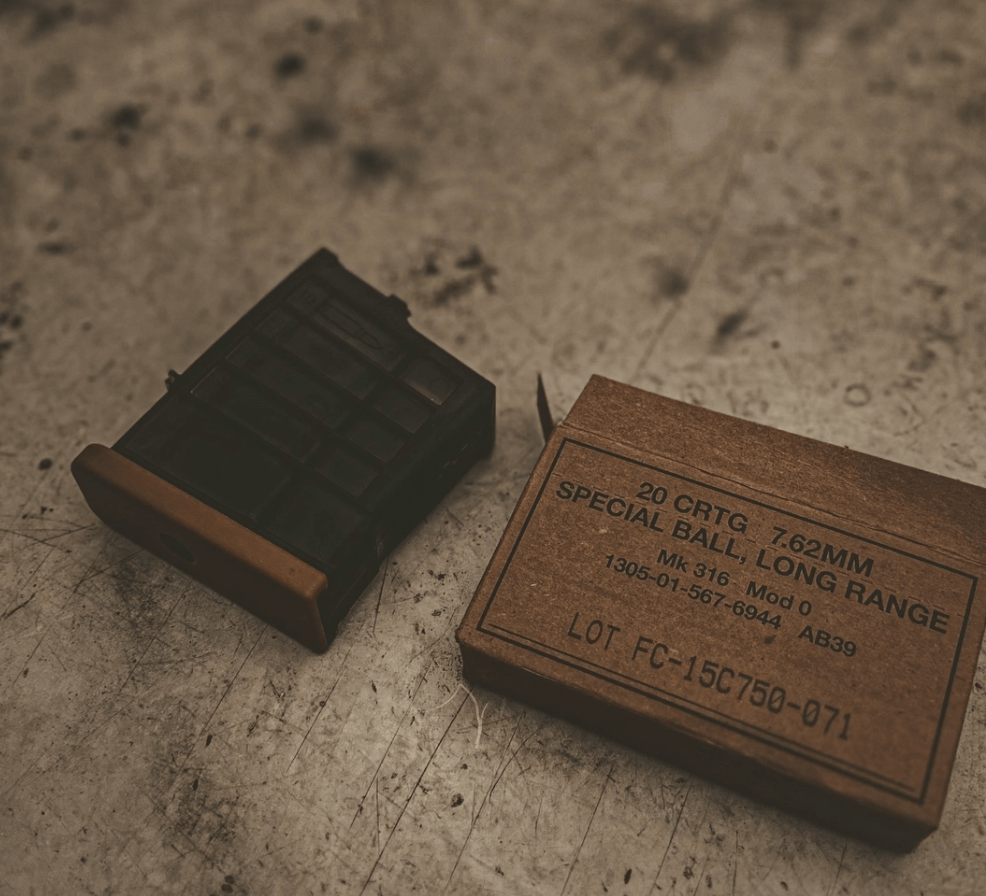
The same Ukrainian combatant, who appears to be a member of the GUR, also shared a photograph of ammunition he is using with the rifle. US-manufactured Mk316 Mod 0 is a match-grade cartridge which uses a 175gr projectile. While the ammunition was likely provided by the US, the origins of the rifle are unconfirmed.

It is intriguing to see two generations of Heckler & Koch’s semi-automatic precision rifles appear in Ukraine within days of each other.


Support Us: If you enjoyed this video and article please consider supporting our work here. We have some great perks available for Patreon Supporters – including early access to custom stickers and early access to videos! You can also find us on the History of Weapons & War app. Thank you for your support!

Heckler & Koch HK416s in Ukraine

We’ve examined a number of 5.56x45mm rifles in use with Ukrainian forces, notably the Colt Canada C7 and C8 and the M16A4 with many others to be covered in future articles/videos. In this article/video we’re going to examine HK416 use by Ukrainian personnel.

HK416s are far from a common weapon in Ukraine but recently there has been an increase in the frequency with which they have been seen. Since the beginning of 2023, there have been various configurations seen in the field with most being earlier variants of the HK416, likely with either 14.5 inch or 10.4 inch barrels paired with quad rail forends. There also seems to have been a small number of MR223, the civilian-market semi-automatic only version of the rifle, appear in imagery from the conflict.

One of the first HK416-pattern rifles seen in imagery from the conflict was shared in mid-May 2022 by a female Ukrainian combatant. An MR223 with a 16.5 inch barrel is seen leaning against a wall in the background of a photograph. What is believed to be the same rifle has been seen in another photograph mounted with a bipod and fitted with a long, over-barrel suppressor.

In January 2023, a photograph of a pair of SBU members wearing Saint Javelin shirts also featured an MR223A1. Another interesting photograph that appeared in January, features Ukrainian SOF members, one has an accessorised HK416 A5, identified by its adjustable gas block and less flat magazine well angle, with a Surfire SOCOM 556 [Correction: B&T Rotex] suppressor, a Sig Sauer Romeo4T or potentially a Holding 515 and a Stiener DBAL A3N laser module.

A Ukrainian combatant fires a HK GLM-pattern UBGL attached to an HK416 (via social media)

In March, a member of a Ukrainian special operations unit shared a photograph of himself with an HK416 with an 10.4 inch barrel and what appears to be an Aimpoint Comp. The same individual shared another photograph with the same rifle in early May, this time the carbine was fitted with what appears to be a Vortex Crossfire.

A note on nomenclature: the majority of the HK416s seen in Ukraine appear to be HK416 A2s, potentially of Dutch origin. Some sources describe these rifles using the ‘DxxRS’ designations such as D10RS for a 10.4 inch barrel carbines and D14.5RS for a 14.5 inch barrel rifles. This designation, however, doesn’t represent the various iterative changes in the rifles.

Another photograph believed to have been taken in early Spring features another unpainted HK416 A2 with a 10.4 inch barrel, note the folded front sight on the gas block which, fitted with an EOTech 5-series H WS. Another interesting photo, shared by a Japanese volunteer with the International Legion also features an HK416 fitted with a weapon light, a vertical foregrip and a Holosun HS510c reflex sight.

In April, a Taiwanese volunteer with the International Legion, shared several photos of his HK416 A2 with a 14.5 inch barrel fitted with an Aimpoint CompM5. In one photograph it has been paired with a GLM, 40mm underbarrel grenade launcher.

A Dutch HK416 A2 with a Swedish Aimpoint Comp M5 used by a member of the International Legion (via social media)

In response to questions he said he preferred the rifle to the FN SCAR-L as it is more durable but also noted that the HK416 was much heavier than the M4A1 he also used in Ukraine. He also shared a photograph of the rifle equipped with a EOTech 5 series holographic weapon sight. In one of the photographs he shared the rifle has an armoury ID tag on the left side of the magazine housing. This tag is similar to those used by the Dutch military, as seen on the C7A1 rifles which have been provided to Ukraine in large numbers. On many of the images of the rifles there are no clear markings to definitively indicate their country of origin. So the armoury ID tags with QR codes are potential indicators of Dutch origin.

On the 15 April the GUR shared an image with the International Legion, the GUR and the 10th Special Detachment to publicise a TV news piece about the Shaman Battalion. The context and date when photograph was taken remains unclear but the combatant featured in the image appears to have an HK416 with a 14.5 inch barrel. This photo may be a stock image and not one of Ukrainian origin.

In late April photographs of members of the 92nd Mechanised Brigade featured several combatants holding HK416 A2 w ith 14.5 inch barrels. The rifles are seen equipped with EOTech holographic weapons sights. Another photo, also believed to have been taken by a member of 92 OMBR, shows an HK416 A2, with a 14.5 inch barrel, a camouflage paint job, a Knights Armament Company-style vertical foregrip and an EOTech sight and EOTech G33 magnifier.

A suppressed HK416 A2, with 14.5 inch barrel, used by Elite Global Response (via social media)

In early May, Elite Global Response, a group which describes itself as a ‘private security company’, operating in Ukraine shared a number of posts on their Instagram page featuring several HK416 A2s. The rifles are seen fitted with a variety of suppressors (including Ukrainian Tihon suppressors) and optics including an TA11 ACOG and a Holosun AEMS. When asked about the rifles Elite Global Response said they’re “a lot lighter than previous weapons we’ve run [AK-74s and MSBS GROTs], less stoppages and easy to maintain.”

In mid May another photograph of an HK416 A2 was shared online equipped with a small optic. A member of a Ukrainian special operations unit shared a photograph on 18 May, showing a group of combatants, two of which have what appear to be HK416s, one unpainted and another painted with an ACOG mounted, both appear to have 10.4 inch barrels.

In late May photos of another 10.4 inch HK416 A2 were shared by a member of the 1st Assault Battalion of the 3rd Assault Brigade. The combatant’s rifle has a Surefire or possibly a Dead Air muzzle device and is mounted with a Leupold LCO optic and a magnifier. In one photograph the carbine is seen loaded with a 60-round D-60 drum magazine. Earlier footage shared in early May on TikTok suggests he’s been using the rifle since early 2023 and originally received it unpainted. When asked what he thought of the rifle he described it as “the best assault rifle there could be”. A short clip of the same combatant also shows him firing an HK GLM-pattern 40mm underbarrel grenade launcher. This older video also shows the rifle with a different muzzle device.

A Ukrainian combatant with an HK416 with a 10.3 inch barrel, Leupold LCO and D-60 drum magazine (via social media)

On the 5 June, a short clip of members of the Polish Volunteer Corps was shared showing a member of the unit clearing Russian positions with an HK416-pattern rifle – when the video was filmed is unclear. While the resolution is low the camouflage painted rifle appears to have a magnified optic, possibly an Aimpoint Comp and a CQB red dot sight. A few days later a body camera video of combatants from the International Legion showed another HK416-pattern rifle clearly with an armoury tag. While undated the video is said to have been filmed during fighting near Bakhmut. Most recently, on 12 June, another member of Ukraine’s special operations forces was seen with an HK416 A2 outfitted with an EOTech optic and magnifier.

While a number of countries that use the HK416 have provided military aid to Ukraine it seems that a significant proportion of the rifles seen in theatre originate from the Netherlands, with the rifles configurations, HK416 A2s with ambidextrous selectors and the presence of armoury QR tags, matching those used by the Dutch military. The Dutch Ministrie Van Defensie initially procured HK416s for their special forces in 2010 and have since procured further HK416 A5s. Regardless of origin how many of the Heckler & Koch rifles have been transferred to Ukraine is currently unclear.

HK417

Ukrainian marksman with an HK417 (via social media)

There have also been a smaller number of 7.62x51mm chambered HK417s seen in use with various Ukrainian units. These rifles are believed to also have been transferred by the Dutch military with the configuration of the rifles matching those used by the Dutch. With few so far seen in theatre research is still ongoing. These will be the topic of a future video/article when more information is available.


Update – 19/6/23: Footage of a 10.3in HK416 A2 in use near Bakhmut, date unknown.


Support Us: If you enjoyed this video and article please consider supporting our work here. We have some great perks available for Patreon Supporters – including early access to custom stickers and early access to videos! Thank you for your support!

Bibliography:

Thank you to the guys at Streaking Delilah for sharing images they sourced and providing technical detail. Check out their instagram page here. Thanks also to Jonathan Ferguson for additional technical information.

HK416, Heckler & Koch, (source)

HK GLM, Heckler & Koch, (source)

HK416A5-geweer en HK417-precisiegeweer, Ministrie Van Defensie, (source)

Infantry Small Arms of the 21st Century, L. Neville, (2019)

Original CETME/G3 Fold Out Brochure

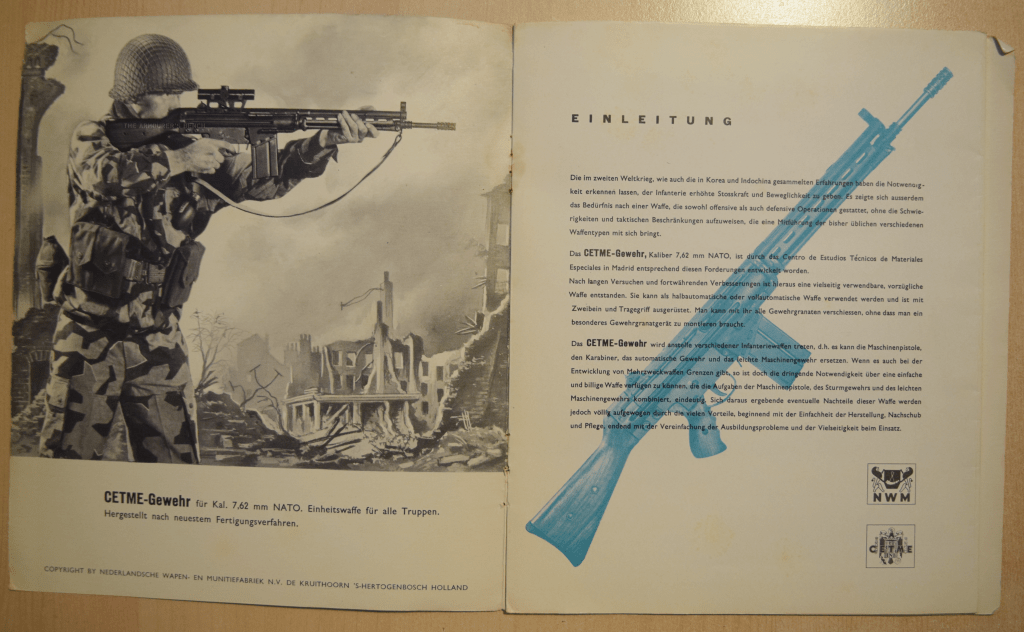
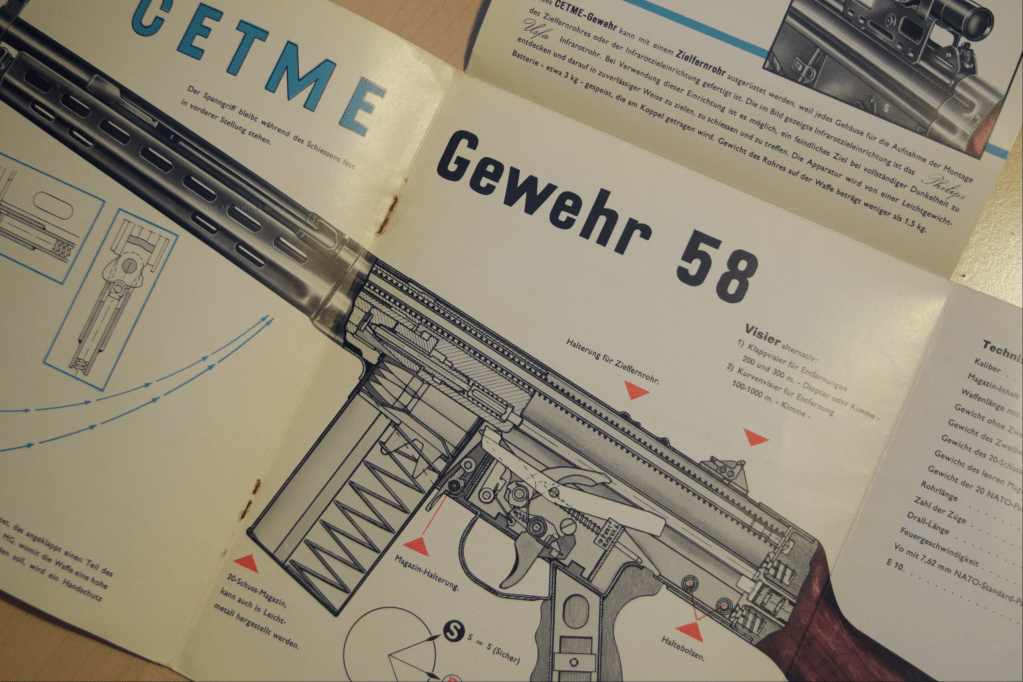
In this video/article we’ll examine an original 1950s brochure for the CETME ‘Rifle 58’, which was manufactured under license by Nederlandse Wapen en Munitiefabrik (NWM) in the Netherlands. The rifle would later become more widely known as the G3 when a version of the weapon was adopted by the Bundeswher.

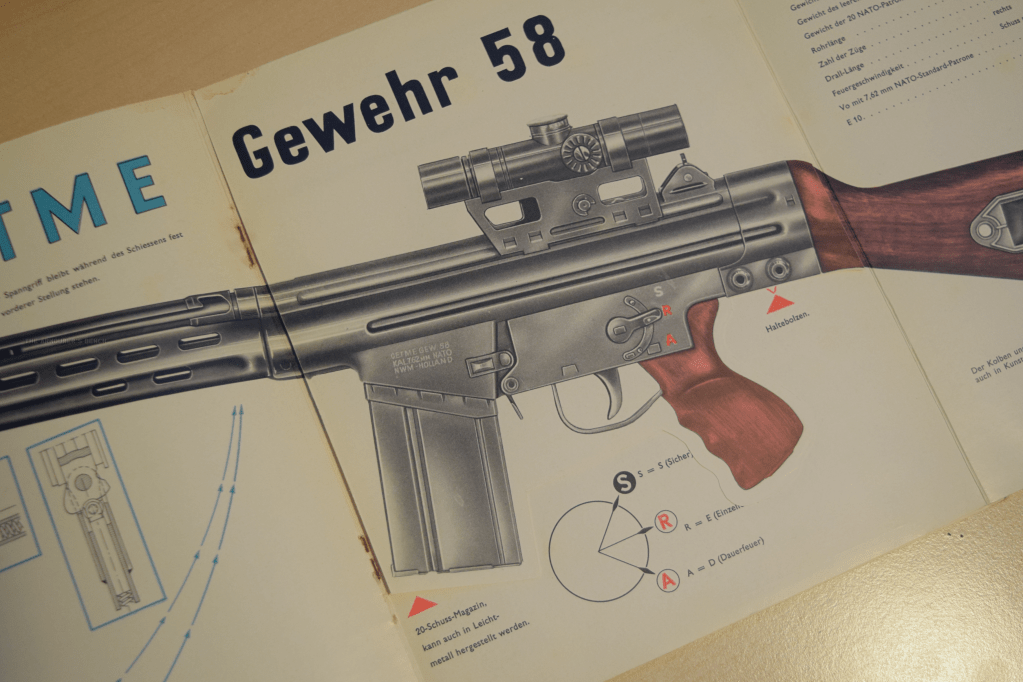
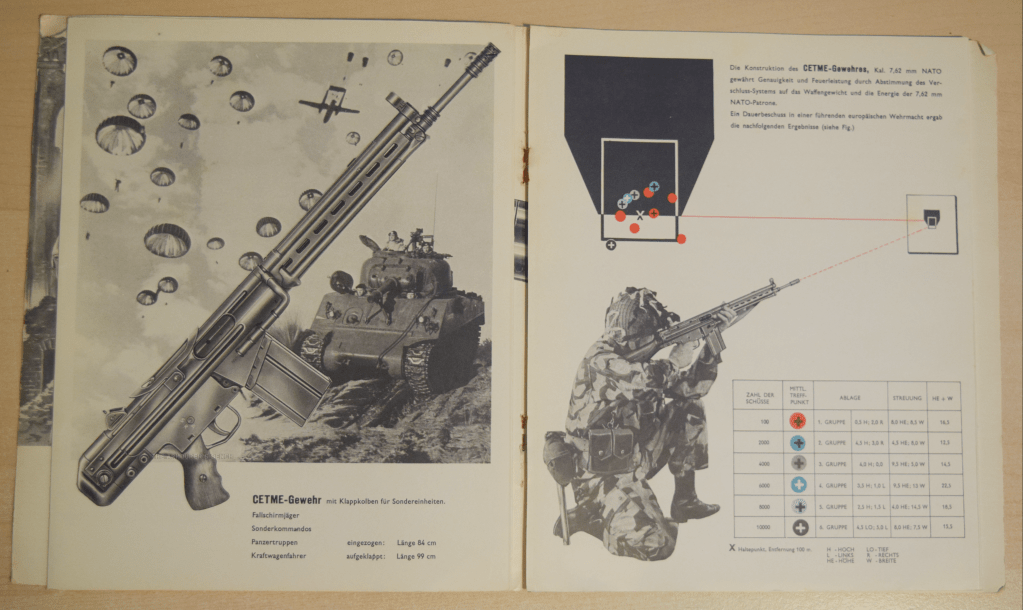
Printed in 1957, the brochure is in German and refers to the ‘Gewehr 58’, it is a quality publication and a considerable outlay appears to have been made with good photographs, excellent graphic design and a very clever ‘fold out’ central section which highlights the features of the rifle.

The brochure details the rifles operation, attributes and some of its accessories including optics, bipods, rifle grenades and what appears to be an intriguing suppressor. The brochure represents an interesting period in the G3’s history as it began to enter service in Spain and in West Germany. (though in slightly different chamberings).

Once adopted the rifle would later be produced in West Germany by Rheinmetall (see example below) and Heckler & Koch. Heckler & Koch would eventually acquire the sole rights to production and the G3 would become synonymous with the company.

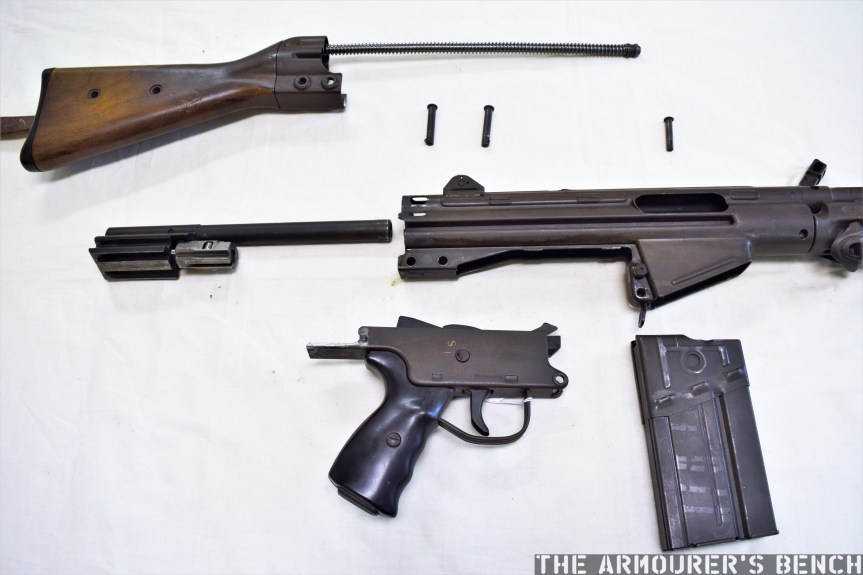
Rhinemetall-produced G3 field stripped (Matthew Moss)

We have previously taken an in-depth look at an early G3, manufactured by Rhinemetall, check out that video/article here.

The brochure is part of the reference collection TAB is building, check out more videos on items from the collection here.

If you enjoyed this video and article please consider supporting our work here. We have some great perks available for Patreon Supporters – including custom stickers and early access to videos! Thank you for your support!
West German Police Pistols

In 1976, the West German Police issued a specification for a new small, lightweight service pistol to replace their stocks of Walther P38/P1′s and various 7.65×17mm (.32 ACP) pistols.

The police specification limited the new pistols weight to 2.2lb/35oz/1kg, it was to be no larger than 18x13x3.4cm and was to be quick to draw and safe to carry with a round in the chamber.

P230-S108688_02__00699.1574272452.jpg
SIG Sauer P230 (Edelweiss Arms)

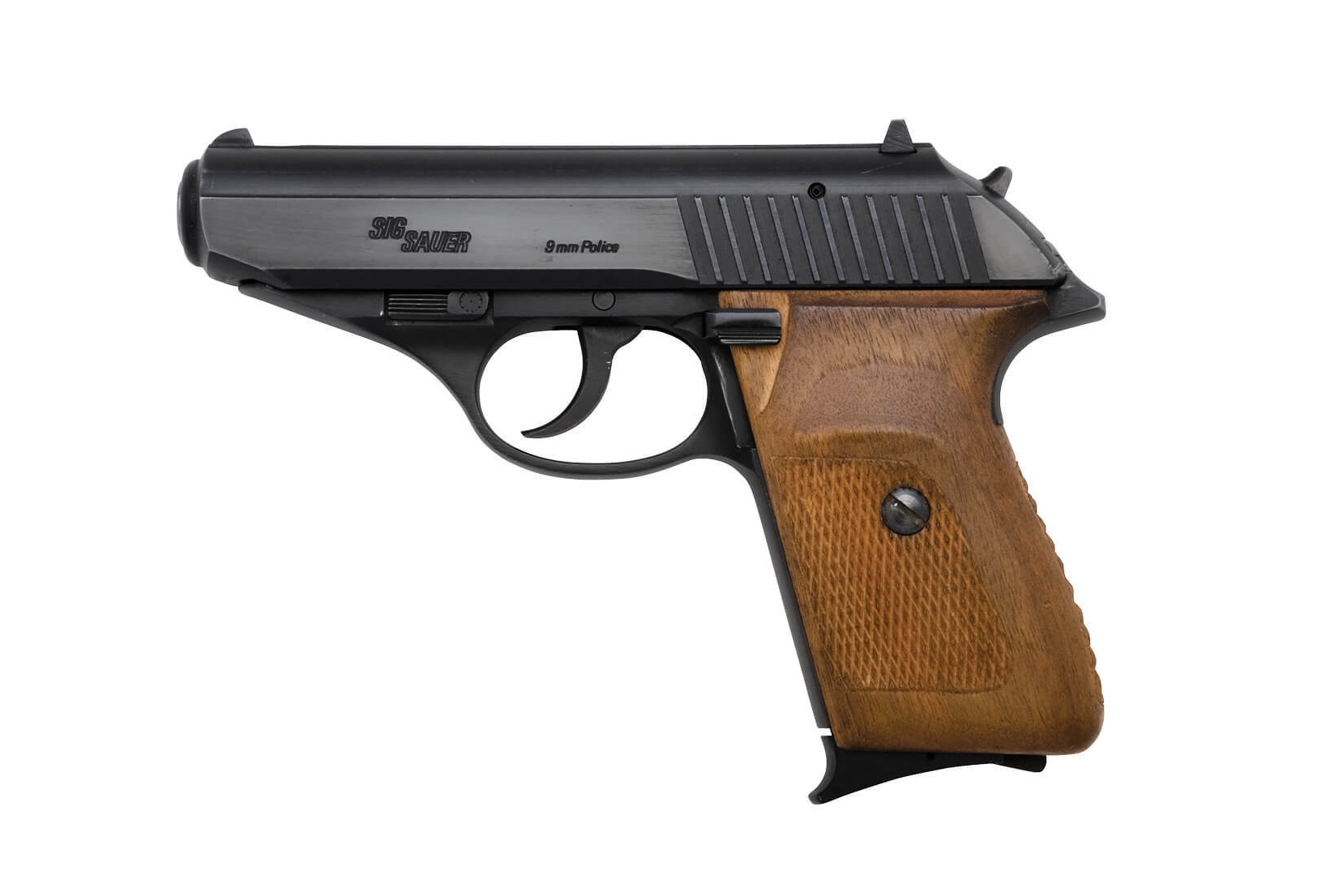
Earlier trials had taken place in 1974 examining pistols chambered in the 9×18mm Ultra round. Walther had submitted the PP Super and SIG-Sauer had entered the P230 for testing but with increasing criminal and terrorist activity in West Germany during the 1970s it was decided to adopt a pistol chambered in the more powerful 9×19mm round.

Mauser HSC.png

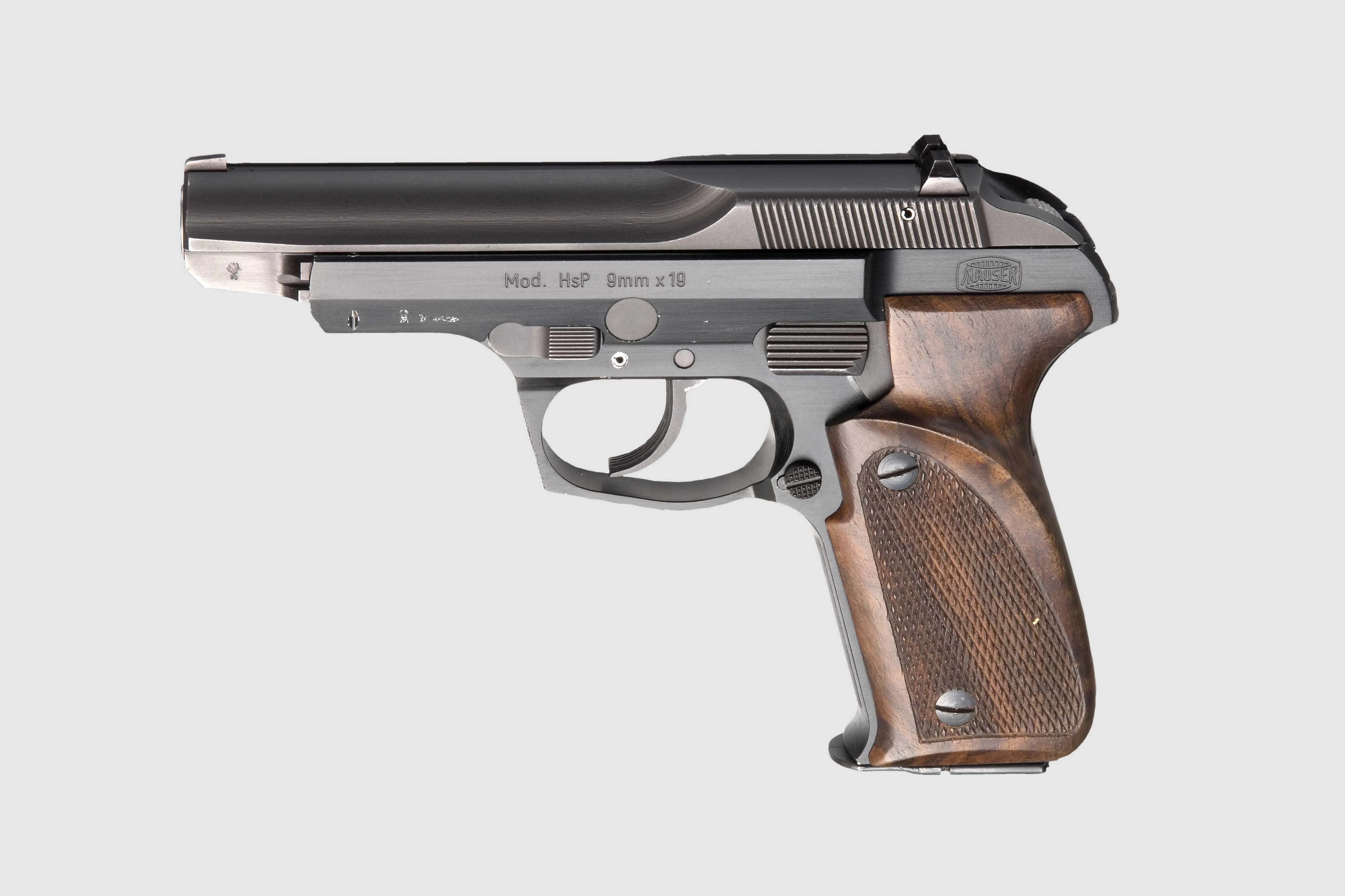
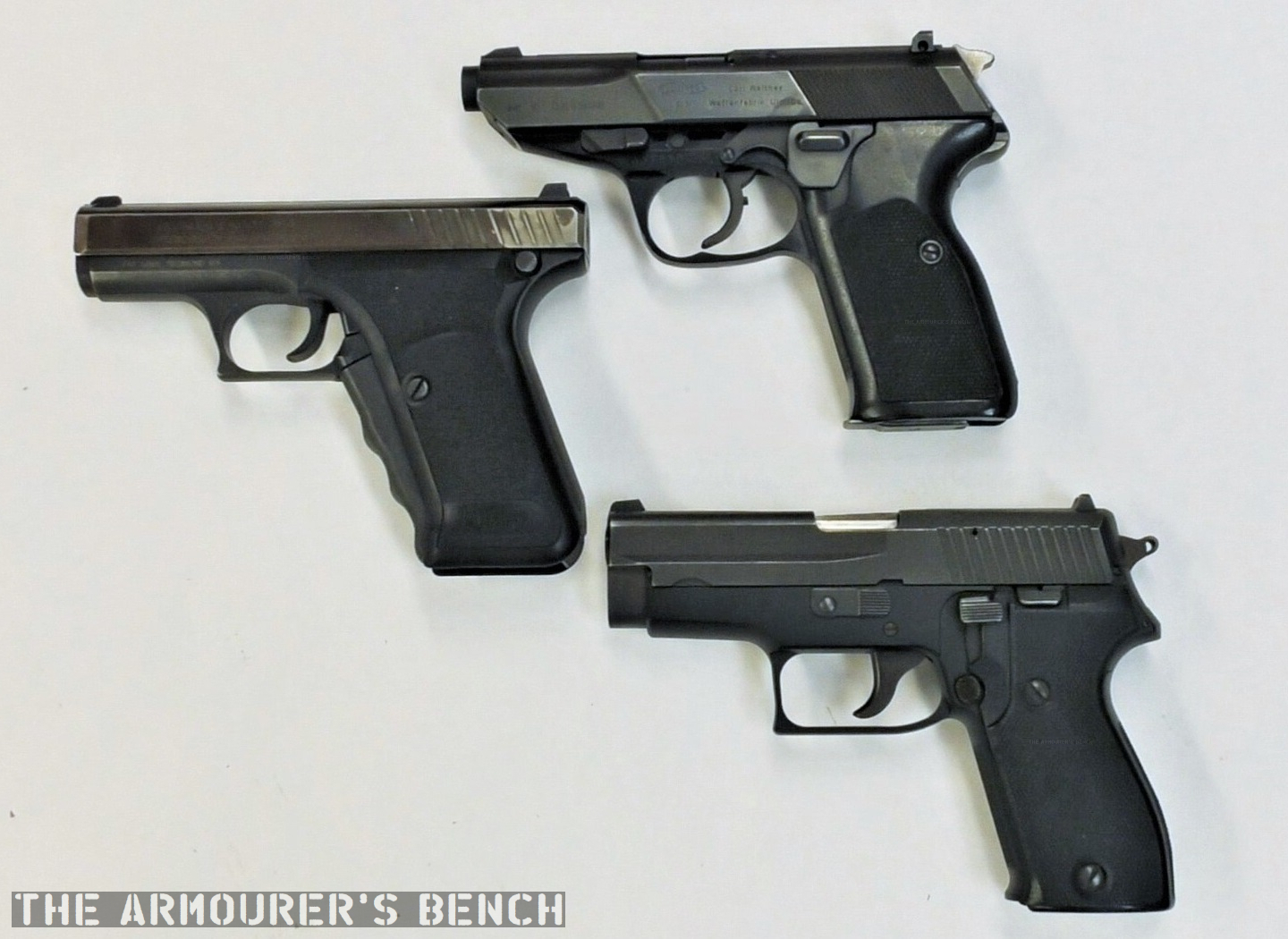
As a result a new round of trials with the new specifications was arranged. Mauser, Walther, SIG-Sauer and Heckler & Koch all submitted designs. Mauser offered the HsP,Walther offered the P5, SIG-Sauer entered the P225 (which became the P6) and Heckler & Koch submitted the PSP, later known as the P7.

The trials involved a gruelling 10,000 round endurance test (with cleaning after every 1,000 rounds), a rapid-rifle 500 round test and accuracy testing at 25 metres. One of the main problems of producing the desired sub-compact sized pistol in 9×19mm was that after approximately 1,000 rounds the pistol’s recoil spring may become prone to failure.

The police specification called for a 10,000 round lifespan. Each had their own approach; Walther’s P5 tackled the problem by using the dual-spring system used in the P38/P1 while Heckler & Koch used a gas-delayed blowback system in the P7. SIG-Sauer, however, employed the simplest solution – a heavy gauge braided spring to give increased strength combined with the Short Recoil action. This was also substantially cheaper to manufacture.

German Police Pistols (2).Movie_Snapshotwm
Clockwise: Walther P5, SIG Sauer P6, HK P7 (Matthew Moss)

The short-recoil, lever-locked Mauser HsP was eventually dropped due to durability issues, while the Walther P5, SIG-Sauer’s P6, and Heckler & Koch’s P7 were successful and deemed fit for service and adopted by various German police departments.

The P5 was adopted by Baden-Württemberg and Rhineland-Palatinate’s State Police as well as the Dutch national police. TheP6 was the most widely adopted as it was the cheapest option available, with a total of seven German state police forces adopting it along with orders from the border police, railway police and the Federal Criminal Police Office. The most expensive of the pistols, the P7 was favoured by more specialist units like GSG9.

Our thanks to our friends at Gunlab for allowing us to take a look at these pistols.


If you enjoyed the video and this article please consider supporting our work here. We have some great perks available for Patreon Supporters. You can also support us via one-time donations here.


CETME L vs HK G41

In this week’s video we compare two of the last roller-delayed production rifles: the Spanish CETME Modelo L and the Heckler & Koch G41. These rifles represent the last evolutions of two strands of the roller-delayed development tree – the Spanish and the German.

cetme g41
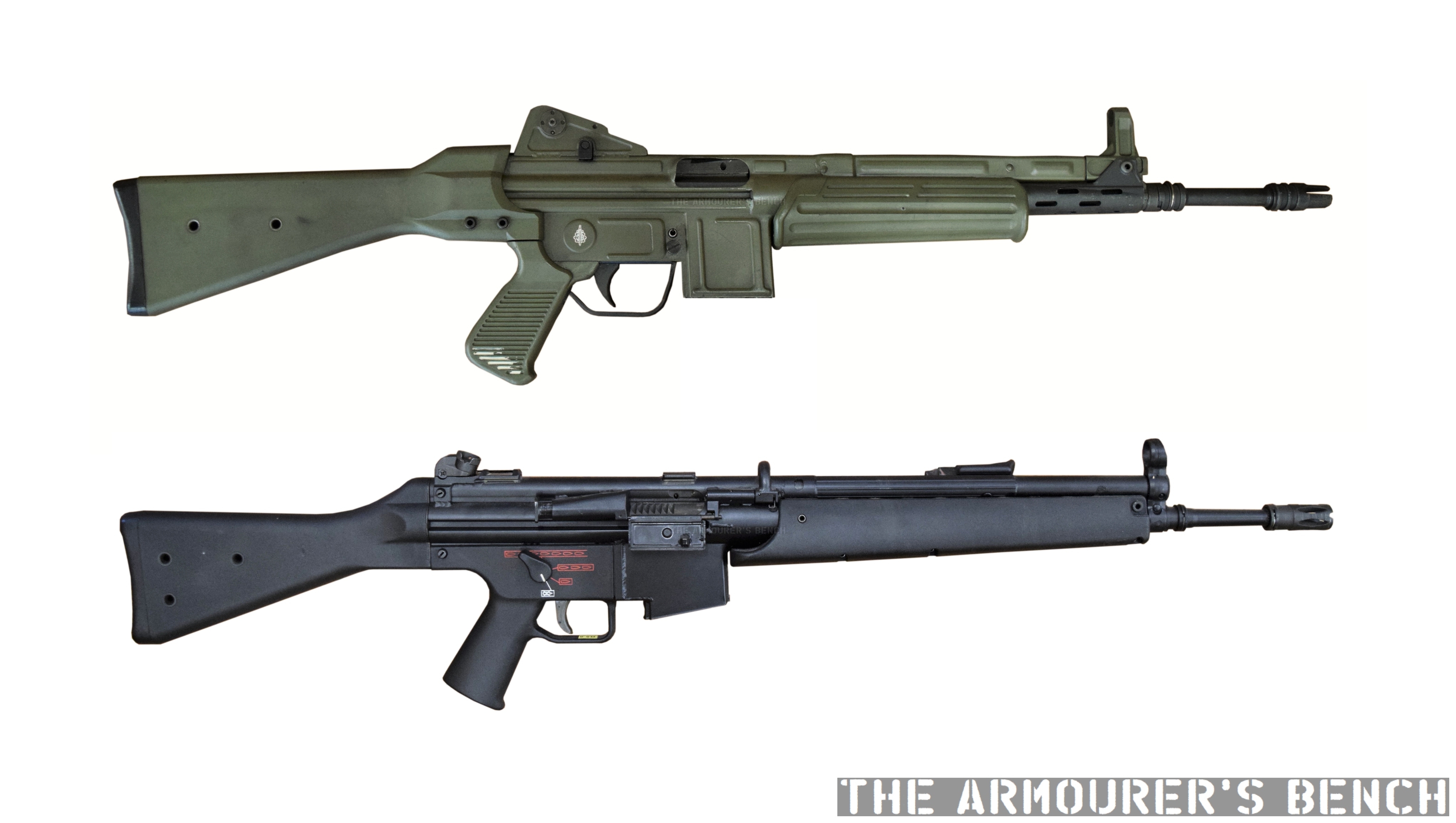
The CETME L & HK G41 (Matthew Moss)

Both rifles use the roller-delayed blowback action and are both chambered in NATO SS109 5.56x45mm ball round, have have 1:7 twist barrels and feed from STANAG magazines. Both were developed during the 1980s and both are also capable of firing rifle grenades. 

The CETME L

left_h13_cetme_l
Left-side profile of the CETME L (Matthew Moss)

The CETME has a bit of a reputation for being cheap but this relatively unbattered example feels solid enough. Both of the rifles disassemble in much the same way with the butt assembly being removed to allow the bolt to be pulled out of the rear.

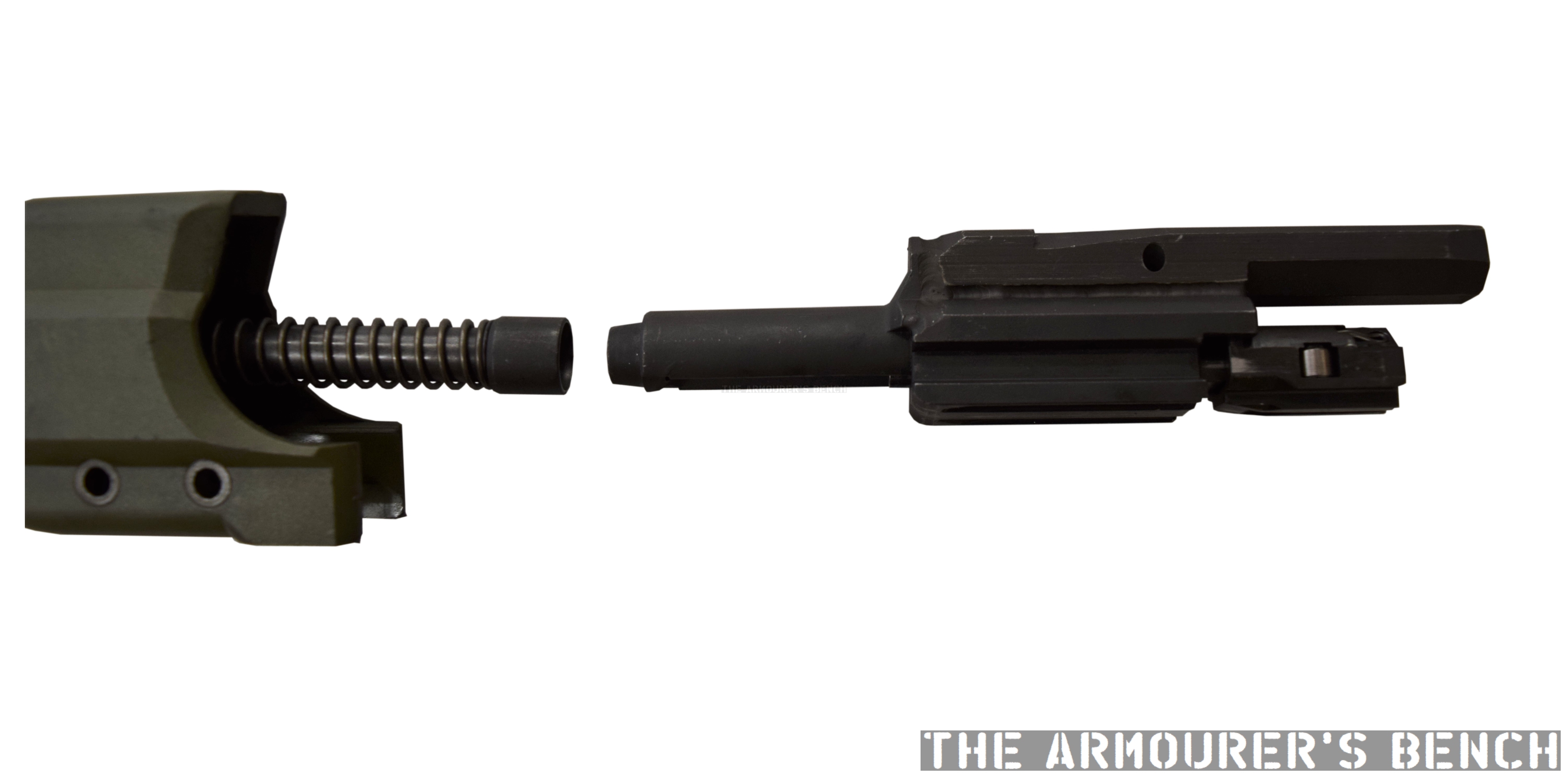
Most notable about the CETME’s bolt is the long rod protruding out the back of the bolt assembly. This acts on the recoil spring housed inside the butt. The L’s recoil spring, unlike the G41s, is captive inside the butt rather than nested inside the rear of the bolt carrier. The CETME’s bolt is also much squarer than the G41’s which probably simplified the machining of the bolt and designing the receiver stamping.

action_h13_cetme_l_1
The L’s bolt and butt assembly (Matthew Moss)

The L does not have a provision to lock its bolt back in a slot like the HK (no CETME slap for Spanish soldiers), however, it does have a bolt hold open, with the release located in the rear sight base.

The CETME has simpler folding aperture sights with 200–400m adjustments. It weighs in a 3.72kg or 8.2lbs unloaded and is 92.5cm or around 36in in length. The CETME has a simpler fire control group, with safe, semi and full-auto settings. It is not ambidextrous and only has a selector on the left side of the receiver. The CETME L has largely been replaced by the weapon that superseded the G41 – the gas-operated HK G36.

Heckler & Koch G41

left_h13_gewehr_41
The left-side profile of the G41 (Matthew Moss)

We have full article and video examining the G41 in detail here

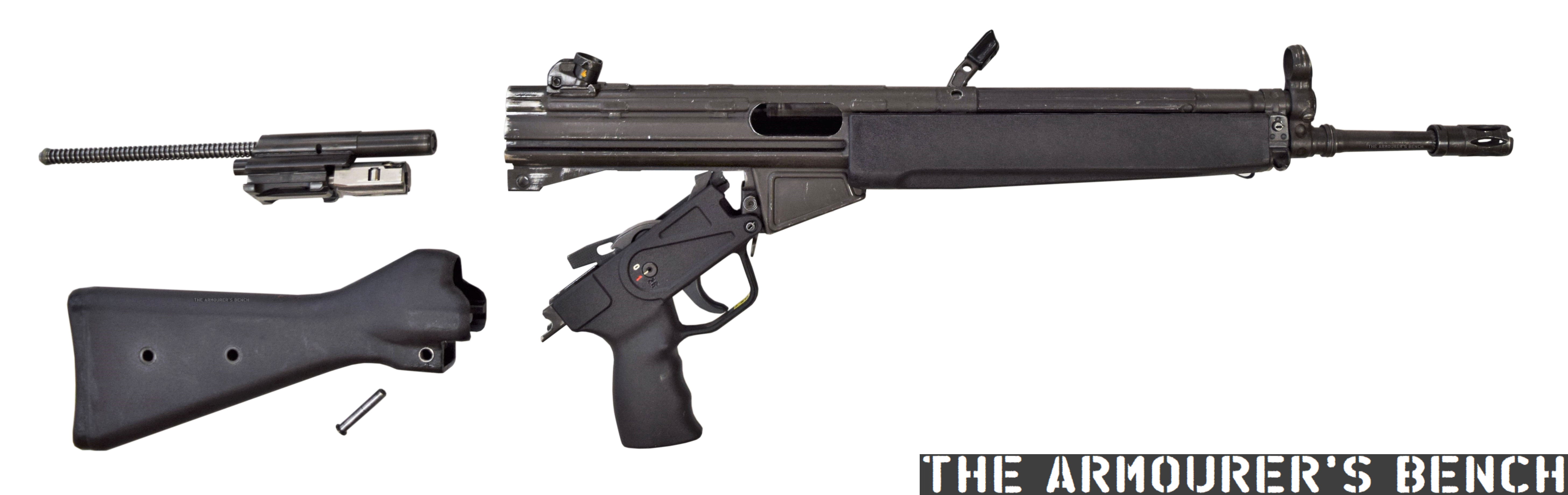
HK finalised the G41’s design in 1979, a refinement of the 5.56x45mm HK33, it sought to modernise the platform and borrowed features from the M16 family of rifles including a bolt release catch, dust cover and forward assist.

The G41 has a butt assembly that fits into the receiver rather than around it. So its cross pins are at the top and bottom of the receiver rather than both at the bottom. This spreads the stresses on the receiver vertically rather than laterally.

g4 cetme l
Comparison of the G41 and Model L’s bolts (Matthew Moss)

The G41 has both the classic HK hold open notch and a AR-style paddle bolt release. HK’s dioptre drum sights have adjustments from 100 to 400m, and can mount a scope using an HK claw mount. G41 is the heavier of the two rifles, weighing in at 4.31kg or 9.5lbs. The G41 is also slightly longer than the L at nearly 100cm or 39in in length.

The HK has an ambidextrous selector with positions for safe, semi, 3-round burst and finally full-auto. The G41, unlike the L, also has a folding carrying handle near its point of balance.

The G41 represents the last evolution of HK’s infantry rifles using the roller-delayed blowback action. It comes from a period when HK were developing what they hoped would be the next generation of small arms technology and with the collapse of the G11 programme and the lack of sales of the G41 saw it superseded in the 1990s by the gas-operated G36.


If you enjoyed the video and this article please consider supporting our work here. We have some great perks available for Patreon Supporters.

Introducing the TAB Advance Combat Rifle Colouring Book!

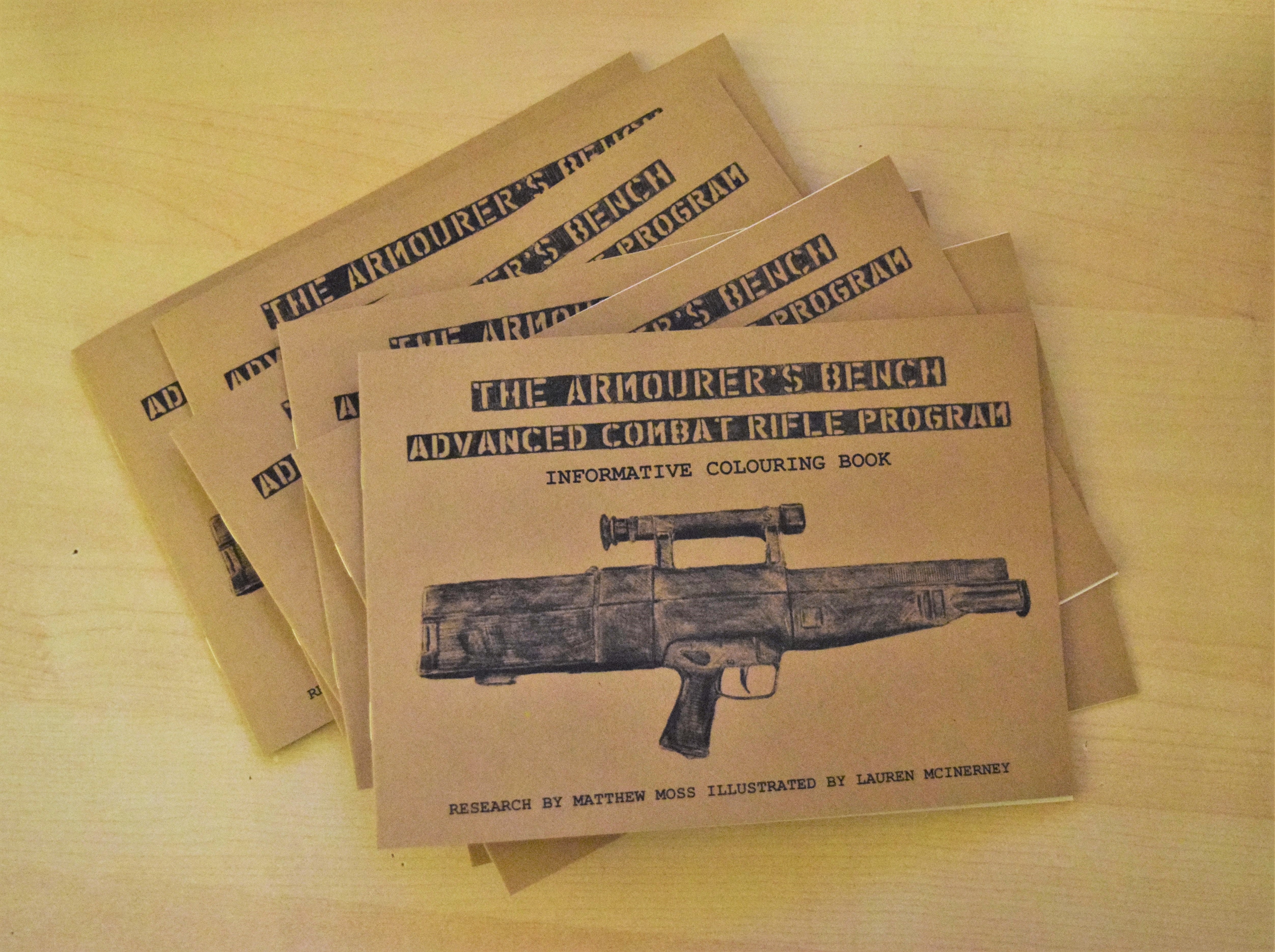
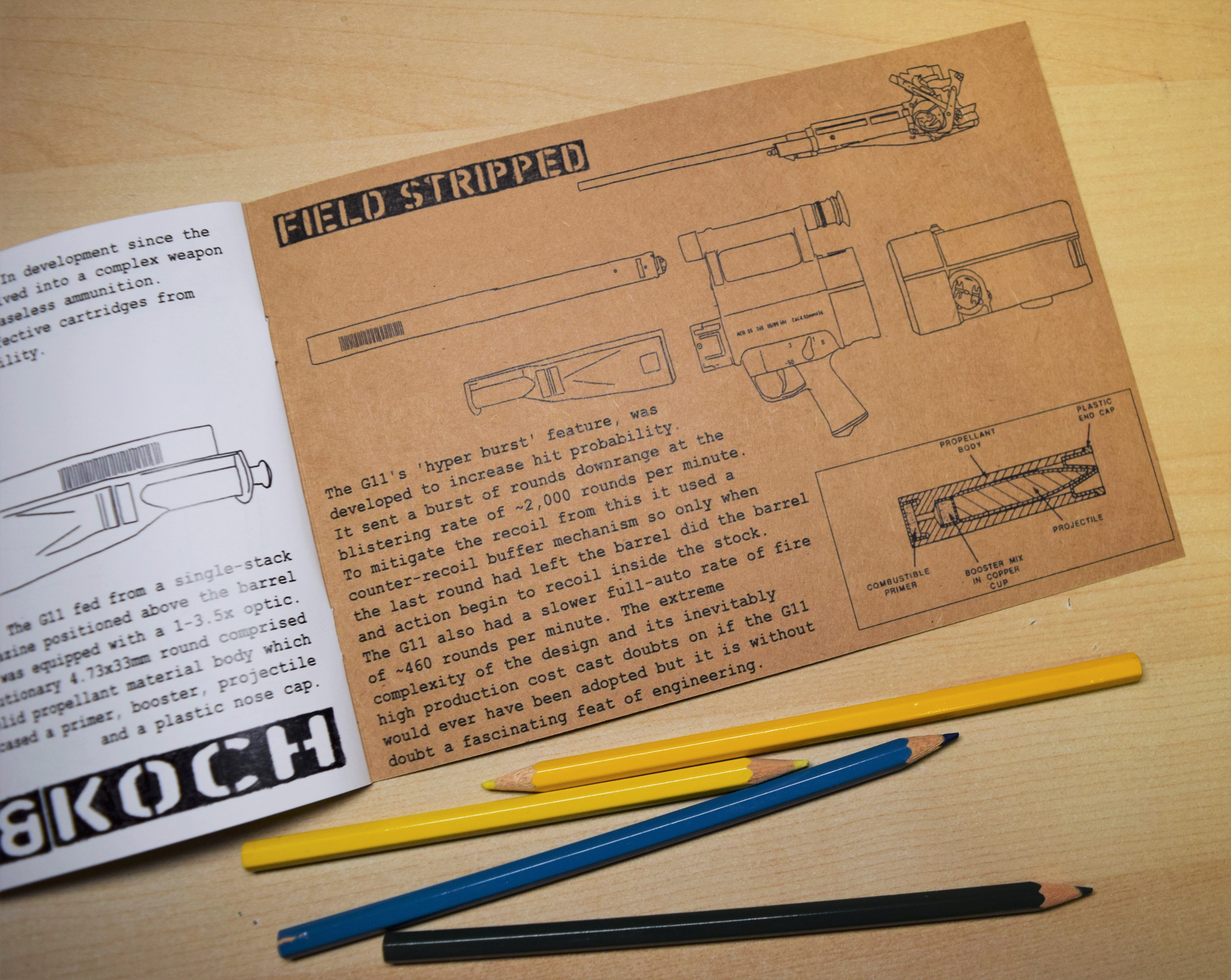
The Armourer’s Bench are proud to introduce our very first ‘informative colouring (coloring) book’. Not only can you colour in the prototypes from the US Army’s Advanced Combat Rifle trials but you can also learn about the guns, how they worked, performed and the outcome of the trial as you colour!

DSC_0009

Why a colouring book? Well, simply put, no one else has done one before! With the help of our brilliant illustrator, Lauren McInnerney, we put the book together to give you guys something a bit different, something fun!

We have a limited run of these little books and we will do our very best to get them our ASAP if you order them for Christmas.

DSC_0060

The book includes detailed original illustrations of each of the four ACR guns: the AAI, Colt, Steyr and of course the iconic HK G11. The 8-page booklets are 8×6″ (or A5 sized) and are available now from our website for $6.00, plus shipping.

You can find them in our new shop, here!

All the funds raised from the sale of the books will go toward supporting TAB through 2020.

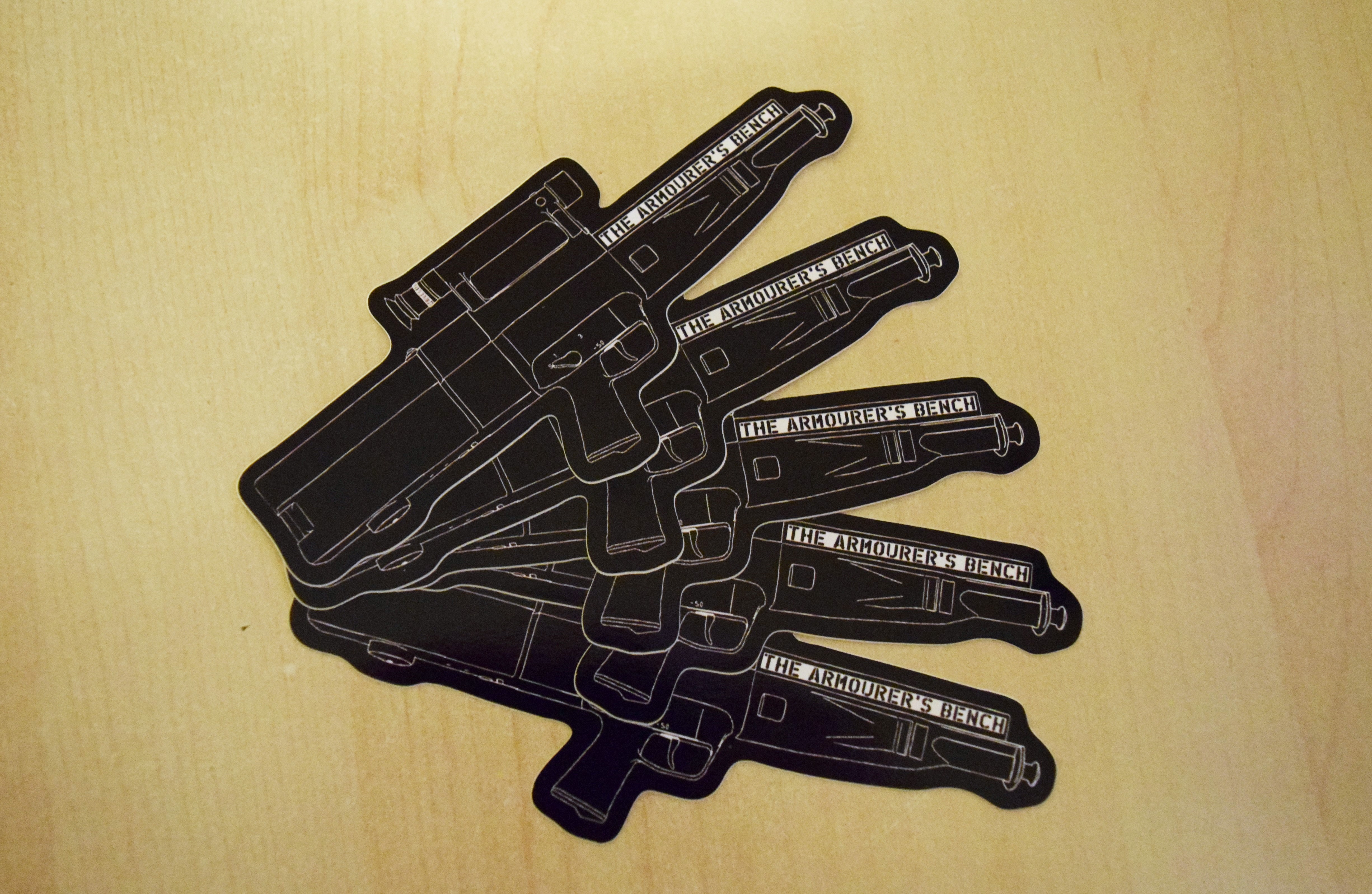
But wait! That’s not all! We also have some extremely cool new stickers available. These 4″ cutout vinyl stickers feature the TAB logo on an illustration of the G11.
DSC_0021

And last but not least we also have a small run of TAB logo badges available too!

DSC_0027

You can find them all in our new shop, here!

Heckler & Koch HK33

Heckler & Koch’s first 5.56×45 rifle, the HK33, was introduced in the late 1960s as a response to the emergence of the new 5.56x45mm round and the introduction of the FN CAL. The HK33 is little more than a scaled down version of HK’s successful 7.62×51 G3. Developed by Tilo Möller, the HK33 used the same roller delayed blowback action and shares most of the G3’s features.

ccccccccccccccccccccc
Left & right views of the HK33 (Matthew Moss)

It has a stamped receiver and uses the same plastic furniture and pistol grip/trigger mechanism housing as the G3. The rifle is 39 inches or 92cm long and is by no means a light weapon, weighing around 4kg or 8.7 lbs. The HK33 feeds from 25, 30 or 40 round proprietary HK magazines.

The rifle came in main two main variants a full length version with a fixed stock, which could be fitted with a collapsing stock, and a shortened K-variant with a shorter barrel. The weapon came with either a safe, semi and full auto or safe, semi, 3-round burst fire control mechanism.

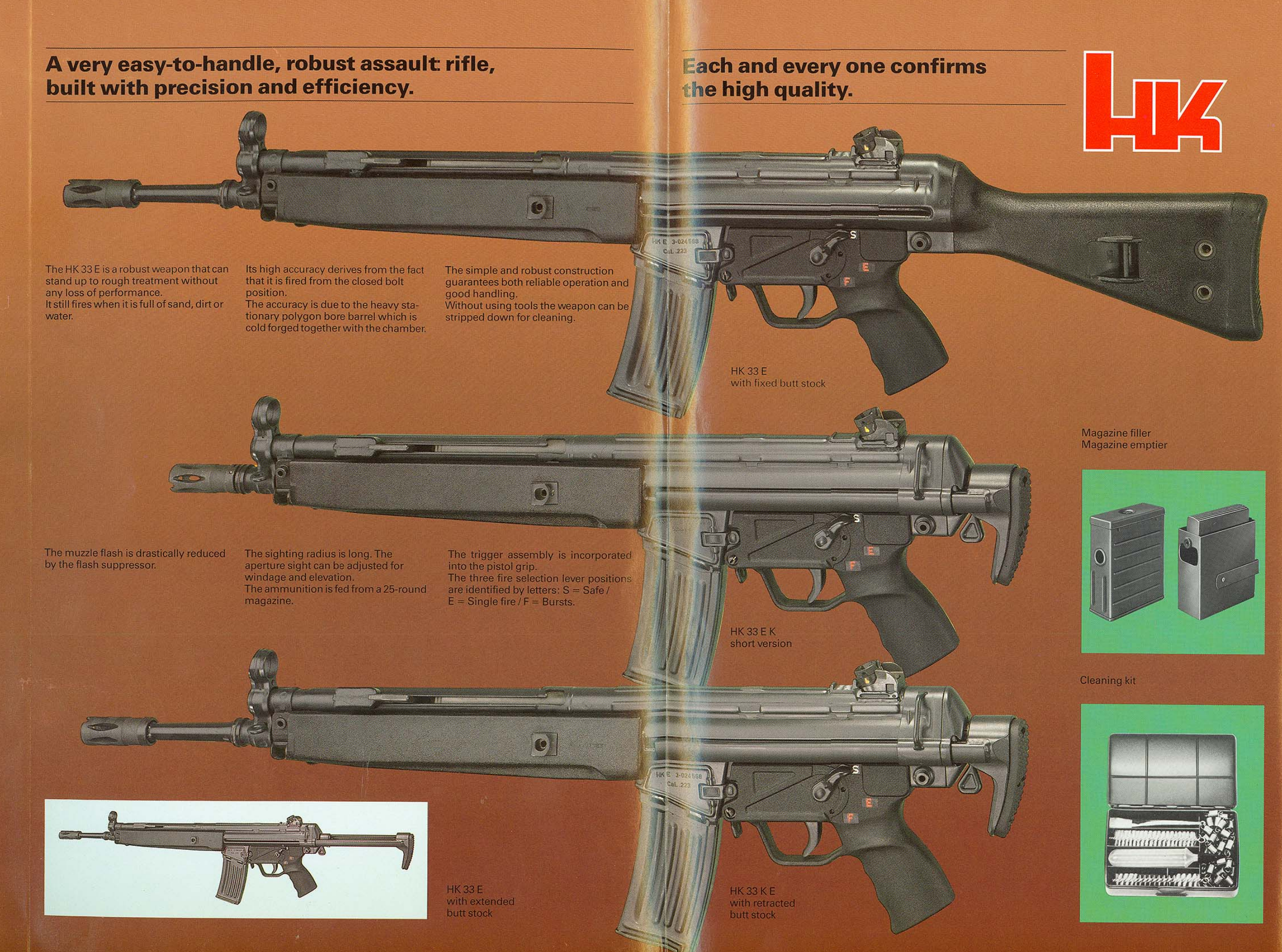
hk33 brochure 1
HK factory brochure showing the variants of the HK33 (Heckler & Koch)

The HK33 was not adopted by the West German Army, however, it did see extensive use with Germany’s federal state and police forces and the Bundeswehr special forces. While it wasn’t adopted at home it was a successful export weapon with dozens of countries purchasing and adopting the rifle. France tested the improved HK33F in the Army 1970s and although it performed well the FAMAS was adopted instead. A production license was sold to Thailand who adopted the HK33, purchasing 40,000 rifles and the license to manufacture 30,000 more. Thailand also developed their own unique bull pup version of the rifle, the Type 11.

right_disassemblied_h13_gewehr_41_hk_33a
HK33 field stripped (Matthew Moss)

Malaysia also purchased 55,000 HK33s and the Spanish Guardia Civil used them for a time. The manufacturing rights for the HK33 were also sold to Portugal for production at Fabrica Militar de Prata and to Turkey where it remains in production at MKEK.

action_h13_gewehr_41_hk_33labeled
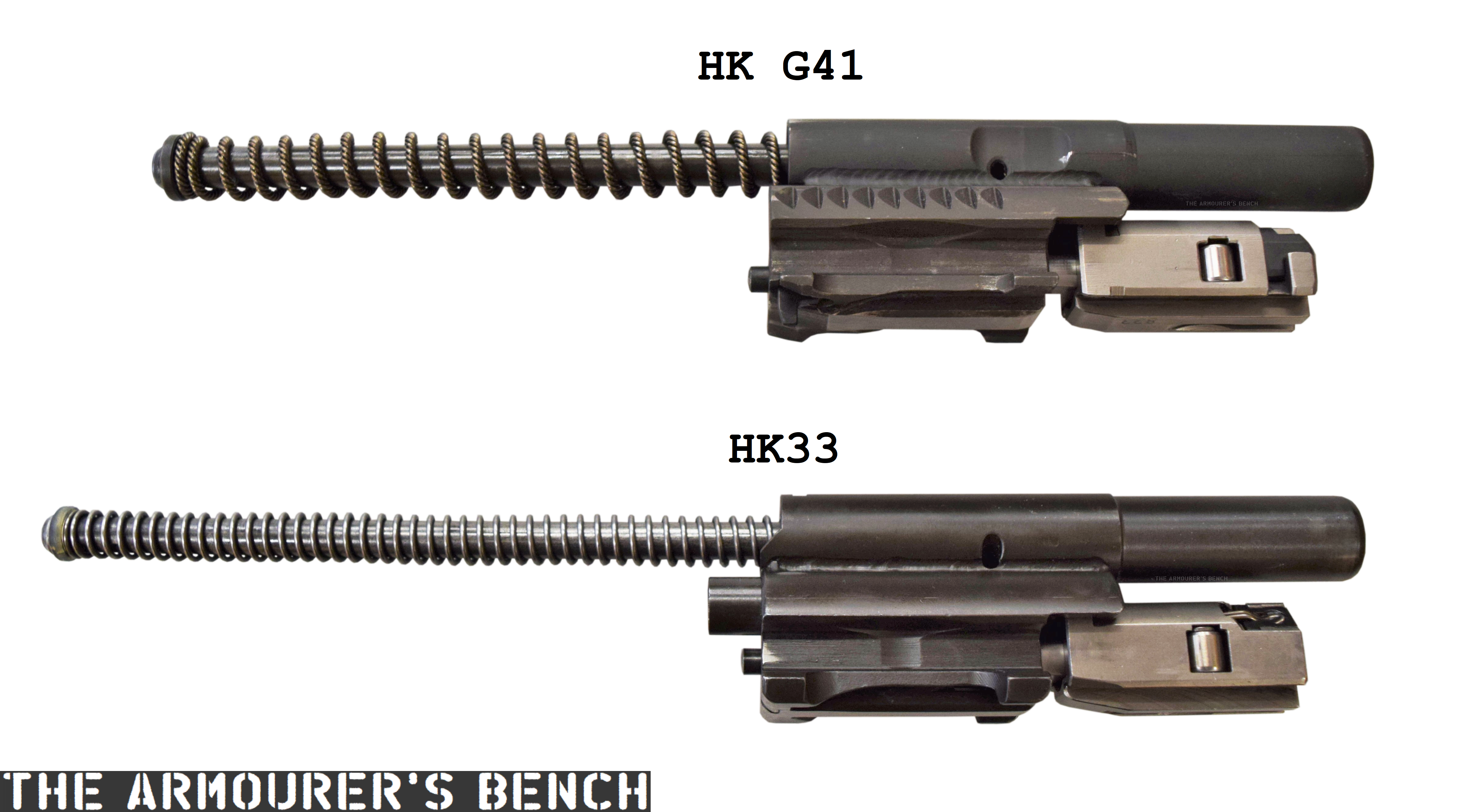
A comparison of the HK33’s bolt with the later HK G41 (Matthew Moss)

HK produced the HK33 from 1968 through to the late 1980s. It also provided the basis for the HK53 5.56 ‘submachine gun’ which we have covered previously. It was also the basis of the less successful G41, which we’ve also covered in a full length episode, you can find this here. The similarities with the HK33 are easy to see but the G41 has a number of subtle changes.

If you enjoyed the video and this article please consider supporting our work here.


Specifications (from 1985 factory brochure):

Overall Length (with fixed stock): 36in /92cm
Barrel Length: 15.7in / 40cm
Weight: 8.7lbs / 4kg
Action: Roller-delayed blowback
Capacity: 25, 30 or 40-round box magazine
Calibre: 5.56x45mm


Bibliography:

Full Circle: A Treatise on Roller Locking, R. Blake Stevens (2006)

HK33 Factory Brochure, c.1966 (source)

HK33E Factory Brochure, c.1985 (source)