PTKM-1R: Russia’s Most Advanced Anti-Tank Mine

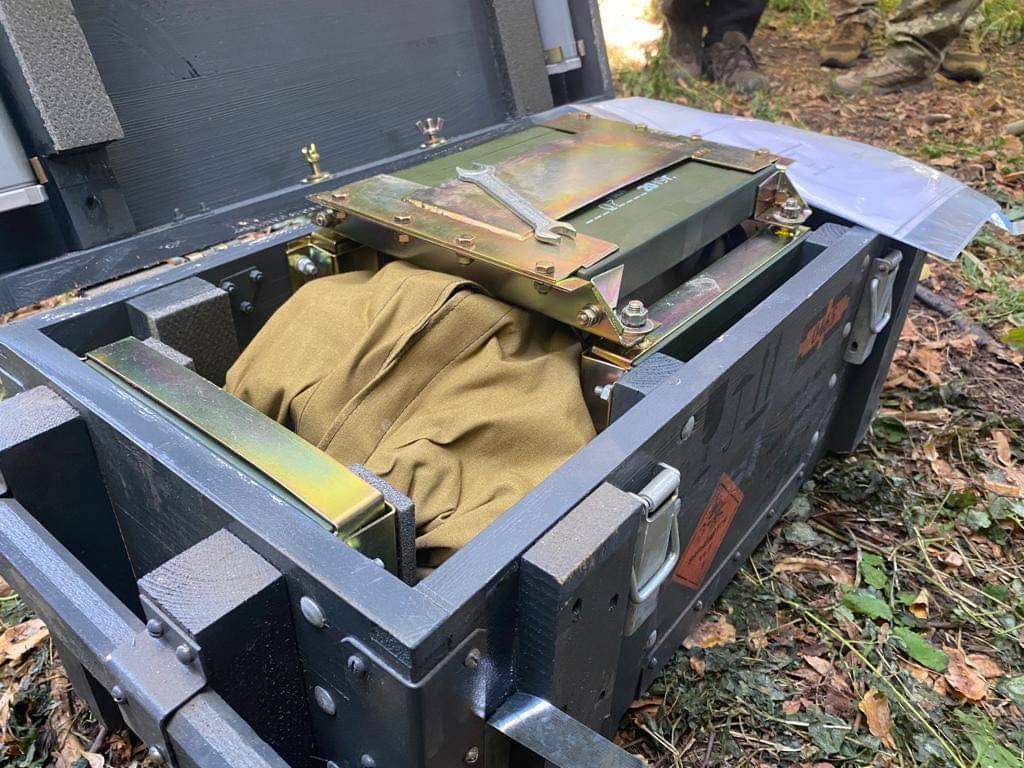
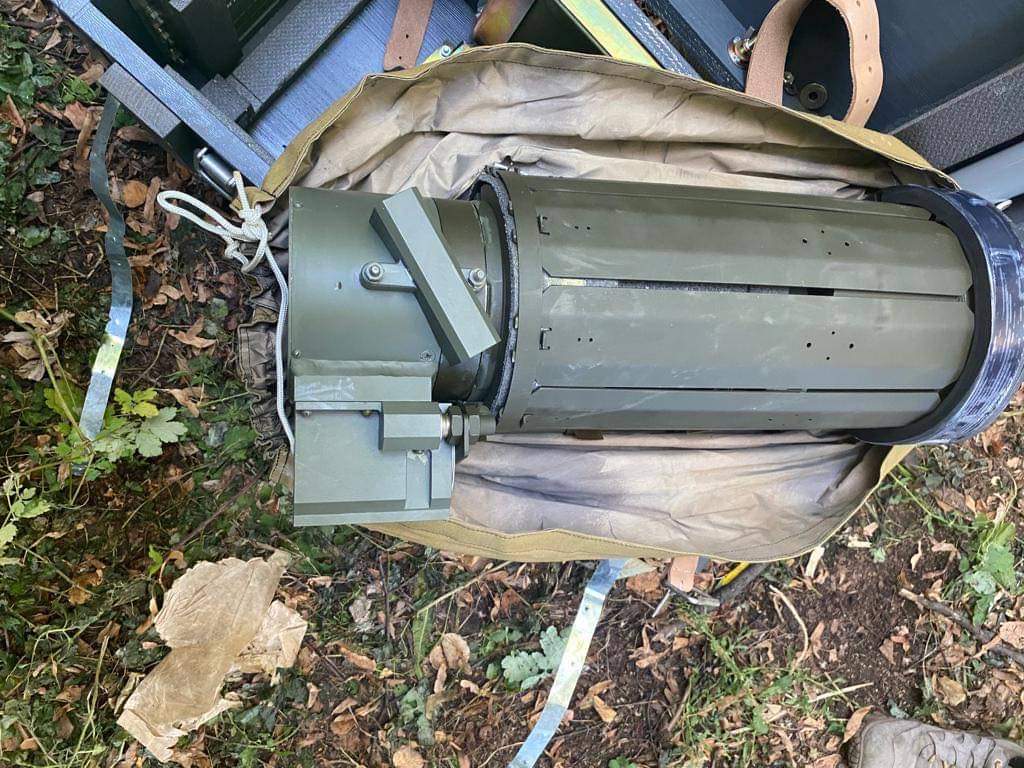
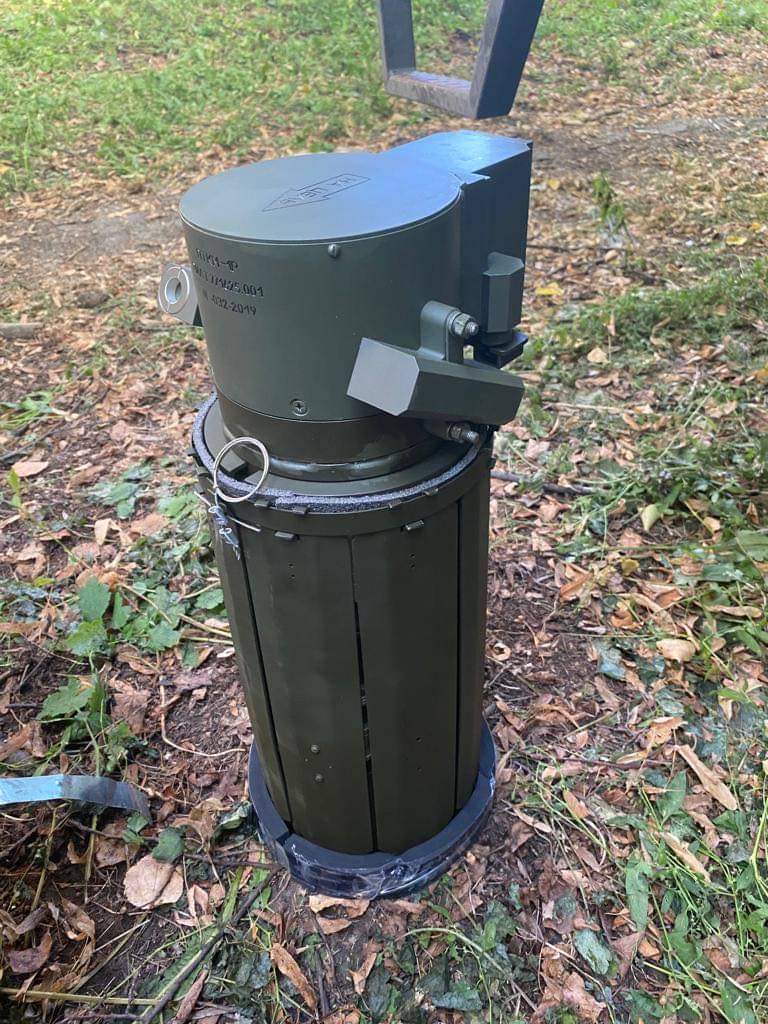
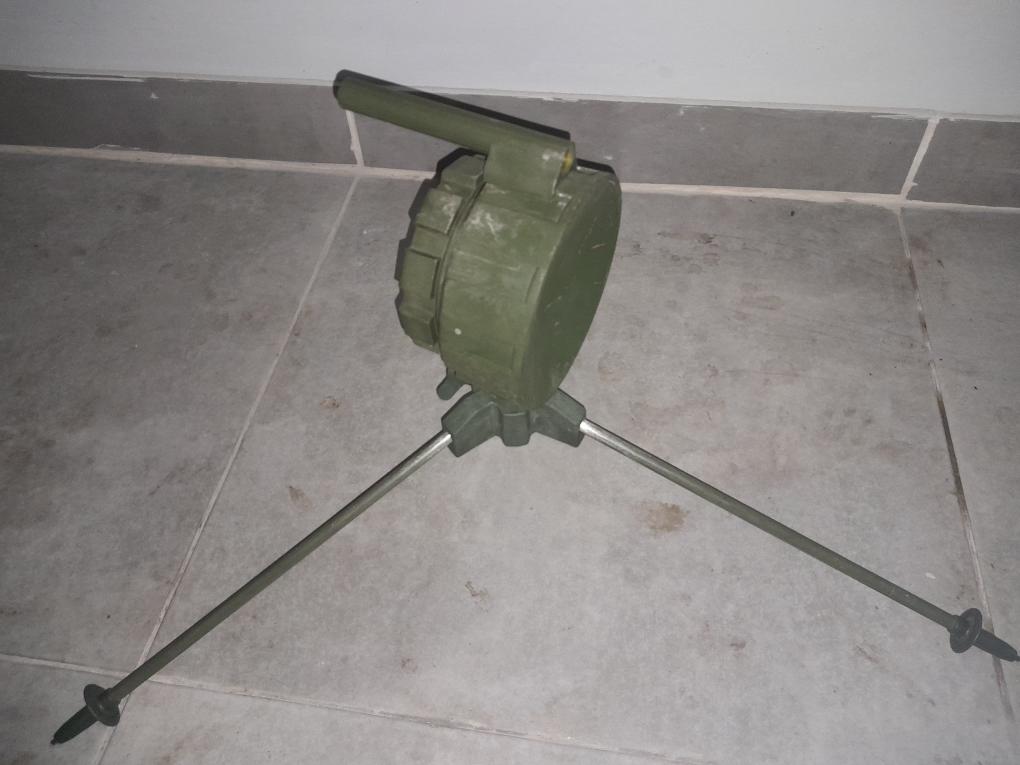
In recent weeks Ukrainian forces have shared photographs of captured PTKM-1R mines. These are without doubt Russia’s most advanced anti-tank mine design. The PTKM-1R’s main feature is that it is a top attack munition, much like a Javelin or NLAW. It can strike down from above at a tank’s least protected point – its roof and engine deck.  

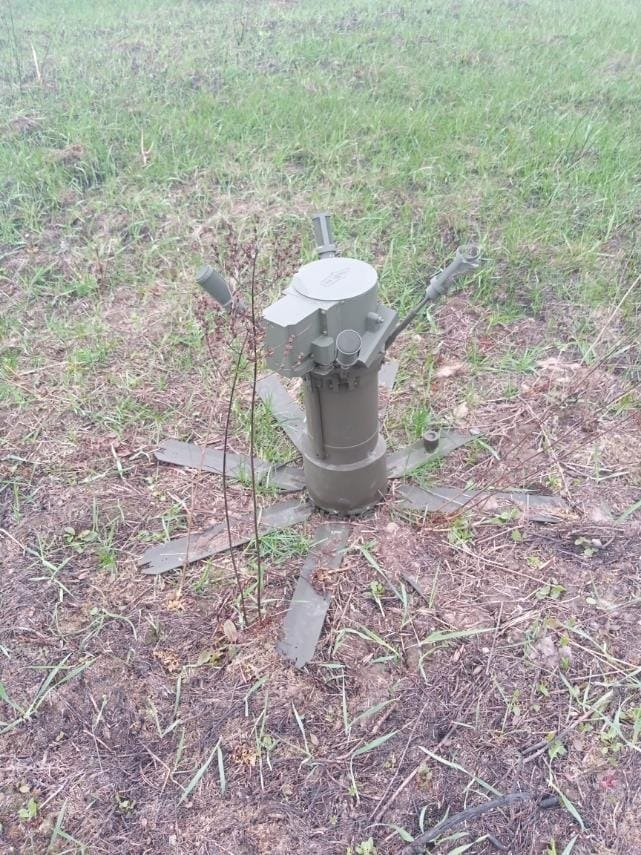
PTKM-1R photographed in Ukraine in April 2022 (via social media)

The mines essentially brand new and were only publicly unveiled by Rosoboronexport in November 2021 at the Army 2021 exposition and later at EDEX 2021. They have been adopted by the Russian armed forces on a limited basis. The PTKM-1R was first seen in Ukraine back in late April, appearing to show it deployed. Russia have released no footage of the mines in action.

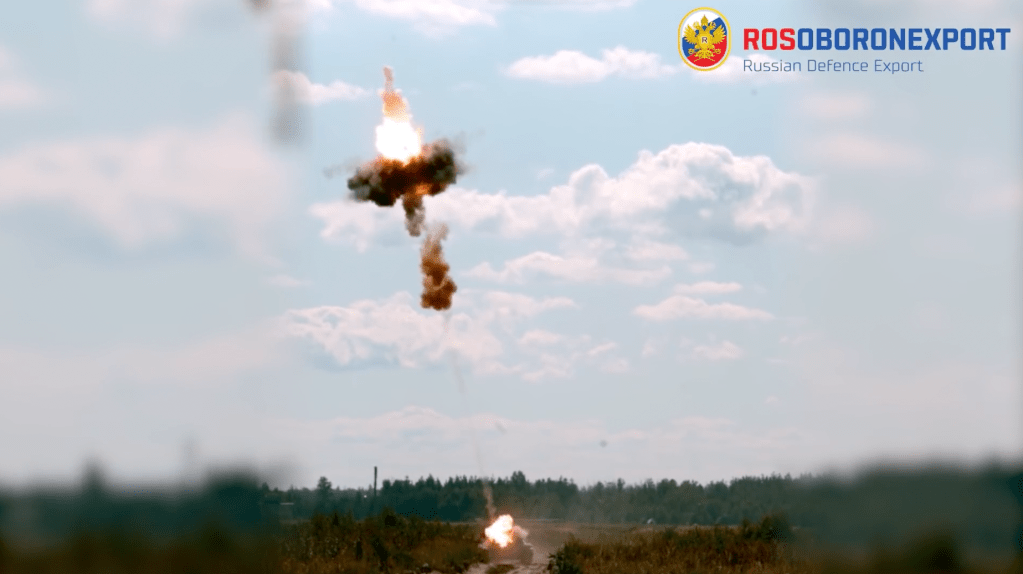
PTKM-1R submunition detonating and projecting its EPR down on a target during a 2021 demonstration (Rosoboronexport)

The PTKM-1R is a top-attack anti-tank/anti-vehicle mine which is designed to detect the passage of target vehicles using acoustic and seismic sensors. The launching charge then detonates and projects a submunition up into the air toward the target. As the sensor-fuzed submunition flies over the target and detects movement below it detonates firing an explosively formed penetrator (EFP) down onto the vehicle – attacking it where its armour is weakest. 

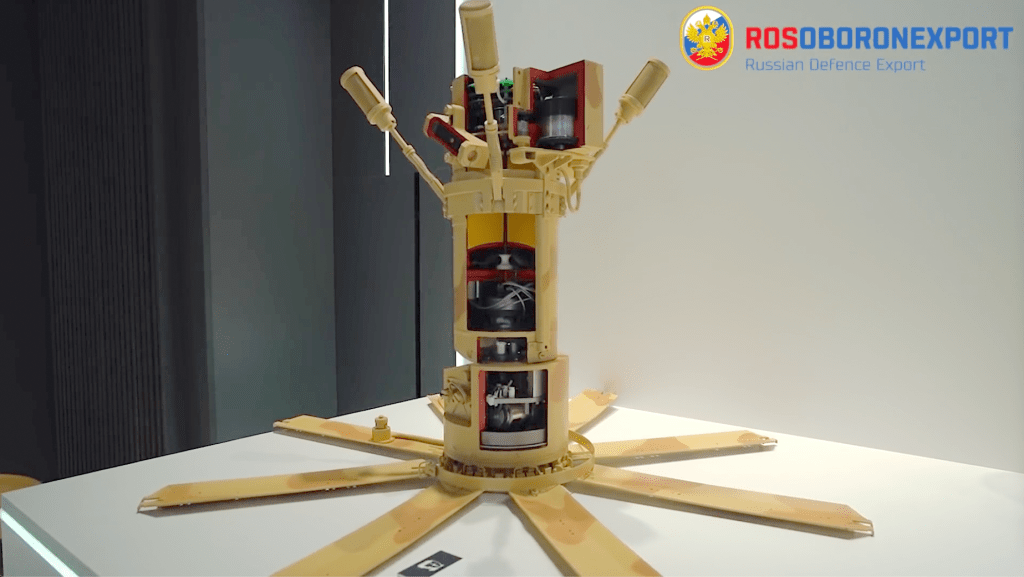
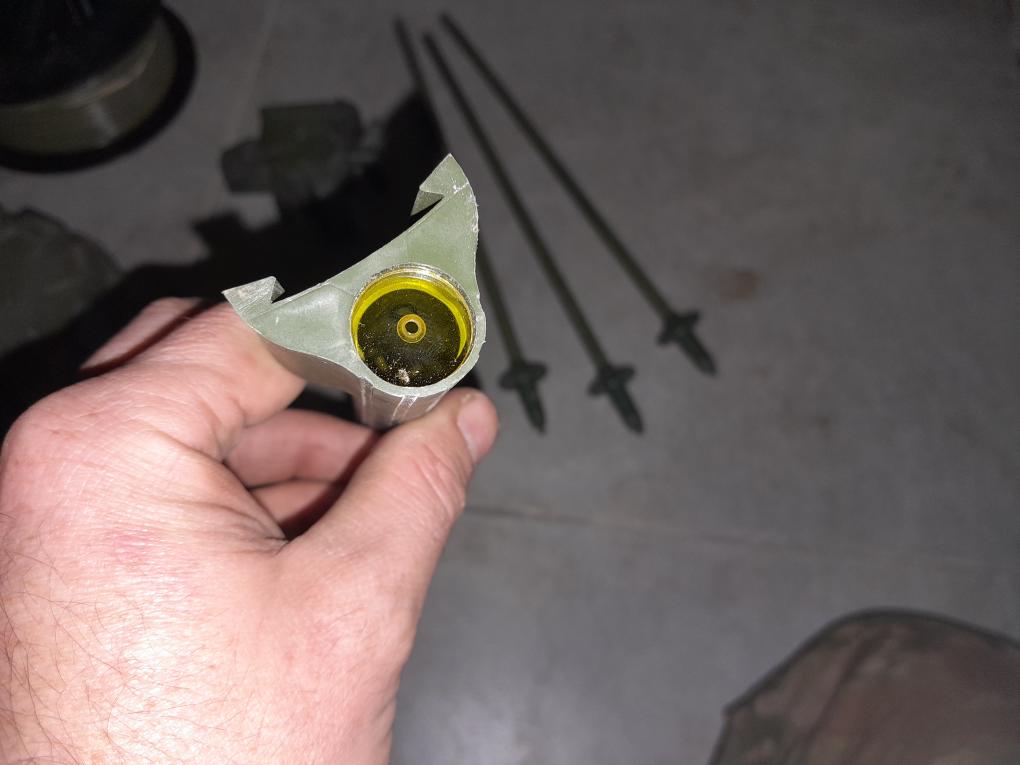
Sectioned PTKM-1R (Rosoboronexport)

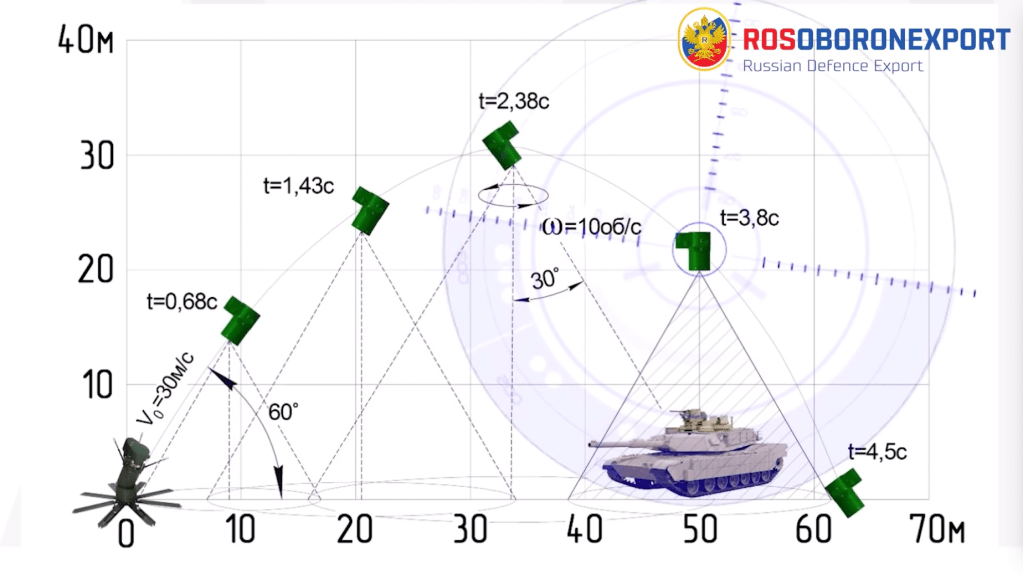
The mine can engage targets at between 5 and 50m but can detect a target out to 100m. Targets are initially identified by the mine by comparing the detected signature with acoustic and seismic signatures in its internal database. Once a target is detected the mine calculates a flight path and the launch unit tilts 30-degrees toward the target to create a parabolic ballistic trajectory over the target. While the mine can detect targets in a 360-degree arc the mine itself has a limited arc, limited by the need to tilt before firing, the mine has a an arrow with ‘towards target’ for orientating the mine in the direction of expected engagement but in an Army 2021 presentation Rosoboronexport suggest that the mine can turn itself to face its target, and track it if needed.

Rosoboronexport graphic showing the trajectory of the PTKM-1R (Rosoboronexport)

The submunition is launched into the air at a speed of 30m/s to a height of approximately 30 metres. It then uses infrared sensors and radar to pinpoint its target before detonating its shaped charged to create an explosively formed penetrator. Rosoboronexport claim the mine can penetrate ‘at least 70mm’ of armour. 

The PTKM-1R can be considered an off-route mine like the German DM-22 and Estonian PK14s which are known to be in use with Ukrainian forces but its ability to strike from above sets it apart. The nearest similar system is the short-lived US M93 Hornet developed by Textron in the 1980s.

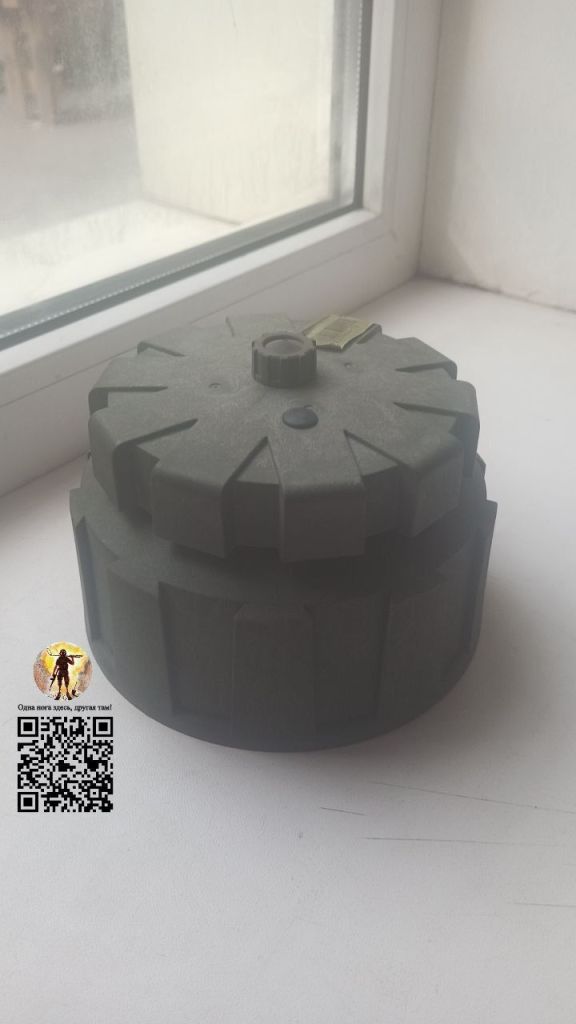
PTKM-1R captured in its transit chest, 10 September (via social media)

The launch unit (or transporter-launcher) incorporates eight feet that are lowered when the mine is deployed these provide a stable platform. According to Rosoboronexport the PTKM-1R weighs 19.9kg while its payload is said to be around 2.8kg of explosive. Two seismic sensors, which sense the vibrations caused by approaching vehicles, are deployed and there are also four cardiod microphones at the top of the unit which listen for the sounds of heavy armoured vehicles.

PTKM-1R captured by Ukrainian forces during Kharkiv offensive, 10 September (via social media)

On around the 10th September a second mine was photographed showing an undeployed PTKM-1R still in its transit chest. The mine was captured, reportedly by SSO, in the Kharkiv region on the eastern front where fighting has been significant and Russian forces appear to be rapidly falling back.

Update 17/10/22: On the 17th October, Ukrainian Telegram channels began sharing a short video of a PTKM-1R which appears to have launched its top-attack munition. The Telegram posts did not state where the footage was filmed. In the video we can see that the mine’s base unit has angled (supposedly towards its target) and has launched its munition.

Update: 23/11/22: A video from the DPR/DNR People’s Militia Press Office featuring a Russian sapper (possibly from the 56th Guards Air Assault Regiment operating in the Zaporizhzhia Oblast) explaining the deployment of the advanced Russian PTKM-1R top-attack mine. [Machine translation in video captions] H/t – Patrick Senft.

Update 26/11/22: Photographs of a deployed and detonated PTKM-1R have surfaced online.

Update 5/12/22:

Update – 2/02/2023: A short clip was shared on Telegram showing an intact and unfired PTKM-1R said to be in the Kherson region.

Update – 07/06/23: A recent sighting on a PTKM-1R from drone footage.


If you enjoyed this video and article please consider supporting our work here. We have some great perks available for Patreon Supporters – including custom stickers and early access to videos! Thank you for your support!


Bibliography

Russian PTKM-1R Top-attack Anti-vehicle Mine Documented in Ukraine, ARES, (source)

PTKM-1R: Top-Attack Anti-Tank Mine, Rosoboronexport, (source)

PTKM-1R Landmine, Cat-UXO, (source)

PTKM-1R, Fenix Insight, (source)

2022 Arsenal of History Symposium

Very much looking forward to attending the 2022 Arsenal of History Symposium and co-presenting with Jonathan Ferguson (of the Royal Armouries). Our paper is on the British Army’s use of the AR-15 from the early 1960s to the present day!

SAS patrol in Borneo (Sean Flynn)

As part of the project I am also looking to speak to UK armed forces veterans who have experience using the AR-15/M16 platform from 1964 to the present. If you or someone you know would like to share their experiences and impressions of the rifle please drop me an email at armourersbench@gmail.com!

Royal Marine in the Falklands with AR-15

There are lots of other great speakers during the Symposium, check out full details here.

Bermuda’s Unique SA80

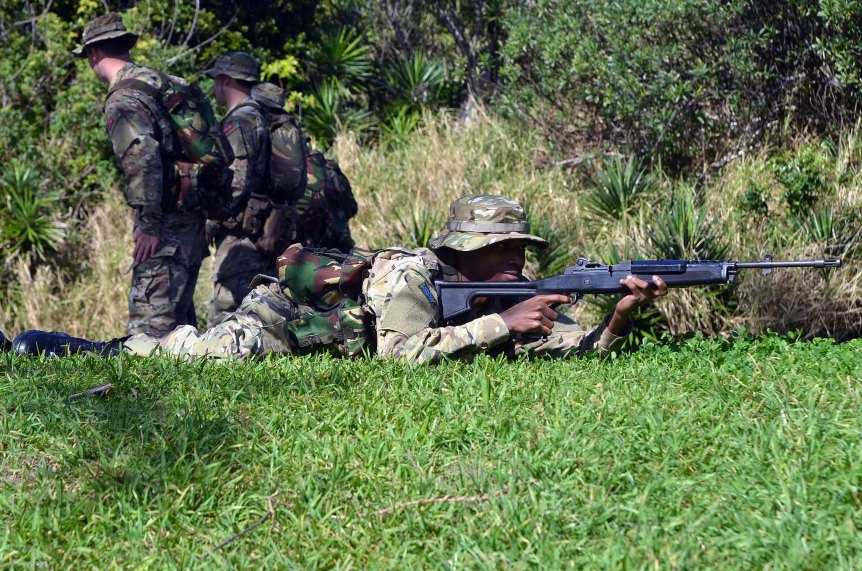
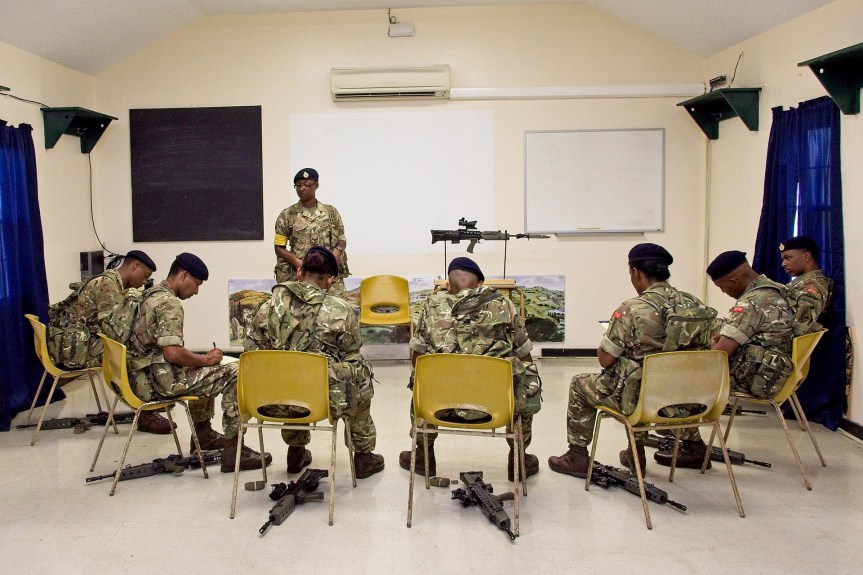
In 2015 the Royal Bermuda Regiment began to field the British L85A2 bullpup. Bermuda is a British Overseas Territory and is one of several territories to have its own British Army-affiliated home defence regiment.

The regiment’s transition to the L85A2 was completed in early 2016, with the replacement of the last Ruger Mini-14s which had been in service since 1983. If you haven’t seen our earlier video/article looking at the Royal Bermuda Regiment’s Mini-14 service rifles, do check it out. 

A Royal Bermuda Regiment recruit with a Mini-14, c.2012 (RBR)

The search for a weapon to replace the Ruger began in the 2010s with the German Heckler & Koch G36 and the US M4 both being tested. The HK G36 was reportedly selected but budget constraints saw the British L85A2 adopted instead.

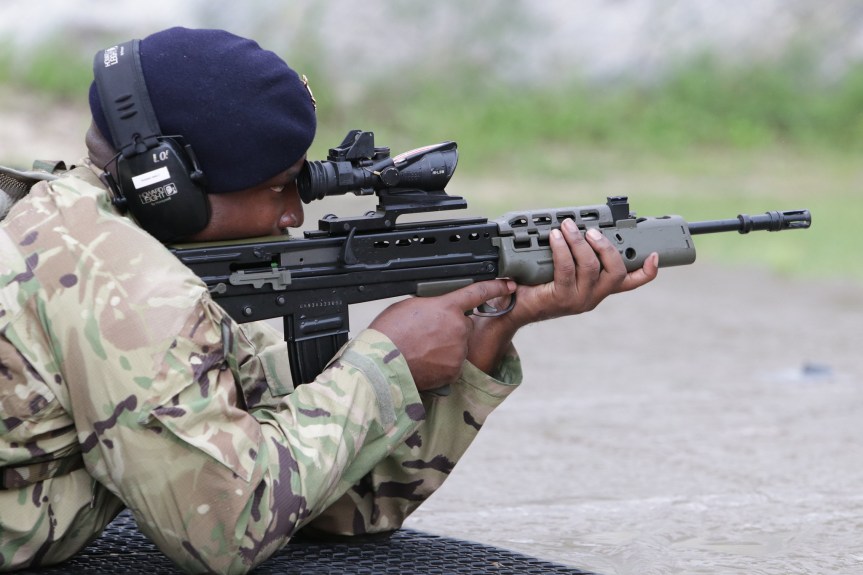
A Royal Bermuda Regiment recruit at the range with an L85A2 (RBR)

Reports suggest that 400 rifles were transferred along with 1,600 magazines, while over 400 ACOGs and red dot sights were also donated to the regiment by the British government. News reports at the time stated the value of the donated equipment was $1.4 million.

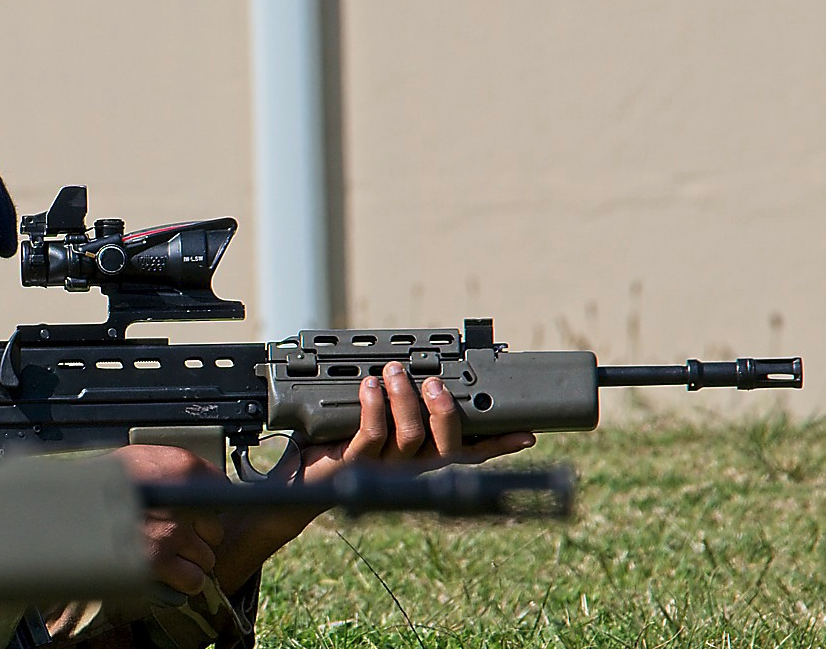
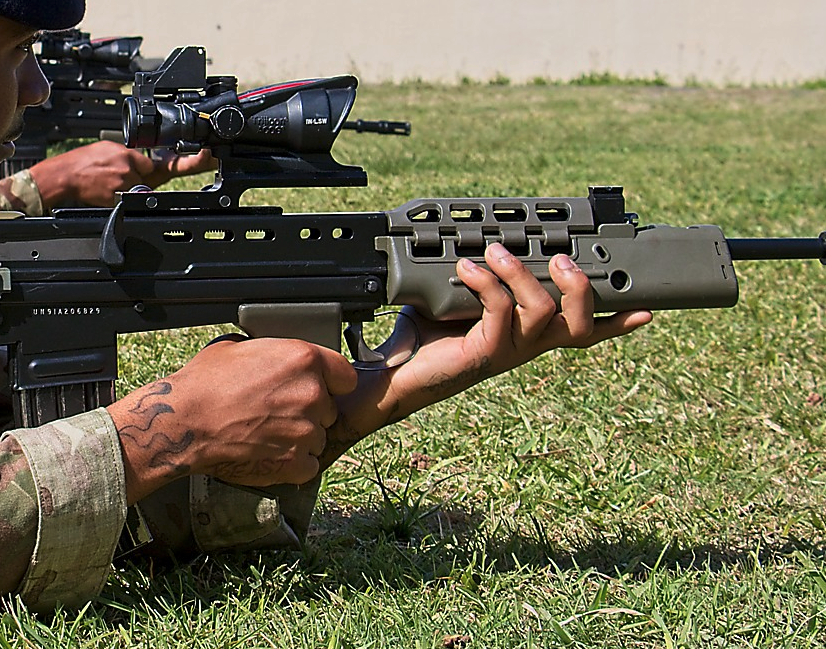
The Bermudan L85A2s have a somewhat unique configuration. The rifles appear to have a mix of the original L85A1 hand guards and the HK-designed conventional L85A2 plastic hand guards which were designed to be more durable. The older, original, hand guards are reportedly replaced at the unit level when they are broken.

Comparison of the old and newer rail-less plastic hand guards

The newer style of hand guard can be identified by its four rather than two hinges on its top portion, which allows access to the gas system, and by the slight slope forward at the front of the hand guard compared to the original.

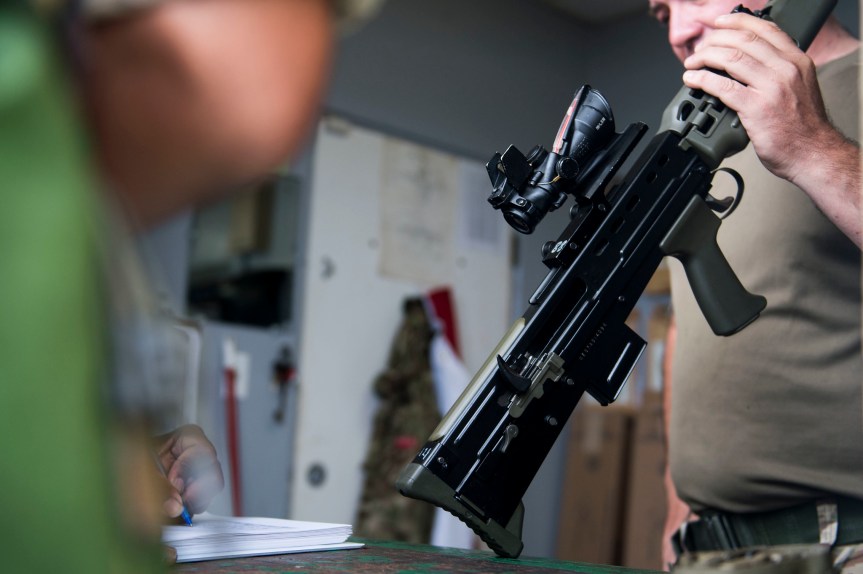
An RBR L85A2 is handed back into the armoury, c.2017 (RBR)

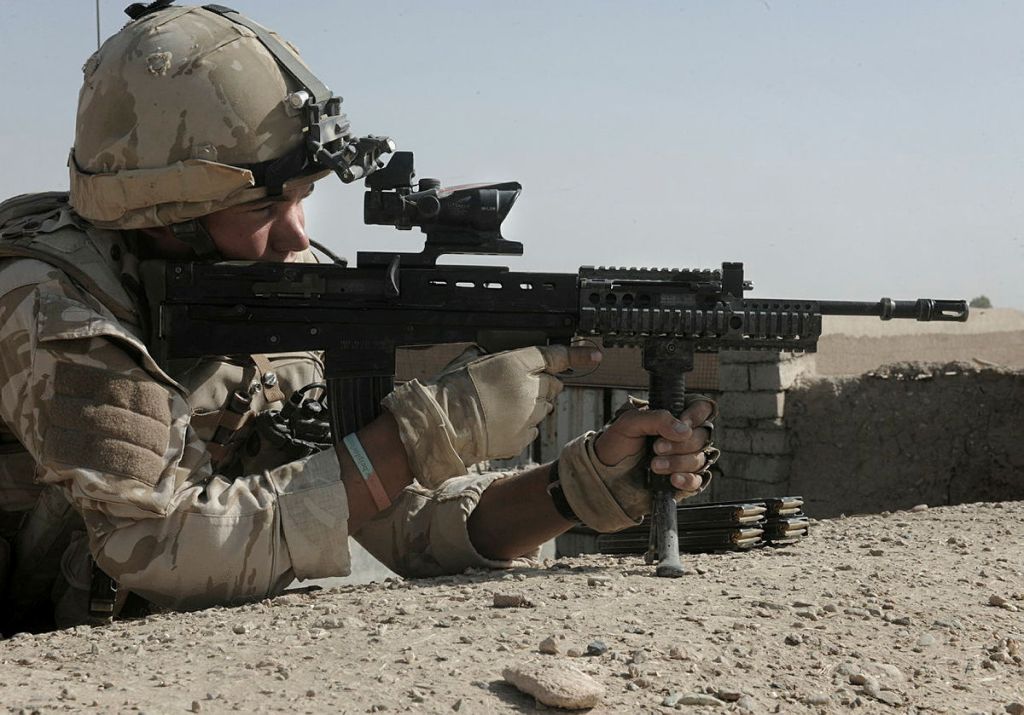
Many associate the A2 configuration with the Daniel Defense railed forend but these are only introduced as an urgent operational requirement for operations in Afghanistan in 2009.

A member of 26 Engineer Regiment with the Brigade Reconnaissance Force in Afghanistan in 2009 with an L85A2 TES with an ACOG/red dot combination (UK MoD/Crown Copyright)

Interestingly the Royal Bermuda Regiments rifles all appear to have been provided with Trijicon ACOGs, previously most commonly seen on what became known as the Theatre Entry Standard (or TES) upgraded L85A2 rifles. These optics replaced the original 4x SUSAT (Sight Unit Small Arms, Trilux) and in 2011 were in turn replaced by ELCAN SpecterOS 4× Lightweight Day Sights (LDS). TES represented a new base-line standard for configuring the rifle for front-line service rather than being a new iteration of the weapon itself.

An RBR L85A2 with an original hand guard and ACOG at the range (Royal Bermuda Regiment)

The Bermudan rifles have a riser Picatinny rail for mounting the optic on the rifle’s original NATO-spec (non-1913 Pictatinny) rail, this was initially developed for British issued TES L85A2s. In British service the ACOG had been procured first for special forces use and subsequently as a wider urgent operational requirement where it was paired with L85A2s, L86A2s and L110 FN Minimi.

Recruits introduced to the L85A2, note the sight riser with ACOG mounted (RBR)

On top of the ACOG is a CQB red dot sight, this appears to be an early Shield Mini Sight Reflex optic housed inside a sight protector. The ACOGs donated to the Royal Bermuda Regiment probably came from surplus stores.

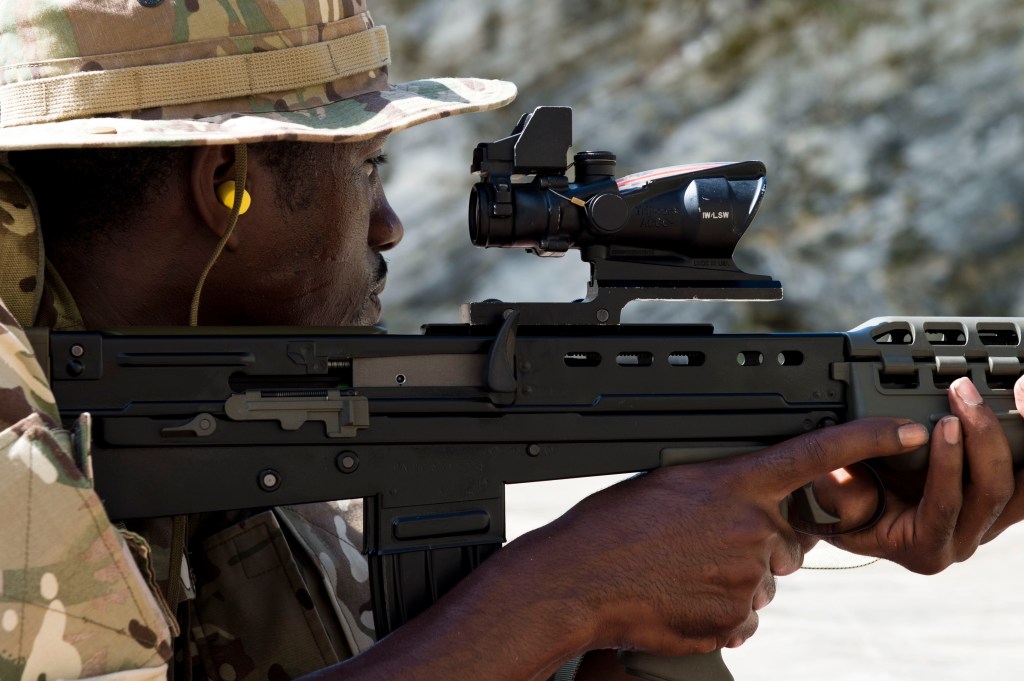
A Royal Bermuda Regiment soldier at the range with an L85A2, note the IW-LSW marking on the side of the ACOG (U.S. Air Force photo/Airman 1st Class Nicholas Dutton)
Royal Bermuda Regiment soldiers at the range, 2021 (USMC)

We can see on some of the photos released by the regiment that the ACOGs are marked ‘IW-LSW’ indicating that they were procured to be paired with the British Army’s L85 Individual Weapon and the L86 Light Support Weapon.

Other British Overseas regiments, like the Royal Gibraltar Regiment or the Falkland Islands Defence Force, are also equipped with L85A2s but their configurations typically use older SUSATs or the newer ELCAN Specters which suggests that the Royal Bermuda Regiment’s configuration is somewhat unique.


If you enjoyed this video and article please consider supporting our work here. We have some great perks available for Patreon Supporters – including custom stickers and early access to videos! Thank you for your support!


Bibliography:

RBR Recruits at the range with Mini-14s c.2013, BDA Sun, (source)

Rifles worth $1.4m donated to Regiment, Royal Gazette, (source)

RBR Soldiers Get to Grips with Rifles, RBR, (source)

Royal Bermuda Regiment Training, USMC/Lance Cpl. Joel Castaneda, (source)

Thorneycroft To SA80, J. Ferguson (2020)

Swedish PV-1110 Recoilless Guns In Ukraine

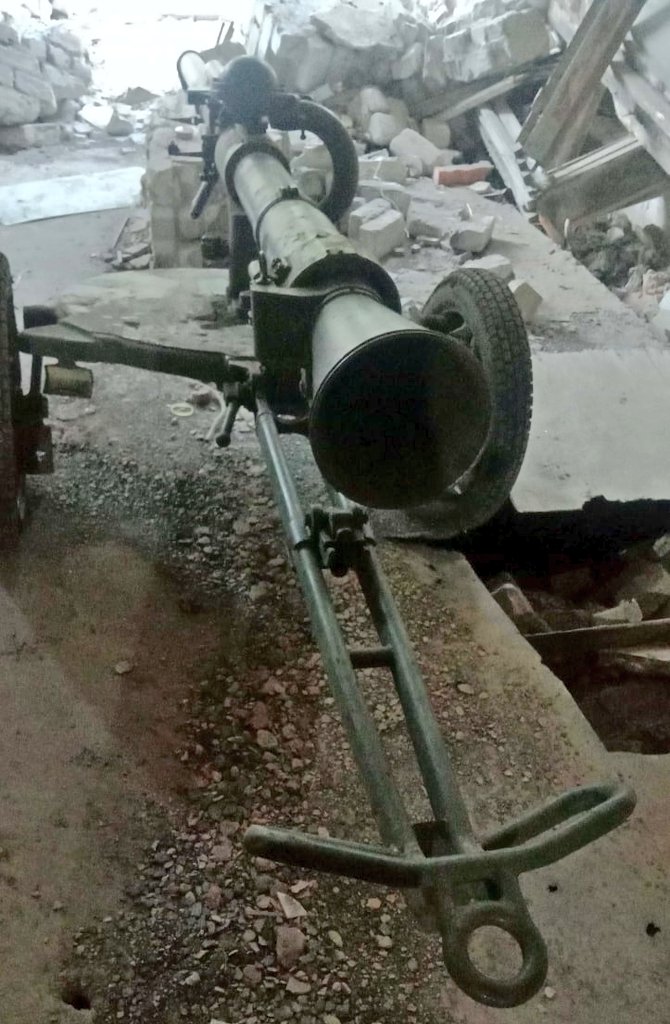
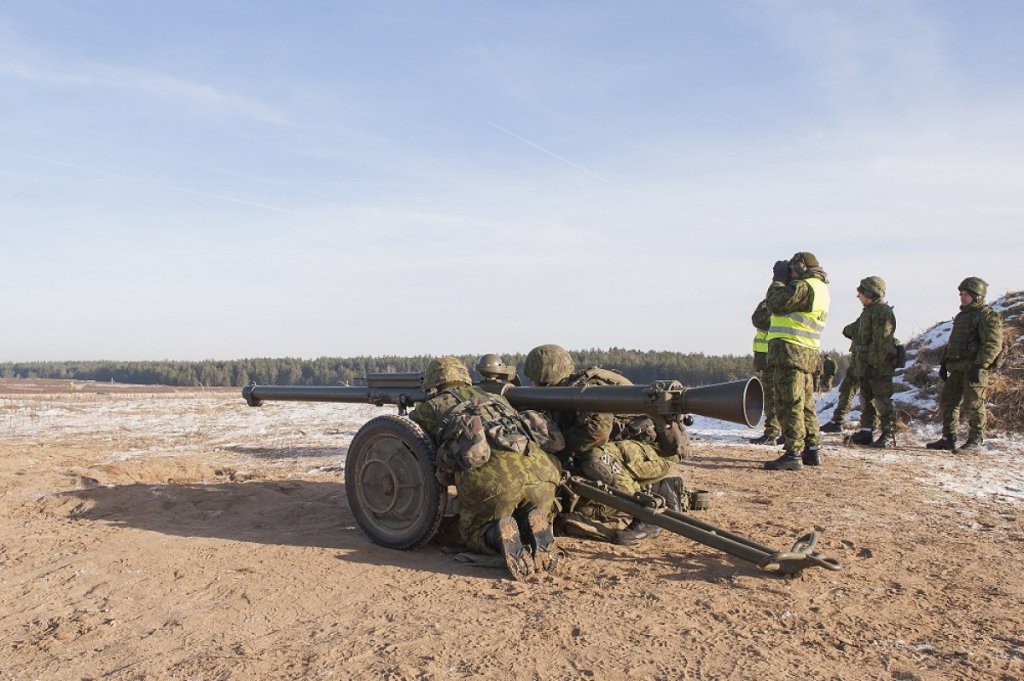
On 18 August Russian Telegram channels began sharing photographs of weapons claimed to be captured from Ukrainian forces, near Sloviansk, including a DShK, a damaged MG-42/59 and most interestingly a Swedish PV-1110.

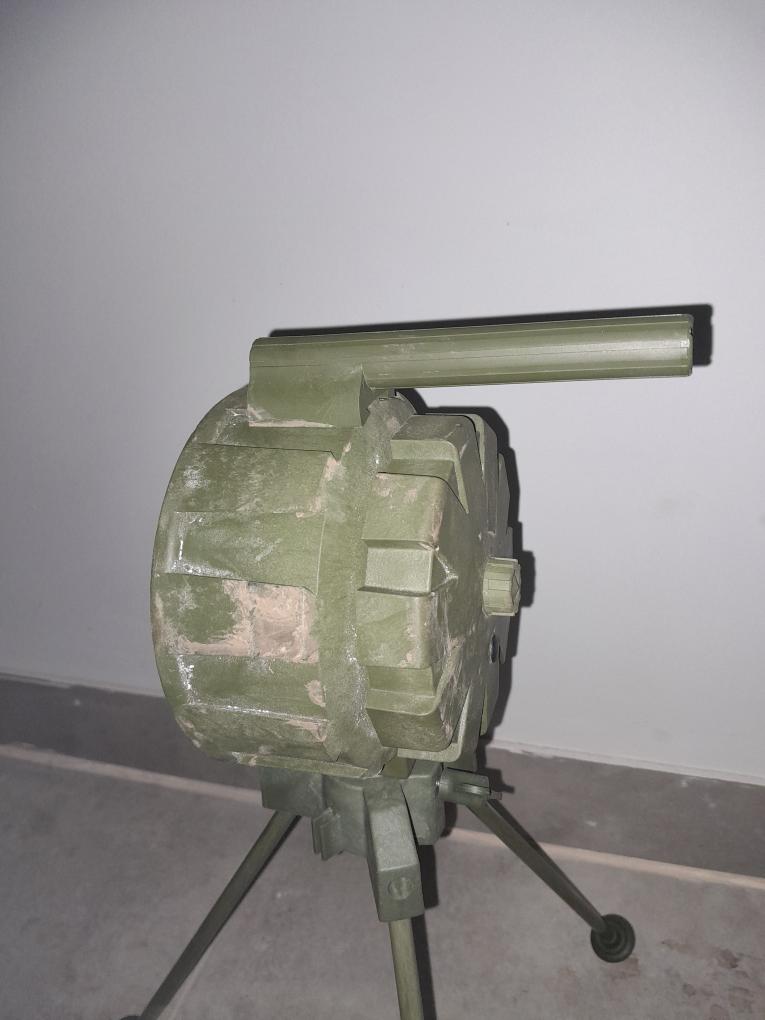
The Pansarvärnspjäs 1110 or PV-1110 is a recoilless gun developed by Bofors which saw service with the Swedish military between 1959 and the late 1990s/early 2000s. While not the only recoilless rifle/gun in use in Ukraine, others include the Carl Gustav and SPG-9, the 90mm smoothbore PV-1110 is perhaps the rarest. With sources suggesting that fewer than 2,000 PV-1110s were manufactured this would make the PV-1110 one of the rarest anti-tank weapons in use in Ukraine.

A Swedish PV-1110 claimed to be captured from Ukrainian forces (via Russian telegram channels)

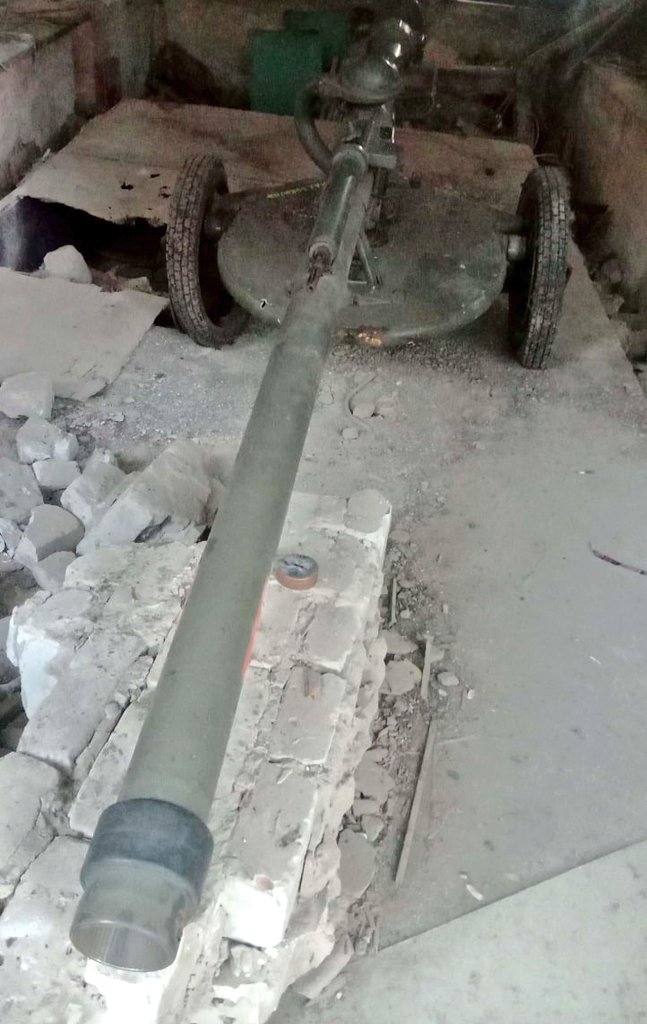
Developed in the early 1950s it was adopted by Sweden in 1959, the PV-1110 could be mounted on vehicles but also on a wheeled carriage with the barrel suspended from an ingenious ball joint mount. In the photographs of the captured example, showing its serial number #5936, we can see this two-wheeled carriage for the weapon. 

The ball joint was intended to compensate for firing from an uneven position. The PV-1110 weighs in at around 260kg (just over 570lbs) and has an optical sight on the left side of the barrel as well as a spotting rifle, based on the Ag m/42 chambered in 7.62x51mm, mounted on top. The PV-1110 has an effective range of up to 1,000m but engagement of moving targets is limited to around 700m according to the Lithuanian Army. With a good crew it is capable of firing up to 6 rounds per minute. The older m/62 HEAT round could penetrate up to 380mm of rolled homogeneous armour (RHA), the m/77 can penetrate up to 500mm and the m/84, the most modern and capable round can penetrate up to 800mm of armour. It’s unknown what ammunition has been provided for the guns.

A Swedish PV-1110 claimed to be captured from Ukrainian forces (via Russian telegram channels)

While it could be suggested that recoilless guns and rifles like the PV-1110 are obsolescent the continued use of the SPG-9 shows they still have their uses. The PV-1110’s low-profile combined with its still quite effective penetration means its still a viable weapon against most armoured vehicles its likely to encounter.

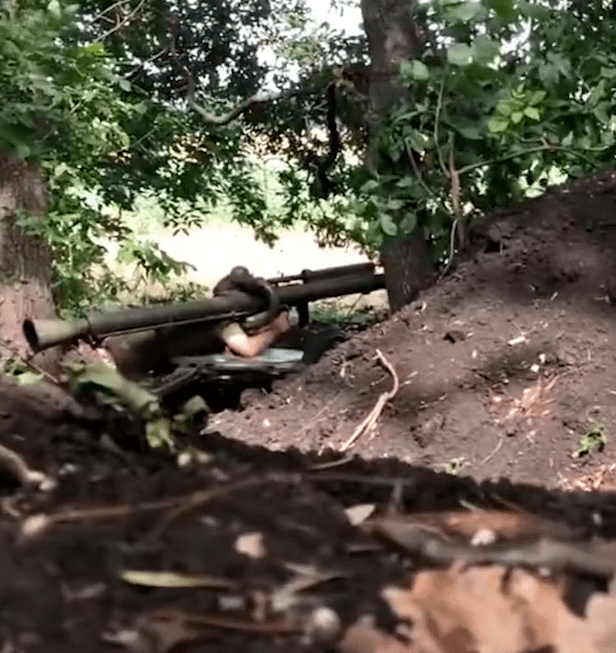
Following on from the first sighting in Ukraine on 22nd August footage of a PV-1110 firing from a defensive position surfaced and we can see the gun on its very recognisable mount.

Still from video of the PV-1110 in Ukraine, c.22 August 2022

But how did Ukrainian forces come by their PV-1110? There were likely transferred from one of the Baltic nations which have supplied Ukraine with considerable military assistance. Latvia, Lithuania and Estonia all received a number of PV-1110s from Sweden when they were retired from service. It is unclear how many weapons each of the three countries originally received.

Troops of the Lithuanian National Defense Volunteer Force training with the PV-1110 c.2014 (Lithuanian Army) 

The Estonian Defence League reportedly had over 100 in inventory as of 2018 while the Latvian National Guard have a similar number. Lithuania’s Army and National Defense Volunteer Force have previously been seen to be equipped with the PV-1110 in recent years but they have reportedly since been placed in wartime reserve storage. No country has publicly confirmed the transfer of the PV-1110s, so with the Baltic nations slowly removing the guns from service it’s likely that the PV-1110s either came from the remaining guns held by the Swedish Army or from the stores of Lithuania, Latvia or Estonia. Regardless of their origin they represent one of the rarest recoilless guns in service in Ukraine.

Updates

Update – 18/10/22:

Some recent footage of the PV-1110 in use in Ukraine. It is unclear where or when this footage was filmed but it surfaced on social media around 15 October. I suspect it was filmed during training rather than when in action. Regardless, it represents one of the few pieces of footage we have of the Swedish recoilless guns in action in Ukraine.

Update 25/01/23:

The recently raised 47th Separate Assault Brigade have shared several photographs of a PV-1110 on their social media pages, between 10 and 15 January. The photographs were likely taken during training. The first is a point-of-view shot down the weapon’s barrel while the second is a side profile shot – both taken during firing.

Update – 2/05/23:

Recent video of a Pv-1110 shared by Ukraine Weapons Warfare.

Update – 6/2/2024:

On 5 February a short video of a Pansarvarnspjas 1110 was shared on telegram channels l. Unit, date and location are unknown.

Update – 15/5/25:

Nemesis Group shared a short video featuring a Pvpj 1110 on their Instagram page, date and location if filming unknown.


If you enjoyed this video and article please consider supporting our work here. We have some great perks available for Patreon Supporters – including custom stickers and early access to videos! Thank you for your support!

Bibliography:

Pansarvärnspjäs 1110 Avvecklad, Soldf.com (source

Prieštankinis beatošliaužis pabūklas PV1110, Lithuanian Army, (source)

Lithuania Volunteers Train with PV-1110, Lithuanian Army, (source)

90mm Recoilless Rifle promotional video, Bofors, (source)


Ukrainians Training with SA80s

In a recent video/article we looked at the AK-pattern rifles that the UK Ministry of Defense has procured to train Ukrainian troops with in the UK. In that video I touched on the use of British SA80/L85 pattern bullpup rifles used during the training of the Ukrainian troops. With fresh imagery it seems that the British rifles are playing a significant role in training the Ukrainian personnel at several training centres across the UK.

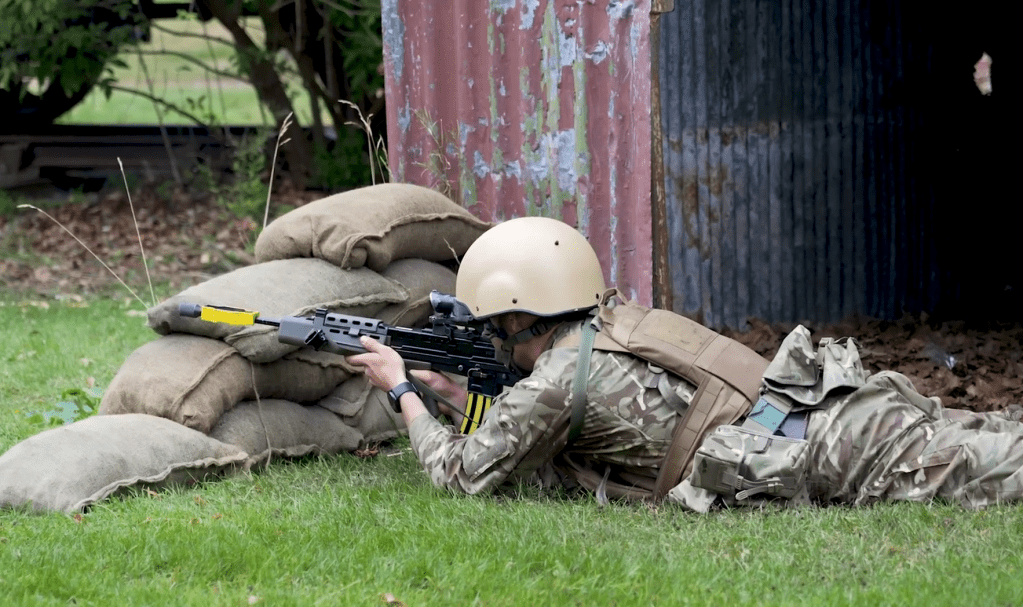
Ukrainian soldier seen with an SA80A2 with SUSAT during training, when visited by the Prime Minister in late-July (UK MoD/Crown Copyright)

The SA80 rifles were first seen in the initial imagery released around the announcement of the training scheme but have appeared again since. They featured in photographs of Defence Minister Ben Wallace’s visit in early July and again a couple of weeks later during another visit by General Sir Patrick Sanders’, Chief of the General Staff. The rifles were seen with iron sights and fitted with blank firing adaptors. Interestingly, at least some of the Ukrainian personnel have been shown how to field strip the British rifles. 

Deputy Defence Minister of Ukraine Volodymyr Havrylov with visits Ukrainian troops training in the UK, 19 July (UK MoD/Crown Copyright)

On 19th July, imagery from a visit by the Deputy Defence Minister of Ukraine, Volodymyr Havrylov, also showed Ukrainian troops equipped with SA80A2s fitted with blank firing adaptors. As before the rifles were not fitted with optics.

The Ministry of Defence has confirmed that while AK-pattern blank firing adaptors have been procured, SA80’s with blank firing adaptors have also been used to ‘maintain strict safety conditions for both British and Ukrainian soldiers during training and to meet the urgency of the training requirement.’

Ukrainian troops field stripping and cleaning SA80A2s in early July (UK MoD/Crown Copyright)

Because the rifles don’t have railed forends some thought they might be the earlier SA80A1s. We can tell that these rifles are SA80A2s from the up-turned scalloped tear drop charging handle which also doubles as a brass deflector. The rifles have the non-railed green polymer handguards fitted.  While the Daniel Defense produced railed forends have come to characterise what many thing is the A2 configuration, these were actually developed in response to an urgent operational requirement for troops deploying in Afghanistan. Many of the rifles overhauled by HK to the A2 standard retained the classic green handguards. Some, like those recently provided to the Royal Bermuda Regiment, actually have a green handguard designed by HK. 

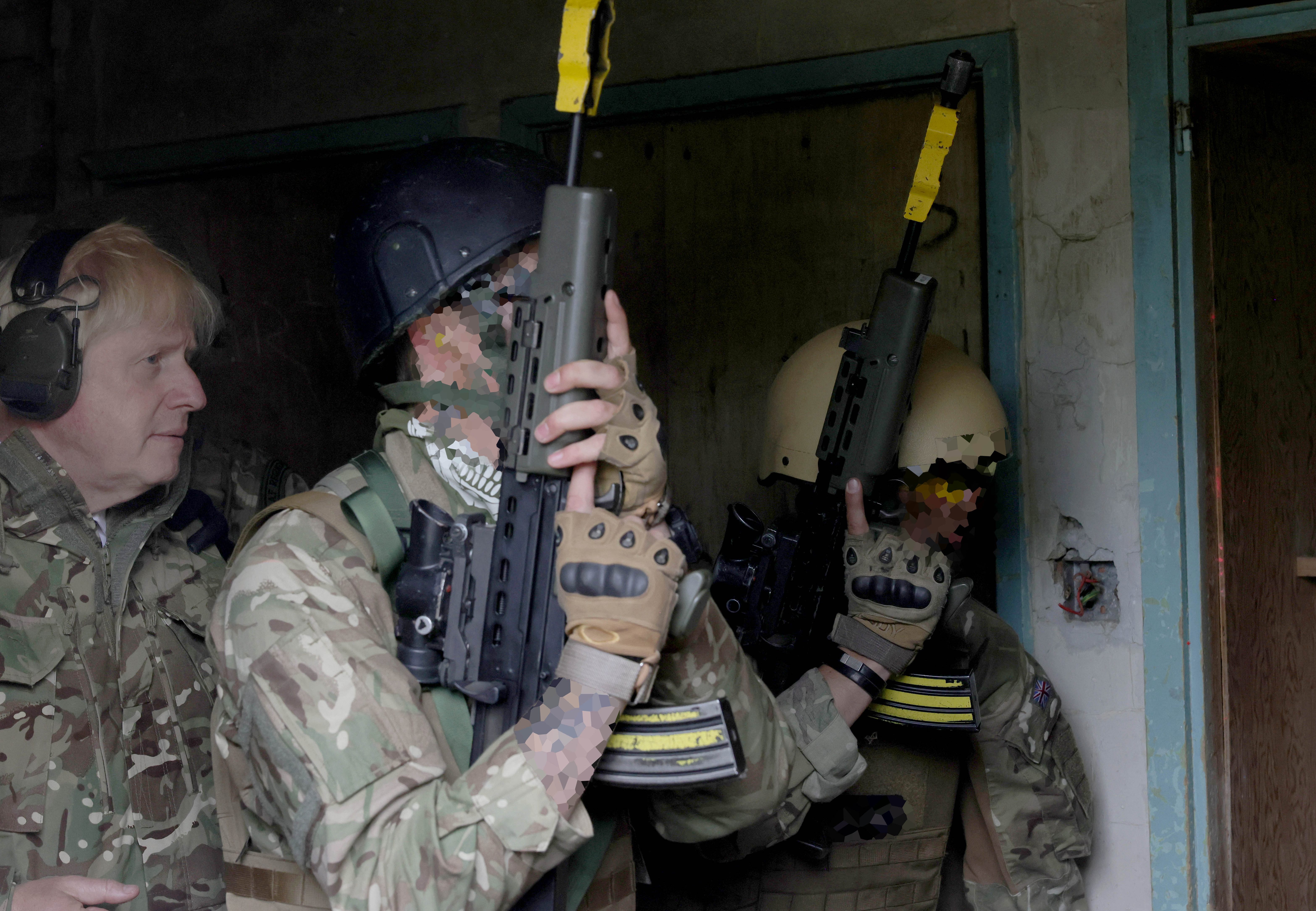
Prime Minister Boris Johnson visits Ukrainian troops (Andrew Parsons/No.10 Downing Street)

We can easily identify British troops involved in the training, as we can see that they are equipped with the new SA80A3 with the characteristic new MLOK forends and Cerakote finish. 

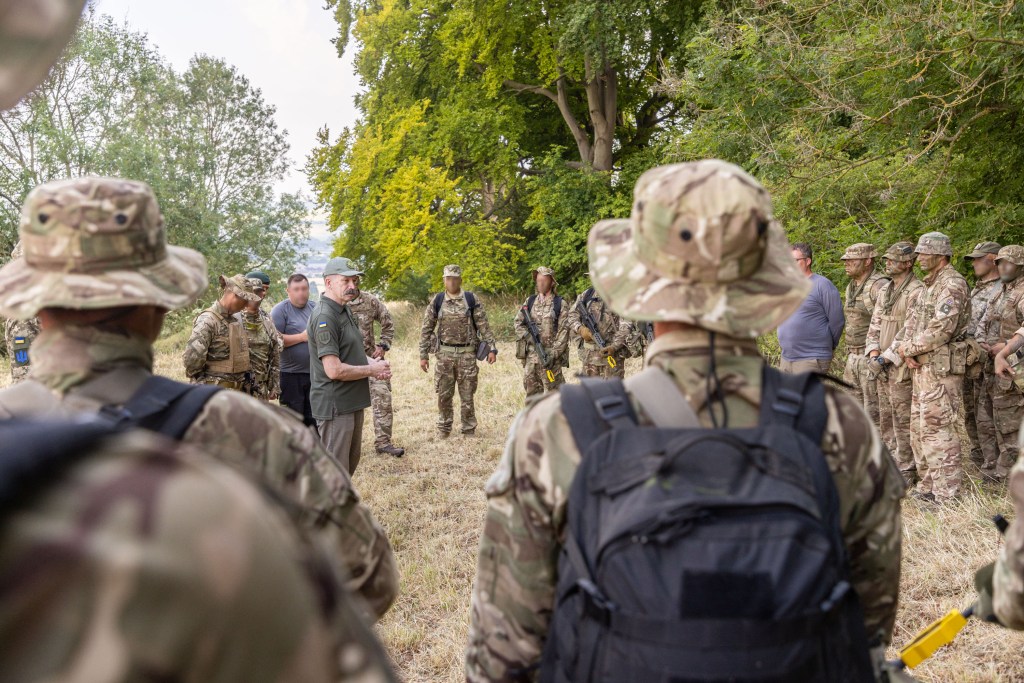
On the 21st July, the UK Prime Minister’s office released photos and video of Prime Minister Boris Johnson’s visit to Ukrainian troops training in the North East of England. The imagery showed Ukrainian troops training in urban combat, known by the British Army as Fighting In Built Up Areas or FIBUA. This supports the theory that they are being issued for FIBUA and field exercises that require blank firing. Unlike in the earlier imagery the Ukrainians were armed with SA80A2s largely equipped with SUSAT sights. 


If you enjoyed this video and article please consider supporting our work here. We have some great perks available for Patreon Supporters – including custom stickers and early access to videos! Thank you for your support!

Bibliography:

‘Defence Secretary Ben Wallace visits Armed Forces of Ukraine as training programme starts across the UK’, UK MoD, 9 July, 2022, (source)

Prime Minister Boris Johnson visits the North East, UK Govt., (source)

Deputy Defence Minister of Ukraine Volodymyr Havrylov meets with Ukrainian trainees in UK, UK MoD, (source)

UK Purchases AKs To Train Ukrainian Troops

On the 9th July, the UK’s Ministry of Defence announced that as part of its agreement to train 10,000 Ukrainian soldiers it had acquired a significant number of AK-pattern rifles. Initially sharing only one, fairly low res, photograph the official announcement stated that:

“The Government has rapidly procured AK variant assault rifles for the training programme, meaning Ukrainian soldiers can train on the weapons they will be using on the front line. This effort was supported by the Welsh Guards, who tested more than 2,400 such rifles in 17 days to ensure they were ready for the Ukrainians to commence their training.”

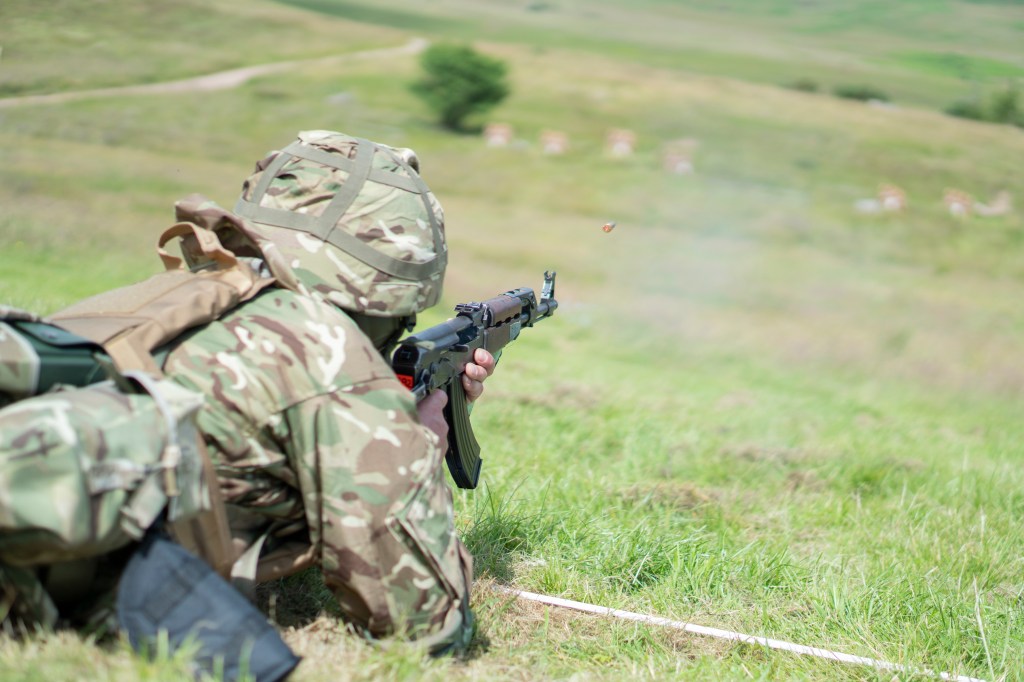
Ukrainian soldier at the range July 2022 (UK MoD / Crown Copyright)

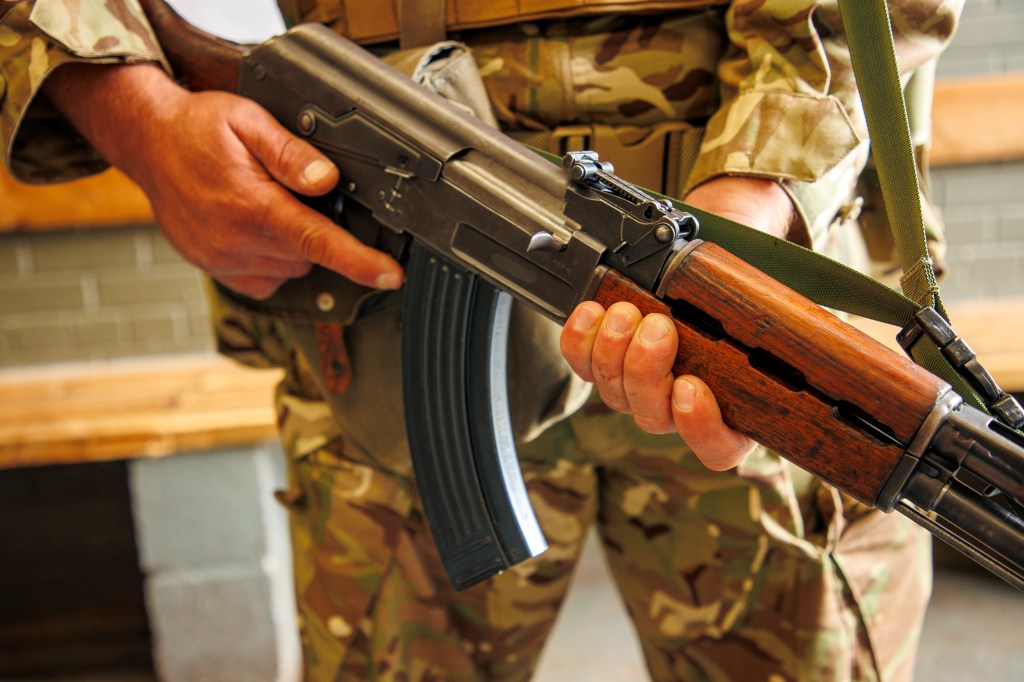
The types of AK-pattern rifles procured was not announced but from the initial photograph released it was clear that at least one of the rifles was a Serbian-produced Zastava M70AB2, chambered in 7.62x39mm.

The programme is the latest phase of Operation ORBITAL, the British Army’s name for the long term support and training programme undertaken since 2015. To-date ORBITAL has reportedly trained some 22,000 Ukrainian personnel, with the initial phase being run in Ukraine until early 2022 when the threat of imminent invasion saw the training personnel in Ukraine withdrawn. At the same time Canada and the US have run similar programmes in Ukraine. T he UK has agreed to train 10,000 Ukrainians within 120 days and in comments to the press the Uk’s Defence Secretary Ben Wallace saying that “if the Ukrainians ask for more, we’ll be open to more”.

Ukrainian soldiers seen here receiving training from 3 RIFLES, July 2022 (UK MoD / Crown Copyright)

The rifles procured will likely be retained in Britain to train successive cadres of Ukrainian personnel, however, the UK has gifted a substantial amount of uniform and kit with the Ministry of Defence’s 9th July statement saying that each soldier will be issued with:

  • Personal protective equipment including helmets, body armour, eye protectors, ear protectors, pelvic protection, and individual first aid kits
  • Field uniforms and boots
  • Cold and wet weather clothing
  • Bergens, day sacks and webbing
  • Additional equipment required for field conditions including ponchos, sleeping bags, and entrenching tools

The training is being undertake by around 1,050 UK service personnel largely drawn from 11 Security Force Assistance Brigade. The brigade was formed in 2021 and is tasked with “building the capacity of allied and partner nations”. Personnel from the 12th Armoured Brigade Combat Team and 1st Armoured Infantry Brigade as well as Ukrainian-speaking interpreters are involved.

The course the Ukrainian troops are undergoing is a condensed basic infantryman course which includes weapons handling and marksmanship fundamentals, battlefield first aid, fieldcraft, patrol tactics and the Law of Armed Conflict. From the file dates on the imagery released it appears that many of the photographs were taken in late June and early July.

British instructor with M70 rifle (UK MoD / Crown Copyright)

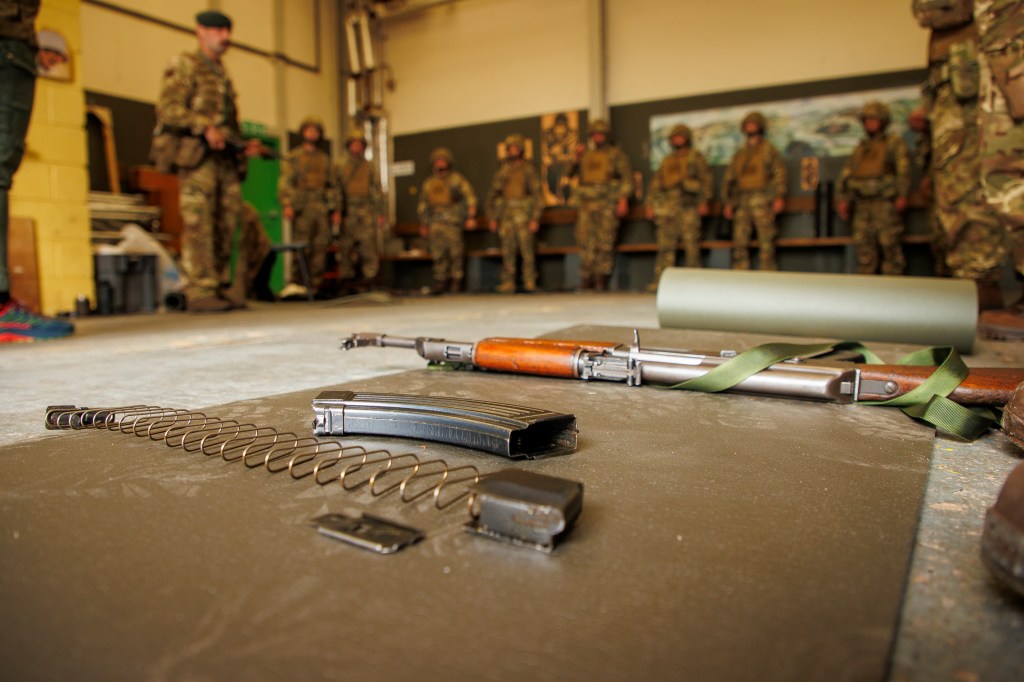
From examination of further imagery released it appears that the AK-pattern rifles procured for training the Ukrainian troops are all chambered in 7.62x39mm and the 2,400 rifles procured include: wooden-stocked Zastava M70 (or M70B)s, milled receiver M70As, folding stock M70AB2s, Hungarian FEG AK63Ds and East German MPi KMS-72s.

Interestingly, some photographs and video suggest that as part of the training at least some of the Ukrainian personnel have been shown how to field strip the British SA80/L85 rifles. These are believed to have been used with blank firing adaptors during training this theory was supported by Ukrainian troops being pictured with SA80/L85 pattern rifles, with the easily recognisable yellow blank firing adaptors fitted, during a visit by General Sir Patrick Sanders’, Chief of the General Staff, to meet Ukrainian troops doing Fighting In Built Up Areas (FIBUA) training. The Ministry of Defence has confirmed that while AK-pattern blank firing adaptors have been procured, SA80’s with blank firing adaptors have also been used to ‘maintain strict safety conditions for both British and Ukrainian soldiers during training and to meet the urgency of the training requirement.’

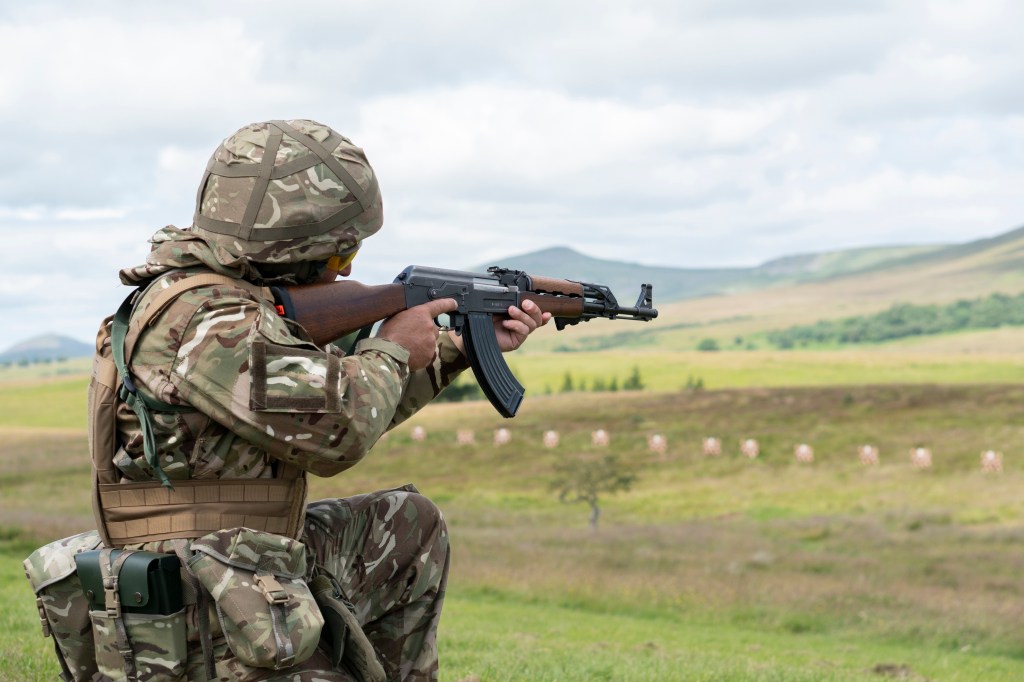
Ukrainian soldier at the range July 2022 (UK MoD / Crown Copyright)

The reasoning behind the procurement of rifles chambered in 7.62x39mm rather than the more regularly issued 5.45x39mm AK-74 pattern rifles is also unclear. Perhaps this was due to weapon availability and regardless of calibre the manuals of arms remains the same. There is no indication that training with support weapons such as general purpose machine guns or light anti-armour weapons is being provided.

When approached for comment on the sources and types of AK rifles procured, the Ministry of Defence told The Armourer’s Bench:

“The Government has rapidly procured AK variant assault rifles through a combination of international donations and private purchase, meaning Ukrainian soldiers can train on the type of weapons they will be using on the front line. All weapons were tested in accordance with UK legislative and safe working practices.”

While this doesn’t offer much detail it does suggest that the rifles were procured via donations and private purchase – the scale of the donations and private purchases remains unclear.

It has also been confirmed that elsewhere British personnel are training Ukrainian mechanised troops on various vehicles including Spartan, Husky and Mastiff at Bovington as part of ‘Project Spring Generation’. It was confirmed by the Defence Secretary Ben Wallace, on 18th July, that the first cadre has now completed its training in the UK. Wallace also noted that Dutch personnel will be joining the British effort to train Ukrainian troops in the future.


If you enjoyed this video and article please consider supporting our work here. We have some great perks available for Patreon Supporters – including custom stickers and early access to videos! Thank you for your support!

Bibliography:

‘Defence Secretary Ben Wallace visits Armed Forces of Ukraine as training programme starts across the UK’, UK MoD, 9 July, 2022, (source)

‘First Ukrainian Volunteer Recruits Arrive In UK For Training’, Overt Defense, (source)

Video 11 July, 2022, UK MoD, (source)

Video 12 July, 2022, UK MoD, (source)

Video 15 July, 2022, UK MoD, (source)

‘Thousands of Ukrainian ‘battle casualty replacements’ are being trained in England’, Sky News, (source)

‘British troops training Ukrainian forces seen ‘huge improvements”, Forces News, (source)

16 Vickers Machine Guns in Action – Commemorating the Legacy of the Machine Gun Corps

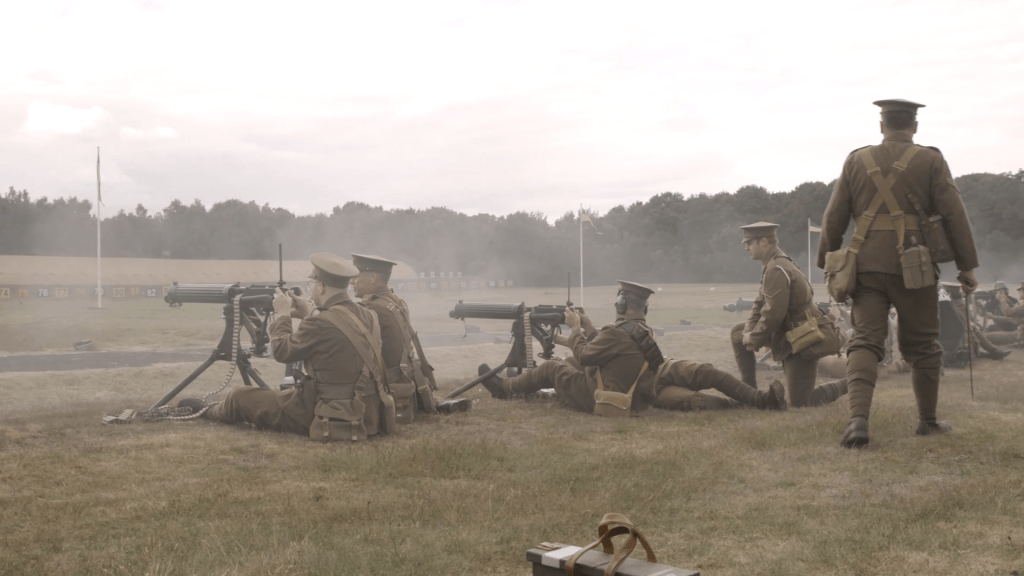
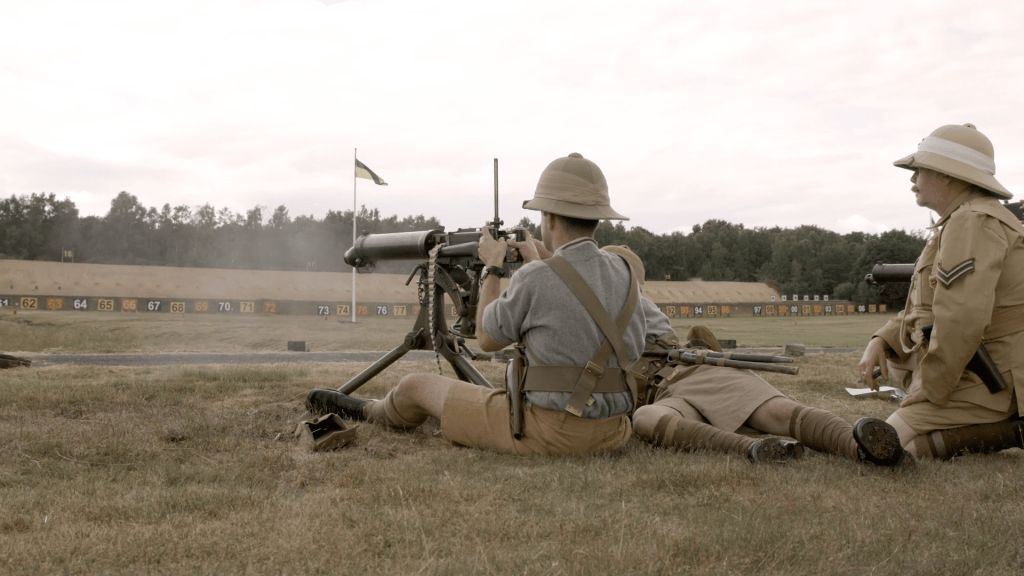
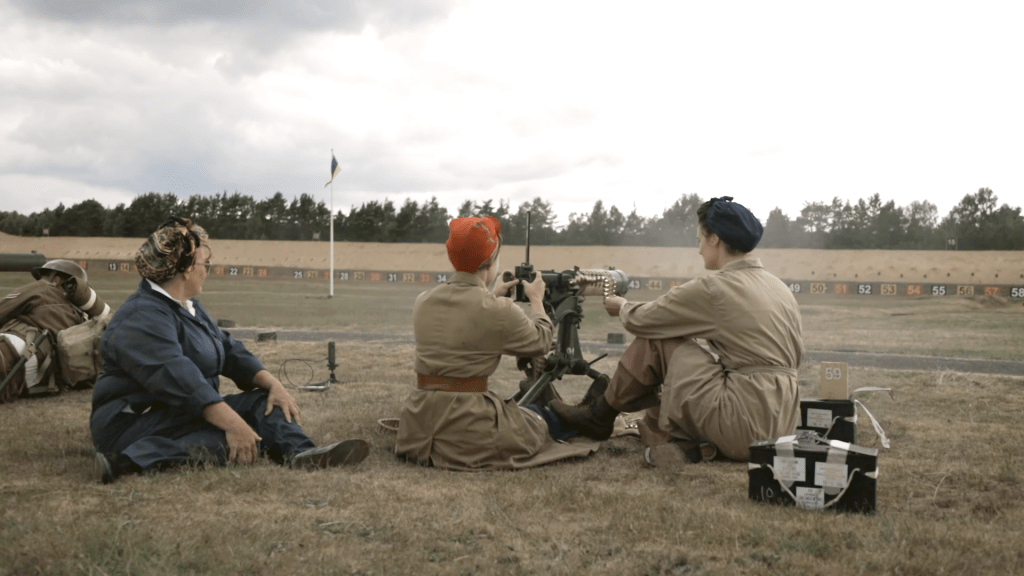
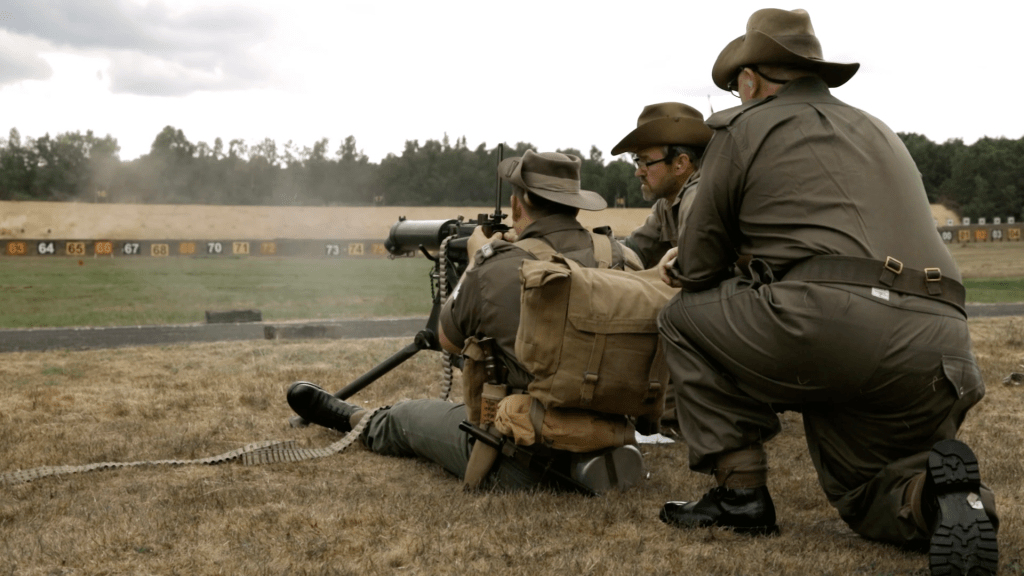
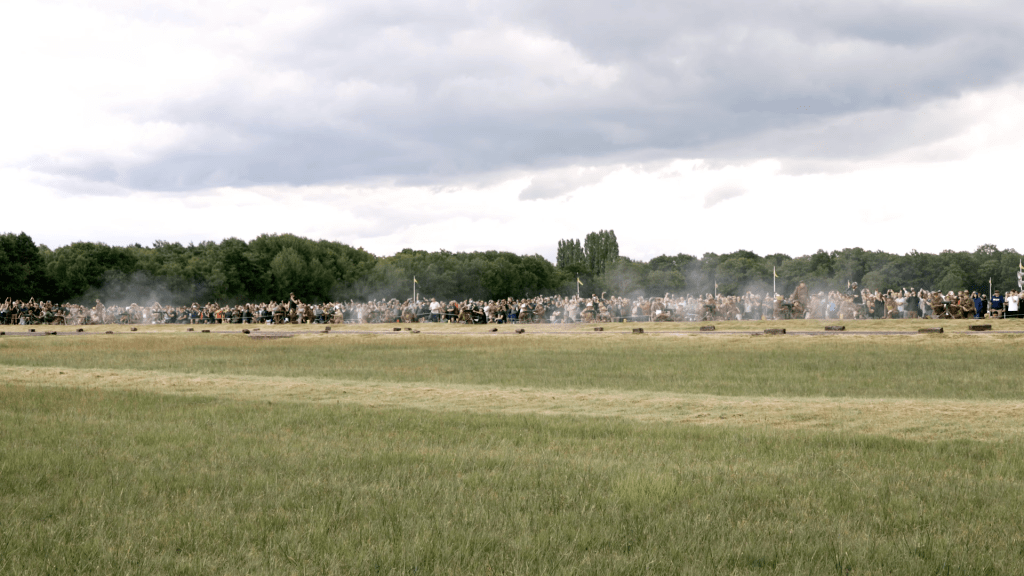
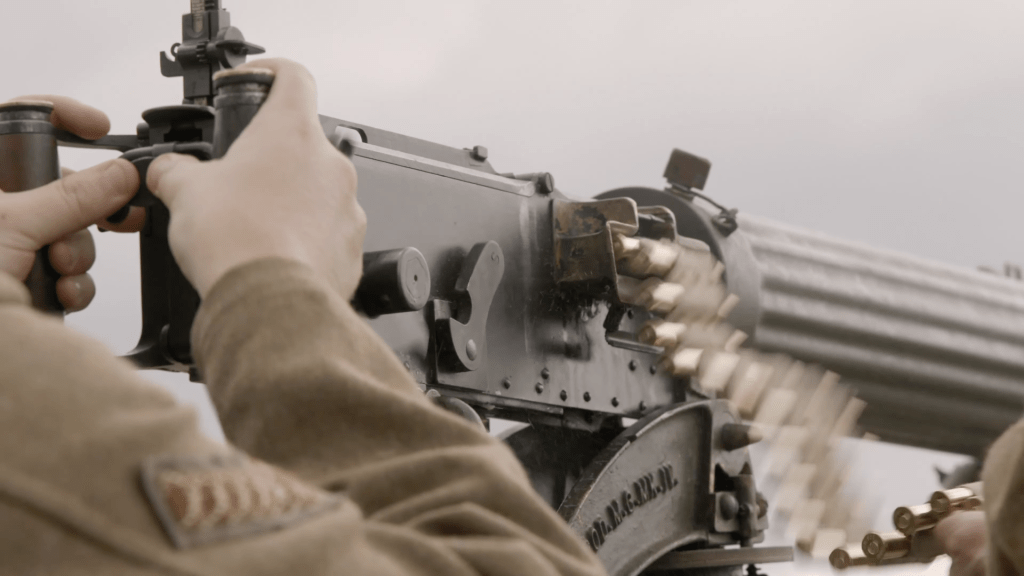
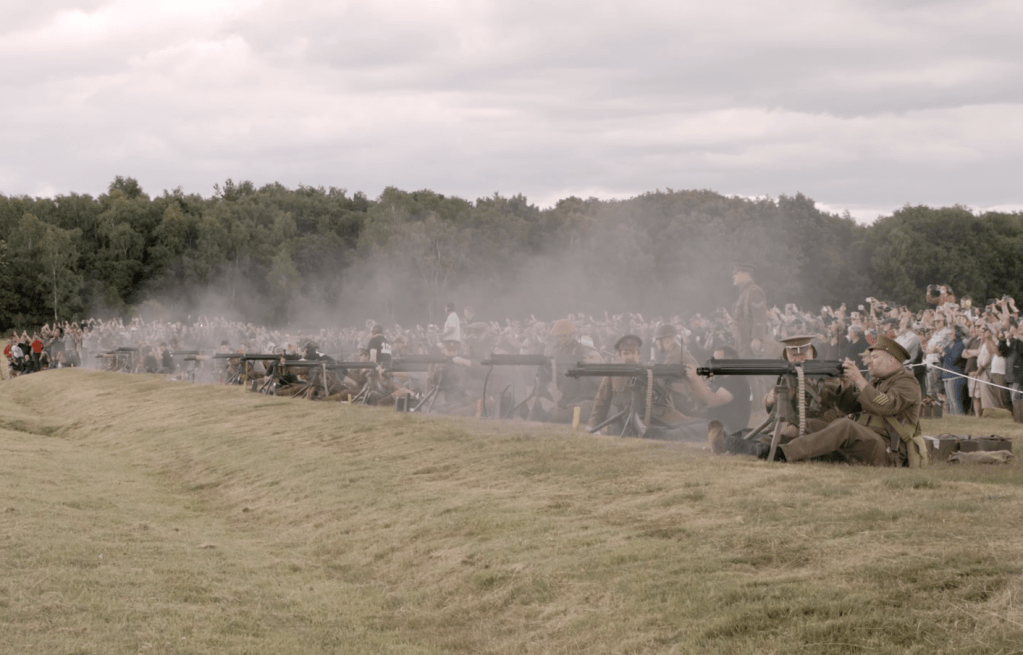
A couple of weeks ago I had the honour of taking part in a shoot at Bisley to commemorate the disbandment of the British Army’s Machine Gun Corps. The Corps was formed in 1915 and disbanded in July 1922. They left an important legacy of skills and doctrine for machine gun use which remains with the British Army today. 

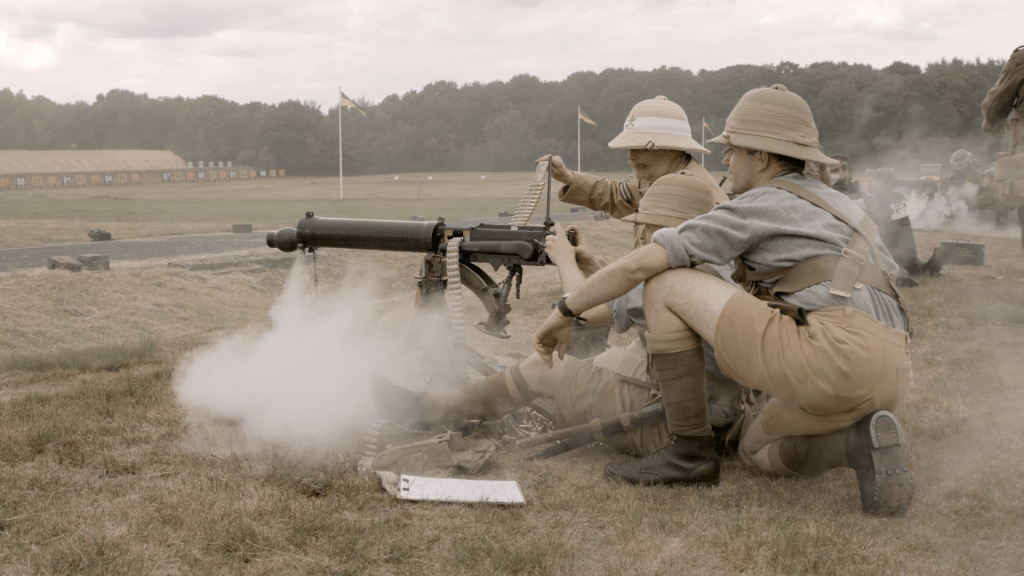
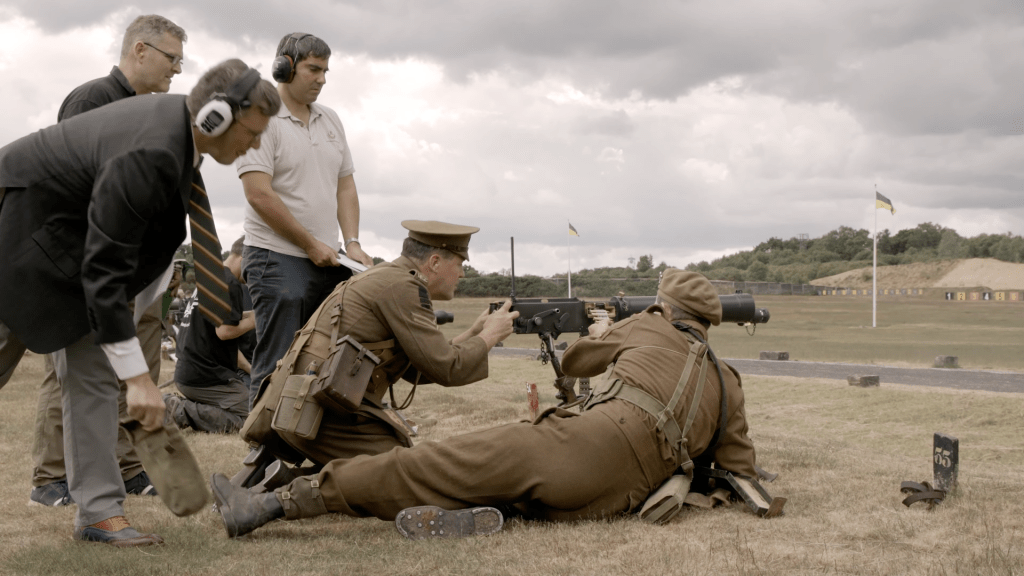
Myself an TJ manning a Nepalese contract Vickers Gun during the shoot. We portrayed members of the Guard Machine Gun Regiment (all photos courtesy of Adam Blackmore-Heal)

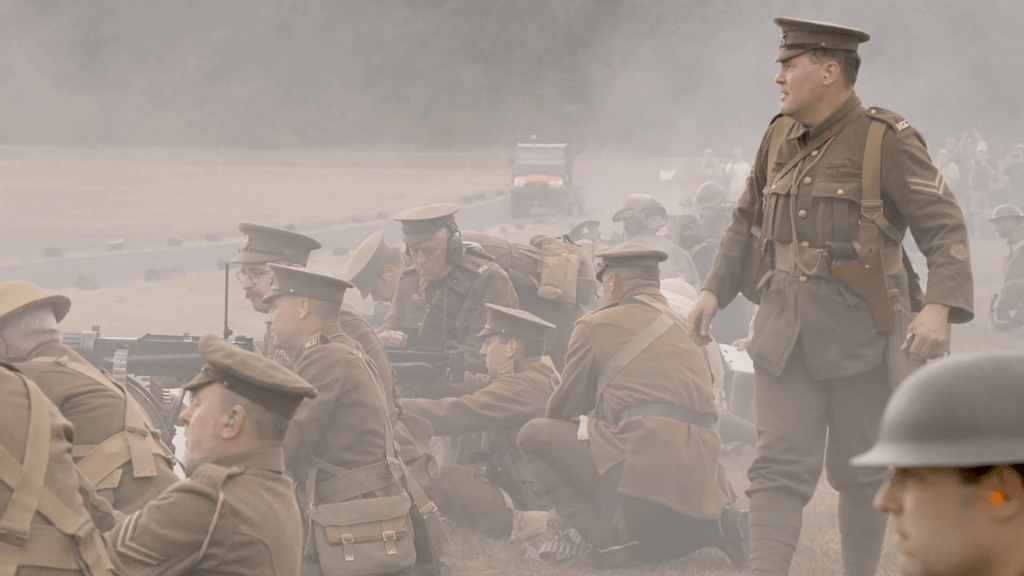
The shoot was organised by my friend Rich Fisher of the Vickers Machine Gun Collection & Research Association. The shoot gathered 16 Vickers Machine Guns, the equivalent of a First World War Machine Gun Corps company.  Each gun represented a different period of the British Army’s use of the Vickers Gun from 1912 all the way through to 1968, when it finally went out of service. 

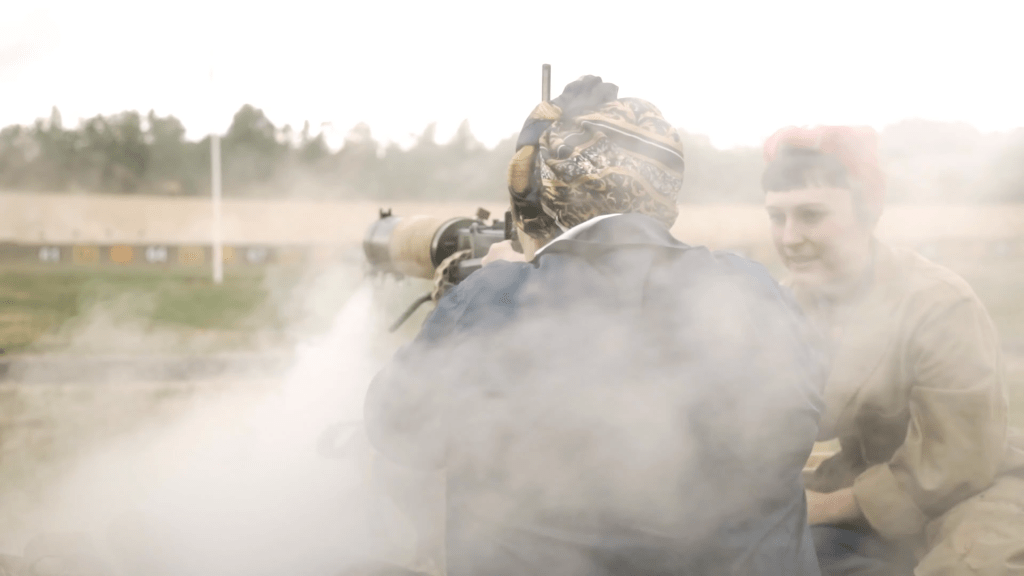
Here’s some photos from the shoot (courtesy of Adam Blackmore-Heal):

Throughout the day I captured some behind the scenes footage and Rich Willis was kind enough to run my camera for me during the shoot when I had my hands full. This was the first time this many guns had been fired together in 20 years and all in all around 16,000 rounds were fired and over 700 people turned out to watch the event.

Not only did the day illustrate the impressive volume of fire that the guns were capable of but it also put their lethality into perspective. The shoot illustrated the devastation the weapons could bring and the important legacy of the men who manned them.

 I highly recommend visiting the Vickers Machine Gun Collection & Research Association’s YouTube channel to watch the stream of the full 45 minute shoot, a brilliant 360-degree view video which puts you right on the firing point and a really special 20 minute mini documentary about the shoot. 


If you enjoyed this video and article please consider supporting our work here. We have some great perks available for Patreon Supporters – including custom stickers and early access to videos! Thank you for your support!

Ukraine’s Polymer Machine Gun Belts

Ukraine’s Plastic Machine Gun Belts

A Ukrainian company, the Kharkiv Plant of Individual Means of Protection (HZISZ), which operates under a number of trade names including RAROG, have developed disintegrating plastic machine gun links for various Soviet/Russian-pattern 7.62x54mmR chambered belt-fed machine guns. The ‘KS-122 Machine Gun Tape’ can be used in PK, PKM, and PKT pattern guns as well as the older Goryunov-pattern machine guns, the SG-43 and SGM.

‘Plastic machine gun tape’ demonstrated from a container of dry ice (HZISZ/RAROG)

Development of the links reportedly began back in 2015. According to Maksym Plekhov, the company’s deputy director, the links were originally developed following feedback received during RAROG’s development of their ‘Predator’ PK Machine gun ammunition backpack system.

Between 2015 and 2017 the company refined the design but did not go into large-scale production of the links. In a 2017 promotional video for the links RAROG state that they tested over 200 types of plastic and made 26 design changes during development. The links are made by injection moulding with a material based on polycarbonate. The initial videos and photographs of the links being tested and demonstrated show them as translucent but RAROG have confirmed that the final colour of the production links will be black.

In February 2021, the company shared a new video showing a demonstration of the links at a wintery outdoor range to showcase their cold-weather performance. Over the last couple of weeks RAROGhave begun posting about the links on their social media again, sharing new videos of them being tested at the range and announcing that sample bags of the links have been sent to Ukrainian troops.

RAROG confirmed that the links had been placed on the back burner for a time while the company focused on other projects, noting that the company has supplied their other products to “the armed forces and the National Guard of Ukraine, as well as NATO special forces, for example, the special operations forces of Bulgaria.”

A month ago the company announced that they had shipped pre-production sample batches with some of their PK belt box pouches to allow troops in the field to provide feedback, noting that “serial production without performance statistics cannot be started.”

‘Plastic machine gun tape’ being tested, seen here are translucent links (HZISZ/RAROG)

Unlike the classic metal 7.62×54mmR belts, the new polymer belts are disintegrating – meaning once the round held in the belt link is fired and the next round is loaded it falls out of the gun just as with NATO standard disintegrating belts. While this means the links are difficult to collect and reuse when in the field, it has the benefit of not having the empty portion of the belt dangling from the gun.

While the links are marketed as disposable, the company claims that in trials they have been reused as many as 10 times without issues. The links are shipped in packs of 1000. RAROG list the links at 4,900 Ukrainian Hryvnia or $165.

RAROG’s website states that the “Plastic machine gun tape is already on sale” and has been “tested in battle” with the product listing stating that: “Since 2017, a large batch of tape has undergone battle tests to identify possible problems during its use in difficult exploitation conditions. Recently, the Kharkiv plant of personal protective equipment has resumed the issue of the improved tape.”

‘Plastic machine gun tape’ – black and grey polymer links (HZISZ/RAROG)

RAROG state the plastic link belts to be three times lighter than metal link belts, with a 250-round belt with polymer links weighing 0.5kg (1.1lbs) instead of 1.5kg (3.3lbs). They also emphasise that the polymer links are also not susceptible to corrosion. RAROG’s product listing for links also notes that they are ‘significantly cheaper in production’. As demonstrated in the videos featuring dry ice, the links are said to be resistant in temperatures ranging from -70°C up to +120°C [-94F to 248F] – details on the exact polymer used to make the links hasn’t been shared.

RAROG confirmed that a large batch is currently in production. While we haven’t seen the links in photos and videos from the field yet with them going into larger production they might appear in the future.


If you enjoyed this video and article please consider supporting our work here. We have some great perks available for Patreon Supporters – including custom stickers and early access to videos! Thank you for your support!
Switchblade Loitering Munitions in Ukraine

So far during the fighting we’ve seen everything from M14s to Brimstone missiles transferred to Ukraine. One weapon which was hailed as a game changer when it was announced was the Switchblade loitering munition. While not game changers we have begun to see evidence of their use in the field and they are definitely an interesting new weapon.

Switchblades are a loitering munition capable of being launched and then remaining on station to be tasked to destroy a ground target once the target has been identified. Back in March it was announced that as part of the US’ military aid to Ukraine Switchblades made by AeroVironment.

Pvt. 1st Class Brandon Norton launches a Lethal Miniature Aerial Missile System (LMAMS) for aerial support during a Robotic Complex Breach Concept assessment and demonstration, at Grafenwoehr, Germany, April 6, 2018. (U.S. Army photo by Sgt. Gregory T. Summers)

The system was originally developed for use in Afghanistan with the first US Department of Defense contract awarded in 2011. These have been designated the Lethal Miniature Aerial Missile System (LMAMS). AeroVironment currently offers two models, the Switchblade 300 and the larger Switchblade 600.

On the 16th March the US announced it would provide Ukraine with “100 Tactical Unmanned Aerial Systems”.[1] It was widely theorised that these would in fact be Switchblade loitering munitions. 

So what is a Switchblade?

It is a tube-launched, rapidly deployable munition which can strike beyond-line-of-sight targets with precision at a range of up to 10km. The system is small enough to be man-packed weighing 5.5lbs (or 2.5kg). 

It can also be launched from a multiple launch system which can be vehicle mounted. Once launched its wings deploy and its electrically-powered propeller spins up, it can remain in the air for 15 minutes. It has a maximum altitude of 5,000 feet and cruises at around 60 miles per hour (but can dash at speeds up to 100mph).[4] AeroVironment claim the system can be set up and launched in under 2 minutes.

Its payload is described as ‘modular’ by AeroVironment, who also mention it carries a ‘Northrop Grumman advanced munition’, which some sources suggest is roughly equivalent to a 40mm grenade – said to be capable of knocking out light armoured vehicles. The warhead has a highly directional fragmentation charge which is triggered by a sensor that detonates it as a specific distance from the target in mid-air. 

Remains of a Switchblade 300 following detonation of its warhead (via social media)

The system is controlled manually or autonomously and uses a dedicated ruggedized laptop with a built-in mission planner (which is also pre-loaded with a simulator). The Switchblade is equipped with electro-optical and infra-red cameras which provide the operator with real-time video and can be directed by fly-by-radio frequency signal. Once launched Switchblade is not recoverable and does have a wave-off and redirection capability. 

On 1 April, a fresh military assistance package was announced which expressly named ‘Switchblade Tactical Unmanned Aerial Systems’ but did not indicate a quantity.[2] These were believed to have been ordered direct from the manufacturer under the Ukraine Security Assistance Initiative (USAI) which allows procurement of systems and capabilities from industry rather than delivering equipment Department of Defense stocks. 

On 7 April the US Department of Defense’s fact sheet on aid supplied to Ukraine referred to ‘hundreds of Switchblade Tactical Unmanned Aerial Systems’[11], a week later the wording had changed to a more specific ‘Over 700 Switchblade Tactical Unmanned Aerial Systems’.[12]

An intact, undetonated but damaged Switchblade 300 captured by Russian forces (via social media)

On the 6 May AeroVironment were awarded a contract modification worth nearly $18 million for “Switchblade hardware production” for a Foreign Military Sale to Ukraine. This contract is estimated to be completed by 4 May, 2023.[3] The US Department of Defense announced on 10 May that it would supply a total of 700 Switchblade systems, but did not state the split between 300s and the newer, more capable Switchblade 600s.[10]

We’ve yet to see evidence of Switchblade 600 use in Ukraine, likely because the system has only been produced in pre-production runs and substantial orders for the munition have not been made yet. The 600s capabilities are regularly compared to those of an Anti-Tank Guided Missile. With a 40km (25 mile) range and a 20 minute loiter time they offer considerable capability and much longer range than ATGM like Javelin or Stugna P. For now only 300s have been visually confirmed in use in Ukraine. But the larger 600s have the potential to have significant impact on the battlefield.

On the 6 May the Ukrainian 53rd Separate Mechanized Brigade shared a clip showing a Russian machine gun position being struck by a Switchblade, we can see the characteristic mid-air blast and fragmentation pattern.[5]

On the 24 May the SSO, a Ukrainian special forces unit, shared a video of a Switchblade 300 strike against a Russian tank crew which had dismounted and were sat on the vehicle’s hull. Memes are one thing the war in Ukraine isn’t short of and the video features the Star Wars theme and concludes with a Curb Your Enthusiasm credit reel meme.[9]

A Switchblade 300 in the field in Ukraine (via social media)

On the 25 May a pretty comprehensive video showing the launch and targeting of a Switchblade, said to be on the eastern front was shared.[6] The video shows the launch tube and control laptop. A largely intact Switchblade 300 was recovered by Russian troops on 26 May, with photos of the munition shared online.[8] This is potentially an example of the munition running out of loitering time or one which has potentially taken damage from ground fire.

On 1 June footage of another Switchblade 300 launch was released but no indication of if it struck its target. The video is said to have originated from the Kharkiv region.[7] On the 6 June a further photo of a Switchblade 300 appeared. The photo shows the remnant of the Munition – given the front portion of the Switchblade is missing it appears that it fired its payload. Around the 12 June further photos of an expended Switchblade 300 were shared online with very little of the fuselage remaining.

Footage released by the Ukrainian Armed Forces of a Switchblade 300 strike against a machine gun position

On 15 June, a short clip of another fired Switchblade gives us a close up look at the electronics inside the weapon and at the propeller at the rear which powers it. Again given the damage and the fact the front portion of the munition is missing it would indicate that the Switchblade detonated its payload.

On the same day more footage of what might be the same expended Switchblade 300 appeared in a Russian news report. The report allegedly shows the location where the Switchblade detonated, somewhere near Avdiivka in Donetsk.  The nature of the Switchblade 300’s forward firing payload it is suited to softer targets like infantry in the open or in the case of at least one video claimed to be from a Switchblade attack against dismounted vehicle crews. 

Some have criticised the Switchblade 300 for its apparent lack of punch but they were never designed to take on Russian armour, they were designed as a focused munition intended to take out soft targets with the minimum collateral damage. In Ukraine the use of commercial drones has rapidly proliferated, many of these are delivering grenade-based gravity bombs onto enemy positions and assets. It could be argued that these systems, rather than a sophisticated loitering munition like the Switchblade 300, are arguably more cost effective, efficient, more versatile and easier to use. The larger, more capable loitering munitions, such as the Switchblade 600s, will likely see the concept come into its own and have the potential to have a more significant impact on the battlefield.


If you enjoyed this video and article please consider supporting our work here. We have some great perks available for Patreon Supporters – including custom stickers and early access to videos! Thank you for your support!

Sources:

M14s in Ukraine

Over the past month or so we’ve seen an increasing number of photographs of M14 rifles appearing in Ukraine. Developed in the 1950s and chambered in the brand new 7.62x51mm cartridge it entered US service in early 1960. They’ve since seen service around the world, most recently in Ukraine.

While the US Department of Defense has confirmed the transfer of 7,000 assorted small arms so far, these rifles are largely thought to have originated from the Baltic states of Latvia, Lithuania and Estonia who have been extremely supportive of Ukraine since the weeks preceding the Russian invasion in February. We can’t be certain from which country or countries the rifles originated from. The Baltic states received large numbers of the rifles from the US via Security Assistance packages when they began to work towards compliant with NATO standards in the 1990s. The transfers were reportedly made under the Excess Defense Articles program. All three of the countries eventually joined NATO in March 2004. 

Latvian marksmen with upgraded M14s (Latvian Armed Forces)

Latvia received its first batch of 10,000 M14s in 1996 with a larger second back of 30,500 arriving in 1999. Latvia’s National Guard continues to use M14s in a designated marksman role with an interesting new railed forend for optics and accessory mounting. No M14s in this configuration have been seen in Ukraine.

Lithuania reportedly received 40,000 from the US in the late 1990s and continues to retain the rifle in its inventory, updating substantial numbers to their M14 L1 spec, with scopes. Other elements of the Lithuanian Armed forces also use the MK14 EBR. In 2019 it was reported that the US had transferred a further 400 rifles fitted with scopes and bipods. The M14 is also in use with the Lithuanian National Defence Volunteer Forces

Lithuanian troops with M14s c.2012 (Lithuanian Armed Forces)

Estonia also received a considerable number of the rifles in the 1990s, with estimates suggesting that 40,500 were transferred in 1998. Estonia is in the process of a major small arms modernisation programme and may have transferred surplus rifles to Ukraine. Estonian troops used scoped M14s in Afghanistan and at least two accurised versions of the rifle have been developed, the M14 TP in 2000 and the M14 TP2 in 2008. The M14 TP2 utilises a Knight’s Armament RAS- 14 rail mount and a Schmidt and Bender, Inc. 3-12×50 mil dot reticle day scope.

The M14s seen in Ukraine have some variation. There has been a mix of both wooden stocked and fibreglass stocked rifles, some have been fitted with optics, others have only standard iron sights. The first sightings of M14s came in mid March with both wooden and fibreglass stocked rifles seen. The rifles first began to appear in mid-March. 

Ukrainian Territorial Defence Force personnel training, June 2022 (Ukrainian MoD)

Then in April another photo of an M14 with a wooden stock and iron sights emerged, reportedly in the hands of an international volunteer. In May, several more photographs surfaced with Territorial Defence Force troops seen with fibreglass stocked rifles. A short video which appears to show a standard M14 in the field also appeared via TikTok while the first video demonstrating disassembly of the rifle also surfaced towards the end of the month.

June saw a number of photographs of the rifles shared on line. On the 31st May, the 121 Kirovohrad Territorial Defense Brigade, shared photos taken during training showing M14s with wooden stocks and iron sights. As well as a photograph from a Czech photographer showing a fibreglass stocked M14 with an optic, at the base of an International Volunteer unit operating near Donetsk.

On June 3 the Armed Forces of Ukraine social media shared a series of photographs heavily featuring a member of the southern department of the Territorial Defence Force with a scoped, wooden stocked M14.

A member of the 121st TDF Brigade with an M14 (Ukrainian MoD)

So far we haven’t had any clear photographs of rifle markings and we don’t yet know just how many M14s have been transferred to Ukraine. The TDF training photographs shared by the Ukrainian Ministry of Defence at the start of June give us some indication of how some of the rifles might be issued and used. We see that in a squad two scoped M14s have been issued alongside an RPK-pattern light machine gun and some AK-74s. The nature of issue for the non-scoped rifles is still unclear.


If you enjoyed this video and article please consider supporting our work here. We have some great perks available for Patreon Supporters – including custom stickers and early access to videos! Thank you for your support!

Bibliography:

M14 Rifle History and Development, L Emerson, (2010)

USA transfers more than 400 upgraded M14 rifles to Lithuanian Army, Army Recognition, (source)

400 More M14s, Lithuanian Army, (source)

Why The Estonian Military Nickname For America’s M14 Rifle Means “Fully Terrible”, National Interest, (source)

M-14 rifles modernized with the help of financial support from the population are already in the armed forces of the country’s army, Delfi, (source)

M14, Lithuanian Army, (source)

Afghanistan Estonian Scout Sniper Combat Firefight on Helmet Cam (source)

Frontline Diary: The enemy is 7 miles away. But he has eyes everywhere, Seznam Zpravy, (source)