The APILAS or Armour-Piercing Infantry Light Arm System, developed by France’s GIAT Industries in the early 1980s, is perhaps one of the rarest shoulder-fired anti-armour weapon systems to appear in Ukraine. APILAS is a 112mm anti-armour weapon with a 1.5kg shaped charge warhead capable of penetrating more than 750mm or rolled homogeneous armour.
The APILAS seen in Ukraine are most likely to have originated from either France or Finland, with Finland being the more likely.
In late February 2022, with Russian forces massed on Ukraine’s borders, the Finnish government made a rare public declaration of military aid to Ukraine. This included figures for a number of different weapon systems. The announcement stated: “Finland will deliver 2,500 assault rifles, 150,000 cartridges for the assault rifles, 1,500 single-shot anti-tank weapons.” The announcement didn’t specify the type of anti-tank weapons to be sent; however, and from Finish inventory these may have included APILAS, M72 LAWs or even NLAWs.
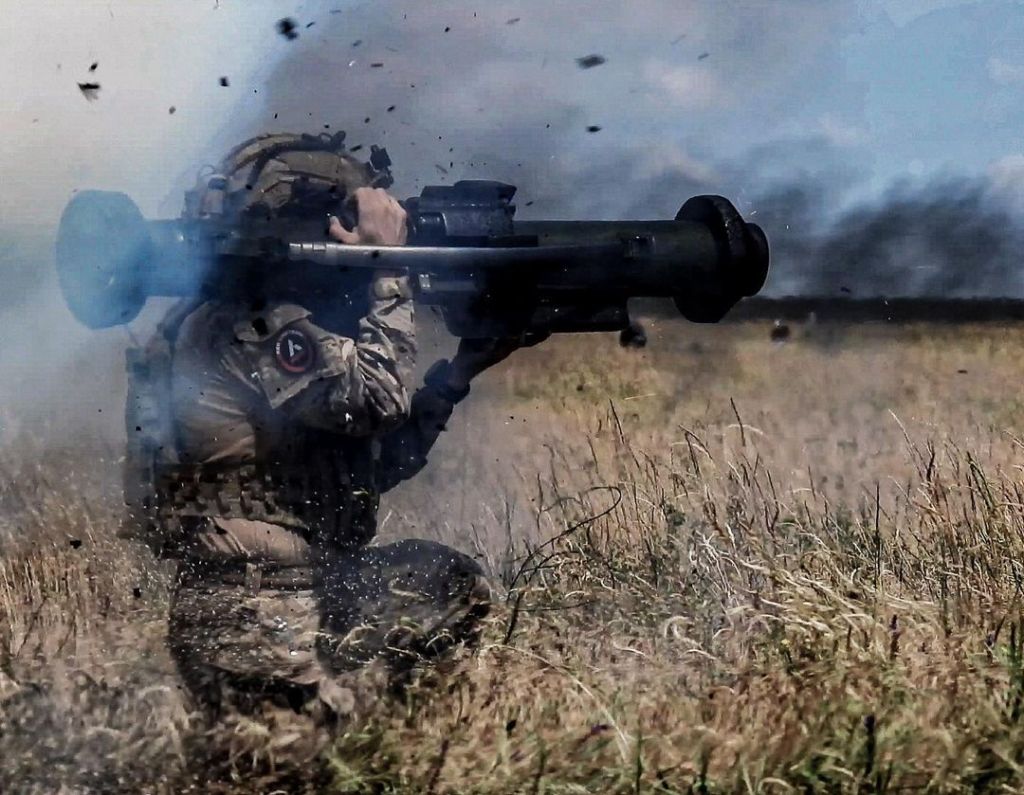
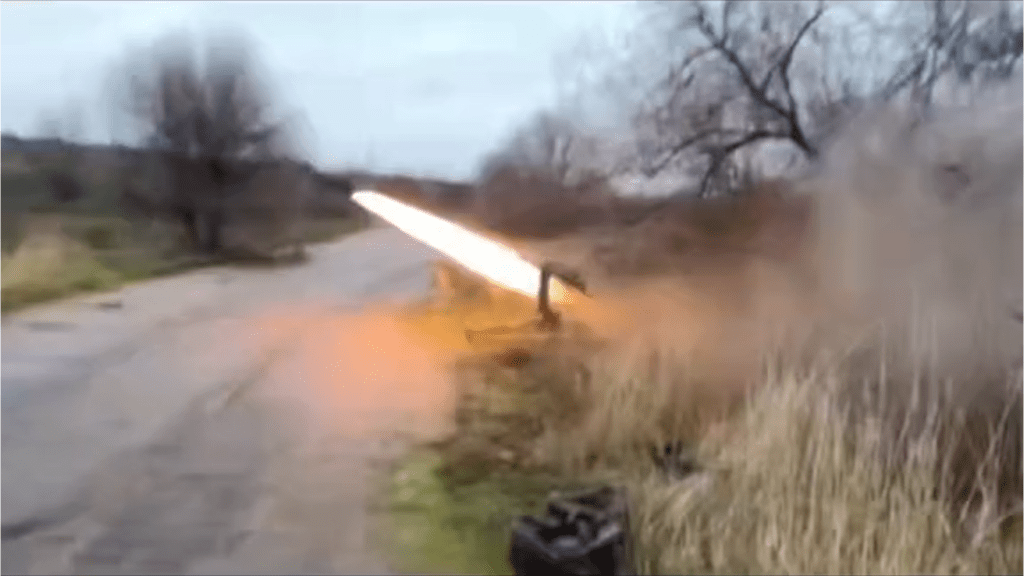
An APILAS seen in a video dating from 2021, filmed during fighting on the Donbas line of contact (via social media)
APILAS have been seen in Ukraine before Russia’s invasion in 2022, one was seen in a video dating from November 2021. It is unclear when the first APILAS were first transferred to Ukraine, and the weapons seen subsequently may originate from an earlier, pre-2022 invasion transfer.
APILAS in a Ukrainian armoury, c.2023 (via social media)
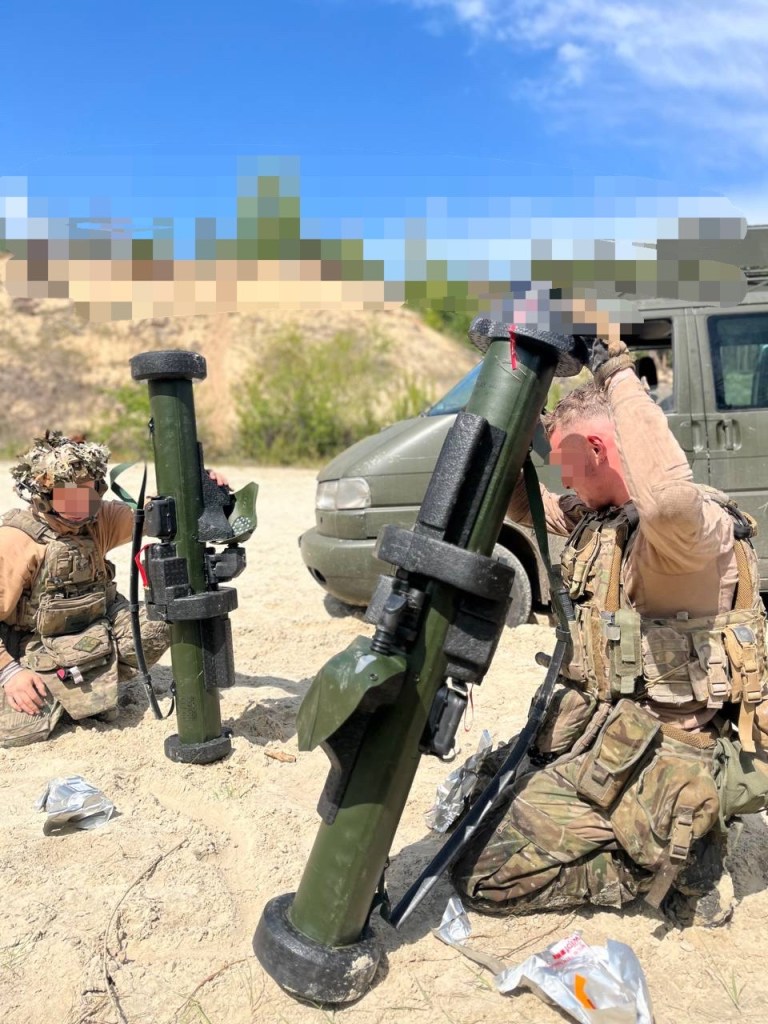
In April 2023 a photo of an APILAS in a Ukrainian armoury surfaced, sadly no markings are visible in the image. Several months later, on 19 and 20 June, Red Line Team, a unit affiliated with the Ukrainian security services special forces unit, SBU-Alpha, shared imagery from a range trip where a wide variety of anti-armour systems were fired. One of the weapons featured in the video was an APILAS.
(Red Line Team)
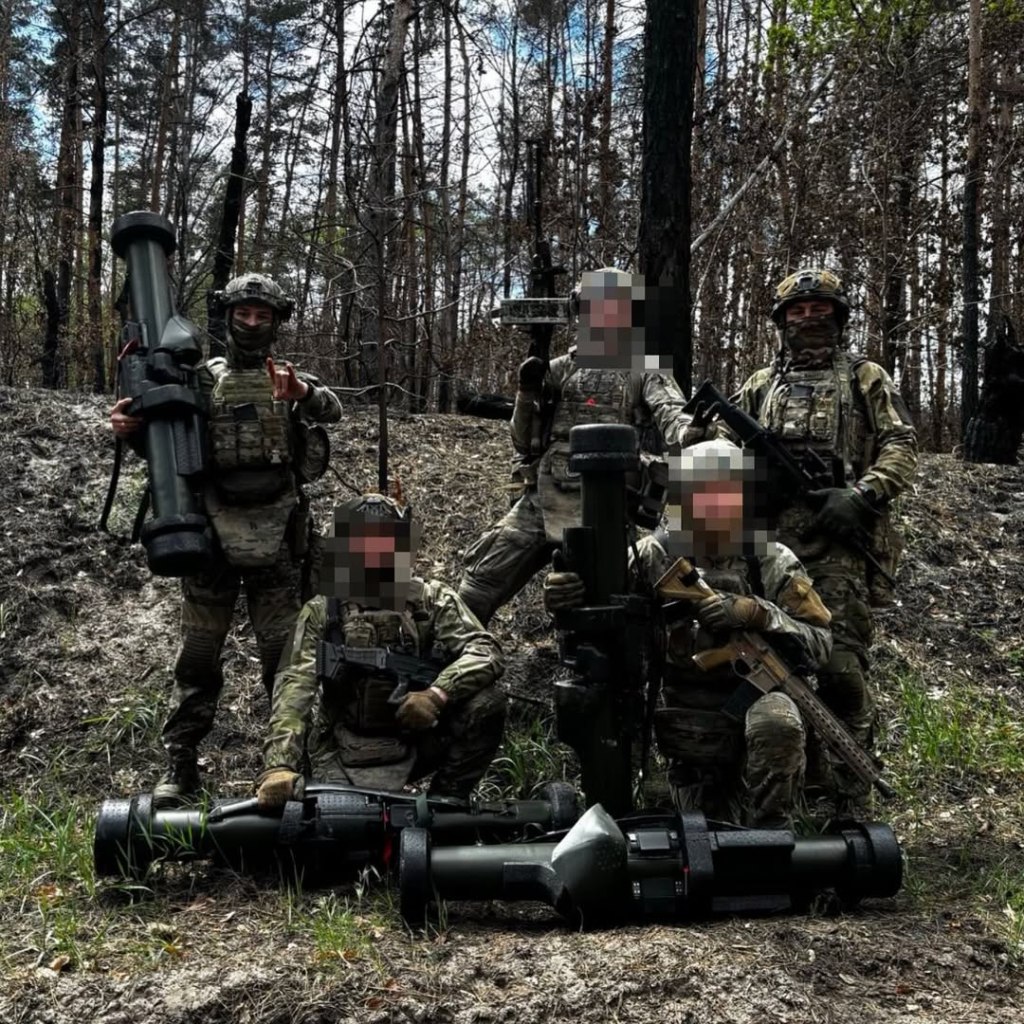
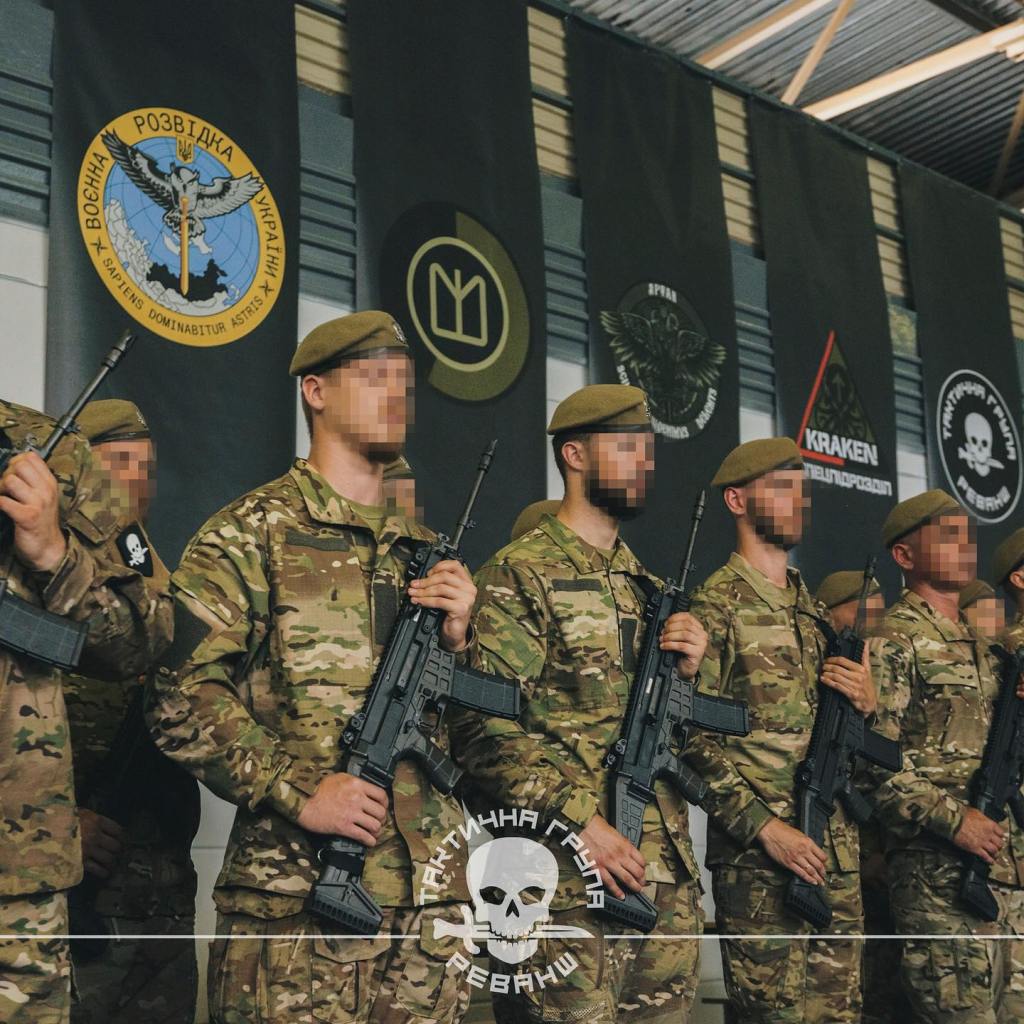
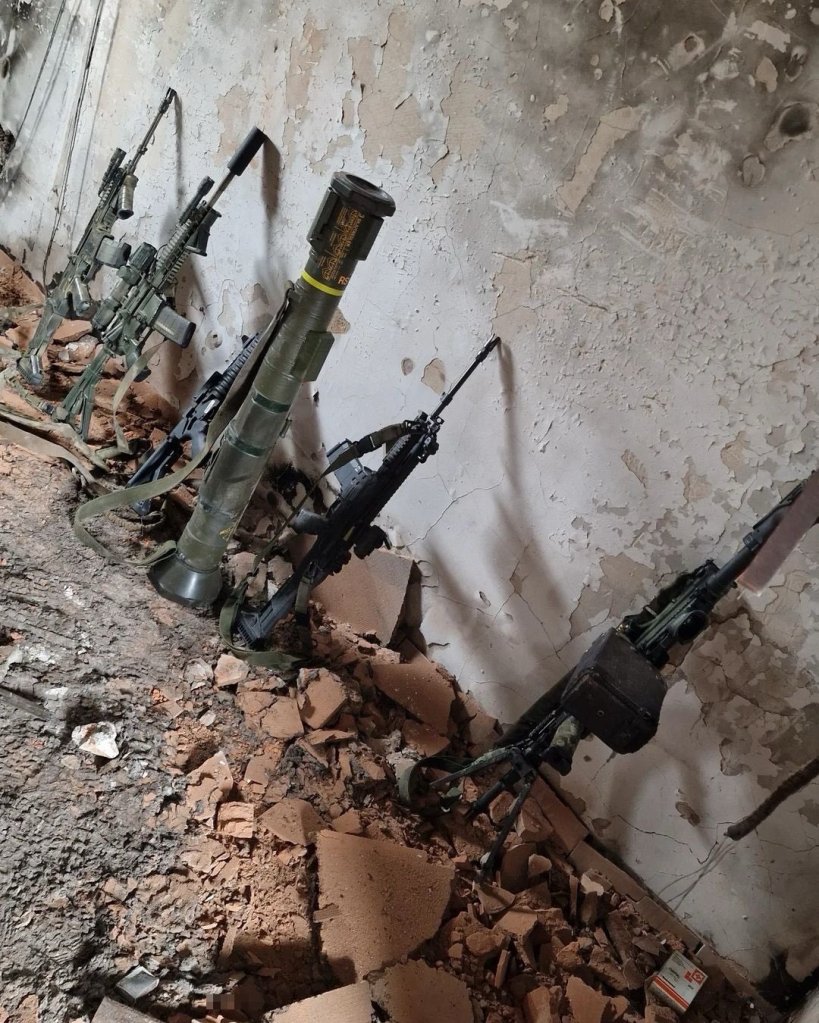
APILAS have also been seen with the Assault Bastards, a unit believed to be part of the Kraken Regiment’s 2nd Assault Company, which is part of the Department of Active Operations of Ukraine’s Intelligence Directorate (the GUR). On 13 May, the unit shared a group photo which also featured three APILAS.
(Assault Bastards)
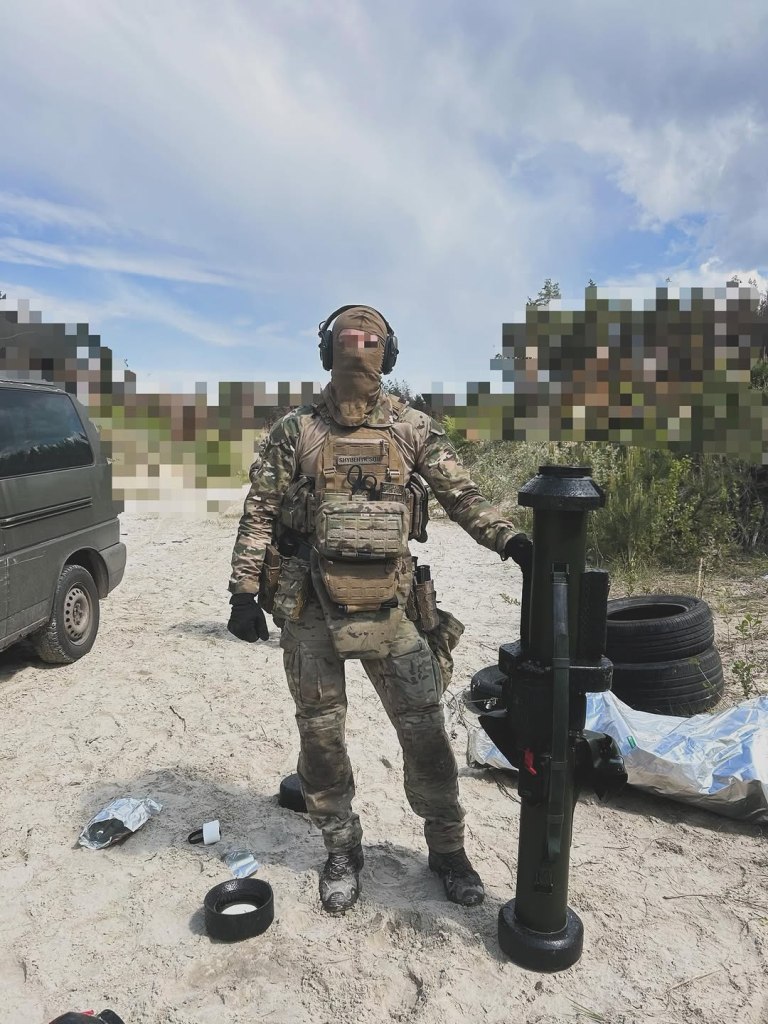
Most recently Shybenyk.Squad, another unit with Kraken’s 2nd Assault Company, shared a photo of an APILAS. This photo also appears to have possibly been taken at a range rather than in the field. Speaking to Shybenyk.Squad they explained that they have a decent number of APILAS in store and have used them operationally.
(Shybenyk.Squad)
APILAS has a reputation for having considerable concussive force when firing but Shybenyk.Squad noted that it’s blast isn’t that bad comparatively, describing it as ‘not critical’, during a recent trip to the training range the unit test fired 6 APILAS.
While APILAS are rarely seen in imagery from the conflict Shybenyk.Squad noted that they have a significant number of them in stores. They favour them for operations where more expensive complex systems, like NLAW or Javelin, may be lost. Shybenyk.Squad explained that “they can definitely be useful in certain situations… [systems such as] NLAW are much more expensive, high-tech, more effective, but losing it is much more problematic and in some risky tasks it is better to take a less expensive weapon.” In general they noted that they favour the AT4 and RGW-90 Matador “due to the weight to the corresponding firepower and ease of use.”
(Shybenyk.Squad)
Operationally they favour the APILAS’ for its penetration capabilities, with sources suggesting it can penetrate around 2 metres of concrete, making it is an excellent weapon for mouse-holing – breaching structures. Shybenyk.Squad explained that they “once used it to break through a small wall to storm a building from a blind side not protected by the enemy.”
APILAS is one of the most rarely seen anti-armour weapons currently being fielded in Ukraine so I’m pleased to be able to share some good first hand imagery and feedback on its capabilities.
Special thanks to Shybenyk.Squad for sharing additional imagery and sharing their thoughts on APILAS.
Support Us: If you enjoyed this video and article please consider supporting our work here. We have some great perks available for Patreon Supporters – including early access to custom stickers and early access to videos! Thank you for your support!
The FORT-230 is Ukraine’s 9x19mm submachine gun. Since the start of 2025 these compact personal defence weapons have been seen more and more frequently. The FORT-230 was developed by RPC Fort for military and law enforcement use with development beginning long before Russia’s February 2022 invasion of Ukraine.
The FORT-230 first emerged in 2021 when it was showcased as the Arms and Security exposition held in Kyiv. FORT or the Science Industrial Association of the Ministry of Internal Affairs of Ukraine, is Ukraine’s state-owned small arms manufacturer.
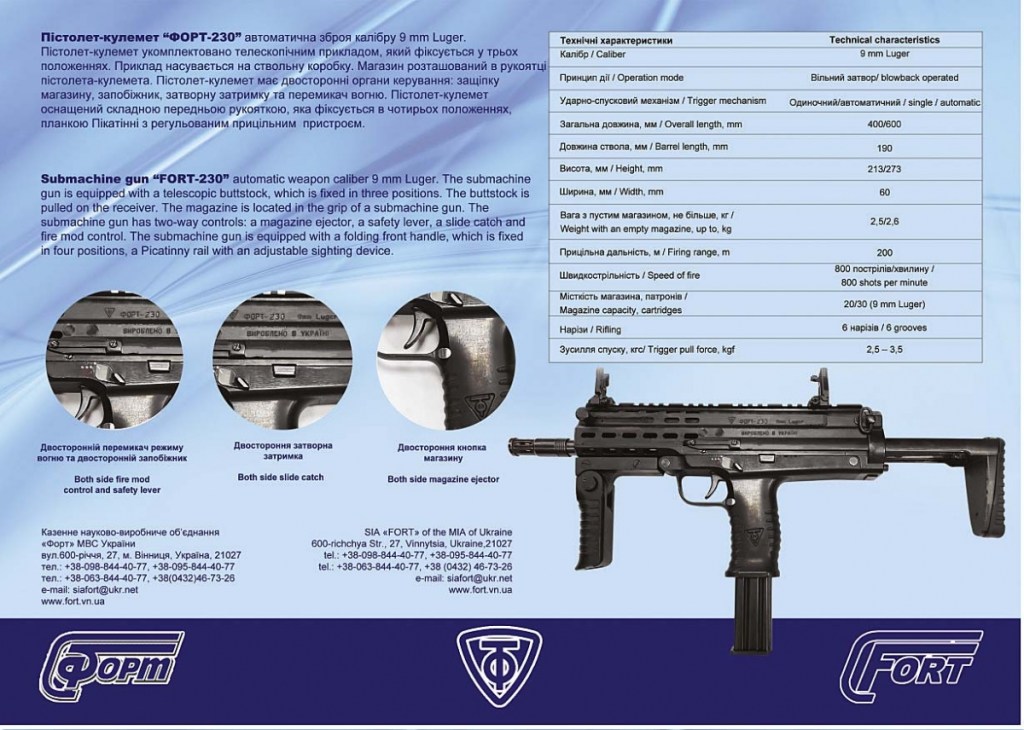
Data sheet for the 230, c.2021 (RPC FORT)
According to data from FORT the new 9mm submachine gun is a select-fire, blowback operated weapon which feed from 20 or 30 round proprietary magazines. It has a reported weight of 2.5kg (5.5lbs), a 190mm (7.5in) barrel and an overall length of 400mm (15.7in) (with the stock collapsed) and 600mm (23.6in) with the three-position stock fully deployed. It also had a folding front grip. The weapon’s controls are ambidextrous and has a non-reciprocating, reversible charging handle and it has a stated rate of fire of around 800 rounds per minute.
Ukraine intends to use the FORT-230 to arm some of the personnel currently issued AKS-74 and AKS-74u. These rifles are no longer in production and while Ukraine has large pre-war stocks of small arms dating to the Soviet era these stocks are finite and as the war continues the attrition rate of small arms means new weapons are needed. At 2.5kg (5.5lbs) the FORT-230 is around 500g and 1kg lighter than the AKS-74u and AKS-74 respectively while also being a smaller, more ergonomic package. The selection of a submachine gun chambered in a pistol calibre cartridge does, however, mean a sacrifice in ballistics compared to the 5.45x39mm chambered rifles.
In a video with my friend James Reeves from TFBtv, filmed at IWA 2025, FORT noted that the guns are in service with the Ukrainian national police (including the Kord special operations team), the Ukrainian National Guard and the Ukrainian militaries armoured units.
Combatant from 12th ‘Azov’ Brigade examining FORT-230 (via social media)
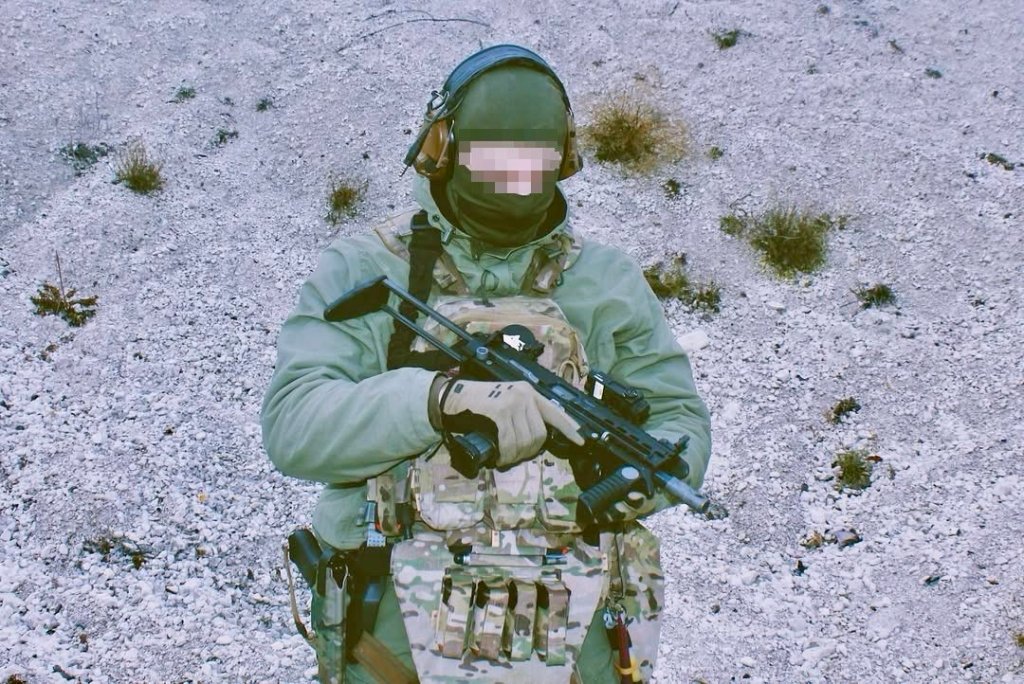
The first image to surface of one of the FORT-230s dates from early in the war when a photo of one of the guns, with a FORT-produced suppressor, was shared. This example has well worn finish and a 30 round magazine. The next sighting of one of the guns came in mid-November 2023 with some footage of one of the guns being fired at a range.
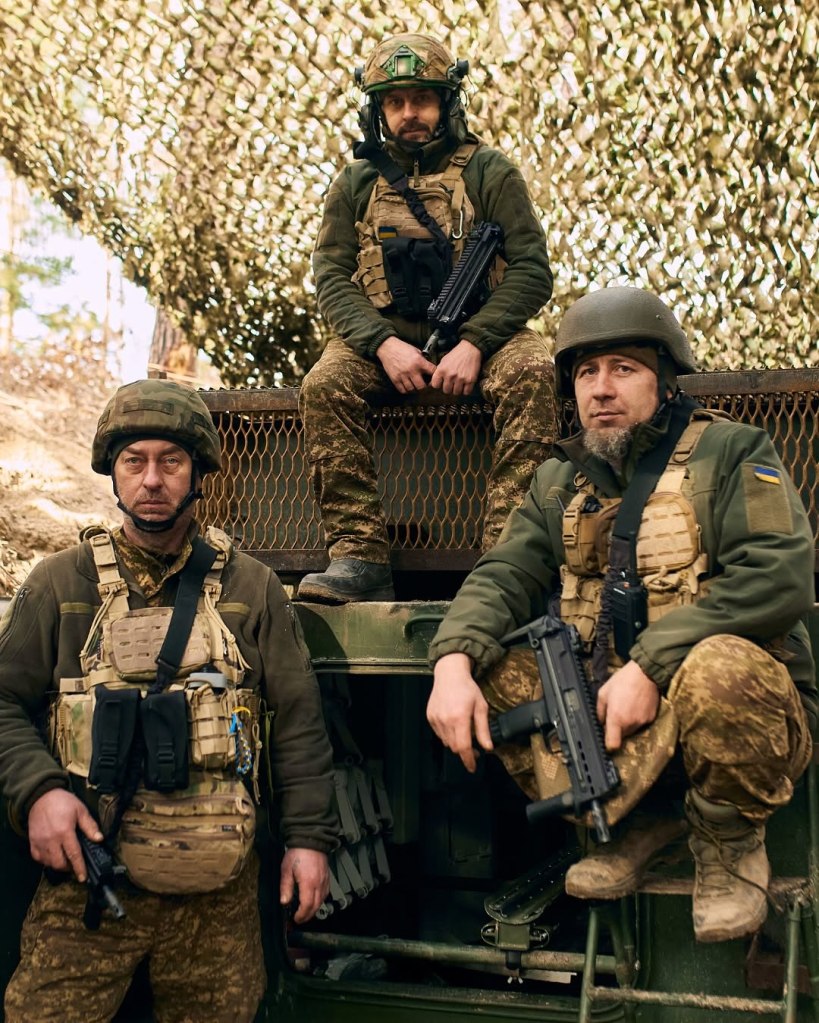
It wasn’t until late 2024 and early 2025 that the submachine guns began to appear with troops from various different units suggesting that larger scale production of the guns had begun. In January 2025, members of the 12th Special Forces Brigade “Azov” appeared in range photos with a FORT-230.
On 2 February another Ukrainian combatant shared a photo featuring a pair of FORT-230s, the location and unit the individuals belong to is unclear. Around the same time a salvage team with Ukrainian National Guard’s 13th Khartiia Brigade were also confirmed to be equipped with the guns.
Artillerymen of 13th Khartiia Brigade Brigade with new FORT-230s (via the brigade’s social media)
In mid-February combatants from the Ukrainian Army’s 3rd Assault Brigade shared videos from range sessions training with new FORT-230s. The clips show the weapons rate of fire and reloading drills. An individual, who may be a combat medic with the 3rd Assault Brigade, also shared several photos of the weapon disassembled giving a good look at the FORT-230s component parts.
On 4 March, the 3011 Unit of the National Guard shared a photograph of an individual posing with a FORT-230. In late March, the 13th Khartiia Brigade also shared photos of a 2S1 self-propelled howitzer crew equipped with brand new FORT-230s.
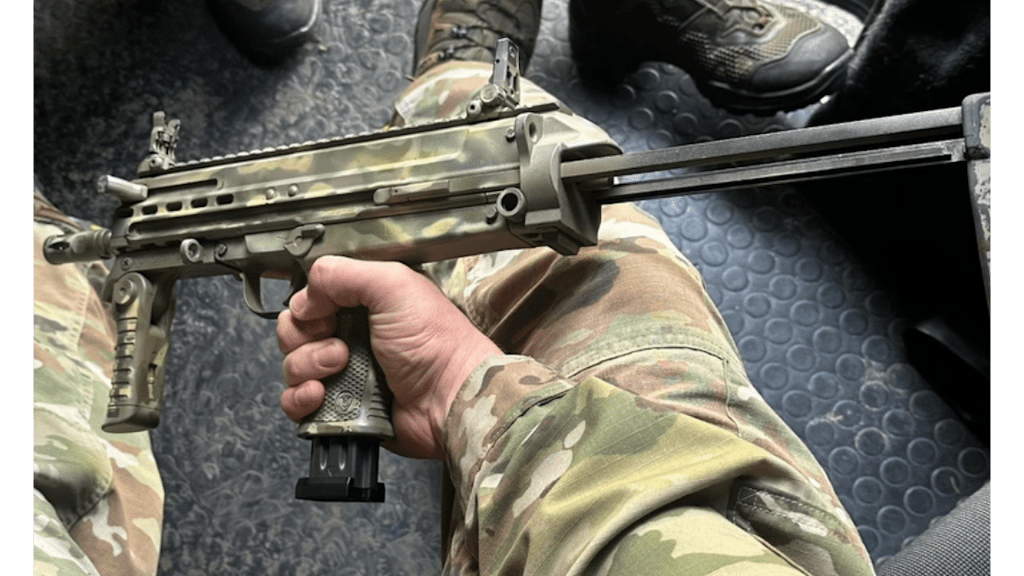
On the 19 April the same combatant, who may be a member of 3rd Assault Brigade, shared an additional photo of a FORT-230 now painted up in a camouflage scheme.
A painted FORT-230 (via social media)
While it may seem like a step backwards to adopt a 9mm submachine gun as a personal defence weapon in 2025, there is some logic to the selection. The FORT-230 is a locally designed and manufactured weapon system which can be easily put into production and as a personal defence weapon its small size and more compact and ergonomic form factor, compared to AK-patterned carbines, makes sense for air crews, tank crews, gunners, medics and drone operators who don’t immediately need a rifle-calibre weapon. While this argument has its roots in some of the original reasoning behind why the submachine gun rose to prominence with many armies during the later-half of the 20th century it can also be noted that small arms design has advanced and there are rifle-calibre personal defence weapons with similar formfactors and weights now available. The FORT-230, however, is expedient for Ukraine and is probably more than sufficient for many of those likely to be issued them. The FORT-230 may be the last submachine gun to see widespread issue and use during wartime.
Way back in February 2024, I published an article/video discussing sightings of one of the so-called Franken-SAM systems provided to Ukraine by Western allies. The ASRAAM-armed system was developed and provided by the UK but until this year little information about it had been confirmed. On 10 May the UK Ministry of Defence confirmed that they system is called ‘Raven’ and a total of 13 of the systems have been pledged.
Five Raven Air Defence Systems due to be dispatched to Ukraine (UK MoD/Crown Copyright)
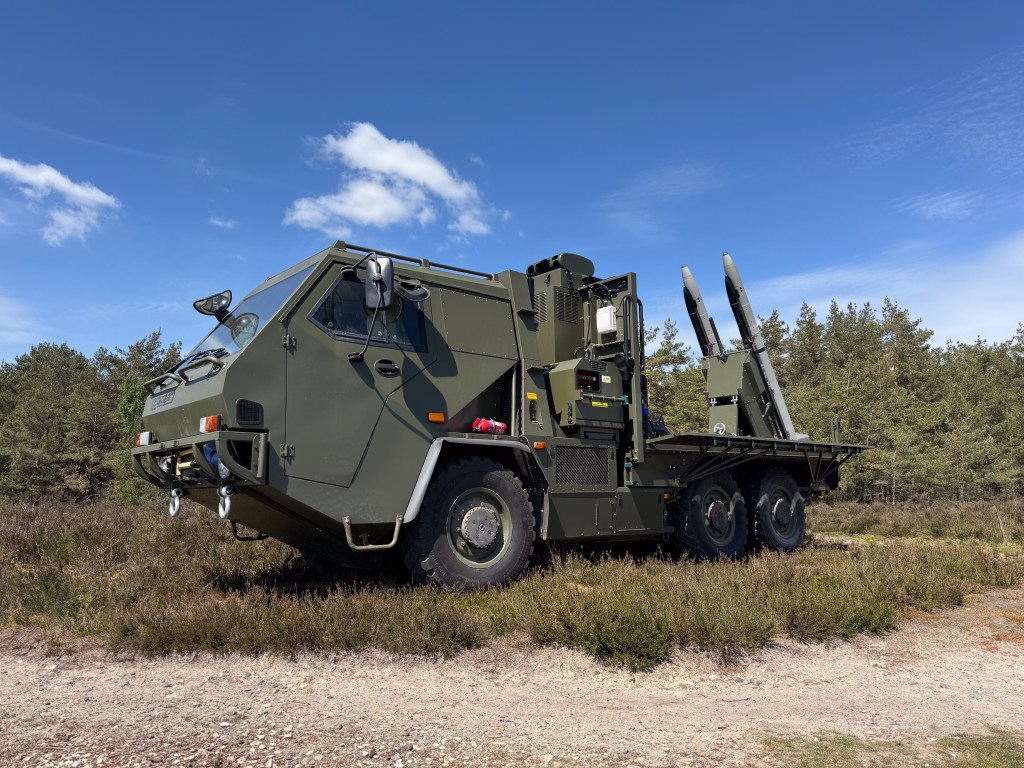
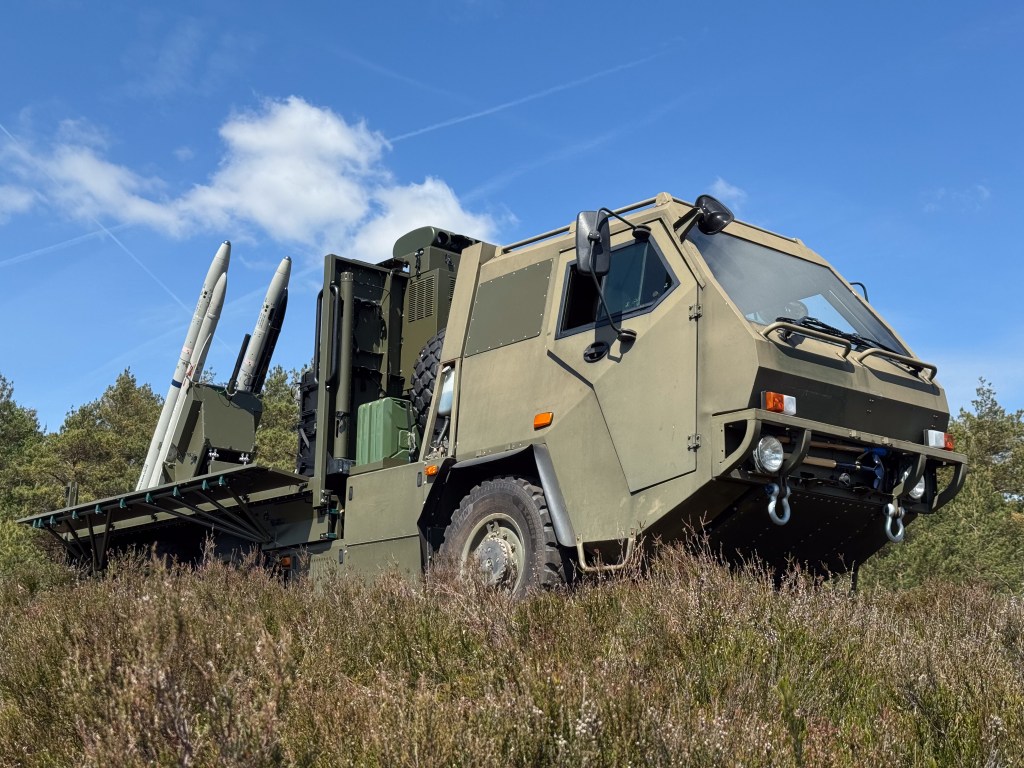
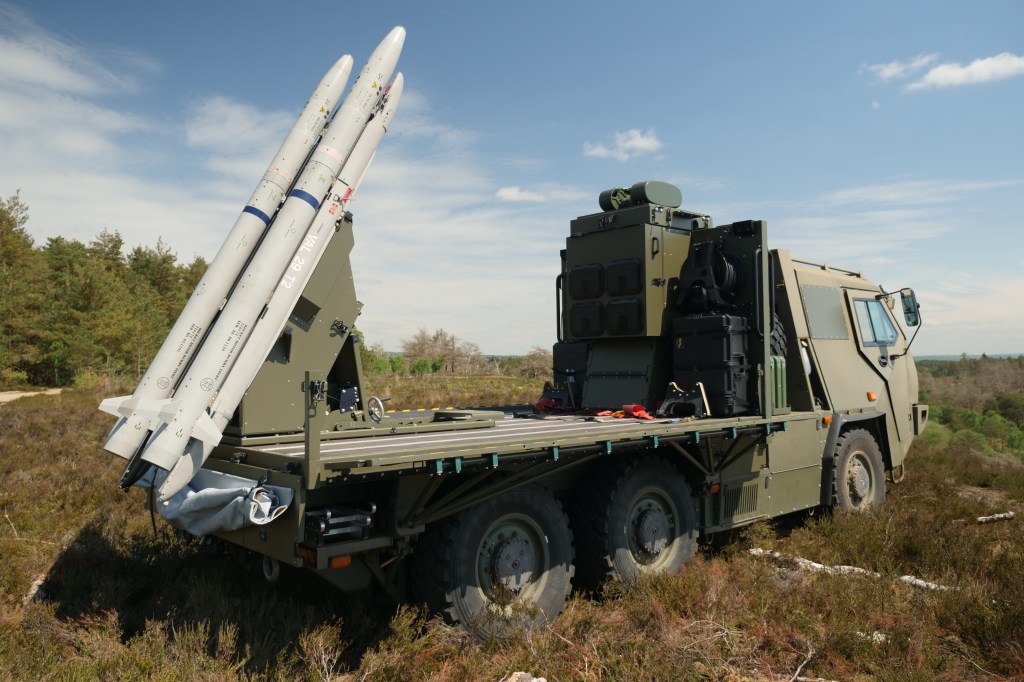
The previously available imagery showed that the system comprised two AIM-132 Advanced Short-Range Air-to-Air Missiles (ASRAAM) mounted on a Supacat HMT 600 (6×6) vehicle. The vehicles are believed to be former Soothsayer ECM carriers brought out of storage. Also visible is what appears to be a mast-mounted sensor unit positioned behind the cab, on the vehicle’s flatbed. This appears to be a Chess Dynamics Hawkeye which likely includes electro-optical and infrared sensors used for targeting.
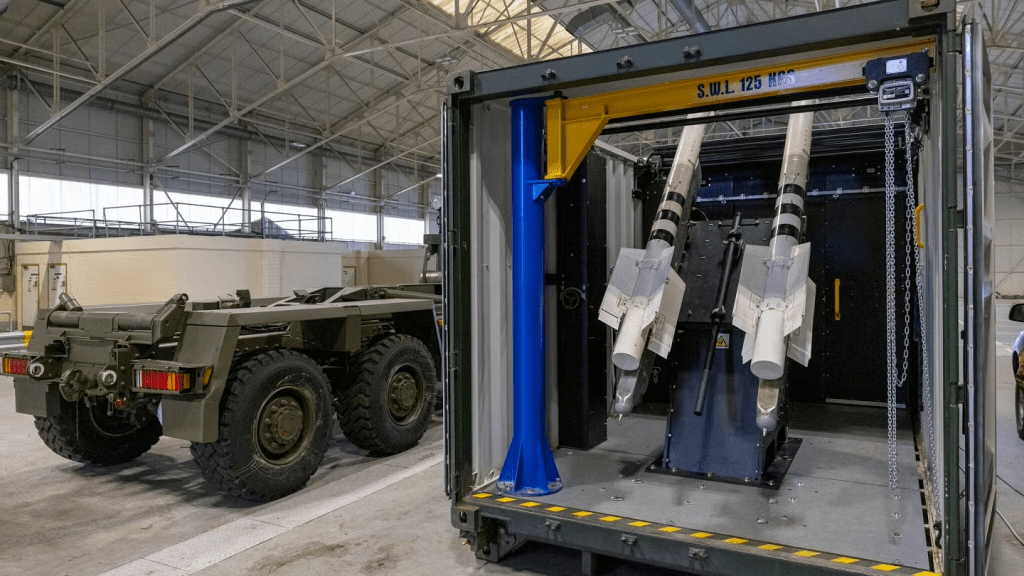
Gravehawk – UK-developed containerised air defence system (UK MoD/Crown Copyright)
The UK-developed Raven is one of several ad hoc short-range air defense systems developed by the UK for Ukraine, the other being Gravehawk, a containerised system which utilises R-73 air-to-air missiles, which was unveiled in February 2025. Both systems are part of an effort to affordably and quickly bolster Ukraine’s air defences. In October 2023 a pair of videos shared by the Ukrainian air force gave a glimpse of the system in action. The both filmed at night shows a launch but the vehicle is not visible. The second, shared on 12 October, by Ukraine’s Air Command – South shows the successful engagement of a Russian long range loitering munition. As the darkness is lit up by the missile launch, the Supacat 6×6 High Mobility Transporter is briefly visible.
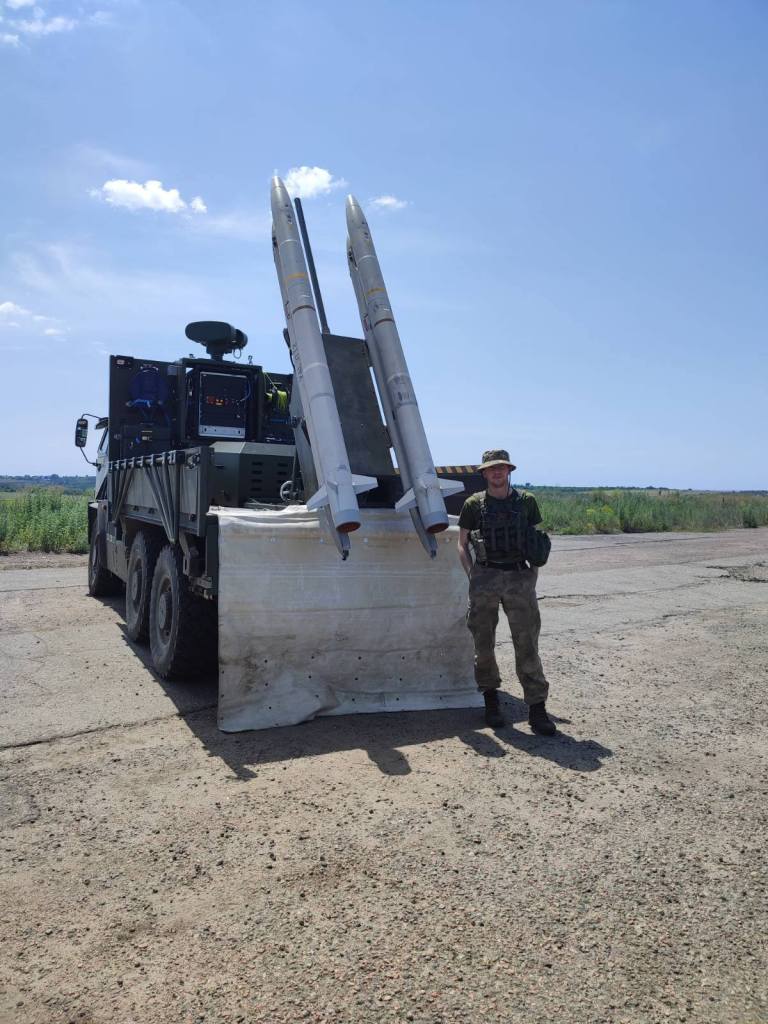
Raven seen in Ukraine, Feb. 2024 (via Social Media)
ASRAAM uses infrared homing and can lock onto its target after launch. It has an air-launched range of more than 25km but this is likely shorter when used in a ground launched role. The system may be used in conjunction with radar systems which feeds target data to the missile. A key feature of the ASRAAM is its ability to lock-on after launch, theoretically allowing it to be vectored onto a target in the air before it begins IR homing.
The system, however, isn’t ideal with limited ready-to-fire capacity on the launcher ramp, with just two rails, and no protection for the missiles themselves, from either the elements or from potential fragmentation or impact damage if attacked. The ad-hoc air defence system first saw action in Ukraine in August 2023, and represents an ingenious improvisation utilising a highly capable missile in an air defence role it was never envisaged in. In December 2023 UK Ministry of Defence summarised their development:
“In summer 2022, a joint MoD-MBDA team developed air defence systems to fire ASRAAM from the ground for the first time. Within four months of initiating the surface launched ASRAAM project, these air defence systems were developed, manufactured, trialled and Ukrainian crews trained on their usage, on UK soil, before being transferred into Ukrainian hands.”
In late 2023, it was reported that the UK had supplied “a handful” of the missile-equipped Supacat trucks. They were believed to be in use in near the front and in the Kyiv region, defending key infrastructure, against Shahed-136/Geran-2 long-range loitering munition attacks. In December 2023, the UK Ministry of Defence announced that a further 200 ASRAAMs would be provided to Ukraine and that the systems in-country had achieved a “successful hit rate reported as high as 90% against some Russian air targets.” ASRAAM’s payload, a 10kg blast-fragmentation warhead, is designed to destroy aerial targets with minimal collateral damage.
Raven Air Defence System, based on the HMT 600 Supacat vehicle and the Advanced Short Range Air-to-Air Missile (UK MoD/Crown Copyright)
A number of videos showing glimpses of the system itself or the system in action were shared throughout late 2023 and 2024. On 12 October 2023, footage of a night launch against a Shahed one-way munition was shared including thermal footage from the systems sensors. In late February 2024, footage, again from the Raven’s sensors, showed the successful engagement of a Russian ZALA reconnaissance drone.
A month later on 20 March, both external and system footage of a daytime engagement of a Russian Supercam S350 reconnaissance UAV was shared. Later in March additional footage of what was also claimed to be a Supercam was also shared.
Raven Air Defence System, based on the HMT 600 Supacat vehicle and the Advanced Short Range Air-to-Air Missile (UK MoD/Crown Copyright)
On 3 April, thermal camera footage of another UAV interception was posted on Ukrainian social media. The speed and vector of the missile suggests it was a Raven-launched ASRAAM. On 14 April 2024, a short clip showing an ASRAAM missile with a message written on it ‘Rowdy Company’, followed by footage of a night-time launch was shared.
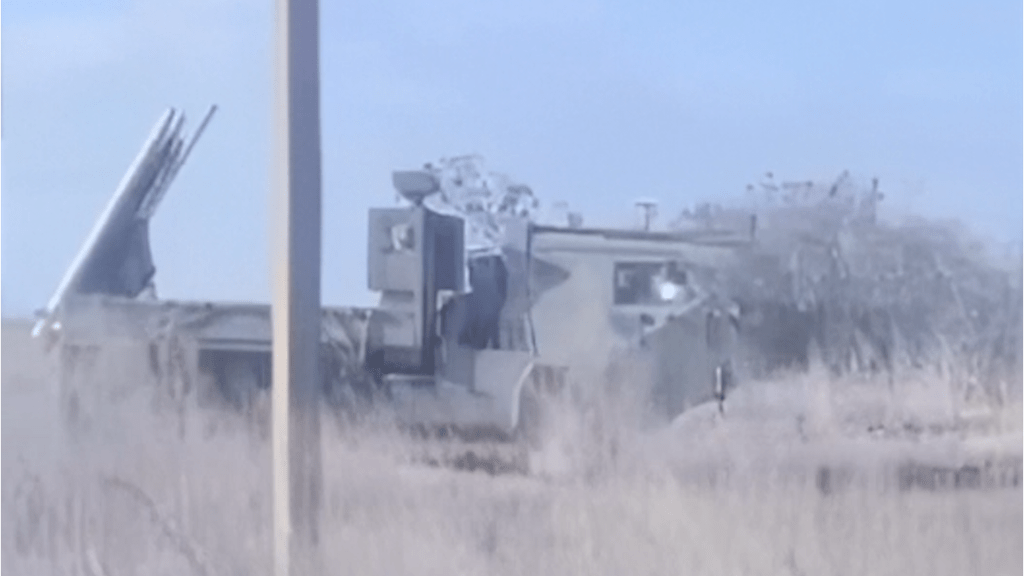
In early May 2024, Russian Telegram channels shared drone footage of what they claimed as the destruction of one of the systems by a Lancet loitering munition. While footage of the systems in action is few and far between another daytime video of the system in action was shared in mid-September 2024, having been posted to TikTok.
Most recently, in late November 2024, a video containing footage from a number of Ukrainian anti-aircraft units showed several interceptions of Russian drones and a launch from what appear to be Raven system.
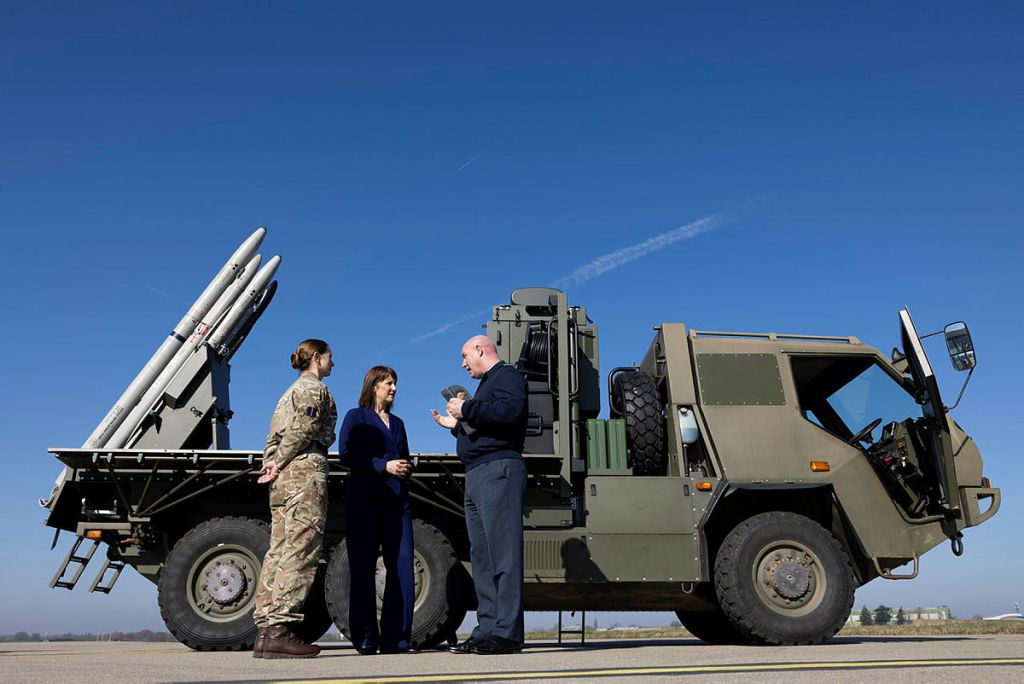
In March 2025, a couple of photos were shared by the UK Ministry of Defence showing Rachel Reeves, the UK’s Chancellor of the Exchequer being briefed on Raven during a visit to RAF Northolt, though the name of the system was not disclosed at the time they gave the best side-on look at the system to-date.
UK’s Chancellor of the Exchequer being briefed on Raven during a visit to RAF Northolt, March 2025 (UK MoD/Crown Copyright)
The UK Ministry of Defence unveiled the Raven officially on 10 May 2025. In a video posted to the UK MoD YouTube channel the system was shown in detail and some interesting stats were shared. Colonel Olly Todd, Military Assistant Head of Taskforce Kindred [Taskforce Kindred refers to the MoD’s effort to provide equipment to the Armed Forces of Ukraine (AFU), from UK stockpiles and rapid procurement.] noted that the UK has provided approximately 400 ASRAAM (which were near the end of their service life) to Ukraine and from 400 launches the systems’ engagement success rate stands at around 70%. The video also confirms that eight Raven systems were deployed to Ukraine in 2022 and a further five are set to be provided in 2025.
Raven was developed in just three months with experts from MBDA, Supacat at the RAF’s Air & Space Warfare Centre involved in the process. It combines a Supacat HMT-600 vehicle with the MBDA-manufactured ASRAAM using a bespoke launch assembly which integrates launch pylons taken from legacy UK aircraft including Hawk, Jaguar and Tornadoes. Unsurprisingly Raven and Gravehawk use the same control system and likely share the same system-integrated sensor units for tracking and identifying targets before locking on with the missiles’ seekers before launch.
ASRAAM mounted on a Raven air defence system (UK MoD/Crown Copyright)
While ASRAAM is still in production it is worth noting that other than the UK, the only other current user is India – though several Middle Eastern nations have reportedly adopted it, this means the stock of older missiles ready for disposal will be somewhat limited. It is so far unclear if the Raven systems could also be adapted to launch other missiles such as the R-73 used by the Gravehawk.
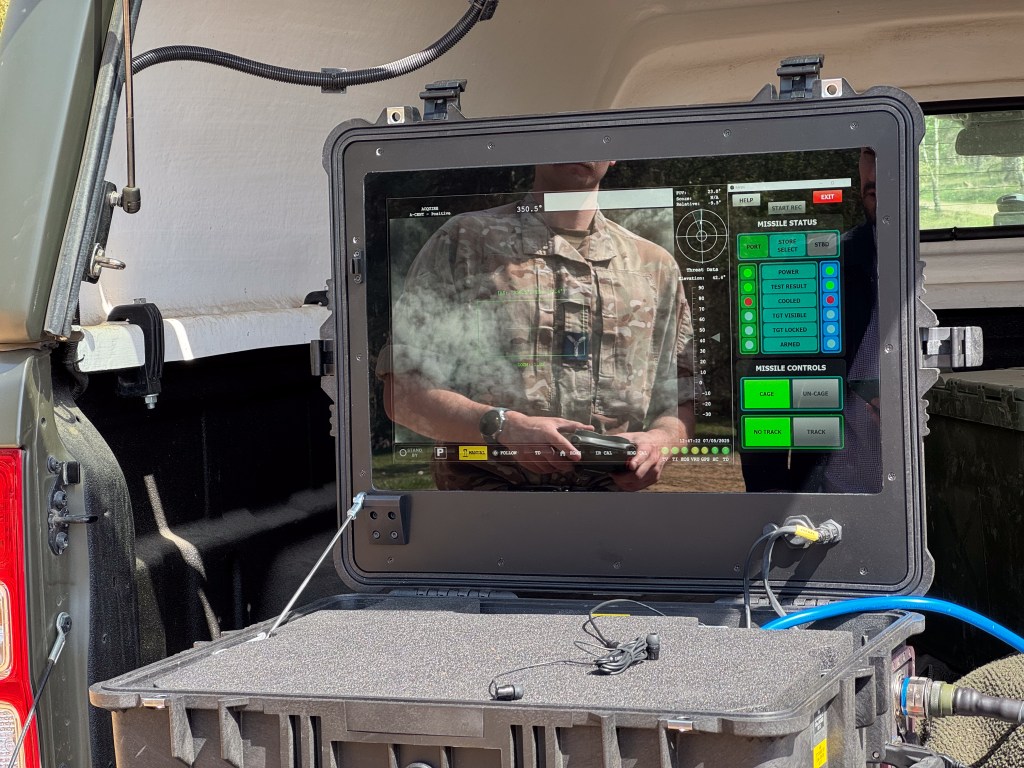
Photo of the Raven Air Defence System’s Fire and Control Unit (UK MoD/Crown Copyright)
Despite the potential limited availability of the missiles the relatively cost-effective price-tag of an ASRAAM, reported to be around £200,000 (or $260,000), makes the Raven a useful system for not only protecting key Ukrainian infrastructure but also, as has been seen in some of the footage available, engaging Russian reconnaissance drones which feed important information back to Russia’s command and control apparatus.
Updates – 25/07/25:
The UK will provide Ukraine with hundreds of ASRAAM air defence missiles, helping to protect them from Russian drone and missile attacks.
The missiles will be funded using £70m worth of interest generated from seized Russian assets.
On 24 October, the Ukrainian Air Forces’ Air Command “West” social media shared a photo of a Raven system, noting that it had destroyed 24 Shaheds and several cruise missiles.
A video was also shared showing the successful engagement of Russian Kh-59 and Kh-101 cruise missiles.
Support Us: If you enjoyed this video and article please consider supporting our work here. We have some great perks available for Patreon Supporters – including early access to custom stickers and early access to videos! Thank you for your support!
In 2021, Turkish small arms manufacturer Kale Kalıp introduced an FN Minimi clone, the KMG556. The belt-fed 5.56x45mm light machine gun entered production in summer 2023 and in the middle of 2024 the weapons began to appear in Ukraine. Intriguingly, Kale Kalip only announced the delivery of the first batch of serial production guns in late October 2024.
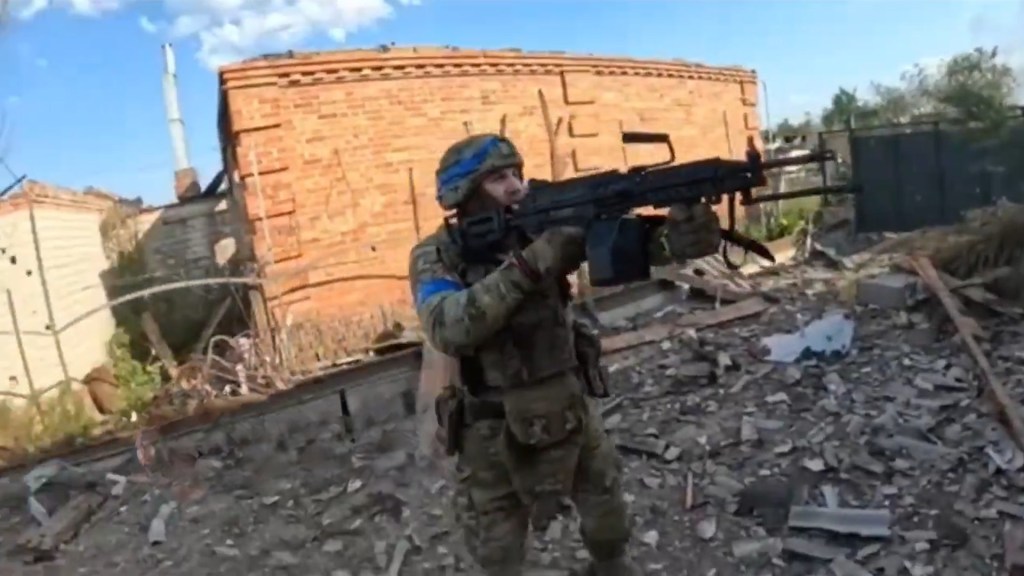
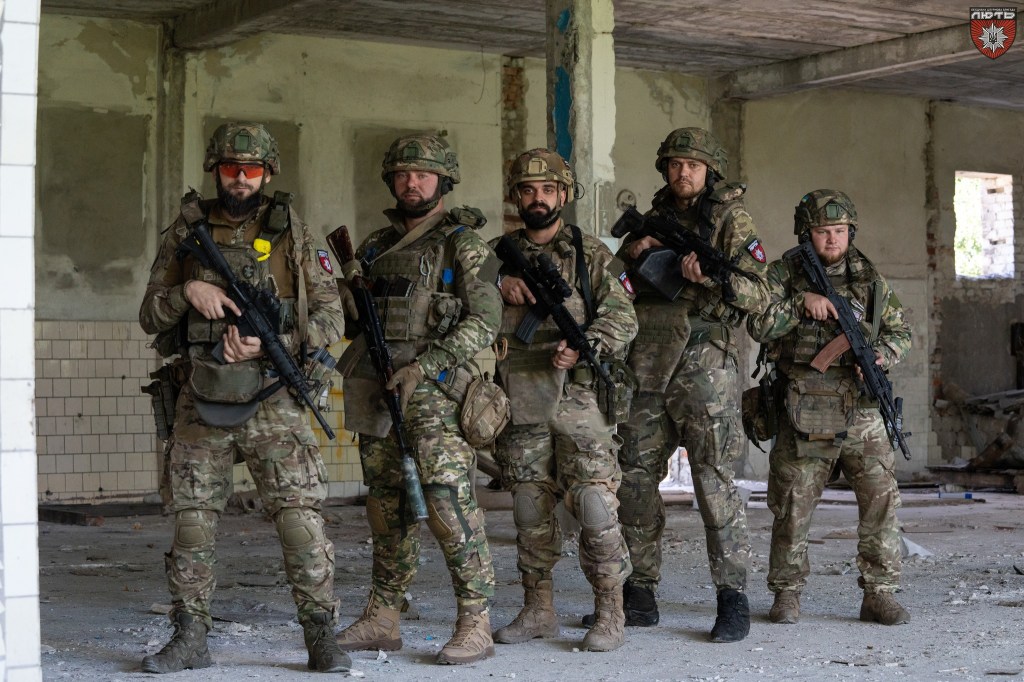
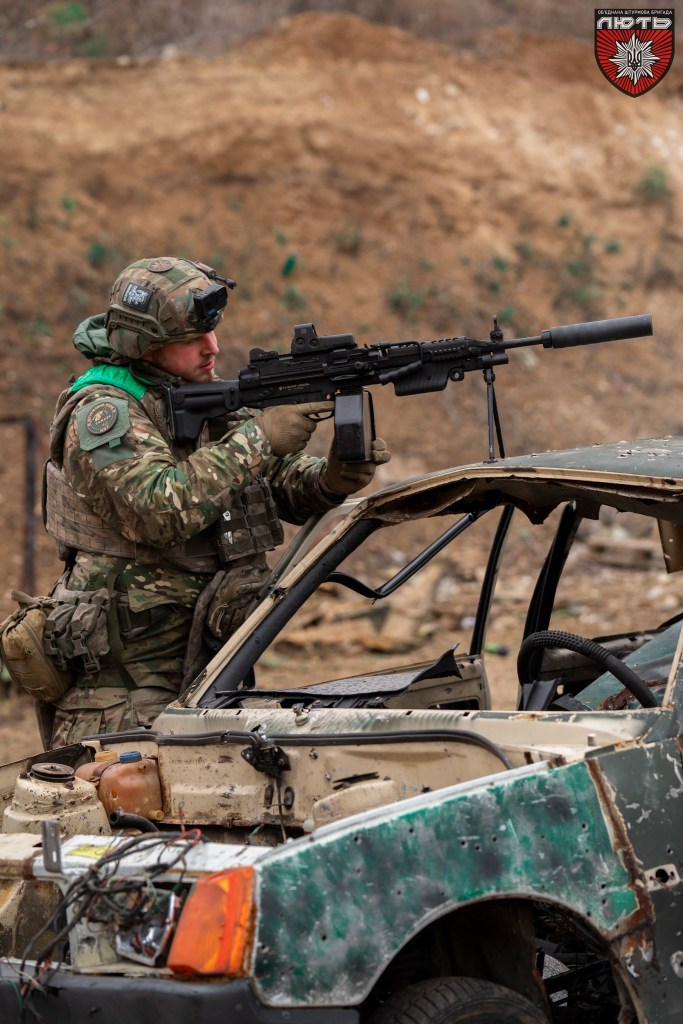
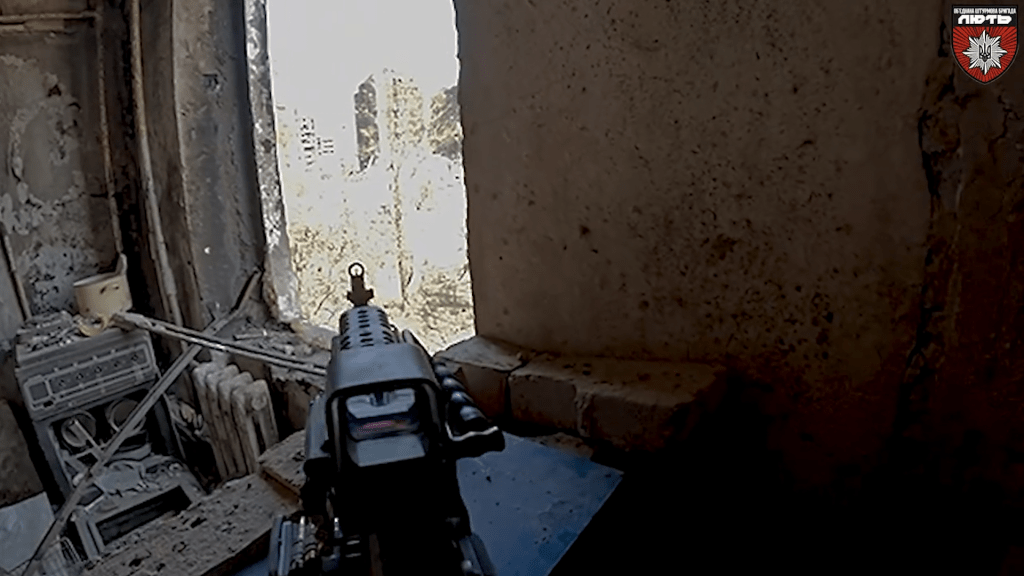
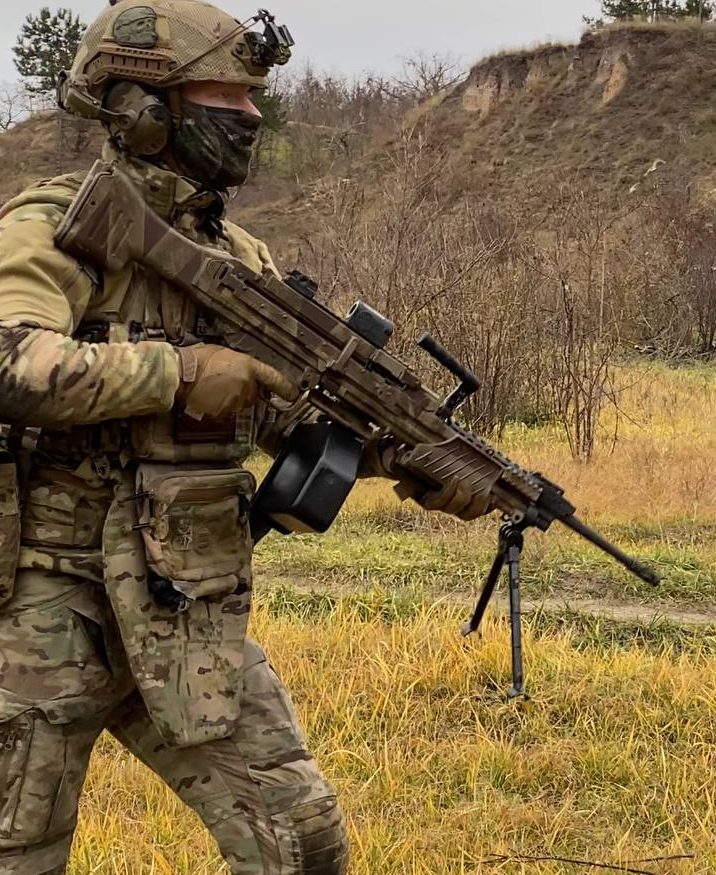
So far the most prevalent Ukrainian use of the KMG556 has been seen with the Lyut Brigade, [United Assault Brigade of the National Police of Ukraine “Lyut” of the Special Purpose Police Department] which formed in January 2023. The light machine guns began appearing in imagery of Lyut Brigade personnel in June 2024. The brigade as a whole appears to use a variety of Turkish-manufactured small arms ranging from Repkon grenade launchers to Canik M2 heavy machine guns.
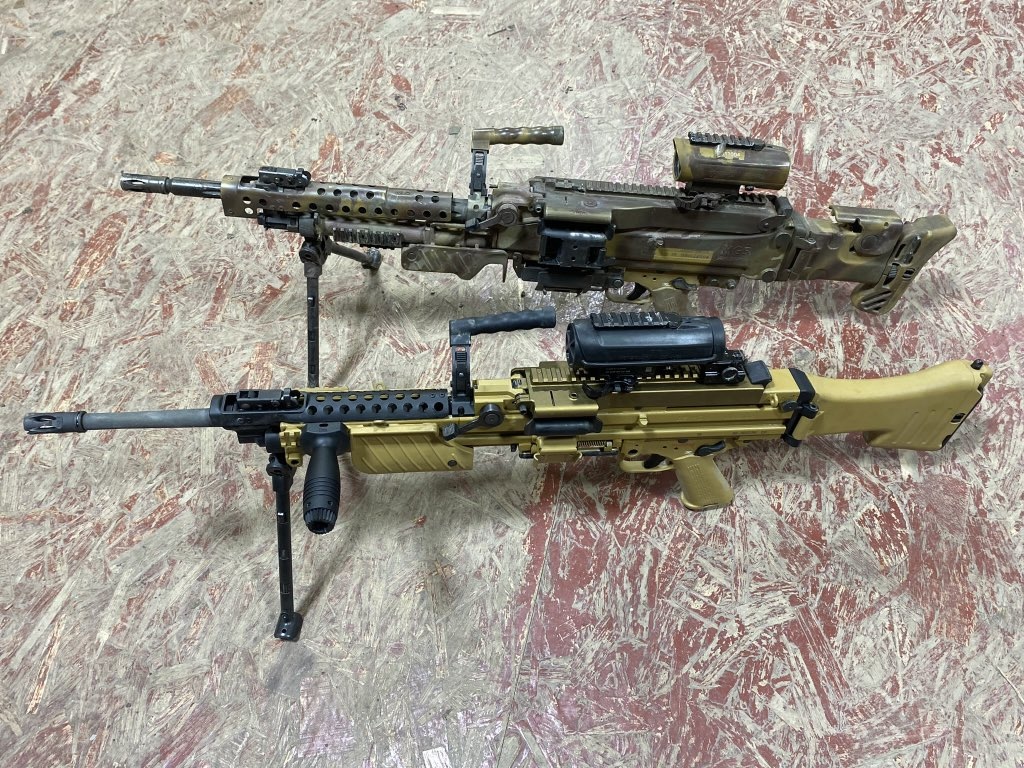
The KMG556 weighs in at 7.8kg (17.2lbs), has a 16in (406mm) long barrel and has newly designed polymer furniture including a new adjustable butt stock and forend. The KMG556 dispenses with the Minimi’s ability to dual feed using STANAG magazines and feeds only from a standard disintegrating metallic belt.
The first appearance of a KMG556 with Ukrainian troops came in late June 2024 when a video of members of Lyut was shared showing a clearing operation, said to be in Vovchansk. In the video, a machine gunner armed with a KMG556 is seen suppressing suspected Russian positions.
In early July, a promotional video posted on the Brigade’s TikTok featured a squad from the “Tsunami” Assault Regiment with a variety of weapons including M4 carbines, AK-74s and a KMG556, with its markings clearly visible.
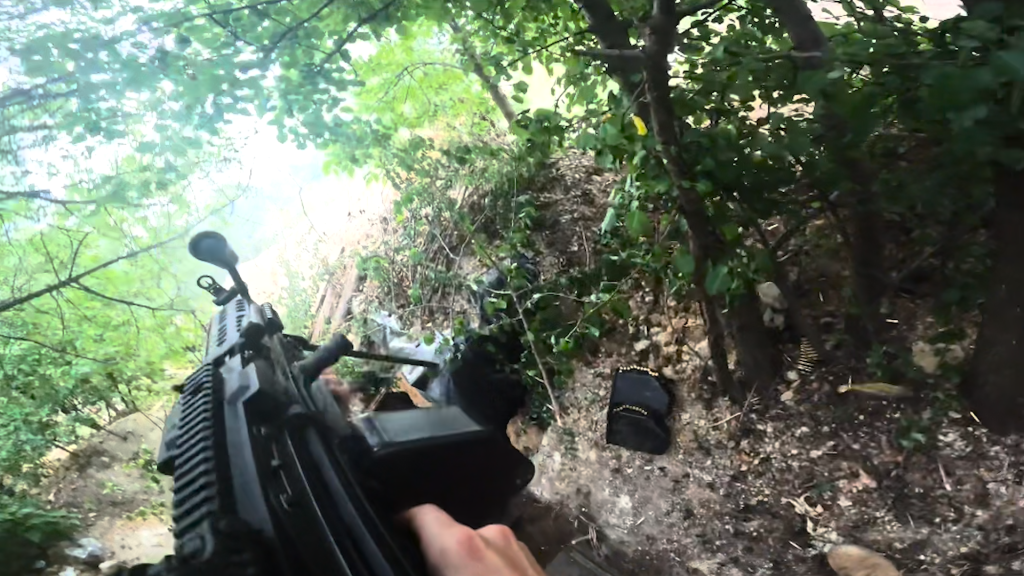
In early August, the Brigade’s social media shared a video featuring a patrol from the Enei Battalion clearing a small village near Toretsk. In the video helmet cam footage shows a patrol member firing what appears to be a KMG556. Another post on 4 August, featured a female member of the “Tsunami” Assault Regiment holding a KMG556. On the 24 August, Lyut Brigade shared a video celebrating Ukraine’s independence day. It featured a large number of personnel including an individual armed with what is clearly a KMG556 which has been painted. The video also features a Turkish BMC Kirpi MRAP.
At the beginning of September, a member of the Lyut Brigade’s Safari Assault Regiment shared a montage video on TikTok showing fighting in and around Toretsk. It features several short clips of a KMG556 in action.
On the 10 September, a photograph of personnel from the Brigade’s Luhansk Assault Regiment was shared with a Ukrainian serviceman standing front and centre equipped with a KMG556. The KMG556 was seen again in a short promotional video on one of the Brigade’s associated TikTok accounts.
The following month the Brigade’s social media posted a photograph of a squad of Ukrainian personnel stood in front of a BMC Kirpi, with one of the men equipped with a KMG556. It appears the photograph was taken earlier when the Independence Day video was filmed. On the 7 October, the Brigade’s Tiktok account shared a video showing helmet camera footage from a machine gunner with the Enei Battalion using a KMG556 during fighting in Toretsk.
On 7 November, a video showing more street fighting in Toretsk was posted on Tiktok showing a KMG556 in action, it appears to be mounted with an EOTech HWS 500 series sight. The National Police of Ukraine shared several photographs of Lyut Brigade personnel several days later, on 9 November, including a pair of portraits of brigade members equipped with KMG556s mounted with what appear to be Aimpoint Comp C3 red dot sights. Several days later, on 12 November, the Enei Battalion shared a short video on their TikTok account showcasing a fireteam and their weapons, including: a UAR-10, Repkon RDS-40 and a KMG556. A day later, a video showing a machine gunner from the Safari Regiment at work during fighting in Toretsk featured a KMG556 during an ambush. His KMG556 is mounted with an EOTech 512 or 552 holographic weapon sight. A short clip from this video was previously seen in a video posted on TikTok on 7 November.
A video commemorating 1,000 days since Russia’s invasion of Ukraine, posted on 19 November, also featured a KMG556. It appears to be the same fire team seen in the earlier video. On 16 December, a series of portraits of brigade members were shared, including one of a machine gunner armed with a KMG556 mounted with an EOTech HWS 512 or 552, a suppressor and loaded with a belt of M855. The same machine gunner was seen again in a festive photo posted on 31 December. In the same post another KMG556, with what appears to be a magnified optic, was seen, mounted on a MISTA Oncilla armoured car.
On 7 January 2025, a video showing fighting in Toretsk with members of Safari battalion clearing buildings also features a KMG556, with a Holosun 510 red dot optic, being fired from a upper storey window. The date the footage was filmed is unclear but it appears likely it was filmed earlier in 2024. A KMG556 has also been seen in a group photo of members of Lyut Brigade, alongside another Turkish weapon – a Repkon RDS-40 rotary grenade launcher.
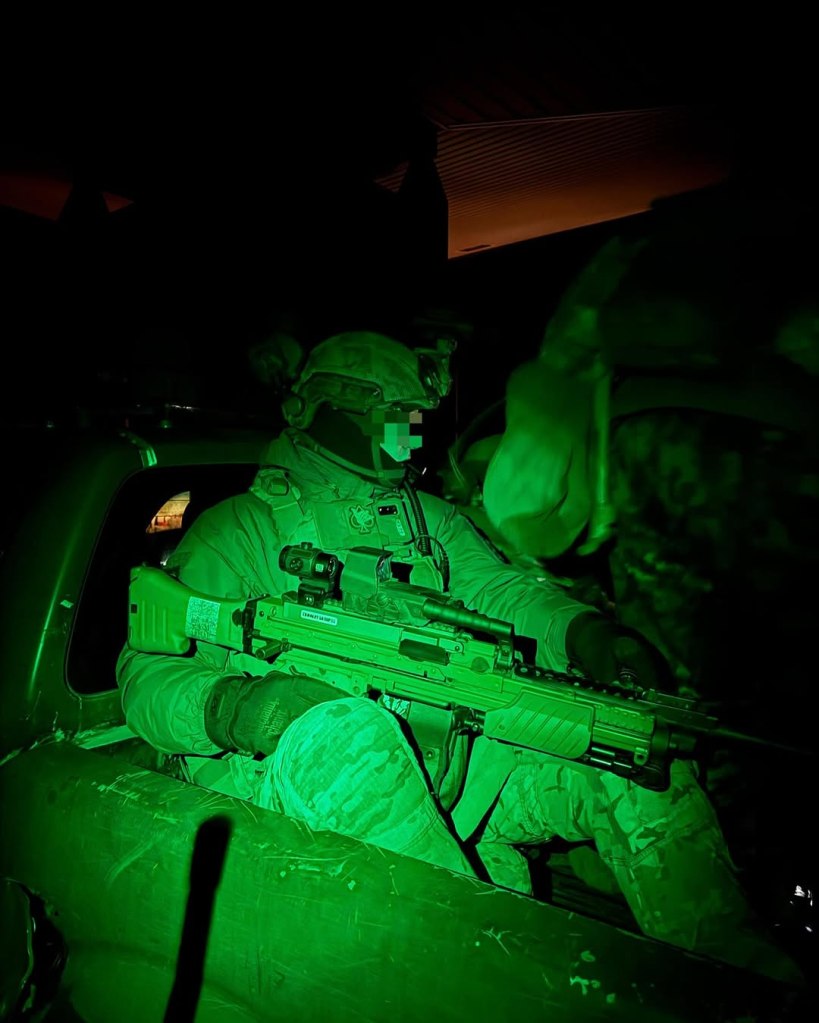
At the end of January, a video of a night-time clearing operation, likely in Toretsk, was shared on the Lyut Brigade TikTok page, showing what is likely a KMG556 being used to lay down suppressive fire.
In March the KMG556 was seen a number of times, first in a Lyut Brigade facebook post on the 6 March, which featured a photograph of as KMG556 equipped with a suppressor. The manufacturer’s markings are clearly visible on the side of the receiver. Finally, the KMG556 was most recently seen on 14 March, in a squad photo posted by the Lyut Brigade to celebrate Ukraine’s Volunteers Day.
On 23 December 2024 the German government confirmed that 200 Heckler & Koch MG4 5.56x45mm machine guns had been delivered as aid to Ukraine. The MG4s join the 7.62x51mm MG5s which have already been provided, along with a plethora of other HK small arms and light weapons including HK GMGs and a significant number of SFP9 pistols.
The MG4 was developed in the mid-1990s and adopted by the Germany Army in 2005. It is a gas operated light machine gun with an effective range of 600m. It weighs 8.7 kg (19.8lbs) unloaded, has an overall length of 1085mm (42.7in) and feeds from NATO standard disintegrating metal belts.
MG4 with Thales Xtraim and magnifier (shybenyk.squad)
While the delivery of MG4s was only confirmed in late December the guns appear to have arrived in country earlier with the first sighting of one coming on 3 December 2024. The initial sighting of the weapon was posted on Instagram by a Ukrainian combatant, likely a member of the GUR’s special operations teams. The initial photograph appears to have been taken indoors at a range and the flat dark earth colour across all parts of the weapon – rather than black or RAL8000, appears to indicate a base coat for a custom paint job. The weapon also has an FN Minimi belt box, while an adapter isn’t needed to use a Minimi box or bag, HK offers an adapter which enables more ergonomic mounting on the MG4.
A day later the same combatant posted a video showing him firing the MG4 on the move. From both the video and earlier photograph we can see that the weapon has the Gen 1 pattern fixed length, folding stock and a 17.7″ (450 mm) barrel. The gun is mounted with a Hensoldt RSA-S Reflex Sight on top of a Hensoldt 4x30i magnified optic.
On the 8 December the combatant shared another video, the MG4 is seen with the camouflage paint job completed and equipped with just the Hensoldt RSA-S, conducting training drills at a range.
On the 14 December, Shybenyk.Squad, another GUR team – associated with the Kraken Regiment, shared a photograph of a combatant with an MG4 notably fitted with a rare Thales Xtraim thermal fusion holographic sight and a magnifier. The MG4 is loaded with HK’s proprietary fabric soft ammo pouch. Several days later on 19 December, they shared a group photo taken in Orikhiv in Zaporizhzhia. Speaking to a member of Shybenyk.Squad they shared some thoughts on the MG4 stating:
“the weapon is very reliable and highly accurate, it can withstand the heavy load of endless enemy assaults, requiring only periodic lubrication. The disadvantages include insufficient ergonomics and weight, with which it is difficult to control during assault actions.”
They went on to explain that they received spare barrels and spare parts for the weapon.
A painted MG4 (via social media)
On the 20 December, MTAC, a Ukrainian military clothing and gear manufacturer, shared a photograph of the combatant with the MG4 – showcasing some MTAC products. The Hensoldt RSA-S reflex sight can again be seen.
On the 22 December, a member of the Delta Knights, an element of the GUR’s International Legion, posted a series of photos featuring an MG4. In the first he poses with a recently donated axe and in the second he showed his unit’s MG5 alongside the new MG4. In these photographs the gun is clearly unpainted and has a factory RAL8000 finish but has a black heat shield – this is seen on other examples too. It also has the same Gen 1 pattern fixed length, folding stock as seen on the earlier seen MG4. When asked what they thought of it Delta Knights simply replied “we love it so far”.
A 7.62x51mm HK MG5 and 5.56x45mm HK MG4 (Kevin Vinje/Delta Knights)
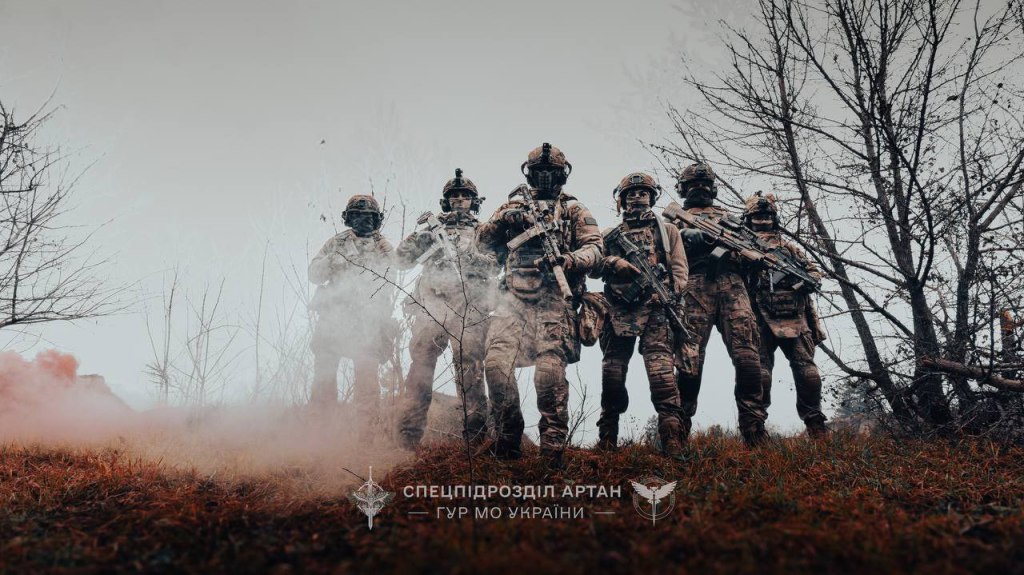
The most recent MG4 sightings, at the time of writing , appeared on 10 January 2025, when the Artan Special Unit, also affiliated with the GUR, shared a photograph of a combatant holding one of the machine guns, again with a RAL8000 finnish and mounted with a 4x30i Hensoldt optic with which it is likely the guns shipped with.
From the limited number of sightings of the weapons so far it appears that the MG4s have been predominantly issued to GUR teams including Delta Knights and Artan. With 200 guns delivered we will likely see MG4s appearing in imagery more often over the coming months.
Thank you to Matthias and DEaidUA for their invaluable help with this article/video. Thank you also to shybenyk.squad for sharing their thoughts on the MG4.
Update – 11/2/25: The GUR’s Artan Unit shared a team photo featuring an MG4 on 6 February.
On Friday, it was confirmed that the CZ Bren 2 will be assembled in Ukraine. This marks the first partnership since Russia’s Invasion in February 2022, that will see foreign small arms assembled in Ukraine. The Bren 2 is a 5.56x45mm select-fire gas-operated rifle which was first introduced as the CZ 805 BREN in 2011. While CZ Bren 805s have appeared in Ukraine the BREN 2 is much more common and favoured by troops on the ground.
We’ll take an in-depth look at their use in a future article/video but a considerable number of Ukrainian units ranging from special forces units to regular army have been seen equipped with the Czech rifles. Visually confirmed variants in Ukrainian service include the initial 5.56x45mm BREN 805 and later BREN 2 in various barrel lengths and configuration including the 8 inch barrel carbine with both side folding and telescoping stocks and the much more common rifles with side folding stocks and 11 and 14 inch barrels. There have also been a limited number of sightings of 7.62x39mm 8 inch barrel carbines and a number of 7.62x51mm BREN 2 BRs.
The first indications that production of the BREN 2 might be established in Ukraine came on 29 September 2023. During the first ever Ukrainian International Defence Industries Forum Deputy Minister of Defense Daniel Blažkovec stated that “the transfer of production of the Bren 2 “Sich” assault rifle” was a major, ‘flagship’ project.
Ukrainian Special Operations with CZ BREN 2s (via social media)
Sich (Січ) in Ukrainian refers to a historic form of fortified administrative and military camp used by Cossacks during the 16th century and later became associated with the Euromaidan in 2013. Since the name was used in September 2023, it has not appeared again.
In an announcement posted on 13 December, Ukraine’s state-owned defence corporation Ukroboronprom stated that the Ukrainian Defense Industry had begun licensed assembly of BREN 2s and that the agreement with CZ covers local assembly of rifles and will later include “full production of NATO-standard assault rifles in Ukraine”, the agreement was signed on 16 July 2024. Oleg Hulyak, Director General of Ukroboronprom, stated:
“Partnership with Czech colleagues will help to improve the provision of the needs of the Defense Forces of Ukraine in reliable and modern small arms produced in our country. In addition, another step has been taken towards the integration of our defense-industrial complex into the industrial chains of NATO countries,”
I reached out to Colt CZ Group for comment, Jan Zajíc, CEO of Česká zbrojovka, said in a statement:
“We are happy that together with our Ukroboronprom partners, we have successfully completed the assembly phase of the CZ BREN 2 assault rifle on the Ukrainian soil. Following the training of Ukroboronprom personnel at Česká zbrojovka, Ukraine is now able to deliver to its Armed Forces the CZ BREN 2 rifles assembled in Ukraine according to Česká zbrojovka‘s strict quality standards. We are ready to continue our cooperation in the future, all the way to full technology transfer.“
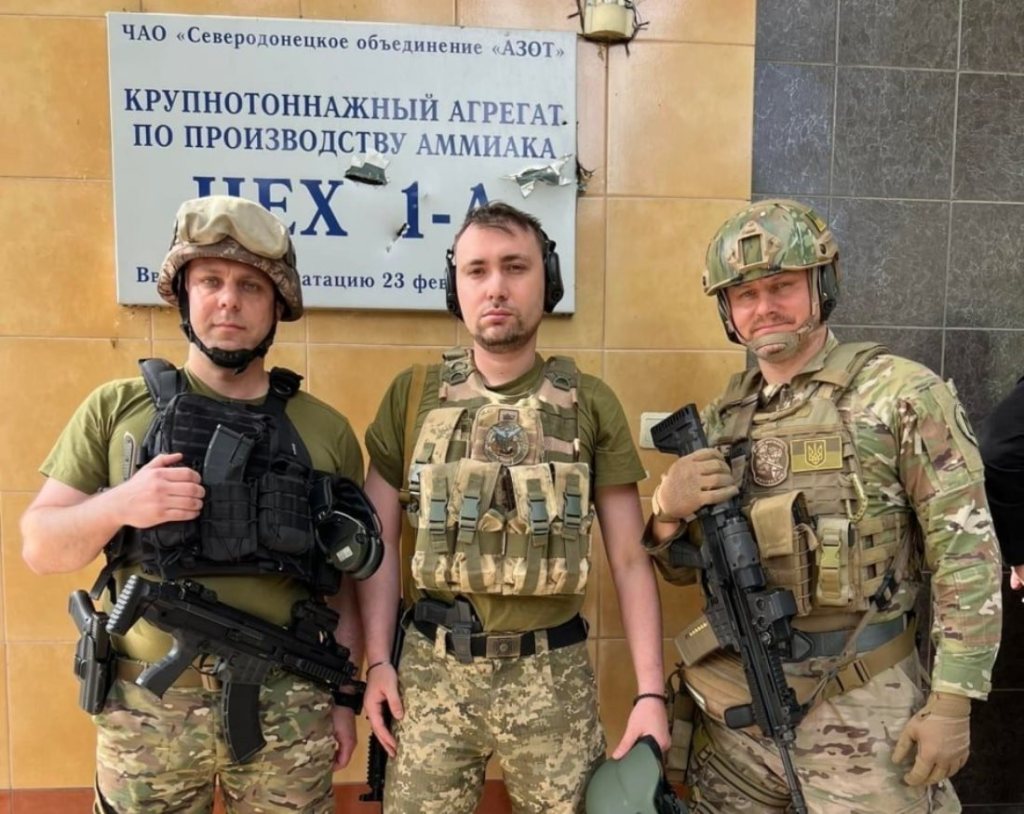
Ukrainian GUR chief, Kyrylo Budanov, and associates during a June 2022 visit to Sievierodonetsk. One individual has a 5.56x45mm CZ BREN 2 and the other a rare 7.62x39mm BREN 2 with an 8in barrel and telescoping stock (via social media)
Currently the only other country which has a similar arrangement with CZ is Hungary which has established Colt CZ Hungary to enable Hungary’s HM Arzenal to assemble/manufacture BREN 2s for the Hungarian armed forces. This isn’t the first time Ukraine has worked with external firearms manufacturers with an earlier partnership seeing Ukrainian small arms manufacturer Fort assemble Israeli IWI weapons under license in the 2000s. See our earlier look at the Ukrainian Fort Tavor bullpup rifles here.
The future significance of CZ’s establishment of an assembly line in Ukraine remains to be seen but as Ukraine seeks to further integrate with its Western allies and take up NATO standards the ability to produce a NATO calibre rifle, which is already in widespread Ukrainian service, will be extremely useful. From the statements released it appears that assembly of the rifles may be the first step towards localised production, it will be interesting to track CZ and Ukroboronprom’s partnership.
The RBS-17 has been in Ukrainian service for quite some time with Sweden announcing in June 2022, that they would provide the missiles. The RBS-17 was a development of the AGM-114 Hellfire, entering service in the the early 1990s. It is a man-portable missile which weighs 48kg in addition to the launcher, firing system and laser targeting module. It is typically operated in the field by a five man team – two operating the laser targeting system and three on the weapon itself.
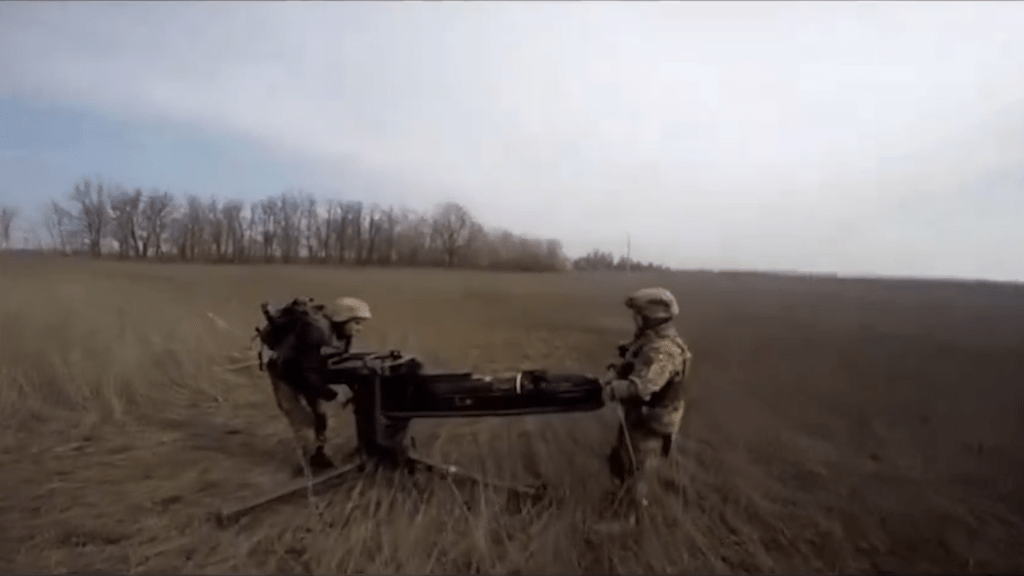
We first saw the RBS-17 in use in the field in a video posted in October 2022, by a page called ‘Bigcats’, the lo-res clip shows the launch of a pair of missiles. In December 2023, the Swedish government published an article and video about Ukraine’s use of the RBS-17 and the training the Swedish armed forces provided on the system. Most recently in May 2024, a clip of an Armenian volunteer unit, NEMESIS, showed a team operating an RBS-17. The video shows NEMESIS team members carrying a missile to the launcher, this gives an indication of just how ‘man portable’ they are. They load the missile and then take cover in the nearby tree-line. We can then see one man manning the control unit and the missile is launched.
It is worth noting that Norway has also provided it’s Hellfire Shore Defense System, which is externally very similar in appearance to the RBS-17. Some of the missiles in use are likely Norwegian HSDS.
Since then we have had a series of excellent clips which are amongst the most detailed so far. The clips were posted to various TikTok accounts and show a team, which appears to be attached to one of the Ukrainian Marine brigades, operating the missile system.
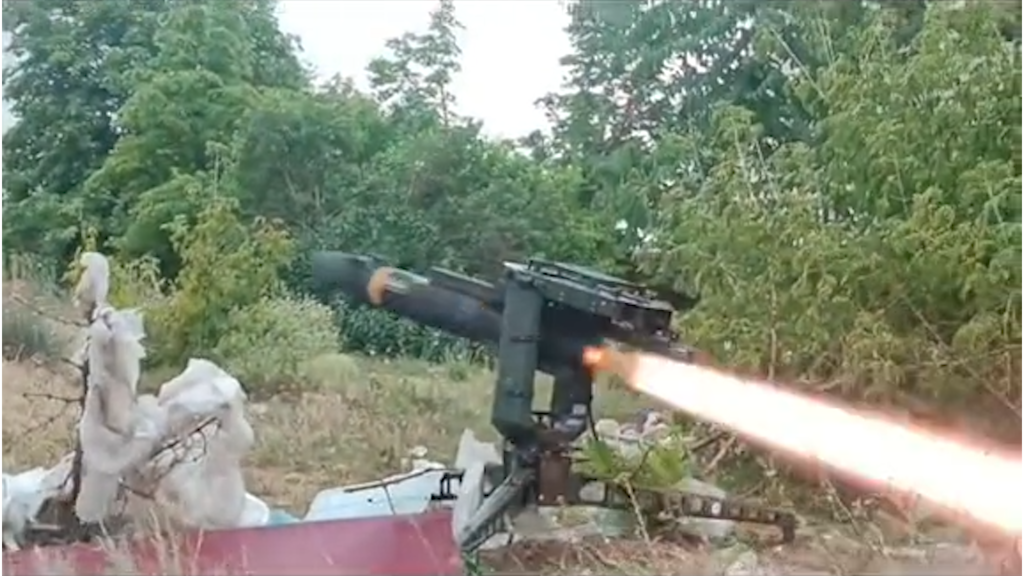
My colleague Weapons_Illustrated shared a series of videos he found on a Ukrainian serviceman’s Tiktok channel which were posted in summer 2024 but have since largely been removed. One simply shows a launch of a missile filmed relatively close to the launcher. Another pans along a missile body showing a message scrawled on the casing and also the missile’s lot number ‘98001’. While slightly blurred one Bofors sticker appears to read ‘Norwegian Hellfire Shore Defense Missile ‘ The video concludes showing a night launch across a body of water before cutting to a thermal camera showing an impact downrange. Another video shows the missile control system before cutting to showing a missile launch and then a clip of a strike on a large building which has its roof blown off. A video posted by the same channel on 20 July included a new launch video showing a missile being fired before cutting to a screen showing the destruction of a building near a large body of water. The landscape visible may suggest the footage was filmed along the Dnieper River, possibly near Krynky.
With further research I came across another affiliated account which had a number of videos showing the launch of RBS-17s dating back to January 2023. The first video posted on 3 January shows a launch of an RBS-17 with a picture-in-picture video of the operator at the launch control terminal. On the 5 March another video was posted from the same position, when the videos were actually filmed is difficult to confirm, this time the video also concluded with a clip of the impact of the missile on a target, a large building, downrange. On 13 May, a short video of the RBS-17s control terminal lit up was shared. A video posted by the account on 23 October, includes a slowed down clip of a launch and a clip showing a missile hit a target building.
The most recent video, posted on 11 December, features the launch of an RBS-17 filmed with multiple camera angles. One shows the video from the launch control station with a picture-in-picture view of the operator at the controls as well as a show showing the missile leaving the launcher, which has been positioned on a road. The video concludes with some overwatch drone feed footage of an impact on a building.
Update – 15/08/24:
One of the accounts which previously shared launch videos also recently shared a new video of a missile being launched from the edge of a field. Given earlier videos posted by the same individual showed HSDS markings this missile may also be a Norwegian HSDS.
#Ukraine: New video of the use of the #Norwegian 🇳🇴 Hellfire Shore Defense System (HSDS) by 🇺🇦 #Ukrainian forces somewhere on the front line.
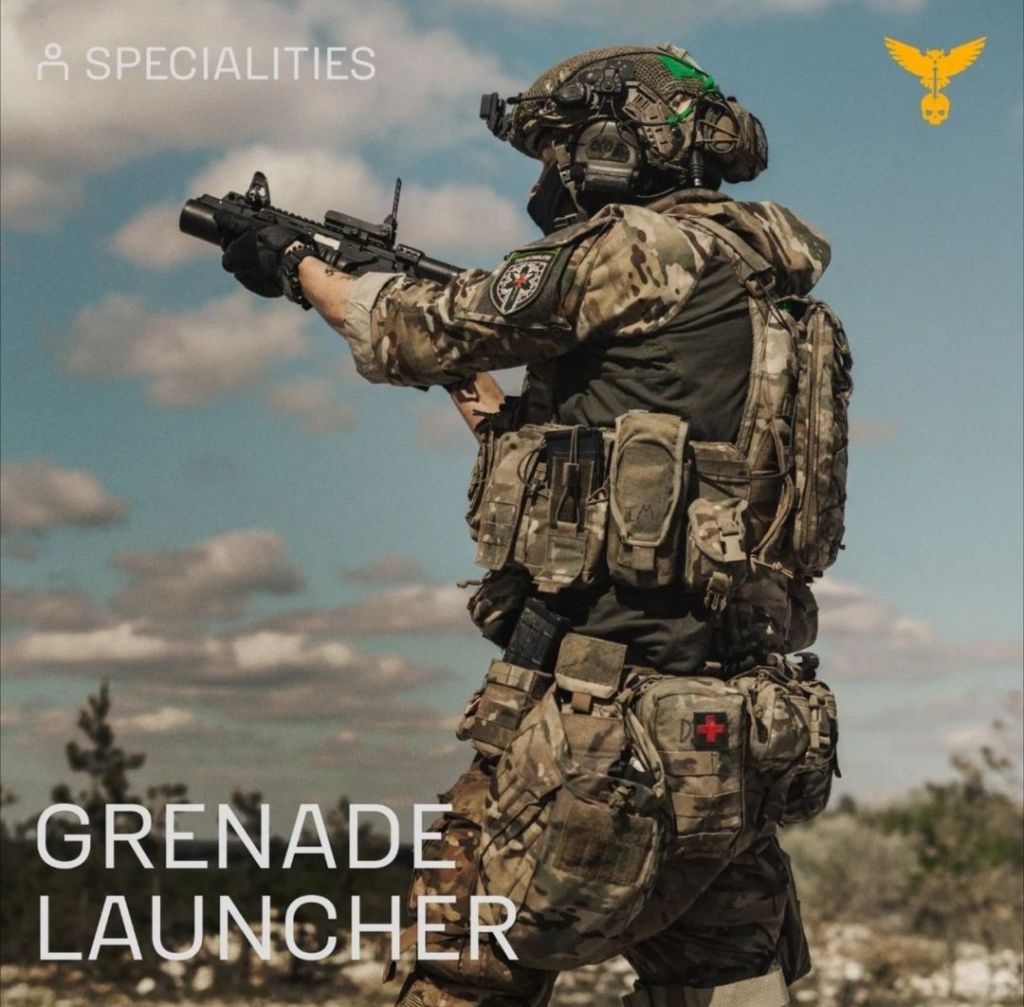
In this series looking at weapons used in Ukraine we’ve looked at a number of different grenade launchers including GP-25s adapted for standalone use, FN FN40GLs, discharger cups for hand grenades and perhaps the rarest grenade launcher seen in Ukraine so far; the standalone Colt M203. Another interesting and fairly rarely seen grenade launcher that began to appear in Ukraine last winter is LMT’s standalone 40mm M203.
LMT offers a series of M203-derived launchers and two standalone stock attachment methods. The Iowa-based company introduced its 40mm grenade launchers in 2003. The launchers seen in Ukraine appear to be the rail mounted version with a 9 inch long barrel.
An LMT M203 in the field (via Rogue Team)
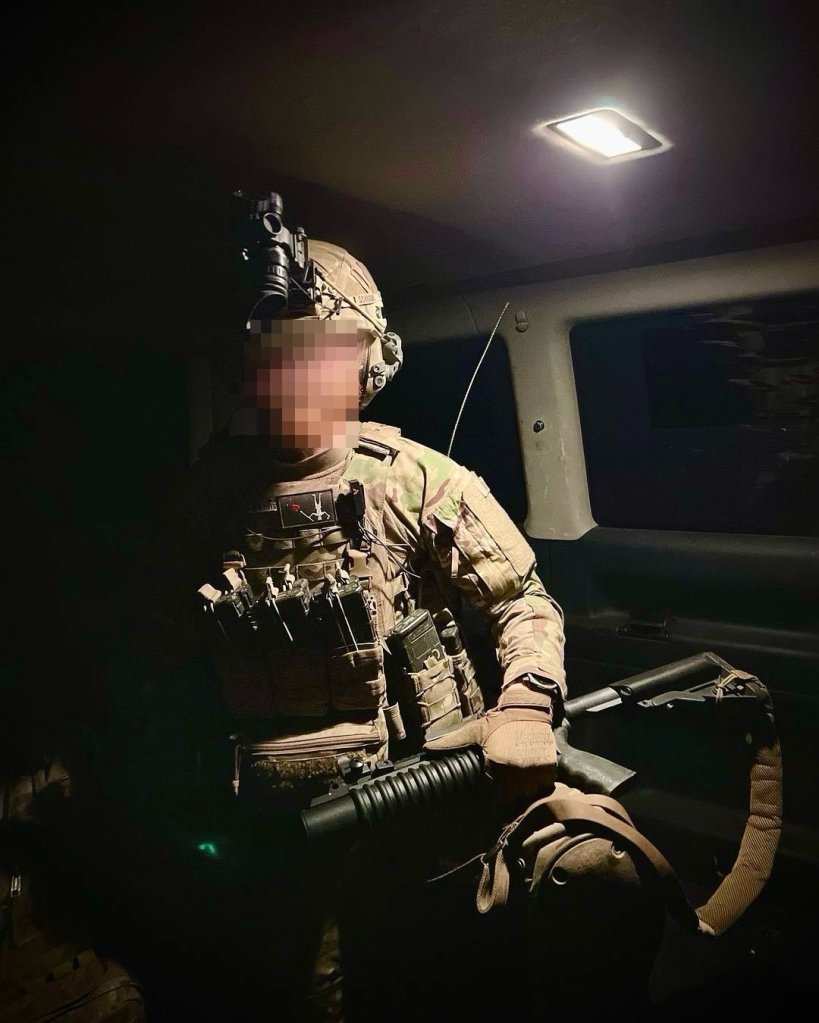
The first sighting of an LMT M203 in Ukraine came in November 2023, when Georgian volunteer O.d.i.n.s.o.n., part of the GUR/HUR (Ukraine’s Main Directorate of Intelligence)’s Omega Team, posted a photo of one side by side with a standalone GP25. The launchers likely arrived in country a little earlier, speaking to TAB at the time he noted that “the aiming module is a little weird. It has like an M4 forward sight and GL [grenade launcher] distance adjustable rear sight but it’s on top of the weapon. So it doesn’t force you to arc the barrel Like a GP25 does.”
The next appearance of one of the launchers came in late February 2024, when Scorpion Protection Group, another SOF group, shared a photo of a combatant training with one. A third GUR unit, Rogue Team, have also posted images featuring an LMT M203. The first image was shared by a team member on 17 March. This was followed by an image shared on the team’s Instagram page on the 5 April.
LMT M203 rail mounted version with 9in barrel – right side (LMT)
On the 14 April, a photo posted by one of the Kraken Regiment’s (also under the GUR) teams also appears to include a standalone LMT M203. Most recently on 16 April, a Spanish member of Omega Team, shared a photo of an LMT M203 with its action open with a round ready to load. On the same day TAB spoke again to Omega Team member O.d.d.i.n.s.o.n. at length about the launchers.
O.d.i.n.s.o.n. explained that the unit switched from rotary 40mm grenade launchers to standalone GP25s and LMT M203 as they are lighter and less bulky than the rotary launchers. He reiterated the difference in the LMT sight from quadrant sights found on other launchers and noted that “instead of a switch or a selector it has a little hook that you pull back and it prevents your finger from going on the trigger.” This is a carry over from the original M203 on which LMT’s launcher is based.
When comparing the GP25 and M203 O.d.i.n.s.o.n. noted that the M203 is light, effective and has a ‘really nice stock’ but he dislikes that the M203’s action has to be opened to reload, unlike the GP25 which when fired “leaves nothing inside the tube and is faster on the reload.” When asked if he’d seen many other units using LMT launchers he explained that “most [International Legion] Special Task Units [affiliated with the GUR] have a couple.”
An LMT M203 with its action open (Courtesy of Delta Knights)
We also spoke with Delta Knights, another GUR Specal Task Unit made up of international volunteers, who confirmed they also use LMT M203s and said that they ‘really love it’ but one thing they do wish they had more of is 40mm smoke grenades, adding that the launcher is most often employed with High Explosive (HE) grenades. Delta Knights were kind enough to provide some photos and videos of the M203 in operation at the range.
While the imagery and information available confirms combat use of the LMT M203s in Ukraine it doesn’t give us a solid picture of just how many are in-theatre and other units who may be using them. As always the imagery shared online represents a fraction of what is going on and can only be considered a limited sample. In terms of the origins of the launchers one potential source for the LMT M203s is Estonia which adopted the LMT MARS-L as the R-20 in 2020. Some of the Estonian R-20s have been seen with LMT M203s and given Estonia’s considerable past support for Ukraine it is possible that they may have provided a number of the launchers.
Special thanks to O.D.I.N.S.O.N and Delta Knights for their time and insights and to the guys at Cloooud for additional assistance.
Update – 1/5/24: A recently shared International Legion recruitment social media post included an LMT M203.
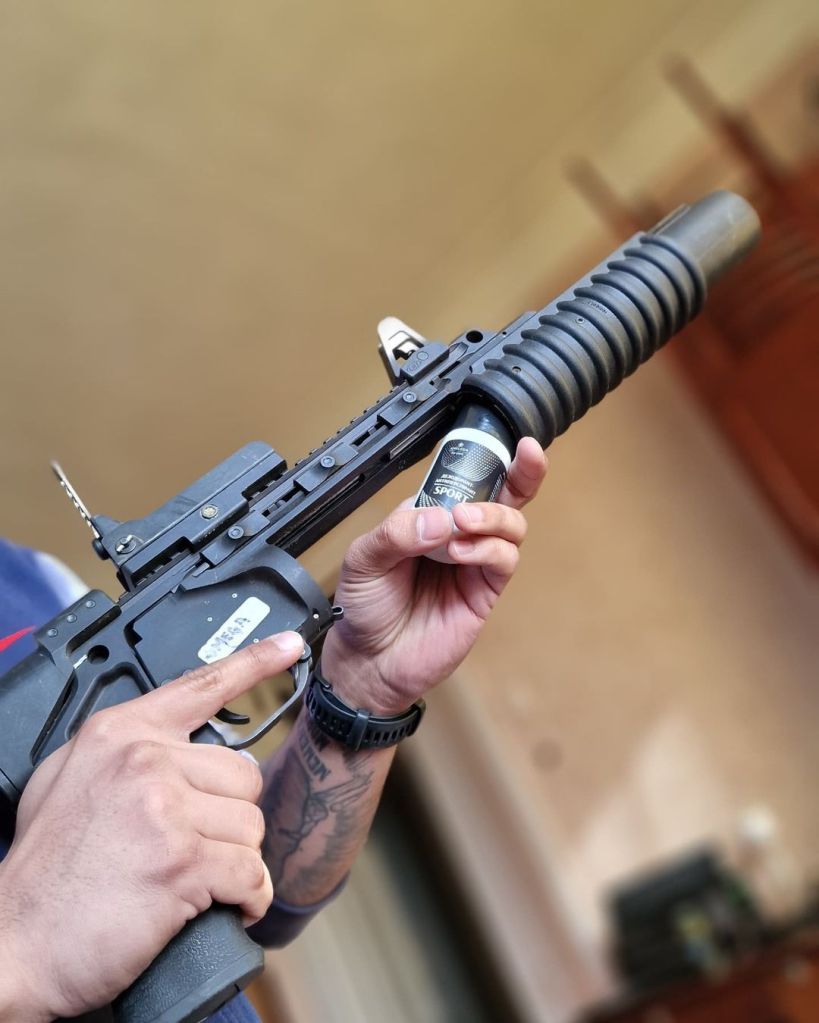
Update – 10/9/24: The ‘Expeditionaries’ Instagram page, seemingly affiliated with an international volunteer team shared a photo of an LMT M203 being jokingly loaded with a deodorant roll-on rather than a 40mm grenade.
Update – 10/01/25: Two additional archival sightings of LMT M203s. The first on the left dates from September 2024. The second, from DC Tactical was shared on 29 October 2024.
Support Us: If you enjoyed this video and article please consider supporting our work here. We have some great perks available for Patreon Supporters – including early access to custom stickers and early access to videos! Thank you for your support!
A few of weeks ago I published an article/video detailing the appearance of Swedish Carl Gustaf m/45 9x19mm submachine guns in Ukraine. One notable feature of the guns was that their configuration appeared to sit somewhere between the m/45A and the m/45B.
In the absence of clearer information I referred to these as m/45Bs, the most common variant and one which has the defining fixed magazine housing rather than the earlier removable magazine well seen on the m/45A. The fixed magazine well is an upgrade which was made before the later m/45B refit. It seems that there was some fluidity to how the upgrades were carried out which has led to guns with a mix of features.
An upgraded m/45A with the 41st Mechanized Brigade (Daily Mail)
From Swedish sourcesI’ve spoken to many of the m/45s seen in the imagery from Ukraine are early spec guns (m/45As) which may have been in storage and were not refit to the m/45B pattern. The m/45B refit was partially necessitated by the need to add an additional retention method to hold the receiver end-cap in place. Some sources suggest this was due to a type of training ammunition then in use, others point to it being simply extra security.
An m/45B (top) and an m/45A (bottom) with the fixed-magazine well upgrade (Henrik Jansson)
Working theories explaining the configuration of the guns seen in Ukraine include: that they are m/45A configuration guns which had been in storage and were retrofitted after the training ammunition left service and the additional end cap retention was no longer needed, so this change to the guns was omitted. As mentioned earlier, another reason may be that these are m/45As which had the magazine well upgrade but were placed in store or transferred before the broader m/45B upgrade was carried out.
As discussed in the initial video, it is thought that Estonia is a likely source for these guns as they received some of these guns in the 1990s and these m/45s have then subsequently been sent to Ukraine. Regardless of origin country the result is guns which do not have the additional end cap retention catch nor the green finish of the Swedish Army’s m/45B. They all feature the fixed magazine housing but there is also a mix of larger and smaller perforations in the barrel shrouds. [Note: Thanks to Jonathan Ferguson who noted that there is some variation in the size of shroud perforations within examples of both A & B model guns.]
A combatant in Ukraine with an m/45 c.early 2024 (via social media)
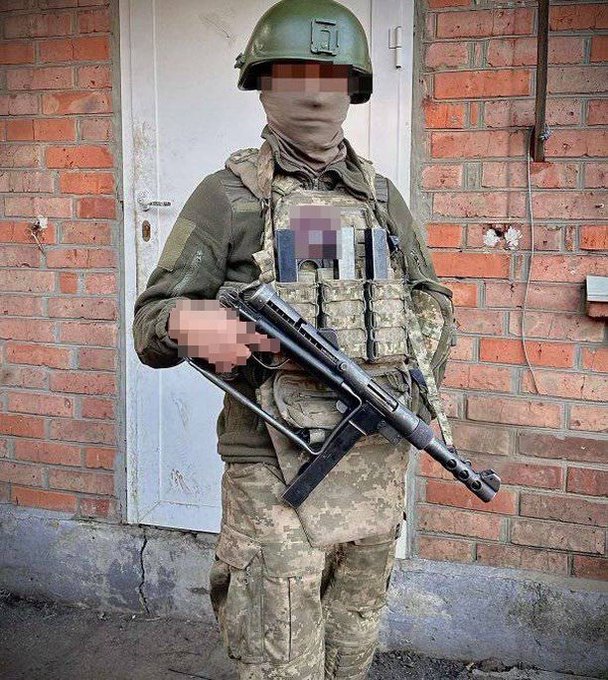
Since the last video a couple of other sources showing the m/45 in Ukraine were shared with me. Including this image of a Ukrainian combatant with a Swedish K which has the smaller barrel shroud holes. On 10 February a Daily Mailreport, featured Thunder Company, an element with the 41st Mechanised Brigade. Members of the company show journalist Richard Pendlebury an m/45 that is in their inventory. The company’s deputy commander describes it as a ‘museum piece’. Both guns appear to be of the same configuration generally seen in Ukraine. On 4 March, another short video of a Ukrainian combatant firing an m/45 at what appears to be a range was shared. It’s unclear when or where the video was filmed.
My very special thanks to Henrik Jansson for his time, insights and imagery and to numerous others for their knowledgeable input. Thank you to Weapons_Illustrated for their help sourcing imagery, check them out on twitter.
Update – 24/5/24:
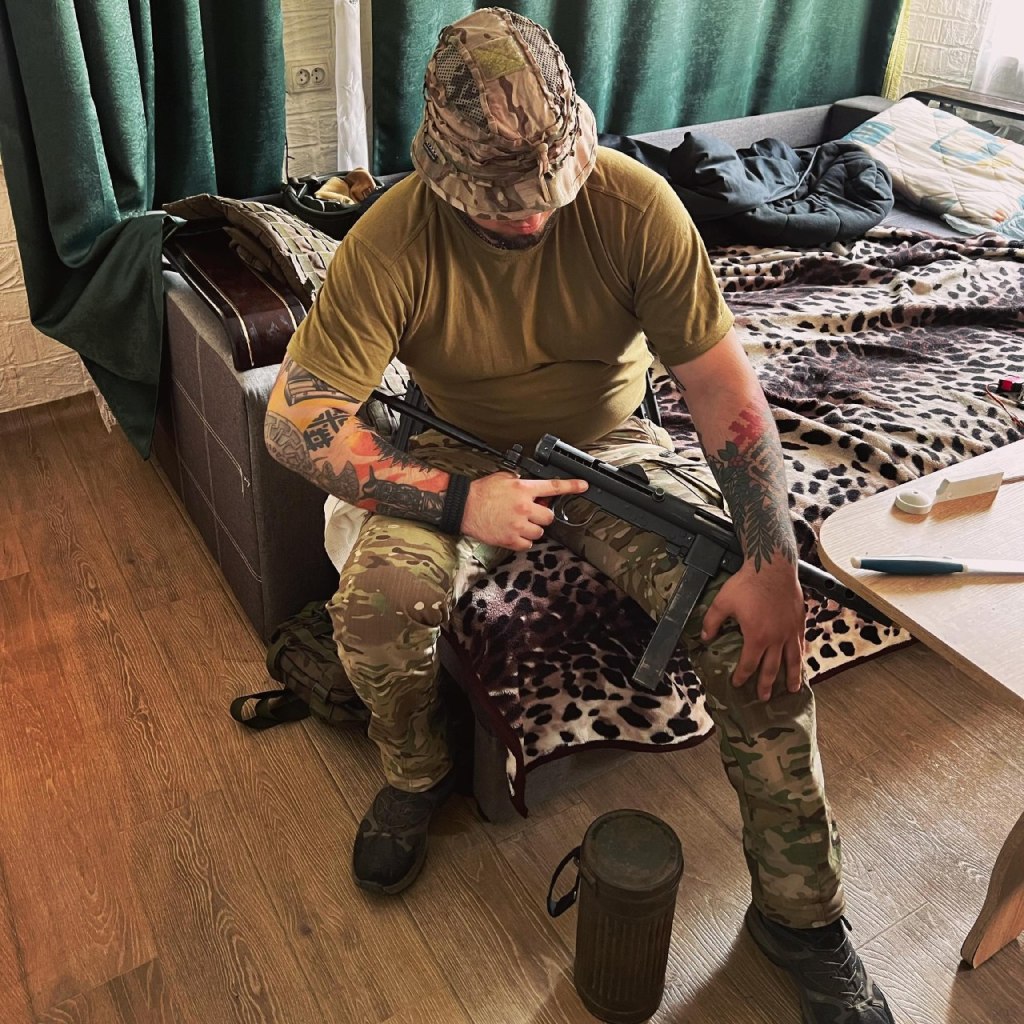
On 11 April, a soldier of the 2nd Battery of the 2nd Self-Propelled Artillery Battalion of the Field Artillery Regiment of the 3rd Assault Brigade shared a photograph holding an m/45. [h/t Cloud for sharing].
Update – 18/6/24:
Some nice range footage of a Carl Gustaf m/45 in Ukrainian service. For more on these in Ukraine check out my video/article here:https://t.co/Hb9PcN8SR8
— Matthew Moss | Historical Firearms (@historicfirearm) June 19, 2024
Update 4/9/24: A new image of the Swedish m/45 submachine gun recently surfaced. (H/T AbraxasSpa)
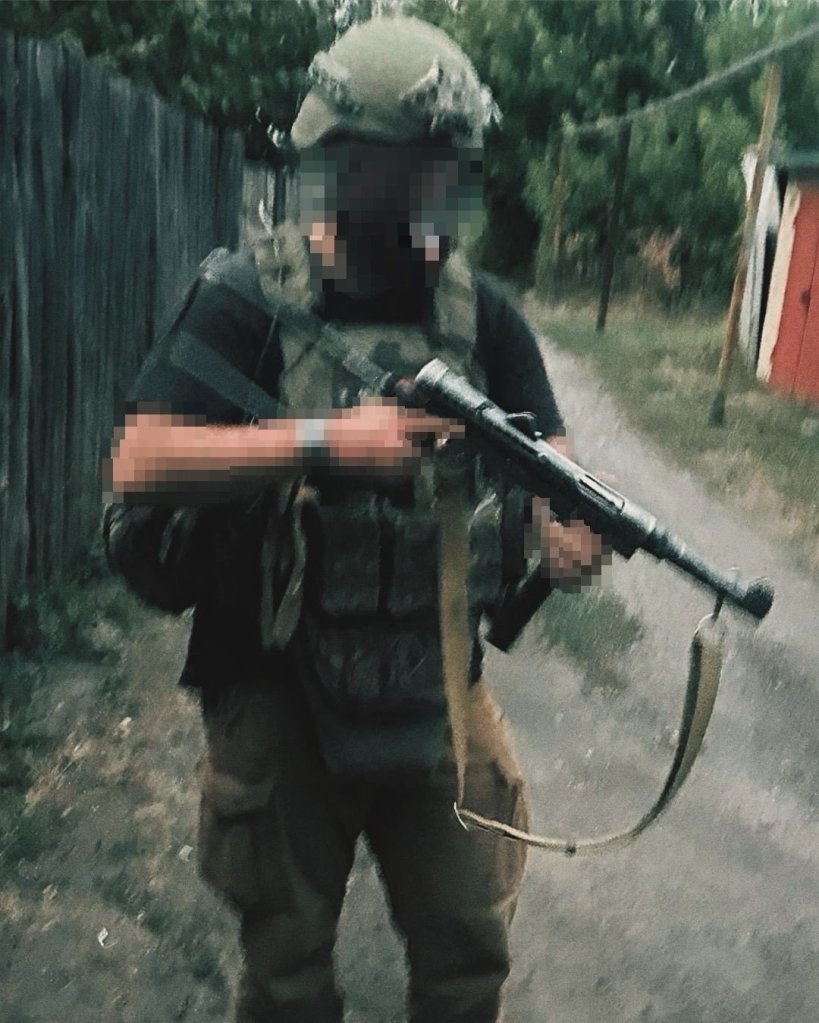
Update 3/10/24: A photograph of what may be a member of the Ukrainian 129th Territorial Defence Brigade or potentially a member of the International Legion. He’s equipped with an m/45, note the three magazines in his chest rig and Ukrainian digicam pattern sling.
Support Us: If you enjoyed this video and article please consider supporting our work here. We have some great perks available for Patreon Supporters – including early access to custom stickers and early access to videos! Thank you for your support!
This is the MSD-5, a small, hand-held shotgun-like device which has been suggested as an anti-drone weapon. With the massive increase in UAV and (first person view) FPV drone use various means of combatting them ranging from electronic warfare to simple hunting shotguns have been deployed by both sides.
In recent weeks a number of Ukrainian social media accounts have shared the idea of using the MSD-5 as a short-range defence against diving FPV drones. I hadn’t seen the weapon before and none of the posts about it explicitly mentioned its designation or manufacturer. I did some research and found that the small hand gun was called the MSD-5 and is manufactured by Stellarium SV, a company based in Chernihiv, in northern Ukraine.
An MSD-5 (via Sergey Flash)
In January, Sergey Flash (a Ukrainian serviceman and communication specialist) posted a video discussing the need for an immediate defence against FPVs and held up an MSD-5 describing it as “a possible way of protection” but emphasising that his aim wasn’t to advertise the device but simply call “attention to a possible remedy for the soldiers”.
Stellarium SV’s website explains that rather than being a weapon it is primarily sold as a signalling device with five different 12×88 cartridges available, two signalling cartridge types, a noise cartridge for scaring off animals, a cartridge which can extinguish flames and one for spraying plants to treat and protect them from various types of pests and diseases.
Here is a promotional video for the MSD-5:
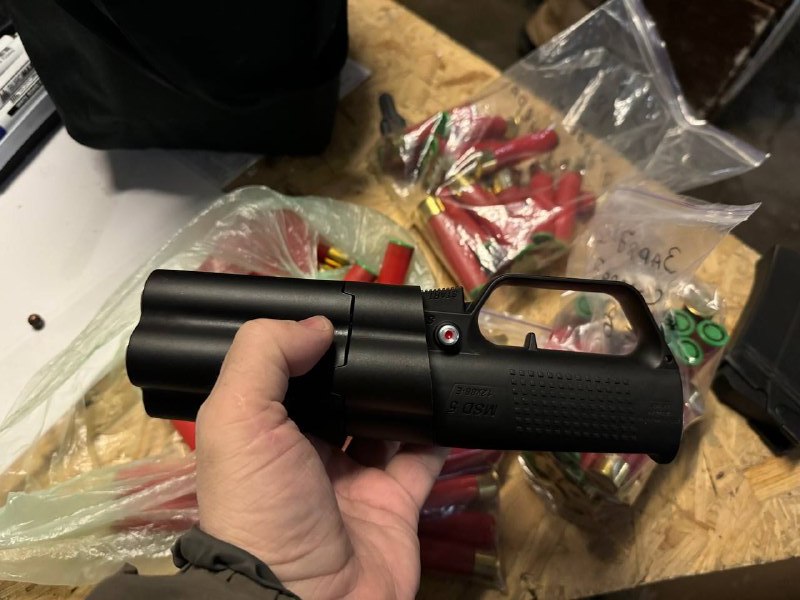
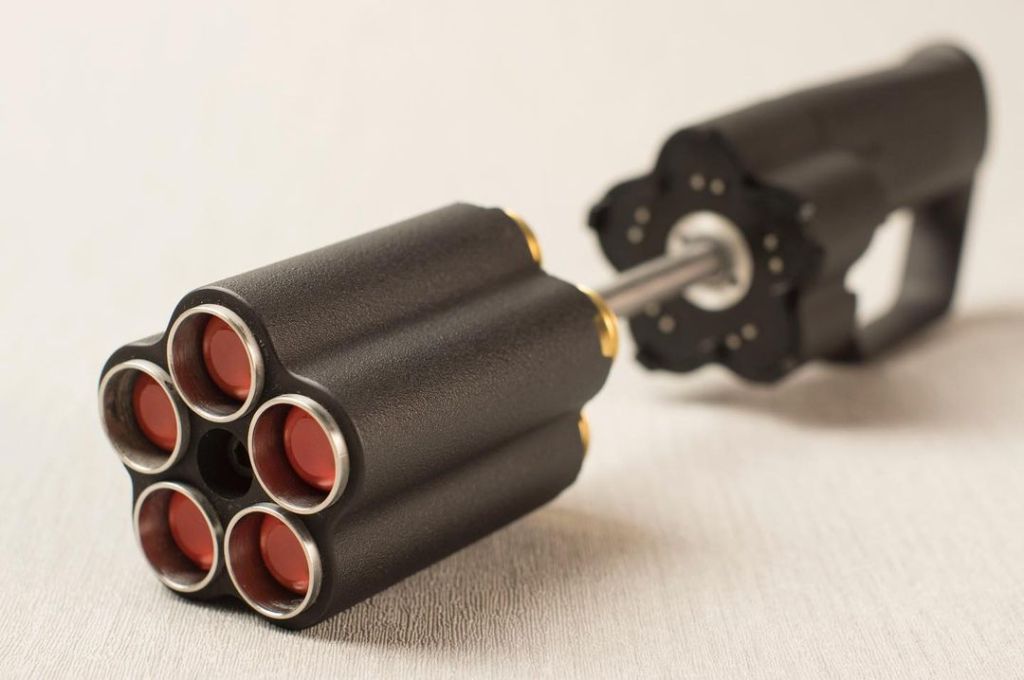
It is unclear if the device is robust enough or has barrels suitable for firing something like birdshot pellets. Stellarium SV note that the device is made from “high-strength plastics based on reinforced polyamide” but do state that “the drum can be fitted with stainless steel or titanium liners.”. The device has 5 tubes or barrels and is electrically fired. It appears to have a cross bolt safety in front of the grip, below the exposed trigger. It weighs 800g and is powered by three CR123A batteries. Stellarium SV’s site lists the device’s price as 430 Euros.
On the 20 February, Flash posted another short video of himself firing MSD-5 at a range with the caption:
“Tested today the new cartridges for the “soldier’s weapon against FPV”. Specialists are working, I hope we will produce a product that we will give to every soldier. My task, after the product is ready for the series, is to achieve its introduction into the Armed Forces.”
An MSD-5 with its action open (Stellarium SV)
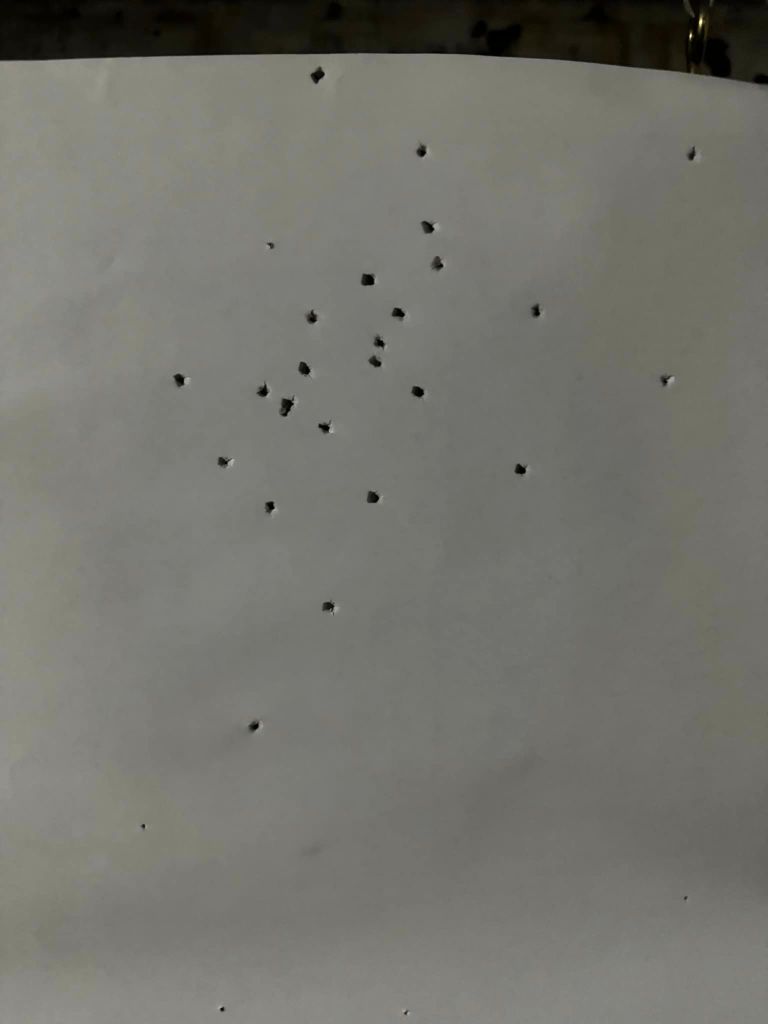
Along with the video he also posted a photograph of a target peppered with holes from small shot. The video shows the MSD-5 being fired with minimal recoil, suggesting a light load.
I reached out to Stellarium SV about the potential conversion of the MSD-5 into a personal anti-FPV weapon and they were keen to stress that this ” is not a use case that we endorse or support” and that they do not produce a cartridge capable of this and that anyone who made adapted cartridges is not related to Stellarium SV. The company did note that loading cartridges with shot was possible but getting the powder charge right was key. They also noted that the MSD-5 does not have sights which may make aiming difficult, though at the probable engagement ranges instinctive point shooting may be what Flash has in mind.
A test target photo posted by Sergey Flash (via Sergey Flash)
I also reached out to Sergey Flash to enquire about how he was adapting the MSD-5 but at the time of publication have not yet had a reply. While the MSD-5 may not have been designed with an anti-drone role in mind, the concept of a similar handheld, lightweight, last-ditch, defence against FPVs seems a sensible answer to a urgent and difficult problem.
Support Us: If you enjoyed this video and article please consider supporting our work here. We have some great perks available for Patreon Supporters – including early access to custom stickers and early access to videos! Thank you for your support!







 The Armourers Bench
