Is Russia Using North Korean Type 73s?

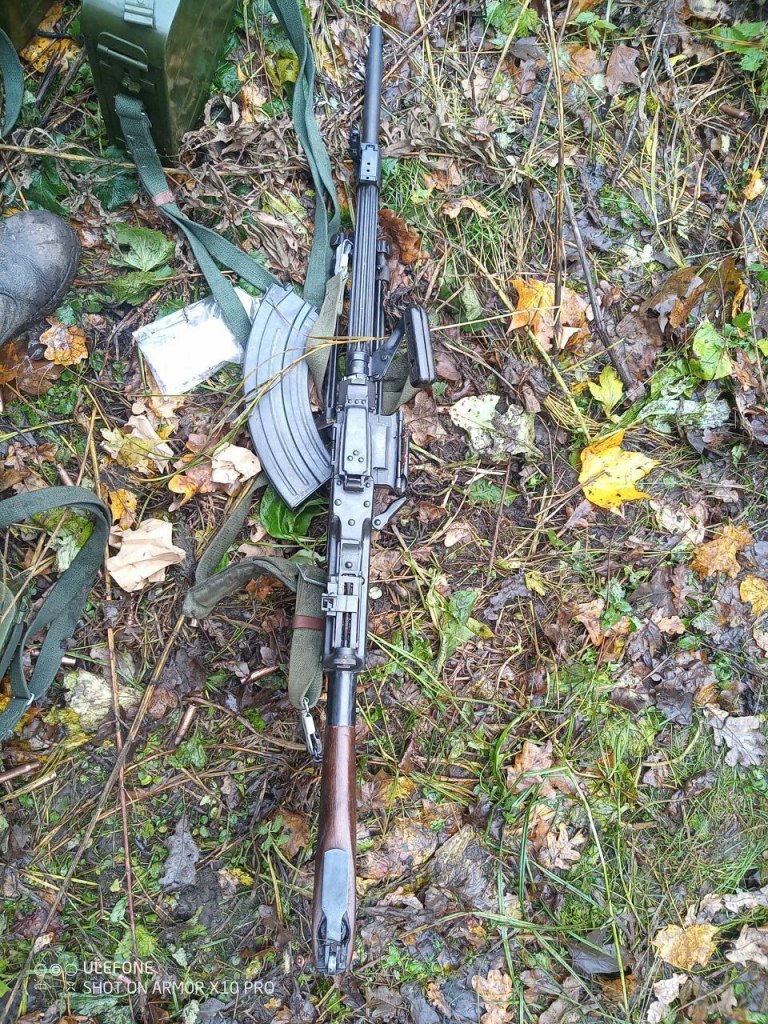
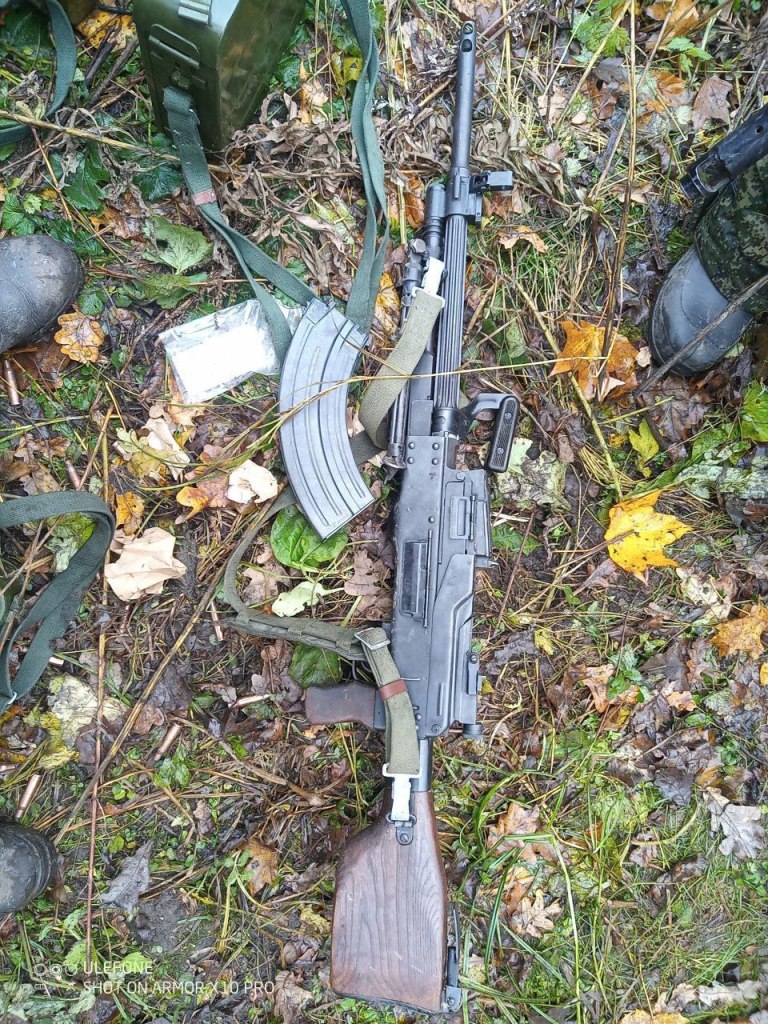
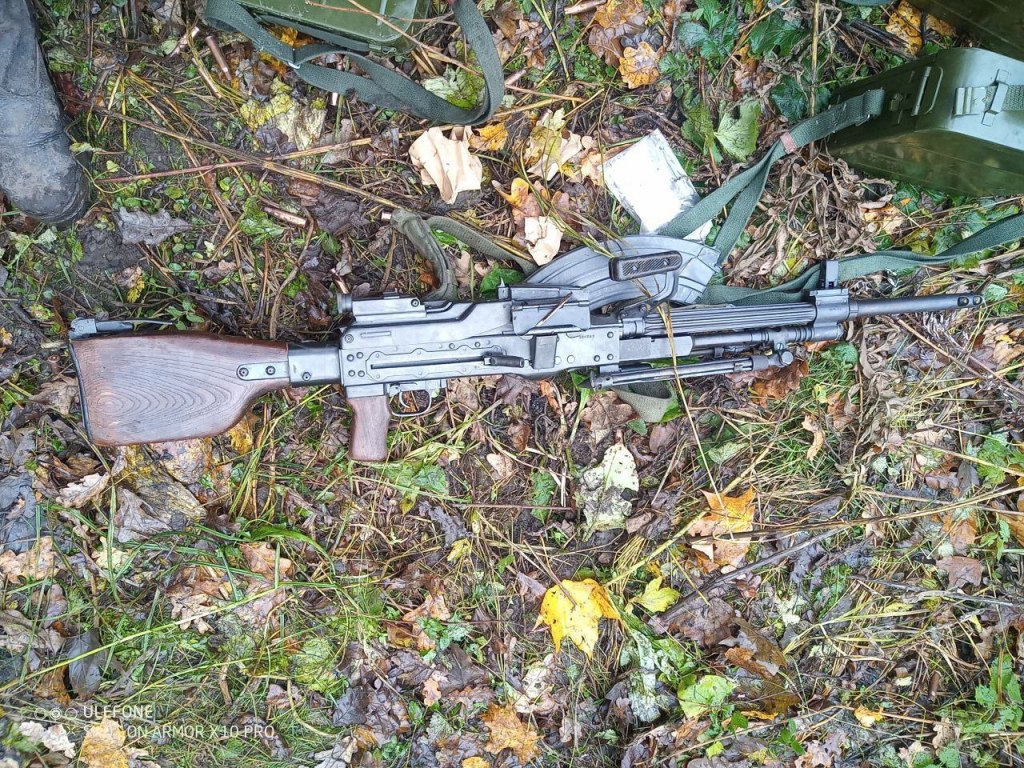
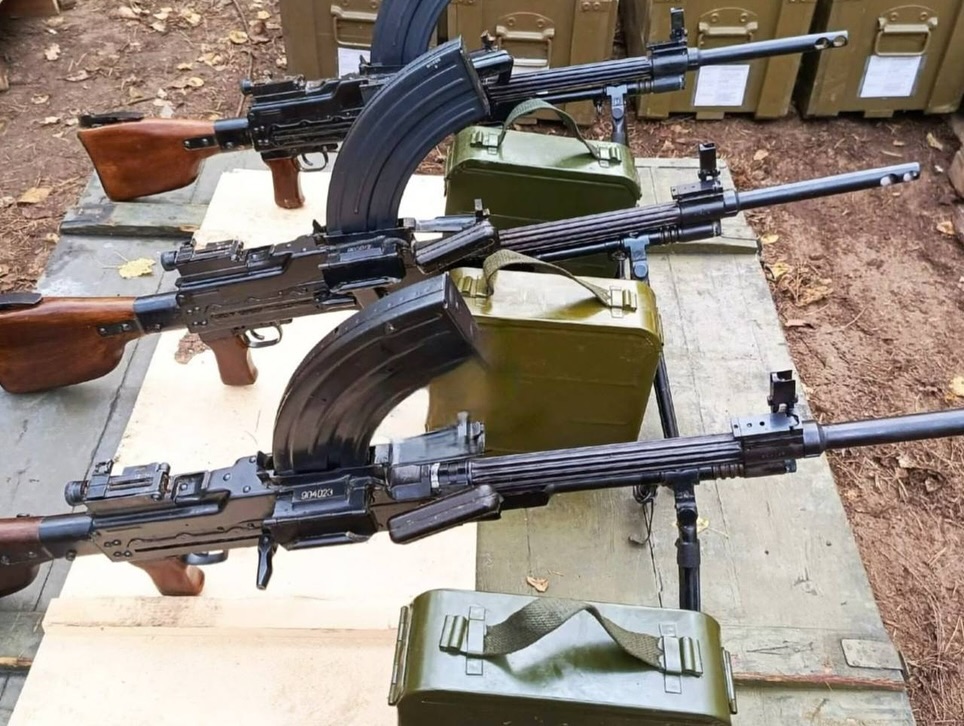
On 7 November, photographs began circulating on Russian telegram channels of North Korean Type 73 general purpose machine guns said to be in Russia. The appearance of the photographs led to suggestions the weapons are now in Russia service. This claim is somewhat supported by the appearance of Russian E.M.R. camouflage in the top right corner of one of the photographs.

A North Korean Type 73 complete with magazine (via Russian social media)

The Type 73 is a fairly rare weapon though it has surfaced in conflicts areas such as Yemen, Iraq, Syria and Lebanon over the years. Thought to have entered service in the early 1970s, it is a somewhat unusual machine gun, it is gas-operated, using a long-stroke gas system, it fires from an open-bolt and is chambered in the long serving 7.62x54mmR cartridge. It is derived from the PK-pattern machine gun and as such feeds from standard Russian metal non-disintegrating belts but also is able to feed from proprietary box-magazines (which look a little like over-sized AK magazines). The magazine is dual stack, single feed which is designed to allow the Type 73’s bolt to pull cartridges out of its rear. Check out Forgotten Weapons’ video on the weapon for a better look at the action. The dual-feed design appears to have been influenced by the Czech vz.52/57. The Type 73 has a longitudinal fluted barrel with its front portion, ahead of the gas block, machined as a spigot to enable it to fire rifle grenades, it comes with a removable barrel shroud which acts as a muzzle device. Also visible in the photographs are the segments of cleaning rod which sit in channels in the weapons’ bipod.

Three North Korean Type 73s complete with magazines and belt boxes (via Russian social media)

The dates and locations of when the photographs were taken is unclear and various Russian telegram channels are claiming a range of explanations varying from – the weapons were brought along with the North Korean troops who have reportedly arrived in Russia in recent weeks, to – they were provided to Russia as part of the military aid being provided by the DPRK. However, the photographs may also have been taken during a past exercise involving Russian and North Korean troops. The environmental conditions in the photographs do, however, correlate with the photographs being taken recently.

The photographs of the Type 73 emerged as a series of, as yet unverified, videos and photographs of North Korean troops in Russia have surfaced in recent days. Intriguingly, it was reported that the Ukrainian GUR had claimed that North Korean troops in Russia would be equipped with Russian small arms and light weapons including: AK-12s, RPK and PKM pattern machine guns, and RPG-7 shoulder-launched anti-tank rocket launchers.

Top view of a Type 73 (via Russian social media)

The available imagery shows three Type 73s together in one photograph and then three detail photographs of another weapon on its own. The visible serial numbers on the guns include ‘904023’, ‘905012’ and a partially visible serial number which appears to read ’904032′ is seen in another photograph. Which places these three weapons relatively close to each other in the serial number range. Intriguingly, the typical star and model number aren’t visible in the above photograph.

If these images are verified and we see more evidence of their use it is extremely intriguing to see these weapons appear in Russia. It raises questions as to why Russia needs North Korean GPMGs – is Russia suffering from a shortage? The presence of some RPD light machine guns appearing in imagery of Russian forces training may also support this.

Left-side view of a Type 73 (via Russian social media)

The origins of the guns is also unclear, while the obvious source would be North Korea themselves, if so it is interesting that they would choose to supply Type 73s rather than their own straight copy of the PKM, the Type 82. If these guns are to be used for training purposes, or indeed in the field, then it would make more logistical and operational sense to acquire Type 82s so troops have commonality and familiarity with Russian PK-pattern machine guns. An another alternative potential origin for the guns is Russia’s other ally -Iran. Iran is reported to have acquired large numbers of Type 73s during the Iran-Iraq War (1980-88) and has since provided them to their proxies and allies. It may be that Iran has provided a shipment of these machine guns as part of their aid to Russia.

It remains to be seen if the Type 73 will enter service with Russian troops or indeed if we will see evidence of any other North Korean small arms.

Update 22/12/24: A short video appeared Russian telegrams of a Russian combatant examining a North Korean Type 73.

Update – 15/1/25:

A North Korean Type 73 GPMG mounted on a Russian motorbike & sidecar. No North Korean's in view. Interesting.More on the Type 73 in #Ukraine here: armourersbench.com/2024/11/17/i…#UkraineRussiaWar #SALW

Matthew Moss – Armourer's Bench (@matthewmoss.bsky.social) 2025-01-15T12:32:48.413Z

Support Us: If you enjoyed this video and article please consider supporting our work here. We have some great perks available for Patreon Supporters – including early access to custom stickers and early access to videos! You can also find us on the History of Weapons & War app. Thank you for your support!

Bibliography:

North Korean Small Arms, SADR, H. Hong, D. Shea, (source)

North Korean Small Arms and Light Weapons, Small Arms Survey, M. Schroeder (source)

North Korean Type 73, Forgotten Weapons, (source)

North Korean Type 73 GPMGs in Iraq, Syria & Yemen, ARES, A. Richter, (source)

Ukraine’s Rare RG-1 Grenade Launcher

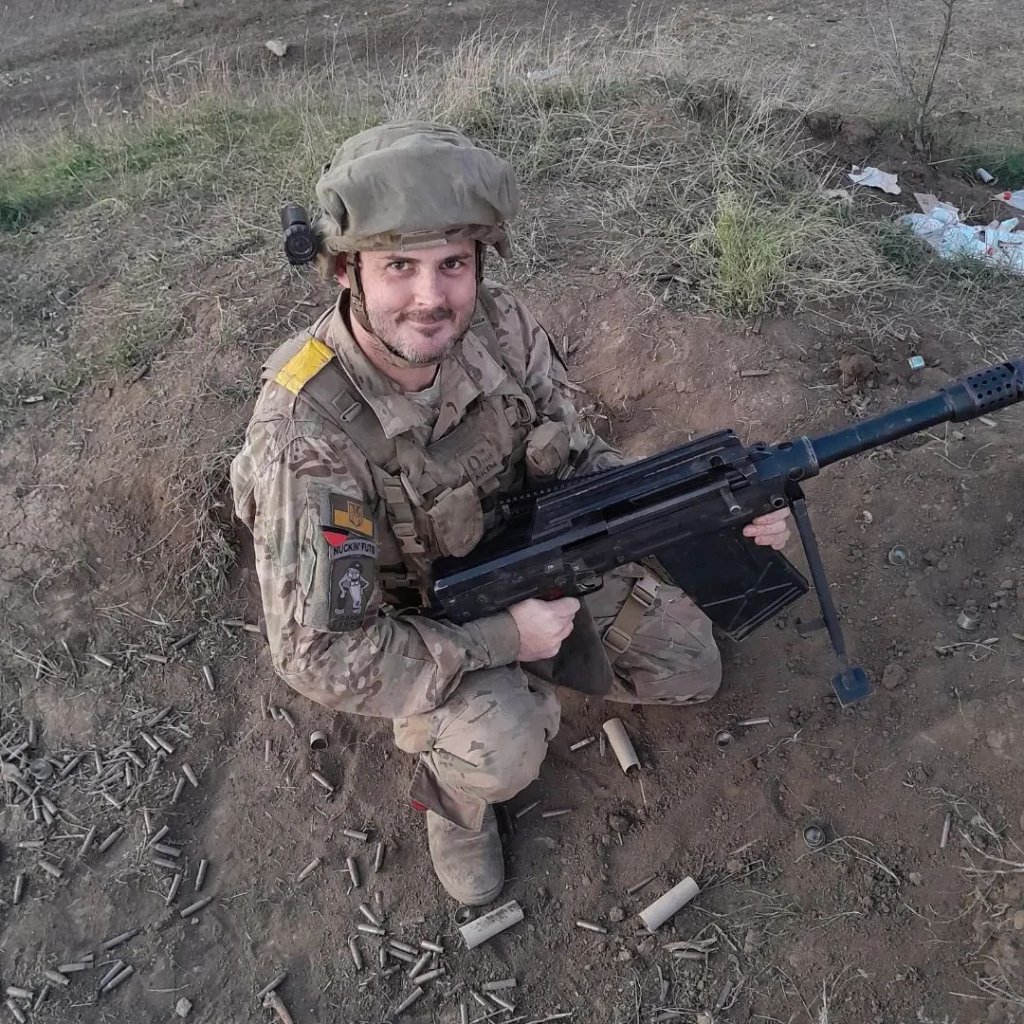
Way back in October 2022 video of the extremely rare Ukrainian RG-1 circulated online thanks to Yuri, an American member of the Ukrainian armed forces (known as Nucking_Futs_Yuri, best known as for his combat footage of him manning an M2 Browning and firing numerous AT-4s from a HMMWV). Yuri and his colleague Kaiser, a German volunteer, very kindly shared their videos of the RG-1 filmed when they had the chance to fire the weapon during some range time. As far as I can tell those videos remain one of the few occasions that the weapons have been seen during the ongoing fighting following Russia’s invasion. Since October 2022, I’ve been holding off on making a video about the RG-1 in the hopes more imagery might appear – there have only been two more sightings.

Yuri with an RG-1 at the range, October 2022 (via Yuri)

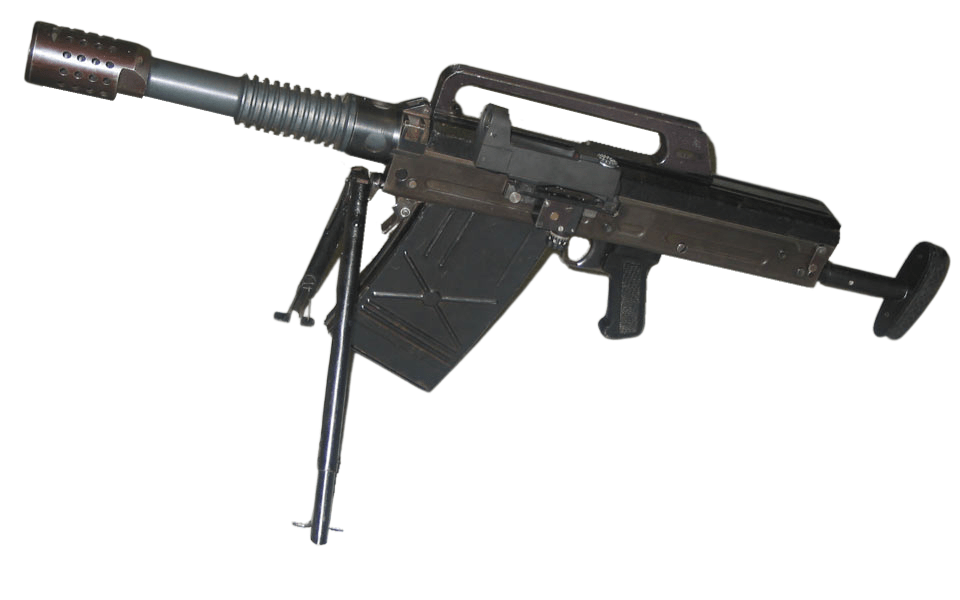
The RG-1 “Piston” (РГ-1 “Поршень”) was developed as a cost effective force multiplier, to provide the firepower of an AGS-17 in a man portable package. Information on the weapon is scarce and I’ve had to dig through a number archived Ukrainian news articles and other sources to pull together some of the story of the RG-1.

A 2014 article from UkraineIndustrial.info suggests the project to develop the RG-1 was launched in 1999 and continued until 2007.  It was reportedly developed by the Yuzhny Machine-Building Plant. A.M. Makarov with the design team including Alekseev Yury Sergeevich, Serbin Vladimir Viktorovich, Zagreba Alexander Ivanovich, and Mezhuev Nikolay Nikolaevich

RG-1 grenade launcher with red dot sight mounted on quadrant sight bar (Yuzhmash)

The RG-1 is a self-loading grenade launcher which fires 30×29mm VOG-17-pattern grenades. Some sources refer to specially made, lighter grenades made for the RG-1. Numerous sources also refer to a training round and a round designed for use against light armoured vehicles. The ammunition was reportedly developed by the Pavlograd Mechanical Plant, which is run by Yuzhmash. The RG-1’s relatively long barrel allows it to engage targets at ranges out to around 800m. The weapon does not appear to have a gas piston and it’s barrel is fixed suggesting it isn’t recoil operated. It may be gas blowback operated, though it’s unclear if it has any sort of bolt delaying system in place. The weapon has a large main spring soaking up the recoil as well as a large top-ported muzzle brake.   

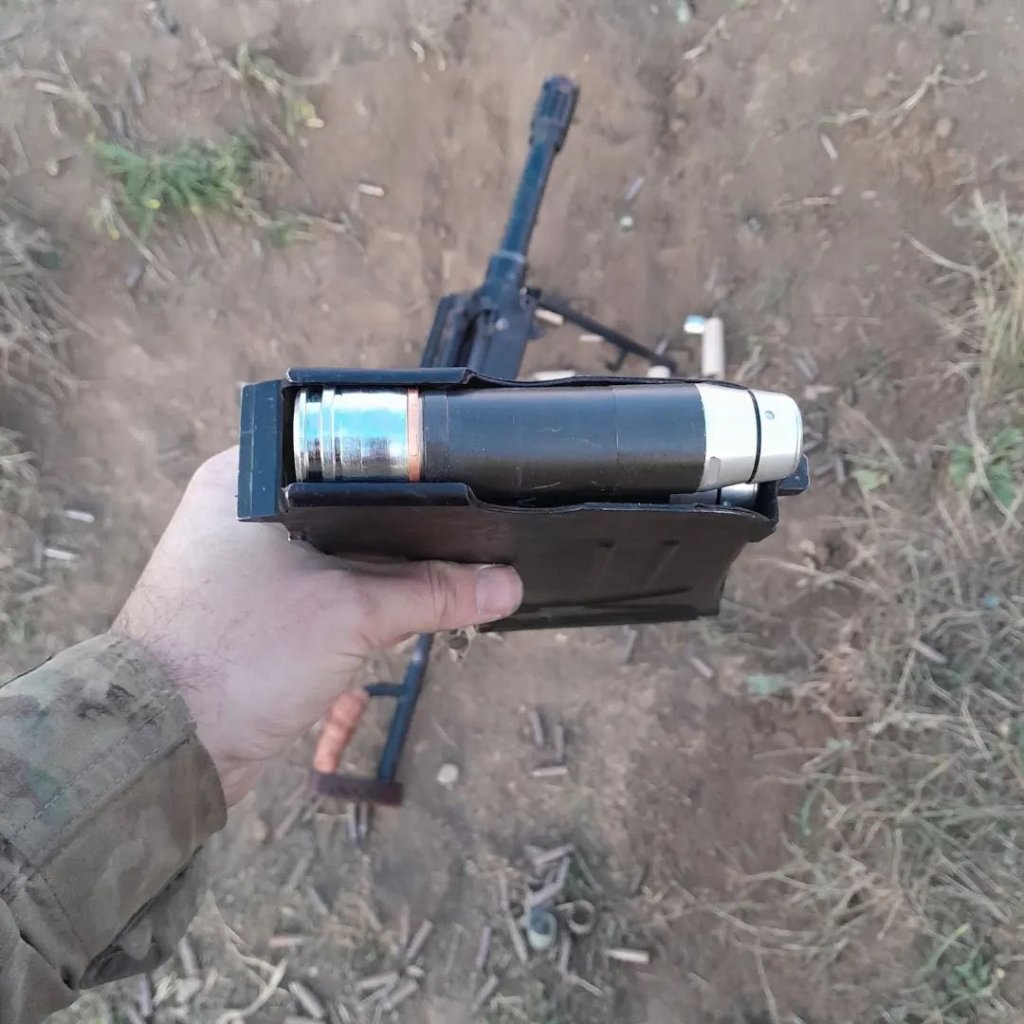
The weapon’s weight is reportedly around 12kg (26.45lbs) loaded and 10.8kg unloaded. It has a 30cm (11.8in) barrel, has an integral bipod and feeds from a five round box magazine. The box magazine rocks forward to lock into the receiver, with the paddle magazine release located forward of the magazine (the reverse of the standard AK position). To load the weapon the bolt has to be pulled to the rear, but with no bolt hold open device it has to be held to the rear manually. There is a quadrant sight on the left side of the weapon’s receiver with a Picatinny rail for mounting optics. The buttstock has a rubber pad and from the available imagery there appears to be two designs of stock. 

Uprom.info reported in 2018, that as of Spring 2017, the RG-1 was not in full-scale production but prototypes had been undergoing field trials with the 79th Airmobile Brigade during fighting in Donbas, as early as 2016.

30×29mm VOG-17-pattern grenades in RG-1 magazine (via Yuri)

Speaking to Yuri in 2022, he noted that his unit didn’t bother using the RG-1 as they had plenty of 40mm grenade launchers in inventory, including then-newly arrived M320s. Yuri explained that “the RG-1 was a stop-gap weapon to give the average man the capability to fire VOGs without having to get an AGS into position.” The low velocity 40mm grenade launchers are smaller, lighter, easier to carry and, according to Yuri, have better range an accuracy than the RG-1.  

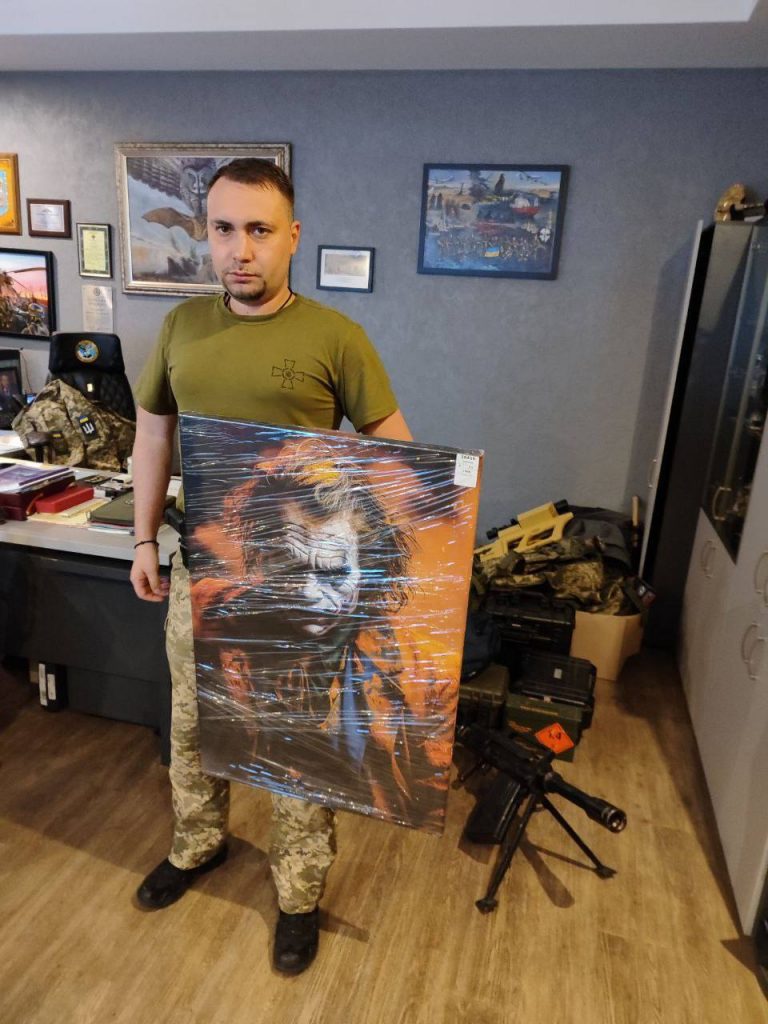
A second sighting of an RG-1 came in mid August 2023, when another video of the weapon being fired on a range was shared. The most recent sighting came in October 2023 when a curious photograph of General Kyrylo Budanov, chief of Ukraine’s Main Directorate of Intelligence, was published showing an RG-1 in the corner of his office. 

Gen. Budanov poses with Joker paining next to an RG-1 (via social media)

The RG-1 is an extremely interesting weapon. Designed to fulfil a tactical niche between the common GP-25 single-shot under-barrel grenade launcher and the heavy AGS-17 automatic grenade launcher. Essentially the RG-1 was intended to be light enough for the operator to manoeuvre and act as an integral support element within the squad. However, in the current phase of the war the proliferation of low velocity 40mm grenades has largely rendered the RG-1 unnecessary. If you’ve seen other imagery of RG-1s in use please do let me know.

Specifications for the RG-1 [assorted sources]:

Calibre – 30×29mm
Rate of fire – 30 RPM
Effective firing range – 800 meters
Weight (unloaded) – 10.8kg
Length – 905mm
Barrel length – 300mm
Initial grenade speed – 185m/s

Update – 20/11/24: Tysk shared a photo of a 3rd Assault Brigade member posing wth an RG-1, date unknown.


Support Us: If you enjoyed this video and article please consider supporting our work here. We have some great perks available for Patreon Supporters – including early access to custom stickers and early access to videos! You can also find us on the History of Weapons & War app. Thank you for your support!
Ukraine’s Grad Rocket-Armed Sea Drones

Ukraine’s family of unmanned surface vessels (USVs) continues to grow as the Security Service of Ukraine (SBU) have developed a Grad rocket-armed Sea Baby drone. The one-way or kamikaze USVs deployed by Ukraine in the Black Sea have been instrumental in engaging the Russian Navy, however, more recently new variants have emerged as Russia has begun to adapt and successfully engage the Sea Babies which in turn has seen the Ukrainians seek to adapt.

The first video of the rocket-armed USV in action recently emerged and the SBU has released some photographs which appear to show the drone in testing. On 22 May, an anonymous SBU source told The Kyiv Independent that the new drones have been used in combat “against Russian positions on the Kinburn spit,” a stretch of often fought over land on the coast near Mykolaiv. “This technological solution is already showing powerful results,” with the source adding “Our Sea Baby is not just a drone, but a multifunctional platform that is constantly being improved.” So far it seems the rocket-armed USV has been used against shore targets rather than to engage the Russian Black Sea Fleet, firing on a moving target from an unstable platform may be much more of a challenge. It remains to be seen if this USV variant has been put to use engaging vessels at sea. The Grad Sea Baby gives the SBU the useful ability to strike shore targets anywhere along the Russian-occupied Black Sea coast. From available imagery, at least three of the rocket-armed variants have been built.

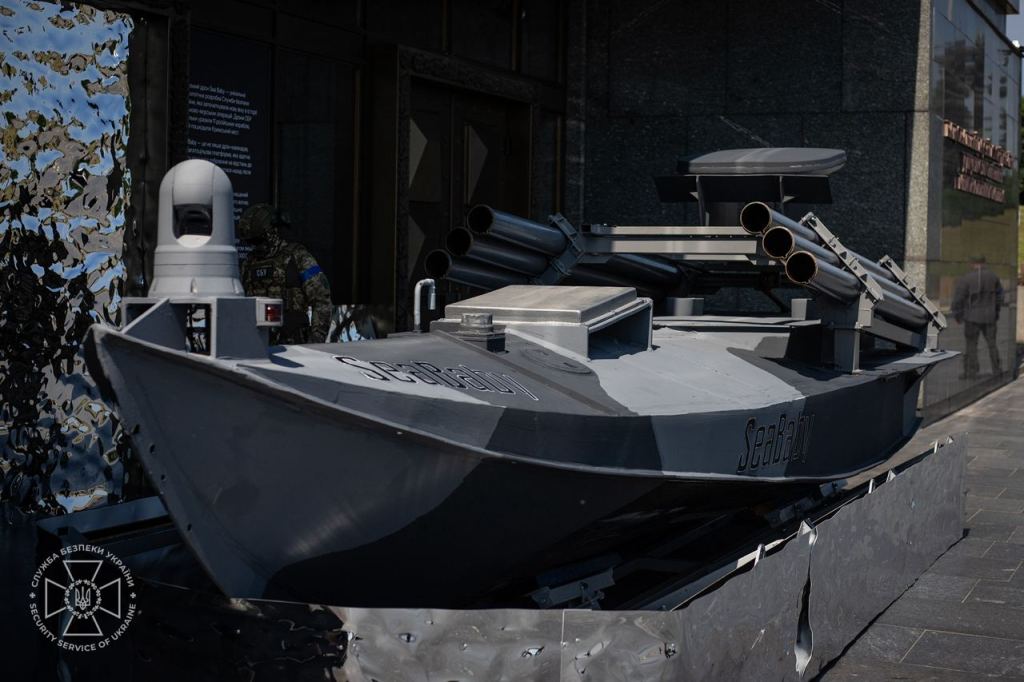
The drones have been equipped with six 122mm Grad rocket launch tubes. The BM-21 multiple rocket launch system is used by both Ukraine and Russia. It’s size, ubiquity and relative cheapness makes it an obvious choice for mounting on the six meter long Sea Baby. The latest versions of the Sea Baby are reportedly able to carry 400 kg warheads over 500 miles at speeds of up to 48 knots.

The Grad rockets have a range of anywhere between 20 and 50 km depending on the type of rocket used. It’s unclear if a sea-based launch impacts the rocket’s range or accuracy but depending on sea conditions dispersion of the munitions is almost certainly affected. While accuracy may be impacted the rockets still give the Sea Baby a useful stand off capability, allowing the USVs to engage targets at a distance rather than having to make it physically all the way to the target to detonate its payload. How the rockets are aimed or the launcher is zeroed isn’t yet clear. The tubes do not appear to be adjustable for elevation as photos appear to show them fixed in place at a slight angle. Available photos show the launcher being tested ashore at a range, perhaps the tubes are bore sighted.

This isn’t the first time rockets have been fired from a Ukrainian USV, back in January 2024, footage of a USV firing smaller rockets at a Russian patrol vessel emerged. The rockets are believed to be RPV-16 or RPO-A thermobaric rockets. Some of this footage, along with other older video, was included in a short clip which showed off the rocket-armed Sea Babies. While this footage may not show a Grad launch Vasyl Malyuk, head of the SBU, has said during a press event with UNITED24, that “For the first time, the SBU used the “Sea baby” drone, equipped with the “Grad” rocket salvo fire systems, in December 2023,” adding that this represented a “new milestone in the history of sea battles.” Newsweek reported that the Sea Babies fitted with Grad launchers were paid for using United24 donations, with each USV estimated to be worth $221,000.

Most recently we also saw another curious Ukrainian USV emerge, equipped with an improvised air-defense system with two repurposed AA-11 ARCHER (R-73) air to air missiles. The air defense USV emerged as Russian helicopters began to effectively engage the Ukrainian USVs. Given the rapid evolution of Ukraine’s USVs it would not be surprising to eventually see one equipped with an anti-ship missile, such as a small RBS-17.

Sea Baby equipped with six Grad tubes (via SBU)

The small cross section and speed of the Sea Baby drones allow them to infiltrate and approach Russian Black Sea vessels both at sea and in port. However, Russia has developed rudimentary tactics for successfully engaging them either with helicopters or with small arms and other defensive fire from vessels. A stand off capability, be it a USV equipped with unguided Grad rockets or an anti-ship missile, adds another dimension the Russians will have to adapt to. The Grad-armed Sea Baby is the latest indicator that Ukraine’s USV fleet is continuing to diversify to meet new threats and operational requirements.

An earlier version of this article first appeared at OvertDefense.com.


Support Us: If you enjoyed this video and article please consider supporting our work here. We have some great perks available for Patreon Supporters – including early access to custom stickers and early access to videos! Thank you for your support!
Spanish CETME-Ls in Ukraine

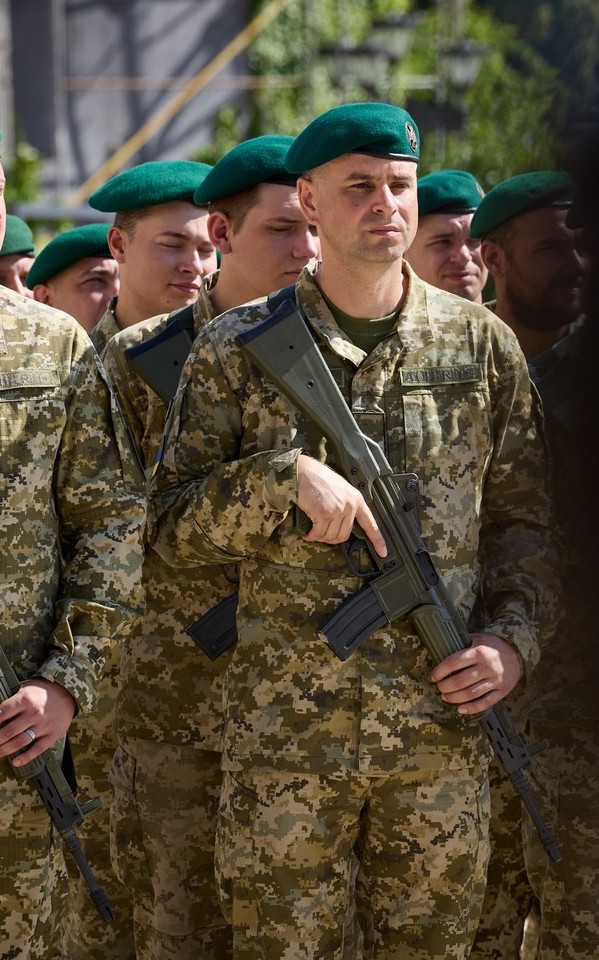
In late August 2023, a surprising weapon turned up in Ukraine. It appears that Spain provided Ukraine with an unknown number of 5.56x45mm CETME-L rifles. The rifles were spotted during a parade in Kyiv with an entire company of Ukrainian Border Guards seen equipped with the rifles. I’ve delayed writing this article/video in anticipation of them appearing again but there’s been no sign of the CETME-Ls since the parade.

The parade, held on 23 August 2023, in Kyiv’s Sofia Square celebrated the 32nd anniversary of Ukrainian independence and saw at least 25 members of Ukraine’s Border Guards parade with the rifles. The personnel are believed to have been part of either the 8th or the 9th border detachments who are assigned to the Belarusian border region.

Ukrainian Border Guards with CETME-Ls, August 2023 (DPSU)

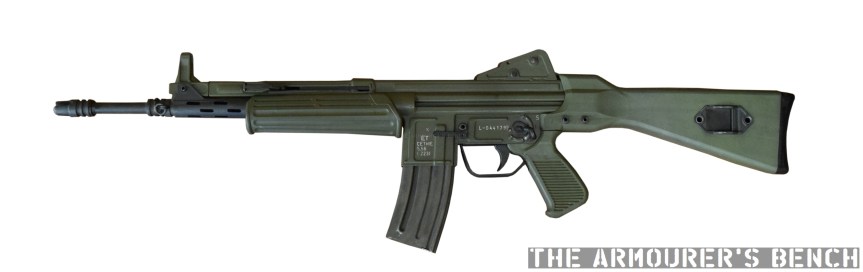
Spain developed the CETME-L in the early 1980s, to replace the CETME Model C. Entering service in 1986, it uses a roller-delayed gas blowback, check out our earlier video disassembling a CETME-L here. Issues with quality control during manufacturing and quirks of the design led to the Spanish military seeking to replace the CETME-L by the mid 1990s. The HK G36E was selected but the L remains in limited service with significant quantities held in storage.

Ukrainian troops training in Spain in the summer of 2023, have been seen equipped with CETME-Ls but it remains curious that Spain would provide the rifles as aid to Ukraine. While the rifles had a short service life due to reported reliability issues, with approximately 100,000 manufactured between 1986 and 1991 and since largely replaced by G36s there is likely a substantial number in store and available for transfer.

CETME-L (Matthew Moss)

The CETME-L, despite a decent design on paper, was hampered by quality control issues which led to reliability problems. The rifle’s magazine housing also only allows feeding from steel magazines. While in theory they will feed from STANAG magazines, the magazine housing is optimised for proprietary Spanish magazines (with a different follower and feed lip design) with the magazine seated at more of an angle. The rifles also reportedly favour hotter, higher pressure ammunition. These factors may explain why the CETME-Ls have not been seen in the field with the Border Guards preferring to continue issuing AK-74 pattern rifles to personnel on the front line. The rifles seen in Kyiv may have been drawn from central stores solely for the parade.

We approached both the Spanish Ministry of Defence and the Ukrainian Border Guards for further information but no addition comment has been received. The Spanish Ministry of Defence directed us to an August 2023 press release which detailed Spanish assistance to Ukraine’s Border Guards which does mention “light weapons with their ammunition”.

Ukrainian Border Guard with CETME-L, August 2023 (DPSU)

The Spanish press, quoting confidential sources, reported that between 1,000 and 2,000 rifles were transferred. It is also reported that the rifles were never previously issued and that they are being used by rear echelon Ukrainian personnel. This frees up more reliable weapons, like AK-74s and UAR-15s, for frontline use. At the time of publication examination of various DPSU (Ukrainian Border Guard) social media channels doesn’t indicate any signs of further use of CETME-L rifles, even with rear echelon personnel.


Support Us: If you enjoyed this video and article please consider supporting our work here. We have some great perks available for Patreon Supporters – including early access to custom stickers and early access to videos! Thank you for your support!

Russia’s Rare RPG-16 in Ukraine

One of the rarer Russian anti-armour weapons to surface during the ongoing war in Ukraine is the RPG-16. The RPG-7’s big brother was developed in the late 1960s and entered service in the early 1970s. It was predominantly developed for Russia’s airborne forces, the VDV, but also saw issue to Spetsnaz units.

The RPG-16 is characterised by its larger diameter tube which can fire a 58mm (2.3 inch) PG-16 rocket-propelled grenade. Unlike the RPG-7s munitions the PG-16 slides flush inside the launcher, while this limits the volume and types of warhead the RPG-16’s ammunition can carry it provides improved accuracy and slightly increased range. The PG-16 is a fin-stabilised high explosive anti-tank (HEAT) round with a rocket booster which propels it at a maximum velocity of 350 metres per second. The rocket weighs around 2.1kgs and has a maximum range of 800 metres, though practical engagement range of vehicles is closer to 300 metres. It can penetrate up to 300mm (12 inch) of rolled homogenous armour.

An RPG-16 seen in a Russian news report, June 2023 (Russia 1)

The RPG-16 can only fire the PG-16 round and following its adoption in the early 1970s it has been surpassed by other anti-armour weapons which have entered Russian service and by the development of more capable PG-7 series warheads. The launcher weighs 12.4 kg (27 lbs) [compared to the 7 kg (15.4 lb) of the RPG-7] when loaded and is 110cm (43.5 in) long but can be broken down into two parts: the rear tube with venturi and the forward tube and fire control group. Unlike the smaller RPG-7 it has a bipod near the muzzle and a grip area on the fire control group, it does not have a second, rear pistol grip.

A reported 120,000 were produced with manufacture continuing into the late 1980s. It had been thought that the RPG-16 went out of Russian service in the early 2000s but evidently some have been drawn from stores and have been used in Ukraine. The RPG-16 was reportedly used against fixed positions during the Soviet war in Afghanistan and may now be pressed into the same role in Ukraine.

It appears from available imagery that the RPG-16 began to be issued in early 2023. Early March 2023 saw Russian state-news outlet RIA shared a report featuring combatants of the 76th Guards Air Assault Division firing small arms and RPGs in woodland. One of the RPGs fired was an RPG-16.

Russian combatant firing an RPG-16, December 2023 (via social media)

In late April, stills from a video of troops said to be with the 98th Guards Airborne Division featured an RPG-16 being fired near Dibrova were shared. I’ve been unable to find the original footage. In June, one of the launchers appeared in a Russia-1 news report featuring Russian forces near Avdiivka, Donetsk Oblast.

On 26 November, a Russian combatant shared a photograph of an RPG-7 and an RPG-16 next to one another, reportedly taken in a depot or armoury. Two days later on 28 November a short clip of marines from the Russian 40th Naval Infantry Brigade was shared showing an RPG-16 in action, location unknown, possibly near Pavlivka.

A week later, on 3 December a video featuring a pair of Russian combatants from the Otvazhnye (Brave) Group, firing an RPG-7 and an RPG-16 was posted on telegram. The footage was probably filmed in near Kreminna where the unit was reportedly active.

Russian combatant poses with an RPG-16 and AK-12, January 2024 (via social media)

On 13 December, a mobilized Russian combatant shared a post on Telegram describing his experiences at the front. He mentions that due to a lack of infantry anti-armour weapons with sufficient range to reach Ukrainian AFVs standing off and firing on their positions his unit began issuing RPG-16s. In late January, two photographs of Russian troops in a trench, location unknown, posed with an RPG-16, and some unrelated RPG-7 munitions.

From the limited imagery available it seems that the RPG-16s have been again issued to largely airborne units, however they have also been seen with Russia’s naval infantry. Exactly why the RPG-16 has returned to service is unclear, as by one Russian combatant suggested, it may be that the greater range offered by the RPG-16 enables engagement of distant targets, another potential reason might be Russia’s desire to use up existing reserve stocks of munitions.


Support Us: If you enjoyed this video and article please consider supporting our work here. We have some great perks available for Patreon Supporters – including early access to custom stickers and early access to videos! Thank you for your support!


Specifications:

Calibre: 58.3 mm
Length:
– Assembled: 1,104 mm
– Disassembled: 645 mm
Weight:
– Unloaded with optical sight: 10.3kg
– Loaded: 12.4kg
Velocity:
– Initial: 130 m/s
– Maximum: 350 m/s
Effective range: 800 m
Armour Penetration: +300 mm

Bibliography:

Jane’s Infantry Weapons 2014-15, R.D. Jones & L.S. Ness (2014)

58mm PG-16 Rocket, CAT-UXO, (source)

RPG-16 Udar Russian Rocket-Propelled Grenade Launcher, US Army, (source)

Airborne choice: Soviet RPG-16 in Afghanistan, Safar Publishing, (source)


Ukraine’s ASRAAM-Supacat Franken-SAM

Earlier this week a short video featuring an ASRAAM-Supacat ‘Franken-SAM’ surfaced online. Early on 8 February, Ukrainian Telegram channels began sharing a video pulled from TikTok, which is likely the first daylight footage of one of the UK-developed and supplied ad-hoc air defence systems.

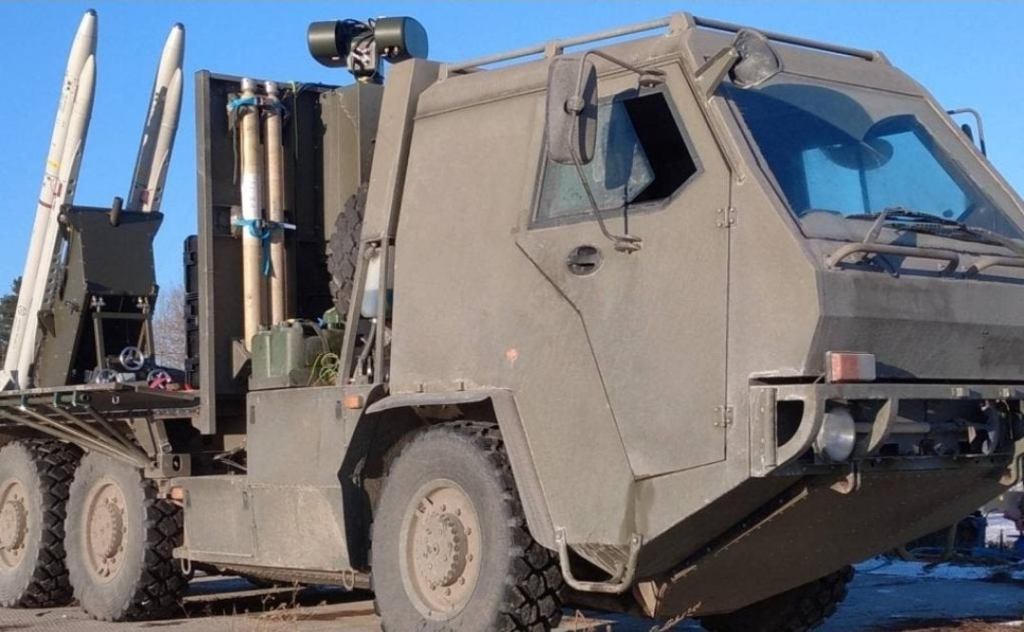
The system can be seen parked by the side of a road and was filmed (original source now private) from a passing vehicle. The date and location the video was filmed is unknown. The launcher appears to have two AIM-132 Advanced Short-Range Air-to-Air Missiles (ASRAAM) loaded with the launcher ramp raised in the ready position. It is difficult to make out but the cab has seemingly been fitted with a protective screen to guard against drone attack. Also visible is what appears to be a sensor turret mounted behind the cab, this is possibly an electro-optical/infrared sensor used for targeting.

Still from recently posted footage of an ASRAAM Franken-SAM in Ukraine, 8 Feb. 2024 (via social media)

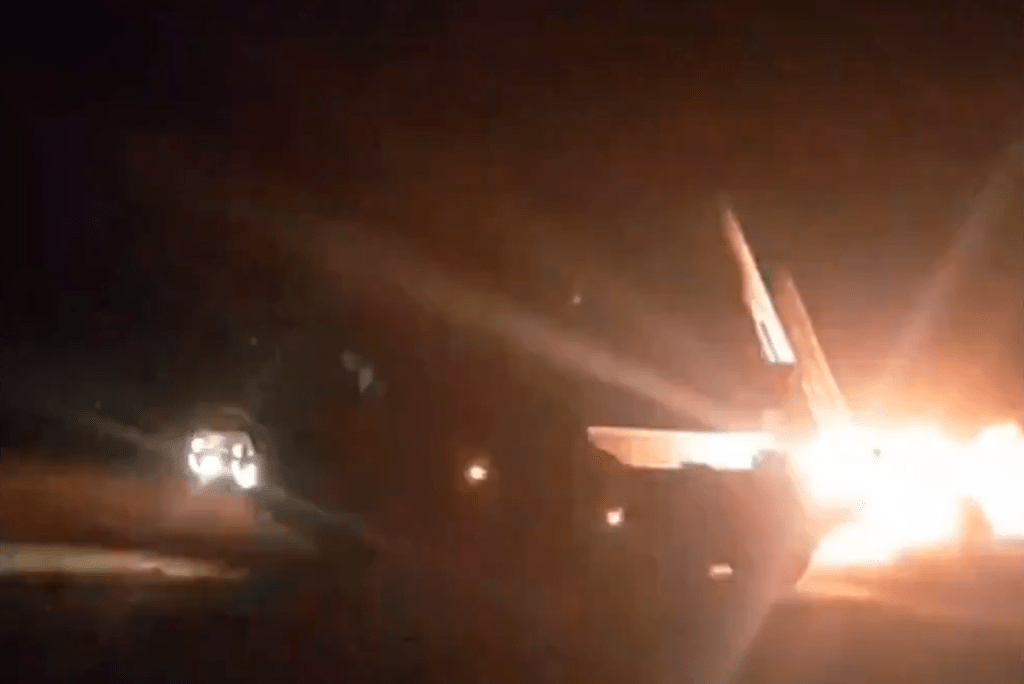
The UK-developed system is one of several so-called Franken-SAMs produced by Ukraine’s allies. They are part of an effort to affordably and quickly bolster Ukraine’s air defences. In October 2023 a pair of videos shared by the Ukrainian air force gave a glimpse of the system in action. The both filmed at night shows a launch but the vehicle is not visible. The second, shared on 12 October, by Ukraine’s Air Command – South shows the successful engagement of a Russian long range loitering munition. As the darkness is lit up by the missile launch, the Supacat 6×6 High Mobility Transporter is briefly visible.

The AIM-132 missiles and the vehicles launching them were provided by the UK in the summer of 2023. ASRAAM uses infrared homing and can lock onto its target after launch. It has an air-launched range of more than 25km but this is likely shorter when used in a ground launched role. The system may be used in conjunction with radar systems which feeds target data to the missile. A key feature of the ASRAAM is its ability to lock-on after launch, theoretically allowing it to be vectored onto a target in the air before it begins IR homing.

A photo dating from August 2023 of a Supacat High Mobility Vehicle mounted with a pair of MBDA UK ASRAAMs (Ukrainian Ministry of Defence)

The system, however, isn’t ideal with limited ready-to-fire capacity on the launcher ramp, with just two rails, and no protection for the missiles themselves, from either the elements or from potential fragmentation or impact damage if attacked. The ad-hoc air defence system first saw action in Ukraine in August 2023, and represents an ingenious improvisation utilising a highly capable missile in an air defence role it was never envisaged in. In December 2023 UK Ministry of Defence summarised their development:

“In summer 2022, a joint MoD-MBDA team developed air defence systems to fire ASRAAM from the ground for the first time. Within four months of initiating the surface launched ASRAAM project, these air defence systems were developed, manufactured, trialled and Ukrainian crews trained on their usage, on UK soil, before being transferred into Ukrainian hands.”

It is unclear how many of the systems have been assembled but in late 2023, it was reported that the UK had supplied “a handful” of the missile-equipped Supacat trucks. They were believed to be in use in near the front and in the Kyiv region, defending key infrastructure, against Shahed-136/Geran-2 long-range loitering munition attacks.

In December 2023, the UK Ministry of Defence announced that a further 200 ASRAAMs would be provided to Ukraine and that the systems in-country had achieved a “successful hit rate reported as high as 90% against some Russian air targets.”

This article originally appeared at OvertDefense.com

Update 16/04/24:

Short video showing a close up and launch of what appears to be an ASRAAM missile. Posted on Telegram on 14 April.

Update 16/09/24:

A brief video showing a launch of a missile from the HMT-mounted ASRAAM air defence system.


Support Us: If you enjoyed this video and article please consider supporting our work here. We have some great perks available for Patreon Supporters – including early access to custom stickers and early access to videos! Thank you for your support!


Wheeled Mk19 Mount

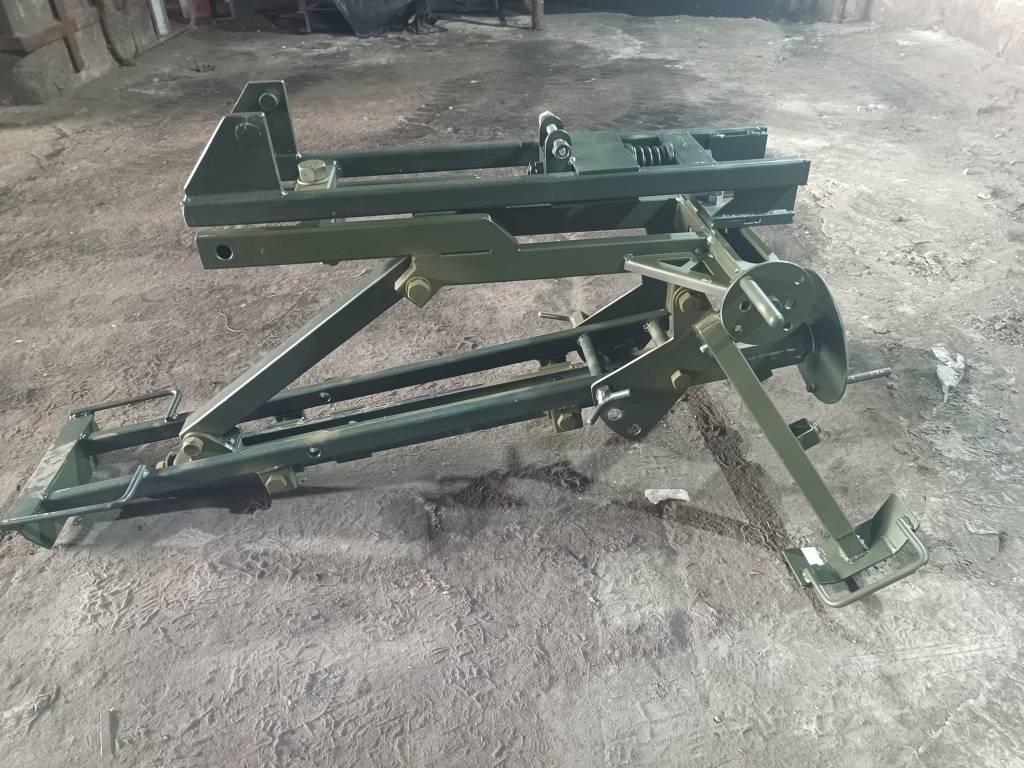
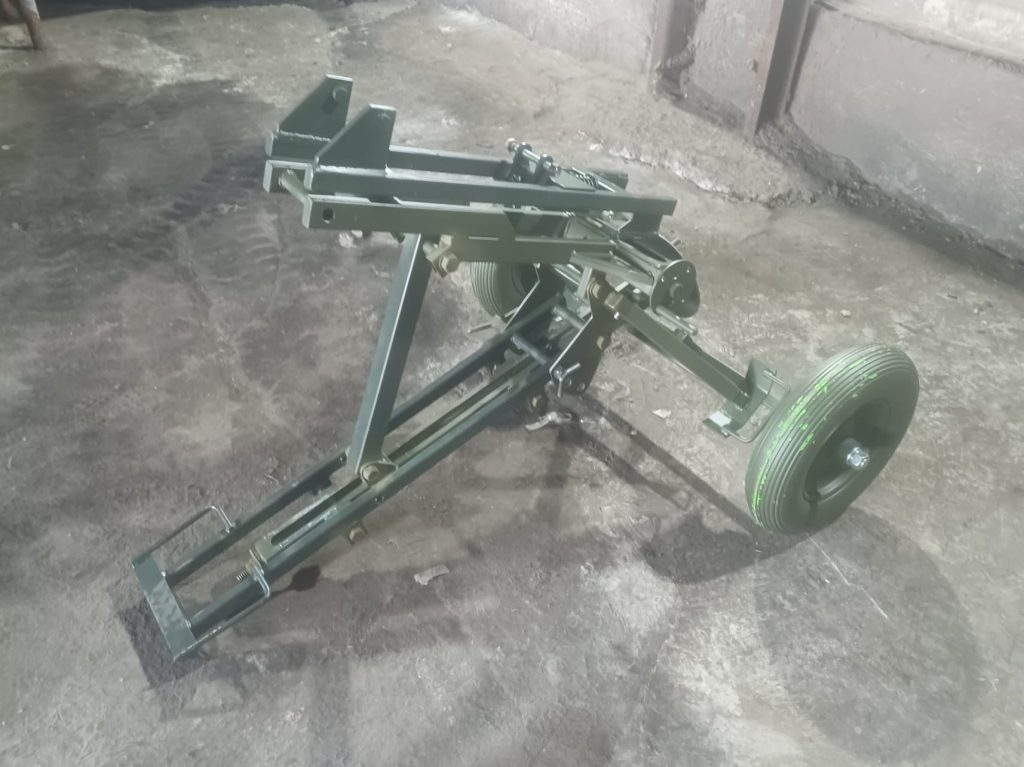
A Ukrainian engineer and fabricator, Іван Савельєв/Ivan Saveliev, has designed and built an interesting wheeled mount for the Mk19 automatic grenade launcher. The mount was recently seen in a video posted to TikTok by a member of 4th Rapid Reaction Rubizh Brigade’s 3rd Battalion Svoboda. The video was posted on the 10 November and shows the mount being demonstrated in camp. There’s a long history of Russian machine guns like the Maxim PM1910, SG-43 and DShK having wheeled mounts or carriages. The new mount for the Mk19 could be seen as a descendent of these.

A Mk19 on the wheeled mount (via social media)

The first MK19 Mod IIIs arrived from the US in late January 2022, as it looked increasingly likely that Russia would invade. Since then they have proliferated and are widely used by the Ukrainian armed forces.

A Mk19 on the mount with wheels removed (via social media)

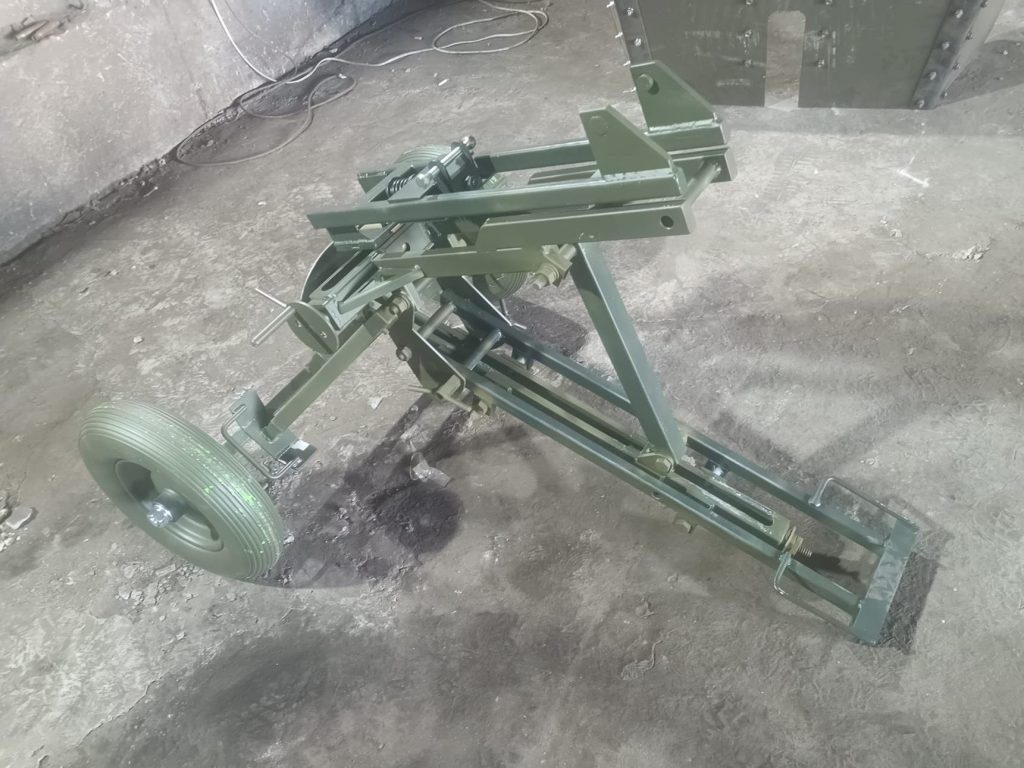
Saveliev has developed a range of mounts for various support weapons including machine guns, auto-cannons and mortars. He first shared imagery of the wheeled mount for the Mk19 in mid-June posting a photograph showing a Mk19 elevated on one of the mounts. Five months later, on 23 October, Saveliev shared a series of detailed photos of the mount. He noted that the mount could allow the Mk19 to be fired at ‘increased vertical angles’. This is very useful for long range, indirect fire. The M2 heavy machine gun could also be used with the wheeled mount as the mount mimics the mounting points of the M3 tripod, which both the Mk19 and M2 are used with.

Above & Below: Close-ups of the mount (via social media)

The mount has a pair of handles at the muzzle end to allow the weapon to be pulled by two men. The elevation of the Mk19 can be adjusted by an elevation wheel which uses a long threaded bar (or worm pinion/screw) to move the mounting arm forward and back, lowering and raising the weapon. In the video posted by members of the 3rd Battalion Svoboda it is suggested that elevations of 60 or more degrees is possible. Windage can be adjusted by a pair of wheels either side of the rear of the mount.

The mount has a pair of wheels with pneumatic tires which can be removed allowing the weapon to be grounded in the mount. However, this looks to be a fairly unstable firing platform due to the narrow base the mount offers compared to the Mk19’s standard tripod. Despite the Mk19’s relatively low recoil the mount would probably have to be well bedded in to achieve accurate fire and prevent it from potentially toppling. There is no mount for the weapon’s belt box.

According to various comments on Saveliev’s posts about the mount individuals from a number of Ukrainian brigades including the 47th Mechanised and 5th Assault brigades are reportedly interested in the mount.

I haven’t yet been able to find any imagery of the mount being used in the field or of a Mk19 being fired from one so its difficult to know how useful it is in battlefield conditions. The major benefit, however, is increasing the Mk19’s portability. Weighing in at 77.6 lbs (35.2 kg) the Mk19 (without the M3 tripod which adds 44 lbs (20 kg)) is heavier than its Russian counter-part, the AGS-17. This makes moving it across broken terrain a difficult task, the wheels might help

Special thanks to Weapons Illustrated who has been tracking this mount and assisted with this video/article.


Support Us: If you enjoyed this video and article please consider supporting our work here. We have some great perks available for Patreon Supporters – including early access to custom stickers and early access to videos! Thank you for your support!


Breakdown: How Many Ukrainian Troops Has the US Trained?

The US Department of Defense recently announced that they would be expanding their training of Ukrainian personnel in January. The new training program will aim to train 500 Ukrainians per month giving them instruction on combined arms operations and tactics from the squad to the battalion level. 

Long before the Russian invasion of Ukraine in February the US and other NATO nations had been heavily engaged in training the Ukrainian military to NATO standards. The US, UK and Canada established a Joint Commission for Defence Reform and Security Cooperation In July 2014, which later expanded. The Canadian training operation was known as Unifier while the British operation was known as Orbital, which has now   been superseded by Operation Interflex.

Just before that announcement, however, the US also confirmed how many Ukrainian personnel have been trained so far. A US European Command Spokesperson shared a breakdown of how many troops have been trained on a number of major systems. 

In a statement a European Command spokesperson told me that:

“Training is key to Ukraine’s continued success on the battlefield by ensuring that Ukraine has the skilled forces necessary to sustain its efforts to push back on Russian aggression. Since the U.S. started to provide security assistance to support Ukraine in defense of their nation, the United States has trained approximately 3,100 members of the Ukrainian Armed Forces”. 

The breakdown of training provided to Ukrainian personnel covers a number of different systems and platforms: 

The system which has seen by far the largest number of Ukrainian troops trained is the M777 155mm howitzer. As of 9 December the US has provided Ukraine with ‘142 155mm Howitzers and up to 1,004,000 155mm artillery rounds’. To operate these guns in the field the US has trained approximately 870 Ukrainian gunners. In addition to this 310 personnel have been trained on the M109 155mm self-propelled howitzer, M109s have been donated by the US, UK and Norway.

Other troops have been trained on the lighter 105mm M119 howitzers, 36 of which have been provided by the US with further guns coming from the UK. Around 500 Ukrainian gunners have been trained on the 105mm howitzers by US personnel, with more being trained in the UK by a multi-national training cadre. 220 Ukrainian personnel have also received training on the M120 mortar.

Finally, US EUCOM’s breakdown outlined that approximately 610 Ukrainian personnel have been trained on the M142 High Mobility Artillery Rocket System. So far 38 227mm HIMARs have been transferred to Ukraine by the US.

US personnel have also provided training on a number of vehicles, training 140 Ukrainians on M113 armored personnel carriers. With all of the vehicles and weapon systems it is unclear what ratio of these troops included instructors, mechanics and crews. At the time of writing the US has provided 200 M113s with European allies providing including Denmark, Spain, the Netherlands, Australia, Germany, Portugal, Lithuania and Austria also providing a similar number of M113 variants. The EUCOM spokesperson also noted that an unspecified number of Ukrainian troops had been trained on the M1089 Wrecker, a recovery vehicle which is part of the Medium Tactical Vehicles family. The latest Department of Defense factsheet on equipment provided to Ukraine notes that “22 Tactical Vehicles to recover equipment” have been transferred.

While the provided breakdown of systems Ukrainian troops have been trained on by US personnel outside of Ukraine isn’t exhaustive it also included 450 personnel who have received training on ‘other’ systems such as the M1089 and various Unmanned Aerial Vehicle platforms. 

Much of this training has been carried out at US military sites in Poland and Germany but as we’ve already seen in previous videos Ukrainian troops are also being trained in the UK by a multi-national training force, in Lithuania and elsewhere.

This article was adapted from my earlier article at Overt Defense.


Support Us: If you enjoyed this video and article please consider supporting our work here. We have some great perks available for Patreon Supporters – including early access to custom stickers and early access to videos! Thank you for your support!

Sweden’s KSP-58 Machine Guns In Ukraine

Since the Russian invasion of Ukraine in February we’ve seen a number of FN MAG variants appear in use with Ukrainian forces. By far the most common appears to be the US M240 series. However, in recent months we’ve also seen a number of Swedish KSP-58s appear in imagery from the field.

Sweden has long supported the Ukrainian war effort providing a shipment of 5,000 Pansarskott m/86 anti-armour weapons (perhaps better known as the AT4) back in late February. The transfer of an additional batch of 5,000 m/86s was announced on 2 June. Most recently on 30 June it was reported that Sweden would provide a fresh batch of light anti-armour weapons and also machine guns as part of a transfer worth $49 million. When delivery of this aid was made is unconfirmed but the KSP-58s are reported to have been in theatre possibly as early as July – August.

While the type of machine gun was not confirmed, since the beginning of September we’ve seen imagery of a number of KSP-58 GPMGs appear in theatre. Easily identified by their wooden stocks, grey-green-coloured receiver finish and enclosed front sight. Sweden was one of the earliest adopters of the FN MAG and the Kulspruta 58 or KSP-58 entered service with the Swedish armed forces in the late 1950s and was originally chambered in the 6.5×55mm Swedish round. The KSP-58B was introduced following the adoption of 7.62x51mm. The guns were made under license from FN at the Carl Gustav Stads rifle factory in Eskilstuna.

A KSP-58B in use with Ukrainian troops c. September 2022 (via social media)

These have been seen in the hands of International Legion units and also regular Ukrainian Army units centred around Mykolaiv and Kherson. All the the examples of the weapon sighted appear to be KSP-58Bs, none of the guns seen have the Picatinny rails seen in the KSP-58F. 

Speaking to Kaiser [frontline_view_kaiser] a German volunteer with the Ukrainian Army, he said his unit encountered a “a brand-new, never used KSP with original factory delivered Box and all accessories untouched”. His colleague Yuri [nucking_futs_yuri] has shared some videos filmed in late-August, during a training session he ran on FN MAG variants for various Ukrainian units. Yuri said their were about 20 guns on the range during the training session, with the majority being KSP-58s. Yuri shared a video in mid-September firing a through a KSP-58B, from the hip, filmed after the training session had been completed. 

Yuri with a KSP-58B c. September 2022 (nucking_futs_yuri)

While we can’t confirm that the KSP-58s came directly from Sweden it seems likely. Another potential origin for the weapons may be the Baltic States (Estonia, Latvia and Lithuania). Sweden gifted an unconfirmed number of KSP-58s to the Baltic States in the 1990s. Today, the guns remain in service with the Latvian Army and National Guard, the Estonian Army and Estonian Defence League and the Lithuanian Army and National Defence Volunteer Force. Both Estonia and Lithuania began searching for a replacement for the KSP-58 in mid-2021. Given the Baltic states’ support for Ukraine the guns may potentially have originated from there, rather than Sweden itself. We have already seen the Baltic States have transferred former Swedish equipment including the PV-1110 recoilless anti-tank gun which were given to the Baltic states in the early 1990s.

It remains to be seen if we’ll see more of the KSP-58s in the field but in future articles/videos we’ll look at other FN MAG variants are in use in Ukraine.

Update 16/1/24: A maritime element of Ukraine’s Border Guards shared photos of them familiarising with what appears to be a KSP-58.

Update – 5/6/24:

Update – 15/10/24: A video of a KSP-58 in action somewhere in Ukraine, date unknown, recently shared online.


If you enjoyed this video and article please consider supporting our work here. We have some great perks available for Patreon Supporters – including custom stickers and early access to videos! Thank you for your support!

Bibliography:

Thank you to Kaiser and Yuri for their input – definitely check them out on their social media!

Kulspruta 58, Forsvarsmakten, (source)

KSP-58, Soldf.com, (source)

Sweden to boost military aid to Ukraine, Politico, 29 Aug. 2022, (source)

Sweden to send military aid to Ukraine, Reuters, 27 Feb. 2022, (source)

Sweden assists Ukraine with the Robot 17, SVt.se, 2 June 2022, (source)

Sweden to send more anti-tank weapons and machine guns to Ukraine, Reuters, 30 June 2022, (source)

Estonia to acquire new weapons for EDF, Defense League, ERR, 18 Nov. 2022, (source)

Lithuania buys machine guns for EUR 34 million, Defence 24, 20 Aug. 2022, (source)

RPG-30: Russia’s Dual Tube Rocket Launcher

The RPG-30 is one of Russia’s more advanced disposable anti-armour weapons. Developed in the early 2000s by Bazalt it is designed to overcome reactive armour and active protection systems. It entered service in 2012 and has seen extensive use during the fighting in Ukraine. 

The 7P53 RPG-30 “Kryuk” or ‘Hook’ is a 105mm fin and spin stabilised rocket propelled munition with a tandem HEAT shaped charge warhead. The RPG-30 overcomes ERA and APS by using a 42mm IG-30 decoy projectile, which is believed to be inert, coupled with the main rocket’s tandem warhead. This can be seen in a secondary, thinner tube running along the side of the weapon. The precursor decoy causes premature activation of the APS and allows the main warhead to exploit the gap in the tank’s protection. The theory being that the target’s APS takes some time, perhaps half a second, before it can engage again. The gap between the firing of the two rockets is measured in milliseconds and the lag, while noticeable, does not appear to be significant enough to effect the user’s aim or accuracy on target.

RPG-30 (Vitaly Kuzmin CC BY-SA 4.0)

The RPG-30 uses the PG-30 tandem HEAT warhead, similar to the PG-27 used by the RPG-27. It can reportedly penetrate 750mm of rolled homogeneous armour and up to 650mm of rolled homogeneous armour after ERA. Effective range estimates vary with the average suggesting 200m.

The weapon’s sights are simple and consist of a folding ladder front sight and rear sight – there does not appear to be provision for mounting optics. Flipping up the rear sight also cocks the weapon. The disposable tube(s) is made of aluminium with a fibreglass outer layer. Sources suggest it weighs around 10.3kg (22.7lbs) and has an overall length of just over 1m (1,135mm/44.7in). 

A pair of RPG-30s captured in April 2022 (via Social Media)

Unlike other Russian weapon systems few videos of its use have been shared by Russian state media or Russia’s defence exports corporation Rosoboronexport. The ongoing war in Ukraine, however, has provided our first real look at the weapon in action. As soon as the Russian invasion was launched on 24 February, RPG-30s began to be seen in use with Russian forces. By late February and early March imagery of captured examples was shared on social media. 

Russian soldier posing with RPG-30, March 2022 (via Social Media)

The first images of the weapon came from Russian sources in late February, just after the invasion. This was quickly followed by imagery of captured examples, most notably from the column of Tigr-M armoured infantry mobility vehicles in Kharkiv.  A photograph of a further two captured RPG-30s appeared in April, while another example was photographed in Donbas in early May. Later in May a photo of a Russian soldier posing with one was shared on social media and in September significant caches of weapons were captured in Kherson and Balakliya. 

Still of a Russian soldier firing an RPG-30, August 2022 (via Social Media)

In late August we got our first brief look at the RPG-30 being fired in a montage video of VDV weapon systems (see image above). Earlier in mid-August a sort of ‘unboxing video’ was shared giving us a good close up look at some of the packaging the RPG-30s are shipped in and the markings on the side the weapon. Most recently in some further video of the RPG-30 being fired on a Russian Western Military District range also surfaced giving us a good look at the weapon in action.

RPG-30s captured in April (via Social Media)

Of course the weapon is designed to be simple to use, anyone with training on a similar shoulder-fired disposable anti-armour weapon can operate it. While it has been said that its widespread use in Ukraine is somewhat ironic given that Ukraine does operate any APS equipped tanks, the weapon is still useful against less sophisticated tanks. While the precursor might potentially deliver some limited kinetic damage to the ERA block, the RPG-30’s tandem warhead is capable of defeating the ERA fitted to most Ukrainian tanks, though of course, the same can be said of Russia’s other anti-armour weapons which use tandem warheads.

Update 27/10/22:

The Georgian Legion recently shared a short video looking at a captured RPG-30. The video also includes firing footage of the weapon.

Update 15/09/23:

Clip of a Ukrainian combatant firing a captured RPG-30 at the range.

Update – 20/8/24:


If you enjoyed this video and article please consider supporting our work here. We have some great perks available for Patreon Supporters – including custom stickers and early access to videos! Thank you for your support!

Bibliography:

105mm PG-30 Rocket, CAT UXO, (source)

RPG-30 Kryuk (Hook), US Army TRADOC, (source)

Russian Army receives cutting-edge antitank rocket launchers, TASS, (source)