HK MG5s in Ukraine

A dozen different types of light and general purpose machine guns are in use in Ukraine, one of the newest is the Heckler & Koch MG5.

In May 2023, the German government announced a package of aid which would include 100 HK MG5 7.62x51mm general purpose machine guns. In September, evidence of their arrival in theatre began to surface with Ukrainian combatants sharing imagery of the brand new weapons.

The transfer of MG5s by the German government is interesting as the Bundeswehr themselves have only recently begun to receive the guns. The MG5 officially entered German service in 2015 but procurement has only recently ramped up with around 10,000 currently estimated to be in inventory. The MG5 is a gas-operated 7.62x51mm general purpose machine gun with a variable rate of fire and is intended to replace the MG3. It fires from an open bolt and it’s action is locked by a rotating bolt head. The guns themselves are listed on the German government’s aid-tracking page as “being deliveries from industry stocks financed by German funds for security capacity building.” This indicates that the transfer was probably not made direct from Bundeswehr stores.
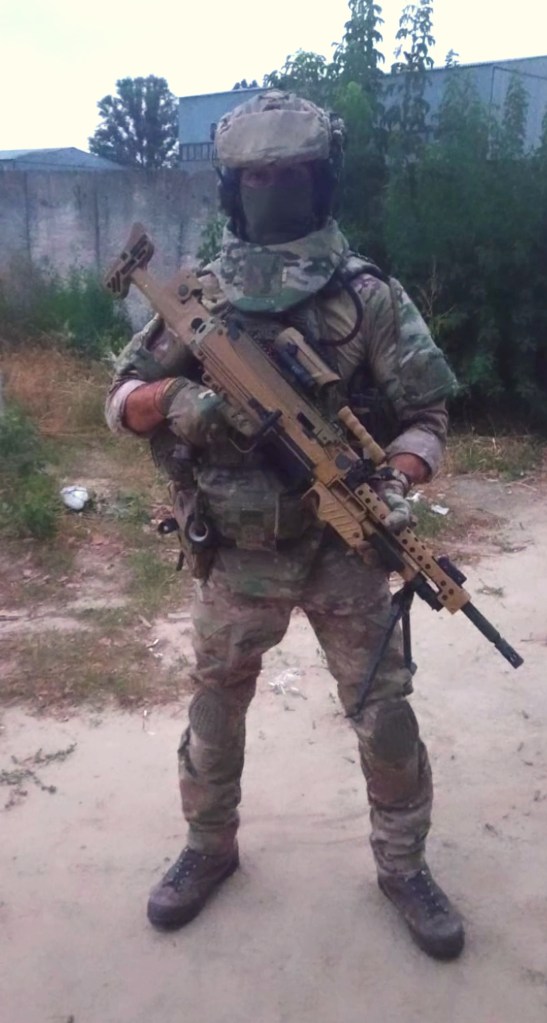
Jurado posted the first photo of an MG5 in Ukraine (via Social Media)

On 20 September, Jurado – a Spanish member of the International Legion, shared the first photograph of an MG5 in Ukraine. Several days later on 22 September, omega_team_gur shared another photograph of the MG5 at the range. According to Jurado his unit received three of the guns.

A week later Greek International Legion members shared the first video of one of the guns mounted on a Lafette tripod. Through discussions with some of the combatants whose units have received the MG5s not all the guns came with tripods. A member of a Ukrainian Military Intelligence Directorate, the GUR, team told us that the guns came in bags with accessories including an optic, bipod, cleaning kit, manual and spare barrel.
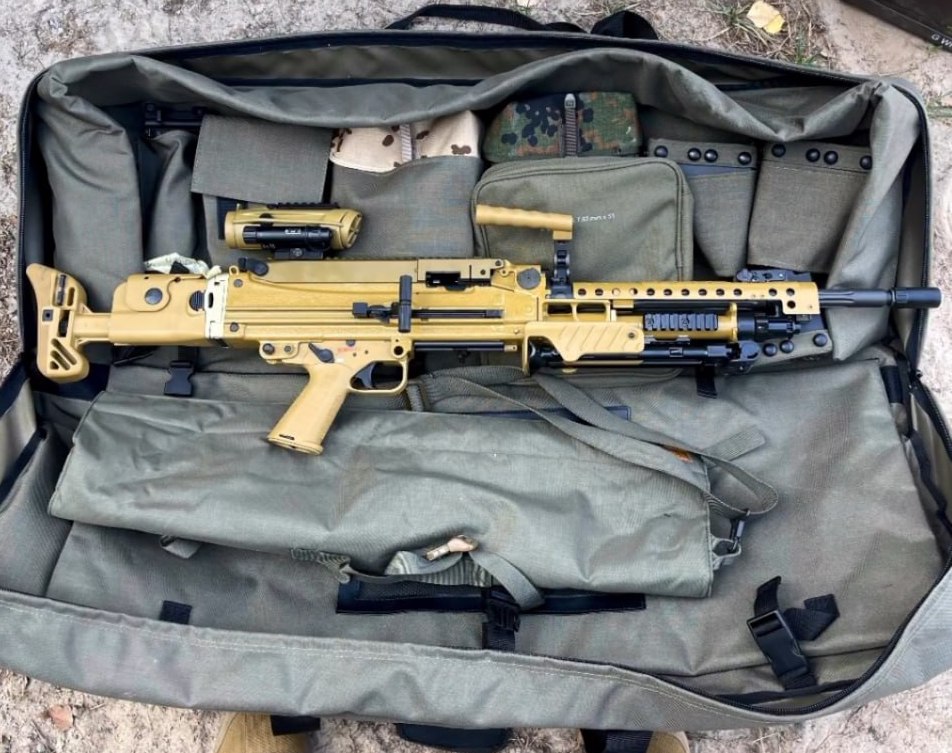
An MG5 in its transport bag (via Social Media)

A member of the GUR, callsign Shock, shared a photo with an MG5 on 28 September, and several more the next day. Shock told TAB that his unit had received two of the MG5s and that while they’re cool pieces of kit the are heavy “13+ kg without ammunition” [HK lists the MG5A2’s weight as 11.5kg or 25lbs]. Shock’s team appears to be one of the few GUR teams not made up of international volunteers to receive the guns. He also shared a photograph of two MG5s sat in their transport bags.

On the 30th September Omega Team shared another group photograph featuring an MG5 and several days later on 2 October, a member of the GUR’s Shaman battalion, shared a photograph of himself holding a new MG5. Another member of the Shaman battalion also shared a photograph of an MG5 in its transit case/bag. It can seen fitted with a Hensoldt 4x30i optic and a cleaning kit and a number of belt pouches can be seen in the case. Knights, another GUR team, shared a photograph featuring an MG5 on 6 October. This was followed on the 10 October by a unit photograph with an MG5 seen at the back of the group. During the same week, another SOF group made up of international volunteers, Black Maple, also shared a photograph featuring an MG5.
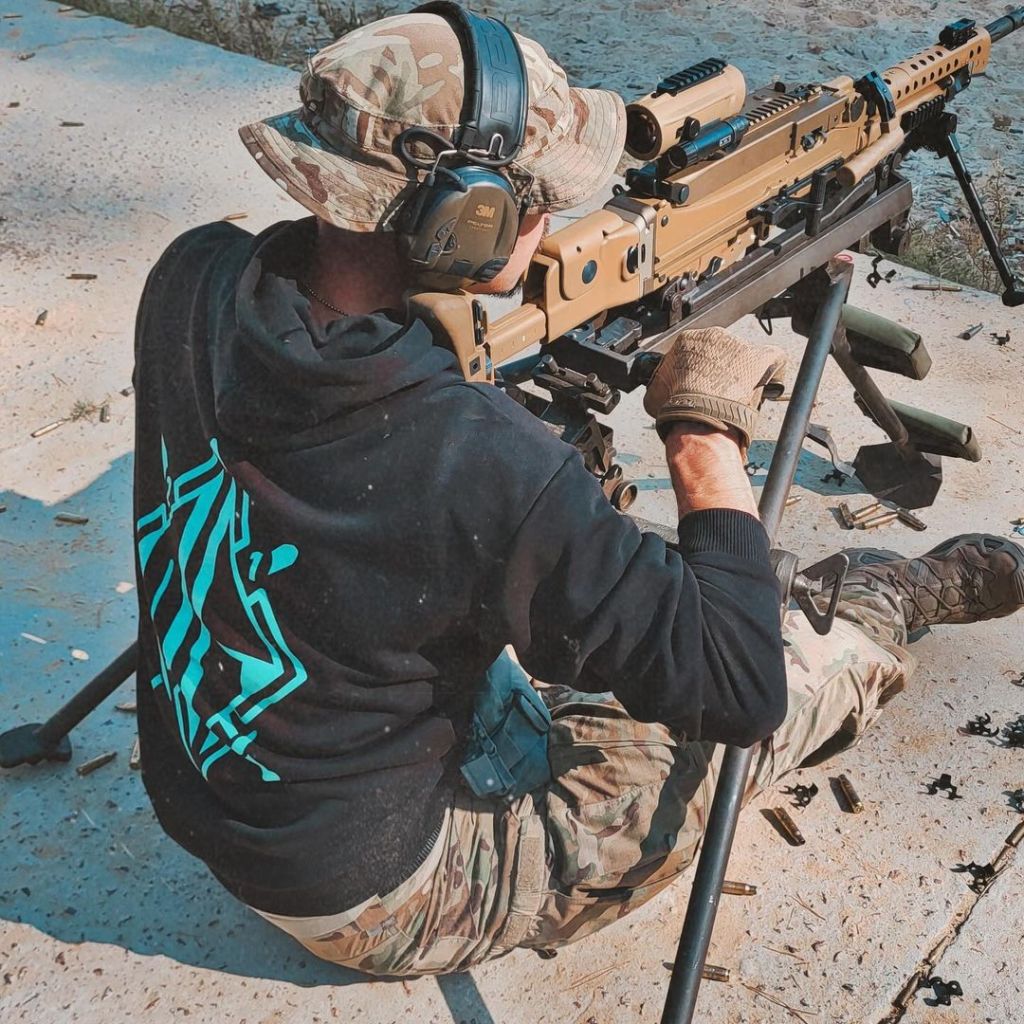
An MG5 mounted in a Lafette tripod at the range (via Social Media)

Another team, Operation 21 Group, posted a photograph on 16 October of an MG5 mounted on a Lafette tripod at the range. The gun is again paired with the Hensoldt optic. On around the 17 October, a member of the Kraken Regiment, also part of the GUR, posted a photograph holding one of the MG5s. Several days later the first glimpse of an MG5 being used in combat was shared by a GUR team, the MG5 can be heard firing and is just visible though the foliage.

On the 22 October the GUR’s Stugna Battalion also shared a promotional video featuring one of the MG5s. On 24 October imagery from a number of photographers showed members of the International Legion’s new Siberian Battalion training. Amongst an interesting array of small arms the battalion’s trainees also appeared to have a single MG5.

The team at GRaft, a Ukrainian company which fabricates ammunition boxes for machine guns, shared some video of testing of one of their boxes with an MG5 in late October. At the beginning of November Tactical Group Athena, another GUR team, shared a team photograph featuring not one but two MG5s.

Later in November, the Knights shared a series of photographs and clips featuring the MG5. The first was posted on 4 November, showing the gun in a fighting position. This was followed on the 13 November, by a short video of an MG5 firing from its bipod in a frontline position in the trenches feeding from a British 7.62x51mm ammunition box. I spoke to one of the members of Knights about the MG5 and they described it as ‘a fantastic weapon’ and while “a bit on the heavy side [it’s] still a good weapon system and we love to use it!”
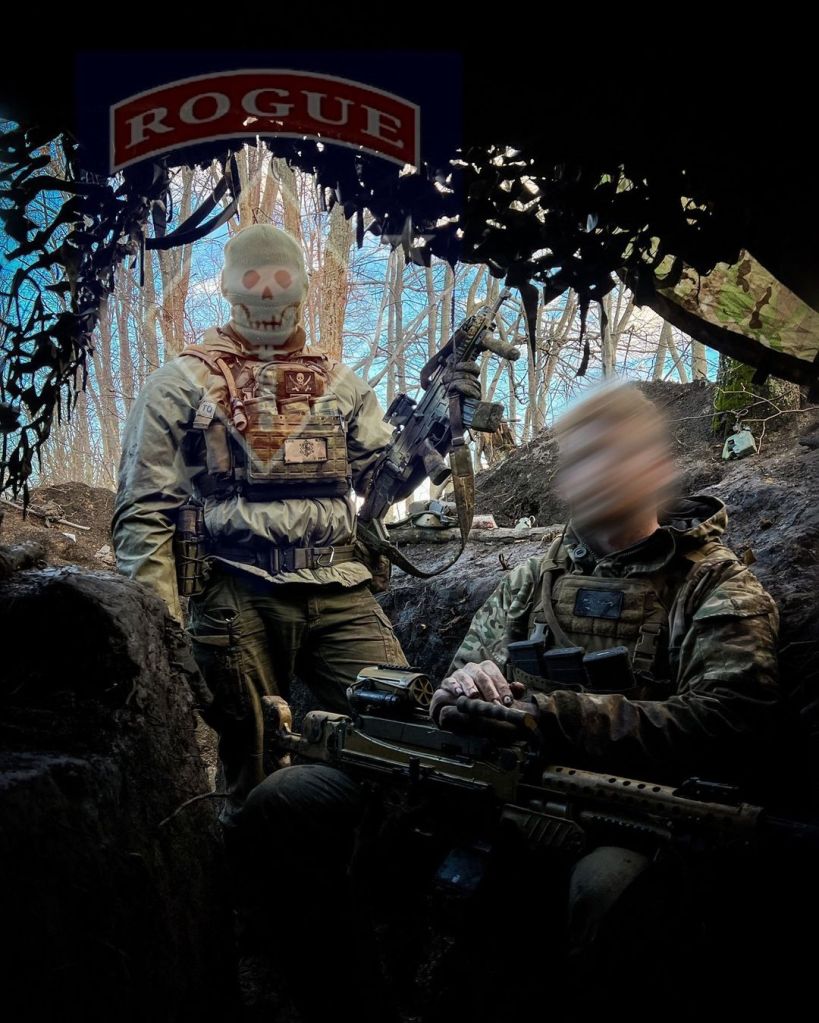
A member of Rogue Team holds an MG5 in a frontline trench (via Social Media)

Omega team shared another group photo featuring an MG5 on 12 November. Later that week Rogue Team posted a photograph of two combatants in a frontline trench, one is seated holding an MG5. A week later the GUR shared a video on their YouTube channel about their amphibious operations in Crimea, on 16 November, with an MG5 briefly appearing in part of the sequence. Towards the end of November a video from the Knights team thanking people for kit donations also featured an MG5. On the 14 November, an element of the Kraken Regiment, Special Assault Company, shared a promotional video featuring a drive by with an MG5 being fired out the window of a vehicle at a range. On the 19 November Rogue Team shared a team photograph, with one combatant holding an MG5, a day later a member of the team shared a short clip from the range showing the MG5 in action with the caption ‘I love MG5’. Finally, on the 26 November another MG5 was seen in a photograph of members of Kraken.

All of the guns appear to have HK’s RAL 8000 (FDE-ish) finish and are of the MG5 A2 configuration with the shorter 460mm (18in) barrel. The guns also appear to have been provided with Hensoldt 4x30i ‘intermediate range targeting optics’. From the imagery which has surfaced so far we can see that the MG5s have predominantly been issued to special operations forces including teams from the GUR and possibly the SSO. Despite the small number of guns officially confirmed to have been transferred they have been widely photographed in theatre and when asked by TAB comments from combatants using them have largely been positive. It is unknown what quantity of spares were provided with the guns or if more may be provided by Germany in the future.

Thank you to friends at Cloooud and at StreakingDelilah for their help gathering imagery for this video.

Update – 2/12/23:
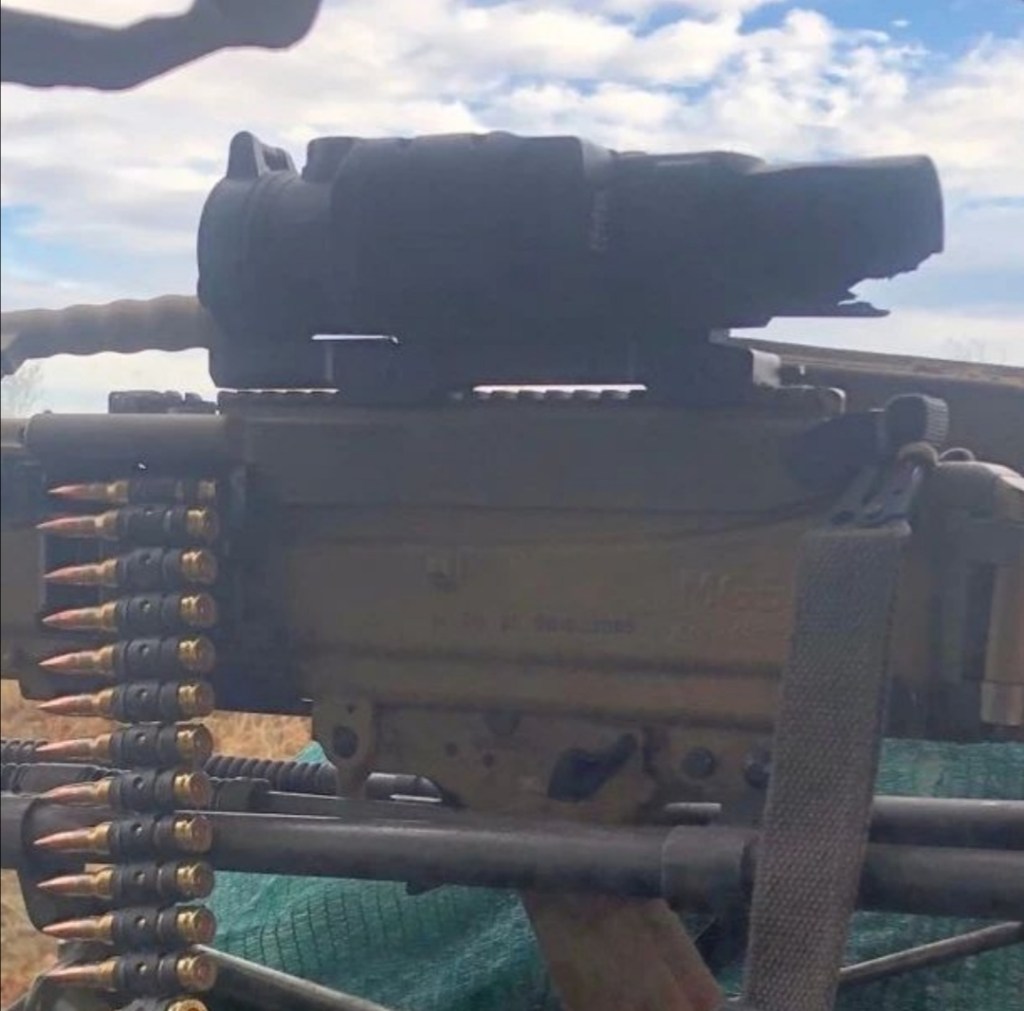
Ukrainian combatant, Valgear, shared a photo of an MG5 in a Lafette tripod fitted with a thermal optic. Both the gun and optic have apparently been damaged by shrapnel.

Update – 03/12/23:

Machine gun training (Bundeswehr/KSK)

The Bundeswehr issued a statement on training Ukrainians SOF members and shared a photograph of Ukrainians training on MG3 and MG5 machine guns. Unlike the guns seen in Ukraine the MG5s have 550mm (22in) barrels.

Update – 9/12/23:

Another GUR team, Stugna, have shared photos of an HK MG5 in recent weeks.

Update – 13/12/23: The recently formed Sibir Battalion were photographed again training with an MG5.

Update – 11/1/24: GoPro footage of an MG5 in action, reportedly from the GUR’s Rogue Team.

Update – 18/2/24: A platoon of the Sibir Battalion photographed with an MG5.

Update – 16/04/24: HK MG5 with optic.

Update – 7/6/24: Rogue, a GUR direct action team, shared some video of their machine gun team in action near Kupyansk in November 2023. It gives a great look at the MG5 in action and also features a brief glimpse of the gun’s spare barrel and it’s reload drills.


Support Us: If you enjoyed this video and article please consider supporting our work here. We have some great perks available for Patreon Supporters – including early access to custom stickers and early access to videos! Thank you for your support!


Bibliography:

Military Support for Ukraine, Bundesregierung, (source)

HK MG5, Heckler & Koch, (source)

MG5 – Bundeswehr Receives Additional Machine Guns, S&T, (source)

For more on Germany’s aid to Ukraine check out deaidua.org
OTO Melara Mod 56 In Ukraine

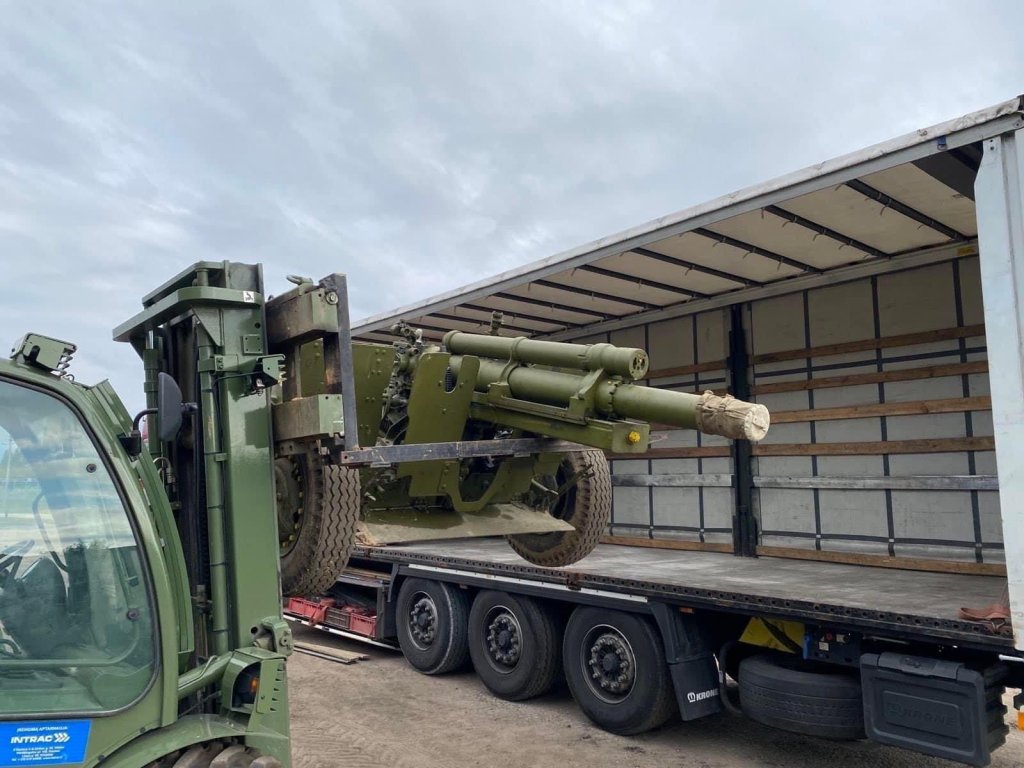
We’ve examined a number of artillery systems in use in Ukraine, including the venerable M101 howitzers and the MT-100s mounted on MT-LBs, one of the smallest and most interesting howitzers in use is the OTO Melara Mod 56.

The Mod 56 is a small 105mm pack howitzer. It weighs in at 1.29 metric tons and it can be towed by light vehicles. It has a split trail gun carriage and a hydro-pneumatic recuperator assembly. Developed by Italy’s OTO Melara the gun entered service in the mid-1950s and has seen service with countries around the world including Italy, the UK, Australia, Spain, Pakistan and the Philippines.

An OTO Melara Mod 56 (Ukraine National Guard)

Much like the heavier M101 howitzers, transferred to Ukraine by Lithuania, the Mod 56 can use any M1 105mm ammunition. With its short 1.47 metre-long barrel, the Mod 56 has a maximum effective range of around 10,000 metres (10km/6 miles). While this puts it at a severe disadvantage compared to the larger 155mm howitzers used by Ukraine and the 152mm guns used by Russia the small Mod 56 has the advantage of being lightweight and can be deployed forward under cover. The most useful role it could likely fulfil is as an infantry support gun.

In November 2022, Spain’s Defence Minister Margarita Robles confirmed that Spain would send a battery of six light howitzers and also provide training for Ukrainian gun crews. Subsequently, a brief clip of Ukrainian gunners training on the Mod 56 was shared in late November.

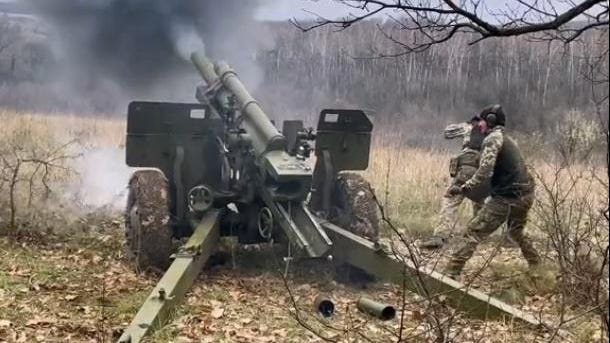
A Mod 56 in action (via social media)

The guns were seen in Ukraine for the first time in early January, with a short clip of one of the guns firing being shared on 11 January. It appears the gunner is wearing a National Guard patch but its unclear which unit the gun belongs to. On 12 January, the 1st Mechanized Battalion of Ukraine’s 3rd Assault Brigade posted an info-graphic giving some basic detail on the Mod 56.

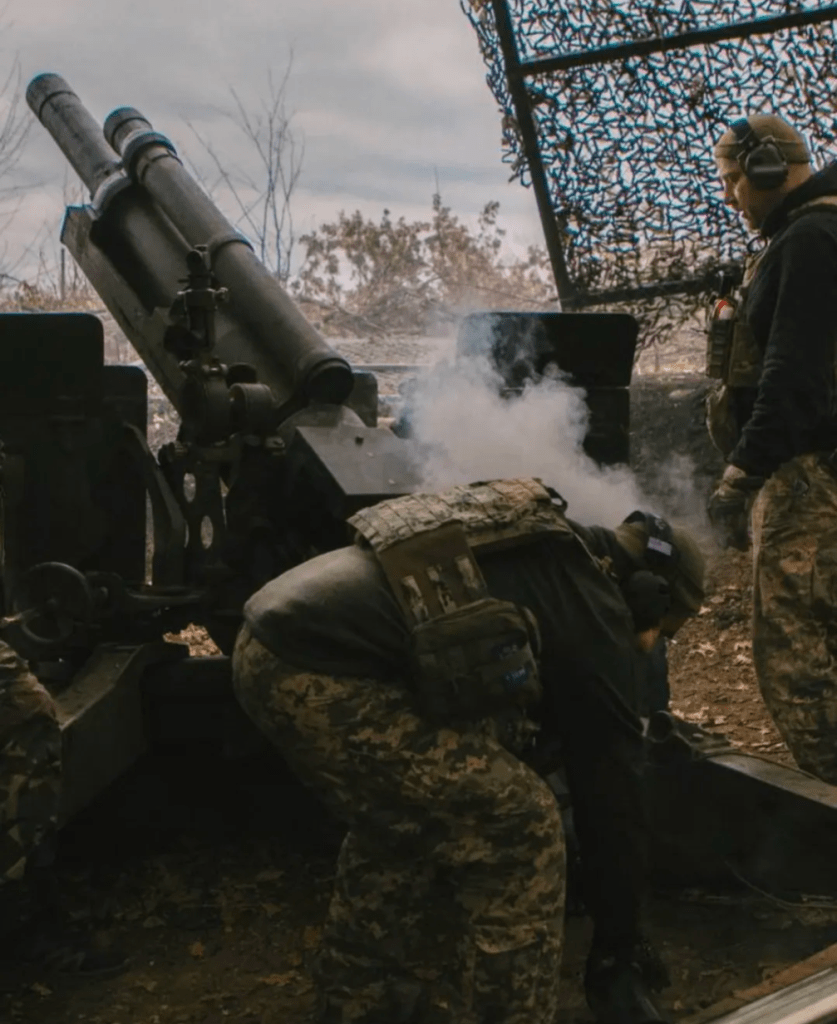
On 20 February, a brief clip of a Mod 56 was shared, the footage was believed to have been taken in the vicinity of Bakhmut. However, photographs taken by an AP photographer, Libkos, of the same gun showed that the gun was actually in action in Avdiivka, Donetsk. The series of photographs also showed that the gun was being operated by a National Guard unit and the crew was using drone footage to select their targets. One photograph was also shared by President Zelensky on 5 March. Interestingly, the gun is seen without its shield.

Another video of one of the guns in action was shared on 16 April. It was several months before more imagery of the Mod 56s in use appeared but on 1 June, the Ukrainian National Guard shared a photograph of one of the guns and several days later, on 3 June, a short video of a gun in action was shared.

A Mod 56 in action (via social media)

Most recently on 19 July, a Ukrainian National Guard unit shared a brief clip of a Mod 56 firing. It also nicely illustrates the gun’s breech mechanism.

From the available imagery, it appears that the guns are operated by Ukraine’s National Guard, though which artillery unit is unclear. While it has been confirmed that Spain has provided at least 6 Mod 56 howitzers, it remains unknown if any other countries, such as Italy, have provided the small guns.

Update 29/12/23:

An undated sighting of a Mod 56 in operation in Ukraine. Notably half of the gun shield appears to be missing.

Update – 17/04/24: A clip posted on 7 April, date of recording unconfirmed, showing a Mod 56 in action. The howitzer’s gunshield has been removed.

Update – 29/5/24:

Update – 23/07/24:


Support Us: If you enjoyed this video and article please consider supporting our work here. We have some great perks available for Patreon Supporters – including early access to custom stickers and early access to videos! Thank you for your support!


Russia & Ukraine’s Adapted MT-LBs

The MT-LB tracked artillery tractor has become one of the most recognisable armoured vehicles of the war in Ukraine. These versatile vehicles are used by both sides in huge numbers and while first introduced in the 1970s they continue to be used as both armoured personnel carriers and also as the platform for a plethora of weapon systems ranging from rocket pods to auto-cannons to MT-12 anti-tank guns.

In this article/video we’ll look at two specific MT-LB adaptations; one Russian, one Ukrainian.

Russian MT-LB adaptation with a 2M-3 turret which was first seen in March 2023 (via Social Media)

Russia’s Turreted MT-LB

In March 2023, a number of photographs and videos emerged of Russian MT-LBs which had been fitted with a large turret complex over the rear portion of the vehicle. The turrets are naval 2M-3s which mount a pair of 25mm 110-PM autocannons. The first images surfaced at the beginning of March. The strikingly ugly turret quickly led to ridicule on social media and numerous memes mocking the vehicle. Between the 8 and 10 March a series of short videos showing the turret-adapted MT-LBs on the move. One video showed several vehicles in a yard with a large crane, perhaps suggesting they had been off-loaded. The person filming the video notes that the unusual turrets and were apparently ‘sent for defence’. The footage features at least five turreted-MT-LBs, one appearing to also have an adapted front commander’s turret.

Another clip, shared around 10 March, shows a transport train with numerous vehicles loaded, including some Russian Military Police vans. Two (possibly four) of the adapted MT-LBs can be seen. Similarly, another clip showing the vehicles in transit through an urban area features one perhaps two adapted-MT-LBs.

Other examples of Russian MT-LB adaptations with 2M-3 turrets (via Social Media)

Since the early spring there have been no sightings of the vehicles but in late May a video and several photos were shared featuring a Russian combatant riding in the turret of one of the adapted MT-LBs, the anti-aircraft style style sight can be seen in the video and one of the photographs.

Russia is likely making use of turrets that have been in storage since the vessels they were mounted on were decommissioned. Their is probably still an ample supply of ammunition for the 25mm autocannons. The mount has -12° to +85° elevation and 360° rotation giving it a good field of fire for use against ground targets.

Just what role Russia envisioned for the turreted MT-LBs is still unclear. They could be used in direct fire roles perhaps as support guns which can help plug gaps in defensive lines with suppressive fire. Or perhaps as mobile anti-aircraft vehicles for taking on drones but their limited manual targeting would mean they would struggle to be a match for even slow moving drones. Other potential uses might be as assault guns or as a more heavily armed vehicle for internal security duties protecting supply lines from Ukrainian partisans.

Ukrainian MT-LBu adaptation with a KPV heavy machine gun remote weapon system (via Social Media)

Ukraine’s MT-LB Refits

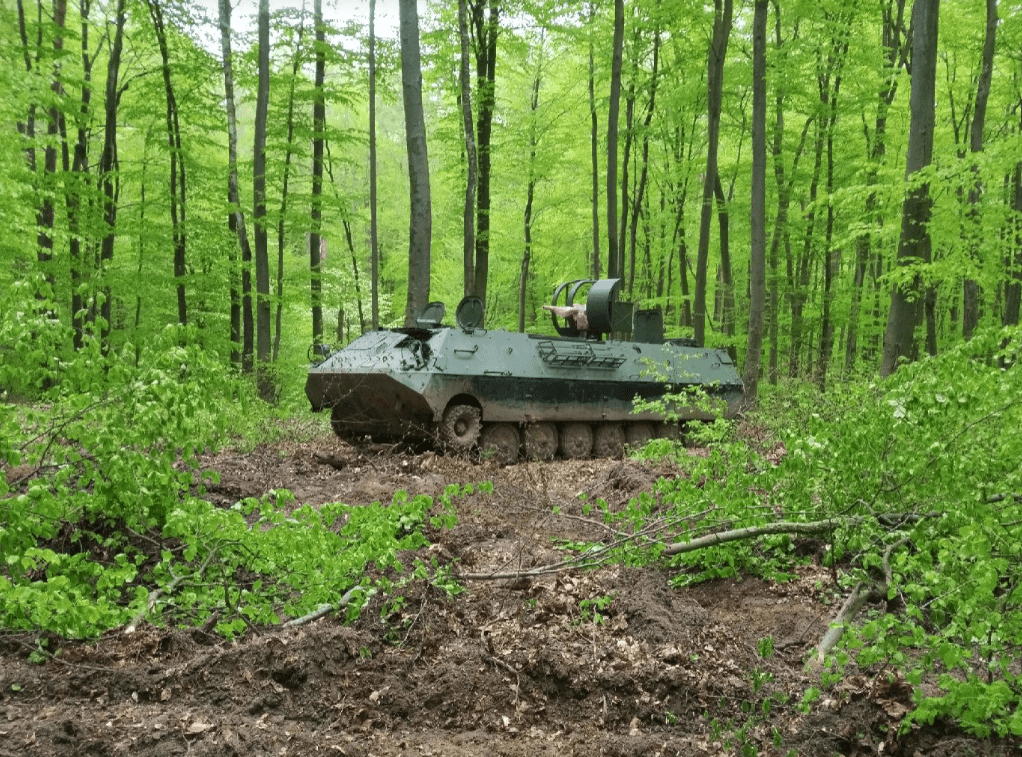
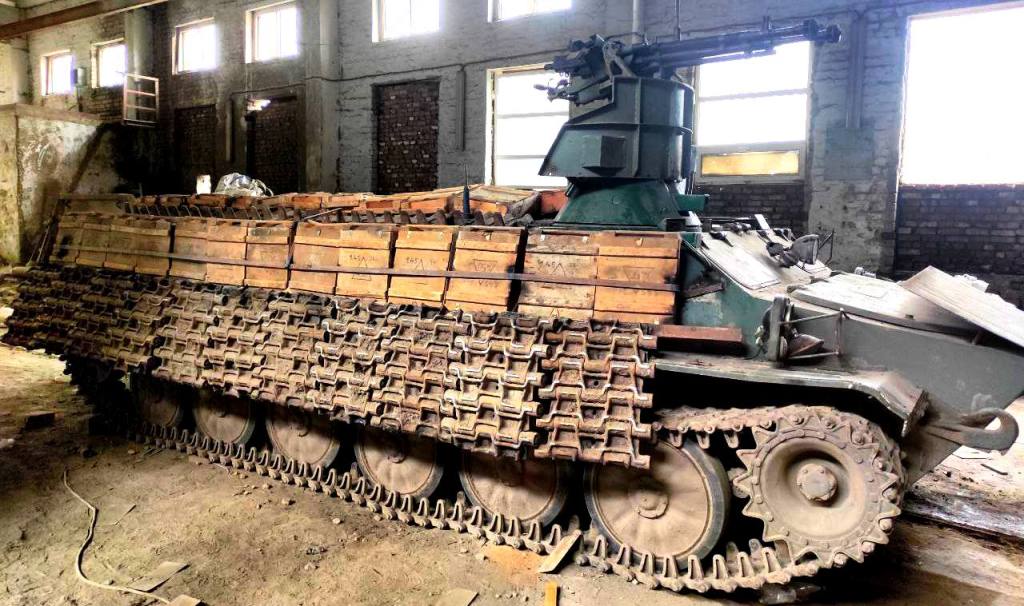
While many of both sides’ MT-LB adaptations have focused on simply mounting a weapon system to the rear deck or where the commander’s original PKT mount was, a recent Ukrainian refit has gone much further. A video was shared by a Ukrainian MT-LB crewmember which showed six vehicles all refit to a similar configuration. It appears that additional armour has been added to the sides and rear of the vehicle in an effort to provide additional protection to the lightly armoured MT-LB. [Correction: the vehicle has 7 road-wheels indicating the adaptation is likely based on an MT-LBu variant. These have been described as BMP-1LBs.] The vehicles also have new storage baskets, smoke-grenade launchers and a new remote weapon mount controlled from inside the MT-LB. A photograph of the front of the mount shows that it mounts a single 14.5x114mm KPVT machine gun, remotely fired and aimed using an electro-optics module positioned to the left side of the gun. The weapon and optics are protected by a curved gun shield, the cuts in the shield suggest that the weapon’s range of elevation is considerable.

Russian MT-LB adaptation with twin DShk mount on the original PKT turret (via Social Media)

These vehicles are are just two examples of MT-LBs in Ukraine adapted with ad-hoc weapon mounts. There are dozens of other examples of up-gunned MT-LBs deployed by both sides. Other commonly seen adaptations include fitting ZU-23-2 anti-aircaft mounts to MT-LBs

In February 2023, Ukrainian troops shared a video of a Russian MT-LB captured near Vuhledar, which had been fitted with a 2M-7 naval turret mounting a pair of 14.5mm KPV heavy machine guns. Similar vehicles appeared in photographs showing several MT-LBs with ad-hoc adaptations which included one vehicle with the same, as well as other vehicles with other dual and single gun mounts. One can be seen mounted with a single DShK on a tall, exposed pintle mount.

In May, an MT-LB was sighted with a twin DShK mount. Similarly, another MT-LB fitted with a twin DShK mount on top of the existing PKT turret was shared on 10 June, it had also been adapted by adding track and boxes as appliqué armour. Also in June, a photograph of a pair of MT-LBs equipped with A-22 140mm multiple rocket launch systems was shared on Telegram.

With Ukraine forming new brigades and both sides suffering considerable armoured vehicle losses the ubiquitous MT-LB, while lightly armoured, offers one of the best available platforms for mounting additional or role-specific weapons.


Support Us: If you enjoyed this video and article please consider supporting our work here. We have some great perks available for Patreon Supporters – including early access to custom stickers and early access to videos! Thank you for your support!


Ukrainian Troops Train with G36s

We’ve previously looked at Ukrainian troops training with the British L85A2 and Chinese Type 56s AK-pattern rifles. In June, the first images of Ukrainian troops training with G36s emerged, shared by the Lithuanian Ministry of Defence. 

The baltic nations of Lithuania, Latvia and Estonia have been staunch supporters of Ukraine’s and Lithuania’s military has been providing training of various sorts since 2015. Back in April, Lithuania’s Chief of Defence Lieutenant General Valdemaras Rupšys announced that Lithuania would train an undisclosed number of Ukrainian troops on how to use various anti-tank weapons at locations within Lithuania. There has so far been no imagery released of this training.

Lithuania’s Military Academy has also provided a distance learning course online for junior leaders and at the end of October it was announced that 120 junior officers had received training across 4 two-day courses.

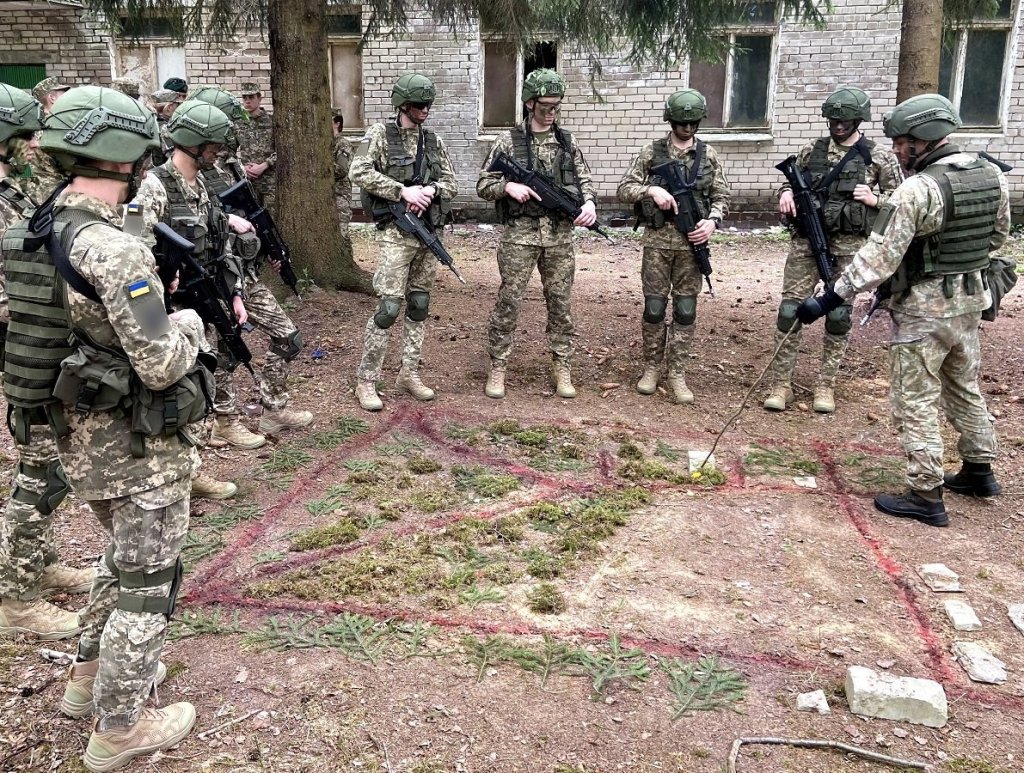
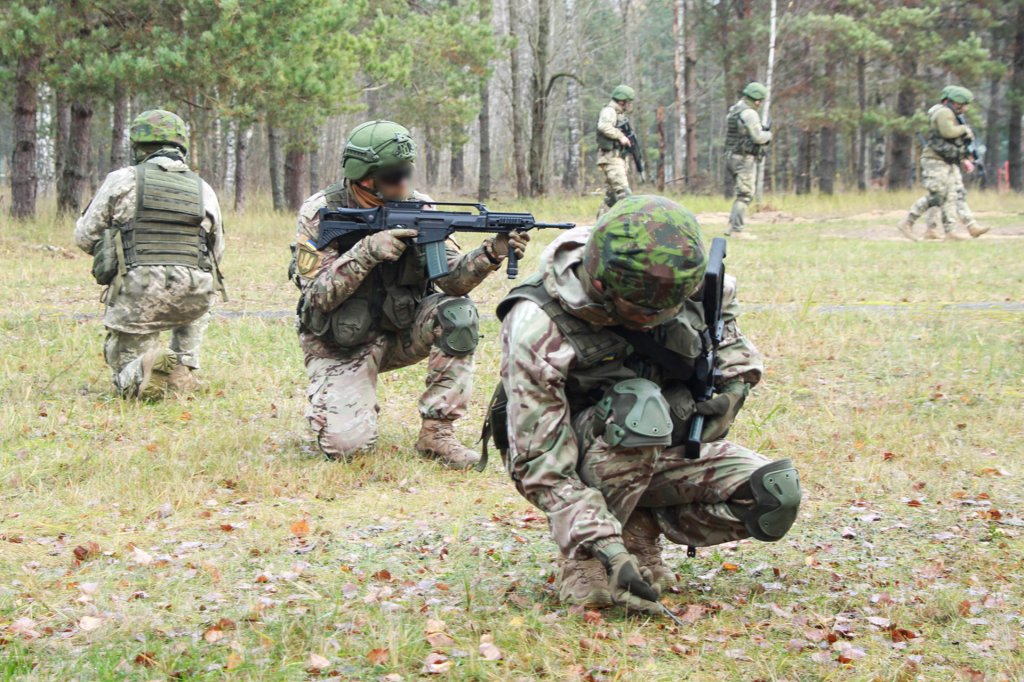
In the summer an in-person course that has seen Ukrainian personnel travel to Lithuania for training was established. A course at the Division General Stasys Raštikis Lithuanian Armed Forces School ended in early June. The four week course included weapons handling and marksmanship, map training, fieldcraft and tactics. Organised as part of the NATO Defence Education Enhancement Program (DEEP) it was during these courses Ukrainian personnel have been seen training with Lithuanian G36s.

Ukrainian troops training in Lithuania (Lithuanian MoD)

Additionally, Lithuanian instructors have also been training Ukrainian personnel in other countries including the UK. It was announced on 19 October, that a team of military instructors formed from members of the Lithuanian Armed Forces Great Hetman Jonušas Radvila Training Regiment, Division General Stasys Raštikis Lithuanian Armed Forces School, General Adolfas Ramanauskas Warfare Training Centre and the Military Medical Service had joined a multi-national training effort providing basic military training for Ukrainian troops at bases in  the UK.

In mid November it was announced that instructors from Ukraine had also taken part in an international instructor course. The course reportedly covered training techniques, weapons training, instruction organisation. The Lithuanian Ministry of Defence also noted that throughout December, there had been more specific courses for Ukrainian personnel on CBRN-contaminated operational environments, courses on UAVs and on intelligence collection from open sources.  

Summarising the training provided the Lithuanian Ministry of Defence said 18 different courses had been delivered including: basic individual skills, junior officer command, instructor, special forces, demolition and demining courses.  Operators and maintenance for different types of military equipment were also trained.

Ukrainian troops training in Lithuania (Lithuanian MoD)

Lithuania adopted the HK G36 in 2007 and has used several variants including the G36KV1 and the G36KA4M1. None of the photographs show the rifles mounted with optics and in three of the photographs the rifles can be seen fitted with Heckler & Koch’s adjustable blank firing attachment for the G36. 

In early December Lithuania announced that in 2023 training of Ukrainian troops would be stepped up with 1,100 personnel to be trained in Lithuania. Part of the courses scheduled in 2023 will be a part of the new European Union’s Military Assistance Mission Ukraine (EUMAM Ukraine).


Support Us: If you enjoyed this video and article please consider supporting our work here. We have some great perks available for Patreon Supporters – including early access to custom stickers and early access to videos! Thank you for your support!

Ukraine’s Newest Howitzer Is An Antique

Plenty of old weapon systems are in use in Ukraine and artillery is no exception. This week the first footage of a batch of 105mm howitzers from Lithuania in action was shared online.

Lithuania has transferred an undisclosed number of M101 towed howitzers. While the 105mm gun lacks the range and punch of the 155mm M777s, Caesars, AHS Krabs and PzH 2000s which have made headlines in recent months, the venerable M101 is a proven weapon.

Introduced in 1941 as the M2A1, the gun has seen service around the world. First during the Second World War and later in Korea, Vietnam and in dozens of regional conflicts around the world. Now it finds itself equipping Ukrainian Army batteries.

The M101 weighs in at 2.5 tons or 2,260 kg and firing conventional M1 high explosive shells has a maximum range of 11,500 metres or just over 7 miles. The M1 round is made up of the  the M1 High Explosive projectile, the M14 Cartridge Case, the M67 Propelling Charges and the M28 Percussion Primer.

The Baltic nation of Lithuania, has been a staunch supporter of Ukraine throughout the conflict providing equipment, arms and training. Lithuania  originally received 54 of the guns from Denmark in 2002. Now, as Lithuania upgrades to 155mm systems the old guns have found a new home. While it is unconfirmed whether Ukrainian troops trained to use the guns in Lithuania, Ukrainian troops have been training in the Baltic nation.

The first guns were shipped in September, with the Lithuanian Minister of Defence announcing the transfer on his social media, but the first footage of them in action in Ukraine didn’t surface until late November.

While the M101 may be old it has the major advantage in that if fires the readily available family of 105mm NATO ammunition. This 105mm ammunition is used by a number of light artillery systems including the more modern US M119A3 and L119 towed 105mm howitzers. As of November 2022, the US has provided 180,000 rounds of 105mm. 

While the M101 may seem like a step down from the 155mm systems in use it has a number of factors which mean the guns are still effective. Firstly, they are used in conjunction with drones which help adjust fire in real time to produce improve effect on target. Secondly, they can use M927 rocket-assisted projectiles which increase the gun’s range by 40%, around 17km. M927’s were first seen in late August being used in conjunction with L119 light guns.

The M101 is certainly an improvement over the 85mm D-44 guns that some Ukrainian Territorial Defense Force units have been seen using and the venerable 100mm MT-12 which has a range of just over 5 miles. While the M101 can’t hope to go toe to toe with Russian 152mm artillery, if used in its original role as an infantry support gun the venerable M101s will prove useful. 


Update 07/12/22: Another short clip of an M101 in action was shared on the 7 December, showing the more closely than previous footage.

Update 12/01/23: Gunners of the 66th Separate Mechanized Brigade practice firing 105mm M101 howitzers.

Update 13/04/23: Some more footage of am M101 in action.

Update – 11/6/23: A rare video of a 105mm M101 howitzer in action. Date and location filmed unknown.

Update – 11/11/23: Another siting of an M101 in action.

Update – 20/06/24: a recent photo of an M101 in a position in the Kharkiv Region.

Update – 9/9/24:

Update – 1/11/24: 71st Brigade with an M101A1. (Source)

Update – 13/12/24: An M101 was seen in service with the 28th OMBR in a series of photos recently shared by the Ukrainian army.


Support Us: If you enjoyed this video and article please consider supporting our work here. We have some great perks available for Patreon Supporters – including early access to custom stickers and early access to videos! Thank you for your support!


Bibliography:

M101s for Ukraine, Arvydas Anusauskas, (source)

Lithuania sends howitzers from its reserve to Ukraine, LRT, (source)

Ukraine Aid Fact Sheet 23 November 2022, US Department of Defense, (source)

Ukraine received 105mm M927 high-explosive rocket-assisted projectiles, Mil.In.UA., (source)

British Brimstone 2 Missiles in Use in Ukraine

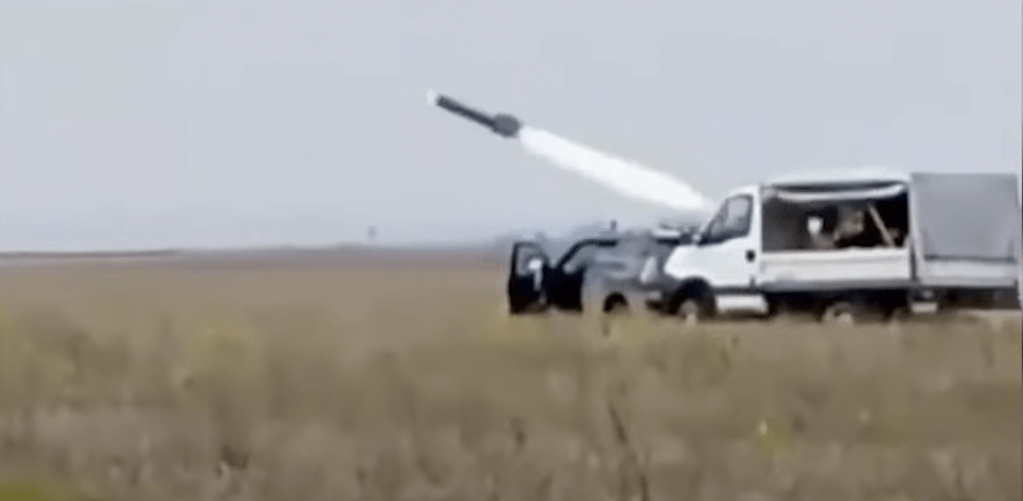
Footage of Brimstone anti-armour missiles being launched in Ukraine surfaced for the first time on 12 May but recent footage points to Ukraine now potentially deploying the Dual Mode Brimstone 2. In this updated video we look at what the missile is capable of, how they came to be in Ukraine and how they have been deployed.

A still from footage of a launch from the ‘Brimstone technical’ with the missile potentially being a Brimstone 2 with a translucent seeker head, shared online in early November (via Social Media)

In our earlier video on Brimstone use in Ukraine we examined the system’s capabilities, history and the new ad-hoc ground launch platforms in use. In this updated video we look at evidence of Brimstone use over the summer and autumn of 2022 and discuss the transfer of Brimstone 2 and its capabilities.

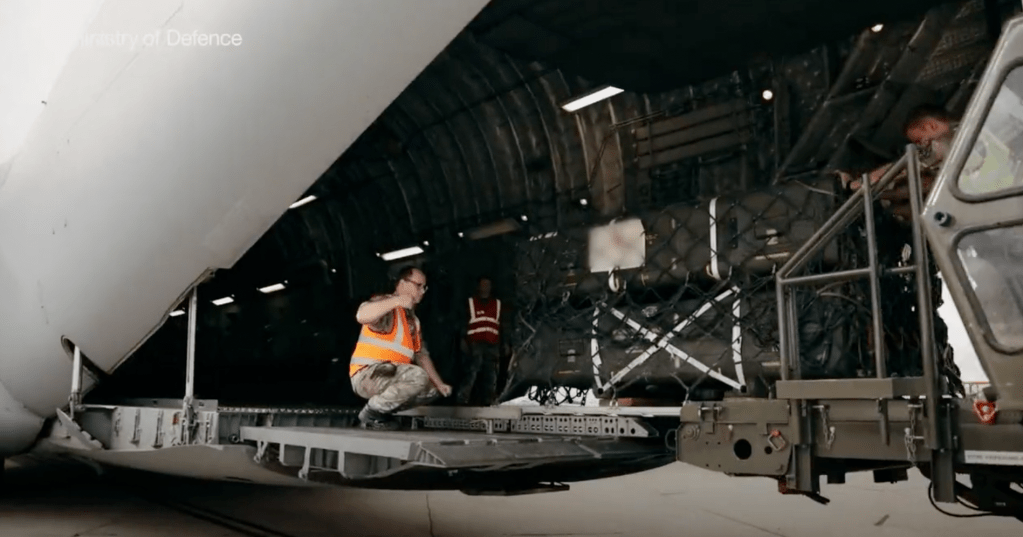
Brimstone 2 missiles being loaded aboard an RAF transport aircraft at RAF Brize Norton – perhaps around 48 missiles appear to be on board. (UK MoD)

The UK Ministry of Defence publicly confirmed the transfer of ‘Brimstone 2 Operational Missile Dual Mode’ to Ukraine on the 27 November with a short video. Dual Mode refers to a variant of the missile which can be used both as a ‘fire and forget’ system but also have a ‘man-in-the-loop’ capability which was originally developed as part of an Urgent Operational Requirement for a low-collateral damage weapon. According to MBDA Brimstone 2 has “an overall increase in performance with improvements in range and engagement footprint”, this is enabled by improved seeker, improvements to the missiles airframe with a more modular design and software updates.

Read the full, updated, article on Brimstone in Ukraine here.


Support Us: If you enjoyed this video and article please consider supporting our work here. We have some great perks available for Patreon Supporters – including early access to custom stickers and early access to videos! Thank you for your support!


Ukraine’s New & Improved Home Made Self-Propelled Gun

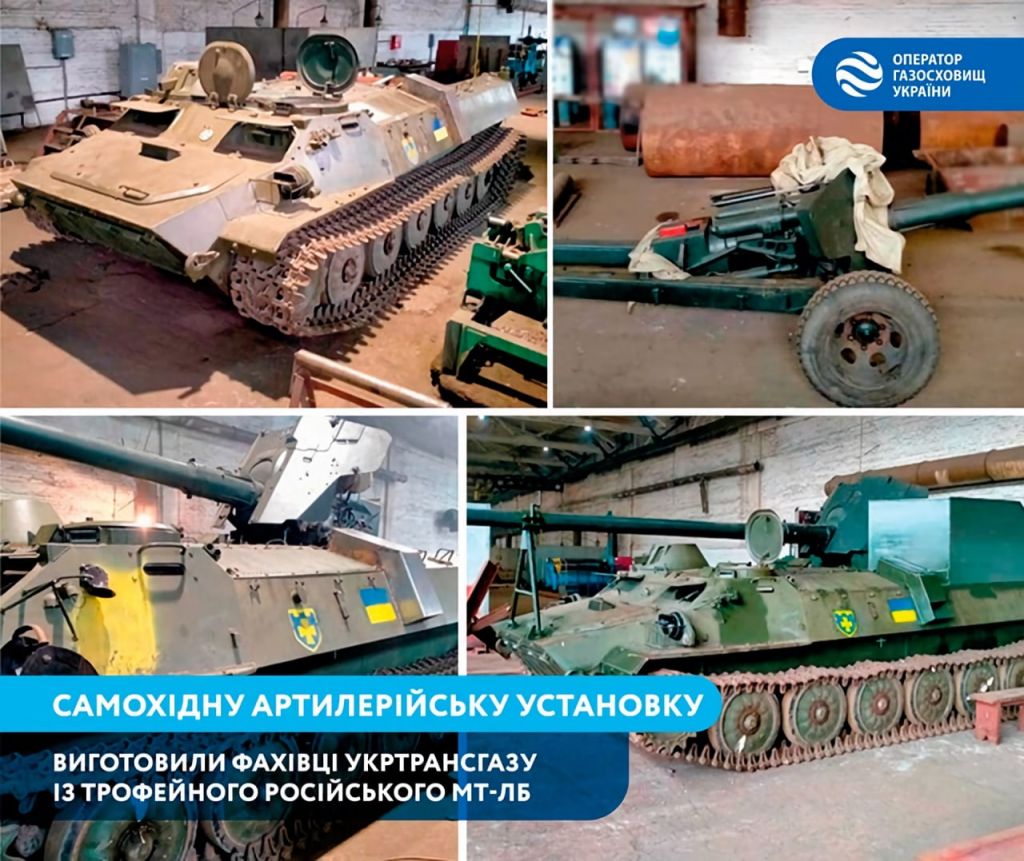
Back in August we took a look at an improvised vehicle built by Ukrainian troops near Mykolaiv. It paired an MT-LB tracked armoured fighting vehicle with an MT-12 100mm anti-tank gun. Now engineers from Ukrtransgaz – Ukraine’s state-owned gas pipeline company, have taken that concept and developed an improved version of the home made self-propelled gun.

On Monday 26 September, Ukrtransgaz shared a post on their facebook page about the new vehicle saying:

“Our colleagues were approached by the soldiers of the TpO [Territorial Defence Forces] detachment with a request for the manufacture of such an installation. The idea of ​​combining an armored personnel carrier and a cannon into an improvised self-propelled gun was borrowed from the Mykolaiv military, which in August produced and successfully tested the first such installation in battle. So they decided to “improve” the trophy Russian MT-LB with the Ukrainian Rapira for their own needs.”

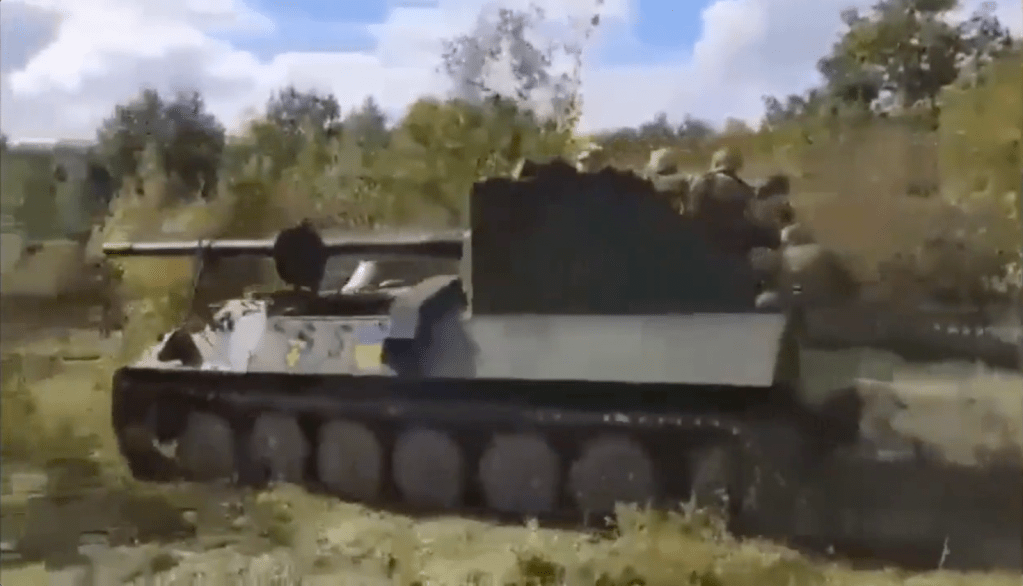
Ukrtransgaz noted that the vehicle took a team of six engineers two weeks to construct. Beneath the facebook post the company also shared a short, sadly low resolution, video of the vehicle being tested. TAB reached out to Ukrtransgaz for a better version of the footage but sadly they didn’t have one available.

The team behind the gun had assistance from an unnamed ‘specialized university’ who helped increase the gun’s elevation, which is normally capped at +20°, and in theory increase the gun’s range. It’s unclear which ammunition is being used with Ukraine’s MT-12s, whether it’s APFSDS or HEAT.

The company states that the vehicle is ready for operations and has successfully passed tests on the range, ready to be deployed. They also note that the team intends to manufacture at least two more such self-propelled guns.

Examining the Ukrtransgaz SPG we can see that the roof of the MT-LB has again been cut back but the the mounting of the gun is slightly higher and armour protection has been built up around the sides for the gun crew. From the footage shared we can see that theres room for around six troops to sit in the rear of the vehicle. Unlike the earlier Mykolaiv-built vehicle there does not appear to be the pair of hydraulic supports to stabilise the vehicle when firing.


Update 15/12/22: A video from the Ukrainian government’s United24 project showcased a further example of the homemade MT-LB mounted anti-tank gun vehicles. This time mounting the older T-12 100mm anti-tank gun, the T-12 is the predecessor to the MT-12 and uses the same family of ammunition. The vehicle seen in the video is on operations around Bakhmut, acting as a self-propelled gun. It lacks the armour shield to protect the gun crew seen on earlier examples of the homemade MT-LB based vehicles but it does have the supporting struts at the rear of the vehicle.

Update 23/12/22: Another interesting undated video of one of Ukraine’s MT-LBs with a 100-mm gun MT-12 mounted. Note the movement of the vehicle on firing, this example has the support struts at the rear of the vehicle, to minimise this and remove the need to re-lay the gun, but they have not been deployed. Unlike the version seen in the 15 December update this version utilises the MT-12s original gun shield but does not have additional protection added.


If you enjoyed this video and article please consider supporting our work here. We have some great perks available for Patreon Supporters – including custom stickers and early access to videos! Thank you for your support!

UK Has Procured Chinese AKs to Train Ukrainian Troops

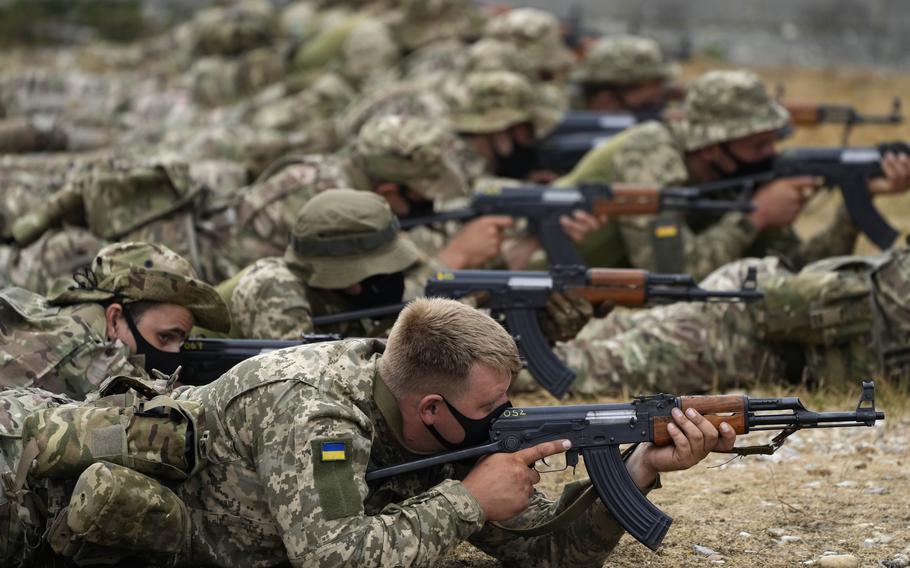
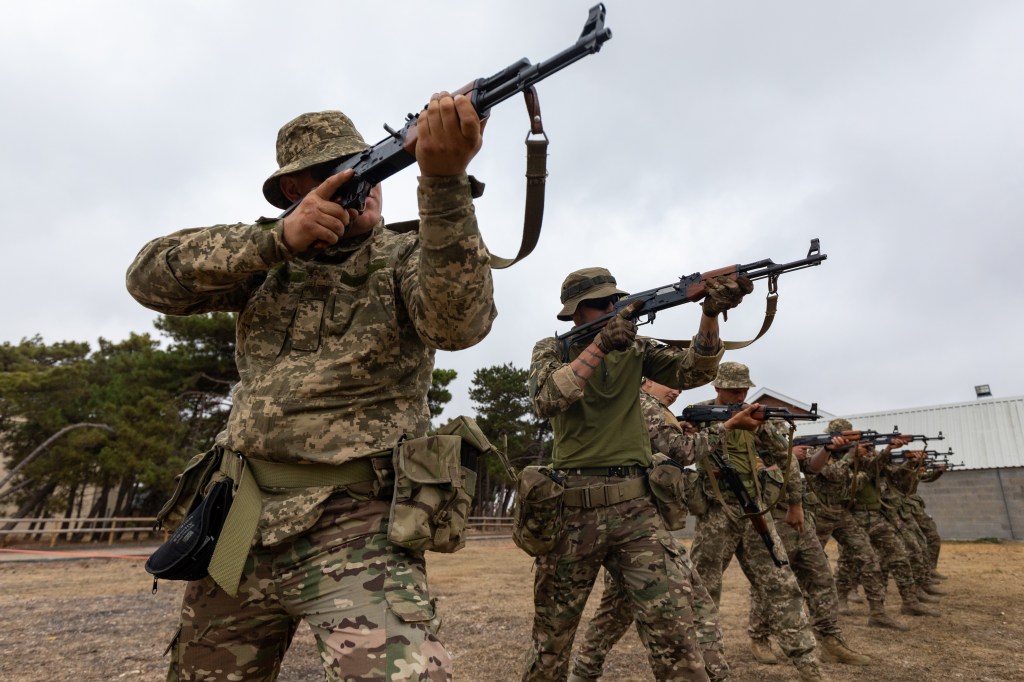
In recent weeks we’ve examined how the UK has procured various 7.62x39mm AK-pattern rifles for use in training Ukrainian troops in the UK. The latest video and photographs from the training the UK is providing show that alongside the previously identified AK variants a number of Chinese Type 56-1s have also been procured.

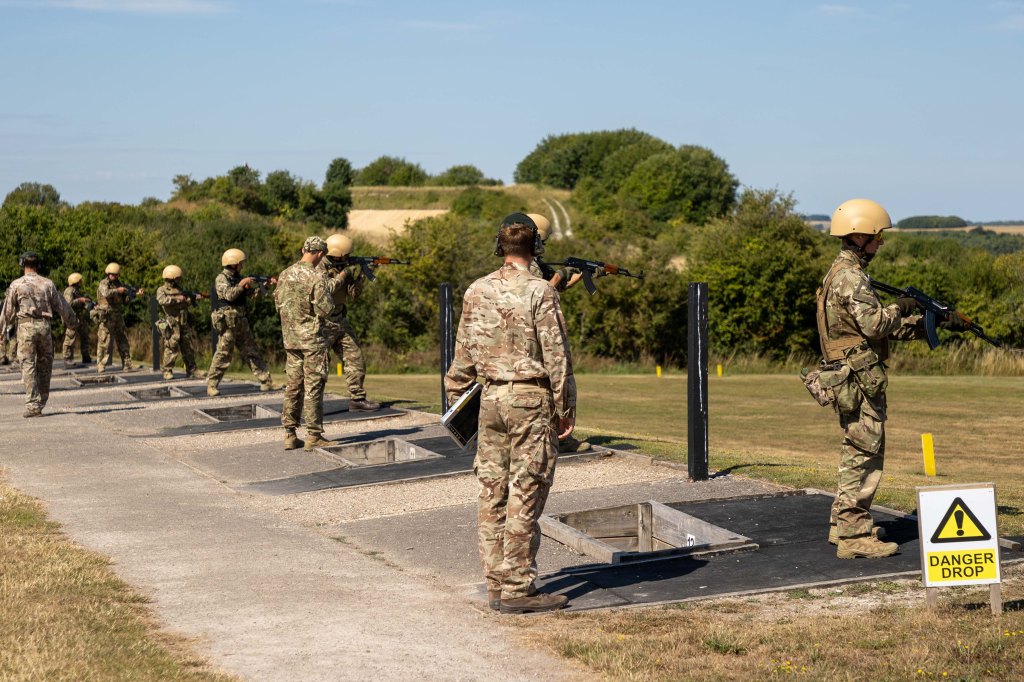
Ukrainian troops with Type 56-1s at the range undertaking marksmanship training and completing weapon handling tests and passing the ACMT live firing assessment (UK MoD/Crown Copyright)

On the 9th July, the UK’s Ministry of Defence announced that as part of its agreement to train 10,000 Ukrainian soldiers it had acquired a significant number of AK-pattern rifles. The MoD’s original press release stated:

“The Government has rapidly procured AK variant assault rifles for the training programme, meaning Ukrainian soldiers can train on the weapons they will be using on the front line. This effort was supported by the Welsh Guards, who tested more than 2,400 such rifles in 17 days to ensure they were ready for the Ukrainians to commence their training.”

From imagery published by the MoD we previously confirmed that the AKs procured included: Zastava M70 (or M70B)s, milled receiver M70As, folding stock M70AB2s, Hungarian FEG AK63Ds and East German MPi KMS-72s. The latest photographs released, which appear to have been taken in late July at Salisbury Plain Training Area (SPTA), and show a type of rifle we haven’t seen previously – the Type 56-1.

Ukrainian trainees conducting weapon drills with Type 56-1 (UK MoD/Crown Copyright)

They show rifles with under-folding stocks, stamped receivers, rivet positions and enclosed front sights which indicate them to be Chinese Type 56-1s. Where did the UK procure these rifles from? While it has been suggested that the UK may have seized the rifles during operations to interdict the arming of Houthi rebels in an earlier statement to The Armourer’s Bench the MoD said that the rifles has been “rapidly procured… through a combination of international donations and private purchase.”

Ukrainian trainees conducting weapon drills (magazines off) with Type 56-1 (UK MoD/Crown Copyright)

The same cadre training at SPTA were also seen undertaking Fighting In Built Up Areas (FIBUA) training with British L85A2 rifles. It is believed that the British bullpups are being used for exercises requiring blank firing due to a likely combination of a shortage of AK blank firing adaptors (BFAs), blank ammunition, and the AK BFAs not being deemed safe enough for British training areas. The MoD previously stated that the L85A2s and their BFAs were being used to ‘maintain strict safety conditions for both British and Ukrainian soldiers during training and to meet the urgency of the training requirement.’

As with the other AK-pattern rifles procured by the UK for the training of Ukrainian personnel the Type 56s won’t be returning to Ukraine with the trainee soldiers, the UK MoD has stated that they are providing uniforms, protective kit and other equipment but not individual weapons.


If you enjoyed this video and article please consider supporting our work here. We have some great perks available for Patreon Supporters – including custom stickers and early access to videos! Thank you for your support!


Ukraine’s Homemade Tank Destroyer

On 12 August videos of an improvised vehicle built by Ukrainian troops began to circulate online. While we’ve seen technicals and an increasing number of trucks turned into multiple rocket launcher systems, usually using spare or salvaged parts, in recent months the new vehicle is even more interesting.

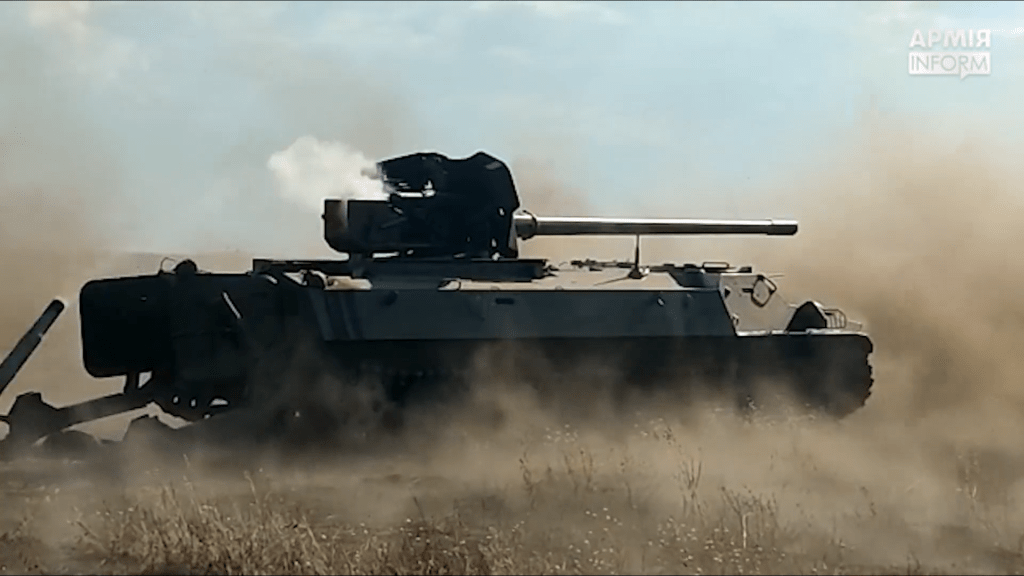
Gun at full elevation (via ArmyInform)

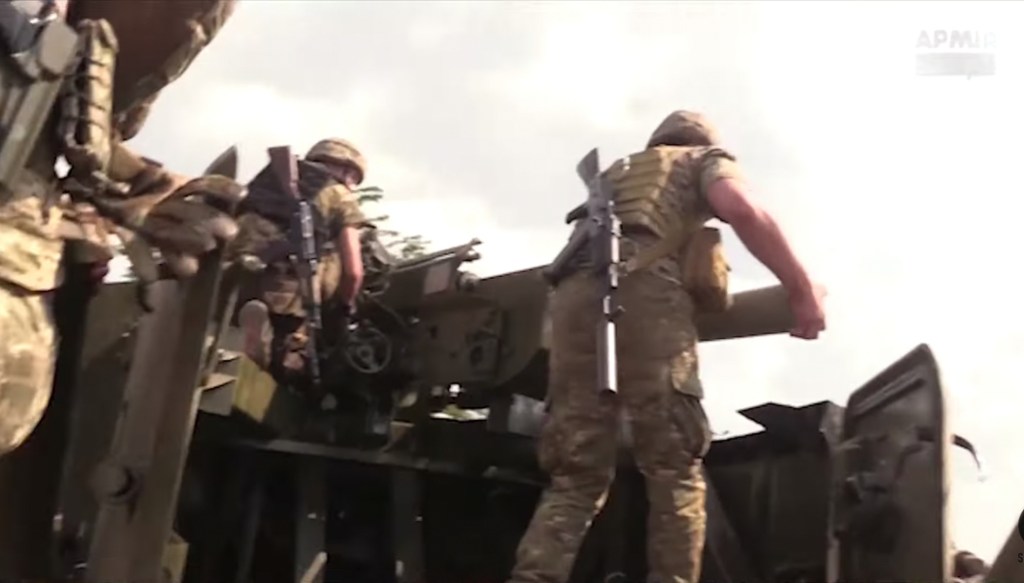
The available footage shows an MT-LB tracked armoured fighting vehicle paired with an MT-12 anti-tank gun. Traditionally, the MT-LB and MT-12 aren’t an unusual pairing as the MT-LB was, and is, often used to tow artillery, including the 100mm MT-12 anti-tank gun.

Gun in action (via ArmyInform)

The Ukrainian General Staff shared a video of the homemade tank destroyer or self-propelled gun (SPG) in action on the 13 August, with the caption:

“Ukrainian soldiers demonstrate their own development, made from captured muscovite equipment. MTLB army tractor + MT-12 Rapira anti-tank gun = self-propelled anti-tank gun. The infantrymen did all the design and construction work on their own. The system has already been tested and is in the combat zone.”

The caption said that the footage had been filmed in the Mykolaiv region in early August by members of the Department of Public Relations of the Armed Forces of Ukraine. A further video shared by ArmyInform, simply titled ‘Kraken’ (perhaps the name given to the vehicle as the Kraken is a popular symbol among Ukrainian forces), shares much of the same footage and the same description text.

The gun and vehicle are both of Cold War vintage with the 100mm smoothbore MT-12 entering service in the early 1970s and the MT-LB coming into service in the late 1950s/early 1960s.

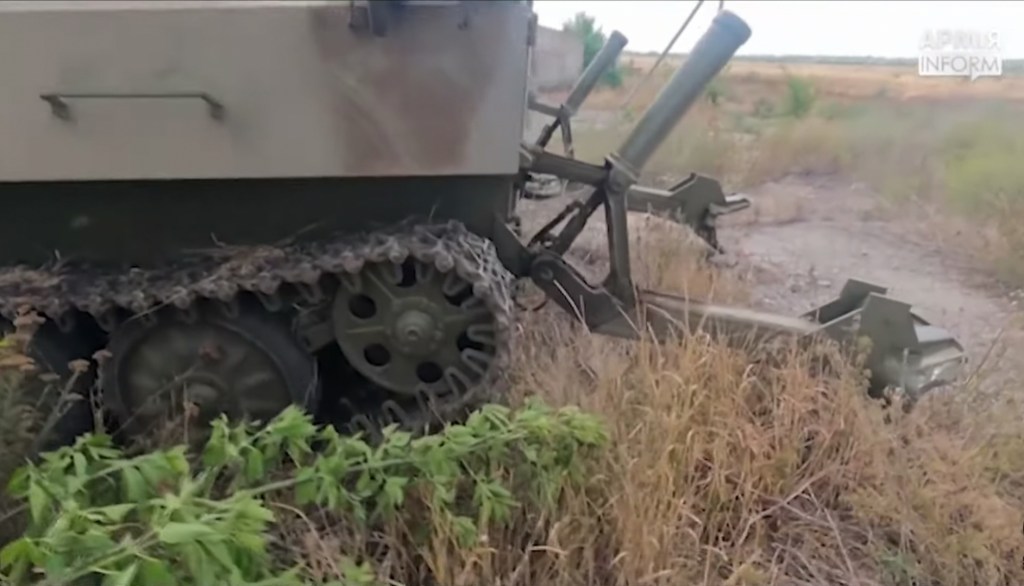
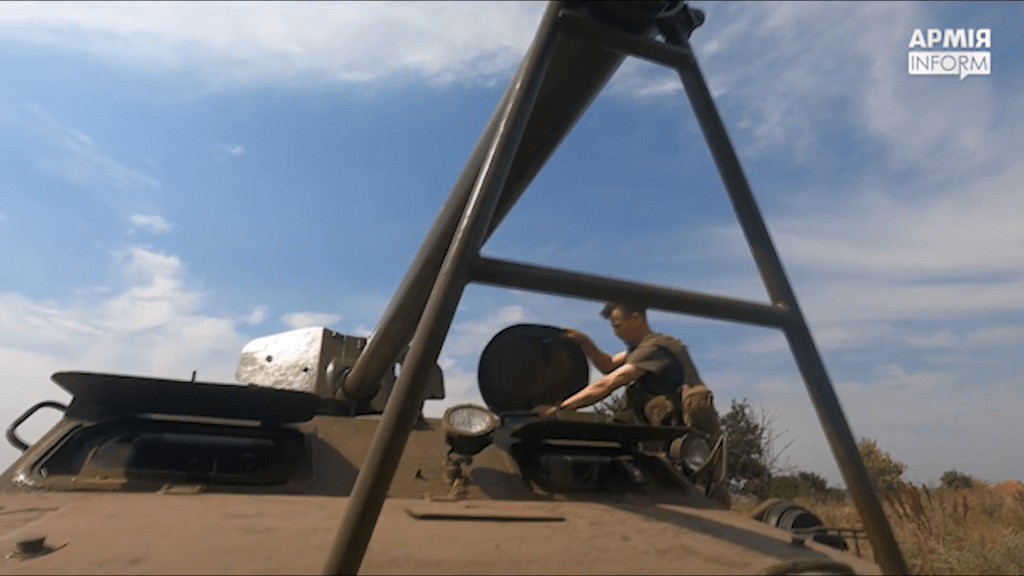
The hydraulics supports added to the rear of the MT-LB (via ArmyInform)

From the footage we can see that the vehicle has been substantially modified to mount the gun, part of the rear roof of the vehicle appears to have been removed to allow the crew to operate the gun with some protection and to also achieve the gun’s maximum 20-degree elevation. Perhaps most interestingly, at the rear of the vehicle the builders have added a pair of hydraulic supports to stabilise the vehicle when firing, these can be seen descending from the rear of the MT-LB. These may be built using the MT-12’s original trail.

A view of the rear of the gun and vehicle (via ArmyInform)

The video even shows that a barrel travel lock has been fitted to lock the gun in place when the vehicle is on the move. The video does not show the interior of the vehicle so it is unclear how much the vehicle and the mounting point for the gun has been reinforced. The gun itself weighs just over 3 tons or 2, 750kg, though some of this weight from the carriage has likely been removed through the cannibalisation of the carriages when the gun was mounted. The video doesn’t indicate how much ready ammunition the vehicle can carry either. The video also shows the gun being fired by crew outside the vehicle pulling a long lanyard. Sources in Ukraine have said that in the field the system is fired by both the lanyard and the firing lever on the gun.

Barrel travel lock added to the vehicle (via ArmyInform)

While at first glance the gun looks like it could also be an older DD-44, which have been seen in use, the characteristic muzzle brake suggests its the later MT-12. While the official Ukrainian Army statement suggests both the MT-LB and gun were captured both were in Ukraine’s inventory in significant numbers before the current conflict. Before the Russian invasion in February the Ukrainian Armed Forces were said to have up to 500 MT-12s in service, in 2020. Similarly, Ukraine operated over 2,000 MT-LB before the invasion but there is visual confirmation of numerous Russian MT-LBs being captured.

Gun ready to fire (via ArmyInform)

So why go to the trouble of adapting an MT-LB to be capable of firing a gun from its roof? Perhaps the most likely answer is speed into action. While an MT-LB towing an MT-12 can in theory get the gun into action in under 2 minutes the creation of this ad hoc tank destroyer allows the gun to be brought into and out of action faster. With the need to unlimber and position the gun removed the improvised self-propelled gun can, in theory at least, shoot and scoot.

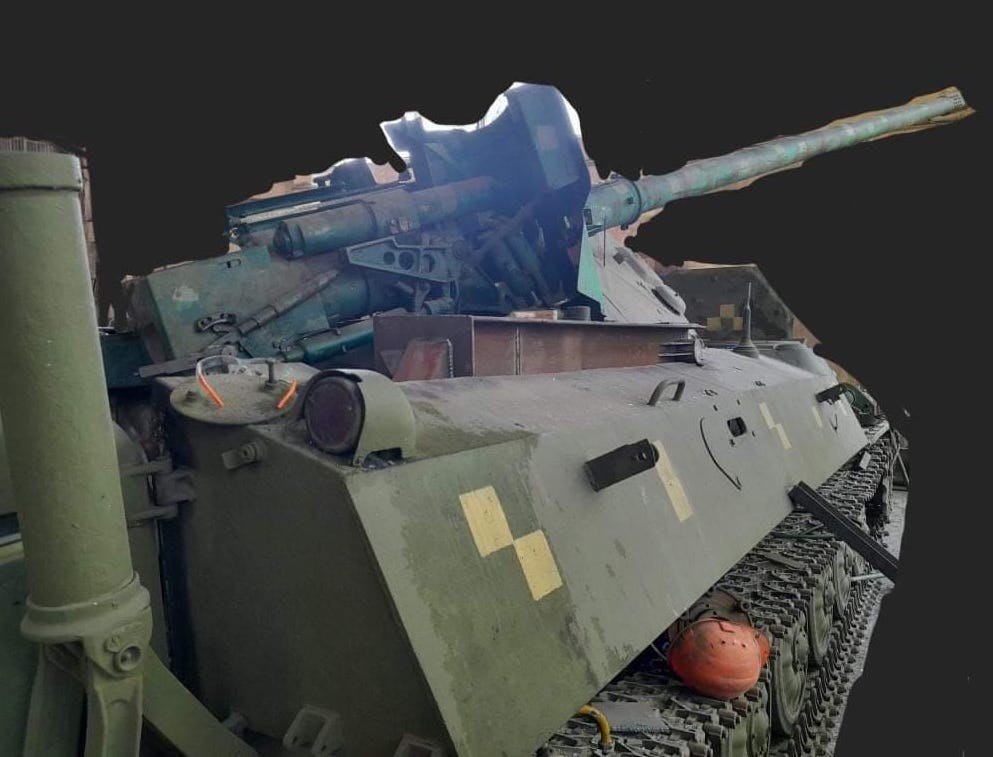
A photo of an adapted MT-LB, possibly a different vehicle from the one seen in the video shared by the Ukrainian General Staff (Photo redacted for OPSEC purposes)
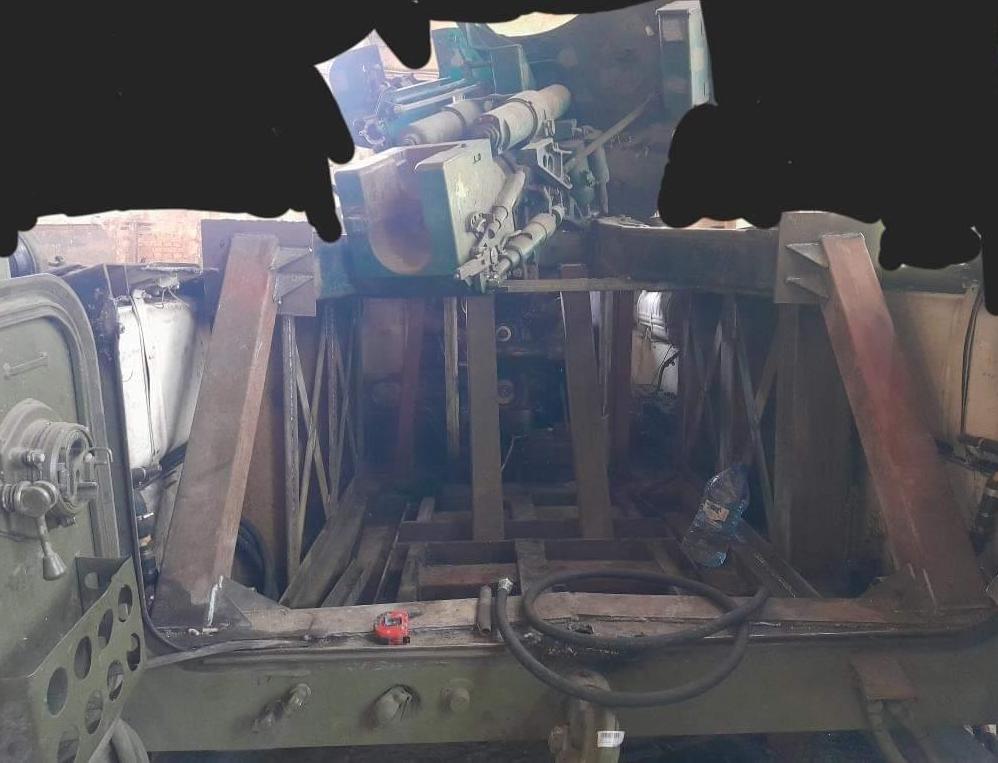
A view of the rear of the vehicle showing the considerable reinforcement where the roof has been cut away (Photo redacted for OPSEC purposes)

Sources in Ukraine suggest that more than one of these vehicles has been constructed with work ongoing since at least July. Photographs shared with TAB support this with the vehicle pictured sporting the Ukrainian digital camouflage pattern. The photographs show the mount and the reinforcement done to the vehicle to support the MT-12. They are reportedly used more as assault guns, than ‘tank destroyers’, with the guns being used against Russian fixed positions and in support of infantry manoeuvres.


If you enjoyed this video and article please consider supporting our work here. We have some great perks available for Patreon Supporters – including custom stickers and early access to videos! Thank you for your support!

Ukrainians Training with SA80s

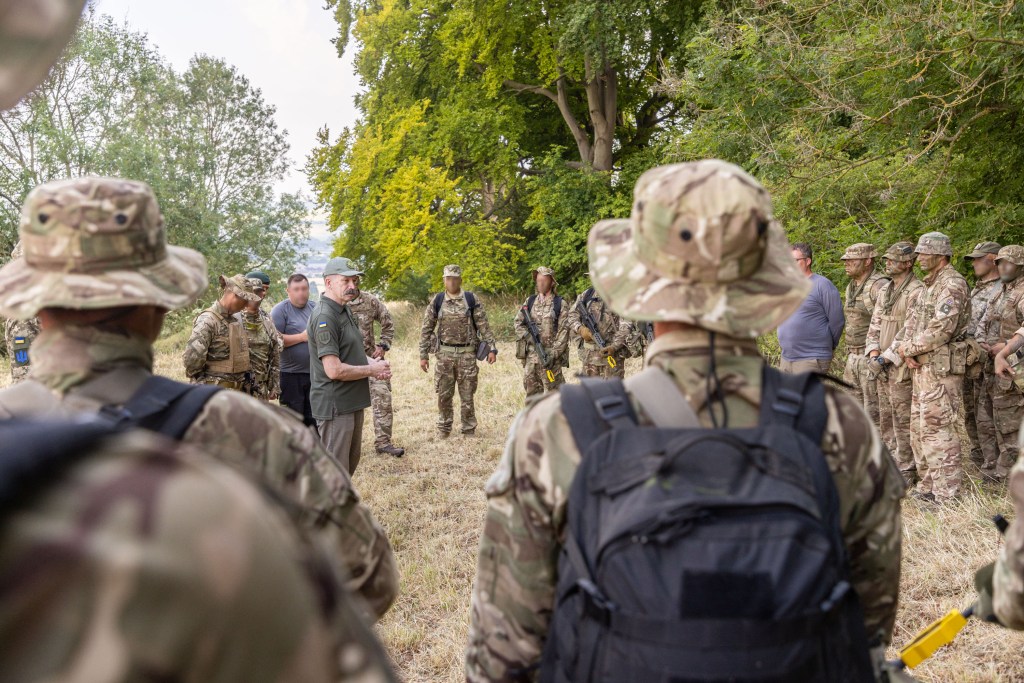
In a recent video/article we looked at the AK-pattern rifles that the UK Ministry of Defense has procured to train Ukrainian troops with in the UK. In that video I touched on the use of British SA80/L85 pattern bullpup rifles used during the training of the Ukrainian troops. With fresh imagery it seems that the British rifles are playing a significant role in training the Ukrainian personnel at several training centres across the UK.

Ukrainian soldier seen with an SA80A2 with SUSAT during training, when visited by the Prime Minister in late-July (UK MoD/Crown Copyright)

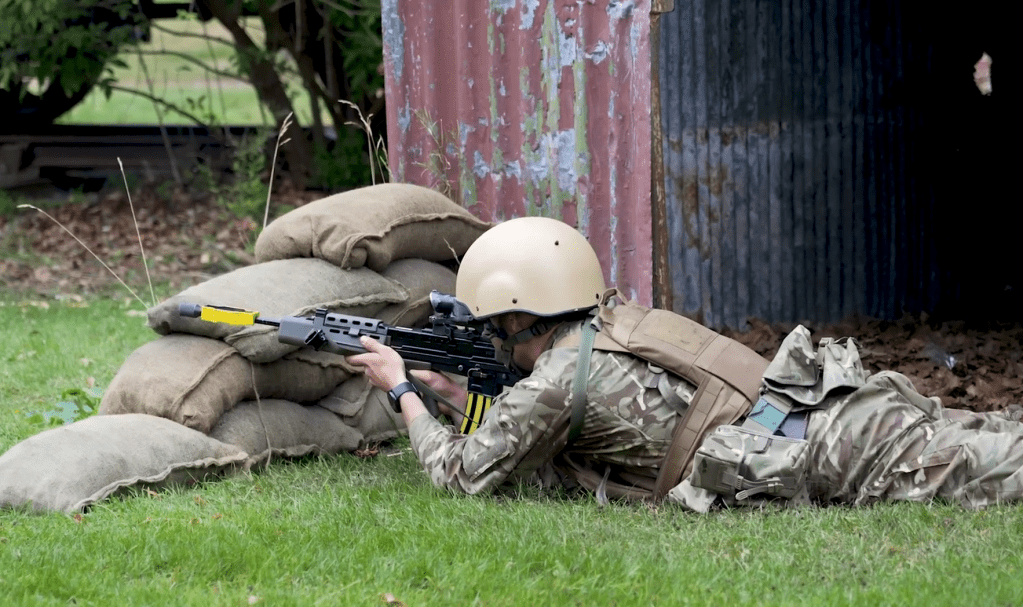
The SA80 rifles were first seen in the initial imagery released around the announcement of the training scheme but have appeared again since. They featured in photographs of Defence Minister Ben Wallace’s visit in early July and again a couple of weeks later during another visit by General Sir Patrick Sanders’, Chief of the General Staff. The rifles were seen with iron sights and fitted with blank firing adaptors. Interestingly, at least some of the Ukrainian personnel have been shown how to field strip the British rifles. 

Deputy Defence Minister of Ukraine Volodymyr Havrylov with visits Ukrainian troops training in the UK, 19 July (UK MoD/Crown Copyright)

On 19th July, imagery from a visit by the Deputy Defence Minister of Ukraine, Volodymyr Havrylov, also showed Ukrainian troops equipped with SA80A2s fitted with blank firing adaptors. As before the rifles were not fitted with optics.

The Ministry of Defence has confirmed that while AK-pattern blank firing adaptors have been procured, SA80’s with blank firing adaptors have also been used to ‘maintain strict safety conditions for both British and Ukrainian soldiers during training and to meet the urgency of the training requirement.’

Ukrainian troops field stripping and cleaning SA80A2s in early July (UK MoD/Crown Copyright)

Because the rifles don’t have railed forends some thought they might be the earlier SA80A1s. We can tell that these rifles are SA80A2s from the up-turned scalloped tear drop charging handle which also doubles as a brass deflector. The rifles have the non-railed green polymer handguards fitted.  While the Daniel Defense produced railed forends have come to characterise what many thing is the A2 configuration, these were actually developed in response to an urgent operational requirement for troops deploying in Afghanistan. Many of the rifles overhauled by HK to the A2 standard retained the classic green handguards. Some, like those recently provided to the Royal Bermuda Regiment, actually have a green handguard designed by HK. 

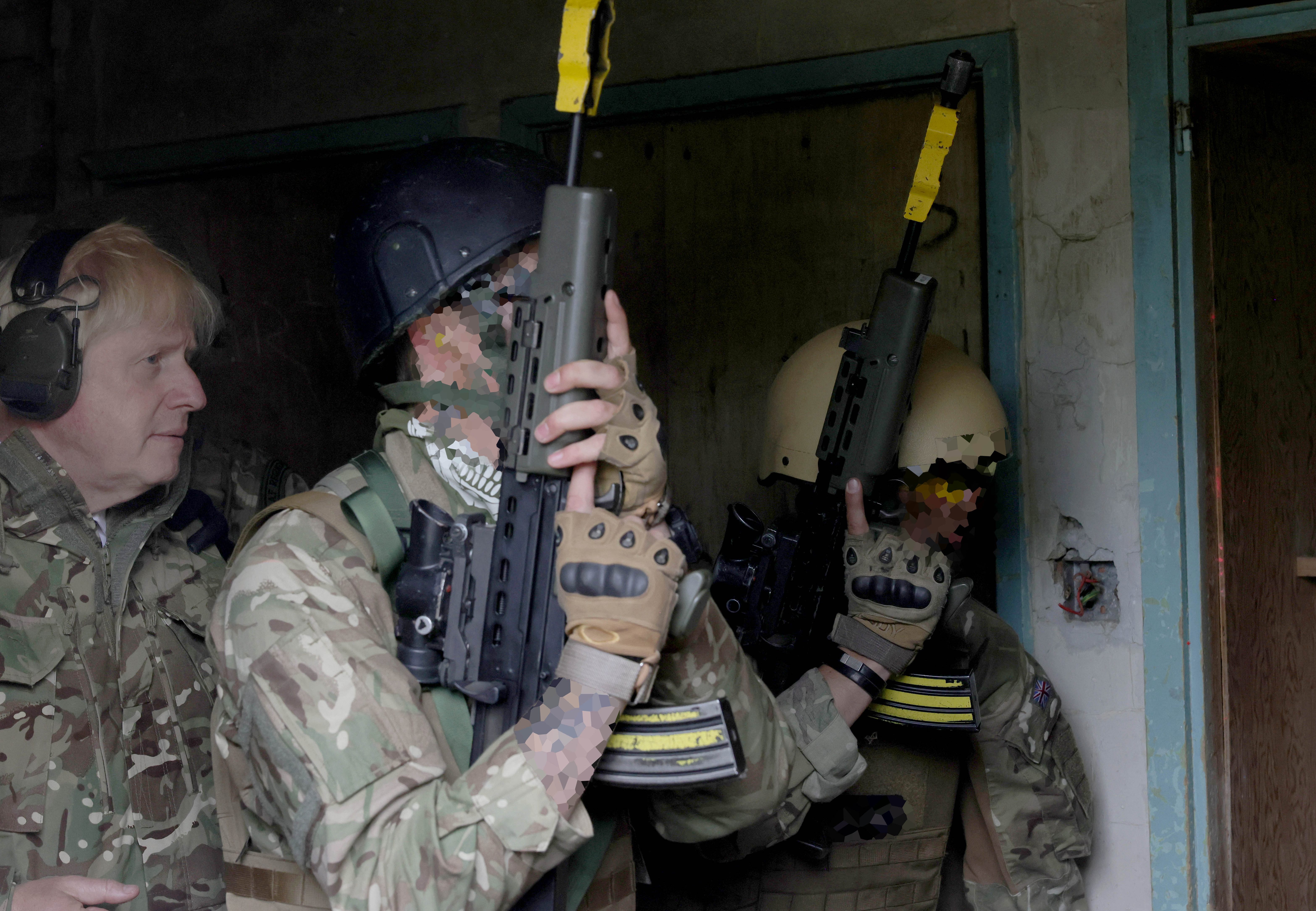
Prime Minister Boris Johnson visits Ukrainian troops (Andrew Parsons/No.10 Downing Street)

We can easily identify British troops involved in the training, as we can see that they are equipped with the new SA80A3 with the characteristic new MLOK forends and Cerakote finish. 

On the 21st July, the UK Prime Minister’s office released photos and video of Prime Minister Boris Johnson’s visit to Ukrainian troops training in the North East of England. The imagery showed Ukrainian troops training in urban combat, known by the British Army as Fighting In Built Up Areas or FIBUA. This supports the theory that they are being issued for FIBUA and field exercises that require blank firing. Unlike in the earlier imagery the Ukrainians were armed with SA80A2s largely equipped with SUSAT sights. 


If you enjoyed this video and article please consider supporting our work here. We have some great perks available for Patreon Supporters – including custom stickers and early access to videos! Thank you for your support!


Bibliography:

‘Defence Secretary Ben Wallace visits Armed Forces of Ukraine as training programme starts across the UK’, UK MoD, 9 July, 2022, (source)

Prime Minister Boris Johnson visits the North East, UK Govt., (source)

Deputy Defence Minister of Ukraine Volodymyr Havrylov meets with Ukrainian trainees in UK, UK MoD, (source)