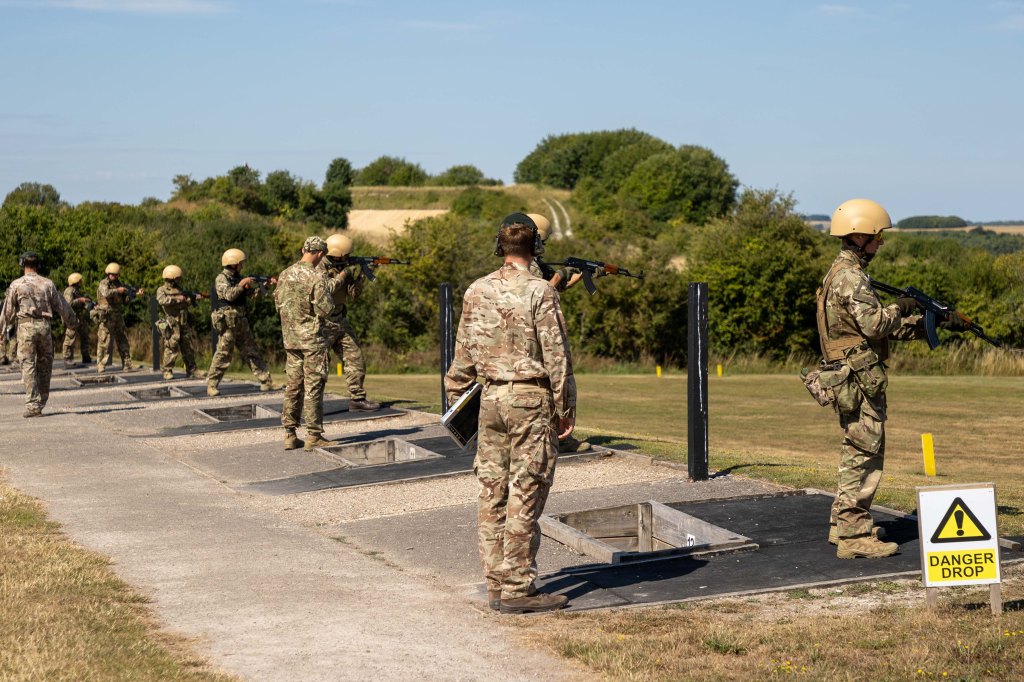
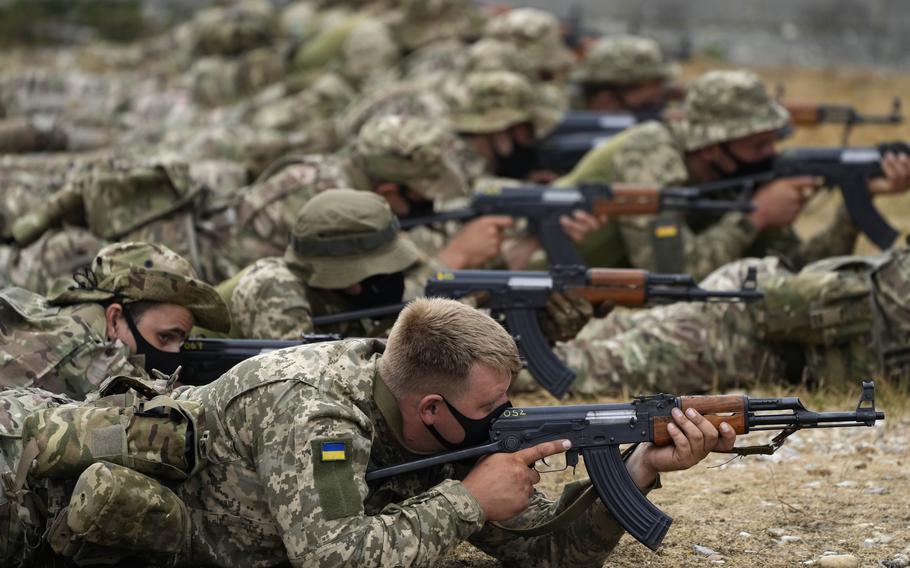
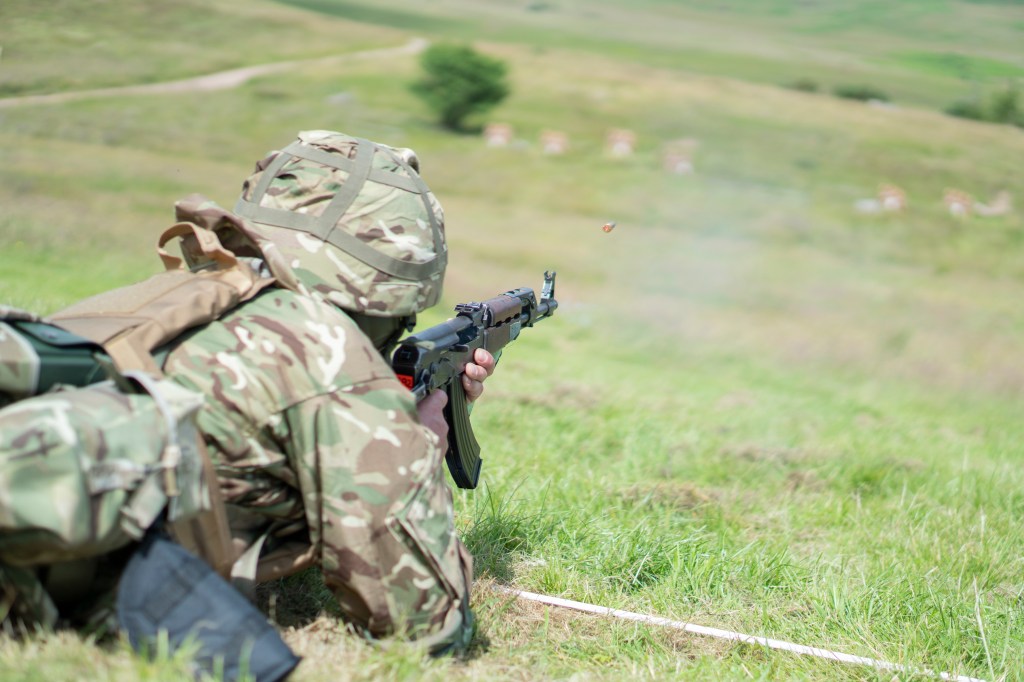
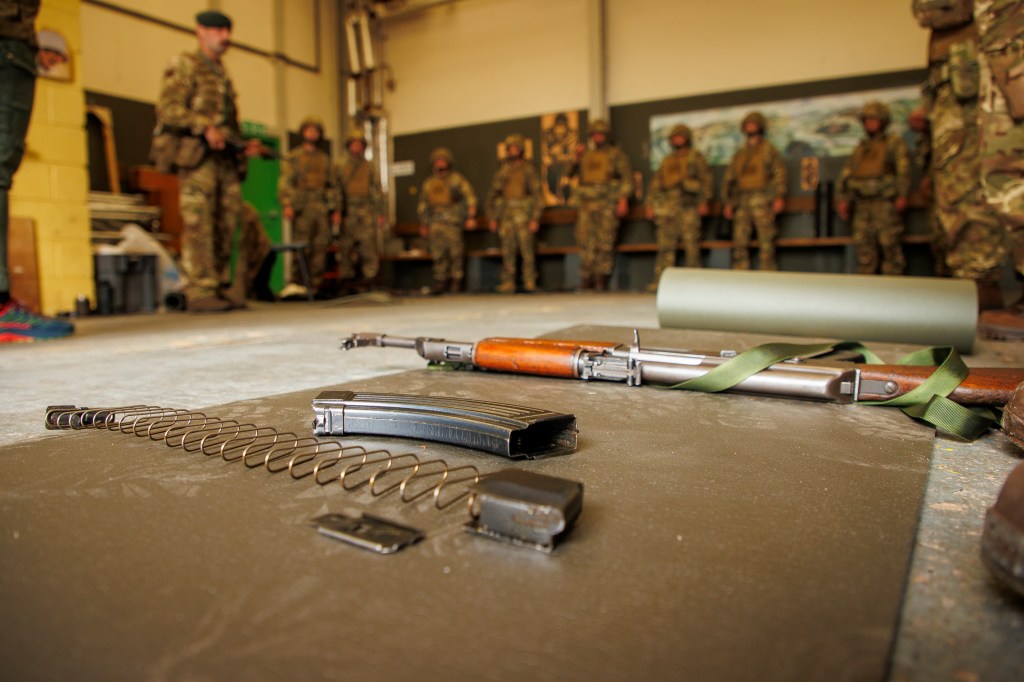
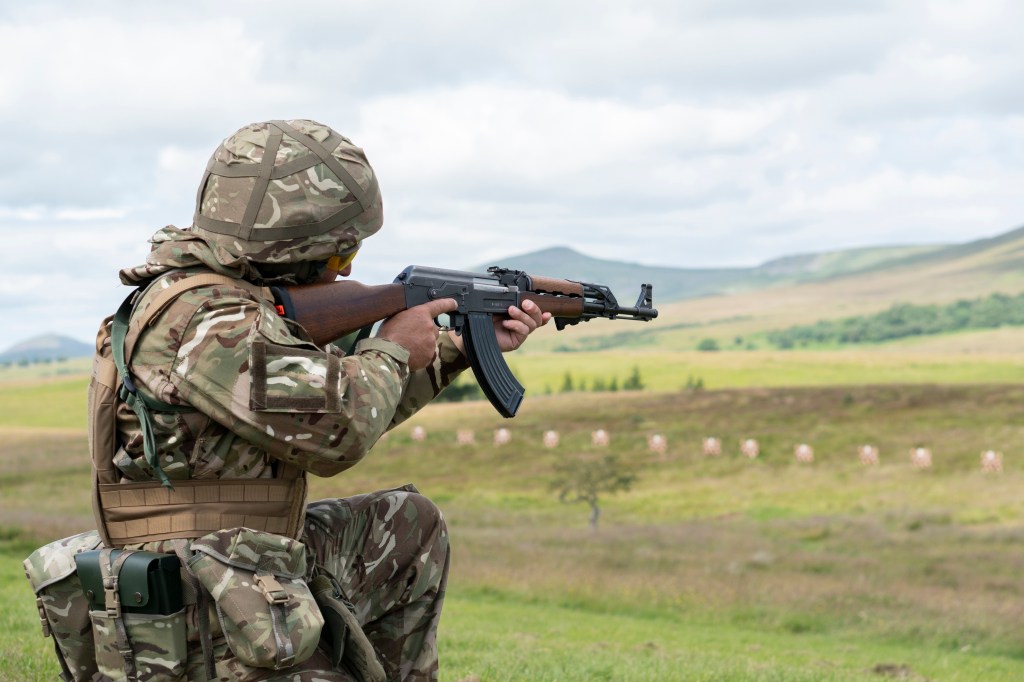
In recent weeks we’ve examined how the UK has procured various 7.62x39mm AK-pattern rifles for use in training Ukrainian troops in the UK. The latest video and photographs from the training the UK is providing show that alongside the previously identified AK variants a number of Chinese Type 56-1s have also been procured.
Ukrainian troops with Type 56-1s at the range undertaking marksmanship training and completing weapon handling tests and passing the ACMT live firing assessment (UK MoD/Crown Copyright)
On the 9th July, the UK’s Ministry of Defence announced that as part of its agreement to train 10,000 Ukrainian soldiers it had acquired a significant number of AK-pattern rifles. The MoD’s original press release stated:
“The Government has rapidly procured AK variant assault rifles for the training programme, meaning Ukrainian soldiers can train on the weapons they will be using on the front line. This effort was supported by the Welsh Guards, who tested more than 2,400 such rifles in 17 days to ensure they were ready for the Ukrainians to commence their training.”
From imagery published by the MoD we previously confirmed that the AKs procured included: Zastava M70 (or M70B)s, milled receiver M70As, folding stock M70AB2s, Hungarian FEG AK63Ds and East German MPi KMS-72s. The latest photographs released, which appear to have been taken in late July at Salisbury Plain Training Area (SPTA), and show a type of rifle we haven’t seen previously – the Type 56-1.
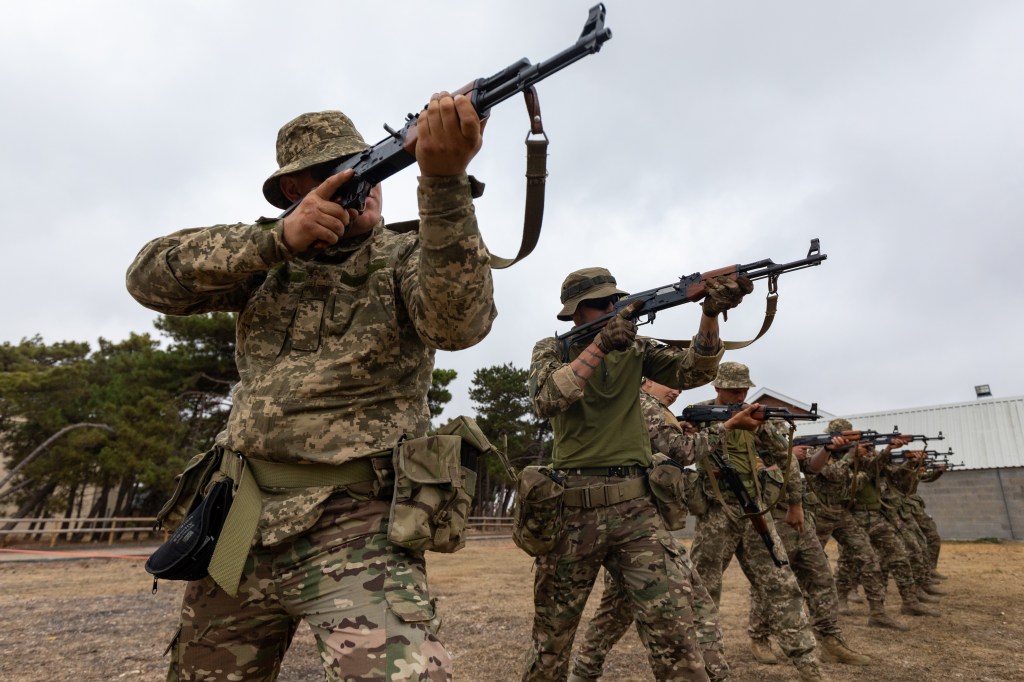
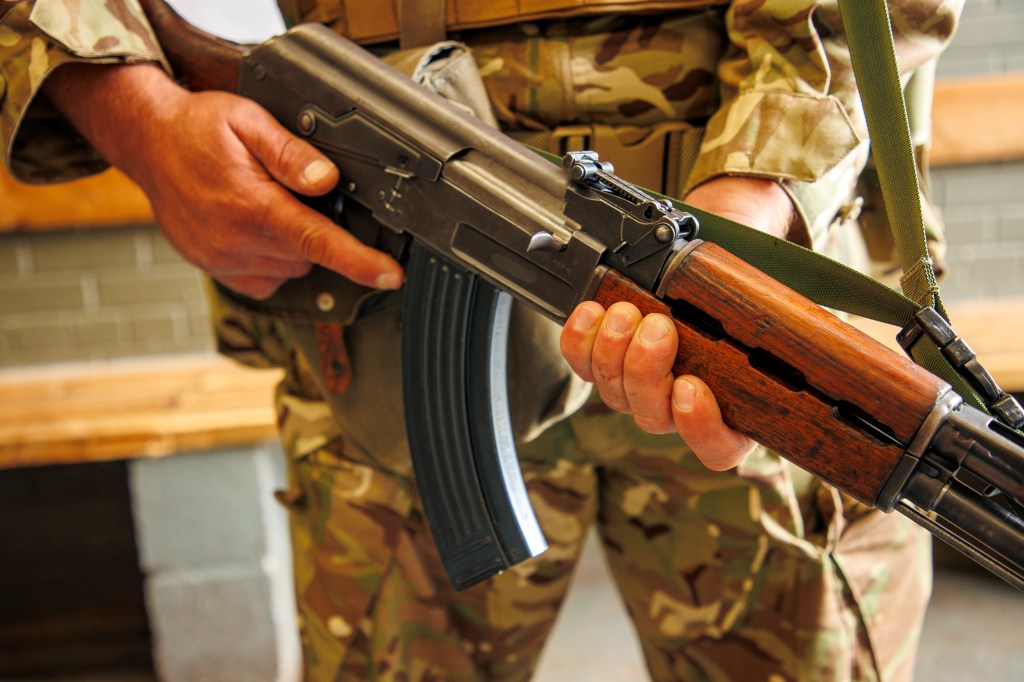
Ukrainian trainees conducting weapon drills with Type 56-1 (UK MoD/Crown Copyright)
They show rifles with under-folding stocks, stamped receivers, rivet positions and enclosed front sights which indicate them to be Chinese Type 56-1s. Where did the UK procure these rifles from? While it has been suggested that the UK may have seized the rifles during operations to interdict the arming of Houthi rebels in an earlier statement to The Armourer’s Bench the MoD said that the rifles has been “rapidly procured… through a combination of international donations and private purchase.”
Ukrainian trainees conducting weapon drills (magazines off) with Type 56-1 (UK MoD/Crown Copyright)
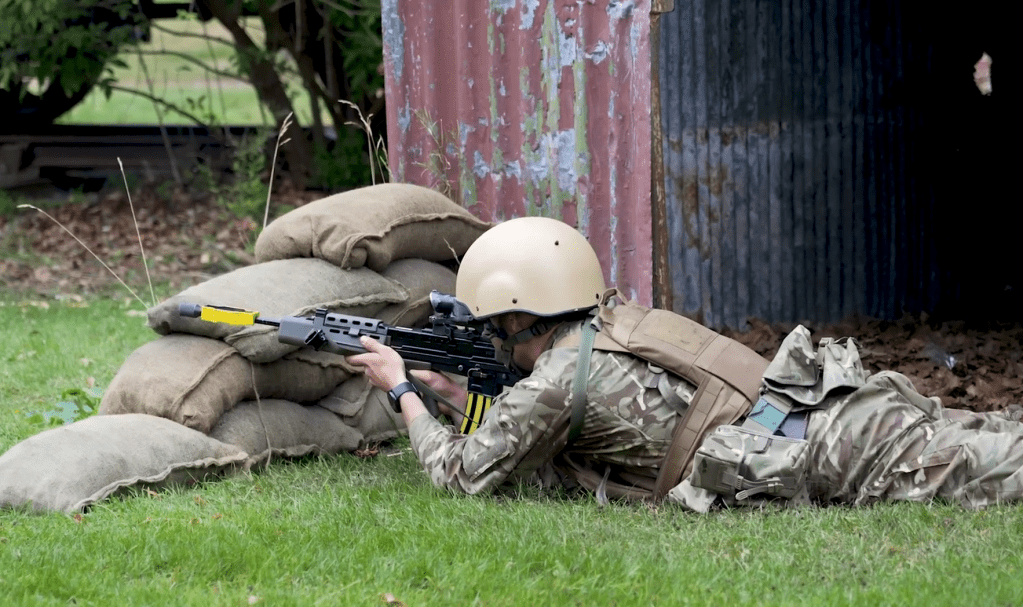
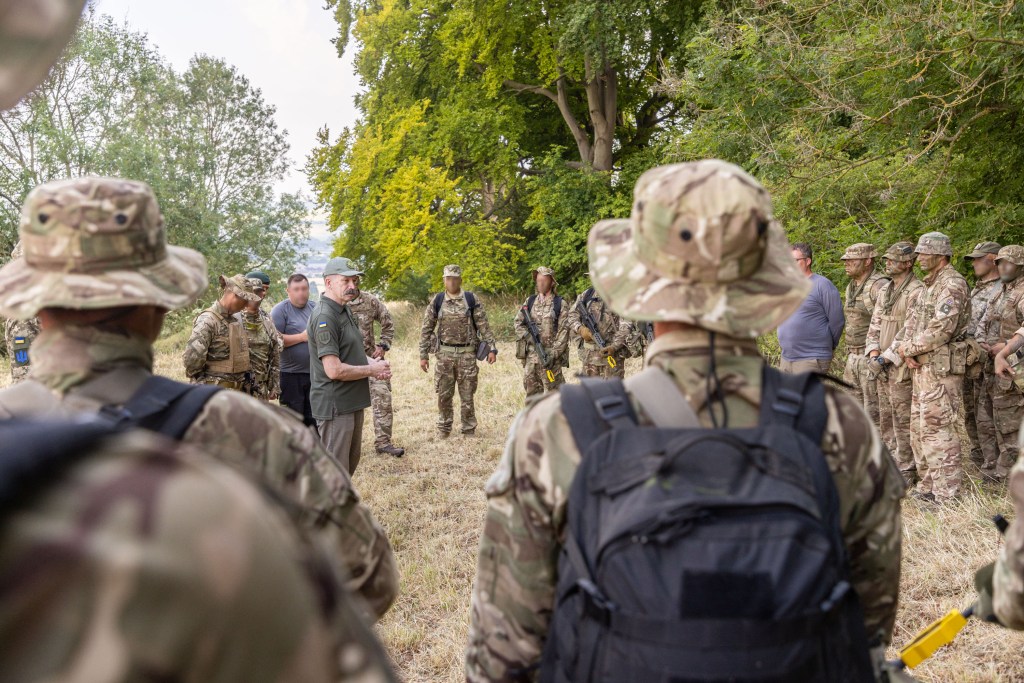
The same cadre training at SPTA were also seen undertaking Fighting In Built Up Areas (FIBUA) training with British L85A2 rifles. It is believed that the British bullpups are being used for exercises requiring blank firing due to a likely combination of a shortage of AK blank firing adaptors (BFAs), blank ammunition, and the AK BFAs not being deemed safe enough for British training areas. The MoD previously stated that the L85A2s and their BFAs were being used to ‘maintain strict safety conditions for both British and Ukrainian soldiers during training and to meet the urgency of the training requirement.’
As with the other AK-pattern rifles procured by the UK for the training of Ukrainian personnel the Type 56s won’t be returning to Ukraine with the trainee soldiers, the UK MoD has stated that they are providing uniforms, protective kit and other equipment but not individual weapons.
If you enjoyed this video and article please consider supporting our work here. We have some great perks available for Patreon Supporters – including custom stickers and early access to videos! Thank you for your support!
In a recent video/article we looked at the AK-pattern rifles that the UK Ministry of Defense has procured to train Ukrainian troops with in the UK. In that video I touched on the use of British SA80/L85 pattern bullpup rifles used during the training of the Ukrainian troops. With fresh imagery it seems that the British rifles are playing a significant role in training the Ukrainian personnel at several training centres across the UK.
Ukrainian soldier seen with an SA80A2 with SUSAT during training, when visited by the Prime Minister in late-July (UK MoD/Crown Copyright)
The SA80 rifles were first seen in the initial imagery released around the announcement of the training scheme but have appeared again since. They featured in photographs of Defence Minister Ben Wallace’s visit in early July and again a couple of weeks later during another visit by General Sir Patrick Sanders’, Chief of the General Staff. The rifles were seen with iron sights and fitted with blank firing adaptors. Interestingly, at least some of the Ukrainian personnel have been shown how to field strip the British rifles.
Deputy Defence Minister of Ukraine Volodymyr Havrylov with visits Ukrainian troops training in the UK, 19 July (UK MoD/Crown Copyright)
On 19th July, imagery from a visit by the Deputy Defence Minister of Ukraine, Volodymyr Havrylov, also showed Ukrainian troops equipped with SA80A2s fitted with blank firing adaptors. As before the rifles were not fitted with optics.
The Ministry of Defence has confirmed that while AK-pattern blank firing adaptors have been procured, SA80’s with blank firing adaptors have also been used to ‘maintain strict safety conditions for both British and Ukrainian soldiers during training and to meet the urgency of the training requirement.’
Ukrainian troops field stripping and cleaning SA80A2s in early July (UK MoD/Crown Copyright)
Because the rifles don’t have railed forends some thought they might be the earlier SA80A1s. We can tell that these rifles are SA80A2s from the up-turned scalloped tear drop charging handle which also doubles as a brass deflector. The rifles have the non-railed green polymer handguards fitted. While the Daniel Defense produced railed forends have come to characterise what many thing is the A2 configuration, these were actually developed in response to an urgent operational requirement for troops deploying in Afghanistan. Many of the rifles overhauled by HK to the A2 standard retained the classic green handguards. Some, like those recently provided to the Royal Bermuda Regiment, actually have a green handguard designed by HK.
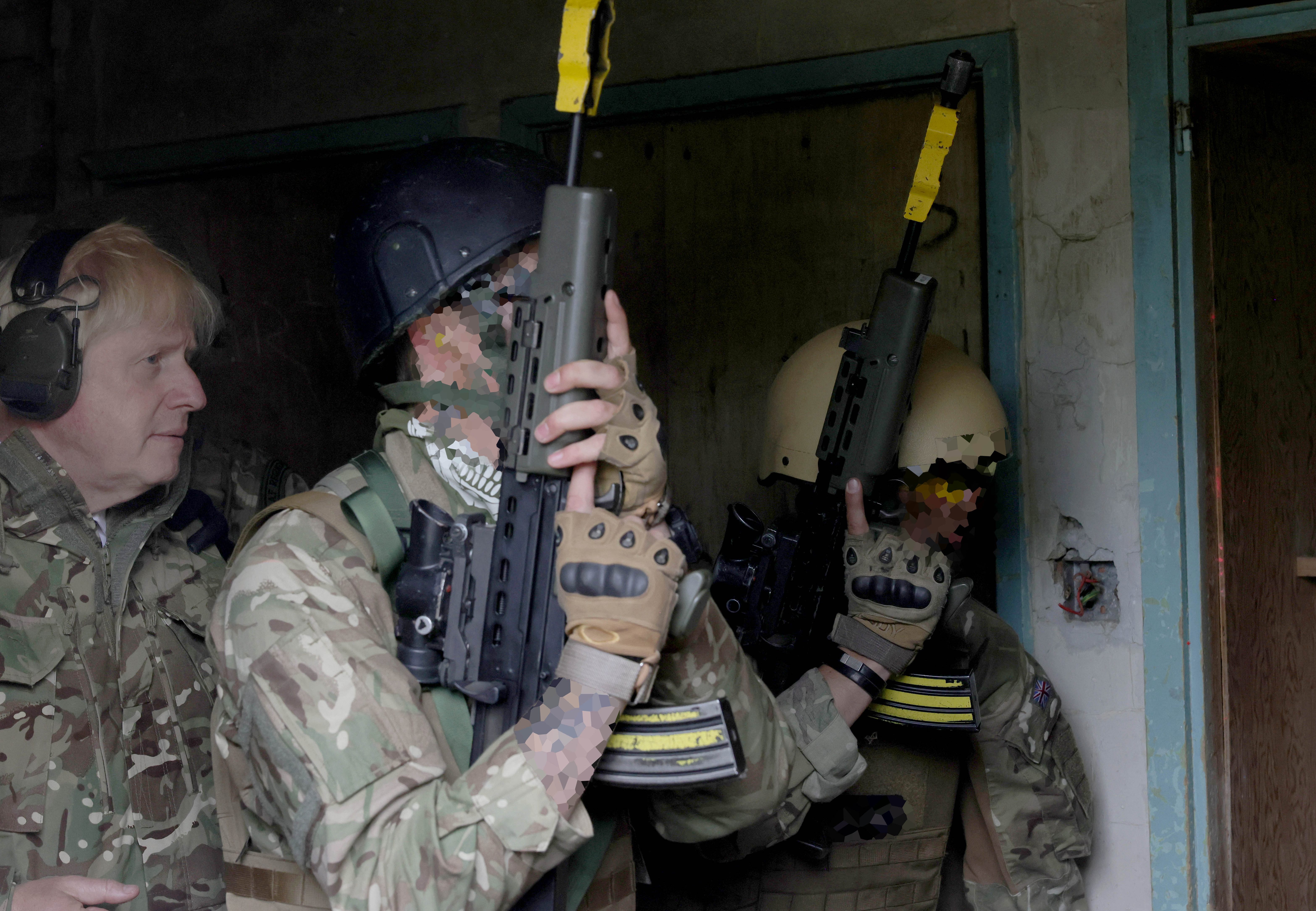
Prime Minister Boris Johnson visits Ukrainian troops (Andrew Parsons/No.10 Downing Street)
We can easily identify British troops involved in the training, as we can see that they are equipped with the new SA80A3 with the characteristic new MLOK forends and Cerakote finish.
On the 21st July, the UK Prime Minister’s office released photos and video of Prime Minister Boris Johnson’s visit to Ukrainian troops training in the North East of England. The imagery showed Ukrainian troops training in urban combat, known by the British Army as Fighting In Built Up Areas or FIBUA. This supports the theory that they are being issued for FIBUA and field exercises that require blank firing. Unlike in the earlier imagery the Ukrainians were armed with SA80A2s largely equipped with SUSAT sights.
If you enjoyed this video and article please consider supporting our work here. We have some great perks available for Patreon Supporters – including custom stickers and early access to videos! Thank you for your support!
Bibliography:
‘Defence Secretary Ben Wallace visits Armed Forces of Ukraine as training programme starts across the UK’, UK MoD, 9 July, 2022, (source)
Prime Minister Boris Johnson visits the North East, UK Govt., (source)
Deputy Defence Minister of Ukraine Volodymyr Havrylov meets with Ukrainian trainees in UK, UK MoD, (source)
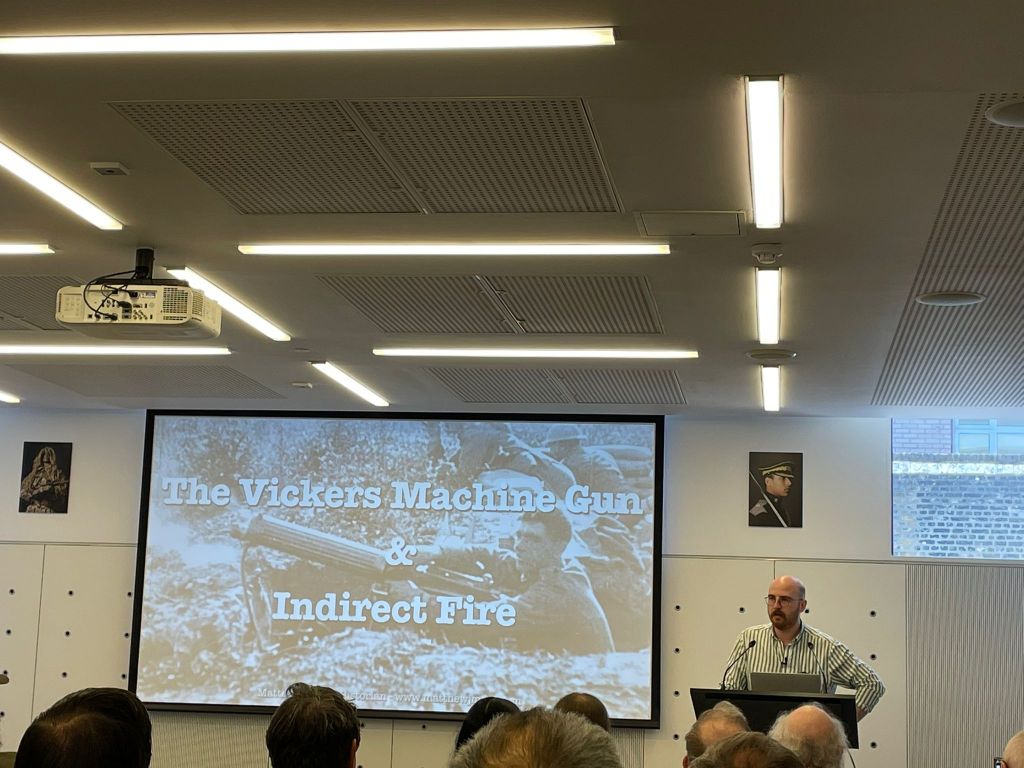
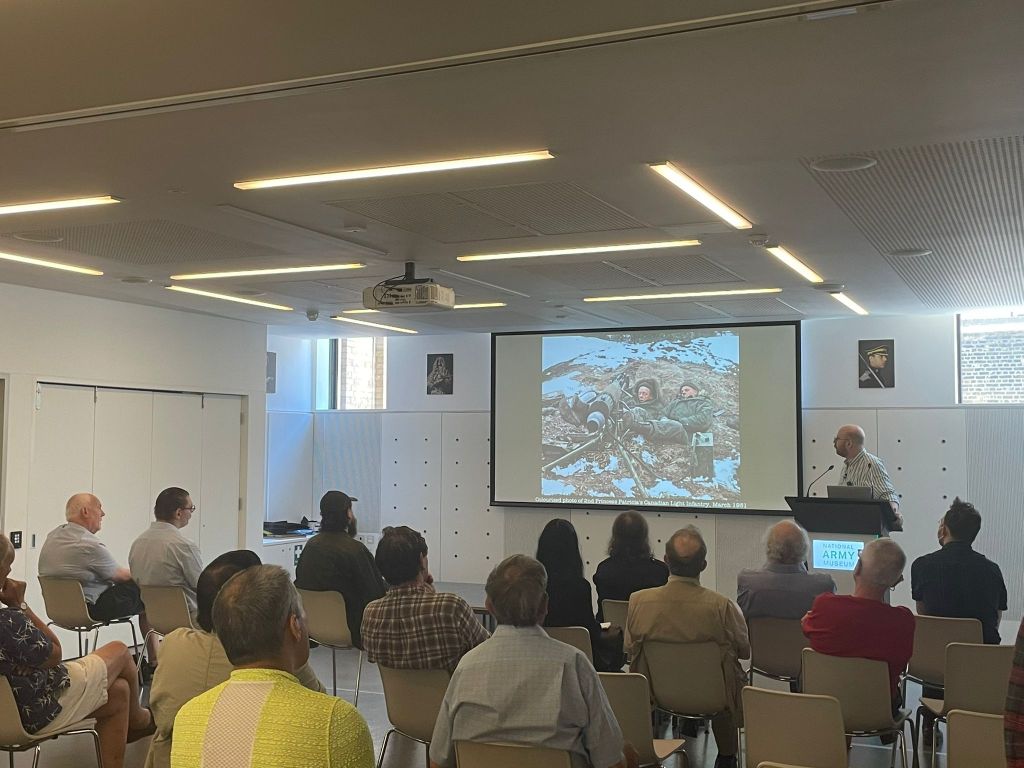
On the 16 July, I took part in a Spotlight Saturday event at the UK’s National Army Museum in London. Organised by the Vickers Machine Gun Collection & Research Association the event commemorated the 100th anniversary of the disbandment of the British Army’s Machine Gun Corps but also commemorated the legacy of the Vickers Machine Gun itself. In support of the event I gave a talk on how the Vickers was used in the indirect fire role. Find out more about the events commemorating the Machine Gun Corps here.
Indirect fire talk at National Army Museum (LM)
If you enjoyed this video and article please consider supporting our work here. We have some great perks available for Patreon Supporters – including custom stickers and early access to videos! Thank you for your support!
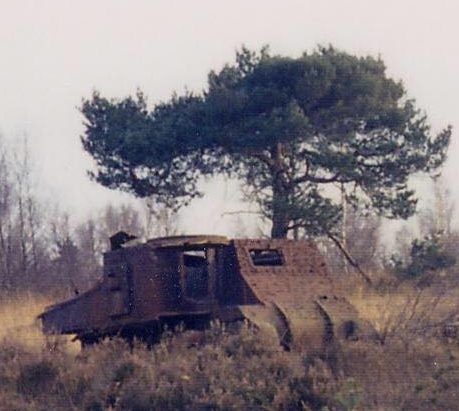
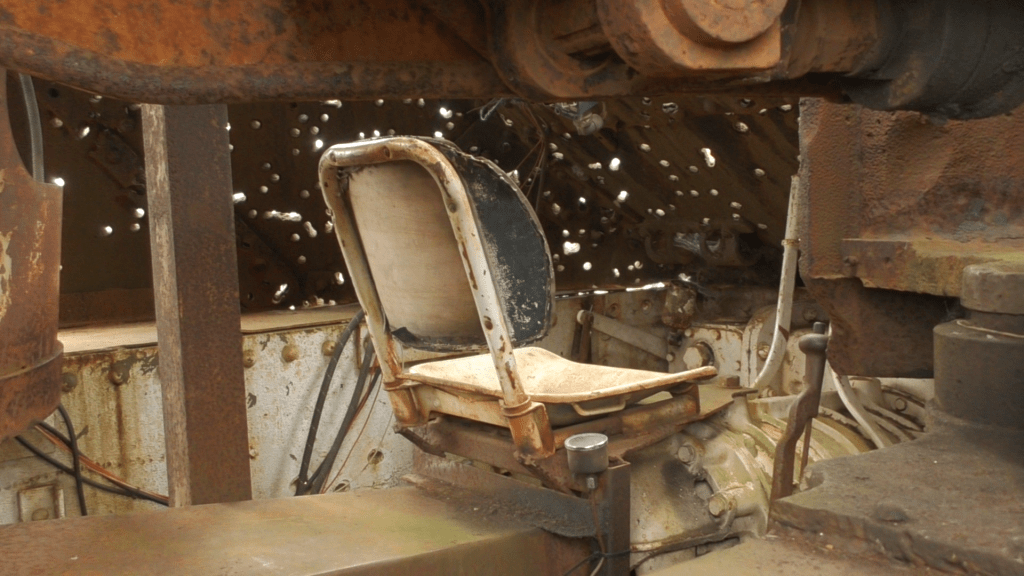
I recently attended the We Have Ways of Making You Talk podcast’s history festival and one of the most striking things on display was a very rusty, heavily damaged M3 Grant!
The tank, T24193, was one of the first M3 Grants to arrive in Britain in 1941. It was used for cross country and gunnery trials before later in the war it was used as a range target. The owner was kind enough to share some photographs of the tank before it was salvaged.
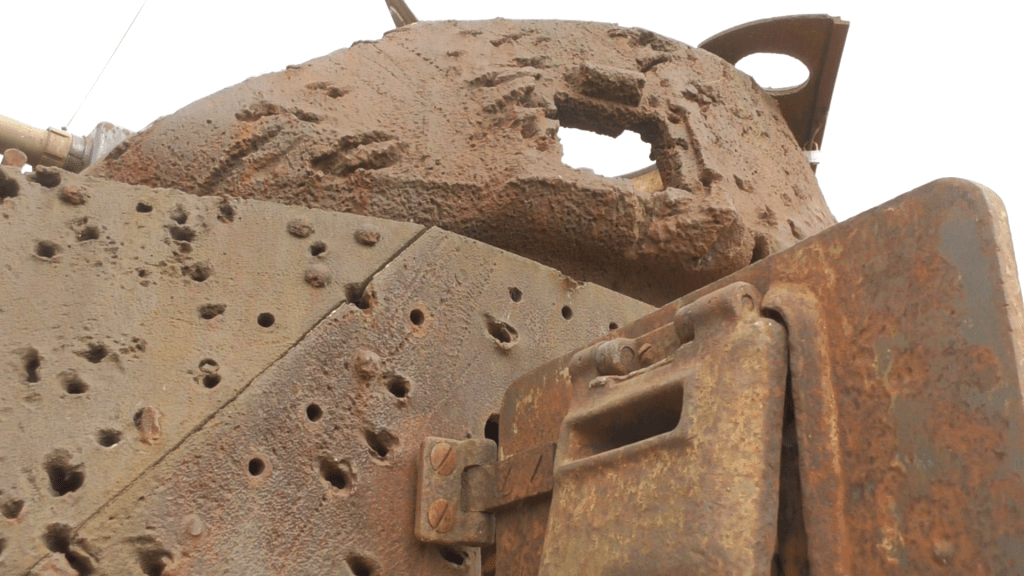
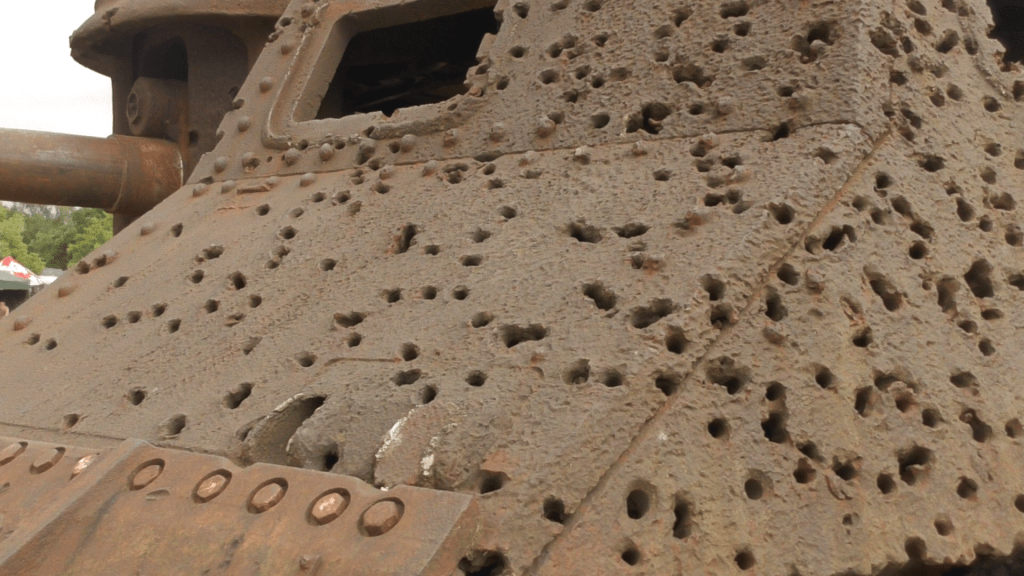
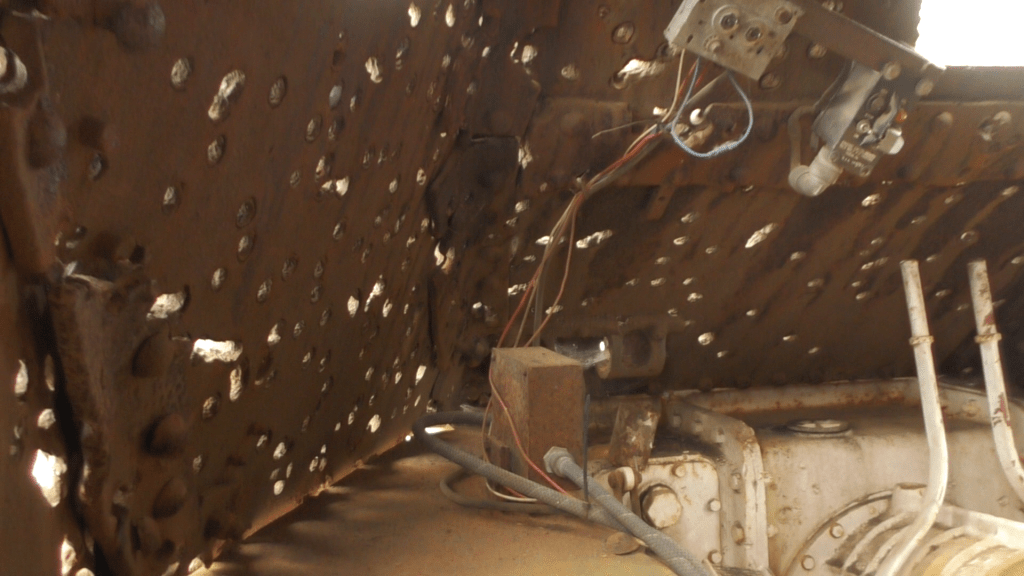
The tank was salvaged from Pirbright Ranges in Surrey in 2003 and restored mechanically but its external damage is going to be retained as a visual display of its history as a range target. According to the tank’s owner the M3 was used to test captured German Panzerfaust and Panzershreks and has approximately 100 10mm diameter holes from Panzershreks and nearly 400 12-13mm diameter wholes from Panzerfausts fired at the tank. There also appears to be larger holes, perhaps some HESH round damage and lots of small arms strikes or spalling marks.
Here are some photos of the tank:
I would love to read the report on that testing to see what they were trying to find out – a possible research project for the future. The Panzerfaust (capable of penetrating up to 200mm) and Panzershreks (capable of penetrating up to 160mm) definitely penetrated the M3 Grant’s 2 inch frontal and 1.5 inch side armour.
With the tank on display I couldn’t resist getting some video of it, the surreal sight of light coming through both sides of the tank’s hull becomes sobering when you consider that Allied tanks faced the weapons which made the holes, in actual combat.
If you enjoyed this video and article please consider supporting our work here. We have some great perks available for Patreon Supporters – including custom stickers and early access to videos! Thank you for your support!
On the 9th July, the UK’s Ministry of Defence announced that as part of its agreement to train 10,000 Ukrainian soldiers it had acquired a significant number of AK-pattern rifles. Initially sharing only one, fairly low res, photograph the official announcement stated that:
“The Government has rapidly procured AK variant assault rifles for the training programme, meaning Ukrainian soldiers can train on the weapons they will be using on the front line. This effort was supported by the Welsh Guards, who tested more than 2,400 such rifles in 17 days to ensure they were ready for the Ukrainians to commence their training.”
Ukrainian soldier at the range July 2022 (UK MoD / Crown Copyright)
The types of AK-pattern rifles procured was not announced but from the initial photograph released it was clear that at least one of the rifles was a Serbian-produced Zastava M70AB2, chambered in 7.62x39mm.
The programme is the latest phase of Operation ORBITAL, the British Army’s name for the long term support and training programme undertaken since 2015. To-date ORBITAL has reportedly trained some 22,000 Ukrainian personnel, with the initial phase being run in Ukraine until early 2022 when the threat of imminent invasion saw the training personnel in Ukraine withdrawn. At the same time Canada and the US have run similar programmes in Ukraine. T he UK has agreed to train 10,000 Ukrainians within 120 days and in comments to the press the Uk’s Defence Secretary Ben Wallace saying that “if the Ukrainians ask for more, we’ll be open to more”.
Ukrainian soldiers seen here receiving training from 3 RIFLES, July 2022 (UK MoD / Crown Copyright)
The rifles procured will likely be retained in Britain to train successive cadres of Ukrainian personnel, however, the UK has gifted a substantial amount of uniform and kit with the Ministry of Defence’s 9th July statement saying that each soldier will be issued with:
Personal protective equipment including helmets, body armour, eye protectors, ear protectors, pelvic protection, and individual first aid kits
Field uniforms and boots
Cold and wet weather clothing
Bergens, day sacks and webbing
Additional equipment required for field conditions including ponchos, sleeping bags, and entrenching tools
The training is being undertake by around 1,050 UK service personnel largely drawn from 11 Security Force Assistance Brigade. The brigade was formed in 2021 and is tasked with “building the capacity of allied and partner nations”. Personnel from the 12th Armoured Brigade Combat Team and 1st Armoured Infantry Brigade as well as Ukrainian-speaking interpreters are involved.
The course the Ukrainian troops are undergoing is a condensed basic infantryman course which includes weapons handling and marksmanship fundamentals, battlefield first aid, fieldcraft, patrol tactics and the Law of Armed Conflict. From the file dates on the imagery released it appears that many of the photographs were taken in late June and early July.
British instructor with M70 rifle (UK MoD / Crown Copyright)
From examination of further imagery released it appears that the AK-pattern rifles procured for training the Ukrainian troops are all chambered in 7.62x39mm and the 2,400 rifles procured include: wooden-stocked Zastava M70 (or M70B)s, milled receiver M70As, folding stock M70AB2s, Hungarian FEG AK63Ds and East German MPi KMS-72s.
Interestingly, some photographs and video suggest that as part of the training at least some of the Ukrainian personnel have been shown how to field strip the British SA80/L85 rifles. These are believed to have been used with blank firing adaptors during training this theory was supported by Ukrainian troops being pictured with SA80/L85 pattern rifles, with the easily recognisable yellow blank firing adaptors fitted, during a visit by General Sir Patrick Sanders’, Chief of the General Staff, to meet Ukrainian troops doing Fighting In Built Up Areas (FIBUA) training. The Ministry of Defence has confirmed that while AK-pattern blank firing adaptors have been procured, SA80’s with blank firing adaptors have also been used to ‘maintain strict safety conditions for both British and Ukrainian soldiers during training and to meet the urgency of the training requirement.’
Ukrainian soldier at the range July 2022 (UK MoD / Crown Copyright)
The reasoning behind the procurement of rifles chambered in 7.62x39mm rather than the more regularly issued 5.45x39mm AK-74 pattern rifles is also unclear. Perhaps this was due to weapon availability and regardless of calibre the manuals of arms remains the same. There is no indication that training with support weapons such as general purpose machine guns or light anti-armour weapons is being provided.
When approached for comment on the sources and types of AK rifles procured, the Ministry of Defence told The Armourer’s Bench:
“The Government has rapidly procured AK variant assault rifles through a combination of international donations and private purchase, meaning Ukrainian soldiers can train on the type of weapons they will be using on the front line. All weapons were tested in accordance with UK legislative and safe working practices.”
While this doesn’t offer much detail it does suggest that the rifles were procured via donations and private purchase – the scale of the donations and private purchases remains unclear.
Ukrainian Army recruits have arrived in the UK this month where they are being given the skills needed to be effective and lethal on the frontline and defend their homeland. 🇺🇦 #StandWithUkraine 🇺🇦 pic.twitter.com/fngYb2XRoo
It has also been confirmed that elsewhere British personnel are training Ukrainian mechanised troops on various vehicles including Spartan, Husky and Mastiff at Bovington as part of ‘Project Spring Generation’. It was confirmed by the Defence Secretary Ben Wallace, on 18th July, that the first cadre has now completed its training in the UK. Wallace also noted that Dutch personnel will be joining the British effort to train Ukrainian troops in the future.
If you enjoyed this video and article please consider supporting our work here. We have some great perks available for Patreon Supporters – including custom stickers and early access to videos! Thank you for your support!
Bibliography:
‘Defence Secretary Ben Wallace visits Armed Forces of Ukraine as training programme starts across the UK’, UK MoD, 9 July, 2022, (source)
‘First Ukrainian Volunteer Recruits Arrive In UK For Training’, Overt Defense, (source)
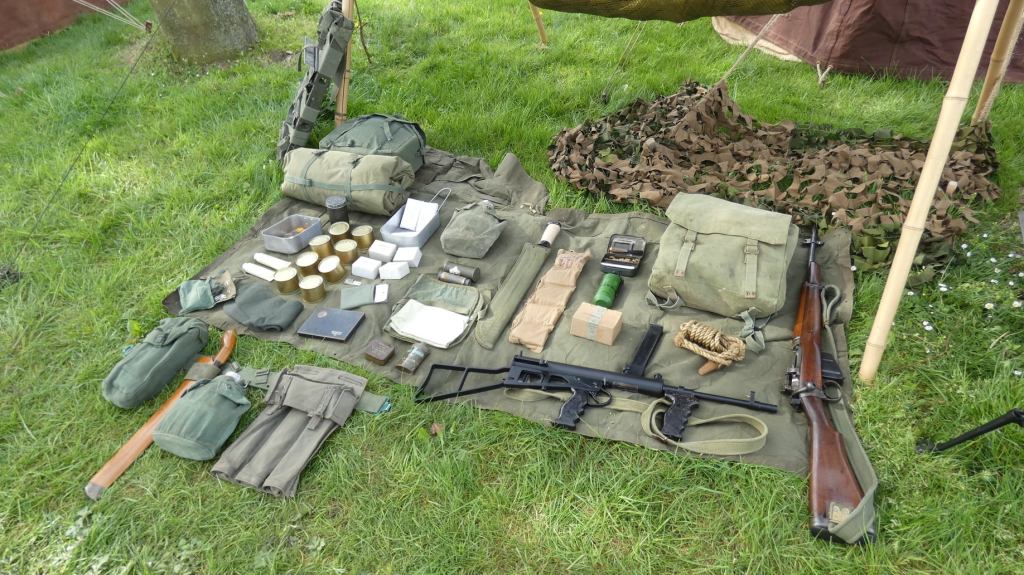
A week or two ago (April 2022) we had the chance to catch up with friends from the MECo. group at the Soviet Threat event at the Hack Green Secret Bunker in Cheshire. Allen and Simon had an excellent display of weapons, uniform and personal kit from the Malayan Emergency (1948-1960) period and kindly talked us through it!
The weapons and personal kit featured in MECo’s Malayan Emergency display (Matthew Moss)
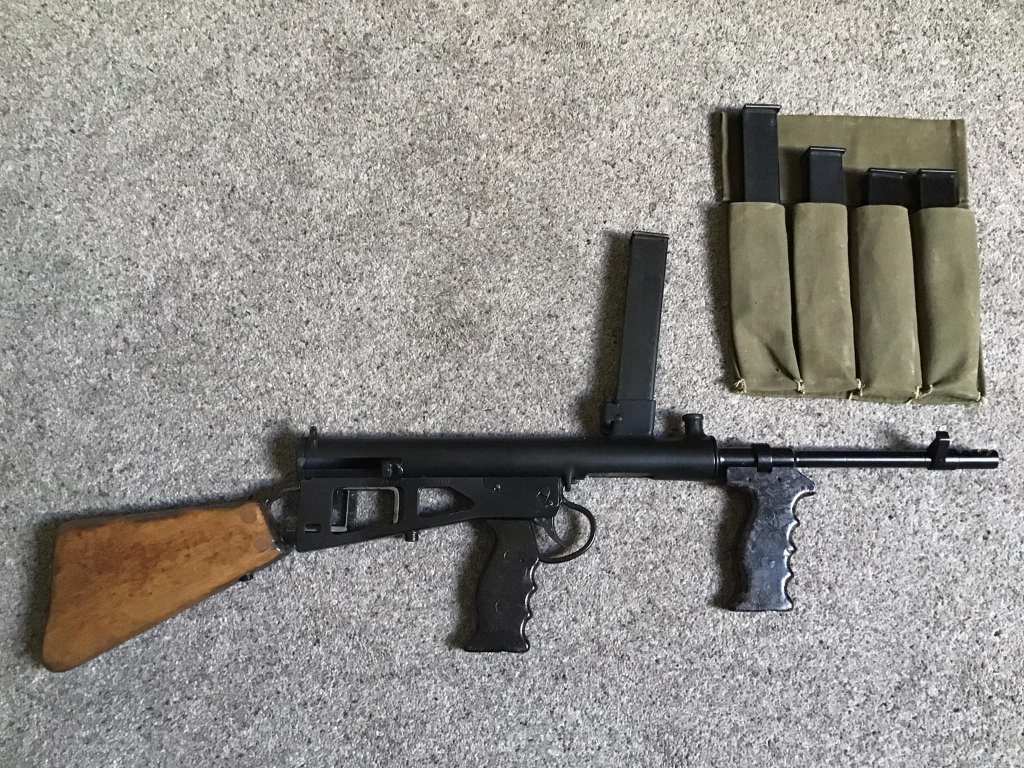
Thank you to Simon and Allen for giving us a detailed rundown of the display and kit. I find personal kit absolutely fascinating and MECo. are extremely knowledgeable and always put on an interesting display. In terms of weapons the display included a Bren Mk3, a Rifle No.5 and a very nice example of an Owen Gun. Below is another photograph of the Owen Gun and its magazine pouches, Allen had both a wooden and metal buttstock on display with the weapon.
If you enjoyed this video and article please consider supporting our work here. We have some great perks available for Patreon Supporters – including custom stickers and early access to videos! Thank you for your support!
The transfer of Western anti-armour weapons started before the war even began. The United States transferred significant shipments of Javelin anti-tank guided missiles along with M141 SMAW-D Bunker Defeat Munitions and Stinger MANPADS.
At the same time as an initiative from the Baltic states of Lithuania, Latvia and Estonia – Estonia also delivered Javelin missiles. For reasons of operational security we don’t know how many Javelins have been delivered to Ukraine by the US and Estonia at this time. However, Estonia is believed to have had several hundred in stock.
Ukrainian troops training with January in February 2022 (Ukrainian MoD)
What is Javelin?
Javelin is an infrared guided man-portable fire-and-forget anti-tank missile. It’s been been in service with over a dozen countries for over 20 years and is still produced by a joint venture between Raytheon Missiles & Defense and Lockheed Martin. It weighs about 22kg or 46 lbs ready to fire and had a detachable Command Launch Unit (or CLU) . Its effective range depends on the type of CLU but the improved Lightweight CLU introduced in 2020 can engage targets out to 4,000 metres (about 3 miles). As of 11 March, Lightweight CLU has not yet been seen in Ukraine. The earlier block 0 and 1 CLU can engage targets out to 2,500 meters (1.5 miles). The CLU enables this with a number of optics including a 4x day sight, a 4x night sight a 9.2x thermal sight. The CLU is also a useful tool for reconnaissance when other NVG and thermal imagers aren’t available. Once the gunner has their target and establishes a lock the missile can be launched.
Javelin’s CLU (US Army)
Javelin’s missile has a soft launch system which limits back blast and firing from relatively enclosed spaces. Once launched the main rocket motor kicks in at a safe distance. It uses automatic infrared self-guidance and has two modes of attack: direct for use against lightly armoured targets and structures and top-attack. In top-attack mode the missile climbs above the target and then plunges down on it to penetrate thinner top armour.
The missile has a tandem shaped charge high explosive anti-tank round. The initial charge can detonate any explosive reactive armour used by the enemy target vehicle while the second shaped charge will penetrate the target’s main armour. When the round detonates it super heats the metal of the armour and creates a high velocity stream of metal which enters the vehicle. More on the complex science behind shaped charges here. It can destroy vehicle’s drive systems or if it enters the fighting compartment it can kill or injure the crew and detonate munitions.
History
Javelin was developed by Texas Instruments in cooperation with Martin Marietta. In the mid-1980s it beat off competition from Ford Aerospace and Hughes Aircraft to win the US Army’s Advanced Anti-Tank Weapon System—Medium program.
A Ukrainian Depot, early March 2022 (Ukrainian MoD)
In June 1989 Texas Instruments and Martin Marietta were awarded a development contract and the Javelin was adopted as the FGM-148. Javelin continued development and testing throughout the 90s before entering service. Since then it’s been adopted by countries including the UK, Australia, France, Norway, Poland, Taiwan, and many others. According to Raytheon the system is scheduled to be in inventory until 2050.
Javelin In Ukraine
Ukraine adopted Javelin in April 2018, ordering 210 missiles and 37 CLUs with a further order for 150 missiles and 10 CLS in December 2019. Since the threat of invasion became increasingly likely the US provided a series of aid packages worth $260 million. Reports suggest that at least 300 Javelin missiles were delivered as part of these packages. Since then the US has agreed a further package worth $350 million. 70% of this package is said to have been delivered as of 9 March. It’s difficult to estimate how many missiles and CLUs have been delivered so far but the number of missiles is likely over 1,000.
Still from a Ukrainian training film on Javelin (Ukrainian MoD)
From the sparse evidence available we know that at least some of the Javelin transferred to Ukraine are confirmed to be from older Block 0 stocks, which includes FGM-148A/B/C and D. The vast majority of Javelins in Ukraine are likely to be Block 0 variants. Block I, the FGM-148E came into service with the US in 2008 and has an improved CLU and rocket motor. Javelin’s shelf life is around 20 years, so it makes sense for these older production but still fully capable missiles to be sent first.
In early February the Ukrainian Ministry of Defense shared a short video showing troops testing the newly-arrived Javelins against tank hulks which had been fitted with so-called ‘Javelin Cages’, a metal structure which Russian tanks have recently added to their turrets. It is believed the cage is intended to detonate the initial charge of a Javelin before it contacts with the tanks explosive reactive armour or the hull itself. However, it is also believed that it is intended to defeat drone-fired micro munitions like the Turkish MAM series. The cage detonating the micro munition before it reaches the tank. The footage shared by the Ukrainian MoD showed that Javelin easily defeated the cages.
Update 15/3/22: We have now seen evidence of Block 1 FGM-148Es in Ukraine. Amael Kotlarski, Janes Infantry Weapons Editor, speculates that these may have originated from the Baltic states’ stocks. At least one example of the Block 1 and a number of Block 0s have been captured by Russian forces so far.
Ukrainian Defence Minister announcing arrival of a shipment of Javelin in January 2022
While at the time of publishing this video there has been no confirmed footage of Javelin in action in Ukraine, no doubt due to good Ukrainian OPSEC, we have seen the system in theatre.
We got our first confirmation on 3 March, when Ukraine’s Operational Command “North” shared photos of troops being briefed on the use of NLAW and Javelin anti-tank weapons. In the photos we could see numerous Javelin transport cases stacked while troops were briefed on the Command Launch Unit (or CLU). On 6 March, the Ukrainian Armed forces shared a short instructional video on Javelin, showing how the battery is inserted and what the CLUs controls do.
How Capable is Javelin?
The penetration capabilities of Javelin are listed as classified with the USMC’s manual stating “The Javelin penetrates all known armor, “well” in excess of 30 inches [or 760mm] of rolled homogeneous steel.” This means Javelin is more than capable of knocking out any Russian armoured vehicle in Ukraine.
Javelin Missile (US Army)
In terms of performance in Ukraine, one report from 3 March, quoted an anonymous US Special Operations officer who is monitoring the conflict, suggested that of 300 Javelin fired, 280 knocked out vehicles. Time will tell.
If you enjoyed this video and article please consider supporting our work here. We have some great perks available for Patreon Supporters – including custom stickers and early access to videos! Thank you for your support!
Bibliography:
Javelin – Close Combat Missile System, Medium, FM3-22.37, US Army, 2008 (source) Rundown: Western Anti-Tank Weapons For Ukraine, Overt Defense, (source) Introduction to Crew Served Weapons, USMC, (source) NLAW In Ukraine, Armourer’s Bench, (source) As Russia Pounds Ukraine, NATO Countries Rush In Javelins and Stingers, New York Times, (source) $60 Million Worth of US Military Aid Arrives In Ukraine, Overt Defense, (source) First batch of Estonia-donated Javelin missiles arrive in Ukraine, EER, (source) New US Military Aid to Ukraine Includes 300 Javelin, nv.ua, (source) Shaped Charge, Global Security, (source)
This week we have a very special episode where we tap into a topic close to Matt’s heart, the PIAT. Matt wrote a book about the PIAT, or Projector, Infantry, Anti-Tank, in 2020 and continues to research its history. One of the most interesting aspects of the PIAT is its unique cultural history, having been portrayed in a plethora of films spanning over 70 years. Most famously it was heralded, literally, when Anthony Hopkins as Lt. Colonel Frost in A Bridge Too Far shouted ‘BRING UP THE PIAT!‘ A line which has become iconic. But there’s so much more to the PIAT’s onscreen career!
The British Army’s first dedicated anti-tank weapon was a rifle grenade. The No.44 Rifle Grenade was developed towards the end of the First World War to take on the emerging threat of German tanks.
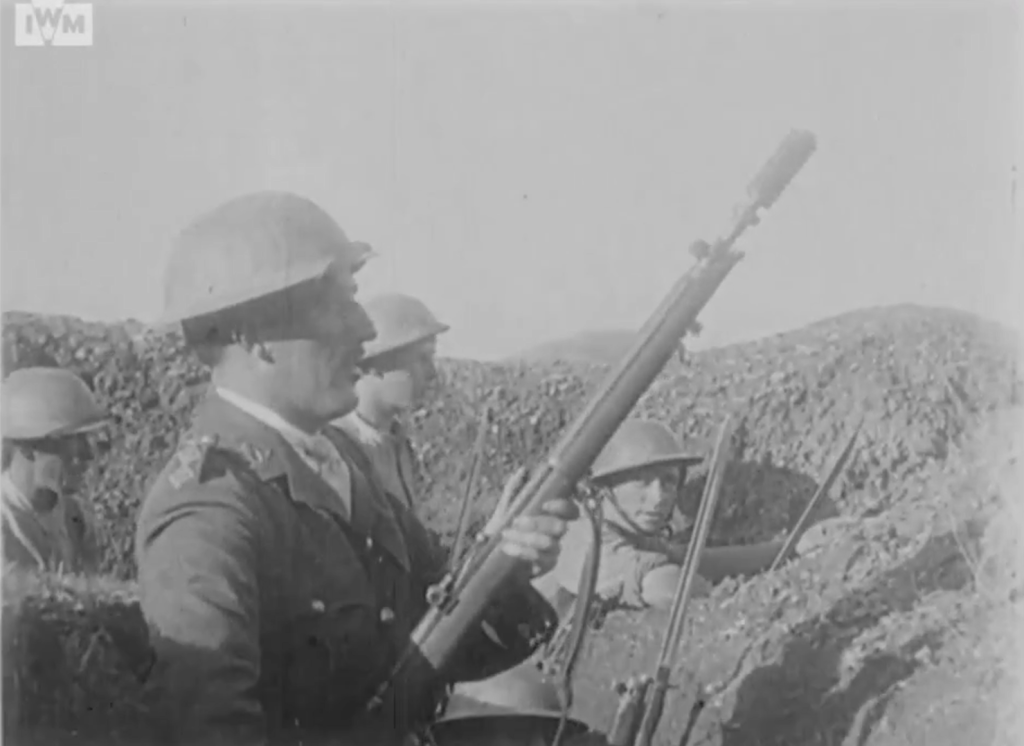
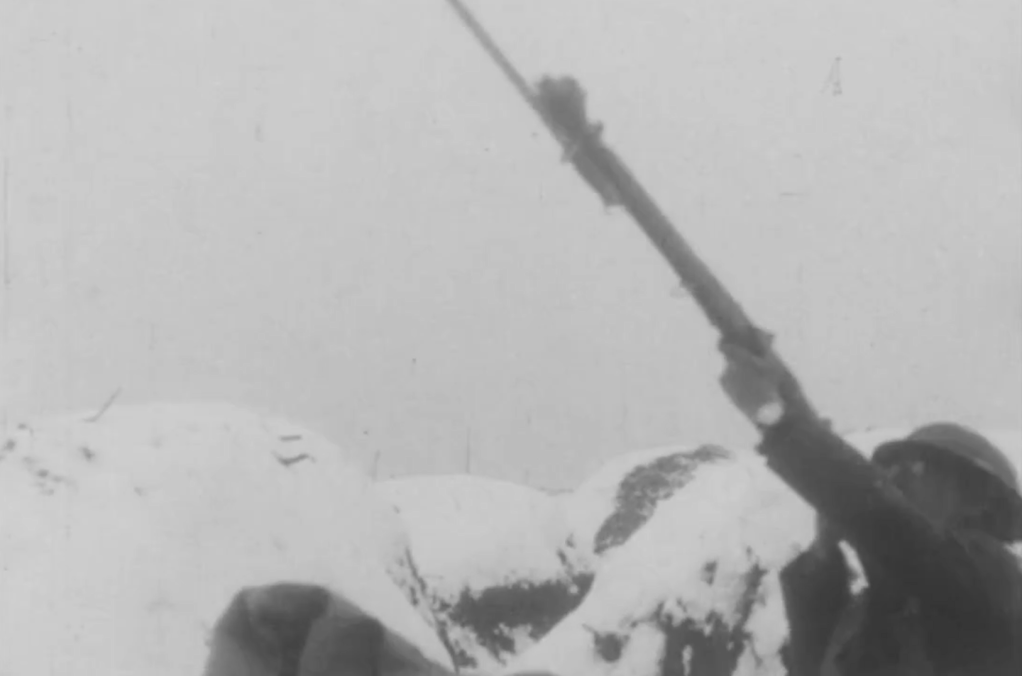
A British officer firing a No.3 Mk2 Rifle Grenade (IWM)
The No.44 could be fired from a Short Magazine Lee-Enfield MkIII rifle, the British had developed a plethora of rod and cup discharger based rifle grenades but the No.44 was the first specifically designed with tanks in mind.
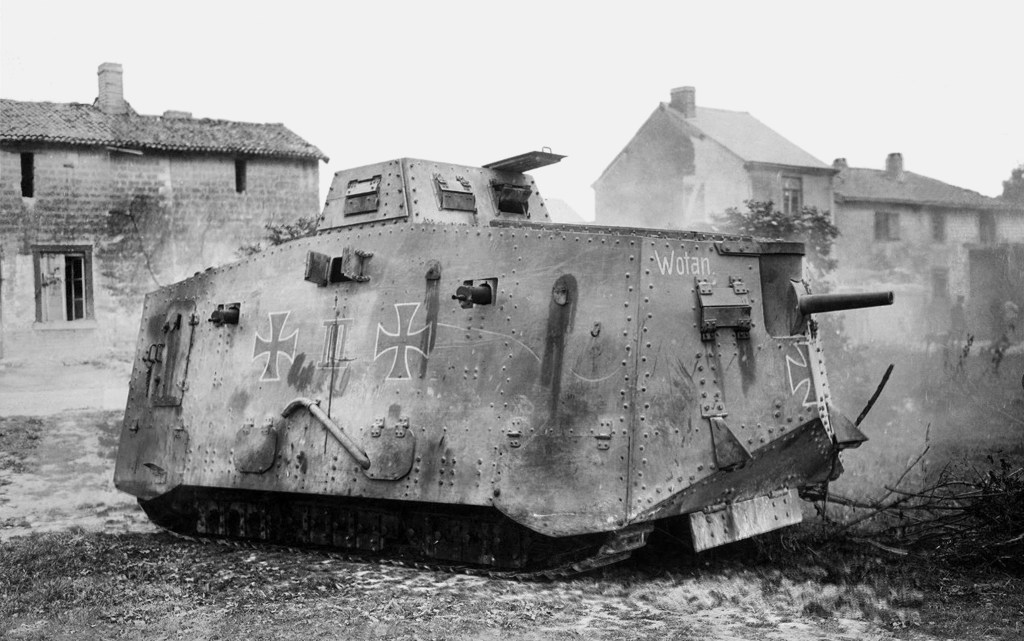
By 1918 the German Army had responded to the threat of British and French tanks by developing their own, the A7V, albeit in small numbers, and by fielding captured allied tanks.
The A7V was a leviathan at over 3.3m tall and more than 30 tons. It would be crewed by at least 18 men. It was decided that the infantryman needed an effective means of taking on tanks.
A German A7V (US National Archive)
Sources suggest that the grenades were developed by the by the Royal Engineers Experimental Station with input from the Tank Corps. The No.44 was largely based on the earlier No.24 rifle grenade. The British Army had been using rifle grenades with rods since February 1915 with the No.2 rifle grenade.
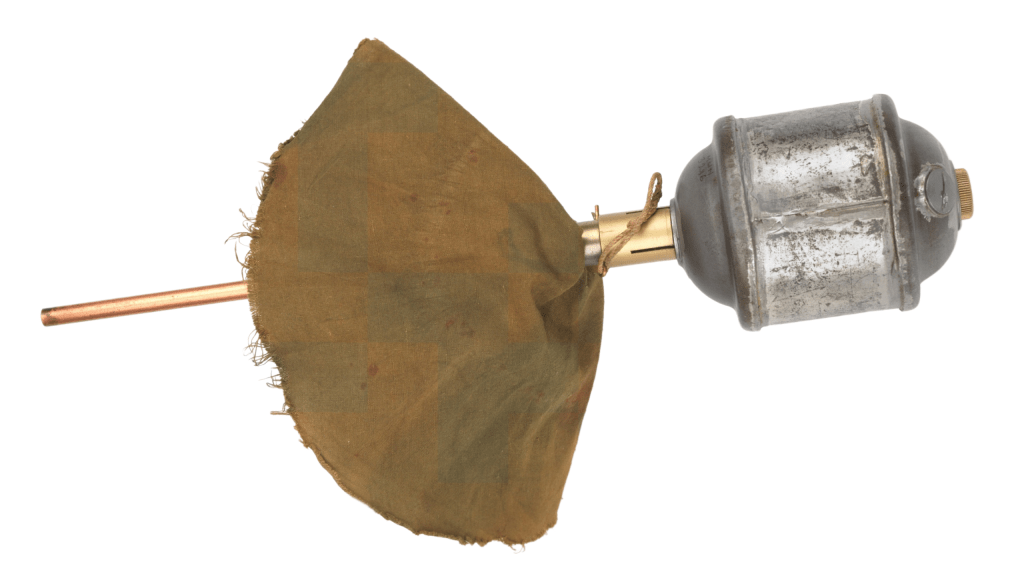
No.44 Anti-Tank Grenade (IWM)
A myriad of grenade designs were developed during the war with dozens of designs entering service between 1915 and 1918. Eventually the British Army moved away from using rodded rifle grenades, because of the implications of barrel wear from the friction of the rods, and focused on discharger cup based designs. The No.44’s spiritual descendent, the No.68, introduced in 1940, would follow this trend and be fired from the same discharger cup used by to fire No.36 grenades fitted with a gas check.
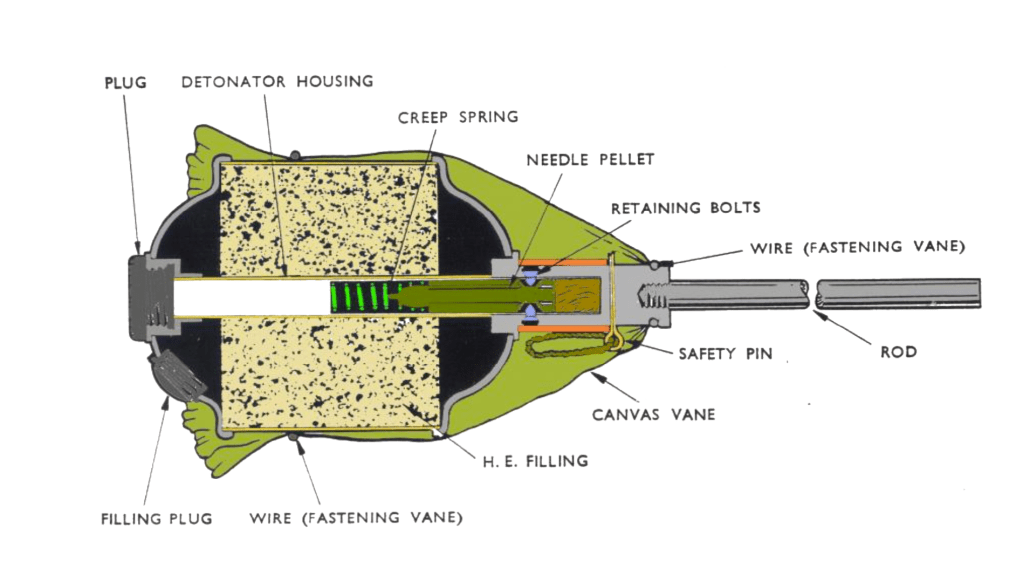
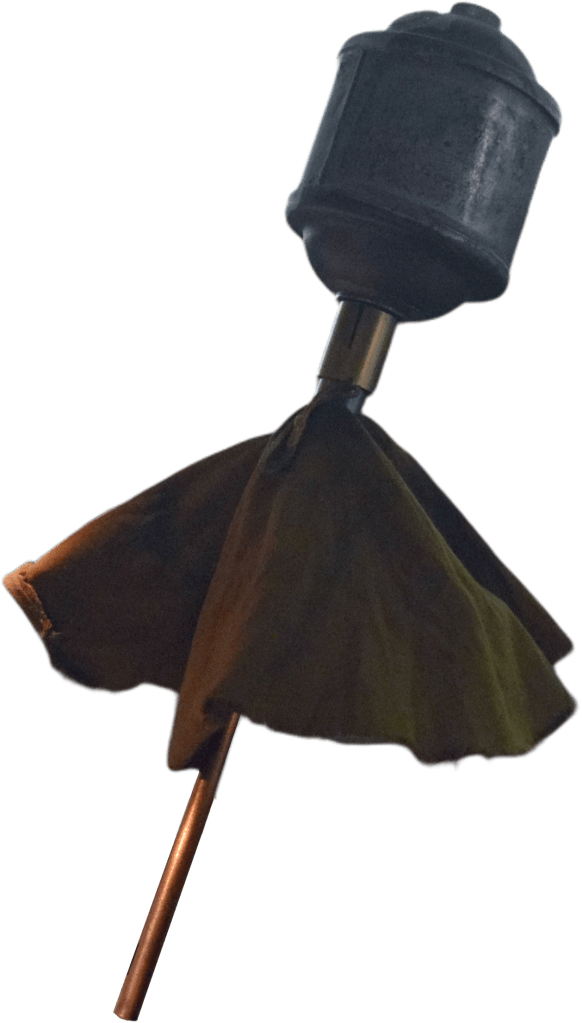
The No.44 grenade itself is made up of a pair of pressed tin plate pieces which make up the top and bottom of the bomb with a rolled sheet of tin making up the central body. The parts were soldered together with a filling plug also soldered into the top of the grenade. The grenade itself contained either Amatol 80/20 or Amatol 83/17 explosive, sources suggest about 11.5 ounces. While externally it may resemble later shaped charges, it was not, the explosive filled the space around the central detonator assembly.
Sectional diagram No.44 Anti-Tank Grenade
The ignition system was essentially a .297/230 cartridge case and a detonator. On firing a release socket moved to allow the retaining bolts to release the striker (or needle pellet) it had been retaining. The striker was then simply held back from the detonator by a spring. When the grenade struck its target inertia cause the striker to over come and compress the spring, allowing the striker to ignite the detonator and set off the grenade’s main filling. Given mass of the bomb and the type of detonator used the No.44 was probably intended for use at very short ranges.
Soldiers firing rod rifle grenades (IWM)
To use the grenade the firer would remove the wire fastening around the grenade to free the canvas vane. This would also allow access to the safety pin. The top plug could be undone and the detonator inserted. The rod was then slid down the muzzle of the user’s rifle. The safety pin could then be removed. A blank cartridge would be loaded into the rifle and when the trigger was pulled the was grenade launched by the gases from the cartridge pushing the rod out of the barrel. The No.44’s flight would be stabilised by the canvas skirt or vane.
There’s no mention of the grenades in the British Army’s Small Arms Committee Minutes so its development must have been documented elsewhere. It does, however, appear in the List of Changes and is known to have been issued from April 1918 onwards but further primary research is needed to find out more about its development, designers and testing.
No.44 Anti-Tank Grenade (Matthew Moss)
The No.44 remained in service into the inter-war period but does not appear in any of the post-war Small Arms Training manuals. Several were published during this period, the first in 1924 and a second in 1931 – the No.44 appears in neither of them. The final pre-war Small Arms Training pamphlet on grenades, published in 1937, is confined to just the No.36 grenade. According to Ian Skennerton’s book on British grenades there were no No.44s remaining in stores by April 1931 and it was declared obsolete.
Sources disagree on the number of No.44s manufactured with some suggesting just under 100,000 while others suggest between 125,000 and 150,000. According to Skennerton 9,800 were issued between April and November 1918. A very small amount when compared to the hundreds of thousands of other, more widely used grenades held in stores at the end of the war.
The German A7Vs were first deployed in March 1918, but only saw their first action the following month. With only 20 A7Vs built and the design proving relatively impractical the Allies had little to fear from German tank attacks. Sadly, there are no readily available records of the No.44’s use or its effectiveness.
British solider firing a cup discharger rifle grenade (IWM)
The A7V’s armour consisted of 5 to 30mm of steel plate depending on location on the tank. This steel plate was not hardened which may have increased the No.44’s effectiveness against it. It may be that the No.44 would have had to have been fired at close range and strike a vulnerable point on the attacking vehicle to have the most effect.
While not the only anti-tank grenade to be developed during the period, the French also developed several rifle grenades, and not as famous as the German T-Gewehr, it does represent Britain’s first dedicated infantry anti-tank weapon.
If you enjoyed this video and article please consider supporting our work here. We have some great perks available for Patreon Supporters – including custom stickers and early access to videos! Thank you for your support!
Bibliography:
An Introduction To British Grenades, I.D. Skennerton, (1988)
British Grenade Rifle No. 44 Anti-Tank, AmmunitionPages, (source)
Grenade, Rifle No 44 A.T. (Anti Tank), Imperial War Museum, (source)
Grenade, Rifle, No 44 Anti-Tank (Sectioned), Imperial War Museum, (source)
British No.24 Mk.II Rod Grenade, Inert-Ord.net, (source)
NLAW is the British Army’s name for the Saab Bofor’s developed MBT LAW, in the early 2000s the British Army was looking for a more capable replacement of its LAW80. The Saab offering, Next Generation Light Anti-tank Weapon, won the contract in 2002 beating out several competitors including the SRAW-based Kestrel from Lockheed Martin/BAe.
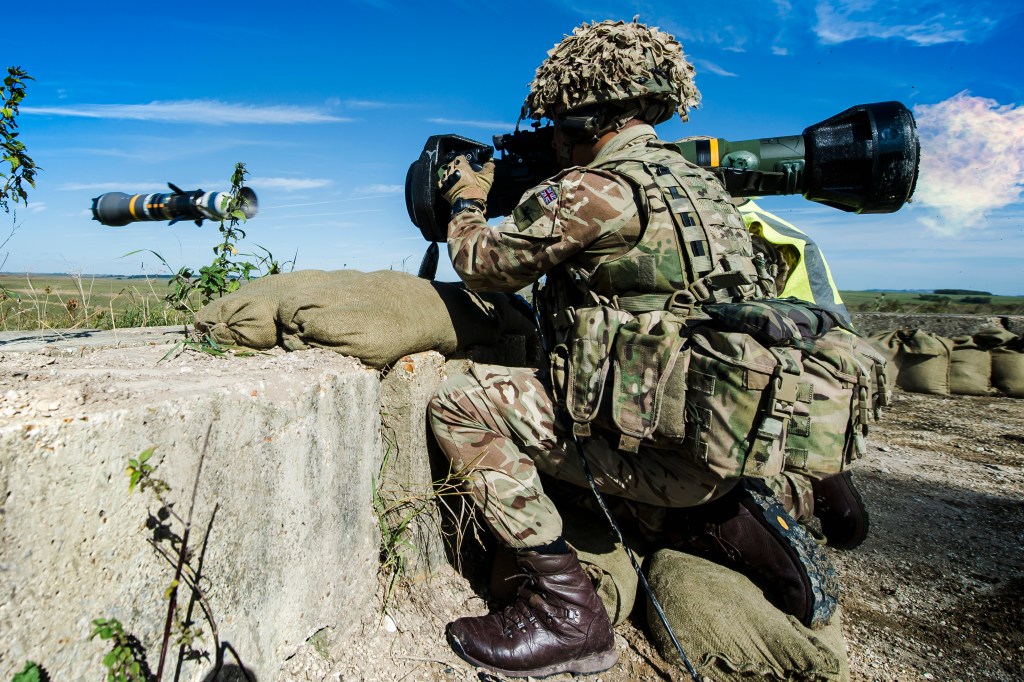
British soldier firing NLAW (British Army)
The UK has just announced the transfer of light anti tank weapons to Ukraine in light of the continuing tensions with Russia. As such the UK is the latest nation to announce that they will be providing weapons to Ukraine. They follow US shipments of Javelin Missiles in December 2021, year and we’ve already seen these in the hands of Ukrainian troops. Most recently it has been confirmed that Lithuania plans to supply anti-tank systems to Ukraine too. The UK’s defence minister Ben Wallace stated that: “We have taken the decision to supply Ukraine with light, anti-armour, defensive weapon system”, while this does not specifically name NLAW, this describes the role which NLAW fulfils.
So what is NLAW?
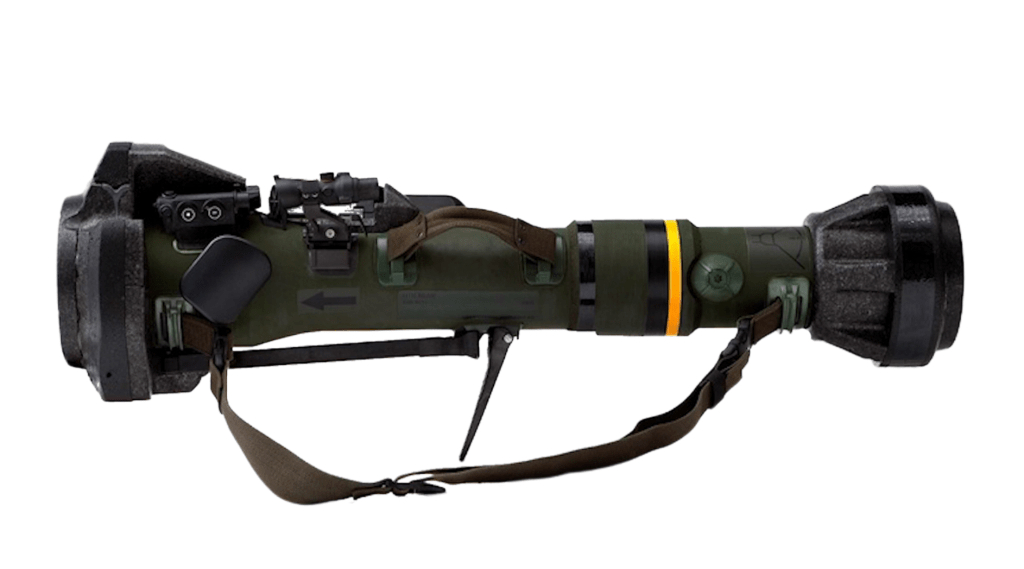
NLAW is a disposable, shoulder-fired, single shot system which weighs about 12.5kg or 27.5lbs. It uses a predicted line of sight guidance system which calculates where the target will be when the missile reaches it. Like Javelin it is capable of targeting a tank’s weakest point, its top side.
NLAW (Saab)
The NLAW has two firing modes: Direct Attack, with the missile flying directly to point of aim, useful for engaging static targets. While the second, Overfly Top Attack, uses the Predicted Line of Sight (PLOS) system. The guidance algorithm optimises the trajectory of the warhead on an elevated flight path over the target with the onboard proximity fuze then detonating and firing an explosively formed penetrator down onto the target.
In British service the NLAW was selected to replace the LAW-80, a 94mm unguided anti-tank rocket, British Army analysis found that in order to provide adequate close range defence against armoured vehicles “significant numbers of NLAW will be required in order to ensure there is sufficient coverage of the battlefield.” This meant the system had to be capable and affordable. Since its delivery and introduction into service in 2009, the NLAW has been the secondary anti-tank weapon of the British Army’s specialised anti-tank platoons’, with the Javelin being their primary. The NLAW is also available for issue as the primary infantry light anti-tank weapon. The British Army describes it as “non-expert, short-range, anti-tank missile that rapidly knocks out any main battle tank in just one shot by striking it from above.” While not cheap, at around £20,000 per unit, NLAW costs significantly less than the longer-ranged, more complex Javelin [estimated at around £70,000 per unit]. It is currently in service with Finland, Sweden, Luxembourg, Indonesia and Saudi Arabia. It has seen action during Saudi Arabia’s interventions in Yemen.
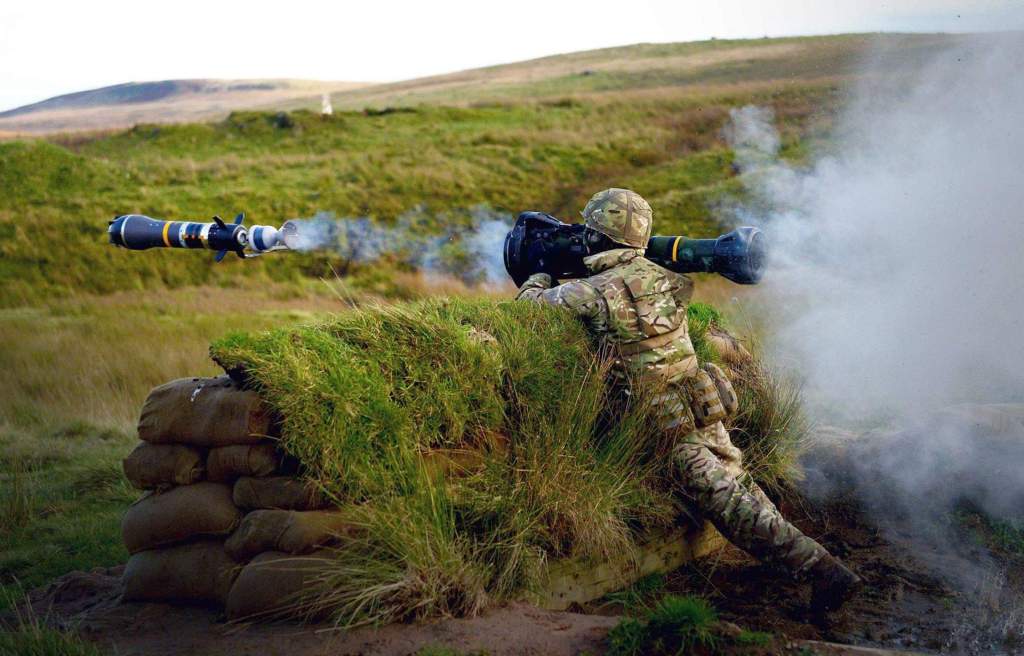
A rifleman of 1 Gurkhas fires an NLAW (Corporal Stephen Harvey / UK MoD)
The weapon can engage close range targets at as close as 20m and uses a soft launch system that enables it to be fired from enclosed spaces. It can take on static target at 600 to 800m and moving ones at 400m. Technically, NLAW is not an anti-tank guided missile as the missile is not guided by an onboard system once it has been fired. Instead it used a Predicted Line of Sight (PLOS) system which enables it to be used like a fire and forget ATGM.
The weapon’s operator activates the PLOS system and the user tracks the target for 3 to 6 seconds in the NLAW’s Trijicon Compact ACOG 2.5×20 sight before firing, the guidance system calculates the predicted flight path to the target to ensure a hit.
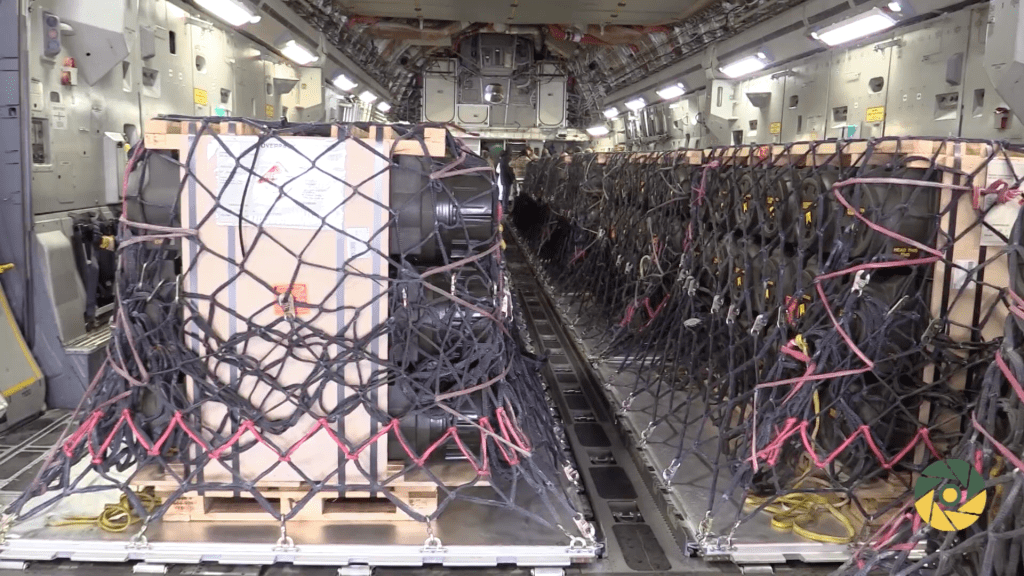
The number of NLAW being dispatched by the UK has not been confirmed although several flights of RAF C-17s were made overnight on 17th January, 2022. Footage released by the Ukrainian Ministry of Defence showing the arrival of the NLAWs enables us to estimate that each flight could have carried somewhere between 180 and 216 NLAWs.
A still from a Ukrainian MoD video showing the arrival of the NLAWs (source)
It isn’t clear just how many NLAW systems the UK has stockpiled but it is likely that as missile systems have a limited shelf-life that the older systems may have been transferred first. The terms of the agreement to transfer the NLAWs hasn’t been made public but it was confirmed small teams of British troops had accompanied the weapons to provide initial training to Ukrainian forces on how to use them. This is in line with Operation ORBITAL, the UK’s training mission to Ukraine which was established in 2015, following the illegal annexation of Crimea. Wallace was keen to stress that “this support is for short-range, and clearly defensive weapons capabilities; they are not strategic weapons and pose no threat to Russia. They are to use in self-defence and the UK personnel providing the early-stage training will return to the United Kingdom after completing it.”
As of the time of writing more than 10 flights have been observed carrying military equipment from the UK. It is estimated that some 2,000 NLAW have been transfered. This was tacitly confirmed by remarks made by Wallace to the press.
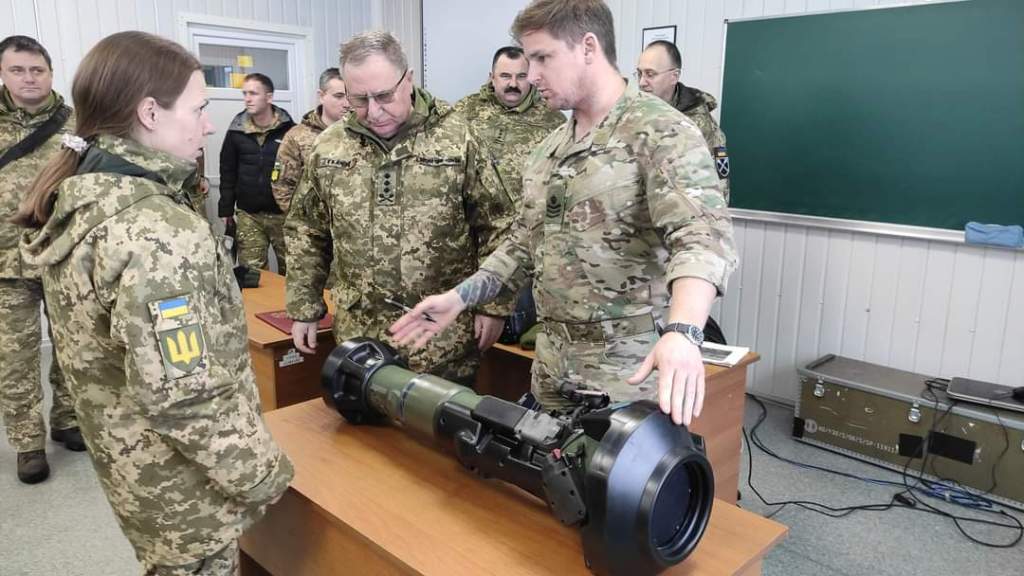
A Ukraine MoD photo showing a training session on NLAW being delivered by members of the OP Orbital training team. (Ukraine MoD)
The UK has been working with Ukraine not just through Op ORBITAL but also more broadly with a number of agreements being signed in 2021 to support Ukraine’s naval capability. While the usefulness of the NLAWs are confined to close range engagements the move is clearly a symbolic signal to Russia.
If you enjoyed this video and article please consider supporting our work here. We have some great perks available for Patreon Supporters – including custom stickers and early access to videos! Thank you for your support!
Bibliography:
Next Generation Light Anti-Tank Weapon (NLAW), ThinkDefence, (source)
Britain Delivered Military Weapons to Ukraine, UkraineMoD, (source)
UK Delivers Light Anti-Tank Defensive Weapon Systems To Ukraine, OvertDefense, (source)
One Shot – One Armored Target. Javelin ATGM, UkraineMoD, (source)
Statement by the Defence Secretary in the House of Commons, 17 January 2022, UK MoD, (source)





 The Armourers Bench