Russia & Ukraine’s Adapted MT-LBs

The MT-LB tracked artillery tractor has become one of the most recognisable armoured vehicles of the war in Ukraine. These versatile vehicles are used by both sides in huge numbers and while first introduced in the 1970s they continue to be used as both armoured personnel carriers and also as the platform for a plethora of weapon systems ranging from rocket pods to auto-cannons to MT-12 anti-tank guns.

In this article/video we’ll look at two specific MT-LB adaptations; one Russian, one Ukrainian.

Russian MT-LB adaptation with a 2M-3 turret which was first seen in March 2023 (via Social Media)

Russia’s Turreted MT-LB

In March 2023, a number of photographs and videos emerged of Russian MT-LBs which had been fitted with a large turret complex over the rear portion of the vehicle. The turrets are naval 2M-3s which mount a pair of 25mm 110-PM autocannons. The first images surfaced at the beginning of March. The strikingly ugly turret quickly led to ridicule on social media and numerous memes mocking the vehicle. Between the 8 and 10 March a series of short videos showing the turret-adapted MT-LBs on the move. One video showed several vehicles in a yard with a large crane, perhaps suggesting they had been off-loaded. The person filming the video notes that the unusual turrets and were apparently ‘sent for defence’. The footage features at least five turreted-MT-LBs, one appearing to also have an adapted front commander’s turret.

Another clip, shared around 10 March, shows a transport train with numerous vehicles loaded, including some Russian Military Police vans. Two (possibly four) of the adapted MT-LBs can be seen. Similarly, another clip showing the vehicles in transit through an urban area features one perhaps two adapted-MT-LBs.

Other examples of Russian MT-LB adaptations with 2M-3 turrets (via Social Media)

Since the early spring there have been no sightings of the vehicles but in late May a video and several photos were shared featuring a Russian combatant riding in the turret of one of the adapted MT-LBs, the anti-aircraft style style sight can be seen in the video and one of the photographs.

Russia is likely making use of turrets that have been in storage since the vessels they were mounted on were decommissioned. Their is probably still an ample supply of ammunition for the 25mm autocannons. The mount has -12° to +85° elevation and 360° rotation giving it a good field of fire for use against ground targets.

Just what role Russia envisioned for the turreted MT-LBs is still unclear. They could be used in direct fire roles perhaps as support guns which can help plug gaps in defensive lines with suppressive fire. Or perhaps as mobile anti-aircraft vehicles for taking on drones but their limited manual targeting would mean they would struggle to be a match for even slow moving drones. Other potential uses might be as assault guns or as a more heavily armed vehicle for internal security duties protecting supply lines from Ukrainian partisans.
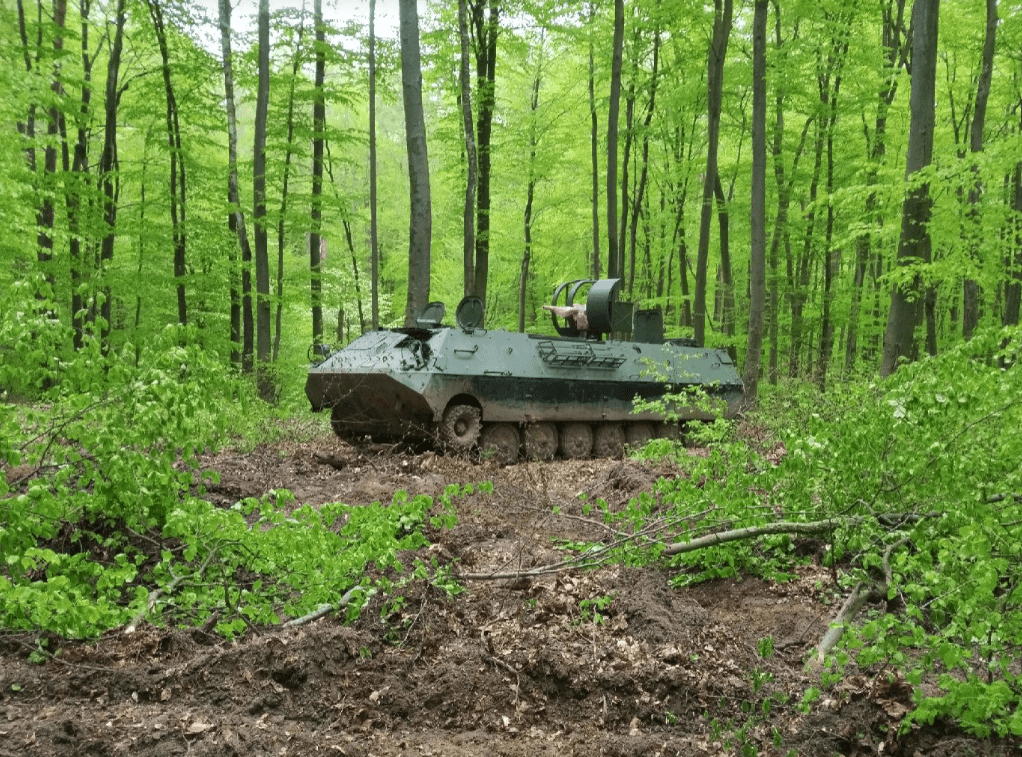
Ukrainian MT-LBu adaptation with a KPV heavy machine gun remote weapon system (via Social Media)

Ukraine’s MT-LB Refits

While many of both sides’ MT-LB adaptations have focused on simply mounting a weapon system to the rear deck or where the commander’s original PKT mount was, a recent Ukrainian refit has gone much further. A video was shared by a Ukrainian MT-LB crewmember which showed six vehicles all refit to a similar configuration. It appears that additional armour has been added to the sides and rear of the vehicle in an effort to provide additional protection to the lightly armoured MT-LB. [Correction: the vehicle has 7 road-wheels indicating the adaptation is likely based on an MT-LBu variant. These have been described as BMP-1LBs.] The vehicles also have new storage baskets, smoke-grenade launchers and a new remote weapon mount controlled from inside the MT-LB. A photograph of the front of the mount shows that it mounts a single 14.5x114mm KPVT machine gun, remotely fired and aimed using an electro-optics module positioned to the left side of the gun. The weapon and optics are protected by a curved gun shield, the cuts in the shield suggest that the weapon’s range of elevation is considerable.
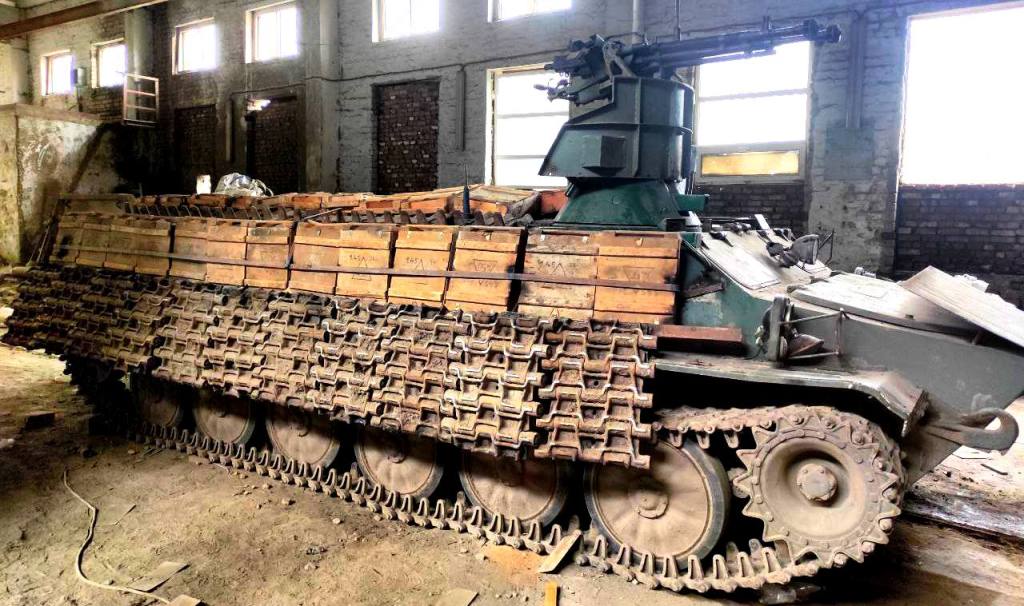
Russian MT-LB adaptation with twin DShk mount on the original PKT turret (via Social Media)

These vehicles are are just two examples of MT-LBs in Ukraine adapted with ad-hoc weapon mounts. There are dozens of other examples of up-gunned MT-LBs deployed by both sides. Other commonly seen adaptations include fitting ZU-23-2 anti-aircaft mounts to MT-LBs

In February 2023, Ukrainian troops shared a video of a Russian MT-LB captured near Vuhledar, which had been fitted with a 2M-7 naval turret mounting a pair of 14.5mm KPV heavy machine guns. Similar vehicles appeared in photographs showing several MT-LBs with ad-hoc adaptations which included one vehicle with the same, as well as other vehicles with other dual and single gun mounts. One can be seen mounted with a single DShK on a tall, exposed pintle mount.

In May, an MT-LB was sighted with a twin DShK mount. Similarly, another MT-LB fitted with a twin DShK mount on top of the existing PKT turret was shared on 10 June, it had also been adapted by adding track and boxes as appliqué armour. Also in June, a photograph of a pair of MT-LBs equipped with A-22 140mm multiple rocket launch systems was shared on Telegram.

With Ukraine forming new brigades and both sides suffering considerable armoured vehicle losses the ubiquitous MT-LB, while lightly armoured, offers one of the best available platforms for mounting additional or role-specific weapons.


Support Us: If you enjoyed this video and article please consider supporting our work here. We have some great perks available for Patreon Supporters – including early access to custom stickers and early access to videos! Thank you for your support!

Mk153 SMAW In Ukraine

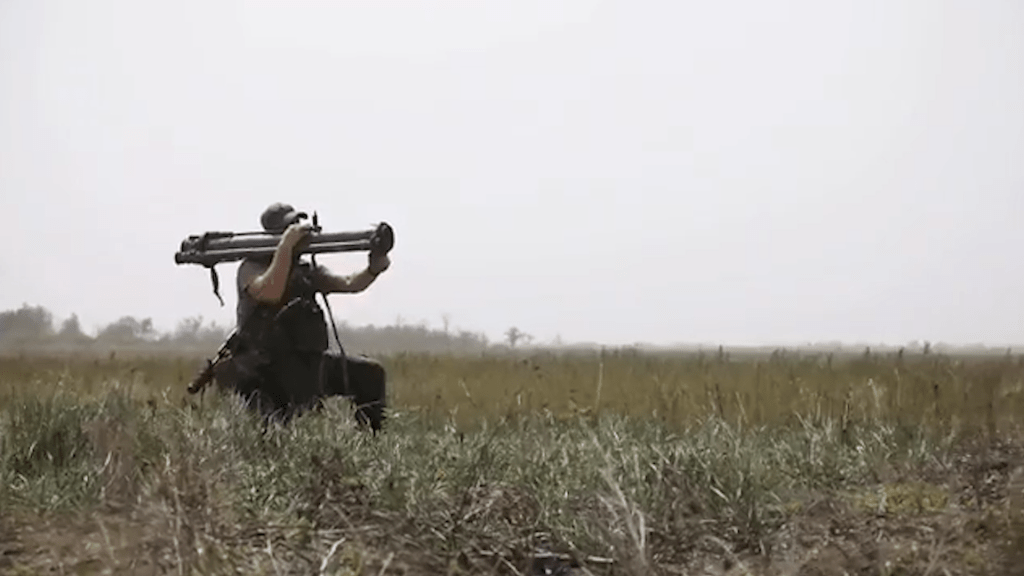
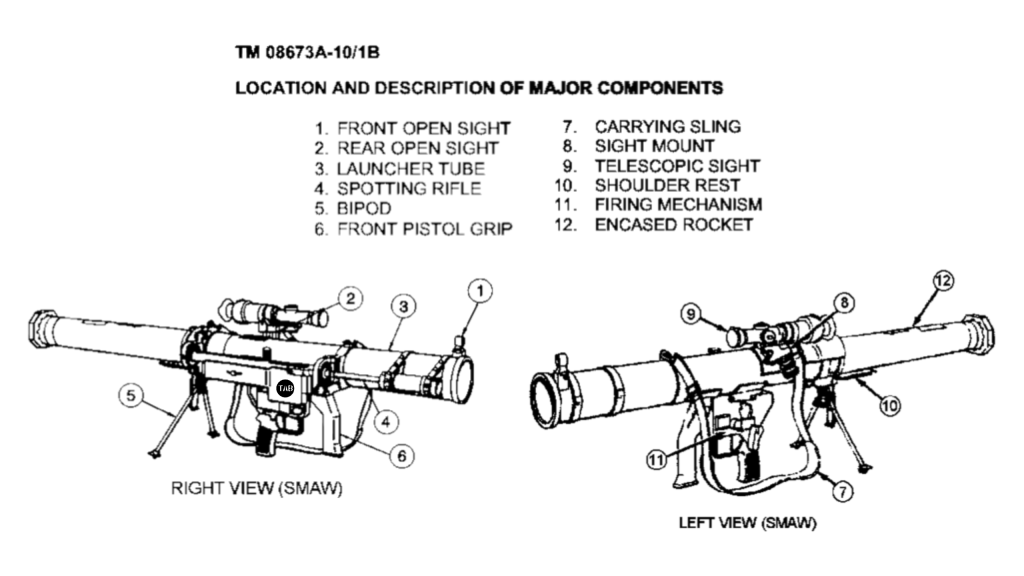
Recent imagery confirms the presence of the Mk153 SMAW in Ukraine. In the last couple of months there have been sightings of the Mk153 in use at the front and at a Ukrainian Armed Forces training ground. The Mk153 is a shoulder-fired rocket launcher capable of engaging structures and armoured vehicles.

The Mk153’s cousin munition – the one-shot, disposable M141 SMAW-D has been seen in theatre in fairly small numbers since February 2022. We have an earlier article/video looking at the SMAW-D, check that out if you haven’t already.

The Mk153 is primarily used by the USMC and was developed from the Israeli IMI B-300 and introduced in the mid-1980s. So what actually is a Mk153? The USMC describes the SMAW as: 

“a one-man operable, 83 mm smooth bore, shoulder-fired, rocket launcher with a spotting rifle attached to the right side of the launcher tube. The encased rocket is fitted into the aft end of the launcher, and the fiberglass encasement is discarded after use. The spotting rifle, which improves firstround hit probability, is fed 9 mm tracers by a magazine, which holds six rounds. The 9 mm round is ballistically matched to the 83mm rocket.”

The SMAW (or Shoulder-Launched Multi-Purpose Assault Weapon-Disposable) can fire Encased High-Explosive, Dual Mode (HEDM) and Encased High-Explosive, Anti-Armor (HEAA) rockets. The HEDM is an anti-structure and anti-light armour munition with a warhead containing 2.4 pounds Aluminized Comp A-3 capable of penetrating 200mm (8 in) of concrete. The HEDM has a maximum effective range of 250m. The HEAA is a dedicated anti-armour round able to penetrate up to 600mm (23.6in) of rolled homogeneous steel, with a maximum effective range of 500m. It uses a shaped charge warhead with 1.89 lbs Octol explosive. The Novel Explosive (SMAW-NE) has a 4lbs enhanced-blast warhead, containing PBXN-113, designed for bunker busting which the USMC manual describes as “designed to provide enhanced-blast lethality to defeat personnel in reinforced structures and caves.”

Mk153 in Ukraine (via Social Media)

The Mk153 has iron sights and a Mk42 3.8× magnified optic and a 9mm spotting rifle on the side of the launch unit. This spotting rifle fires tracer rounds which match the rocket’s ballistics and can help range the target and aid the operator in applying the right hold for the target. The tracer cartridge that contains a 9mm jacketed bullet with an aft burning .22 calibre tracer element. Spotting rifle magazines for the rockets are supplied on the outside of the rocket carry tube end cap.

The first sighting of a Mk153 in the field came from some B roll footage of a UK Channel 4 News report published on 28 February. It showed men of the Ukrainian 68th Jager Brigade on the front-line near Vuhledar. Several soldiers are seen preparing a Mk153 to fire.

On 17 March a video featuring a Mk153 SMAW being fired at a range was shared on Telegram. It shows a SMAW being fired and a pile of spent tubes and unfired rockets on the ground. The fired and unfired rockets all appear to have yellow bands indicating high explosive munitions – the Mk153’s practice round has a brown band. Sadly, we can’t  make out the other markings which would indicate the type of rounds being fired.

Mk153 in Ukraine (via Social Media)

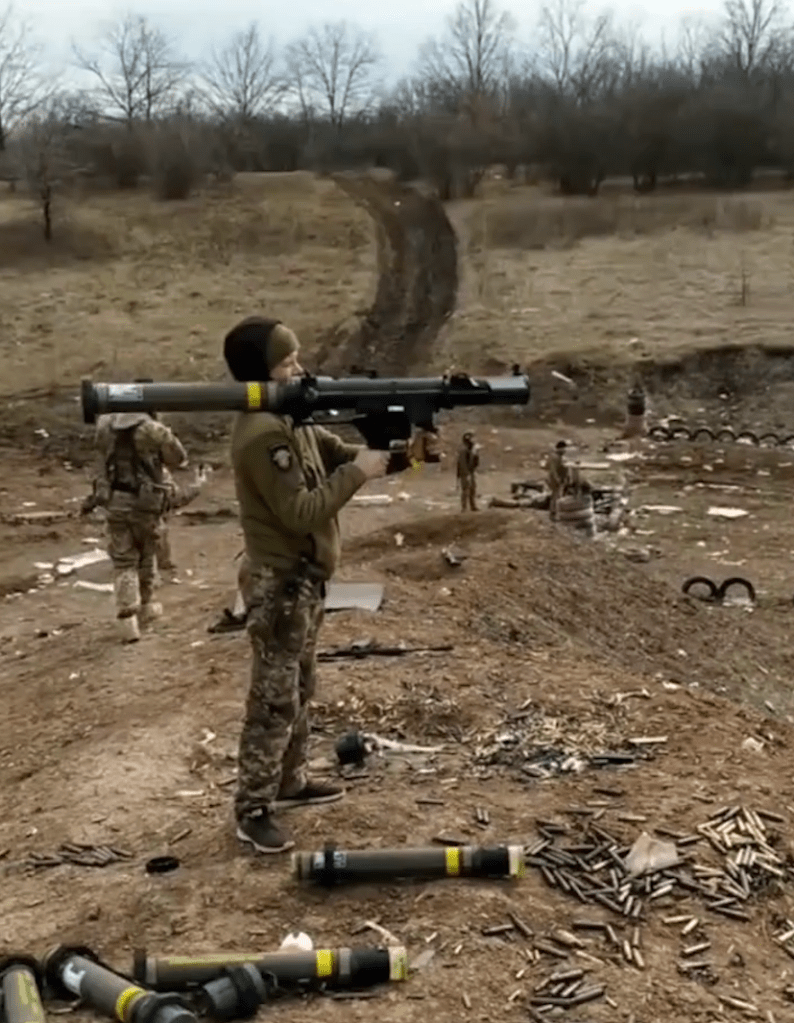
At the end of March another video of Ukrainian soldiers preparing a Mk153 for firing was shared again at the range. The video gives us the best close up of the launcher in theatre so far and shows not one but two launch units. We get a good look at the tube and the launch unit’s spotting gun on the right hand side. This video shows the weapon being prepared to fire, the rocket is inserted into the launcher and rotated clockwise a quarter-turn to lock it in place before the Ukrainian soldier fires at a target down range.  

Another interesting detail we can see is the white paper hang ing from the rocket. This is a humidity indicator which allows quick visual inspection to see if the rocket might have been compromised by moisture. The indicator on this rocket appears to have pink in all three of its indicators circles, meaning the munition might be compromised, in USMC service this would mean the rocket needs to be returned to the ammunition supply point. Despite this the rocket appears to fire normally and detonate down range. It’s worth noting that the launch unit isn’t fitted with an optic in any of the clips.

Update – 24/05/23: An additional clip of a SMAW being fired in an urban environment, perhaps during the defence of Bakhmut, date unknown.

Update – 25/06/23: A photograph of a Ukrainian combatant with a SMAW share online, June 2023

Update – 25/07/23: A photograph originally posted in December 2022 showing a SMAW launcher with rockets in the background.

Update08/08/23: Short video of a Ukrainian combatant firing a Mk153 at a distant (judging by elevation) target.

Update – 3/9/23: An interesting video showing a phone mounted onto a SMAW MK153, this allows a clinometer app to be used to enable the SMAW to be used in the in-direct role, angling the weapon upwards.

Update – 24/09/23: Bravo Rapid Reaction Group training with SMAW Mk153 at the range.

Update – 3/4/23: A combatant from Ukraine’s 3rd Assault Brigade shared video on 27 March of a firing of a SMAW Mk153 at a range, filming date unconfirmed.

Mk153 Specifications (per USMC):

Rocket Launcher
Length29.9 inches
Weight16.9 pounds
Encased rocket (as carried)
Length27.3 inches
Weight12.7 pounds
Caliber83mm
Weapon Ready to Fire
Length53.1 inches
Weight29.0 pounds
Range
Maximum effective (HEDM)250m
Maximum effective (HEAA)500m
Time of flight to 250m 1.6 sec

Support Us: If you enjoyed this video and article please consider supporting our work here. We have some great perks available for Patreon Supporters – including early access to custom stickers and early access to videos! Thank you for your support!


Bibliography

Ukraine War: on the front lines with the 68th Brigade, C4 News, (source)

Introduction to Crew Served Weapons, USMC, (source)

Launcher, Assault Rocket, 83mm (SMAW) MK153 Mod 0, USMC, (source)

Canadian Small Arms & Light Weapons In Ukraine

After seeing a considerable number of Colt Canada C7 rifles and C8 carbines being used in Ukraine I decided to investigate their origins. I reached out to various Ministries of Defence to enquire if they had provided the rifles. The Canadian Ministry of National Defence not only confirmed that they had provided various small arms but their spokesperson was also kind enough to confirm some of the types of small arms and light weapons which Canada has transferred to Ukraine since February 2022. 

Due to operational security the quantities of weapons transferred obviously couldn’t be confirmed but there’s some interesting weapons in the list that might not be what was expected. 

Canada aid arriving in in Ukraine (Ukrainian MoD)

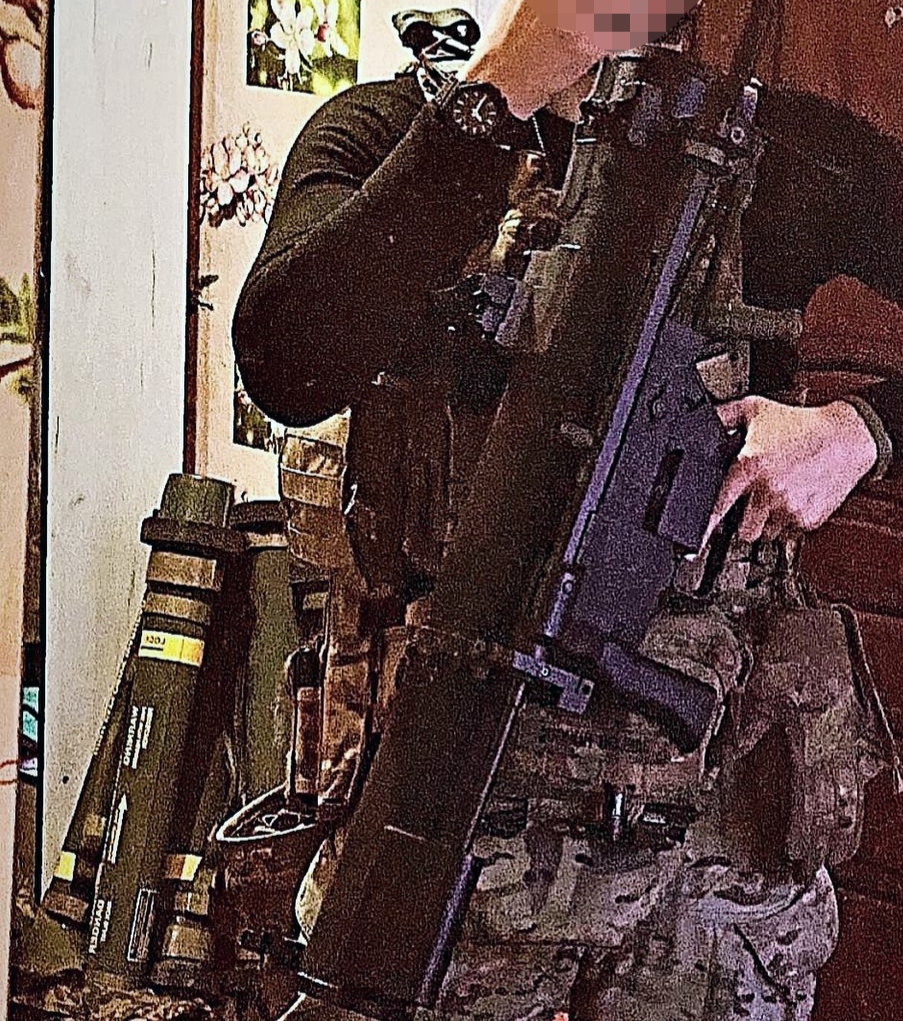
In terms of anti-tank weapons we already know that at least 100 Carl Gustaf M2 Recoilless Rifles were transferred, along with 2,000 rounds of 84mm ammunition. We have seen a number of M2s which are potentially of Canadian origin in the field. Also confirmed back in March was the transfer of as many as up to 7,500 hand grenades and up to 4,500 M72 LAW anti-tank weapons. These have probably been seen in the field but without close ups of markings and with so many countries transferring LAWs its difficult to ID them specifically in imagery from the field.

A potential Canadian Carl Gustaf in Ukraine (via Social Media)

In terms of small arms things get interesting, as mentioned C7A1 rifles have been seen in a considerable number of photos and videos from Ukraine. Produced by Diemaco, now Colt Canada, it seems obvious that these rifles originated from Canada. However, the spokesperson from the Ministry of National Defence confirmed that Canada has not provided any C7 pattern rifle. Instead, they confirmed that Canada has only provided C8 carbines. Sources familiar with the carbines sent to Ukraine noted that the weapons were C8 SFWs with a railed forend. So far the only photo which may visually confirm the presence of Canadian C8 SFWs is this one of some Ukrainian SSO operators. An operator in the middle of the photo (see below) has a C8 with a railed forend, with a vertical front grip attached. Other operators around him have C8s with the earlier non-railed handguards.

73rd Naval Special Purpose Center operators with what may be a C8 SFW, along with earlier unrailed C8 carbines (via Social Media)

It was also confirmed that both C9 light machine guns and C6 general purpose machine guns have been transferred. The C9 is Canada’s designation for the FN Minimi while the C6 is their designation for the 7.62x51mm FN MAG. Canada currently uses the upgraded C9A2 with a 4 position stock and longer rail.

Colt Canada C8 Carbines in Ukraine – these C8s were not provided by the Canadian government (via Social Media)

The spokesperson also confirm the types of precision rifle transferred to Ukraine noting that “both medium .308 and .338 calibre, and heavy .50 calibre sniper rifles were provided.” Earlier media reports had suggested that .50 calibre sniper rifles were transferred but there had been no mention of medium caliber rifles. It was not stated whether the .338 rifles were .338 Norma Magnum or .338 Lapua Magnum.

While the Canadian military currently fields the C15 Long-Range Sniper Weapon (the McMillan TAC-50) the Ministry of National Defence did not confirm what exact model had been sent to Ukraine. There have been a number of sightings of TAC-50s, and while a number of countries field them, some of those seen in Ukraine may have originated from Canada.

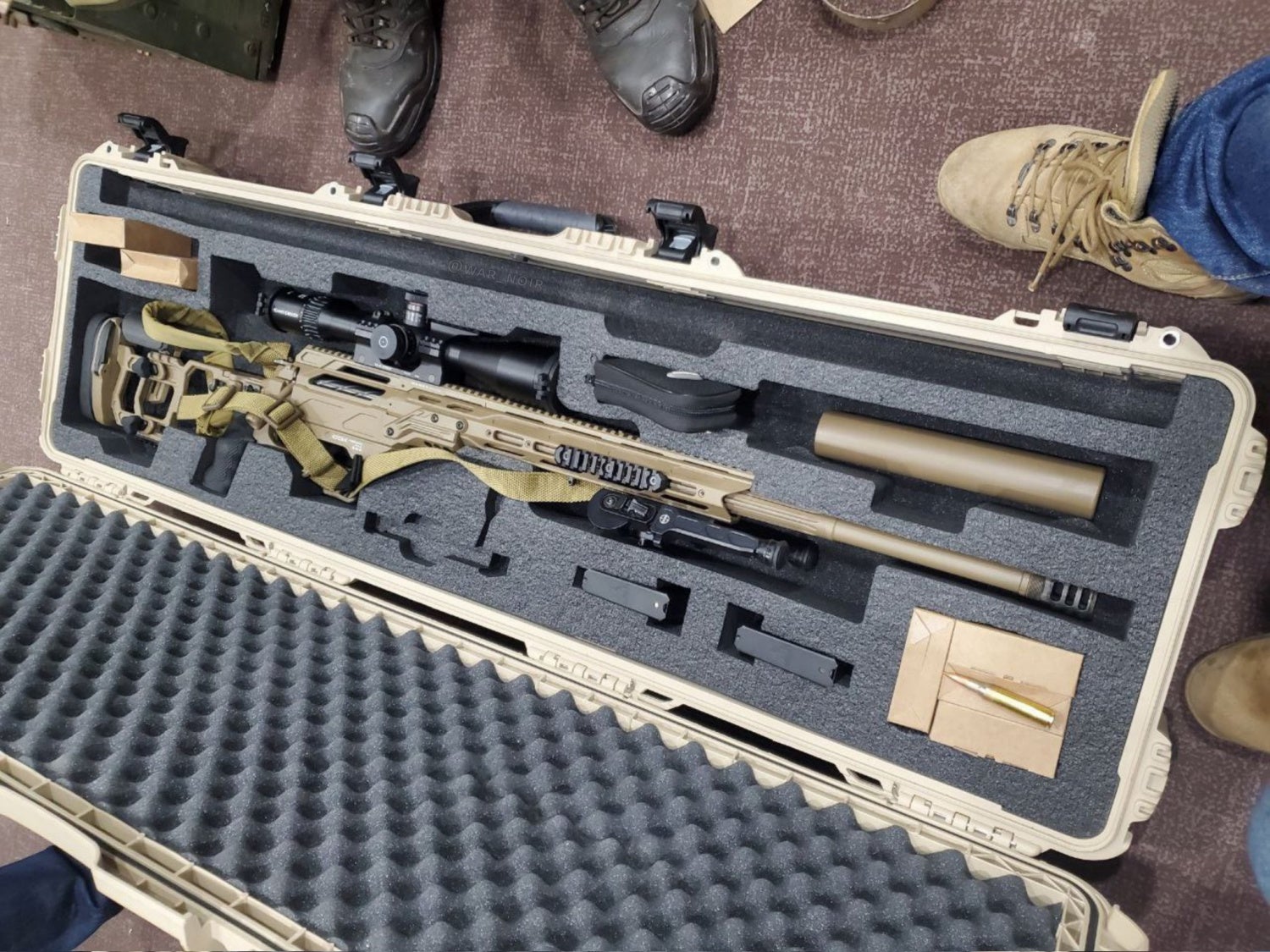
An anonymous source familiar with the program to transfer weapons to Ukraine confirmed that CADEX Defence CDX series rifles had been sent to Ukraine from the stores never sent to Kurdish forces. These are believed to have included CDX TAC rifles in .338 and CDX-50 Tremors in 12.7x99mm.

The weapons initially sent to Ukraine were reportedly drawn from a selection of weapons worth an estimated $10 million, which had originally been procured in 2016 for Kurdish forces fighting ISIS in Iraq. The plan to arm the Kurds stalled in 2017 and since then the weapons have been in storage at the Canadian Forces Supply Depot in Montreal. This equipment included sniper rifles, 60mm mortars, Carl Gustaf anti-armor weapons and small arms. It is from these stores that many of the sniper rifles have been drawn. In February, just before the Russian invasion was launched it was reported by a number of Canadian media outlets that the weapons sent to Ukraine came from the stores originally destined for the Kurds.

CADEX CDX photographed in Ukraine in March (via War_Noir)

In the past Canada has also provided Ukraine with .50 caliber LRT-3 rifles from PGW Defence Technologies, this type may have again been provided either via the Canadian government’s transfer or privately donated by Canadian citizens.

Based on information from sources familiar with the transfer the ‘.338’ chambered medium caliber rifles are believed to be CDX TAC rifles from CADEX rather than the C14 Timberwolf MRSWS (Medium Range Sniper Weapon System) from PGW Defence Technologies, which is currently in use with Canadian forces. The .308 chambered rifle mentioned is less clear, it may be a reference to the 7.62x51mm Parker-Hale C3 sniper rifle which is still in service or possibly a .308/7.62x51mm chambered rifle from PGW or CADEX. They are unlikely to be Tikka T3s which recently entered service with the Canadian Rangers as the C19.

Interestingly, the pistols which were transferred were not Browning HiPowers, which is Canada’s current standard service pistol – soon to be replaced by the SIG Sauer P320, but Glock 17s. Very few images of Glock 17s in use in Ukraine have surfaced so far. Sources suggest that the Glock pistols were also a part of the selection of weapons originally destined for Kurdish forces fighting ISIS.


Support Us: If you enjoyed this video and article please consider supporting our work here. We have some great perks available for Patreon Supporters – including early access to custom stickers and early access to videos! Thank you for your support!

Bibliography:

https://www.canada.ca/en/global-affairs/news/2022/02/canada-sending-additional-25m-military-aid-to-support-ukraine.html

https://www.canada.ca/en/department-national-defence/news/2022/03/defence-minister-anand-announces-additional-military-support-to-ukraine.html

https://www.canada.ca/en/department-national-defence/services/operations/military-operations/current-operations/operation-unifier.html

RPG-30: Russia’s Dual Tube Rocket Launcher

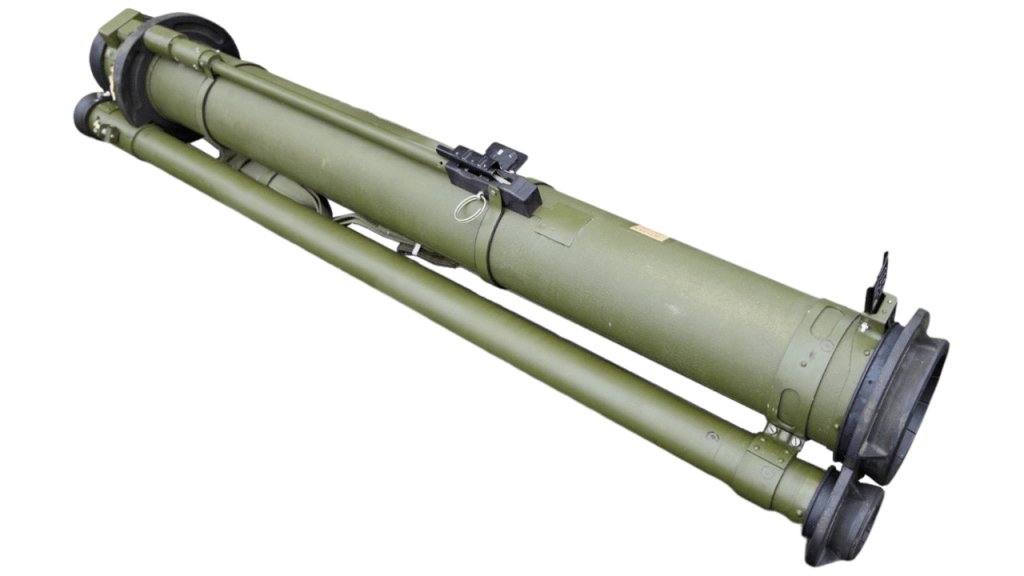
The RPG-30 is one of Russia’s more advanced disposable anti-armour weapons. Developed in the early 2000s by Bazalt it is designed to overcome reactive armour and active protection systems. It entered service in 2012 and has seen extensive use during the fighting in Ukraine. 

The 7P53 RPG-30 “Kryuk” or ‘Hook’ is a 105mm fin and spin stabilised rocket propelled munition with a tandem HEAT shaped charge warhead. The RPG-30 overcomes ERA and APS by using a 42mm IG-30 decoy projectile, which is believed to be inert, coupled with the main rocket’s tandem warhead. This can be seen in a secondary, thinner tube running along the side of the weapon. The precursor decoy causes premature activation of the APS and allows the main warhead to exploit the gap in the tank’s protection. The theory being that the target’s APS takes some time, perhaps half a second, before it can engage again. The gap between the firing of the two rockets is measured in milliseconds and the lag, while noticeable, does not appear to be significant enough to effect the user’s aim or accuracy on target.

RPG-30 (Vitaly Kuzmin CC BY-SA 4.0)

The RPG-30 uses the PG-30 tandem HEAT warhead, similar to the PG-27 used by the RPG-27. It can reportedly penetrate 750mm of rolled homogeneous armour and up to 650mm of rolled homogeneous armour after ERA. Effective range estimates vary with the average suggesting 200m.

The weapon’s sights are simple and consist of a folding ladder front sight and rear sight – there does not appear to be provision for mounting optics. Flipping up the rear sight also cocks the weapon. The disposable tube(s) is made of aluminium with a fibreglass outer layer. Sources suggest it weighs around 10.3kg (22.7lbs) and has an overall length of just over 1m (1,135mm/44.7in). 

A pair of RPG-30s captured in April 2022 (via Social Media)

Unlike other Russian weapon systems few videos of its use have been shared by Russian state media or Russia’s defence exports corporation Rosoboronexport. The ongoing war in Ukraine, however, has provided our first real look at the weapon in action. As soon as the Russian invasion was launched on 24 February, RPG-30s began to be seen in use with Russian forces. By late February and early March imagery of captured examples was shared on social media. 

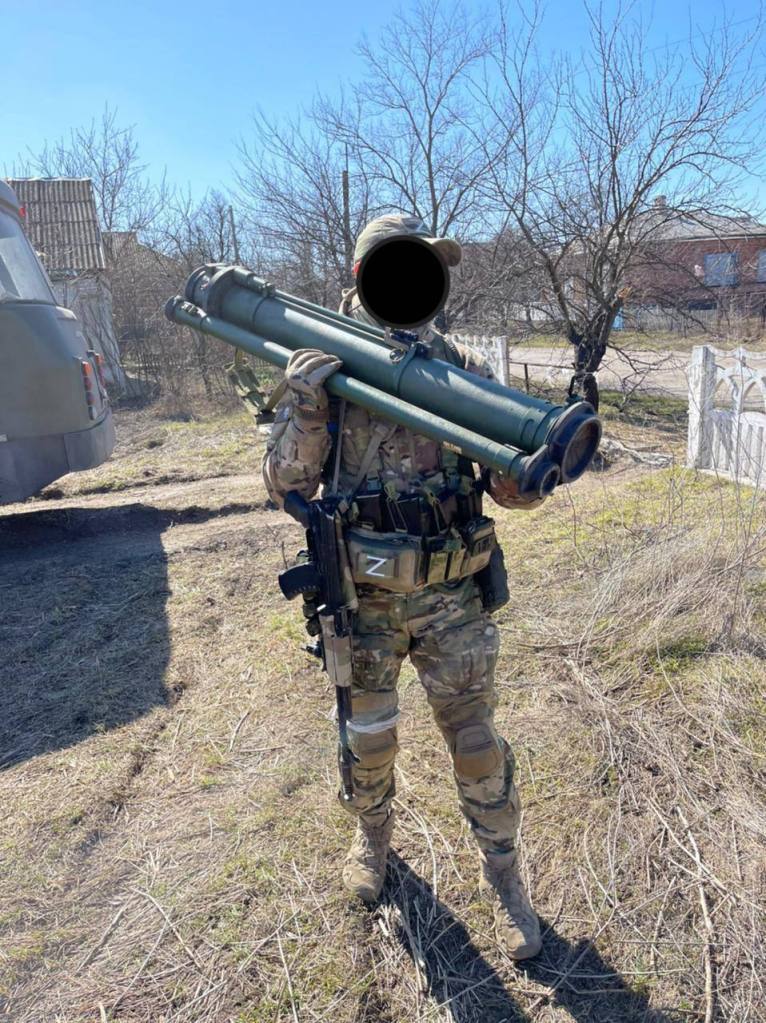
Russian soldier posing with RPG-30, March 2022 (via Social Media)

The first images of the weapon came from Russian sources in late February, just after the invasion. This was quickly followed by imagery of captured examples, most notably from the column of Tigr-M armoured infantry mobility vehicles in Kharkiv.  A photograph of a further two captured RPG-30s appeared in April, while another example was photographed in Donbas in early May. Later in May a photo of a Russian soldier posing with one was shared on social media and in September significant caches of weapons were captured in Kherson and Balakliya. 

Still of a Russian soldier firing an RPG-30, August 2022 (via Social Media)

In late August we got our first brief look at the RPG-30 being fired in a montage video of VDV weapon systems (see image above). Earlier in mid-August a sort of ‘unboxing video’ was shared giving us a good close up look at some of the packaging the RPG-30s are shipped in and the markings on the side the weapon. Most recently in some further video of the RPG-30 being fired on a Russian Western Military District range also surfaced giving us a good look at the weapon in action.

RPG-30s captured in April (via Social Media)

Of course the weapon is designed to be simple to use, anyone with training on a similar shoulder-fired disposable anti-armour weapon can operate it. While it has been said that its widespread use in Ukraine is somewhat ironic given that Ukraine does operate any APS equipped tanks, the weapon is still useful against less sophisticated tanks. While the precursor might potentially deliver some limited kinetic damage to the ERA block, the RPG-30’s tandem warhead is capable of defeating the ERA fitted to most Ukrainian tanks, though of course, the same can be said of Russia’s other anti-armour weapons which use tandem warheads.

Update 27/10/22:

The Georgian Legion recently shared a short video looking at a captured RPG-30. The video also includes firing footage of the weapon.

Update 15/09/23:

Clip of a Ukrainian combatant firing a captured RPG-30 at the range.

Update – 20/8/24:


If you enjoyed this video and article please consider supporting our work here. We have some great perks available for Patreon Supporters – including custom stickers and early access to videos! Thank you for your support!


Bibliography:

105mm PG-30 Rocket, CAT UXO, (source)

RPG-30 Kryuk (Hook), US Army TRADOC, (source)

Russian Army receives cutting-edge antitank rocket launchers, TASS, (source)

Ukraine’s New & Improved Home Made Self-Propelled Gun

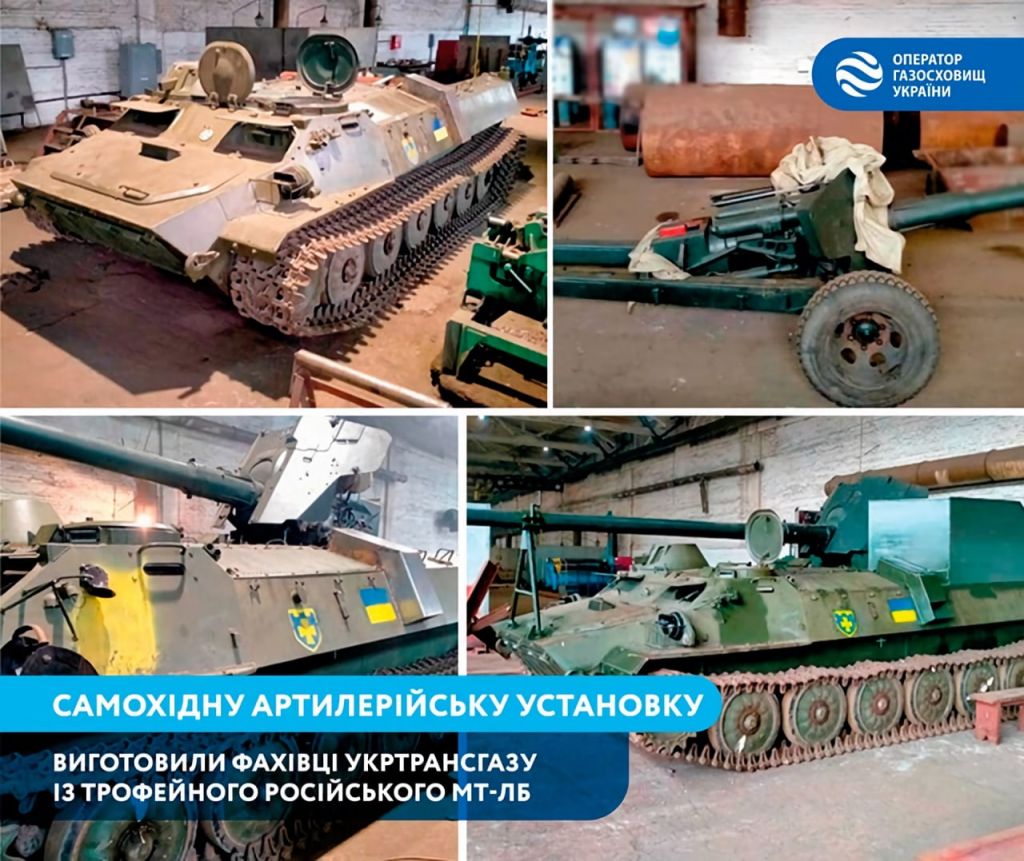
Back in August we took a look at an improvised vehicle built by Ukrainian troops near Mykolaiv. It paired an MT-LB tracked armoured fighting vehicle with an MT-12 100mm anti-tank gun. Now engineers from Ukrtransgaz – Ukraine’s state-owned gas pipeline company, have taken that concept and developed an improved version of the home made self-propelled gun.

On Monday 26 September, Ukrtransgaz shared a post on their facebook page about the new vehicle saying:

“Our colleagues were approached by the soldiers of the TpO [Territorial Defence Forces] detachment with a request for the manufacture of such an installation. The idea of ​​combining an armored personnel carrier and a cannon into an improvised self-propelled gun was borrowed from the Mykolaiv military, which in August produced and successfully tested the first such installation in battle. So they decided to “improve” the trophy Russian MT-LB with the Ukrainian Rapira for their own needs.”

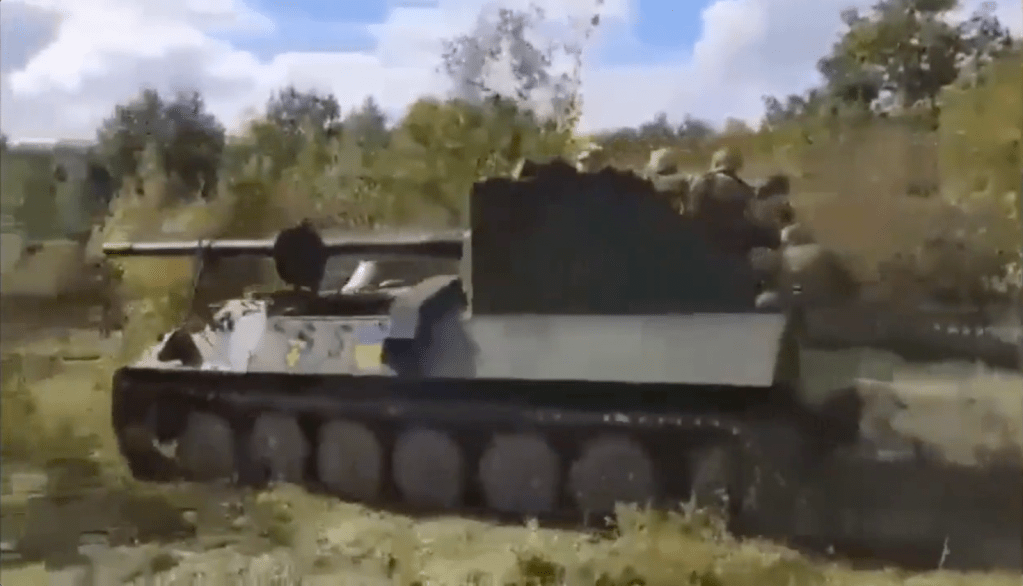
Ukrtransgaz noted that the vehicle took a team of six engineers two weeks to construct. Beneath the facebook post the company also shared a short, sadly low resolution, video of the vehicle being tested. TAB reached out to Ukrtransgaz for a better version of the footage but sadly they didn’t have one available.

The team behind the gun had assistance from an unnamed ‘specialized university’ who helped increase the gun’s elevation, which is normally capped at +20°, and in theory increase the gun’s range. It’s unclear which ammunition is being used with Ukraine’s MT-12s, whether it’s APFSDS or HEAT.

The company states that the vehicle is ready for operations and has successfully passed tests on the range, ready to be deployed. They also note that the team intends to manufacture at least two more such self-propelled guns.

Examining the Ukrtransgaz SPG we can see that the roof of the MT-LB has again been cut back but the the mounting of the gun is slightly higher and armour protection has been built up around the sides for the gun crew. From the footage shared we can see that theres room for around six troops to sit in the rear of the vehicle. Unlike the earlier Mykolaiv-built vehicle there does not appear to be the pair of hydraulic supports to stabilise the vehicle when firing.


Update 15/12/22: A video from the Ukrainian government’s United24 project showcased a further example of the homemade MT-LB mounted anti-tank gun vehicles. This time mounting the older T-12 100mm anti-tank gun, the T-12 is the predecessor to the MT-12 and uses the same family of ammunition. The vehicle seen in the video is on operations around Bakhmut, acting as a self-propelled gun. It lacks the armour shield to protect the gun crew seen on earlier examples of the homemade MT-LB based vehicles but it does have the supporting struts at the rear of the vehicle.

Update 23/12/22: Another interesting undated video of one of Ukraine’s MT-LBs with a 100-mm gun MT-12 mounted. Note the movement of the vehicle on firing, this example has the support struts at the rear of the vehicle, to minimise this and remove the need to re-lay the gun, but they have not been deployed. Unlike the version seen in the 15 December update this version utilises the MT-12s original gun shield but does not have additional protection added.


If you enjoyed this video and article please consider supporting our work here. We have some great perks available for Patreon Supporters – including custom stickers and early access to videos! Thank you for your support!
PTKM-1R: Russia’s Most Advanced Anti-Tank Mine

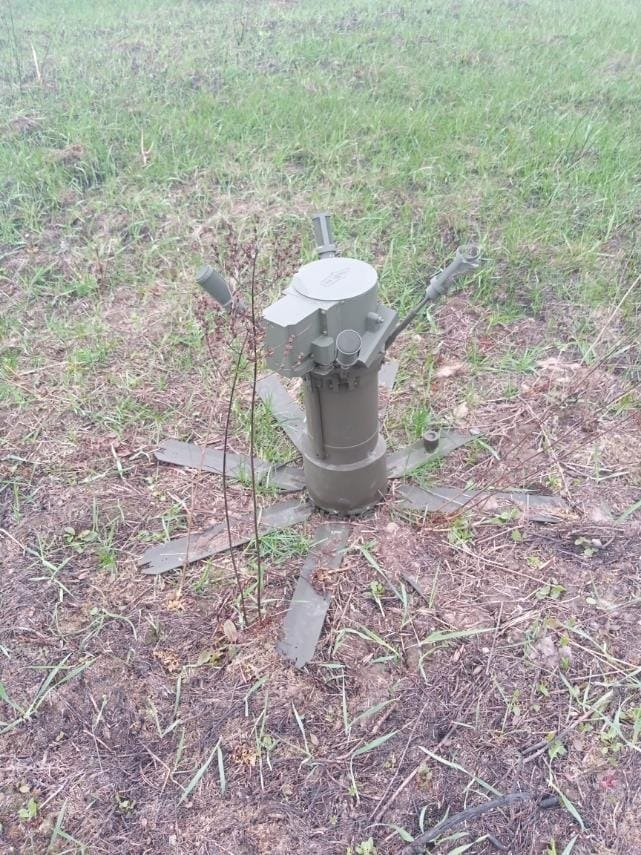
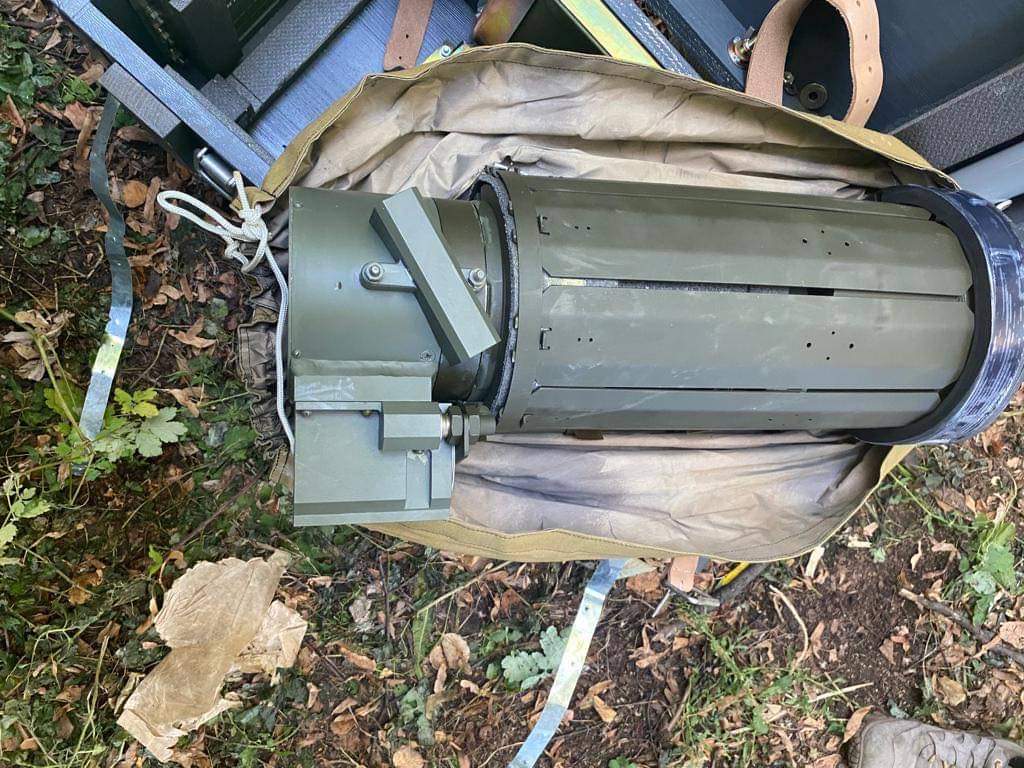
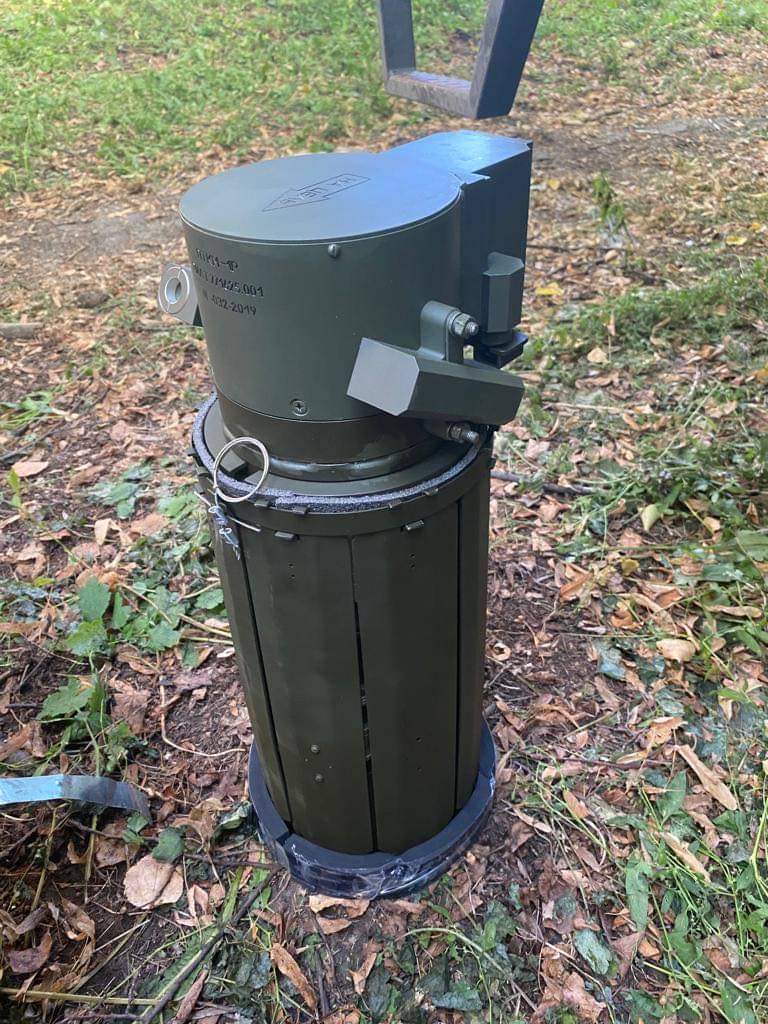
In recent weeks Ukrainian forces have shared photographs of captured PTKM-1R mines. These are without doubt Russia’s most advanced anti-tank mine design. The PTKM-1R’s main feature is that it is a top attack munition, much like a Javelin or NLAW. It can strike down from above at a tank’s least protected point – its roof and engine deck.  

PTKM-1R photographed in Ukraine in April 2022 (via social media)

The mines essentially brand new and were only publicly unveiled by Rosoboronexport in November 2021 at the Army 2021 exposition and later at EDEX 2021. They have been adopted by the Russian armed forces on a limited basis. The PTKM-1R was first seen in Ukraine back in late April, appearing to show it deployed. Russia have released no footage of the mines in action.

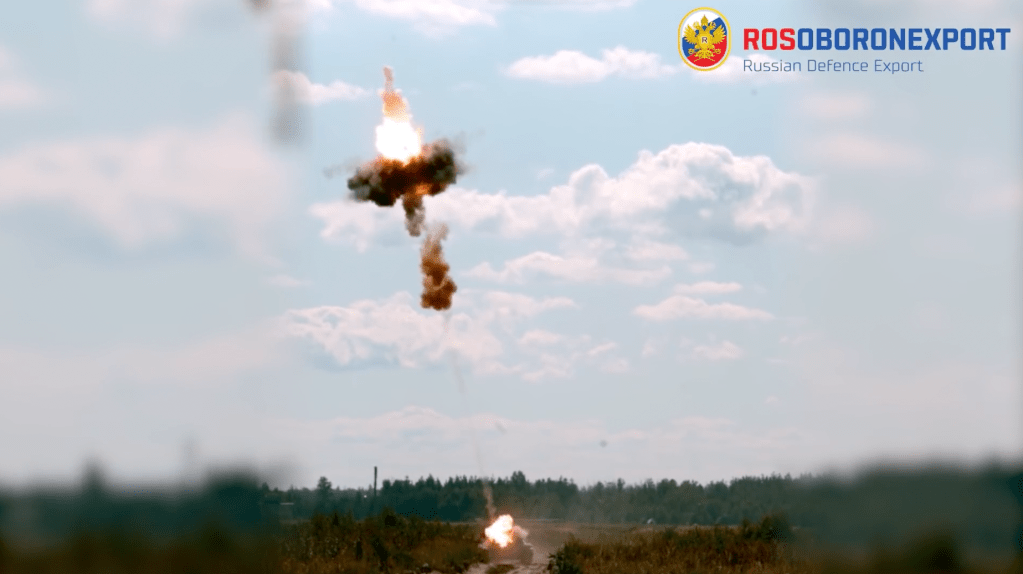
PTKM-1R submunition detonating and projecting its EPR down on a target during a 2021 demonstration (Rosoboronexport)

The PTKM-1R is a top-attack anti-tank/anti-vehicle mine which is designed to detect the passage of target vehicles using acoustic and seismic sensors. The launching charge then detonates and projects a submunition up into the air toward the target. As the sensor-fuzed submunition flies over the target and detects movement below it detonates firing an explosively formed penetrator (EFP) down onto the vehicle – attacking it where its armour is weakest. 

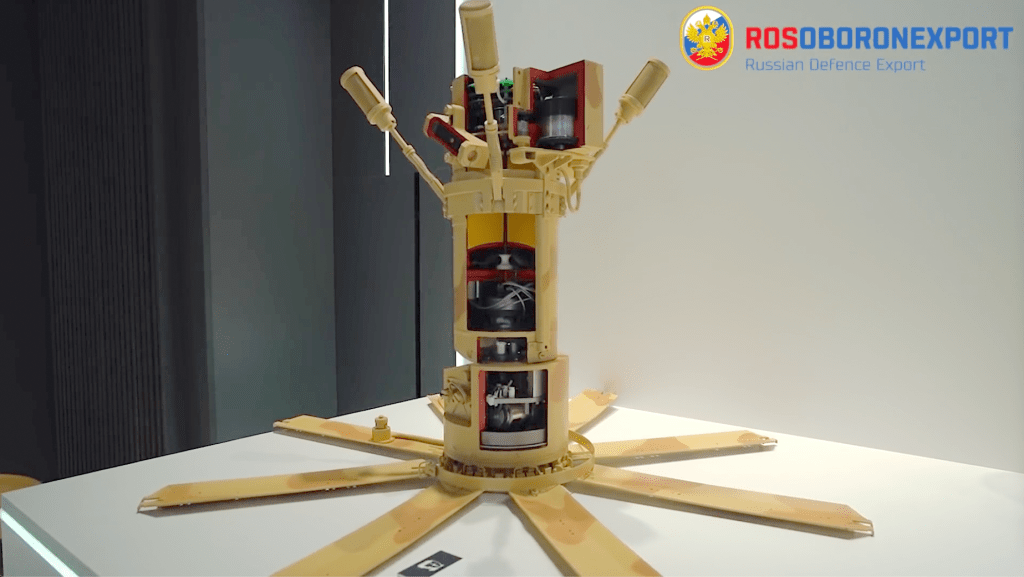
Sectioned PTKM-1R (Rosoboronexport)

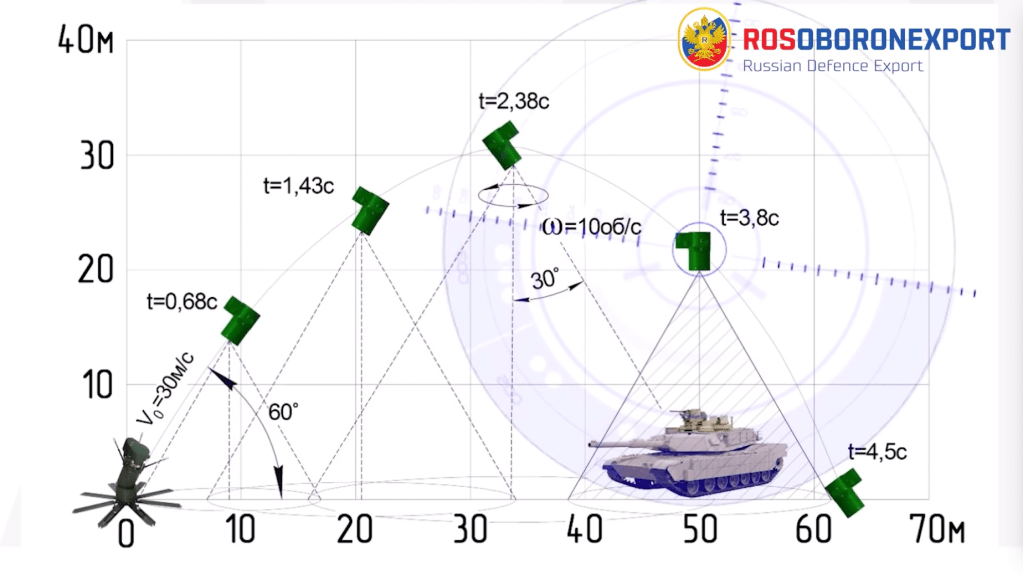
The mine can engage targets at between 5 and 50m but can detect a target out to 100m. Targets are initially identified by the mine by comparing the detected signature with acoustic and seismic signatures in its internal database. Once a target is detected the mine calculates a flight path and the launch unit tilts 30-degrees toward the target to create a parabolic ballistic trajectory over the target. While the mine can detect targets in a 360-degree arc the mine itself has a limited arc, limited by the need to tilt before firing, the mine has a an arrow with ‘towards target’ for orientating the mine in the direction of expected engagement but in an Army 2021 presentation Rosoboronexport suggest that the mine can turn itself to face its target, and track it if needed.

Rosoboronexport graphic showing the trajectory of the PTKM-1R (Rosoboronexport)

The submunition is launched into the air at a speed of 30m/s to a height of approximately 30 metres. It then uses infrared sensors and radar to pinpoint its target before detonating its shaped charged to create an explosively formed penetrator. Rosoboronexport claim the mine can penetrate ‘at least 70mm’ of armour. 

The PTKM-1R can be considered an off-route mine like the German DM-22 and Estonian PK14s which are known to be in use with Ukrainian forces but its ability to strike from above sets it apart. The nearest similar system is the short-lived US M93 Hornet developed by Textron in the 1980s.

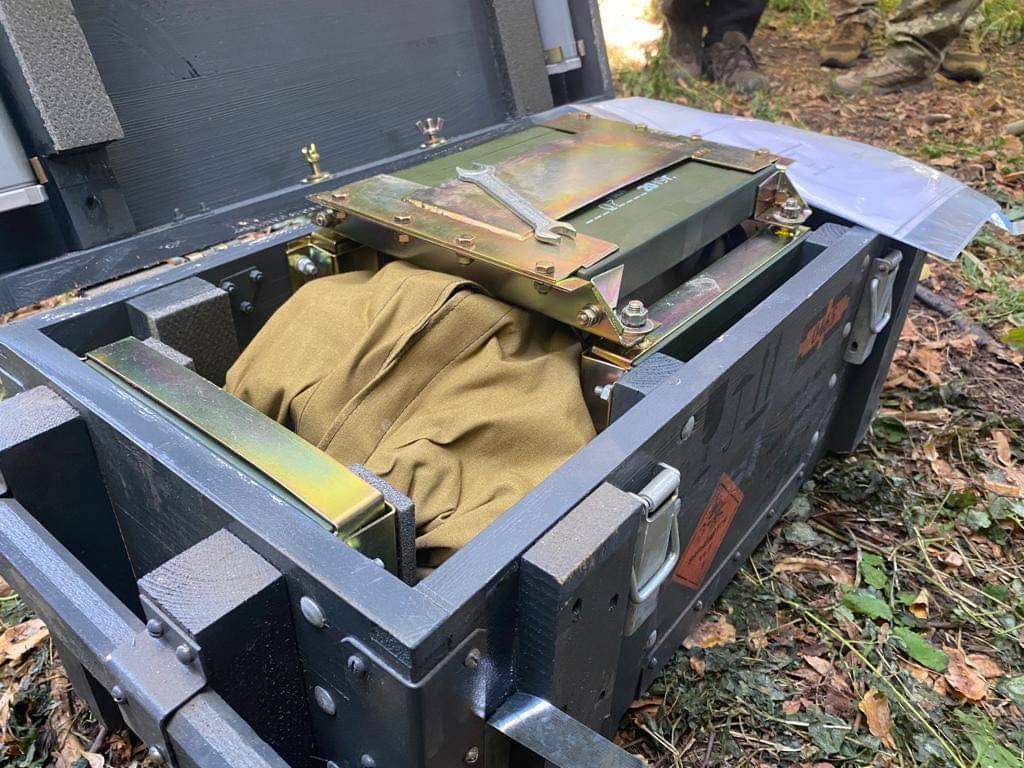
PTKM-1R captured in its transit chest, 10 September (via social media)

The launch unit (or transporter-launcher) incorporates eight feet that are lowered when the mine is deployed these provide a stable platform. According to Rosoboronexport the PTKM-1R weighs 19.9kg while its payload is said to be around 2.8kg of explosive. Two seismic sensors, which sense the vibrations caused by approaching vehicles, are deployed and there are also four cardiod microphones at the top of the unit which listen for the sounds of heavy armoured vehicles.

PTKM-1R captured by Ukrainian forces during Kharkiv offensive, 10 September (via social media)

On around the 10th September a second mine was photographed showing an undeployed PTKM-1R still in its transit chest. The mine was captured, reportedly by SSO, in the Kharkiv region on the eastern front where fighting has been significant and Russian forces appear to be rapidly falling back.

Update 17/10/22: On the 17th October, Ukrainian Telegram channels began sharing a short video of a PTKM-1R which appears to have launched its top-attack munition. The Telegram posts did not state where the footage was filmed. In the video we can see that the mine’s base unit has angled (supposedly towards its target) and has launched its munition.

Update: 23/11/22: A video from the DPR/DNR People’s Militia Press Office featuring a Russian sapper (possibly from the 56th Guards Air Assault Regiment operating in the Zaporizhzhia Oblast) explaining the deployment of the advanced Russian PTKM-1R top-attack mine. [Machine translation in video captions] H/t – Patrick Senft.

Update 26/11/22: Photographs of a deployed and detonated PTKM-1R have surfaced online.

Update 5/12/22:

Update – 2/02/2023: A short clip was shared on Telegram showing an intact and unfired PTKM-1R said to be in the Kherson region.

Update – 07/06/23: A recent sighting on a PTKM-1R from drone footage.


If you enjoyed this video and article please consider supporting our work here. We have some great perks available for Patreon Supporters – including custom stickers and early access to videos! Thank you for your support!

Bibliography

Russian PTKM-1R Top-attack Anti-vehicle Mine Documented in Ukraine, ARES, (source)

PTKM-1R: Top-Attack Anti-Tank Mine, Rosoboronexport, (source)

PTKM-1R Landmine, Cat-UXO, (source)

PTKM-1R, Fenix Insight, (source)

Swedish PV-1110 Recoilless Guns In Ukraine

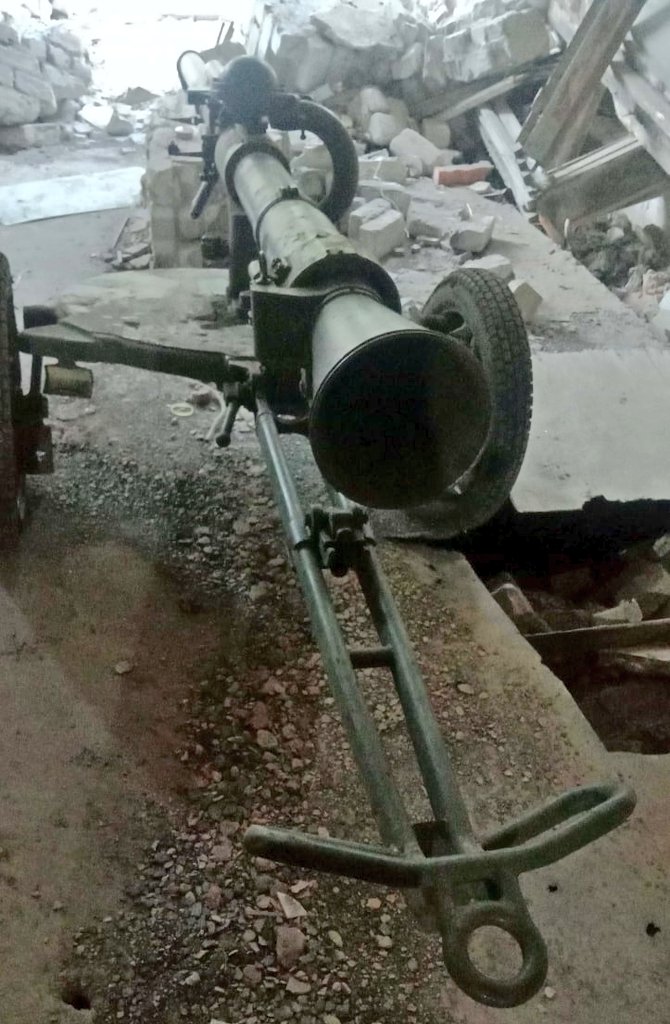
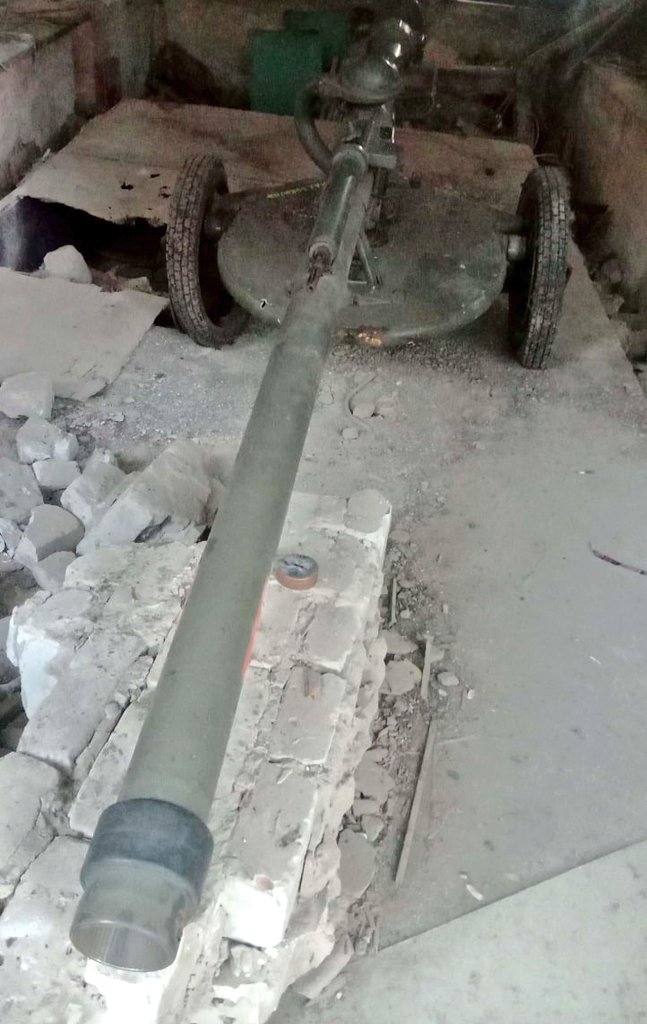
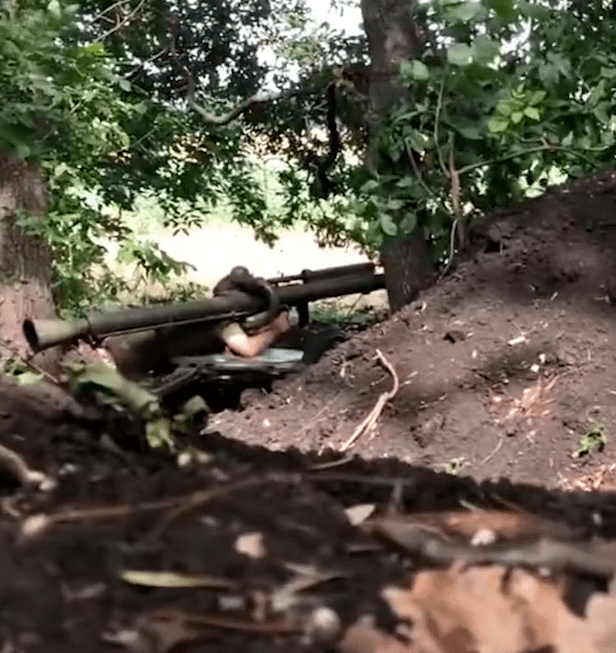
On 18 August Russian Telegram channels began sharing photographs of weapons claimed to be captured from Ukrainian forces, near Sloviansk, including a DShK, a damaged MG-42/59 and most interestingly a Swedish PV-1110.

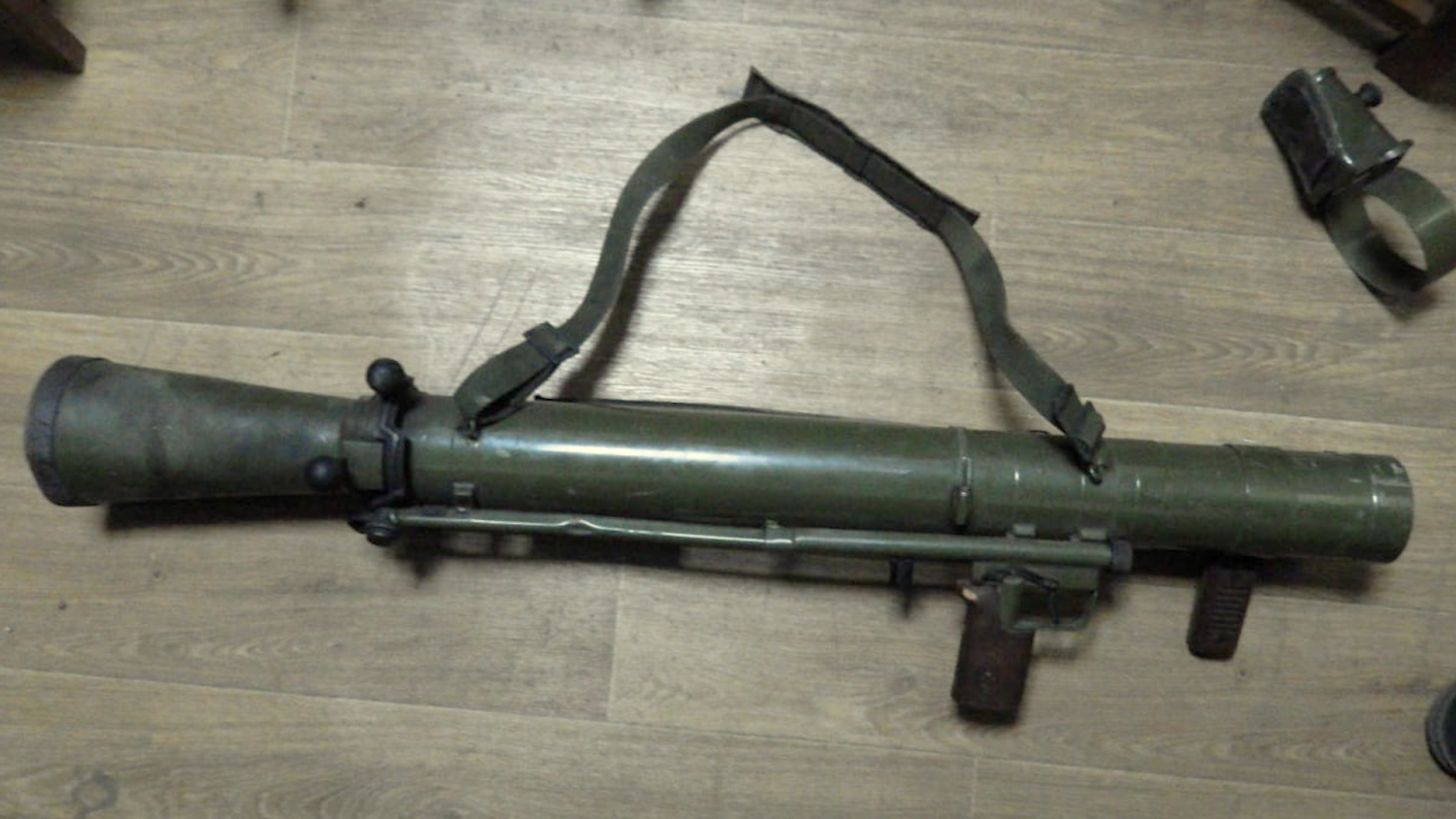
The Pansarvärnspjäs 1110 or PV-1110 is a recoilless gun developed by Bofors which saw service with the Swedish military between 1959 and the late 1990s/early 2000s. While not the only recoilless rifle/gun in use in Ukraine, others include the Carl Gustav and SPG-9, the 90mm smoothbore PV-1110 is perhaps the rarest. With sources suggesting that fewer than 2,000 PV-1110s were manufactured this would make the PV-1110 one of the rarest anti-tank weapons in use in Ukraine.

A Swedish PV-1110 claimed to be captured from Ukrainian forces (via Russian telegram channels)

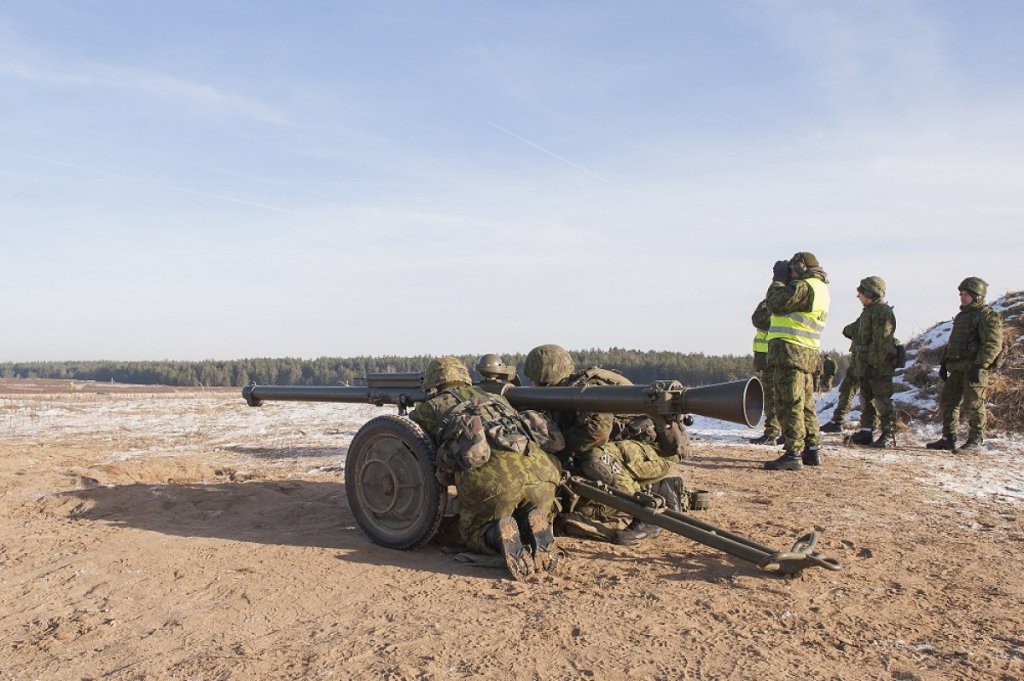
Developed in the early 1950s it was adopted by Sweden in 1959, the PV-1110 could be mounted on vehicles but also on a wheeled carriage with the barrel suspended from an ingenious ball joint mount. In the photographs of the captured example, showing its serial number #5936, we can see this two-wheeled carriage for the weapon. 

The ball joint was intended to compensate for firing from an uneven position. The PV-1110 weighs in at around 260kg (just over 570lbs) and has an optical sight on the left side of the barrel as well as a spotting rifle, based on the Ag m/42 chambered in 7.62x51mm, mounted on top. The PV-1110 has an effective range of up to 1,000m but engagement of moving targets is limited to around 700m according to the Lithuanian Army. With a good crew it is capable of firing up to 6 rounds per minute. The older m/62 HEAT round could penetrate up to 380mm of rolled homogeneous armour (RHA), the m/77 can penetrate up to 500mm and the m/84, the most modern and capable round can penetrate up to 800mm of armour. It’s unknown what ammunition has been provided for the guns.

A Swedish PV-1110 claimed to be captured from Ukrainian forces (via Russian telegram channels)

While it could be suggested that recoilless guns and rifles like the PV-1110 are obsolescent the continued use of the SPG-9 shows they still have their uses. The PV-1110’s low-profile combined with its still quite effective penetration means its still a viable weapon against most armoured vehicles its likely to encounter.

Following on from the first sighting in Ukraine on 22nd August footage of a PV-1110 firing from a defensive position surfaced and we can see the gun on its very recognisable mount.

Still from video of the PV-1110 in Ukraine, c.22 August 2022

But how did Ukrainian forces come by their PV-1110? There were likely transferred from one of the Baltic nations which have supplied Ukraine with considerable military assistance. Latvia, Lithuania and Estonia all received a number of PV-1110s from Sweden when they were retired from service. It is unclear how many weapons each of the three countries originally received.

Troops of the Lithuanian National Defense Volunteer Force training with the PV-1110 c.2014 (Lithuanian Army) 

The Estonian Defence League reportedly had over 100 in inventory as of 2018 while the Latvian National Guard have a similar number. Lithuania’s Army and National Defense Volunteer Force have previously been seen to be equipped with the PV-1110 in recent years but they have reportedly since been placed in wartime reserve storage. No country has publicly confirmed the transfer of the PV-1110s, so with the Baltic nations slowly removing the guns from service it’s likely that the PV-1110s either came from the remaining guns held by the Swedish Army or from the stores of Lithuania, Latvia or Estonia. Regardless of their origin they represent one of the rarest recoilless guns in service in Ukraine.

Updates

Update – 18/10/22:

Some recent footage of the PV-1110 in use in Ukraine. It is unclear where or when this footage was filmed but it surfaced on social media around 15 October. I suspect it was filmed during training rather than when in action. Regardless, it represents one of the few pieces of footage we have of the Swedish recoilless guns in action in Ukraine.

Update 25/01/23:

The recently raised 47th Separate Assault Brigade have shared several photographs of a PV-1110 on their social media pages, between 10 and 15 January. The photographs were likely taken during training. The first is a point-of-view shot down the weapon’s barrel while the second is a side profile shot – both taken during firing.

Update – 2/05/23:

Recent video of a Pv-1110 shared by Ukraine Weapons Warfare.

Update – 6/2/2024:

On 5 February a short video of a Pansarvarnspjas 1110 was shared on telegram channels l. Unit, date and location are unknown.

Update – 15/5/25:

Nemesis Group shared a short video featuring a Pvpj 1110 on their Instagram page, date and location if filming unknown.


If you enjoyed this video and article please consider supporting our work here. We have some great perks available for Patreon Supporters – including custom stickers and early access to videos! Thank you for your support!

Bibliography:

Pansarvärnspjäs 1110 Avvecklad, Soldf.com (source

Prieštankinis beatošliaužis pabūklas PV1110, Lithuanian Army, (source)

Lithuania Volunteers Train with PV-1110, Lithuanian Army, (source)

90mm Recoilless Rifle promotional video, Bofors, (source)


Ukraine’s Homemade Tank Destroyer

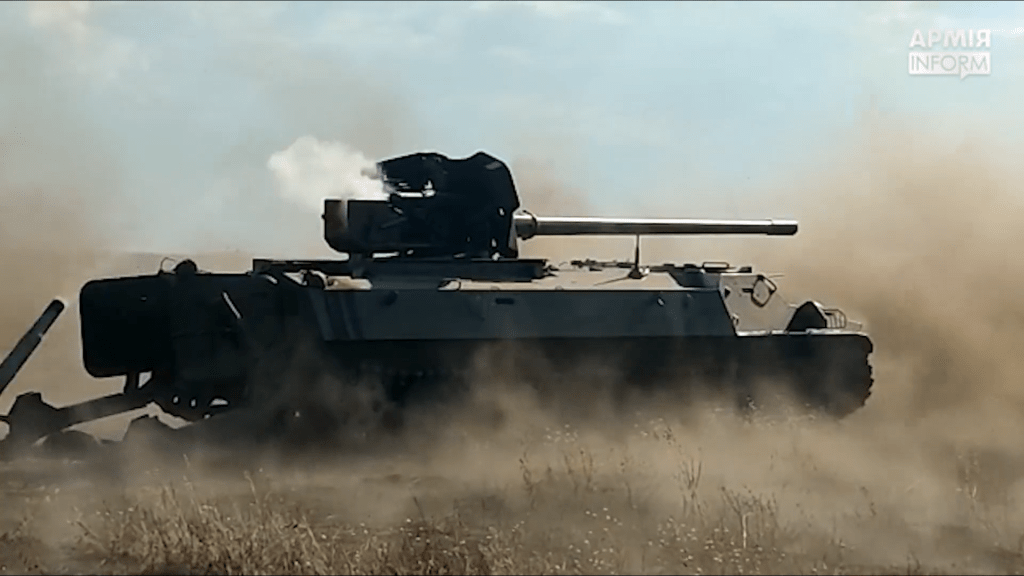
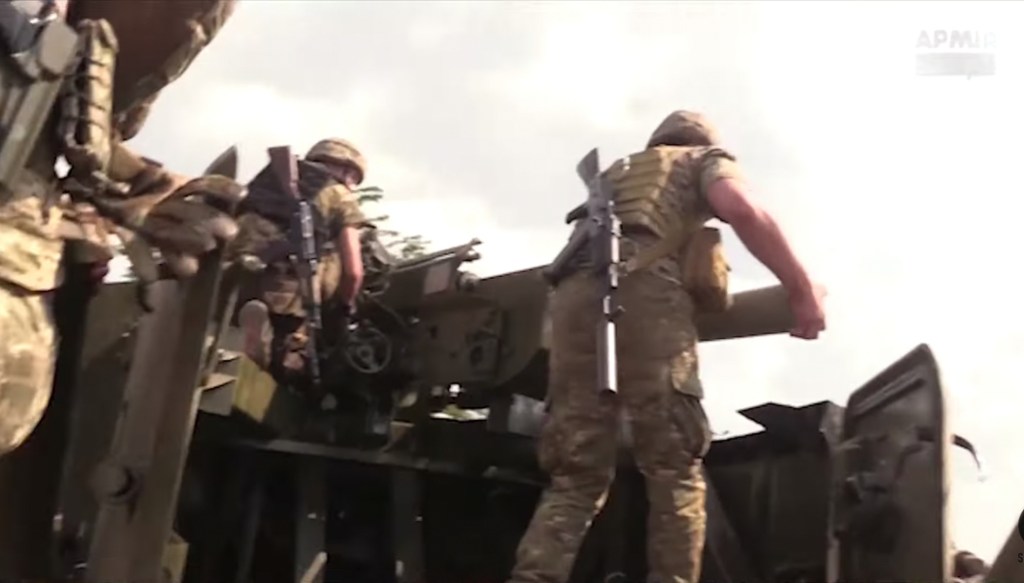
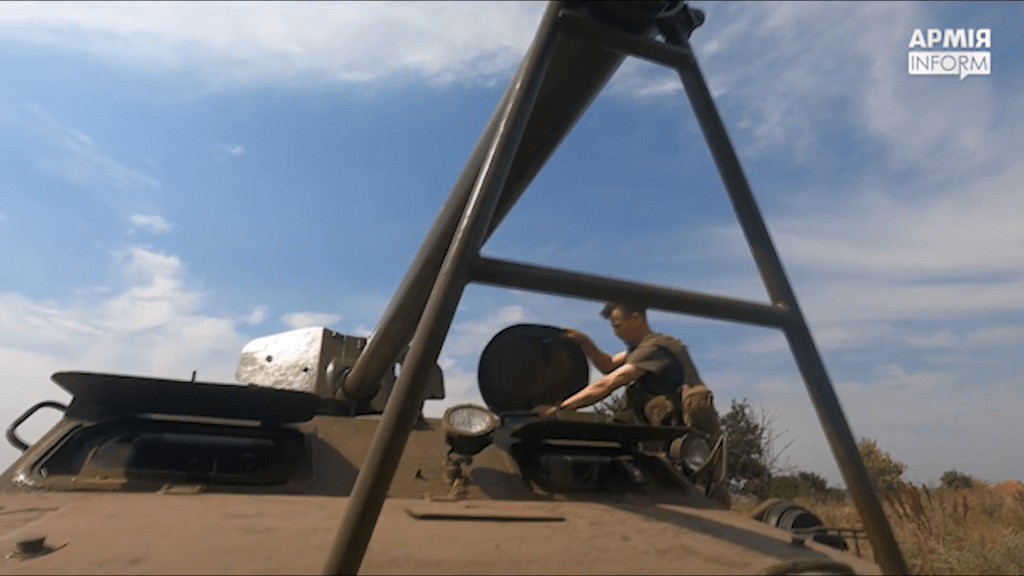
On 12 August videos of an improvised vehicle built by Ukrainian troops began to circulate online. While we’ve seen technicals and an increasing number of trucks turned into multiple rocket launcher systems, usually using spare or salvaged parts, in recent months the new vehicle is even more interesting.

Gun at full elevation (via ArmyInform)

The available footage shows an MT-LB tracked armoured fighting vehicle paired with an MT-12 anti-tank gun. Traditionally, the MT-LB and MT-12 aren’t an unusual pairing as the MT-LB was, and is, often used to tow artillery, including the 100mm MT-12 anti-tank gun.

Gun in action (via ArmyInform)

The Ukrainian General Staff shared a video of the homemade tank destroyer or self-propelled gun (SPG) in action on the 13 August, with the caption:

“Ukrainian soldiers demonstrate their own development, made from captured muscovite equipment. MTLB army tractor + MT-12 Rapira anti-tank gun = self-propelled anti-tank gun. The infantrymen did all the design and construction work on their own. The system has already been tested and is in the combat zone.”

The caption said that the footage had been filmed in the Mykolaiv region in early August by members of the Department of Public Relations of the Armed Forces of Ukraine. A further video shared by ArmyInform, simply titled ‘Kraken’ (perhaps the name given to the vehicle as the Kraken is a popular symbol among Ukrainian forces), shares much of the same footage and the same description text.

The gun and vehicle are both of Cold War vintage with the 100mm smoothbore MT-12 entering service in the early 1970s and the MT-LB coming into service in the late 1950s/early 1960s.

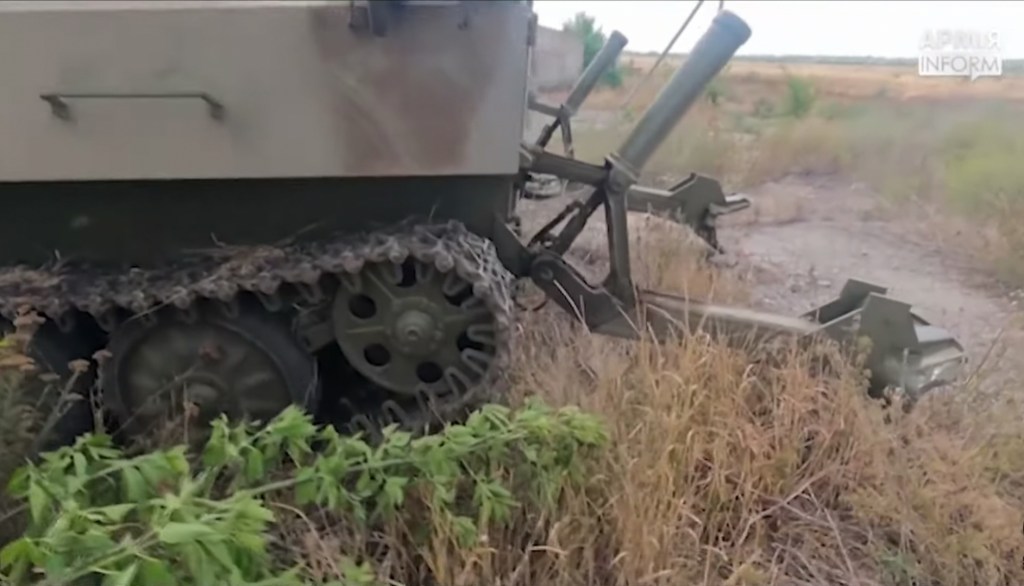
The hydraulics supports added to the rear of the MT-LB (via ArmyInform)

From the footage we can see that the vehicle has been substantially modified to mount the gun, part of the rear roof of the vehicle appears to have been removed to allow the crew to operate the gun with some protection and to also achieve the gun’s maximum 20-degree elevation. Perhaps most interestingly, at the rear of the vehicle the builders have added a pair of hydraulic supports to stabilise the vehicle when firing, these can be seen descending from the rear of the MT-LB. These may be built using the MT-12’s original trail.

A view of the rear of the gun and vehicle (via ArmyInform)

The video even shows that a barrel travel lock has been fitted to lock the gun in place when the vehicle is on the move. The video does not show the interior of the vehicle so it is unclear how much the vehicle and the mounting point for the gun has been reinforced. The gun itself weighs just over 3 tons or 2, 750kg, though some of this weight from the carriage has likely been removed through the cannibalisation of the carriages when the gun was mounted. The video doesn’t indicate how much ready ammunition the vehicle can carry either. The video also shows the gun being fired by crew outside the vehicle pulling a long lanyard. Sources in Ukraine have said that in the field the system is fired by both the lanyard and the firing lever on the gun.

Barrel travel lock added to the vehicle (via ArmyInform)

While at first glance the gun looks like it could also be an older DD-44, which have been seen in use, the characteristic muzzle brake suggests its the later MT-12. While the official Ukrainian Army statement suggests both the MT-LB and gun were captured both were in Ukraine’s inventory in significant numbers before the current conflict. Before the Russian invasion in February the Ukrainian Armed Forces were said to have up to 500 MT-12s in service, in 2020. Similarly, Ukraine operated over 2,000 MT-LB before the invasion but there is visual confirmation of numerous Russian MT-LBs being captured.

Gun ready to fire (via ArmyInform)

So why go to the trouble of adapting an MT-LB to be capable of firing a gun from its roof? Perhaps the most likely answer is speed into action. While an MT-LB towing an MT-12 can in theory get the gun into action in under 2 minutes the creation of this ad hoc tank destroyer allows the gun to be brought into and out of action faster. With the need to unlimber and position the gun removed the improvised self-propelled gun can, in theory at least, shoot and scoot.

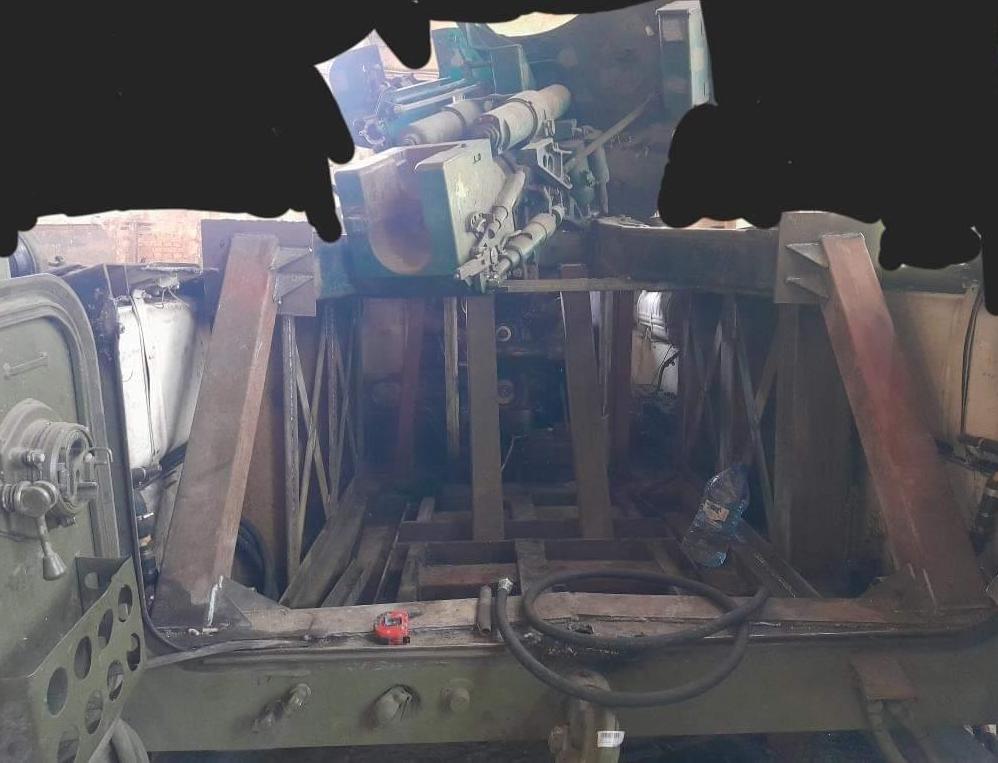
A photo of an adapted MT-LB, possibly a different vehicle from the one seen in the video shared by the Ukrainian General Staff (Photo redacted for OPSEC purposes)
A view of the rear of the vehicle showing the considerable reinforcement where the roof has been cut away (Photo redacted for OPSEC purposes)

Sources in Ukraine suggest that more than one of these vehicles has been constructed with work ongoing since at least July. Photographs shared with TAB support this with the vehicle pictured sporting the Ukrainian digital camouflage pattern. The photographs show the mount and the reinforcement done to the vehicle to support the MT-12. They are reportedly used more as assault guns, than ‘tank destroyers’, with the guns being used against Russian fixed positions and in support of infantry manoeuvres.


If you enjoyed this video and article please consider supporting our work here. We have some great perks available for Patreon Supporters – including custom stickers and early access to videos! Thank you for your support!
Talking PIATs with Military History Visualised

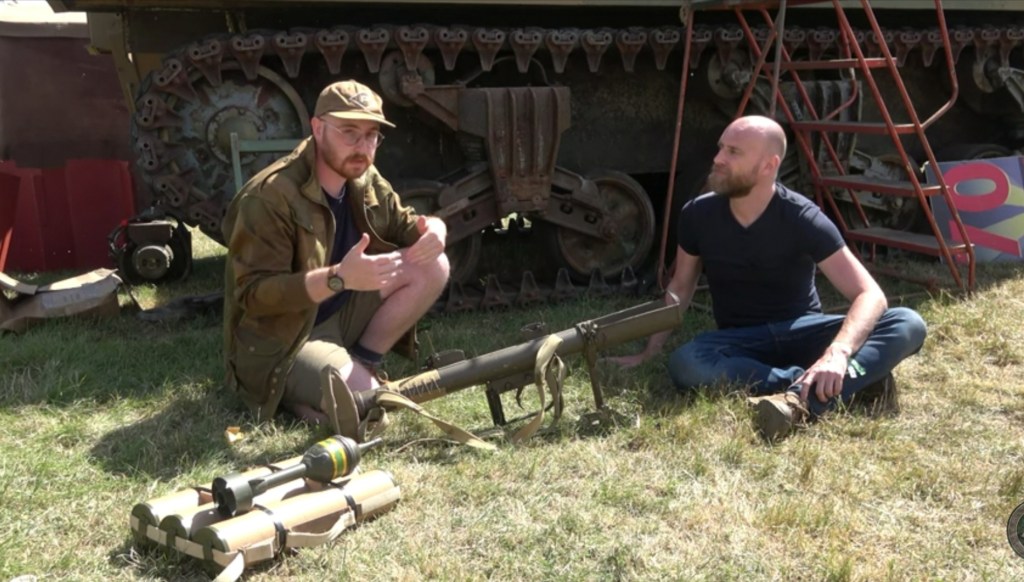
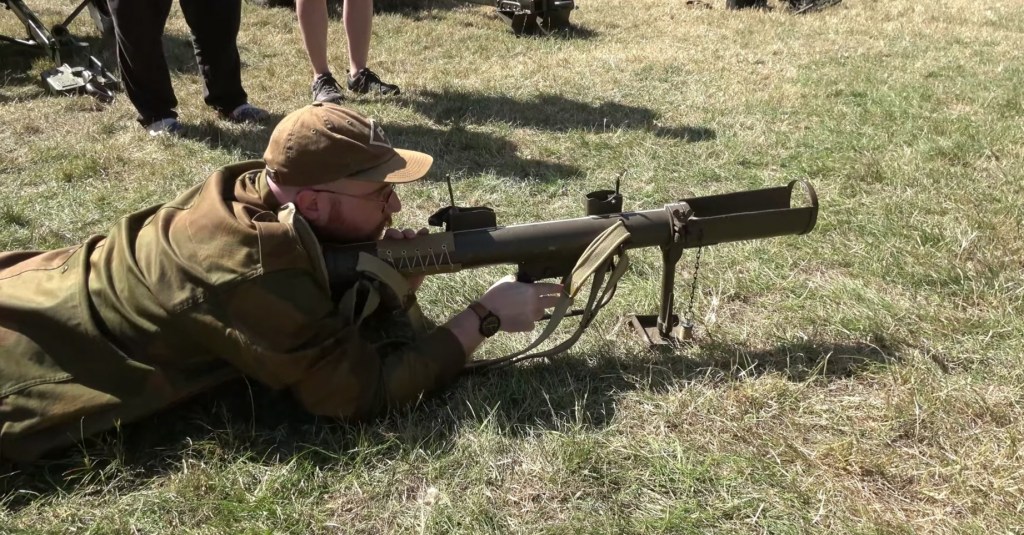
Had the absolute pleasure of chatting about PIATs with Military History Visualized.

Ever since I wrote my book about the PIAT I have been passionate about explaining why it was actually a pretty decent bit of kit, just much maligned.

Always great to Bring Up The PIAT! Do check it out below:

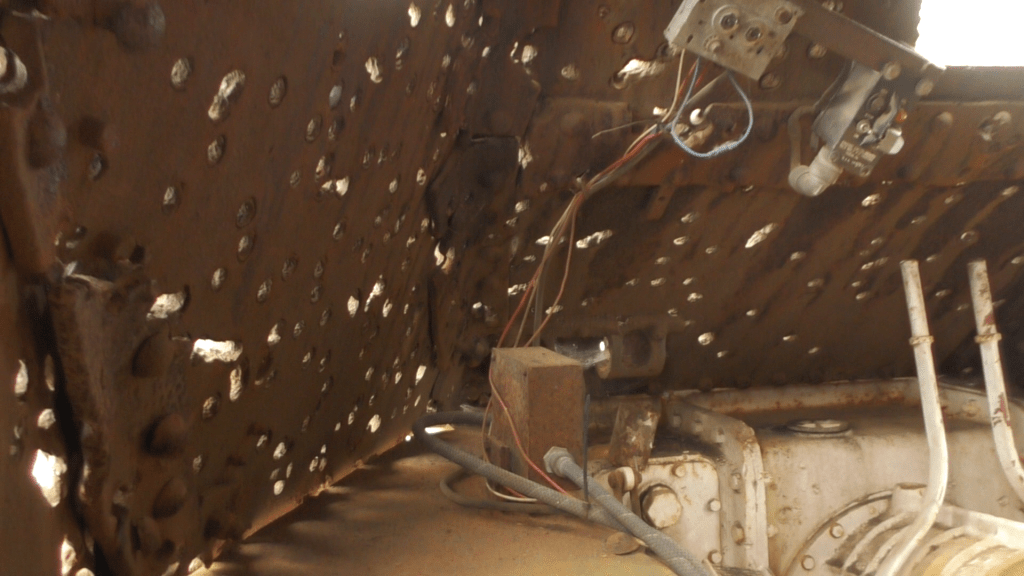
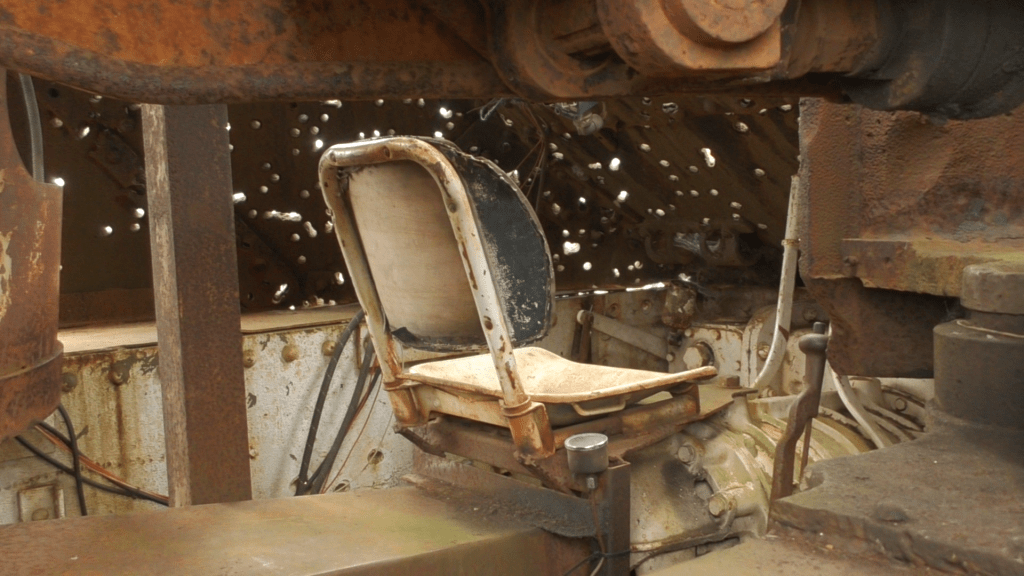
A Look Inside A Heavily Damaged M3 Grant

I recently attended the We Have Ways of Making You Talk podcast’s history festival and one of the most striking things on display was a very rusty, heavily damaged M3 Grant! 
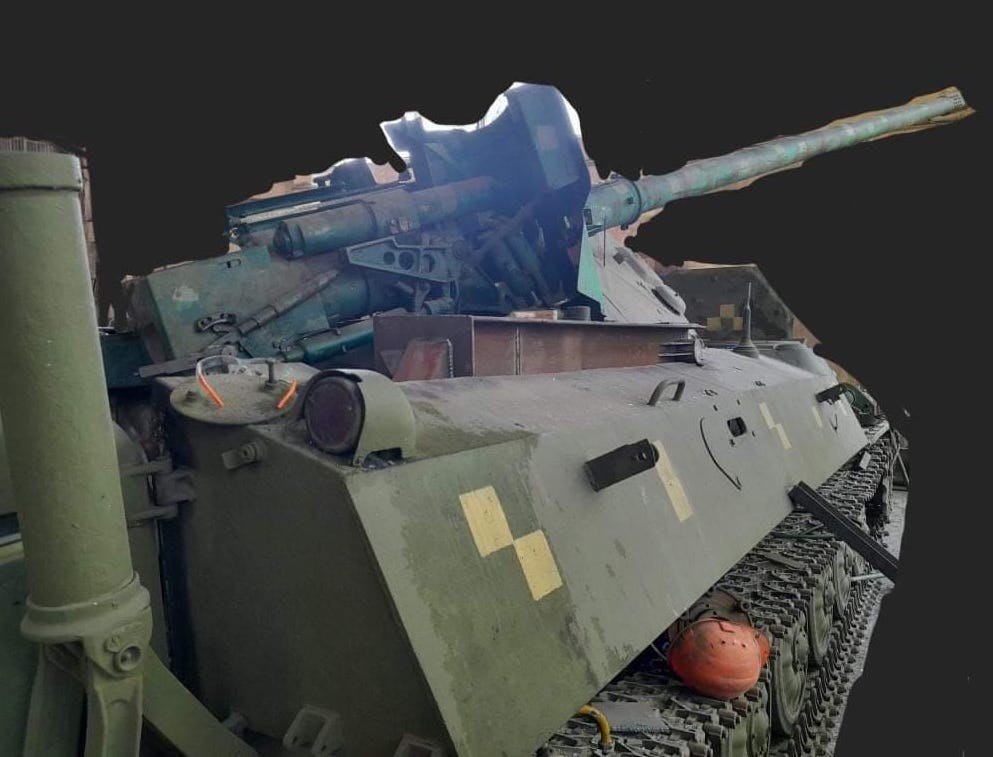
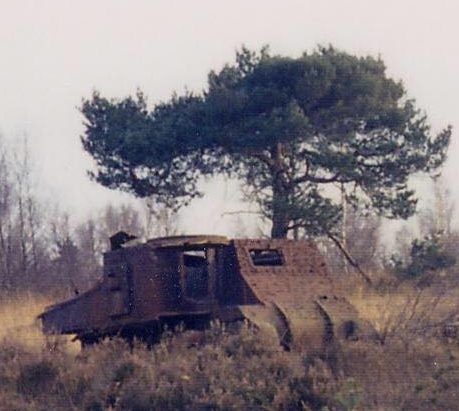
The tank, T24193, was one of the first M3 Grants to arrive in Britain in 1941. It was used for cross country and gunnery trials before later in the war it was used as a range target. The owner was kind enough to share some photographs of the tank before it was salvaged.

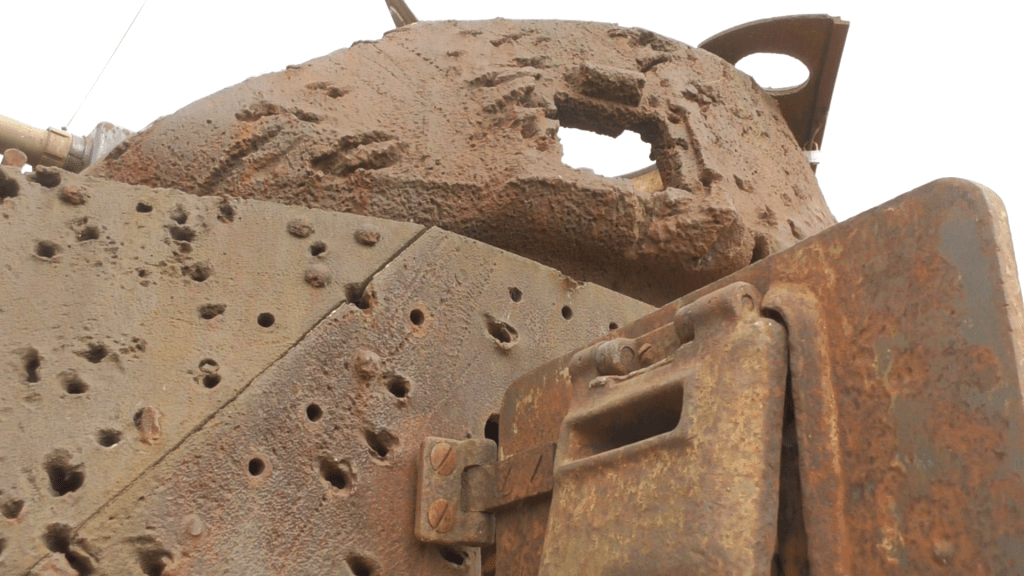
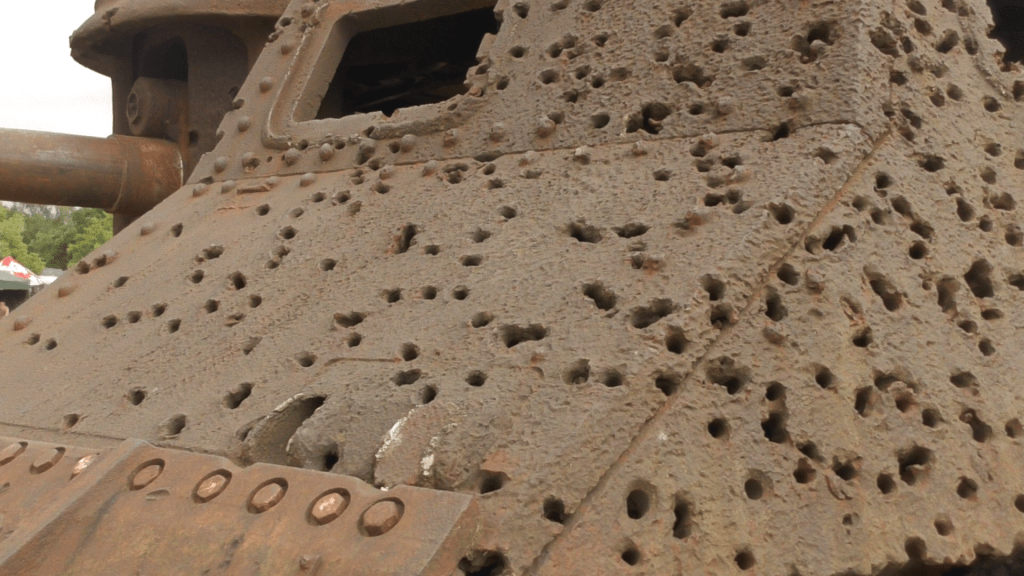
The tank was salvaged from Pirbright Ranges in Surrey in 2003 and restored mechanically but its external damage is going to be retained as a visual display of its history as a range target. According to the tank’s owner the M3 was used to test captured German Panzerfaust and Panzershreks and has approximately 100 10mm diameter holes from Panzershreks and nearly 400 12-13mm diameter wholes from Panzerfausts fired at the tank. There also appears to be larger holes, perhaps some HESH round damage and lots of small arms strikes or spalling marks.

Here are some photos of the tank:

I would love to read the report on that testing to see what they were trying to find out – a possible research project for the future. The Panzerfaust (capable of penetrating up to 200mm) and Panzershreks (capable of penetrating up to 160mm) definitely penetrated the M3 Grant’s 2 inch frontal and 1.5 inch side armour. 

With the tank on display I couldn’t resist getting some video of it, the surreal sight of light coming through both sides of the tank’s hull becomes sobering when you consider that Allied tanks faced the weapons which made the holes, in actual combat.


If you enjoyed this video and article please consider supporting our work here. We have some great perks available for Patreon Supporters – including custom stickers and early access to videos! Thank you for your support!