More SMAW

In April 2023, I published an article/video looking at sighting of US SMAW (Shoulder-Launched Multi-Purpose Assault Weapon) Mk153s, head back and check that out if you missed it. In this video we’ll take a quick look at subsequent sightings of the launchers in use with Ukrainian forces. 

The SMAW Mk153, not to be confused with the disposable M141 SMAW-D, is an 83mm smooth bore, shoulder-fired, rocket launcher with an integrated spotting rifle attached to the right side of the launcher assembly. The Mk153 is loaded by fitting an encased rocket into the rear the launcher assembly. 
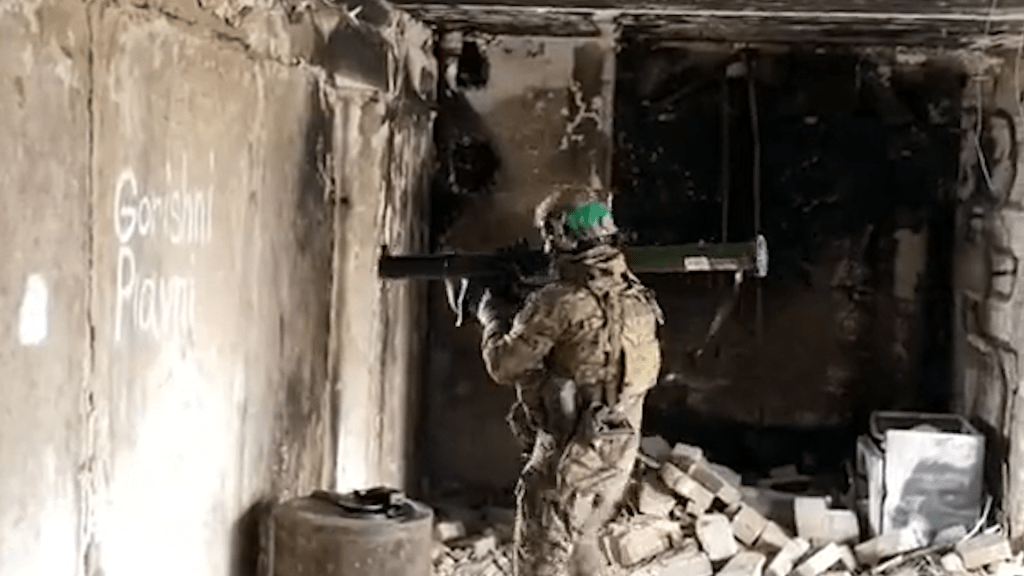
A Ukrainian combatant firing a SMAW Mk153 during an urban engagement (via social media)

The Mk153 is a relatively rarely seen weapon, the first sighting of one in Ukraine came back in February 2023 and since my last video/article they have been seen half a dozen more times both in the field and at the range. 

In May 2023, a clip of a SMAW Mk153 being fired from an enclosed space in a multi-storey building was shared. The clip was seemingly filmed during urban fighting, probably during the battle for Bakhmut. However, the date and location of the footage is unconfirmed. You can see how the back-blast kicks up a huge amount of dust. 

A month later a Ukrainian combatant shared a photograph of himself holding a Mk153. In July, I came across a photograph of a Mk153 which dated back to December 2022, predating my initial first sighting by several months. In the background of the photo several enclosed rocket rounds.

A Ukrainian combatant holding a SMAW Mk153 (via social media)

Later in July a video shared by a Ukrainian combatant showing a smoke grenade test also featured one of the Mk153’s enclosed rocket tubes. In early August Ukrainian combatants posted a video of a Mk153 being fired in the field, judging by the launcher’s angle of elevation the combatant was aiming at a distant target.

The SMAW Mk153 also features in a Ukrainian manual, Use Of Foreign Made Weapons By The Security And Defense Forces Of Ukraine (Instructions For Use), compiled by the Ukrainian Security Services (SBU) which was published in 2023. It includes translated relevant sections from the US manual for the weapon.

On the 4 September, the Strategic Communications Department of the General Staff of the Armed Forces of Ukraine shared a video of two members of the 100th Separate Territorial Defense Brigade firing Mk153s in the Serebryansk Forest in Luhansk. Sadly, the footage is low resolution but its possible to identify a SMAW Mk153s being used alongside what may be a Panzerfaust 3.

An interesting video posted in at the beginning of September showed a phone mounted onto a SMAW with what appears to be a car phone cradle. This has allowed a clinometer app to be used to enable the SMAW to be used in the in-direct role, by displaying the weapon’s angle of elevation.
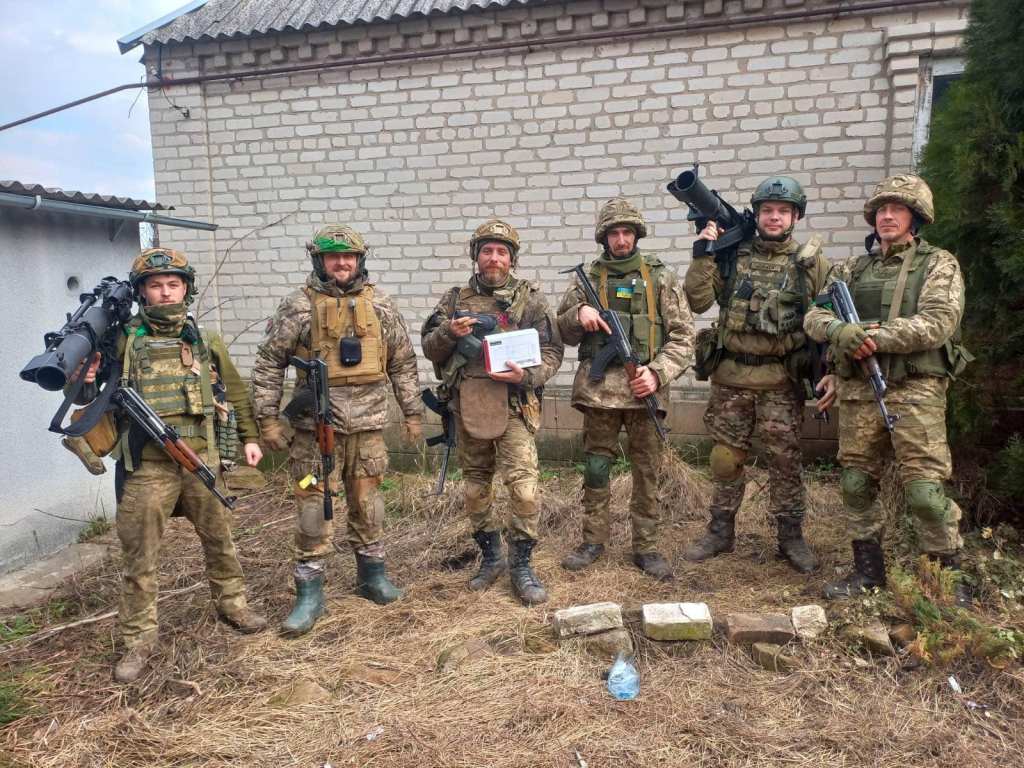
Members of a Ukrainian unit with two Mk153s, one fitted with a Sightmark Wolfhound 3×24 (via social media)

On 24 September, members of Bravo Rapid Reaction Group appeared in a video of training with SMAW Mk153 at the range. The video features combatants loading and firing a Mk153 in two man, gunner and loader, teams.

On 30 December, Ukrainian volunteers who have been raising funds and providing kit to Ukrainian personnel shared an album of photographs of troops they had supplied throughout 2023. Included in this was individuals from an unidentified unit, with two combatants seen holding Mk153s. It is rare that the Mk153 is seen equipped with an optic but one of the Mk153s featured in the photographs shared by the volunteers appears to have been fitted with a Sightmark Wolfhound 3×24, sometimes seen on Airtronic PSRL-1s.

Finally, combatants from Ukraine’s 3rd Assault Brigade shared video on 27 March 2024, of an individual a firing of a SMAW Mk153 at a range, the date of filming is unconfirmed but believed to be recent. The SMAW Mk153 continues to be a relatively rare weapon but does occasionally appear with a variety of units. 


Support Us: If you enjoyed this video and article please consider supporting our work here. We have some great perks available for Patreon Supporters – including early access to custom stickers and early access to videos! Thank you for your support!


Spanish CETME-Ls in Ukraine

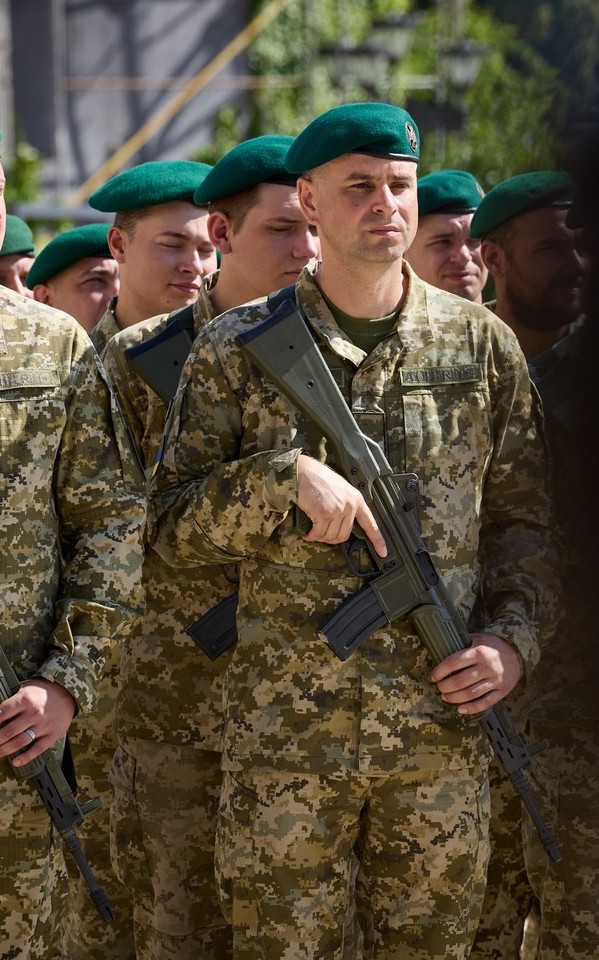
In late August 2023, a surprising weapon turned up in Ukraine. It appears that Spain provided Ukraine with an unknown number of 5.56x45mm CETME-L rifles. The rifles were spotted during a parade in Kyiv with an entire company of Ukrainian Border Guards seen equipped with the rifles. I’ve delayed writing this article/video in anticipation of them appearing again but there’s been no sign of the CETME-Ls since the parade.

The parade, held on 23 August 2023, in Kyiv’s Sofia Square celebrated the 32nd anniversary of Ukrainian independence and saw at least 25 members of Ukraine’s Border Guards parade with the rifles. The personnel are believed to have been part of either the 8th or the 9th border detachments who are assigned to the Belarusian border region.

Ukrainian Border Guards with CETME-Ls, August 2023 (DPSU)

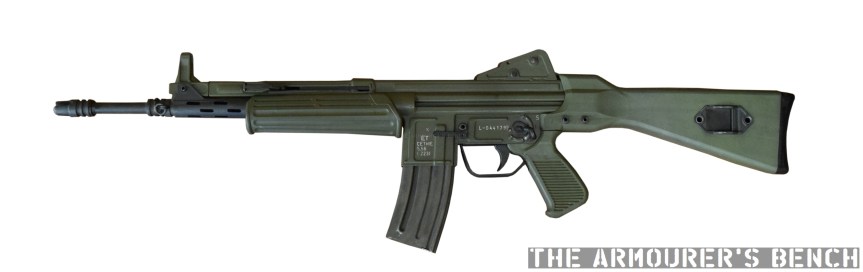
Spain developed the CETME-L in the early 1980s, to replace the CETME Model C. Entering service in 1986, it uses a roller-delayed gas blowback, check out our earlier video disassembling a CETME-L here. Issues with quality control during manufacturing and quirks of the design led to the Spanish military seeking to replace the CETME-L by the mid 1990s. The HK G36E was selected but the L remains in limited service with significant quantities held in storage.

Ukrainian troops training in Spain in the summer of 2023, have been seen equipped with CETME-Ls but it remains curious that Spain would provide the rifles as aid to Ukraine. While the rifles had a short service life due to reported reliability issues, with approximately 100,000 manufactured between 1986 and 1991 and since largely replaced by G36s there is likely a substantial number in store and available for transfer.

CETME-L (Matthew Moss)

The CETME-L, despite a decent design on paper, was hampered by quality control issues which led to reliability problems. The rifle’s magazine housing also only allows feeding from steel magazines. While in theory they will feed from STANAG magazines, the magazine housing is optimised for proprietary Spanish magazines (with a different follower and feed lip design) with the magazine seated at more of an angle. The rifles also reportedly favour hotter, higher pressure ammunition. These factors may explain why the CETME-Ls have not been seen in the field with the Border Guards preferring to continue issuing AK-74 pattern rifles to personnel on the front line. The rifles seen in Kyiv may have been drawn from central stores solely for the parade.

We approached both the Spanish Ministry of Defence and the Ukrainian Border Guards for further information but no addition comment has been received. The Spanish Ministry of Defence directed us to an August 2023 press release which detailed Spanish assistance to Ukraine’s Border Guards which does mention “light weapons with their ammunition”.

Ukrainian Border Guard with CETME-L, August 2023 (DPSU)

The Spanish press, quoting confidential sources, reported that between 1,000 and 2,000 rifles were transferred. It is also reported that the rifles were never previously issued and that they are being used by rear echelon Ukrainian personnel. This frees up more reliable weapons, like AK-74s and UAR-15s, for frontline use. At the time of publication examination of various DPSU (Ukrainian Border Guard) social media channels doesn’t indicate any signs of further use of CETME-L rifles, even with rear echelon personnel.


Support Us: If you enjoyed this video and article please consider supporting our work here. We have some great perks available for Patreon Supporters – including early access to custom stickers and early access to videos! Thank you for your support!

Periscope Rifles in Ukraine

With the war in Ukraine’s current trench-bound stalemate often resembling the First World War it isn’t too surprising to see an early 20th century innovation making a comeback. Several variations on the concept of a periscope rifle have been seen in Ukraine since the summer of 2023.

A still from Heroes of Gallipoli (1915) showing a periscope rifle (via IWM)

The concept actually pre-dates the First World War, with sights like William Youlten’s Hyposcope dating to 1900, but really emerged during the war with many nations developing similar periscope-based systems that allowed service rifles to be mounted in frames and fired over the parapet removing the need for soldiers to expose themselves when sniping.

The first design featured in an article by Jeff Farrell in June 2023, Farrell interviewed a Czech veteran of the International Legion, Marian Simunek, who was wounded and has since developed a periscope which a rifle can be mounted in. In a pair of videos Simunek demonstrated fitting the rifle into the periscope mount and how it would be fired. Simunek manages to mount an AK-74 in the periscope mount within 30 seconds. The stock folds down from the body of the periscope and is secured with the pistol grip and trigger assembly being lined up, the stock of the rifle is secured by two straps and then the trigger cable is attached to the rifle’s trigger.

A second periscope design emerged in late January 2024, when a short video showing a tall tripod-mounted periscope was shared. The video shows the testing of a prototype gun mount which can be raised up to above parapet height and allows the gun to be aimed using the periscope the gun is show being tested in both semi-automatic and fully automatic. The trigger is attached to a command cable which runs down to a front grip with an exposed trigger in front of it. The tall monopod isn’t the most stable platform but the user demonstrating it supports the assembly using the integrated stock and pistol grip assembly and holds the stand with his off hand. While the ability to quickly raise and lower the rifle mounted on the stand is useful, especially for reloading, but it may lack stability in the field.

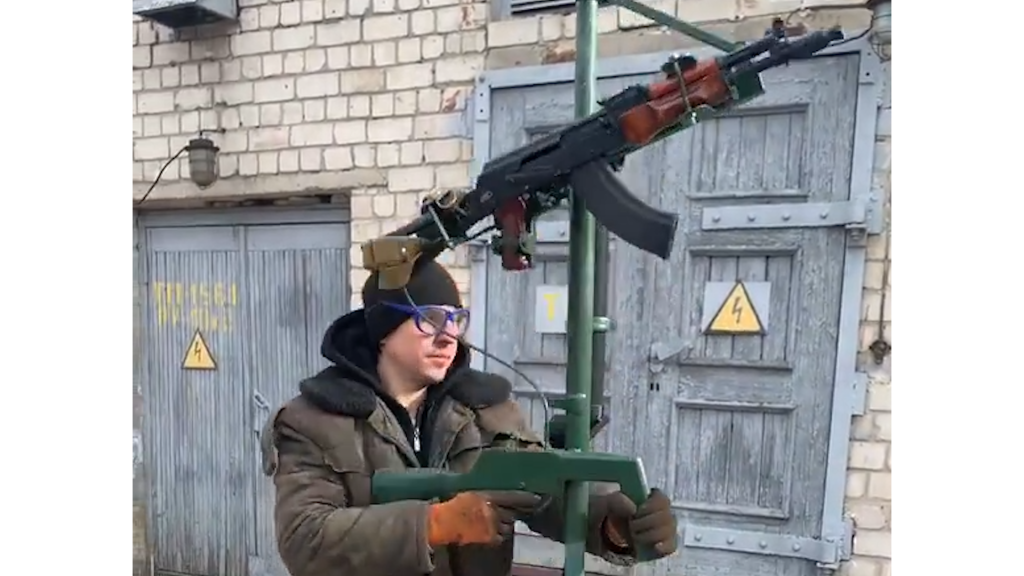
The third variation on the periscope rifle concept was shared on 18 March, with a short 22 second clip showing an AK-pattern rifle with its stock removed, mounted on a well fabricated pole with a periscope, an off hand support grip, a stock shaped like an AKS-74 folding stock and a pistol grip and trigger assembly which uses what appears to be a brake cable. In another video of the mount in the same position an individual demonstrates the articulation of the mount (albeit without a weapon installed). The mount has a wide tripod base and appears to be well made. The gun is set up in an urban environment behind a wall, likely for demonstration proposes. The this periscope rifle may be a more developed version of the previous design but I’ve been unable to find the original source for the video.

Interestingly, another video of as similar periscope rifle set up was shared, the design is clearly the same as that seen in the previous video. The shape of the stock has changed and the position and design of the stabilising forward hand grip differs.

While trench periscopes have been in use since the early weeks of the war, a more modern approach is the use of digital camera aimed remote weapons. These include the Shablya (sabre) remote weapon station developed by Roboneer, which has been in development since 2015 and has been tested with numerous different types of machine guns including PKs and M2 Brownings. Another similar system is the Tarantul, developed by engineers of the 118th Territorial Defence Brigade. This is a concept that Russian forces have also been experimenting with with a number of systems seen in test videos.

The available imagery of periscope rifle systems originating from the war in Ukraine is relatively small so its difficult to gauge their utility fully, I’ve yet to see any evidence of their front line use. They are a specialist piece of kit which depending on the design is suited to some environments more than others. If you’ve seen other examples of periscope rifle systems or evidence of their use in combat please do let me know!


Support Us: If you enjoyed this video and article please consider supporting our work here. We have some great perks available for Patreon Supporters – including early access to custom stickers and early access to videos! Thank you for your support!

Swedish K In Ukraine – Update

A few of weeks ago I published an article/video detailing the appearance of Swedish Carl Gustaf m/45 9x19mm submachine guns in Ukraine. One notable feature of the guns was that their configuration appeared to sit somewhere between the m/45A and the m/45B.

In the absence of clearer information I referred to these as m/45Bs, the most common variant and one which has the defining fixed magazine housing rather than the earlier removable magazine well seen on the m/45A. The fixed magazine well is an upgrade which was made before the later m/45B refit. It seems that there was some fluidity to how the upgrades were carried out which has led to guns with a mix of features.

An upgraded m/45A with the 41st Mechanized Brigade (Daily Mail)

From Swedish sources I’ve spoken to many of the m/45s seen in the imagery from Ukraine are early spec guns (m/45As) which may have been in storage and were not refit to the m/45B pattern. The m/45B refit was partially necessitated by the need to add an additional retention method to hold the receiver end-cap in place. Some sources suggest this was due to a type of training ammunition then in use, others point to it being simply extra security.

An m/45B (top) and an m/45A (bottom) with the fixed-magazine well upgrade (Henrik Jansson)

Working theories explaining the configuration of the guns seen in Ukraine include: that they are m/45A configuration guns which had been in storage and were retrofitted after the training ammunition left service and the additional end cap retention was no longer needed, so this change to the guns was omitted. As mentioned earlier, another reason may be that these are m/45As which had the magazine well upgrade but were placed in store or transferred before the broader m/45B upgrade was carried out.

As discussed in the initial video, it is thought that Estonia is a likely source for these guns as they received some of these guns in the 1990s and these m/45s have then subsequently been sent to Ukraine. Regardless of origin country the result is guns which do not have the additional end cap retention catch nor the green finish of the Swedish Army’s m/45B. They all feature the fixed magazine housing but there is also a mix of larger and smaller perforations in the barrel shrouds. [Note: Thanks to Jonathan Ferguson who noted that there is some variation in the size of shroud perforations within examples of both A & B model guns.]

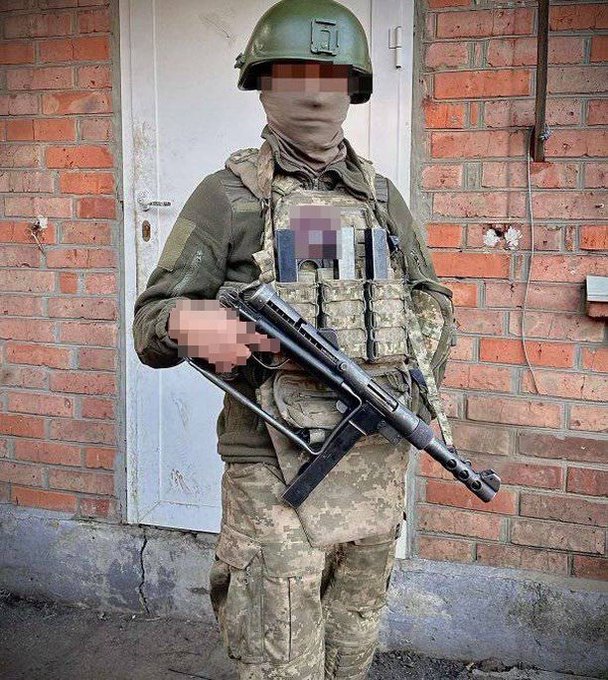
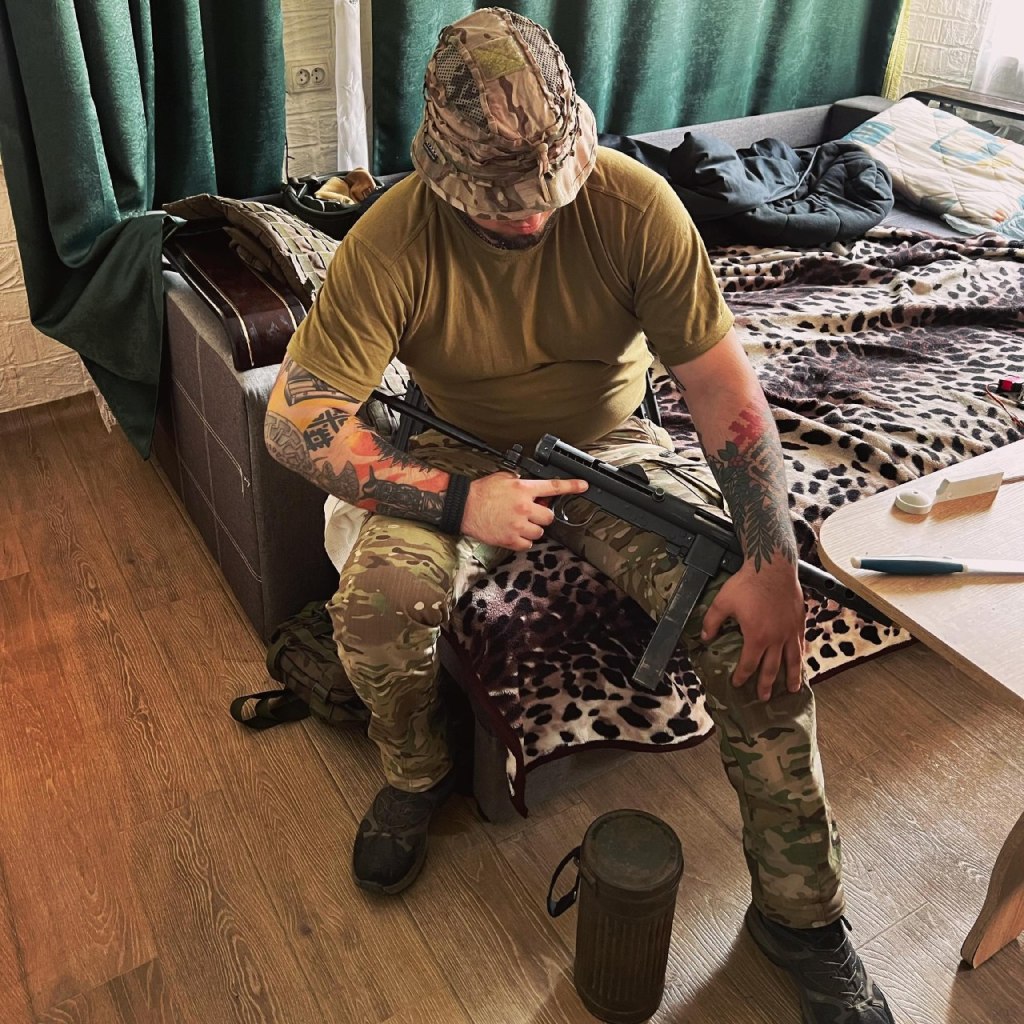
A combatant in Ukraine with an m/45 c.early 2024 (via social media)

Since the last video a couple of other sources showing the m/45 in Ukraine were shared with me. Including this image of a Ukrainian combatant with a Swedish K which has the smaller barrel shroud holes. On 10 February a Daily Mail report, featured Thunder Company, an element with the 41st Mechanised Brigade. Members of the company show journalist Richard Pendlebury an m/45 that is in their inventory. The company’s deputy commander describes it as a ‘museum piece’. Both guns appear to be of the same configuration generally seen in Ukraine. On 4 March, another short video of a Ukrainian combatant firing an m/45 at what appears to be a range was shared. It’s unclear when or where the video was filmed.

My very special thanks to Henrik Jansson for his time, insights and imagery and to numerous others for their knowledgeable input. Thank you to Weapons_Illustrated for their help sourcing imagery, check them out on twitter.

Update – 24/5/24:

On 11 April, a soldier of the 2nd Battery of the 2nd Self-Propelled Artillery Battalion of the Field Artillery Regiment of the 3rd Assault Brigade shared a photograph holding an m/45. [h/t Cloud for sharing].

Update – 18/6/24:

Update 4/9/24: A new image of the Swedish m/45 submachine gun recently surfaced. (H/T AbraxasSpa)

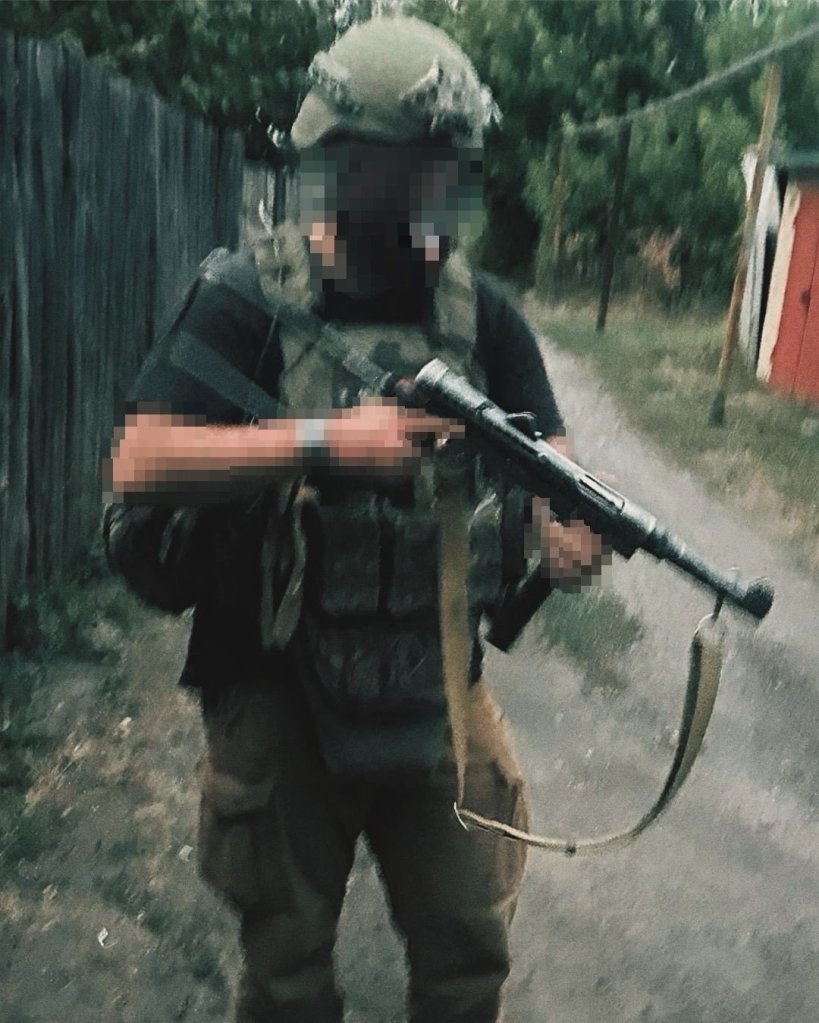
Update 3/10/24: A photograph of what may be a member of the Ukrainian 129th Territorial Defence Brigade or potentially a member of the International Legion. He’s equipped with an m/45, note the three magazines in his chest rig and Ukrainian digicam pattern sling.


Support Us: If you enjoyed this video and article please consider supporting our work here. We have some great perks available for Patreon Supporters – including early access to custom stickers and early access to videos! Thank you for your support!


“Hit the Abrams’ Vulnerable Points”

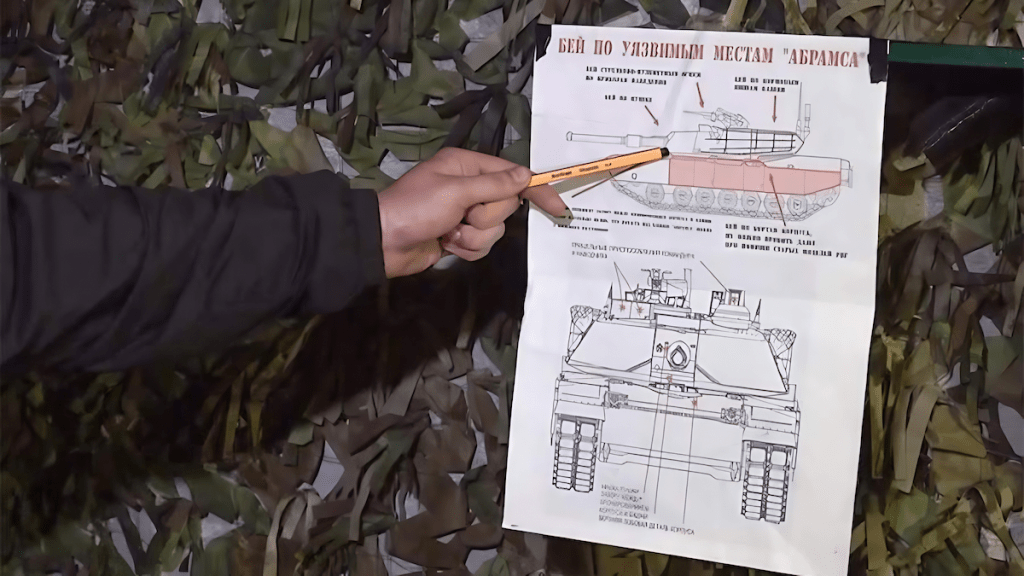
The Russian military has published and disseminated numerous handouts to Russian troops on how to engage an M1A1 Abrams. There is a long history of armies publishing guides on how to engage specific targets with both sides in the current conflict disseminating threat recognition and vulnerability guides. One early Ukraine War example of this was the illustrations published by the Ukrainian government illustrating where to strike various vehicles with molotov cocktails.

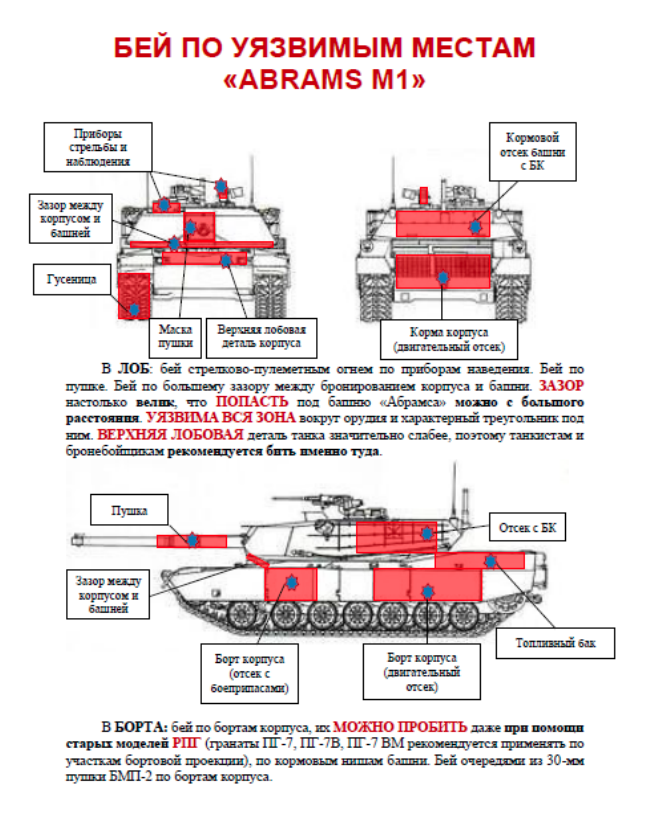
A photo of one Russian document, entitled ‘Hit the Abrams’ Vulnerable Points’, likely published in early 2024, was posted by Russian correspondent Mikhail Andronik on 26 February with the simple caption “[RPG-7 emoji] Remember!!!”. From the photograph it appears that there is further text is printed on the reverse.

M1 Abrams weak points handout (via Mikhail Andronik)

Handout (above) machine translated [from left to right, top to bottom]:

Hit the Abrams’ vulnerable points

Hit the guidance device with machine gun fire

Hit the gun

Hit the ammunition in the rear bottom of the turret

Aim for the larger gap between the armour of the hull and the turret and the Commander and gunner sighting devices

Hit the side of the hull with RPG fire of any models

The handout then advices that darkly shaded areas of the hull are ‘vulnerable to RPGs and fire from 30mm guns’ with anti-armour weapons including PG-7 warheads and disposable AT weapons. The handout also warns that the skirting over the tracks acts as additional spaced armour. The handout concludes by reminding the reader that [machine translated]:

“REMEMBER! THE ENEMY’S MAIN WEAPON IS FEAR. THERE IS NOTHING SPECIAL ABOUT FOREIGN EQUIPMENT, ANY EQUIPMENT IS VULNERABLE, YOU NEED TO KNOW WHERE AIM”

A page from the Russian MoD’s: ‘Reminder To The Soldier On Fighting Enemy Tanks And Combat Vehicles In Combined Arms Combat’ (via TDG G7)

The image and information appears to be similar to that found in a more in-depth document entitled [machine translated] ‘Reminder To The Soldier On Fighting Enemy Tanks And Combat Vehicles In Combined Arms Combat’ which was published by the Ministry Of Defense Of The Russian Federation Main Directorate Of Combat Training in 2023. This document was acquired and published by Ukraine’s Territorial Defense Force’s Training Department (G7). This document advises on how to engage a variety of armoured fighting vehicles operated by Ukraine including: the Leopard 2, M1A1 Abrams, Challenger, Marder, M113 and AMX-10RC. Tactics, techniques, and procedures (TTP) documents like this one are commonly used by many militaries around the world to train troops how to address and overcome enemy doctrine and equipment.

With the arrival of the M1 Abrams in theatre highly anticipated by both sides Russian forces had ample time to prepare and disseminate information on how to engage various types of Western armoured vehicles. In September 2023 Izvestia interviewed Russian personnel and featured another info graphic which explained how to engage an Abrams showing many of the same weak points with a colour profile graphic and a slightly different front on illustration.

Another Russian poster entitled “Hit the Abrams’ Vulnerable Points” (via Izvestia)

In early February another report, from RT, also included several info graphics showing the vulnerable points of the Abrams. RT correspondent Sargon Khadaya spoke to Russian personnel who reiterated that “like all equipment, these tanks have weak points.” The report included two different handouts outlining how to engage the Leopard 2 and M1 Abrams’ weaknesses. The M1 Abrams graphic again slightly differs from other examples seen in layout and formatting.

The first confirmed loss of an M1A1SA Abrams in Ukrainian service occurred on 26 February, just three days after the Ukrainian Armed Forces confirmed that the vehicles had been operational on the front line. Ukraine’s 47th Mechanised Brigade posted the first combat footage of the Abrams in action on 23 February. The brigade and its Abrams are part of stabilisation operations after the fall of Avdiivka in Ukraine’s eastern Donetsk region.

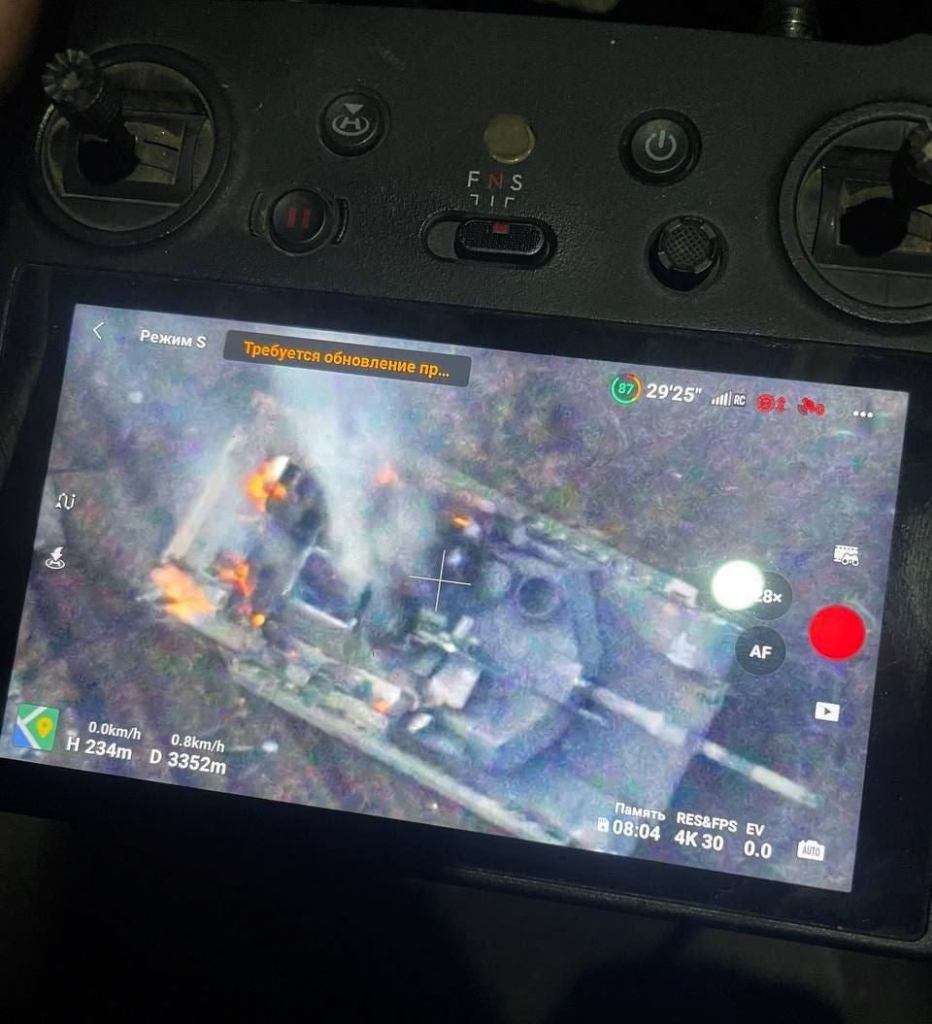
On 26 February, Russian Telegram channels began sharing low-resolution UAV footage of what was claimed to be an M1A1SA that was destroyed by the Russian 15th Separate Motorised Rifle Brigade. The imagery has not yet been independently verified but Oryx have listed the vehicle destroyed on their list of losses. Since the 26 February, Russian sources have posted other imagery of the knocked out tank. At the time of publication, neither the Ukrainian nor US governments have commented on the reported loss of an M1A1SA.

The Russian Ministry of Defence has capitalised on the apparent destruction of the Abrams posting interviews with the servicemen involved in the action on 4 March. A post on the Russian Ministry of Defence’s telegram page included an interview with the commander of the drone reconnaissance unit involved in the action, he said: ‘For two years they asked for that tank, and it took 20 minutes to destroy it”.

Image of a Russian drone feed reportedly showing a destroyed M1A1SA (via Russian telegram channels)

The tank was reportedly hit by a pair of FPV drones, one which achieved a mobility kill, which caused the crew to bail out, and a second which detonated stored ammunition. Both FPV drones attacked the M1A1SA from the rear – in line with the handout’s advice to “hit the ammunition in the rear bottom of the turret”. The drone reconnaissance unit commander said that they had: “looked at the structure of the tank in advance, where it would be best to hit it.” Interviews with members of the Russian drone unit were also published by major Russian news outlets including RIA, Zvezda and Izvestia.

A still from Russian drone footage reportedly showing a second knocked out Abrams near Berdychi (via social media)

The 47th Mechanised Brigade appears to have lost a second M1A1SA near Berdychi with imagery showing one of the tank’s tracks was broken – presumably by a mine detonation. The tank has then subsequently been further damaged either by artillery fire or drones. While this loss has not been independently verified its position has been geolocated.

As the handout points out all armoured vehicles are vulnerable, even highly capable Western main battle tanks. Situation and circumstances play a large part in the successful engagement of armoured vehicles and knowing the potential weaknesses of a vehicle is key.


Support Us: If you enjoyed this video and article please consider supporting our work here. We have some great perks available for Patreon Supporters – including early access to custom stickers and early access to videos! Thank you for your support!

Hands On with Beretta’s New NARP

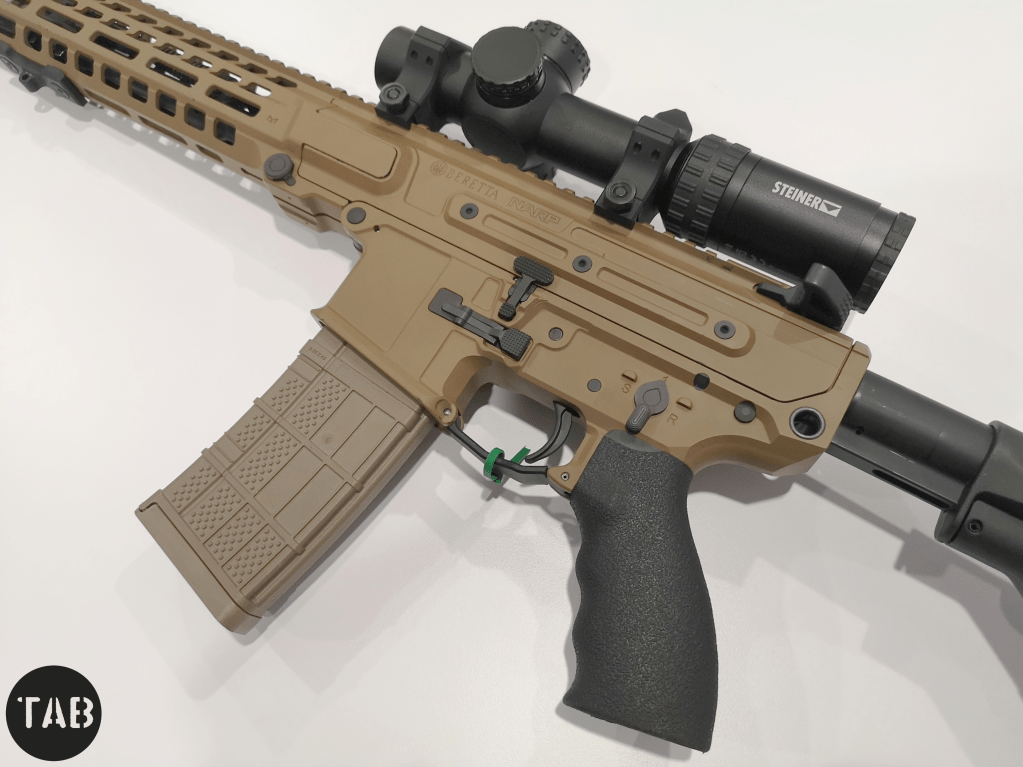
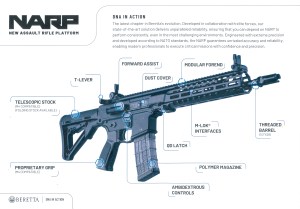
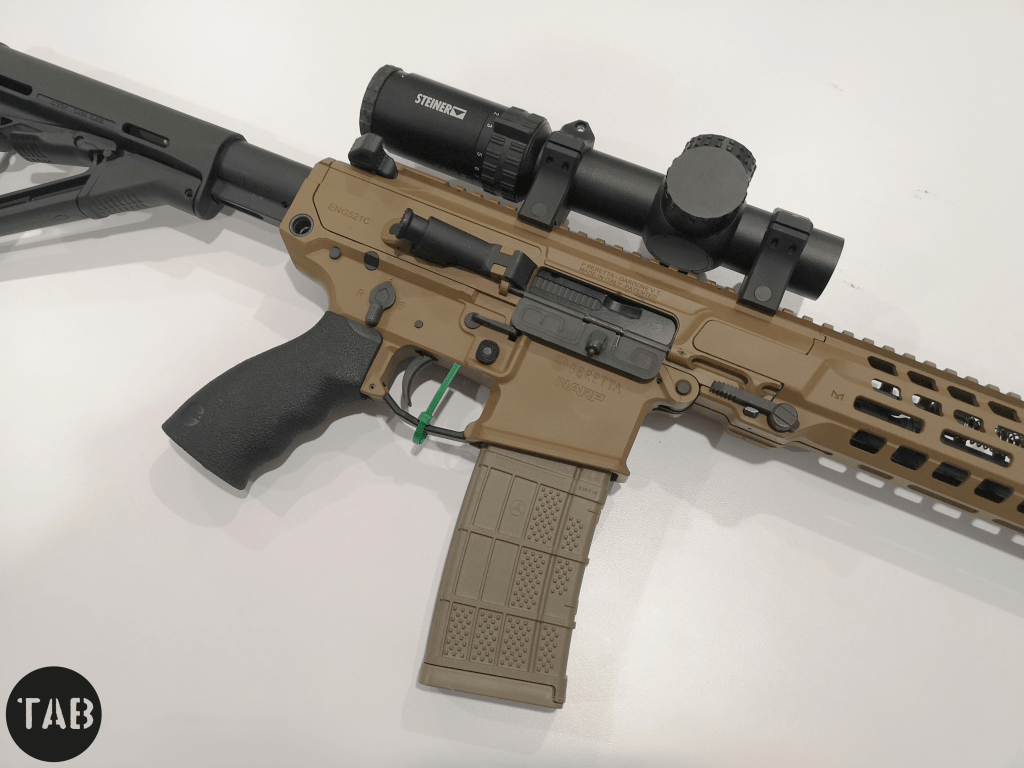
The NARP or ‘New Assault Rifle Platform’ project began back in 2018, seeking to meet the key requirements of Italy’s special forces. While their were several delays to development due to the COVID-19 pandemic the rifle has been tested and iterated over the last couple of years. In September 2023, Beretta unveiled their next generation combat rifle to the public. I had the pleasure of speaking with Andrea Candian, Beretta’s Defense and Law Enforcement Product Director. He explained the ethos behind the rifle’s development noting that the NARP project will create a family of combat rifles. Beretta were keen to stress that NARP isn’t actually the rifles’ name, but rather the overarching project to develop the new combat rifles. Mr Candian explained that the rifles themselves will likely have alpha-numeric designations once they’re introduced.

Beretta NARP (Matthew Moss)

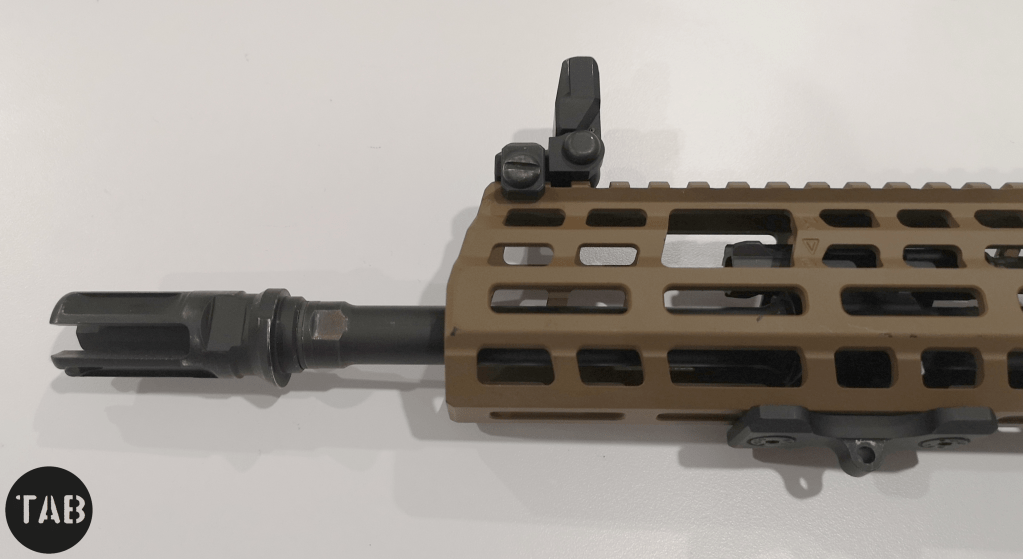
Working with Italian special forces and other members of the special forces community Beretta identified five key considerations: lethality, ergonomics, reliability, modularity and signature reduction. Mr Candian explained that Beretta systematically analysed and tested various options for each of the rifles features, selecting the ones which optimised one or more of the key considerations. One example of this is the development of a proprietary 3-prong muzzle device which reduces the weapon’s flash signature and similarly the incorporation of a Cerakote finish designed to reduce the IR signature of the weapon. Beretta also noted that they have developed their own 3D printed Inconel B-Silent suppressors which will pair with the NARP program rifles. The rifle also features either a single or a two-stage trigger – the trigger of the rifle on display at SHOT Show was impressive with a notably short take up and a crisp break.

Beretta NARP (Matthew Moss)

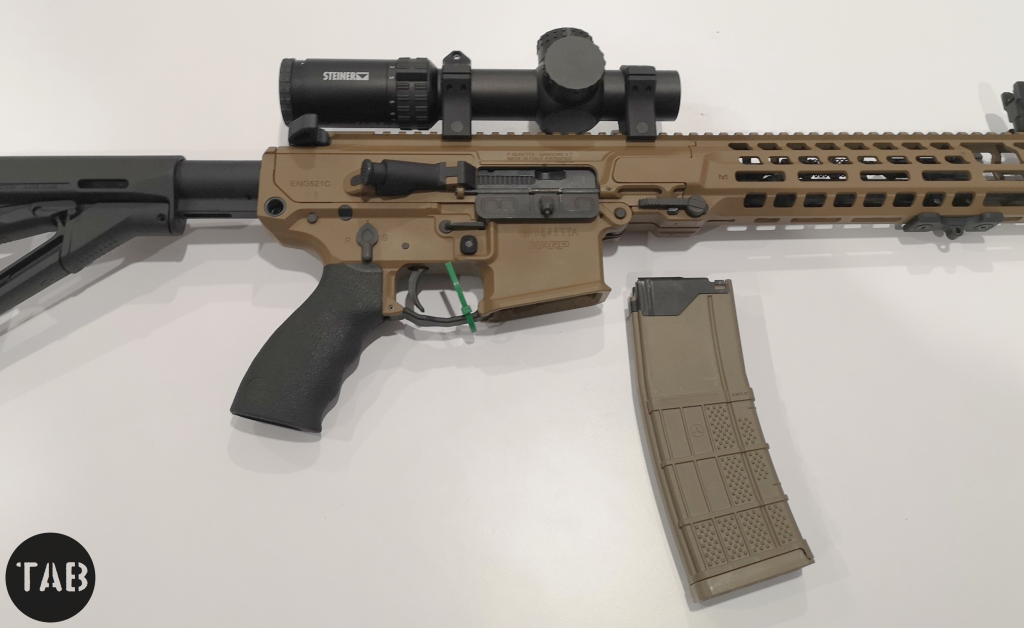
The rifle’s controls are full ambidextrous and also symmetrically positioned on both sides of the receiver. NARP’s 5.56mm incarnation will be available in 11,5″, 14,5″ (which was the configuration I examined at SHOT Show) and 16″ barrel configurations. In a departure from Beretta’s current ARX-160’s use of polymer both the upper and lower receivers are made from Aluminum. It weighs around 3.2-3.3kg (around 7lbs) and has a quick detachable forend, actuated by a single latch on the right-hand side, with a 12 o’clock rail and MLOK interfaces. Unlike the AR-15, the rifle’s recoil spring is in the upper receiver which allows a full range of buttstocks to be fitted, including an adjustable folding stock developed by Beretta themselves. Since its unveiling the rifle has been seen paired with both Lancer L5AWM translucent magazines and Magpul PMAGs.

The weapon uses a short-stroke gas system with a 2-position (normal and suppressed) adjustable gas port and has what Beretta described as a prismatic bolt carrier with a rotating bolt, this reportedly minimises vibration and reduces fouling issues. For ease of cleaning the handguard can be removed and the gas system stripped in a matter of seconds and the captive bolt group can be removed from the rear of the upper receiver without having to remove the T-lever charging handle.

Beretta NARP (Matthew Moss)

The initial configuration of the NARP program to be unveiled was unsurprisingly a 5.56x45mm-chambered rifle with various barrel length offerings but Mr Candian emphasised that it is not an AR-15 pattern rifle, though given the ubiquity of the AR-15, the new rifle does borrow features from the familiar platform. This, Beretta says, was a conscious decision to take advantage of widespread user familiarisation with an established and proven platform. In the future Beretta plan more chamberings including .300 Blackout and 6.5 Grendel and a larger calibre version chambering 6.5 Creedmoor, 7.62x51mm and the NGSW’s 6.8mm is in development.

Beretta NARP (Matthew Moss)

Development and testing was rigorously shaped to fulfil and exceed NATO’s D14 Handbook on Evaluation Procedures for Future NATO Small Arms Weapon Systems. Beretta say that with standard issue SS109 5.56x45mm ammunition they are achieving accuracy close to that of a designated marksman’s rifle. But as the rifle has been developed for military tenders they could not give any specific data on this.

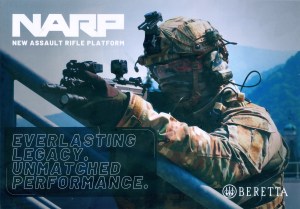
Beretta’s brochure for the NARP:

Mr Candian noted that tweaks are still being made to the rifle based on feedback from testing with special forces personnel and that the receiver’s profile will have some small changes made. There is also room for the possibility of customer-driven features such as a left-side charging handle, a selector with a burst function and different hand guard lengths, muzzle devices and barrel lengths.

Beretta NARP (Matthew Moss)

With a number of European nations expected to begin seeking replacements for their current service rifles in the near future Beretta are making a concerted effort to revamp their military offerings and are positioning themselves to compete with other major players within the small arms sector.

This article was adapted from a piece originally published at TFB. Be sure to check out my friend James’ TFBTV video for another look at Beretta’s NARP with some additional input from Beretta representatives.


Support Us: If you enjoyed this video and article please consider supporting our work here. We have some great perks available for Patreon Supporters – including early access to custom stickers and early access to videos! Thank you for your support!


Ukraine’s Handheld FPV Killer?

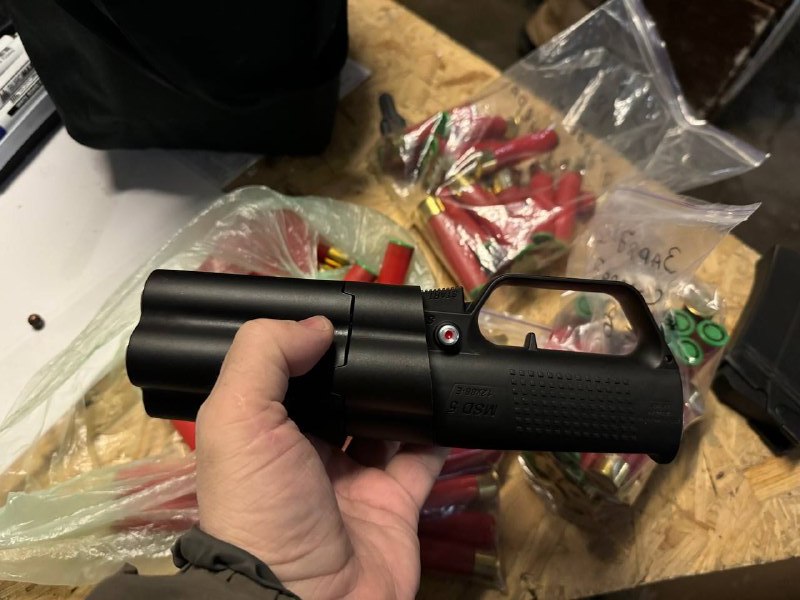
This is the MSD-5, a small, hand-held shotgun-like device which has been suggested as an anti-drone weapon. With the massive increase in UAV and (first person view) FPV drone use various means of combatting them ranging from electronic warfare to simple hunting shotguns have been deployed by both sides.

In recent weeks a number of Ukrainian social media accounts have shared the idea of using the MSD-5 as a short-range defence against diving FPV drones. I hadn’t seen the weapon before and none of the posts about it explicitly mentioned its designation or manufacturer. I did some research and found that the small hand gun was called the MSD-5 and is manufactured by Stellarium SV, a company based in Chernihiv, in northern Ukraine.

An MSD-5 (via Sergey Flash)

In January, Sergey Flash (a Ukrainian serviceman and communication specialist) posted a video discussing the need for an immediate defence against FPVs and held up an MSD-5 describing it as “a possible way of protection” but emphasising that his aim wasn’t to advertise the device but simply call “attention to a possible remedy for the soldiers”.

Stellarium SV’s website explains that rather than being a weapon it is primarily sold as a signalling device with five different 12×88 cartridges available, two signalling cartridge types, a noise cartridge for scaring off animals, a cartridge which can extinguish flames and one for spraying plants to treat and protect them from various types of pests and diseases.

Here is a promotional video for the MSD-5:

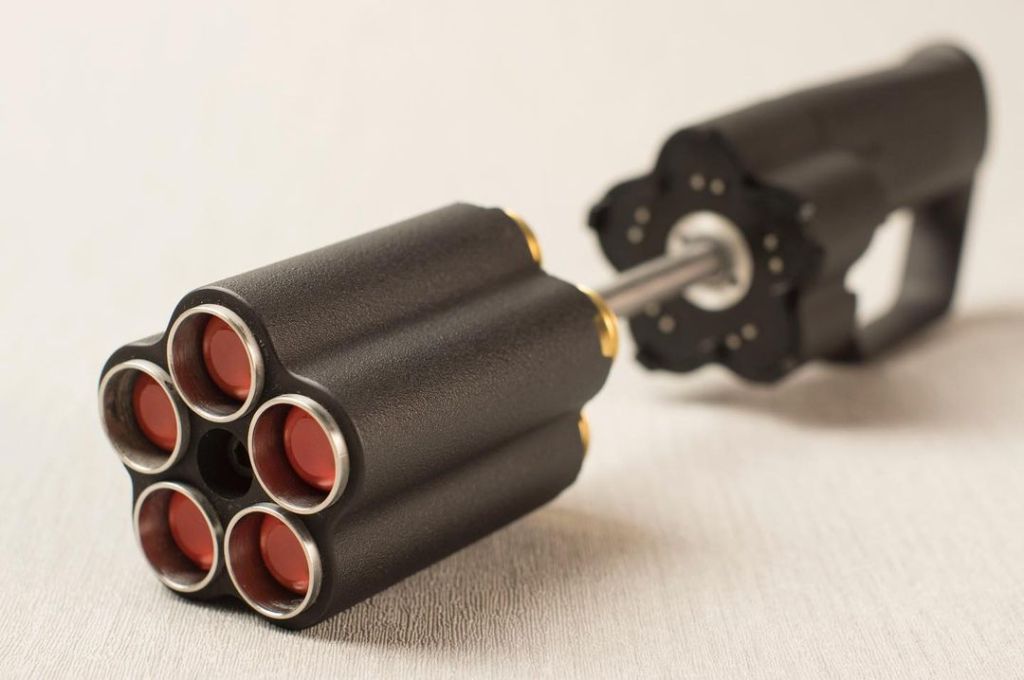
It is unclear if the device is robust enough or has barrels suitable for firing something like birdshot pellets. Stellarium SV note that the device is made from “high-strength plastics based on reinforced polyamide” but do state that “the drum can be fitted with stainless steel or titanium liners.”. The device has 5 tubes or barrels and is electrically fired. It appears to have a cross bolt safety in front of the grip, below the exposed trigger. It weighs 800g and is powered by three CR123A batteries. Stellarium SV’s site lists the device’s price as 430 Euros.

On the 20 February, Flash posted another short video of himself firing MSD-5 at a range with the caption:

“Tested today the new cartridges for the “soldier’s weapon against FPV”. Specialists are working, I hope we will produce a product that we will give to every soldier. My task, after the product is ready for the series, is to achieve its introduction into the Armed Forces.”

An MSD-5 with its action open (Stellarium SV)

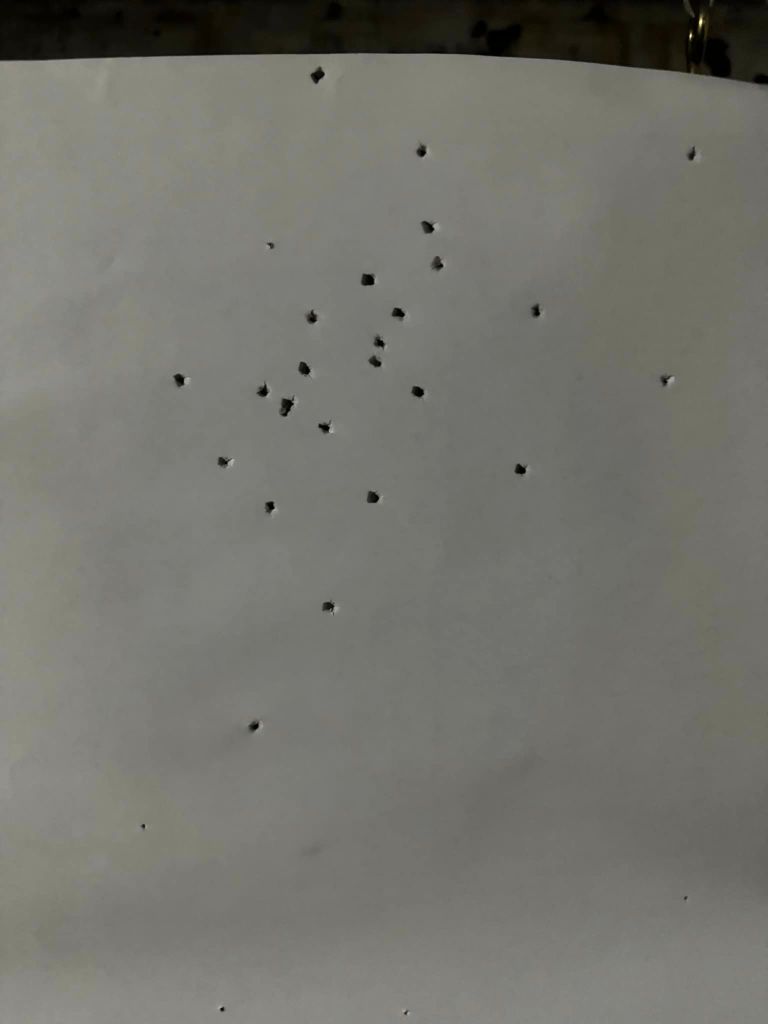
Along with the video he also posted a photograph of a target peppered with holes from small shot. The video shows the MSD-5 being fired with minimal recoil, suggesting a light load.

I reached out to Stellarium SV about the potential conversion of the MSD-5 into a personal anti-FPV weapon and they were keen to stress that this ” is not a use case that we endorse or support” and that they do not produce a cartridge capable of this and that anyone who made adapted cartridges is not related to Stellarium SV. The company did note that loading cartridges with shot was possible but getting the powder charge right was key. They also noted that the MSD-5 does not have sights which may make aiming difficult, though at the probable engagement ranges instinctive point shooting may be what Flash has in mind.

A test target photo posted by Sergey Flash (via Sergey Flash)

I also reached out to Sergey Flash to enquire about how he was adapting the MSD-5 but at the time of publication have not yet had a reply.
While the MSD-5 may not have been designed with an anti-drone role in mind, the concept of a similar handheld, lightweight, last-ditch, defence against FPVs seems a sensible answer to a urgent and difficult problem.


Support Us: If you enjoyed this video and article please consider supporting our work here. We have some great perks available for Patreon Supporters – including early access to custom stickers and early access to videos! Thank you for your support!


Russia’s Rare RPG-16 in Ukraine

One of the rarer Russian anti-armour weapons to surface during the ongoing war in Ukraine is the RPG-16. The RPG-7’s big brother was developed in the late 1960s and entered service in the early 1970s. It was predominantly developed for Russia’s airborne forces, the VDV, but also saw issue to Spetsnaz units.

The RPG-16 is characterised by its larger diameter tube which can fire a 58mm (2.3 inch) PG-16 rocket-propelled grenade. Unlike the RPG-7s munitions the PG-16 slides flush inside the launcher, while this limits the volume and types of warhead the RPG-16’s ammunition can carry it provides improved accuracy and slightly increased range. The PG-16 is a fin-stabilised high explosive anti-tank (HEAT) round with a rocket booster which propels it at a maximum velocity of 350 metres per second. The rocket weighs around 2.1kgs and has a maximum range of 800 metres, though practical engagement range of vehicles is closer to 300 metres. It can penetrate up to 300mm (12 inch) of rolled homogenous armour.

An RPG-16 seen in a Russian news report, June 2023 (Russia 1)

The RPG-16 can only fire the PG-16 round and following its adoption in the early 1970s it has been surpassed by other anti-armour weapons which have entered Russian service and by the development of more capable PG-7 series warheads. The launcher weighs 12.4 kg (27 lbs) [compared to the 7 kg (15.4 lb) of the RPG-7] when loaded and is 110cm (43.5 in) long but can be broken down into two parts: the rear tube with venturi and the forward tube and fire control group. Unlike the smaller RPG-7 it has a bipod near the muzzle and a grip area on the fire control group, it does not have a second, rear pistol grip.

A reported 120,000 were produced with manufacture continuing into the late 1980s. It had been thought that the RPG-16 went out of Russian service in the early 2000s but evidently some have been drawn from stores and have been used in Ukraine. The RPG-16 was reportedly used against fixed positions during the Soviet war in Afghanistan and may now be pressed into the same role in Ukraine.

It appears from available imagery that the RPG-16 began to be issued in early 2023. Early March 2023 saw Russian state-news outlet RIA shared a report featuring combatants of the 76th Guards Air Assault Division firing small arms and RPGs in woodland. One of the RPGs fired was an RPG-16.

Russian combatant firing an RPG-16, December 2023 (via social media)

In late April, stills from a video of troops said to be with the 98th Guards Airborne Division featured an RPG-16 being fired near Dibrova were shared. I’ve been unable to find the original footage. In June, one of the launchers appeared in a Russia-1 news report featuring Russian forces near Avdiivka, Donetsk Oblast.

On 26 November, a Russian combatant shared a photograph of an RPG-7 and an RPG-16 next to one another, reportedly taken in a depot or armoury. Two days later on 28 November a short clip of marines from the Russian 40th Naval Infantry Brigade was shared showing an RPG-16 in action, location unknown, possibly near Pavlivka.

A week later, on 3 December a video featuring a pair of Russian combatants from the Otvazhnye (Brave) Group, firing an RPG-7 and an RPG-16 was posted on telegram. The footage was probably filmed in near Kreminna where the unit was reportedly active.

Russian combatant poses with an RPG-16 and AK-12, January 2024 (via social media)

On 13 December, a mobilized Russian combatant shared a post on Telegram describing his experiences at the front. He mentions that due to a lack of infantry anti-armour weapons with sufficient range to reach Ukrainian AFVs standing off and firing on their positions his unit began issuing RPG-16s. In late January, two photographs of Russian troops in a trench, location unknown, posed with an RPG-16, and some unrelated RPG-7 munitions.

From the limited imagery available it seems that the RPG-16s have been again issued to largely airborne units, however they have also been seen with Russia’s naval infantry. Exactly why the RPG-16 has returned to service is unclear, as by one Russian combatant suggested, it may be that the greater range offered by the RPG-16 enables engagement of distant targets, another potential reason might be Russia’s desire to use up existing reserve stocks of munitions.


Support Us: If you enjoyed this video and article please consider supporting our work here. We have some great perks available for Patreon Supporters – including early access to custom stickers and early access to videos! Thank you for your support!


Specifications:

Calibre: 58.3 mm
Length:
– Assembled: 1,104 mm
– Disassembled: 645 mm
Weight:
– Unloaded with optical sight: 10.3kg
– Loaded: 12.4kg
Velocity:
– Initial: 130 m/s
– Maximum: 350 m/s
Effective range: 800 m
Armour Penetration: +300 mm

Bibliography:

Jane’s Infantry Weapons 2014-15, R.D. Jones & L.S. Ness (2014)

58mm PG-16 Rocket, CAT-UXO, (source)

RPG-16 Udar Russian Rocket-Propelled Grenade Launcher, US Army, (source)

Airborne choice: Soviet RPG-16 in Afghanistan, Safar Publishing, (source)


Ukraine’s ASRAAM-Supacat Franken-SAM

Earlier this week a short video featuring an ASRAAM-Supacat ‘Franken-SAM’ surfaced online. Early on 8 February, Ukrainian Telegram channels began sharing a video pulled from TikTok, which is likely the first daylight footage of one of the UK-developed and supplied ad-hoc air defence systems.

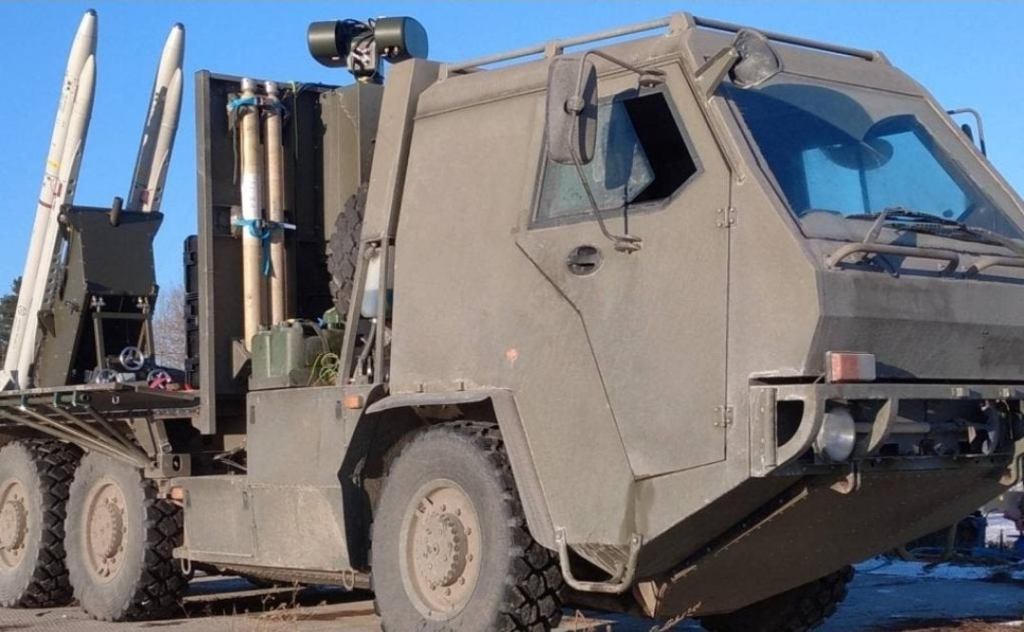
The system can be seen parked by the side of a road and was filmed (original source now private) from a passing vehicle. The date and location the video was filmed is unknown. The launcher appears to have two AIM-132 Advanced Short-Range Air-to-Air Missiles (ASRAAM) loaded with the launcher ramp raised in the ready position. It is difficult to make out but the cab has seemingly been fitted with a protective screen to guard against drone attack. Also visible is what appears to be a sensor turret mounted behind the cab, this is possibly an electro-optical/infrared sensor used for targeting.

Still from recently posted footage of an ASRAAM Franken-SAM in Ukraine, 8 Feb. 2024 (via social media)

The UK-developed system is one of several so-called Franken-SAMs produced by Ukraine’s allies. They are part of an effort to affordably and quickly bolster Ukraine’s air defences. In October 2023 a pair of videos shared by the Ukrainian air force gave a glimpse of the system in action. The both filmed at night shows a launch but the vehicle is not visible. The second, shared on 12 October, by Ukraine’s Air Command – South shows the successful engagement of a Russian long range loitering munition. As the darkness is lit up by the missile launch, the Supacat 6×6 High Mobility Transporter is briefly visible.

The AIM-132 missiles and the vehicles launching them were provided by the UK in the summer of 2023. ASRAAM uses infrared homing and can lock onto its target after launch. It has an air-launched range of more than 25km but this is likely shorter when used in a ground launched role. The system may be used in conjunction with radar systems which feeds target data to the missile. A key feature of the ASRAAM is its ability to lock-on after launch, theoretically allowing it to be vectored onto a target in the air before it begins IR homing.

A photo dating from August 2023 of a Supacat High Mobility Vehicle mounted with a pair of MBDA UK ASRAAMs (Ukrainian Ministry of Defence)

The system, however, isn’t ideal with limited ready-to-fire capacity on the launcher ramp, with just two rails, and no protection for the missiles themselves, from either the elements or from potential fragmentation or impact damage if attacked. The ad-hoc air defence system first saw action in Ukraine in August 2023, and represents an ingenious improvisation utilising a highly capable missile in an air defence role it was never envisaged in. In December 2023 UK Ministry of Defence summarised their development:

“In summer 2022, a joint MoD-MBDA team developed air defence systems to fire ASRAAM from the ground for the first time. Within four months of initiating the surface launched ASRAAM project, these air defence systems were developed, manufactured, trialled and Ukrainian crews trained on their usage, on UK soil, before being transferred into Ukrainian hands.”

It is unclear how many of the systems have been assembled but in late 2023, it was reported that the UK had supplied “a handful” of the missile-equipped Supacat trucks. They were believed to be in use in near the front and in the Kyiv region, defending key infrastructure, against Shahed-136/Geran-2 long-range loitering munition attacks.

In December 2023, the UK Ministry of Defence announced that a further 200 ASRAAMs would be provided to Ukraine and that the systems in-country had achieved a “successful hit rate reported as high as 90% against some Russian air targets.”

This article originally appeared at OvertDefense.com

Update 16/04/24:

Short video showing a close up and launch of what appears to be an ASRAAM missile. Posted on Telegram on 14 April.

Update 16/09/24:

A brief video showing a launch of a missile from the HMT-mounted ASRAAM air defence system.


Support Us: If you enjoyed this video and article please consider supporting our work here. We have some great perks available for Patreon Supporters – including early access to custom stickers and early access to videos! Thank you for your support!

Ohio Ordnance Works – REAPR

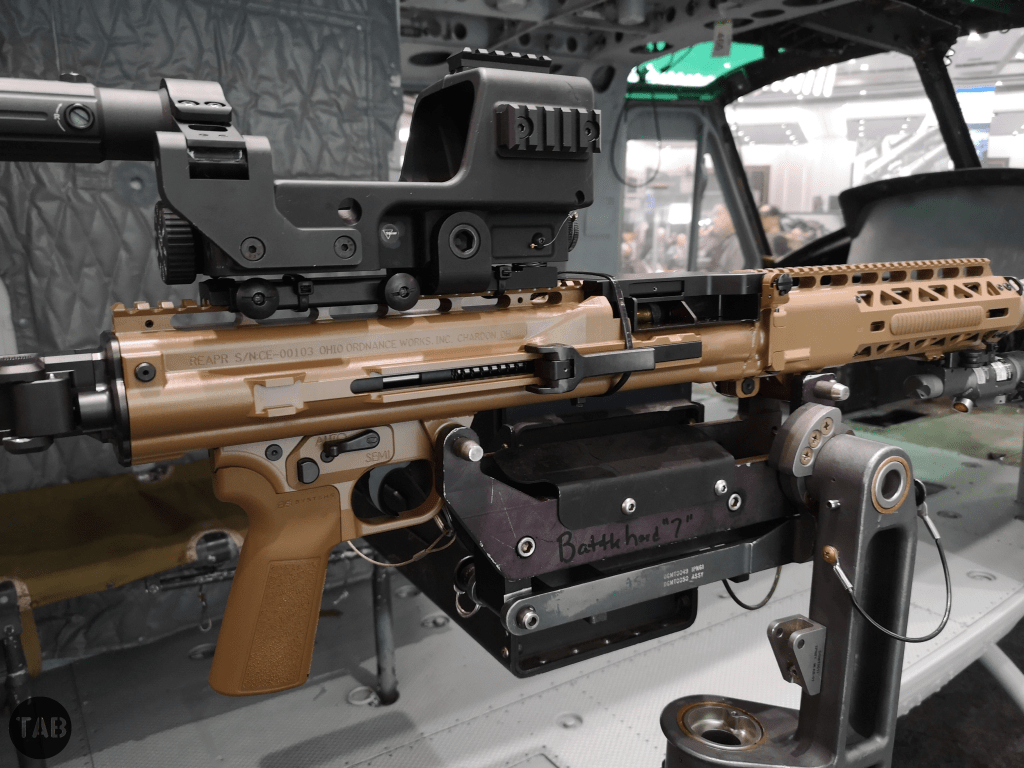
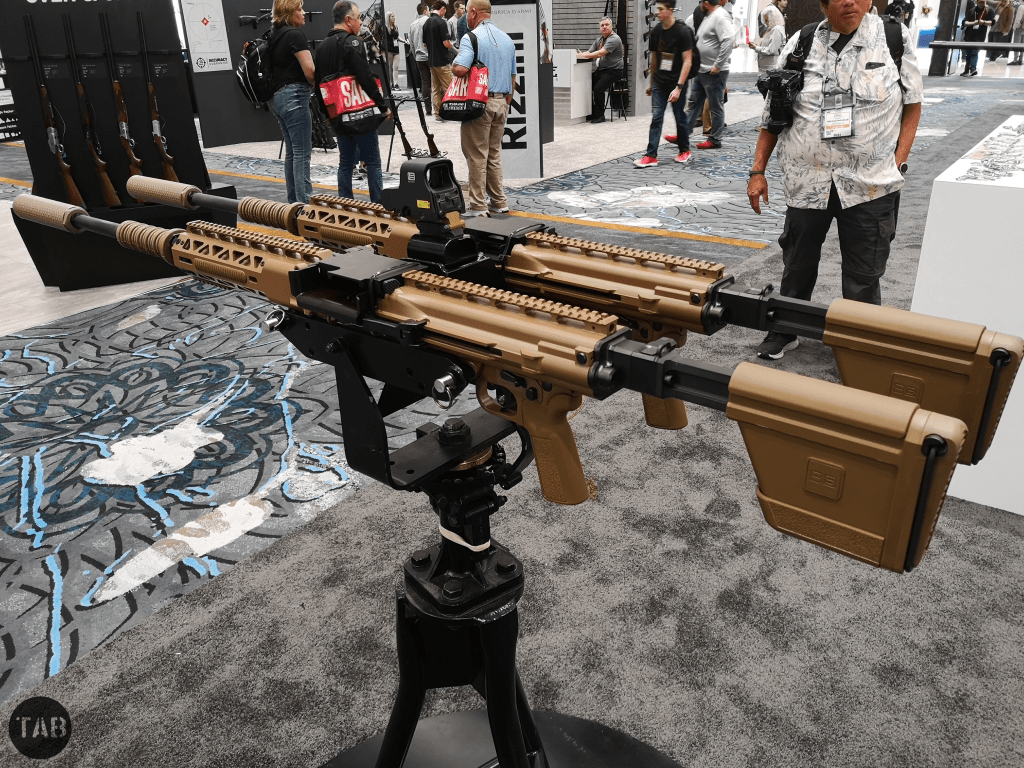
At SHOT Show in 2022, Ohio Ordnance Works teased their new .338 light weight medium machine gun, keeping the gun’s key features hidden under strategically placed scrim. This year the REAPR was unveiled for all to see. The REAPR or Recoil Enhanced Automatic Rifle is chambered in .338 Norma Magnum and can also be calibre converted to 7.62x51mm.

The gun was developed by Ohio Ordnance Works (OOW) in response to solicitations from the US SOCOM and US Marine Corps for a Lightweight Medium Machine Gun in .338NM. The niche requirement for a .338 gun dates back to at least 2012 with the first Sources Sought Solicitation being launched in May 2017. The solicitation requested:

The LWMMG should fire the belted .338NM round of ammunition with a polymer case. The LWMMG should weigh less than 24 pounds unloaded with a barrel length of 24in. The LWMMG should have a rate of fire of between 500-600 rounds per minute. Weapon shall be compatible with current rail mounted aiming systems with the ability to incorporate more advanced fire control technology. The system should include both a suppressed barrel and an unsuppressed barrel that can be rapidly changed. The LWMMG should include a tripod that is lightweight and provides the stability and accuracy required to engage targets at extreme ranges. The LWMMG should be able to mount in current machine gun mounts designed for the M240B/C. The weapon should have sufficient accuracy to engage area targets and vehicles at 2,000m.

General Dynamics led the field developing their .338 machine gun but this design was later divested to True Velocity and since then SIG Sauer have also developed their MG338/SL MAG. The 2017 solicitation is now inactive, however, in 2021 SOCOM (via PEO SOF Warrior, PM Lethality) began seeking an ‘LMG-M’. LMG-M project seeks a gun that can engage targets out to 2,500m and has a similar weight and form factor to an M240B. A contract had been hoped to be awarded by the end of 2022, however, this slipped back to 2025 and now likely 2026.

The aim of .338 machine guns is to fill the gap between the 7.62mm GPMG and the .50 HMG while providing a dismounted, lighter weight platform that can give the performance of a .50 calibre machine gun.

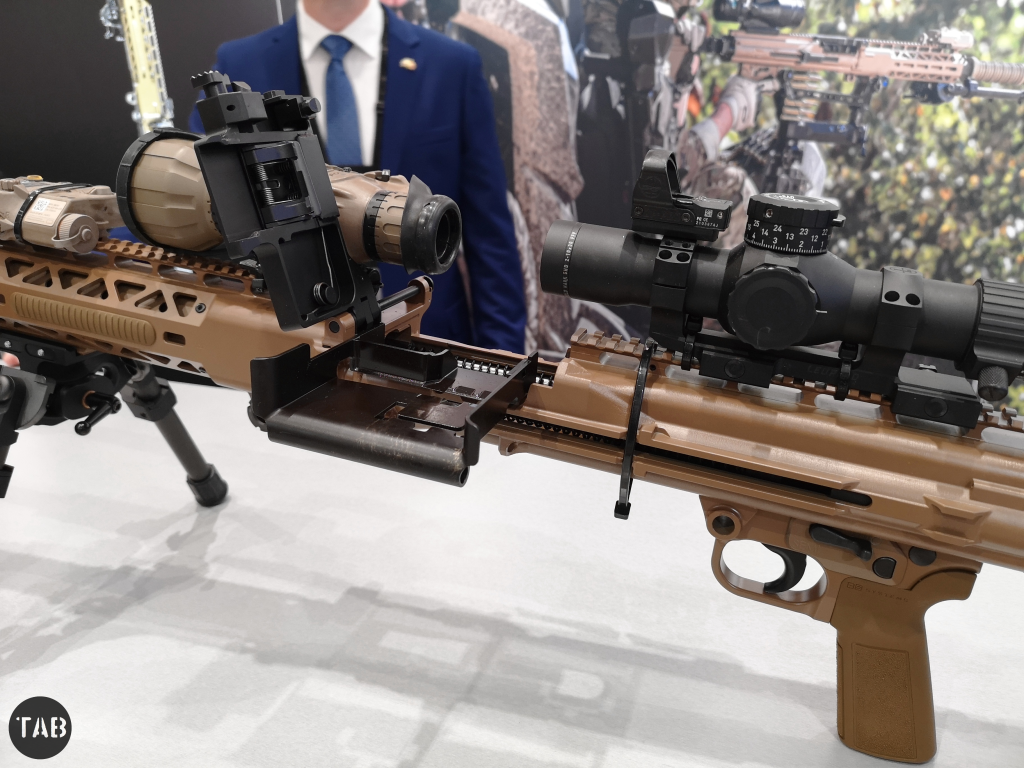
OOW began work on their gun in 2020 with numerous patents granted on its features. The REAPR is a select-fire weapon with ambidextrous controls on either side of the pistol grip assembly as well as a traditional cross-bolt safety. The pistol grip itself can be swapped out for any AR-15/M16 compatible grip. Robert W. Landies, OOW’s president and one of the designers of the gun, told me that with REAPR they addressed a lot of the pet peeves they had with legacy machine guns designs and that they “took a lot of features and amalgamated the best of them” when designing the weapon. Intriguingly, the gun uses a roller delayed operating system, similar to that of the MG45, this means the opening of the action is slowed by rollers but does not fully lock. Post-Second World War Two this system had some influence on a range of designs including the SIG MG 710-3 and a host of Heckler & Koch weapons. The gun uses a pair of springs on dual guide rods and has a 600 rpm rate of fire. The weapon can be field stripped without tools. To remove the action a pin at the rear is removed which allows the butt stock and rear of the receiver to be removed with the springs, guide rods and bolt sliding out of the receiver.

It has a side folding stock, designed in house with B5, with a shoulder rest and an adjustable cheek riser. B5 also provided the REAPR’s P23 Grip and MLOK rail covers. According to OOW the REAPR weighs in a 26.8lbs and has an overall length of 51.7in (131cm) when the stock is collapsed, 54.5in (138cm) when deployed and 44in (112cm) when folded (it can fold either to the left or right). For use when mounted on vehicles or aircraft the stock can be removed and a spade grip kit can be fitted. There is also a rail mounted removeable carrying handle.

A key feature is the gun’s barrel quick change system, this can be done with one hand by the operator. The change can also be done with the bolt either in the forward or rear position. The patented system uses 2 opposing groups of 5 interrupted threads, this allows the barrel to be released with just a 90-degree turn. To remove the barrel the operator grasps the barrel cover, pushes the barrel rearward, towards the receiver, and then turns the barrel 90-degrees to disengage it. The REAPR can be mounted with a suppressor, it has been seen paired with cans from a number of different manufacturers.

Another feature is that the entire system can be broken down into 3 pieces within 10-20 seconds. It can be packed away with the barrel at 24.5in (61cm) being the longest component. The REAPR has a one-piece steel receiver and an aluminium hand guard with MLOK slots, which can be removed via a pair of catches. The gun also has MIL-standard mounting points for either tripod or pintle mounting. Another key, patented, feature is the gun’s feed tray which can slide out to the side of the gun for loading and clearing, this allows the operator to use optics with a larger continuous footprint. SIG Sauer addressed this issue by having a cover which hinges to the side. The REAPR’s direction of feed can be flipped either left or right and ejection is through the bottom of the receiver. OOW note that the gun has a mounting interface for an ammunition pouch on the left side of the receiver but are considering adding one to the right side but are waiting on feedback from users.

OOW say that the REAPR is currently available for ordering in test quantities but full volume production is set to begin in April 2024. The REAPR seems to be a very competent, well thought out design with a lot of promise. It will be interesting to see how the LMG-M programme progresses.


Support Us: If you enjoyed this video and article please consider supporting our work here. We have some great perks available for Patreon Supporters – including early access to custom stickers and early access to videos! Thank you for your support!

Bibliography:

‘Firearm top cover with multiple degrees of freedom of motion’, US Patent #11268774B1, (source)

‘Quick-change barrel for a firearm’, US Patent #11598600B2, (source)

[FULL BREAKDOWN] Ohio Ordnance REAPR .338 NM Belt-Fed Machine Gun, OOW, (source)

Lightweight Medium Machinegun (LWMMG), SAM.gov, (source)

USSOCOM Small Arms Update 2021, SSD, (source)

SOFIC 22 – USSOCOM Weapons Update, SSD, (source)

SOF Week 23 – USSOCOM Weapons Update, SSD, (source)

Full Circle: A Treatise on Roller Locking, R. Blake Stevens (2006)