Mousqueton Arcelin Modèle 1856

By the mid-19th century many major militaries were beginning the hunt for a reliable and robust breechloading system. France was no exception with a number of systems trialled during the 1850s, following the Prussian adoption of the Dreyse rifle. Today we’re lucky enough to be examining one of France’s early breechloaders , with some interesting features – the Arcelin.

Arcelin carbine and bayonet (Danny Michael/CFM)

Perhaps properly described as le Mousqueton Arcelin 1856, the carbine has the distinction of being the first French breechloader to have a distinct bolt handle. Designed by Charles Arcelin, a graduate of the École spéciale militaire de Saint-Cyr and veteran of the Napoleonic Wars. In the 1820s Arcelin began his ordnance career working in arms factories in Mutzig, Saxony and Starsbourg. In 1839 he became deputy director of the Tulle arsenal and developed a system for the conversion of flintlock muskets to the percussion system in 1842. He subsequently became Director of the Châtellerault arsenal between December 1841 to September 1842 and again from December 1849 to August 1852. It was during this period that Arcelin developed his breechloader.
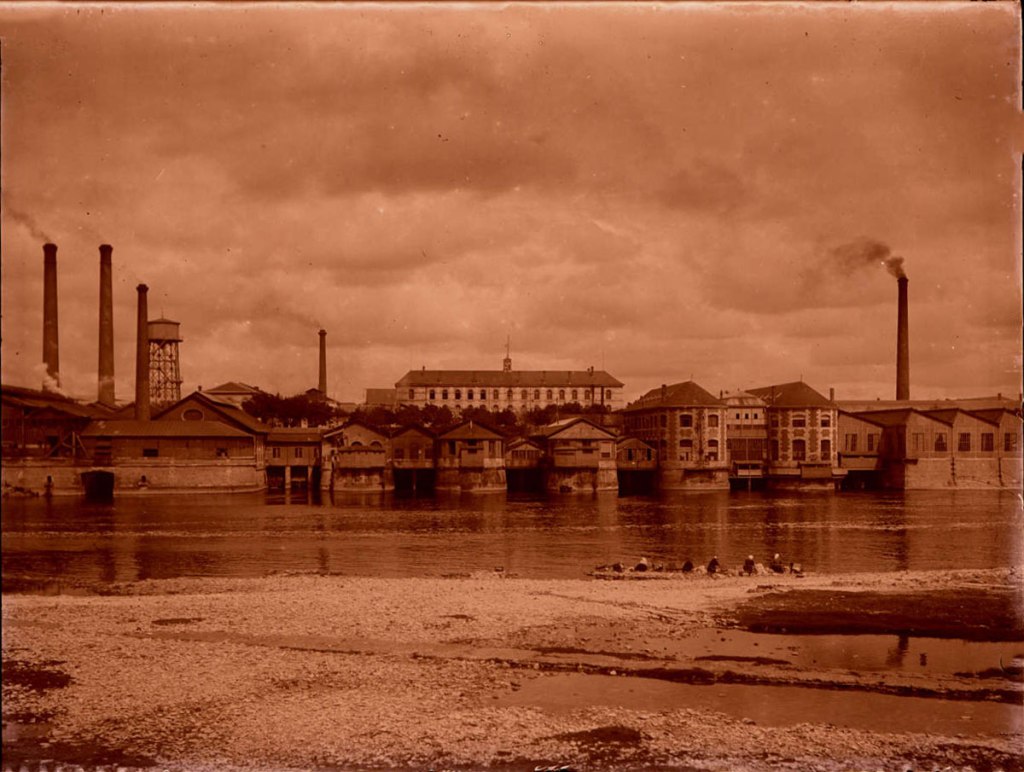
Manufacture d’Armes de Châtellerault (Châtellerault museum)

Following his work on developing a percussion conversion Arcelin set about developing a breechloading system, in June 1853 a prototype cavalry carbine was tested at Vincennes. The prototype fired 130 rounds before its action fouled and seized up – despite this observers were impressed, including Emperor Napoleon III.  

A letter from the Cabinet of the Emperor, dated August 4, 1856 states:

“The Emperor wants General Arcelin to be responsible for having the Manufacture de Châtellerault make 300 carabiners with a movable breech of the model which has been tested at Vincennes and which gave satisfactory results and in addition 100 reserve cavalry sabers, 100 line cavalry sabers and 100 light cavalry sabers which will be attached at the end of the carabiners. The sabers as well as the carabiners of a new model which was established on the personal indications of the Emperor. These weapons are intended to be tested in three regiments of the Imperial Guard.”

At the beginning of October, the Emperor ordered that production be reduced to 100 rifles. On the 7th October, it was proposed that Châtellerault would provide 108 carbines and sabers. A manufacturing report dating from 5th April 1857, signed by Arcelin, specified that 111 carbines and sabers had been produced. Despite this sources suggest that by June 1857, carbines was reduced again by the French war ministry, to 96 – a total of 32 per regiment. The carbine we are examining is marked with ‘108’ in a number of places, this would support the total of 108 and would also make it the last of the trials prototypes manufactured.
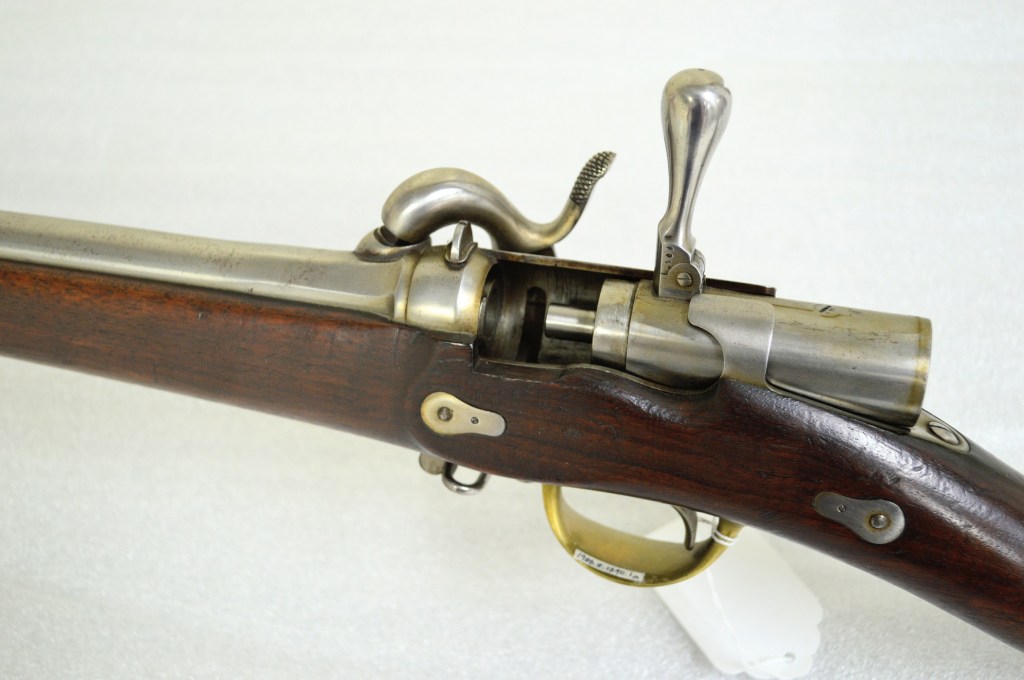
Bolt handle extended with the action partially open (Danny Michael/CFM)

While some sources refer to the sabres as sabre-lances, this was not their designation or purpose nor were the weapons ever issued to Napoleon’s Squadron des Cent-Gardes as some sources suggest. Instead they were issued to three regiments of cavalry:

The reserve cavalry’s 1st Carabinier Regiment (Cavalerie de Réserve, 1er Régiment de Carabiniers), the line cavalry’s Empress’ Dragoons (Cavalerie de ligne, Dragons de l’Impératrice) and the 1st Hussar Regiment of the light cavalry, (Cavalerie légère, 1er Regiment de Hussards).

Once the contract for 108 trials carbines had been confirmed Arcelin set about refining and producing the guns at Châtellerault. He recruited a promising young gunsmith, Antoine Chassepot, who had been working at the arsenal since 1851, to work on the project. What Chassepot’s input on the project was is largely unknown although his work with Arcelin clearly influenced his own later designs.

The Arcelin carbine used a paper cartridge with a 21g (or 324  grain), 12mm projectile propelled by 3g (or 46gr) of black powder. It was still ignited by a percussion cap and had a back action lock. The breech locked by a pair of opposing threaded screws and by a lug in the base of the action. The carbine weighs 3.2kg (just over 7lbs) and was 1.18m (46.4in) in length, with a 76.5cm (30in) barrel.
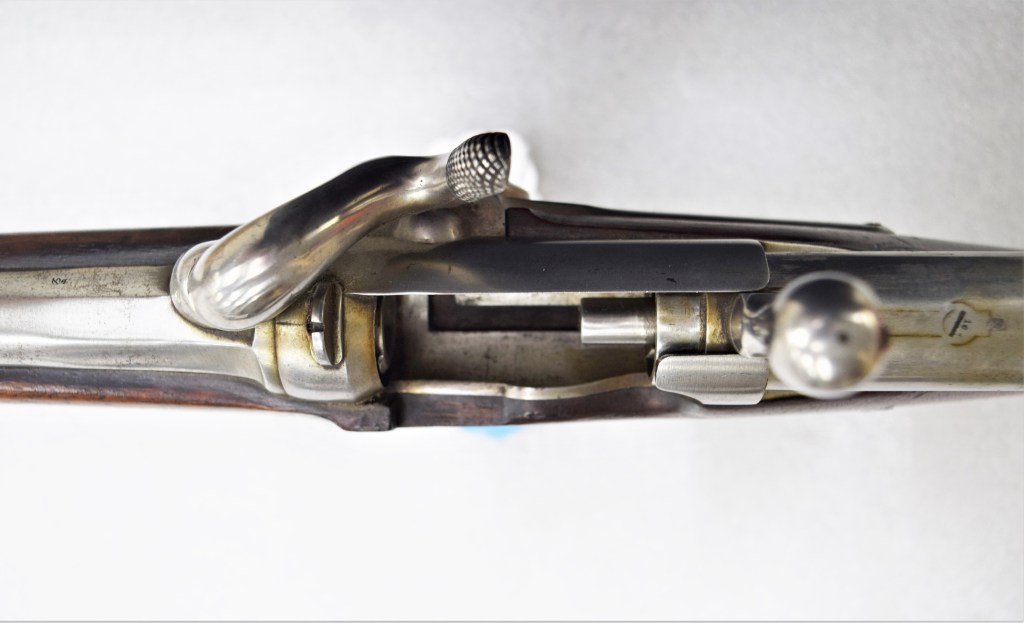
A close up of the breech with action open (Matthew Moss)

To operate the carbine first the action is opened, rotating the bolt handle up 90-degrees. A cartridge would then be slide into the breech and the action pushed forward and closed. The percussion lock would then be brought to half-cock, a cap placed on the nipple and then the lock would be brought to full cock and the weapon fired. As the carbine fired a paper cartridge there was no need for extraction of a spent case.

The trial of the carbine was carried out alongside another new breechloader, a pinfire, falling block action developed by Antoine Treuille de Beaulieu, chambered in a 9mm round. General Treuille de Beaulieu is perhaps best known for his rifling system for artillery.

The carbines and sabres were issued and ready to begin trials at the beginning of April 1857. By the Autumn of 1857, following testing by the various units the Arcelin was rejected. The Artillery Commission found that the lack of obturation at the breech lead not only to gas escaping the action and being unpleasant and somewhat dangerous for the user but also the fouling of the interrupted thread which locked the action led to jamming and in a number of cases the folding bolt handles were broken when troopers attempted to force the actions open.
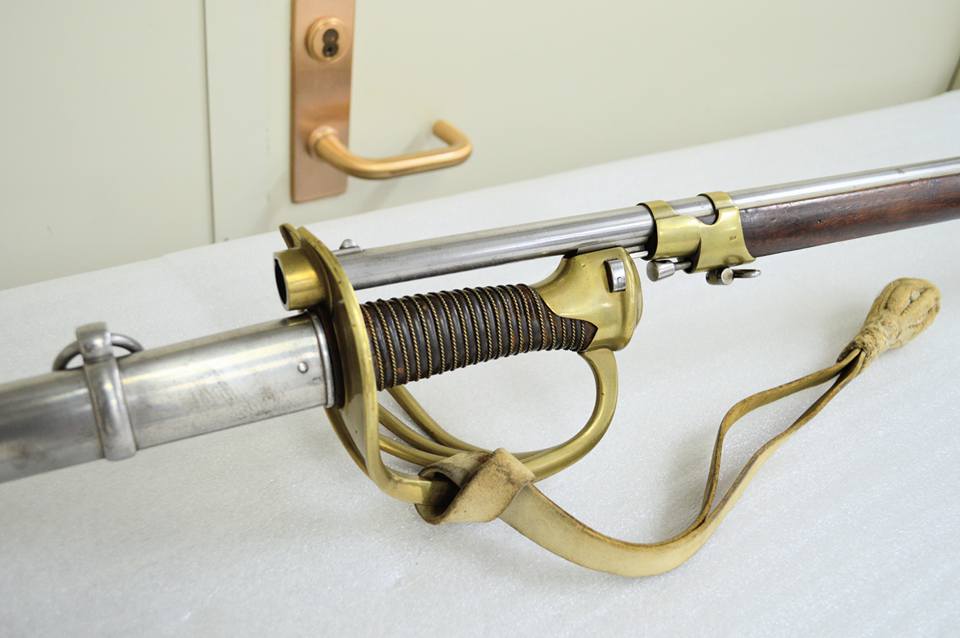
The Arcelin carbine with a similar but later pattern of sabre-bayonet (Danny Michael/CFM)

Now for the rather impressive bayonet. We have examined carbines with significant bayonets, like the Durs Egg-made Crespi breechloader. The French had a penchant for sabre bayonets dating back to 1840s and would continue to use them into the 1870s. The sabre seen with this carbine is not the exact pattern which would have been paired with the Arcelin. The 1856 pattern Arcelin sabre which would have mounted on the carbines have a hilt style which is slightly different and the lug under the barrel doesn’t quite interface with the catch on the sabre.

The sabre itself is based on the Mle 1854 sabre, a double fullered, 1m long, straight sword manufactured, like the carbines, at Châtellerault. The sword with this carbine is marked at ‘Dragon Mle 1854’ suggesting it was issued to a dragoon regiment, who only began receiving the Mle 1854 in the mid-1860s, the blade’s markings support this as it is also marked June 1865.

From the final report on the trials of the Arcelin we gain some insight into how the sabre-bayonet was to be used. In their final report, in October 1857, the Hussars noted that when used as a bayonet the sabre could only practically be used on foot describing use on horseback as impossible. They felt that firing the carbine could only accurately be done at short range as the fixed sabre made the carbine ungainly, heavy and unbalanced.
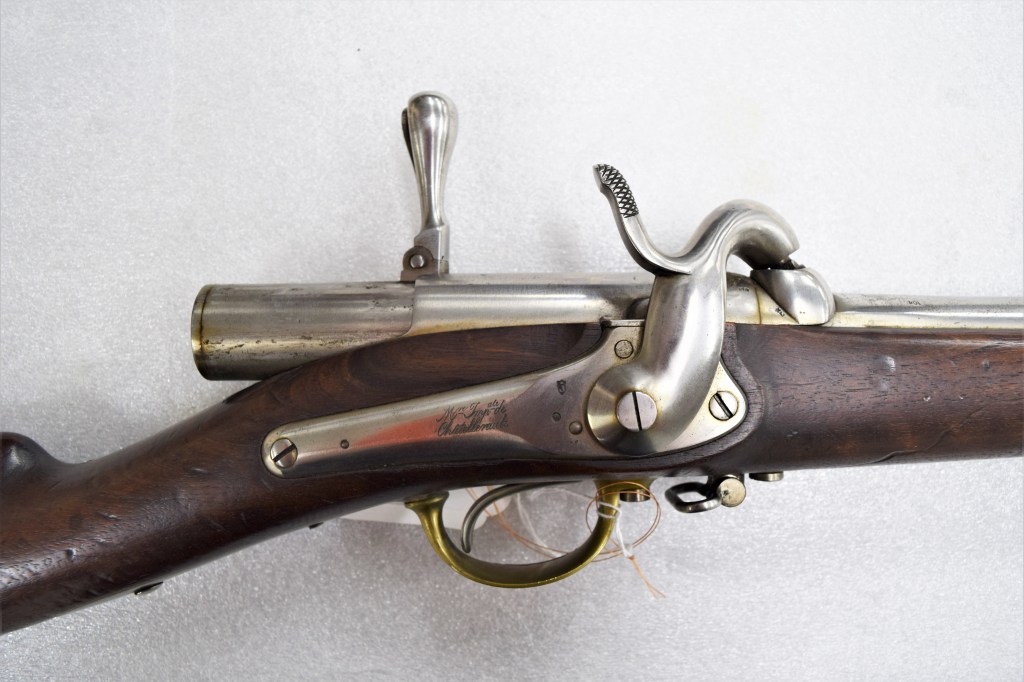
Right side view of the Arcelin’s back action percussion lock, with its action open (Matthew Moss)

The units did, however, appreciate the defence the sabre-bayonet offered to a dismounted trooper. A passage from the translated report reads:

“the use of the saber as a bayonet gives man a means of defense which he did not have with the old weapons. This straight saber is light, perfectly in hand and excellent for pointing (…) The firing of the new weapon, saber at the end of the barrel, was carried out with the hussars and did not give place to any important observation. As expected, the shot becomes less fair because the weapon is too heavy and less well maintained by the rider (…) The saber used as a bayonet makes it a powerful weapon.”

It appears that 60 of the sabre-bayonets were later adapted to be mounted on the Saint Etienne-built 1858 Chassepot breechloading carbines which were subsequently trialled. These carbines still used percussion caps but had a fixed bolt handle, a rubber obturating round near the bolt head and the actions was rear-locking. This system would eventually evolve into the Fusil Modèle 1866 – the Chassepot.

Gas obturation was a key issue for many of the early breechloaders and would be for some time. General Arcelin’s carbine can be seen as an important footnote in the development of the Chassepot rifle which would follow it. The general died in 1868, aged 73.


If you enjoyed these videos and this article please consider supporting our work here. We have some great perks available for Patreon Supporters. You can also support us via one-time donations here. Thank you for your support!


Bibliography:

‘Le Sabre du Mousqueton Arcelin’, Gazette des Armes, #156, Aug. 1986, P. Renoux
‘Le Mousqueton Arcelin 1856-1858’, Gazette des Armes, #77, Dec. 1979, P. Lorain
‘Le Sabres-lances Arcelin Mle 1856 Trois Modeles Particuliers Pt.1’, Gazette des Armes, #397, Apr. 2008, B. Aubry & C. Bera
‘Le Sabres-lances Arcelin Mle 1856 Trois Modeles Particuliers Pt.2’, Gazette des Armes, #398, May. 2008, B. Aubry & C. Bera
‘Le Premier Chassepot – Le System de 1858’, Gazette des Armes, #78, Jan. 1980, P. Lorain
L’Arme a Feu Portative Francaise M. Cottaz (1971)
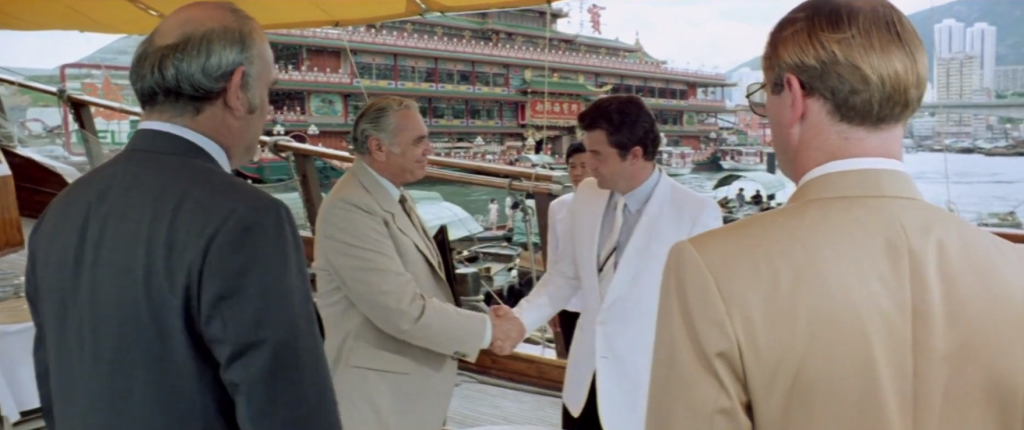
Fighting On Film: Code Name: Wild Geese (1984)

Join us as we kick off Mercenary Month with ‘Code Name: Wild Geese’. A 1984 action movie directed by Antonio Margheriti following a group of mercs in tasked with destroying opium farms in the Golden Triangle. The film stars Lewis Collins, Lee Van Cleef, Klaus Kinski and Ernest Borgnine.

The episode is also available on all other podcast platforms, you can find them here.

Here’s some stills from the film:

Be sure to follow us on Twitter @FightingOnFilm

Thanks for listening!

Book Review: Vickers Guide – SIG Sauer Vol.1

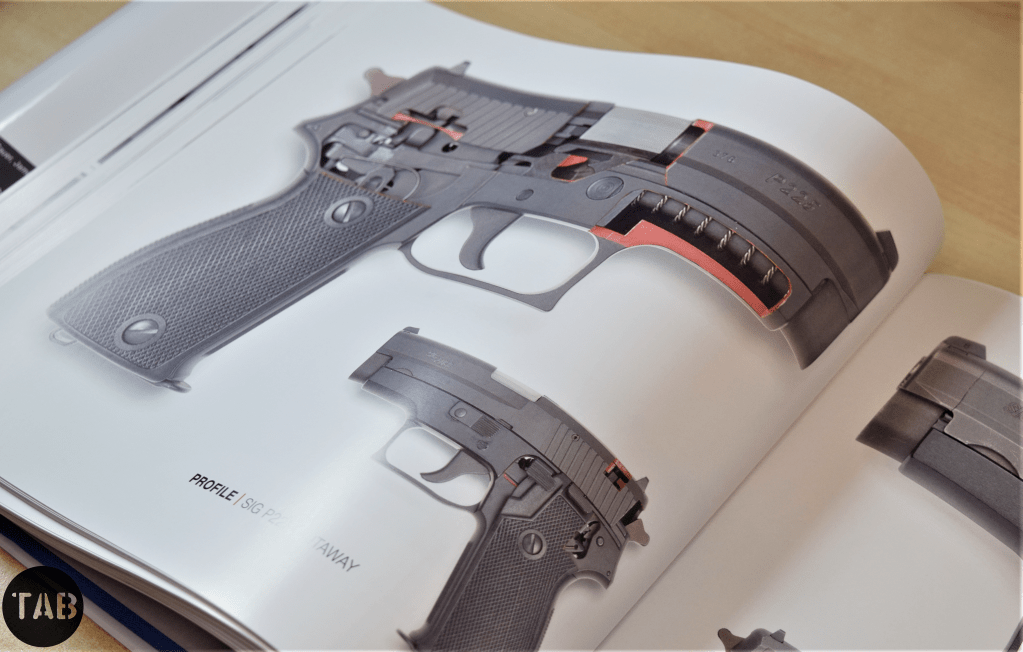
It’s been a while since we did a book review so let’s take a look at the latest Vickers Guide. The latest edition of the successful +P+ coffee table series examines the pistols and submachine guns of SIG Sauer and its predecessors.

All photos by Matthew Moss

Compiled by Leonardo Antaris (a noted author on Spanish Astra pistols), Larry Vickers and Ian McCollum with photography from James Rupely the book looks at every pistol made by the company from its earliest origins through to the P320 and P365. One of the special elements of the book is that we get to see the iterative development of weapons like the legendary P210, the P220, P365 and the MPX.

For me the highlights are the seldom seen prototypes for projects that never came to fruition like the MP320 submachine gun. I believe there will be a volume 2 in the future looking at the various rifles and machine guns that SIG and SIG Sauer have developed over the years.

As with the other Vickers Guide books they are weighty, beautifully illustrated and while they don’t offer an in-depth level of detail they give us a look at some developmental prototypes and rare models which we wouldn’t otherwise see documented. I love the photography and layout of these books, they show angles and detail that – unless you’re handling the weapons – you’d never otherwise see.


If you enjoyed these videos and this article please consider supporting our work here. We have some great perks available for Patreon Supporters. You can also support us via one-time donations here. Thank you for your support!

Fighting On Film: Journey’s End (2018) – Ft. Historical Advisor Taff Gillingham

Join us as we discuss a modern adaptation of R.C. Sherriff’s classic First World War play ‘Journey’s End’. The 2018 adaptation stars Asa Butterfield, Sam Claflin, Paul Bettany, Stephen Graham, Tom Sturridge and Toby Jones. 

We’re lucky enough to be joined by a very special guest, Taff Gillingham historical advisor and co-director of Khaki Devil, who was instrumental in giving the film its impressive authenticity. The film follows a group of British officers in the days before German Spring 1918 Offensive!

The episode is also available on all other podcast platforms, you can find them here.

Here’s some stills from the film:

Be sure to follow us on Twitter @FightingOnFilm

Thanks for listening!

Gulf War: Operation Granby Iraqi Weapons Recognition Guide

In this video we’ll be launching a brand new series where we’ll look at period small arms and light weapons manuals and other ephemera like infantry tactics handbooks and recognition guides.

This month marks the 30th anniversary of what the British Army called Operation Granby, better known as Desert Storm or the Gulf War.  So I thought taking a look at a Recognition Guide to Iraqi Ground Forces issued during Granby would be a good place to start!

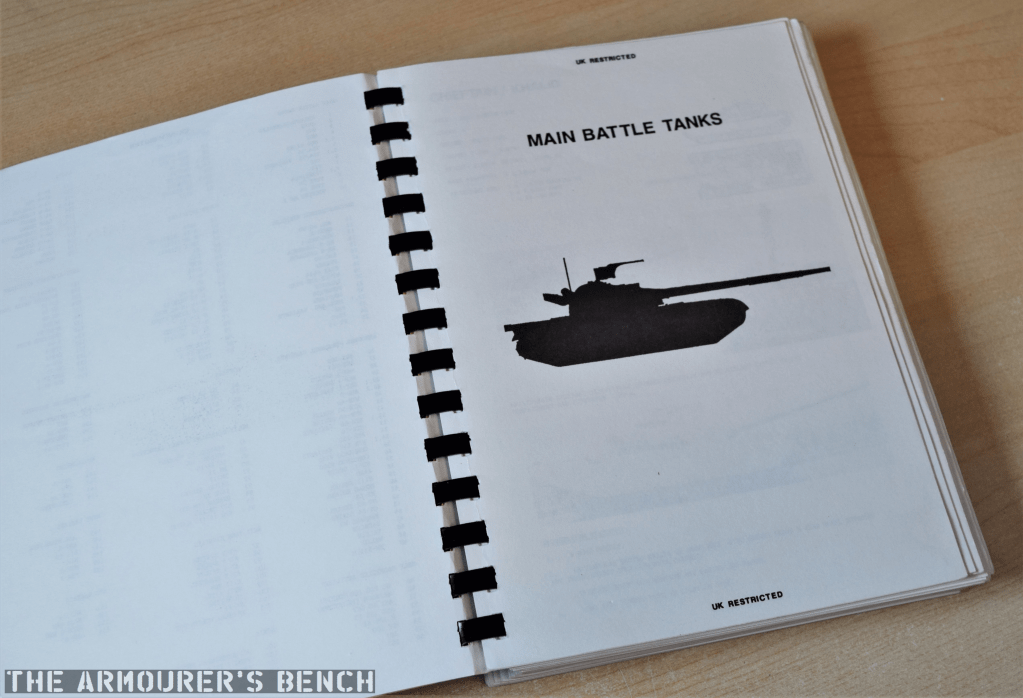
Chapter page for Main Battle Tanks (Matthew Moss)

Britain deployed more than 53,000 personnel during the operation, which began in August 1990, just after the invasion of Kuwait, with the arrival of 2 squadrons of Tornados in theatre. The first ground forces, elements from 7 Armoured Brigade began arriving in October. With no ready reaction force a division strength force was cobbled together from units deployed in Germany and the UK. Huge logistical constraints were overcome to provide a full armoured division, consisting of two brigades, for the liberation of Kuwait.

The guide’s entry for the AMX 155 F3 (Matthew Moss)

During the ground phase of the operation (Operation Desert Sabre), which began on 24th February 1991, British armoured and mechanised forces, part of VII Corps, provided the left-hook of the allied assault. The division’s two armoured brigades leapfrogging one another quickly taking successive objectives and sweeping west through occupied Kuwait, towards the Gulf Sea, neutralising Iraqi positions with relative ease. During less than 100 hours of ground combat British forces travelled 180 miles and destroyed approximately 300 Iraqi vehicles while allied forces as a whole captured an estimated 80,000 Iraqi troops. A total of 47 British troops were killed during Granby. A ceasefire was declared on 28 February with Iraqi forces collapsed and Kuwait liberated.

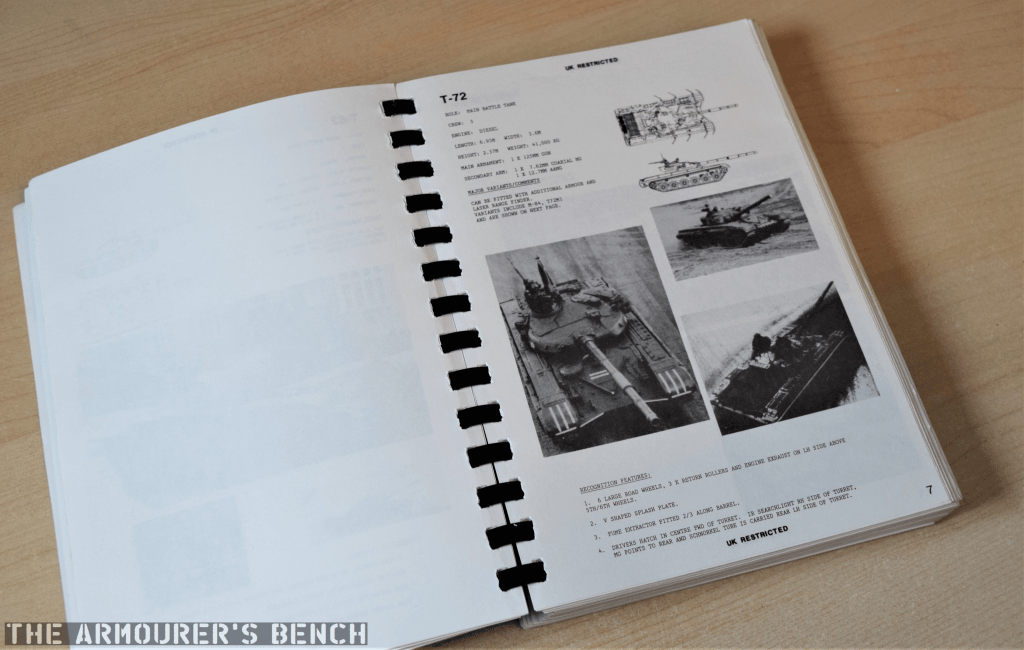
The guide’s entry for the T72 tank (Matthew Moss)

The guide was compiled by the Recognition Materials Cell at the Joint Air Reconnaissance Intelligence Centre (or JARIC). Formed in 1953, from the Central Interpretation Unit and based at RAF Brampton from 1957 to 2013, JARIC was the UK’s strategic imagery intelligence provider – providing analysis of aerial and later satellite photography or enemy assets.

With war with Iraq looking imminent and substantial British forces deployed from the UK and Germany, JARIC were tasked with putting together a recognition guide covering Iraqi and Kuwaiti ground assets captured by Iraq during the invasion of Kuwait.

The infamous SCUD (Matthew Moss)

This included everything from main battle tanks, reconnaissance vehicles and armoured personnel carriers to self-propelled artillery, mortars, artillery and multi-barrelled rocket launchers. It also included anti-tank missiles, surface to air missile systems and anti-aircraft assets as well as engineering equipment. All of which might be encountered during upcoming operations to liberate Kuwait. Let’s take a look.

The guide sadly doesn’t have a scale of issue list so it’s difficult to know how many were printed or  which units received them. But the first page does give us some indication of the material’s sources – noting they are from unclassified and restricted sources – giving the book a restricted classification overall.


If you enjoyed these videos and this article please consider supporting our work here. We have some great perks available for Patreon Supporters. You can also support us via one-time donations here. Thank you for your support!


Bibliography

The Gulf War 1991, A. Finlan (2003)

Hot War, Cold War, C. McInnes, (1996)

‘Joint Air Reconnaissance Intelligence Centre (JARIC)’, National Collection of Aerial Photograph, (source)

‘Unit History: Joint Air Reconnaisance Intelligence Centre’, Forces War Records, (source)

Fighting On Film: The Way Ahead (1944)

Join us for as we examine the Carol Reed-directed 1944 British classic ‘The Way Ahead’ starring David Niven, Stanley Holloway, William Hartnell, Peter Ustinov and John Laurie. We’re joined by special guest Richard Fisher, of the Vickers MG Collection and Research Association, who picked the film partly due to it’s iconic scene featuring a Vickers Gun! The film follows a platoon of men through their call up, training and up to their first experience of battle!

You can watch ‘The New Lot’ (1943) on the IWM’s site here.

The episode is also available on all other podcast platforms, you can find them here.

Here’s some stills from the film:

Be sure to follow us on Twitter @FightingOnFilm

Thanks for listening!

Fighting On Film: Pitch Perfect – War Movies You Want To See!

Join us for something a little bit different this week as we discuss some listener pitches of war movies they’d like to see made! We share our own ideas and look at what you guys suggested recently over on twitter.

If you’re not following us on twitter, find us at twitter.com/FightingOnFilm and join the fun!

Also available on other platforms and apps – find them here!

Thanks for listening!

Warsaw 44: PIAT Scene Analysis

We have examined several on screen appearances of the PIAT previously, in this article we will look at a scene from the 2014 Polish movie, MIASTO 44 or City 44/Warsaw 44. The film follows a group of young members of the Home Army during the Warsaw Uprising.

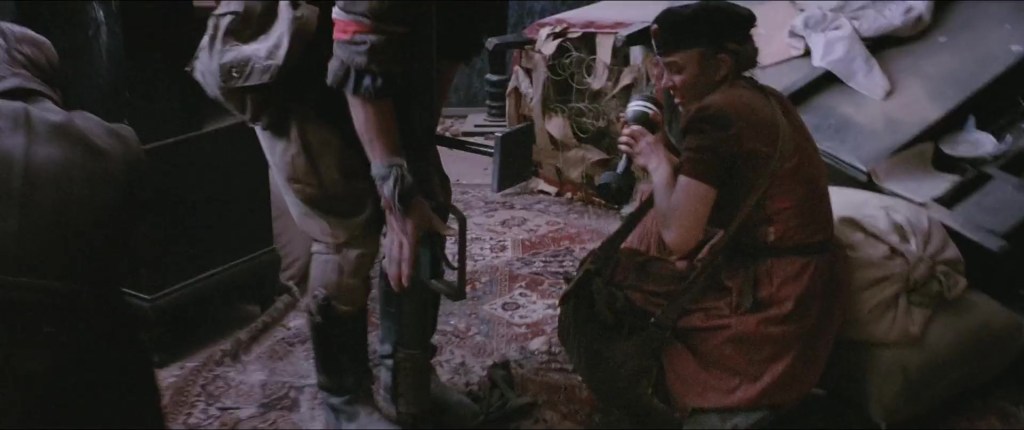
In the scene we’re going to analyse today a Home Army squad are in a defensive position on the first story of an apartment building when a German Goliath remote controlled mine approaches their position. They immediately open fire on the Goliath with small arms, some rifles, a couple of submachine guns including a Sten, a PPSh-41 and an MP40 as well as a captured MG-42. While they’re pretty well armed, they’re low on ammo.

With the small arms fire ineffectual the squad leader calls for the PIAT. The Home Army had an estimated 70 PIATs at the start of the uprising. The British Projector, Infantry, Anti-Tank was the Pole’s primary infantry anti-tank weapon. By the 12th September the allies had managed to drop more PIATs bringing the number available to around 250.

What’s so special about this scene is that it depicts the cocking of the PIAT! As the others open fire the PIAT number one can be seen rotating the outer casing to unlock it and then pulling it up until the spring inside is cocked. He then lowers the casing and locks it ready to fire. We don’t see it but the No.2 has loaded a bomb into the bomb support tray and the No.1 places the monopod on the sandbags and takes aim.

A member of the Home Army Cocking the PIAT

So not only do we have photographs of the PIAT in use at Warsaw we also have some good accounts of its use, one from Zbigniew ‘Deivir’ Czajkowski, a corporal and patrol leader with the Home Army’s ‘Parasol’ scout battalion describes using a PIAT against a German tank during street fighting. Czajkowski describes how the man about to fire the PIAT had forgotten to prime the bomb, he then describes firing on the tank below their position:

“I press the heavy weapon into my shoulder. The tank is in front of me, as if on a plate. I can see the enormous armour plating and the smoke coming from its muzzle. I set my sights. Slowly… carefully… The tank fires, below us again. I aim just behind the turret. There! I squeeze the trigger. The PIAT recoils, the round flies through the air… nearly there… It misses the tank and explodes to the rear of it. “Fuck!” Now my colleague tears the PIAT out of my hands. I don’t stop him. I load a new round. Two more shots from the tank. Presumably they haven’t noticed us. Suddenly it dawns on me – we’re on the second floor! “Aim lower, much lower, under the tracks. We’re too high up here.” The barrel of the PIAT tilts down. I’m oblivious to everything glued to the gap in the wall. The weapon barks. There’s a flash of light against the side of the tank. Got him! The tank is momentarily covered in smoke.”

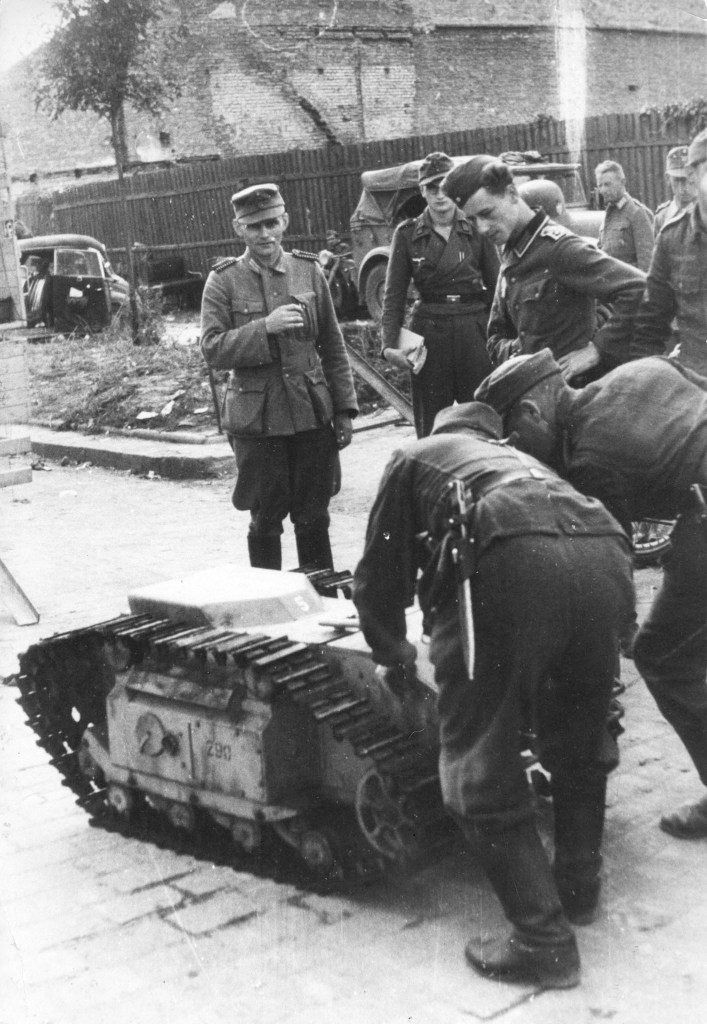
While not a tank, the Goliath seen in the film, were used during the fighting in Warsaw. The Goliaths were armoured, remote controlled bombs could be steered from cover. These tracked mines could deliver a 60 to 100kg payload of high explosive. Enough to destroy positions and heavily damage buildings. A pair of Goliaths are also seen in the earlier Polish film on the uprising – 1957’s Kanal – which also features a PIAT, albeit a wooden mock-up, which takes on a German tank.

A Goliath Remote Controlled Mine in Warsaw (Bundesarchiv)

In Warsaw 44 the PIAT No.1 manages to land his bomb just in front of the approaching Goliath, the blast apparently is enough to break one of the mine’s tracks – perhaps shrapnel or debris struck it. The victory is short-lived, however, and the Polish position is raked by machine gun fire – killing the PIAT No.1 – and a full German assault follows.

The film’s depiction of the PIAT is quite good, although the PIAT appears to be cocked very easily. The weapon’s recoil seems a little light but is represented with the No.1 being sharply pushed back. There is a short flash as the remains of the bomb’s propellent cartridge are seen as the bomb leaves the spigot. We can also see that the spigot is still visible in the bomb tray, meaning the weapon has not re-cocked itself.

The PIAT gave the besieged soldiers of the Home Army a much-needed weapon capable of taking on enemy armoured vehicles. But a few dozen PIATs weren’t enough to turn the tide and the valiant Poles were forces to surrender after two months hard fighting. The film, Warsaw 44, gives a pretty immersive idea of what the fighting in the city might have been like and is worth checking out.

Bibliography:

Miasto 44 (2014)
Warsaw 1944: An Insurgent’s Journal of the Uprising, Z. Czajkowski, (2013)


If you enjoyed these videos and this article please consider supporting our work here. We have some great perks available for Patreon Supporters. You can also support us via one-time donations here. Thank you for your support!


Fighting On Film: Bravo Two Zero (1999) & The One That Got Away (1996)

Join us as we take a special look at not one but two films – both looking at the ill-fated SAS mission – Bravo Two Zero. Gulf War films are rare and with the 30th Anniversary of the war upon us we thought it was a good time to take a look at ‘The One That Got Away’ (1996) and ‘Bravo Two Zero’ (1999).

The episode is also available on all other podcast platforms, you can find them here.

Here’s some stills from the film:

Be sure to follow us on Twitter @FightingOnFilm

Fighting On Film: The Siege of Firebase Gloria (1989)

Join us, on the 53rd anniversary of the week the Tet Offensive began, as we take a look at 1989’s ‘The Siege of Firebase Gloria’ starring R. Lee Ermey, Wings Hauser & Albert Popwell. Directed Brian Trenchard-Smith its a Vietnam last stand movie that riffs on its predecessors.

The episode is also available on all other podcast platforms, you can find them here.

Here’s some stills from the film:

Be sure to follow us on Twitter @FightingOnFilm