The SCAR Is Dead, Long Live the SCAR

This week, some surprising news broke: FN America confirmed that production of all SCAR variants had ceased. Rumours began to circulate last week, and a subsequent post on r/FNSCAR claimed that “both the US and Belgium plants have ended production of all (RCH and NRCH) SCAR 16S, 17S, AND 20S and all that is left is what is currently on the market.”

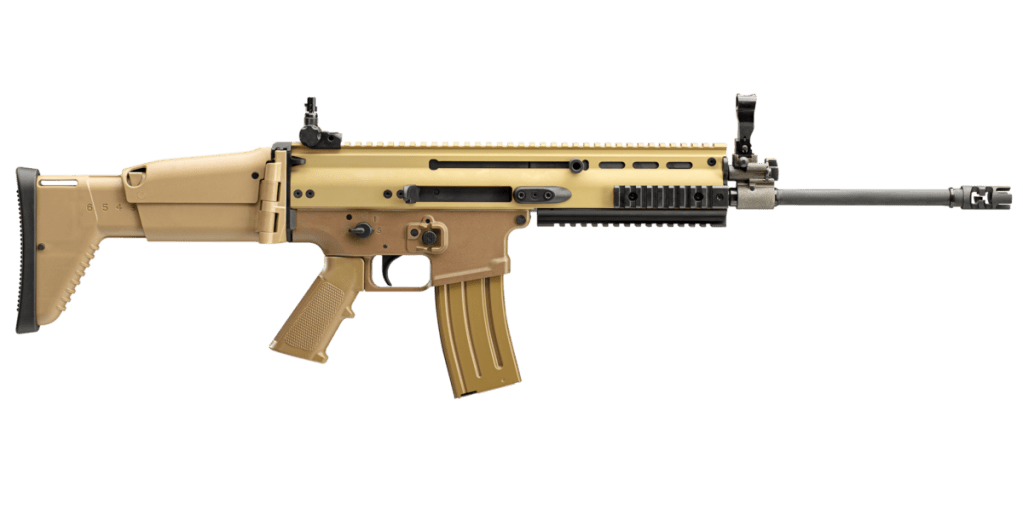
FN SCAR-L (16S) (FN America)

This led to FN social media channels being inundated by questions asking if the rumours were true. On Wednesday, FN America’s social media team began confirming the news, replying to posts on X, Facebook and Instagram. However, this raised additional questions: Is production in Belgium also set to end, or just in the US? What about spares and support? What about ongoing military contracts and support for weapons already in service around the world? Notably, many of FN America’s replies referred to the ‘legacy SCAR’, suggesting that there may be an updated ‘non-legacy’ SCAR in the works.

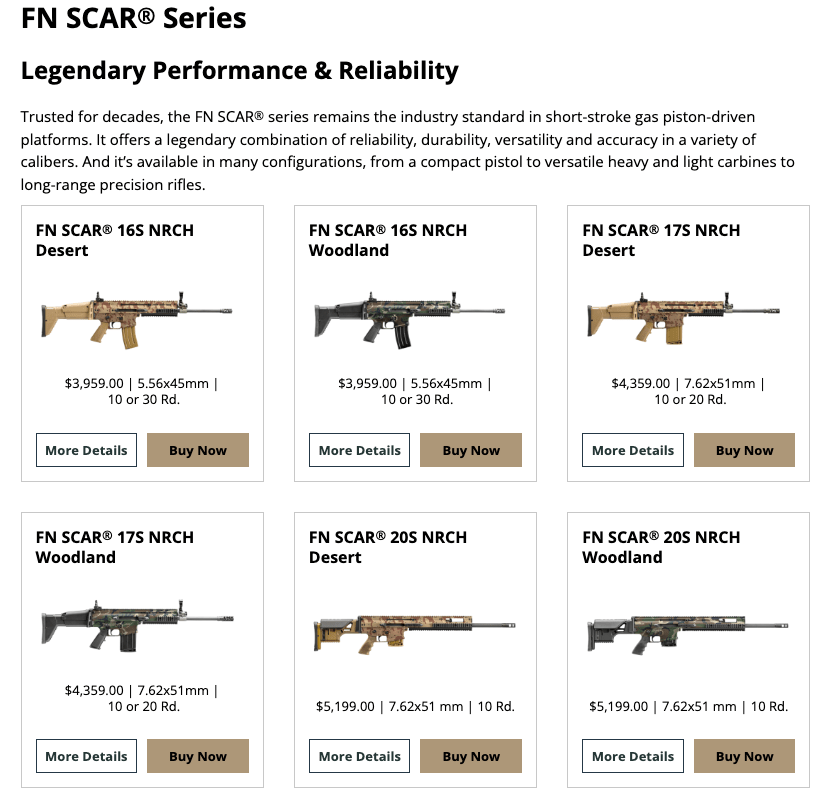
SCAR Series on FN America’s website

Finally, on 16 October, FN America posted a statement confirming the news officially. This statement explained that while production of all SCAR variants (except the SCAR 15P pistol) in the US was ending, “none of this affects FN’s global military SCARs – these are still in demand and still in production.”

SCAR Production Ceases (FN America)

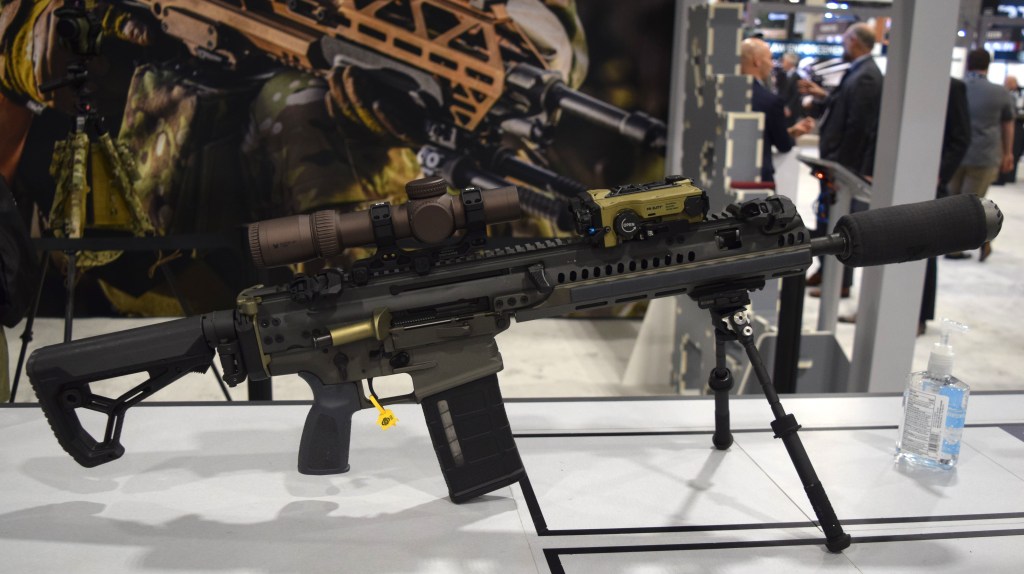
Naturally, there was a lot of speculation about what FN would replace the SCAR with. The FN IWS, developed by engineers at FN America, was often highlighted as the probable successor. The FN Individual Weapon System, chambered in steel-cased 6.5x43mm round, was developed for a requirement set out by the Irregular Warfare Technology Support Directorate (IWTSD). It has since garnered interest from the special forces of a number of nations an FN recently announced they’d supplied operational test samples to enable ‘critical feedback’ for further refinement. Despite this the IWS isn’t yet a fully matured system.

The FN IWS on display at SHOT Show 2023 (Matthew Moss)

There is also the Mid Range Gas Gun (MRGG) rifles which were developed for US SOCOM. MRGG-A is a requirement for a 6.5 Creedmoor chambered ‘assault’ rifle. FN’s MRGG-A submission introduced internal changes, a new combination forward assist and brass deflector as well as ejection port cover and added an AR-style charging handle. I took a look at one of the prototypes at SHOT 2023.

FN’s MRGG-A submission displayed at SHOT 2023 (Matthew Moss)

As such, I think FN are likely to introduce a new generation of SCAR embodying improvements developed in recent years. The SCAR Mk3 will probably be a product improvement with new features and refinements bringing it in line with the latest weapons from competitors like the HK433, SIG SPEAR-LT and CZ Bren 3.

We may already have seen the FN’s successor to the legacy SCAR in a photo taken at the 2025 Cranfield Close Combat Symposium. At the centre of the photograph is a SCAR-like rifle with some noticeable changes to the upper and lower receivers, the gas system and the forend.

FN UK display at CSS 2025 (FN via social media)

Will the new rifle be called SCAR Mk3? This remains to be seen. Clues began to emerge earlier this year when FN trademarked a new product name, registering the name ARKA around the world [UK, Australia, US]. ARKA is listed as a trademark for a firearm/assault rifle. It remains to be seen if ARKA will be the name of the new FN rifle but it would align well with the new designation scheme started with the EVOLYS. Time will tell which approach FN takes and what their next generation of infantry rifles will look like.

Introduced in 2004, the SCAR has had an interesting service life all around the world, and while the Mk2’s days appear to be coming to a close it’s likely the SCAR’s legacy will continue within the engineering genetics of FN’s rifles for some time to come.


Support Us: If you enjoyed this video and article please consider supporting our work here. We have some great perks available for Patreon Supporters – including early access to custom stickers and early access to videos! Thank you for your support!

History of Weapons and War – Shutting Down

Sadly the History of Weapons and War video platform, set up by Ian of Forgotten Weapons (and featuring content creators including myself British Muzzleloaders, Bloke on the Range, Chieftain, and 9Hole Reviews amongst many more great channels) is set to close down at this end of the month. If you used the platform and supported my work there – thank you very much.

Special thanks to Ian for setting up and running this platform and for very kindly inviting me to join the project. It was great to be a part of a community of content creators which put together videos on the more nuanced, academic or technical side of guns and small arms.

Over the last year or so HoWW really subsidised my work in the sense that it provided a solid, reliable income – which YouTube sadly never has. It justified the hours of research, editing and production which go into most of my videos.

TAB on HoWW

I love making videos and content on the topics I think are important and interesting and I hope I’ll be able to continue doing that but I can only say that since HoWW began YT has only gotten worse in terms of supporting my (and probably others) work in this area.

Annoyingly, Playeur, another video platform I joined about 5 years ago also closed down this month – this again shrinks the number of places that TAB videos can be found. We seem to be in a contracting space where more serious firearms content no longer has many viable homes.

So I’ll soldier on as long as I can justify taking the average of a solid couple of days out of my working week to make the content that I (and hopefully you guys) enjoy.

If you’d like to support the work I do on TAB (beyond very helpfully sharing my work with friends – thank you!) then the best thing you can do is head over to our Patreon page and check that out. You get all videos early and some thank you perks too! For everyone watching/reading this I’ve set up a discount that’s valid for the next week or so. 25% off joining the TAB Patreon for all HOWW users. Simply head to the page and use the code: TABHOWW25

Thanks as always for your continued support.
– Matt

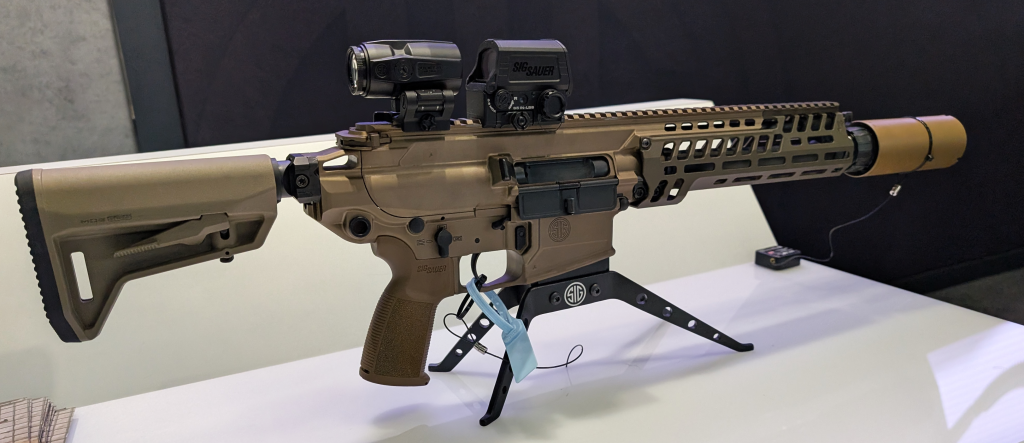
Hands On With SIG Sauer’s Improved M7 Carbine

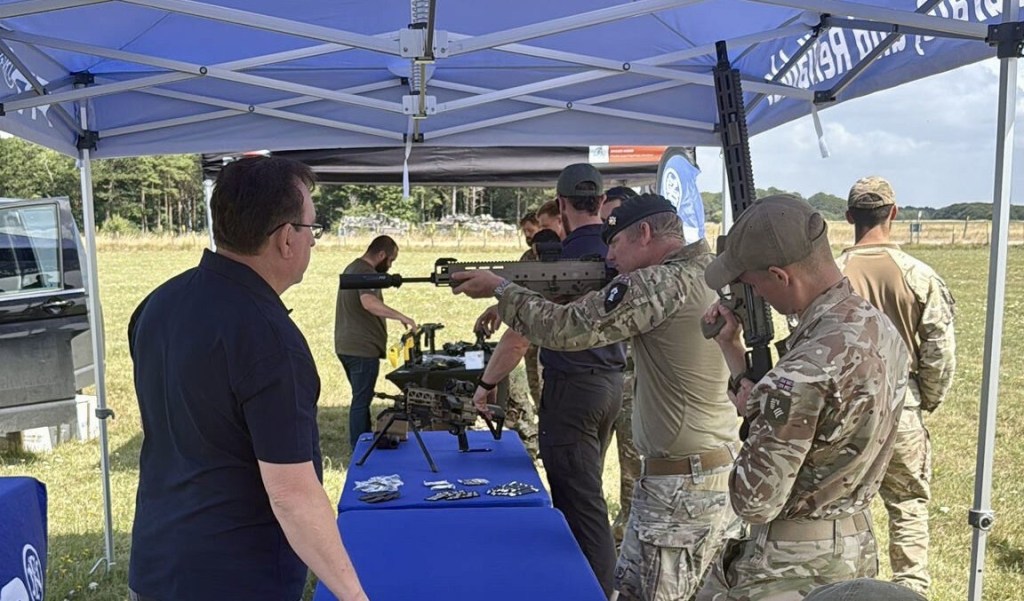
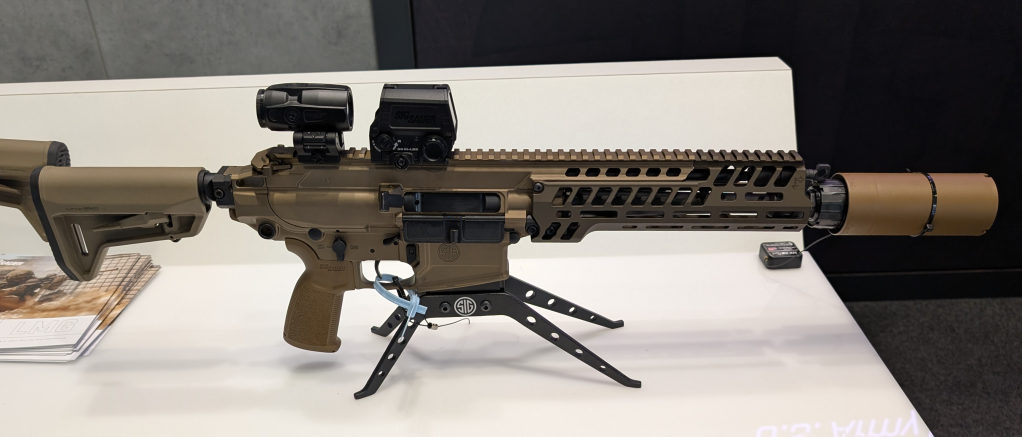
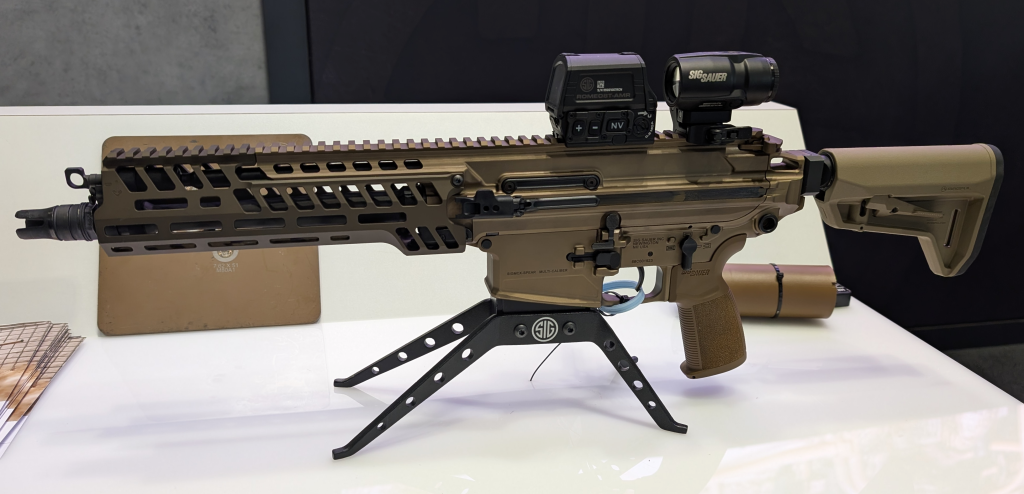
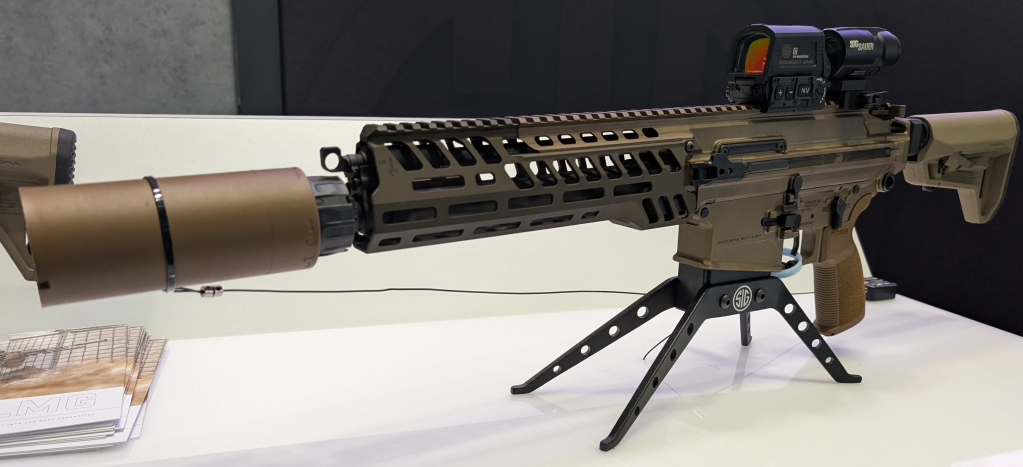
Last week at the DSEI defense exhibition in London, we had the opportunity to handle SIG Sauer’s product improved M7 rifle. Over the past year, SIG Sauer has taken user feedback from the US armed forces and refined the M7; the result is a handier weapon which feels more like a fighting rifle.

M7 Product Improved, with 10.5in barrel, at DSEI 2025 (Matthew Moss)

One of the key criticisms of the M7 is its weight, with the M7 weighing in at around 9.8 pounds (4.46 kg) with its SLX suppressor. By comparison, the improved M7 weighs in at around 7.5lbs (3.5kg) unloaded, with a suppressor but without an optic. This makes the refined M7 a full kilogram (2.2lbs) lighter. 

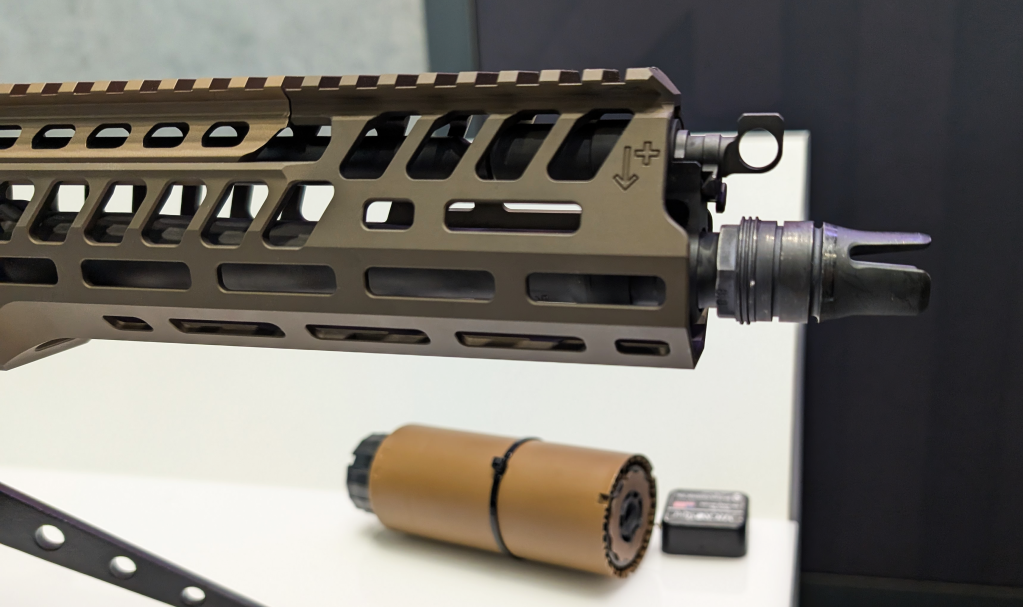
M7 Product Improved at DSEI 2025, with suppressor removed (Matthew Moss)

M7 Product Improved at DSEI 2025, with suppressor mounted (Matthew Moss)

SIG Sauer achieved this weight reduction in a number of ways; the barrel has been shortened from 13 to 10.5 inches, and some of the internal components, such as the bolt, have been lightened. SIG explained that the muzzle velocity of the rifle has only been slightly decreased by the barrel length change, with the improved M7 achieving around 2,800-2,900 FPS (870 m/s) compared to the 3,000 FPS with the original 13-inch barrel. SIG say this still more than meets the Army’s ballistic and armor penetration requirements. 

M7 Product Improved with new shorter SLX suppressor at DSEI 2025 (Matthew Moss)

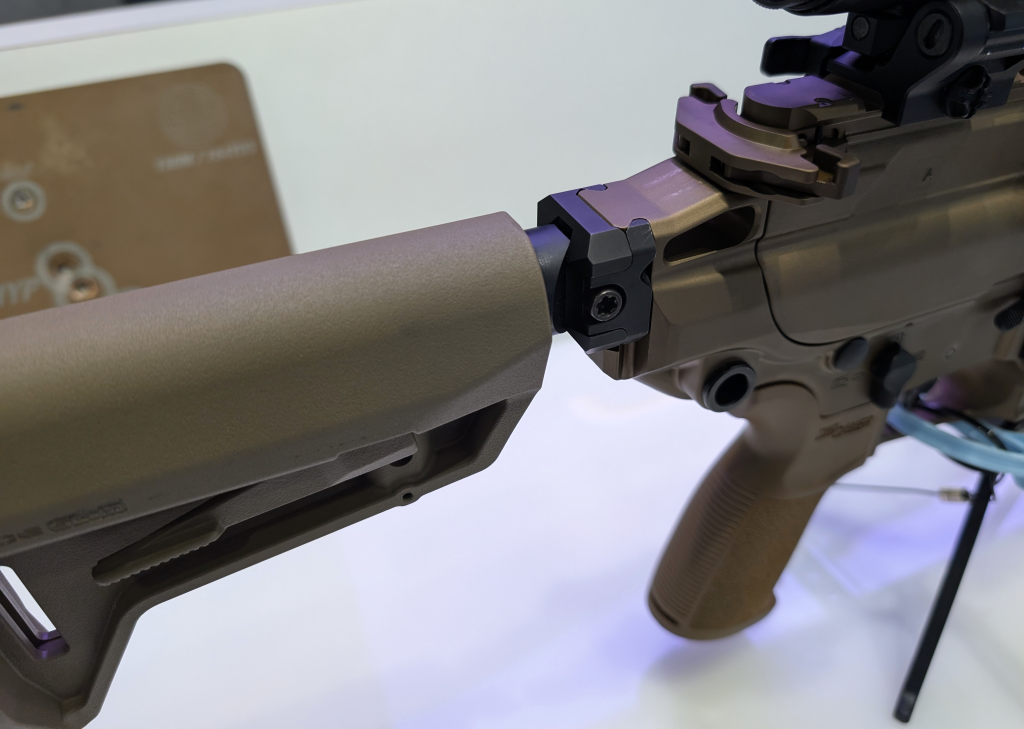
The barrel itself has a lighter profile, and the handguard has been shortened and reprofiled to match the new barrel length. SIG have also removed the folding stock latch, with the fixed stock saving several grams. Arguably, for some applications, this is weight that could be justified to maintain the ability to fold the weapon’s stock for a more compact profile – better suited for vehicle operations.

M7 Product Improved with fixed stock at DSEI 2025 (Matthew Moss)

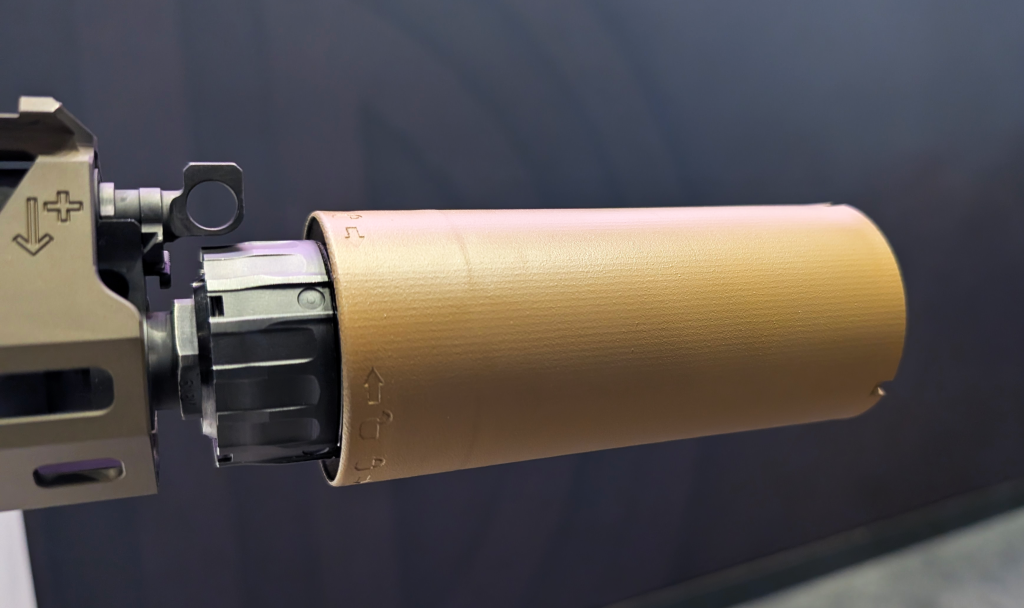
In addition to a shorter barrel, SIG Sauer has also shortened the SLX suppressor which is paired with the M7, by approximately an inch; this helps improve the rifle’s balance. SIG have also paired the new shorter suppressor with a new lightweight thermal shield, which significantly reduces the heat signature of the suppressor. SIG are also offering a mesh shroud (similar to that seen issued with SURG kits) and an anti-mirage shroud. With the thermal shield, the suppressor’s heat glow under night vision and thermal optics only becomes visible at around 100 rounds, rather than 40 rounds without the shield.

M7 Product Improved muzzle close-up at DSEI 2025 (Matthew Moss)

SIG’s work on the M7 was undoubtedly driven by US military feedback and a desire for refinements, but it is worth noting that it is unclear whether the rifle seen at DSEI will be the configuration the military moves towards in the future. Another variant of the improved rifle, with the shorter barrel and new handguard but a new upper receiver profile, was seen recently at the Maneuver Warfighter Conference 2025 in a released (and subsequently redacted) photo shared by the US Army. The rifle is also seen to be equipped with a Millbrook Strategic Services MFMD suppressor.

M7 Product Improved at DSEI 2025 (Matthew Moss)

The US Army now has around 25,000-30,000 M7 rifles in inventory; it is unlikely that rifles already in service will be retrofitted to the new M7 Product Improved spec. The iterative refinement of the M7 isn’t a surprise; testing, feedback and improvement are key to the Next Generation Squad Weapons program’s spiral development strategy. As such the M7 and M250 only recently completed desert environmental testing with troops in August. Time will tell if the configuration seen at DSEI (or something similar) is adopted by the US Army to supplement the M7s currently in service. In the meantime questions regarding the M7 PI’s accuracy, reliability, parts wear and signatures are yet to be definitively answered but it is interesting to see the potential direction of refinement the rifle is moving in.

Update – 24/9/25:

A social media video shared by the US Army highlighting a visit by the Secretary of the Army to the 101st Airborne included a brief shot of a board that offered some details on the “M7 PIE” and the “M7 ‘Carbine'”. (H/T to @TangirayL) PIE standing for ‘Product Improvement Effort’.

The board lists the major changes made to the two rifles and gives some weight and length specs on the variants. This would indicate that rather than just one improved variant there are two and the one shown at DSEI is the M7 ‘Carbine’ (or PIE RAPTOR).

Update 14/10/25:

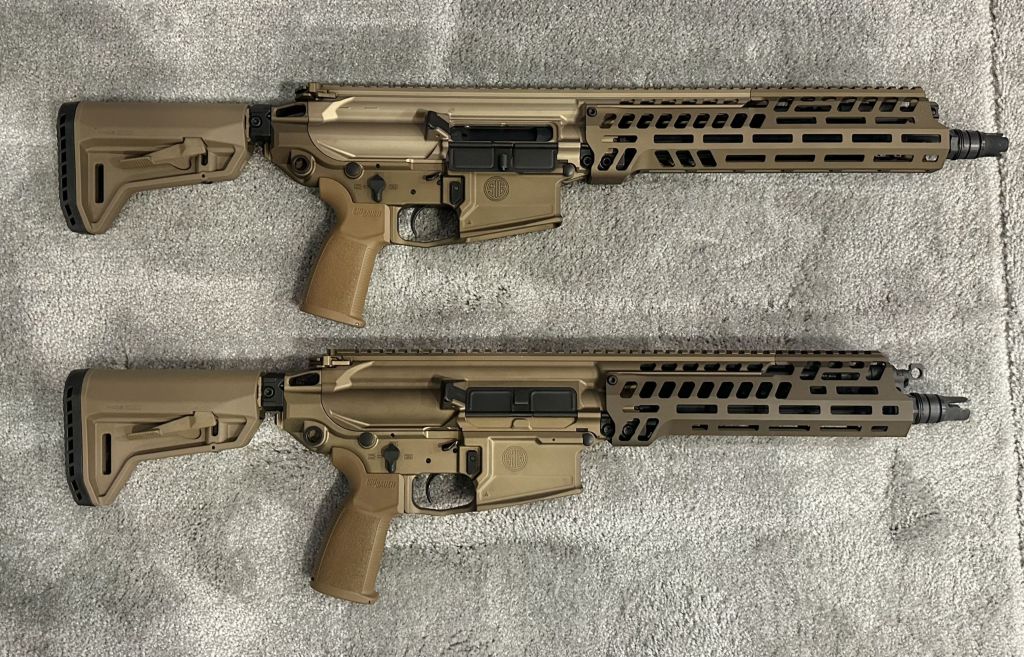
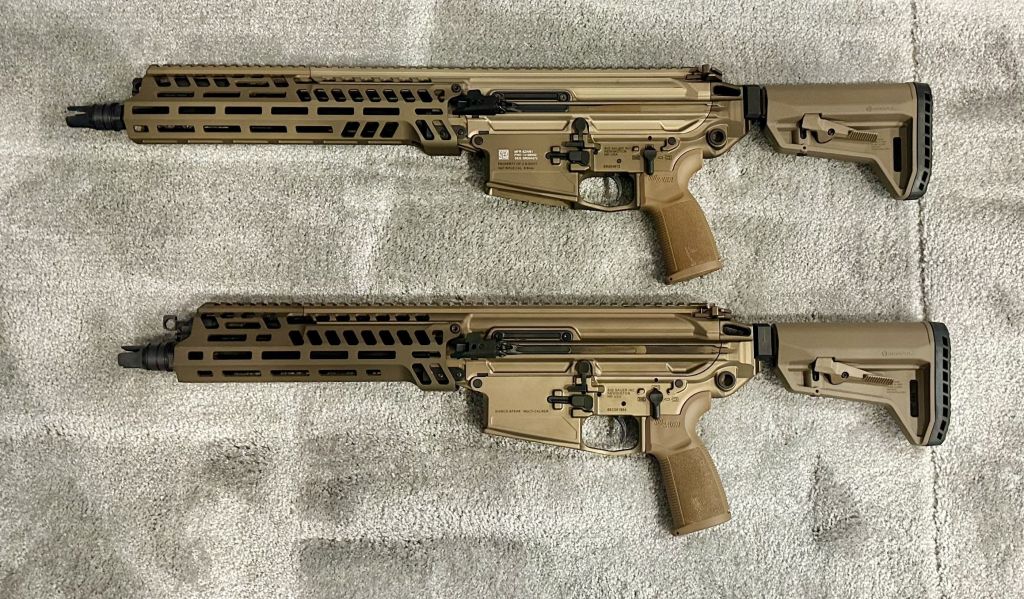
At AUSA 2025 SIG Sauer displayed both the product improved M7 [which SIG refer to as the M7 Enhanced Rifle] and the product improved M7 carbine. Solider Systems Daily shared good side by side photos illustrating the two new versions of the M7. Noteably the design of the handguard between the M7 PIE Carbine seen at DSEI and AUSA differs in their side MLOK configurations.

SSD also reports that: “regarding barrel life. The program requirement was for 5,000 rounds which is the same specification as the M4. However, SIG has noted barrel life for the M7 in excess of 10,000 rounds.”


Support Us: If you enjoyed this video and article please consider supporting our work here. We have some great perks available for Patreon Supporters – including early access to custom stickers and early access to videos! Thank you for your support!

Taiwan’s Hellfire Truck

On 14 August, Taiwan’s Military News Agency YouTube channel, run by Taiwan’s Ministry of National Defense, shared a video update on new technologies including Taiwan’s new Cheetah IFV, drones and new T112 rifles. Another system showcased briefly was a commercial truck mounted with a Hellfire twin rail firing post.

The video shows what appears to be a commercial Isuzu truck being outfitted with a firing post and sensor system. The Hellfire Truck has been developed by the 209th Arsenal of Taiwan’s Armaments Bureau.

(Taiwan Ministry of National Defense)

The development comes as Taiwan seeks conventional and asymmetrical methods of countering a potential Chinese invasion. Taiwan’s Hellfires are normally launched from Cobra and Apache attack helicopters but the new truck-mount may allow them to be used if Taiwan’s attack helicopters are suppressed by Chinese air defences. It also provides a new mobile method of utilising the missiles from the ground.

Alongside the firing post the truck also has what is likely a small radar and a sensor turret with electro-optical and infrared cameras and perhaps a laser designator. This is mounted on a telescoping mast which raises out of the roof of the truck’s cargo area.

In the video we are shown the mounting of the mast base and an A-frame to hold the Hellfire rail, before Taiwanese troops are seen loading and firing a AGM-114L LongBow Hellfire. The AGM-114L has a 20lbs or 9kg tandem shaped charge high-explosive anti-tank (HEAT). It uses a fire and forget millimeter-wave (MMW) radar seeker guidance system. The footage shows the missile being fired at a shipping container floating off-shore – this potentially simulates the engagement of a PLA-Navy landing craft.

(Taiwan Ministry of National Defense)

The Taiwanese development is reminiscent of the commercial vans equipped with Hellfire-derived Brimstone missiles seen in Ukraine. We have previously covered these Brimstone-launch platforms in a number of article/videos. The Brimstone vans seen in Ukraine were developed by the UK to provide a mobile launch platform for using Brimstone as as a surface to surface missile. While Hellfire isn’t as sophisticated as Brimstone the laser guided and millimeter-wave radar-guided Hellfire variants can be used effectively against ground or naval targets. In a brief to-camera segment Colonel Su, with the 209th Arsenal, notes that “during launch, we may need to modify the firing logic to ensure accurate impact,” adding that “this is a key technical challenge we must overcome” suggesting the targeting process for the system is still being refined.

(Taiwan Ministry of National Defense)

The concealability and mobility provided by a truck-based system may allow Taiwanese forces to rapidly move to threatened coastal areas and quickly engage enemy vessels or landed enemy vehicles or positions. The system also has the benefit of being comparatively cheap to produce, with the sensor suite and missiles being the most expensive elements of the system. Colonel Su notes that “the vehicle-mounted missile system is designed for asymmetric warfare” and as such is somewhat easy to conceal within an urban area.

(Taiwan Ministry of National Defense)

It’s unclear if Taiwan was inspired by Ukraine’s Brimstone vans but given the threat Taiwan faces the ability to think outside the box and deploy asymmetric assets alongside conventional ones will be essential.


Support Us: If you enjoyed this video and article please consider supporting our work here. We have some great perks available for Patreon Supporters – including early access to custom stickers and early access to videos! You can also find us on the History of Weapons & War app. Thank you for your support!

Ukraine’s MANPADS-Unmanned Ground Vehicle

Following on from our recent examination of RPG-UGVs a new armed unmanned ground vehicle variant has appeared – the MANPADS-UGV. MANPADS or Man-Portable Air Defence Systems have been a key weapon during the war in Ukraine. They enable troops to engage drones and UAVs of various sizes as well as helicopters.

(LIBKOS/28th Mechanized Brigade)

On 4 August, photographers Libkos, shared a video showcasing an Igla-1 MANPADS mounted on a four-wheeled UGV operated by Ukraine’s 28th Mechanized Brigade. In an Instagram post, Libkos explained the idea behind the MANPADS-UGV:

“If before they were quite easy to shoot down with MANPADS, now Russian UAVs control every movement of our infantrymen and often do not even allow them to leave the trench. That is why the guys from @28ombr created this robotic platform. It independently guides and hits any large air target. The guys have already tested it in action and it already has one enemy helicopter on its account. So we are collecting 10 more such platforms. This is an effective and innovative weapon that is independently manufactured by the military from 28 Ombr.”

The available imagery, shared by Libkos and the brigade, shows the UGV being test-fired. The Igla is mounted on an angled mount, which seems to have a degree of elevation and traverse. There appears to be a motor and servo system attached to the front of the weapon to act on its trigger. Behind this is what may be a camera and transmitter/receiver. In part of the promo video a pair of operators are seen in a nearby trench, one wearing a headset for the UGV’s camera feed.

Ukrainian media outlet Defender reports that the MANPADS-UGV has been named “Alycha”.

(LIBKOS/28th Mechanized Brigade)

It’s difficult to tell how the system would be used in practice or how effective it would be. MANPADS such as Igla-1 use infrared homing and require the operator to track the target before launching. The operator has to visually detect the target, activate the power supply unit, aim at the target via the fore and rear sights and pull the trigger. While the operator doesn’t have to track the target once the missile is fired they must track it immediately prior to launch. How capable the UGV is of doing this is currently unclear. For the best image clarity and response time for identifying and tracking a target it would make sense for the UGV to utilise a fibre-optic control cable but there is no evidence of this in the available imagery.

It is unclear if the system can be equipped with different types of MANPADS. In theory the UGV could be mounted with Igla, Strela, Piorun or even Stinger, as such one variable to consider is the system’s engagement range. The Igla-1’s operational engagement range is 6km (3.5 miles) with an 11,000 feet engagement ceiling. Given Ukraine’s focus on defensive strong-points the gap between positions able to engage aerial threats with a MANPADS may be relatively wide. If small Ukrainian units are defending strong-points along a stretch of front they may have a limited embedded anti-air capability. A MANPADS team would have to expose itself to reach various points along the unit’s sector of the front so having a UGV which can be rapidly deployed makes sense.

(LIBKOS/28th Mechanized Brigade)

Nevertheless the concept is an interesting one. the 28th Mechanised Brigade claims that the system has already been used operationally and the UGV has successfully engaged an enemy helicopter. Verifiable proof of this kill has not yet been provided. There are no doubt useful applications for the system, such as patrolling an area, as a quick reaction asset and in removing the need for troops to leave cover to engage aerial threats.

Check out our other articles on UGV developments.


Support Us: If you enjoyed this video and article please consider supporting our work here. We have some great perks available for Patreon Supporters – including early access to custom stickers and early access to videos! You can also find us on the History of Weapons & War app. Thank you for your support!

Rare M60 Appearances in Ukraine

There are a lot of different types of general purpose machine guns in use in Ukraine and one of the most surprising to appear so far is the M60. The first appearance of an M60 in Ukraine came in September 2024, when the 23rd Mechanised Brigade shared an album of training photos which included an individual firing an M60D.

A month later the same brigade shared another photograph of the M60D. The M60D is usually mounted on helicopters as a door gun and as such it has been adapted with no stock or traditional rear sight, instead it has a pair of rear spade grips and a large ring sight. It’s unclear how many M60Ds are in Ukraine or where the guns originated from as a number of potential donor countries operate M60Ds as door guns. It may be the case that a donor nation provided the gun aboard a donated helicopter, we have previously seen French AANF-1 GPMGs appear in Ukraine – likely supplied with VAB APCs. Alternatively, the gun(s) may simply have been provided by a donor for whom it was surplus to requirements and ready for disposal.

Another sighting of an M60D came in May 2025, when the 65th Mechanized Brigade shared a series of photographs of a machine gun team training with one of the guns. Sadly, no markings are visible to confirm if this might be the same gun as previously seen with the 23rd Mechanised Brigade.

The M60D is not the easiest variant to utilise in a ground role with the absence of a stock to shoulder the weapon making it somewhat difficult to aim and keep on target while firing. It does have a folding carry handle but it also had an exposed trigger linkage which is far from ideal for ground use. The best use for this variant would probably be as a pintle-mounted an anti-air gun.

Most recently a new variant of the M60 was seen in a photo posted, on 18 July, by the 20th Separate Regiment of Unmanned Systems “K-2”. The gun appears to be either an M60E3 or an M60E4, with what appears to be a 22 inch barrel, the first ground role variant to be seen in-country. As with the M60Ds it is unclear where this M60 may have originated from, there are only a small number of nations which operate the weapons which may have donated it. Elements of the Czech Republic’s special operations forces operate E4s in small numbers but its unclear if this is the source of the gun seen in the recent photo.

It remains unclear just how many of the various variants of M60 are on the ground in Ukraine and where they came from but it is one of the weapons that I’ll continue to track, if you spot any let me know!

Update 12/10/25:

Serhii Filimonov, a member of the 1st Assault Regiment (Da Vinci Wolves), has shared several photos that appear to include an M60E4.

There is also a short video of him firing the weapon. Below is a still from the video.

Update – 17/11/25:

On 14 November, Raven Group, affiliated with the Ukrainian Directorate of Intelligence, shared a serious of range photos featuring an M60E4 (in what appears to be the Mk43 Mod 0 configuration). [H/t to Praise the Steph].


Support Us: If you enjoyed this video and article please consider supporting our work here. We have some great perks available for Patreon Supporters – including early access to custom stickers and early access to videos!  Thank you for your support!
Small Arms of the 2025 Thai-Cambodia Border Clash

On 24 July the ongoing border dispute between Cambodia and Thailand flared into an armed conflict. Four days later a ceasefire was announced following negotiations, at the time of publication the ceasefire is still in effect. A number of photos and video taken during the fighting were shared online and they feature an interesting mix of small arms which I thought would be a good topic for an article/video.

Broadly speaking the Royal Thai Army is predominantly equipped with what could be described as Western small arms such a M16-pattern rifles and FN MAGs while the Royal Cambodian Army largely uses former Combloc-type weapons such as the Type 56 AK-pattern rifle and the Type 69 RPG, both produced by China.

Thai Armed Forces

The standard issue service rifle of the Royal Thai Army for many years has been the M16, many of the combatants seen in imagery from the conflict were seen with M16A1, A2 and A4s. In a prominent video that surfaced on 26 July, a Thai combatant was filmed firing an M203 40mm grenade launcher mounted on a very well worn M16A1. A number of M16A1s, including one mounted with an M203, were also seen in a photograph of a group of Thai troops believed to be Thahan Phran (Border Rangers). The photo also shows at least one FN MAG general purpose machine gun. Another photo shared on 28 July by a member of the Thahan Phran showed a dug out in the front lines with two M16A1s and a RPD-pattern light machine gun visible. A video posted after the ceasefire showed a squad of the Border Rangers firing M16A1s from what appears to be a cave.

Thai combatant with M16A4 & M203 (via social media)

Members of a Thai 120mm mortar crew were also seen equipped with slung M16A2s, loaded with PMAGS, in a short video said to be filmed during the border clashes. It is worth noting that a considerable amount of imagery and footage filmed during past skirmishes and past exercises was shared during the height of the conflict. This is something to bear in mind when considering the veracity of imagery.

Thai combatant with an older M16A1 & M203 (via social media)

A considerable proportion of the available imagery shows what appear to be M16A4s with non-railed, A2-style, handguards. Numerous photos of Thai infantry posing at border markers shows them equipped with M16A4s while a video of Thai combatants taking shelter during Cambodian shelling on 25 July also featured M16A4s.

What appears to be an M16A4, with a quad-rail forend, was seen in another clip of Thai troops firing from a bunker. The rifle is equipped with an 40mm M203 under-barrel grenade launcher, another soldier hands the grenadier what looks to be an M433 HEDP grenade. On the other side of the bunker a soldier with an M16A2 is laying down suppressive fire and also showering the grenadier with spent brass. On the bunker’s embrasure another M16 is sat, seemingly with a non-railed forend but a railed upper receiver. An additional photo of the same personnel was also shared.

Thai Rangers arms with a mix of Colt M4s and Negev NG-5s (via social media)

M4-pattern carbines have also been seen, with Thai forces engaged in operations around Phu Makhuea, in Si Sa Ket Province, seen in various photos, to have what may be Colt M4 Monolithic carbines. These rifles are believed to be largely used by specialised troops. Another photo said to be taken at Phu Makhuea shows a platoon of well equipped Thai troops believed to be Thai Rangers – a special operations light infantry unit. They are equipped with what appear to be Colt M5s with 14.5 inch barrels, topped with Aimpoint CompM4s. Also seen in the photo are at least three IWI NEGEV NG-5, also equipped with Aimpoint CompM4s. A video showing the same group during a flag raising was also shared online. In the footage we can see the Colt M5s as well as an FN MAG. A photo released later gives us the best look at the Rangers kit, in contrast to the modern Western kit, in the centre of the photo is a Chinese Type 69 RPG, its unclear if this was Ranger kit or a captured weapon.

On the 26 July, the Royal Thai Army’s social media channels shared photos of sappers from the Burapha Task Force, the 1st Army Area. These personnel are seen to be equipped with the ubiquitous M16A2-pattern rifles but also IWI TAR-21 Tavors topped with Meprolight M21s. The Tavor was also seen in a short video said to be Thai troops deploying to the border. In the same video three FN Minimi Mk1 light machine guns and numerous M16-pattern rifles can be seen.

Thai Army engineers with TAR-21s (via Thai Army)

Another NEGEV NG-5 was seen in a video shared on 25 July, the gun is seen firing inside a bunker alongside an assistant gunner with what appears to be an M16A2. In addition to the Tavor and NEGEV, another weapon of Israeli origin seen in use during the conflict was a 7.62x51mm IWI Galil Sniper rifle. A Thai combatant was filmed firing on of these rifles while also using his radio to call in targets.

A brief clip of a Thai soldier firing what may be an STK-40 automatic grenade launcher also emerged. The STK-40 is produced by ST Engineering Land Systems (formerly CIS) the crew suffer a stoppage and struggle to clear it after firing an initial burst.

Thai Border Rangers with M16A1s (via social media)

Intriguingly, in another video a pair of Thai troops are seen operating a Chinese-made 82mm PW-78 recoilless gun. Thai troops have also been seen carrying RPG-7 grenades, indicating continued RPG-7 or Chinese Type 69 use in some units. This video also features another M16A1 with M203 and an FN MAG machine gun.

Cambodian Armed Forces

The Royal Cambodian Armed Forces also fielded an interesting selection of small arms and light weapons. Most troops were seen armed with variants of the Chinese-manufactured Type 56 AK-pattern rifle. This includes standard Type 56s with their fixed wooden stocks, under-folding Type 56-1s and side-folding Type 56-2s.

Cambodian border troops with a mix of Chinese Type 56s and Norinco CQ-B rifles (via social media)

A Type 56-1, with its under-folding stock, is clearly seen in a short video shared by a Cambodian infantryman who filmed himself in a trench position. It was also seen in numerous videos of Cambodian artillery crews manning MLRSs. Cambodian troops on the border were also seen armed with both Type 56-1s and Type 56-2s equipped with Norinco LG2 under-barrel grenade launchers. Type 56-2s were also seen briefly in a video filmed from a Cambodian PKM machine gun position on 26 July.

Cambodian troops wuth Chinese Type 56s (one with an LG2 UBGL) (via social media)

M16-pattern rifles have also been seen in use with Cambodian forces with Chinese-produced Norinco CQ series rifles seen in numerous images. A Thai social media page shared a series of photographs of Cambodian troops taken at the start of July. The photos show the Cambodian personnel equipped with a mix of brand new CQ-B rifles, Type 56-1s and Type 56-2s. The new Norinco-manufactured CQ-B is essentially a copy of the M16A3, was seen in numerous photographs and in one image a Cambodian soldier has mounted a magnified optic to the upper receiver rail.

Cambodia weapons reportedly captured by Thai forces (via social media)

Also seen in one of the early July photos are Norinco LG4 rotary manual grenade launchers these are also seen in a number of images and videos from the conflict. A video posted by Cambodian troops on the border, on the 24 July, shows one combatant with an LG4 and another with a Type 69 RPG. In another photo dating from around the 25 July, a Cambodian soldier is seen with an LG4 and a pair of binoculars.

Five LG4s were seen in a photograph of arms and equipment reportedly captured by Thai troops. Other equipment in the photo includes: two Type 56s, 2 Type 56-1s and a Type 56-2. Several TT-33 pattern pistols are visible alongside what is likely a Norinco CQ-B and a Type 69 RPG.

Cambodian combatant with a Type 81 LMG (via social media)

Cambodian troops were seen with significant numbers of Type 69 RPGs. In one widely shared video a Cambodian soldier is seen firing a Type 69 from the cover of a trench position. In another video of the same soldier he is seen firing a Type 81 7.62×39mm light machine gun, loaded with a drum magazine, before again firing a Type 69. A third video of what may be the same machine gunner gives us a longer look at the Type 81 in action. In another short video Chinese-produced PF69-40 high-explosive incendiary RPG projectiles for the Type 69 were seen. Another clip shows a Cambodian soldier firing a Type 69 near a PKM-pattern machine gun position, its difficult to be certain but the gun may be a Chinese Type 80 PKM-clone. Another PKM-pattern gun and a pair of Type 69s were seen in a video filmed in a Cambodian position on 24 July. Next to the Type 69s is a row of readied ammunition.

Cambodian troops with Type 69 RPGs & an LG4 (via social media)

In terms of heavier support weapons footage said to have been filmed on the 25 July, showed Cambodian troops in a defensive position blind-firing a Chinese-made W85-QJC-88 12.7mm heavy machine gun. While a photo posted by a Cambodian combatant on 25 July appears to include a B-10 or Type 65 82mm recoilless rifle.

The available imagery from the brief conflict shows a fascinatingly varied and contrasting selection of small arms and light weapons.


Support Us: If you enjoyed this video and article please consider supporting our work here. We have some great perks available for Patreon Supporters – including early access to custom stickers and early access to videos! You can also find us on the History of Weapons & War app. Thank you for your support!

HK SFP9 Pistols In Ukraine

While pistols may not feature heavily on combat footage from the ongoing war in Ukraine, sidearms continue to be a key piece of equipment for many combatants. Many different types of pistol are in use in Ukraine, everything from the venerable TT-33 and Makarov to Glock 19s and Ukrainian-made Forts. Many nations supporting Ukraine have provided pistols as aid, one of these is Germany, in this article/video we’ll look at the supply and issuing of the Heckler & Koch SFP9.

Introduced in 2014, the SFP9, or VP9 as its known in the US, is a 9x19mm striker-fired polymer-framed pistol. It uses the ubiquitous short recoil, tilting barrel action and feeds from 15, 17 or 20 round magazines and is in service with numerous law enforcement agencies and the Lithuanian armed forces. Before we examine some of the sighting of the pistols in Ukraine it’s also worth noting that HK pistols, though rare, have been commercially available in Ukraine for some time and some of the SFP9s we’ll discuss in this article/video may have been procured privately by combatants.

As early as March 2023, the German government announced its intentions to provide Ukraine with 500 HK SFP9 pistols. The delivery of this first batch of pistols was announced on 16 March. Despite this I haven’t been able to find visual evidence of the pistols presence in Ukraine until February 2024, when a photo of a SFP9 OR – or ‘optics ready’ pistol was shared by a combatant. The pistol has an Olight weapon light and a red dot.

In July 2024, a Ukrainian combatant, believed to be attached to the SSO’s 73rd Naval Special Operations Center, shared a photograph showing him carrying a SFP9 as well as a Daniel Defense carbine.

In October 2024, the confirmed number of pistols provided to Ukraine jumped significantly to 3,500, indicating significant transfers of SFP9s to Ukraine. Following this the Main Directorate of Intelligence of Ukraine (HUR MO)’s Revanche International unit, subordinate to Revanche Tactical Group shared an instagram story on 9 November, showing one of the pistols at a range. The pistol, however, is marked VP9 rather than SFP9. VP9 is the US commercial name for the pistol.

On 11 November a member of the HUR’s Kraken Regiment shared a photo of another VP9 mounted with a Veridian X5L weapon light. A month later on 19 December, another Ukrainian combatant shared a range photo of a trio of pistols including a Russian MP-443 ‘Grach’, a Glock 17 Gen 4 and a new SFP9.

On 25 January 2025, ORKOVNET, the YouTube channel of the Ukrainian Orkov gunstore, shared a short range video of a VP9 marked pistol noting that the pistols were now in Ukrainian service.

An Instagram page affiliated with the HUR’s Special Purpose Unit “Timur” shared a series of photos from a range session on 3 February. One of the photos included an SFP9 SD with a threaded suppressor-ready barrel.

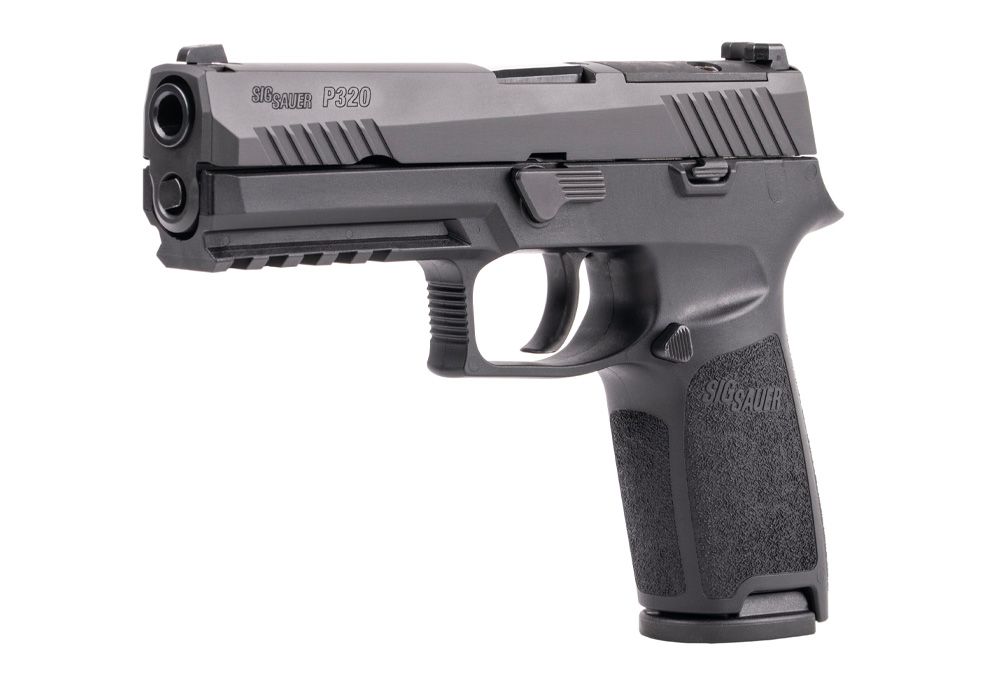
On 19 March a combatant with a reconnaissance and UAV team within the Special Operations Forces of the HUR MO shared a photo of a holstered SFP9 alongside a SIG P320.

A member of HUR MO Timur’s Spectre 33 unit posted several photos in early Spring 2025 featuring an SFP9 OR, with one photo showing mounted with a A-Tec PMM6 suppressor.

In April, a Japanese volunteer with one of the HUR International Legion teams shared photos of a new VP9-marked pistol. He noted that while he liked the pistol he preferred Glock triggers and he confirmed that his pistol was shipped with 17 round magazines.

On 6 April, a member of the GUR’s Revanche Tactical Group / Advanced Combat Group shared a photo showcasing a host of small arms from their armoury including new HK433s, HK416s, a UAR-10, CZ and Glock pistols and a pair of HK SFP9s.

A week later DW News shared a report on a Ukrainian camp where adolescents can receive training. From the small arms seen in the short report, including an HK416A8 and an SFP9 indicate the camp may have been run by HUR personnel.

Later in April an Instagram page affiliated with the Revanche Tactical Group shared a photo of a holstered SFP9 and another photo of one of the pistols at the range alongside a Daniel Defense carbine was shared on 23 April by the unit’s medical team.

Another probable SFP9 can be seen in a photo, posted on 6 May, by a volunteer aid organisation, in the photo members of a HUR MO International Legion unit receive gas masks somewhere in the
Zaporizhzhia region. Most recently, the pistols featured in a HUR MO International Legion training video posted on 10 May. The video shows a pair of combatants firing SFP9s at the range.

Iin mid-July, members of the 6th Separate SSO Ranger Regiment were photographed training with what appear to be SFP9s. At the end of July, a member of the 73rd Naval Special Operations Center shared a video and several photos of a brand new 2025-production SFP9 OR with a threaded barrel and suppressor-height sights. Unlike the other pistols seen so far, this SFP9 appears to have an OD green frame. From the video, it seems the pistol shipped with a 17 and a 20-round magazine as well as an Aimpoint ACRO P2 and a Streamlight TLR-8X. Several days later this was followed by a photo from another member of the 73rd Naval Special Operations Center who shared a photo of a pair of OD Green SFP9 ORs both with Aimpoint ACROs and one with a Streamlight (possibly the pistol seen earlier).

The pistols were not taken from German military stores, instead the deliveries were drawn from industry stocks and financed by German government funds. This is supported by the presence of VP9-marked pistols which indicate some of the pistols shipped were pulled from HK production that was planned for the US market. On the 17 April, the German government announce it would no longer be publicly updating its list of aid to Ukraine. As of April 2025, Germany has provided 3,500 HK SFP9s to Ukraine.

It appears from the available visual evidence that at least a portion of the 3,500 HK pistols have been provided to Ukraine’s HUR MO direct action teams with some also appearing in the hands of elements of the SSO. Both VP9 and SFP9-marked guns have been seen in-country with at least a portion of them being SFP9 ORs, with slides cut for mounting optics. Given the very infrequent imagery of operational pistol use it is difficult to confirm uses of the SFP9s in the field with the majority of imagery available stemming from training sessions.

Special thanks to Mathias, Hao, deaidua.org, & Dikobraz for their help with this video.


Support Us: If you enjoyed this video and article please consider supporting our work here. We have some great perks available for Patreon Supporters – including early access to custom stickers and early access to videos! You can also find us on the History of Weapons & War app. Thank you for your support!
Rocket Launcher Ground Drones

In my previous article/video examining the development of Hoverboard UGVs, I mentioned an unmanned ground vehicle developed by the HUR’s International Legion. The ‘LEGIT’ UGV was unveiled in a short social media video on 28 June. The video showed the small UGV test firing a pair of Bulgarian Bullspike RPGs into a building. In this article/video we’ll explore examples of what I’m calling RPG-UGVs.

LEGIT is far from the first UGV to be seen equipped with an anti-armour weapon. The first I’ve come across is a short clip of a Ukrainian UGV being demonstrated with an expended RPG-22 mounted. The clip dates from September 2022, the drone does not appear to have any means of traversing the RPG but may have an elevation mechanism. The UGV has a camera mounted for navigation and presumably aiming.

Ukrainian UGV mounted with a remote weapon station with a PKT and two RPG-7s (via social media)

In early January 2023, Russian unmanned systems developers, Avtobot, shared a photograph of an RPG-7 being mounted on a prototype drone. Several days later they shared another photo, this time showing four RPG-26s mounted on a frame work with a green laser below them seemingly to aid aiming. How effective this would be is unclear and its the only time I’ve seen a laser mounted on an RPG-UGV.

In February 2023, Avtobot, shared a video of a heavily armed 6×6 wheeled drone, the Autobot 5, which appears to utilise hoverboard components. The drone is armed with PKT machine gun, a pair of RPG-7s and a pair of RPG-26s. In the test footage included in the video the drone is seen firing its machine gun and both the RPG-7 and RPG-26. There appear to be optical sensors mounted below the machine gun which enable aiming of the weapon systems. Noteably in one of the RPG-7 test firings the backblast blows off what appears to be a camera mounted to the rear of the drone.

At the beginning of March, Avtobot also shared a video showcasing the Autobot 6.2 (‘MINIGRAD’). The six-wheeled Autobot 6.2 is seen mounted with 12 RPGs, arrayed in rows of four. The caption notes that the system can be armed with a variety of RPG systems including: RPG-18/26/27, RPG-7 and even RPOs. In the caption Avtobot explain that the Minigrad can be used can either “individually to suppress fortified areas, destroy various equipment and infantry” and along with other UGVs. The footage does not show a test firing.

Avtobot’s Autobot 6.2 ‘MINIGRAD’ (via social media)

Several weeks later, Mykhailo Fedorov, Ukraine’s Minister of Digital Transformation, shared an a series of photos on Telegram showing a demonstration of various unmanned systems. These photos included one of a 4 wheeled UGV equipped with two RPG-7s and a PKT machine gun.

On the 22 March, Avtobot shared a video showcasing a smaller four-wheeled armed with a machine gun and RPG-7. Interestingly, the caption notes that this was designed as a defensive drone. It’s also interesting to see the drone operated with a companion drone for Intelligence, Surveillance, and Reconnaissance. The video shows the drone test firing both the PKT and RPG-7 as well as entering and operating inside a building.

On 8 May, a photograph of a larger Russian UGV surfaced, claimed to be operating in Ukraine, the UGV appears to be a Platform-M, a ground drone developed in the 2010s by the Research Technological Institute “Progress”, in Izhevsk. The Platform-M is equipped with a PKT machine gun and can be armed with four single-use RPGs. 

BRM-1 seen in May 2023, equipped with six RPGs and its own little anti-drone cage (via social media)

On 8 July 2023, in one of their last videos shared on Telegram, Avtobot showcased the small four-wheeled UGV again, this time showing one equipped with an RPG-7 and the other with a PKT.

In early April 2024, Izvestia reported on a showcase at the Karbyshev Military Engineering Academy which included a range of unmanned ground systems. One of these appears to be a small four-wheeled UGV capable of being mounted with four single-use RPGs. I’ve been unable to find further details on the model seen in the photo.

Temerland is a Ukrainian company specialising in unmanned ground systems which has been operating since around 2021 developing their GNOM UGV. In April 2023, they shared a concept image of a UGV equipped with two RPG-7s. In December 2024 they posted a video showing the drone test firing its mounted PKM, notable its RPG-7 mounts are present but empty. Two years later in March 2025, they were featured in a Ukrainian TSN tv news piece showing a Gnom-VP21 UGV equipped with a PKM and two RPG-7s. A month later, on 10 April, they posted a video of the Gnom-VP21 test firing its PKM and RPG-7s at the range. Another version of the Gnom-VP21 with a different chassis configuration was shown in a photo shared in October 2024, while different it still has mounts for a PKM and an RPG-7.

65th Mechanised Brigade testing a Temerland Gnom-2 (via social media)

In late 2024, a series of small UGVs developed by the Omsk Armored Engineering Institute were highlighted in a Russian army report. These small, transportable and quick deployable drones include a number of variants including the ‘Shmel’ variant of the T-117, which is equipped with four RPG-7s and can be equipped with RPO-As.

In early April 2025, Ukraine’s 65th Mechanised Brigade shared a series of photographs showing the testing of a Temerland UGV armed with a PKM and an RPG-7, the caption describes it as a ‘Gnom-2’, a configuration similar to that seen in October 2024. This may indicate that Temerland’s Gnom UGVs are beginning to be tested by units of the Ukrainian armed forces.

On 6 April, the Russian Ministry of Defence and Russian news outlet Zvezda shared videos of the testing of tracked UGVs. One of the variants seen is equipped with five RPG-7s, though there appears to be mounts for another row of five on the bottom.

In late June a team from the Ukrainian 93rd Mechanised Brigade shared a video showing a logistics UGV mounted with a UB-16-57 57mm rocket launcher from a helicopter. The video shows the DIY multiple launch rocket system (MLRS) firing a series of 57mm rockets, the video does not show how the system is aimed but it does illustrate the recoil the drone experiences on firing.

GUR Legion’s LEGIT UGV with Bullspike RPGs (via social media)

Late June saw the unveiling of the aforementioned LEGIT, a small tracked UGV co-developed by operators and engineers from the HUR Legion’s Cyclone unmanned systems team. LEGIT is a multi-purpose drone capable of undertaking logistics and kamikaze roles. The video shows the LEGIT UGV armed with a pair of Bulgarian Bullspike RPGs on an articulated mount which can be raised and lowered to aim, while traverse is seemingly handled by manoeuvring the drone. The video concludes showing the RPG-UGV test firing at a building. No combat footage of LEGIT has surfaced yet.

Expanding on the concept of mounting a rocket launching system on a UGV, in early July 2025, the Ukrainian 92nd Assault Brigade created a miniature multiple launch rocket system on a cargo carrying UGV. The system has 15 tubes and seemingly fires 57mm rockets, the video doesn’t show the system in use and its unclear how it is aimed.

An improvised system with a UB-16-57 launcher mounted on a UGV (via social media)

Much like the RPG-armed aerial drones it appears that for now the kamikaze variants of UGVs are much more prevalent. The available imagery of UGVs actually in action largely shows either the kamikazes or drones equipped with remote machine guns. It seems that the ability to suppress a target with machine gun fire may be seen in many operational situations as the more useful payload for UGVs.


Support Us: If you enjoyed this video and article please consider supporting our work here. We have some great perks available for Patreon Supporters – including early access to custom stickers and early access to videos! You can also find us on the History of Weapons & War app. Thank you for your support!

Russia Deploys Type 75s in Ukraine

In recent weeks Russia has begun deploying North Korean-manufactured 107mm multiple rocket launch systems. These small rocket launchers are the latest of the North Korean weapon systems to enter Russian service.

The Type 75 is a copy of China’s Type 63 multiple rocket launcher, is a small towed, 12-tube system which an fire a variety of 107mm ammunition. The system was first sighted in Ukraine in early June, though its likely been in use since Spring 2025.

A Type 75 in Russian service (via social media)

The first footage reportedly shows a crew training with the Type 75 while the second shows the Type 75 being fired from concealment within a tree line. Several days later on 15 June, photographs of a Type 75 being mounted on the bed of a UAZ utility van were posted.

Russian Channel One correspondent Dmitry Kulko shared footage of a Type 75 in action on the 25 June. In his post Kulko notes that the weapon system has a range of 8.5km and is being used with high explosive fragmentation rockets.

Russian mechanics mounting a Type 75 on a UAZ truck (via social media)

On 27 June, a close up photograph of the system was shared on telegram. A week later on 5 July, a Russian Type 75 team shared video of them deploying and operating the system in the field. The video shows the heavily camouflaged MLRS being towed by an unmanned ground vehicle and then being loaded and fired. Deployment with a UGV is sensible as the system unloaded weighs over 600kg and would otherwise require a larger, more noticeable vehicle to move it. The video concludes with some ISR drone footage which is implied to be the impacts on target.

A Type 75 in Russian service firing from a tree line, July 2025 (via social media)

On 12 July, Ukraine’s 1st Separate Presidential Brigade shared footage claiming the first destruction of a Type 75 by drone-dropped ordnance. The videos caption notes that the system was spotted and engaged in the Kup’yansk region.

The Type 75 is just one of the latest in a series of weapon systems North Korea have provided to Russia, other aid includes ammunition for various artillery systems and more complex rocket artillery systems like the M1991 240mm MLRS.

Update – 18/7/25:

Ukraine’s 429th Separate Regiment of Unmanned Systems shared footage of a strike on a North Korean-supplied Type 75 multiple launch rocket system.


Support Us: If you enjoyed this video and article please consider supporting our work here. We have some great perks available for Patreon Supporters – including early access to custom stickers and early access to videos! You can also find us on the History of Weapons & War app. Thank you for your support!