US Transfers Seized Iranian Small Arms to Ukraine

The U.S. government announced, on 9 April, the transfer of enough small arms to equip a brigade to the Ukrainian Armed Forces. The weapons originate from the arms shipments that the US Navy and allies have seized in recent years thousands of weapons and millions of rounds of ammunition which have been seized in recent years from Iranian shipments to the Houthis in Yemen.
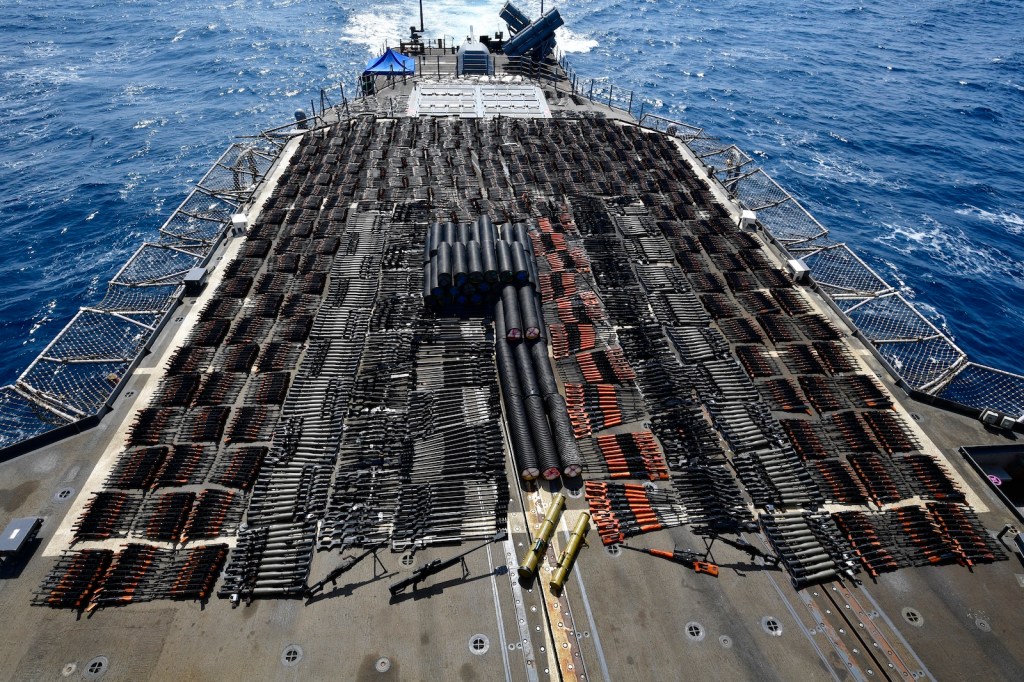
Thousands of illicit weapons interdicted by USS Monterey, May 2021 (U.S. Navy)

In a statement U.S. Central Command noted that the arms and munitions had been “originally seized by U.S. Central Command and partner naval forces from four separate transiting stateless vessels between 22 May 2021 to 15 Feb 2023.” The transfer to Ukraine includes 5,000 AK-pattern rifles, RPG-7 rocket launchers, sniper rifles and machine guns. This is not the first transfer of seized small arms to Ukraine with a previous transfer occurring in October 2023, when 1.1 million rounds of an unspecified 7.62mm calibre ammunition were transferred. That transfer was made up of ammunition seized from a single dhow on 9 December, 2022. 
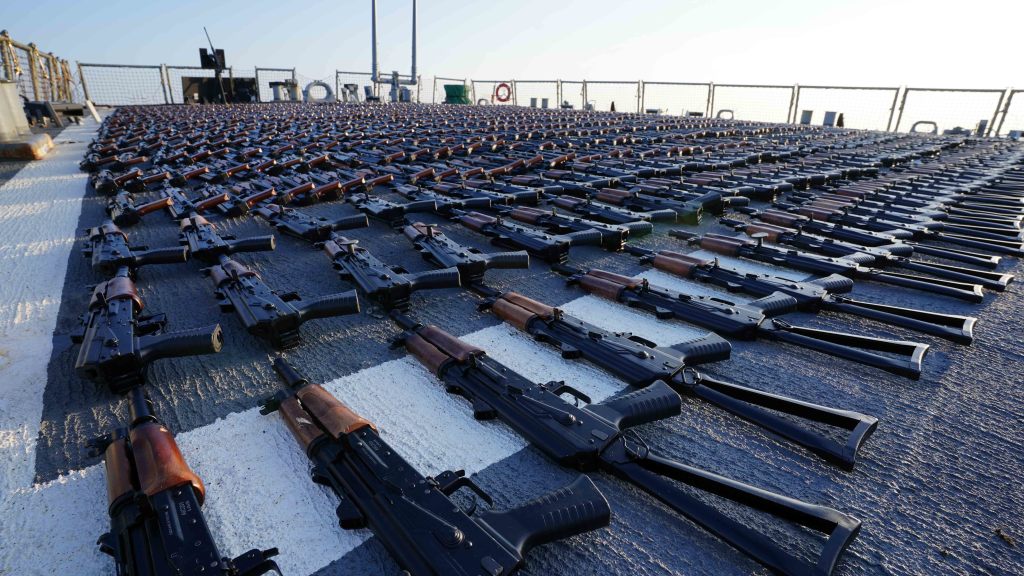
On Jan. 7. U.S. Navy seized 2,116 AK-pattern rifles including AKS20U & Type 56-1s from a fishing vessel en route from Iran to Yemen. (U.S. Navy)

On 6 July 2023, the U.S. Justice Department filed a forfeiture action for: “over 9,000 rifles, 284 machine guns, approximately 194 rocket launchers, over 70 anti-tank guided missiles and over 700,000 rounds of ammunition” these were reported to have originated from two dhows in 2021 and two from 2023. This suggests a discrepancy in the number of seized weapons detailed by the forfeiture action and the number subsequently handed over to Ukraine. This perhaps suggests that either a further transfer will follow with the remainder or a substantial portion of the arms and ammunition were not suitable for transfer for some unknown reason.

In terms of the types of small arms being transferred we can get a pretty good idea from examining the previously released images of the arms seized over the last couple of years. These include:

  • Chinese Type 56-1 7.62x39mm AKs
  • Russian VEPR AKS20U [VPO-158N-06] in 5.45x39mm (these will likely be useful for support troops and vehicle crews)
  • PK-pattern general purpose machine guns or Iranian and Chinese origin
  • Russian Kornet and Iranian Dehlaviyeh anti-tank guided missiles
  • Chinese Type 69 and Iranian RPG-7 clones
  • Iranian AM-50 12.7x99mm anti-materiel rifles
  • Chinese SVD clones
  • Imagery of seized ammunition suggests 7.62x54mmR, 7.62x39mm, and 12.7x99mm

US Central Command noted that:

“The munitions were being transferred from the IRGC to the Houthis in Yemen in violation of the United Nations Security Council Resolution 2216. U.S. CENTCOM is committed to working with our allies and partners to counter the flow of Iranian lethal aid in the region by all lawful means including U.S. and U.N. sanctions and through interdictions.”

The U.S. Justice Department confirmed in a statement that the transfer took place on 4 April, also explaining that the transfer required a civil forfeiture ruling against seized arms and ammunition which enabled the hand over. Attorney General Merrick B. Garland said: “The Justice Department will continue to use our legal authorities, including forfeiture, to support the Ukrainian people in their fight.”
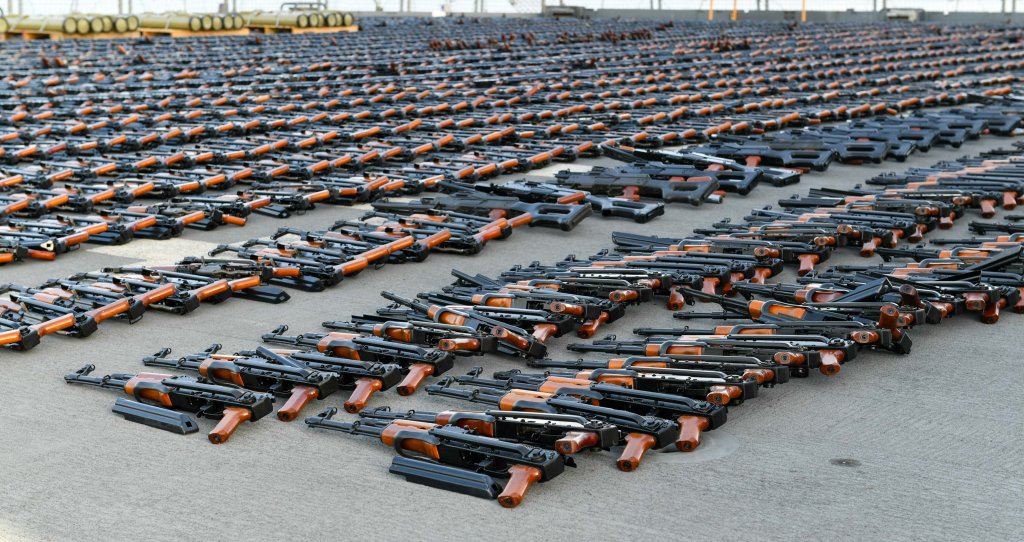
French naval forces interdicted more than 3,000 rifles and 578,000 rounds of ammunition, Jan. 2023 (US CENTCOM)

Most recently, in February 2023, the U.S. Navy reported that “more than 5,000 weapons and 1.6 million rounds of ammunition” had been seized since the beginning of the year. In 2021 alone, approximately 9,000 weapons were intercepted on their way to the Houthis. This suggests that if the weapons have not already been disposed of then there a further stocks of seized weapons to draw on for transfers to Ukraine. It remains to be seen if and when further transfers of seized weapons will be made and when the transferred weapons will begin to be spotted in the field.


Support Us: If you enjoyed this video and article please consider supporting our work here. We have some great perks available for Patreon Supporters – including early access to custom stickers and early access to videos! Thank you for your support!


Periscope Rifles in Ukraine

With the war in Ukraine’s current trench-bound stalemate often resembling the First World War it isn’t too surprising to see an early 20th century innovation making a comeback. Several variations on the concept of a periscope rifle have been seen in Ukraine since the summer of 2023.

A still from Heroes of Gallipoli (1915) showing a periscope rifle (via IWM)

The concept actually pre-dates the First World War, with sights like William Youlten’s Hyposcope dating to 1900, but really emerged during the war with many nations developing similar periscope-based systems that allowed service rifles to be mounted in frames and fired over the parapet removing the need for soldiers to expose themselves when sniping.

The first design featured in an article by Jeff Farrell in June 2023, Farrell interviewed a Czech veteran of the International Legion, Marian Simunek, who was wounded and has since developed a periscope which a rifle can be mounted in. In a pair of videos Simunek demonstrated fitting the rifle into the periscope mount and how it would be fired. Simunek manages to mount an AK-74 in the periscope mount within 30 seconds. The stock folds down from the body of the periscope and is secured with the pistol grip and trigger assembly being lined up, the stock of the rifle is secured by two straps and then the trigger cable is attached to the rifle’s trigger.

A second periscope design emerged in late January 2024, when a short video showing a tall tripod-mounted periscope was shared. The video shows the testing of a prototype gun mount which can be raised up to above parapet height and allows the gun to be aimed using the periscope the gun is show being tested in both semi-automatic and fully automatic. The trigger is attached to a command cable which runs down to a front grip with an exposed trigger in front of it. The tall monopod isn’t the most stable platform but the user demonstrating it supports the assembly using the integrated stock and pistol grip assembly and holds the stand with his off hand. While the ability to quickly raise and lower the rifle mounted on the stand is useful, especially for reloading, but it may lack stability in the field.

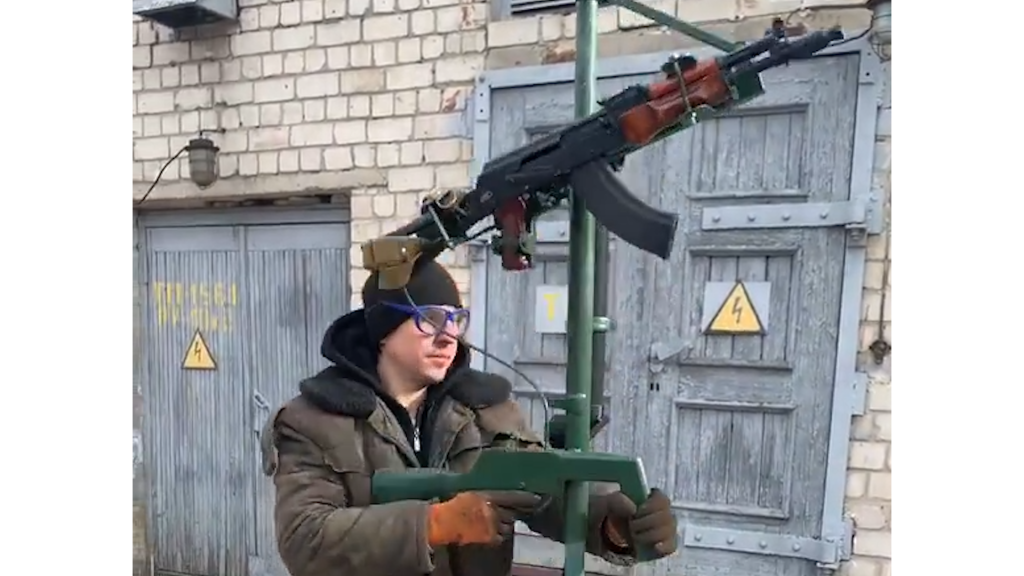
The third variation on the periscope rifle concept was shared on 18 March, with a short 22 second clip showing an AK-pattern rifle with its stock removed, mounted on a well fabricated pole with a periscope, an off hand support grip, a stock shaped like an AKS-74 folding stock and a pistol grip and trigger assembly which uses what appears to be a brake cable. In another video of the mount in the same position an individual demonstrates the articulation of the mount (albeit without a weapon installed). The mount has a wide tripod base and appears to be well made. The gun is set up in an urban environment behind a wall, likely for demonstration proposes. The this periscope rifle may be a more developed version of the previous design but I’ve been unable to find the original source for the video.

Interestingly, another video of as similar periscope rifle set up was shared, the design is clearly the same as that seen in the previous video. The shape of the stock has changed and the position and design of the stabilising forward hand grip differs.

While trench periscopes have been in use since the early weeks of the war, a more modern approach is the use of digital camera aimed remote weapons. These include the Shablya (sabre) remote weapon station developed by Roboneer, which has been in development since 2015 and has been tested with numerous different types of machine guns including PKs and M2 Brownings. Another similar system is the Tarantul, developed by engineers of the 118th Territorial Defence Brigade. This is a concept that Russian forces have also been experimenting with with a number of systems seen in test videos.

The available imagery of periscope rifle systems originating from the war in Ukraine is relatively small so its difficult to gauge their utility fully, I’ve yet to see any evidence of their front line use. They are a specialist piece of kit which depending on the design is suited to some environments more than others. If you’ve seen other examples of periscope rifle systems or evidence of their use in combat please do let me know!


Support Us: If you enjoyed this video and article please consider supporting our work here. We have some great perks available for Patreon Supporters – including early access to custom stickers and early access to videos! Thank you for your support!

Swedish K In Ukraine – Update

A few of weeks ago I published an article/video detailing the appearance of Swedish Carl Gustaf m/45 9x19mm submachine guns in Ukraine. One notable feature of the guns was that their configuration appeared to sit somewhere between the m/45A and the m/45B.

In the absence of clearer information I referred to these as m/45Bs, the most common variant and one which has the defining fixed magazine housing rather than the earlier removable magazine well seen on the m/45A. The fixed magazine well is an upgrade which was made before the later m/45B refit. It seems that there was some fluidity to how the upgrades were carried out which has led to guns with a mix of features.

An upgraded m/45A with the 41st Mechanized Brigade (Daily Mail)

From Swedish sources I’ve spoken to many of the m/45s seen in the imagery from Ukraine are early spec guns (m/45As) which may have been in storage and were not refit to the m/45B pattern. The m/45B refit was partially necessitated by the need to add an additional retention method to hold the receiver end-cap in place. Some sources suggest this was due to a type of training ammunition then in use, others point to it being simply extra security.

An m/45B (top) and an m/45A (bottom) with the fixed-magazine well upgrade (Henrik Jansson)

Working theories explaining the configuration of the guns seen in Ukraine include: that they are m/45A configuration guns which had been in storage and were retrofitted after the training ammunition left service and the additional end cap retention was no longer needed, so this change to the guns was omitted. As mentioned earlier, another reason may be that these are m/45As which had the magazine well upgrade but were placed in store or transferred before the broader m/45B upgrade was carried out.

As discussed in the initial video, it is thought that Estonia is a likely source for these guns as they received some of these guns in the 1990s and these m/45s have then subsequently been sent to Ukraine. Regardless of origin country the result is guns which do not have the additional end cap retention catch nor the green finish of the Swedish Army’s m/45B. They all feature the fixed magazine housing but there is also a mix of larger and smaller perforations in the barrel shrouds. [Note: Thanks to Jonathan Ferguson who noted that there is some variation in the size of shroud perforations within examples of both A & B model guns.]

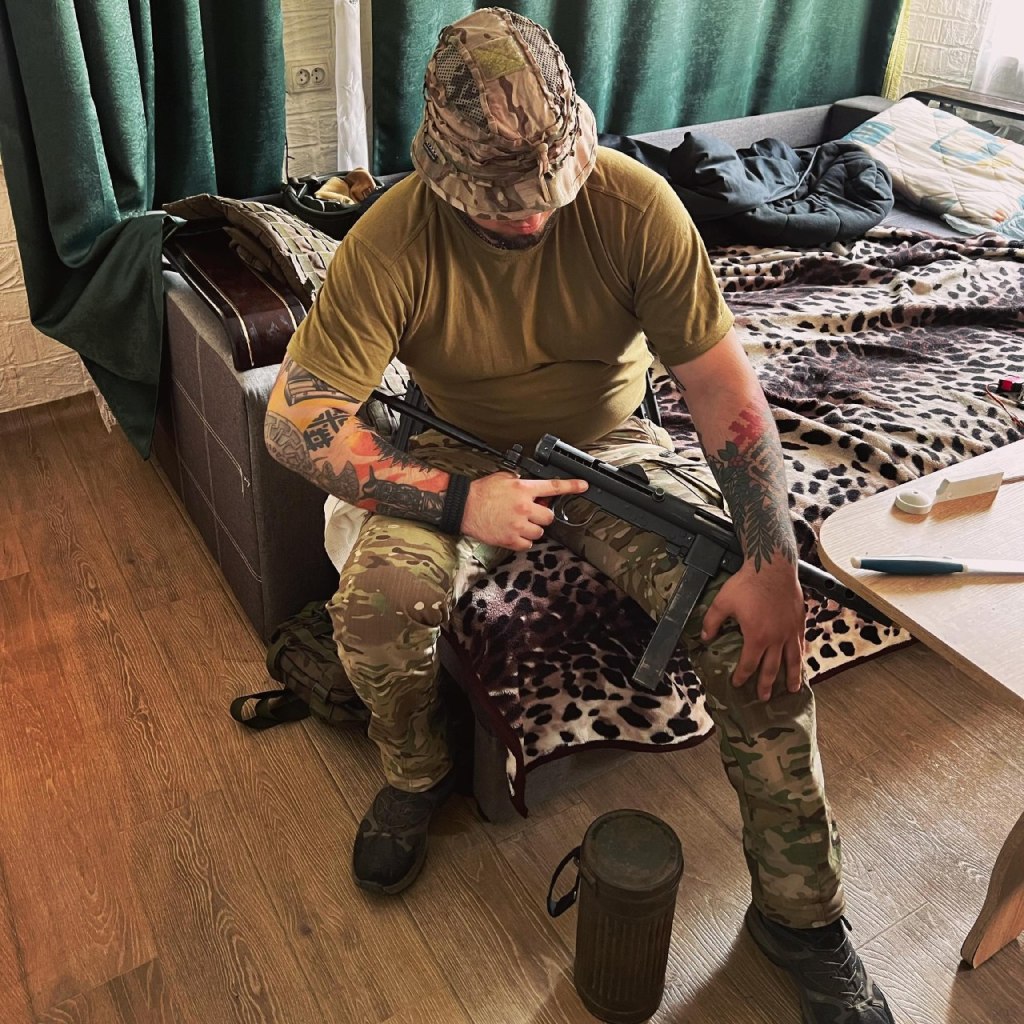
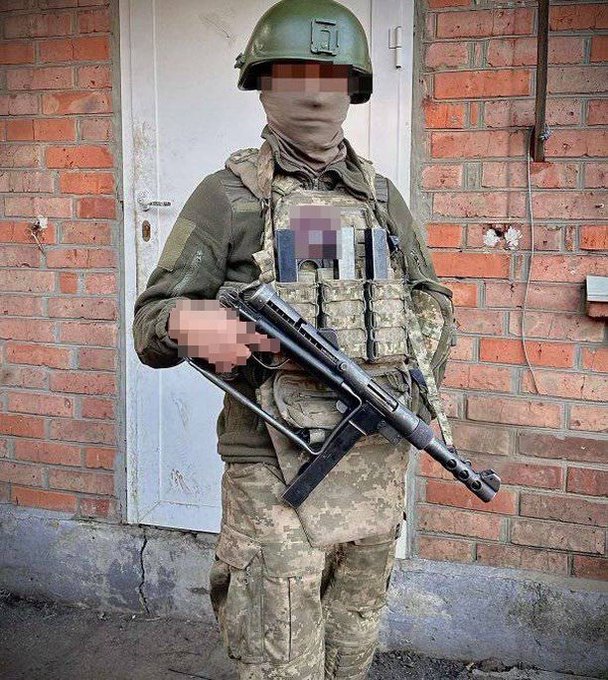
A combatant in Ukraine with an m/45 c.early 2024 (via social media)

Since the last video a couple of other sources showing the m/45 in Ukraine were shared with me. Including this image of a Ukrainian combatant with a Swedish K which has the smaller barrel shroud holes. On 10 February a Daily Mail report, featured Thunder Company, an element with the 41st Mechanised Brigade. Members of the company show journalist Richard Pendlebury an m/45 that is in their inventory. The company’s deputy commander describes it as a ‘museum piece’. Both guns appear to be of the same configuration generally seen in Ukraine. On 4 March, another short video of a Ukrainian combatant firing an m/45 at what appears to be a range was shared. It’s unclear when or where the video was filmed.

My very special thanks to Henrik Jansson for his time, insights and imagery and to numerous others for their knowledgeable input. Thank you to Weapons_Illustrated for their help sourcing imagery, check them out on twitter.

Update – 24/5/24:

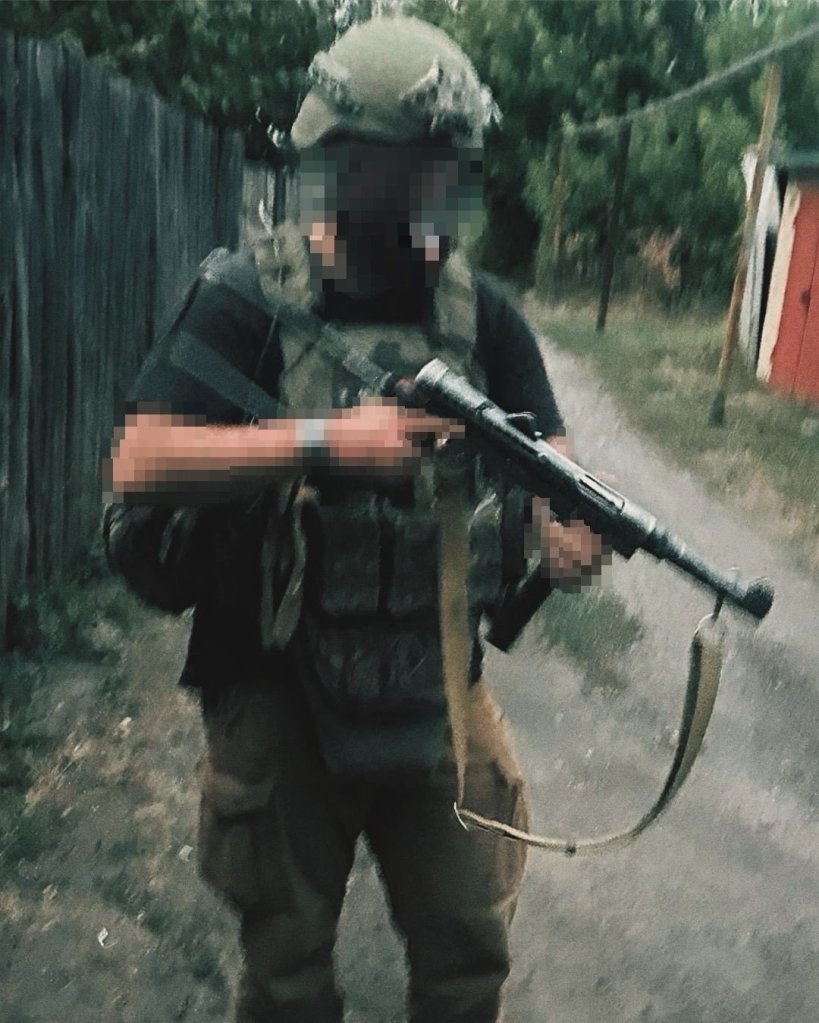
On 11 April, a soldier of the 2nd Battery of the 2nd Self-Propelled Artillery Battalion of the Field Artillery Regiment of the 3rd Assault Brigade shared a photograph holding an m/45. [h/t Cloud for sharing].

Update – 18/6/24:

Update 4/9/24: A new image of the Swedish m/45 submachine gun recently surfaced. (H/T AbraxasSpa)

Update 3/10/24: A photograph of what may be a member of the Ukrainian 129th Territorial Defence Brigade or potentially a member of the International Legion. He’s equipped with an m/45, note the three magazines in his chest rig and Ukrainian digicam pattern sling.


Support Us: If you enjoyed this video and article please consider supporting our work here. We have some great perks available for Patreon Supporters – including early access to custom stickers and early access to videos! Thank you for your support!


Ukraine’s Handheld FPV Killer?

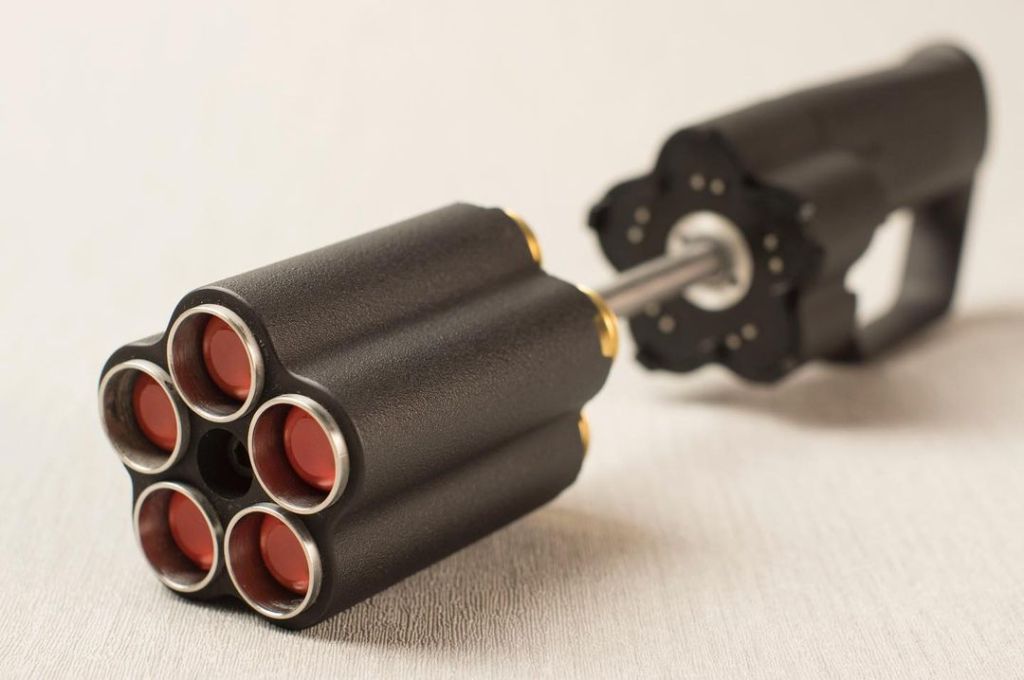
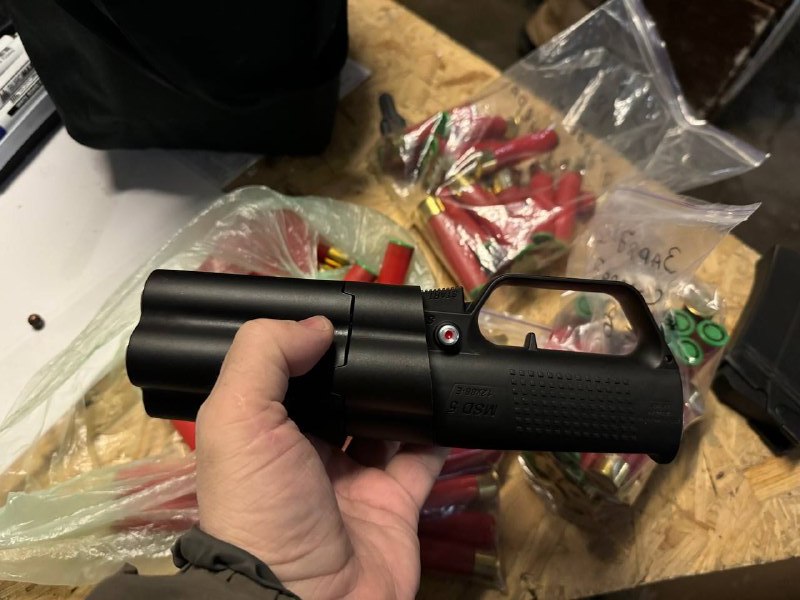
This is the MSD-5, a small, hand-held shotgun-like device which has been suggested as an anti-drone weapon. With the massive increase in UAV and (first person view) FPV drone use various means of combatting them ranging from electronic warfare to simple hunting shotguns have been deployed by both sides.

In recent weeks a number of Ukrainian social media accounts have shared the idea of using the MSD-5 as a short-range defence against diving FPV drones. I hadn’t seen the weapon before and none of the posts about it explicitly mentioned its designation or manufacturer. I did some research and found that the small hand gun was called the MSD-5 and is manufactured by Stellarium SV, a company based in Chernihiv, in northern Ukraine.

An MSD-5 (via Sergey Flash)

In January, Sergey Flash (a Ukrainian serviceman and communication specialist) posted a video discussing the need for an immediate defence against FPVs and held up an MSD-5 describing it as “a possible way of protection” but emphasising that his aim wasn’t to advertise the device but simply call “attention to a possible remedy for the soldiers”.

Stellarium SV’s website explains that rather than being a weapon it is primarily sold as a signalling device with five different 12×88 cartridges available, two signalling cartridge types, a noise cartridge for scaring off animals, a cartridge which can extinguish flames and one for spraying plants to treat and protect them from various types of pests and diseases.

Here is a promotional video for the MSD-5:

It is unclear if the device is robust enough or has barrels suitable for firing something like birdshot pellets. Stellarium SV note that the device is made from “high-strength plastics based on reinforced polyamide” but do state that “the drum can be fitted with stainless steel or titanium liners.”. The device has 5 tubes or barrels and is electrically fired. It appears to have a cross bolt safety in front of the grip, below the exposed trigger. It weighs 800g and is powered by three CR123A batteries. Stellarium SV’s site lists the device’s price as 430 Euros.

On the 20 February, Flash posted another short video of himself firing MSD-5 at a range with the caption:

“Tested today the new cartridges for the “soldier’s weapon against FPV”. Specialists are working, I hope we will produce a product that we will give to every soldier. My task, after the product is ready for the series, is to achieve its introduction into the Armed Forces.”

An MSD-5 with its action open (Stellarium SV)

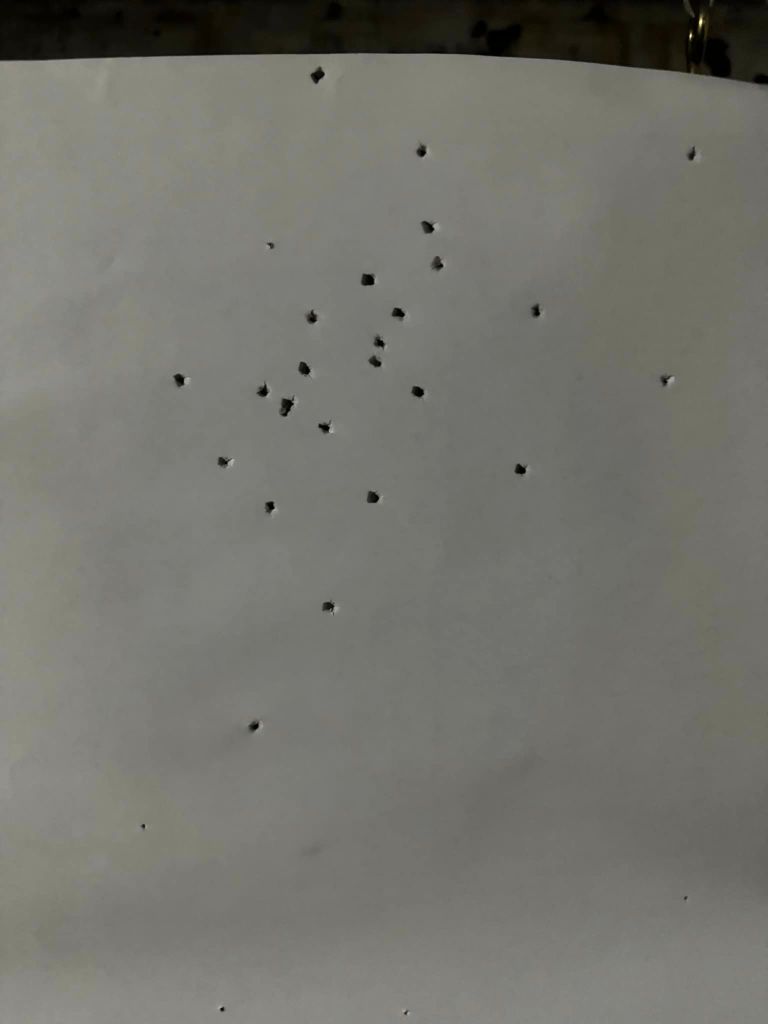
Along with the video he also posted a photograph of a target peppered with holes from small shot. The video shows the MSD-5 being fired with minimal recoil, suggesting a light load.

I reached out to Stellarium SV about the potential conversion of the MSD-5 into a personal anti-FPV weapon and they were keen to stress that this ” is not a use case that we endorse or support” and that they do not produce a cartridge capable of this and that anyone who made adapted cartridges is not related to Stellarium SV. The company did note that loading cartridges with shot was possible but getting the powder charge right was key. They also noted that the MSD-5 does not have sights which may make aiming difficult, though at the probable engagement ranges instinctive point shooting may be what Flash has in mind.

A test target photo posted by Sergey Flash (via Sergey Flash)

I also reached out to Sergey Flash to enquire about how he was adapting the MSD-5 but at the time of publication have not yet had a reply.
While the MSD-5 may not have been designed with an anti-drone role in mind, the concept of a similar handheld, lightweight, last-ditch, defence against FPVs seems a sensible answer to a urgent and difficult problem.


Support Us: If you enjoyed this video and article please consider supporting our work here. We have some great perks available for Patreon Supporters – including early access to custom stickers and early access to videos! Thank you for your support!


Ukraine’s ASRAAM-Supacat Franken-SAM

Earlier this week a short video featuring an ASRAAM-Supacat ‘Franken-SAM’ surfaced online. Early on 8 February, Ukrainian Telegram channels began sharing a video pulled from TikTok, which is likely the first daylight footage of one of the UK-developed and supplied ad-hoc air defence systems.

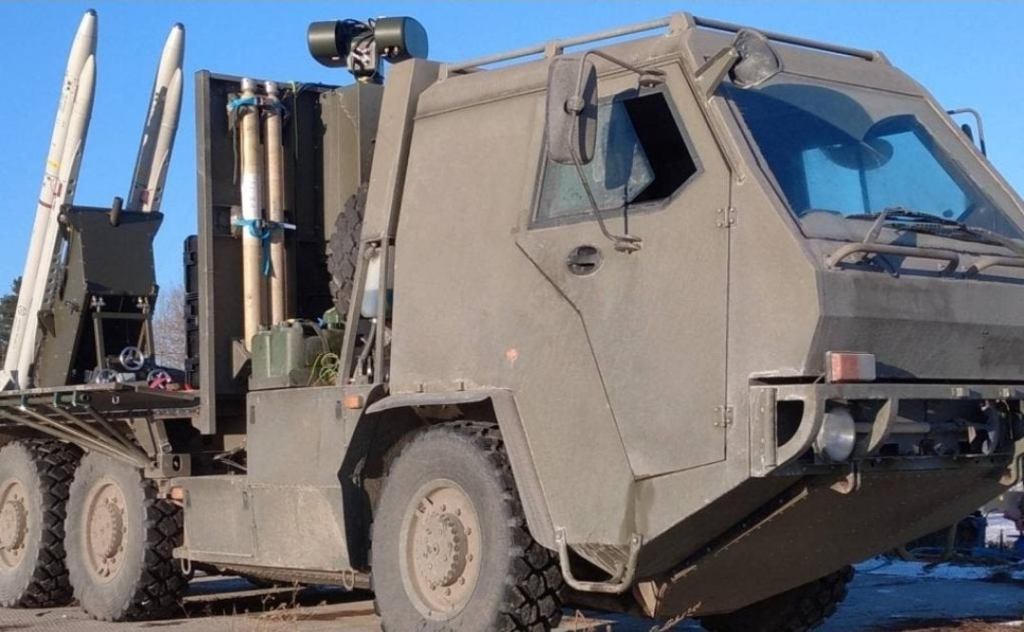
The system can be seen parked by the side of a road and was filmed (original source now private) from a passing vehicle. The date and location the video was filmed is unknown. The launcher appears to have two AIM-132 Advanced Short-Range Air-to-Air Missiles (ASRAAM) loaded with the launcher ramp raised in the ready position. It is difficult to make out but the cab has seemingly been fitted with a protective screen to guard against drone attack. Also visible is what appears to be a sensor turret mounted behind the cab, this is possibly an electro-optical/infrared sensor used for targeting.

Still from recently posted footage of an ASRAAM Franken-SAM in Ukraine, 8 Feb. 2024 (via social media)

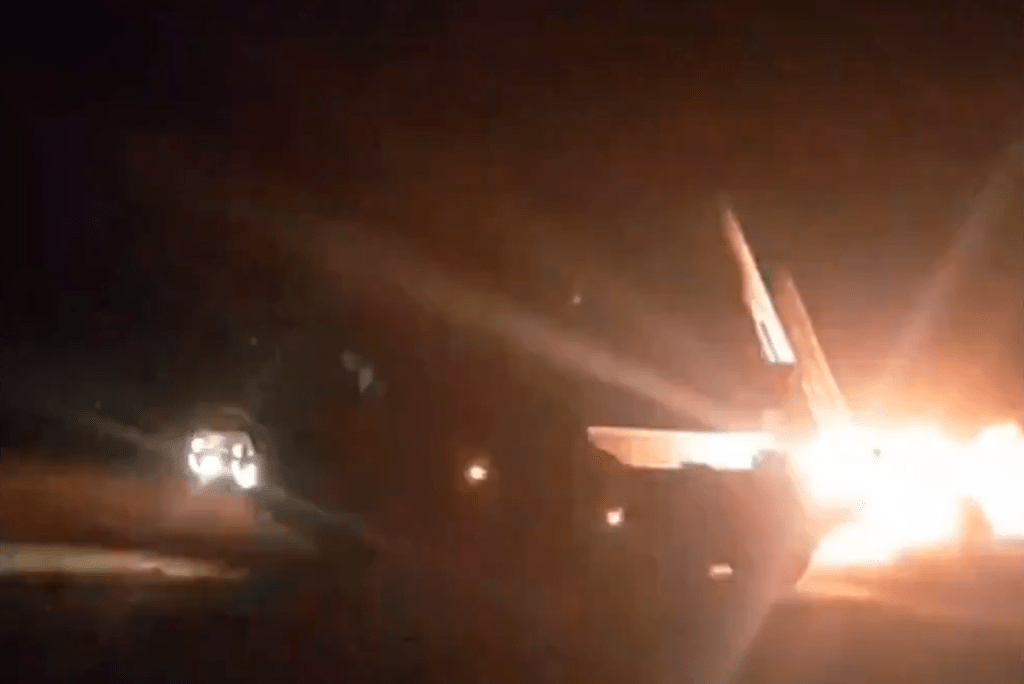
The UK-developed system is one of several so-called Franken-SAMs produced by Ukraine’s allies. They are part of an effort to affordably and quickly bolster Ukraine’s air defences. In October 2023 a pair of videos shared by the Ukrainian air force gave a glimpse of the system in action. The both filmed at night shows a launch but the vehicle is not visible. The second, shared on 12 October, by Ukraine’s Air Command – South shows the successful engagement of a Russian long range loitering munition. As the darkness is lit up by the missile launch, the Supacat 6×6 High Mobility Transporter is briefly visible.

The AIM-132 missiles and the vehicles launching them were provided by the UK in the summer of 2023. ASRAAM uses infrared homing and can lock onto its target after launch. It has an air-launched range of more than 25km but this is likely shorter when used in a ground launched role. The system may be used in conjunction with radar systems which feeds target data to the missile. A key feature of the ASRAAM is its ability to lock-on after launch, theoretically allowing it to be vectored onto a target in the air before it begins IR homing.

A photo dating from August 2023 of a Supacat High Mobility Vehicle mounted with a pair of MBDA UK ASRAAMs (Ukrainian Ministry of Defence)

The system, however, isn’t ideal with limited ready-to-fire capacity on the launcher ramp, with just two rails, and no protection for the missiles themselves, from either the elements or from potential fragmentation or impact damage if attacked. The ad-hoc air defence system first saw action in Ukraine in August 2023, and represents an ingenious improvisation utilising a highly capable missile in an air defence role it was never envisaged in. In December 2023 UK Ministry of Defence summarised their development:

“In summer 2022, a joint MoD-MBDA team developed air defence systems to fire ASRAAM from the ground for the first time. Within four months of initiating the surface launched ASRAAM project, these air defence systems were developed, manufactured, trialled and Ukrainian crews trained on their usage, on UK soil, before being transferred into Ukrainian hands.”

It is unclear how many of the systems have been assembled but in late 2023, it was reported that the UK had supplied “a handful” of the missile-equipped Supacat trucks. They were believed to be in use in near the front and in the Kyiv region, defending key infrastructure, against Shahed-136/Geran-2 long-range loitering munition attacks.

In December 2023, the UK Ministry of Defence announced that a further 200 ASRAAMs would be provided to Ukraine and that the systems in-country had achieved a “successful hit rate reported as high as 90% against some Russian air targets.”

This article originally appeared at OvertDefense.com

Update 16/04/24:

Short video showing a close up and launch of what appears to be an ASRAAM missile. Posted on Telegram on 14 April.

Update 16/09/24:

A brief video showing a launch of a missile from the HMT-mounted ASRAAM air defence system.


Support Us: If you enjoyed this video and article please consider supporting our work here. We have some great perks available for Patreon Supporters – including early access to custom stickers and early access to videos! Thank you for your support!


Vintage Weapons In a Modern War: Swedish K in Ukraine

The war in Ukraine has seen a plethora of vintage weaponry being used by both sides. Everything from M1910 Maxims to TT pistols. One of the more surprising vintage weapons to turn up is the classic ‘Sweden K’. The Kulsprutepistol m/45 (Kpist m/45) perhaps better known as the Carl Gustaf M/45 has appeared in imagery from Ukraine numerous times over the past two years.

The most likely origin of the venerable submachine guns is either Sweden itself, whose home guard ceased using it in 2007, or Estonia, which received a number of the weapons from Sweden in the 1990s and for a time issued them to elements of thier Defence League.

Manufactured by Carl Gustafs stads gevärsfaktori from 1945 through to the mid-1960s the m/45 is a standard blowback submachine gun chambered in 9x19mm. The initial version had a detachable magazine well that enabled the weapon to feed from either a 36-round magazine or from Suomi KP/-31 (m/37-39 in Swedish service) magazines. The later m/45B variant permanently attached the magazine well limiting the weapon to feeding from the standard 36 round box magazines. The m/45B also incorporated a reinforced receiver end cap.

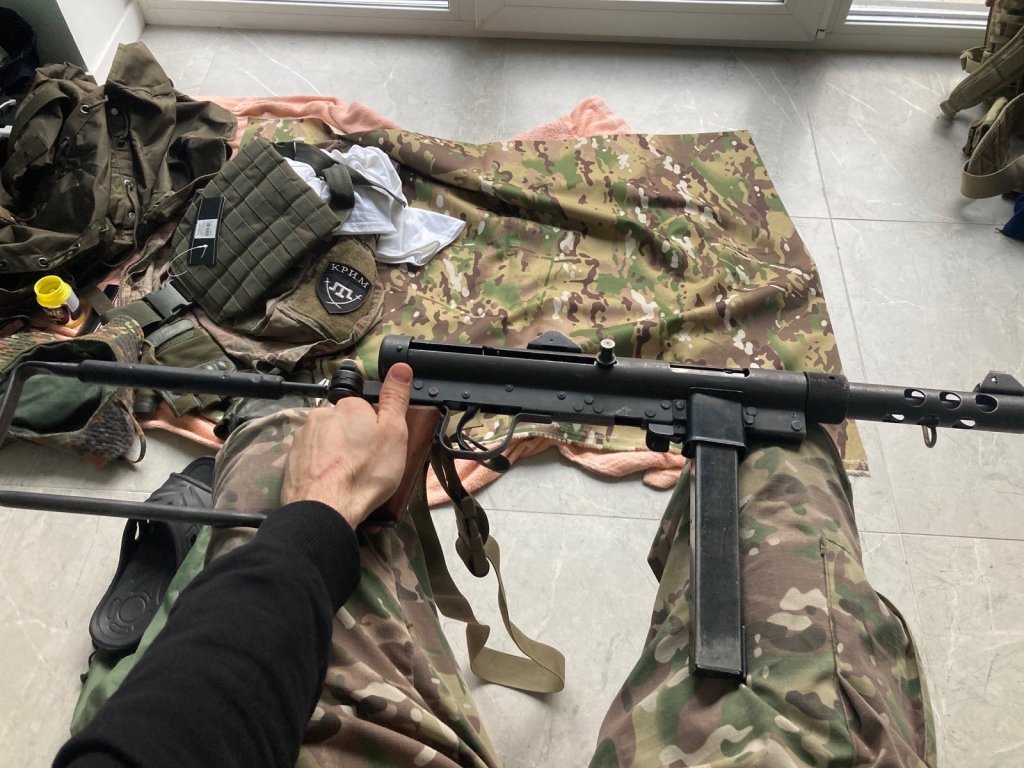
The earliest sighting of a ‘Swedish K’ in Ukraine I’ve found dates to early March 2022 when a member of the Krym Battalion posted a photograph of some of the weapons available to him; an AK-74, a Walther P99, an M7 bayonet and a Carl Gustaf M/45B.

Another image of a Ukrainian serviceman with an M/45 surfaced around the 23 March, but I’ve been unable to find the original source for the image so have little context for it.

In early May an photograph of an older member of the Ukrainian Armed Forces was shared on a number of sites, he’s seen sat in a vehicle holding up an M/45 with a sling attatched.

In mid-May 2022 another M/45 surfaced in a photograph from a member of Krym Battalion, which is a part of the International Legion. It’s unclear if this photograph was posted by the same member who shared a photograph of his weapons in March, but the wear marks on the gun appear quite similar.

On 10 November, a daily update post from the Ukrainian General Staff included a photograph of an individual holding an M/45 with a sling, while the unit the individual belongs to isn’t stated given the contents of the post he may have been assigned to a unit on the border with Belarus.

Throughout most of 2023 sightings of M/45s were rare but in mid-June a member of the National Guard posted a short video featuring himself holding a Swedish K as other members of his unit walk behind him, two of the passing men also carry slung M/45s.

On the 28 September, a Swedish volunteer posted a photograph of himself holding an M/45 he came across on the frontline, he captioned the post: “Photo of when I found a mint condition Swedish K with 39B ammo out close to the front. Just an awesome rare Swedish Gun to see in use by a Medic.” The unit where the M/45 was encountered was the 131st Separate Recon battalion. This suggests the photograph may have been taken earlier in the summer of 2023 and also that M/45s may be used by medics. The mention of the Swedish 39B 9mm ammunition which was specifically issued with the M/45 is also interesting. Most notably, however, is the presence of the attachment assembly for an original Swedish spent cartridge case catcher bag.

October saw the first video of a Swedish K being fired. A short clip was shared on Instagram showing an M/45B being fired at the range with what appears to be a red dot optic mounted forward on the perforated barrel shroud.

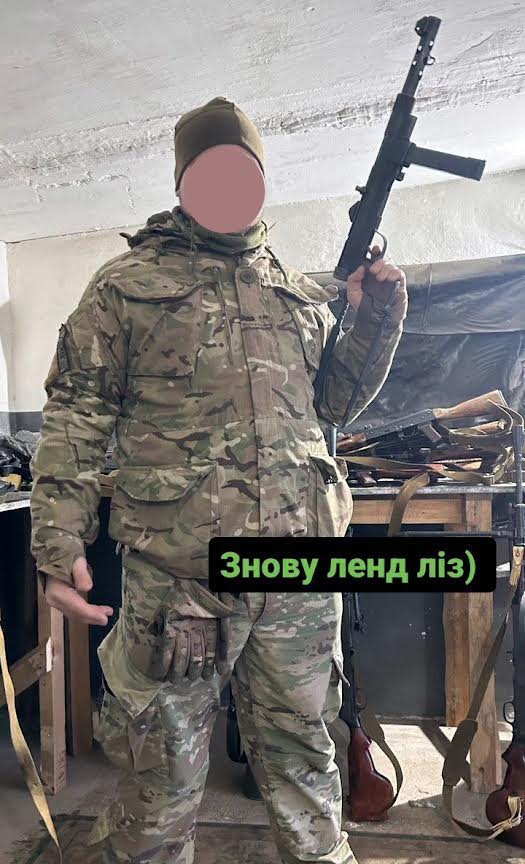
Several months later, on 11 December, a medic with the 12th Ukrainian National Guard Brigade “Azov” shared a photograph of himself holding an M/45. Later in December a member of the 78th Separate Assault Regiment ‘Herts’ shared a photo, on 21 December 2023, with the caption ‘lend lease again’, he’s holding up a behind him can be seen several DP-27 light machine guns and some AK-pattern rifles.

Interestingly, none of the M/45s have the green paint finish which was used on some of the Swedish Armed Forces’ guns but have clearly shipped with original slings and in one case a brass catcher attachment. Also none of the guns in the imagery from Ukraine appear to have the end cap reinforcement typically see on the Swedish Army’s M/45Bs. While the guns have the M/45B’s fixed magazine well they don’t seem to have the characteristic pair of rivets and hooked end cap. It’s difficult to positively identify the variant as the guns’ markings aren’t visible in any of the imagery. With little context for some of the imagery and relatively few sightings of the guns in Ukraine its difficult to pinpoint the types of unit which are receiving them but it is conceivable that the guns have been decimated amongst a number of different types of unit including frontline elements of the Ukrainian National Guard, International Legion and Army.

Update – 21/01/24: From Swedish sources I’ve spoken to these M/45s are early spec guns which may have been in storage and were refit later. Retrofitted with fixed magazine wells but not the reinforced end cap as the ammunition that necessitated this was no longer in use.

Update – 22/01/24: Another photograph posted November 2023.


Support Us: If you enjoyed this video and article please consider supporting our work here. We have some great perks available for Patreon Supporters – including early access to custom stickers and early access to videos! Thank you for your support!

Bibliography:

thank you to the researchers at Weapons Illustrated, Cloooud and Ukraine Weapons Warfare

https://www.gotavapen.se/gota/artiklar/kpist/swede_45.htm 

Swedish RBS-17 Missiles in Ukraine

In June 2022 Sweden announced it would provide Robot-17 (RBS-17) coastal defence missiles to Ukraine. These missiles are used by Sweden’s Amphibious Corps to interdict the movement of enemy vessels along Sweden’s coast.

RBS-17 is a Bofors Defense (now Saab Bofors Dyanmics) led development of the AGM-114 Hellfire. Work on the Swedish coastal defence missile began in the 1980s. It is man-portable with the missile weighing 48kg in addition to the launcher, firing system and laser targeting module. It is typically operated in the field by five man teams, with two operating the laser targeting system and three on the weapon itself.

RBS-17 launch October 2023 (via social media)

On launch the missile climbs to several hundred metres and seeks the laser-marked target. The system has a maximum range of around 8km and carries a 9kg high explosive warhead. While designed to engage vessels the RBS-17 can also be used against ground targets.

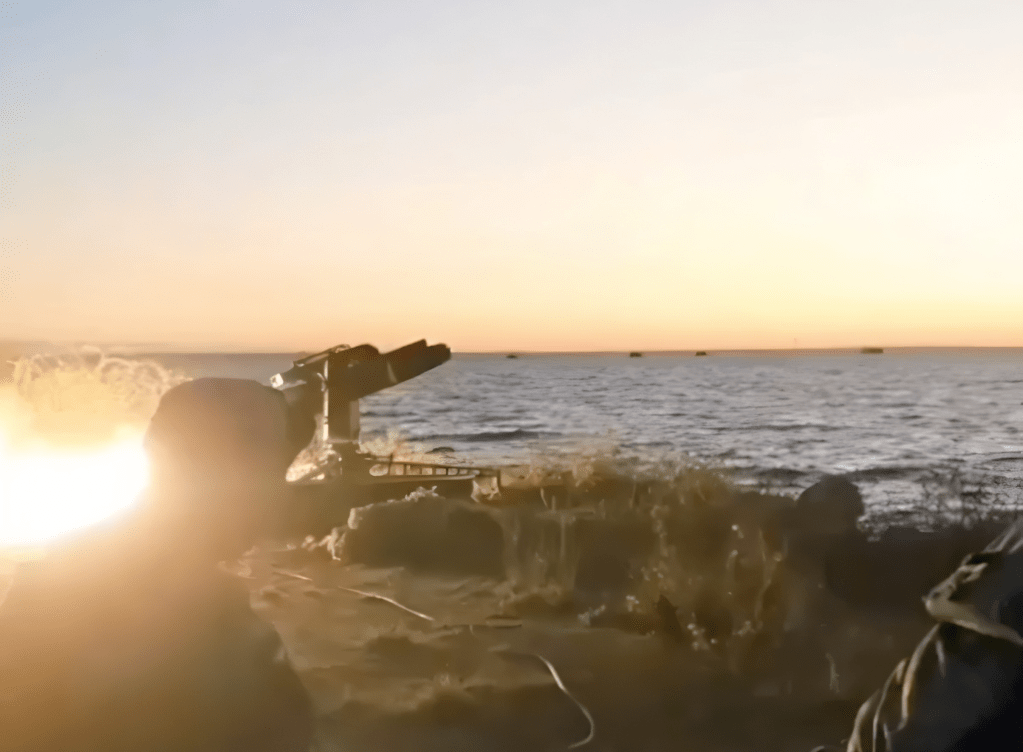
On 2 June 2022, the Swedish government announced the transfer of an undisclosed number of RBS-17s. They are believed to have been seen in theatre for the first time in a video published on 20 October, although it appears it may have been filmed earlier. The video was shared by a group called ‘Bigcats’, the lo-res clip shows the launch of a pair of missiles. ‘Bigcats’ haven’t shared any further imagery of the missiles since.

In September 2022 the Norwegian government also announced plans to provide Ukraine with their Hellfire-derived Norwegian Shore Defence Missile System. The transfer of 160 missiles and associated equipment was announced in response to a Ukrainian request. In late March 2023 photographs of several pieces of wreckage from one of the missiles was posted on Telegram. It was hypothesised that they were found in the area of ​​the Kinburn Spit and had been fired across the water by an element of the 73rd Naval Center of Ukraine’s Special Operations Forces.

An RBS-17 launch, c.September 2022 (via social media)

It was over 8 months before another video of a the weapons in action was shared. In mid-August 2023 a brief clip was published showing a Hellfire-patterned missile (which may be an RBS-17) being fired and apparently detonating downrange. Several months later at the end of October perhaps the best piece of footage of one of the missiles being launched was shared. In the video we can see the missile being launched and as the camera pans the laser targeting module can also be seen.

In August 2023, Army Inform, the news agency of Ministry of Defense of Ukraine, published an article outlining how the RBS-17 is used noting that it is most frequently used against Russian defensive positions, dugouts or lightly armoured vehicles. The article included a photograph of a display showing the RBS-17 set up. In the background a Ukrainian combatant can be seen sat on a missile case, he’s wearing the patch of the Zaporizhzhia-based 27th River Fleet Division (27 ODnRK).

An RBS-17 launch in Ukraine Nov/Dec 2023 (via Swedish MoD)

On the 18 December, the Swedish government published an article about Ukraine’s use of the RBS-17 and the training the Swedish armed forces provided on the system. The article explains that Ukrainian personnel were secretly trained on the system. The training appears to have been carried out during Summer 2022 and took place in time to coincide with the delivery of the RBS-17s. Swedish personnel have also continued to be on call for answering the technical and operational queries of the Ukrainian teams using the system.

The Swedish article also included a short video of one of the missile systems in operation in Ukraine. The team appears to be in cover behind a wall. The GoPro footage shows the missile near by and the control unit as well as transport cases near by. A Polish MSBS Grot rifle can also be seen leaning on the wall next to the operator.

Update – 22/05/24:


Support Us: If you enjoyed this video and article please consider supporting our work here. We have some great perks available for Patreon Supporters – including early access to custom stickers and early access to videos! Thank you for your support!

The Rarest Grenade Launcher in Ukraine

Remarkably, a rare prototype Colt stand-alone stock chassis for the M203 40mm grenade launcher has been spotted in Ukraine. Our friends and colleagues at StreakingDelilah received some photographs and video of the prototype stock in November. They have kindly allowed me to share them here.

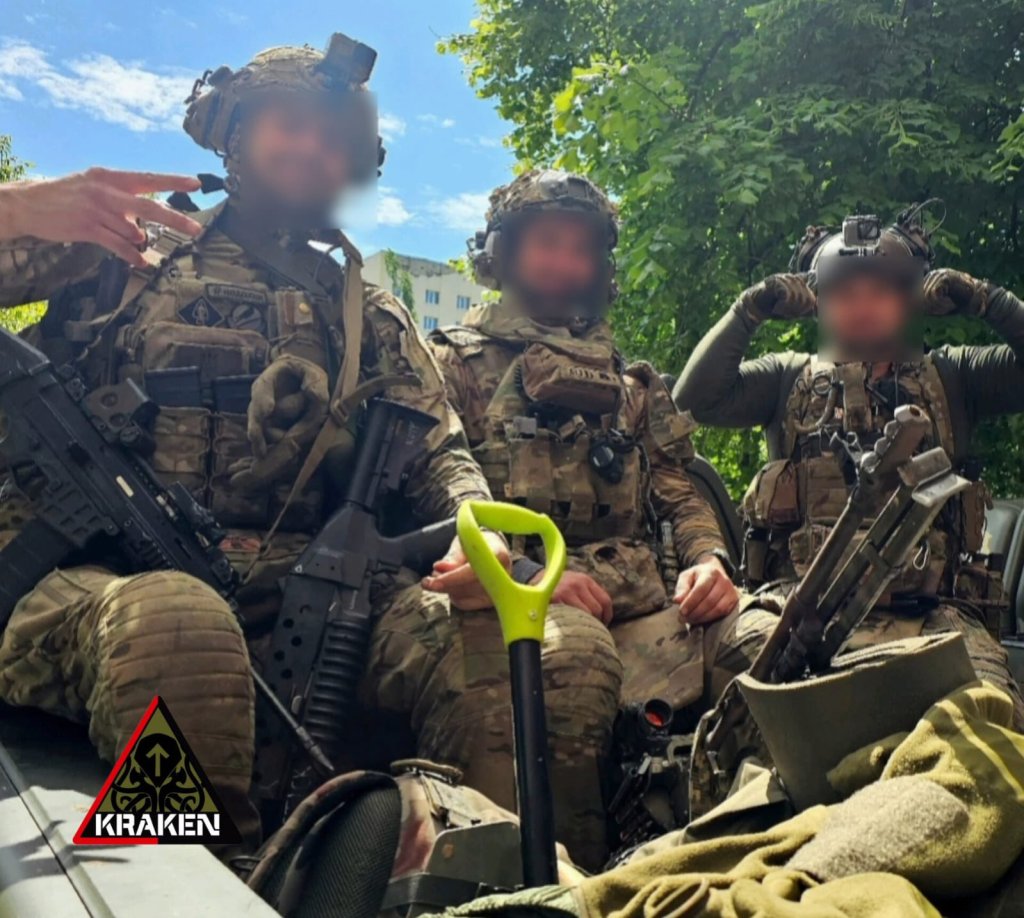
The stock chassis turns the M203 into a stand-alone launcher. It belongs to a Ukrainian Combatant with the GUR’s ‘Kraken’ Unit. M203 launchers were first seen in Ukraine in January 2023, when members of the 47th Mechanised Brigade were seen equipped with M16A4s with M203 under-barrel grenade launchers.

A still from a video showing the Colt M203 chassis at a range in Ukraine (via StreakingDelilah)

The chassis were reportedly made in both fixed stock and collapsing stock configurations. The one seen in Ukraine has a CAR-15 style adjustable collapsing stock. The chassis system takes a standard M203 under-barrel grenade launcher with heat shield and provides a platform which can be shouldered. According to friends at the Colt AR-15 Resource, the chassis was reportedly developed for an undisclosed US organisation, possibly US Special Operations Command or one of the alphabet agencies. It is thought that less than 30 were manufactured.

While there is little solid information available on these chassis it has been suggested that the project dated from before the start of the so-called ‘Global War on Terror’, and perhaps as early as 1992. Some samples were also reportedly made for external customers like El Salvador. The Colt-made stand alone chassis are a concept which has been replicated more widely by other manufacturers since.

The Colt AR-15 Resource shared some video of one of the fixed stock variants from a collector’s show:

The combatant in Ukraine shared several photographs of the M203 stand alone chassis. One appears to have been taken in a frontline trench while another shows it lying next to an FN SCAR-L and a couple of 40mm LV HEDP grenades.

The sight assembly appears to be unique to the chassis and combines a a rear sight which is graduated out to 250-300 metres with a front sight. It does not appear to have a quadrant sight mounted for longer range fire. The weapon operates just as the M203 normally would with the barrel sliding forward to open the action. Unlike the M203 under-barrel configuration the stand alone launcher has a pistol grip.

Some, but not all, examples of the chassis are marked with ‘COLT’s’ on the rear of the chassis above the pistol grip on the left side. Serial number markings are found on the launcher itself, on the trigger mechanism housing.

The rare chassis has also turned up in Afghanistan with StreakingDelilah sharing this photograph of a member of the Taliban with one.

It is unclear how the rare chassis came to see service on Ukraine’s frontline but StreakingDelilah believe it may have been privately acquired through a surplus dealer, though they stress this is unconfirmed. It has been interesting to see the proliferation of stand alone grenade launchers in use with both sides during the war in Ukraine, but I never expected to see this rare Colt-made stand alone chassis.

Updated – 15/11/24: Another image featuring the launcher recently appeared in a Kraken fund-raising post. [H/t – Larry]

Special thanks to StreakingDelilah and The Colt AR-15 Resource for their help.

Update – 8/1/25:

Another standalone M203 has appeared in Berdin, Kursk, captured by personnel of Russia’s Kachtan battalion. StreakingDelilah have confirmed that it is not the same M203 seen in use with a Kraken member. This indicates that more than one of these rare grenade launchers has found it’s way to Ukraine.


Support Us: If you enjoyed this video and article please consider supporting our work here. We have some great perks available for Patreon Supporters – including early access to custom stickers and early access to videos! Thank you for your support!

Ukraine’s Giant Rifle – the Snipex Monomakh

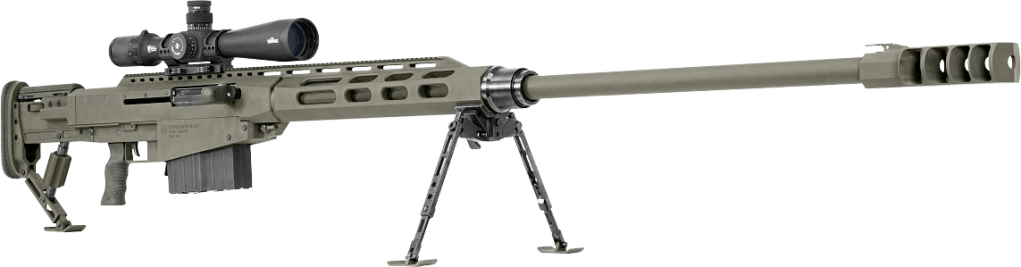
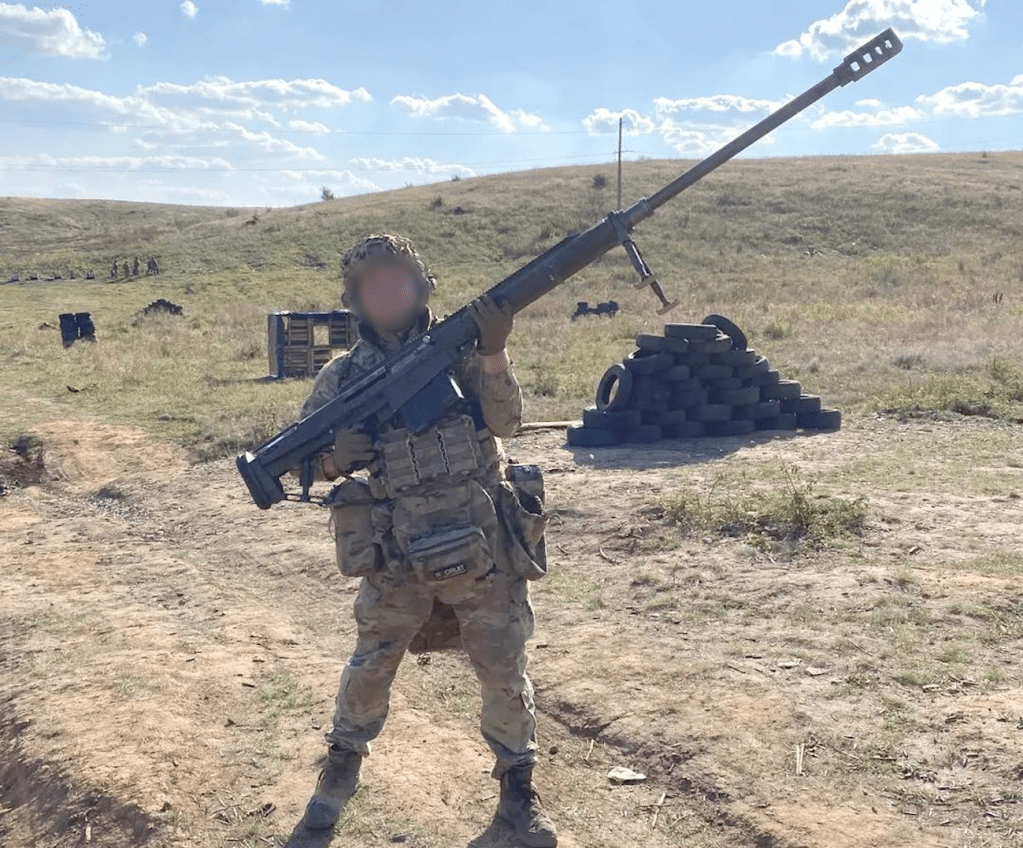
There are a significant number of different large calibre anti-materiel rifles in use in Ukraine. One of the largest is the Monomakh, a 14.5×114mm semi-automatic, box magazine-fed anti-materiel rifle from the Ukrainian company Snipex. Snipex is a subsidiary of the XADO Chemical Group.

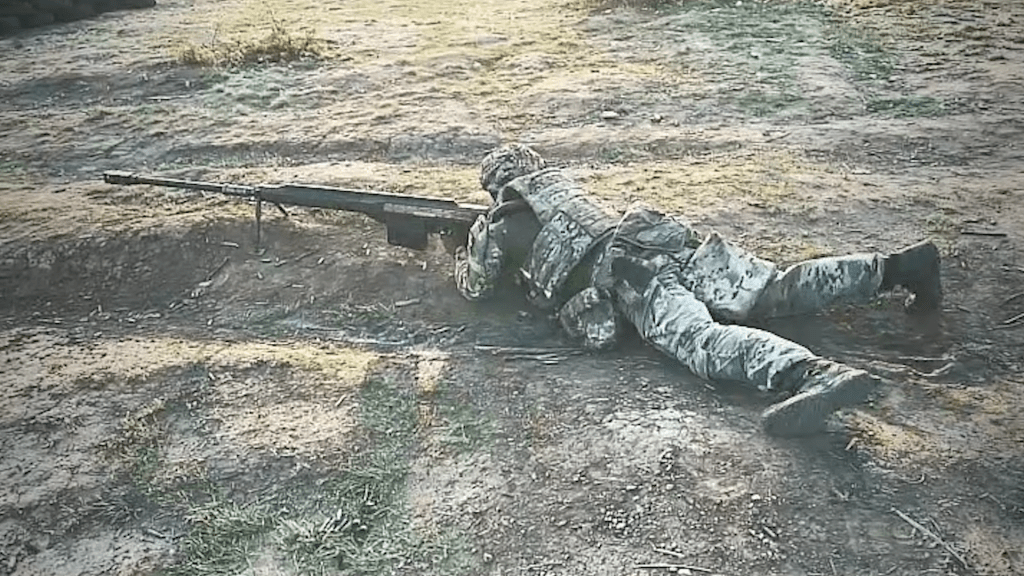
Snipex are well known for their series of precision anti-materiel rifles which includes the M100, T-Rex and Alligator. The Monomakh, introduced in 2021, is the company’s first semi-automatic rifle. It is recoil operated and feeds from a 5-round box magazine. It has a barrel 1,200mm [47.2in] long and an overall length of 2,050mm [6.7 feet], Snipex list its weight without a magazine as 25kg [55lbs]. The rifle has a listed muzzle velocity of 950 to 980 m/s and an effective range of just under 2,000 metres [1.2 miles]. The weapon is fired from a bipod with a monopod supporting the butt of the rifle. It’s key feature is its reciprocating barrel which helps soak up the recoil from the 14.5mm cartridge.

A scopeless Monomakh at the range (via social media)

The Monomakh appears in imagery from Ukraine fairly infrequently, the earliest sighting of one of the rifles I could find was a photograph posted by a GUR member in late April 2022. Subsequently a number of videos of the weapon being fired at ranges by Ukrainian combatants was published in the Summer of 2022. The first posted on 7 August, shows a magazine being loaded into the rifle and the weapon chambering a round. Later that month a short video of a Monomakh firing at a range was published.

Snipex Monomakh (Snipex)

The earliest photograph of one of the guns I could find in 2023 was shared by a Ukrainian combatant in mid-July. Several months later, in September 2023, another Ukrainian combatant shared a photograph of himself holding up a Monomakh at a range. The same combatant also shared a short clip of himself firing the rifle, again at the range. In the clip he appears to be firing the rifle without sights or an optic. He is also seen helping the bolt into battery after each shot, the bushing which guides the barrel as it recoils into the receiver appears to have come loose. The rifles are typically paired with substantial optics, Snipex offer two of their own 6–24×56 scopes, the Jove 50 and the Galaxy G50. In late October, a female sniper with the 3rd Shock Brigade, posted several photographs and a video of herself firing a Monomakh from a position inside a building.

A Ukrainian combatant holds up a Monomakh (via social media)

The large size and hefty weight of the Monomakh limits it applications somewhat but the 14.5mm round is useful against light armoured vehicles, buildings and field fortifications – the main limitation is getting it in, and out, of position to engage targets. There are videos of it taking two men to move the similarly heavy T-Rex and Alligator rifles. From the limited sample of imagery of the Monomakh in theatre it is difficult to gauge how widespread its use actually is. The simpler to manufacture bolt action Snipex rifles are seen more frequently.

My thanks to Cloooud and AbraxasSpa for help sourcing some of the imagery used in this article/video.


Support Us: If you enjoyed this video and article please consider supporting our work here. We have some great perks available for Patreon Supporters – including early access to custom stickers and early access to videos! Thank you for your support!

Swedish G3s in Ukraine?

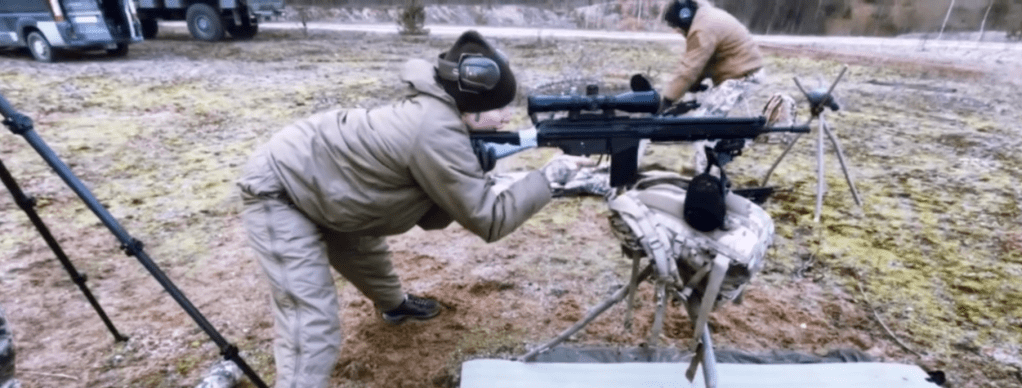
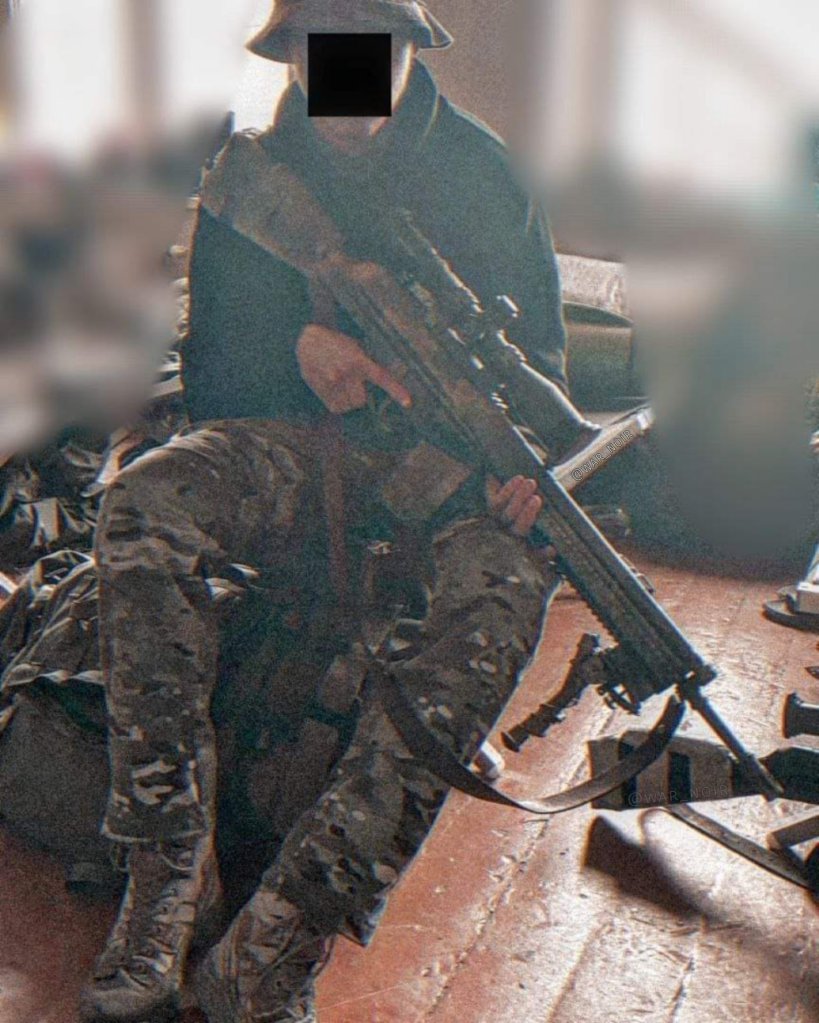
In recent weeks imagery from Ukrainian social media accounts has emerged to suggest that Swedish G3-pattern, Ak4B, rifles may have begun to be issued to units in Ukraine. Several photographs and videos have been shared via social media by Ukrainian combatants featuring the distinctive rifles. Further investigation, however, suggests the rifles may not be in use in Ukraine.

Still from a video of a Ukrainian sniper firing an Ak4B at the range, 17 November (via social media)

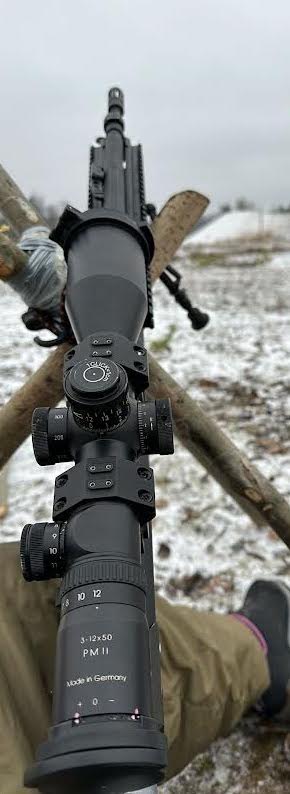
The initial imagery posted by two accounts appear to feature three of the rifles, all of the rifles seen appear to have tape on their butts. They are all fitted with scopes with at least one optic appearing to be a Schmidt & Bender PM II 3-12×50.

Photograph posted by a Ukrainian showing an Ak4B at the range fitted with a PMII optic, 20 November (via social media)

The Swedish Ak4 is license-manufactured version of the 7.62×51mm Heckler & Koch G3. Produced by Carl Gustafs stads gevärsfaktori and Husqvarna Vapenfabrik, the Ak4 entered Swedish service in 1965. It was replaced by the 5.56×45mm Ak5 in the mid-1980s but today remains in service with Sweden’s Hemvärnet (home guard).

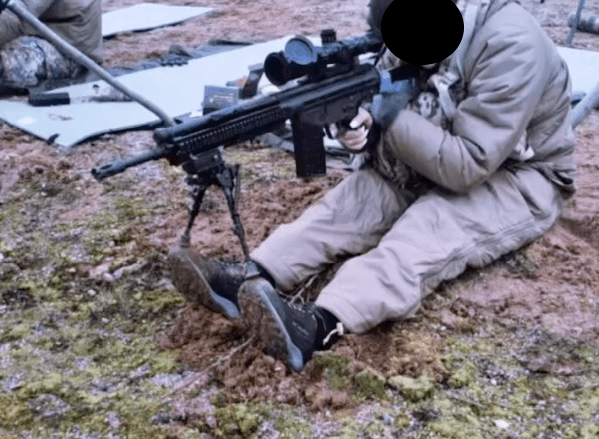
In 2002, Sweden upgraded the first Ak4s to the Ak4B standard. Removing both front and rear iron sights and adding a length of Picatinny rail for mounting an optic. The rifles seen in the recent photographs have also been outfitted with a tri-rail forend, these are produced by a number of manufacturers, including Swedish Ordnance, and an adjustable bipod.

Photo of a Ukrainian sniper firing an Ak4B at the range, 17 Nov., note the railed forend and bipod (via social media)

Notably in January 2023, Sweden announced a major aid package for Ukraine which was said to include ‘assault rifles’ it is unclear if these rifles were Ak4s or another weapon. I reached out to the Swedish government about whether the recently sighted rifles had been provided to Ukraine but no comment was provided at the time of publication.

Photo showing a pair of Ak4Bs with optics c.19 November (via War_Noir)

Subsequent social media posts and conversations with Ukrainian personnel who shared imagery suggests that the rifles are Ak4s. However, they aren’t in Ukraine but Latvia.

Latvia received a number of Swedish Ak4s and they are currently used by the Latvian National Guard. The Latvians are in the process of replacing the rifles with G36s, however, some may continue in the designated marksman role. It appears that the imagery posted by the Ukrainian combatants which features the rifles was taken during training in Latvia. Latvia has so far trained 3,000 Ukrainian personnel. From posts on their social media it appears that elements of Ukraine’s 3rd Shock Brigade are currently in Latvia.

The author of this photograph (featuring another Ak4B in the same configuration) confirmed that it was not taken in Ukraine (via social media)

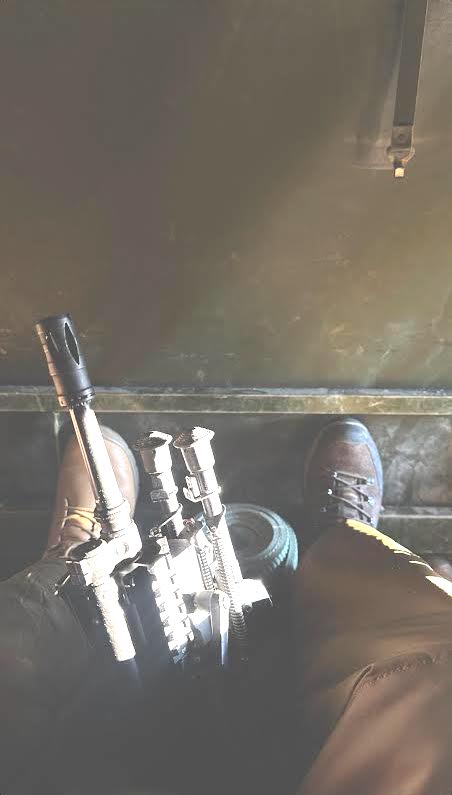
Another Ukrainian combatant who shared another photograph of the muzzle end of an Ak4, notable for its ground off front sight, seemingly taken in the back of a truck also confirmed that his photograph was not taken in Ukraine but Latvia.

There has previously been confusion around whether a weapon is in use in Ukraine or whether Ukrainian troops are simply using the weapon while training abroad. This has been seen with the SA80 in the UK and the HK G36 in Spain and Lithuania.

In addition to Latvia, Sweden also provided Lithuania with Ak4 pattern rifles, these are now in service with the Lithuanian National Defence Volunteer Forces. Similarly, Sweden also provided the Estonian Defence Forces with Ak4s. These countries have also provided training. Given the levels aid provided by Sweden and the three Baltic states it is possible we may eventually see Ak4 pattern rifles in Ukrainian service. Despite anticipation of seeing G3s in Ukrainian service, these rifles do not represent the first G3-pattern rifles to be seen in Ukraine.

Update – 19/2/24: Several G3s in the same configuration as those seen in earlier Latvia training photos recently surfaced.

10/9/24 – Update: another photograph of hat appears to be an AK4 with Ukrainian personnel, location unknown.

The photograph above is one of a series taken by Ukrainian photographer Yara.sva, the photographs are tagged as being taken in Ukraine.

Update 19/9/24:

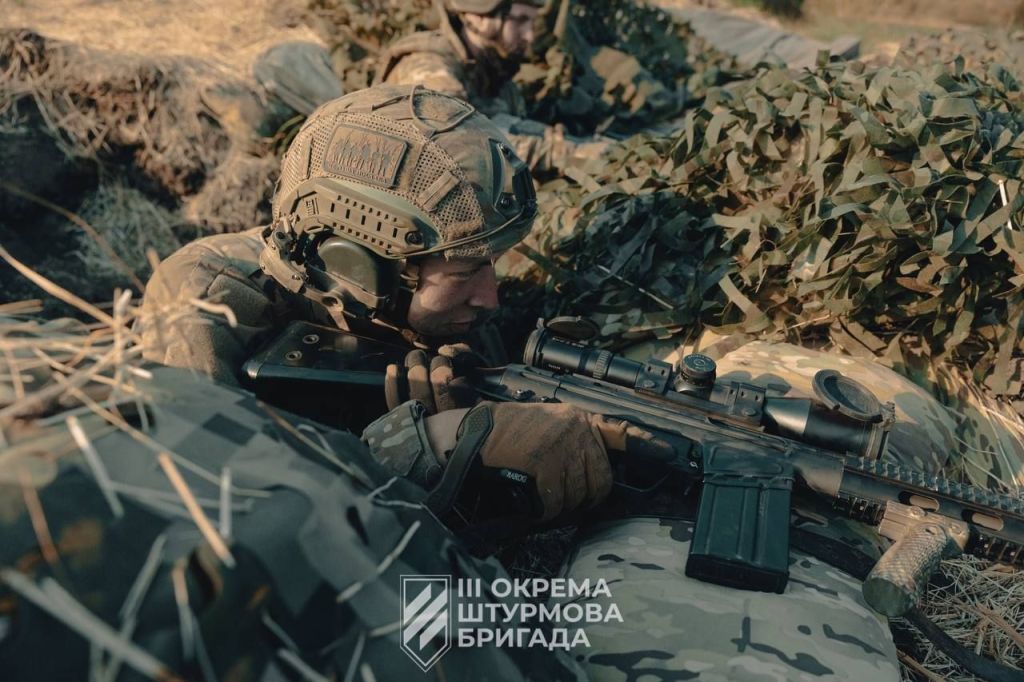
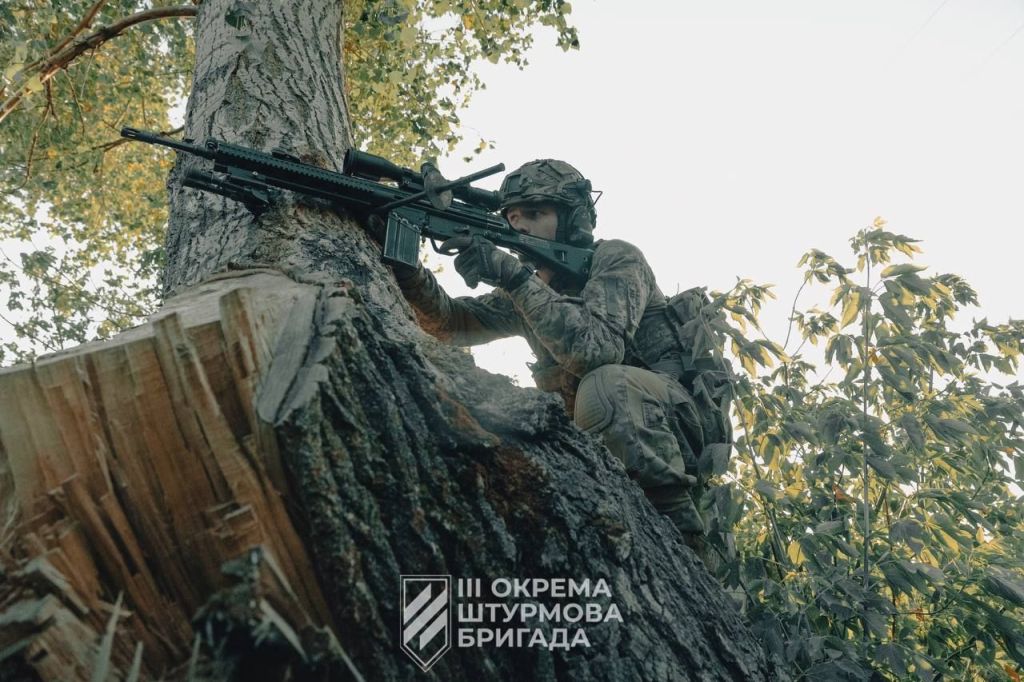
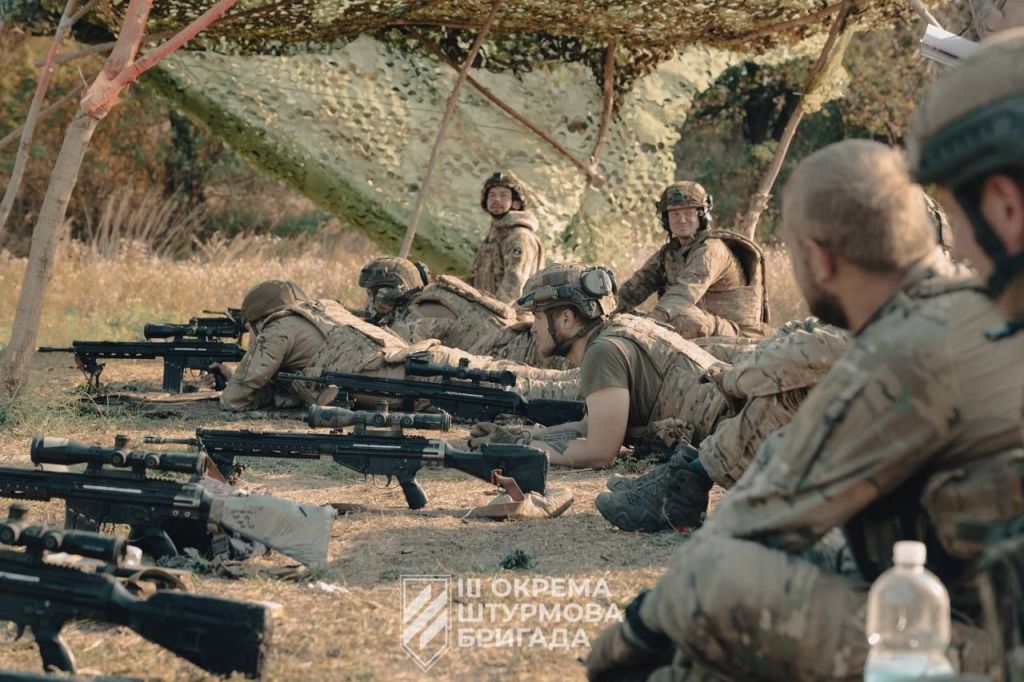
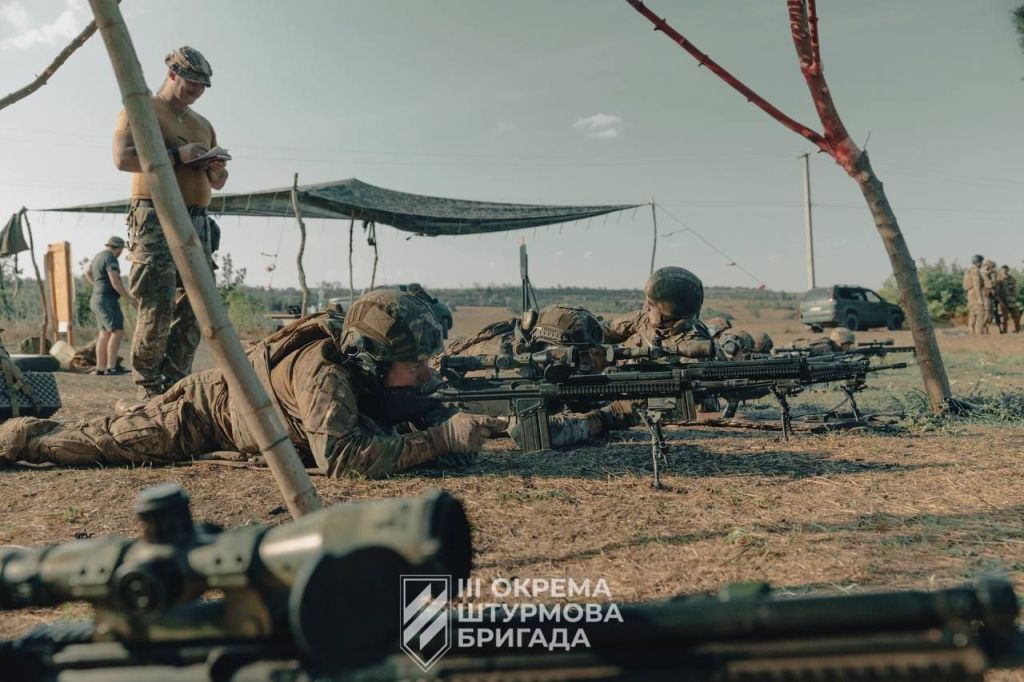
The 3rd Assault Brigade has shared a detailed album of photos showing marksmen from the brigade training with what appear to be AK4Bs. The location the photographs were taken is not disclosed but there is nothing to confirm that the training was undertaken in Ukraine and no information in the original post’s caption. It is possible that, like earlier AK4B photos, these were taken during training outside of Ukraine, likely in one of the Baltic states. The photographs appear to have been taken at the same time (and possibly by) those shared earlier by Yara.sva.

Update 1/10/24: Additional photos by Yara.sva featuring an AK4.


Support Us: If you enjoyed this article please consider supporting our work here. We have some great perks available for Patreon Supporters – including early access to custom stickers and early access to videos! Thank you for your support!