Every AK the UK Procured To Train Ukrainian Troops

The UK began a training initiative with Ukraine in early 2015 with the launch of Operation Orbital. Orbital provided training in Ukraine to more than 20,000 Ukrainian personnel over eight years. Op Orbital ended in February 2022 with Russia’s full-scale invasion. In July 2022 a successor programme, Operation Interflex was launched. Interflex involves a larger, British-led multinational training programme, with training provided in the UK. It was established with the aim of training up to 10,000 Ukrainians every 120 days.

Interflex provides a variety of different specialist training elements but the primary focus is on providing Ukrainian infantry with essential soldier skills. By the summer of 2025, more than 56,000 Ukrainian soldiers had been trained by the UK and partner nations. To carry out basic infantry courses a large number of rifles which were similar to those that Ukrainian troops would be using operationally were needed.
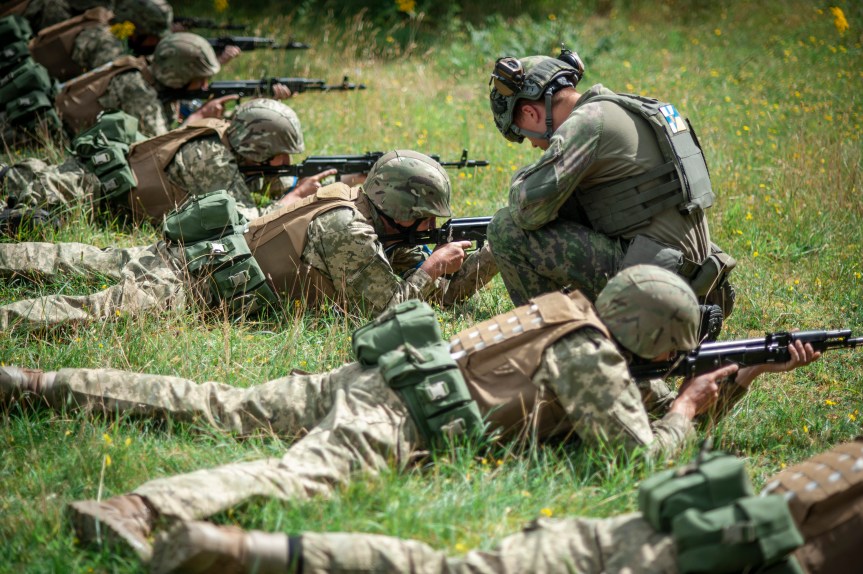
Ukrainian troops training with Arsenal AR-M9Fs (UK MoD / Crown Copyright)

International partners from Australia and New Zealand are working with the British Army, in training scenarios with Ukrainian Forces, including Medical (involving simulated casualties) and patrolling.

Operation INTERFLEX is the UK led training programme for Ukrainian recruits. The training is for new volunteer recruits who have joined the Armed Forces of Ukraine (AFU) with little to no previous military experience to teach them the skills required to survive and be effective in frontline combat.

The UK-led programme trains and drills the Armed Forces of Ukraine using battle-proven British Army expertise, allowing them to accelerate their deployment, rebuild their forces, and scale-up their resistance as they continue to defend their nation’s sovereignty against Russian invaders.

The previous Operation Orbital saw the UK train more than 22,000 Ukrainian personnel from 2015 until the full-scale invasion of Ukraine. The new programme would train forces outside of the country.

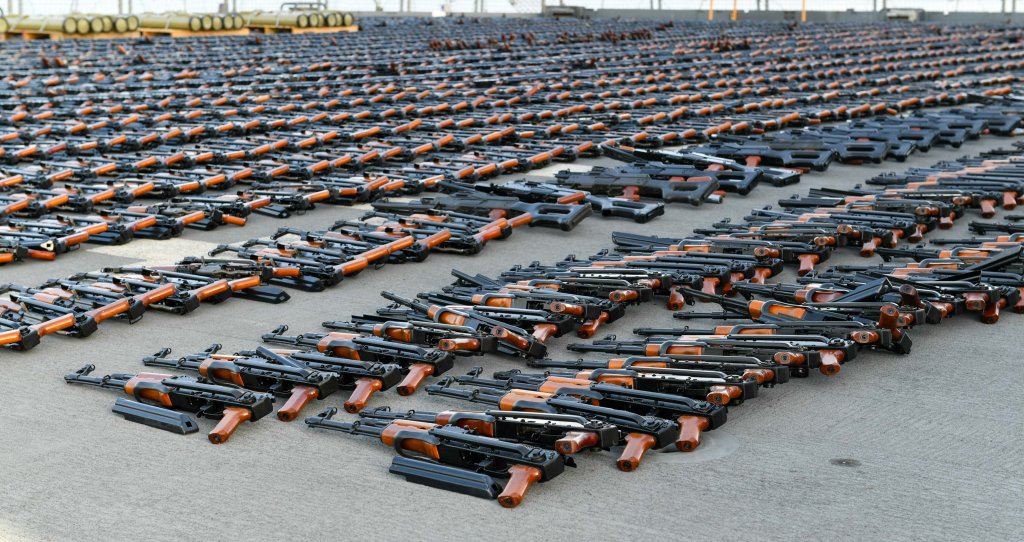
This led to a major procurement of AK-pattern rifles. The number of rifles procured and the sources they were procured from remains unclear. We have some clue as to the number of rifles initially acquired from a 9 July 2022 press release, in which the UK government confirmed:

“The Government has rapidly procured AK variant assault rifles for the training programme, meaning Ukrainian soldiers can train on the weapons they will be using on the front line. This effort was supported by the Welsh Guards, who tested more than 2,400 such rifles in 17 days to ensure they were ready for the Ukrainians to commence their training.”
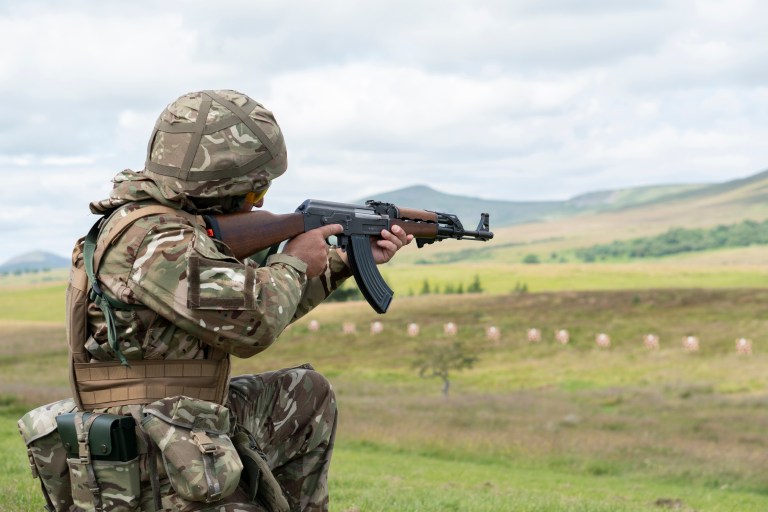
Ukrainian soldier at the range July 2022 (UK MoD / Crown Copyright)

The types of AK-pattern rifles procured was not announced but from the photographs released it is clear that they include:

  • Serbian-produced Zastava M70, M70B, M70A and M70AB2
  • East German-produced MPi KMS-72
  • Hungarian-produced FEG AK63D

All of the above rifles are chambered in 7.62x39mm. The reasoning behind the procurement of rifles chambered in 7.62x39mm rather than the more regularly issued 5.45x39mm AK-74 pattern rifles is also unclear. Perhaps this was due to weapon availability and regardless of calibre the manuals of arms remains the same.

At the time when approached for comment on the sources and types of AK rifles procured, the Ministry of Defence told The Armourer’s Bench:

“The Government has rapidly procured AK variant assault rifles through a combination of international donations and private purchase, meaning Ukrainian soldiers can train on the type of weapons they will be using on the front line. All weapons were tested in accordance with UK legislative and safe working practices.”

In September 2022, Chinese-manufactured Type 56-1 rifles were seen in Op Interflex imagery for the first time. The Type 56-1 has an under-folding stock, stamped receiver, and enclosed front sights.

By early February 2023, the assorted various types of 7.62x39mm-chambered AK-pattern rifles were either replaced or supplemented with Bulgarian Arsenal AKs. The rifles seen in all of the available photographs appear to be basic model rifles, none of the weapons have railed handguards or Picatinny on the receiver cover for mounting optics. This suggests that they are either AR-M9Fs or AR-M14Fs (at least according to Arsenal’s website). The ‘F’ refers to the folding tube metal stock which helps identify the rifles as Arsenal-made AKs. The characteristic flash hider and furniture also identify them as Arsenal rifles.
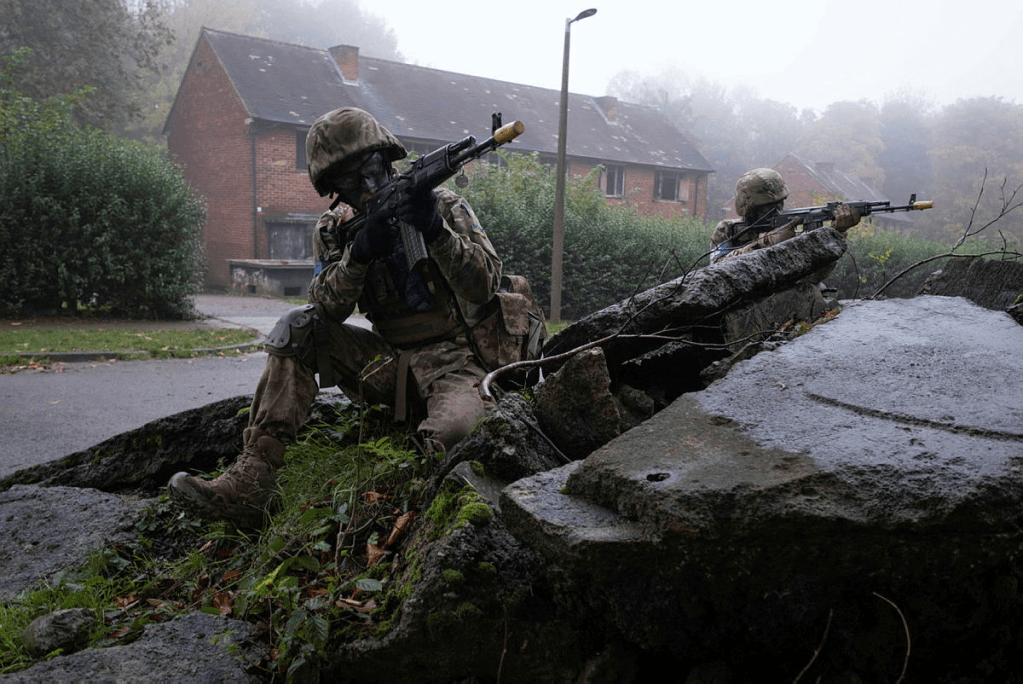
Ukrainian soldiers during FIBUA training, c.2024 (UK MoD / Crown Copyright)

From the rifles’ handguard design it appears that the rifles are AR-M9Fs, chambered in 5.56x45mm. This chambering in theory simplified logistics, removing the need to procure 7.62x39mm ammunition. The AR-M9Fs also have a blank firing adaptor which allowed Ukrainian troops to train with AK-pattern rifles rather than SA80-series rifles when blank firing was needed. The UK has the capability to manufacture 5.56x45mm ball and blank making training simpler and cheaper. According to information shared with TAB by the UK MoD approximately 7,500 AR-M9Fs were acquired for Op Interflex.

Finally, in May 2025, the UK appears to have procured Israeli-manufactured IWI Galil ACE rifles in 5.56x45mm. When approached for comment on the procurement of the rifles the UK MoD told TAB that approximately 4,500 ACE-23 rifles had been procured. They also noted that the transition to the IWI Galil ACE 23 began in around mid-2024 and that the switch to Galil ACE rifles was made to ‘better align the weapon system used during UK-based training with equipment Ukrainian troops were using in theatre.’ This, however, seems unlikely as the Arsenal is more analogous with the AK-74 than the ACE 23. While the Galil ACE shares very few handling characteristics with AK-pattern rifles, with the exception of the magazine release location, its updated safety lever is also less akin to the AK’s. It’s action and disassembly procedure are functionally the same as an AK, however, the Galil, at 3.6kg unloaded, is somewhat heavier than an AK-74.
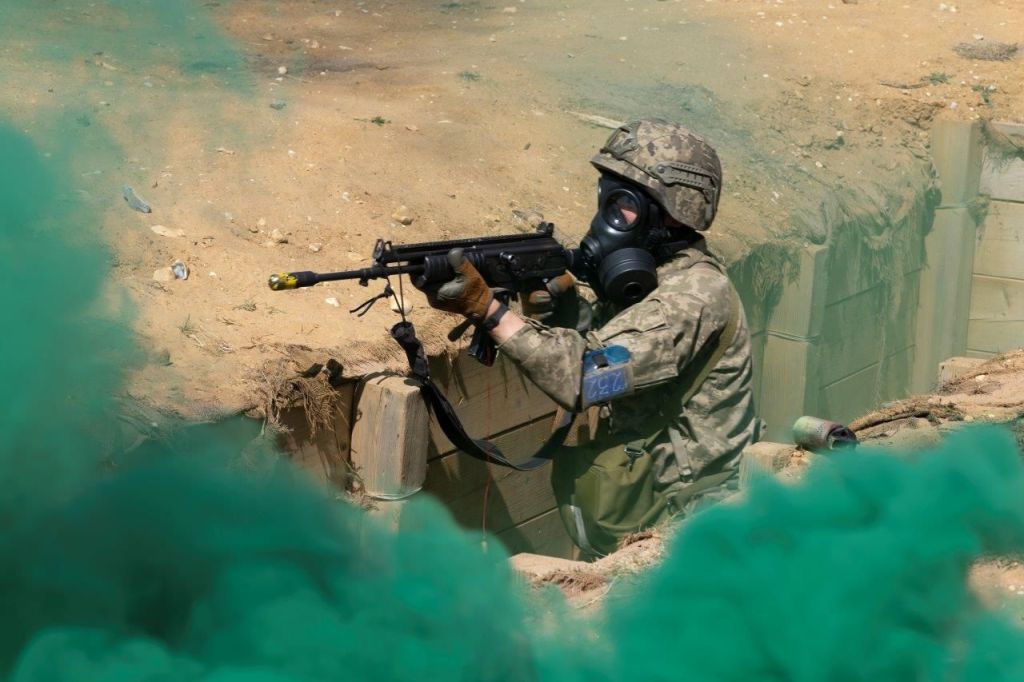
Ukrainian soldier with a IWI Galil ACE 23 (Danish Ministry of Defense)

Perhaps the Galil ACE 23s function better when using blank, perhaps extensive use during numerous training cycles led to issues with the AR-M9Fs. No further comment was provided on why the Galil ACE replaced the Arsenal rifles or why fewer rifles were procured. This may be explained by recent changes to the aims of Interflex as in June it was reported that the programme’s focus would shifting away from basic infantry training to more leadership and specialised training.

A Ministry of Defence spokesperson concluded by telling TAB that: “We are proud that Interflex has grown to be one of the biggest training programmes of its kind, equipping Ukrainian recruits with the basic combat skills they need to defend their country against Putin’s illegal invasion.”

I thought it was worth collating all of the information available on the various rifles used to train Ukrainian troops in the UK into one place. For more detail on each of the different types of rifle used, check out my earlier article/videos on each rifle.


Support Us: If you enjoyed this video and article please consider supporting our work here. We have some great perks available for Patreon Supporters – including early access to custom stickers and early access to videos! Thank you for your support!
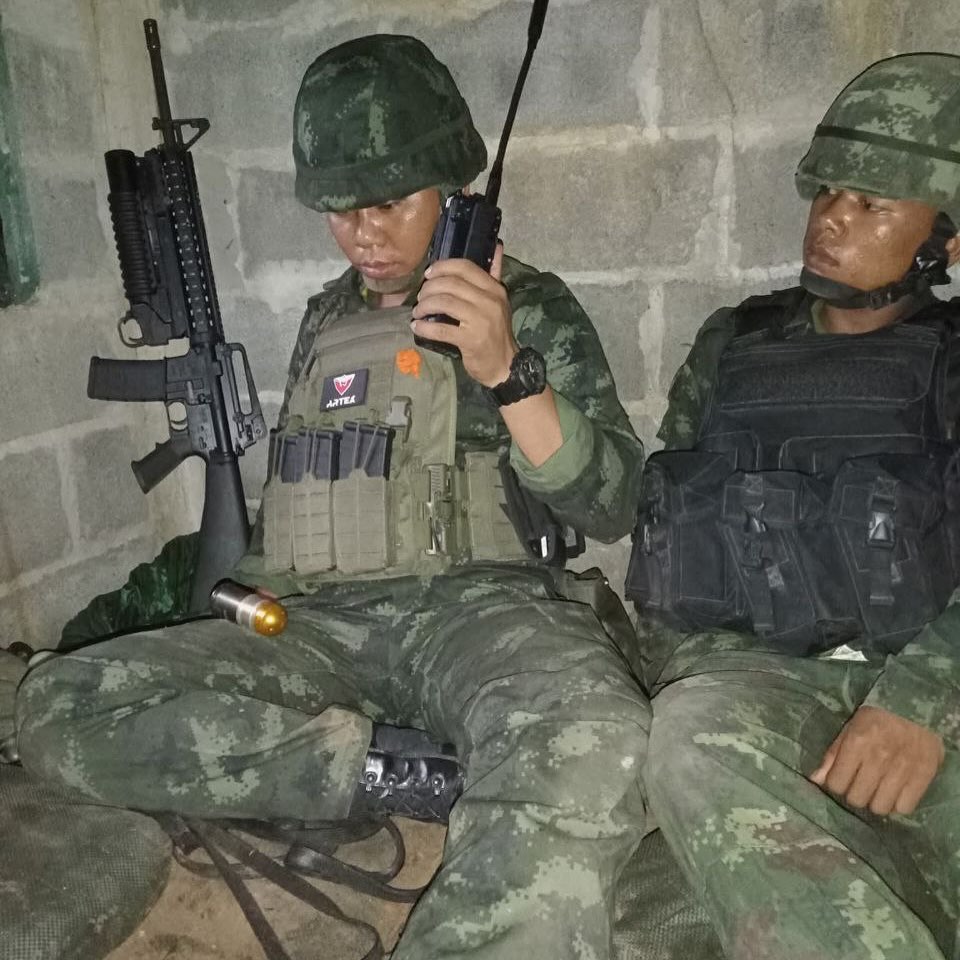
Small Arms of the 2025 Thai-Cambodia Border Clash

On 24 July the ongoing border dispute between Cambodia and Thailand flared into an armed conflict. Four days later a ceasefire was announced following negotiations, at the time of publication the ceasefire is still in effect. A number of photos and video taken during the fighting were shared online and they feature an interesting mix of small arms which I thought would be a good topic for an article/video.

Broadly speaking the Royal Thai Army is predominantly equipped with what could be described as Western small arms such a M16-pattern rifles and FN MAGs while the Royal Cambodian Army largely uses former Combloc-type weapons such as the Type 56 AK-pattern rifle and the Type 69 RPG, both produced by China.

Thai Armed Forces

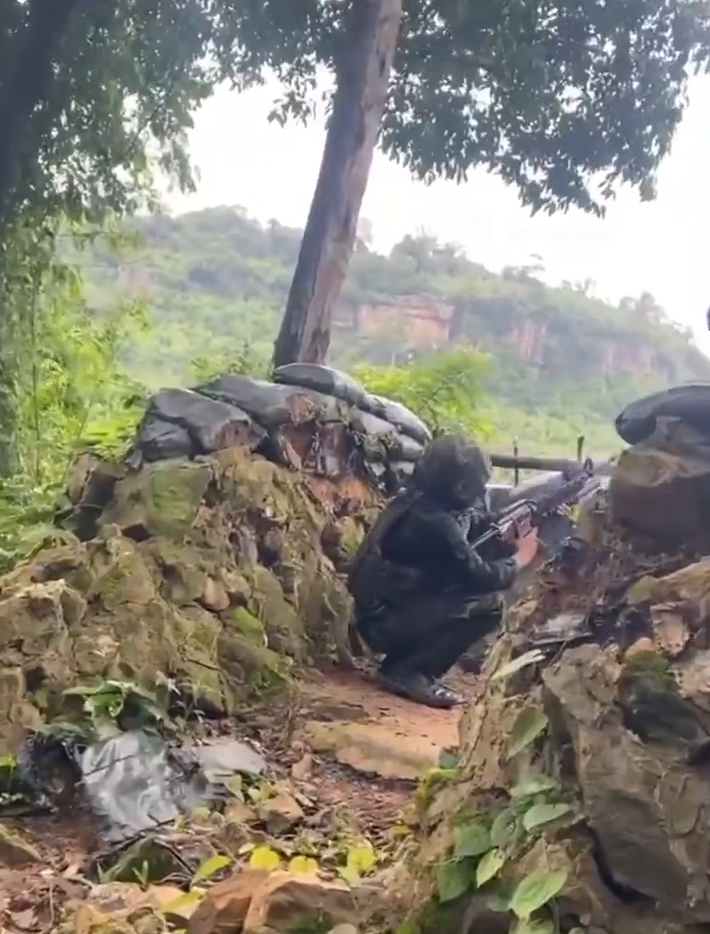
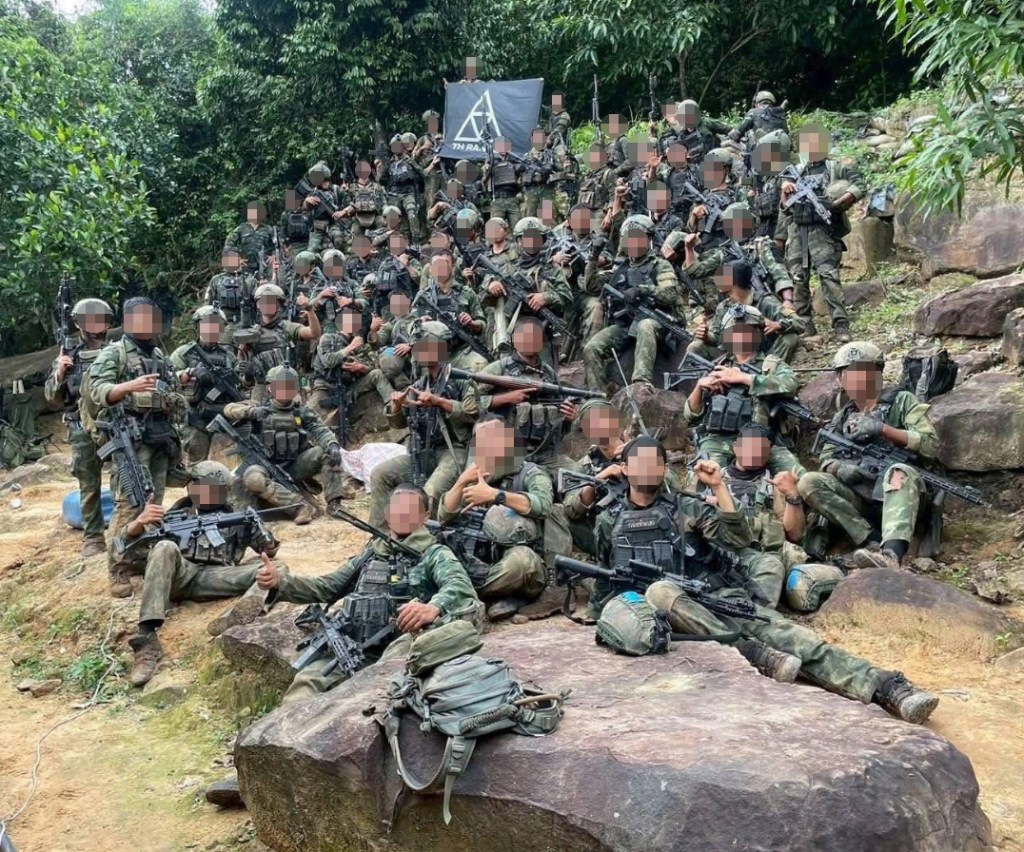
The standard issue service rifle of the Royal Thai Army for many years has been the M16, many of the combatants seen in imagery from the conflict were seen with M16A1, A2 and A4s. In a prominent video that surfaced on 26 July, a Thai combatant was filmed firing an M203 40mm grenade launcher mounted on a very well worn M16A1. A number of M16A1s, including one mounted with an M203, were also seen in a photograph of a group of Thai troops believed to be Thahan Phran (Border Rangers). The photo also shows at least one FN MAG general purpose machine gun. Another photo shared on 28 July by a member of the Thahan Phran showed a dug out in the front lines with two M16A1s and a RPD-pattern light machine gun visible. A video posted after the ceasefire showed a squad of the Border Rangers firing M16A1s from what appears to be a cave.

Thai combatant with M16A4 & M203 (via social media)

Members of a Thai 120mm mortar crew were also seen equipped with slung M16A2s, loaded with PMAGS, in a short video said to be filmed during the border clashes. It is worth noting that a considerable amount of imagery and footage filmed during past skirmishes and past exercises was shared during the height of the conflict. This is something to bear in mind when considering the veracity of imagery.

Thai combatant with an older M16A1 & M203 (via social media)

A considerable proportion of the available imagery shows what appear to be M16A4s with non-railed, A2-style, handguards. Numerous photos of Thai infantry posing at border markers shows them equipped with M16A4s while a video of Thai combatants taking shelter during Cambodian shelling on 25 July also featured M16A4s.

What appears to be an M16A4, with a quad-rail forend, was seen in another clip of Thai troops firing from a bunker. The rifle is equipped with an 40mm M203 under-barrel grenade launcher, another soldier hands the grenadier what looks to be an M433 HEDP grenade. On the other side of the bunker a soldier with an M16A2 is laying down suppressive fire and also showering the grenadier with spent brass. On the bunker’s embrasure another M16 is sat, seemingly with a non-railed forend but a railed upper receiver. An additional photo of the same personnel was also shared.

Thai Rangers arms with a mix of Colt M4s and Negev NG-5s (via social media)

M4-pattern carbines have also been seen, with Thai forces engaged in operations around Phu Makhuea, in Si Sa Ket Province, seen in various photos, to have what may be Colt M4 Monolithic carbines. These rifles are believed to be largely used by specialised troops. Another photo said to be taken at Phu Makhuea shows a platoon of well equipped Thai troops believed to be Thai Rangers – a special operations light infantry unit. They are equipped with what appear to be Colt M5s with 14.5 inch barrels, topped with Aimpoint CompM4s. Also seen in the photo are at least three IWI NEGEV NG-5, also equipped with Aimpoint CompM4s. A video showing the same group during a flag raising was also shared online. In the footage we can see the Colt M5s as well as an FN MAG. A photo released later gives us the best look at the Rangers kit, in contrast to the modern Western kit, in the centre of the photo is a Chinese Type 69 RPG, its unclear if this was Ranger kit or a captured weapon.

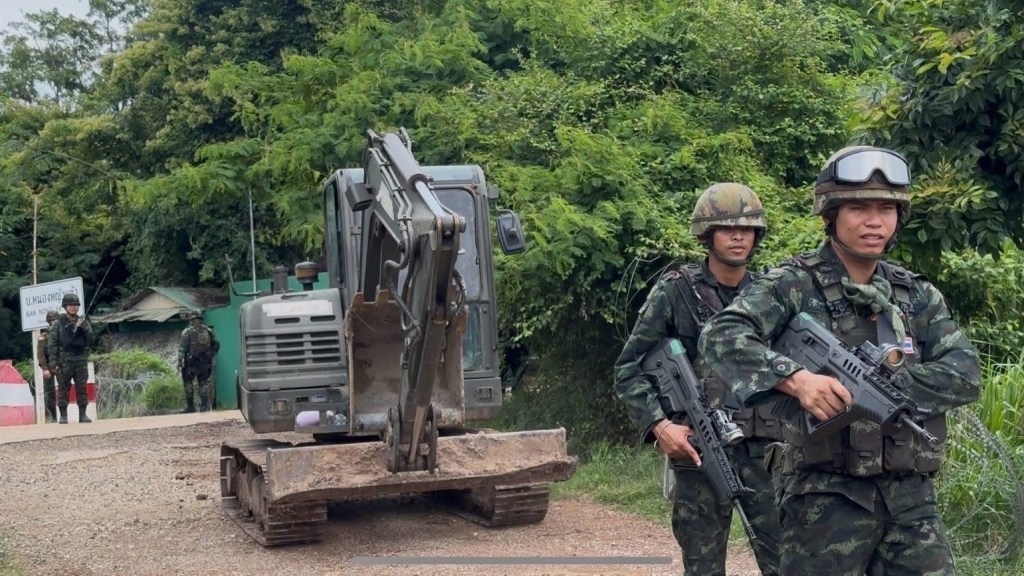
On the 26 July, the Royal Thai Army’s social media channels shared photos of sappers from the Burapha Task Force, the 1st Army Area. These personnel are seen to be equipped with the ubiquitous M16A2-pattern rifles but also IWI TAR-21 Tavors topped with Meprolight M21s. The Tavor was also seen in a short video said to be Thai troops deploying to the border. In the same video three FN Minimi Mk1 light machine guns and numerous M16-pattern rifles can be seen.

Thai Army engineers with TAR-21s (via Thai Army)

Another NEGEV NG-5 was seen in a video shared on 25 July, the gun is seen firing inside a bunker alongside an assistant gunner with what appears to be an M16A2. In addition to the Tavor and NEGEV, another weapon of Israeli origin seen in use during the conflict was a 7.62x51mm IWI Galil Sniper rifle. A Thai combatant was filmed firing on of these rifles while also using his radio to call in targets.

A brief clip of a Thai soldier firing what may be an STK-40 automatic grenade launcher also emerged. The STK-40 is produced by ST Engineering Land Systems (formerly CIS) the crew suffer a stoppage and struggle to clear it after firing an initial burst.

Thai Border Rangers with M16A1s (via social media)

Intriguingly, in another video a pair of Thai troops are seen operating a Chinese-made 82mm PW-78 recoilless gun. Thai troops have also been seen carrying RPG-7 grenades, indicating continued RPG-7 or Chinese Type 69 use in some units. This video also features another M16A1 with M203 and an FN MAG machine gun.

Cambodian Armed Forces

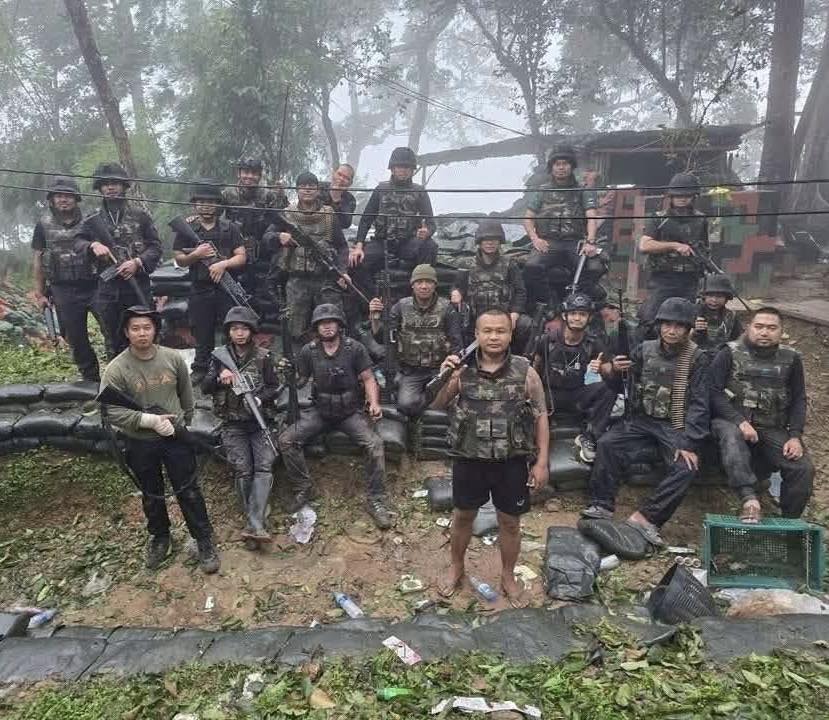
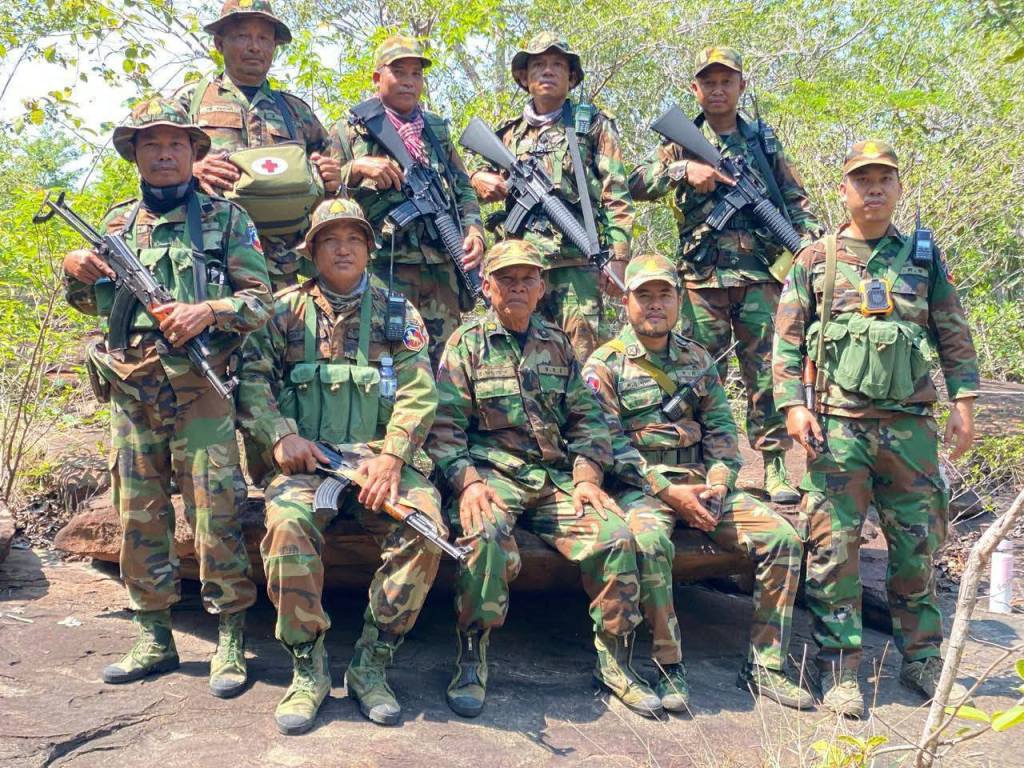
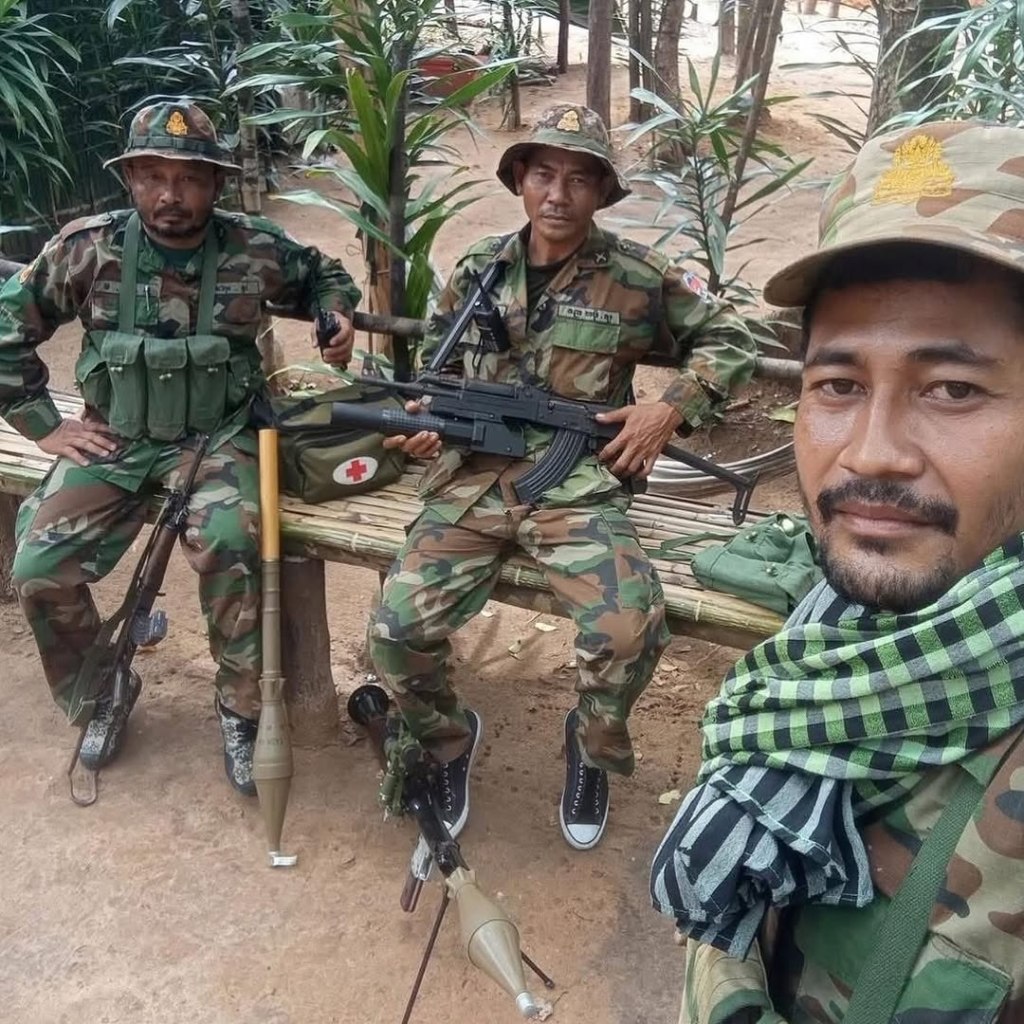
The Royal Cambodian Armed Forces also fielded an interesting selection of small arms and light weapons. Most troops were seen armed with variants of the Chinese-manufactured Type 56 AK-pattern rifle. This includes standard Type 56s with their fixed wooden stocks, under-folding Type 56-1s and side-folding Type 56-2s.

Cambodian border troops with a mix of Chinese Type 56s and Norinco CQ-B rifles (via social media)

A Type 56-1, with its under-folding stock, is clearly seen in a short video shared by a Cambodian infantryman who filmed himself in a trench position. It was also seen in numerous videos of Cambodian artillery crews manning MLRSs. Cambodian troops on the border were also seen armed with both Type 56-1s and Type 56-2s equipped with Norinco LG2 under-barrel grenade launchers. Type 56-2s were also seen briefly in a video filmed from a Cambodian PKM machine gun position on 26 July.

Cambodian troops wuth Chinese Type 56s (one with an LG2 UBGL) (via social media)

M16-pattern rifles have also been seen in use with Cambodian forces with Chinese-produced Norinco CQ series rifles seen in numerous images. A Thai social media page shared a series of photographs of Cambodian troops taken at the start of July. The photos show the Cambodian personnel equipped with a mix of brand new CQ-B rifles, Type 56-1s and Type 56-2s. The new Norinco-manufactured CQ-B is essentially a copy of the M16A3, was seen in numerous photographs and in one image a Cambodian soldier has mounted a magnified optic to the upper receiver rail.

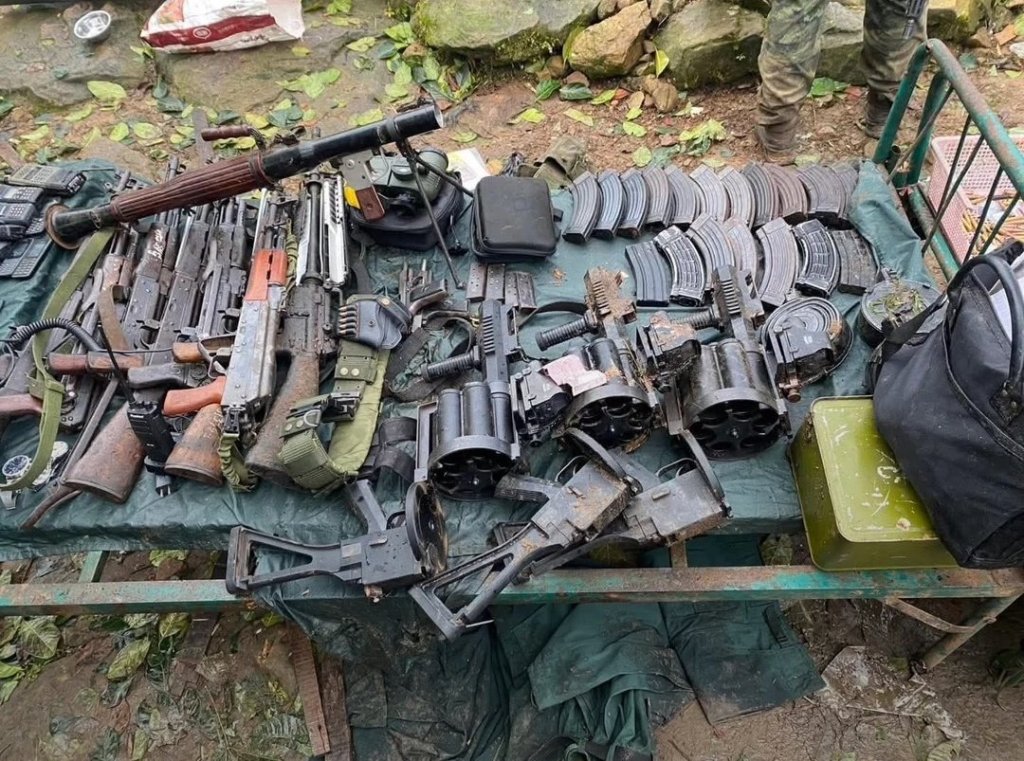
Cambodia weapons reportedly captured by Thai forces (via social media)

Also seen in one of the early July photos are Norinco LG4 rotary manual grenade launchers these are also seen in a number of images and videos from the conflict. A video posted by Cambodian troops on the border, on the 24 July, shows one combatant with an LG4 and another with a Type 69 RPG. In another photo dating from around the 25 July, a Cambodian soldier is seen with an LG4 and a pair of binoculars.

Five LG4s were seen in a photograph of arms and equipment reportedly captured by Thai troops. Other equipment in the photo includes: two Type 56s, 2 Type 56-1s and a Type 56-2. Several TT-33 pattern pistols are visible alongside what is likely a Norinco CQ-B and a Type 69 RPG.

Cambodian combatant with a Type 81 LMG (via social media)

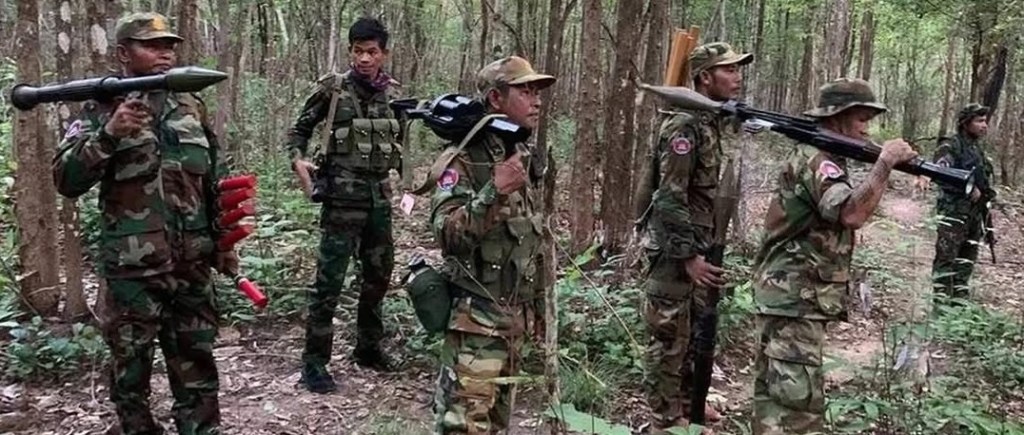
Cambodian troops were seen with significant numbers of Type 69 RPGs. In one widely shared video a Cambodian soldier is seen firing a Type 69 from the cover of a trench position. In another video of the same soldier he is seen firing a Type 81 7.62×39mm light machine gun, loaded with a drum magazine, before again firing a Type 69. A third video of what may be the same machine gunner gives us a longer look at the Type 81 in action. In another short video Chinese-produced PF69-40 high-explosive incendiary RPG projectiles for the Type 69 were seen. Another clip shows a Cambodian soldier firing a Type 69 near a PKM-pattern machine gun position, its difficult to be certain but the gun may be a Chinese Type 80 PKM-clone. Another PKM-pattern gun and a pair of Type 69s were seen in a video filmed in a Cambodian position on 24 July. Next to the Type 69s is a row of readied ammunition.

Cambodian troops with Type 69 RPGs & an LG4 (via social media)

In terms of heavier support weapons footage said to have been filmed on the 25 July, showed Cambodian troops in a defensive position blind-firing a Chinese-made W85-QJC-88 12.7mm heavy machine gun. While a photo posted by a Cambodian combatant on 25 July appears to include a B-10 or Type 65 82mm recoilless rifle.

The available imagery from the brief conflict shows a fascinatingly varied and contrasting selection of small arms and light weapons.


Support Us: If you enjoyed this video and article please consider supporting our work here. We have some great perks available for Patreon Supporters – including early access to custom stickers and early access to videos! You can also find us on the History of Weapons & War app. Thank you for your support!
US Transfers Seized Iranian Small Arms to Ukraine

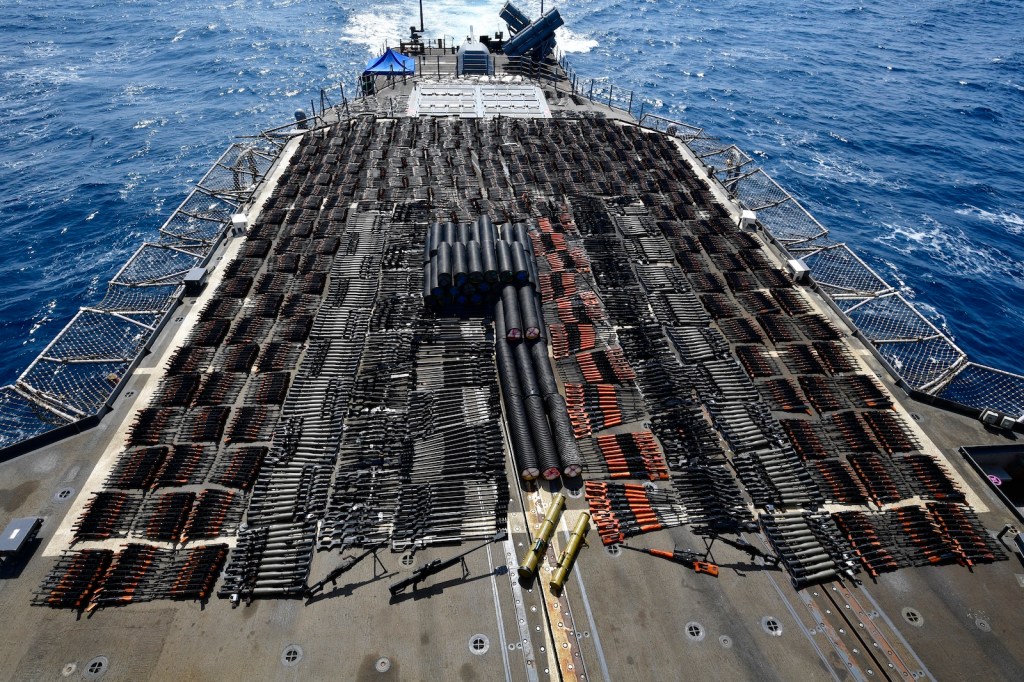
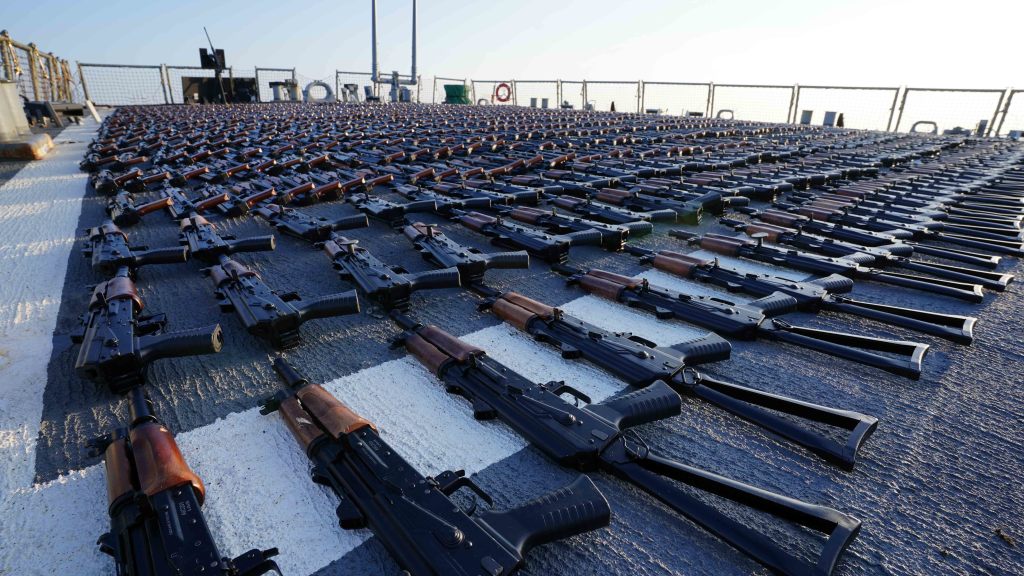
The U.S. government announced, on 9 April, the transfer of enough small arms to equip a brigade to the Ukrainian Armed Forces. The weapons originate from the arms shipments that the US Navy and allies have seized in recent years thousands of weapons and millions of rounds of ammunition which have been seized in recent years from Iranian shipments to the Houthis in Yemen.

Thousands of illicit weapons interdicted by USS Monterey, May 2021 (U.S. Navy)

In a statement U.S. Central Command noted that the arms and munitions had been “originally seized by U.S. Central Command and partner naval forces from four separate transiting stateless vessels between 22 May 2021 to 15 Feb 2023.” The transfer to Ukraine includes 5,000 AK-pattern rifles, RPG-7 rocket launchers, sniper rifles and machine guns. This is not the first transfer of seized small arms to Ukraine with a previous transfer occurring in October 2023, when 1.1 million rounds of an unspecified 7.62mm calibre ammunition were transferred. That transfer was made up of ammunition seized from a single dhow on 9 December, 2022. 

On Jan. 7. U.S. Navy seized 2,116 AK-pattern rifles including AKS20U & Type 56-1s from a fishing vessel en route from Iran to Yemen. (U.S. Navy)

On 6 July 2023, the U.S. Justice Department filed a forfeiture action for: “over 9,000 rifles, 284 machine guns, approximately 194 rocket launchers, over 70 anti-tank guided missiles and over 700,000 rounds of ammunition” these were reported to have originated from two dhows in 2021 and two from 2023. This suggests a discrepancy in the number of seized weapons detailed by the forfeiture action and the number subsequently handed over to Ukraine. This perhaps suggests that either a further transfer will follow with the remainder or a substantial portion of the arms and ammunition were not suitable for transfer for some unknown reason.

In terms of the types of small arms being transferred we can get a pretty good idea from examining the previously released images of the arms seized over the last couple of years. These include:

  • Chinese Type 56-1 7.62x39mm AKs
  • Russian VEPR AKS20U [VPO-158N-06] in 5.45x39mm (these will likely be useful for support troops and vehicle crews)
  • PK-pattern general purpose machine guns or Iranian and Chinese origin
  • Russian Kornet and Iranian Dehlaviyeh anti-tank guided missiles
  • Chinese Type 69 and Iranian RPG-7 clones
  • Iranian AM-50 12.7x99mm anti-materiel rifles
  • Chinese SVD clones
  • Imagery of seized ammunition suggests 7.62x54mmR, 7.62x39mm, and 12.7x99mm

US Central Command noted that:

“The munitions were being transferred from the IRGC to the Houthis in Yemen in violation of the United Nations Security Council Resolution 2216. U.S. CENTCOM is committed to working with our allies and partners to counter the flow of Iranian lethal aid in the region by all lawful means including U.S. and U.N. sanctions and through interdictions.”

The U.S. Justice Department confirmed in a statement that the transfer took place on 4 April, also explaining that the transfer required a civil forfeiture ruling against seized arms and ammunition which enabled the hand over. Attorney General Merrick B. Garland said: “The Justice Department will continue to use our legal authorities, including forfeiture, to support the Ukrainian people in their fight.”

French naval forces interdicted more than 3,000 rifles and 578,000 rounds of ammunition, Jan. 2023 (US CENTCOM)

Most recently, in February 2023, the U.S. Navy reported that “more than 5,000 weapons and 1.6 million rounds of ammunition” had been seized since the beginning of the year. In 2021 alone, approximately 9,000 weapons were intercepted on their way to the Houthis. This suggests that if the weapons have not already been disposed of then there a further stocks of seized weapons to draw on for transfers to Ukraine. It remains to be seen if and when further transfers of seized weapons will be made and when the transferred weapons will begin to be spotted in the field.


Support Us: If you enjoyed this video and article please consider supporting our work here. We have some great perks available for Patreon Supporters – including early access to custom stickers and early access to videos! Thank you for your support!