Swedish RBS-17 Missiles in Ukraine

In June 2022 Sweden announced it would provide Robot-17 (RBS-17) coastal defence missiles to Ukraine. These missiles are used by Sweden’s Amphibious Corps to interdict the movement of enemy vessels along Sweden’s coast.
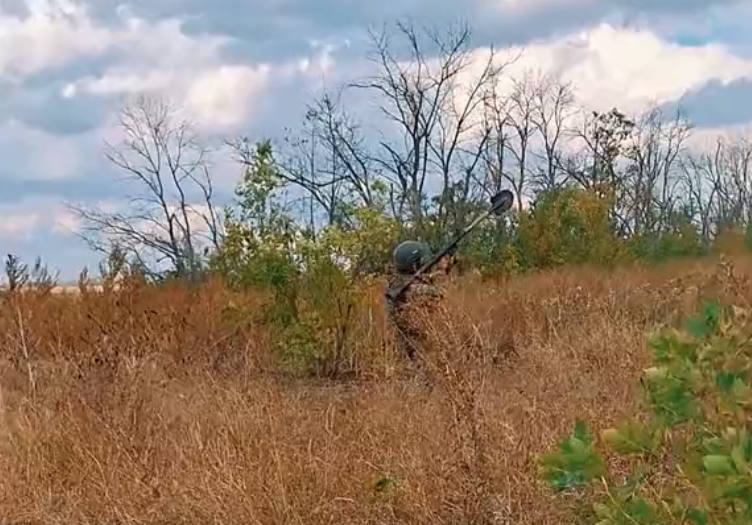
RBS-17 is a Bofors Defense (now Saab Bofors Dyanmics) led development of the AGM-114 Hellfire. Work on the Swedish coastal defence missile began in the 1980s. It is man-portable with the missile weighing 48kg in addition to the launcher, firing system and laser targeting module. It is typically operated in the field by five man teams, with two operating the laser targeting system and three on the weapon itself.

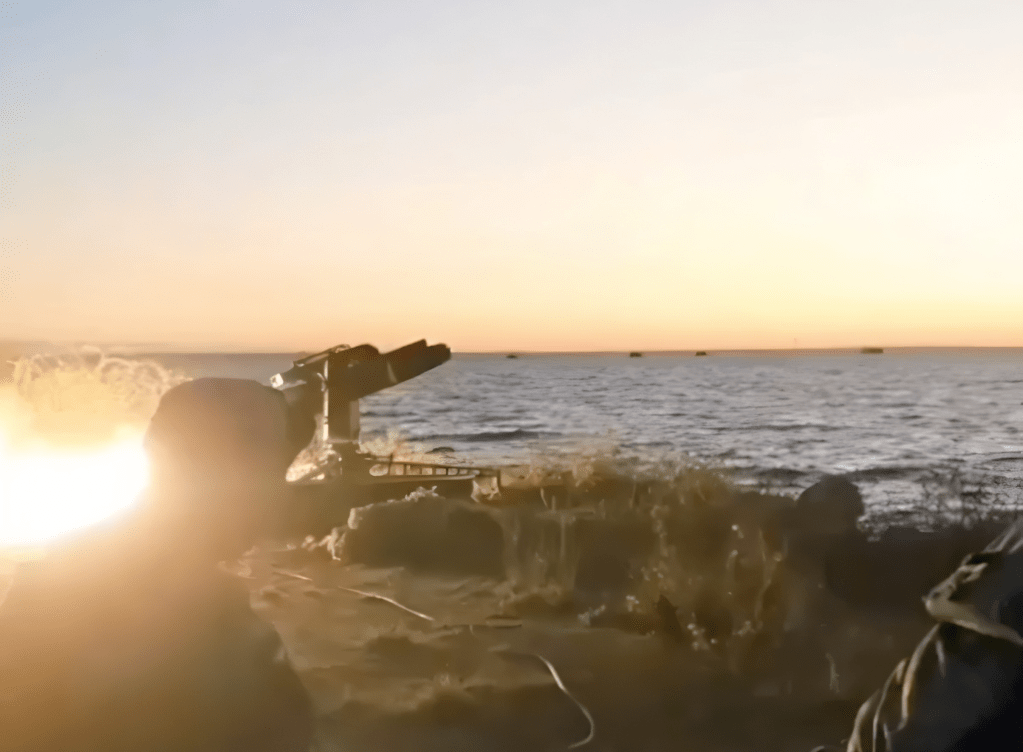
RBS-17 launch October 2023 (via social media)

On launch the missile climbs to several hundred metres and seeks the laser-marked target. The system has a maximum range of around 8km and carries a 9kg high explosive warhead. While designed to engage vessels the RBS-17 can also be used against ground targets.

On 2 June 2022, the Swedish government announced the transfer of an undisclosed number of RBS-17s. They are believed to have been seen in theatre for the first time in a video published on 20 October, although it appears it may have been filmed earlier. The video was shared by a group called ‘Bigcats’, the lo-res clip shows the launch of a pair of missiles. ‘Bigcats’ haven’t shared any further imagery of the missiles since.
In September 2022 the Norwegian government also announced plans to provide Ukraine with their Hellfire-derived Norwegian Shore Defence Missile System. The transfer of 160 missiles and associated equipment was announced in response to a Ukrainian request. In late March 2023 photographs of several pieces of wreckage from one of the missiles was posted on Telegram. It was hypothesised that they were found in the area of ​​the Kinburn Spit and had been fired across the water by an element of the 73rd Naval Center of Ukraine’s Special Operations Forces.

An RBS-17 launch, c.September 2022 (via social media)

It was over 8 months before another video of a the weapons in action was shared. In mid-August 2023 a brief clip was published showing a Hellfire-patterned missile (which may be an RBS-17) being fired and apparently detonating downrange. Several months later at the end of October perhaps the best piece of footage of one of the missiles being launched was shared. In the video we can see the missile being launched and as the camera pans the laser targeting module can also be seen.

In August 2023, Army Inform, the news agency of Ministry of Defense of Ukraine, published an article outlining how the RBS-17 is used noting that it is most frequently used against Russian defensive positions, dugouts or lightly armoured vehicles. The article included a photograph of a display showing the RBS-17 set up. In the background a Ukrainian combatant can be seen sat on a missile case, he’s wearing the patch of the Zaporizhzhia-based 27th River Fleet Division (27 ODnRK).

An RBS-17 launch in Ukraine Nov/Dec 2023 (via Swedish MoD)

On the 18 December, the Swedish government published an article about Ukraine’s use of the RBS-17 and the training the Swedish armed forces provided on the system. The article explains that Ukrainian personnel were secretly trained on the system. The training appears to have been carried out during Summer 2022 and took place in time to coincide with the delivery of the RBS-17s. Swedish personnel have also continued to be on call for answering the technical and operational queries of the Ukrainian teams using the system.

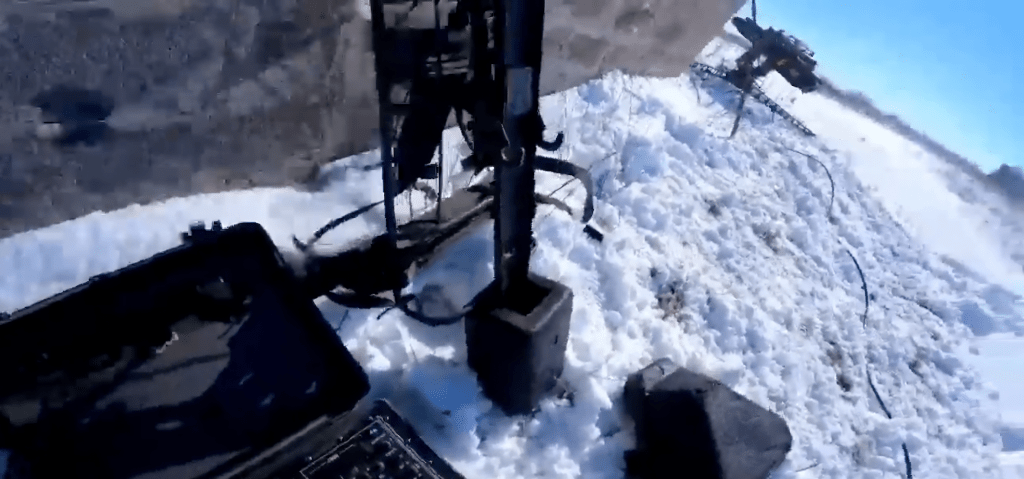
The Swedish article also included a short video of one of the missile systems in operation in Ukraine. The team appears to be in cover behind a wall. The GoPro footage shows the missile near by and the control unit as well as transport cases near by. A Polish MSBS Grot rifle can also be seen leaning on the wall next to the operator.

Update – 22/05/24:


Support Us: If you enjoyed this video and article please consider supporting our work here. We have some great perks available for Patreon Supporters – including early access to custom stickers and early access to videos! Thank you for your support!


The Rarest Grenade Launcher in Ukraine

Remarkably, a rare prototype Colt stand-alone stock chassis for the M203 40mm grenade launcher has been spotted in Ukraine. Our friends and colleagues at StreakingDelilah received some photographs and video of the prototype stock in November. They have kindly allowed me to share them here.

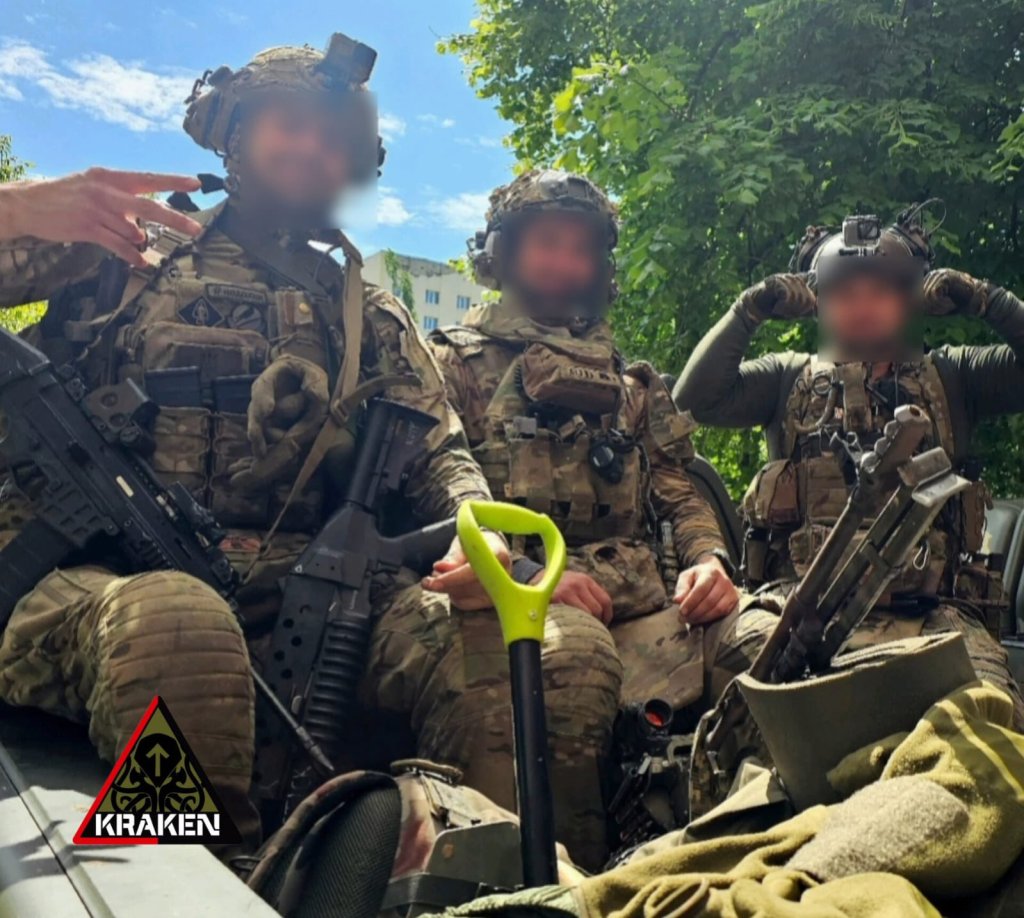
The stock chassis turns the M203 into a stand-alone launcher. It belongs to a Ukrainian Combatant with the GUR’s ‘Kraken’ Unit. M203 launchers were first seen in Ukraine in January 2023, when members of the 47th Mechanised Brigade were seen equipped with M16A4s with M203 under-barrel grenade launchers.

A still from a video showing the Colt M203 chassis at a range in Ukraine (via StreakingDelilah)

The chassis were reportedly made in both fixed stock and collapsing stock configurations. The one seen in Ukraine has a CAR-15 style adjustable collapsing stock. The chassis system takes a standard M203 under-barrel grenade launcher with heat shield and provides a platform which can be shouldered. According to friends at the Colt AR-15 Resource, the chassis was reportedly developed for an undisclosed US organisation, possibly US Special Operations Command or one of the alphabet agencies. It is thought that less than 30 were manufactured.

While there is little solid information available on these chassis it has been suggested that the project dated from before the start of the so-called ‘Global War on Terror’, and perhaps as early as 1992. Some samples were also reportedly made for external customers like El Salvador. The Colt-made stand alone chassis are a concept which has been replicated more widely by other manufacturers since.

The Colt AR-15 Resource shared some video of one of the fixed stock variants from a collector’s show:

The combatant in Ukraine shared several photographs of the M203 stand alone chassis. One appears to have been taken in a frontline trench while another shows it lying next to an FN SCAR-L and a couple of 40mm LV HEDP grenades.

The sight assembly appears to be unique to the chassis and combines a a rear sight which is graduated out to 250-300 metres with a front sight. It does not appear to have a quadrant sight mounted for longer range fire. The weapon operates just as the M203 normally would with the barrel sliding forward to open the action. Unlike the M203 under-barrel configuration the stand alone launcher has a pistol grip.

Some, but not all, examples of the chassis are marked with ‘COLT’s’ on the rear of the chassis above the pistol grip on the left side. Serial number markings are found on the launcher itself, on the trigger mechanism housing.

The rare chassis has also turned up in Afghanistan with StreakingDelilah sharing this photograph of a member of the Taliban with one.

It is unclear how the rare chassis came to see service on Ukraine’s frontline but StreakingDelilah believe it may have been privately acquired through a surplus dealer, though they stress this is unconfirmed. It has been interesting to see the proliferation of stand alone grenade launchers in use with both sides during the war in Ukraine, but I never expected to see this rare Colt-made stand alone chassis.

Updated – 15/11/24: Another image featuring the launcher recently appeared in a Kraken fund-raising post. [H/t – Larry]

Special thanks to StreakingDelilah and The Colt AR-15 Resource for their help.

Update – 8/1/25:

Another standalone M203 has appeared in Berdin, Kursk, captured by personnel of Russia’s Kachtan battalion. StreakingDelilah have confirmed that it is not the same M203 seen in use with a Kraken member. This indicates that more than one of these rare grenade launchers has found it’s way to Ukraine.


Support Us: If you enjoyed this video and article please consider supporting our work here. We have some great perks available for Patreon Supporters – including early access to custom stickers and early access to videos! Thank you for your support!


Ukraine’s Giant Rifle – the Snipex Monomakh

There are a significant number of different large calibre anti-materiel rifles in use in Ukraine. One of the largest is the Monomakh, a 14.5×114mm semi-automatic, box magazine-fed anti-materiel rifle from the Ukrainian company Snipex. Snipex is a subsidiary of the XADO Chemical Group.

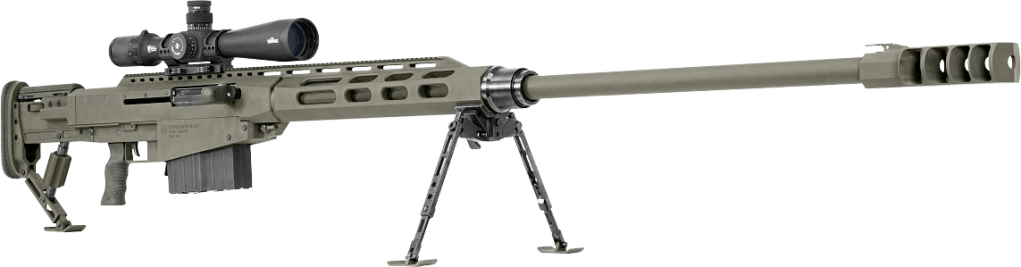
Snipex are well known for their series of precision anti-materiel rifles which includes the M100, T-Rex and Alligator. The Monomakh, introduced in 2021, is the company’s first semi-automatic rifle. It is recoil operated and feeds from a 5-round box magazine. It has a barrel 1,200mm [47.2in] long and an overall length of 2,050mm [6.7 feet], Snipex list its weight without a magazine as 25kg [55lbs]. The rifle has a listed muzzle velocity of 950 to 980 m/s and an effective range of just under 2,000 metres [1.2 miles]. The weapon is fired from a bipod with a monopod supporting the butt of the rifle. It’s key feature is its reciprocating barrel which helps soak up the recoil from the 14.5mm cartridge.

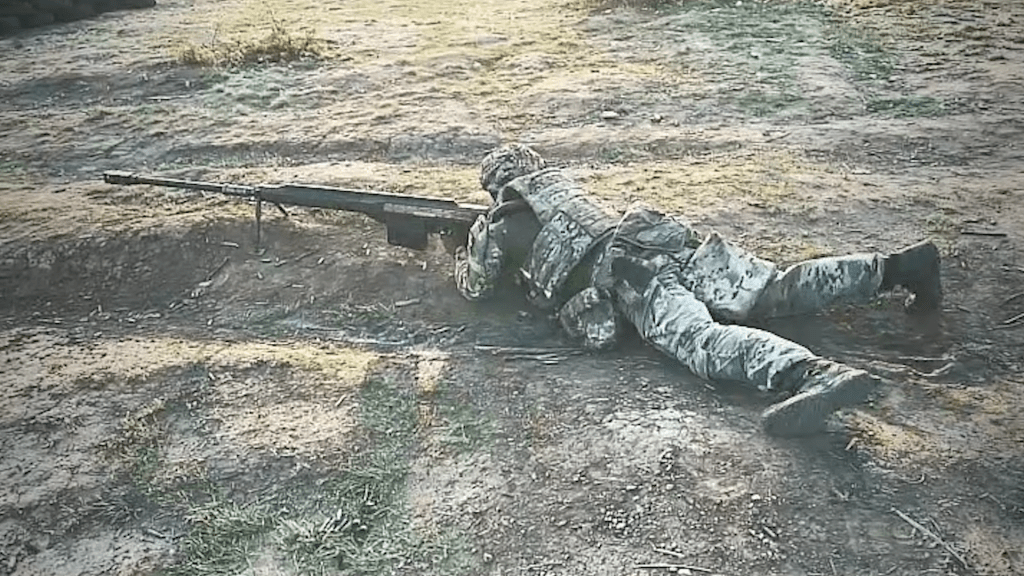
A scopeless Monomakh at the range (via social media)

The Monomakh appears in imagery from Ukraine fairly infrequently, the earliest sighting of one of the rifles I could find was a photograph posted by a GUR member in late April 2022. Subsequently a number of videos of the weapon being fired at ranges by Ukrainian combatants was published in the Summer of 2022. The first posted on 7 August, shows a magazine being loaded into the rifle and the weapon chambering a round. Later that month a short video of a Monomakh firing at a range was published.

Snipex Monomakh (Snipex)

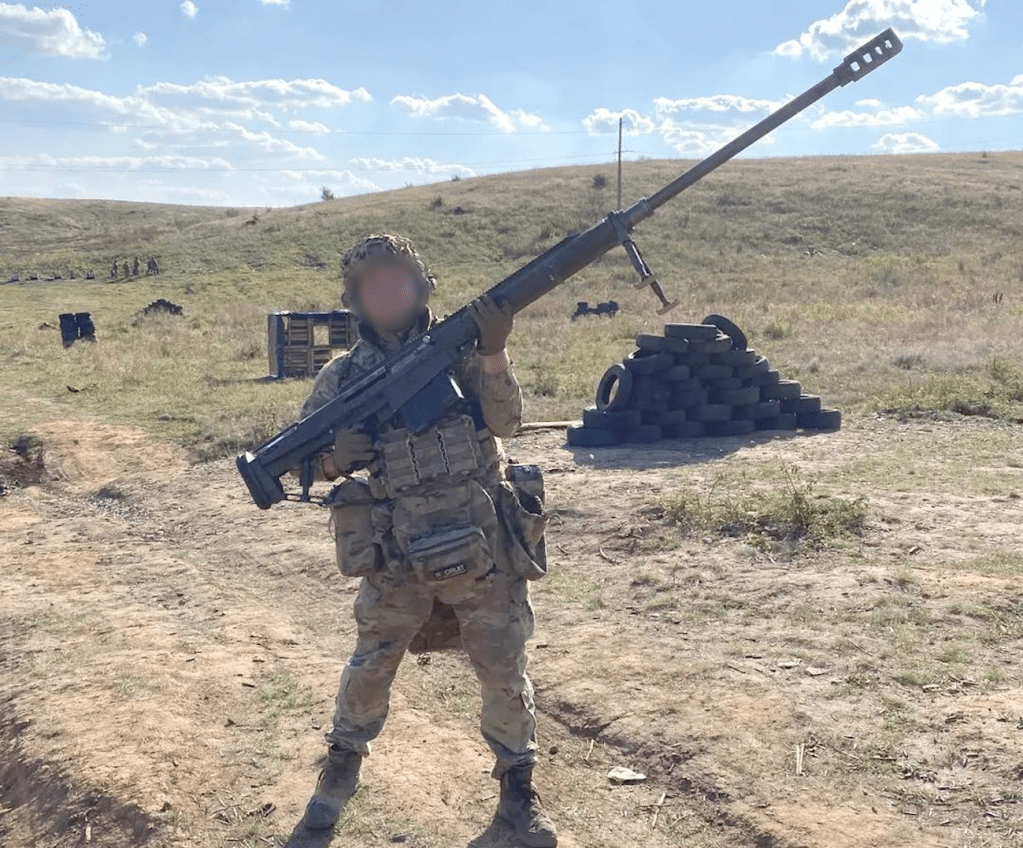
The earliest photograph of one of the guns I could find in 2023 was shared by a Ukrainian combatant in mid-July. Several months later, in September 2023, another Ukrainian combatant shared a photograph of himself holding up a Monomakh at a range. The same combatant also shared a short clip of himself firing the rifle, again at the range. In the clip he appears to be firing the rifle without sights or an optic. He is also seen helping the bolt into battery after each shot, the bushing which guides the barrel as it recoils into the receiver appears to have come loose. The rifles are typically paired with substantial optics, Snipex offer two of their own 6–24×56 scopes, the Jove 50 and the Galaxy G50. In late October, a female sniper with the 3rd Shock Brigade, posted several photographs and a video of herself firing a Monomakh from a position inside a building.

A Ukrainian combatant holds up a Monomakh (via social media)

The large size and hefty weight of the Monomakh limits it applications somewhat but the 14.5mm round is useful against light armoured vehicles, buildings and field fortifications – the main limitation is getting it in, and out, of position to engage targets. There are videos of it taking two men to move the similarly heavy T-Rex and Alligator rifles. From the limited sample of imagery of the Monomakh in theatre it is difficult to gauge how widespread its use actually is. The simpler to manufacture bolt action Snipex rifles are seen more frequently.

My thanks to Cloooud and AbraxasSpa for help sourcing some of the imagery used in this article/video.


Support Us: If you enjoyed this video and article please consider supporting our work here. We have some great perks available for Patreon Supporters – including early access to custom stickers and early access to videos! Thank you for your support!


Swedish G3s in Ukraine?

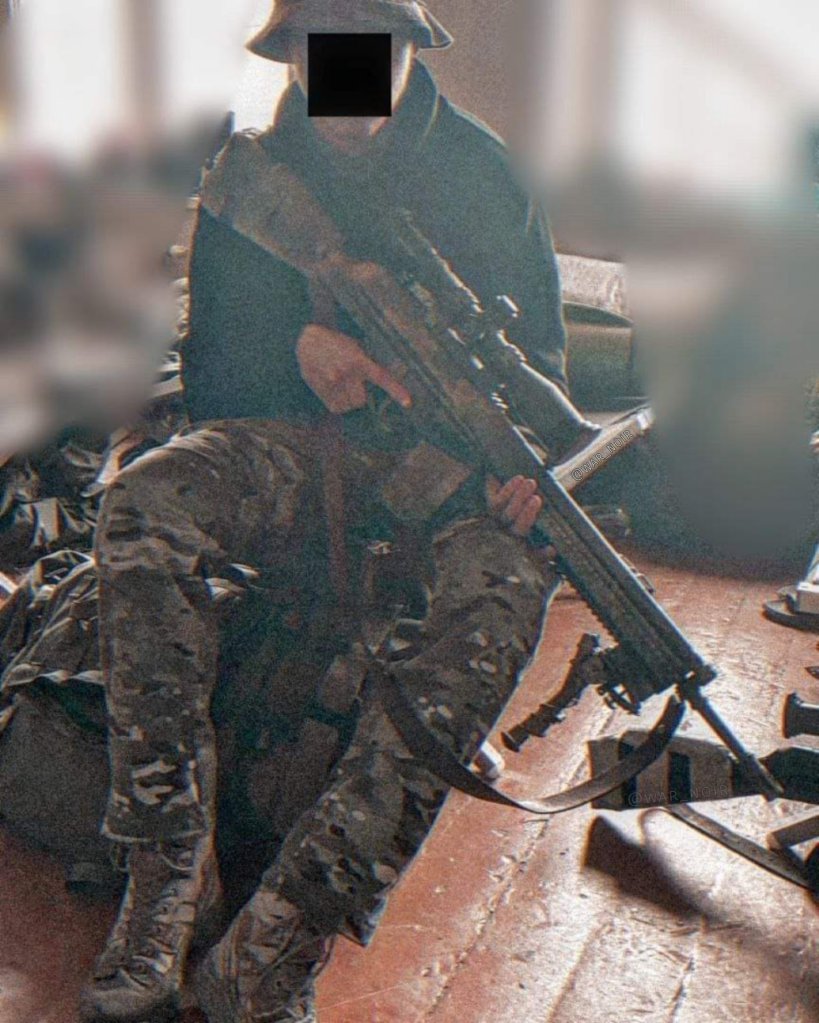
In recent weeks imagery from Ukrainian social media accounts has emerged to suggest that Swedish G3-pattern, Ak4B, rifles may have begun to be issued to units in Ukraine. Several photographs and videos have been shared via social media by Ukrainian combatants featuring the distinctive rifles. Further investigation, however, suggests the rifles may not be in use in Ukraine.

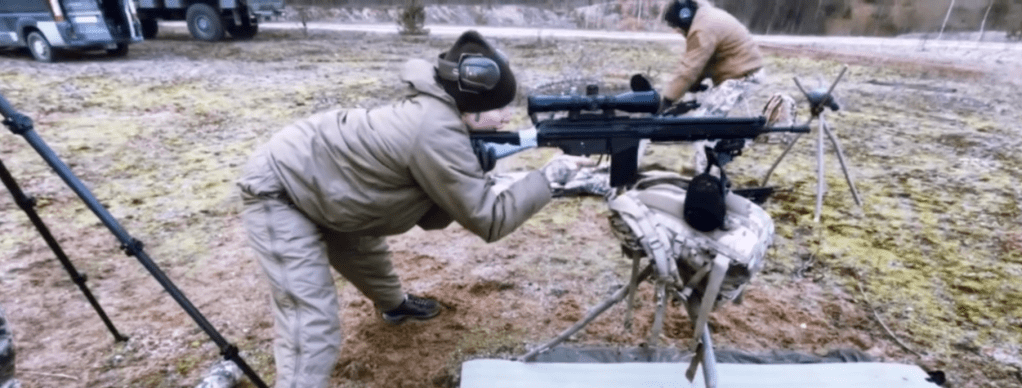
Still from a video of a Ukrainian sniper firing an Ak4B at the range, 17 November (via social media)

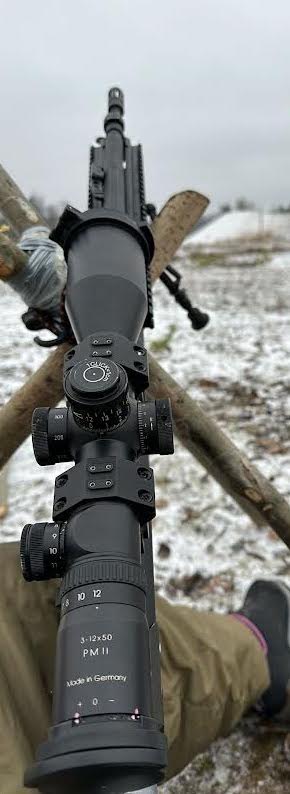
The initial imagery posted by two accounts appear to feature three of the rifles, all of the rifles seen appear to have tape on their butts. They are all fitted with scopes with at least one optic appearing to be a Schmidt & Bender PM II 3-12×50.

Photograph posted by a Ukrainian showing an Ak4B at the range fitted with a PMII optic, 20 November (via social media)

The Swedish Ak4 is license-manufactured version of the 7.62×51mm Heckler & Koch G3. Produced by Carl Gustafs stads gevärsfaktori and Husqvarna Vapenfabrik, the Ak4 entered Swedish service in 1965. It was replaced by the 5.56×45mm Ak5 in the mid-1980s but today remains in service with Sweden’s Hemvärnet (home guard).

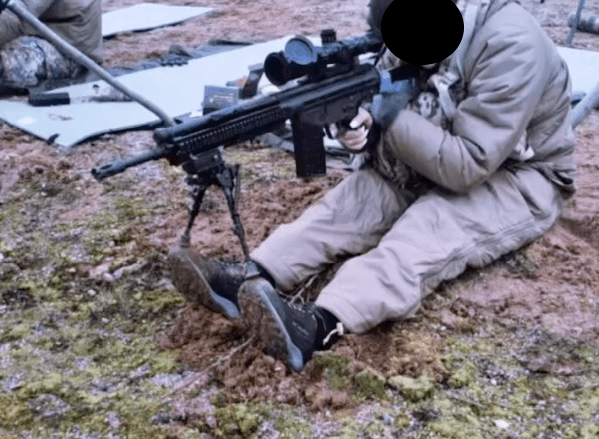
In 2002, Sweden upgraded the first Ak4s to the Ak4B standard. Removing both front and rear iron sights and adding a length of Picatinny rail for mounting an optic. The rifles seen in the recent photographs have also been outfitted with a tri-rail forend, these are produced by a number of manufacturers, including Swedish Ordnance, and an adjustable bipod.

Photo of a Ukrainian sniper firing an Ak4B at the range, 17 Nov., note the railed forend and bipod (via social media)

Notably in January 2023, Sweden announced a major aid package for Ukraine which was said to include ‘assault rifles’ it is unclear if these rifles were Ak4s or another weapon. I reached out to the Swedish government about whether the recently sighted rifles had been provided to Ukraine but no comment was provided at the time of publication.

Photo showing a pair of Ak4Bs with optics c.19 November (via War_Noir)

Subsequent social media posts and conversations with Ukrainian personnel who shared imagery suggests that the rifles are Ak4s. However, they aren’t in Ukraine but Latvia.

Latvia received a number of Swedish Ak4s and they are currently used by the Latvian National Guard. The Latvians are in the process of replacing the rifles with G36s, however, some may continue in the designated marksman role. It appears that the imagery posted by the Ukrainian combatants which features the rifles was taken during training in Latvia. Latvia has so far trained 3,000 Ukrainian personnel. From posts on their social media it appears that elements of Ukraine’s 3rd Shock Brigade are currently in Latvia.

The author of this photograph (featuring another Ak4B in the same configuration) confirmed that it was not taken in Ukraine (via social media)

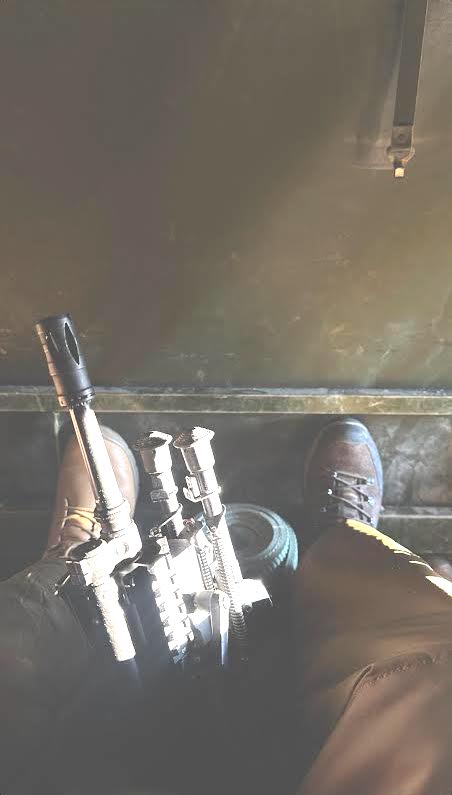
Another Ukrainian combatant who shared another photograph of the muzzle end of an Ak4, notable for its ground off front sight, seemingly taken in the back of a truck also confirmed that his photograph was not taken in Ukraine but Latvia.

There has previously been confusion around whether a weapon is in use in Ukraine or whether Ukrainian troops are simply using the weapon while training abroad. This has been seen with the SA80 in the UK and the HK G36 in Spain and Lithuania.

In addition to Latvia, Sweden also provided Lithuania with Ak4 pattern rifles, these are now in service with the Lithuanian National Defence Volunteer Forces. Similarly, Sweden also provided the Estonian Defence Forces with Ak4s. These countries have also provided training. Given the levels aid provided by Sweden and the three Baltic states it is possible we may eventually see Ak4 pattern rifles in Ukrainian service. Despite anticipation of seeing G3s in Ukrainian service, these rifles do not represent the first G3-pattern rifles to be seen in Ukraine.

Update – 19/2/24: Several G3s in the same configuration as those seen in earlier Latvia training photos recently surfaced.

10/9/24 – Update: another photograph of hat appears to be an AK4 with Ukrainian personnel, location unknown.

The photograph above is one of a series taken by Ukrainian photographer Yara.sva, the photographs are tagged as being taken in Ukraine.

Update 19/9/24:

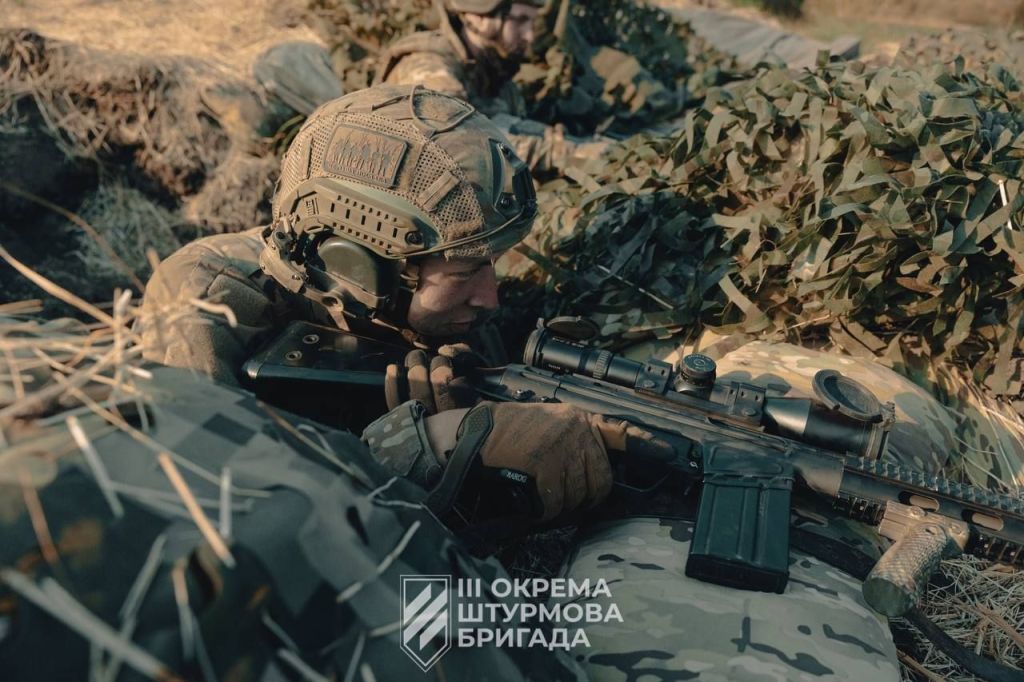
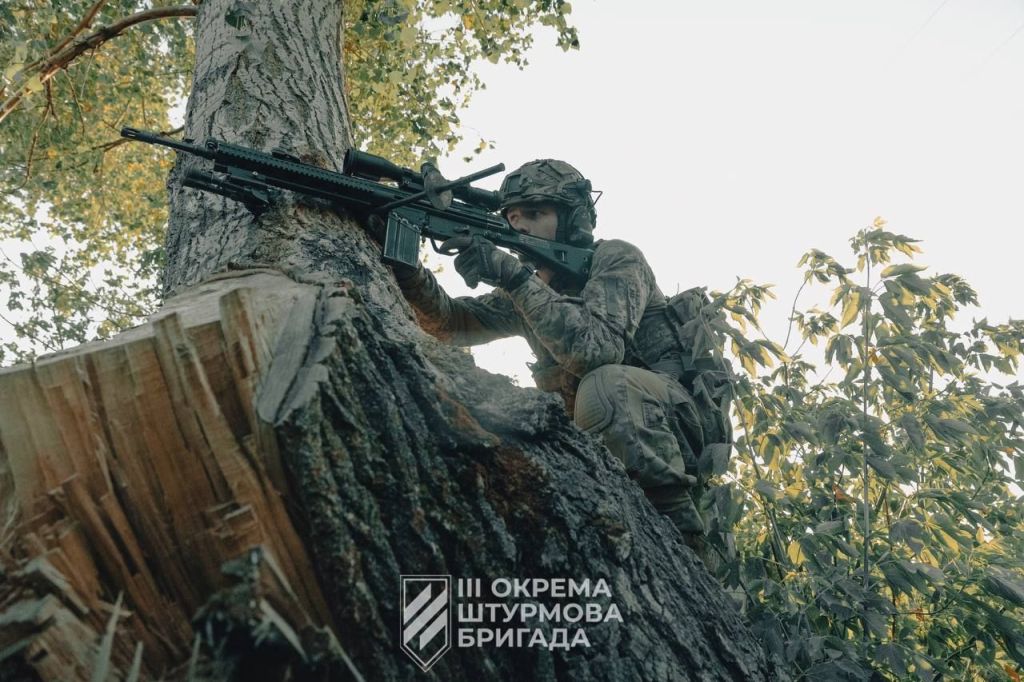
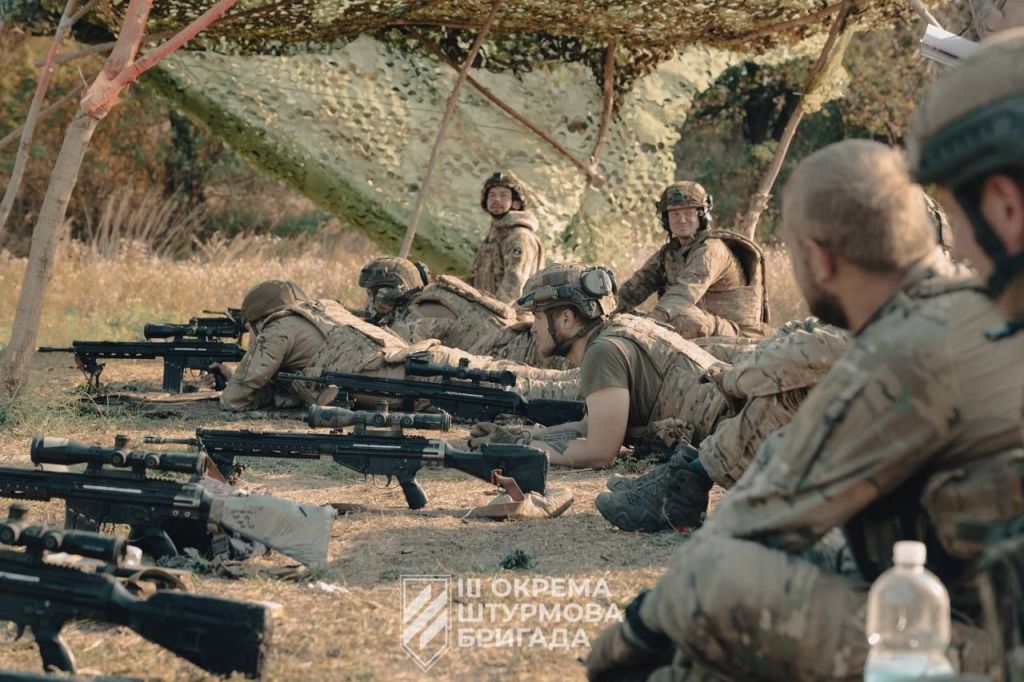
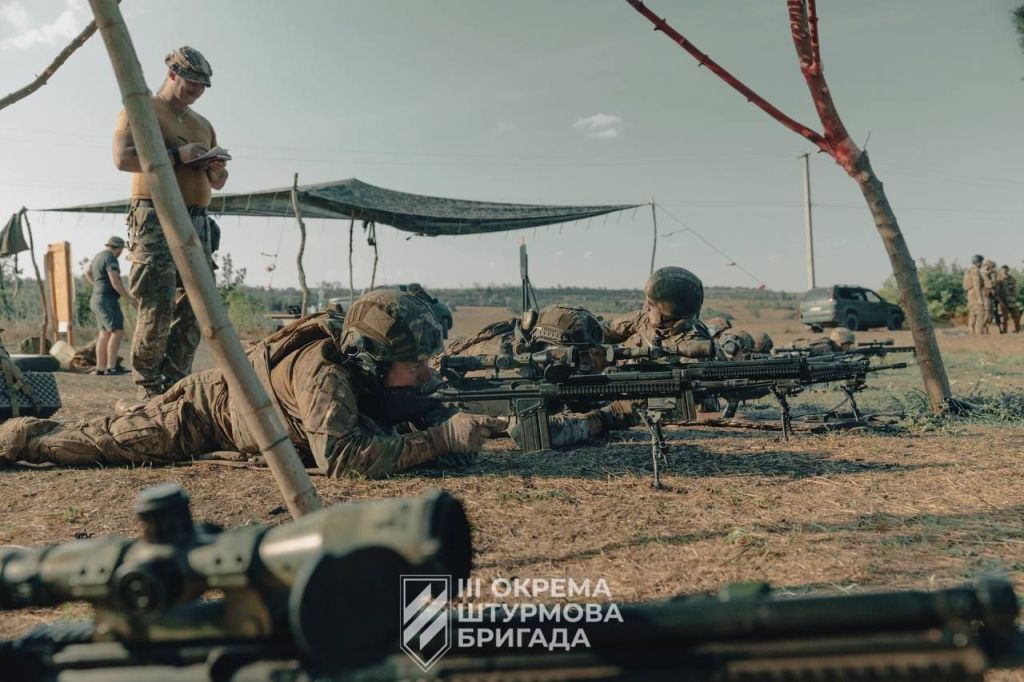
The 3rd Assault Brigade has shared a detailed album of photos showing marksmen from the brigade training with what appear to be AK4Bs. The location the photographs were taken is not disclosed but there is nothing to confirm that the training was undertaken in Ukraine and no information in the original post’s caption. It is possible that, like earlier AK4B photos, these were taken during training outside of Ukraine, likely in one of the Baltic states. The photographs appear to have been taken at the same time (and possibly by) those shared earlier by Yara.sva.

Update 1/10/24: Additional photos by Yara.sva featuring an AK4.


Support Us: If you enjoyed this article please consider supporting our work here. We have some great perks available for Patreon Supporters – including early access to custom stickers and early access to videos! Thank you for your support!


Wheeled Mk19 Mount

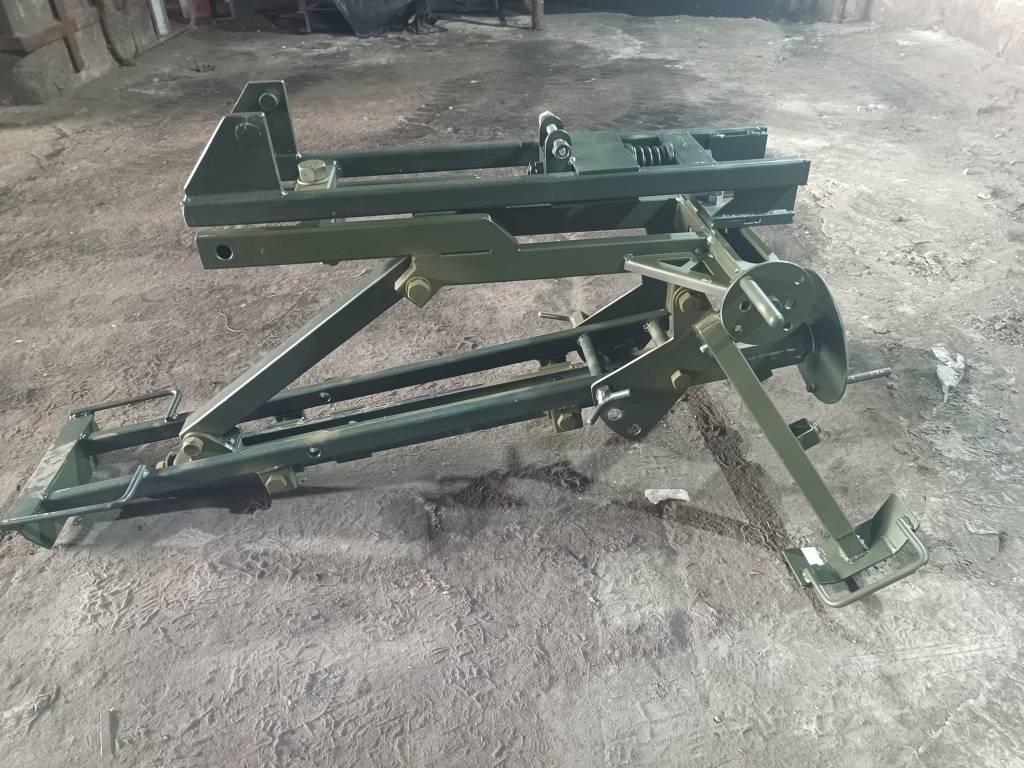
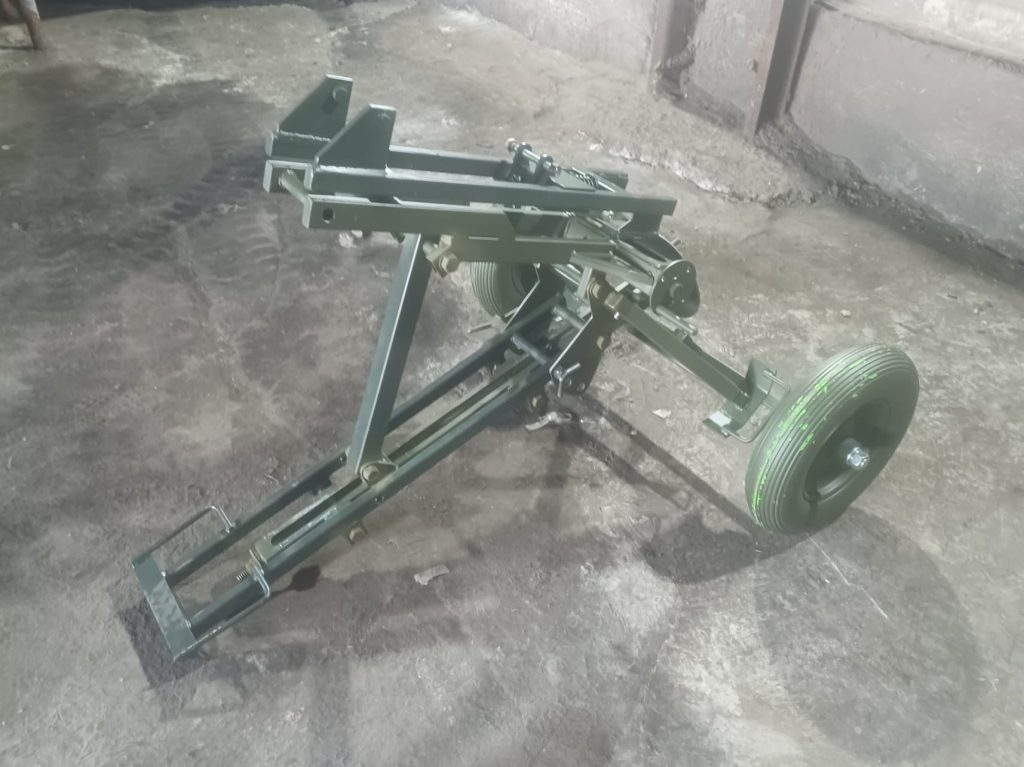
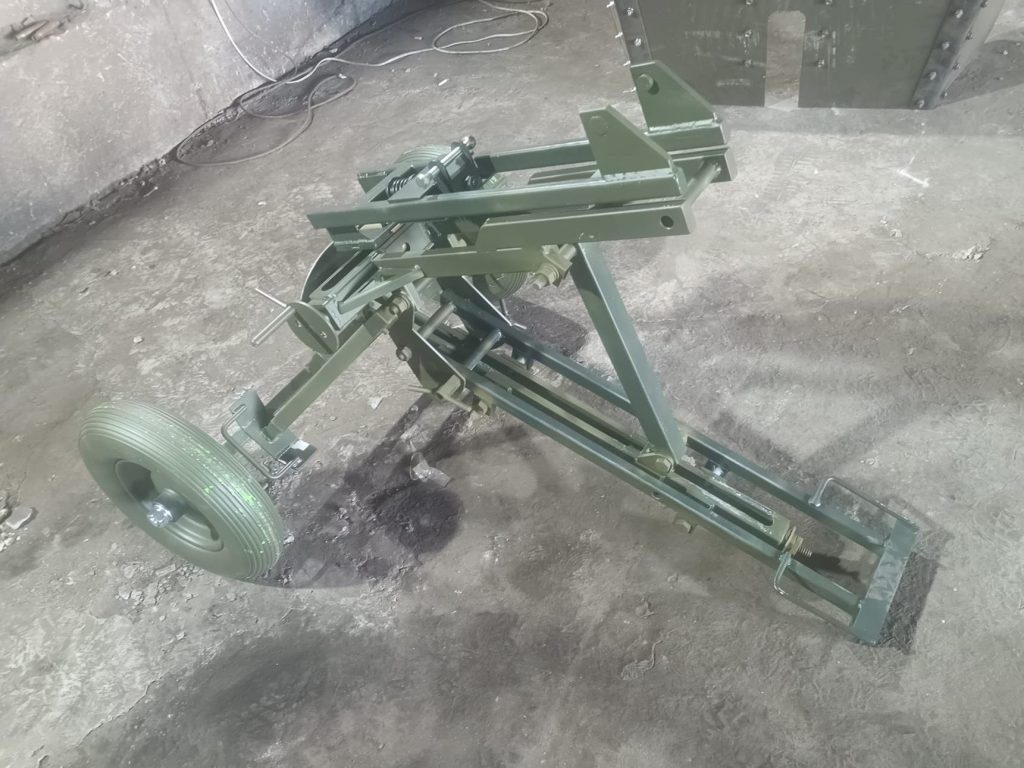
A Ukrainian engineer and fabricator, Іван Савельєв/Ivan Saveliev, has designed and built an interesting wheeled mount for the Mk19 automatic grenade launcher. The mount was recently seen in a video posted to TikTok by a member of 4th Rapid Reaction Rubizh Brigade’s 3rd Battalion Svoboda. The video was posted on the 10 November and shows the mount being demonstrated in camp. There’s a long history of Russian machine guns like the Maxim PM1910, SG-43 and DShK having wheeled mounts or carriages. The new mount for the Mk19 could be seen as a descendent of these.

A Mk19 on the wheeled mount (via social media)

The first MK19 Mod IIIs arrived from the US in late January 2022, as it looked increasingly likely that Russia would invade. Since then they have proliferated and are widely used by the Ukrainian armed forces.

A Mk19 on the mount with wheels removed (via social media)

Saveliev has developed a range of mounts for various support weapons including machine guns, auto-cannons and mortars. He first shared imagery of the wheeled mount for the Mk19 in mid-June posting a photograph showing a Mk19 elevated on one of the mounts. Five months later, on 23 October, Saveliev shared a series of detailed photos of the mount. He noted that the mount could allow the Mk19 to be fired at ‘increased vertical angles’. This is very useful for long range, indirect fire. The M2 heavy machine gun could also be used with the wheeled mount as the mount mimics the mounting points of the M3 tripod, which both the Mk19 and M2 are used with.

Above & Below: Close-ups of the mount (via social media)

The mount has a pair of handles at the muzzle end to allow the weapon to be pulled by two men. The elevation of the Mk19 can be adjusted by an elevation wheel which uses a long threaded bar (or worm pinion/screw) to move the mounting arm forward and back, lowering and raising the weapon. In the video posted by members of the 3rd Battalion Svoboda it is suggested that elevations of 60 or more degrees is possible. Windage can be adjusted by a pair of wheels either side of the rear of the mount.

The mount has a pair of wheels with pneumatic tires which can be removed allowing the weapon to be grounded in the mount. However, this looks to be a fairly unstable firing platform due to the narrow base the mount offers compared to the Mk19’s standard tripod. Despite the Mk19’s relatively low recoil the mount would probably have to be well bedded in to achieve accurate fire and prevent it from potentially toppling. There is no mount for the weapon’s belt box.

According to various comments on Saveliev’s posts about the mount individuals from a number of Ukrainian brigades including the 47th Mechanised and 5th Assault brigades are reportedly interested in the mount.

I haven’t yet been able to find any imagery of the mount being used in the field or of a Mk19 being fired from one so its difficult to know how useful it is in battlefield conditions. The major benefit, however, is increasing the Mk19’s portability. Weighing in at 77.6 lbs (35.2 kg) the Mk19 (without the M3 tripod which adds 44 lbs (20 kg)) is heavier than its Russian counter-part, the AGS-17. This makes moving it across broken terrain a difficult task, the wheels might help

Special thanks to Weapons Illustrated who has been tracking this mount and assisted with this video/article.


Support Us: If you enjoyed this video and article please consider supporting our work here. We have some great perks available for Patreon Supporters – including early access to custom stickers and early access to videos! Thank you for your support!


French Rifles for Ukraine

On 6 November, the French arms manufacturer Verney-Carron, through its defence brand Lebel, announced the signing of a framework contract with Ukrspecexport, a Ukrainian state-owned arms trading company which is part of Ukroboronprom. The contract covers the production of a substantial number of small arms including carbines, precision rifles and 40mm grenade launchers.

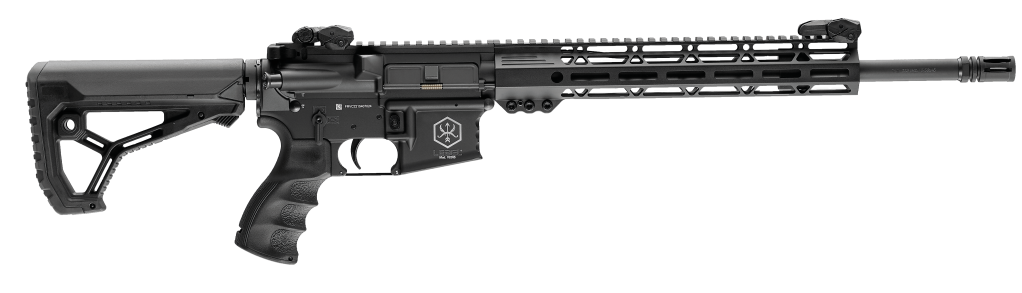
VDC15 (Lebel)

The contract is worth 36 million Euros ($38.5 million) and includes 10,000 assault rifles, 2,000 precision rifles and 400 grenade launchers. The contract will need to be funded from Ukrainian and French sources with initial delivery scheduled for early 2024, with delivery to be spread over the next 10 months. The announcement makes no mention of spare parts or support as part of the contract.

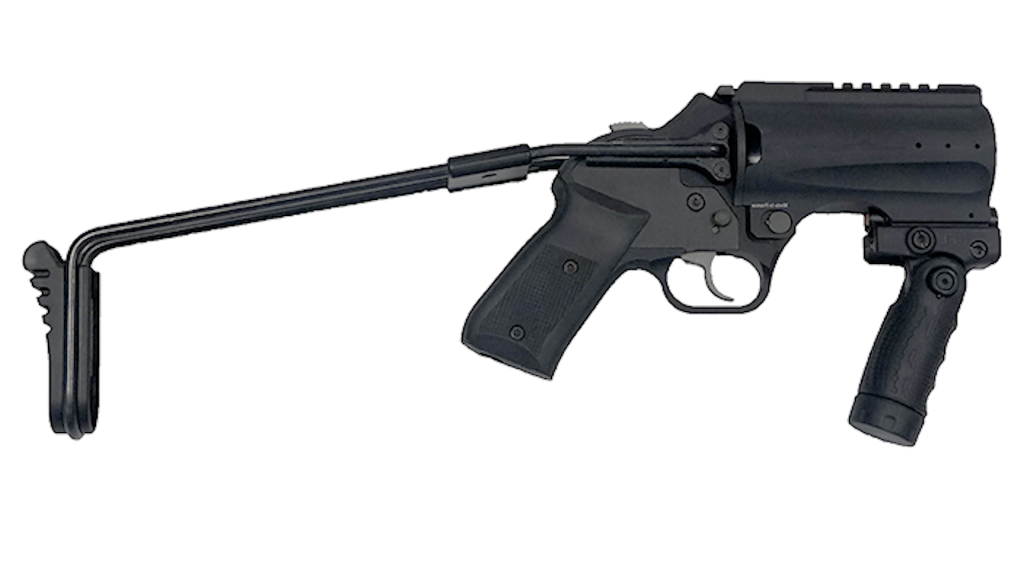
The contract will likely see the delivery of Verney-Carron’s VCD15, an AR-15 pattern rifle available in various configurations but chambered in 5.56x45mm or .300 BLK and based on Stoner’s internal gas system. The 2,000 precision rifles are probably Lebel’s VCD10, which was introduced in 2018 and is a precision AR-10 pattern rifle chambered in 7.62x51mm or .260 Remington. The 400 grenade launchers will likely be the compact LP40, a 40x46mm standalone launcher, which weighs 1.3kg, has a removable stock and a folding front pistol grip.

LP40 (Lebel)

It’s unclear which branch of the Ukrainian Armed forces the small arms will be destined for but they represent a substantial number, enough to equip a brigade or two. In terms of aid France has already provided a wide range of weapon systems and military equipment including self-propelled artillery, armoured personnel carriers, mines, anti-tank guided missiles, small arms, hand grenades and air defence systems. 


Support Us: If you enjoyed this video and article please consider supporting our work here. We have some great perks available for Patreon Supporters – including early access to custom stickers and early access to videos! Thank you for your support!


RPG Warheads with Fragmentation Sleeves

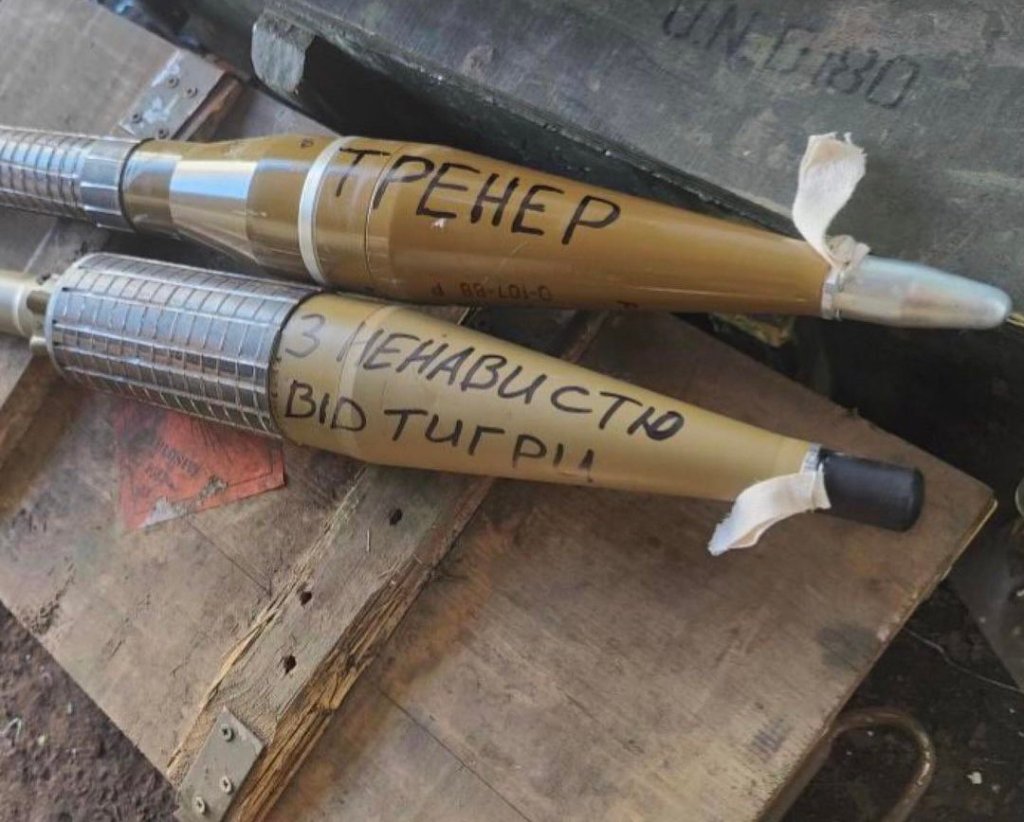
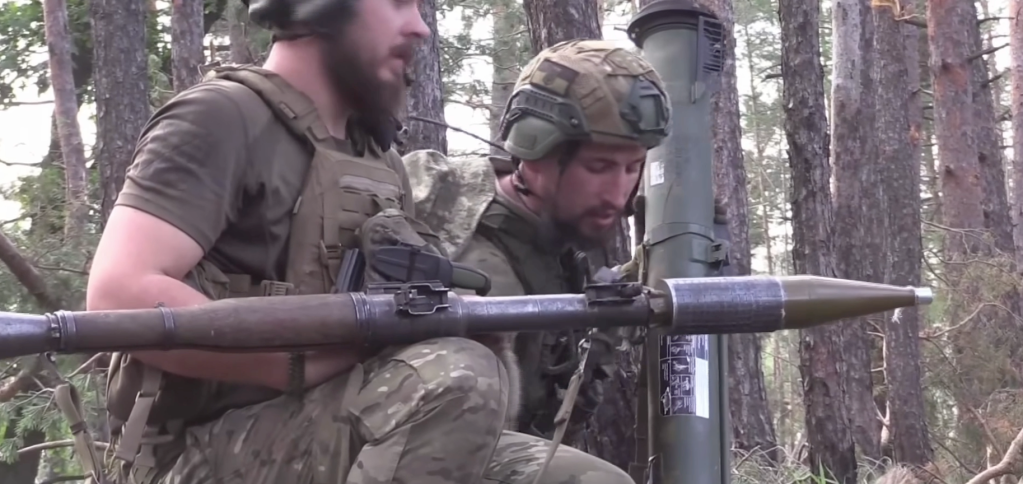
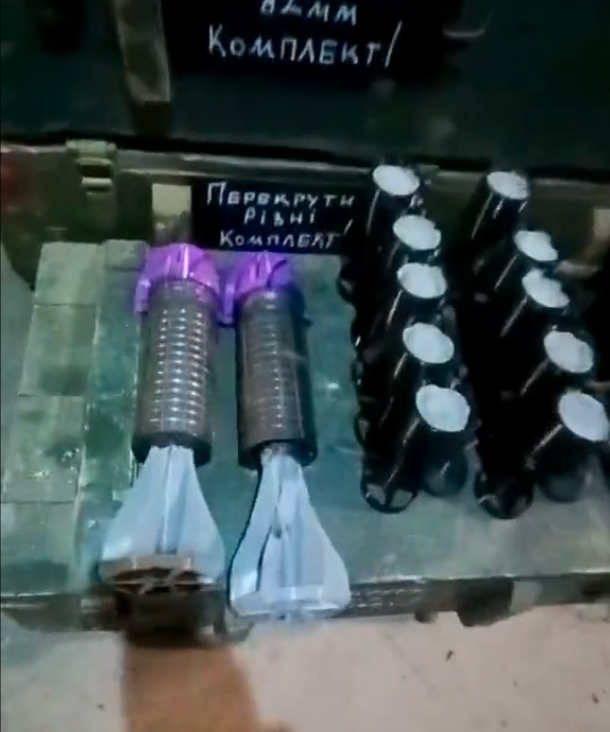
On 2 October, Ukraine’s 28th Mechanised Brigade posted a video on their social media showing an RPG team firing an RPG-7 during a firefight. The warheads being fired from the RPG-7 were all outfitted with homemade fragmentation sleeves.

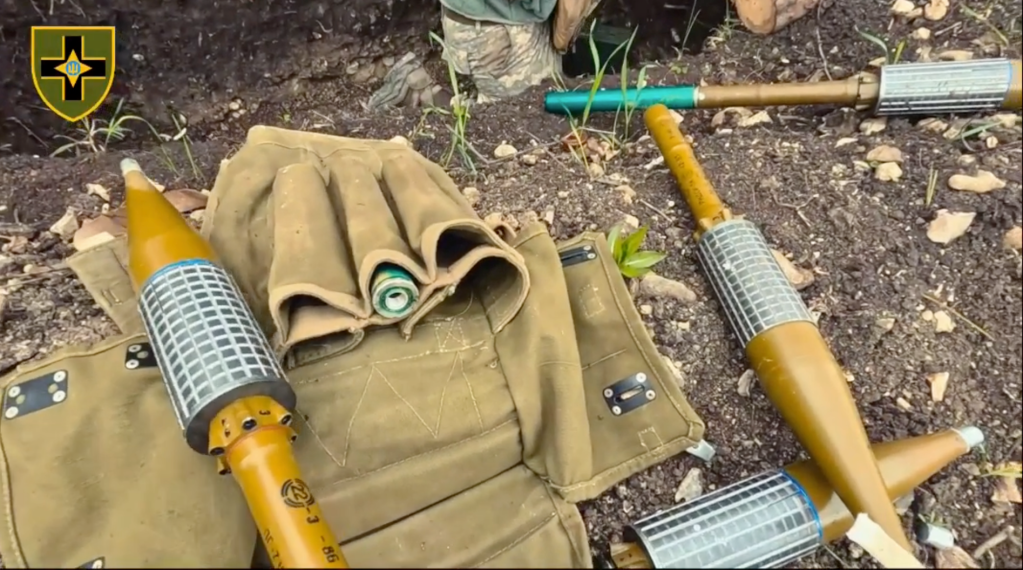
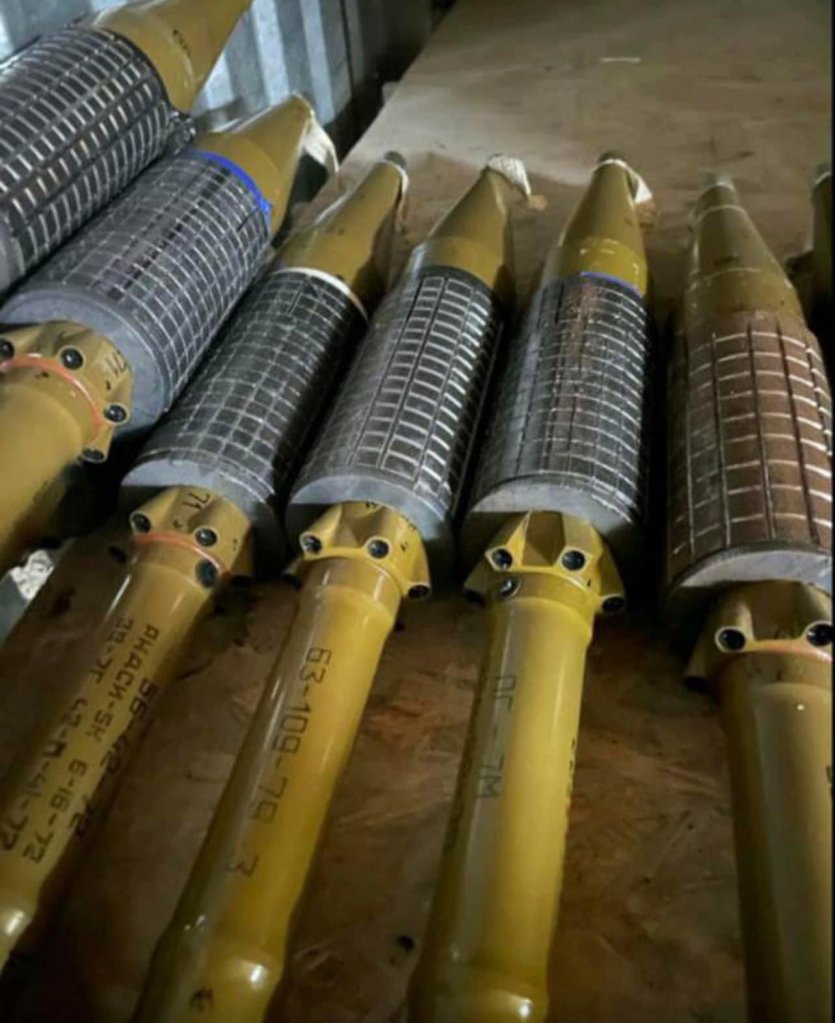
A fragmentation sleeve fits over a warhead and breaks apart when the warhead detonates. The explosion spreads the fragments increasing the warheads anti-personnel effect. The sleeve seen in the video appears to be made from a sheet of rolled metal with a base ring. Their design and construction appears to be quite uniform and similar examples of the fragmentation sleeves have been seen on several earlier occasions. The sheet appears to be several millimetres thick with a grid of cuts creating weaknesses for along which the metal can fragment.

PG-7 warheads with uniform fragmentation sleeves, in a video posted by the 28th Mechanised Brigade (Ukrainian Army)

Back in April a photograph featuring similar sleeves was shared, one PG-7 warhead has a sleeve running between the venturi/rocket nozzles and the base of warhead’s shaped charge while the other appears to have a sleeve which is wrapped around the lower part of the warhead. The venturi of this warhead isn’t visible.

[Correction/Update – 11/11/23: The rocket is in fact a PG-9/16 which is fired from SPG-9 recoilless guns. This suggests that fragmentation sleeves are also in use with the widely used SPG-9. See image below. – Thank you to Michael Crenshaw for his help IDing this munition.]

Top: PG-9/16 with frag sleeve Bottom: PG-7 with frag sleeve (via social media)

A Ukrainian combatant shared a short video featuring a PG-7 warhead with a fragmentation sleeve on 4 May. On 21 June, Ukrainian news outlet Новинарня published a video report featuring the 67th Mechanised Brigade in action near Kreminna. Members of the brigade’s 2nd mechanised battalion are seen with numerous PG-7s with fragmentation sleeves in the report. One Ukrainian combatant is seen preparing them for launch, attaching boosters to the rockets.

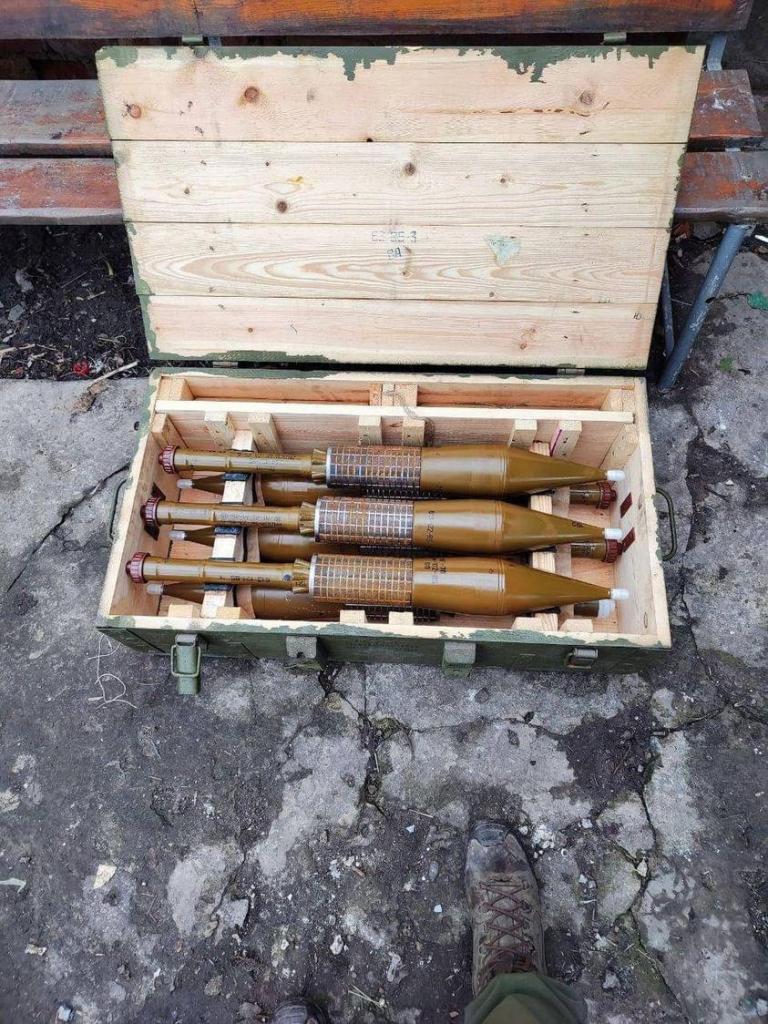
It would appear that the design of the sleeves has been shared between a number of fabricators as they have appeared in a number of areas and appear to a fairly standardised design. Images from the summer of 2023 show the sleeves added to a variety of different PG-7 warheads including a crate of six PG-7VLs.

A number of PG-7V with frag sleeves (via social media)

In August, a Ukrainian individual made a call on social media for fabricators to produce base rings for sleeves. The post included a photograph of six PG-7M warheads with fragmentation sleeves.

The October video posted by the 28th Mechanised Brigade shows the rockets being fired at unseen targets in the distance. The RPG-gunner appears to be using the tactic of using the warhead’s maximum range self-destruct feature to detonate the warheads above Russian positions.

The warheads are fitted point-initiating base detonating fuzes which contain a pyrotechnic-based self-destruct mechanism which causes the warhead to detonate at its maximum range of approximately 950 metres. When the warhead detonates at the end of its flight it will shower what is below it with fragments from both the warhead and the fragmentation sleeve.

A crate of 6 PG-7VLs with slightly rusty frag sleeves (via social media)

On 30 September, a PG-7 with a fragmentation sleeve was seen at the beginning of a video shared by the ‘Omega’, the Special Purpose Center of Ukraine’s National Guard. The characteristic shape of a sleved warhead can be seen just before a member of ‘Omega’ fired the RPG-7.

On 4 October, a Ukrainian combatant shared a photograph of a PG-7VL warhead with a fragmentation sleeve. The photo was shared in response to the earlier August photograph. This example, however, appears to be made from a mosaic of small metal squares rather than from a scored sheet of metal.

An RPG-7 with a fragmentation sleeve, 67th Mechanised Brigade (Новинарня)

In terms of effectiveness the sleeves probably do not fragment uniformly along the cuts in the outer surface. However, the fragmentation effect of the sleeve is probably good enough for it’s intended purpose. It also remains unclear if the added mass and likely shifting of the warheads’ centre of gravity negatively effects its range and accuracy.

Fragmentation sleeves are definitely not a new innovation but they are a simple adaptation which can be made to PG-7 pattern warheads, which are predominantly designed for anti-armour roles, to improve their effectiveness against enemy personnel. While there are a number of warheads designed specifically for use against personnel these may not be as commonly available and as a result the Ukrainians have taken to improvising. We have already seen makeshift anti-personnel warheads made from fire extinguishers packed with explosive and the practice of simply taping shrapnel to the sides of standard PG-7 warheads.

06/11/23 – Update: An additional video featuring a PG-7VL warhead with a frag sleeve being used to tamp down a sandbag.

Update – 14/12/23: A video showing manufacture of various patterns of drone munitions was shown in a video posted by Ukrainian combatants. In it a munition with frag sleeve is seen.

Update – 15/1/24: Video dating from Spring 2023 shows members of the 28th Mechanised Brigade operating what appears to be a fragmentation sleeve (or perhaps an improvised warhead) being fired from m RPG-7.

Update – 25/03/24: A look at how some of the frag sleeves may be manufactured.

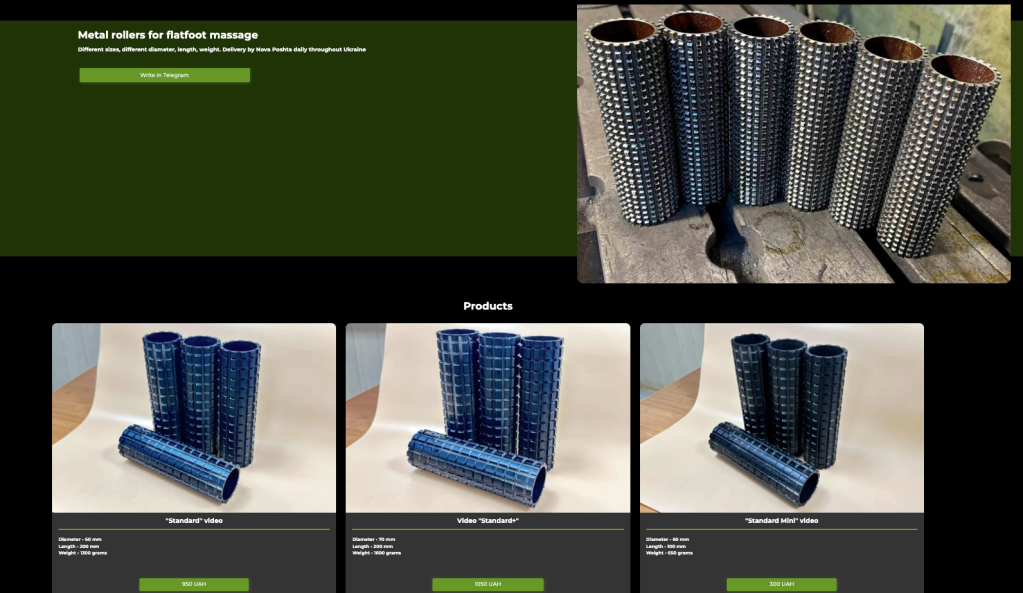
Update – 6/6/24: Some examples of well made, finely machined Ukrainian fragmentation sleeves.

The sleeves seen in the post above were sold by a company called ‘FixeStop‘ and are euphemistically marketed as ‘Men’s metal massage rollers: – for feet; – for legs’. Various sises between 100mm and 200mm of various weights are offered at prices ranging between 300 to 950 UAH.

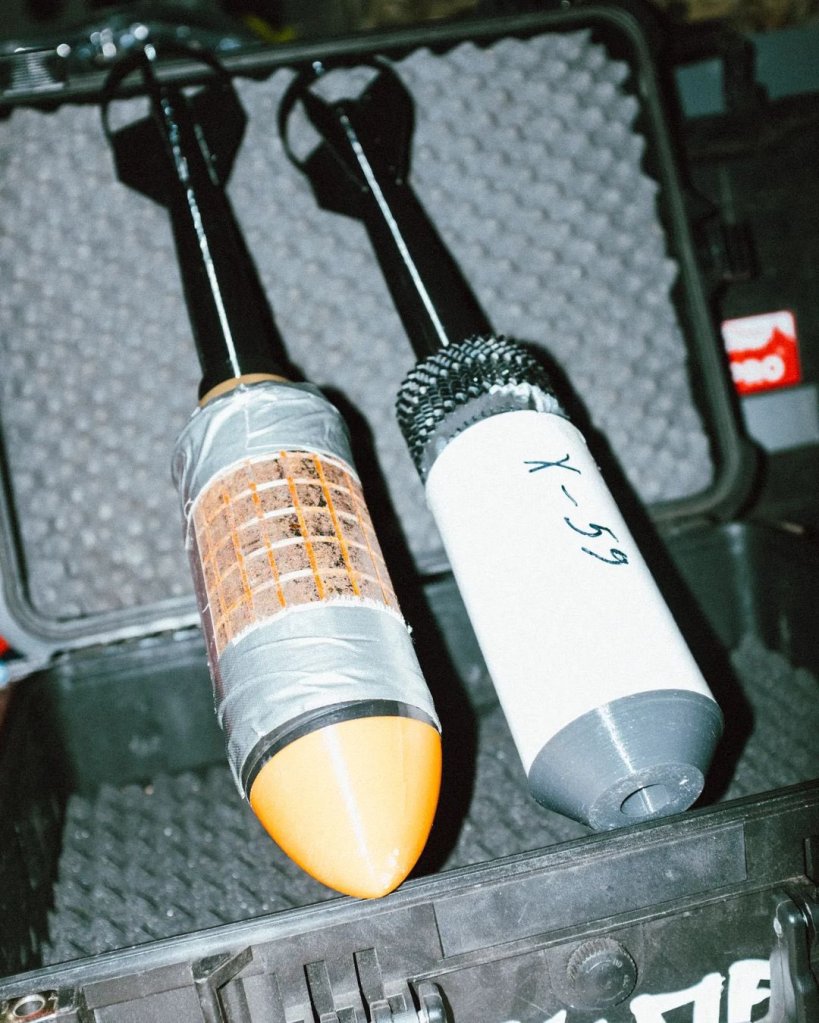
Update – 16/7/24: An improvised drone dropped munition with a 3D printed tail tube and cone with a frag sleeve.

Thank you to Ukraine Weapons Warfare, AFV Recognition, AbraxasSpa and Weapons Illustrated for their help tracking down some of the imagery used in this article/video.


Support Us: If you enjoyed this video and article please consider supporting our work here. We have some great perks available for Patreon Supporters – including early access to custom stickers and early access to videos! Thank you for your support!


Ukrainian RPG-Shovel

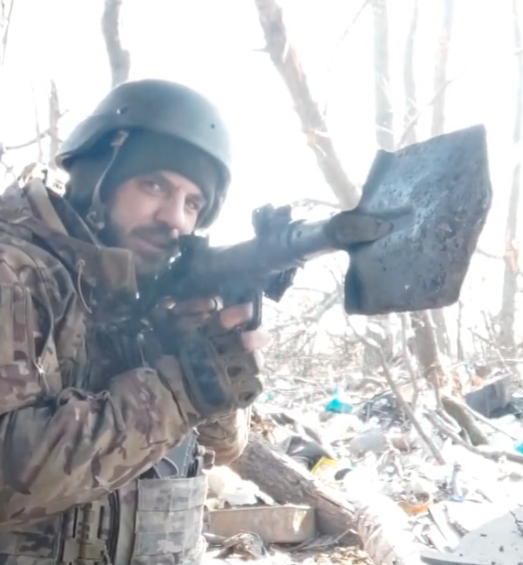
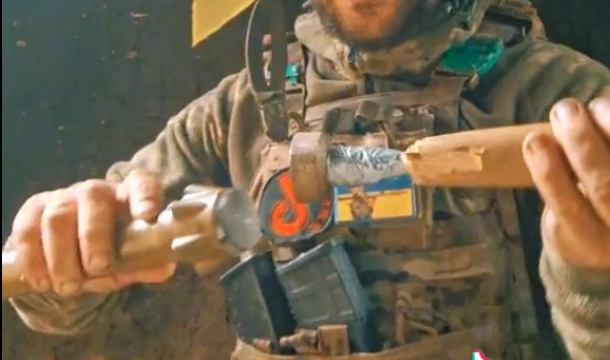
On 17 October, a Ukrainian combatant shared a short video on his TikTok channel demonstrating a new piece of ordnance – the RPG Shovel. Earlier the same combatant had joked by sliding an entrenching shovel into the barrel of the RPG-7. Several other combatants have been seen to do this during the ongoing war in Ukraine but this combatant decided to make the joke a reality.

Ukrainian combatant with shovel slid into RPG-7 (date, location unknown)

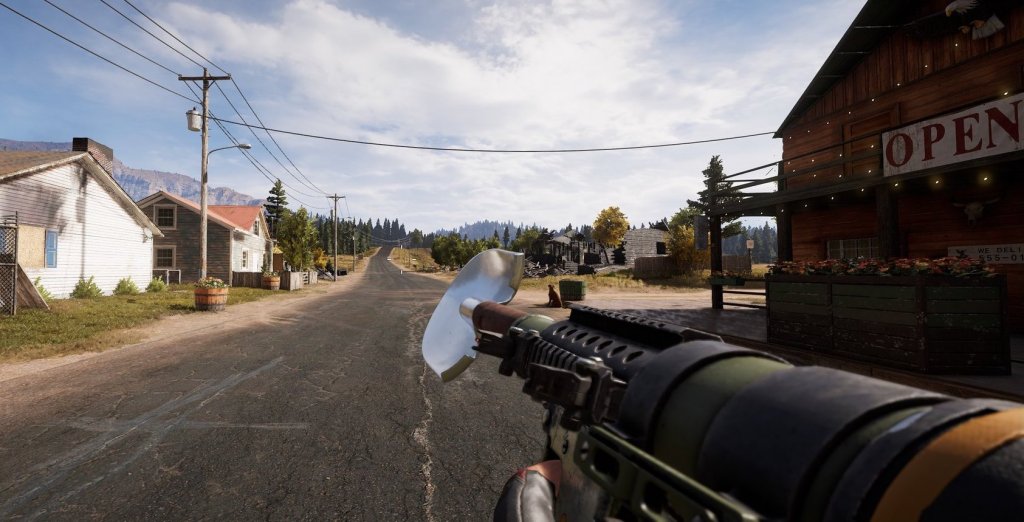
Culturally, the RPG Shovel isn’t a new thing having been seen in photograph of soldiers from other countries messing around over the years and even appearing in the 2018 video game Far Cry 5. Before that, in 2016, it was added as a mod for the game Insurgency using an old photograph of Russian troops as reference. Whether this influenced the Ukrainian combatant to create his RPG-Shovel is unknown.

Far Cry 5’s RPG-Shovel

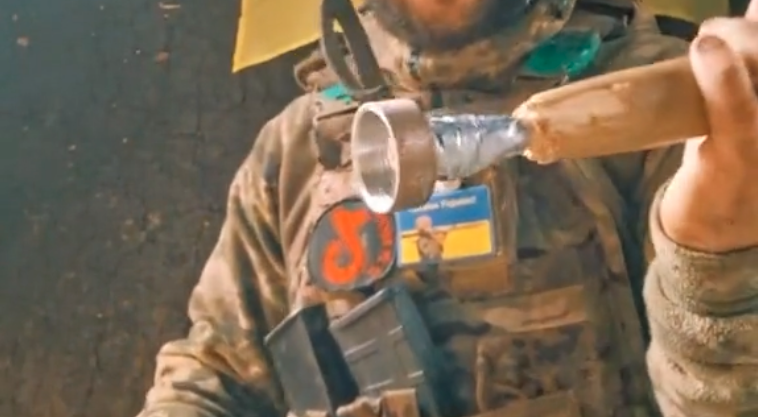
In the Ukrainian combatant’s video he shows how an adapter has been attached to the wooden handle of the shovel and to a threaded cap which allows the shovel to be screwed onto a PG-7S motor. The shovel itself appears to be an MPL-50 pattern shovel. The combatant then fits a booster onto the motor and takes the RPG-Shovel outside to be fired. It can also be seen that they have written a suitably derogatory message to the Russians on the shovel’s handle.

Homemade adapter & launch

The Ukrainian combatant then launches the RPG-Shovel at a high-angle. Its unclear what sort of range was achieved with the shovel’s aerodynamics being terrible. Sadly, the camera operator’s reasonable caution means that the actual launch is partially obscured but just enough is visible. It’s probably not the first time a shovel has been launched from an RPG, but it is probably the best in terms of close-ups and detail. Regardless, its seems to be a great example of bored soldiers finding amusing, ‘productive’ ways of occupying their time.

For other examples of improvised RPG warheads see our article/video on the fire extinguisher warhead developed by the Sheikh Mansur Battalion.


Support Us: If you enjoyed this video and article please consider supporting our work here. We have some great perks available for Patreon Supporters – including early access to custom stickers and early access to videos! Thank you for your support!


More Russian & Ukrainian MT-LB Adaptations

In June we looked at MT-LB adaptations which have been pressed into service by both sides. Check out that video/article here. In recent weeks there have been more sightings of some of these adapted vehicles.

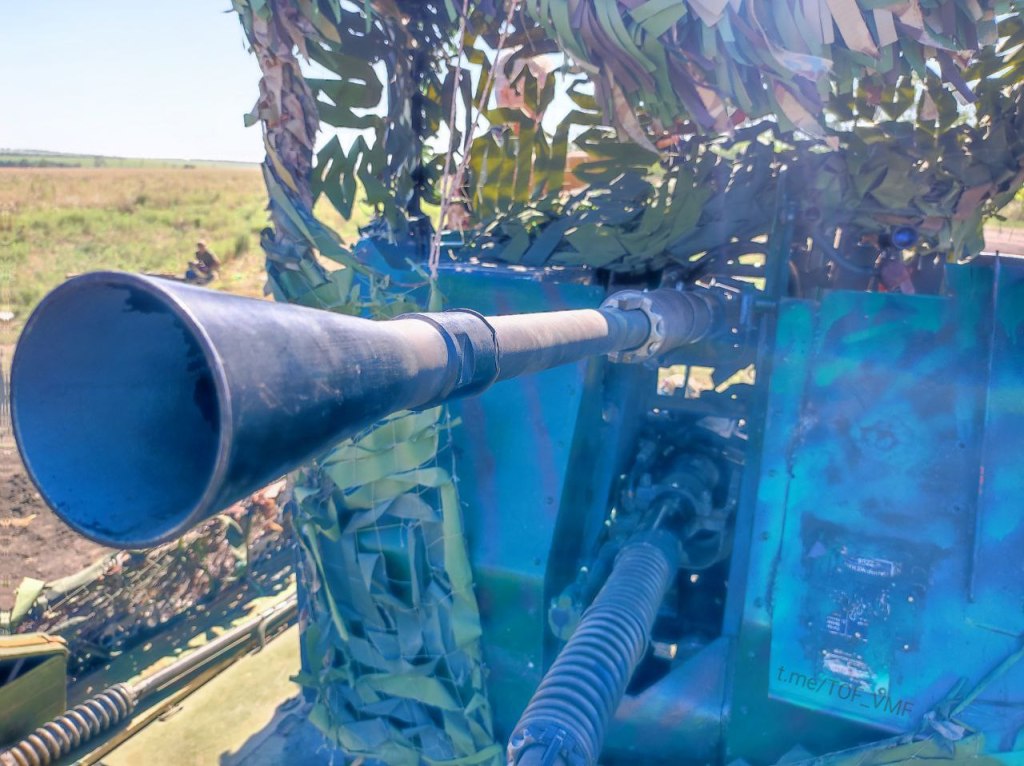
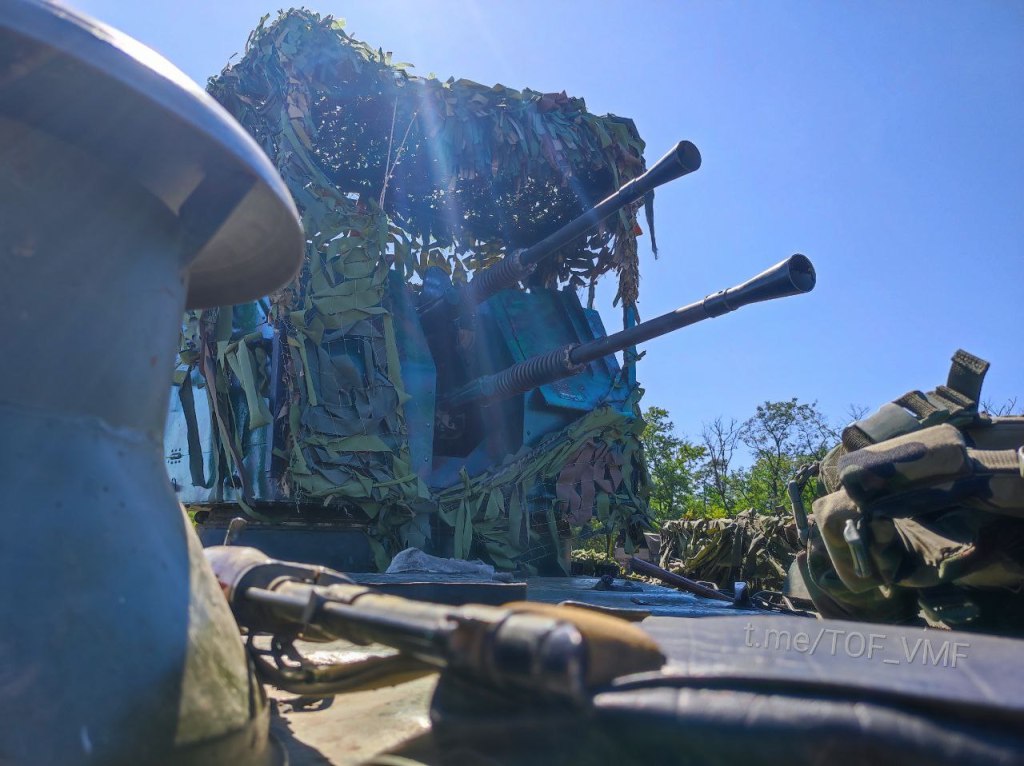
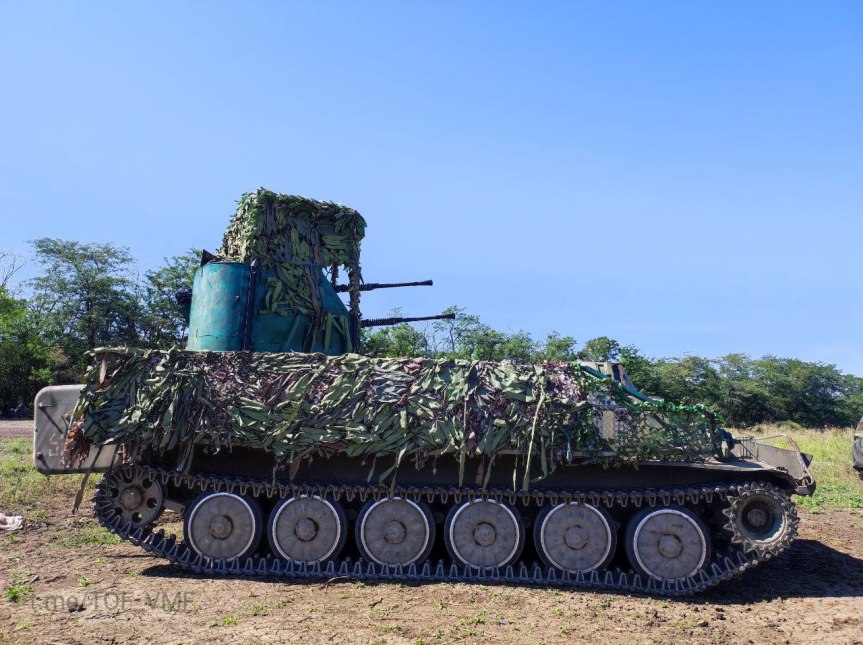
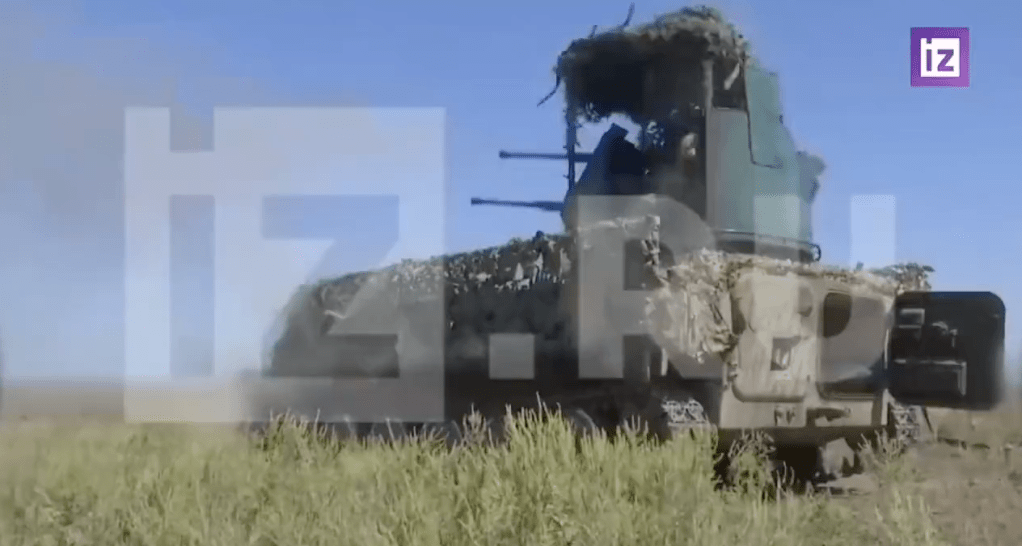
On 3 September, the first video of one of Russia’s MT-LBs fitted with a 2M-3 twin 25mm naval gun turret was shared online. The turret appears to be extremely unstable, shaking violently, its hard to imagine this weapon system being useful for anything beyond suppression.

A Russian MT-LB mounted with a 2M-3 turret (via IZ)

A week later on 10 September a short clip of another Russian MT-LB with a 2M-3 turret was published by Russian news outlet Izvestia. Again the turret seen firing appears to be very unstable with not only the vehicle rocking on its suspension but also the turret bouncing in its mount.

Intriguingly both of these MT-LBs appear to have the 2M-3 turrets mounted much lower than the vehicles seen earlier. The MT-LBs seen earlier appear to have the turrets mounted higher in tower-like structures.

An S-60 MT-LB during an exercise in Russia (via social media)

Another adaptation not covered in our earlier video/article is the mounting of 57mm S-60 anti-aircraft guns on MT-LBs. These have been seen somewhat regularly and most recently shared via Russian telegram channels shared video of S-60-armed MT-LB training with a newly mobilised, but unnamed, unit in Russia’s central military district. These vehicles typically provide direct fire support against ground targets.

An MT-LBu fitted with a 14.5mm KPVT in a RWS (via 42nd Separate Mechanised Brigade)

In terms of Ukrainian adaptations there have been further sightings of one of the vehicles we looked at last time, an MT-LBu variant which has been upgraded with additional armour and a remote weapon station mounting a 14.5mm KPVT heavy machine gun. These are believed to be in service with the 42nd Separate Mechanised Brigade and some sources have described them using the designation BMP-1LB.

A video showing several of the adapted MT-LBus was shared on 7 September, showing four of the vehicles. On 13 September the 42nd Separate Mechanised Brigade shared a series of photographs featuring the vehicles. There hasn’t yet been any video of these vehicle’s remote weapon stations being fired so it is unclear if they have been stabilised better than their Russian counterparts.

MT-LB with a BM-7 Parus turret (via social media)

One adaptation which was not mentioned in our earlier video/article was the combining of an MT-LB with a BM-7 ‘Parus’ weapon module. The BM-7 normally comprises a 30mm ZTM-1 auto cannon, a coaxial PKT machine gun, a 30mm automatic grenade launcher and several anti-tank guided missiles. These are typically paired with the BTR-4. MT-LBs mounted with the BM-7 don’t appear to have the ATGMs fitted. These MT-LBs were first seen in July, with a video of two of the vehicles on the move shared on 21 July. Another video showing one of the vehicles firing has also been shared.

The ubiquitous MT-LB, while lightly armoured, continues to offer one of the best available platforms adaptation, if you enjoyed this article/video – check out our earlier work on MT-LB adaptations here.

Update 11/7/24:

Russian marines of the 155th Guards Brigade operate an MT-LB with a 2M-3M twin mount.


Support Us: If you enjoyed this video and article please consider supporting our work here. We have some great perks available for Patreon Supporters – including early access to custom stickers and early access to videos! Thank you for your support!


Russian Pilots Fielding PP-2000s & PLK Pistols

On 29 September delegations from the defence departments of member states of the Russian-led Commonwealth of Independent States were shown around the JSC Instrument Design Bureau in Tula. During the tour Russia’s defence minister Sergei Shoigu demonstrated a PP-2000 submachine gun. Also present was Deputy Commander-in-Chief of the Aerospace Forces Yuri Grekhov who explained that the PP-2000 is now part of the emergency kit stored under Russian aircrew seats.

Grekhov’s statement confirms what has been anticipated for a while. Back in June, TASS reported that during the International Naval Show (IMMS-2023) Rostec/High-Precision Complexes (the parent company which offers the PP-2000) had confirmed that the weapon was “currently undergoing trials in the Aerospace Forces (VKS) of the Russian Federation.” This was confirmed by a post on Rostec’s website on 19 June.

A PP-2000 and a new PLK pistol at the range for testing (via FighterBomber)

The PP-2000 is a compact submachine gun, designed at the Instrument Design Bureau in Tula in the 1990s. The weapon is a conventional blowback which feeds from 20 or extended 44 round magazines which are loaded into the pistol grip. It is chambered in 9x19mm and can fire Russia’s standard 9mm ammunition or the armour piercing 7N21 and 7N31 rounds. It has a reciprocating charging handle which runs parallel over the barrel. It is characterised by its front grip which connects to the pistol grip to act as a large trigger guard. It can be fitted with a suppressor and has a side folding stock and a small length of rail on the top of the receiver for mounting optics. Other accessories such as lights or lasers can be attached to the base of the front grip. According to Rosoboronexport the weapon weighs 1.4kg (or just over 3lbs) unloaded and with the stock folded is 35cm (13.7in) in length.

Typically, aircrew have carried Makarov or Stechkin pistols but better equipping Russian pilots has long been a consideration with not all aircraft able to fit larger weapons such as rifle or carbines. This has reportedly been driven by experiences in Syria and more recently in Ukraine. During the battle of Hostomel airport in March 2022, a damaged KA-52 attack helicopter was forced to make an emergency landing. It’s crew were able to dismount and take up positions and await retrieval. They were armed with AK-74Ms, however, the confines of other Russian aircraft do not allow rifles to be carried.

PP-2000 (Rosoboronexport)

In a December 2019 interview with Lt.Gen. Nikolai Gostev, commander of the 4th Air and Air Defence Forces Army, Interfax asked if PP-2000s will be fielded. Gostev replied [machine translated]: “Currently, several promising samples of portable emergency supplies for flight personnel are being tested, which also include promising samples of small arms. The tests are carried out by specialists from the Gromov Flight Research Institute, and after their completion it will be decided which portable emergency supplies will be put into service.”

In May 2021, it was reported that Shoigu had directed the process for a compact personal defence weapon to be added to aircrew’s survival kits to be expedited. At the same time the PPK-20, from Kalashnikov Concern was also suggested as an option. Russian news reports noted that personal defence weapons would be added to the emergency kits aboard Su-27, Su-30SM, Su-35, Su-57, MiG-29 and MiG-35 as well as Su-24 and Su-34s.

Russian pilot demonstrating a PP-2000 during a Zvezda news report (Zvezda)

On 23 June 2023, during the failed Wagner advance on Moscow, General Sergey Surovikin, then Commander-in-Chief of the Russian Aerospace Forces, appeared in a video calling on Wagner to stand down. In his hand could be seen a PP-2000 outfitted with an optic, light and suppressor.

Surovikin with PP-2000 (Russian MoD)

In September 2022, the Fighterbomber telegram channel shared a post lobbying for the AM-17 rather than the PP-2000, rightly arguing a pistol calibre submachine gun is next to useless against combatants wearing body armour. Another major Russian telegram channel, Повёрнутые на Z войне, welcomed the wider issue of the PP-2000 in a post from late December 2022, sharing a photo of a PP-2000. The post also suggested that until then only Guards Aviation units had been issued them.

In January 2023, Fighterbomber began to report on the apparent testing of the PP-2000 and the PLK pistol, claiming that despite the order for three months testing positive reports from those involved had already been ordered.

A PP-2000 belonging to crew of a in an MI-8amtsh cargo helicopter, December 2022 (via @nrxnb)

In April 2023, Fighterbomber posted a review of the new PP-2000 and PLK. The post described the PLK as “a great gun. Powerful, comfortable and precise.” Praise for the PP-2000 was less forthcoming with the post noting: “PP-2000 is still jamming every now and then… still need 44-round magazines and a 7N31 cartridge for the PP.”

A new PLK pistol (via FighterBomber)

On 2 October, following Shoigu and Grekhov’s comments at Tula, Zvezda published a short report from a survival training centre. During the clip an Su-30SM pilot explains that “particular attention was paid to tactical shooting, survival in extreme conditions and tactical medicine.” The video shows pilots training in escape and evasion skills and sees them deploy their new PP-2000s. The video concludes with the two air crew firing both the PP-2000 and the PLK at the range.

The PLK pistols, from Kalashnikov Concern, are the latest iteration of the Lebedev pistol introduced in 2015 as the PL-14. The PLK was reportedly adopted by Russia’s Ministry of Internal Affairs in October 2021 but sightings with Russian pilots are the first sightings of regular Russian military use. If more of the PLKs appear in use they’ll be a topic for a future article/video.


Support Us: If you enjoyed this video and article please consider supporting our work here. We have some great perks available for Patreon Supporters – including early access to custom stickers and early access to videos! Thank you for your support!


Bibliography

PP-2000, Rosoboronexport, (source)

Other sources linked in text