Black Storm: Converting Ukraine’s AK-74s into Bullpups

We’ve looked at a number of different bullpups currently in use with Ukrainian forces, ranging from Tavors to the locally developed Malyuk/Vulcan – check out those articles/videos if you haven’t already. 

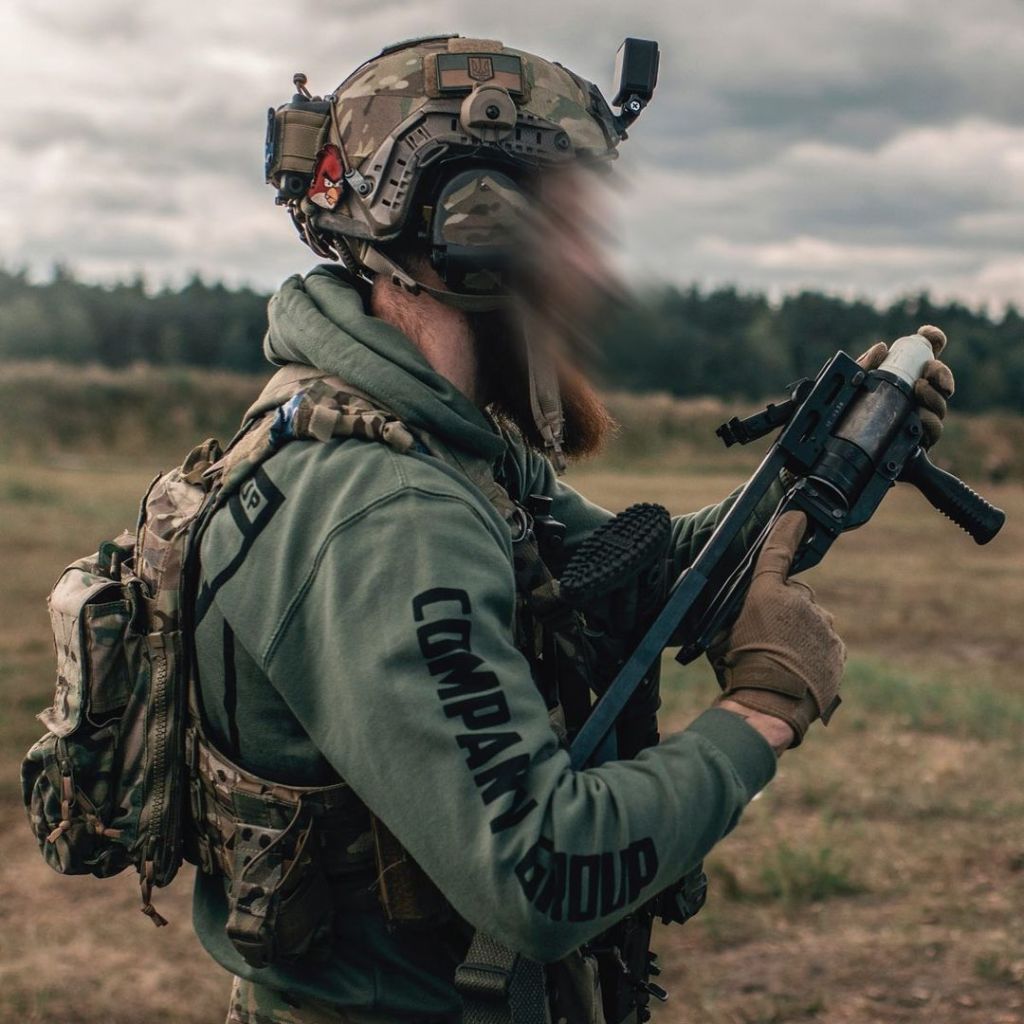
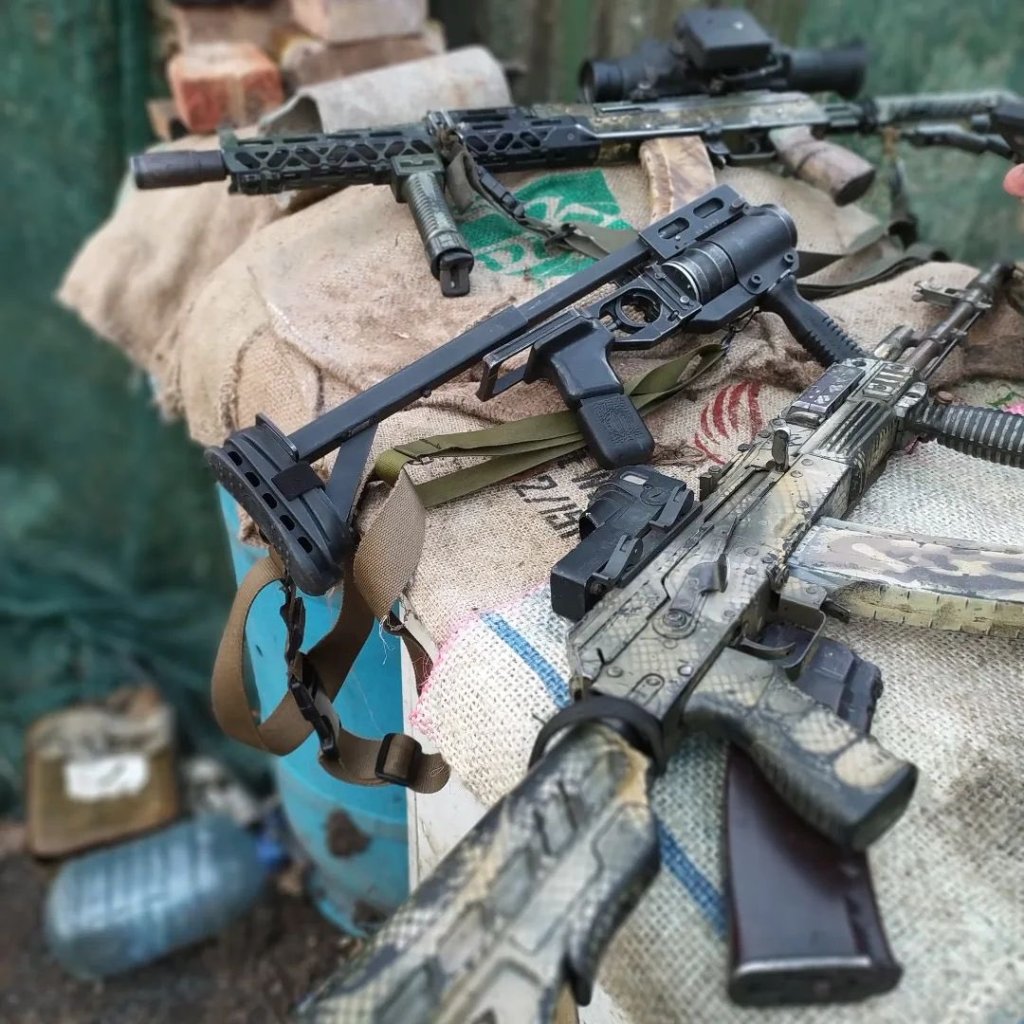
In this article/video we’re going to take a look at another Ukrainian development which converts a standard AK-74 into a bullpup. The Black Storm BS-series of kits has been around since the mid 2010s and in recent months more and more imagery of Ukrainian personnel with Black Storm bullpup AKs has been emerging. 

The Black Storm kits are compatible with both AKM and AK-74 pattern rifle and the relatively simple designs allows the conversion of a conventional rifle into the bullpup with not alterations to the base rifle. 

A suppressed AK-74 next a suppressed BS-3 illustrating the overall length difference (via Black Storm)

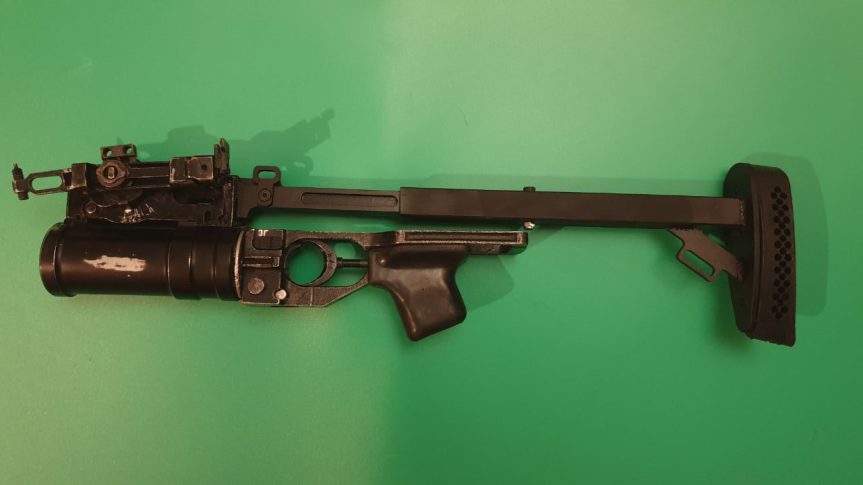
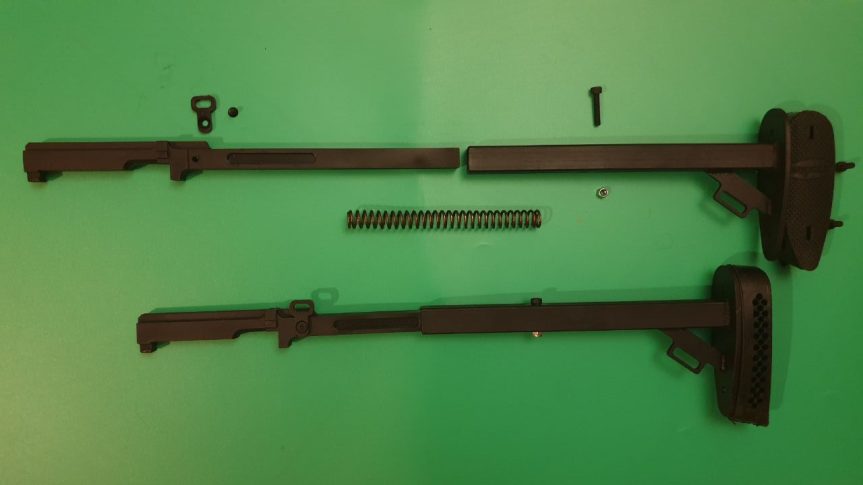
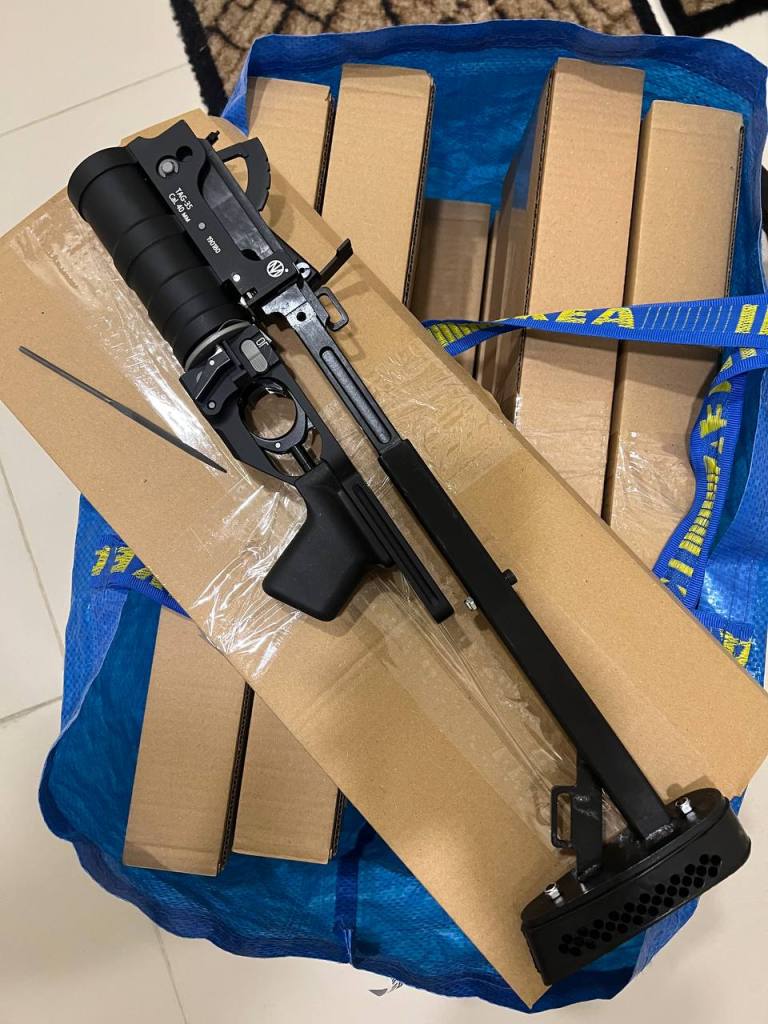
To convert the rifle the stock furniture is removed, the pistol grip, forend and butt. The trigger transfer bar is then put in place and the lower receiver of the chassis is then attached which holds it in place. The new lower receiver has the pistol grip already attached. The butt assembly is then slide into place – this also covers the original trigger but leaves the magazine release exposed. There is a hinged cheek piece attached to the butt assembly. This can be pivoted out the way for access into the receiver and to allow the gas piston and bolt assembly and receiver cover to be placed. Finally, a top cover is slotted into place and retained by a catch to the lower. This covers the gas tube and barrel.   

The kit appears to be made from simple sheet metal stampings and is held together by slotting into pre-existing parts of the rifle’s original receiver and a couple of screws. While the chassis obviously adds weight to the weapon it does have the benefit of shortening the rifle and also shifting its centre of balance back.

The BS3 adds no additional controls to the rifle and the weapon is manipulated using it’s existing charging handle and safety-selector lever. The BS4 was developed in 2017 and introduced in 2018, adds a number of new ergonomic features with a left-side forward charging handle which makes the rifle much easier to cock and a new thumb actuated safety – which probably acts on the trigger transfer bar. A new extension to the magazine release lever has also been added to make magazine changes easier. Black Storm describe the BS4 as: “easy to put on and take off in the field, without intruding into the weapon. It is enough to remove the butt and stock, and you can install the Bullpup with one mounting bolt.” Both the BS-3 and BS-4 have a length of Picatinny rail under the lower receiver and require an optic riser rail for mounting an optic.

A BS-3 c.November 2022 (via Black Storm)

How well an optic mounted on a rifle in a Black Storm kit retains zero is unknown but the mount is fitted over the rifle’s rear sight block and held in place by a bracket under the barrel. This is then secured by four small bolts. 

The company says that both the BS-3 and BS4 are made from 1mm stamped steel and polymer. Black Storm list the weight of an AK-74 with the BS-3 kit installed, but without a magazine, as 3.4kgs. The weight of the BS-3 kit’s components is 1.2kg. A 2018 video, however, suggests that the kit’s components weigh just over 1.6kg (not including the rifle’s receiver, barrel and bolt assembly).

Black Storm list the weight of an AK-74 with the BS-4 kit installed, but without a magazine, as 3.9kgs. The weight of the BS-4 kit’s components is 1.7kg. Once installed with either kit the rifle has an overall length of 70cm (27.5in) down from 94cm (37in) for a standard configuration AK-74. 

A video review of the kit by one of the Ukrainian soldiers who has used it in the field

Black Storm list the BS-3 at 14,250 UAH ($387) and the BS-4 at 21,500 UAH ($585). From the information available it appears that the kits are purchased by servicemen privately, to adapt their issued service rifles.

A BS-5 has been developed, it’s unclear if this is in production but it is listed on Black Storm’s site and is said to be available. It has a length of rail along its top cover removing the need for an optic riser and also allowing the use of back up iron sights. It’s price is listed at 28,500 UAH ($775).

BS-3 with an EOTECH HWS XPS2, a laser/light module and a custom green camouflage paint job (via social media)

Photos of the BT-2 were shared in January 2015 and an early version of the kit was displayed at a Ukrainian military exhibition in 2015, the BT-3 and BS-3 variants were introduced in 2017 and 2018. The guns have seen combat use since at least 2017, with Black Storm sharing photos of a BS-3e used in Donbas in July 2017.  Since Russia’s invasion in February 2022, a number of photos and videos have shown the conversion kits in use with personnel from a variety of units.

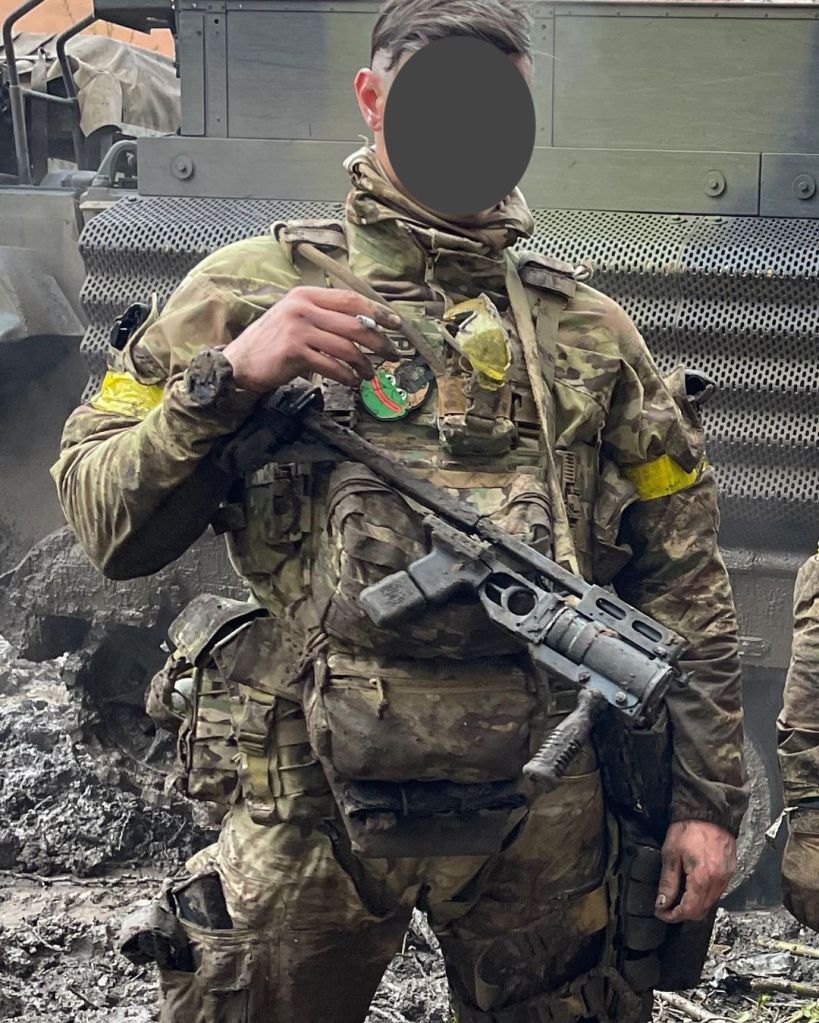
During the first week of April combatants from the Georgian Legion shared a photo featuring a BS-3. In July a member of Azov Dnipro was photographed with a BS-3 outfitted with a thermal optic, bipod and suppressor. Interestingly you can see the remains of a green paint on the AK-74 receiver while the Black Storm kit has not been painted.  

In October 2022 a series of photo featuring rifles outfitted with the kits were shared. Two were shared by a member of ‘Cats Squad Special Company’ showing a BS-3 with an EOTECH HWS XPS2, a laser/light module and a custom green camouflage paint job.

A Black Storm BS-4 photographed at the front around Bakhmut, February 2023 (via Yuri)

The member of the Cats Squad shared another photo in November 2022, the rifle can now be seen fitted with a suppressor. On 7 January, photographer Viktor Fridshon took photos of Ukrainian soldiers in Krasna Hora, Donetsk. One of the soldiers had a BS-3 fitted with a micro red dot sight and painted in a green camouflage scheme. A the beginning of February a video of a Ukrainian combatant showing off his BS-3 was shared on line, in it he explains its features and demonstrated how handy it is. He has a vertical foregrip fitted and an Aimpoint red dot.

Most recently in early February, Yuri was kind enough to share some photos he took of a Ukrainian soldier’s BS-4, identifiable by the visible left-side charging handle and safety on the pistol grip. The rifle was kitted out with a vertical foregrip, suppressor, a thermal optic, laser/light module and a red dot sight on a 45-degree mount.

It’s unclear just how many of these Black Storm kits are being used by Ukrainian personnel and this brief look at examples from the field can’t be considered a representative survey. The kit itself, while heavy, does have the advantage of shortening the rifle’s overall length which is useful in some of the urban and close quarter fighting that’s ongoing. The fact the base rifle doesn’t have to be modified is also useful and means that users don’t have to physically modify issued service weapons. 

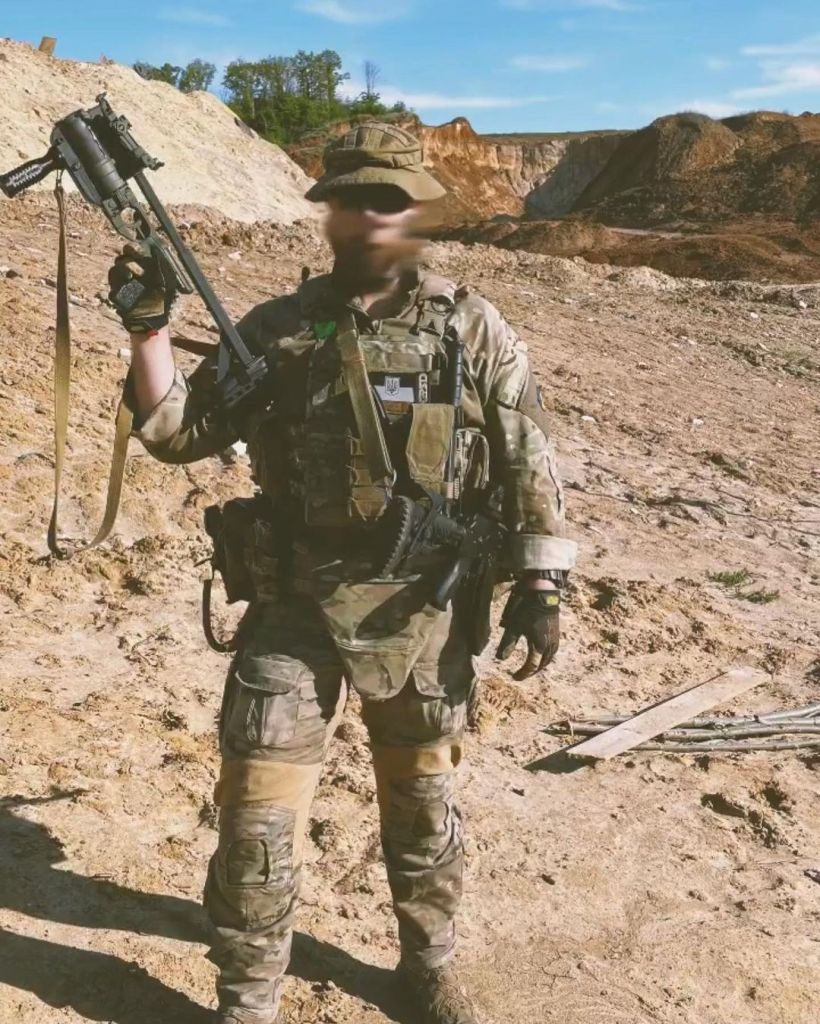
Update – 8/1/24: Some additional photos of Blackstorm conversions in use.

Update – 22/04/24: Recent photos of a Ukrainian SOF member with a BS-4.


Support Us: If you enjoyed this video and article please consider supporting our work here. We have some great perks available for Patreon Supporters – including early access to custom stickers and early access to videos! Thank you for your support!


Bibliography:

Thanks to Yuri, the guys at Streaking Delilah, War_Noir and Abraxas Spa for their help with this video.

Ukrainian Black Storm BS-4 Bullpup Conversion Kit for AK Rifles, TFB, (source)

BS-3, Black Storm, (source)

BS-4, Black Storm, (source)

BS-5, Black Storm, (source)

Black Storm’s Facebook Page (source)

Bullpup AK47/74, Reibert.info, (source)

Right Arm of the Free World: FN FALs in Ukraine

It’s a year since Russia’s full-scale invasion of Ukraine and since last February we have seen a massive influx of Western weapon systems into Ukraine. We’ve seen everything from artillery to infantry weapons and the breadth of small arms has ranged from brand new Polish MSBS Grots and M4A1s to M14s. In recent months another Cold War icon has begun to appear in imagery from the fighting – the FN FAL – the ‘Right Arm of the Free World’.

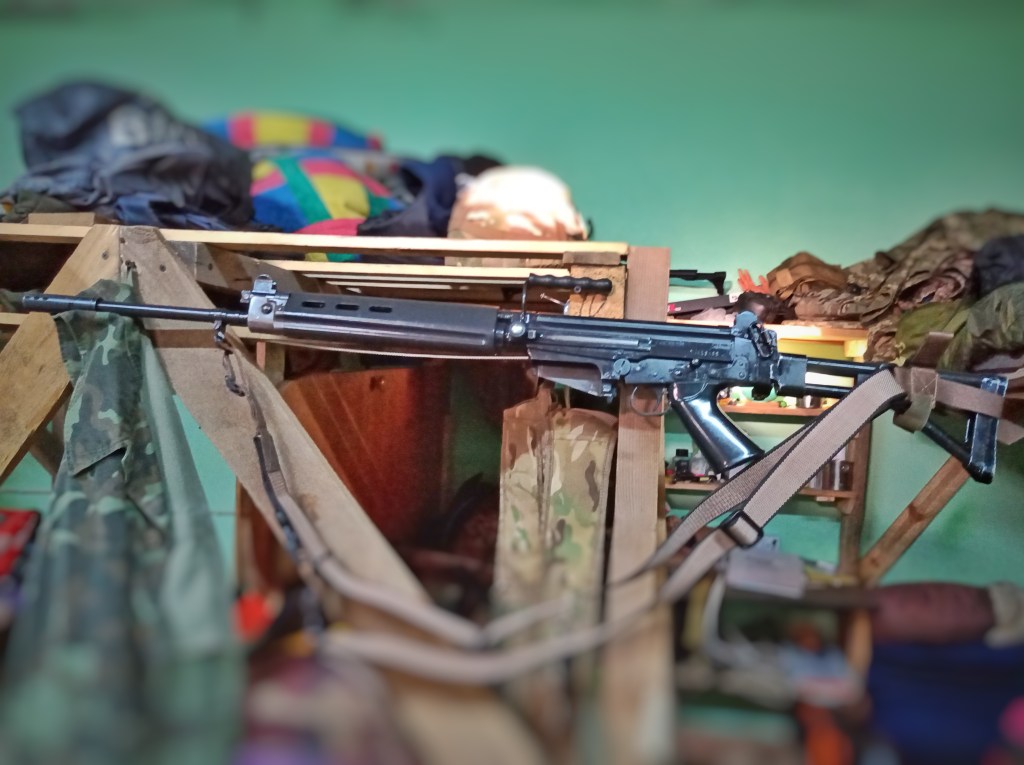
To date both standard fixed stock and folding stock FALs have been seen in use, though appearances are relatively rare. The first sightings of FALs came in June 2022 when two photos of fixed stock 50.00 metric pattern Type 3 FALs were shared. The first in the second week of June and a second at the end of the month. The second photograph was posted by Ukrainian combatants near Nikolaev, Mykolaiv region. It is possible that both of these rifles may have been a civilian-owned rifle pressed into service.

The most common variant seen in open source imagery is currently the 50.61 or PARA FAL with a side-folding stock and a full length 53cm (21.0 in) barrel. The rifles could also be the visually identical 50.64, which has an alloy receiver, though these rifles are less common. All of the rifles seen in the photographs have Type 3 receivers which date them to post 1973 production. Sadly, photographs showing the weapon’s serial number ranges aren’t available.

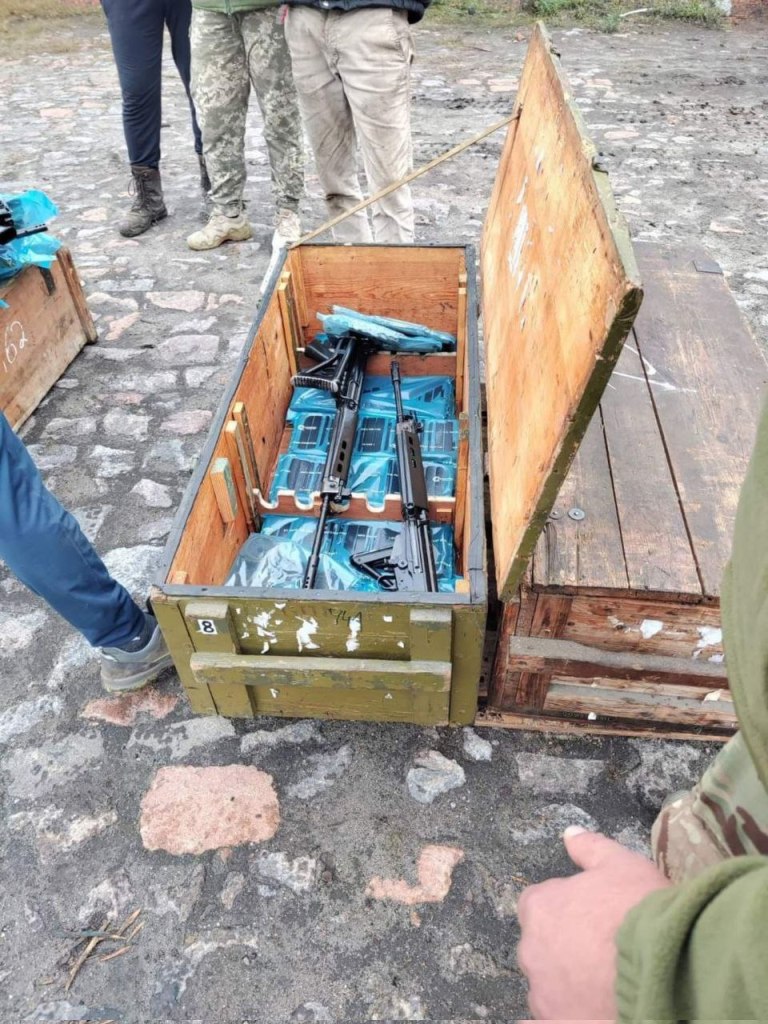
A photograph of several crates of these still in their plastic wrapping shared in early October 2022. This is potentially the first sighting of the folding stocked rifles in Ukraine. 

In late November a photograph of five PARA FALs in the same sort of crate was shared and said to have been taken near Bakhmut.

On 10 December, Dmytro Mrachnyk, the commander of a mortar platoon with a Ukrainian Territorial Defence Force unit fighting around Bakhmut, shared his first photograph with his PARA FAL. I contacted Dmytro and he was kind enough to share his thoughts on the rifle. He explained that he liked the rifle and has only had one stoppage, he said: “it jammed a cartridge case once during an intense fight, but the problem was quickly resolved.” He also explained that he really likes the 7.62x51mm round and that he had 9 magazines for the rifle.

He confirmed that the rifles are select fire and when I asked him about ammunition availability for the 7.62x51mm FALs, Dmytro said that there is some available but it can’t be found everywhere.

He said that so far he’s only seen the FALs in use with elements of his unit. He opted for the FAL, to replace his AK-74 when he joined the unit.

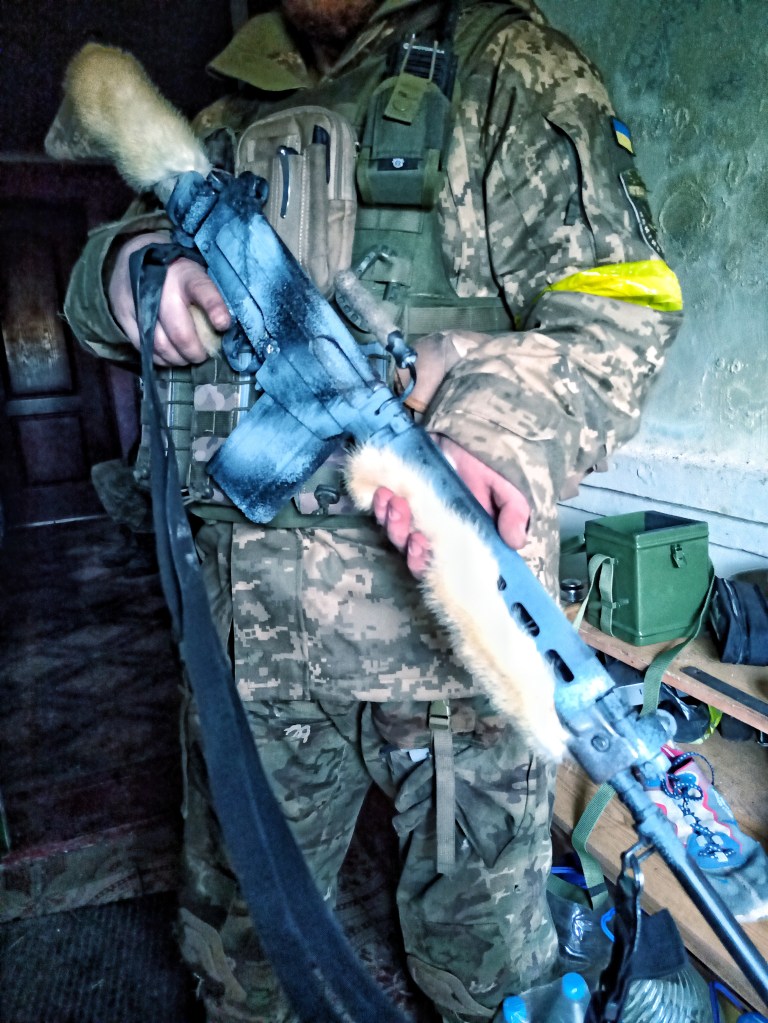
On the 22 December Dmytro shared a photograph of a PARA FAL which had its forend and stock covered in fur. I asked him about this and he explained that: “My sergeant decided to disguise the rifle for the winter – he partially painted it white and glued on a light fur found among the garbage in Bakhmut.”

On 30 December, Ukrainian personnel shared an update video from Bakhmut, one of the soldiers can be seen holding a PARA FAL. Several days later, in early January 2023, the same soldiers shared another short video filmed in a town square in Bakhmut, again the FAL can be seen. 

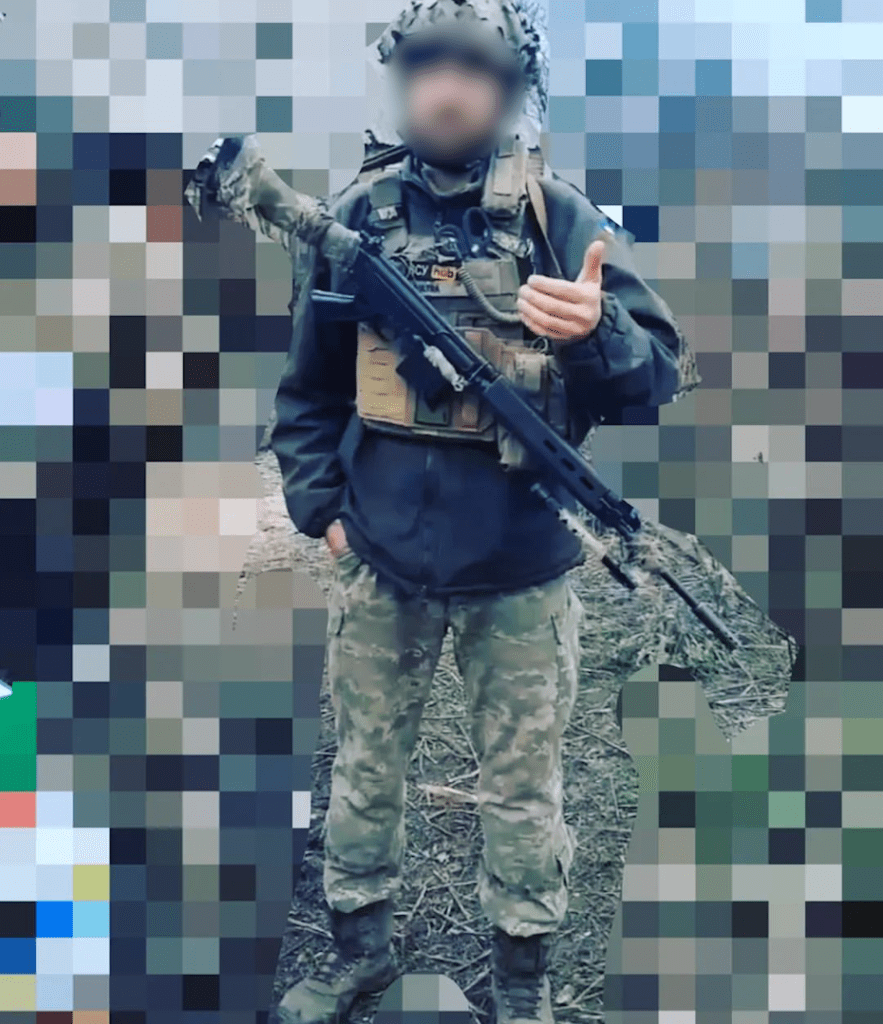
Our second sighting of a fixed stock FAL came on 31 December when another Ukrainian combatant shared a photograph holding a 50.00 FAL, with some scrim wrapped around the butt and carrying handle and a bipod attached. He wished to remain anonymous but was kind enough to share his thoughts on the FAL.

He explained that he was issued the FAL instead of a UR-10 (UAR-10/Z-10) DMR rifle and that he was the only one in his company to be issued one. An optic was issued with the rifle but no means of mounting it to the rifle. He was also only provided with two 10 round magazines. Even without an optic he said that: “As a marksman, you can work at a maximum of 500m” and it “hits quite accurately with single shots, automatic fire gives a very large spread, very loud.”

Commenting on the rifle itself he noted that he believed the rifle to date from 1976 and that while ‘cool and a little unusual’ it was “picky, she is afraid of dirt, she was in a swamp and the action almost did not work.” He also felt that it was ‘a little too heavy compared to the AK [AK74].”

He also pointed out that “it is very long and not convenient when storming buildings” he concluded: “In my opinion, it is already outdated and not practical and often very inconvenient.”

The most recent photograph of one I have seen dates from 15 January, when Dmytro posted a photo, holding his FAL aloft, with the caption ‘The unconquered Bakhmut stands’.

It’s unclear who provided the rifles to Ukraine as numerous nations around the world have fielded similar variants. In Europe these include Belgium, Greece, Luxembourg, Portugal and the Netherlands. Most of these, however, have long since replaced them in service. If Belgium, one of the most likely candidates, provided the rifles then they have been in store since the late 1990s.

Special thanks to Dmytro and the other anonymous Ukrainian combatant for answering my questions, Dmytro’s details are in the description box below. Thanks also to the guys at Shrieking Delilah on Instagram who have been doing great work on documenting some of the plethora of weapons turning up in Ukraine.

So far, of the three major call war battle rifles we’ve seen the M14, check out my video on that if you haven’t already, and the FN FAL but I’m yet to see any sign of HK G3s. If you spot any or anything else I should cover in a video drop me a comment below or an email


Update 06/03/23:

The social media of the Command of the United Forces of the Armed Forces of Ukraine shared a photograph of a member of the 103rd Separate Brigade of the Ukrainian Territorial Defence Force with a tricked out 50.00 FN FAL mounted with bipod and an ATN THOR thermal optic. This configuration is in line with one mentioned by the anonymous Ukrainian combatant who shared his thoughts on the FAL. This FAL with the 103rd brigade, however, has an optic mounting rail and 20-round magazines.


Support Us: If you enjoyed this video and article please consider supporting our work here. We have some great perks available for Patreon Supporters – including early access to custom stickers and early access to videos! Thank you for your support!


Bibliography:

Identifying & Tracing the FN Herstal FAL Rifle, ARES, (source)
Authors discussions with Ukrainian servicemen including Dmytro Mrachnyk [PayPal: dmrachnik@gmail.com]

Makeshift Fire Extinguisher RPG Warhead

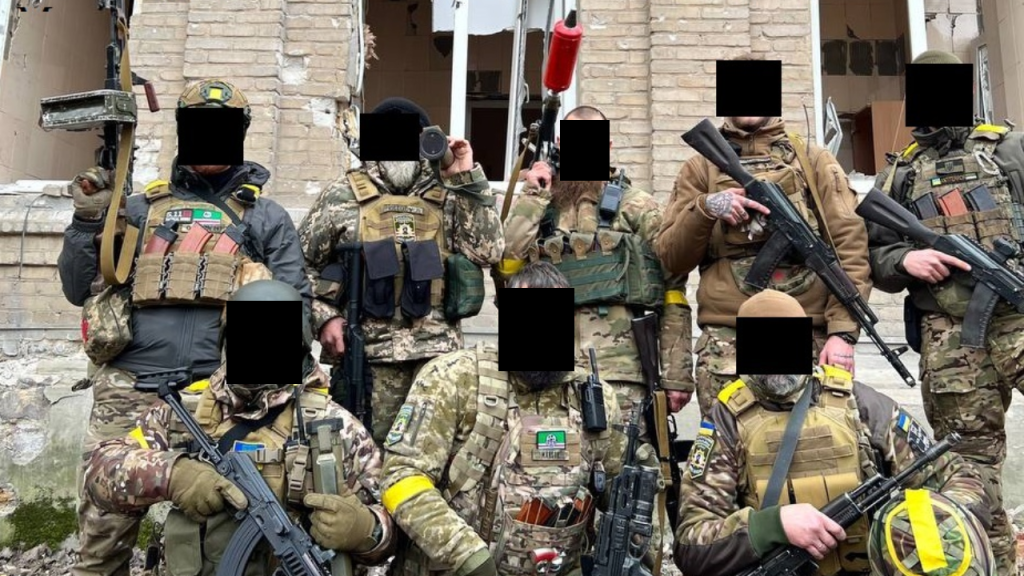
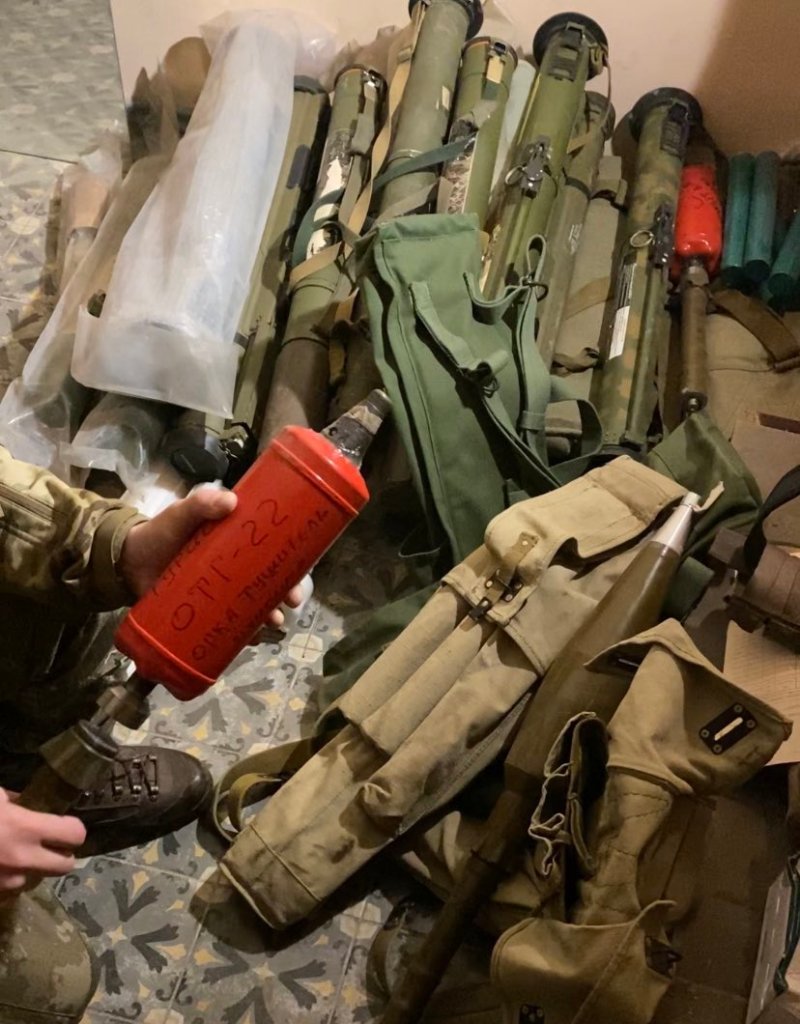
In December images of Chechen volunteers fighting with the Ukrainian Armed Forces began to feature an interesting craft-made weapon – an RPG munition made from the body of a small fire extinguisher. 

These RPG-warheads improvised from fire extinguishers have appeared in numerous videos and photographs of the Sheikh Mansur Battalion. The battalion was formed back in 2014 and is made up of exiled Chechens who reject Russian control of their region. The battalion itself is named after an 18th century Chechen military leader Sheikh Mansur. The battalion had disbanded in 2019, but reformed in March 2022 following the invasion. Since then they have reportedly seen action during the Battle of Kyiv, in the Donbas, during the Battle of Sievierodonetsk and most recently in the fighting around Bakhmut. 

There’s a long history of improvised warheads adapted for launch from the RPG-7 but I think this is the first time I’ve seen a fire extinguisher body used, at least in this phase of the fighting in Ukraine. 

A section of the Sheikh Mansur Battalion, with a craft-made fire extinguisher munition, Bahkmut, December 2022 (via Sheikh Mansur Battalion)

It appears that the fire extinguisher body has been emptied and filled with whatever explosive and shrapnel material is readily available and then adapted to fit the sustainer motor and booster assemblies. They appear to use V-429 or V-429E point detonating fuzes. These fuzes were developed for use on high explosive (HE) projectiles used by various Combloc weapon systems including the T-12 and MT-12 100mm anti-tank guns and the 115mm main gun of the T-62 and 125mm main guns of the T-64, T-72, T-80 and T-90 series tanks. Some other fuzes appear to be used too but conceivably any impact fuze would work. The inertia armed fuzes normally arm within 5-15m of the muzzle once fired from a conventional barrel. It appears that the fuzes have been epoxied into place.

Close up of a craft-made fire extinguisher munition, Bahkmut, December 2022 (via social media)

How the mass and shape of the improvised round impacts the velocity of the warhead once it is fired is unclear. But Bild correspondent Bjorn Stritzel, who recently met with members of the Battalion while writing an article about them, told me that the range of the warheads is about 100m. He noted that the Chechen’s have found them to be ‘very effective in Bakhmut’ and that ‘apparently its firepower surprised RF entrenched in houses’ according to radio chatter picked up by the Battalion. 

While we don’t have a perfect close up of them the extinguishers themselves appear to be small 2kg (or 5lbs) units which contain powder. From a quick survey of some Ukrainian websites which sell the extinguishers, the price of these ranges between 300 and 500 Hryvnias (or $8 & $14).

A member of the Sheik Mansur Battalion demonstrates a craft-made fire extinguisher munition, Bahkmut, December 2022 (via Sky News)

The fire extinguisher rounds are probably being used as anti-personnel weapons which would be fitting for the sort of fighting occurring around Bakhmut where the majority of the imagery is said to be coming from. The thin steel body of the extinguisher may provide suitable fragmentation or depending on the metallurgy it may just rupture. According to Stritzel the filling of the warheads is around 50% explosive and 50% shrapnel material. He also noted that the Chechen’s described the warhead as being “three times more powerful than a normal OG-7V [fragmentation RPG-7 round]”. 

Two craft-made fire extinguisher munitions, Bahkmut, December 2022 (via Bjorn Stritzel)

The first video featuring the improvised warheads was published by the Sheikh Mansur Battalion on their social media in around mid December. In a Sky News report from the 22 December, a member of the Battalion demonstrates how one of the extinguisher warheads is loaded. A video posted to the Battalion’s social media on the 27 December showed a number, perhaps four, of the improvised rounds stacked ready for use with booster assemblies attached. 

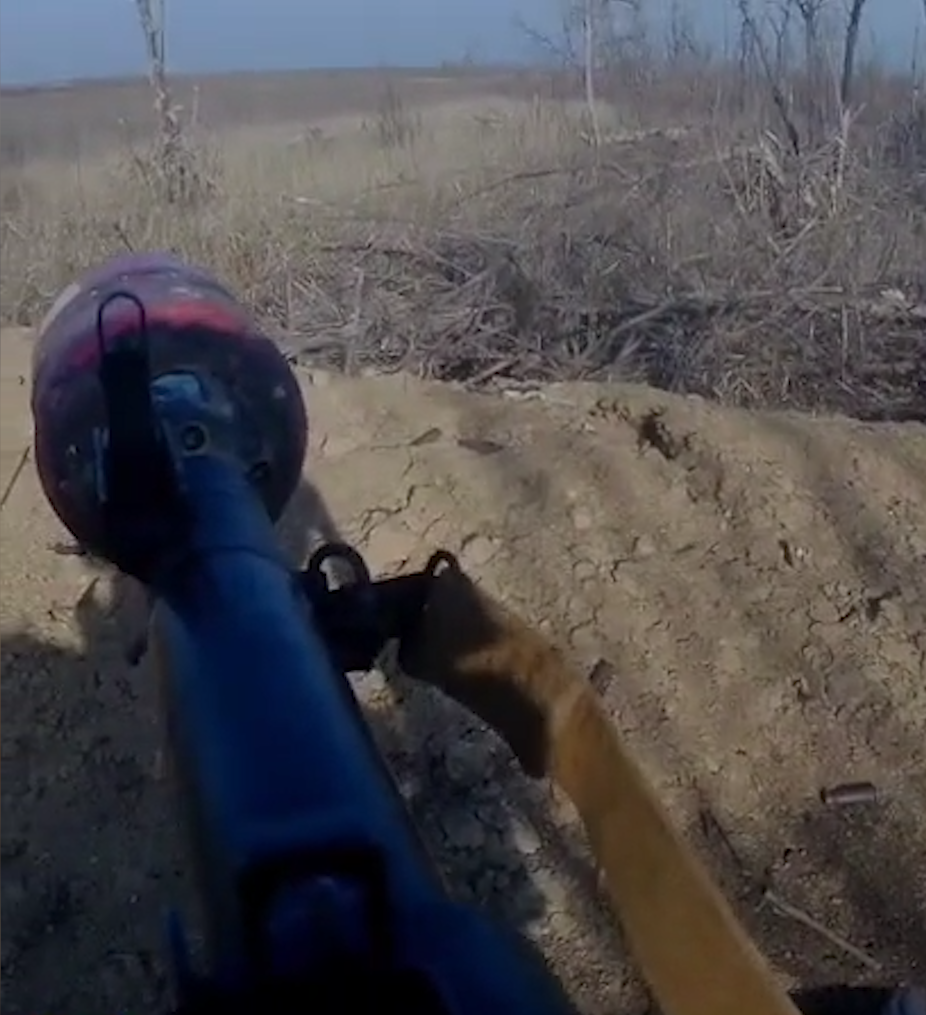
On the 31 December, the Battalion shared a photograph of a group of eight Battalion members, one of which can be seen holding an RPG-7 with one of the improvised extinguisher rounds loaded. During the second week of January, a short, undated, video of an individual in a fighting position firing one of the craft-made warheads was shared. We get some idea of the weight of the round in this clip.

The most recent video (see stills above), posted on TikTok, on the 12 January, shows two of the improvised munitions being fired. These warheads follow the same design but differ slightly in that the fire extinguisher body appears to have been cut open at the centre and then welded back together. Perhaps this is done to easier fill the munition or perhaps to shorten a longer extinguisher body. For the first time we also get to see the explosion of the rounds down range. This video again gives us a good indication of the weight of the round from the movement of the shooter. It also illustrates the distances the rounds can travel. Notably it appears to be used here against a Russian field work rather than against a building.

With fighting continuing in Bakhmut we are likely to see more of these improvised fire extinguisher rounds in use, especially if they are as effective as the Sheikh Mansur Battalion suggest.


Support Us: If you enjoyed this video and article please consider supporting our work here. We have some great perks available for Patreon Supporters – including early access to custom stickers and early access to videos! Thank you for your support!


Bibliography:

V429 Fuze, CAT UXO, (source)
V429E Fuze, CAT UXO, (source)

‘They prefer death to Russian torture’, Bild, (source)

The Chechens fighting Putin in Ukraine, Sky News, (source)
US & Canadian M67 Grenades In Ukraine

A range of Western, Eastern European and Russian hand grenades have been seen in use in Ukraine over the last eight months. One of these is the M67 Fragmentation Grenade which are believed to have been provided by the US and Canada.

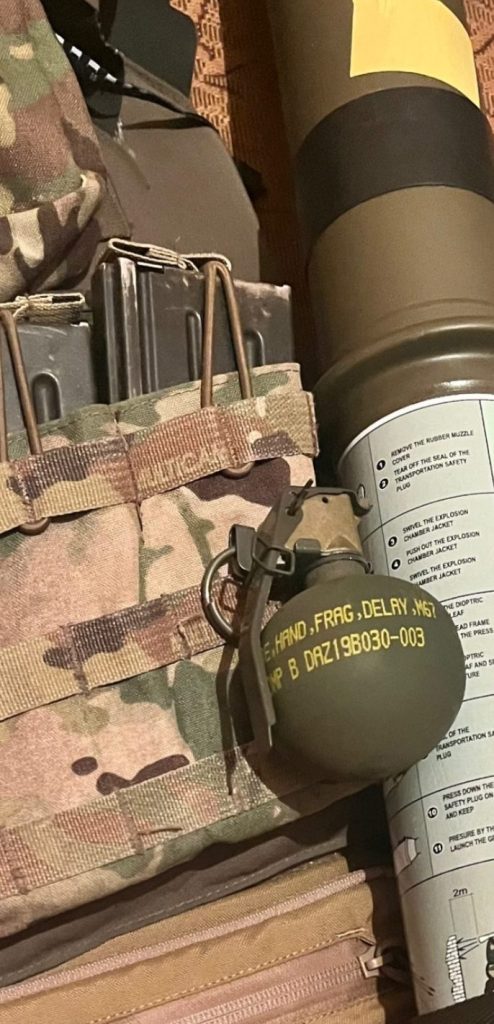
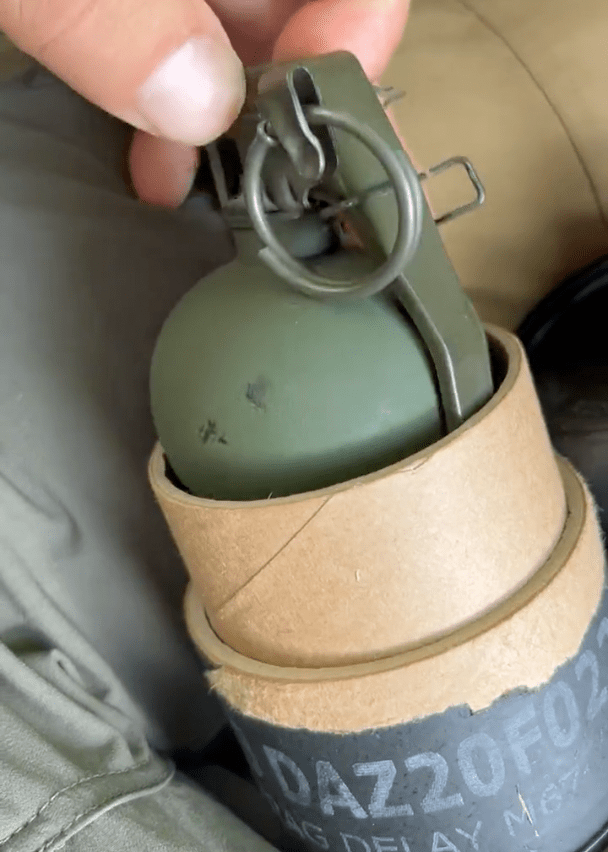
The M67 evolved from the earlier M33, it began to be fielded in 1968. They are produced by Day & Zimmermann, who state they have produced over 43 million of the grenades. It is a spherical anti-personnel fragmentation grenade which has a Composition B filling. Composition B is made up for a RDX and TNT mix. The M67 explosive filling weighs in at 6.5oz (180g). It uses the M213 fuze which provides a 4 to 5 second delay after deployment.

There is a spring clip which interacts with the spoon and safety pin. On detonation the grenade’s steel outer body fragments to create an injury radius of around 15 metres (50 feet). The fragmentation is caused by scoring on the inside of of the grenade’s outer body.

A captured M67 Grenade (via Social Media)

The US government has confirmed that hand grenades have been provided to Ukraine but specific mentions of them in the regular fact sheets breaking down aid have not been common since the spring when it was said that ‘over 1 million grenade, mortar and artillery rounds’ had been provided. Canada has previously, on 3 March, confirmed the supply of 7500 hand grenades of an unspecified type.

M67 shared 29 April 2023 (via social media)

Imagery of the grenades first began to be circulated online in May with the Azov-Dnipro 98th Territorial Defence Battalion sharing several videos featuring them. In their first video they showed a couple of transit chests, each containing 30 individually packed grenades. They then showed the individual packaging of the grenades. In another video posted a few days later the show an M67 alongside a French OF37.

On the 15 June, Russia’s Zvezda News shared a short interview with a soldier from the separatist Luhansk People’s Republic showing off captured weapons including an 66mm M72 LAW and an M67 grenade. Describing the grenade he said: “We are already walking around with American [grenades]. The grenade is convenient, it flies far.”

M67 Grenade in its cardboard transit tube (via Social Media)

A short video of one of the grenades was shared in late June and in late July the 98th Territorial Defence Battalion shared a clip showing soldiers training with live grenades. On the 18 August, Valgear shared a short video showing an M67 he believed has been provided by Canada. An M67 and its individual packaging was shown in another video posted by a Ukrainian soldier on 23 August.

In August several videos featuring M67s were also shared by Russian forces. The first video showing off a captured example of the M67 was posted on 3 August, featuring a DPR officer examining a grenade. On the 28 August another brief clip of a captured grenade was also shared.

M67 in a 73rd Mechanised Brigade trench (source)
In September the Russian YouTube channel ‘Big Calibre Trouble’ published a video testing the blast effect of several grenades including an M67. Similarly, Ukrainian YouTube Channel ‘Boys from the Forest’ also demonstrated the M67 and German DM51. Most recently several photos of M67s have been shared. Ukrainian serviceman Valgear notes that the M67 is highly prised amongst Ukrainian personnel including with drone teams.

M67 Grenade (via Social Media)

From the sources available it appears that Canadian-made grenades are marked with a ‘CA’ prefix. So far the grenades we’ve identified in the photos and footage from the field all of the grenades appear to have US markings. Exactly how many M67s have been provided to Ukraine, and by whom, remains unclear but the number seems likely to be in the tens of thousands.  

Research Note: several lots of M67 grenades have been visually confirmed from available imagery:

DAZ13C002-003 – 1 confirmed example

DAZ14D002-011 – 2 confirmed example

DAZ20F022-006 – 7 confirmed examples

DAZ21C022-014 – 6 confirmed examples

DAZ21J022-017 – 1 confirmed example

DAZ19B030-002 – 2 confirmed example

DAZ19B030-003 – 1 confirmed example

DAZ12J001-003 – 1 confirmed example

DAZ14F002-012 – 2 confirmed example

DAZ21D022-015 – 1 confirmed example

DAZ20M022-012 – 2 confirmed examples

DAZ22F023-002 – 1 confirmed example

Update 30/01/23:


Support Us: If you enjoyed this video and article please consider supporting our work here. We have some great perks available for Patreon Supporters – including early access to custom stickers and early access to videos! Thank you for your support!


Bibliography:

M67 Hand Grenade, Day & Zimmerman, (source)
M33, M59, M67 & M68, Lexpev.nl, (source)
C13 Fragmentation, Lexpev.nl, (source)
M67 Hand Grenade, CAT-UXO, (source)
Top Attack 155 BONUS In Ukraine

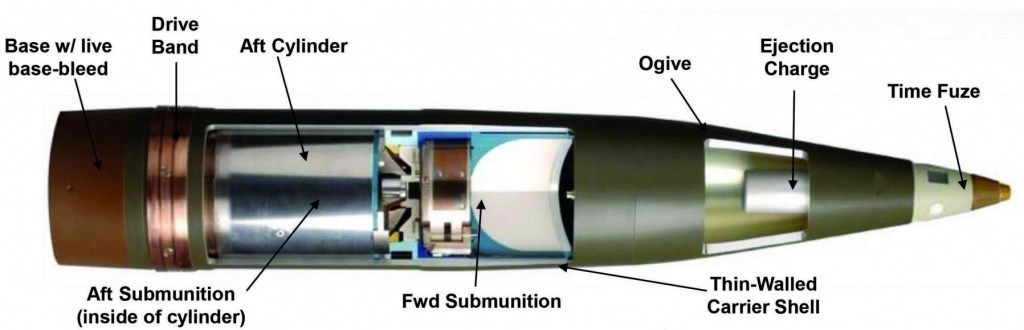
On Wednesday, 4 January, a Russian telegram channel shared several photos of what appear to be miniature satellites. These are in fact 155 BONUS submunitions, an advanced anti-armour, top attack artillery round. Each 155 BONUS round carries two submunitions capable of striking down on a target vehicle once over the target area.

As we’ve seen in other articles/videos including out look at Javelin, NLAW and Russia’s PTKM-1R mine that top-attack weapons can be extremely effective.

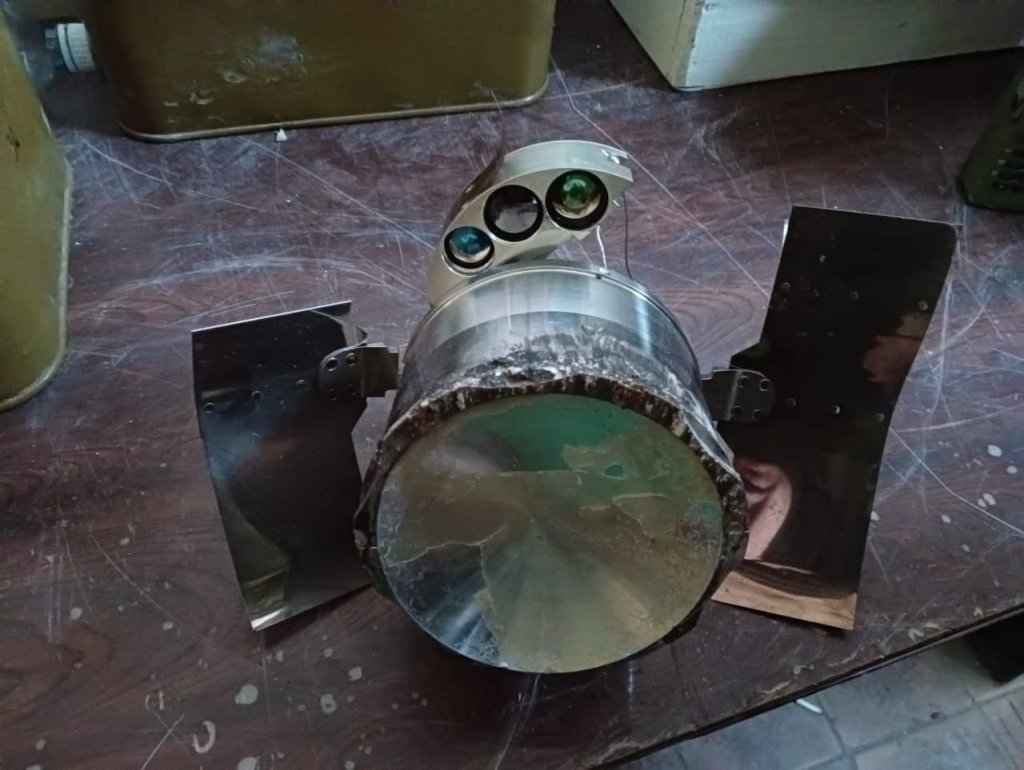
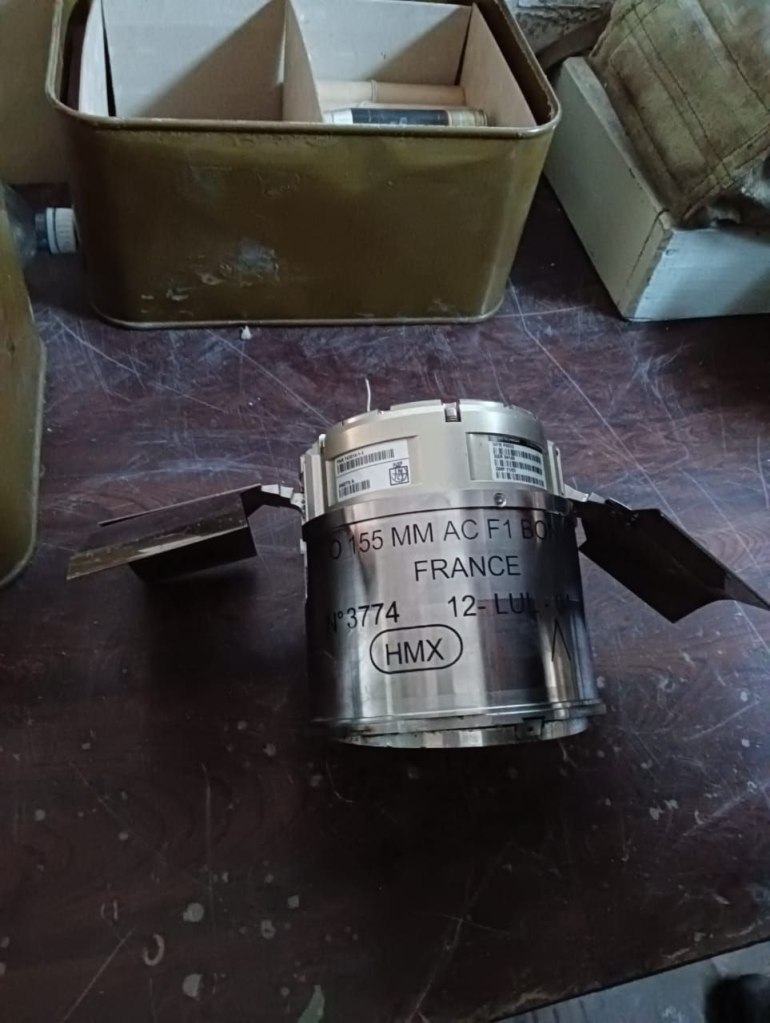
Salvaged 155 BONUS submunition (via social media)

Ukraine has received 155mm howitzer systems from Western countries (including DANA, CAESAR, PzH 2000, Zuzana 2 and AHS Krab), with conventional ammunition these are able to accurately engaging targets at considerable distances but the BONUS round allows a 155mm shell to deliver two submunitions capable of penetrating any tank’s top armour with impressive accuracy.

Development of BONUS or the BOfors NUtating Shell (nutating means rocking or swaying) began in the mid-1980s and was developed by Sweden’s Bofors and Nexter of France. Since Bofors’ heavy weapons division was bought out by BAE Systems in 2005, the system has been part of BAE’s portfolio.

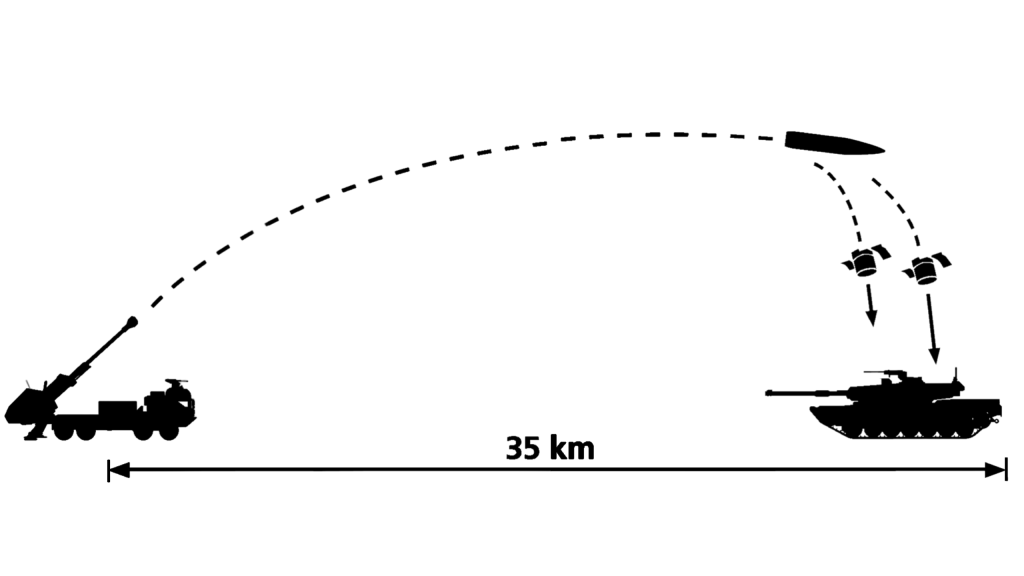
BONUS has a base bleed unit which extends its range out to 35km (nearly 22 miles). Once fired the shell separates to deploy two independent sensor-fuzed submunitions. Once separated these submunitions deploy a pair of winglets and rapidly rotate in flight to enable their built-in sensors to detect targets within their search footprint.

Labelled cutaway of a BONUS shell (US Army)

The search footprint can span up to 32,000 square meters with a diameter of 200m in a helical pattern. The munition uses multi-band passive infrared (IR) and LADAR (laser imaging, detection, and ranging) to detect its targets. Once detected the submunition fires its explosively formed penetrator, which can travel at more than 2000m/s. BAE states the penetrator can penetrate between 100 and 140mm of rolled homogenous armour.

BONUS has been in service with the French Army since the early 2000s and has also been procured by Sweden, Finland and Norway. Most recently in 2018 the US Army selected the round for their Cannon Delivered Area Effects Munition (C-DAEM) programme and has been actively procuring it through several contracts since.

Diagram illustrating BONUS’ basic principle (BAE Systems)

A similar munition SMArt 155, developed by Rheinmetall and Diehl BGT Defence, which uses a parachute to slow the submunitions descent rather than winglets, is also believed to be in use in Ukraine. BONUS and SMArt do not fall into the category of weapons banned under the 2008 Convention on Cluster Munitions as they comprise of just two submunitions and both have onboard self-destruction mechanisms. The BONUS round seen in these photographs obviously did not engage a target and its self-destruction mechanism didn’t destroy the submunition before it landed.

The Russian telegram channel that shared the photographs of the munition state that it was found in the Donetsk region. The same post suggested some potential countermeasures, including covering heat signatures with polythene and obscuring the shapes of vehicles might help mitigate the risk posed by BONUS rounds.

Salvaged 155 BONUS submunition (via social media)

From the photographs themselves we can see the submunition is marked No.3774, France, and ‘HMX’ – a type of high explosive. At the top it is marked ‘155 MM AC F1 BON’. The ‘LUL’ marking likely refers to Luchaire Defense. In the second photo we can see the damaged face of the submunition, its EFP plate, the metal winglets and the pop-out sensor assembly with what appear to be three lenses. 

In terms of videos from in theatre that show the use of BONUS there are a number of fairly low-resolution drone videos showing suspected uses of the shells – some of these have also been suggested to be SMArt 155. A video from July perhaps shows BONUS in action, there is no visible parachute, as used by the SMArt 155, visible but there are what appear to be two descending submunitions – the first of which detonates above the target, firing an EFP down onto targets.


Support Us: If you enjoyed this video and article please consider supporting our work here. We have some great perks available for Patreon Supporters – including early access to custom stickers and early access to videos! Thank you for your support!


Bibliography: 

155 BONUS, BAE Systems, (source)

155 BONUS, Tankist4, (source)

155 BONUS Mk 2, BAE Systems, (source)

155 Bonus EFP, Bofors, (source)

155mm SMArt, GD-OTS, (source)

Artillery Paratroopers Fire BONUS Mark II, US Army, (source)

Ukrainian Troops Train with G36s

We’ve previously looked at Ukrainian troops training with the British L85A2 and Chinese Type 56s AK-pattern rifles. In June, the first images of Ukrainian troops training with G36s emerged, shared by the Lithuanian Ministry of Defence. 

The baltic nations of Lithuania, Latvia and Estonia have been staunch supporters of Ukraine’s and Lithuania’s military has been providing training of various sorts since 2015. Back in April, Lithuania’s Chief of Defence Lieutenant General Valdemaras Rupšys announced that Lithuania would train an undisclosed number of Ukrainian troops on how to use various anti-tank weapons at locations within Lithuania. There has so far been no imagery released of this training.

Lithuania’s Military Academy has also provided a distance learning course online for junior leaders and at the end of October it was announced that 120 junior officers had received training across 4 two-day courses.

In the summer an in-person course that has seen Ukrainian personnel travel to Lithuania for training was established. A course at the Division General Stasys Raštikis Lithuanian Armed Forces School ended in early June. The four week course included weapons handling and marksmanship, map training, fieldcraft and tactics. Organised as part of the NATO Defence Education Enhancement Program (DEEP) it was during these courses Ukrainian personnel have been seen training with Lithuanian G36s.

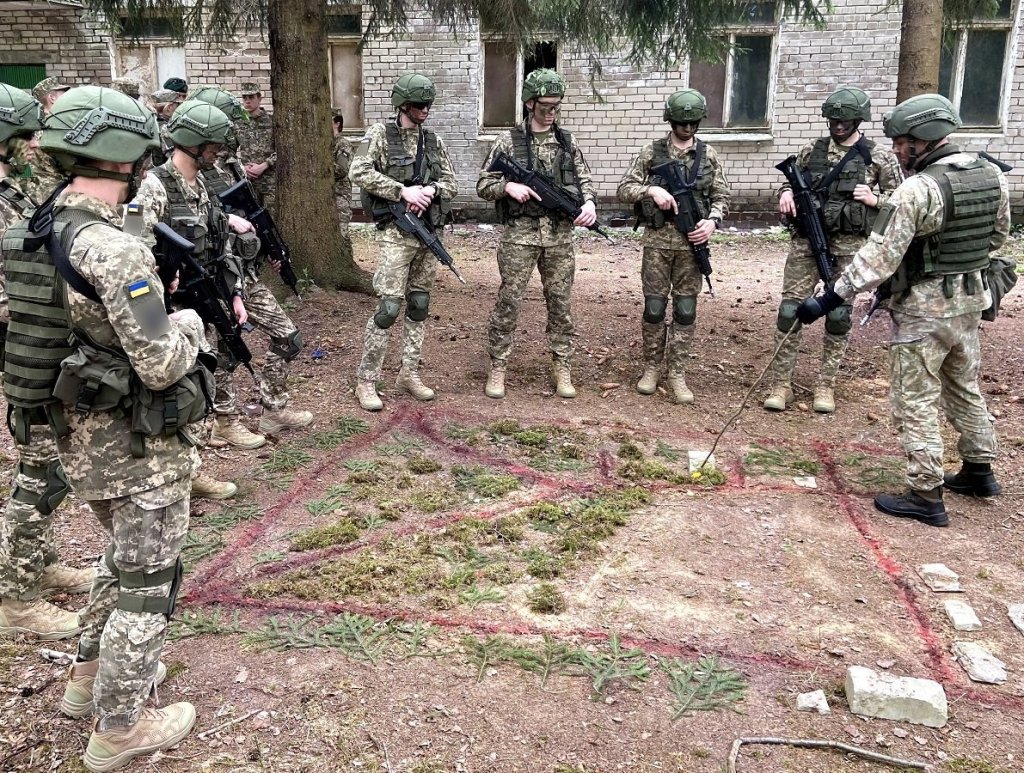
Ukrainian troops training in Lithuania (Lithuanian MoD)

Additionally, Lithuanian instructors have also been training Ukrainian personnel in other countries including the UK. It was announced on 19 October, that a team of military instructors formed from members of the Lithuanian Armed Forces Great Hetman Jonušas Radvila Training Regiment, Division General Stasys Raštikis Lithuanian Armed Forces School, General Adolfas Ramanauskas Warfare Training Centre and the Military Medical Service had joined a multi-national training effort providing basic military training for Ukrainian troops at bases in  the UK.

In mid November it was announced that instructors from Ukraine had also taken part in an international instructor course. The course reportedly covered training techniques, weapons training, instruction organisation. The Lithuanian Ministry of Defence also noted that throughout December, there had been more specific courses for Ukrainian personnel on CBRN-contaminated operational environments, courses on UAVs and on intelligence collection from open sources.  

Summarising the training provided the Lithuanian Ministry of Defence said 18 different courses had been delivered including: basic individual skills, junior officer command, instructor, special forces, demolition and demining courses.  Operators and maintenance for different types of military equipment were also trained.

Ukrainian troops training in Lithuania (Lithuanian MoD)

Lithuania adopted the HK G36 in 2007 and has used several variants including the G36KV1 and the G36KA4M1. None of the photographs show the rifles mounted with optics and in three of the photographs the rifles can be seen fitted with Heckler & Koch’s adjustable blank firing attachment for the G36. 

In early December Lithuania announced that in 2023 training of Ukrainian troops would be stepped up with 1,100 personnel to be trained in Lithuania. Part of the courses scheduled in 2023 will be a part of the new European Union’s Military Assistance Mission Ukraine (EUMAM Ukraine).


Support Us: If you enjoyed this video and article please consider supporting our work here. We have some great perks available for Patreon Supporters – including early access to custom stickers and early access to videos! Thank you for your support!

Breakdown: How Many Ukrainian Troops Has the US Trained?

The US Department of Defense recently announced that they would be expanding their training of Ukrainian personnel in January. The new training program will aim to train 500 Ukrainians per month giving them instruction on combined arms operations and tactics from the squad to the battalion level. 

Long before the Russian invasion of Ukraine in February the US and other NATO nations had been heavily engaged in training the Ukrainian military to NATO standards. The US, UK and Canada established a Joint Commission for Defence Reform and Security Cooperation In July 2014, which later expanded. The Canadian training operation was known as Unifier while the British operation was known as Orbital, which has now   been superseded by Operation Interflex.

Just before that announcement, however, the US also confirmed how many Ukrainian personnel have been trained so far. A US European Command Spokesperson shared a breakdown of how many troops have been trained on a number of major systems. 

In a statement a European Command spokesperson told me that:

“Training is key to Ukraine’s continued success on the battlefield by ensuring that Ukraine has the skilled forces necessary to sustain its efforts to push back on Russian aggression. Since the U.S. started to provide security assistance to support Ukraine in defense of their nation, the United States has trained approximately 3,100 members of the Ukrainian Armed Forces”. 

The breakdown of training provided to Ukrainian personnel covers a number of different systems and platforms: 

The system which has seen by far the largest number of Ukrainian troops trained is the M777 155mm howitzer. As of 9 December the US has provided Ukraine with ‘142 155mm Howitzers and up to 1,004,000 155mm artillery rounds’. To operate these guns in the field the US has trained approximately 870 Ukrainian gunners. In addition to this 310 personnel have been trained on the M109 155mm self-propelled howitzer, M109s have been donated by the US, UK and Norway.

Other troops have been trained on the lighter 105mm M119 howitzers, 36 of which have been provided by the US with further guns coming from the UK. Around 500 Ukrainian gunners have been trained on the 105mm howitzers by US personnel, with more being trained in the UK by a multi-national training cadre. 220 Ukrainian personnel have also received training on the M120 mortar.

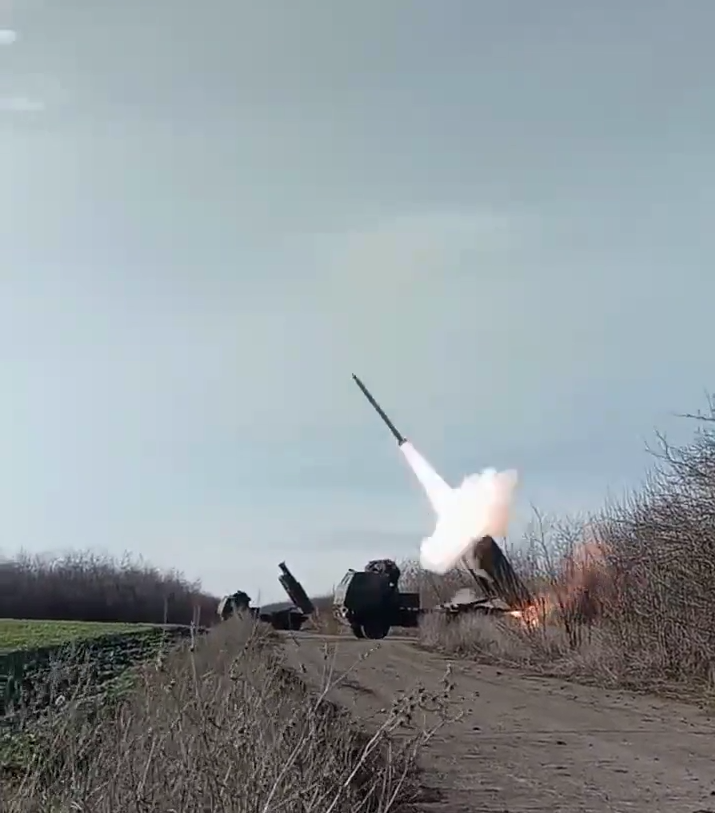
Finally, US EUCOM’s breakdown outlined that approximately 610 Ukrainian personnel have been trained on the M142 High Mobility Artillery Rocket System. So far 38 227mm HIMARs have been transferred to Ukraine by the US.

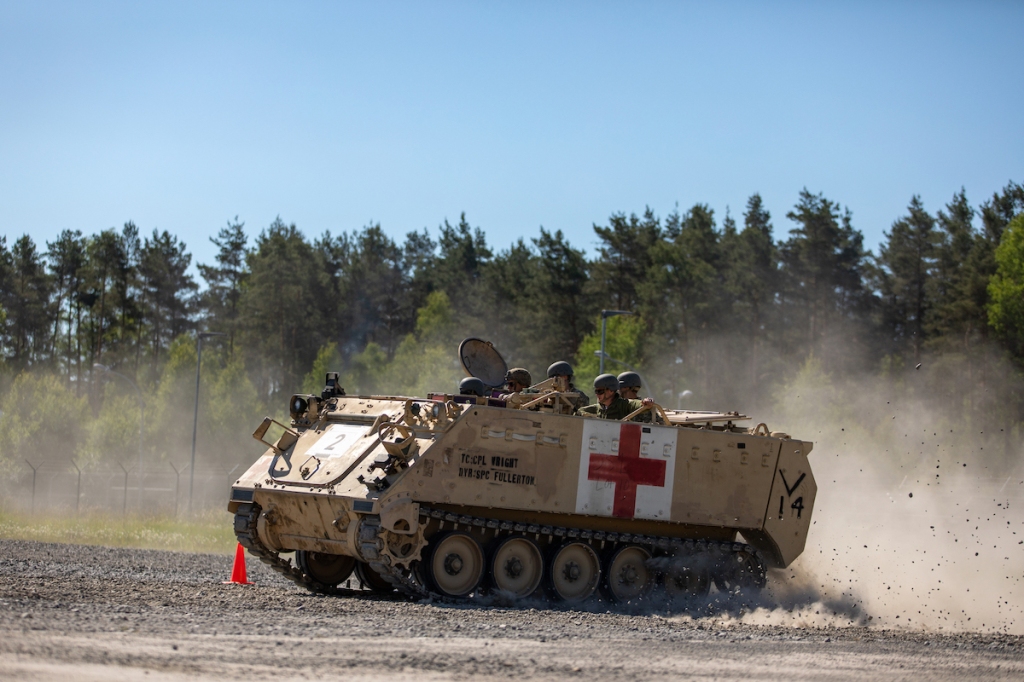
US personnel have also provided training on a number of vehicles, training 140 Ukrainians on M113 armored personnel carriers. With all of the vehicles and weapon systems it is unclear what ratio of these troops included instructors, mechanics and crews. At the time of writing the US has provided 200 M113s with European allies providing including Denmark, Spain, the Netherlands, Australia, Germany, Portugal, Lithuania and Austria also providing a similar number of M113 variants. The EUCOM spokesperson also noted that an unspecified number of Ukrainian troops had been trained on the M1089 Wrecker, a recovery vehicle which is part of the Medium Tactical Vehicles family. The latest Department of Defense factsheet on equipment provided to Ukraine notes that “22 Tactical Vehicles to recover equipment” have been transferred.

While the provided breakdown of systems Ukrainian troops have been trained on by US personnel outside of Ukraine isn’t exhaustive it also included 450 personnel who have received training on ‘other’ systems such as the M1089 and various Unmanned Aerial Vehicle platforms. 

Much of this training has been carried out at US military sites in Poland and Germany but as we’ve already seen in previous videos Ukrainian troops are also being trained in the UK by a multi-national training force, in Lithuania and elsewhere.

This article was adapted from my earlier article at Overt Defense.


Support Us: If you enjoyed this video and article please consider supporting our work here. We have some great perks available for Patreon Supporters – including early access to custom stickers and early access to videos! Thank you for your support!

Russia’s Silent Mortar in Ukraine

Recent video and photos from Ukraine show Russian troops getting to grips with the 2B25 82mm mortar. About 10 months ago, before Russia’s invasion of Ukraine, The Armourer’s Bench examined the 2B25 in an article/video and how it combines a spigot mortar with ammunition which uses a self-contained captive piston. For a full run down on operation and the mortar’s development history check out that article/video. In this article we will take a look at the mortar’s appearance in Ukraine.

The first mention of the 2B25 being in use with Russian forces in Ukraine dates to early July, when RIA News, a Russian state-owned domestic news agency, published an article with scant detail other than to suggest that “these mortars are used to carry out sudden fire raids, in particular in the fight against saboteurs of the Armed Forces of Ukraine.” Despite this report we haven’t seen any imagery showing the weapon in theatre until recently.

In late October imagery showing the 2B25 began to be shared by a member of what appears to be a Russian special operations unit which has been in action in the Donetsk Oblast. One of the members of the unit runs a telegram channel. The soldier who runs the channel describes himself as a “regular soldier of the Armed Forces of the Russian Federation, for more than 10 years.”

On 27 October, a POV video was shared from behind a 2B25, with the caption (machine translated): “We got acquainted with a silent mortar, mastered it ourselves and showed the mobilized guys. A minimum of recoil, a minimum of powder gases and the sound of a round being fired.”

The 8 November saw the unit share a photo of the mortar being fired without its base plate, instead using a wooden box as an ad-hoc base. In the comments section of the image the soldier running the channel says the use of the wooden ammunition box was ‘by design’, perhaps indicating intentional experimentation with using the mortar without its base plate. In another comment he explained: “No…they checked… whether it was possible to shoot without sinking into the ground, as a result, the box fell apart.” In another response he notes that they were trying to avoid placing the base plate in the wet ground. When asked how loud the mortar is the Russian soldier describes it as: “It is silent, the exit of a mine is not louder than a clap of hands”

A photo posted on 26 November showed the Russian soldier with perhaps 10 of the 2B25’s 3VO35 mortar bomb laid out on the ground. On 30 November a clip showing the mortar be prepared alongside a commercial drone was posted, suggesting training to correct fall of shot with drones.

The longest video posted so far shows the mortar in action. Shared on 2 December the video shows the mortar dug into the ground with the operator firing three bombs in quick succession. Several seconds later we can hear them detonate down range. Again the video appears to show training and not operations. The machine translated caption describes a test with the 2B25 with the operators showing they could correct their fire with a drone, noting: “the accuracy and density of fire on the intended target increased significantly, the bombs hit the target one by one” Most recently, on the 3 December, a short clip with the caption “Another short video from our training” was shared showing the mortar being laid.

Update – 27/03/23: on 25 March a Russian telegram channel ‘Epoddubny’ shared a video featuring scouts operating around Bakhmut with a 2B25 82mm mortar. Below is a compilation of shots showing the mortar in action.

Update – 26/10/23: Additional footage, without location or date of filming, shared on Russian social media. Briefly showing the 2B25 in action with an additional 3VO35 mortar bomb near by.


Support Us: If you enjoyed this video and article please consider supporting our work here. We have some great perks available for Patreon Supporters – including early access to custom stickers and early access to videos! Thank you for your support!


Ukraine’s Newest Howitzer Is An Antique

Plenty of old weapon systems are in use in Ukraine and artillery is no exception. This week the first footage of a batch of 105mm howitzers from Lithuania in action was shared online.

Lithuania has transferred an undisclosed number of M101 towed howitzers. While the 105mm gun lacks the range and punch of the 155mm M777s, Caesars, AHS Krabs and PzH 2000s which have made headlines in recent months, the venerable M101 is a proven weapon.

Introduced in 1941 as the M2A1, the gun has seen service around the world. First during the Second World War and later in Korea, Vietnam and in dozens of regional conflicts around the world. Now it finds itself equipping Ukrainian Army batteries.

The M101 weighs in at 2.5 tons or 2,260 kg and firing conventional M1 high explosive shells has a maximum range of 11,500 metres or just over 7 miles. The M1 round is made up of the  the M1 High Explosive projectile, the M14 Cartridge Case, the M67 Propelling Charges and the M28 Percussion Primer.

The Baltic nation of Lithuania, has been a staunch supporter of Ukraine throughout the conflict providing equipment, arms and training. Lithuania  originally received 54 of the guns from Denmark in 2002. Now, as Lithuania upgrades to 155mm systems the old guns have found a new home. While it is unconfirmed whether Ukrainian troops trained to use the guns in Lithuania, Ukrainian troops have been training in the Baltic nation.

The first guns were shipped in September, with the Lithuanian Minister of Defence announcing the transfer on his social media, but the first footage of them in action in Ukraine didn’t surface until late November.

While the M101 may be old it has the major advantage in that if fires the readily available family of 105mm NATO ammunition. This 105mm ammunition is used by a number of light artillery systems including the more modern US M119A3 and L119 towed 105mm howitzers. As of November 2022, the US has provided 180,000 rounds of 105mm. 

While the M101 may seem like a step down from the 155mm systems in use it has a number of factors which mean the guns are still effective. Firstly, they are used in conjunction with drones which help adjust fire in real time to produce improve effect on target. Secondly, they can use M927 rocket-assisted projectiles which increase the gun’s range by 40%, around 17km. M927’s were first seen in late August being used in conjunction with L119 light guns.

The M101 is certainly an improvement over the 85mm D-44 guns that some Ukrainian Territorial Defense Force units have been seen using and the venerable 100mm MT-12 which has a range of just over 5 miles. While the M101 can’t hope to go toe to toe with Russian 152mm artillery, if used in its original role as an infantry support gun the venerable M101s will prove useful. 


Update 07/12/22: Another short clip of an M101 in action was shared on the 7 December, showing the more closely than previous footage.

Update 12/01/23: Gunners of the 66th Separate Mechanized Brigade practice firing 105mm M101 howitzers.

Update 13/04/23: Some more footage of am M101 in action.

Update – 11/6/23: A rare video of a 105mm M101 howitzer in action. Date and location filmed unknown.

Update – 11/11/23: Another siting of an M101 in action.

Update – 20/06/24: a recent photo of an M101 in a position in the Kharkiv Region.

Update – 9/9/24:

Update – 1/11/24: 71st Brigade with an M101A1. (Source)

Update – 13/12/24: An M101 was seen in service with the 28th OMBR in a series of photos recently shared by the Ukrainian army.


Support Us: If you enjoyed this video and article please consider supporting our work here. We have some great perks available for Patreon Supporters – including early access to custom stickers and early access to videos! Thank you for your support!


Bibliography:

M101s for Ukraine, Arvydas Anusauskas, (source)

Lithuania sends howitzers from its reserve to Ukraine, LRT, (source)

Ukraine Aid Fact Sheet 23 November 2022, US Department of Defense, (source)

Ukraine received 105mm M927 high-explosive rocket-assisted projectiles, Mil.In.UA., (source)

British Brimstone 2 Missiles in Use in Ukraine

Footage of Brimstone anti-armour missiles being launched in Ukraine surfaced for the first time on 12 May but recent footage points to Ukraine now potentially deploying the Dual Mode Brimstone 2. In this updated video we look at what the missile is capable of, how they came to be in Ukraine and how they have been deployed.

A still from footage of a launch from the ‘Brimstone technical’ with the missile potentially being a Brimstone 2 with a translucent seeker head, shared online in early November (via Social Media)

In our earlier video on Brimstone use in Ukraine we examined the system’s capabilities, history and the new ad-hoc ground launch platforms in use. In this updated video we look at evidence of Brimstone use over the summer and autumn of 2022 and discuss the transfer of Brimstone 2 and its capabilities.

Brimstone 2 missiles being loaded aboard an RAF transport aircraft at RAF Brize Norton – perhaps around 48 missiles appear to be on board. (UK MoD)

The UK Ministry of Defence publicly confirmed the transfer of ‘Brimstone 2 Operational Missile Dual Mode’ to Ukraine on the 27 November with a short video. Dual Mode refers to a variant of the missile which can be used both as a ‘fire and forget’ system but also have a ‘man-in-the-loop’ capability which was originally developed as part of an Urgent Operational Requirement for a low-collateral damage weapon. According to MBDA Brimstone 2 has “an overall increase in performance with improvements in range and engagement footprint”, this is enabled by improved seeker, improvements to the missiles airframe with a more modular design and software updates.

Read the full, updated, article on Brimstone in Ukraine here.


Support Us: If you enjoyed this video and article please consider supporting our work here. We have some great perks available for Patreon Supporters – including early access to custom stickers and early access to videos! Thank you for your support!