Russia’s Rare RPG-16 in Ukraine

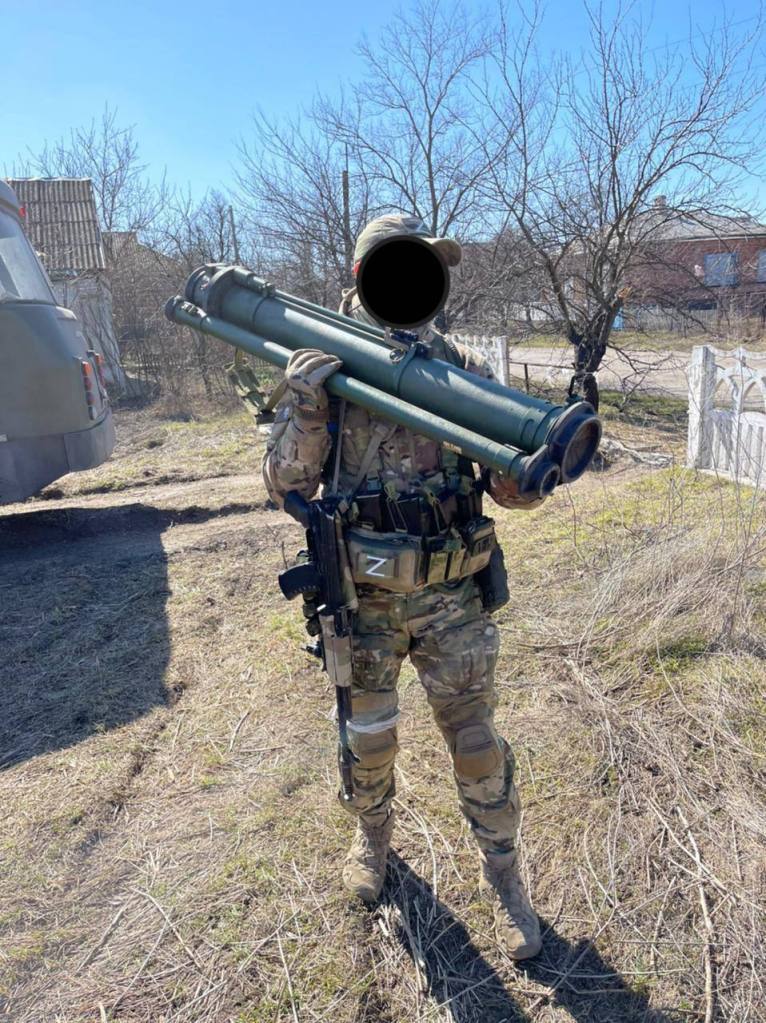
One of the rarer Russian anti-armour weapons to surface during the ongoing war in Ukraine is the RPG-16. The RPG-7’s big brother was developed in the late 1960s and entered service in the early 1970s. It was predominantly developed for Russia’s airborne forces, the VDV, but also saw issue to Spetsnaz units.

The RPG-16 is characterised by its larger diameter tube which can fire a 58mm (2.3 inch) PG-16 rocket-propelled grenade. Unlike the RPG-7s munitions the PG-16 slides flush inside the launcher, while this limits the volume and types of warhead the RPG-16’s ammunition can carry it provides improved accuracy and slightly increased range. The PG-16 is a fin-stabilised high explosive anti-tank (HEAT) round with a rocket booster which propels it at a maximum velocity of 350 metres per second. The rocket weighs around 2.1kgs and has a maximum range of 800 metres, though practical engagement range of vehicles is closer to 300 metres. It can penetrate up to 300mm (12 inch) of rolled homogenous armour.

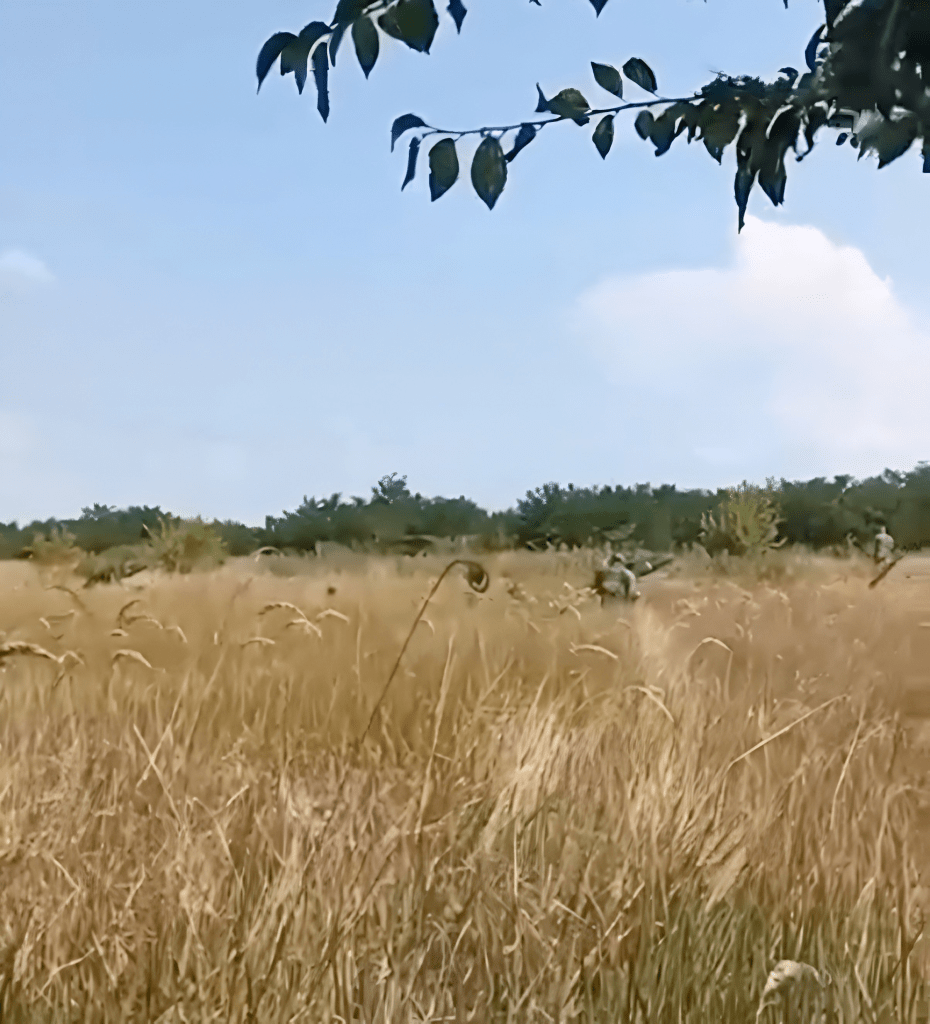
An RPG-16 seen in a Russian news report, June 2023 (Russia 1)

The RPG-16 can only fire the PG-16 round and following its adoption in the early 1970s it has been surpassed by other anti-armour weapons which have entered Russian service and by the development of more capable PG-7 series warheads. The launcher weighs 12.4 kg (27 lbs) [compared to the 7 kg (15.4 lb) of the RPG-7] when loaded and is 110cm (43.5 in) long but can be broken down into two parts: the rear tube with venturi and the forward tube and fire control group. Unlike the smaller RPG-7 it has a bipod near the muzzle and a grip area on the fire control group, it does not have a second, rear pistol grip.

A reported 120,000 were produced with manufacture continuing into the late 1980s. It had been thought that the RPG-16 went out of Russian service in the early 2000s but evidently some have been drawn from stores and have been used in Ukraine. The RPG-16 was reportedly used against fixed positions during the Soviet war in Afghanistan and may now be pressed into the same role in Ukraine.

It appears from available imagery that the RPG-16 began to be issued in early 2023. Early March 2023 saw Russian state-news outlet RIA shared a report featuring combatants of the 76th Guards Air Assault Division firing small arms and RPGs in woodland. One of the RPGs fired was an RPG-16.

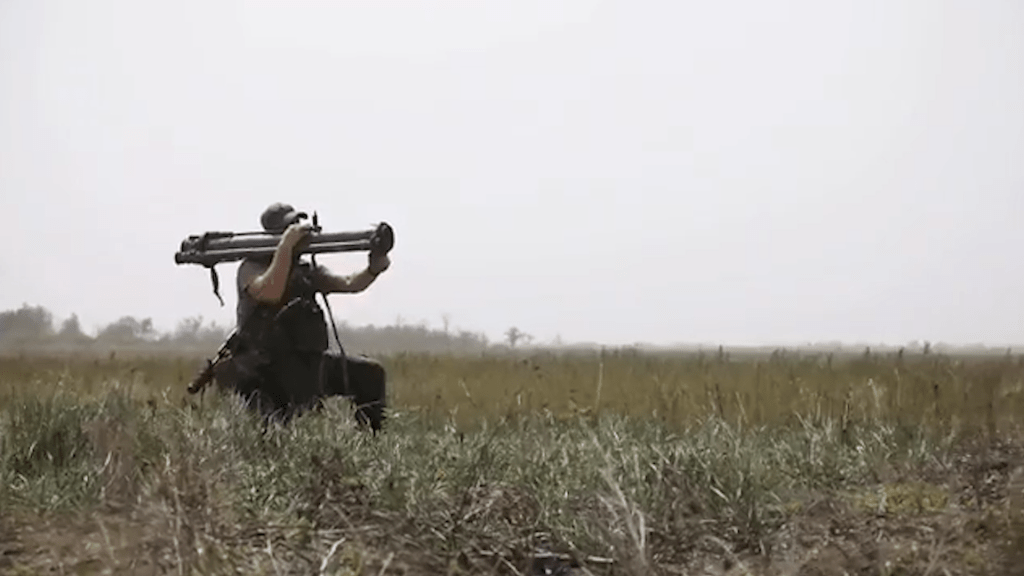
Russian combatant firing an RPG-16, December 2023 (via social media)

In late April, stills from a video of troops said to be with the 98th Guards Airborne Division featured an RPG-16 being fired near Dibrova were shared. I’ve been unable to find the original footage. In June, one of the launchers appeared in a Russia-1 news report featuring Russian forces near Avdiivka, Donetsk Oblast.

On 26 November, a Russian combatant shared a photograph of an RPG-7 and an RPG-16 next to one another, reportedly taken in a depot or armoury. Two days later on 28 November a short clip of marines from the Russian 40th Naval Infantry Brigade was shared showing an RPG-16 in action, location unknown, possibly near Pavlivka.

A week later, on 3 December a video featuring a pair of Russian combatants from the Otvazhnye (Brave) Group, firing an RPG-7 and an RPG-16 was posted on telegram. The footage was probably filmed in near Kreminna where the unit was reportedly active.

Russian combatant poses with an RPG-16 and AK-12, January 2024 (via social media)

On 13 December, a mobilized Russian combatant shared a post on Telegram describing his experiences at the front. He mentions that due to a lack of infantry anti-armour weapons with sufficient range to reach Ukrainian AFVs standing off and firing on their positions his unit began issuing RPG-16s. In late January, two photographs of Russian troops in a trench, location unknown, posed with an RPG-16, and some unrelated RPG-7 munitions.

From the limited imagery available it seems that the RPG-16s have been again issued to largely airborne units, however they have also been seen with Russia’s naval infantry. Exactly why the RPG-16 has returned to service is unclear, as by one Russian combatant suggested, it may be that the greater range offered by the RPG-16 enables engagement of distant targets, another potential reason might be Russia’s desire to use up existing reserve stocks of munitions.


Support Us: If you enjoyed this video and article please consider supporting our work here. We have some great perks available for Patreon Supporters – including early access to custom stickers and early access to videos! Thank you for your support!


Specifications:

Calibre: 58.3 mm
Length:
– Assembled: 1,104 mm
– Disassembled: 645 mm
Weight:
– Unloaded with optical sight: 10.3kg
– Loaded: 12.4kg
Velocity:
– Initial: 130 m/s
– Maximum: 350 m/s
Effective range: 800 m
Armour Penetration: +300 mm

Bibliography:

Jane’s Infantry Weapons 2014-15, R.D. Jones & L.S. Ness (2014)

58mm PG-16 Rocket, CAT-UXO, (source)

RPG-16 Udar Russian Rocket-Propelled Grenade Launcher, US Army, (source)

Airborne choice: Soviet RPG-16 in Afghanistan, Safar Publishing, (source)


Ukraine’s ASRAAM-Supacat Franken-SAM

Earlier this week a short video featuring an ASRAAM-Supacat ‘Franken-SAM’ surfaced online. Early on 8 February, Ukrainian Telegram channels began sharing a video pulled from TikTok, which is likely the first daylight footage of one of the UK-developed and supplied ad-hoc air defence systems.

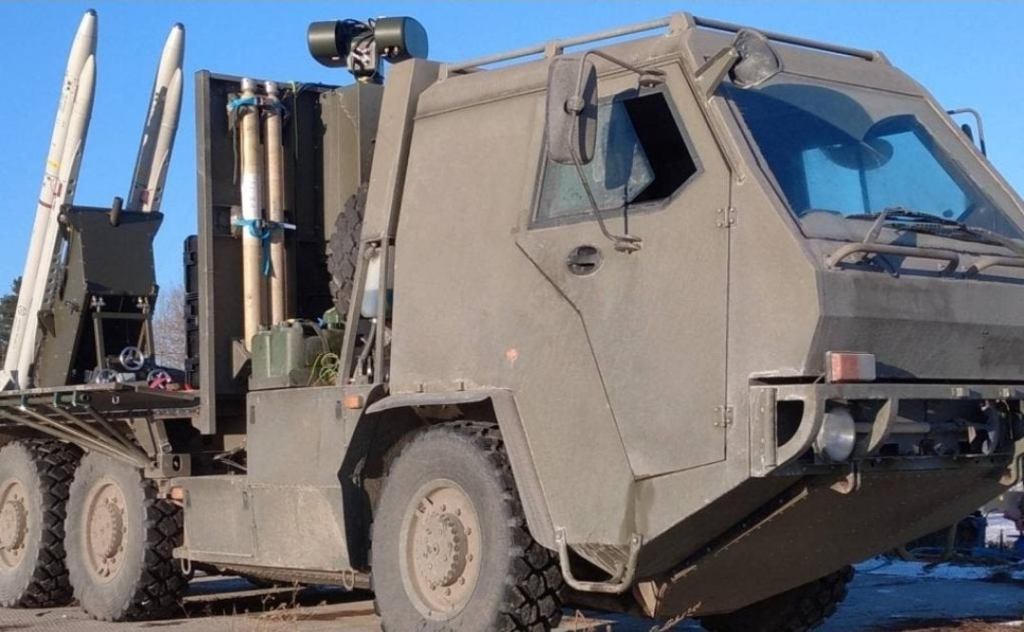
The system can be seen parked by the side of a road and was filmed (original source now private) from a passing vehicle. The date and location the video was filmed is unknown. The launcher appears to have two AIM-132 Advanced Short-Range Air-to-Air Missiles (ASRAAM) loaded with the launcher ramp raised in the ready position. It is difficult to make out but the cab has seemingly been fitted with a protective screen to guard against drone attack. Also visible is what appears to be a sensor turret mounted behind the cab, this is possibly an electro-optical/infrared sensor used for targeting.

Still from recently posted footage of an ASRAAM Franken-SAM in Ukraine, 8 Feb. 2024 (via social media)

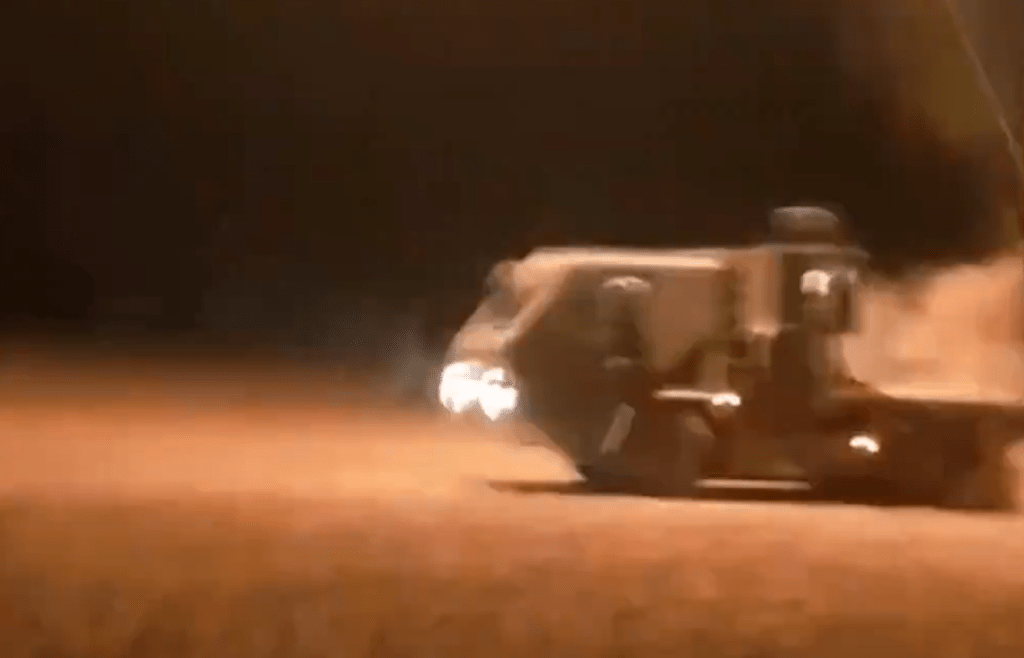
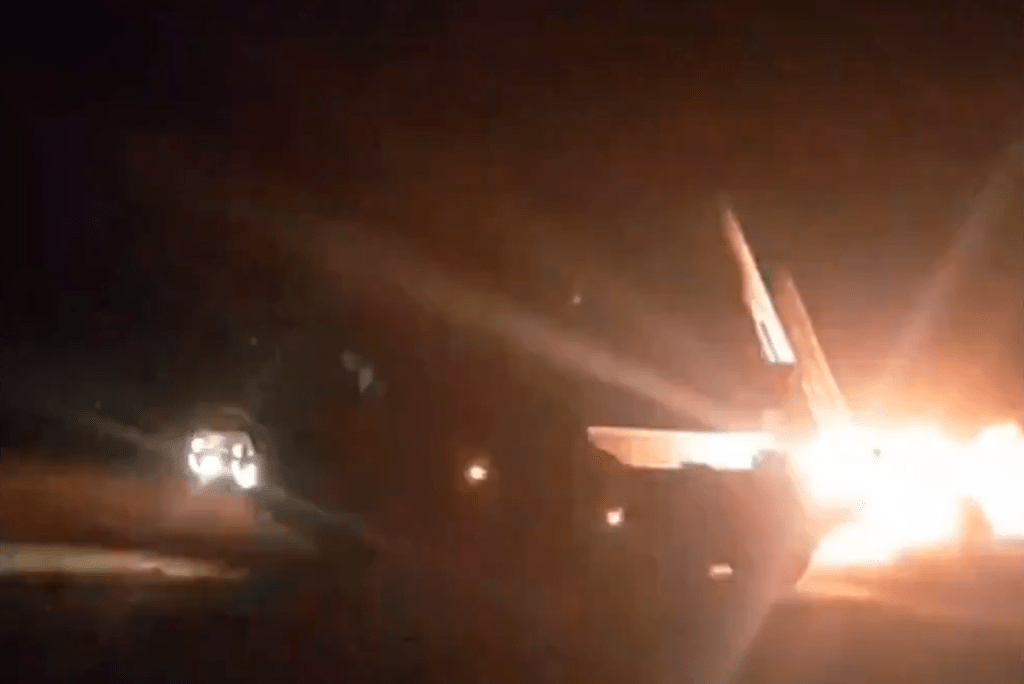
The UK-developed system is one of several so-called Franken-SAMs produced by Ukraine’s allies. They are part of an effort to affordably and quickly bolster Ukraine’s air defences. In October 2023 a pair of videos shared by the Ukrainian air force gave a glimpse of the system in action. The both filmed at night shows a launch but the vehicle is not visible. The second, shared on 12 October, by Ukraine’s Air Command – South shows the successful engagement of a Russian long range loitering munition. As the darkness is lit up by the missile launch, the Supacat 6×6 High Mobility Transporter is briefly visible.

The AIM-132 missiles and the vehicles launching them were provided by the UK in the summer of 2023. ASRAAM uses infrared homing and can lock onto its target after launch. It has an air-launched range of more than 25km but this is likely shorter when used in a ground launched role. The system may be used in conjunction with radar systems which feeds target data to the missile. A key feature of the ASRAAM is its ability to lock-on after launch, theoretically allowing it to be vectored onto a target in the air before it begins IR homing.

A photo dating from August 2023 of a Supacat High Mobility Vehicle mounted with a pair of MBDA UK ASRAAMs (Ukrainian Ministry of Defence)

The system, however, isn’t ideal with limited ready-to-fire capacity on the launcher ramp, with just two rails, and no protection for the missiles themselves, from either the elements or from potential fragmentation or impact damage if attacked. The ad-hoc air defence system first saw action in Ukraine in August 2023, and represents an ingenious improvisation utilising a highly capable missile in an air defence role it was never envisaged in. In December 2023 UK Ministry of Defence summarised their development:

“In summer 2022, a joint MoD-MBDA team developed air defence systems to fire ASRAAM from the ground for the first time. Within four months of initiating the surface launched ASRAAM project, these air defence systems were developed, manufactured, trialled and Ukrainian crews trained on their usage, on UK soil, before being transferred into Ukrainian hands.”

It is unclear how many of the systems have been assembled but in late 2023, it was reported that the UK had supplied “a handful” of the missile-equipped Supacat trucks. They were believed to be in use in near the front and in the Kyiv region, defending key infrastructure, against Shahed-136/Geran-2 long-range loitering munition attacks.

In December 2023, the UK Ministry of Defence announced that a further 200 ASRAAMs would be provided to Ukraine and that the systems in-country had achieved a “successful hit rate reported as high as 90% against some Russian air targets.”

This article originally appeared at OvertDefense.com

Update 16/04/24:

Short video showing a close up and launch of what appears to be an ASRAAM missile. Posted on Telegram on 14 April.

Update 16/09/24:

A brief video showing a launch of a missile from the HMT-mounted ASRAAM air defence system.


Support Us: If you enjoyed this video and article please consider supporting our work here. We have some great perks available for Patreon Supporters – including early access to custom stickers and early access to videos! Thank you for your support!


Swedish RBS-17 Missiles in Ukraine

In June 2022 Sweden announced it would provide Robot-17 (RBS-17) coastal defence missiles to Ukraine. These missiles are used by Sweden’s Amphibious Corps to interdict the movement of enemy vessels along Sweden’s coast.

RBS-17 is a Bofors Defense (now Saab Bofors Dyanmics) led development of the AGM-114 Hellfire. Work on the Swedish coastal defence missile began in the 1980s. It is man-portable with the missile weighing 48kg in addition to the launcher, firing system and laser targeting module. It is typically operated in the field by five man teams, with two operating the laser targeting system and three on the weapon itself.

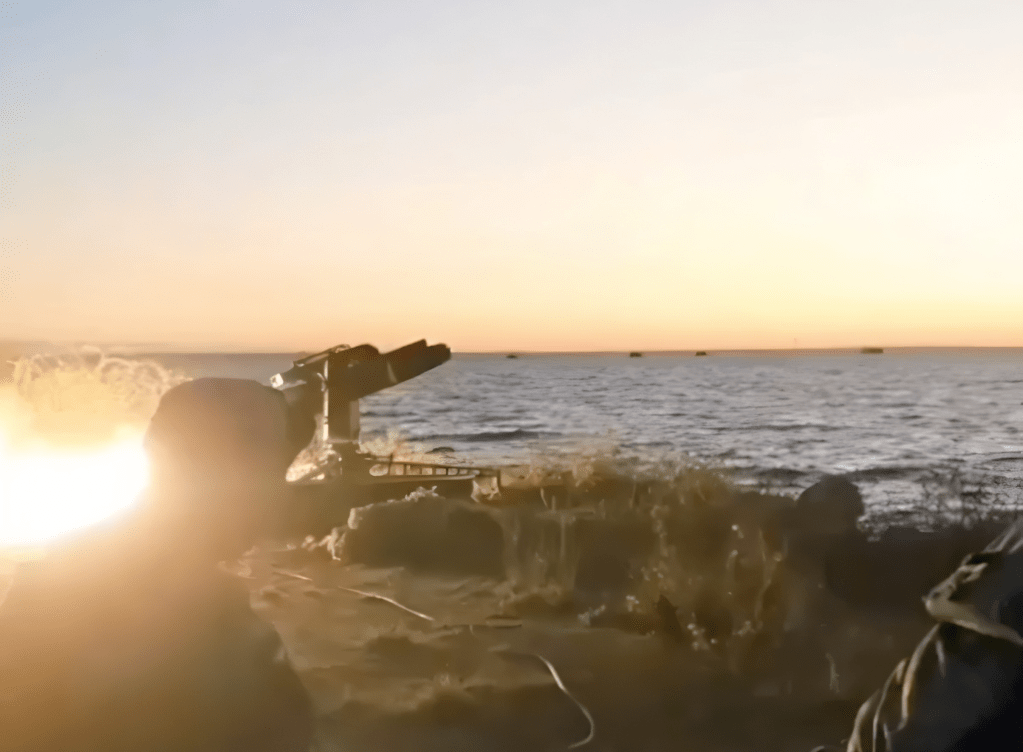
RBS-17 launch October 2023 (via social media)

On launch the missile climbs to several hundred metres and seeks the laser-marked target. The system has a maximum range of around 8km and carries a 9kg high explosive warhead. While designed to engage vessels the RBS-17 can also be used against ground targets.

On 2 June 2022, the Swedish government announced the transfer of an undisclosed number of RBS-17s. They are believed to have been seen in theatre for the first time in a video published on 20 October, although it appears it may have been filmed earlier. The video was shared by a group called ‘Bigcats’, the lo-res clip shows the launch of a pair of missiles. ‘Bigcats’ haven’t shared any further imagery of the missiles since.

In September 2022 the Norwegian government also announced plans to provide Ukraine with their Hellfire-derived Norwegian Shore Defence Missile System. The transfer of 160 missiles and associated equipment was announced in response to a Ukrainian request. In late March 2023 photographs of several pieces of wreckage from one of the missiles was posted on Telegram. It was hypothesised that they were found in the area of ​​the Kinburn Spit and had been fired across the water by an element of the 73rd Naval Center of Ukraine’s Special Operations Forces.

An RBS-17 launch, c.September 2022 (via social media)

It was over 8 months before another video of a the weapons in action was shared. In mid-August 2023 a brief clip was published showing a Hellfire-patterned missile (which may be an RBS-17) being fired and apparently detonating downrange. Several months later at the end of October perhaps the best piece of footage of one of the missiles being launched was shared. In the video we can see the missile being launched and as the camera pans the laser targeting module can also be seen.

In August 2023, Army Inform, the news agency of Ministry of Defense of Ukraine, published an article outlining how the RBS-17 is used noting that it is most frequently used against Russian defensive positions, dugouts or lightly armoured vehicles. The article included a photograph of a display showing the RBS-17 set up. In the background a Ukrainian combatant can be seen sat on a missile case, he’s wearing the patch of the Zaporizhzhia-based 27th River Fleet Division (27 ODnRK).

An RBS-17 launch in Ukraine Nov/Dec 2023 (via Swedish MoD)

On the 18 December, the Swedish government published an article about Ukraine’s use of the RBS-17 and the training the Swedish armed forces provided on the system. The article explains that Ukrainian personnel were secretly trained on the system. The training appears to have been carried out during Summer 2022 and took place in time to coincide with the delivery of the RBS-17s. Swedish personnel have also continued to be on call for answering the technical and operational queries of the Ukrainian teams using the system.

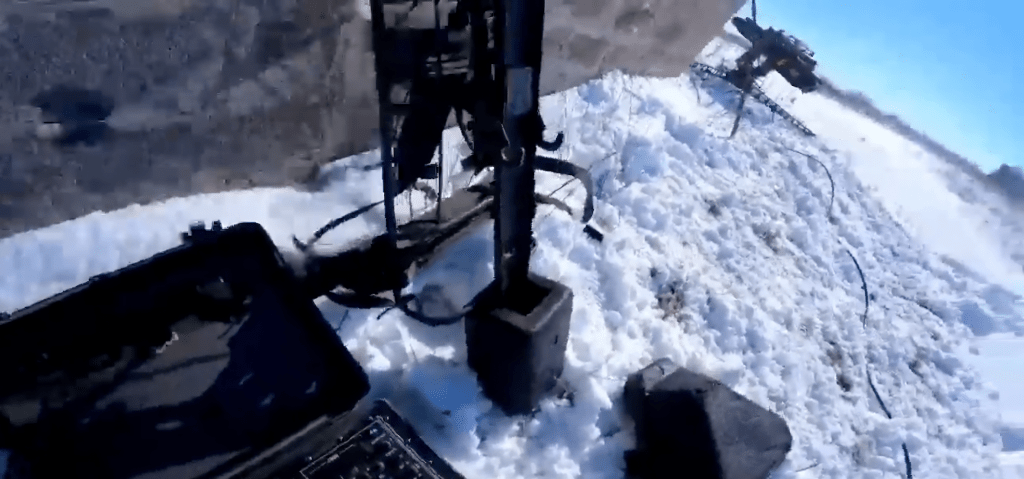
The Swedish article also included a short video of one of the missile systems in operation in Ukraine. The team appears to be in cover behind a wall. The GoPro footage shows the missile near by and the control unit as well as transport cases near by. A Polish MSBS Grot rifle can also be seen leaning on the wall next to the operator.

Update – 22/05/24:


Support Us: If you enjoyed this video and article please consider supporting our work here. We have some great perks available for Patreon Supporters – including early access to custom stickers and early access to videos! Thank you for your support!


French Rifles for Ukraine

On 6 November, the French arms manufacturer Verney-Carron, through its defence brand Lebel, announced the signing of a framework contract with Ukrspecexport, a Ukrainian state-owned arms trading company which is part of Ukroboronprom. The contract covers the production of a substantial number of small arms including carbines, precision rifles and 40mm grenade launchers.

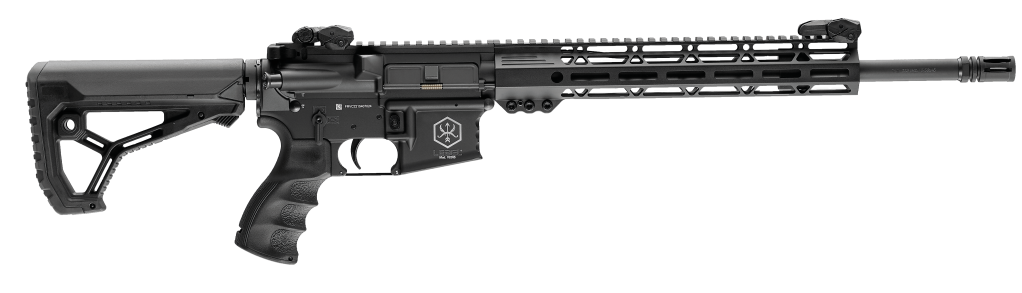
VDC15 (Lebel)

The contract is worth 36 million Euros ($38.5 million) and includes 10,000 assault rifles, 2,000 precision rifles and 400 grenade launchers. The contract will need to be funded from Ukrainian and French sources with initial delivery scheduled for early 2024, with delivery to be spread over the next 10 months. The announcement makes no mention of spare parts or support as part of the contract.

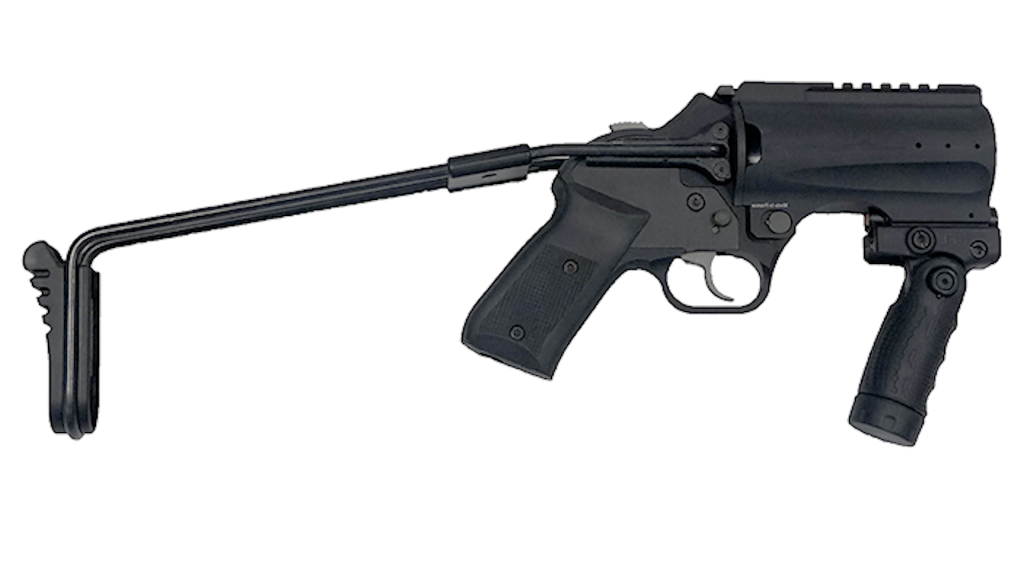
The contract will likely see the delivery of Verney-Carron’s VCD15, an AR-15 pattern rifle available in various configurations but chambered in 5.56x45mm or .300 BLK and based on Stoner’s internal gas system. The 2,000 precision rifles are probably Lebel’s VCD10, which was introduced in 2018 and is a precision AR-10 pattern rifle chambered in 7.62x51mm or .260 Remington. The 400 grenade launchers will likely be the compact LP40, a 40x46mm standalone launcher, which weighs 1.3kg, has a removable stock and a folding front pistol grip.

LP40 (Lebel)

It’s unclear which branch of the Ukrainian Armed forces the small arms will be destined for but they represent a substantial number, enough to equip a brigade or two. In terms of aid France has already provided a wide range of weapon systems and military equipment including self-propelled artillery, armoured personnel carriers, mines, anti-tank guided missiles, small arms, hand grenades and air defence systems. 


Support Us: If you enjoyed this video and article please consider supporting our work here. We have some great perks available for Patreon Supporters – including early access to custom stickers and early access to videos! Thank you for your support!


Ukrainian Troops Train with G36s

We’ve previously looked at Ukrainian troops training with the British L85A2 and Chinese Type 56s AK-pattern rifles. In June, the first images of Ukrainian troops training with G36s emerged, shared by the Lithuanian Ministry of Defence. 

The baltic nations of Lithuania, Latvia and Estonia have been staunch supporters of Ukraine’s and Lithuania’s military has been providing training of various sorts since 2015. Back in April, Lithuania’s Chief of Defence Lieutenant General Valdemaras Rupšys announced that Lithuania would train an undisclosed number of Ukrainian troops on how to use various anti-tank weapons at locations within Lithuania. There has so far been no imagery released of this training.

Lithuania’s Military Academy has also provided a distance learning course online for junior leaders and at the end of October it was announced that 120 junior officers had received training across 4 two-day courses.

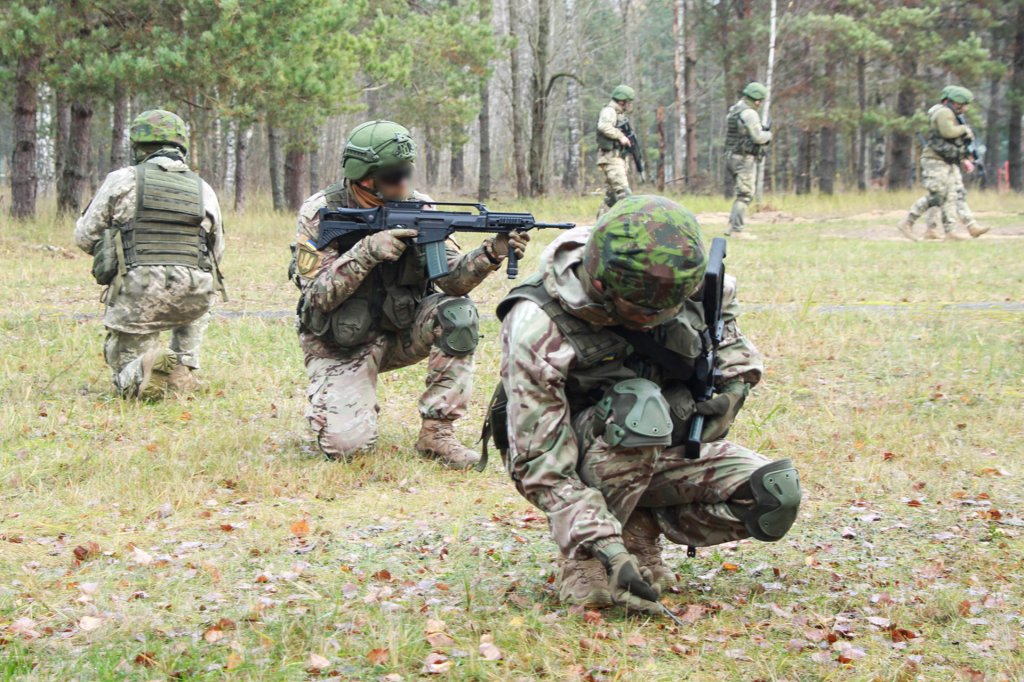
In the summer an in-person course that has seen Ukrainian personnel travel to Lithuania for training was established. A course at the Division General Stasys Raštikis Lithuanian Armed Forces School ended in early June. The four week course included weapons handling and marksmanship, map training, fieldcraft and tactics. Organised as part of the NATO Defence Education Enhancement Program (DEEP) it was during these courses Ukrainian personnel have been seen training with Lithuanian G36s.

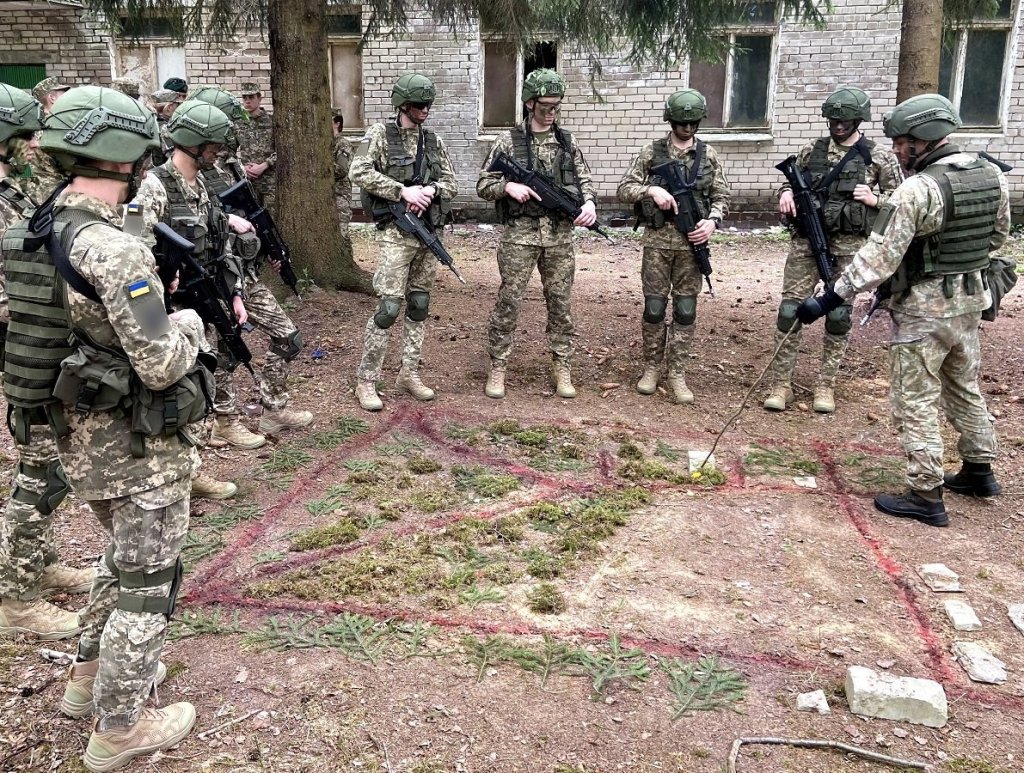
Ukrainian troops training in Lithuania (Lithuanian MoD)

Additionally, Lithuanian instructors have also been training Ukrainian personnel in other countries including the UK. It was announced on 19 October, that a team of military instructors formed from members of the Lithuanian Armed Forces Great Hetman Jonušas Radvila Training Regiment, Division General Stasys Raštikis Lithuanian Armed Forces School, General Adolfas Ramanauskas Warfare Training Centre and the Military Medical Service had joined a multi-national training effort providing basic military training for Ukrainian troops at bases in  the UK.

In mid November it was announced that instructors from Ukraine had also taken part in an international instructor course. The course reportedly covered training techniques, weapons training, instruction organisation. The Lithuanian Ministry of Defence also noted that throughout December, there had been more specific courses for Ukrainian personnel on CBRN-contaminated operational environments, courses on UAVs and on intelligence collection from open sources.  

Summarising the training provided the Lithuanian Ministry of Defence said 18 different courses had been delivered including: basic individual skills, junior officer command, instructor, special forces, demolition and demining courses.  Operators and maintenance for different types of military equipment were also trained.

Ukrainian troops training in Lithuania (Lithuanian MoD)

Lithuania adopted the HK G36 in 2007 and has used several variants including the G36KV1 and the G36KA4M1. None of the photographs show the rifles mounted with optics and in three of the photographs the rifles can be seen fitted with Heckler & Koch’s adjustable blank firing attachment for the G36. 

In early December Lithuania announced that in 2023 training of Ukrainian troops would be stepped up with 1,100 personnel to be trained in Lithuania. Part of the courses scheduled in 2023 will be a part of the new European Union’s Military Assistance Mission Ukraine (EUMAM Ukraine).


Support Us: If you enjoyed this video and article please consider supporting our work here. We have some great perks available for Patreon Supporters – including early access to custom stickers and early access to videos! Thank you for your support!

Supercut: Ukrainian Farmers Stealing Russian Tanks

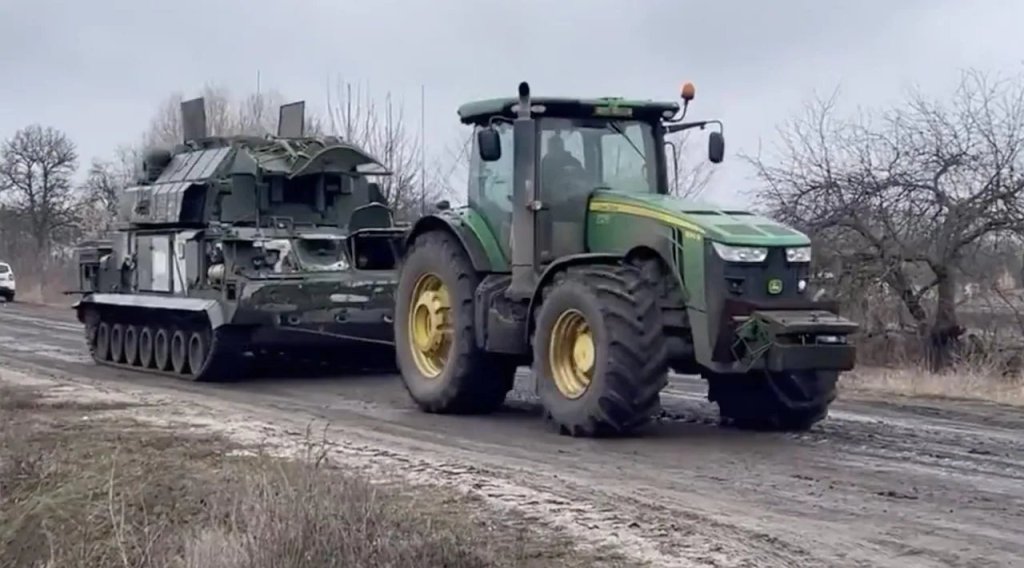
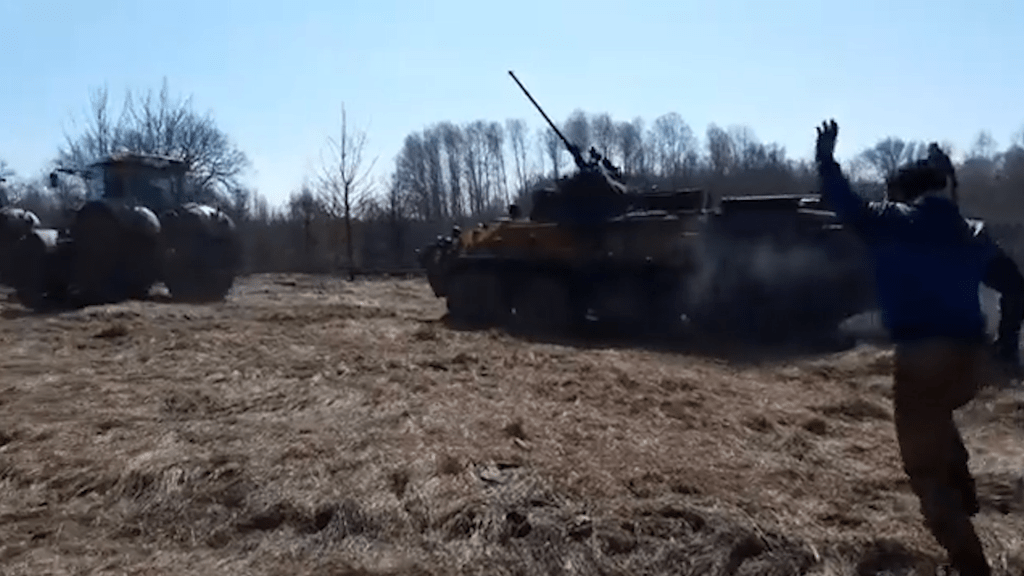
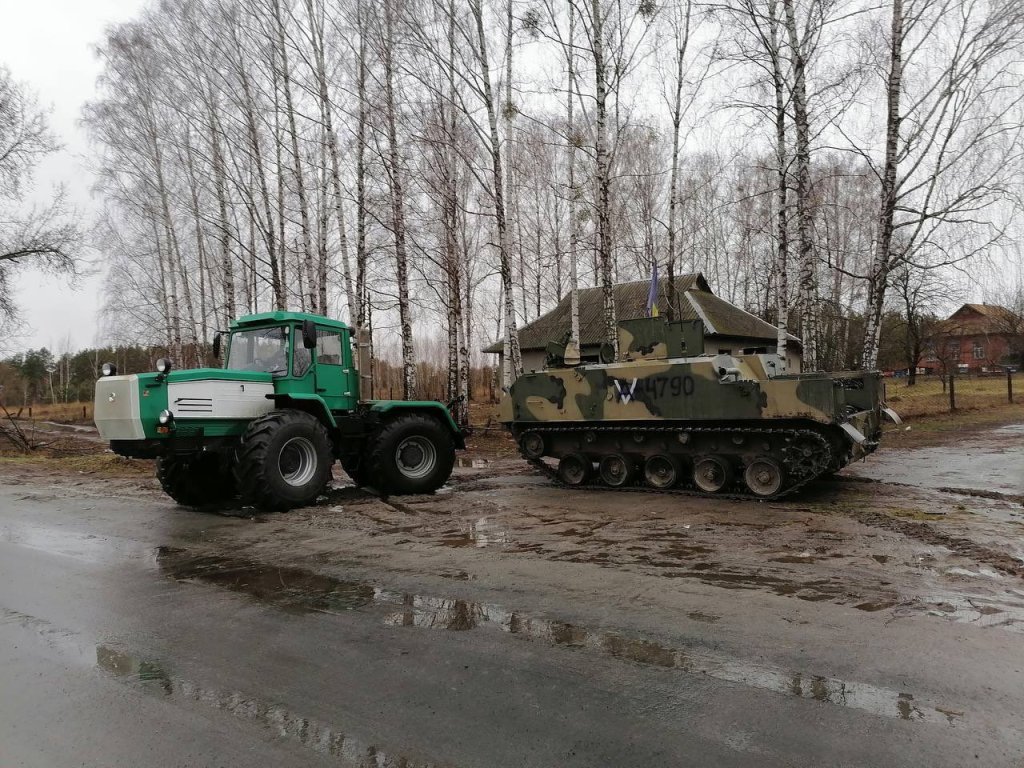
Since Russia’s invasion of Ukraine in late February large quantities of vehicles and equipment have been captured or destroyed on both sides. Fighting a war in the social media age means we have an unprecedented amount of first hand footage and of course from this memes are going to evolve. Almost as soon as the war began videos of Ukrainian farmers towing Russian vehicles began to be shared on telegram, tiktok and instagram. Often salvaging abandoned equipment the videos soon made unlikely heroes of Ukraine’s farmers. So much so they’ve been commemorated not just by Saint Javelin merchandise but also an official stamp from the Ukrainian post office.

I’ve collected quite a few videos of the farmers in action over the last few months and Rob Lee over on twitter has been keeping a running thread too. So here’s a supercut of videos showing Ukrainian farmers towing away everything from trucks to Grad launchers to T-80 tanks!


Support Us: If you enjoyed this video and article please consider supporting our work here. We have some great perks available for Patreon Supporters – including early access to custom stickers and early access to videos! Thank you for your support!


Bibliography:

Famous for towing captured Russian tanks, Ukrainian farmers step up for war effort, CBC News, (source)

Winning design in Ukraine’s second design contest features tractor and tank, Linn’s Stamp News, (source)

Ukraine Celebrates Its Tank-Towing Farmers, VOA, (source)

Sweden’s KSP-58 Machine Guns In Ukraine

Since the Russian invasion of Ukraine in February we’ve seen a number of FN MAG variants appear in use with Ukrainian forces. By far the most common appears to be the US M240 series. However, in recent months we’ve also seen a number of Swedish KSP-58s appear in imagery from the field.

Sweden has long supported the Ukrainian war effort providing a shipment of 5,000 Pansarskott m/86 anti-armour weapons (perhaps better known as the AT4) back in late February. The transfer of an additional batch of 5,000 m/86s was announced on 2 June. Most recently on 30 June it was reported that Sweden would provide a fresh batch of light anti-armour weapons and also machine guns as part of a transfer worth $49 million. When delivery of this aid was made is unconfirmed but the KSP-58s are reported to have been in theatre possibly as early as July – August.

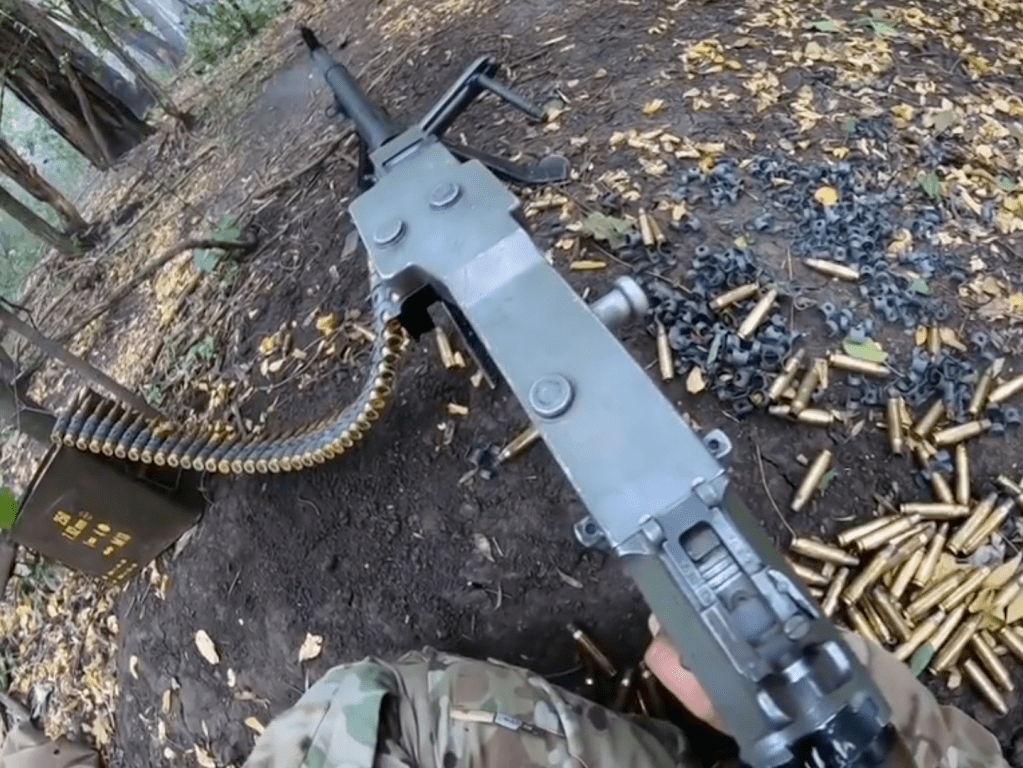
While the type of machine gun was not confirmed, since the beginning of September we’ve seen imagery of a number of KSP-58 GPMGs appear in theatre. Easily identified by their wooden stocks, grey-green-coloured receiver finish and enclosed front sight. Sweden was one of the earliest adopters of the FN MAG and the Kulspruta 58 or KSP-58 entered service with the Swedish armed forces in the late 1950s and was originally chambered in the 6.5×55mm Swedish round. The KSP-58B was introduced following the adoption of 7.62x51mm. The guns were made under license from FN at the Carl Gustav Stads rifle factory in Eskilstuna.

A KSP-58B in use with Ukrainian troops c. September 2022 (via social media)

These have been seen in the hands of International Legion units and also regular Ukrainian Army units centred around Mykolaiv and Kherson. All the the examples of the weapon sighted appear to be KSP-58Bs, none of the guns seen have the Picatinny rails seen in the KSP-58F. 

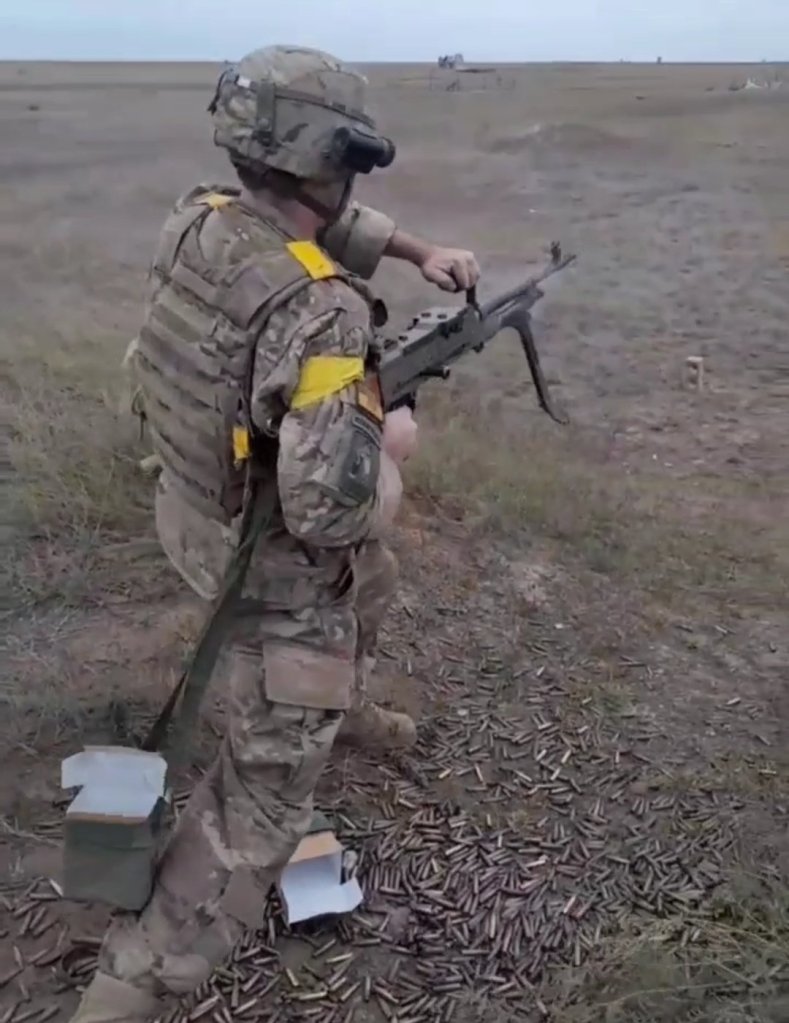
Speaking to Kaiser [frontline_view_kaiser] a German volunteer with the Ukrainian Army, he said his unit encountered a “a brand-new, never used KSP with original factory delivered Box and all accessories untouched”. His colleague Yuri [nucking_futs_yuri] has shared some videos filmed in late-August, during a training session he ran on FN MAG variants for various Ukrainian units. Yuri said their were about 20 guns on the range during the training session, with the majority being KSP-58s. Yuri shared a video in mid-September firing a through a KSP-58B, from the hip, filmed after the training session had been completed. 

Yuri with a KSP-58B c. September 2022 (nucking_futs_yuri)

While we can’t confirm that the KSP-58s came directly from Sweden it seems likely. Another potential origin for the weapons may be the Baltic States (Estonia, Latvia and Lithuania). Sweden gifted an unconfirmed number of KSP-58s to the Baltic States in the 1990s. Today, the guns remain in service with the Latvian Army and National Guard, the Estonian Army and Estonian Defence League and the Lithuanian Army and National Defence Volunteer Force. Both Estonia and Lithuania began searching for a replacement for the KSP-58 in mid-2021. Given the Baltic states’ support for Ukraine the guns may potentially have originated from there, rather than Sweden itself. We have already seen the Baltic States have transferred former Swedish equipment including the PV-1110 recoilless anti-tank gun which were given to the Baltic states in the early 1990s.

It remains to be seen if we’ll see more of the KSP-58s in the field but in future articles/videos we’ll look at other FN MAG variants are in use in Ukraine.

Update 16/1/24: A maritime element of Ukraine’s Border Guards shared photos of them familiarising with what appears to be a KSP-58.

Update – 5/6/24:

Update – 15/10/24: A video of a KSP-58 in action somewhere in Ukraine, date unknown, recently shared online.


If you enjoyed this video and article please consider supporting our work here. We have some great perks available for Patreon Supporters – including custom stickers and early access to videos! Thank you for your support!


Bibliography:

Thank you to Kaiser and Yuri for their input – definitely check them out on their social media!

Kulspruta 58, Forsvarsmakten, (source)

KSP-58, Soldf.com, (source)

Sweden to boost military aid to Ukraine, Politico, 29 Aug. 2022, (source)

Sweden to send military aid to Ukraine, Reuters, 27 Feb. 2022, (source)

Sweden assists Ukraine with the Robot 17, SVt.se, 2 June 2022, (source)

Sweden to send more anti-tank weapons and machine guns to Ukraine, Reuters, 30 June 2022, (source)

Estonia to acquire new weapons for EDF, Defense League, ERR, 18 Nov. 2022, (source)

Lithuania buys machine guns for EUR 34 million, Defence 24, 20 Aug. 2022, (source)

RPG-30: Russia’s Dual Tube Rocket Launcher

The RPG-30 is one of Russia’s more advanced disposable anti-armour weapons. Developed in the early 2000s by Bazalt it is designed to overcome reactive armour and active protection systems. It entered service in 2012 and has seen extensive use during the fighting in Ukraine. 

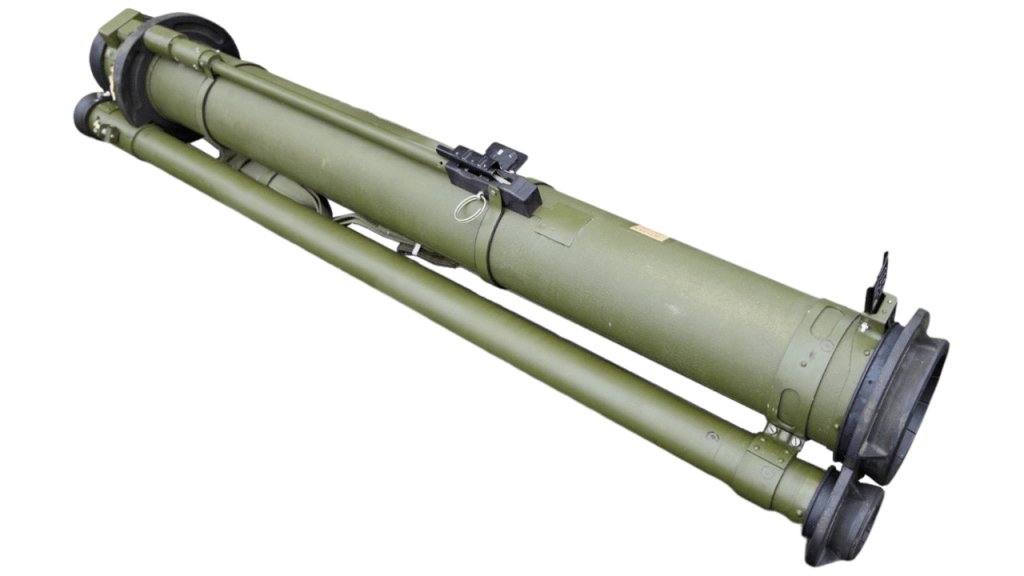
The 7P53 RPG-30 “Kryuk” or ‘Hook’ is a 105mm fin and spin stabilised rocket propelled munition with a tandem HEAT shaped charge warhead. The RPG-30 overcomes ERA and APS by using a 42mm IG-30 decoy projectile, which is believed to be inert, coupled with the main rocket’s tandem warhead. This can be seen in a secondary, thinner tube running along the side of the weapon. The precursor decoy causes premature activation of the APS and allows the main warhead to exploit the gap in the tank’s protection. The theory being that the target’s APS takes some time, perhaps half a second, before it can engage again. The gap between the firing of the two rockets is measured in milliseconds and the lag, while noticeable, does not appear to be significant enough to effect the user’s aim or accuracy on target.

RPG-30 (Vitaly Kuzmin CC BY-SA 4.0)

The RPG-30 uses the PG-30 tandem HEAT warhead, similar to the PG-27 used by the RPG-27. It can reportedly penetrate 750mm of rolled homogeneous armour and up to 650mm of rolled homogeneous armour after ERA. Effective range estimates vary with the average suggesting 200m.

The weapon’s sights are simple and consist of a folding ladder front sight and rear sight – there does not appear to be provision for mounting optics. Flipping up the rear sight also cocks the weapon. The disposable tube(s) is made of aluminium with a fibreglass outer layer. Sources suggest it weighs around 10.3kg (22.7lbs) and has an overall length of just over 1m (1,135mm/44.7in). 

A pair of RPG-30s captured in April 2022 (via Social Media)

Unlike other Russian weapon systems few videos of its use have been shared by Russian state media or Russia’s defence exports corporation Rosoboronexport. The ongoing war in Ukraine, however, has provided our first real look at the weapon in action. As soon as the Russian invasion was launched on 24 February, RPG-30s began to be seen in use with Russian forces. By late February and early March imagery of captured examples was shared on social media. 

Russian soldier posing with RPG-30, March 2022 (via Social Media)

The first images of the weapon came from Russian sources in late February, just after the invasion. This was quickly followed by imagery of captured examples, most notably from the column of Tigr-M armoured infantry mobility vehicles in Kharkiv.  A photograph of a further two captured RPG-30s appeared in April, while another example was photographed in Donbas in early May. Later in May a photo of a Russian soldier posing with one was shared on social media and in September significant caches of weapons were captured in Kherson and Balakliya. 

Still of a Russian soldier firing an RPG-30, August 2022 (via Social Media)

In late August we got our first brief look at the RPG-30 being fired in a montage video of VDV weapon systems (see image above). Earlier in mid-August a sort of ‘unboxing video’ was shared giving us a good close up look at some of the packaging the RPG-30s are shipped in and the markings on the side the weapon. Most recently in some further video of the RPG-30 being fired on a Russian Western Military District range also surfaced giving us a good look at the weapon in action.

RPG-30s captured in April (via Social Media)

Of course the weapon is designed to be simple to use, anyone with training on a similar shoulder-fired disposable anti-armour weapon can operate it. While it has been said that its widespread use in Ukraine is somewhat ironic given that Ukraine does operate any APS equipped tanks, the weapon is still useful against less sophisticated tanks. While the precursor might potentially deliver some limited kinetic damage to the ERA block, the RPG-30’s tandem warhead is capable of defeating the ERA fitted to most Ukrainian tanks, though of course, the same can be said of Russia’s other anti-armour weapons which use tandem warheads.

Update 27/10/22:

The Georgian Legion recently shared a short video looking at a captured RPG-30. The video also includes firing footage of the weapon.

Update 15/09/23:

Clip of a Ukrainian combatant firing a captured RPG-30 at the range.

Update – 20/8/24:


If you enjoyed this video and article please consider supporting our work here. We have some great perks available for Patreon Supporters – including custom stickers and early access to videos! Thank you for your support!


Bibliography:

105mm PG-30 Rocket, CAT UXO, (source)

RPG-30 Kryuk (Hook), US Army TRADOC, (source)

Russian Army receives cutting-edge antitank rocket launchers, TASS, (source)