Switzerland Chooses the SIG Sauer P320 – Here’s Every Military Using It Now

On Thursday (4 December) Armasuisse, Switzerland’s Federal Office for Defence Procurement, announced the selection of the SIG Sauer P320 to replace the venerable P75 (SIG Sauer P220), which has been in service since 1975. So I thought it was a good time to break down all of the major militaries that have adopted the SIG Sauer P320 over the last 10 years.

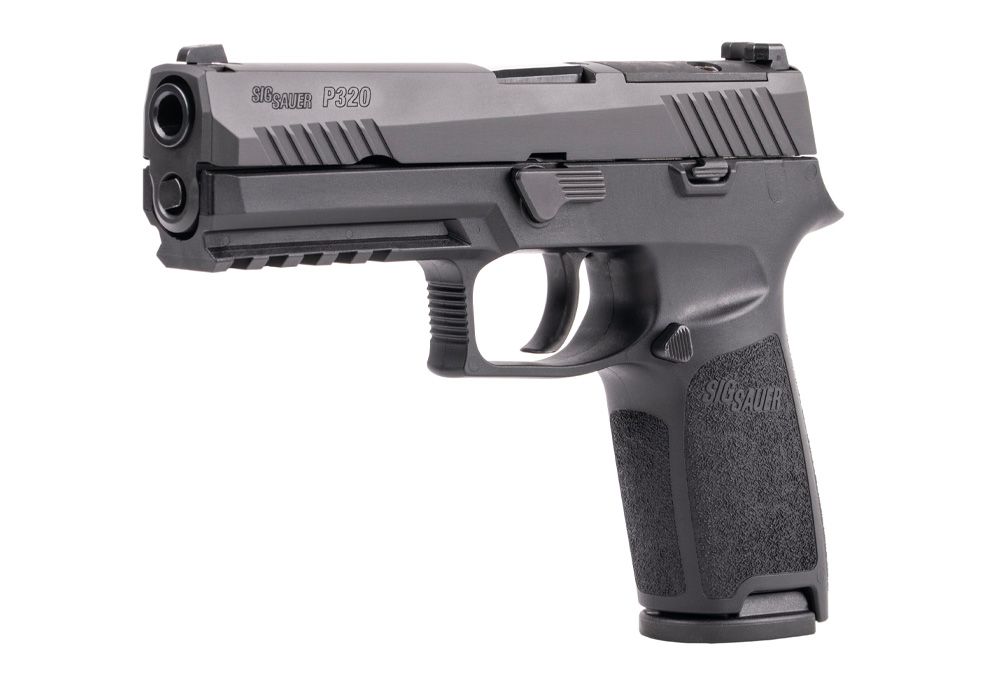
The SIG P320 is a modular, striker-fired pistol that uses the typical short-recoil, tilting barrel action, with a serialised trigger group available in varying grip-frame sizes. It evolved from the hammer-fired SIG Sauer P250 and entered production in 2014.

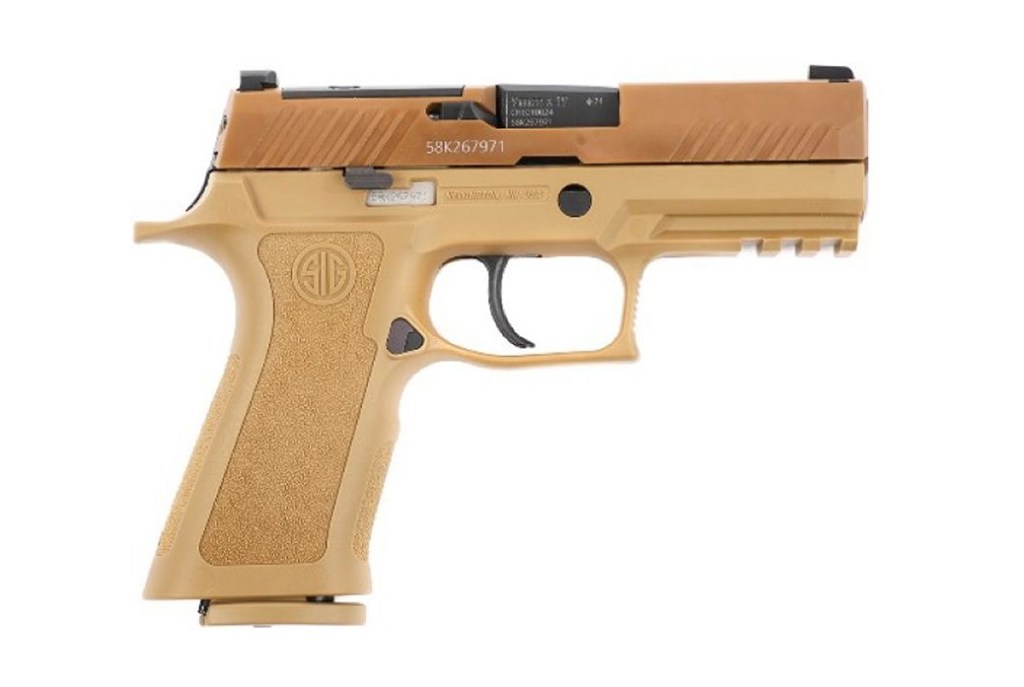
Full-size SIG Sauer P320 (SIG Sauer)

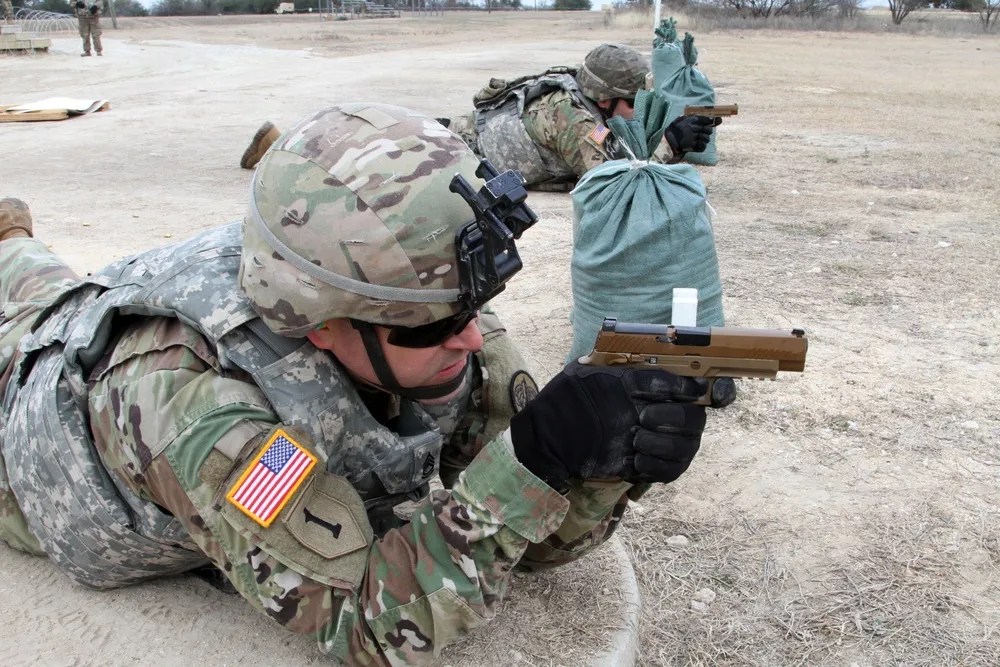
In September 2015, the United States Army and United States Air Force released a Request for Proposals for a new service pistol. This launched the Modular Handgun System program seeking to replace the Beretta M9 which entered service in 1990. The P320 faced off against a broad field of competitors including: the Beretta APX, CZ P-07, FN FNS, Smith & Wesson M&P M2.0, Glock 17 MHS and the STI Detonics STX. Down-selection and further testing took place in 2016, before the winner was announced in January 2017. The 101st Airborne were the first unit to be issued the new MX17 and compact XM18 pistols, and fielding continued into the 2020s. The M17 and M18 have a frame mounted safety and their slides are optics ready. The USAF and US Navy procured the smaller M18, with its 3.9in barrel. The USMC also eventually selected the M18 to replace the M9, M9A1, M45A1 and M007 (Glock 19) in September 2020.

US troops training with M17 pistols (US Army)

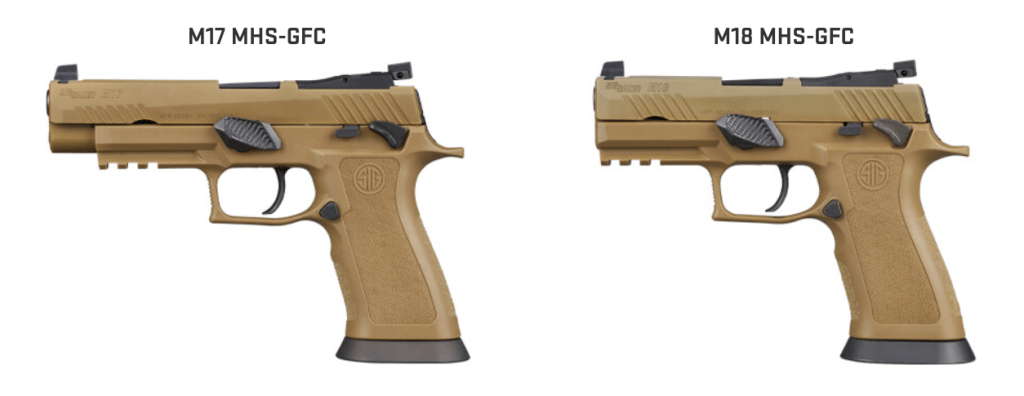
Almost 10 years after the US Army launched the Modular Handgun System program, it was announced that the MHS General Forces Configuration had been approved. The MHS GFC introduces new parts and accessories for the M17 and M18. This system allows units and soldiers to customise their sidearms to a greater degree. The new parts and accessories include new grip frames, flared magazine wells, gas pedal take-down levers, slide-mounted or stand-alone Romeo M17 Pistol Red Dot Sights and special barrels. The GFC introduces elements seen in the popular X-Carry variants.

US Army’s MHS General Forces Configuration (SIG Sauer)

In April 2018, the Danish armed forces became the second military to select the P320. The Danish Ministry of Defense selected the P320 X-Carry variant of the pistol. The Danish Army pistol trials began in 2017 and the P320 X-Carry beat competition from the Glock 17 Gen 5, Beretta APX and Canik TP 9 SF to replace Denmark’s P/49 (SIG P210) pistols. The Danish pistols have the enhanced X-Carry polymer grip frame, a flat trigger, an extended beaver tail, an extended removable magwell, an optics-ready slide, and a deep trigger guard undercut. The pistols do not have a frame-mounted manual safety. At the time of the adoption, Major Tom Elvius-Brisson, Chief of Weaponry Branch, Danish Defense Acquisition and Logistics Organization, said: “By far SIG SAUER’s P320 X-Carry outperformed the competition throughout our rigorous and stringent testing process… the pistol is the modern firearm we were looking for to support our soldiers. The P320 X-Carry has a larger magazine capacity, comes reflex red-dot ready for sighting, and has the ability to incorporate a suppressor – all extremely important features to our soldiers for their sidearm today.” It’s unconfirmed just how many pistols Denmark procured, likely under 10,000, and fielding of the Sig Sauer P320 was anticipated to have been completed by the end of 2019.

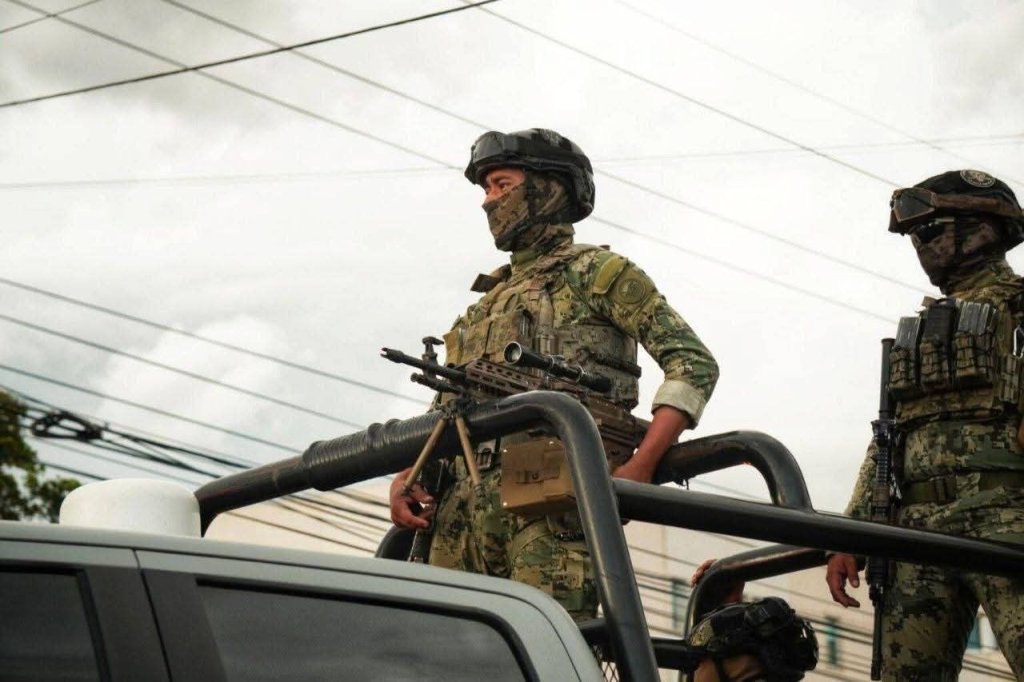
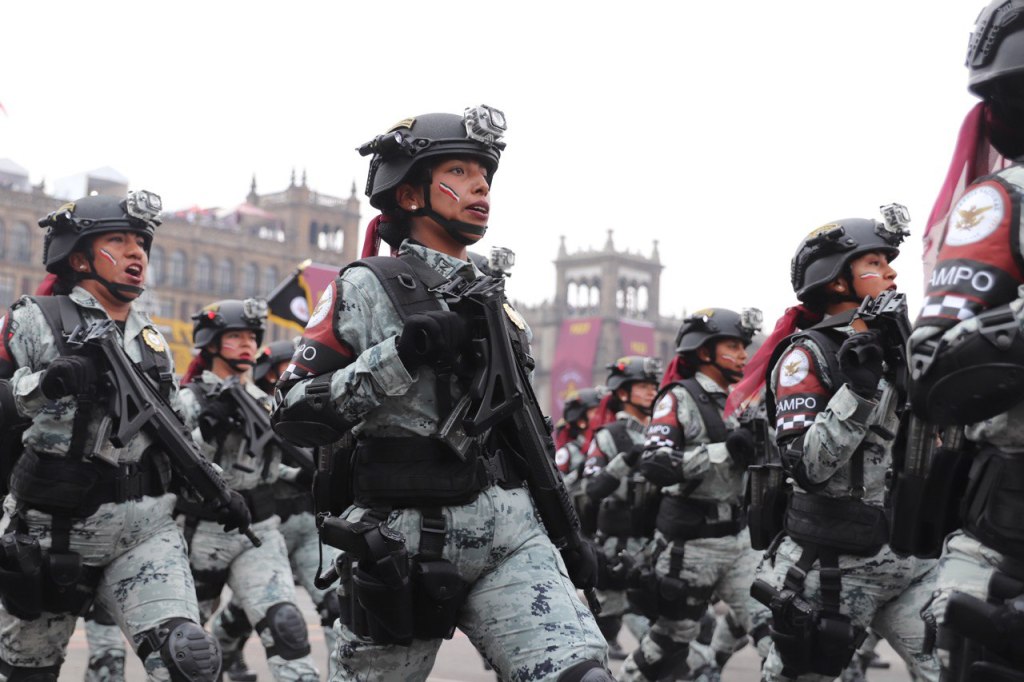
One of the less widely reported adoptions of the P320 came in 2019 when Mexico’s National Guard reportedly acquired 50,000 P320s. Some sources suggest that the pistol is also used by elements of the Mexican military. The pistols were procured in 2019 and appear listed in the National Guard’s 2021 Annual Activity Report. They can also be regularly seen as standard issue equipment in imagery shared by the Mexican government. Some photos of the pistols show the slides engraved with ‘SDN’ for Secretaría de la Defensa Nacional, Mexico’s defence department. The pistols otherwise appear to be stock, full-size duty model P320s in black with no manual safety present.

National Guard on parade with SIG Sauer P320s and FX-05 Xiuhcoatl (Mexican National Guard)

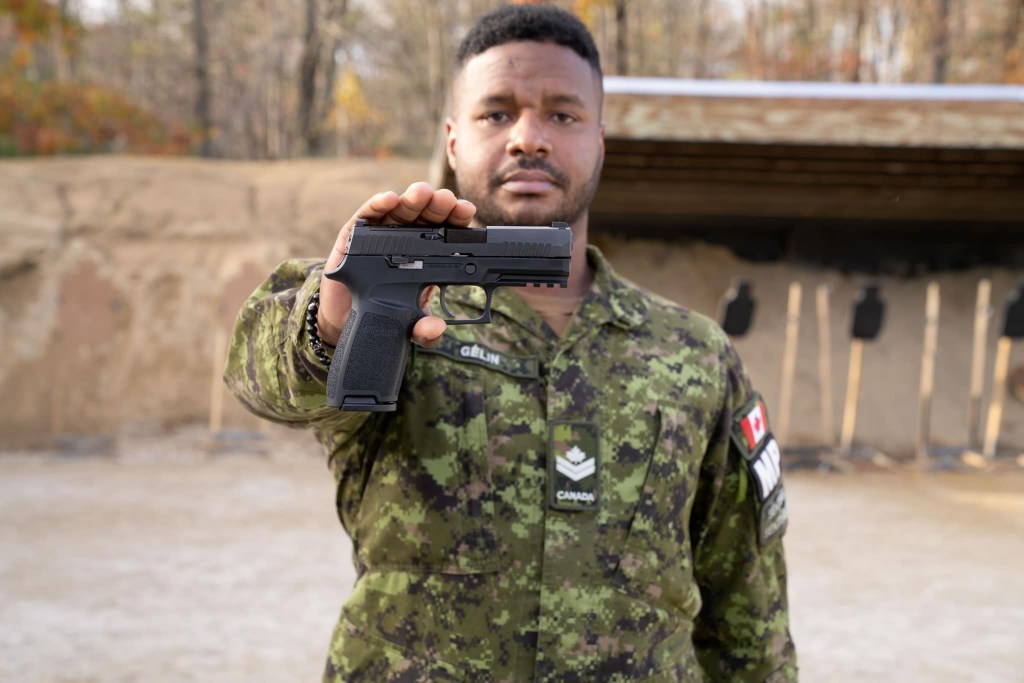
Canada became the next nation to select the P320, replacing their 80 year old Inglis-made Browning Hi-Powers. Opting for a full-size pistol with a 4.7in barrel, the pistol differs from the M17-pattern pistol in that it lacks a frame-mounted manual safety, and its rear sight is fixed on the slide, with the optics-mounting place located separately just ahead of it. It also has unique Canadian engravings on the slide, and both slide and frame are completely cerakoted in an FDE colour. The Canadian Armed Forces adopted the P320 as the C22, with an initial order for 7,000 pistols for the Canadian Army announced in October 2022. At the time of the announcement, Anita Anand, Minister of National Defence, said: “The Government of Canada is committed to providing the Canadian Armed Forces with the equipment they need when they need it. Replacing the Browning 9mm with the C22 full-frame modular pistol (Sig Sauer P320) will help ensure the continued operational readiness and effectiveness of all our members.” 

There is an additional option for a further 9,500 pistols to support Royal Canadian Air Force, Royal Canadian Navy and Military Police requirements. Canada’s transition to the C22 began in June 2023, when it was also confirmed that the Canadian Government was also in the process of procuring an additional 2,272 pistol and holster systems for the Canadian Army, 1,550 for the Royal Canadian Navy and 2,478 for the Royal Canadian Air Force. In December 2023, the Canadian Armed Forces also announced that they would start issuing the carry-size C24 pistol in early 2024.

Canada’s C24 pistol, introduced in 2024 (Canadian Army)

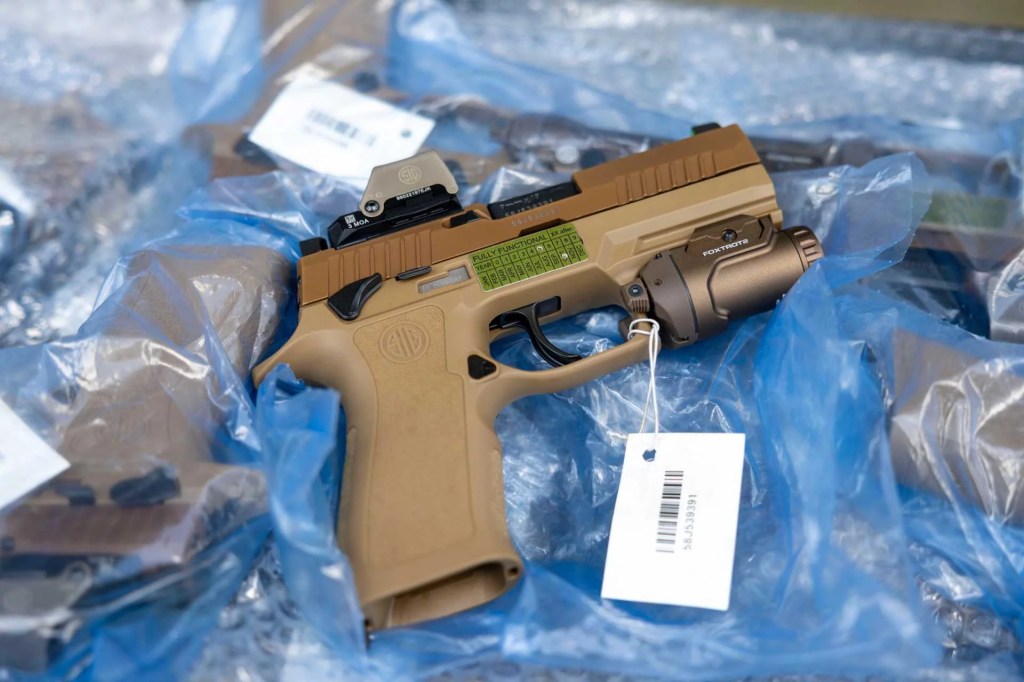
At the beginning of October 2022, the Australian Department of Defence announced that under its Lethality System Project LAND 159, a raft of new small arms were selected for the Australian Defence Force’s dismounted combatants. The P320 was chosen to replace Australia’s Browning Hi-Power Mk3s. The X-Carry Pro was selected as the platform for the Sidearm Weapon System requirement. The Australian pistol has a manual safety, suppressor height sights and a 3.9” barrel. It comes mounted with a SIG Romeo 2 (half shroud) reflex sight and Foxtrot 2 white light illuminator (which itself is designated the F10). In September 2024, this package was designated the F9. Unlike the X-Carry selected by the Danish, the X-Carry Pro chosen by Australia has its rear sight mounted on the slide rather than the optics-cut plate. Elements of the ADF’s 7th Brigade became some of the first Australian units to begin training with the pistols in August 2025.

Australian F9 pistols (Australian Defence Force)

As mentioned at the start of the video, Most recently, the Swiss Army has selected the P320 X-Carry Pro to replace the P75 (SIG Sauer P220). The Swiss sought a pistol with modern ergonomics, modularity and a 30 year service life. The tender for a new pistol was launched in 2024, from the pistols submitted five were selected for evaluation and three were down-selected. After further testing the P320 beat out competition from the Glock 45 Gen 5 and Heckler & Koch’s SFP9. Intriguingly, Armasuisse, the Swiss Federal Office for Defence Procurement, noted that initially only the Glock 45 met all the mandatory criteria and was classified as suitable for service. The SIG, however, was selected following a cost-benefit analysis and Armasuisse notes that SIG Sauer are contractually obliged to resolve any issues and establish production of the pistols locally in Switzerland. The Swiss have set aside “a mid-range double-digit million amount” for the procurement of 140,000 SIG Sauer P320s, with the initial lot numbering 50,000 pistols. The image shared by the Swiss Army showed an FDE pistol while a subsequent photo shared by SIG Sauer Switzerland showed one with a black slide and a green frame with a Swiss Cross on the grip.

Image shared by the Armasuisse – a P320 X-Carry (Armasuisse)

Despite controversies surrounding the pistol, and SIG Sauer’s ongoing response, the P320 continues to win major military contracts around the world. SIG have optimised their approach: partnering on a number of occasions with credible local companies and offering a capable but, perhaps most importantly, affordable sidearm, as such at the time of writing the P320 is involved in a number of ongoing and upcoming pistol trials.

Special thanks to Greg Knowles for assistance.


Support Us: If you enjoyed this video and article please consider supporting our work here. We have some great perks available for Patreon Supporters – including exclusive videos, custom stickers and early access to videos! Thank you for your support!
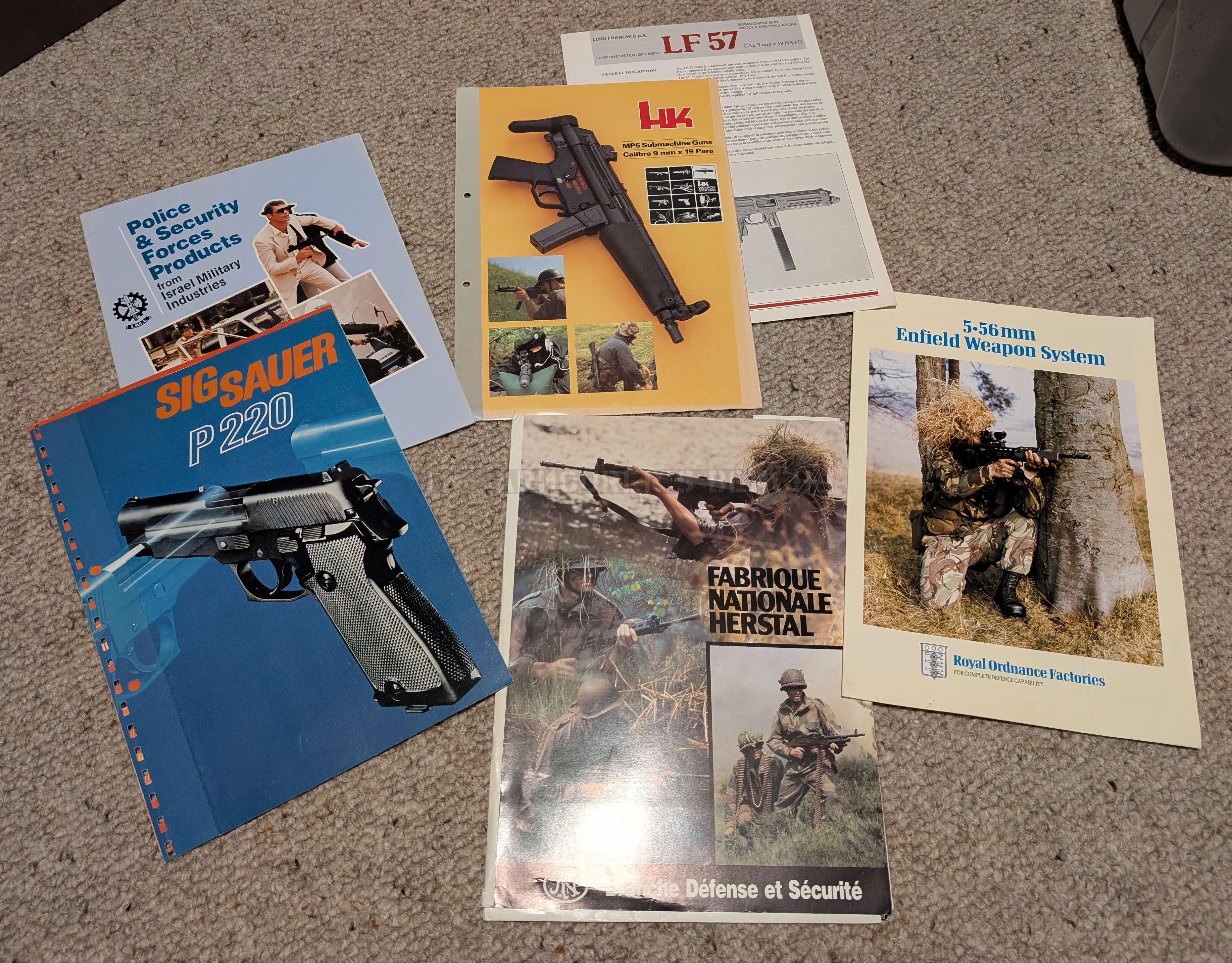
Vintage SIG Sauer Brochures

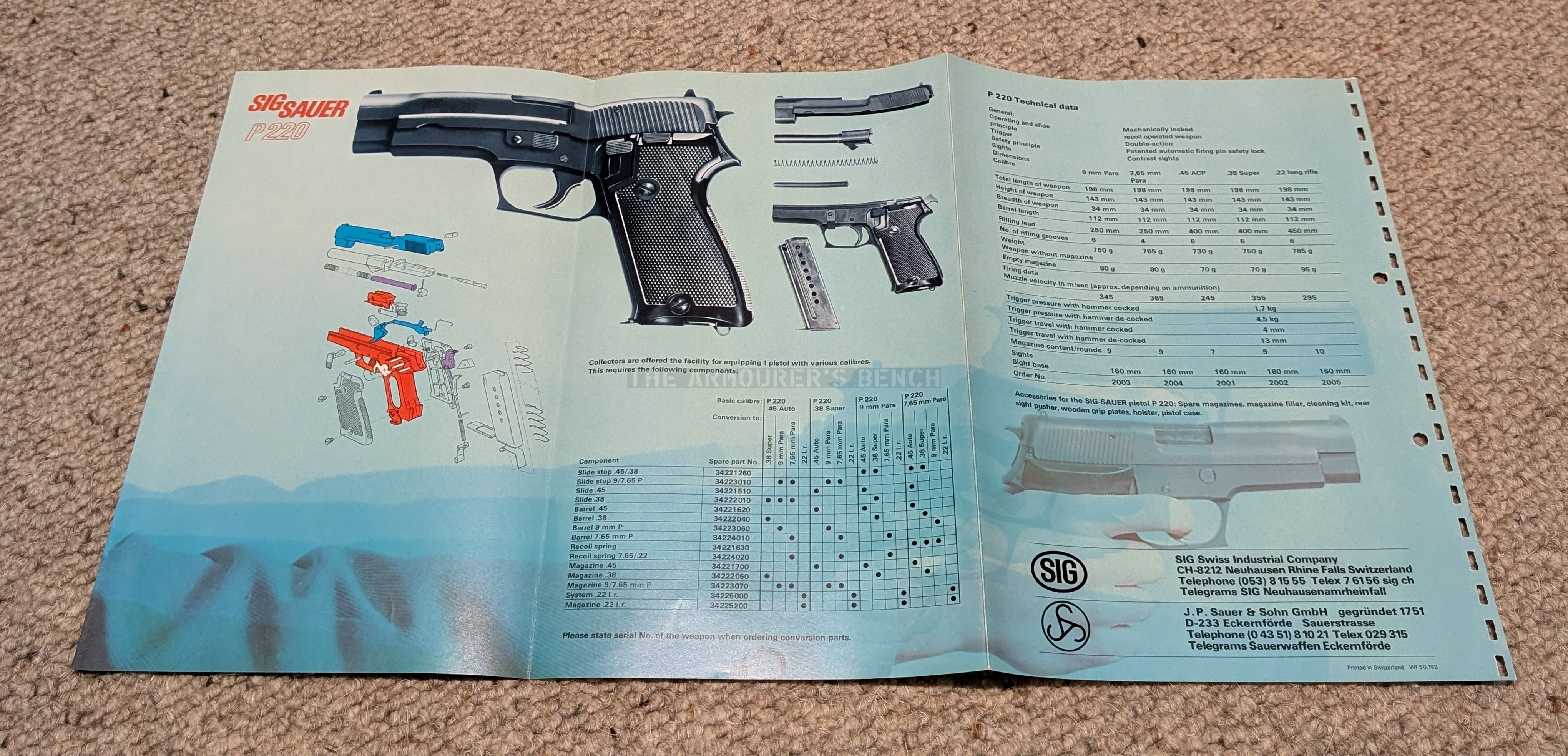
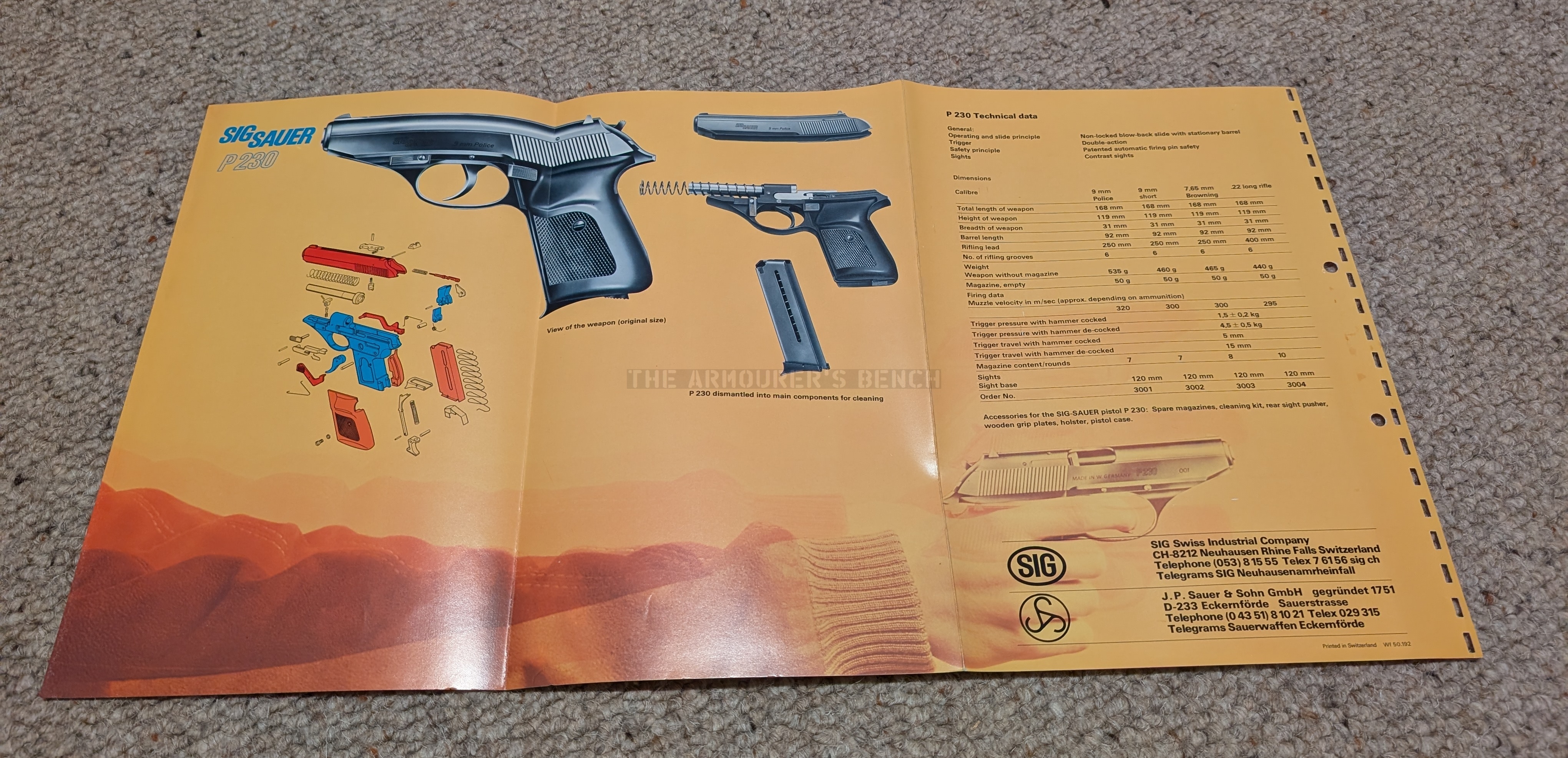
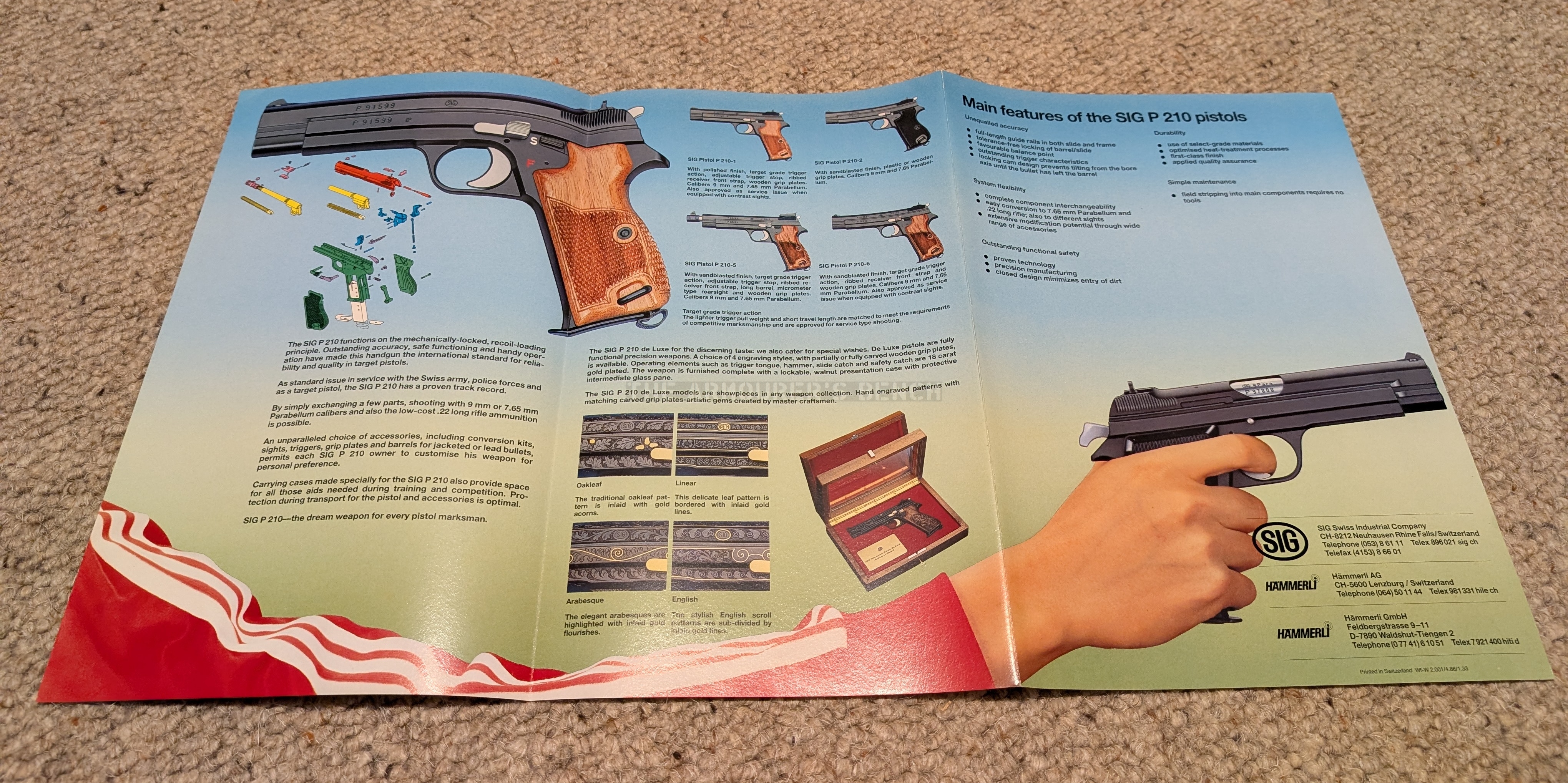
POV – You’re just back from an exciting day walking around the 1989 Arms Expo. You begin unpacking all of the brochures about the latest cutting edge firearms that you picked up! You start with some SIG brochures a nice man from Bern enthusiastically gave you….

More from the TAB reference collection here.


Support Us: If you enjoyed this video and article please consider supporting our work here. We have some great perks available for Patreon Supporters – including early access to custom stickers and early access to videos! Thank you for your support!
Hands On With SIG Sauer’s Improved M7 Carbine

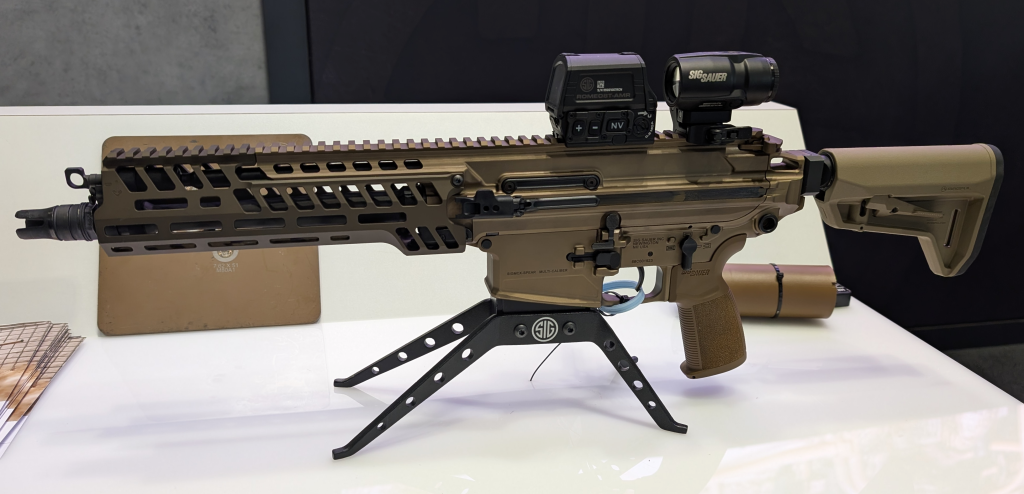
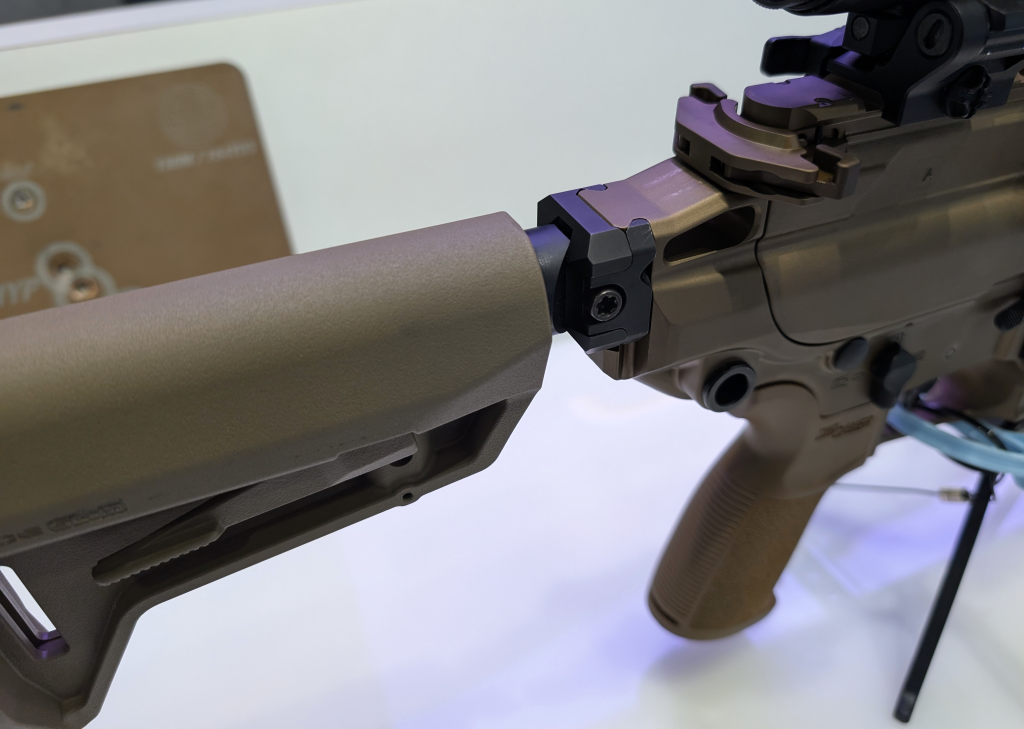
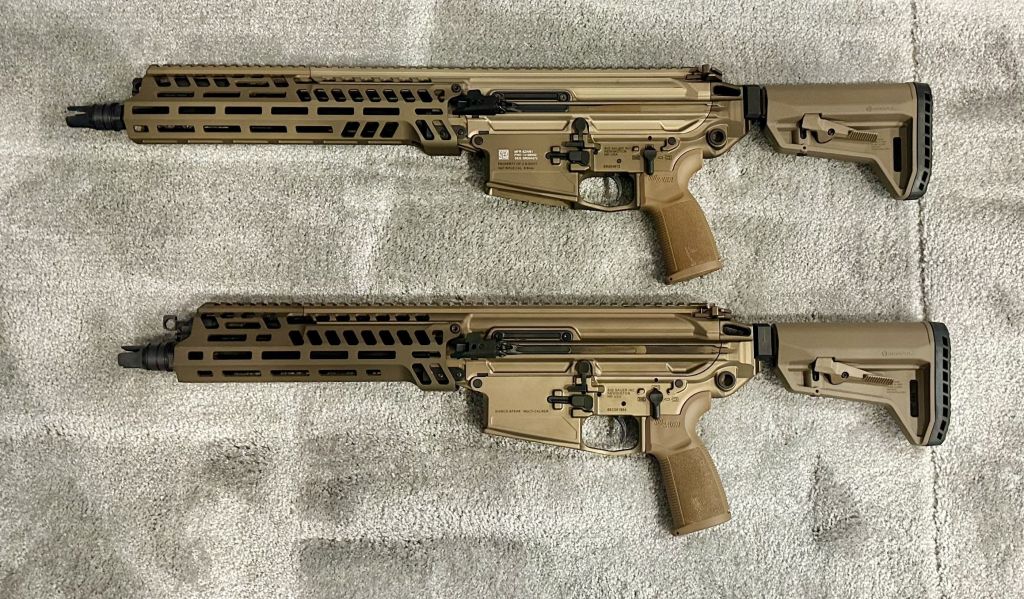
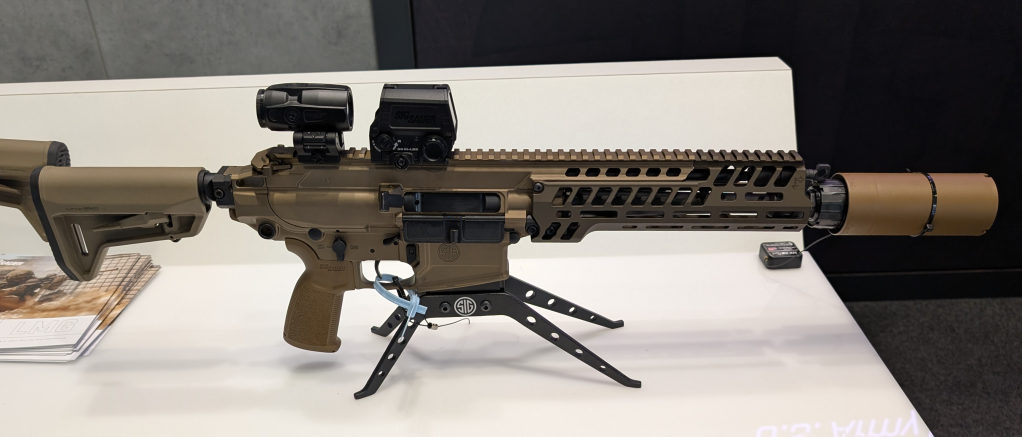
Last week at the DSEI defense exhibition in London, we had the opportunity to handle SIG Sauer’s product improved M7 rifle. Over the past year, SIG Sauer has taken user feedback from the US armed forces and refined the M7; the result is a handier weapon which feels more like a fighting rifle.

M7 Product Improved, with 10.5in barrel, at DSEI 2025 (Matthew Moss)

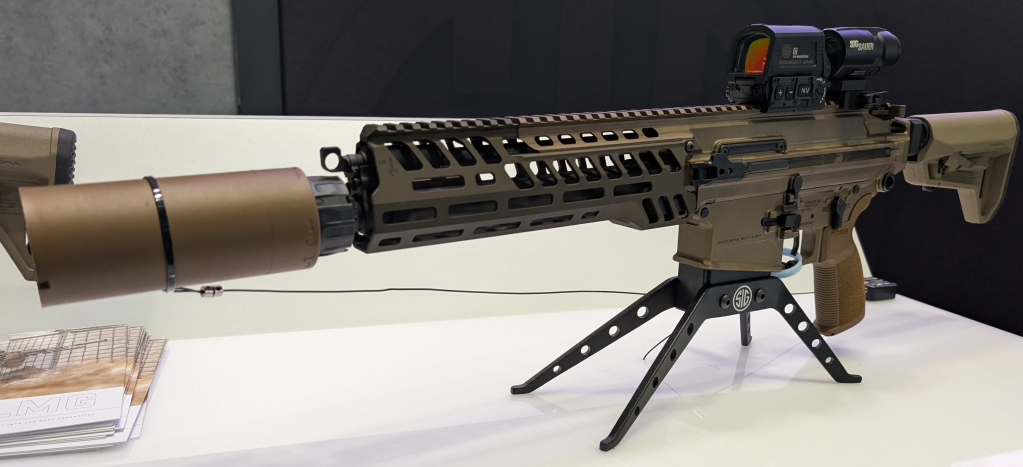
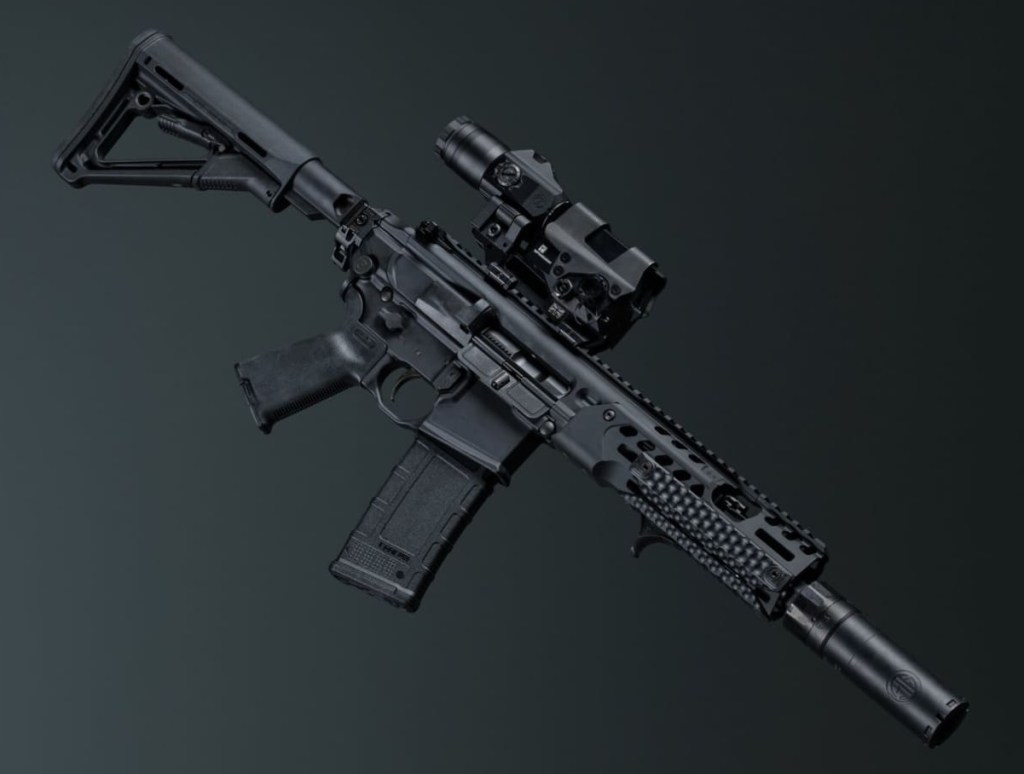
One of the key criticisms of the M7 is its weight, with the M7 weighing in at around 9.8 pounds (4.46 kg) with its SLX suppressor. By comparison, the improved M7 weighs in at around 7.5lbs (3.5kg) unloaded, with a suppressor but without an optic. This makes the refined M7 a full kilogram (2.2lbs) lighter. 

M7 Product Improved at DSEI 2025, with suppressor removed (Matthew Moss)

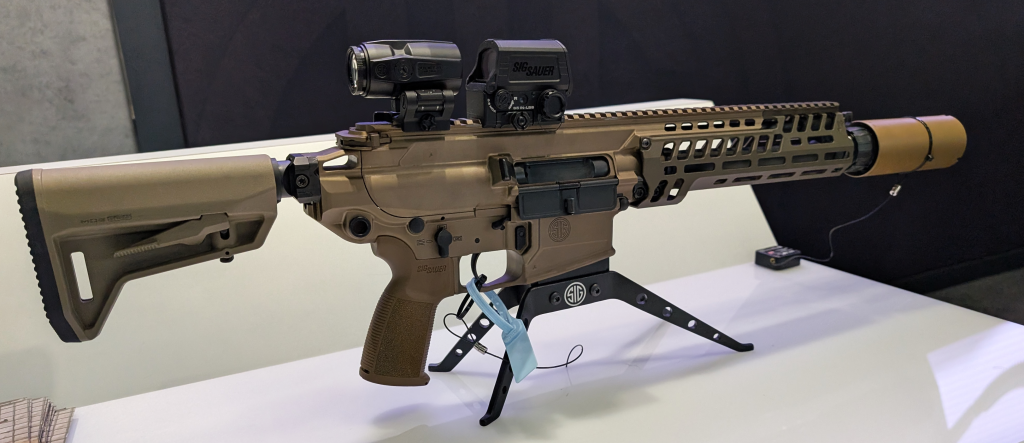
M7 Product Improved at DSEI 2025, with suppressor mounted (Matthew Moss)

SIG Sauer achieved this weight reduction in a number of ways; the barrel has been shortened from 13 to 10.5 inches, and some of the internal components, such as the bolt, have been lightened. SIG explained that the muzzle velocity of the rifle has only been slightly decreased by the barrel length change, with the improved M7 achieving around 2,800-2,900 FPS (870 m/s) compared to the 3,000 FPS with the original 13-inch barrel. SIG say this still more than meets the Army’s ballistic and armor penetration requirements. 

M7 Product Improved with new shorter SLX suppressor at DSEI 2025 (Matthew Moss)

The barrel itself has a lighter profile, and the handguard has been shortened and reprofiled to match the new barrel length. SIG have also removed the folding stock latch, with the fixed stock saving several grams. Arguably, for some applications, this is weight that could be justified to maintain the ability to fold the weapon’s stock for a more compact profile – better suited for vehicle operations.

M7 Product Improved with fixed stock at DSEI 2025 (Matthew Moss)

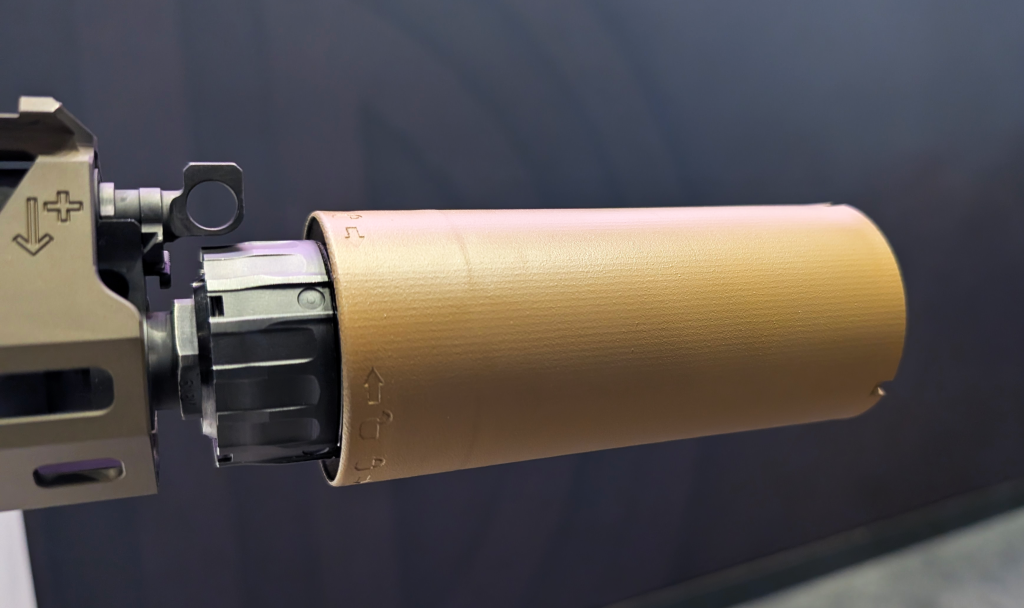
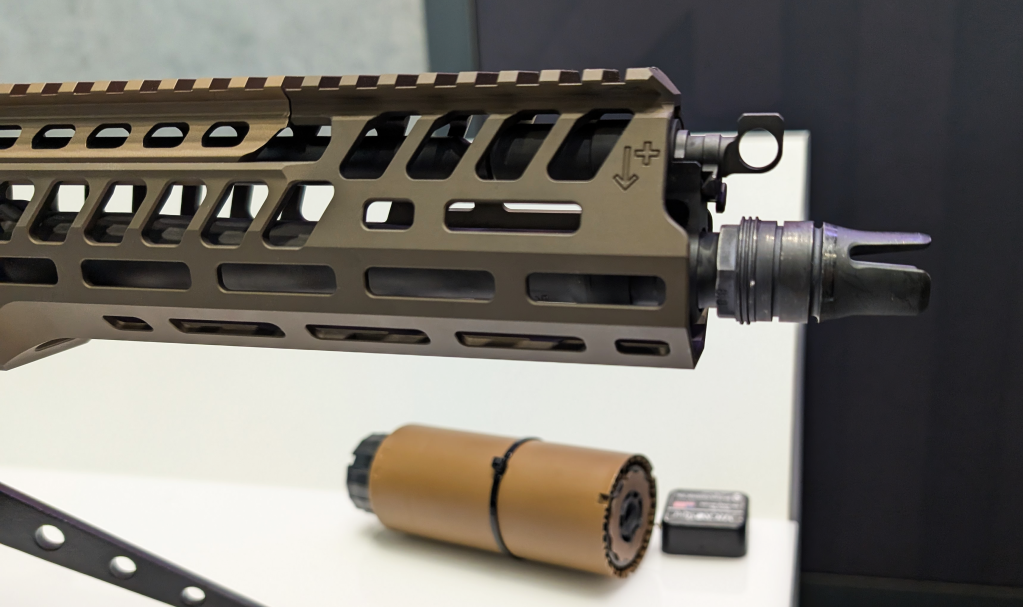
In addition to a shorter barrel, SIG Sauer has also shortened the SLX suppressor which is paired with the M7, by approximately an inch; this helps improve the rifle’s balance. SIG have also paired the new shorter suppressor with a new lightweight thermal shield, which significantly reduces the heat signature of the suppressor. SIG are also offering a mesh shroud (similar to that seen issued with SURG kits) and an anti-mirage shroud. With the thermal shield, the suppressor’s heat glow under night vision and thermal optics only becomes visible at around 100 rounds, rather than 40 rounds without the shield.

M7 Product Improved muzzle close-up at DSEI 2025 (Matthew Moss)

SIG’s work on the M7 was undoubtedly driven by US military feedback and a desire for refinements, but it is worth noting that it is unclear whether the rifle seen at DSEI will be the configuration the military moves towards in the future. Another variant of the improved rifle, with the shorter barrel and new handguard but a new upper receiver profile, was seen recently at the Maneuver Warfighter Conference 2025 in a released (and subsequently redacted) photo shared by the US Army. The rifle is also seen to be equipped with a Millbrook Strategic Services MFMD suppressor.

M7 Product Improved at DSEI 2025 (Matthew Moss)

The US Army now has around 25,000-30,000 M7 rifles in inventory; it is unlikely that rifles already in service will be retrofitted to the new M7 Product Improved spec. The iterative refinement of the M7 isn’t a surprise; testing, feedback and improvement are key to the Next Generation Squad Weapons program’s spiral development strategy. As such the M7 and M250 only recently completed desert environmental testing with troops in August. Time will tell if the configuration seen at DSEI (or something similar) is adopted by the US Army to supplement the M7s currently in service. In the meantime questions regarding the M7 PI’s accuracy, reliability, parts wear and signatures are yet to be definitively answered but it is interesting to see the potential direction of refinement the rifle is moving in.

Update – 24/9/25:

A social media video shared by the US Army highlighting a visit by the Secretary of the Army to the 101st Airborne included a brief shot of a board that offered some details on the “M7 PIE” and the “M7 ‘Carbine'”. (H/T to @TangirayL) PIE standing for ‘Product Improvement Effort’.

The board lists the major changes made to the two rifles and gives some weight and length specs on the variants. This would indicate that rather than just one improved variant there are two and the one shown at DSEI is the M7 ‘Carbine’ (or PIE RAPTOR).

Update 14/10/25:

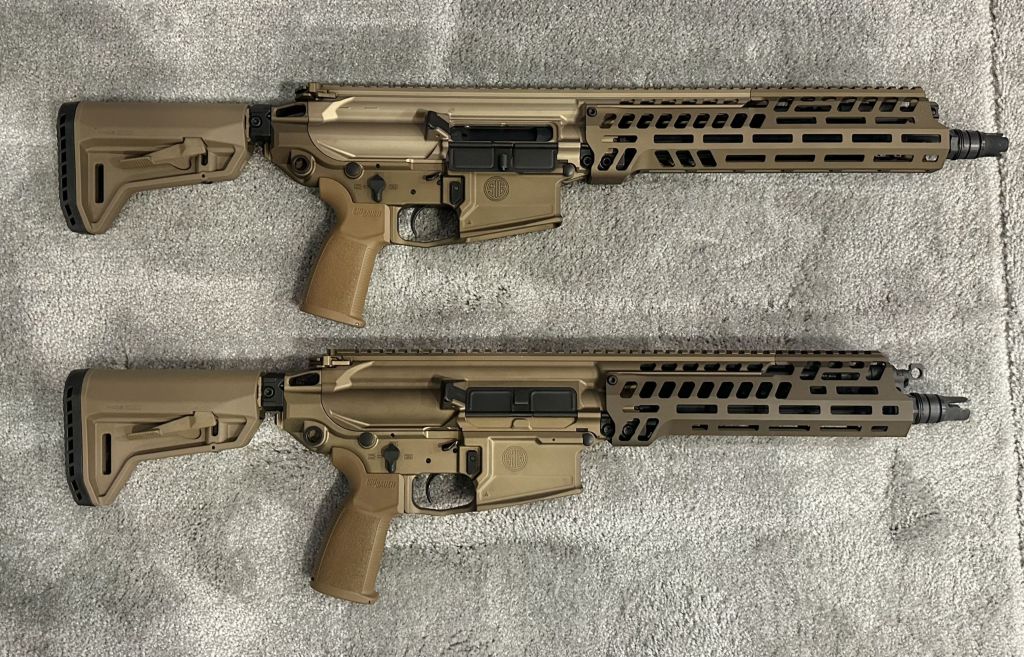
At AUSA 2025 SIG Sauer displayed both the product improved M7 [which SIG refer to as the M7 Enhanced Rifle] and the product improved M7 carbine. Solider Systems Daily shared good side by side photos illustrating the two new versions of the M7. Noteably the design of the handguard between the M7 PIE Carbine seen at DSEI and AUSA differs in their side MLOK configurations.

SSD also reports that: “regarding barrel life. The program requirement was for 5,000 rounds which is the same specification as the M4. However, SIG has noted barrel life for the M7 in excess of 10,000 rounds.”


Support Us: If you enjoyed this video and article please consider supporting our work here. We have some great perks available for Patreon Supporters – including early access to custom stickers and early access to videos! Thank you for your support!
UK Royal Marines Commandos Adopt SIG Sauer MCX

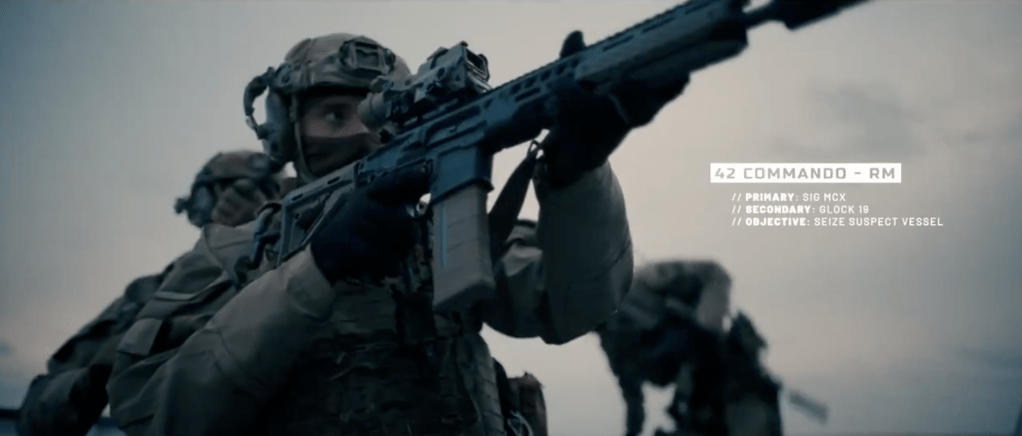
The UK’s Royal Marines have confirmed that some units of the UK Commando Force are now equipped with the SIG Sauer MCX. The announcement on social media simply read: “The UK Commando Force has been issued with 1,500 new Sig Sauer MCX rifles for use in the maritime counter-terrorism role.” These are set to be used alongside the new Knights Armament-produced KS-1s which were adopted in 2023 as the L403A1.

Royal Marine of 42 Commando seen with a 5.56x45mm MCX in the Royal Marines’ video ‘RAID’, (Royal Marines)

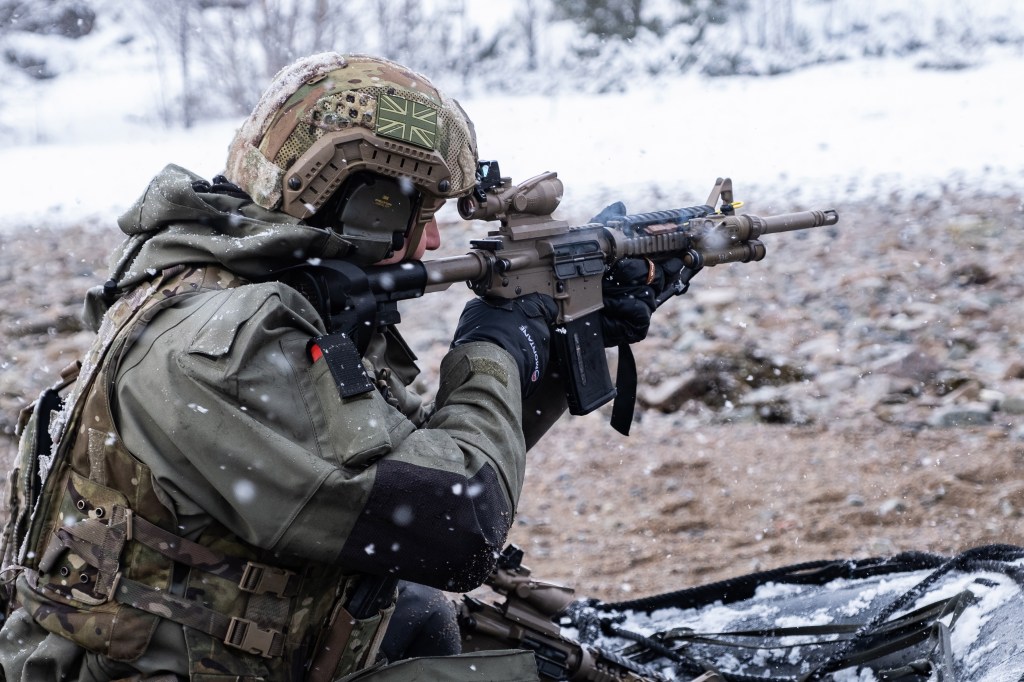
The first confirmation that the MCX was in British service came in February, with the publication of a video titled ‘RAID’ showcasing the Royal Marines Commandos’ capabilities. In the video members of 42 Commando are seen using SIG MCX LTs while Marines from 40 Commando are seen using the L403A1, which has been adopted by elements of the UK Commando Force and the new Army Special Operations Brigade, which is made up of the battalions of the Ranger Regiment which was formed in 2021. Check out my earlier article/video looking at the L403A1 here.

In a full statement the Royal Navy, under which the Royal Marines operate, said the procurement was “part of £6m Navy investment” with the new rifles “designed to complement the Commandos’ new general use weapon [the L403A1].”

This means that the UK Commando Force have at least four AR-patterned (in terms of ergonomics and layout) carbines in service: the new MCX variant, the L403A1 (KAC KS-1), and the L119A1/A2 (Colt Canada C8) which is available in a standard configuration with a 15.7 in barrel and in the C8SFW configuration which has a CQB upper receiver with a 10 inch barrel. Additionally, they also deploy the 7.62x51mm AR-10-pattern L129A1, with plans in the works for an A2 chambered in 6.5 Creedmoor.

Lieutenant Colonel Olly Osborne, of the Commando Force Programme team, said: “These rifles reinforce the commitment of the Navy and Defence to our transformation, and the value the Commando Force provides to our national and international security. This is an excellent period of investment in the force and provides great confidence through exceptional task specific modern weaponry.”

The rifle was procured under the auspices of Project Hay, during which the Royal Navy says that Commandos “put the system through strenuous testing during force-on-force exercises and live firing drills… [they were able to] thoroughly field-test systems and provide feedback on their performance. This was instrumental in shaping the final configurations of the fielded MCX.”

A different configuration of the MCX LT was previously part of the Project Hunter trials. The Royal Marines Commandos’ MCX will replace the short C8SFW with trials of a .300BLK upper and associated ammunition said to be ongoing. This will likely be used in conjunction with reduced ricochet, limited penetration ammunition.

At SHOT Show 2025, SIG Sauer had one of the rifles on display but couldn’t offer details at the time.

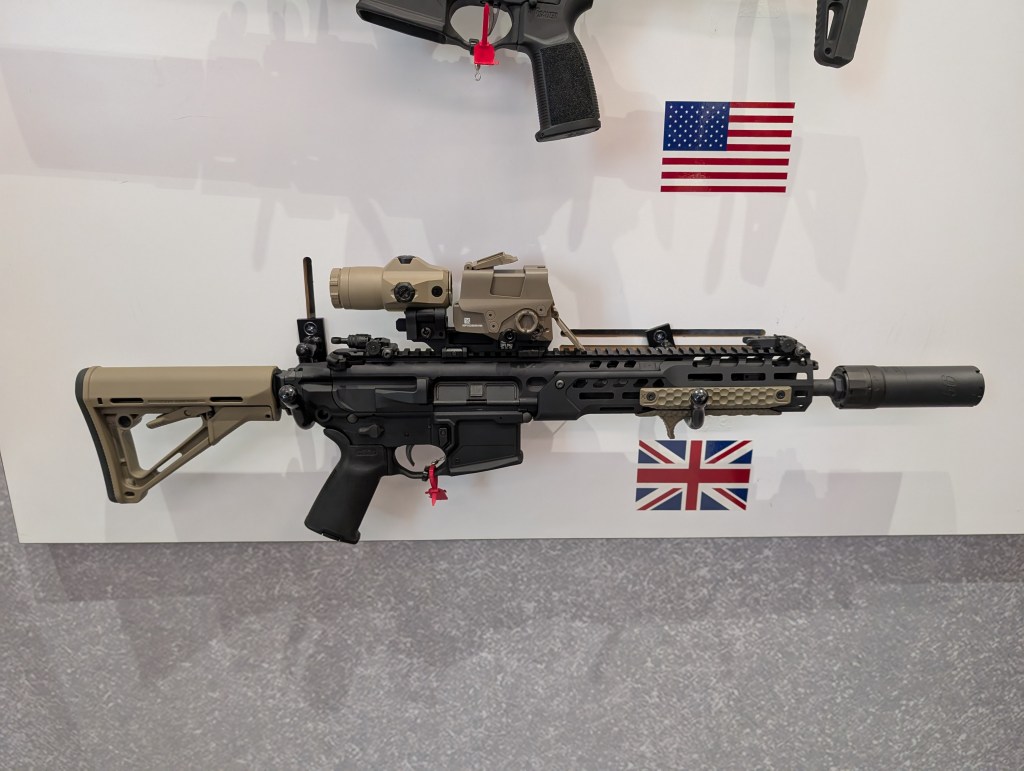
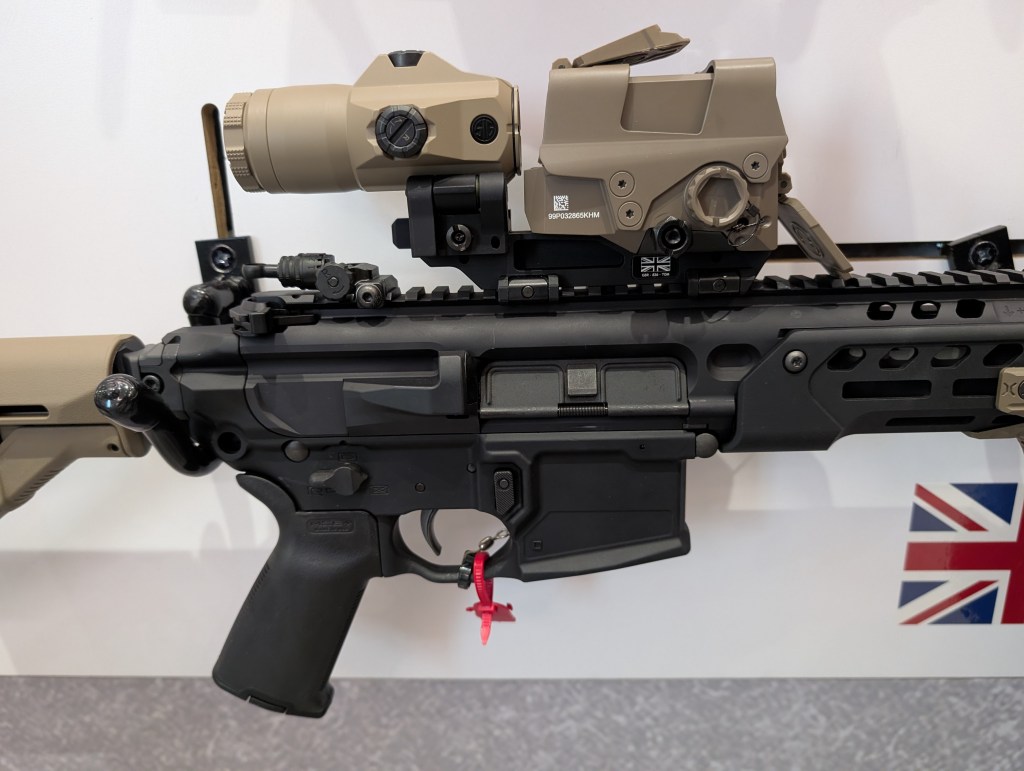
From the released imagery we can see that the rifle, an MCX LT, seen at SHOT 2025 matches. The rifle has a 12.5in barrel and is equipped with a SIG Romeo 8T red dot sight and Juliet magnifier, mounted on a UK-marked mount, as well as a SLXC compact suppressor.

In addition to the 5.56x45mm chambering the Royal Marines will also field a .300BLK configuration which has a 9in barrel and accessories (including the stock, an SLX762QD suppressor, magazines, rail scales and optics) in black finish while the 5.56x45mm chambered carbines all feature FDE-coloured accessories (as seen above). This system is intended to prevent the mix up of ammunition between the two weapon systems preventing accidents. As with the earlier L403A1 procurement the MCX carbines were procured via UK-based Edgar Brothers.

The .300BLK configuration of the Royal Marines’ new MCX carbine (SIG Sauer)

UK Commando Force is made up of a number of specialist units; 42 Commando, the unit seen equipped with the rifles in the RAID video, specialises in Maritime Security Operations, Maritime Interdiction Operations, Joint Personnel Recovery, Support and Influence Operations, and Ships Force Protection Teams.

42 Commando won’t be the only unit to deploy the new rifles. UK Commando Force Operations confirmed that L403A1 Alternative Weapon System (AWS) is the primary weapon for 40 Commando and 45 Commando, and the Commando Force’s Surveillance and Reconnaissance Squadron (SR). The latest figures from the UK MoD confirm that delivery of 1,620 carbines have been completed. but that the MCX will also equip 47 Commando Raiding Group. Other UK Commando Force elements will retain the Colt Canada C8, with the aim of replacing remaining SA80 series weapons currently in use.

Royal Marine of 45 Commando with an upgraded Colt Canada C8 in 2021 (UK MoD)

In a recent article Soldier Systems Daily, who has a close relationship with SIG Sauer, noted that the procurement of the Royal Marines’ MCX-pattern carbines had been carried out two years ago with delivery completed in 2024. The Royal Navy’s announcement did not state what the weapons’ designation is but several models of MCX have been in UK service for a number of years, largely within the ecosystem of UK Special Forces. Sources suggest that these MCX are designated the L143A1 and L143A2, it remains to be seen if the new rifles will be designated the L143A3 or be classified as A2s.

Most recently, UK Commando Force shared several photos and a short video of the MCX at the range, with a Royal Marine demonstrating how the weapon can be fired with the stock folded. This is a useful feature for operating in confined spaces during boarding operations.

This article was adapted from a piece originally published at TFB


Support Us: If you enjoyed this video and article please consider supporting our work here. We have some great perks available for Patreon Supporters – including early access to custom stickers and early access to videos! You can also find us on the History of Weapons & War app. Thank you for your support!

NGSW: The US Army’s First Suppressed Service Rifle & Some History

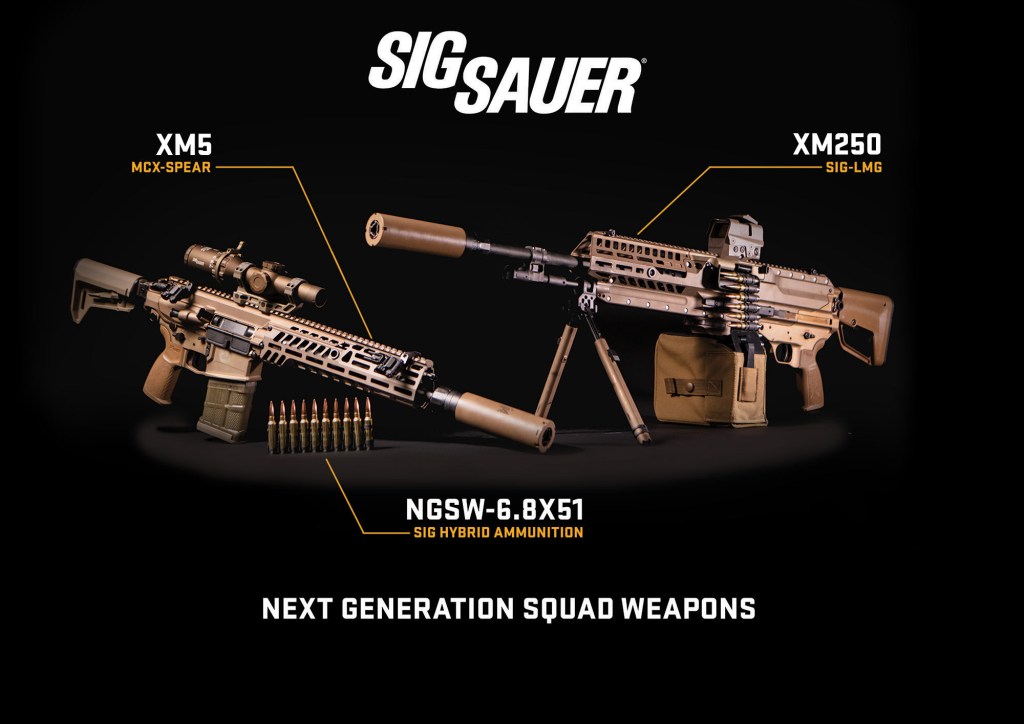
A couple of weeks ago the US Army finally announced the winner of their long running Next Generation Squad Weapon program, selecting the SIG Sauer MCX Spear rifle as the XM5 and the LMG-6.8 as the XM250.

The topic of whether this was the right choice and if the 6.8mm round they chamber is the right direction to move in is the topic for another day. I wanted to highlight one important aspect of the program that’s been somewhat overlooked. The weapons will be issued with suppressors as standard.

All of the NGSW submissions had suppressors developed by various manufacturers as it was an Army requirement. SIG developed their own design in house. When fielded over the next few years the XM5 will become the US Army’s first service rifle to be suppressed as standard.

But this isn’t the first time the US Army has examined large scale issue of suppressors. The US Army first examined the usefulness of suppressors way back in 1910, over a century ago.

XM5 / MCX Spear and XM250 / LMG-6.8 (SIG Sauer)

The first viable firearm suppressors appeared just after the turn of the 20th century with a series of patents being granted on various designs between 1909 and 1920. One of the first suppressor developers was Hiram Percy Maxim, son of Sir Hiram S. Maxim, He experimented with valves, vents and bypass devices, however, he eventually finalised his basic idea based on baffles and developed a series of practical suppressors; which were sold through the Maxim Silent Firearms Company. He filed his first patent on 26th June, 1908, which was granted in March the following year (US 916,885).

During the 1910s Maxim sold a successful range of ‘silencers’, as they were then largely known, on the commercial market. As early as 1907 Maxim was looking at ways to suppress the Army’s new Springfield M1903.

M1903 Springfield with a Maxim Silencer
M1903 Springfield fitted with a Maxim Model 1910 Silencer (Cody Firearms Museum)

The US military first took interest in silencers in 1908. However, the 1909 annual report of the Chief of Ordnance wasn’t too enthusiastic stating that “the silencer be not adopted for use in the service in its present form” citing visible gases leaving the silencer and the difficulty of mounting a bayonet. The following year the Chief of Ordnance believed that the improved the Model 1910 silencer overcame “most of the defects found in the original” and that “five hundred of the silencers are now being procured with a view to the issue of one or more to each organisation for instruction of recruits in target practice, and for issue to the militia, on requisition.”

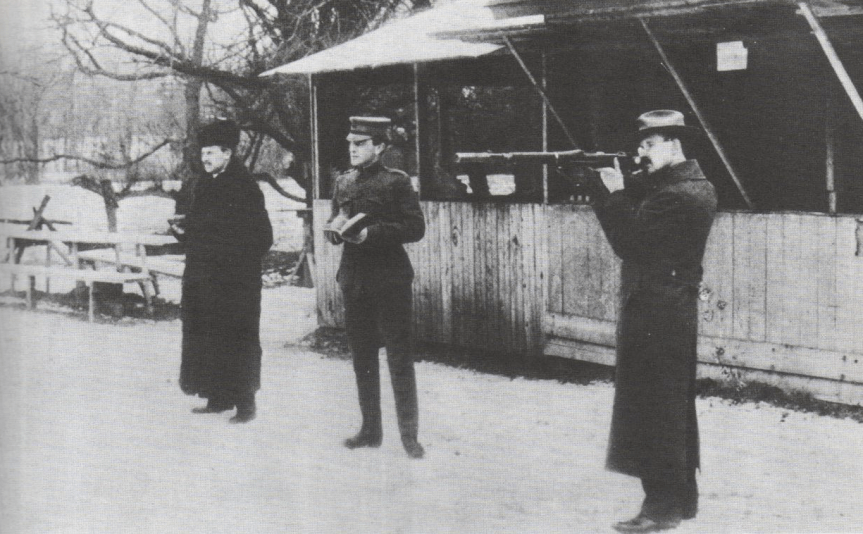
The US School of Musketry also tested the Maxim silencer. Twenty four soldiers were issued silenced M1903s for the test. The School of Musketry’s testing found that the report at the muzzle and the recoil felt by the rifleman was reduced when compared to a normal, unsuppressed, M1903. The School of Musketry’s report noted that:

An M1903 with a Maxim 1910 Silencer being test fired, left to right: H.P. Maxim, Lt.Col. R. Goodman, & Capt. E. Church (from the National Guard Magazine)

“The muffling of the sound of discharge and the great reduction in the total volume of sound which permits the voice to be heard at the firing point about the sound of a number of rifles in action, greatly facilitate the control of the firing line.” They also reported that “the silencer annuls the flash” a quality that they felt was a “positive military advantage in view of the extent to which night operations may be employed in future wars.”

Maxim did his best to develop a robust silencer that would meet the military’s needs. He incorporated a mounting point for a bayonet on the military variant of the Model 1910. The model 1910 silencer for the Springfield M1903, however, required the removal of the rifle’s front sight. This attachment method was felt to be the Model 1910’s weakest point and something Maxim himself actively looked to address.

The Maxim Silencer Company subsequently improved models and encouraged by early military interest Maxim envisioned a military silencer being useful in roles such as sniping, guard harassment and marksmanship training.

But Maxim was not the only designer working in the field and Robert A. Moore, his most competent competitor, also submitted a design for military testing. Moore’s designs used large gas expansion chambers which sat beneath the rifle’s muzzle as well as a series of vortex chambers ahead of the muzzle.

Ordnance Corps photograph of M1903s equipped with Maxim and Moore Silencers (US Army)

US Ordnance tests with Moore silencers began in 1910. When the two silencers were compared the US Army found that there was little difference between the two rival designs with regards to the reduction of sound, recoil and flash. Springfield Armory’s report in July 1912, found that the Moore silencer was more accurate and had a better attachment system. The Maxim silencer, however, was more durable and could withstand more prolonged rapid fire. While the suppressors were tested neither was selected for general issue and large scale contracts didn’t materialise. However, we do know that some of the suppressors were used during the US Army’s 1916 Mexican expedition against Pancho Villa and during the First World War some are confirmed to have made it to the Western Front but don’t appear to have been used in the field despite requests from officers.  

I go into much more detail about the early suppressors, their design, testing and whether they saw action in this article

Now fast-forward 100 years and the US Army is finally poised to adopt suppressors for close combat troops. In recent years the US Army has been testing suppressors at the squad level as far back as 2005 and this fed into requirements for the NGSW programme.

XM5 / MCX Spear (SIG Sauer)

In terms of the weapons selected SIG Sauer have developed their own suppressor designs to pair with the XM5 and XM250. SIG have said that the designs initially grew from their Suppressed Upper Receiver Group for USSOCOM. SIG’s suppressors are manufactured using direct metal laser sintering – essentially 3D printing with metal. SIG Sauer’s suppressor designs reduce sound and flash but also reduce gas blowback into the action and face of users. the SIG suppressors for the XM5 appear to be SLX suppressors, optimised for the reduction of blowback of toxic gases – SIG claim by as much as 70 to 80%) and are quick detach rather than direct thread, using a clutch lock system with an internal tapered seal. One thing the Army has not commented on is the efficiency of the suppressors so we don’t know to what levels the report of the weapons has been lowered to. Another thing that isn’t clear about the XM5 is if the Army had a requirement for mounting a bayonet. It certainly appears not to have been which would make the XM5 the first US Army service rifle not to mount a bayonet.

Of course the US Army are not the first service branch to suppress their rifles. The USMC is currently in the process of issuing Knights Armament QDSS NT4 suppressors for use with their M4A1 carbines and M27 and M38 rifles. The process began in late 2020 with the Corps citing many of the reasons originally identified back in in 1910 – reduced signatures, improved communication and hearing protection. 


If you enjoyed this video and article please consider supporting our work here. We have some great perks available for Patreon Supporters – including custom stickers and early access to videos! Thank you for your support!

Bibliography:

The Next Generation: SLX & SLH Suppressors, SIG Sauer, (source)
US Marine Corps Selects Knight’s Armament Suppressor, TFB, (source)
Marine Corps Begins Widespread Fielding of Suppressors, USMC, (source)
Silencers, Snipers & Assassins: An Overview of Whispering Death, J.D. Truby (1972)
Firearm Silencers, N. Wilson (1983)
War Department, Annual Reports, Report of Chief of Ordnance, 1909, Vol.6 (source)
War Department, Annual Reports, Report of Chief of Ordnance, 1910, Vol.1 (source)
Silencer for Firearms, R.A. Moore, US Patent #1021742, (source)
Firearm, H.P. Maxim, US Patent #1054434, (source)

Malta’s Service Rifle: The AK

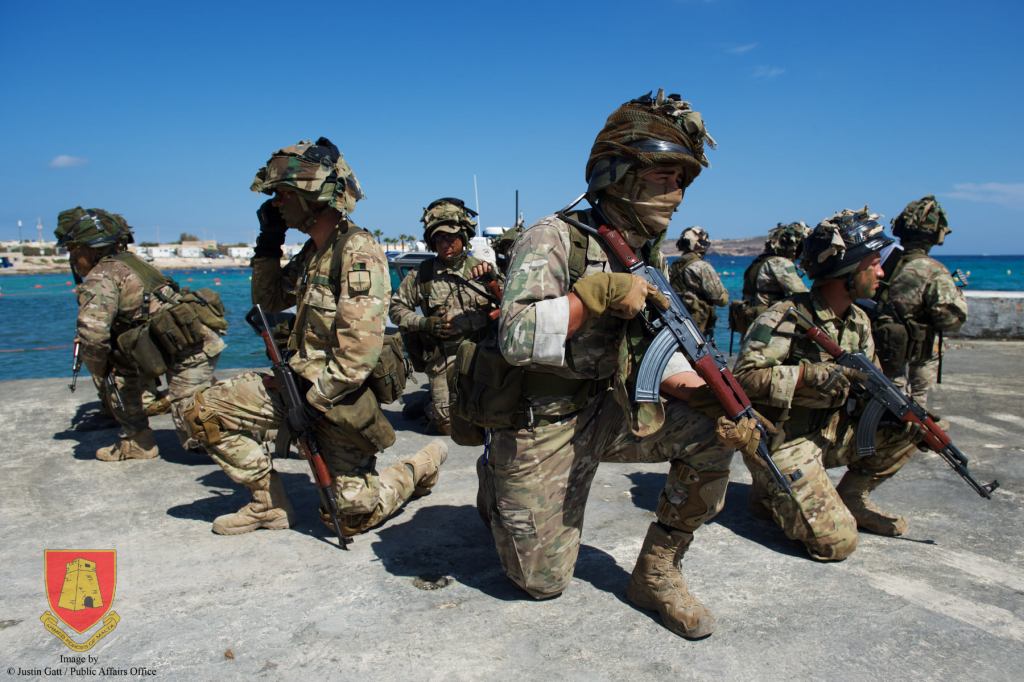
A comment in my recent video about the Royal Bermuda Regiment’s use of the Mini-14 sparked my interest. It noted that Malta, another small island military, uses the AK. I wasn’t aware of this so I decided to do some research.  

Malta’s military, known as the Armed Forces of Malta (AFM) is roughly the size of a brigade. In recent years the Armed Forces of Malta have had a strength of between 1,600 and 1,800 personnel. It has three battalions a maritime squadron and an air wing. Malta is a neutral nation and as such the AFM’s role is territorial defence, internal security and border control.

Malta gained independence from the UK in 1964 and became a republic in 1974, this is when the AFM was founded. With the former link to the UK much of the AFM’s initial equipment was of British origin and the 7.62×51mm L1A1 Self-Loading Rifle was used as the AFM’s service rifle for many years this appears to have changed in the late 1970s early 1980s. The FN FAL-derrived L1A1 is still used as the AFM’s standard drill and parade rifle.

AFM personnel with Type 56/II AK-pattern rifles (AFM)

The AFM celebrated its 50th anniversary in 2020 and shared this time line of their uniform and equipment in their service magazine On Parade which gives us some idea of how their small arms changed over time. We can see that the AK-pattern rifles have been in service since at least the 1980s. 

The AFM’s website lists their small arms with personnel being armed with Beretta 92s, a variety of HK MP5s, and what they describe as the ‘AK 47 Variant’. The site lists the rifles as being manufactured by Russia, Romania, China and East Germany. These rifles are all chambered in the 7.62×39mm cartridge.

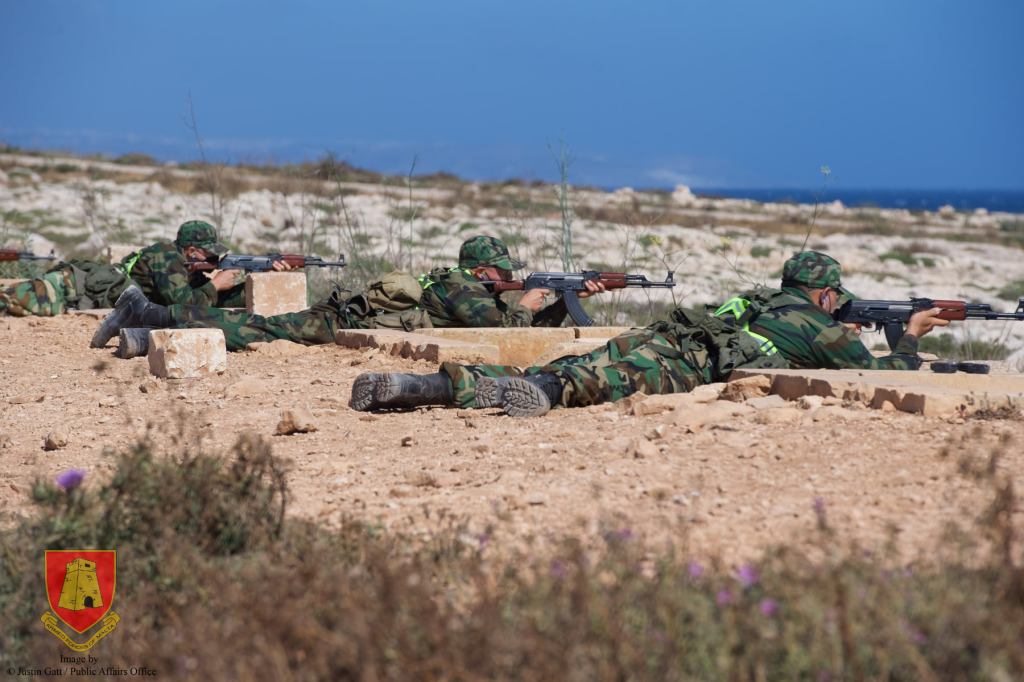
Where the first AK-pattern rifles came from is unclear, although one source suggests the German and Romanian rifles were bought second hand in the 1990s. From a survey of images and video shared by the AFM in recent years it appears that East German MPiKMS, Romanian PM md.63, North Korean Type 68 and Chinese Type 56/II are in service.

AFM recruits training with Chinese Type 56/II AKs (AFM)

The origins of the Chinese rifles is easy to trace back to a 2003 donation of small arms and light weapons made by the People’s Republic of China. An agreement was signed with China in June 2001 and as part of this a donation of 150,000 Maltese lira-worth of weapons. By 2003, however, it was reported by the Time of Malta that this had increased to 500,000 Maltese lira-worth of weapons. This included Type 56/II rifles, Type 80 general purpose machine guns and RPG-7 clones. The AFM’s acting commander Colonel Carmel Vassallo described the donation as a “dream come true” at the time. It reportedly allowed the entire AFM to be armed with a single type of service rifle.

The reasoning behind the adoption no doubt comes down to financing, Malta being a small island nation does not have an extensive defence budget, reported at 54 million Euros in 2020, and perhaps have chosen to prioritise personnel and procurement of naval and aviation assets over small arms. It is easy to see how the donation of service rifles and other small arms would be welcomed when balancing a modest budget.

AFM personnel with modified AKs (AFM)

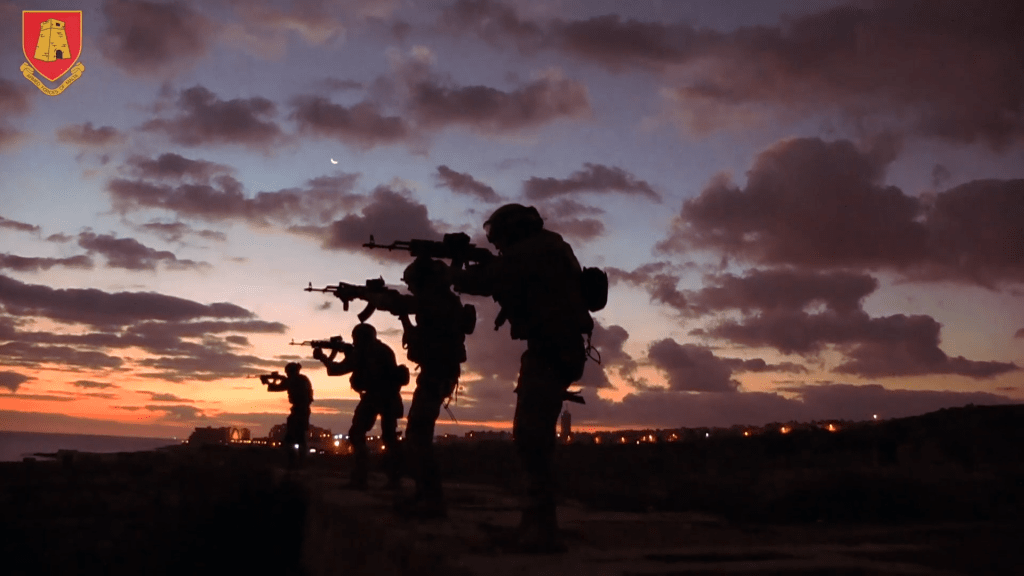
Over the last 10 years there have been a number of photos and videos released showing AKs which have been upgraded with some aftermarket modifications. The mods appear to predominantly be sourced from FAB Defense – with their CAA Polymer buttstock and VFR-AK railed forend with a top rail which extends over the top of the receiver cover. This provides the bare bones AKs with some modularity. It’s unclear how widely issued the modified AKs are but from officially release imagery it seems that the basic AK-pattern rifles are more prevalent. In recent years Malta has stood up quick reaction forces and it appears from videos and images shared of the company that they have been equipped with SIG Sauer MCX rifles. 


If you enjoyed this video and article please consider supporting our work here. We have some great perks available for Patreon Supporters – including custom stickers and early access to videos! Thank you for your support!

Bibliography:

‘AK Variant’, Armed Forces of Malta, (source)

‘AFM sees its dream come true’, Times of Malta, (source)

‘The Historical Timeline of Our Uniform’, On Parade 2020, (source)

“The Budget Speech 2020”, Malta Government, (source)

‘Personnel reveal shortcomings inside Maltese armed forces’, Malta Today, (source)

‘China donates 50 sub-machine guns to Malta, including 10 low-light scopes’, Malta Independent, (source)

Footage:

Various released videos, Armed Forces of Malta, (source)

‘Armed Forces of Malta: Recruit Intakes Nos. 131’, Michael Formosa, (source)

Book Review: Vickers Guide – SIG Sauer Vol.1

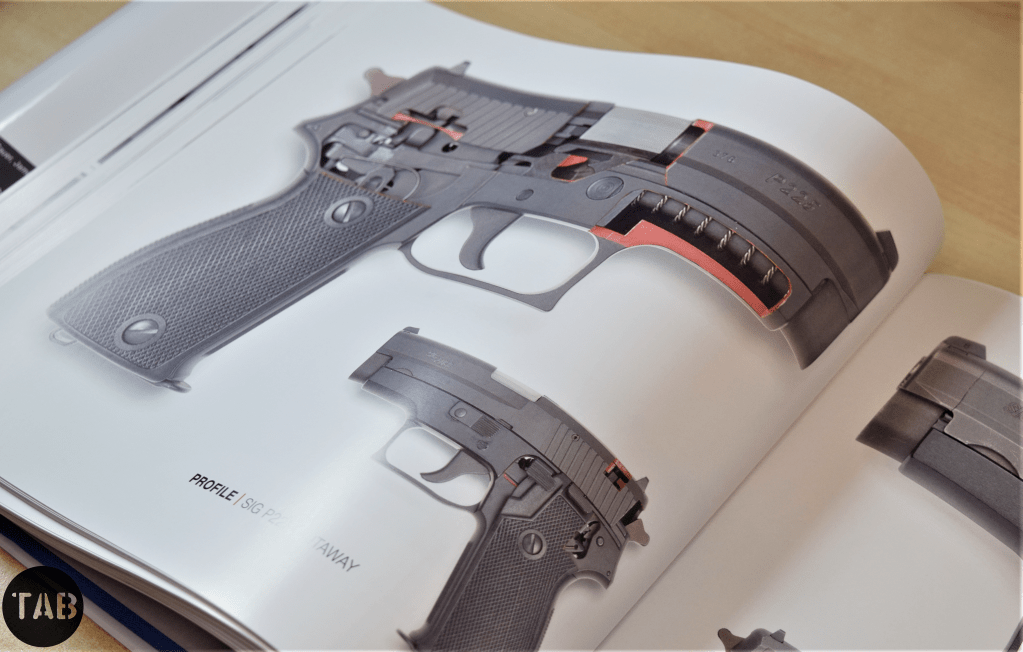
It’s been a while since we did a book review so let’s take a look at the latest Vickers Guide. The latest edition of the successful +P+ coffee table series examines the pistols and submachine guns of SIG Sauer and its predecessors.

All photos by Matthew Moss

Compiled by Leonardo Antaris (a noted author on Spanish Astra pistols), Larry Vickers and Ian McCollum with photography from James Rupely the book looks at every pistol made by the company from its earliest origins through to the P320 and P365. One of the special elements of the book is that we get to see the iterative development of weapons like the legendary P210, the P220, P365 and the MPX.

For me the highlights are the seldom seen prototypes for projects that never came to fruition like the MP320 submachine gun. I believe there will be a volume 2 in the future looking at the various rifles and machine guns that SIG and SIG Sauer have developed over the years.

As with the other Vickers Guide books they are weighty, beautifully illustrated and while they don’t offer an in-depth level of detail they give us a look at some developmental prototypes and rare models which we wouldn’t otherwise see documented. I love the photography and layout of these books, they show angles and detail that – unless you’re handling the weapons – you’d never otherwise see.


If you enjoyed these videos and this article please consider supporting our work here. We have some great perks available for Patreon Supporters. You can also support us via one-time donations here. Thank you for your support!
West German Police Pistols

In 1976, the West German Police issued a specification for a new small, lightweight service pistol to replace their stocks of Walther P38/P1′s and various 7.65×17mm (.32 ACP) pistols.

The police specification limited the new pistols weight to 2.2lb/35oz/1kg, it was to be no larger than 18x13x3.4cm and was to be quick to draw and safe to carry with a round in the chamber.

P230-S108688_02__00699.1574272452.jpg
SIG Sauer P230 (Edelweiss Arms)

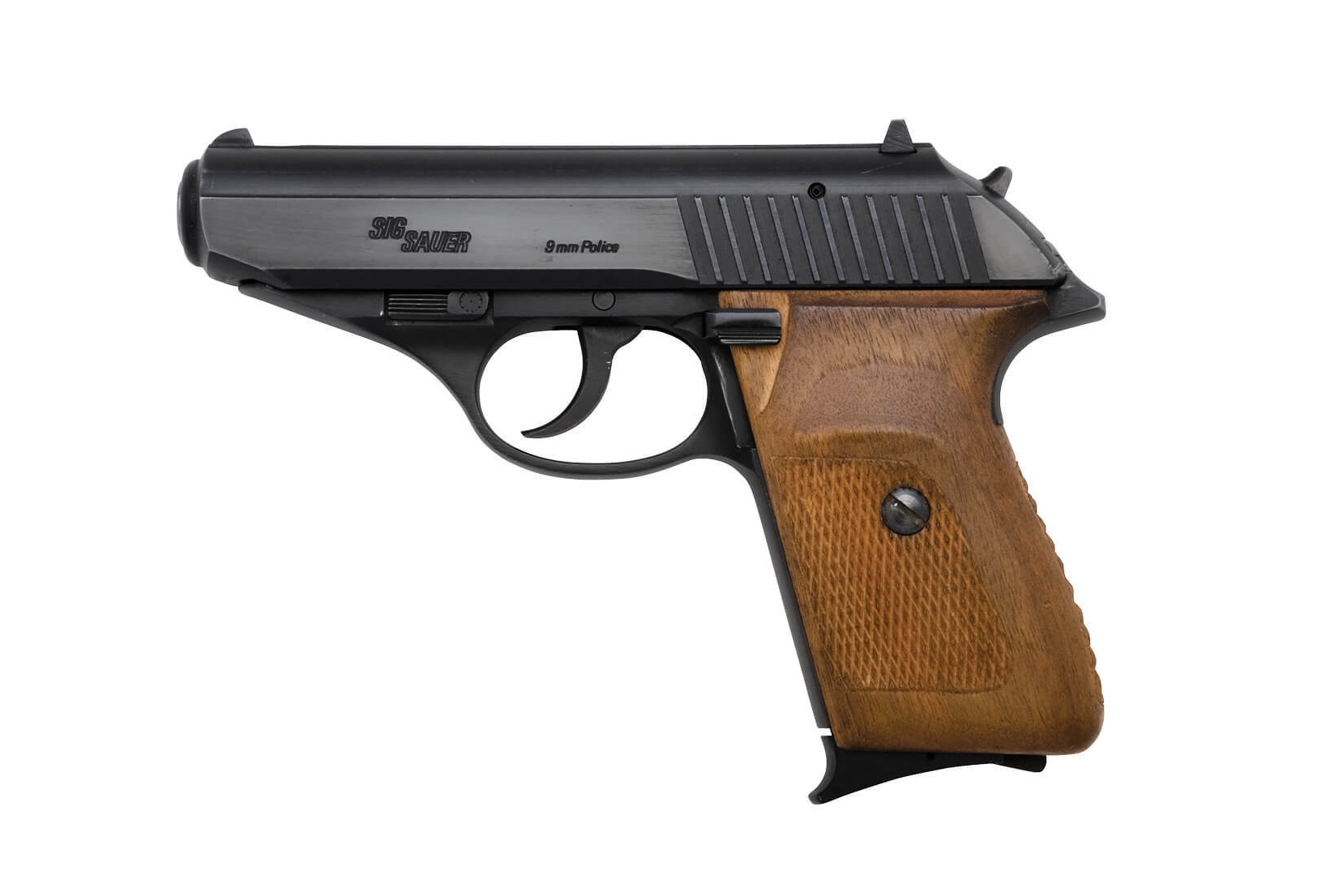
Earlier trials had taken place in 1974 examining pistols chambered in the 9×18mm Ultra round. Walther had submitted the PP Super and SIG-Sauer had entered the P230 for testing but with increasing criminal and terrorist activity in West Germany during the 1970s it was decided to adopt a pistol chambered in the more powerful 9×19mm round.

Mauser HSC.png

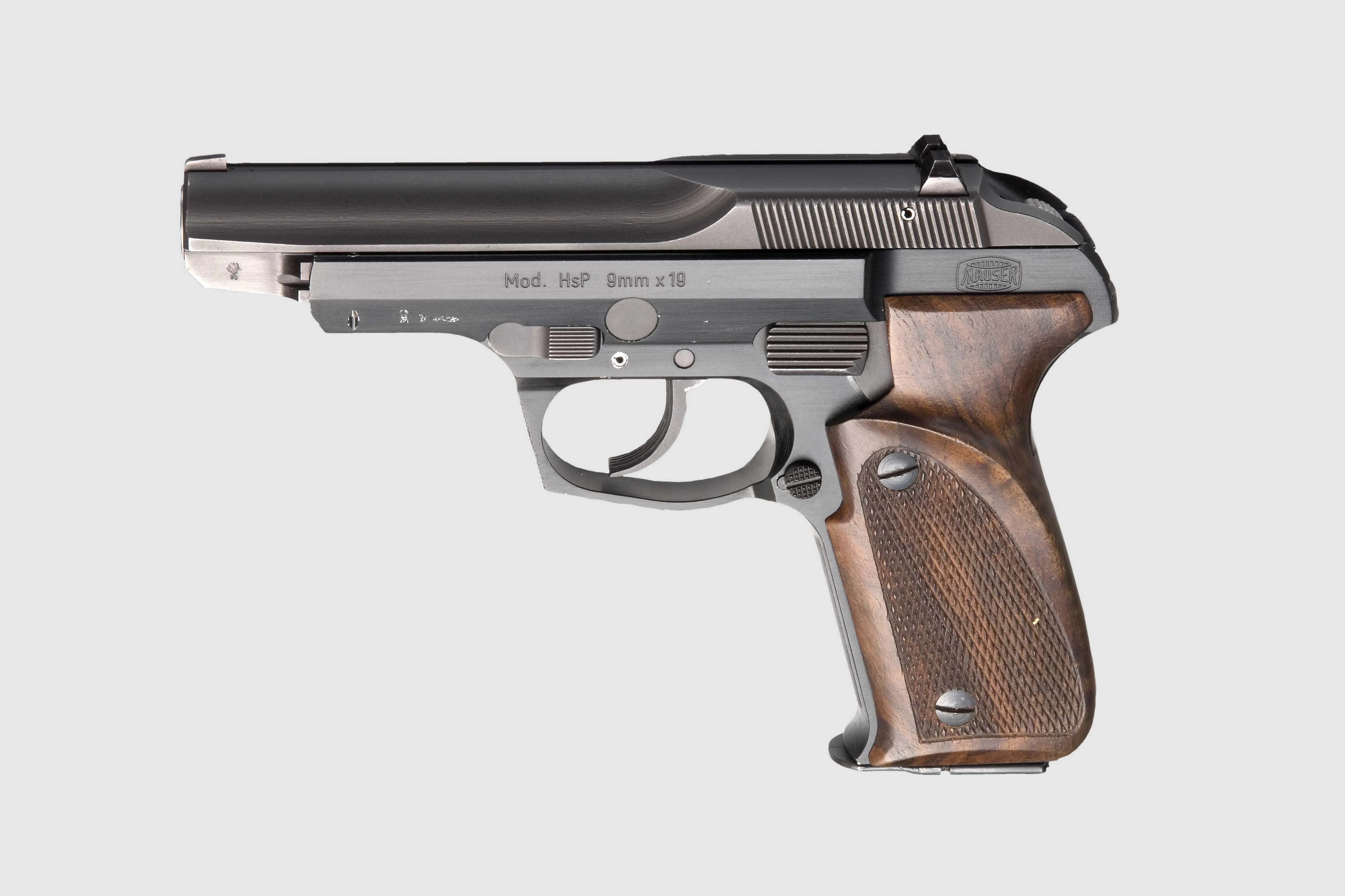
As a result a new round of trials with the new specifications was arranged. Mauser, Walther, SIG-Sauer and Heckler & Koch all submitted designs. Mauser offered the HsP,Walther offered the P5, SIG-Sauer entered the P225 (which became the P6) and Heckler & Koch submitted the PSP, later known as the P7.

The trials involved a gruelling 10,000 round endurance test (with cleaning after every 1,000 rounds), a rapid-rifle 500 round test and accuracy testing at 25 metres. One of the main problems of producing the desired sub-compact sized pistol in 9×19mm was that after approximately 1,000 rounds the pistol’s recoil spring may become prone to failure.

The police specification called for a 10,000 round lifespan. Each had their own approach; Walther’s P5 tackled the problem by using the dual-spring system used in the P38/P1 while Heckler & Koch used a gas-delayed blowback system in the P7. SIG-Sauer, however, employed the simplest solution – a heavy gauge braided spring to give increased strength combined with the Short Recoil action. This was also substantially cheaper to manufacture.

German Police Pistols (2).Movie_Snapshotwm
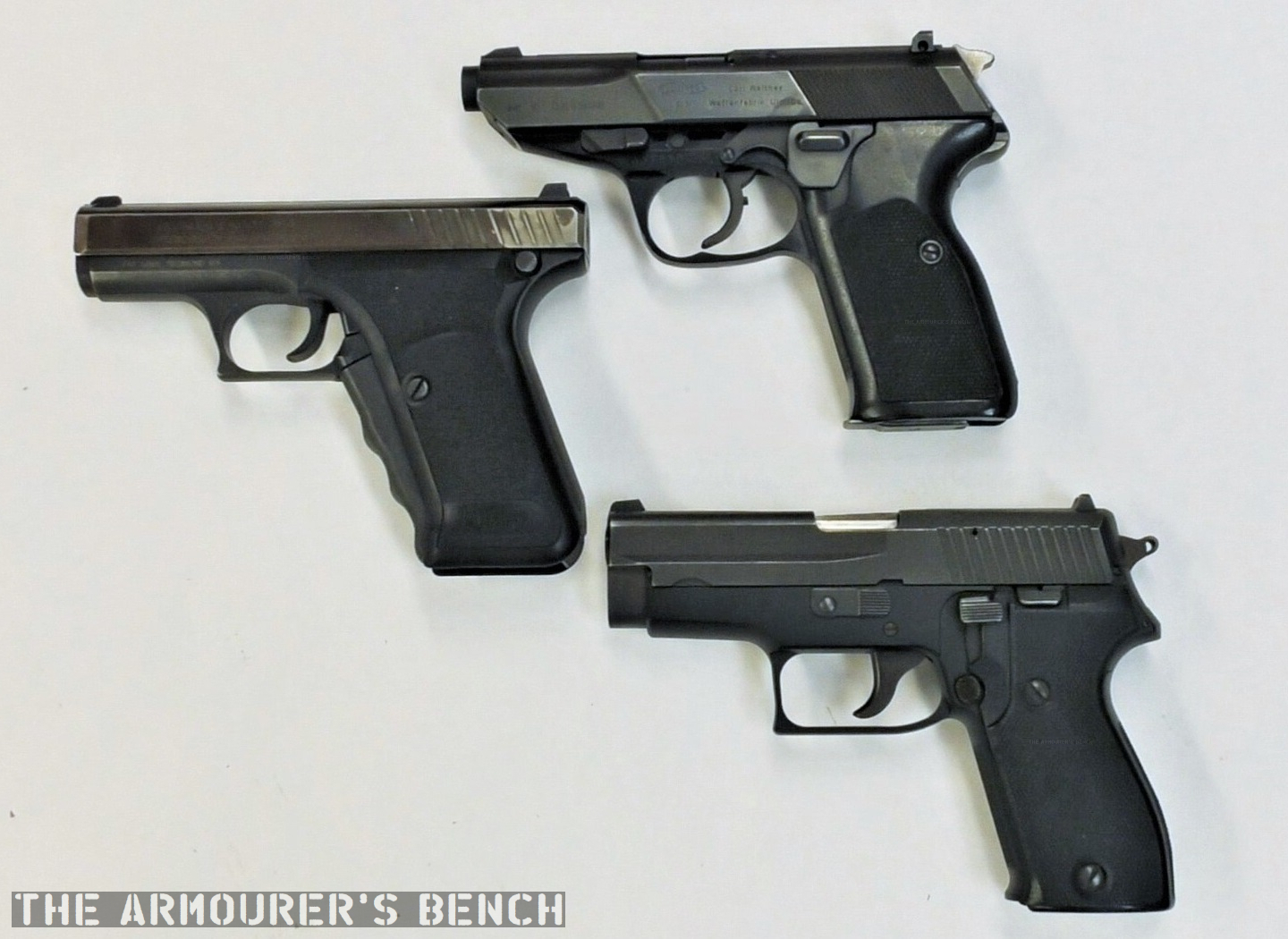
Clockwise: Walther P5, SIG Sauer P6, HK P7 (Matthew Moss)

The short-recoil, lever-locked Mauser HsP was eventually dropped due to durability issues, while the Walther P5, SIG-Sauer’s P6, and Heckler & Koch’s P7 were successful and deemed fit for service and adopted by various German police departments.

The P5 was adopted by Baden-Württemberg and Rhineland-Palatinate’s State Police as well as the Dutch national police. TheP6 was the most widely adopted as it was the cheapest option available, with a total of seven German state police forces adopting it along with orders from the border police, railway police and the Federal Criminal Police Office. The most expensive of the pistols, the P7 was favoured by more specialist units like GSG9.

Our thanks to our friends at Gunlab for allowing us to take a look at these pistols.


If you enjoyed the video and this article please consider supporting our work here. We have some great perks available for Patreon Supporters. You can also support us via one-time donations here.


Walther P5

The Walther P5 was developed in the mid-1970s as an response to the West German police’s continued search for a 9x19mm service pistol to replace the older smaller calibre pistols then in service, like the Walther PP. It was developed to fit the new police specification for a small, handy pistol which could be brought into action quickly. Walther’s design competed against pistols from Mauser, Heckler & Koch and SIG Sauer.

P1.png
Walther P38 (Rock Island Auctions)

The P5′s design evolved from the P38, combining the lock work and dual recoil springs of the P38 (re-designated the P1 in 1963) with a shortened barrel and a full length slide. While a shortened P38k had been produced in the early 1970s, this was only an as an interim solution. The P38K retained the same slide and frame as the original P38s, but had the front sight mounted on the front strap of the frame and none of the pistol’s contours were rounded to aid drawing and returning to a holster. Only around 2,600 P38Ks were produced.

Following the attack on the 1972 Munich Olympics games West German police began the search for a new service police. Walther’s response, the P5, was introduced in 1978. The P5 is a locked-breech pistol and has double-action/single-action (DA/SA) trigger. It uses the same short-recoil operated system and locking mech as the P38. This means that the barrel and slide recoil together for a short distance before the locking block falls and allows the slide to continue moving rearward, ejecting a spent case and chambering a new round.

wm.jpg
Walther P5 (Matthew Moss)

Walther moved the P5’s decocker from the slide to the frame and this also served as the slide stop and slide release. I would say that the P5’s decocker is easier to operate, with a shorter length of travel, than the SIG P6’s.

Following the West German police specification Walther designed the pistol to be safely and rapidly brought into action, and as a result dispensed the manual safety. Instead, the pistol could be carried in condition two – with a round in the chamber and the hammer down. This was safely achieved by some upgrades to the P5’s hammer and firing pin. There is a small recess in the pistol’s hammer for the firing pin. The firing pin only moves into alignment with the hammer surface when the trigger is pulled.

The P5 has a 3.5 inch (9cm) barrel and fed from an 8-round, single stack, magazine with a heel release. Like the P38 the pistol ejects to the left rather than the right. The P5 has a stronger and more durable fully enclosed slide which is contoured to aid holstering. The pistol has an alloy frame, with full-length slide rails and an enlarged trigger guard for use with gloves.

p5 diagram.png
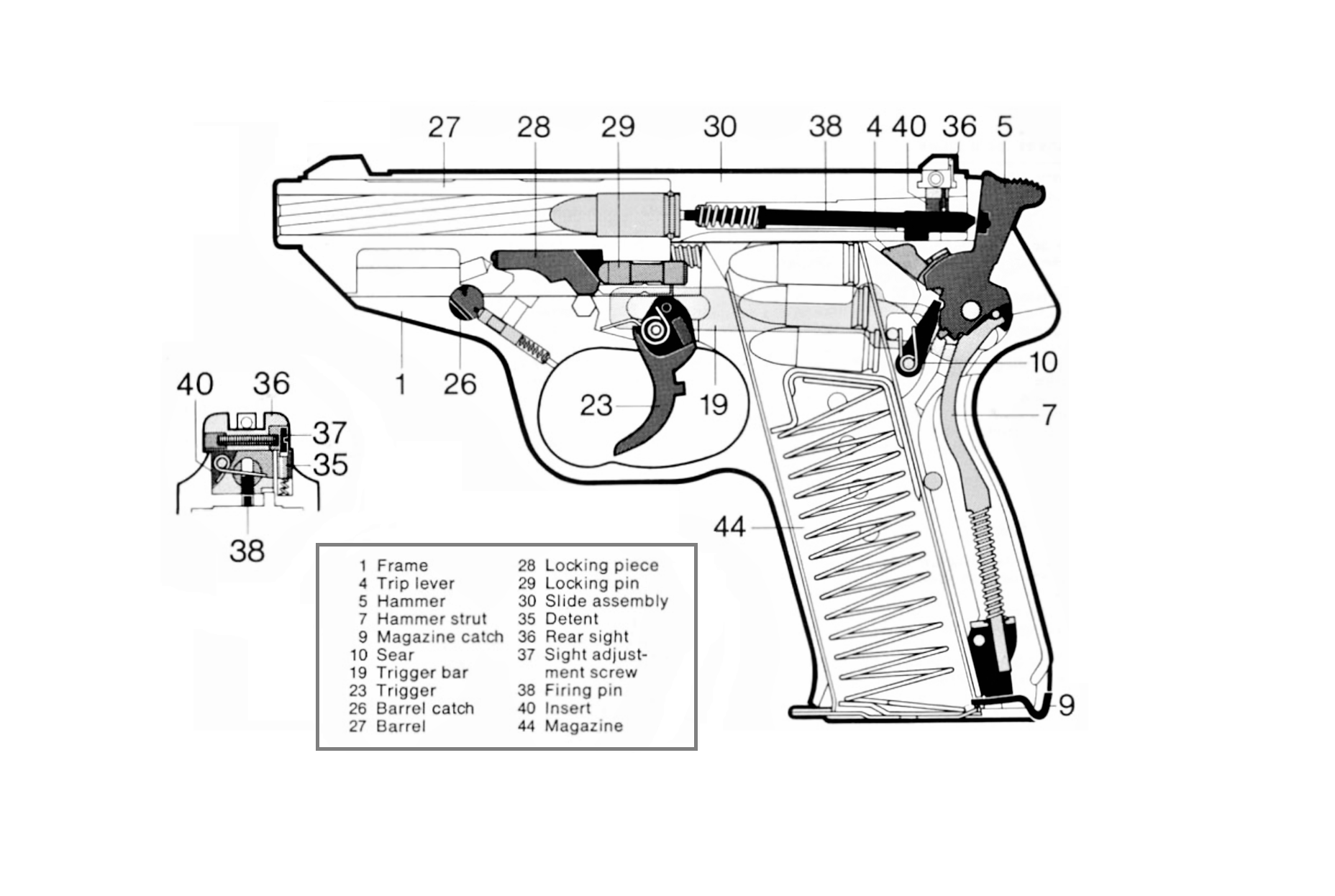
Diagram showing the P5’s parts and internal layout (Walther)

In addition to the P5, Walther also developed a compact model for plain clothes use which had a slightly shorter barrel (3.1 inches), slide and a truncated hammer. It was introduced in 1988 and had a lighter alloy frame with the P5 Compact weighing 750g (1.65lbs) rather than 795g (1.75lbs). While early production pistols retained the heel magazine release the majority had a thumb release. A small number of P5-Lang, long barrel target pistols were also produced in the late 1980s.

Disassembly is simple and comes directly from the P38. The slide is retracted a little until the barrel catch can be rotated. The slide and barrel can then be slid forward off the frame once the trigger is pulled.

The P5 proved to be an accurate and reliable pistol and once it was accepted by the police trials (along with the designs from Heckler & Koch and SIG-Sauer – the P7 and P6 respectively.) It was adopted by uniformed officers of Baden-Württemberg and Rhineland-Palatinate’s State Police – these pistols were marked ‘BMI’ for Bundesministerium des Innern – the Federal Ministry of the Interior. This pistol is a BMI-marked gun and dates from February 1983.

89375397_2557513201128821_8998838306330378240_n.jpg
Walther P5 brochure cover (Walther)

It also became the standard issue sidearm of the Dutch police who purchased around 50,000 pistols, becoming Walther’s largest customer for the P5. The Dutch guns were later fitted with aftermarket Houge rubber grips and some changes to the hammer safety system were later made in the mid-1990s. The Dutch police retired the P5 in 2013 replacing it with the P99Q.

The P5 also saw some military sales with elements of the Portuguese Army adopting it and the P5 Compact was also adopted by the British Army. Selected in the late 1980s for issue as a personal protection side arm. It was designated the Pistol L102A1 and was extensively issued to British troops in Ireland for use while in plain clothes or off duty.

The P5 on screen: Sean Connery as James Bond in, the technically unofficial, 1983 Bond movie Never Say Naver Again. Roger Moore’s Bond also carried it in Octopussy (also in 1983)

While certainly one of Walther’s lesser known pistols the P5 is a well-made, well-designed duty pistol, with comfortable ergonomics – the fiddly magazine catch not withstanding – and the slide and decocker are very smooth to operate. The trigger pull in both the single and double action modes is also pretty good. Overall, around 100,000 pistols were produced before production came to an end in 1993.


Specifications (P5 Standard:

Overall Length: 7.1in
Barrel Length: 3.5in
Weight: 1.75lbs (795g)
Action: short-recoil with locked breech
Capacity: 8-round box magazines
Calibre: 9×19mm


If you enjoyed the video and this article please consider supporting our work here. We have some great perks available for Patreon Supporters.