In my previous article/video examining the development of Hoverboard UGVs, I mentioned an unmanned ground vehicle developed by the HUR’s International Legion. The ‘LEGIT’ UGV was unveiled in a short social media video on 28 June. The video showed the small UGV test firing a pair of Bulgarian Bullspike RPGs into a building. In this article/video we’ll explore examples of what I’m calling RPG-UGVs.
LEGIT is far from the first UGV to be seen equipped with an anti-armour weapon. The first I’ve come across is a short clip of a Ukrainian UGV being demonstrated with an expended RPG-22 mounted. The clip dates from September 2022, the drone does not appear to have any means of traversing the RPG but may have an elevation mechanism. The UGV has a camera mounted for navigation and presumably aiming.
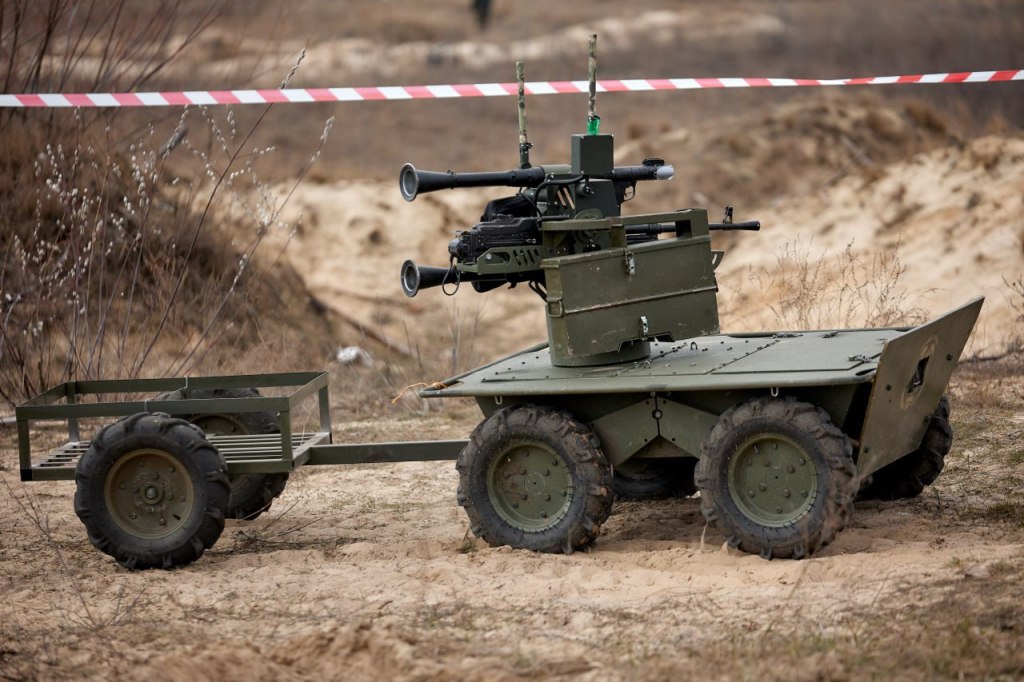
Ukrainian UGV mounted with a remote weapon station with a PKT and two RPG-7s (via social media)
In early January 2023, Russian unmanned systems developers, Avtobot, shared a photograph of an RPG-7 being mounted on a prototype drone. Several days later they shared another photo, this time showing four RPG-26s mounted on a frame work with a green laser below them seemingly to aid aiming. How effective this would be is unclear and its the only time I’ve seen a laser mounted on an RPG-UGV.
In February 2023, Avtobot, shared a video of a heavily armed 6×6 wheeled drone, the Autobot 5, which appears to utilise hoverboard components. The drone is armed with PKT machine gun, a pair of RPG-7s and a pair of RPG-26s. In the test footage included in the video the drone is seen firing its machine gun and both the RPG-7 and RPG-26. There appear to be optical sensors mounted below the machine gun which enable aiming of the weapon systems. Noteably in one of the RPG-7 test firings the backblast blows off what appears to be a camera mounted to the rear of the drone.
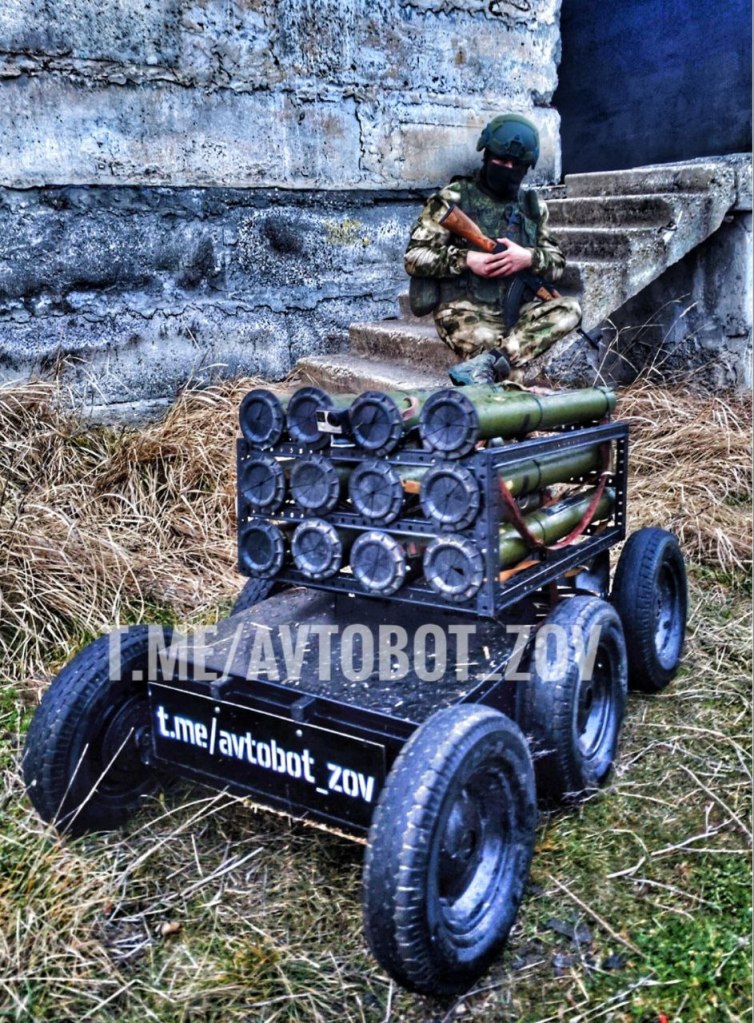
At the beginning of March, Avtobot also shared a video showcasing the Autobot 6.2 (‘MINIGRAD’). The six-wheeled Autobot 6.2 is seen mounted with 12 RPGs, arrayed in rows of four. The caption notes that the system can be armed with a variety of RPG systems including: RPG-18/26/27, RPG-7 and even RPOs. In the caption Avtobot explain that the Minigrad can be used can either “individually to suppress fortified areas, destroy various equipment and infantry” and along with other UGVs. The footage does not show a test firing.
Avtobot’s Autobot 6.2 ‘MINIGRAD’ (via social media)
Several weeks later, Mykhailo Fedorov, Ukraine’s Minister of Digital Transformation, shared an a series of photos on Telegram showing a demonstration of various unmanned systems. These photos included one of a 4 wheeled UGV equipped with two RPG-7s and a PKT machine gun.
On the 22 March, Avtobot shared a video showcasing a smaller four-wheeled armed with a machine gun and RPG-7. Interestingly, the caption notes that this was designed as a defensive drone. It’s also interesting to see the drone operated with a companion drone for Intelligence, Surveillance, and Reconnaissance. The video shows the drone test firing both the PKT and RPG-7 as well as entering and operating inside a building.
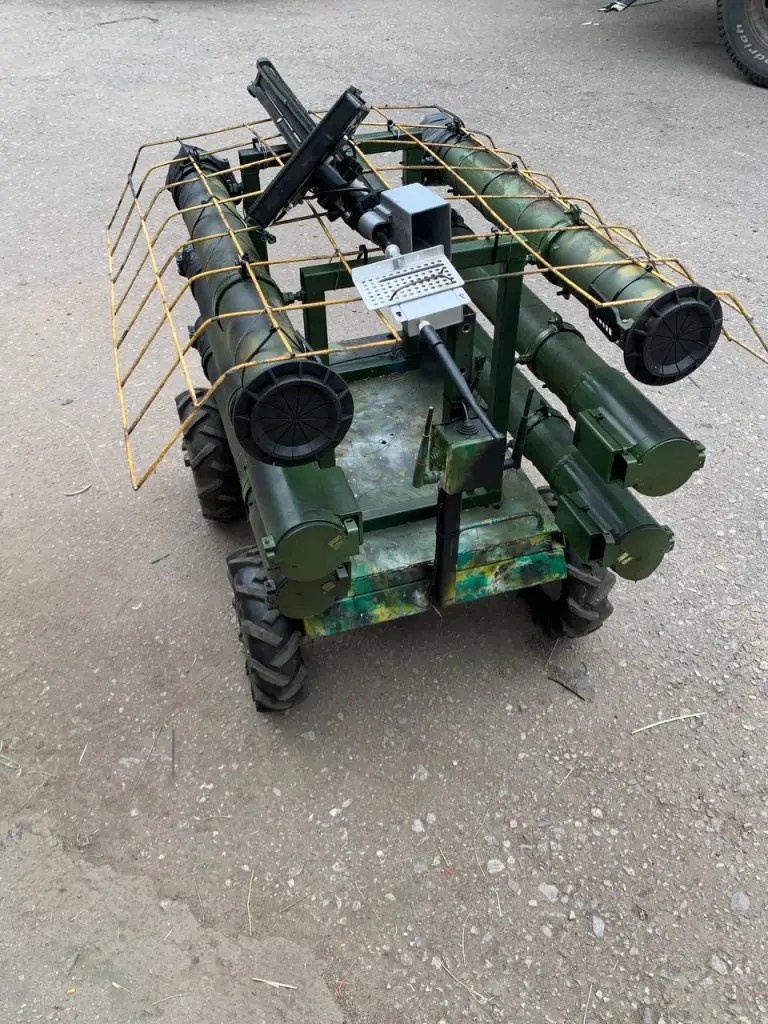
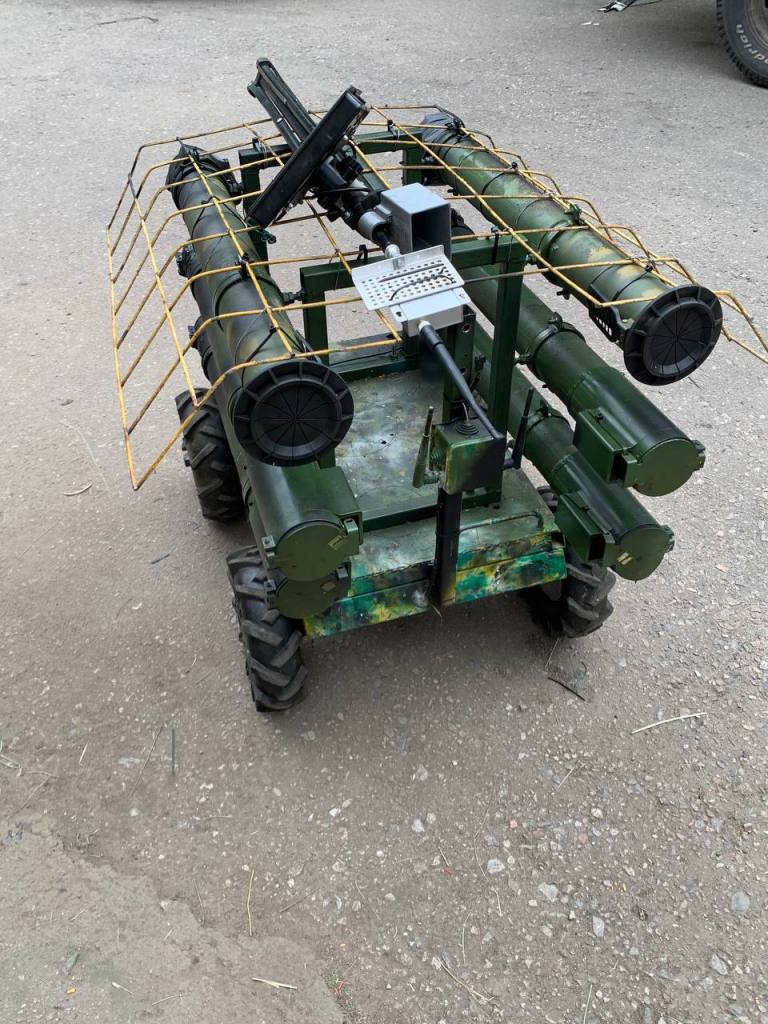
On 8 May, a photograph of a larger Russian UGV surfaced, claimed to be operating in Ukraine, the UGV appears to be a Platform-M, a ground drone developed in the 2010s by the Research Technological Institute “Progress”, in Izhevsk. The Platform-M is equipped with a PKT machine gun and can be armed with four single-use RPGs.
BRM-1 seen in May 2023, equipped with six RPGs and its own little anti-drone cage (via social media)
On 8 July 2023, in one of their last videos shared on Telegram, Avtobot showcased the small four-wheeled UGV again, this time showing one equipped with an RPG-7 and the other with a PKT.
In early April 2024, Izvestiareported on a showcase at the Karbyshev Military Engineering Academy which included a range of unmanned ground systems. One of these appears to be a small four-wheeled UGV capable of being mounted with four single-use RPGs. I’ve been unable to find further details on the model seen in the photo.
Temerland is a Ukrainian company specialising in unmanned ground systems which has been operating since around 2021 developing their GNOM UGV. In April 2023, they shared a concept image of a UGV equipped with two RPG-7s. In December 2024 they posted a video showing the drone test firing its mounted PKM, notable its RPG-7 mounts are present but empty. Two years later in March 2025, they were featured in a Ukrainian TSN tv news piece showing a Gnom-VP21 UGV equipped with a PKM and two RPG-7s. A month later, on 10 April, they posted a video of the Gnom-VP21 test firing its PKM and RPG-7s at the range. Another version of the Gnom-VP21 with a different chassis configuration was shown in a photo shared in October 2024, while different it still has mounts for a PKM and an RPG-7.
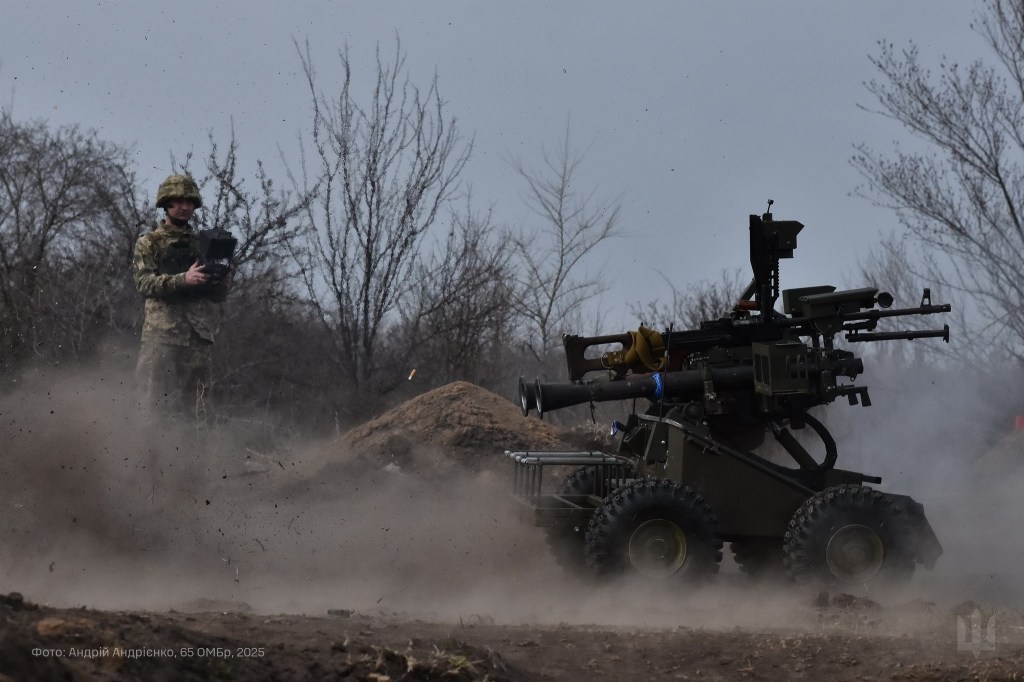
65th Mechanised Brigade testing a Temerland Gnom-2 (via social media)
In late 2024, a series of small UGVs developed by the Omsk Armored Engineering Institute were highlighted in a Russian army report. These small, transportable and quick deployable drones include a number of variants including the ‘Shmel’ variant of the T-117, which is equipped with four RPG-7s and can be equipped with RPO-As.
In early April 2025, Ukraine’s 65th Mechanised Brigade shared a series of photographs showing the testing of a Temerland UGV armed with a PKM and an RPG-7, the caption describes it as a ‘Gnom-2’, a configuration similar to that seen in October 2024. This may indicate that Temerland’s Gnom UGVs are beginning to be tested by units of the Ukrainian armed forces.
On 6 April, the Russian Ministry of Defence and Russian news outlet Zvezda shared videos of the testing of tracked UGVs. One of the variants seen is equipped with five RPG-7s, though there appears to be mounts for another row of five on the bottom.
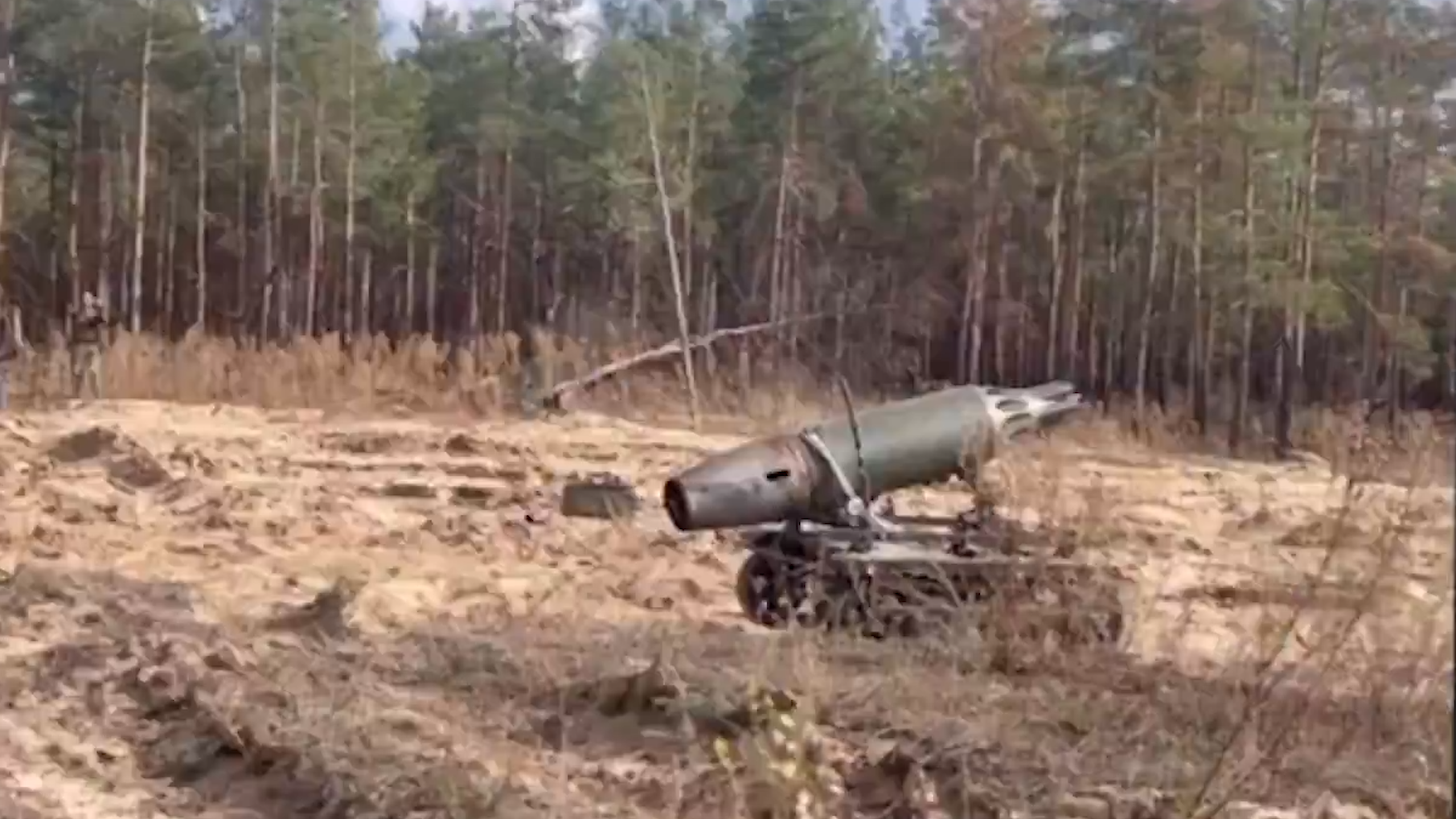
In late June a team from the Ukrainian 93rd Mechanised Brigade shared a video showing a logistics UGV mounted with a UB-16-57 57mm rocket launcher from a helicopter. The video shows the DIY multiple launch rocket system (MLRS) firing a series of 57mm rockets, the video does not show how the system is aimed but it does illustrate the recoil the drone experiences on firing.
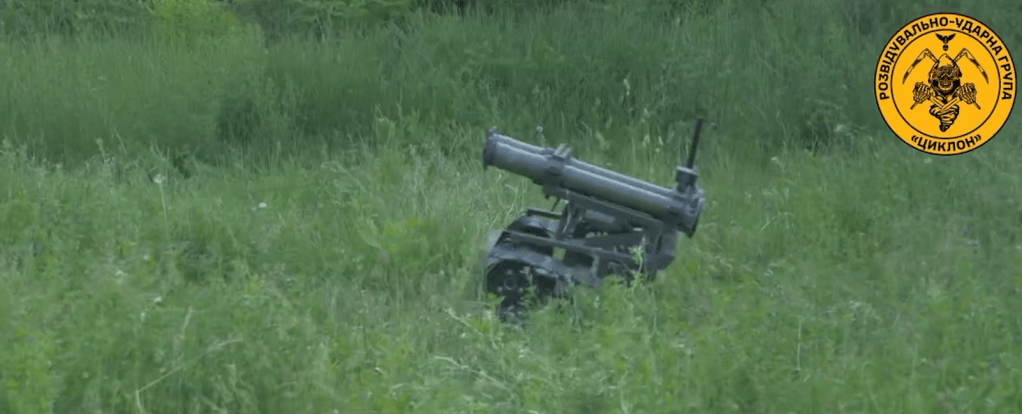
GUR Legion’s LEGIT UGV with Bullspike RPGs (via social media)
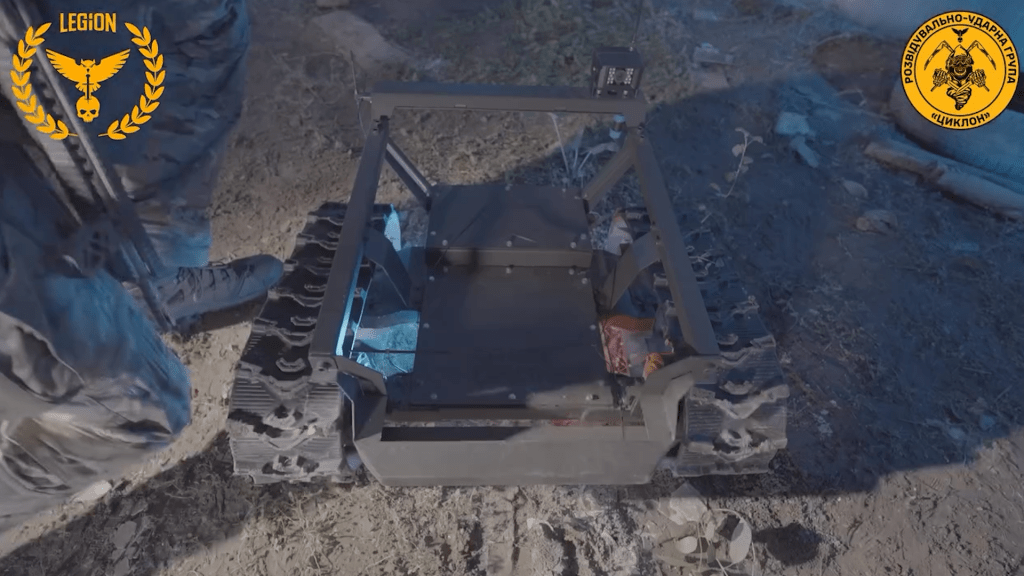
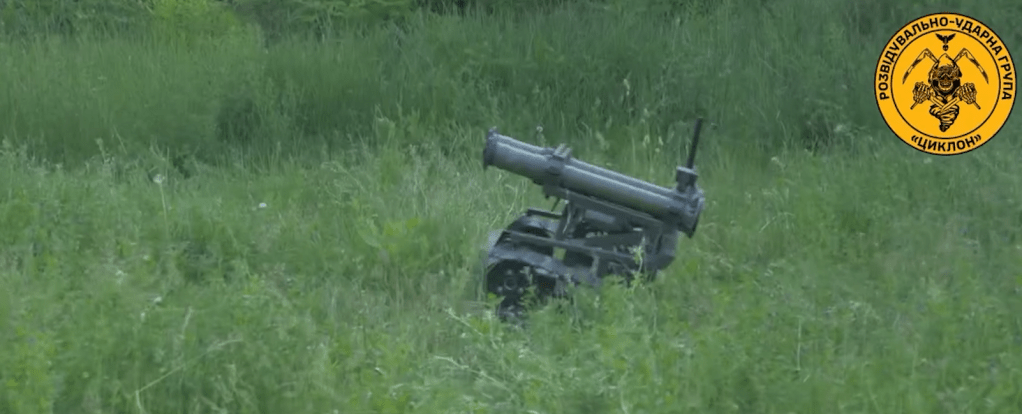
Late June saw the unveiling of the aforementioned LEGIT, a small tracked UGV co-developed by operators and engineers from the HUR Legion’s Cyclone unmanned systems team. LEGIT is a multi-purpose drone capable of undertaking logistics and kamikaze roles. The video shows the LEGIT UGV armed with a pair of Bulgarian Bullspike RPGs on an articulated mount which can be raised and lowered to aim, while traverse is seemingly handled by manoeuvring the drone. The video concludes showing the RPG-UGV test firing at a building. No combat footage of LEGIT has surfaced yet.
Expanding on the concept of mounting a rocket launching system on a UGV, in early July 2025, the Ukrainian 92nd Assault Brigade created a miniature multiple launch rocket system on a cargo carrying UGV. The system has 15 tubes and seemingly fires 57mm rockets, the video doesn’t show the system in use and its unclear how it is aimed.
An improvised system with a UB-16-57 launcher mounted on a UGV (via social media)
Much like the RPG-armed aerial drones it appears that for now the kamikaze variants of UGVs are much more prevalent. The available imagery of UGVs actually in action largely shows either the kamikazes or drones equipped with remote machine guns. It seems that the ability to suppress a target with machine gun fire may be seen in many operational situations as the more useful payload for UGVs.
Over the past 12 months various Russian units have been developing and deploying their own home-made, makeshift ground kamikazes. These have been made out of commercially available ‘hoverboards’, hoverboard is a bit of a misnomer but its easier than saying two-wheeled, balancing board. In Russian they’re known as гироскутеры or ‘gyroscooters’.
Russian military workshops in various sectors have developed remote-controlled ground drones; in military terms, these are a very basic sort of unmanned ground vehicle. Russian forces have deployed them to carry a variety of payloads, including: smoke generators, supplies, remotely detonated explosive devices and even mine rollers.
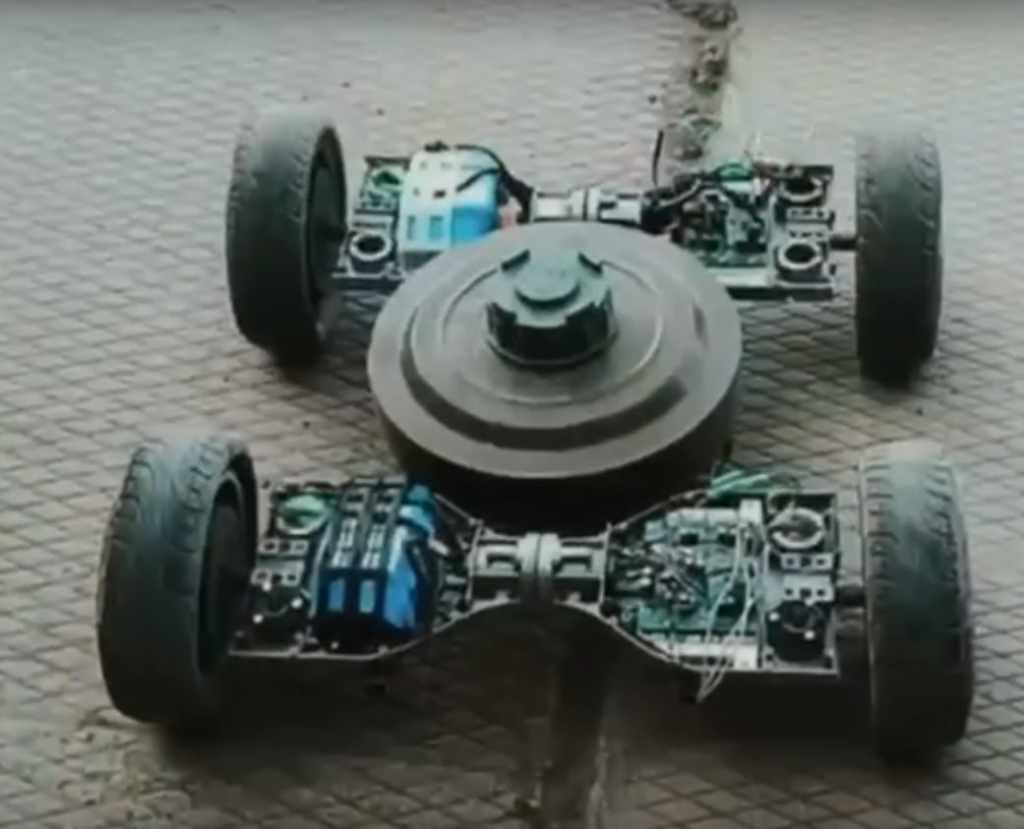
In the simplest terms, the workshops constructing the Hoverboard UGVs typically take two commercially available self-balancing hoverboards and bolt them together. They retrofit a remote control receiver and connections to interact with the hoverboard’s motors.
A small Russian Kamikaze drone, 2023 (via social media)
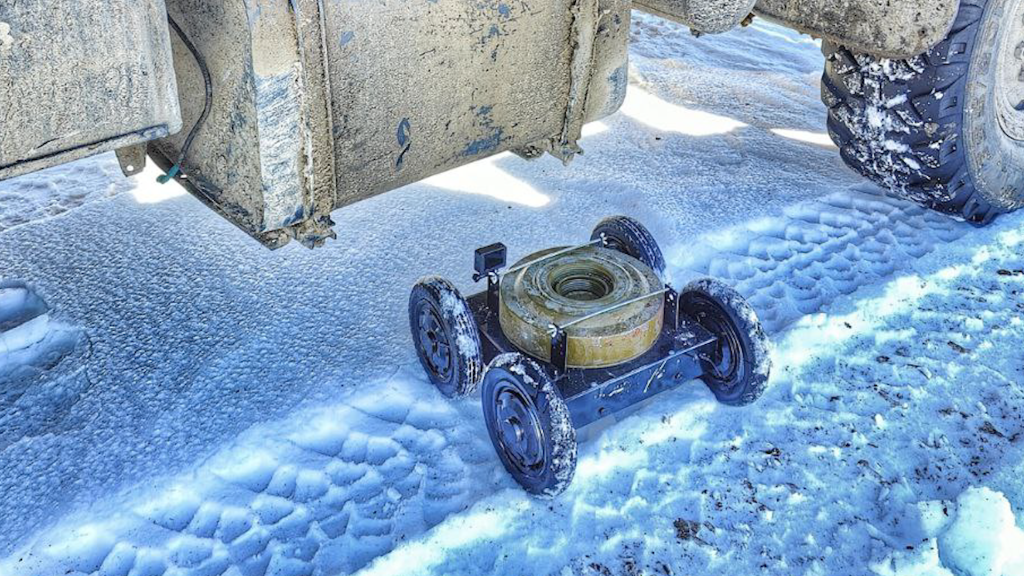
Experimentation with unmanned ground vehicles by both sides has been ongoing since 2022 though it has been largely outpaced by developments in aerial drones the UGVs have found their niches and continued to evolve. One of the earliest videos of a UGV which likely utilised hoverboard components I was able to find dates to mid-March 2023, when a Ukrainian team deployed a UGV loaded with a MON-90 and additional explosives in the Bakhmut area. Similarly, at the same time Russian units were also developing small kamikaze UGVs such as the ∆V-04, a one-way UGV which delivers a TM-62 (or similar) to a target. Developed by the Russian Avtobot group the drone appears to utilise hoverboard components.
On 7 May, a small Russian Telegram page, Stavropol Fighter, posted a workshop video showing what the caption describes as: “a combat radio-controlled vehicle (BRM-1)” which has a range of up to 1km and can be used in a variety of roles including casualty evacuation, one-way munition and the launching of anti-personnel mines. The post also called for donations of components including: “Old scooters, gyro scooters, video cameras, transceivers, etc.”
A couple of months later in July, the same channel showed another UGV similar to the BRM-1 seen in May, equipped with six RPGs (though no control system is visible) and its own little anti-drone (cope) cage. It was also seen in another photo posted on the 27 July. A day later they also shared a video showing the construction of a casualty evacuation UGV based on a pair of Hoverboards.
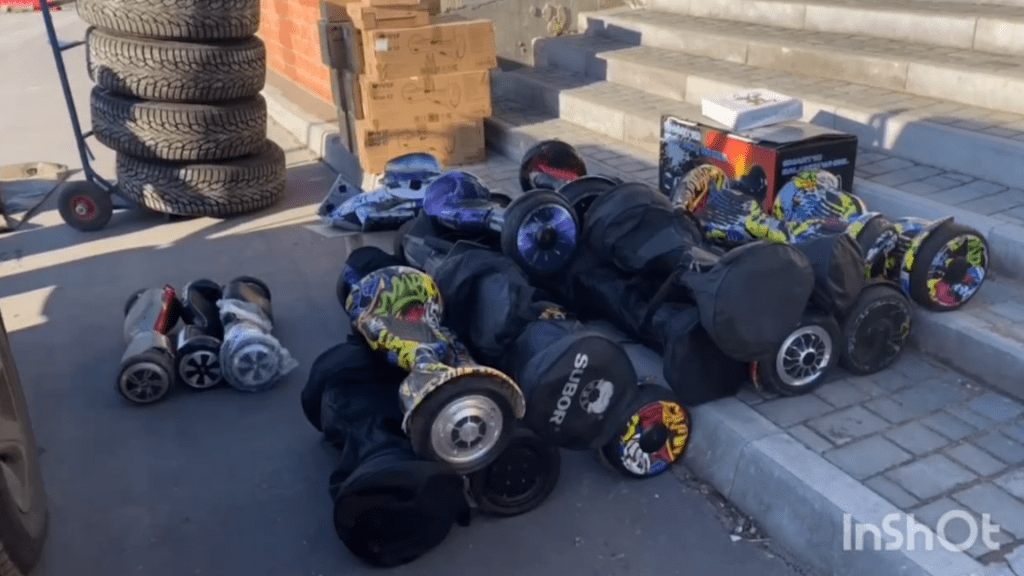
Hoverboards donated by Russian civilians (via social media)
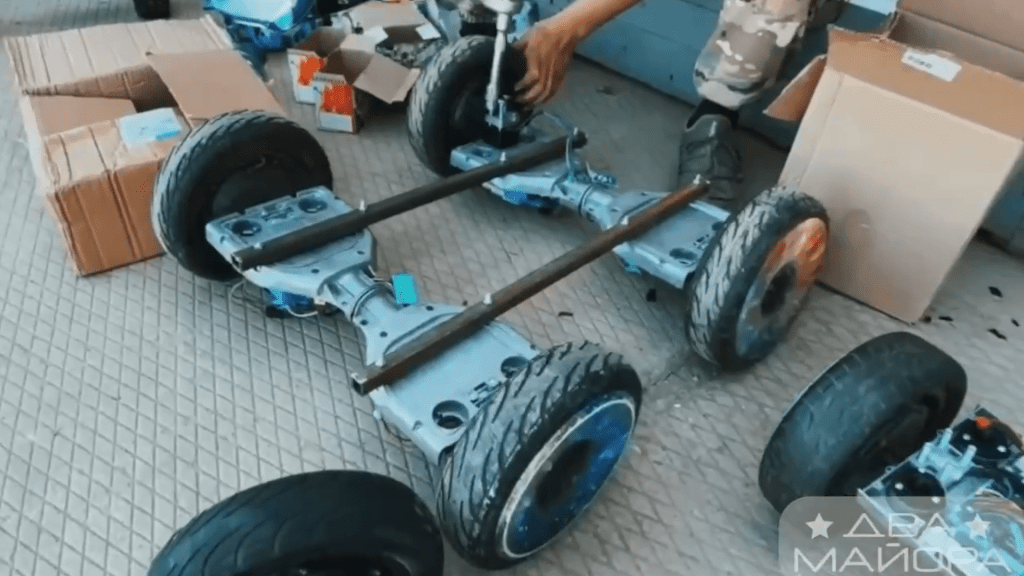
In September, another video surface which shows a pair of hoverboards with their casings removed, connected by a pair of metal braces and a board of wood which the unit’ s batteries and a control box have been mounted. In the video a Russian individual explains it can be used to carry mines up to an approximate range of 5km.
While developments no doubt continued the next reference to the use of hoverboards I came across was a video posted at the end of February 2024, calling for the donation of old, unwanted hoverboards with the caption noting [machine translated] “It doesn’t have to be new! Old, broken, unnecessary, lying in the closet! This will help our team and our country bring the victory closer!”
On 11 May, the Russian Telegram page, Two Majors, also made a request for old hoverboards, with the video showing a number of hoverboards adapted in various ways, one had an outrigger with caster wheels fitted, while another much more sophisticated UGV has combined three hoverboards together and added tracks. The caption for the video read [machine translated]: “do you have an old hoverboard gathering dust somewhere and want to help the Army? Send it to us! All gyroscooters will be regularly sent to the Front, and there, on site, they will be converted into self-propelled units. Several weeks later the channel shared a video of donated hoverboards arriving and being unloaded.
At the start of June, Russian media outlet Sputnik shared a video showing a small logistics UGV carrying a payload of mortar rounds. The drone appears to be utilising components from hoverboards. The video concludes with a drone feed video showing the UGV being used as a kamikaze, detonating on a treeline position.
A typical hoverboard UGV being assembled (via social media)
On 6 June, Russian media outlet Izvestiareported on a small logistics UGV made to carry ammunition and supplies to forward positions. The video shows a small UGV is based on the components of a pair of hoverboards but has larger wheels, a cargo space and new control receivers. The UGV was built by members of the 110th Separate Guards Motor Rifle Brigade of the then-1st Donetsk Army Corps.
On 15 June, Two Majors posted a short video showcasing the testing of what they jokingly call a ‘combat cockroach’ showing it travelling over rough ground – interestingly, it appears to be somewhat centrally articulated allowing the axles to traverse uneven ground. The caption notes that it can carry “up to 100 kg” over around 2km but some refinement is still needed. The video shows the drone with a UDSh smoke generator mounted, these share the same dimensions as TM-62 anti-tank mines.
On 22 June, the same Telegram channel shared a video showing the disassembly and modification of donated hoverboards. The video shows Russian technicians removing casings, rewiring the boards and testing connections and motors.
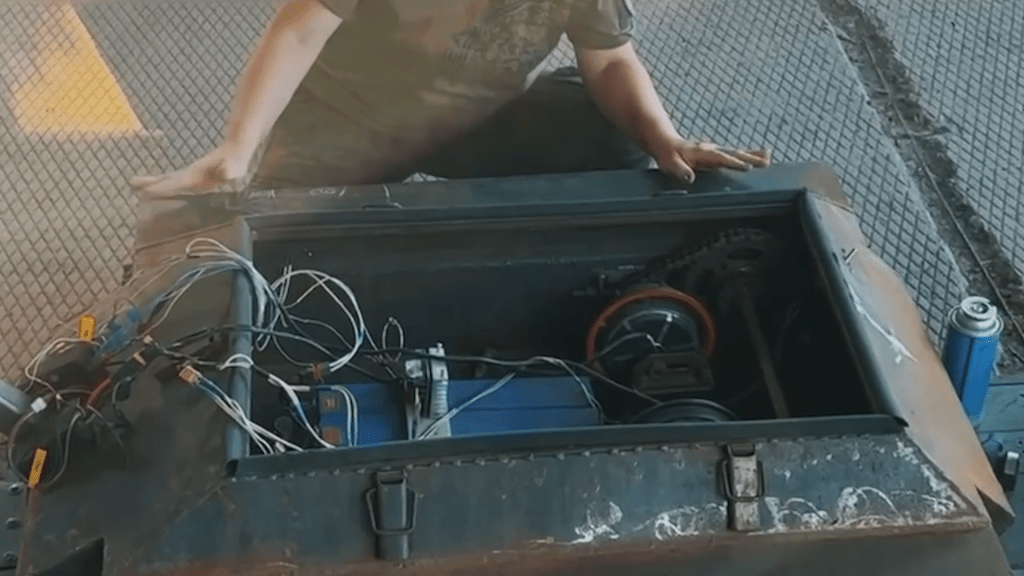
A look inside a Russian tracked drone showing Hoverboard components inside (via social media)
A day later, on 23 June, the channel shared another video of a completed hoverboard drone with a raised cargo bed with a UDSh smoke generator mounted. The video shows the UGV travelling down a track and then the UDSh being remotely ignited. This use case is interesting as it could be used to screen other hoverboard UGVs with explosive payloads or supplies, or cover an infantry assault.
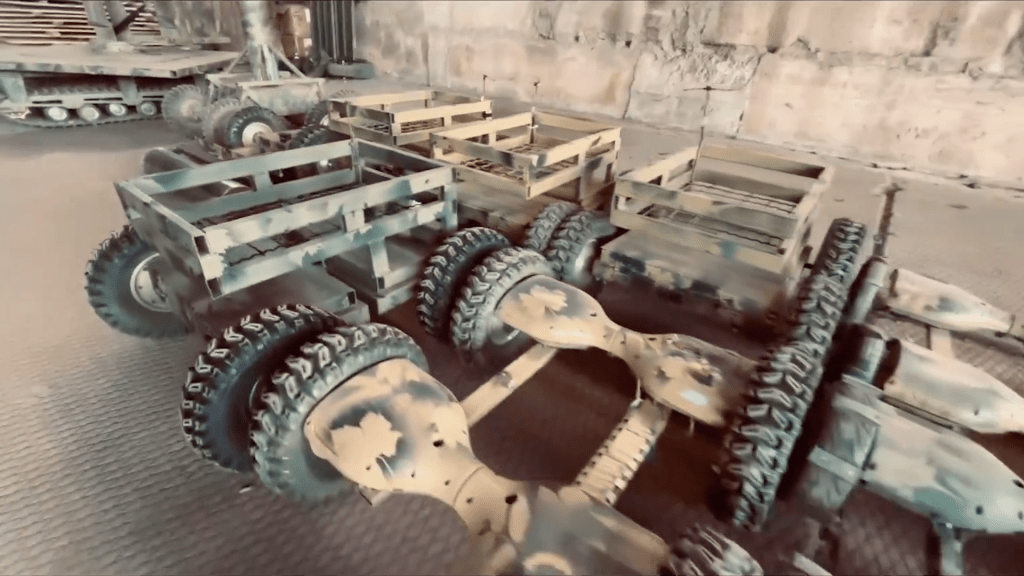
In early July, another video, shared by Two Majors shows a batch of five completed and painted Hoverboard UGVs ready for use as kamikaze drones. During the same video we get a rare look inside a larger tracked UGV and we can see that they also use hoverboard components. The Two Majors groups’ website also added a page about the Kamikaze Hoverboards. On 7 July, they shared a video of the drones being painted using foliage to create a camouflage pattern.
Towards the end of July, the channel shared two more videos showing a more complete picture of how the Kamikaze Hoverboards are built, showing the construction, the testing and the test detonation of one of the drones. In the videos we see the hoverboards being disassembled, their wiring being accessed and the addition of connecting struts added between the two hoverboards. The test footage then shows a drone covering rough ground and going along a road before seemingly detonating next to a vehicles.
On 9 August, the group shared a video of a delivery of more donated Hoverboards with the caption stating [machine translated]: “Gyro scooters continue to arrive for kamikaze cars from all over Russia. We pick them up from the pick-up point in large batches and immediately take them to production. More than one such batch has already arrived for assembly.” The same day they confirmed that the first Hoverboard drones had reached combat units.
A selection of Two Majors’ hoverbaord-based ground drones, including: Reece, cargo and kamikaze variants (via social media)
A video posted on the 11 August by the Archangel Legion Foundation nicely illustrates the variety of different models of Hoverboards which have been donated and procured for conversion. On 10 October, Two Majors shared a 1 minute 48 second long video showing the Hoverboard Kamikazes in action with a series of drone videos showing the UGVs travelling to targets and detonating. A day later, on 11 October, the ‘Reliable Rear’ Foundation shared a video showing a drone travel towards a treeline before detonating. The caption notes that the drone has been used for demining and that they have constructed six of the drones from 17 donated hoverboards. This illustrates that there are numerous Russian organisations and workshops constructing the Hoverboard drones.
In a 17 October post, Two Majors noted that the 33rd Separate Rear Logistics Battalion in the Sobinsky District of Vladimir Oblast had been actively collecting Hoverboards with the accompanying video showing at least 21 hoverboards of various models.
Later in October, Two Majors unveiled a new development for the Hoverboard UGVs, a mine-clearing variant designed to clear anti-personnel mines using a small roller mounted ahead of the UGV. At the very end of the month, the channel shared a video of a Hoverboard Kamikaze with an incendiary payload deployed against what the post claims is a Ukrainian position.
The following month the channel shared further footage of what is suggested to be a combat deployment of the Hoverboard UGVs in the one-way munition role. The UGVs appear to have been deployed by Russia’s 64th Separate Guards Motor Rifle Brigade with the footage showing two kamikaze drone detonations. In both clips the UGVs’ progress is followed by a video feed from an overhead drone, it is seen travelling across open ground towards a treeline before detonating.
On 11 October, testing footage of a pair of small UGV was shared by the Russian telegram channel FPV_vyZOV. The clip showed two small tracked UGVs being tested in some shallow water. The video’s caption notes that the majority of the components for the drone originated in Russia but that motors and components from Hoverboards were acquired from China. The drone is reportedly able to carry up to 100kg of payload.
It appears that the hoverboards have also enabled the continued development of more robust, specialised UGVs such as a surveillance UGV which is reportedly based on the technology and parts of hoverboards but has a new chassis. This was seen in a video shared by the Two Majors channel on the 12 October, the detailed 2 minute video gives a good look at the UGV from multiple angles, showing the UGV and its sensor mast up close. The drone does not use the actual bodies and motor-wheels of the Hoverboards directly, instead it uses components from the boards, it also features a telescoping mast which can be raised and lowered.
BRM-1 seen in May 2023, equipped with six RPGs and its own little anti-drone cage (via social media)
On the 8 November, Two Majors shared video showing the manufacture of the drones, showing piles of components and Hoverboards being modified with new wheels, motors and augmentations to their wiring. The video ends by showing several different variations of UGV all based on the hoverboards. These include UGVs with cargo beds, UGVs designed to carry mines and explosive devices, a mine-clearing variant and a UGV with a sensor mast for reconnaissance.
In a video thanking people for their Hoverboard donations, posted on 22 November, the same collection of Hoverboard UGVs is seen. The video gives us a longer look at the different variants developed by Two Majors.The variants include the reconnaissance UGV, a couple of UGVs with a mine roller for demining, five cargo-carrying variants and four capable of carrying anti-tank mines or smoke generators.
A photograph and a short clip posted to the WagNer Сапëр Telegram channel on 10 February 2025, showed the assembly and testing of another Hoverboard UGV. In the imagery, we can see the UGV without its top cover with its battery, motors and circuits exposed.
A week or so later another Russian channel shared a video showing the collection of donated hoverboards ready for conversion. This indicates that Russian efforts to produce these home-made UGVs are ongoing in a number of regions, personnel are seen loading three hoverboards onto the back of a truck.
On 6 March, Ukrainian journalist Yuri Butusov shared a video from men of the Russian 177th Marine Regiment which showed a logistics variant of the Hoverboard UGV with cargo bed. This is another example of a UGV which uses hoverboard components on a custom built chassis rather than simply bolting several units together. Text in the video appeals for more scooters, in any condition, for use as parts to build more of the cargo UGVs.
In late April a video of Russian troops laughing as a combatant on a hoverboard pushes a two-wheeled cart full of supplies was shared. The fact that the hoverboard appears to have been attached to the cart suggests that this configuration may have found some practical use.
A typical ‘hoverboard’ drone configuration, with its top covers removed. The mine or smoke projector sits on a board mounted a pair of connecting struts (via social media)
Into May 2025, videos of Hoverboard UGVs continued to be shared on Russian social media channels. On 1 May, a montage of combat footage showing the detonation of a series of the UGVs was shared. While the blasts are substantial, there is no battle damage assessment footage shared to examine the UGVs’ effect downrange despite this the UGVs offer a safer method of delivering substantial explosive payloads to enemy positions without exposing troops. The start of the montage shows a pair of hoverboards bolted together with a TM-62 anti-tank mine as payload. Depending on the variant TM-62s mine are packed with 7.5kg (17lbs) of explosive and is normally centrally fuzed by a mechanical MVCh-62 pressure fuze. It is a High-Explosive Blast (HE-Blast) mine typically with a TNT filling. In this case they are likely command detonated electrically.
Small unmanned ground vehicles are proliferating on both sides, be it the hoverboard-based drones or other small wheeled or tracked UGVs. There appears to be more than a handful of Ukrainian versions of the Hoverboard UGVs too, several are listed on Ukraine’s new Brave1 Market site. The Bombetel-M is an explosive-carrying UGV which uses a hoverboard with a third wheel attached for stability. It replaces the board’s tyres with metal wheels for improved traction and can carry a TM-62 mine. While Kamikaze UGVs like the Smiley (Smailik) and the Trimmer (Тримінер) clearly utilise hoverboard parts its also likely that other Ukrainian UGVs also utilise elements from hoverboards as they are a readily available source of key components. Small llogistics UGVs like the Horse-S, Cockroach 1K and Carpenter also appear to use hoverboard parts.
More recently on 5 May, a Russian telegram channel, VictoryDrones, shared additional photos hoverboard-based kamikaze drones showing a UGV mounte with a TM-62 mine. The caption notes that these drones have good “stability due to gyroscopes and low cost, which allows them to be used en masse.” The caption also suggests that the “drones can move across rough terrain on the front lines faster than any other ground drones.”
The HUR’s new LEGIT tracked UGV with cargo bed (via social media)
Intriguingly, at the end of June, the HUR’s [Main Directorate of Intelligence] branch of the International Legion announced the production and deployment of a new small UGV called “LEGIT”. The small tracked UGV clearly utilises hoverboard components with the video’s caption explaining that it was co-developed by operators and engineers from the HUR Legion’s Cyclone unmanned systems team in collaboration with specialists. The video shows the LEGIT drone being used to pull cargo in a towed trailer, another is drone being loaded with an explosive payload and driven up to a building and detonated. Finally, the most interesting variant is armed with a pair of Bulgarian Bullspike RPGs on an articulated mount which can be raised and lowered. The video concludes showing the RPG-UGV test firing at a building.
LEGIT mounted with a pair of RPGs (via social media)
This survey is by no means exhaustive but I have spent over a year tracking the development and proliferation of these UGVs as they represent some of the most basic but useful ground drones developed during the war.
Way back in February 2024, I published an article/video discussing sightings of one of the so-called Franken-SAM systems provided to Ukraine by Western allies. The ASRAAM-armed system was developed and provided by the UK but until this year little information about it had been confirmed. On 10 May the UK Ministry of Defence confirmed that they system is called ‘Raven’ and a total of 13 of the systems have been pledged.
Five Raven Air Defence Systems due to be dispatched to Ukraine (UK MoD/Crown Copyright)
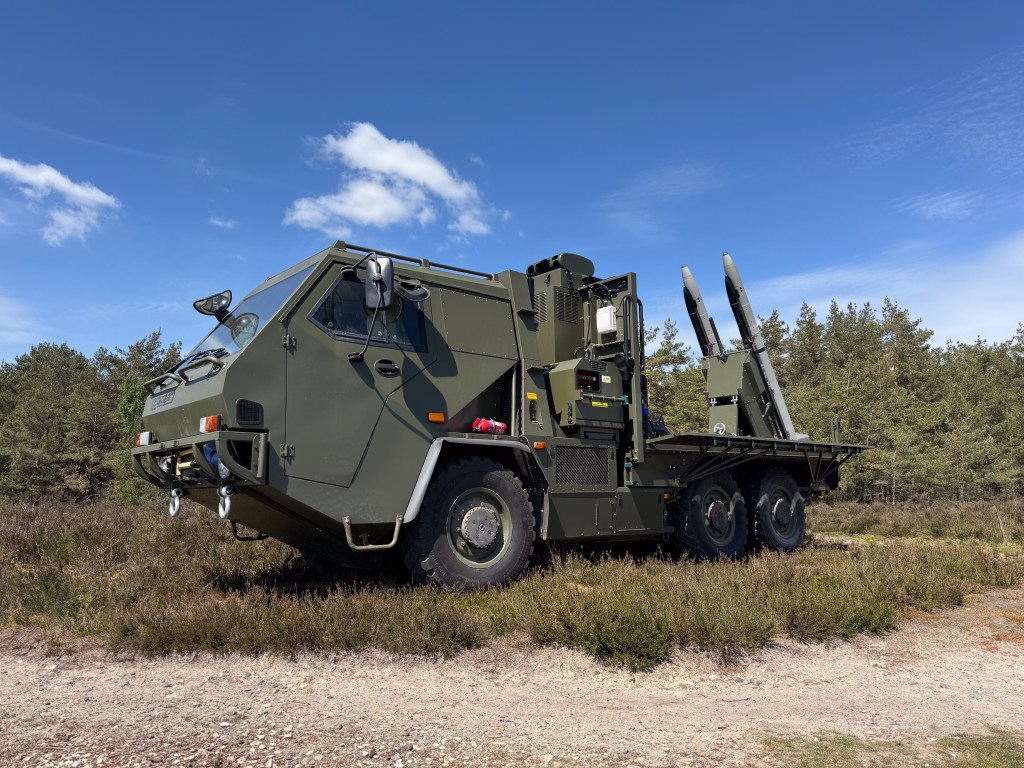
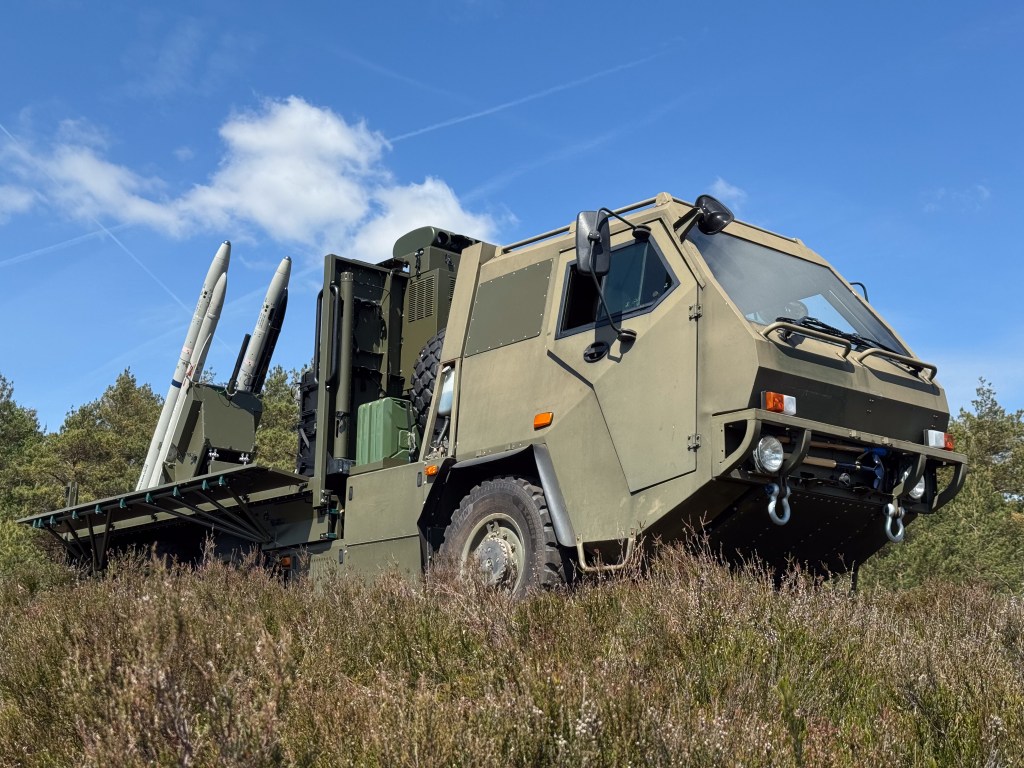
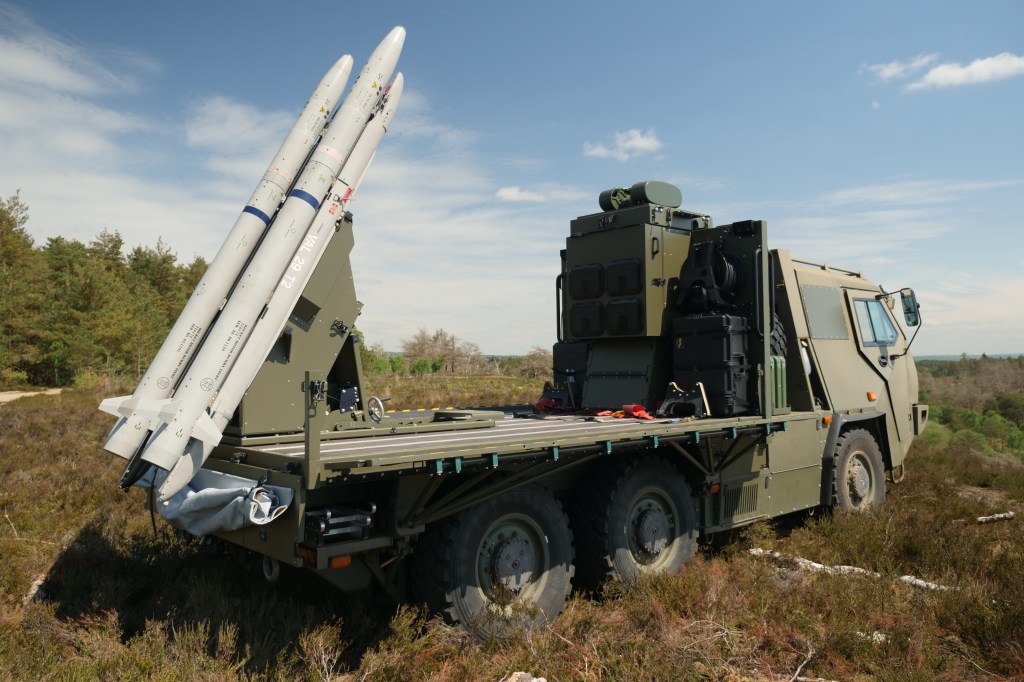
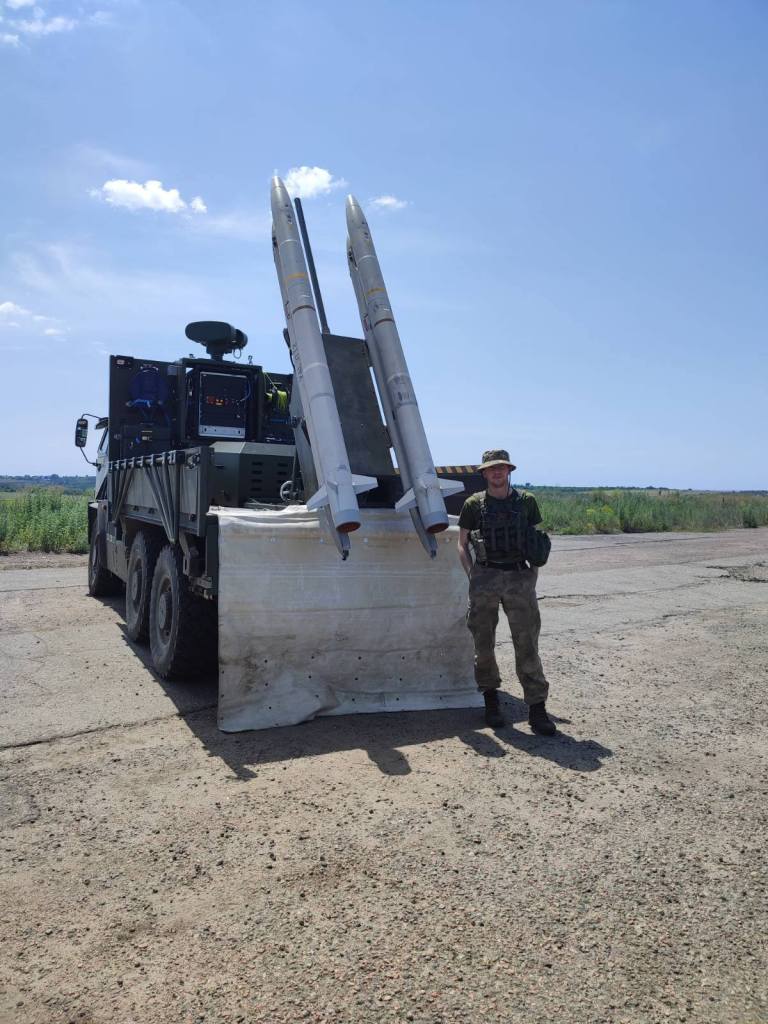
The previously available imagery showed that the system comprised two AIM-132 Advanced Short-Range Air-to-Air Missiles (ASRAAM) mounted on a Supacat HMT 600 (6×6) vehicle. The vehicles are believed to be former Soothsayer ECM carriers brought out of storage. Also visible is what appears to be a mast-mounted sensor unit positioned behind the cab, on the vehicle’s flatbed. This appears to be a Chess Dynamics Hawkeye which likely includes electro-optical and infrared sensors used for targeting.
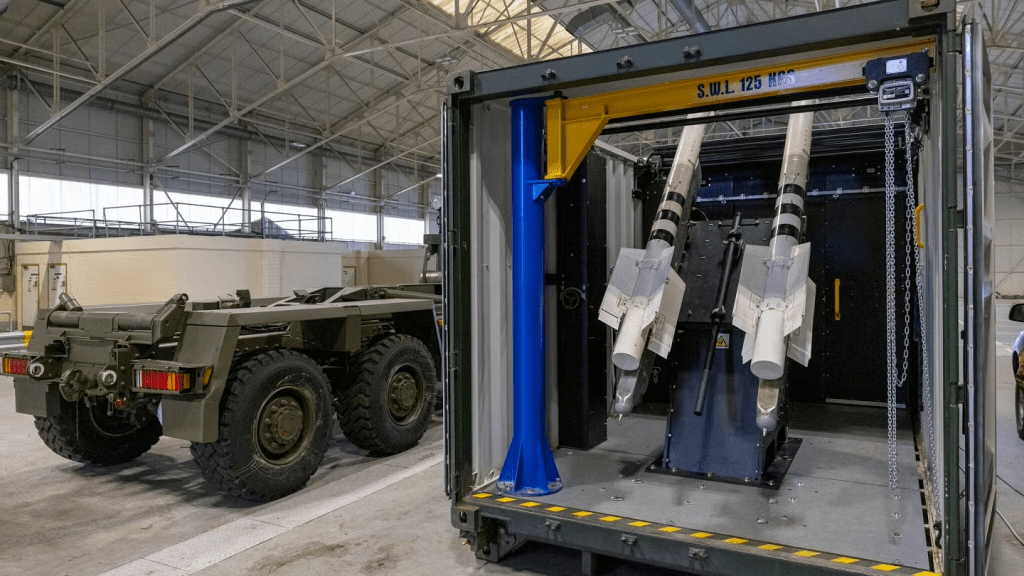
Gravehawk – UK-developed containerised air defence system (UK MoD/Crown Copyright)
The UK-developed Raven is one of several ad hoc short-range air defense systems developed by the UK for Ukraine, the other being Gravehawk, a containerised system which utilises R-73 air-to-air missiles, which was unveiled in February 2025. Both systems are part of an effort to affordably and quickly bolster Ukraine’s air defences. In October 2023 a pair of videos shared by the Ukrainian air force gave a glimpse of the system in action. The both filmed at night shows a launch but the vehicle is not visible. The second, shared on 12 October, by Ukraine’s Air Command – South shows the successful engagement of a Russian long range loitering munition. As the darkness is lit up by the missile launch, the Supacat 6×6 High Mobility Transporter is briefly visible.
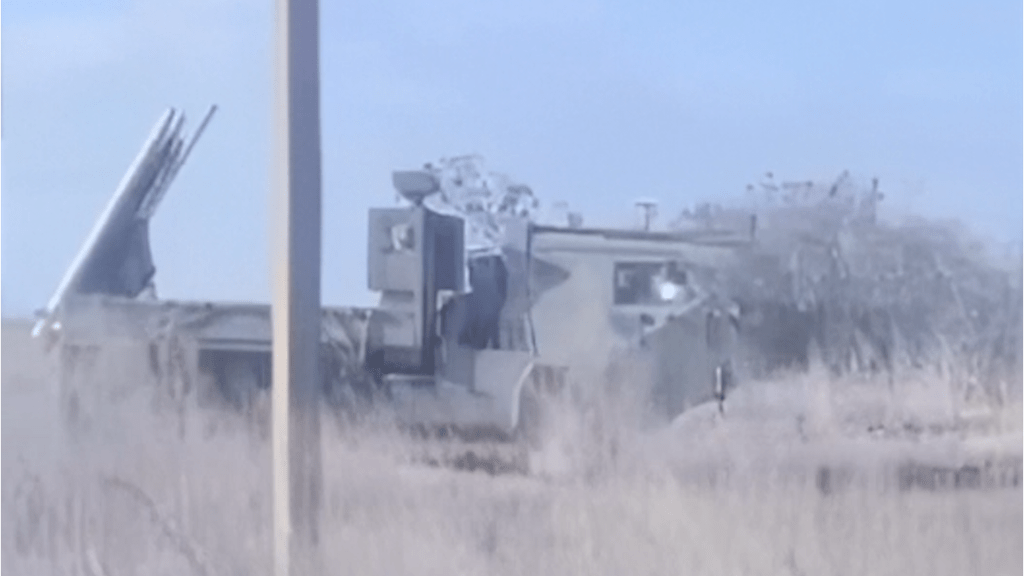
Raven seen in Ukraine, Feb. 2024 (via Social Media)
ASRAAM uses infrared homing and can lock onto its target after launch. It has an air-launched range of more than 25km but this is likely shorter when used in a ground launched role. The system may be used in conjunction with radar systems which feeds target data to the missile. A key feature of the ASRAAM is its ability to lock-on after launch, theoretically allowing it to be vectored onto a target in the air before it begins IR homing.
The system, however, isn’t ideal with limited ready-to-fire capacity on the launcher ramp, with just two rails, and no protection for the missiles themselves, from either the elements or from potential fragmentation or impact damage if attacked. The ad-hoc air defence system first saw action in Ukraine in August 2023, and represents an ingenious improvisation utilising a highly capable missile in an air defence role it was never envisaged in. In December 2023 UK Ministry of Defence summarised their development:
“In summer 2022, a joint MoD-MBDA team developed air defence systems to fire ASRAAM from the ground for the first time. Within four months of initiating the surface launched ASRAAM project, these air defence systems were developed, manufactured, trialled and Ukrainian crews trained on their usage, on UK soil, before being transferred into Ukrainian hands.”
In late 2023, it was reported that the UK had supplied “a handful” of the missile-equipped Supacat trucks. They were believed to be in use in near the front and in the Kyiv region, defending key infrastructure, against Shahed-136/Geran-2 long-range loitering munition attacks. In December 2023, the UK Ministry of Defence announced that a further 200 ASRAAMs would be provided to Ukraine and that the systems in-country had achieved a “successful hit rate reported as high as 90% against some Russian air targets.” ASRAAM’s payload, a 10kg blast-fragmentation warhead, is designed to destroy aerial targets with minimal collateral damage.
Raven Air Defence System, based on the HMT 600 Supacat vehicle and the Advanced Short Range Air-to-Air Missile (UK MoD/Crown Copyright)
A number of videos showing glimpses of the system itself or the system in action were shared throughout late 2023 and 2024. On 12 October 2023, footage of a night launch against a Shahed one-way munition was shared including thermal footage from the systems sensors. In late February 2024, footage, again from the Raven’s sensors, showed the successful engagement of a Russian ZALA reconnaissance drone.
A month later on 20 March, both external and system footage of a daytime engagement of a Russian Supercam S350 reconnaissance UAV was shared. Later in March additional footage of what was also claimed to be a Supercam was also shared.
Raven Air Defence System, based on the HMT 600 Supacat vehicle and the Advanced Short Range Air-to-Air Missile (UK MoD/Crown Copyright)
On 3 April, thermal camera footage of another UAV interception was posted on Ukrainian social media. The speed and vector of the missile suggests it was a Raven-launched ASRAAM. On 14 April 2024, a short clip showing an ASRAAM missile with a message written on it ‘Rowdy Company’, followed by footage of a night-time launch was shared.
In early May 2024, Russian Telegram channels shared drone footage of what they claimed as the destruction of one of the systems by a Lancet loitering munition. While footage of the systems in action is few and far between another daytime video of the system in action was shared in mid-September 2024, having been posted to TikTok.
Most recently, in late November 2024, a video containing footage from a number of Ukrainian anti-aircraft units showed several interceptions of Russian drones and a launch from what appear to be Raven system.
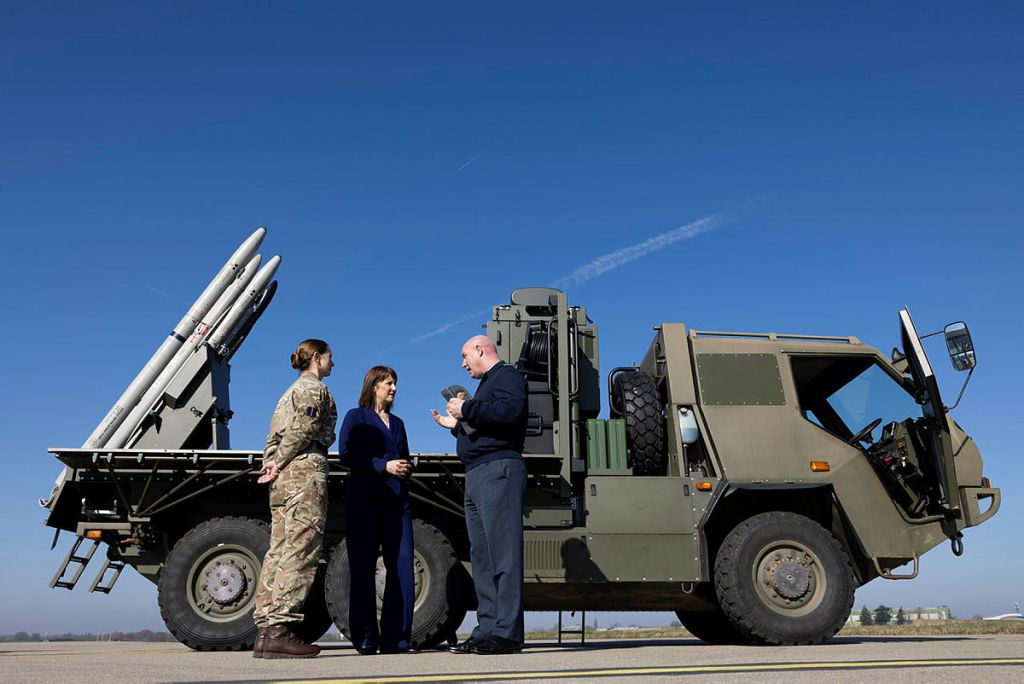
In March 2025, a couple of photos were shared by the UK Ministry of Defence showing Rachel Reeves, the UK’s Chancellor of the Exchequer being briefed on Raven during a visit to RAF Northolt, though the name of the system was not disclosed at the time they gave the best side-on look at the system to-date.
UK’s Chancellor of the Exchequer being briefed on Raven during a visit to RAF Northolt, March 2025 (UK MoD/Crown Copyright)
The UK Ministry of Defence unveiled the Raven officially on 10 May 2025. In a video posted to the UK MoD YouTube channel the system was shown in detail and some interesting stats were shared. Colonel Olly Todd, Military Assistant Head of Taskforce Kindred [Taskforce Kindred refers to the MoD’s effort to provide equipment to the Armed Forces of Ukraine (AFU), from UK stockpiles and rapid procurement.] noted that the UK has provided approximately 400 ASRAAM (which were near the end of their service life) to Ukraine and from 400 launches the systems’ engagement success rate stands at around 70%. The video also confirms that eight Raven systems were deployed to Ukraine in 2022 and a further five are set to be provided in 2025.
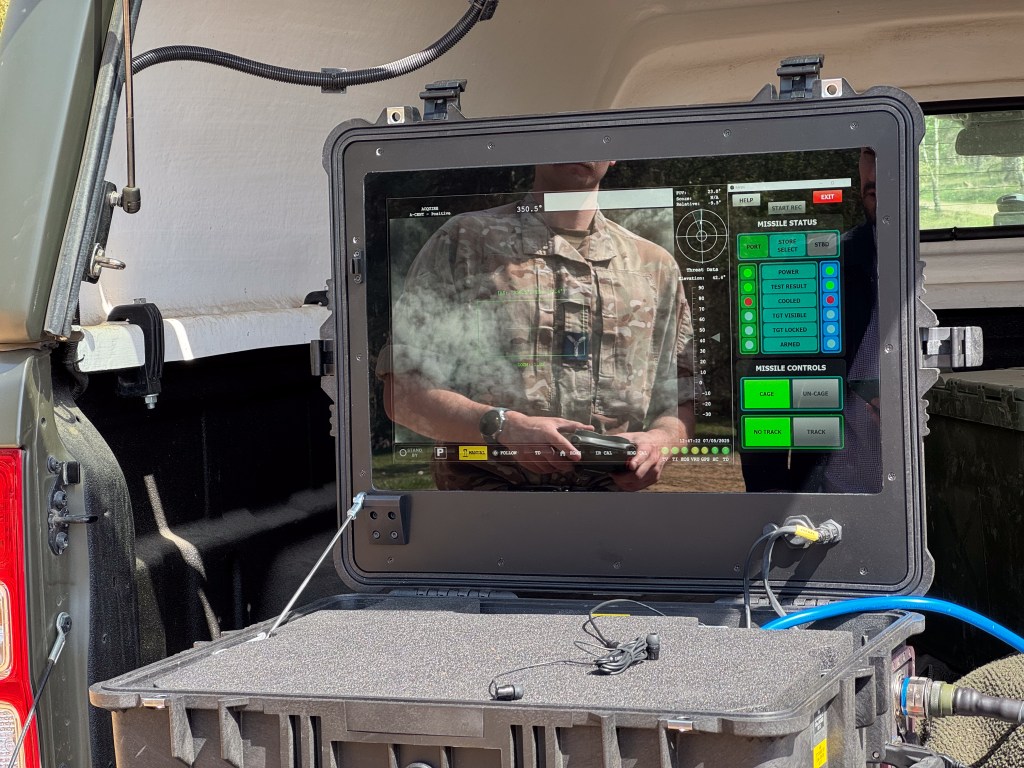
Raven was developed in just three months with experts from MBDA, Supacat at the RAF’s Air & Space Warfare Centre involved in the process. It combines a Supacat HMT-600 vehicle with the MBDA-manufactured ASRAAM using a bespoke launch assembly which integrates launch pylons taken from legacy UK aircraft including Hawk, Jaguar and Tornadoes. Unsurprisingly Raven and Gravehawk use the same control system and likely share the same system-integrated sensor units for tracking and identifying targets before locking on with the missiles’ seekers before launch.
ASRAAM mounted on a Raven air defence system (UK MoD/Crown Copyright)
While ASRAAM is still in production it is worth noting that other than the UK, the only other current user is India – though several Middle Eastern nations have reportedly adopted it, this means the stock of older missiles ready for disposal will be somewhat limited. It is so far unclear if the Raven systems could also be adapted to launch other missiles such as the R-73 used by the Gravehawk.
Photo of the Raven Air Defence System’s Fire and Control Unit (UK MoD/Crown Copyright)
Despite the potential limited availability of the missiles the relatively cost-effective price-tag of an ASRAAM, reported to be around £200,000 (or $260,000), makes the Raven a useful system for not only protecting key Ukrainian infrastructure but also, as has been seen in some of the footage available, engaging Russian reconnaissance drones which feed important information back to Russia’s command and control apparatus.
Updates – 25/07/25:
The UK will provide Ukraine with hundreds of ASRAAM air defence missiles, helping to protect them from Russian drone and missile attacks.
The missiles will be funded using £70m worth of interest generated from seized Russian assets.
On 24 October, the Ukrainian Air Forces’ Air Command “West” social media shared a photo of a Raven system, noting that it had destroyed 24 Shaheds and several cruise missiles.
A video was also shared showing the successful engagement of Russian Kh-59 and Kh-101 cruise missiles.
Support Us: If you enjoyed this video and article please consider supporting our work here. We have some great perks available for Patreon Supporters – including early access to custom stickers and early access to videos! Thank you for your support!
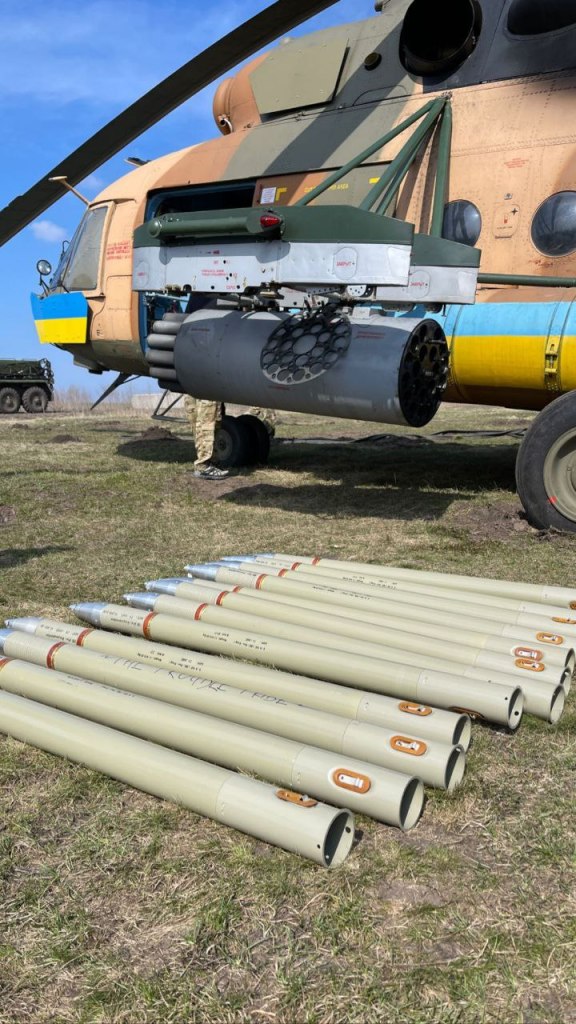
The S8 is an 80mm family of unguided rockets developed by the Soviet Union and still in service today. Developed in the 1970s there is a whole range of different types of warheads for the rockets and the S8s are most commonly seen being fired from both Russian and Ukrainian helicopters or Su-25s. We typically see both sides firing salvos of the rockets by pitching up the aircraft and launching, while this no doubt more inaccurate than firing them directly onto a ground target, as originally intended, the practice does keep the valuable aircraft somewhat out of the range of opposing air defences and must have some effect downrange as the practice has continued since the first weeks of the war.
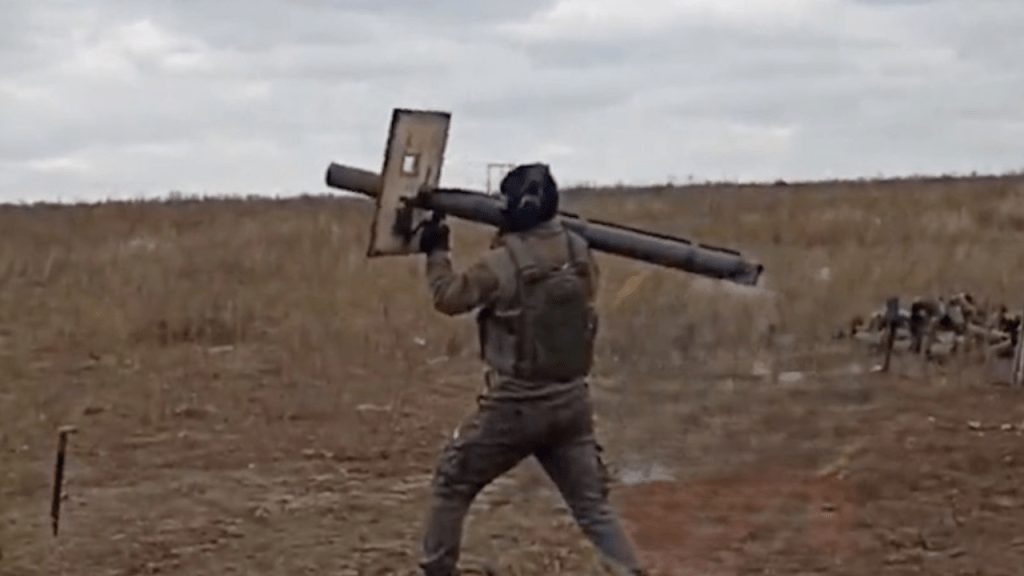
Firing an improvised S8 launcher (via social media)
This week, however, a video of an improvised launcher developed to be fired from the shoulder emerged, seemingly developed by Russian personnel. We can see that the launcher has a pair of pistol grips, a shield made from four planks of wood with a small hole and a plastic screen tacked in place. An electrical box is also mounted on the shield, possibly containing a battery, with a cable tube running to the rear of the launch tube, ostensibly to ignite the rocket motor. It appears that there may be a trigger on the front grip. An individual in the video providing commentary states that the connection is ‘absolutely safe’. The launch tube appears to have at least one bracket welded to it for securing the shield. How the launcher is aimed is unclear, but the individual filming states that they are testing the principle and still need to make some refinements.
S8 rockets ready to be loaded onto a Ukrainian helicopter, 2023 (via social media)
The S8’s rocket burns for approximately 0.7 seconds, generating around 5,800 Newtons of thrust. Depending on the variant of rocket used the rocket has a velocity of around 450 m/s, some variants are faster, this is around 4x faster than a conventional shoulder-fired rocket system, an RPG-22 for example has a muzzle velocity of approximately 130 m/s.
Shield and pistols grips of the improvised S8 launcher (via social media)
The clip shows the firer shoulder the weapon and fire, the launch is successful with the launcher operating as expected but the recoil from the extremely fast moving rocket was considerable. The exhaust gases also appear to have acted on the shield pushing it back against the operator. The launcher flies completely out of the operators hands just after launching, with the shield – designed to protect against rocket’s exhaust gases, apparently striking him in the face. The individual filming continues to track the flight of the rocket and the firer is not shown again.
Preparing to fire an improvised S8 launcher (via social media)
The idea of shoulder launching an S8 has been explored before in Chechnya and elsewhere but unless the force of the launch can be mitigated then the results are the same. Ground improvisation with S8 rockets isn’t uncommon with lots of improvised multiple-launch rocket systems (DIY MLRS) being used by both sides, these typically use pre-existing rocket pods mounted on vehicles. This is a topic for a future article/video. A single S8 launch tube on a mount or tripod, where the danger to the operator is minimised, might have useful applications, similar mounts have already been developed to fire Grad rockets with some degree of accuracy.
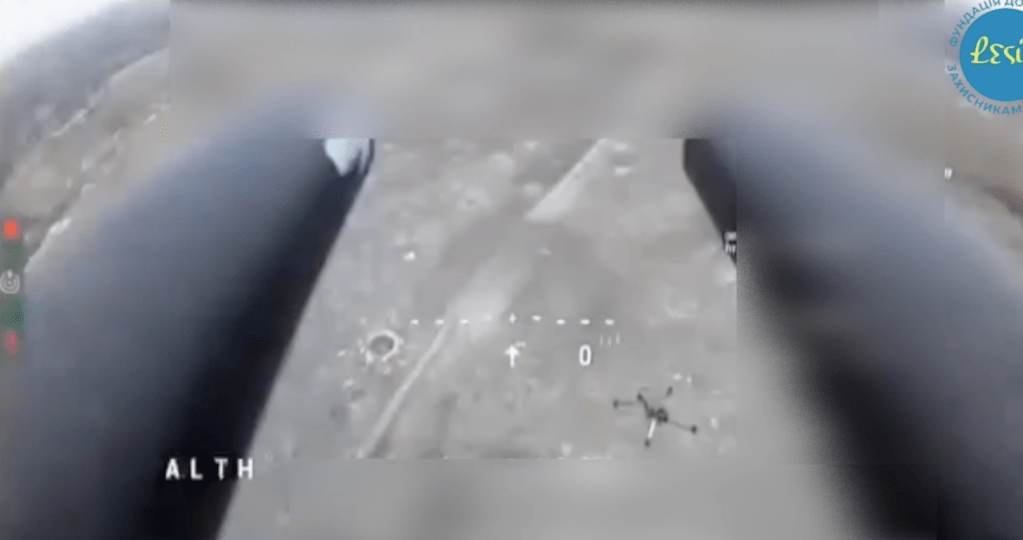
On the 27 December, a Ukrainian fundraising charity posted a series of short videos featuring a drone with a pair of gun barrels. The Lesia UA Foundation provide Ukrainian units with vehicles, bikes, drones and personal equipment procured with the funds they raise. It appears that they have helped to fund the development or fielding of an unknown number of gun-armed drones.
The footage of the gun-drone in action was shared on 27 December with the telegram post stating [machine translated]:
“For the first time on video – drones and hard drives shot down other drones Defenders of Ukraine test #LesiaUAtechnology developments Stay tuned and we’ll show you even more exclusive shots! Together to victory!”
In the first video the gun-drone follows a quadcopter with the drone’s camera panning up and down several times between what appear to be a pair of barrels. The quadcopter is downed with damage to one of its rotors and appears to be trailing smoke as it spirals to the ground.
View between the barrels of a Ukrainian gun drone (via social media)
In the second short clip what appears to be a bomber drone, carrying an explosive hanging beneath it, is shot down as very close range as it hovers. Similarly, the third video shows a bomber drone which is shot down at close range as it hovered with damage to its rotor blades. At the time of writing the Lesia UA Foundation have not released any additional clips of the drone in action or any images of what the drone looks like.
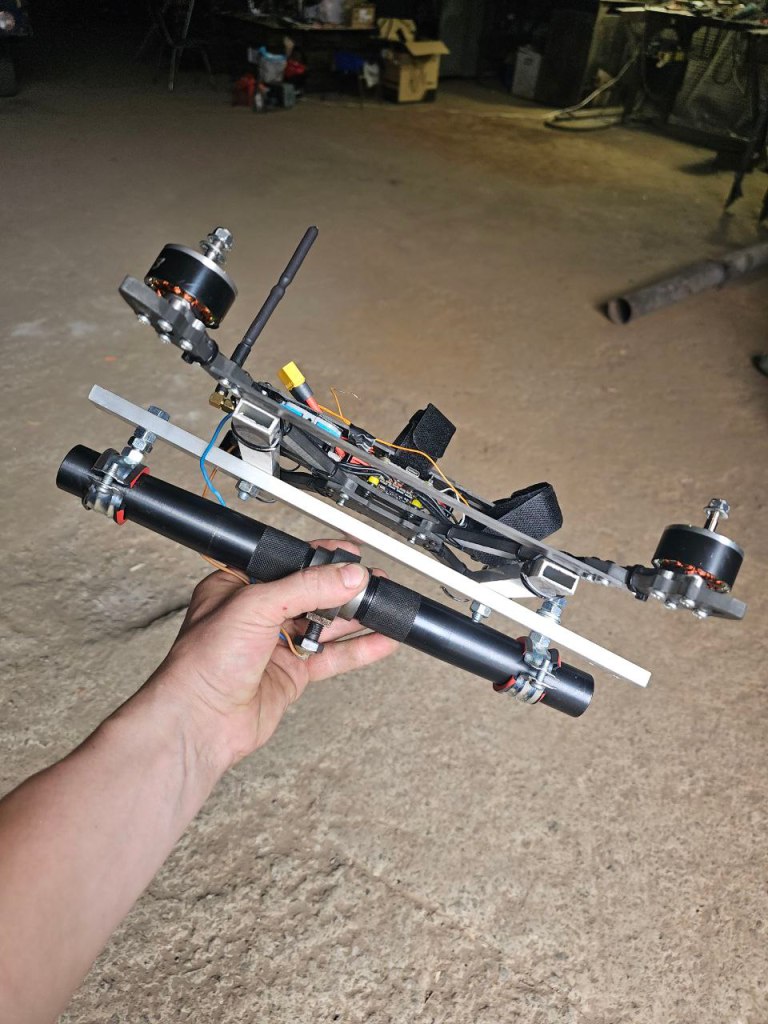
While in recent months we have seen drones armed with both RPGs and AK-74s these have been used in the air-to-ground role. The shotgun-like blasts seen in these clips are more useful for close range air-to-air engagements. From the lack of recoil seen in the clips, the large bore diameter of the barrels and their positioning on the drone, either side of a camera gimbal, it would appear that the gun used by the drone follows a recoilless principal. The recoilless guns work along the premise of Newton’s Third Law of Motion, that all things have an equal and opposite reaction – as such two guns are connected back to back, with the backwards-facing gun firing a counter-weight – mitigating recoil which prevents the drone’s flight from being destabilised.
A Russian recoilless gun drone developed in 2024 (via social media)
Why a recoilless gun and not a conventional shotgun? Principal factors governing this are likely weight, effectiveness and recoil. The recoilless guns have a larger bore diameter meaning larger load and increased hit probability. Additionally they are simpler with no-working or recoiling parts (as they load is likely electrically ignited) and they are lighter allowing the drone to stay in the air for longer and/or travel further. The key downside to the use of a single shot recoilless gun is that it can fire only one round. The Ukrainian drones have sought to mitigate this by seemingly equipping their drone with two of the guns.
While we haven’t yet seen an image of the Ukrainian gun-armed drone, we have seen a Russian example which was developed in the summer of 2024, tested but reportedly not yet fielded. The Russian drone was developed by the BRT company who, in a recent telegram post, expressed their frustration at seeing a Ukrainian recoilless gun drone in use.
While successfully engaging an enemy drone with a gun is difficult it is the detection and tracking of enemy drones which is likely the most challenging part. This may lead to these recoilless gun-equipped drones being used in a sort of combat air patrol role, seeking out and hunting down enemy drones over an area where they have been reported. It remains to be seen if these recoilless gun-armed drones will proliferate as a method of countering the huge number of small drones used by both sides but from the limited footage of them in action that is available the concept seems proven.
Update – 10/1/24: Additional footage has surfaced showing the drone firing on Russian infantry.
In an unsurprising turn of events the Ukrainian recoilless gun drone has now been seen firing on infantry. Looks like an FPV also targeted the Russian.
— Matthew Moss | The Armourer's Bench (@historicfirearm) January 10, 2025
Update – 15/1/25: Additional footage of the Ukrainian drone in action, shared by a drone unit with the 2nd Mechanized Battalion of the 30th Mechanized Brigade.
A compilation of footage from the Ukrainian 'shotgun' drone which I covered in a video a few weeks ago. The footage was shared by a drone unit with the 2nd Mechanized Battalion of the 30th Mechanized Brigade.
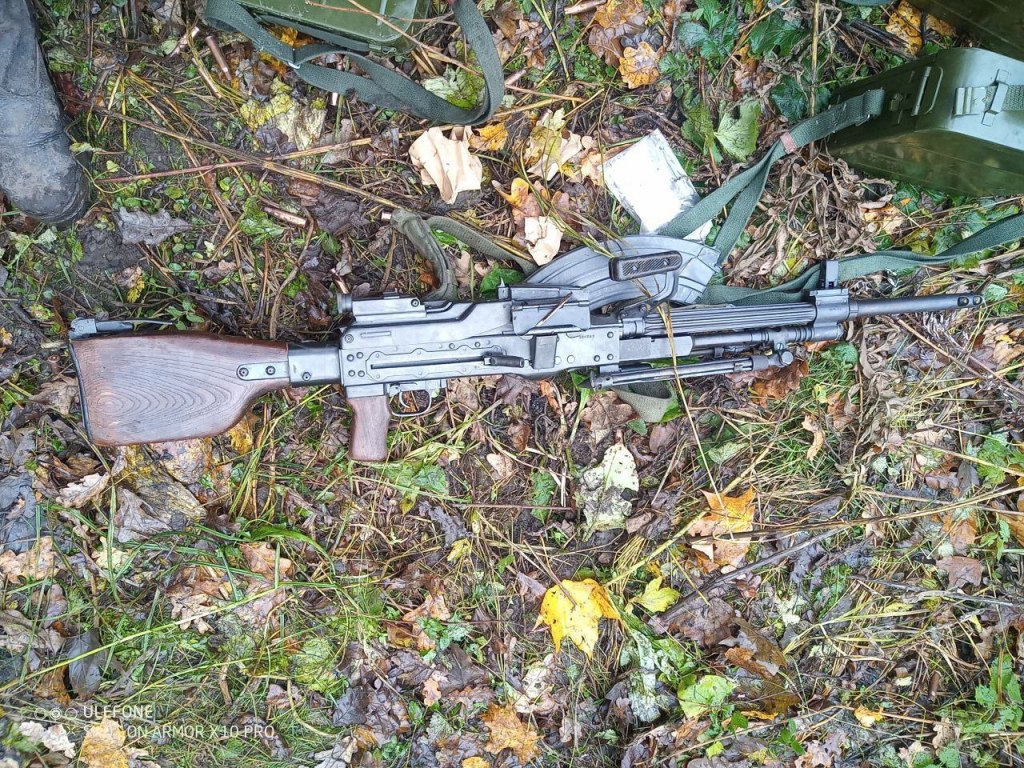
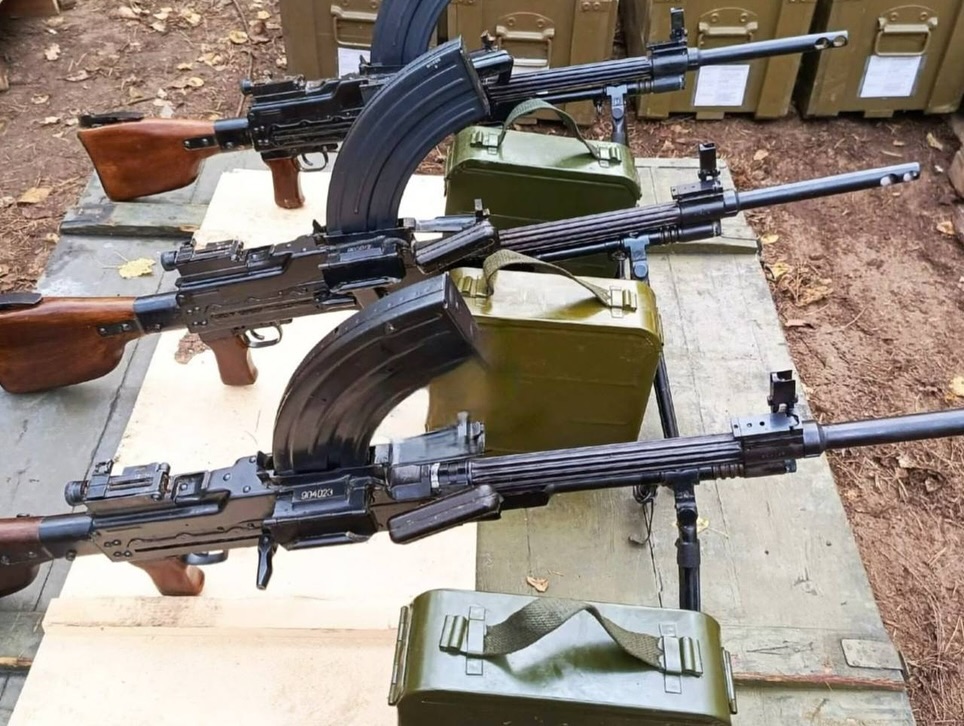
On 7 November, photographs began circulating on Russian telegram channels of North Korean Type 73 general purpose machine guns said to be in Russia. The appearance of the photographs led to suggestions the weapons are now in Russia service. This claim is somewhat supported by the appearance of Russian E.M.R. camouflage in the top right corner of one of the photographs.
A North Korean Type 73 complete with magazine (via Russian social media)
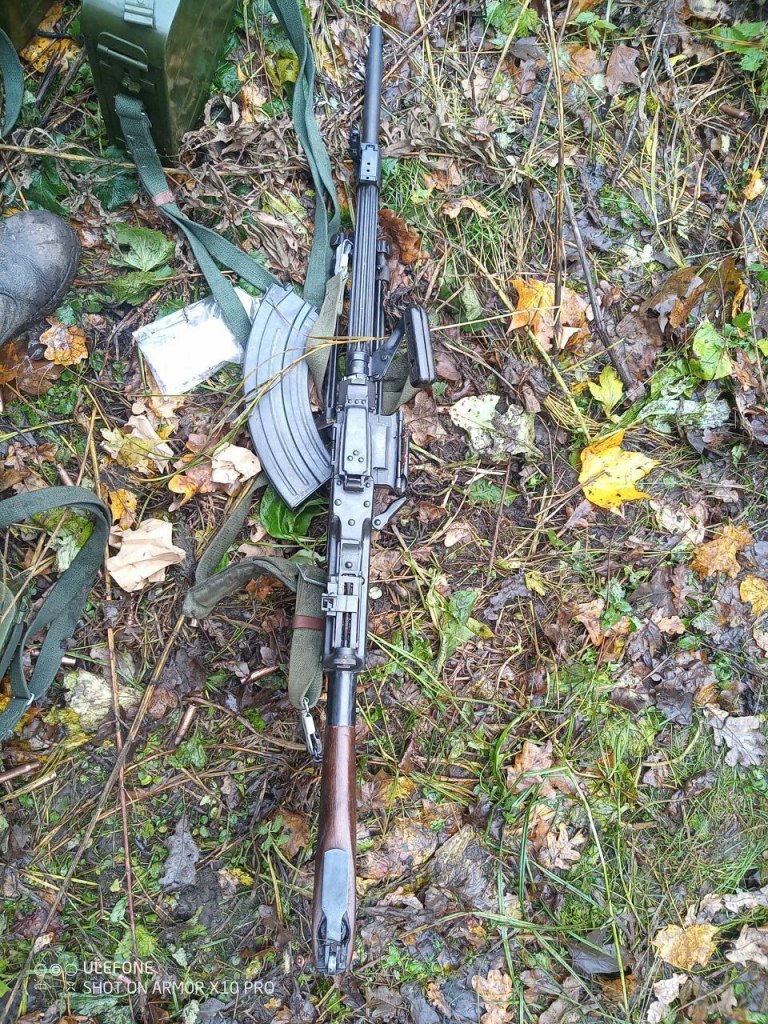
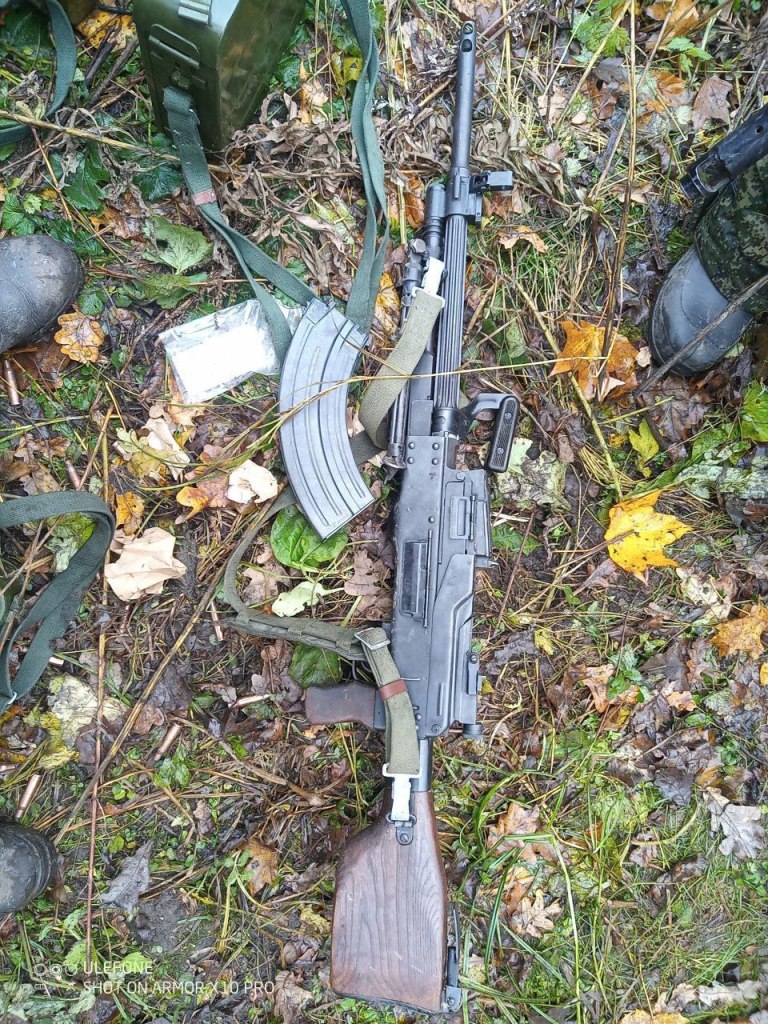
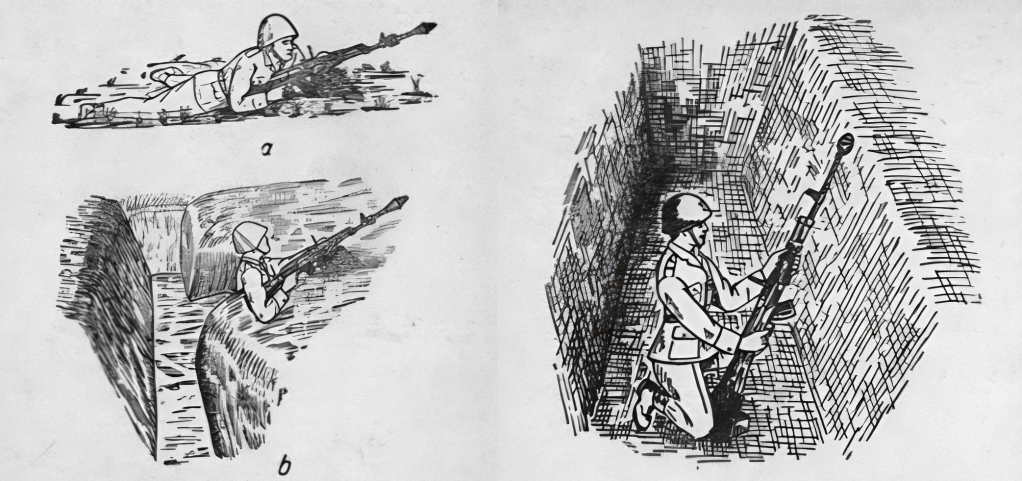
The Type 73 is a fairly rare weapon though it has surfaced in conflicts areas such as Yemen, Iraq, Syria and Lebanon over the years. Thought to have entered service in the early 1970s, it is a somewhat unusual machine gun, it is gas-operated, using a long-stroke gas system, it fires from an open-bolt and is chambered in the long serving 7.62x54mmR cartridge. It is derived from the PK-pattern machine gun and as such feeds from standard Russian metal non-disintegrating belts but also is able to feed from proprietary box-magazines (which look a little like over-sized AK magazines). The magazine is dual stack, single feed which is designed to allow the Type 73’s bolt to pull cartridges out of its rear. Check out Forgotten Weapons’ video on the weapon for a better look at the action. The dual-feed design appears to have been influenced by the Czech vz.52/57. The Type 73 has a longitudinal fluted barrel with its front portion, ahead of the gas block, machined as a spigot to enable it to fire rifle grenades, it comes with a removable barrel shroud which acts as a muzzle device. Also visible in the photographs are the segments of cleaning rod which sit in channels in the weapons’ bipod.
Three North Korean Type 73s complete with magazines and belt boxes (via Russian social media)
The dates and locations of when the photographs were taken is unclear and various Russian telegram channels are claiming a range of explanations varying from – the weapons were brought along with the North Korean troops who have reportedly arrived in Russia in recent weeks, to – they were provided to Russia as part of the military aid being provided by the DPRK. However, the photographs may also have been taken during a past exercise involving Russian and North Korean troops. The environmental conditions in the photographs do, however, correlate with the photographs being taken recently.
The photographs of the Type 73 emerged as a series of, as yet unverified, videos and photographs of North Korean troops in Russia have surfaced in recent days. Intriguingly, it was reported that the Ukrainian GUR had claimed that North Korean troops in Russia would be equipped with Russian small arms and light weapons including: AK-12s, RPK and PKM pattern machine guns, and RPG-7 shoulder-launched anti-tank rocket launchers.
Top view of a Type 73 (via Russian social media)
The available imagery shows three Type 73s together in one photograph and then three detail photographs of another weapon on its own. The visible serial numbers on the guns include ‘904023’, ‘905012’ and a partially visible serial number which appears to read ’904032′ is seen in another photograph. Which places these three weapons relatively close to each other in the serial number range. Intriguingly, the typical star and model number aren’t visible in the above photograph.
If these images are verified and we see more evidence of their use it is extremely intriguing to see these weapons appear in Russia. It raises questions as to why Russia needs North Korean GPMGs – is Russia suffering from a shortage? The presence of some RPD light machine guns appearing in imagery of Russian forces training may also support this.
Left-side view of a Type 73 (via Russian social media)
The origins of the guns is also unclear, while the obvious source would be North Korea themselves, if so it is interesting that they would choose to supply Type 73s rather than their own straight copy of the PKM, the Type 82. If these guns are to be used for training purposes, or indeed in the field, then it would make more logistical and operational sense to acquire Type 82s so troops have commonality and familiarity with Russian PK-pattern machine guns. An another alternative potential origin for the guns is Russia’s other ally -Iran. Iran is reported to have acquired large numbers of Type 73s during the Iran-Iraq War (1980-88) and has since provided them to their proxies and allies. It may be that Iran has provided a shipment of these machine guns as part of their aid to Russia.
It remains to be seen if the Type 73 will enter service with Russian troops or indeed if we will see evidence of any other North Korean small arms.
Update 22/12/24: A short video appeared Russian telegrams of a Russian combatant examining a North Korean Type 73.
Update – 15/1/25:
A North Korean Type 73 GPMG mounted on a Russian motorbike & sidecar. No North Korean's in view. Interesting.More on the Type 73 in #Ukraine here: armourersbench.com/2024/11/17/i…#UkraineRussiaWar #SALW
Earlier this summer, Polish PGN-60 rifle grenades began to appear in the hands of various Ukrainian units. These 68mm fin-stabilised, High-Explosive Anti-Tank (HEAT) grenades were developed in the 1950s, to provide Polish infantry with a ranged anti-tank and anti-personnel weapon.
Introduced in the early 1960s they were used in conjunction with the specially adapted Karabinek-granatnik wzór 1960 (Carbine-grenade launcher M1960) which had a spigot onto which the grenade’s tail was slid. The grenade was launched by a blank UNM ‘Universal Propellant Cartridge’. The 7.62×39mm wz.1960 and later wz.1960/72 are long out of Polish service, but it seems that the Polish military decided to retain the rifle grenades in storage. The rifle grenade concept was superseded in Polish service by the issuing of the lightweight RPG-76 Komar anti-armour rocket propelled grenade. These have also appeared in Ukraine.
Polish manual illustrations showing PGN-60 and KGN rifle grenades (source)
The stated penetrating power of the PGN-60 varies depending on the source; some say 160mm others suggest up to 200mm of RHA plate. The grenade itself is either Impact or Graze fuze initiated.
While we have seen use of improvised rifle grenades in Ukraine, it is unlikely the PGN-60s have been used for their original purpose, instead they appear to have been either harvested for their explosive content or used as warheads for FPV (First Person View) drones.
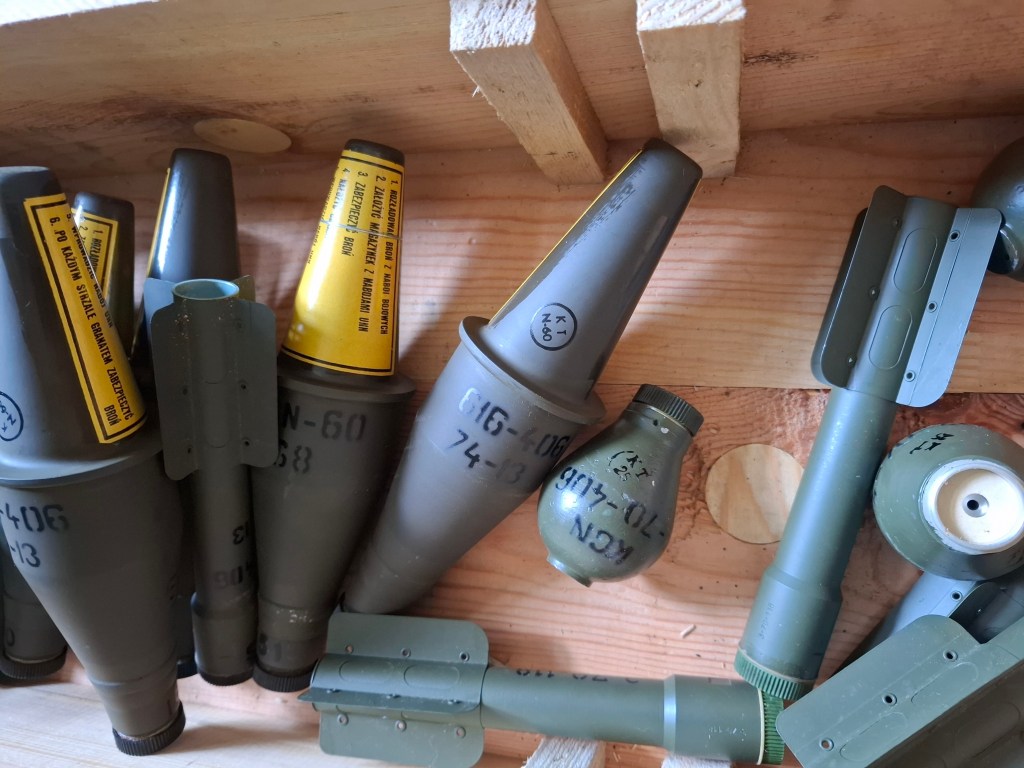
One example of the use of the rifle grenades by a drone team was shared by Joe McDonald, a British volunteer serving with the Ukrainian Marines in Kherson. Joe kindly shared some photos of a consignment of Polish rifle grenades his unit received in July. Included in the consignment were not only the PGN-60 HEAT grenades but also Polish KGN anti-personnel grenades. The first sighting of one of the KGN grenades came earlier, back in mid-April 2024. Sources suggest that the KGN grenades contain nearly 250 fragmentation pieces. One of Joe’s photograph shows 10 PGN-60s and five KGNs, along with their detached tail assemblies.
PGN-60 & KGN rifle grenades, July 2024 (Joe McDonald)
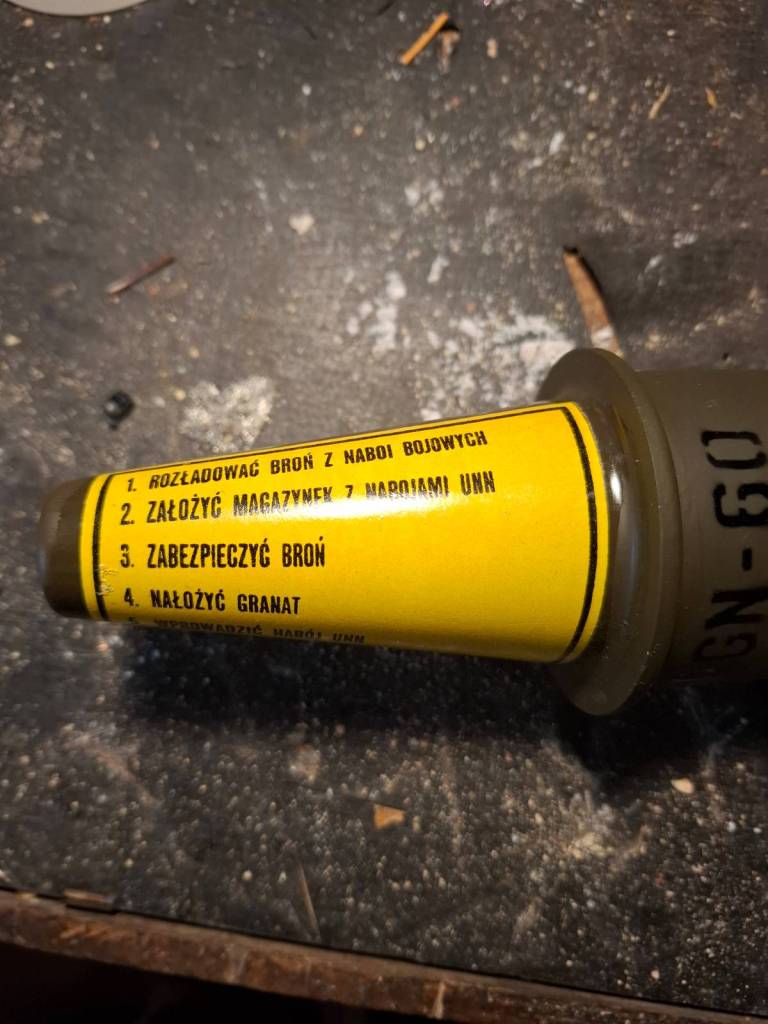
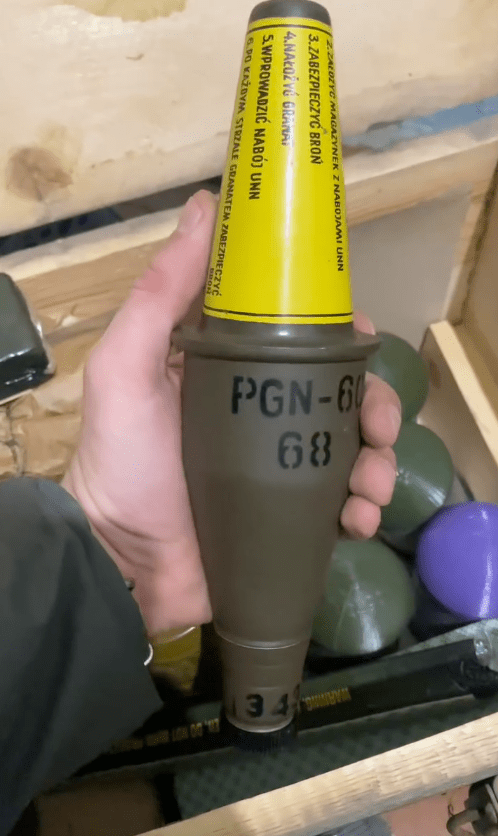
The yellow label markings are instructions on how to use the rifle grenade, they read [machine translated]:
Unload the rifle
Load magazine with propellant cartridges
Put the rifle on safe
Seat the grenade
Chamber a propellant cartridge
After each shot put the weapon on safe
Other markings include various factory, year and lot markings.
PGN-60 markings (Joe McDonald)
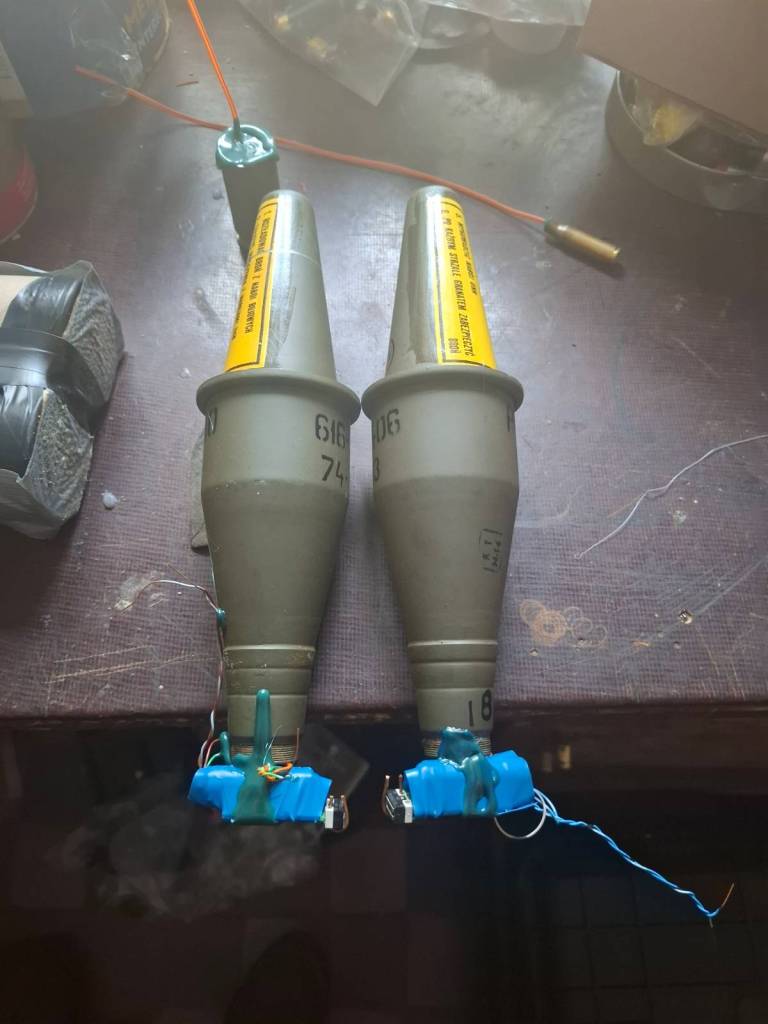
Joe noted that the KGN grenades have either been used as drone-dropped munitions or have been mounted on 7-inch first person view (FPV) drones in addition to a quantity of additional plastic explosive. Joe recently shared some video of five of the PGN-60 warheads electronically wired and ready for mounting on an FPV drone, these are some of the last of the grenades his unit received in July.
PGN-60 rifle grenades prepared for mounting on FPV drones (Joe McDonald)
The PGN-60s aren’t the only interesting rifle grenades to turn up. In September a photograph of a 1990-dated French 58mm PAB F2 anti-tank rifle grenade was shared. France may have provided them for their explosive content or to accompany the 1,000 FAMAS F1 Valorise rifles which have been transferred to Ukraine. Only one image of this type of rifle grenade has surface so far but from the image it appears it’s tail assembly has been removed and is likely to be utilised as part of an FPV.
It is currently unclear just how many Polish and French rifle grenades have been transferred to Ukraine. The imagery sample featured in this article/video represents all of the imagery I have been able to find. If you have come across any additional sightings of the grenades I’d love to hear from you.
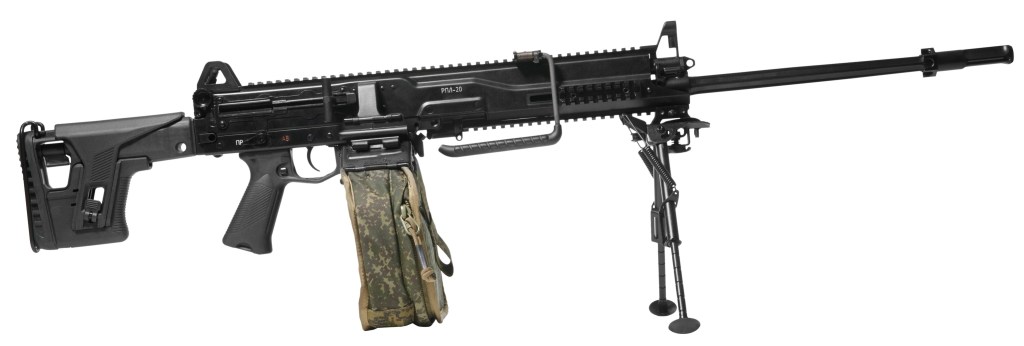
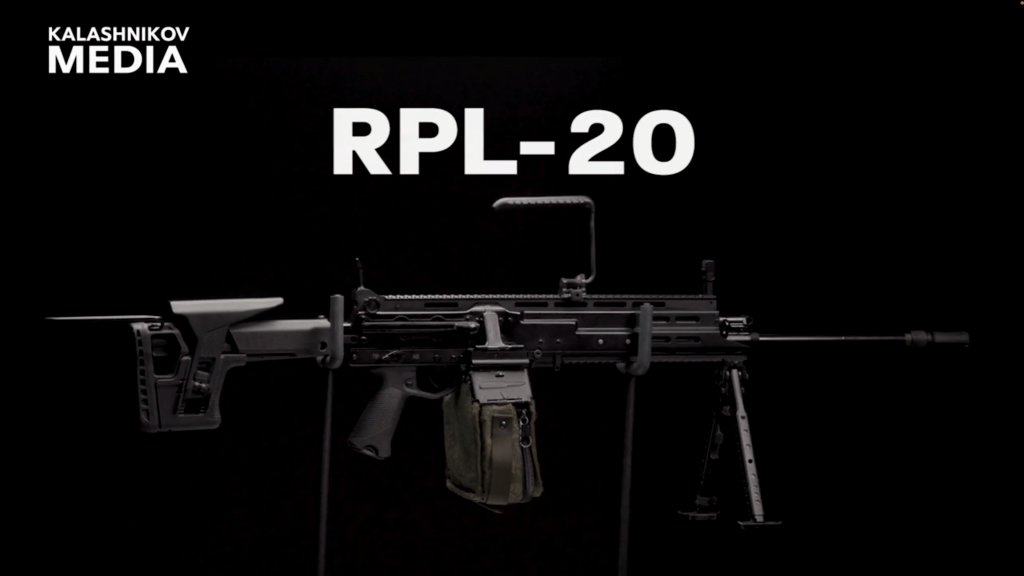
I’m excited to share this collaboration with firearms researcher Deni Almaskhanov, of Just Guns. Deni had the chance to attend the Army 2024 exposition in Moscow earlier this month. He has very kindly shared some great video and information about the latest version of Kalashnikov Concern’s RPL-20 light machine gun.
The RPL-20 at ARMY 2024 (Deni Almaskhanov)
The Russian armed forces haven’t used belt-fed LMGs since 1959 when the RPD was replaced by the RPK. The RPK-74M has been considered obsolescent since 2011. Kalashnikov Concern began exploring an RPK replacement in the 2010s with the RPK-16. The RPK-16 failed to satisfy the military due to issues with overheating and the reliability of its 96-rounds drum magazines. The RPL is a direct follow-up to the ‘Kipchak’ program during which the now extremely rare RPK-16 was trialed.
The RPL-20 was initially unveiled four years ago during the Army 2020 exposition but was stated to still be in development.
RPL-20 in its 2023 iteration (Kalashnikov Concern)
The RPL is a belt-fed light machine gun, chambered in 5.45×39mm, it feeds from metal non-disintegrating belts, carried in 100- or 200-rounds textile boxes, with a quick attach/detach mechanism. It fires from an open bolt but does not have a quick change barrel, although it is possible to replace the barrel during the disassembly of the weapon. This aligns the RPL with the simultaneously emerging Western concept of the light assault machine guns like the FN EVOLYS and the Knight’s Armament LAMG amongst others.
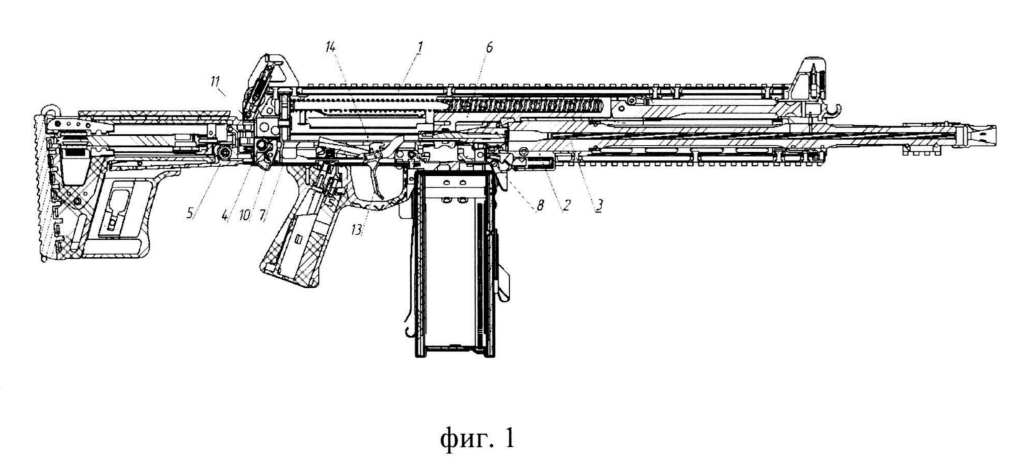
Russian patent diagram for the RPL-20 (Russian Patent Office)
Deni explains that the lower receiver is “fixed with a pin in the front end and a latch in the rear end… the latch is pressed, unlocking the pivoting movement of the lower receiver. Such a design was chosen to address the common requirement for all the modern firearms – a continuous top Picatinny rail that would allow for reliable mounting of accessories and aiming devices.” The receiver can be opened this way to reload, however, a faster and more expedient method of reloading the RPL-20 is to simply push a new belt through the firearm’s feed block and pulling the starter tab until the first round seats.
The RPL-20’s pistol grip and selector (Deni Almaskhanov)
The RPL-20 has a 2-position adjustable gas block mounted onto the barrel. Kalsashnikov Concern’s chief-designer Sergey Urzhumtsev describes the action of the machine gun as ‘an upside-down PKM’, but there are some important mechanical differences, such as the fact that the RPL-20 uses a push-through belt, unlike the PKM which pulls each cartridge backwards from the belt before chambering it.
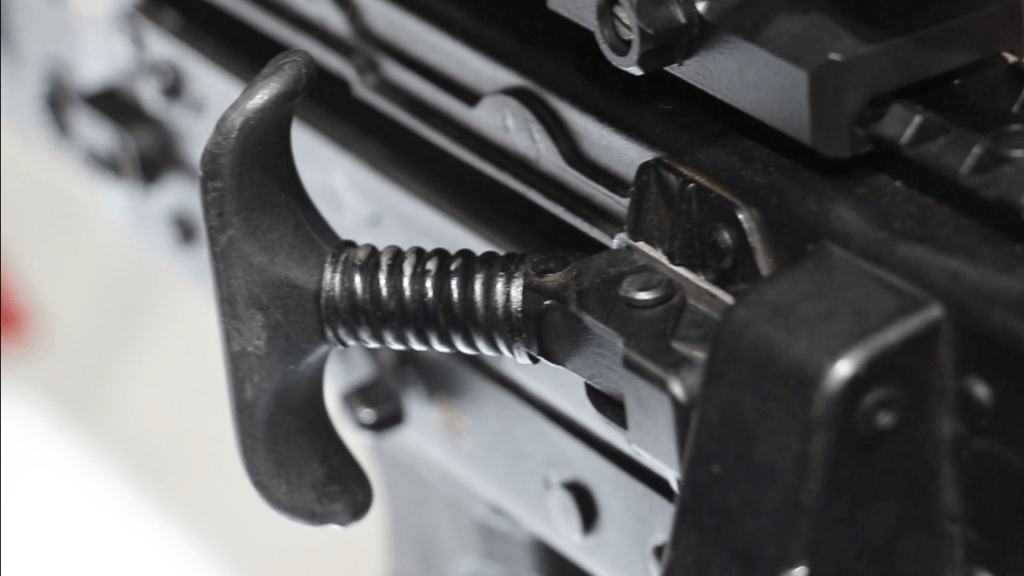
On the right side of the receiver, the RPL has a non-reciprocating T-shaped charging handle mounted onto a strong coil spring that is intended to prevent the charging handle from bending the weapon’s receiver or breaking the handle in the event of a heavy strike against it.
There are selector switches on both the left and right sides of the receiver only and the weapon fires in fully automatic fire only. The pistol grip and the buttstock are the same as those being also used on the 2nd and 3rd generations of the AK-12. The buttstock differs slightly in that it has an adjustable cheek rest and a foldable shoulder rest that can be flipped up over the shoulder. The gun on display was also seen with a cant-adjustable vertical front grip attached to the 6 o’clock rail.
The RPL-20’s charging handle (Deni Almaskhanov)
There is a small Picatinny rail at the muzzle end of the barrel intended for attaching the bipod in the forward position. With an alternate position on the handguard giving the user some tactical flexibility. The handguard is not a separate piece but a continuation of the upper receiver and it is connected to the barrel via the gas block. The weapon has a threaded muzzle device to allow the fitting of suppressors.
There are some notable external changes from the earlier iteration of the RPL. The weapon now has fixed front and rear sight protectors rather than folding iron sights. It also has some changes to the receiver geometry with the receiver no longer having a step but a slope ahead of the breech and more, angled, ventilation holes in the receiver.
RPL-20 as introduced in 2020 (Kalashnikov Concern)
The RPL-20 is reportedly undergoing state trials this year, so its remains to be seen if the light assault machine gun concept is one which the Russian MoD wishes to pursue. The nature of the war in Ukraine means that urban fighting and trench clearing have become increasingly important, perhaps this is a niche into which the RPL would fit.
My special thanks again to Deni for sharing this brilliant footage and information with me so I can bring you guys this video. Please do check out Deni’s pages – Telegram, Instagram, Youtube.
Drones have come to define the war in Ukraine with both sides making prolific use of the them for observation and ordnance delivery. Both sides have struggled to find adequate countermeasures for the drone threat with everything from fishing nets to anti-drone guns and from cope cages to complex electronic warfare jammers to disrupt UAV frequencies over larger areas.
The threat to individual soldiers has become increasingly serious with many units resorting to pressing sporting shotguns into service. However, not every combatant can carry a shotgun and a number of companies, engineers and fabricators have turned their attention to providing soldiers with a cheap, mass manufacturable, and effective weapon which can be issued to individual soldiers en masse.
Loading the adapter into a GP-25 (via Ingra)
In this article/video we’ll look at one of these efforts from a Russian company Ingra (ИНГРА). Ingra have developed an adaptor that converts a GP-25, 40mm under barrel grenade launcher, into a single-shot 12ga shotgun. On 13 April, Ingra announced [machine translated]:
“Friends, the INGRA company has created a new, unparalleled device ROSYANKA [Sundew] for the destruction of quadrocopters. The testing stage has been completed. ROSYANKA changes the caliber of the underbarrel grenade launcher to fire a 12-gauge hunting cartridge with an effective range of 15-30 meters. The tests carried out showed the reliability, safety and efficiency of the device. We have reached the next stage, which is the production of a pre-production batch for testing by the troops. Our task is to fill the troops with the ROSYANKA product in a short time.“
Later the same day they shared their first videos demonstrating the adaptor in action. In the first video the adaptor is shown being loaded with a 12ga cartridge and then inserted into a GP-25, just as a grenade would be. A second short video shows the adapter being used to shoot down a commercial quadcopter drone.
A Rosyanka 12ga adapter and pouch (via Ingra)
On their telegram channel the company posted a pair of photographs showing targets shot with an adapter at 30 metres. They claim 5mm of penetration but do not mention the length of the adapter’s barrel. From one of the photographs Ingra shared it appears that the ROSYANKA was developed in three barrel lengths, estimated to range between 2 and 5 inches in length.
On around the 5 May, the company released a slicker video demonstrating the adapter. The design appears simple, it has interfaces that allow it to be loaded and held in the GP-25s barrel which align the cartridge, which is loaded into the adaptor’s breech, with the GP-25’s firing pin. To unload the adaptor it has to be released from the launcher by depressing the grenade release catch, then the spent case needs to be extracted from the adaptor and a new cartridge loaded. The video also shows that a rear sight adapter is fitted to aid aiming the weapon.
On the 10 May I spoke to one of the company’s representatives, before the adaptor had been launched on company’s website, he explained that would be available soon and that it would cost around 12,000 rubles ($130). On the 14 May, the adaptor was launched on Ingra’s website at a lower than expected cost of 9,300 Rubles or US$102. The adapter is currently listed as unavailable on Ingra’s website but posts on the company’s social media urge interested parties to contact them directly to order.
Firing on a commercial quadcopter drone during a range demonstration (via Ingra)
In a video, shared on the 13 May, Ingra demonstrated the operation of the adaptor and also noted that it is compatible with GP-25, GP-30 and GP-34 pattern grenade launchers. Ingra’s website provides some specifications and confirms that the adapter is only available in one barrel length, of the three previously shown. The adapter is 250mm/9.8in long and weighs in at 340g/12oz. The manufacturer states is has an effective range of between 15 and 35 metres (50-115 feet) against a target with a 500mm/19.6in cross section. The adaptor can be used with 2 3/4 and 3in loads and has a warranty for up to 100 rounds of the Siberia 32g No.3 12ga which is Ingra;s recommend load. The adaptor comes with instructions, a rear sight adapter and a small pouch.
On the 16 May, Ingra shared another range video featuring a Russian combatant trying out the Rosyanka adaptor against floating balloons. The adaptor is being used in a GP-25 mounted on an AKMS with a PBS-1 suppressor. The combatant testing the adaptor notes [his comments were machine translated] the importance of seating the cartridge fully in the breech and keeping your hands clear of the muzzle in case of accidental discharge. He suggests having the GP-25 on safe to avoid an accidental discharge, hinting that one may have occurred earlier. He also demonstrates using a rod to push the spent cartridge case out of the adaptor’s breech.
Now that the adaptors are available it remains to be seen if we and when we’ll see them in use in the field with Russian troops. The system is clearly well thought out, simple to manufacture and potentially fairly effective at under 40 metres. It adapts a readily available infantry weapon to a pressing new role and may also have some close quarter anti-personnel applications.
It undoubtedly provides the operator with a means of engaging a drone but it also has drawbacks. The reloading process is comparatively slow meaning that the user is likely to only have one chance to engage a drone if it is one of the faster FPV drones and is unlikely to otherwise match a conventional shotgun in terms of reload times when engaging drones engaged in munitions dropping or observation. It also means the grenadier has to choose what to have loaded ready in his GP-25 in various situations. The limited availability of underbarrel grenade launchers also means that, depending on the unit, only one soldier per squad will have the ability to use the adaptor.
Update – 20/06/24:
A Russian telegram channel posted several photos of a damaged adaptor, stating [machine translated]:
“The first test was not successful; during the first shot, the skirt of the cartridge was torn off (it remained in the GP25, the barrel itself jumped out of the GP and flew away 30 meters.”
It may be that the user loaded the adapter with a cartridge not recommended by the manufacturer.
Update – 11/7/24: Photographs of a production ROSYANKA disassembled showing the threads which allows the barrel piece to screw into the wider breech section.
Update – 27/4/25:
Here we have a GP25 in a DIY standalone stock loaded with a BRT shotgun insert which was developed to engage drones.
— Matthew Moss | The Armourer's Bench (@historicfirearm) April 27, 2025
Support Us: If you enjoyed this video and article please consider supporting our work here. We have some great perks available for Patreon Supporters – including early access to custom stickers and early access to videos! Thank you for your support!
In a recent article/video we looked at the proliferation of Russia’s unusual ‘Turtle Tanks’ which are protected by ad hoc, locally fabricated counter-FPV shells. Since then we’ve gotten a good look at several more Turtle Tanks and our first look at the driver’s point of view.
Footage, filmed on 27 April, of another Russian armoured assault into Krasnohorivka shows a column of four infantry fighting vehicles with what appear t o be counter-FPV shelters following a tank with a ‘cope cage’
On the 29 April, a Ukrainian Telegram channel posted a short video of a ‘Turtle Tank’ attack in the Bakhmut direction, noting that [machine translated]: “the equipment is stupidly scalded with metal, from 5 units it was possible to destroy a tank and an armored personnel carrier. A lot of FPV was spent on one tank. Everyone laughs at their construction of barns, but in fact they work like hell.” The tank appears to have a box like shelter with a sloped forward roof over its gun and glacis. As seen in earlier videos the tank is leading a column of armoured vehicles during the assault, clearing a path for them. It appears to detonate a mine with its mine plough and retreats.
At the start of May a pair of T-62s with hybrid counter-FPV shelters were seen in photos taken by a UAV, location unconfirmed. These images illustrate the blurring of the lines between ‘cope cage’ equipped tanks and the ‘turtle tanks’. Like the earlier turtle tanks they’re fitted with EW sets & KMT-6 mine ploughs but do not have shells made entirely from sheet metal. Instead, they appear to have used chainlink and gratings, one piece of which appears to have Kontakt (explosive reactive armour (ERA) mounted. One of the vehicles appears to have been used to transport supplies. One T-62 has broken tracks, the other top damage.
A hybrid combining elements of the Turtle Tank with that of earlier ‘cope cages’ (via social media)
Around the same time the Ukrainian 79th Air Assault Brigade shared video of Russian attacks near Novomykhailivka, in Donetsk, the footage included a brief clip of a ‘turtle tank’ with a small forward opening, camouflage over its shell frame and no sign of a mine plough or roller fitted. On 2 May, the 33rd Mechanized Brigade shared footage from thermal camera-equipped FPV drones showed a Russian tank being used to transport troops, the profile of the counter-FPV shelter is visible but the low definition of the thermal footage makes it difficult to analyse its construction. The vehicle, however, appears to be equipped with a mine plough and possibly an EW module.
Also on 2 May, Ukrainian drone fundraiser Teoyaomiquushared a video of a Russian assault near Ivanivske which shows a pair of Russian armoured vehicles with counter-FPV shells, one of which deploys a smoke screen. The 1st Assault Battalion of the 5th Separate Assault Brigade also shared footage from the Russian assault showing the shell-equipped vehicles.
On the 5 May a short video was posted by a Russian combatant which showed an entirely enclosed MT-LB with steel plates surrounding the top of the vehicle and its wheels. It also has an additional mesh roof cover to add additional top protection. Two cutouts in the side and one in the front for the driver also have mesh covers to give some visibility. On the same day video of a destroyed BTR-MDM which had been encased in a counter-FPV shelter was shared, showing the rear of the vehicle enclosed.
An evolved Turtle Tank with added cages on its superstructure (via social media)
Perhaps the most striking evolution of the ‘Turtle Tank’ appeared on 5 May, a tank completely enclosed except for a small gap at the front. Protective grills made from cages completely cover the outer metal sheets of the counter-FPV shell. One Russian telegram channel likened it to a rolling ‘poultry farm’. The vehicle also has a KMT-7 mine roller. Additional video of the porcupine-like tank gives us the first look at what it is like driving one of these ‘turtle tanks’, with his hatch open the driver has an almost clear view ahead (apart from the solid awning above him and the partial grill cage protection to his front) but no view to the left or right front quarters of the tank.
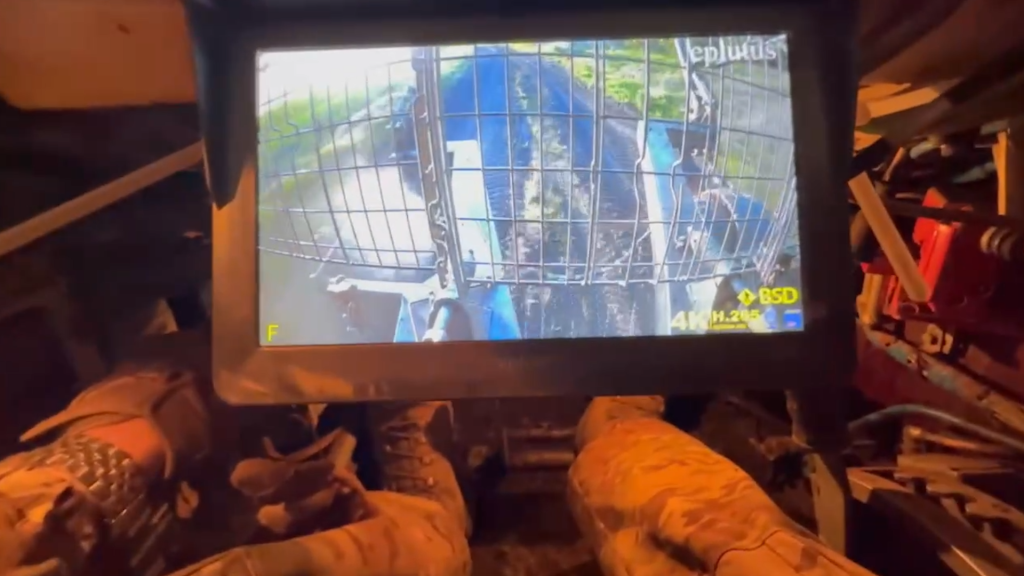
A Turtle Tank driver using a camera feed to steer (via social media)
Several days later footage from inside what appears to be the same tank shows the driver steering by video monitor. The readout on the monitor suggests the video’s resolution is 4K H.265 but the field of view appears limited, with the camera seemingly positioned on the shell’s awning looking down between the KMT-7’s two rollers. The system used is from Russian automotive accessory company Eplutus and appears to be one of their rear view camera monitors.
Another piece of UAV footage shows another ‘turtle tank’ with a much boxier shell. It again has all of the major features seen in earlier examples: a sheet metal shell which encloses most of the top part of tank, a set of mine rollers and a EW jammer module on the roof. Some sources suggest the footage was filmed near Bilohorivka, in Luhansk. It’s unclear when the footage was filmed but the vehicle appears stationary with access grates to the tank’s rear deck left open.
The 7 May saw evidence of the proliferation of t he ‘turtle tank’ concept with Russian social media sharing photographs of a ‘Turtle Tank’ fabricated by the Russian 40th Naval Infantry Brigade, these indicate that the concept is continuing to proliferated, perhaps without any central influence. The tank is encased in a counter-FPV shelter made up of three large metal sheets, a poorly fabricated angled roof which slopes at the rear with a flat top and a wire mesh slopping front piece. Additionally on the floor there appears to be a chair curtain similar to those seen on other ‘turtle tanks’. The rear has an extended deck and appears to be enclosed. A skirt of Kontakt-1 ERA has been roughly added around the skirt. As with other Turtle Tanks the ‘V Turtle’ is equipped with what appears to be an RP-377 electronic warfare jammer. It also has a KMT-6 mine plough fitted. A large white V has been painted on the sides of the shell and Russian flag rings added to the barrel.
A Turtle Tank built by the 40th Naval Infantry Brigade (via social media)
On 10 May, footage of an FPV drone attacking an immobilised ‘turtle tank’ emerged. The tank is again enclosed by a counter-FPV shell and has a mine plough. The feed from the drone also suffers from some interference as it approaches the vehicle suggesting that an EW module may be present nearby, perhaps aboard the tank. However, it appears that a mine has damaged the tank’s tracks and the vehicle has been abandoned allowing an FPV to attack via an open rear hatch. The footage was reportedly filmed during the first day of the new Russian offensive towards Kharkiv. This again shows that not only is the concept proliferating but also that the ‘turtle tanks’ are still vulnerable to conventional anti-tank weapons like mines.
Also on the 10 May, the Russian military channel, Large Caliber Trouble, shared a photo of the porcupine turtle tank which had been damaged by FPV strikes showing the cage bars bent and some holes in the counter-FPV shell. The post claims that the tank was “attacked by 40 kamikazes, [but] thanks to electronic warfare, most of them fell and only 8 FPVs were able to cause damage.” The condition of the vehicle after the engagement is unknown. The suggestion that a large number of FPVs attacked the tank supports the earlier Ukrainian comments about ‘a lot of FPV [being] spent on one tank.’
A ‘turtle tank’, possibly a T-80, seen on the eastern front on the first day of the Russian Kharkiv offensive (via social media)
A key question is how can the Turtle Tanks be defeated? Basically just like any other tank can be: anti-tank guided missiles with tandem warheads, dense mines belts, direct hits by artillery, use of multiple FPV drones to damage and breach the shell with additional drones to exploit gaps made.
We will probably see further proliferation of the ‘turtle tanks’ in coming weeks but with time the Ukrainians will probably find ways to engage these protected tanks more effectively, as is so common in war there will probably be a continued evolution of measure and counter-measure.
Update – 13/5/24:
On the 8 May photos of a Russian T-72B3 being fitted with a counter-FPV shell were posted. OSINT account Naalsionoted that while the tank had tactical markings denoting the 68th Guards Tank Regiment, 150th Motorised Rifle Division, 8th Guards Combined Arms Army, Southern Military District, the original Telegram post said that the work was carried out by the 104th Separate Tank Battalion of the 7th Guards Airborne Assault Division. In the photos we can see the assembly of a frame projecting from the tank’s sides with slightly angled sheet metal being welded to the sides.
Ukraine’s Presidential Brigade shared some FPV footage of what may be another ‘Turtle Tank’ near Vuhledar. The resolution of the footage is low but the vehicle appears to have an EW module on top of its counter-FPV shell. Its unclear if the shell is solid sheet metal or if its is a mesh screen which covers the top part of the vehicle and has been shrouded in camouflage netting.
On 13 May, photographs of a T-80U with shell were shared with at least some of the work seemingly being completed in the field with a welder hooked up to a generator. The outer framework of the shell is visible and the sheet metal used seems to be well rusted. Markings visible may suggest the tank belongs to the 3rd Motor Rifle Division’s 752nd Motor Rifle Regiment.
Also on the 13 May, the 3rd Assault Brigade claimed that the 3rd along with the 66th Mechanized, and 77th Airmobile Brigades had engaged Russian forces on the Kharkiv front and struck a ‘turtle tank’ with FPVs.
Footage of what may be the ‘turtle tank’ which was immobilised during the initial assaults on the Kharkiv front shows the shell badly damaged and its left-side track lost its KMT-6 mine plough is still present however.
The clearest imagery of of a knocked out ‘turtle tank’ which has appeared so far also emerged on 13 May. Three images taken by an observation drone show a T-62 which shares a numerous construction characteristics with the earlier ‘porcupine turtle’ seen on 5 May. It has similar protective grills made from cages completely cover the outer metal sheets of the counter-FPV shell. However, its rear is not enclosed by sheet metal but a combination of sheets and grating.
The tank doesn’t have any visible electronic warfare equipment but is fitted with what appears to be a BTU-55 dozer blade mounting point (H/T – Ross) which is no longer present and not visible in the available imagery (although what appears to be a KMT-6 mine plough can be seen on the ground behind the tank). The tank is clearly has signs of fire damage along its side and rear and the front portion of its shell as been blown inwards and warped, cause unclear though it may have been an artillery strike, ATGM hit or an FPV. Intriguingly, inside the shell appears to be an earlier pre-existing ‘cope cage’ shelter on the turret which does not not a part of the outer shell structure.
Update – 14/5/24:
Further examples of tanks equipped with counter-FPV shells, which both sides increasingly refer to as ‘сарай’ or sheds. Drone footage of a Russian T-72B3 equipped with a ‘shed’ was shared early on 14 May showing the vehicle on fire, with smoke billowing from its roof, and under attack by FPVs. The footage has reportedly been geo-located to Novovodyanoe, in the Luhansk region. Again the shell is made up of sheet metal with a rear hatch and an additional mesh roof screen. The tank has a broken track and one shot from the footage appears to show the vehicle surrounded by TM-62 anti-tank mines suggesting the vehicle entered a mine field. The vehicle does not appear to be fitted with a mine plough or roller.
Additionally imagery of another T-62-based ‘turtle tank’ were also shared, date and location unknown, but the now standard construction of a rough internal framework made from box metal and then sheet metal welded onto the frame. From the photos it appears it may be fitted with a mine plough. Only one side of the shell has been completed but there is also a small ladder welded onto the frame at the rear for access to the engine deck. Intriguingly, we can also see that the frame itself has been welded to the tank’s turret with two angled struts meaning that the tanks turret cannot be traversed at all.
Update – 15/5/24:
On the 14 May, footage of another knocked out ‘turtle tank’ emerged showing a burning tank near Andriivka in Donestsk. The tank appears to have been part of an armoured assault which may have been halted by artillery fire. The tank appears to be a T-62 fitted with KMT-6 mine plough. The vehicle is on fire with a significant portion of its shell blown off on its right side. The video also shows an FPV drone striking the tank from the rear.
On the evening of 14 May, the 79th Air Assault Brigade shared video of another Russian attack in Novomykhailivka, in Donetsk. This showed several intriguing vehicles including a hybrid-turtle which had a layer of tyres under some cage armour and a camouflage net. [Additional footage here] Another brief shot showed a tank, with no visible main gun, moving across open ground. It is equipped with a KMT-7 mine roller and a counter-FPV shell/shed which is open fronted with no additional protection such as a chain curtain or wire cages. It appears the assault was met with both artillery and FPVs.
On the 15th observation drone footage was shared of a badly damaged, burning ‘turtle tank’ which was destroyed by the Ukrainian 72nd brigade during a Russian attack in the Vuhledar sector. The date of the engagement is unconfirmed but the video shows the vehicle being destroyed in a spectacular explosion, likely due to a cook-off of ammunition.
On the 15 May another image of a converted T-72 in Donetsk emerged. Visible in the photo is a sheet metal counter-FPV shelter equipped with a layer of outer wire cages. A KMT-6 mine plough is fitted and a chain curtain protects the turret while providing decent visibility for the tank’s frontal arc. Additionally a commercial surveillence camera has been attatched to the roof of the shell. An АЕК-902 smoke discharger is attached to the top of the shell and ERA blocks have been attached to the skirt and then enclosed partially by a wire screen.
Support Us: If you enjoyed this video and article please consider supporting our work here. We have some great perks available for Patreon Supporters – including early access to custom stickers and early access to videos! Thank you for your support!













 The Armourers Bench
