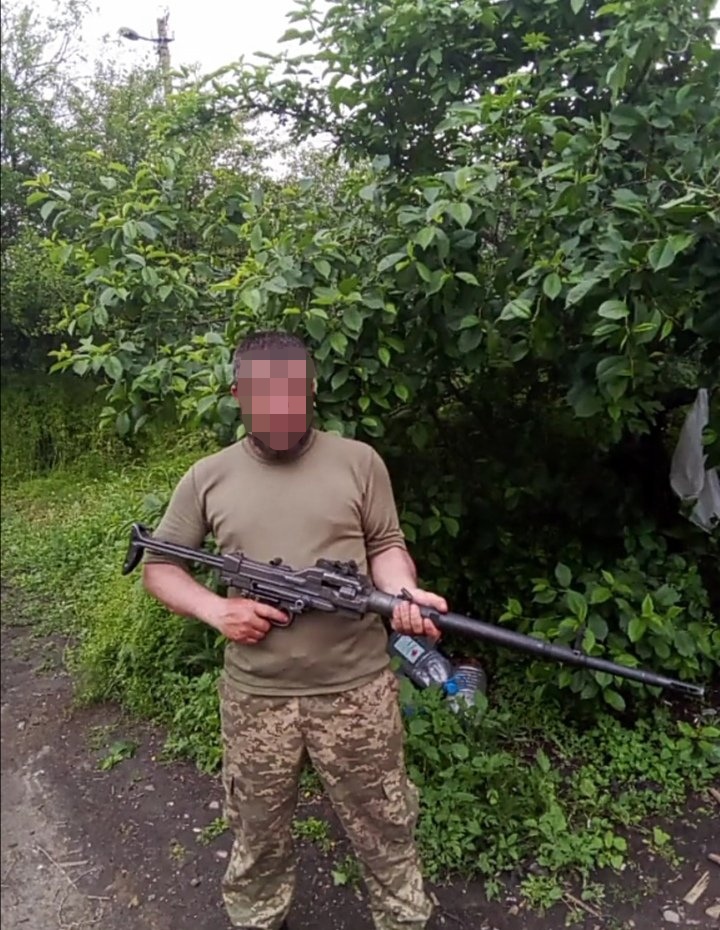
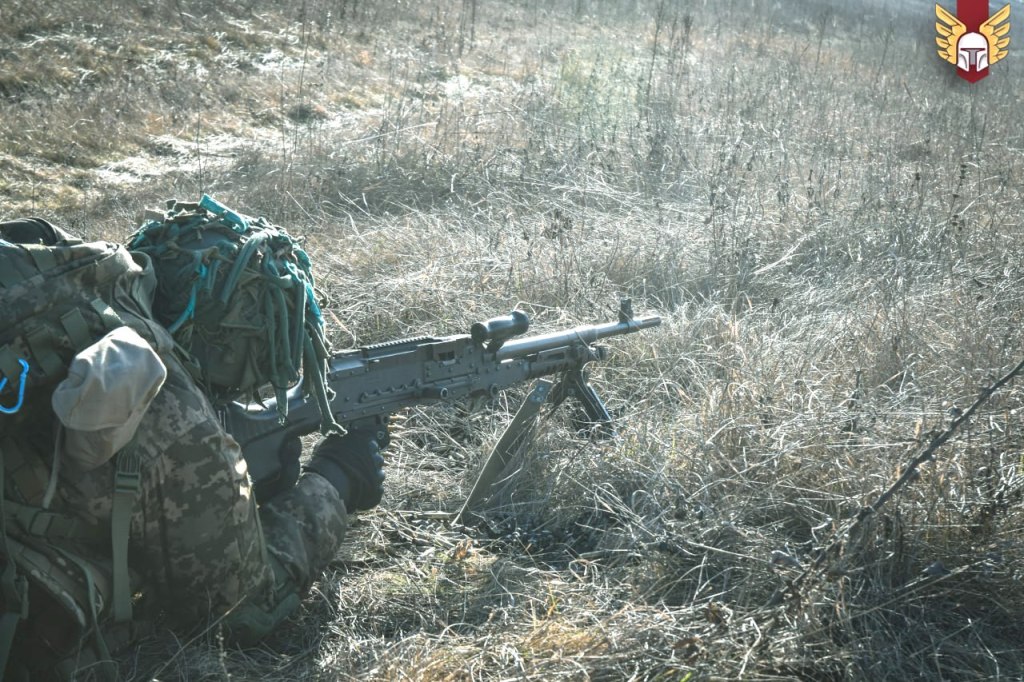
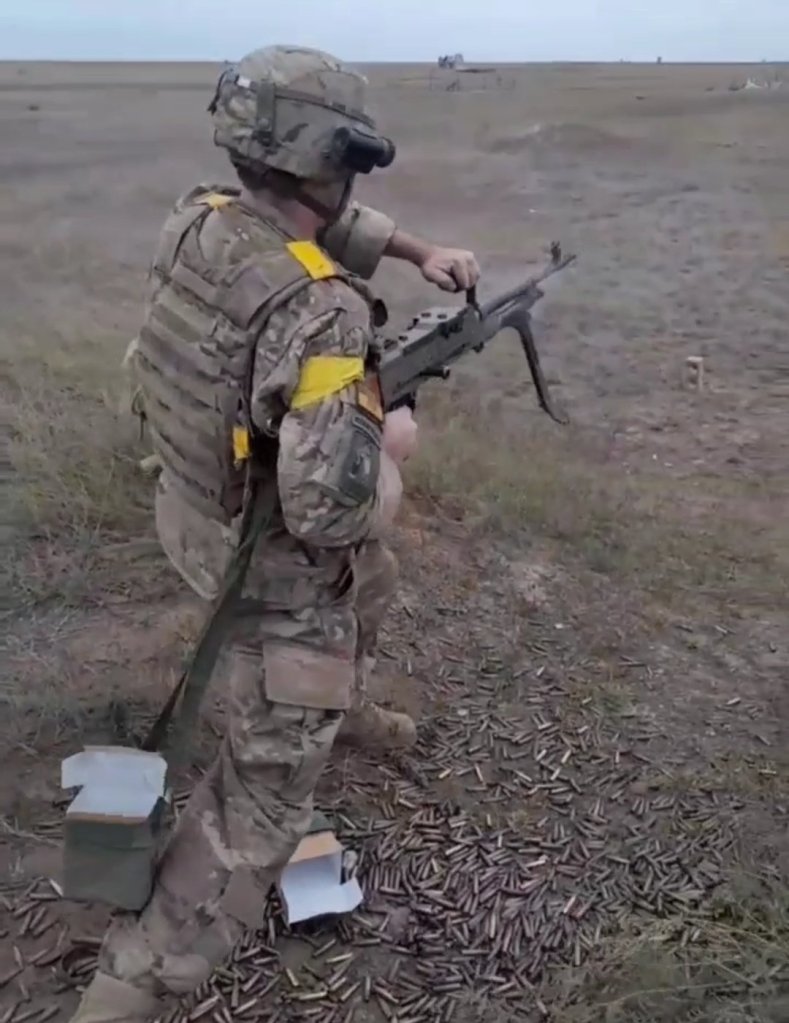
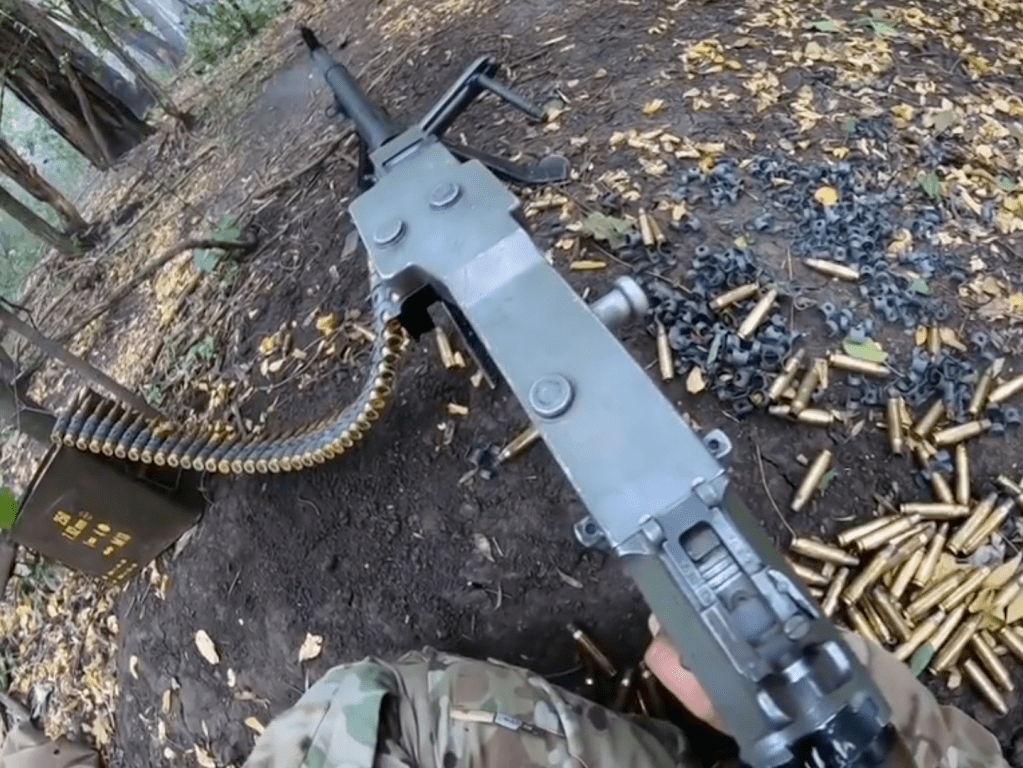
Small Arms of the 2025 Thai-Cambodia Border Clash

On 24 July the ongoing border dispute between Cambodia and Thailand flared into an armed conflict. Four days later a ceasefire was announced following negotiations, at the time of publication the ceasefire is still in effect. A number of photos and video taken during the fighting were shared online and they feature an interesting mix of small arms which I thought would be a good topic for an article/video.

Broadly speaking the Royal Thai Army is predominantly equipped with what could be described as Western small arms such a M16-pattern rifles and FN MAGs while the Royal Cambodian Army largely uses former Combloc-type weapons such as the Type 56 AK-pattern rifle and the Type 69 RPG, both produced by China.

Thai Armed Forces

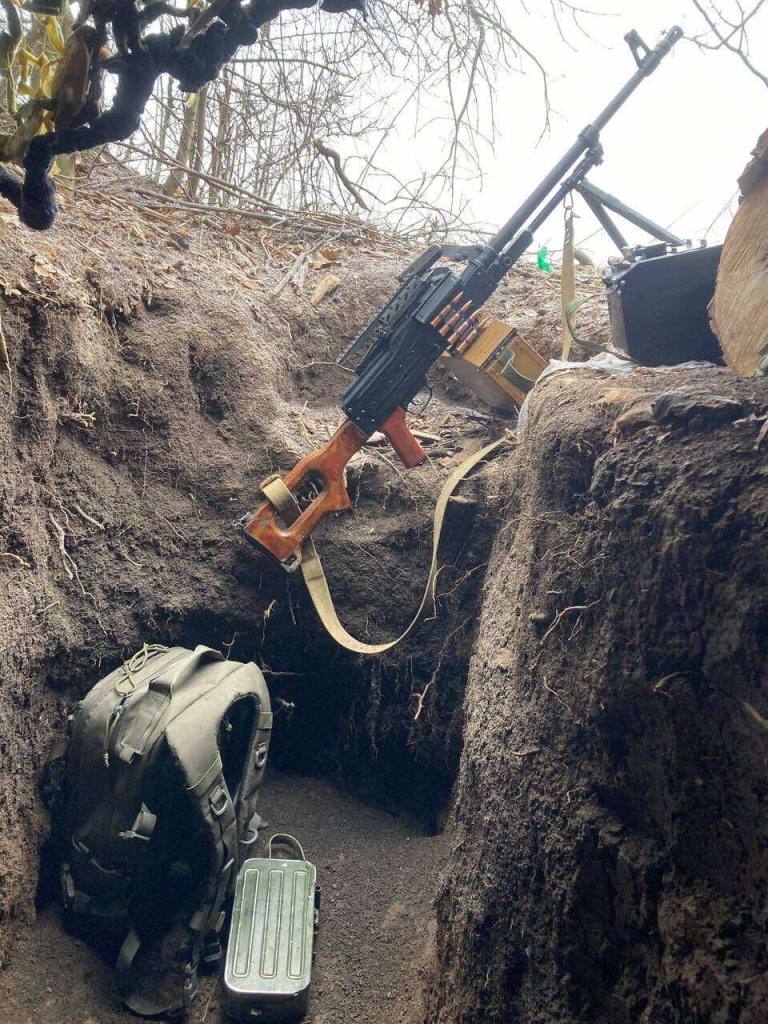
The standard issue service rifle of the Royal Thai Army for many years has been the M16, many of the combatants seen in imagery from the conflict were seen with M16A1, A2 and A4s. In a prominent video that surfaced on 26 July, a Thai combatant was filmed firing an M203 40mm grenade launcher mounted on a very well worn M16A1. A number of M16A1s, including one mounted with an M203, were also seen in a photograph of a group of Thai troops believed to be Thahan Phran (Border Rangers). The photo also shows at least one FN MAG general purpose machine gun. Another photo shared on 28 July by a member of the Thahan Phran showed a dug out in the front lines with two M16A1s and a RPD-pattern light machine gun visible. A video posted after the ceasefire showed a squad of the Border Rangers firing M16A1s from what appears to be a cave.
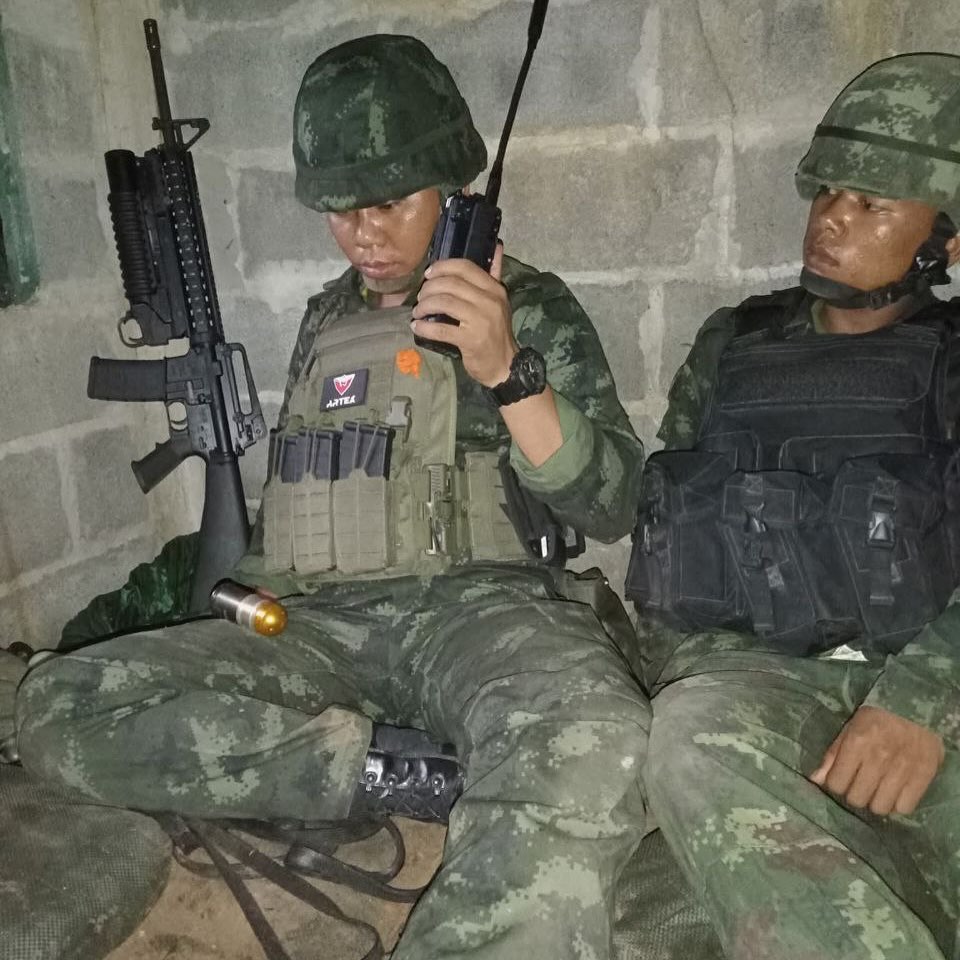
Thai combatant with M16A4 & M203 (via social media)

Members of a Thai 120mm mortar crew were also seen equipped with slung M16A2s, loaded with PMAGS, in a short video said to be filmed during the border clashes. It is worth noting that a considerable amount of imagery and footage filmed during past skirmishes and past exercises was shared during the height of the conflict. This is something to bear in mind when considering the veracity of imagery.
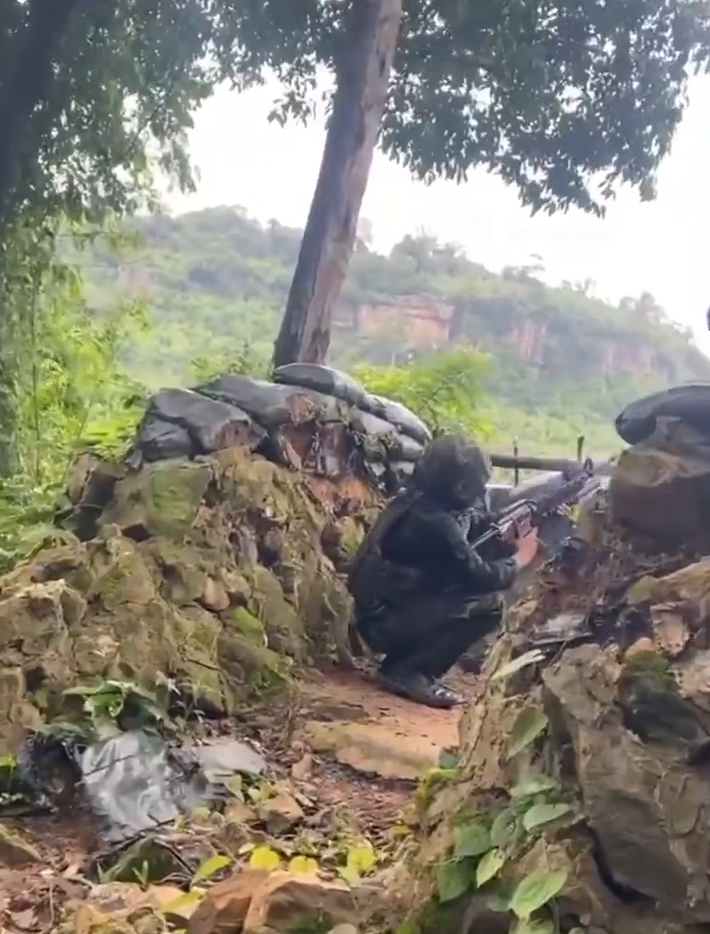
Thai combatant with an older M16A1 & M203 (via social media)

A considerable proportion of the available imagery shows what appear to be M16A4s with non-railed, A2-style, handguards. Numerous photos of Thai infantry posing at border markers shows them equipped with M16A4s while a video of Thai combatants taking shelter during Cambodian shelling on 25 July also featured M16A4s.

What appears to be an M16A4, with a quad-rail forend, was seen in another clip of Thai troops firing from a bunker. The rifle is equipped with an 40mm M203 under-barrel grenade launcher, another soldier hands the grenadier what looks to be an M433 HEDP grenade. On the other side of the bunker a soldier with an M16A2 is laying down suppressive fire and also showering the grenadier with spent brass. On the bunker’s embrasure another M16 is sat, seemingly with a non-railed forend but a railed upper receiver. An additional photo of the same personnel was also shared.
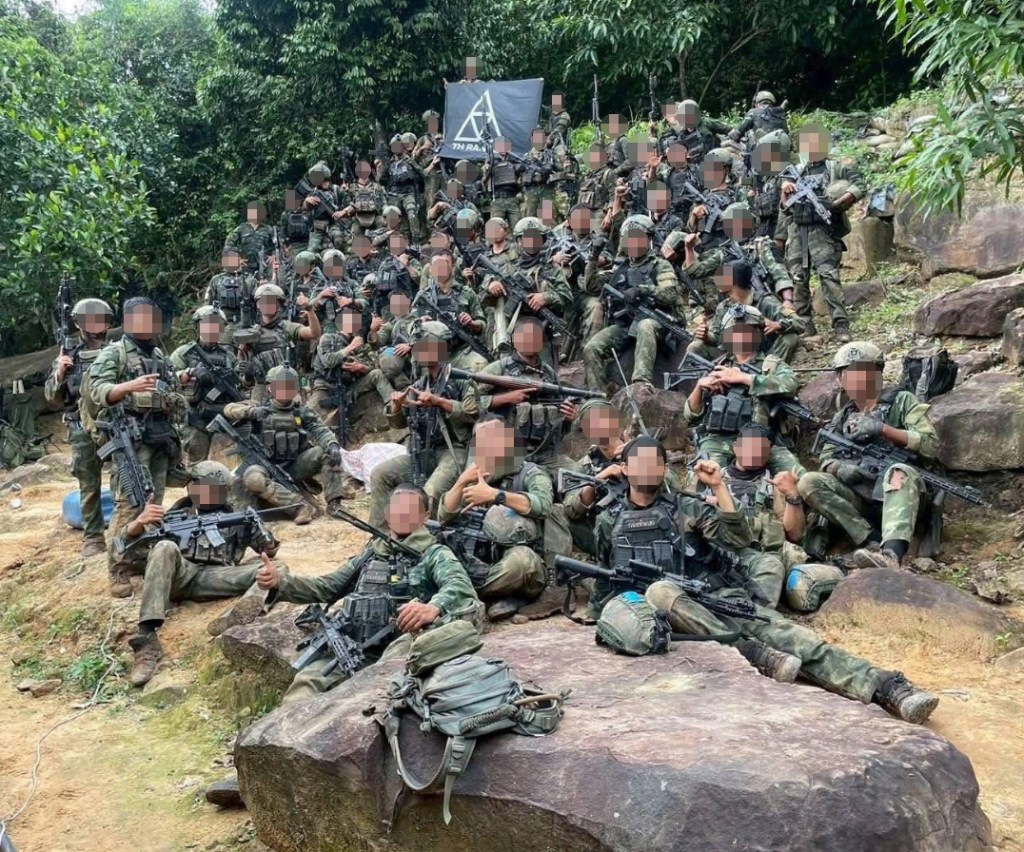
Thai Rangers arms with a mix of Colt M4s and Negev NG-5s (via social media)

M4-pattern carbines have also been seen, with Thai forces engaged in operations around Phu Makhuea, in Si Sa Ket Province, seen in various photos, to have what may be Colt M4 Monolithic carbines. These rifles are believed to be largely used by specialised troops. Another photo said to be taken at Phu Makhuea shows a platoon of well equipped Thai troops believed to be Thai Rangers – a special operations light infantry unit. They are equipped with what appear to be Colt M5s with 14.5 inch barrels, topped with Aimpoint CompM4s. Also seen in the photo are at least three IWI NEGEV NG-5, also equipped with Aimpoint CompM4s. A video showing the same group during a flag raising was also shared online. In the footage we can see the Colt M5s as well as an FN MAG. A photo released later gives us the best look at the Rangers kit, in contrast to the modern Western kit, in the centre of the photo is a Chinese Type 69 RPG, its unclear if this was Ranger kit or a captured weapon.

On the 26 July, the Royal Thai Army’s social media channels shared photos of sappers from the Burapha Task Force, the 1st Army Area. These personnel are seen to be equipped with the ubiquitous M16A2-pattern rifles but also IWI TAR-21 Tavors topped with Meprolight M21s. The Tavor was also seen in a short video said to be Thai troops deploying to the border. In the same video three FN Minimi Mk1 light machine guns and numerous M16-pattern rifles can be seen.
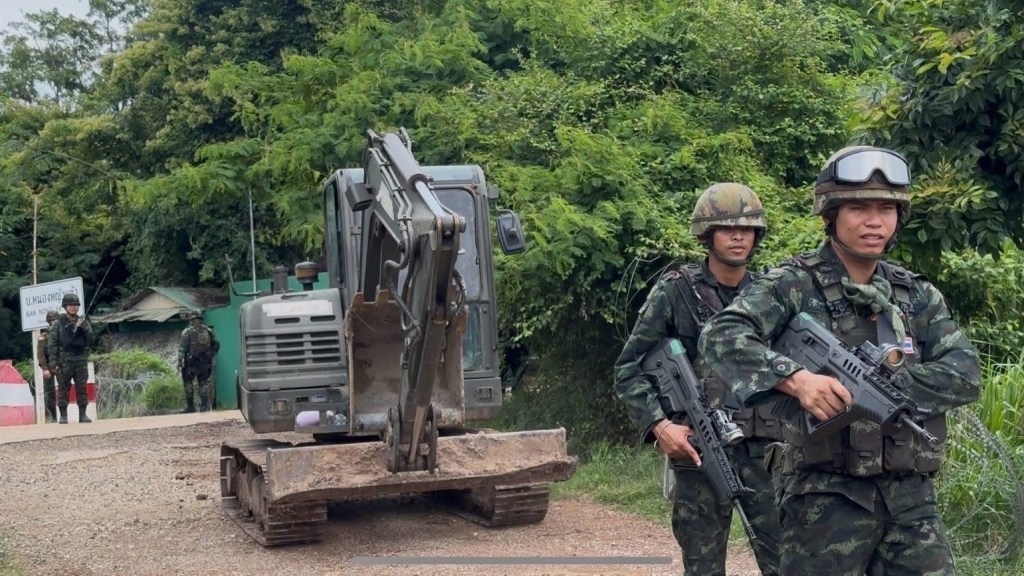
Thai Army engineers with TAR-21s (via Thai Army)

Another NEGEV NG-5 was seen in a video shared on 25 July, the gun is seen firing inside a bunker alongside an assistant gunner with what appears to be an M16A2. In addition to the Tavor and NEGEV, another weapon of Israeli origin seen in use during the conflict was a 7.62x51mm IWI Galil Sniper rifle. A Thai combatant was filmed firing on of these rifles while also using his radio to call in targets.

A brief clip of a Thai soldier firing what may be an STK-40 automatic grenade launcher also emerged. The STK-40 is produced by ST Engineering Land Systems (formerly CIS) the crew suffer a stoppage and struggle to clear it after firing an initial burst.
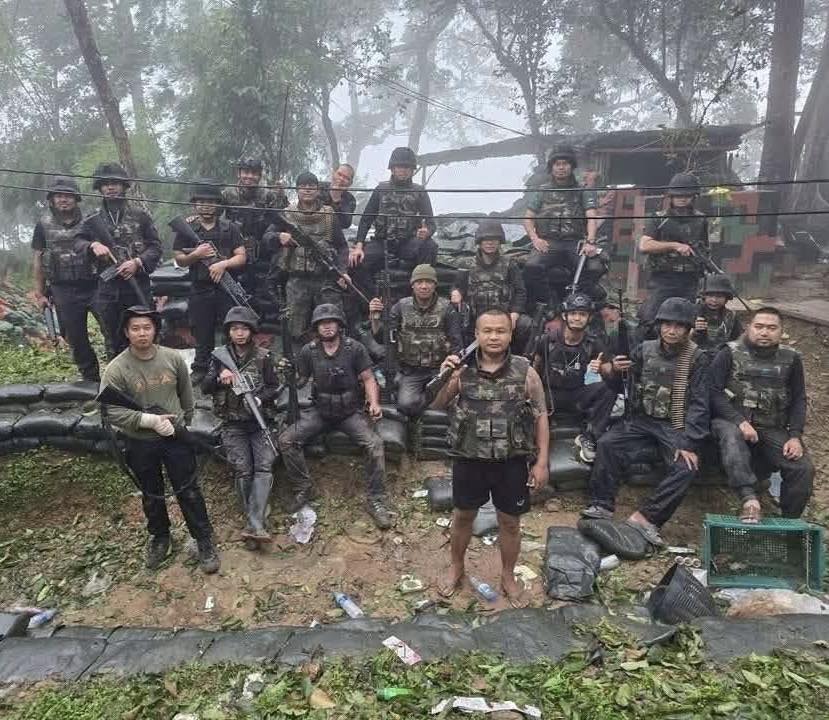
Thai Border Rangers with M16A1s (via social media)

Intriguingly, in another video a pair of Thai troops are seen operating a Chinese-made 82mm PW-78 recoilless gun. Thai troops have also been seen carrying RPG-7 grenades, indicating continued RPG-7 or Chinese Type 69 use in some units. This video also features another M16A1 with M203 and an FN MAG machine gun.

Cambodian Armed Forces

The Royal Cambodian Armed Forces also fielded an interesting selection of small arms and light weapons. Most troops were seen armed with variants of the Chinese-manufactured Type 56 AK-pattern rifle. This includes standard Type 56s with their fixed wooden stocks, under-folding Type 56-1s and side-folding Type 56-2s.
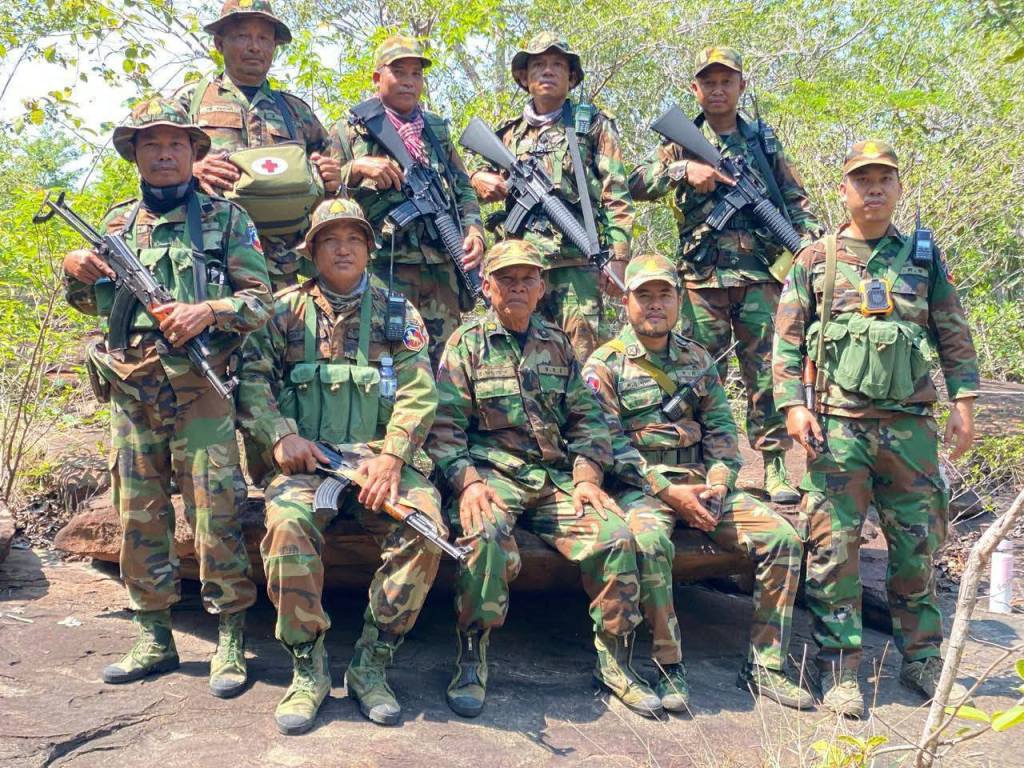
Cambodian border troops with a mix of Chinese Type 56s and Norinco CQ-B rifles (via social media)

A Type 56-1, with its under-folding stock, is clearly seen in a short video shared by a Cambodian infantryman who filmed himself in a trench position. It was also seen in numerous videos of Cambodian artillery crews manning MLRSs. Cambodian troops on the border were also seen armed with both Type 56-1s and Type 56-2s equipped with Norinco LG2 under-barrel grenade launchers. Type 56-2s were also seen briefly in a video filmed from a Cambodian PKM machine gun position on 26 July.
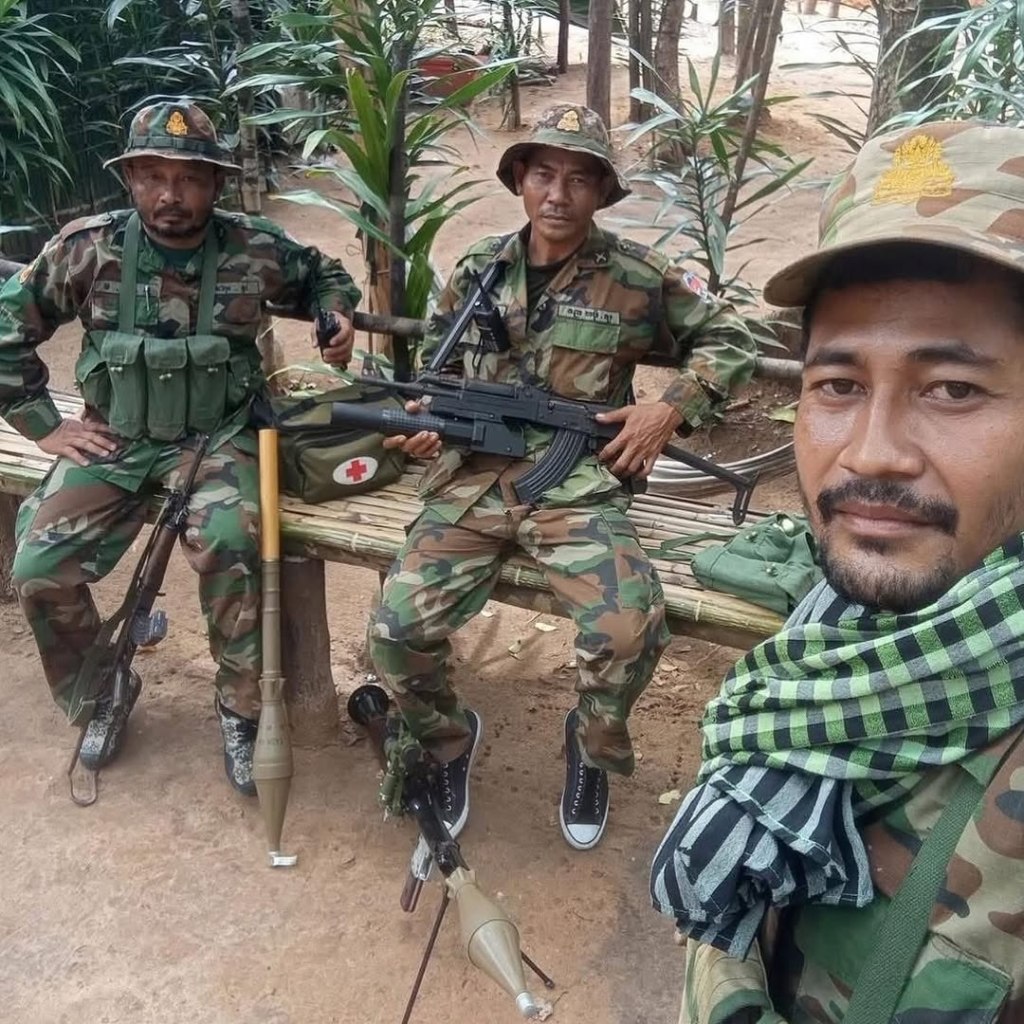
Cambodian troops wuth Chinese Type 56s (one with an LG2 UBGL) (via social media)

M16-pattern rifles have also been seen in use with Cambodian forces with Chinese-produced Norinco CQ series rifles seen in numerous images. A Thai social media page shared a series of photographs of Cambodian troops taken at the start of July. The photos show the Cambodian personnel equipped with a mix of brand new CQ-B rifles, Type 56-1s and Type 56-2s. The new Norinco-manufactured CQ-B is essentially a copy of the M16A3, was seen in numerous photographs and in one image a Cambodian soldier has mounted a magnified optic to the upper receiver rail.
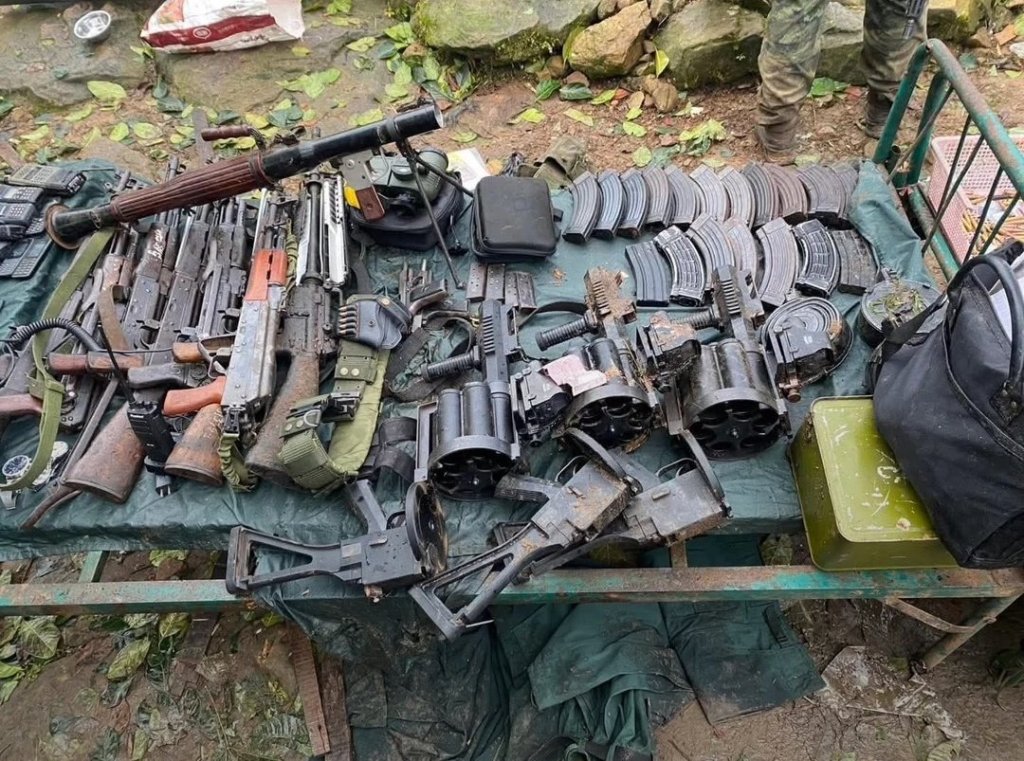
Cambodia weapons reportedly captured by Thai forces (via social media)

Also seen in one of the early July photos are Norinco LG4 rotary manual grenade launchers these are also seen in a number of images and videos from the conflict. A video posted by Cambodian troops on the border, on the 24 July, shows one combatant with an LG4 and another with a Type 69 RPG. In another photo dating from around the 25 July, a Cambodian soldier is seen with an LG4 and a pair of binoculars.

Five LG4s were seen in a photograph of arms and equipment reportedly captured by Thai troops. Other equipment in the photo includes: two Type 56s, 2 Type 56-1s and a Type 56-2. Several TT-33 pattern pistols are visible alongside what is likely a Norinco CQ-B and a Type 69 RPG.

Cambodian combatant with a Type 81 LMG (via social media)

Cambodian troops were seen with significant numbers of Type 69 RPGs. In one widely shared video a Cambodian soldier is seen firing a Type 69 from the cover of a trench position. In another video of the same soldier he is seen firing a Type 81 7.62×39mm light machine gun, loaded with a drum magazine, before again firing a Type 69. A third video of what may be the same machine gunner gives us a longer look at the Type 81 in action. In another short video Chinese-produced PF69-40 high-explosive incendiary RPG projectiles for the Type 69 were seen. Another clip shows a Cambodian soldier firing a Type 69 near a PKM-pattern machine gun position, its difficult to be certain but the gun may be a Chinese Type 80 PKM-clone. Another PKM-pattern gun and a pair of Type 69s were seen in a video filmed in a Cambodian position on 24 July. Next to the Type 69s is a row of readied ammunition.
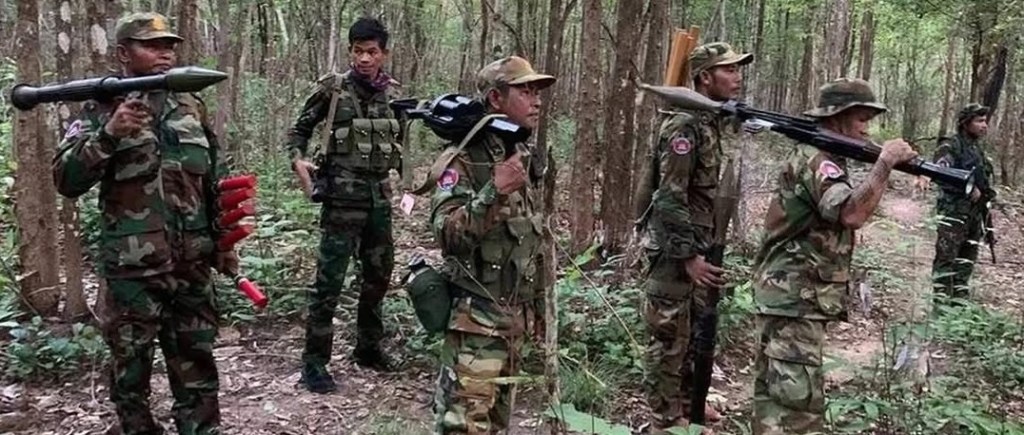
Cambodian troops with Type 69 RPGs & an LG4 (via social media)

In terms of heavier support weapons footage said to have been filmed on the 25 July, showed Cambodian troops in a defensive position blind-firing a Chinese-made W85-QJC-88 12.7mm heavy machine gun. While a photo posted by a Cambodian combatant on 25 July appears to include a B-10 or Type 65 82mm recoilless rifle.

The available imagery from the brief conflict shows a fascinatingly varied and contrasting selection of small arms and light weapons.


Support Us: If you enjoyed this video and article please consider supporting our work here. We have some great perks available for Patreon Supporters – including early access to custom stickers and early access to videos! You can also find us on the History of Weapons & War app. Thank you for your support!
Making Belt Boxes For Ukraine’s Machine Guns

Earlier this month Popular Mechanics published an article I wrote about GRaft, a Ukrainian company which has manufactured belt boxes for almost every type of machine gun being used by the Ukrainian armed forces.

While belt boxes might not seem like the most exciting pieces of military equipment, they’re no less vital than the guns they’re paired with; the boxes are essential for storing and carrying ready-to-use belts of linked ammunition, and they allow machine gunners to move around unencumbered by hanging belts that can become tangled.

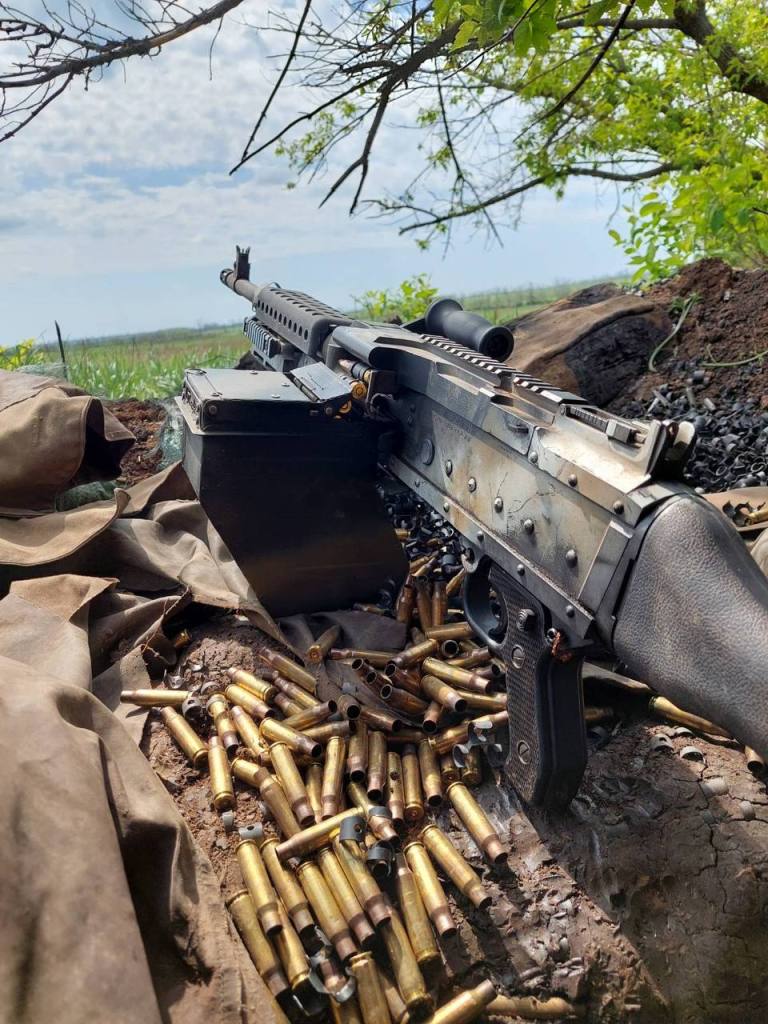
M240 GPMG with GRaft 100-round belt box (GRaft)

GRaft initially designed and manufactured furniture including benches and tables but with the full-scale Russian invasion in February 2022, they have since turned their attention and skills to belt boxes. With machine guns being transferred to Ukraine by a plethora of different countries this has led to a wide variety of machine guns entering service with the Ukrainian armed forces. In many cases the machine guns transferred to Ukraine are often without enough belt boxes.

I spoke to one of GRaft’s engineers who explained that their impetus to begin designing and manufacturing belt boxes came from friends’ experience with old boxes for PK-pattern machine guns. He explained that the old aluminium PK boxes had seen decades of service and there was a general shortage of them.

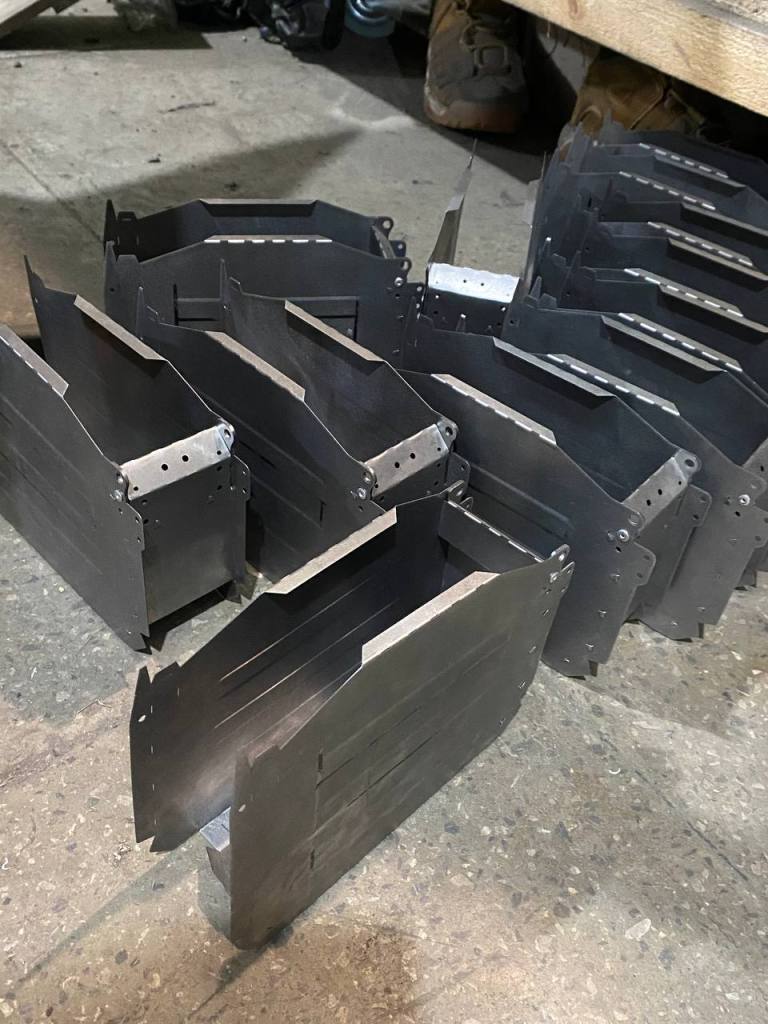
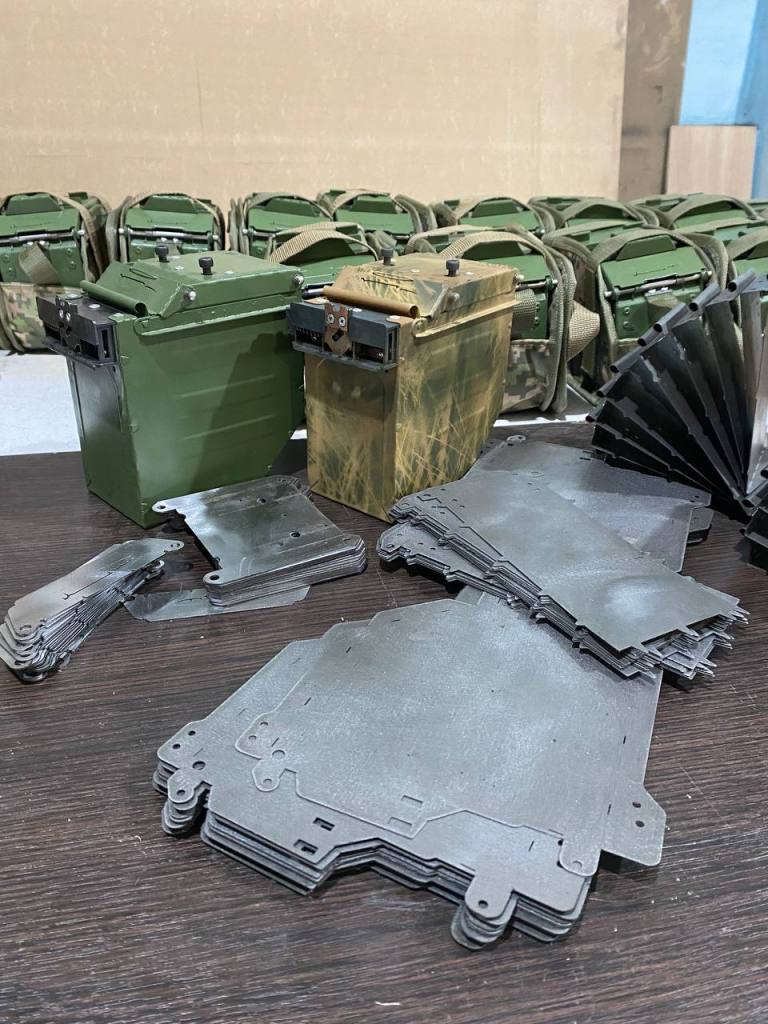
GRaft belt boxes at various stages of fabrication (GRaft)

GRaft began work on their PK box in April 2022 and within a month had a design ready for manufacture. GRaft refined its designs based on direct user feedback and soon began working on belt boxes for other weapons ranging from 14.5mm KPVs to 5.56x45mm and 7.62x51mm FN Minimis.

GRaft kindly shared some videos from their workshop showing how the belt boxes are fabricated. They use laser cutting to cut sheet metal into blanks which are then shaped and riveted and spot welded into their final form. They work with a small paint shop that then powder coat the boxes.

PK GPMG with GRaft belt box (GRaft)

The company also developed 75 and 100-round boxes for the FN MAG/M240, the 100 round box was designed with an angled wall so the mass of the belt sits closer to the weapon’s center of balance, improving the weapon’s handling. Similarly they have also begun producing boxes for 7.62x51mm MG42-pattern machine guns. Their goal, the engineer told me, is “satisfied machine gunners” but really they’d like to get back to producing furniture.

Check out my full article on GRaft’s work over at Popular Mechanics.


Support Us: If you enjoyed this video and article please consider supporting our work here. We have some great perks available for Patreon Supporters – including early access to custom stickers and early access to videos! Thank you for your support!

French Machine Guns In Ukraine

Since February 2022, France has provided Ukraine with a wide range of weapon systems and military equipment including self-propelled artillery, armoured personnel carriers, anti-tank guided missiles, hand grenades and air defence systems. In this article/video we’ll look at the rarely seen machine guns which France has provided.

In the summer of 2022 France announced the transfer of armoured personnel carriers and AMX-10 RC armoured fighting vehicles. The APCs appear to have largely consisted of Véhicule de l’Avant Blindé (VAB)s, a wheeled 4×4 which entered French service in the late 1970s and is set to be replaced by the VBMR Griffon. The VABs are largely operated by the 46th Separate Airmobile Brigade and the 47th Mechanised Brigade and have been seen in action since July 2022.

A French FN MAG mounted on a VAB (46 OAeMBr)

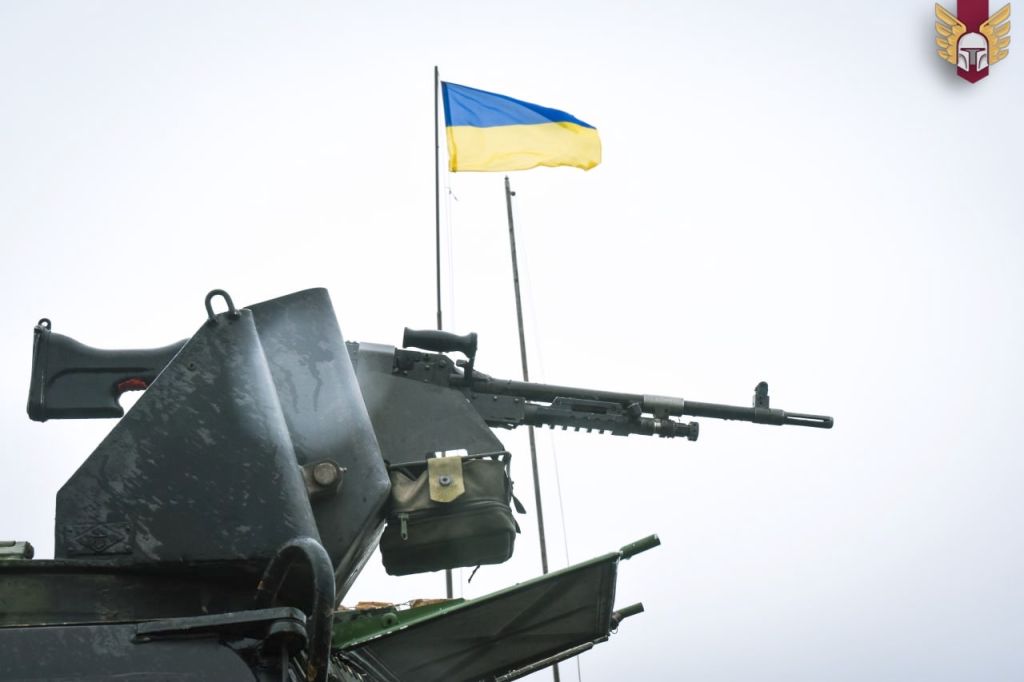
The majority of the VABs in Ukrainian service appear to be equipped with 12.7x99mm Browning M2 heavy machine guns, however, some have been seen equipped with 7.62x51mm general purpose machine guns. Most intriguingly, in late May 2023 a photograph of a Ukrainian soldier holding an AANF1 emerged. An earlier video, shared in July 2022, of a VAB in the field may have been mounted with an AANF1 but due to low resolution it is difficult to be definitive. The later May 2023 photograph, however, confirms that France has supplied an unknown quantity of GPMGs. It is likely that the AANF1 was provided along with a VAB, notably the weapon is without its bipod. At the time of writing there have been no further sightings of AANF1s.

Ukrainian combatant with an AANF1 (via social media)

The AANF1 is the 7.62×51mm variant of AA-52, a lever-delayed blowback operated belt-fed machine gun introduced in the 1950s. Since the 2010s, the AANF1 has slowly been superseded by the FN MAG. French FN MAGs have been seen in use with members of the 46th Separate Airmobile Brigade. They have been seen both mounted and dismounted from the VABs. While a significant number of MAG-patterned guns have been provided to Ukraine by numerous countries including the US (M240), Sweden (Ksp 58) and the UK (L7A2) the French MAG 58s are identifiable by the their railed top cover and a handguard attached to the gas tube which provides additional rail space.

A dismounted French FN MAG (46 OAeMBr)

In early November 2022, a video showed the best part of a mechanised battalion equipped with VABs, which are armed with a mix of M2 heavy machine guns and GPMGs. Later in November the 46th Separate Airmobile Brigade shared photos of troops training including several photos of French MAG 58s mounted on VABs. In late January 2023, the Brigade shared a photo of the guns being used in the dismounted role while conducting urban warfare training. Several days later another photo was shared of a dismounted French MAG at a range. Another training photograph of a MAG mounted on a VAB was shared in March 2023.

The French MAGs haven’t been seen in use with any other Ukrainian units so far. But with significant numbers of French armoured vehicles its possible we’ll see further MAGs and AANF1s in the future.

Update 21/10/23:

Update – 10/3/24: The French government has released an updated document listing the equipment and some of the quantities provided to Ukraine. The document states that 210 ‘Mitrailleuse 7.62mm’ (the pattern of gun is not stated) and 710 ‘Mitrailleuse 12.7mm’ (likely M2 Brownings) have been provided between 1 March, 2022 and 1 May, 2024.


Support Us: If you enjoyed this video and article please consider supporting our work here. We have some great perks available for Patreon Supporters – including early access to custom stickers and early access to videos! Thank you for your support!

Sources:

Model 1958 general support machine gun – MAG 58, French Ministry of Defence, (source)

NATO automatic weapon model F1 caliber 7.62 mm (AANF1), French Ministry of Defence, (source)

Joint declaration of France and Ukraine, Élysée, (source)

Arms For Ukraine: French Weapons Deliveries To Kyiv, Oryx, (source)

Thank you to Recon UAV on twitter for flagging the French MAGs and to Ukraine Weapons Warfare for bringing the AAFN1 to my attention. Special thanks to Dragonists Society for insights.

Sweden’s KSP-58 Machine Guns In Ukraine

Since the Russian invasion of Ukraine in February we’ve seen a number of FN MAG variants appear in use with Ukrainian forces. By far the most common appears to be the US M240 series. However, in recent months we’ve also seen a number of Swedish KSP-58s appear in imagery from the field.

Sweden has long supported the Ukrainian war effort providing a shipment of 5,000 Pansarskott m/86 anti-armour weapons (perhaps better known as the AT4) back in late February. The transfer of an additional batch of 5,000 m/86s was announced on 2 June. Most recently on 30 June it was reported that Sweden would provide a fresh batch of light anti-armour weapons and also machine guns as part of a transfer worth $49 million. When delivery of this aid was made is unconfirmed but the KSP-58s are reported to have been in theatre possibly as early as July – August.

While the type of machine gun was not confirmed, since the beginning of September we’ve seen imagery of a number of KSP-58 GPMGs appear in theatre. Easily identified by their wooden stocks, grey-green-coloured receiver finish and enclosed front sight. Sweden was one of the earliest adopters of the FN MAG and the Kulspruta 58 or KSP-58 entered service with the Swedish armed forces in the late 1950s and was originally chambered in the 6.5×55mm Swedish round. The KSP-58B was introduced following the adoption of 7.62x51mm. The guns were made under license from FN at the Carl Gustav Stads rifle factory in Eskilstuna.

A KSP-58B in use with Ukrainian troops c. September 2022 (via social media)

These have been seen in the hands of International Legion units and also regular Ukrainian Army units centred around Mykolaiv and Kherson. All the the examples of the weapon sighted appear to be KSP-58Bs, none of the guns seen have the Picatinny rails seen in the KSP-58F. 

Speaking to Kaiser [frontline_view_kaiser] a German volunteer with the Ukrainian Army, he said his unit encountered a “a brand-new, never used KSP with original factory delivered Box and all accessories untouched”. His colleague Yuri [nucking_futs_yuri] has shared some videos filmed in late-August, during a training session he ran on FN MAG variants for various Ukrainian units. Yuri said their were about 20 guns on the range during the training session, with the majority being KSP-58s. Yuri shared a video in mid-September firing a through a KSP-58B, from the hip, filmed after the training session had been completed. 

Yuri with a KSP-58B c. September 2022 (nucking_futs_yuri)

While we can’t confirm that the KSP-58s came directly from Sweden it seems likely. Another potential origin for the weapons may be the Baltic States (Estonia, Latvia and Lithuania). Sweden gifted an unconfirmed number of KSP-58s to the Baltic States in the 1990s. Today, the guns remain in service with the Latvian Army and National Guard, the Estonian Army and Estonian Defence League and the Lithuanian Army and National Defence Volunteer Force. Both Estonia and Lithuania began searching for a replacement for the KSP-58 in mid-2021. Given the Baltic states’ support for Ukraine the guns may potentially have originated from there, rather than Sweden itself. We have already seen the Baltic States have transferred former Swedish equipment including the PV-1110 recoilless anti-tank gun which were given to the Baltic states in the early 1990s.

It remains to be seen if we’ll see more of the KSP-58s in the field but in future articles/videos we’ll look at other FN MAG variants are in use in Ukraine.

Update 16/1/24: A maritime element of Ukraine’s Border Guards shared photos of them familiarising with what appears to be a KSP-58.

Update – 5/6/24:

Update – 15/10/24: A video of a KSP-58 in action somewhere in Ukraine, date unknown, recently shared online.


If you enjoyed this video and article please consider supporting our work here. We have some great perks available for Patreon Supporters – including custom stickers and early access to videos! Thank you for your support!

Bibliography:

Thank you to Kaiser and Yuri for their input – definitely check them out on their social media!

Kulspruta 58, Forsvarsmakten, (source)

KSP-58, Soldf.com, (source)

Sweden to boost military aid to Ukraine, Politico, 29 Aug. 2022, (source)

Sweden to send military aid to Ukraine, Reuters, 27 Feb. 2022, (source)

Sweden assists Ukraine with the Robot 17, SVt.se, 2 June 2022, (source)

Sweden to send more anti-tank weapons and machine guns to Ukraine, Reuters, 30 June 2022, (source)

Estonia to acquire new weapons for EDF, Defense League, ERR, 18 Nov. 2022, (source)

Lithuania buys machine guns for EUR 34 million, Defence 24, 20 Aug. 2022, (source)

X11 Belt-Fed Bren Derivative

At the end of the Second World War the British Army had two primary infantry machine guns: the Bren light machine gun and the Vickers medium machine gun. These weapons had proved their worth, the Bren was especially well liked and the venerable Vickers continued to be a reliable workhorse.

In the late 1940s, the British Army recognised the Soviet threat to Western Europe. In 1947, Field Marshal Bernard Montgomery, the newly appointed Chief of the Imperial General Staff wrote a paper outlining rearmament plans based on intelligence estimates of how quickly the Soviet Union was likely to be ready for another full-scale war. Montgomery believed that Britain had just 10 years to develop new weapons and begin rearmament before the Soviet Union had recovered enough to launch an invasion of Western Europe. As such the British Army felt that rearmament needed to be complete by the late 1950s.

large_000000
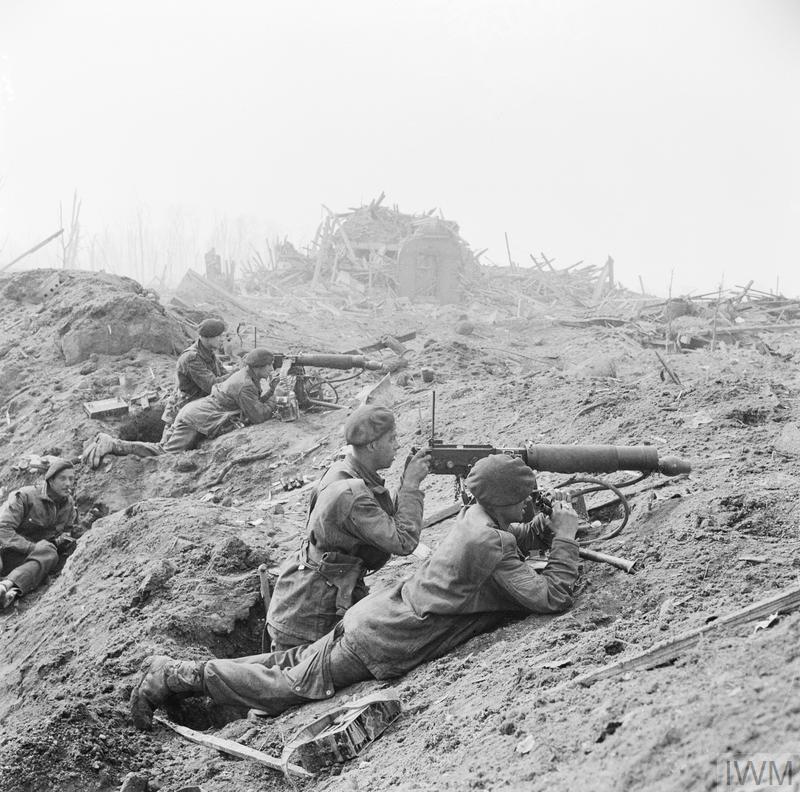
Two Vickers medium machine guns in action in Wesel, 1945 (IWM)

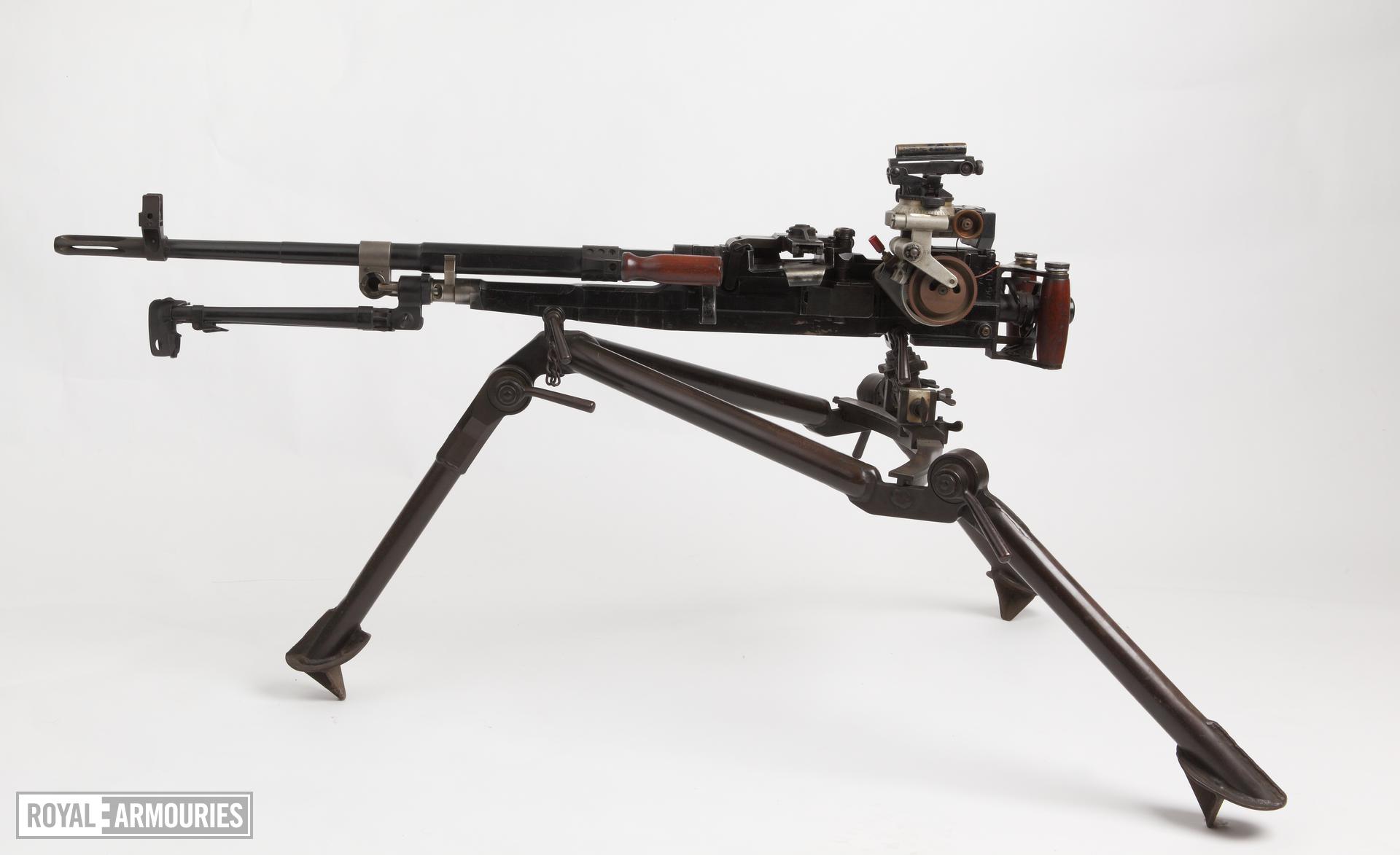
A number of large budget programmes were launched while small arms projects were also undertaken. These included the Infantry Personal Weapon programme which sought to develop a new intermediate calibre infantry rifle – the IPW programme later yielded Stefan Janson’s EM-2, a bullpup chambered in .280, which was briefly adopted as the Rifle No.9. The FN FAL was later adopted due to changes in political circumstances – a long, fascinating story for another article. The companion to the IPW programme was the development of a Sustained Fire Machine Gun also chambered in .280.  The TADEN, a belt-fed derivative of the Bren firing the new .280 round, was designed by Harold Turpin (‘T’), the Armament Design Establishment (‘AD’) and Enfield (‘EN’). With the abandonment of the IPW the TADEN was also abandoned but its design greatly influenced the later X11 developments.

Centrefire automatic machine gun - Experimental SFMG
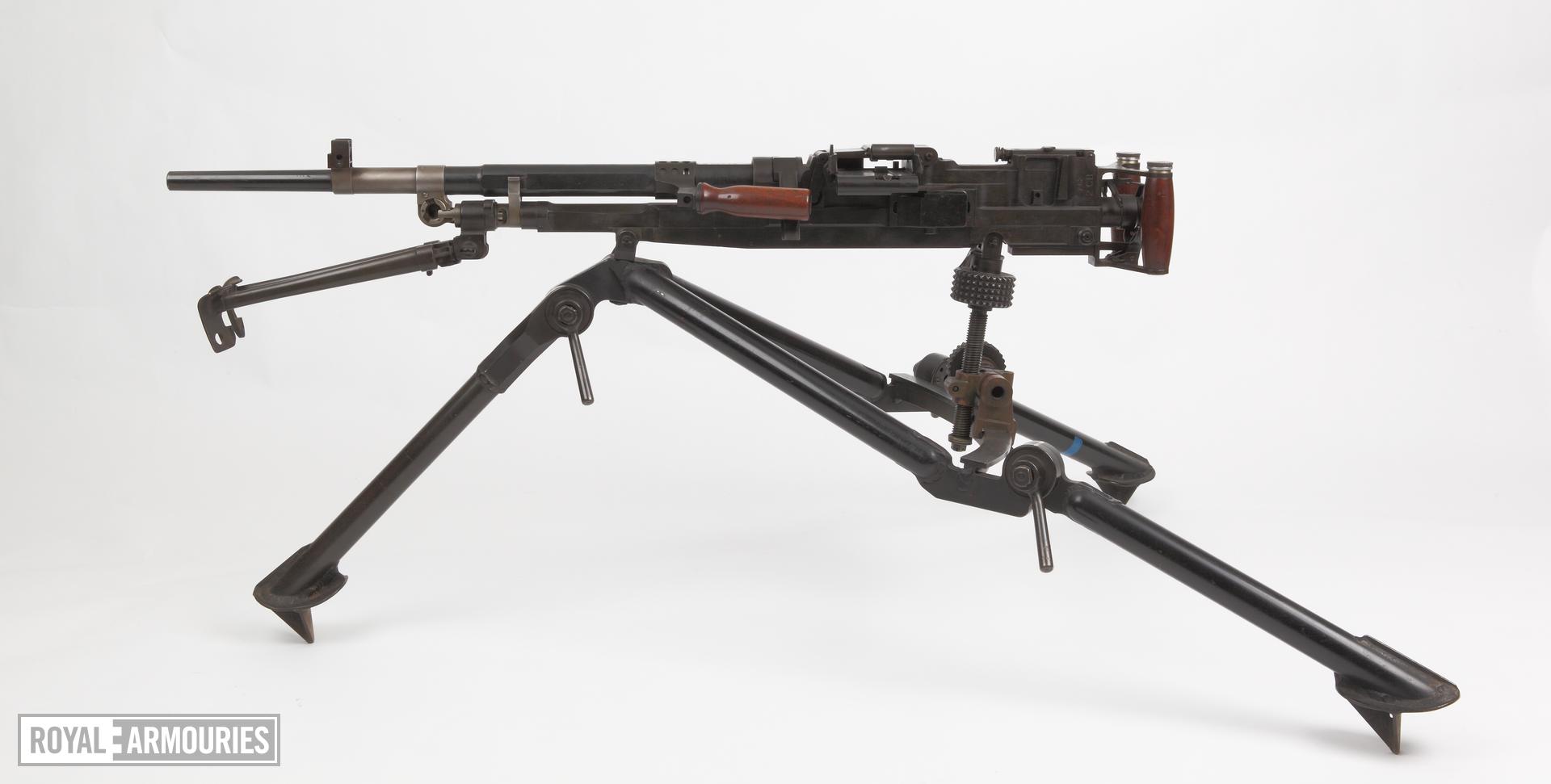
.280 TADEN SFMG mounted on a tripod (Royal Armouries)

Another major small arms programme at the time was the search for a new machine carbine (or submachine gun). This saw the testing of designs from Sterling, BSA and Madsen – with the Sterling finally adopted as the L2.

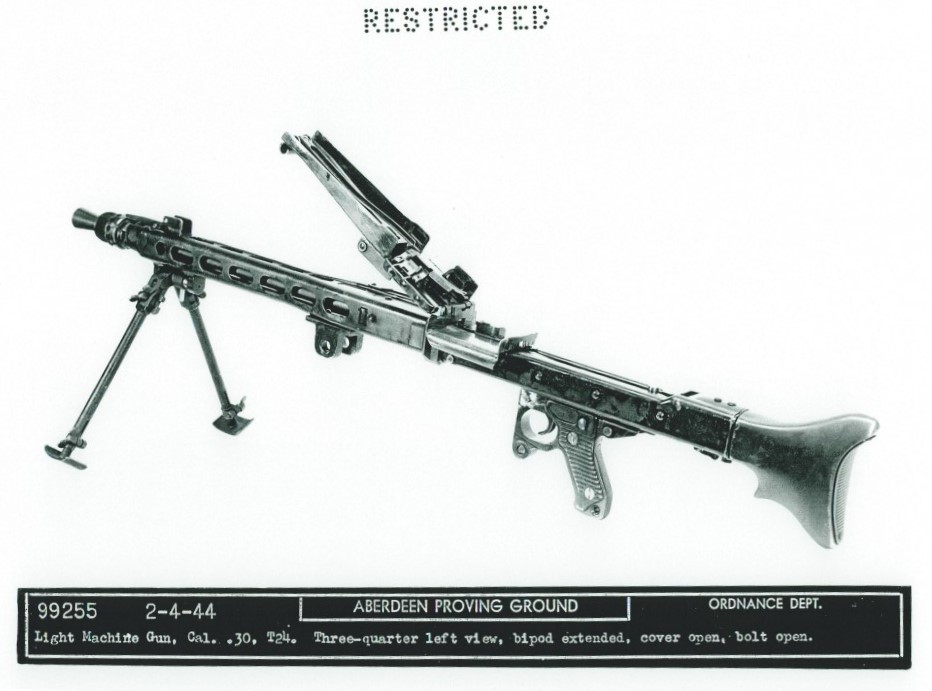
The other major small arms project was the programme to find a new section level machine gun. The German MG34 and MG42 had impressed the Allies during the war, so much so the US went as far as to clone it with the T24. After the abandonment of the EM-2 and TADEN machine gun the British issued a new specification for a lightweight sustained fire machine gun, chambered in the 7.62x51mm round recently adopted by NATO, in the mid-1950s.

t24mg5-794x1024
US T24, MG42 clone, complete with US-pattern bipod (Springfield Armory)

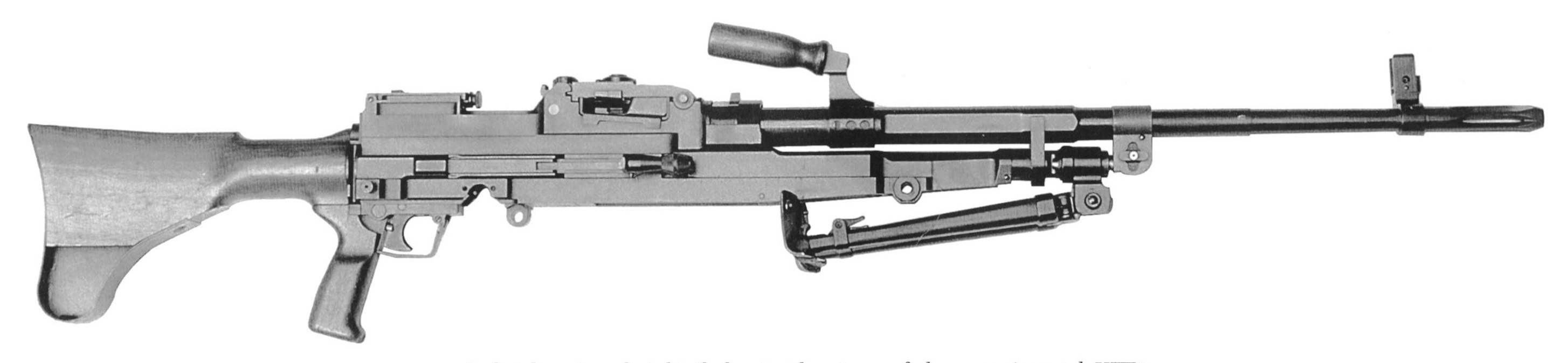
The design team at the Royal Small Arms Factory at Enfield developed a belt-fed derivative of the Bren light machine gun. The X11 series of prototypes sought to convert the Bren’s proven design into a weapon capable of sustained fire. The X11 made a number of changes to the Bren included the addition of a detachable butt/grip/trigger assembly which could be swapped for a pair of spade grips and a paddle trigger for static sustained fire from a tripod. This resulted in the pistol grip being located much further back than the traditional Bren’s.

Centrefire automatic machine gun - Experimental SFMG (about 1956)
The X11E2 set up for the sustained fire role on a tripod with the spade grips and an optical sight similar to the UNIT sight. (Royal Armouries)

It appears that during the mid-1950s British military parlance described the General Purpose Machine Gun as a Sustained Fire Machine Gun (SFMG). From the available photographs it appears that the L4 and X11 use the same barrel with its distinct flash hider. The receivers of all the prototypes appear to be milled to attach the optical long range sight seen above.

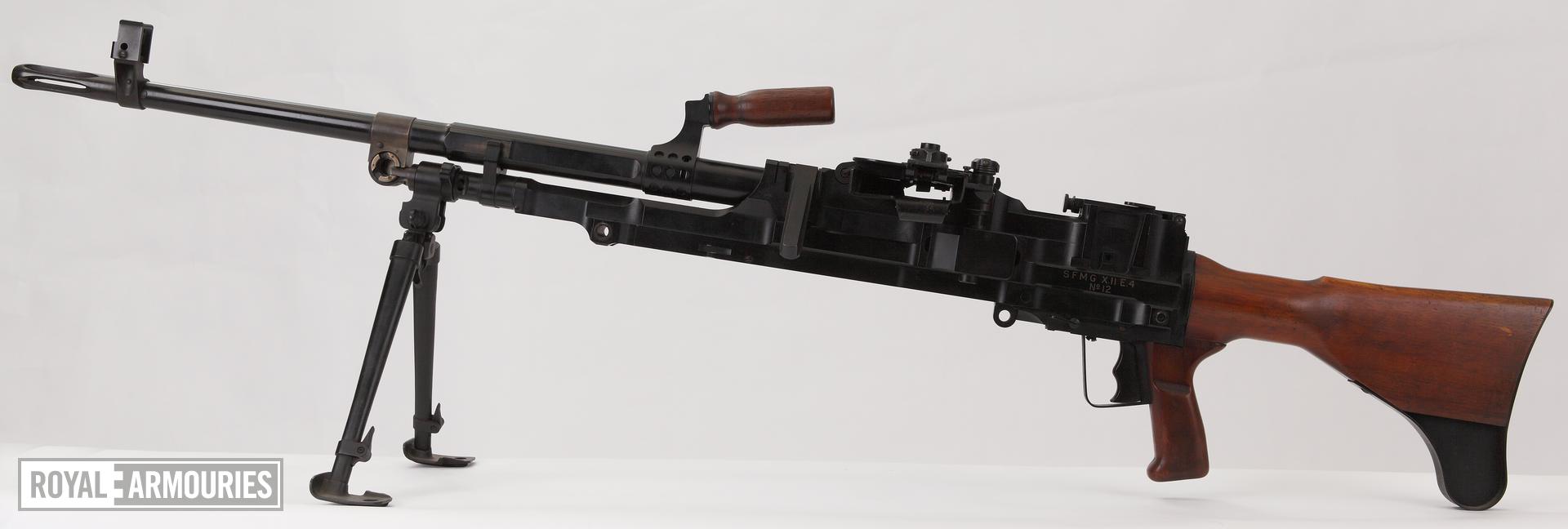
The main drawback with the X11 was its feed mechanism. The feed slide was indexed by a rotating vertical feed shaft which was driven by the gas piston’s recoil. This created a considerable amount of friction within the action. It had the effect of causing failures to feed during adverse conditions testing and elevated firing tests. A series of four X11 prototypes were developed with Harold Turpin (co-designer of the STEN gun and later TADEN) working on the new gun. Each prototype appears to have a sightly different trigger configuration. The most interesting of these is a two-finger double-crescent trigger reminiscent of the MG-34’s – from the photographs it appears that the conventional selector lever, used in the X11E2, was replaced with a fire-selector system similar to the MG-34’s (upper crescent – semi-auto, lower crescent – full-auto). However, the trigger of the example of the X11E4 examined by Vic (serial number #11) was fully automatic only, despite its crescent shape.

Below are photographs of examples of the three types held at the Royal Armouries:

1
X11E2, note the large cutout in the receiver in front of the trigger group (Royal Armouries)

Belt fed Bren 1
X11E3 (Bren Gun Saga, Dugelby)

Centrefire automatic machine gun - SFMG Experimental Turpin X11E4
X11E4, note double-crescent trigger (Royal Armouries)

The X11 was tested against the M60, French AA-52, Swiss MG51, Danish Madsen-Saetter, German MG-3, and the Belgian FN MAG. The FN MAG, designated the X15E1 by the British, fared best in the trials with the X11 coming second due to its feeding issues. In January 1958, the British abandoned the X11 and moved to adopt the X15E1 general purpose machine gun, negotiating a license for its manufacture. The weapon was finally adopted as the L7A1 in 1961, with production at Enfield beginning in 1963. It seems that the Birmingham Small Arms Company were a latecomer to the competition having developed the another belt-fed Bren gun derivative known as the X16.

The Bren did continue in service after the switch to 7.62x51mm. In 1954, before beginning work on the X11, Enfield had developed the X10E1. Taking a Canadian manufactured 7.92x57mm Bren breech block and converting it to cycle the new round. The X10E1 was formally adopted as the L4. The L4 remained in service, alongside the L7, into the early 1990s. The L7 GPMG continues to be used by the British Army.

If you enjoyed the video and this article please consider supporting our work here.


Bibliography:

The Bren Gun Saga, T. B. Dugelby (1999)