The Hammerless 1911

Ever since I picked up a copy of John Browning and Curt Gentry’s 1964 biography of John M. Browning I’ve been fascinated by this hammerless .45 calibre pistol, one of Browning’s prototypes for the US Army’s semi-automatic pistol trials.

The Browning .45 calibre pistol prototype with a shrouded hammer (Matthew Moss)

Last year I had the opportunity to visit the John M. Browning Museum in Ogden, Utah and I was thrilled to see the ‘hammerless’ prototype on display. Very little has been written about the development of this particular pistol with Browning and Gentry explaining that during the US Army’s long process to select a new service pistol John Browning decided to provide two versions of his .45 ACP pistol – one with an exposed hammer and the other with a shrouded hammer similar to that seen on his Colt 1903 and 1908 Pocket Hammerless commercial pistols. 

The ‘hammerless’ pistol is identical in operation to the exposed hammer prototype which was eventually selected as the M1911. It uses the same improved tilting barrel action which is covered by the patent filed in February 1910, US #984,519. The slide and frame profiles of the ‘hammerless’ pistol have been reshaped with the slide extending back further shrouding the hammer while the rear of the frame projects back, lining up with the rear of the slide rather than forming a beavertail. The pistol grip angle, at near 90-degree, is more akin to the Colt Pocket Hammerless and earlier Colt-Browning semi-automatic pistols.

The Browning-Gentry book lists the pistol as 8 inches in length overall with a 3.75-inch barrel and a weight of 2lbs 4oz. The pistol has a grip safety and a frame-mounted safety and a push-button magazine release on the left side of the frame. Sadly the pistol was behind glass and with time short we couldn’t get a better look at the gun. 
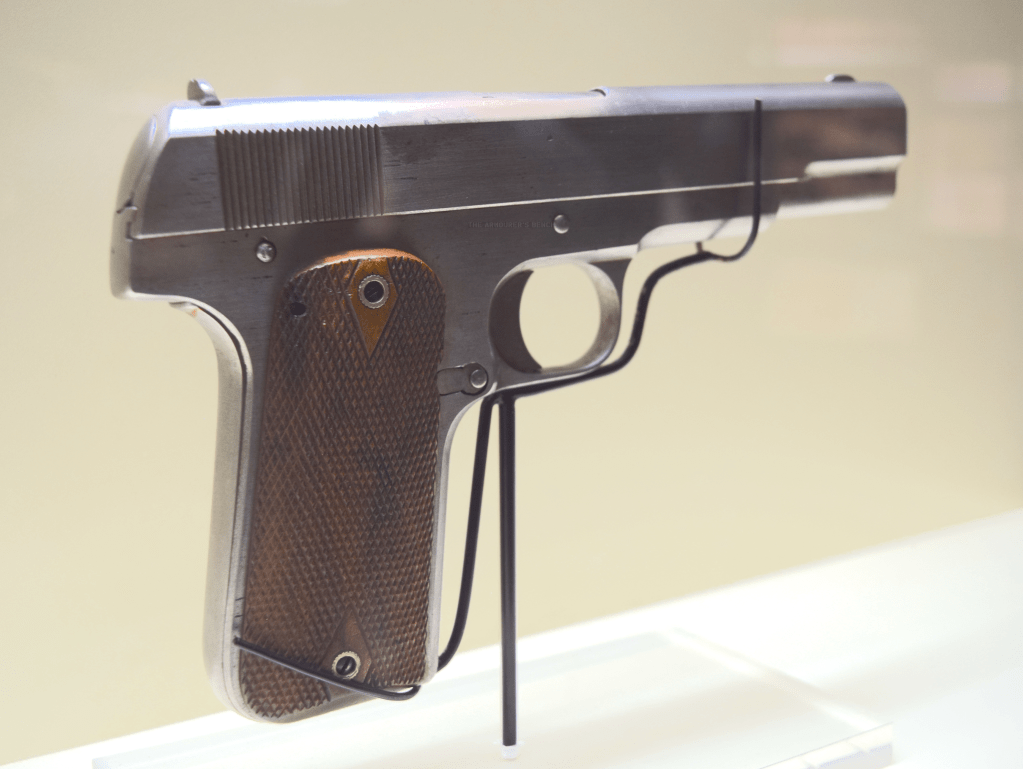
The Browning .45 calibre pistol prototype with shrouded hammer on display at the Browning Museum (Matthew Moss)

The chronology of the various prototypes’ development is sometimes difficult to track as Browning’s hands-on style left few written descriptions of the designs as they evolved. The museum dates the pistol to 1905 but displays it alongside the pattern of pistol often referred to as the Model 1910. Interestingly, the ‘hammerless’ pistol also has the frame-mounted safety which was reportedly added late in the refinement of the 1910 pistols. The ‘hammerless 1911’ was never commercially marketed by Colt and the exposed hammer .45 ACP pistol went on to win the US military pistol trials and became an iconic design. 

Huge thanks to the Browning Museum in Ogden for allowing us to film in their collection – we have some really exciting videos from the museum coming up. 


Support Us: If you enjoyed this video and article please consider supporting our work here. We have some great perks available for Patreon Supporters – including early access to custom stickers and early access to videos! Thank you for your support!


Bibliography

John M. Browning: American Gunmaker, J. Browning C. Gentry (1987)

The Guns of John Browning, N. Gorenstein, (2021)

Handguns of the World, E.C. Ezell (1981)

‘Rarest of the rare: Browning 1910 & Hammerless .45’, American Handgunner, (source)
Winchester Model 1905 .45ACP Conversion

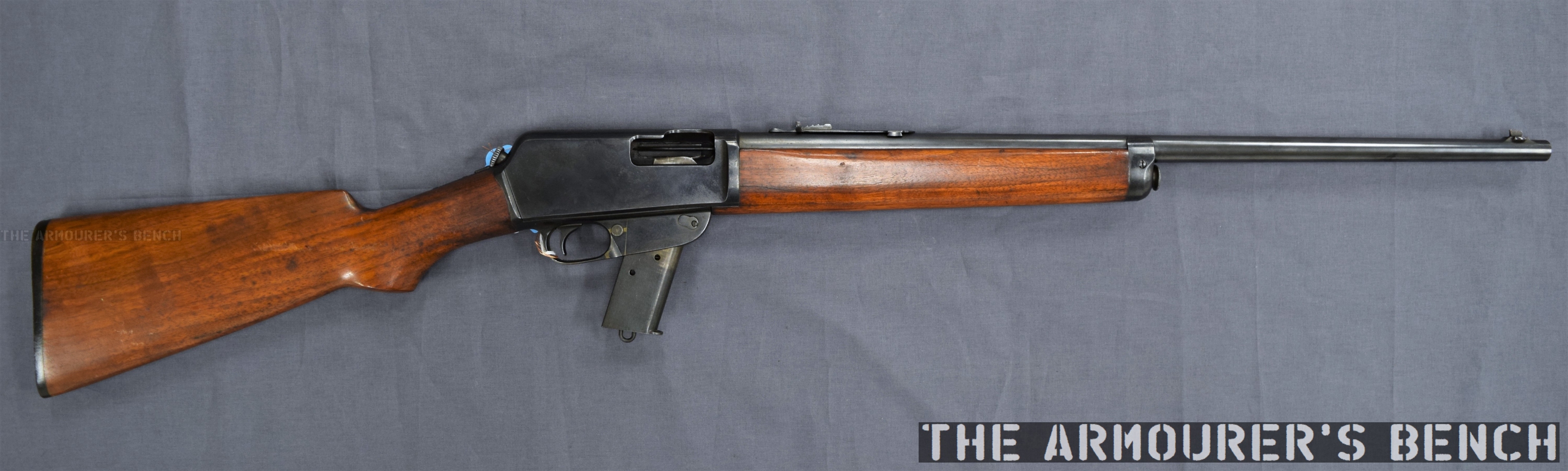
During my recent visit to the Cody Firearms Museum I was lucky enough to examine a number of interesting firearms (more videos soon). In this video we take a look at a Winchester Model 1905 chambered in .45 ACP.

The Model 1905 was originally designed by Thomas Crossley Johnson, as a commercial rifle chambered in either .32 or .35 Winchester Self Loading. It was the second of a series of blowback operated rifles Johnson designed between 1903 and 1910.

DSC_0601
Right-side profile of the converted Model 1905 (Matthew Moss)

The origins of this gun, however, are less clear. It is part of the Cody Firearms Museum’s impressive collection and is believed to be a Winchester-made prototype. Dating the rifle is more difficult. It was originally believed to have been developed during the First World War but the Winchester Arms Collection’s records date the rifle to 1919. It has also been suggested that the conversion may have been developed by Winchester as an auxiliary arm for the US Army, as a replacement for the 1911 pistol for some troops – much along the lines of the later .30 carbine. There are no records, however, to suggest the .45 ACP Model 1905 was ever officially tested.

Herbert Houze, former curator of the Cody Firearms Museum, believed the conversion was actually developed after World War Two. No patents or Winchester documents are known to refer to it but Houze believed that one of Winchester’s engineers, Harry H. Sefried, developed the conversion as a side project with a potential aim to interest law enforcement agencies in a carbine chambered in the readily available .45 ACP round.

DSC_0599
The carbine with the 1911 magazine removed and the bolt back (Matthew Moss)

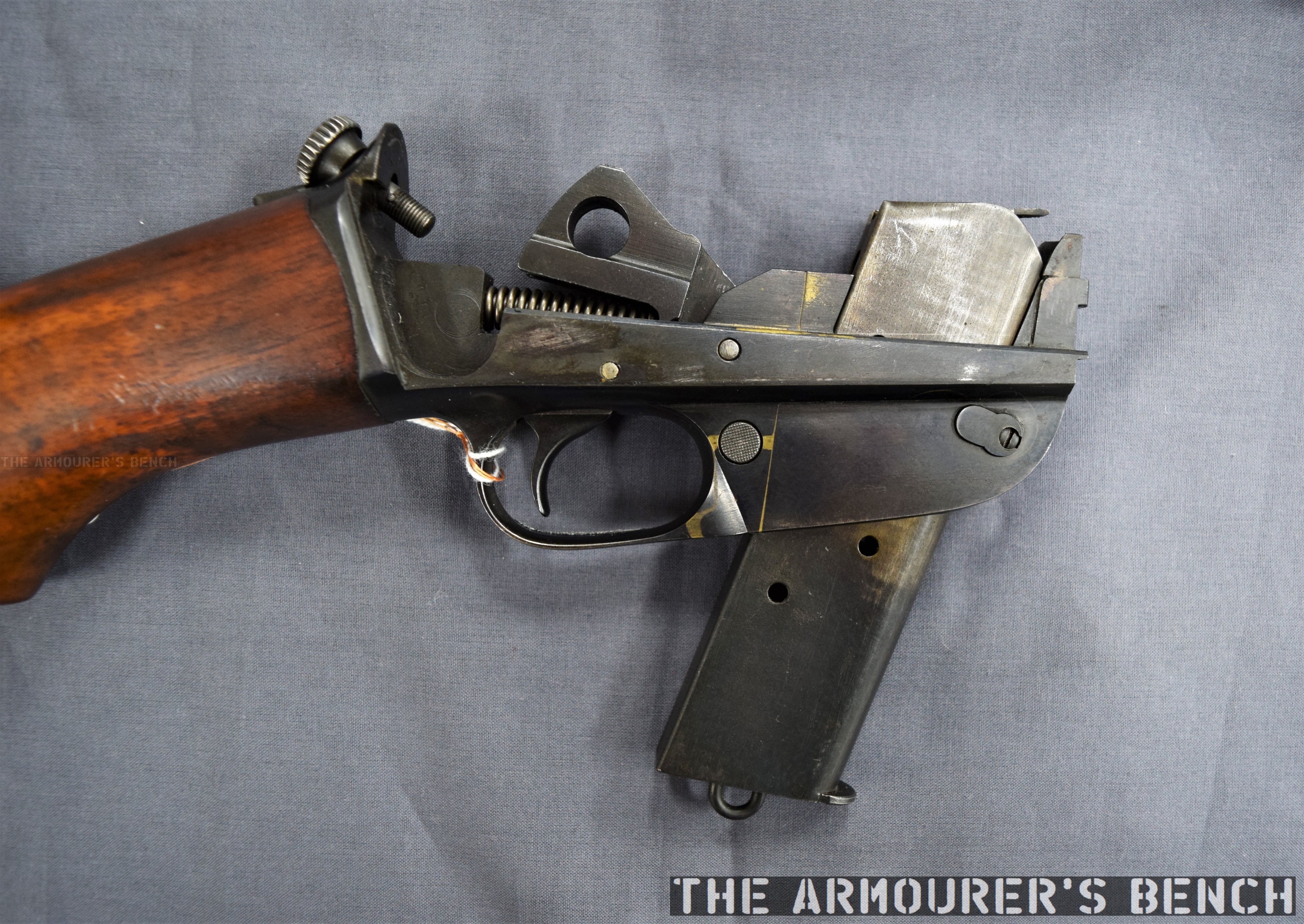
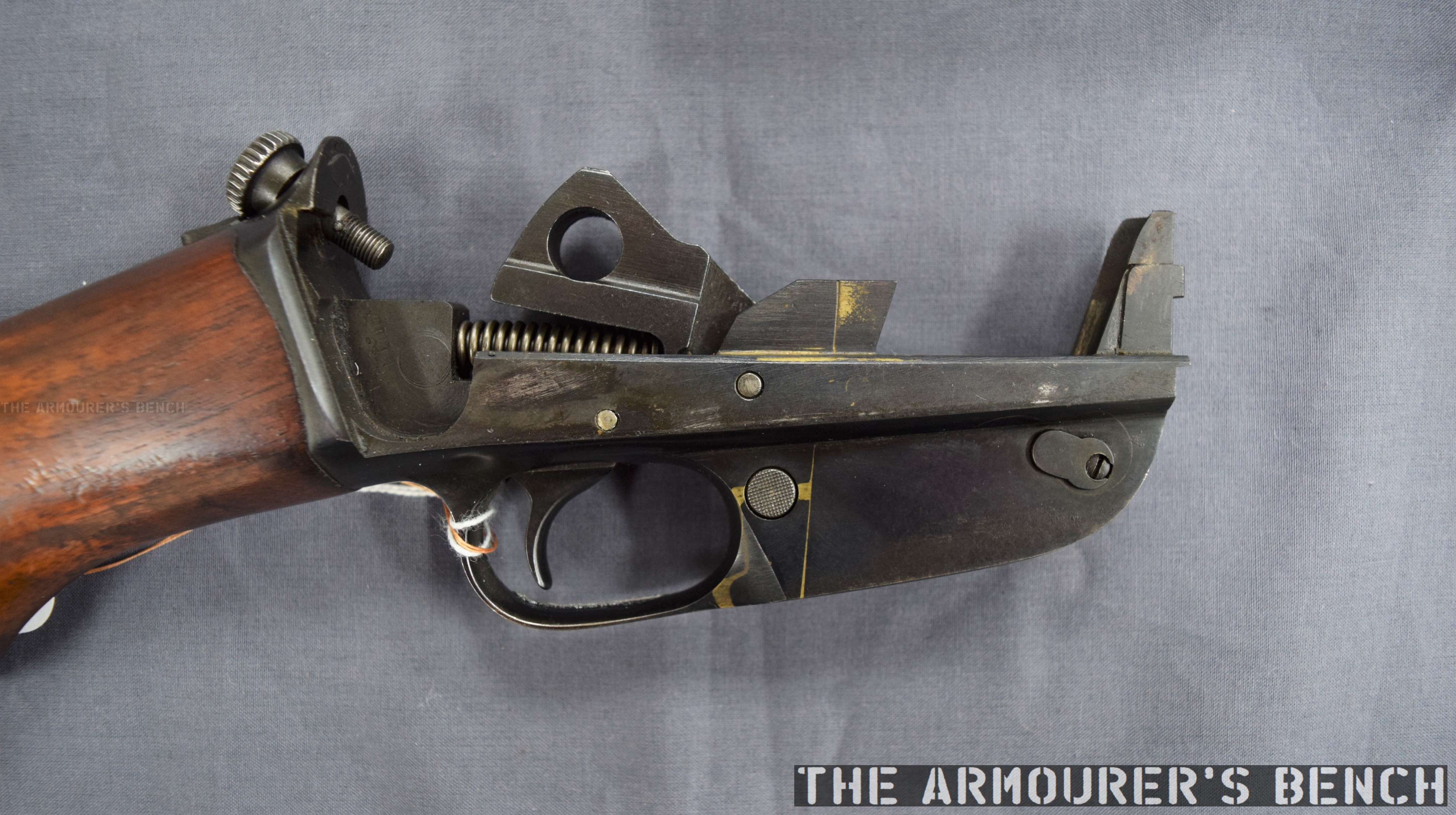
Taking a stock rifle a number of changes were made, the rifle was re-barrelled and rechambered for the .451-inch .45 ACP round and the bolt face was modified slightly. The 1905 originally fed from straight 5 or 10-round box magazines. In order to feed from a Colt 1911 magazine a new magazine housing was added. The curved front of the trigger guard has been machined back and is now flush with the rear of the conversion housing which appears to be integral to the lower receiver’s frame. On close inspection we can clearly see that parts have been brass brazed together around the original magazine release and inside the magazine well.

DSC_0603
With the 1905’s upper receiver removed we can see how the 1911 magazine aligns with the bolt and breech (Matthew Moss)

The rounded magazine housing has a new magazine release positioned at the front of the magazine, as in the 1911 and allows the magazine to be inserted at an angle. The ejection port has also been altered with an additional cut-out being made at the top to aid ejection.

DSC_0604
With the rifle stripped down and the magazine removed we can see the conversion magazine housing, note what appears to be brass brazing (Matthew Moss)

Take down remains the same, with the upper and lower separating once the take down screw at the rear of the receiver is loosened. The conversion appears to be well thought out and the finish and care taken would indicate this was rifle wasn’t a rough proof of concept prototype. Sadly, there is no information on how the conversion performed.

DSC_0599 - Copy (2)
A close up of the rifle’s receiver and Colt 1911 magazine (Matthew Moss)

Regardless of the origins of the conversion Winchester never offered the chambering commercially and this prototype is the only example known to exist. Today, it is held by the Cody Firearms Museum at the Buffalo Bill Centre of the West in Wyoming. The museum has just undergone a major renovation and is well worth visiting. Our special thanks to the CFM for letting us examine this rare rifle.

Herbert Houze, the former Curator of the Cody Firearms Museum who is mentioned in this article and video, recently passed away – this video is dedicated to his memory.


If you enjoyed the video and this article please consider supporting our work here. We have some great new perks available for Patreon Supporters.


Bibliography:

‘Winchester Center Fire Automatic Rifles’ ARMAX, The Journal of the Cody Firearms Museum (Vol. III, No. 1, 1990), K.F. Schreier Jr.

My thanks to Danny Michael, the CFM’s assistant curator, for additional information from Herb Houze