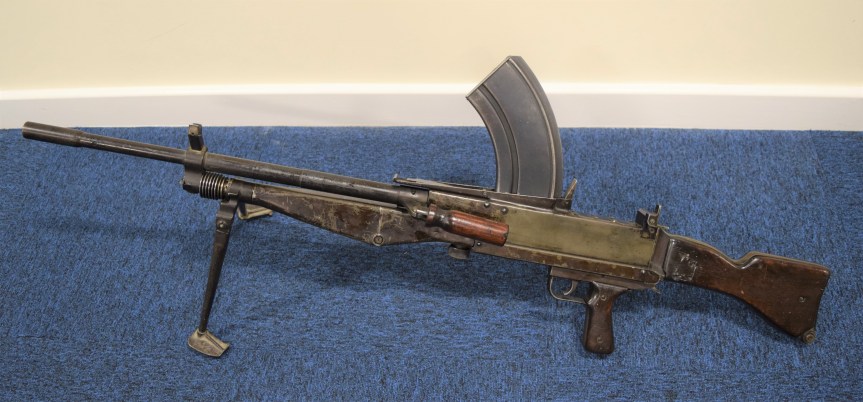
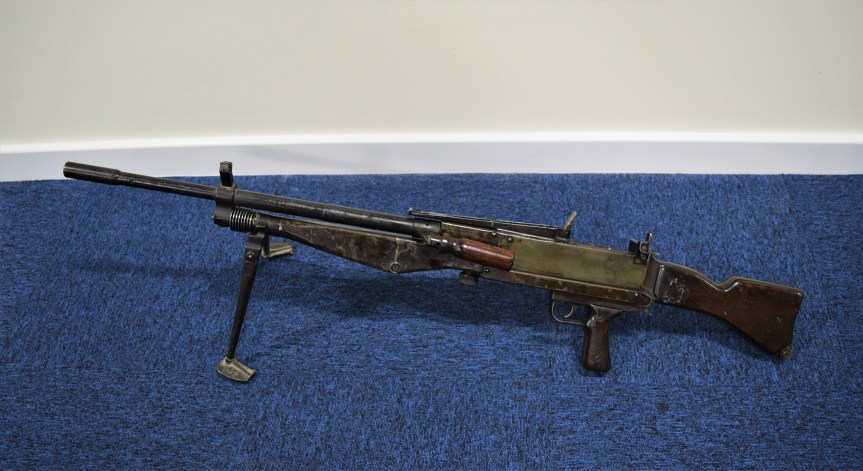
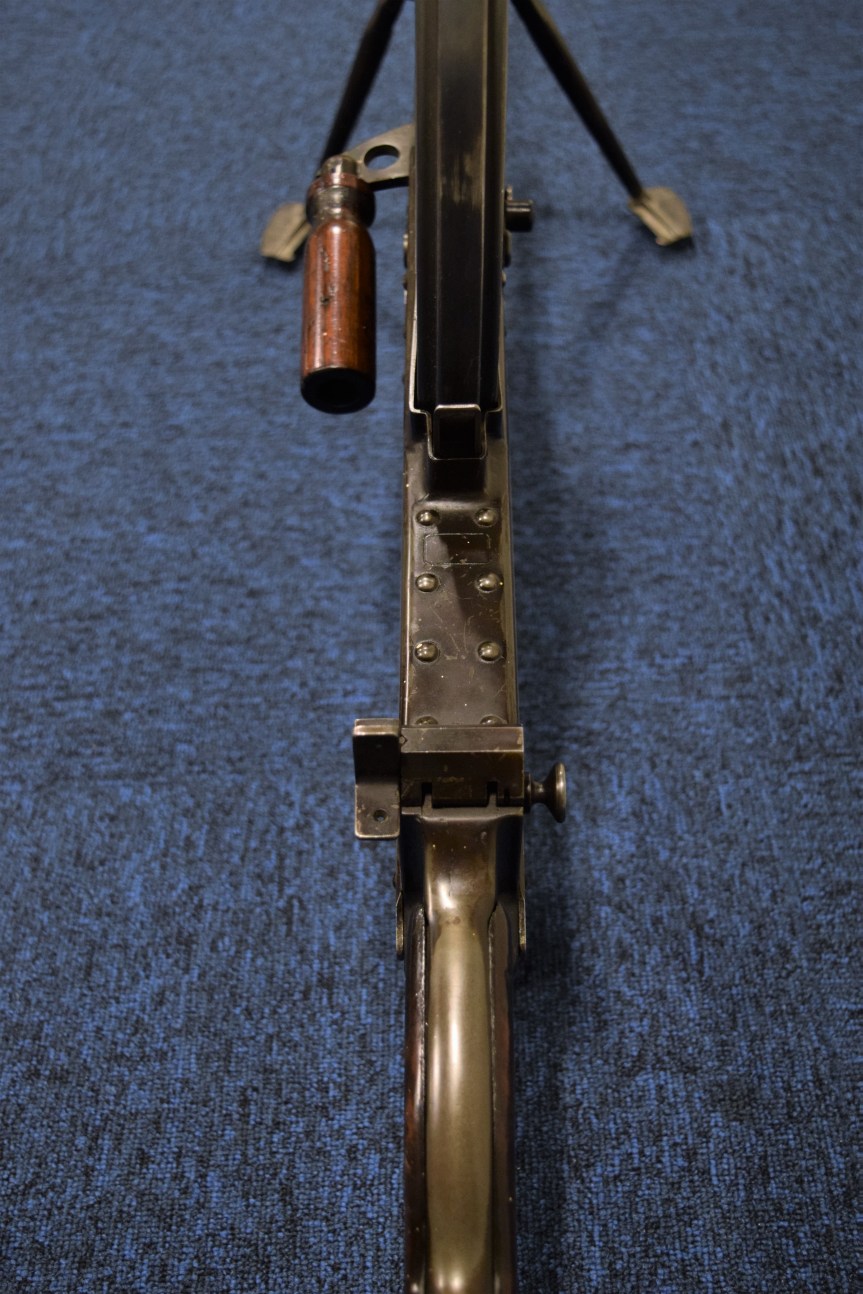
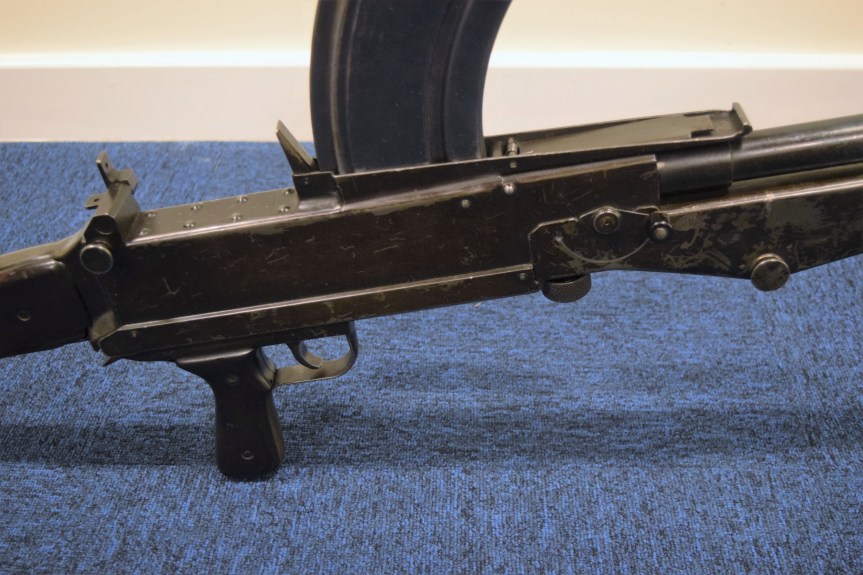
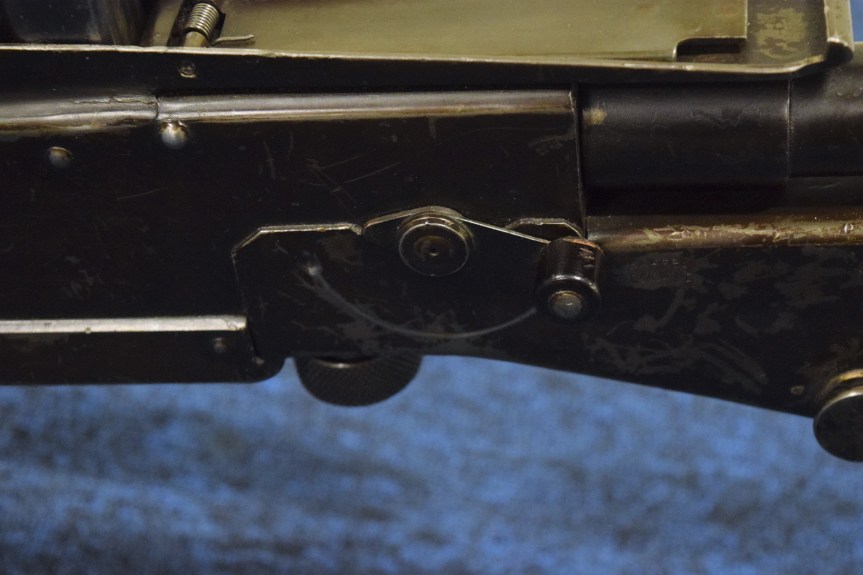
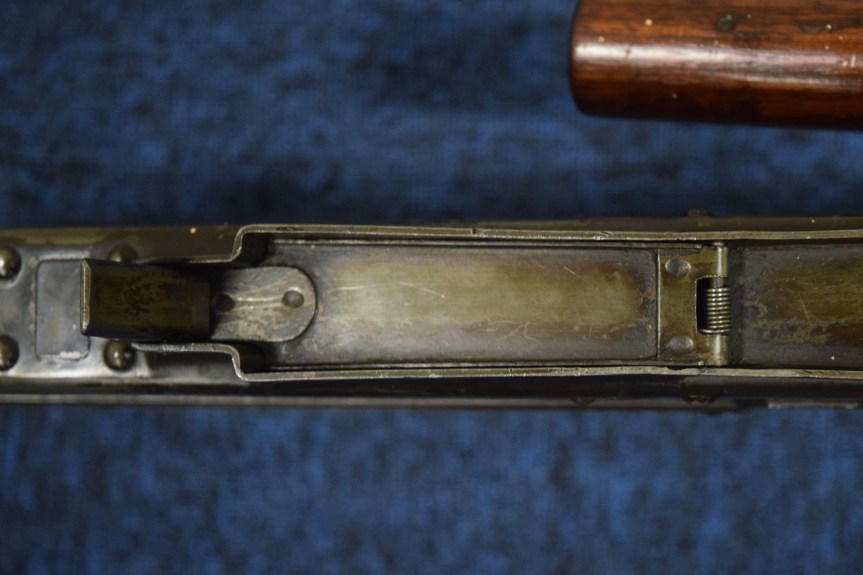
X11 Belt-Fed Bren Derivative

At the end of the Second World War the British Army had two primary infantry machine guns: the Bren light machine gun and the Vickers medium machine gun. These weapons had proved their worth, the Bren was especially well liked and the venerable Vickers continued to be a reliable workhorse.

In the late 1940s, the British Army recognised the Soviet threat to Western Europe. In 1947, Field Marshal Bernard Montgomery, the newly appointed Chief of the Imperial General Staff wrote a paper outlining rearmament plans based on intelligence estimates of how quickly the Soviet Union was likely to be ready for another full-scale war. Montgomery believed that Britain had just 10 years to develop new weapons and begin rearmament before the Soviet Union had recovered enough to launch an invasion of Western Europe. As such the British Army felt that rearmament needed to be complete by the late 1950s.
large_000000
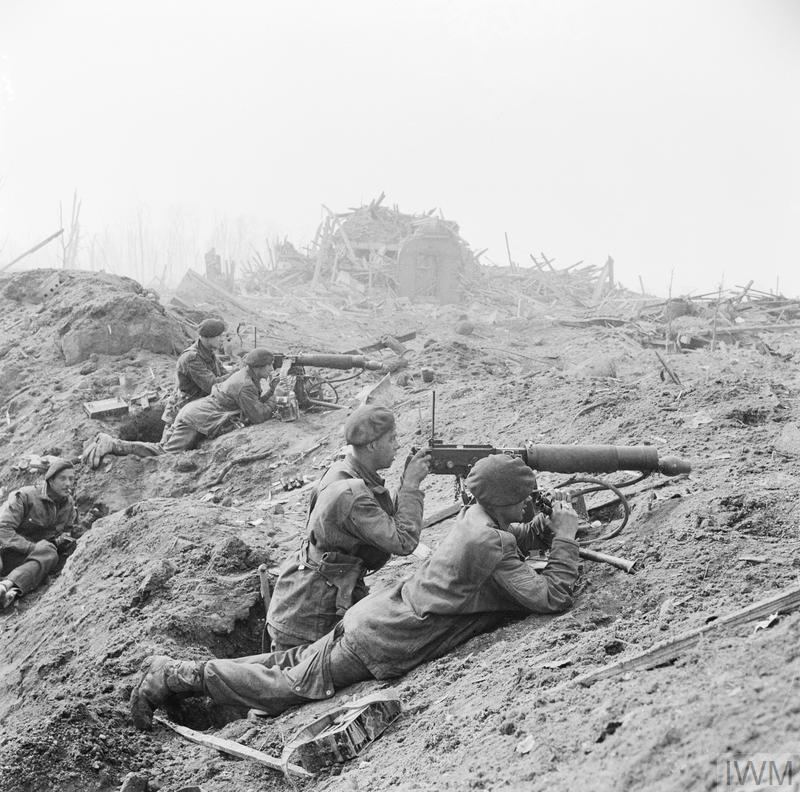
Two Vickers medium machine guns in action in Wesel, 1945 (IWM)

A number of large budget programmes were launched while small arms projects were also undertaken. These included the Infantry Personal Weapon programme which sought to develop a new intermediate calibre infantry rifle – the IPW programme later yielded Stefan Janson’s EM-2, a bullpup chambered in .280, which was briefly adopted as the Rifle No.9. The FN FAL was later adopted due to changes in political circumstances – a long, fascinating story for another article. The companion to the IPW programme was the development of a Sustained Fire Machine Gun also chambered in .280.  The TADEN, a belt-fed derivative of the Bren firing the new .280 round, was designed by Harold Turpin (‘T’), the Armament Design Establishment (‘AD’) and Enfield (‘EN’). With the abandonment of the IPW the TADEN was also abandoned but its design greatly influenced the later X11 developments.

Centrefire automatic machine gun - Experimental SFMG
.280 TADEN SFMG mounted on a tripod (Royal Armouries)

Another major small arms programme at the time was the search for a new machine carbine (or submachine gun). This saw the testing of designs from Sterling, BSA and Madsen – with the Sterling finally adopted as the L2.

The other major small arms project was the programme to find a new section level machine gun. The German MG34 and MG42 had impressed the Allies during the war, so much so the US went as far as to clone it with the T24. After the abandonment of the EM-2 and TADEN machine gun the British issued a new specification for a lightweight sustained fire machine gun, chambered in the 7.62x51mm round recently adopted by NATO, in the mid-1950s.

t24mg5-794x1024
US T24, MG42 clone, complete with US-pattern bipod (Springfield Armory)

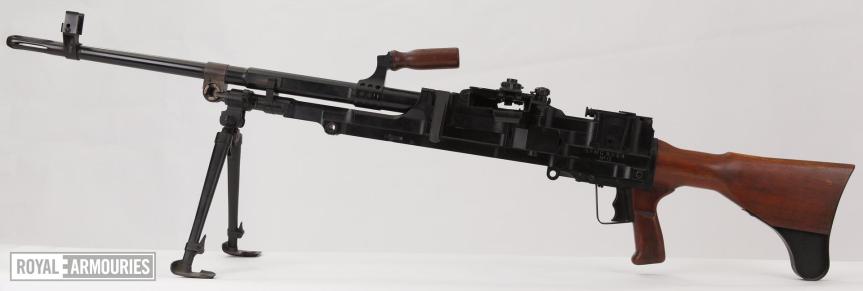
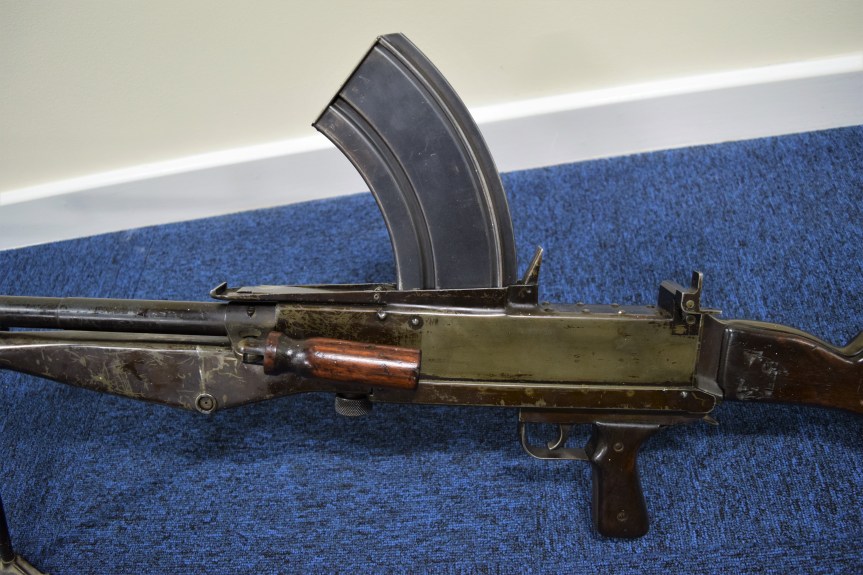
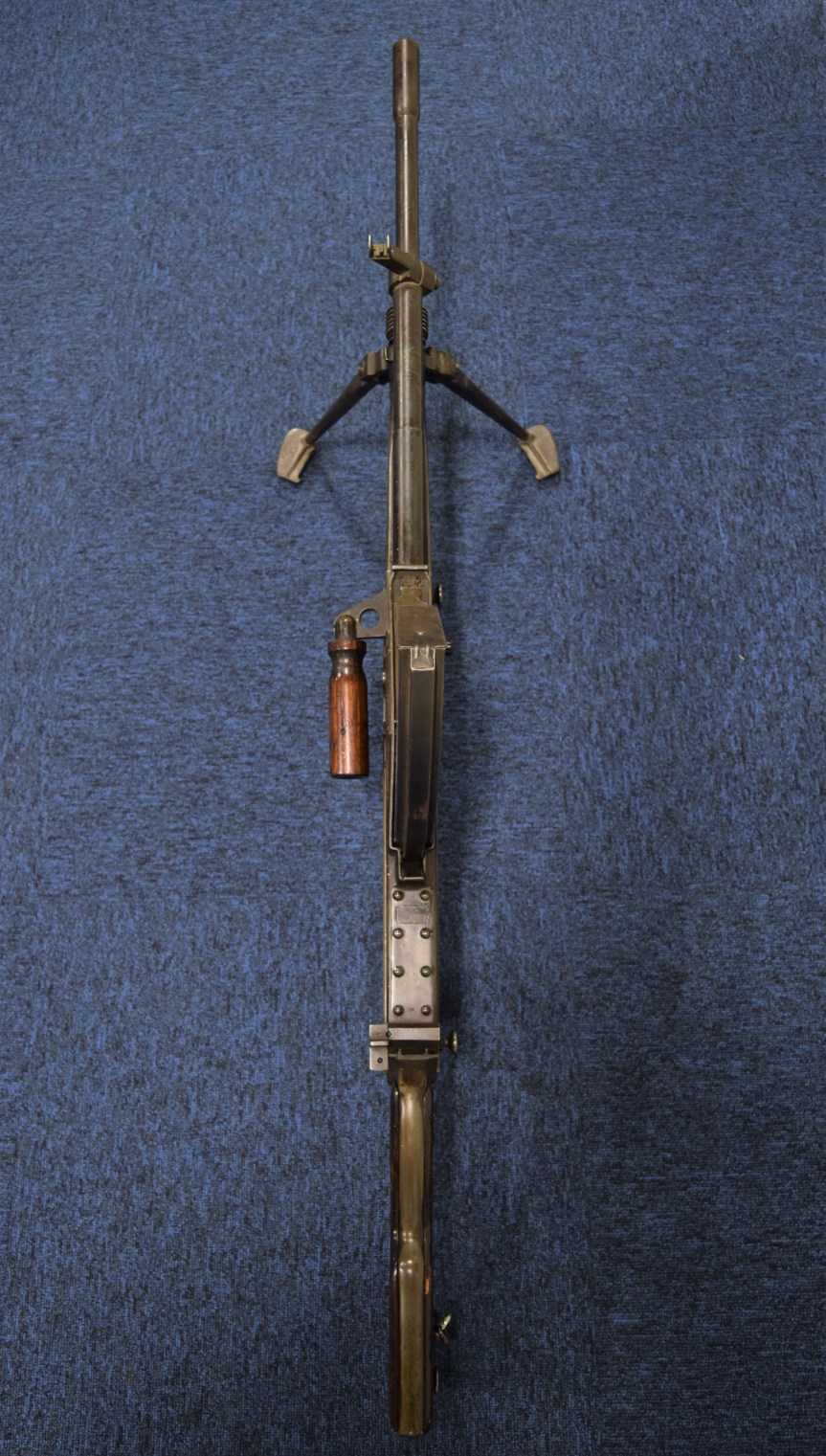
The design team at the Royal Small Arms Factory at Enfield developed a belt-fed derivative of the Bren light machine gun. The X11 series of prototypes sought to convert the Bren’s proven design into a weapon capable of sustained fire. The X11 made a number of changes to the Bren included the addition of a detachable butt/grip/trigger assembly which could be swapped for a pair of spade grips and a paddle trigger for static sustained fire from a tripod. This resulted in the pistol grip being located much further back than the traditional Bren’s.

Centrefire automatic machine gun - Experimental SFMG (about 1956)
The X11E2 set up for the sustained fire role on a tripod with the spade grips and an optical sight similar to the UNIT sight. (Royal Armouries)

It appears that during the mid-1950s British military parlance described the General Purpose Machine Gun as a Sustained Fire Machine Gun (SFMG). From the available photographs it appears that the L4 and X11 use the same barrel with its distinct flash hider. The receivers of all the prototypes appear to be milled to attach the optical long range sight seen above.

The main drawback with the X11 was its feed mechanism. The feed slide was indexed by a rotating vertical feed shaft which was driven by the gas piston’s recoil. This created a considerable amount of friction within the action. It had the effect of causing failures to feed during adverse conditions testing and elevated firing tests. A series of four X11 prototypes were developed with Harold Turpin (co-designer of the STEN gun and later TADEN) working on the new gun. Each prototype appears to have a sightly different trigger configuration. The most interesting of these is a two-finger double-crescent trigger reminiscent of the MG-34’s – from the photographs it appears that the conventional selector lever, used in the X11E2, was replaced with a fire-selector system similar to the MG-34’s (upper crescent – semi-auto, lower crescent – full-auto). However, the trigger of the example of the X11E4 examined by Vic (serial number #11) was fully automatic only, despite its crescent shape.

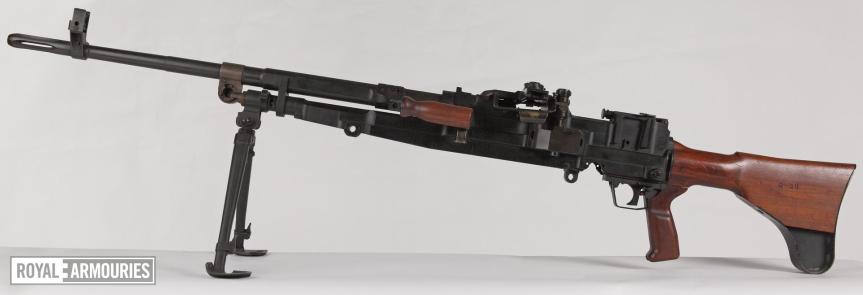
Below are photographs of examples of the three types held at the Royal Armouries:
1
X11E2, note the large cutout in the receiver in front of the trigger group (Royal Armouries)
Belt fed Bren 1
X11E3 (Bren Gun Saga, Dugelby)
Centrefire automatic machine gun - SFMG Experimental Turpin X11E4
X11E4, note double-crescent trigger (Royal Armouries)

The X11 was tested against the M60, French AA-52, Swiss MG51, Danish Madsen-Saetter, German MG-3, and the Belgian FN MAG. The FN MAG, designated the X15E1 by the British, fared best in the trials with the X11 coming second due to its feeding issues. In January 1958, the British abandoned the X11 and moved to adopt the X15E1 general purpose machine gun, negotiating a license for its manufacture. The weapon was finally adopted as the L7A1 in 1961, with production at Enfield beginning in 1963. It seems that the Birmingham Small Arms Company were a latecomer to the competition having developed the another belt-fed Bren gun derivative known as the X16.

The Bren did continue in service after the switch to 7.62x51mm. In 1954, before beginning work on the X11, Enfield had developed the X10E1. Taking a Canadian manufactured 7.92x57mm Bren breech block and converting it to cycle the new round. The X10E1 was formally adopted as the L4. The L4 remained in service, alongside the L7, into the early 1990s. The L7 GPMG continues to be used by the British Army.

If you enjoyed the video and this article please consider supporting our work here.


Bibliography:

The Bren Gun Saga, T. B. Dugelby (1999)
Photographs: Durs Egg Breech-Loading Carbine

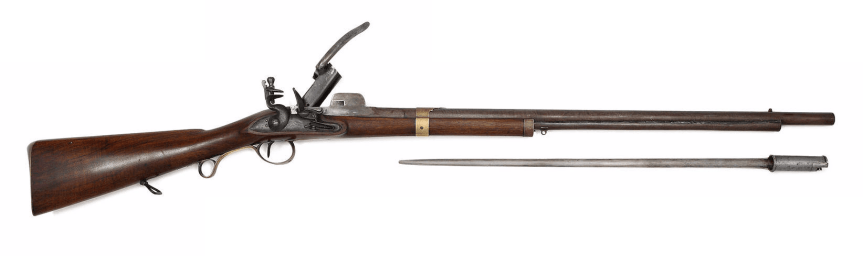
Matt was recently lucky enough to examine a 1785 Pattern Durs Egg Breech-loading cavalry carbine. Based upon Giuseppe Crespi’s breech-loading system, the Egg carbines were tested by British cavalry regiments in the late 1780s. You can check out our full-length article on the weapon here and our video here.

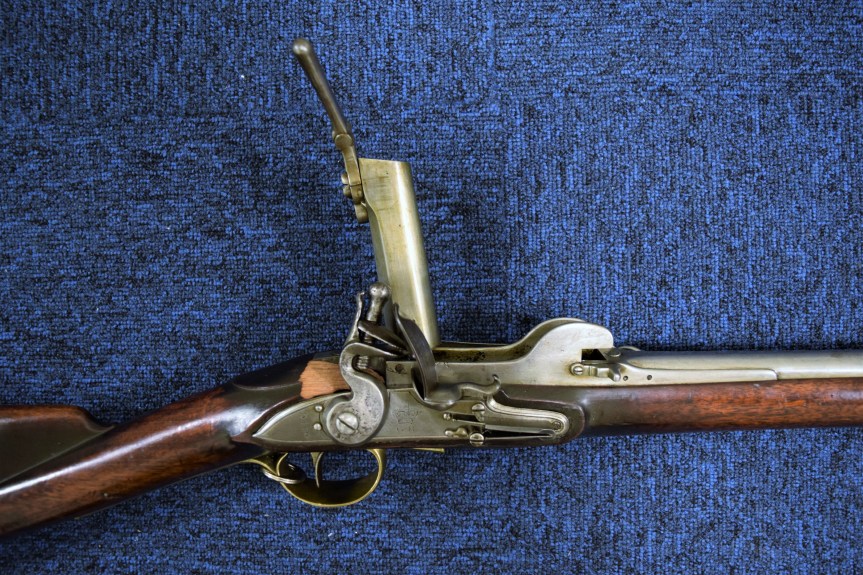
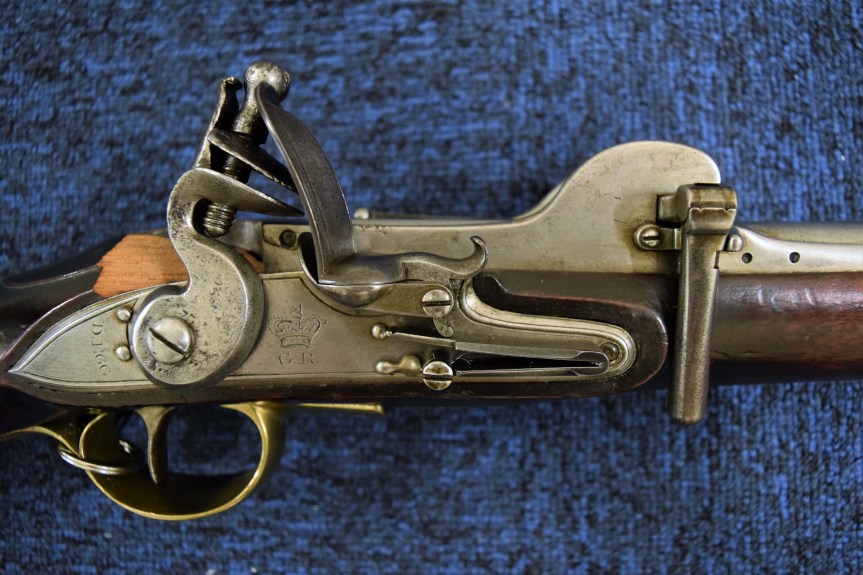
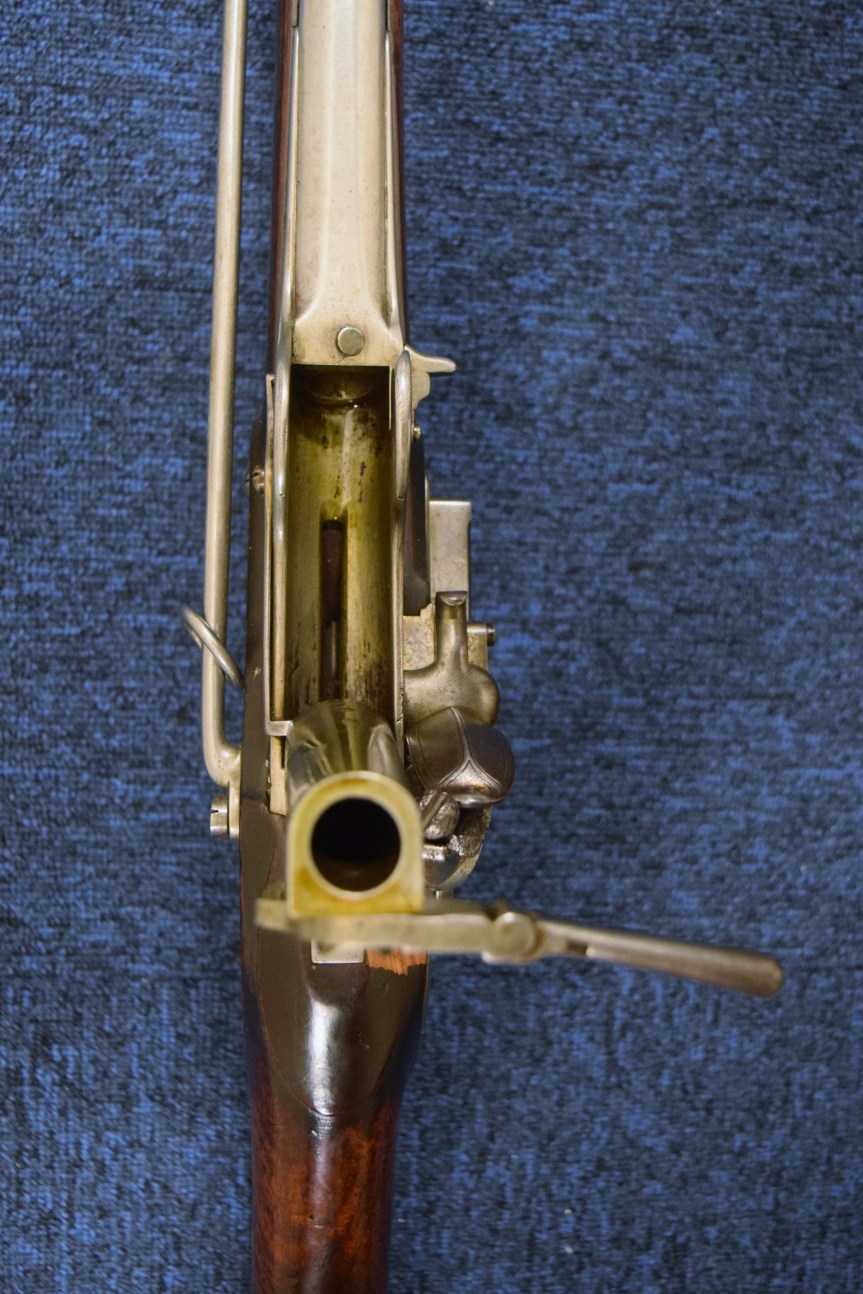
Below are a some photographs I took of the carbine showing some of the details of its design:

DSC_0844
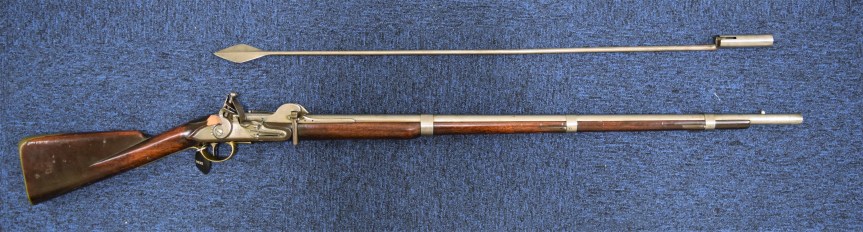
A right-side view of the length of the carbine
DSC_0857
The carbine with its breech fully open from the right-hand, lock side
DSC_0853
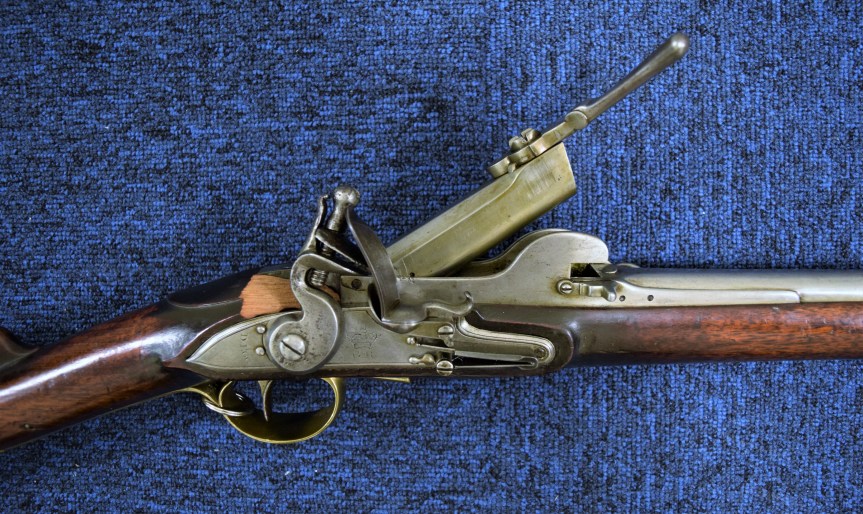
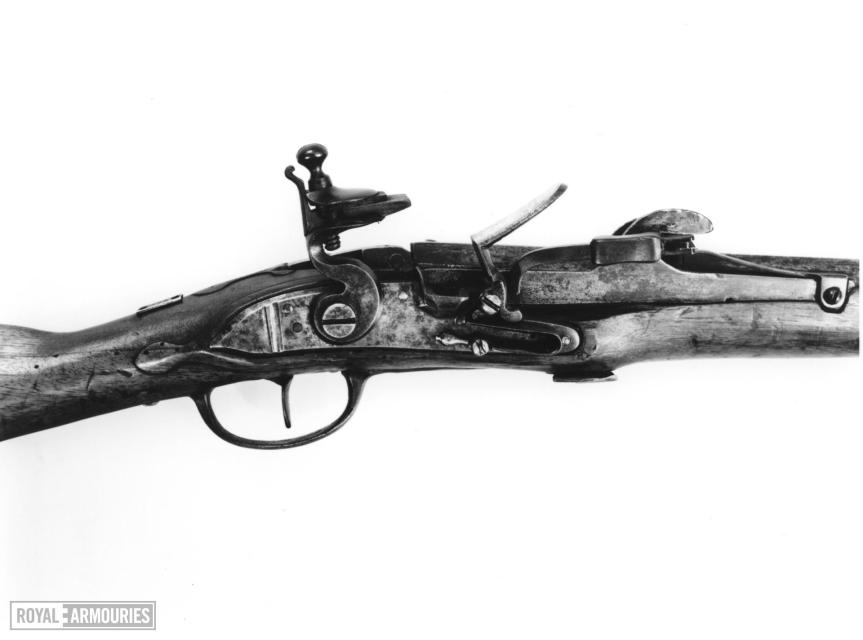
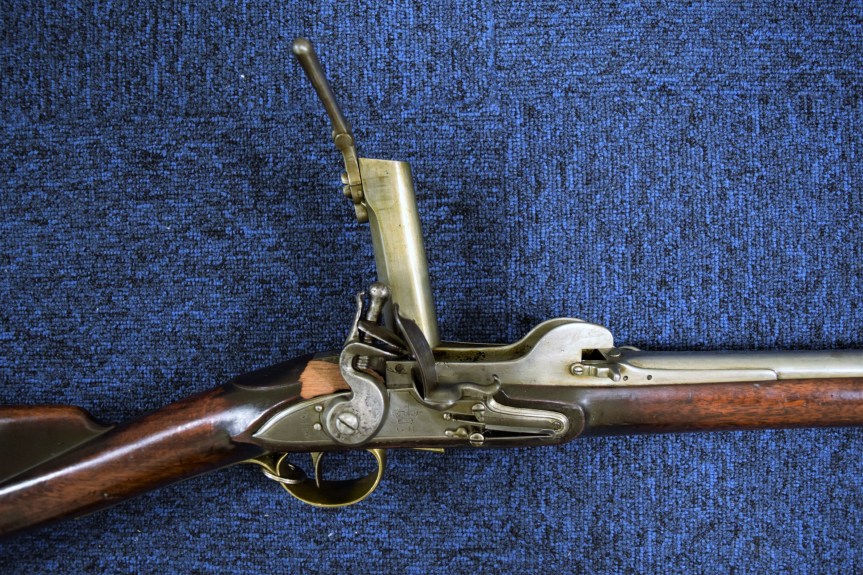
Detail photo of the carbine’s lock and breech handle
DSC_0848
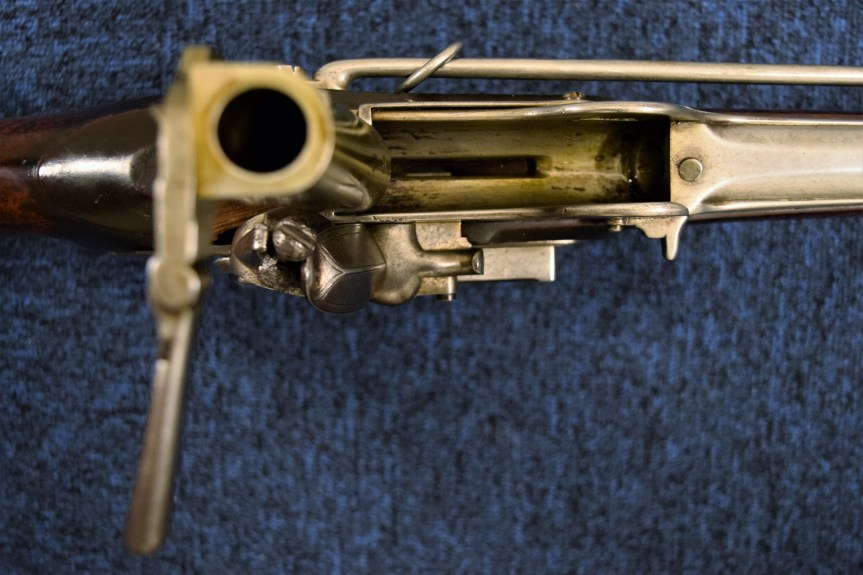
An overhead view of the Egg Carbine’s open breech showing the chamber into which powder and ball were placed
DSC_0849
A closer overhead view of the carbine’s breech
DSC_0850
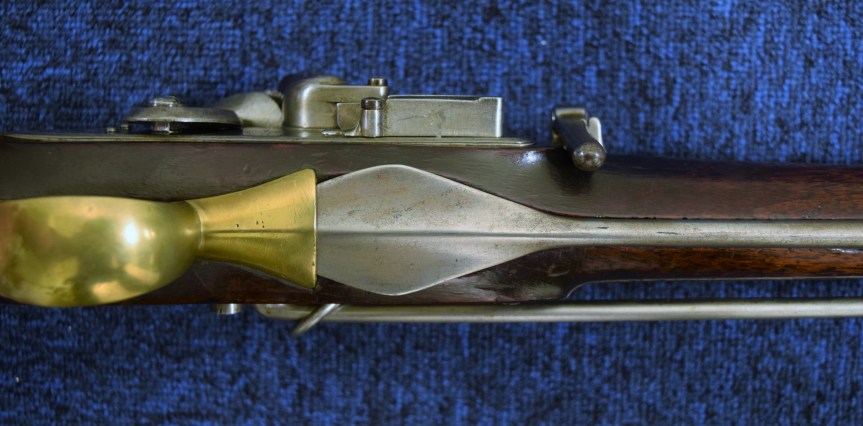
A close up of the carbine’s spear point bayonet showing the extension of the brass trigger guard into which the bayonet point sits
DSC_0856
With the carbine’s breech partially open its possible to see the small touch hole into the breech block, just above the frizzen and pan, which allows the flash from the fan to ignite the powder charge
DSC_0851
The carbine and its bayonet

Our thanks to the collection that holds this example of the Durs Egg Carbine, whom wish to remain anonymous, which was kind enough to allow us access to their impressive array of small arms.

If you enjoyed the video and this article please consider supporting our work here.


All photographs taken by Matthew Moss. Please do not reproduce these images without permission or credit. © The Armourer’s Bench 2018.

Crespi Breech-loading Carbine

In the late 1760s a Milanese machinist/clockmaker Giuseppe Crespi developed a breech-loading system for the Austrian Empire. Working with Ambroglia Gorla Crespi built a practical breech loader which was eventually adopted and fielded by the Austrian army during the 1770s. Crespi’s system is a lesser known contemporary of the Girandoni air rifle.

Crespi and Gorla’s system was designed to be a conversion of standard Austria’s muzzle-loading carbines. It used a hinged breech which tipped up to allow powder and then a ball to be loaded into the chamber. The breech was then closed and the handle locked into a pair of lugs mounted to the barrel. Austrian Emperor Josef II ordered testing of the design and over 350 were initially ordered and delivered by June 1771.

download
A later Crespi System Breech-Loading Flintlock Volunteer Carbine dating from 1810 – note the different orientation of the locking handle (source)

Despite some wrangling over payment a further order for 2,000 guns using Crespi’s system was made in 1772. These were to be made by the Ferlach gunmakers association in southern Austria and Crespi was paid a lump sum settlement for his design. Gorla’s role in the development of the system is unclear and he did not receive a settlement from the government. In 1771, he sued Crespi for his share but the courts threw out his claim in 1778.

Flintlock breech-loading military carbine - Model 1770 (1775)
A 1770 Austrian Crespi breech-loading carbine with a hooked breech arm, held by the Royal Armouries (Courtesy of the Royal Armouries)

The principle problem with Crespi’s system was that it was not gas tight, a problem which plagued many early breech-loading systems. As can be seen in the images above the breech block is flat where it meets the breech. This allowed gas to escape and troops complained the chamber was susceptible to wear. The Crespi carbines were issued to Austrian cavalry with a long bayonet, some sources also suggest a spear point bayonet. The bayonet was carried reversed suspended in the carbine stock.  The Austrian carbines were removed from service in 1779, following numerous reports of men being badly burned by escaping gases and opening breeches during the War of Bavarian Succession.

In 1768, Crespi was also allegedly hired by the Portuguese crown to establish a factory at Coimbra to manufacture guns using his system. By 1776, Crespi no longer had any interests in the factory and it was taken over by Companhia de Armamento who continued to manufacture conventional muzzleloading muskets.

image
An Egg breechloading Carbine which borrowed heavily from Crespi’s design (source)

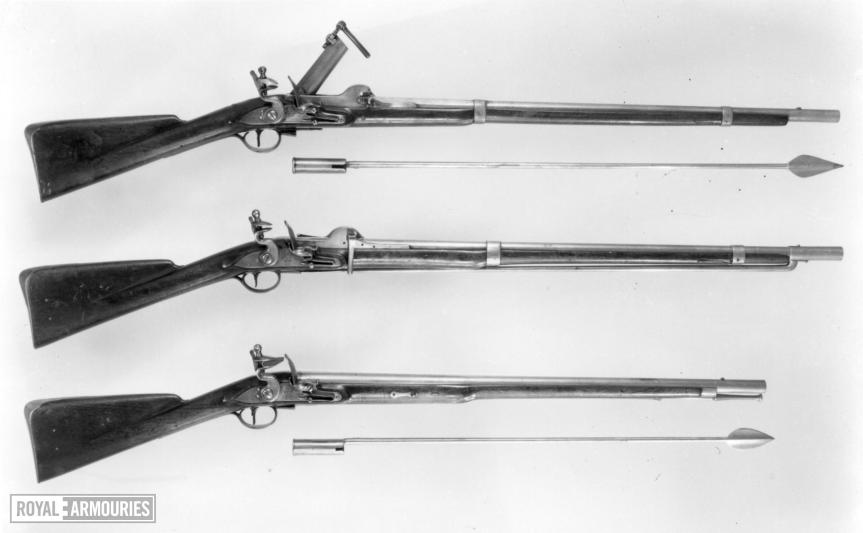
In the early 1780s, the Duke of Richmond became the Master General of Ordnance and ordered a selection of breech loaders for trials. Two of these came from Swiss-born London Gunmaker Durs Egg. Egg’s carbine was a copy of Crespi’s system. The carbines were tested by a board of general officers in July 1784 and it was recommended that the carbine be issued to the Light Dragoon regiments. Egg was paid £31 10s for two carbines with one being presented to King George III and the other retained by the Ordnance office. Sources suggest a further 36 breech-loading carbines were ordered from Egg. In 1786, these were issued to the 7th, 10th, 11th, 15, and 16th Light Dragoons for field trials. These are often reffered to as the Pattern 1785 Egg/Crespi carbines, some of these trials guns were rifled for testing.

DSC_0856
The carbine with its breech partially open. Egg’s carbine was loaded by placing either loose power and ball or a paper cartridge containing power and ball into the breech block (Author’s photograph) 

The Egg carbines were almost as long as a standard issue Short Land Pattern (Brown Bess) musket which was 58 inches or 150cm in overall length. Based on surviving examples it seems the smoothbore Egg carbine was 48.1 inches or 122cm overall while the rifled version was slightly longer at 53 inches or 135cm in length. This combined with the long reach of the spear bayonet, an estimated 35 inches (88cm) long, made for an extremely long weapon – certainly capable of reaching any mounted assailant a dragoon might face while dismounted. Unlike the Brown Bess’ the rifle fired a .60 calibre ball while the smoothbore fired a .68 calibre ball.

A standard dedicated carbine was not introduced for Britain’s light dragoon regiments until 1796. Until then the Short Land Pattern musket had been issued to dragoon regiments. The trials report was returned in 1788, recommending that more experimentation with the rifled carbines should be carried out and that a folding bayonet may be better suited to cavalry use.

Flintlock breech-loading military carbine - Pattern 1785 Egg-Crespi (1785)
Pattern 1785 Crespi-system Egg breechloaders, the second has Hennem’s screwless lock. The carbine at the bottom is a muzzle-loader, all three have the unusual spear bayonet (Courtesy of the Royal Armouries)

The lack of a gas seal at the breech was also criticised and the Duke of Richmond began to explore other designs including those by Henry Nock. Tatham & Egg (Egg’s nephew) continued to manufacture weapons using the Crespi system until at least 1810, when some were made for volunteer yeoman cavalry (with serial numbers ranging up to at least #134). Crespi’s system would be improved by Urbanus Sartoris in 1817, with the addition of an interrupted screw and a moving barrel. Giuseppe Crespi reportedly died in poverty and his breech-loading system became another footnote in the early history of breech loading firearms.

If you enjoyed the video and this article please consider supporting our work here.


Bibliography:

John H. Hall and the Origin of the Breechloader, D.B. Demeritt Jr., (source)

British Military Firearms 1650-1850, H.L. Blackmore, (1961)

The Austrian Army 1740-80: Cavalry, P.J. Haythornthwaite, (1994)

Patents: BESAL Light Machine Gun

On the 21st May 1943, Birmingham Small Arms Ltd.’s chief designer Henry Faulkner, along with Roger Wackrow, patented a series of features used on the BESAL light machine gun. The BESAL had begun life as a stop-gap, emergency light machine gun design which could be quickly manufactured alongside the Bren gun in the event of an imminent German invasion of Britain.

Instead, the design evolved into BSA’s attempt to have the BESAL adopted as a subsitute standard light machine gun. The images below comes from three British patents filed in May 1943 and granted in October 1945. They show the basic layout of the BESAL along with detailed drawings of the sight, universal magazine adaptor, bolt and the take down knob.

You can find our in-depth video, complete with disassembly, here.

For a more detailed history of the BESAL check out our blog on the history of the weapon.


Patents: 

‘Improvements in or relating to gas-operated automatic firearms’, GB572925, BSA, H. A. Faulkner & R.D. Wackrow, 30/10/1945, (source)

‘Improvements in or relating to automatic firearms’, GB572926, BSA, H. A. Faulkner & R.D. Wackrow, 30/10/1945, (source)

‘Improvements in or relating to automatic firearms’, GB572924, BSA, H. A. Faulkner & R.D. Wackrow, 30/10/1945, (source)

Photographs: BESAL

We were recently lucky enough to examine a 3rd Pattern BESAL light machine gun dating from c.1942.  You can check out our full-length article on the BESAL here and our video here.

Below are a some photographs I took of the BESAL showing some of the details of its design as well as its stamped and spot welded constriction:

DSC_0828
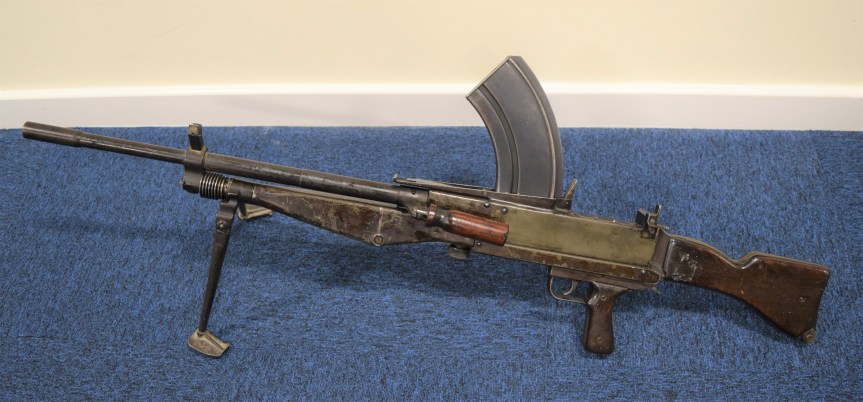
Left-side profile of the BESAL, note the shape of the butt is very similar to that of the earlier Lewis Gun
DSC_0829
BESAL with magazine removed, the weapon appears to use a standard MkII Bren non-adjustable bipod
DSC_0830
Like the Bren, the BESAL has a universal magazine adaptor to allow it to feed from both box and drum Bren magazines

Some close ups of the BESAL

DSC_0831
Top-down view of the BESAL note the offset sights
DSC_0832
Rivet reinforcement of the bolt’s locking recess in the top of the receiver
DSC_0833
Right side – The butt-retention pin can be seen just below the rear sight assembly, this pin is captive and once pulled allows the butt to come off, the bolt and pistol grip can then be removed from the weapon
DSC_0834
Close up of the BESAL’s barrel removal catch – rotate to the rear to remove the barrel
DSC_0835
BESAL’s spring-loaded magazine dust cover closed, note the magazine catch on the left
DSC_0838
A shot from behind the BESAL showing the rear sight and the enclosed front sight, both off set to the left


Our thanks to the collection that holds the BESAL, whom wish to remain anonymous, which was kind enough to allow us access to their impressive array of small arms.


All photographs taken by Matthew Moss. Please do not reproduce these images without permission or credit. © The Armourer’s Bench 2018.

Update!

Thank you to everyone who has taken the time to watch our first two videos, read the blog and leave feedback! We have been so pleased with the response to the launch of TAB.

We realise we have had some issues with audio, we are pleased to say we have finally gotten to the bottom of these problems and the audio should be fine on all platforms and devices now. Today we have uploaded ‘fixed’ versions of both the intro and our video on the BESAL. The old videos will remain up, unlisted, so the comments aren’t lost.

We’ve already had some great feedback which we will be taking on board. The first batch of videos were all filmed over the course of two days back in April so any changes we make to production and presentation will be enacted going forward during our next batch of filming.

Following on from our first videos we will have a series of videos featuring Vic or myself individually talking about a wide variety of weapons ranging from grenade launchers to flintlocks! In the future we hope to continue this but also film more with both of us examining weapons as well as discussion videos.

We hope you enjoyed the first videos and really appreciate all the likes and positive comments we have received so far. We’re excited to share more in the coming weeks. We appreciate your support and simply ask that you help us get the word out about TAB. Share with anyone you think would enjoy our content.

Thanks again!

Matt

BESAL Light Machine Gun

By the Autumn of 1940, Nazi Germany controlled most of mainland Europe, France had surrendered, and the British Army had been forced to evacuate the continent and in the process had lost much of its arms and equipment.

Arms production in Britain was ramped up in order to arm the returning troops and the new units being formed to defend against the imminently expected German invasion. Existing designs like the Bren light machine gun and the Lee-Enfield Rifle were simplified to increase production however new options were also examined. The cheap, quickly manufactured STEN submachine gun was introduced and calls were made for a simplified light machine gun which could be made in any machine or workshop with simple tooling. Even before the fall of France the British Ordnance Board sent out a memo in June 1940, requesting a light machine gun which could be produced in garages and smaller workshops throughout Britain in the event that the Royal Small Arms Factory at Enfield was bombed.

In December 1940, the Chief Superintendent of Design outlined a light machine gun based on the Lewis Gun’s rotating bolt, which fed from Bren gun magazines.

The Birmingham Small Arms company (BSA) were approached to develop a design. BSA tasked their chief designer, Henry Faulkner, with the project. Members of the British Army’s Ordnance Board, however, began to question the decision to have an established manufacturer build a prototype for a gun that was supposed to be assembled in small ad-hoc workshops. As a result the contract was cancelled, however, BSA and Faulkner persisted anyway.

Faulkner, with the help of Roger Wackrow, came up with a weapon which later became known as the BESAL. The design was developed to be simple, cheap and quick to manufacture. The standards of finish were significantly lower than those of the standard Bren then in production. The plan was to issue the BESAL in the event Britain’s armed forces found themselves engaged in a last ditch defence with German invasion either imminent or already underway.

Faulkner’s design was chambered in .303 and fed feeding from standard Bren gun curved box magazines. It used a basic trigger mechanism, a simple pressed gas cylinder and a body held together by pinning and spot welding. The first prototype had a folding but non-adjustable bipod and a skeleton butt stock with a wooden insert. With the manufacture of barrels expected to be a bottleneck to the weapon’s production it was suggested that the spare barrel issued with each Bren gun be recalled for use in the new BESAL. This clearly illustrates just how desperate the situation was expected to be. The first prototype BESAL was ready by late 1941, and testing began in March 1942. The BESAL proved to be reliable and effective during trials.

Faulkner’s design went through a number of iterations but the gneral design had been finalised by May 1942 when BSA, Faulkner and Wackrow filed three patents protecting the design. The principle feature of the later BESAL patterns was the use of a cocking system which saw the operator push the pistol grip forward to catch the bolt, and then pull it to the rear to cock the weapon. This is a system that was later seen in the Czechoslovakian Vz 52/57, 59 series and the Finnish KVKK-62 general purpose machine gun.

Iterations of the BESAL:

1st Pattern: 

Besal 2 001

(Artists impression of 1st BESAL prototype – from Dugelby’s Bren Gun Saga)

  • Right side cocking handle
  • Skeleton butt
  • Simple fixed peep sight
  • Non-adjustable bipod mounted on the receiver

2nd Pattern:

Besal 3 001

(Photograph of a 2nd Pattern BESAL with a pan magazine, note the right-side cocking handlefrom Dugelby’s Bren Gun Saga)

  • Bipod moved to front of the gas tube
  • Universal magazine adaptor fitted for Bren and Motley Pan magazines
  • Full wooden stock – similar in profile to the Lewis Gun’s
  • 2-position sight
  • Disassembly knob introduced

3rd Pattern:

besal1
A 3rd Pattern BESAL (Matthew Moss)


  • Pistol grip cocking mechanism replacing the conventional cocking handle

4th Pattern:

Besal 4 001

(Photograph of a 4th Pattern BESAL, note the selector on the pistol grip – from Dugelby’s Bren Gun Saga)

  • Introduction of a selector switch on the left side of the weapon’s pistol grip

In August 1942, BSA submitted the 3rd Pattern Prototype for trials. It was extensively tested between September and November 1942. On 6th January, 1943, BSA renamed the BESAL the ‘Light Machine Gun, Faulkner, 0.303-In Mk1’ in order to prevent confusion with the 7.92x57mm BESA machine gun used in some British tanks. The BESA, also produced by BSA, used a similar pistol grip cocking mechanism. We hypothesise that the the BESAL’s name might come from the BESA, meaning BESA-Light. This, however, is unconfirmed.

It seems that over time as BSA and Faulkner improved and refined the design the BESAL ceased to be a cheap, simple, quickly-made alternative to the Bren. Instead it appears that BSA hoped the weapon might be adopted as a somewhat cheaper substitute standard to the Bren. Final testing of the BESAL were held in March 1943, but by now the weapon’s original purpose had been made defunct by the huge increase in Bren manufacturing capacity. By 1943 the Bren was in production on four continents: at Enfield in the UK, at John Inglis in Canada, at Ishapore in India and Lithgow in Australia. Inglis alone was producing 10,000 Brens a month by 1943.

With the need for a new light machine gun gone the BESAL project was cancelled in June 1943. BSA produced an estimated 20 guns, of various patterns, during the BESAL development project. Today, it is believed that only a handful remain.

If you enjoyed the video and this article please consider supporting our work here.


Technical Specifications:

Length: 118.5cm (46.6in)
Weight: 9.7kg (21lb 8oz)
Barrel Length: 56cm (22in)
Action: Gas operated, short recoil
Calibre: .303
Feed: 30-round Bren box magazine or 100-round Motley pan magazine
Cyclic Rate: 600rpm


Bibliography:

The Bren Gun Saga, T. B. Dugelby (1999)

Bren Gun, N. Grant, (2013)
Military Small Arms, I. Hogg & J. Weeks (1985)
Modern Small Arms, F. Myatt (1979)

Patents: 

‘Improvements in or relating to gas-operated automatic firearms’, GB572925, BSA, H. A. Faulkner & R.D. Wackrow, 30/10/1945, (source)

‘Improvements in or relating to automatic firearms’, GB572926, BSA, H. A. Faulkner & R.D. Wackrow, 30/10/1945, (source)

‘Improvements in or relating to automatic firearms’, GB572924, BSA, H. A. Faulkner & R.D. Wackrow, 30/10/1945, (source)


Welcome to The Armourer’s Bench!

Welcome to The Armourer’s Bench and thanks for taking the time to read this. We’re very excited to launch this new project looking at the history of the most interesting small arms we can find!

For Vic and myself, TAB is a labour of love. We love history and we love firearms. We’ve both long been working in the field, and if you’re interested, you can read a little more about our backgrounds here.

We are eager to bring you the history, technical detail and stories behind these guns so we will be bringing you in-depth videos profiling individual weapons, videos looking at the evolution of weapons and also discussion videos where we delve a little deeper into the history. Vic has a wealth of experience and anecdotes from his time as an armourer and will be looking for any excuse to share those too!

TAB will bring you videos, blogs and hi-res photos to tell the whole story of the weapons. Where possible each video will have an accompanying blog post going into even more detail about the weapons and also sharing contemporary video, photos and the research sources we have used. As a historian I’m eager to enable those who want to, to dig deeper into the stories of the weapons we cover and the best way to do that is share where we found our information.

Now you’ll appreciate we’re new to this and the learning curve has already been steep! A lot goes into a project like this, more than even we expected! We’ve had to learn fast. I’ve spent a lot of time setting up the back-end of our site and various social media channels and Vic has been hard at work perfecting his video editing skills.
Our presentation skills might feel a little clunky at first – we might not be looking at the camera at the right times and we might struggle to get things in frame (especially with a certain cavalry carbine we have coming up). But we’re quick learners and I know you guys will be patient with us as we work on becoming as slick as our esteemed colleagues on other channels. We also welcome input from you guys, our viewers and readers, so if you have more information on something or even some helpful constructive criticism we’re happy to hear it.

We are currently in contact with a number of collections and museums and are excited to work with new partners to film the content that we think you guys will enjoy and that we ourselves really want to watch!

It’s early days for us but we hope you’ll enjoy this project as much as we have enjoyed making it so far. So don’t forget to bookmark armourersbench.com and subscribe over on Youtube, and we also have a facebook page which we’ll keep updated. We hope to be posting weekly videos and alongside that frequent blog posts and as much content as we can create!

Thanks,
Matt