This week we examine a Polish film 303 Squadron (Dywizjon 303) with Jennifer Grant, a postgraduate researcher focusing on the Polish Armed Forces in the West during the Second World War. With Jenny as our wingman we discussed the nuances and missed opportunities of this film which follows the exploits of the RAF’s first operation fighter squadron made up of Polish pilots. Immortalised first in 1969’s The Battle of Britain and also revisited in another 2018 film Hurricane, 303 Squadron has a fascinating history but we ask the question – does this film do them justice?
Grab your SLR and LAW 80 and jump in the back of the FV432, the Soviet 3rd Shock Army is on the advance! This week we dive into a pair of British Army training films Fighting In Woods (1982) and Soviet Encounter (1983) with Dr. Kenton White – an expert on the Cold War British Army. These well-made films show a potential (and somewhat optimistic) scenario of how the British Army would have fought the Warsaw Pact if the Cold War had ever gone hot!
During the Cold War the British Army on the Rhine was deployed in West German. In anticipation of a conflict with the Soviet Union detailed recognition guides were written for British troops to identify and familiarise themselves with enemy weapons and equipment. A substantial series of these were written covering everything from small arms to artillery to vehicles and aircraft.
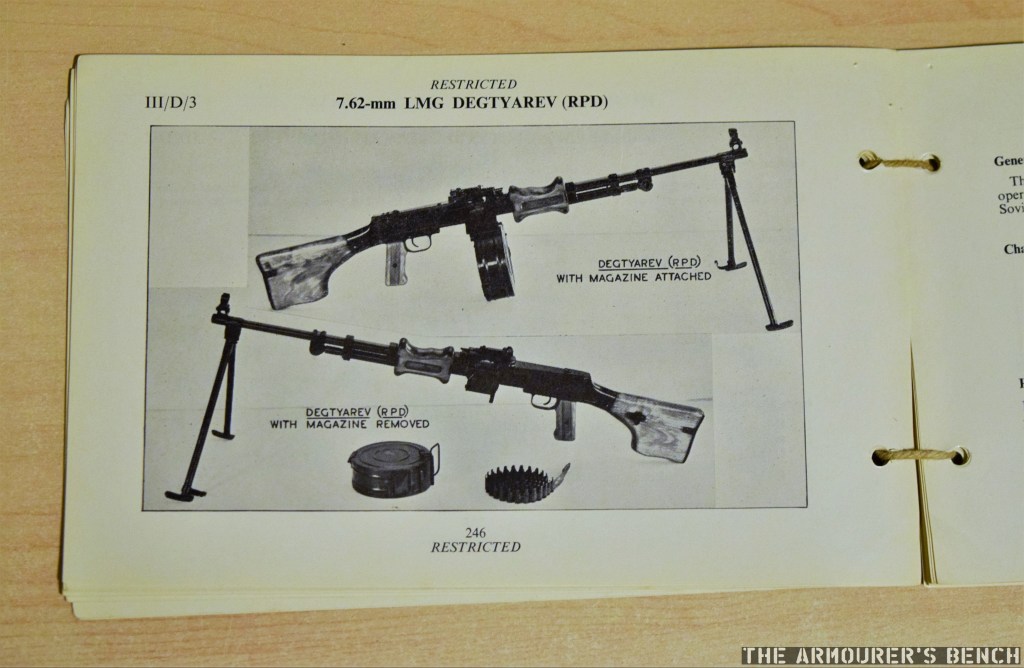
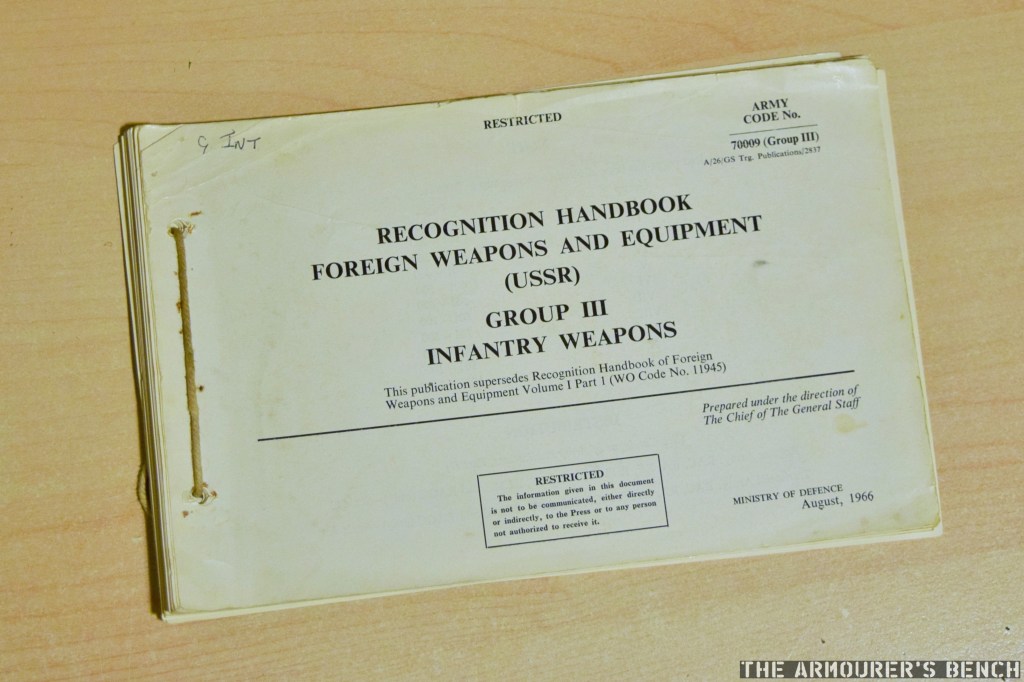
In this video and article we will examine ‘Recognition Handbook Foreign Weapons and Equipment (USSR) Group III Infantry Weapons’ originally published in August 1966. It covers pistols, carbines, rifles, light, medium and heavy machine guns, grenades and some infantry anti-tank weapons like the RPG-2.
RPD (Matthew Moss)
The Recognition Handbook is about 100 pages long while the wider series encompasses 12 booklets at approximately 1,200 pages. Each entry in the handbook includes general description of the weapon, its characteristics and recognition features to help identify it. The Handbooks are more detailed version of the smaller Threat Recognition Guide booklets which we have looked at previously.
Below is the two page entry covering the ‘7.62mm Assault Rifle Kalashnikov (AK-47)’ with a general description, characteristic and some recognition features.
AK-pattern rifle (Matthew Moss)
Sources:
‘Recognition Handbook Foreign Weapons and Equipment (USSR) Group III Infantry Weapons’, British Army, 1966 Warsaw Pact Small Arms’, British Army, 1986, (source)
If you enjoyed this video and article please consider supporting our work here. We have some great perks available for Patreon Supporters. Thank you for your support!
A quick update, a Patreon supporter messaged us and explained that they’ve stopped supporting Armourer’s Bench because we haven’t been posting table top gun videos for a while. Which is fair enough. So just wanted to let you guys know why that is. I (Matt) will be getting back to those sorts of videos but I lost a hard drive with most of my research notes and raw video on about 3 months ago – recently confirmed dead by an IT engineer that was looking at it.
The drive had a lot of footage, photos and research material stored on it. So for the last few months I’ve been working with what I’ve got to hand. Sadly, I lost an almost complete mini documentary on the Blacker Bombard that I’d been working on for a couple of months including some animations I’d made. I also lost material for the Sten project and research notes for videos on a number of Winchester prototypes.
I just wanted to let you know why there haven’t been ‘table top’ vids. The loss of the drive has been a real blow to be honest, my auto-back up was not as thorough as I thought it was. My fault, I should have doubled checked.
But rest assured content continues and I’m currently piecing things back together, finding contemporary footage, going back through my SD cards for video and photos I’d taken, which was lost on the drive, and working out what research has been lost.
In the meantime I have some exciting videos coming up including a look at more Second World War and Cold War manuals, a mini doc on the Vickers Gun in the Rhineland and a look at some British Second World War body armour.
I also wanted to let you know I’m planning a bit of a Patreon revamp with some new perks – a sticker pack perhaps and some other things. I would love to hear your ideas on what you’d like. In the past I have mentioned a supporter credit screen at the end of videos with the names of supporters who help keep the project going but I would welcome your thoughts and ideas!
Anyway, just a quick update on some technical difficulties and what’s coming up!
Join us for the fifth edition of our Show & Tell series were we discus ‘Valley of Tears‘ (2020) which takes place during the Yom Kippur War and ‘A Breed of Heroes‘ (1994) following a British officer during Operations in Northern Ireland.
In August I had the opportunity to visit the National Army Museum in London and take a look around some of their current exhibitions. One of these was one titled “West Indian Soldier” which ran from 19 May through to 31 October. The museum described it as a special exhibition to explore the role of West Indian Soldiers in the British Army over the past 300 or so years.
The exhibition was much smaller than I had expected, comprising of just one smallish room but nevertheless efforts had been made to combine items artefacts, art work and videos in an engaging way.
It covered the origins and creation of the various West India Regiments that have historically been a part of the British Army and looks at the West Indies contribution in conflicts ranging from the Napoleonic Wars through to the Great War and the Second World War as well as looking at the continuing service of personnel from the West Indies today with some video interviews with former and serving personnel rounding out the exhibition. The exhibition looked at the experiences of both black and white West Indians who served in both the West India regiments and the wider British army as a whole.
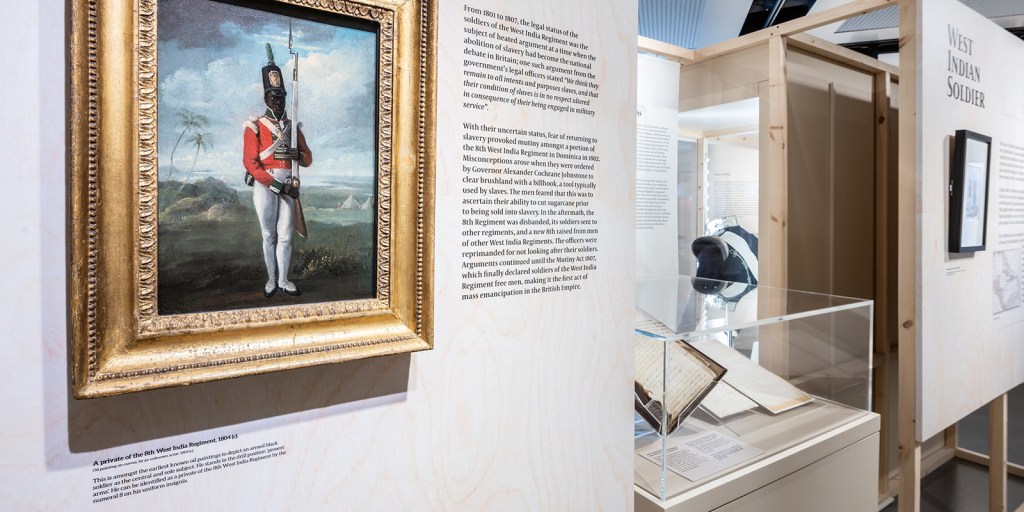
Inside the exhibition (National Army Museum)
The exhibition explains that the West Indian Regiments were formally a part of the British Army and not a colonial unit or militia. It does not side step slavery’s role in the West Indian regiments‘ history with various letters from the 1760s through to the 1800s illustrating how slaves were bought to fill the regiment’s ranks. Some 13,000 newly enslaved men were bought over 50 years up until 1807 and the British abolition of slavery.
The West Indian Regiments took various forms over the years and the exhibition did a good job of explaining this and some of the key parts of their role and history. The exhibition has a number of highlights including a number of Victoria crosses including that of Lt. Frank de Pass. De Pass was of West Indian decent and was posthumously awarded the VC in late 1914. The colours of the 4th West India Regiment are also on display along with uniforms, correspondence and a striking portrait of a private from the 8th West India Regiment, painted in 1803.
Notably the exhibition also outlines how during both world wars the War Office did not make use of the West Indies regiments as combat troops in several theatres, instead often using them a labourers. Often as on the Western Front where they were tasked with dangerous work in ammunition dumps.
I would have preferred to have seen an exhibition with a slightly larger scope but despite its small size the exhibition outlined the regiments’ history and the important, interesting and often under-appreciated role the West Indian’s soldiers played in the history of the British Army. Perhaps this is something that can be revisited approaching the West India Regiments’ 230th anniversary in 2025.
Additional Reading:
‘West Indian Soldier Exhibition’, National Army Museum, (source)
West Indian Soldier Exhibition Virtual Tour, National Army Museum, (source)
‘West India regiments: the story of slavery in the Army’, Forces News, (source)
‘The West India Regiments’ , National Army Museum, (source)
‘The West Indian Soldier’, The West India Committee, (source)
‘The Story of the British West Indies Regiment in the First World War, Imperial War Museum, (source)
‘West Indian Soldier: Interactive Timeline’, National Army Museum, (source)
If you enjoyed this video and article please consider supporting our work here. We have some great perks available for Patreon Supporters. Thank you for your support!
We are zipping up our Denisons, checking our Rifle No.4s and climbing aboard our Horsa Glider for this week’s look at the brand new Dutch war film ‘The Forgotten Battle‘, directed by Matthijs van Heijningen Jr. it boasts the second largest budget ever for for a Dutch film at around €14 million. With a cast of British and Dutch actors ‘The Forgotten Battle’ is sett during the the Battle of the Scheldt in 1944.
The film is an ambitious attempt to combine three storylines into a film just over 2 hours long. Competently made with some decent performances and a real eye for Mise-en-scène and atmosphere. The Forgotten Battle attempts to cram in too much and largely forgets the ‘Forgotten Battle‘ of the title. While the film brings us three engaging and potentially fascinating story lines that tackle the moral choices that faced soldiers and civilians alike during war, however, there is not enough time or space for them to all develop and ‘The Forgotten Battle’ may have been better adapted as a limited series. We explore all this in this week’s episode!
Earlier this year I had the pleasure of filming some segments on small arms for the new documentary on the Rhineland Campaign – ‘Rhineland 45‘. Not all of the segments I filmed discussing weapons could be included in the finished documentary – I filmed quite a few – so I’m pleased to share a couple here. This short video examines the Rifle No.4 (Lee-Enfield) used by British and Canadian troops during Operations Veritable and Varsity. This video was filmed at the Vickers MG Collection and Research Association.
Check out the first video of this series on the use of the PIAT here and our video on the Panzerfaust & Panzerschreck in the Rhineland here and our video on the STENs used in the Rhineland.
If you enjoyed this video and article please consider supporting our work here. We have some great perks available for Patreon Supporters. Thank you for your support!
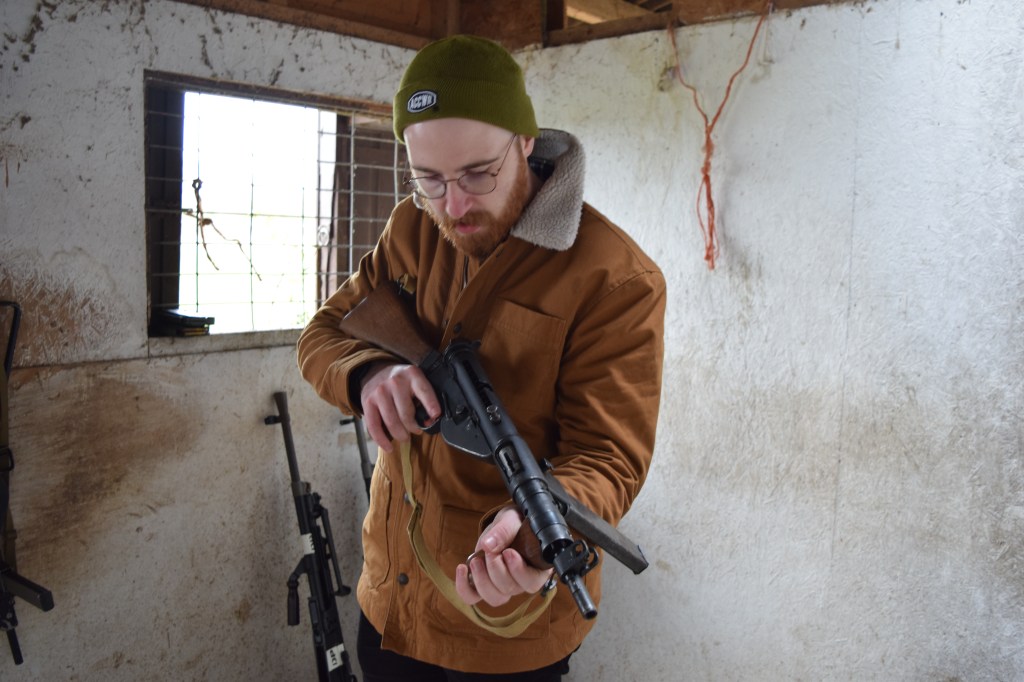
Earlier this year I had the pleasure of filming some segments on small arms for the new documentary on the Rhineland Campaign – ‘Rhineland 45‘. Not all of the segments I filmed discussing weapons could be included in the finished documentary – I filmed quite a few – so I’m pleased to share a couple here. This video examines the various marks of STEN gun used during Operations Veritable and Varsity. This video was filmed at the Vickers MG Collection and Research Association.
Check out the first video of this series on the use of the PIAT here and our video on the Panzerfaust & Panzerschreck in the Rhineland here.
If you enjoyed this video and article please consider supporting our work here. We have some great perks available for Patreon Supporters. Thank you for your support!






 The Armourers Bench