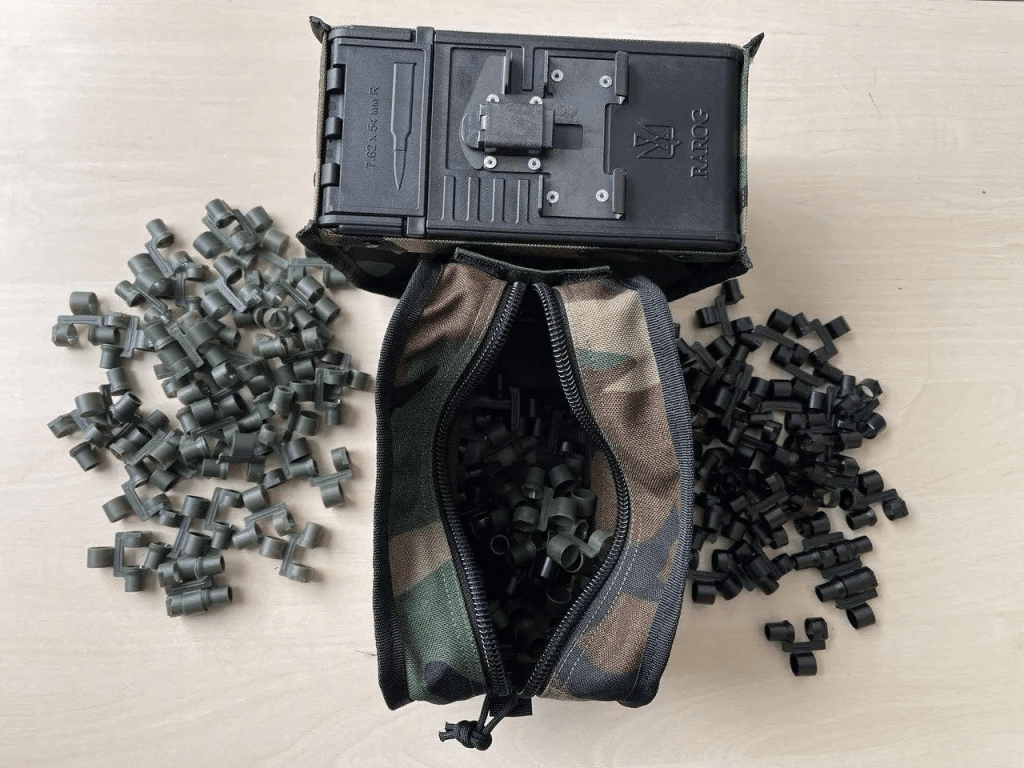
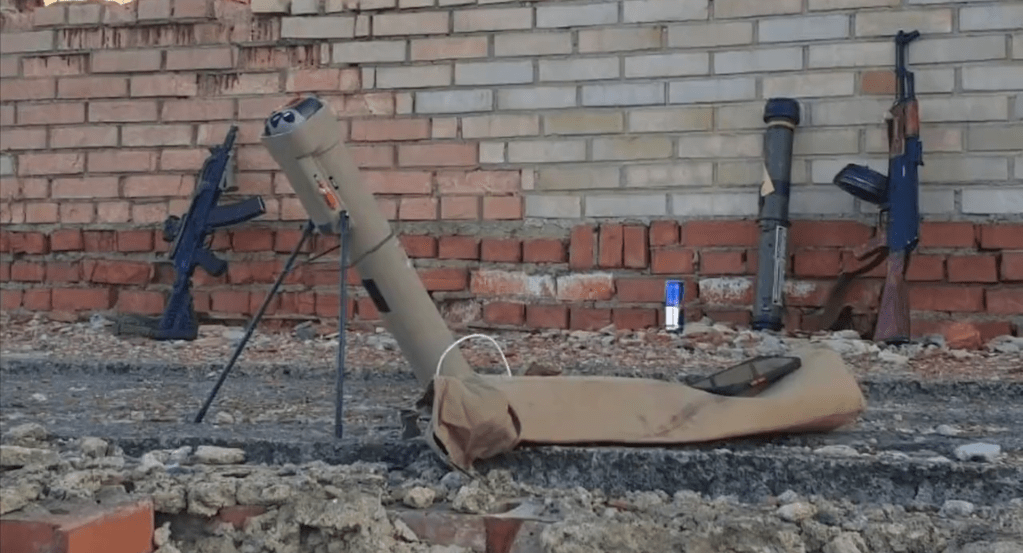
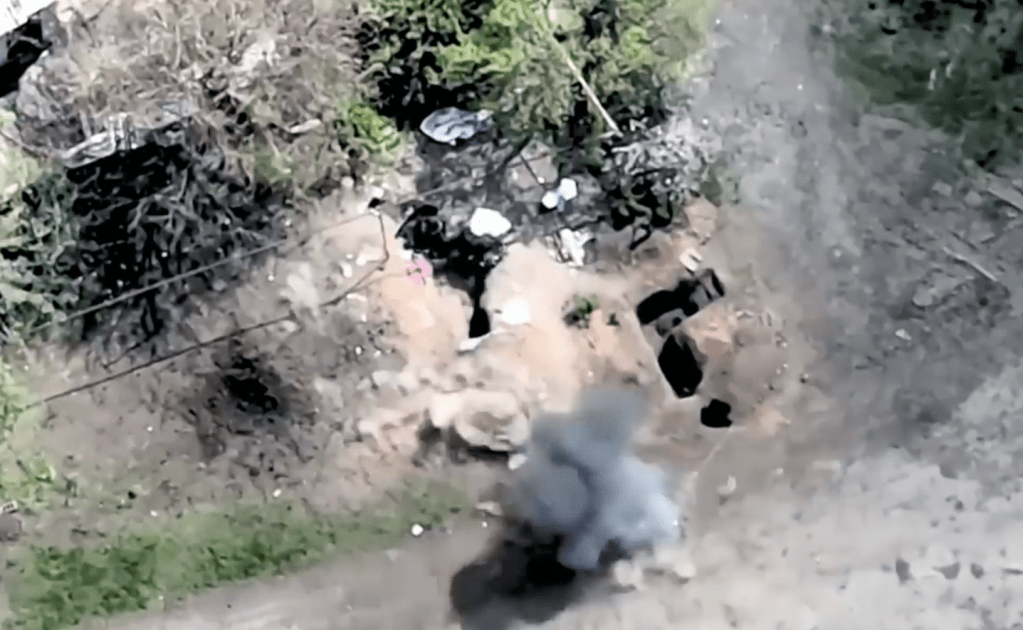
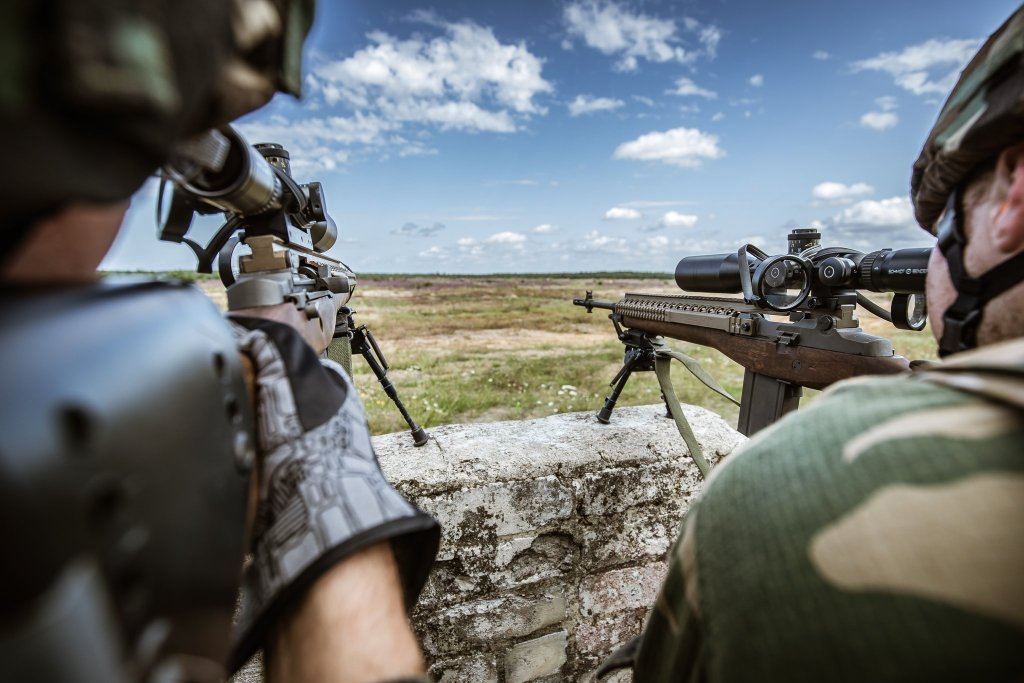
The project to increase EOD hazard awareness with playing cards comes from Fenix Insight and Cold War Collectables who kindly sent me a pack. Each card features a photograph and designation of various ordnance ranging from small arms, grenades, RPGs, anti-tank mines to cluster munitions, Grad rockets and air dropped thermobaric bombs.
“The war in Ukraine has left vast quantities of abandoned and unexploded ordnance (bombs, grenades, landmines, missiles, rockets, shells etc) scattered across the country. These munitions pose a major risk to everybody living and working there, including local people, aid workers and soldiers. Awareness cards can help save lives.“
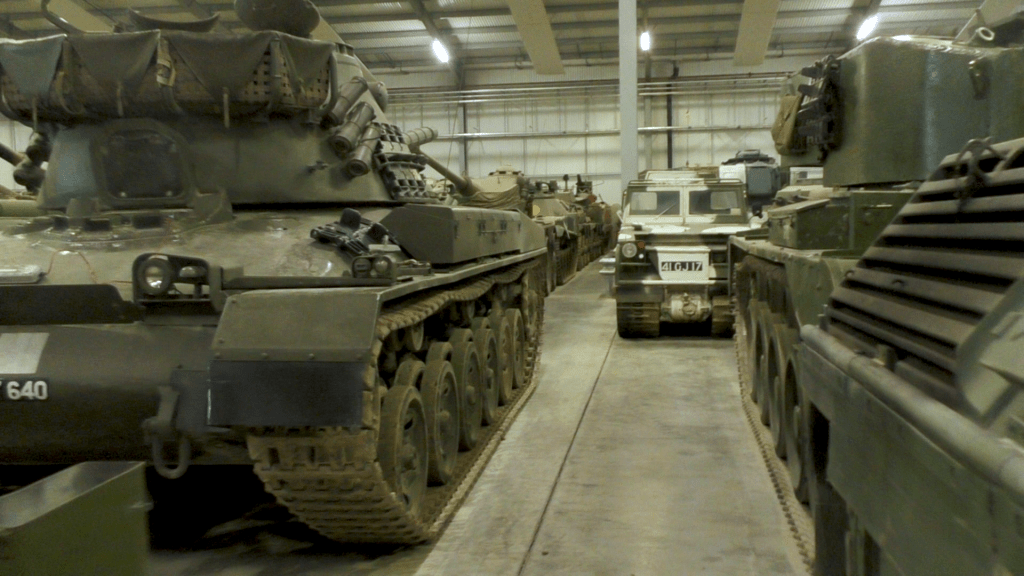
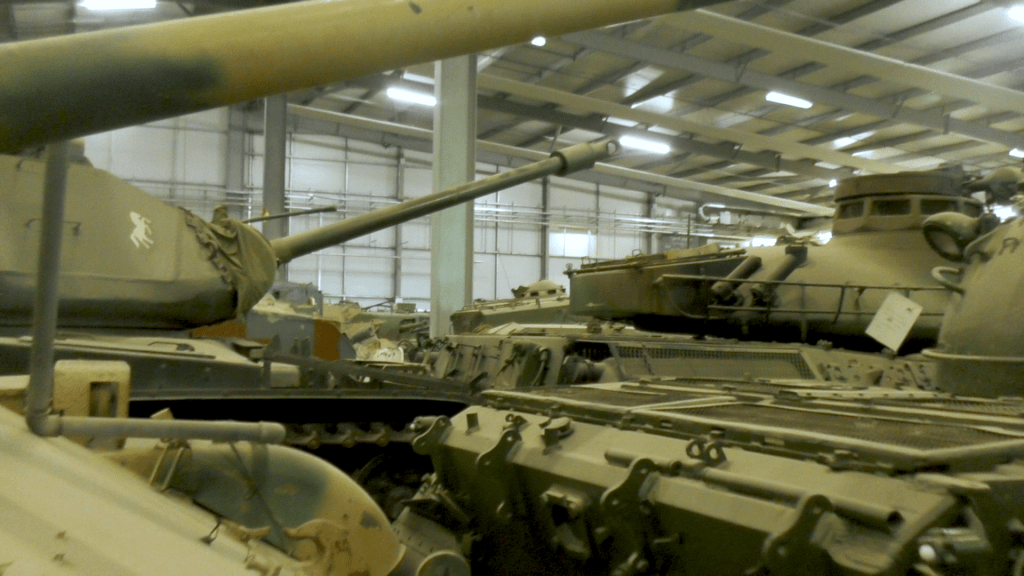
I didn’t get to speak to as many people as I would have liked to but hopefully this rough and ready walk around video, looking at some of the other displays, will give you and idea of what the great little event was like.
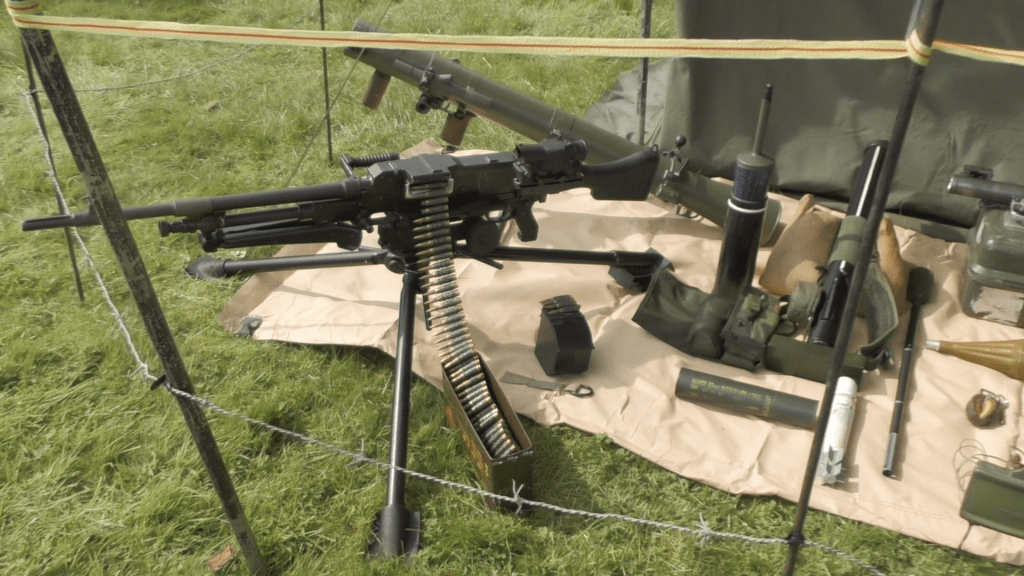
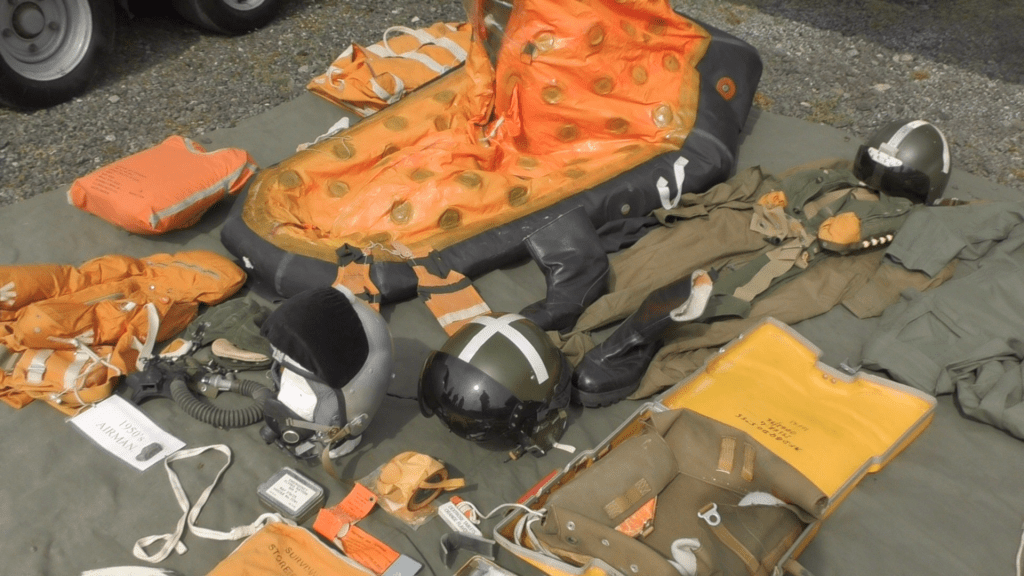
Lots of vehicles and jeeps in attendance including the cockpit of an RAF Jet Provost trainer aircraft. There were a number of Cold War British Army displays showing off British Army of the Rhine and Falklands War era kit along with a few Land Rovers. Next to them was a really interesting Bundeswehr display. There was an Operation Banner inspired checkpoint at one of the bunker’s gates and inside the bunker there was another Malaya display with some interesting ephemera from the Foreign Field Living History Group.
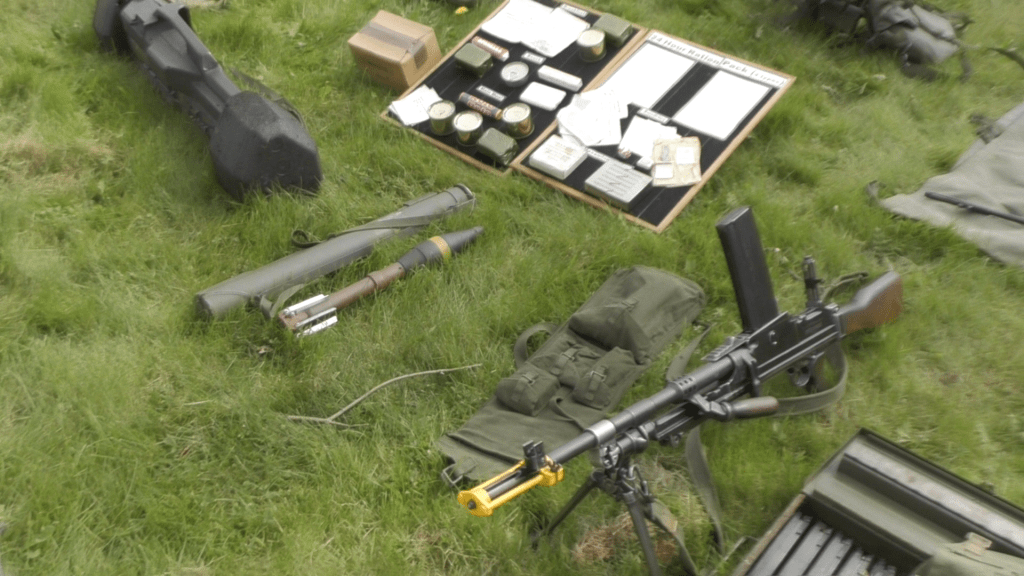
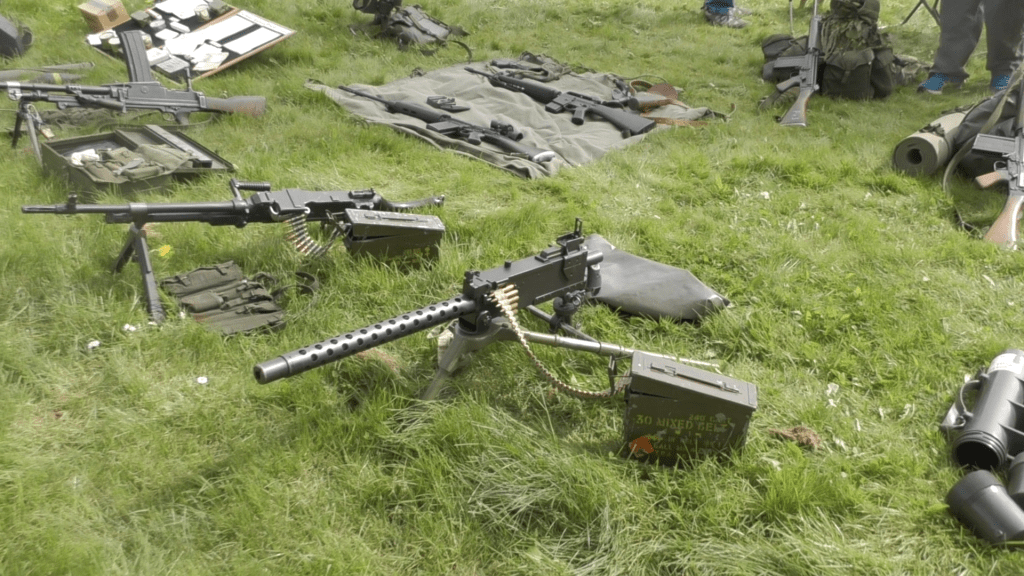
Back outside in the bunker’s grounds there was a display of Cold War communications, medical and other assorted kit. Alongside the MECo Malayan Emergency display there was also a sizeable British Army in the 1980s display from the Forces 80 group which included GPMGs, Brens, L1A1 SLRs, 66mm LAWs and a LAW80 which was a nice surprise.
There were some other small but interesting displays on civil defense, numerous smaller communist militaries, the Chinese PLA and the Swiss Cold War Army. All in all some really interesting displays at a pretty unique venue.
If you enjoyed this video and article please consider supporting our work here. We have some great perks available for Patreon Supporters – including custom stickers and early access to videos! Thank you for your support!
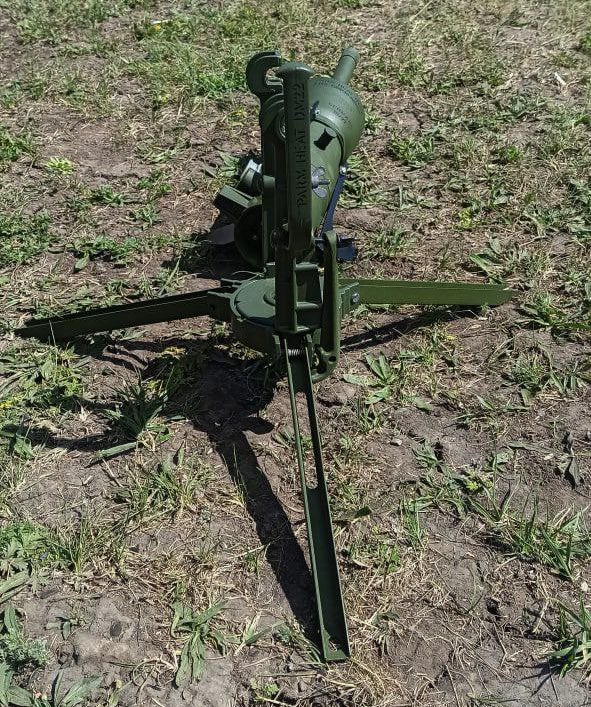
While there has been much discussion of Germany’s transfer of RGW90 (Matador) anti-armour weapons, MANPADS and Gepard anti-air systems one weapon which has been overlooked is the DM-22 PARM.
The initial version of the mine, the DM12 PARM 1 or Panzerabwehrrichtmine was developed in the late 1980s and it entered Bundeswehr service in the early 1990s. An improved mine the DM22 PARM 2 entered production in the late 1990s. The weapons are directional anti-tank mines. These are sometimes described as off-route mines – a concept we have looked at before in our video on the British L14A1 off-route mine. The mines are deployed with a 40 meter long fiber optic trigger cable, which is laid over the area to be blocked. If there is contact with the cable, such as a vehicle driving over it, the directional mine is triggered. The mines can also be remote detonated.
sPiBtl 901 training with a drill DM22 (Bundeswher)
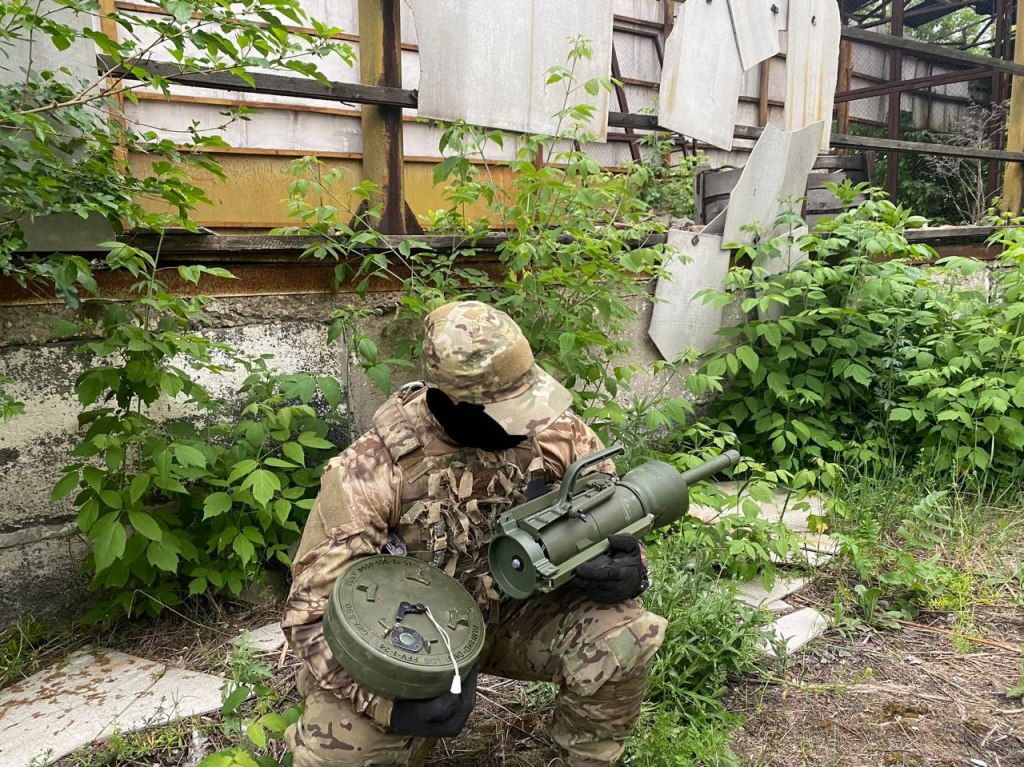
The mine fires fin stabilised HEAT warhead which can accurately strike targets up 40 meters (for the DM12 PARM 1) and up to 100 meters away (for the DM22 PARM 2). Data on what the mine’s shaped charge can penetrate varies but it is capable of penetrating more than 100mm of rolled homogenous armour. The mine is made up of a warhead and a firing unit – these are mounted on a tripod which is manually sighted using a set of iron sights on the top of the mine.
Once aimed across the expected area of enemy movement the trigger cable can be deployed. The fibre optic cable can be replaced with a passive infrared sensor which extends the mine’s triggering range out to 60m. The DM22 PARM 2 is said to have a more complex sensor, an effective range of 100 metres and enhanced penetration.
A photograph of a DM-22 said to be in Ukraine which surfaced in late April 2022 (via social media)
Both mines are still in German service but only DM22s have been sighted on the ground in Ukraine so far. The first examples were photographed around the 25 April and the example was said to have been captured by Russian forces in the Izyum region. Since then further captured examples have been photographed during May 2022. The mines appear to have manufacture dates ranging from October 1997 to September 1998.
A photograph of a DM-22 said to be in Ukraine which surfaced in May 2022 (via social media)
According to a Spiegel report, from 17 May, Germany transferred 1,600 DM-22 off-route anti-tank mines and 3,000 DM-31 conventional anti-tank mines. It is unclear if there are further shipments planned. At this time there’s no data on if they’ve been used in the field and if they have how effective they’ve proven. The current nature of the fighting would certainly appear to suit the intended purpose of the mines for use denying axis of advance and ambushing enemy vehicles.
Update 2/06/2022:
Further images of the DM22 with Ukrainian forces have been shared.
Update 19/10/23:
Germany has delivered nearly 15,000 mines to Ukraine and plans to restart production of the DM22 to replenish Bundeswehr stocks.
The Budget Committee of the German Bundestag yesterday approved funds worth more than 4.4 billion euros for the Bundeswehr. Included were 68 million euros for a re-procurement of DM22 off-route anti-tank mines, which were delivered to Ukraine.
If you enjoyed this video and article please consider supporting our work here. We have some great perks available for Patreon Supporters – including custom stickers and early access to videos! Thank you for your support!
Bibliography:
Report on German Transfers of Mines to Ukraine, Spiegel, (source)
Germany sent anti-tank grenade launchers and mines to Ukraine, Mil.In.UA, (source)
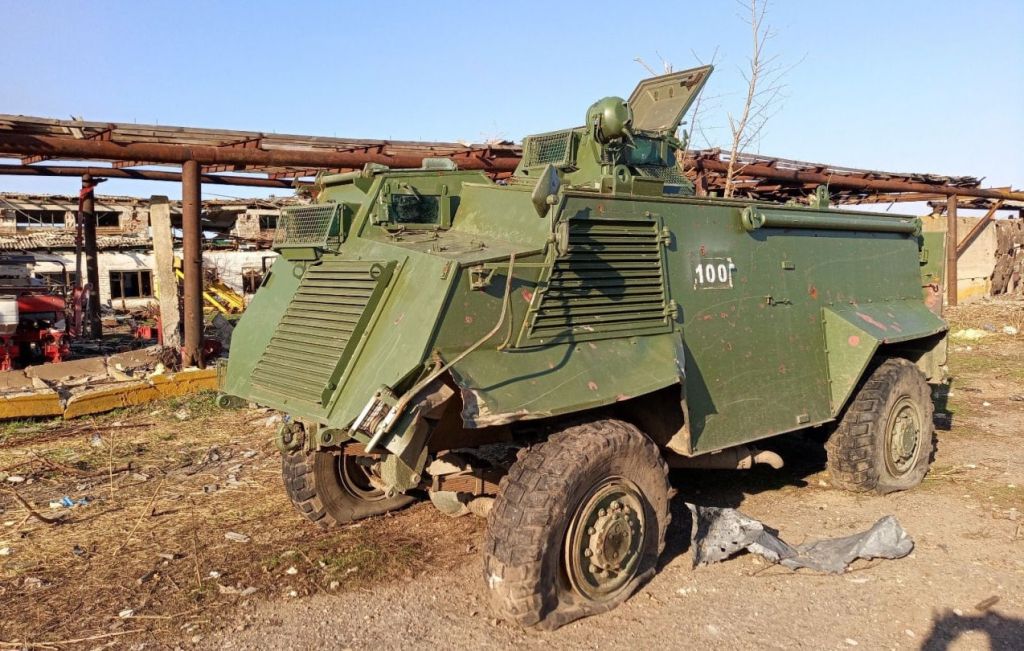
The fighting in Ukraine has frequently drawn comparisons with the Cold War and while plenty of Eastern Cold War vehicles have been seen in use one of the interesting Western Cold War warriors seen action is the Saxon armoured personnel carrier.
Knocked out Saxon APC (via social media)
The AT105 Saxon was developed by the UK in the late 1970s to provide some protected mobility for British forces deploying from Britain and moving up to the front line after an anticipated Communist offensive. Based on the Bedford TM series of trucks, the four-wheeled Saxon was slated to protect against small arms fire (up to NATO B7 standard to withstand 7.6x51mm) and shrapnel. With a welded steel body and blast deflecting chassis plate the Saxon is powered by a 6 cylinder diesel engine. Primarily designed as a battle taxi it could carry up to 8 men and a driver. They were armed only with an L7 general purpose machine gun. Entering service with the British Army in the mid-80s the Saxon saw service in the Balkans, Iraq and Northern Ireland. It was finally removed from service in 2005.
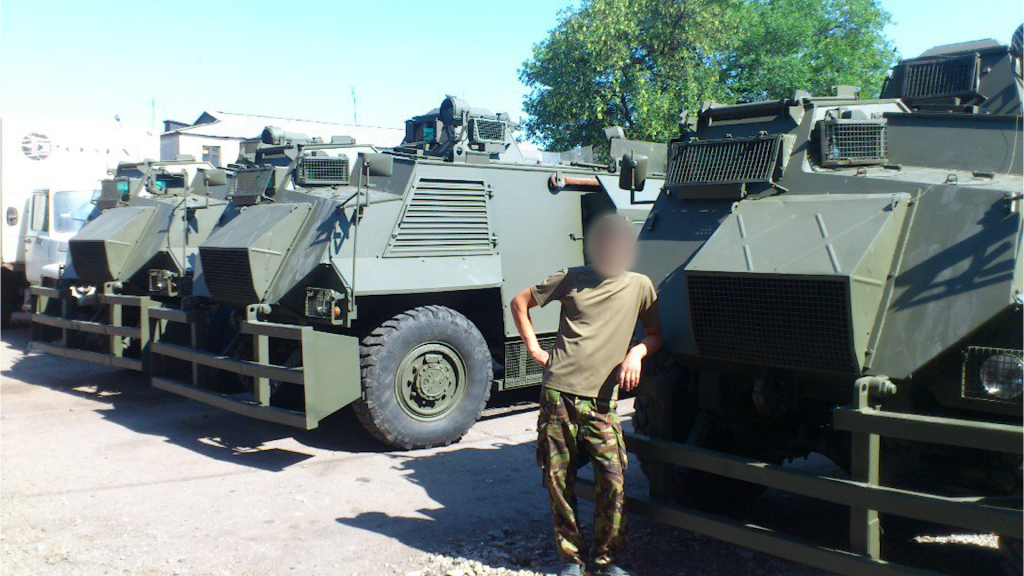
The British Army appears to have begun disposing of them in the late 2000s with many gifted to other countries and some sold to private dealers. In 2013, the Ukrainian Ministry of Defense purchased 75 second-hand Saxons from a private dealer, these were delivered in two shipments in 2015. Sources suggest the vehicles were bought for around £50,000 each or a total procurement cost of $3.8 million. The first 20 arrived in February and were handed over the the Ukrainian National Guard for testing. Oleksandr Turchynov, then Secretary of the National Security and Defense Council, said the vehicles would be upgraded by Ukroboronprom and fitted with machine guns. The second batch of 55 vehicles were delivered in June.
Still from 1985 British Army equipment video (British Army)
With the news of the transfer General Richard Dannatt, the former Chief of the General Staff, told the Telegraph newspaper that “My Concern is the inadequate nature of these vehicles which I ordered out of British Army front line service when I was Commander in Chief Land Command 2005-2006. They were withdrawn from Iraq and never deployed in souther Afghanistan. To suggest that the UK is making a significant gesture of support by supplying vehicles which we took out of service ten years ago, because we deemed them unsafe, seems bizarre at best and downright dangerous at worst. They are quite useless semi-armoured lorries that should be nowhere near anyone’s front line.” The UK MoD responded saying that “they offer protective mobility to personnel… but they are not close combat vehicles.”
While arguably obsolete the Ukrainians themselves reportedly felt they were fairly decent vehicles with the armour providing the expected level of protection. Ukrainian National Guard testing in February 2015 showed that the armour could withstand B-32 7.62x54mmR API. There was a well reported accident involving a pair of Saxons with on overturning and another hitting the central barrier on a motorway in March 2015. Its clear that the Ukrainians thought at the time they were cost-effective, capable vehicles which they wisely didn’t push into close combat roles.
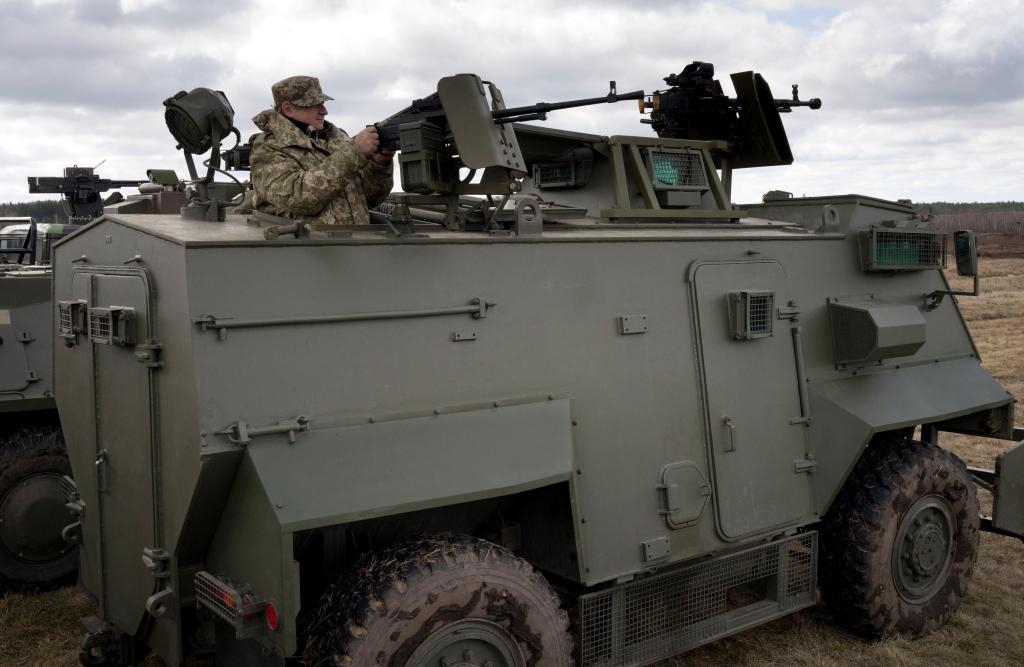
Saxon APCs outfitted with a DShK and two PK-pattern machine guns, c.March 2015 (Ukrainian MoD)
Contemporary reports suggest that a number of the vehicles, perhaps 10 or 20, received additional armour for the troop compartment and mounts for as DShK heavy machine gun and a pair of PK medium machine gun positions. The work reportedly took about two weeks. The majority, however appear to have been rerolled as command or MEDEVAC vehicles and were reportedly initially assigned to 25th Airborne Brigade, 79th, 81st and 95th Airmobile and 36th Naval Infantry Brigades. Though it is unclear if or when they were reassigned from these units. They saw action in Donbas for the first time in June 2015.
In a September 2015 Ukraine Today report on the Saxons a member of the 81st airmobile brigade said: “it’s a really beautiful vehicle and the armour is good. for evacuating personnel the APC is great.” When asked if the vehicles were difficult to work with he replied “yes, but that’s normal.” Other pre-February 2022 adaptations include at least one of the vehicles outfitted with slat armour in an effort to protect against RPGs.
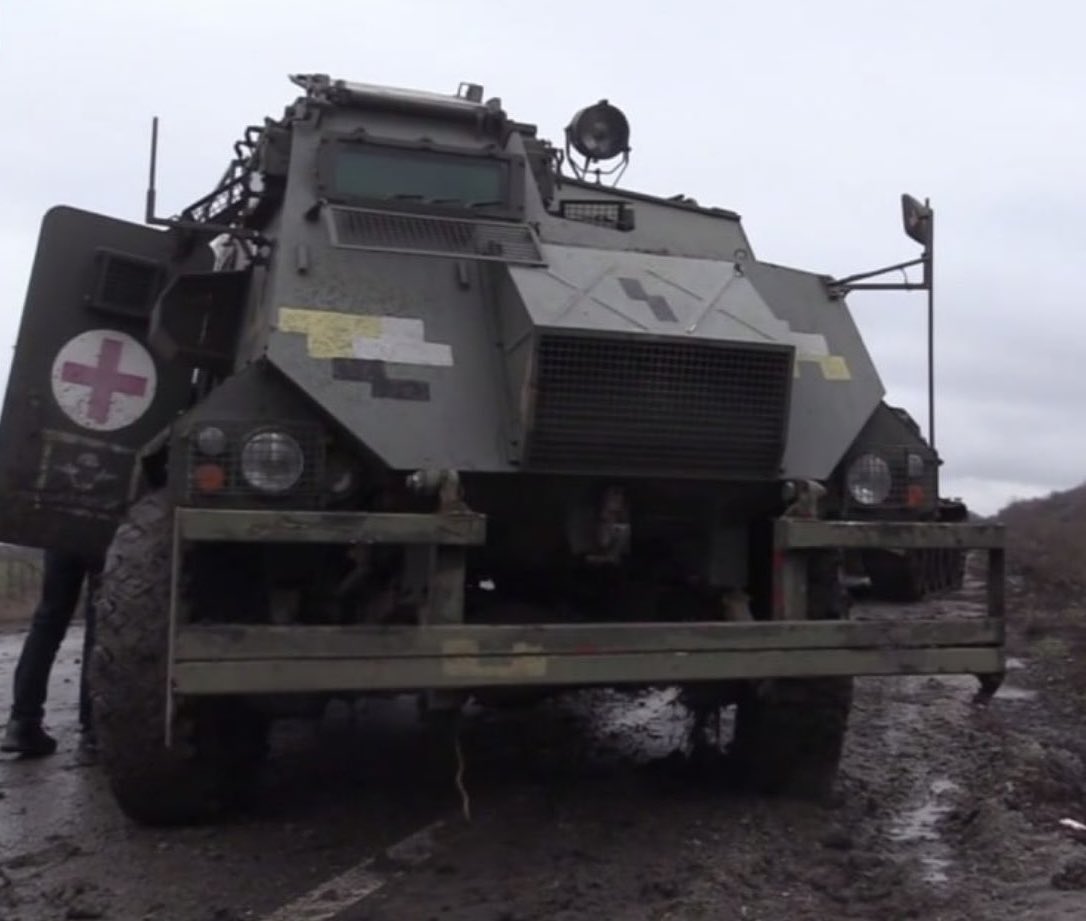
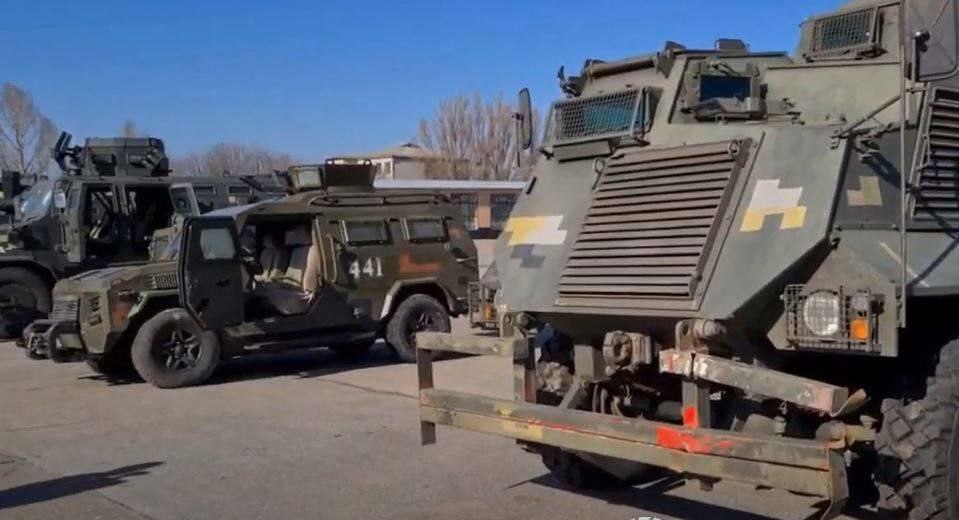
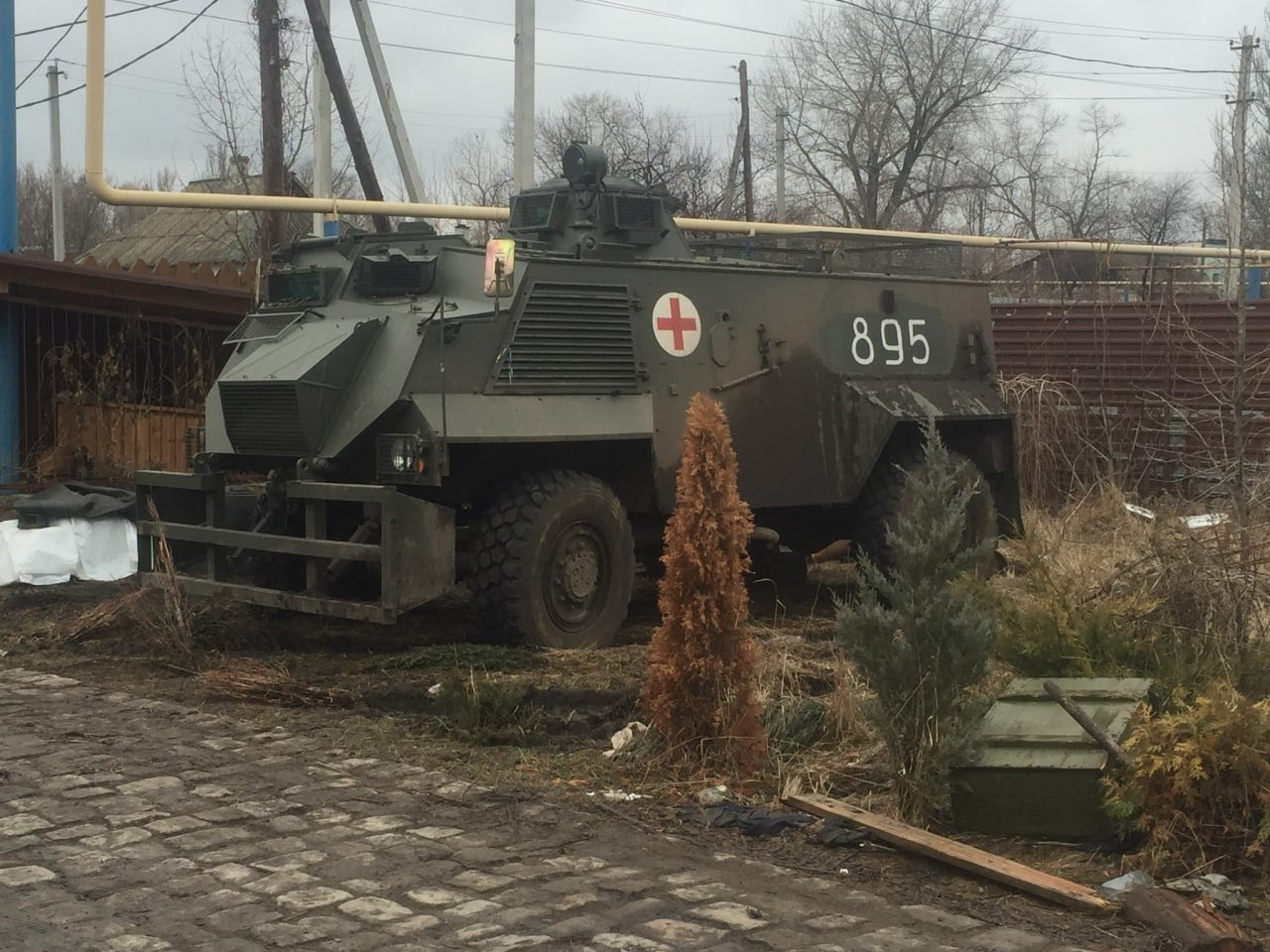
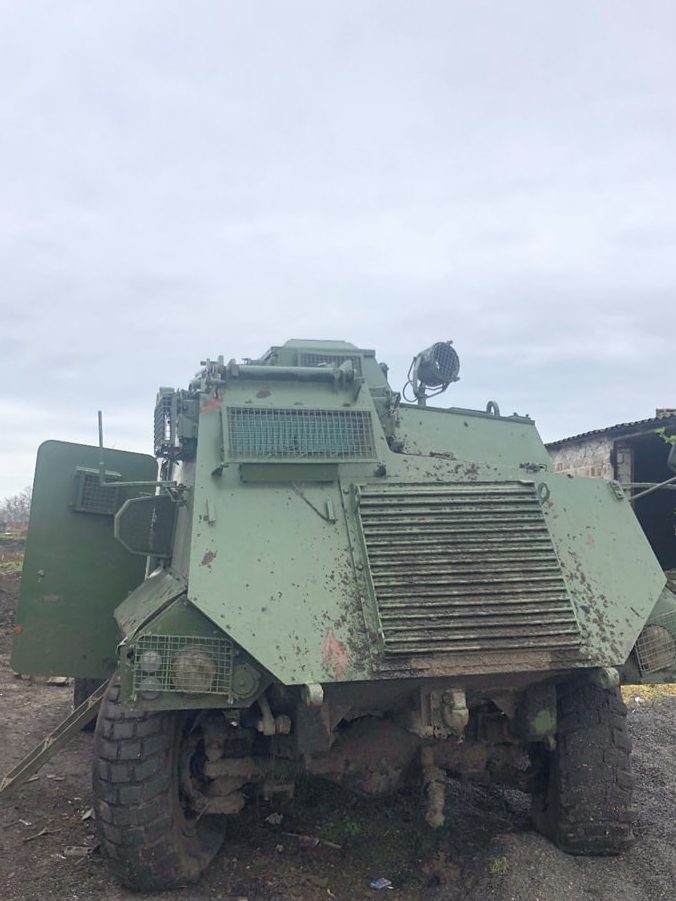
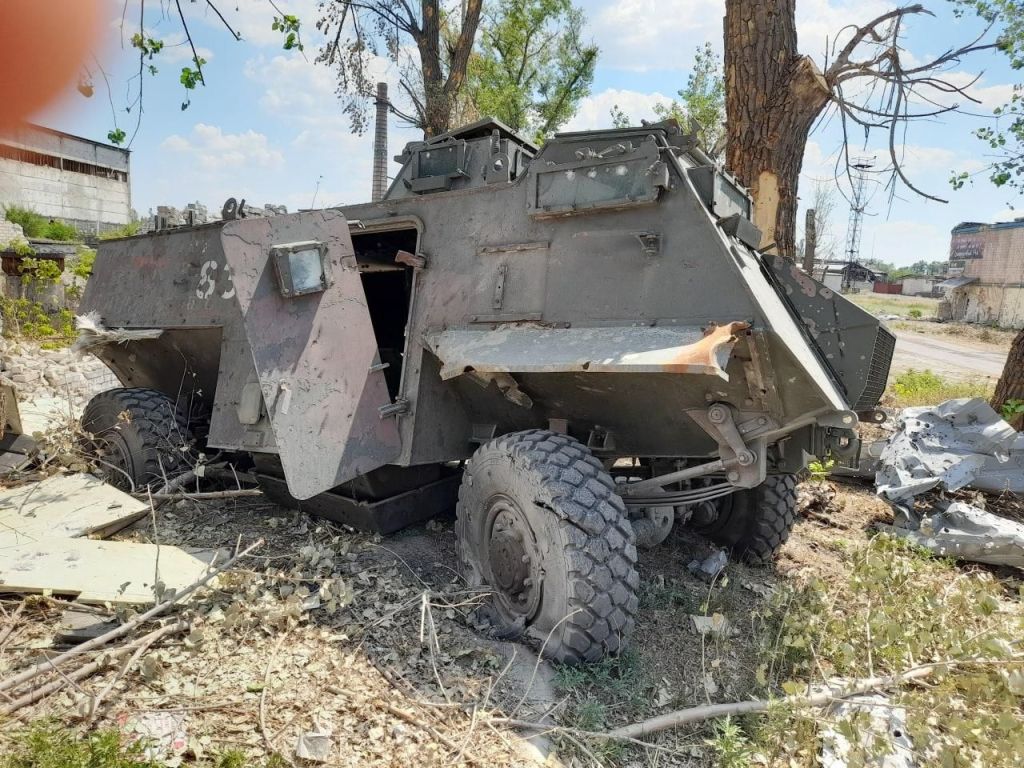
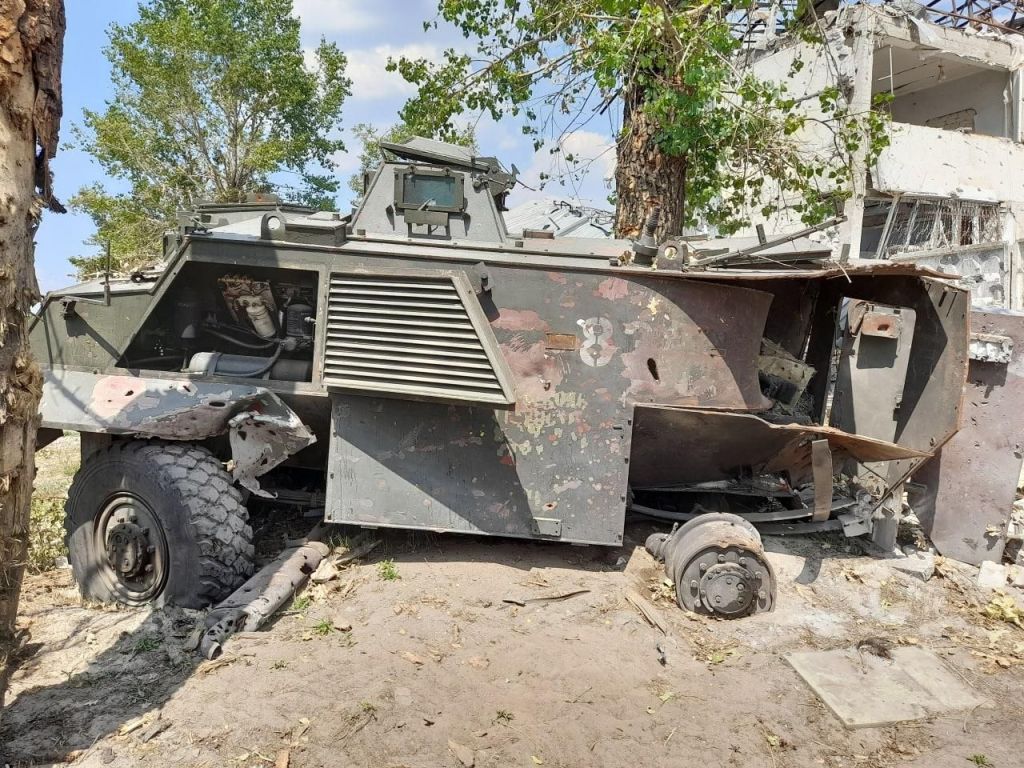
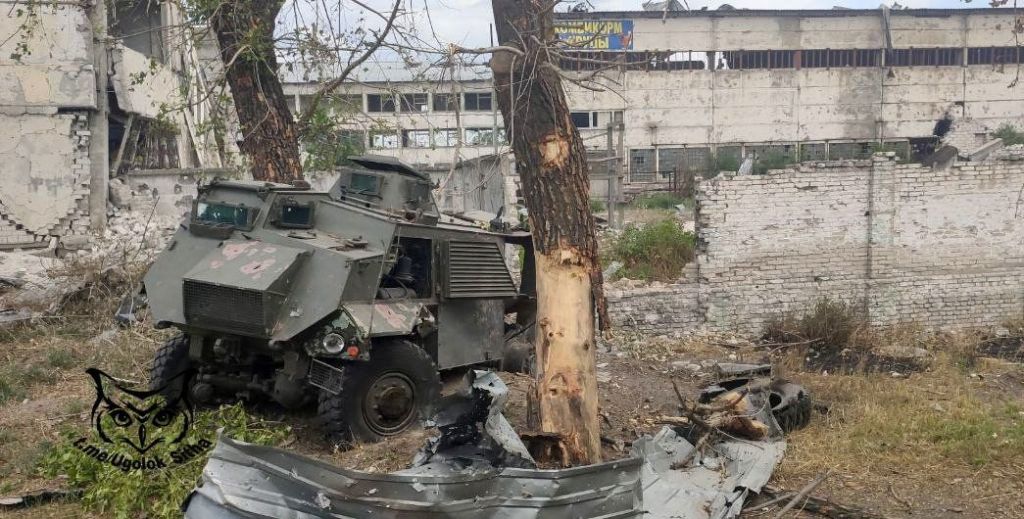
A captured Saxon ambulance (via social media)Captured Saxon ambulance (via social media)Captured Saxon ambulance (via social media)Captured Saxon (via social media)
With the Russian invasion in February the Saxons have seen in a number of photographs, mostly in flat green paint, though at least one had the Ukrainian digital camouflage pattern. The majority of the sighted vehicles have been ambulances and all of the photographs have been of either captured or knocked out vehicles. One of the captured vehicles, which appears to be the same vehicles as in image #2 in the block of photographs above, also appeared in a Zvezda TV report being driven around a depot. Narrator reportedly explains it is a captured ambulance, which originated from the UK and the presenter explains that it has an automatic gearbox and is quite fast and now will be transferred to Separatist DNR troops.
According open source intelligence analysts Oryx a total of 5 Ukrainian Saxon’s have been visually confirmed lost. There have not been any recent sightings of the Saxons and the UK and other supporting nations have now transferred or promised more modern and capable vehicles.
Thanks to Volodymyr for sharing some of the pre-war photographs of the Saxon in service.
Update 4/5/23: the Ukrainian Army shared a video about the 80th Air Assault Brigade’s operations during summer 2022. The footage featured numerous Saxon APCs still in frontline use.
Elements of the 80th Air Assault Brigade last summer operating old British Saxon APCs.
— Historical Firearms | Matthew Moss (@historicfirearm) May 4, 2023
Update – 28/11/23:Photos of destroyed Saxon APC, c.2/7/22 07/02/22 in Severodonetsk, Lugansk region.
Update – 15/1/24: Recently shared clip of a Saxon in Ukrainian service believed to have been filmed Winter 2023.
What a treat for us. New (I think, lot of archival stuff being posted as fresh at the moment) video of a Saxon APC in #Ukraine! No info on location/date sadly.
— Matthew Moss | Historical Firearms (@historicfirearm) January 15, 2024
If you enjoyed this video and article please consider supporting our work here. We have some great perks available for Patreon Supporters – including custom stickers and early access to videos! Thank you for your support!
Bibliography
“Useless” Saxon Vehicles Surprisingly Useful In Ukraine, Defence24, (source) The Not So Secret Life of the Saxon, Think Defence, (source) ‘Saxon’ armored vehicles to enter service after improvement and test procedure, Censor, (source) UK’s Delivery of Saxons to Ukraine “Nothing Short of Immoral”, ForcesTV, (source) Attack On Europe: Documenting Ukrainian Equipment Losses During The 2022 Russian Invasion Of Ukraine, Oryx, (source) General Sir Richard Dannatt condemns armoured vehicle transfer to Ukraine, The Telegraph, (source) Saxon armored personnel carriers were first used in real combat operations, Military Informant, (source) Ukraine tested the delivered British Saxon armored vehicles, Military Informant, (source) British Saxons in Action, Ukraine Today, (source) Captured Saxon, Zvezda, (source)
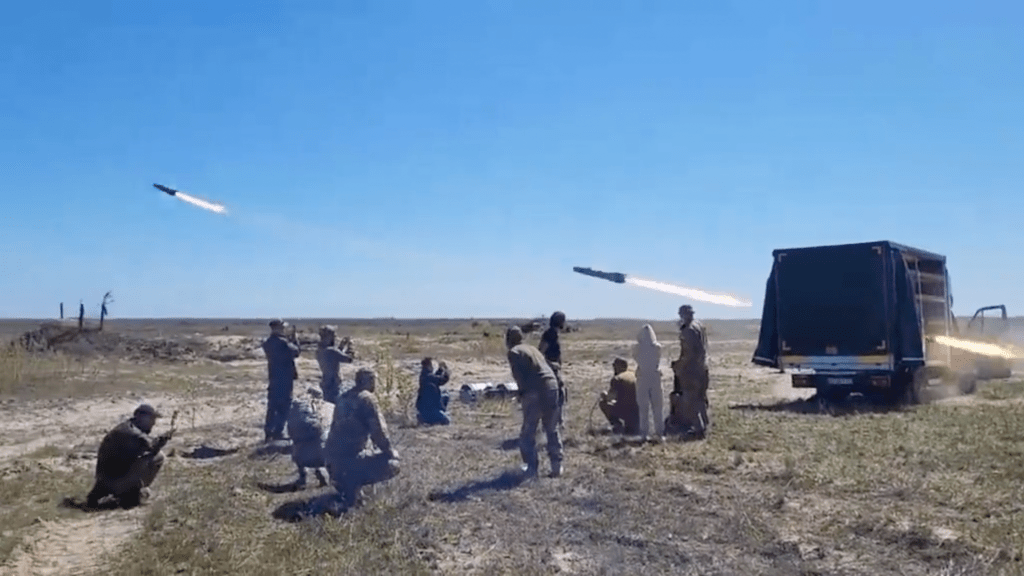
On 12 May video of what appears to be a test launch of Brimstone Missiles in Ukraine surfaced online. A containerised launch platform can be seen launching a salvo of three missiles. The footage shows what appears to be a repurposed commercial vehicle, such as an IVECO Daily or Mercedes-Benz Sprinter box van. The van appears to have a series of rails mounted inside the cargo area which may have something similar to a Cobham triple launch rail fixed to them. It could be described as a sort of very advanced technical. It is unclear when or where the footage was filmed.
Brimstone salvo being launched from a repurposed commercial vehicle (via Social Media)
In April, the UK Ministry of Defence confirmed the supply of Brimstone missiles to the Ukrainian Armed Forces. It was announced that these would be adapted for surface launch for use against ground targets. Before Russia’s invasion of Ukraine in February, the UK government had been in talks to provide the maritime variant of of the missile (Brimstone Sea Spear) to the Ukrainian Navy and there was speculation that this would be the variant sent to Ukraine. However, on 25 April, Defence Minister Ben Wallace told the UK Parliament that “if we do provide Brimstone, we will look to provide it for the land, using stock that we already hold, but not as yet for the sea.” A day later, on 26 April, the UK’s Armed Forces Minister James Heappey told Parliament that “such is the speed with which our technicians are now working and so effective is the partnership with industry that I am pleased to say that that has been moved forward. It is necessary to inform the House that we will be providing Brimstone in the next few weeks.”
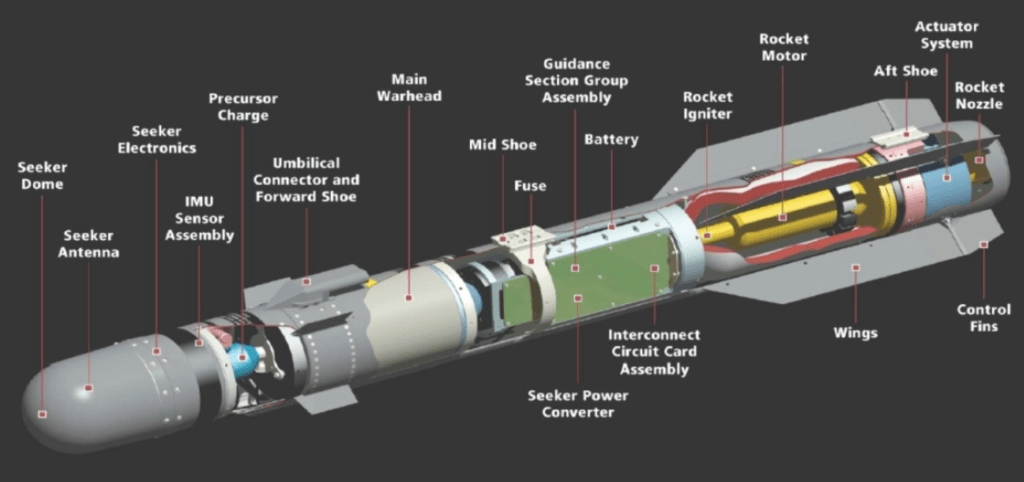
Brimstone is an advanced, rocket-powered, radar-guided weapon which can seek and destroy armoured targets at long ranges with high precision. Developed by in the late 1990s it was designed to be fired from aircraft and entered service with the Royal Air Force in 2005, seeing action in Iraq, Afghanistan Libya and Syria. The missile’s manufacturer MBDA has continued development of the weapon with ground-based and maritime variants designed and proposed. Brimstone uses a 94 Ghz millimetre wave (mmW) active radar homing seeker and a sophisticated guidance system which can differentiate and prioritise targets. The missile delivers a tandem shaped charge to destroy armoured targets at ranges varying from 12 to approximately 20km depending on launch platform and conditions and the variant of missile. Brimstone is capable of firing a salvo of missiles which will then fly in parallel before striking their targets in unison. This may be what is seen in the video. Brimstone is a fire and forget missile with the missile able to targeted at a designated killbox to then engage highest value targets it detects.
Diagram showing the layout of Brimstone (via Think Defence)
On 6 May the first evidence of Brimstone’s presence in Ukraine was provided by a series of photographs of the remnants of a Brimstone 1 missile. The recovered tail section of the missile bore a sticker denoting the surviving component as being manufactured in September 2001. Subsequent photographs of fragments from another missile, which perhaps self destructed, surfaced online on 11 May. These suggested that this Brimstone 1 was manufactured in around May 2001.
#Ukraine: Another UK-supplied Brimstone 1 missile was reportedly used against RU forces in #Zaporizhzhia Oblast – however this one failed to explode. This particular missile is relatively old and was made no earlier than June '04 – also utilizing many parts imported from the US. pic.twitter.com/uxShg7pwFJ
— 🇺🇦 Ukraine Weapons Tracker (@UAWeapons) May 8, 2022
On 8 May photographs of a further Brimstone 1, this time intact perhaps photographed before launch or after a failure of some sort, appeared online. If photographed following a failure it would indicate that this missile’s self destruct failsafe did not activate. Though the missile appears in good condition if it landed after a failure. From its markings seen in the photographs it is clear that the weapon’s components were produced in September 2001 and February and June 2004. We do not yet know how Ukrainian forces are employing Brimstone or how effective it has been.
#Ukraine: More footage of the covert ground launch system for UK-supplied Brimstone missiles, used by the Ukrainian Army- apparently a launch platform with 3 missiles loaded (Similar to an already known test rig) is placed on a truck chassis. pic.twitter.com/25N7SZlpvl
— 🇺🇦 Ukraine Weapons Tracker (@UAWeapons) May 15, 2022
Further footage from Ukrainian Brimstone launches emerged on 15 May, showing some close-ups from inside the launch vehicle. A Cobham triple rail can be seen mounted and several launches were shown as part of a compilation video shared by Ukrainian forces. In this video we only see two missiles being launched rather than a salvo of three although in one clip we can see three missiles mounted on the rail. The footage also shows us that the system appears to be mounted on a palletised frame work which could seemingly be easily mounted on more capable vehicles.
Brimstone offers greater range than the infantry-operated anti-tank guided missiles (ATGM) like the western Javelin or the Ukrainian Stugna-P. This greater range coupled with its ability to be fired in salvos offers a valuable capability to Ukrainian forces.
Update – 15 November 2022:
In October a video from BFBS Creative confirmed that the UK has provided Brimstone 2 missiles to Ukraine. BFBS do not state when the video was filmed but the footage shows a transit chest marked ‘Brimstone 2 Operational Missile Dual Mode’. Dual Mode refers to a variant of the missile which can be used both as a ‘fire and forget’ system but also have a ‘man-in-the-loop’ capability which was originally developed as part of an Urgent Operational Requirement for a low-collateral damage weapon. According to MBDA Brimstone 2 has “an overall increase in performance with improvements in range and engagement footprint”, this is enabled by improved seeker, improvements to the missiles airframe with a more modular design and software updates.
Some previously unseen footage of a Brimstone launch was circulated online on 15 November, which may show the launch of several Brimstone 2 missiles. It is unclear when the footage was filmed. Though the resolution of the footage is low there is a discernible glint on the seeker head/dome which might indicate they are a later type of missile to those seen earlier in Ukraine which have a translucent seeker dome.
Some newly circulating footage of a Brimstone technical in action.
We first saw Brimstone in action in May. A very short clip but there may be a glint from a different seeker head to the one previously seen in #Ukraine.
If you enjoyed this video and article please consider supporting our work here. We have some great perks available for Patreon Supporters – including custom stickers and early access to videos! Thank you for your support!
Bibliography:
Brimstone, MBDA, (source) Brimstone Guided Missile, Think Defence, (source) Footage: Brimstone Missiles Deployed in Ukraine, Overt Defense, (source) What is the Brimstone missile?, BBC, (source) Ukraine Update 25 Apr. 2022, UK Parliament Hansard, (source) Ukraine 26 Apr. 2022, UK Parliament Hansard, (source) Brimstone 2 Missiles in Use in Ukraine, Overt Defense, (source) How the UK’s Brimstone Missiles Reach Ukraine, BFBS Creative, (source) MBDA reveals Brimstone 2 missile work for UK, FlightGlobal, (source) Dual Mode Brimstone, MBDA, (source)
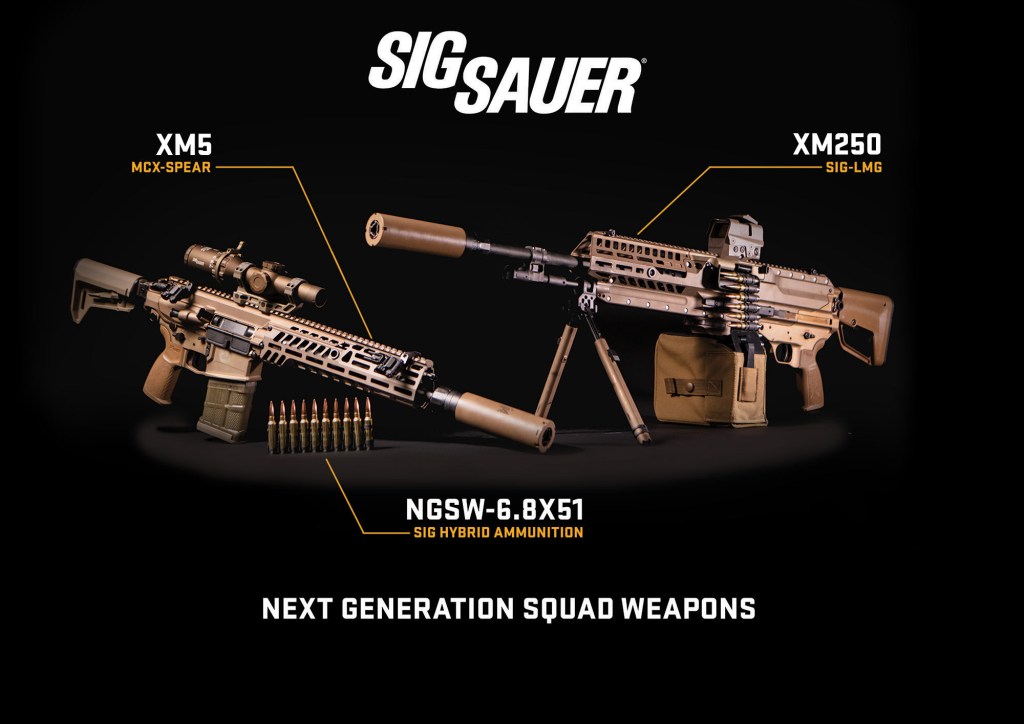
A couple of weeks ago the US Army finally announced the winner of their long running Next Generation Squad Weapon program, selecting the SIG Sauer MCX Spear rifle as the XM5 and the LMG-6.8 as the XM250.
The topic of whether this was the right choice and if the 6.8mm round they chamber is the right direction to move in is the topic for another day. I wanted to highlight one important aspect of the program that’s been somewhat overlooked. The weapons will be issued with suppressors as standard.
All of the NGSW submissions had suppressors developed by various manufacturers as it was an Army requirement. SIG developed their own design in house. When fielded over the next few years the XM5 will become the US Army’s first service rifle to be suppressed as standard.
But this isn’t the first time the US Army has examined large scale issue of suppressors. The US Army first examined the usefulness of suppressors way back in 1910, over a century ago.
XM5 / MCX Spear and XM250 / LMG-6.8 (SIG Sauer)
The first viable firearm suppressors appeared just after the turn of the 20th century with a series of patents being granted on various designs between 1909 and 1920. One of the first suppressor developers was Hiram Percy Maxim, son of Sir Hiram S. Maxim, He experimented with valves,vents and bypass devices, however, he eventually finalised his basic idea based on baffles and developed a series of practical suppressors; which were sold through the Maxim Silent Firearms Company. He filed his first patent on 26th June, 1908, which was granted in March the following year (US 916,885).
During the 1910s Maxim sold a successful range of ‘silencers’, as they were then largely known, on the commercial market. As early as 1907 Maxim was looking at ways to suppress the Army’s new Springfield M1903.
M1903 Springfield fitted with a Maxim Model 1910 Silencer (Cody Firearms Museum)
The US military first took interest in silencers in 1908. However, the 1909 annual report of the Chief of Ordnance wasn’t too enthusiastic stating that “the silencer be not adopted for use in the service in its present form” citing visible gases leaving the silencer and the difficulty of mounting a bayonet. The following year the Chief of Ordnance believed that the improved the Model 1910 silencer overcame “most of the defects found in the original” and that “five hundred of the silencers are now being procured with a view to the issue of one or more to each organisation for instruction of recruits in target practice, and for issue to the militia, on requisition.”
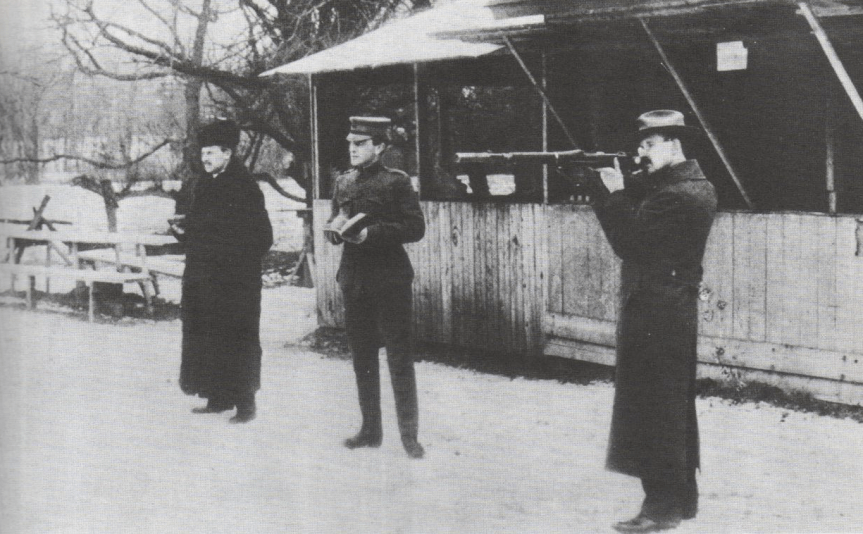
The US School of Musketry also tested the Maxim silencer. Twenty four soldiers were issued silenced M1903s for the test. The School of Musketry’s testing found that the report at the muzzle and the recoil felt by the rifleman was reduced when compared to a normal, unsuppressed, M1903. The School of Musketry’s report noted that:
An M1903 with a Maxim 1910 Silencer being test fired, left to right: H.P. Maxim, Lt.Col. R. Goodman, & Capt. E. Church (from the National Guard Magazine)
“The muffling of the sound of discharge and the great reduction in the total volume of sound which permits the voice to be heard at the firing point about the sound of a number of rifles in action, greatly facilitate the control of the firing line.” They also reported that “the silencer annuls the flash” a quality that they felt was a “positive military advantage in view of the extent to which night operations may be employed in future wars.”
Maxim did his best to develop a robust silencer that would meet the military’s needs. He incorporated a mounting point for a bayonet on the military variant of the Model 1910. The model 1910 silencer for the Springfield M1903, however, required the removal of the rifle’s front sight. This attachment method was felt to be the Model 1910’s weakest point and something Maxim himself actively looked to address.
The Maxim Silencer Company subsequently improved models and encouraged by early military interest Maxim envisioned a military silencer being useful in roles such as sniping, guard harassment and marksmanship training.
But Maxim was not the only designer working in the field and Robert A. Moore, his most competent competitor, also submitted a design for military testing. Moore’s designs used large gas expansion chambers which sat beneath the rifle’s muzzle as well as a series of vortex chambers ahead of the muzzle.
Ordnance Corps photograph of M1903s equipped with Maxim and Moore Silencers(US Army)
US Ordnance tests with Moore silencers began in 1910. When the two silencers were compared the US Army found that there was little difference between the two rival designs with regards to the reduction of sound, recoil and flash. Springfield Armory’s report in July 1912, found that the Moore silencer was more accurate and had a better attachment system. The Maxim silencer, however, was more durable and could withstand more prolonged rapid fire. While the suppressors were tested neither was selected for general issue and large scale contracts didn’t materialise. However, we do know that some of the suppressors were used during the US Army’s 1916 Mexican expedition against Pancho Villa and during the First World War some are confirmed to have made it to the Western Front but don’t appear to have been used in the field despite requests from officers.
I go into much more detail about the early suppressors, their design, testing and whether they saw action in this article.
Now fast-forward 100 years and the US Army is finally poised to adopt suppressors for close combat troops. In recent years the US Army has been testing suppressors at the squad level as far back as 2005 and this fed into requirements for the NGSW programme.
XM5 / MCX Spear (SIG Sauer)
In terms of the weapons selected SIG Sauer have developed their own suppressor designs to pair with the XM5 and XM250. SIG have said that the designs initially grew from their Suppressed Upper Receiver Group for USSOCOM. SIG’s suppressors are manufactured using direct metal laser sintering – essentially 3D printing with metal. SIG Sauer’s suppressor designs reduce sound and flash but also reduce gas blowback into the action and face of users. the SIG suppressors for the XM5 appear to be SLX suppressors, optimised for the reduction of blowback of toxic gases – SIG claim by as much as 70 to 80%) and are quick detach rather than direct thread, using a clutch lock system with an internal tapered seal. One thing the Army has not commented on is the efficiency of the suppressors so we don’t know to what levels the report of the weapons has been lowered to. Another thing that isn’t clear about the XM5 is if the Army had a requirement for mounting a bayonet. It certainly appears not to have been which would make the XM5 the first US Army service rifle not to mount a bayonet.
Of course the US Army are not the first service branch to suppress their rifles. The USMC is currently in the process of issuing Knights Armament QDSS NT4 suppressors for use with their M4A1 carbines and M27 and M38 rifles. The process began in late 2020 with the Corps citing many of the reasons originally identified back in in 1910 – reduced signatures, improved communication and hearing protection.
If you enjoyed this video and article please consider supporting our work here. We have some great perks available for Patreon Supporters – including custom stickers and early access to videos! Thank you for your support!
Bibliography:
The Next Generation: SLX & SLH Suppressors, SIG Sauer, (source) US Marine Corps Selects Knight’s Armament Suppressor, TFB, (source) Marine Corps Begins Widespread Fielding of Suppressors, USMC, (source) Silencers, Snipers & Assassins: An Overview of Whispering Death, J.D. Truby (1972) Firearm Silencers, N. Wilson (1983) War Department, Annual Reports, Report of Chief of Ordnance, 1909, Vol.6 (source) War Department, Annual Reports, Report of Chief of Ordnance, 1910, Vol.1 (source) Silencer for Firearms, R.A. Moore, US Patent #1021742, (source) Firearm, H.P. Maxim, US Patent #1054434, (source)
In this video/article we’ll examine Ukraine’s other bullpup – the Fort-221 – the Ukrainian Tavor.
In a recent video/article we looked at the Ukrainian designed and produced IPI Vulcan, a bullpup based on the AK platform, and the two have been confused in some media. The Fort-22 series Tavors originate from Israel’s IWI. Introduced in the early 2000s the IWI Tavor has been purchased and seen service with militaries around the world. Ukraine’s Tavors were offered by RPC Fort or State Research and Production Association “Fort” of the Ukrainian Ministry of Internal Affairs. The company was originally established in 1991, initially as a regional organisation and in 1998 it became a state enterprise. Located in Vinnytsia, in western Ukraine, the company initially focused on a line of pistols, pump-action shotguns and AKM variants.
National Guard personnel armed with Fort-221 with M5 optics (Ukrainian National Guard)
From a survey of Fort’s website we know that IWI weapons first began to appear in the company’s product lists in late 2008 following an agreement to potentially license manufacture IWI products in Ukraine. This included pistols, submachine guns, rifles and the Negev light machine gun.
In 2011-12 media reports suggested the Tavor was being produced in Ukraine and the guns appeared at a number of trade shows with RPC-Fort markings, including a company crest in the moulded stock. There is, however, some doubt about whether the weapons were manufactured in Ukraine, merely assembled or if they were produced in Israel with some Fort markings and shipped to Ukraine. The nature of the partnership is undisclosed but it has been suggested that if Fort gained substantial sales for the weapons then further manufacturer may have been transferred to Ukraine.
Close up of the RPC Fort on a 5.56×45mm Fort-221 (Ukrainian National Guard)
In 2014, Colonel Vitaly Otamaniuk, the head of the artillery and missile management board of the Ukrainian Armed Forces, announced that the Fort-221 and Fort-223/224 carbines were adopted for arming the Ukrainian army, with an initial 500 ordered. While no further orders were publicly recorded we know that Police and internal security forces were issued the rifle as of 2016. The adoption of the rifles by Ministry of Internal Affairs units and the Ukrainian National Guard (which falls under the Ministry’s control) may be explained by the fact the Ministry owns RPC Fort.
Various Fort-22 series rifles on display (Ukrainian National Guard)
From photographs released before the February invasion we know that National Guard units including the Special Purpose units like the “Scorpion” Special Forces Detachment (Nuclear industry protection) and elements of the Special Operations Forces or SSO. These units are believed to include the 1st and 3rd Special Purpose Detachments based in Kyiv and the 8th Special Purpose Regiment in Khmelnytskyi as well as elements of the Ukrainian Ministry of Internal Affairs.
Member of the Ukrainian armed forces with a Fort-224 carbine (via social media)
There is some confusion around the Fort-22 series’ designations. From Fort’s website, circa 2020, we can see here that the majority of the IWI rifle range was on offer. There is some confusion around the designations with Fort-222 and Fort-223 not being listed here but there are photographs of Fort-223 marked 5.56 X-95 pattern guns seen trade shows, which suggests that for a time at least the 223 designation was used. But as we’ve seen from Fort’s 2010 website Fort-223s were not listed. The Tavors are listed as follows:
Fort-221 in 5.56x45mm and 5.45x39mm (TAR-21) – 468mm / 18.4in
Fort-224 in 5.56×45 and 5.45x39mm (X-95) – 330mm / 13in
Fort-224 in 9×19 (X-95 SMG) – 330mm / 13in
We can also see that the Uzi Pro is listed as the Fort-226 while the 5.56x45mm Galil Ace is listed as the Fort-227, the 7.62x39mm chambered version is the Fort-228 and the 7.62x51mm version is the Fort-229. The Ukrainians designed the Galatz accurised Galil the Fort-301 and the Negev light machine gun the Fort-401 both of which have been fleetingly seen in the field.
Further survey of Fort’s website shows that the Tavor series of rifles ceased to be listed on the page in March 2021 and IWI and Meprolight were removed from the site’s ‘Partners’ section in April 2021. Perhaps suggesting the end of the IWI-Fort partnership. The Tavor-pattern rifles are not listed by SpetsTechnoExport, Ukraine’s state export enterprise, but the IPI Vulcan is.
Member of the Ukrainian armed forces with a Fort-221 rifle (via social media)
Despite this we have seen a considerable number of the Ukrainian Tavor variants in the field. Since the Russian invasion in February the Fort-22 series have been most frequently seen with internal security forces and Ukrainian Army and National Guard special forces.
Within 48 hours of the Russian offensive Russian forces shared videos from what was said to be a captured Ukrainian National Guard depot. The video shows more than a dozen Fort-221s piled on top of crates. Around the same time they were seen to be equipping Ukrainian forces said to be linked to the Azov Brigade.
Members of the Ukrainian armed forces with a Fort-224 carbines (via social media)
On 7 March former Ukrainian presidents Petro Porochenko and Oleksandr Turchynov were seen. Rallying Territorial Defence Force units in Kyiv, Turchynov was seen armed with a Fort-221.
On 9 March an unknown number were captured by Russian forces which seized the National Guard armoury near the Zaporizhzhia Nuclear Plant. At least one Fort-221 was shown by Russian state media.
A Fort-224 in 9×19mm (via social media)
The Ukrainian Tavors continue to surface in imagery from the conflict but it is difficult to tell where they’re being used and by which units.
Both the Fort-221 rifle and the 224 carbine have been seen in the field, though it is often difficult to determine their chambering as the clearest indiction – the shape of the magazine – is invariably tucked under the user’s arm. They are most often seen equipped with Meprolight M5 and M21 sights and a number of the weapons have also been seen to be sporting camouflage paint jobs.
Thank you to those who have helped me collect images of the Ukrainian Tavors in the field, including Sad_Sand and DixieMauser and thank you also to Remigiusz Wilk.
Update – 21/6/24:
My colleague Ian over at Forgotten Weapons has shared a video which gives us a great close up of a Ukrainian Fort 221.
If you enjoyed this video and article please consider supporting our work here. We have some great perks available for Patreon Supporters – including custom stickers and early access to videos! Thank you for your support!
A week or two ago (April 2022) we had the chance to catch up with friends from the MECo. group at the Soviet Threat event at the Hack Green Secret Bunker in Cheshire. Allen and Simon had an excellent display of weapons, uniform and personal kit from the Malayan Emergency (1948-1960) period and kindly talked us through it!
The weapons and personal kit featured in MECo’s Malayan Emergency display (Matthew Moss)
Thank you to Simon and Allen for giving us a detailed rundown of the display and kit. I find personal kit absolutely fascinating and MECo. are extremely knowledgeable and always put on an interesting display. In terms of weapons the display included a Bren Mk3, a Rifle No.5 and a very nice example of an Owen Gun. Below is another photograph of the Owen Gun and its magazine pouches, Allen had both a wooden and metal buttstock on display with the weapon.
If you enjoyed this video and article please consider supporting our work here. We have some great perks available for Patreon Supporters – including custom stickers and early access to videos! Thank you for your support!
There have been a considerable number of sightings of the MP-443 pistols in Ukraine over the past two months. Unsurprising as it is the Russian armed forces issue side arm. Introduced in 2012, large scale issue of the pistol reportedly began in 2016. The pistol has been seen in holsters and chest rigs of Russian troops in Ukraine alongside substantial numbers of the classic Makarov PMs and even a few Stechkin APS.
The MP443 was developed at the Izhevsk Mechanical Plant by the Vladimir Yarygin. Izhevsk now falls under the Kalashnikov Concern banner. Commonly known as the Yarygin Pistol or PYa, it was codenamed ‘Gratch’ or rook during the Russian Army’s pistol trials, with the Russian military index number of 6P35. Work on the pistol began in the early 90s, initially to fulfil a Soviet Army requirement for a new pistol the pistol was finally selected in early 2003.
MP-443 (via Social Media)
The MP443 service pistol has a steel slide and frame, it uses the Browning short-recoil-operated tilting barrel action and has a double action/single action trigger. It has a pair of ambidextrous, frame mounted safety levers either side of the frame. The pistol does not have a decocking mechanism and has a semi-shrouded hammer.
The pistol we have to examine, courtesy of Cold War Collectables, is an MP-446 Viking, a commercial variant of the MP443. This pistol is non-firing and deactivated to UK specification when imported in 2011, but perfectly illustrates the working and disassembly of the pistol.
MP-446 and double stack, double feed magazine (Matthew Moss)
The pistol strips in much the same way as other Browning-pistol derivatives. The take-down pin is removed, the slide slid forward and the barrel, recoil spring and guide rod can be removed. The frame of the MP-446 differs from the MP443 in that it is made of polymer rather than all-metal as in the service pistol.
The MP446 also has a different barrel profile, with more material machined from the barrel of the civilian pistol to prevent it firing the Russian 7N21 +P+ 9x19mm service rounds, which are said to be armour piercing with hardened steel cores.
MP-446 disassembled (Matthew Moss)
One notable feature of the pistols magazine is that it is double stack – double feed, rather than a conventional single feed. The purpose of this is to increase feed reliability, but more recent versions of the pistol appear to have gone to a single feed magazine.
The MP-443 is predominantly issued to senior enlisted personnel, NCOs and various special forces units. In Ukraine we have seen it in the hands of Russian regular army, VDV and Chechen units, including Chechen SOBR – a spetsnaz unit of the National Guard of Russia, operating in the south. We have a number of very good photos of a Russian operator who is believed to be operating in the East, though often said to be VDV Spetsnaz, and he has been seen to be carrying an MP-443 in his load bearing equipment. In other imagery they are occasionally seen with lanyards and often in thermoplastic moulded holsters. A number of captured examples have also been seen in Ukrainian hands.
Russian marksman with MP-443 on his chest rig (via Social Media)
One thing to bear in mind with a visual survey like this one is that, as with our earlier video on Savage Arms rifles in use in Ukraine, it is often difficult to identify specific units and locations for these photographs because they are shared and re-shared on various social media platforms and in many cases the original creator of the imagery has chosen not to state locations for operational security reasons. But photos and videos do give us some idea of the types of units and personnel who are carrying the pistols in Ukraine.
Thank you to my colleague Abdullah of Khyber Armoury and friend of the channel Paul for their help filming, thanks to DixieMauser for help collecting photos of the pistol’s use in Ukraine, to Vlad and Lynndon for their input and special thanks to Jip of Cold War Collectables for letting us film items from his collection.
If you enjoyed this video and article please consider supporting our work here. We have some great perks available for Patreon Supporters – including custom stickers and early access to videos! Thank you for your support!
The ongoing war in Ukraine has seen all sorts of small arms pop up. Many from military stores, some old some new. But also large numbers of previously civilian-owned and commercially available rifles.
One manufacturer which continues to surface is Savage Arms. We’ve seen a range of Savage firearms in social media posts from Ukraine. In this short video we’ll take a look at some of the models of rifle which have been seen on the ground.
It is worth noting that Savage 110s have previously been seen in the hands of Ukrainian Special Operations snipers prior to the current conflict, as early as 2017. It was reported in September 2018 that 125 Savage 110 Stealths had been purchased for Ukrainian Airborne troops and it seems that along with Ukrainian Z-10 DMR and other Western bolt actions the Savage Arms rifles are one of the systems which replaced many of Ukraine’s SVDs.
Savage 110 Stealth & Fort 221 [Tavor] (via social media)
Before the war civilian firearms ownership in Ukraine was fairly buoyant, and this only increased as tensions before the Russian invasion rose. Savage Arms have dealers and stockists all around the world, including Ukraine. Savage’s site lists IBIS LLC / Europa Arms Sports Ltd as their Ukrainian stockists with an address in Kyiv but IBIS have a chain of stores across Ukraine.
IBIS’ site lists a large range of Savage Arms firearms and accessories with nearly 50 different models and variations listed. Everything from 110s in .338 Lapua Magnum to semi-automatic 7.62x51mm MSR-10s, and Savage Model 10s in various calibres to MSR-15 ARs.
Savage MSR-15 (via social media)
With the help of DixieMauser, on Instagram, I’ve been collecting images of Savage Arms rifles in the field. From the photos we can see that both Savage’s semi-automatic rifles and bolt actions are in use.
A comparatively small number of photographs feature Savage’s MSR series. In these photos we see MSR-15s, Savage’s AR-15 pattern rifle. In use with Ukrainian forces they all appear to be running variable power optics. Much more common, however, are Savage’s bolt action rifles. They are seen with a range of suppressors and optics being used and while most appear to have factory stocks and chassis some barrelled actions have been placed in after-market chassis.
It is worth noting that Savage previously offered 10 (short action) and 110 (long action) versions of their rifles but in recent years have consolidated to referring to all their bolt actions in the 10/110 series – 110. It is difficult to differentiate between 10/110s in many of the photographs with the magazine being the key indicator.
Savage 110 Carbon Tactical (via social media)
Due to the nature of sourcing the photos across several social media platforms its difficult to identify units or know where personnel are operating. But one thing we can tell is the kinds of rifle being used.
Savage 110 Precisions have been seen as well as a number of 110 BA Stealths. We know that one of these Stealths was also used in Irpin at the beginning of April as it was mentioned in a Daily Beast report and pictured on the ground.
A number of 110s have also been seen in MDT chassis. In terms of calibre 7.62x51mm and .338 Lapua Magnum appear to be the most commonly seen but 300 Win Mag is also believed to be in use.
Conventionally stocked Savages have also been seen including this rifle which appears to be a Model 10 or 110 Hunter. Even a Savage 110 Carbon Tactical, still with its Savage sticker has been pictured. At least one AXIS series rifle has been seen in use with one unit operating around Kyiv.
Savage Stealth (via social media)
It’s also worth noting there it’s not only Savages which have been see, there have also been a significant number of Remington 700s, Sakos and others seen in use. It is impossible to know how many of the Savage rifles were procured by the Ukrainian military and how many are formerly civilian owned or commercially sold firearms.
It is important to contextualise a sampling of photographs like this one as it is difficult to gauge how widespread the use of the rifles is and indeed in what areas of Ukraine they are being used in. They could be in fairly wide use or localised within a region or smattering of units. But we can say that rifles made by Savage Arms rifles are being used as precision rifles by marksmen and snipers of the Ukrainian armed forces.
If you enjoyed this video and article please consider supporting our work here. We have some great perks available for Patreon Supporters – including custom stickers and early access to videos! Thank you for your support!
Bibliography:
Ukrainian Special Forces Precision Rifle Competition, TFB, (source) Ukrainian President Poroshenko buys 430 sniper rifles for paratroopers, UAWire, (source) IBIS Savage Arms Listings, IBIS, (source) You Won’t Believe the Horror Left Behind, Daily Beast, (source) What Ukrainian snipers are fighting in Donbas, Rambler (source) First Sniper Tournament of the SSO of Ukraine, SSO, (source)