Raven: Ukraine’s ASRAAM-Launching Air Defence System

Way back in February 2024, I published an article/video discussing sightings of one of the so-called Franken-SAM systems provided to Ukraine by Western allies. The ASRAAM-armed system was developed and provided by the UK but until this year little information about it had been confirmed. On 10 May the UK Ministry of Defence confirmed that they system is called ‘Raven’ and a total of 13 of the systems have been pledged.

Five Raven Air Defence Systems due to be dispatched to Ukraine (UK MoD/Crown Copyright)

The previously available imagery showed that the system comprised two AIM-132 Advanced Short-Range Air-to-Air Missiles (ASRAAM) mounted on a Supacat HMT 600 (6×6) vehicle. The vehicles are believed to be former Soothsayer ECM carriers brought out of storage. Also visible is what appears to be a mast-mounted sensor unit positioned behind the cab, on the vehicle’s flatbed. This appears to be a Chess Dynamics Hawkeye which likely includes electro-optical and infrared sensors used for targeting.
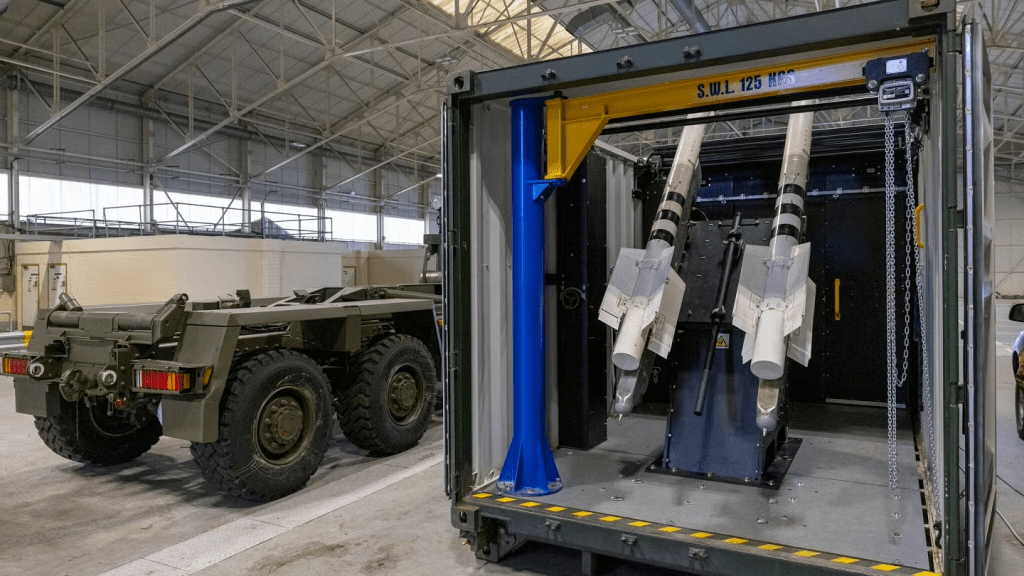
Gravehawk – UK-developed containerised air defence system (UK MoD/Crown Copyright)

The UK-developed Raven is one of several ad hoc short-range air defense systems developed by the UK for Ukraine, the other being Gravehawk, a containerised system which utilises R-73 air-to-air missiles, which was unveiled in February 2025. Both systems are part of an effort to affordably and quickly bolster Ukraine’s air defences. In October 2023 a pair of videos shared by the Ukrainian air force gave a glimpse of the system in action. The both filmed at night shows a launch but the vehicle is not visible. The second, shared on 12 October, by Ukraine’s Air Command – South shows the successful engagement of a Russian long range loitering munition. As the darkness is lit up by the missile launch, the Supacat 6×6 High Mobility Transporter is briefly visible.
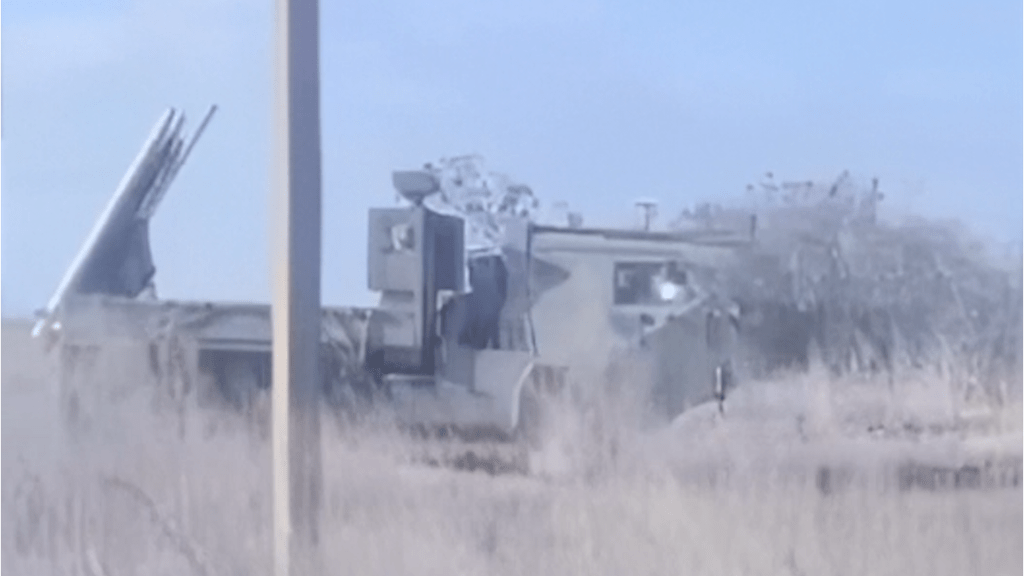
Raven seen in Ukraine, Feb. 2024 (via Social Media)

ASRAAM uses infrared homing and can lock onto its target after launch. It has an air-launched range of more than 25km but this is likely shorter when used in a ground launched role. The system may be used in conjunction with radar systems which feeds target data to the missile. A key feature of the ASRAAM is its ability to lock-on after launch, theoretically allowing it to be vectored onto a target in the air before it begins IR homing.

The system, however, isn’t ideal with limited ready-to-fire capacity on the launcher ramp, with just two rails, and no protection for the missiles themselves, from either the elements or from potential fragmentation or impact damage if attacked. The ad-hoc air defence system first saw action in Ukraine in August 2023, and represents an ingenious improvisation utilising a highly capable missile in an air defence role it was never envisaged in. In December 2023 UK Ministry of Defence summarised their development:

“In summer 2022, a joint MoD-MBDA team developed air defence systems to fire ASRAAM from the ground for the first time. Within four months of initiating the surface launched ASRAAM project, these air defence systems were developed, manufactured, trialled and Ukrainian crews trained on their usage, on UK soil, before being transferred into Ukrainian hands.”

In late 2023, it was reported that the UK had supplied “a handful” of the missile-equipped Supacat trucks. They were believed to be in use in near the front and in the Kyiv region, defending key infrastructure, against Shahed-136/Geran-2 long-range loitering munition attacks. In December 2023, the UK Ministry of Defence announced that a further 200 ASRAAMs would be provided to Ukraine and that the systems in-country had achieved a “successful hit rate reported as high as 90% against some Russian air targets.” ASRAAM’s payload, a 10kg blast-fragmentation warhead, is designed to destroy aerial targets with minimal collateral damage. 
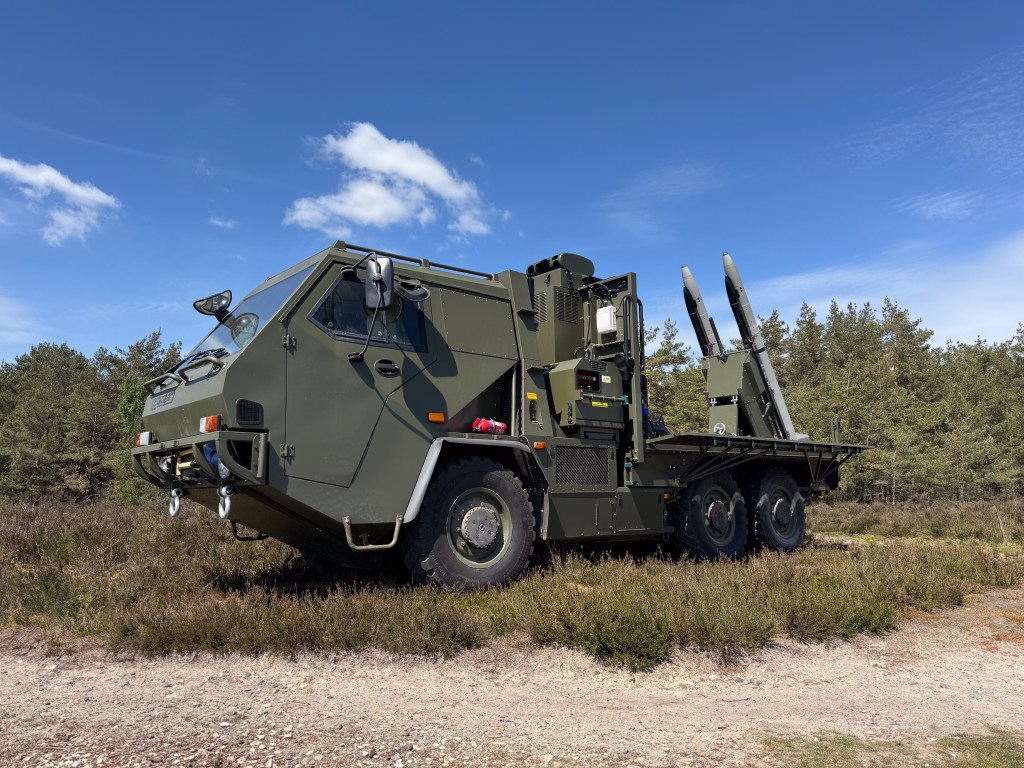
Raven Air Defence System, based on the HMT 600 Supacat vehicle and the Advanced Short Range Air-to-Air Missile (UK MoD/Crown Copyright)

A number of videos showing glimpses of the system itself or the system in action were shared throughout late 2023 and 2024. On 12 October 2023, footage of a night launch against a Shahed one-way munition was shared including thermal footage from the systems sensors. In late February 2024, footage, again from the Raven’s sensors, showed the successful engagement of a Russian ZALA reconnaissance drone.

A month later on 20 March, both external and system footage of a daytime engagement of a Russian Supercam S350 reconnaissance UAV was shared. Later in March additional footage of what was also claimed to be a Supercam was also shared.
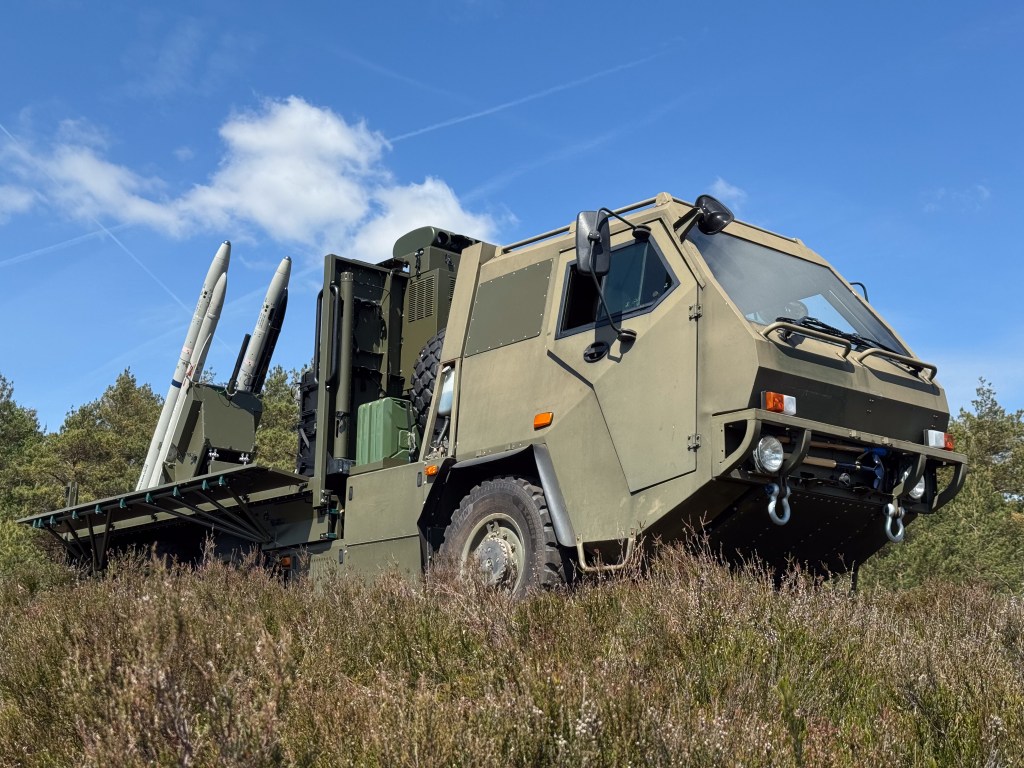
Raven Air Defence System, based on the HMT 600 Supacat vehicle and the Advanced Short Range Air-to-Air Missile (UK MoD/Crown Copyright)

On 3 April, thermal camera footage of another UAV interception was posted on Ukrainian social media. The speed and vector of the missile suggests it was a Raven-launched ASRAAM. On 14 April 2024, a short clip showing an ASRAAM missile with a message written on it ‘Rowdy Company’, followed by footage of a night-time launch was shared.

In early May 2024, Russian Telegram channels shared drone footage of what they claimed as the destruction of one of the systems by a Lancet loitering munition. While footage of the systems in action is few and far between another daytime video of the system in action was shared in mid-September 2024, having been posted to TikTok.

Most recently, in late November 2024, a video containing footage from a number of Ukrainian anti-aircraft units showed several interceptions of Russian drones and a launch from what appear to be Raven system.

In March 2025, a couple of photos were shared by the UK Ministry of Defence showing Rachel Reeves, the UK’s Chancellor of the Exchequer being briefed on Raven during a visit to RAF Northolt, though the name of the system was not disclosed at the time they gave the best side-on look at the system to-date.
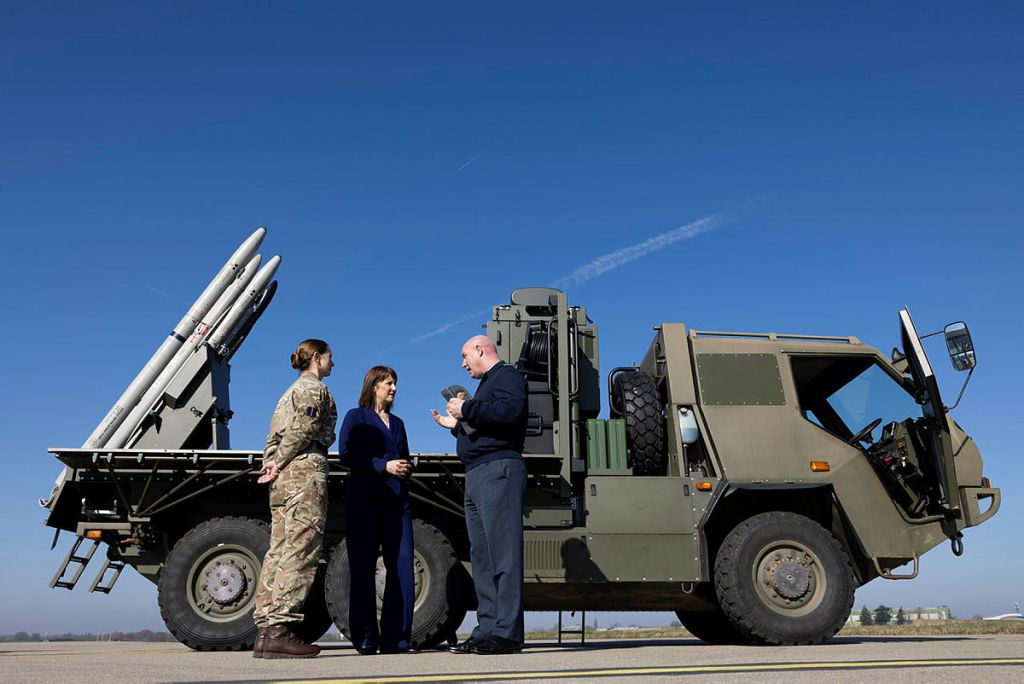
UK’s Chancellor of the Exchequer being briefed on Raven during a visit to RAF Northolt, March 2025 (UK MoD/Crown Copyright)

The UK Ministry of Defence unveiled the Raven officially on 10 May 2025. In a video posted to the UK MoD YouTube channel the system was shown in detail and some interesting stats were shared. Colonel Olly Todd, Military Assistant Head of Taskforce Kindred [Taskforce Kindred refers to the MoD’s effort to provide equipment to the Armed Forces of Ukraine (AFU), from UK stockpiles and rapid procurement.] noted that the UK has provided approximately 400 ASRAAM (which were near the end of their service life) to Ukraine and from 400 launches the systems’ engagement success rate stands at around 70%. The video also confirms that eight Raven systems were deployed to Ukraine in 2022 and a further five are set to be provided in 2025.

Raven was developed in just three months with experts from MBDA, Supacat at the RAF’s Air & Space Warfare Centre involved in the process. It combines a Supacat HMT-600 vehicle with the MBDA-manufactured ASRAAM using a bespoke launch assembly which integrates launch pylons taken from legacy UK aircraft including Hawk, Jaguar and Tornadoes. Unsurprisingly Raven and Gravehawk use the same control system and likely share the same system-integrated sensor units for tracking and identifying targets before locking on with the missiles’ seekers before launch.
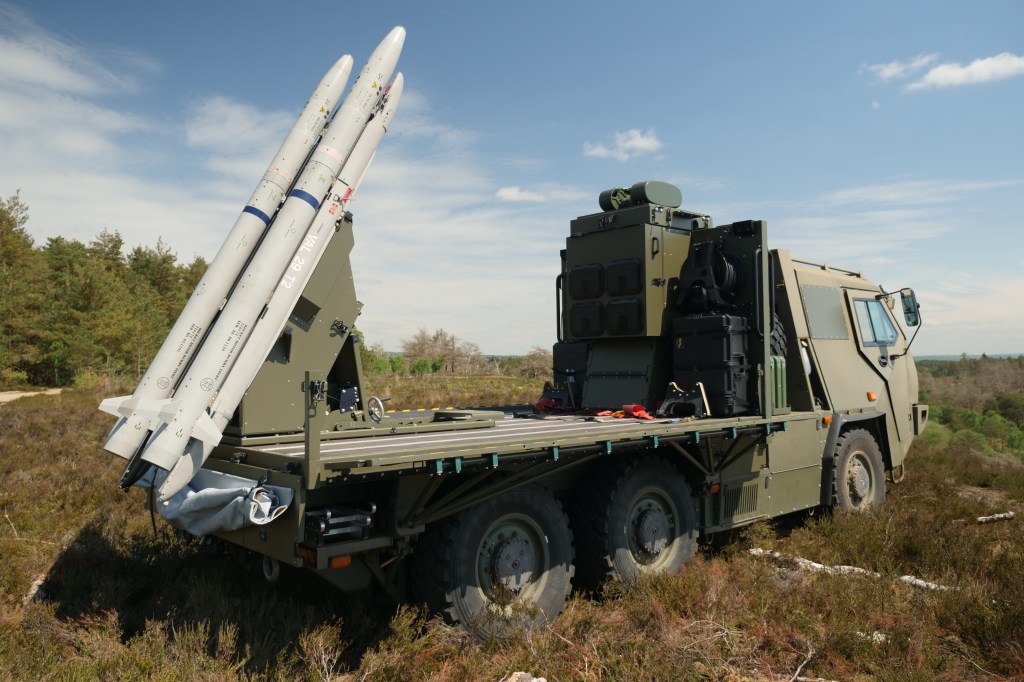
ASRAAM mounted on a Raven air defence system (UK MoD/Crown Copyright)

While ASRAAM is still in production it is worth noting that other than the UK, the only other current user is India – though several Middle Eastern nations have reportedly adopted it, this means the stock of older missiles ready for disposal will be somewhat limited. It is so far unclear if the Raven systems could also be adapted to launch other missiles such as the R-73 used by the Gravehawk.
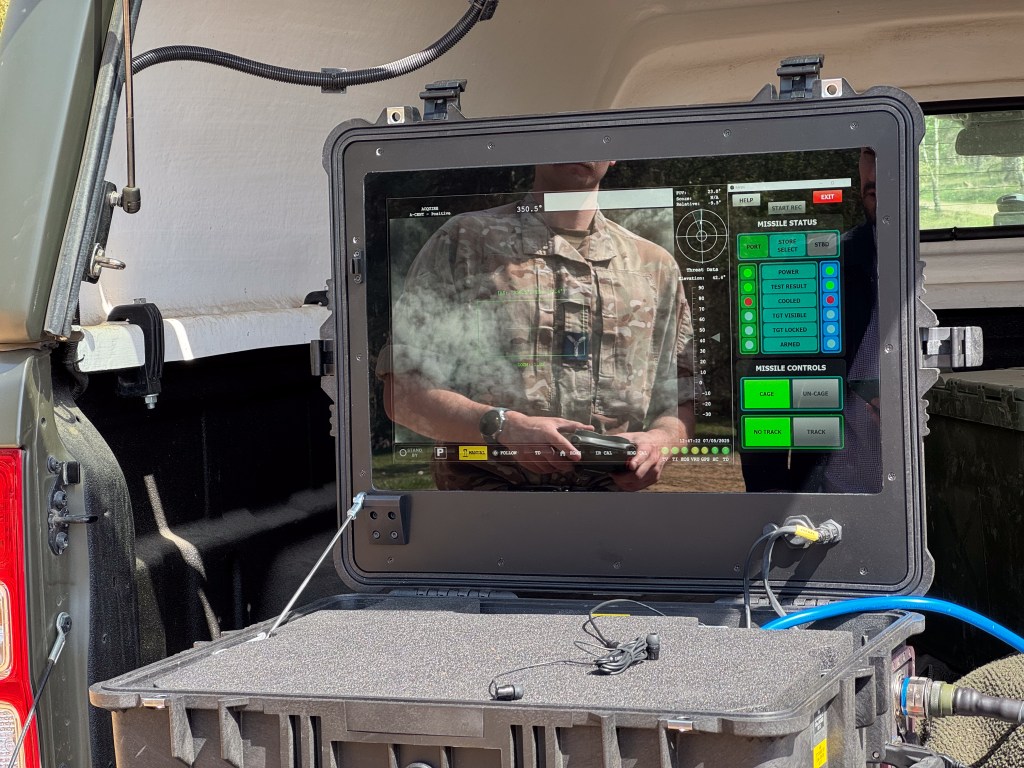
Photo of the Raven Air Defence System’s Fire and Control Unit (UK MoD/Crown Copyright)

Despite the potential limited availability of the missiles the relatively cost-effective price-tag of an ASRAAM, reported to be around £200,000 (or $260,000), makes the Raven a useful system for not only protecting key Ukrainian infrastructure but also, as has been seen in some of the footage available, engaging Russian reconnaissance drones which feed important information back to Russia’s command and control apparatus.

Updates – 25/07/25:

Update – 2/7/25:

The Ukrainian Air Force shared a video featuring the Raven giving an extensive look at it on operations in Ukraine.

The crew have painted up one side of the cab with a kill tally with the silhouette of various different drones. The visible tally includes:

– 17 Shaheds
– 1 Cruise Missile
– 17 Orlan 10 UAV
– 13 Supercam UAV
– 25 Zala UAV

Update – 27/10/25:

On 24 October, the Ukrainian Air Forces’ Air Command “West” social media shared a photo of a Raven system, noting that it had destroyed 24 Shaheds and several cruise missiles.
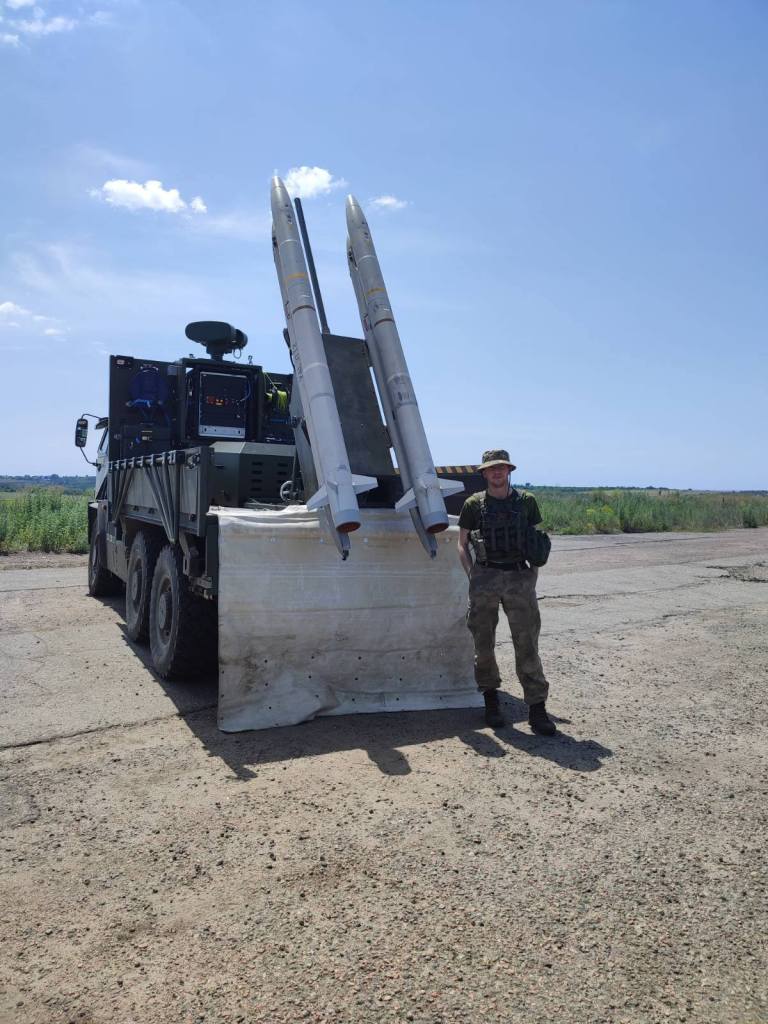
A video was also shared showing the successful engagement of Russian Kh-59 and Kh-101 cruise missiles.


Support Us: If you enjoyed this video and article please consider supporting our work here. We have some great perks available for Patreon Supporters – including early access to custom stickers and early access to videos! Thank you for your support!

Ukrainian ‘Shotgun’ Drones Shoot Down Russian Drones

On the 27 December, a Ukrainian fundraising charity posted a series of short videos featuring a drone with a pair of gun barrels. The Lesia UA Foundation provide Ukrainian units with vehicles, bikes, drones and personal equipment procured with the funds they raise. It appears that they have helped to fund the development or fielding of an unknown number of gun-armed drones.

The footage of the gun-drone in action was shared on 27 December with the telegram post stating [machine translated]:

“For the first time on video – drones and hard drives shot down other drones
Defenders of Ukraine test #LesiaUAtechnology developments
Stay tuned and we’ll show you even more exclusive shots! Together to victory!”

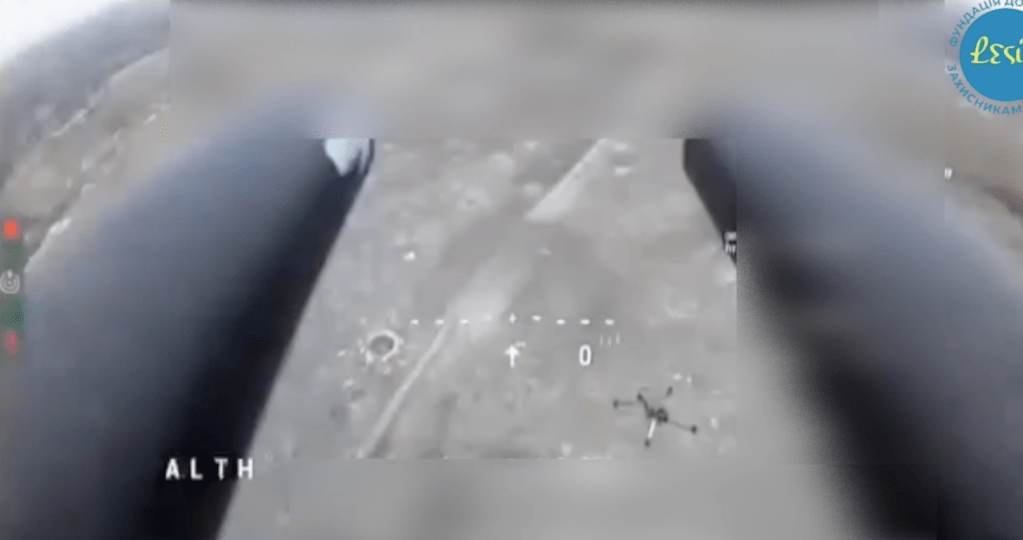
In the first video the gun-drone follows a quadcopter with the drone’s camera panning up and down several times between what appear to be a pair of barrels. The quadcopter is downed with damage to one of its rotors and appears to be trailing smoke as it spirals to the ground.

View between the barrels of a Ukrainian gun drone (via social media)

In the second short clip what appears to be a bomber drone, carrying an explosive hanging beneath it, is shot down as very close range as it hovers. Similarly, the third video shows a bomber drone which is shot down at close range as it hovered with damage to its rotor blades.
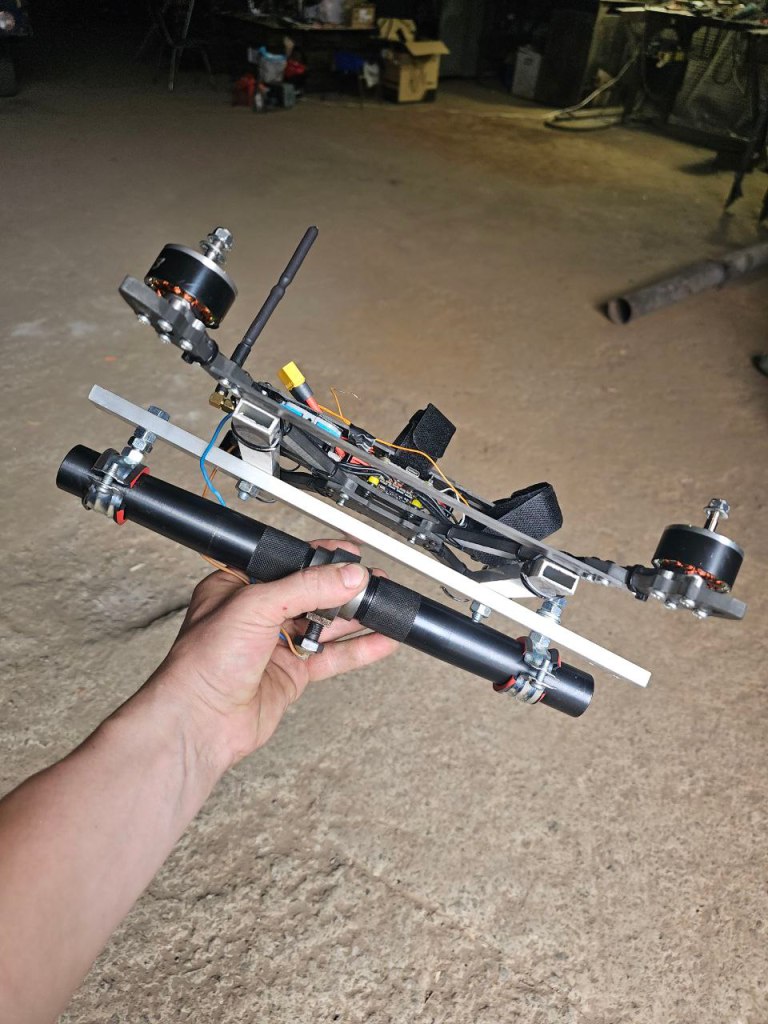
At the time of writing the Lesia UA Foundation have not released any additional clips of the drone in action or any images of what the drone looks like.

While in recent months we have seen drones armed with both RPGs and AK-74s these have been used in the air-to-ground role. The shotgun-like blasts seen in these clips are more useful for close range air-to-air engagements. From the lack of recoil seen in the clips, the large bore diameter of the barrels and their positioning on the drone, either side of a camera gimbal, it would appear that the gun used by the drone follows a recoilless principal. The recoilless guns work along the premise of Newton’s Third Law of Motion, that all things have an equal and opposite reaction – as such two guns are connected back to back, with the backwards-facing gun firing a counter-weight – mitigating recoil which prevents the drone’s flight from being destabilised.

A Russian recoilless gun drone developed in 2024 (via social media)

Why a recoilless gun and not a conventional shotgun? Principal factors governing this are likely weight, effectiveness and recoil. The recoilless guns have a larger bore diameter meaning larger load and increased hit probability. Additionally they are simpler with no-working or recoiling parts (as they load is likely electrically ignited) and they are lighter allowing the drone to stay in the air for longer and/or travel further. The key downside to the use of a single shot recoilless gun is that it can fire only one round. The Ukrainian drones have sought to mitigate this by seemingly equipping their drone with two of the guns.

While we haven’t yet seen an image of the Ukrainian gun-armed drone, we have seen a Russian example which was developed in the summer of 2024, tested but reportedly not yet fielded. The Russian drone was developed by the BRT company who, in a recent telegram post, expressed their frustration at seeing a Ukrainian recoilless gun drone in use.

While successfully engaging an enemy drone with a gun is difficult it is the detection and tracking of enemy drones which is likely the most challenging part. This may lead to these recoilless gun-equipped drones being used in a sort of combat air patrol role, seeking out and hunting down enemy drones over an area where they have been reported. It remains to be seen if these recoilless gun-armed drones will proliferate as a method of countering the huge number of small drones used by both sides but from the limited footage of them in action that is available the concept seems proven.

Update – 10/1/24: Additional footage has surfaced showing the drone firing on Russian infantry.

Update – 15/1/25: Additional footage of the Ukrainian drone in action, shared by a drone unit with the 2nd Mechanized Battalion of the 30th Mechanized Brigade.

Update – 4/2/25:

A drone team with the 43rd Mechanised Brigade shared a clip of a shotgun drone engaging a Russian drone.

Update – 17/2/25:


Support Us: If you enjoyed this video and article please consider supporting our work here. We have some great perks available for Patreon Supporters – including early access to custom stickers and early access to videos! You can also find us on the History of Weapons & War app. Thank you for your support!

Polish Rifle Grenades for Ukrainian Drones

Earlier this summer, Polish PGN-60 rifle grenades began to appear in the hands of various Ukrainian units. These 68mm fin-stabilised, High-Explosive Anti-Tank (HEAT) grenades were developed in the 1950s, to provide Polish infantry with a ranged anti-tank and anti-personnel weapon.

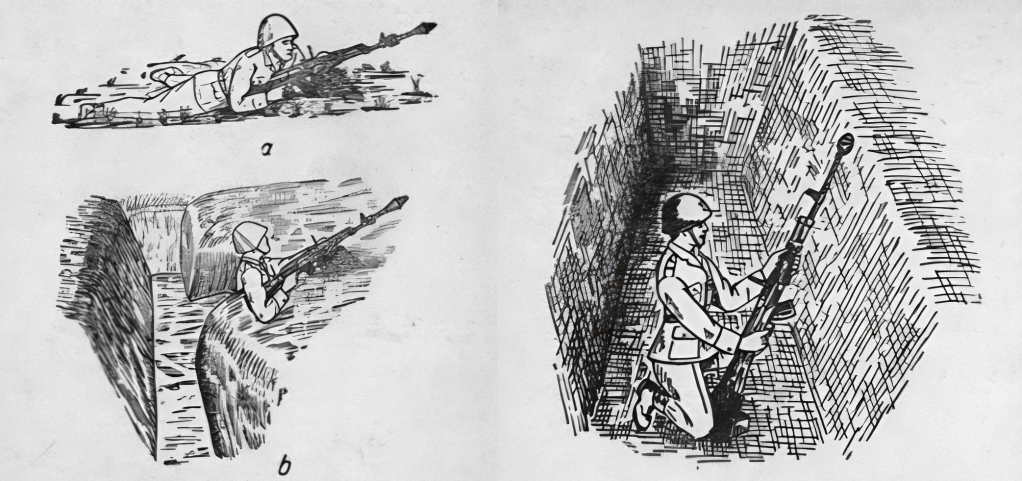
Introduced in the early 1960s they were used in conjunction with the specially adapted Karabinek-granatnik wzór 1960 (Carbine-grenade launcher M1960) which had a spigot onto which the grenade’s tail was slid. The grenade was launched by a blank UNM ‘Universal Propellant Cartridge’. The 7.62×39mm wz.1960 and later wz.1960/72 are long out of Polish service, but it seems that the Polish military decided to retain the rifle grenades in storage. The rifle grenade concept was superseded in Polish service by the issuing of the lightweight RPG-76 Komar anti-armour rocket propelled grenade. These have also appeared in Ukraine.

Polish manual illustrations showing PGN-60 and KGN rifle grenades (source)

The stated penetrating power of the PGN-60 varies depending on the source; some say 160mm others suggest up to 200mm of RHA plate. The grenade itself is either Impact or Graze fuze initiated.

While we have seen use of improvised rifle grenades in Ukraine, it is unlikely the PGN-60s have been used for their original purpose, instead they appear to have been either harvested for their explosive content or used as warheads for FPV (First Person View) drones.

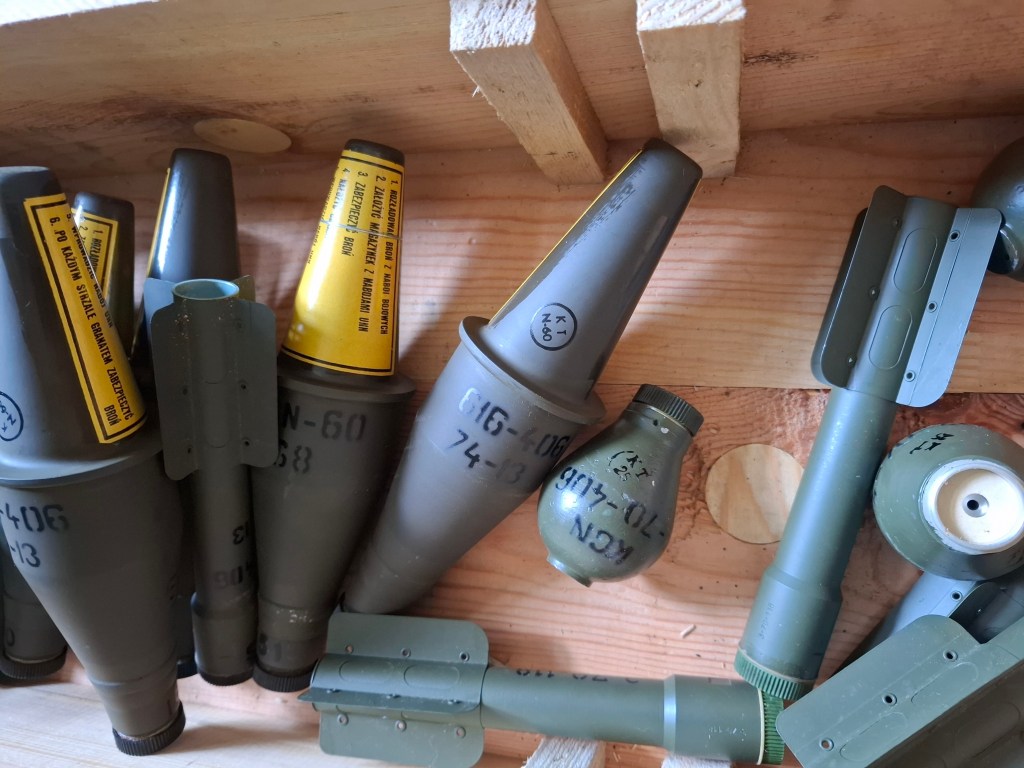
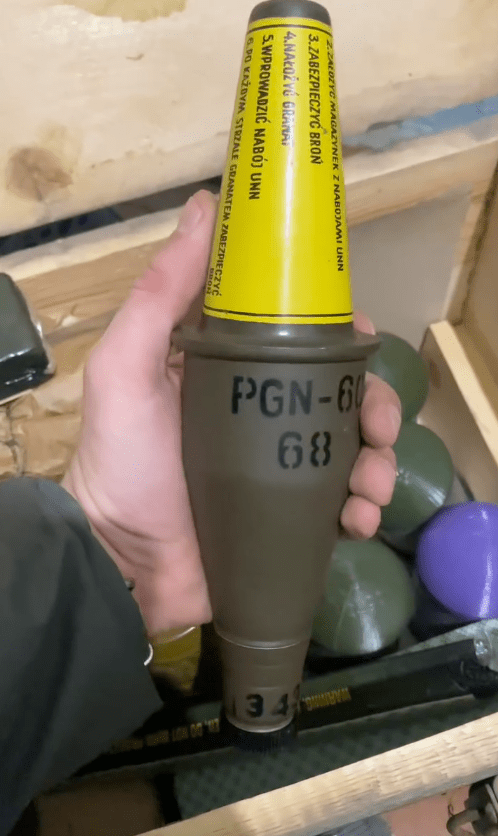
One example of the use of the rifle grenades by a drone team was shared by Joe McDonald, a British volunteer serving with the Ukrainian Marines in Kherson. Joe kindly shared some photos of a consignment of Polish rifle grenades his unit received in July. Included in the consignment were not only the PGN-60 HEAT grenades but also Polish KGN anti-personnel grenades. The first sighting of one of the KGN grenades came earlier, back in mid-April 2024. Sources suggest that the KGN grenades contain nearly 250 fragmentation pieces. One of Joe’s photograph shows 10 PGN-60s and five KGNs, along with their detached tail assemblies.

PGN-60 & KGN rifle grenades, July 2024 (Joe McDonald)

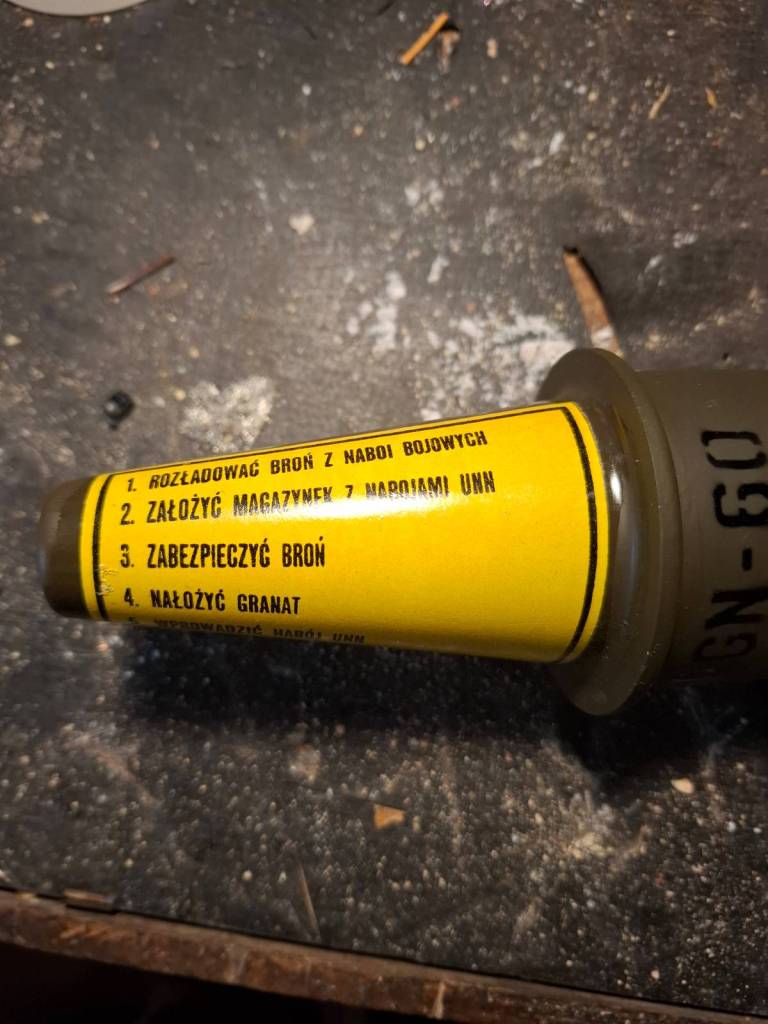
The yellow label markings are instructions on how to use the rifle grenade, they read [machine translated]:

  1. Unload the rifle
  2. Load magazine with propellant cartridges
  3. Put the rifle on safe
  4. Seat the grenade
  5. Chamber a propellant cartridge
  6. After each shot put the weapon on safe

Other markings include various factory, year and lot markings.

PGN-60 markings (Joe McDonald)

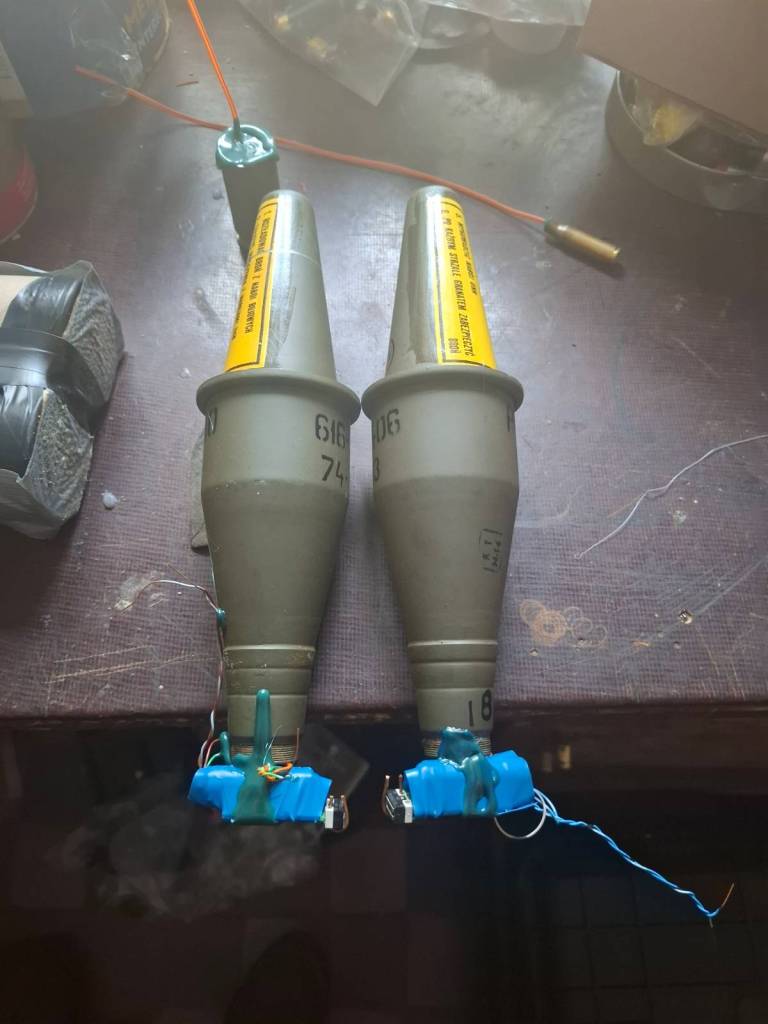
Joe noted that the KGN grenades have either been used as drone-dropped munitions or have been mounted on 7-inch first person view (FPV) drones in addition to a quantity of additional plastic explosive. Joe recently shared some video of five of the PGN-60 warheads electronically wired and ready for mounting on an FPV drone, these are some of the last of the grenades his unit received in July.

PGN-60 rifle grenades prepared for mounting on FPV drones (Joe McDonald)

The PGN-60s aren’t the only interesting rifle grenades to turn up. In September a photograph of a 1990-dated French 58mm PAB F2 anti-tank rifle grenade was shared. France may have provided them for their explosive content or to accompany the 1,000 FAMAS F1 Valorise rifles which have been transferred to Ukraine. Only one image of this type of rifle grenade has surface so far but from the image it appears it’s tail assembly has been removed and is likely to be utilised as part of an FPV.

A French PAB F2 anti-tank rifle grenade (via French Aid to Ukraine)

It is currently unclear just how many Polish and French rifle grenades have been transferred to Ukraine. The imagery sample featured in this article/video represents all of the imagery I have been able to find. If you have come across any additional sightings of the grenades I’d love to hear from you.

Special thanks to Joe for his help with this video. Check out Joe’s channel here.

Update – 27/10/25:

Another PGN-60 was seen in a short video shared by an officer with Ukraine’s Unmanned Systems Forces in February 2024.


Bibliography:

Karabinek-granatnik wzór 1960/72 Rifle-grenade launcher, AK-Info, (source)

Grenades for rifle-grenade launcher systems kbkg wz.60 and kbkg wz.60/72, AK-Info, (source)

PGN-60, CAT-UXO, (source)


Support Us: If you enjoyed this video and article please consider supporting our work here. We have some great perks available for Patreon Supporters – including early access to custom stickers and early access to videos! You can also find us on the History of Weapons & War app. Thank you for your support!

The Turtle Tank Evolves

In a recent article/video we looked at the proliferation of Russia’s unusual ‘Turtle Tanks’ which are protected by ad hoc, locally fabricated counter-FPV shells. Since then we’ve gotten a good look at several more Turtle Tanks and our first look at the driver’s point of view.

Footage, filmed on 27 April, of another Russian armoured assault into Krasnohorivka shows a column of four infantry fighting vehicles with what appear t o be counter-FPV shelters following a tank with a ‘cope cage’

On the 29 April, a Ukrainian Telegram channel posted a short video of a ‘Turtle Tank’ attack in the Bakhmut direction, noting that [machine translated]: “the equipment is stupidly scalded with metal, from 5 units it was possible to destroy a tank and an armored personnel carrier. A lot of FPV was spent on one tank. Everyone laughs at their construction of barns, but in fact they work like hell.” The tank appears to have a box like shelter with a sloped forward roof over its gun and glacis. As seen in earlier videos the tank is leading a column of armoured vehicles during the assault, clearing a path for them. It appears to detonate a mine with its mine plough and retreats.

At the start of May a pair of T-62s with hybrid counter-FPV shelters were seen in photos taken by a UAV, location unconfirmed. These images illustrate the blurring of the lines between ‘cope cage’ equipped tanks and the ‘turtle tanks’. Like the earlier turtle tanks they’re fitted with EW sets & KMT-6 mine ploughs but do not have shells made entirely from sheet metal. Instead, they appear to have used chainlink and gratings, one piece of which appears to have Kontakt (explosive reactive armour (ERA) mounted. One of the vehicles appears to have been used to transport supplies. One T-62 has broken tracks, the other top damage.

A hybrid combining elements of the Turtle Tank with that of earlier ‘cope cages’ (via social media)

Around the same time the Ukrainian 79th Air Assault Brigade shared video of Russian attacks near Novomykhailivka, in Donetsk, the footage included a brief clip of a ‘turtle tank’ with a small forward opening, camouflage over its shell frame and no sign of a mine plough or roller fitted. On 2 May, the 33rd Mechanized Brigade shared footage from thermal camera-equipped FPV drones showed a Russian tank being used to transport troops, the profile of the counter-FPV shelter is visible but the low definition of the thermal footage makes it difficult to analyse its construction. The vehicle, however, appears to be equipped with a mine plough and possibly an EW module.

Also on 2 May, Ukrainian drone fundraiser Teoyaomiquu shared a video of a Russian assault near Ivanivske which shows a pair of Russian armoured vehicles with counter-FPV shells, one of which deploys a smoke screen. The 1st Assault Battalion of the 5th Separate Assault Brigade also shared footage from the Russian assault showing the shell-equipped vehicles.

On the 5 May a short video was posted by a Russian combatant which showed an entirely enclosed MT-LB with steel plates surrounding the top of the vehicle and its wheels. It also has an additional mesh roof cover to add additional top protection. Two cutouts in the side and one in the front for the driver also have mesh covers to give some visibility. On the same day video of a destroyed BTR-MDM which had been encased in a counter-FPV shelter was shared, showing the rear of the vehicle enclosed.

An evolved Turtle Tank with added cages on its superstructure (via social media)

Perhaps the most striking evolution of the ‘Turtle Tank’ appeared on 5 May, a tank completely enclosed except for a small gap at the front. Protective grills made from cages completely cover the outer metal sheets of the counter-FPV shell. One Russian telegram channel likened it to a rolling ‘poultry farm’. The vehicle also has a KMT-7 mine roller. Additional video of the porcupine-like tank gives us the first look at what it is like driving one of these ‘turtle tanks’, with his hatch open the driver has an almost clear view ahead (apart from the solid awning above him and the partial grill cage protection to his front) but no view to the left or right front quarters of the tank.

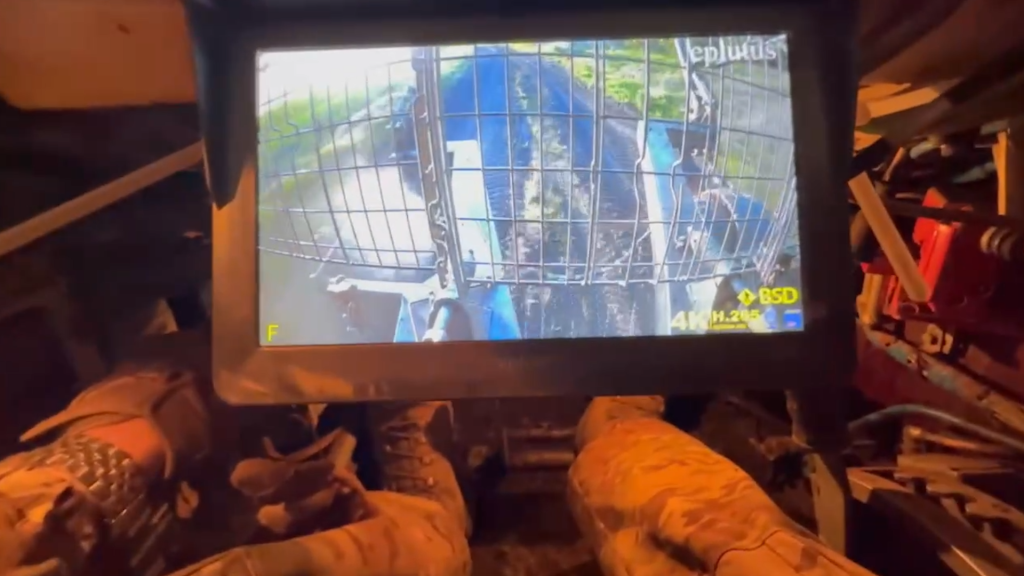
A Turtle Tank driver using a camera feed to steer (via social media)

Several days later footage from inside what appears to be the same tank shows the driver steering by video monitor. The readout on the monitor suggests the video’s resolution is 4K H.265 but the field of view appears limited, with the camera seemingly positioned on the shell’s awning looking down between the KMT-7’s two rollers. The system used is from Russian automotive accessory company Eplutus and appears to be one of their rear view camera monitors.

Another piece of UAV footage shows another ‘turtle tank’ with a much boxier shell. It again has all of the major features seen in earlier examples: a sheet metal shell which encloses most of the top part of tank, a set of mine rollers and a EW jammer module on the roof. Some sources suggest the footage was filmed near Bilohorivka, in Luhansk. It’s unclear when the footage was filmed but the vehicle appears stationary with access grates to the tank’s rear deck left open.

The 7 May saw evidence of the proliferation of t he ‘turtle tank’ concept with Russian social media sharing photographs of a ‘Turtle Tank’ fabricated by the Russian 40th Naval Infantry Brigade, these indicate that the concept is continuing to proliferated, perhaps without any central influence. The tank is encased in a counter-FPV shelter made up of three large metal sheets, a poorly fabricated angled roof which slopes at the rear with a flat top and a wire mesh slopping front piece. Additionally on the floor there appears to be a chair curtain similar to those seen on other ‘turtle tanks’. The rear has an extended deck and appears to be enclosed. A skirt of Kontakt-1 ERA has been roughly added around the skirt. As with other Turtle Tanks the ‘V Turtle’ is equipped with what appears to be an RP-377 electronic warfare jammer. It also has a KMT-6 mine plough fitted. A large white V has been painted on the sides of the shell and Russian flag rings added to the barrel.

A Turtle Tank built by the 40th Naval Infantry Brigade (via social media)

On 10 May, footage of an FPV drone attacking an immobilised ‘turtle tank’ emerged. The tank is again enclosed by a counter-FPV shell and has a mine plough. The feed from the drone also suffers from some interference as it approaches the vehicle suggesting that an EW module may be present nearby, perhaps aboard the tank. However, it appears that a mine has damaged the tank’s tracks and the vehicle has been abandoned allowing an FPV to attack via an open rear hatch. The footage was reportedly filmed during the first day of the new Russian offensive towards Kharkiv. This again shows that not only is the concept proliferating but also that the ‘turtle tanks’ are still vulnerable to conventional anti-tank weapons like mines.

Also on the 10 May, the Russian military channel, Large Caliber Trouble, shared a photo of the porcupine turtle tank which had been damaged by FPV strikes showing the cage bars bent and some holes in the counter-FPV shell. The post claims that the tank was “attacked by 40 kamikazes, [but] thanks to electronic warfare, most of them fell and only 8 FPVs were able to cause damage.” The condition of the vehicle after the engagement is unknown. The suggestion that a large number of FPVs attacked the tank supports the earlier Ukrainian comments about ‘a lot of FPV [being] spent on one tank.’

A ‘turtle tank’, possibly a T-80, seen on the eastern front on the first day of the Russian Kharkiv offensive (via social media)

A key question is how can the Turtle Tanks be defeated? Basically just like any other tank can be: anti-tank guided missiles with tandem warheads, dense mines belts, direct hits by artillery, use of multiple FPV drones to damage and breach the shell with additional drones to exploit gaps made.

We will probably see further proliferation of the ‘turtle tanks’ in coming weeks but with time the Ukrainians will probably find ways to engage these protected tanks more effectively, as is so common in war there will probably be a continued evolution of measure and counter-measure.

Update – 13/5/24:

On the 8 May photos of a Russian T-72B3 being fitted with a counter-FPV shell were posted. OSINT account Naalsio noted that while the tank had tactical markings denoting the 68th Guards Tank Regiment, 150th Motorised Rifle Division, 8th Guards Combined Arms Army, Southern Military District, the original Telegram post said that the work was carried out by the 104th Separate Tank Battalion of the 7th Guards Airborne Assault Division. In the photos we can see the assembly of a frame projecting from the tank’s sides with slightly angled sheet metal being welded to the sides.

Ukraine’s Presidential Brigade shared some FPV footage of what may be another ‘Turtle Tank’ near Vuhledar. The resolution of the footage is low but the vehicle appears to have an EW module on top of its counter-FPV shell. Its unclear if the shell is solid sheet metal or if its is a mesh screen which covers the top part of the vehicle and has been shrouded in camouflage netting.

On 13 May, photographs of a T-80U with shell were shared with at least some of the work seemingly being completed in the field with a welder hooked up to a generator. The outer framework of the shell is visible and the sheet metal used seems to be well rusted. Markings visible may suggest the tank belongs to the 3rd Motor Rifle Division’s 752nd Motor Rifle Regiment.

Also on the 13 May, the 3rd Assault Brigade claimed that the 3rd along with the 66th Mechanized, and 77th Airmobile Brigades had engaged Russian forces on the Kharkiv front and struck a ‘turtle tank’ with FPVs.

Footage of what may be the ‘turtle tank’ which was immobilised during the initial assaults on the Kharkiv front shows the shell badly damaged and its left-side track lost its KMT-6 mine plough is still present however.

The clearest imagery of of a knocked out ‘turtle tank’ which has appeared so far also emerged on 13 May. Three images taken by an observation drone show a T-62 which shares a numerous construction characteristics with the earlier ‘porcupine turtle’ seen on 5 May. It has similar protective grills made from cages completely cover the outer metal sheets of the counter-FPV shell. However, its rear is not enclosed by sheet metal but a combination of sheets and grating.

The tank doesn’t have any visible electronic warfare equipment but is fitted with what appears to be a BTU-55 dozer blade mounting point (H/T – Ross) which is no longer present and not visible in the available imagery (although what appears to be a KMT-6 mine plough can be seen on the ground behind the tank). The tank is clearly has signs of fire damage along its side and rear and the front portion of its shell as been blown inwards and warped, cause unclear though it may have been an artillery strike, ATGM hit or an FPV. Intriguingly, inside the shell appears to be an earlier pre-existing ‘cope cage’ shelter on the turret which does not not a part of the outer shell structure.

Update – 14/5/24:

Further examples of tanks equipped with counter-FPV shells, which both sides increasingly refer to as ‘сарай’ or sheds. Drone footage of a Russian T-72B3 equipped with a ‘shed’ was shared early on 14 May showing the vehicle on fire, with smoke billowing from its roof, and under attack by FPVs. The footage has reportedly been geo-located to Novovodyanoe, in the Luhansk region. Again the shell is made up of sheet metal with a rear hatch and an additional mesh roof screen. The tank has a broken track and one shot from the footage appears to show the vehicle surrounded by TM-62 anti-tank mines suggesting the vehicle entered a mine field. The vehicle does not appear to be fitted with a mine plough or roller.

Additionally imagery of another T-62-based ‘turtle tank’ were also shared, date and location unknown, but the now standard construction of a rough internal framework made from box metal and then sheet metal welded onto the frame. From the photos it appears it may be fitted with a mine plough. Only one side of the shell has been completed but there is also a small ladder welded onto the frame at the rear for access to the engine deck. Intriguingly, we can also see that the frame itself has been welded to the tank’s turret with two angled struts meaning that the tanks turret cannot be traversed at all.

Update – 15/5/24:

On the 14 May, footage of another knocked out ‘turtle tank’ emerged showing a burning tank near Andriivka in Donestsk. The tank appears to have been part of an armoured assault which may have been halted by artillery fire. The tank appears to be a T-62 fitted with KMT-6 mine plough. The vehicle is on fire with a significant portion of its shell blown off on its right side. The video also shows an FPV drone striking the tank from the rear.

On the evening of 14 May, the 79th Air Assault Brigade shared video of another Russian attack in Novomykhailivka, in Donetsk. This showed several intriguing vehicles including a hybrid-turtle which had a layer of tyres under some cage armour and a camouflage net. [Additional footage here] Another brief shot showed a tank, with no visible main gun, moving across open ground. It is equipped with a KMT-7 mine roller and a counter-FPV shell/shed which is open fronted with no additional protection such as a chain curtain or wire cages. It appears the assault was met with both artillery and FPVs.

On the 15th observation drone footage was shared of a badly damaged, burning ‘turtle tank’ which was destroyed by the Ukrainian 72nd brigade during a Russian attack in the Vuhledar sector. The date of the engagement is unconfirmed but the video shows the vehicle being destroyed in a spectacular explosion, likely due to a cook-off of ammunition.

On the 15 May another image of a converted T-72 in Donetsk emerged. Visible in the photo is a sheet metal counter-FPV shelter equipped with a layer of outer wire cages. A KMT-6 mine plough is fitted and a chain curtain protects the turret while providing decent visibility for the tank’s frontal arc. Additionally a commercial surveillence camera has been attatched to the roof of the shell. An АЕК-902 smoke discharger is attached to the top of the shell and ERA blocks have been attached to the skirt and then enclosed partially by a wire screen.


Support Us: If you enjoyed this video and article please consider supporting our work here. We have some great perks available for Patreon Supporters – including early access to custom stickers and early access to videos! Thank you for your support!
The B53 ‘Bunker Busting’ Thermonuclear Bomb

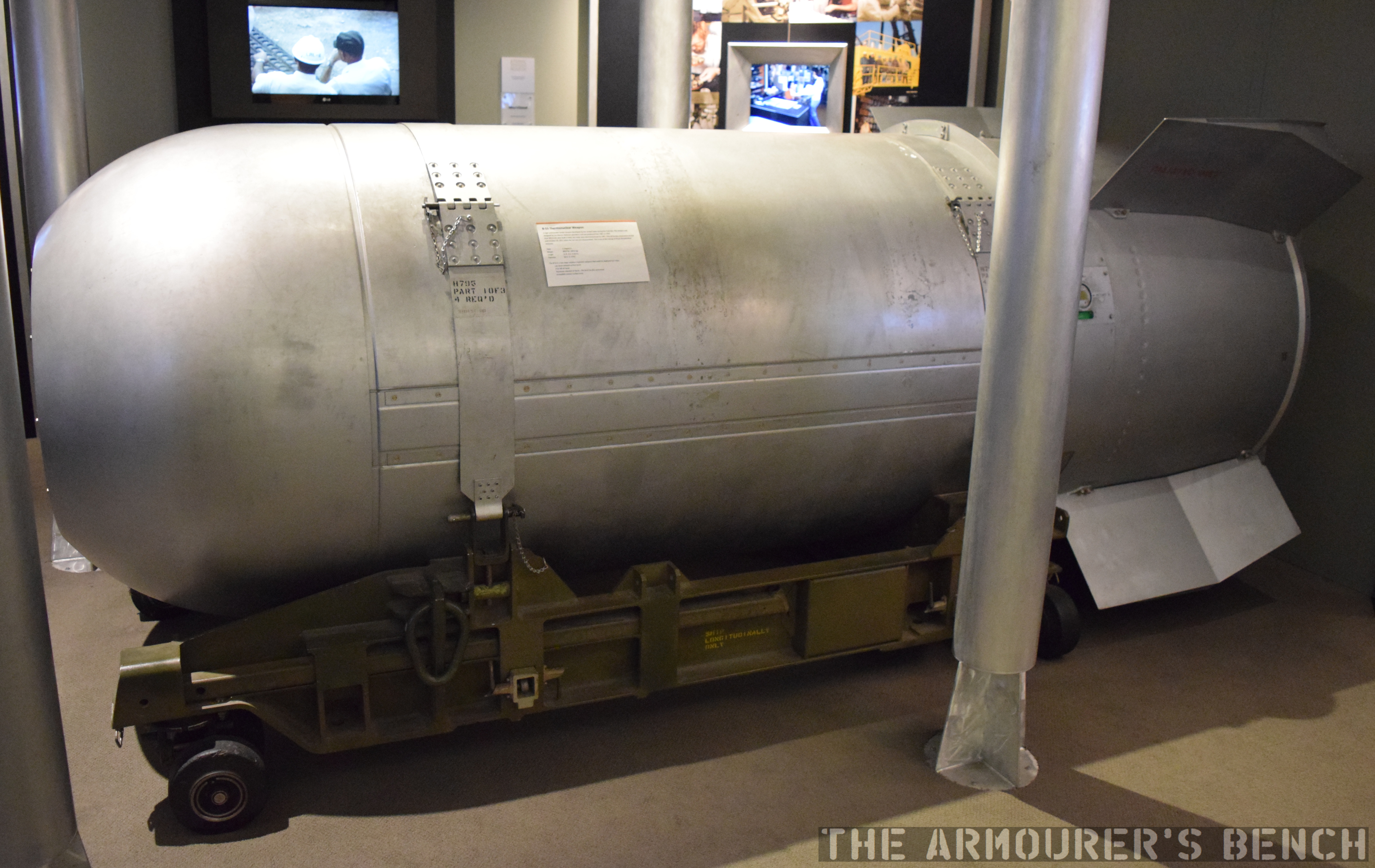
In the late 1950s the US military began development of a bomb capable of destroying deeply buried bunkers. The result was a bunker busting unguided thermonuclear bomb. Durng a visit to the Atomic Testing Museum, in Las Vegas, Matt had the chance to take a look at a decommissioned B53 up close.

DSC_0362wm.jpg
B53 on display at the Atomic Testing Museum (Matthew Moss)

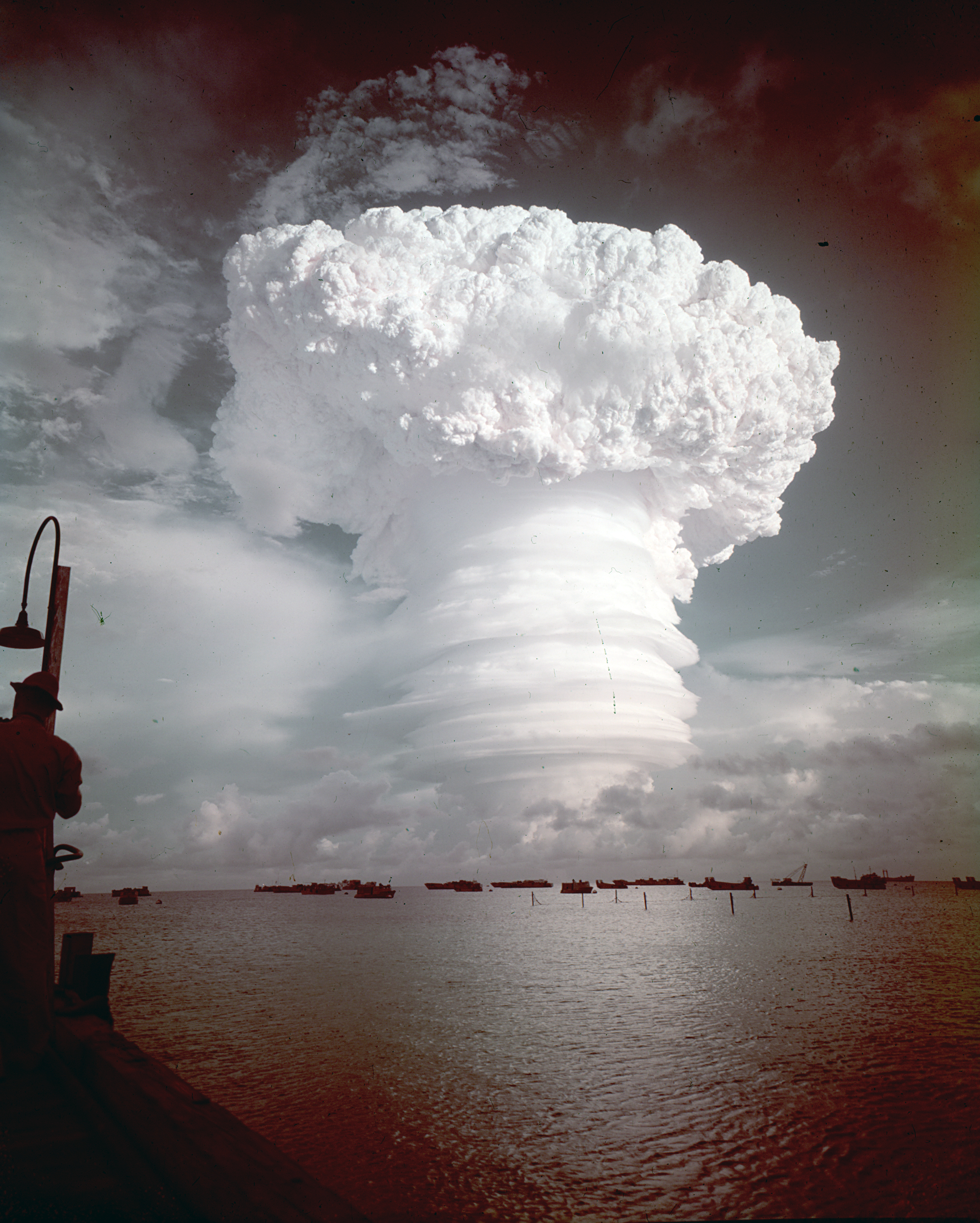
The B53 is a two-stage high-yield thermonuclear weapon, designed as a bunker buster, that could deliver a massive shockwave deep underground to the deepest Soviet command and control bunkers. Developed between 1958 and 1961, the B53 was intended to combat deeply emplaced Soviet bunkers with a yield of 9 megatons. It used a highly enriched uranium core as its primary fission stage with Lithium-6 deuteride as its second stage fusion element. The warhead itself was developed from the earlier Mk46 warhead, the experimental TX-53 was tested at the Pacific Proving Grounds as part of Operation HARDTACK I, which saw no less than 35 nuclear test detonations. Codenamed HARDTAK OAK, the TX-53 was detonated aboard a floating barge on 28th June 1958, with a yield of 8.9 megatons. The detonation created a cloud 78,000 feet (23.8 km) tall.

bvppznujoyy9zpbuihgb.jpg
Cloud produced by HARDTACK OAK (Los Alamos National Laboratory Archive)

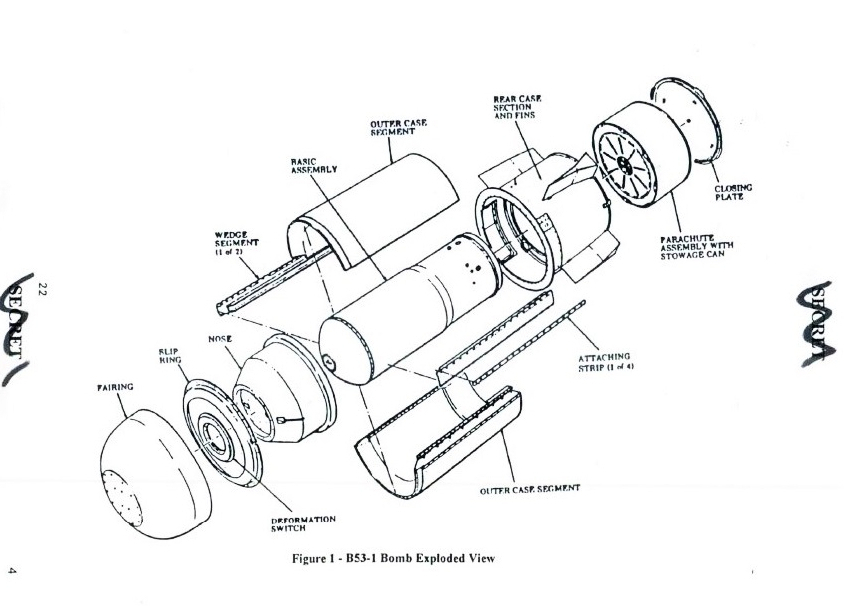
Designed to be dropped from the Strategic Air Command’s B-47, B-52 or B-58 bombers, the B53 is a gravity bomb which free fell to its target and could be air or surface detonated. The bomb itself weighed 8850 lbs or 4014kg and the casing is 12.5 feet long (3.8m) and just about 50in (1.27m) in diameter. The bomb’s outer-casing is split into a nose section, a two-piece central casing and the rear assembly with four fins which housed the parachute assembly. They were built by the Atomic Energy Commission between 1962 and 1965, over 340 bombs were built. Initially designated the Mk53 it was re-designated the B53 in 1968, when the US Air Force updated its ordnance nomenclature.

The bomb itself could be deployed in four ways: a delayed surface burst, a free fall air burst, a parachute retarded air burst (the B53 had five parachutes at the rear which can be deployed) or an immediate contact surface burst. Here we can see the panel to control the parachute deployment, with markings for safe, free fall and retard.

IMG_20200201_114757
Declassified general diagram showing the assemblies of the B53 (US DoD)

The B53 was obsolete in terms of its safety by the early 1980s with none of the more modern safety features such as an Enhanced Nuclear Detonation Safety (ENDS) additionally its explosive lens, consisting of a mix of RDX and TNT was not an insensitive munition – meaning it wasn’t designed to resist detonation from external stimuli or damage. The B53 also had no Fire-Resistant Pit (which prevents the spread of radioactive material in the event of a far), Permissive Action Link (which prevent unauthorised arming) or Command Disable safety measures.

B53 at the Pantex Plant in Texas about to begin the dismantling process (National Nuclear Security Administration)

Many of the B53s in US inventory were decommissioned in the mid-1980s, and by 1987 just 50 were retained in inventory. The last of these were disassembled and decommissioned by October 2011 – after being in service for 50 years. The B53 was replaced in its bunker busting role by the smaller B61 Mod 11.


If you enjoyed the video and this article please consider supporting our work here. We have some great perks available for Patreon Supporters.


Bibliography:

Operation Hardtack I Fact Sheet, US Strategic Command Centre for Combating Weapons of Mass Destruction, (source)

Operation Hardtack I 1958, US Defense Nuclear Agency, (source)

‘Scrapping the Unsafe Nuke’, Federation of American Scientists, (source)

Hardtack OAK footage courtesy of Atomicarchive