Russia’s Missile-Armed Shahed Drones

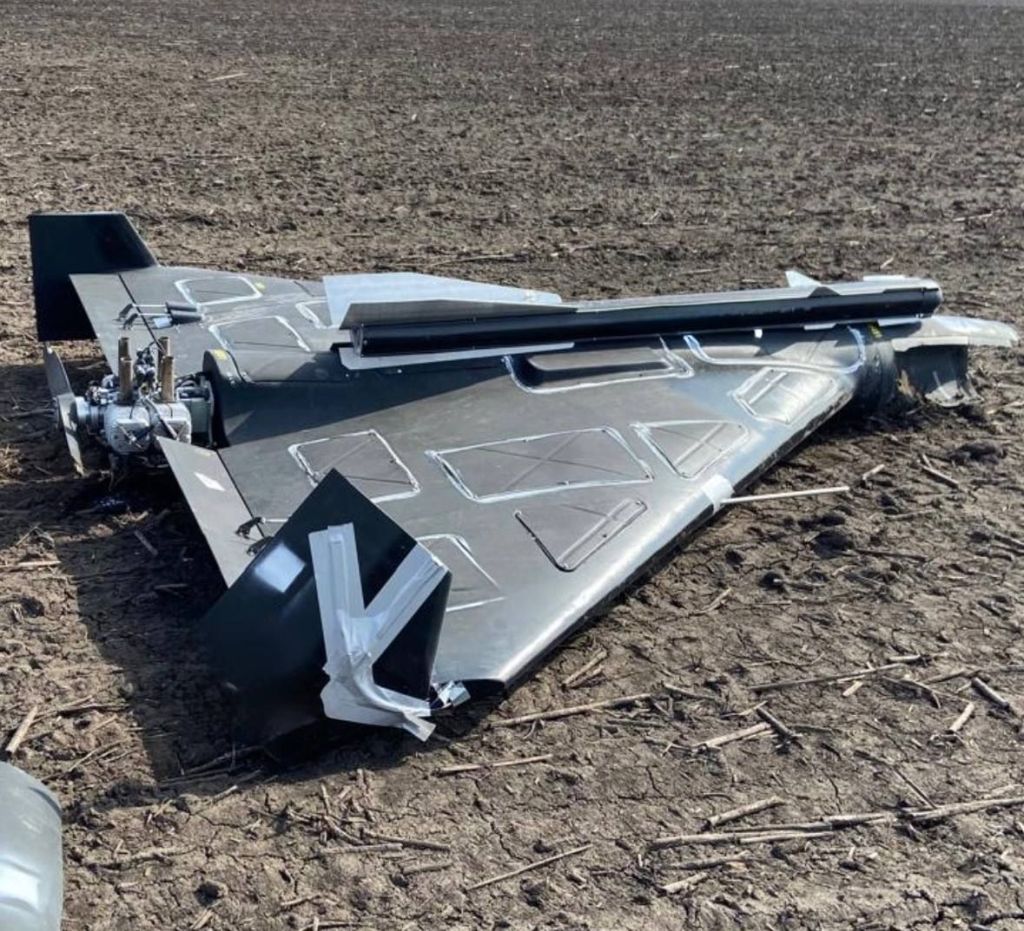
Russia continues to rely on the simple but effective Shahed-136 (Geran 2) long-range one-way munition in its ongoing aerial campaign against Ukraine. Russian strikes, including waves of Shahed-136 (and decoys), have long been a nightly occurrence across Ukraine with the the drones delivering 50kg warheads against a range of targets. A Shahed-136 downed, on 4 January, by Ukrainian forces shows that Russia has again augmented the drone platform in an attempt to off-set Ukraine’s counter-Shahed efforts.

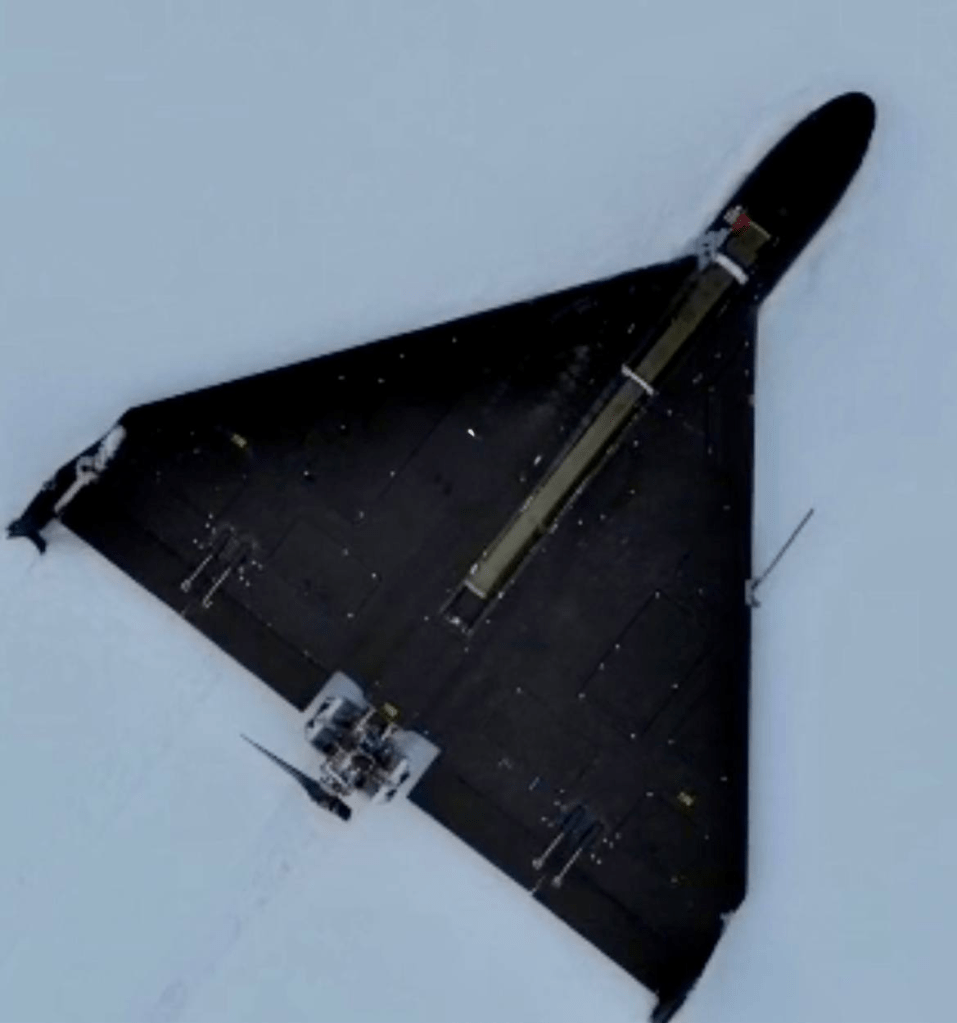
Downed MANPADS-Shahed (via social media)

Ukraine has been engaging Shaheds from both the ground and the air – with the Ukrainian air force’s helicopters and fast jets both being deployed to shoot down the Russian drones. While recently, newer aerial methods such as small, fast interceptor drones, have emerged traditional aerial platforms are still responsible for a considerable portion of Shaheds successfully downed.

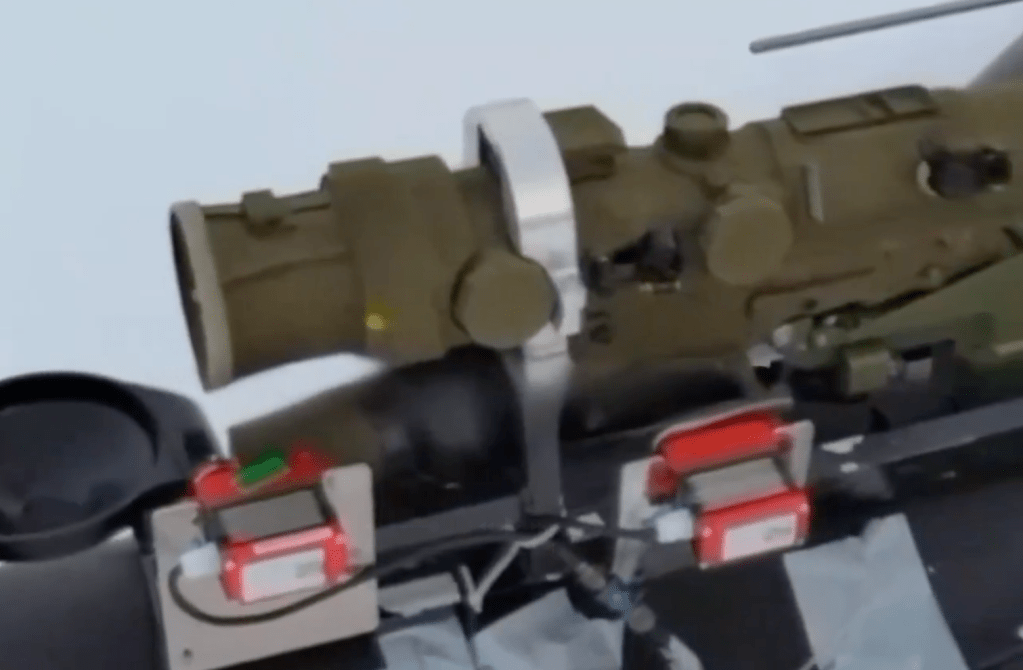
In an effort to protect its Shaheds, Russia appears to have begun to arm the long-range drones with MANPADS – man portable air defense systems, which are typically shoulder-fired. Ukrainian military technology specialist Serhii ‘Flash’ Beskrestnov shared several photographs and a video showing a Shahed armed with a 9K333 Verba 72mm multi-spectral-guided missile. The 9K333 is Russia’s most modern MANPADS and while it is typically shoulder-fired to provide troops with very short range air defense capability, according to manufacturer KB Mashinostroyeniya it can also be mounted on aerial platforms. While KBM likely envisaged these platforms to be helicopters it appears that Russian Aerospace Forces technicians have been able to mount the small missile on Shaheds.

We’ve already seen MANPADS mounted on unmanned ground vehicles for remote use against drones and aircraft and we’ve also seen smaller drones equipped with firearms and rocket launchers.

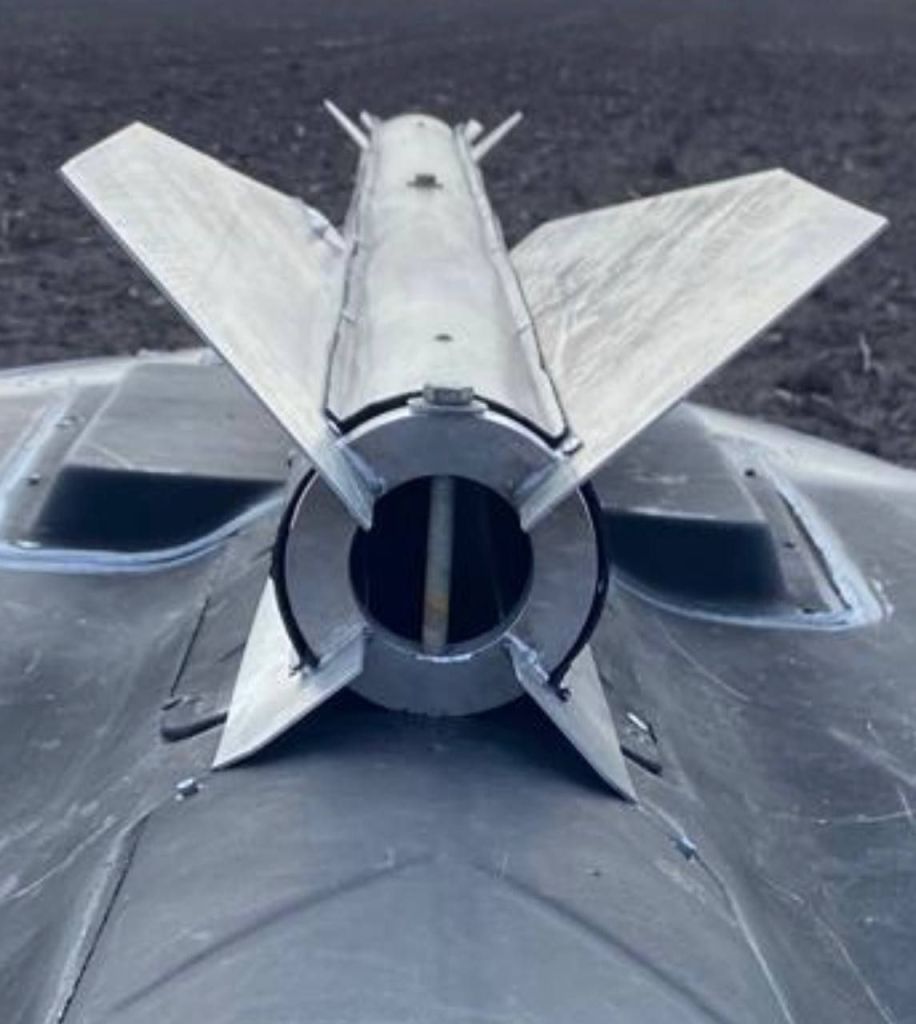
Downed MANPADS-Shahed (via social media)

The drone was reportedly downed by elements of the Ukrainian Armed Forces’ 412th Unmanned Systems Brigade (‘Nemesis’). The unit shared some footage filmed by a small quadcopter drone shows that the missile on this particular Shahed was unfired and was manufactured in 2025. It also shows the ad-hoc nature in which the launcher has been mounted on the drone. Many of the wires and connections appear to have been covered with insulation tape. There appear to be a pair of servo actuators which, from their positioning, appear to remove the launcher’s protective end-cap and actuate the Verba’s batteries, the firing controls were reportedly cable-tied so that the missile would launch as soon the target was locked by the seeker.

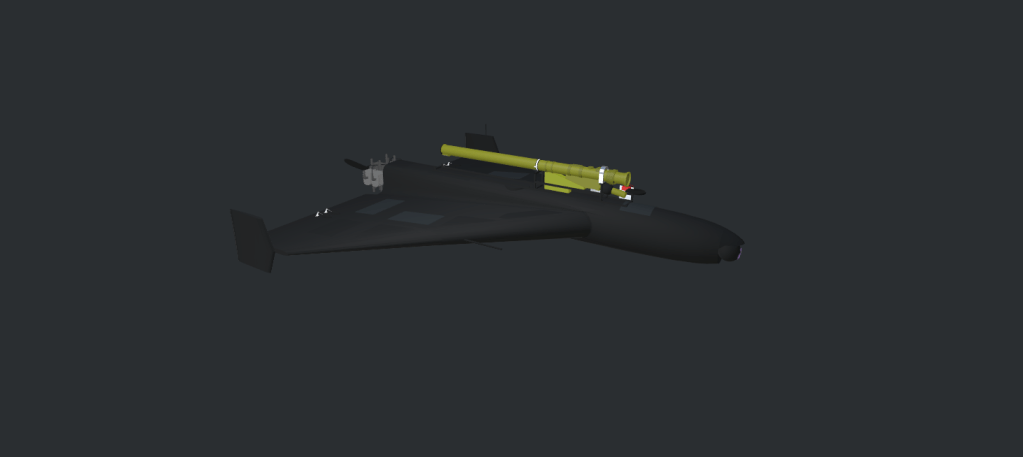
Geran-2/Shahed kamikaze drone with the Verba MANPADS (DIU)

Since deploying the Iranian-developed Shahed-136, in both propeller-driven (the Geran-2) and jet-powered (the Geran-3) variants Russia has continually developed the base design adding various payload variations, engines and defensive counter-measures. The MANPADS-Shahed was likely developed to lure valuable Ukrainian aircraft into range, up to 6km, before taking them by surprise and engaging them with a missile. The missile itself is mounted along the drone’s centre-line. A similar modification of the Shahed began to be seen back in December 2025 with Shaheds equipped with a Soviet R-60 air-to-air missile. There have been a number of interception videos featuring these R-60 equipped Shaheds and some wreckage of a number of the drones has been. The missiles are mounted on a launch rail.

Beskrestnov notes that the downed MANPADS-Shahed was equipped with “a camera and a radio modem. The missile is launched by the Shahed operator.” He went on to warn Ukrainian pilots to be more cautious when approaching Shaheds and to avoid attacking them head-on. On 12 January, the Main Directorate of Intelligence of the Ministry of Defence of Ukraine (DIU) shared an interactive computer-generated diagram of the modified Shahed drone, showing its various components and configuration on the War Sanctions website which documents the foreign components Russia uses to build its weapons.

It’s unclear how many Shaheds may have been outfitted with 9K333s or R-60s but these latest developments illustrate the evolutionary nature of the conflict’s drone technology and tactics.


Support Us: If you enjoyed this video and article please consider supporting our work here. We have some great perks available for Patreon Supporters – including exclusive videos, custom stickers and early access to videos! Thank you for your support!
Colt Canada C20 Rifles in Ukraine

Welcome to another research note, the new exclusive series of videos I’m sharing on Patreon spotlighting some of the ongoing research I’m doing into the weapons used in Ukraine. In these videos I share progress on topics that aren’t quite ready for a full video.

In 2020 Colt Canada introduced the C20, a 7.62x51mm marksman rifle. These have been adopted by both Canada and Denmark. Within the last couple of months a number of C20s have been seen in use in Ukraine.

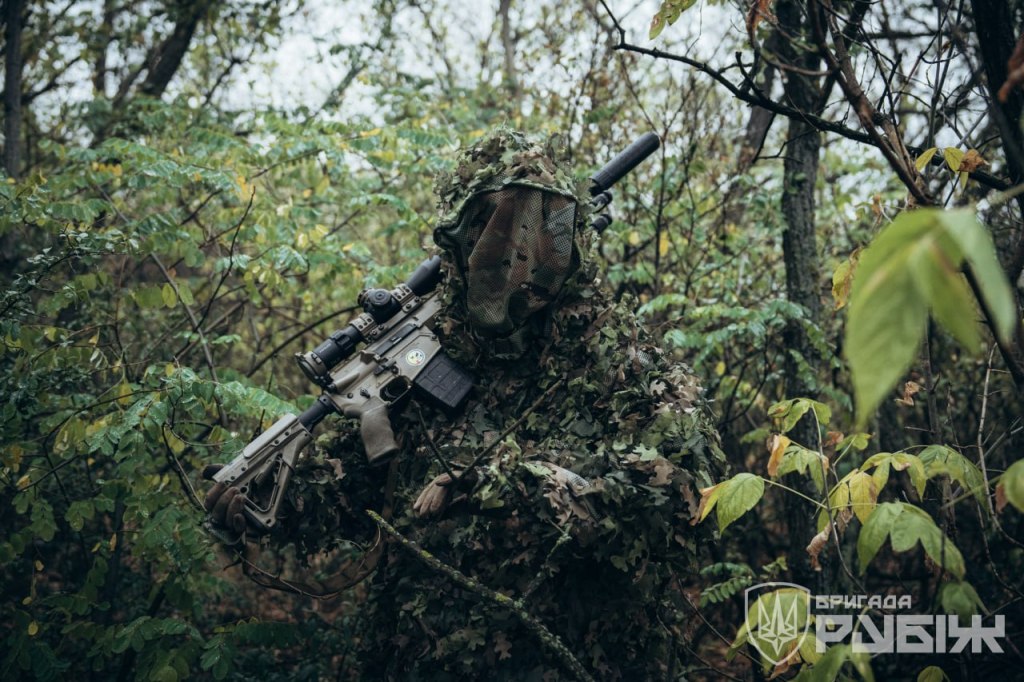
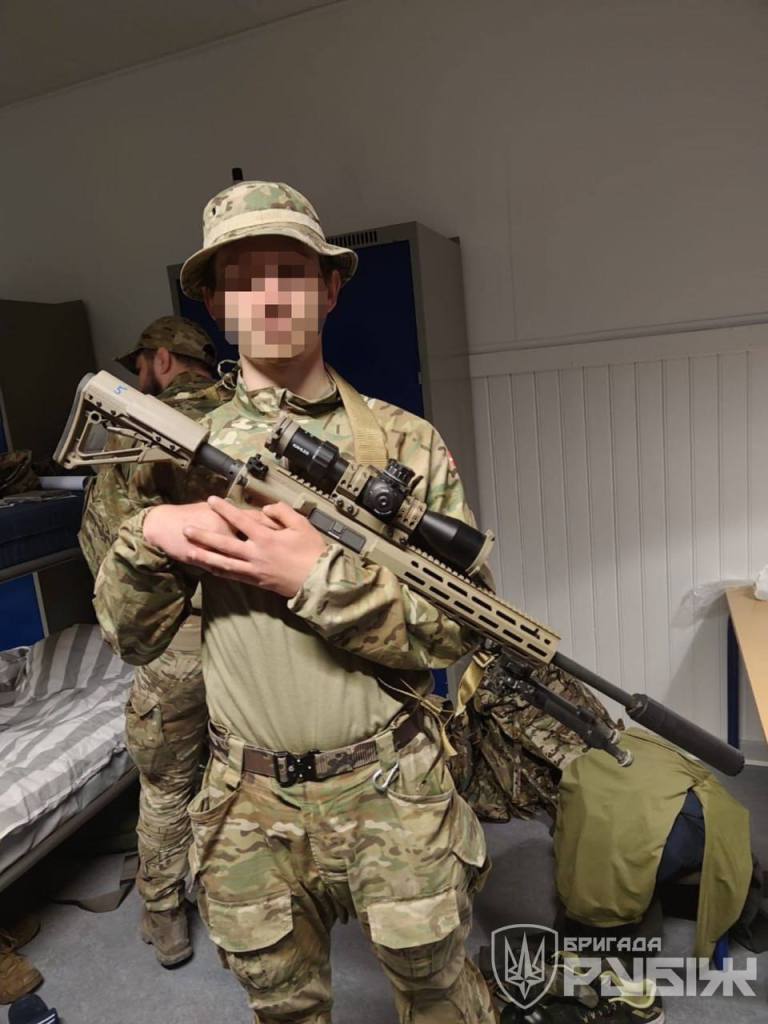
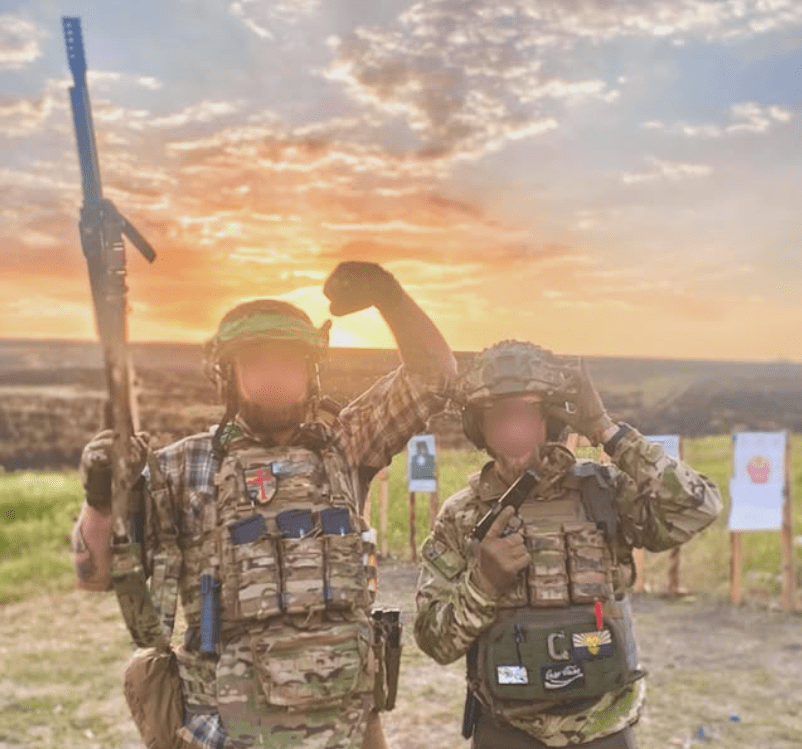
A member of the Sniper Company of the Rubizh Brigade has been photographed with a C20. The brigade has posted photos of the individual and the rifle on a number of occasions from early October through to December. The rifle appears to have a Kahles K318i (3,5-18x50i) scope in a Spuhr ISMS mount and an what is likely an OSS HX-QD 762 suppressor. The rifle also appears to have a LaRue Tactical RISR Cheek Riser for its Magpul CTR MOE stock.

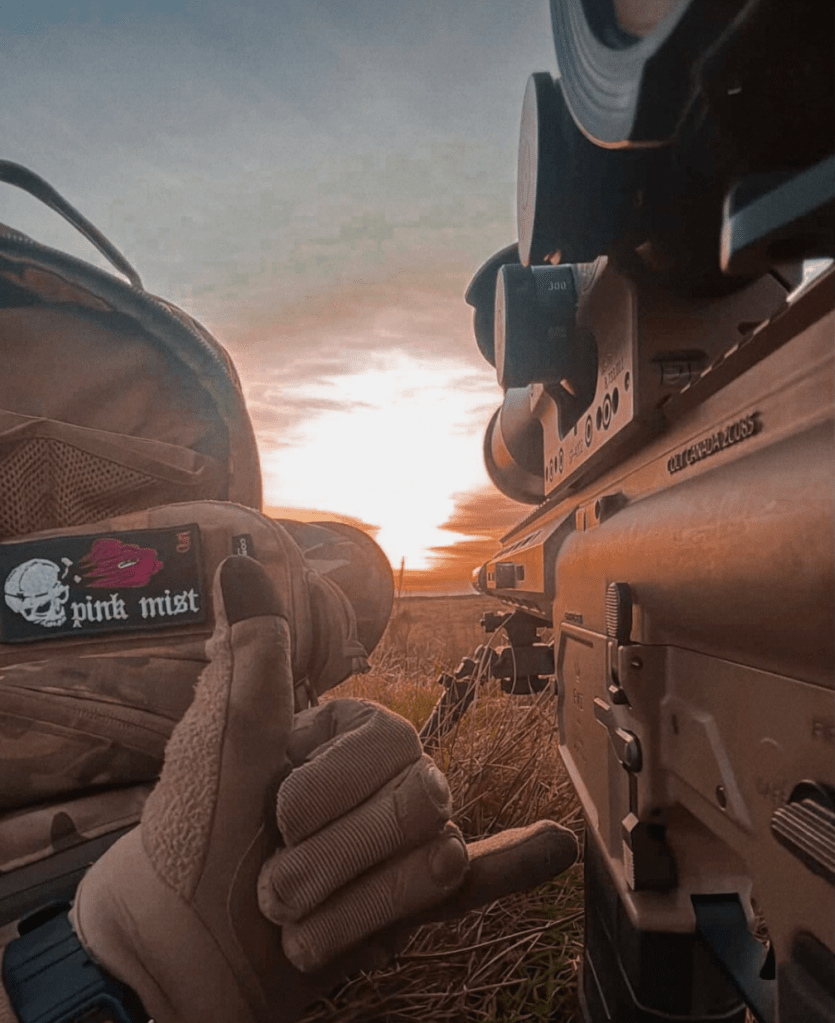
On 6 November, another image was shared by the UA Snipers page on Instagram, a community page which focuses on imagery of Ukrainian marksmen and snipers. The photo appears to have been taken at the range and while it doesn’t show the whole rifle the close up on the receiver allows us to see the Colt Canada CAGE number ‘2C085’. Also just visible is the Spuhr mount’s SP model number. The optic appears to be a high-end Schmidt and Bender from the PMII series.

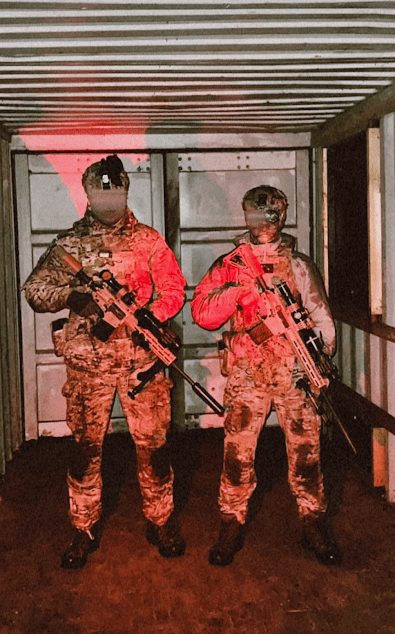
The most recent image was posted on 2 December, showing a pair of Ukrainian combatants with C20s, the rifles both have HUXWRX suppressors but its difficult to identify the optic due to the image’s low resolution. Similarly, they appear to have the LaRue Tactical RISR cheek riser seen on the earlier example. The rifles’ optics appear to be mounted in Spuhr mounts and have thermal clip-ons ahead of the scopes. The affiliation of these combatants is unknown, they may be members of the SSO. When asked about the rifles, the page which shared the photo, noted that “impressions and reviews are good.”

The configuration of the rifles is very similar to those used by the Danish Armed Forces. Denmark adopted the C20 in September 2020. https://youtu.be/hejJU-IPEZ4 /

The number of sightings of the rifles is relatively small, but enough to confirm that a small number of Colt Canada C20 marksman rifles have been supplied to Ukraine and appear to have been issued to several units. The configuration and accessories of the rifles seem to suggest they originate from Denmark.

Special thanks to the guys at Streakingdelilah, Mike and Dikobraz for assistance.

Vintage Weapons in a Modern War: Browning Hi-Power In Ukraine

Canada confirmed in September 2024 that it would be supplying Ukraine with “10,500 surplus 9mm pistols from our inventory.” These pistols would be the long-serving Inglis-manufactured Hi-Powers, which Canada is replacing with SIG Sauer P320s, designated as the C22. Only recently has imagery of the Canadian Hi-Powers in Ukraine appeared.

Canadian manufacturer Inglis produced the Hi-Power under license during the Second World War. Just over 150,000 pistols are believed to have been manufactured from 1944 to October 1945. These include two major variants the No.1 and the No.2 (Mk1 and Mk1*). The No.1 had a rear tangent sight and a mounting slot for a holster-stock (features requested by the Chinese government who made the initial order for the pistols). The No.2 pistols had a fixed rear sight, mounted on a slight, curved rise at the rear of the slide. They also lacked the holster-stock slot. The No.2 pistols were subsequently adopted by the Canadian and UK militaries. The No.2 Mk1* pistols are currently being replaced by the P320 after a remarkable 80 years in service.

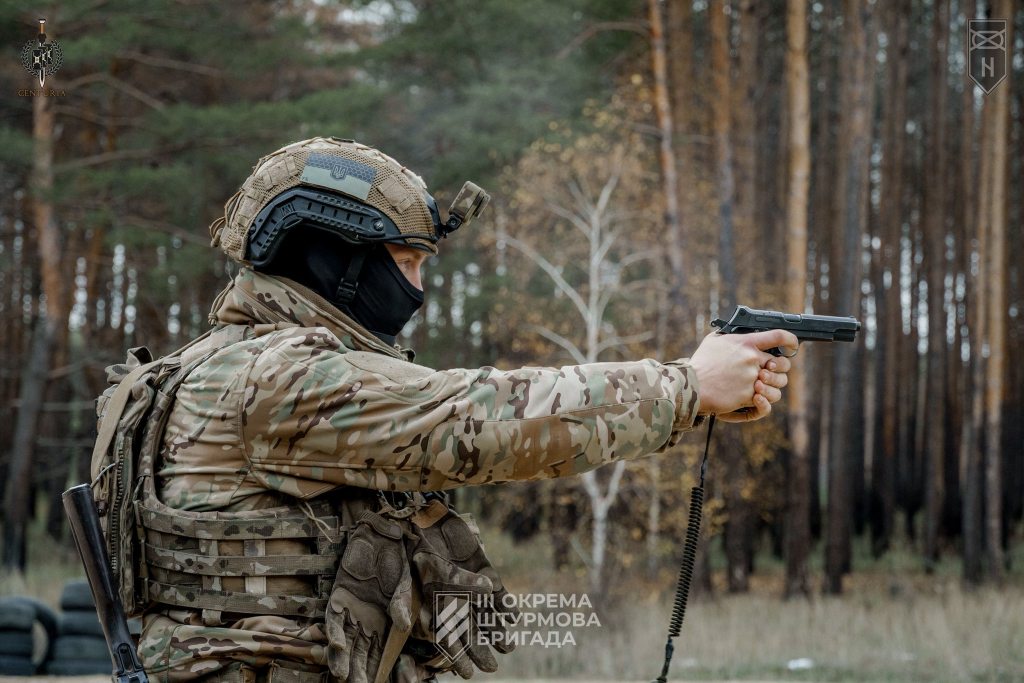
In July, a Browning Hi-Power was seen in a training range photo was shared by the Deputy Commander of the 411th Separate Regiment of the Unmanned Systems of the Armed Forces of Ukraine. The profile of the Hi-Power is unmistakable, but the resolution makes it difficult to confirm the variant; it does not appear to be a Canadian-made pistol. The style of the rear sight doesn’t match that of an Inglis-manufactured pistol.

Later in July, another image of the Hi-Power was used as a cover image for a video clip of an interview with the 411th’s Deputy Commander.

At the time, these two photos represented the only imagery that suggested operational use of Browning Hi-Powers in Ukraine. While there were one or two other photos reportedly from Ukraine they were more likely collectors’ pieces.

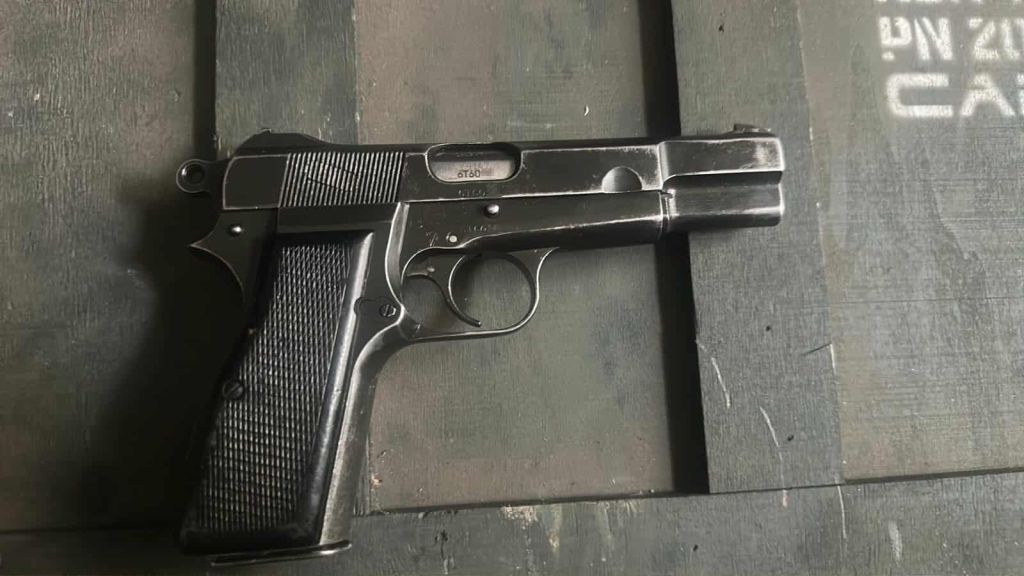
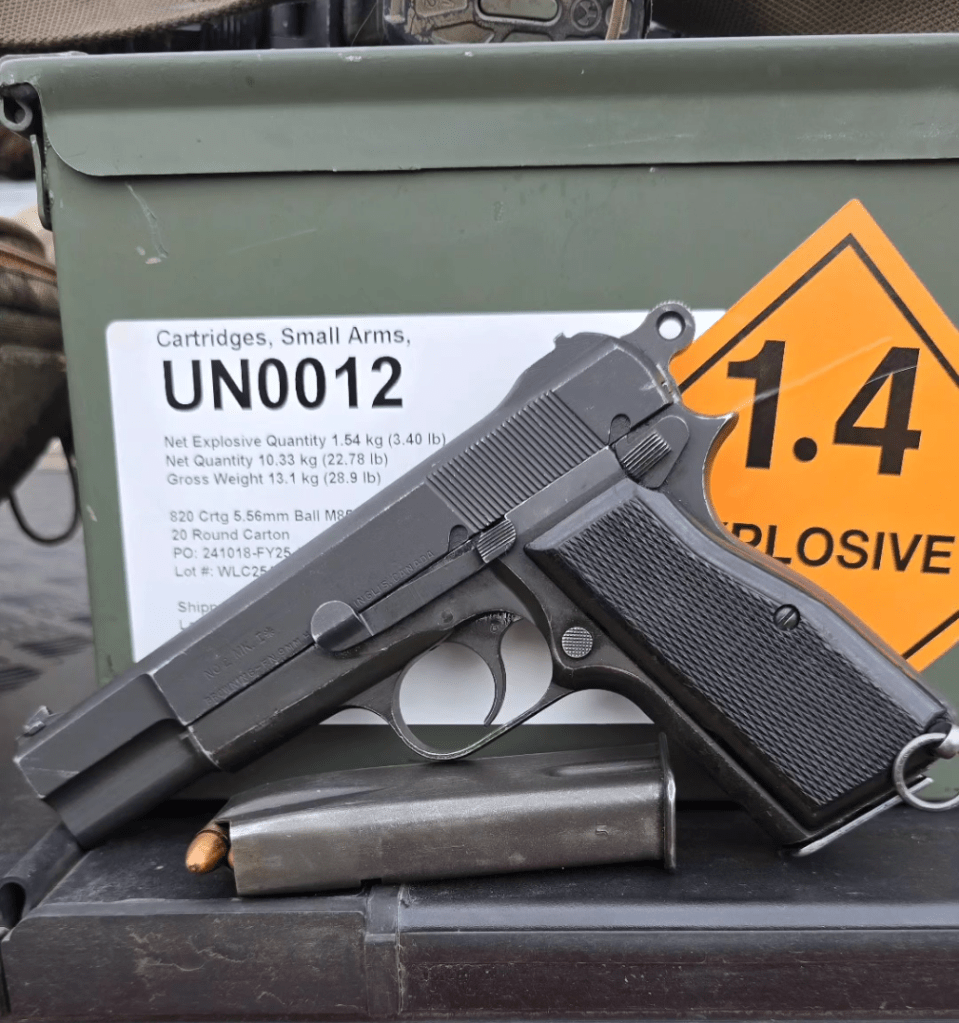
In early November, Іван Савельєв, an armourer affiliated with the 3rd Assault Brigade, shared a photograph of a Canadian Hi-Power, which was provided to another Ukrainian unit. The serial number of the pistol, beginning ‘6T60XX’, dates its production to sometime between August and October 1945, when Hi-Power production at Inglis ceased.

He subsequently shared a video shooting a Canadian Hi-Power at the range. It’s unclear whether this pistol is one which has been delivered to his or another unit.

On 18 November, another photo of an Inglis Hi-Power was shared by another member of the 3rd Assault Brigade. The serial number is not visible but the pistol’s slide is unmistakably marked No.2 Mk1* and Inglis.

The condition of the Inglis pistols transferred to Ukraine is unclear. The pistols in the Canadian armed forces’ inventory were reportedly highly worn with suggestions that in recent years pistols had been cannibalised for parts. This is to be expected from pistols that were manufactured 80 years ago though it’s unclear if the 10,500 pistols announced by the Canadian government were pistols which were in Canadian armed forces’ regular inventory. While the amount of imagery of these pistols in Ukraine remains comparatively small, the numerous sightings confirm that Inglis-made Canadian Hi-Powers are in active service with the Ukrainian armed forces. While the pistols may have been produced some 80 years ago and are arguably obsolescent the Hi-Power’s influential design and its decent magazine capacity mean that it is still useful today.

Special thanks to Druzhe Orest for assistance.


Support Us: If you enjoyed this video and article please consider supporting our work here. We have some great perks available for Patreon Supporters – including early access to custom stickers and early access to videos! Thank you for your support!
Chinese Heavy Machine Guns in Ukraine

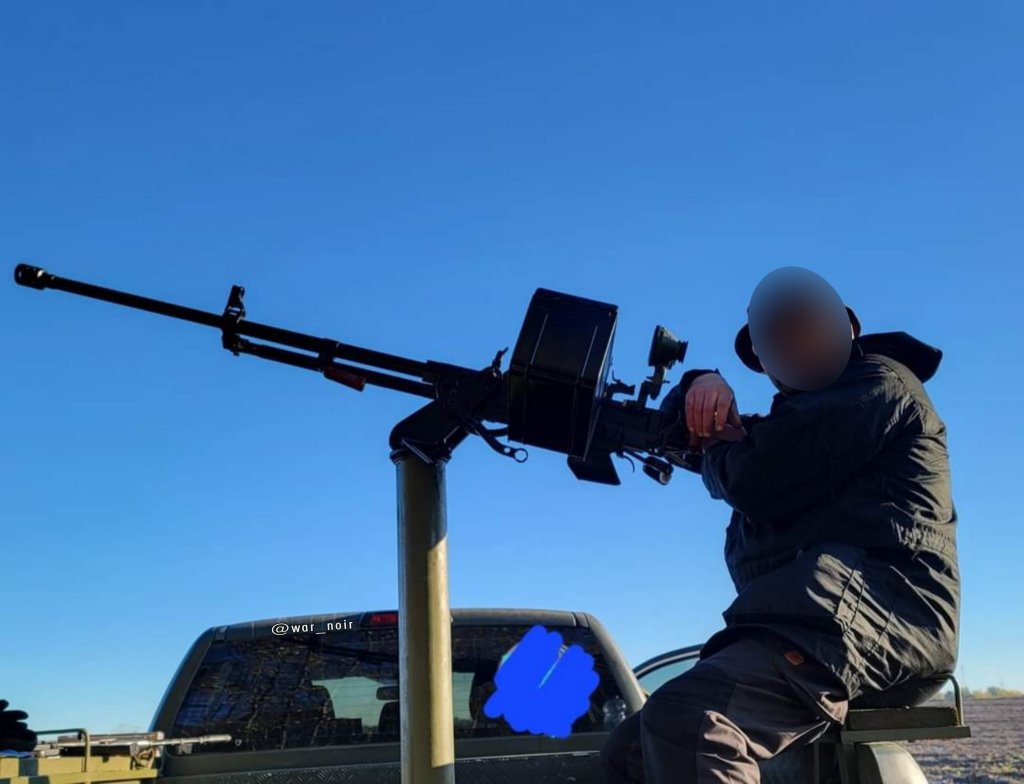
A number of Chinese small arms and light weapons have turned up in Ukraine since the invasion in 2022, including Type 69 RPGs and Type 56 rifles. Another weapon that has been seen infrequently in Ukraine is the W-85 heavy machine gun. Chambered in the Russian 12.7×108mm round, the W85 uses a long stroke gas piston system, and with mount weighs around 39 kg (86lbs). The W85 is predominantly an export weapon and has seen use around the world.

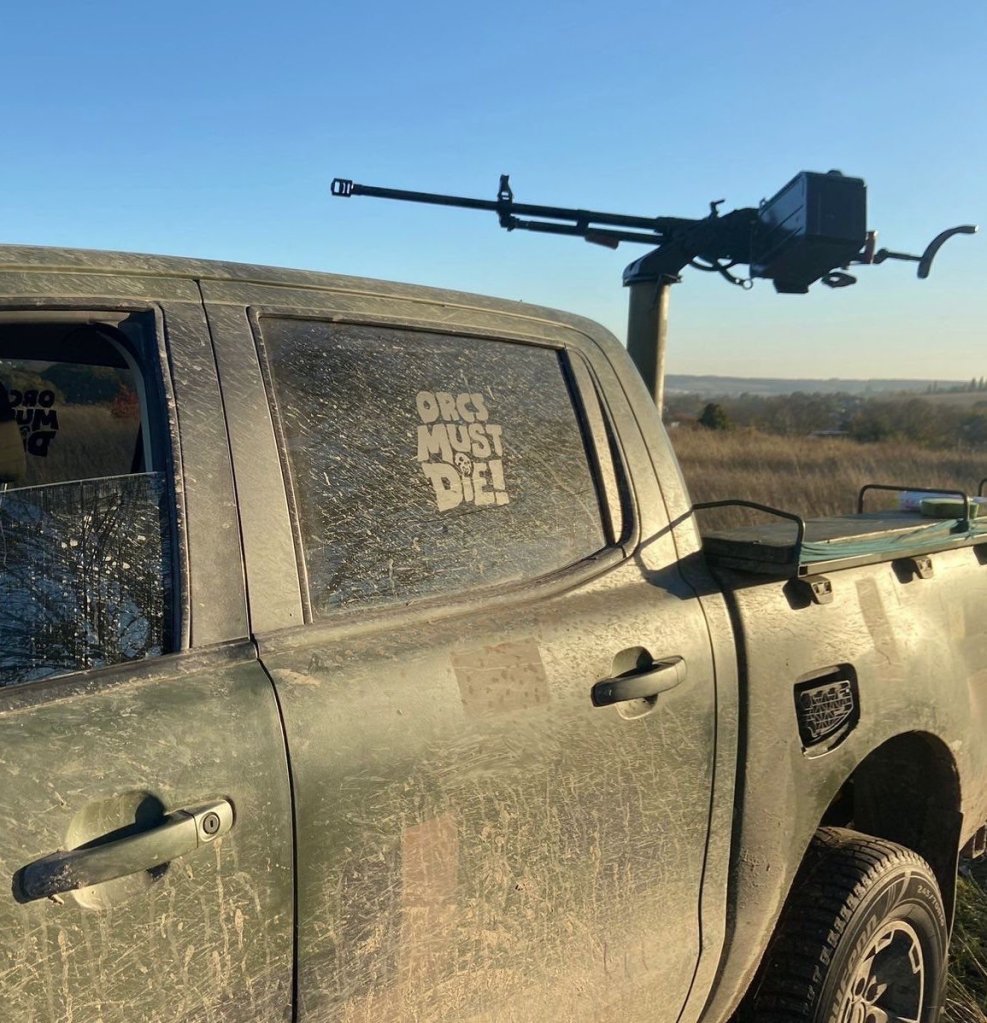
The W85 was first seen in imagery from Ukraine in late October 2022, mounted on what appears to be a Fort Ranger pick-up. This technical was seen in a series of photos through November, with the gun mounted on a pintle. The source suggests it was used to shoot down Shahed-136/Geran-2 one-way munitions (long range kamikaze drones) when they first began to appear in southern Ukraine.

The next sighting came in January 2024, when a photo of Ukrainian Territorial Defence forces posing next to another technical was shared. The gun appears to be mounted on a locally-produced mount on the back of a Nissan Navara.

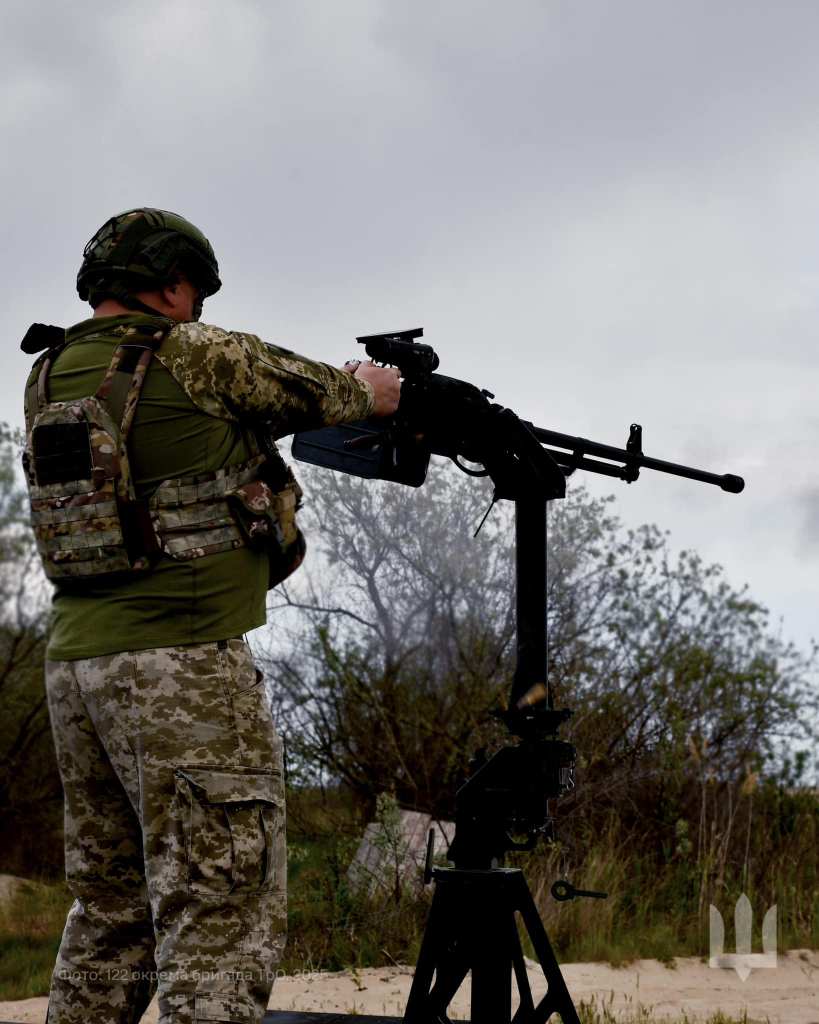
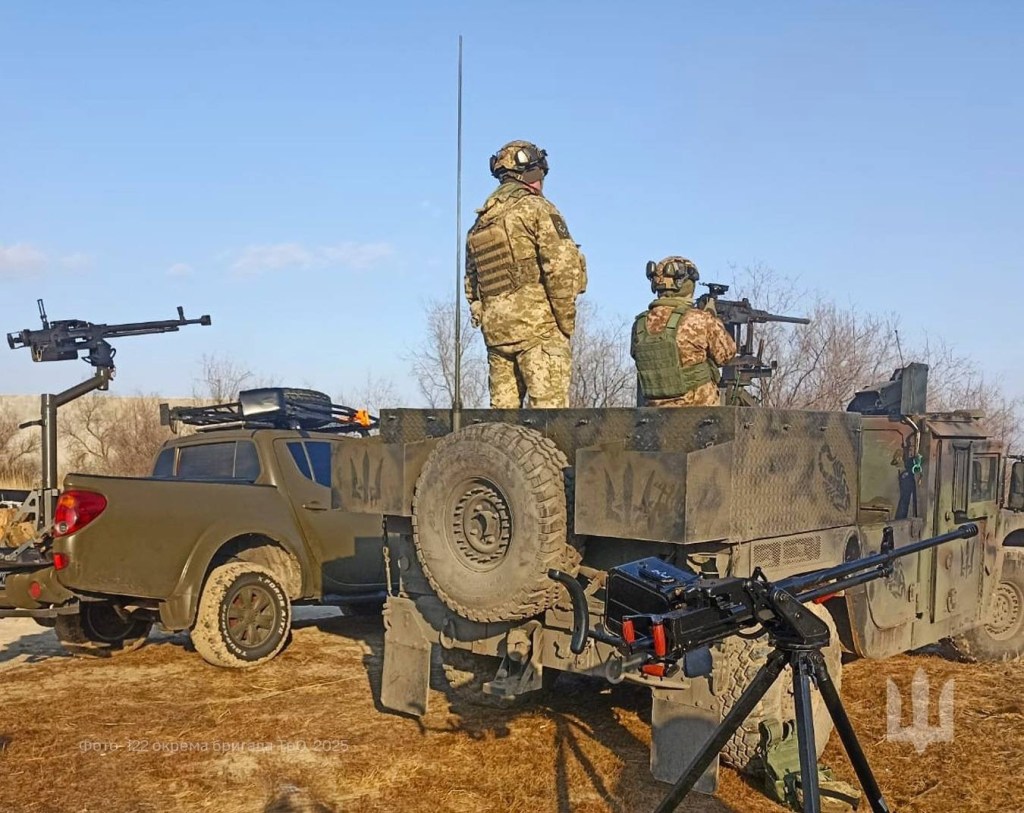
In February 2025, 122nd Separate Territorial Defense Brigade shared photos of what they describe as a ‘mobile fire team’ equipped with a pick-up and a HMMWV. As well as an W85, an M2 Browning and a DShK. A month later at the start of March Weapons Illustrated shared a video showing a W85 being disassembled. The gun in the video can be identified as a Norinco CS/LM3 HMG from the receiver markings. This is interesting as the CS/LM3 is an export version of the W85 chambered in the 12.7x99mm NATO caliber. It is unclear if any of the other W85s sighted are also this variant and chambered, as imagery doesn’t enable us to positively identify them.

What isn’t clear is where the W85s or CS/LM3 originated from. One possible origin is that they were part of a seized shipment of small arms and light weapons supplied to the Houthis in Yemen by Iran, which was intercepted en route. It is worth noting, however, that no heavy machine guns have been seen in the released imagery of seized shipments.

On 22 May, the 122nd Separate Territorial Defense Brigade shared photos of a W85 outfitted for engaging Russian UAVs like Shahed-136s. The gun appears to have a high-power light mounted.

On 25 October, Ukrainian photographer Mykyta Kuznetsov photographed a mobile anti-drone unit on the outskirts of Kharkiv. The unit was photographed with their pick-up mounted with a W85 on a pintle. The Ford Ranger’s bed has been removed and replaced with a circular platform to allow the gunner to move more easily when engaging moving targets.

The number of W85 in Ukraine is unknown but likely small. It is unclear how the guns seen in 2022 arrived in country or if any of those seen subsequently originated from the US’ transfer of seized Iranian arms shipments. It appears that the guns have largely been issued to Territorial Defence Force units, which are predominantly tasked with air defence operations against Russian Shahed one-way munitions.

Addendum: There has been at least one sighting of a Chinese Type 54, a clone of the DSHk, in Ukrainian service dating from March 2024.

Update – 17/11/25:

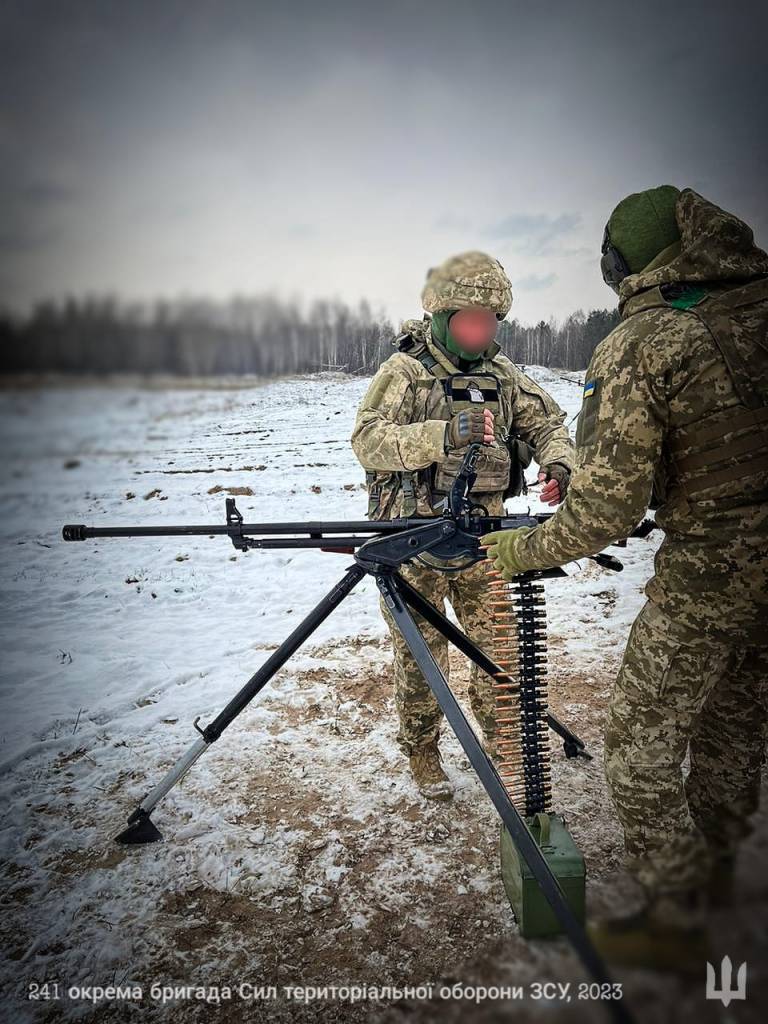
An additional photo of a W85, dating from 2023, posted by the 241st Separate Brigade of the Territorial Defence Force.


Support Us: If you enjoyed this video and article please consider supporting our work here. We have some great perks available for Patreon Supporters – including early access to custom stickers and early access to videos! Thank you for your support!
APILAS in Ukraine

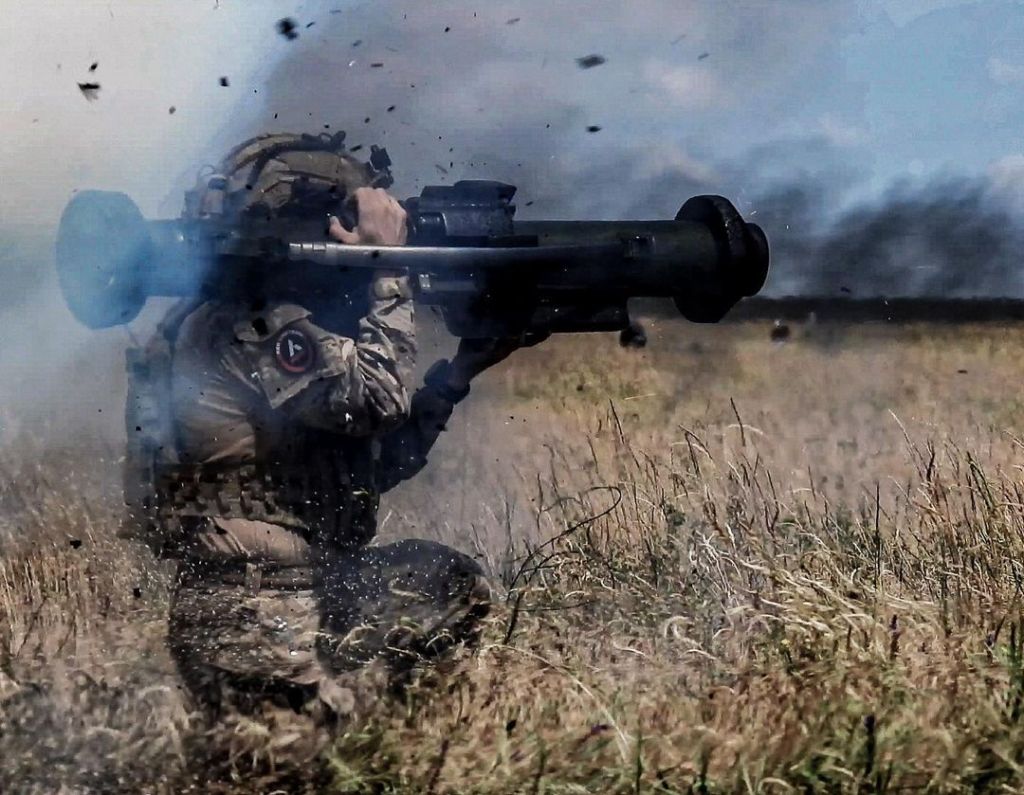
The APILAS or Armour-Piercing Infantry Light Arm System, developed by France’s GIAT Industries in the early 1980s, is perhaps one of the rarest shoulder-fired anti-armour weapon systems to appear in Ukraine. APILAS is a 112mm anti-armour weapon with a 1.5kg shaped charge warhead capable of penetrating more than 750mm or rolled homogeneous armour.

The APILAS seen in Ukraine are most likely to have originated from either France or Finland, with Finland being the more likely.

In late February 2022, with Russian forces massed on Ukraine’s borders, the Finnish government made a rare public declaration of military aid to Ukraine. This included figures for a number of different weapon systems. The announcement stated: “Finland will deliver 2,500 assault rifles, 150,000 cartridges for the assault rifles, 1,500 single-shot anti-tank weapons.” The announcement didn’t specify the type of anti-tank weapons to be sent; however, and from Finish inventory these may have included APILAS, M72 LAWs or even NLAWs.

An APILAS seen in a video dating from 2021, filmed during fighting on the Donbas line of contact (via social media)

APILAS have been seen in Ukraine before Russia’s invasion in 2022, one was seen in a video dating from November 2021. It is unclear when the first APILAS were first transferred to Ukraine, and the weapons seen subsequently may originate from an earlier, pre-2022 invasion transfer.

APILAS in a Ukrainian armoury, c.2023 (via social media)

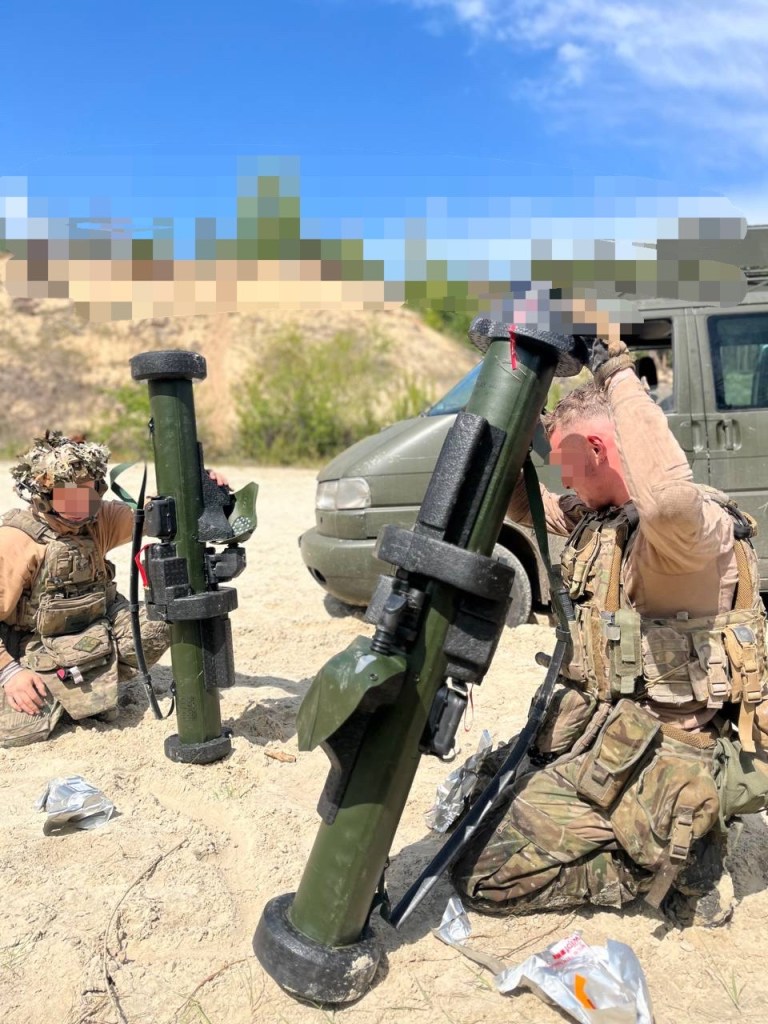
In April 2023 a photo of an APILAS in a Ukrainian armoury surfaced, sadly no markings are visible in the image. Several months later, on 19 and 20 June, Red Line Team, a unit affiliated with the Ukrainian security services special forces unit, SBU-Alpha, shared imagery from a range trip where a wide variety of anti-armour systems were fired. One of the weapons featured in the video was an APILAS.

(Red Line Team)

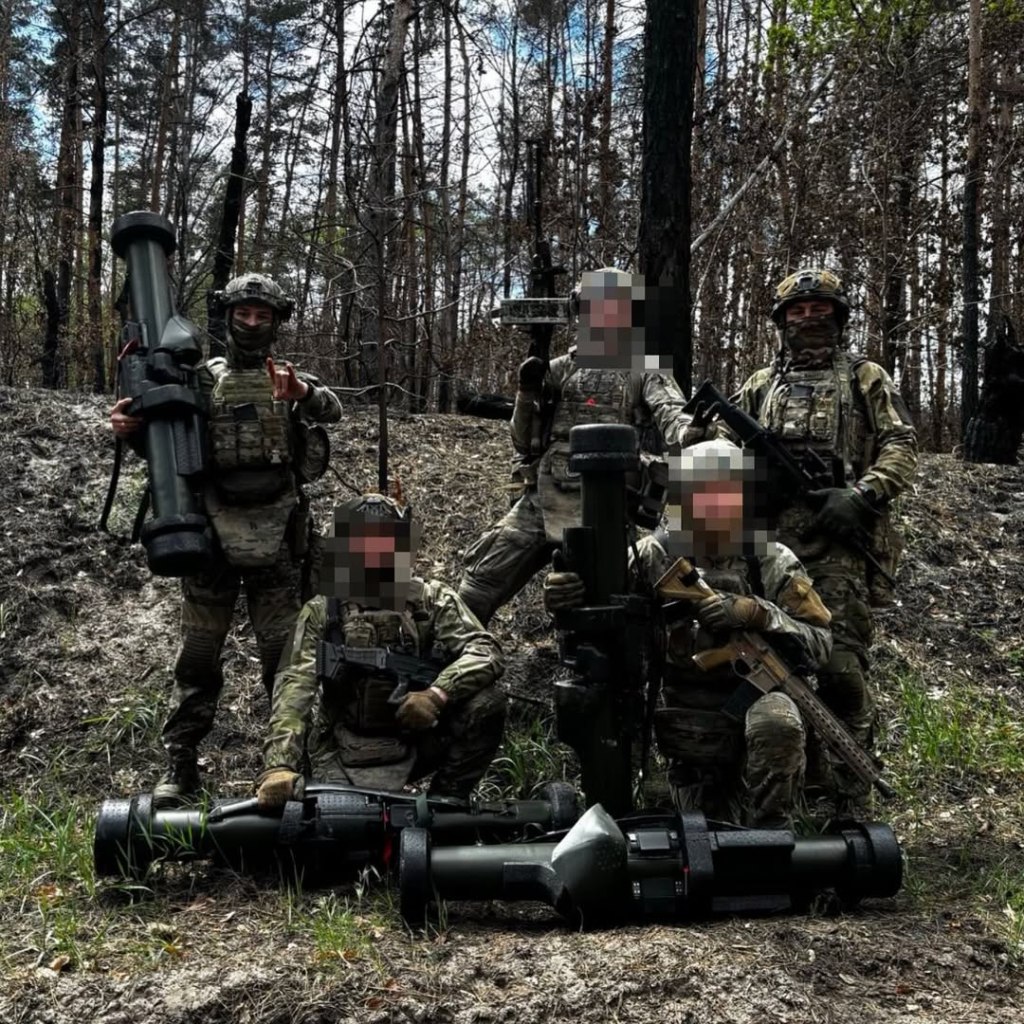
APILAS have also been seen with the Assault Bastards, a unit believed to be part of the Kraken Regiment’s 2nd Assault Company, which is part of the Department of Active Operations of Ukraine’s Intelligence Directorate (the GUR). On 13 May, the unit shared a group photo which also featured three APILAS.

(Assault Bastards)

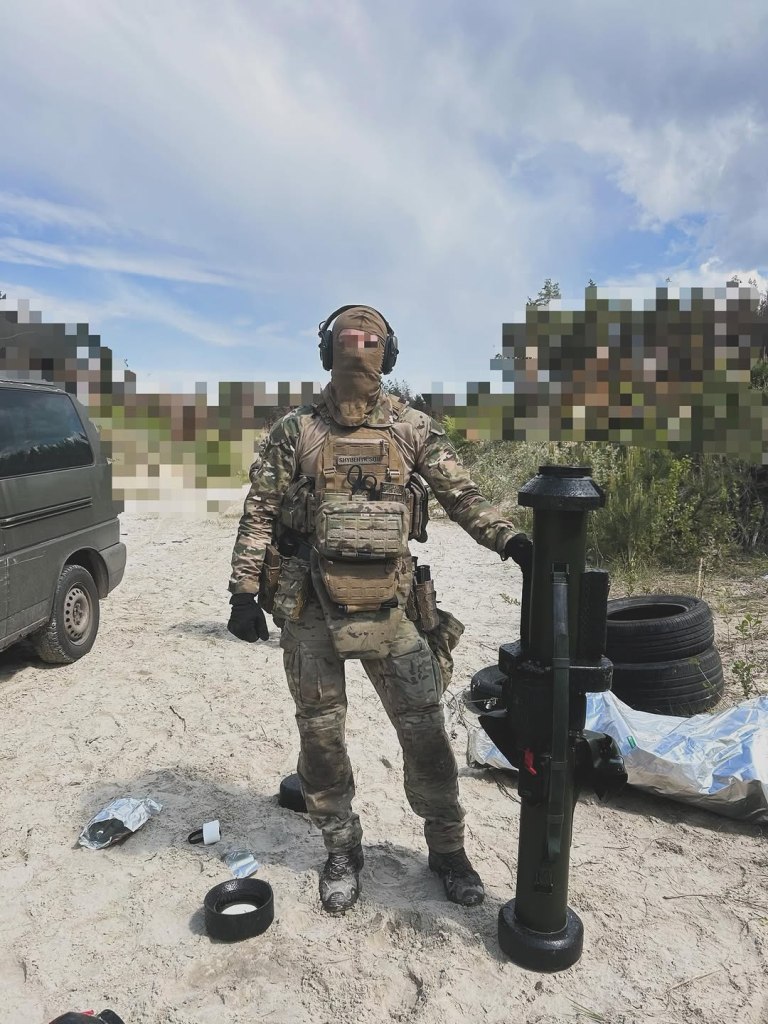
Most recently Shybenyk.Squad, another unit with Kraken’s 2nd Assault Company, shared a photo of an APILAS. This photo also appears to have possibly been taken at a range rather than in the field. Speaking to Shybenyk.Squad they explained that they have a decent number of APILAS in store and have used them operationally.

(Shybenyk.Squad)

APILAS has a reputation for having considerable concussive force when firing but Shybenyk.Squad noted that it’s blast isn’t that bad comparatively, describing it as ‘not critical’, during a recent trip to the training range the unit test fired 6 APILAS.

While APILAS are rarely seen in imagery from the conflict Shybenyk.Squad noted that they have a significant number of them in stores. They favour them for operations where more expensive complex systems, like NLAW or Javelin, may be lost. Shybenyk.Squad explained that “they can definitely be useful in certain situations… [systems such as] NLAW are much more expensive, high-tech, more effective, but losing it is much more problematic and in some risky tasks it is better to take a less expensive weapon.” In general they noted that they favour the AT4 and RGW-90 Matador “due to the weight to the corresponding firepower and ease of use.”

(Shybenyk.Squad)

Operationally they favour the APILAS’ for its penetration capabilities, with sources suggesting it can penetrate around 2 metres of concrete, making it is an excellent weapon for mouse-holing – breaching structures. Shybenyk.Squad explained that they “once used it to break through a small wall to storm a building from a blind side not protected by the enemy.”

APILAS is one of the most rarely seen anti-armour weapons currently being fielded in Ukraine so I’m pleased to be able to share some good first hand imagery and feedback on its capabilities.

Special thanks to Shybenyk.Squad for sharing additional imagery and sharing their thoughts on APILAS.


Support Us: If you enjoyed this video and article please consider supporting our work here. We have some great perks available for Patreon Supporters – including early access to custom stickers and early access to videos! Thank you for your support!
Ukraine’s MANPADS-Unmanned Ground Vehicle

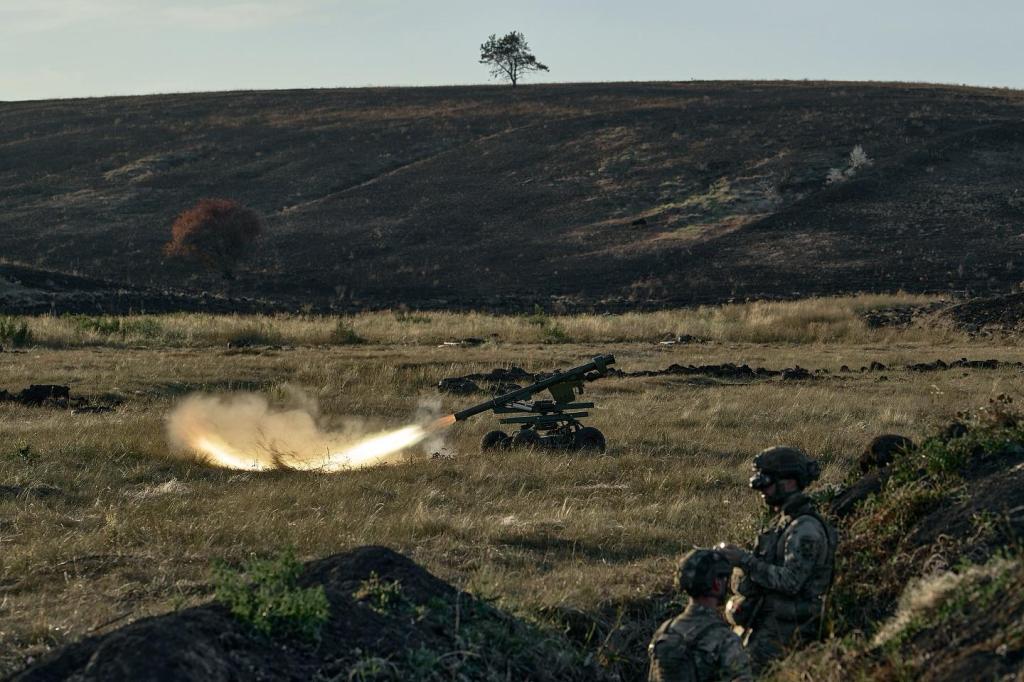
Following on from our recent examination of RPG-UGVs a new armed unmanned ground vehicle variant has appeared – the MANPADS-UGV. MANPADS or Man-Portable Air Defence Systems have been a key weapon during the war in Ukraine. They enable troops to engage drones and UAVs of various sizes as well as helicopters.

(LIBKOS/28th Mechanized Brigade)

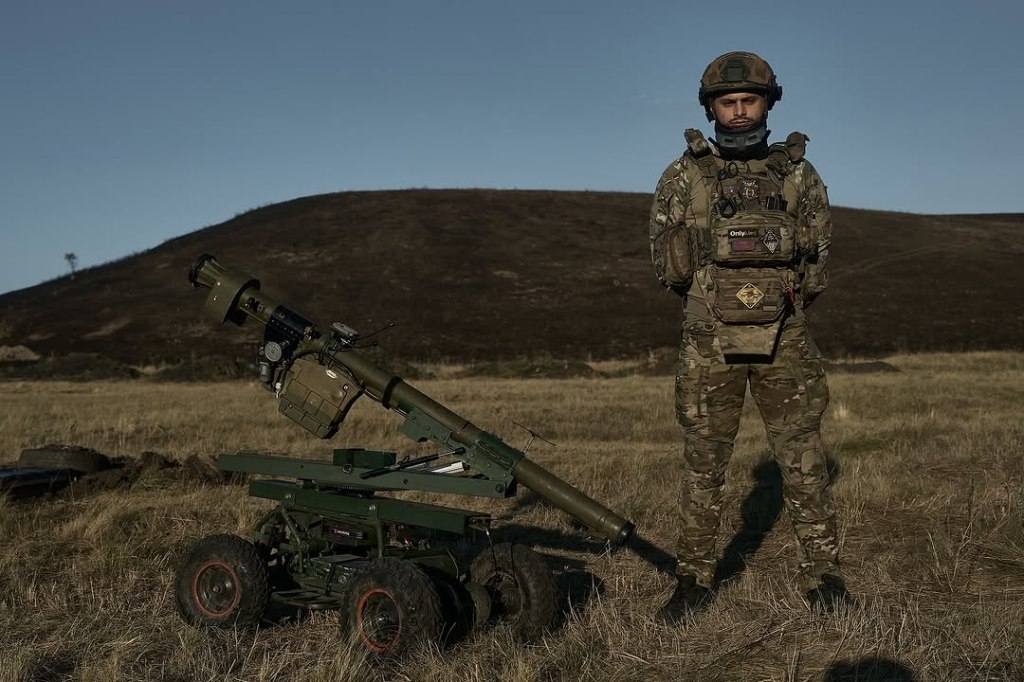
On 4 August, photographers Libkos, shared a video showcasing an Igla-1 MANPADS mounted on a four-wheeled UGV operated by Ukraine’s 28th Mechanized Brigade. In an Instagram post, Libkos explained the idea behind the MANPADS-UGV:

“If before they were quite easy to shoot down with MANPADS, now Russian UAVs control every movement of our infantrymen and often do not even allow them to leave the trench. That is why the guys from @28ombr created this robotic platform. It independently guides and hits any large air target. The guys have already tested it in action and it already has one enemy helicopter on its account. So we are collecting 10 more such platforms. This is an effective and innovative weapon that is independently manufactured by the military from 28 Ombr.”

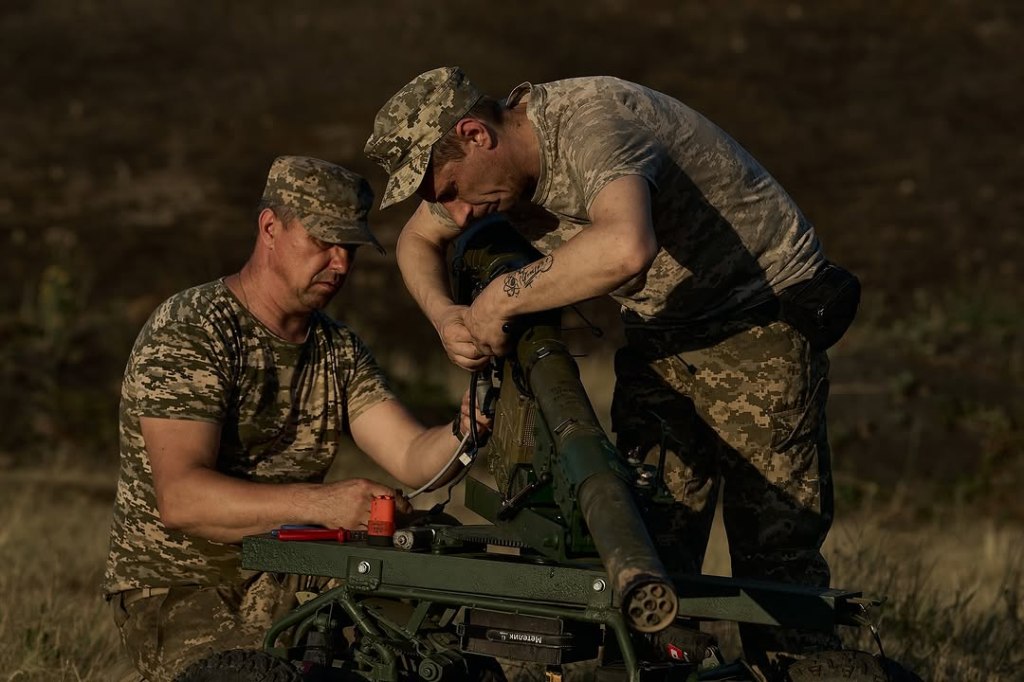
The available imagery, shared by Libkos and the brigade, shows the UGV being test-fired. The Igla is mounted on an angled mount, which seems to have a degree of elevation and traverse. There appears to be a motor and servo system attached to the front of the weapon to act on its trigger. Behind this is what may be a camera and transmitter/receiver. In part of the promo video a pair of operators are seen in a nearby trench, one wearing a headset for the UGV’s camera feed.

Ukrainian media outlet Defender reports that the MANPADS-UGV has been named “Alycha”.

(LIBKOS/28th Mechanized Brigade)

It’s difficult to tell how the system would be used in practice or how effective it would be. MANPADS such as Igla-1 use infrared homing and require the operator to track the target before launching. The operator has to visually detect the target, activate the power supply unit, aim at the target via the fore and rear sights and pull the trigger. While the operator doesn’t have to track the target once the missile is fired they must track it immediately prior to launch. How capable the UGV is of doing this is currently unclear. For the best image clarity and response time for identifying and tracking a target it would make sense for the UGV to utilise a fibre-optic control cable but there is no evidence of this in the available imagery.

It is unclear if the system can be equipped with different types of MANPADS. In theory the UGV could be mounted with Igla, Strela, Piorun or even Stinger, as such one variable to consider is the system’s engagement range. The Igla-1’s operational engagement range is 6km (3.5 miles) with an 11,000 feet engagement ceiling. Given Ukraine’s focus on defensive strong-points the gap between positions able to engage aerial threats with a MANPADS may be relatively wide. If small Ukrainian units are defending strong-points along a stretch of front they may have a limited embedded anti-air capability. A MANPADS team would have to expose itself to reach various points along the unit’s sector of the front so having a UGV which can be rapidly deployed makes sense.

(LIBKOS/28th Mechanized Brigade)

Nevertheless the concept is an interesting one. the 28th Mechanised Brigade claims that the system has already been used operationally and the UGV has successfully engaged an enemy helicopter. Verifiable proof of this kill has not yet been provided. There are no doubt useful applications for the system, such as patrolling an area, as a quick reaction asset and in removing the need for troops to leave cover to engage aerial threats.

Check out our other articles on UGV developments.


Support Us: If you enjoyed this video and article please consider supporting our work here. We have some great perks available for Patreon Supporters – including early access to custom stickers and early access to videos! You can also find us on the History of Weapons & War app. Thank you for your support!

Rare M60 Appearances in Ukraine

There are a lot of different types of general purpose machine guns in use in Ukraine and one of the most surprising to appear so far is the M60. The first appearance of an M60 in Ukraine came in September 2024, when the 23rd Mechanised Brigade shared an album of training photos which included an individual firing an M60D.

A month later the same brigade shared another photograph of the M60D. The M60D is usually mounted on helicopters as a door gun and as such it has been adapted with no stock or traditional rear sight, instead it has a pair of rear spade grips and a large ring sight. It’s unclear how many M60Ds are in Ukraine or where the guns originated from as a number of potential donor countries operate M60Ds as door guns. It may be the case that a donor nation provided the gun aboard a donated helicopter, we have previously seen French AANF-1 GPMGs appear in Ukraine – likely supplied with VAB APCs. Alternatively, the gun(s) may simply have been provided by a donor for whom it was surplus to requirements and ready for disposal.

Another sighting of an M60D came in May 2025, when the 65th Mechanized Brigade shared a series of photographs of a machine gun team training with one of the guns. Sadly, no markings are visible to confirm if this might be the same gun as previously seen with the 23rd Mechanised Brigade.

The M60D is not the easiest variant to utilise in a ground role with the absence of a stock to shoulder the weapon making it somewhat difficult to aim and keep on target while firing. It does have a folding carry handle but it also had an exposed trigger linkage which is far from ideal for ground use. The best use for this variant would probably be as a pintle-mounted an anti-air gun.

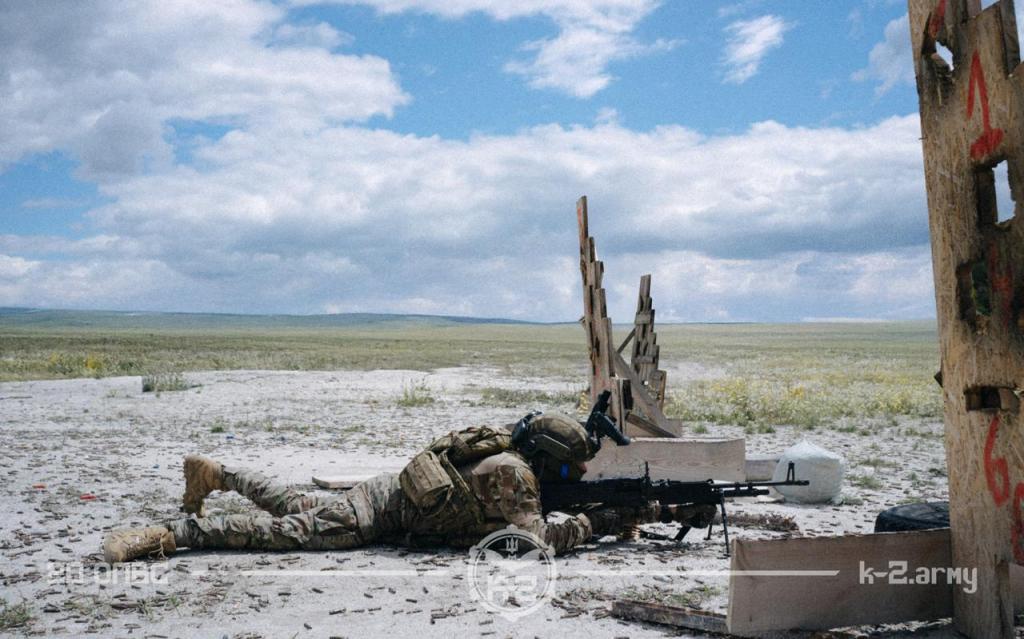
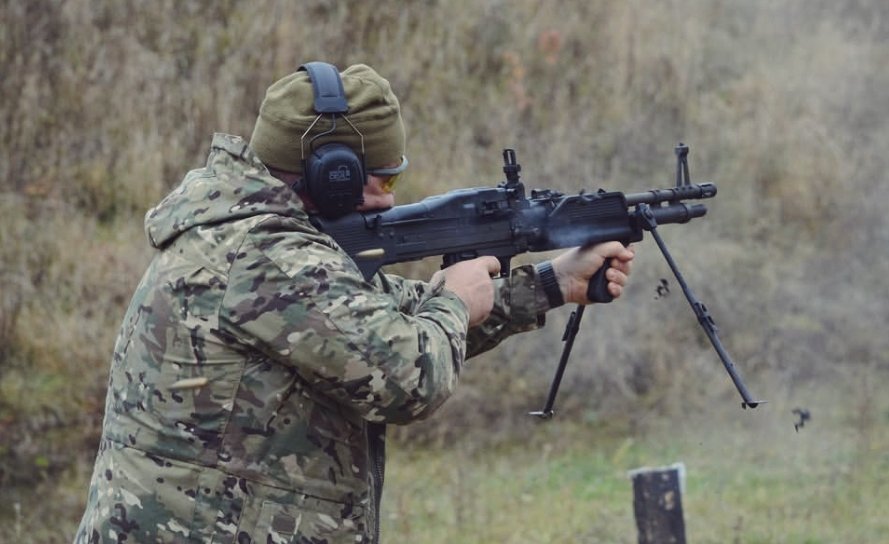
Most recently a new variant of the M60 was seen in a photo posted, on 18 July, by the 20th Separate Regiment of Unmanned Systems “K-2”. The gun appears to be either an M60E3 or an M60E4, with what appears to be a 22 inch barrel, the first ground role variant to be seen in-country. As with the M60Ds it is unclear where this M60 may have originated from, there are only a small number of nations which operate the weapons which may have donated it. Elements of the Czech Republic’s special operations forces operate E4s in small numbers but its unclear if this is the source of the gun seen in the recent photo.

It remains unclear just how many of the various variants of M60 are on the ground in Ukraine and where they came from but it is one of the weapons that I’ll continue to track, if you spot any let me know!

Update 12/10/25:

Serhii Filimonov, a member of the 1st Assault Regiment (Da Vinci Wolves), has shared several photos that appear to include an M60E4.

There is also a short video of him firing the weapon. Below is a still from the video.

Update – 17/11/25:

On 14 November, Raven Group, affiliated with the Ukrainian Directorate of Intelligence, shared a serious of range photos featuring an M60E4 (in what appears to be the Mk43 Mod 0 configuration). [H/t to Praise the Steph].


Support Us: If you enjoyed this video and article please consider supporting our work here. We have some great perks available for Patreon Supporters – including early access to custom stickers and early access to videos!  Thank you for your support!
HK SFP9 Pistols In Ukraine

While pistols may not feature heavily on combat footage from the ongoing war in Ukraine, sidearms continue to be a key piece of equipment for many combatants. Many different types of pistol are in use in Ukraine, everything from the venerable TT-33 and Makarov to Glock 19s and Ukrainian-made Forts. Many nations supporting Ukraine have provided pistols as aid, one of these is Germany, in this article/video we’ll look at the supply and issuing of the Heckler & Koch SFP9.

Introduced in 2014, the SFP9, or VP9 as its known in the US, is a 9x19mm striker-fired polymer-framed pistol. It uses the ubiquitous short recoil, tilting barrel action and feeds from 15, 17 or 20 round magazines and is in service with numerous law enforcement agencies and the Lithuanian armed forces. Before we examine some of the sighting of the pistols in Ukraine it’s also worth noting that HK pistols, though rare, have been commercially available in Ukraine for some time and some of the SFP9s we’ll discuss in this article/video may have been procured privately by combatants.

As early as March 2023, the German government announced its intentions to provide Ukraine with 500 HK SFP9 pistols. The delivery of this first batch of pistols was announced on 16 March. Despite this I haven’t been able to find visual evidence of the pistols presence in Ukraine until February 2024, when a photo of a SFP9 OR – or ‘optics ready’ pistol was shared by a combatant. The pistol has an Olight weapon light and a red dot.

In July 2024, a Ukrainian combatant, believed to be attached to the SSO’s 73rd Naval Special Operations Center, shared a photograph showing him carrying a SFP9 as well as a Daniel Defense carbine.

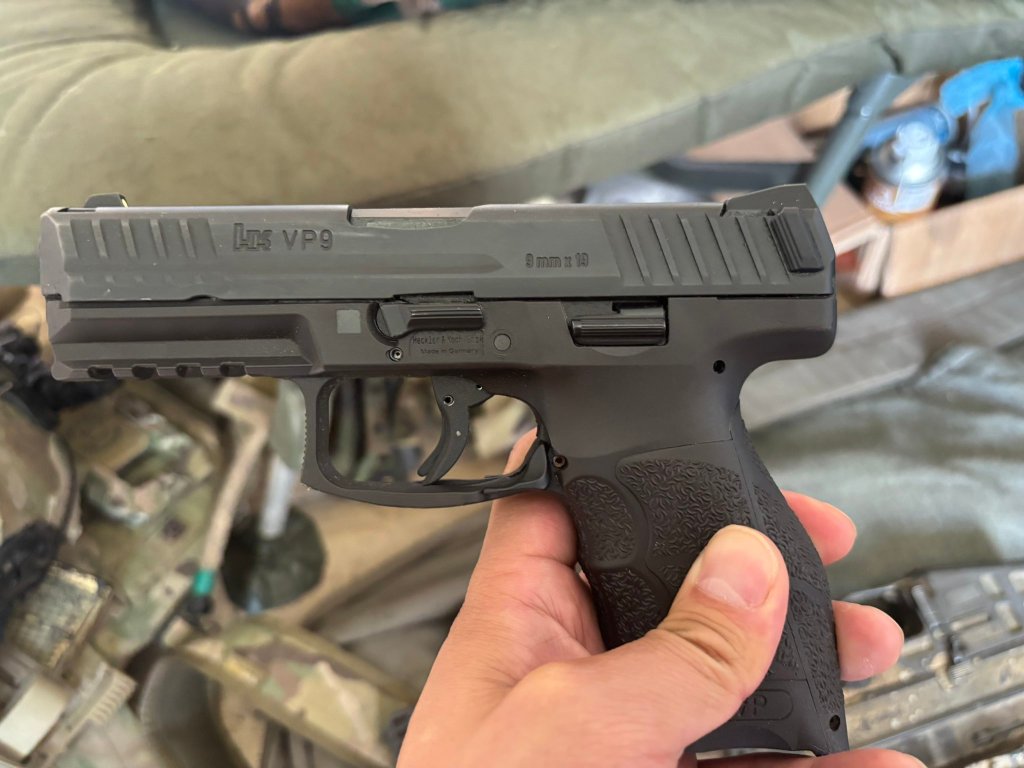
In October 2024, the confirmed number of pistols provided to Ukraine jumped significantly to 3,500, indicating significant transfers of SFP9s to Ukraine. Following this the Main Directorate of Intelligence of Ukraine (HUR MO)’s Revanche International unit, subordinate to Revanche Tactical Group shared an instagram story on 9 November, showing one of the pistols at a range. The pistol, however, is marked VP9 rather than SFP9. VP9 is the US commercial name for the pistol.

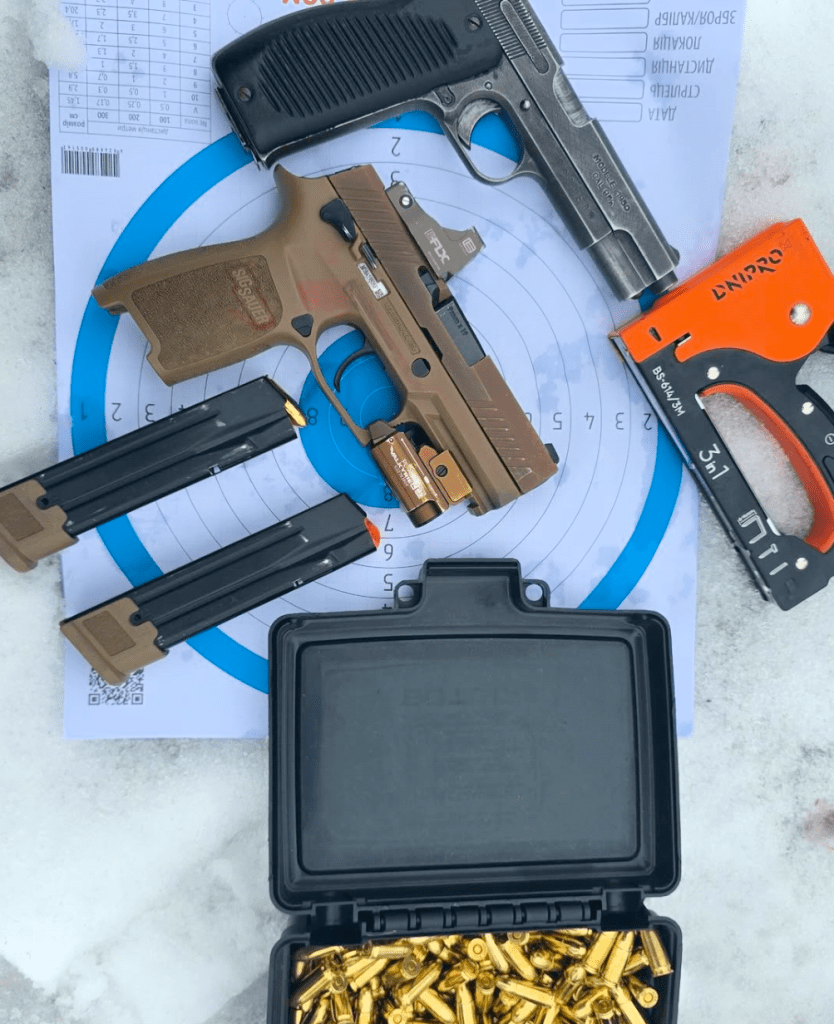
On 11 November a member of the HUR’s Kraken Regiment shared a photo of another VP9 mounted with a Veridian X5L weapon light. A month later on 19 December, another Ukrainian combatant shared a range photo of a trio of pistols including a Russian MP-443 ‘Grach’, a Glock 17 Gen 4 and a new SFP9.

On 25 January 2025, ORKOVNET, the YouTube channel of the Ukrainian Orkov gunstore, shared a short range video of a VP9 marked pistol noting that the pistols were now in Ukrainian service.

An Instagram page affiliated with the HUR’s Special Purpose Unit “Timur” shared a series of photos from a range session on 3 February. One of the photos included an SFP9 SD with a threaded suppressor-ready barrel.

On 19 March a combatant with a reconnaissance and UAV team within the Special Operations Forces of the HUR MO shared a photo of a holstered SFP9 alongside a SIG P320.

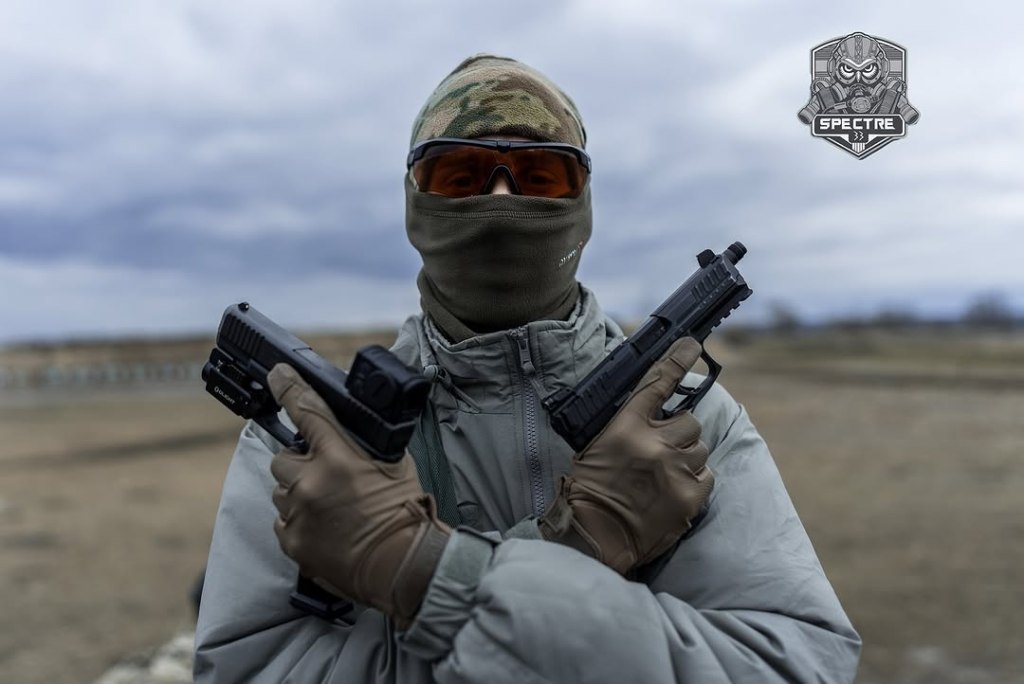
A member of HUR MO Timur’s Spectre 33 unit posted several photos in early Spring 2025 featuring an SFP9 OR, with one photo showing mounted with a A-Tec PMM6 suppressor.

In April, a Japanese volunteer with one of the HUR International Legion teams shared photos of a new VP9-marked pistol. He noted that while he liked the pistol he preferred Glock triggers and he confirmed that his pistol was shipped with 17 round magazines.

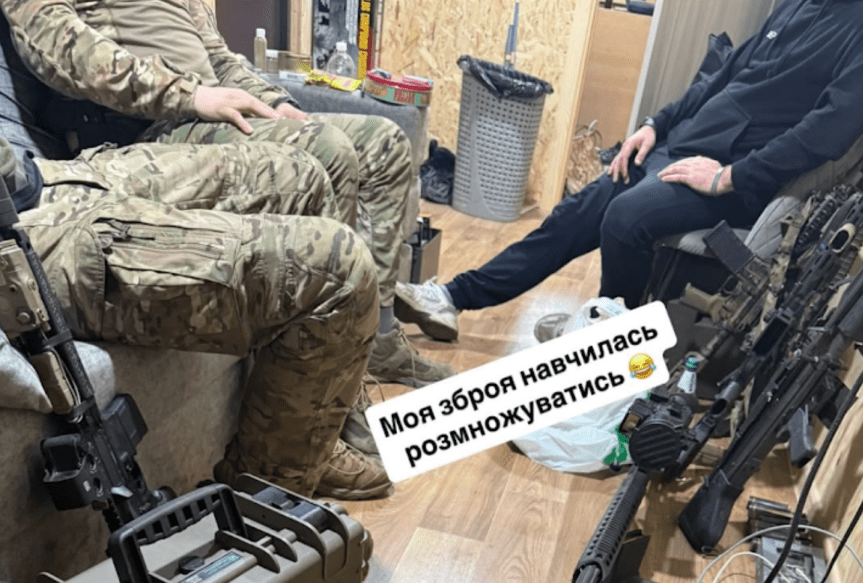
On 6 April, a member of the GUR’s Revanche Tactical Group / Advanced Combat Group shared a photo showcasing a host of small arms from their armoury including new HK433s, HK416s, a UAR-10, CZ and Glock pistols and a pair of HK SFP9s.

A week later DW News shared a report on a Ukrainian camp where adolescents can receive training. From the small arms seen in the short report, including an HK416A8 and an SFP9 indicate the camp may have been run by HUR personnel.

Later in April an Instagram page affiliated with the Revanche Tactical Group shared a photo of a holstered SFP9 and another photo of one of the pistols at the range alongside a Daniel Defense carbine was shared on 23 April by the unit’s medical team.

Another probable SFP9 can be seen in a photo, posted on 6 May, by a volunteer aid organisation, in the photo members of a HUR MO International Legion unit receive gas masks somewhere in the
Zaporizhzhia region. Most recently, the pistols featured in a HUR MO International Legion training video posted on 10 May. The video shows a pair of combatants firing SFP9s at the range.

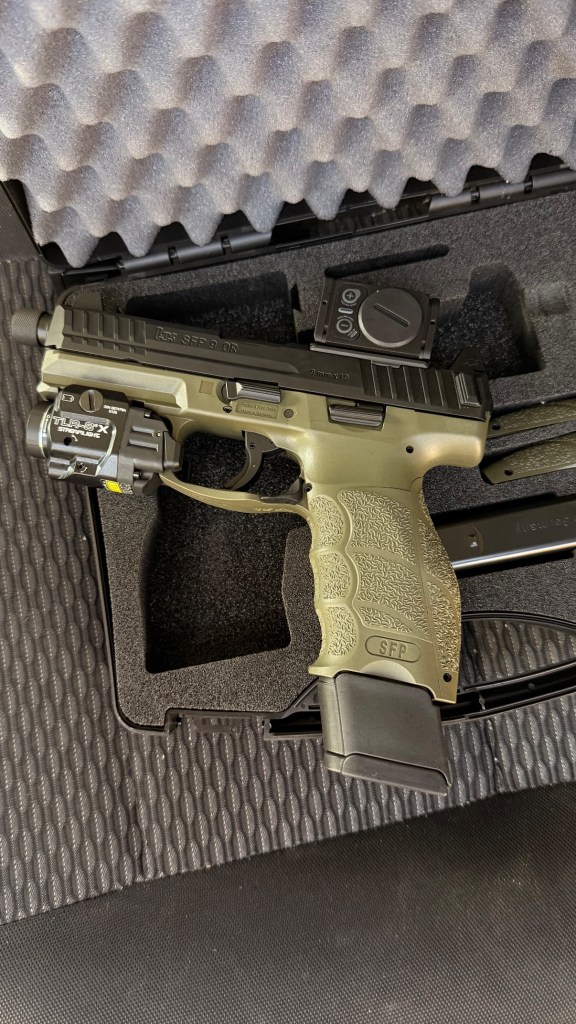
Iin mid-July, members of the 6th Separate SSO Ranger Regiment were photographed training with what appear to be SFP9s. At the end of July, a member of the 73rd Naval Special Operations Center shared a video and several photos of a brand new 2025-production SFP9 OR with a threaded barrel and suppressor-height sights. Unlike the other pistols seen so far, this SFP9 appears to have an OD green frame. From the video, it seems the pistol shipped with a 17 and a 20-round magazine as well as an Aimpoint ACRO P2 and a Streamlight TLR-8X. Several days later this was followed by a photo from another member of the 73rd Naval Special Operations Center who shared a photo of a pair of OD Green SFP9 ORs both with Aimpoint ACROs and one with a Streamlight (possibly the pistol seen earlier).

The pistols were not taken from German military stores, instead the deliveries were drawn from industry stocks and financed by German government funds. This is supported by the presence of VP9-marked pistols which indicate some of the pistols shipped were pulled from HK production that was planned for the US market. On the 17 April, the German government announce it would no longer be publicly updating its list of aid to Ukraine. As of April 2025, Germany has provided 3,500 HK SFP9s to Ukraine.

It appears from the available visual evidence that at least a portion of the 3,500 HK pistols have been provided to Ukraine’s HUR MO direct action teams with some also appearing in the hands of elements of the SSO. Both VP9 and SFP9-marked guns have been seen in-country with at least a portion of them being SFP9 ORs, with slides cut for mounting optics. Given the very infrequent imagery of operational pistol use it is difficult to confirm uses of the SFP9s in the field with the majority of imagery available stemming from training sessions.

Special thanks to Mathias, Hao, deaidua.org, & Dikobraz for their help with this video.


Support Us: If you enjoyed this video and article please consider supporting our work here. We have some great perks available for Patreon Supporters – including early access to custom stickers and early access to videos! You can also find us on the History of Weapons & War app. Thank you for your support!
Rocket Launcher Ground Drones

In my previous article/video examining the development of Hoverboard UGVs, I mentioned an unmanned ground vehicle developed by the HUR’s International Legion. The ‘LEGIT’ UGV was unveiled in a short social media video on 28 June. The video showed the small UGV test firing a pair of Bulgarian Bullspike RPGs into a building. In this article/video we’ll explore examples of what I’m calling RPG-UGVs.

LEGIT is far from the first UGV to be seen equipped with an anti-armour weapon. The first I’ve come across is a short clip of a Ukrainian UGV being demonstrated with an expended RPG-22 mounted. The clip dates from September 2022, the drone does not appear to have any means of traversing the RPG but may have an elevation mechanism. The UGV has a camera mounted for navigation and presumably aiming.

Ukrainian UGV mounted with a remote weapon station with a PKT and two RPG-7s (via social media)

In early January 2023, Russian unmanned systems developers, Avtobot, shared a photograph of an RPG-7 being mounted on a prototype drone. Several days later they shared another photo, this time showing four RPG-26s mounted on a frame work with a green laser below them seemingly to aid aiming. How effective this would be is unclear and its the only time I’ve seen a laser mounted on an RPG-UGV.

In February 2023, Avtobot, shared a video of a heavily armed 6×6 wheeled drone, the Autobot 5, which appears to utilise hoverboard components. The drone is armed with PKT machine gun, a pair of RPG-7s and a pair of RPG-26s. In the test footage included in the video the drone is seen firing its machine gun and both the RPG-7 and RPG-26. There appear to be optical sensors mounted below the machine gun which enable aiming of the weapon systems. Noteably in one of the RPG-7 test firings the backblast blows off what appears to be a camera mounted to the rear of the drone.

At the beginning of March, Avtobot also shared a video showcasing the Autobot 6.2 (‘MINIGRAD’). The six-wheeled Autobot 6.2 is seen mounted with 12 RPGs, arrayed in rows of four. The caption notes that the system can be armed with a variety of RPG systems including: RPG-18/26/27, RPG-7 and even RPOs. In the caption Avtobot explain that the Minigrad can be used can either “individually to suppress fortified areas, destroy various equipment and infantry” and along with other UGVs. The footage does not show a test firing.

Avtobot’s Autobot 6.2 ‘MINIGRAD’ (via social media)

Several weeks later, Mykhailo Fedorov, Ukraine’s Minister of Digital Transformation, shared an a series of photos on Telegram showing a demonstration of various unmanned systems. These photos included one of a 4 wheeled UGV equipped with two RPG-7s and a PKT machine gun.

On the 22 March, Avtobot shared a video showcasing a smaller four-wheeled armed with a machine gun and RPG-7. Interestingly, the caption notes that this was designed as a defensive drone. It’s also interesting to see the drone operated with a companion drone for Intelligence, Surveillance, and Reconnaissance. The video shows the drone test firing both the PKT and RPG-7 as well as entering and operating inside a building.

On 8 May, a photograph of a larger Russian UGV surfaced, claimed to be operating in Ukraine, the UGV appears to be a Platform-M, a ground drone developed in the 2010s by the Research Technological Institute “Progress”, in Izhevsk. The Platform-M is equipped with a PKT machine gun and can be armed with four single-use RPGs. 

BRM-1 seen in May 2023, equipped with six RPGs and its own little anti-drone cage (via social media)

On 8 July 2023, in one of their last videos shared on Telegram, Avtobot showcased the small four-wheeled UGV again, this time showing one equipped with an RPG-7 and the other with a PKT.

In early April 2024, Izvestia reported on a showcase at the Karbyshev Military Engineering Academy which included a range of unmanned ground systems. One of these appears to be a small four-wheeled UGV capable of being mounted with four single-use RPGs. I’ve been unable to find further details on the model seen in the photo.

Temerland is a Ukrainian company specialising in unmanned ground systems which has been operating since around 2021 developing their GNOM UGV. In April 2023, they shared a concept image of a UGV equipped with two RPG-7s. In December 2024 they posted a video showing the drone test firing its mounted PKM, notable its RPG-7 mounts are present but empty. Two years later in March 2025, they were featured in a Ukrainian TSN tv news piece showing a Gnom-VP21 UGV equipped with a PKM and two RPG-7s. A month later, on 10 April, they posted a video of the Gnom-VP21 test firing its PKM and RPG-7s at the range. Another version of the Gnom-VP21 with a different chassis configuration was shown in a photo shared in October 2024, while different it still has mounts for a PKM and an RPG-7.

65th Mechanised Brigade testing a Temerland Gnom-2 (via social media)

In late 2024, a series of small UGVs developed by the Omsk Armored Engineering Institute were highlighted in a Russian army report. These small, transportable and quick deployable drones include a number of variants including the ‘Shmel’ variant of the T-117, which is equipped with four RPG-7s and can be equipped with RPO-As.

In early April 2025, Ukraine’s 65th Mechanised Brigade shared a series of photographs showing the testing of a Temerland UGV armed with a PKM and an RPG-7, the caption describes it as a ‘Gnom-2’, a configuration similar to that seen in October 2024. This may indicate that Temerland’s Gnom UGVs are beginning to be tested by units of the Ukrainian armed forces.

On 6 April, the Russian Ministry of Defence and Russian news outlet Zvezda shared videos of the testing of tracked UGVs. One of the variants seen is equipped with five RPG-7s, though there appears to be mounts for another row of five on the bottom.

In late June a team from the Ukrainian 93rd Mechanised Brigade shared a video showing a logistics UGV mounted with a UB-16-57 57mm rocket launcher from a helicopter. The video shows the DIY multiple launch rocket system (MLRS) firing a series of 57mm rockets, the video does not show how the system is aimed but it does illustrate the recoil the drone experiences on firing.

GUR Legion’s LEGIT UGV with Bullspike RPGs (via social media)

Late June saw the unveiling of the aforementioned LEGIT, a small tracked UGV co-developed by operators and engineers from the HUR Legion’s Cyclone unmanned systems team. LEGIT is a multi-purpose drone capable of undertaking logistics and kamikaze roles. The video shows the LEGIT UGV armed with a pair of Bulgarian Bullspike RPGs on an articulated mount which can be raised and lowered to aim, while traverse is seemingly handled by manoeuvring the drone. The video concludes showing the RPG-UGV test firing at a building. No combat footage of LEGIT has surfaced yet.

Expanding on the concept of mounting a rocket launching system on a UGV, in early July 2025, the Ukrainian 92nd Assault Brigade created a miniature multiple launch rocket system on a cargo carrying UGV. The system has 15 tubes and seemingly fires 57mm rockets, the video doesn’t show the system in use and its unclear how it is aimed.

An improvised system with a UB-16-57 launcher mounted on a UGV (via social media)

Much like the RPG-armed aerial drones it appears that for now the kamikaze variants of UGVs are much more prevalent. The available imagery of UGVs actually in action largely shows either the kamikazes or drones equipped with remote machine guns. It seems that the ability to suppress a target with machine gun fire may be seen in many operational situations as the more useful payload for UGVs.


Support Us: If you enjoyed this video and article please consider supporting our work here. We have some great perks available for Patreon Supporters – including early access to custom stickers and early access to videos! You can also find us on the History of Weapons & War app. Thank you for your support!
Russia Deploys Type 75s in Ukraine

In recent weeks Russia has begun deploying North Korean-manufactured 107mm multiple rocket launch systems. These small rocket launchers are the latest of the North Korean weapon systems to enter Russian service.

The Type 75 is a copy of China’s Type 63 multiple rocket launcher, is a small towed, 12-tube system which an fire a variety of 107mm ammunition. The system was first sighted in Ukraine in early June, though its likely been in use since Spring 2025.

A Type 75 in Russian service (via social media)

The first footage reportedly shows a crew training with the Type 75 while the second shows the Type 75 being fired from concealment within a tree line. Several days later on 15 June, photographs of a Type 75 being mounted on the bed of a UAZ utility van were posted.

Russian Channel One correspondent Dmitry Kulko shared footage of a Type 75 in action on the 25 June. In his post Kulko notes that the weapon system has a range of 8.5km and is being used with high explosive fragmentation rockets.

Russian mechanics mounting a Type 75 on a UAZ truck (via social media)

On 27 June, a close up photograph of the system was shared on telegram. A week later on 5 July, a Russian Type 75 team shared video of them deploying and operating the system in the field. The video shows the heavily camouflaged MLRS being towed by an unmanned ground vehicle and then being loaded and fired. Deployment with a UGV is sensible as the system unloaded weighs over 600kg and would otherwise require a larger, more noticeable vehicle to move it. The video concludes with some ISR drone footage which is implied to be the impacts on target.

A Type 75 in Russian service firing from a tree line, July 2025 (via social media)

On 12 July, Ukraine’s 1st Separate Presidential Brigade shared footage claiming the first destruction of a Type 75 by drone-dropped ordnance. The videos caption notes that the system was spotted and engaged in the Kup’yansk region.

The Type 75 is just one of the latest in a series of weapon systems North Korea have provided to Russia, other aid includes ammunition for various artillery systems and more complex rocket artillery systems like the M1991 240mm MLRS.

Update – 18/7/25:

Ukraine’s 429th Separate Regiment of Unmanned Systems shared footage of a strike on a North Korean-supplied Type 75 multiple launch rocket system.


Support Us: If you enjoyed this video and article please consider supporting our work here. We have some great perks available for Patreon Supporters – including early access to custom stickers and early access to videos! You can also find us on the History of Weapons & War app. Thank you for your support!