Iva – Russia’s New MANPADS

On 27 September we got our first look at Russia’s newest shoulder-fired man-portable air defence system (MANPADS). A short segment in a Russia-1 (state-owned Russian TV channel) News of the Week programme. The report was filmed in the Rostov region and featured a mobile anti-air unit from Russia’s 51st Air Defense Division. It showed off a number of systems used by the unit including a triple PKT machine gun mount and a mount equipped with four AK74s. But most interesting was a new kind of MANPADS, not the typical 9K34 Strela-3, 9K38 Igla or the newer 9K333 Verba which are in current Russian service.
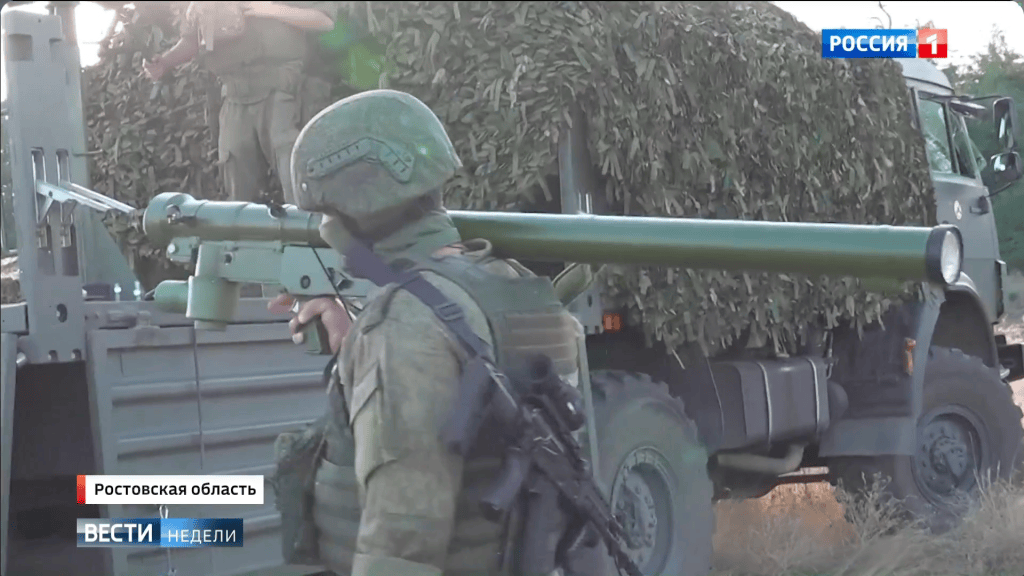
Left-side ‘Iva’ MANPADS (Russia-1)

History,Military History,Air Defense,Air Defence,MANPADS,IVA Manpads,Russian Army,IVA,man portable air defense system,Ukraine,Ukraine War,Misagh-3,QW-19

The report describes the new MANPADS as ‘Iva’ (willow in English), visually is resembles the Iranian Misagh-3 and the Chinese QW-series of MANPADS. The Misagh-3 is a derrivative of the QW series, with the Iva somewhat resembling the QW-18 and QW-19.
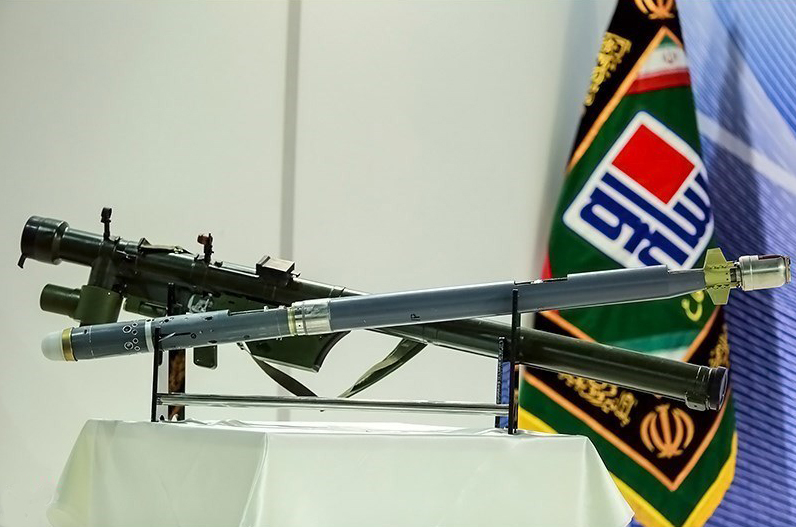
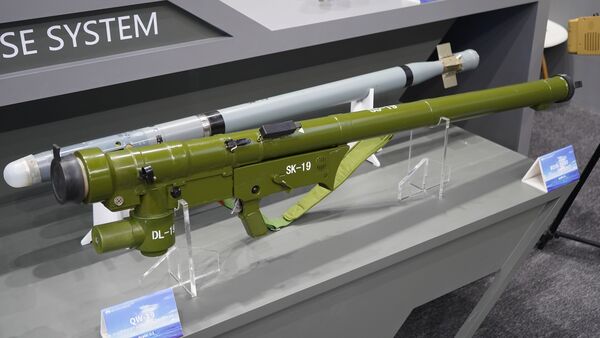
While the Iva doesn’t match either the Misagh-3 or the QW series exactly it appears likely that the new Russian system originated from Iran as the two countries have exchanged weapons and equipment regularly over the past decade, including the infamous Shahed-136. Its unclear if the Iva is an imported system: either manufactured in, or exported via, Iran, or if the design is being manufactured by Russia under a license agreement.
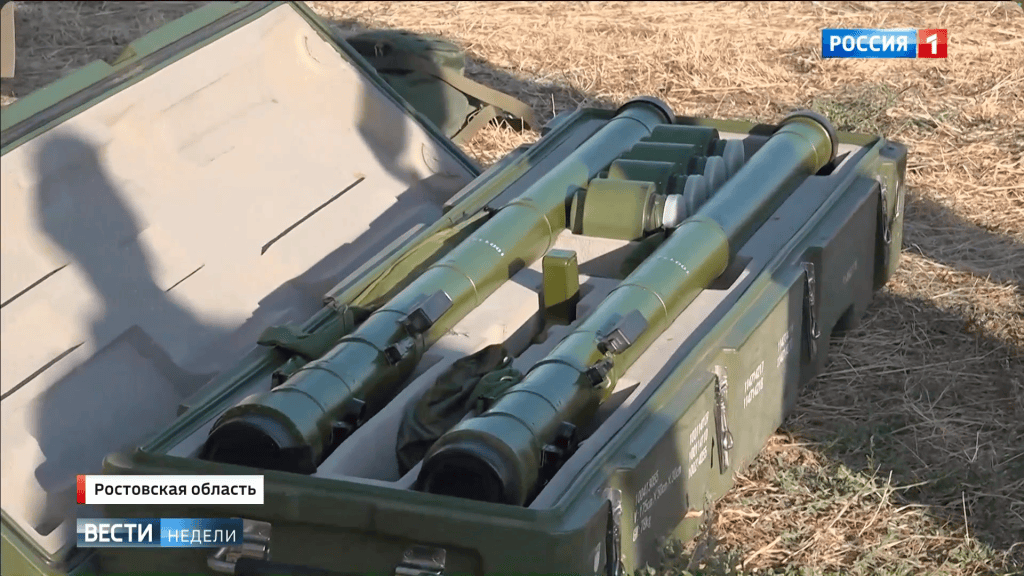
‘Iva’ MANPADS transit case with two missiles, a control assembly and 4 batteries (Russia-1)

The general layout, sights, and controls all point to the Iva’s lineage. There is limited imagery available of the Iranian MANPADS but from what is publicly available it is clear that while similar the Iva’s design is not identical. For example there is an additional box-shaped assembly beneath the front of the missile tube. However, the box-shaped assembly does appear on photograph of the Chinese QW-19 (SK-19) MANPADS. It should be noted that there may be a similar variant of the Iranian missile which hasn’t been publicly seen. Sadly, there a no marking visible in the footage, other than a serial number on the top of the tube but in the short video the operator says that Iva has a range of 4,000m (though its unclear if this is range or altitude ceiling). The footage gives us a good look at the Iva’s transit case which transports two missiles as well as a firing unit/control assembly and four batteries.
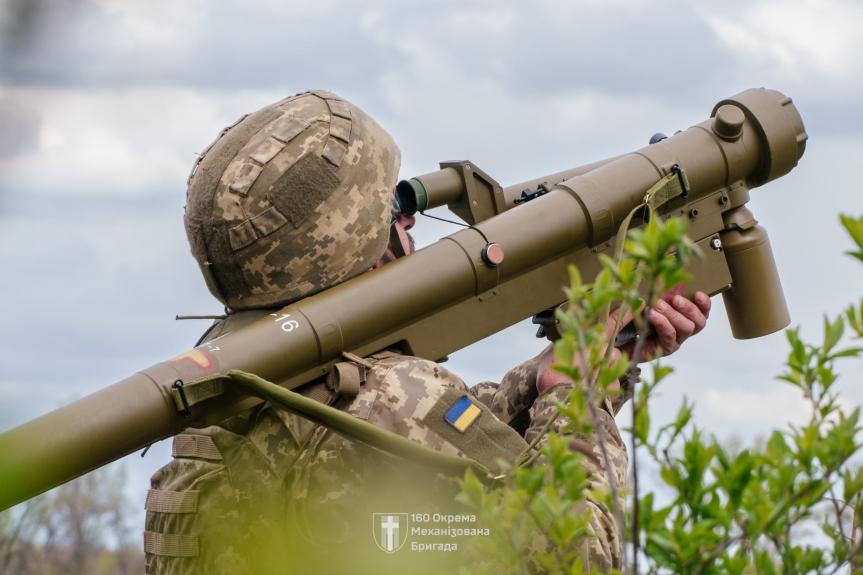
Member of 160th Separate Mechanized Brigade with an FN-16 (Ukrainian Armed Forces)

In an earlier video/article we have already covered how Ukraine is deploying Chinese MANPADS with intermittent sightings in late 2025 and throughout 2026. Ukrainian units have been photographed using Chinese FN-6 and FN-16 MANPADS.
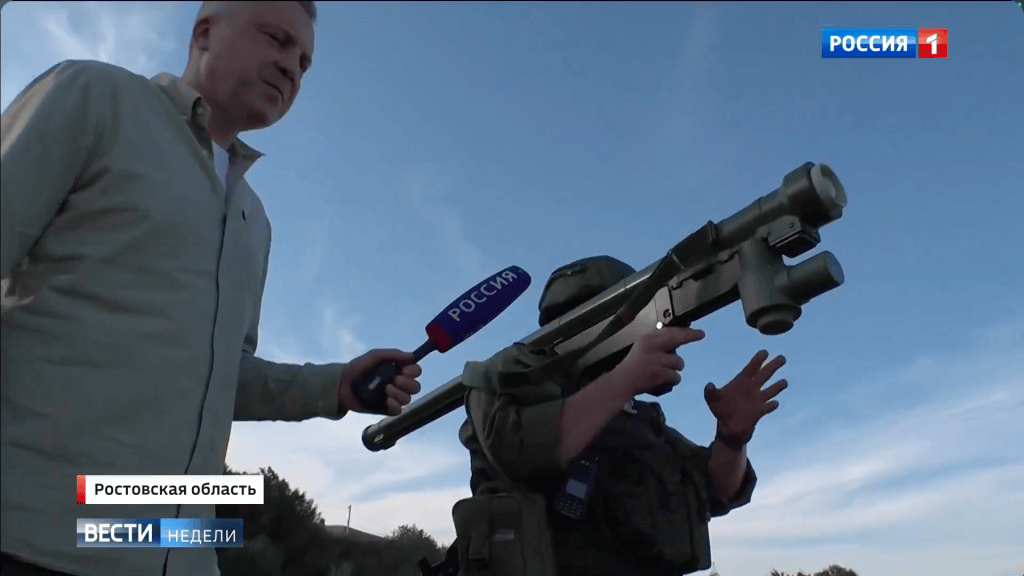
Right-side ‘Iva’ MANPADS (Russia-1)

The appearance of this new non-domestic MANPADS in Russian service highlights Russia’s demand for air-defence missiles as Ukraine continues its long-range drone and missile strikes into Russia. As yet, its unclear how many of these new Iva missiles Russia has in service or how it is procuring them. It also remains to be seen if use of the new missile will proliferate beyond units of the 51st Air Defense Division.

Thank you to Но маллия for digging up the original Russia-1 news report.


Support Us: If you enjoyed this video and article, please consider supporting our work here. We have some great perks available for Patreon Supporters – including early access to custom stickers and early access to videos! Thank you for your support!
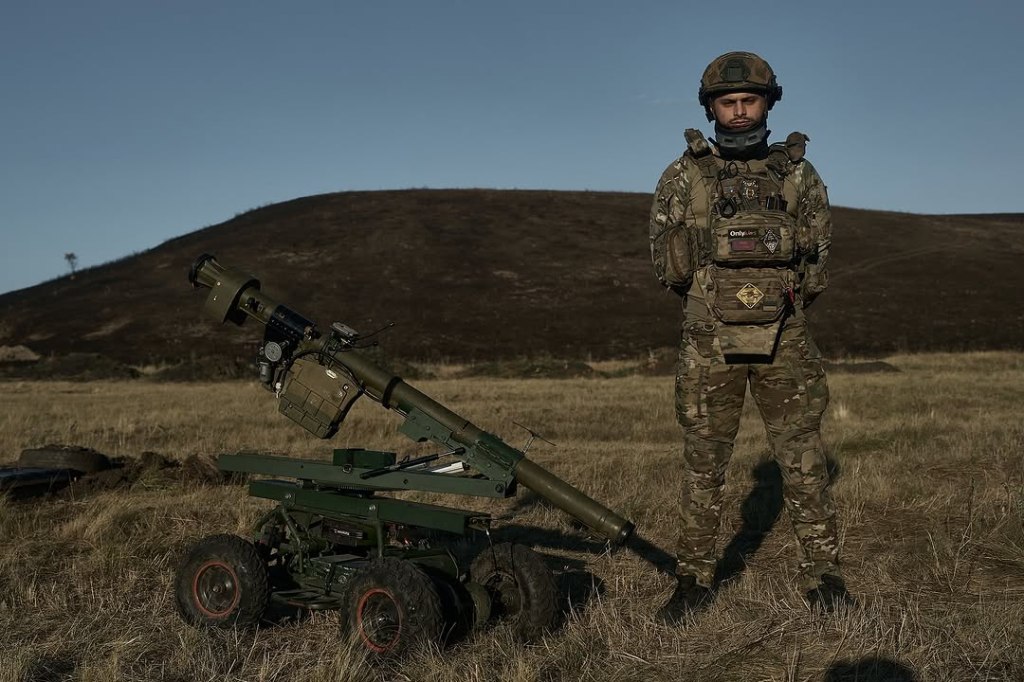
Ukraine’s MANPADS-Unmanned Ground Vehicle

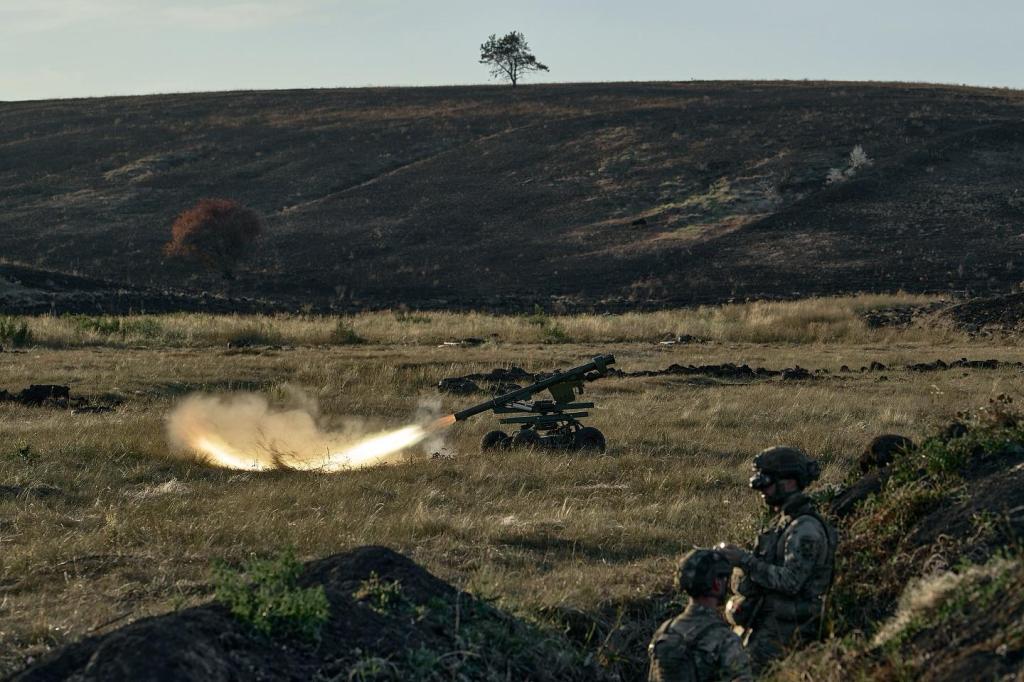
Following on from our recent examination of RPG-UGVs a new armed unmanned ground vehicle variant has appeared – the MANPADS-UGV. MANPADS or Man-Portable Air Defence Systems have been a key weapon during the war in Ukraine. They enable troops to engage drones and UAVs of various sizes as well as helicopters.

(LIBKOS/28th Mechanized Brigade)

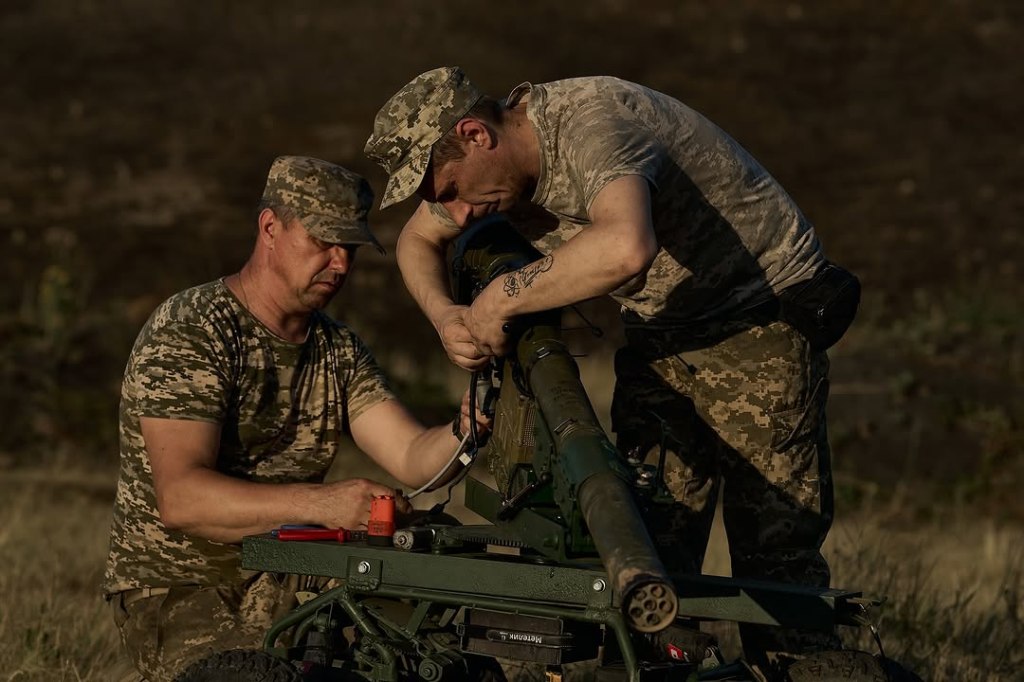
On 4 August, photographers Libkos, shared a video showcasing an Igla-1 MANPADS mounted on a four-wheeled UGV operated by Ukraine’s 28th Mechanized Brigade. In an Instagram post, Libkos explained the idea behind the MANPADS-UGV:

“If before they were quite easy to shoot down with MANPADS, now Russian UAVs control every movement of our infantrymen and often do not even allow them to leave the trench. That is why the guys from @28ombr created this robotic platform. It independently guides and hits any large air target. The guys have already tested it in action and it already has one enemy helicopter on its account. So we are collecting 10 more such platforms. This is an effective and innovative weapon that is independently manufactured by the military from 28 Ombr.”

The available imagery, shared by Libkos and the brigade, shows the UGV being test-fired. The Igla is mounted on an angled mount, which seems to have a degree of elevation and traverse. There appears to be a motor and servo system attached to the front of the weapon to act on its trigger. Behind this is what may be a camera and transmitter/receiver. In part of the promo video a pair of operators are seen in a nearby trench, one wearing a headset for the UGV’s camera feed.

Ukrainian media outlet Defender reports that the MANPADS-UGV has been named “Alycha”.

(LIBKOS/28th Mechanized Brigade)

It’s difficult to tell how the system would be used in practice or how effective it would be. MANPADS such as Igla-1 use infrared homing and require the operator to track the target before launching. The operator has to visually detect the target, activate the power supply unit, aim at the target via the fore and rear sights and pull the trigger. While the operator doesn’t have to track the target once the missile is fired they must track it immediately prior to launch. How capable the UGV is of doing this is currently unclear. For the best image clarity and response time for identifying and tracking a target it would make sense for the UGV to utilise a fibre-optic control cable but there is no evidence of this in the available imagery.

It is unclear if the system can be equipped with different types of MANPADS. In theory the UGV could be mounted with Igla, Strela, Piorun or even Stinger, as such one variable to consider is the system’s engagement range. The Igla-1’s operational engagement range is 6km (3.5 miles) with an 11,000 feet engagement ceiling. Given Ukraine’s focus on defensive strong-points the gap between positions able to engage aerial threats with a MANPADS may be relatively wide. If small Ukrainian units are defending strong-points along a stretch of front they may have a limited embedded anti-air capability. A MANPADS team would have to expose itself to reach various points along the unit’s sector of the front so having a UGV which can be rapidly deployed makes sense.

(LIBKOS/28th Mechanized Brigade)

Nevertheless the concept is an interesting one. the 28th Mechanised Brigade claims that the system has already been used operationally and the UGV has successfully engaged an enemy helicopter. Verifiable proof of this kill has not yet been provided. There are no doubt useful applications for the system, such as patrolling an area, as a quick reaction asset and in removing the need for troops to leave cover to engage aerial threats.

Check out our other articles on UGV developments.


Support Us: If you enjoyed this video and article please consider supporting our work here. We have some great perks available for Patreon Supporters – including early access to custom stickers and early access to videos! You can also find us on the History of Weapons & War app. Thank you for your support!

Ukrainian Training Video – Stinger MANPADS

Since the war in Ukraine began on 24 February the Ukrainian armed forces have been hastily putting together and sharing training films for various weapon systems. The weapons including Western transferred systems like Stinger, Javelin, Piorun and Panzerfaust 3 as well as Ukrainian-made weapons like the Corsair and Stunga.

We’ll be sharing these training films so they’re saved for the historical record and so they can be easily found by those who might need them. We’ll try and give some context on the weapon’s origins and on who made the training video. 

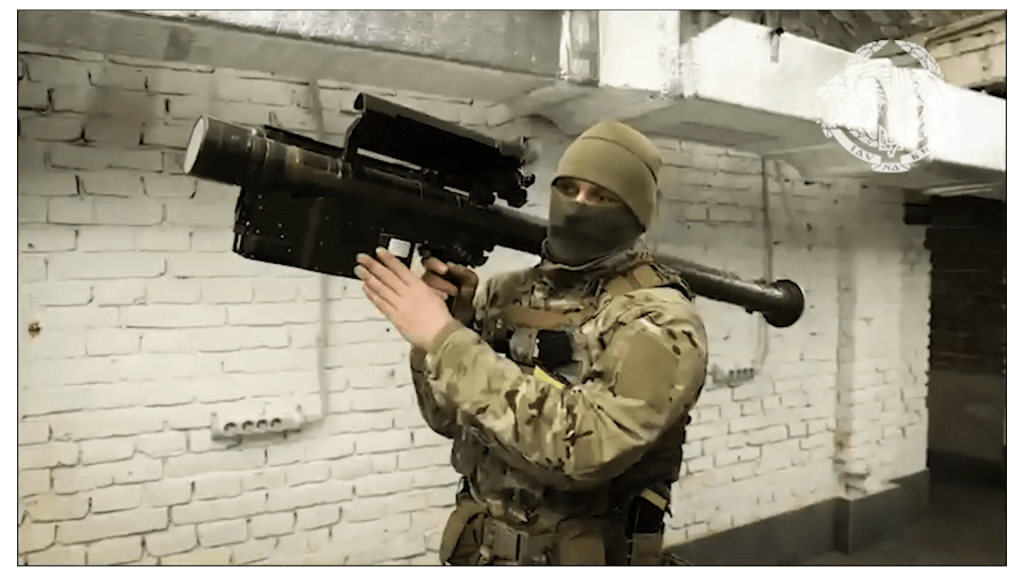
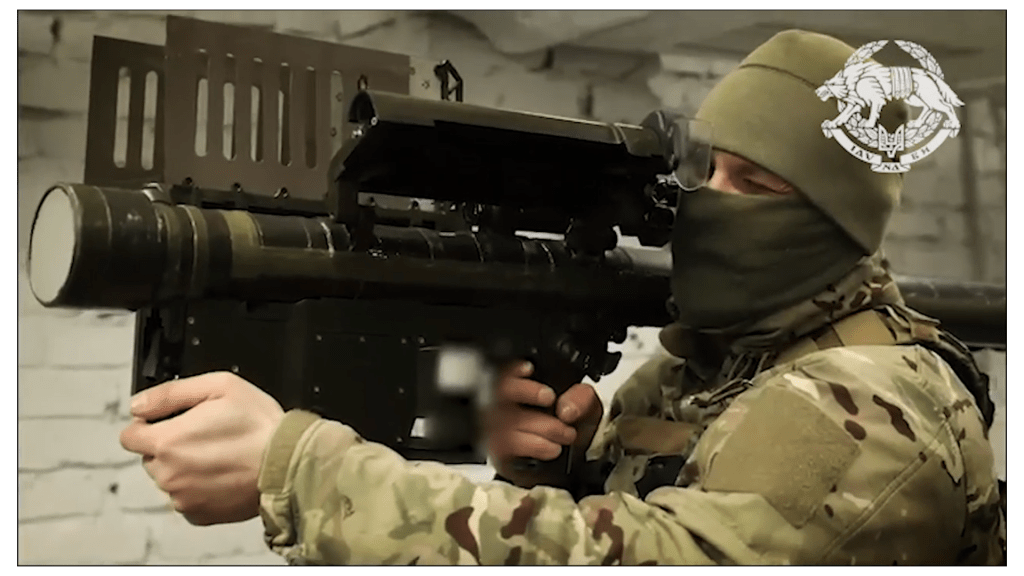
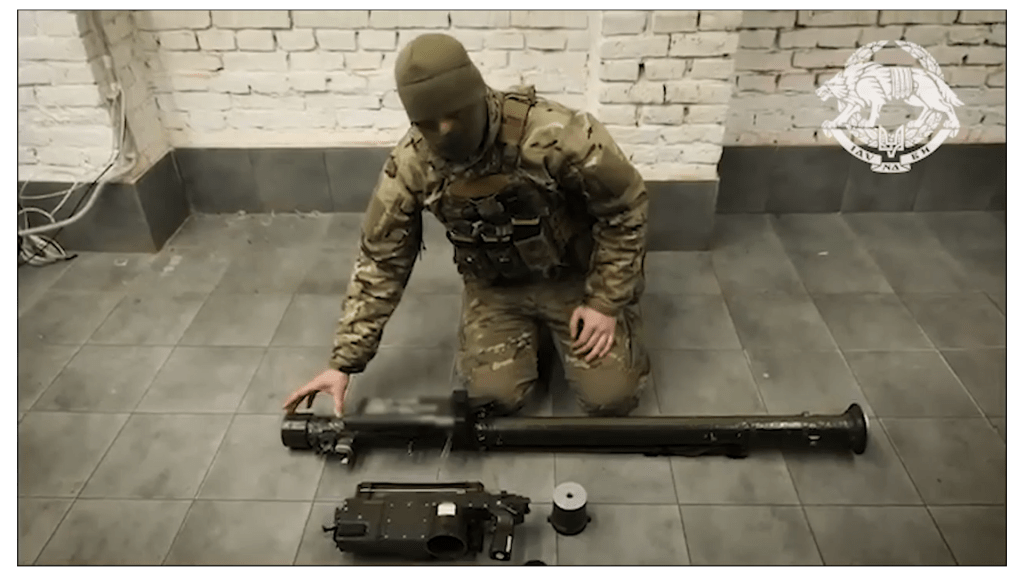
The first of the films was made by the Command of the Special Operations Forces of the Armed Forces of Ukraine (or SSO) and covers the assembly, components, aiming and handling of the Stinger man-portable air defence system (MANPADS). 

FIM-92 Stinger is a man-portable, short range air defence system. It was developed in the 1960s by General Dynamics and uses infrared homing to track its target – some variants can also use UV. Stinger has been sent by Germany, Italy, Latvia, Lithuania, and the Netherlands with both the twin-launcher, pedestal-mounted version and the shoulder-fired system transferred to Ukraine. It is estimated that as of 20 March over 2,000 missiles have been transferred.

FIM-92 Stinger Specifications:

WarheadHigh Explosive
Warhead weight1 kg (2.25 lb) HTA-3
Missile Length59.8 in (1.52 m)
Missile Weight 22 lb (10.1 kg)
System Mass33.5 lb (15.19 kg)
EngineSolid-fuel rocket motor
Guidance systeminfrared homing
Range (Dependent on variant)3-5 miles (4.8 km to 8 km)
Altitude (Dependent on variant)Up to 3.8 km (12,500 feet)

Bibliography:

‘STINGER Instruction from SSO of Ukraine’, SSO, (source)


If you enjoyed this video and article please consider supporting our work here. We have some great perks available for Patreon Supporters – including custom stickers and early access to videos! Thank you for your support!