In recent weeks Russia has begun deploying North Korean-manufactured 107mm multiple rocket launch systems. These small rocket launchers are the latest of the North Korean weapon systems to enter Russian service.
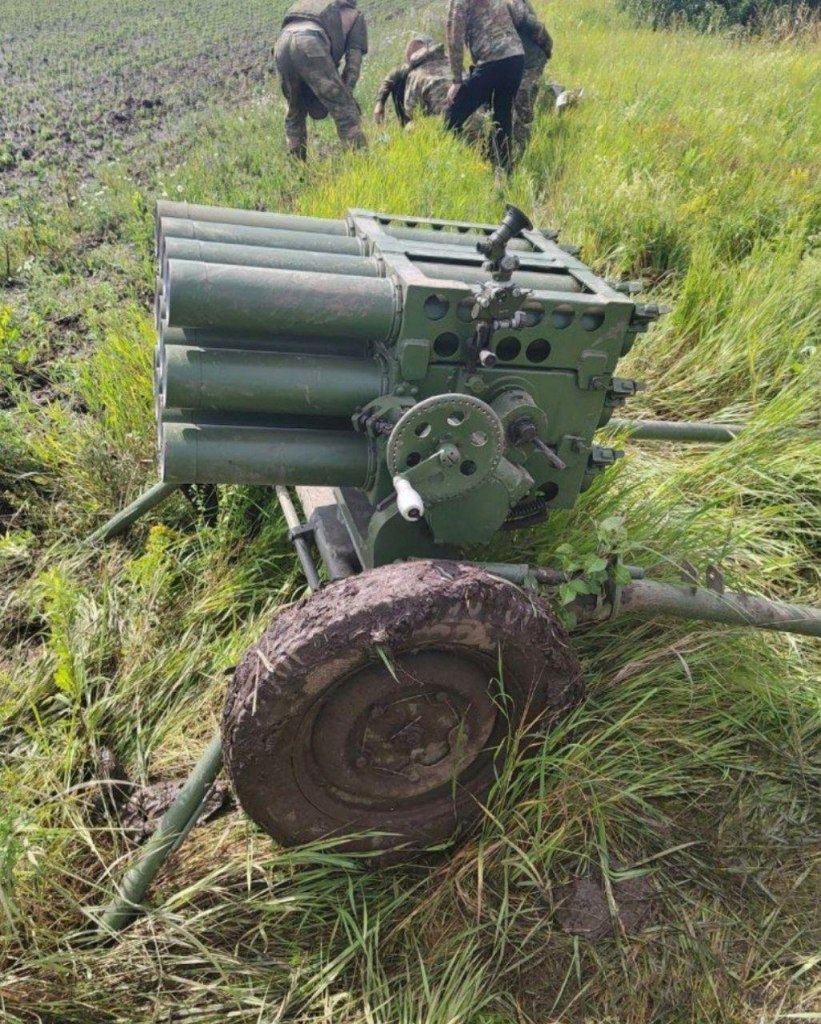
The Type 75 is a copy of China’s Type 63 multiple rocket launcher, is a small towed, 12-tube system which an fire a variety of 107mm ammunition. The system was first sighted in Ukraine in early June, though its likely been in use since Spring 2025.
A Type 75 in Russian service (via social media)
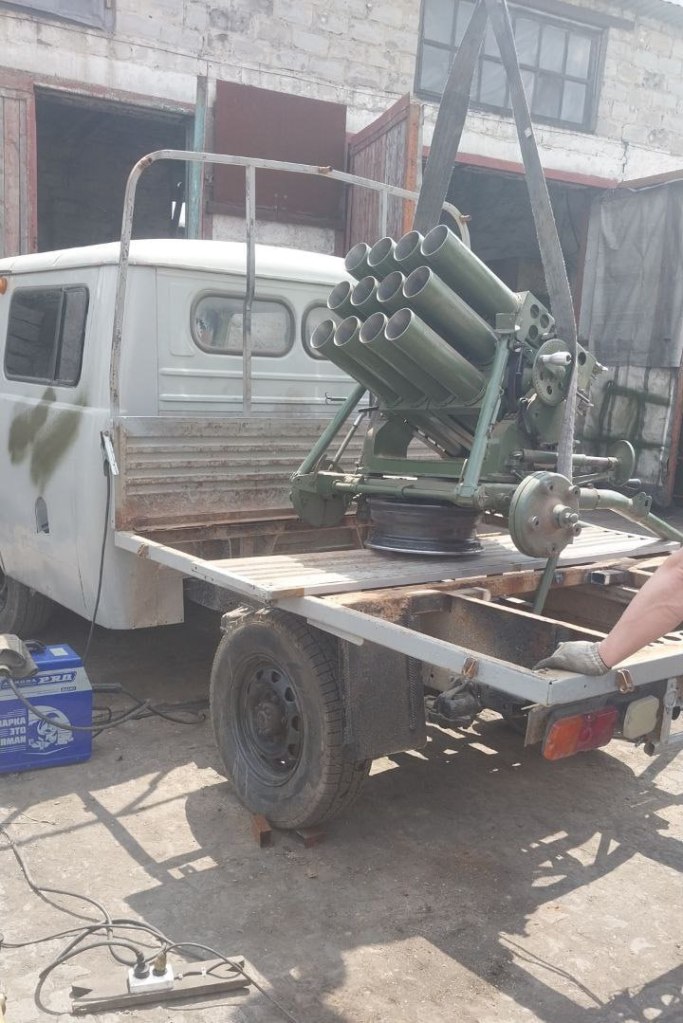
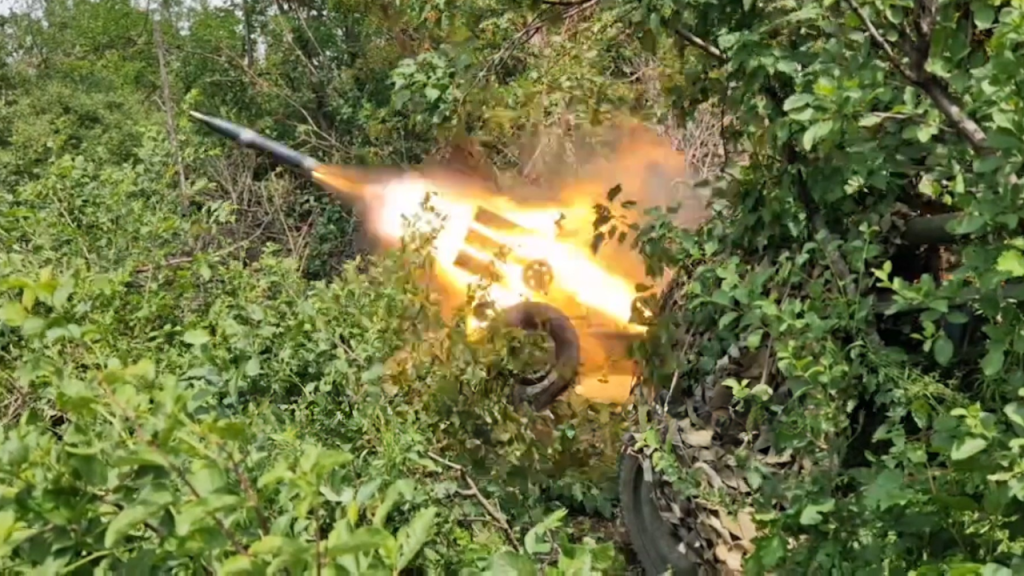
The first footage reportedly shows a crew training with the Type 75 while the second shows the Type 75 being fired from concealment within a tree line. Several days later on 15 June, photographs of a Type 75 being mounted on the bed of a UAZ utility van were posted.
Russian Channel One correspondent Dmitry Kulko shared footage of a Type 75 in action on the 25 June. In his post Kulko notes that the weapon system has a range of 8.5km and is being used with high explosive fragmentation rockets.
Russian mechanics mounting a Type 75 on a UAZ truck (via social media)
On 27 June, a close up photograph of the system was shared on telegram. A week later on 5 July, a Russian Type 75 team shared video of them deploying and operating the system in the field. The video shows the heavily camouflaged MLRS being towed by an unmanned ground vehicle and then being loaded and fired. Deployment with a UGV is sensible as the system unloaded weighs over 600kg and would otherwise require a larger, more noticeable vehicle to move it. The video concludes with some ISR drone footage which is implied to be the impacts on target.
A Type 75 in Russian service firing from a tree line, July 2025 (via social media)
On 12 July, Ukraine’s 1st Separate Presidential Brigade shared footage claiming the first destruction of a Type 75 by drone-dropped ordnance. The videos caption notes that the system was spotted and engaged in the Kup’yansk region.
The Type 75 is just one of the latest in a series of weapon systems North Korea have provided to Russia, other aid includes ammunition for various artillery systems and more complex rocket artillery systems like the M1991 240mm MLRS.
Update – 18/7/25:
Ukraine’s 429th Separate Regiment of Unmanned Systems shared footage of a strike on a North Korean-supplied Type 75 multiple launch rocket system.
Ukraine's 429th Separate Regiment of Unmanned Systems shared footage of a strike on a North Korean-supplied Type 75 multiple launch rocket system.
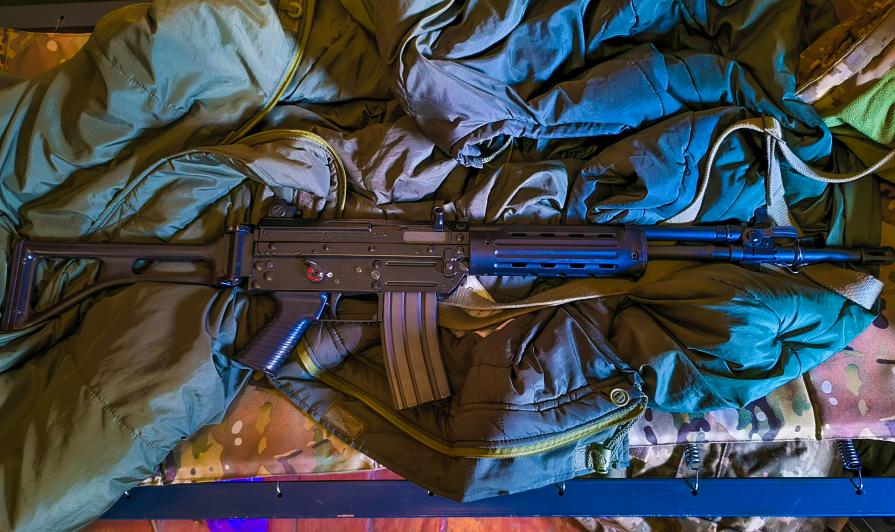
From imagery shared by Ukrainian armed forces personnel over recent months it appears that Italy has provided an unconfirmed number of Beretta SC70/90 5.56x45mm rifles.
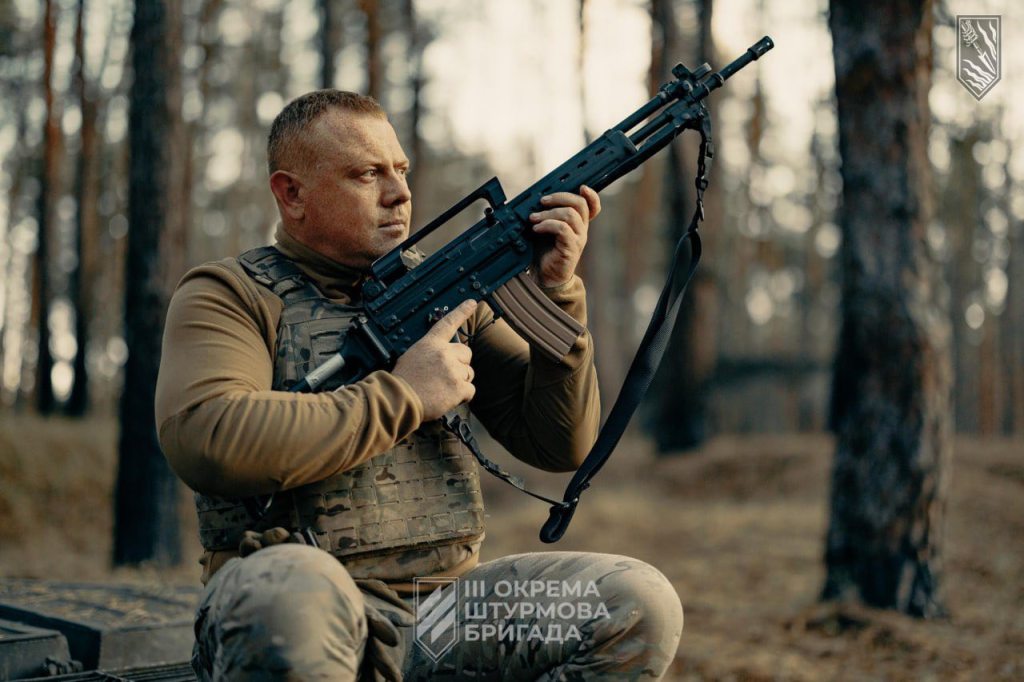
The SC70/90 is part of the AR70/90 family of rifles; the SC model is distinct for its side-folding stock. The weapons are gas-operated and use a rotating bolt and a long-stroke gas piston system. They are select-fire and capable of semi-automatic, burst and fully-automatic fire. They are typically equipped with a bipod and carry handle and weigh in at 4.05kg or 8.9lbs.
The AR70 entered service in the early 1970s. The AR70/90 series improved on the AR70 and has been in service with the Italian armed forces since the 1990s, it is currently being replaced by the Beretta ARX-160. We’ve already seen evidence of the presence of other European rifles of a similar vintage such as the Spanish CETME-L, check out our video/article on those here.
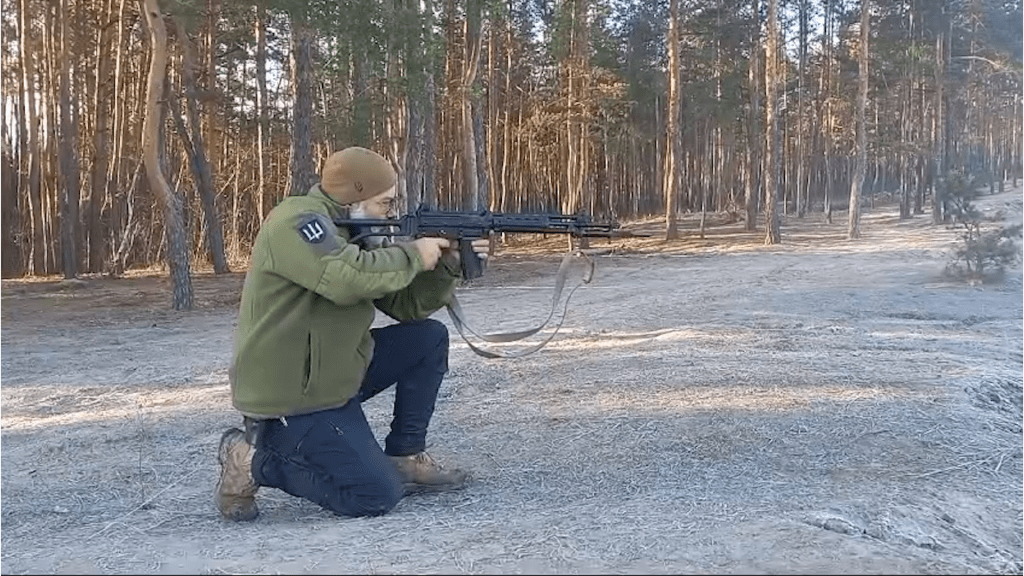
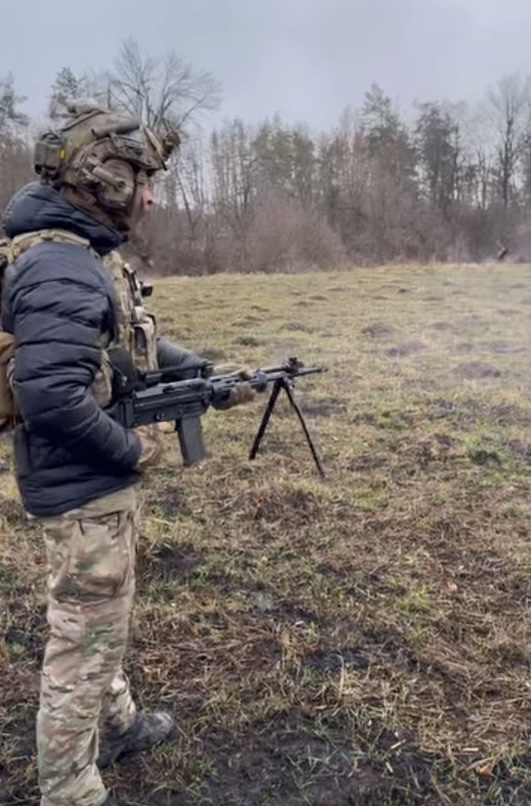
The first sighting of an SC70/90 came on 10 January, when Іван Савельєв, a veteran associated with several units including the 3rd Assault Brigade ‘Azov’, possibly as head of the brigade’s small arms workshop, shared a video of himself firing the rifle in bursts from prone with its bipod deployed.
On 13 January, Савельєв, a fabricator, mechanic and gunsmith who founded R&D company Armorum Solutions, shared several videos of himself firing an SC70/90 at the range. In the first, he has a bayonet fixed and the bipod still mounted but the carrying handle has been removed from the top of the receiver.
A member of the 3rd Assault Brigade shared a short video, via Instagram stories, on 24 January 2025, firing a Beretta SC70/90 from the hip. When asked what he thought of it, he described it as an ‘old unit’. There is no evidence he has used the weapon on operations, and it may have been brought out to the range as a curiosity.
On 16 February, Савельєв shared another video of himself firing the rifle, this time the carry handle has been removed and an ELCAN Spectre, likely supplied by the Netherlands, has been mounted on the SC70/90’s upper receiver.
Speaking to an international volunteer with one of Ukraine’s brigades who has recently been issued an SC70/90 for training, he noted: “It has too much parts. You cannot strip it without pliers or a bullet. Aiming is also way harder than with an AK. It’s also heavier than an AK… Overall, its not a bad gun, I just don’t like it. The sights are not good, not easy to read like an AK. The foldable buttstock is a big plus.” He explained that he decided to remove the bipod and carry handle saying the bipod is ‘useless’ and the carry handle obscures the sight. He also added that while his unit has been issued them during current training some soldiers do use them on operations. On 19 March he shared a video of how to field strip the SC70/90 on his YouTube channel.
Most recently, on 8 April, a member of the 3rd Assault Brigade shared a photograph of himself posing with a SC70/90 complete with carry handle and bipod.
While the number of sightings of SC70/90s in Ukraine has so far been small, they are undoubtedly in country and in use. There haven’t yet been any sightings of fixed stock AR70/90s. From a survey of the limited imagery available, it appears that they are in service with the 3rd Assault Brigade and possibly other units. It seems that while they’re in inventory with Ukrainian units they may be most regularly issued to personnel during training, this is unsurprising, as the supply spare parts available for the rifles may be limited and there are other better-suited rifles available for operations. The SC70/90s presence in Ukraine serves to illustrate once again just how many different small arms are now in Ukrainian service.
Thanks to Recon UAV and Weapons_Illustrated for help sourcing imagery for this video.
Update – 1/5/25:
Another photo of Ukrainian personnel training with Beretta SC70/90s. Date, unit & location unknown.
— Matthew Moss | The Armourer's Bench (@historicfirearm) May 1, 2025
Update – 14/7/25:
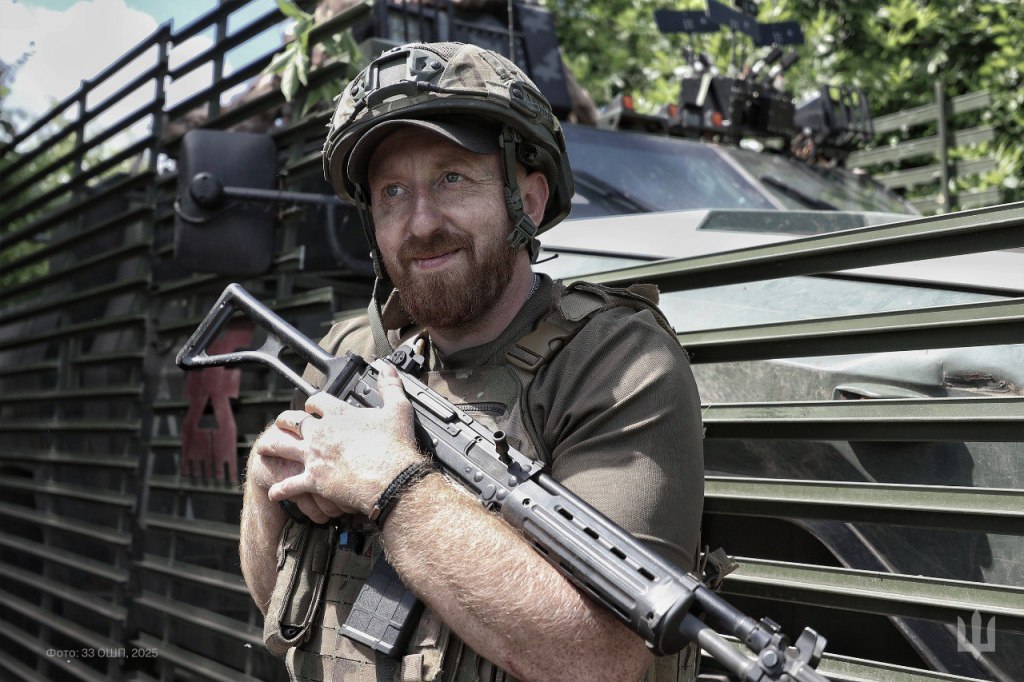
Members of the 33rd Separate Assault Regiment’s ATGM company were photographed during training. One combatant was photographed holding a Beretta SC70/90.
Update – 30/7/25:
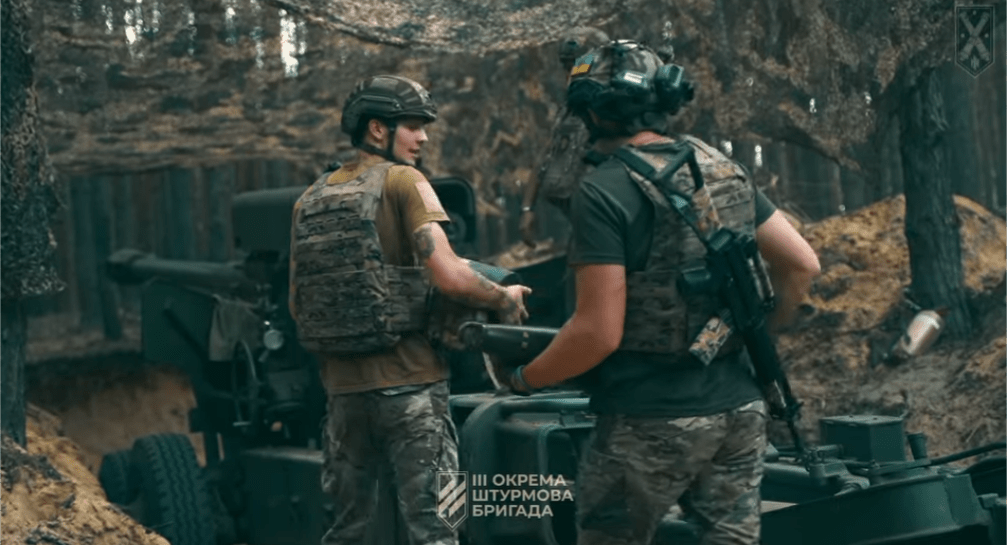
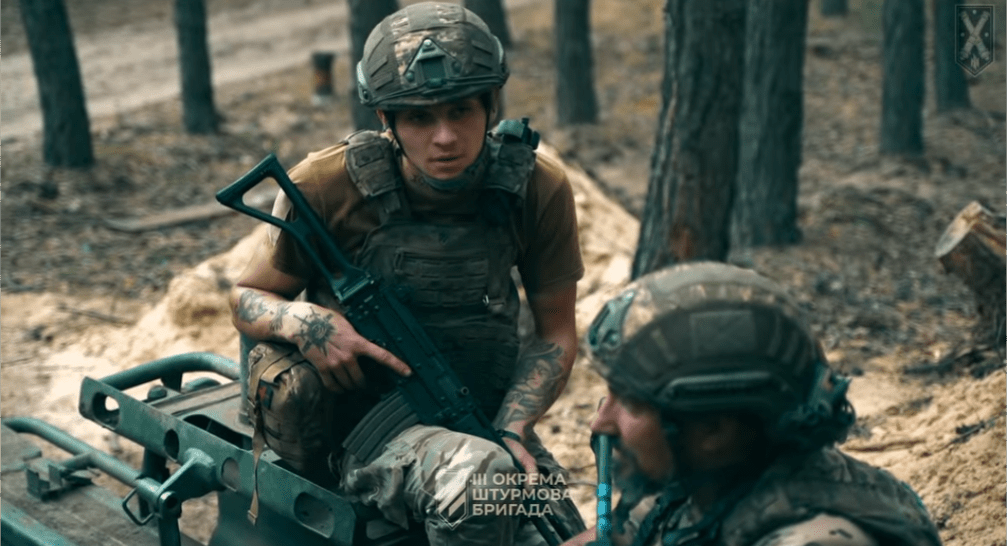
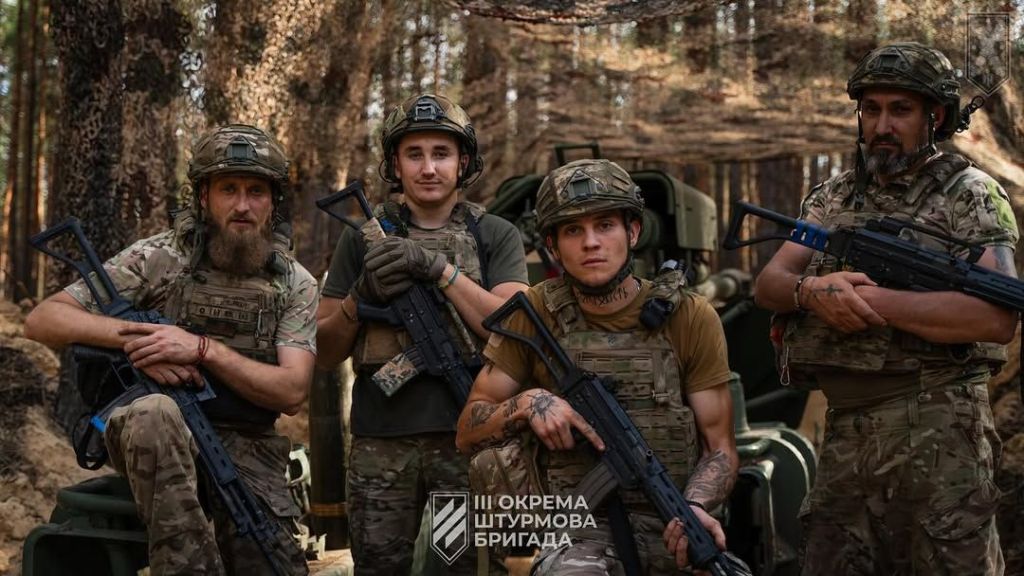
Personnel from the 2nd Artillery Battalion of the 3rd Assault Brigade were seen armed with SC70/90s during a social media video. (H/T Jeff).
Update – 4/8/25:
A group photo of the 3AB gunners seen in the earlier video. All four combatants have SC70/90s.
Update – 20/10/25:
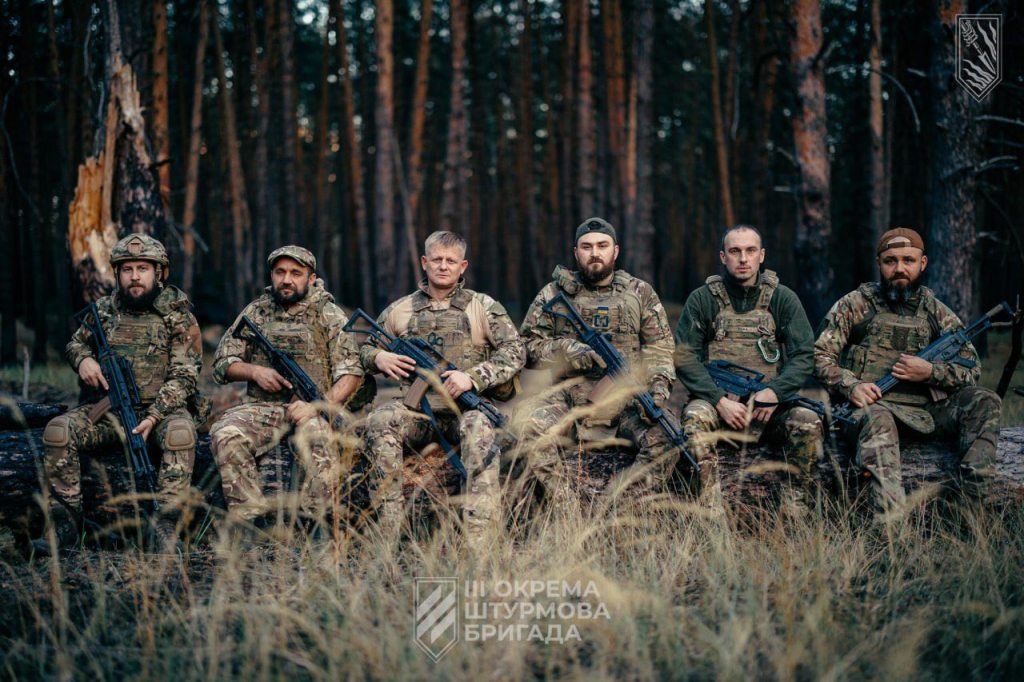
The 3rd Army Corps posted a series of photos of troops with AR70/90s on 12 October. The troops appear to be gunners opperating one of the 3rd Assault Brigade’s self-propelled howitzers.
Support Us: If you enjoyed this video and article please consider supporting our work here. We have some great perks available for Patreon Supporters – including early access to custom stickers and early access to videos! Thank you for your support!
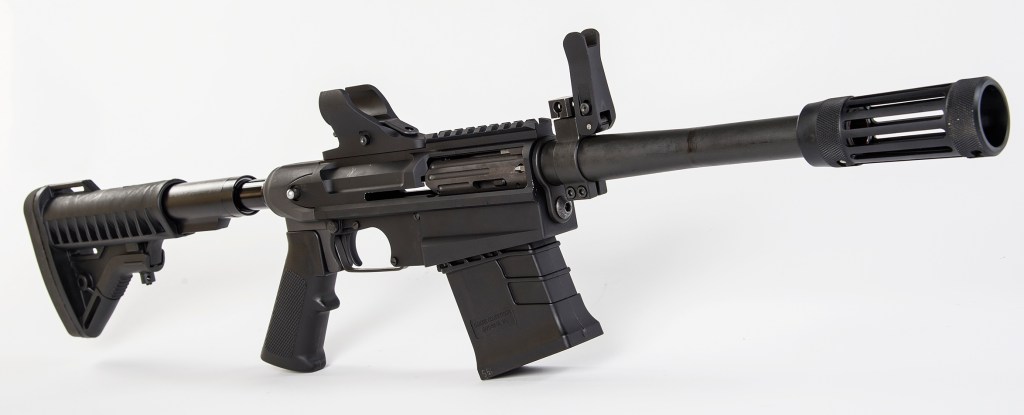
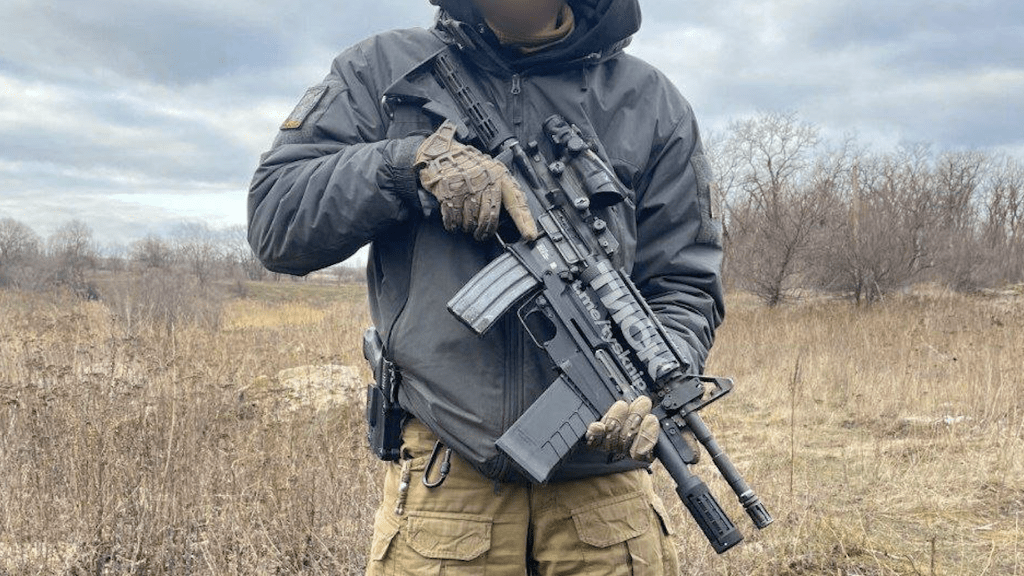
This week another image of a very rarely seen shotgun in Ukraine appeared, an M26 Modular Accessory Shotgun System. These are magazine-fed, bolt-action shotguns which can be mounted on rifles.
The M26 is essentially the US military’s bolt-action Masterkey at home. Developed in the early 2000s by C-More Systems it was selected by the US Army in 2008 and began fielding in 2011 seeing operational service in Iraq and Afghanistan. It is still in service today.
M26 Modular Accessory Shotgun System in its standalone configuration (US DoD)
The shotgun has a 3 inch chamber and uses a straight-pull bolt-action. It’s box magazine-fed with 3 or 5 round capacities available. It can also be used as a standalone once a stock and pistol grip assembly is attached, it has folding back-up iron sights but uses the rifle’s sights when mounted. The MASS’ safety and bolt-handle are reversible to allow ambidextrous operation. The M26 was designed to be employed as a breaching shotgun for shooting hinges and locks, the barrel is tipped with a breaching stand-off adapter muzzle-device. In its rifle-mounted configuration the M26 weighs around 3lbs (1.4kg) and has an overall length of 16.5 inches (42cm). It has an improved cylinder bore profile (sometimes referred to as a 1/4 choke), meaning it has an integral choke with a slight constriction that allows the shot to spread quickly after leaving the muzzle, the practical range for this type of choke is around 15-30 yards.
The most recent sighting of one of the shotguns came on 19 December. Ukrainian outlet Tyskshared a photograph of a Ukrainian operator armed with an M4A1 carbine topped with an ACOG and equipped with a M26 MASS In Ukraine. The M26 in the photograph appears to be loaded with a five-round magazine.
Sightings of the M26 in Ukraine are extremely rare, with the only other example appearing in a ХЛОПЦІ З ЛІСУ (Boys from the Forrest) video which showcased weapons used by the UA Reg is the 1st Special Operations Detachment of the 8th Regiment, SSO (UA SOF). The M26 seen in that video was in the standalone configuration with pistol grip and stock attached. Sadly, the shotgun itself wasn’t discussed in the video.
M4A1 mounted with an M26 (via Tysk)
While Russia has not officially fielded anything similar we have seen efforts to adapt GP-25 under-barrel grenade launchers with shotgun adaptors and there has been at least one sighting, back in May, of an improvised slam-fire tube-shotgun mounted under-barrel on an AK-12. The shotguns even appeared on the Russia 1 state TV channel.
Since the latest photograph appeared there has been significant speculation as to whether it might be being used to defend against First-Person View (FPV) drones. This may be unlikely given the weapon’s short 7.75 (197mm) barrel, this length would limit its effectiveness in engaging more distant drones but might be useful in engaging approaching FPV drones- as a last ditch defence. This is something we’ve seen Russian combatants improvising weapons to deal with. The speed with which FPV drones close on their targets, however, would make multiple shots from the M26 unlikely due to its manual action. This would reduce the chances of successfully engaging an on-coming drone.
Standalone M26 (via ХЛОПЦІ З ЛІСУ)
While any shotgun is better than no shotgun the units that the M26 has been seen with definitely have access to shotguns better suited to engaging drones. Where the M26 is more likely to be useful in Ukraine, is in its original role – as a breaching shotgun. Ukrainian units regularly find themselves operating in urban areas where quick access into rooms is key. Provided they have breaching rounds then the M26 might be most useful in this role.
Update – 4/1/24: Tysk have shared some redacted footage of the M26 at the range along with the operator’s thoughts (machine translated):
“Experience shows the rifle’s effective range does not exceed 30 meters, and that already requires above average level of training. Adding so much weight to the rifle increases the weight of the barrel too. I would argue one has to be quite a tough guy to stay in a ready position for long. Especially considering people nowadays cannot do the same even with an AK. In my humble opinion, this weapon system has its niche and can even be useful as an independent piece but becomes too impractical when coupled with an M4.”
Our friend with his M26 MASS rifle during exercises. His opinion on M26 is below:
Experience shows the rifle's effective range does not exceed 30 meters, and that already requires above average level of training. Adding so much weight to the rifle increases the weight of the… pic.twitter.com/r1YxVNHbED
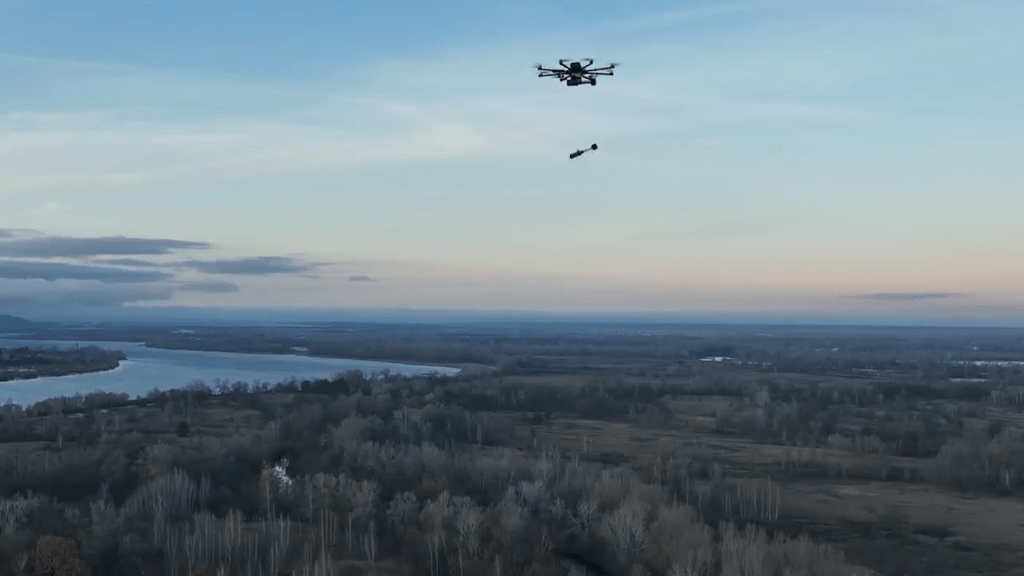
Drone warfare in Ukraine is one of the war’s most rapidly evolving elements with considerable innovation and improvisation. In recent weeks several videos have been shared showing large drones dropping TM-62 anti-tank mines.
The first video shared on 3 September showed how a mine could be carried and released by a large six-rotor drone. The TM-62M is seen loaded into a cradle tray which is then remotely triggered causing the floor plate to hinge and release the mine. The video also shows how the TM-62 is fuzed with a UZRG-pattern hand grenade fuze, pushed directly into the mine’s explosive through a hole cut in the side of its casing.
The TM-62M is a high-explosive blast landmine designed to immobilise or destroy vehicles. The mine is packed with 7.5kg (17lbs) of explosive and is normally centrally fuzed by a pressure fuze. The TM-62M is a significant payload for a bomber drone and when dropped they have significant blast effect.
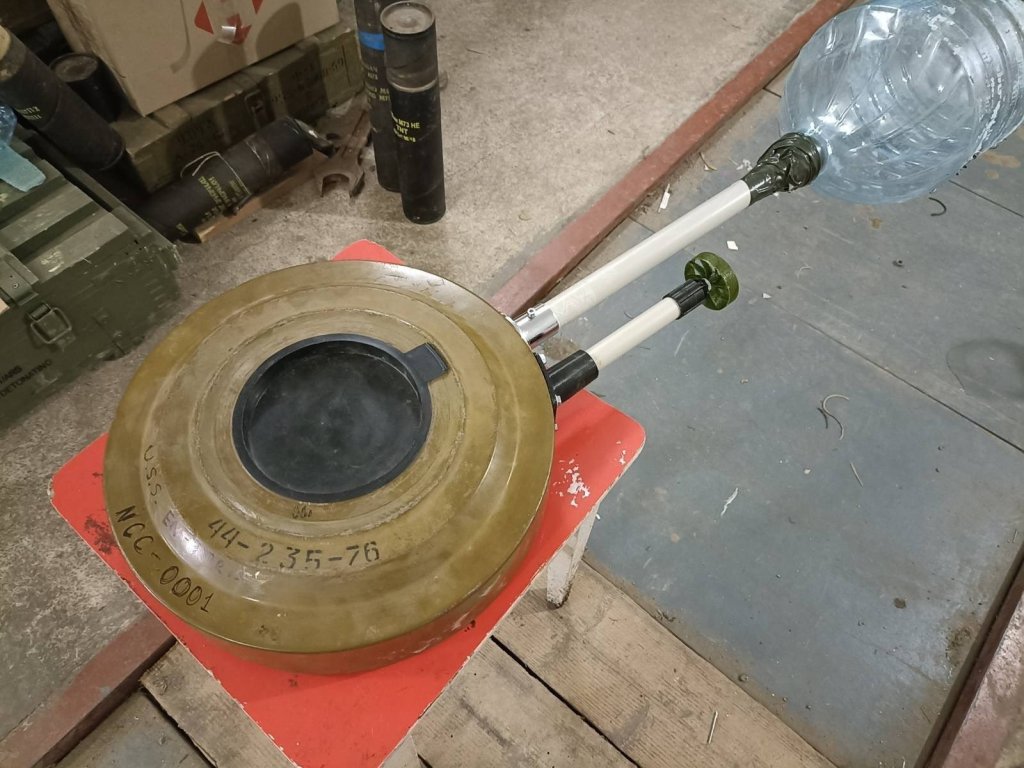
A subsequent video, shared on 6 September, shows a series of clips filmed by the bomber drone’s camera showing the TM-62 being dropped on numerous targets. The mines in this video have been significantly adapted with a stabilising tail added. The tail appears to be made up of a length of PVC pipe and a large water battle with its base cut off. The tail appears to be quite effective especially given the mine’s considerable weight and poor aerodynamics. It is also notable that the fuzing system appears to be different in the second video. Rather than a hand grenade fuze it appears that a larger fuze has been used, positioned next to the stabilising tail.
With the tail and its cut down water bottle its unlikely the release system for this munition is the same as that seen in the first video. A system which would allow for a smooth release and not snag the tail assembly would be needed. In several of the clips in the second video a strap swings past the drone’s camera perhaps suggesting there is a sling system in use.
A subsequent photograph shared on social media shows one of the mines in much better resolution. The tail is indeed made from PVC piping and a water bottle and the fuze appears to be vane-armed. The makers also have a sense of humour likening the odd-looking munition to the ‘USS Enterprise’ from Star Trek, they’ve written ‘USS Enterprise NCC-0001’ on the forward section of the mine.
At the same time as the photograph a number of additional videos showing the TM-62 based bombs being dropped were shared. These videos were originally shared towards the end of August and show a series of successful munition drops.
We are seeing a trend towards more sophisticated and more capable drone bombers which can carry either greater numbers of smaller bombs or larger singular bombs like the TM-62 munition.
Update – 1/10/23
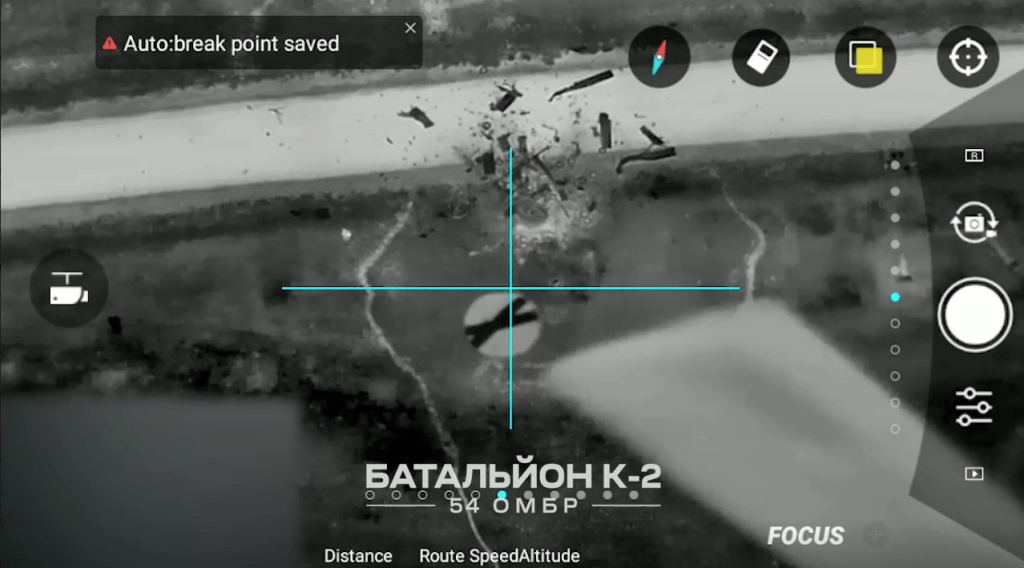
Just today the K-2 drone team with the 54th Brigade has shared footage of one of their drones dropping TM-62s mines on a Russian storage position. These mines don't appear to have a tail assembly and are more simply fuzed like those seen in initial videos. pic.twitter.com/W7plTbDIKQ
— Matthew Moss | Historical Firearms (@historicfirearm) October 1, 2023
The K-2 drone team with the 54th Brigade has shared footage of one of their drones dropping TM-62s mines on a Russian checkpoint and storage position. The drone appears to drop several unadapted TM-62s, though the lag time between landing and detonation would indicate they are not equipped with an impact fuze but perhaps a grenade fuze as seen in the initial videos featuring TM-62s. The resolution of the thermal cameras does not make it possible to identify the method of fuzing.
Note the falling TM-62 (with tape) and the swinging drop tray (K-2)
The release system appears to consist of a tray which holds the mine which is suspended by straps which are released to drop the munition. The tray can be seen swinging beneath the drone after one of the drops. The munitions appear to have tape around them, the reason for this is unclear, perhaps protecting the fuze system.
Update – 5/1/24: A video compilation showing numerous drops of TM-62s was shared on 5 January 2024. It begins with a demonstration of a light weight drop tray being released. The tray appears to be made from a metal grill (perhaps from an oven or an animal cage). The compilation shows mines being dropped without tail assemblies like those seen in earlier videos. Their are also visible puffs of gases/smoke from the mine’s fuze being triggered as it descends.
— Matthew Moss | Historical Firearms (@historicfirearm) January 11, 2024
Update -17/1/24: Further footage of TM-62 pattern mines being dropped from drones. Note a tail stabiliser is not used.
Ukraine's feared mammoth drone Baba Yaga, capable of carrying and precisely dropping four TM-62 mines, each with a 7.5kg (17 lbs) explosive charge. pic.twitter.com/twkZnYnKQR
Support Us: If you enjoyed this video and article please consider supporting our work here. We have some great perks available for Patreon Supporters – including early access to custom stickers and early access to videos! Thank you for your support!
Drone warfare is a complex and nuanced topic with drones used for information gathering, observation and direct attacks. The war in Ukraine has seen an explosion in drone use ranging from small commercial DJI Mavics to military grade drones like the Bayraktar TB-2. In this video I’m joined by author and journalist David Hambling who has been tracking and writing about drone use in Ukraine since the Russian invasion in February 2022.
We discuss the expanding role drones have played in the conflict, how they are deployed and the impact they have. We touch on countermeasures used by both sides, the psychological effect the drones can have and what the future holds for drone use.
Support Us: If you enjoyed this video and article please consider supporting our work here. We have some great perks available for Patreon Supporters – including early access to custom stickers and early access to videos! Thank you for your support!
The Russian A-545 is perhaps the rarest of assault rifles in use in Ukraine. Since Russia’s full-scale invasion last year there have only been a handful of sightings of the rifle which features an internal recoil mitigation system.
The A-545, also known as the 6P67 Kord, is the latest iteration of a long line of rifles which began development back in the late 1970s with the first iteration designated AEK-971, developed for Project Abakan.
The A-545 is a select-fire rifle with an ambidextrous selector with settings for safe, single shot, 2 round burst and fully-automatic. The rifle is gas-operated and uses a rotating bolt locking action coupled with the BARS recoil mitigation system. The rifle has a reported cyclic rate of 900 RPM.
Russian troops with A-545 (via social media)
BARS (Balanced Automatic Recoil System) works by shifting mass towards the muzzle-end of the rifle to counter-balance the mass of the bolt and carrier moving towards the rear of the receiver. A pair of synchronised gears in a rack-and-pinion system move the counterweight forward during cycling, powered by the the movement of the bolt carrier as well as gas tapped from the barrel.
Designed by Stanislav Koksharov and developed at the ZiD/Degtyarev Plant in Kovrov. The A-545 development was completed in 2014, adding a new collapsing stock, new furniture and lengths of Picatinny rail. The rifle was tested during the Ratnik equipment trials in 2015 onwards which saw it tested against the AK-12 from Kalashnikov Concern.
The A-545 reportedly faired well in the trials but its more complicated action meant that the AK-12 was selected for wide scale issue while the A-545 was earmarked for elements of the Border Service, special forces, and the national guard (Rosgvardiya). Serial production of the rifles reportedly began in the summer 2020. There is also a 7.62x39mm chambered version, the A-762 or 6P68.
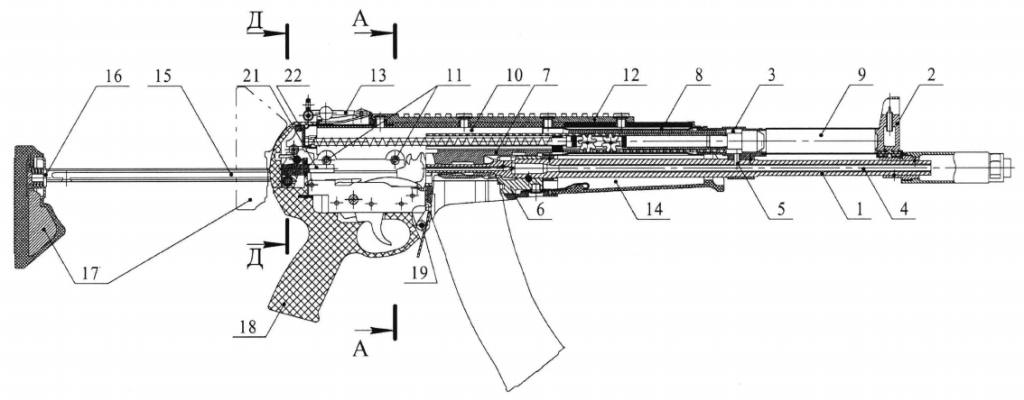
Patent drawing showing the internal layout of the A-545, note the pair of gears just ahead of the trunnion (Russian Patent)
Before the war the A-545 was also seen with the Rosgvardiya’s SOBR Rys, the VDV’s 45th Independent Guards Spetsnaz Brigade, the 810th Naval Infantry Brigade and elements of Russia’s Ministry of Internal Affairs (MVD),
Since Russia’s full-scale invasion of Ukraine last year it has been seen on just a handful of occasions.
Numerous photos have been posted by RAZVEDOS, a well-known Russian SOF veteran. On 9 April, RAZVEDOS posted a pair of photos featuring himself holding an A-545 along with a short ‘review’, reading:
“Reviews are positive, BUT! Firstly, “KORD” is much more complicated than AK, so it is hardly suitable for a simple soldier – and this applies not only to “conscripts”, because many “contract soldiers” left not far from them.Secondly, if we turn to the facts, i.e. to the test numbers, the combat characteristics of the “KORD”, although higher than those of the AK, are by no means head and shoulders above.“
Given the review is likely based on feedback from VDV Spetsnaz RAZVEDOS visited in April after the Battle of Hostomel the opinion could be based on battlefield experience.
The location these first photos were take is unclear. Several days later, on 13 April, RAZVEDOS shared several more photos featuring an A-545, which appears to be the same rifle, on top of a sleeping bag on a camp bed, in what appears to be a tent. This has frequently been cited as with VDV Spetsnaz at Hostomel (but the original post does not claim this). The rifle is fitted with a 1P87 red dot optic. A third photo, seemingly taken inside a tent, appears to be the same rifle fitted with the 1P87.
A-545 mounted with a 1P87 red-dot optic (via social media)
Late October saw the Russian Ministry of Defense share imagery of recently mobilised troops undergoing training led by an instructor with an A-545. In late December a photo seemingly taken on the back of a moving vehicle shows a A-545 fitted with a Holosun 403/503 red dot sight.
Most recently a photograph of an A-545 in a fighting position said to be in Ukraine was shared. The rifle is seen equipped with 45 round magazine, a suppressor and a Holosun 403/503. This is potentially the same rifle seen in December.
A-545 fitted with Holosun optic reportedly photographed in Ukraine (via social media)
Another question which is regularly asked is – have their been any sightings of the AN-94? The AN-94 was developed to meet the same requirements laid out by Project Abakan. It reportedly passed state trials and was adopted for service but its complex design means it is rarely seen. There haven’t yet been any confirmed sighting of the AN-94 in Ukraine or with troops training in Russia. If any of the rifles ever appear they’ll definitely be the subject of an article/video.
The A-545 is undoubtedly a more advanced weapon than the more common AK-12 but how many of the rifles are in service is unclear and the extent of their use in Ukraine remains unknown. In the past several months there have been a number of Russian news reports on the rifle including a feature length report from Zvezda and a shorter piece from HTB on production of the rifle. From the limited imagery available it would seem that they have seen some limited in theatre use while instructors back in Russia may also be using the rifles.
Update 17/04/23:
A pair of photos of A-545 in use with the VDV have been shared with TAB by nrxnb. The first photo was reportedly taken by a member of 175th Reconnaissance Battalion with the 76th Guards Air Assault Division (VDV). The 175th took part in the battle of Hostomel. The rifle has been fitted with an 1P87 red-dot optic and has a polymer magazine normally issued with AK-12s.
The second photo was said to have been taken in April, post Battle of Hostomel, by a member of the 45th Guards Spetsnaz Brigade (VDV). Again it appears to have been fitted with an 1P87 red-dot optic and a suppressor.
Update – 23/12/23: A Russian telegram channel shared a photograph of a 6P67 Kord which has been modified, with a rail cut into the handguard, to allow it to mount a grip and bipod.
The individual that modified the rifle provided the caption (machine translated):
“The body kit, of course, is not like that of those who posted it earlier, and there is literally no body kit for it on the market at all. Even the Picatinny rail had to be cut into the standard forend using a small drill, straight arms and such and such a mother. Alpha Arms can, Magpul belt, Magpul fire transfer handle, Atlas bipod, Vortex Viper pen and Vector Optics collimator. Overall, the machine is excellent, there are pros and cons.”
A new photo of an A-545, also known as the 6P67 Kord, which has been modded by adding a cut in 6 o'clock rail on the hand guard to mount a vertical front grip & a bipod.
— Matthew Moss | Historical Firearms (@historicfirearm) December 23, 2023
Update – 9/10/24: A recent image of an A-545 shared by Russian suppressor company Hexagon Tactical. Reportedly shared with them by the rifles user who has equipped the weapon with one of their 5.45mm suppressors. The optic appears to be a ThermTech VIDAR 2.0.
One I forgot to share, a recent sighting of a Russian A-545 fitted with Hexagon's 5.45 suppressor (20,000 of which have reportedly been shipped to the front).
A photo of a Russian serviceman armed with an A-545, claimed to have been taken somewhere in Donbass was recently shared online, but it’s unclear when the photo was taken.
Specifications (via Rosoboronexport)
Calibre
5.45x39mm
Weight (unloaded)
3.5kg (7.3lbs)
Stock Collapsed
720mm (28in)
Stock Extended
960mm (38in)
Maximum Range
800m
Feed
30 round magazine
Cyclic Rate
900 RPM
Support Us: If you enjoyed this video and article please consider supporting our work here. We have some great perks available for Patreon Supporters – including early access to custom stickers and early access to videos! Thank you for your support!
Bibliography:
Military Acceptance “Balanced Avtomat”, 12 Feb. 2023, Zvezda Live, (source)
6P67/6P67-1 KORD Assault Rifle, Rosoboronexport, (source)
Automatic Small Arms with Balanced Automatics, Russian Patent #2482417, (source)
BREAKING: Russian Army Accepts Both AK-12 And AEK-971, TFB, (source)
The Russian Balanced-Action A545 Rifle In Action, TFB, (source)
Meeting Government Orders: Unusually Designed Russian Rifles, M. Popenker, SADJ, (source)
6P68/6P68-1 KORD Assault Rifle, Rosoboronexport, (source)
Serial Production of An Assault Rifle, a Competitor to the AK-12, Has Started in Russia, 1 Jul. 2020, RIA, (source)
Since around September 2022 there have been a small but steady stream of sightings of M110 Semi-Automatic Sniper Systems in use with combatants in Ukraine. The rifles began appearing on the southern Kherson front, before the city was recaptured. While the Ukrainian 7.62x51mm UAR-10 designated marksman rifles are regularly seen intermittent sighting of M110s have continued.
From the available evidence it appears that special operations units from the Ukrainian Security Service (the SBU), the Military Intelligence Directorate (GUR), the National guard and the Special Operations Forces (the SSO) are the primary users. Units operating with the rifles are believed to include Alpha Group and the 3rd and 8th Separate Special Forces Regiments, as well as a number of groups which, from the available imagery, have been difficult to link with parent units.
M110 with ATN THOR, taken during a range session, note butt extended (via Social Media)
Developed in the early 2000s by Knights Armament Company in response to the US Army’s requirement for a semi-automatic rifle to equip snipers, spotters and designated marksmen the M110 was adopted in 2008. Based on the SR-25, the 7.62x51mm rifle uses Stoner’s internal piston gas impingement system, and has a 20 inch barrel with a 1 in 11 twist. The rifle comes with a QD Knights suppressor and the initial issue optic was a Leupold 3.5–10× variable power daytime optic few of the rifles seen in use in Ukraine appear to be equipped with US issued optics. Both the US Army and USMC have issued the rifle with some variations in optics used and furniture.
A Ukrainian combatants I spoke to told me: “For a marksman, the top weapon. To work at short distances. The PBS system [meaning the integral suppressor] is standard in the kit. It is quiet compared to other rifles.” But he did note that he isn’t part of his unit’ s sniper group and has only used the rifle on the range.
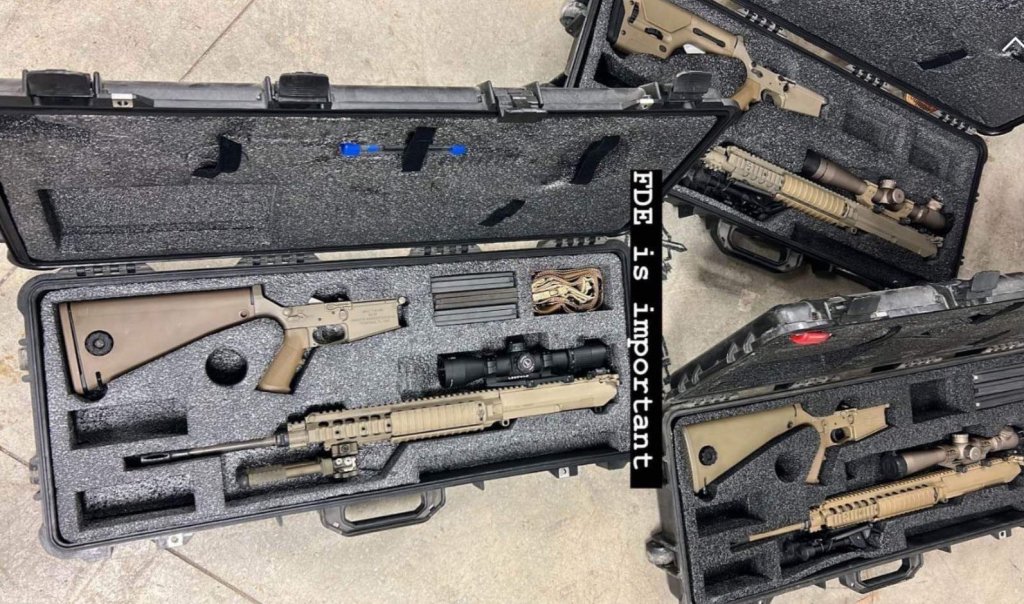
Three M110s with various optics, note suppressors not fitted, in their transit cases (via Social Media)
Most of the examples in Ukraine have the traditional fixed stock which was issued with the rifles, rather than the FDE Magpul PRS stock which is length and height which the USMC snipers have been issued. However, at least one rifle with a PRS has been seen in a photo and a least one rifle has been fitted with LUTH-AR MBA-1 stocks used on the Ukrainian UAR-10. Perhaps out of preference or replacing a damaged stock. In theatre the rifles have been seen paired with a variety of optics ranging from the original Leupold 3.5-10x variable scopes to ATN THOR 4 thermal optics and even a Trijicon 6×48 ACOG.
The earliest image of an M110 in Ukraine was shared on a Ukrainian telegram channel covering news around the city of Kherson in the early autumn of 2022. The original post is no longer available but shows a sniper in a ghillie suit unmistakably armed with an M110.
Early November saw Ukrainian operators share numerous photographs from a range session where the rifle can be seen fitted with an ATN THOR. December saw more photos shared of what is likely the same rifle, now equipped with a Trijicon 6×48 ACOG.
Two M110s photographed during a range session, one fitted with a LUTH-AR stock (via Social Media)
More photos of the same rifle fitted with the ATN THOR were posted by another operator in mid-November. Bravo Group shared a photo featuring an M110 in early December. Around the same time the F Spets instagram account shared a photo of a winter range session with an M110 visible. The same account shared a photo of three M110s in transit cases. Two of the rifles don’t have their suppressors fitted – though these may have been just removed for cleaning. The cases also show slings, various models of bipod an two have three mags apiece stored in one of the cases slots. As mentioned earlier one rifle has a PRS stock.
In late January a Ukrainian operator shared a montage video with a short clip of a range session with the M110 fitted with a 6×48 ACOG. A Japanese volunteer with the International Legion shared a photo of a scope-less M110 with his cat on 27 January. At the end of February an M110 with a LUTH-AR MBA-1 stock, possibly taken from a UAR-10 was shared. The same operator shared some new photos of M110s in March. The rifle with the LUTH-AR stock is seen again, in a photo with the logo of a group called ‘НЕПТУН’ (Neptune). In a second photo shared on 17 March we can see a pair of M110s, one without its suppressor fitted.
M110 with ATN THOR during a range session (via Social Media)
How many M110s are in use in Ukraine remains unclear but from a survey of the available imagery it appears that the number is relatively small. Multiple individuals have shared photographs of what appears to be the same rifles, not doubt because of its notoriety as a relatively rare weapon in theatre. Sources suggest that the rifles were available on a first come first serve basis when they arrived during the second half of 2022. Since they arrived they have been seen in various configurations and with numerous different optics mounted on them.
Update – 19/05/23: A new image of an M110 in the field was shared in mid-May.
A recent photo of a Ukrainian combatant with a US M110 SASS
— Matthew Moss | Historical Firearms (@historicfirearm) May 19, 2023
Support Us: If you enjoyed this video and article please consider supporting our work here. We have some great perks available for Patreon Supporters – including early access to custom stickers and early access to videos! Thank you for your support!
Bibliography:
My thanks to the guys at the ShriekingDelilah instagram page and to Abraxas Spa, for their help with this article.
Ukrain Adopts New Semi-Automatic Sniper rifle: The UAR-10, TFB, (source)
On 15 March a report from Russia’s Federal News Agency featured an interesting semi-automatic sniper rifle – the MTs-566. The report shows a sniper team from Wagner, Russia’s largest private military contractor, in position in Bakhmut. The date the piece was filmed is unclear but the rifle itself is rarely seen and the footage gives us a decent look at the rifle and even of it firing a couple of rounds.
The MTs-566 is produced by TsKIB SOO, the Central Bureau for Sporting and Hunting Arms at Tula. It’s chambered in 7.62x51mm NATO and uses a short stroke gas piston system. It fulfils a similar role to the US M110 series of rifles or Ukraine’s UAR-10s. The MTs-566 was developed from the OTs-129 designated marksman rifle developed for a Russian military requirement. It has a 60cm or 24in barrel, feeds from 7.62 PMags and has a full length top rail. It also has a pair of folding iron sights and a side folding stock. It has a quad-rail forend and a suppressor which partially shrouds the rifle’s barrel. In the civilian version at least the suppressor is more of an empty expansion chamber without baffles, whether that’s the case with production guns or rifles purchased for military use is unclear. If the expansion chamber can is in use here then it appears to help somewhat. TsKIB SOO list the weight of the rifle as 4.8kg or 10.6lbs and its overall length as 125cm or 49in though other sources do vary slightly. Notably, the weapon’s lower receiver is much shallower with the pistol grip positioned much higher than say on an AR-10, suggesting a different firing mechanism requiring less space than the AR-10’s hammer.
It was displayed for the first time in 2018 and was reportedly aimed at the civilian hunting market and due to be on sale in 2020. My good friend Hrachya got a good look at one at the 2018 Russian Arms & Hunting Expo. He wrote up a detailed article on it for TFB. The rifle has some interesting features including integral folding iron sights rather than rail mounted sights – the Russian military believed that these could be too easily damaged so Tula engineers designed integral sights, the rear sight folds back into the hinge of the stock. There is also rail space attached directly to the rifles receiver, seemingly for the mounting of accessories.
The Russian news report says the sniper team is at work in Bakhmut. The sniper describes his rifle and notes its mounted with a 20x optic. The sniper also says that:“I work at a distance of 700-800, sometimes 1000 [meters],” He also briefly talks about the 7.62x51mm round the MTs-566 uses, noting that: it works well and that it’s a pleasant round to shoot, he also says that while smaller they have good velocity downrange. During the clip the sniper fires two rounds in quick succession while his spotter watches the target downrange. It’s unclear what ammunition they are using but the rifle is said to be capable of 1 MOA accuracy but I couldn’t find any figures from TsKIB SOO. It’s unclear how many MTs-566s might be in use in the field but this report represents the best look at the rifle we’ve had so far.
Update – 02/04/22:
On 12 March, the Russian Уголок Ситха telegram channel shared a post which included a photo captioned “Russian 7.62×51 mm OTs-129 sniper rifle”, it appears to be an MTS-566.
Update – 21/03/23:
Additional photographs of an MTS-566 with Wagner shared via Telegram.
Update – 17/04/23:
An MTS-566 seen in a RIA news report about Wagner fighting in Bakhmut.
— Matthew Moss | Historical Firearms (@historicfirearm) February 13, 2024
Support Us: If you enjoyed this video and article please consider supporting our work here. We have some great perks available for Patreon Supporters – including early access to custom stickers and early access to videos! Thank you for your support!
Bibliography:
How Wagner PMC Snipers Work in Bakhmut, RIAFAN, (source)
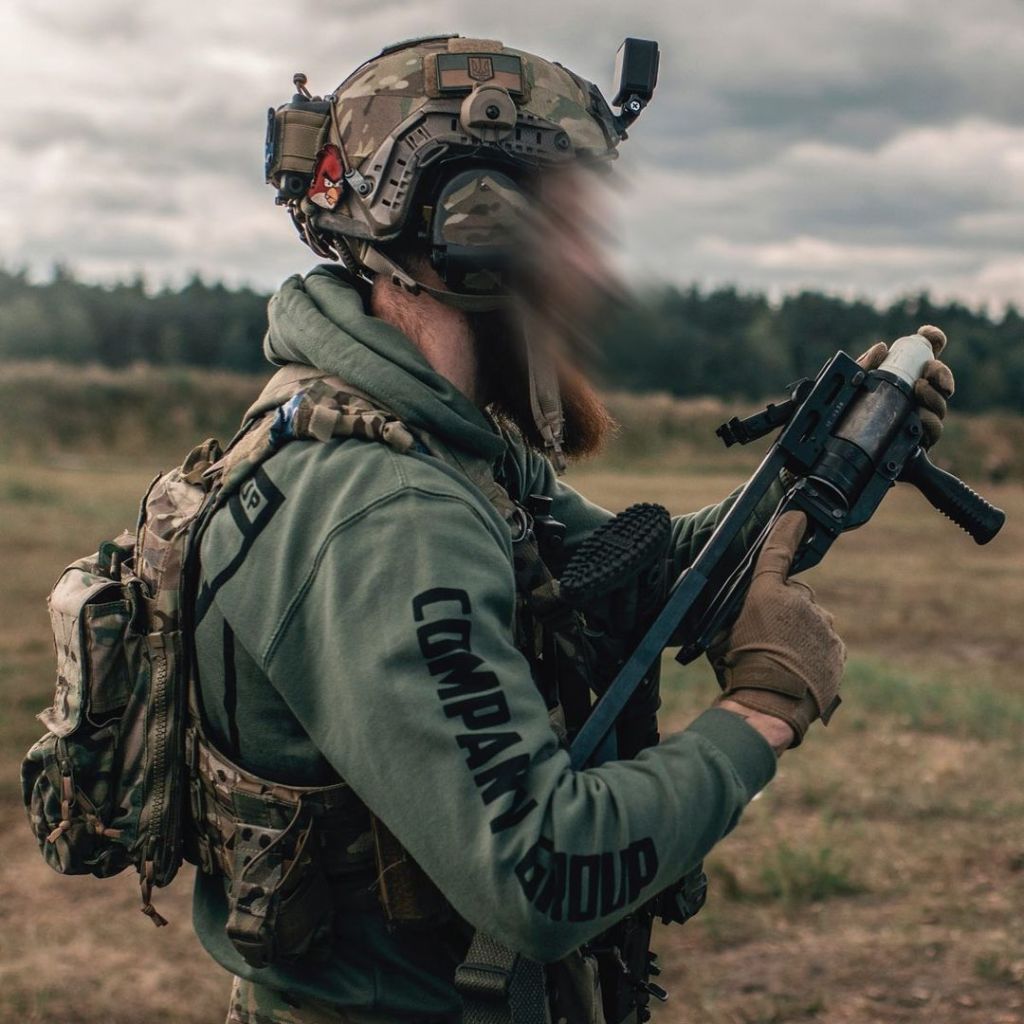
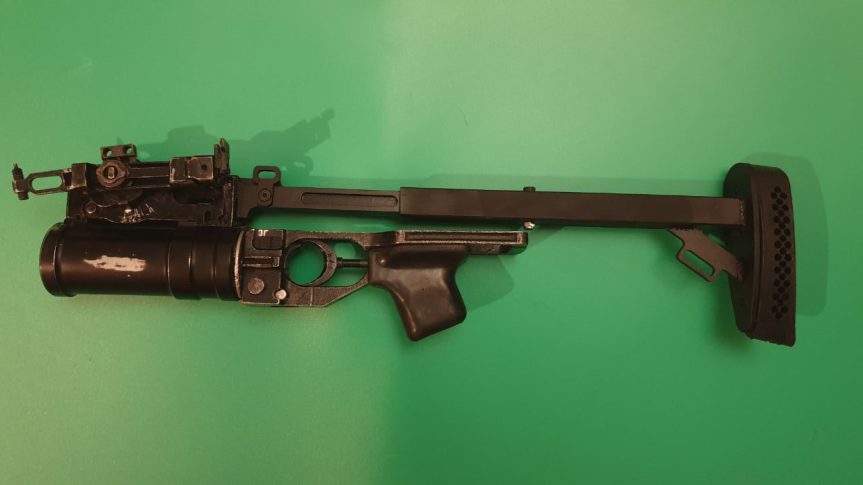
In an earlier video we looked at the Black Storm series of bullpup conversion kits for AK pattern rifles. Black Storm have also developed an interesting standalone stock for the GP-25 under barrel grenade launcher called ‘Defender’. The impetus for this is s aid to be that the Black Storm rifle kits aren’t able to support the grenade launchers so a standalone stock into which they can be mounted was developed.
The GP-25 is a 40mm grenade launcher designed in the late 1970s by the small arms design bureau based at Tula. It is an under-barrel grenade launcher designed to slide onto standard issued AK-74 pattern rifles. Its ammunition uses a high–low pressure system and has a range of up to 400m.
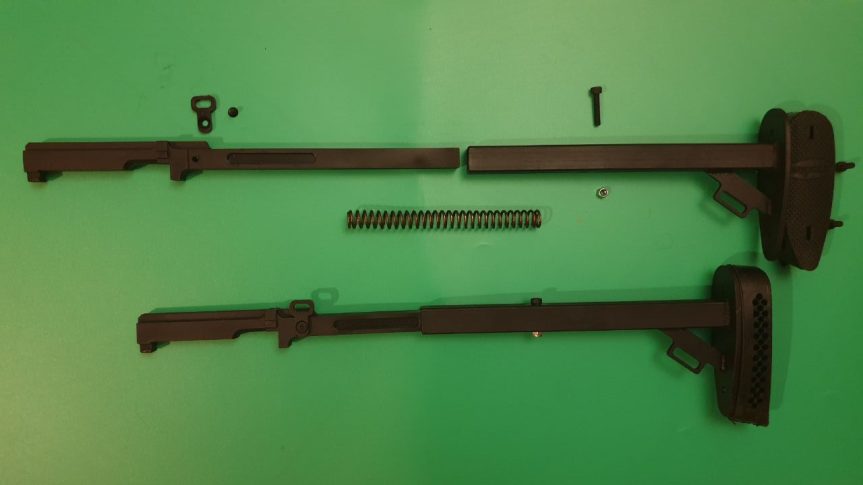
The most interesting feature of the GP-25 stock is that it has a recoil mitigation system. This appears to be a strong spring in the telescoping stock tube which acts as a buffer. The stock kit is made up of a telescoping stock with butt pad, onto which the grenade launcher is mounted – just as you would onto a rifle, a forward vertical grip can be attached by a clamshell pair of metal stampings with allow the grip piece to be centered and held in place by two cross nuts. There is also a press-fit pistol grip extension for the GP-25’s short grip to help improve ergonomics.
Black Storm list the stock kit without launcher as weighing 200g while the Defender with GP-25 is listed as weighing 500g (1.1lbs). Black Storm sell the V2.0 of the stock for 5,950 UAH ($162).
A GP-25 in a Black Storm Defender stock (via War_Noir)
With some units also transitioning to NATO calibre rifles like the M4A1, MSBS GROT, FN FNC and F2000 amongst others, the ability to use the GP-25 as a stand alone weapon has proven valuable as the GP-25 can’t be mounted on Western rifles but with ammunition for the grenade launchers still plentiful they can continue to be used.
The earliest imagery I could find of the Defender in the field dates to 22 April, when Russian reporter War Gonzoposted a short video showing a Defender captured by Separatist DPR troops in Mariupol. The DPR soldier examining it notes that the weapon doesn’t seem to work and also compared it to the GP-25 fitted to his own AKS-74.
In May a good, clear photograph of a GP-25 in a Defender stock was shared, shown fitted with a sling. In mid-May Ukrainian operators shared a video of the Defender being fired at the range.
Also in May a short video of a Defender kit being fitted to a launcher was shared – this particular example apparently requiring some hand fitting to the sheet-metal pieces that attach the forward grip.
A number of other stand alone adapters for GP-25s have also been seen in the field, In late May 2022, this example of a simpler adapter was shared online featuring a rigid stock onto which the grande launcher can be fitted. Simple adapters like this may be craft made in the field or manufactured by commercial companies.
A GP-25 in a Defender stock (via social media)
In June a short video was shared of a Ukrainian soldier firing several high-angle rounds from a GP-25 mounted in a Defender stock, we can see that the sight has been set to its highest elevation.
Ukrainian operators shared another photograph of a GP-25 in a Defender stock in September. The North Side Group shared a photograph of a GP-25 in a Defender at what appears to be a range in mid-September.
Russian operator shared photo of two standalone stocks for the GP-25 – the first is the rigid stock type seen in the photo from May. I haven’t been able to ascertain who produces this stock yet. In these photos, however, it is clear that the butt is wider than the Ukrainian design. The second stock appears to be a Black Storm Defender [Update: since identified as a RGL Север 1].
On 30 November the Belarusian volunteer unit, the Kalinouski Regiment, shared a video demonstrating the Defender, showing how its loaded, fired and carried noting that it is “designed to destroy enemy manpower located in trenches, and open terrain.”
In early January, Assistance Group – a German group active in Ukraine, shared some photographs of load out for operating in urban and woodland environments and a GP-25 in a Defender feature in both photographs.
At the beginning of February 2023 a video was shared featuring an operator with Russia’s SOBR “Granit”, he fires a couple of rounds from a GP-25 in a stand alone stock [Update: since identified as a RGL Север 1].
The ‘Lubart’ Ukrainian special operations forces unit recently shared a number of montage video of operations around Bakhmut. In it one operator loads and fires a Defender several times. The Defender in the clip lacks the pistol grip extension that comes as part of the kit.
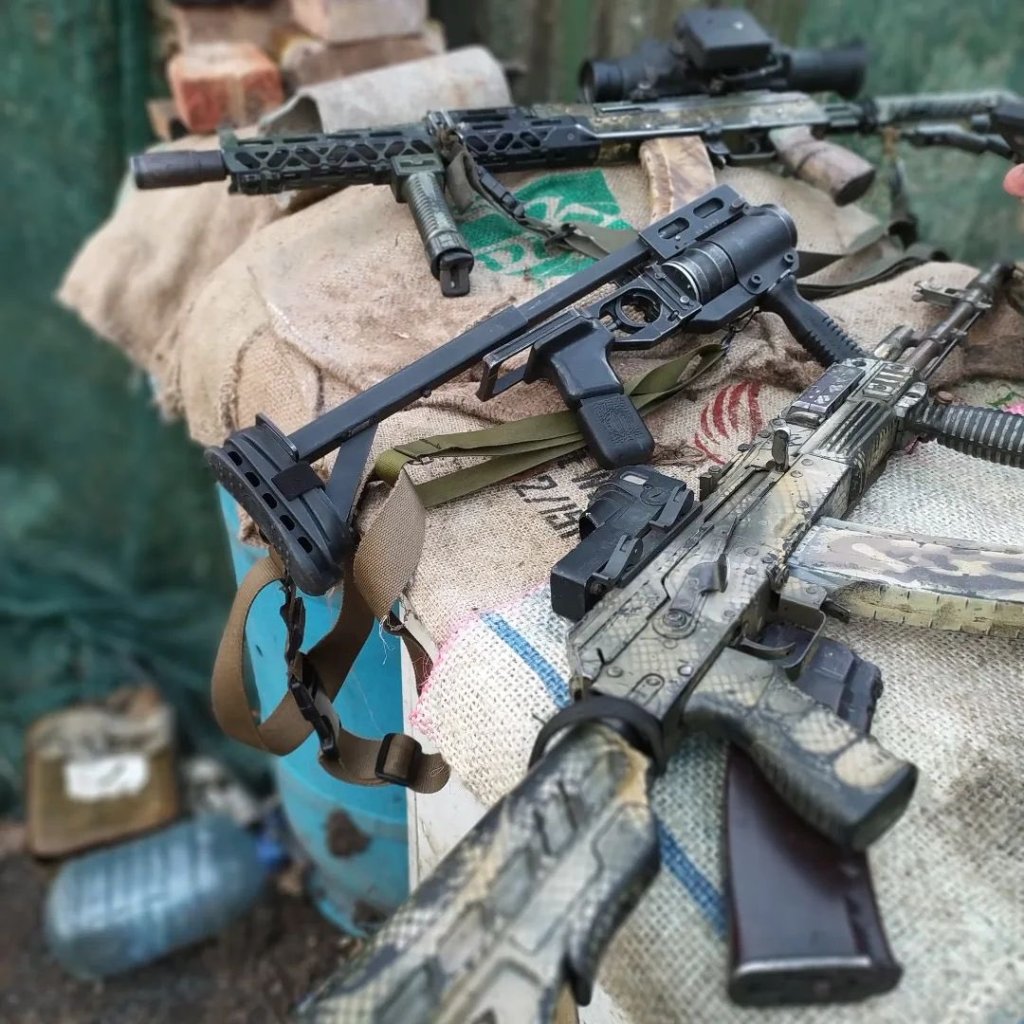
A GP-25 Defender and a pair of customised AKs (via social media)
On 2 March a member of the Forward Observations Group shared a photo of is various weapons including a Black Storm Defender.
Finally, most recently, a short video from a Russian anti-Putin group – the Russian Volunteer Corps, filmed during an apparent raid into Bryansk. The video featured one of the group’s leaders with a Defender slung at his side.
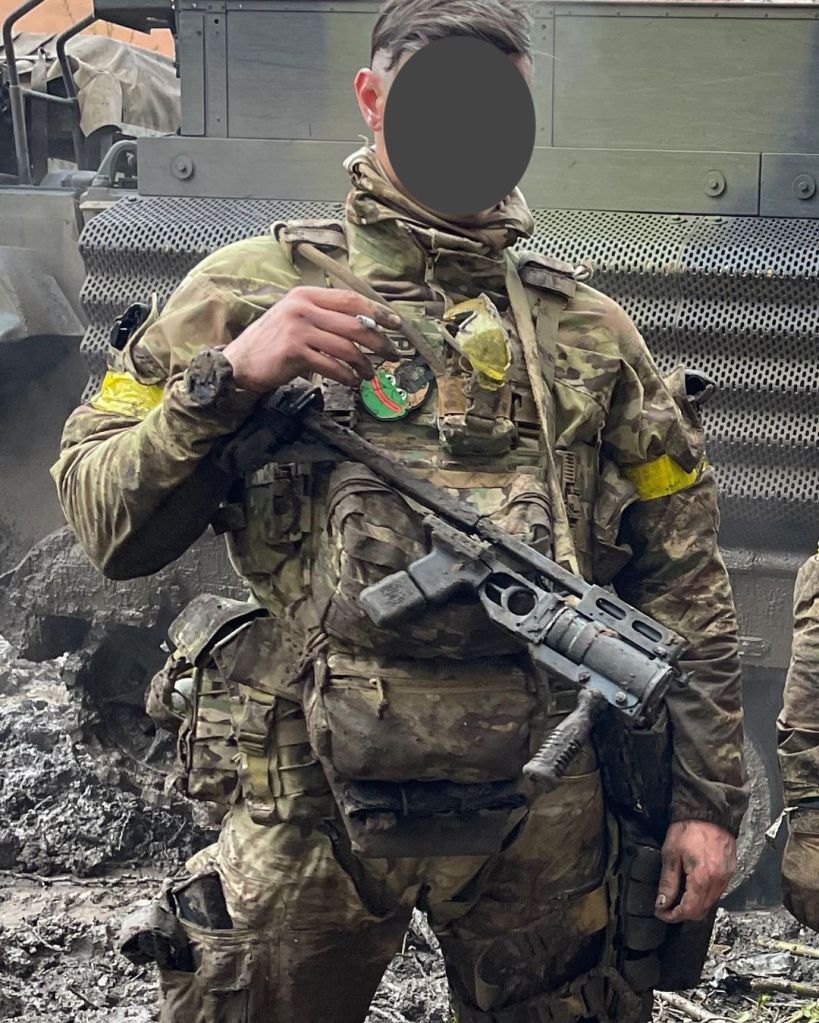
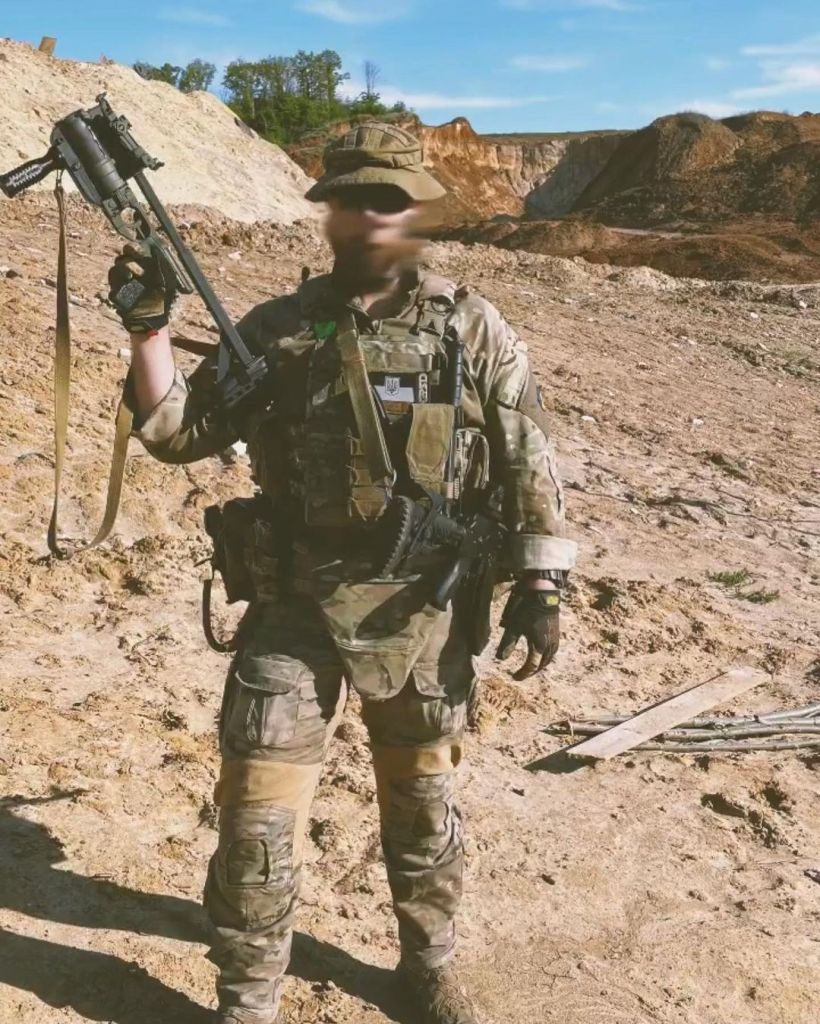
It’s unclear just how many of these Black Storm Defender stock kits are being used by Ukrainian personnel but they do continue to appear regularly in imagery from the field. While unsurprisingly they appear to be favoured by units armed with Western rifles they are also being used by combatants armed with weapons which could mount a GP-25, perhaps indicating a preference for using the launcher as a stand alone weapon.
Update 30/04/22– Russia’s RGL Север 1
Since writing the article further research has discovered a very similar stock design originating from Russia. Developed by a company called RGL (redgreenlight.ru). RGL have developed a number of products including a sight mount for RPG/RPO pattern shoulder-fired launchers and a small light which can illuminate turrets on optics for use in lowlight conditions. They developed their stock for the GP25 and GP34 in 2019, with refinements in 2022. It was reportedly developed independently of the Black Storm Defender – with both companies developing very similar products.
RGL’s website has some specs on their system – the Север 1, noting its length is 480mm and its weight is ‘no more 1100g’. The stock adapter is priced at 17,000 Russian Ruble (or around $220).
Photos of the Север 1 with GP-25 fitted and disassembled (via RGL)
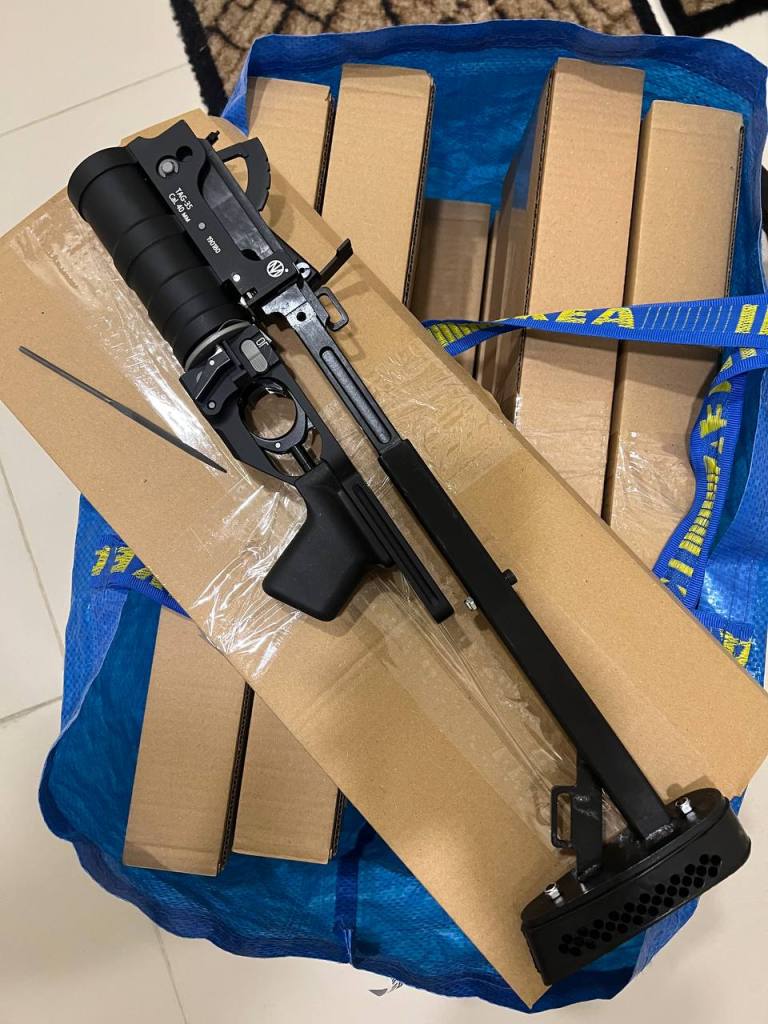
So similar are the two designs that images at 5:21 and a clip at 6:55 actually show Север 1s rather than Defenders. A Wagner-affiliated Telegram channel posted the photo below, with the caption: “For those who want to order – mid-May production time, place an order in advance.”
An RGL Север 1 fitted with a TAG-35, an airsoft clone of the GP-34 grenade launcher (via social media)
The key differences between the two appear to be a different kind of butt pad, the positioning of the sling loops, some machining on the extension which attaches to the launcher and most fundamentally a reversal of which parts of the stock telescope. On the Defender the rear section telescopes inside the front while on the Север the front portion appears to telescope inside the rear section. The Север 1 does not appear to come with a frontgrip or a grip extension. The Север 1 has been seen in use in Ukraine with Russian combatants.
Support Us: If you enjoyed this video and article please consider supporting our work here. We have some great perks available for Patreon Supporters – including early access to custom stickers and early access to videos! Thank you for your support!
It’s a year since Russia’s full-scale invasion of Ukraine and since last February we have seen a massive influx of Western weapon systems into Ukraine. We’ve seen everything from artillery to infantry weapons and the breadth of small arms has ranged from brand new Polish MSBS Grots and M4A1s to M14s. In recent months another Cold War icon has begun to appear in imagery from the fighting – the FN FAL – the ‘Right Arm of the Free World’.
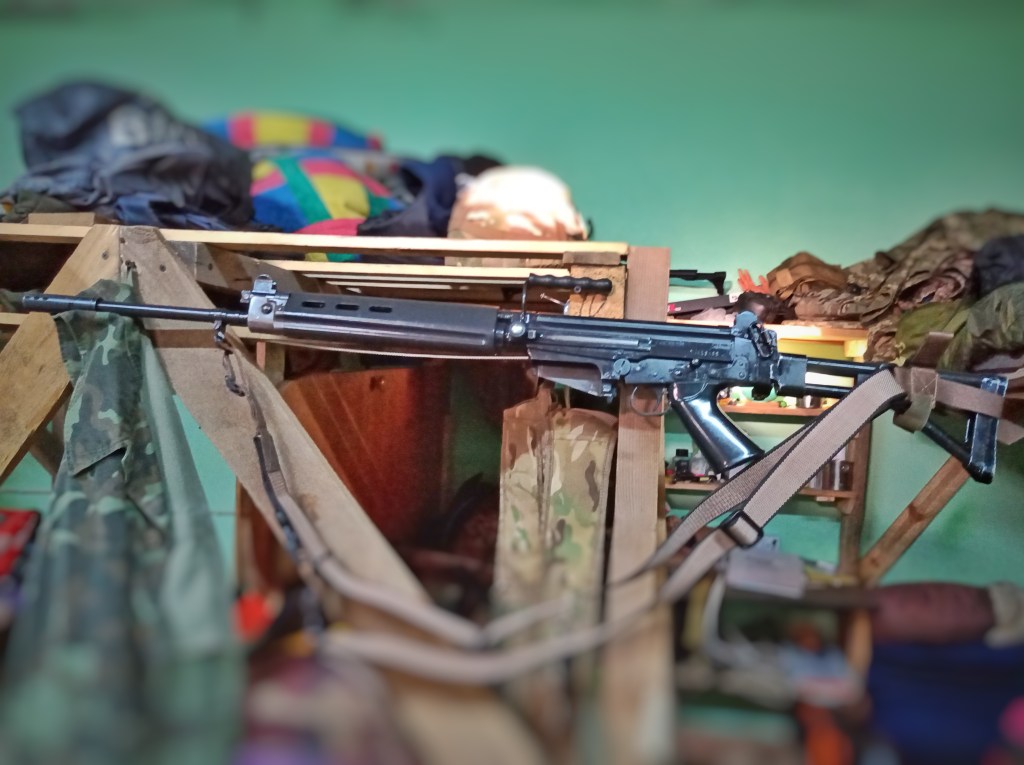
To date both standard fixed stock and folding stock FALs have been seen in use, though appearances are relatively rare. The first sightings of FALs came in June 2022 when two photos of fixed stock 50.00 metric pattern Type 3 FALs were shared. The first in the second week of June and a second at the end of the month. The second photograph was posted by Ukrainian combatants near Nikolaev, Mykolaiv region. It is possible that both of these rifles may have been a civilian-owned rifle pressed into service.
The most common variant seen in open source imagery is currently the 50.61 or PARA FAL with a side-folding stock and a full length 53cm (21.0 in) barrel. The rifles could also be the visually identical 50.64, which has an alloy receiver, though these rifles are less common. All of the rifles seen in the photographs have Type 3 receivers which date them to post 1973 production. Sadly, photographs showing the weapon’s serial number ranges aren’t available.
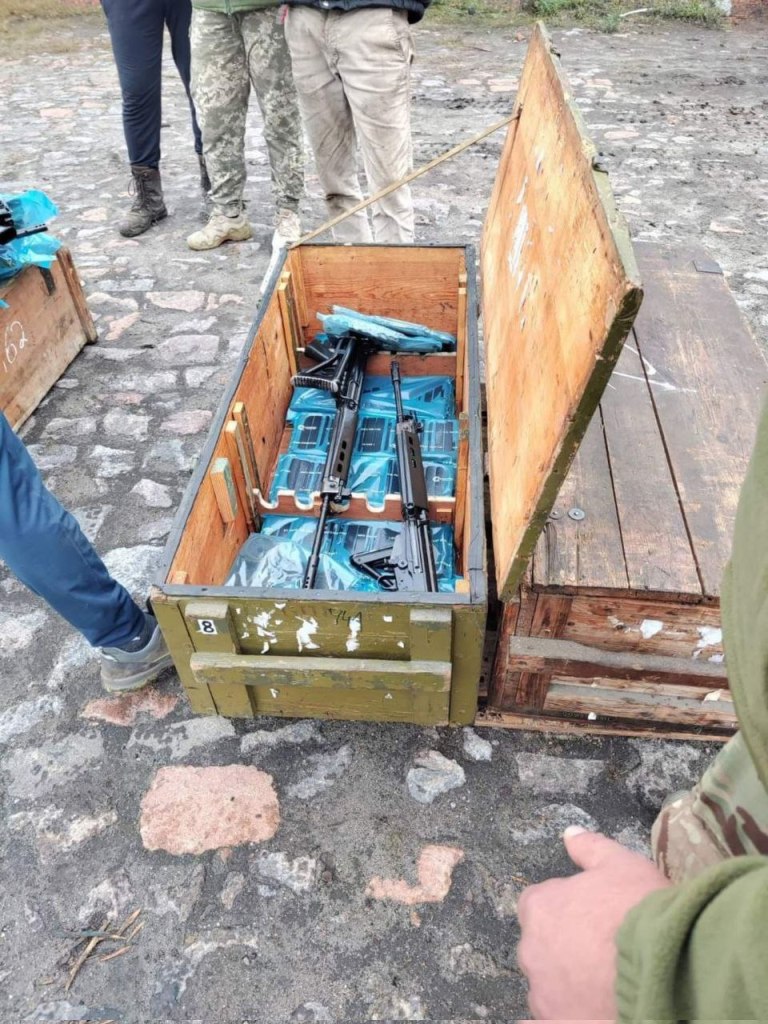
A photograph of several crates of these still in their plastic wrapping shared in early October 2022. This is potentially the first sighting of the folding stocked rifles in Ukraine.
In late November a photograph of five PARA FALs in the same sort of crate was shared and said to have been taken near Bakhmut.
On 10 December, Dmytro Mrachnyk, the commander of a mortar platoon with a Ukrainian Territorial Defence Force unit fighting around Bakhmut, shared his first photograph with his PARA FAL. I contacted Dmytro and he was kind enough to share his thoughts on the rifle. He explained that he liked the rifle and has only had one stoppage, he said: “it jammed a cartridge case once during an intense fight, but the problem was quickly resolved.” He also explained that he really likes the 7.62x51mm round and that he had 9 magazines for the rifle.
He confirmed that the rifles are select fire and when I asked him about ammunition availability for the 7.62x51mm FALs, Dmytro said that there is some available but it can’t be found everywhere.
He said that so far he’s only seen the FALs in use with elements of his unit. He opted for the FAL, to replace his AK-74 when he joined the unit.
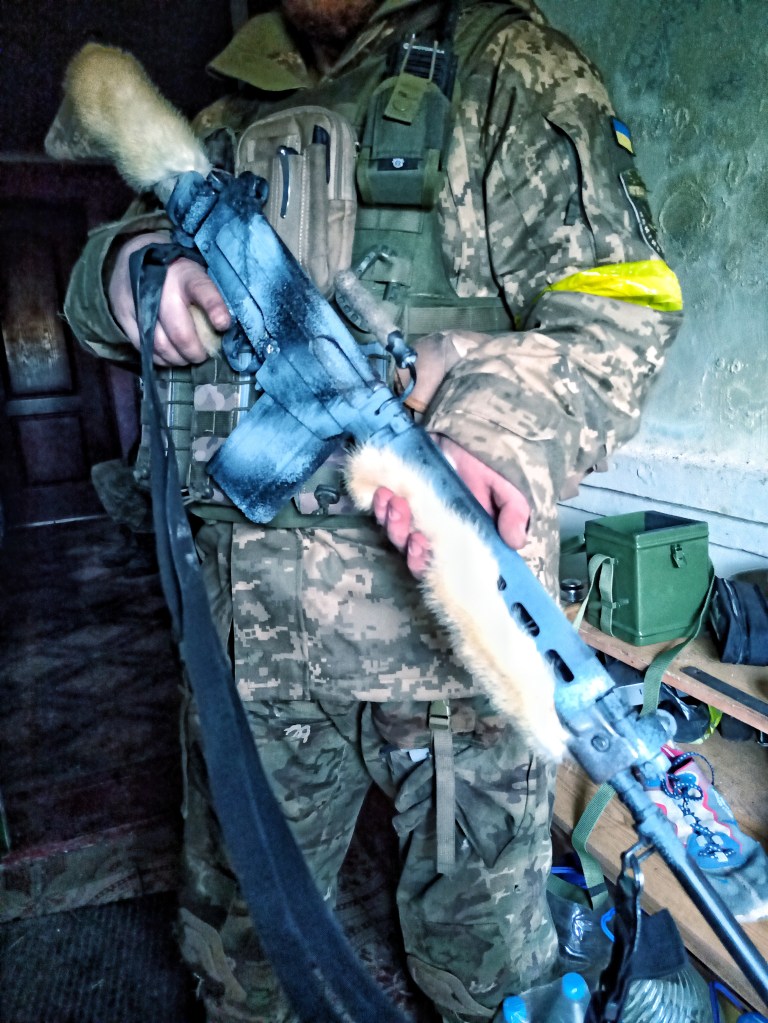
On the 22 December Dmytro shared a photograph of a PARA FAL which had its forend and stock covered in fur. I asked him about this and he explained that: “My sergeant decided to disguise the rifle for the winter – he partially painted it white and glued on a light fur found among the garbage in Bakhmut.”
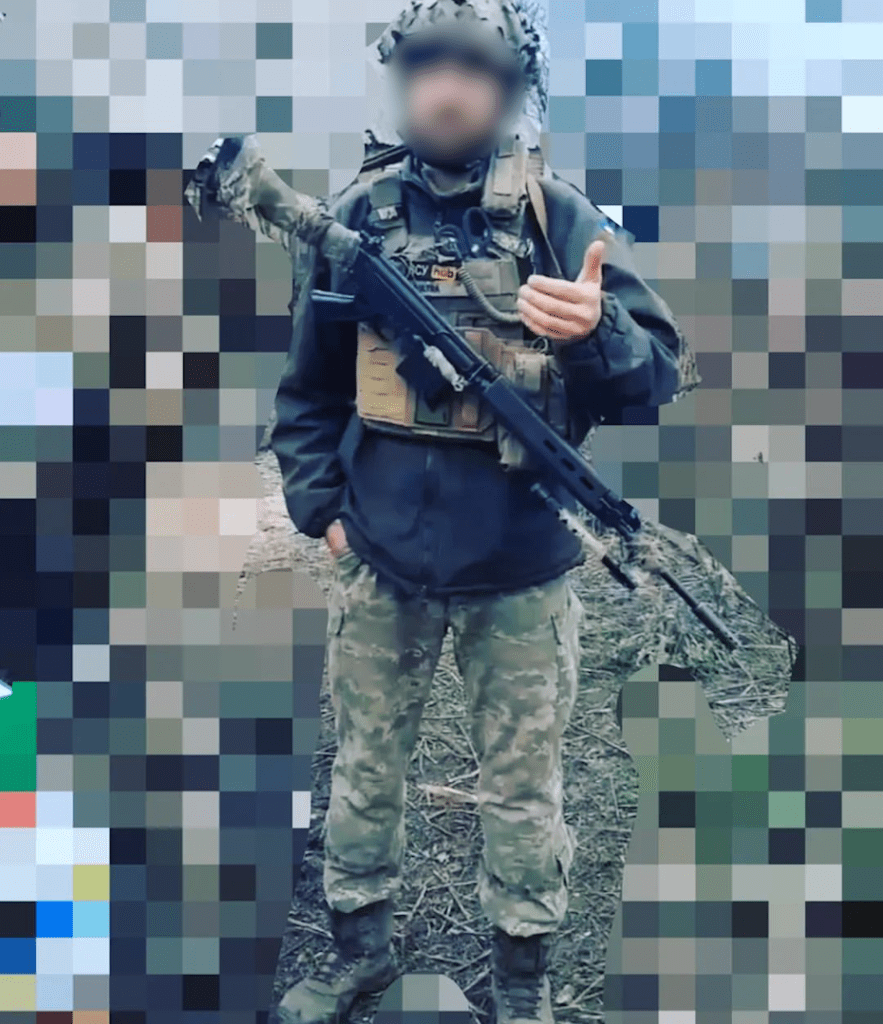
On 30 December, Ukrainian personnel shared an update video from Bakhmut, one of the soldiers can be seen holding a PARA FAL. Several days later, in early January 2023, the same soldiers shared another short video filmed in a town square in Bakhmut, again the FAL can be seen.
Our second sighting of a fixed stock FAL came on 31 December when another Ukrainian combatant shared a photograph holding a 50.00 FAL, with some scrim wrapped around the butt and carrying handle and a bipod attached. He wished to remain anonymous but was kind enough to share his thoughts on the FAL.
He explained that he was issued the FAL instead of a UR-10 (UAR-10/Z-10) DMR rifle and that he was the only one in his company to be issued one. An optic was issued with the rifle but no means of mounting it to the rifle. He was also only provided with two 10 round magazines. Even without an optic he said that: “As a marksman, you can work at a maximum of 500m” and it “hits quite accurately with single shots, automatic fire gives a very large spread, very loud.”
Commenting on the rifle itself he noted that he believed the rifle to date from 1976 and that while ‘cool and a little unusual’ it was “picky, she is afraid of dirt, she was in a swamp and the action almost did not work.” He also felt that it was ‘a little too heavy compared to the AK [AK74].”
He also pointed out that “it is very long and not convenient when storming buildings” he concluded: “In my opinion, it is already outdated and not practical and often very inconvenient.”
The most recent photograph of one I have seen dates from 15 January, when Dmytro posted a photo, holding his FAL aloft, with the caption ‘The unconquered Bakhmut stands’.
It’s unclear who provided the rifles to Ukraine as numerous nations around the world have fielded similar variants. In Europe these include Belgium, Greece, Luxembourg, Portugal and the Netherlands. Most of these, however, have long since replaced them in service. If Belgium, one of the most likely candidates, provided the rifles then they have been in store since the late 1990s.
Special thanks to Dmytro and the other anonymous Ukrainian combatant for answering my questions, Dmytro’s details are in the description box below. Thanks also to the guys at Shrieking Delilah on Instagram who have been doing great work on documenting some of the plethora of weapons turning up in Ukraine.
So far, of the three major call war battle rifles we’ve seen the M14, check out my video on that if you haven’t already, and the FN FAL but I’m yet to see any sign of HK G3s. If you spot any or anything else I should cover in a video drop me a comment below or an email.
Update 06/03/23:
The social media of the Command of the United Forces of the Armed Forces of Ukraine shared a photograph of a member of the 103rd Separate Brigade of the Ukrainian Territorial Defence Force with a tricked out 50.00 FN FAL mounted with bipod and an ATN THOR thermal optic. This configuration is in line with one mentioned by the anonymous Ukrainian combatant who shared his thoughts on the FAL. This FAL with the 103rd brigade, however, has an optic mounting rail and 20-round magazines.
A member of the 103rd Separate Brigade of the Ukrainian Territorial Defence Force with a tricked out 50.00 FN FAL. Mounted with bipod and an ATN THOR thermal optic. Good DMR kit.
— Historical Firearms | Matthew Moss (@historicfirearm) March 6, 2023
Support Us: If you enjoyed this video and article please consider supporting our work here. We have some great perks available for Patreon Supporters – including early access to custom stickers and early access to videos! Thank you for your support!
Bibliography:
Identifying & Tracing the FN Herstal FAL Rifle, ARES, (source)
Authors discussions with Ukrainian servicemen including Dmytro Mrachnyk [PayPal: dmrachnik@gmail.com]






 The Armourers Bench