This week, some surprising news broke: FN America confirmed that production of all SCAR variants had ceased. Rumours began to circulate last week, and a subsequent post on r/FNSCAR claimed that “both the US and Belgium plants have ended production of all (RCH and NRCH) SCAR 16S, 17S, AND 20S and all that is left is what is currently on the market.”
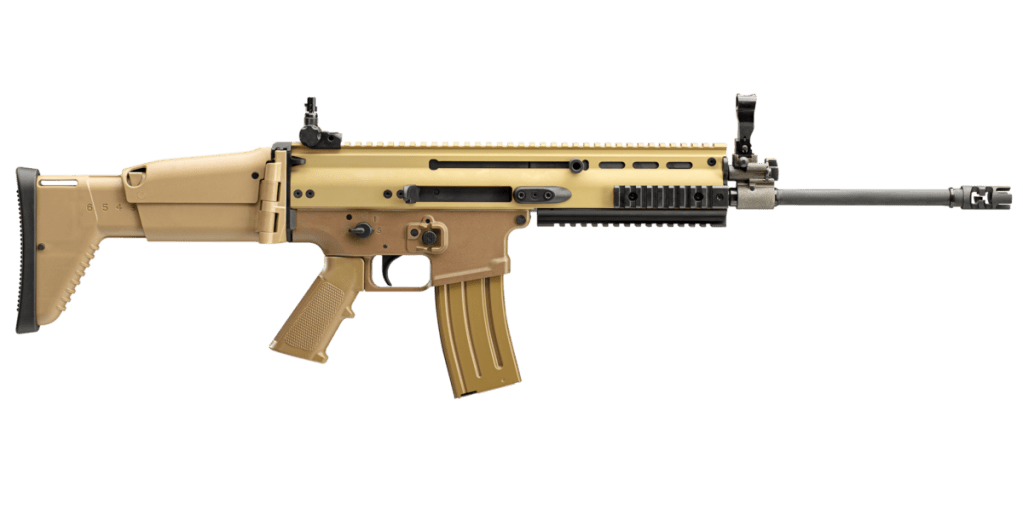
FN SCAR-L (16S) (FN America)
This led to FN social media channels being inundated by questions asking if the rumours were true. On Wednesday, FN America’s social media team began confirming the news, replying to posts on X, Facebook and Instagram. However, this raised additional questions: Is production in Belgium also set to end, or just in the US? What about spares and support? What about ongoing military contracts and support for weapons already in service around the world? Notably, many of FN America’s replies referred to the ‘legacy SCAR’, suggesting that there may be an updated ‘non-legacy’ SCAR in the works.
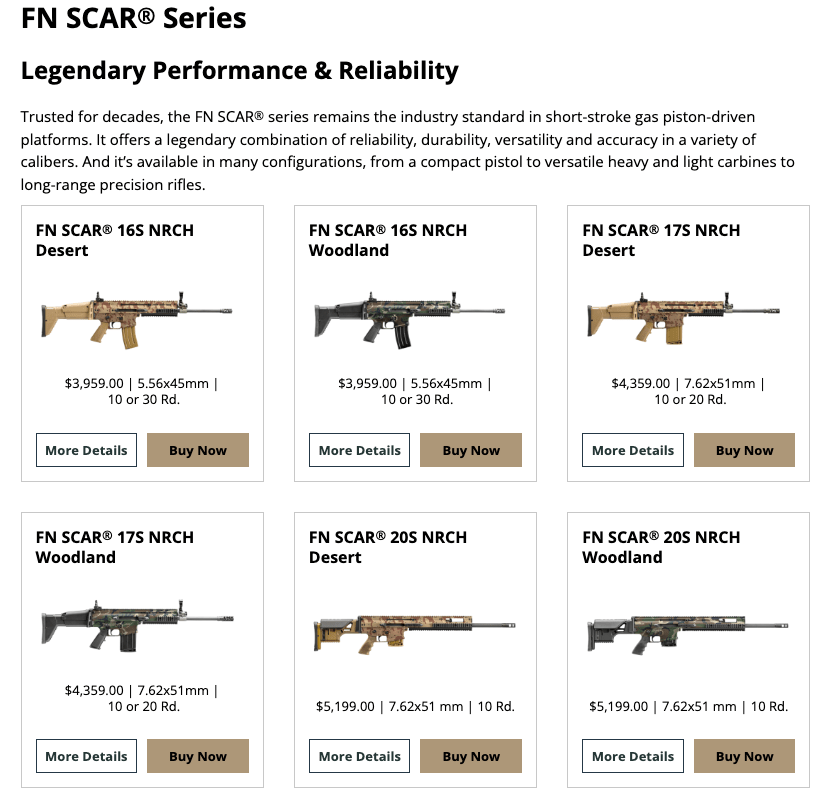
SCAR Series on FN America’s website
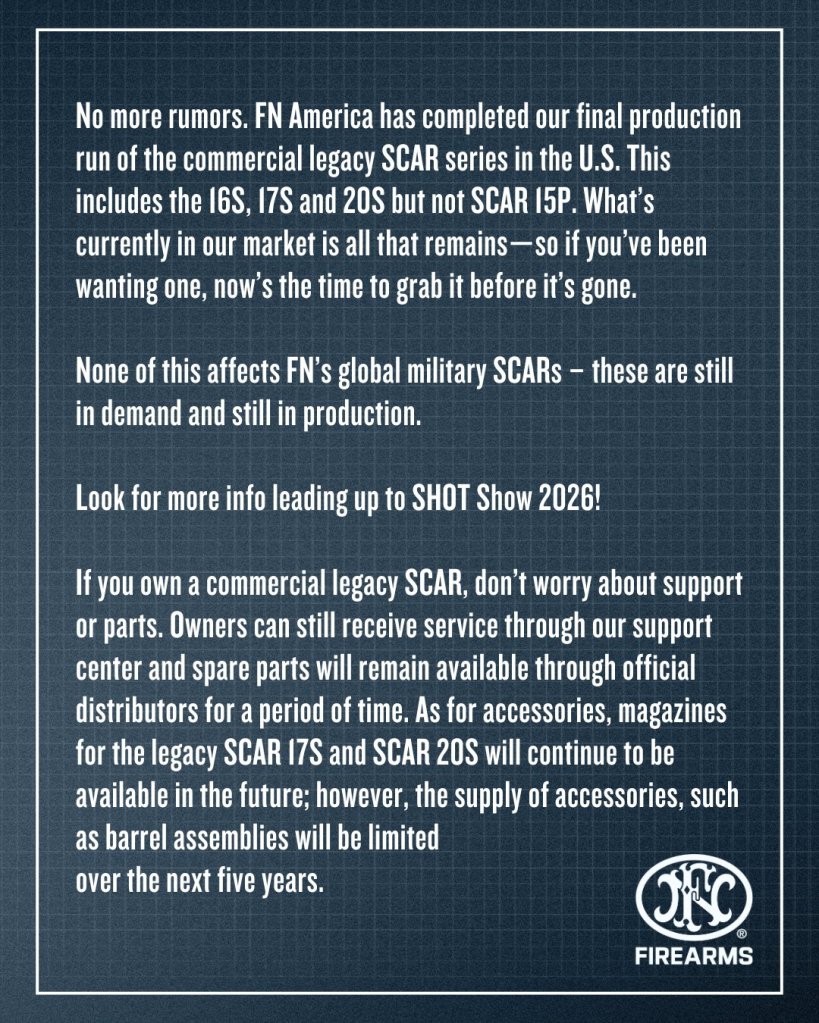
Finally, on 16 October, FN America posted a statement confirming the news officially. This statement explained that while production of all SCAR variants (except the SCAR 15P pistol) in the US was ending, “none of this affects FN’s global military SCARs – these are still in demand and still in production.”
Naturally, there was a lot of speculation about what FN would replace the SCAR with. The FN IWS, developed by engineers at FN America, was often highlighted as the probable successor. The FN Individual Weapon System, chambered in steel-cased 6.5x43mm round, was developed for a requirement set out by the Irregular Warfare Technology Support Directorate (IWTSD). It has since garnered interest from the special forces of a number of nations an FN recently announced they’d supplied operational test samples to enable ‘critical feedback’ for further refinement. Despite this the IWS isn’t yet a fully matured system.
The FN IWS on display at SHOT Show 2023 (Matthew Moss)
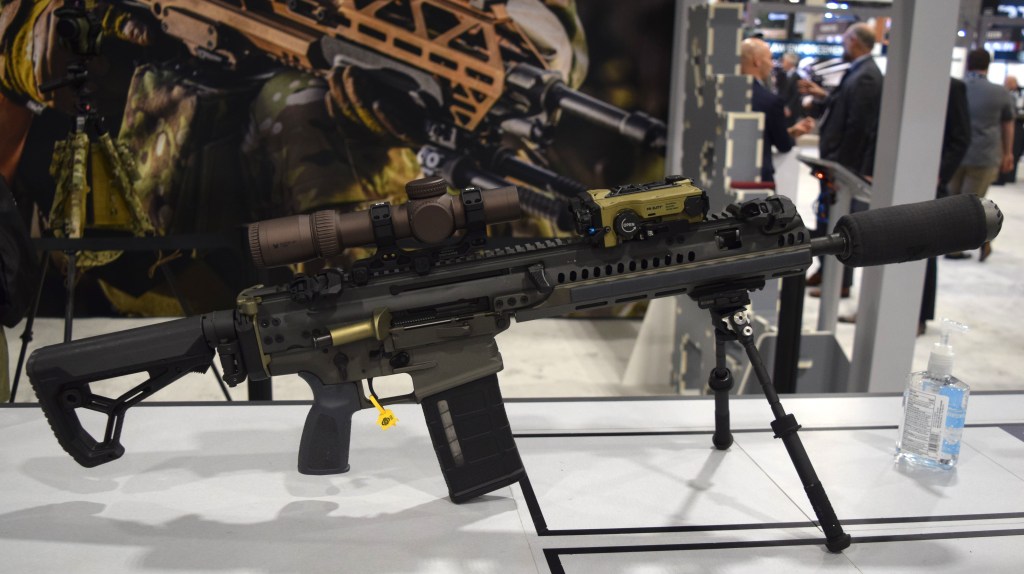
There is also the Mid Range Gas Gun (MRGG) rifles which were developed for US SOCOM. MRGG-A is a requirement for a 6.5 Creedmoor chambered ‘assault’ rifle. FN’s MRGG-A submission introduced internal changes, a new combination forward assist and brass deflector as well as ejection port cover and added an AR-style charging handle. I took a look at one of the prototypes at SHOT 2023.
FN’s MRGG-A submission displayed at SHOT 2023 (Matthew Moss)
As such, I think FN are likely to introduce a new generation of SCAR embodying improvements developed in recent years. The SCAR Mk3 will probably be a product improvement with new features and refinements bringing it in line with the latest weapons from competitors like the HK433, SIG SPEAR-LT and CZ Bren 3.
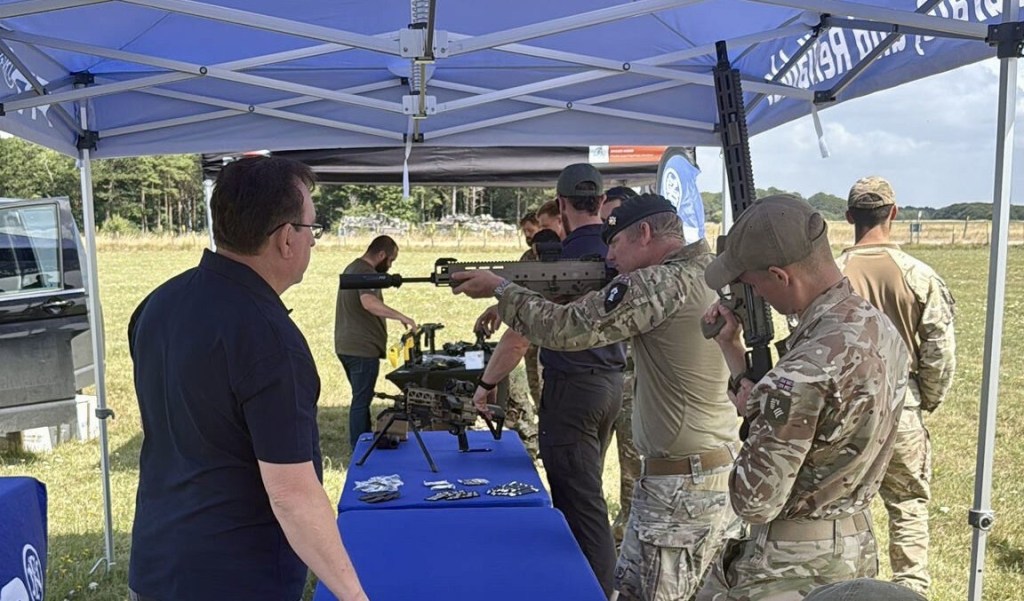
We may already have seen the FN’s successor to the legacy SCAR in a photo taken at the 2025 Cranfield Close Combat Symposium. At the centre of the photograph is a SCAR-like rifle with some noticeable changes to the upper and lower receivers, the gas system and the forend.
Will the new rifle be called SCAR Mk3? This remains to be seen. Clues began to emerge earlier this year when FN trademarked a new product name, registering the name ARKA around the world [UK, Australia, US]. ARKA is listed as a trademark for a firearm/assault rifle. It remains to be seen if ARKA will be the name of the new FN rifle but it would align well with the new designation scheme started with the EVOLYS. Time will tell which approach FN takes and what their next generation of infantry rifles will look like.
Introduced in 2004, the SCAR has had an interesting service life all around the world, and while the Mk2’s days appear to be coming to a close it’s likely the SCAR’s legacy will continue within the engineering genetics of FN’s rifles for some time to come.
Support Us: If you enjoyed this video and article please consider supporting our work here. We have some great perks available for Patreon Supporters – including early access to custom stickers and early access to videos! Thank you for your support!
The Russian A-545 is perhaps the rarest of assault rifles in use in Ukraine. Since Russia’s full-scale invasion last year there have only been a handful of sightings of the rifle which features an internal recoil mitigation system.
The A-545, also known as the 6P67 Kord, is the latest iteration of a long line of rifles which began development back in the late 1970s with the first iteration designated AEK-971, developed for Project Abakan.
The A-545 is a select-fire rifle with an ambidextrous selector with settings for safe, single shot, 2 round burst and fully-automatic. The rifle is gas-operated and uses a rotating bolt locking action coupled with the BARS recoil mitigation system. The rifle has a reported cyclic rate of 900 RPM.
Russian troops with A-545 (via social media)
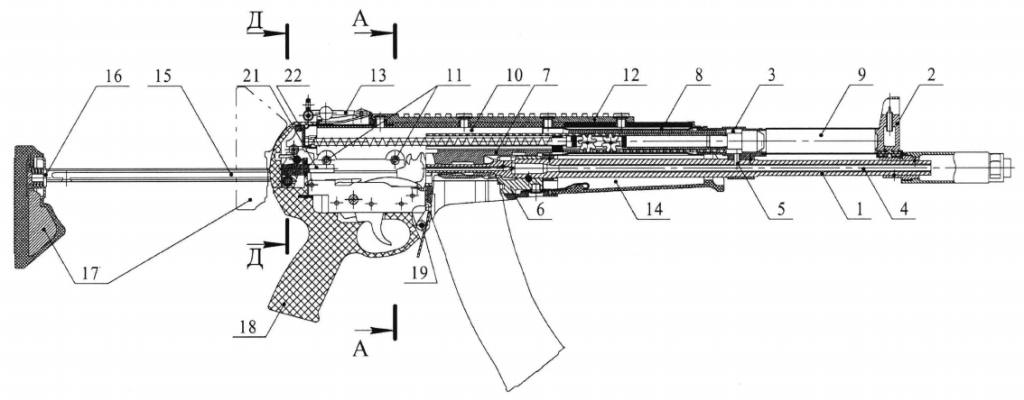
BARS (Balanced Automatic Recoil System) works by shifting mass towards the muzzle-end of the rifle to counter-balance the mass of the bolt and carrier moving towards the rear of the receiver. A pair of synchronised gears in a rack-and-pinion system move the counterweight forward during cycling, powered by the the movement of the bolt carrier as well as gas tapped from the barrel.
Designed by Stanislav Koksharov and developed at the ZiD/Degtyarev Plant in Kovrov. The A-545 development was completed in 2014, adding a new collapsing stock, new furniture and lengths of Picatinny rail. The rifle was tested during the Ratnik equipment trials in 2015 onwards which saw it tested against the AK-12 from Kalashnikov Concern.
The A-545 reportedly faired well in the trials but its more complicated action meant that the AK-12 was selected for wide scale issue while the A-545 was earmarked for elements of the Border Service, special forces, and the national guard (Rosgvardiya). Serial production of the rifles reportedly began in the summer 2020. There is also a 7.62x39mm chambered version, the A-762 or 6P68.
Patent drawing showing the internal layout of the A-545, note the pair of gears just ahead of the trunnion (Russian Patent)
Before the war the A-545 was also seen with the Rosgvardiya’s SOBR Rys, the VDV’s 45th Independent Guards Spetsnaz Brigade, the 810th Naval Infantry Brigade and elements of Russia’s Ministry of Internal Affairs (MVD),
Since Russia’s full-scale invasion of Ukraine last year it has been seen on just a handful of occasions.
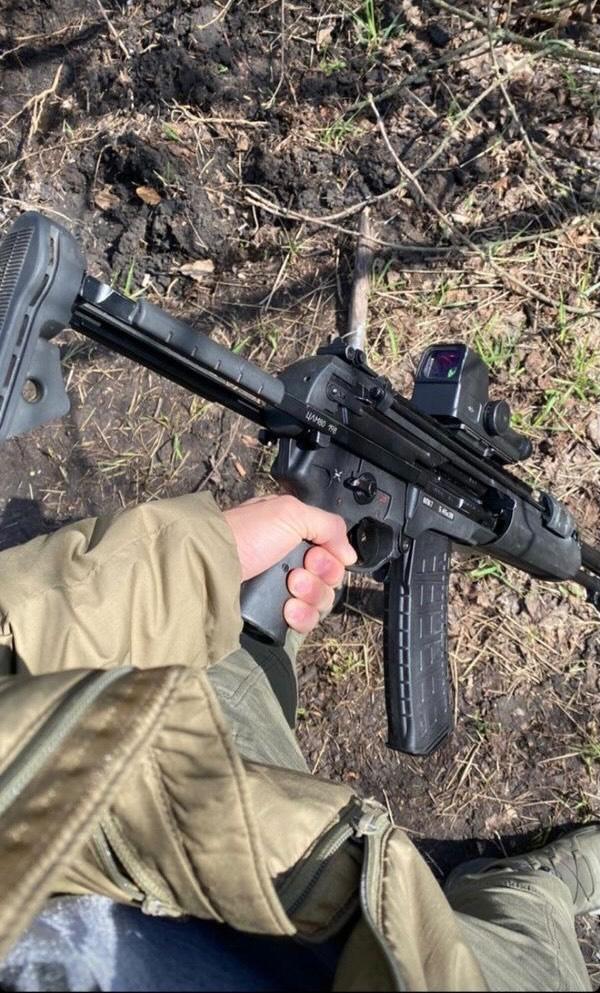
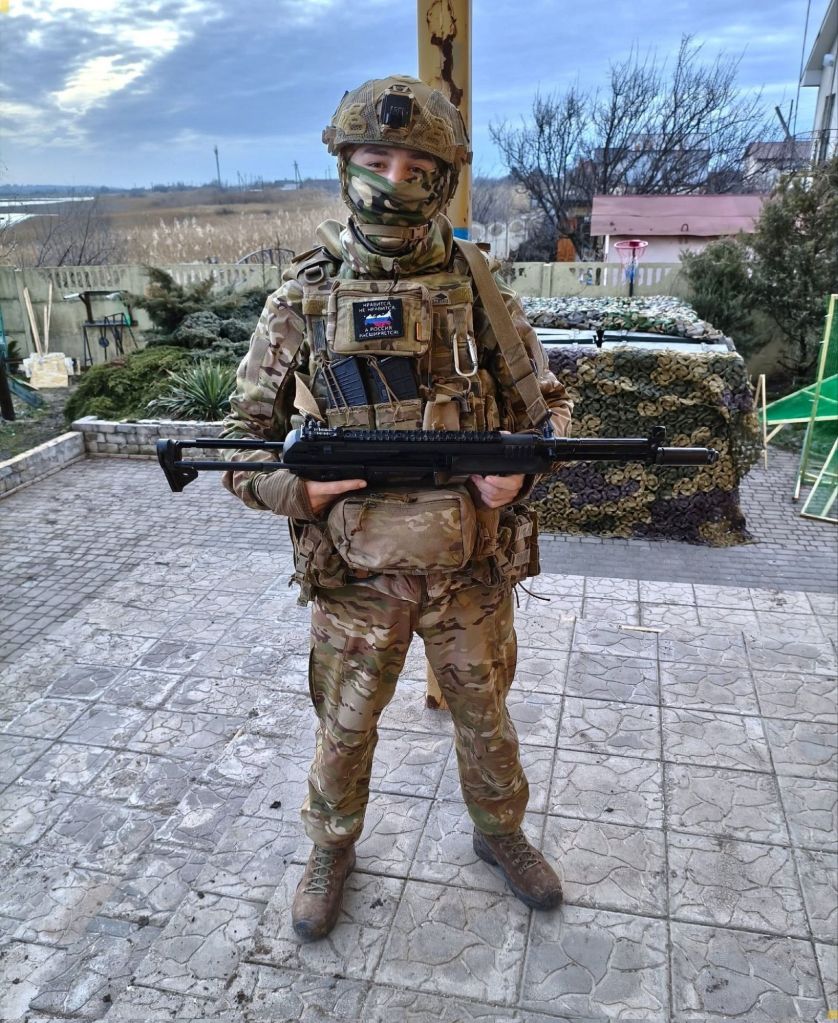
Numerous photos have been posted by RAZVEDOS, a well-known Russian SOF veteran. On 9 April, RAZVEDOS posted a pair of photos featuring himself holding an A-545 along with a short ‘review’, reading:
“Reviews are positive, BUT! Firstly, “KORD” is much more complicated than AK, so it is hardly suitable for a simple soldier – and this applies not only to “conscripts”, because many “contract soldiers” left not far from them.Secondly, if we turn to the facts, i.e. to the test numbers, the combat characteristics of the “KORD”, although higher than those of the AK, are by no means head and shoulders above.“
Given the review is likely based on feedback from VDV Spetsnaz RAZVEDOS visited in April after the Battle of Hostomel the opinion could be based on battlefield experience.
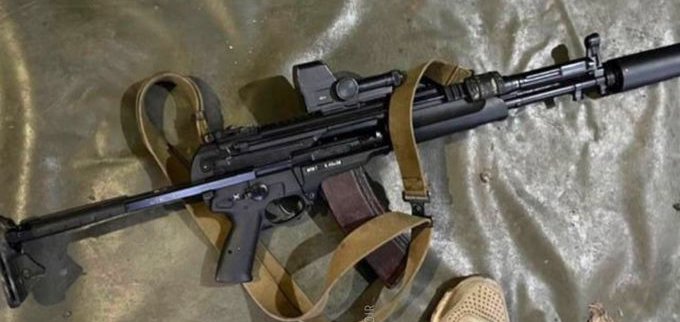
The location these first photos were take is unclear. Several days later, on 13 April, RAZVEDOS shared several more photos featuring an A-545, which appears to be the same rifle, on top of a sleeping bag on a camp bed, in what appears to be a tent. This has frequently been cited as with VDV Spetsnaz at Hostomel (but the original post does not claim this). The rifle is fitted with a 1P87 red dot optic. A third photo, seemingly taken inside a tent, appears to be the same rifle fitted with the 1P87.
A-545 mounted with a 1P87 red-dot optic (via social media)
Late October saw the Russian Ministry of Defense share imagery of recently mobilised troops undergoing training led by an instructor with an A-545. In late December a photo seemingly taken on the back of a moving vehicle shows a A-545 fitted with a Holosun 403/503 red dot sight.
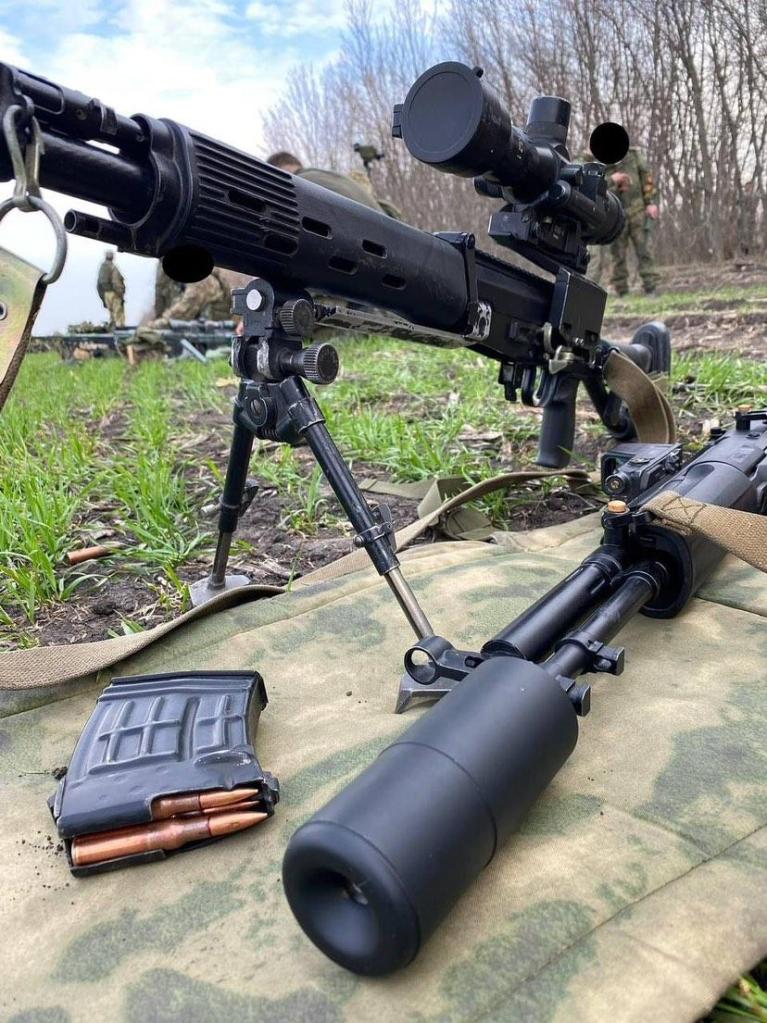
Most recently a photograph of an A-545 in a fighting position said to be in Ukraine was shared. The rifle is seen equipped with 45 round magazine, a suppressor and a Holosun 403/503. This is potentially the same rifle seen in December.
A-545 fitted with Holosun optic reportedly photographed in Ukraine (via social media)
Another question which is regularly asked is – have their been any sightings of the AN-94? The AN-94 was developed to meet the same requirements laid out by Project Abakan. It reportedly passed state trials and was adopted for service but its complex design means it is rarely seen. There haven’t yet been any confirmed sighting of the AN-94 in Ukraine or with troops training in Russia. If any of the rifles ever appear they’ll definitely be the subject of an article/video.
The A-545 is undoubtedly a more advanced weapon than the more common AK-12 but how many of the rifles are in service is unclear and the extent of their use in Ukraine remains unknown. In the past several months there have been a number of Russian news reports on the rifle including a feature length report from Zvezda and a shorter piece from HTB on production of the rifle. From the limited imagery available it would seem that they have seen some limited in theatre use while instructors back in Russia may also be using the rifles.
Update 17/04/23:
A pair of photos of A-545 in use with the VDV have been shared with TAB by nrxnb. The first photo was reportedly taken by a member of 175th Reconnaissance Battalion with the 76th Guards Air Assault Division (VDV). The 175th took part in the battle of Hostomel. The rifle has been fitted with an 1P87 red-dot optic and has a polymer magazine normally issued with AK-12s.
The second photo was said to have been taken in April, post Battle of Hostomel, by a member of the 45th Guards Spetsnaz Brigade (VDV). Again it appears to have been fitted with an 1P87 red-dot optic and a suppressor.
Update – 23/12/23: A Russian telegram channel shared a photograph of a 6P67 Kord which has been modified, with a rail cut into the handguard, to allow it to mount a grip and bipod.
The individual that modified the rifle provided the caption (machine translated):
“The body kit, of course, is not like that of those who posted it earlier, and there is literally no body kit for it on the market at all. Even the Picatinny rail had to be cut into the standard forend using a small drill, straight arms and such and such a mother. Alpha Arms can, Magpul belt, Magpul fire transfer handle, Atlas bipod, Vortex Viper pen and Vector Optics collimator. Overall, the machine is excellent, there are pros and cons.”
A new photo of an A-545, also known as the 6P67 Kord, which has been modded by adding a cut in 6 o'clock rail on the hand guard to mount a vertical front grip & a bipod.
— Matthew Moss | Historical Firearms (@historicfirearm) December 23, 2023
Update – 9/10/24: A recent image of an A-545 shared by Russian suppressor company Hexagon Tactical. Reportedly shared with them by the rifles user who has equipped the weapon with one of their 5.45mm suppressors. The optic appears to be a ThermTech VIDAR 2.0.
One I forgot to share, a recent sighting of a Russian A-545 fitted with Hexagon's 5.45 suppressor (20,000 of which have reportedly been shipped to the front).
A photo of a Russian serviceman armed with an A-545, claimed to have been taken somewhere in Donbass was recently shared online, but it’s unclear when the photo was taken.
Specifications (via Rosoboronexport)
Calibre
5.45x39mm
Weight (unloaded)
3.5kg (7.3lbs)
Stock Collapsed
720mm (28in)
Stock Extended
960mm (38in)
Maximum Range
800m
Feed
30 round magazine
Cyclic Rate
900 RPM
Support Us: If you enjoyed this video and article please consider supporting our work here. We have some great perks available for Patreon Supporters – including early access to custom stickers and early access to videos! Thank you for your support!
Bibliography:
Military Acceptance “Balanced Avtomat”, 12 Feb. 2023, Zvezda Live, (source)
6P67/6P67-1 KORD Assault Rifle, Rosoboronexport, (source)
Automatic Small Arms with Balanced Automatics, Russian Patent #2482417, (source)
BREAKING: Russian Army Accepts Both AK-12 And AEK-971, TFB, (source)
The Russian Balanced-Action A545 Rifle In Action, TFB, (source)
Meeting Government Orders: Unusually Designed Russian Rifles, M. Popenker, SADJ, (source)
6P68/6P68-1 KORD Assault Rifle, Rosoboronexport, (source)
Serial Production of An Assault Rifle, a Competitor to the AK-12, Has Started in Russia, 1 Jul. 2020, RIA, (source)
After seeing a considerable number of Colt Canada C7 rifles and C8 carbines being used in Ukraine I decided to investigate their origins. I reached out to various Ministries of Defence to enquire if they had provided the rifles. The Canadian Ministry of National Defence not only confirmed that they had provided various small arms but their spokesperson was also kind enough to confirm some of the types of small arms and light weapons which Canada has transferred to Ukraine since February 2022.
Due to operational security the quantities of weapons transferred obviously couldn’t be confirmed but there’s some interesting weapons in the list that might not be what was expected.
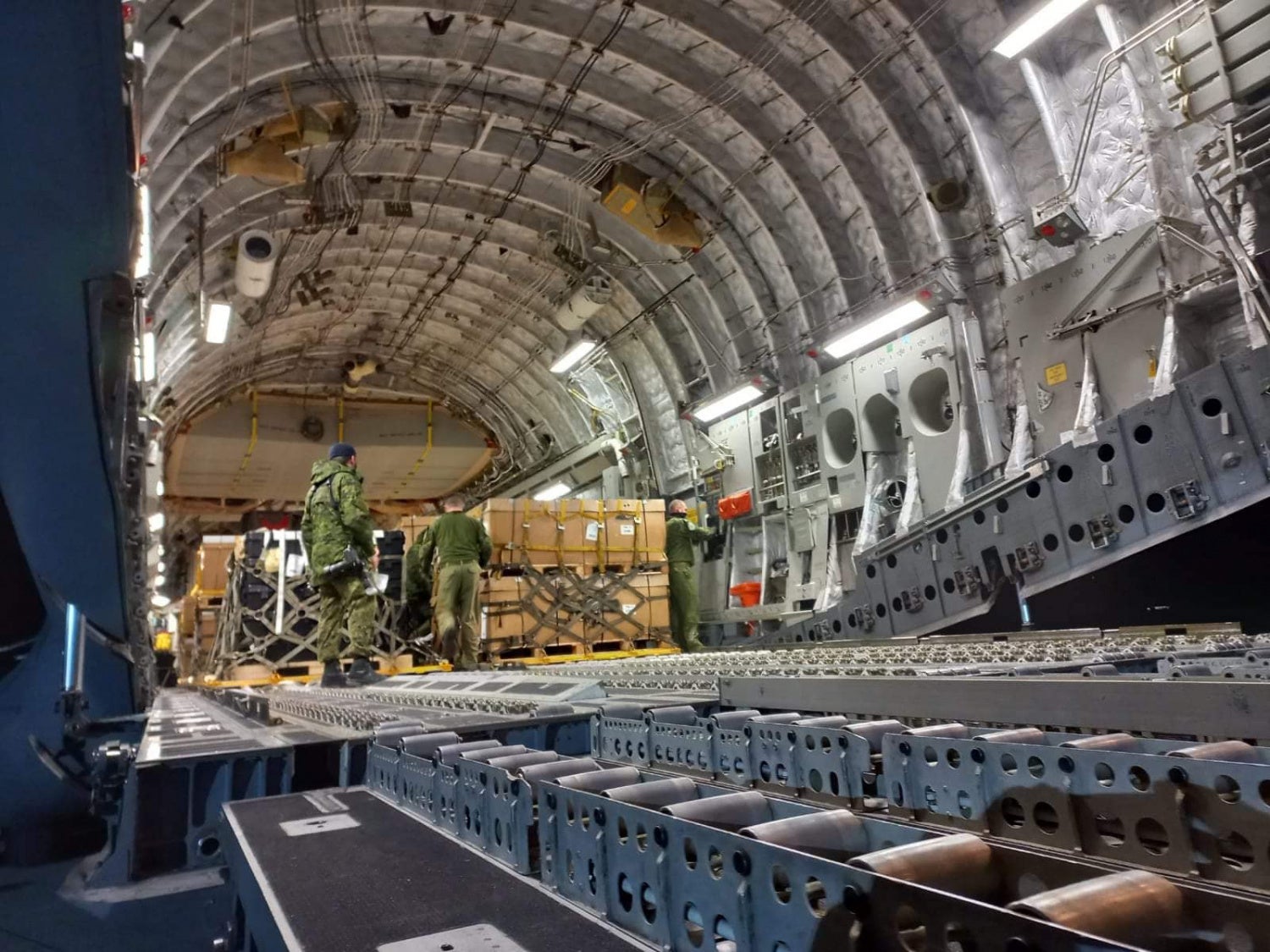
Canada aid arriving in in Ukraine (Ukrainian MoD)
In terms of anti-tank weapons we already know that at least 100 Carl Gustaf M2 Recoilless Rifles were transferred, along with 2,000 rounds of 84mm ammunition. We have seen a number of M2s which are potentially of Canadian origin in the field. Also confirmed back in March was the transfer of as many as up to 7,500 hand grenades and up to 4,500 M72 LAW anti-tank weapons. These have probably been seen in the field but without close ups of markings and with so many countries transferring LAWs its difficult to ID them specifically in imagery from the field.
A potential Canadian Carl Gustaf in Ukraine (via Social Media)
In terms of small arms things get interesting, as mentioned C7A1 rifles have been seen in a considerable number of photos and videos from Ukraine. Produced by Diemaco, now Colt Canada, it seems obvious that these rifles originated from Canada. However, the spokesperson from the Ministry of National Defence confirmed that Canada has not provided any C7 pattern rifle. Instead, they confirmed that Canada has only provided C8 carbines. Sources familiar with the carbines sent to Ukraine noted that the weapons were C8 SFWs with a railed forend. So far the only photo which may visually confirm the presence of Canadian C8 SFWs is this one of some Ukrainian SSO operators. An operator in the middle of the photo (see below) has a C8 with a railed forend, with a vertical front grip attached. Other operators around him have C8s with the earlier non-railed handguards.
73rd Naval Special Purpose Center operators with what may be a C8 SFW, along with earlier unrailed C8 carbines (via Social Media)
It was also confirmed that both C9 light machine guns and C6 general purpose machine guns have been transferred. The C9 is Canada’s designation for the FN Minimi while the C6 is their designation for the 7.62x51mm FN MAG. Canada currently uses the upgraded C9A2 with a 4 position stock and longer rail.
Colt Canada C8 Carbines in Ukraine – these C8s were not provided by the Canadian government (via Social Media)
The spokesperson also confirm the types of precision rifle transferred to Ukraine noting that “both medium .308 and .338 calibre, and heavy .50 calibre sniper rifles were provided.” Earlier media reports had suggested that .50 calibre sniper rifles were transferred but there had been no mention of medium caliber rifles. It was not stated whether the .338 rifles were .338 Norma Magnum or .338 Lapua Magnum.
While the Canadian military currently fields the C15 Long-Range Sniper Weapon (the McMillan TAC-50) the Ministry of National Defence did not confirm what exact model had been sent to Ukraine. There have been a number of sightings of TAC-50s, and while a number of countries field them, some of those seen in Ukraine may have originated from Canada.
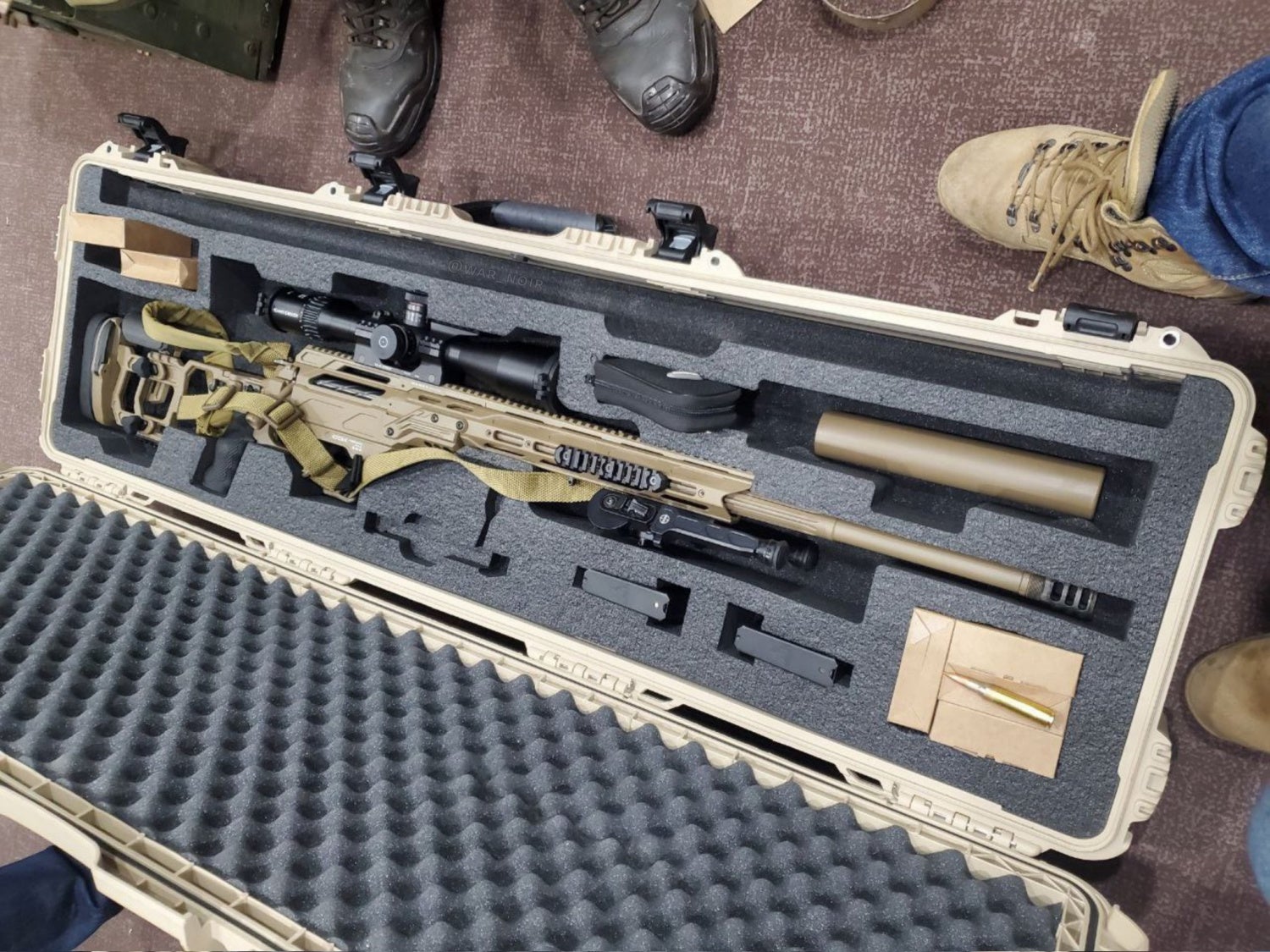
An anonymous source familiar with the program to transfer weapons to Ukraine confirmed that CADEX Defence CDX series rifles had been sent to Ukraine from the stores never sent to Kurdish forces. These are believed to have included CDX TAC rifles in .338 and CDX-50 Tremors in 12.7x99mm.
CADEX CDX photographed in Ukraine in March (via War_Noir)
In the past Canada has also provided Ukraine with .50 caliber LRT-3 rifles from PGW Defence Technologies, this type may have again been provided either via the Canadian government’s transfer or privately donated by Canadian citizens.
The combatant appears to be carrying a rare PGW Defence LRT-3 bolt-action sniper rifle —which was possibly supplied by #Canada 🇨🇦 to the Ukrainian Forces. pic.twitter.com/lGyIPadx37
Based on information from sources familiar with the transfer the ‘.338’ chambered medium caliber rifles are believed to be CDX TAC rifles from CADEX rather than the C14 Timberwolf MRSWS (Medium Range Sniper Weapon System) from PGW Defence Technologies, which is currently in use with Canadian forces. The .308 chambered rifle mentioned is less clear, it may be a reference to the 7.62x51mm Parker-Hale C3 sniper rifle which is still in service or possibly a .308/7.62x51mm chambered rifle from PGW or CADEX. They are unlikely to be Tikka T3s which recently entered service with the Canadian Rangers as the C19.
Interestingly, the pistols which were transferred were not Browning HiPowers, which is Canada’s current standard service pistol – soon to be replaced by the SIG Sauer P320, but Glock 17s. Very few images of Glock 17s in use in Ukraine have surfaced so far. Sources suggest that the Glock pistols were also a part of the selection of weapons originally destined for Kurdish forces fighting ISIS.
Support Us: If you enjoyed this video and article please consider supporting our work here. We have some great perks available for Patreon Supporters – including early access to custom stickers and early access to videos! Thank you for your support!
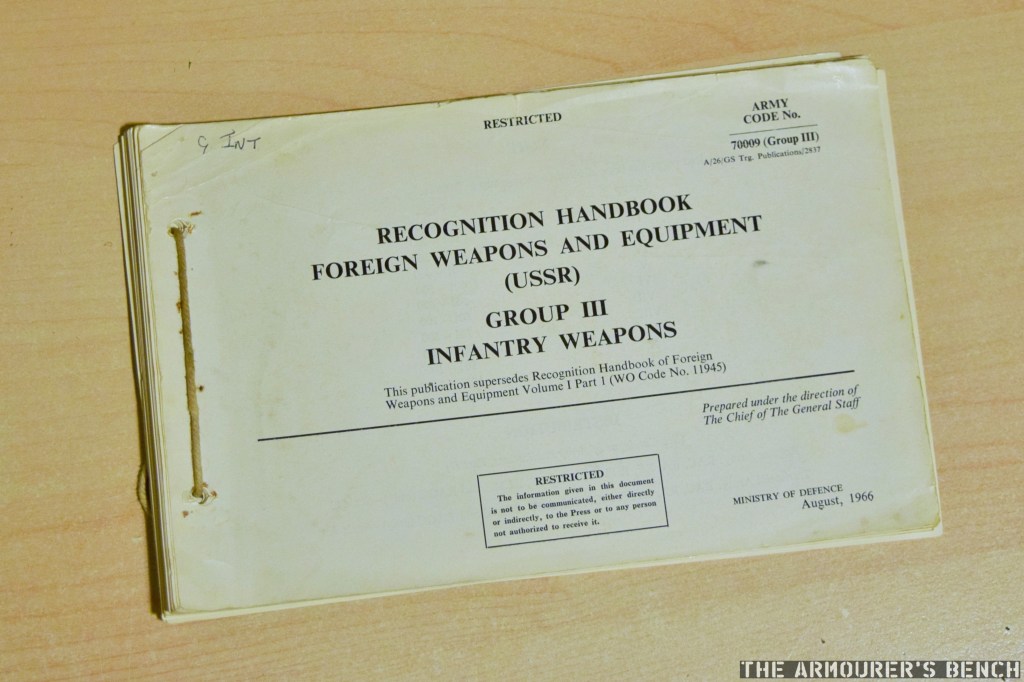
During the Cold War the British Army on the Rhine was deployed in West German. In anticipation of a conflict with the Soviet Union detailed recognition guides were written for British troops to identify and familiarise themselves with enemy weapons and equipment. A substantial series of these were written covering everything from small arms to artillery to vehicles and aircraft.
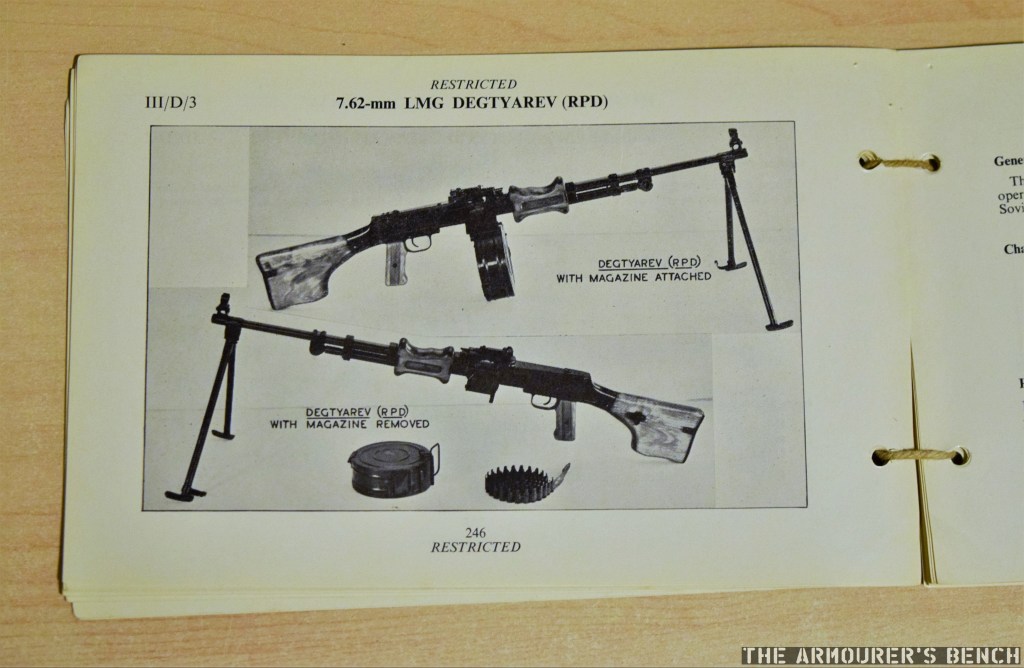
In this video and article we will examine ‘Recognition Handbook Foreign Weapons and Equipment (USSR) Group III Infantry Weapons’ originally published in August 1966. It covers pistols, carbines, rifles, light, medium and heavy machine guns, grenades and some infantry anti-tank weapons like the RPG-2.
RPD (Matthew Moss)
The Recognition Handbook is about 100 pages long while the wider series encompasses 12 booklets at approximately 1,200 pages. Each entry in the handbook includes general description of the weapon, its characteristics and recognition features to help identify it. The Handbooks are more detailed version of the smaller Threat Recognition Guide booklets which we have looked at previously.
Below is the two page entry covering the ‘7.62mm Assault Rifle Kalashnikov (AK-47)’ with a general description, characteristic and some recognition features.
AK-pattern rifle (Matthew Moss)
Sources:
‘Recognition Handbook Foreign Weapons and Equipment (USSR) Group III Infantry Weapons’, British Army, 1966 Warsaw Pact Small Arms’, British Army, 1986, (source)
If you enjoyed this video and article please consider supporting our work here. We have some great perks available for Patreon Supporters. Thank you for your support!
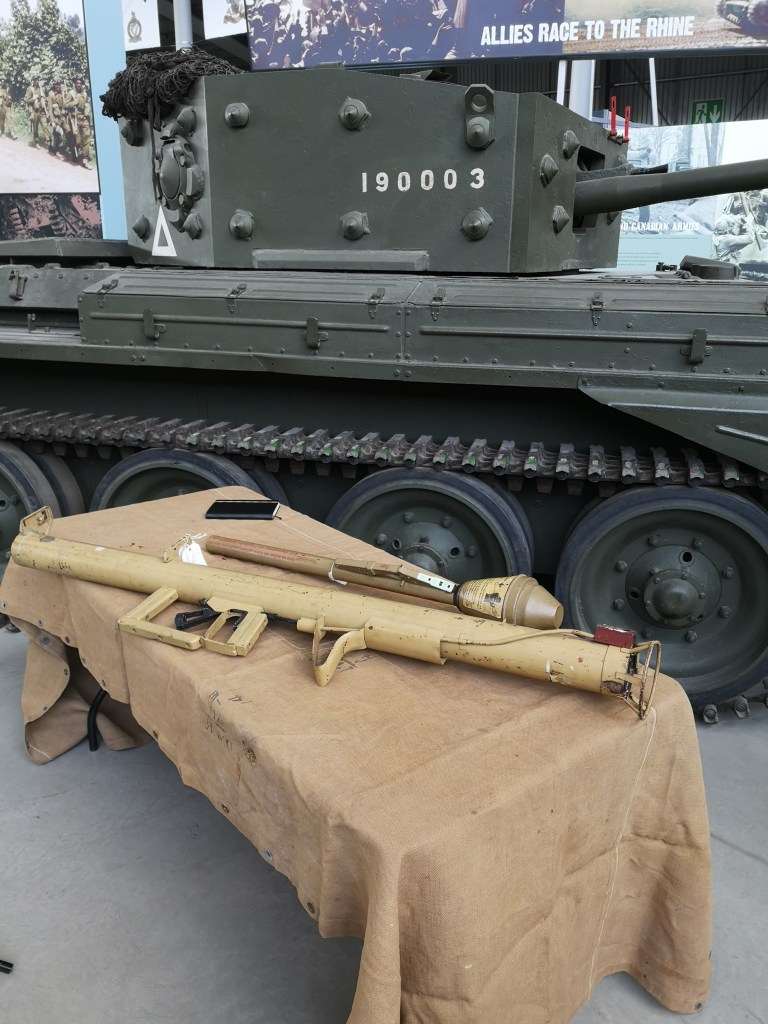
Here’s a behind the scenes look at the filming Matt did at The Tank Museum for the upcoming ‘Rhineland 45 – Decision in the West’ documentary being produced by Realtime History, the guys behind The Great War!






 The Armourers Bench