In recent weeks Russia has begun deploying North Korean-manufactured 107mm multiple rocket launch systems. These small rocket launchers are the latest of the North Korean weapon systems to enter Russian service.
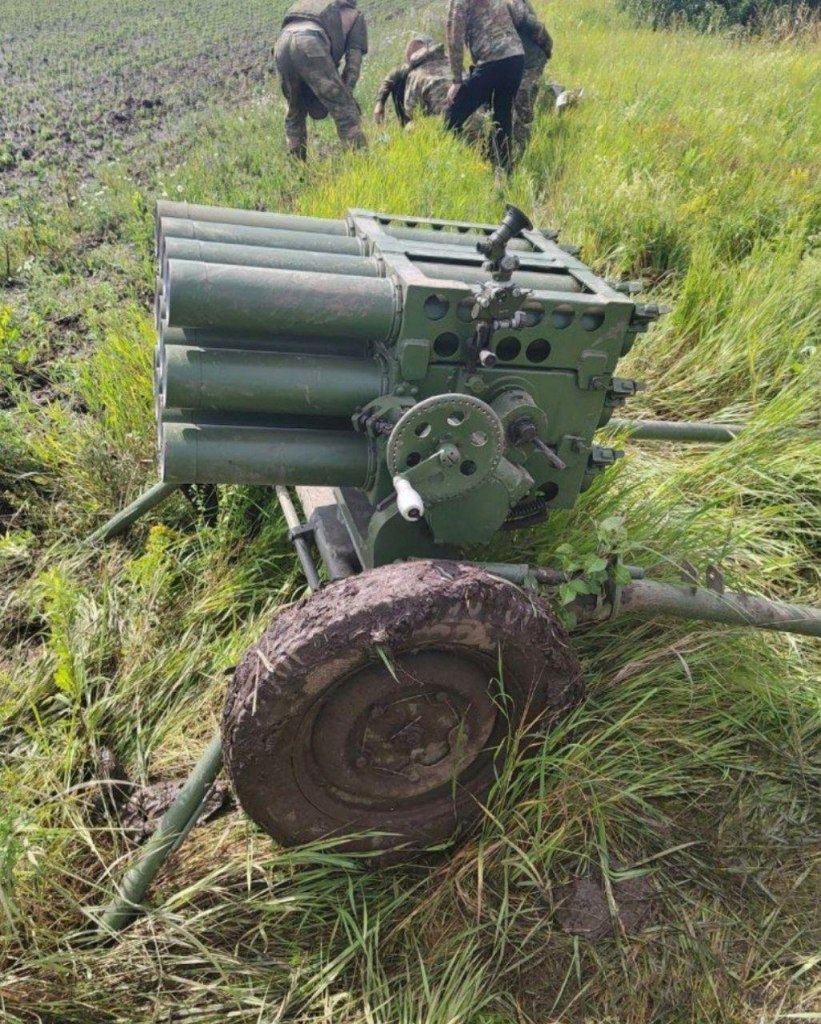
The Type 75 is a copy of China’s Type 63 multiple rocket launcher, is a small towed, 12-tube system which an fire a variety of 107mm ammunition. The system was first sighted in Ukraine in early June, though its likely been in use since Spring 2025.
A Type 75 in Russian service (via social media)
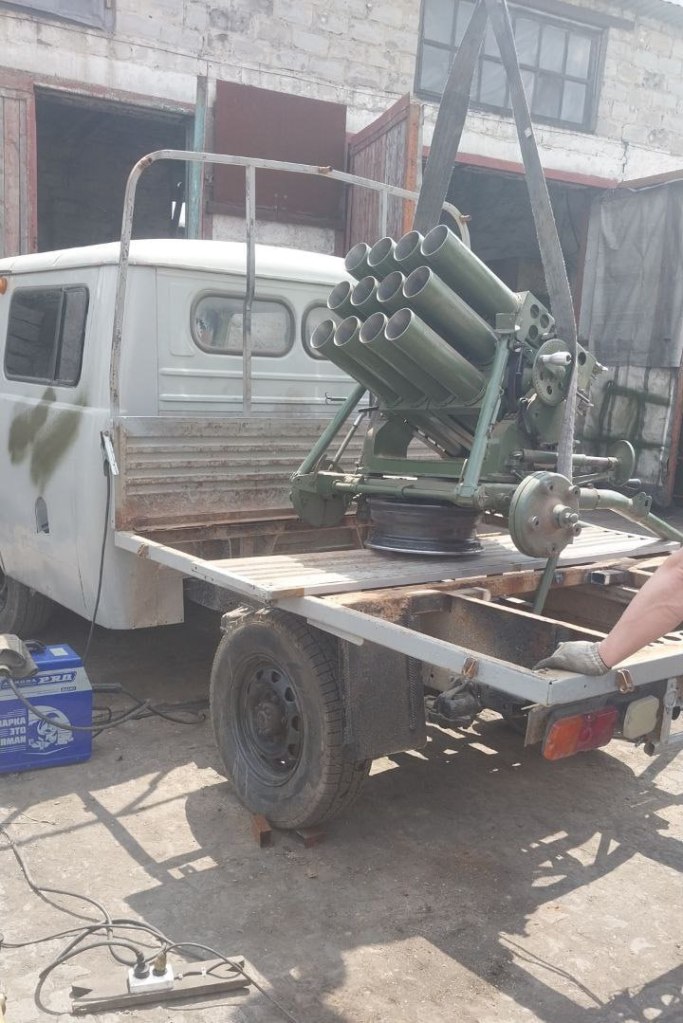
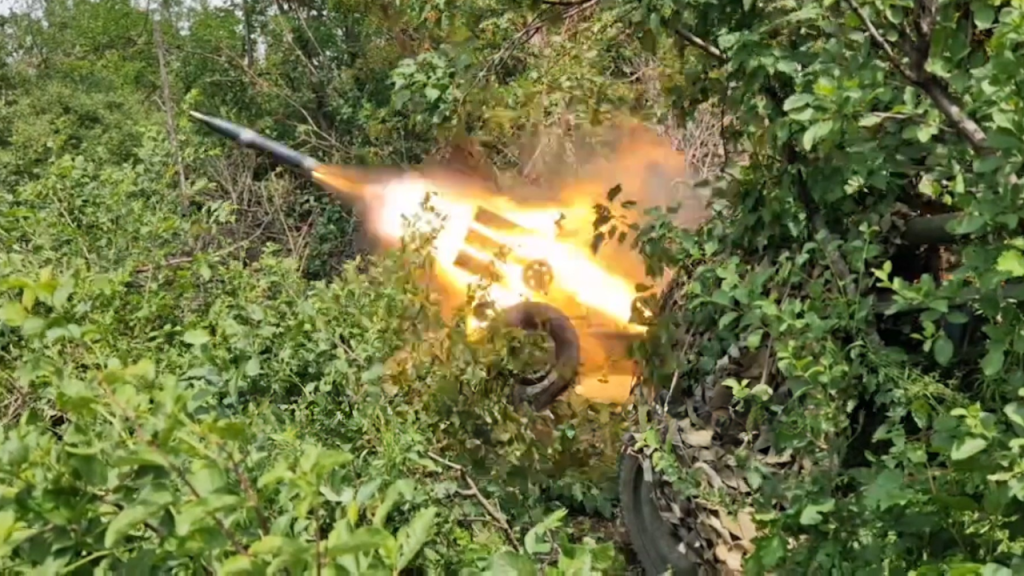
The first footage reportedly shows a crew training with the Type 75 while the second shows the Type 75 being fired from concealment within a tree line. Several days later on 15 June, photographs of a Type 75 being mounted on the bed of a UAZ utility van were posted.
Russian Channel One correspondent Dmitry Kulko shared footage of a Type 75 in action on the 25 June. In his post Kulko notes that the weapon system has a range of 8.5km and is being used with high explosive fragmentation rockets.
Russian mechanics mounting a Type 75 on a UAZ truck (via social media)
On 27 June, a close up photograph of the system was shared on telegram. A week later on 5 July, a Russian Type 75 team shared video of them deploying and operating the system in the field. The video shows the heavily camouflaged MLRS being towed by an unmanned ground vehicle and then being loaded and fired. Deployment with a UGV is sensible as the system unloaded weighs over 600kg and would otherwise require a larger, more noticeable vehicle to move it. The video concludes with some ISR drone footage which is implied to be the impacts on target.
A Type 75 in Russian service firing from a tree line, July 2025 (via social media)
On 12 July, Ukraine’s 1st Separate Presidential Brigade shared footage claiming the first destruction of a Type 75 by drone-dropped ordnance. The videos caption notes that the system was spotted and engaged in the Kup’yansk region.
The Type 75 is just one of the latest in a series of weapon systems North Korea have provided to Russia, other aid includes ammunition for various artillery systems and more complex rocket artillery systems like the M1991 240mm MLRS.
Update – 18/7/25:
Ukraine’s 429th Separate Regiment of Unmanned Systems shared footage of a strike on a North Korean-supplied Type 75 multiple launch rocket system.
Ukraine's 429th Separate Regiment of Unmanned Systems shared footage of a strike on a North Korean-supplied Type 75 multiple launch rocket system.
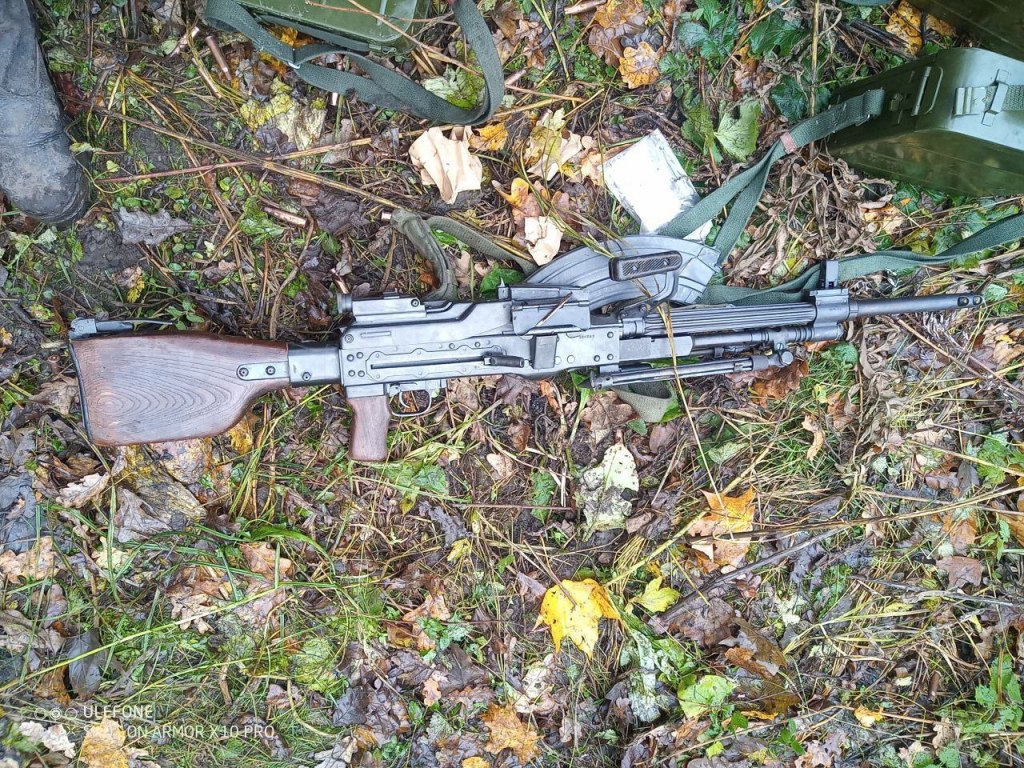
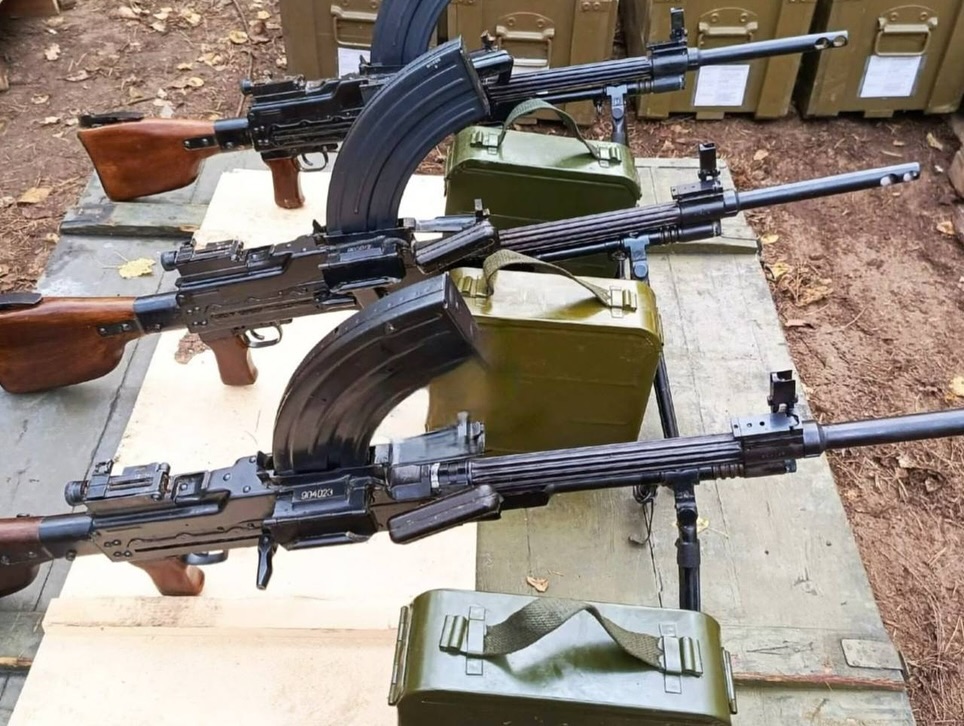
On 7 November, photographs began circulating on Russian telegram channels of North Korean Type 73 general purpose machine guns said to be in Russia. The appearance of the photographs led to suggestions the weapons are now in Russia service. This claim is somewhat supported by the appearance of Russian E.M.R. camouflage in the top right corner of one of the photographs.
A North Korean Type 73 complete with magazine (via Russian social media)
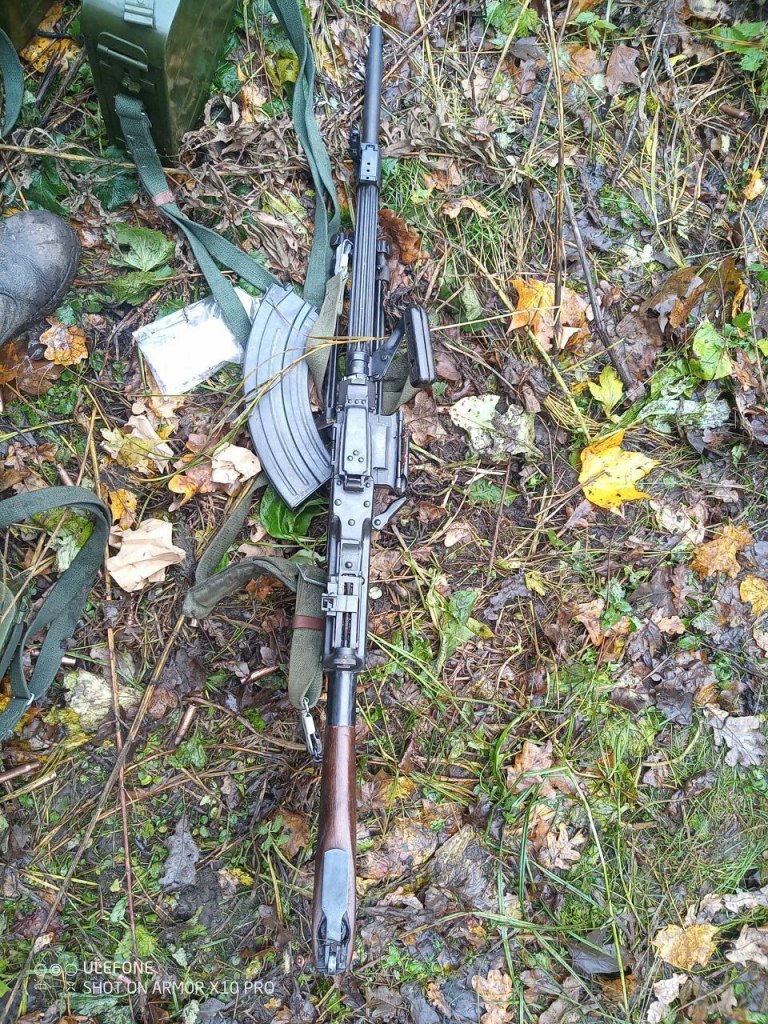
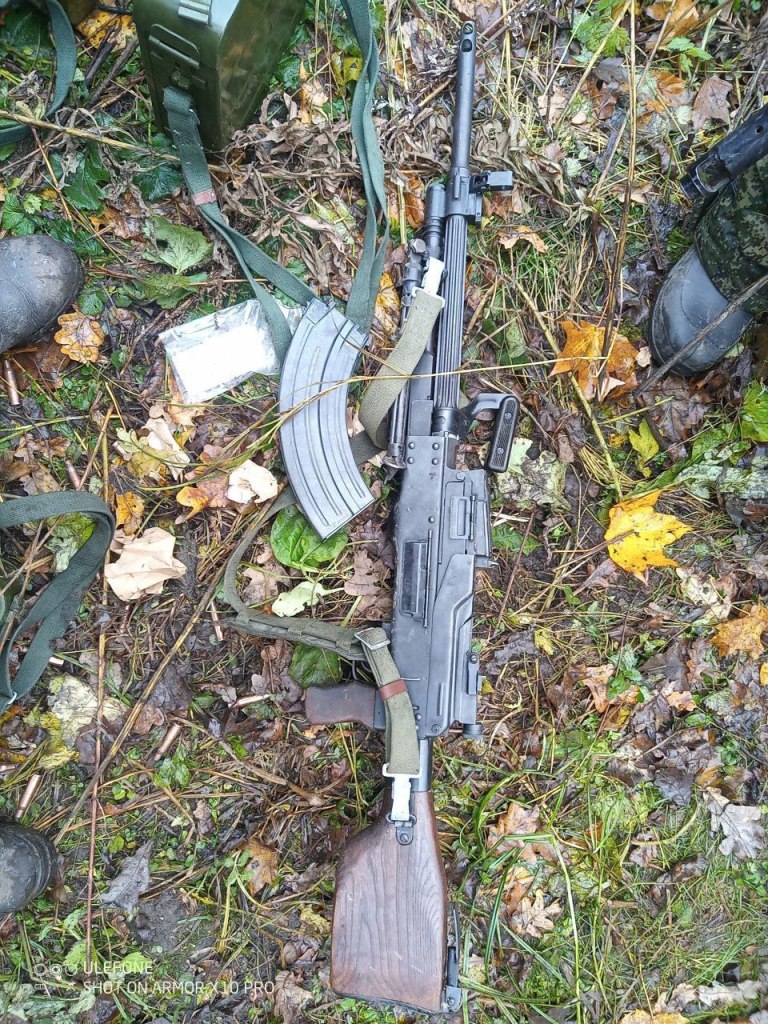
The Type 73 is a fairly rare weapon though it has surfaced in conflicts areas such as Yemen, Iraq, Syria and Lebanon over the years. Thought to have entered service in the early 1970s, it is a somewhat unusual machine gun, it is gas-operated, using a long-stroke gas system, it fires from an open-bolt and is chambered in the long serving 7.62x54mmR cartridge. It is derived from the PK-pattern machine gun and as such feeds from standard Russian metal non-disintegrating belts but also is able to feed from proprietary box-magazines (which look a little like over-sized AK magazines). The magazine is dual stack, single feed which is designed to allow the Type 73’s bolt to pull cartridges out of its rear. Check out Forgotten Weapons’ video on the weapon for a better look at the action. The dual-feed design appears to have been influenced by the Czech vz.52/57. The Type 73 has a longitudinal fluted barrel with its front portion, ahead of the gas block, machined as a spigot to enable it to fire rifle grenades, it comes with a removable barrel shroud which acts as a muzzle device. Also visible in the photographs are the segments of cleaning rod which sit in channels in the weapons’ bipod.
Three North Korean Type 73s complete with magazines and belt boxes (via Russian social media)
The dates and locations of when the photographs were taken is unclear and various Russian telegram channels are claiming a range of explanations varying from – the weapons were brought along with the North Korean troops who have reportedly arrived in Russia in recent weeks, to – they were provided to Russia as part of the military aid being provided by the DPRK. However, the photographs may also have been taken during a past exercise involving Russian and North Korean troops. The environmental conditions in the photographs do, however, correlate with the photographs being taken recently.
The photographs of the Type 73 emerged as a series of, as yet unverified, videos and photographs of North Korean troops in Russia have surfaced in recent days. Intriguingly, it was reported that the Ukrainian GUR had claimed that North Korean troops in Russia would be equipped with Russian small arms and light weapons including: AK-12s, RPK and PKM pattern machine guns, and RPG-7 shoulder-launched anti-tank rocket launchers.
Top view of a Type 73 (via Russian social media)
The available imagery shows three Type 73s together in one photograph and then three detail photographs of another weapon on its own. The visible serial numbers on the guns include ‘904023’, ‘905012’ and a partially visible serial number which appears to read ’904032′ is seen in another photograph. Which places these three weapons relatively close to each other in the serial number range. Intriguingly, the typical star and model number aren’t visible in the above photograph.
If these images are verified and we see more evidence of their use it is extremely intriguing to see these weapons appear in Russia. It raises questions as to why Russia needs North Korean GPMGs – is Russia suffering from a shortage? The presence of some RPD light machine guns appearing in imagery of Russian forces training may also support this.
Left-side view of a Type 73 (via Russian social media)
The origins of the guns is also unclear, while the obvious source would be North Korea themselves, if so it is interesting that they would choose to supply Type 73s rather than their own straight copy of the PKM, the Type 82. If these guns are to be used for training purposes, or indeed in the field, then it would make more logistical and operational sense to acquire Type 82s so troops have commonality and familiarity with Russian PK-pattern machine guns. An another alternative potential origin for the guns is Russia’s other ally -Iran. Iran is reported to have acquired large numbers of Type 73s during the Iran-Iraq War (1980-88) and has since provided them to their proxies and allies. It may be that Iran has provided a shipment of these machine guns as part of their aid to Russia.
It remains to be seen if the Type 73 will enter service with Russian troops or indeed if we will see evidence of any other North Korean small arms.
Update 22/12/24: A short video appeared Russian telegrams of a Russian combatant examining a North Korean Type 73.
Update – 15/1/25:
A North Korean Type 73 GPMG mounted on a Russian motorbike & sidecar. No North Korean's in view. Interesting.More on the Type 73 in #Ukraine here: armourersbench.com/2024/11/17/i…#UkraineRussiaWar #SALW
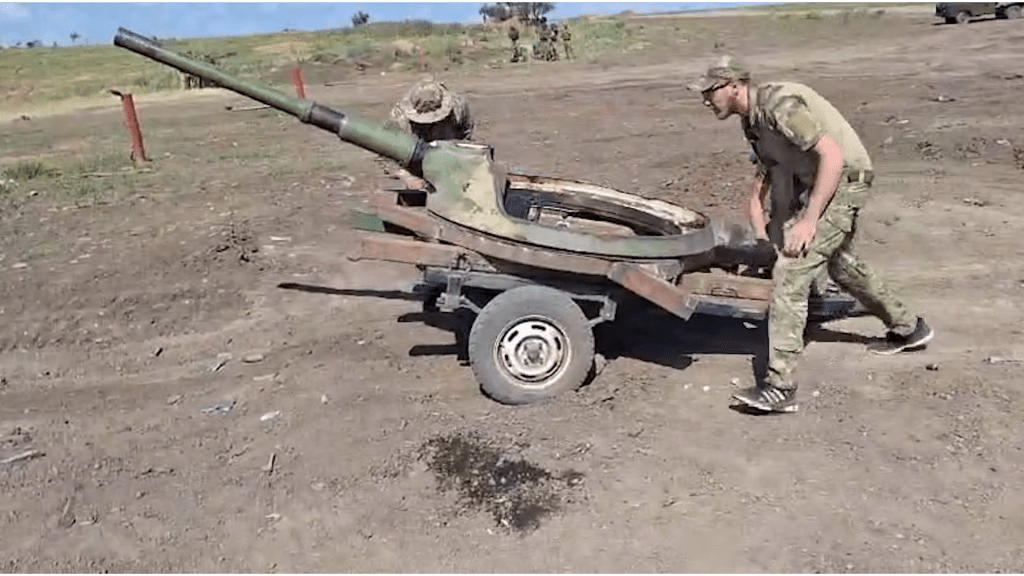
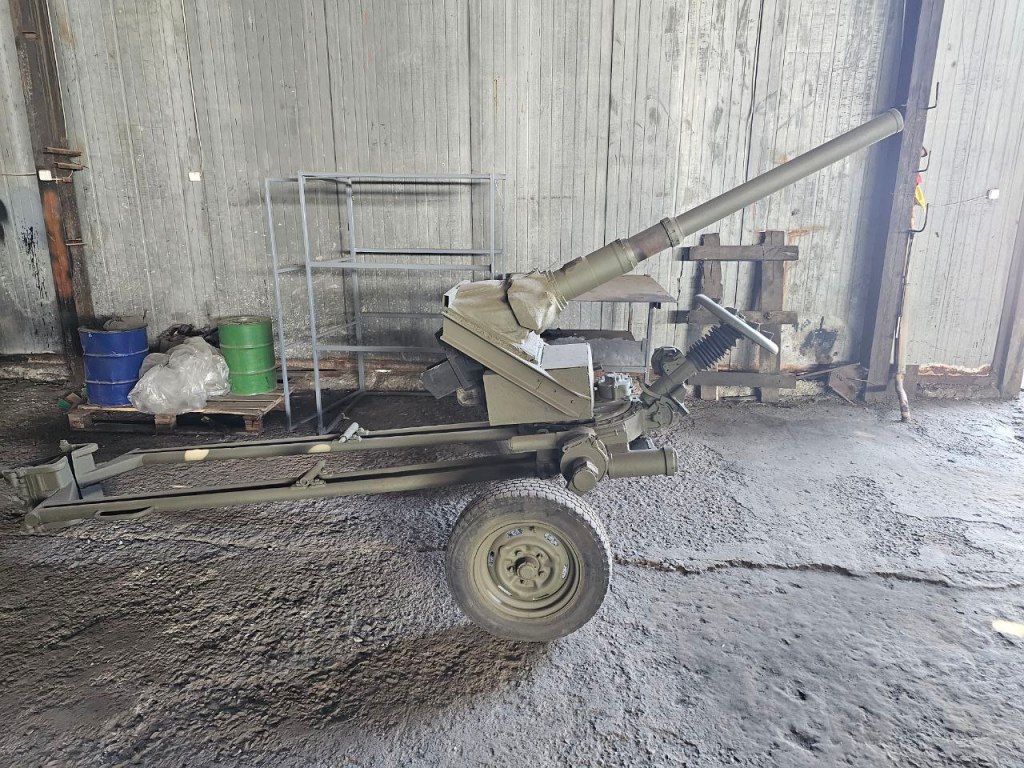
The 2A28 Grom is the main armament of the BMP-1 and BMD-1 infantry fighting vehicles, it is essentially a 73mm low-pressure gun which fires a variety rounds ranging from HEAT to HE-Frag. Developed in the early 1960s it has been in Russian service ever since.
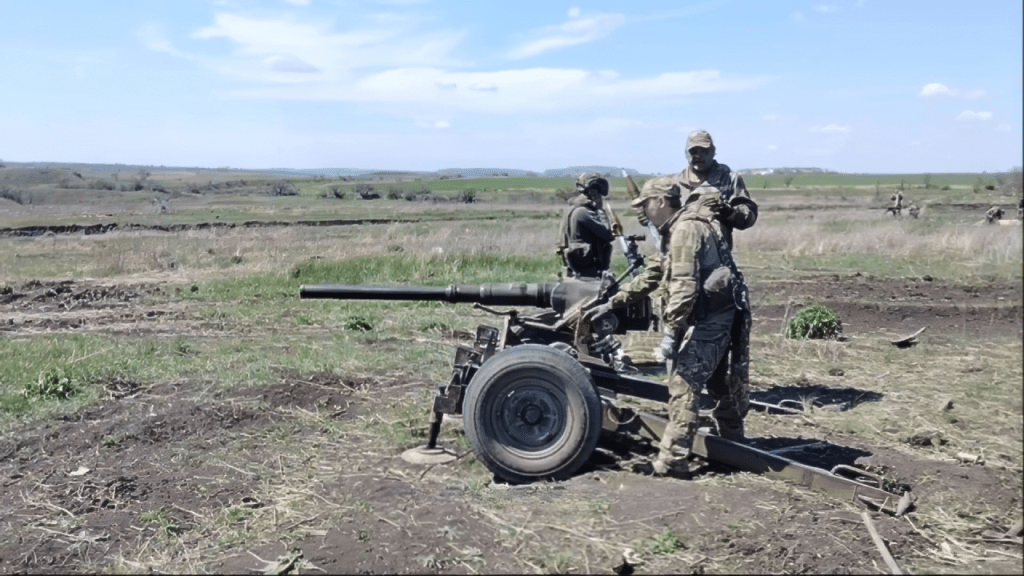
While it is the same calibre as its tripod-mounted cousin the SPG-9 it is designed to fire rounds with less propellant charge. In the last six months there have been a series of sightings of Russian troops testing 2A28s which have been dismounted from vehicles and mounted on craft-made or repurposed carriages for use as infantry support guns.
A 2A28 on what appears to be a 2B9 carriage (via social media)
The first of these I’ve been able to find appeared on 27 May, this example was seen in a short video being test fired. The gun itself appears to have been mounted on a carriage similar to that used by the 2B9 Vasilek automatic mortar, though there are some differences in the trails. The crew of a gunner and loader are able to get of 10 rounds in 40 seconds with the gunner adjusting his aim several times. In the background there appears to be a team training with a conventional SPG-9. It could be argued that the wheeled carriage offers and advantage over the SPG-9 which has to be deployed on foot by its crew. The dismounted 2A28s could be seen as DIY analogues of the old Swedish PV-1110s which have seen limited service with the Ukrainians.
A 2A28 mounted on a commercial trailer which is removed when setting up to fire (via social media)
Several months later on the 1 July, another dismounted 2A28 appeared. The first of two videos showed the gun being towed into position by a tractor. The 2.37 minute-long video shows the crew bringing the gun into action: uncoupling it from the tractor, fitting the trails and front support. The carriage itself has been fabricated using a commercial trailer which is removed from a frame once the trials and supports have been fitted. The frame is built around a ring for the BMP-1’s original turret ring to sit on. This appears to allow rotation using the turret ring. The BMP-1’s turret has been cutaway to enable the gunner to access the breech. A couple of photographs of the salvaged turret being adapted were also shared with the videos. It takes the crew approximately 1 minute 40 seconds to bring the gun into action, the design is quite ingenious if unwieldy. The video concludes with the gunner refusing a lanyard and firing the gun personally.
The second shorter video shows a gunner operating the gun alone loading and firing another four rounds in 17 seconds. The gun jumps and moves back significantly despite the carriage’s trails having spades to reduce recoil movement. Some sources claim the unit is part of the 25th Combined Arms Army, the Russian combatant filming the video mentions the ‘3rd Battalion’ but does not mention a regiment or brigade.
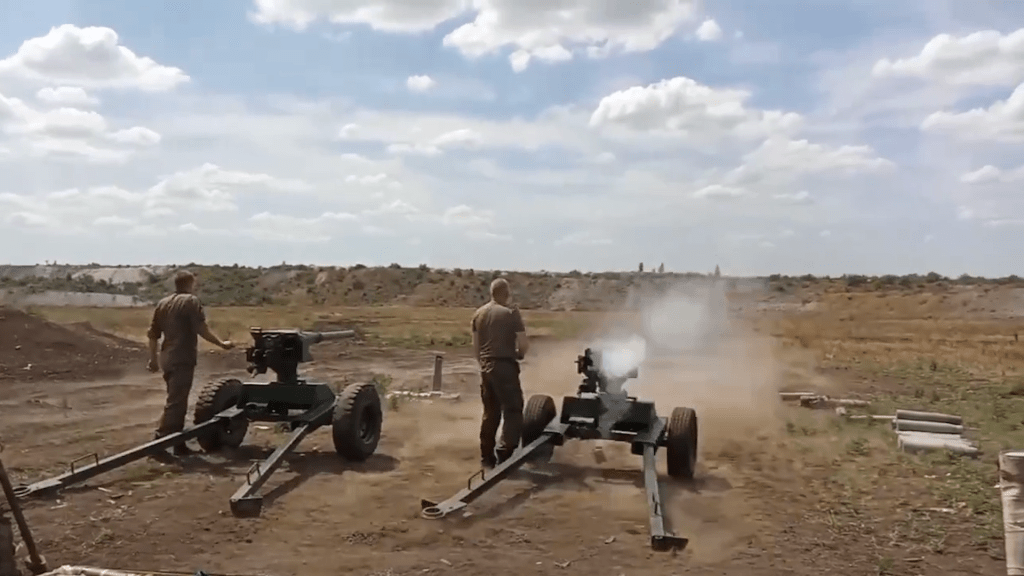
On the 26 July, a short video of a pair of 2A28s mounted on well built craft-made carriages, which appear to share a common design, was shared. While the design of the carriage appears to be the same they have different sized tyres.
Another well made dismounted gun based on a 2B9 carriage (via social media)
Most recently, on 6 September, a Russian engineer shared a couple of photos of a carriage-mounted 2A28 he came across at a unit near the front. The carriage again appears to be from a 2B9 Vasilek mortar. The 2A28’s trunion appears to be mounted directly on to the carriage.
The idea of re-purposing the 2A28 isn’t a new one with the guns seen dismounted around the world with examples from past and current conflicts in Libya, Syria and Africa. According to open source figures from Oryx an estimated 824 Russian BMP-1s had been damaged or destroyed. These knocked out BMP-1s and others which have broken down in the field are likely the source of the 2A28s in use in the craft-made support guns.
The rarity with which these DIY support guns have appeared on social media suggests that they may not be an entirely practical weapon system though their existence points to a perceived need for infantry support guns in the field. The 2A28’s effective battlefield range is likely around 500 yards, but given the guns are now unstably mounted on ad-hoc carriages, rather than a 13 tonne BMP-1 they suffer from greater recoil which may be a detriment to their effectiveness.
A pair of dismounted 2A28s testing at a range (via social media)
If the guns are to be used to harass, suppress or saturate a target at medium ranges they may be more effective but the Ukrainian battlefield is not an ideal space for an exposed crew to be manning a 2A28. With large stretches of open ground dominated by artillery and drones the dismounted 2A28s are likely to be of little value, even if crews attempted to tow them into optimal range. The dismounted 2A28, however, might prove more effective in the urban battlespace where support guns are valuable for dislodging enemy defenders from positions. Given I’ve not been able to find any verified footage of the guns in use in combat so far it is difficult to objectively gauge their effectiveness without speculation.
Update – 17/2/25:
Latest version of the dismounted AFV gun as a support gun.
— Matthew Moss | The Armourer's Bench (@historicfirearm) February 17, 2025
Update – 7/10/25:
A Russian ad hoc technical with a 73mm 2A28 cannon mounted on what appears to be a chopped Moskvich 412. Date and location of the video is unconfirmed.
A Russian ad hoc technical with a 73mm 2A28 cannon mounted on what appears to be a chopped Moskvich 412.
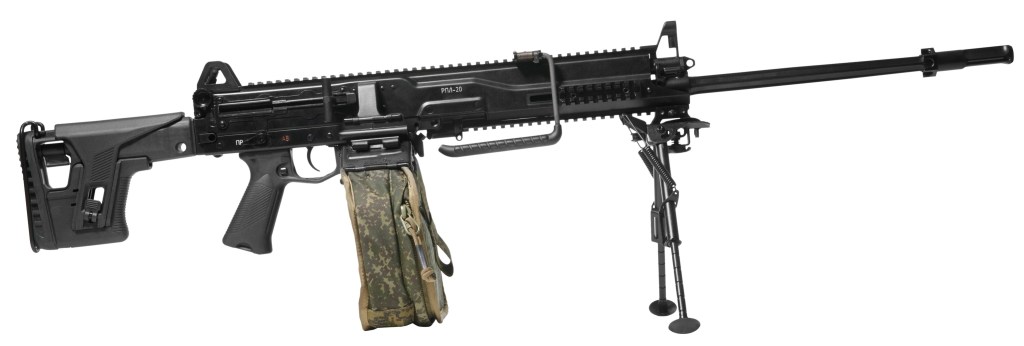
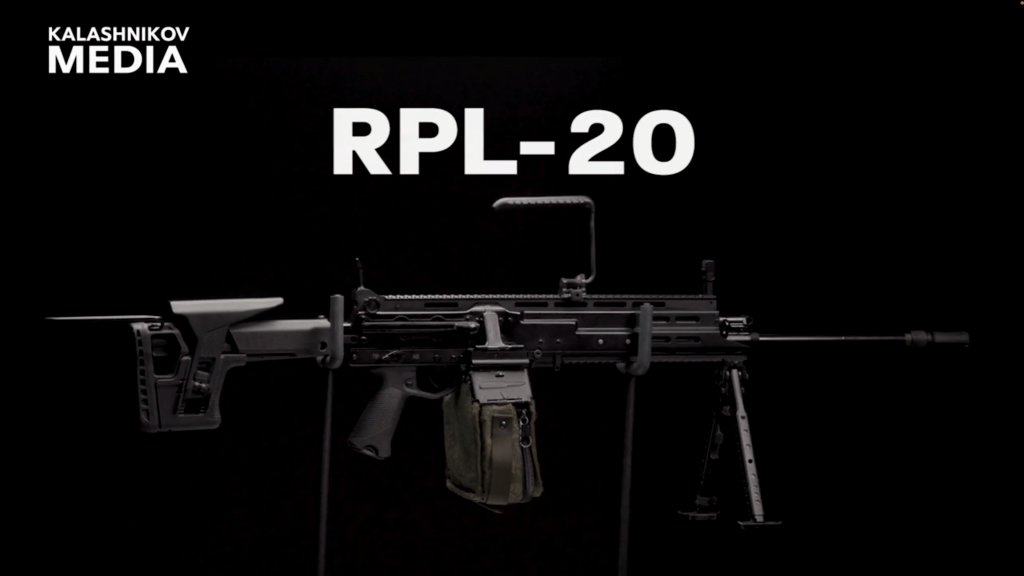
I’m excited to share this collaboration with firearms researcher Deni Almaskhanov, of Just Guns. Deni had the chance to attend the Army 2024 exposition in Moscow earlier this month. He has very kindly shared some great video and information about the latest version of Kalashnikov Concern’s RPL-20 light machine gun.
The RPL-20 at ARMY 2024 (Deni Almaskhanov)
The Russian armed forces haven’t used belt-fed LMGs since 1959 when the RPD was replaced by the RPK. The RPK-74M has been considered obsolescent since 2011. Kalashnikov Concern began exploring an RPK replacement in the 2010s with the RPK-16. The RPK-16 failed to satisfy the military due to issues with overheating and the reliability of its 96-rounds drum magazines. The RPL is a direct follow-up to the ‘Kipchak’ program during which the now extremely rare RPK-16 was trialed.
The RPL-20 was initially unveiled four years ago during the Army 2020 exposition but was stated to still be in development.
RPL-20 in its 2023 iteration (Kalashnikov Concern)
The RPL is a belt-fed light machine gun, chambered in 5.45×39mm, it feeds from metal non-disintegrating belts, carried in 100- or 200-rounds textile boxes, with a quick attach/detach mechanism. It fires from an open bolt but does not have a quick change barrel, although it is possible to replace the barrel during the disassembly of the weapon. This aligns the RPL with the simultaneously emerging Western concept of the light assault machine guns like the FN EVOLYS and the Knight’s Armament LAMG amongst others.
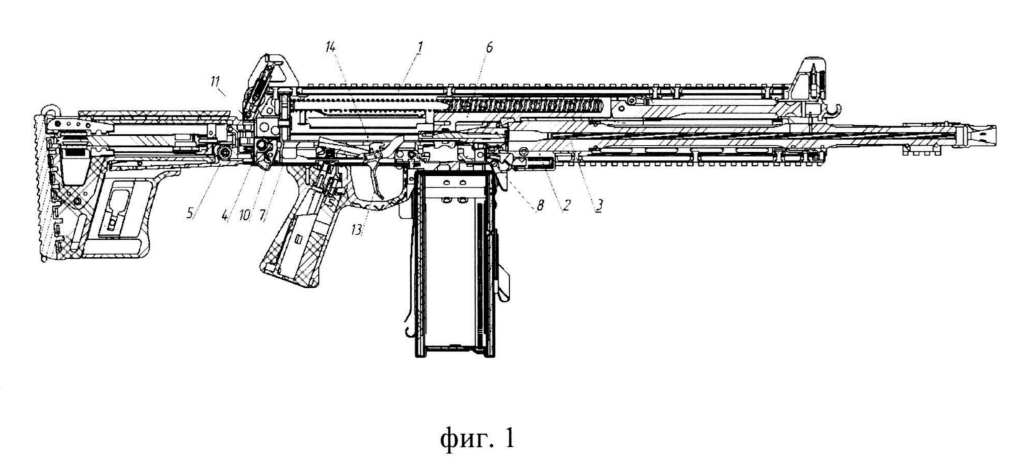
Russian patent diagram for the RPL-20 (Russian Patent Office)
Deni explains that the lower receiver is “fixed with a pin in the front end and a latch in the rear end… the latch is pressed, unlocking the pivoting movement of the lower receiver. Such a design was chosen to address the common requirement for all the modern firearms – a continuous top Picatinny rail that would allow for reliable mounting of accessories and aiming devices.” The receiver can be opened this way to reload, however, a faster and more expedient method of reloading the RPL-20 is to simply push a new belt through the firearm’s feed block and pulling the starter tab until the first round seats.
The RPL-20’s pistol grip and selector (Deni Almaskhanov)
The RPL-20 has a 2-position adjustable gas block mounted onto the barrel. Kalsashnikov Concern’s chief-designer Sergey Urzhumtsev describes the action of the machine gun as ‘an upside-down PKM’, but there are some important mechanical differences, such as the fact that the RPL-20 uses a push-through belt, unlike the PKM which pulls each cartridge backwards from the belt before chambering it.
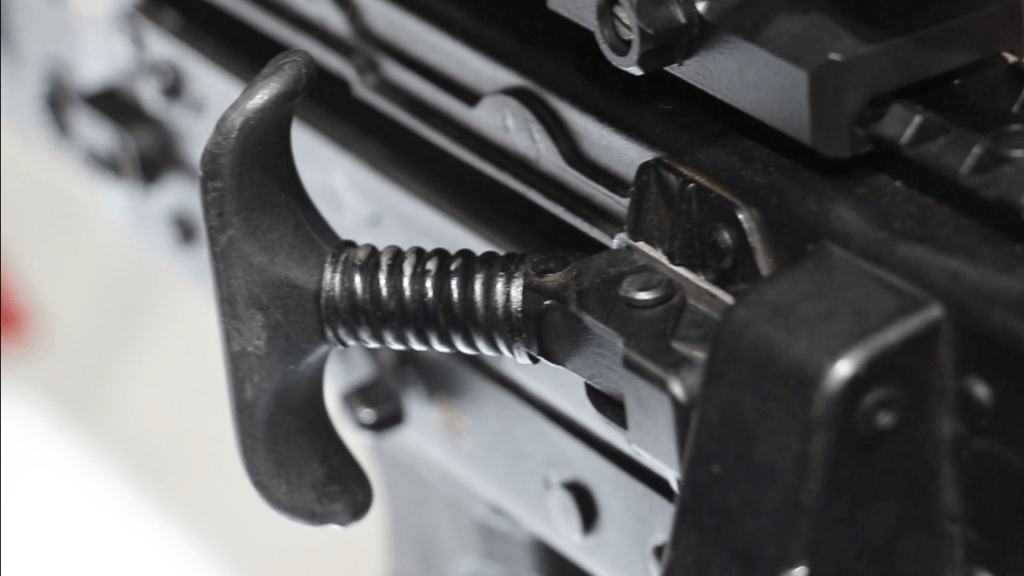
On the right side of the receiver, the RPL has a non-reciprocating T-shaped charging handle mounted onto a strong coil spring that is intended to prevent the charging handle from bending the weapon’s receiver or breaking the handle in the event of a heavy strike against it.
There are selector switches on both the left and right sides of the receiver only and the weapon fires in fully automatic fire only. The pistol grip and the buttstock are the same as those being also used on the 2nd and 3rd generations of the AK-12. The buttstock differs slightly in that it has an adjustable cheek rest and a foldable shoulder rest that can be flipped up over the shoulder. The gun on display was also seen with a cant-adjustable vertical front grip attached to the 6 o’clock rail.
The RPL-20’s charging handle (Deni Almaskhanov)
There is a small Picatinny rail at the muzzle end of the barrel intended for attaching the bipod in the forward position. With an alternate position on the handguard giving the user some tactical flexibility. The handguard is not a separate piece but a continuation of the upper receiver and it is connected to the barrel via the gas block. The weapon has a threaded muzzle device to allow the fitting of suppressors.
There are some notable external changes from the earlier iteration of the RPL. The weapon now has fixed front and rear sight protectors rather than folding iron sights. It also has some changes to the receiver geometry with the receiver no longer having a step but a slope ahead of the breech and more, angled, ventilation holes in the receiver.
RPL-20 as introduced in 2020 (Kalashnikov Concern)
The RPL-20 is reportedly undergoing state trials this year, so its remains to be seen if the light assault machine gun concept is one which the Russian MoD wishes to pursue. The nature of the war in Ukraine means that urban fighting and trench clearing have become increasingly important, perhaps this is a niche into which the RPL would fit.
My special thanks again to Deni for sharing this brilliant footage and information with me so I can bring you guys this video. Please do check out Deni’s pages – Telegram, Instagram, Youtube.
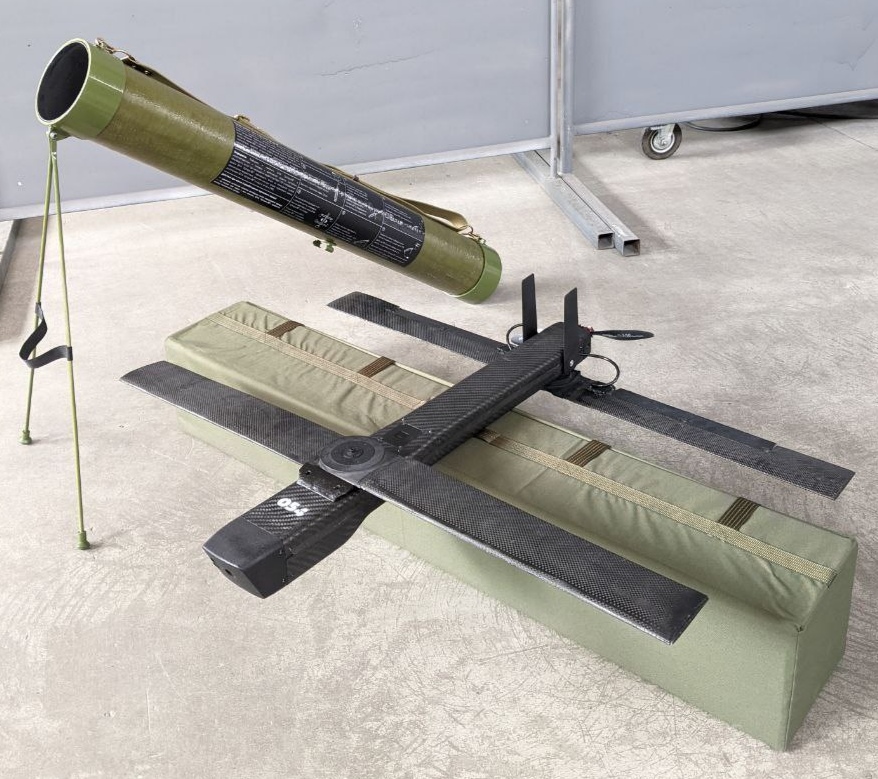
Reports from Russian media outlets announced on 18 September, that Android Technics/Technology, a Russian technology company, had developed an analogue of AeroVironment’s Switchblade 300 loitering munition. Imagery and footage of the BAS-80 was shared by Russian state news outlet RIA.
Android Technology’s Managing Director, Evgeny Dudorov, told RIA that they had provided a ‘couple’ of the loitering munitions to a volunteer unit, the Tsar’s Wolves, which reportedly provides military-technical assistance to Separatist units. Dudorov hopes that the unit will “find the best ways” to use the new kamikaze drone. Back in April, the development of the BAS-80 was first reported when Android Technology stated that the munitions would be mounted on the Marker armed unmanned ground vehicle.
BAS-80 (via RIA)
Russia has had considerable success in the field with its larger, heavier Lancet loitering munitions developed by ZALA Aero Group which is a part of Kalashnikov Concern. The most advanced variants of Lancet boast a 11lb/5kg payload. The Ukrainian’s, however, have demonstrated an edge when utilising smaller FPV kamikaze drones. These FPV drones appear to be favoured over the Switchblade 300.
The BAS-80 bares more than a passing resemblance to the US-manufactured Switchblade which the US has provided to Ukraine in moderate numbers since March 2022. Utilising the same folding wing configuration and man-portable tube-launch system.
Russian news sites this morning are awash with stories about this new Switchblade-clone developed by НПО "Андроидная техника" which is reportedly undergoing limited testing currently.
— Historical Firearms | Matthew Moss (@historicfirearm) September 18, 2023
Dudorov stated that the BAS-80 is made from carbon fiber, weighs in at 3.7lb/1.7kg and has a maximum flight speed of up to 80mph/130kph. He also claimed that it can travel up to 18.6 miles/30km and carries a 1.1lb/500g payload – which may suggest that its intended for anti-personnel and anti-materiel use, like the Switchblade. This would made the BAS-80 0.6lb/300g lighter than the Switchblade 300 and have 12.5 miles/20km more range. Photographs of the munition show that it uses a pusher propeller configuration and has three forward-facing optical lens for guidance.
A Switchblade 300 in the field in Ukraine, 2022 (via social media)
It remains unclear if the Russian munition was developed using technology found in captured Switchblade 300s. Other analogues of the Switchblade have been developed by both China and Iran. China unveiled the FH-901 loitering munition in September 2022 and Iran introduced the Meraj-521 in October 2022. Both systems appear to be externally different in size and shape to that of the BAS-80, with the Chinese munition larger (more analogous with the Switchblade 600) and the Iranian drones launching from a rectangular box. The BAS-80 launches from a cylindrical tube more akin to the Switchblade.
The BAS-80’s guidance systems, software and internals remain unknown and from Russian reports it is still some way from mass production with development to be finalised following trials in the field.
Support Us: If you enjoyed this video and article please consider supporting our work here. We have some great perks available for Patreon Supporters – including early access to custom stickers and early access to videos! Thank you for your support!
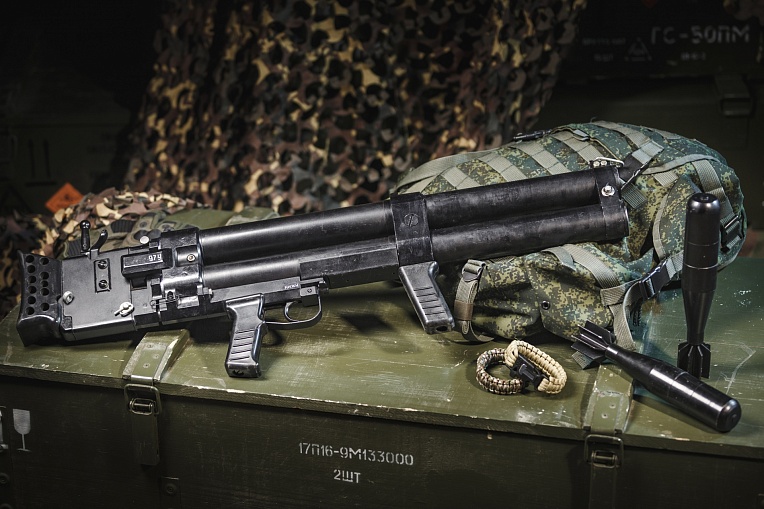
On 20 March, Russia’s State news agency RIA shared a short report from Ukraine. In it an RIA reporter looked at an interesting double-barrel grenade launcher – a DP-64.
The DP-64 was developed in the late 1980s to combat Frogmen/demolition divers. It’s described as an anti-sabotage grenade launcher to protect maritime assets. Designed at NPO “Basalt” the DP-64 is manufactured by ZiD/Degtaryev in Kovrov.
Factory photo of DP-64 (ZiD)
In the past 18 months ZiD appear to have removed the military products from their website but using archive.org we can look at earlier caches of the site. This version of ZiD’s website from April 2021 shows the DP-64 and gives a short description of the weapon (machine translated below):
“Designed to protect surface ships, submarines (in the surface position), as well as oil and gas production offshore platforms and the coastline by mobile patrols from attack by detected combat divers and saboteurs.
The grenade launcher operates according to the scheme of a dynamo rocket-propelled grenade launcher and provides single firing of FG 45 and SG 45 grenades. It is included in the ammunition load of combat surface submarines and boats.
High-explosive grenade FG-45, which is designed to destroy combat swimmers and signal grenade SG-45, which is designed to indicate the location of combat swimmers.
The grenade launcher is mobile and lightweight. Works in any climatic conditions, easy to operate and maintain.”
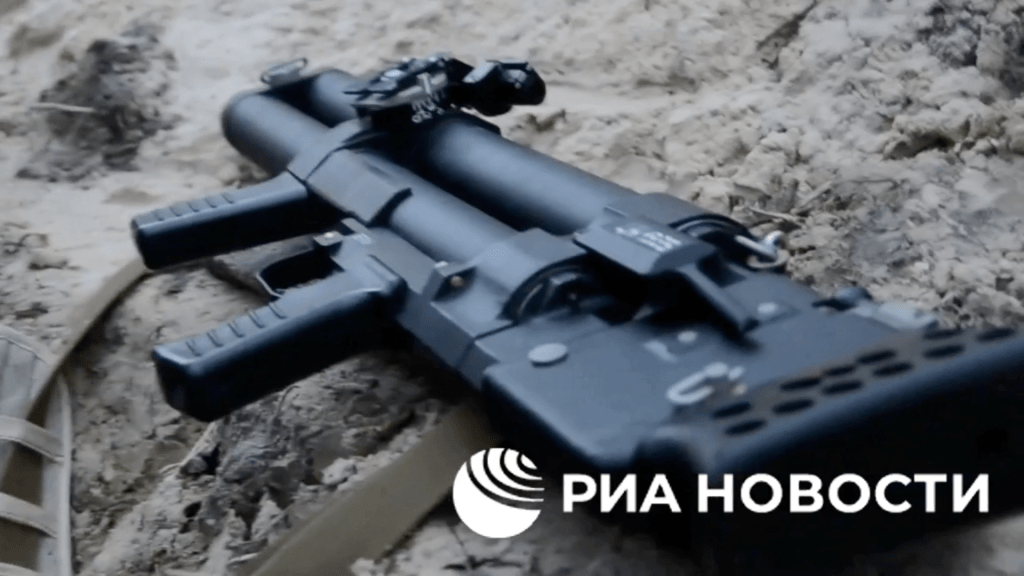
In the short report gives very few details and doesn’t even mention the weapon’s name. The video’s caption, however, notes that the DP-64 is being used by a VDV unit stationed at the Kakhovka Reservoir – possibly guarding the reservoir’s hydroelectric plant. A Russian combatant interviewed mentions that it has been used against ‘DRGshnikovs’ or sabotage and reconnaissance groups.
Still from RIA’s report giving a look at the DP-64 (RIA)
An b older Russian news report from around 2015, shows how the weapon is loaded and fired. It has a quadrant sight on its left side and its superposed barrels are loaded from the rear. It fires either fragmentation or indicator 45mm grenades. It has a range of up to 400m according to ZiD and is designed primarily for use against underwater targets.
The RIA news report is the first time I’ve seen a DP-64 in imagery from Ukraine. It is certainly one of the more niche weapons to appear.
Specifications (from ZiD):
Calibre
45mm
Number of barrels
2
Weight of grenade launcher
10kg
Maximum firing range
400m
Overall length
820mm
Update – 17/10/23:
Another sighting of a DP-64, posted on a Russian telegram channel. Date and location of photograph unknown.
Update – 2/8/24: A rare sighting of a DP-64 during Russian naval drills, location known.
During ongoing Russian naval exercises the Russian MoD released this rare photo of a DP-64 Anti-Saboteur Grenade Launcher.
— Matthew Moss | Historical Firearms (@historicfirearm) August 2, 2024
Support Us: If you enjoyed this video and article please consider supporting our work here. We have some great perks available for Patreon Supporters – including early access to custom stickers and early access to videos! Thank you for your support!





 The Armourers Bench