3D Printed Evolution of Drone Munitions

Since Russia’s invasion of Ukraine in February 2022 the use of drones for reconnaissance and tactical missions has evolved so rapidly it has come to characterise the war. The tactic of dropping hand grenades from commercial drones has evolved into the use of larger drones and larger munitions and the use of first person view (or FPV) one-way, kamikaze drones.

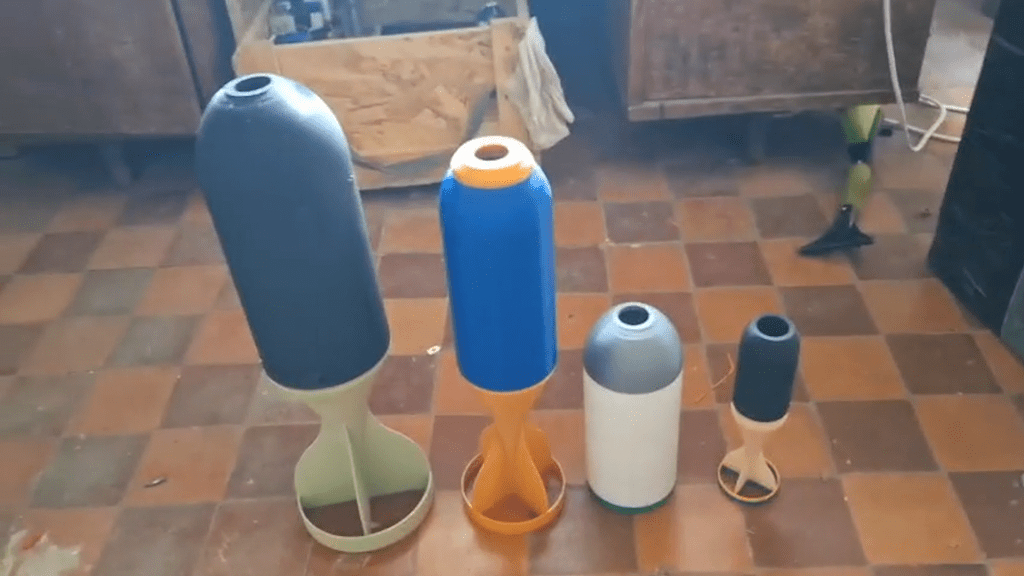
L-R: V3 XL ‘Big Mac’, V2, V1 & small VOG-sized casing (via Joe MacDonald)

Joe MacDonald, a British volunteer currently fighting in Ukraine, has kindly shared a short video showing some of the newest munitions that have been in use with his drone team for some time. Joe has led the development of a series of munitions of varying sizes. These range from small 450g bombs up to 3.5kgs which are dropped from a range of drones, small Mavic-type drones up to the ‘Baba Yaga’ heavy bomber drones.

This short video from Joe just goes to illustrate the importance of 3D printing in the development and manufacture of drone dropped munitions. The 3D printed casings are loaded with explosives and shrapnel which can then be fuzed ready for deployment in the field. The 3D printed designs have only grown more sophisticated, evolving originally from printed trail sections and nose cones.

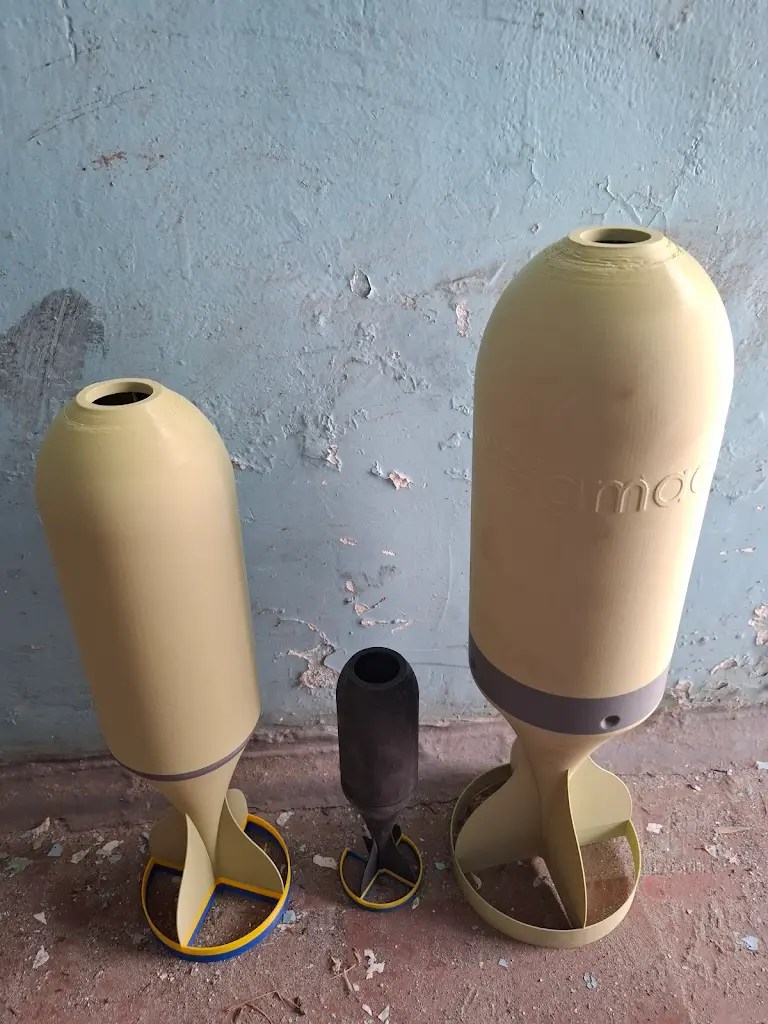
3D printed drone munition casings with tail assemblies (via Joe MacDonald)

Importantly, the use of 3D printing allows for the casings and tails to be standardised and consistent. The 3.5kg V3 takes up to 24 hours to print, they could be printed faster but Joe explained that this sacrifices rigidity and robustness and he prefers the munitions his unit uses to be soldier-proof and capable of standing up to handling. Joe also noted that packing the casings with plastic explosive takes force which the cases have to be able to stand up to. While there are plenty of other case and tail designs in use the designs Joe led the refinement and development have been used by numerous Ukrainian brigades.

Special thanks to Joe for sharing the video and taking the time to explain how drone munitions are assembled, I highly recommend checking out Joe’s channel, Big Mac’s Battle Blogs, he regularly shares some really interesting insights.


Support Us: If you enjoyed this video and article please consider supporting our work here. We have some great perks available for Patreon Supporters – including early access to custom stickers and early access to videos! You can also find us on the History of Weapons & War app. Thank you for your support!
Anti-Tank Mines Used As Satchel Charges

In recent weeks there have been a spate videos showing Russian troops using TM-62 anti-tank mines as improvised satchel charges. We’ve already seen TM-62s used as drone dropped munitions and as demolition charges. The videos shared most recently show the dramatic effect that the TM-62s can have on structures. But they aren’t the first videos of the mines being used in this way to emerge from the conflict.

Back in April 2023, overwatch drone footage was shared which showed a Ukrainian soldier using a satchel charge, which appears to be a TM-62, to destroy a Russian fighting position. The charge detonates about 10 seconds after it’s tossed into the position. Almost a year later in early March 2024, another piece of drone footage showed troops from the 2nd mechanised battalion of the 30th mechanised brigade destroying what appears to be the entrance to a cellar near Syn’kivka, in Kharkiv Oblast, with a TM-62 satchel charge.

A Russian soldier posts a TM-62 through a window (via social media)

Several days later another video showed a member of the 81st Airmobile Brigade using a TM-62 to destroy Russian dugouts near Bilohorivka. In the video a Ukrainian serviceman can be seen lighting a length of safety fuze which appears to be taped to the body of the mine. He then throws the mine into a hole in the roof of a dugout and takes cover – approximately 20 seconds later it detonates. Several grenades are thrown into the dugout and another mine is brought up, we can see the mine is being carried by its attachable webbing carrying handle. The safety fuze on the mine is lit and thrown into a covered section of trench and detonated approximately 22 seconds later.

On 12 April, the 109th Territorial Defense Brigade shared video of urban operations in which Ukrainian troops, with covering fire from HMMWVs, used satchel charges to destroy several buildings. The drone footage of the operation isn’t clear enough to make out if the satchel charges used are TM-62 based but the charges clearly have a significant blast effect.

Depending on the variant TM-62s mine are packed with 7.5kg (17lbs) of explosive and is normally centrally fuzed by a mechanical MVCh-62 pressure fuze. It is a High-Explosive Blast (HE-Blast) mine typically with a TNT filling. While extremely potent they aren’t designed to be thrown, weighing 9.5–10kg (20-22lbs). 

A Ukrainian soldier lights a safety fuze to ignite a TM-62 (via social media)

While in some videos its clear that some sort of cord fuze was used to initiate the mine in some of the more recent footage it appears that grenade fuzes may have been used. This gives the user very little time to escape the blast radius.

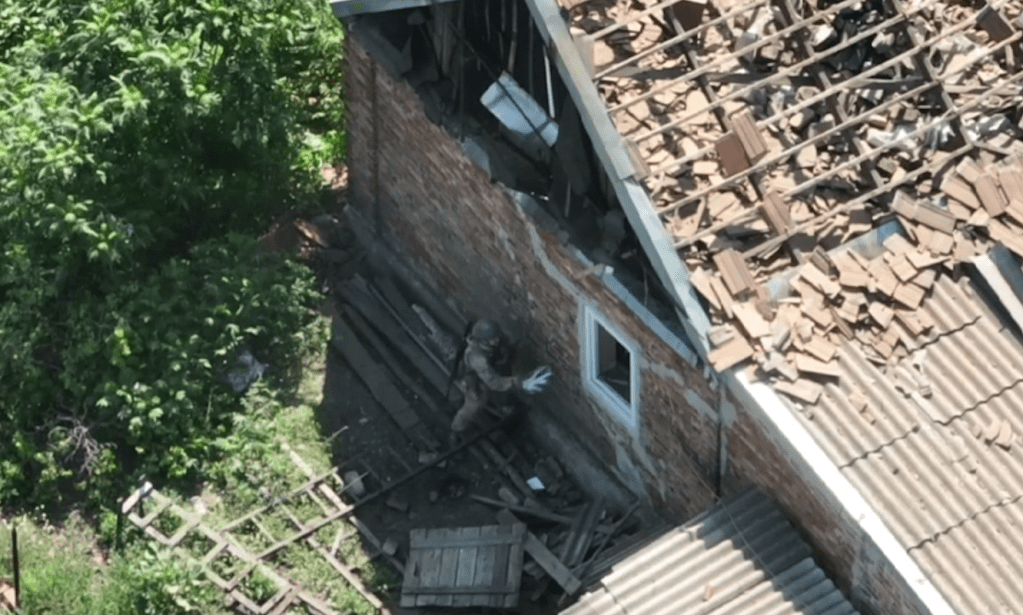
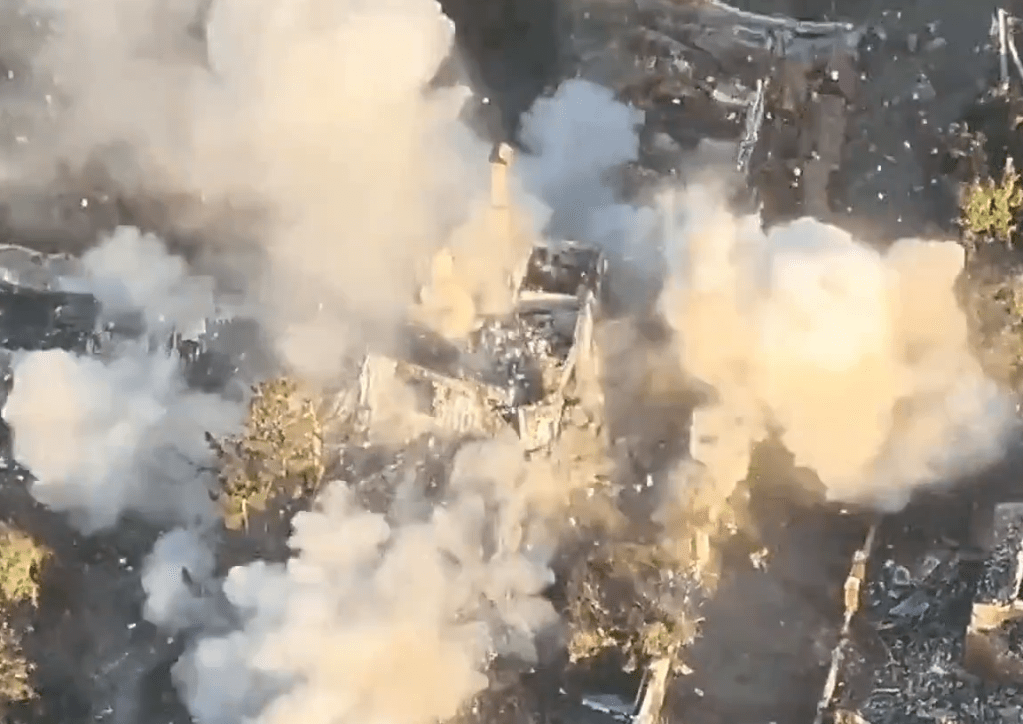
On 2 July, a Russian telegram channel shared the first of several videos of Russian troops using TM-62s to clear positions. The location of the video isn’t stated but it shows Russian soldiers tossing a pair of what appear to be a TM-62Ps (which have a red-orange Bakelite case). Two days later another drone video showed [better quality version] a Russian soldier run up to a building and throw a TM-62 through a ground floor window, he runs clear but the mine detonates just three seconds later. It’s unclear from the video when he initiated the fuze, likely before approaching the building. The charge effectively collapses the corner of the two storey structure’s outer wall.

A TM-62 satchel charge destroys the corner of a building (via social media)

Russia telegram channel WarGonzo shared another video on 5 July, reportedly filmed in Niu-York, Ukraine, showing a member of the 9th Separate Guards Motor Rifle Brigade using a TM-62 to destroy a building which was said to have been occupied by Ukrainian troops. The Russian soldier can be seen pulling a pin on what may be a grenade fuze just before throwing the mine through a window. The mine detonates just three seconds later completely destroying the small building.

Another spectacular video was shared on around 7 July, showing two Russian soldiers deploying a pair of TM-62s against a large building, the location of which isn’t stated. They are seen approaching the building, pulling fuze pins and tossing the mines in. As they turn and run the mines detonate just three seconds later demolishing the building.

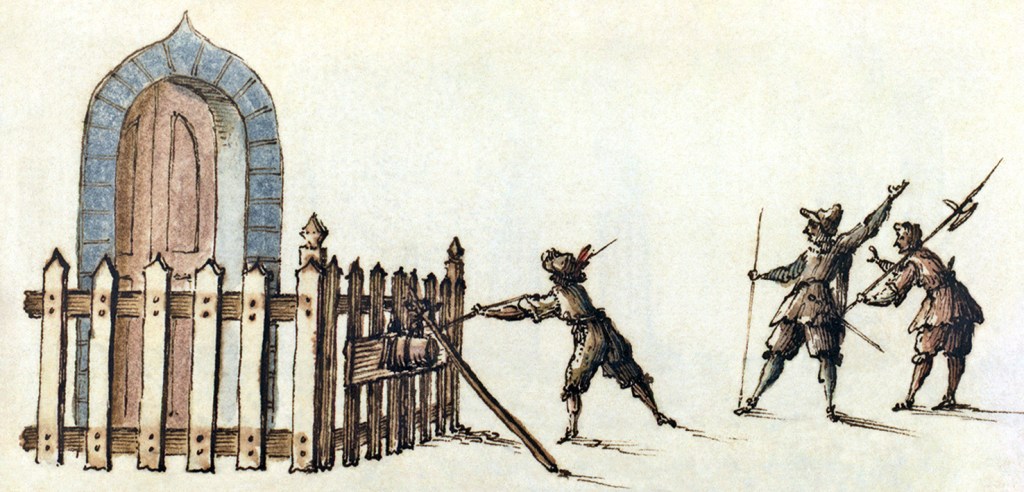
While in most of these videos the men deploying the mines appear to get clear they do beg the age old question of whether some of the soldiers deploying the mines are inevitably ‘hoist by their own petards’ – the etymology of that phrase being a reference the the dangerous business of 16th century sappers being killed or injured while deploying Petards, a historic equivalent to a modern demolition or satchel charge.

16th century engineer deploying a petard (via Library of Congress)

It’s clear from the available imagery that both Russia and Ukraine have utilised TM-62s as ad-hoc satchel or demolition charges since at least early 2023 (and likely earlier). It’s unclear how widespread of a practice the use of the mines is but it is clearly highly effective and while it puts the user deploying the mine at significant risk it appears an effective way of clearing enemy positions if the charge can be delivered successfully.

Update – 30/09/24: Footage of what may be an assault demolition, of an apartment block in Toretsk, using TM-62s.

Update – 21/10/24: A member of Ukraine’s Russian Volunteer Corps employs a TM-62 satchel charge during fighting in Vovchansk.

Update – 5/12/24:

Omega Team, an SOF unit with Ukraine’s National Guard, employ multiple TM-62s during a hit and run raid on a Russian strong point in an apartment block.

Update – 12/12/24:

An recent video of Ukrainian combatants using multiple TM-62 (or similar) anti-armour mines (минированию) as satchel charges in Toretsk was shared. The video shows half a dozen charges comprised of a pair of mines taped together with a delay fuze. These charges are thrown into the ground floor of a damaged building.


Support Us: If you enjoyed this video and article please consider supporting our work here. We have some great perks available for Patreon Supporters – including early access to custom stickers and early access to videos! You can also find us on the History of Weapons & War app. Thank you for your support!
Ukraine Captures First Turtle Tank

Since my last article/video on Russia’s ‘turtle tanks’ the adapted vehicles have continued to be used on several fronts but on Monday, 17 June Ukrainian forces captured their first turtle tank intact.

Known by numerous names by both sides including ‘Blyatmobiles’ (Блятьмобиль) and ‘assault garages’ (штурмовые гаражи), ‘Tsar Mangals’ (Царь мангал) or simply ‘sheds’ (сарай) the tanks are characterised by them being equipped with large counter-FPV shells made from readily available sheet metal (and other non-standard materials) and are sometimes equipped with electronic warfare jammers to provide additional protection against drones and sometimes with mine clearing devices such a mine rollers or ploughs. They appear to have been developed to provide improvised breaching vehicles capable of penetrating Ukrainian minefields, withstand drone attacks and in some cases deliver troops to an objective.

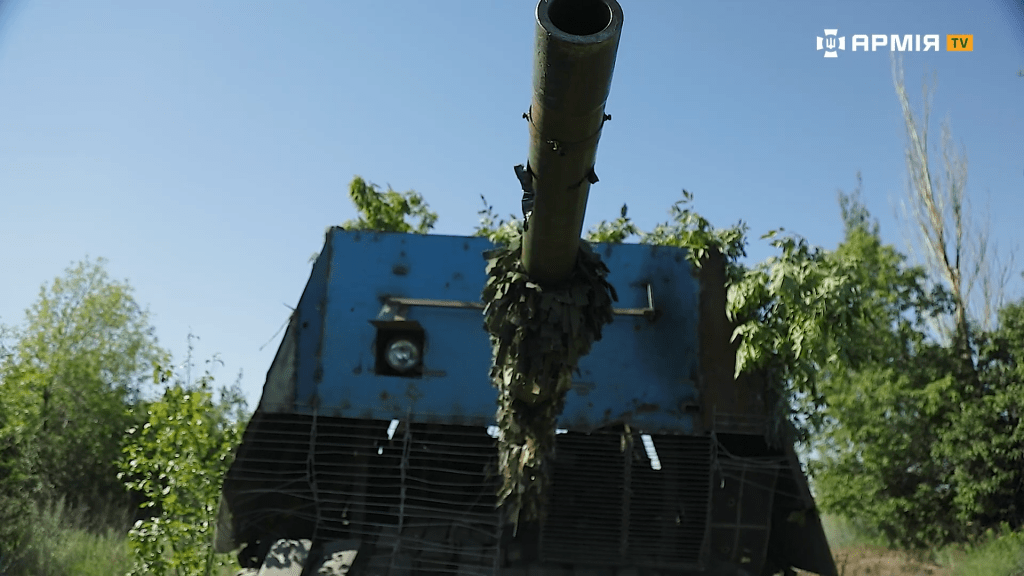
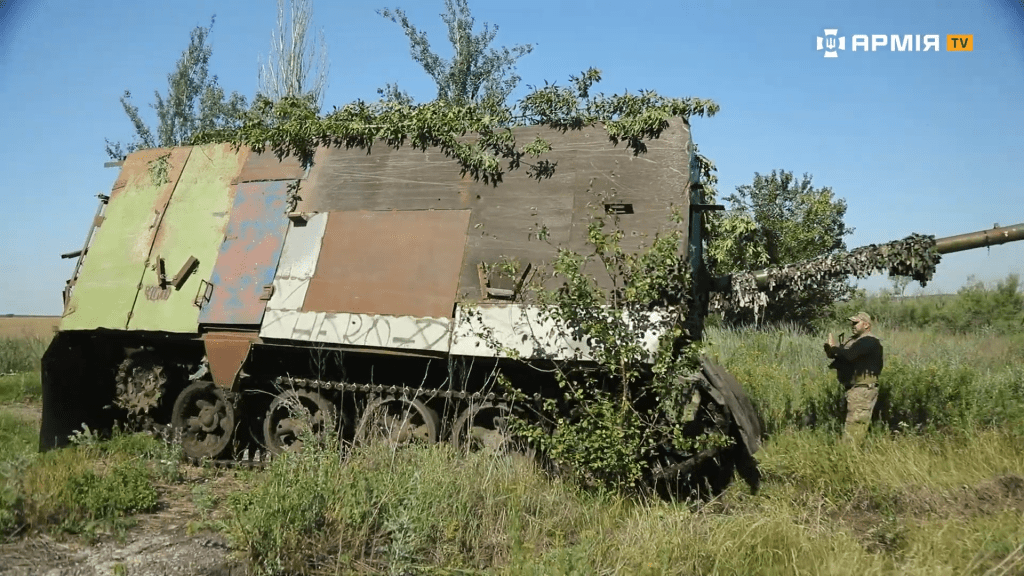
Front of the Turtle Tank captured in the field (via ArmyInform)

From posts on Ukrainian social media the tank was reportedly captured by troops from the 22nd Separate Mechanised Brigade but the vehicle was first encountered near Klishchiivka by soldiers of the 244th battalion of the 112th Territorial Defense Brigade that had been seconded to the 5th Assault Brigade.

The turtle tank allegedly became lost in the Klishchiivka area and saw an M113 APC belonging to the 2nd Battalion of the 5th Assault Brigade and began following it. When the M113 crew spotted the enemy tank it attempted to hide. The tank, however, continued to follow and on reaching the M113 a member of the turtle tank’s crew said to be the driver got out to ask for directions. He was captured by medics of the 244th Battalion. From the footage available it appears that the following morning troops of the 22nd Separate Mechanised Brigade approached the tank and captured an undisclosed number of Russian troops who were travelling in the rear of the turtle tank’s counter-FPV shell. Despite numerous sources and accounts the timeline of the tank’s capture remains somewhat unclear.

The immobilised Turtle Tank captured in the field (via 22nd Separate Mechanised Brigade)

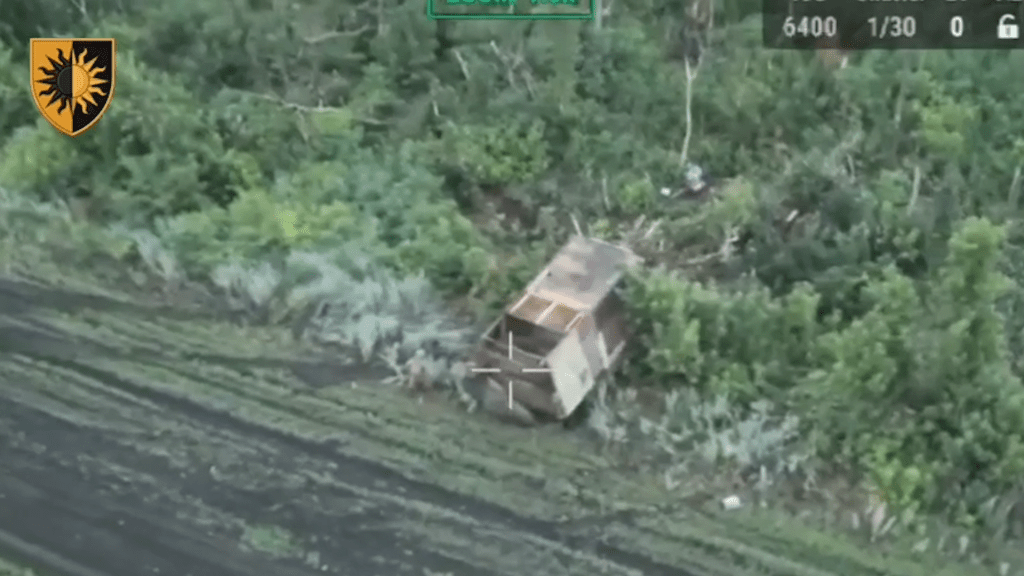
Subsequently released footage from a 22nd Mechanised Brigade drone appears to show the Turtle Tank being damaged by a drone dropped munition before it was captured. The post with the video claimed that the turtle tank’s crew became disorientated after the drone attack and mistakenly drove towards Ukrainian lines. Lt. Colonel Serhiy Misyura, of ArmyInform, also noted that the vehicle was struck by an FPV. Lt.Col. Misyura claims that the drone dropped munition detonated next to one of the tank’s road wheels and immobilised it. After it was captured Ukrainian troops were able to get the tank moving again and drive it to the rear.

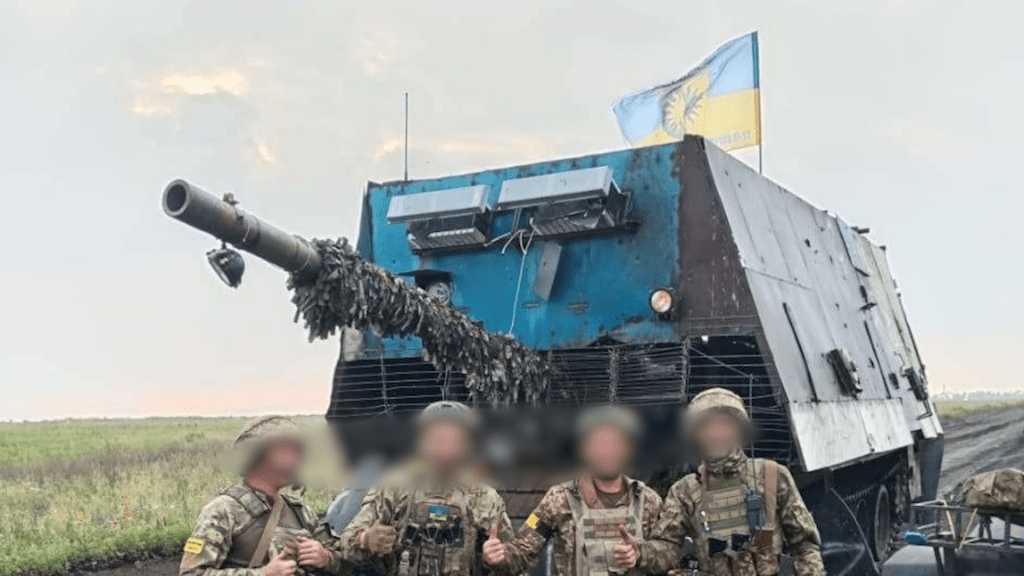
Drone footage then shows the capture of the tank’s crew and the vehicle moving off towards the Ukrainian rear. Teoyaomiquu shared a short clip filmed by a member of the 93rd Mechanized Brigade which showed the captured tank passing by, the 22nd Mechanised Brigade’s flag can be seen flying from the top of the tank. In a photograph of the tank and some of the men who captured it the same flag can be seen. Another piece of footage showing the tank close up also appeared online on the 18th June. The video shows the front, rear and left side of the tank’s counter-FPV shell.

Right side of the captured Turtle Tank (via ArmyInform)

On the 19th June, the 112th Territorial Defense Brigade shared a short video showing the confused captured tank driver sat in the rear of an M113. On the 20th June, ArmyInform, the Ukrainian Armed Forces’ news outlet published a video on their YouTube channel giving us an up close look at the captured tank in detail during which Lt. Colonel Misyura describes it as a ‘marvel of modern Russian engineering’.

The Ukrainian Army were quick to capitalise on the propaganda value of finally capturing one of the Tsar Mangal (Tsar’s Barbaque) / assault sheds in tact, at the time of publication the video has over 650,000 views on YouTube alone.

Examining The Turtle

Since late April we have seen many variations on the ‘turtle tank’ theme, this example is certainly one of the least refined. Firstly, the tank does not appear to have been equipped with mine clearing kit as some of the other tanks have. However, it has been outfitted with what appear to be some sort of EW jammer to counter drones. Additionally, we can clearly see several UDSh smoke generators, held in a pair of brackets on either side of the shell. These have sometimes been misidentified as standard TM-62 anti-tank mines but the UDSh is a smoke generator which mimics the mine’s shape for training purposes. In this case they have been repurposed to enable the tank to create a mobile smoke screen. According to CAT-UXO the UDSh can be initiated electronically or manually and once ignited discharges smoke for 8-10 minutes. In the ArmyInform video it is also noted that the Kontakt ERA blocks seen on the tank’s glacis are empty.

Ukrainian troops pose in fron of the captured Turtle Tank (via social media)

The tank itself is a T-62M and according to Ukrainian sources the turret is fixed in place and the tank carried no ammunition for its main gun, making it largely defenceless in isolation from supporting elements. The counter-FPV shell is crudely assembled made up of a mish-mash of materials including metal sheeting which ranges from rusted bare metal to various worn paint colours, wire fencing and metal caging. There also appears to be rubber matting attached front and rear to help keep dust down. The top of the shell over the tank’s engine deck appears incomplete and may have been damaged. In the ArmyInform video which shows the area in-detail it is clear that the counter-FPV shell’s support struts were welded directly to the top of the hull and a number of large and small shrapnel holes in the shell are visible.

Top of the captured Turtle Tank (via ArmyInform)

It appears that between when the vehicle was captured and when the ArmyInform video was filmed the Ukrainian have removed the assemblies, which may have been EW jammers, on the front of the tank. Its unclear how long the adapted tank has been in service but their is evidence of past repairs and there are numerous spray painted slogans on its panels including ‘god is with us’, ‘Hero-Z’ and ‘154 RUS’ (a possible joke reference to Russian vehicle registration plates). If this is the case it might hint at the origins of the Russian crew. ‘154’ is a registration code for the Novosibirsk Oblast which is the home of the 41st Combined Arms Army. In one clip of the tank it also has what appears to be a stolen ‘1941’ sign (possibly from a Great Patriotic War memorial) attached to the rear of its shell.

Check out our previous article/videos on the turtle tanks here.


Support Us: If you enjoyed this video and article please consider supporting our work here. We have some great perks available for Patreon Supporters – including early access to custom stickers and early access to videos! Thank you for your support!
LMT Standalone M203s In Ukraine

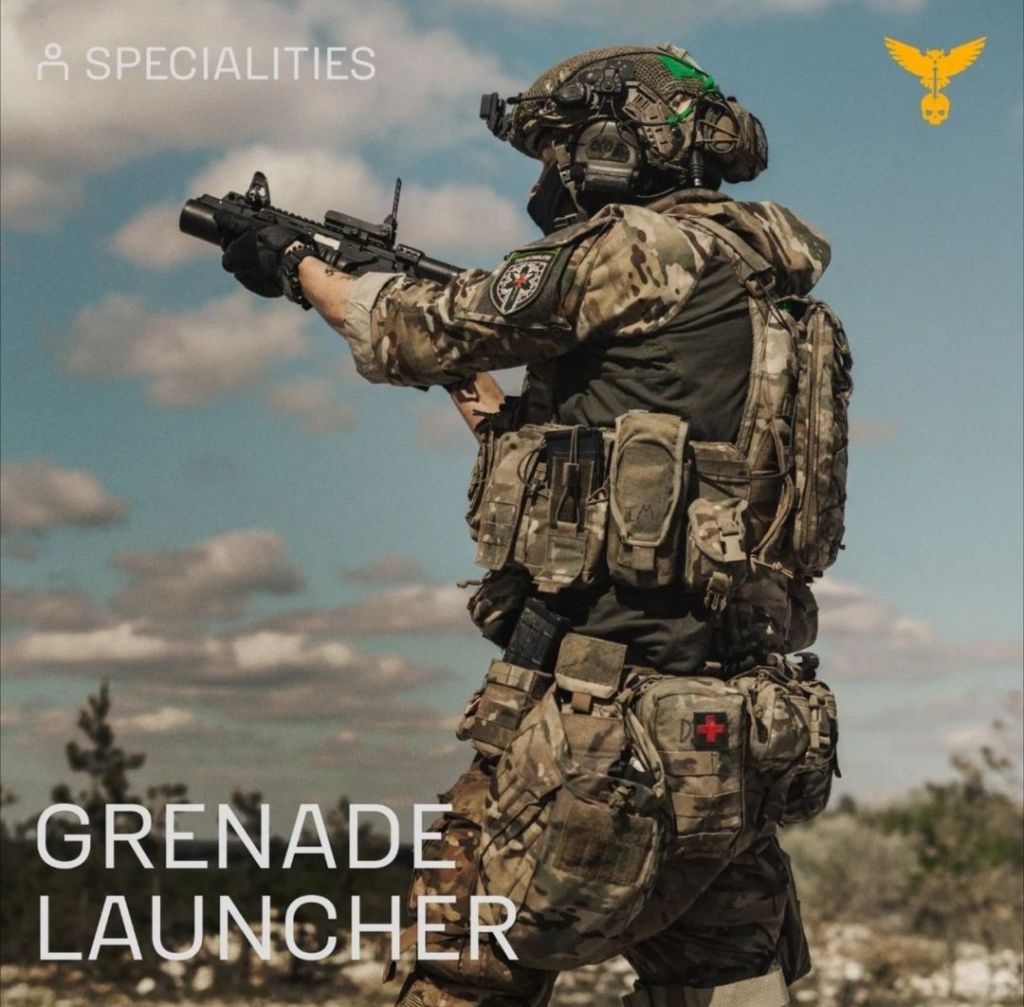
In this series looking at weapons used in Ukraine we’ve looked at a number of different grenade launchers including GP-25s adapted for standalone use, FN FN40GLs, discharger cups for hand grenades and perhaps the rarest grenade launcher seen in Ukraine so far; the standalone Colt M203. Another interesting and fairly rarely seen grenade launcher that began to appear in Ukraine last winter is LMT’s standalone 40mm M203.

LMT offers a series of M203-derived launchers and two standalone stock attachment methods. The Iowa-based company introduced its 40mm grenade launchers in 2003. The launchers seen in Ukraine appear to be the rail mounted version with a 9 inch long barrel.

An LMT M203 in the field (via Rogue Team)

The first sighting of an LMT M203 in Ukraine came in November 2023, when Georgian volunteer O.d.i.n.s.o.n., part of the GUR/HUR (Ukraine’s Main Directorate of Intelligence)’s Omega Team, posted a photo of one side by side with a standalone GP25. The launchers likely arrived in country a little earlier, speaking to TAB at the time he noted that “the aiming module is a little weird. It has like an M4 forward sight and GL [grenade launcher] distance adjustable rear sight but it’s on top of the weapon. So it doesn’t force you to arc the barrel Like a GP25 does.”

The next appearance of one of the launchers came in late February 2024, when Scorpion Protection Group, another SOF group, shared a photo of a combatant training with one. A third GUR unit, Rogue Team, have also posted images featuring an LMT M203. The first image was shared by a team member on 17 March. This was followed by an image shared on the team’s Instagram page on the 5 April.

LMT M203 rail mounted version with 9in barrel – right side (LMT)

On the 14 April, a photo posted by one of the Kraken Regiment’s (also under the GUR) teams also appears to include a standalone LMT M203. Most recently on 16 April, a Spanish member of Omega Team, shared a photo of an LMT M203 with its action open with a round ready to load. On the same day TAB spoke again to Omega Team member O.d.d.i.n.s.o.n. at length about the launchers.

O.d.i.n.s.o.n. explained that the unit switched from rotary 40mm grenade launchers to standalone GP25s and LMT M203 as they are lighter and less bulky than the rotary launchers. He reiterated the difference in the LMT sight from quadrant sights found on other launchers and noted that “instead of a switch or a selector it has a little hook that you pull back and it prevents your finger from going on the trigger.” This is a carry over from the original M203 on which LMT’s launcher is based.

When comparing the GP25 and M203 O.d.i.n.s.o.n. noted that the M203 is light, effective and has a ‘really nice stock’ but he dislikes that the M203’s action has to be opened to reload, unlike the GP25 which when fired “leaves nothing inside the tube and is faster on the reload.” When asked if he’d seen many other units using LMT launchers he explained that “most [International Legion] Special Task Units [affiliated with the GUR] have a couple.”

An LMT M203 with its action open (Courtesy of Delta Knights)

We also spoke with Delta Knights, another GUR Specal Task Unit made up of international volunteers, who confirmed they also use LMT M203s and said that they ‘really love it’ but one thing they do wish they had more of is 40mm smoke grenades, adding that the launcher is most often employed with High Explosive (HE) grenades. Delta Knights were kind enough to provide some photos and videos of the M203 in operation at the range.

While the imagery and information available confirms combat use of the LMT M203s in Ukraine it doesn’t give us a solid picture of just how many are in-theatre and other units who may be using them. As always the imagery shared online represents a fraction of what is going on and can only be considered a limited sample. In terms of the origins of the launchers one potential source for the LMT M203s is Estonia which adopted the LMT MARS-L as the R-20 in 2020. Some of the Estonian R-20s have been seen with LMT M203s and given Estonia’s considerable past support for Ukraine it is possible that they may have provided a number of the launchers.

Special thanks to O.D.I.N.S.O.N and Delta Knights for their time and insights and to the guys at Cloooud for additional assistance.

Update – 1/5/24: A recently shared International Legion recruitment social media post included an LMT M203.

Update – 25/7/24:

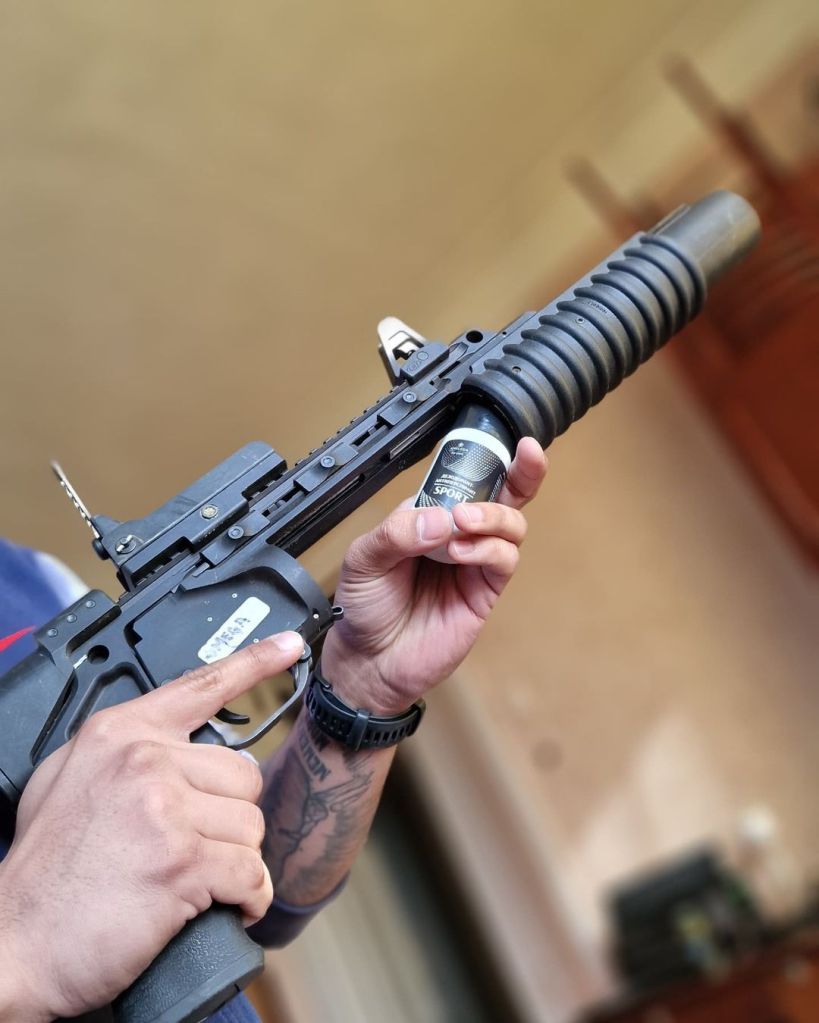
Update – 10/9/24: The ‘Expeditionaries’ Instagram page, seemingly affiliated with an international volunteer team shared a photo of an LMT M203 being jokingly loaded with a deodorant roll-on rather than a 40mm grenade.

Update – 10/01/25: Two additional archival sightings of LMT M203s. The first on the left dates from September 2024. The second, from DC Tactical was shared on 29 October 2024.


Support Us: If you enjoyed this video and article please consider supporting our work here. We have some great perks available for Patreon Supporters – including early access to custom stickers and early access to videos! Thank you for your support!


Bibliography:

9″ Standalone Rail Mounted M203, LMT, (source)

The LMT M203-2003 Grenade Launcher, Small Arms Defense Journal, (source)

Lmt M203 Grenade Launcher Stand Alone Frame, LMT, (source)

Periscope Rifles in Ukraine

With the war in Ukraine’s current trench-bound stalemate often resembling the First World War it isn’t too surprising to see an early 20th century innovation making a comeback. Several variations on the concept of a periscope rifle have been seen in Ukraine since the summer of 2023.

A still from Heroes of Gallipoli (1915) showing a periscope rifle (via IWM)

The concept actually pre-dates the First World War, with sights like William Youlten’s Hyposcope dating to 1900, but really emerged during the war with many nations developing similar periscope-based systems that allowed service rifles to be mounted in frames and fired over the parapet removing the need for soldiers to expose themselves when sniping.

The first design featured in an article by Jeff Farrell in June 2023, Farrell interviewed a Czech veteran of the International Legion, Marian Simunek, who was wounded and has since developed a periscope which a rifle can be mounted in. In a pair of videos Simunek demonstrated fitting the rifle into the periscope mount and how it would be fired. Simunek manages to mount an AK-74 in the periscope mount within 30 seconds. The stock folds down from the body of the periscope and is secured with the pistol grip and trigger assembly being lined up, the stock of the rifle is secured by two straps and then the trigger cable is attached to the rifle’s trigger.

A second periscope design emerged in late January 2024, when a short video showing a tall tripod-mounted periscope was shared. The video shows the testing of a prototype gun mount which can be raised up to above parapet height and allows the gun to be aimed using the periscope the gun is show being tested in both semi-automatic and fully automatic. The trigger is attached to a command cable which runs down to a front grip with an exposed trigger in front of it. The tall monopod isn’t the most stable platform but the user demonstrating it supports the assembly using the integrated stock and pistol grip assembly and holds the stand with his off hand. While the ability to quickly raise and lower the rifle mounted on the stand is useful, especially for reloading, but it may lack stability in the field.

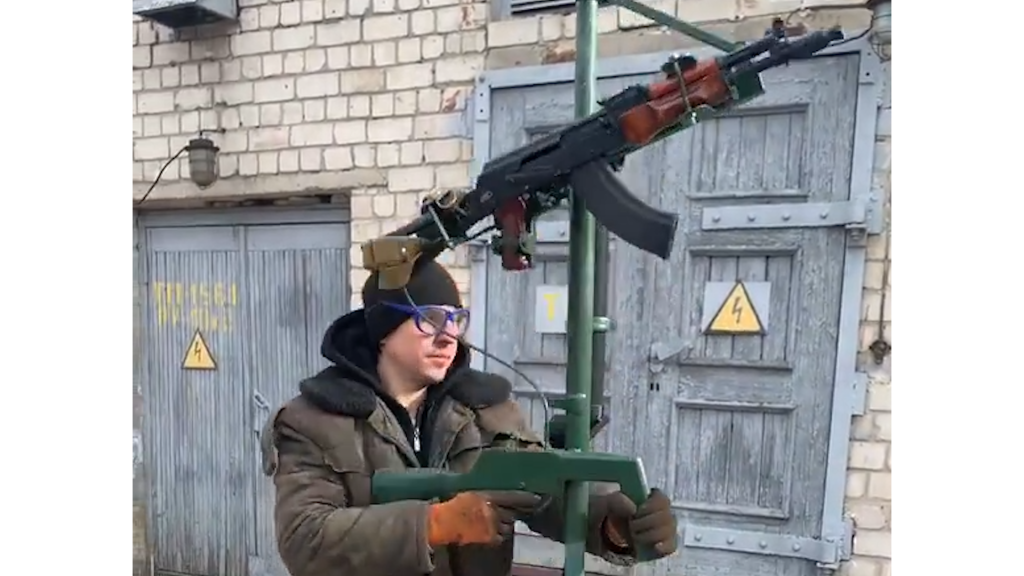
The third variation on the periscope rifle concept was shared on 18 March, with a short 22 second clip showing an AK-pattern rifle with its stock removed, mounted on a well fabricated pole with a periscope, an off hand support grip, a stock shaped like an AKS-74 folding stock and a pistol grip and trigger assembly which uses what appears to be a brake cable. In another video of the mount in the same position an individual demonstrates the articulation of the mount (albeit without a weapon installed). The mount has a wide tripod base and appears to be well made. The gun is set up in an urban environment behind a wall, likely for demonstration proposes. The this periscope rifle may be a more developed version of the previous design but I’ve been unable to find the original source for the video.

Interestingly, another video of as similar periscope rifle set up was shared, the design is clearly the same as that seen in the previous video. The shape of the stock has changed and the position and design of the stabilising forward hand grip differs.

While trench periscopes have been in use since the early weeks of the war, a more modern approach is the use of digital camera aimed remote weapons. These include the Shablya (sabre) remote weapon station developed by Roboneer, which has been in development since 2015 and has been tested with numerous different types of machine guns including PKs and M2 Brownings. Another similar system is the Tarantul, developed by engineers of the 118th Territorial Defence Brigade. This is a concept that Russian forces have also been experimenting with with a number of systems seen in test videos.

The available imagery of periscope rifle systems originating from the war in Ukraine is relatively small so its difficult to gauge their utility fully, I’ve yet to see any evidence of their front line use. They are a specialist piece of kit which depending on the design is suited to some environments more than others. If you’ve seen other examples of periscope rifle systems or evidence of their use in combat please do let me know!


Support Us: If you enjoyed this video and article please consider supporting our work here. We have some great perks available for Patreon Supporters – including early access to custom stickers and early access to videos! Thank you for your support!


Swedish K In Ukraine – Update

A few of weeks ago I published an article/video detailing the appearance of Swedish Carl Gustaf m/45 9x19mm submachine guns in Ukraine. One notable feature of the guns was that their configuration appeared to sit somewhere between the m/45A and the m/45B.

In the absence of clearer information I referred to these as m/45Bs, the most common variant and one which has the defining fixed magazine housing rather than the earlier removable magazine well seen on the m/45A. The fixed magazine well is an upgrade which was made before the later m/45B refit. It seems that there was some fluidity to how the upgrades were carried out which has led to guns with a mix of features.

An upgraded m/45A with the 41st Mechanized Brigade (Daily Mail)

From Swedish sources I’ve spoken to many of the m/45s seen in the imagery from Ukraine are early spec guns (m/45As) which may have been in storage and were not refit to the m/45B pattern. The m/45B refit was partially necessitated by the need to add an additional retention method to hold the receiver end-cap in place. Some sources suggest this was due to a type of training ammunition then in use, others point to it being simply extra security.

An m/45B (top) and an m/45A (bottom) with the fixed-magazine well upgrade (Henrik Jansson)

Working theories explaining the configuration of the guns seen in Ukraine include: that they are m/45A configuration guns which had been in storage and were retrofitted after the training ammunition left service and the additional end cap retention was no longer needed, so this change to the guns was omitted. As mentioned earlier, another reason may be that these are m/45As which had the magazine well upgrade but were placed in store or transferred before the broader m/45B upgrade was carried out.

As discussed in the initial video, it is thought that Estonia is a likely source for these guns as they received some of these guns in the 1990s and these m/45s have then subsequently been sent to Ukraine. Regardless of origin country the result is guns which do not have the additional end cap retention catch nor the green finish of the Swedish Army’s m/45B. They all feature the fixed magazine housing but there is also a mix of larger and smaller perforations in the barrel shrouds. [Note: Thanks to Jonathan Ferguson who noted that there is some variation in the size of shroud perforations within examples of both A & B model guns.]

A combatant in Ukraine with an m/45 c.early 2024 (via social media)

Since the last video a couple of other sources showing the m/45 in Ukraine were shared with me. Including this image of a Ukrainian combatant with a Swedish K which has the smaller barrel shroud holes. On 10 February a Daily Mail report, featured Thunder Company, an element with the 41st Mechanised Brigade. Members of the company show journalist Richard Pendlebury an m/45 that is in their inventory. The company’s deputy commander describes it as a ‘museum piece’. Both guns appear to be of the same configuration generally seen in Ukraine. On 4 March, another short video of a Ukrainian combatant firing an m/45 at what appears to be a range was shared. It’s unclear when or where the video was filmed.

My very special thanks to Henrik Jansson for his time, insights and imagery and to numerous others for their knowledgeable input. Thank you to Weapons_Illustrated for their help sourcing imagery, check them out on twitter.

Update – 24/5/24:

On 11 April, a soldier of the 2nd Battery of the 2nd Self-Propelled Artillery Battalion of the Field Artillery Regiment of the 3rd Assault Brigade shared a photograph holding an m/45. [h/t Cloud for sharing].

Update – 18/6/24:

Update 4/9/24: A new image of the Swedish m/45 submachine gun recently surfaced. (H/T AbraxasSpa)

Update 3/10/24: A photograph of what may be a member of the Ukrainian 129th Territorial Defence Brigade or potentially a member of the International Legion. He’s equipped with an m/45, note the three magazines in his chest rig and Ukrainian digicam pattern sling.


Support Us: If you enjoyed this video and article please consider supporting our work here. We have some great perks available for Patreon Supporters – including early access to custom stickers and early access to videos! Thank you for your support!

Vintage Weapons In a Modern War: Swedish K in Ukraine

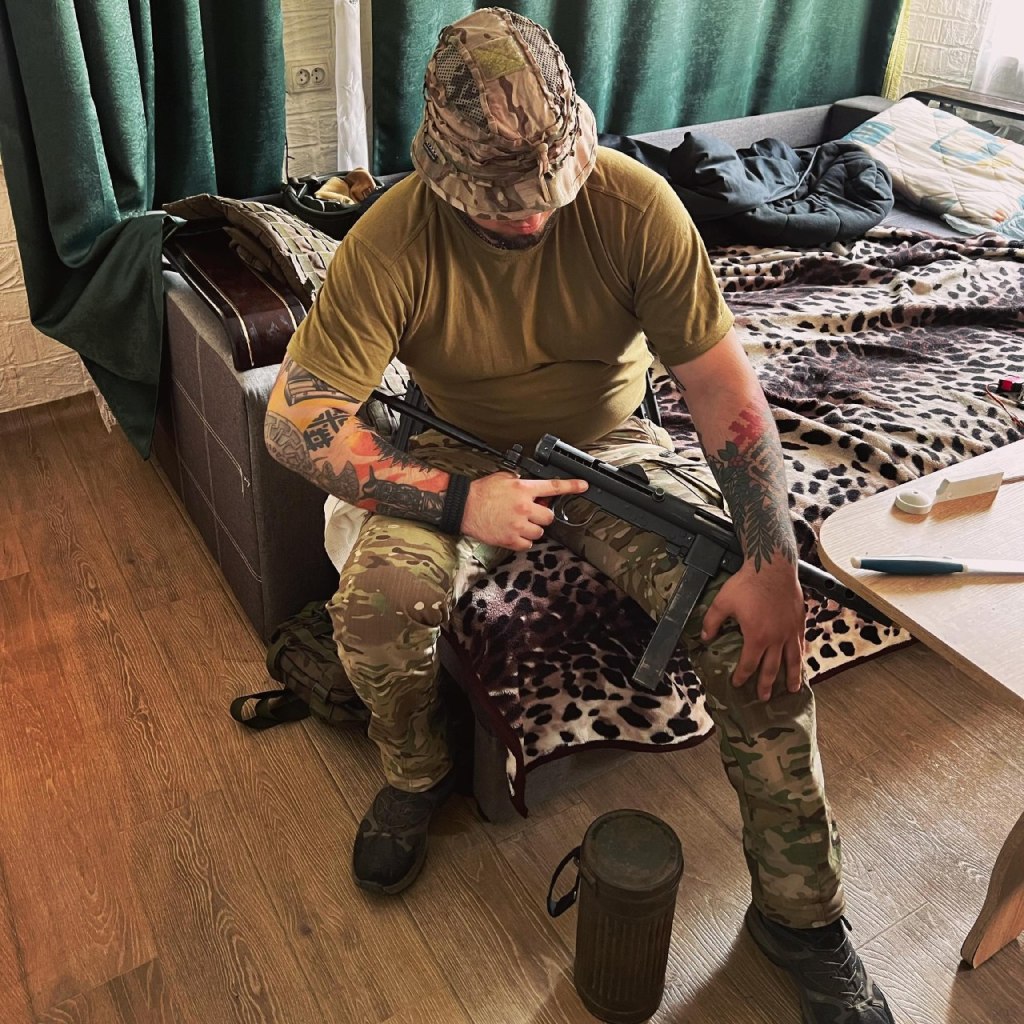
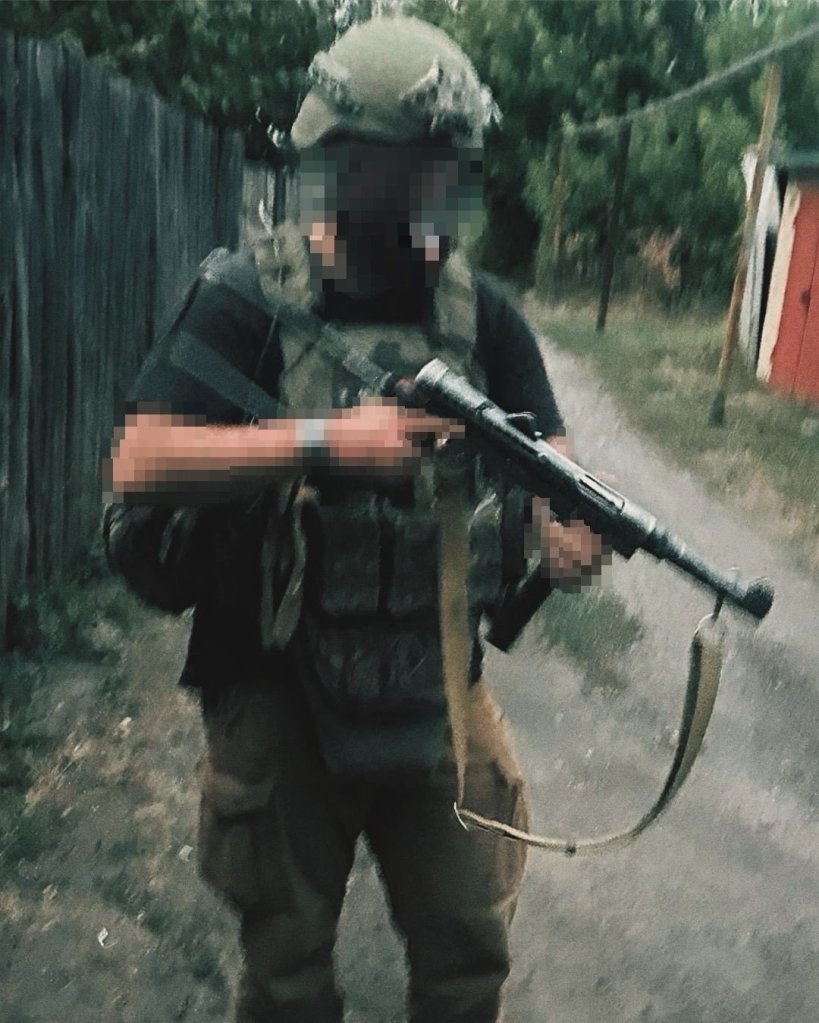
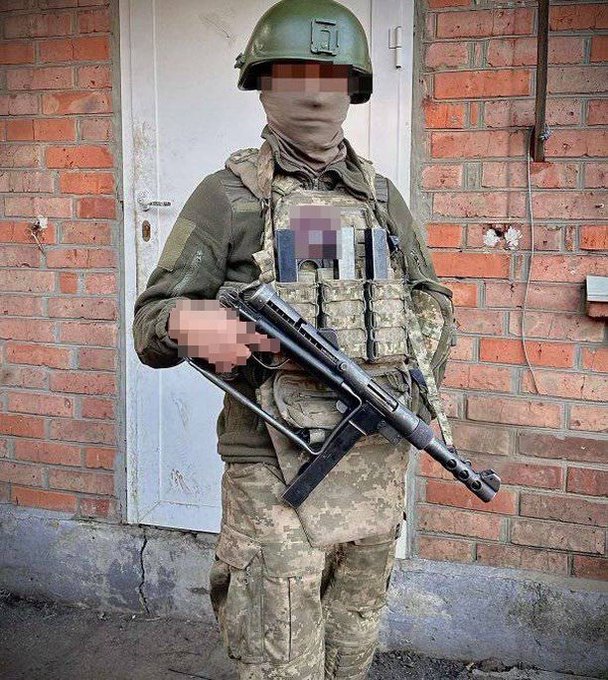
The war in Ukraine has seen a plethora of vintage weaponry being used by both sides. Everything from M1910 Maxims to TT pistols. One of the more surprising vintage weapons to turn up is the classic ‘Sweden K’. The Kulsprutepistol m/45 (Kpist m/45) perhaps better known as the Carl Gustaf M/45 has appeared in imagery from Ukraine numerous times over the past two years.

The most likely origin of the venerable submachine guns is either Sweden itself, whose home guard ceased using it in 2007, or Estonia, which received a number of the weapons from Sweden in the 1990s and for a time issued them to elements of thier Defence League.

Manufactured by Carl Gustafs stads gevärsfaktori from 1945 through to the mid-1960s the m/45 is a standard blowback submachine gun chambered in 9x19mm. The initial version had a detachable magazine well that enabled the weapon to feed from either a 36-round magazine or from Suomi KP/-31 (m/37-39 in Swedish service) magazines. The later m/45B variant permanently attached the magazine well limiting the weapon to feeding from the standard 36 round box magazines. The m/45B also incorporated a reinforced receiver end cap.

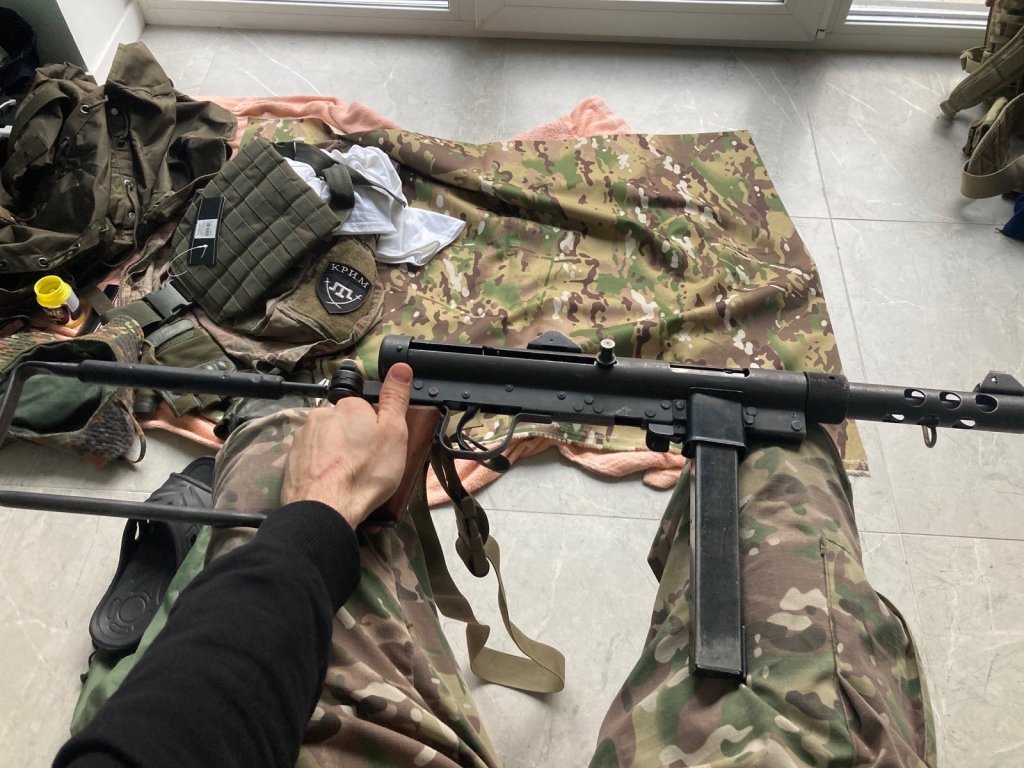
The earliest sighting of a ‘Swedish K’ in Ukraine I’ve found dates to early March 2022 when a member of the Krym Battalion posted a photograph of some of the weapons available to him; an AK-74, a Walther P99, an M7 bayonet and a Carl Gustaf M/45B.

Another image of a Ukrainian serviceman with an M/45 surfaced around the 23 March, but I’ve been unable to find the original source for the image so have little context for it.

In early May an photograph of an older member of the Ukrainian Armed Forces was shared on a number of sites, he’s seen sat in a vehicle holding up an M/45 with a sling attatched.

In mid-May 2022 another M/45 surfaced in a photograph from a member of Krym Battalion, which is a part of the International Legion. It’s unclear if this photograph was posted by the same member who shared a photograph of his weapons in March, but the wear marks on the gun appear quite similar.

On 10 November, a daily update post from the Ukrainian General Staff included a photograph of an individual holding an M/45 with a sling, while the unit the individual belongs to isn’t stated given the contents of the post he may have been assigned to a unit on the border with Belarus.

Throughout most of 2023 sightings of M/45s were rare but in mid-June a member of the National Guard posted a short video featuring himself holding a Swedish K as other members of his unit walk behind him, two of the passing men also carry slung M/45s.

On the 28 September, a Swedish volunteer posted a photograph of himself holding an M/45 he came across on the frontline, he captioned the post: “Photo of when I found a mint condition Swedish K with 39B ammo out close to the front. Just an awesome rare Swedish Gun to see in use by a Medic.” The unit where the M/45 was encountered was the 131st Separate Recon battalion. This suggests the photograph may have been taken earlier in the summer of 2023 and also that M/45s may be used by medics. The mention of the Swedish 39B 9mm ammunition which was specifically issued with the M/45 is also interesting. Most notably, however, is the presence of the attachment assembly for an original Swedish spent cartridge case catcher bag.

October saw the first video of a Swedish K being fired. A short clip was shared on Instagram showing an M/45B being fired at the range with what appears to be a red dot optic mounted forward on the perforated barrel shroud.

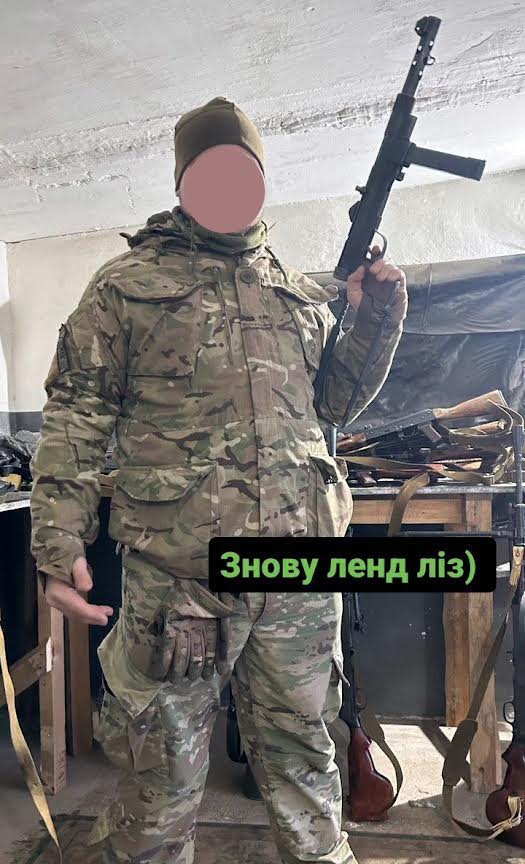
Several months later, on 11 December, a medic with the 12th Ukrainian National Guard Brigade “Azov” shared a photograph of himself holding an M/45. Later in December a member of the 78th Separate Assault Regiment ‘Herts’ shared a photo, on 21 December 2023, with the caption ‘lend lease again’, he’s holding up a behind him can be seen several DP-27 light machine guns and some AK-pattern rifles.

Interestingly, none of the M/45s have the green paint finish which was used on some of the Swedish Armed Forces’ guns but have clearly shipped with original slings and in one case a brass catcher attachment. Also none of the guns in the imagery from Ukraine appear to have the end cap reinforcement typically see on the Swedish Army’s M/45Bs. While the guns have the M/45B’s fixed magazine well they don’t seem to have the characteristic pair of rivets and hooked end cap. It’s difficult to positively identify the variant as the guns’ markings aren’t visible in any of the imagery. With little context for some of the imagery and relatively few sightings of the guns in Ukraine its difficult to pinpoint the types of unit which are receiving them but it is conceivable that the guns have been decimated amongst a number of different types of unit including frontline elements of the Ukrainian National Guard, International Legion and Army.

Update – 21/01/24: From Swedish sources I’ve spoken to these M/45s are early spec guns which may have been in storage and were refit later. Retrofitted with fixed magazine wells but not the reinforced end cap as the ammunition that necessitated this was no longer in use.

Update – 22/01/24: Another photograph posted November 2023.


Support Us: If you enjoyed this video and article please consider supporting our work here. We have some great perks available for Patreon Supporters – including early access to custom stickers and early access to videos! Thank you for your support!

Bibliography:

thank you to the researchers at Weapons Illustrated, Cloooud and Ukraine Weapons Warfare

https://www.gotavapen.se/gota/artiklar/kpist/swede_45.htm 

Swedish RBS-17 Missiles in Ukraine

In June 2022 Sweden announced it would provide Robot-17 (RBS-17) coastal defence missiles to Ukraine. These missiles are used by Sweden’s Amphibious Corps to interdict the movement of enemy vessels along Sweden’s coast.

RBS-17 is a Bofors Defense (now Saab Bofors Dyanmics) led development of the AGM-114 Hellfire. Work on the Swedish coastal defence missile began in the 1980s. It is man-portable with the missile weighing 48kg in addition to the launcher, firing system and laser targeting module. It is typically operated in the field by five man teams, with two operating the laser targeting system and three on the weapon itself.

RBS-17 launch October 2023 (via social media)

On launch the missile climbs to several hundred metres and seeks the laser-marked target. The system has a maximum range of around 8km and carries a 9kg high explosive warhead. While designed to engage vessels the RBS-17 can also be used against ground targets.

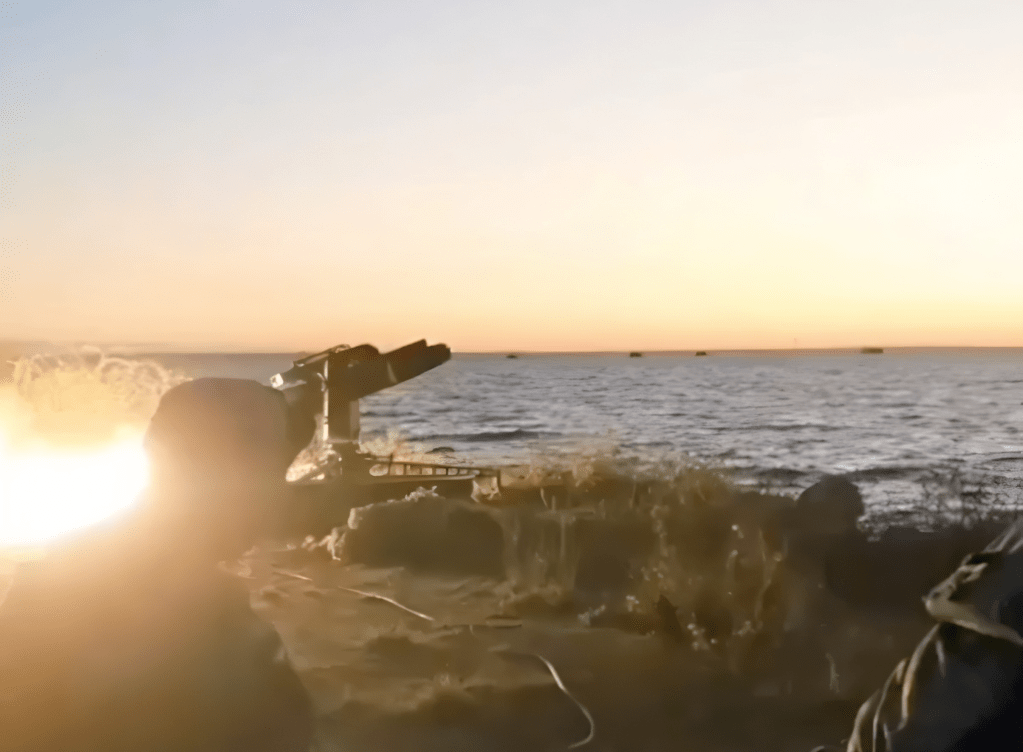
On 2 June 2022, the Swedish government announced the transfer of an undisclosed number of RBS-17s. They are believed to have been seen in theatre for the first time in a video published on 20 October, although it appears it may have been filmed earlier. The video was shared by a group called ‘Bigcats’, the lo-res clip shows the launch of a pair of missiles. ‘Bigcats’ haven’t shared any further imagery of the missiles since.

In September 2022 the Norwegian government also announced plans to provide Ukraine with their Hellfire-derived Norwegian Shore Defence Missile System. The transfer of 160 missiles and associated equipment was announced in response to a Ukrainian request. In late March 2023 photographs of several pieces of wreckage from one of the missiles was posted on Telegram. It was hypothesised that they were found in the area of ​​the Kinburn Spit and had been fired across the water by an element of the 73rd Naval Center of Ukraine’s Special Operations Forces.

An RBS-17 launch, c.September 2022 (via social media)

It was over 8 months before another video of a the weapons in action was shared. In mid-August 2023 a brief clip was published showing a Hellfire-patterned missile (which may be an RBS-17) being fired and apparently detonating downrange. Several months later at the end of October perhaps the best piece of footage of one of the missiles being launched was shared. In the video we can see the missile being launched and as the camera pans the laser targeting module can also be seen.

In August 2023, Army Inform, the news agency of Ministry of Defense of Ukraine, published an article outlining how the RBS-17 is used noting that it is most frequently used against Russian defensive positions, dugouts or lightly armoured vehicles. The article included a photograph of a display showing the RBS-17 set up. In the background a Ukrainian combatant can be seen sat on a missile case, he’s wearing the patch of the Zaporizhzhia-based 27th River Fleet Division (27 ODnRK).

An RBS-17 launch in Ukraine Nov/Dec 2023 (via Swedish MoD)

On the 18 December, the Swedish government published an article about Ukraine’s use of the RBS-17 and the training the Swedish armed forces provided on the system. The article explains that Ukrainian personnel were secretly trained on the system. The training appears to have been carried out during Summer 2022 and took place in time to coincide with the delivery of the RBS-17s. Swedish personnel have also continued to be on call for answering the technical and operational queries of the Ukrainian teams using the system.

The Swedish article also included a short video of one of the missile systems in operation in Ukraine. The team appears to be in cover behind a wall. The GoPro footage shows the missile near by and the control unit as well as transport cases near by. A Polish MSBS Grot rifle can also be seen leaning on the wall next to the operator.

Update – 22/05/24:


Support Us: If you enjoyed this video and article please consider supporting our work here. We have some great perks available for Patreon Supporters – including early access to custom stickers and early access to videos! Thank you for your support!

HK MG5s in Ukraine

A dozen different types of light and general purpose machine guns are in use in Ukraine, one of the newest is the Heckler & Koch MG5.

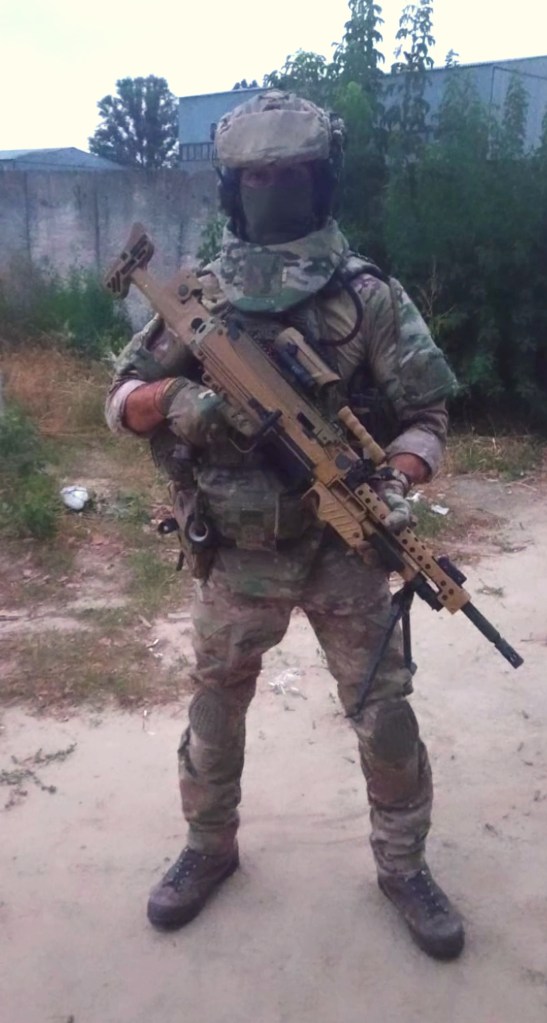
In May 2023, the German government announced a package of aid which would include 100 HK MG5 7.62x51mm general purpose machine guns. In September, evidence of their arrival in theatre began to surface with Ukrainian combatants sharing imagery of the brand new weapons.

The transfer of MG5s by the German government is interesting as the Bundeswehr themselves have only recently begun to receive the guns. The MG5 officially entered German service in 2015 but procurement has only recently ramped up with around 10,000 currently estimated to be in inventory. The MG5 is a gas-operated 7.62x51mm general purpose machine gun with a variable rate of fire and is intended to replace the MG3. It fires from an open bolt and it’s action is locked by a rotating bolt head. The guns themselves are listed on the German government’s aid-tracking page as “being deliveries from industry stocks financed by German funds for security capacity building.” This indicates that the transfer was probably not made direct from Bundeswehr stores.

Jurado posted the first photo of an MG5 in Ukraine (via Social Media)

On 20 September, Jurado – a Spanish member of the International Legion, shared the first photograph of an MG5 in Ukraine. Several days later on 22 September, omega_team_gur shared another photograph of the MG5 at the range. According to Jurado his unit received three of the guns.

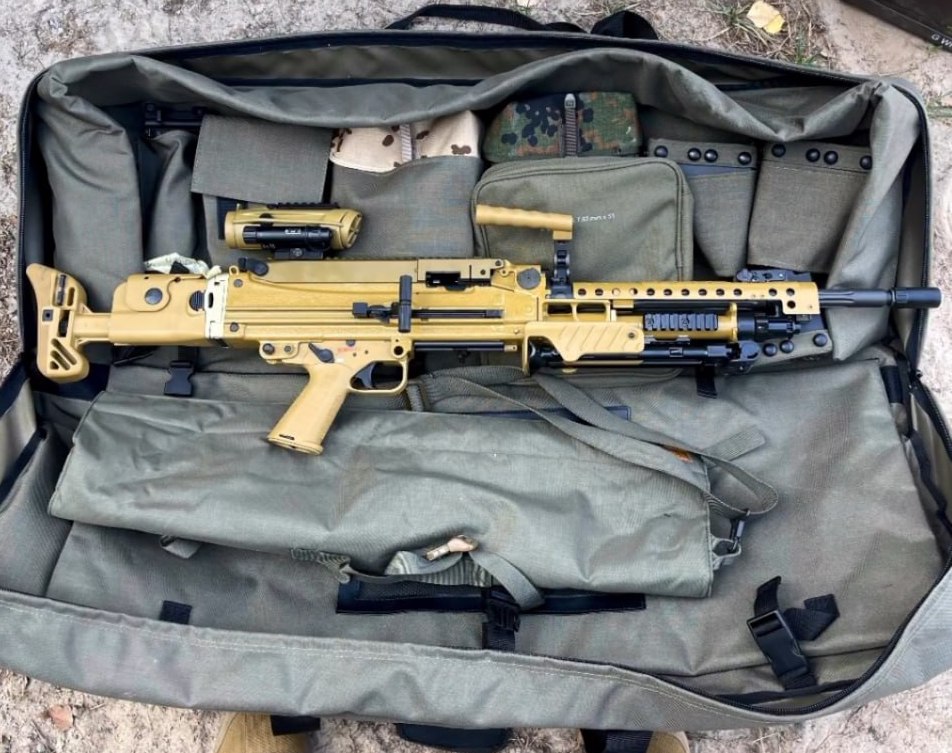
A week later Greek International Legion members shared the first video of one of the guns mounted on a Lafette tripod. Through discussions with some of the combatants whose units have received the MG5s not all the guns came with tripods. A member of a Ukrainian Military Intelligence Directorate, the GUR, team told us that the guns came in bags with accessories including an optic, bipod, cleaning kit, manual and spare barrel.

An MG5 in its transport bag (via Social Media)

A member of the GUR, callsign Shock, shared a photo with an MG5 on 28 September, and several more the next day. Shock told TAB that his unit had received two of the MG5s and that while they’re cool pieces of kit the are heavy “13+ kg without ammunition” [HK lists the MG5A2’s weight as 11.5kg or 25lbs]. Shock’s team appears to be one of the few GUR teams not made up of international volunteers to receive the guns. He also shared a photograph of two MG5s sat in their transport bags.

On the 30th September Omega Team shared another group photograph featuring an MG5 and several days later on 2 October, a member of the GUR’s Shaman battalion, shared a photograph of himself holding a new MG5. Another member of the Shaman battalion also shared a photograph of an MG5 in its transit case/bag. It can seen fitted with a Hensoldt 4x30i optic and a cleaning kit and a number of belt pouches can be seen in the case. Knights, another GUR team, shared a photograph featuring an MG5 on 6 October. This was followed on the 10 October by a unit photograph with an MG5 seen at the back of the group. During the same week, another SOF group made up of international volunteers, Black Maple, also shared a photograph featuring an MG5.

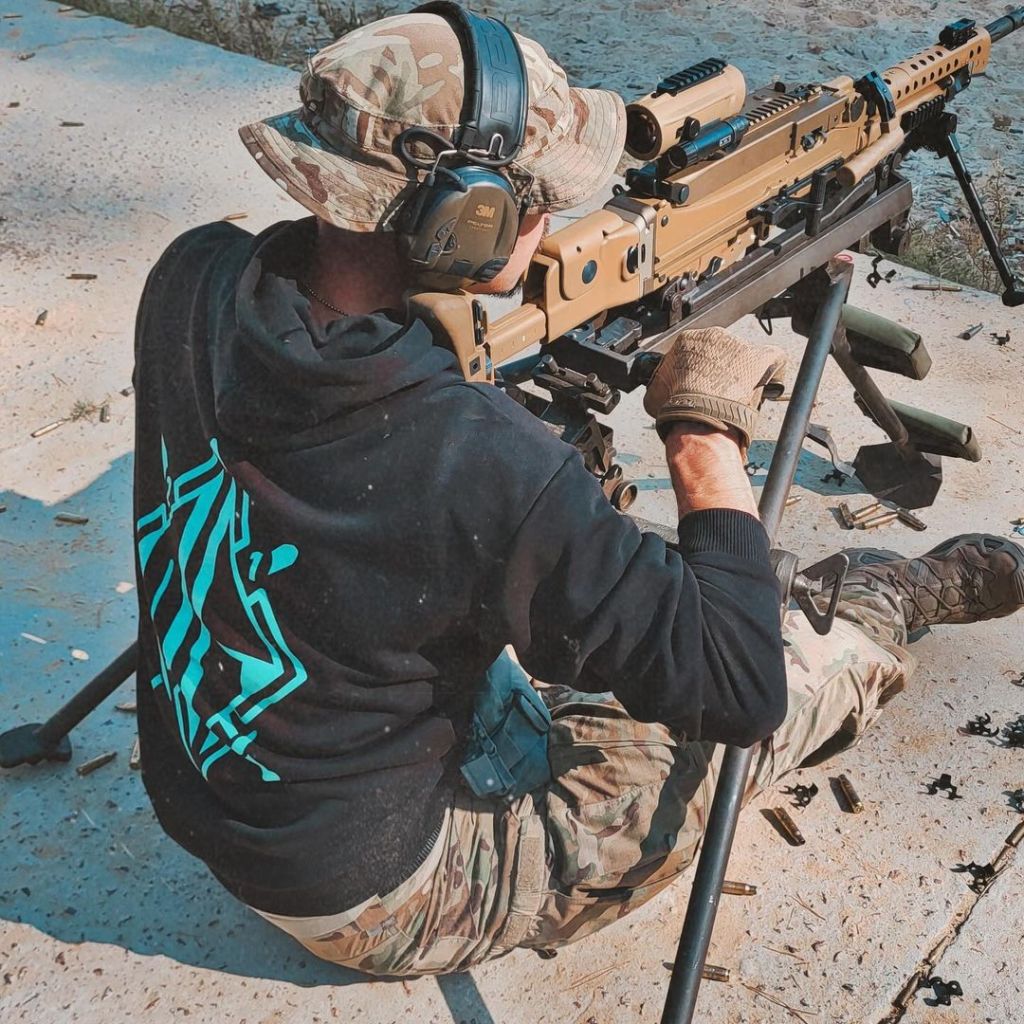
An MG5 mounted in a Lafette tripod at the range (via Social Media)

Another team, Operation 21 Group, posted a photograph on 16 October of an MG5 mounted on a Lafette tripod at the range. The gun is again paired with the Hensoldt optic. On around the 17 October, a member of the Kraken Regiment, also part of the GUR, posted a photograph holding one of the MG5s. Several days later the first glimpse of an MG5 being used in combat was shared by a GUR team, the MG5 can be heard firing and is just visible though the foliage.

On the 22 October the GUR’s Stugna Battalion also shared a promotional video featuring one of the MG5s. On 24 October imagery from a number of photographers showed members of the International Legion’s new Siberian Battalion training. Amongst an interesting array of small arms the battalion’s trainees also appeared to have a single MG5.

The team at GRaft, a Ukrainian company which fabricates ammunition boxes for machine guns, shared some video of testing of one of their boxes with an MG5 in late October. At the beginning of November Tactical Group Athena, another GUR team, shared a team photograph featuring not one but two MG5s.

Later in November, the Knights shared a series of photographs and clips featuring the MG5. The first was posted on 4 November, showing the gun in a fighting position. This was followed on the 13 November, by a short video of an MG5 firing from its bipod in a frontline position in the trenches feeding from a British 7.62x51mm ammunition box. I spoke to one of the members of Knights about the MG5 and they described it as ‘a fantastic weapon’ and while “a bit on the heavy side [it’s] still a good weapon system and we love to use it!”

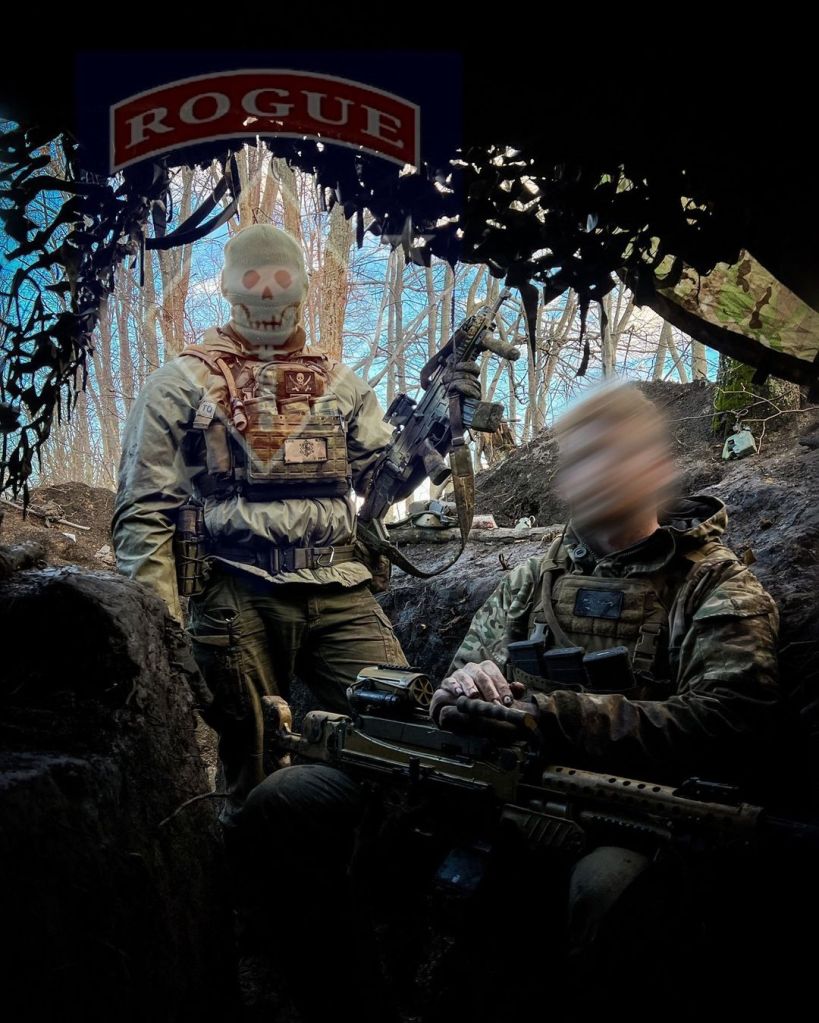
A member of Rogue Team holds an MG5 in a frontline trench (via Social Media)

Omega team shared another group photo featuring an MG5 on 12 November. Later that week Rogue Team posted a photograph of two combatants in a frontline trench, one is seated holding an MG5. A week later the GUR shared a video on their YouTube channel about their amphibious operations in Crimea, on 16 November, with an MG5 briefly appearing in part of the sequence. Towards the end of November a video from the Knights team thanking people for kit donations also featured an MG5. On the 14 November, an element of the Kraken Regiment, Special Assault Company, shared a promotional video featuring a drive by with an MG5 being fired out the window of a vehicle at a range. On the 19 November Rogue Team shared a team photograph, with one combatant holding an MG5, a day later a member of the team shared a short clip from the range showing the MG5 in action with the caption ‘I love MG5’. Finally, on the 26 November another MG5 was seen in a photograph of members of Kraken.

All of the guns appear to have HK’s RAL 8000 (FDE-ish) finish and are of the MG5 A2 configuration with the shorter 460mm (18in) barrel. The guns also appear to have been provided with Hensoldt 4x30i ‘intermediate range targeting optics’. From the imagery which has surfaced so far we can see that the MG5s have predominantly been issued to special operations forces including teams from the GUR and possibly the SSO. Despite the small number of guns officially confirmed to have been transferred they have been widely photographed in theatre and when asked by TAB comments from combatants using them have largely been positive. It is unknown what quantity of spares were provided with the guns or if more may be provided by Germany in the future.

Thank you to friends at Cloooud and at StreakingDelilah for their help gathering imagery for this video.

Update – 2/12/23:

Ukrainian combatant, Valgear, shared a photo of an MG5 in a Lafette tripod fitted with a thermal optic. Both the gun and optic have apparently been damaged by shrapnel.

Update – 03/12/23:

Machine gun training (Bundeswehr/KSK)

The Bundeswehr issued a statement on training Ukrainians SOF members and shared a photograph of Ukrainians training on MG3 and MG5 machine guns. Unlike the guns seen in Ukraine the MG5s have 550mm (22in) barrels.

Update – 9/12/23:

Another GUR team, Stugna, have shared photos of an HK MG5 in recent weeks.

Update – 13/12/23: The recently formed Sibir Battalion were photographed again training with an MG5.

Update – 11/1/24: GoPro footage of an MG5 in action, reportedly from the GUR’s Rogue Team.

Update – 18/2/24: A platoon of the Sibir Battalion photographed with an MG5.

Update – 16/04/24: HK MG5 with optic.

Update – 7/6/24: Rogue, a GUR direct action team, shared some video of their machine gun team in action near Kupyansk in November 2023. It gives a great look at the MG5 in action and also features a brief glimpse of the gun’s spare barrel and it’s reload drills.


Support Us: If you enjoyed this video and article please consider supporting our work here. We have some great perks available for Patreon Supporters – including early access to custom stickers and early access to videos! Thank you for your support!


Bibliography:

Military Support for Ukraine, Bundesregierung, (source)

HK MG5, Heckler & Koch, (source)

MG5 – Bundeswehr Receives Additional Machine Guns, S&T, (source)

For more on Germany’s aid to Ukraine check out deaidua.org

Wheeled Mk19 Mount

A Ukrainian engineer and fabricator, Іван Савельєв/Ivan Saveliev, has designed and built an interesting wheeled mount for the Mk19 automatic grenade launcher. The mount was recently seen in a video posted to TikTok by a member of 4th Rapid Reaction Rubizh Brigade’s 3rd Battalion Svoboda. The video was posted on the 10 November and shows the mount being demonstrated in camp. There’s a long history of Russian machine guns like the Maxim PM1910, SG-43 and DShK having wheeled mounts or carriages. The new mount for the Mk19 could be seen as a descendent of these.

A Mk19 on the wheeled mount (via social media)

The first MK19 Mod IIIs arrived from the US in late January 2022, as it looked increasingly likely that Russia would invade. Since then they have proliferated and are widely used by the Ukrainian armed forces.

A Mk19 on the mount with wheels removed (via social media)

Saveliev has developed a range of mounts for various support weapons including machine guns, auto-cannons and mortars. He first shared imagery of the wheeled mount for the Mk19 in mid-June posting a photograph showing a Mk19 elevated on one of the mounts. Five months later, on 23 October, Saveliev shared a series of detailed photos of the mount. He noted that the mount could allow the Mk19 to be fired at ‘increased vertical angles’. This is very useful for long range, indirect fire. The M2 heavy machine gun could also be used with the wheeled mount as the mount mimics the mounting points of the M3 tripod, which both the Mk19 and M2 are used with.

Above & Below: Close-ups of the mount (via social media)

The mount has a pair of handles at the muzzle end to allow the weapon to be pulled by two men. The elevation of the Mk19 can be adjusted by an elevation wheel which uses a long threaded bar (or worm pinion/screw) to move the mounting arm forward and back, lowering and raising the weapon. In the video posted by members of the 3rd Battalion Svoboda it is suggested that elevations of 60 or more degrees is possible. Windage can be adjusted by a pair of wheels either side of the rear of the mount.

The mount has a pair of wheels with pneumatic tires which can be removed allowing the weapon to be grounded in the mount. However, this looks to be a fairly unstable firing platform due to the narrow base the mount offers compared to the Mk19’s standard tripod. Despite the Mk19’s relatively low recoil the mount would probably have to be well bedded in to achieve accurate fire and prevent it from potentially toppling. There is no mount for the weapon’s belt box.

According to various comments on Saveliev’s posts about the mount individuals from a number of Ukrainian brigades including the 47th Mechanised and 5th Assault brigades are reportedly interested in the mount.

I haven’t yet been able to find any imagery of the mount being used in the field or of a Mk19 being fired from one so its difficult to know how useful it is in battlefield conditions. The major benefit, however, is increasing the Mk19’s portability. Weighing in at 77.6 lbs (35.2 kg) the Mk19 (without the M3 tripod which adds 44 lbs (20 kg)) is heavier than its Russian counter-part, the AGS-17. This makes moving it across broken terrain a difficult task, the wheels might help

Special thanks to Weapons Illustrated who has been tracking this mount and assisted with this video/article.


Support Us: If you enjoyed this video and article please consider supporting our work here. We have some great perks available for Patreon Supporters – including early access to custom stickers and early access to videos! Thank you for your support!