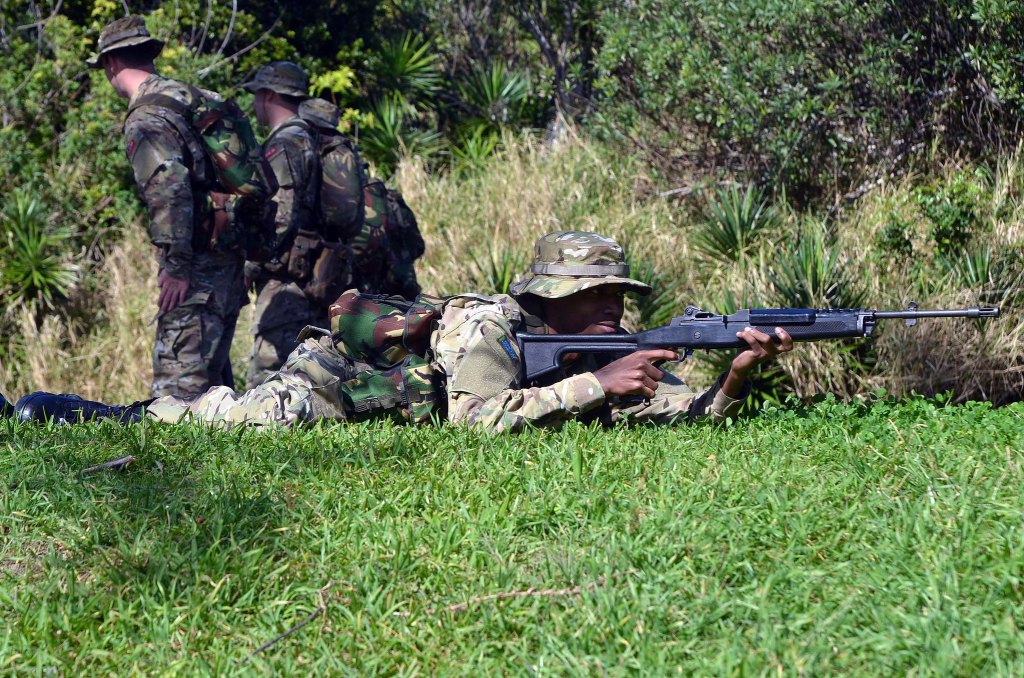
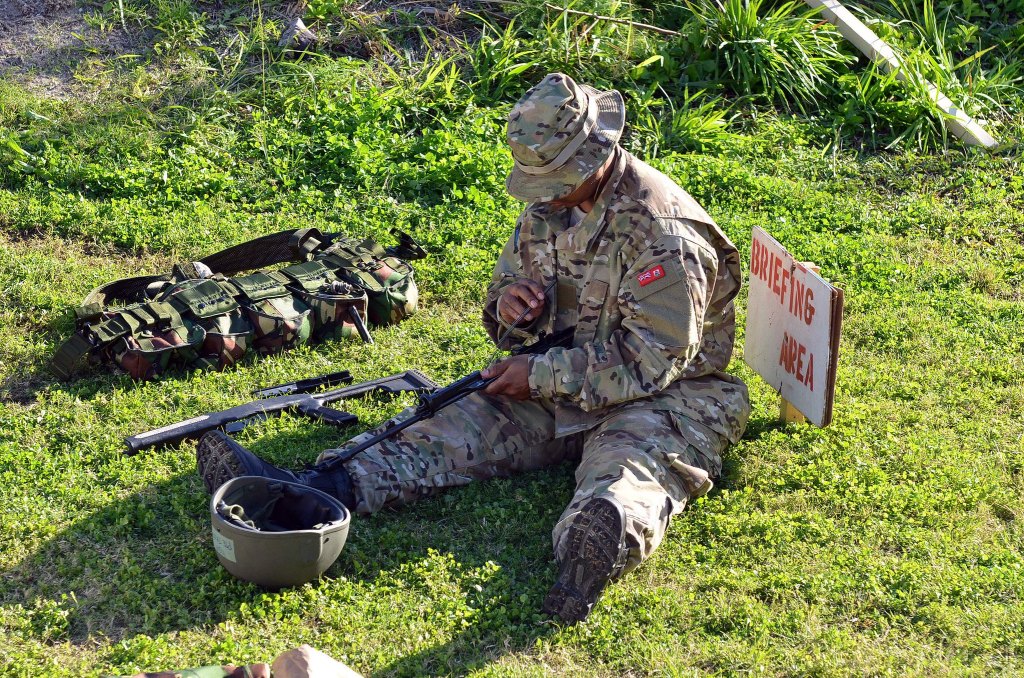
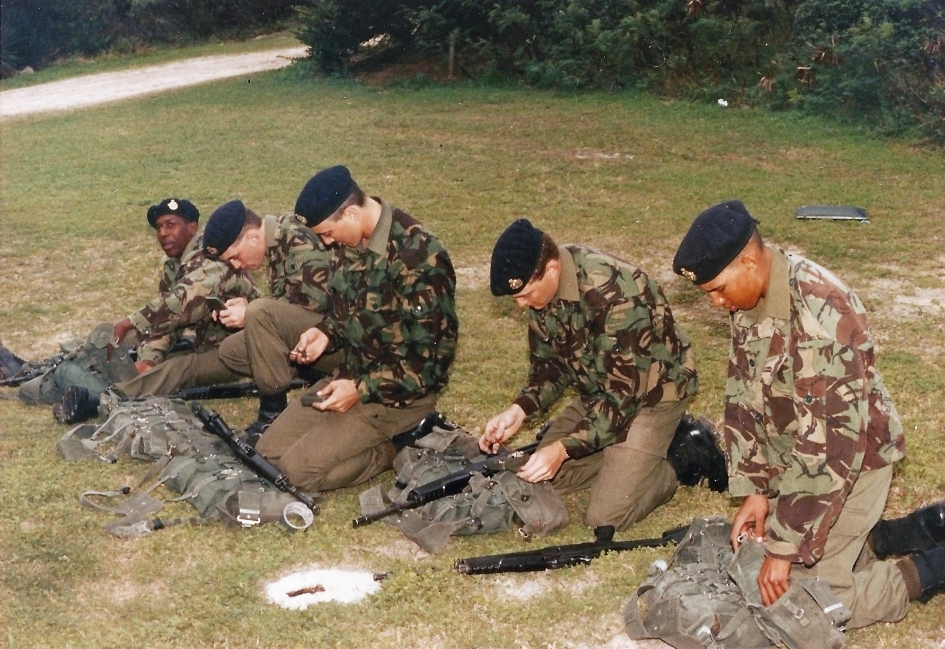
A comment in my recent video about the Royal Bermuda Regiment’s use of the Mini-14 sparked my interest. It noted that Malta, another small island military, uses the AK. I wasn’t aware of this so I decided to do some research.
Malta’s military, known as the Armed Forces of Malta (AFM) is roughly the size of a brigade. In recent years the Armed Forces of Malta have had a strength of between 1,600 and 1,800 personnel. It has three battalions a maritime squadron and an air wing. Malta is a neutral nation and as such the AFM’s role is territorial defence, internal security and border control.
Malta gained independence from the UK in 1964 and became a republic in 1974, this is when the AFM was founded. With the former link to the UK much of the AFM’s initial equipment was of British origin and the 7.62×51mm L1A1 Self-Loading Rifle was used as the AFM’s service rifle for many years this appears to have changed in the late 1970s early 1980s. The FN FAL-derrived L1A1 is still used as the AFM’s standard drill and parade rifle.
The AFM celebrated its 50th anniversary in 2020 and shared this time line of their uniform and equipment in their service magazine On Parade which gives us some idea of how their small arms changed over time. We can see that the AK-pattern rifles have been in service since at least the 1980s.
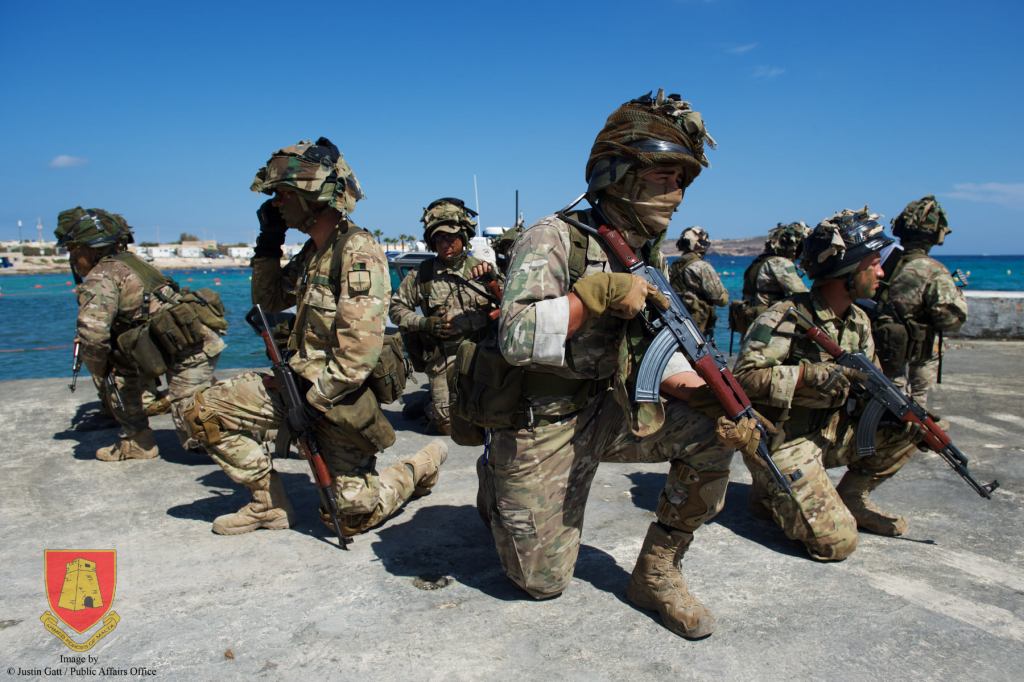
The AFM’s website lists their small arms with personnel being armed with Beretta 92s, a variety of HK MP5s, and what they describe as the ‘AK 47 Variant’. The site lists the rifles as being manufactured by Russia, Romania, China and East Germany. These rifles are all chambered in the 7.62×39mm cartridge.
Where the first AK-pattern rifles came from is unclear, although one source suggests the German and Romanian rifles were bought second hand in the 1990s. From a survey of images and video shared by the AFM in recent years it appears that East German MPiKMS, Romanian PM md.63, North Korean Type 68 and Chinese Type 56/II are in service.
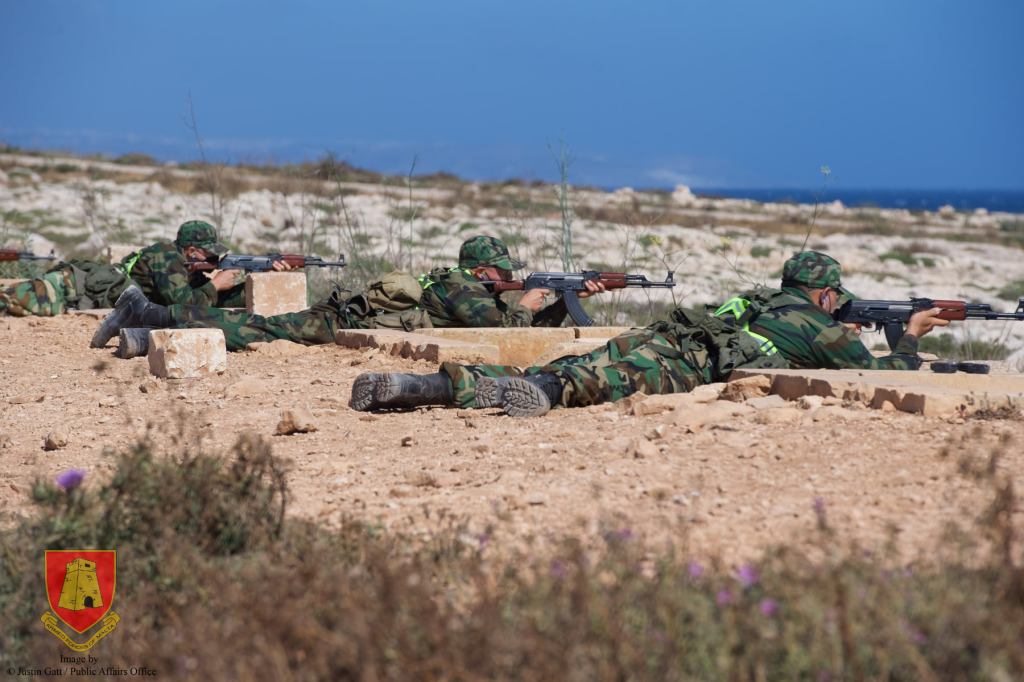
The origins of the Chinese rifles is easy to trace back to a 2003 donation of small arms and light weapons made by the People’s Republic of China. An agreement was signed with China in June 2001 and as part of this a donation of 150,000 Maltese lira-worth of weapons. By 2003, however, it was reported by the Time of Malta that this had increased to 500,000 Maltese lira-worth of weapons. This included Type 56/II rifles, Type 80 general purpose machine guns and RPG-7 clones. The AFM’s acting commander Colonel Carmel Vassallo described the donation as a “dream come true” at the time. It reportedly allowed the entire AFM to be armed with a single type of service rifle.
The reasoning behind the adoption no doubt comes down to financing, Malta being a small island nation does not have an extensive defence budget, reported at 54 million Euros in 2020, and perhaps have chosen to prioritise personnel and procurement of naval and aviation assets over small arms. It is easy to see how the donation of service rifles and other small arms would be welcomed when balancing a modest budget.
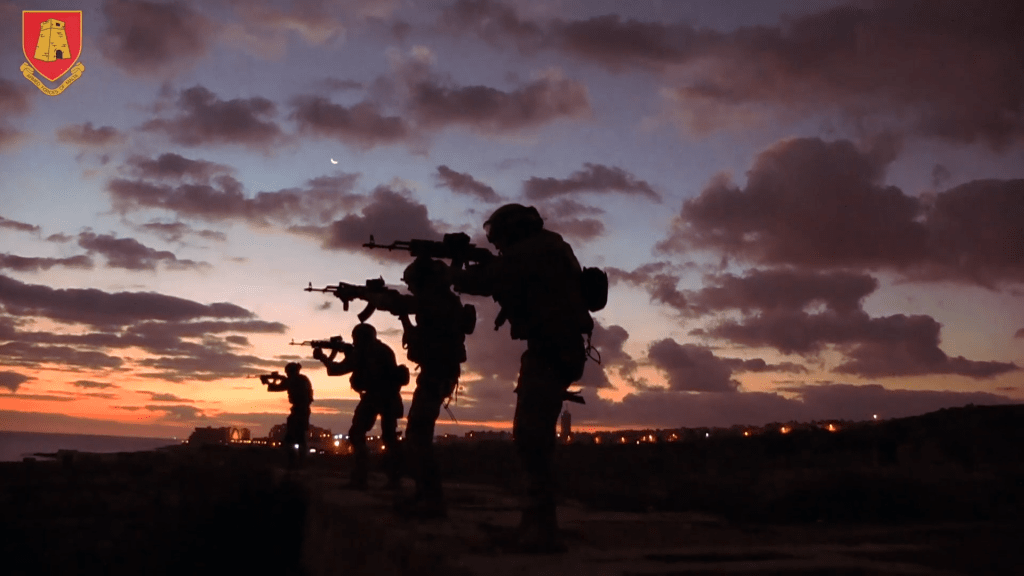
Over the last 10 years there have been a number of photos and videos released showing AKs which have been upgraded with some aftermarket modifications. The mods appear to predominantly be sourced from FAB Defense – with their CAA Polymer buttstock and VFR-AK railed forend with a top rail which extends over the top of the receiver cover. This provides the bare bones AKs with some modularity. It’s unclear how widely issued the modified AKs are but from officially release imagery it seems that the basic AK-pattern rifles are more prevalent. In recent years Malta has stood up quick reaction forces and it appears from videos and images shared of the company that they have been equipped with SIG Sauer MCX rifles.
If you enjoyed this video and article please consider supporting our work here. We have some great perks available for Patreon Supporters – including custom stickers and early access to videos! Thank you for your support!
Bibliography:
‘AK Variant’, Armed Forces of Malta, (source)
‘AFM sees its dream come true’, Times of Malta, (source)
‘The Historical Timeline of Our Uniform’, On Parade 2020, (source)
“The Budget Speech 2020”, Malta Government, (source)
‘Personnel reveal shortcomings inside Maltese armed forces’, Malta Today, (source)
‘China donates 50 sub-machine guns to Malta, including 10 low-light scopes’, Malta Independent, (source)
Footage:
Various released videos, Armed Forces of Malta, (source)
‘Armed Forces of Malta: Recruit Intakes Nos. 131’, Michael Formosa, (source)