1966 Soviet Weapons Recognition Guide

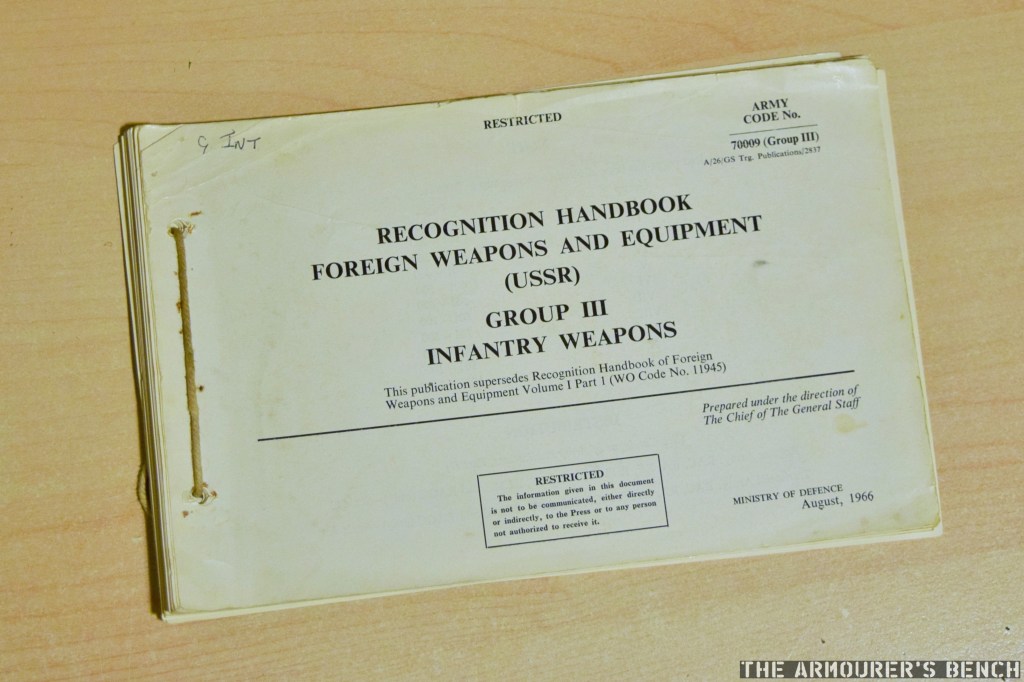
During the Cold War the British Army on the Rhine was deployed in West German. In anticipation of a conflict with the Soviet Union detailed recognition guides were written for British troops to identify and familiarise themselves with enemy weapons and equipment. A substantial series of these were written covering everything from small arms to artillery to vehicles and aircraft.

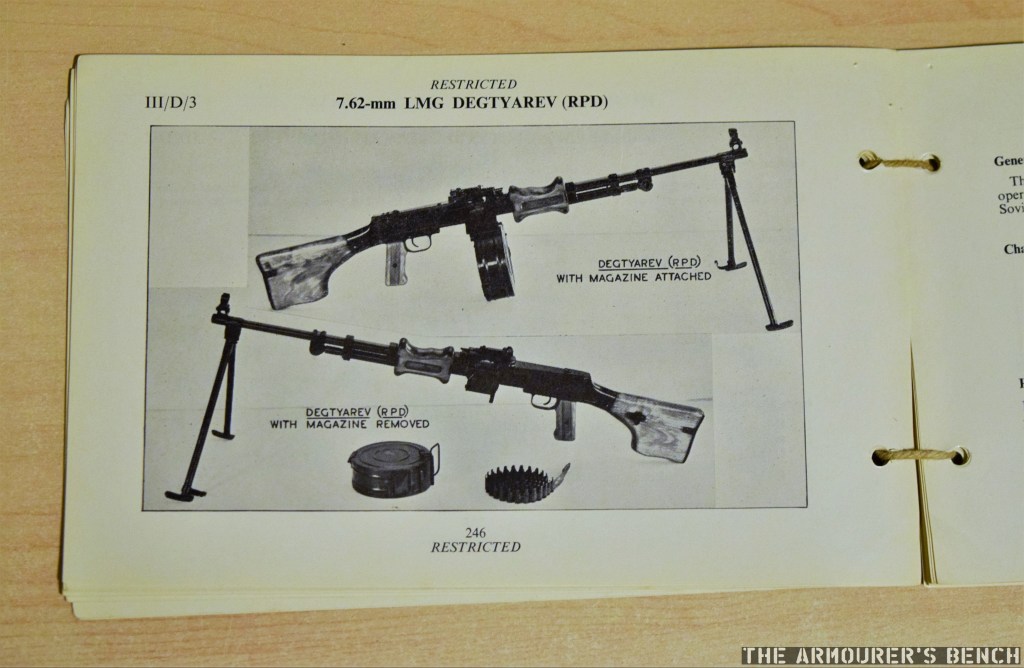
In this video and article we will examine ‘Recognition Handbook Foreign Weapons and Equipment (USSR) Group III Infantry Weapons’ originally published in August 1966. It covers pistols, carbines, rifles, light, medium and heavy machine guns, grenades and some infantry anti-tank weapons like the RPG-2.

RPD (Matthew Moss)

The Recognition Handbook is about 100 pages long while the wider series encompasses 12 booklets at approximately 1,200 pages. Each entry in the handbook includes general description of the weapon, its characteristics and recognition features to help identify it. The Handbooks are more detailed version of the smaller Threat Recognition Guide booklets which we have looked at previously.

The video includes clips from a 1979 British Army training film made by the School of Infantry.

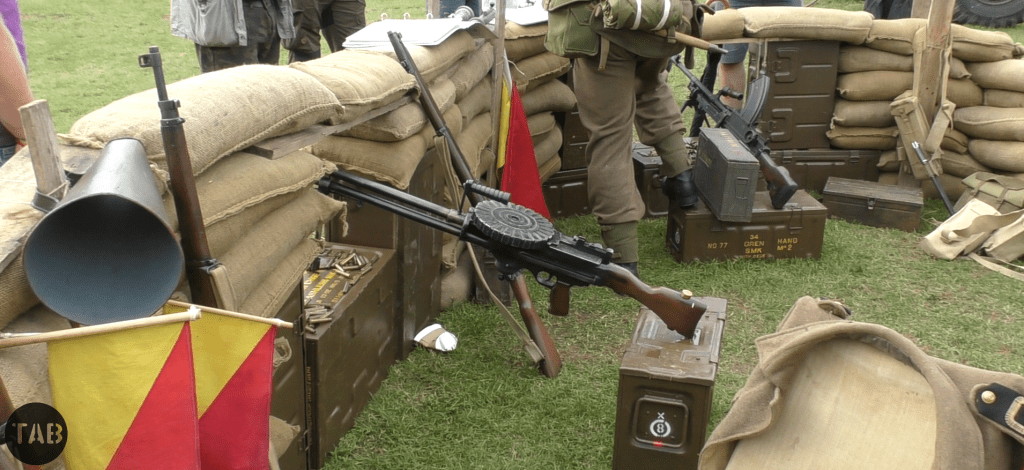
RPG-2 (Matthew Moss)

Below is the two page entry covering the ‘7.62mm Assault Rifle Kalashnikov (AK-47)’ with a general description, characteristic and some recognition features.

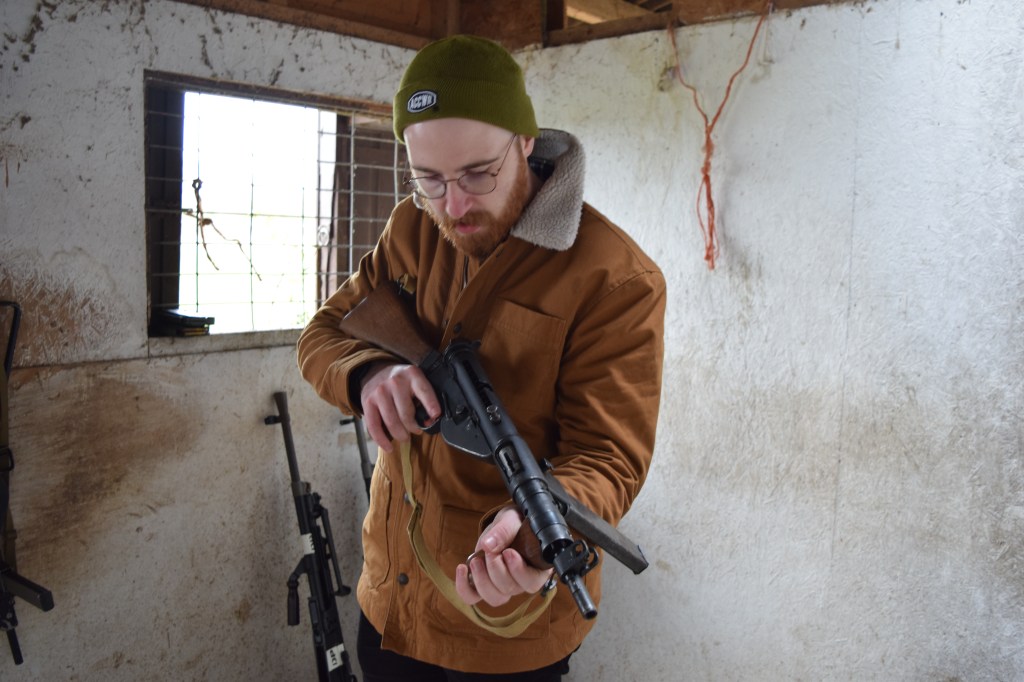
AK-pattern rifle (Matthew Moss)

Sources:

‘Recognition Handbook Foreign Weapons and Equipment (USSR) Group III Infantry Weapons’, British Army, 1966
Warsaw Pact Small Arms’, British Army, 1986, (source)


If you enjoyed this video and article please consider supporting our work here. We have some great perks available for Patreon Supporters. Thank you for your support!

Fighting On Film: Show & Tell #5 – Valley of Tears & A Breed of Heroes

Join us for the fifth edition of our Show & Tell series were we discus ‘Valley of Tears‘ (2020) which takes place during the Yom Kippur War and ‘A Breed of Heroes‘ (1994) following a British officer during Operations in Northern Ireland.

If you enjoy the podcast then please check out our Patreon here. Be sure to follow Fighting On Film on Twitter @FightingOnFilm, on Facebook and don’t forget to check out www.fightingonfilm.com.

Thanks for listening!

Fighting On Film: Ask Us Anything – 1st Birthday Special!

We asked our amazing listeners to ‘Ask Us Anything’ for this very special 1st anniversary show to celebrate 12 months of Fighting On Film!

Matt and Robbie answer questions on everything from their favourite weapons in film to the accuracy of biscuits within war films!

Matt & Rob in a field

We hope you enjoy listening and thank you for the last 12 months and here’s to the next 12!

If you enjoy the podcast then please check out our Patreon here. Be sure to follow Fighting On Film on Twitter @FightingOnFilm, on Facebook and don’t forget to check out www.fightingonfilm.com.

Thanks for listening!

Fighting On Film: The Forgotten Battle (2021)

We are zipping up our Denisons, checking our Rifle No.4s and climbing aboard our Horsa Glider for this week’s look at the brand new Dutch war film ‘The Forgotten Battle‘, directed by Matthijs van Heijningen Jr. it boasts the second largest budget ever for for a Dutch film at around €14 million. With a cast of British and Dutch actors ‘The Forgotten Battle’ is sett during the the Battle of the Scheldt in 1944.

The film is an ambitious attempt to combine three storylines into a film just over 2 hours long. Competently made with some decent performances and a real eye for Mise-en-scène and atmosphere. The Forgotten Battle attempts to cram in too much and largely forgets the ‘Forgotten Battle‘ of the title. While the film brings us three engaging and potentially fascinating story lines that tackle the moral choices that faced soldiers and civilians alike during war, however, there is not enough time or space for them to all develop and ‘The Forgotten Battle’ may have been better adapted as a limited series. We explore all this in this week’s episode!

The episode is also available on all other podcast platforms, you can find them here.

Here are some stills from the film:

If you enjoy the podcast then please check out our Patreon here. Be sure to follow Fighting On Film on Twitter @FightingOnFilm, on Facebook and don’t forget to check out www.fightingonfilm.com.

Thanks for listening!

The No.4 Rifle in the Rhineland

Earlier this year I had the pleasure of filming some segments on small arms for the new documentary on the Rhineland Campaign – ‘Rhineland 45‘. Not all of the segments I filmed discussing weapons could be included in the finished documentary – I filmed quite a few – so I’m pleased to share a couple here. This short video examines the Rifle No.4 (Lee-Enfield) used by British and Canadian troops during Operations Veritable and Varsity. This video was filmed at the Vickers MG Collection and Research Association.

Rifle No.4 (Robbie McGuire)

Check out the first video of this series on the use of the PIAT here and our video on the Panzerfaust & Panzerschreck in the Rhineland here and our video on the STENs used in the Rhineland.


If you enjoyed this video and article please consider supporting our work here. We have some great perks available for Patreon Supporters. Thank you for your support!

The STEN in the Rhineland

Earlier this year I had the pleasure of filming some segments on small arms for the new documentary on the Rhineland Campaign – ‘Rhineland 45‘. Not all of the segments I filmed discussing weapons could be included in the finished documentary – I filmed quite a few – so I’m pleased to share a couple here. This video examines the various marks of STEN gun used during Operations Veritable and Varsity. This video was filmed at the Vickers MG Collection and Research Association.

The Sten MkIV (Robbie McGuire)

Check out the first video of this series on the use of the PIAT here and our video on the Panzerfaust & Panzerschreck in the Rhineland here.


If you enjoyed this video and article please consider supporting our work here. We have some great perks available for Patreon Supporters. Thank you for your support!

Fighting On Film: Yangtse Incident (1957)

In this week’s episode we join Richard Todd and crew besieged on China’s Yangtse River as we examine 1957’s Yangtse Incident: The Story of H.M.S. Amethyst. Based on real events during the Chinese Civil War the film, directed by Michael Anderson, calls on a strong cast including William Hartnell, Akim Tamiroff, Donald Houston, Ian Bannen and a young Bernard Cribbins.

The episode is also available on all other podcast platforms, you can find them here.

Here are some stills from the film:

If you enjoy the podcast then please check out our Patreon here. Be sure to follow Fighting On Film on Twitter @FightingOnFilm, on Facebook and don’t forget to check out www.fightingonfilm.com.

Thanks for listening!

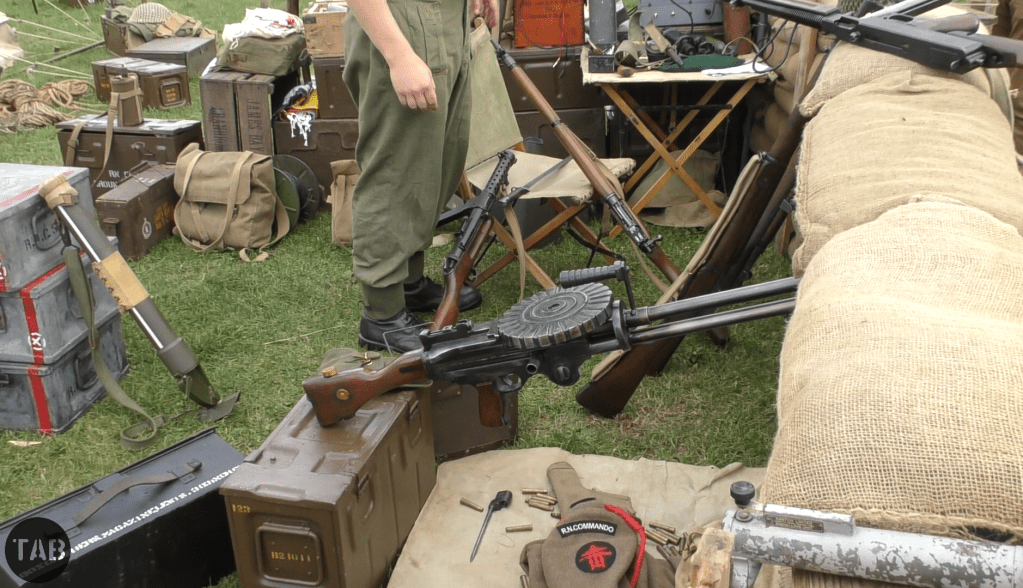
Royal Navy Beachhead Commando Reenactors

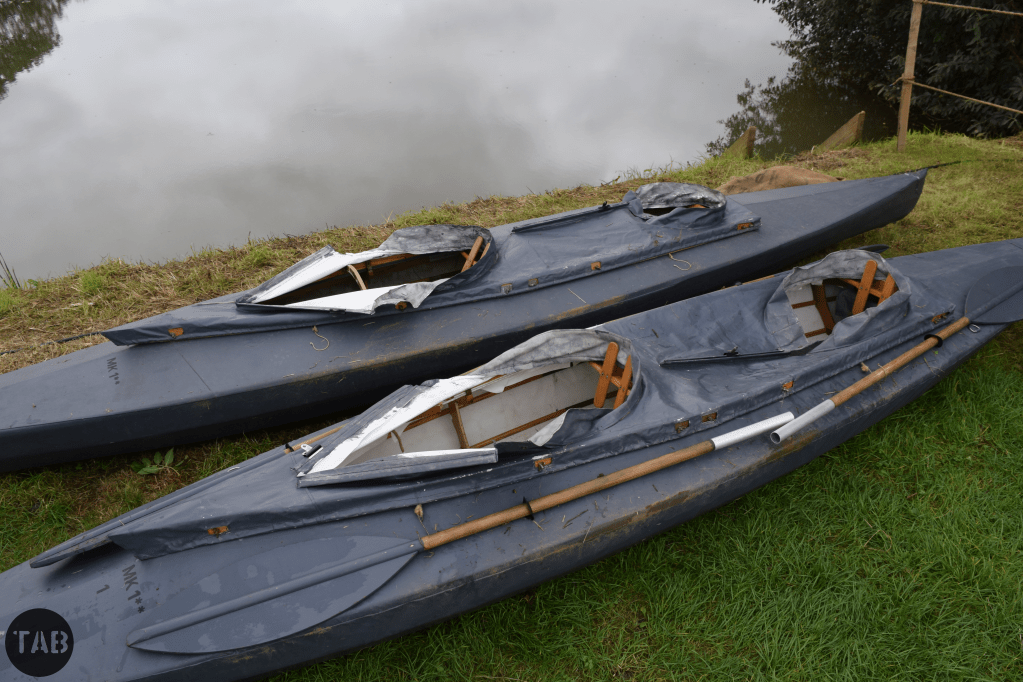
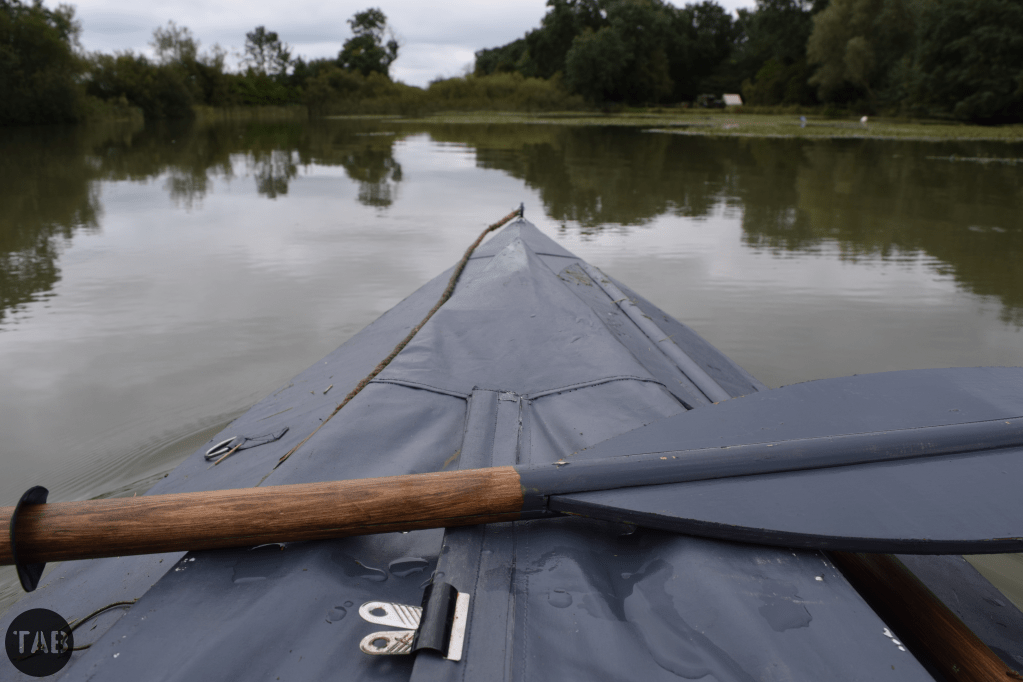
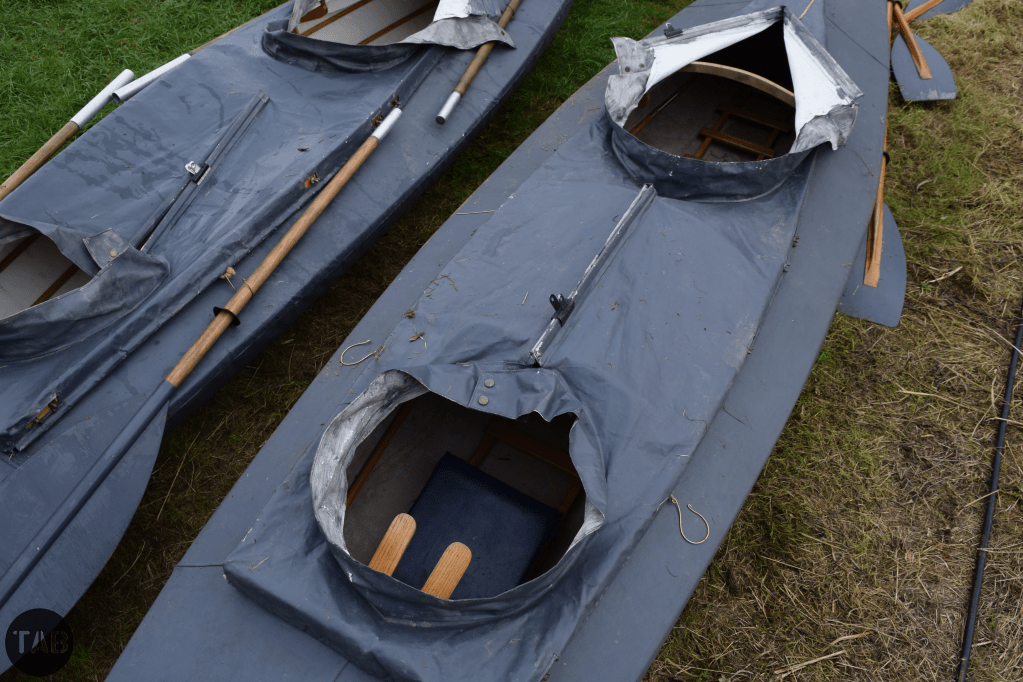
A few weeks ago at the We Have Ways podcast’s history festival (WarFest) I had a chance to chat with the chaps from the Royal Navy Beachhead Commando Reenactors, a group portraying a unique Second World War British Commando unit. And I got to have a paddle in a Mk1** canoe!

The Royal Navy Commandos were tasked with reconiotring the beaches before landings and once the landing began they were first onto the beach. The Royal Navy Commando beachhead parties and beachmasters would then direct the landing of troops and materials.

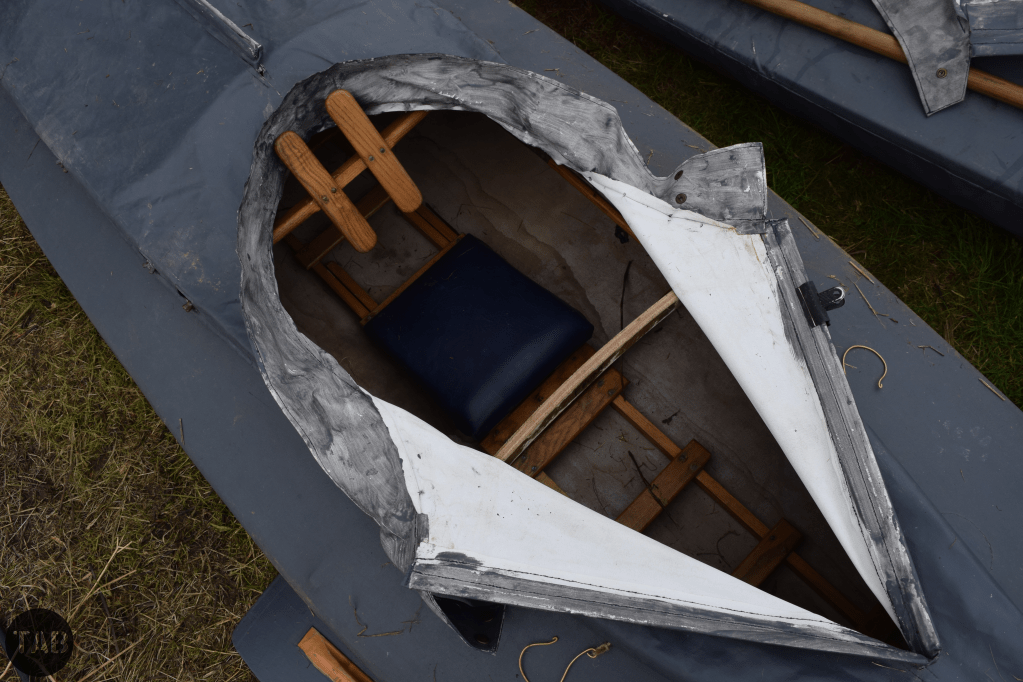
Below are a few photos from the groups camp and of the Mk1** Commando canoes used by the SBS and Combined Operations Pilotage Parties (COPP):

Find out more about the group at www.rnbcr.co.uk


If you enjoyed this video and article please consider supporting our work here. We have some great perks available for Patreon Supporters. You can pick up a ‘Bring Up The PIAT’ shirt here. Thank you for your support!

Fighting On Film: Early Great War Films

We are joined this week by Andy Moody, who is currently undertaking his Masters degree exploring popular cinema depictions of the Great War to talk about Great War films made between the wars. We enjoyed an in-depth discussion of a range of early films made during the interwar period, including: Ypres (1925), Mons (1926), Big Parade (1925) and Journey’s End (1930).

The episode is also available on all other podcast platforms, you can find them here.

Here are some stills from the film:

If you enjoy the podcast then please check out our Patreon here. Be sure to follow Fighting On Film on Twitter @FightingOnFilm, on Facebook and don’t forget to check out www.fightingonfilm.com.

Thanks for listening!

Siege of Jadotville & The Sniper Bren – Is The Bren More Accurate?

If you’re familiar with the film Siege of Jadotville you will remember a scene in which the Irish company’s sniper takes on a long range shot… with a Bren. The sniper exchanges his Rifle No.4(T) for a Bren (MkII – in reality, according to contemporary photographs of Irish troops in the Congo, it would have been a MkIII) and single loads a round with the magazine removed.

Following discussion of how plausible this scene is during an episode of the Fighting on Film podcast we teamed up with Richard Fisher, of the Vickers MG Collection and Research Association, to test out the plausibility of the scene. In the film the sniper is seen to be highly proficient with his Rifle No.4(T), barely missing a shot. When tasked with shooting a target which appears to be approximately 400 yards away he sets down his No.4(T), with its No.32 3.5X telescopic sight, and takes a Bren, sets the sights, loads a single cartridge into the breech and takes the shot. The shot strikes and kills the target, a man in a white suit who was directing an attack on the Irish/UN positions.

This scene raises a number of questions:

  • Why does the sniper do this?
  • Is the Bren more accurate than a Rifle No.4(T)?
  • Can you easily single-load a Bren?
At the range, behind a Bren MkI with a MkIII barrel (Rich Fisher)

The video above explains our methodology for trying to answer some of these questions. We gathered a group of shooters to fire both a Rifle No.4(T) and a Bren MkIII (in our case a MkI Bren fitted with the shorter barrel of a MkIII). The shooters come from a range of experiences ranging from successful competition shooters to myself (who hasn’t shot a long range competition in 18 months) and Rich (who hasn’t fired a rifle at significant ranges in over a decade). We fired at two ranges 100 yards and 400 yards, with the latter representing the scene from the film, at representatively sized targets. We used 174gr PPU .303 ammunition in all weapons except the 7.62x51mm L4 (which does not directly factor into the results of this experiment).

Can You Easily Single-Load A Bren

In the morning before the shoot the group of shooters carried out familiarisation of the handling and Normal Safety Precautions (NSPs) for the Bren. It was then that we discussed the part of the scene where the sniper single-loads a round into the chamber. It was decided to test this question using a L54A1 Drill Purpose Bren held by the Vickers MG Collection and Research Association’s collection.

Rich demonstrates single-loading a cartridge into the Bren’s breech with an L54A1 Drill Purpose Bren

In the video you will see that this was possible but it was easily fumbled. It was possible to accidentally nose the round into the gas piston or to drop it though the action, out of the ejection port. It is imaginable that in the stress of combat it might prove difficult – but it is certainly possible to single-load the Bren in this way.

Measuring up: working out the Figure of Merit (Rich Fisher)

Is the Bren More Accurate Than a Rifle No.4(T)?

In short, no. We found that the average figure of merit value showed that the No.4(T) was more accurate at both 100 and 400 yards than the Bren. The caveat to this is that our data set for 400 yards was incomplete with some misses and off paper hits meaning only partial groups were recorded.

In terms of measuring the accuracy of the weapons we worked out individual shooter and group average Figure of Merit values. We explain how this was done in the video (with reference to this video from Rob of BritishMuzzleLoaders). The raw data can be seen below:

First we have the the raw data for the Rifle No.4(T) at 400 yards for all shooters combined input into the Figure of Merit (FoM) spreadsheet which calculated the FoM and group size and generated a grouping diagram:

Rifle No.4(T) at 400 yards

Below is the raw data for the Bren Mk3 at 400 yards for all shooters combined input into the Figure of Merit (FoM) spreadsheet which calculated the FoM and group size and generated a grouping diagram:

Bren MkIII at 400 yards

Below is a summary of the FoM and group data for each shooter with the various weapons as well as an averaged value:

Summary of the data showing individual shooters and averages

Tom’s group for the No.4(T) at 400 yards was off paper and not recorded, the data for Kev, Matt and Rich on the MkIII was partial due to misses and shots off paper – this is perhaps somewhat indicative of the advantage the No.4(T)’s scope gave over the Bren’s iron sights at 400 yards.

What would we do differently if we have the chance to repeat the experiment?

It would be useful to replicate the firing of the No.4(T) and Bren again to rectify the partial data we recorded at 400 yards. It would also be useful to fire the Bren mounted on a tripod rather than off the bipod. This would provide a useful control comparison with human factors effecting the weapon minimised. We had hoped to do this on the day but did not have the time. It may also be beneficial to enable each shooter to have 5-10 rounds to get on target and compensate for wind etc. and then shoot their representative five round group.

Sniper Bren: the sniper takes aim with ‘the Bren on single shot’

Why Does the Sniper Do This?

So why does the sniper do this in the film? Firing from the bipod would theoretically provide a more stable shooting platform than an unsupported rifle. There was, however, plenty of sandbags for him to take a supported shot with the No.4(T). There has been some suggestion that it was believed that the Bren was a more accurate weapon but data from service trials and our experiment show that it was not superior to a scoped, accurised rifle. The scene was probably a result of cinematic license, the sniper had previously been shown to be able to hit anything he had thus far aimed at so having him swap to “the Bren on single shot” gives an added weight to the scene and the action of single-loading rather than firing from the magazine adds to the technical theatricality of the scene depicting the sniper as a capable expert.


We hope you found the video interesting, special thanks to all who helped make the video happen, it was a big and sometimes chaotic effort! Do check out Vickers MG Collection & Research Association’s channel. For more videos and articles on the Bren Gun click here.


If you enjoyed this video and article please consider supporting our work here. We have some great perks available for Patreon Supporters. Thank you for your support!