Spanish CETME-Ls in Ukraine

In late August 2023, a surprising weapon turned up in Ukraine. It appears that Spain provided Ukraine with an unknown number of 5.56x45mm CETME-L rifles. The rifles were spotted during a parade in Kyiv with an entire company of Ukrainian Border Guards seen equipped with the rifles. I’ve delayed writing this article/video in anticipation of them appearing again but there’s been no sign of the CETME-Ls since the parade.

The parade, held on 23 August 2023, in Kyiv’s Sofia Square celebrated the 32nd anniversary of Ukrainian independence and saw at least 25 members of Ukraine’s Border Guards parade with the rifles. The personnel are believed to have been part of either the 8th or the 9th border detachments who are assigned to the Belarusian border region.

Ukrainian Border Guards with CETME-Ls, August 2023 (DPSU)

Spain developed the CETME-L in the early 1980s, to replace the CETME Model C. Entering service in 1986, it uses a roller-delayed gas blowback, check out our earlier video disassembling a CETME-L here. Issues with quality control during manufacturing and quirks of the design led to the Spanish military seeking to replace the CETME-L by the mid 1990s. The HK G36E was selected but the L remains in limited service with significant quantities held in storage.

Ukrainian troops training in Spain in the summer of 2023, have been seen equipped with CETME-Ls but it remains curious that Spain would provide the rifles as aid to Ukraine. While the rifles had a short service life due to reported reliability issues, with approximately 100,000 manufactured between 1986 and 1991 and since largely replaced by G36s there is likely a substantial number in store and available for transfer.
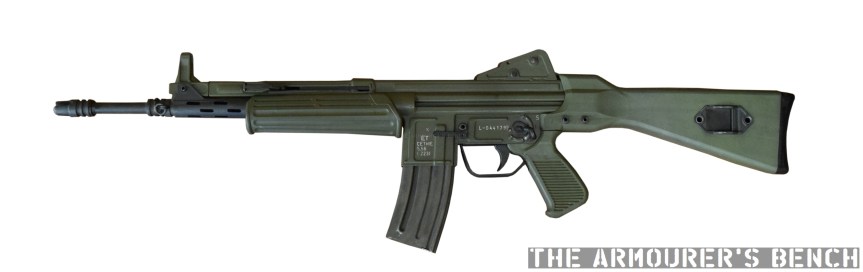
CETME-L (Matthew Moss)

The CETME-L, despite a decent design on paper, was hampered by quality control issues which led to reliability problems. The rifle’s magazine housing also only allows feeding from steel magazines. While in theory they will feed from STANAG magazines, the magazine housing is optimised for proprietary Spanish magazines (with a different follower and feed lip design) with the magazine seated at more of an angle. The rifles also reportedly favour hotter, higher pressure ammunition. These factors may explain why the CETME-Ls have not been seen in the field with the Border Guards preferring to continue issuing AK-74 pattern rifles to personnel on the front line. The rifles seen in Kyiv may have been drawn from central stores solely for the parade.

We approached both the Spanish Ministry of Defence and the Ukrainian Border Guards for further information but no addition comment has been received. The Spanish Ministry of Defence directed us to an August 2023 press release which detailed Spanish assistance to Ukraine’s Border Guards which does mention “light weapons with their ammunition”.
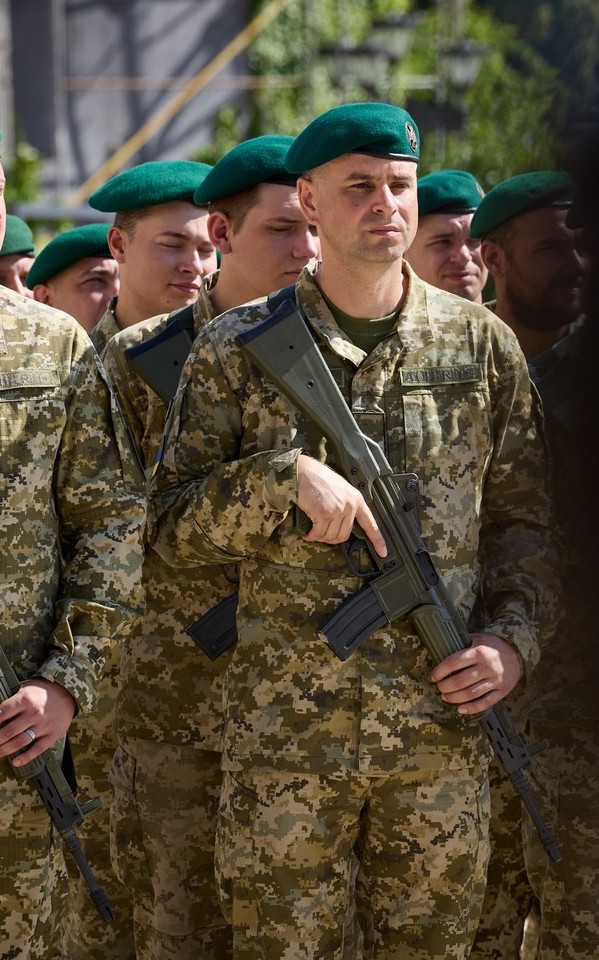
Ukrainian Border Guard with CETME-L, August 2023 (DPSU)

The Spanish press, quoting confidential sources, reported that between 1,000 and 2,000 rifles were transferred. It is also reported that the rifles were never previously issued and that they are being used by rear echelon Ukrainian personnel. This frees up more reliable weapons, like AK-74s and UAR-15s, for frontline use. At the time of publication examination of various DPSU (Ukrainian Border Guard) social media channels doesn’t indicate any signs of further use of CETME-L rifles, even with rear echelon personnel.


Support Us: If you enjoyed this video and article please consider supporting our work here. We have some great perks available for Patreon Supporters – including early access to custom stickers and early access to videos! Thank you for your support!
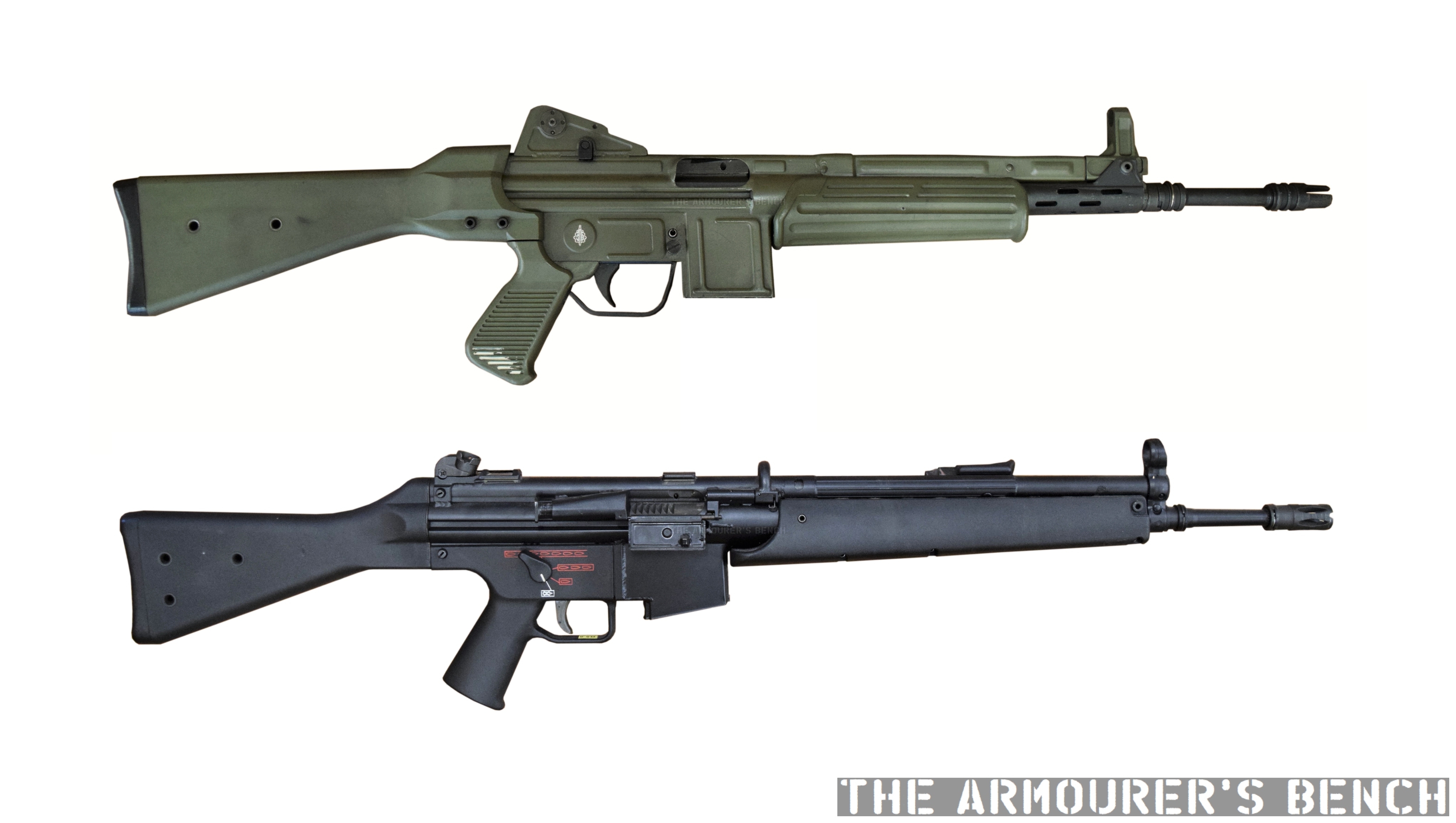

CETME L vs HK G41

In this week’s video we compare two of the last roller-delayed production rifles: the Spanish CETME Modelo L and the Heckler & Koch G41. These rifles represent the last evolutions of two strands of the roller-delayed development tree – the Spanish and the German.

cetme g41
The CETME L & HK G41 (Matthew Moss)

Both rifles use the roller-delayed blowback action and are both chambered in NATO SS109 5.56x45mm ball round, have have 1:7 twist barrels and feed from STANAG magazines. Both were developed during the 1980s and both are also capable of firing rifle grenades. 

The CETME L

left_h13_cetme_l
Left-side profile of the CETME L (Matthew Moss)

The CETME has a bit of a reputation for being cheap but this relatively unbattered example feels solid enough. Both of the rifles disassemble in much the same way with the butt assembly being removed to allow the bolt to be pulled out of the rear.

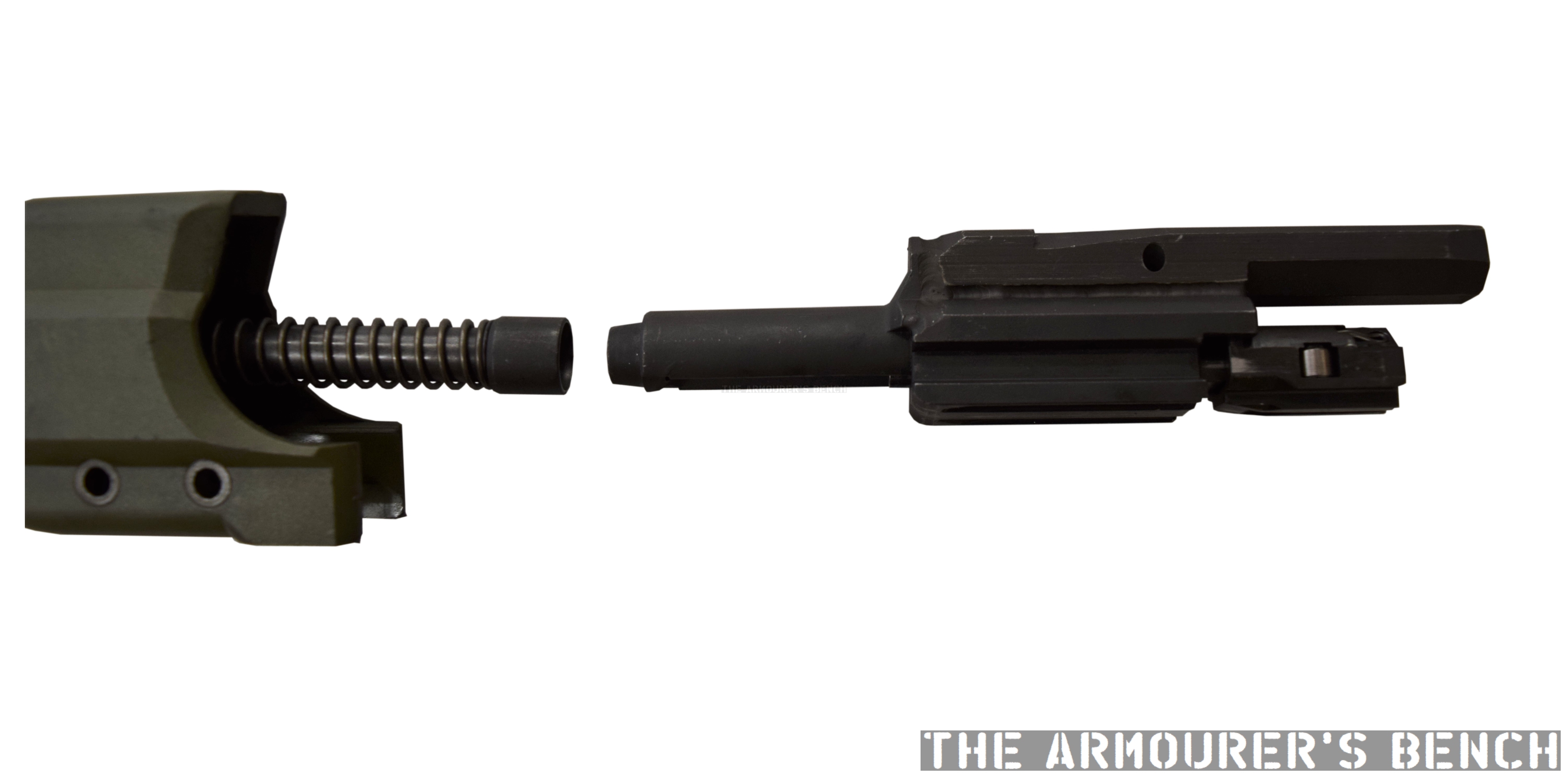
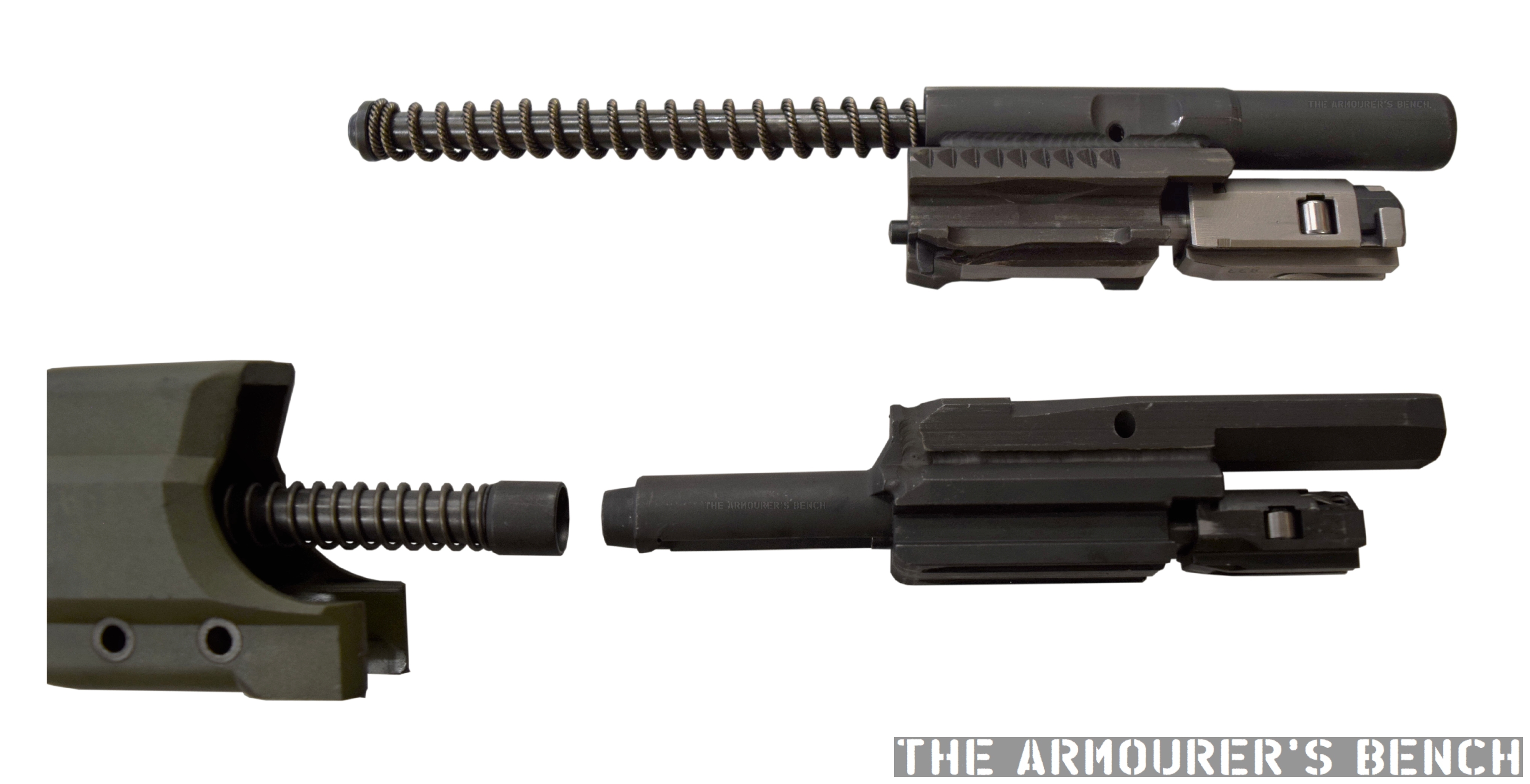
Most notable about the CETME’s bolt is the long rod protruding out the back of the bolt assembly. This acts on the recoil spring housed inside the butt. The L’s recoil spring, unlike the G41s, is captive inside the butt rather than nested inside the rear of the bolt carrier. The CETME’s bolt is also much squarer than the G41’s which probably simplified the machining of the bolt and designing the receiver stamping.

action_h13_cetme_l_1
The L’s bolt and butt assembly (Matthew Moss)

The L does not have a provision to lock its bolt back in a slot like the HK (no CETME slap for Spanish soldiers), however, it does have a bolt hold open, with the release located in the rear sight base.

The CETME has simpler folding aperture sights with 200–400m adjustments. It weighs in a 3.72kg or 8.2lbs unloaded and is 92.5cm or around 36in in length. The CETME has a simpler fire control group, with safe, semi and full-auto settings. It is not ambidextrous and only has a selector on the left side of the receiver. The CETME L has largely been replaced by the weapon that superseded the G41 – the gas-operated HK G36.

Heckler & Koch G41

left_h13_gewehr_41
The left-side profile of the G41 (Matthew Moss)

We have full article and video examining the G41 in detail here

HK finalised the G41’s design in 1979, a refinement of the 5.56x45mm HK33, it sought to modernise the platform and borrowed features from the M16 family of rifles including a bolt release catch, dust cover and forward assist.

The G41 has a butt assembly that fits into the receiver rather than around it. So its cross pins are at the top and bottom of the receiver rather than both at the bottom. This spreads the stresses on the receiver vertically rather than laterally.

g4 cetme l
Comparison of the G41 and Model L’s bolts (Matthew Moss)

The G41 has both the classic HK hold open notch and a AR-style paddle bolt release. HK’s dioptre drum sights have adjustments from 100 to 400m, and can mount a scope using an HK claw mount. G41 is the heavier of the two rifles, weighing in at 4.31kg or 9.5lbs. The G41 is also slightly longer than the L at nearly 100cm or 39in in length.

The HK has an ambidextrous selector with positions for safe, semi, 3-round burst and finally full-auto. The G41, unlike the L, also has a folding carrying handle near its point of balance.

The G41 represents the last evolution of HK’s infantry rifles using the roller-delayed blowback action. It comes from a period when HK were developing what they hoped would be the next generation of small arms technology and with the collapse of the G11 programme and the lack of sales of the G41 saw it superseded in the 1990s by the gas-operated G36.


If you enjoyed the video and this article please consider supporting our work here. We have some great perks available for Patreon Supporters.