Vintage Weapons in a Modern War: Browning Hi-Power In Ukraine

Canada confirmed in September 2024 that it would be supplying Ukraine with “10,500 surplus 9mm pistols from our inventory.” These pistols would be the long-serving Inglis-manufactured Hi-Powers, which Canada is replacing with SIG Sauer P320s, designated as the C22. Only recently has imagery of the Canadian Hi-Powers in Ukraine appeared.

Canadian manufacturer Inglis produced the Hi-Power under license during the Second World War. Just over 150,000 pistols are believed to have been manufactured from 1944 to October 1945. These include two major variants the No.1 and the No.2 (Mk1 and Mk1*). The No.1 had a rear tangent sight and a mounting slot for a holster-stock (features requested by the Chinese government who made the initial order for the pistols). The No.2 pistols had a fixed rear sight, mounted on a slight, curved rise at the rear of the slide. They also lacked the holster-stock slot. The No.2 pistols were subsequently adopted by the Canadian and UK militaries. The No.2 Mk1* pistols are currently being replaced by the P320 after a remarkable 80 years in service.

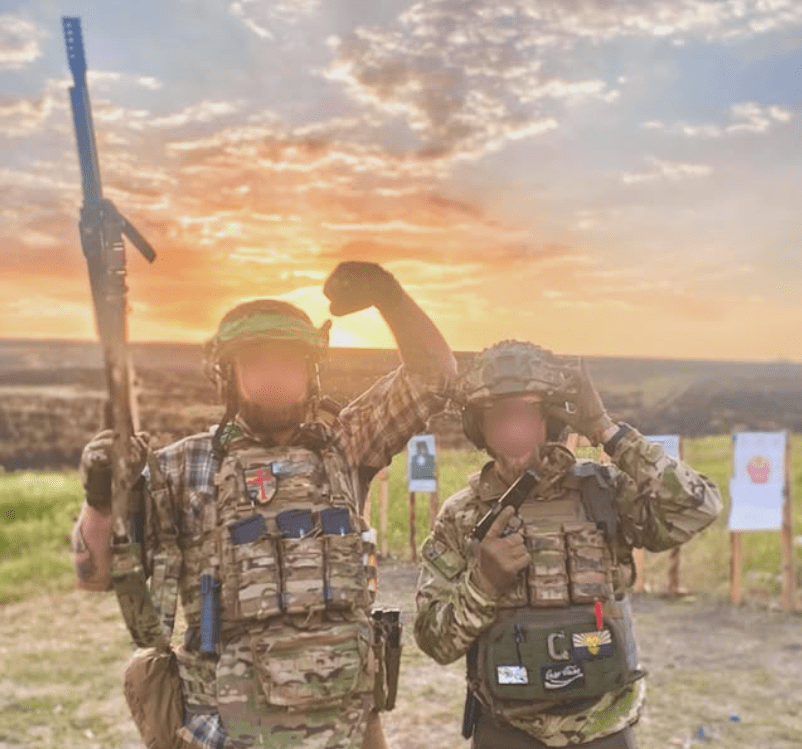
In July, a Browning Hi-Power was seen in a training range photo was shared by the Deputy Commander of the 411th Separate Regiment of the Unmanned Systems of the Armed Forces of Ukraine. The profile of the Hi-Power is unmistakable, but the resolution makes it difficult to confirm the variant; it does not appear to be a Canadian-made pistol. The style of the rear sight doesn’t match that of an Inglis-manufactured pistol.
Later in July, another image of the Hi-Power was used as a cover image for a video clip of an interview with the 411th’s Deputy Commander.
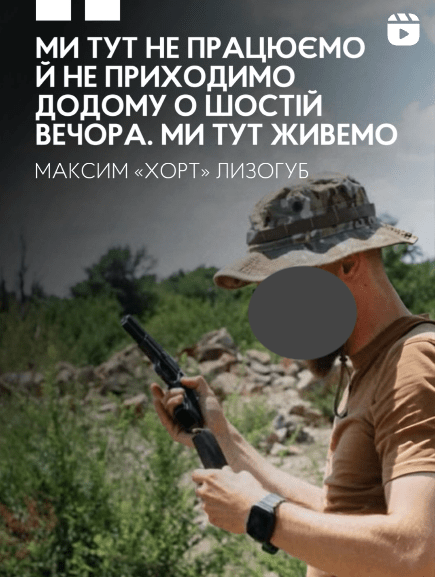
At the time, these two photos represented the only imagery that suggested operational use of Browning Hi-Powers in Ukraine. While there were one or two other photos reportedly from Ukraine they were more likely collectors’ pieces.

In early November, Іван Савельєв, an armourer affiliated with the 3rd Assault Brigade, shared a photograph of a Canadian Hi-Power, which was provided to another Ukrainian unit. The serial number of the pistol, beginning ‘6T60XX’, dates its production to sometime between August and October 1945, when Hi-Power production at Inglis ceased.
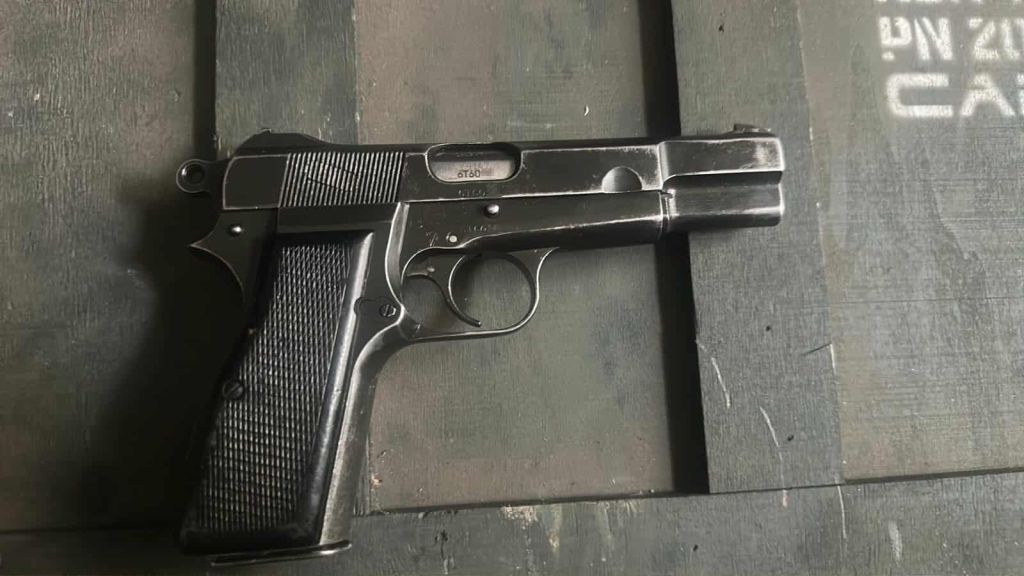
He subsequently shared a video shooting a Canadian Hi-Power at the range. It’s unclear whether this pistol is one which has been delivered to his or another unit.

On 18 November, another photo of an Inglis Hi-Power was shared by another member of the 3rd Assault Brigade. The serial number is not visible but the pistol’s slide is unmistakably marked No.2 Mk1* and Inglis.
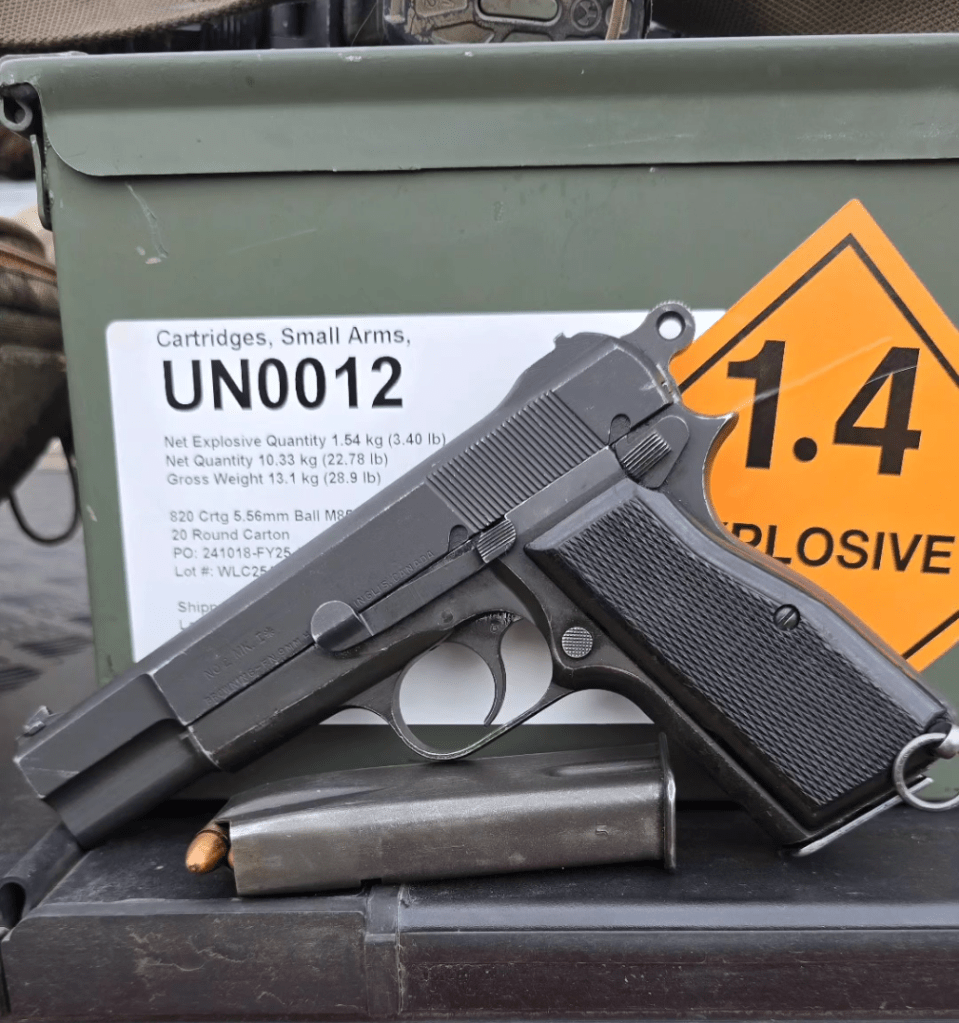
The condition of the Inglis pistols transferred to Ukraine is unclear. The pistols in the Canadian armed forces’ inventory were reportedly highly worn with suggestions that in recent years pistols had been cannibalised for parts. This is to be expected from pistols that were manufactured 80 years ago though it’s unclear if the 10,500 pistols announced by the Canadian government were pistols which were in Canadian armed forces’ regular inventory. While the amount of imagery of these pistols in Ukraine remains comparatively small, the numerous sightings confirm that Inglis-made Canadian Hi-Powers are in active service with the Ukrainian armed forces. While the pistols may have been produced some 80 years ago and are arguably obsolescent the Hi-Power’s influential design and its decent magazine capacity mean that it is still useful today.

Special thanks to Druzhe Orest for assistance.


Support Us: If you enjoyed this video and article please consider supporting our work here. We have some great perks available for Patreon Supporters – including early access to custom stickers and early access to videos! Thank you for your support!
SAS Browning Hi-Power Extended Magazines

On the 5th May 1980, the world was spectacularly introduced to the Special Air Service and their Browning Hi-Power’s with extended magazines.

22 SAS formed the Counter-Revolutionary Warfare Wing in the 1970s, after the 1972 Munich Massacre, and quickly took a lead in developing counter-terrorism tactics. They gained worldwide notoriety in 1980, during Operation Nimrod, the assault ended the Iranian Embassy Siege. It was during Nimrod that the SAS’ CRW squadron was seen in action for the first time.

I began to notice the extended Hi-Power magazines while examining photographs from the operation for another upcoming video. As I looked closely I began to notice more and more holstered Browning Hi-Powers with extended magazines. The Hi-Power’s standard double-stack, single-feed magazine holds 13 rounds, decent for the period, however, SAS troopers evidently saw the benefit of having more ammunition ready to go on their secondary weapon.

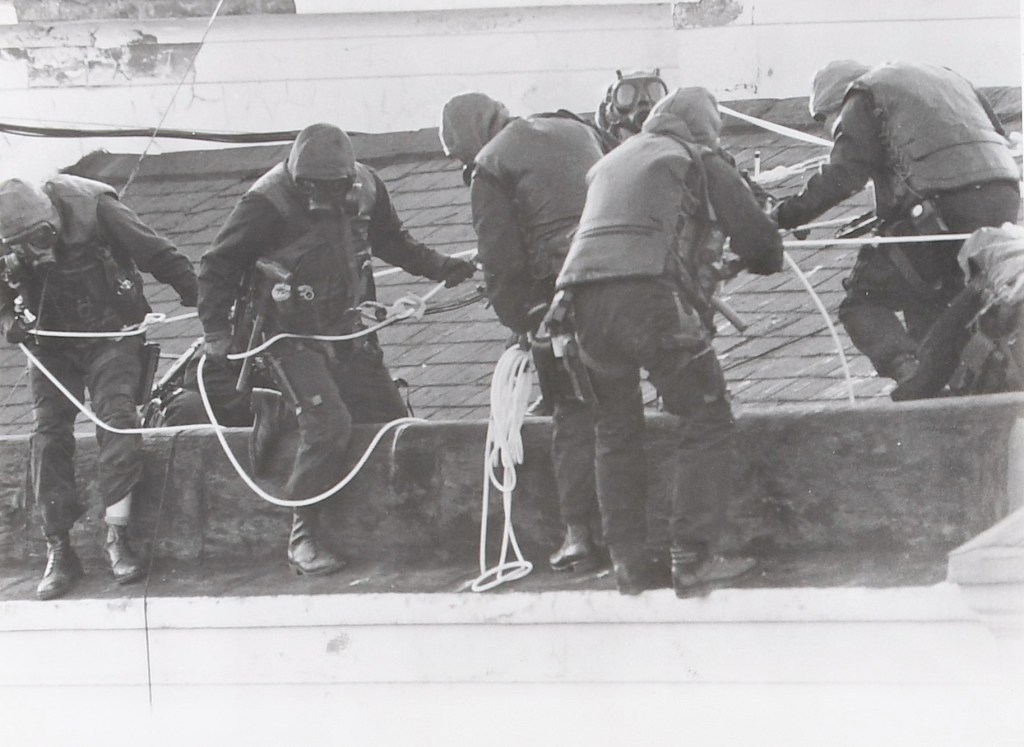
Members of B Squadron’s Red Team prepare to rappel and breach the rear of the embassy (via Woolley & Wallis)

The best photographs are of part of Red Team as they breach the rear balcony of the embassy. In the first photograph a four man team prepare to rappel/abseil down the rear of the embassy to enter via the balcony. You can see the trooper with his back to the camera about to rappel has a Hi-Power with an extended magazine. Subsequent photographs of the four man team on the rear balcony show that several of the troopers have extended magazines. In another photograph Rusty Firmin and a breech team with Blue Team enter the rear of the embassy at the ground floor. On his right leg Firmin is carrying a Browning Hi-Power with an extended magazine.

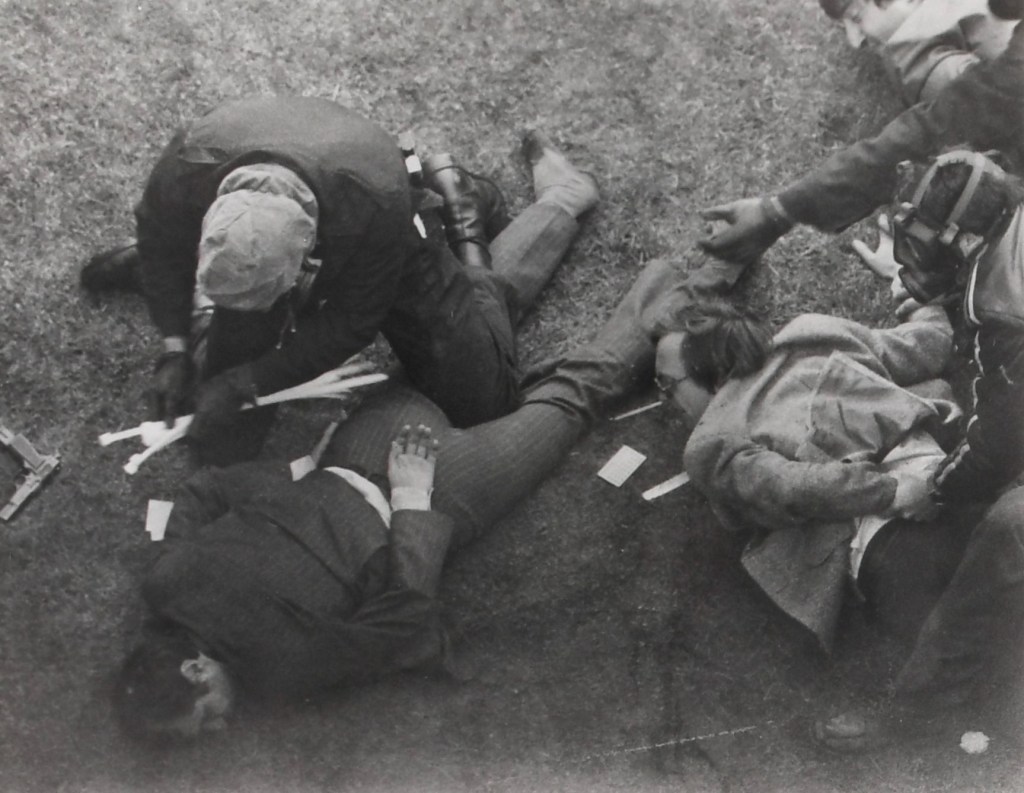
The last photograph shows members of the SAS in the garden behind the embassy securing the hostages so they can be safely identified. As one of the troopers is zip-tying a man he has laid his Hi-Power on the grass next to him.

SAS troopers secure hostages for IDing, note the pistol and extended magazine on the left (via Woolley & Wallis)

The British Army adopted the Hi-Power in 1954, it remained in service through to 2013. It was the SAS’ primary sidearm until the SIG Sauer P226 gained favour in the early 1990s. As seen in the photographs from the Iranian Embassy Siege the CRW squadron carrier their Hi-Powers in custom-made leather drop leg holsters which were made by Len Dixon and Paul Evers.

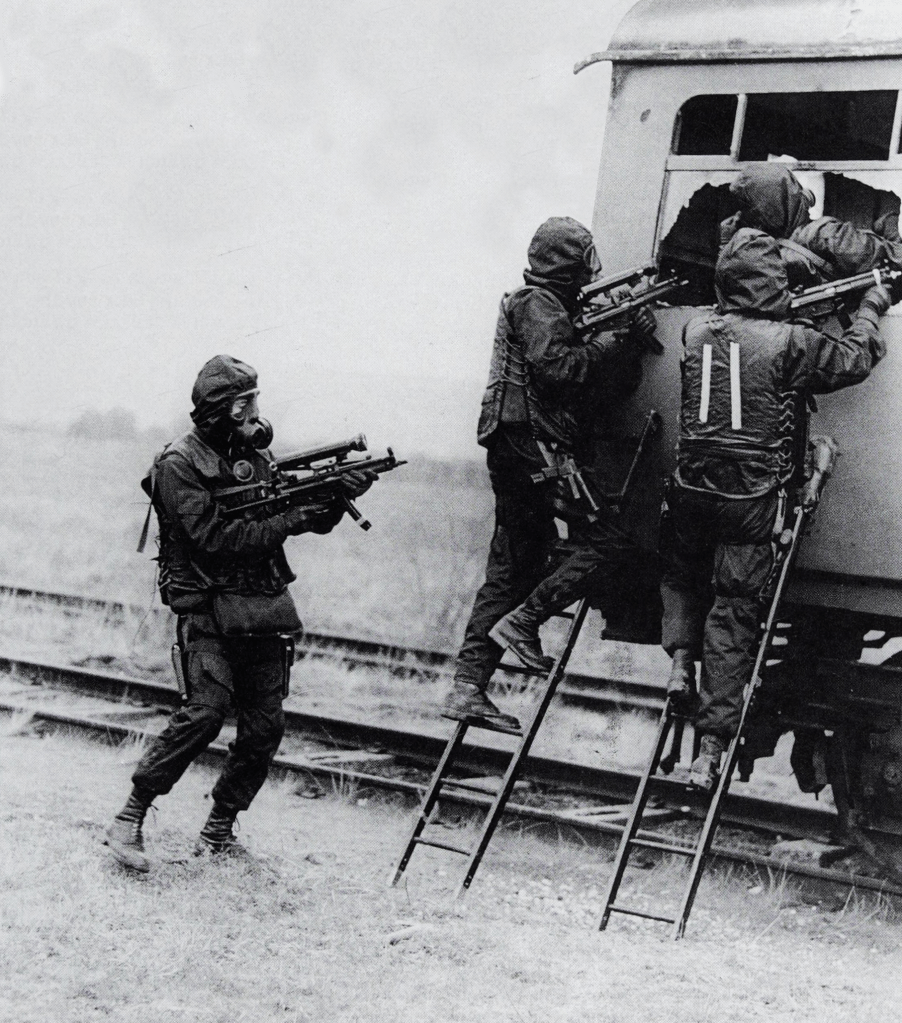
The extended magazines can be seen in photographs dating from throughout the 1980s. Theundated photograph below shows an SAS team during training to assault a train carriage, the trooper in the centre has a Hi-Power with an extended magazine. A photograph of Princess Diana during a visit to Hereford in 1983, features an SAS trooper with an extended magazine visible. This undated photograph, probably from the mid-1980s, of a trooper kicking in a door during training also features one of the magazines. A similar training photograph shows a 4-man team stacking up for an entry – the lead trooper has a Hi-Power loaded with an extended magazine.

SAS team during training to assault a train carriage, note the extended magazine in the central trooper’s Hi-Power and the DIY vertical front grip on the right

Initially, I was unsure who manufactured the extended magazines used by the SAS as very little has previously been written about them and the resolution of the available imagery makes identifying them difficult. A look through contemporary issues of Soldier of Fortune magazine shows a quite few variations were available. With manufacturers like Mec-Gar, SILE and Pachmayr all producing variations though they may also have been offered by FN themselves. However, according to a member of the SAS active in the 1970s and early 1980s the magazines were made in-house by the Regiment’s armourers. They apparently worked well. Judging from the imagery available the magazines probably held between 20 and 25 rounds, with the lower end of the scale more likely.

I spoke to Robert Lancaster, another member of the SAS who served in the 1980s, who explained:

“I nearly always used a 20 round mag unless I was doing door entry, when you had a slung Remington [870] and the 5 [MP5], in that case I used the standard mag in case the mag got caught on the shotty!”

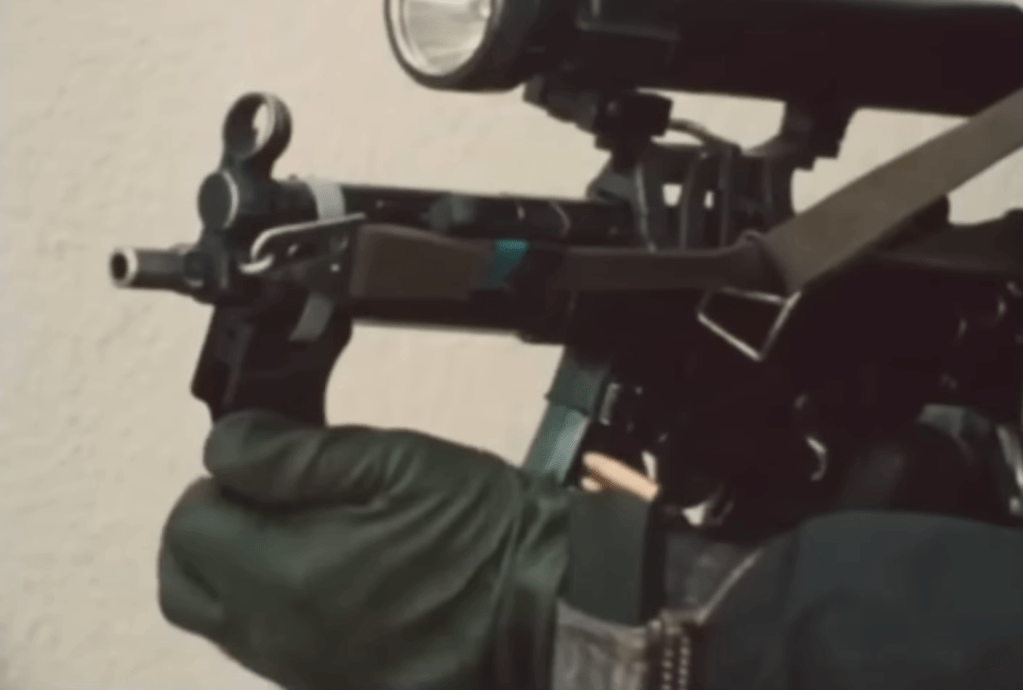
A wrist magazine holder seen in a 1984 British Army film about the SAS (British Army/SSVC via IWM)

One other notable thing to point out are the wrist magazine holders used by some members of the assault teams. This is essentially a ready-to-go magazine attached to the operator’s pistol arm. This would in theory allow the operator to execute a faster reload, the idea being that taking the fresh magazine from the wrist, nearer to the pistol, rather than from the holster pouches on the thigh .

We get a good look at one of these in the British Army’s 1984 video about the SAS. We can see the magazine holder on the operator’s left wrist. Later in the film a trooper climbing through a window can also be clearly seen equipped with a Browning Hi-Power loaded with an extended magazine. The tradition continued with extended magazines also being regularly used with the later SIG P226s.

Special thanks to British SAS Photos on Instagram for their help and to Robert Lancaster for answering my questions. We’ll have more articles/videos looking at SAS weapon set ups from this period in the future so stay tuned.


Support Us: If you enjoyed this video and article please consider supporting our work here. We have some great perks available for Patreon Supporters – including early access to custom stickers and early access to videos! Thank you for your support!

Soviet Threat 2019: Royal Army Service Corps, 1964

Matt recently had the pleasure of attending the Autumn 2019 Soviet Threat event at the Hack Green Nuclear Bunker in Cheshire. One of the people Matt had the chance to speak to was Allen from the MECo group of collectors and reenactors.

allen.jpg
Allen portraying a member of the Royal Army Service Corps, c.1964 (Matthew Moss)

Allen was portraying a member of the Royal Army Service Corps, with uniform representing that of 1964, the year before the corps became the the Royal Corps of Transport. Allen was kind enough to explain his uniform and kit on camera.

Check out our earlier video with Rifleman Moore discussing his 60s PARA portrayal here.

If you enjoyed the video and this article please consider supporting our work here. We have some great new perks available for Patreon Supporters.