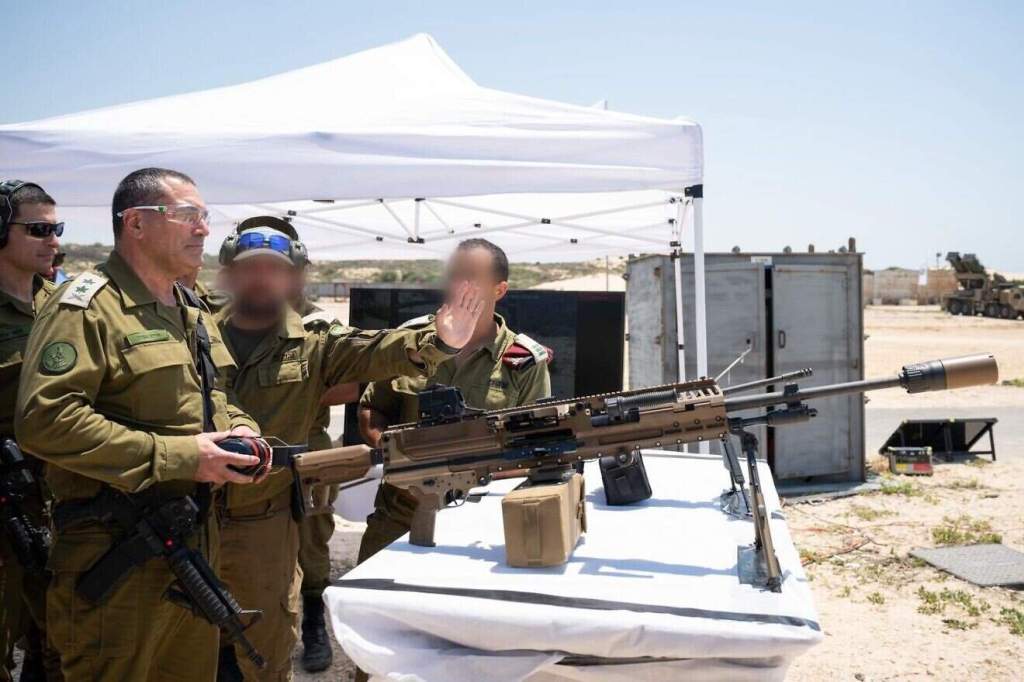
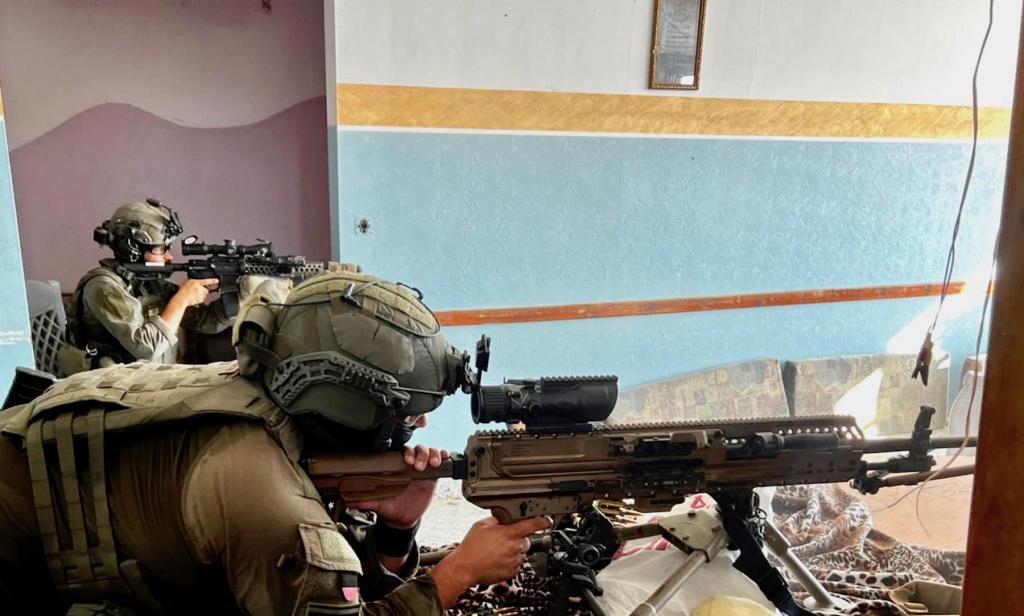
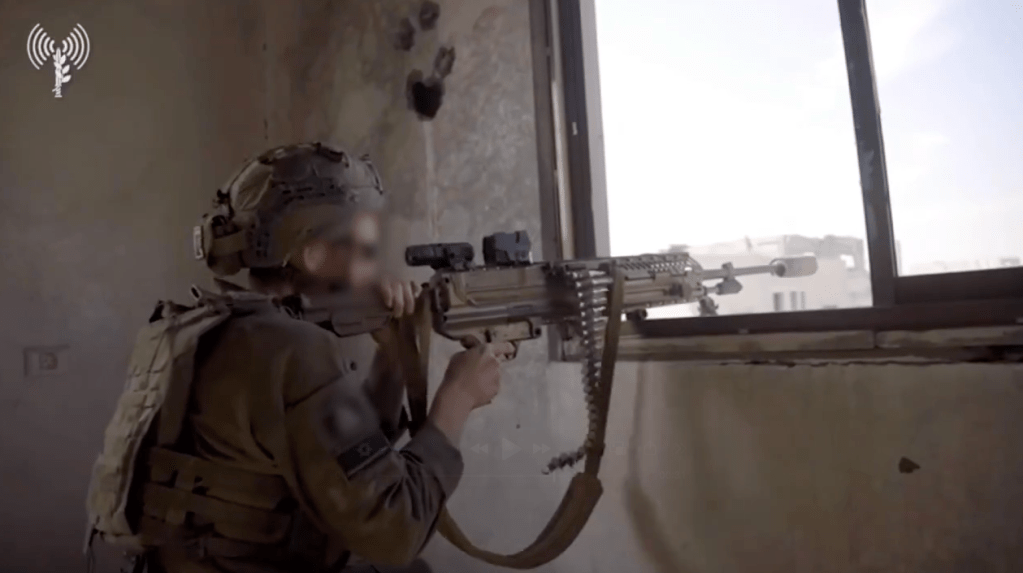
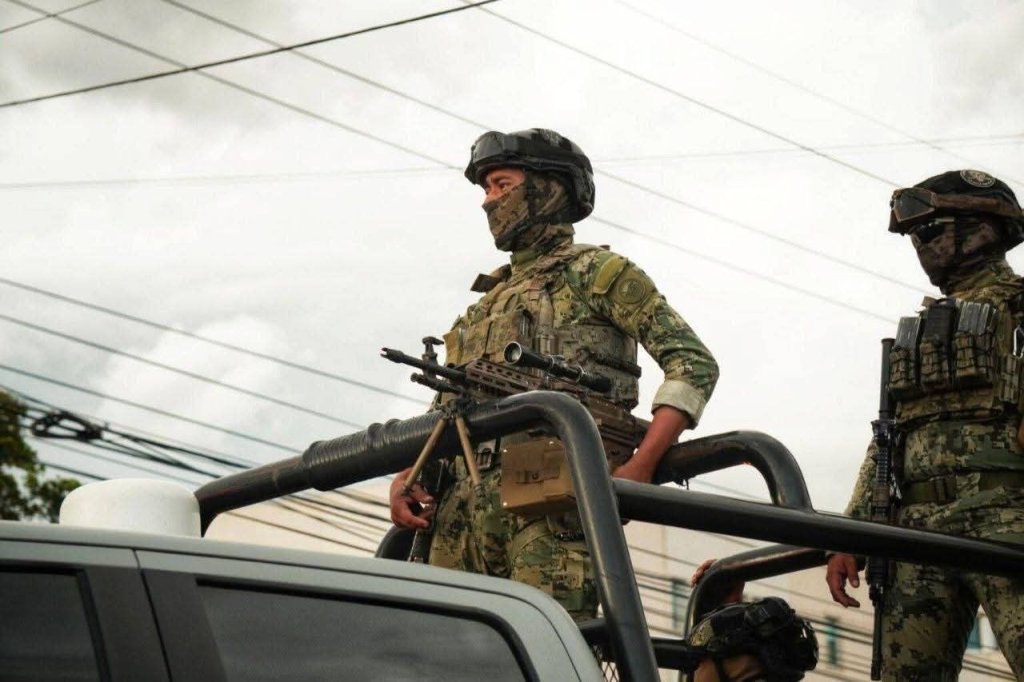
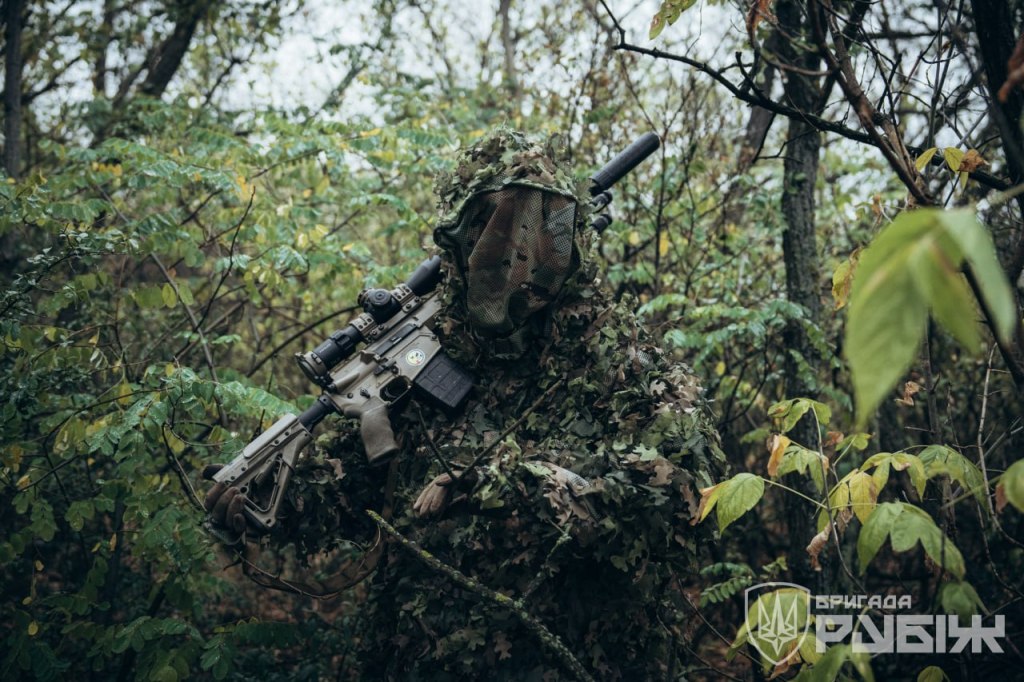
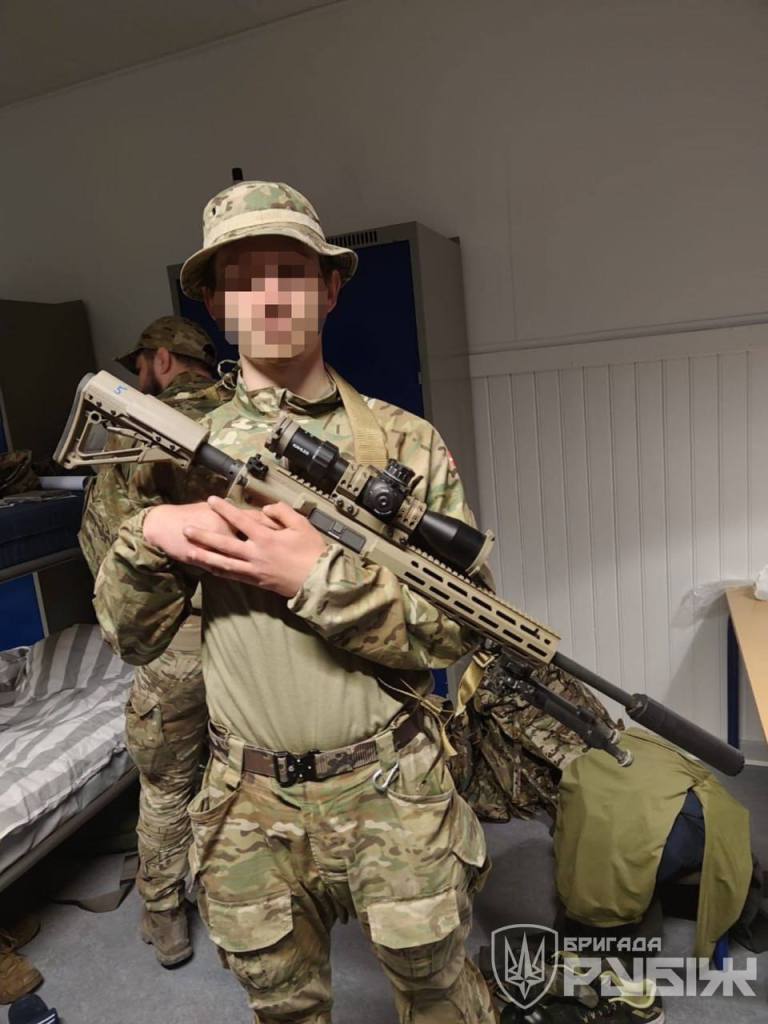
In 2020 Colt Canada introduced the C20, a 7.62x51mm marksman rifle. These have been adopted by both Canada and Denmark. Within the last couple of months a number of C20s have been seen in use in Ukraine.
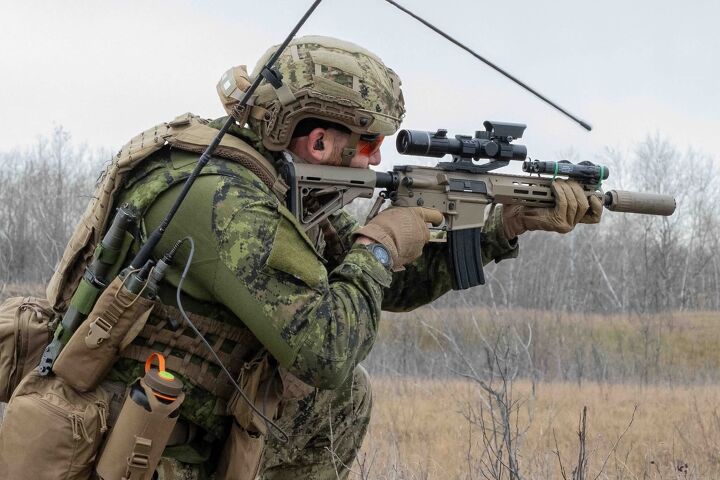
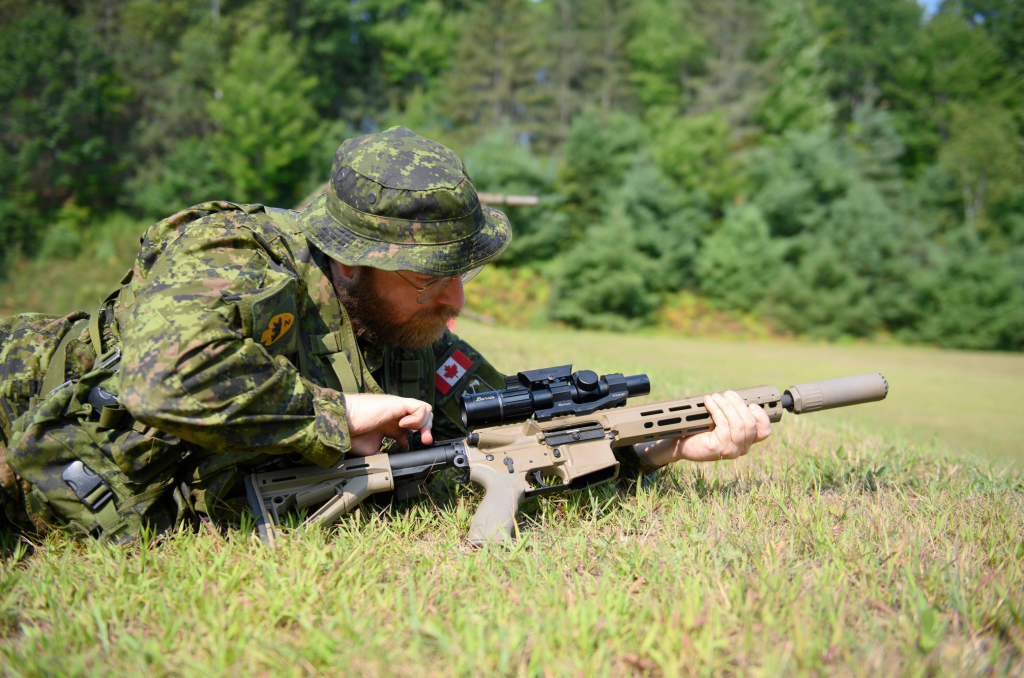
A member of the Sniper Company of the Rubizh Brigade has been photographed with a C20. The brigade has posted photos of the individual and the rifle on a number of occasions from early October through to December. The rifle appears to have a Kahles K318i (3,5-18x50i) scope in a Spuhr ISMS mount and an what is likely an OSS HX-QD 762 suppressor. The rifle also appears to have a LaRue Tactical RISR Cheek Riser for its Magpul CTR MOE stock.
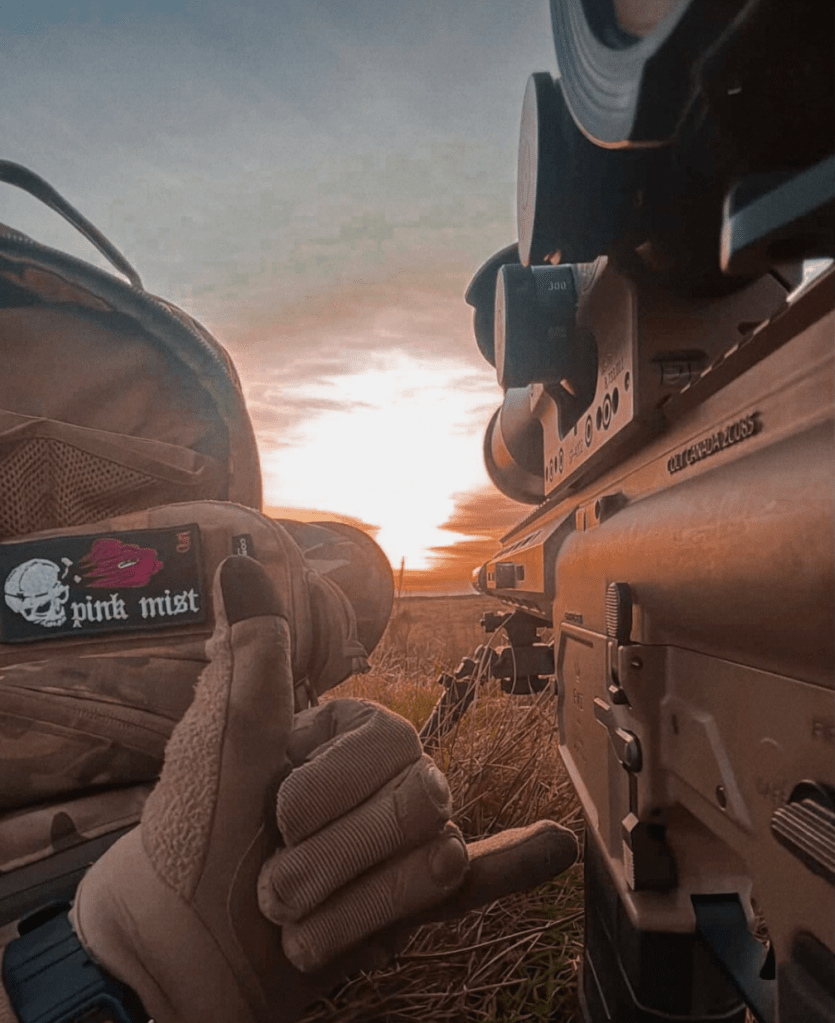
On 6 November, another image was shared by the UA Snipers page on Instagram, a community page which focuses on imagery of Ukrainian marksmen and snipers. The photo appears to have been taken at the range and while it doesn’t show the whole rifle the close up on the receiver allows us to see the Colt Canada CAGE number ‘2C085’. Also just visible is the Spuhr mount’s SP model number. The optic appears to be a high-end Schmidt and Bender from the PMII series.
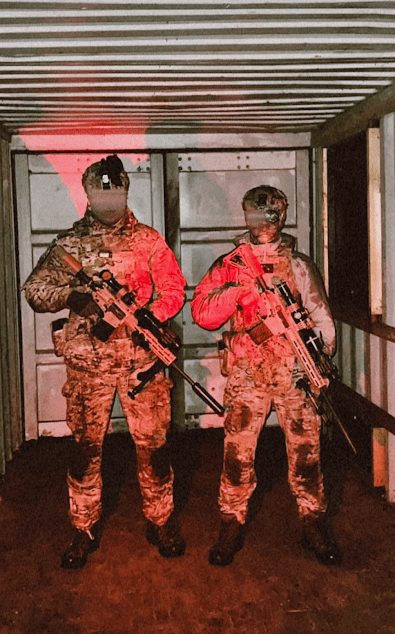
The most recent image was posted on 2 December, showing a pair of Ukrainian combatants with C20s, the rifles both have HUXWRX suppressors but its difficult to identify the optic due to the image’s low resolution. Similarly, they appear to have the LaRue Tactical RISR cheek riser seen on the earlier example. The rifles’ optics appear to be mounted in Spuhr mounts and have thermal clip-ons ahead of the scopes. The affiliation of these combatants is unknown, they may be members of the SSO. When asked about the rifles, the page which shared the photo, noted that “impressions and reviews are good.”
The configuration of the rifles is very similar to those used by the Danish Armed Forces. Denmark adopted the C20 in September 2020. https://youtu.be/hejJU-IPEZ4 /
The number of sightings of the rifles is relatively small, but enough to confirm that a small number of Colt Canada C20 marksman rifles have been supplied to Ukraine and appear to have been issued to several units. The configuration and accessories of the rifles seem to suggest they originate from Denmark.
Special thanks to the guys at Streakingdelilah, Mike and Dikobraz for assistance.
On Thursday (4 December) Armasuisse, Switzerland’s Federal Office for Defence Procurement, announced the selection of the SIG Sauer P320 to replace the venerable P75 (SIG Sauer P220), which has been in service since 1975. So I thought it was a good time to break down all of the major militaries that have adopted the SIG Sauer P320 over the last 10 years.
The SIG P320 is a modular, striker-fired pistol that uses the typical short-recoil, tilting barrel action, with a serialised trigger group available in varying grip-frame sizes. It evolved from the hammer-fired SIG Sauer P250 and entered production in 2014.
Full-size SIG Sauer P320 (SIG Sauer)
In September 2015, the United States Army and United States Air Force released a Request for Proposals for a new service pistol. This launched the Modular Handgun System program seeking to replace the Beretta M9 which entered service in 1990. The P320 faced off against a broad field of competitors including: the Beretta APX, CZ P-07, FN FNS, Smith & Wesson M&P M2.0, Glock 17 MHS and the STI Detonics STX. Down-selection and further testing took place in 2016, before the winner was announced in January 2017. The 101st Airborne were the first unit to be issued the new MX17 and compact XM18 pistols, and fielding continued into the 2020s. The M17 and M18 have a frame mounted safety and their slides are optics ready. The USAF and US Navy procured the smaller M18, with its 3.9in barrel. The USMC also eventually selected the M18 to replace the M9, M9A1, M45A1 and M007 (Glock 19) in September 2020.
US troops training with M17 pistols (US Army)
Almost 10 years after the US Army launched the Modular Handgun System program, it was announced that the MHS General Forces Configuration had been approved. The MHS GFC introduces new parts and accessories for the M17 and M18. This system allows units and soldiers to customise their sidearms to a greater degree. The new parts and accessories include new grip frames, flared magazine wells, gas pedal take-down levers, slide-mounted or stand-alone Romeo M17 Pistol Red Dot Sights and special barrels. The GFC introduces elements seen in the popular X-Carry variants.
US Army’s MHS General Forces Configuration (SIG Sauer)
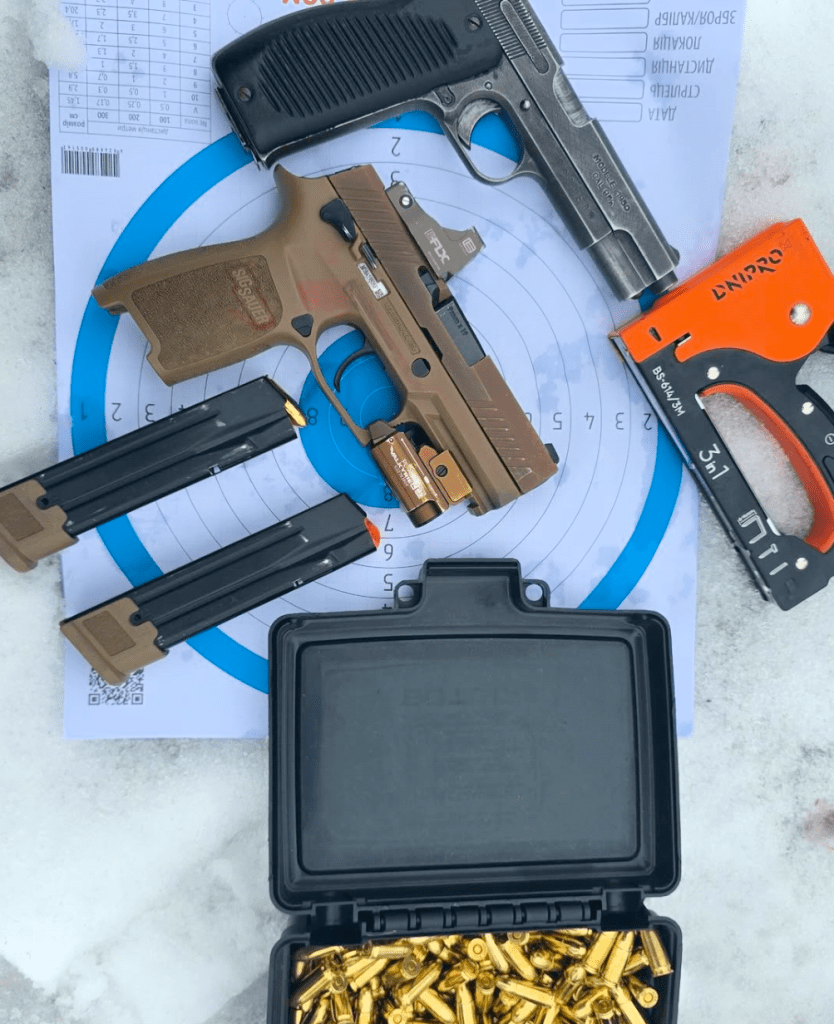
In April 2018, the Danish armed forces became the second military to select the P320. The Danish Ministry of Defense selected the P320 X-Carry variant of the pistol. The Danish Army pistol trials began in 2017 and the P320 X-Carry beat competition from the Glock 17 Gen 5, Beretta APX and Canik TP 9 SF to replace Denmark’s P/49 (SIG P210) pistols. The Danish pistols have the enhanced X-Carry polymer grip frame, a flat trigger, an extended beaver tail, an extended removable magwell, an optics-ready slide, and a deep trigger guard undercut. The pistols do not have a frame-mounted manual safety. At the time of the adoption, Major Tom Elvius-Brisson, Chief of Weaponry Branch, Danish Defense Acquisition and Logistics Organization, said: “By far SIG SAUER’s P320 X-Carry outperformed the competition throughout our rigorous and stringent testing process… the pistol is the modern firearm we were looking for to support our soldiers. The P320 X-Carry has a larger magazine capacity, comes reflex red-dot ready for sighting, and has the ability to incorporate a suppressor – all extremely important features to our soldiers for their sidearm today.” It’s unconfirmed just how many pistols Denmark procured, likely under 10,000, and fielding of the Sig Sauer P320 was anticipated to have been completed by the end of 2019.
One of the less widely reported adoptions of the P320 came in 2019 when Mexico’s National Guard reportedly acquired 50,000 P320s. Some sources suggest that the pistol is also used by elements of the Mexican military. The pistols were procured in 2019 and appear listed in the National Guard’s 2021 Annual Activity Report. They can also be regularly seen as standard issue equipment in imagery shared by the Mexican government. Some photos of the pistols show the slides engraved with ‘SDN’ for Secretaría de la Defensa Nacional, Mexico’s defence department. The pistols otherwise appear to be stock, full-size duty model P320s in black with no manual safety present.
National Guard on parade with SIG Sauer P320s and FX-05 Xiuhcoatl (Mexican National Guard)
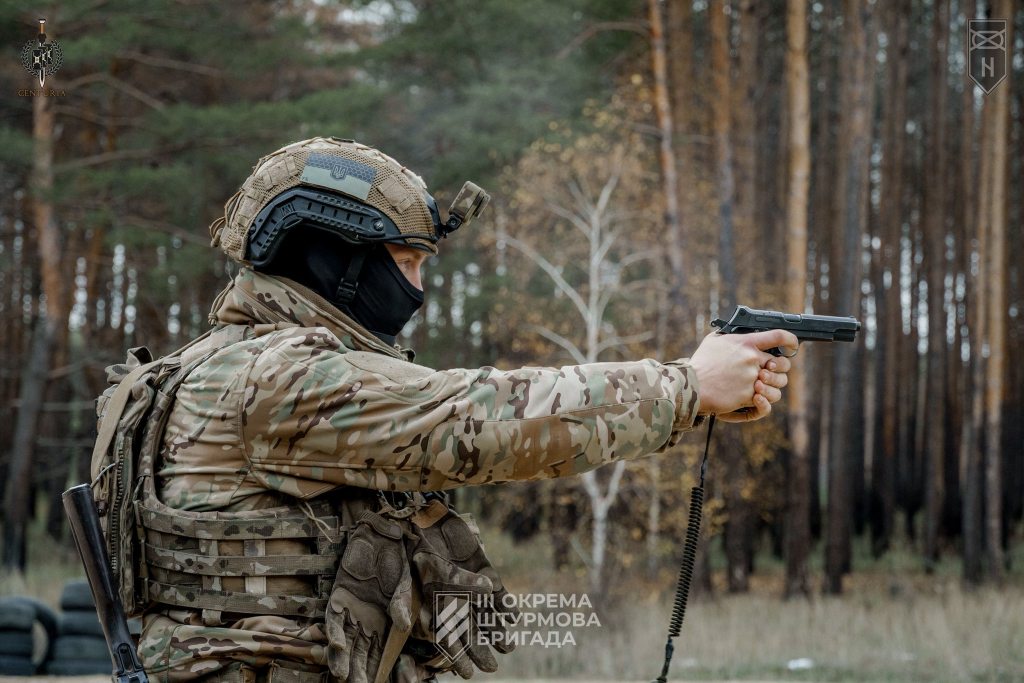
Canada became the next nation to select the P320, replacing their 80 year old Inglis-made Browning Hi-Powers. Opting for a full-size pistol with a 4.7in barrel, the pistol differs from the M17-pattern pistol in that it lacks a frame-mounted manual safety, and its rear sight is fixed on the slide, with the optics-mounting place located separately just ahead of it. It also has unique Canadian engravings on the slide, and both slide and frame are completely cerakoted in an FDE colour. The Canadian Armed Forces adopted the P320 as the C22, with an initial order for 7,000 pistols for the Canadian Army announced in October 2022. At the time of the announcement, Anita Anand, Minister of National Defence, said: “The Government of Canada is committed to providing the Canadian Armed Forces with the equipment they need when they need it. Replacing the Browning 9mm with the C22 full-frame modular pistol (Sig Sauer P320) will help ensure the continued operational readiness and effectiveness of all our members.”
There is an additional option for a further 9,500 pistols to support Royal Canadian Air Force, Royal Canadian Navy and Military Police requirements. Canada’s transition to the C22 began in June 2023, when it was also confirmed that the Canadian Government was also in the process of procuring an additional 2,272 pistol and holster systems for the Canadian Army, 1,550 for the Royal Canadian Navy and 2,478 for the Royal Canadian Air Force. In December 2023, the Canadian Armed Forces also announced that they would start issuing the carry-size C24 pistol in early 2024.
Canada’s C24 pistol, introduced in 2024 (Canadian Army)
At the beginning of October 2022, the Australian Department of Defence announced that under its Lethality System Project LAND 159, a raft of new small arms were selected for the Australian Defence Force’s dismounted combatants. The P320 was chosen to replace Australia’s Browning Hi-Power Mk3s. The X-Carry Pro was selected as the platform for the Sidearm Weapon System requirement. The Australian pistol has a manual safety, suppressor height sights and a 3.9” barrel. It comes mounted with a SIG Romeo 2 (half shroud) reflex sight and Foxtrot 2 white light illuminator (which itself is designated the F10). In September 2024, this package was designated the F9. Unlike the X-Carry selected by the Danish, the X-Carry Pro chosen by Australia has its rear sight mounted on the slide rather than the optics-cut plate. Elements of the ADF’s 7th Brigade became some of the first Australian units to begin training with the pistols in August 2025.
Australian F9 pistols (Australian Defence Force)
As mentioned at the start of the video, Most recently, the Swiss Army has selected the P320 X-Carry Pro to replace the P75 (SIG Sauer P220). The Swiss sought a pistol with modern ergonomics, modularity and a 30 year service life. The tender for a new pistol was launched in 2024, from the pistols submitted five were selected for evaluation and three were down-selected. After further testing the P320 beat out competition from the Glock 45 Gen 5 and Heckler & Koch’s SFP9. Intriguingly, Armasuisse, the Swiss Federal Office for Defence Procurement, noted that initially only the Glock 45 met all the mandatory criteria and was classified as suitable for service. The SIG, however, was selected following a cost-benefit analysis and Armasuisse notes that SIG Sauer are contractually obliged to resolve any issues and establish production of the pistols locally in Switzerland. The Swiss have set aside “a mid-range double-digit million amount” for the procurement of 140,000 SIG Sauer P320s, with the initial lot numbering 50,000 pistols. The image shared by the Swiss Army showed an FDE pistol while a subsequent photo shared by SIG Sauer Switzerland showed one with a black slide and a green frame with a Swiss Cross on the grip.
Image shared by the Armasuisse – a P320 X-Carry (Armasuisse)
Despite controversies surrounding the pistol, and SIG Sauer’s ongoing response,the P320 continues to win major military contracts around the world. SIG have optimised their approach: partnering on a number of occasions with credible local companies and offering a capable but, perhaps most importantly, affordable sidearm, as such at the time of writing the P320 is involved in a number of ongoing and upcoming pistol trials.
Special thanks to Greg Knowles for assistance.
Support Us: If you enjoyed this video and article please consider supporting our work here. We have some great perks available for Patreon Supporters – including exclusive videos, custom stickers and early access to videos! Thank you for your support!
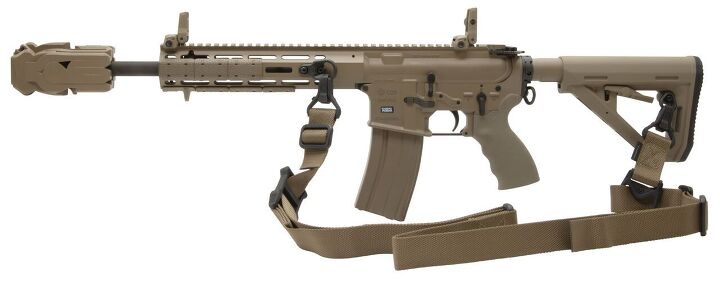
Canada confirmed in September 2024 that it would be supplying Ukraine with “10,500 surplus 9mm pistols from our inventory.” These pistols would be the long-serving Inglis-manufactured Hi-Powers, which Canada is replacing with SIG Sauer P320s, designated as the C22. Only recently has imagery of the Canadian Hi-Powers in Ukraine appeared.
Canadian manufacturer Inglis produced the Hi-Power under license during the Second World War. Just over 150,000 pistols are believed to have been manufactured from 1944 to October 1945. These include two major variants the No.1 and the No.2 (Mk1 and Mk1*). The No.1 had a rear tangent sight and a mounting slot for a holster-stock (features requested by the Chinese government who made the initial order for the pistols). The No.2 pistols had a fixed rear sight, mounted on a slight, curved rise at the rear of the slide. They also lacked the holster-stock slot. The No.2 pistols were subsequently adopted by the Canadian and UK militaries. The No.2 Mk1* pistols are currently being replaced by the P320 after a remarkable 80 years in service.
In July, a Browning Hi-Power was seen in a training range photo was shared by the Deputy Commander of the 411th Separate Regiment of the Unmanned Systems of the Armed Forces of Ukraine. The profile of the Hi-Power is unmistakable, but the resolution makes it difficult to confirm the variant; it does not appear to be a Canadian-made pistol. The style of the rear sight doesn’t match that of an Inglis-manufactured pistol.
Later in July, another image of the Hi-Power was used as a cover image for a video clip of an interview with the 411th’s Deputy Commander.
At the time, these two photos represented the only imagery that suggested operational use of Browning Hi-Powers in Ukraine. While there were one or two other photos reportedly from Ukraine they were more likely collectors’ pieces.
In early November, Іван Савельєв, an armourer affiliated with the 3rd Assault Brigade, shared a photograph of a Canadian Hi-Power, which was provided to another Ukrainian unit. The serial number of the pistol, beginning ‘6T60XX’, dates its production to sometime between August and October 1945, when Hi-Power production at Inglis ceased.
He subsequently shared a video shooting a Canadian Hi-Power at the range. It’s unclear whether this pistol is one which has been delivered to his or another unit.
On 18 November, another photo of an Inglis Hi-Power was shared by another member of the 3rd Assault Brigade. The serial number is not visible but the pistol’s slide is unmistakably marked No.2 Mk1* and Inglis.
The condition of the Inglis pistols transferred to Ukraine is unclear. The pistols in the Canadian armed forces’ inventory were reportedly highly worn with suggestions that in recent years pistols had been cannibalised for parts. This is to be expected from pistols that were manufactured 80 years ago though it’s unclear if the 10,500 pistols announced by the Canadian government were pistols which were in Canadian armed forces’ regular inventory. While the amount of imagery of these pistols in Ukraine remains comparatively small, the numerous sightings confirm that Inglis-made Canadian Hi-Powers are in active service with the Ukrainian armed forces. While the pistols may have been produced some 80 years ago and are arguably obsolescent the Hi-Power’s influential design and its decent magazine capacity mean that it is still useful today.
Support Us: If you enjoyed this video and article please consider supporting our work here. We have some great perks available for Patreon Supporters – including early access to custom stickers and early access to videos! Thank you for your support!
A number of Chinese small arms and light weapons have turned up in Ukraine since the invasion in 2022, including Type 69 RPGs and Type 56 rifles. Another weapon that has been seen infrequently in Ukraine is the W-85 heavy machine gun. Chambered in the Russian 12.7×108mm round, the W85 uses a long stroke gas piston system, and with mount weighs around 39 kg (86lbs). The W85 is predominantly an export weapon and has seen use around the world.
The W85 was first seen in imagery from Ukraine in late October 2022, mounted on what appears to be a Fort Ranger pick-up. This technical was seen in a series of photos through November, with the gun mounted on a pintle. The source suggests it was used to shoot down Shahed-136/Geran-2 one-way munitions (long range kamikaze drones) when they first began to appear in southern Ukraine.
The next sighting came in January 2024, when a photo of Ukrainian Territorial Defence forces posing next to another technical was shared. The gun appears to be mounted on a locally-produced mount on the back of a Nissan Navara.
In February 2025, 122nd Separate Territorial Defense Brigade shared photos of what they describe as a ‘mobile fire team’ equipped with a pick-up and a HMMWV. As well as an W85, an M2 Browning and a DShK. A month later at the start of March Weapons Illustrated shared a video showing a W85 being disassembled. The gun in the video can be identified as a Norinco CS/LM3 HMG from the receiver markings. This is interesting as the CS/LM3 is an export version of the W85 chambered in the 12.7x99mm NATO caliber. It is unclear if any of the other W85s sighted are also this variant and chambered, as imagery doesn’t enable us to positively identify them.
On 22 May, the 122nd Separate Territorial Defense Brigade shared photos of a W85 outfitted for engaging Russian UAVs like Shahed-136s. The gun appears to have a high-power light mounted.
On 25 October, Ukrainian photographer Mykyta Kuznetsov photographed a mobile anti-drone unit on the outskirts of Kharkiv. The unit was photographed with their pick-up mounted with a W85 on a pintle. The Ford Ranger’s bed has been removed and replaced with a circular platform to allow the gunner to move more easily when engaging moving targets.
The number of W85 in Ukraine is unknown but likely small. It is unclear how the guns seen in 2022 arrived in country or if any of those seen subsequently originated from the US’ transfer of seized Iranian arms shipments. It appears that the guns have largely been issued to Territorial Defence Force units, which are predominantly tasked with air defence operations against Russian Shahed one-way munitions.
Addendum: There has been at least one sighting of a Chinese Type 54, a clone of the DSHk, in Ukrainian service dating from March 2024.
Chinese Type 54 HMG in service with Ukrainian forces during training, March 2024 pic.twitter.com/ZmhMfBqEIc
An additional photo of a W85, dating from 2023, posted by the 241st Separate Brigade of the Territorial Defence Force.
Support Us: If you enjoyed this video and article please consider supporting our work here. We have some great perks available for Patreon Supporters – including early access to custom stickers and early access to videos! Thank you for your support!
POV – You’re just back from an exciting day walking around the 1989 Arms Expo. You begin unpacking all of the brochures about the latest cutting edge firearms that you picked up! You start with some SIG brochures a nice man from Bern enthusiastically gave you….
Support Us: If you enjoyed this video and article please consider supporting our work here. We have some great perks available for Patreon Supporters – including early access to custom stickers and early access to videos! Thank you for your support!
The APILAS or Armour-Piercing Infantry Light Arm System, developed by France’s GIAT Industries in the early 1980s, is perhaps one of the rarest shoulder-fired anti-armour weapon systems to appear in Ukraine. APILAS is a 112mm anti-armour weapon with a 1.5kg shaped charge warhead capable of penetrating more than 750mm or rolled homogeneous armour.
The APILAS seen in Ukraine are most likely to have originated from either France or Finland, with Finland being the more likely.
In late February 2022, with Russian forces massed on Ukraine’s borders, the Finnish government made a rare public declaration of military aid to Ukraine. This included figures for a number of different weapon systems. The announcement stated: “Finland will deliver 2,500 assault rifles, 150,000 cartridges for the assault rifles, 1,500 single-shot anti-tank weapons.” The announcement didn’t specify the type of anti-tank weapons to be sent; however, and from Finish inventory these may have included APILAS, M72 LAWs or even NLAWs.
An APILAS seen in a video dating from 2021, filmed during fighting on the Donbas line of contact (via social media)
APILAS have been seen in Ukraine before Russia’s invasion in 2022, one was seen in a video dating from November 2021. It is unclear when the first APILAS were first transferred to Ukraine, and the weapons seen subsequently may originate from an earlier, pre-2022 invasion transfer.
APILAS in a Ukrainian armoury, c.2023 (via social media)
In April 2023 a photo of an APILAS in a Ukrainian armoury surfaced, sadly no markings are visible in the image. Several months later, on 19 and 20 June, Red Line Team, a unit affiliated with the Ukrainian security services special forces unit, SBU-Alpha, shared imagery from a range trip where a wide variety of anti-armour systems were fired. One of the weapons featured in the video was an APILAS.
(Red Line Team)
APILAS have also been seen with the Assault Bastards, a unit believed to be part of the Kraken Regiment’s 2nd Assault Company, which is part of the Department of Active Operations of Ukraine’s Intelligence Directorate (the GUR). On 13 May, the unit shared a group photo which also featured three APILAS.
(Assault Bastards)
Most recently Shybenyk.Squad, another unit with Kraken’s 2nd Assault Company, shared a photo of an APILAS. This photo also appears to have possibly been taken at a range rather than in the field. Speaking to Shybenyk.Squad they explained that they have a decent number of APILAS in store and have used them operationally.
(Shybenyk.Squad)
APILAS has a reputation for having considerable concussive force when firing but Shybenyk.Squad noted that it’s blast isn’t that bad comparatively, describing it as ‘not critical’, during a recent trip to the training range the unit test fired 6 APILAS.
While APILAS are rarely seen in imagery from the conflict Shybenyk.Squad noted that they have a significant number of them in stores. They favour them for operations where more expensive complex systems, like NLAW or Javelin, may be lost. Shybenyk.Squad explained that “they can definitely be useful in certain situations… [systems such as] NLAW are much more expensive, high-tech, more effective, but losing it is much more problematic and in some risky tasks it is better to take a less expensive weapon.” In general they noted that they favour the AT4 and RGW-90 Matador “due to the weight to the corresponding firepower and ease of use.”
(Shybenyk.Squad)
Operationally they favour the APILAS’ for its penetration capabilities, with sources suggesting it can penetrate around 2 metres of concrete, making it is an excellent weapon for mouse-holing – breaching structures. Shybenyk.Squad explained that they “once used it to break through a small wall to storm a building from a blind side not protected by the enemy.”
APILAS is one of the most rarely seen anti-armour weapons currently being fielded in Ukraine so I’m pleased to be able to share some good first hand imagery and feedback on its capabilities.
Special thanks to Shybenyk.Squad for sharing additional imagery and sharing their thoughts on APILAS.
Support Us: If you enjoyed this video and article please consider supporting our work here. We have some great perks available for Patreon Supporters – including early access to custom stickers and early access to videos! Thank you for your support!
This week, some surprising news broke: FN America confirmed that production of all SCAR variants had ceased. Rumours began to circulate last week, and a subsequent post on r/FNSCAR claimed that “both the US and Belgium plants have ended production of all (RCH and NRCH) SCAR 16S, 17S, AND 20S and all that is left is what is currently on the market.”
FN SCAR-L (16S) (FN America)
This led to FN social media channels being inundated by questions asking if the rumours were true. On Wednesday, FN America’s social media team began confirming the news, replying to posts on X, Facebook and Instagram. However, this raised additional questions: Is production in Belgium also set to end, or just in the US? What about spares and support? What about ongoing military contracts and support for weapons already in service around the world? Notably, many of FN America’s replies referred to the ‘legacy SCAR’, suggesting that there may be an updated ‘non-legacy’ SCAR in the works.
SCAR Series on FN America’s website
Finally, on 16 October, FN America posted a statement confirming the news officially. This statement explained that while production of all SCAR variants (except the SCAR 15P pistol) in the US was ending, “none of this affects FN’s global military SCARs – these are still in demand and still in production.”
Naturally, there was a lot of speculation about what FN would replace the SCAR with. The FN IWS, developed by engineers at FN America, was often highlighted as the probable successor. The FN Individual Weapon System, chambered in steel-cased 6.5x43mm round, was developed for a requirement set out by the Irregular Warfare Technology Support Directorate (IWTSD). It has since garnered interest from the special forces of a number of nations an FN recently announced they’d supplied operational test samples to enable ‘critical feedback’ for further refinement. Despite this the IWS isn’t yet a fully matured system.
The FN IWS on display at SHOT Show 2023 (Matthew Moss)
There is also the Mid Range Gas Gun (MRGG) rifles which were developed for US SOCOM. MRGG-A is a requirement for a 6.5 Creedmoor chambered ‘assault’ rifle. FN’s MRGG-A submission introduced internal changes, a new combination forward assist and brass deflector as well as ejection port cover and added an AR-style charging handle. I took a look at one of the prototypes at SHOT 2023.
FN’s MRGG-A submission displayed at SHOT 2023 (Matthew Moss)
As such, I think FN are likely to introduce a new generation of SCAR embodying improvements developed in recent years. The SCAR Mk3 will probably be a product improvement with new features and refinements bringing it in line with the latest weapons from competitors like the HK433, SIG SPEAR-LT and CZ Bren 3.
We may already have seen the FN’s successor to the legacy SCAR in a photo taken at the 2025 Cranfield Close Combat Symposium. At the centre of the photograph is a SCAR-like rifle with some noticeable changes to the upper and lower receivers, the gas system and the forend.
Will the new rifle be called SCAR Mk3? This remains to be seen. Clues began to emerge earlier this year when FN trademarked a new product name, registering the name ARKA around the world [UK, Australia, US]. ARKA is listed as a trademark for a firearm/assault rifle. It remains to be seen if ARKA will be the name of the new FN rifle but it would align well with the new designation scheme started with the EVOLYS. Time will tell which approach FN takes and what their next generation of infantry rifles will look like.
Introduced in 2004, the SCAR has had an interesting service life all around the world, and while the Mk2’s days appear to be coming to a close it’s likely the SCAR’s legacy will continue within the engineering genetics of FN’s rifles for some time to come.
Support Us: If you enjoyed this video and article please consider supporting our work here. We have some great perks available for Patreon Supporters – including early access to custom stickers and early access to videos! Thank you for your support!

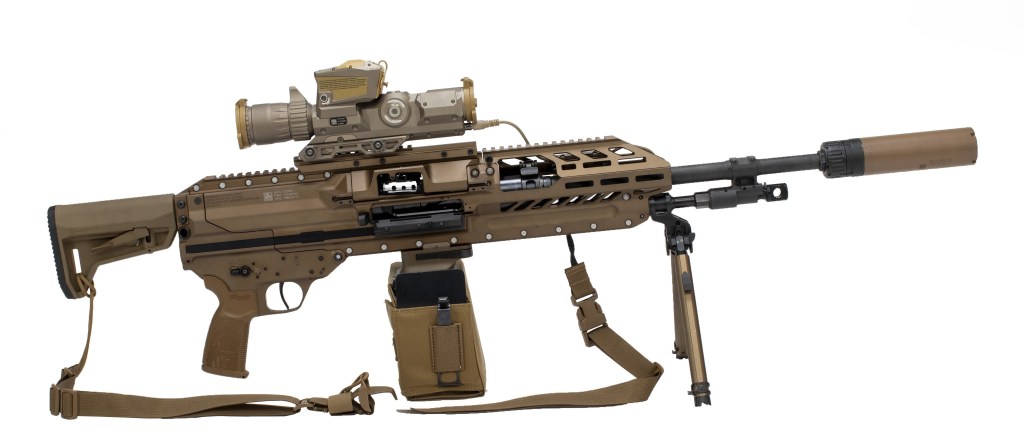
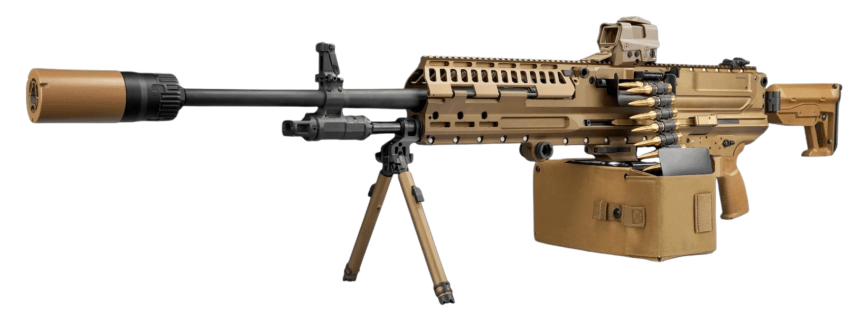
Last week at the DSEI defense exhibition in London, we had the opportunity to handle SIG Sauer’s product improved M7 rifle. Over the past year, SIG Sauer has taken user feedback from the US armed forces and refined the M7; the result is a handier weapon which feels more like a fighting rifle.
M7 Product Improved, with 10.5in barrel, at DSEI 2025 (Matthew Moss)
One of the key criticisms of the M7 is its weight, with the M7 weighing in at around 9.8 pounds (4.46 kg) with its SLX suppressor. By comparison, the improved M7 weighs in at around 7.5lbs (3.5kg) unloaded, with a suppressor but without an optic. This makes the refined M7 a full kilogram (2.2lbs) lighter.
M7 Product Improved at DSEI 2025, with suppressor removed (Matthew Moss)
M7 Product Improved at DSEI 2025, with suppressor mounted (Matthew Moss)
SIG Sauer achieved this weight reduction in a number of ways; the barrel has been shortened from 13 to 10.5 inches, and some of the internal components, such as the bolt, have been lightened. SIG explained that the muzzle velocity of the rifle has only been slightly decreased by the barrel length change, with the improved M7 achieving around 2,800-2,900 FPS (870 m/s) compared to the 3,000 FPS with the original 13-inch barrel. SIG say this still more than meets the Army’s ballistic and armor penetration requirements.
M7 Product Improved with new shorter SLX suppressor at DSEI 2025 (Matthew Moss)
The barrel itself has a lighter profile, and the handguard has been shortened and reprofiled to match the new barrel length. SIG have also removed the folding stock latch, with the fixed stock saving several grams. Arguably, for some applications, this is weight that could be justified to maintain the ability to fold the weapon’s stock for a more compact profile – better suited for vehicle operations.
M7 Product Improved with fixed stock at DSEI 2025 (Matthew Moss)
In addition to a shorter barrel, SIG Sauer has also shortened the SLX suppressor which is paired with the M7, by approximately an inch; this helps improve the rifle’s balance. SIG have also paired the new shorter suppressor with a new lightweight thermal shield, which significantly reduces the heat signature of the suppressor. SIG are also offering a mesh shroud (similar to that seen issued with SURG kits) and an anti-mirage shroud. With the thermal shield, the suppressor’s heat glow under night vision and thermal optics only becomes visible at around 100 rounds, rather than 40 rounds without the shield.
M7 Product Improved muzzle close-up at DSEI 2025 (Matthew Moss)
SIG’s work on the M7 was undoubtedly driven by US military feedback and a desire for refinements, but it is worth noting that it is unclear whether the rifle seen at DSEI will be the configuration the military moves towards in the future. Another variant of the improved rifle, with the shorter barrel and new handguard but a new upper receiver profile, was seen recently at the Maneuver Warfighter Conference 2025 in a released (and subsequently redacted) photo shared by the US Army. The rifle is also seen to be equipped with a Millbrook Strategic Services MFMD suppressor.
M7 Product Improved at DSEI 2025 (Matthew Moss)
The US Army now has around 25,000-30,000 M7 rifles in inventory; it is unlikely that rifles already in service will be retrofitted to the new M7 Product Improved spec. The iterative refinement of the M7 isn’t a surprise; testing, feedback and improvement are key to the Next Generation Squad Weapons program’s spiral development strategy. As such the M7 and M250 only recently completed desert environmental testing with troops in August. Time will tell if the configuration seen at DSEI (or something similar) is adopted by the US Army to supplement the M7s currently in service. In the meantime questions regarding the M7 PI’s accuracy, reliability, parts wear and signatures are yet to be definitively answered but it is interesting to see the potential direction of refinement the rifle is moving in.
Update – 24/9/25:
A social media video shared by the US Army highlighting a visit by the Secretary of the Army to the 101st Airborne included a brief shot of a board that offered some details on the “M7 PIE” and the “M7 ‘Carbine'”. (H/T to @TangirayL) PIE standing for ‘Product Improvement Effort’.
The board lists the major changes made to the two rifles and gives some weight and length specs on the variants. This would indicate that rather than just one improved variant there are two and the one shown at DSEI is the M7 ‘Carbine’ (or PIE RAPTOR).
Update 14/10/25:
At AUSA 2025 SIG Sauer displayed both the product improved M7 [which SIG refer to as the M7 Enhanced Rifle] and the product improved M7 carbine. Solider Systems Dailyshared good side by side photos illustrating the two new versions of the M7. Noteably the design of the handguard between the M7 PIE Carbine seen at DSEI and AUSA differs in their side MLOK configurations.
SSD also reports that: “regarding barrel life. The program requirement was for 5,000 rounds which is the same specification as the M4. However, SIG has noted barrel life for the M7 in excess of 10,000 rounds.”
Support Us: If you enjoyed this video and article please consider supporting our work here. We have some great perks available for Patreon Supporters – including early access to custom stickers and early access to videos! Thank you for your support!
On 14 August, Taiwan’s Military News Agency YouTube channel, run by Taiwan’s Ministry of National Defense, shared a video update on new technologies including Taiwan’s new Cheetah IFV, drones and new T112 rifles. Another system showcased briefly was a commercial truck mounted with a Hellfire twin rail firing post.
The video shows what appears to be a commercial Isuzu truck being outfitted with a firing post and sensor system. The Hellfire Truck has been developed by the 209th Arsenal of Taiwan’s Armaments Bureau.
(Taiwan Ministry of National Defense)
The development comes as Taiwan seeks conventional and asymmetrical methods of countering a potential Chinese invasion. Taiwan’s Hellfires are normally launched from Cobra and Apache attack helicopters but the new truck-mount may allow them to be used if Taiwan’s attack helicopters are suppressed by Chinese air defences. It also provides a new mobile method of utilising the missiles from the ground.
Alongside the firing post the truck also has what is likely a small radar and a sensor turret with electro-optical and infrared cameras and perhaps a laser designator. This is mounted on a telescoping mast which raises out of the roof of the truck’s cargo area.
In the video we are shown the mounting of the mast base and an A-frame to hold the Hellfire rail, before Taiwanese troops are seen loading and firing a AGM-114L LongBow Hellfire. The AGM-114L has a 20lbs or 9kg tandem shaped charge high-explosive anti-tank (HEAT). It uses a fire and forget millimeter-wave (MMW) radar seeker guidance system. The footage shows the missile being fired at a shipping container floating off-shore – this potentially simulates the engagement of a PLA-Navy landing craft.
(Taiwan Ministry of National Defense)
The Taiwanese development is reminiscent of the commercial vans equipped with Hellfire-derived Brimstone missiles seen in Ukraine. We have previously covered these Brimstone-launch platforms in a number of article/videos. The Brimstone vans seen in Ukraine were developed by the UK to provide a mobile launch platform for using Brimstone as as a surface to surface missile. While Hellfire isn’t as sophisticated as Brimstone the laser guided and millimeter-wave radar-guided Hellfire variants can be used effectively against ground or naval targets. In a brief to-camera segment Colonel Su, with the 209th Arsenal, notes that “during launch, we may need to modify the firing logic to ensure accurate impact,” adding that “this is a key technical challenge we must overcome” suggesting the targeting process for the system is still being refined.
(Taiwan Ministry of National Defense)
The concealability and mobility provided by a truck-based system may allow Taiwanese forces to rapidly move to threatened coastal areas and quickly engage enemy vessels or landed enemy vehicles or positions. The system also has the benefit of being comparatively cheap to produce, with the sensor suite and missiles being the most expensive elements of the system. Colonel Su notes that “the vehicle-mounted missile system is designed for asymmetric warfare” and as such is somewhat easy to conceal within an urban area.
(Taiwan Ministry of National Defense)
It’s unclear if Taiwan was inspired by Ukraine’s Brimstone vans but given the threat Taiwan faces the ability to think outside the box and deploy asymmetric assets alongside conventional ones will be essential.
Following on from our recent examination of RPG-UGVs a new armed unmanned ground vehicle variant has appeared – the MANPADS-UGV. MANPADS or Man-Portable Air Defence Systems have been a key weapon during the war in Ukraine. They enable troops to engage drones and UAVs of various sizes as well as helicopters.
(LIBKOS/28th Mechanized Brigade)
On 4 August, photographers Libkos, shared a video showcasing an Igla-1 MANPADS mounted on a four-wheeled UGV operated by Ukraine’s 28th Mechanized Brigade. In an Instagram post, Libkos explained the idea behind the MANPADS-UGV:
“If before they were quite easy to shoot down with MANPADS, now Russian UAVs control every movement of our infantrymen and often do not even allow them to leave the trench. That is why the guys from @28ombr created this robotic platform. It independently guides and hits any large air target. The guys have already tested it in action and it already has one enemy helicopter on its account. So we are collecting 10 more such platforms. This is an effective and innovative weapon that is independently manufactured by the military from 28 Ombr.”
— Matthew Moss | The Armourer's Bench (@historicfirearm) August 4, 2025
The available imagery, shared by Libkos and the brigade, shows the UGV being test-fired. The Igla is mounted on an angled mount, which seems to have a degree of elevation and traverse. There appears to be a motor and servo system attached to the front of the weapon to act on its trigger. Behind this is what may be a camera and transmitter/receiver. In part of the promo video a pair of operators are seen in a nearby trench, one wearing a headset for the UGV’s camera feed.
Ukrainian media outlet Defenderreports that the MANPADS-UGV has been named “Alycha”.
(LIBKOS/28th Mechanized Brigade)
It’s difficult to tell how the system would be used in practice or how effective it would be. MANPADS such as Igla-1 use infrared homing and require the operator to track the target before launching. The operator has to visually detect the target, activate the power supply unit, aim at the target via the fore and rear sights and pull the trigger. While the operator doesn’t have to track the target once the missile is fired they must track it immediately prior to launch. How capable the UGV is of doing this is currently unclear. For the best image clarity and response time for identifying and tracking a target it would make sense for the UGV to utilise a fibre-optic control cable but there is no evidence of this in the available imagery.
It is unclear if the system can be equipped with different types of MANPADS. In theory the UGV could be mounted with Igla, Strela, Piorun or even Stinger, as such one variable to consider is the system’s engagement range. The Igla-1’s operational engagement range is 6km (3.5 miles) with an 11,000 feet engagement ceiling. Given Ukraine’s focus on defensive strong-points the gap between positions able to engage aerial threats with a MANPADS may be relatively wide. If small Ukrainian units are defending strong-points along a stretch of front they may have a limited embedded anti-air capability. A MANPADS team would have to expose itself to reach various points along the unit’s sector of the front so having a UGV which can be rapidly deployed makes sense.
(LIBKOS/28th Mechanized Brigade)
Nevertheless the concept is an interesting one. the 28th Mechanised Brigade claims that the system has already been used operationally and the UGV has successfully engaged an enemy helicopter. Verifiable proof of this kill has not yet been provided. There are no doubt useful applications for the system, such as patrolling an area, as a quick reaction asset and in removing the need for troops to leave cover to engage aerial threats.