This week we examine a First World War film with a difference, The King’s Man, a prequel to the successful Kingsman franchise. The film explores the founding of a high-minded intelligence agency against the backdrop of the Great War. Weaving in real historical events as plot points we follow the protagonists as they foil a plot to control Europe. Directed by Matthew Vaughn the film boasts a stellar cast including Ralph Fiennes, Gemma Arterton, Rhys Ifans, Matthew Goode, Tom Hollander, Harris Dickinson, Daniel Brühl, Djimon Hounsou, and Charles Dance.
In 1989 at the height of a flurry of Vietnam War films an interesting new take on the sub-genre came in the form of 84 Charlie MoPic, which used a found footage, first person technique to follow a fateful long range reconnaissance patrol (LRRP). Written and directed by a Vietnam veteran Patrick Sheane Duncan, it has a small but capable cast including Jonathan Emerson, Nicholas Cascone, Jason Tomlins, Christopher Burgard, Glenn Morshower, Richard Brooks and Byron Thames.
During the First World War Germany struggled to produce its own tanks, with no more than 20 A7Vs being built, instead the Imperial German Army made liberal use of captured allied tanks. In my recent video looking at the British No.44 anti-tank rifle grenade I briefly touched on German use of capture tanks or ‘Beutepanzern’.
The German Army form ed its first Heavy Tank Detachments in late 1917, three of these were equipped with German-built A7V, but the rest were eventually armed with captured British MkIVs. Many of the British tanks were captured following the Battle of Cambrai. Little was changed on MkIVs except for armament with German quick-firing 57mm Maxim-Nordenfelt guns and MG08 machine guns replacing the British 6 pdrs and .303 chambered machine guns for ease of logistics. Though some Lewis Guns pressed into German service were reportedly used aboard the captured tanks.
A Beute MkIV in the field
In this footage from a German newsreel, we see some of the British tanks captured at Cambrai, as well as German soldiers examining the tank and demonstrating how it works. Finally the Kaiser watches a demonstration of the captured vehicle during a visit to the front.
German workshops converted most captured machine gun-only armed ‘female’ MkIVs into gun and machine gun armed ‘males’. They also added a 13mm T-Gewehr anti-tank rifle in place of their British tank’s forward Lewis machine gun. Some also had one of their sponson guns replaced with a T-Gewehr. An escape hatch was also added to the tank’s cupola-roof. Externally the Beutepanzern were simply painted with Iron Crosses (Eisernes Kreuz) for recognition purposes. Repair workshops were set up to repair and salvage captured British tanks including one near Charleroi (Bayerischer Armee-Kraftwagen-Park Nr. 20).
A Beute MkIV in the field
In terms of doctrine the use of tanks didn’t fit well with the Stormtrooper tactics used in 1918. The slow and cumbersome tanks weren’t ideal for keeping up with the rapidly moving stormtroopers but the tanks did see action throughout 1918. The captured tanks first saw action in March 1918, during Operation Michael, Germany’s Spring Offensive and later during the Hundred Days Offensive. The use of the Beutepanzern also lead to the unique situation – and the first instance of it happening in history – where the same type of tank engaged one another. MkIVs reportedly clashed near Mont Neuve Farm during the second Battle of Cambrai in October 1918.
Alongside battle losses the reliability of the Beute MkIVs also meant attrition of the captured vehicles was high. By September 1918 most of the German Army’s tank detachments had lost all of their vehicles.
Bavarian Army Motor Vehicle Park No. 20 (Bundesarchiv)
The British MkIV was the most commonly used captured vehicle, although a small number of Whippet Light Tanks were captured as well as were various types of French tanks. Several MkIVs appear to have also been used during Germany’s internal strife in 1919.
While the use of captured tanks was far from ideal, the familiarisation with MkIVs did lead to them to influence German design thinking and a rhomboid layout was used on the A7V-U which was being developed at the end of the war.
If you enjoyed this video and article please consider supporting our work here. We have some great perks available for Patreon Supporters – including custom stickers and early access to videos! Thank you for your support!
This week we follow a British sonic deception unit on a doomed patrol through the Malayan jungle. Richard Todd, Laurence Harvey and Richard Harris clash as morale crumbles and questions arise over what to do with a captured Japanese prisoner. We’re joined by the brilliant historian Robert Lyman to discuss what the film gets right and wrong. Load up your mules, straighten your webbing, adjust your radio set and join us for a special look at 1961’s The Long and the Short and the Tall.
Recently there’s been lots of reports about Ukraine’s defence volunteers training with wooden guns.
While this plays on the David & Goliath nature of current Crisis in Ukraine it isn’t without precedent. There is a long historical precedent for recruits and soldiers training with dummy guns going back hundreds of years.
Ukraine’s Territorial defence battalions were originally formed in March 2014 and since the crisis began there has been a refocus on them with Ukraine’s government announcing plans, in January 2022, to form 150 battalions in 25 brigades. The Territorial Defense Force allows civilians to become part-time members of the Ukrainian military, training in evenings and at weekends.
Members of the Ukrainian Territorial Defence Force training with wooden rifles
So why are some of the volunteers seen training with wooden rifles? One thing Ukraine isn’t short of is small arms with an estimated ten million state- and civilian-owned firearms. The Ukrainian government has decided that members of the Territorial Defence Force will only be given weapons the duration of drills or defensive operations in the event of war. This means that many will have to arm themselves while this isn’t a problem for those with privately owned firearms. It is estimated that there are a roughly 5 million firearms in civilian hands, though only a fraction of these are registered.
Those who don’t have weapons are handed wooden dummy rifles. Some airsoft rifles have also been seen in media coverage of the units.
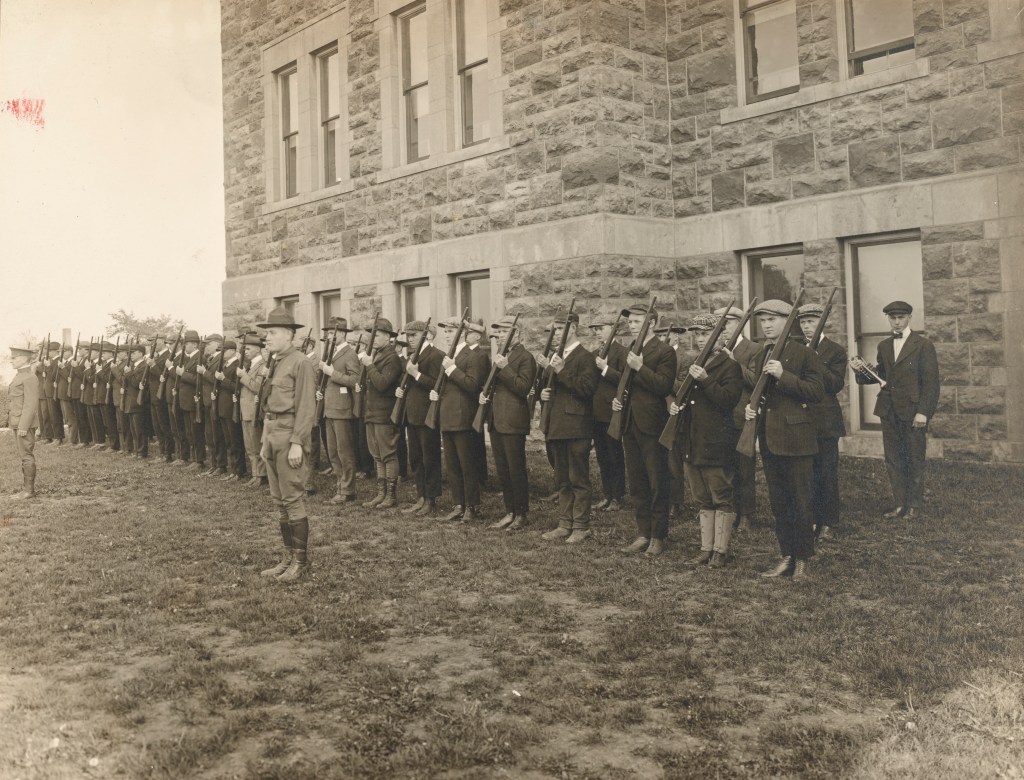
US recruits drilling with wooden rifles c.1917 (US National Archives)
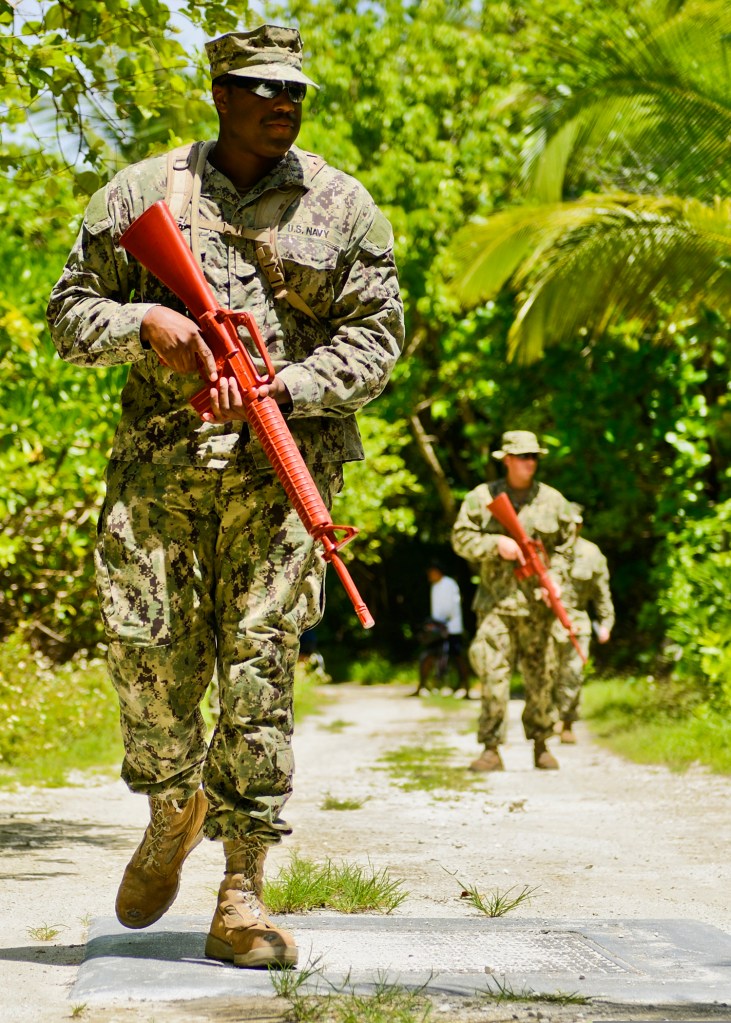
Wooden dummy rifles are more than adequate for safely learning basic drills and getting use to holding and moving with a weapon. Historically, this has been seen countless times. Here we can see American recruits training with dummy rifles in 1917, In 1940 British Home Guard drilled with broomsticks, more recently Afghan security forces were often initially trained with wooden rifles and in South Sudan training with wooden rifles has also been seen. Even in more advanced militaries training with dummy rifles is common with rubber rifles often used in basic training.
While considered light infantry the training of the Territorial Defense Force is rudimentary and while some media reports have discussed them acting as partisans behind enemy lines they are principally planned to be used to guard important positions in their local areas.
U.S. Sailors assigned to Naval Support Facility Diego Garcia conduct a mock reconnaissance patrol Nov. 9, 2013 (U.S. Navy/Mass Communication Specialist Seaman Caine Storino)
To be remotely effective the volunteers will need some proper firearms training in weapons handling, drills and the basics of marksmanship. The ad hoc nature of the localised training and the current lack of government issued small arms makes this sort of essential training difficult to organise.
Ukraine’s Interior Minister Denys Monastyrskiy has given an update on the number of small arms distributed saying some 25,000 rifles have been distributed to TDF volunteers across Ukraine.
If you enjoyed this video and article please consider supporting our work here. We have some great perks available for Patreon Supporters – including custom stickers and early access to videos! Thank you for your support!
Bibliography:
In Ukraine, the Formation of Units of the Territorial Defense Forces of the Armed Forces of Ukraine is Accelerating, Ukrainian Ministry of Defence, (source)
Government to Xreate 150 Territorial Defense Battalions, Kyiv Independent (source)
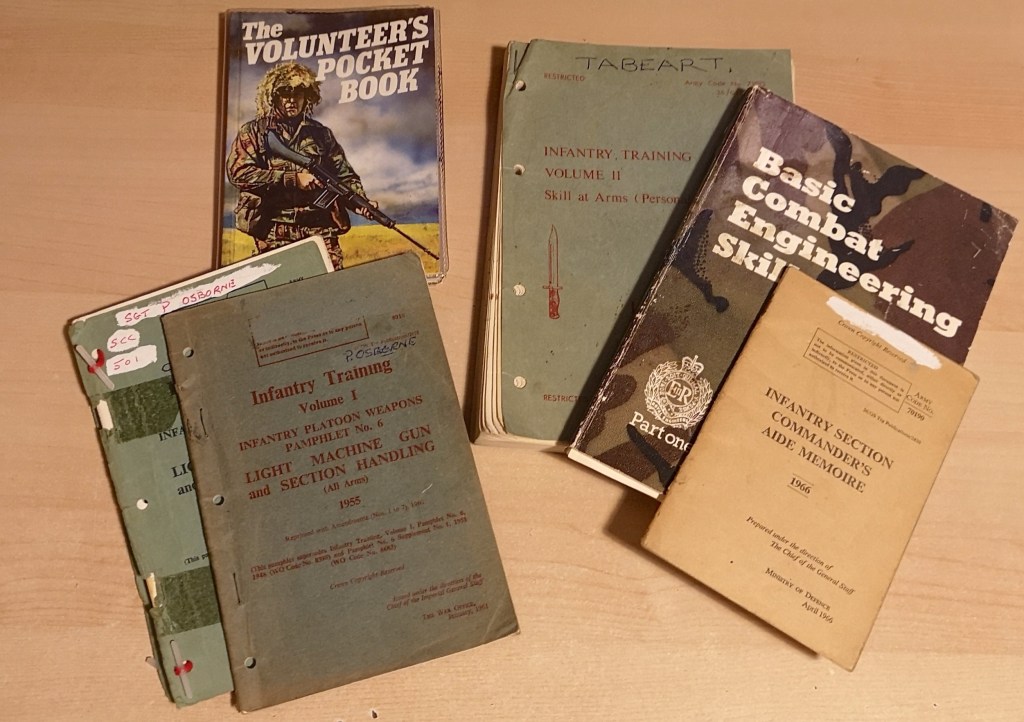
I was recently contacted by Nigel a viewer who very generously offered some items from his late father’s collection. They’re now part of the ever-growing TAB Reference Collection, I’m honoured to look after them and share them with you in some future videos.
The items include infantry training manuals for the Bren, SLR and a section commander’s aide Memoire.
Nigel’s dad, Peter, was an avid collector of military items having served three years with The Buffs (Royal East Kent Regiment) before joining the Royal Marines. After 12 years with the Royal Marines he later volunteered with the Royal Marine Cadets.
This week we have a very special episode where we tap into a topic close to Matt’s heart, the PIAT. Matt wrote a book about the PIAT, or Projector, Infantry, Anti-Tank, in 2020 and continues to research its history. One of the most interesting aspects of the PIAT is its unique cultural history, having been portrayed in a plethora of films spanning over 70 years. Most famously it was heralded, literally, when Anthony Hopkins as Lt. Colonel Frost in A Bridge Too Far shouted ‘BRING UP THE PIAT!‘ A line which has become iconic. But there’s so much more to the PIAT’s onscreen career!
In recent days, with the news that a shipment of M141 SMAW-D anti-structure weapons have arrived in Ukraine as part of the US military aid shipments, a number of media articles and videos have been made on the subject which seem to confuse the SMAW-D with the AT-4 and even the M72. So, I thought it would be useful to take a look at the SMAW-D in a little detail.
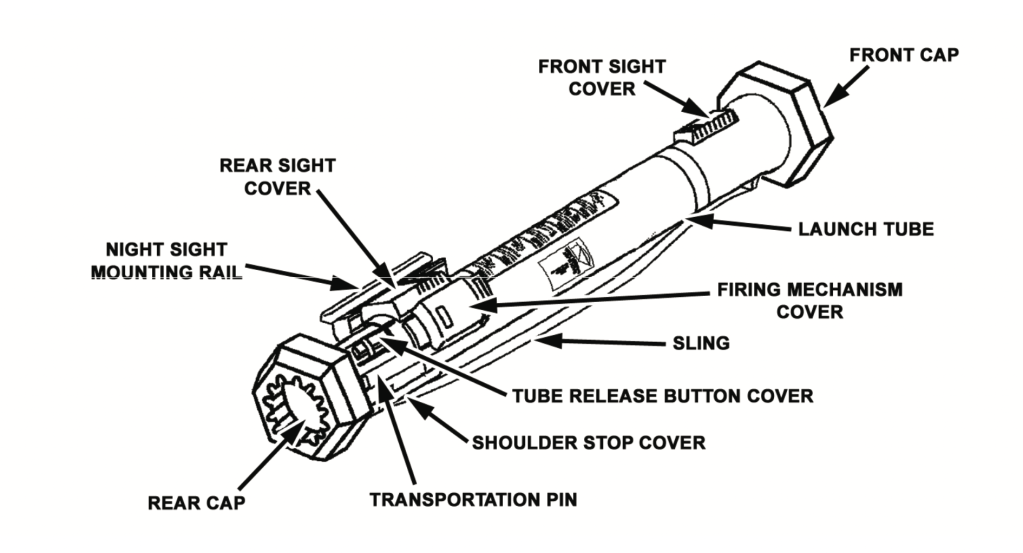
M141 (SMAW-D) (US Army Manual)
So What is the SMAW-D?
Its official designation is ‘Rocket and Launcher, 83mm HEDP Bunker Defeat Munition (BDM), M141 (SMAW-D)’ SMAW-D stands for Shoulder-Launched Multi-Purpose Assault Weapon-Disposable. This isn’t to be confused with the Mk 153 Shoulder-Launched Multipurpose Assault Weapon used by the US Marine Corps. Those the SMAW-D did evolve from the SMAW.
The initial Mk 153 SMAW evolved from the Israeli IMI B-300. During the early-1980s McDonnell Douglas further developed the system and it entered service with the US Marine Corps as the Mk 153 in 1984. The SMAW-D shares the same warhead as the Mk 153 SMAW. The SMAW-D was originally developed by McDonnell Douglas and the design was acquired by Talley Defense Systems, whom were subsequently acquired by Norwegian company Nammo.
M141 (SMAW-D) (US Army Manual)
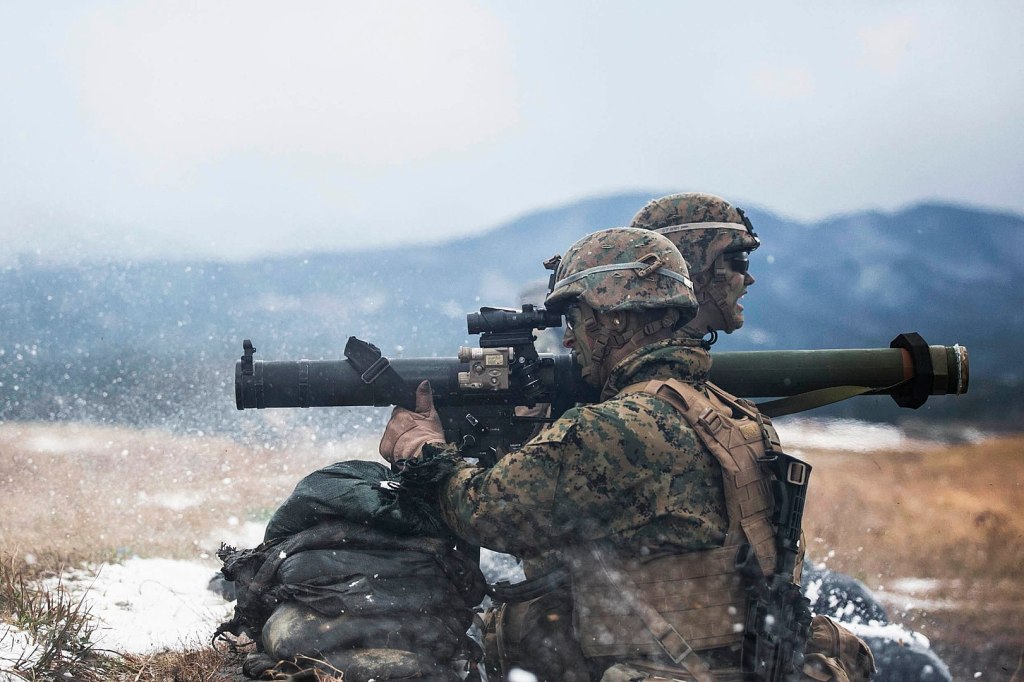
The Mk 153 has a reusable forward launch tube and firing mechanism which has a spotting rifle and can be mounted with an optic. The warhead element of the SMAW is attached at the rear of the launcher. The US Army was initially interested in the Mk153 but preferred a lighter, single use weapon.
A Marine fires a Mk 153 SMAW (USMC/Cpl. Drew Tech)
In the early 1990s the US Army began the search for a disposable Shoulder-launched Multipurpose Assault Weapon. McDonnell Douglas offered a lighter, disposable version of the Mk 153, taking the Mk 153’s High Explosive, Dual Purpose warhead and pairing it with shorter burn rocket. In 1996 the US Army selected the SMAW-D, beating a Swedish design, the FFV AT8, and the Hunting Engineering LAW80. The SMAW-D entered service in 1999.
US Army advisor demonstrates how to deploy the M141 (Ukraine MoD)
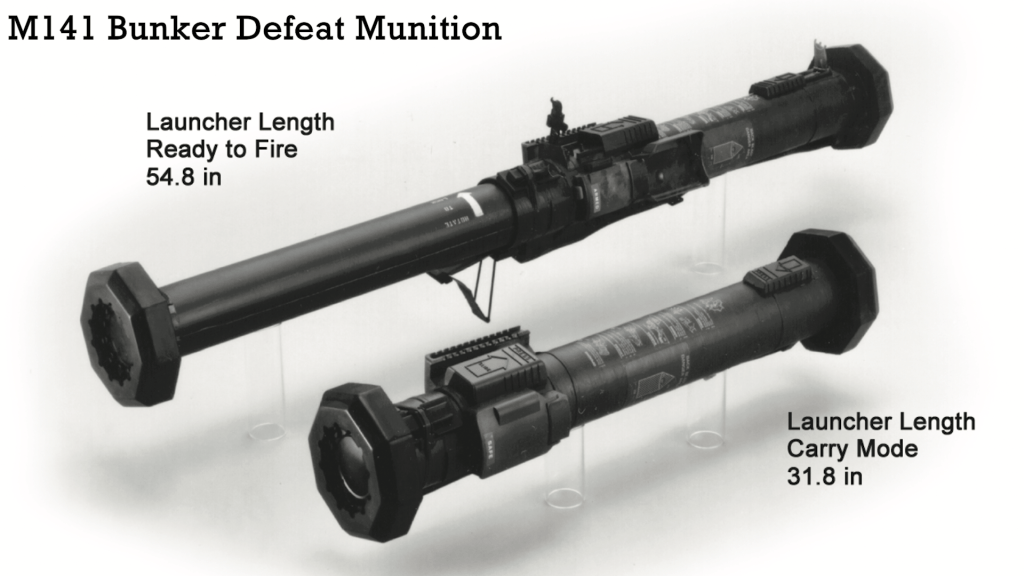
The SMAW-D is similar to the 66mm M72 in that it telescopes with the launch tube extended before firing. When collapsed it measures just under 32 inches in length but extending the inner tube gives the weapon an overall length of 55 inches. The launch tube and rocket weigh 15.7 lbs.
The tube has the firing mechanism mounted on the side under a plastic cover which when opened arms the rocket ready to fire. The weapon has front and rear iron sights for aiming. The SMAW-D can also be fitted with an AN/PVS-4 nightsight and various infrared aiming lasers for night fighting.
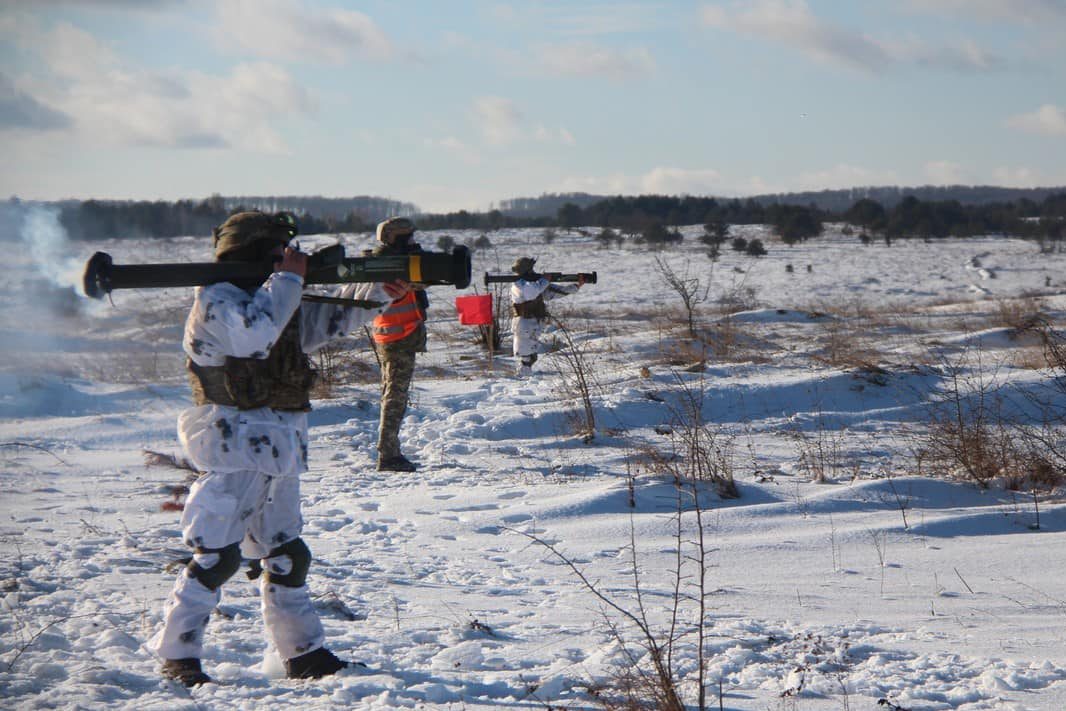
Ukrainian soldiers fire M141 BDMs (Ukrainian MoD)
To fire the M141 the operator removes the locking pin from the front of the launch tube, depresses the tube release button and extends the inner tube rearward. The operator then raises the weapon onto the right shoulder, slides the front sight cover forward and then the same for the rear sight. Then opening the firing mechanism cover pivoting it forward, flush with the tube, this arms the weapon. The operator should then check the backlist area and fire when ready by depressing the safety button and then the red trigger button. The rocket is ignited by an electrical impulse sent by the firing mechanism. Once ignited the rocket burns out before it leaves the muzzle, this protects the operator.
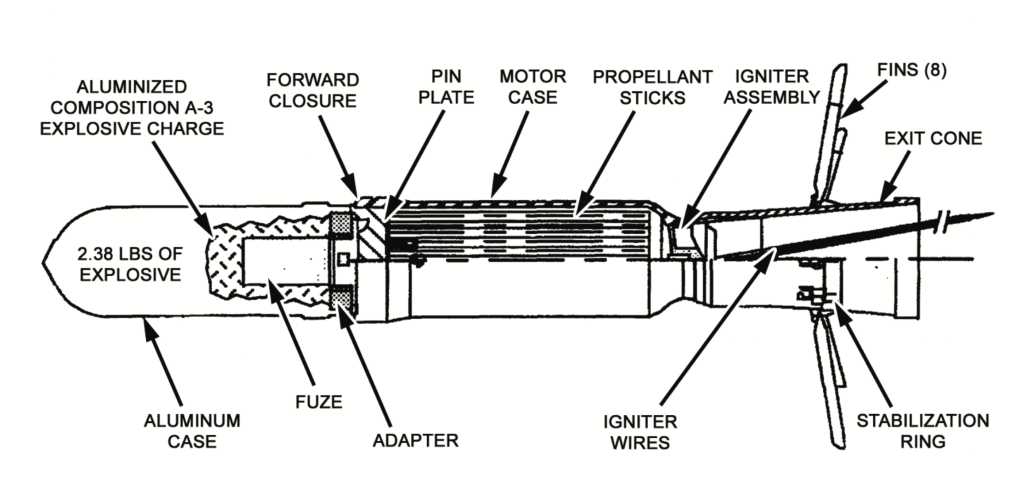
M141 (SMAW-D) (US Army Manual)
The M141 can engage targets out to 500 metres but is most effective out to 300. Its 83mm unguided, fin-stabilised round has an integral high-explosive, dual-mode warhead with 2.38 lbs of explosive. Detonation is instantaneous when impacting on a hard target, such as a brick or concrete wall, or an armored vehicle. Impact with a softer target, such as a sandbagged bunker, results in a fuze time delay that permits the rocket to penetrate into the target before warhead detonation. It can penetrate up to 200mm (8 inches) of concrete, 300mm (12 inches) of brick and 2m (6 feet 6.74 inches) of earth or sandbags. It can also perforate up to 20mm (0.8 inches) of rolled homogenous steel giving the SMAW-D the ability to take on soft and light armoured vehicles. For training at the range a 21mm sub calibre training system can be used. While the usefulness of the M141 might be questioned, as it isn’t an anti-tank weapon and could be considered more of an offensive rather than defensive weapon it would no doubt prove very useful during urban fighting, which Ukraine anticipates in the event of an invasion.
The SMAW-D saw service with the US Army during the War in Afghanistan and during the Iraq War. Some 6,000 units were initially procured, with an unknown number procured since. It remains an active part of Nammo’s product line.
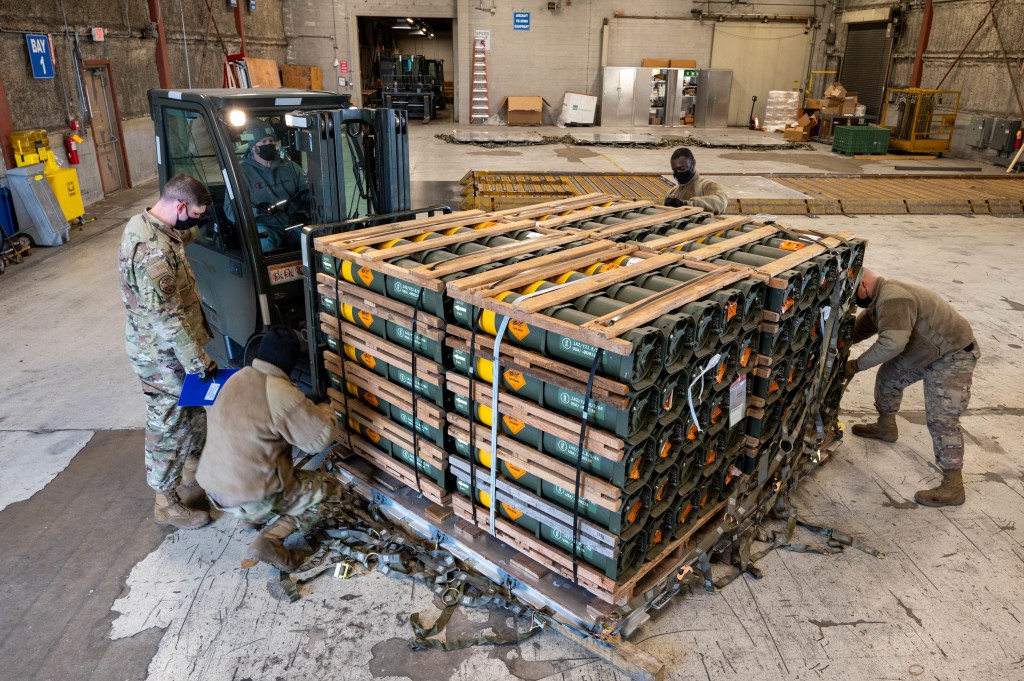
Airmen and civilians from the 436th Aerial Port Squadron palletize ammunition, weapons and other equipment bound for Ukraine during a foreign military sales mission at Dover Air Force Base, Delaware, Jan. 21, 2022. (U.S. Air Force photo by Mauricio Campino)
It is estimated that perhaps 100 M141 BDMs have been shipped to Ukraine so far as part of military aid, alongside small arms and ammunition, Javelin Anti-Tank Guided Missiles and NLAW anti-tank weapons from the UK. From the US Department of Defense’s packaging configuration table for the SMAW-D we know that each metal container holds one round and that 25 containers can be placed on a pallet. This appears to match up to the photos of the weapons being prepared for shipment. The Ukrainian Ministry of Defence and media have shared photographs of Ukrainian personnel training with M141s under the supervision of US troops. The training took place over two days at the 184th Training Center and the International Center for Peacekeeping and Security of the National Ground Forces Academy. These personnel will likely be tasked with then training other Ukrainian units on how to use the weapon.
M141/SMAW-D Specifications:
Length (extended/ready to fire): 1,371mm (54.8inches) Length (closed/carry): 792mm (31.8inches) Weight (ready to fire): 7.12 kilograms (15.7 pounds) Rocket muzzle velocity: 217 meters per second (712 feet per second) Rocket diameter:83mm (3.26 inches) Minimum arming range: 15 meters Maximum effective range: 300 meters Maximum range: 500 meters
If you enjoyed this video and article please consider supporting our work here. We have some great perks available for Patreon Supporters – including custom stickers and early access to videos! Thank you for your support!
Bibliography:
FM 3-23.25 Shoulder-Launched Munitions, 2006, US Army
This week we take a look at the Dick Powell-directed naval thriller The Enemy Below. Starring Robert Mitchum as the commander of a destroyer hunting Curt Jürgens’ U-Boat during a cat and mouse battle. Tension ramps as the captain pit their wits against one another. Based on a novel by based on the 1956 novel by Denys Rayner, a Royal Navy veteran of the Battle of the Atlantic, The Enemy Below is an engaging classic of the naval war film genre with some strong performances from its leading men and Oscar winning special effects.
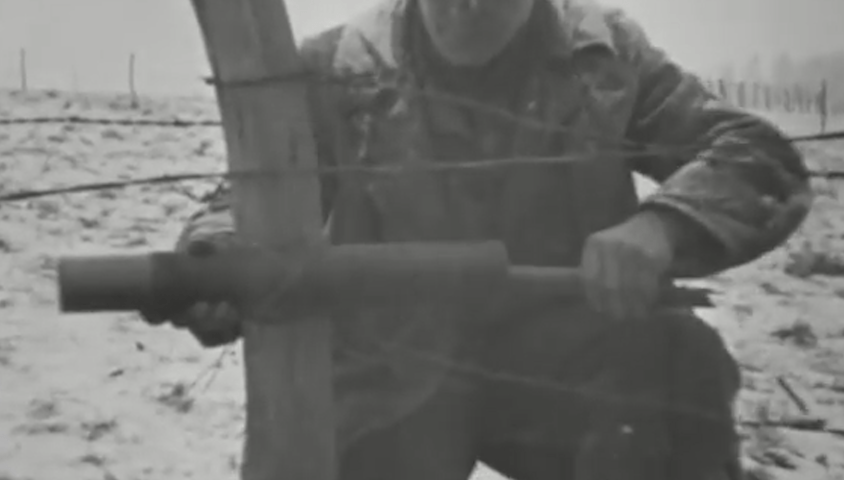
I recently came across an interesting segment in a January 1945 US Army Combat Bulletin newsreel. It showed men of B Company of the 238th Combat Engineers setting up improvised anti-tank mines in Belgium. The mines were fashioned from Bazooka rockets!
A still from Combat Bulletin #39 showing an engineer from the 238th Combat Engineer Battalion setting up an improvised off route rocket mine on a fence post (US Army)
This is a relatively little-known application for the Bazooka’s rockets but a really interesting field expediency. The footage shows engineers cutting the cardboard tubes the Bazooka’s rockets were carried in, down and attaching them to a fence post. Essentially setting up an off-route mine or IED. The engineers run a wire back to cover for remote detonation with some batteries.
Diagram showing how the rocket could be buried (1944 US Army field manual)
While these seems quite ad hoc it was a secondary use for the Rocket Launcher’s ammunition which was laid down in the Bazooka’s 1944 basic field manual. It doesn’t appear in the 1943 technical manual for the M1A1 launcher at all but the 1944 manual explains that
“In addition to its use as a projectile when fired from the launcher, the rocket may be prepared for firing electrically and used as an improvised anti-tank mine.”
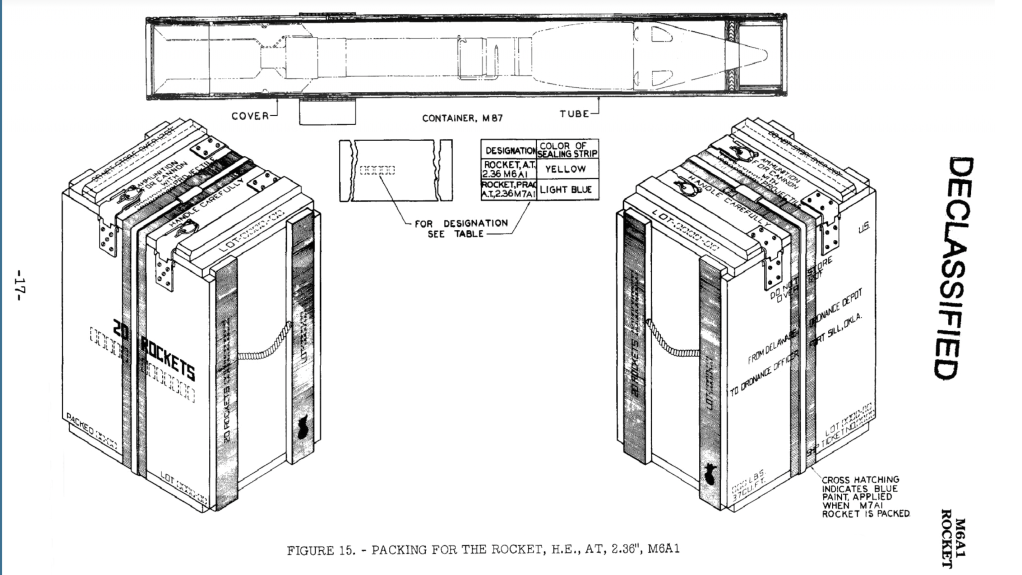
Diagram showing the transport packing and transit cannister tube for the M6 Rocket, the tube could be used as a makeshift launch tube (US Army)
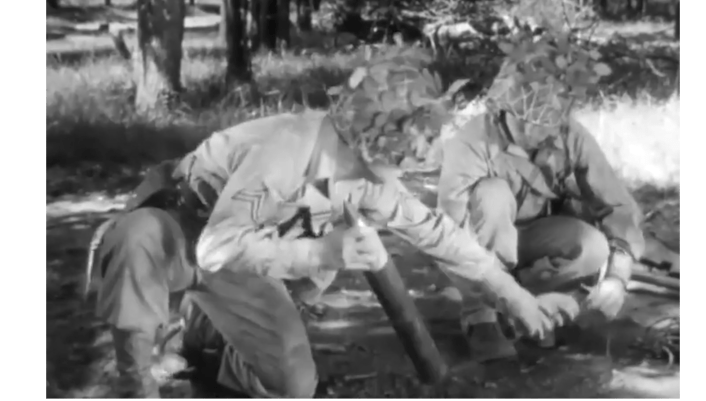
This improvised method of use was also demonstrated in a training film for the Rocket Launcher, a Bazooka team are seen digging a pit in a road and burying a rocket in its makeshift launcher just as laid down in the manual. The training film explains it best…
A still from the 1943 US Army training film for the Bazooka, demonstrating the setting up of an improvised rocket mine (US Army)
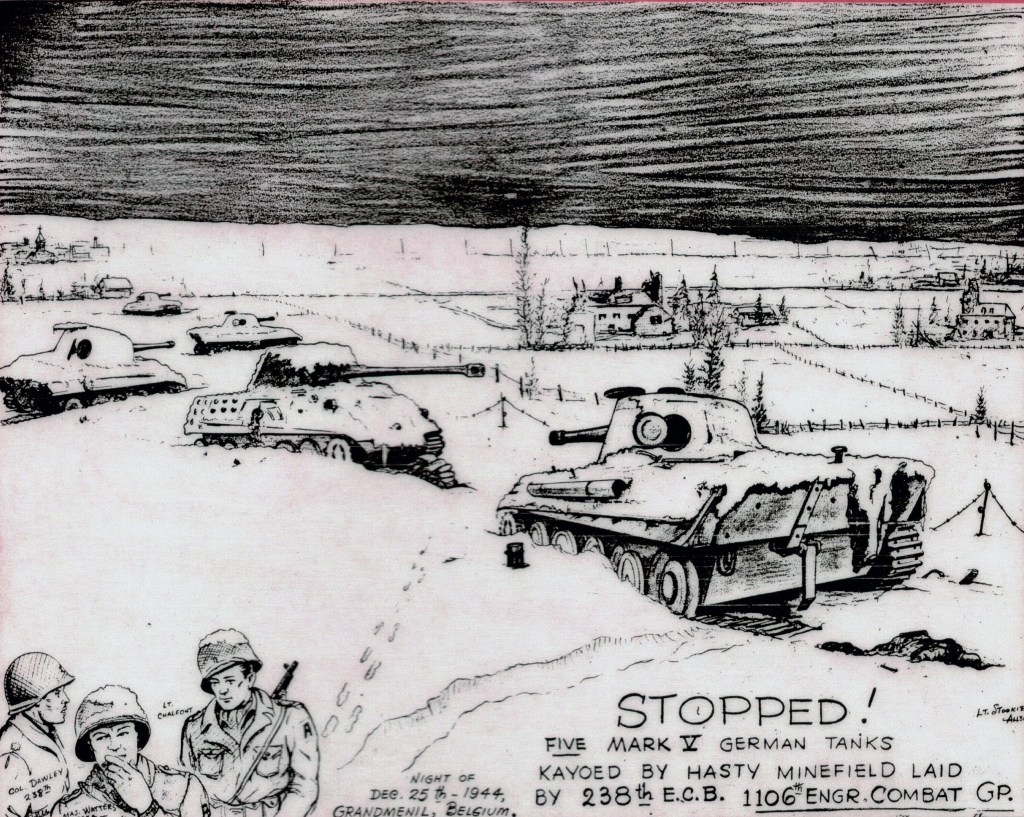
The 238th Combat Engineer battalion fought in the Battle of the Bulge and received a commendation from Major General Matthew B. Ridgeway, commander of XVIII Corps, for helping to establish a line of defence against the German offensive. The commendation read:
“The work of the 238th Engineer Combat Battalion in the construction of the initial barrier in the vicinity of Manhay was outstanding and materially assisted the Corps in holding off the attack of the enemy in that area.”
Illustration from a 238th Combat Engineer Battalion Association book showing knocked out German tanks around Grandmenil (238th Combat Engineer Battalion Association)
Whether this technique of improvising a mine from the rockets was used during the battle is unclear but I found the footage of the engineers demonstrating the set up fascinating. Its always interesting to see suggestions from manuals and training films put into action in the field so I was excited to come across this footage.
If you enjoyed this video and article please consider supporting our work here. We have some great perks available for Patreon Supporters – including custom stickers and early access to videos! Thank you for your support!
Bibliography:
238th Combat Engineer Battalion Association (source)
The Ardennes: Battle of the Bulge, H.C. Cole, 1965, (source)
Footage:
The Anti-Tank Rocket M6” 1943 US Army Training Film; M1 & M1A1 Bazookas, War Department