HK SFP9 Pistols In Ukraine

While pistols may not feature heavily on combat footage from the ongoing war in Ukraine, sidearms continue to be a key piece of equipment for many combatants. Many different types of pistol are in use in Ukraine, everything from the venerable TT-33 and Makarov to Glock 19s and Ukrainian-made Forts. Many nations supporting Ukraine have provided pistols as aid, one of these is Germany, in this article/video we’ll look at the supply and issuing of the Heckler & Koch SFP9.

Introduced in 2014, the SFP9, or VP9 as its known in the US, is a 9x19mm striker-fired polymer-framed pistol. It uses the ubiquitous short recoil, tilting barrel action and feeds from 15, 17 or 20 round magazines and is in service with numerous law enforcement agencies and the Lithuanian armed forces. Before we examine some of the sighting of the pistols in Ukraine it’s also worth noting that HK pistols, though rare, have been commercially available in Ukraine for some time and some of the SFP9s we’ll discuss in this article/video may have been procured privately by combatants.
As early as March 2023, the German government announced its intentions to provide Ukraine with 500 HK SFP9 pistols. The delivery of this first batch of pistols was announced on 16 March. Despite this I haven’t been able to find visual evidence of the pistols presence in Ukraine until February 2024, when a photo of a SFP9 OR – or ‘optics ready’ pistol was shared by a combatant. The pistol has an Olight weapon light and a red dot.

In July 2024, a Ukrainian combatant, believed to be attached to the SSO’s 73rd Naval Special Operations Center, shared a photograph showing him carrying a SFP9 as well as a Daniel Defense carbine.

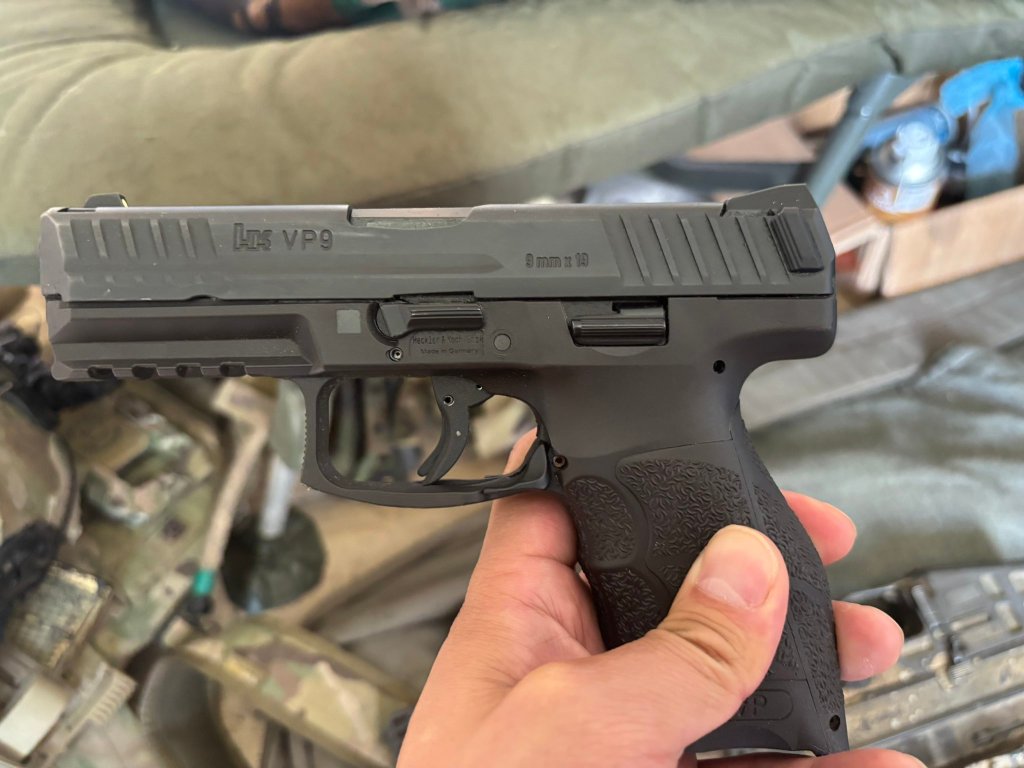
In October 2024, the confirmed number of pistols provided to Ukraine jumped significantly to 3,500, indicating significant transfers of SFP9s to Ukraine. Following this the Main Directorate of Intelligence of Ukraine (HUR MO)’s Revanche International unit, subordinate to Revanche Tactical Group shared an instagram story on 9 November, showing one of the pistols at a range. The pistol, however, is marked VP9 rather than SFP9. VP9 is the US commercial name for the pistol.
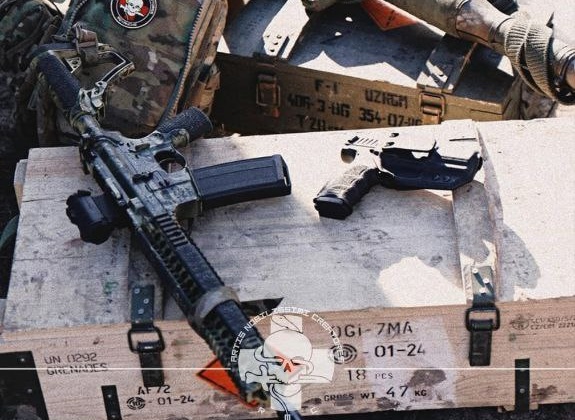
On 11 November a member of the HUR’s Kraken Regiment shared a photo of another VP9 mounted with a Veridian X5L weapon light. A month later on 19 December, another Ukrainian combatant shared a range photo of a trio of pistols including a Russian MP-443 ‘Grach’, a Glock 17 Gen 4 and a new SFP9.

On 25 January 2025, ORKOVNET, the YouTube channel of the Ukrainian Orkov gunstore, shared a short range video of a VP9 marked pistol noting that the pistols were now in Ukrainian service.

An Instagram page affiliated with the HUR’s Special Purpose Unit “Timur” shared a series of photos from a range session on 3 February. One of the photos included an SFP9 SD with a threaded suppressor-ready barrel.
On 19 March a combatant with a reconnaissance and UAV team within the Special Operations Forces of the HUR MO shared a photo of a holstered SFP9 alongside a SIG P320.

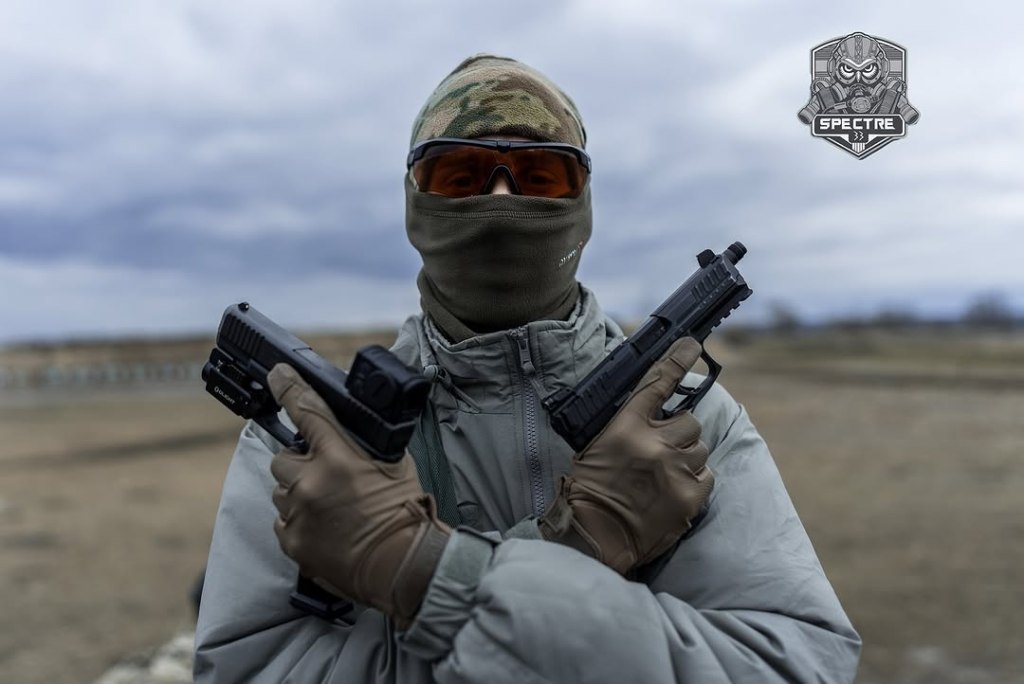
A member of HUR MO Timur’s Spectre 33 unit posted several photos in early Spring 2025 featuring an SFP9 OR, with one photo showing mounted with a A-Tec PMM6 suppressor.
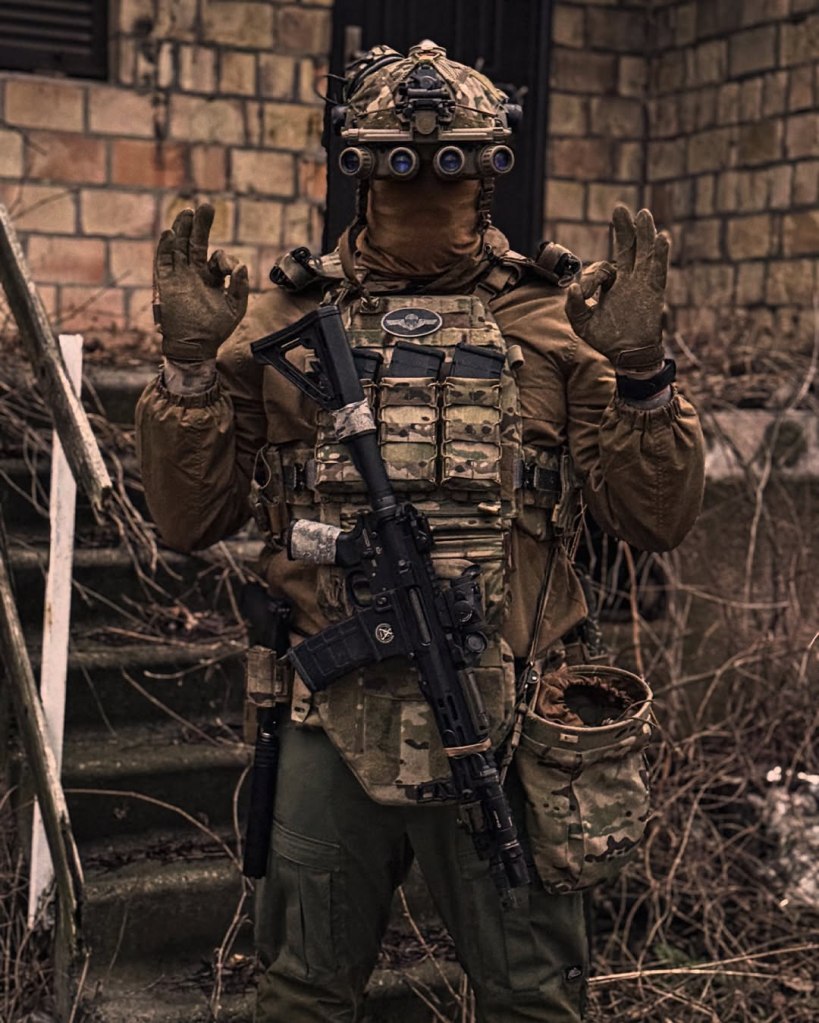
In April, a Japanese volunteer with one of the HUR International Legion teams shared photos of a new VP9-marked pistol. He noted that while he liked the pistol he preferred Glock triggers and he confirmed that his pistol was shipped with 17 round magazines.

On 6 April, a member of the GUR’s Revanche Tactical Group / Advanced Combat Group shared a photo showcasing a host of small arms from their armoury including new HK433s, HK416s, a UAR-10, CZ and Glock pistols and a pair of HK SFP9s.

A week later DW News shared a report on a Ukrainian camp where adolescents can receive training. From the small arms seen in the short report, including an HK416A8 and an SFP9 indicate the camp may have been run by HUR personnel.

Later in April an Instagram page affiliated with the Revanche Tactical Group shared a photo of a holstered SFP9 and another photo of one of the pistols at the range alongside a Daniel Defense carbine was shared on 23 April by the unit’s medical team.
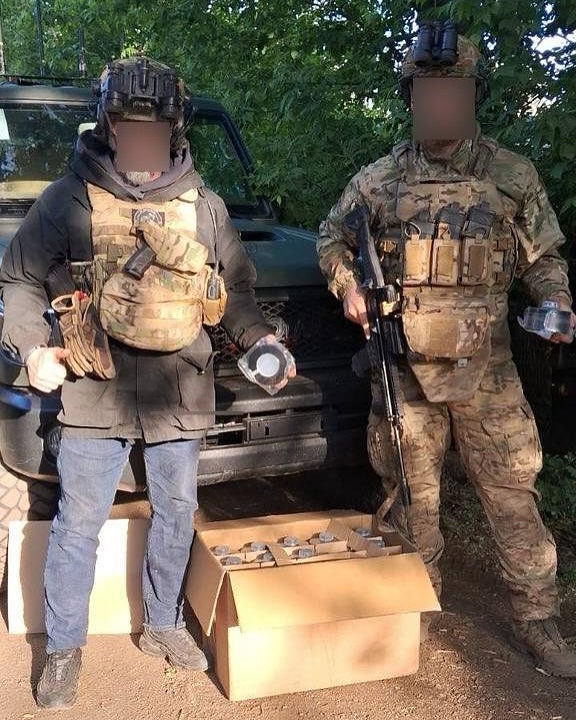
Another probable SFP9 can be seen in a photo, posted on 6 May, by a volunteer aid organisation, in the photo members of a HUR MO International Legion unit receive gas masks somewhere in the
Zaporizhzhia region. Most recently, the pistols featured in a HUR MO International Legion training video posted on 10 May. The video shows a pair of combatants firing SFP9s at the range.

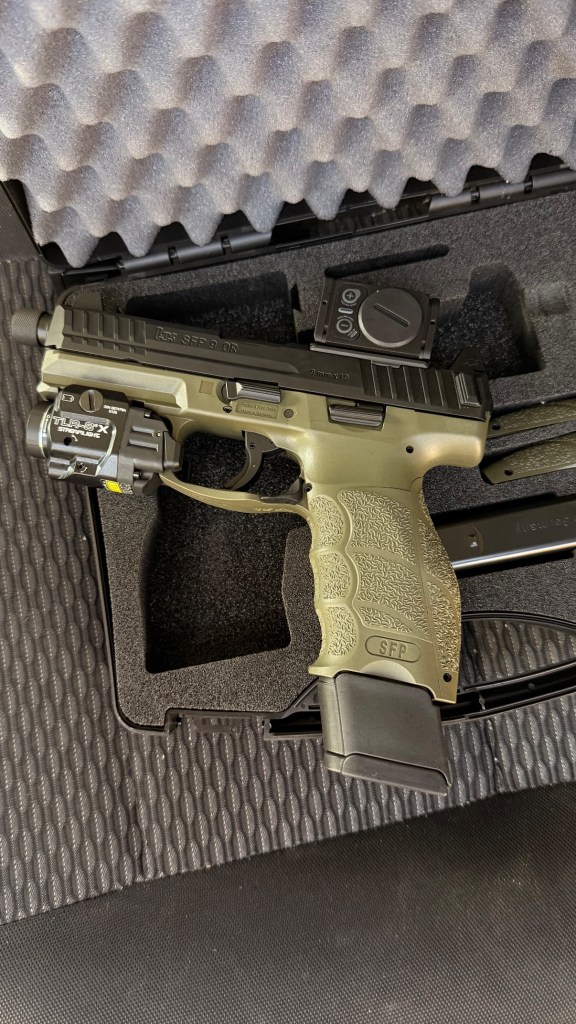
Iin mid-July, members of the 6th Separate SSO Ranger Regiment were photographed training with what appear to be SFP9s. At the end of July, a member of the 73rd Naval Special Operations Center shared a video and several photos of a brand new 2025-production SFP9 OR with a threaded barrel and suppressor-height sights. Unlike the other pistols seen so far, this SFP9 appears to have an OD green frame. From the video, it seems the pistol shipped with a 17 and a 20-round magazine as well as an Aimpoint ACRO P2 and a Streamlight TLR-8X. Several days later this was followed by a photo from another member of the 73rd Naval Special Operations Center who shared a photo of a pair of OD Green SFP9 ORs both with Aimpoint ACROs and one with a Streamlight (possibly the pistol seen earlier).

The pistols were not taken from German military stores, instead the deliveries were drawn from industry stocks and financed by German government funds. This is supported by the presence of VP9-marked pistols which indicate some of the pistols shipped were pulled from HK production that was planned for the US market. On the 17 April, the German government announce it would no longer be publicly updating its list of aid to Ukraine. As of April 2025, Germany has provided 3,500 HK SFP9s to Ukraine.
It appears from the available visual evidence that at least a portion of the 3,500 HK pistols have been provided to Ukraine’s HUR MO direct action teams with some also appearing in the hands of elements of the SSO. Both VP9 and SFP9-marked guns have been seen in-country with at least a portion of them being SFP9 ORs, with slides cut for mounting optics. Given the very infrequent imagery of operational pistol use it is difficult to confirm uses of the SFP9s in the field with the majority of imagery available stemming from training sessions.

Special thanks to Mathias, Hao, deaidua.org, & Dikobraz for their help with this video.


Support Us: If you enjoyed this video and article please consider supporting our work here. We have some great perks available for Patreon Supporters – including early access to custom stickers and early access to videos! You can also find us on the History of Weapons & War app. Thank you for your support!

3D Printed AK ‘Buckshot’ Anti-Drone Rounds

Back in December I published an article/video examining the Russian practice of creating a rudimentary anti-drone round from a 5.45x39mm cartridge case and a handful of ball bearings (BBs). The BBs are encapsulated in shrink-wrap tub ing and then loaded in the cartridge case like a conventional bullet. This was seen to be relatively effective with evidence of multiple workshops independently producing the ammunition.

The ad-hoc production of the ammunition has been seen in locations ranging from kitchen tables to well-laid out large workshops. The rounds have also been tested by Ukrainian forces and there has been some interest in replicating the buckshot cartridges but its unclear if this has come to fruition as yet, shotguns appear to be more prevalent for Ukrainian forces.

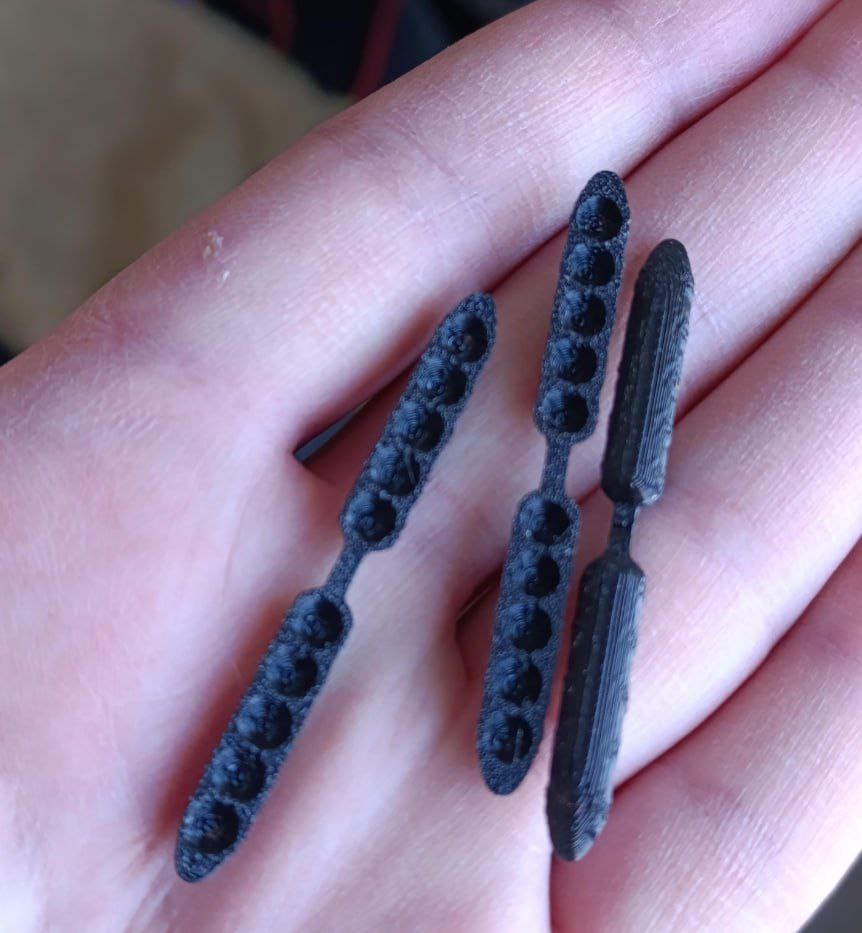
3D printing has become a key element in so many aspects of the ongoing war so it was inevitable that it would be leveraged in making this ad-hoc anti-drone ammunition. It appears that several Russian workshops have now developed 3D-printed sabots to replace the shrink-wrap tubing. It appears that this move towards 3D printed sabots is an effort to prevent the barrel being fouled by plastic from the tubing. This is an issue which has been highlighted in a number of posts including a bore scope video published by Ukrainians who tested the home-made rounds. The shrink-wrap likely disintegrates in the barrel leaving behind polymer residues whereas the 3D printed sabots seem to remain intact until they leave the barrel.

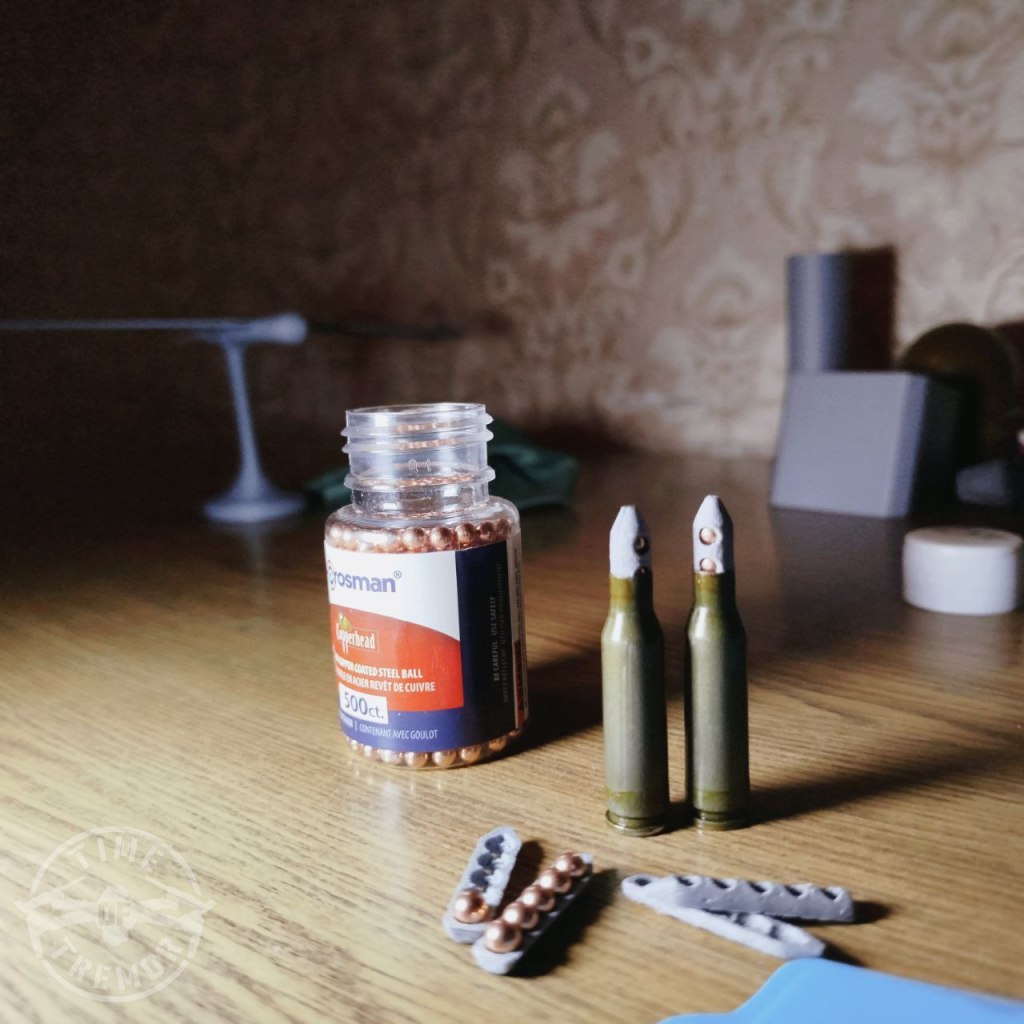
The first sighting of the 3D printed sabots came on 23 February, when a Russian telegram channel shared a video showing the printing and assembly of the anti-drone ammunition with 3D printers printing a bullet-shaped sabot. The design and production was attributed to the assault detachment of the 33rd regiment of the 20th Guards Motor Rifle Division. The design consists of a two-piece clam shell-like design which encapsulates the BBs and can be loaded into a 5.45 cartridge case like a conventional projectile. The video shows three 3D printers printing the sabots which hold 4-rounds each. It then shows how the standard cartridge’s projectile is pulled from the case, the sabots are loaded with BBs and then the sabot is tapped down into the case.

The video then shows an individual firing full auto at a target, said to be 75m away away – thought the distance is difficult to verify. It then cuts to a shot of the rifle disassembled and the individual filming states that after four magazines there is no plastic residue in the gas system, barrel or action.

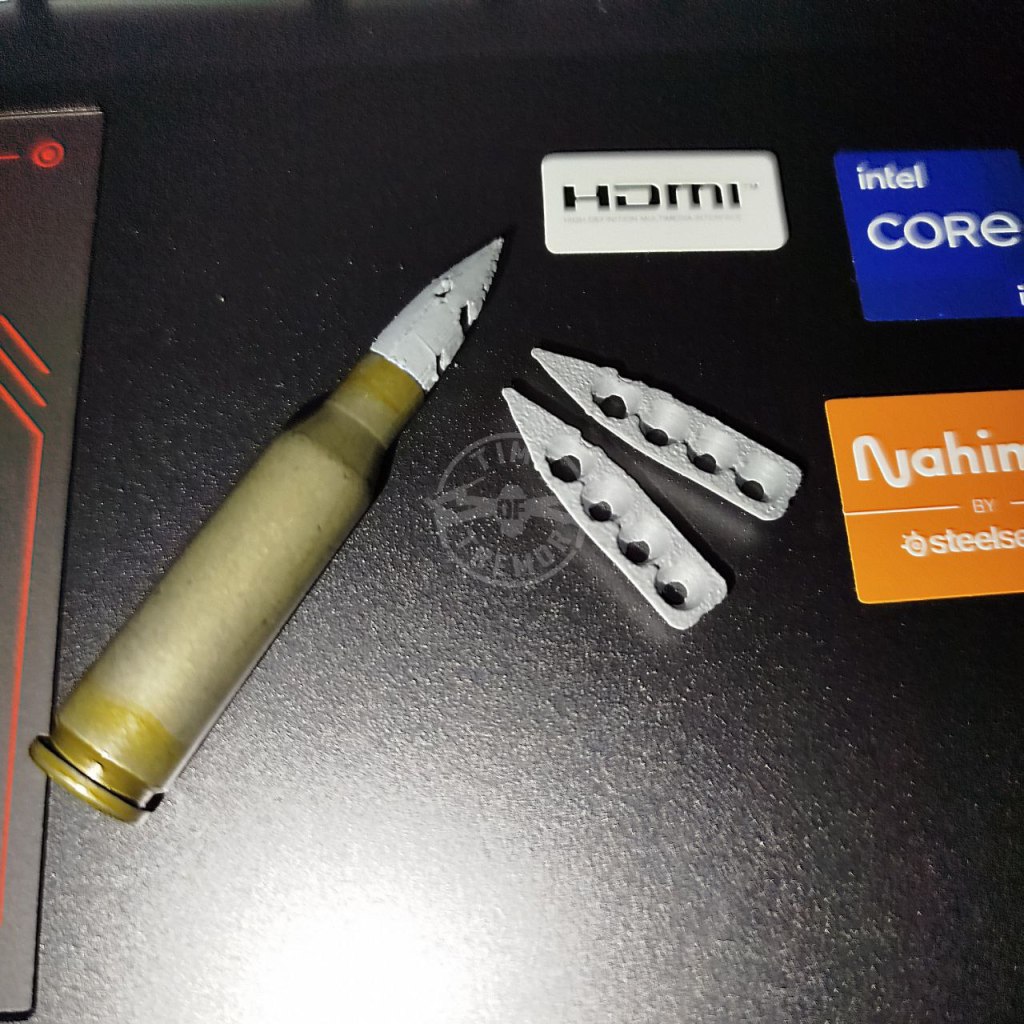
On 26 February, another Russian Telegram channel, Time of Terror, which describes itself as run by a special forces drone group, shared a photograph of a cartridge loaded with sabot with the two halves of an empty sabot next to it, stating that they had been asked to develop the sabot by a subscriber and that tests were ongoing. The nose of sabot has a notably less pronounced point compared to the first example. A day later the same Telegram channel shared another photograph of the ammunition this time with a five-BB sabot, next to a bottle of Crosman copperhead BBs.

Several days later, on 2 March, a short video showing a version of the sabot without the pointed nose was shared. It appears that the point of the sabot’s nose has been filed down. The video’s captions reads [machine translated]: “Based on the feedback, certain modifications were made. After checking them and collecting feedback from other units, we will stop at the most working version.” The video shows a few bursts being fired and several hits on a target down range. The video appears to have been filmed somewhat close to the frontline.

Later the same day another photo of some of the ammunition was shared, notably with the sabots seated at different depths. The caption mentioned the changes that have been made based on feedback [machine translated]: “In the new version, the diameter of the bullet base was reduced by 0.2mm and a chamfer was added instead of rounding, the diameter of the first solid cut-ring was reduced, which ensures easier pressing.”

On 4 March, the same Telegram channel shared a video demonstrating the assembly of one of the rounds. The video shows the pulling of a bullet and then the filling of the sabot with five BBs before the two halves of the sabot are pressed together and placed in the cartridge and tapped home with a hammer. The video’s caption reads [machine translated]: “At present, we observe significant potential in the application of the proposed modernization. Tests are ongoing, collecting data, which is necessary for forming a final conclusion on this issue. It is proposed to begin developing a prototype of equipment for an accelerated pressing procedure.” This would suggest the use of a conventional bullet press rather than a pair of pliers and hammer.

The video also includes footage of testing showing the ammunition being fired at a small rectangle of cardboard. The first two strings have a horizontal spread but with most of the BBs appearing to hit the target. A series of bursts shows the more hits on the target. The engagement range appears to be around 20-25 metres.

On the same day they also shared a short clip of a PKM machine gun being loaded with a belt holding three rounds of anti-drone 7.62x54mmR ammunition. Not much can be seen in the video but its likely that the 7.62 sabots can hold six or seven BBs. The caption notes [machine translated]: “In parallel, tests are being conducted for the modernized rifle bullet 7.62… Three rounds were fired in single mode. Results will be added later, looking ahead I will say that there is potential.”

The usefulness of having a machine gun with a belt of the anti-drone buckshot ammunition is somewhat debatable, while perhaps not ideal for a patrol or an assault having a belt of anti-drone ammunition while defending a position may be useful. A post from 8 March, shows the development of a loading punch and the use of nail varnish on the nose of the round as a means of adhering the nose of the sabot together preventing it parting. The most recent post from Time of Terror features couple of photos of a large batch of five-BB sabots. The caption states: “made a batch of 10,000. The test variants showed a very satisfactory result. I am waiting for further feedback and hope to put an end to this process as soon as possible.”

The evolution of these makeshift anti-drone rounds has moved rapidly, with the shift to 3D printing in some areas leading to the potential production of thousands of rounds. While printing may expedite one element of production the loading of the sabots and the seating of them in cartridge cases remains a bottle neck in the manufacturing of the rounds.

Update – 3/4/25

Another version of the 3D printed sabots has appeared on line in a video showing a Ukrainian combatant from the . Printed as once piece the sabot has five recesses for BBs. A video shows the firing of three rounds from an AK-74 pattern rifle. A target is shown approximately 5 metres away with a pattern of impacts from the anti-drone rounds.


Support Us: If you enjoyed this video and article please consider supporting our work here. We have some great perks available for Patreon Supporters – including early access to custom stickers and early access to videos! You can also find us on the History of Weapons & War app. Thank you for your support!

Ukraine’s Fixed Wing Gun Drone

Since our last article/video on gun-armed drones in September 2024, both sides have continued to develop the technology. We’ll be taking a look at the latest develeopments in gun-armed rotor-powered drones in a future article/video, in this video we’re going to take a look at the latest development: a gun-armed fixed wing UAV.

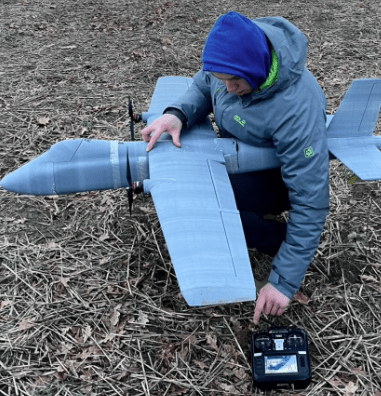
The first imagery of the ‘ZigZag’ UAV developed by Ukrainian drone manufacturer Sky Defenders was shared on social media 15 March. Shared on Sky Defenders’ official social media channels the minute long video shows a fixed wing UAV being launched, once in the sky the video cuts to an onboard camera view which features a crude but unmistakable sighting ring. In the nose of the UAV we can see a pair of tubes set side by side. The video shows a test flight of the twin prop UAV.

The ZigZag during flight testing, without its guns mounted, February 2025 (via Sky Defenders)

This appears to be the second fixed-wing drone developed by Sky Defenders. the first is the Vyryi M7 which is now said to be being delivered to Ukrainian units. The M7 is a loitering, or one-way, munition, powered by a single rear prop it has a 33km range and a warhead in its nose.

In an earlier video shared by a Misha a member of the Sky Defender’s team, posted on 5 March, we get a closer look at the ZigZag gun-armed drone. The video’s caption reads: “Please support the combat tests of the Zigzag interceptor aircraft. This UAV is quite an achievement for my small but really awesome team. We put all our resources into this project.”

The ZigZag firing its left, top, gun barrel during testing (via Sky Defenders)

The ZigZag has been in development since at least February 2025, with Sky Defenders sharing a short video from flight testing of the drone with the UAV seen without its four guns.

It appears that the drone actually has four rather than two gun barrels. There is only a short clip of the drone’s guns being tested and it doesn’t appear that the drone’s flight is impacted by the recoil of the gun. From the fuselage design it appears that the drone will not be using the counterweight recoilless gun designs used by the quadcopter gun-armed drones. It’s likely the the ZigZag is powerful enough to fire conventional-type ‘shotgun’ and withstand the recoil.

A close up of the ZigZag’s four-gun barrels and gimbal mounted camera (via Sky Defenders)

In the video we can see the aiming post and ring and behind it a camera on a 360-degree gimbal mount which enables aiming. While the M7 drone is a one-way-munition and not designed to return the ZigZag appears to be more robust and intended for repeated sorties. The range, weight and loitering time of the UAV is currently unknown. The role of the ZigZag appears to be as a dedicated drone hunter able to rapidly intercept opposing drones and engage them with its guns. It will be interesting to see how the ZigZag is employed.

The Sky Defenders ZigZag represents another interesting step in the rapidly evolving gun-armed drone space in Ukraine.


Support Us: If you enjoyed this video and article please consider supporting our work here. We have some great perks available for Patreon Supporters – including early access to custom stickers and early access to videos! You can also find us on the History of Weapons & War app. Thank you for your support!
Improvised Shoulder-Fired S8 Rocket

The S8 is an 80mm family of unguided rockets developed by the Soviet Union and still in service today. Developed in the 1970s there is a whole range of different types of warheads for the rockets and the S8s are most commonly seen being fired from both Russian and Ukrainian helicopters or Su-25s. We typically see both sides firing salvos of the rockets by pitching up the aircraft and launching, while this no doubt more inaccurate than firing them directly onto a ground target, as originally intended, the practice does keep the valuable aircraft somewhat out of the range of opposing air defences and must have some effect downrange as the practice has continued since the first weeks of the war.

Firing an improvised S8 launcher (via social media)

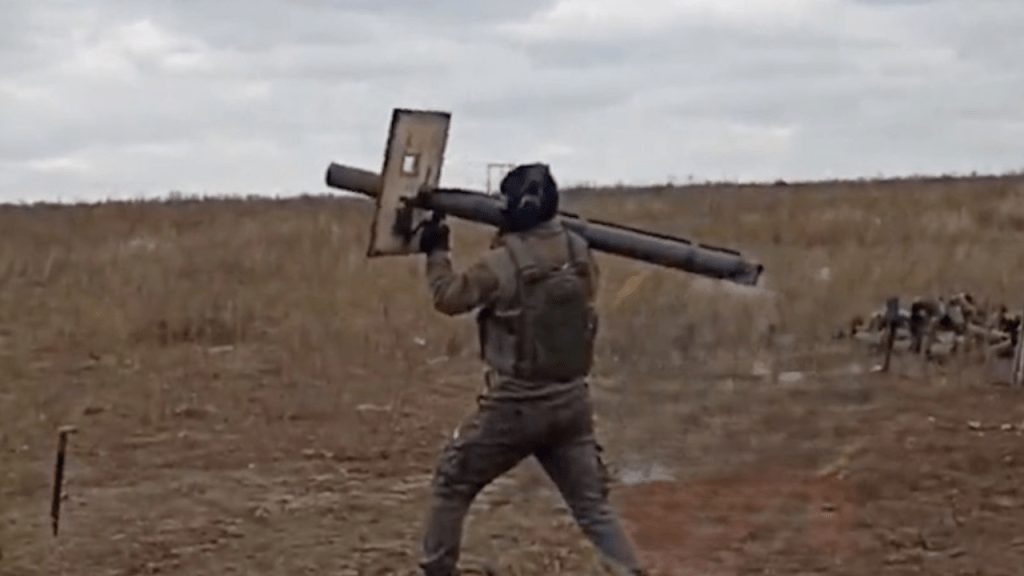
This week, however, a video of an improvised launcher developed to be fired from the shoulder emerged, seemingly developed by Russian personnel. We can see that the launcher has a pair of pistol grips, a shield made from four planks of wood with a small hole and a plastic screen tacked in place. An electrical box is also mounted on the shield, possibly containing a battery, with a cable tube running to the rear of the launch tube, ostensibly to ignite the rocket motor. It appears that there may be a trigger on the front grip. An individual in the video providing commentary states that the connection is ‘absolutely safe’. The launch tube appears to have at least one bracket welded to it for securing the shield. How the launcher is aimed is unclear, but the individual filming states that they are testing the principle and still need to make some refinements.

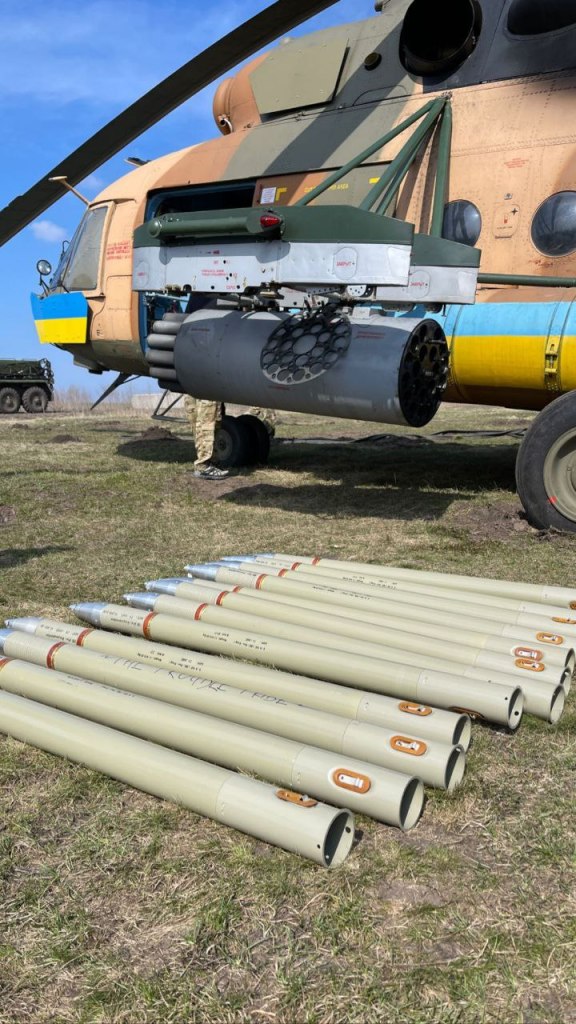
S8 rockets ready to be loaded onto a Ukrainian helicopter, 2023 (via social media)

The S8’s rocket burns for approximately 0.7 seconds, generating around 5,800 Newtons of thrust. Depending on the variant of rocket used the rocket has a velocity of around 450 m/s, some variants are faster, this is around 4x faster than a conventional shoulder-fired rocket system, an RPG-22 for example has a muzzle velocity of approximately 130 m/s.

Shield and pistols grips of the improvised S8 launcher (via social media)

The clip shows the firer shoulder the weapon and fire, the launch is successful with the launcher operating as expected but the recoil from the extremely fast moving rocket was considerable. The exhaust gases also appear to have acted on the shield pushing it back against the operator. The launcher flies completely out of the operators hands just after launching, with the shield – designed to protect against rocket’s exhaust gases, apparently striking him in the face. The individual filming continues to track the flight of the rocket and the firer is not shown again.

Preparing to fire an improvised S8 launcher (via social media)

The idea of shoulder launching an S8 has been explored before in Chechnya and elsewhere but unless the force of the launch can be mitigated then the results are the same. Ground improvisation with S8 rockets isn’t uncommon with lots of improvised multiple-launch rocket systems (DIY MLRS) being used by both sides, these typically use pre-existing rocket pods mounted on vehicles. This is a topic for a future article/video. A single S8 launch tube on a mount or tripod, where the danger to the operator is minimised, might have useful applications, similar mounts have already been developed to fire Grad rockets with some degree of accuracy.


Support Us: If you enjoyed this video and article please consider supporting our work here. We have some great perks available for Patreon Supporters – including early access to custom stickers and early access to videos! You can also find us on the History of Weapons & War app. Thank you for your support!
Ukrainian ‘Shotgun’ Drones Shoot Down Russian Drones

On the 27 December, a Ukrainian fundraising charity posted a series of short videos featuring a drone with a pair of gun barrels. The Lesia UA Foundation provide Ukrainian units with vehicles, bikes, drones and personal equipment procured with the funds they raise. It appears that they have helped to fund the development or fielding of an unknown number of gun-armed drones.

The footage of the gun-drone in action was shared on 27 December with the telegram post stating [machine translated]:

“For the first time on video – drones and hard drives shot down other drones
Defenders of Ukraine test #LesiaUAtechnology developments
Stay tuned and we’ll show you even more exclusive shots! Together to victory!”

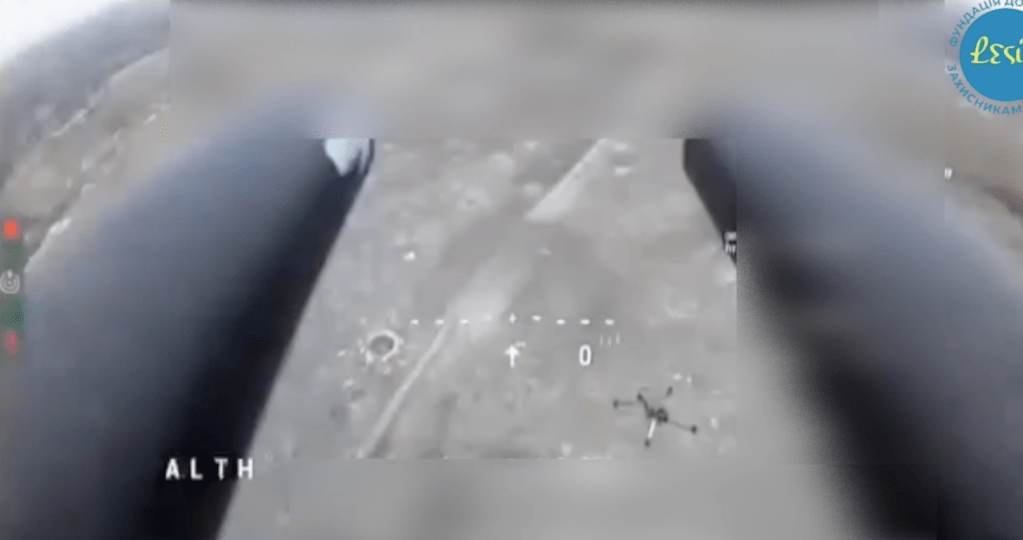
In the first video the gun-drone follows a quadcopter with the drone’s camera panning up and down several times between what appear to be a pair of barrels. The quadcopter is downed with damage to one of its rotors and appears to be trailing smoke as it spirals to the ground.

View between the barrels of a Ukrainian gun drone (via social media)

In the second short clip what appears to be a bomber drone, carrying an explosive hanging beneath it, is shot down as very close range as it hovers. Similarly, the third video shows a bomber drone which is shot down at close range as it hovered with damage to its rotor blades.
At the time of writing the Lesia UA Foundation have not released any additional clips of the drone in action or any images of what the drone looks like.

While in recent months we have seen drones armed with both RPGs and AK-74s these have been used in the air-to-ground role. The shotgun-like blasts seen in these clips are more useful for close range air-to-air engagements. From the lack of recoil seen in the clips, the large bore diameter of the barrels and their positioning on the drone, either side of a camera gimbal, it would appear that the gun used by the drone follows a recoilless principal. The recoilless guns work along the premise of Newton’s Third Law of Motion, that all things have an equal and opposite reaction – as such two guns are connected back to back, with the backwards-facing gun firing a counter-weight – mitigating recoil which prevents the drone’s flight from being destabilised.

A Russian recoilless gun drone developed in 2024 (via social media)

Why a recoilless gun and not a conventional shotgun? Principal factors governing this are likely weight, effectiveness and recoil. The recoilless guns have a larger bore diameter meaning larger load and increased hit probability. Additionally they are simpler with no-working or recoiling parts (as they load is likely electrically ignited) and they are lighter allowing the drone to stay in the air for longer and/or travel further. The key downside to the use of a single shot recoilless gun is that it can fire only one round. The Ukrainian drones have sought to mitigate this by seemingly equipping their drone with two of the guns.

While we haven’t yet seen an image of the Ukrainian gun-armed drone, we have seen a Russian example which was developed in the summer of 2024, tested but reportedly not yet fielded. The Russian drone was developed by the BRT company who, in a recent telegram post, expressed their frustration at seeing a Ukrainian recoilless gun drone in use.

While successfully engaging an enemy drone with a gun is difficult it is the detection and tracking of enemy drones which is likely the most challenging part. This may lead to these recoilless gun-equipped drones being used in a sort of combat air patrol role, seeking out and hunting down enemy drones over an area where they have been reported. It remains to be seen if these recoilless gun-armed drones will proliferate as a method of countering the huge number of small drones used by both sides but from the limited footage of them in action that is available the concept seems proven.

Update – 10/1/24: Additional footage has surfaced showing the drone firing on Russian infantry.

Update – 15/1/25: Additional footage of the Ukrainian drone in action, shared by a drone unit with the 2nd Mechanized Battalion of the 30th Mechanized Brigade.

Update – 4/2/25:

A drone team with the 43rd Mechanised Brigade shared a clip of a shotgun drone engaging a Russian drone.

Update – 17/2/25:


Support Us: If you enjoyed this video and article please consider supporting our work here. We have some great perks available for Patreon Supporters – including early access to custom stickers and early access to videos! You can also find us on the History of Weapons & War app. Thank you for your support!

3D Printed Anti-Personnel Mines

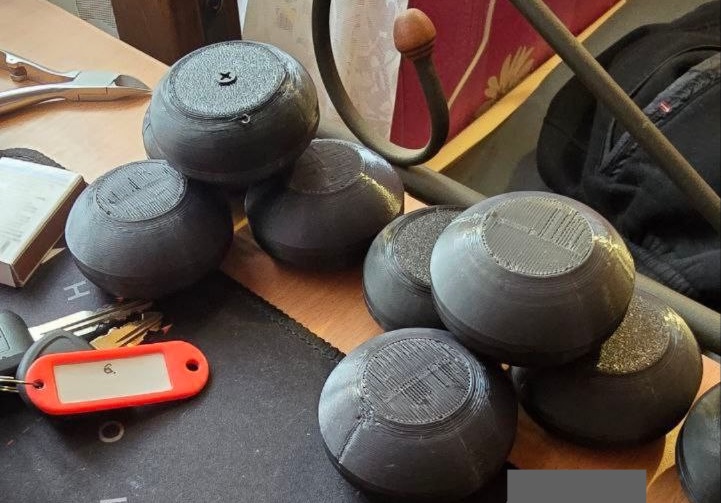
In this article/video we’ll examine an an interesting and very simple 3D printed anti-personnel mine developed by the Ukrainians. The mines are similar in purpose and size to the Russian PFM-1, the so-called ‘Butterfly’ mines. However, their shape and form factor is similar to that of the larger PMN-4, but they are significantly simpler.

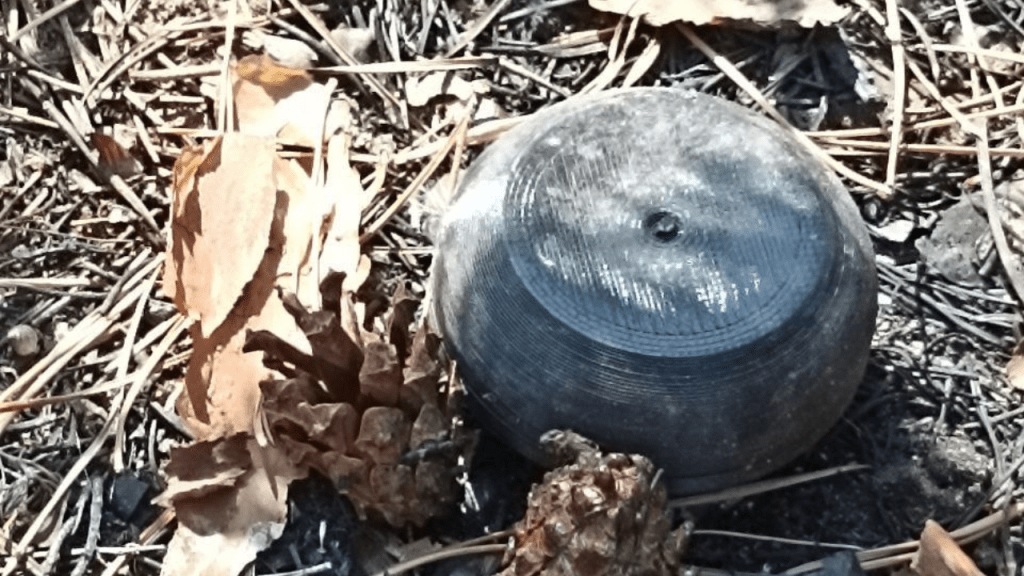
3D printed mine found in the field (via social media)

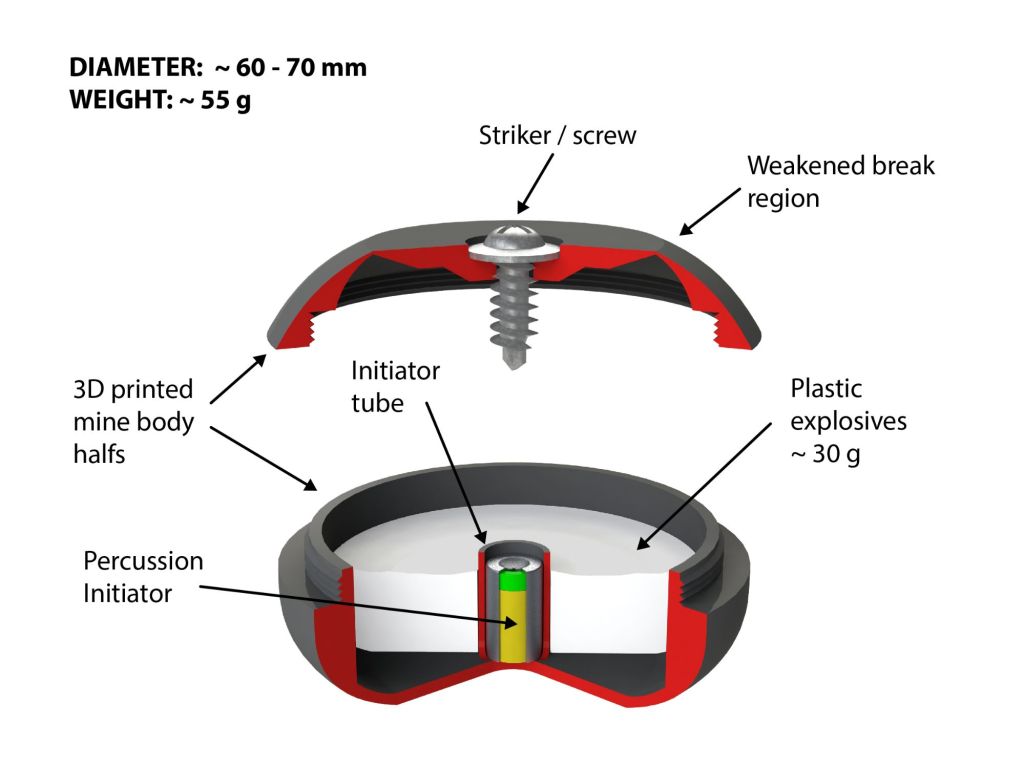
The 3D printed mine’s explosive filling is said to be around 30g, with an overall weight of 55g. The mine is made up of a two-part outer shell printed in PLA, or another similar plastic. The two pieces screw together and a layer of plastic explosive is in the bottom half of the shell along with a percussion initiator of some sort. The top half of the mine has a small  metal Philips-head screw protruding down through the top, this acts as a striker for the initiator. There is a tube protruding up from the lower half of the mine, printed as part of the body, which likely guides the screw and holds the initiator.

The mine appears to work along the principle of when stepped on the outer shell breaks and compacts allowing the screw to strike the initiator, detonating the mine.

An illustration of the mine’s layout and components (Alexis Midy/Midy Infographie)

The design is extremely simple and cost effective to produce, requiring only the simplest 3D printer, a screw and an initiator and explosive.

The first sighting of the mines I’ve been able to find was in a telegram post by a Russian sapper. In the post, on 6 October, he shared several photos of the mines found in the field and warned that Ukrainian drones are dropping them in the Kursk and Belgorod regions. Another photo of one of the mines was shared by another Russian combatant on 8 October.

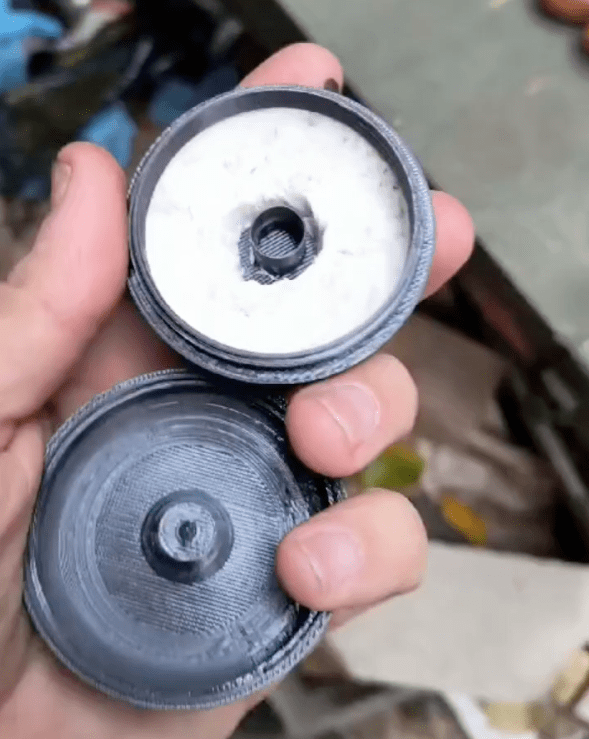
A Russian telegram channel, enginner25, shared post showing multiple images of the mines and a video showing the internals.

3D printed mine opened to show explosive filling (via social media)

In another photo we can see that the mines are apparently dropped from plastic tubes suspended below drones. The photo only shows the top of the tube but it’s clear that a number of tubes are carrying a significant number of mines. The release mechanism for the lids of the carrier tubes appears to use something like 3mm Visco fuze, commonly used with fireworks, or igniter cord. Once initiated the fuze/cord burns away and releases the mines with the drone scattering them as it flies over an area.

The design of the mine is extremely simple but appears to be potentially quite effective, relying on the brittleness of the 3D printed shell to work. The mines seem to have been engineered to be quickly produced at scale rather than to make them undetectable to Russian sappers. However, if a non-metallic striker replaced the screw the mines would be even more difficult to detect.

Assorted 3D printed mines (via social media)

While not the first 3D printed explosive device to emerge from the fighting in Ukraine, this mine is certainly one of the smallest and simplest. How widespread their deployment is, is still unclear but they seem they would be a useful part of Ukraine’s drone-deployed mine interdiction efforts behind Russian lines.

Thank you to Roy for drawing my attention to these mines.

Update 22/12/24: A new Russian video showing the internals of the mine and giving a better look at the percussion initiator (source).

Update 5/7/25: A Ukrainian video showing the testing of a 3D printed mine.


Support Us: If you enjoyed this video and article please consider supporting our work here. We have some great perks available for Patreon Supporters – including early access to custom stickers and early access to videos! You can also find us on the History of Weapons & War app. Thank you for your support!

Call For Questions: 100,000 Subscriber Q&A!

Super thrilled to have passed the 100,000 subscriber mark over on YouTube!

The channel has been around since 2017 and has taken me to some incredible places and given me the chance to examine some amazing weapons everything from Ferguson rifles to the HK G11! Very grateful to everyone who has watched my videos over the years. Starting off on shaky ground stumbling over pieces to camera to disassembling and examining one of a kind John Browning prototypes and everything in between!

You may have found me through my videos on the war in Ukraine. While never something I thought I’d be covering in real-time I hope they’ll provide a useful resource in years to come. I can only hope it’s a series of videos that ends soon. I really appreciate everyone who has watched my work, commented and shared the videos. Massive thank you to past & present supporters on Patreon they have hoped me justify spending so much time on making videos!

Thank you also to friends and colleagues who have helped with research and been supportive over the years. Working on historical and contemporary firearms content has led me to becoming friends with some incredible historians, researchers and video creators which have really enriched my life. So, all in all, reaching 100,000 subscribers may seem insignificant compared to some of the huge YouTube channels out there but when you’re a fairly quiet British fella who likes firearms and history it’s wonderful to be able to share the passion with so many others each week. Thank you.

I thought I’d celebrate by doing a question and answer / ask me anything. So ask me anything! Firearms history, my background, favourite colour, questions about my videos on Ukraine, and I’ll try to answer as many as I can in a video or live stream! Leave questions in the video’s comments or email them here.

Ukraine’s Grad Rocket-Armed Sea Drones

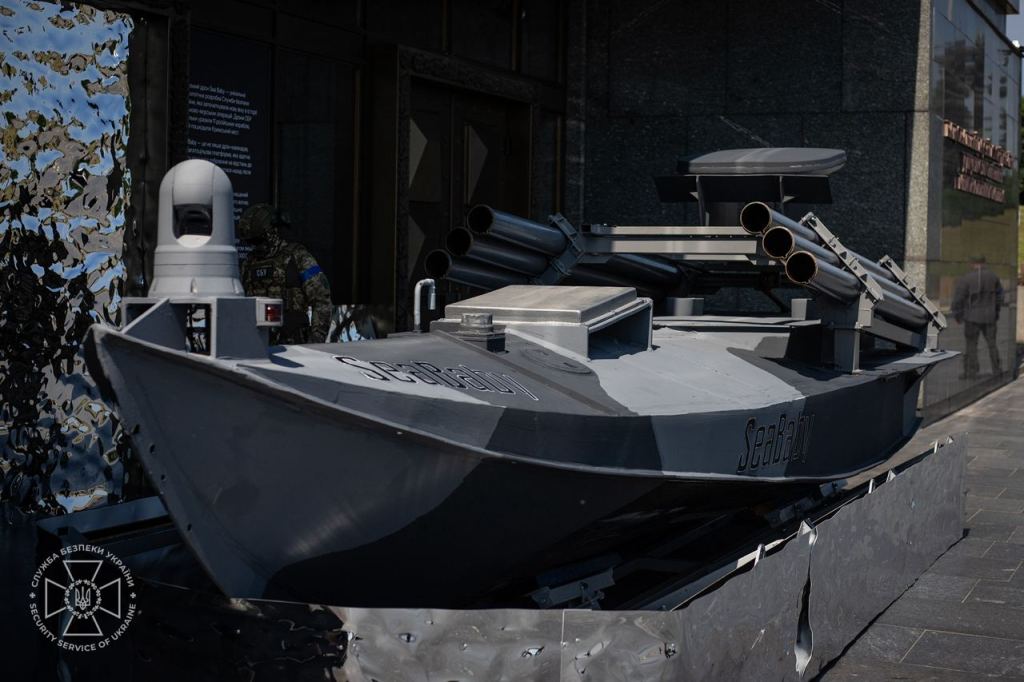
Ukraine’s family of unmanned surface vessels (USVs) continues to grow as the Security Service of Ukraine (SBU) have developed a Grad rocket-armed Sea Baby drone. The one-way or kamikaze USVs deployed by Ukraine in the Black Sea have been instrumental in engaging the Russian Navy, however, more recently new variants have emerged as Russia has begun to adapt and successfully engage the Sea Babies which in turn has seen the Ukrainians seek to adapt.

The first video of the rocket-armed USV in action recently emerged and the SBU has released some photographs which appear to show the drone in testing. On 22 May, an anonymous SBU source told The Kyiv Independent that the new drones have been used in combat “against Russian positions on the Kinburn spit,” a stretch of often fought over land on the coast near Mykolaiv. “This technological solution is already showing powerful results,” with the source adding “Our Sea Baby is not just a drone, but a multifunctional platform that is constantly being improved.” So far it seems the rocket-armed USV has been used against shore targets rather than to engage the Russian Black Sea Fleet, firing on a moving target from an unstable platform may be much more of a challenge. It remains to be seen if this USV variant has been put to use engaging vessels at sea. The Grad Sea Baby gives the SBU the useful ability to strike shore targets anywhere along the Russian-occupied Black Sea coast. From available imagery, at least three of the rocket-armed variants have been built.

The drones have been equipped with six 122mm Grad rocket launch tubes. The BM-21 multiple rocket launch system is used by both Ukraine and Russia. It’s size, ubiquity and relative cheapness makes it an obvious choice for mounting on the six meter long Sea Baby. The latest versions of the Sea Baby are reportedly able to carry 400 kg warheads over 500 miles at speeds of up to 48 knots.

The Grad rockets have a range of anywhere between 20 and 50 km depending on the type of rocket used. It’s unclear if a sea-based launch impacts the rocket’s range or accuracy but depending on sea conditions dispersion of the munitions is almost certainly affected. While accuracy may be impacted the rockets still give the Sea Baby a useful stand off capability, allowing the USVs to engage targets at a distance rather than having to make it physically all the way to the target to detonate its payload. How the rockets are aimed or the launcher is zeroed isn’t yet clear. The tubes do not appear to be adjustable for elevation as photos appear to show them fixed in place at a slight angle. Available photos show the launcher being tested ashore at a range, perhaps the tubes are bore sighted.

This isn’t the first time rockets have been fired from a Ukrainian USV, back in January 2024, footage of a USV firing smaller rockets at a Russian patrol vessel emerged. The rockets are believed to be RPV-16 or RPO-A thermobaric rockets. Some of this footage, along with other older video, was included in a short clip which showed off the rocket-armed Sea Babies. While this footage may not show a Grad launch Vasyl Malyuk, head of the SBU, has said during a press event with UNITED24, that “For the first time, the SBU used the “Sea baby” drone, equipped with the “Grad” rocket salvo fire systems, in December 2023,” adding that this represented a “new milestone in the history of sea battles.” Newsweek reported that the Sea Babies fitted with Grad launchers were paid for using United24 donations, with each USV estimated to be worth $221,000.

Most recently we also saw another curious Ukrainian USV emerge, equipped with an improvised air-defense system with two repurposed AA-11 ARCHER (R-73) air to air missiles. The air defense USV emerged as Russian helicopters began to effectively engage the Ukrainian USVs. Given the rapid evolution of Ukraine’s USVs it would not be surprising to eventually see one equipped with an anti-ship missile, such as a small RBS-17.

Sea Baby equipped with six Grad tubes (via SBU)

The small cross section and speed of the Sea Baby drones allow them to infiltrate and approach Russian Black Sea vessels both at sea and in port. However, Russia has developed rudimentary tactics for successfully engaging them either with helicopters or with small arms and other defensive fire from vessels. A stand off capability, be it a USV equipped with unguided Grad rockets or an anti-ship missile, adds another dimension the Russians will have to adapt to. The Grad-armed Sea Baby is the latest indicator that Ukraine’s USV fleet is continuing to diversify to meet new threats and operational requirements.

An earlier version of this article first appeared at OvertDefense.com.


Support Us: If you enjoyed this video and article please consider supporting our work here. We have some great perks available for Patreon Supporters – including early access to custom stickers and early access to videos! Thank you for your support!
More Russian & Ukrainian MT-LB Adaptations

In June we looked at MT-LB adaptations which have been pressed into service by both sides. Check out that video/article here. In recent weeks there have been more sightings of some of these adapted vehicles.

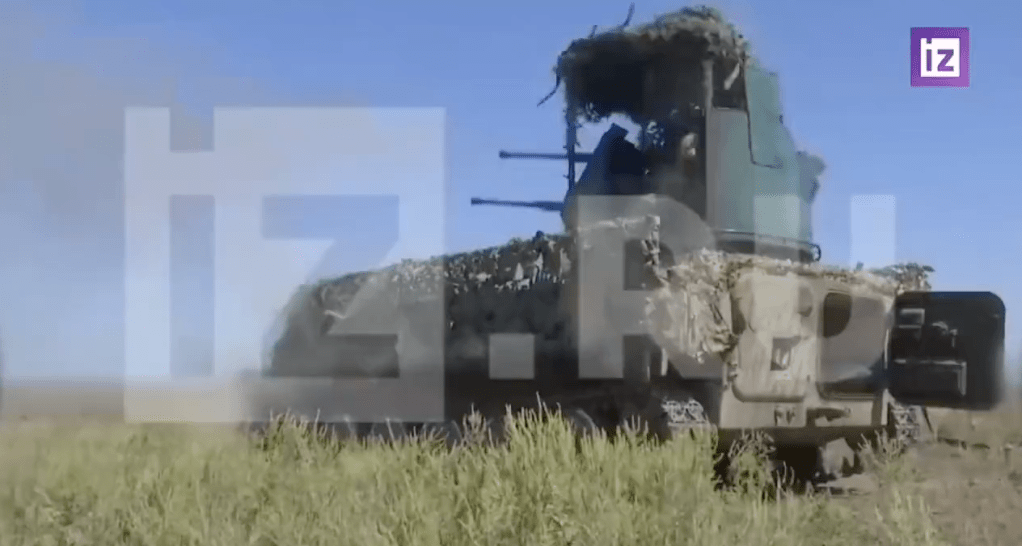
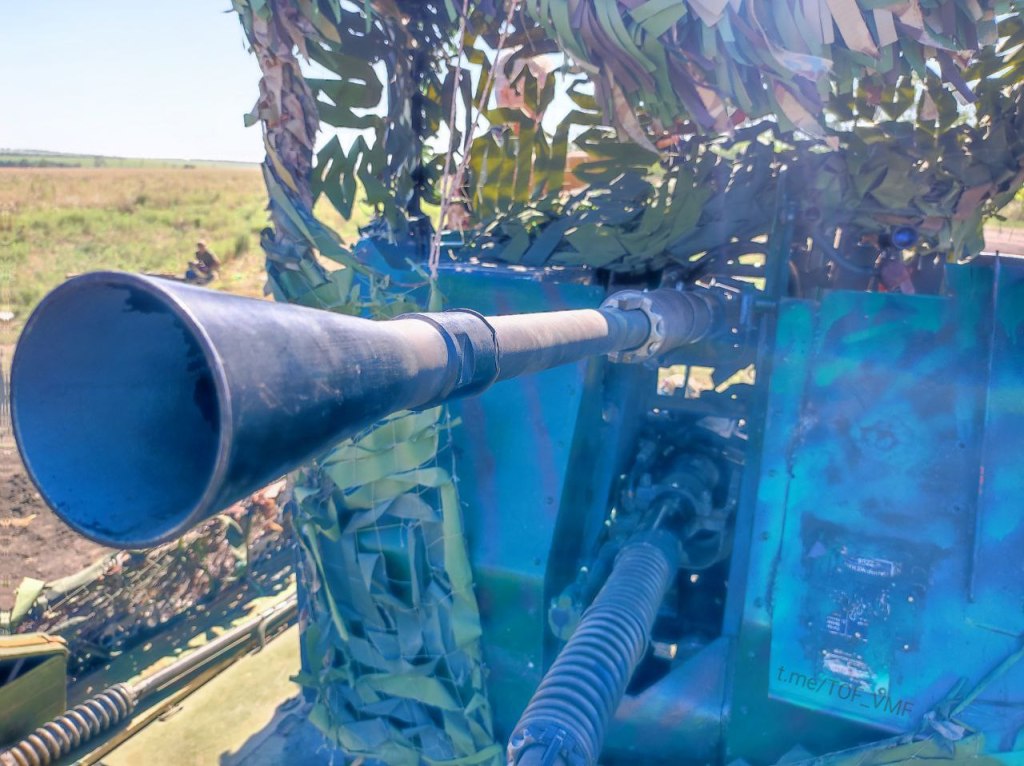
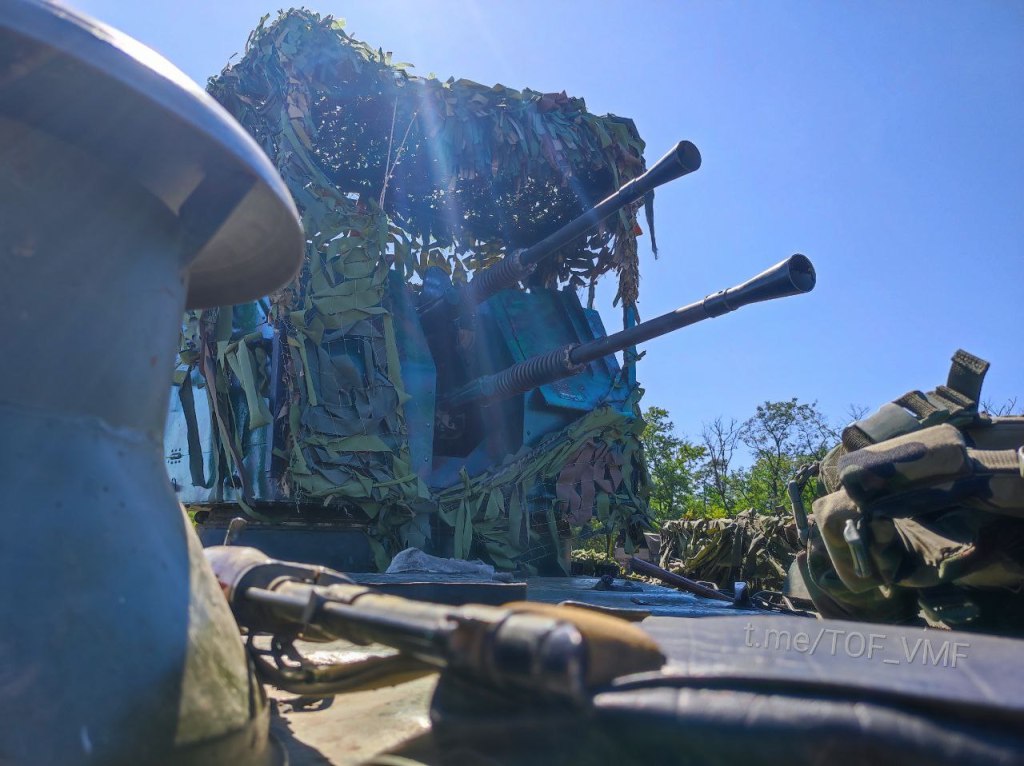
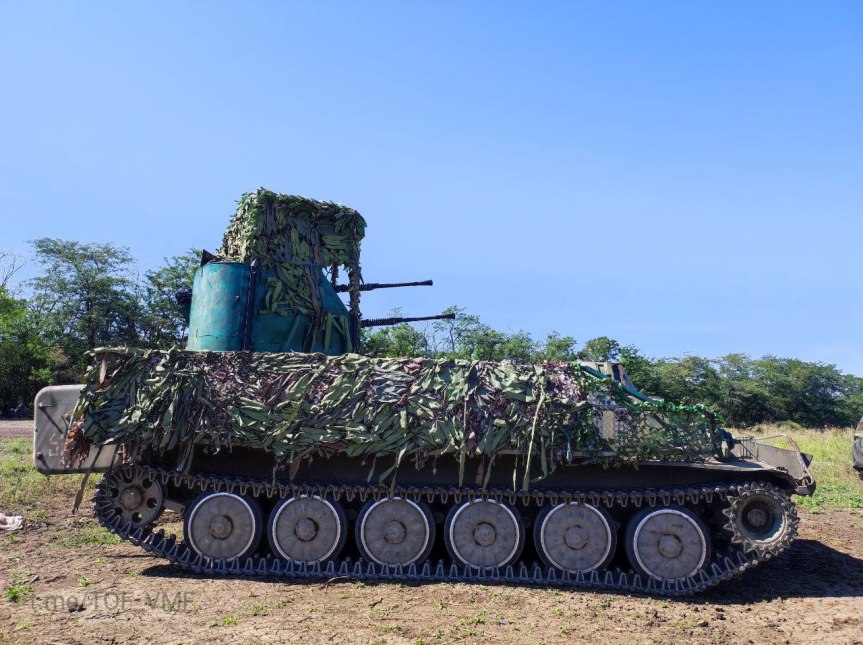
On 3 September, the first video of one of Russia’s MT-LBs fitted with a 2M-3 twin 25mm naval gun turret was shared online. The turret appears to be extremely unstable, shaking violently, its hard to imagine this weapon system being useful for anything beyond suppression.

A Russian MT-LB mounted with a 2M-3 turret (via IZ)

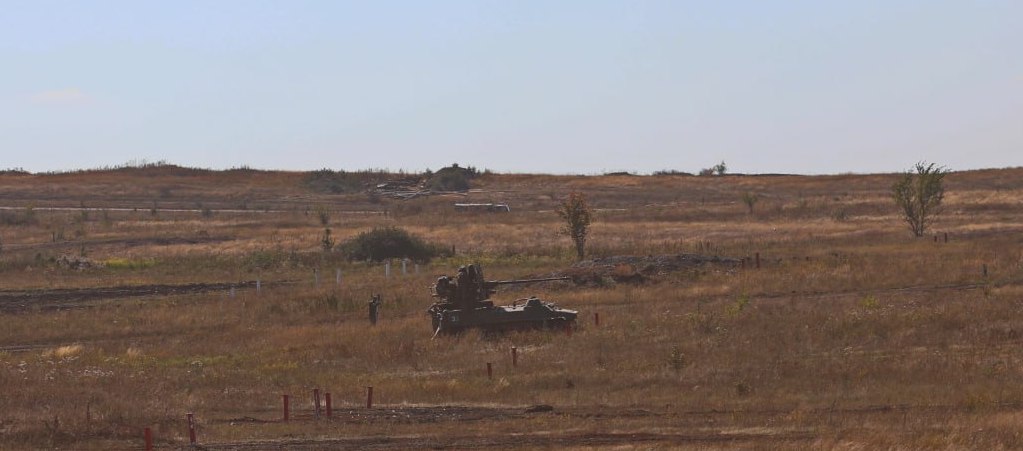
A week later on 10 September a short clip of another Russian MT-LB with a 2M-3 turret was published by Russian news outlet Izvestia. Again the turret seen firing appears to be very unstable with not only the vehicle rocking on its suspension but also the turret bouncing in its mount.

Intriguingly both of these MT-LBs appear to have the 2M-3 turrets mounted much lower than the vehicles seen earlier. The MT-LBs seen earlier appear to have the turrets mounted higher in tower-like structures.

An S-60 MT-LB during an exercise in Russia (via social media)

Another adaptation not covered in our earlier video/article is the mounting of 57mm S-60 anti-aircraft guns on MT-LBs. These have been seen somewhat regularly and most recently shared via Russian telegram channels shared video of S-60-armed MT-LB training with a newly mobilised, but unnamed, unit in Russia’s central military district. These vehicles typically provide direct fire support against ground targets.

An MT-LBu fitted with a 14.5mm KPVT in a RWS (via 42nd Separate Mechanised Brigade)

In terms of Ukrainian adaptations there have been further sightings of one of the vehicles we looked at last time, an MT-LBu variant which has been upgraded with additional armour and a remote weapon station mounting a 14.5mm KPVT heavy machine gun. These are believed to be in service with the 42nd Separate Mechanised Brigade and some sources have described them using the designation BMP-1LB.

A video showing several of the adapted MT-LBus was shared on 7 September, showing four of the vehicles. On 13 September the 42nd Separate Mechanised Brigade shared a series of photographs featuring the vehicles. There hasn’t yet been any video of these vehicle’s remote weapon stations being fired so it is unclear if they have been stabilised better than their Russian counterparts.

MT-LB with a BM-7 Parus turret (via social media)

One adaptation which was not mentioned in our earlier video/article was the combining of an MT-LB with a BM-7 ‘Parus’ weapon module. The BM-7 normally comprises a 30mm ZTM-1 auto cannon, a coaxial PKT machine gun, a 30mm automatic grenade launcher and several anti-tank guided missiles. These are typically paired with the BTR-4. MT-LBs mounted with the BM-7 don’t appear to have the ATGMs fitted. These MT-LBs were first seen in July, with a video of two of the vehicles on the move shared on 21 July. Another video showing one of the vehicles firing has also been shared.

The ubiquitous MT-LB, while lightly armoured, continues to offer one of the best available platforms adaptation, if you enjoyed this article/video – check out our earlier work on MT-LB adaptations here.

Update 11/7/24:

Russian marines of the 155th Guards Brigade operate an MT-LB with a 2M-3M twin mount.


Support Us: If you enjoyed this video and article please consider supporting our work here. We have some great perks available for Patreon Supporters – including early access to custom stickers and early access to videos! Thank you for your support!


FN Light Automatic Rifle ‘Competition Model’ Manual

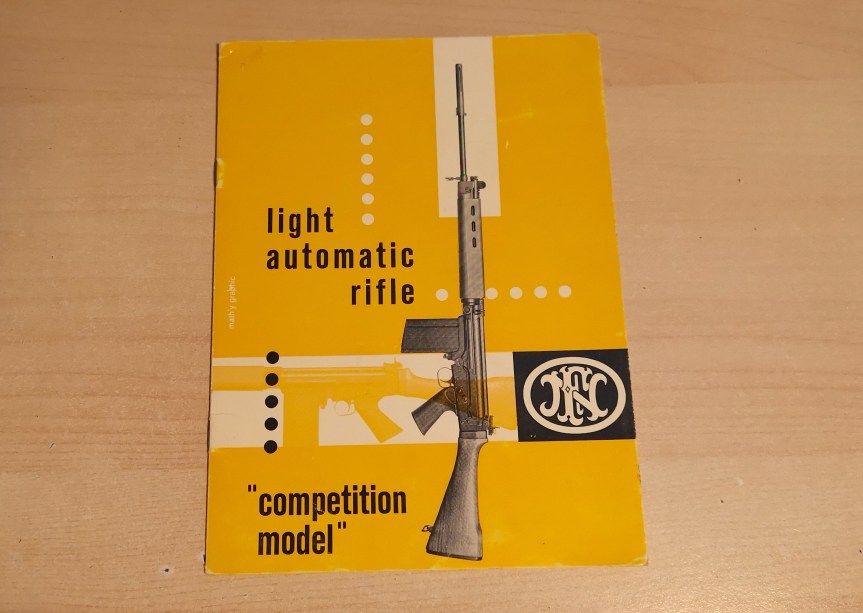
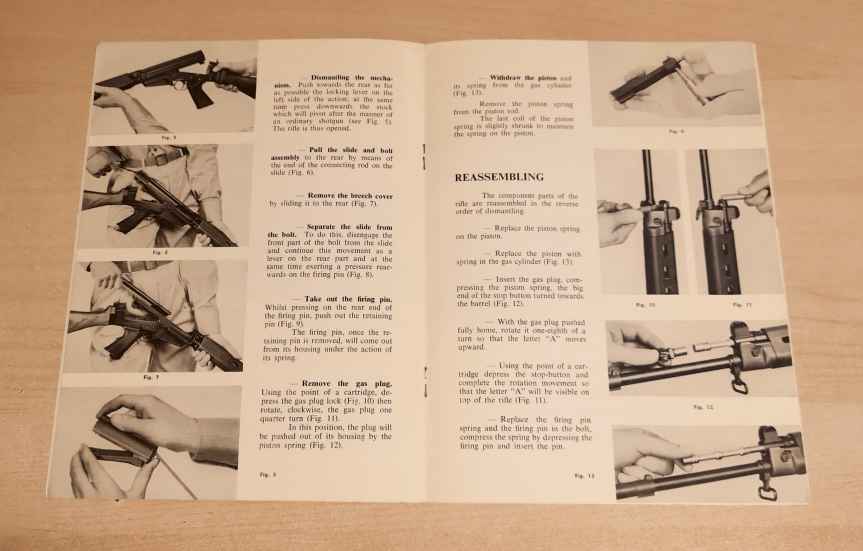
In this short video we’ll take a look at a manual for the FN Light Automatic Rifle ‘Competition Model’. The FN LAR was a semi-automatic only commercial export variant of the FAL. This undated manual likely dates from the 1980s when FN began importing LAR’s into the US.

This week is FAL week over at History of Weapons & Warfare, with videos looking at the FAL from all of the creators being featured. Until Sunday, 8 October, you can get 25% off your first month when you use the discount code ‘L1A1‘! Head over and check out – www.weaponsandwar.tv

Front cover of the LAR manual (Matthew Moss)
Centre-fold of the LAR manual showing the disassembly process (Matthew Moss)

More Manuals from the TAB Reference Collection:


Support Us: If you enjoyed this video and article please consider supporting our work here. We have some great perks available for Patreon Supporters – including early access to custom stickers and early access to videos! Thank you for your support!