Since the war in Ukraine began on 24 February, the Ukrainian armed forces have been hastily putting together and sharing training films for various weapon systems. we’re sharing these so they’re saved for the historical record and so they can be easily found by those who might need them. We’ll try and give some context on the weapon’s origins and on who made the training video.
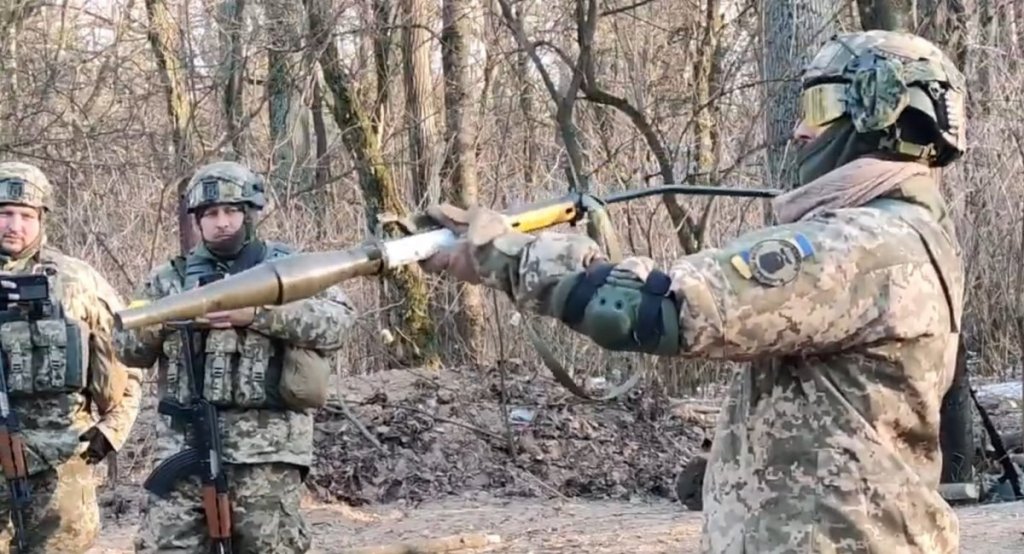
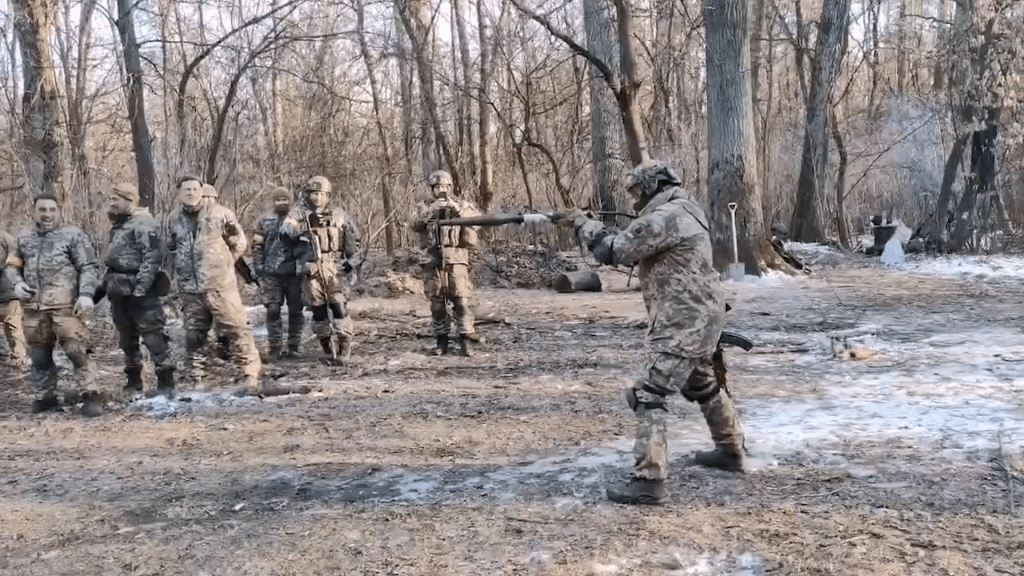
Demonstrating how to deploy the RPG-18, the tube isn’t fully extended as its a live weapon
In this well shot video a Ukrainian soldier demonstrates the features and handling of an RPG-18. The RPG-18 (‘Mukha’ or ‘fly’) was the first of the Soviet/Russian family of extendable tube launchers (very similar to the US M72 LAW). The RPG-18 was developed in the late-1960s and was introduced in the early 1970s. It has since largely been replaced by larger calibre and more capable launchers. The weapon is a simple, smoothbore, single-use launcher. It is constructed from an aluminium tube with an outer layer of fibreglass.
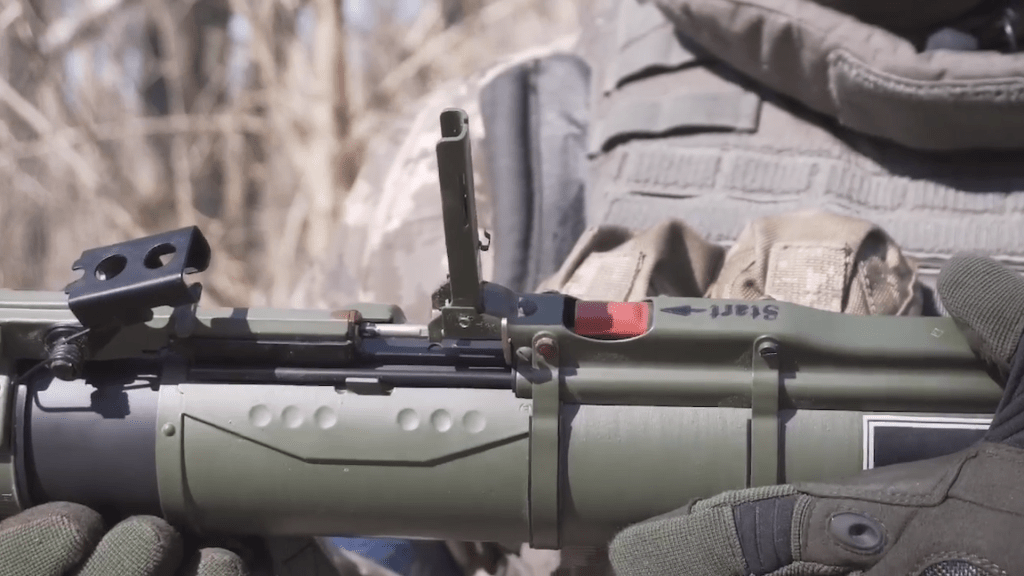
A close up of the RPG-18’s locking system, rear sight and trigger
It isn’t clear how many RPG-18 the Ukrainian Armed Forces’ may have had in inventory before the war began but it appears that the weapon seen in this video was made in East Germany and probably transferred by Germany as part of Germany’s military aid shipments to Ukraine. While Greece have also reportedly transferred a quantity of RPG-18s, we have seen other examples in the field with identical German instructions stickers.
#Ukraine: A rather interesting RPG-18 was captured by DNR forces; as can be seen, it was made by East Germany, and most likely recently transferred by Germany to UA forces. pic.twitter.com/B9WrWSRJvz
— 🇺🇦 Ukraine Weapons Tracker (@UAWeapons) March 16, 2022
The video first surfaced around the 21st March, posted by Vadim Kodachigov (the director of Kort, a military industrial company) on Facebook, though he may not be the original creator. Kodachigov appears to be part of a Territorial Defence Force unit. The video identifies the unit as part of the 112th Territorial Defense Brigade (Kyiv). The production value of the video is relatively high, with a title card, good editing, close ups and some interesting footage of the weapon being fired.
If you enjoyed this video and article please consider supporting our work here. We have some great perks available for Patreon Supporters – including custom stickers and early access to videos! Thank you for your support!
Bibliography:
Earliest video source found: Vadim Kodachigov via facebook (source)
The Kalashnikov designed PK machine gun is one of the most ubiquitous general purpose machine guns in the world. Designed by Mikhail Kalashnikov and his team in the late 1950s. We’ve seen a number of PKMs in Ukraine already but another variant, the PKT, has popped up in a couple of interesting pieces of press footage.
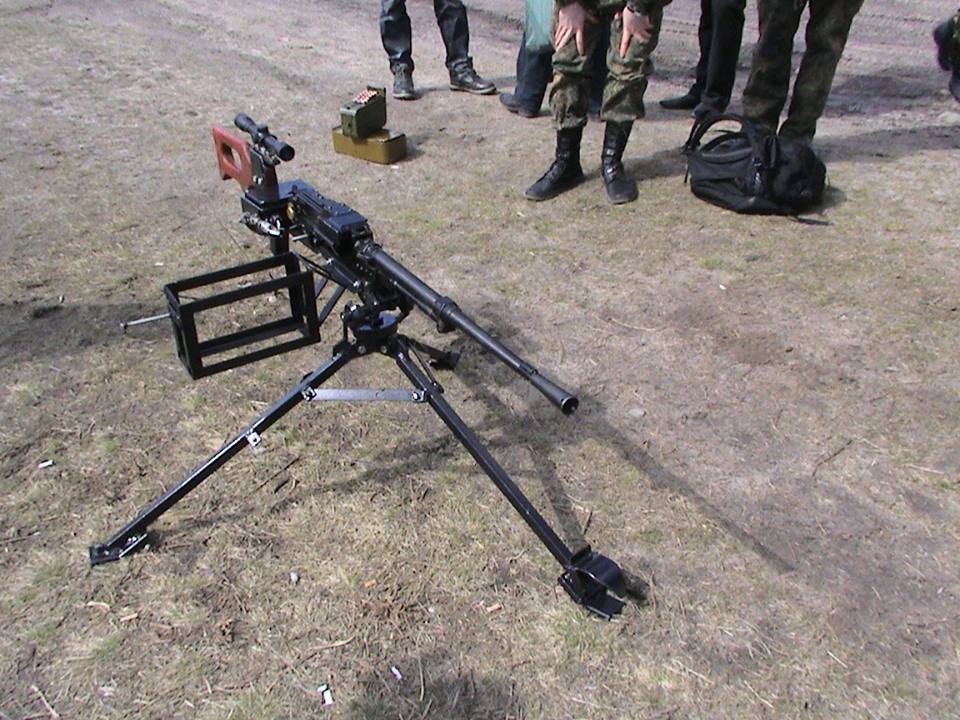
It appears that there is a car repair shop in Kyiv which is taking in captured and salvaged Russian machine guns and adapting them for ground use with an ad-hoc stock and pistol grip assembly. Fantastic ingenuity and the team is reported to be made up of welders, engineers and mechanics.
What may be an early version of the adaptation (via France24)
The first piece of footage of the workshop surfaced on the 9 March and a France24 report was published on the 16 March. We’ve yet to see any of the adapted PKTs in the field.
The PKT itself was developed in 1968 to replace the SG-43-derived SGMT. The PKT is primarily used as a coaxial gun on armoured vehicles including the MT-LB, BTR-4, BTR-60, BTR-80, BTR-90, the BMD and BMP series and Russia’s T-72, T-89 and T-90 series of tanks. One thing the Ukrainians have not been short of is captured and abandoned Russian armoured vehicles. The adapted PKTs will probably be used to help equip the Territorial Defence Force battalions which have been raised across Ukraine.
Offering up an aftermarket optics rail, this option appears to have been abandoned in favour if a side-mounted optics mount (via UAWeaponsTracker)
The PKT is solenoid fired, with the gunner pushing a button to fire the gun. This means that it obviously has no pistol grip or trigger assembly but it also lacks sights and a bipod. So when the Ukrainian’s are salvaging these gun they are essentially useless for immediate ground use. The footage from the workshops shows that they have developed a simple stock and pistol grip assembly. The stock slides into the trunnion at the rear of the receiver, where the solenoid firing unit normally fits. The pistol grip and trigger mechanism assembly is then pivoted up and secured by a cross pin. There appears to be a simple hook projecting up from the trigger mechanism assembly which trips the sear inside the PKT.
Diagram showing the PKT with its solenoid firing mechanism in placeIn this diagram we can see how the PKT is mounted in an armoured vehicle (PKT Manual)
The stock appears to be from a standard PK and the pistol grip is a widely available aftermarket AK-pattern grip which seems to be held in place by a large nut and bolt. To get around the PKT’s lack of sights the workshop have fitted a scope mount, welded to the left side of the stock assembly. The gun is seen here with what appears to be a thermal optic.
In the second piece of footage we see some adapted PKTs with classic AK pistol grips attached to stock assemblies. The pistol grip no longer hangs free but is attached to the stock. The trigger mechanism also appears to have been redesigned. Now when the trigger is pulled an arm protrudes from the stock, it pivots from the top – rather than from the bottom as in the example we saw in the first video. This might suggest that the gun featured in the 9 March footage is the workshop’s initial prototype. If so they have moved from a relatively crude design to a more sophisticated on in about a week. From the France24 report it seems the engineers and mechanics had the benefit of some military experience and some technical drawings.
Detaching the stock and firing mechanism assembly from a PKT (via France24)
In terms of historical precedent – there is plenty. As long as tanks have had machine guns infantry have been salvaging their guns for ground use. Seen during both world wars and in conflicts around the world. In terms of ad-hoc weapons for home defence forces like the Ukrainian Territorial Defense Force the British Home Guard during the Second World War were partially equipped with aerial Lewis Guns which were retrofitted with bipods and stocks.
Below are some examples of PKTs adapted in Ukraine since the conflict in Donbas began in 2014.
Photos shared by @V_V_Vavas
The adaptation of PKTs specifically was seen during the Chechen Wars and in 1992 the Nagorno-Karabakh War. Further adaptation have even been seen in Ukraine since 2014.
PKT (Rosobronexport)
A kit was reportedly designed by Tula which allowed a PK stock with rear sight and a pivoting pistol grip to slot into the rear trunnion of the gun. This provided a mechanism to fire the gun and a bipod with a front sight could be fitted. It is unclear if this has ever been fielded.
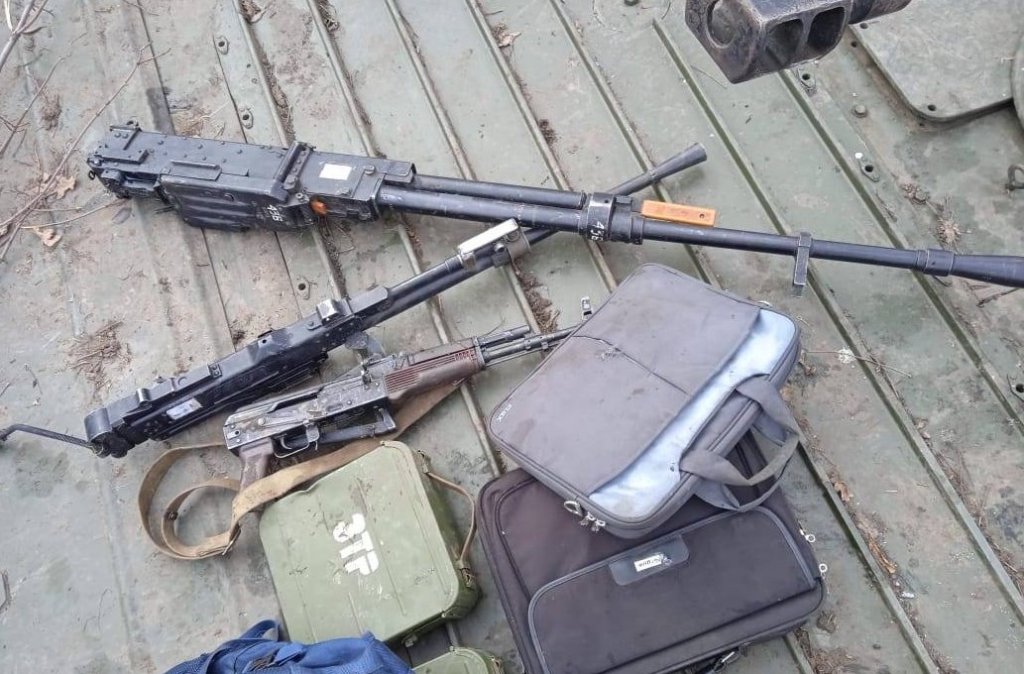
A captured Kord (Tank) heavy machine gun and a PKT
From the footage it appears the workshop are also working on adapting NSVTs, the vehicle mounted variant of the 12.7×109mm NSV heavy machine gun. The mechanic lifts an NSVT without its barrel to show a workshop-made pistol grip assembly with some box steel projecting out the rear, perhaps for a stock to be fixed to.
The PKT has a slightly longer barrel at 722mm or 28.4in (compared to the PKM’s 645mm or 25.3in), a slightly redesigned gas system and is also 1kg heavier at 10.5kg (23lbs). The PKT has a thicker barrel profile. The PKTM has a slightly reinforced receiver but few other differences compared to the PKT.
If you enjoyed this video and article please consider supporting our work here. We have some great perks available for Patreon Supporters – including custom stickers and early access to videos! Thank you for your support!
PKTM Specifications (from Rosoboronexport):
Caliber:7.62x54mmR Weight: 10.5kg / 23lbs Overall Length: 1098mm / 43in Barrel Length: 722mm / 28.4in Rate of fire: 700-800RPM Belt capacity: 250rds Muzzle velocity: 850m/s / 2788ft/s Sighting range of fire: 1500m / 1640yds
Bibliography:
Operator’s Manual PKM Machine Gun, US Army, (source) PKT Coaxial Machine Gun Modified for Infantry Use, Silah Report, (source) Differential Identification of NSV and Kord Heavy Machine Guns, ARES, (source) PKTM, Rosoboronexport, (source) PKT (PKMT) Machine Gun, Tankograd, (source)
Thank you to Amael Kotlarski for a copy of the PKM manual
Since the war in Ukraine began on 24 February the Ukrainian armed forces have been hastily putting together and sharing training films for various weapon systems. One of the most interesting weapons to be transferred to Ukraine is the Polish RPG-76 Komar (‘Mosquito’).
Demonstrating the controls of the RPG-76
The RPG-76 is essentially a smaller, lighter single-shot RPG-7, it has a folding stock and its round is adapted so its rocket nozzles are angled at 45-degrees to protect the user when firing. The RPG-76 was developed in the mid-1970s and entered production at Niewiadów in the mid-1980s. It was eventually withdrawn from general issue in 2003 but remained in Polish Army stores and saw some use with Polish troops during operations in Iraq and Afghanistan.
While the RPG-76 can reportedly penetrate up to 260mm of Rolled homogeneous armour (RHA) it lacks a tandem charge round which could engage targets, such as tanks, with explosive reactive armour. Despite this it should be more than capable of taking on most Russian light armoured vehicles and soft-skin vehicles like trucks.
Demonstrating aiming the RPG-76
The small number of examples seen in the field so far appear to date to the late 1980s. Poland announced they would be transferring military aid to Ukraine in early February and has since transferred ammunition, anti-tank and anti-aircraft weapons, mortars and provided medical supplies.
The video first surfaced around the 11th March, posted on Facebook by Vadim Kodachigov (the director of Kort, a military industrial company), though he may not be the original creator. Kodachigov appears to be part of a Territorial Defence Force unit, who may also feature in the video.
If you enjoyed this video and article please consider supporting our work here. We have some great perks available for Patreon Supporters – including custom stickers and early access to videos! Thank you for your support!
Bibliography:
Earliest source found: Vadim Kodachigov via facebook (source)
RPG-76 Komar – Polish miniature grenade launcher: how to shoot with this weapon, Defense Express, (source)
Since the war in Ukraine began on 24 February the Ukrainian armed forces have been hastily putting together and sharing training films for various weapon systems. The weapons including Western transferred systems like Stinger, Javelin, Piorun and Panzerfaust 3 as well as Ukrainian-made weapons like the Corsair and Stunga.
We’ll be sharing these training films so they’re saved for the historical record and so they can be easily found by those who might need them. We’ll try and give some context on the weapon’s origins and on who made the training video.
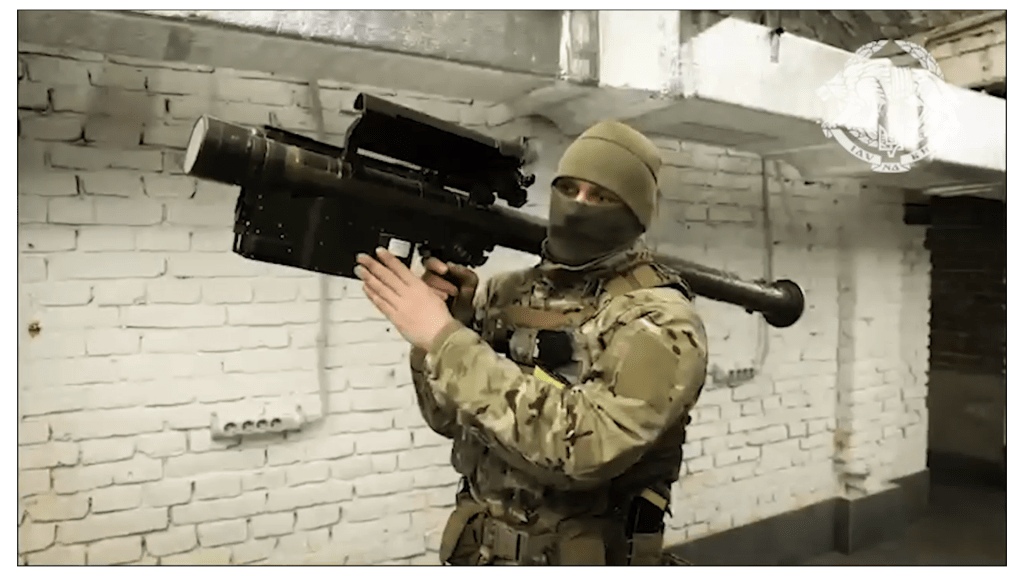
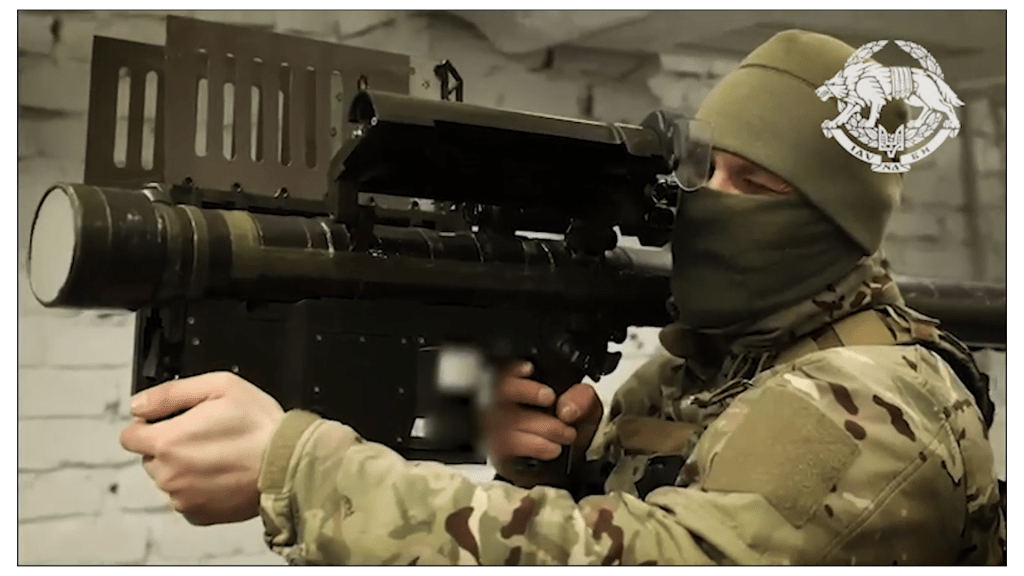
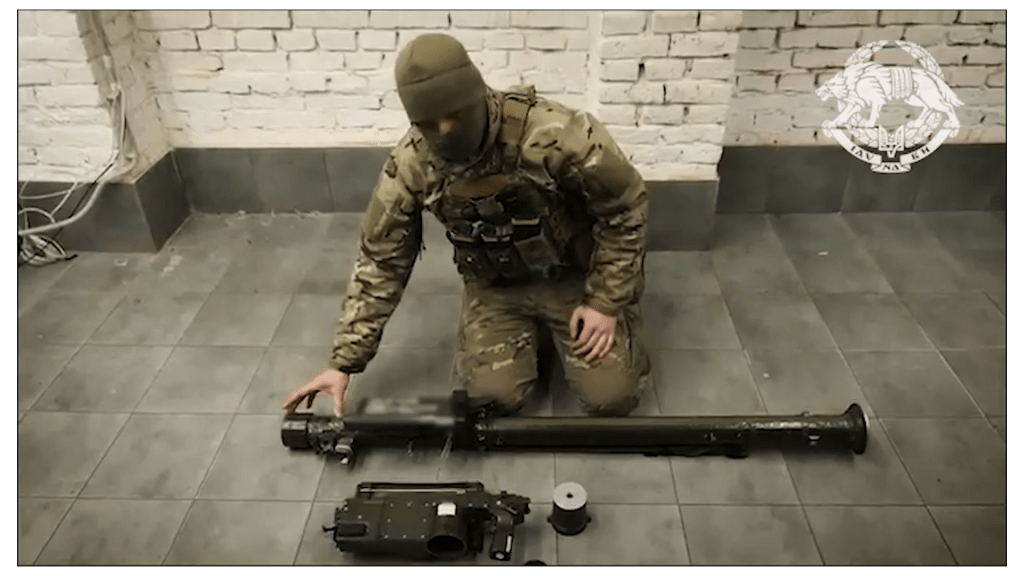
The first of the films was made by the Command of the Special Operations Forces of the Armed Forces of Ukraine (or SSO) and covers the assembly, components, aiming and handling of the Stinger man-portable air defence system (MANPADS).
FIM-92 Stinger is a man-portable, short range air defence system. It was developed in the 1960s by General Dynamics and uses infrared homing to track its target – some variants can also use UV. Stinger has been sent by Germany, Italy, Latvia, Lithuania, and the Netherlands with both the twin-launcher, pedestal-mounted version and the shoulder-fired system transferred to Ukraine. It is estimated that as of 20 March over 2,000 missiles have been transferred.
FIM-92 Stinger Specifications:
Warhead
High Explosive
Warhead weight
1 kg (2.25 lb) HTA-3
Missile Length
59.8 in (1.52 m)
Missile Weight
22 lb (10.1 kg)
System Mass
33.5 lb (15.19 kg)
Engine
Solid-fuel rocket motor
Guidancesystem
infrared homing
Range (Dependent on variant)
3-5 miles (4.8 km to 8 km)
Altitude (Dependent on variant)
Up to 3.8 km (12,500 feet)
Bibliography:
‘STINGER Instruction from SSO of Ukraine’, SSO, (source)
If you enjoyed this video and article please consider supporting our work here. We have some great perks available for Patreon Supporters – including custom stickers and early access to videos! Thank you for your support!
The transfer of Western anti-armour weapons started before the war even began. The United States transferred significant shipments of Javelin anti-tank guided missiles along with M141 SMAW-D Bunker Defeat Munitions and Stinger MANPADS.
At the same time as an initiative from the Baltic states of Lithuania, Latvia and Estonia – Estonia also delivered Javelin missiles. For reasons of operational security we don’t know how many Javelins have been delivered to Ukraine by the US and Estonia at this time. However, Estonia is believed to have had several hundred in stock.
Ukrainian troops training with January in February 2022 (Ukrainian MoD)
What is Javelin?
Javelin is an infrared guided man-portable fire-and-forget anti-tank missile. It’s been been in service with over a dozen countries for over 20 years and is still produced by a joint venture between Raytheon Missiles & Defense and Lockheed Martin. It weighs about 22kg or 46 lbs ready to fire and had a detachable Command Launch Unit (or CLU) . Its effective range depends on the type of CLU but the improved Lightweight CLU introduced in 2020 can engage targets out to 4,000 metres (about 3 miles). As of 11 March, Lightweight CLU has not yet been seen in Ukraine. The earlier block 0 and 1 CLU can engage targets out to 2,500 meters (1.5 miles). The CLU enables this with a number of optics including a 4x day sight, a 4x night sight a 9.2x thermal sight. The CLU is also a useful tool for reconnaissance when other NVG and thermal imagers aren’t available. Once the gunner has their target and establishes a lock the missile can be launched.
Javelin’s CLU (US Army)
Javelin’s missile has a soft launch system which limits back blast and firing from relatively enclosed spaces. Once launched the main rocket motor kicks in at a safe distance. It uses automatic infrared self-guidance and has two modes of attack: direct for use against lightly armoured targets and structures and top-attack. In top-attack mode the missile climbs above the target and then plunges down on it to penetrate thinner top armour.
The missile has a tandem shaped charge high explosive anti-tank round. The initial charge can detonate any explosive reactive armour used by the enemy target vehicle while the second shaped charge will penetrate the target’s main armour. When the round detonates it super heats the metal of the armour and creates a high velocity stream of metal which enters the vehicle. More on the complex science behind shaped charges here. It can destroy vehicle’s drive systems or if it enters the fighting compartment it can kill or injure the crew and detonate munitions.
History
Javelin was developed by Texas Instruments in cooperation with Martin Marietta. In the mid-1980s it beat off competition from Ford Aerospace and Hughes Aircraft to win the US Army’s Advanced Anti-Tank Weapon System—Medium program.
A Ukrainian Depot, early March 2022 (Ukrainian MoD)
In June 1989 Texas Instruments and Martin Marietta were awarded a development contract and the Javelin was adopted as the FGM-148. Javelin continued development and testing throughout the 90s before entering service. Since then it’s been adopted by countries including the UK, Australia, France, Norway, Poland, Taiwan, and many others. According to Raytheon the system is scheduled to be in inventory until 2050.
Javelin In Ukraine
Ukraine adopted Javelin in April 2018, ordering 210 missiles and 37 CLUs with a further order for 150 missiles and 10 CLS in December 2019. Since the threat of invasion became increasingly likely the US provided a series of aid packages worth $260 million. Reports suggest that at least 300 Javelin missiles were delivered as part of these packages. Since then the US has agreed a further package worth $350 million. 70% of this package is said to have been delivered as of 9 March. It’s difficult to estimate how many missiles and CLUs have been delivered so far but the number of missiles is likely over 1,000.
Still from a Ukrainian training film on Javelin (Ukrainian MoD)
From the sparse evidence available we know that at least some of the Javelin transferred to Ukraine are confirmed to be from older Block 0 stocks, which includes FGM-148A/B/C and D. The vast majority of Javelins in Ukraine are likely to be Block 0 variants. Block I, the FGM-148E came into service with the US in 2008 and has an improved CLU and rocket motor. Javelin’s shelf life is around 20 years, so it makes sense for these older production but still fully capable missiles to be sent first.
In early February the Ukrainian Ministry of Defense shared a short video showing troops testing the newly-arrived Javelins against tank hulks which had been fitted with so-called ‘Javelin Cages’, a metal structure which Russian tanks have recently added to their turrets. It is believed the cage is intended to detonate the initial charge of a Javelin before it contacts with the tanks explosive reactive armour or the hull itself. However, it is also believed that it is intended to defeat drone-fired micro munitions like the Turkish MAM series. The cage detonating the micro munition before it reaches the tank. The footage shared by the Ukrainian MoD showed that Javelin easily defeated the cages.
Update 15/3/22: We have now seen evidence of Block 1 FGM-148Es in Ukraine. Amael Kotlarski, Janes Infantry Weapons Editor, speculates that these may have originated from the Baltic states’ stocks. At least one example of the Block 1 and a number of Block 0s have been captured by Russian forces so far.
Ukrainian Defence Minister announcing arrival of a shipment of Javelin in January 2022
While at the time of publishing this video there has been no confirmed footage of Javelin in action in Ukraine, no doubt due to good Ukrainian OPSEC, we have seen the system in theatre.
We got our first confirmation on 3 March, when Ukraine’s Operational Command “North” shared photos of troops being briefed on the use of NLAW and Javelin anti-tank weapons. In the photos we could see numerous Javelin transport cases stacked while troops were briefed on the Command Launch Unit (or CLU). On 6 March, the Ukrainian Armed forces shared a short instructional video on Javelin, showing how the battery is inserted and what the CLUs controls do.
How Capable is Javelin?
The penetration capabilities of Javelin are listed as classified with the USMC’s manual stating “The Javelin penetrates all known armor, “well” in excess of 30 inches [or 760mm] of rolled homogeneous steel.” This means Javelin is more than capable of knocking out any Russian armoured vehicle in Ukraine.
Javelin Missile (US Army)
In terms of performance in Ukraine, one report from 3 March, quoted an anonymous US Special Operations officer who is monitoring the conflict, suggested that of 300 Javelin fired, 280 knocked out vehicles. Time will tell.
If you enjoyed this video and article please consider supporting our work here. We have some great perks available for Patreon Supporters – including custom stickers and early access to videos! Thank you for your support!
Bibliography:
Javelin – Close Combat Missile System, Medium, FM3-22.37, US Army, 2008 (source) Rundown: Western Anti-Tank Weapons For Ukraine, Overt Defense, (source) Introduction to Crew Served Weapons, USMC, (source) NLAW In Ukraine, Armourer’s Bench, (source) As Russia Pounds Ukraine, NATO Countries Rush In Javelins and Stingers, New York Times, (source) $60 Million Worth of US Military Aid Arrives In Ukraine, Overt Defense, (source) First batch of Estonia-donated Javelin missiles arrive in Ukraine, EER, (source) New US Military Aid to Ukraine Includes 300 Javelin, nv.ua, (source) Shaped Charge, Global Security, (source)
Recently there’s been lots of reports about Ukraine’s defence volunteers training with wooden guns.
While this plays on the David & Goliath nature of current Crisis in Ukraine it isn’t without precedent. There is a long historical precedent for recruits and soldiers training with dummy guns going back hundreds of years.
Ukraine’s Territorial defence battalions were originally formed in March 2014 and since the crisis began there has been a refocus on them with Ukraine’s government announcing plans, in January 2022, to form 150 battalions in 25 brigades. The Territorial Defense Force allows civilians to become part-time members of the Ukrainian military, training in evenings and at weekends.
Members of the Ukrainian Territorial Defence Force training with wooden rifles
So why are some of the volunteers seen training with wooden rifles? One thing Ukraine isn’t short of is small arms with an estimated ten million state- and civilian-owned firearms. The Ukrainian government has decided that members of the Territorial Defence Force will only be given weapons the duration of drills or defensive operations in the event of war. This means that many will have to arm themselves while this isn’t a problem for those with privately owned firearms. It is estimated that there are a roughly 5 million firearms in civilian hands, though only a fraction of these are registered.
Those who don’t have weapons are handed wooden dummy rifles. Some airsoft rifles have also been seen in media coverage of the units.
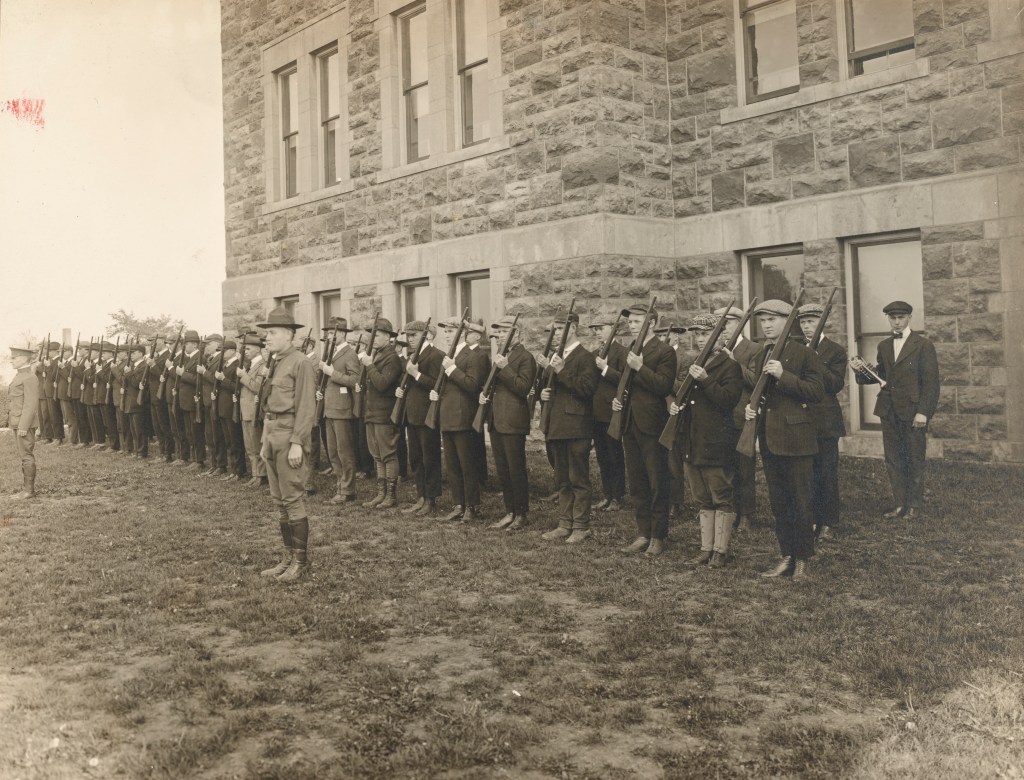
US recruits drilling with wooden rifles c.1917 (US National Archives)
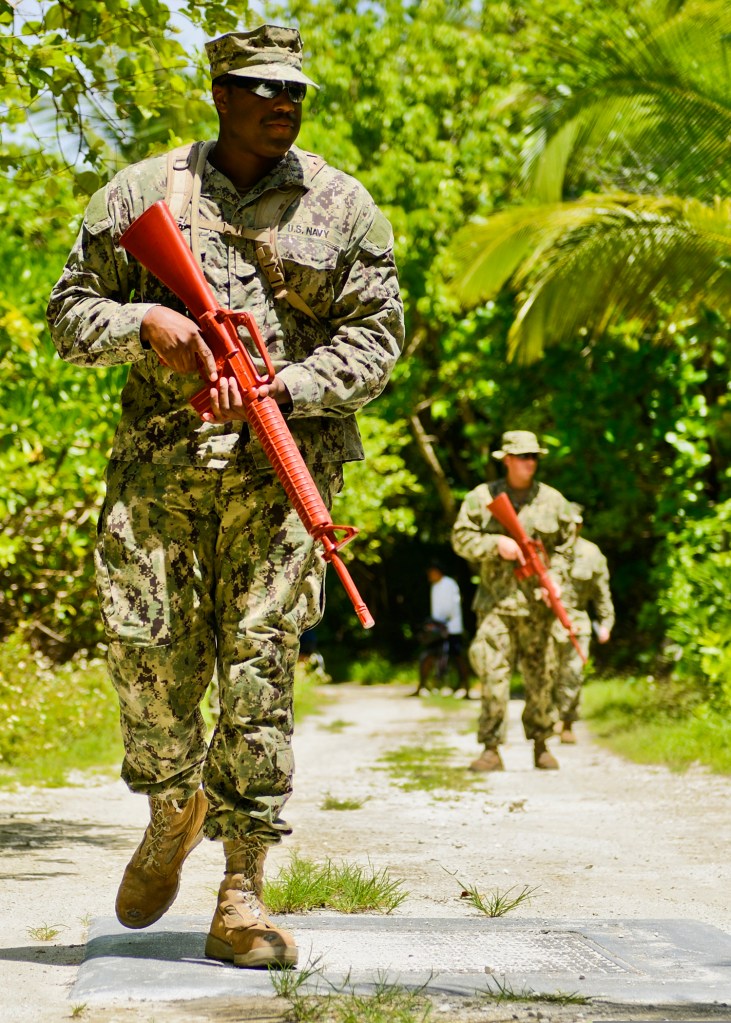
Wooden dummy rifles are more than adequate for safely learning basic drills and getting use to holding and moving with a weapon. Historically, this has been seen countless times. Here we can see American recruits training with dummy rifles in 1917, In 1940 British Home Guard drilled with broomsticks, more recently Afghan security forces were often initially trained with wooden rifles and in South Sudan training with wooden rifles has also been seen. Even in more advanced militaries training with dummy rifles is common with rubber rifles often used in basic training.
While considered light infantry the training of the Territorial Defense Force is rudimentary and while some media reports have discussed them acting as partisans behind enemy lines they are principally planned to be used to guard important positions in their local areas.
U.S. Sailors assigned to Naval Support Facility Diego Garcia conduct a mock reconnaissance patrol Nov. 9, 2013 (U.S. Navy/Mass Communication Specialist Seaman Caine Storino)
To be remotely effective the volunteers will need some proper firearms training in weapons handling, drills and the basics of marksmanship. The ad hoc nature of the localised training and the current lack of government issued small arms makes this sort of essential training difficult to organise.
Ukraine’s Interior Minister Denys Monastyrskiy has given an update on the number of small arms distributed saying some 25,000 rifles have been distributed to TDF volunteers across Ukraine.
If you enjoyed this video and article please consider supporting our work here. We have some great perks available for Patreon Supporters – including custom stickers and early access to videos! Thank you for your support!
Bibliography:
In Ukraine, the Formation of Units of the Territorial Defense Forces of the Armed Forces of Ukraine is Accelerating, Ukrainian Ministry of Defence, (source)
Government to Xreate 150 Territorial Defense Battalions, Kyiv Independent (source)
In recent days, with the news that a shipment of M141 SMAW-D anti-structure weapons have arrived in Ukraine as part of the US military aid shipments, a number of media articles and videos have been made on the subject which seem to confuse the SMAW-D with the AT-4 and even the M72. So, I thought it would be useful to take a look at the SMAW-D in a little detail.
M141 (SMAW-D) (US Army Manual)
So What is the SMAW-D?
Its official designation is ‘Rocket and Launcher, 83mm HEDP Bunker Defeat Munition (BDM), M141 (SMAW-D)’ SMAW-D stands for Shoulder-Launched Multi-Purpose Assault Weapon-Disposable. This isn’t to be confused with the Mk 153 Shoulder-Launched Multipurpose Assault Weapon used by the US Marine Corps. Those the SMAW-D did evolve from the SMAW.
The initial Mk 153 SMAW evolved from the Israeli IMI B-300. During the early-1980s McDonnell Douglas further developed the system and it entered service with the US Marine Corps as the Mk 153 in 1984. The SMAW-D shares the same warhead as the Mk 153 SMAW. The SMAW-D was originally developed by McDonnell Douglas and the design was acquired by Talley Defense Systems, whom were subsequently acquired by Norwegian company Nammo.
M141 (SMAW-D) (US Army Manual)
The Mk 153 has a reusable forward launch tube and firing mechanism which has a spotting rifle and can be mounted with an optic. The warhead element of the SMAW is attached at the rear of the launcher. The US Army was initially interested in the Mk153 but preferred a lighter, single use weapon.
A Marine fires a Mk 153 SMAW (USMC/Cpl. Drew Tech)
In the early 1990s the US Army began the search for a disposable Shoulder-launched Multipurpose Assault Weapon. McDonnell Douglas offered a lighter, disposable version of the Mk 153, taking the Mk 153’s High Explosive, Dual Purpose warhead and pairing it with shorter burn rocket. In 1996 the US Army selected the SMAW-D, beating a Swedish design, the FFV AT8, and the Hunting Engineering LAW80. The SMAW-D entered service in 1999.
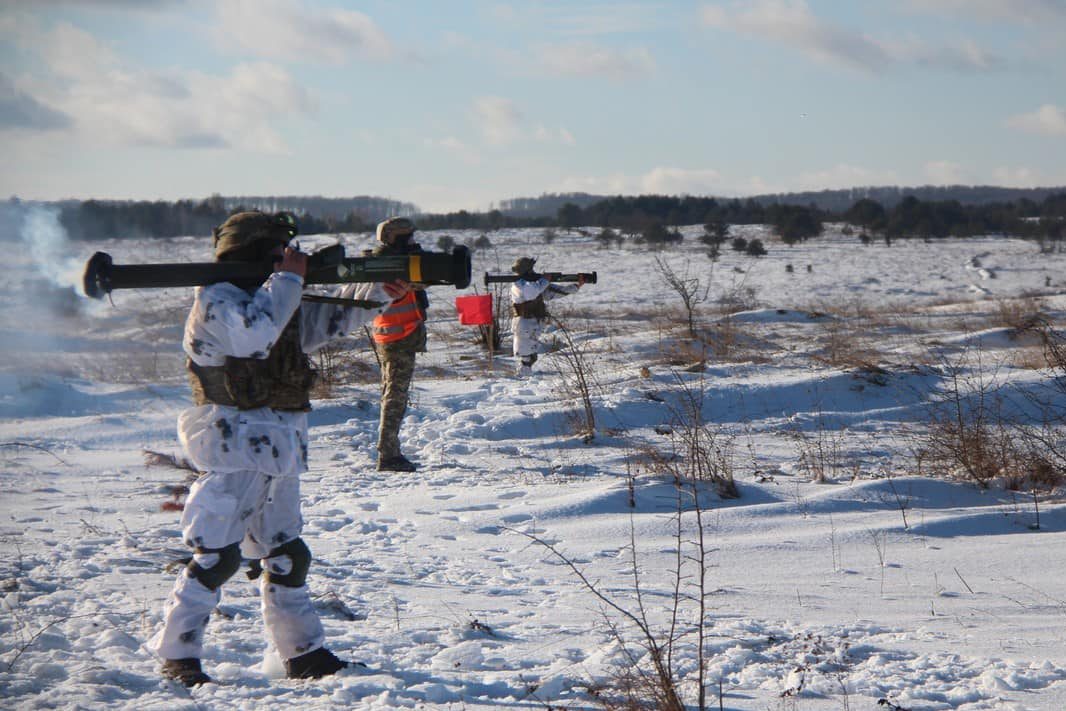
US Army advisor demonstrates how to deploy the M141 (Ukraine MoD)
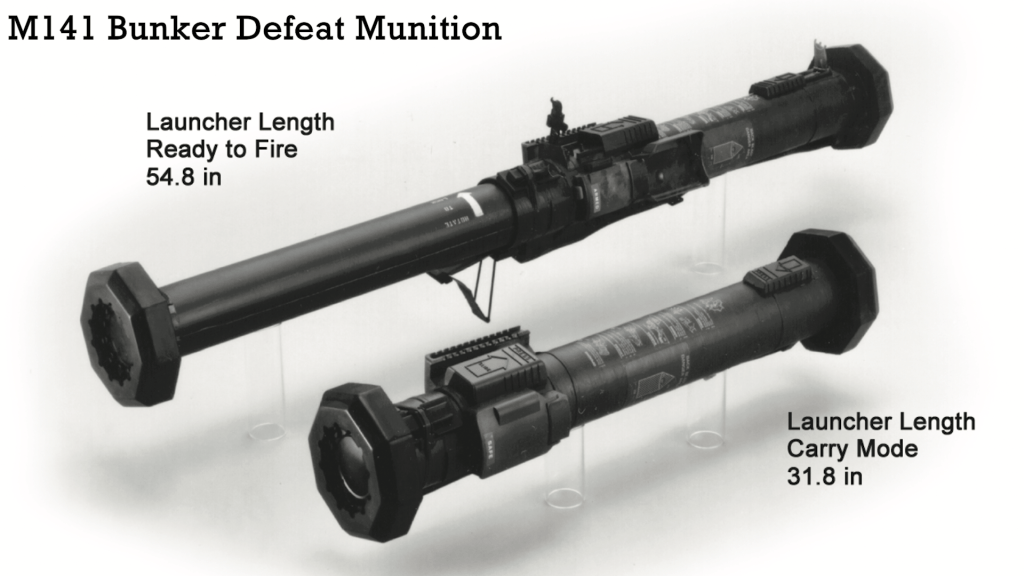
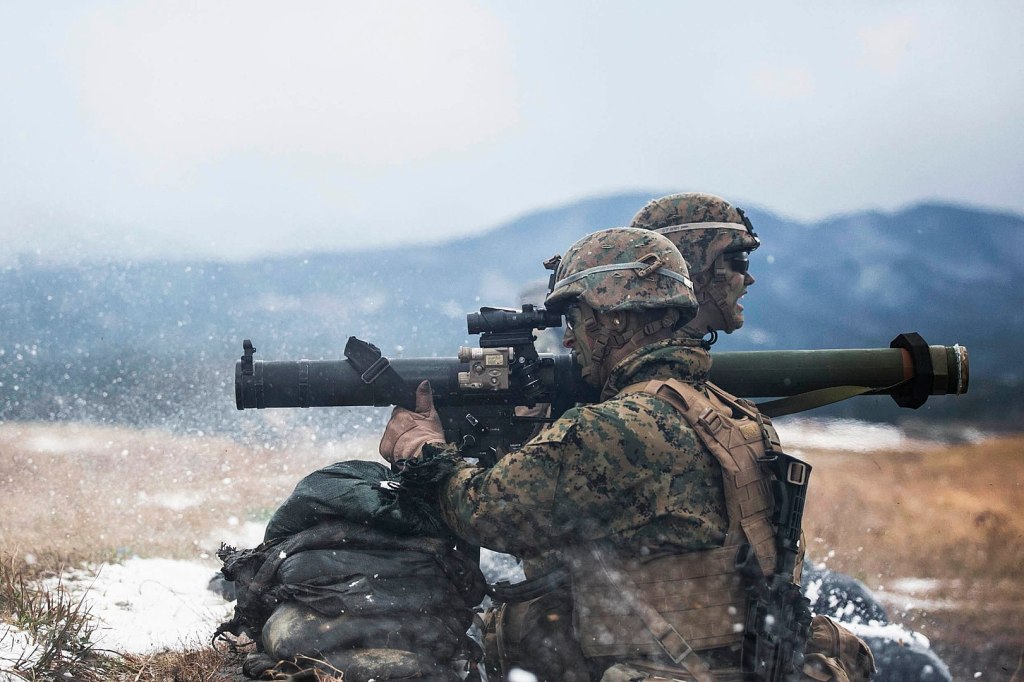
The SMAW-D is similar to the 66mm M72 in that it telescopes with the launch tube extended before firing. When collapsed it measures just under 32 inches in length but extending the inner tube gives the weapon an overall length of 55 inches. The launch tube and rocket weigh 15.7 lbs.
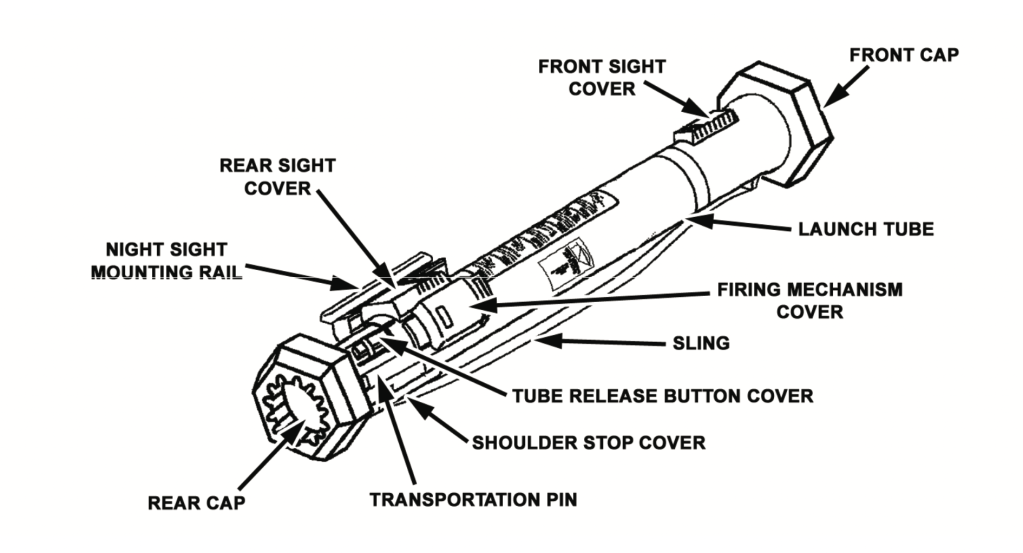
The tube has the firing mechanism mounted on the side under a plastic cover which when opened arms the rocket ready to fire. The weapon has front and rear iron sights for aiming. The SMAW-D can also be fitted with an AN/PVS-4 nightsight and various infrared aiming lasers for night fighting.
Ukrainian soldiers fire M141 BDMs (Ukrainian MoD)
To fire the M141 the operator removes the locking pin from the front of the launch tube, depresses the tube release button and extends the inner tube rearward. The operator then raises the weapon onto the right shoulder, slides the front sight cover forward and then the same for the rear sight. Then opening the firing mechanism cover pivoting it forward, flush with the tube, this arms the weapon. The operator should then check the backlist area and fire when ready by depressing the safety button and then the red trigger button. The rocket is ignited by an electrical impulse sent by the firing mechanism. Once ignited the rocket burns out before it leaves the muzzle, this protects the operator.
M141 (SMAW-D) (US Army Manual)
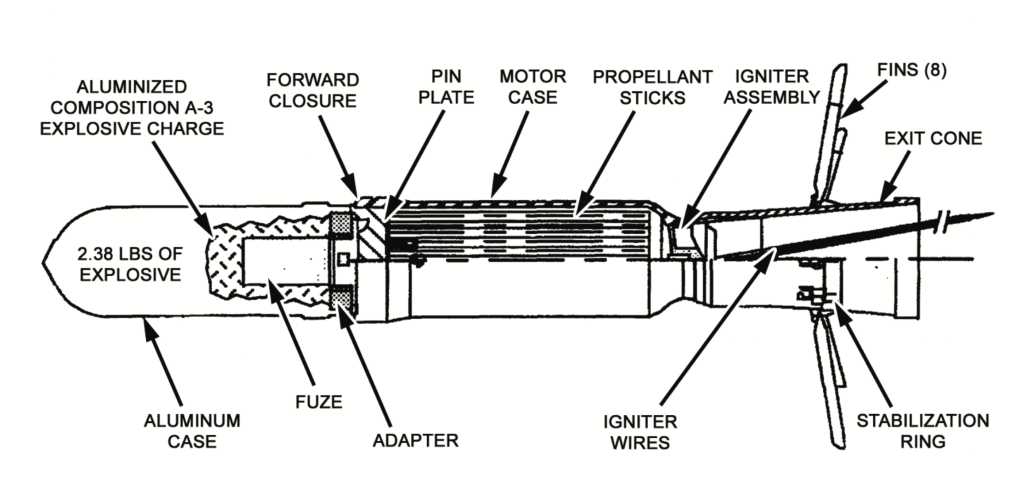
The M141 can engage targets out to 500 metres but is most effective out to 300. Its 83mm unguided, fin-stabilised round has an integral high-explosive, dual-mode warhead with 2.38 lbs of explosive. Detonation is instantaneous when impacting on a hard target, such as a brick or concrete wall, or an armored vehicle. Impact with a softer target, such as a sandbagged bunker, results in a fuze time delay that permits the rocket to penetrate into the target before warhead detonation. It can penetrate up to 200mm (8 inches) of concrete, 300mm (12 inches) of brick and 2m (6 feet 6.74 inches) of earth or sandbags. It can also perforate up to 20mm (0.8 inches) of rolled homogenous steel giving the SMAW-D the ability to take on soft and light armoured vehicles. For training at the range a 21mm sub calibre training system can be used. While the usefulness of the M141 might be questioned, as it isn’t an anti-tank weapon and could be considered more of an offensive rather than defensive weapon it would no doubt prove very useful during urban fighting, which Ukraine anticipates in the event of an invasion.
The SMAW-D saw service with the US Army during the War in Afghanistan and during the Iraq War. Some 6,000 units were initially procured, with an unknown number procured since. It remains an active part of Nammo’s product line.
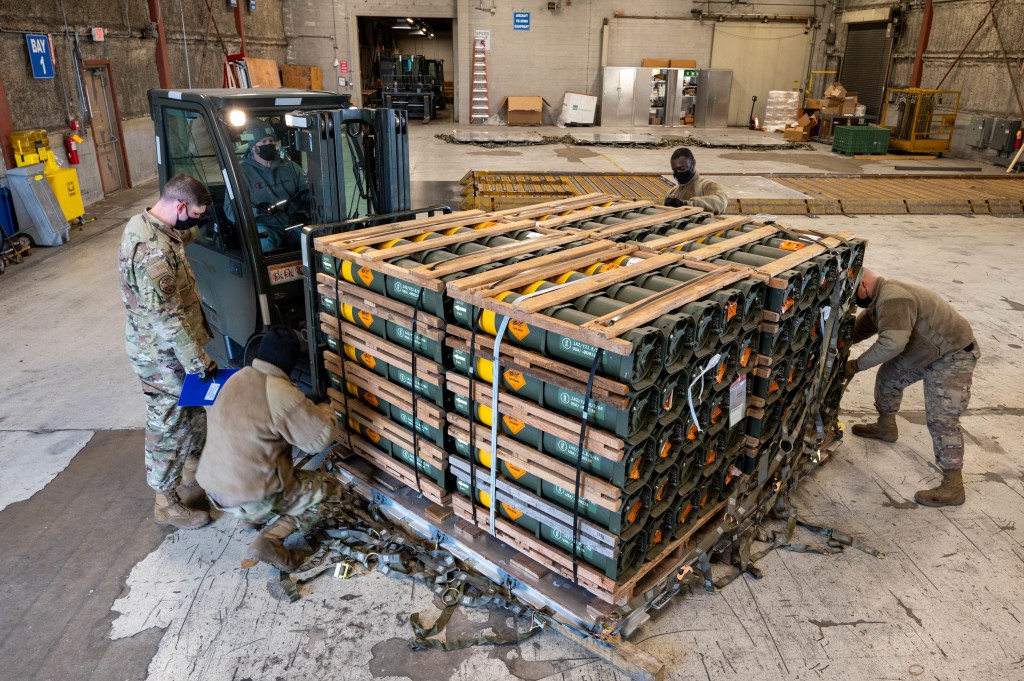
Airmen and civilians from the 436th Aerial Port Squadron palletize ammunition, weapons and other equipment bound for Ukraine during a foreign military sales mission at Dover Air Force Base, Delaware, Jan. 21, 2022. (U.S. Air Force photo by Mauricio Campino)
It is estimated that perhaps 100 M141 BDMs have been shipped to Ukraine so far as part of military aid, alongside small arms and ammunition, Javelin Anti-Tank Guided Missiles and NLAW anti-tank weapons from the UK. From the US Department of Defense’s packaging configuration table for the SMAW-D we know that each metal container holds one round and that 25 containers can be placed on a pallet. This appears to match up to the photos of the weapons being prepared for shipment. The Ukrainian Ministry of Defence and media have shared photographs of Ukrainian personnel training with M141s under the supervision of US troops. The training took place over two days at the 184th Training Center and the International Center for Peacekeeping and Security of the National Ground Forces Academy. These personnel will likely be tasked with then training other Ukrainian units on how to use the weapon.
M141/SMAW-D Specifications:
Length (extended/ready to fire): 1,371mm (54.8inches) Length (closed/carry): 792mm (31.8inches) Weight (ready to fire): 7.12 kilograms (15.7 pounds) Rocket muzzle velocity: 217 meters per second (712 feet per second) Rocket diameter:83mm (3.26 inches) Minimum arming range: 15 meters Maximum effective range: 300 meters Maximum range: 500 meters
If you enjoyed this video and article please consider supporting our work here. We have some great perks available for Patreon Supporters – including custom stickers and early access to videos! Thank you for your support!
Bibliography:
FM 3-23.25 Shoulder-Launched Munitions, 2006, US Army
NLAW is the British Army’s name for the Saab Bofor’s developed MBT LAW, in the early 2000s the British Army was looking for a more capable replacement of its LAW80. The Saab offering, Next Generation Light Anti-tank Weapon, won the contract in 2002 beating out several competitors including the SRAW-based Kestrel from Lockheed Martin/BAe.
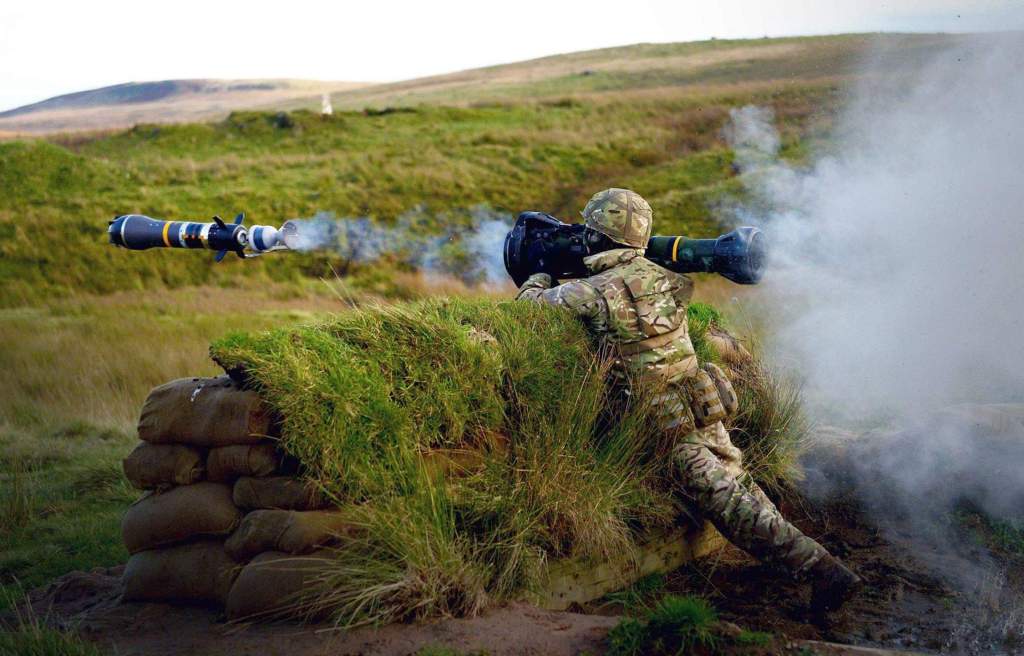
British soldier firing NLAW (British Army)
The UK has just announced the transfer of light anti tank weapons to Ukraine in light of the continuing tensions with Russia. As such the UK is the latest nation to announce that they will be providing weapons to Ukraine. They follow US shipments of Javelin Missiles in December 2021, year and we’ve already seen these in the hands of Ukrainian troops. Most recently it has been confirmed that Lithuania plans to supply anti-tank systems to Ukraine too. The UK’s defence minister Ben Wallace stated that: “We have taken the decision to supply Ukraine with light, anti-armour, defensive weapon system”, while this does not specifically name NLAW, this describes the role which NLAW fulfils.
So what is NLAW?
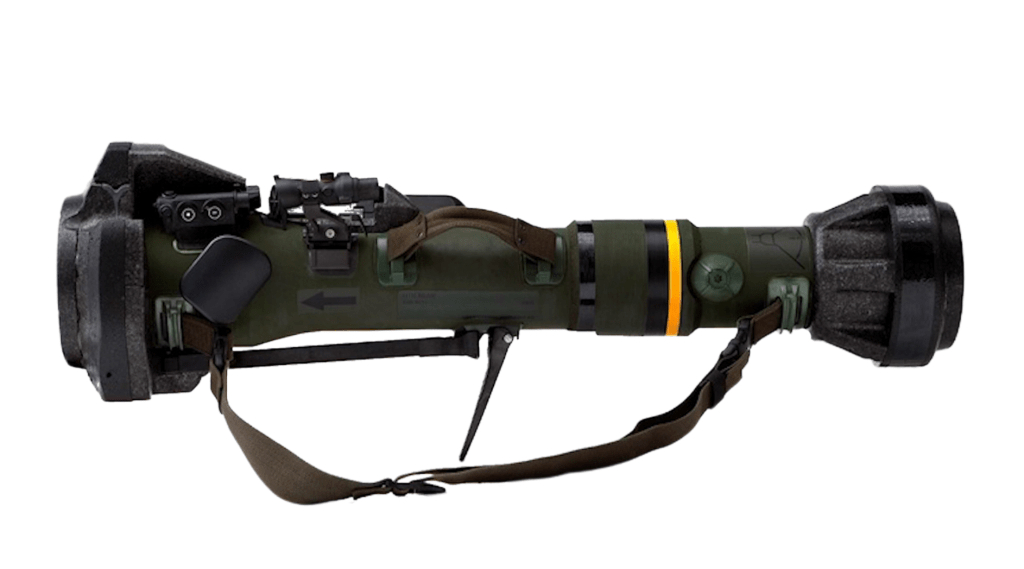
NLAW is a disposable, shoulder-fired, single shot system which weighs about 12.5kg or 27.5lbs. It uses a predicted line of sight guidance system which calculates where the target will be when the missile reaches it. Like Javelin it is capable of targeting a tank’s weakest point, its top side.
NLAW (Saab)
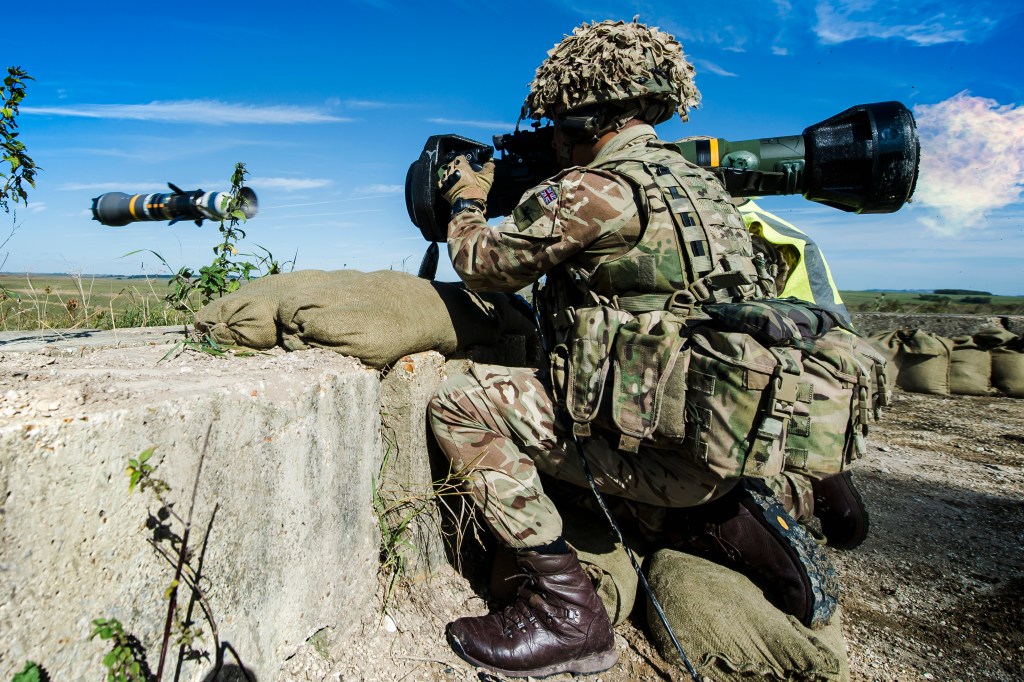
The NLAW has two firing modes: Direct Attack, with the missile flying directly to point of aim, useful for engaging static targets. While the second, Overfly Top Attack, uses the Predicted Line of Sight (PLOS) system. The guidance algorithm optimises the trajectory of the warhead on an elevated flight path over the target with the onboard proximity fuze then detonating and firing an explosively formed penetrator down onto the target.
In British service the NLAW was selected to replace the LAW-80, a 94mm unguided anti-tank rocket, British Army analysis found that in order to provide adequate close range defence against armoured vehicles “significant numbers of NLAW will be required in order to ensure there is sufficient coverage of the battlefield.” This meant the system had to be capable and affordable. Since its delivery and introduction into service in 2009, the NLAW has been the secondary anti-tank weapon of the British Army’s specialised anti-tank platoons’, with the Javelin being their primary. The NLAW is also available for issue as the primary infantry light anti-tank weapon. The British Army describes it as “non-expert, short-range, anti-tank missile that rapidly knocks out any main battle tank in just one shot by striking it from above.” While not cheap, at around £20,000 per unit, NLAW costs significantly less than the longer-ranged, more complex Javelin [estimated at around £70,000 per unit]. It is currently in service with Finland, Sweden, Luxembourg, Indonesia and Saudi Arabia. It has seen action during Saudi Arabia’s interventions in Yemen.
A rifleman of 1 Gurkhas fires an NLAW (Corporal Stephen Harvey / UK MoD)
The weapon can engage close range targets at as close as 20m and uses a soft launch system that enables it to be fired from enclosed spaces. It can take on static target at 600 to 800m and moving ones at 400m. Technically, NLAW is not an anti-tank guided missile as the missile is not guided by an onboard system once it has been fired. Instead it used a Predicted Line of Sight (PLOS) system which enables it to be used like a fire and forget ATGM.
The weapon’s operator activates the PLOS system and the user tracks the target for 3 to 6 seconds in the NLAW’s Trijicon Compact ACOG 2.5×20 sight before firing, the guidance system calculates the predicted flight path to the target to ensure a hit.
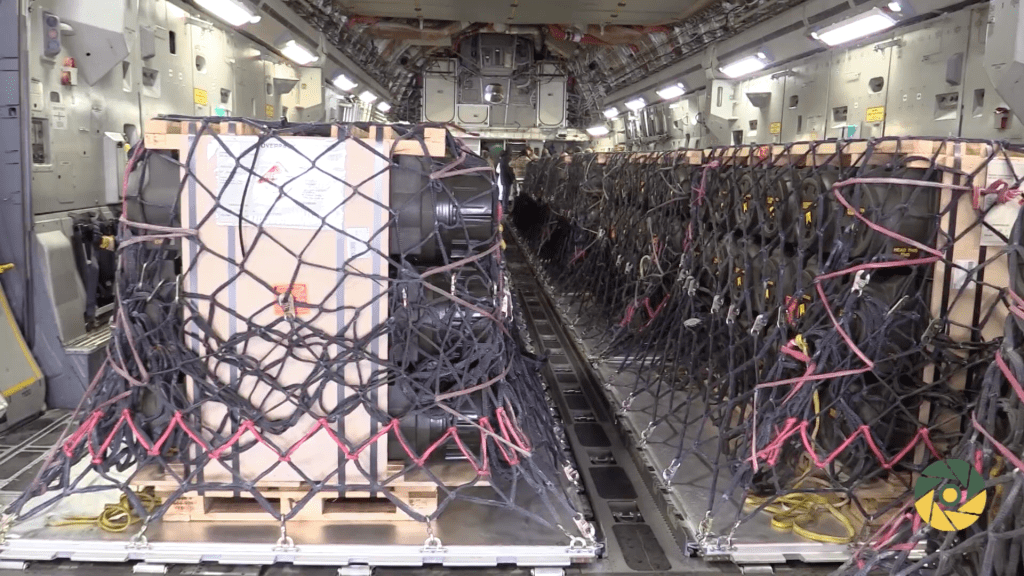
The number of NLAW being dispatched by the UK has not been confirmed although several flights of RAF C-17s were made overnight on 17th January, 2022. Footage released by the Ukrainian Ministry of Defence showing the arrival of the NLAWs enables us to estimate that each flight could have carried somewhere between 180 and 216 NLAWs.
A still from a Ukrainian MoD video showing the arrival of the NLAWs (source)
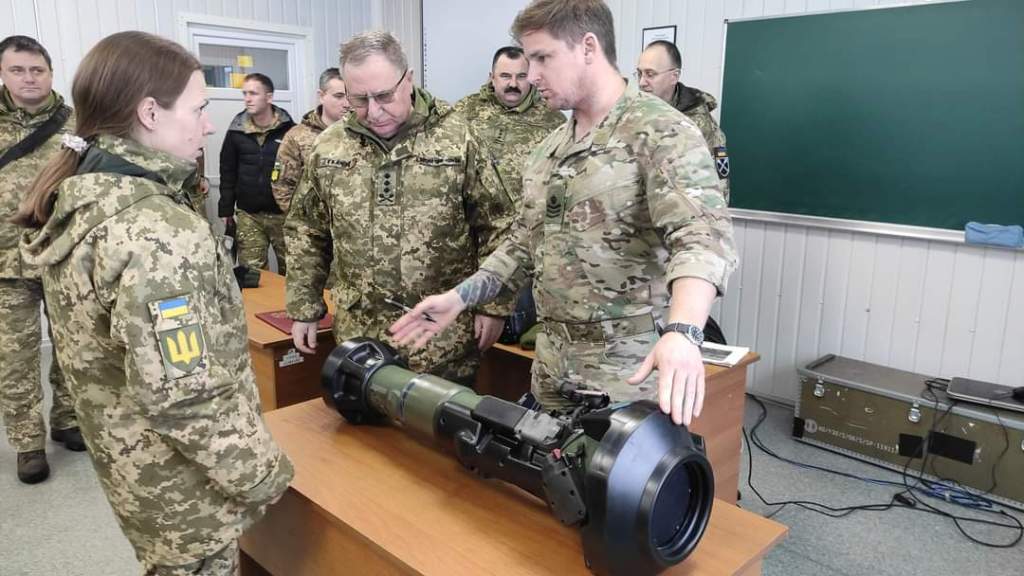
It isn’t clear just how many NLAW systems the UK has stockpiled but it is likely that as missile systems have a limited shelf-life that the older systems may have been transferred first. The terms of the agreement to transfer the NLAWs hasn’t been made public but it was confirmed small teams of British troops had accompanied the weapons to provide initial training to Ukrainian forces on how to use them. This is in line with Operation ORBITAL, the UK’s training mission to Ukraine which was established in 2015, following the illegal annexation of Crimea. Wallace was keen to stress that “this support is for short-range, and clearly defensive weapons capabilities; they are not strategic weapons and pose no threat to Russia. They are to use in self-defence and the UK personnel providing the early-stage training will return to the United Kingdom after completing it.”
As of the time of writing more than 10 flights have been observed carrying military equipment from the UK. It is estimated that some 2,000 NLAW have been transfered. This was tacitly confirmed by remarks made by Wallace to the press.
A Ukraine MoD photo showing a training session on NLAW being delivered by members of the OP Orbital training team. (Ukraine MoD)
The UK has been working with Ukraine not just through Op ORBITAL but also more broadly with a number of agreements being signed in 2021 to support Ukraine’s naval capability. While the usefulness of the NLAWs are confined to close range engagements the move is clearly a symbolic signal to Russia.
If you enjoyed this video and article please consider supporting our work here. We have some great perks available for Patreon Supporters – including custom stickers and early access to videos! Thank you for your support!
Bibliography:
Next Generation Light Anti-Tank Weapon (NLAW), ThinkDefence, (source)
Britain Delivered Military Weapons to Ukraine, UkraineMoD, (source)
UK Delivers Light Anti-Tank Defensive Weapon Systems To Ukraine, OvertDefense, (source)
One Shot – One Armored Target. Javelin ATGM, UkraineMoD, (source)
Statement by the Defence Secretary in the House of Commons, 17 January 2022, UK MoD, (source)









 The Armourers Bench